Tag: Women’s Sports

  • Meg Kane was the perfect face of Philly’s World Cup campaign. Her family, and its tragedy, shaped her message.

    Meg Kane was the perfect face of Philly’s World Cup campaign. Her family, and its tragedy, shaped her message.

    One person after another shuffled toward her from the funeral line snaking down the center aisle, through the vestibule of St. Anthony of Padua Catholic Church, out to Forest Avenue in Ambler, and I wondered as I approached her how long Meg Kane could keep this up. The sad, grateful smile. The long, tight hugs. The posture she maintained, straight as a soldier, when the shock and grief simmering within her should have sent her to her knees.

    It was Friday, April 12, 2024. Eight days had passed since the house fire that killed her parents — the kind of unbelievable tragedy that interrupts a local newscast, helicopters hovering over the smoldering ruins. Unbelievable, too, because it had happened to Meg. Over the quarter-century that we have been close, she has risen through the public relations industry to a place of power and influence within Philadelphia without compromising the qualities that made her, above all else, a decent human being. It always seemed that her intelligence and drive, her character and achievements, melded to form a shield that would protect her from catastrophe. Something like this doesn’t happen to someone like Meg, I thought that day, as if such a thought were anything other than a mind trick, a weak attempt to reconcile how and why my friend’s mother and father were dead.

    The line stretched to more than 200 people, perhaps more than 300. No one standing in it should have been surprised at its length. Meg had relationships and connections throughout the Delaware Valley, of course, but more than that, she and her family had embodied the blending of some beautiful and long-conflicted aspects of Philadelphia’s history and culture. They had learned to live with and revel in the tensions inherent in certain traditions here. Their roots were that deep. Their hearts were that open. Hers most of all.

    That background is one reason Meg has been the ideal face of the campaign to bring the World Cup to Philadelphia and promote it once it was here, to play up and celebrate the happy marriage of soccer and the city. It also is the reason that — through every match, every publicity event, every meeting, every long and restless night before and during this tournament, all while the eyes of the globe had been on Philadelphia — she has been holding all that pride in the same palm as so much pain.

    Meg Kane looks at a photo of her mother among old family photos in her Philadelphia apartment in May. The photos were recovered from the scene of an April 2024 house fire in Ambler that killed both of her parents.

    Everything essential in life

    There she is again. Another quickie interview on Fox29. Another guest spot on a PHLY Sports panel. Another four paragraphs of insightful quotes to us at The Inquirer. Another Amtrak ride up to New York or 14-hour flight to Doha, Qatar, to see what she could learn, then another debrief with her colleagues at Philadelphia Soccer 2026. Here’s what they did. Here’s why it did or didn’t work. Here’s what we can and should do.

    Nothing new for Meg Kane. Nothing out of the ordinary. Revitalizing Tastykake’s brand and business when its headquarters relocated from Hunting Park to the Navy Yard … making ready the way for Pope Francis’ visit to town in 2015 … counseling the Philadelphia Orchestra and the archdiocese … all this at the tenderest of ages, all this before she turned 45 in January.

    “When the odds are against us,” said her friend Christopher Pinto, the development lead of the Philly Pops, “this city calls Meg Kane to make the impossible possible.”
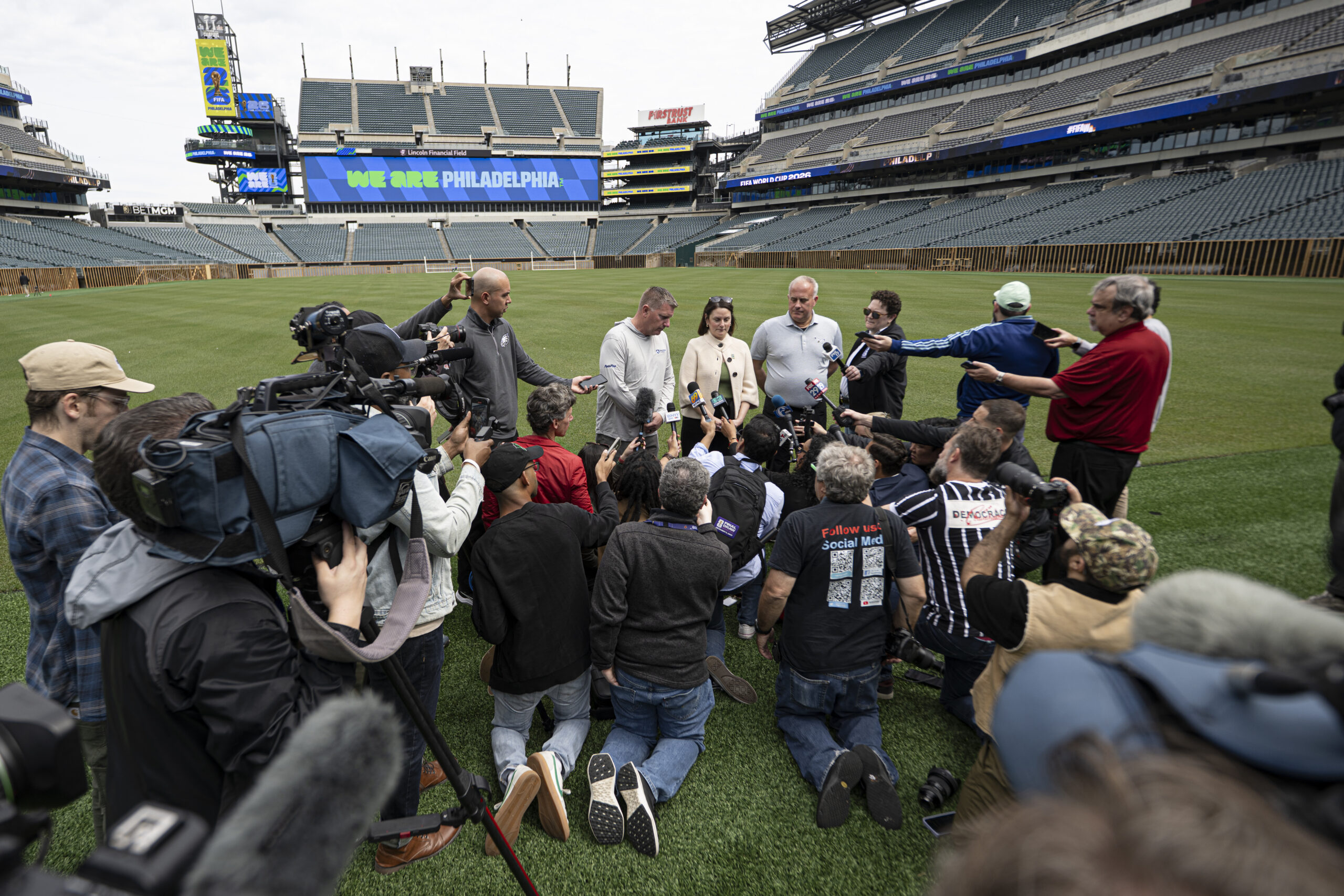
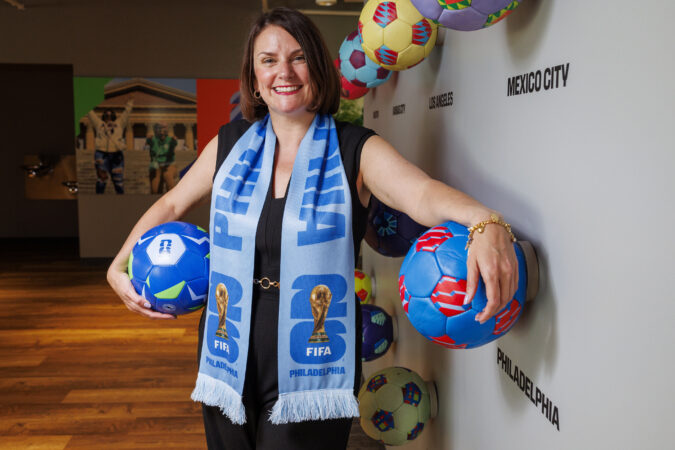
    Meg Kane (center) speaks at a press conference about preparations for the FIFA World Cup in May at Lincoln Financial Field.

    Who was better to evangelize about Philadelphia, to make the case that it was an ideal location for the biggest event in the world’s most popular sport? Who else had the requisite combination of local expertise and enthusiasm to share the multitudes that the city contained? Meg’s mother, Debbie, and biological father, Richard, had divorced not long after Meg was born. Debbie then married Steve Wood in September 1983 — a Little Flower alumna and a North Catholic graduate reconnecting 15 years after they’d met as teenagers on the Wildwood boardwalk.

    Meg wasn’t yet 3 when Steve became her stepfather, but the word was appropriate only in its most literal sense. He was Dad, too, and she was his daughter, full stop, and everything that was essential in his life became essential in hers …

    … and everything included their early-afternoon car trips together starting when Meg was 7, when Steve would pick her up after another half-day at St. Martin of Tours School and drive down I-95 to 13th and Walnut, to the bar that Steve and his brother, Bill, had opened in 1980, to Woody’s — to the best-known gay social establishment that Philadelphia has ever known. While Steve balanced the books, Meg — still in her Catholic school uniform, her plaid skirt and saddle shoes — sat at the bar, the daytime bartenders fixing her fresh cherry Cokes, making them the right way, muddling the fruit and filling her glass with fountain soda, the little girl chatting up the customers and playing Ms. Pac-Man on the arcade machine upstairs and remaining mostly oblivious, never thinking anything there was strange or sinful, her parents never suggesting anything was.

    As a child, Meg Kane’s afternoons sometimes included stops at her dad and uncle’s bar, Woody’s.

    The cognitive dissonance might have caused constant friction in one family or torn another apart. It didn’t exist within Meg’s. Steve had one rule about the visits that Meg, her younger sister, Liz, and their younger brother, Stephen, made to Woody’s: If you see someone there you know, keep it to yourself. “It was important we never outed anybody,” Meg said. “At that time, there were people for whom Woody’s was an oasis, an escape, the one place they could be themselves.”

    The bartenders there picked up extra work at Liz’s and Stephen’s christening parties. Bill’s partner, Lee Mallon, showed up to the family’s annual Christmas party dressed as Santa. Debbie, who became a principal at Norwood-Fontbonne Academy in Chestnut Hill after years of teaching in the archdiocese, loved to tell the story about the earnest couple who made an appointment to tell her something troubling … except the delicate topic had nothing to do with the couple’s children. The husband had been downtown, and he and his wife had been praying about whether to share what he saw with Debbie, and, well … Your husband walked into Woody’s. And Debbie let out a belly laugh. Oh, I know … By the way, have you forgotten what my last name is?

    At the height of the AIDS crisis in the 1980s and ’90s, Steve and Bill kept employees on the payroll even though they couldn’t work anymore, held celebration-of-life luncheons at the bar, and covered the cost of memorial services and burials when no one else would. Those trips to hospitals and funeral parlors were rarely, if ever, spoken of within the Wood family. Steve’s mother had died when he was 4 and his father when he was 13. His siblings had raised him, and he considered business associates to be friends and friends to be family, and maybe a young woman who later would be charged with uniting a diverse but territorial city behind a common mission had to grow up immersed in such acceptance, such label-free loyalty.

    There was Meg, riding with Steve every morning during her high school years from their new home in the Montgomery County suburbs to Academy of Notre Dame in Villanova — a school with a great speech-debate program for a teenager who knew she’d end up talking for a living — the two of them listening to WIP throughout those 45-minute commutes. “It’s how I learned to be a sports fan,” she said. “My passion was cultivated because of our relationship.” There was Liz, going her own way at Mount St. Joseph Academy. There was Stephen, heading off to St. Joseph’s Prep. But it wasn’t until Meg’s freshman year at La Salle, when a male student she didn’t know knocked on the door of her dorm room to thank her — Your family owns Woody’s, right? I don’t know what I would have done without it — that she perceived her family as resting at the center of every Venn diagram of Philadelphia, sharing something in common with every group and subgroup.

    I met her during the first semester of her junior year at La Salle, when she took a journalism class I was teaching in the fall of 2001. It is an intimidating thing to be a 26-year-old adjunct professor, to have taught for just two years, and to suspect immediately that one of your students is smarter and wiser and more sophisticated than you are. Ten days into the term, on Tuesday, Sept. 11, she proved she was.

    Class began at 9 a.m. I tried to get 20 minutes worth of lecture time in as black smoke billowed from the World Trade Center towers and my students, a few of whom hailed from New York and North Jersey, chewed their fingernails and fidgeted in their chairs. Finally, Meg shot me a look that said, I know you mean well, but … please, we gotta get out of here. When the class reconvened later that week, I asked for the students’ forgiveness for my stupid officiousness, for my failure to read the classroom, and we spent the rest of the period discussing and venting about the terrorist attacks and their aftermath. In September 2011, Meg sent me a letter — not an email, not a direct message, a letter, on paper, more permanent — recalling that week. You did what a teacher is supposed to do, she wrote. You earned our trust, and you never lost it. It remains a treasured gift, that letter and its contents, that benefit of the doubt, that measure of grace that I hadn’t earned and didn’t deserve.

    By then, Steve and Bill had sold Woody’s and opened another bar, Knock, and Meg had lifted off and would continue climbing in her career: from La Salle — she was her class’s commencement speaker — to graduate school at Maryland; from earning a master’s degree to planning and publicizing some of the city’s biggest events; from getting a text message in November 2019 from Angela Val, who was the CEO of the city’s convention and visitors bureau at the time, to meeting her that night at the Ritz Carlton. We need you, Val told her. We’re going to bid on the World Cup.

    It was the project of a lifetime. It gave her the runway and credibility to open her own PR firm, Signature 57, in 2021. It put her front and center as the captain of the city’s World Cup cheerleading squad — “the Pied Piper of Philly soccer,” someone called her. And she still could be the daughter and sister and friend she’d always been, ready at a moment’s notice to give whatever had to be given. Drive five hours one way to attend the funeral of a colleague’s parent? It’s a day. What’s a day? Get off a plane after a week of work in Ireland and head straight to a chamber of commerce dinner that night? Work an 80-to-100-hour week? Of course. How else would she be there for her family if she didn’t excel in her professional life, if she didn’t squeeze her responsibilities and extra efforts into the smallest possible windows of time?

    Yes, she thought it, too: Something like this doesn’t happen to someone like me. But things did happen. Debbie retired and, without her work in education, struggled in the void, losing weight, chain-smoking so much that her favorite blanket became pocked with holes where fallen ashes — and even the still-lit tip of one of her Merit Menthols, as she was dozing off — had burned through the wool. Stephen moved back in with his parents after finishing at Penn State and stayed with them for nine years, teaching English at Norwood, helping Steve care for Debbie. Liz and her husband, Michael McCabe, both faculty members at La Salle College High School, lost a baby daughter, Eleanor, and one night, Steve sat with Meg at his dining room table, a Phillies game on TV in the background. He had grown up without a mother and father. He had watched dear friends waste away to a deadly virus. Yes, these things and more did happen, but “my dad,” Meg said, “had an incredibly positive view of the world,” and at the table, he described to her how he had tried to comfort Liz.

    Don’t despair, he said. Don’t despair. It’s the only way to keep going.

    The horror of a ticking clock

    On Thursday, April 4, 2024. Meg was in a room at the Fairmont in Washington, D.C., already awake for close to two hours, writing and rewriting speeches and teleprompter scripts for the Horatio Alger Association Awards, a three-day event for the philanthropic juggernaut that had become a signature project for Signature 57: a CEO’s retirement, the introduction of 12 new members, two major dinners, an undertaking so massive that Meg and four coworkers bunkered for a week in the hotel to complete it.

    Still in her pajamas, she was trudging to the bathroom to wash her face when her phone buzzed and lit up pink, the color that meant Liz was calling. She assumed something was wrong with Francis, Liz and Mike’s 4-month-old son.

    Meg looked at her phone. It was 6:42 a.m.

    Liz?

    Meg, she shrieked, I’m watching the house burn down!

    What?

    I’m watching the news. I’m holding the baby, feeding the baby, and the house is on fire!

    Meg told Liz to call the police. She put her phone down and walked to the bathroom, violently shaking, and did not wash her face. She called her boyfriend, Keith Audit, and told him, I need you to find out if my parents’ house in on fire, and Liz called back and said that the police had told her that someone would be in touch and she had tried calling Steve’s phone but it had gone right to voicemail and Liz kept saying, It’s definitely the house, and I don’t know what to do, and then Meg said out loud an irrational thing: We have to call Norwood. Stephen’s a teacher. Stephen’s not going to make it to school. Someone has to let Norwood know to get a sub. And Meg hung up with Liz and called Shannon Craige, Norwood’s curriculum director, who told her the students were on spring break and Norwood was closed.

    Meg looked at her phone. It was 6:53 a.m.

    She called Stephanie Bambach, the vice president of Signature 57, who was in a room above her. When she arrived at Meg’s room, Bambach was surprised that Meg’s demeanor was as measured as it was. She was not surprised that Meg’s voice was trembling.

    I have to finish writing the remarks for Saturday night, Meg said. I’m only halfway done. I can’t leave.

    It doesn’t matter, Meg.

    Meg reopened her laptop and emailed every document and every draft of every unfinished document to Bambach. She grabbed a black striped sweater and a pair of black leggings, went into the bathroom, and got dressed.

    “I remember looking at myself in the mirror,” she said later, “and saying, ‘You will never wear these clothes again.’”

    Bambach arranged for a car service to pick up Meg at the hotel and drive her back to Philadelphia. The two of them rode an elevator down to the lobby. Meg held her room key. She tried to hand it to Bambach.

    In case, Meg said, someone needs to use my room.

    Bambach didn’t take the key. Keep it. Good thoughts. It’s going to be OK. You might come back.

    I’m not coming back, Meg said. It’s not going to be OK.

    In the back seat of a black sedan, Meg’s phone rang again.

    I’m at the house, Liz said. I just spoke with a detective. Mommy and Daddy didn’t make it.

    Meg took a deep breath. Where. Is. Stephen?

    He’s OK, Liz said. He got out.

    Meg looked at her phone. It was 7:43 a.m.

    The black sedan pulled up to her apartment. Keith was waiting for her. She threw her bags in his car, and they drove to Temple University Hospital’s burn unit. Stephen was there, in a bed in a room in the back, his face and body covered in soot. That acrid, sickening odor. Physically, somehow, he was fine.

    “We were the luckiest people on that floor,” Meg said later. “He was going to get out of that bed and go home. That day couldn’t have been worse, but my God, it could have been.”

    She looked at her phone. It wasn’t yet 11 a.m.

    Miles away

    Two months. That’s how long she stepped away. From the World Cup campaign. From Signature 57. From everything except what was gone and what remained.

    The fire’s official cause was undetermined. Its damage was incalculable. Steve and Debbie had no wills. Their birth certificates and Social Security cards were gone. Meg had to pick up the mail and pay the mortgage and pay other bills and access both their personal bank account and the finances for Knock and show up for every meeting with every lawyer and builder and contractor, everything moving incredibly fast and in slow motion at the same time, so many dear memories now coldly cataloged on an Excel spreadsheet.

    She did not talk about the fire at all in public and only rarely in private. Her last name was not Wood; few strangers, if any, knew her connection to the tragedy. The relative anonymity was meager relief from the pressure she piled on herself. Who else could handle the fallout? Who else could inch everyone a little closer to normal again? It had to be her.

    She didn’t have a newborn to raise, like Liz and Mike did. She hadn’t awakened in the dead of night to dodge flames and hold her breath to keep smoke from seeping into her lungs, like Stephen had. Hell, her poor brother couldn’t even cradle his baby nephew two months after their parents’ deaths: A potent combination — a crackle of July 4 fireworks and a quick post-traumatic contemplation of the fragility of human life — compelled him to hand Francis off to someone, anyone, before something terrible happened again. Nothing she was dealing with came close. Hell, she had been 150 miles away when the house went up. She hadn’t even been there.

    Her friends worried that she was pushing herself to the brink of a breakdown and beyond. “She’s really not someone who leans on people,” Bambach said. “I wish she had leaned on us more in the aftermath. So much of her identity is who she is as a leader of Signature, of Philly Soccer, and accepting help from people was a position she was really uncomfortable with. As her friend, I had moments when I wished she would just ask for help.”

    Two months. She couldn’t bring herself to take more time away from work. She ping-ponged between her guilt over what she had to do for her family and her guilt over her desire to return to her career. “I really struggled with that,” she said. “Everyone is replaceable at work. If I’m not there, does it run better without me? Are people doing better? Philadelphia World Cup 2026 — is it running better and smoother? Are they finding this to be easier without me? I thought about that even with Signature 57. I’m the founder and CEO, and I still grapple with that. You can go to dark places.”

    Meg Kane was out of town the night a house fire killed her parents.

    The things that remain

    On the kitchen table of her Fairmount apartment, Meg Kane reached into a box to handle the delicate pieces of her parents’ past and her present. Three pages from a memoir by talk-show host Mika Brzezinski, their edges singed black, survived the fire; Meg found them when she first returned to the house’s site. A couple of old family photo albums, the pictures mounted under sticky plastic, the books stashed in a sealed Tupperware container, seem untouched, save for their smoky smell. “It’s really hard to …” she said. “It takes you back there.” So does a black magnetic card that she lifted out of the box. The key to her room at the Fairmont. She kept it.

    There’s a vision she can’t shake: Steve waking Stephen up, making sure he got out of the house, then remaining at Debbie’s side, knowing he could not leave her, his children knowing he never would. He had to be so scared in those final moments. He had to be so brave.

    “At the end, there’s just grief,” Meg said. “I’m not sure I’ve dealt with the grief. I don’t know I’ve felt it all the way. I don’t know that I’ve allowed it to be something I fully felt.”

    So she stores it away, lets it out only during the brief and rare breaks in her schedule, when the events and interviews have paused and some stillness and quiet return to her life. In May, Stephen proposed to his girlfriend, and at the engagement party, Meg pulled him aside for a conversation. It lasted 15 minutes. “It was the talk that everybody was avoiding all night,” he said, a talk about how much he had grown over the last few years, “the kind of talk you would want from your mom or dad.”

    It was the happiest moment in a spring and summer that have had many happy ones. She partied on Lemon Hill in Fairmount Park and marched with several hundred Croatian soccer fans from Center City to Old City and rode a subway train quaking from the chants and songs of Brazil’s futbol fanatics, and she saw Philadelphia reveal itself as a world-class sports showcase. They are just Band-Aids, to be sure, covering the paper cuts of knowing that her parents never got to meet their son’s fiancée or hear their grandson speak his first word. But for those of us fortunate enough to call her a friend, they are the answer to the question we were asking as we stood in that church two years ago. How would she get through each day? How would she keep this up?

    She did it by holding on to something a father told his daughters. She did it in the only way any of us can. She remembered that she has loved and is loved, and she did not despair.
  • South Jersey track star Natalie Dumas proves it’s never too late to reach full stride

    South Jersey track star Natalie Dumas proves it’s never too late to reach full stride

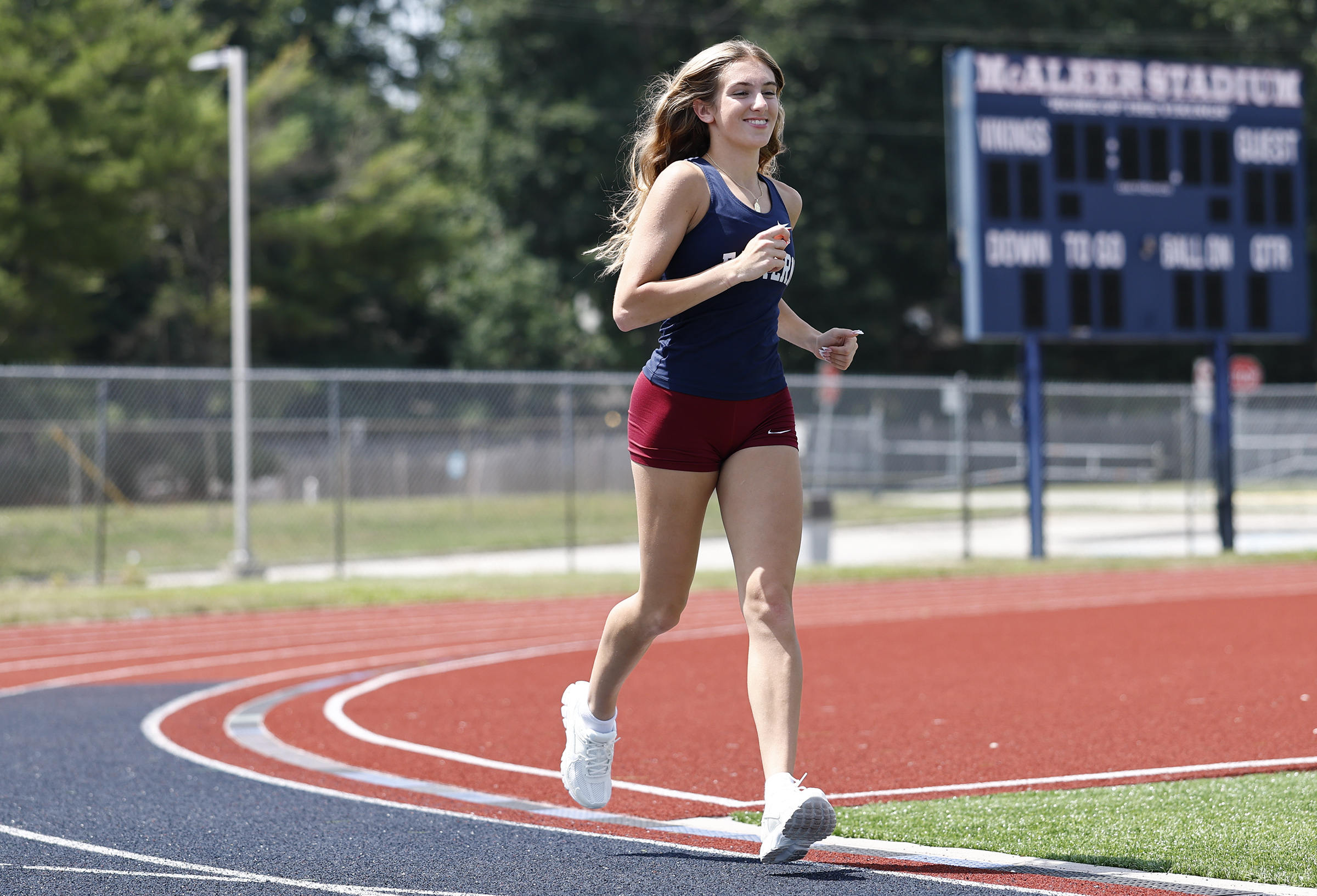
    When Eastern Regional’s track and field coach Mike Tangeman is asked about star senior runner Natalie Dumas, he will not call attention to the more than 20 program records she’s broken. Instead, he will mention that she does not own any of the program’s freshman records.

    Before becoming one of the most accomplished runners in New Jersey history, Dumas first got involved with the sport as a freshman to bond with her sister, Kadence, who was then a senior.

    As a junior, at the NJSIAA Meet of Champions, Natalie became the first girl in state history to place first in three events — the 400 meters, 400-meter hurdles, and 800 meters. A few weeks later, she placed first in the same three events at the New Balance Nationals held at Penn’s Franklin Field. Her accomplishment at both meets made Dumas a prominent name in national track circles and won the attention of the University of Arkansas, where she will be running next year.

    This past year was no different. At June’s Meet of Champions in Pennsauken, Dumas placed first again in three events to cap her outdoor scholastic season. She clocked in at 57.04 seconds in the 400-meter hurdles, 52.14 in the 400 meter, and 2 minutes, 03.46 seconds in the 800 meter.

    “With track, you have to trust the process because you work up into becoming better time wise,” Dumas said. “Obviously, you’re really out of shape at the beginning, and then you get better and better.

    “At the end of the day I’m not afraid to lose.”

    A ‘minor celebrity’

    Last month, Dumas flew to Eugene, Ore., to compete in the USATF U20s and the Nike Nationals. To combat potential jetlag and the difference in climate, she arrived on the West Coast a few days before she was slated to race at University of Oregon’s Hayward Field.

    In the U20s, she won a spot on the U.S. World team after a first-place finish in the 400-meter hurdles, running a season-best 56.13. The next day, she returned to the same track to compete in the 400-meter dash at the Nike Nationals and placed first at 52.21 to claim her eighth national title.

    “It was a lot of races,” Dumas said. “But honestly, I didn’t even mind racing that much.”

    Dumas’ participation in the Nike Nationals was possible because of the event’s intentional geography and calendar proximity to the U20s. It was also a sign of the ever-evolving nature of high school sports. Dumas is one of 20 female high school track and field athletes signed to Nike Elite. The program, which includes a coveted name, image, and likeness deal with the world’s largest supplier of athletic attire, has increased Dumas’ national appeal. It has also improved her performance on the track.

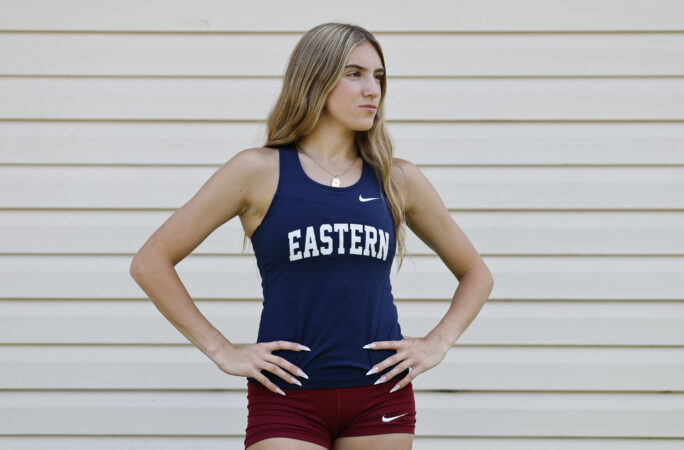
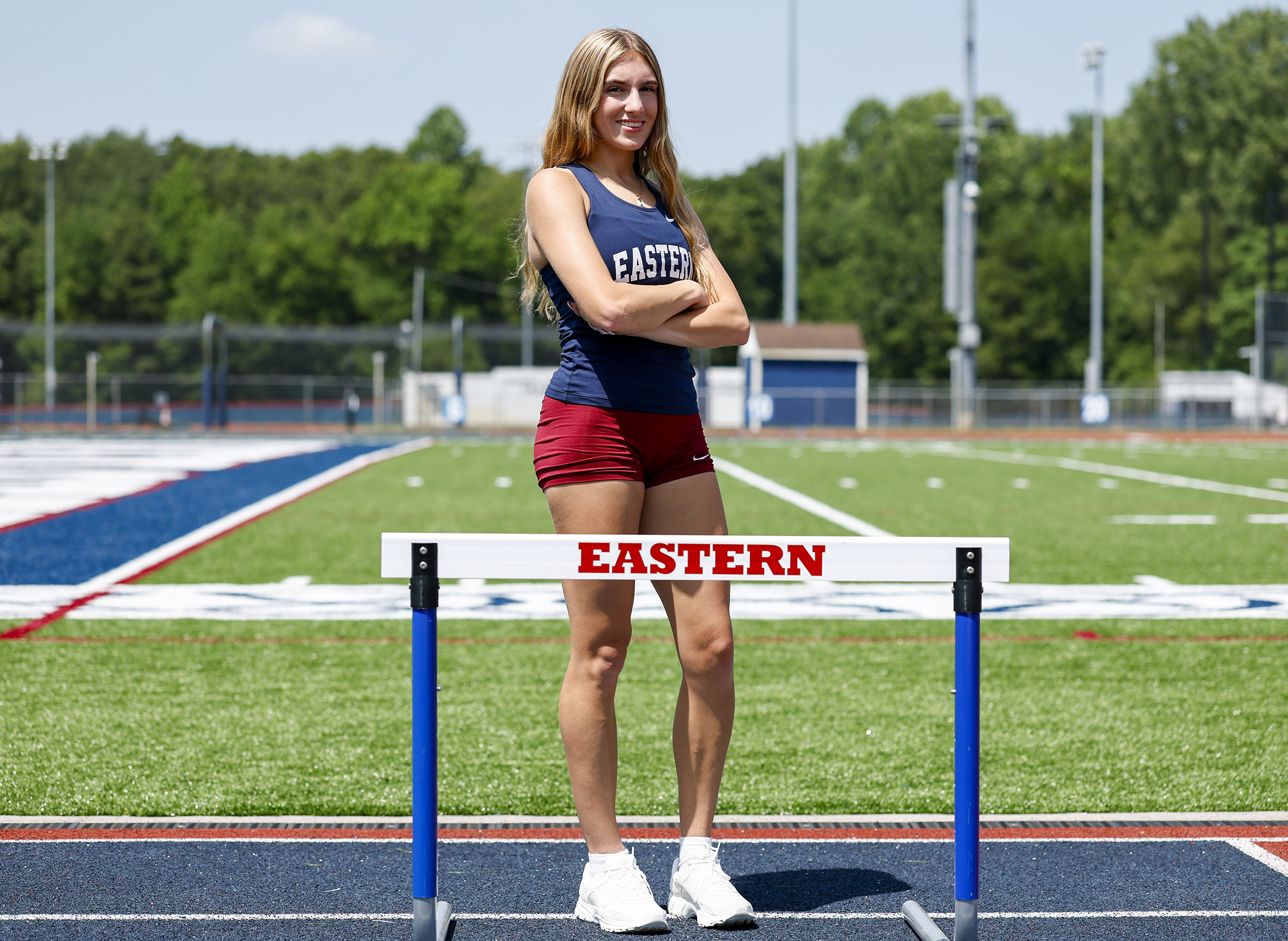
    Natalie Dumas started running track as a freshman at Eastern Regional.

    The partnership offers support from Nike’s team of trainers. Since signing with the company, Dumas has revamped her strength training regimen in line with Nike’s guidance and learned more about injury management. Through the program, she also connected with other Nike athletes and Nike Elite’s personal training staff.

    “It’s just great overall,” Dumas said. “I feel like high school athletes tend to be more on the lazy side than everyone else, because they kind of don’t have anyone like kicking their butt into gear.”

    “Sometimes being called out is embarrassing. [The Nike trainers] will say something like, ‘Hey, you didn’t finish this last set, go do it.’ But they definitely stay on top of you. … They all help us push to be our greatest.”

    NIL is not the only change in Dumas’ life. After coming onto the national scene last year, Dumas’ popularity in the track world skyrocketed. The 17-year old currently has nearly 14,000 followers on Instagram.

    “Coming into this year, she was a minor celebrity,” Tangeman said. “Dealing with all the attention and everyone knowing her. Other athletes from other schools saying hi to her, wanting to take pictures at meets and just all that other stuff. It was definitely a lot different.”

    Dumas had to get used to the constant noise around her — which she admits has been “hard to handle” at times.

    “At the end of the day, you shouldn’t worry about making sure everyone’s responded to and everyone’s answered to,” Dumas said. “If they’re closest to you and if they know you, they’ll kind of understand. [They will] be like, ‘Well, I know Natalie. I know the type of person she is, and she wouldn’t do that to me.’ It’s kind of just hard to keep up with it.”

    ‘Shape me into a better runner’

    As one of the top talents in the country, Dumas had her pick of the upper-echelon of college programs, which was a blessing and a curse.

    “It’s kind of like when you go to a restaurant and there’s a huge menu,” said Tangeman, laughing.

    Dumas spent most of this past year scheduling and taking recruitment visits. In order to woo her, she said several programs pulled out all the stops. One treated her to an outing at Topgolf. Another pitched their school to her on a boat. Ultimately, it was the last school she visited that won her over.

    Natalie Dumas runs the 400 meters, 800 meters, and 400-meter hurdles.

    “[Arkansas] just set my goals in front of me,” Dumas recalled. “They said, ‘These are your goals, this is what you want to do. If that’s what you want to do, we will make an attempt to reach them.’

    Arkansas has won three NCAA women’s outdoor track and field team titles since 2015, and another five in indoor track over that span.

    “There’s not too much to be said about Arkansas. You look at the program, you look at the athletes that they have produced, and you see what they have done. I put my trust in them. I’m not afraid to run the workouts that they’re running, lift the workouts that they’re lifting. I’m not afraid to go out there and try something new, and I’m definitely excited for them to kind of just shape me into a better runner.”

    While Dumas is looking forward to running at one of the best collegiate programs in the country, she is also mourning the end of her high school career. She graduated last month, cutting her Nike Nationals appearance a day early to make the ceremony. In the weeks since, she has found it “weird” to have a summer away from the track where she first learned to run.

    “She brought a lot of positive attention our way,” Tangeman said. “Going forward, the kids coming up throughout our school system will say, ‘Hey, you know this Natalie Dumas? She ran track and field at Eastern, maybe that’s something I want to do too.’”

  • Atlanta Dream trio of Angel Reese, Rhyne Howard and Allisha Gray among All-Star reserves

    Atlanta Dream trio of Angel Reese, Rhyne Howard and Allisha Gray among All-Star reserves

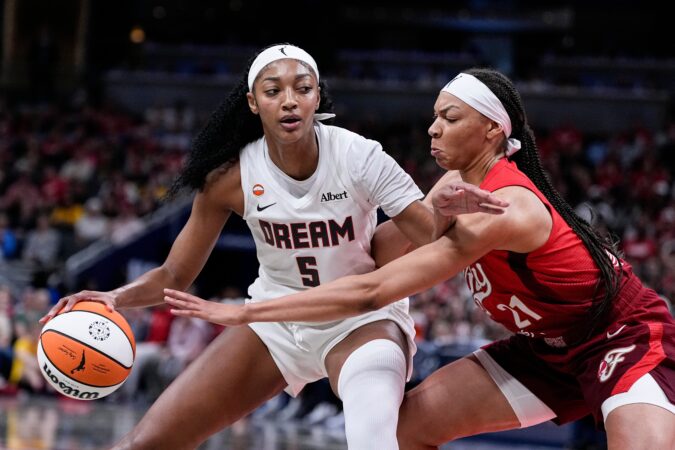
    Angel Reese felt that Atlanta Dream teammates Rhyne Howard and Allisha Gray were snubbed by not being selected as All-Star starters.

    Now the Dream trio will get to play together in Chicago at the WNBA All-Star Game on July 25 after all three players were selected as reserves by the league’s coaches on Tuesday.

    Reese had said after the All-Star starters came out that she felt her two Dream teammates should have been starting. It’s the fourth time that Atlanta has had three All-Stars.

    Joining the Dream players as reserves are Washington teammates Sonia Citron and Kiki Iriafen. Both made the All-Star Game as rookies last season.

    Toronto’s Marina Mabrey will be making her first All-Star appearance and gave the expansion franchise a player in the game. She matched the WNBA record with a 53-point game last month.

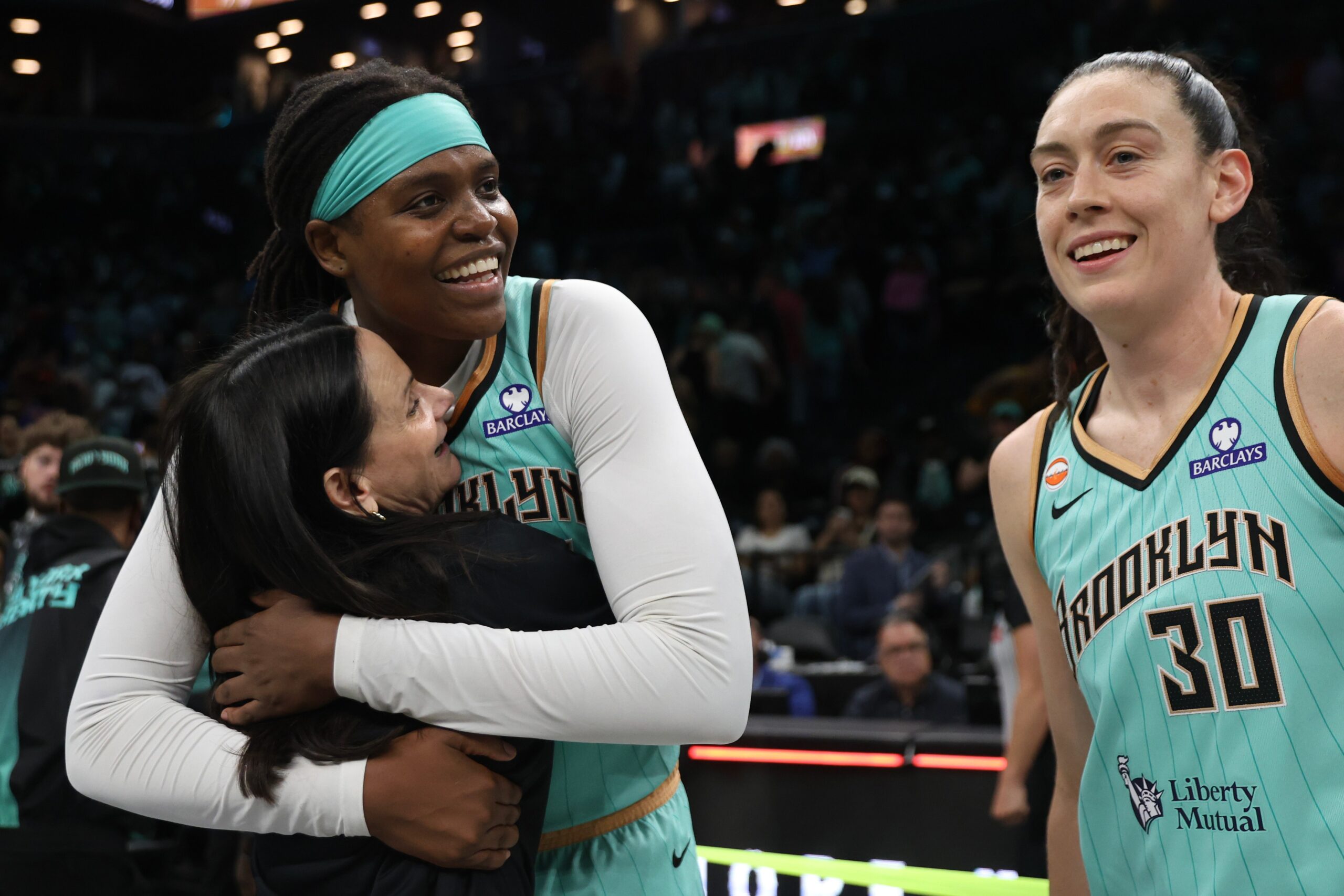
    Other players selected by the coaches were New York’s Jonquel Jones, whose adoptive mother is Temple women’s basketball coach Diane Richardson, Minnesota’s Courtney Williams, Las Vegas’ Jackie Young and Seattle’s Dominique Malonga, who will also be making her All-Star debut.

    New York Liberty center Jonquel Jones (center) will join teammate Breanna Stewart in the WNBA All-Star Game.

    Los Angeles teammates Nneka Ogwumike and Kelsey Plum also were picked. Ogwumike has been an All-Star 11 times and moved into a second-place tie with Diana Taurasi for most All-Star appearances, only trailing Sue Bird’s 13.

    Coaches couldn’t vote for their own players.

    Plum has been sidelined for the last few weeks with a leg injury and will be evaluated again later this month. If she can’t play, WNBA commissioner Cathy Engelbert will choose a replacement.

    New this year, WNBA greats Cynthia Cooper and Teresa Weatherspoon will serve as honorary general managers and select the two teams from the pool of All-Stars. The pair will select the teams at some point soon.

    Chicago, Portland, Connecticut and Phoenix all don’t have All-Stars.

  • Breast cancer survivors from Whitemarsh Boat Club are rowing like ‘an athlete’

    Breast cancer survivors from Whitemarsh Boat Club are rowing like ‘an athlete’

    It was Valentine’s Day 2022 when Shannan McConnell found a rash near her neck that felt like a lump. Then, everything went awry. She was diagnosed with breast cancer and quickly began her treatment.

    There wasn’t much time to process what was happening to her, she says.

    “A lot of people say that when you’re going through the treatment, you’re just doing what you’re told and you just keep going,” said McConnell, age 46, from Media. “Then when you’re left alone, you’re like, someone has to tell me that really happened, it was so far out. … Will I ever be the same, will I ever be strong, will I ever have adventures?

    “We have 10 years of medication that changes your whole life, monthly injections, it’s ongoing. It kind of feels a little more daunting afterward.”

    McConnell is no longer in active treatment, and even though her doctors have told her, “you’re cancer free — you can put this behind you,” she can’t. Many cancer survivors can’t, she says. However, for the past three years, McConnell has found an outlet that has given her strength and community. It’s paddling in a boat with a group of women.

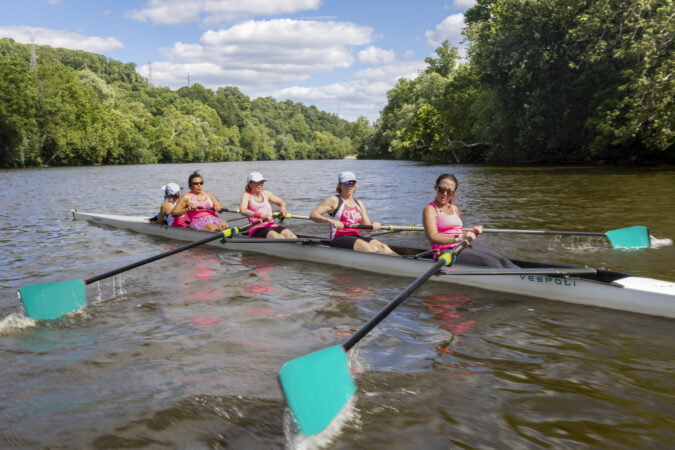
    WeCanRow-Philadelphia, a rowing program through Whitemarsh Boat Club for breast cancer survivors, came to Philly in 2018 and currently has 46 members.

    WeCanRow-Philadelphia is a rowing program through Whitemarsh Boat Club for breast cancer survivors. The Philly chapter is supported through the Survivor Rowing Network, which has more than 30 participating programs around the nation. It came to Philly in 2018 and currently has 46 members.

    “WeCanRow is everything about community, about mentoring, about encouraging, about connection, about hope,” said Susan Ryan, 61, of Eagleville. “It’s the on-water support group that isn’t.”

    While the program focuses on mental and physical healing for those treated for breast cancer, the participants are competitors, too. They’ve raced twice at the Head of the Charles Regatta in Boston and won both exhibition survivor events in 2024 and 2025.

    Now, they’re taking their oars across seas.

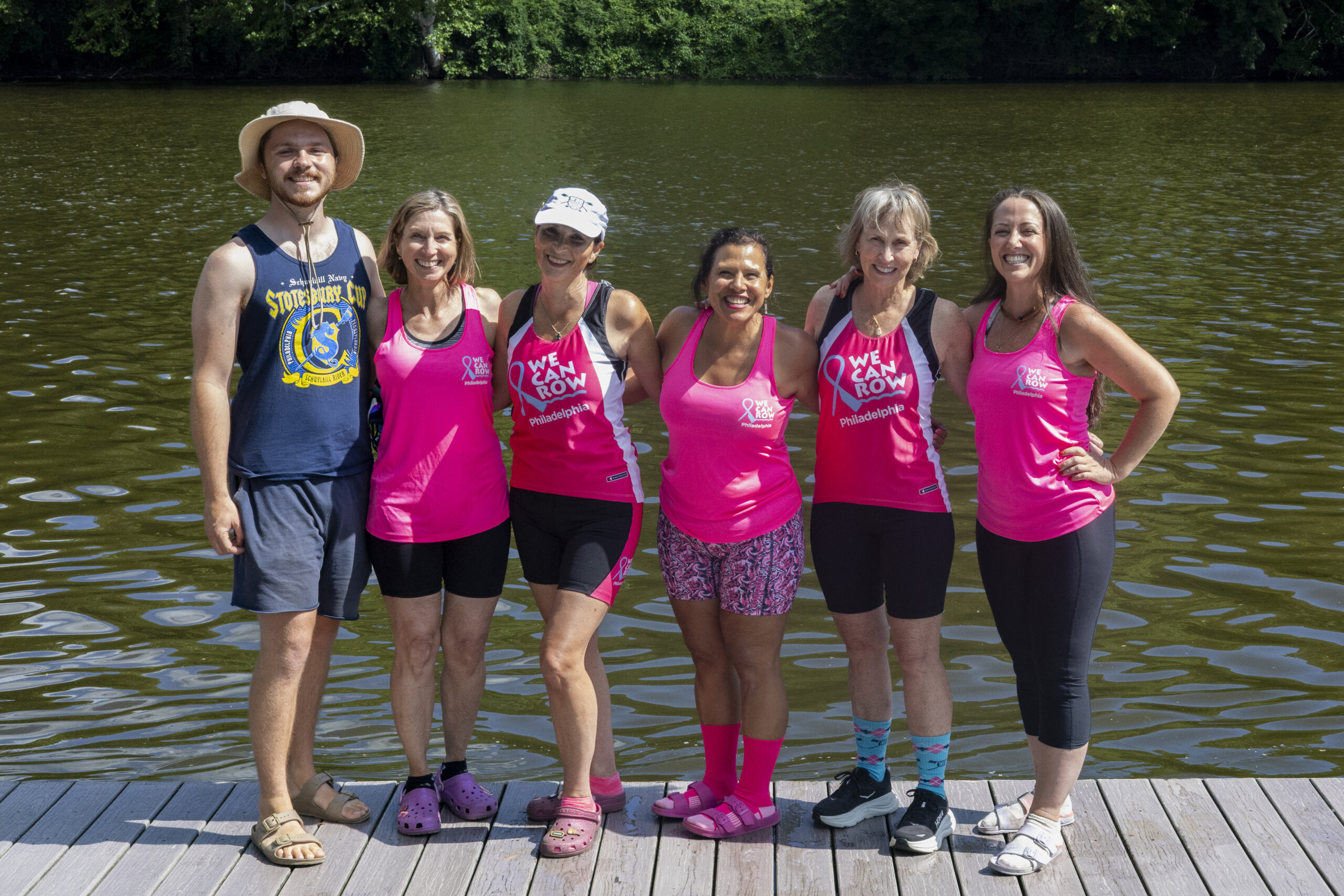
    From July 10 to 12, Whitemarsh Boat Club will have three boats compete at the Henley Masters Regatta in Henley-on-Thames, England. Members of WeCanRow-Philly will take part in an exhibition women’s coxed four. McConnell, Ryan, Jill Hunt, Bonnie Martin, and coxswain Marie Leonard will fill the exhibition boat.

    This will be the regatta’s first dedicated cancer survivor rowing event and marks a significant milestone as the first major event in the United Kingdom to welcome cancer survivor crews. It will run as a trial, with the hopes of becoming a permanent fixture.

    “When we meet these other survivors, there’s a connection,” said Martin, 61, of Lumberton, Burlington County. “It’s just great to have these connection points really all over the world, all over the country.

    “If someone would have told me six and a half years ago, when I was in treatment, that I’d be rowing like this, I would have never believed it. I feel like I’m an athlete, which I was never part of any organized sports before. It’s just been amazing.”

    WeCanRow-Philly is one of more than 30 participating programs around the nation through the Survivor Rowing Network.

    The two other boats are men’s and women’s quad. Both will race in the Master’s E class.

    The women’s quad is made up of all cancer survivors, featuring Emily Nelson, Karen Pinkstone, Kathy Reape, and Rebecca Choo Quan, while the men’s includes two cancer survivors from Whitemarsh, Jason Beck and Jim Nice.

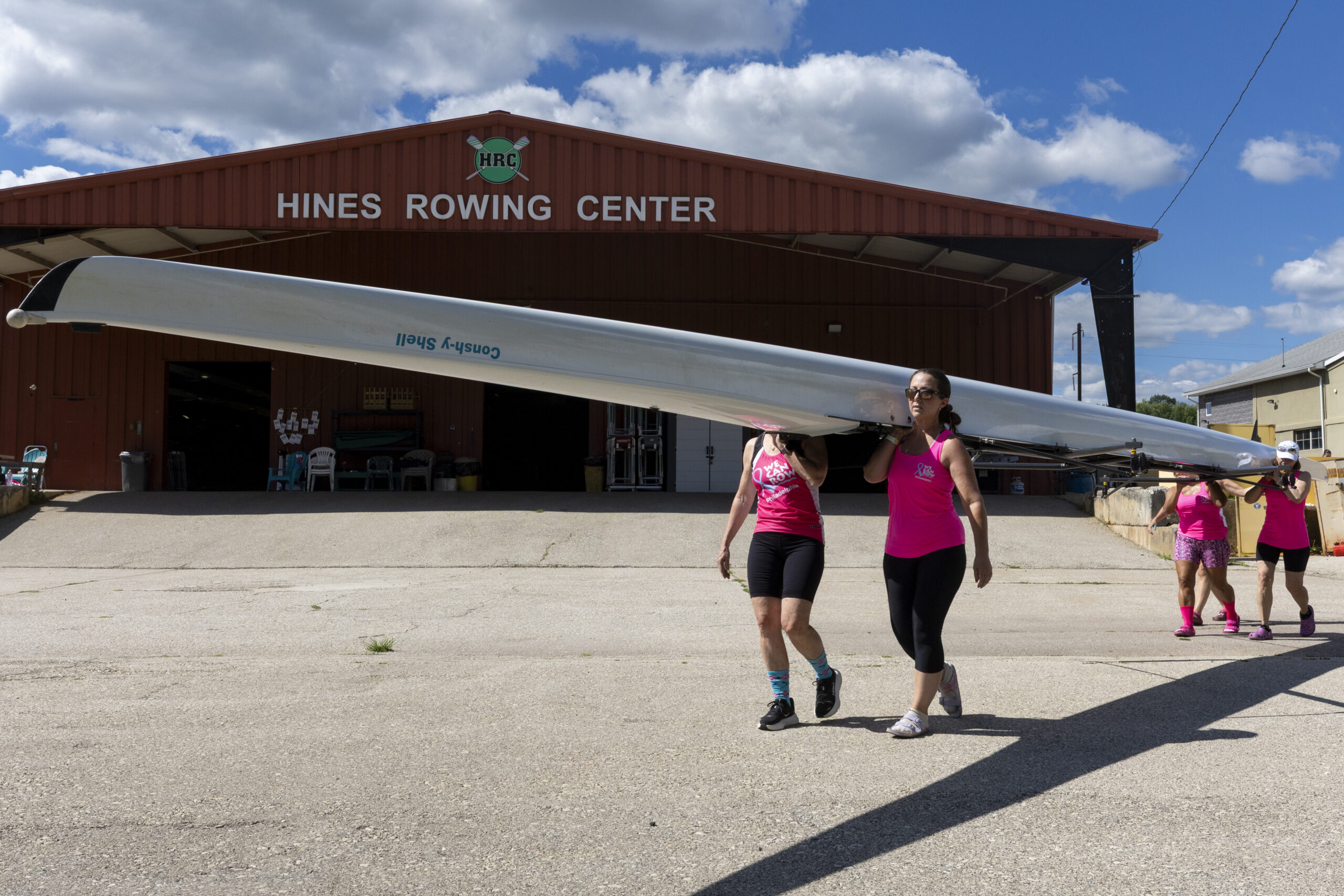
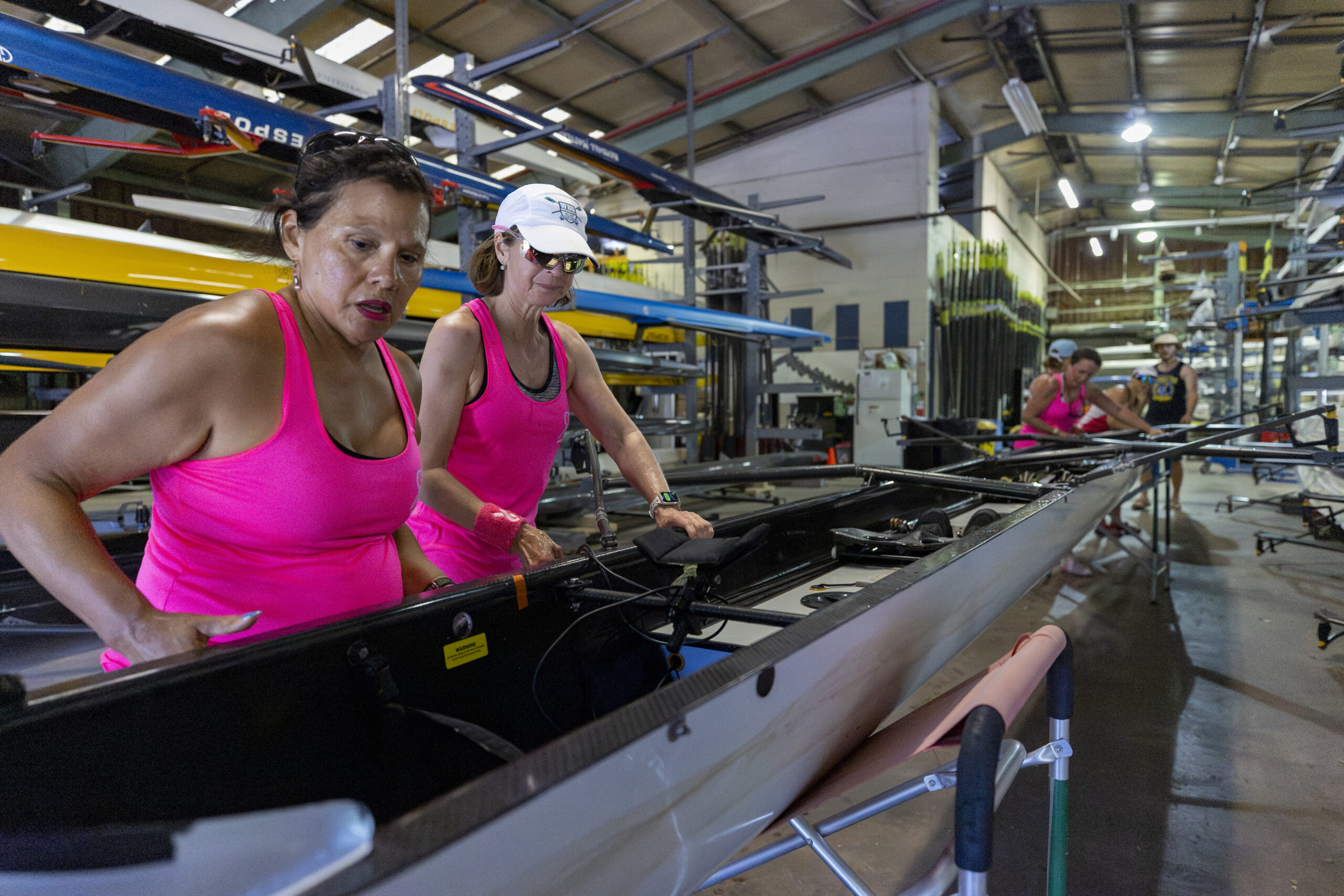
    The program, which runs out of Hines Rowing Center in Conshohocken, runs from April till September, every Monday evening. Then in October, practices are held on Saturday mornings.

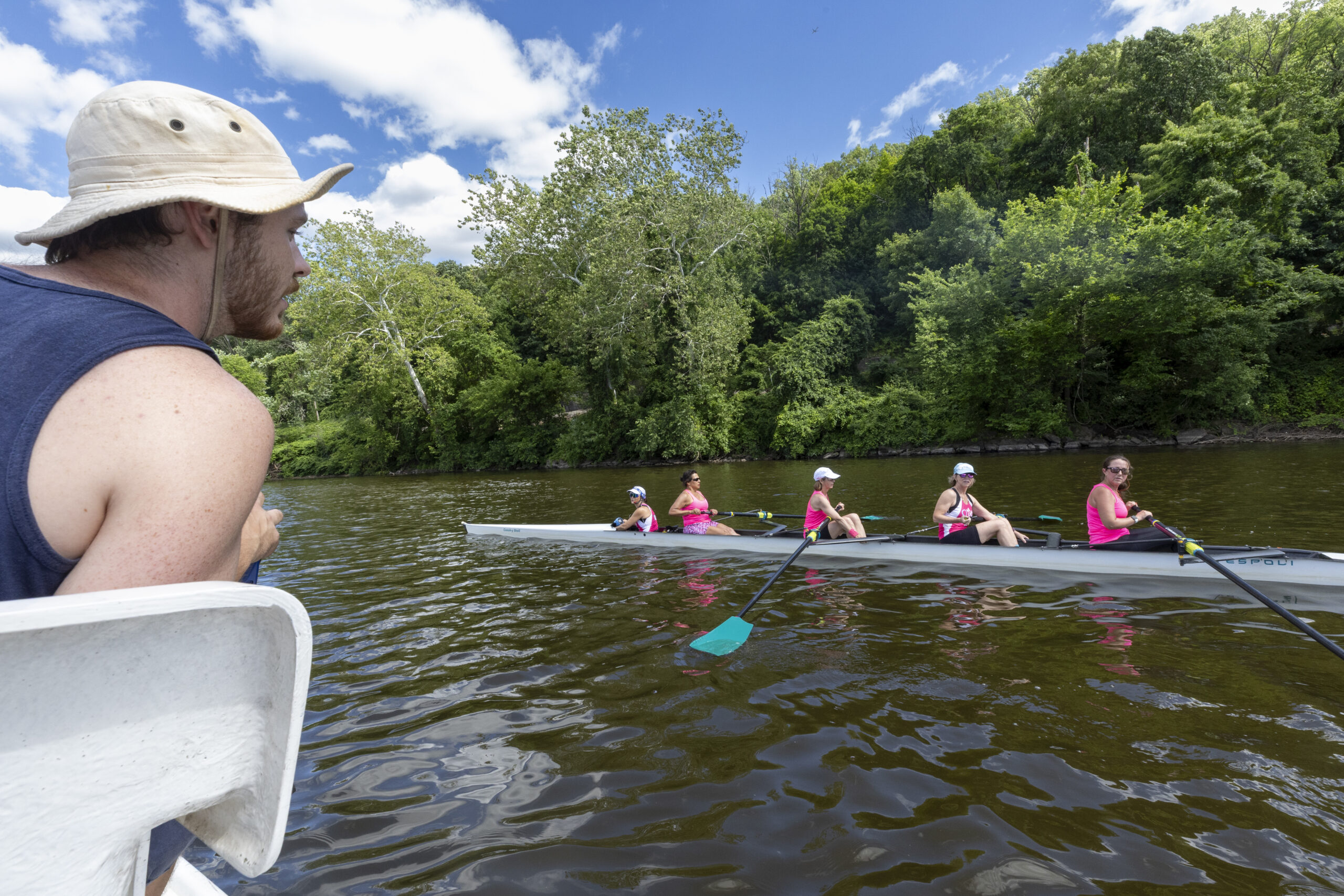
    Since finding out in May that they would be rowing at Henley, the crew bumped those practices to three times a week. Volunteer coach Matt Sidlowski, who’s a senior studying graphic design at West Chester, has been preparing the group for the upcoming regatta. He’s been involved with WeCanRow-Philly for the past three years.

    “They are so eager to row, so eager to get out there and spend their time working toward improvement,” Sidlowski said. “It makes it easy to show up. I have the power as a coach to give them access to a practice plan, training schedules, equipment, water time, feedback. … It really is motivating for me to see them achieve things they never thought they could.”

    Matt Sidlowski (left), a senior at West Chester, is a volunteer coach for WeCanRow-Philly.

    WeCanRow-Philly has brought together women from all over the area since Whitemarsh Boat Club is the only local boathouse offering cancer survivor rowing.

    Pinkstone, 56, travels about an hour from her home in Yardley to Montgomery County to row. But the drive is well worth it, she says.

    “It’s an entire evening,” she added. “You’re working all day and then you’re going to practice. My family is supportive because they see how happy this makes me and how important it is to me. … I’m a better teacher, a better mom, a better wife, a better person, because I’m taking care of myself, and this is a big part of it.”

    The group hopes to see more survivor rowing programs and events. To participate at such a prestigious regatta, though, is a start.

    Beyond the sisterhood, rowing is about working together to be in sync — even when the odds feel against you.

    “You can still pull hard in an unset boat, it doesn’t have to be perfect,” said Nelson, 56, of Villanova. “You can still put in 1,000 percent effort, even though the conditions are terrible, and I think about that a lot in the boat.

    “It’s not set, that’s not a reason to stop rowing, it’s not a reason to make excuses. Just go out there, do your best, no matter what’s going on. And that’s true on land, too.”

    WeCanRow-Philly has brought together women from all over the area since Whitemarsh Boat Club is the only local boathouse offering cancer survivor rowing.
  • Caitlin Clark voted a starter in her third straight WNBA All-Star Game

    Caitlin Clark voted a starter in her third straight WNBA All-Star Game

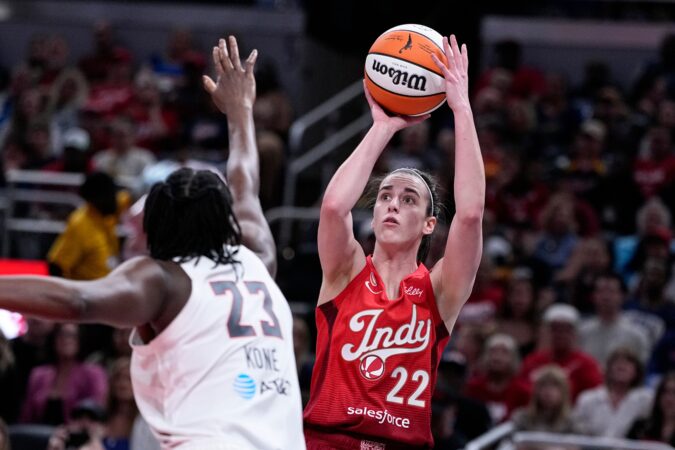
    NEW YORK — Caitlin Clark was voted to start her third straight All-Star Game and will be joined by Indiana Fever teammates Kelsey Mitchell and Aliyah Boston, the WNBA announced Thursday.

    It’s the second time in four years that three players from the same team were chosen to start the game, with Las Vegas doing so in 2023. Clark couldn’t play in last year’s game that the Fever hosted because she was injured right before the All-Star break.

    Dallas’ Paige Bueckers and Minnesota rookie Olivia Miles will join Clark and her teammates as backcourt starters. It’s the fourth consecutive year that a rookie was chosen as an All-Star starter. Bueckers played last season.

    A’ja Wilson, Breanna Stewart, Jessica Shepard, Natasha Howard, and Gabby Williams were selected for the frontcourt for the game that will be played July 25 in Chicago. It will be Wilson’s and Stewart’s eighth All-Star appearance while Shepard will be making her first.

    “It’s an honor to be an All-Star, even though I’ve had a few of them,” Stewart said. “Each one is really special, and I’m not taking it lightly.”

    Williams played in her first All-Star Game last season. Howard will play in her third.

    Starters were chosen by a mix of fan, player, and media votes. The fan vote counted for 50% while media and player votes were 25% each. Each player’s score was calculated by averaging their weighted rank from all three areas.

    The league’s head coaches will select the 12 reserves for the team, and they’ll be announced Tuesday. The 15 head coaches will vote for three guards, five frontcourt players, and four players at either position regardless of conference. Coaches can’t vote for their own players.

    New this year, WNBA greats Cynthia Cooper and Teresa Weatherspoon will serve as honorary general managers and select the two teams from the pool of All-Stars. Previously, the top two fan vote-getters would serve as captains and select the squads.

    Bueckers, Clark, and Boston were the top three vote-getters among fans. All three received more than 1 million votes.

  • Malvern Prep and Mount St. Joseph capture historic USRowing Youth National Championships

    Malvern Prep and Mount St. Joseph capture historic USRowing Youth National Championships

    Two boats, two schools, two historic national championship wins.

    Malvern Prep and Mount St. Joseph Academy competed in the USRowing Youth National Championships from June 11-14 at Nathan Benderson Park in Sarasota, Fla., and brought home first-place trophies.

    The regatta featured 235 of the top youth teams from around the nation. Malvern Prep’s youth quadruple sculls, which featured Will Bentley, Rory Coleman, Jack Arbogast, and Brendan Schuck, crossed the finish line in 5 minutes, 48.12 seconds to beat 28 other programs competing in the event.

    Mount St. Joseph’s second varsity eight team won gold, with a time of 6:34.7. The championship boat included Kayleigh Costello, Ella Kurek, Addison Marques, Aubrey Sheehan, Megan Bell, Addison Ross, Christian Robinson, Ava Kristel, and Zoe Nguyen.

    The last time these schools won at nationals was roughly two decades ago: Malvern in 2008, and Mount St. Joseph in 2006.

    The two teams supported another from the sidelines. Malvern cheered on the Mount girls from shore, and vice versa when the boys were in the water.

    “There’s only so many crews that are coming down from this area,” Mount St. Joseph coach Alanna McCoy said. “We all often are on the same stretch of water, so we took all the boats on one trailer and made it one trip — it was cool to come home with two trophies.”

    ‘Fueled the fire’

    Malvern sent four boats to Nathan Benderson Park.

    Beside from the youth quad boat, the youth double sculls, under-17 double sculls, and under-17 quadruple sculls also competed in the regatta.

    Malvern’s spring has been filled with wins, including a first-place finish in the quadruple sculls at the Scholastic Rowing Association of America championship in May.

    But placing second in a race at the Stotesbury Cup Regatta “unlocked this second gear,” Bentley said.

    “That was hard for us,” he added. “This fueled the fire for our training going into nationals, so I think it really helped us.”

    First-year head coach James Konopka helped cultivate that determination.

    “It was the willingness from the guys to make changes, to do the work, to really push themselves into moments of discomfort,” Konopka said. “At times, I’d argue, we were maybe the hardest-working team on the river. These guys worked so hard for this win.”

    Three Friars from the boat will move on to college rowing this fall.

    Bentley will row at Holy Cross, Schuck at the University of San Diego, and Arbogast at Wesleyan University. Coleman will return next season as a senior and plans to row in college.

    “It’s bittersweet to leave the program you spend so much time pouring hours and hours of effort into,” Schuck said. “But I know we left it in a place better than we found it.”

    Malvern Prep sent four boats to Nathan Benderson Park for the USRowing Youth National Championships.

    ‘Doing it for our sisters’

    For the Mount, inspiration and drive came from a more unconventional source.

    “[Coach] gave us this book, The Little Engine That Could,” Sheehan said. “Before our races, we read it, and it was interesting to go into the unknown with the idea of, ‘I think I can, I think I can, I think I can,’ and that kind of pushed us through the race.”

    With that mentality, the varsity eight boat crossed the finish line nearly two seconds ahead of the second-place boat. The group credited its teamwork and training for a successful final race of the season.

    “We would come to the boathouse in the morning, row on the water for two hours, go home, and then come back and go again for a few hours, and then do it all again for the whole week,” said Ross, who will row at George Washington next season. “I think that extra training is a really big push, especially for this boat, because we came together so late.”

    McCoy said the team shares a “unique bond,” despite nationals being the group’s first race competing together.

    “They all spend a ton of time together,” she said. “They’re together at school, they’re together after school, they’re together at the boathouse. They also are very good friends and hang out with each other outside of the boathouse.”

    Added Marques: “The main theme for our races is always to think about the legacy of the team. Doing it for the people who cheer us on, doing it for our siblings, doing it for our coaches, but the main thing is doing it for our sisters in the boat.”

  • Serena Williams loses in opening round at Wimbledon in first singles match in nearly four years

    Serena Williams loses in opening round at Wimbledon in first singles match in nearly four years

    LONDON — Serena Williams showed plenty of what made her a 23-time Grand Slam tennis champion in her first professional singles match in nearly four years on Tuesday.

    But Williams, 44, couldn’t quite dominate like she used to and was beaten, 6-3, 6-7 (6), 6-3, by an opponent less than half her age, 20-year-old Maya Joint of Australia, in the opening round of Wimbledon.

    “It was really great to be back at Wimbledon. I never expected to be here,” Williams, who did not meet with media after the match, said in a statement released by Wimbledon organizers. “The atmosphere was amazing. Walking out was amazing. I definitely relished it and missed it and enjoyed the moment more than anything.”

    Williams displayed the same powerful serve and heavy groundstrokes that led her to seven Wimbledon singles titles, but the 87th-ranked Joint handled her pace and won more of the big points by hitting beyond Williams’ reach on Centre Court.

    “I don’t know what just happened, to be honest,” Joint said. “I didn’t get much sleep last night. I was up until like 2 a.m. just thinking about it.

    “She has such an aura, she’s just a legend, and this court has so many huge names that have played on it. I’ve been dreaming about this moment since I was a little kid, so this is pretty crazy.”

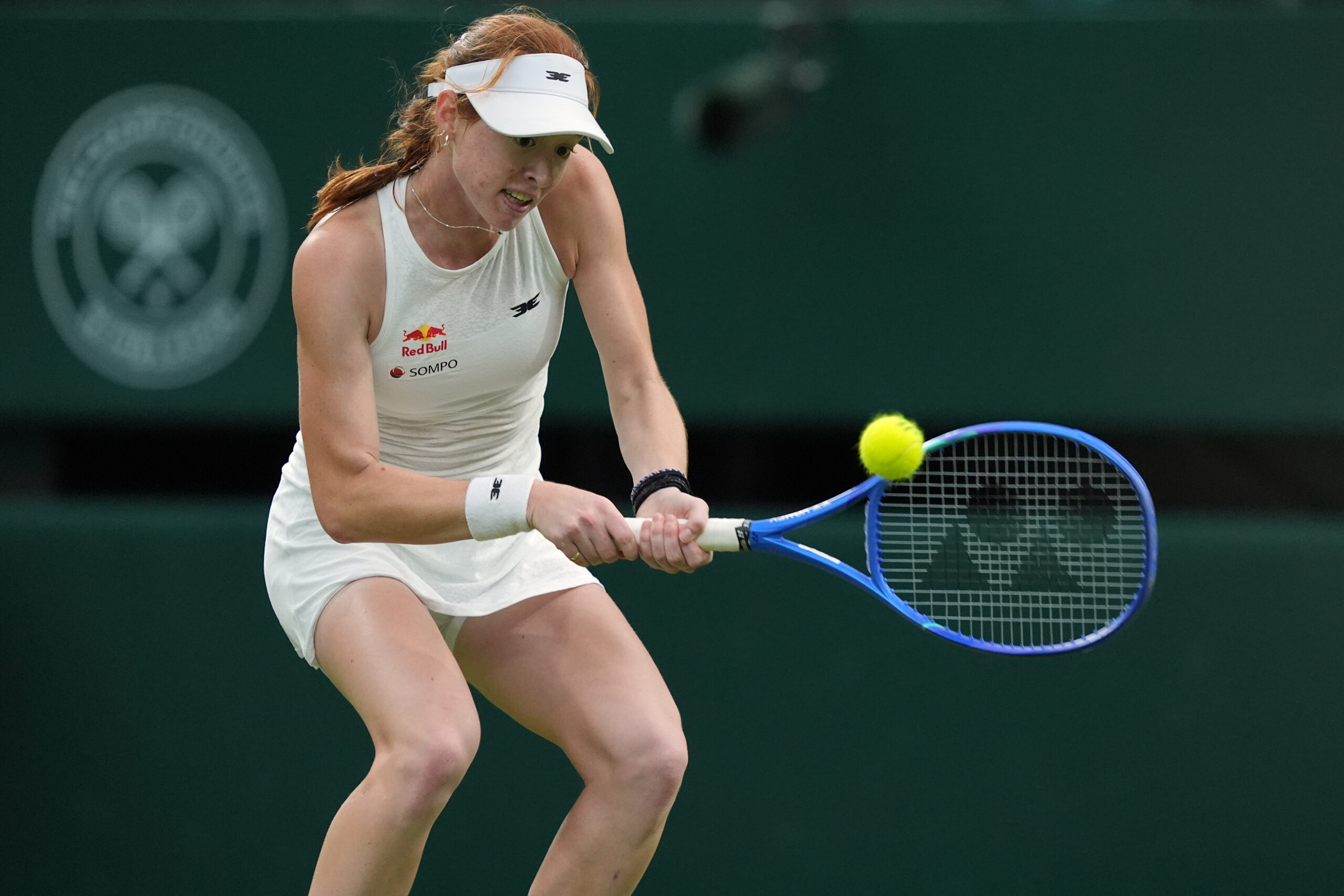
    Maya Joint is ranked 87th in the world.

    While Williams played two doubles matches just before Wimbledon to announce her comeback to the sport she once dominated, she hadn’t played a singles match since the 2022 U.S. Open.

    Williams has 98 career victories in singles on the hallowed grass of the All England Club. By contrast, it was Joint’s first Wimbledon victory in just her second appearance at the All England Club after losing in the opening round last year.

    But Joint won a Wimbledon warmup in nearby Eastbourne last year and knows how to play on grass.

    Doubles match still to come

    Williams, who has no singles ranking after being out for so long, was given wild card invitations by Wimbledon organizers to play singles and doubles with her older sister, Venus. Her doubles match is later this week.

    Williams has said that having her two daughters off from school inspired her comeback, and it marked the first time that her younger daughter, Adira, who is almost 3, saw her play singles. Adira sat next to her 8-year-old sister, Olympia, in the front row of Serena’s players’ box.

    Serena Williams’ husband, Alexis Ohanian, and their daughters, Olympia and Adira, watch her match against Maya Joint at Wimbledon.

    Standing ovation

    Williams was given a standing ovation as she walked on court before the match started under a closed roof and several supporters held up signs with messages like “Welcome Back” and one wore a T-shirt with the text “Unstoppable Queen.”

    Williams executed a delicate topspin lob winner early on and then cranked out a 121 mph ace to hold for 3-3 in the first set. But Williams also had a costly double fault that led to the only break of the first set.

    In the second set, Williams came back from 0-40 and saved four break points to hold for 6-5. Then Williams saved a match point in the tiebreaker with a big serve down the T followed by a forehand approach winner. Another big serve — clocking in at 122 mph — set up Serena’s first set point, which she converted when Joint missed a forehand long.

    After winning the set, Williams pumped her fist calmly.

    But Joint took control early in the third and a forehand from Williams sailed long on Joint’s third match point to conclude the encounter after 2 hours, 22 minutes.

    Williams then smiled as she walked off the court to loud applause.

    Williams and Joint both had 37 unforced errors, while Joint led, 40-26, in winners.

    Serena Williams and Maya Joint shake hands following their first-round match at Wimbledon.

    Zverev, Świątek advance

    After opening day featured wins for No. 1s Jannik Sinner and Aryna Sabalenka, along with Novak Djokovic, French Open champion Alexander Zverev and defending Wimbledon champion Iga Świątek made it into the second round on Tuesday.

    In a match between hard servers, the second-seeded Zverev beat Alexander Blockx, 6-4, 6-7 (8), 7-6 (5), 7-6 (0).

    Świątek, who had her father and sister looking on from the Royal Box, struggled with her serve and committed nine double-faults before overcoming Taylor Townsend, 6-1, 2-6, 6-3.

    No. 2 Elena Rybakina also advanced, beating Lois Boisson, 6-4, 1-6, 6-3.

    Fourth-seeded Ben Shelton, a quarterfinalist here last year, lost to 140th-ranked Finnish qualifier Otto Virtanen in five sets, 6-4, 3-6, 6-7 (8), 6-2, 7-6 (9).

    Matteo Berrettini, a finalist in 2021, beat Stan Wawrinka, 6-7 (7), 7-6 (16), 7-6 (7), 7-6 (5). It was the final Wimbledon match for Wawrinka, who plans to retire at the end of the year.

  • An Olympic gold medalist is expanding her chain of gymnastics academies to South Jersey

    An Olympic gold medalist is expanding her chain of gymnastics academies to South Jersey

    Olympic gold medalist Dominique Dawes will expand her chain of gymnastics academies to Mount Laurel in September.

    The South Jersey location, at 1180 Nixon Drive in the East Gate Square shopping center, is the first effort in Dawes’ planned expansion into the Philadelphia area. She plans to open five or six additional gyms in the coming years, according to Philadelphia Business Journal.

    Along with the Mount Laurel location, Dawes, who’s from Silver Spring, Md., also is opening a second location in the Houston area in August. Her first academy opened in Clarksburg, Md., in July 2020, and there currently are six locations across Maryland, Virginia, Georgia, and Texas.

    Dawes is a three-time Olympian who competed at the 1992, 1996, and 2000 Games. She made history as the first Black American woman to win an individual Olympic medal in gymnastics with a bronze medal on the floor exercise in the 1996 Olympics in Atlanta. She also helped win team gold at those same 1996 Games when her teammate Kerri Strug famously completed her vault exercise on an injured ankle. The “Magnificent Seven” was the first United States women’s gymnastics team to win a team gold at the Olympics. Dawes also won team bronze in 1992 in Barcelona and 2000 in Sydney.

    Now a mother of four, Dawes has spoken publicly about the toxicity she endured during her career and how she doesn’t want her children — or any other children — to experience the same. Instead, she hopes to redefine the culture of the sport through her string of academies that have an estimated 7,000 students ranging from toddlers to 18-year-olds.

    “We’re trying to do things differently,” Dawes said in an interview with Capital B Atlanta. “It means nothing if your child is a great gymnast — standing on top of the podium — but yet, their self-esteem is shot, their mental health is shot, and they don’t know how to make relationships in this world. I believe that if that is the outcome, then we’ve failed.”

    Plans for expansion into the Philly area don’t include specifics on locations yet, but the Philadelphia Business Journal reported that proximity to families is a large factor in Dawes finding spaces for the gyms.

  • Supreme Court upholds state laws banning transgender girls and women from school athletic teams

    Supreme Court upholds state laws banning transgender girls and women from school athletic teams

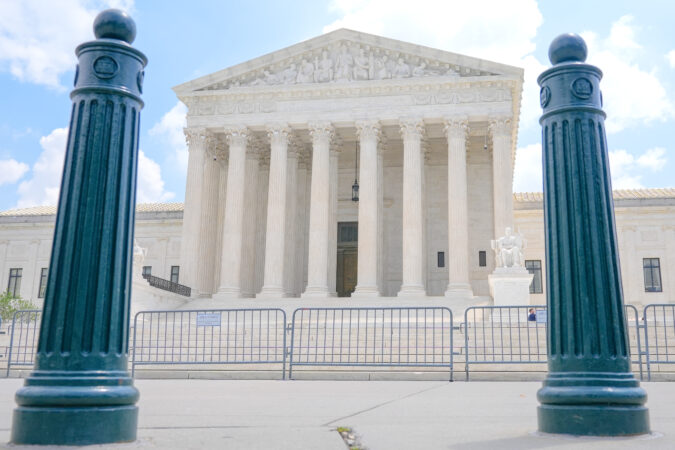
    The Supreme Court on Tuesday upheld bans in Idaho and West Virginia on transgender athletes playing on girls’ and women’s sports teams, the latest in a string of legal setbacks for the LGBTQ+ community before the high court.

    In a decision led by the court’s six conservatives — but joined in parts by its three liberals — the justices found that states can separate teams based on “biological sex” without offending the Constitution’s guarantee of equal protection and Title IX, a landmark 1972 antidiscrimination law involving education.

    “Separate sports teams for biological males and biological females are reasonable: Given the inherent physical differences between the sexes, allowing only biological females to play on women’s and girls’ teams can reduce the risk of physical injury and ensure fair competition,” Justice Brett M. Kavanaugh, who coached his daughter’s youth basketball team, wrote for the majority.

    The court’s three liberals, led by Justice Sonia Sotomayor, agreed that West Virginia’s ban did not violate Title IX. But they disagreed with the majority on several fronts, especially the conclusion that the West Virginia law withstands scrutiny under the Constitution’s guarantee of equal protection for all.

    Sotomayor wrote that a lower court should have the chance to sort out a question central to the case of the teenage plaintiff from West Virginia, Becky Pepper-Jackson: whether trans girls who have not undergone male puberty have physical advantages in sports.

    “Because of the Court’s decision today, West Virginia, and any other state actor, can deny B.P.J. and others like her these experiences simply because it thinks they have an inherent athletic advantage, even if the facts show that they do not,” Sotomayor wrote.

    The court did not address what is arguably the flip side of its ruling — whether schools and states can adopt policies allowing transgender athletes to compete on girls’ and women’s teams, as some liberal states and communities do.

    “That question is currently the subject of litigation in some lower courts,” Kavanaugh wrote in a footnote. “Nothing in this opinion is intended to decide that question.”

    The ruling is among several in recent terms that are consequential for the LGBTQ+ movement. The Supreme Court in March ruled a Colorado law banning “conversion therapy” for gay and transgender youths probably violated the free-speech rights of a religious counselor who wants to counsel such young people according to biblical teachings.

    Earlier that month, the court sided with Christian parents in blocking, for now, California policies that discourage schools from informing parents of a student’s sexual orientation or gender identity without the student’s consent. Last year, the court upheld bans on gender transition treatment for minors.

    Questions over whether transgender girls and women should play on girls’ and women’s sports teams has been a particular flash point in a broader conversation about transgender rights. Dozens of states have bans amid intense public debate about fairness at all levels of competition.

    The debate over the allowance of transgender women in collegiate athletics gained national attention in 2022 after Penn swimmer Lia Thomas won the national title in the women’s 500-yard freestyle. Thomas, who is a transgender woman, competed for the Quakers men’s team during the 2018-19 season before medically transitioning.

    In July 2025, Penn struck a deal with the Trump administration regarding Thomas’ participation. According to the deal, Penn agreed to ban transgender athletes, vacate Thomas’ records, release a statement in support of Title IX “as interpreted by the Department of Education,” and send personalized letters of apology to Thomas’ former women’s teammates. The deal came after the White House had paused $175 million in federal funding to Penn because of Thomas’ participation on the Quakers’ women’s team in 2021-22. The federal funding was restored following the agreement.

    The issue came to the high court in a pair of cases, brought separately by Pepper-Jackson, a teen from West Virginia, and Lindsay Hecox, a Boise State University student in Idaho. Both argued that the bans in their states discriminated on basis of sex and violated the Constitution’s equal protection clause. In January, the justices appeared sympathetic to arguments for keeping the bans in place as the cases were argued back-to-back.

    LGBTQ+ activists said the decision would be devastating for some young people.

    “This is a heartbreaking ruling for our clients and transgender girls like them who’ve asked for nothing more than the same opportunities afforded to their peers,” said Joshua Block, senior counsel for the American Civil Liberties Union’s LGBTQ & HIV Rights Project, who argued the case for Pepper-Jackson.

    Sasha Buchert, director of nonbinary and transgender rights at Lambda Legal, said the decision was upsetting but also narrow.

    The ruling is “a serious loss — we’re not minimizing that,” she said. But noting that the court did not impose a national ban on transgender athletes in female sports, Buchert added, “This ruling says, sure, a state may discriminate, not that they must discriminate.”

    Twenty-seven states have passed laws banning transgender student-athletes from competing on women’s or girls’ sports teams. Supporters of the bans say they are necessary to ensure fairness and safety because of inherent physical differences between males and females. Opponents say the laws discriminate against trans people and should be struck down.

    President Donald Trump early last year signed an executive order aimed at keeping transgender women out of women’s sports. The administration has argued that there are only two sexes — male and female — and that they “are not changeable.”

    Soon after the executive order on sports, the NCAA and the U.S. Olympic and Paralympic Committee updated their policies to bar trans women from playing on women’s sports teams. Since then, the administration has aggressively investigated schools that allow trans girls to participate in girls’ and women’s sports.

    Education Secretary Linda McMahon welcomed the court’s decision Tuesday.

    “For years, ideologues distorted Title IX to advance a radical transgender agenda, subjecting women to immeasurable harm,” she said in a statement.

    Nicole Neily, founder and president of Defending Education, a conservative advocacy group, called the decision an “exercise in judicial humility” and noted that it may be disappointing to conservatives in liberal states that allow transgender athletes to participate.

    “Although it’s certainly not as sweeping as parent activists would have liked, it means that the action shifts to the states and is now a persuasion game,” she said in a statement.

    Views among Americans on transgender issues are nuanced. A Pew Research Center survey published in February 2025 showed 56% of adults support policies aimed at protecting transgender people from discrimination in jobs, housing, and public spaces.

    But over the past few years, Americans also have become more supportive of restrictions for transgender people, according to the Pew survey. Fifty-six percent of Americans supported bans on providing gender transition care for minors, up 10 percentage points from 2022, the study found.

    But athletics have always stood out.

    The Pew survey found that 66% favored laws that require trans athletes to compete on teams that match their sex assigned at birth, up eight points from 2022. Even before the general shift in public opinion, a majority of Americans opposed allowing trans women to compete against other women at all levels of sports, according to a Washington Post-University of Maryland poll.

    The science concerning biological advantages of transgender girls and women in sports is evolving and remains hotly debated. The case featured competing evidence about whether transgender girls are inherently better at sports. The transgender plaintiffs presented evidence that transitioning before puberty prevents them from building enough body mass to have an advantage in high school and college sports.

    Lawyers for the states countered with studies that showed that nontransgender boys and men perform better at all ages. The study found that boys between the ages of 7 and 12 ran about 4% faster and jumped about 7% farther than girls in the same age group.

    “The legislatures and the schools are better equipped — and under the Constitution, are the more appropriate entities — to assess the competing medical and scientific considerations and draw appropriate lines,” Kavanaugh wrote in the majority opinion. “Of course, no line that the States draw will satisfy everyone.”

    While there’s no comprehensive tally of trans athletes nationally, an estimated 300,100 transgender youths between the ages of 13 and 17 live in the United States, according to the Williams Institute at the UCLA School of Law. The Human Rights Campaign, an LGBTQ+ advocacy group, has estimated that 14% of trans boys and 12% of trans girls play on a sports team.

    Inquirer Staff Writer Conor Smith contributed to this article.

  • Continued abuse of Caitlin Clark; Phil Mickelson’s ultimate disgrace; Canada’s miracle soccer win

    Continued abuse of Caitlin Clark; Phil Mickelson’s ultimate disgrace; Canada’s miracle soccer win

    It’s unorthodox to begin a piece by denigrating a subject of sympathy, but in this case, it applies.

    Indiana Fever superstar Caitlin Clark is smug, and she’s kind of a jerk, and plays a little bit dirty herself. Also, there’s little viable argument that if she were a bit less abrasive then perhaps she would be less of a target.

    But there’s no doubt that she has been a target of jealousy and resentment since her arrival in the league, and there’s less doubt that the WNBA and its officials do a pathetic job of protecting her. She is, after all, the greatest asset not only in women’s basketball, nor in the history of women’s basketball, but in the history of women’s sports.

    That’s with all due respect to Billie Jean King, Babe Didrikson Zaharias, Serena Williams, et al. Clark is the queen of a mainstream team sport in an era when mainstream team sports matter more than ever. She should be treated like royalty. Instead, she’s treated like crap.

    She’s filled arenas, sparked expansion, and sold millions of jerseys, both her own and those of her peers. Her reward? She’s been the victim of nine flagrant fouls since she joined the league in 2024, more than anyone else.

    The latest flagrant wasn’t even called in real time, if you can believe it. As a matter of fact, it wasn’t even called a foul.

    On Wednesday, while pursuing a loose ball, Phoenix Mercury forward Alyssa Thomas kneed Clark in the thigh and jammed her fist into Clark’s throat as Clark lay on the ground.

    The league reviewed the incident, declared that Thomas had committed a Flagrant 2, and suspended her for Saturday’s game against Toronto. Thomas, a hard-nosed, Draymond Green-type of player, has a history of flagrancy; last season, she elbowed rookie Kiki Iriafan in the throat and threw Angel Reese to the ground.

    In the same game Clark was undercut on two jump shots, neither judged flagrant in real time or upon review. She left the game having aggravated a back injury.

    That’s right: The most important player in WNBA history entered the game with a back issue, was the recipient of three dangerous fouls, and left the game having been reinjured.

    She missed the Fever’s game this past Saturday, and her status is unknown for this coming Sunday’s game in Las Vegas.

    She missed most of her sophomore season in 2025 with various injuries.

    Not all of Clark’s missed time has been a result of hard fouls, but that’s the point. She’s the draw. Any hard foul on here should be amplified.

    She should be preserved like ancient parchment. She should be protected like religious relics. She is worth 10,000 times her weight in gold and should be treated accordingly.

    You should get two technicals for brushing her cheek. You should get a Flagrant 1 for coughing on her.

    Intentional foul on a fast break? Twenty years to life.

    Is this fair? Of course not. Is this business? Yes, it is. Business is seldom fair. If you don’t think that’s true, you should study capital gains taxes, corporate tax breaks, and film of Larry Bird in the 1980s.

    It doesn’t matter that Clark is not the best player in women’s basketball history (that’s Diana Taurasi), and it doesn’t even matter that she’s not the best player today (that’s A’ja Wilson). What matters is that Clark’s the most valuable female athlete, at a time when female athletics is finally experiencing its true value.

    One financial projection valued women’s sports revenues to generate at least $3 billion this year, an increase of 340% since 2022. You know what else happened in 2022? Clark, a sophomore at Iowa, became the first player in women’s Division I history to lead the nation in both points and assists. She became a phenomenon.

    A cocky phenomenon; a celebrating, taunting, in-your-face phenomenon — but a phenomenon nonetheless.

    For the record, I don’t like it when Steph Curry or LeBron James flaunt their cellys either. But as much as they mean to their sport, neither touches the importance of Clark either in her chosen profession or in her demographic.

    Protect her at all costs.

    Phil’s just desserts

    Seventeen years ago, the myth of Tiger Woods collapsed when the report of an affair, a car crash, and series of mistresses revealed the greatest golfer of all time, branded as a squeaky-clean, monomaniacal über-athlete to also be one of the greatest hypocrites of all time.

    No one benefited more from Tiger’s downfall than Phil Mickelson, Tiger’s biggest rival. Even after his departure to LIV Golf that sparked a wider exodus and a bitter feud, and even as Mickelson bizarrely delves further into support of far-right policies on social media, there remained a core of Mickelson supporters who adored his magnificent talent, swashbuckling style, and his entertaining public pronouncements.

    That’s all over. Phil’s done.

    Two weeks ago, Golf Digest reported that Phil Mickelson, Woods’ biggest rival, was kicked off The Farms Golf Club near San Diego and had his membership rescinded in the middle of a round after club officials determined that he had made inappropriate advances and contact with a female staff member. Mickelson denied the accusation.

    Two days ago, Skratch Golf correspondent Alan Shipnuck produced a scathing report that detailed several more inappropriate episodes with two other women. It also supplied evidence that Mickelson cheated with at least one woman on a regular basis, paying a pro shop kid $500 to drive around the course with Mickelson’s cell phone so that if his wife, Amy, wondered what he was doing, she would think he was playing golf.

    In light of the transgressions by Woods, which include various addictions, it’s been astonishing to witness the leeway given Mickelson during his three decades in the limelight. He’s been connected with insider trading, he’s been cast as an inveterate gambler — he was accused of trying to bet on the 2012 Ryder Cup, which he and the rest of the U.S. team lost by 1 point (Mickelson went 3-1-0) — and created a legion of enemies on the PGA Tour and in its galleries when he defected to LIV.

    Now, this.

    Now, what?

    Tiger has admitted his transgressions, has faced his demons, and has largely recovered his image.

    Phil never will.

    The biggest difference between Mickelson and Woods is that, whatever advances Tiger made in pursuit of his infidelities, as far as we know, they were at least consensual, if not welcomed or pursued.

    Mickelson isn’t the only distasteful star in professional golf — Fred Couples admitted he cheated on his wife while she was fighting cancer — he’s just the smarmiest, the creepiest, and the phoniest. Golf writers and broadcasters protect their cash cows like baseball writers did in the 20th century: They shield flawed heroes from the glare of reality.

    Phil was especially alluring, since, in contrast to surly, multi-ethnic Tiger Woods, he was a generally affable Great White Hope.

    Regardless, both made their beds. There, they will lie.

    Another ‘Golden Goal?’

    I was there for Sidney Crosby’s overtime Golden Goal that beat the United States at the 2010 Winter Olympics in Vancouver. Wayne Gretzky, the Great One, and Donald Sutherland, perhaps the greatest Canadian actor, sat just above my right shoulder, and they erupted with joy when Sid the Kid potted the winner. It was only the second time since 1952 that Canada won Olympic gold in its national sport. Most Canadians who witnessed it know where they were that day.

    Canada head coach Jesse Marsch celebrates after Stephen Eustáquio scored their opening goal against South Africa during the World Cup round of 32 Sunday in Inglewood, Calif.

    That was the sort of hyperbole coming from the Great White North when Canada beat South Africa in the World Cup’s Round of 32 knockout stage Sunday. More Canadians play soccer than hockey, and soccer ranks second in popularity with the 40 million Canadians.

    “We really wanted to give this win to all the Canadians,” Stephen Eustáquio said in a television interview. He scored the winner in extra time. “When I shot, I felt everybody shot with me. Everybody put a bit of power on it and it went into the back of the net.”

    It was the first time Canada reached a knockout round, though, even as one of the host nations, they didn’t host the game; they had to travel to Los Angeles because they did not win their group. The Maple Leaf flag will fly next in Houston on Sunday, when our northern neighbors, who entered the tournament ranked No. 30 in the world, will face the winner of No. 6 Morocco and No. 7 Netherlands.