A West Philadelphia man who was convicted last year of seeking to build bombs in support of Islamic extremist groups was sentenced Thursday to 20 to 40 months in prison and six years of probation.
Muhyyee-Ud-din Abdul-Rahman, 20, was found guilty in September of charges including attempting to possess weapons of mass destruction after jurors concluded he had experimented three years ago in and around his Wynnefield home with dangerous chemicals often found in high-volume explosives.
Authorities said that Abdul-Rahman had done so after he communicated with Syrian extremists on Instagram, and that their arrest of Abdul-Rahman in 2023 had prevented him from unleashing a terror attack on the region.
Jurors, however, found Abdul-Rahman not guilty of the more serious charge of possessing weapons of mass destruction, suggesting they believed he intended to build a bomb but had never succeeded. Common Pleas Court Judge Michele Hangley also threw out a conspiracy charge after ruling that prosecutors had not proved Abdul-Rahman had been working with anyone else.
Abdul-Rahman told Hangley after being convicted that he had matured during his time in custody, much of it spent in a juvenile facility because he was arrested as a teen. And he said he had come to reject the radical beliefs promoted by the group he was following, Katibat al Tawhid wal Jihad, or KTJ.
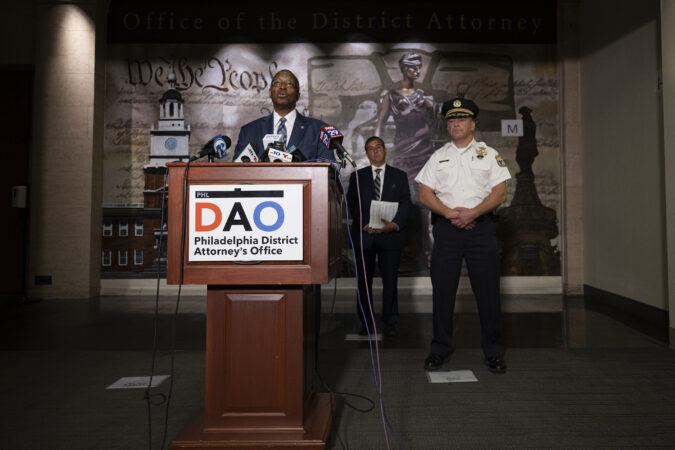
Still, District Attorney Larry Krasner said Thursday that he was “deeply concerned” by what he cast as an insufficient penalty for a would-be terrorist. Krasner said his office had asked that Abdul-Rahman serve at least 10 years behind bars because prosecutors believe he remains “an extreme danger” to the city.
“We ought to be able to live in a city where a terrorist is kept off the streets for a reasonable amount of time,” Krasner said.
Federal investigators looking into KTJ’s activities in the United States in 2023 found that Abdul-Rahman was the only person in the country exchanging messages with some of its key online propagandists. Further investigation later revealed that Abdul-Rahman, around that time, had also applied for his first passport, tried to reach out to a Syrian border-crossing office, and purchased or possessed wires and chemicals common in homemade bombs.
When authorities went on to conduct surveillance of Abdul-Rahman, officials said at trial, officers tailing him at a Lowe’s store saw him buy muriatic acid, a key component in a violent explosive dubbed TATP, also known as “the mother of Satan.” And a review of his internet search history around that time showed he had been looking up Philadelphia parade routes, trash can bombs, and nuclear power plants — something authorities said was consistent with “target and tactic” research.
When federal agents questioned Abdul-Rahman inside a police station, an official testified, he admitted conducting bomb tests near his house and said he wanted to become a “bomb guy” for KTJ in Syria.
Authorities arrested Abdul-Rahman in August 2023, just as he was to begin his senior year in high school. At the time, he was a promising wrestler with a college scholarship offer, and his father, Qawi Abdul-Rahman, is a well-known criminal defense lawyer who has mounted unsuccessful campaigns to become a city judge.
Abdul-Rahman’s attorneys said at trial that he had made mistakes, but that he was an impressionable teen who had fallen down a “rabbit hole” of online propaganda. They also said he had never succeeded in building a bomb and did not take serious, in-person steps to advance the radical views he expressed online or in his house.
At a hearing last month, one of his attorneys, Donald Chisholm, urged Hangley to consider that Abdul-Rahman’s path to the crime began when he was 16 years old.
“Even at the age he is now,” Chisholm said, “he’s not fully matured.”
Chisholm, said Thursday that he thought the sentence was fair, and that Krasner’s continued insistence on casting his client as dangerous was “disingenuous” and did not account for factors such as his client’s age at the time of arrest, or his growth over the last several years.
The case attracted attention in part because it was a rare example of the district attorney’s office seeking to convict someone it described as a would-be international terrorist.Although federal counterterrorism agents were heavily involved in the investigation, juveniles are rarely prosecuted in federal courts.
Krasner said Thursday that Abdul-Rahman likely would have faced a significantly harsher penalty if he had been convicted of similar conduct in the federal system, and he criticized the state’s sentencing guidelines, which prosecutors said Hangley cited when imposing her penalty.
Abdul-Rahman has already served about 34 months in custody, meaning he will face a maximum of another six months in prison under the penalty Hangley imposed.
Krasner said his office was weighing whether to appeal the sentence.
Staff writer Jillian Kramer contributed to this article.
For a little over a year, Adam Richardson was known among local car thieves as “the title guy,” state investigators said Monday. They could steal a car, visit Richardson’s title shop and resell it, either to a coconspirator or a unwitting bystander.
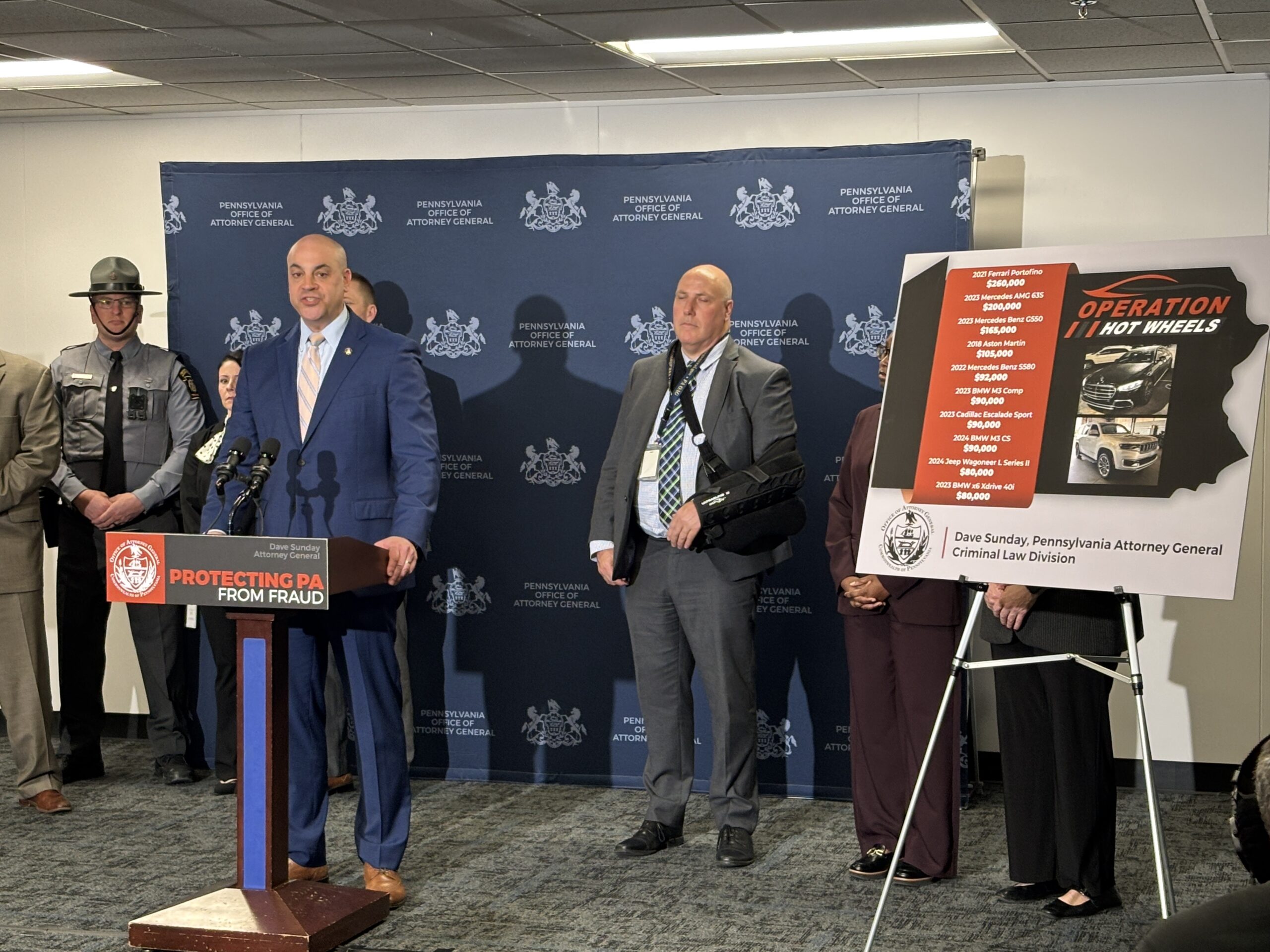
From his office on Golf Road in Wynnefield, Richardson, 40, created false title, registration, and insurance documents for luxury vehicles stolen from New Jersey, Philadelphia, and its suburbs, including a Ferrari Portofino worth $260,000 and a bevy of Mercedes, BMWs, and similar vehicles.
All told, Richardson facilitated the illegal transfer of 65 vehicles, the street value of which is nearly $4 million, according to state Attorney General Dave Sunday.
Richardson was arrested Friday and charged with racketeering, forgery, tampering with public records, and related crimes.
Sunday, speaking at a news conference in Northeast Philadelphia, said Richardson’s actions — referred to as “title washing” — created “a veil” behind which criminals were able to operate.
Pennsylvania Attorney General Dave Sunday said Monday that the title washing of stolen vehicles allows criminals to operate undetected throughout the state.
“What should be most concerning about this conduct to individuals and families in our communities is that title washing enables criminals to move in and out of communities without being detected by law enforcement,” he said.
Sunday declined to disclose whether the 37 vehicles recovered by Pennsylvania State Police were involved in other crimes, but he said that title washing is often linked to drug trafficking and other violent crimes.
The state’s investigation into Richardson is ongoing, he said.
Richardson remained in custody Monday in Dauphin County, denied bail due to the extent of his alleged crimes. There was no indication he had hired an attorney.
He will be prosecuted in Central Pennsylvania, investigators said, given his abuse of his power as a third-party contractor eligible to do business with the Pennsylvania Department of Transportation.
State Police investigators began investigating Richardson in May 2024, when a trooper at the Trevose Station and Barracks impounded a BMW X7 that he suspected held a fraudulent title, according to the affidavit of probable cause for Richardson’s arrest.
The vehicle had been registered in South Carolina, using a VIN that did not conform with the standard for that state and possessed a fake insurance policy, the affidavit said.
The true VIN, investigators said, matched a car reported stolen a month earlier in Montville Township in western New Jersey.
Investigators later interviewed a confidential informant who had facilitated the resale of the car. The informant had gotten the car, knowing it was stolen, from a man who told him to see Richardson, identifying him as “the 24-hour title guy” who had a reputation to meet sellers “anywhere and anytime,” the affidavit said.
The informant told troopers that Richardson helped him put the car in another person’s name, using a photo of their driver’s license.
The investigation into Adam Richardson, codenamed “Operation Hot Wheels,” found that he helped facilitate the sale of luxury cars, including multiple Mercedes sedans.
Using the unique identification number issued to Richardson’s business by PennDOT, investigators were able to identify the 65 cars involved in the title-washing scheme.
During the investigation, investigators spoke with multiple vehicle owners who said they had been paid money in exchange to have the stolen vehicles registered in their names, despite never meeting Richardson, visiting his business or driving the vehicles, according to the affidavit.
Previous audits by PennDOT in 2022 and 2023 found that his title business was violating multiple laws, including issuing plates to salvage vehicles and selling cars without a license.
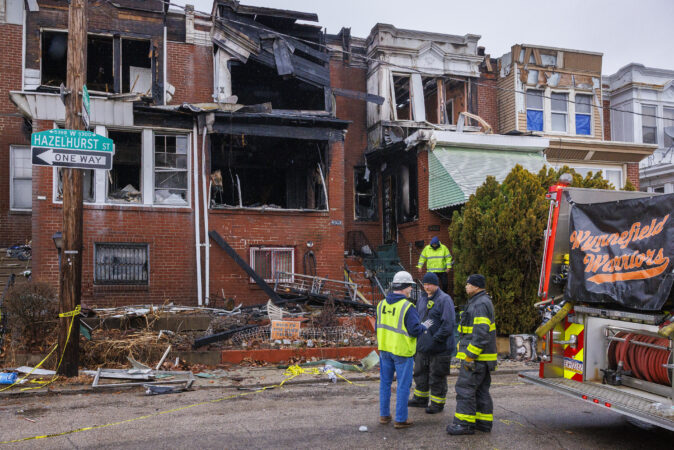
Nine firefighters were injured, including one who needed to be carried away on a stretcher, after the floor collapsed beneath them as they fought a two-alarm fire Monday night in the Wynnefield section of Philadelphia.
Firefighters responded to the blaze on the 5300 block of Hazelhurst Street around 10:20 p.m. to find smoke and flames erupting from the roof of the home. Officials confirmed that five firefighters were treated at local hospitals and released, while four remained hospitalized as of Tuesday morning. All were in stable condition.
“We’re immeasurably grateful for this outcome, as collapses often prove devastating,” a Philadelphia Fire Department spokesperson said.
First responders arrived to heavy fire coming from the first floor of the two-story home, officials said. The situation soon grew, bringing more than 100 firefighters, emergency medical services, and support staff to the scene.
The fire spread to the adjoining properties and was placed under control just moments before the structure collapsed on firefighters. At least six residents were displaced from their homes, officials said.
Crews were still on site Tuesday morning working to clear debris and rubble, officials said. The fire marshal’s office will investigate.
Two families, a total of nine residents, were receiving support services from the American Red Cross.
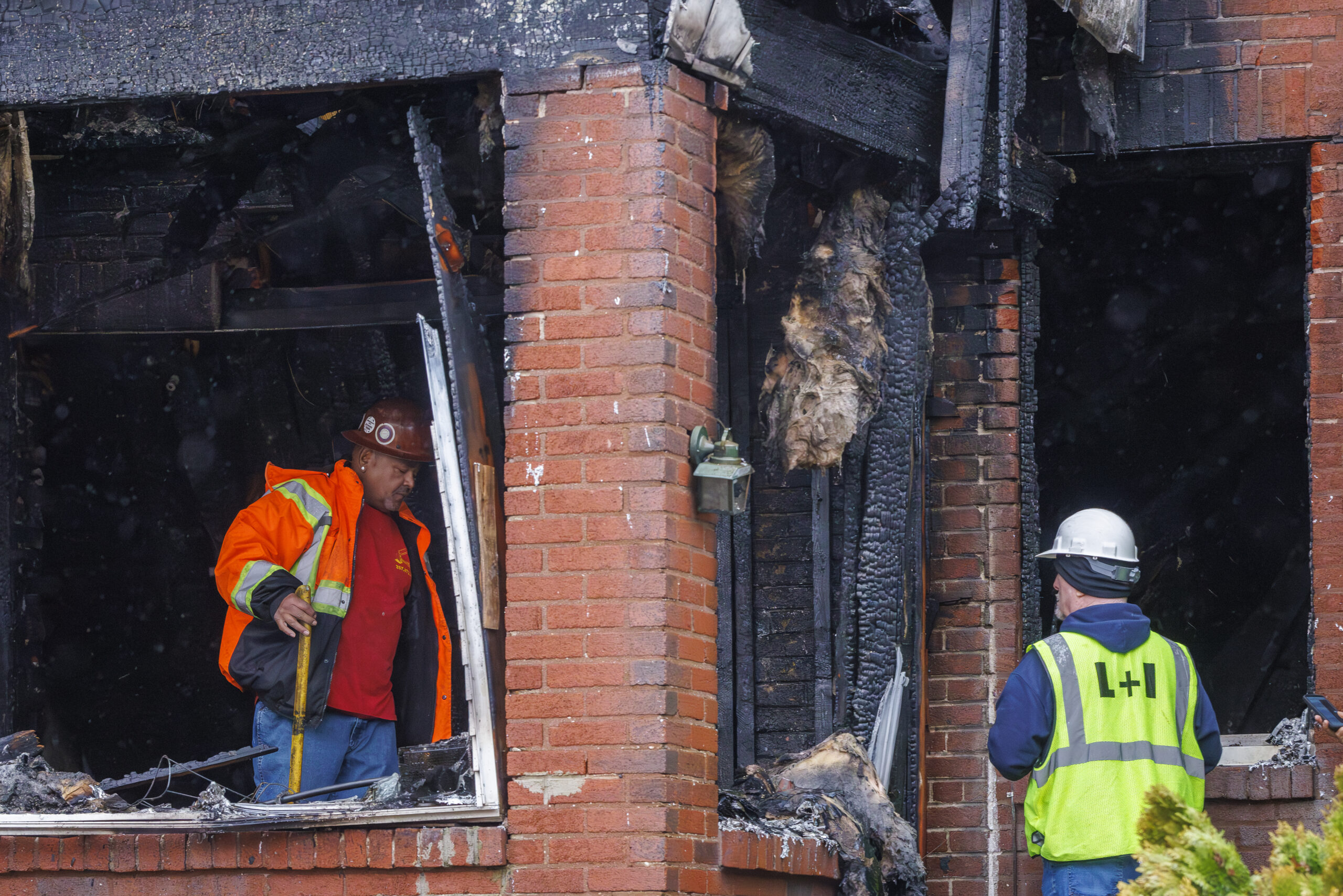
License and Inspection employees inside a fire, 5300 block of Havenhurst Street, Philadelphia, overnight, Tuesday, March 3, 2026. Several fire fighters were injured in this fire.
Before the Wynnefield fire erupted, earlier in the evening in Bristol Borough, a three-alarm fire activated multiple firefighting companies from across the region. One person was killed and another injured in a fire that engulfed several homes.
The Philadelphia Fire Department and the Red Cross urge city and collar county residents to visit soundthealarm.org/philly, where they can sign up for free smoke alarm installations and learn more about preventing fires.
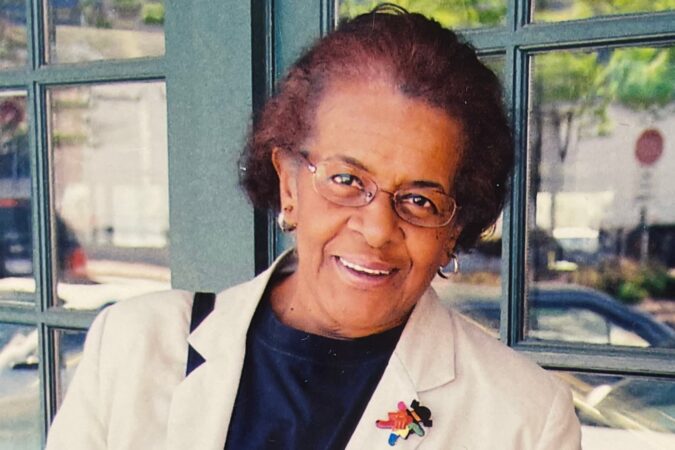
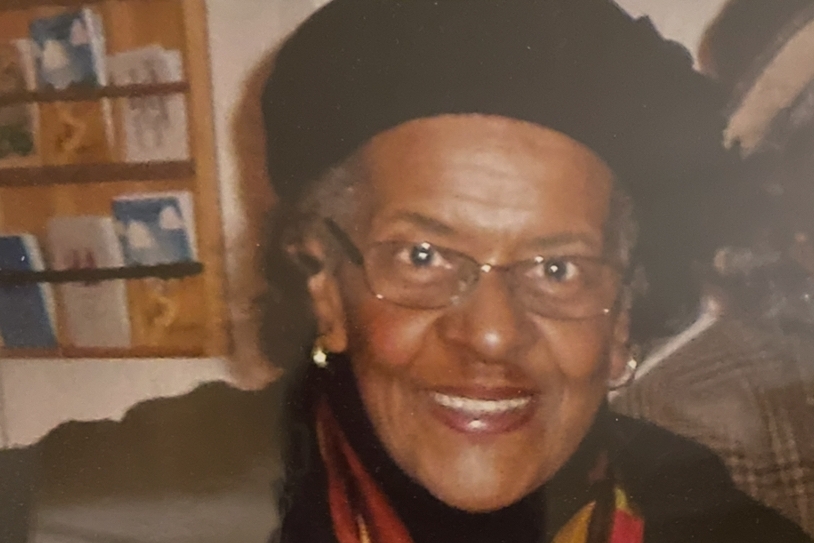
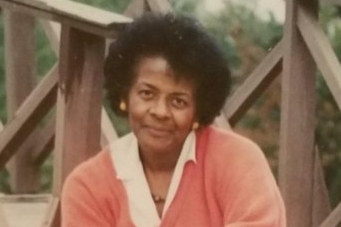
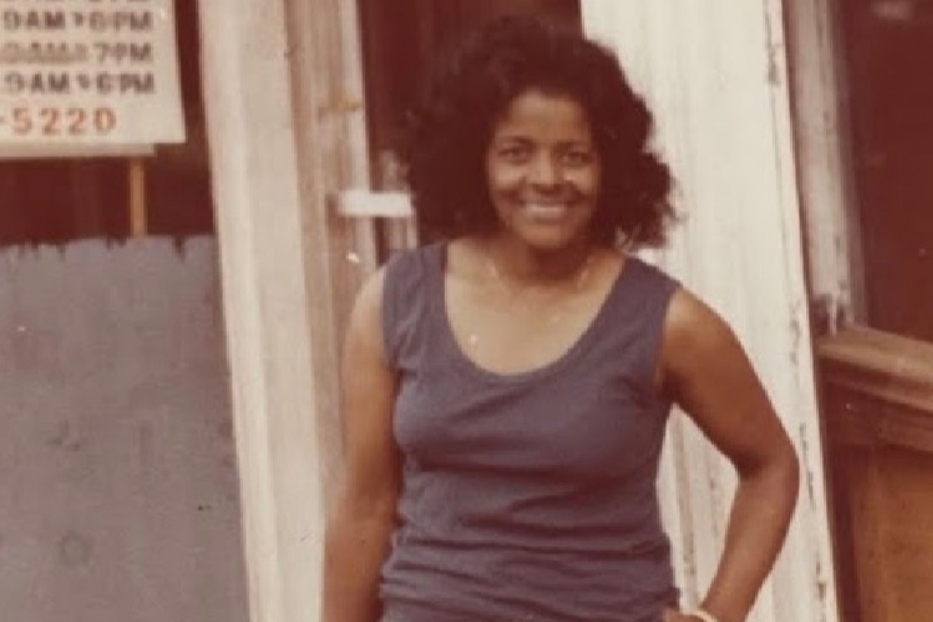
Mae Laster, 87, of Philadelphia, retired French, algebra, and photography teacher for the School District of Philadelphia, longtime president of Friends of Wynnefield Library, award-winning committee chair for the Philadelphia section of the National Council of Negro Women Inc., community center adviser, church trustee, volunteer, and undisputed Laster family Scrabble champion, died Friday, Jan. 2, of age-associated decline at Lankenau Medical Center.
Born in Philadelphia, Ms. Laster earned academic degrees at West Philadelphia High School and Temple University. She was a lifelong reader and stellar student, and she tutored her high school classmates in math and later taught elementary and middle school students for 30 years.
“She was a firm and no-nonsense kind of teacher,” a former student said in an online tribute. “But she was a lot of fun. As an adult, she always offered guidance and advice.”
Her daughter, Lorna Laster Jackson, said: “She had a passion for learning and sharing with others. She was always an advocate for children.”
Ms. Laster chaired community service and Founder’s Day committees for the National Council of Negro Women Inc.
Ms. Laster served as president of Friends of Wynnefield Library for more than 20 years and was active at its many book readings, content discussions, concerts, and fundraisers. She earned several important financial grants for the library, and her personal collection of books at home numbered more than 1,000.
“She loved reading to our young patrons, especially during our Dr. Seuss birthday celebrations,” library colleagues said in a tribute.
She chaired community service and Founder’s Day celebration committees for the National Council of Negro Women and earned the local section’s achievement award in 1998. “Mae was a blessing to the Philadelphia section,” colleagues said in a tribute. “We will always remember her feisty way of asking questions and not easily put off.”
Ms. Laster was an advisory board member at the Leon H. Sullivan Community Development Center and a trustee at Zion Baptist Church. Colleagues at the community center called her “a very thoughtful and talented person.” They said: “She was always forthright and had a strong opinion.”
Ms. Laster (center) especially enjoyed reading to young people at the Wynnefield Library.
At church, she was a member of the New Day Bible Class and proofreader for the newsletter. She also volunteered with the Wynnefield Residents Association, the Girl Scouts, and the 4-H Club.
In a citation, City Council members praised her achievements regarding “education, community service, and all those whose lives were enriched by her wisdom, kindness, and unwavering faith.” In a resolution, members of the state Senate noted “her extraordinary life, her enduring contributions, and her lasting impact on education, community, and faith.”
Friends said in online tributes that she “had a great sense of humor” and was “the sweetest mom on the planet, who was always like a mom to me.” One friend called her “a community-minded leader who advocated tirelessly to preserve the quality of life in Wynnefield.”
At home, Ms. Laster studied the dictionary, knew words that nobody else did, and became the undisputed Scrabble champion of her family and friends. She was so good, her daughter said, that nobody volunteered to play against her. “It was humiliating,” her daughter said.
Ms. Laster was a lifelong advocate for children.
Mae R. Johnson was born June 5, 1938, in Philadelphia. She grew up in Winston-Salem, N.C., with her grandmother and returned to Philadelphia in the 1950s to live with her mother and begin high school.
She was an excellent student, especially good with words and numbers, and she graduated from West Philadelphia High in 1956 and earned a bachelor’s degree in early childhood education at Temple.
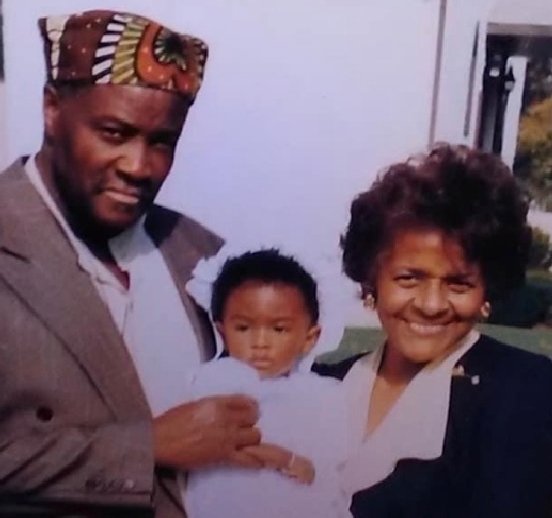
She met Francis Laster in the neighborhood, and they married, and had a daughter, Lorna, and sons Francis Jr., Charles, and Ahman. Her husband owned and operated the popular Rainbow Seafood Market, and they lived in West Philadelphia and Wynnefield. They divorced later. He died in 2020.
Ms. Laster enjoyed bowling, photography, and horticulture. She listened to jazz, classical, and gospel music. She collected butterflies and stamps.
Ms. Laster was “all about positive change,” her daughter said.
She shared recipes with friends and kept in touch through memorable phone calls. She helped organize high school reunions and appreciated the educational TV shows on the Public Broadcasting System.She retired from teaching about 20 years ago.
“She was all about positive change,” her daughter said. “She spoke from compassion and her truth. She did more good than she knew. She was dynamite.”
In addition to her children, Ms. Laster is survived by six grandchildren, three great-grandchildren, three great-great-grandchildren, a sister, and other relatives. A brother died earlier.
A celebration of her life was held earlier.
Donations in her name may be made to Friends of Wynnefield Library, Attn: Terri Jones, 5325 Overbrook Ave., Philadelphia, Pa. 19131.
Ms. Laster graduated from West Philadelphia High School in 1956 and earned a bachelor’s degree in early childhood education at Temple.
The Philadelphia Housing Authority embarked on a strategy last year unlike anything it has done before.
The agency is known as the largest affordable housing provider in the city. But in 2025, under the leadership of CEO Kelvin Jeremiah, it began buying struggling private-sector apartment buildings all over the city to expand the affordable housing supply.
Over the last 14 months, the Philadelphia Housing Authority (PHA) has spent $280.6 million to acquire 17 multifamily properties, totaling 1,515 units. Some have been student apartments or largely empty new buildings. But most have been full of tenants paying market-rate rents, ranging from $1,106 to $2,323.
That’s a new demographic for PHA, whose renter base often makes less than $30,000 a year.
PHA plans to fillthese buildings with Section 8 voucher holders, who often have a difficult time finding rentals in higher income areas.
“It’s part of the strategy … to give residents the broadest possible options in terms of their housing choice and one that is not limited to particular neighborhoods,” Jeremiah said.
In an innovation, the agency intends to keep renting some units in the newly acquired buildings at the market rate, using the income to support operating expenses.
The first PHA purchase in 2025 was The Dane, a 233-unit building in Wynnefield. It now houses some tenants paying market-rate rents and others using government subsidies.
Last year, several tenants contacted The Inquirer with concerns about what they described asa rocky transition to PHA ownership. Since then, interviews with 18 tenants at The Dane have laid out challenges within PHA’s new model — and the potential difficulty of retaining renters with options elsewhere.
Eighty-six people have moved out of The Dane over the last year. That’s about half the original occupants as the building was only 75% occupied when purchased.
The overwhelming majority of tenants interviewed by The Inquirer said PHA is a better landlord than the previous owner, Cross Properties. But most have moved out or are planning to.
“The management staff that are there now are better than what we had, but they’re still pretty mediocre,” said one resident, who, like many of the tenants, asked that their name be withheld to preserve relations in the building.
“Everybody’s very polite; everybody’s very cordial, but it’s only maybe one or two maintenance people,” this multiyear resident said. “The trash pileup is very bad right now … I plan to move elsewhere.”
Jeremiah noted that most of the properties PHA acquired have not experienced the kind of turnover that The Dane has seen. The building is now almost completely occupied with both market-rate and subsidized tenants, said a PHA spokesperson.
He said some tenants moved out after the agency began collecting rent again. Many had been withholding payments to Cross, which lacked a rental license at the end of its tenure.
It’s possible that the turnover at The Dane is largely the result of a difficult property transfer from a troubled previous owner. (Cross Properties is no longer in business.) In that case, the tenant exodus may not be a predictor for PHA’s larger ambitions.
But given the skepticism PHA faces in many neighborhoods, outside observers say, the agency’s new expansion strategy faces high expectations to get everything right.
“PHA is under a tremendous amount of pressure,” said Akira Rodriguez, a professor of housing policy at the University of Pennsylvania. “There’s going to be experiences that are uneven for tenants as they navigate this new model of housing provision … [and The Dane] is a really high visibility example.”
A long troubled apartment building
In November 2024, residents of The Dane were fed up. Their hot water wasn’t working — again — in apartments where many households paid over $2,000 a month in rent.
“The owner [Cross Properties] was not the best,” said Akeesha Washington, who has lived in The Dane since 2020. “He just didn’t maintain the building. Over the years, you saw the amenities dwindle.”
Cross Properties acquired the building in 2016 when it was the Penn Wynn House and converted the rent-subsidized building into market-rate apartments.
When Washington moved in, she was impressed. The staff were kind to her in 2020 when she contracted COVID-19. They coordinated care with Washington’s mother so she had access to medication without infecting anyone.
“It was a really nice community. It’s luxury in the 19131 section, where not everyone feels like they can afford it,” said Washington, who loves the diversity of the tenants, which included university students, working-class residents, and doctors and lawyers.
“You had so many layers of people living and coexisting in this building,” Washington recalled. Rents ranged from $1,100 for a studio to $2,200 for a two-bedroom unit with two bathrooms.
But by 2024, most tenants said, building management had fallen off. Trash wasn’t picked up regularly; lawns went unmowed and snow unshoveled, and basic amenities like the parking garage door often didn’t work.
Shortly after another hot water outage, tenants got news in late 2024 that Cross Properties was out.
“When residents heard it was being acquired, we were excited because we won’t have to deal with not having hot water, especially during the holidays,” Washington said.
Akeesha Washington in the lobby of her apartment building in the Wynnefield neighborhood in December. She was living in the market-rate building before the Philadelphia Housing Authority (PHA) purchased it to expand the city’s affordable housing supply.
New management, new problems
When PHA purchased The Dane, the building had many unresolved issues, said Tonya Looney, who worked for Cross Properties as the building’s manager. And she said there was scarce planning for the details of the transfer.
“To be fair, this is something new and I understand from a real estate professional’s perspective that there’s going to be hiccups,” said Looney, who stopped working at The Dane last May, although she still manages 15 apartments for long-term corporate stays in the building.
Looney is in a legal dispute with PHA, which says she owes substantial back rent. “We do not intend to renew the leases that she has in her name,” Jeremiah said. “I do not think she is a good arbiter of the facts in this case.”
Both Jeremiah and Looney say that after the sale closed, Cross Properties shut down the operating software, cutting off tenants’ ability to pay rent online, see their rental histories, and submit maintenance requests.
“We had 200 people with no way to log in to pay their rent, no way to submit a maintenance ticket, no idea who to talk to about any issues at the building unless they came downstairs to see what’s going on,” Looney said. “Needless to say, it was chaotic.”
For much of 2025, residents had to pay with checks, which sometimes went uncashed, according to Washington and Looney.
Jeremiah says that Cross Properties’ owner asked PHA to pay to access the former tenant managementsystem, although PHA eventually figured out how to get the records.
Despite the chaotic transition, many tenants said PHA’s ownership brought improvements from previous conditions, especially after Maryland-based HH Redstone was brought in to operate The Dane in August. (That’s when online payments, for example, started working again.)
“HH Redstone is doing what they can, and I’ve re-signed my lease for one year because I am willing to see what change they can continue to make,” said another tenant who asked not to be named.
Why tenants are leaving, even with improved conditions
Other tenants say property services continue to suffer.
Trash pickup is still persistently late, several tenants said. Pest outbreaks such as bedbug, mouse, and cockroach infestations flare up, which is new in the building, according to Washington and two other tenants. The dog washing station and the dog run are often messy. The garage door continues to break down. This winter, a rash of burglaries spooked residents.
Jeremiah said PHA is addressing these concerns, and in some cases — such as the dirty dog run — residents are expected to clean up after themselves. He also noted that the agency installed 24-hour security.
“The idea that this is a new phenomenon to that building, given where it’s located, is just nonsense,” Jeremiah said of the security concerns. “We have a very robust set of layered access control systems in place [and] CCTVs.”
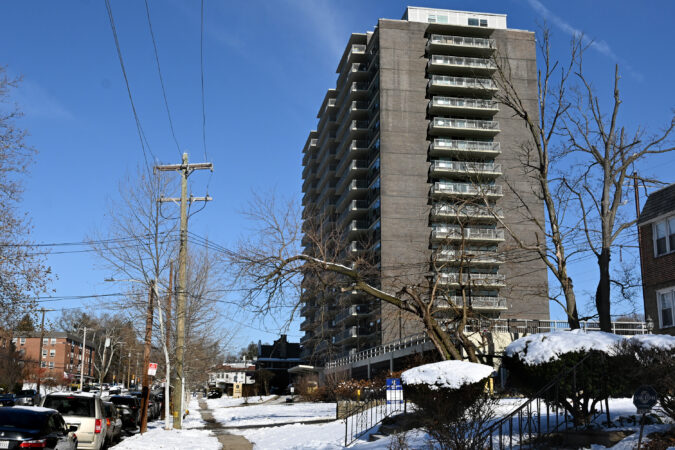
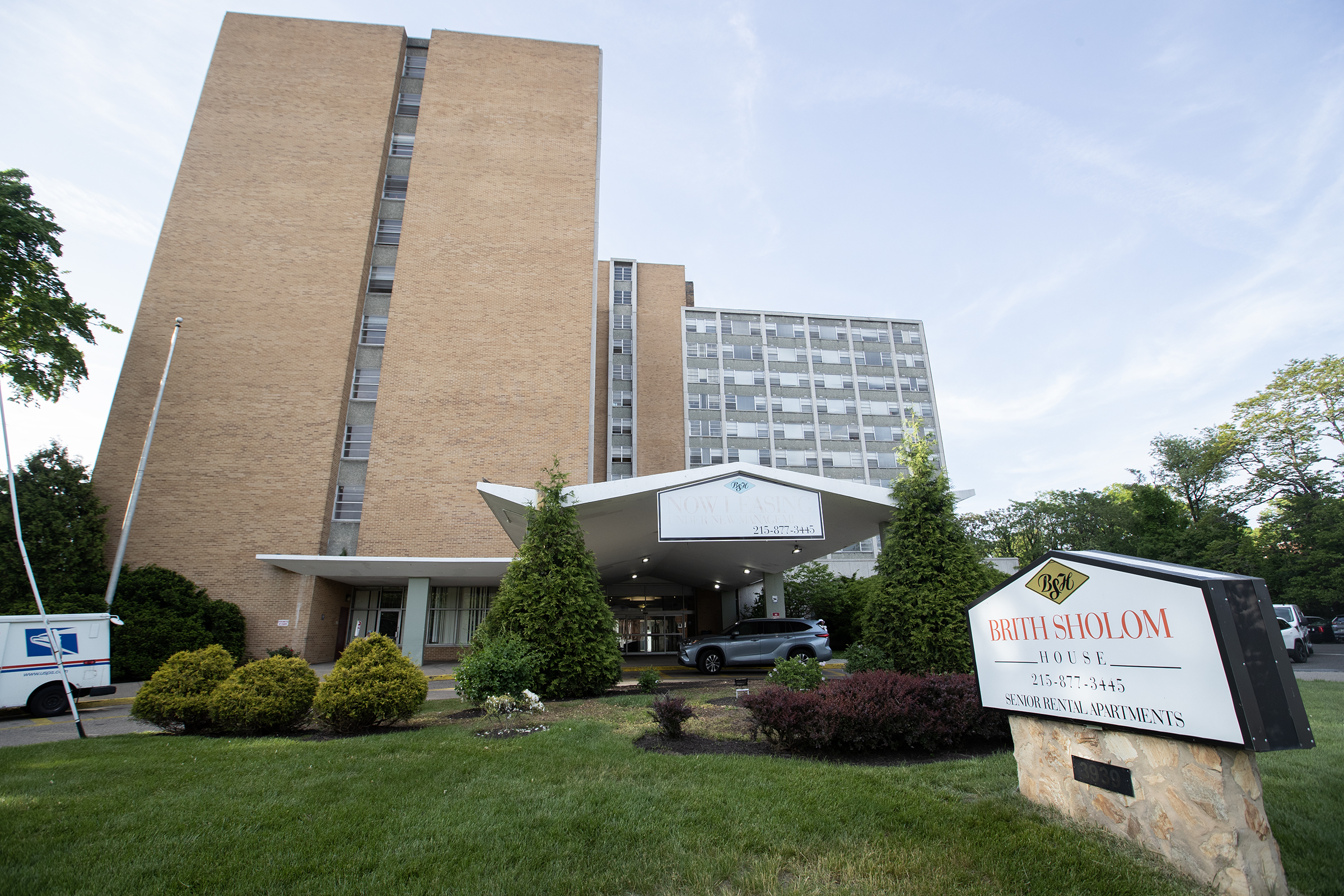
The exterior of Brith Sholom House on May 8, 2023.
When they first arrived at The Dane, some elderly residents were not getting the care they need, Washington said.
One man she ran into frequently often smelled of urine and would walk around with visibly wet pants. She said building management addressed the issues by spraying Febreze on benches the tenant used after he left an area. He has since died.
Another man screamed for help from his balcony and has since been moved out of the building.
“We are very used to all kinds of things happening here, from the students being wild to elderly being wild, but not to the level of being unable to take care of themselves,” Washington said.
Jeremiah says that PHA keeps tabs on the rehoused Brith Shalom residents — who previously were living with no oversight, although there are limits to what it can do. He encouraged tenants to report anyone who needs aid.
“We provide a robust set of social services to residents we inherited at Brith Shalom,” Jeremiah said. “PHA is not a healthcare provider. We are a housing provider, though we provide access to opportunities for residents who are interested in aging in place.”
A former Brith Shalom resident had no complaints with The Dane and praised PHA for the improvements in his life.
“I have no problem with them. I’m happy,” said Barry Brahn, who is blind and has AIDS. “They’re slow at getting things fixed, but they can only do so much and they’ll eventually get on it.”
What comes next?
Some aspects of the rocky transition from Cross Properties to PHA have eased. Since October, tenants were able to pay their rent online and submit maintenance requests. Washington says she does not see obviously distressed elderly residents any longer.
But tensions remain.
“The transition to PHA has been challenging, and their communication has been sorely lacking,” said Lanese Rogers, who has lived in The Dane for two years.“As someone who pays unsubsidized rent, they deal with us in a condescending manner.”
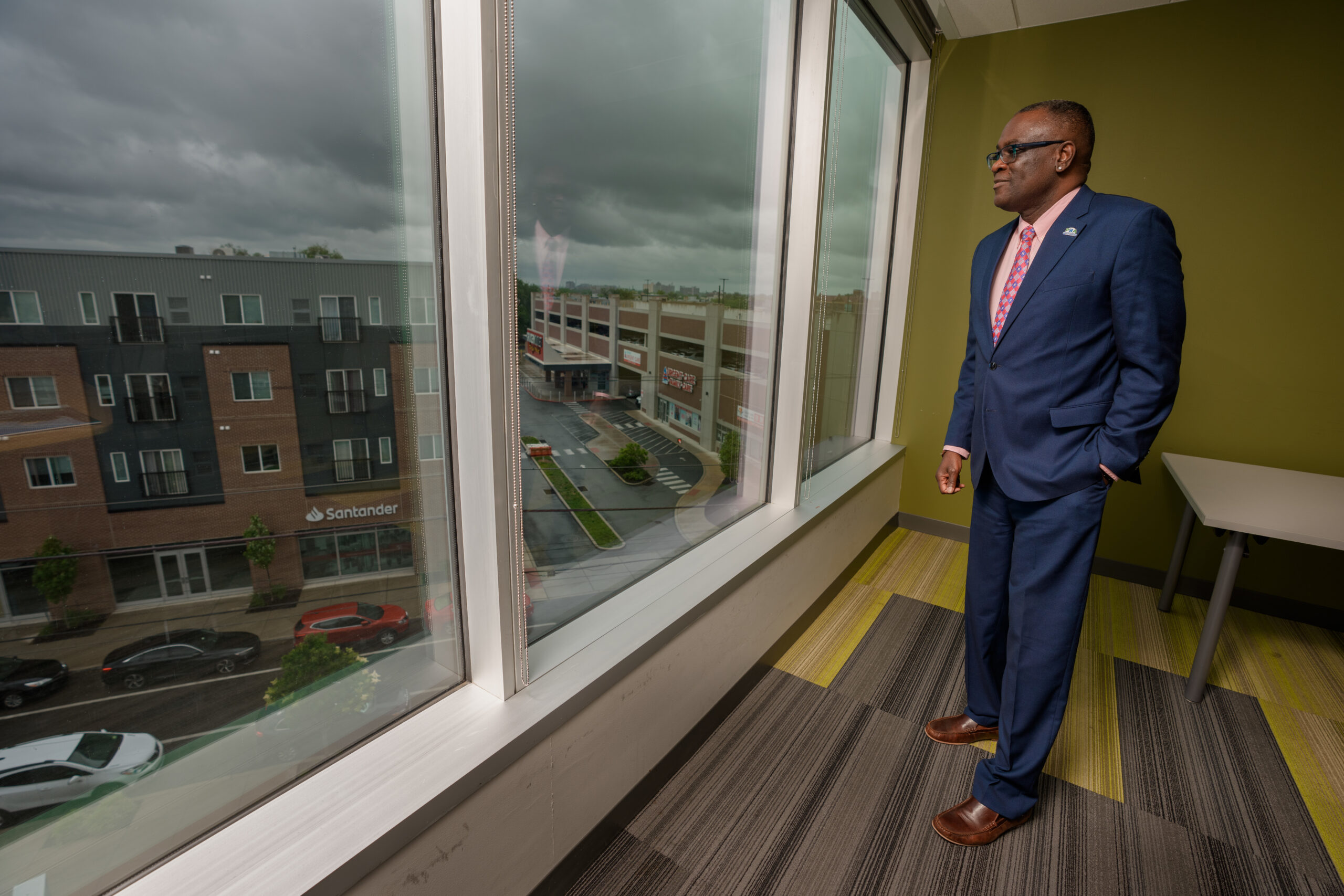
Kelvin Jeremiah, PHA president and chief executive officer, at PHA headquarters, in Philadelphia.
Jeremiah says he believes some of the pushback against PHA is due to class prejudice and bias against subsidized tenants.
“I don’t believe that there is anywhere any Philadelphian, whether or not they’re high income, middle income, low income, shouldn’t be permitted to live,” Jeremiah said.
He is committed to providing accessibility and affordability throughout the city, he said, and he hopes to retain mixed-income residency innewly acquired buildings with existing tenants.
So far at The Dane, many of the market-rate tenants are leaving.
“If I could pick up my apartment and move it to another location, I would,” Rogers said. “The building is changing, and I don’t like the direction it’s moving in.”
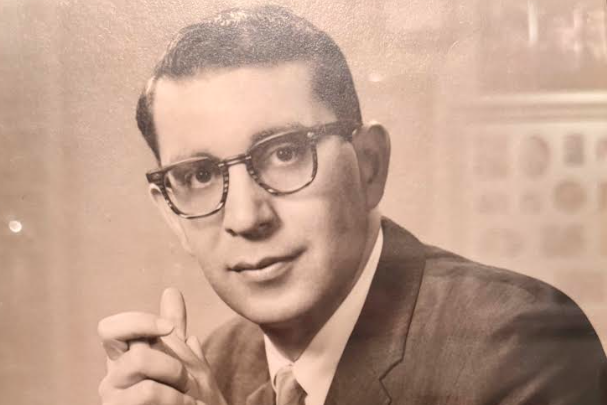
Carl W. Schneider, 93, of Philadelphia, retired longtime attorney at the old Wolf, Block, Schorr, & Solis-Cohen law firm, former special adviser to the Securities and Exchange Commission, visiting associate professor at what is now the University of Pennsylvania Carey Law School, writer, poet, mentor, and volunteer, died Thursday, Dec. 18, of pneumonia at Pennsylvania Hospital.
Mr. Schneider was an expert on corporate, business, and securities law, and he spent 42 years, from 1958 to his retirement in 2000, at Wolf, Block, Schorr, & Solis-Cohen in Philadelphia. He was adept at handling initial public offerings and analyzing stock exchange machinations, and he became partner in 1965 and chaired the corporate department for years.
Although he did not plan to specialize in securities law after graduating from Penn’s law school in 1956, Mr. Schneider told the American Bar Association in 1999: “I found this type of work to be challenging, gratifying, stimulating, and educational.”
He spent most of 1964 on leave from the law firm as a special adviser to the Securities and Exchange Commission’s Division of Corporation Finance in Washington. His recommendations to SEC officials regarding its public-offering process, disclosure system, civil liability rules, and arbitration procedure, many of which were ahead of their time, eventually led to modernization and reforms in the administration of federal securities laws. “I was cast in the role of the constructive critic,” he said in 1999.
He chaired committees for the Philadelphia and American Bar Associations and was active in leadership roles with the American Law Institute and other groups. He clerked for Supreme Court Justice Harold H. Burton and Judge Herbert F. Goodrich of the U.S. Court of Appeals for the Third Circuit for two years after graduating from law school.
He also taught classes as a visiting associate professor at Penn’s law school and lectured extensively elsewhere on the continuing legal education circuit. “I am aware of two personality traits that have shaped my career,” he said in 1999, “a need to fix things and a love of teaching.”
He spent the 1978-79 school year as head of Penn’s Center for Study of Financial Institutions and said in 1999 that he would have taught full time had he not enjoyed his legal work so much. “I was a practitioner,” he said, “and I tried to give my classes useful training to do what most practitioners do.”
Mr. Schneider wrote, cowrote, and edited dozens of scholarly articles, books, and pamphlets, including the celebrated Pennsylvania Corporate Practice and Formsmanual in 1997. He also penned poetry, and used this stanza to open a chapter about boilerplate clauses in the Pennsylvania Corporate Practice and Forms manual:
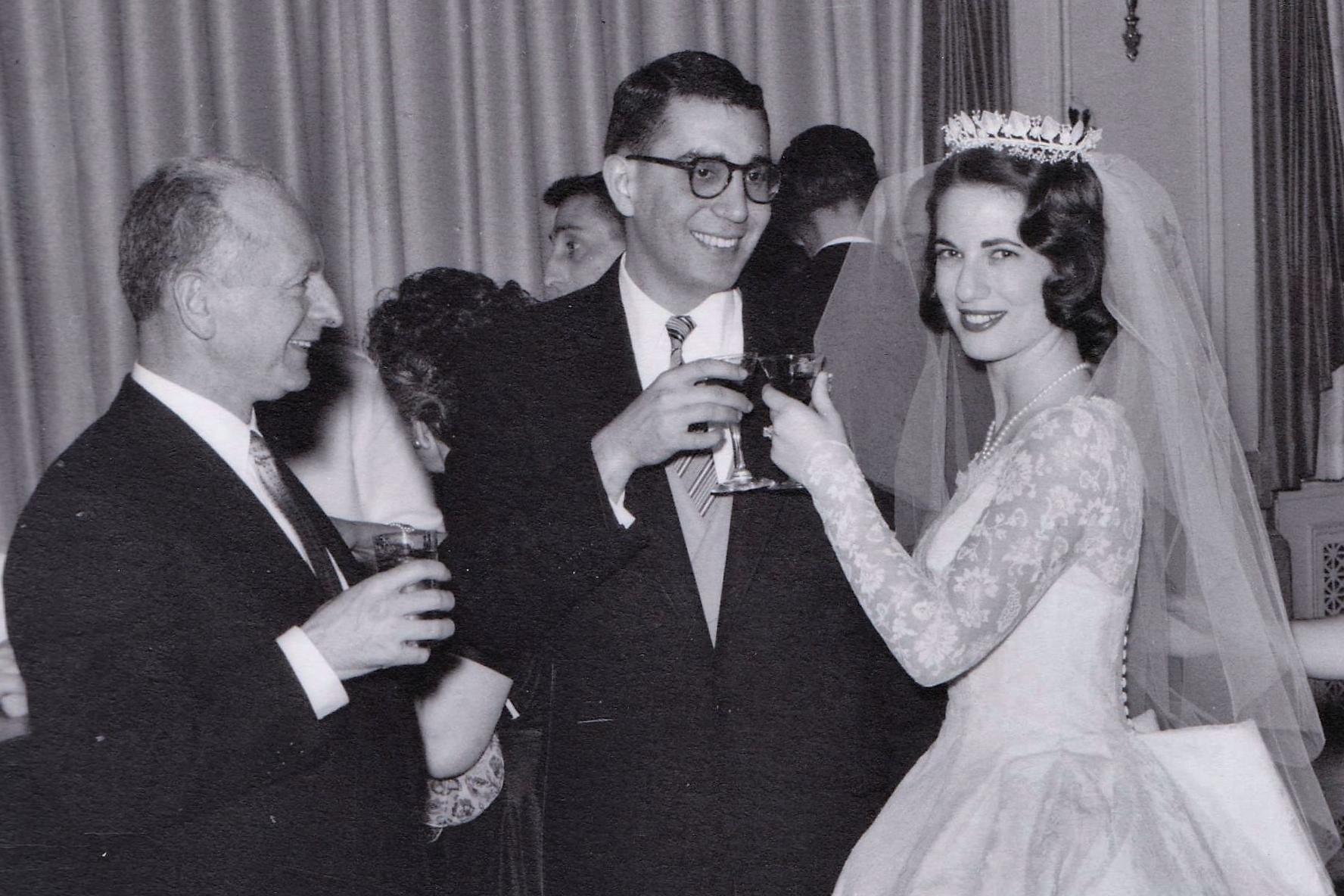
Mr. Schneider and his wife, Mary Ellen, were inseparable for 68 years.
“The ending stuff gets little thought/Like notice, gender, choice of laws/If badly done you may get caught/With a provision full of flaws.”
He volunteered with what is now Jewish Family Service, the Jewish Federation of Greater Philadelphia, Abramson Senior Care, and Congregation Rodeph Shalom. He mentored countless other lawyers and students, and agreed in 1972 to a request by The Inquirer’s Teen-Age Action Line to be interviewed in his office for a high school student’s research project.
“He was often described as brilliant, humble, a dry wit, and a great listener,” his family said in a tribute. “He gave everyone he spoke to the same time, attention, and respect.”
He was quoted often in The Inquirer and lectured about legal matters at conferences and panels. He earned several service and achievement awards and said in 1999: “I suppose I am one of those compulsives who cannot see something in the world important to him that is broken without feeling the need to repair it.”
Mr. Schneider and his wife, Mary Ellen, married in 1957.
Carl William Schneider was born April 27, 1932, in the Wynnefield section of Philadelphia. His family later moved to Elkins Park, Montgomery County, and he graduated from Cheltenham High School in 1949.
He knew he wanted to be a lawyer, like his father and grandfather, when he was young and said in a 2014 video interview at Penn that school was his favorite place. He earned a bachelor’s degree at Cornell University in 1953 and served on the law review at Penn.
He met Mary Ellen Baylinson through a mutual friend, and they married in 1957. They had sons Eric, Mark, and Adam and a daughter, Cara, and lived for years in Elkins Park. He and his wife moved to Center City in 2005.
Mr. Schneider enjoyed reading, bird-watching, photography, swimming, tennis, and springtime strolls through Rittenhouse Square. His favorite song was “The Gambler” by Kenny Rogers.
Mr. Schneider drove his family across the country in a motorhome he nicknamed Herman.
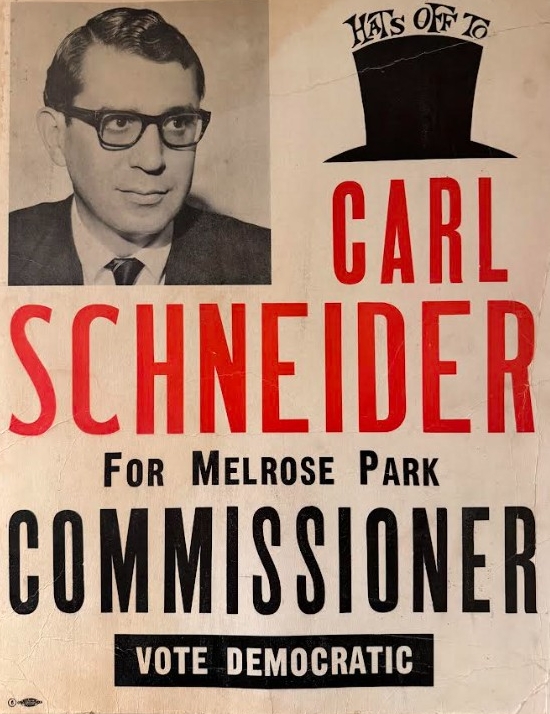
He collected old-fashioned scales, spent quality time with family and friends on Long Beach Island, N.J., and drove cross-country on a family road trip in a motorhome he nicknamed Herman. He ran unsuccessfully for commissioner in Melrose Park in the 1960s.
He made sure to be home every night for dinner and drew smiley faces inside the capital C when he signed his name. “He never judged, never overreacted,” his daughter said.
His son Adam said: “He was a gentle man but forthright and direct.” His son Mark said: “He had a moral code on how to live a life and never deviated from it.”
His son Eric said: “He left the world a better place.”
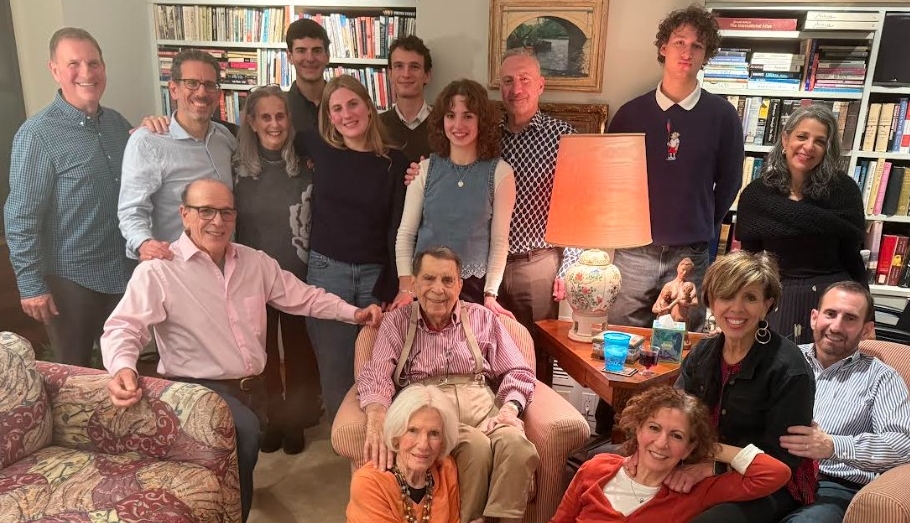
Mr. Schneider (center) and his family spent many Thanksgivings together.
In addition to his wife and children, Mr. Schneider is survived by three grandchildren; a sister, Julie; and other relatives.
Services were held Monday, Dec. 22.
Donations in his name may be made to Congregation Rodeph Shalom, 615 N. Broad St., Philadelphia, Pa. 19123.
Mr. Schneider was interested in civic and community issues as well as legal affairs.
With more than 60 hours since the last bit of snow descended upon Philadelphia, the widespread complaints about the conditions of secondary and tertiary streets have reached a fever pitch.
The Philadelphia Streets Department has tried to quell the public’s concerns with daily videos of excavators diligently filling dumpsters with snow. Yet evidence of icy streets and snow banks blocking lanes dominate social media, with city data showing the street conditions vary block by block.
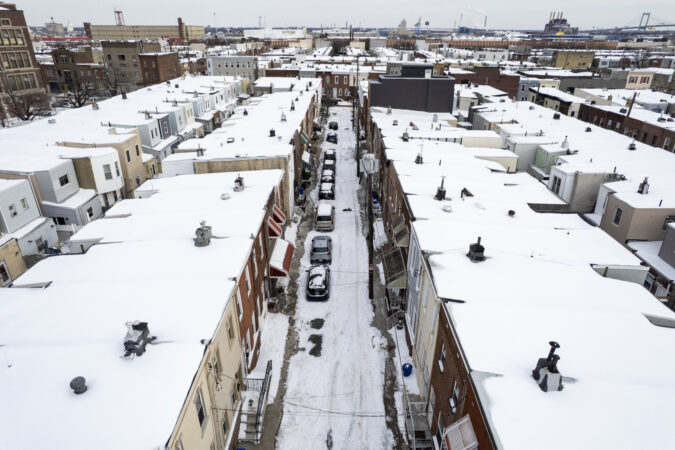
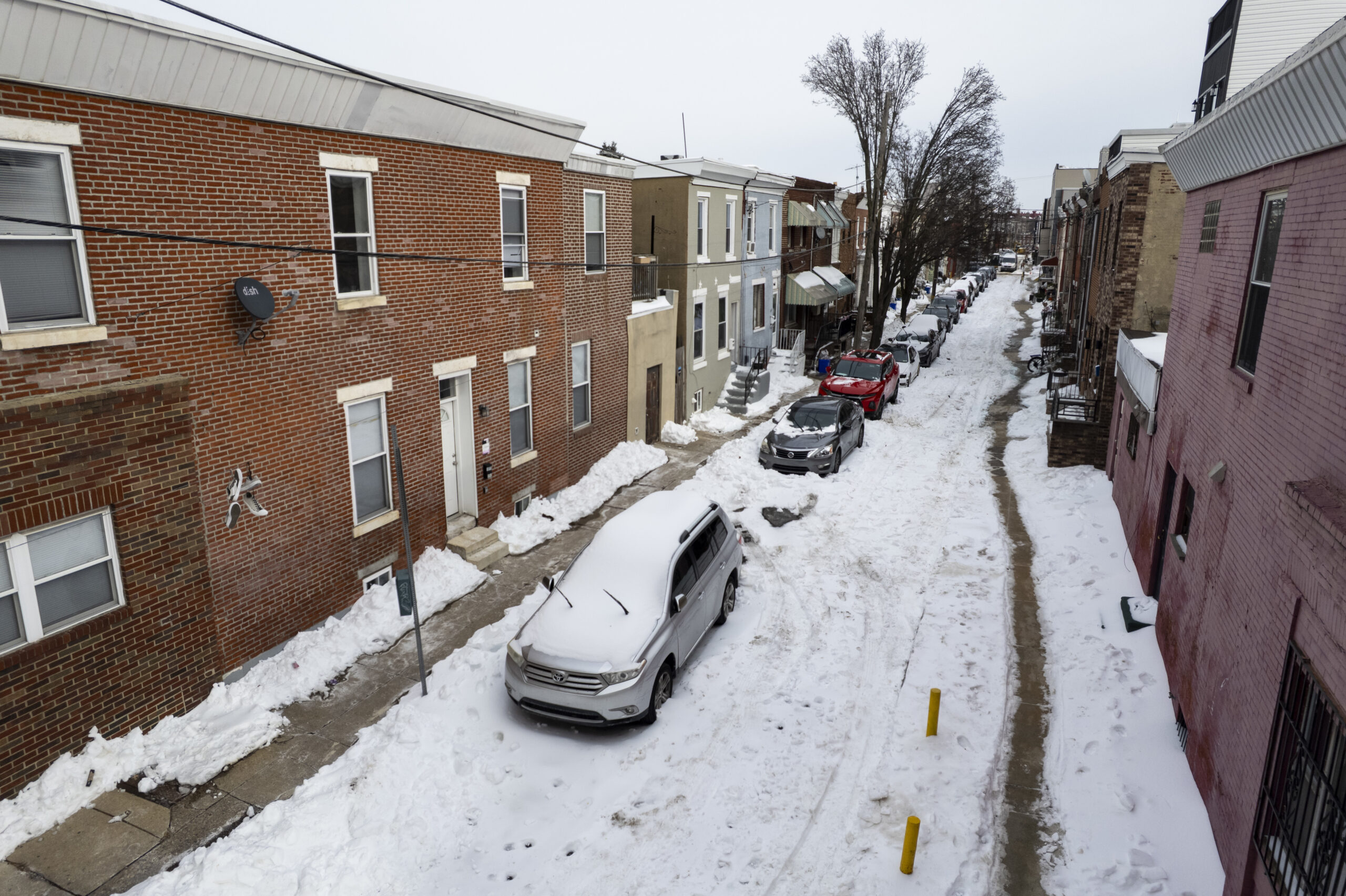
Between 3 p.m. Tuesday and 3 p.m. Wednesday, the city’s GPS data show, about 30% of city streets had been visited by plows. Some areas, like Center City and South Philadelphia west of Broad Street, saw most numbered streets and cross streets hit by plows during that time. Meanwhile, South Philly and Center City neighborhoods east of Broad Street saw little to no reported activity.
The same was true for large swaths of North and West Philadelphia. And neighborhoods like Overbrook, Wynnefield, and Nicetown, which have seen the fewest reported visits from city plow trucks since the storm began, saw only a handful of streets plowed between Tuesday and Wednesday afternoon, according to city data.
On the neighborhood line of Grays Ferry and Devil’s Pocket, Dani Hildebrand was one resident who felt forgotten as the streets around him were plowed and garbage picked up. Hildebrand’s block was supposed to have trash collection come through Tuesday with the one-daydelay announced by the city. But on Wednesday, bags of garbage lined his block.
An unidentified man shovels snow from underneath his car after it became hung up when he was trying to park in the middle of South Broad Street in Philadelphia in the early morning hours of Wednesday, Jan. 28, 2026. Dump trucks filled with snow from the city’s snow removal operations were zooming by as he worked to get his car free.
The 41-year-old father of three said his school-age children yearn to leave the house, even if for an errand, but it’s not in the cards.
“Between piles of snow, trash, and dog pee and poop, it’s not ideal,” he said. “We’ve been stuck in since Sunday, and while I’m close to a market, it’s not safe to walk there with my three kids and I can’t get my car out.”
The city, for its part, has said the snow clearing would take as long as it needs to and the work would continue until all roads are dug out. Residents should expect trash-collection delays as crews navigate the snow and ice. At the same time, officials have consistently asked for patience, noting that the frigid temperatures were not aiding snow-removal efforts.
They have pointed to the 14 teams with more than 200 vehicles and excavators that are trying to move the snow and ice into storage facilities using dumpsters. Future Track trainees with the Philadelphia Streets Department have also taken up shovels to help clear crosswalks in the city.
But, the city notes, this is time-consuming work.
Wanted: Private plowers
Chris DiPiazza, owner of the Passyunk Square bakery Mighty Bread, could not afford to wait for city plows and paid for a private service to clear his street Tuesday afternoon.
After the storm, the bakery was unable to make or receive deliveries because the city had not plowed Gerritt Street, the narrow road it’s on. Adding to frustrations, DiPiazza said, snowplows that had come through the adjacent 12th and 13th Streets had left giant snow piles on both ends of the block.
The 700 block of Hoffman is still covered in snow on Wednesday, Jan. 28, 2026 in South Philadelphia.
A 311 operator said it could take upward of three days for plowing to occur, DiPiazza said.
That news was especially frustrating when residents are expected to do their part by shoveling sidewalks in front of their homes within six hours of snowfall stopping, but the city is not fulfilling its own end of that promise, DiPiazza said.
“The city’s responsibility is to make the streets safe for people to drive, and they didn’t do that,” he said.
SEPTA vs. ice
For SEPTA’s size and reach, the organization is not so different from the average Philadelphian living without a plowed street.
The snow-covered roads were especially difficult for bus routes through secondary and tertiary streets after the storm, SEPTA spokesperson John Golden said.
“Those streets are hard to navigate on a good day,” he said.
The lagging plow service made SEPTA pause service for many bus routes.
“Some of our buses just aren’t able to navigate the streets because of lack of plowing,” Golden said.
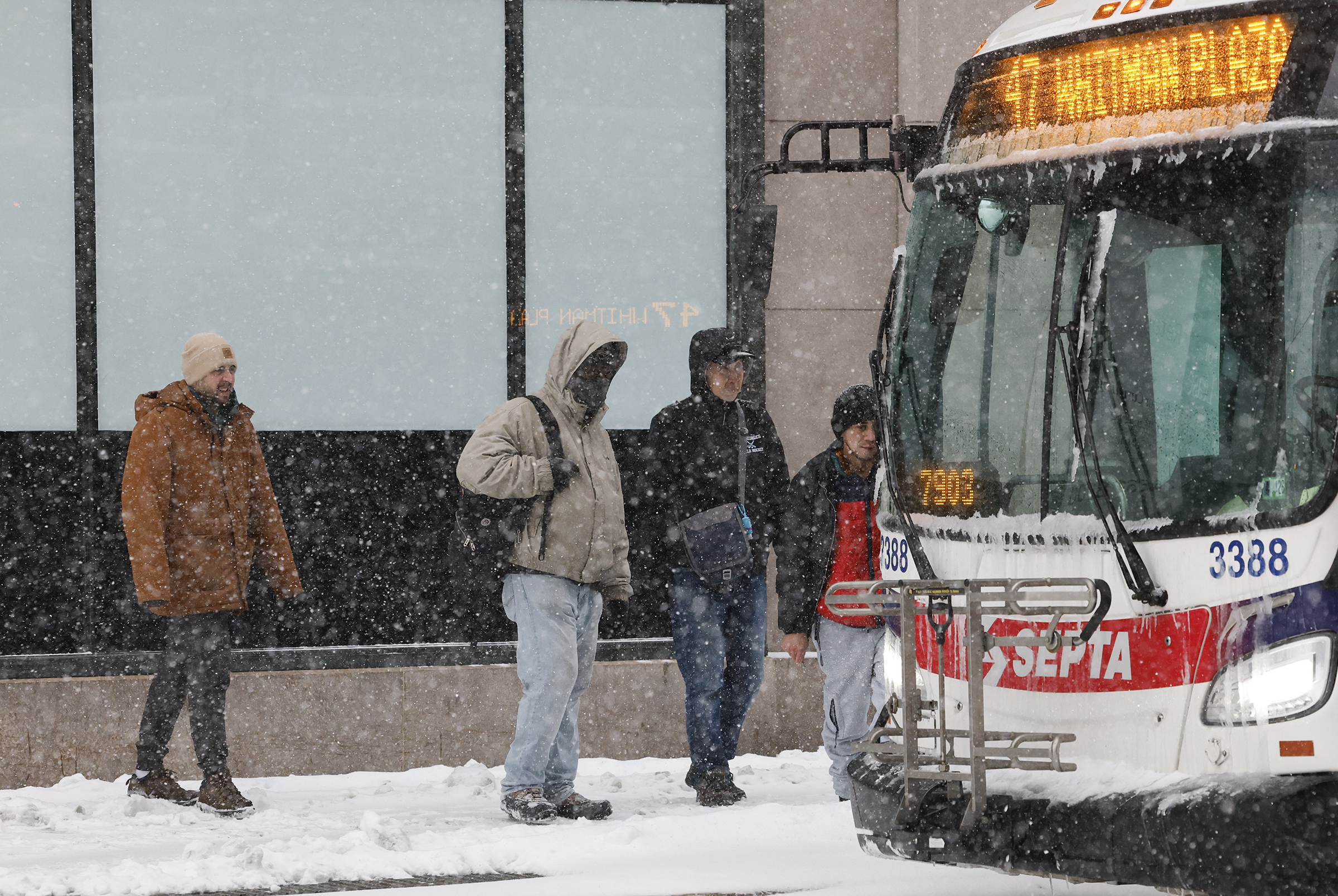
SEPTA riders board the 47 bus at 8th and Market Streets with the snow falling on Sunday, January 25, 2026.
But service had returned to all but a handful of routes by Wednesday afternoon. The weekend storm was not particularly onerous for SEPTA compared with other large storms in years past, Golden said,but he noted the frigid temperatures in the days following have made things difficult. Ice is not melting as quickly as it usually does, leaving the roads treacherous.
Golden said that while SEPTA officials have been in frequent contact with the streets department about problem spots, they don’t have any special recourse besides waiting for the city to clear the streets.
How does 2026 compare with 2016?
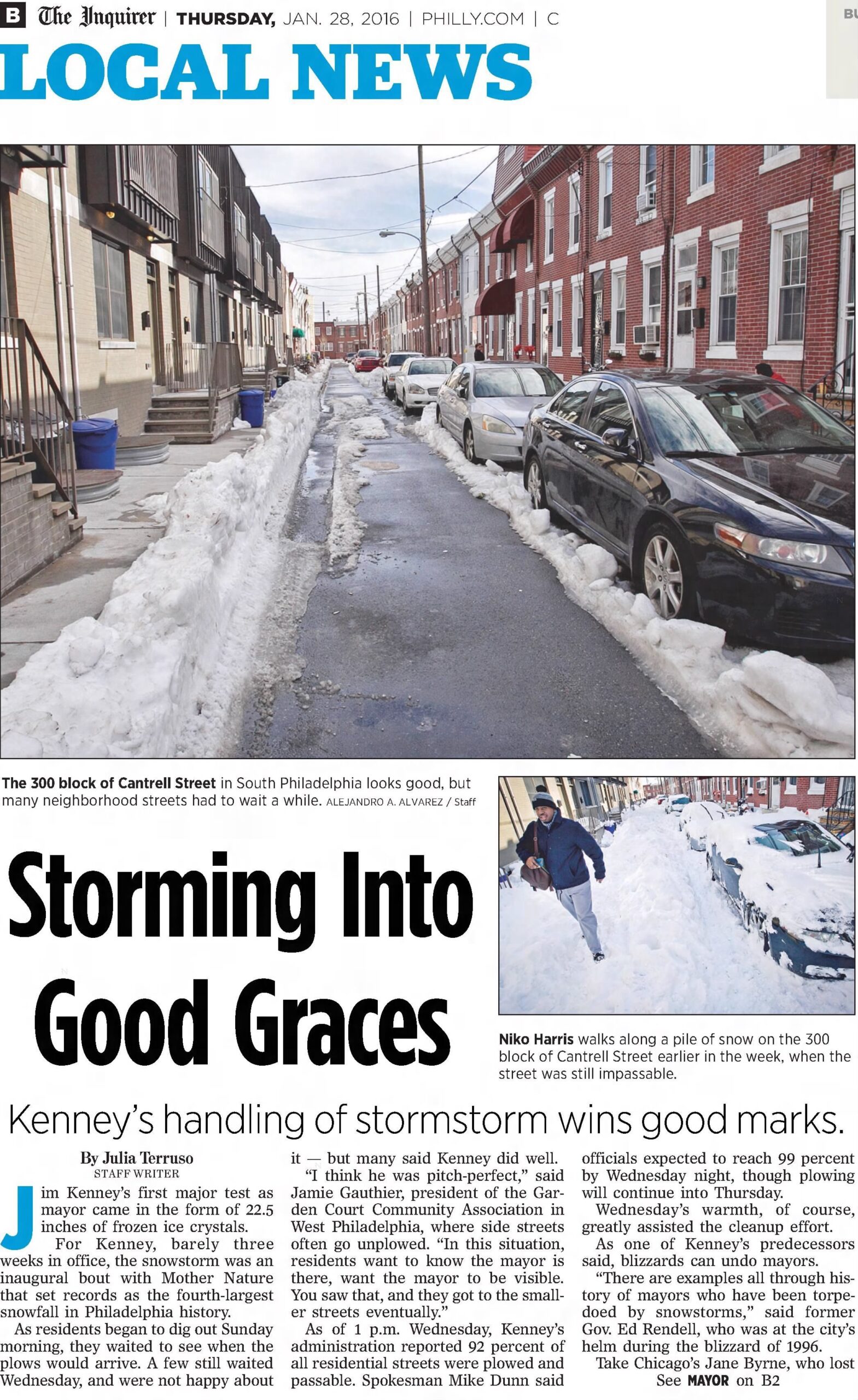
When the city was smacked with 22.5 inches of snow in January 2016, it was the fourth-largest snowfall in Philly history, and newly sworn-in Mayor Jim Kenney’s first major test in office.
At the time, many side street residents issued the same complaints heard with this most recent storm — they were the last to be dug out, and entire blocks were locked in.
But by the fourth day of storm cleanup, a Kenney spokesperson claimed 92% of all residential streets “were plowed and passable” and the administration was taking in kudos for what many — though not all — said was a job well done.
The front page of The Philadelphia Inquirer’s B section in January 2016, following a major snowstorm that was similar to the January 2026 storm. The article reported some complaints of snow plow delays, but residents were largely complimentary of then new Mayor Jim Kenney’s handling of the storm.
Though 9.3 inches fell this time around, city officials have said the conditions were very different. The temperature drop has been the largest hurdle so far, providing no help in melting the ice. The city still urges patience and says teams are working nonstop.
For parents whose children took part in virtual learning Wednesday and residents who were sick of parking wars and icy crosswalks with another potential snowfall on the way, patience was almost gone.
Residents in North and West Philly shared frustrations on social media of parking shortages because mounds of ice left people nowhere to go; some were even parking at an angle in parallel spots, to the chagrin of others. Bus stops were piles of dirty, frozen ice, and crosswalks remained icy.
For Hildebrand, it was all very discouraging.
“A plan could have been made and implemented, since the city knew about this a week before it happened, but it truly seems like bare minimum effort,” he said.
A coalition of building trades unions will lend the Philadelphia Housing Authority $50 million out of its pension fund to help finance the redevelopment of Brith Sholom House, a dilapidated senior apartment complex in West Philadelphia.
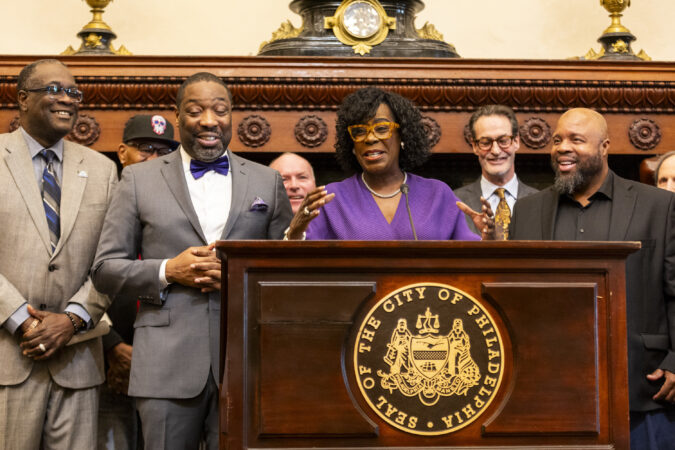
Mayor Cherelle L. Parker and her longtime political ally Ryan N. Boyer, the business manager of the Philadelphia Building and Construction Trades Council, announced the arrangement Tuesday and framed it as a first-of-its-kind approach to expanding the city’s affordable housing stock.
Under the terms of the deal, PHA will repay the building trades over 15 years at a 4.5% interest rate. PHA President and CEO Kelvin Jeremiah called it a good deal for taxpayers as banks and traditional financing institutions are lending at higher rates.
The city is guaranteeing the loan.Parker said the outcome will be 336 units of affordable housing for seniors on fixed incomes. Members of the building trades unions will perform the work at the site.
“This isn’t an investment for the building trades,” Boyer said. “It’s a down payment on our city’s future.”
Boyer, one of the most powerful nonelected political figures in the state, has been a longtime ally to Parker and much of City Council. The trades unions poured millions into Parker’s run for mayor in 2023 and have remained largely in lockstep with her. Boyer led the mayor’s transition team and has been a key voice on her signature housing plan, which stands to generate thousands of construction jobs.
The trades’ $50 million investment comes in addition to the $99.6 million that the housing authority is spending on a gut rehabilitation of the Wynnefield apartment complex, bringing the total cost of the project to $150 million.
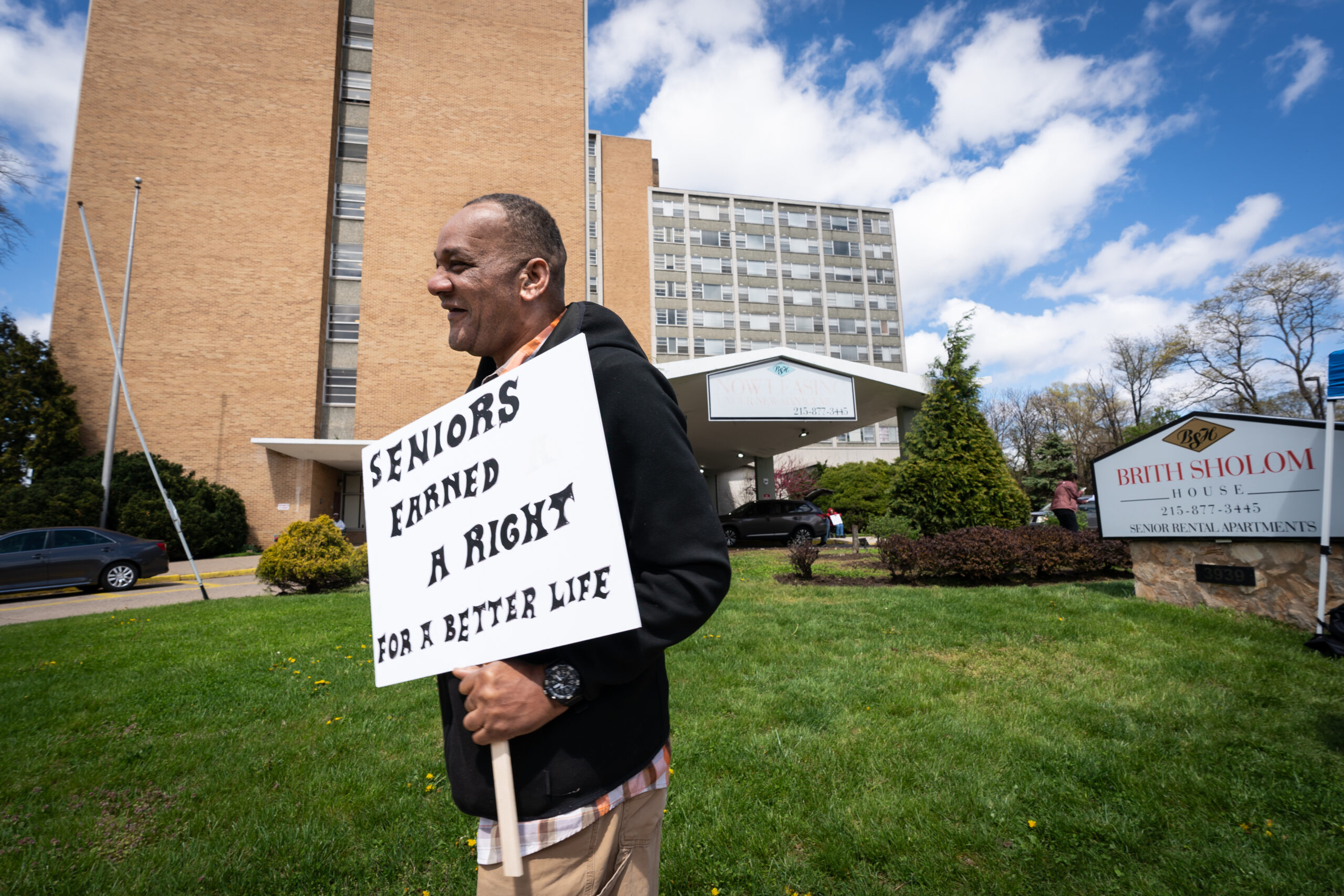
A protestor carries a sign to protest the living conditions at Brith Sholom House apartments, in Philadelphia, on Friday, April 12, 2024.
Jeremiah said he has been “shocked and dismayed” by the conditions at Brith Sholom, which was so neglected under its previous owners that tenants were forced to move out.
Work will begin late this year and is expected to take about 20 months to complete, Jeremiah said, meaning tenants may not be able to move back in until 2028. He had previously estimated a timeline that would have allowed residents to return this year.
Brith Sholom fell into disrepair under its previous owners, the New Jersey-based Puretz family. A 2024 Inquirer investigation found that members of the family became one of the nation’s largest affordable housing purveyors by buying up old buildings, saddling them with debt, and then defaulting on loans.
At Brith Sholom, the Puretz family profited while defaulting on a $36 million mortgage and amassing dozens of code violations. Residents — who organized to save their homes — complained of deteriorating infrastructure, threats of utility shutoffs, squatters, and severe pest infestations.
In a bid to preserve the building and reuse it in part as subsidized housing, PHA acquired Brith Sholom House in August 2024 for $24 million.
In addition to the price of the acquisition, Jeremiah estimated in 2024 that the cost of rehabilitating the building would be an additional $30 million to $40 million. PHA said then that the remaining 111 elderly residents in the 360-unit building would be able to remain in place.
Three months later, Jeremiah informed the tenants that Brith Sholom was in such ragged shape that they would have to be moved out to repair the building. Some units were so badly damaged that PHA could not fix them.
Following the acquisition of Brith Sholom, PHA has embarked on an ambitious $6.3 billion, 10-year plan that includes the purchase of 4,000 other privately held apartments. In the face of a glut of market-rate multifamily properties, many developers have struggled to charge the rents they need to pay back their loans — and the housing authority has been able to purchase buildings from such companies across the city.
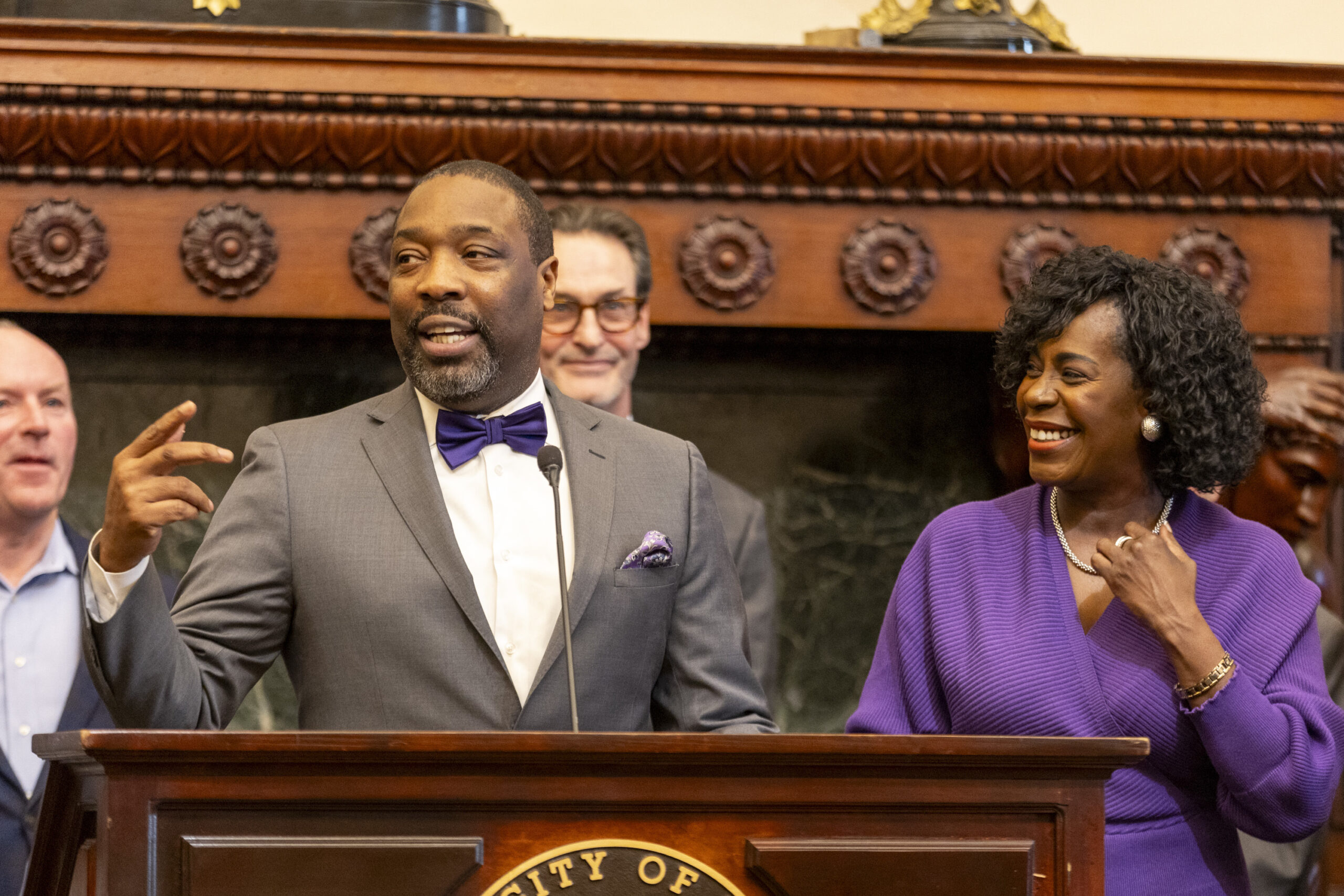
City Council President Kenyatta Johnson speaks during a news conference about the plan to redevelop Brith Sholom. At right is Mayor Cherelle L. Parker.
Parker also said the investment at Brith Sholom is part of her signature housing initiative, called Housing Opportunities Made Easy, or H.O.M.E. The mayor — who has promised to build, redevelop, and preserve more than 30,000 units of housing — is in the midst of continued negotiations with City Council over H.O.M.E.’s first-year budget.
Council in December gave initial approval to changes to legislation related to Parker’s housing initiative, which set income eligibility thresholds for two housing programs funded by H.O.M.E.’s bond proceeds. Parker wanted a higher threshold so middle-class residents could access the programs, while Council’s version aims to prioritize poorer Philadelphians.
Council could take a final vote on the related legislation as early as Thursday, when lawmakers return to session following their winter break.
Throughout the contentious process, Parker has said her administration is committed to affordable housing for lower-income Philadelphians. The collaboration with PHA to remake Brith Sholom, she said, is part of that effort.
“It’s not just for one particular constituency,” Parker said Tuesday about her overarching housing plan. “I’m personally on a mission to save Philly rowhomes. We’re trying to address our housing crisis and doing it for Philadelphians from all walks of life.”
Parker was joined at the news conference Tuesday by Council President Kenyatta Johnson, despite the two being at odds over the H.O.M.E. legislation in recent months. Johnson praised the mayor’s leadership and said the financing arrangement for Brith Sholom is remedying a “miscarriage of justice.”
“This is the type of work that helps those most in need,” Johnson said, “which is our seniors, who deserve to live out the twilight of their lives in dignity.”
In 2000, Aaron Deede was an 18-year-old Delaware college student who enjoyed acting and had dreams of becoming a playwright.
But a car accident left him paraplegic with a traumatic brain injury that upended his plans.
“It was a little detour,” Deede said.
Now, at 43, he is returning to college along with four other residents of Inglis House, a nursing facility in Philadelphia’s Wynnefield sectionfor people with severe physical disabilities who use wheelchairsand haveconditions such as multiple sclerosis, cerebral palsy, spinal cord injuries, or challenges following strokes.
Deede and three other Inglis residents on Monday started online classes — some may go in person in subsequent semesters — at Community College of Philadelphia, with a fifth student scheduled to start this summer. Inglis pays for the students’ education from a donor-supported fund.
“I love it. I can’t wait,” Deede said Friday during a celebration Inglis held for the new students at its Belmont Avenue complex, giving each of them a backpack to start their journey.
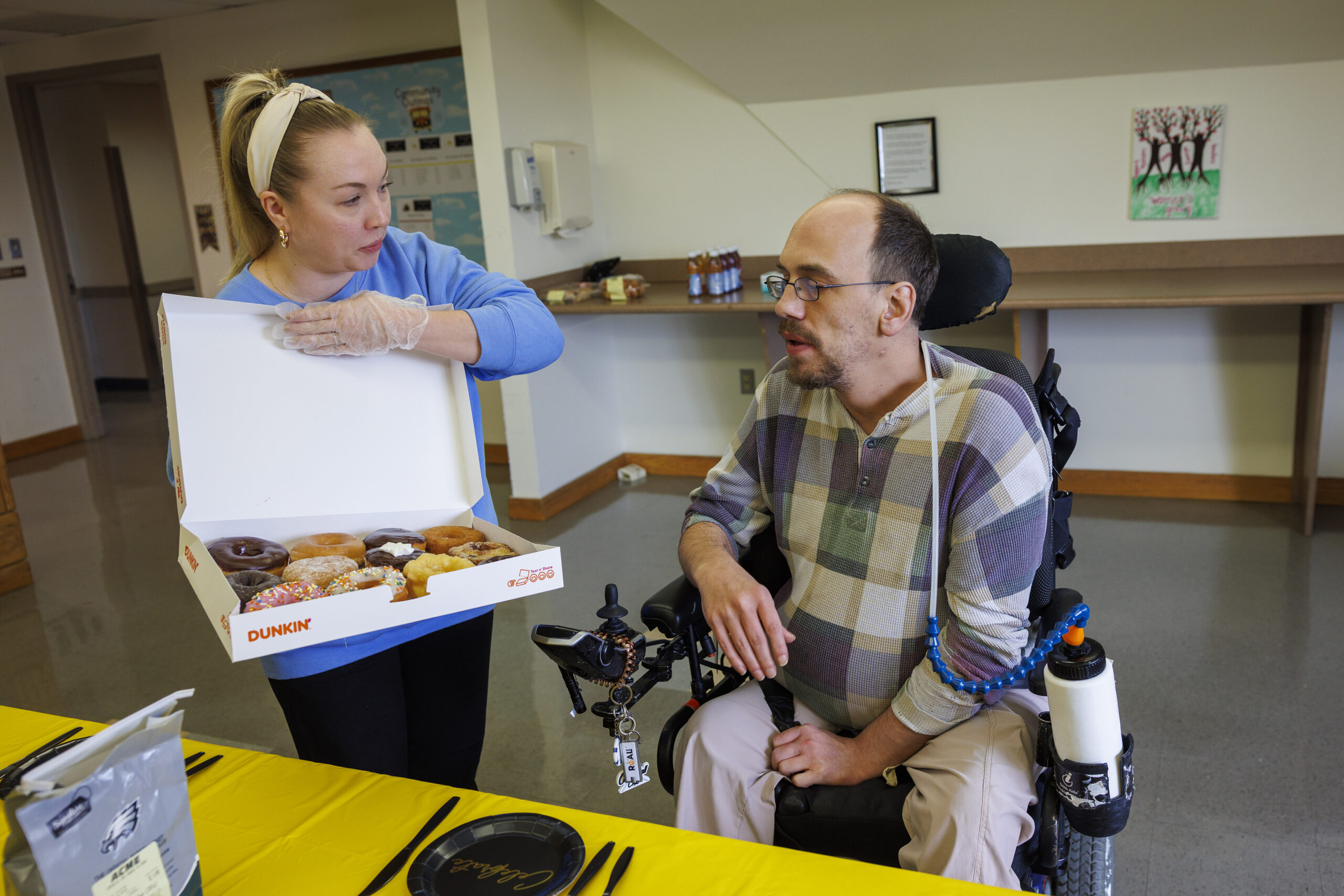
At right is Aaron Deede a resident of Inglis House. He is starting to take classes at Community College of Philadelphia. At left, Jaclyn Monaco, director of Therapeutic Life Enrichment, offers treats during the celebration for students.
Dozens of Inglis residents — who range in age from 18 to their 70s — have taken college classes over the years, and some have earned degrees. Butthis is the largest group to start together since the 1990s, said Jacklyn Monaco, Inglis’ director of therapeutic and life enrichment.
“Things sort of ebb and flow as far as the types of resident who move in and their personal goals,” she said. “Sometimes they’re recreational goals. Sometimes they’re physical goals. Sometimes they’re educational goals. At this point in time we have a lot of younger folks who are really interested in pursuing higher education.”
Nikos Rapach, 21, had been planning to join either the Army or the Coast Guard when he was in a car accident and lost the use of his legs and the mobility of his fingers.
Nikos Rapach, a resident of Inglis House, sets up at his workstation in the computer lab.
“I’m not going to be able to swing a hammer, so I have to start using my brain more,” said Rapach, who is from Hazleton.
He is taking English and trigonometry classes at CCP. He will use the computers at Inglis thathave adaptive technology to assist with note-taking.
“Everything here is a stepping stone for me,” said Rapach, who moved to Inglis in May. “I want to go back home. I want to get a job. I basically want to get my life back on track.”
“Like they say, if you don’t know your history, you are doomed to repeat it,” he said.
Deede, who came to Inglis in 2023, also would like to become a teacher, preferably at the elementary level.
Another resident who is taking classes at CCP aims to become a social worker at Children’s Hospital of Philadelphia, said Jeremy Ault, Inglis’ therapeutic education instructor. Another hopes to become an Urdu-to-English translator.
Stephanie Shea, 59, who is from Maryland and has a genetic neuromuscular condition, is taking liberal arts classes with the goal of getting a degree.
“It’s kind of a bucket-list thing,” said Shea, who recently got married to another resident. “It’s something I’ve always wanted to have.”
Founded in 1877, Inglis House currently serves about 180 residents, nearly 40% of whom are involved in educational activities — not just college. Classes are offered at Inglis in subjects such as history, law, science, poetry, and creative writing, as well as foundational skills like reading and personal finance.
Aaron Deed (right) and Nikos Rapach are starting taking classes at Community College of Philadelphia.
Inglis staff accompanied the students to CCP’s campus to take their placement tests, register for classes, and visit’s CCP’s Center on Disability, the office that helps students with disabilities.
“We suggest accommodations based on their needs,” said Lisa Papurt, coordinator of disability services at the center, which typically serves 400 to 500 students with disabilities per semester.
Those services could include extra time for tests or technology to assist with note-taking or assistance in communicating with professors.
Papurt said she is excited to see the Inglis students start their educational journey.
“I hope to be able to support them through getting degrees, graduating, and moving on to a four-year institution,” she said.
When students entered their surprise celebration Friday, Ault, the therapeutic education instructor, told them it was time for them to celebrate.
“I’m so proud of you guys for doing so well this past year,” he said. “You guys have been such a pleasure to teach and be part of your lives really.”
Ault is helping students prepare for entry into college.
“I’m working on my writing skills and grammar,” Rapach said. “Jeremy has been giving me essay prompts to help me be a better writer so that when I get to college, I’m not trying to relearn everything.”
Philly is getting ready to dress itself up — with Liberty Bells. Lots of Liberty Bells.
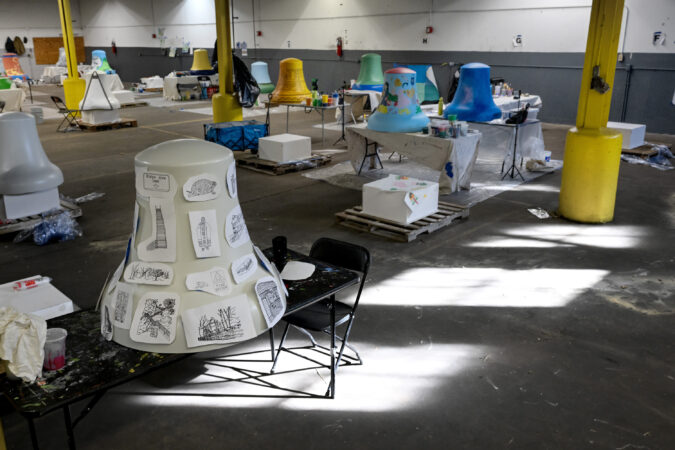
Organizers of Philadelphia’s yearlong celebrations for America’s 250th anniversary in 2026 gathered in a frigid Philadelphia School District warehouse in Logan on Tuesday, offering a special preview of the 20 large replica Liberty Bells that will decorate Philly neighborhoods for the national milestone.
Designed by 16 local artists selected through Mural Arts Philadelphia — and planned for commercial corridors and public parks everywhere from Chinatown and South Philly to West Philly and Wynnefield — the painted bells depict the histories, heroes, cultures, and traditions of Philly neighborhoods.
As part of the state nonprofit America250PA’s “Bells Across PA” program, more than 100 painted bells will be installed across Pennsylvania throughout the national milestone, also known as the Semiquincentennial. Local planners and Mural Arts Philadelphia helped coordinate the Philly bells.
“As Philadelphia’s own Liberty Bell served as inspiration for this statewide program, it makes sense that Philly would take it to the next level and bring these bells to as many neighborhoods as possible,” Mayor Cherelle L. Parker said in a statement. “We are a proud, diverse city of neighborhoods with many stories to tell.”
Kathryn Ott Lovell, president and CEO of Philadelphia250, the city’s planning partner for the Semiquincentennial, said the bells are a key part of the local planners’ efforts to bring the party to every Philly neighborhood.
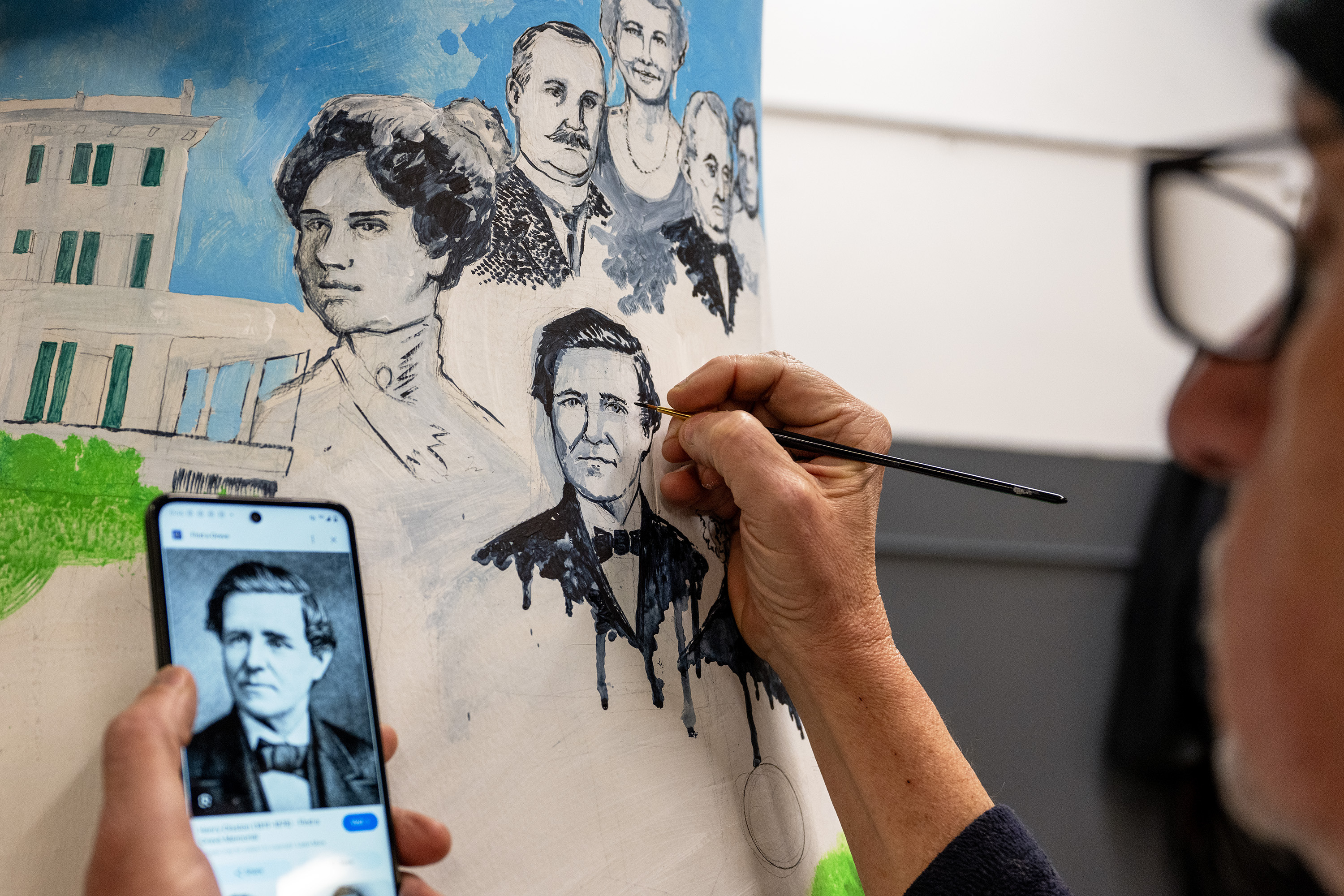
Local artist Bob Dix paints a portrait of industrialist Henry Disston on his bell.
“The personalities of the neighborhoods are coming out in the bells,” she said, adding that the completed bells will be dedicated in January, then installed in early spring, in time for Philly’s big-ticket events next summer, including six FIFA World Cup matches, the MLB All-Star Game, and a pumped-up Fourth of July concert.
Planners released a full list of neighborhoods where the bells will be placed, but said exact locations will be announced in January. Each of the nearly 3-foot bells — which will be perched on heavy black pedestals — was designed in collaboration with community members, Ott Lovell said.
Inside the massive, makeshift studio behind the Widener Memorial School on Tuesday, artists worked in the chill on their bells. Each bell told a different story of neighborhood pride.
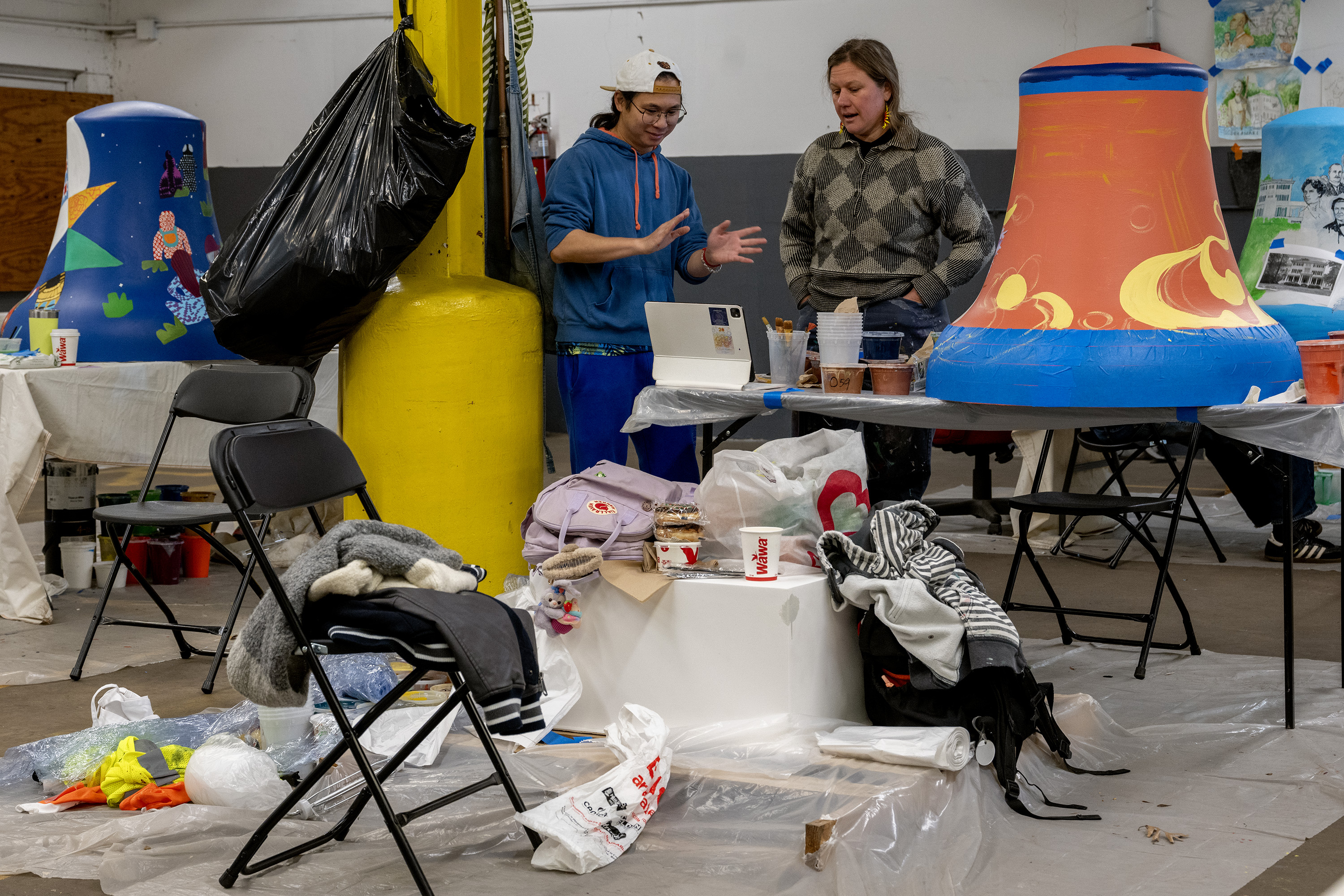
Chenlin Cai (left) talks with fellow artist Emily Busch (right) about his bell, showing her concepts on his tablet.
Cindy Lozito, 33, a muralist and illustrator who lives in Bella Vista, didn’t have to look for inspiration for her bell on the Italian Market. She lives just a block away from Ninth Street and is a market regular.
After talking with merchants, she strove to capture the market’s iconic sites, history, and diversity. Titled Always Open, her bell includes painted scenes of the market’s bustling produce stands and flickering fire barrels, the smiling faces of old-school merchants and newer immigrant vendors, and the joy of the street’s annual Procession of Saints and Day of the Dead festivities. Also, of course, the greased pole.
“It’s a place where I can walk outside my house and get everything that I need, and also a place where people know your name and care about you,” she said, painting her bell.
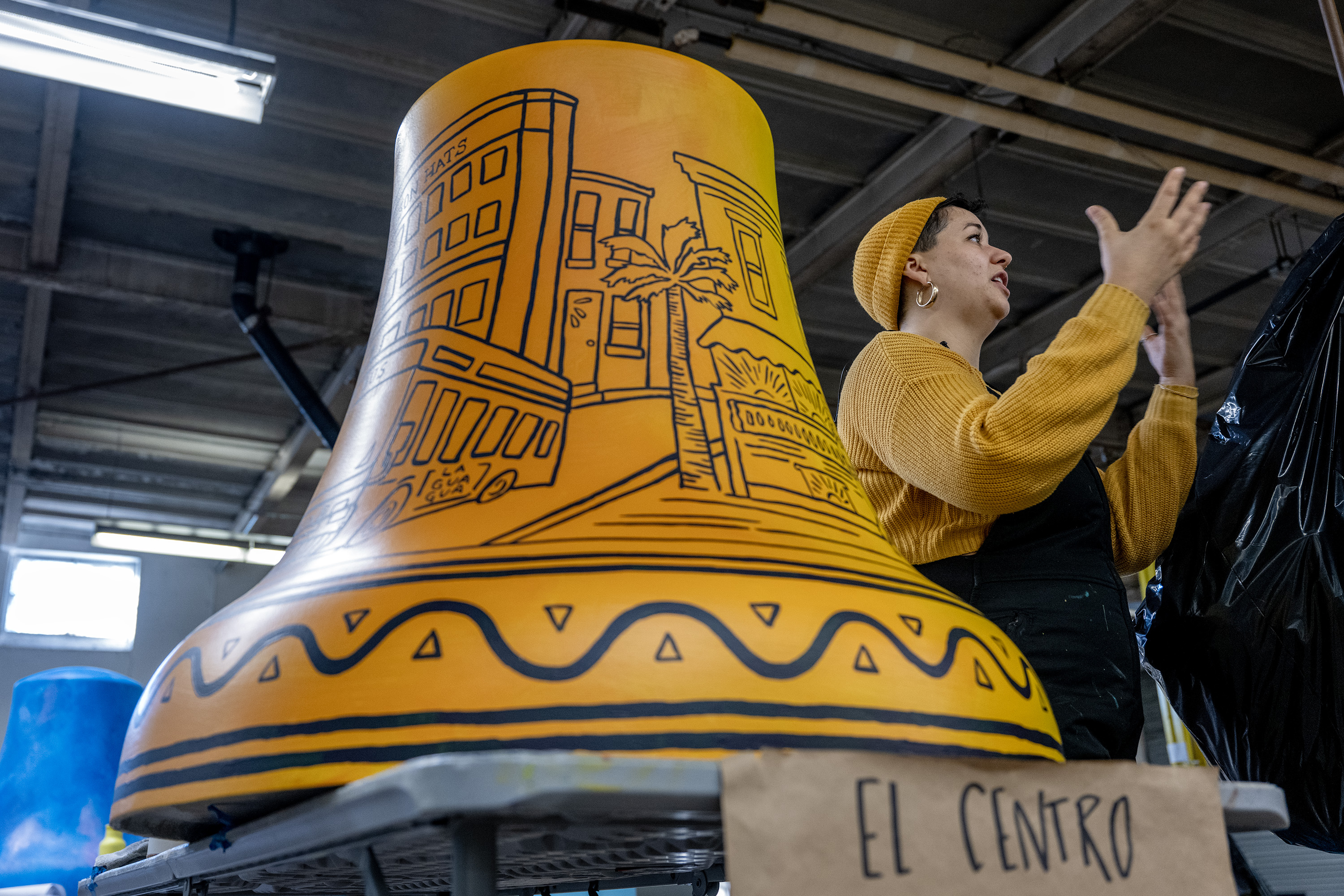
For her bell on El Centro de Oro, artist and educator Symone Salib, 32, met twice with 30 community members from North Fifth Street and Lehigh Avenue, asking them for ideas.
“From there, I had a very long list,” she said. “People really liked telling me what they wanted to see and what they did not.”
Local artist Symone Salib talks with a visitor as she works on her bell.
Titled The Golden Block, the striking yellow-and-black bell depicts the neighborhood’s historic Stetson Hats factory, the long-standing Latin music shop Centro Musical, and popular iron palm tree sculptures.
To add that extra bit of authenticity to his bell depicting Glen Foerd, artist Bob Dix, 62, mixed his paints with water bottled from the Delaware River, near where the historic mansion and estate sits perched in Torresdale, overlooking the mouth of Poquessing Creek.
“I like to incorporate the spirit of the area,” he said, dabbing his brush in the river water. “I think it’s important to bring in the natural materials.”
Local artist Bob Dix displays waters he collected from the Delaware River and Poquessing Creek to use in his painting of one of 20 replica Liberty Bells representing different neighborhoods Tuesday, Dec. 9, 2025.
Planners say they expect the bells to draw interest and curiosity similar to the painted donkeys that dotted Philadelphia neighborhoods during the 2016 Democratic National Convention.
Ott Lovell said organizers will install the bells around March to protect them from the worst of the winter weather.
“I don’t want any weather on them,” she said with a smile. “I want them looking perfect for 2026.”