Tag: Wynnewood

  • These Wynnewood residents are building a Village to help Lower Merion’s older adults age in place

    These Wynnewood residents are building a Village to help Lower Merion’s older adults age in place

    They say it takes a village to raise a child. But what about to age in place?

    More than ever, older adults want to age in their homes. According to a 2024 survey by AARP, 75% of adults ages 50 and over want to stay in their homes as they get older, and 73% want to stay in their communities.

    Economic and logistical barriers, however, can make aging in place difficult. Single-family homes in suburban neighborhoods can be isolating for older adults, especially those who don’t drive.

    Moving into a retirement community with built-in care and socialization, on the other hand, can be expensive. This paradigm often forces older adults to make difficult decisions about if, and how, they can age in their homes.

    To combat these challenges, a group of Lower Merion residents is building the Lower Merion Village, a local chapter of the nationwide Village to Village Network. The network seeks to “change the paradigm of aging” by connecting older adults to social events, transportation, household help, and other services while keeping them in the neighborhoods they know and love.
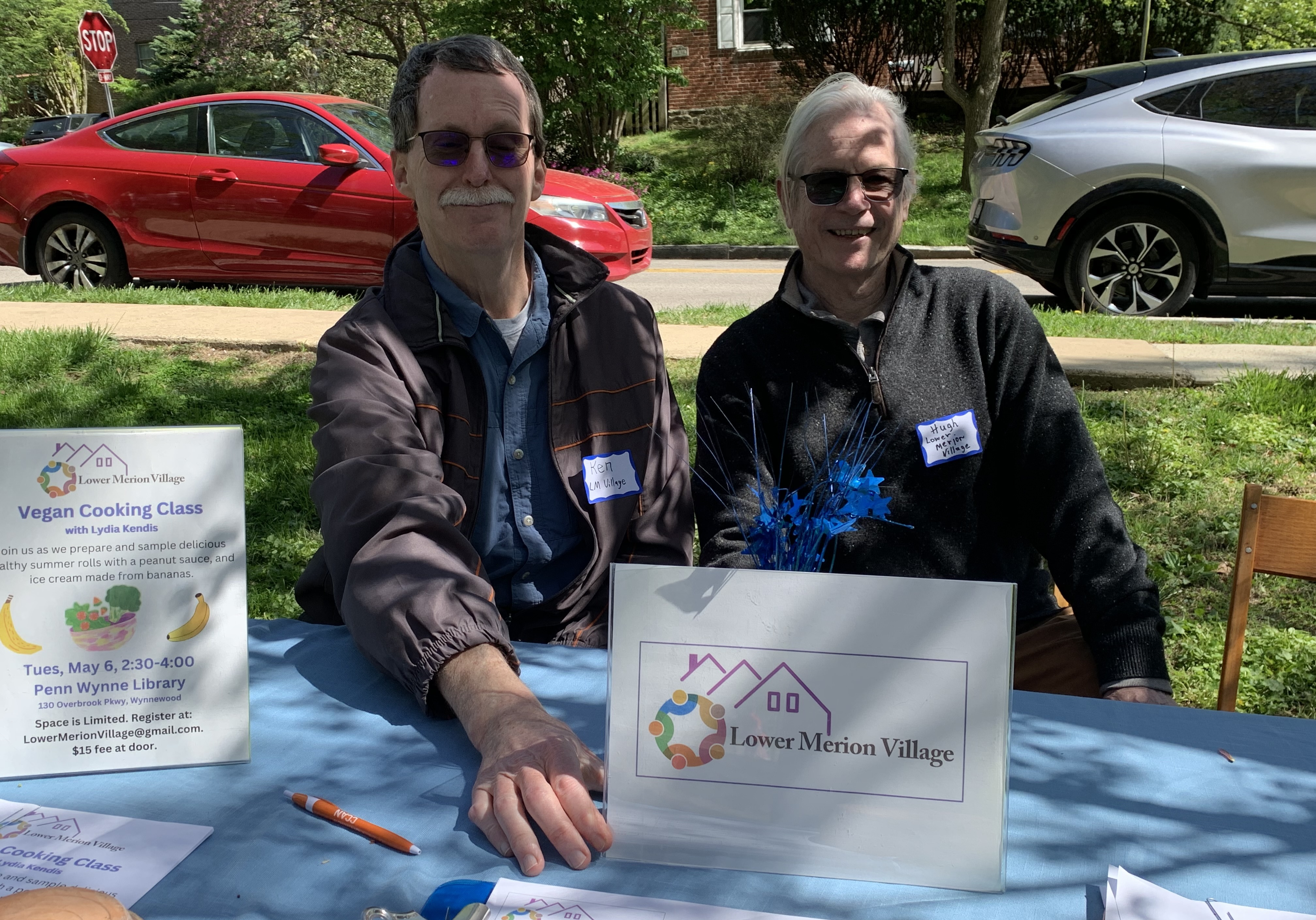
    Lower Merion Village volunteers tabling at an Earth Day celebration in Wynnewood Valley Park in April.

    Bonnie Asher, a member of the Lower Merion Village’s program committee, got introduced to the village model through her mother, who lived in her suburban Maryland home until her death at 99.

    Asher remembers worrying about her mother, especially as she got older and driving became a challenge. Getting involved in a village changed her mom’s life. Suddenly, she made new friends, got rides to the doctor’s office, and signed up for lectures, which she brought Asher to when she visited.

    “Those connections were just really important,” Asher said.

    The Village to Village Network is a national nonprofit that originated in Boston and has since spread from Fairbanks, Alaska, to upstate New York. The network provides guidance and resources to local chapters, which cater to older adults’ needs on a hyperlocal level.

    Villages are membership-driven, self-governing organizations that are run by volunteers, and, at times, have a small paid staff.

    There are five existing villages in the Philadelphia region: Penn’s Village (Center City), Village on the Ridge (Roxborough), East Falls Village, Shtetl 2.0 (Northwest Philly), and the Northwest Village Network (Northwest Philly).

    In 2023, a group of neighbors in Wynnewood began tossing around the idea of starting a village. One conversation turned to a few gatherings at a neighbor’s house, then a monthly meeting at the library.

    As the Wynnewood group dreamed up their village, its members got connected with Sara Crimm, also a Wynnewood resident and the founder of Families CCAN, a nonprofit focused on adults with disabilities.

    Crimm saw the village as an opportunity to create a strong community infrastructure for both older adults and people with disabilities who want to stay, and thrive, in Lower Merion. Crimm met with the village organizers, and the newly formed coalition quickly got to work.

    In spring 2024, Families CCAN received around $21,000 in American Rescue Plan (ARP) funds as part of Lower Merion Township’s ARP Non-Profit Vitality Grant Program. The funds were earmarked to help get the village off the ground, and most of the grant money went to pay Crimm’s salary as its first and only staff member.

    With that foundation, the village has launched a growing slate of social events as it works to establish its official nonprofit structure. The group takes weekly walks, perusing the Wynnewood Valley Park Sensory Garden or the local fall foliage. They’ve baked challah with Jewish Family and Children’s Service of Greater Philadelphia and hosted lectures — last month’s was on “ethical wills.” They meet monthly for coffee at Narberth’s GET Cafe.

    When Asher moved to Lower Merion, her kids were already out of school, so she missed out on the opportunity to make friends through her children’s activities.

    “One of the things that I’ve already gotten from the experience is making new friends. At this age, it’s just amazing,” said Asher, 74.

    With regular lectures, walks, volunteer commitments, and lunches, Asher said with a laugh, “I got kind of busy.”

    “We’re safer living in communities that are connected,” Crimm said, noting that many of the village programs are designed to build social connections and ward off the loneliness and depression that can sneak into older adulthood.

    The Lower Merion Village is still in its infancy. It’s not officially accepting members yet, and Crimm is working to build a dues structure, create a website, and establish the organization as a 501(c)3 nonprofit.

    The Lower Merion Village plans to charge an individual membership rate of $125 per year and a household rate of $200 per year. The village hopes to provide a scholarship option down the road for people who can’t afford it. The membership will come with access to all of the village’s programs, as well as to a network of volunteers who can help with household tasks, give rides, and troubleshoot technology.

    Transportation is a particularly difficult issue for older people in Lower Merion, Crimm said. While SEPTA can take people into Center City or out to Norristown, getting around within the township can be difficult for people. Rideshares like Uber offer a temporary, but costly, solution.

    Crimm noted that Lower Merion’s village will be less expensive than neighboring villages and assisted living communities. (Penn’s Village members pay $600 annually to gain access to services, and a one-bedroom apartment at Sunrise of Haverford, a senior living community that offers healthcare services, starts at $3,770 per month).

    When asked about the misconceptions around aging, Crimm said there’s a pervasive ageism in how we see older adults’ wants and needs.

    “These are people who are so rich in experience, and they have so much to give back,” she said. “Let’s support people to stay in their neighborhoods and to make those neighborhoods richer and stronger.”

    Those interested in getting involved in the Lower Merion Village can email lowermerionvillage@gmail.com.
  • Lower Merion may raise parking meter rates for the first time since 1999

    Lower Merion may raise parking meter rates for the first time since 1999

    Lower Merion’s board of commissioners is set to put multiple new ordinances on the books next month, including policies raising parking meter rates for the first time since 1999, lowering the speed limit on parts of Lancaster Avenue, and regulating where smoke and vape shops can open in the township.

    The smoke and vape shop regulation moved ahead last month, and the commissioners advanced the parking meter and speed limit changes Wednesday evening. Lower Merion’s assistant township manager, Brandon Ford, said the commissioners are poised to formally vote on all three proposals in December. Here’s everything you need to know.

    Parking meter rate may go up

    Commissioners on Wednesday moved forward an ordinance that would raise parking meter rates across Lower Merion for the first time in more than 25 years.

    Under the proposed ordinance, parking would increase from 50 cents per hour to $1 per hour across the township, with the exception of six locations in Ardmore. Parking would go up to $1.50 per hour at Rittenhouse Place, Cricket Avenue, Cricket Terrace, and township-owned parking lots five (Cricket Terrace) and six (Schauffele Plaza). The Cricket Avenue Parking Garage would stay at 50 cents per hour.

    Township staff say the proposed meter rate increase would generate around $900,000 annually and would likely drive quicker turnover in Lower Merion’s commercial corridor, generating more economic activity for local businesses.

    “The rates that we are charging have not kept up with the overall cost for maintaining those parking meters, as well as our overall parking services program,” Ford said during a Nov. 5 meeting.

    The ordinance, if passed, would not change how parking meter fees are collected. The township collects parking fees through meters, kiosks, and a mobile app.

    Commissioner Scott Zelov, who represents Bryn Mawr, Haverford, and Gladwyne, said: “It certainly is time to do this.”

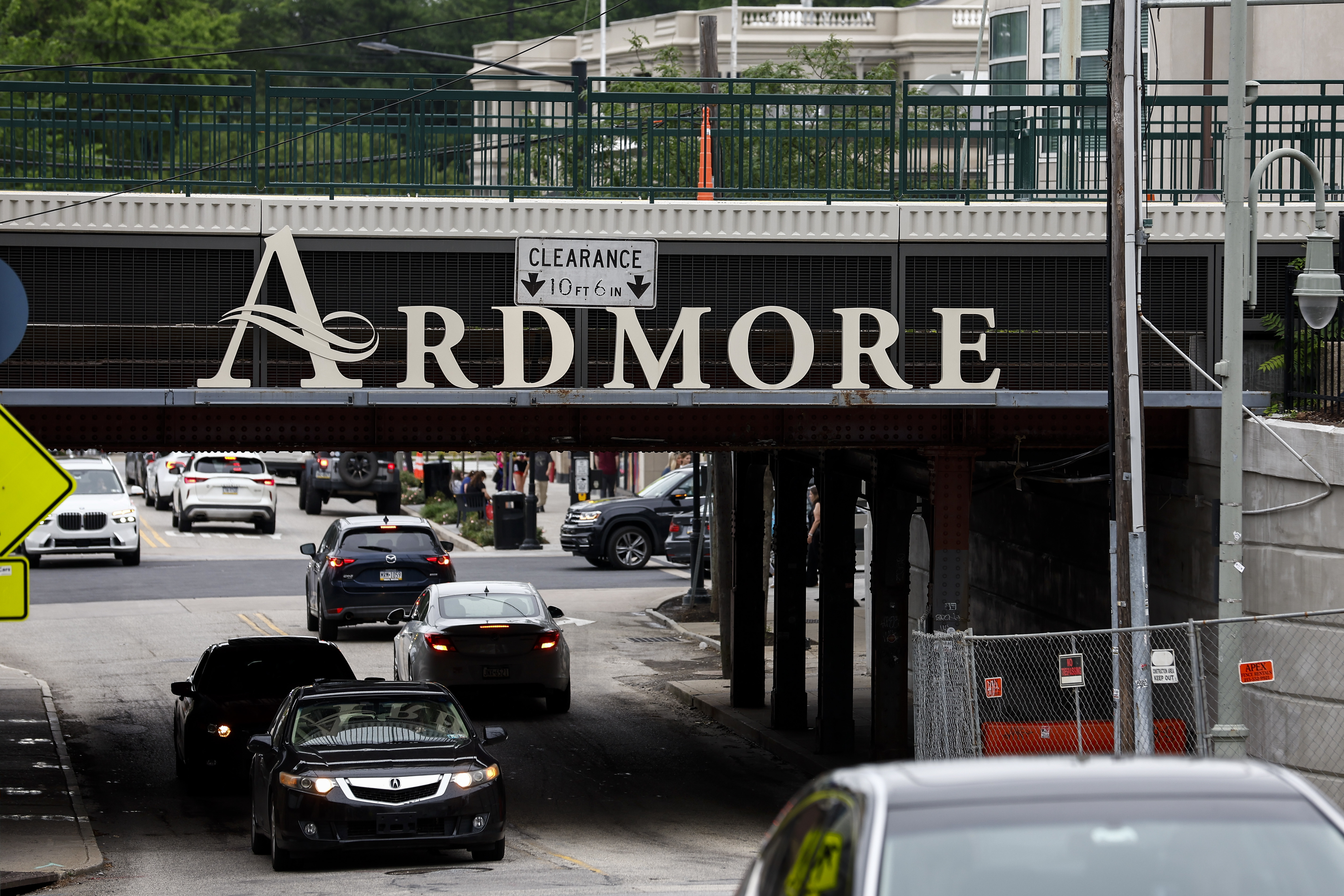
    Anderson Avenue near Suburban Square on June 8. A proposed Lower Merion ordinance would increase parking meter rates across the township in hopes of raising revenue and spurring economic activity in places like downtown Ardmore.

    Lancaster Avenue speed limit reduction

    Lower Merion is set to reduce the speed limit on parts of Lancaster Avenue from 40 mph to 35 mph, bringing township code in compliance with an earlier speed limit change by the Pennsylvania Department of Transportation.

    PennDot has already placed 35-mph speed limit signs on the selected strip of Lancaster Avenue. The board’s approval will bring the township in line with the state and allow township police to start enforcing the reduced speed limit. The speed limit change is the latest development in a major redesign of Lancaster Avenue by the state and the township.

    A study conducted by PennDot earlier this year found that, out of nearly 20,000 vehicles traveling on Lancaster Avenue between Wynnewood Road and City Avenue during a 24-hour period, only 57% were driving at or below the 40-mph speed limit. PennDot considers the intersection of Lancaster Avenue and Remington Road to be a “high crash location.”

    The ordinance, approved for advertisement on Wednesday, also bans right turns on red at three intersections: Lancaster Avenue and Remington Road for eastbound traffic, Lancaster Avenue and Haverford Station Road for westbound traffic, and Montgomery Avenue and Airdale Road for east-west traffic.

    The township aims to place automated red-light cameras at all three intersections. The first red-light camera, at Remington Road and Lancaster Avenue, is in the process of being installed. Andy Block, Lower Merion’s superintendent of police, said the camera should be up and running by the end of the year.

    Smoke and vape shop zoning

    Following a lengthy discussion that stretched across two meetings, the board of commissioners on Oct. 22 moved forward an ordinance that would decide where tobacco and vape shops can operate in Lower Merion.

    Under the proposed ordinance, if a tobacco or vape shop wanted to open in Lower Merion, it would have to be situated at least 1,000 feet from any other tobacco or vape shop and 1,000 feet from any public or private school. The rule would also apply to hookah lounges.

    Township staff said the 1,000-foot buffer would dramatically decrease the opportunity for smoke shops to operate in Lower Merion. Ford said there are currently around 1,000 properties in Lower Merion where smoke shops could operate. If the buffer ordinance were to be implemented, that number would drop to 300.

    While some commissioners inquired about creating a larger buffer, officials said doing so would likely zone smoke shops out of Lower Merion entirely, which would give smoke shop owners the legal claim to build anywhere in the community.

    During an Oct. 17 discussion of the ordinance, Commissioner Anthony Stevenson, who represents Ardmore and Haverford, said: “We need to avoid the continuation of making our township, and particularly in the Ardmore area, a vape central.”

    This suburban content is produced with support from the Leslie Miller and Richard Worley Foundation and The Lenfest Institute for Journalism. Editorial content is created independently of the project donors. Gifts to support The Inquirer’s high-impact journalism can be made at inquirer.com/donate. A list of Lenfest Institute donors can be found at lenfestinstitute.org/supporters.