Author: Kiki Aranita

  • This week, Philly’s chefs and bartenders are gathering black walnuts for spirits, cookies, and sausages

    This week, Philly’s chefs and bartenders are gathering black walnuts for spirits, cookies, and sausages

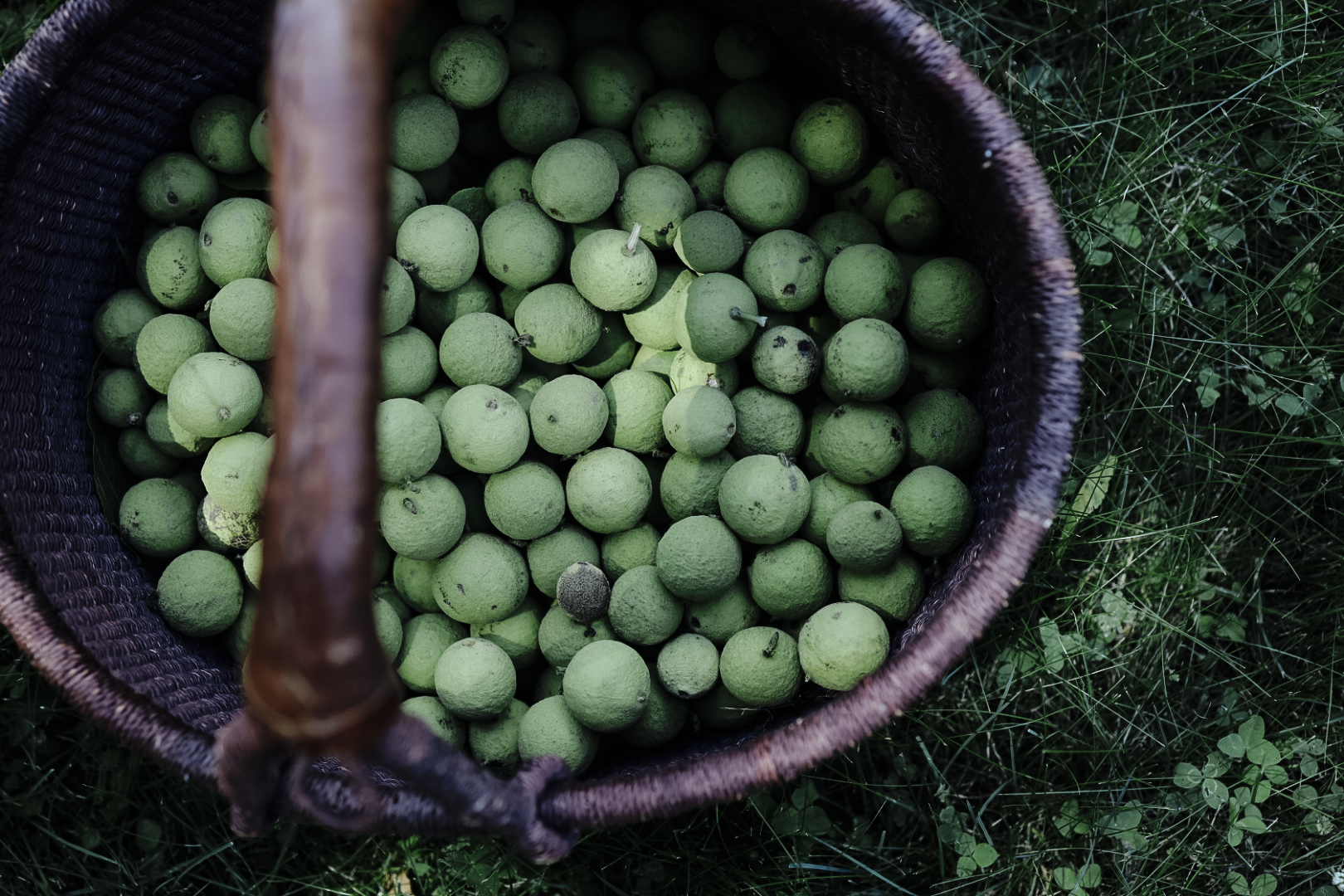
    Right now, black walnuts look like small neon green tennis balls clustered on a branch. Their interiors are creamy and gelatinous.

    Danny Childs, the founder of Slow Drinks — who is currently in the midst of opening his first cocktail bar, Field Day — uses black walnuts in this state for black walnut nocino, a variant of the bittersweet Italian liqueur known as amaro. “When I make amari in general, it’s always a way to showcase a certain place at a certain time,” said Childs, who forages his black walnuts from a running trail in Merchantville.

    “When you’re making nocino, you pick them in June,” Childs said. “The knife can easily pierce the black walnut, as the actual nut hasn’t formed yet. It’s still a jellylike substance.”

    Childs uses 151 proof vodka from Devil’s Springs in New Jersey to macerate his walnuts. His black walnut nocino is also on the menu at Almanac, featured in their cocktail the Juban District. It’s blended with Japanese whiskey, scotch, vermouth, Okinawan Kokuto brown sugar, and bitters. It’s funky and savory, and sweet without being cloying. And it has become a classic cocktail on Almanac’s menu.

    And so, the Almanac team has also just gone foraging for black walnuts.

    At Field Day, Childs’ black walnut repertoire will expand. “We’re going to start using the walnuts in other ways after nocino this year — to infuse wine to make nociato, and then use them to make black walnut miso.” He’s working with fermenter Jamaar Julal, previously of Honeysuckle, on these projects.

    Danny Childs picks black walnuts in Merchantville.

    Look closely, and you’ll start to see black walnuts everywhere, from shortbread cookies at Ellen Yin’s Bread Room to Randy Rucker’s sauces for seafood at Little Water.

    Crisped up in a pan, the Heavy Metal Sausage’s mortadella, inlaid with cubes of smoked pork jowl and hard toasted black walnuts, emits a heady aroma of pork and socks. It is funky, distinctive, and heavenly; it tastes milder than its scent, like uncured bacon that had nestled next to a blue cheese for a few days in the fridge.

    Pat Alfiero, Heavy Metal’s co-owner and butcher, sources shelled black walnuts from Ian Brendle of Green Meadow Farm in Gap, Pa., who has about 100 black walnut trees on his property. Brendle also functions as a middleman, shuttling nutmeats processed just south of Pennsylvania to chefs.

    Jamaar Julal, Field Day’s director of fermentation, picks black walnuts in Merchantville.

    “To me, black walnuts are very unique, like pawpaws. If you had a hundred people eat them, half would like them and half would hate them. Pawpaws have the same unctuous floral perfume as black walnuts,” said Brendle, who now sells five to 10 pounds of shelled black walnuts every week, twice as much as when he started selling them two decades ago.

    “They’re a misunderstood tree nut, for sure. But any nut or plant that can be foraged sustainably should be consumed. Anytime you can consume something that doesn’t require immense amounts of water or makes a negative impact is a step in the right direction,” said Brendle.

    Black walnut trees are found in dense thickets in Fairmount Park, and on practically every farm and expansive backyard in and around Philadelphia. They’re native to the Mid-Atlantic, like hickory nuts and pecans. They swath the East Coast, growing as far north as the border with Ontario and as far south as Florida.

    Every part of the black walnut contains juglone, which is toxic to many other plants, but perfectly safe for humans and animals to consume. For many gardeners and homeowners, black walnuts are a nuisance, staining hands if you gather them without gloves on, as well as the asphalt driveways on which they fall. The nuts get caught in lawn mowers and can also be dangerous projectiles, falling from great heights — the trees can grow up to 80 feet tall — denting car roofs and unlucky heads.

    If nuts could talk, black walnuts would say, “They don’t like us, we don’t care.”

    For Alfiero, Brendle, and the others, there is an urgency to using black walnuts. Nut farming is water intensive, and the almond industry in California has repeatedly come under scrutiny for its groundwater consumption. The walnuts in a typical supermarket are the Persian or English variety. In the U.S., 99% of them also come from California. It takes about 26.7 gallons of water to grow an ounce of English walnuts.

    “We’ve created so many problems for ourselves in the world, simply by being spoiled and being able to purchase, say, pistachios at the store. People grow almonds and other nuts in places that don’t naturally have a lot of water. We’ve created a market for things that don’t make sense,” said Jeremiah Langhorne of the Dabney in Washington D.C, one of the chefs responsible for the black walnut’s current popularity on menus up and down the Northeast Corridor.

    While the nuts, shelled and toasted or raw, may not be as snackable as the more common English varieties, they have a wide range of uses among Indigenous populations.

    In Braiding Sweetgrass, Robin Wall Kimmerer, a member of the Citizen Potawatomi Nation, wrote, “The hickories, black walnuts, and butternuts of our northern homelands have their own specific names. But those trees, like the homelands, were lost to my people.”

    Though Native Americans carried black walnuts and other related nuts with them as they were displaced, “The federal government’s Indian Removal policies wrenched many Native peoples from our homelands. It separated us from our traditional knowledge and lifeways, the bones of our ancestors, our sustaining plants,” Kimmerer writes.

    Native peoples were divorced from their trees, and now, chefs, distillers, and foragers are trying to form new bridges with the same wild trees.

    How to use black walnuts throughout the year:

    Early spring to summer: Gather the leaves

    “Use the leaves in early spring when they’re just the size of squirrel’s ears,” said Robert Gustafson, a Virginia-based specialist in wild foods. This is when they can be blended and fermented into sauces.

    “Our entire goal is to find what grows well around us, and be receptive to working with it,” said Isaiah Billington, who along with Sarah Conezio, is the co-owner of Keepwell Vinegar and White Rose Miso, based in Dover.

    “Our black walnut bay sauce is like a Worcestershire sauce with a base made from our own apple cider vinegar,” said Billington. The recipe was unearthed from a cookbook first published in 1879 and adapted by Langhorne. It’s aged for a year with ginger, garlic, horseradish, and black walnut leaves, which Billington harvests himself. The leaves give the sauce a mildly bitter, herbal flavor. Billington had become enamored with the sauce while working at the Dabney, which now purchases it from Keepwell instead of making it in house.

    Early fall: Recognizably walnuts

    “This is harvest season for storehouse wild foods,” said forager Heather McMonnies, who collects the nuts using an apple picker. “This is the same time you’d collect chestnuts or hickory nuts.”

    Late fall: Clogging up people’s driveways

    Gardeners and homeowners are annoyed by them as far north as Canada. Making use of them culinarily can keep tons of them out of landfills.

    Winter: Cheers!

    It’s time to crack open that black walnut nocino that started in the summer and drink it.

    Late winter and early spring: Tap the trees

    “My kids got tired of homemade maple syrup and well, I have black walnut trees, and we may as well tap them and see what we get,” said McMonnies. After boiling 40 gallons of sap, sweet and molasseslike in color, she produced one gallon of black walnut syrup, incredibly light in structure and composition, with a tinge of the nut’s signature funk.

    Black walnuts are divisive, but so is Stilton cheese, durian, fermented tofu, and any number of delicious things. Does divisiveness make black walnuts any less distinguished?
  • Philly chefs are leading a brunch renaissance

    Philly chefs are leading a brunch renaissance

    The golden age of brunch has arrived in Philadelphia, borne on the menus of chefs who are reinventing the genre.

    All over the city, from Manong in Fairmount to dancerobot and Little Water in Rittenhouse and Rice & Sambal in South Philly, chefs who had long focused on dinner are turning their attention to brunch-specific menus, some available just one day a week. The results are dazzling.

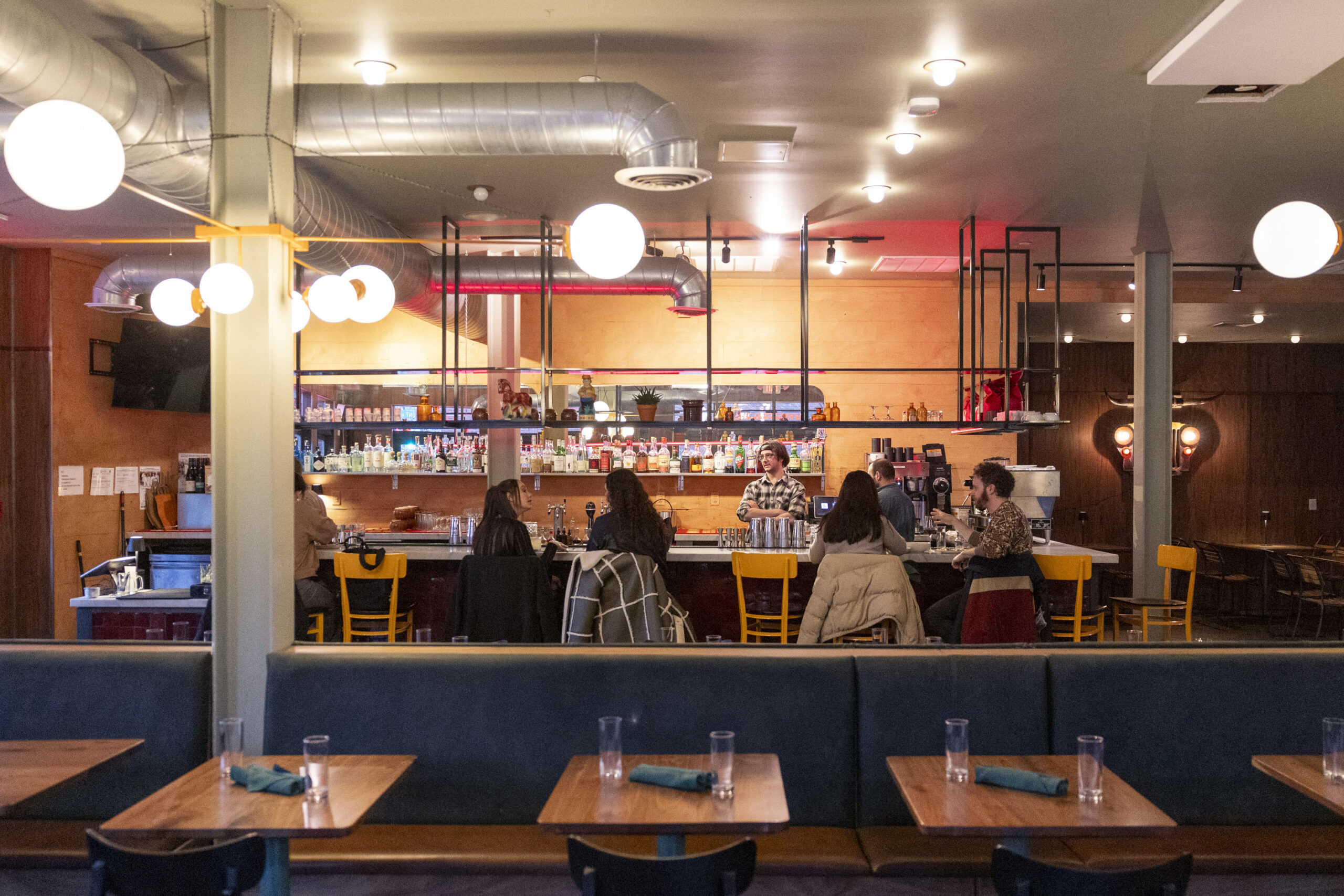
    Customers enjoying drinks and food at the bar at Manong.

    To many in the restaurant industry, the very word brunch conjures up feelings of dread. “Brunch menus are an open invitation to the cost-conscious chef, a dumping ground for the odd bits left over from Friday and Saturday nights or for the scraps generated in the normal course of business,” Anthony Bourdain wrote in his seminal memoir, Kitchen Confidential. And the stigma against the not-quite-breakfast, not-quite-lunch meal, often accompanied by endless mimosas, has endured. Until now.

    For Chance Anies of Manong, brunch is an opportunity.

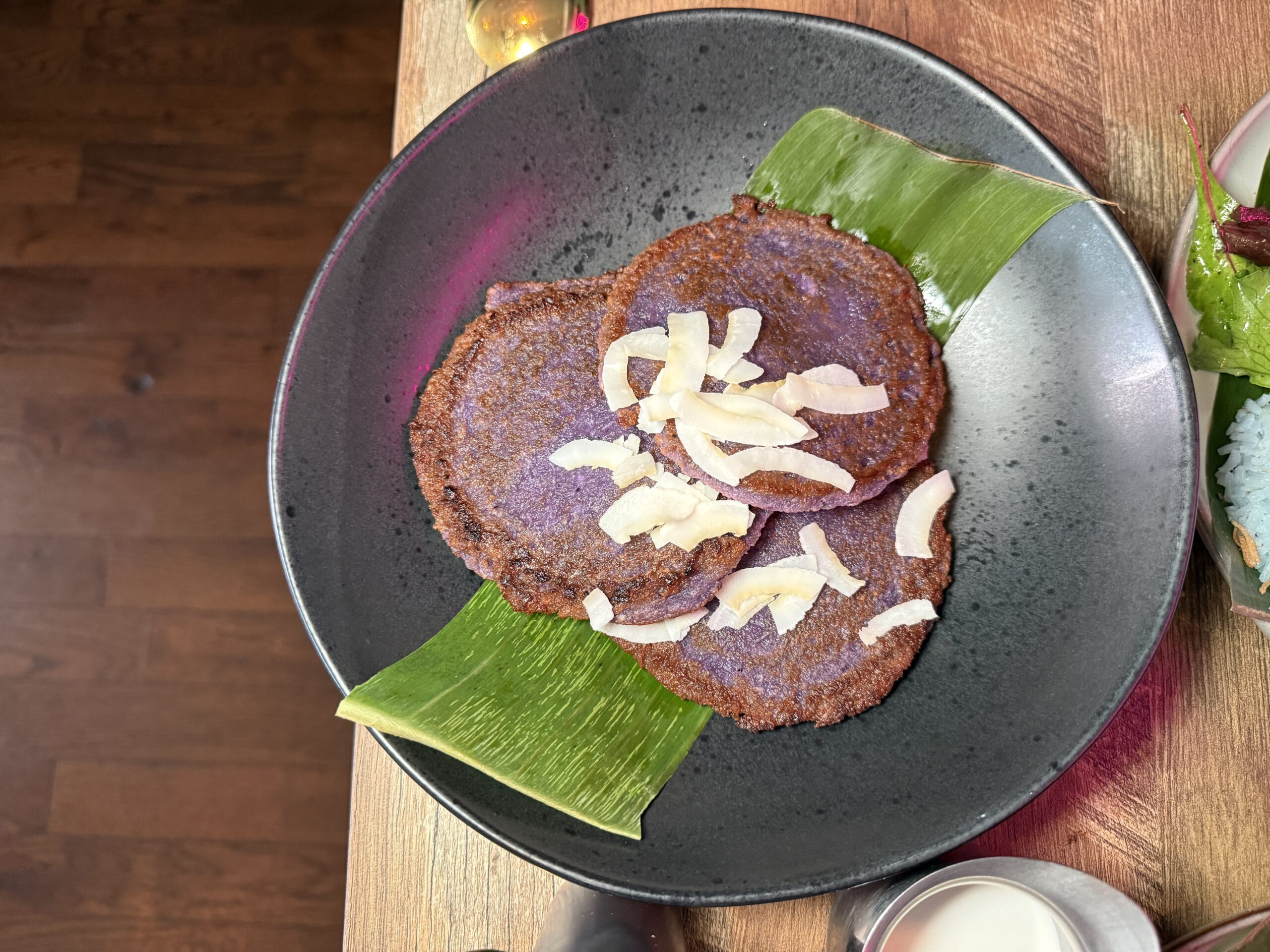
    Wingko, cassava, and coconut pancakes on Rice & Sambal’s new brunch menu.

    “I love that we’re making Spam,” said Anies. “It’s ironically the first food I got made fun of for eating at school because my dad would make me Spam and rice for lunch as a kid. I had kids calling me ‘Spam.’”

    Anies is also making his own version of the processed meat, a highly labor-intensive activity compared to popping open a can. “We grind pork shoulder and smoked ham, and some other ingredients, then set the farce in a terrine mold to steam. After pressing overnight, we slice them into little Spam squares,” he said.

    Manong’s house-made Spam is served on pandesal, a soft, buttery Filipino bread, in the breakfast sandwich at brunch, served seven days a week from 8 a.m. to 2 p.m. “Pandesal was the thing that got me into cooking, so having an outlet for the recipe I’ve been developing for over 10 years has been a cool full-circle moment,” said Anies.

    Diana Widjojo’s Rice & Sambal on East Passyunk in South Philly has been open for two years, but only recently started serving Sunday brunch. Widjojo had toyed with starting brunch service last year, “but I didn’t market it very well.” She officially restarted brunch two weeks ago because “I thought it would be fun.”

    Rice & Sambal’s brunch-specific snacks, savory items, and sweet dishes are extensive and only served on Sunday from 11 a.m. to 3 p.m. (a la carte, no reservations taken). They range from crispy tofu to lumpia (vegetable and bamboo-stuffed spring rolls) to a Sumatran rendang that is cooked far longer than her typical Javanese rendang, so that it’s “spicier and more fragrant — I cook the curry until the coconut milk turns into oil.”

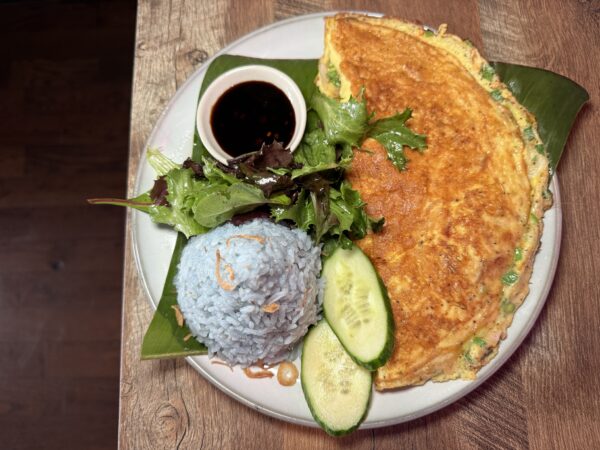
    And then there are dishes like her Indonesian omelet ($17) and Wingko ($12). The omelet is stuffed with fragrant shallots and served with spicy sambal ketchup. The Wingko pancakes are made of cassava and shredded coconut and colored a deep purple with ube. No maple syrup here, but rather a little pitcher of coconut milk and a squeeze bottle of sweet palm sugar syrup are provided for you to decorate your pancakes.

    There are also fun drinks like Happy Soda, served in a wine glass and consisting of coconut-pandan syrup, seltzer, and condensed milk, Indonesian coffee, and numerous tea drinks, including a deeply nourishing Beras Kencur ($7), made of ginger, turmeric, and rice. There’s excitement, creativity, and joy embedded in all these beverages — it’s a menu that dovetails with a rise in Indonesian cafes in Philadelphia.

    In Rittenhouse, other previously dinner-focused fine-dining chefs are celebrating brunch. Little Water’s Sunday brunch (11 a.m. to 4 p.m.) is spectacular. On the menu, there’s a dish of fried oysters on beef tartare, blanketed in golden hollandaise and tucked in with pickled surprises, sometimes a gherkin, sometimes another pickled vegetable, that you discover through little bites. You can also add caviar to fancy seafood, like Sweet Amalia oysters slicked with Alabama white sauce.

    La Jefa’s brunch is equally marvelous, served Wednesday through Sunday (10 a.m. to 2:45 p.m.). It features Guadalajaran twists on American brunch standards, like chilaquiles tucked into omelets or lengua given the pastrami treatment and layered into a sandwich. You get to wash it down with a beverage menu spiked with corn, tepache, and other fascinating ferments.

    Also in Rittenhouse, dancerobot’s weekend brunch (Saturdays and Sundays 10:30 a.m. to 3 p.m.), has quietly become an incubator for incredible creativity, led by chef Justin Bacharach and sous chef Christina Betz, but featuring dishes from many other chefs and cooks on staff.

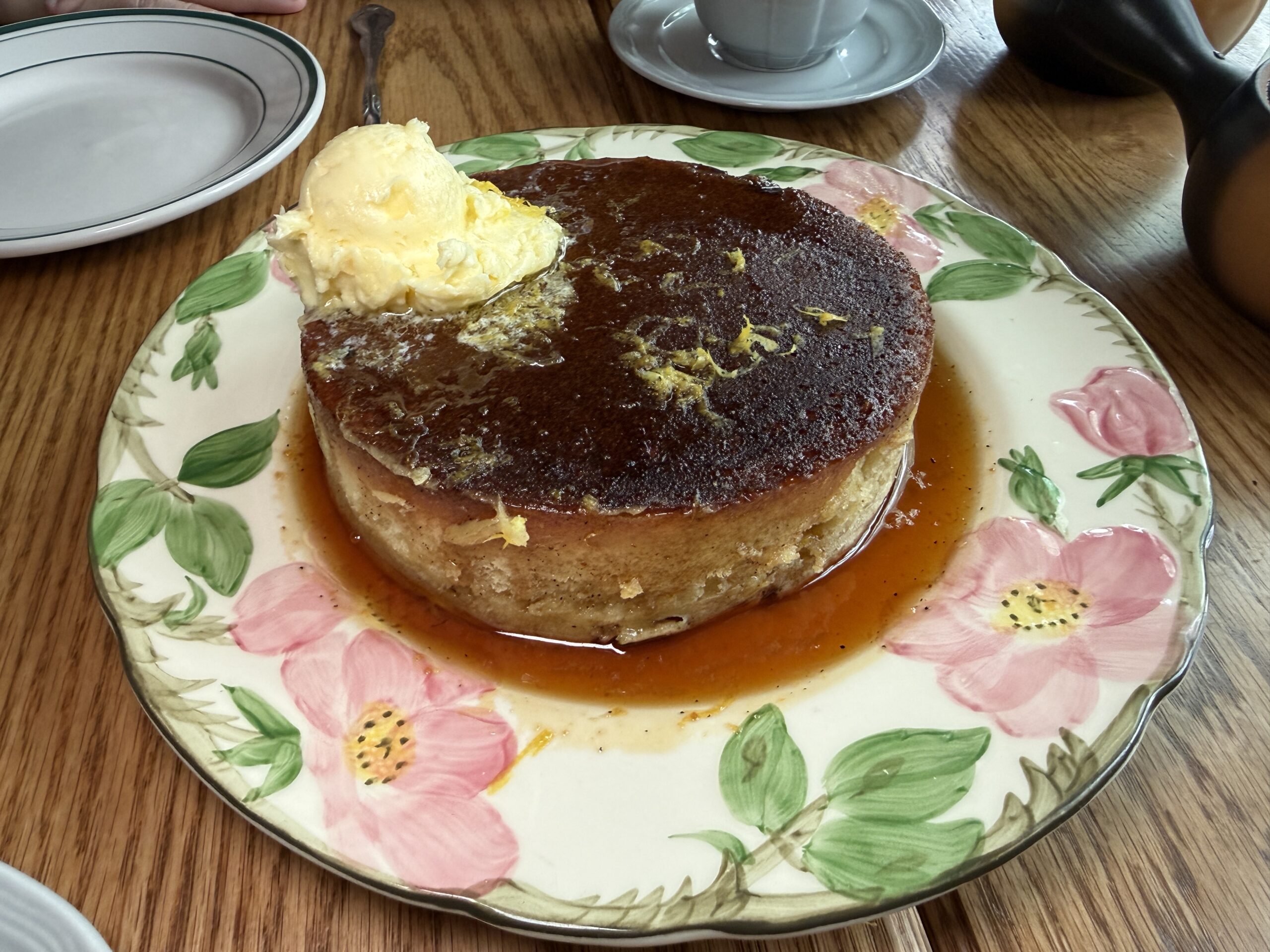
    The sourdough pancake at dancerobot should be shared with everyone at the table.

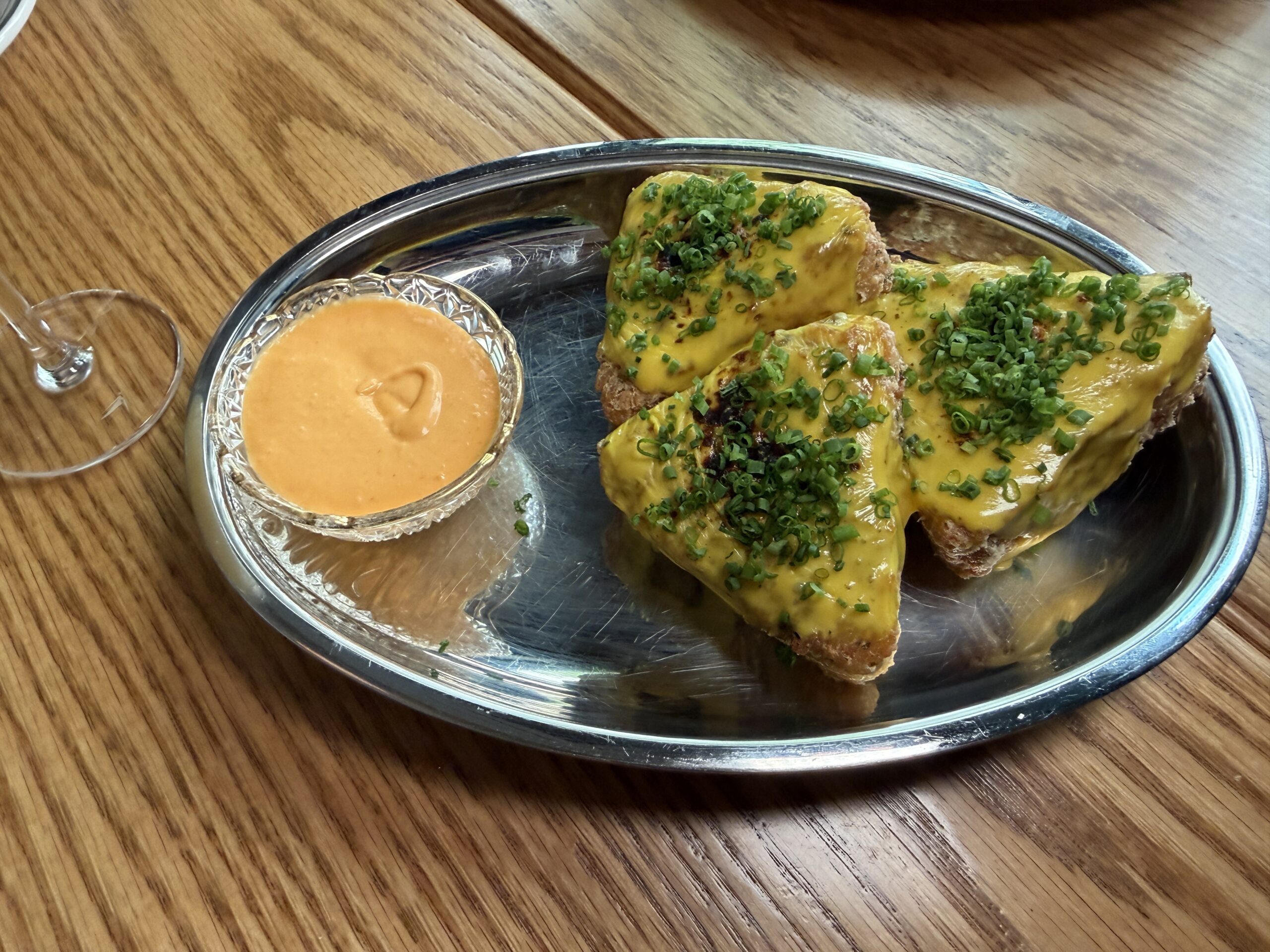
    Bucks County native Bacharach grew up with classic diner omelets, pancakes, French toast, and bacon, egg, and cheese breakfast sandwiches, but these brunch stalwarts are completely scrambled up at dancerobot, where bacon, egg, and cheese are fashioned into crispy, crusted onigiri, and omelets are omurice, splayed open table-side into a blanket of egg curds and pancakes are meant to be shared with the whole table.

    “It’s an homage to fluffy Japanese pancakes,” Bacharach said. But his have more depth and oomph. They also have delightfully crispy edges. His sourdough pancakes, by the way, are made with the starter Amanda Shulman, the Michelin-star earning chef who also recently opened a restaurant serving brunch, gave him five years ago.

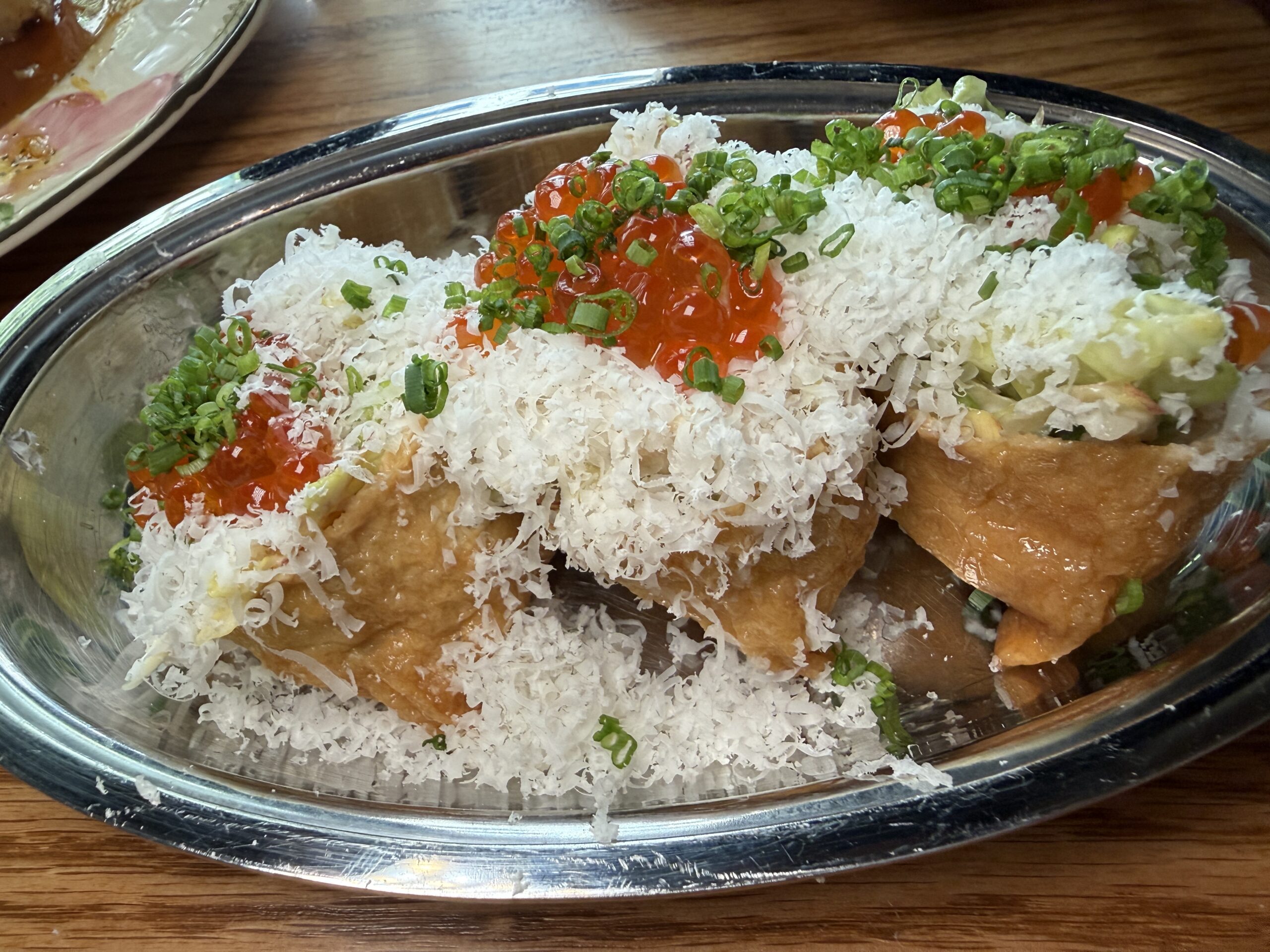
    The Caesar salad inari at dancerobot is a riff on the “girl dinner” trend.

    Pastry chef Sophie Wieber contributed cinnamon buns served with amazake-cream cheese frosting. Sous chef Drew Kornrumpff conceived a brilliant interpretation of “girl dinner” by stuffing pockets of aburaage, or fried tofu skin, with Caesar salad and topping them with ikura. Everything is original, delicious, and a little wacky.

    Bacon, egg, and cheese onigiri at dancerobot.

    “Brunch is a breath of fresh air,” Bacharach said. “The people are happier, the sun is out.”

    Dancerobot is also leaning into the creativity brunch can offer by teaming up with chef friends in Philly and beyond, hosting brunch club events with Chicago’s Kasama and soon, Middle Child Clubhouse.

    This new era of brunch is whimsical and riveting, a far cry from the dreaded services Bourdain once complained about.

    But all these chefs reinventing brunch have one more thing in common: they don’t have time to go out for brunch themselves. “Usually I am too tired to go to brunch,” Widjojo said. “I can’t remember the last time I did, but if I could, I would.”

  • A new Graduate Hospital ice cream shop is all about big flavors and little wins

    A new Graduate Hospital ice cream shop is all about big flavors and little wins

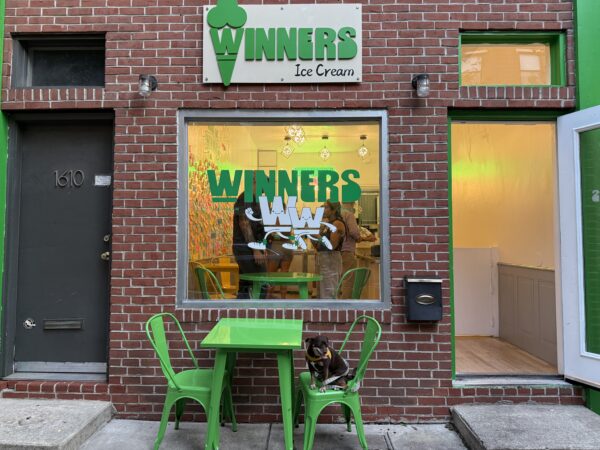
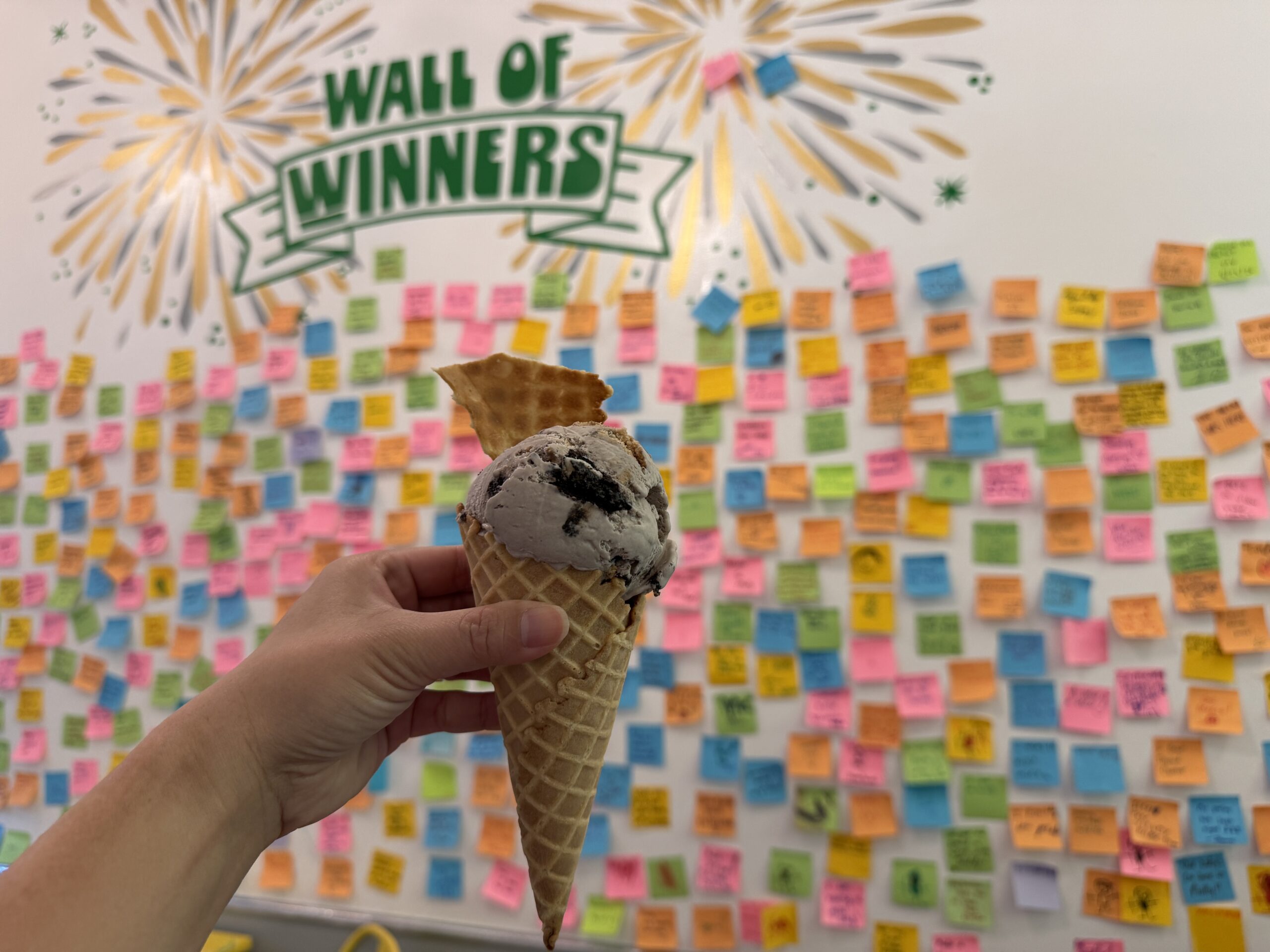
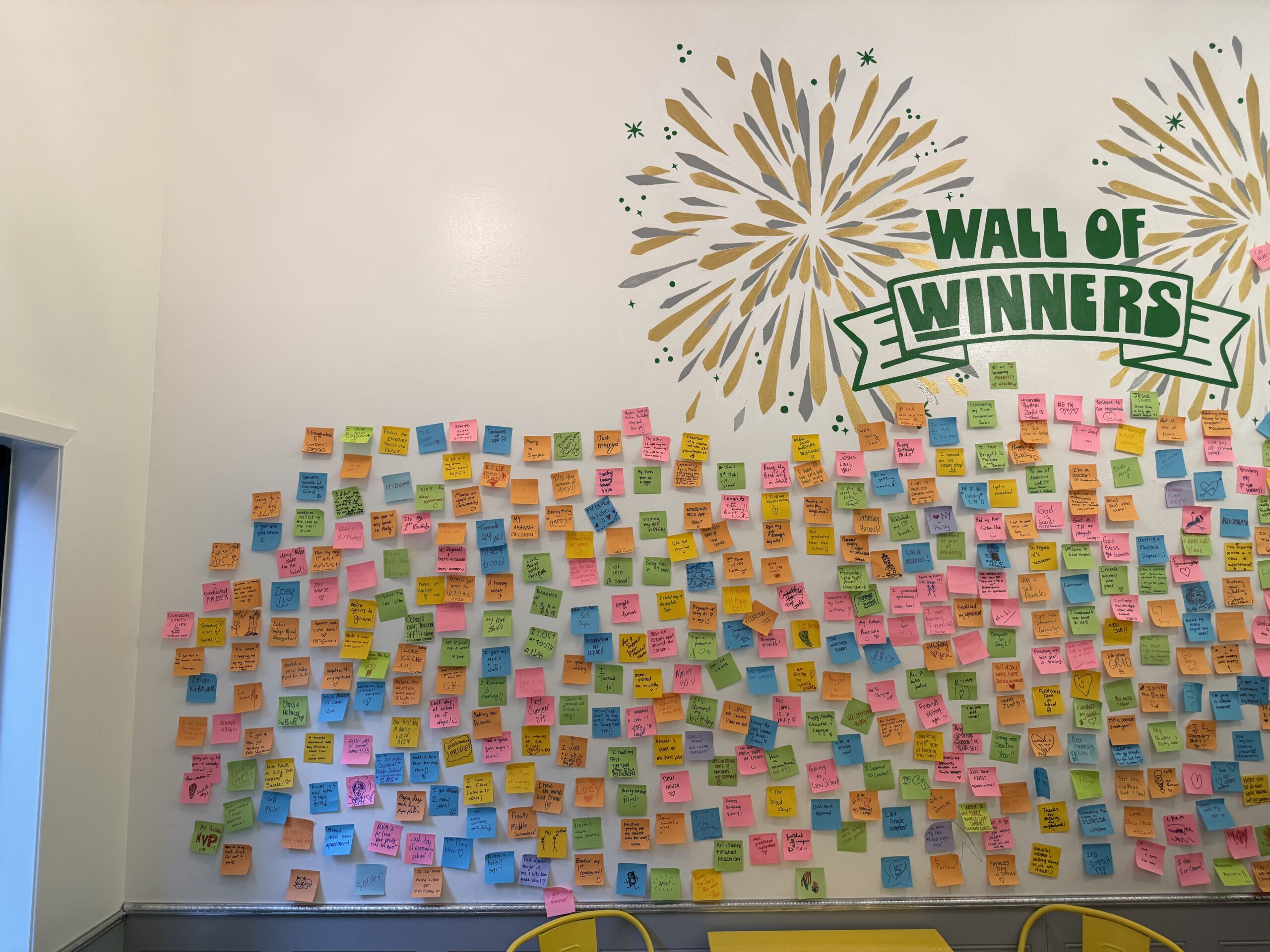
    Winners Ice Cream has only been open three weeks, but its wall is already completely covered with notes from neighbors. The small shop was packed on a recent, hot Thursday evening, as customers of all ages lined up for scoops of nostalgic flavors with winning-themed names like “MVPeanut Butter Crunch,” “Champ Chocolate,” and “Sweet Success ‘Smores.” They were invited to leave Post-It notes on the wall that detailed their own personal wins.

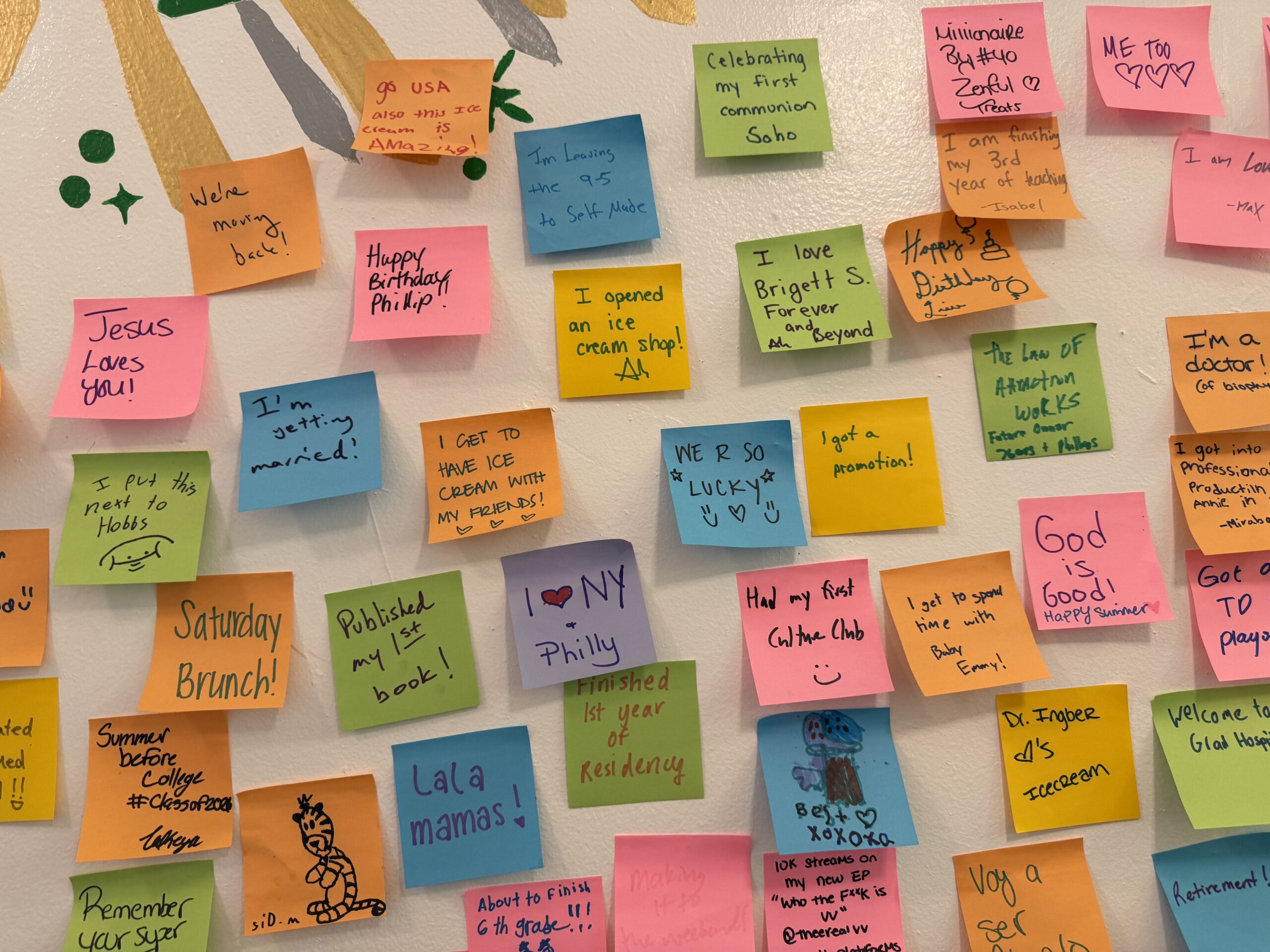
    These notes ranged from “I’m getting married” to “Published my first book” to “I ate breakfast.”

    This is owner Anh Nguyen‘s first shop. The 31-year-old, originally from Newark, Del., moved to Philly to manage branches of Surreal Creamery for the four years prior to his opening Winners.

    Cookies and cream dream in a waffle cone at Winners Ice Cream in Graduate Hospital.

    Winners is so named because “we celebrate small wins, big wins, and all the wins in between with fantastic ice cream,” said Nguyen.

    Nguyen built a production kitchen downstairs, where all his ice creams are made from a 14% buttermilk base. Although he is the sole proprietor, his family has been actively involved with helping him get Winners off the ground. His father helped with construction and his mother kept the crew fed while they spent hours at the shop “putting things together with hammer and nails. And since we’re Vietnamese, she always packed us jasmine rice with eggs, pork, or sautéed chicken.”

    It took Nguyen and his father about a month and a half to build out the space. His three sisters have weighed in heavily, testing flavors and helping source ingredients. Nguyen currently makes 14 flavors of ice cream, with more in development, including “Match Point Matcha” (“All the flavors are winning themed,” he said) since the green tea flavor is so popular.

    His current personal favorite? “Major Mint Chip, which I make by infusing fresh mint leaves into the ice cream base, and letting it steep overnight. I didn’t want to use extracts or food colorings in any of my ice creams.”

    The flavor has crushed Girl Scout cookies (Thin Mints, of course) because Nguyen’s niece is a Girl Scout. To support her during cookie sales, he bought cases upon cases of cookies.

    The wall of winners at Winners Ice Cream.

    Winners, as well as Mod Spuds, which opened a week and a half prior to the ice cream shop, contributes greatly to “little treat culture” in the neighborhood. And they also share a similar aesthetic, because they share the same muralist. Nguyen peeked into Ange Branca’s Mod Spuds, a few feet away and also on South Street, noticed their painted walls, and asked to be connected with the artist, Hana Alshahab, who ended up painting the wall at Winners.

    Winners is a dream come true for Nguyen, who has loved hard-scoop ice cream since he was a child. “You can add mix-ins to hard scoop and make flavors that are more out of the box, unlike with soft serve where the mix-ins won’t fit through the tube of soft serve machines.”

    Most importantly, “I want Winners to be a community space to recognize and celebrate the moments in life that are often overlooked. Small wins can add up to big wins. I look at the wall and I get inspired and emotional,” said Nguyen.

    The wall of winners at Winners Ice Cream consists of notes left by patrons.

    In the sea of slips of paper denoting other peoples’ wins, one yellow one could easily be missed. It reads, “I opened an ice cream shop!”

    “That one was mine,” said Nguyen.

    Winners Ice Cream is at 1610 South St. It’s open from noon to 10 p.m. daily. Single scoops served in cups start at $5.75.

  • After bankruptcy and a kiln disaster, Felt and Fat is remaking itself

    After bankruptcy and a kiln disaster, Felt and Fat is remaking itself

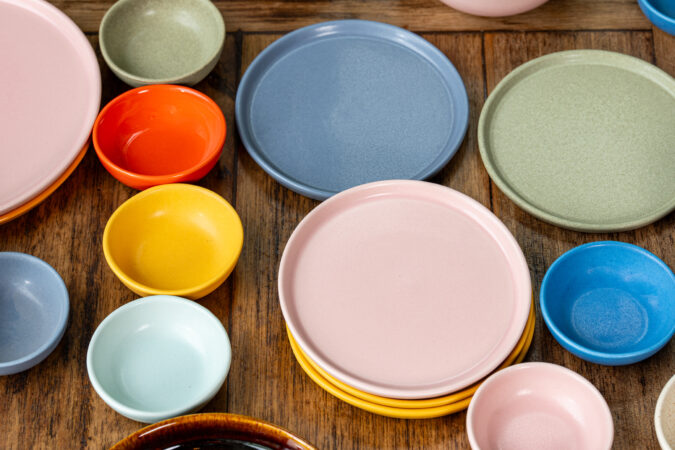
    The vibrant, paint-flecked, confetti-esque glazed bowls are Philly icons. But at the end of January, these and hundreds of other ceramic dishes lay in ruins inside Felt and Fat’s kiln.

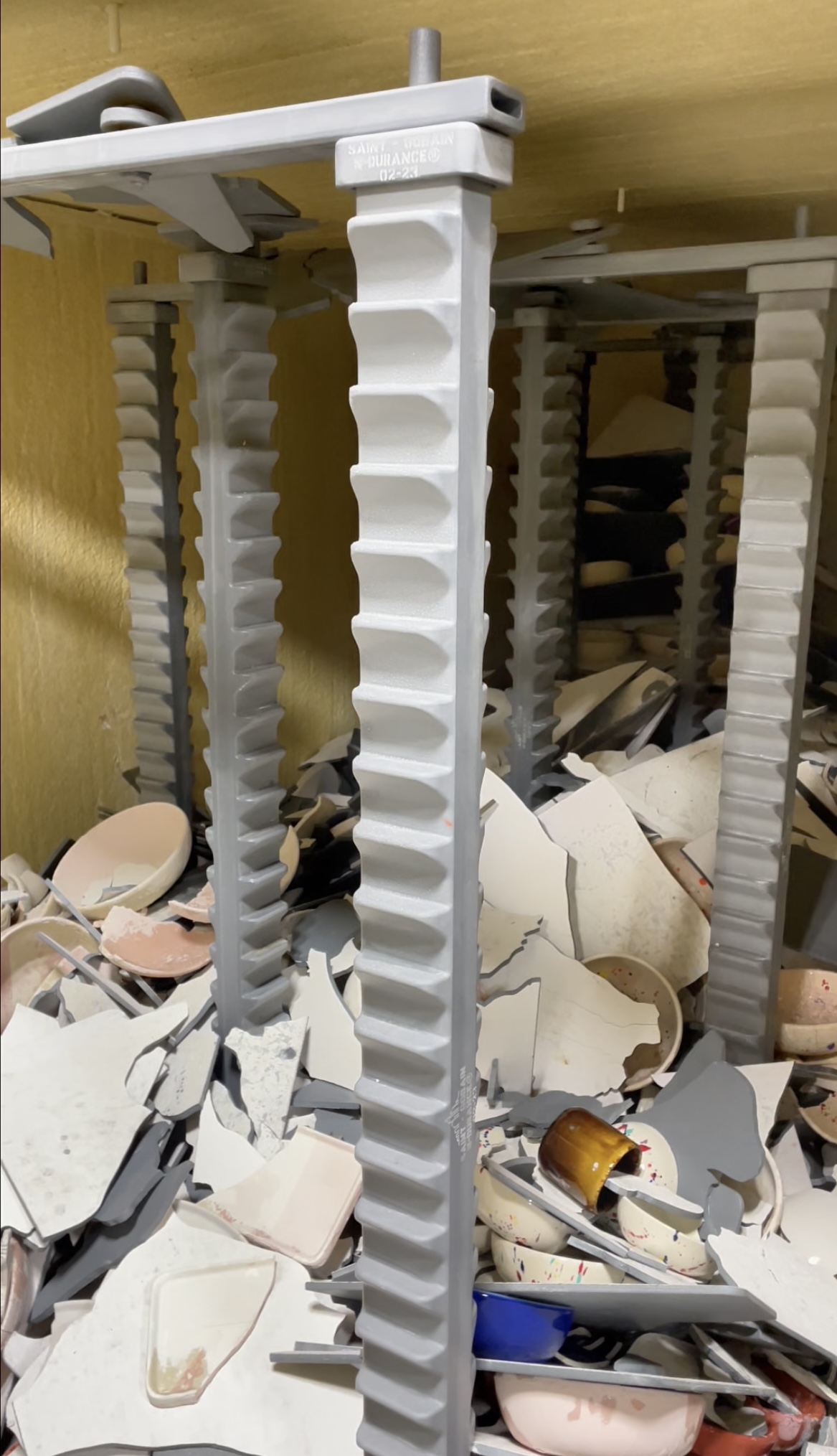
    The wreckage after a winter cold snap destroyed Felt and Fat’s kiln in January 2026.

    Philly’s back-to-back snowstorms and cold temperatures froze the ceramic producer’s warehouse’s sprinkler lines, causing sprinkler heads to crack.

    Mist blanketed Felt and Fat’s kiln — and kilns are not supposed to ever get wet — for 12 hours. The kiln was just over a year old, custom-ordered from the Netherlands. It cost over $300,000 and was the keystone of founder Nate Mell’s plans for expansion.

    The kiln took a year to arrive and was outfitted with a specialized rack system that made loading and unloading pieces — up to 250,000 per year — easy.

    “The kiln company told us they couldn’t repair it and with high-pressure gas going into the kiln, even if they could, they couldn’t speak for it in terms of liability,” said Mell, 40. The electrical components were all soaked and frozen. The inside was completely destroyed. “We still haven’t quantified our revenue loss,” he said, despite getting his old kiln back in use about a month after the disaster.

    The kiln explosion came on the heels of Felt and Fat filing for Chapter 11 bankruptcy. “We were really struggling in 2024 and 2025, which was a terrible time to raise money. The early 2020s for us were all about growth,” said Mell.

    To get out of bankruptcy, Mell had to come up with a reorganization plan for his creditors. It required getting back to Felt and Fat’s roots.

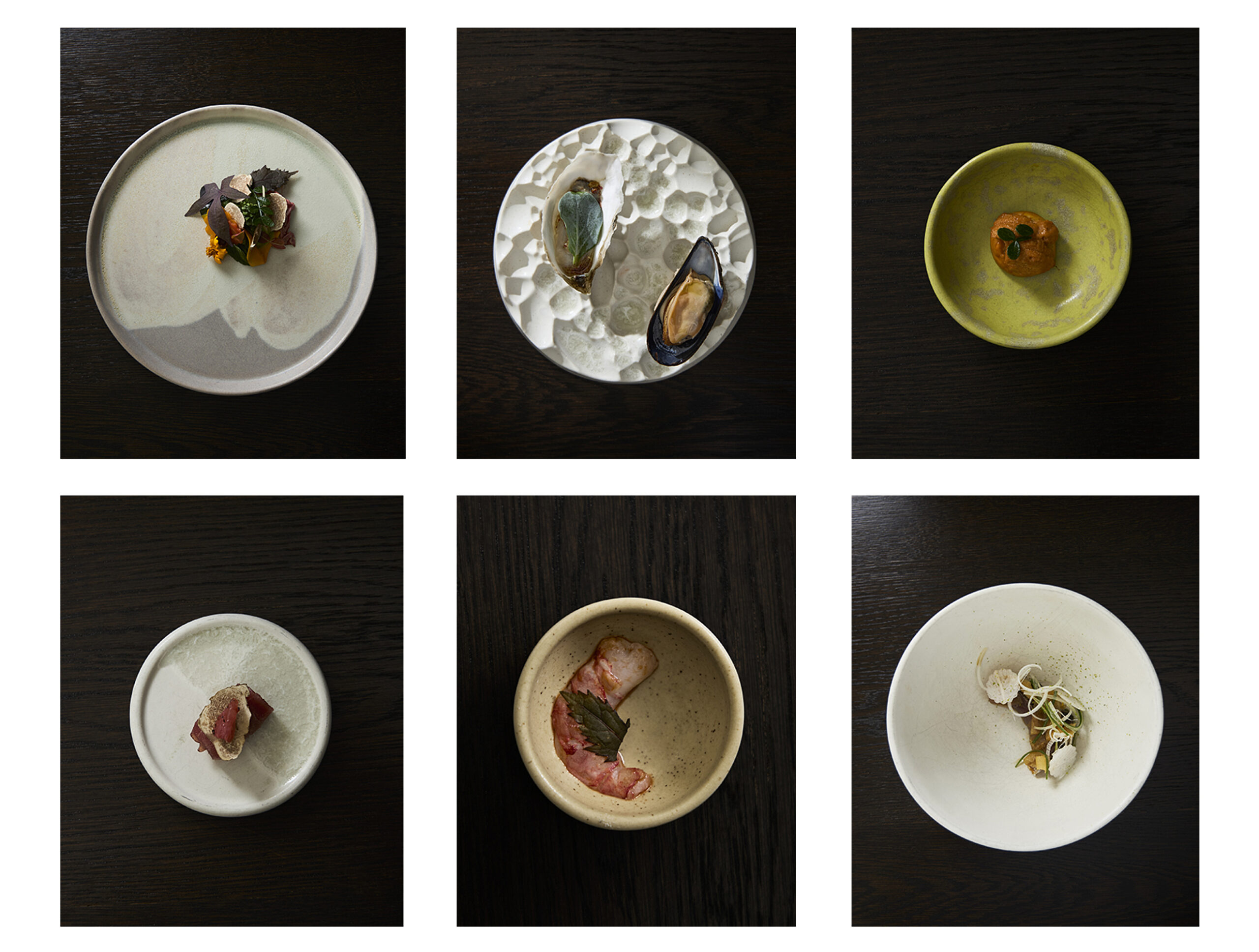
    It all started in 2013, when Ellen Yin and Eli Kulp commissioned custom ceramics from Mell for the original High Street restaurant, which opened in September of that year. He officially formed the business in 2014, and over the next decade, Felt and Fat grew from a two-person ceramics studio — encompassing Mell and former business partner Wynn Bauer, who left the company in 2017 — into one of the region’s most recognizable dinnerware manufacturers. Their plates were seemingly at every award-winning Philadelphia restaurant, from River Twice to Tesiny to the now-closed Laurel.

    “We had been growing the same way everyone else grows: build a factory, add people, add machines,” said Mell, a Temple grad who admitted that this trajectory had little to do with what he had been trained in. “I went to the Tyler School of Art and Architecture and studied glass but took classes in ceramics. I worked as a server in Philadelphia restaurants for eight years and started delving deeper into ceramics by working part-time at the Clay Studio back when it was in Old City.”

    Felt and Fat provides Provenance with custom ceramic dinnerware.

    He realized that what he and his team does well is “great design, really interesting glaze work with relatively low minimum-order quantities, and interesting collaborations.” His expansion plans were taking him away from that design and glaze work. “The bulk of what we were doing, and what every other factory does, is taking clay and turning it into a shape.”

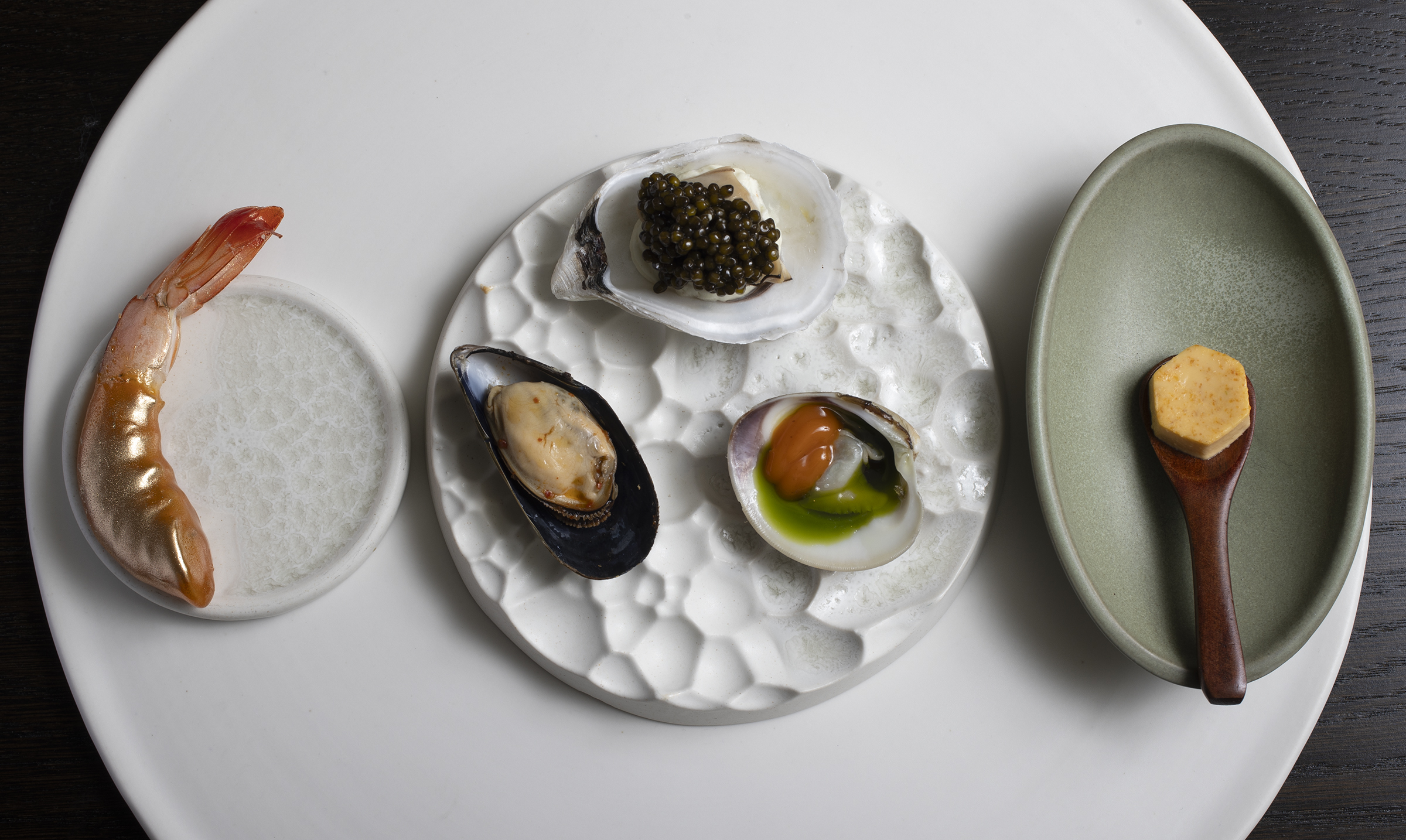
    Collection of canapés served at Provenance in 2024 on Felt and Fat ceramic dinnerware.

    He reached out to an old contact, the company Anfora, located outside of Mexico City, which has been making ceramics for over a century. “They do massive volume, making stuff the way we do. They treat their people well and make the same quality dinnerware with the same porcelain clay we use.”

    Food from Zahav on Felt and Fat dishes.

    His restructuring plan meant Anfora would produce the shapes for Felt and Fat, and they would be glazed by hand in Philadelphia. Mell has just received the first of his shapes from Anfora, with more to come.

    “We’re going to have our standard shapes formed at Anfora. But we’re going to expand our high-touch, low-output forming — hand thrown and slip cast,” he said. “We’re going to be even more handmade than we were before. And we’ll be able to lean into that. But we’ll also have the consistency of our standard pieces.”

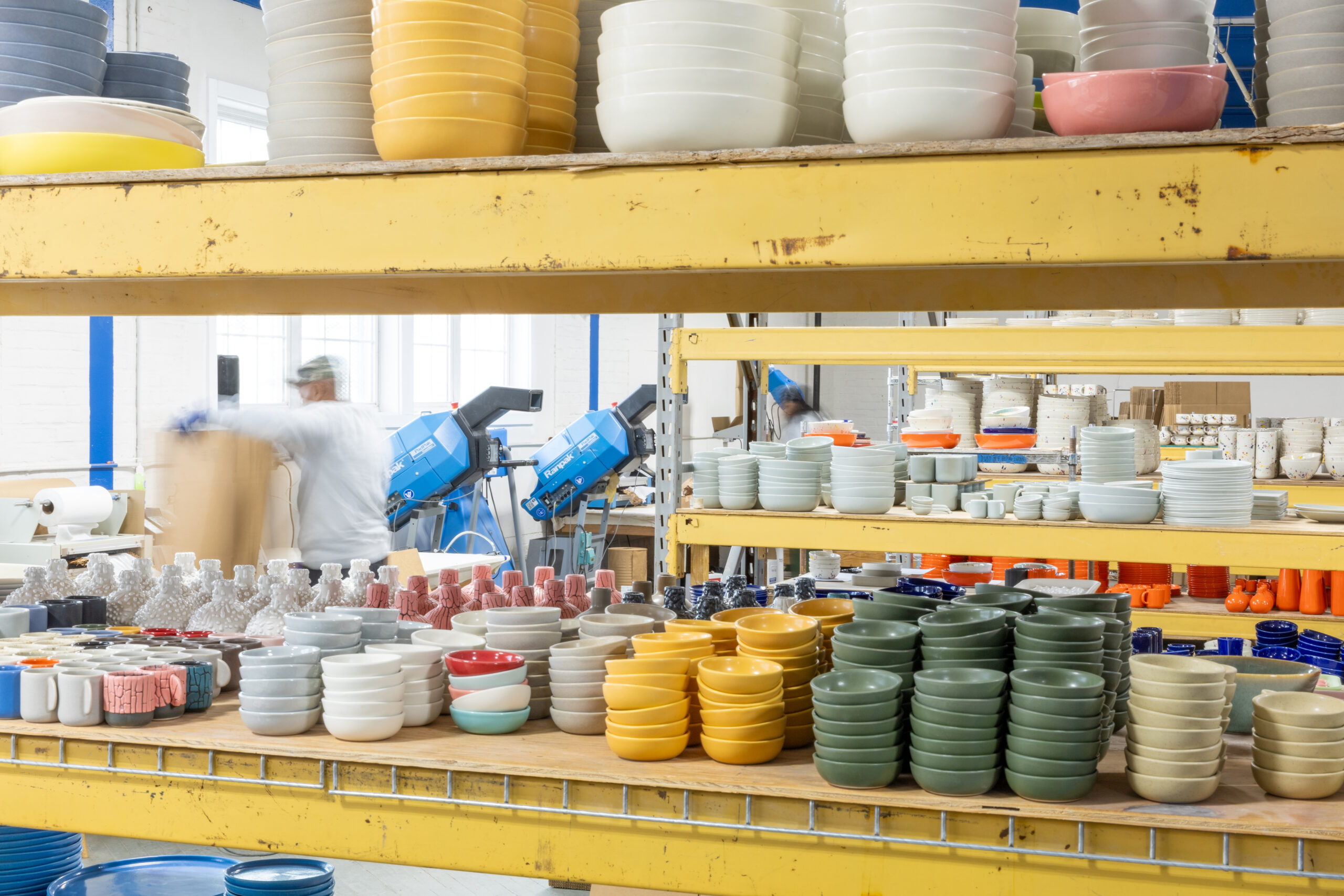
    Felt and Fat dishes are stacked and lined up at the ceramic company’s Kensington facility.

    These days, Felt and Fat has just seven employees, including Mell. “Everybody gets their hands in everything. We’re a tight little team,” said Mell, though he hopes to add more employees at a more sustainable rate than before.

    “The two years leading up to this were tortuous,” said Mell. But he hopes the future will be brighter, with slower, more purposeful growth.

    Felt and Fat’s studio is open for browsing by appointment from Monday to Friday, 9 a.m. to 4 p.m. at 3750 M St., Philadelphia, Pa., 19124. To make an appointment, email support@feltandfat.com or call 215-259-8773. Orders can also be placed online at Felt and Fat’s website and picked up at the studio.

  • Do we kick a neighbor out of our HOA group chat?

    Do we kick a neighbor out of our HOA group chat?

    This week’s question (Have your own? Submit it here.):

    I am in an HOA. We are all in one group chat and are friendly to one another. One of the women in our chat, who is very nice in person, uses the chat to complain, almost weekly.

    She thinks the kids are too loud playing outside on a Saturday afternoon. She says one of us put our trash out 20 minutes before we’re technically allowed to. She says one of us closes our front door so hard that it shakes the whole building. She constantly asks for us to get her Amazon packages and if we say we’re not home she says, “ANYONE ELSE?” Yes, in caps.

    So yeah, we don’t like her. We’ve tried! So there are some ideas floating around, the main one being: Do we mute that group chat and start a new one without her? Or do we just tell her what the deal is?

    Kiki Aranita, Food & Dining Reporter

    100% mute that chat and start a new one.

    Elizabeth Wellington, Features Columnist

    I agree with Kiki.

    But, we are trying to be helpful here and it’s a horrible thing when someone ignores the group chat. Have you established any ground rules in the chat? If not, maybe it’s time?

    Kiki Aranita

    Yeah, was this a chat established for getting packages for one another?

    Elizabeth Wellington

    I think at the very least you send a message out that starts with “No complaining.”

    My apartment complex had a similar group chat on WhatsApp. After a month, I opted out. I’d rather not be in the know then hear about all of these people’s incremental problems.

    Kiki Aranita

    I’m not in an HOA but I live on a block where I know my neighbors and we’re all super active in grabbing one another’s packages and super appreciative of one another.

    That said, we don’t complain in our group chats. Complaints are for friend group chats, not neighbor group chats.

    Elizabeth Wellington

    There are ways to keep people informed and, in this world, we need to be informed.

    So my suggestion in drawing up ground rules is: no complaining. Informing is not complaining.

    Kiki Aranita

    Create a mini version of a neighborhood Facebook group, which has established ground rules, and is actively monitored by admins.

    By the way — that last question of “do we tell her what the deal is?” I would not do this.

    Elizabeth Wellington

    I might though. People need to know when they are getting on your last nerves.

    Maybe she doesn’t know how annoying she is. Maybe telling her is the first step.

    Kiki Aranita

    I’m not scared of confrontation in general, but I think confrontation like this can make it difficult to live with someone in such close proximity.

    Elizabeth Wellington

    You don’t have to curse her out, just a gentle nudge… “Like, girl… some of your group chat messages have been off-putting. We try not to complain. We are solutions oriented.”

    Kiki, should we come up with a list of ground rules to help these folks out?

    Kiki Aranita

    First, no shouting/all caps.

    Elizabeth Wellington

    No making fun of people. No cursing. No complaining about things, especially other people. No gossip.

    Kiki Aranita

    Establish a motto like “to support and inform.”

    I also like the idea of multiple group chats for neighbors (because I have them). They’re like slack channels. One is just for packages. Another one of my friends also has multiple group chats. Unfortunately, one of them is “the rat chat” — it only deals with rats.

    Elizabeth Wellington

    It’s fine if neighbors want to splinter off to talk about other things like packages and other such things, but the HOA group chat should be accessible to everyone in the HOA and it should have guidelines and rules.

    You may not like old girl, but she lives there too.

    Just set ground rules going forward.

    Kiki Aranita

    With a positive motto.

  • Would you try this cheesesteak-flavored olive oil? We did.

    Would you try this cheesesteak-flavored olive oil? We did.

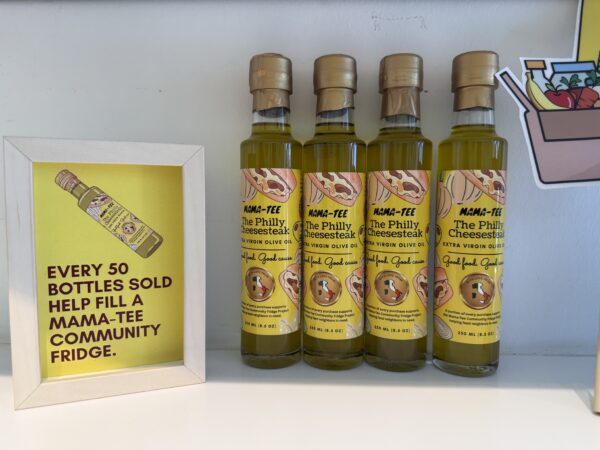
    “It tastes like oil from a real cheesesteak wrapper,” proclaims the slogan of Mama-Tee’s Philly cheesesteak-flavored extra virgin olive oil.

    Mama-Tees are community fridges, notable for their bright yellow paint jobs, that are scattered around Philadelphia. The cheesesteak oil ($19) is part of a fundraiser to combat food insecurity locally, along with three other flavored oils: Basil Bliss, Truffle Love, and Pepper Pleaser. Proceeds go to helping fill the fridges with food. So if the oil prompts cheesesteak-flavored burps, it would do so in the name of a noble cause.

    We at The Inquirer had to do a taste test.

    Is this merely a novelty or could it have legitimate culinary applications?

    The ingredients of the Philly cheesesteak-flavored oil intriguingly are only “extra virgin olive oil” and “onion flavor.” How could these two ingredients, neither of which involves cheese nor steak, encompass the nuanced experience of consuming an actual cheesesteak? The Inquirer sought to get to the bottom of these questions.

    The first round of cheesesteak experts was summoned.

    “It smells like a deli case,” said food editor Margaret Eby. “There is a cheesiness to it. It’s like that cheese oil that gets trapped in a charred, upturned pepperoni cup on your pizza.”

    “I think it should be called ‘hoagie oil,’” said food reporter Beatrice Forman.

    “It is like unwrapping a hoagie,” agreed critic Craig LaBan. “When you get the vinaigrette soaking through the wrapper. And it tastes like French’s fried onions, but burnt.”

    “I don’t know what it could be used for,” said food reporter Michael Klein.

    “It tastes like old fryer oil,” grimaced reporter Ryan Briggs. “It’s gravitating toward capturing that cheesesteak shop smell when they’re frying all the onions.”

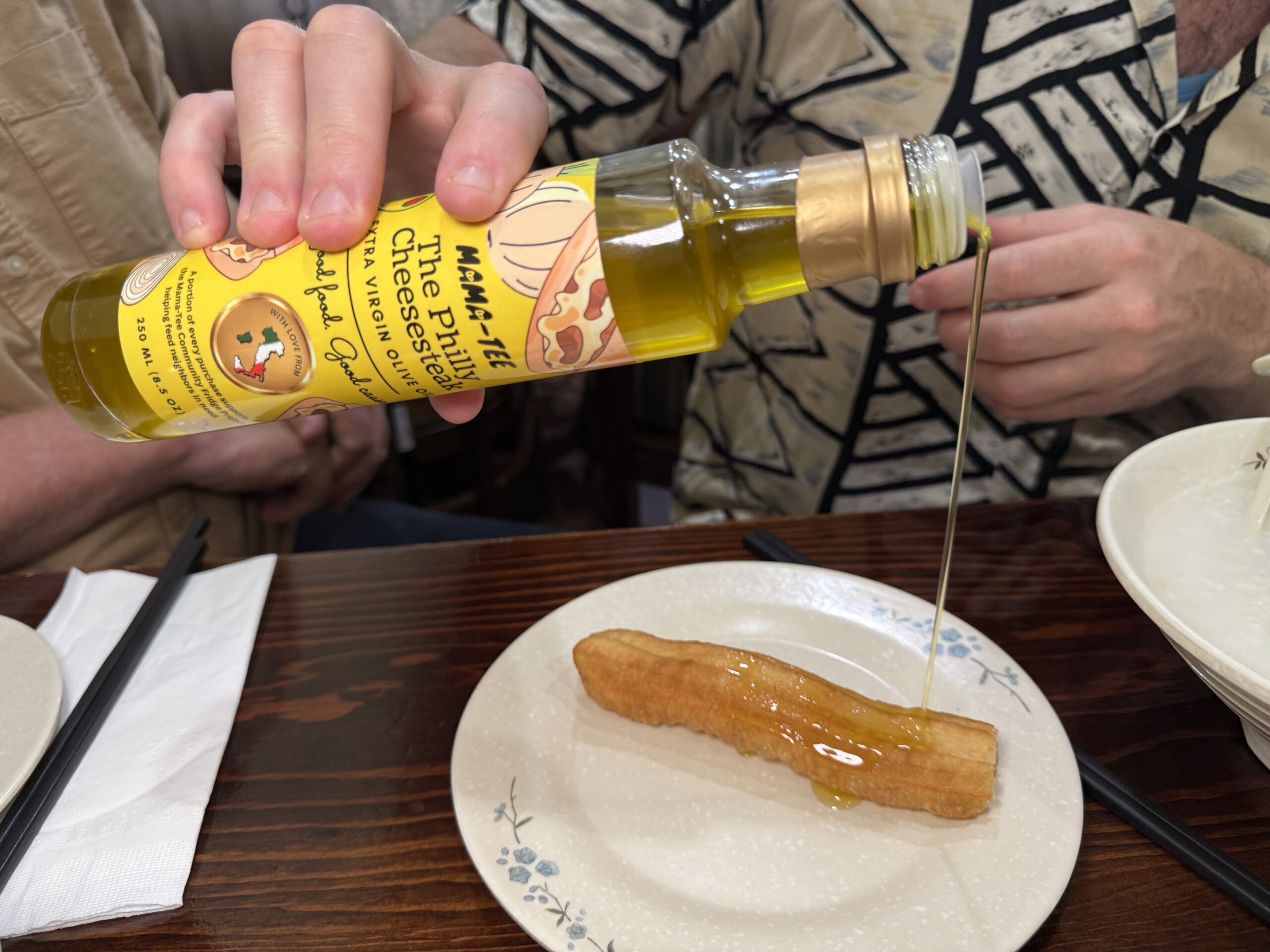
    Reporter Max Marin poured the oil over his youtiao, a savory Chinese cruller, while at lunch at Lau Kee in Chinatown. “It’s got a chemical taste that makes me think there’s a number in one of its ingredients.” But does it make the youtiao taste like a cheesesteak? “It does not.”

    Inquirer reporter Max Marin pours Mama-Tee’s Philly cheesesteak-flavored oil on his youtiao at Lau Kee.

    Various Philly chefs were more open-minded in the cheesesteak oil’s applications.

    “I think the flavor is great,” said Juan De Ocampo, sous chef at Fairmount’s Manong, as he poured the oil onto a pile of fried shrimp chips.

    “I kind of like the cheesesteak oil,” said dancerobot’s Justin Bacharach. “It’s pungent and although I don’t cook with olive oil, I would use it to add a little funk and fat to a dish, like to dress an antipasto with South Philly vibes like sharp provolone and soppressata, and in the Japanese canon, I think it would be fun drizzled on top of a gyudon (beef and onions over rice) where you’d normally use mayu (a Japanese scorched black garlic oil).”

    “It feels really heavy,” said Melissa Fernando, the chef behind long-running pop-up Sri’s Company. “In Sri Lankan food, we mostly use coconut oil to cook, but I suppose I’d use this to sauté onions and garlic.”

    That perceived “heaviness” is easily addressed, according to 637 Sushi Club’s Kevin Yanaga, no stranger to unusual pairings. “I just need a lemon or something acidic with it. I could then use it on a fluke crudo. It’s rough and funky on its own, but salt and acid would help.”

    After careful consideration of these diverse opinions, the Mama-Tee cheesesteak oil had only one test remaining to undergo: a side-by-side comparison between it and the oil from an actual cheesesteak wrapper.

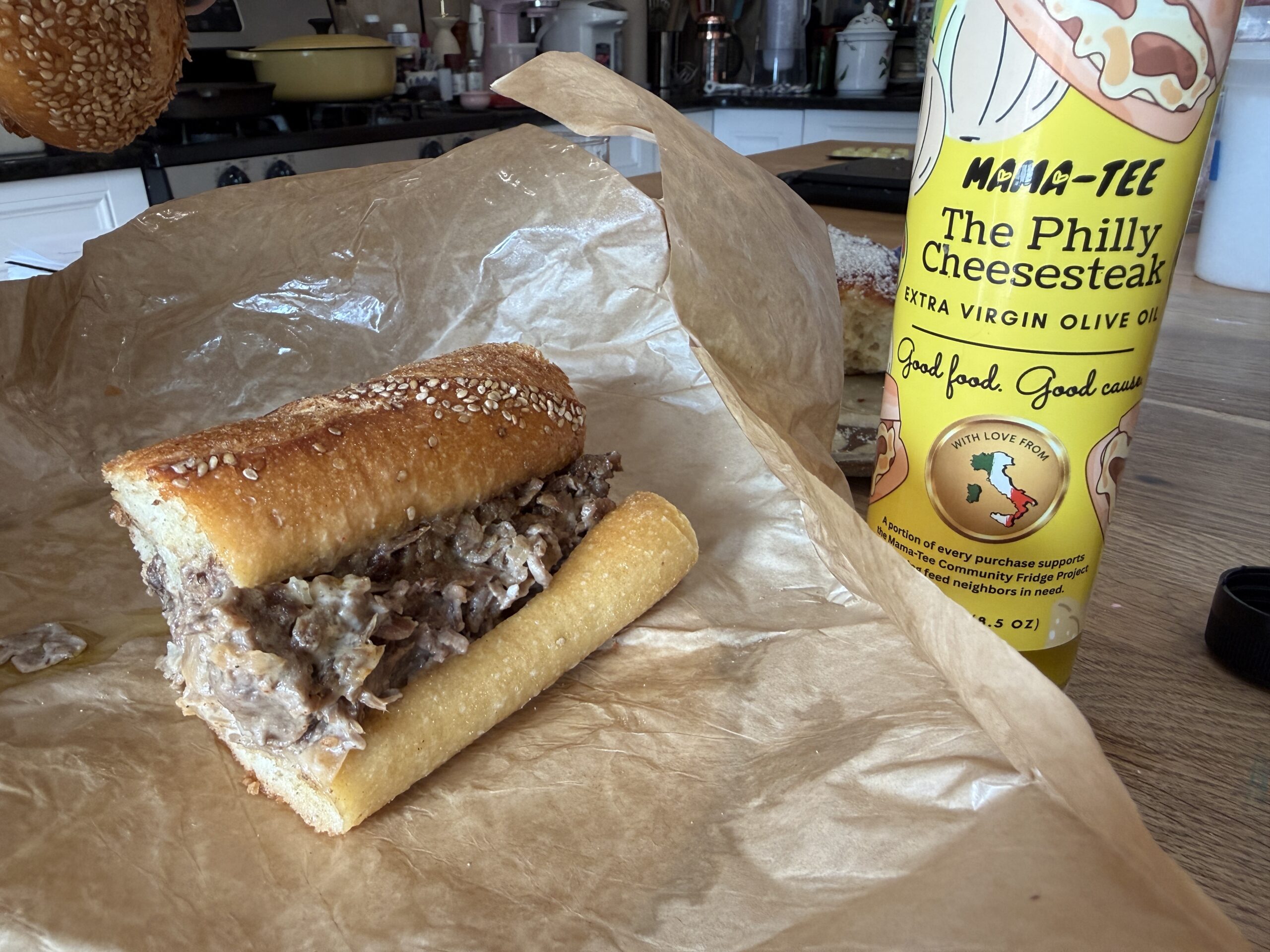
    A Del Rossi’s cheesesteak (wit onions, of course) was summoned. A wrapper was licked. A shot of cheesesteak oil was taken. The wrapper had the distinct advantage of beefiness. When applied directly to the cheesesteak, the oil oddly enhanced the cheesesteak’s flavor. And another thing the oil had in common with a real cheesesteak? Real cheesy, oniony burps after consumption.

    A Del Rossi’s cheesesteak and Mama-Tee’s cheesesteak oil, consumed in unison.

    Mama-Tee’s Philly cheesesteak oil ($19) can be purchased at Wegmans in King of Prussia, though more locations may be added soon.

  • Parc’s menu swap proves martinis in Philly are getting dirtier

    Parc’s menu swap proves martinis in Philly are getting dirtier

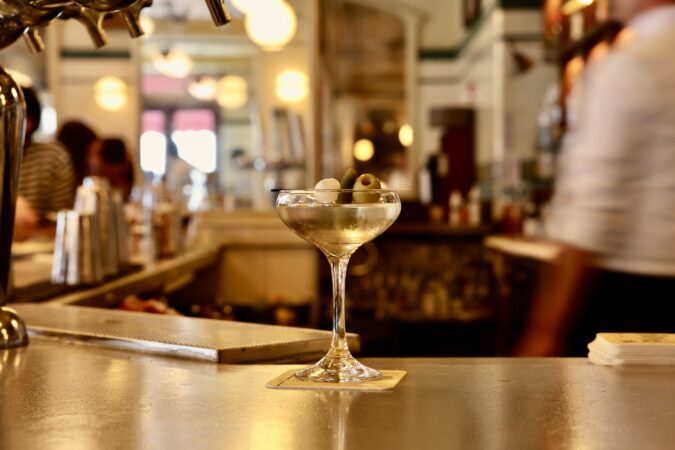
    Last November, Parc switched the martini listed on their menu from their Nicoise martini to Le Dirty Martini ($16), a straightforward Wheatley Vodka-based cocktail with a heavy splash of olive brine and garnished with pitted queen olives.

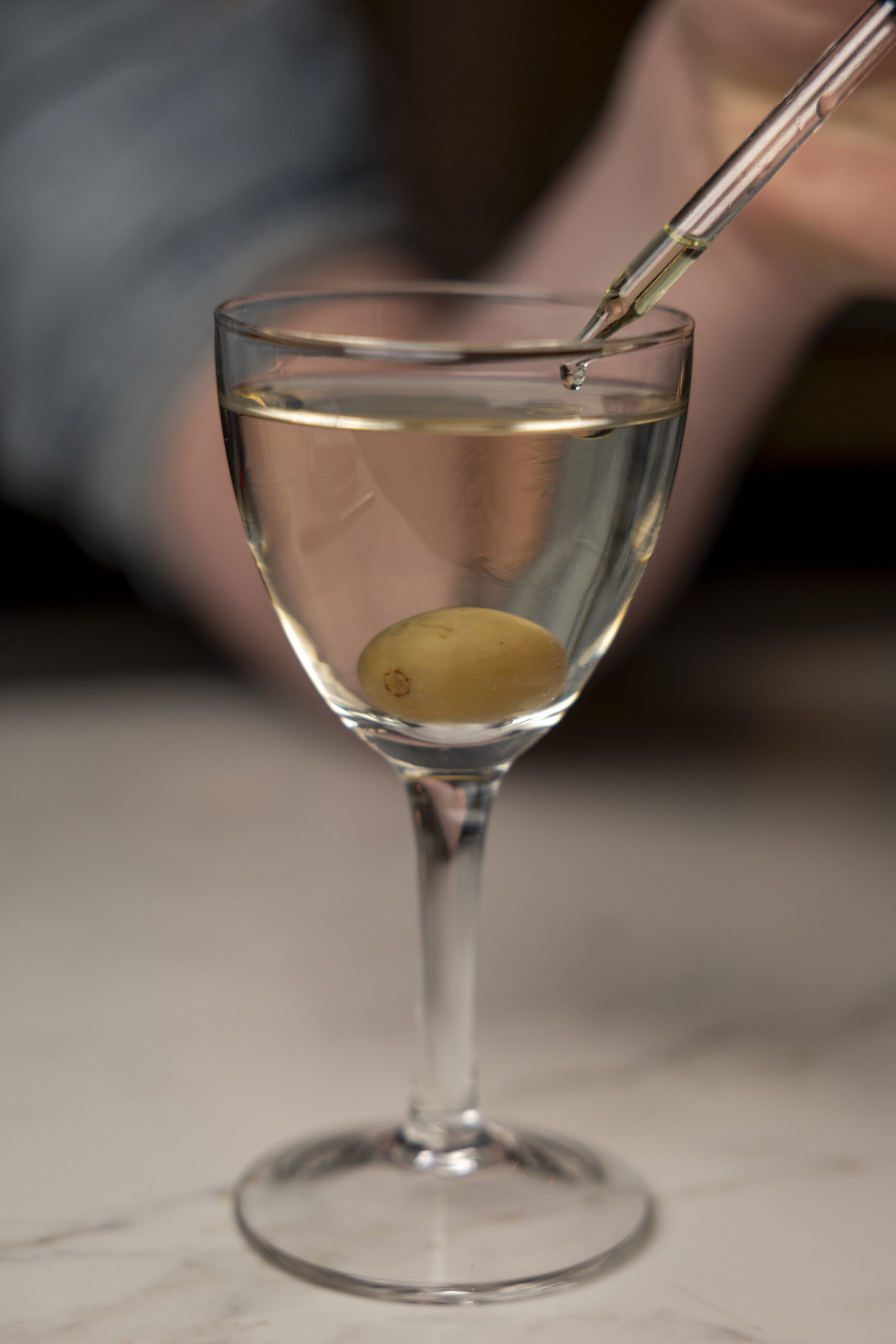
    For those of us who were fans of Parc’s pink-hued Nicoise martini, served in a Nick and Nora glass and garnished with a much smaller olive, the switch came as a surprise.

    You can still order a Nicoise martini off-menu, which is technically a dirty martini (which uses olive brine), “as I was utilizing crossover [items] from the kitchen,” said Mark Murphy, the director of bar operations for all of Starr Restaurants. “But they may not have it quickly at the ready.”

    Now, on an average Friday night, Parc is serving over 80 dirty martinis.

    The martini at Andra Hem on July 2, 2025 in Philadelphia.

    “Dirty martinis have quickly jumped to our biggest “off-menu” order,” confirmed Murphy.

    Readers noted that The Inquirer’s guide to Philly’s best martinis skewed toward dirty martinis, rather than a classic version. But with data in hand, it’s clear that Philly’s martini tastes have actually changed, and that we are getting dirtier.

    “Over the last two years there’s about a 33% increase in dirty martinis ordered,” said Murphy, who regularly scans Parc’s off-menu sales and realized that he should probably just put a dirty martini on the regular cocktail menu “to meet guest expectations and help bartenders with their speed of service.”

    The Fleur’s martini in Philadelphia on Jan. 2, 2026.

    Murphy has noticed customers move away from specialty cocktails. “With a food menu, you can only order what’s on the menu. With a wine menu, you can only order what’s on the wine menu. But with a cocktail menu, you can order what’s on the menu or you can say, ‘I will just have a dirty martini’ or something else.”

    Murphy believes that this increase in attention to classic cocktails is a “cost sensitivity thing that has happened with rising prices. If 10 years ago, you or I walked into a bar or restaurant and saw something on the menu that had a good number of ingredients we weren’t sure about, but the cocktail was $12, we’d go ‘yeah, sure, let’s try this $12 drink and see what happens.’ But $12 is no longer the average price of a cocktail, and more often, we’re seeing cocktails around $20.

    “So when drinks are not accessible, even in terms of simplicity, I think people are wanting value for what they know they can spend $16 on and get three ounces of vodka in a glass with brine that tastes good,” said Murphy.

    Even while Gen Z is drinking less or zebra-striping (alternating alcoholic and nonalcoholic drinks), “according to Parc (and other Starr restaurants) not massive amounts [less] as the articles might indicate,” observed Murphy. “What I notice a bit more is a shift in sales. Some away from wine, and some away from specialty cocktails, and more towards … wait for it … dirty martinis [and other simple standards].”

    He also acknowledges that there may be a change in customers’ palates. This trend is the least trendy of trends, but it does align with a propensity toward savory cocktails — a thread that has been winding through more avant garde cocktails, like Almanac’s konbini-inspired ones.

    Coupled with the explosion of popularity in Del Frisco’s social media-dubbed “girl dinner,” which features half a dozen oysters, truffle fries, Caesar salad, and a dirty martini (though you have the option to get a different cocktail), dirty martini consumption is truly trending.

    Though, admittedly, this is not necessarily the case at every single Philly establishment. I checked in with Fiorella, famous for the dirty pasta water martini ($17) and they reported a wavering in sales over the years (they sold 5,116 of the cocktails in 2023, 4,500 in 2024, and 4,667 last year). Their brown butter old-fashioned remains their most ordered cocktail through the years.

    And what cocktail beats out Parc’s Le Dirty Martini in terms of sales? It’s their Cafe Parc or espresso martini ($17) with vanilla-infused Wheatley Vodka, Amaro, and Caffe Borghetti coffee liqueur. Dirty martinis might be on the rise, but espresso martinis aren’t going anywhere.

  • One of Chinatown’s newest spots specializes in Cantonese steamed rice rolls

    One of Chinatown’s newest spots specializes in Cantonese steamed rice rolls

    When done well, cheung fun, or Cantonese steamed rice rolls, are made to order and don’t need fillings or toppings to be delicious. Wrapped around beef and Chinese savory crullers, (youtiao), they’re a popular item at dim sum. But the best cheung fun is typically found at vendors dedicated to the silken, slippery, wide noodles, who specialize in perfecting the cheung fun’s crepe-like layers.

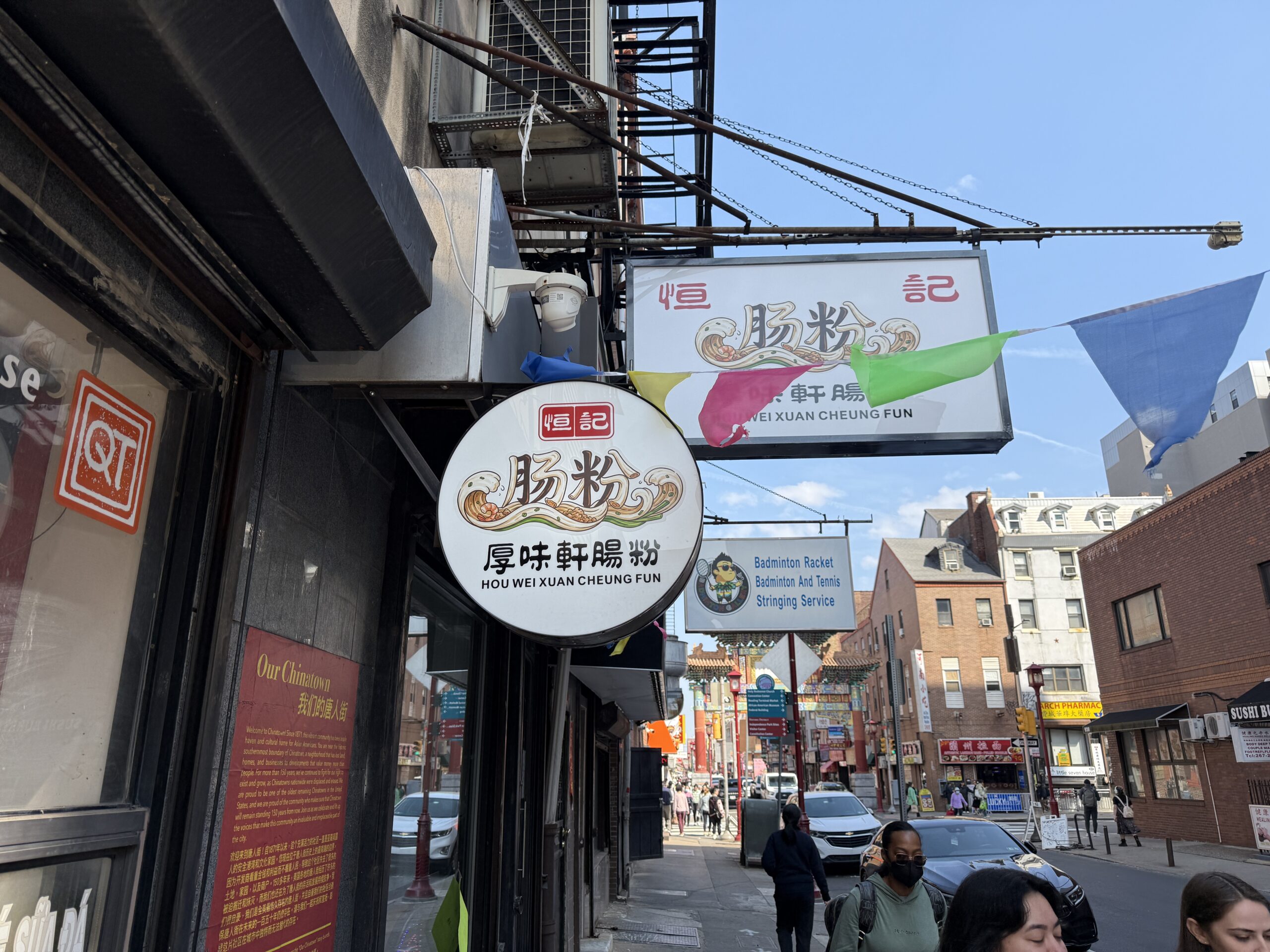
    Susie Ruan and her husband, Jackie, opened Hen Ji Hou Wei Xuan Cheung Fun, a cheung fun-dedicated storefront at 50 N. 10th St. at the end of January. They relocated from Lewisburg, where they owned and operated a restaurant by the same name in Chinese (but spelled Heng Ji in English). They served standard Chinese American classics there, like broccoli beef with rice, salt and pepper shrimp, and orange chicken, as well as hot pot.

    Hen Ji Hou Wei Xuan Cheung Fun, 50 N. 10th St., in Philadelphia. It opened at the end of January

    They closed their Lewisburg location at the end of December and relocated to Philadelphia to devote themselves to the art of the steamed rice roll. “We just love making cheung fun!” said Susie, who is originally from Guangdong.

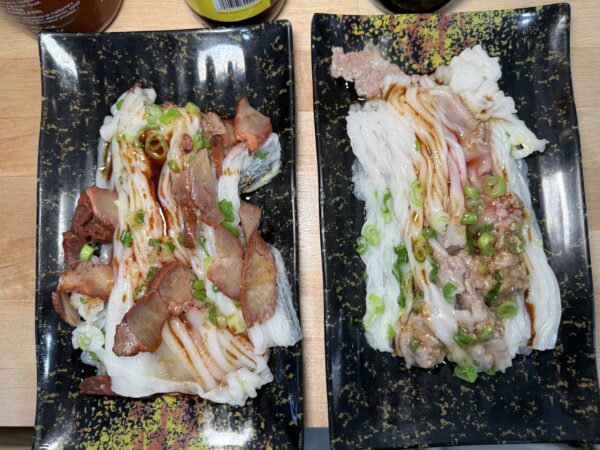
    And the Ruans’ are indeed excellent and made fresh to order. Unlike the cheung fun found at most dim sum spots, these are not wrapped around a meat or youtiao filling. Tucked between the gossamer-thin noodle‘s delicate wrinkles are unctuous bits of beef or sliced char siu pork.

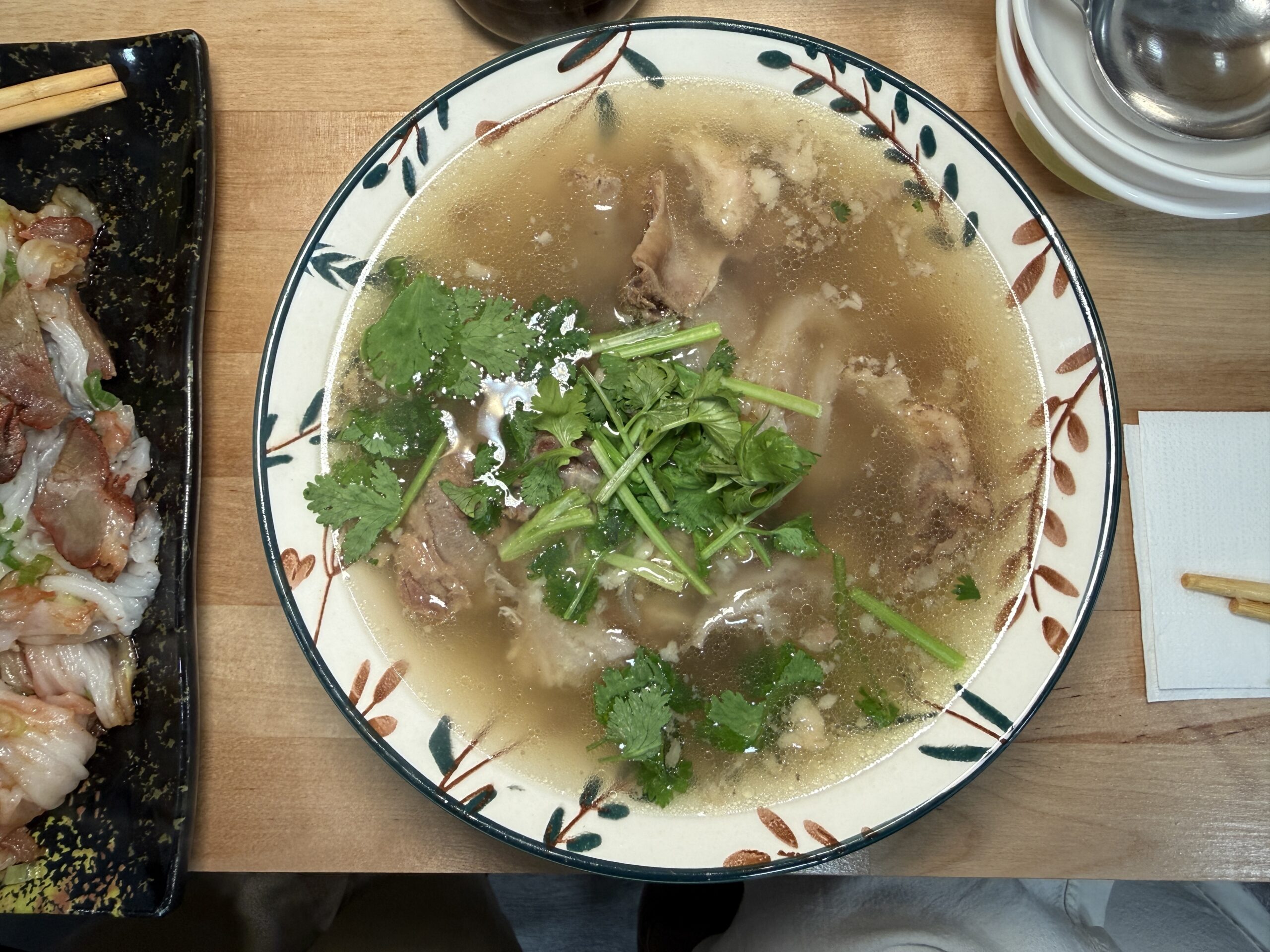
    Beef bone soup from Hen Ji Hou Wei Xuan Cheung Fun.

    Soy sauce, red wine vinegar, and chili oil, found on its counter, are available (and encouraged) as condiments.

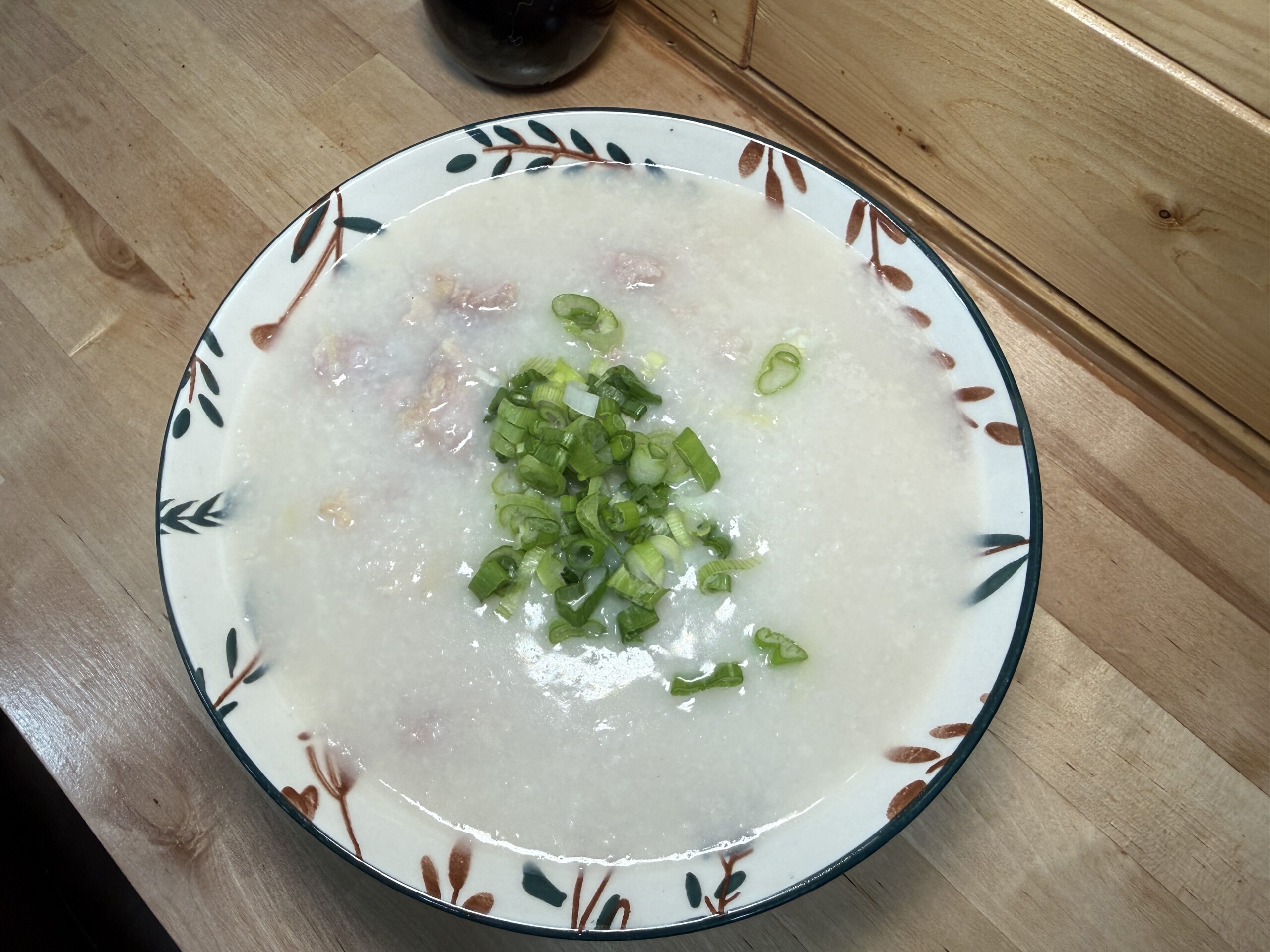
    Hen Ji Hou Wei Xuan Cheung Fun also serves hearty beef bone broths, skewers of fish balls, and enormous bowls of thin but hearty congee, topped with slivers of fresh ginger. It joins Yin Ji Rice Roll in Chinatown, which opened a year ago, as a cheung fun-focused establishment.

    Pork congee from Hen Ji Hou Wei Xuan Cheung Fun.

    Hen Ji Hou Wei Xuan Cheung Fun, 50 N. 10th St., 267-888-3233. Open seven days a week, from 8 a.m. to 8 p.m. Counter seating and take-out only.

  • One of Chinatown’s most promising Thai restaurants has closed

    One of Chinatown’s most promising Thai restaurants has closed

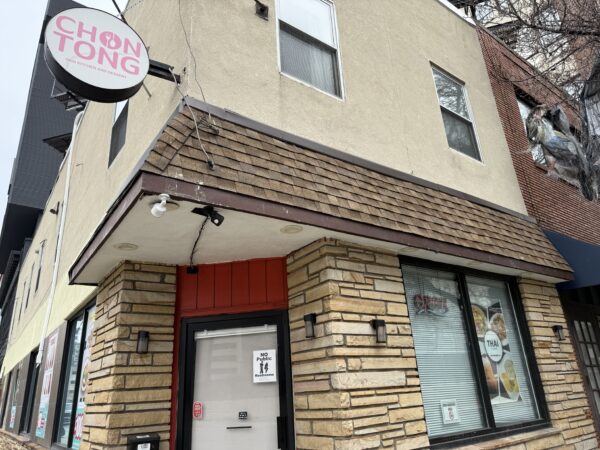
    Chon Tong Thai Kitchen, the family-run restaurant that brought a joyful, brightly colored space to an unlikely corner of Vine Street, abruptly closed late last month after its owner returned to Thailand. The Central Thai specialist, which opened in 2022, was a favorite of Thai expats in Philly.

    Owner Thidarat “Grace” Teekabud, whose great-great-grandmother had been a chef for the fifth King of Siam in the late 1800s, came to Philadelphia in 2019 to learn English. She noticed a void in Philly’s food scene and missed the desserts and snacks she grew up with. Opening the restaurant was her solution. (“Chon Tong” means “golden spoon” in Thai.)

    Teekabud did not respond to requests for comment.

    The real estate broker for the space at 1439 Vine St. told The Inquirer that the owners had already moved back to Thailand after a quick sale of the business and transfer of the turnkey space.

    Chon Tong was a close contender for The Inquirer’s 2025 edition of The 76, making the list of restaurants that writers (unsuccessfully) championed for inclusion.

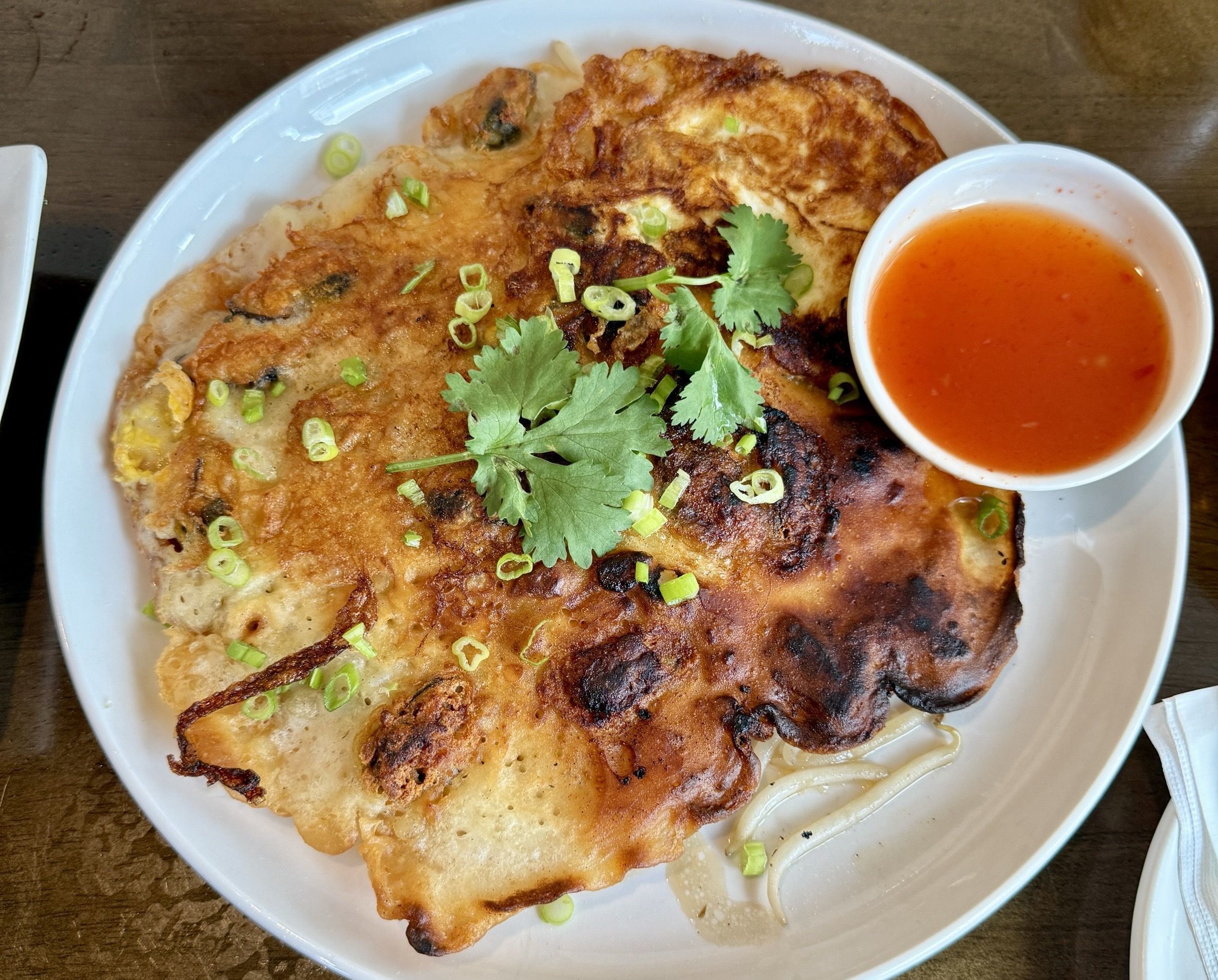
    Hoi Tod is a mussel pancake served over gently stir-fried bean sprouts at Chon Tong.

    Though the concept initially focused on desserts, Chon Tong became better known among the area’s Thai student community for its boat noodles, fried items like the mussel-studded hoi tod pancake, tum tod (an inventive fried sweet-and-sour papaya salad), and jay tod (speckled with juicy-sweet corn kernels and crunchy tofu), as well as its crispy pork belly (moo tod nam pla).

    The property’s broker said that a Chinese-Japanese fusion restaurant will take Chon Tong’s place.

  • ‘It tastes like spring’: Pietramala’s chef on why he loves asparagus

    ‘It tastes like spring’: Pietramala’s chef on why he loves asparagus

    “Asparagus is nutty, though that’s not how a lot of people would describe it,” said chef Ian Graye of Pietramala in Northern Liberties. “They may say it tastes green, like chlorophyll. But there’s flavor in asparagus. It’s juicy, and it tastes like spring.”

    You may assume asparagus is just about its spears. “The spears are just its shoots,” Graye said. “It actually grows into a really big plant. And then it sprouts and flowers. But we’re so used to seeing it in one stage of its life cycle.”

    Asparagus is one of springtime’s mystical gifts, though don’t expect it to linger for the entire season.

    “It’s a really interesting plant that people don’t really think about,” he said.

    Pietramala is vegan, but to simply describe it as a vegan restaurant would be to flatten the experience one can have there. Because it’s not about avoiding certain foods to serve a restrictive menu, Pietramala is a joyous celebration of vegetables, mushrooms, seeds, oils, and ferments.

    Each of the dishes from its tight, frequently changing menu is a careful layering of textures and a balance of freshness and preservation, whether it’s a paper-thin fan of shaved cremini mushrooms, or half a doll-sized creamy roasted squash, crusted in seeds and set in a puddle of tahini made from the squash’s seeds.

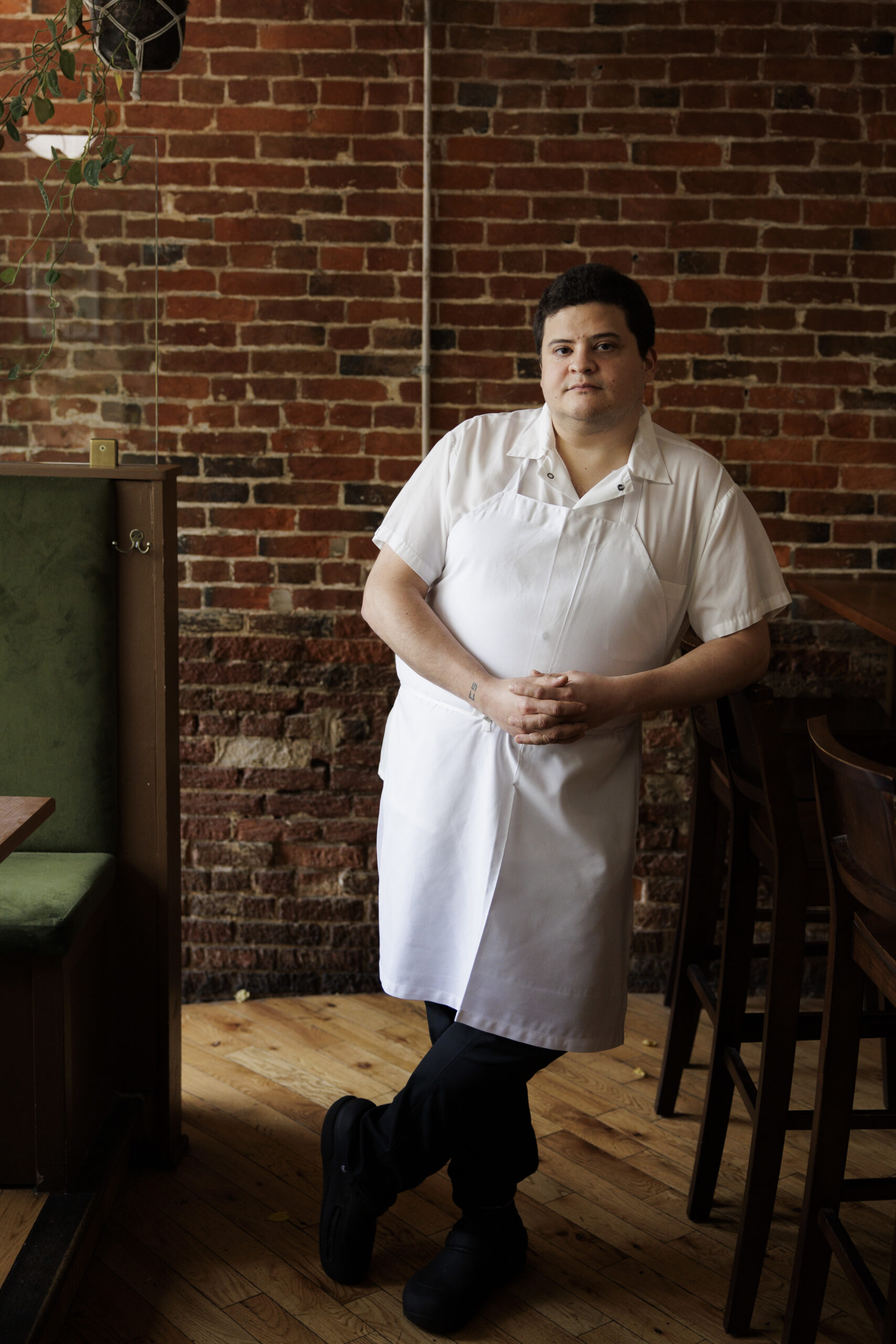
    Chef/owner Ian Graye posed for a portrait at Pietramala on Wednesday, Nov. 27, 2024, in Philadelphia. Pietramala is located at 614 N. Second St.

    The road to Pietramala

    Named for his mother’s family’s Italian surname and the Tuscan town from which they come from, Pietramala is a bit of a curiosity. The golden-lit temple to vegetables almost didn’t exist. Graye moved to Philly in 2020, hoping to work for chefs around town. But the pandemic ensured nobody was hiring, which forced him to forge his own path — one that eventually led to opening Pietramala.

    In 2011, Graye was working as a dishwasher at Champs Diner in Williamsburg, Brooklyn. He worked his way up to line cook, then sous chef, and then, finally, the chef running the kitchen. It involved a lot of “opening packages and reheating things,” according to Graye. “It was pretty easy.”

    Then, three years in, came a catalyst for change. “I watched Jiro Dreams of Sushi,” said the chef, who had been vegan throughout his professional kitchen career. “I wanted to work harder and dedicate myself to cooking.”

    He quit the diner and swore he would aim higher, seeking out plant-based chef Neal Harden and working for him in two restaurants over the next three years. It was the second time in Graye’s life that he made a promise to himself that would alter the course of his cooking.

    “Animal welfare was always part of my life growing up. I was raised not eating any mammals. We ate poultry and eggs and dairy and seafood. I’ve never eaten beef or pork or lamb or game,” he said.

    In his 20s, he decided to become a vegetarian, which lasted about a year. He faced a moral conundrum: Why is it OK to eat some animals and not others? He became vegan after realizing that he was still participating in the meat industry by purchasing animal products like eggs and milk.

    Tasting food’s real flavors

    “With a lot of vegetables and produce, you can eat it your whole life, and then at some point realize what it actually tastes like when you eat a version that’s five times stronger than what you’ve experienced,” Graye said.

    He had grown up in Queens drinking orange juice from concentrate and Sunny D. Later in life, he took his first bite of a satsuma mandarin at its in-season peak.

    “It was the difference between my experience with orange flavor and the true flavor of orange. It’s a vast, vast difference.”

    He had a similar experience with asparagus, which was once to him “flavorless, fibrous — old asparagus that had been sitting on a truck and then a supermarket, already starting to sprout. The head isn’t tight anymore.”

    Indeed, you can buy asparagus from any supermarket year-round, but what you’re getting is simply a facsimile of locally grown spring asparagus.

    In springtime, the asparagus in supermarkets can be good. As soon as April arrives, chefs may even rush to purchase asparagus grown in California.

    “But the second you cut asparagus, it starts to lose its magical qualities. Every second counts. Every hour. So go to the farmers market,” advised Graye. “Cook it immediately, or even just take a bite out of it right there. You can’t walk into a supermarket, grab a stalk of asparagus, take a bite, and have it be delicious.”

    Graye gushed about Rineer Family Farms’ asparagus, grown in Pequea in southern Lancaster County (they set up at Rittenhouse Farmers’ Market and the Chestnut Hill Farmers’ Market). “But any farmers market asparagus is going to be great,” he said.

    Asparagus takes skill and around three years for farmers to cultivate before they become strong, perennial plants that yield decent harvests. “The work that goes into it is incredible,” Graye said.

    Here is Graye’s way of celebrating the beauty of young asparagus.

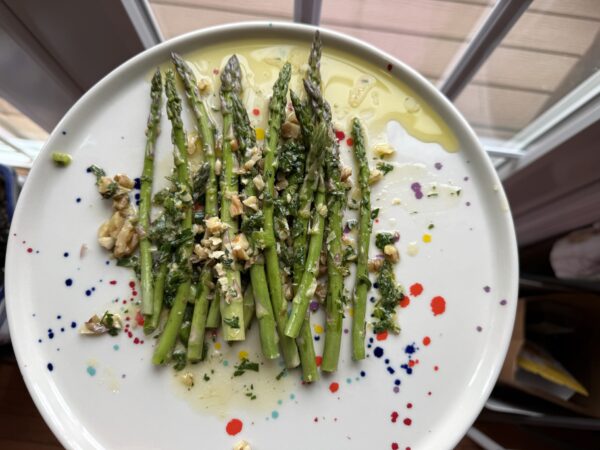
    Raw asparagus salad with walnut salmoriglio

    Makes enough for 6 people

    For the asparagus

    2 bunches asparagus (2 pounds)

    Slice off the very bottom of the stalks and peel the fibrous skin from the midpoint down to the cut part. Slice on a slight bias up to the tip, leaving the tips whole.

    For the salmoriglio

    This dressing will begin to homogenize and dull in flavor after a few hours. It is not recommended to be made ahead of time.

    136 grams extra virgin olive oil (1/2 cup plus 1 tablespoon)

    21 grams white miso (1 tablespoon)

    6 grams lemon zest (zest of 2 lemons)

    27 grams lemon juice (juice of 2 lemons)

    2 grams freshly cracked black pepper (about 12 grinds of a pepper mill)

    5 grams sliced scallions, green tops only (2 tablespoons)

    3 grams minced fresh serrano chili (1 teaspoon)

    5 grams minced fresh parsley (2 tablespoons)

    3 grams sliced fresh mint (2 tablespoons)

    1.25 grams minced garlic (1 teaspoon)

    5 grams kosher salt (1 1/2 teaspoons)

    21 grams chopped black walnuts or walnuts (3 tablespoons)

    Add the olive oil and miso to a wide bowl. Using a fork or whisk, mash the miso into the oil while stirring until all lumps have been incorporated. Add all remaining ingredients and stir to combine. Allow to marinate for about 10 minutes.

    For the garnish

    Chopped walnuts

    Mint leaves

    Parsley leaves

    Sliced scallions (green part only)

    Pea shoots or baby arugula

    To serve

    Add the sliced asparagus to the salmoriglio and stir thoroughly. Arrange in a large bowl to serve or individual bowls and garnish with walnuts, mint leaves, parsley leaves, sliced scallion, and pea shoots.