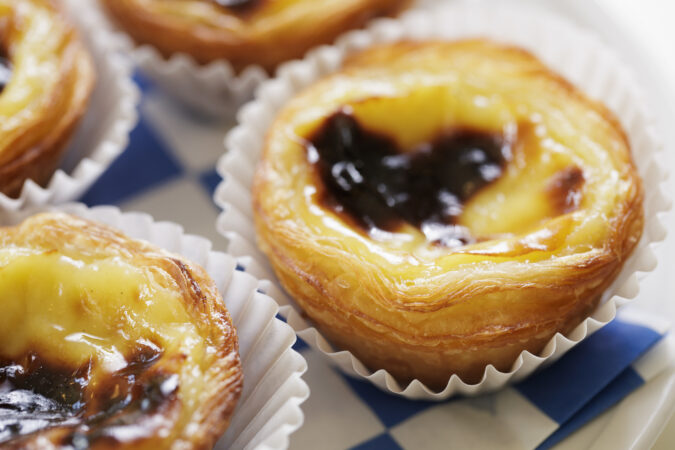
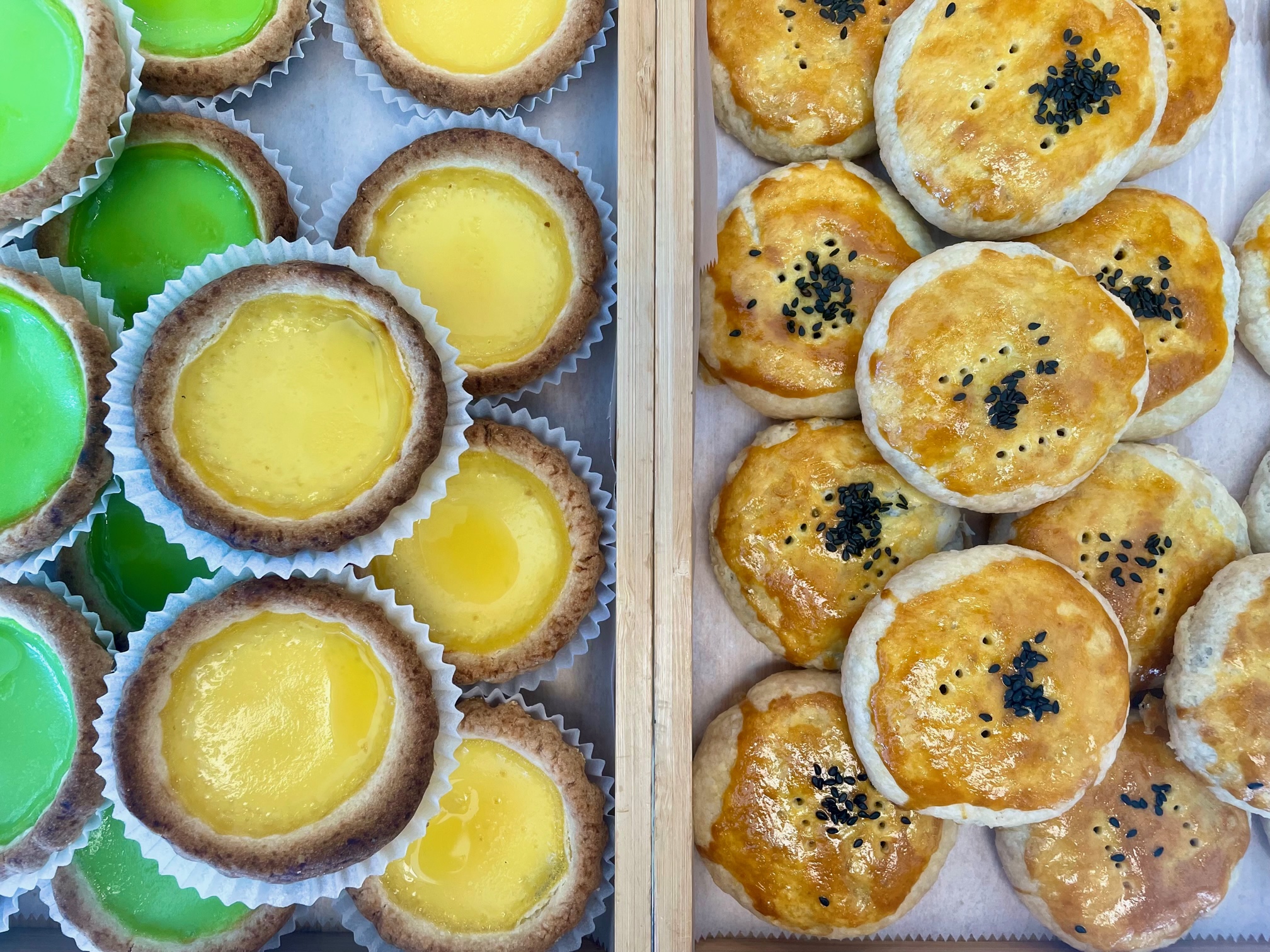
Custardy egg tarts are wiggly, lightly gelatinous conveyors of joy. The finest ones are not too sweet, but beyond that, they have variable compelling qualities, be it their lightly torched tops or innovative whole-fruit or vegetal flavors. There are three styles of egg tarts covered in this map: Portuguese pasteis de nata, flaky Chinese egg tarts, and cookie-style shortcrust egg tarts. They are all magnificent, whether you pick them up from a bakery by the dozen or nibble on them from a dim sum parlor’s lazy Susan.
Beijing Duck Seafood Restaurant
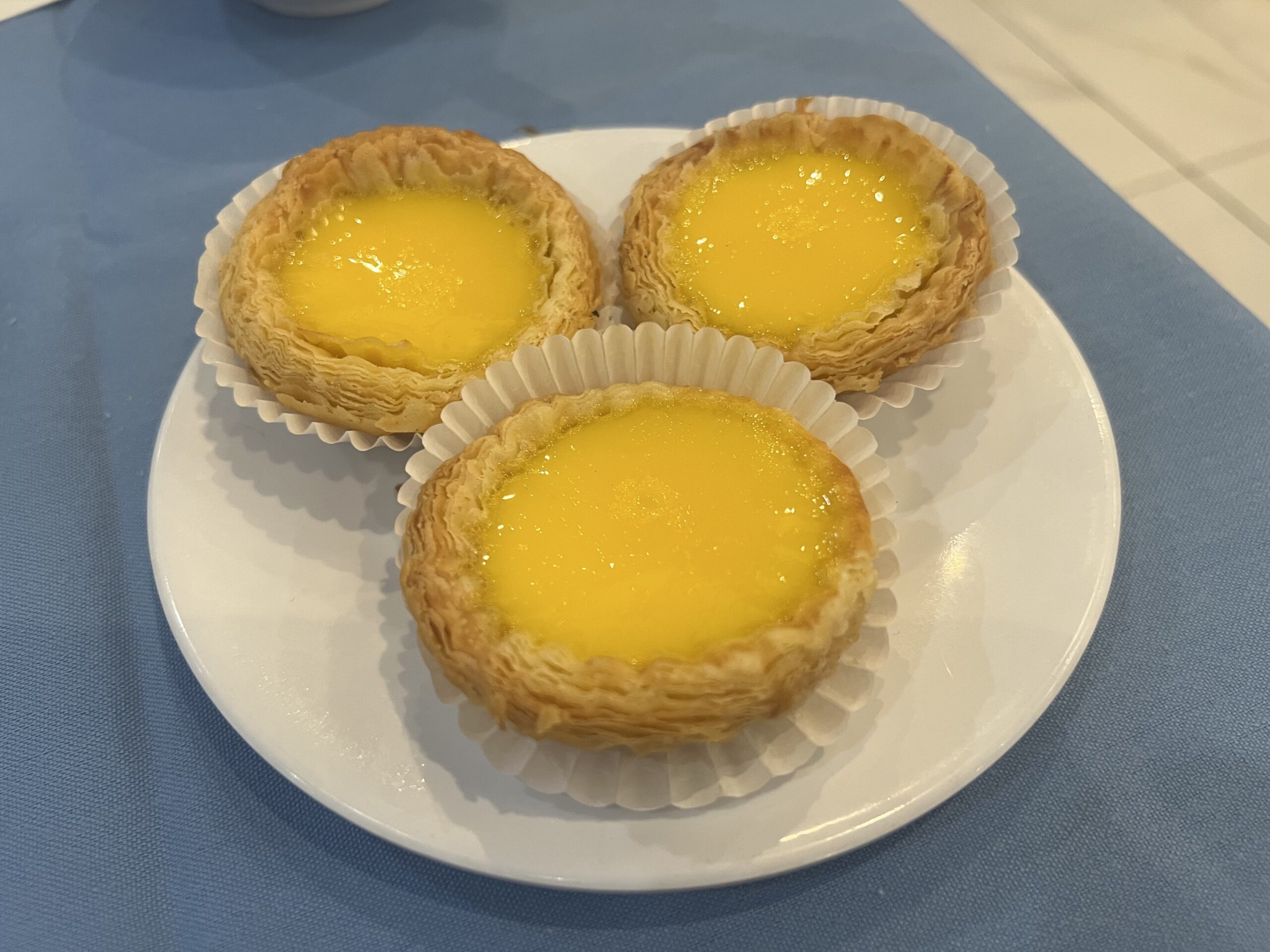
By night, this Race Street restaurant becomes a Peking duck emporium, with white-toqued chefs wheeling roasted ducks through the dining room, announcing their arrival at tables by striking a gong. But by day, Beijing Duck Seafood serves a menu filled with dim sum classics like char siu bao, turnip cakes, spring rolls, and, of course, delightfully and thoroughly classic dim sum-style egg tarts. These are some of the best egg tarts you can get in Chinatown. They’re served piping hot (as all the best egg tarts are), and they have molten, deep yellow custard centers encased by a flaky pastry crust that dissolves in your mouth with a slight chew. They’re small — but not the tiniest you’ll see — and come three to an order.
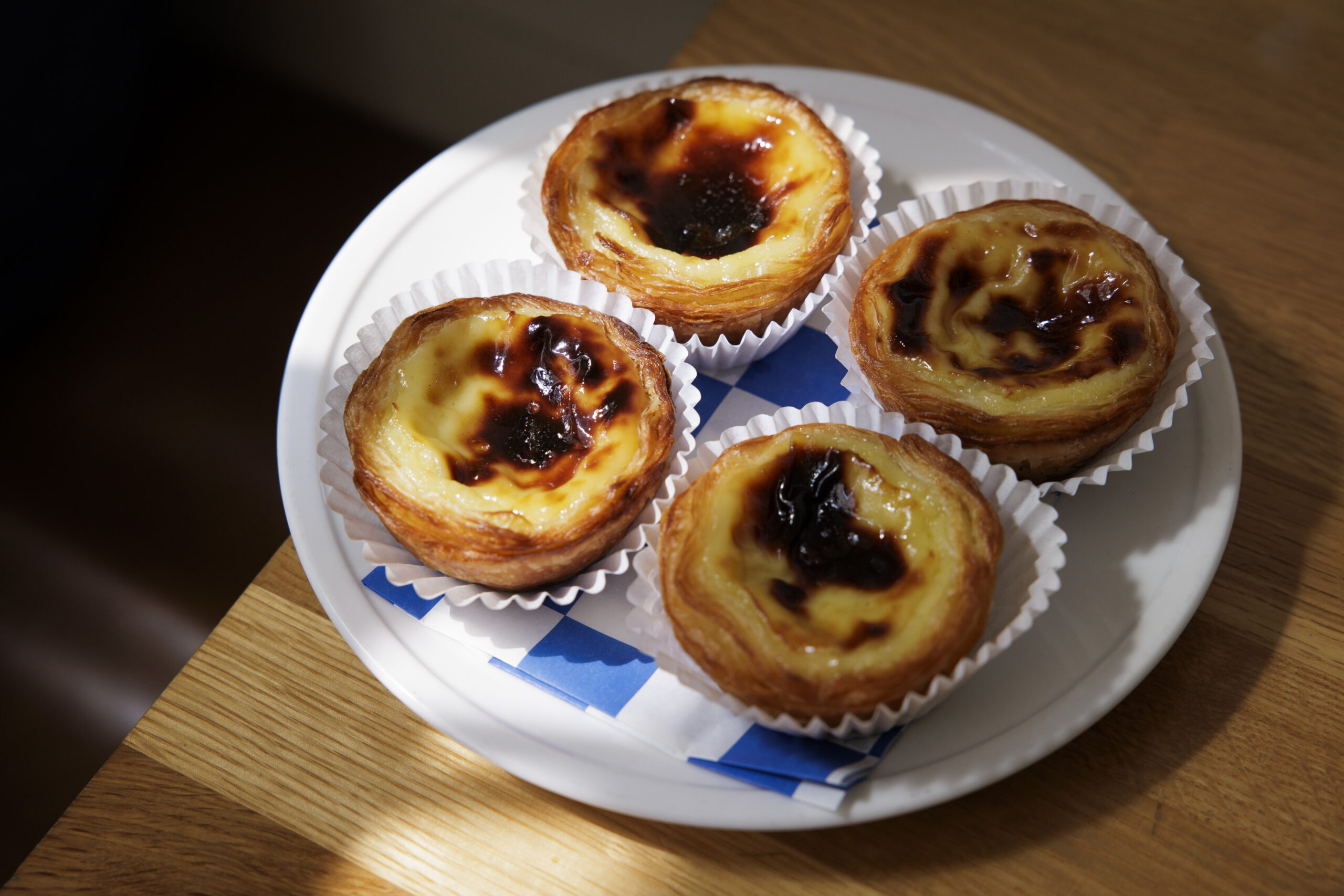
The pateis de nata at Gilda in Philadelphia on Thursday, Aug. 29, 2024.
Gilda
The flavors of pasteis de nata at Gilda rotate according to whims and seasons. All of the Portuguese tarts have a creamy, cinnamon-flecked egg-yolk custard base that is looser, jammier, and almost whipped compared to the harder-set centers of their Chinese-style counterparts. Baked at high heat, Gilda’s natas naturally develop bruleed brown leopard spots. The tarts themselves have firm, flaky crusts that get filled with core custards like lemon-raspberry and dark chocolate with sea salt. In summer, look for natas flavored with corn, passion fruit, and strawberry. The staff here even makes a sweet nata latte to mimic the three-bite treats, using a house syrup infused with vanilla, cinnamon, and a squeeze of lemon juice. All the egg whites the natas generate get fried and stuffed into a soft but crusty mealhada roll with cheese, avocado, and aioli, resulting in the Sammy, one of the city’s best breakfast sandwiches.
These are the Platonic ideal of dim sum-style egg tarts, which means they’re small — two perfect bites each — with pastry that flakes apart in crisp petals in your mouth. They’re filled with even, yolky custard that balances lightness and richness. These are the perfect mildly gelatinous coda to stuffing yourself with all the other goodies wheeled past your table during dim sum at China Gourmet, and no dim sum experience here is complete without them.
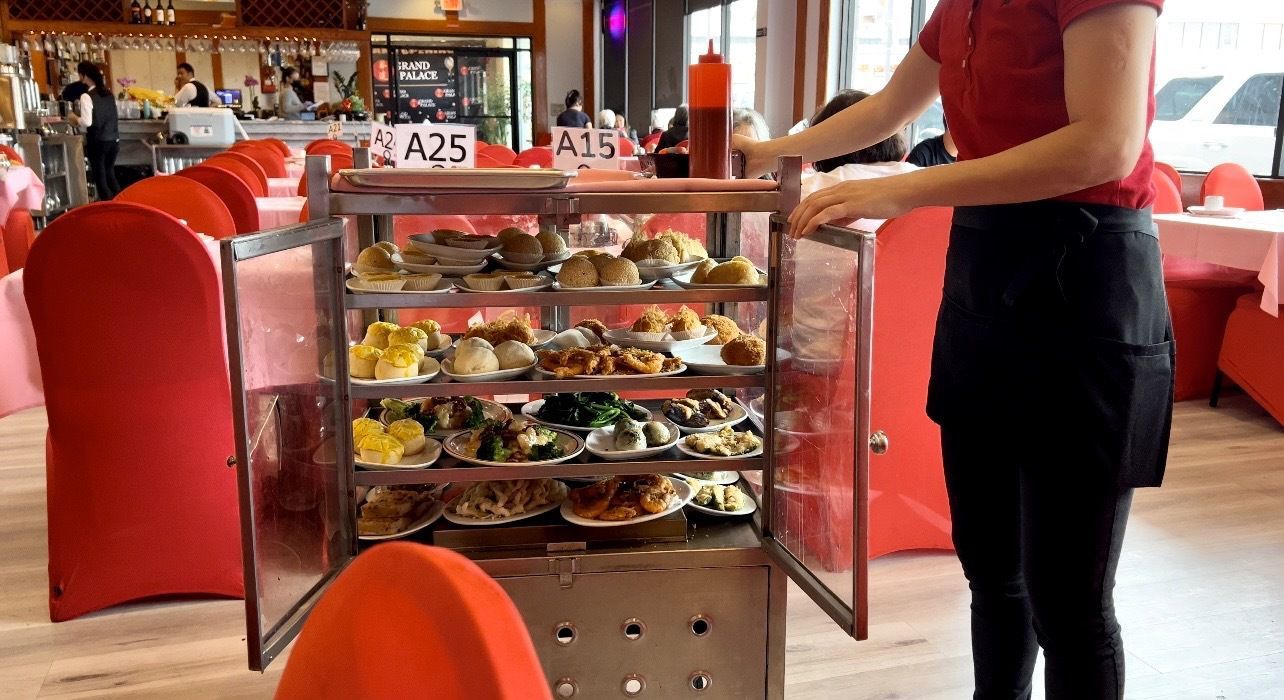
A dim sum cart with full-size dishes at Grand Palace restaurant, 600 Washington Ave.
Grand Palace
This Washington Avenue establishment’s name is not delusional — it truly is grand. This is where you want to bring your 10 best friends for dim sum or brunch, and shout engagingly back and forth with the ladies pushing carts piled high with bamboo steamer baskets. As a bonus, it’s a stone’s throw from Center City and there is parking. Grand Palace has absolutely mastered both steamed buns (its char siu bao is positively fluffy) and egg tarts. The tarts are larger than the average dim sum rendition, coming two to an order (vs. the usual three). The pastry shell crust is incredibly flaky, with a thinner layer of custard than typical Cantonese tarts. The filling is soft, barely sweet, and one of the highlights of a raucous dim sum experience.
Occupying a cheerful, cartoon-muraled, bright blue corner in deep South Philly, Dodo Bakery peddles an impressive variety of Chinese-inflected baked goods, tea-based beverages, and smoothies. The kitchen makes two types of egg tarts: one in a traditional flaky pastry shell, and another whose egg yolk custard is spiked with pandan for a hint of grassy, coconutty flavor and a neon-green hue. Pop them in the toaster oven at home to revive their jiggly freshness. Dodo also churns out enormous renditions of classic Hong Kong pastries, like the staple Canto-British chicken pot pie and triangles stuffed with chopped, bright red char siu roast pork. Their red bean pastries are also excellent and extremely flaky.
Pennsylvania-made amaro — bittersweet liqueurs made by macerating herbs and spices — is a nascent booze category. But its production isn’t restricted to larger distilleries like Philadelphia Distilling, which makes the popular Vigo Amaro. Bartenders around the city are making their own in-house.
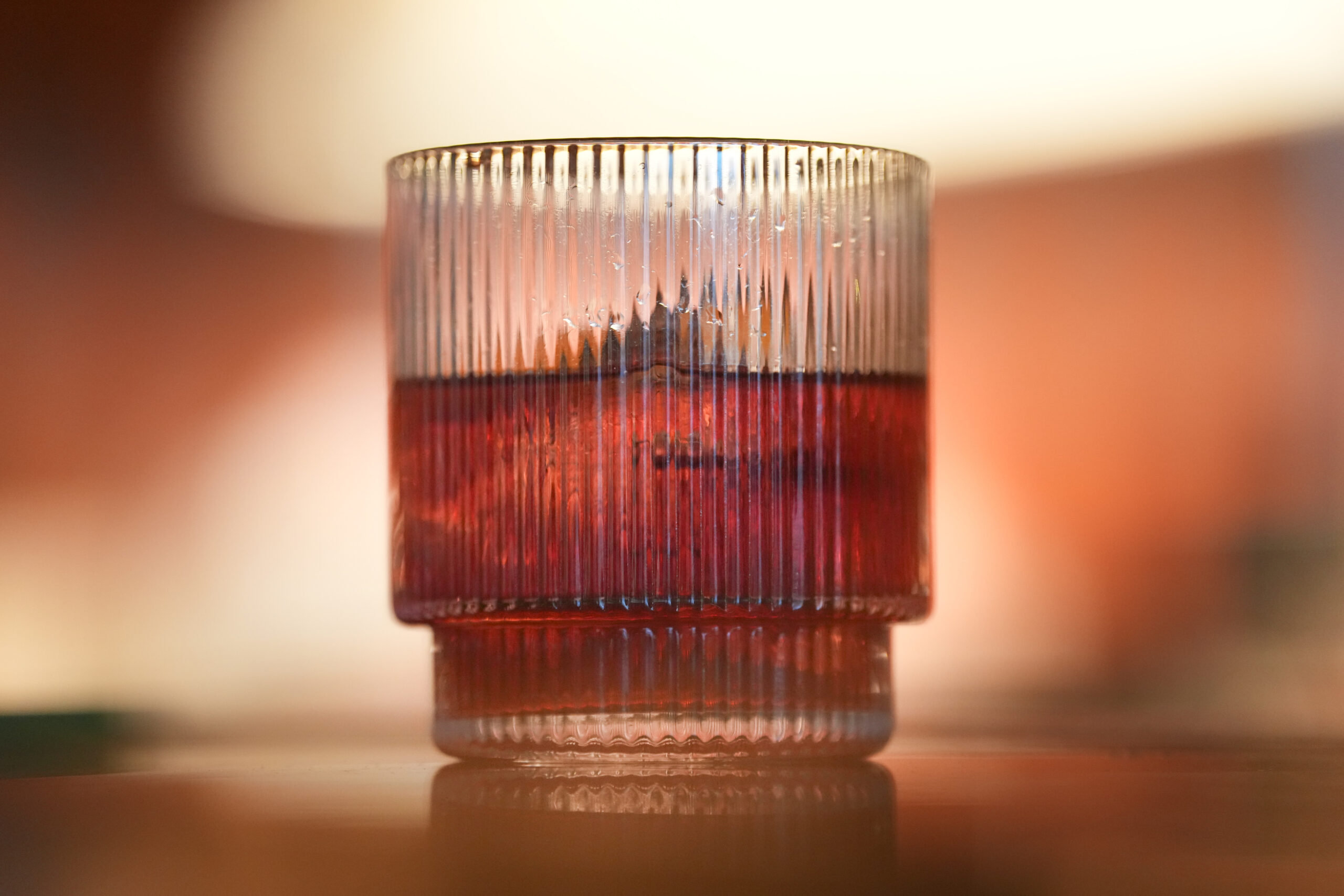
A Negroni at Percy, in Philadelphia, Dec. 10, 2025.
The practice of making in-house amaro is a result of a relative lack of access. In Pennsylvania, amari are often expensive and the selection comparatively small due to what the Pennsylvania Liquor Control Board makes available. On the Fine Wine and Good Spirits website, there are only 41 amari listed, compared to 838 tequila and tequila-based drinks available.
Some bars, like Borromini and Le Virtù, maintain lists of 70-plus amari by sourcing them through what’s called Special Liquor Orders, or as Le Virtù’s general manager and beverage director Chris O’Brien explains, “something that is brought in from a smaller importer instead of getting it directly from the state.”
But bars with a limited winery, brewery, or distillery licenses — a vastly more affordable and increasingly popular path to a liquor license than a full restaurant license — can only serve beer, wine, and liquor that’s produced (or at least bottled) in Pennsylvania. That winnows the PLCB-stocked options from 41 to two, giving some establishments good reason to make their own amari.
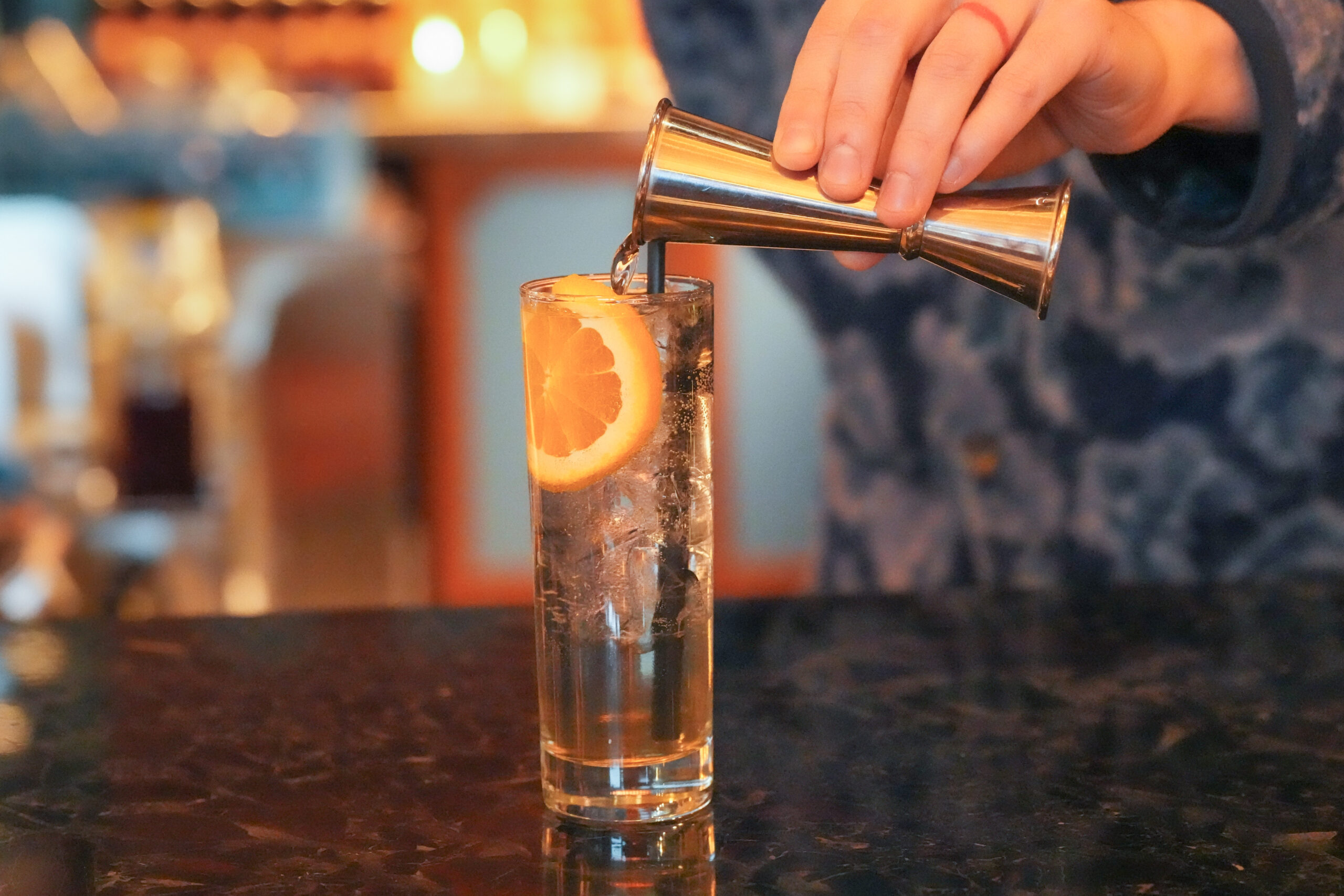
Amaro Spritz at Percy, in Philadelphia, Dec. 10, 2025.
The family of liqueurs known as amaro (Italian for “bitter”) are made from steeping botanicals in alcohol. They can be enjoyed before dinner (aperitivo) or after (digestivo). There are numerous types and subdivisions, like fernet. Nocino is a similar liqueur made from walnuts. Here in Philly, ambitious bartenders are making all kinds of variations.
Almanac
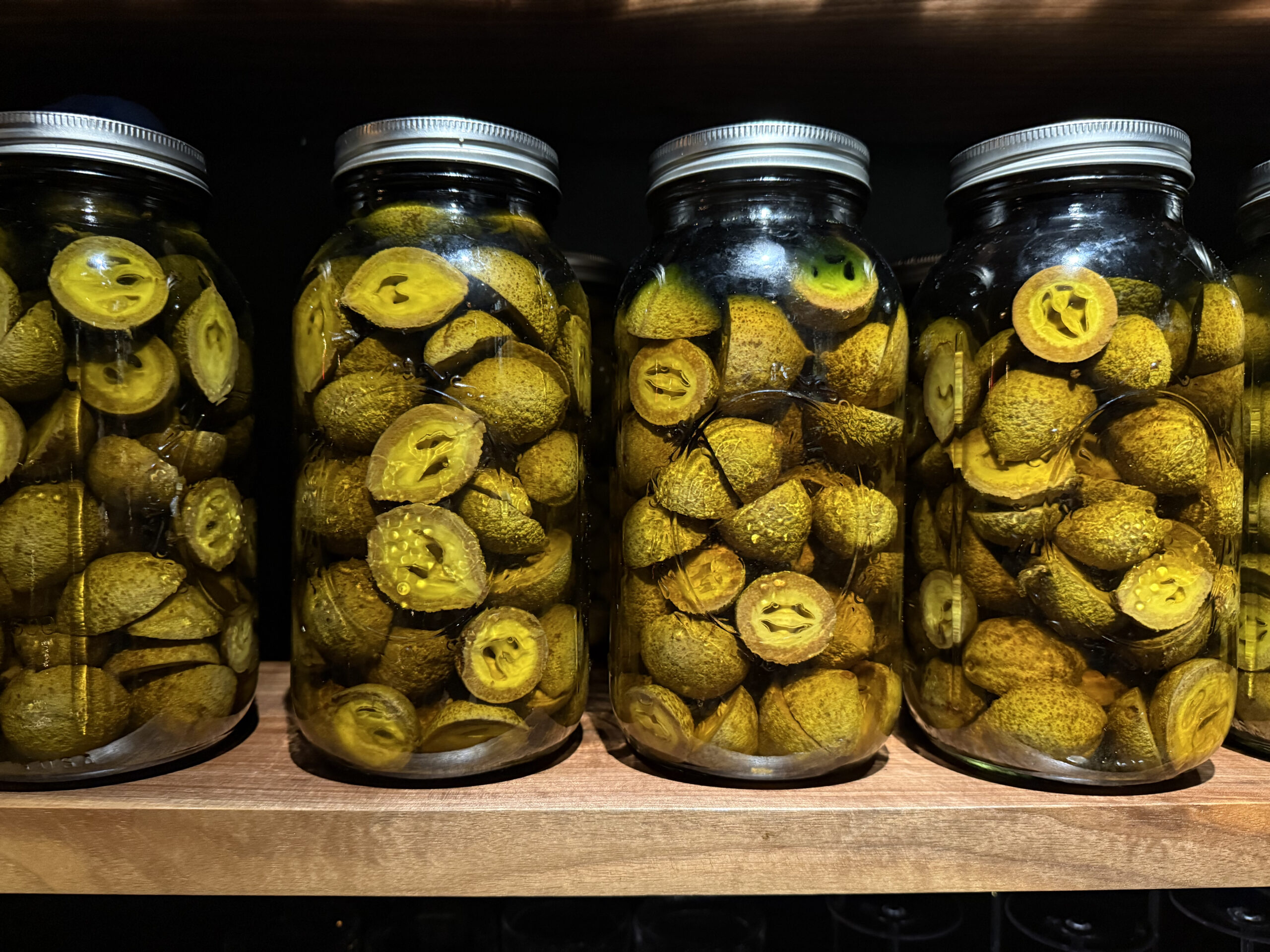
At Almanac in Old City, which is tucked above Ogawa’s omakase counter, large mason jars filled with witchy green-black liquid cover the shelving on one entire wall. Lead bartender Rob Scott brews his own amazake, a spirit typically made from fermenting rice with koji mold spores, and steeps mostly foraged nuts and leaves in Everclear and brandy for Almanac’s unique, house bitters.
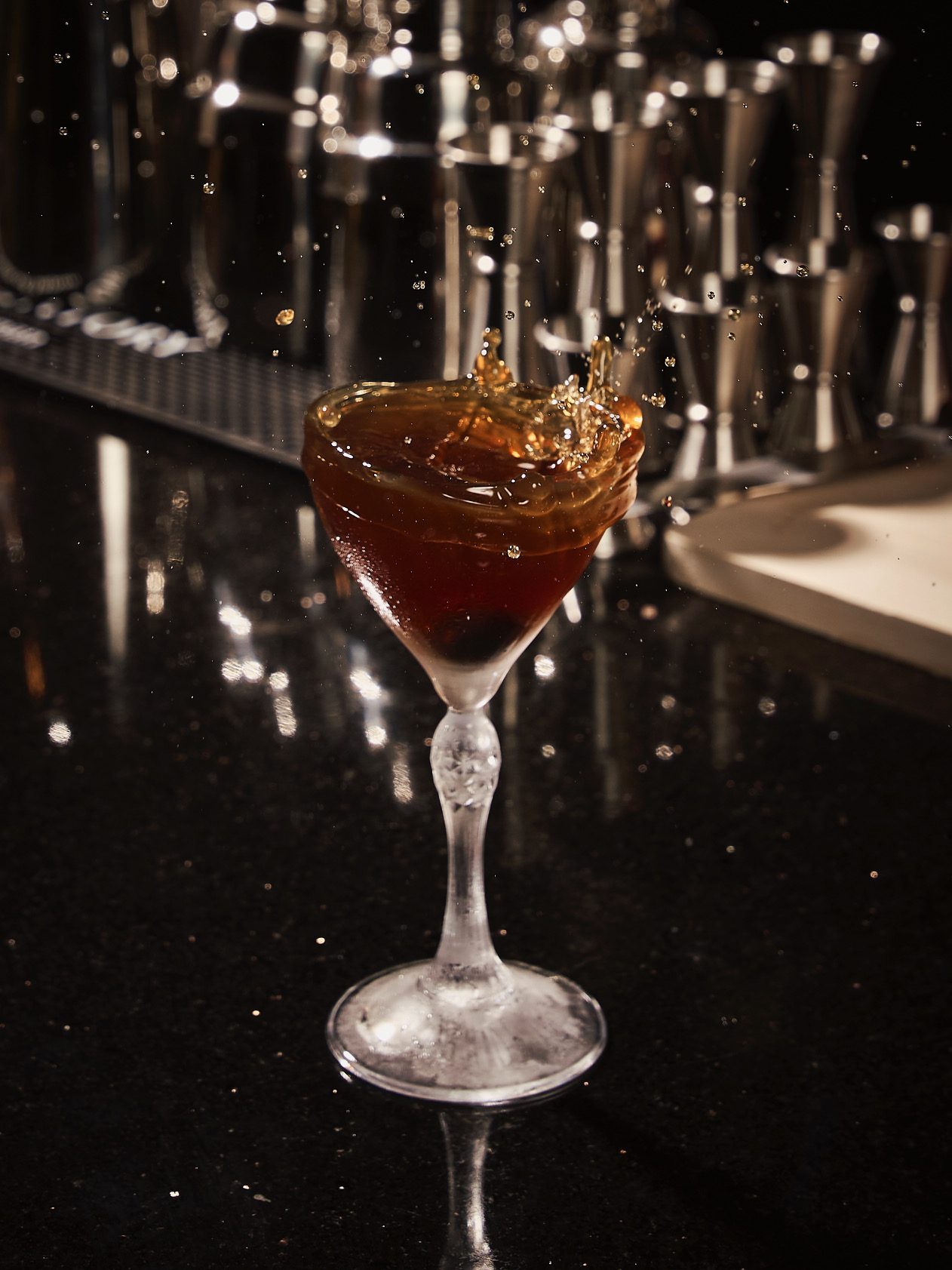
The Juban District, a take on a Manhattan, made with black walnut nocino at Almanac.
Spinning one jar of amaro from October in his hands, studying the aromatics still steeping within, Scott recited each of them, “Fig leaf, apples of some sort, trifoliate orange, yomogi which is a cousin of mugwort, chrysanthemum, rosemary. We keep a book downstairs where we weigh and measure everything and write them down. Otherwise it’s easy to forget.”
They’re all autumnal flavors, and they steep for months in Laird’s Jersey Lightning, an un-aged apple brandy.
The jars of amaro sit next to about a dozen similar jars of nocino, made from local black walnuts. “You can taste a bit of astringency with nocino, but it goes away with time,” Scott said. “But if you make an amaro with, say, cardoons or wormwood, those will always be bitter.”
The nocino currently sitting on Almanac’s shelves were started on June 24, when their team harvested the nuts in Merchantville with Danny Childs, sliced them in half, put them all into 2-liter mason jars, and covered them with Everclear, a neutral grain spirit. They steeped until Thanksgiving, when the nocino was tempered with water and sweetened with Demerara sugar.
The black walnut nocino at Almanac.
Scott offered a sample of what he called “hot nocino,” used for Almanac’s Manhattan. “We only put the nocino into cocktails because the other flavors in the cocktail temper its hotness. In order to get a true, sipping nocino, I would let this age for another six to eight months for it to become a more evolved drink. You can’t really over-extract [the walnuts], so we use them when they feel right.”
Almanac, 310 Market St., Second Floor, 215-238-5757, almanacphilly.com
Percy Diner and Bar
Percy Diner and Bar’s limited winery license means they can only serve Pennsylvania-made amari. So they decided to make their own.
Percy, which is part of the Forin group, serves Forin’s black currant and cherry fruit wines and their oaked ube and ube honey wines straight ($10) and blends them into cocktails.
A Negroni at Percy, in Philadelphia, Dec. 10, 2025.
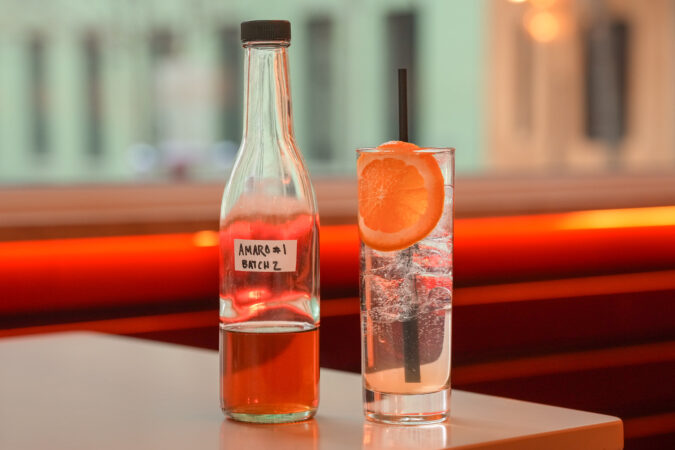
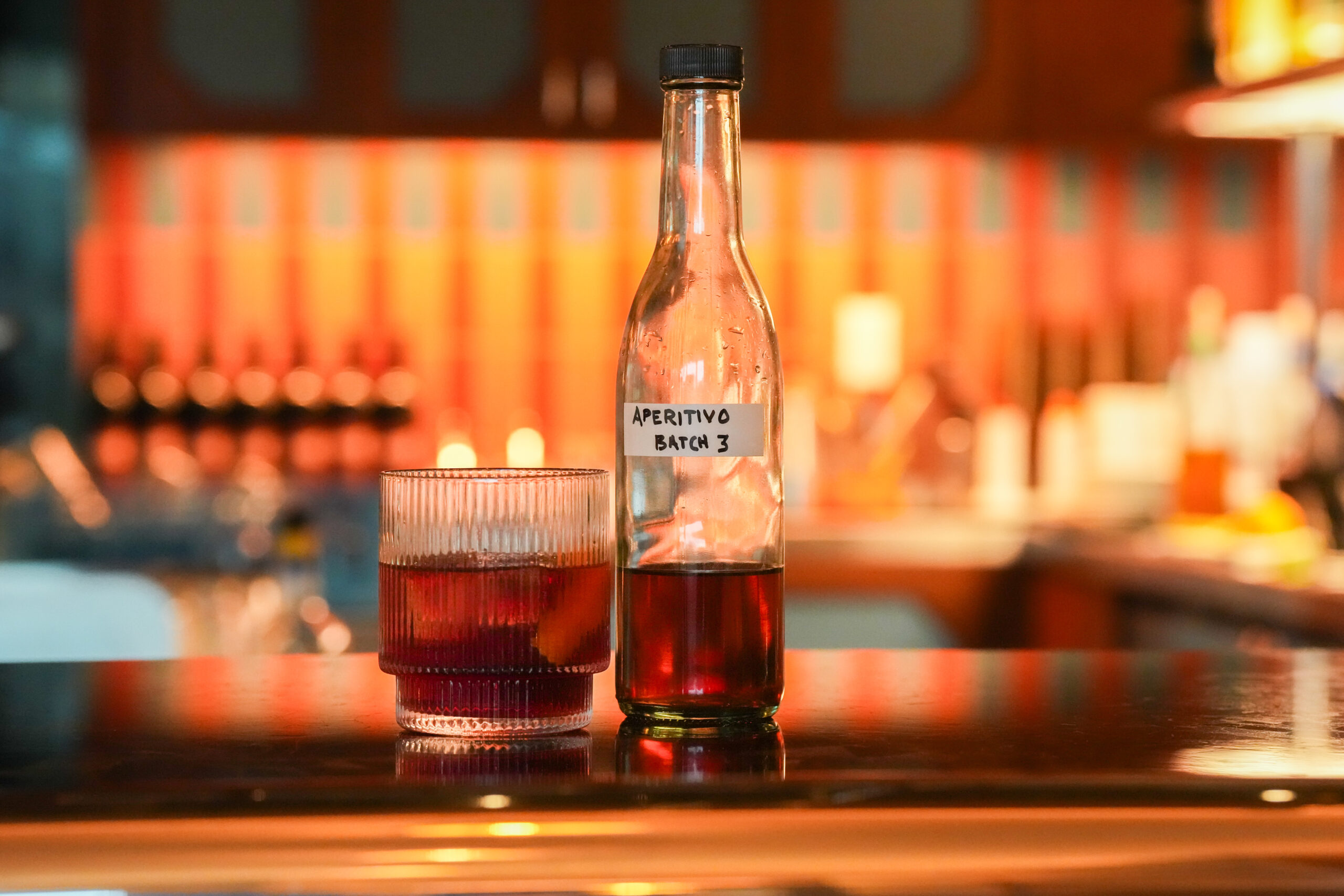
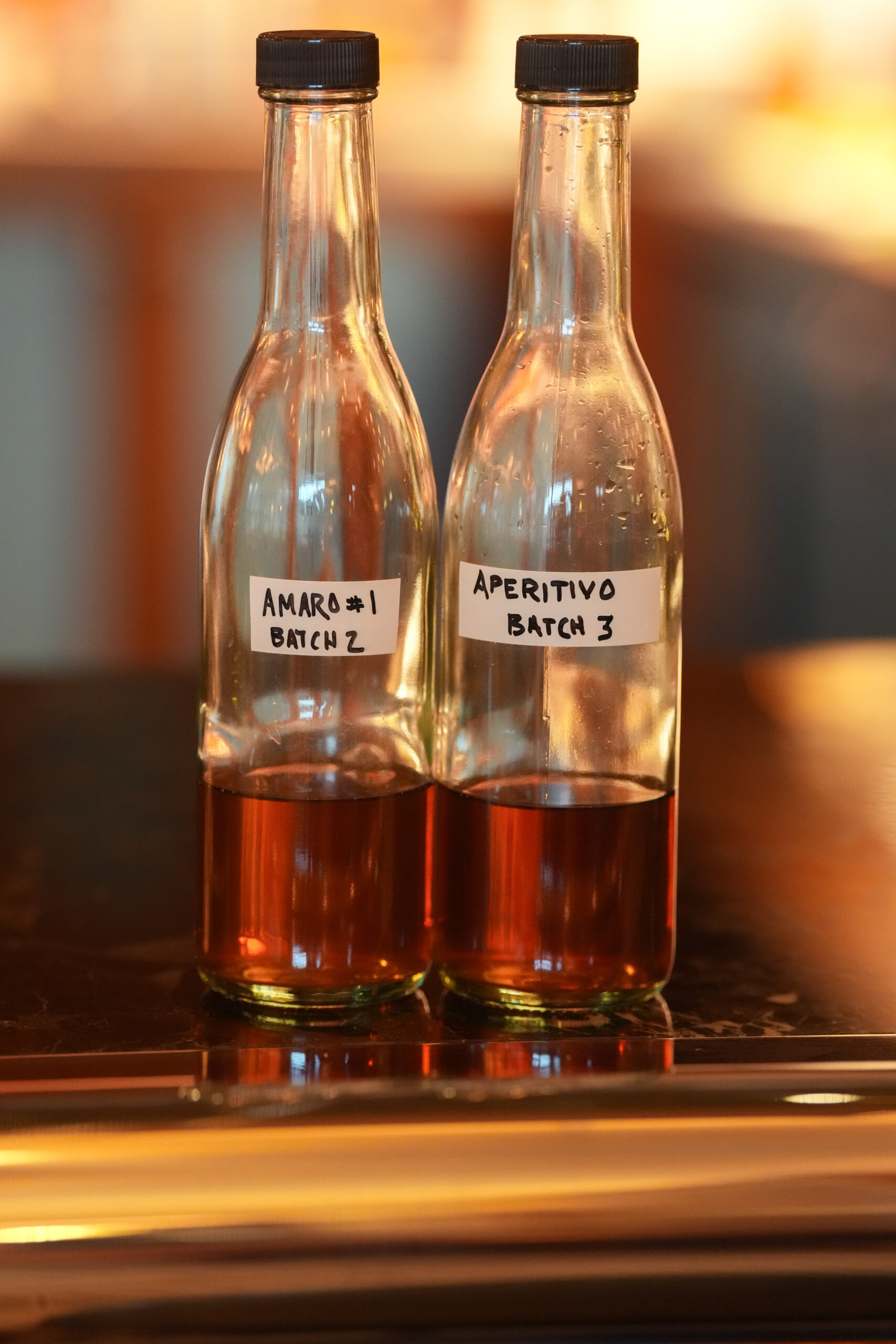
They’ve used the honey wine as a base for their amaro, but more recently, the in-house selection is made with mostly neutral grain spirits. Lead bartender Sean Goldinger is hoping to slowly cultivate a series of house-made amari to feature in cocktails. At the moment he has made both a straightforward amaro with bitter orange peel, angelica root, fresh orange peel, star anise, hibiscus, gentian, wormwood, and sweetened with Demerara sugar, as well as an aperitivo that follows a similar recipe but is sweetened with a syrup made from clarified fresh-squeezed orange juice.
Housemade Amaros at Percy, in Philadelphia, Dec. 10, 2025.
The aperitivo is wonderfully citrusy and significantly less bitter than the amaro. Goldinger also makes a house riff on Benedictine, a French herbal liqueur typically consisting of a couple dozen secret ingredients, with Stateside vodka and Dad’s Hat whiskey, Fell to Earth sweet vermouth, and Peychaud’s bitters. It’s infused with cinnamon, cloves, fresh thyme, lemon and orange peel, vanilla, cardamom, wormwood, fresh ginger, star anise, and angelica root, sweetened with both Demerara sugar and honey.
Percy Diner and Bar, 1700 N. Front St., 215-975-0020, percyphl.com
The bar area at Le Virtú on Feb. 20, 2025.
Le Virtù
While the majority of Le Virtù’s robust menu of amari and other liqueurs is sourced from Italy and Eastern European countries, the East Passyunk restaurant also offers some house-made options. Three house-made digestivi stand out:acqua santa (an agrumi, Italian for “citrus fruits”), genziana (a traditional Abruzzese gentian digestivo), and caffè, a coffee liqueur. These aren’t amari, as they use far less ingredients, but they serve the same purpose — helping you to digest the pasta dinner you’ve just indulged in.
For $15, you can get a generous pour of one of these digestivi. They’re all made by owner Francis Cratil Cretarola’s brother Fred, who’s been making amari since 2013, when he attended a wedding in Abruzzo, in the town of Pacentro and “became drinking buddies with a guy who taught him,” according to Francis. “Amari are much more complex, with 10 to 12 different ingredients, but these are the things Abruzzese are making in their homes,” he said.
Acqua santa is a light golden yellow. Le Virtu’s beverage director, Chris O’Brien, referred to it as a “high-octane limoncello.” It’s made with lemon, grapefruit, orange, and lime. With less sugar than limoncello, it’s much more nuanced in its citrus flavors.
For the caffè, Fred takes fresh espresso grounds and infuses them in Everclear for 30 to 40 days, turning them each week to make sure they’re evenly distributed, Francis explained.
The genziana is clear, amber-hued, and bracingly bitter, but still very balanced. It opens with a bright citrusy burst and is made bitter with gentian root, a common ingredient in amari. The root, brought to the U.S. by Francis’ friends who live near the Maiella mountains, steeps in Trebbiano or Pecorino wine from Abruzzo. Fred adds some lemon peel and coffee beans to it, along with Everclear.
Le Virtù, 1927 E. Passyunk Ave., 215-271-5626, levirtu.com
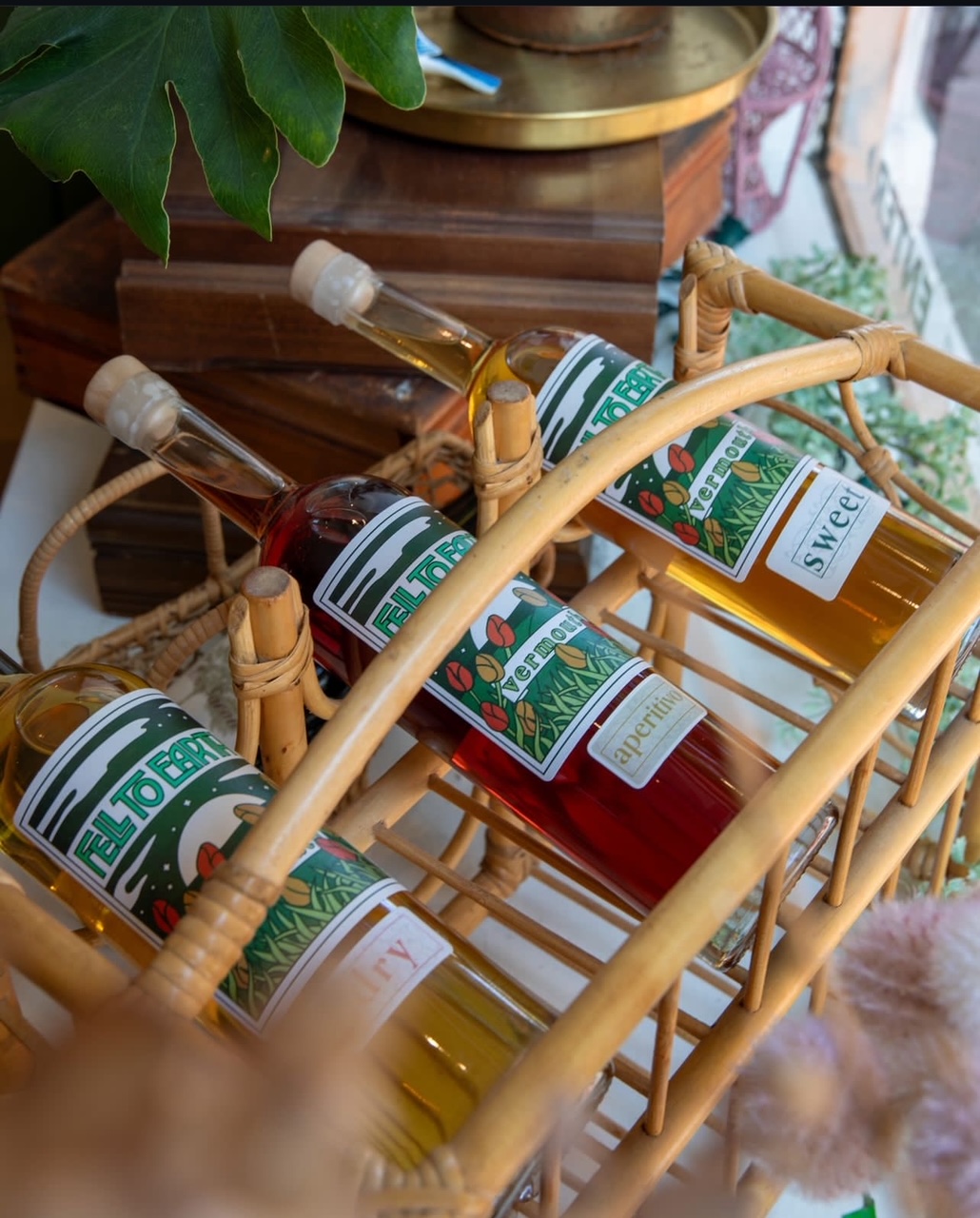
Products from Fell to Earth Vermouth.
Fell to Earth
You may recognize Tim Kweeder’s name from his viral concoction, Dumpster Juice, a line of vermouths born at Bloomsday, but his making of liqueurs has come a long way. He’s the producer, bottler, salesperson, and delivery person for Fell to Earth, Philly’s first vermoutherie. It’s technically both a winery and a distillery: “The state made us get both licenses,” said Kweeder.
Fell to Earth’s liqueurs can be found at about 40 different Philly bars. Kweeder sources fresh ingredients for his fernet, like nepitella and chamomile, from Green Meadow Farms. He sweetens them with blackstrap molasses from Bucks County, then blends them with a neutral grain spirit and lets them sit for a week before blending the tinctures.
The base of his amaro starts with spruce tips from Green Meadow. “There’s a two-week window where you can forage for them, between late March and April. I throw them all into a big vat with neutral grain spirit … That becomes a base for amaro, and I build on top of that, blending in other tinctures,” he said.
“Though most of our ingredients are from the Mid-Atlantic, we have a tiny ‘spice cabinet’ of traditional amaro ingredients that don’t grow here, like gentian, cinchona (a bark that yields quinine), etc. which we use like chefs would use seasonings. We get these locally from Penn Herb Co.”
If you can’t decide whether you’re looking for a nocino or an amaro, you may find your solution in Fell to Earth’s Nocinaro — a hybrid of the two made from green walnuts, walnut leaf, black walnut syrup, trifoliate orange, wormwood, blackstrap molasses, and a gentle seasoning of cinchona bark and gentian root.
Available for delivery in Philadelphia (four-bottle minimum), shipping outside the city available via Vinoshipper; felltoearth.com
This year was a big one for eating at restaurants. I had the largest beat in scouting for The 76 this year, my first year doing so. For that list alone, I dined at 74 restaurants. For the other features, guides, and reviews I wrote, I dined at several dozen more.
It was fascinating to look at Philadelphia’s dining scene according to the cross sections provided by eating many of the same dishes, served in different establishments. I ordered gon chao ngau ho or beef chow fun all across the city, comparing the differences between many restaurants’ versions. Some of them were drastic, some more nuanced. This past year, I spent cumulatively two whole days at omakase counters. I tracked the culinary trends and trendy ingredients that pervaded dining rooms and kitchens: Caesar salad everything, fermentation going strong, late-night menus finally emerging from their post-pandemic slumber, and the continuing rise and diversification of little treat culture.
Trendy techniques and ingredients do not exist in isolation. Philly’s dining scene is part of a larger ecosystem of American dining and as our restaurants attract more and more out-of-town visitors and our kitchens attract out-of-town talent (the presence of Michelin in Philly ensures both), the borders of what makes dining in Philadelphia will expand and open. Social media buffets these trends around the globe, like the shades in Dante’s Inferno.
What I learned eating all over Philly in 2025
All green everything
Matcha prices rose and quality fell, as farmers in Japan struggled to keep up with the global obsession with matcha that Philadelphia was not immune to. A similar trajectory happened with pistachios, as the Dubai chocolate bar maintained a chokehold on establishments from ice cream shops to smoothie shops and everywhere in between.
Steakhouses and bakeries dominated openings (in Philly, the latter was more the case). They also developed distinct personalities, informed by the cultural backgrounds of third culture kids. We got Baby’s Kusina, Seaforest Bakeshop, a wave of Indonesian cafes with fluffy pastries, and a host of other “little treat”-forward bakeries. New York and London reported similar little treat trends.
Nostalgia, or signs of a shifting economy?
Recession indicator foods like burgers and baked potatoes are dominating the discourse when it comes to restaurants’ marketing. I’ve also heard my friends hotly debate which restaurants in Philly serve the best cabbage dishes. Cabbage is the epitome of recession indicator foods.
Cocktails, both complicated and delicious
So much in-house fermentation and liqueur-concocting continues to fuel the creativity of Philly’s bars, especially with Almanac, La Jefa, and Honeysuckle leading the way in preserving foraged ingredients and brewing amazake, traditionally made with koji applied to rice but in Philly, bartenders are making it with everything from corn to sweet potatoes.
Hail, Caesar
I started my tenure at The Inquirer by covering the viral kale caesar cutlet at Liberty Kitchen. Now, just over a year later, there is nothing that cannot be a Caesar, whether it’s a martini or Scampi’s take on bruschetta. The word “salad” has now been elided from the dish.
Superb sauces, not enough rice
There simply isn’t enough rice on the menu to sop up the incredible sauce work happening in many of our newer restaurants. Ordering a side of white rice whenever I get a crudo at Sao or Mawn has become regular practice for me. I also longed for sides of rice when dipping into Uchi’s many, very saucy crudos.
I can’t see my food when I’m with you
The dining rooms are getting dark. I can’t see my food. And yet, we’re in the golden age of food photography.
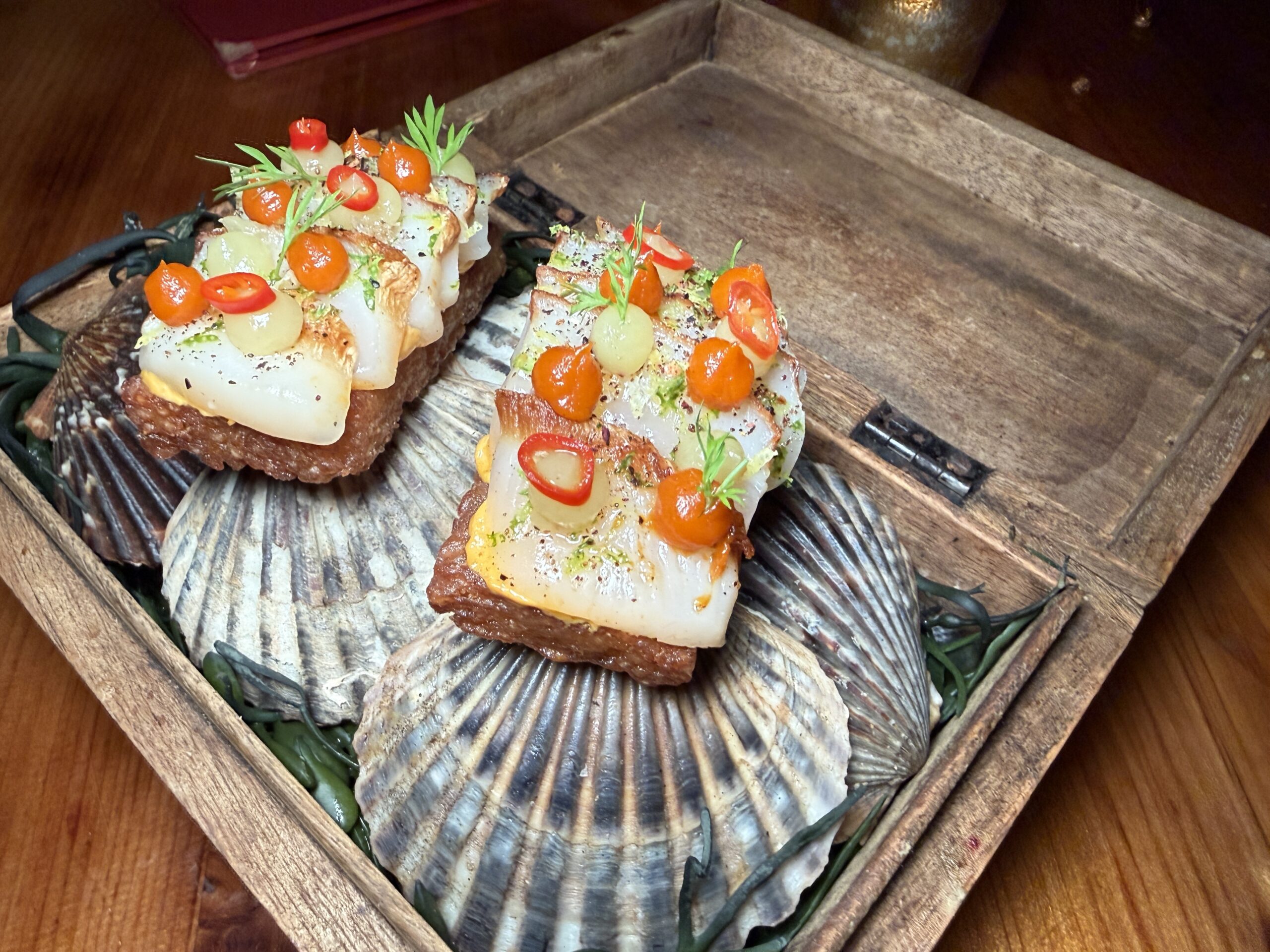
Hokkaido scallops on crispy rice with vadouvan curry at Bardea, served on shells inside a box.
No plates, no problem
Restaurants continue to love serving food on plates that are not plates, from the jewelry boxes that bear delicate squares of crispy rice topped with raw scallops, weighed down by rocks at Bardea, to just rocks at Honeysuckle, to cleaned out parts of animals like the tuna spinal jelly served in a cleaned-out piece of tuna spine at Nakama and the scallop sashimi in shells at Ogawa. When Elwood served its venison scrapple stabbed onto deer antlers in 2019, it broke the Philadelphian internet. Nowadays, you wouldn’t bat an eye. This phenomenon is worldwide. When I get my initial “snacks” course — they’re always called “snacks” at a fine dining establishment — it would be weird if they weren’t served on ceramic orbs like at Miro in Honolulu or ceramic test tube holders at Washington’s Jont or custom pieces made by Felt and Fat that resemble the surface of the moon at Provenance.
Break out the vinyl
Speakeasy cocktail bars are out. Inclusive listening lounges are in.
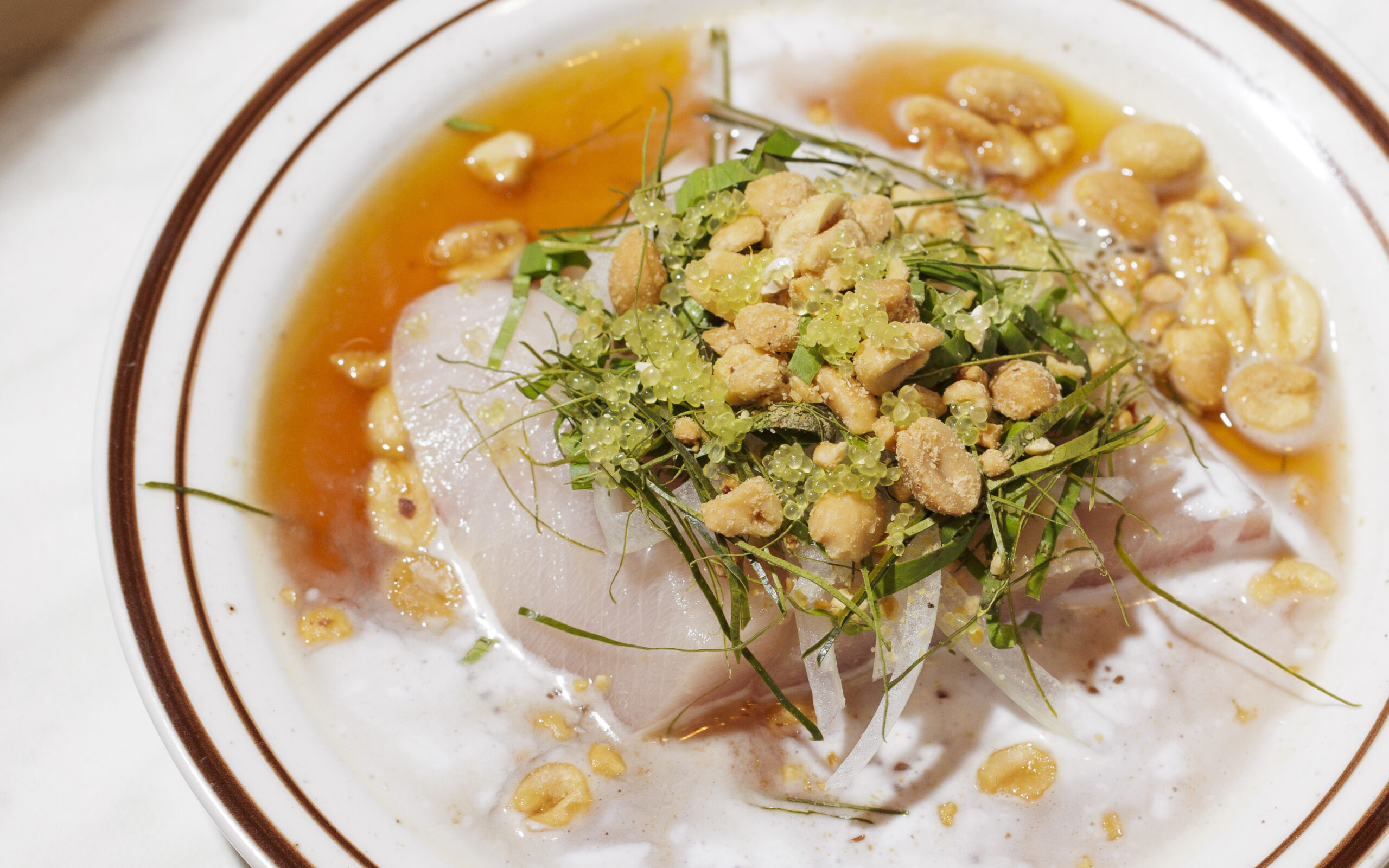
Every restaurant needs a hamachi crudo
The Aged Hamachi Crudo at Sao on Wednesday, Nov. 26, 2025 in Philadelphia.
Pickle martinis, chicken karaage, koji-aged proteins and vegetables, and hamachi crudo are on so many menus, regardless of cuisine or concept.
Let’s call it ‘American Fusion’
The term “New American” is so yesteryear, but the conglomeration of many different influences and dizzying collections of seemingly disparate global flavors on single menus pervade at ambitious restaurants like Wilmington’s Bardea, where muhammara and calamansi are on the same menu, to great effect, and Grad Hospital’s Banshee where, of course, there is a hamachi crudo but also patatas bravas on one menu.
Get off the list
Finally, we often keep going to the same places. The 76 was a great exercise in not doing that and I encourage you to dine out widely. To eat beyond the places that have endless notify lists on Resy. To only be blinded by the dark depths of current dining rooms, and not the hype that blankets hot new restaurants.
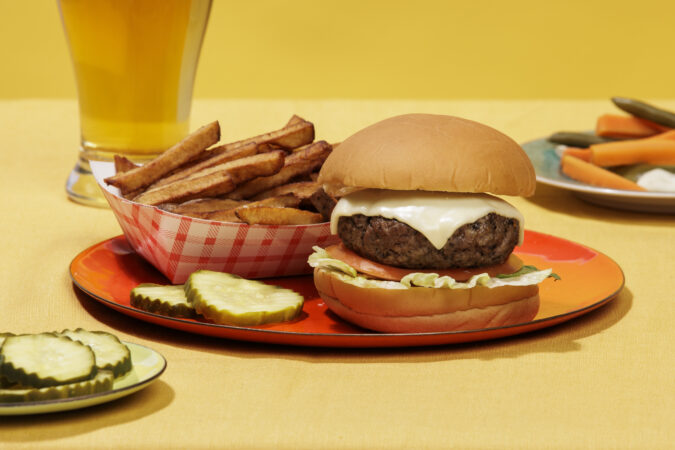
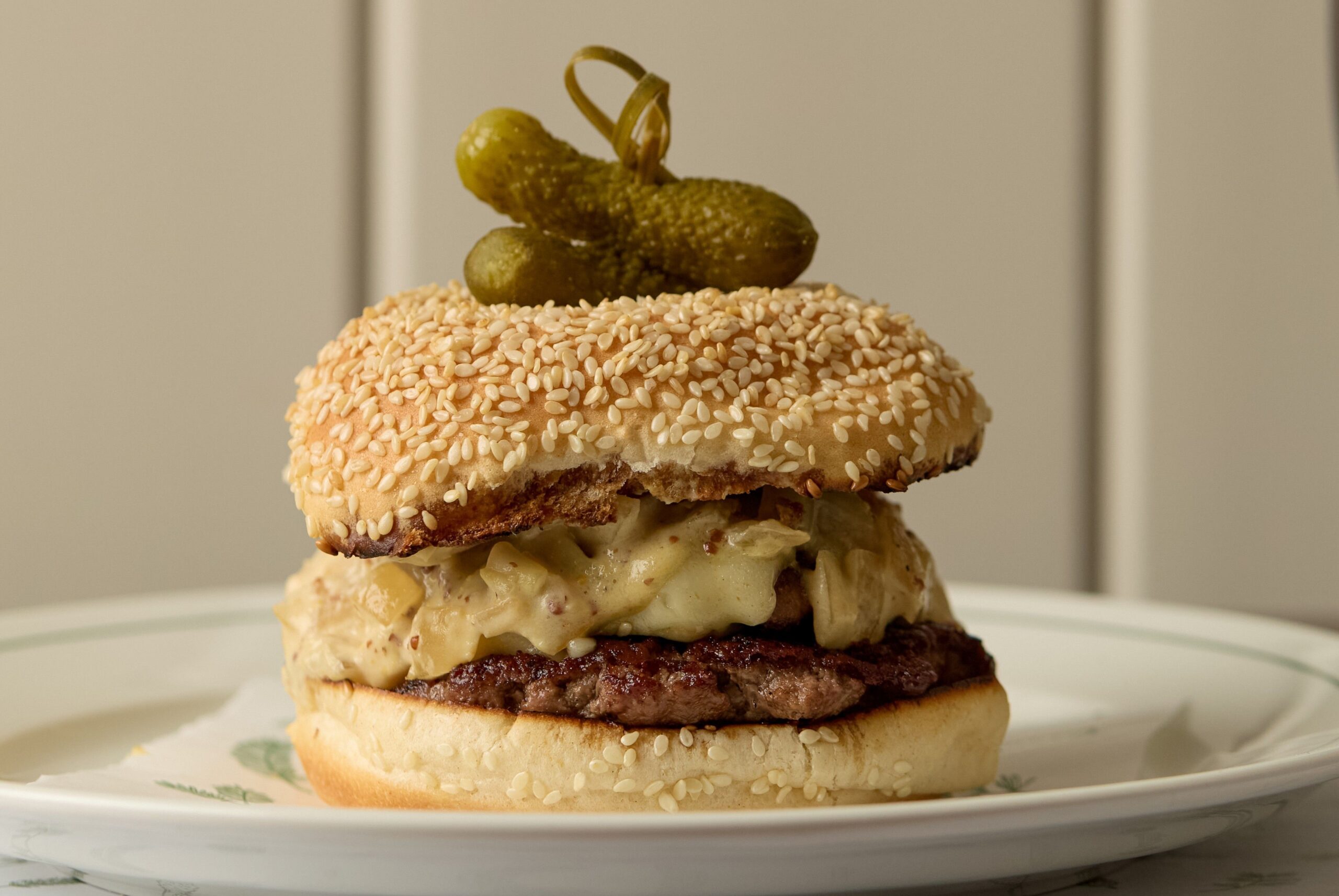
The gourmet burger is a familiar trope that has been reinvented for years. Burgers lure you in, they comfort you when you need something familiar, splashed with a little sparkle of indulgence, whether that’s foie gras, a rainfall of truffles, or an extra special patty made of wagyu or dry-aged beef.
River Twice’s double-pattied Mother Rucker burger was once bestowed upon diners in the middle of their tasting menus. They’re now available only on Monday nights.
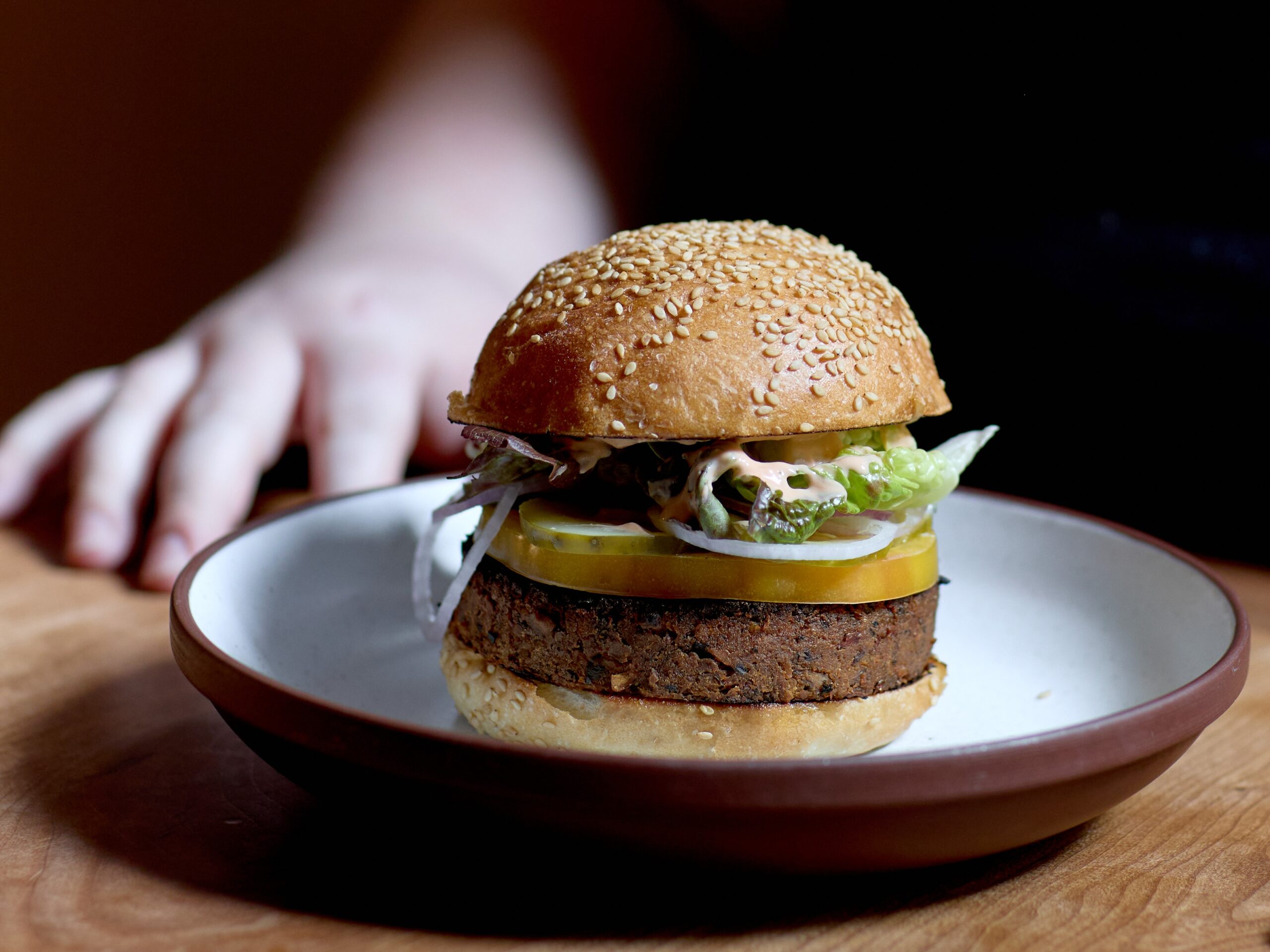
Pietramala’s vegan burger, made from vegetables, Mycopolitan mushrooms, and repurposed ingredients left over from their other menu items, and which takes three days of preparation, instigates lines around their block when they’re served one Sunday every month.
The vegan bean and smoked mushroom burger at Pietramala in Northern Liberties.
The limited edition burger thrives in our post-pandemic search for comfort and the notion that everything is a steakhouse now (a nationwide trend that hasn’t quite reached Philly, but it’s coming for us. It’s only a matter of time).
The restaurants and cocktail bars beckon you with proclamations: Come in for our burger! Only 12 per night! Come in for our burger! But line up around the block!
The limited edition burger is a trend that crops up periodically in New York, like it did in 2014, to the reluctance of chefs who noted that burgers are simply not profit drivers, and that they would bring the potential of a $45 check down to $25. Today’s limited edition burgers are unlikely to do the same in terms of numbers. Even Pine Street Grill’s almost no-frills burger costs $26.
The phenomenon of the limited edition burger marks a uniquely 2025-era blend of a comforting, recession-indicator food (at the end of the day, it’s ground meat in a hunk of bread) with the scarcity principle frequently wielded by marketers and businesses. Limited editions trigger FOMO. Get one of these burgers and it’s like getting an Hermes Birkin bag, or the latest Supreme drop. They’re rare, you have to go through some sort of gauntlet to attain one, you feel lucky when you do.
Slicing into creamy, tender, white flesh and browned, crispy skin, you might not immediately think of a baked potato as an indulgence. But as 2025 ends, this is where we are.
Often thought of as pedestrian, baked potatoes have also proven themselves to be the perfect canvas for, well, anything. Baked potatoes — or jacket potatoes, if you want to be a bit British about it — are trending, relegated to a “side” no longer. The new baked potato is the star of the show.
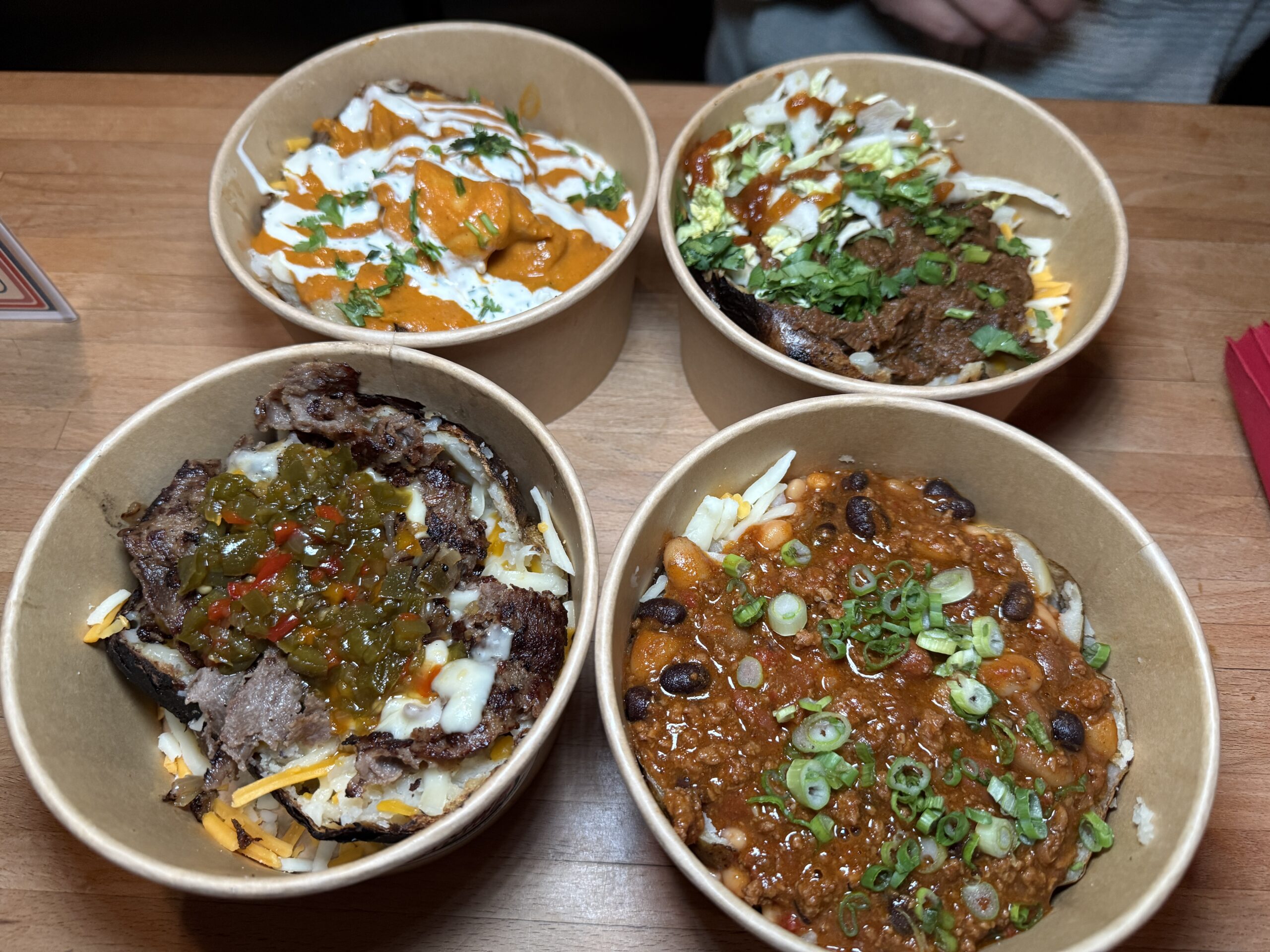
Clockwise from top left, Mod Spuds’ Bollywood spud, Malaysian spud, classic spud, and Philly cheesesteak spud.
The baked potato has only gained trend status fairly recently. We started off the year in what I personally dubbed the era of the latke. Every seafood bar had a latke piled with tuna tartare, bearing dollops of cream and caviar. You can’t throw a rock (or a potato) in Philly without hitting some sort of fancy shellfish or tartare perched delicately upon a potato latke. The trend was relentless nationwide and inescapable here, from My Loup’s pastrami beef tartare served on latkes to Middle Child Clubhouse’s okonomiyaki latkes and Little Water’s peekytoe crab balanced on “hash browns” … also known as latkes.
We have perhaps passed peak latke and moved onto another potato preparation. Baked-potato news has been populating my social media feeds, proffering both locally available spuds and unattainable ones.
On TikTok, baked potatoes were buoyed by Nara Smith, who made a “jacket potato tutorial” for her 12.3 million followers. Her preparation of a baked potato, with narration in her husky, low voice while wearing couture, has spawned countless imitation videos. The U.K.-based business SpudBros has become a global brand with multiple locations, millions of followers, and food trucks thanks to viral success on TikTok.
Sweet Potato dish at Pietramala in Philadelphia on Wednesday, Nov. 26, 2025.
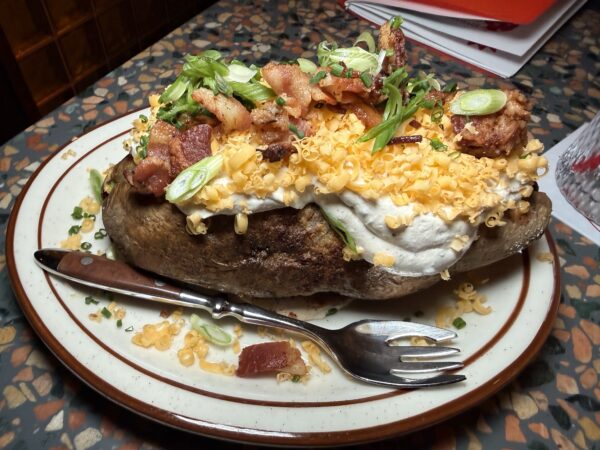
Wine Dive’s baked potato is an Idaho spud roughly the size of my Chihuahua, with crispy, deep brown skin and white flesh that emits plumes of steam when you slice into it through the mountain of sour cream, curls of cheddar, torn bits of bacon, and scallions.
This is not a vehicle for masterful tikka masalas or rendang. This is a thoroughly American baked potato. On Wednesdays, Wine Dive has bottomless, all-you-can-eat baked potatoes for $15.
It is as ridiculous as it sounds. Eat 10 baked potatoes and you get your photo on the wall and the promise of some very cool merch. No one has made it to 10. So far, the record has been seven potatoes.
It’s possible that the proliferation of baked potatoes is, like cabbage, a recession indicator. But like the latke, it may very well have fine-dining legs. Just let me know if you manage to eat 10 in one go.
I fell in love with pozole years ago in Mexico City. Though the city has many other merits, including a staggeringly diverse and fascinating food culture, it’s truly my craving for pozole that‘s brought me back again and again. It comes in the colors of the Mexican flag: rojo, verde, and blanco, with regional variations of each.
The good news is you don’t have to go all the way to Mexico City for excellent pozole (although you can buy it by the literal bucket there). Philly has numerous excellent iterations of the classic dish.
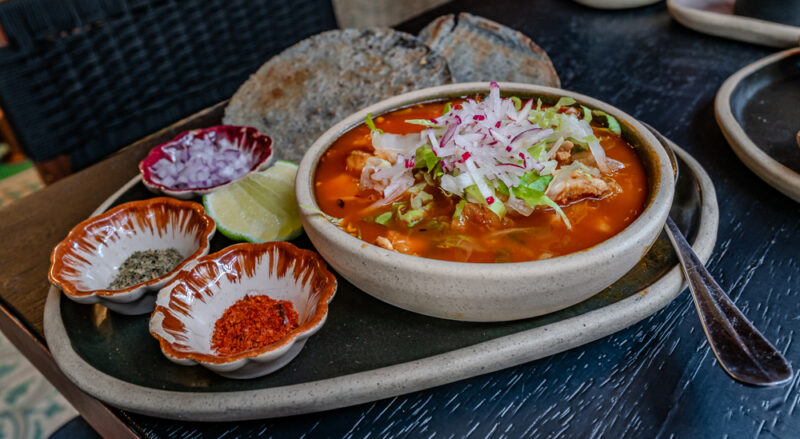
Pozole isn’t just about the thick stew itself, studded with large hominy (kernels of nixtamalized corn) and hunks of beef, chicken, or pork. It’s about the fixings and accompaniments. You’ll find shredded cabbage, sliced radishes, crispy tortillas, and lime wedges most frequently, but also tostadas smeared with refried beans, quesadillas stuffed with Oaxaca cheese, little bowls of crema, puffed-up and crispy chicharrones, and big, generous slices of avocado.
Here are a handful of places to sink into a bowl of pozole in Philly. This is not a comprehensive list, just a place to start. And if anyone does invite you over to their mom’s house for pozole, your answer should most certainly be yes. (In fact, please call me if someone does. I would like to come, too).
La Jefa
La Jefa’s delicate pozole ($17) is not like the hearty bucketful I’ve consumed in Mexico City. It’s lighter brunch fare and consists of pulled chicken and hominy with chile de arbol, oregano, minced shallots, lime, served with a couple of blue corn tostadas.
“It’s a chicken-based pozole rojo inspired by the pozole from a place in Zapopan, Jalisco, called La Escolastica. We use fresh hominy, which makes all of the difference. The tostadas are made from Cristina Martinez’s masa,” said restaurateur David Suro, who’s an active presence in the Rittenhouse all-day cafe cafe and its mother restaurant, Tequilas.
Pozole rojo from Cafe y Chocolate, with tostadas covered in typical pozole fixings.
Los Potrillos
This Port Richmond restaurant’s pozole rojo ($18) is a deep red from guajillo chilis, with enormous, skin-on pork knuckles swimming in the broth. On the side are three plain yellow corn tostadas, juicy lime wedges, and shredded lettuce and cilantro. The pork is fall-off-the-bone tender. I like to crush up the tostadas and sprinkle them in the bowl like croutons. It’s intoxicatingly delicious when spiked with lots of lime juice.
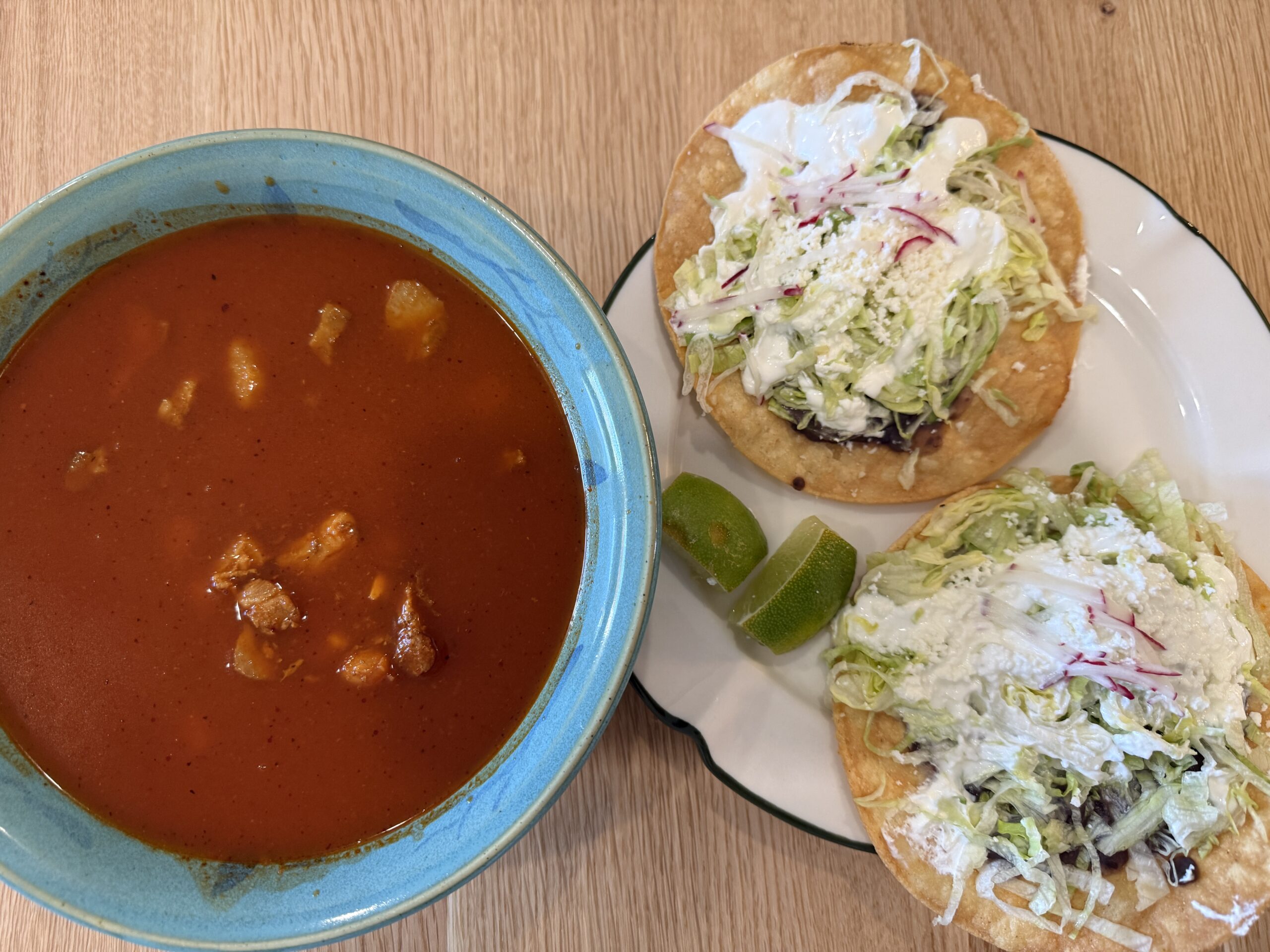
West Passyunk’s Café y Chocolate serves a pozole rojo ($15) with two yellow corn tostadas spread with a thick layer of refried beans, then topped with lettuce, radishes, queso fresco, and a drizzle of crema. The stew has diced chunks of pork (and no bones). This is the most opaque of the pozoles on this list and the spiciest. I also love Café y Chocolate’s creamy elote soup and its hearty tortilla soup.
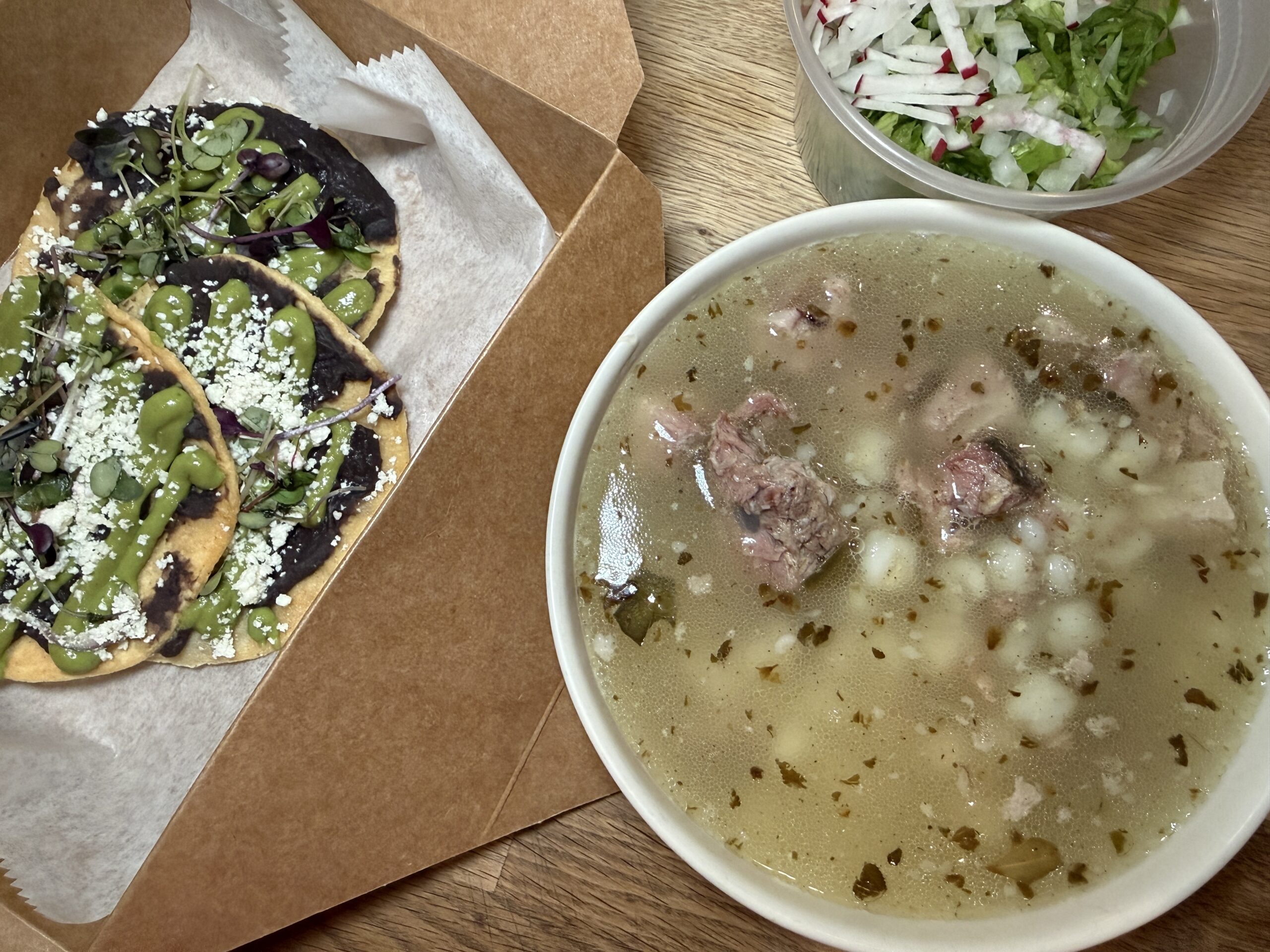
I got La Llorona’s pozole ($18) delivered on a frigid winter day. Theirs is essentially a pozole blanco, but you can also order rojo or verde variations. This is a clear white broth with pork, hominy, and oregano. It’s served with three tostadas painted with refried beans, drizzled with avocado crema, and sprinkled with queso fresco. Shredded lettuce and matchsticks of radish come on the side. I highly recommend you get a quesadilla for dipping into the soup. This is perfect for those who consider themselves spice-averse (though the tostadas pack a bit of heat). The flavor is deep, porky, and herbaceous, but not too chili-forward. The pork is extremely tender, even silky.
As a chef from Hawai’i who has lived in Philadelphia for well over a decade, I saw firsthand the connection between both places. For years, through Poi Dog, I fed homesick Hawai’i people and those who had celebrated weddings, honeymoons, and holidays in my home state, then came back to the mainland searching for a taste of the islands. These days, the question I get most often is simple: Where should I eat in Honolulu?
This is a special edition of our Field Trip series — not a typical three-day drive, but a culinary escape meant for when you’re bundled up at home, staring down winter, and dreaming of somewhere warmer. Think of it as planning your next trip while the heater’s on: balmy breezes, sun-warmed beaches, and unlimited fresh poke, all waiting when you’re ready to go.
What follows is a starting point for eating your way through Honolulu, whose excellent, deeply multicultural food scene is built on Native Hawaiian traditions and shaped by waves of immigrants who came to work the sugarcane and pineapple plantations — and now, the tourism industry. I urge you to explore far beyond this list, to leave Honolulu when you can, see the rest of Oʻahu, and visit its neighboring islands. But if you’re beginning with the city, this is where to start.
Honolulu is sprawling and encompasses a downtown business district, touristy Waikiki, Kaimuki with its many hip restaurants, Chinatown (which also has hip restaurants), and many suburbs. In the former three categories, we say they’re “in town,” though the limits of “town” are as heavily debated as the boundaries of Philly’s neighborhoods.
Chances are you’re staying in Waikiki, and all of the following are in the most touristed district or are a quick, cheap Uber ride from Waikiki (unless of course, it’s rush hour, in which case, I can’t help you).
Honolulu restaurants to check out
If you’re going to Honolulu, the first order of business is getting real Hawaiian food. This means poi, or pounded taro root, the staple starch of the Hawaiians before laborers on Hawai’i’s sugarcane plantations from East Asia shifted the dominant starch of the islands to rice; smoky, tender kalua pig (preferably cooked in an imu, or underground oven); lu’au (a stew made from taro leaves, coconut milk, and usually with chicken or squid); and delicacies like ‘opihi, small limpets that are somewhat similar in taste to abalone, and are notoriously challenging to collect, requiring one to pry the barnacles from slippery rocks while being pounded by surf.
Hawaiian food is a distinctly different cuisine from Hawaiian BBQ, which falls under the category of “local food” in Hawai’i – a confusing term for outsiders because “local food” encompasses food that was introduced to Hawai’i by its waves of immigrants. Native Hawaiian food does have immigrant influences and does incorporate ingredients not native to Hawai’i, but in ways that predated its sugar plantation era.
Helena’s Hawaiian Food in Honolulu.
Helena’s Hawaiian Food
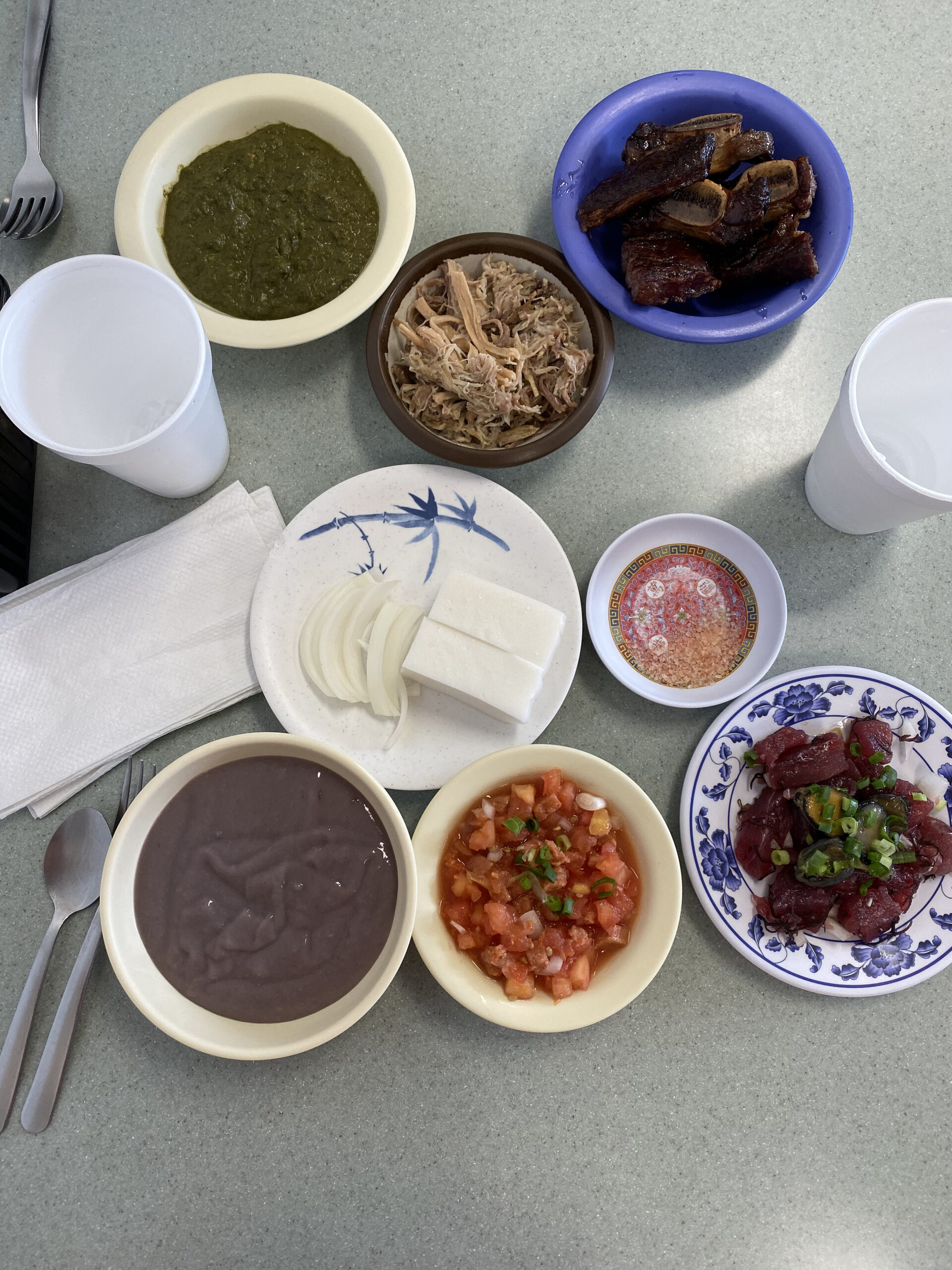
Helena’s is the reigning queen of Hawaiian food and this is the ideal place for you to try all of the above Hawaiian specialties, including ‘opihi. Their pipikaula, or Hawaiian-style beef jerky, is less jerky and more of a soy-marinated and dried short rib that manages to retain remarkable tenderness, concentrating sublime beefiness into tiny squares of meat. Cleanse your palate with a square of their haupia and a nibble on fresh, raw sweet onion dipped into red alaea salt, fixings that come with every set meal. Be mindful that Helena’s is only open 10 a.m. to 7:30 p.m., and it is closed on weekends.
If you can’t make it past the throngs of people trying to get into Helena’s, Highway Inn also serves great Hawaiian food in town. (Its original location is in Waipahu. They also just opened an outpost at the Bishop Museum.) It’s open every day and in addition to Hawaiian stalwarts like kalua pig, chicken long rice, and squid lu’au, they also serve a large menu of riffs on these, like kalua pig nachos, with sides of lomi lomi salmon, a dish that is made entirely of introduced ingredients, but has been around so long that it has been accepted into the canon of Hawaiian food.
📍 680 Ala Moana Blvd. #105, Honolulu, Hawaii 96813, 📞 808-954-4955, 🌐 myhighwayinn.com
Sashimi and meat jun at Kyung’s Seafood in Honolulu.
Kyung’s Seafood
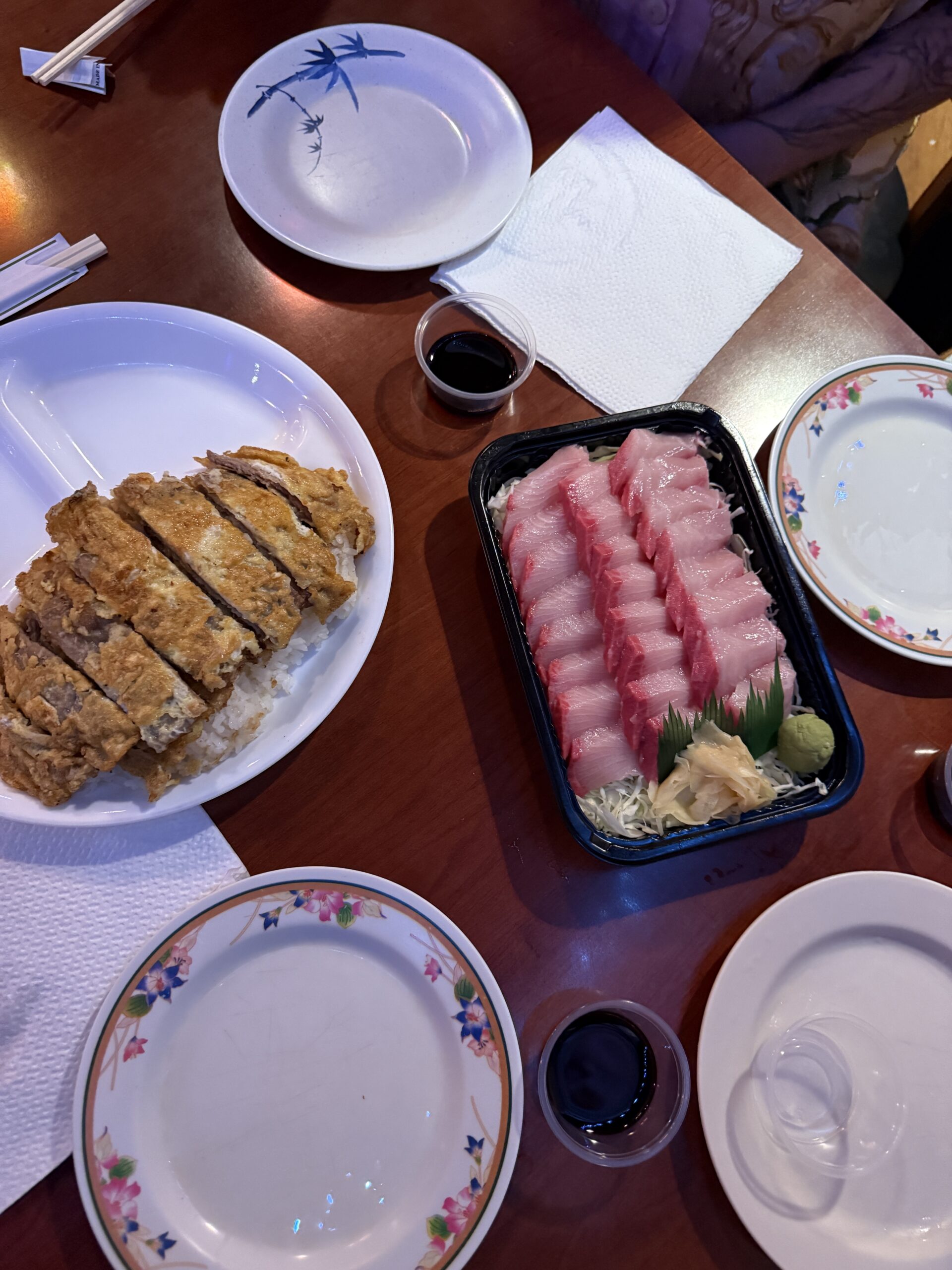
Some of Honolulu’s best Hawaiian BBQ intersects with Korean BBQ, and there are Korean dishes in Hawai’i that are found nowhere else, not even Korea. Kyung’s Seafoodmakes one of the very best versions of meat jun, one such Korean dish that exists in isolation, which consists of thinly sliced meat battered in scrambled eggs and served with a light soy dipping sauce. Marry their meat jun with rice and mac salad, and some of Kyung’s excellent banchans or precisely arranged sashimi platters.
📍 1269 S. King St., Honolulu, Hawaii 96814, 📞 808-589-1144, 📷 @kyungsseafood
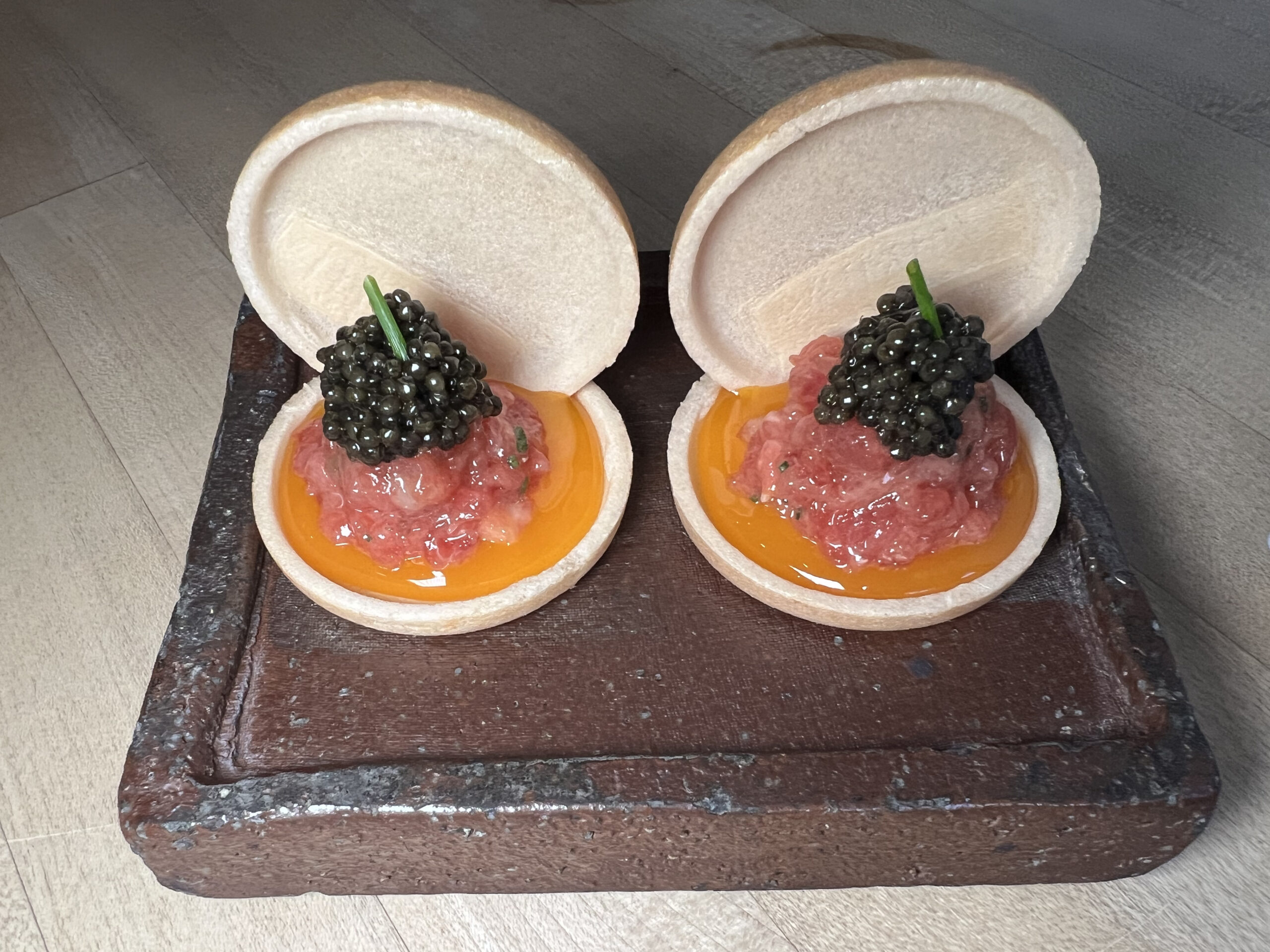
Monaka filled with ahi tartare and caviar from Miro Kaimuki.
Miro Kaimuki
If you’re celebrating something special, whether it’s an anniversary or a Tuesday, Miro in Kaimuki is the finest of dining on this list. It’s a special occasion restaurant that doesn’t feel the least bit stuffy, with beautifully balanced cocktails and wine pairings. Meals are prix fixe, with many possibilities of add-ons like flank washugyu, toasted brioche topped with curls of uni, and vanilla macarons filled with caviar. Miro also happens to be the self-declared Philadelphia Embassy in Hawai’i, as many of its current and former staffers either hail from Philly or have spent time in the city (Zahav pops up on numerous Miro cooks’ resumés).
Speaking of sashimi, Hawai’i is really close to Japan, so not only do we get a wealth of fish pulled from surrounding waters, but we have an abundance of Japanese seafood flown in regularly. This makes for fantastic (and countless) omakase options, most of which hew to classic Japanese experiences. For a relaxed, island-style omakase or a la carte sushi and izakaya dinner, head to Sushi Izakaya Gaku. Gaku has the softest, silkiest, and lightest tamago, the homemade sweet egg omelet, and all the standard izakaya fare, but also some wild, more unusual specials, like seared sting ray, raw octopus, and thinly sliced beef tongue served over shaved onion with a big squeeze of lemon.
📍 1329 S. King St., Honolulu, Hawaii 96814, 📞 808-589-1329
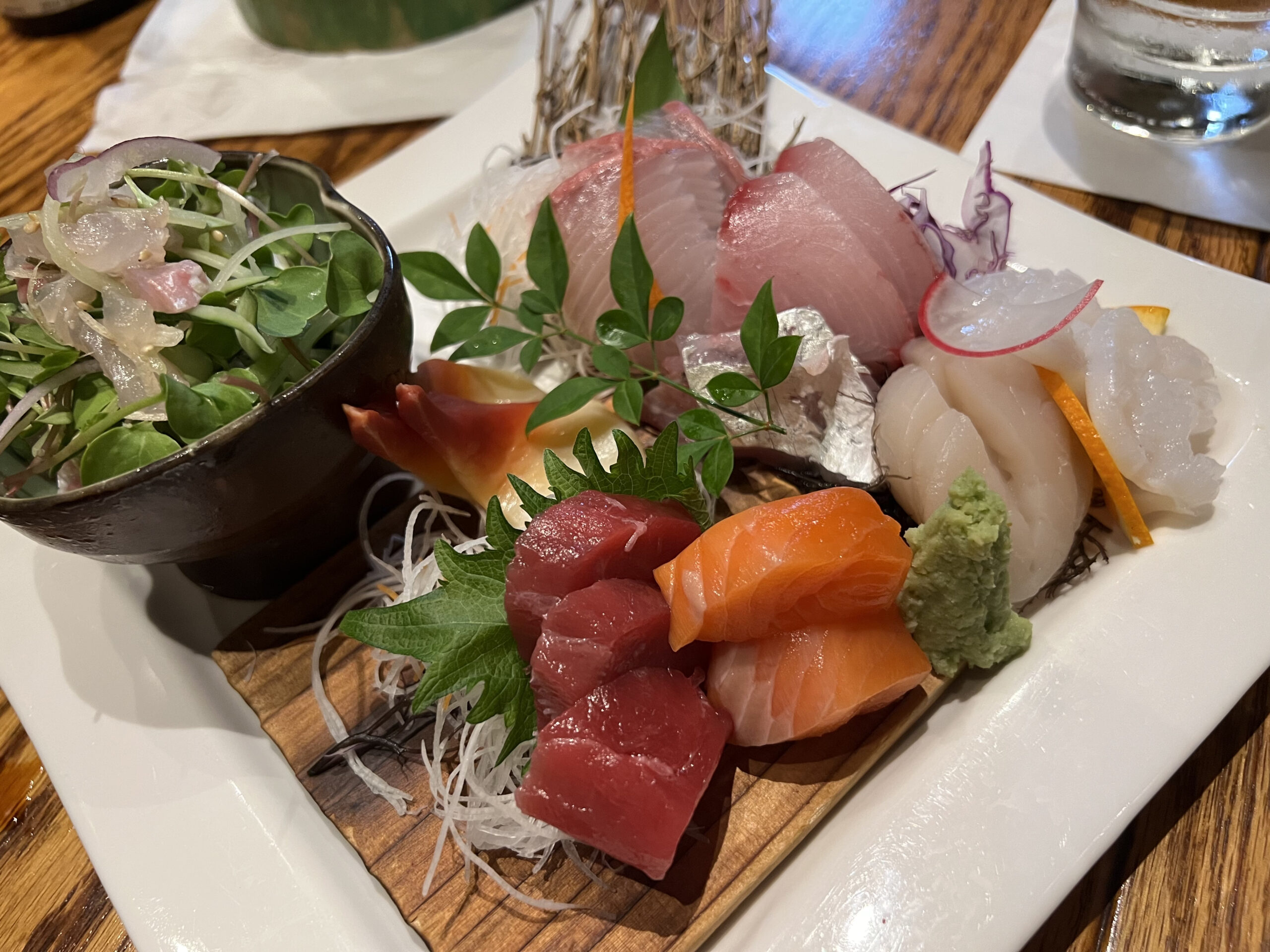
Sashimi platter from Mitch’s Seafood in Honolulu.
Mitch’s Fish Market and Sushi Bar
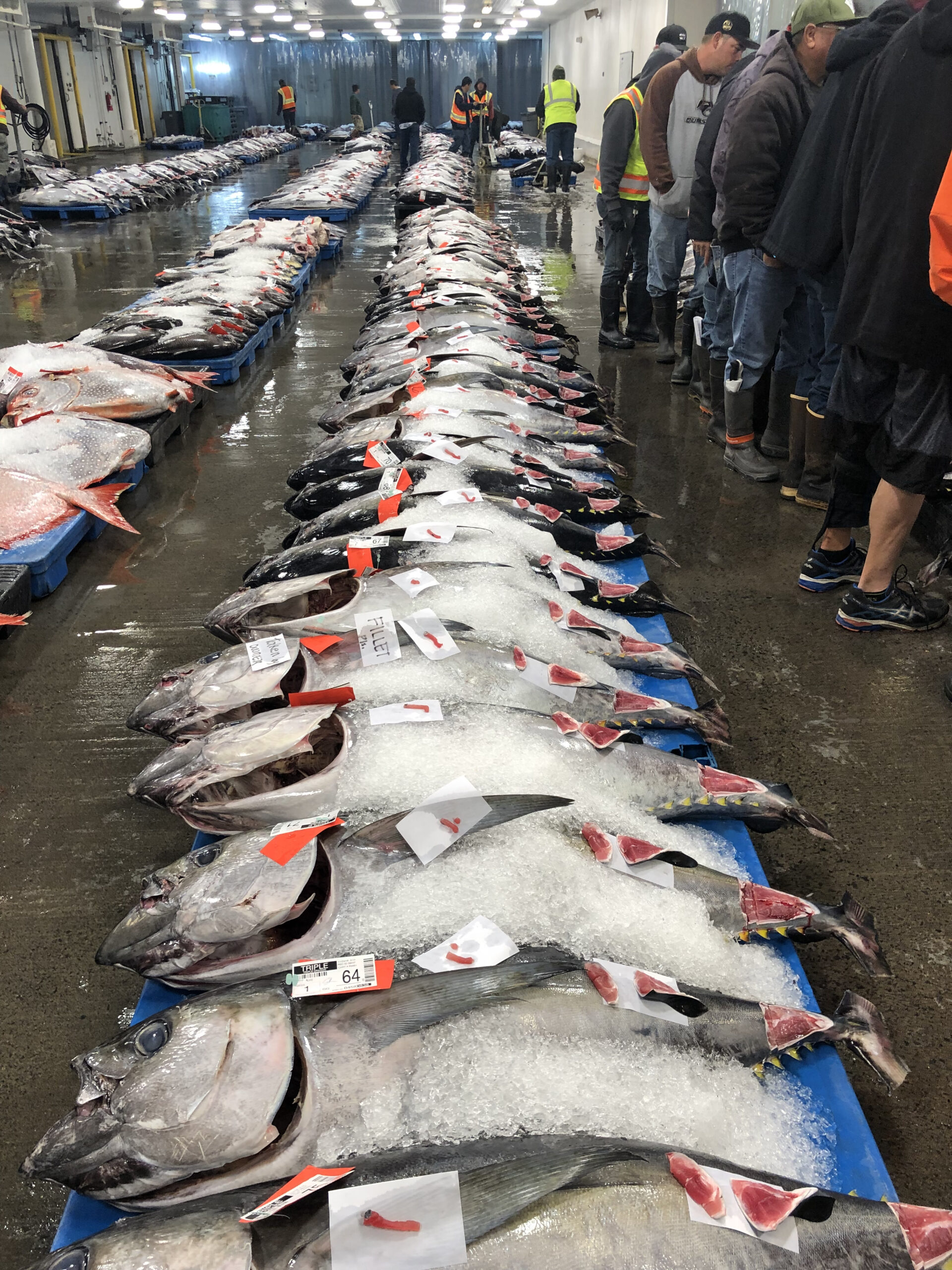
Located right on the pier, where fishing boats dock and unload their ahi for the Honolulu Fish Auction, Mitch’s Fish Market and Sushi Bar is an unbelievable option for generous cuts of sashimi, hefty chirashi bowls piled with shrimp, ahi, yellowtail, and tamago. It’s small (make a reservation), casual, and perpetually proud of their most famous patron, President Barack Obama.
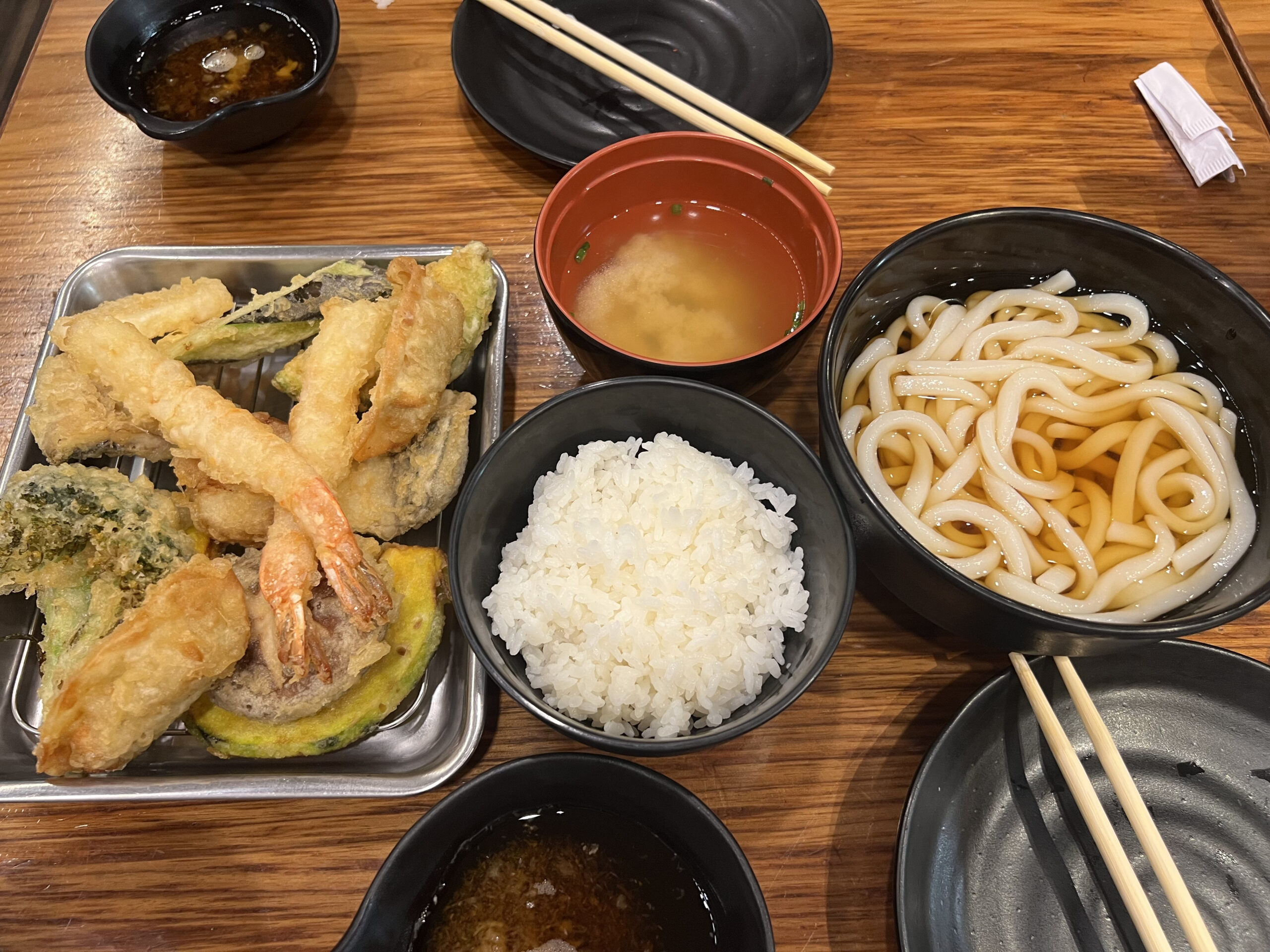
Tempura Kiki set meal, inside the Stix Asian Food Hall.
Stix Asia Food Hall
In addition to ready access to Japanese ingredients, we have practically all the hot Japanese chain restaurants. like Marugame Udon, Han No Daidokoro (which specializes in fresh wagyu — usually, when wagyu is exported, it’s frozen), and many others packed into Stix Asia, a Japanese food hall. Two of my favorites inside Stix Asia are Tempura Kikifor its avocado tempura and bowls of udon (no relation but they did offer me a discount because of my name), and Nanamusubi, which churns out omusubi made with specialty, heritage Japanese grains, and stuffed with an array of fish salads and pickled seaweeds.
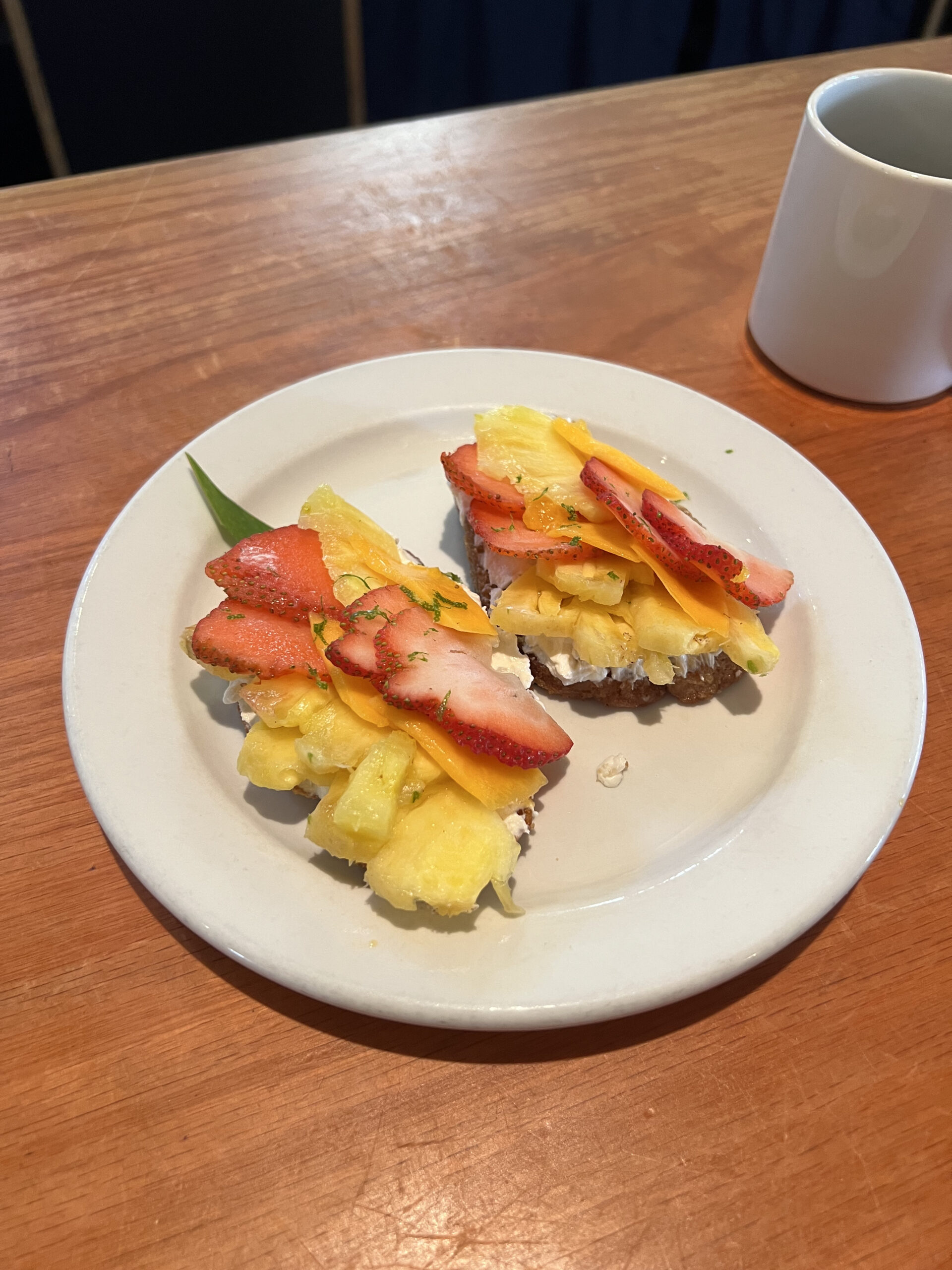
New York transplant and Top Chef competitor Lee Anne Wong pretty much single-handedly made brunch a craze in Honolulu a decade ago. Her Koko Head Cafe has since become a classic for eggs scrambled with local ingredients and enormous, indulgent bowls of congee topped with croutons. Hawai’i and Japan also seem to have a restaurant exchange system; the cafe has also opened locations in Japan. Don’t miss their poke omelets, and my favorite breakfast item, rusk spread with yogurt and fresh local fruit.
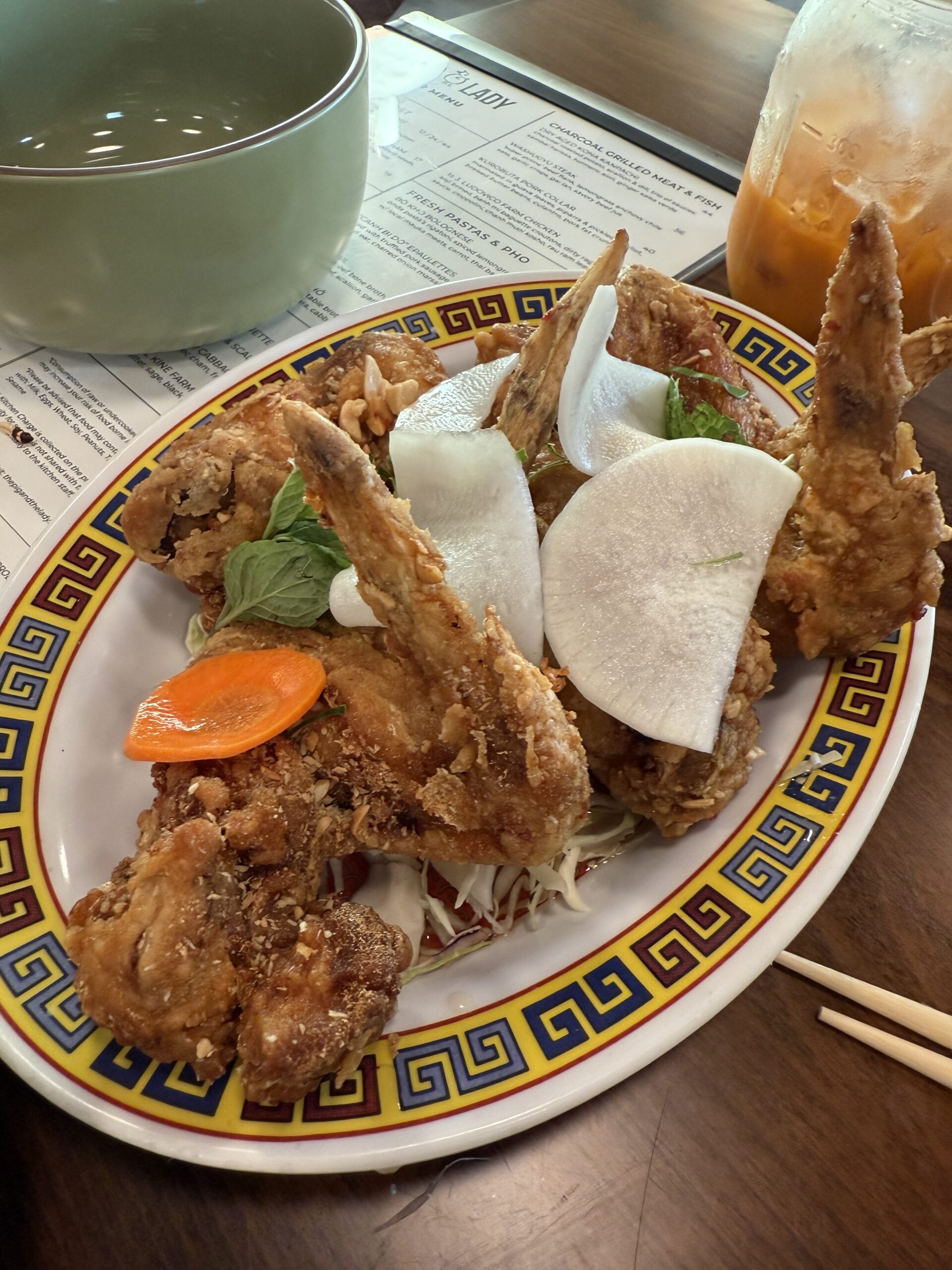
The Pig and the Lady is one of those chef-driven destination restaurants that appear on many a national list. It has gone through a couple iterations, and just opened a new location in Kaimuki that will more than scratch your itch for excellent Vietnamese food, if you can’t live without your Gabriella’s Vietnam fix. But there are unmistakable Hawaiian touches like chile pepper water-doused oysters, country ham served with persimmons, and banh xeo made with pa’i’ai or pounded taro. Vietnamese food like this exists nowhere else on the planet.
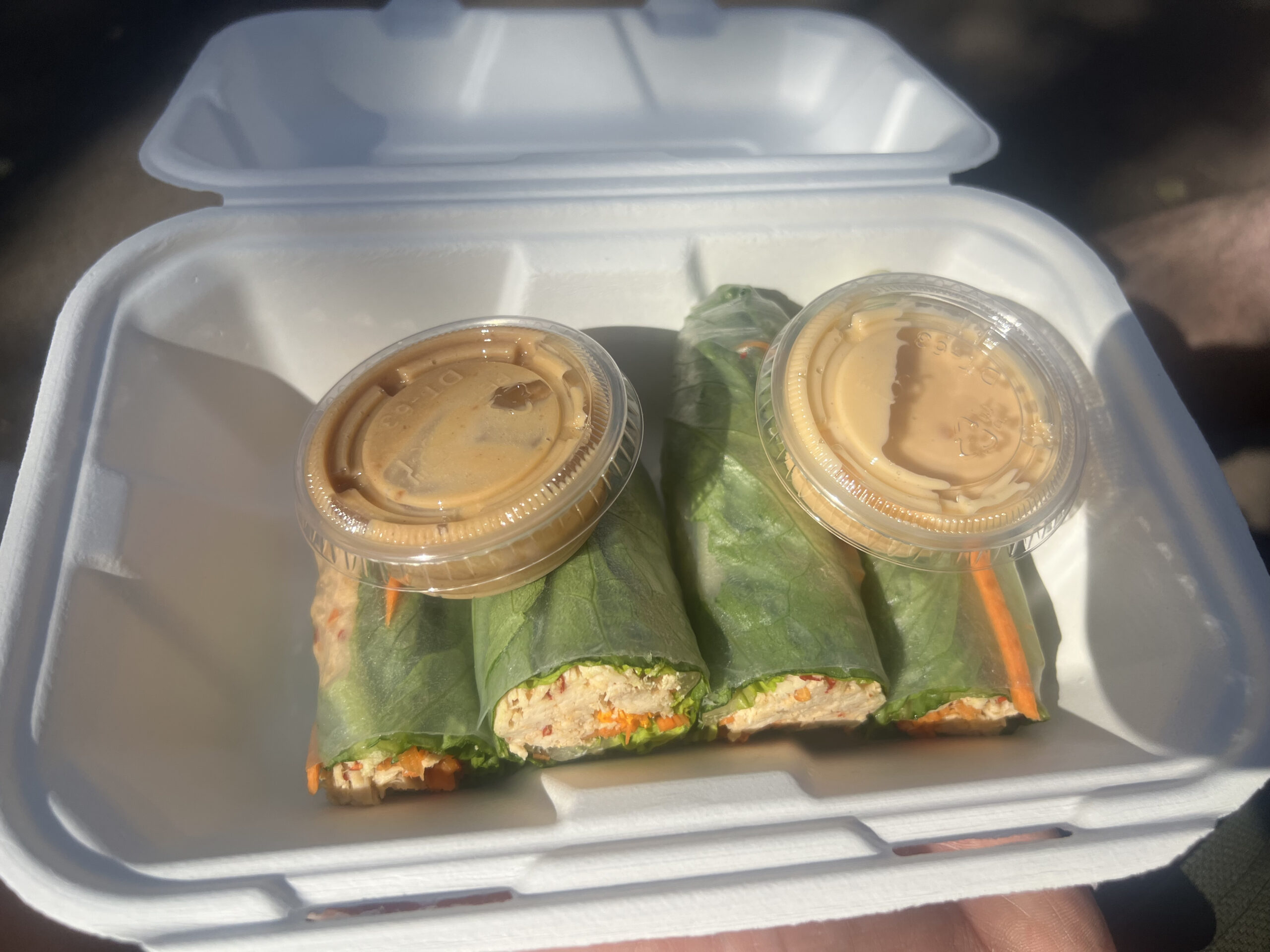
Spring rolls from the Kapiolani Community College Farmers’ Market.
Kapiolani Community College Farmers Market
The Pig and the Lady also sets up a stand at theKapiolani Community College Farmers Marketon Saturdays from 7:30 to 11 a.m., serving pho French dips, lemongrass chicken banh mis, bun bowls with a vermicelli base, and curry rice plates. The rest of KCC Farmers Marketwill knock your socks off with its array of prepared foods, fresh fruit juices, coffee stands, vendors hacking into fresh coconuts with machetes, and abundance of tropical produce, from papayas to ‘ulu or breadfruit. If you’re walking up to the Diamond Head trail from Waikiki, you’ll pass it near the trailhead, but build in time to stop for a siphon coffee at Ars Cafefor a cup that rivals one from Ray’s Cafe and Tea House in Philly.
📍 Parking Lot B, 4303 Diamond Head Rd., Honolulu, Hawaii 96816, 🌐 hfbf.org/farmers-markets/kcc
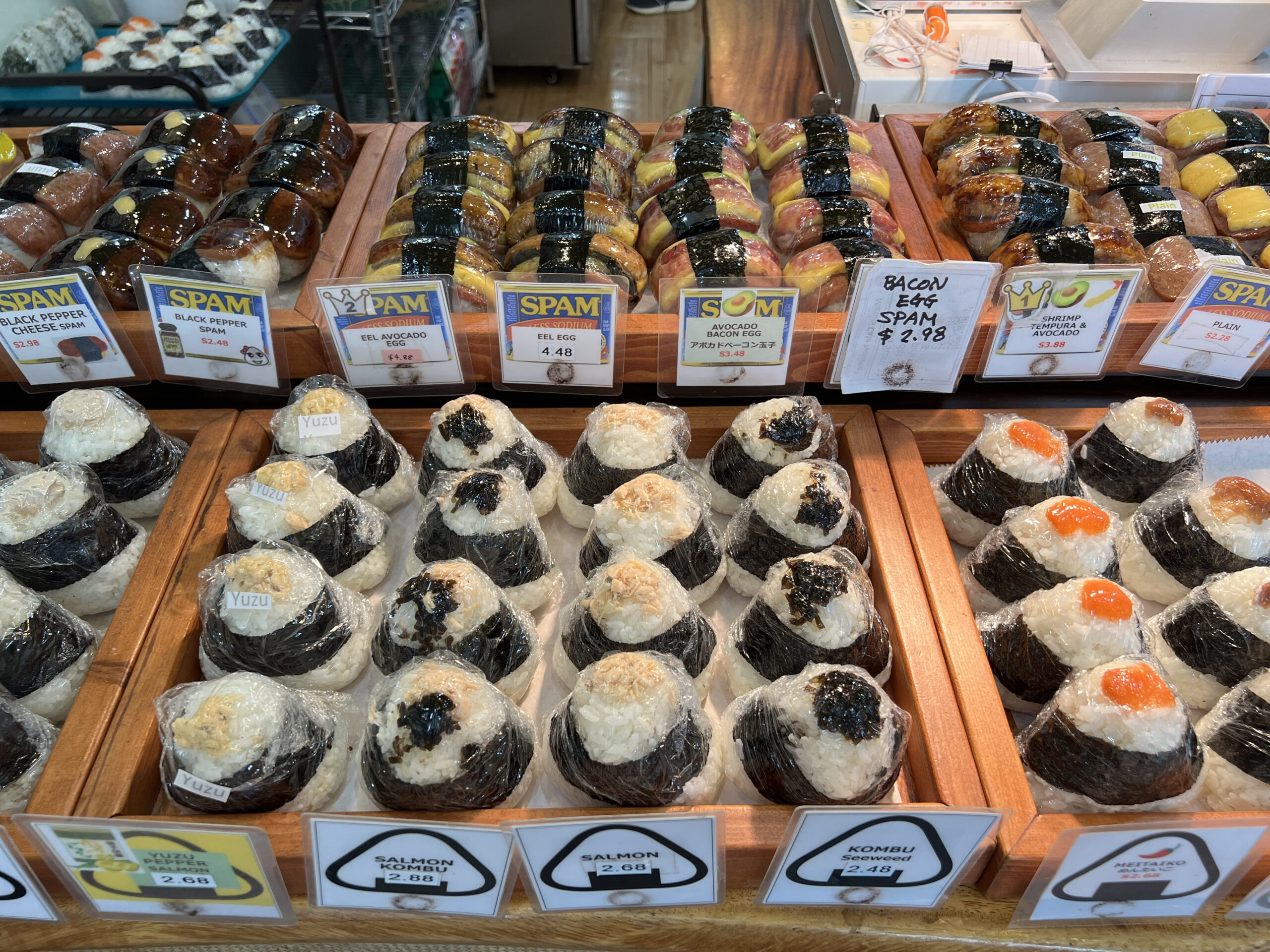
The array of musubi at Musubi Iyasume in Waikiki.
Musubi Iyasume
Many of Waikiki’s 24-hour diner grand dames have closed at this point, but thankfully, my favorite breakfast in Waikiki doesn’t involve sitting down. Musubi Iyasume has multiple locations, serving classic Spam musubis, as well as ones that pair avocado, eel, and tamago with Spam and rice. They have seven locations, but I love the one at Waikiki Beach Walk the most because it has the longest opening hours and can scratch your musubi cravings from 7 a.m. to 9 p.m. every day.
Wash down your breakfast musubi with one of the best deals in Waikiki: a sugarcane juice from the stationary food truck Aloha Sugarcane Juices,which you can get spiked with juicy, local calamansi, or blended with mangoes and papayas.
📍 138 Uluniu Ave., Honolulu, Hawaii 96815
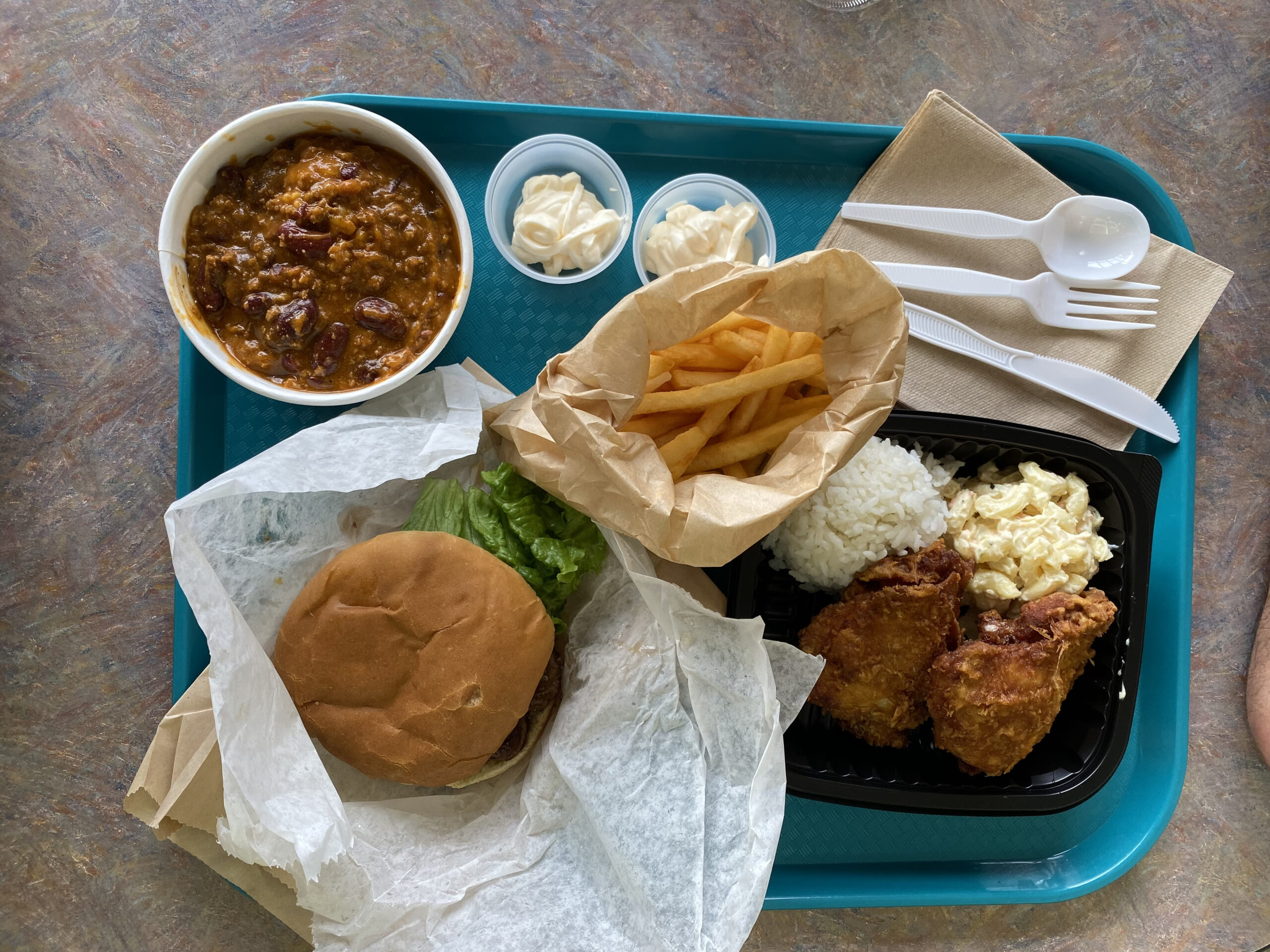
Zippy’s chili, teri burger, fries, and mini fried chicken plate.
Zippy’s
Head over to one of many locations of Zippy’s(a fast food diner chain that we love as dearly as Philadelphians love Wawa) to get some of the best of the island’s fried chicken or to pick up a bento box to bring on one of Oahu’s legendary hikes. Zippy’s is also famous for their chili, which will require you to pick a stance when you order: pro-kidney beans or no-kidney beans. While Zippy’s locations are scattered throughout Oahu (and also Las Vegas, considered Hawai’i’s ninth island), I implore you to go to the one in Kapahulu, so you will be within walking distance of the legendary Leonard’s Malasadas.
Delis in Hawai’i don’t resemble anything that might be called a deli in Philadelphia. Cold cases are filled with vats of fresh fish poke as opposed to deli meats, and Alicia’s Market mixes up some of Hawai’i’s best pokes (though honestly, unless you’re going to one of those newfangled build-a-bear style poke joints, it’s hard to go wrong).
If you’re committed to staying near Waikiki, Ala Moana Shopping Center is a short walk and pretty unavoidable if you’re a tourist. Thankfully, Foodland Farms opened adjacent to the mall eight years ago, and it has only gotten better over the years. It’s far more than just a grocery store, but a one-stop shop for great poke, edible island souvenirs (there’s a huge selection of Hawaiian chocolate, sweets, and coffee), and bento boxes to take with you on hikes. There’s also a wine bar.
📍 1450 Ala Moana Blvd., Honolulu, Hawaii 96814, 📞 808-949-5044, 🌐 shop.foodland.com
Inside the Honolulu Fish Auction
Hawai’i has a serious sweet tooth
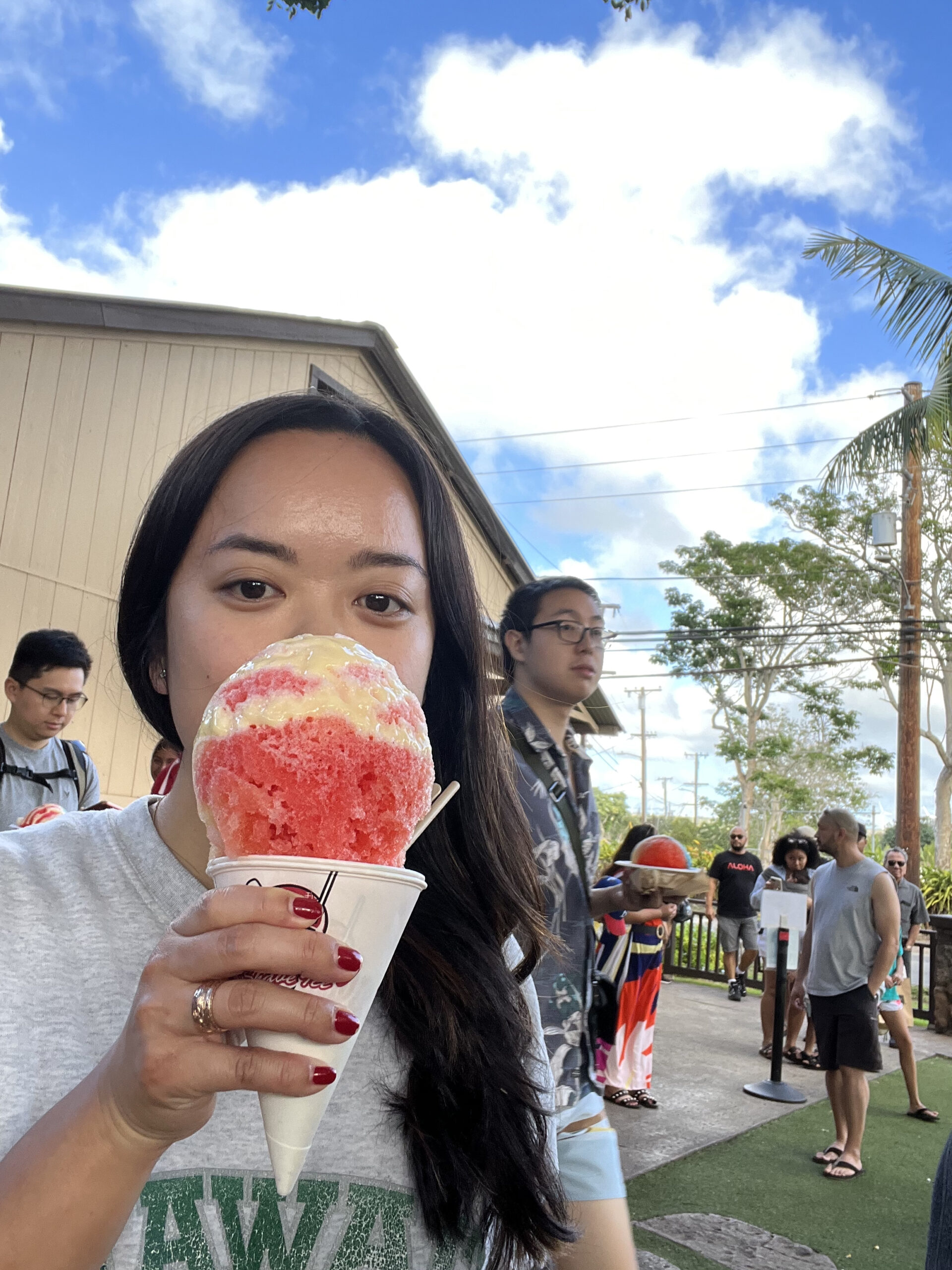
If you think Philly’s water ice is good, wait till you taste shave ice. Forget about tiny little paper cups of flavored ice, in Hawai’i, our shave ice (no “d” in “shave”) is a fluffy, lightly compacted pile of snow that will be quite a bit larger than your head.
Shimazu Shave Ice
Shimazu has been shaving ice for over 70 years and decorating the globes with stripes of tamarind, strawberry, passionfruit, mango, li hing mui (salty preserved plum), and many other syrups. Most shave ice shops will insist upon you consuming their shave ice outside.
For something more akin to water ice, Asato Family Shop painstakingly makes small batches of sherbet inspired by the nostalgic flavors of crack seed stores, Hawai’i’s throwback snack shops filled with jars of pickled mango, dried seeds, and raisin-like apricots.
Need a doughnut? Malasadas, which are yeasty, pillowy Portuguese doughnuts without holes and tossed in sugar, are far superior to any doughnut. Don’t be fooled by “bakery” being in Leonard’s name. These malasadas are fried. Go get one at Leonard’s original location (they also have trucks scattered throughout Oahu), and start with their original malasada, with no filling and a sugar coating, then move on to ones stuffed with haupia, or coconut pudding.
Now that you’ve made it to this point in the guide, you’ve likely consumed a lot of rice and hopefully, poi. If you need your fresh baked bread fix, Local General Store has been garnering a lot of recent attention. It’s on par with Philly’s Lost Bread and Mighty Bread, but is a combination bakery and butcher shop, so you can stop by for a pastry and a porchetta, and perhaps, a slice of their housemade Spam.
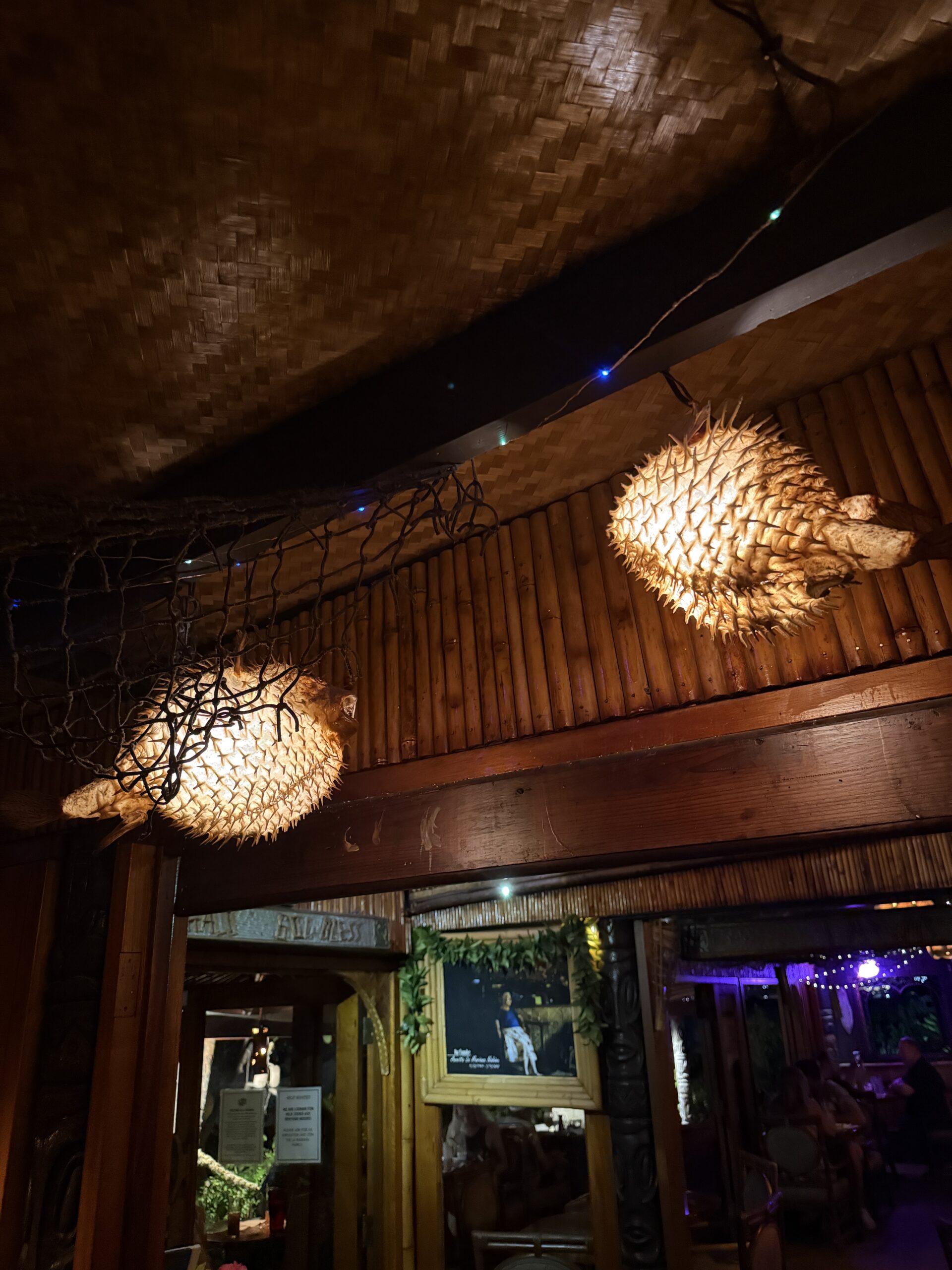
Blowfish lamps at La Mariana Sailing Club in Honolulu.
At some point, you’re going to want to unwind with a cocktail
La Mariana Sailing Club
Yes, it’s hard to get around Honolulu without encountering a mai tai, but if you’re a fan of kitsch and want to visit one of Oahu’s last remaining old school tiki bars, La Mariana Sailing Club leans hard into the theme. They have the vintage tiki mugs, the glass buoys hanging from the ceiling, the dangerously strong drinks. La Mariana is also near the airport if you need one last hurrah before passing out on the plane home.
📍 50 Sand Island Access Rd., Honolulu, Hawaii 96819, 📞 808-848-2800, 🌐 la-mariana-sailing.club
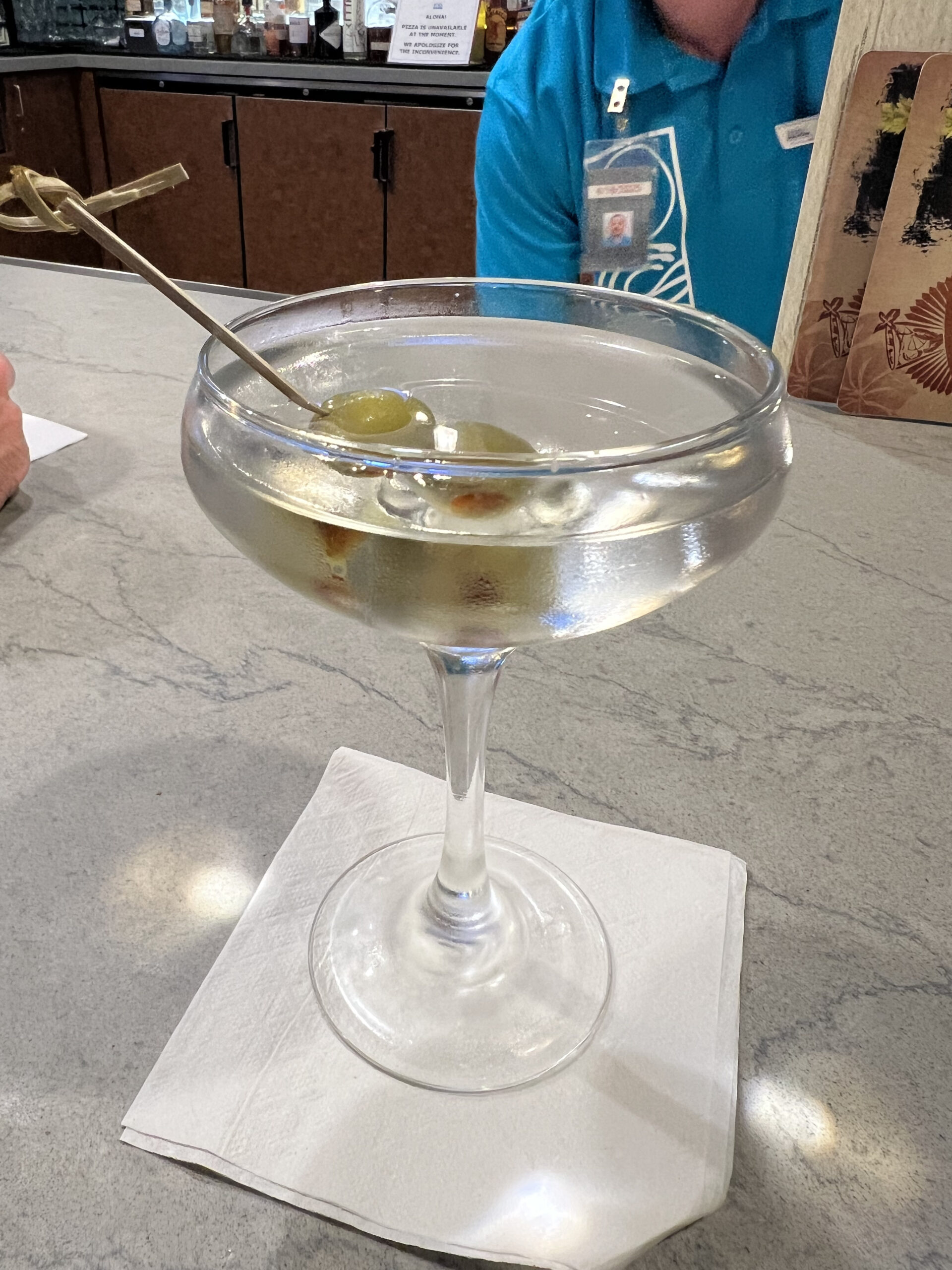
A martini from Podmore in Honolulu.
Podmore
But if you’re looking for refined fancy cocktails, you’ll find them at Podmore in Chinatown, which is fond of touches like yogurt-washed gin, heady spices, and a very good dry martini shaken with yuzu kosho.
For artful, Asian-inflected cocktails and vegan bar snacks, head to the Wild Orange speakeasy, hidden inside Hawaiian Brian’s and accessed by opening up the door to an Aloha Maid juice vending machine.
Restaurants for which you need a car and which are worth the drive
If you want to get out of Waikiki, you need to rent a car. The restaurants in this portion of the list are technically outside of Honolulu, but easily accessible with a car if you’re staying in Honolulu. For context, Haleiwa is the farthest point from Waikiki and is 33 miles across Oahu, which is basically like driving to Bucks County from Center City.
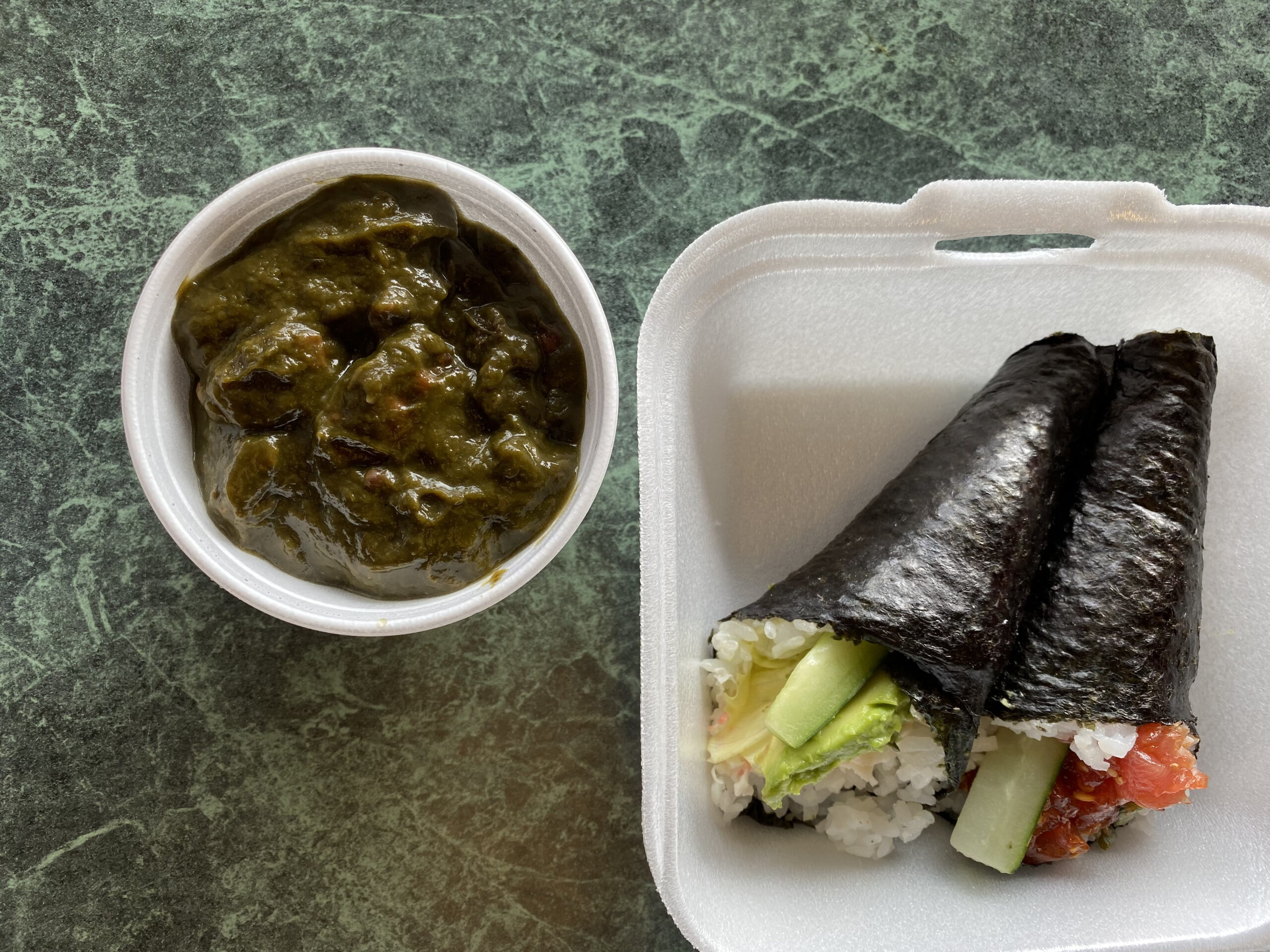
Squid lu’au and handrolls from Masa and Joyce.
Masa and Joyce Okazuya
Masa and Joyce in Kaneohe is an old school okazuya, or casual Japanese lunch counter, that makes one of Oahu’s best versions of squid lu’au as well as spectacular hand rolls. It is usually my first stop after getting off the plane, their squid lu’au is so savory and mesmerizing.
Waiahole Poi Factory is also in Kaneohe, but on your way to the North Shore if you’re taking the scenic route around the eastern side of the island. In this factory that has been operating over a century, you can pick up poi that’s both scaled up for larger production (steamed taro root passed through a grinder until it reaches a smooth consistency) and hand-pounded, but more importantly, dig into some of Oahu’s best Hawaiian food, like lau lau (ti leaf wrapped bundles of pork and butter fish) and a gingery beef lu’au.
Ramen is great and all (and you’ll find a wealth of ramen shops in Honolulu) but in Hawai’i, the classic noodle soup dish is saimin, with a lighter broth than most ramens, developed by both Chinese and Japanese laborers over the years. Shiro’s Saimin Haven is a classic saimin spot that serves vast bowls of fresh noodles sunk into a mild, lightly salted dashi that you can dress up with dozens of options for sides, from Filipino-style pork adobo to lau lau to Spam to roast duck. Everything here is good. There are two locations, in Aiea and Ewa Beach, but the Aiea one is the one that I’ve been going to for years.
But if you’re heading in the direction of Ewa Beach, stop in Waipahu and pick up poke, a pupu or sashimi platter, and or a mochiko chicken bento from longtime neighborhood seafood spot Tanioka’s. This is a go-to takeout spot if you need to feed a lot of people at parties or if you want to grab a bento to eat after surfing.
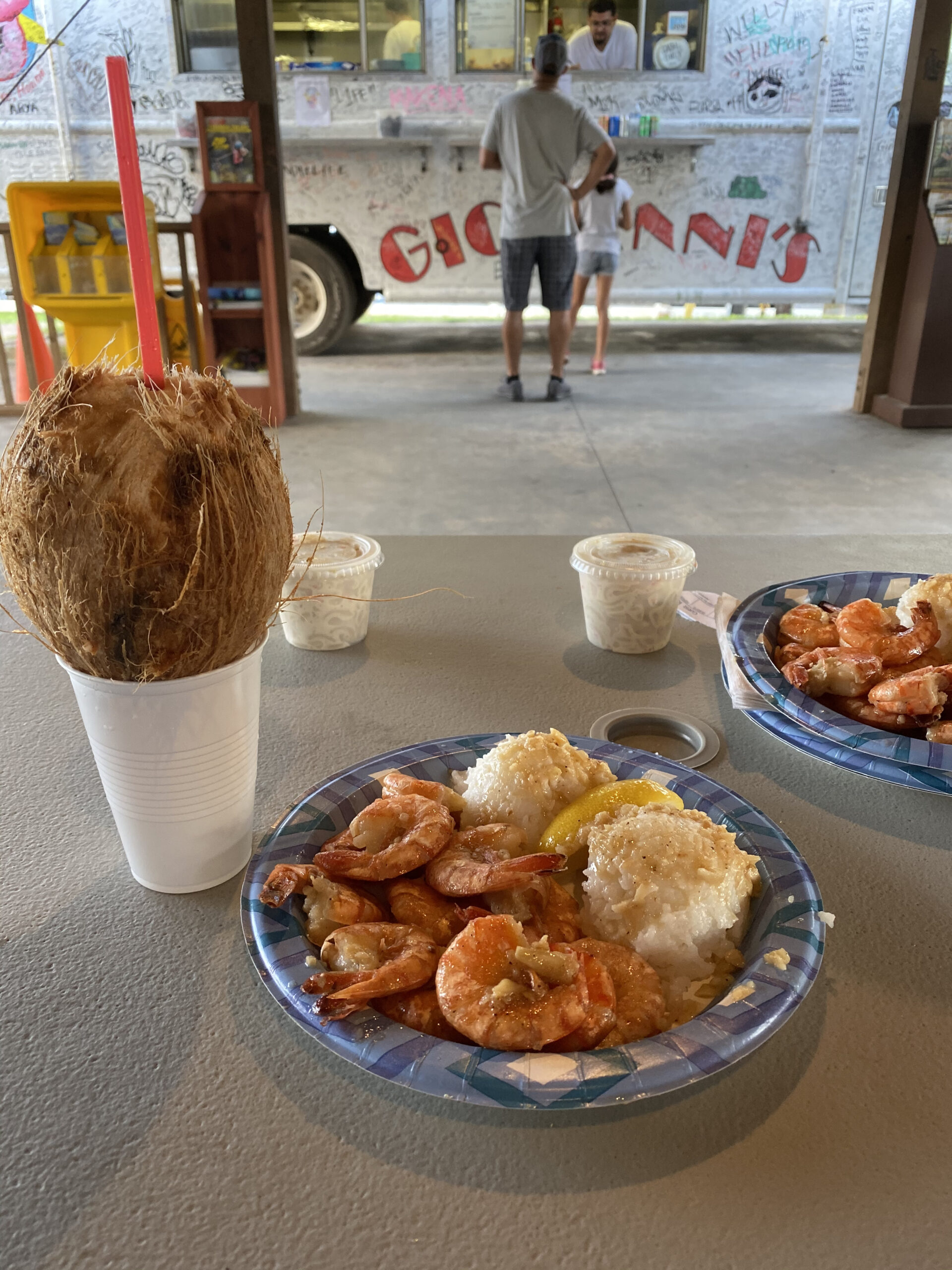
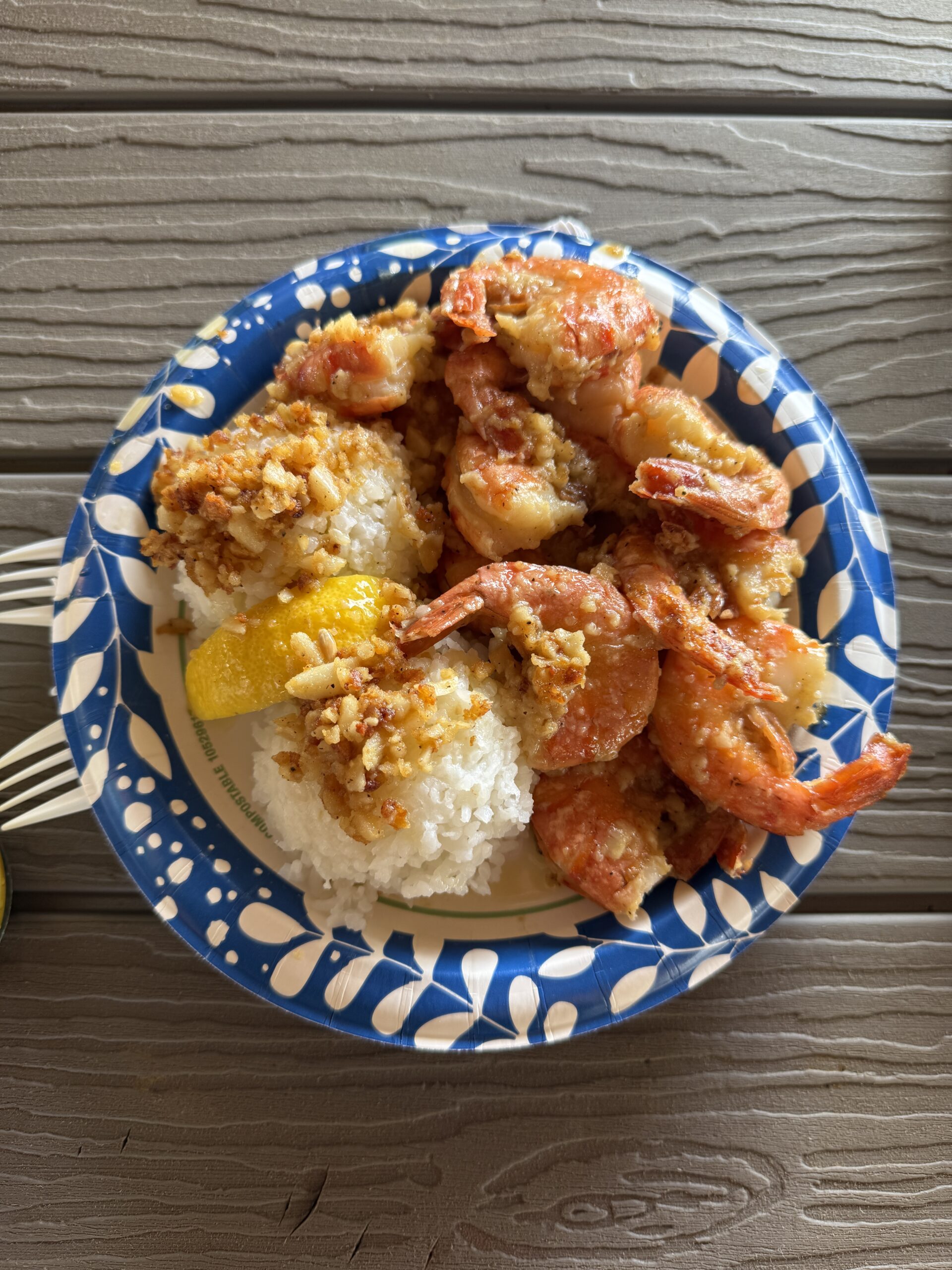
The closest food rivalry in Hawai’i, akin to that between Pat’s and Geno’s, is between the shrimp trucks up at North Shore, which are parked close to the shrimp farms they source from. Giovanni’s, a white truck covered in the signatures of many happy visitors, even has a connection to our parts, as its owner Troy Nitsche is a Pennsylvania native. Don’t leave Oahu without digging into a plate of Giovanni’s super garlicky and buttery shrimp scampi, sucking the shells dry, along the essential sides of rice and macaroni salad. Near Giovanni’s, in Haleiwa, stop in to Matsumoto Shave Ice to complete your North Shore experience.
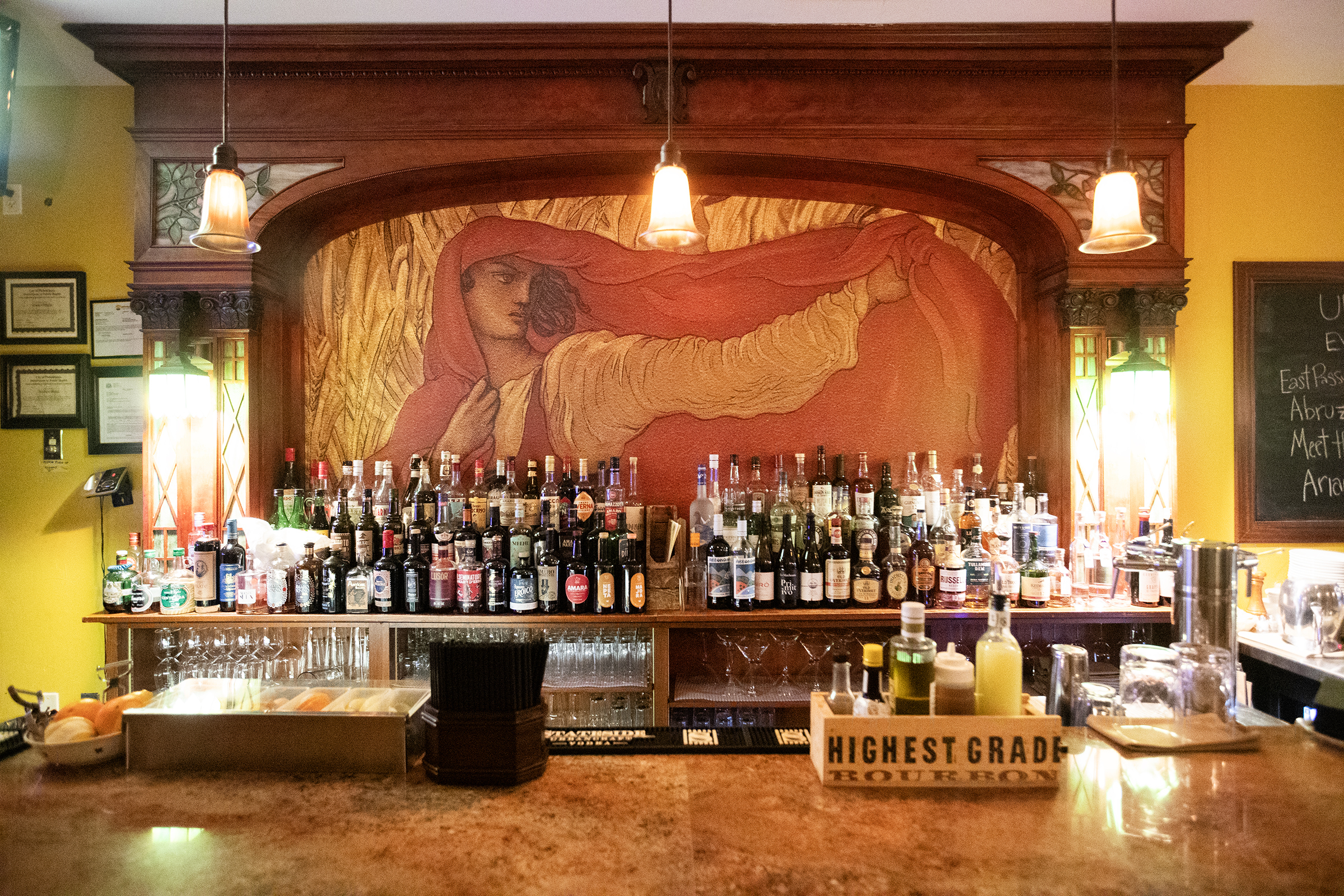
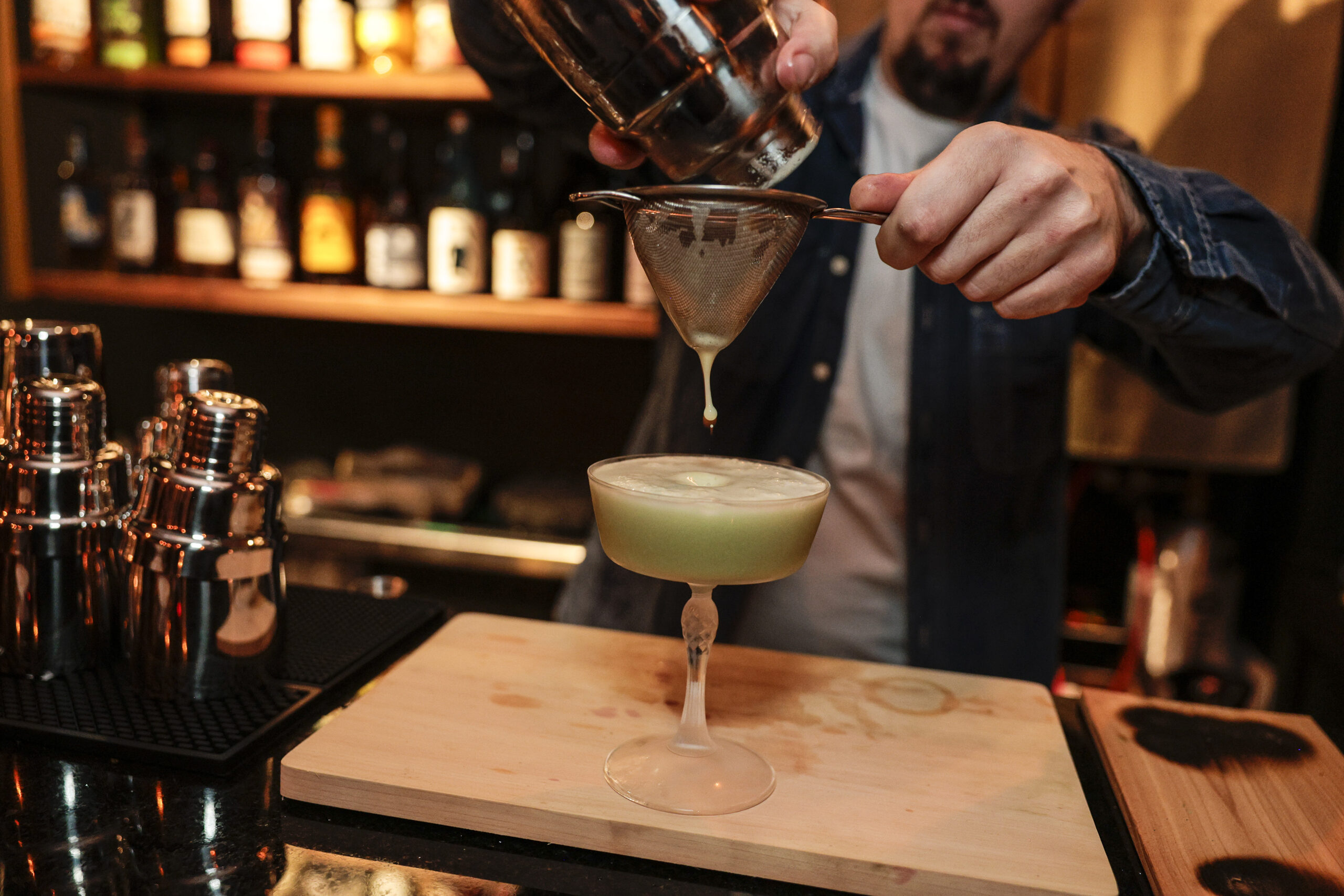
Enormous effort is being exerted at Almanac, the dark cocktail bar tucked above Ogawa Sushi and Kappo in Old City. The diminutive bar’s shelves are lined with local amari and nocini, made of foraged botanicals steeping in alcohol.
They‘re fermenting their own chrysanthemum kombucha and riffs on amazake, a spirit made from fermenting rice with koji, or Aspergillus oryzae, Japan’s most famous mold, but which Almanac’s bartenders has applied to other ingredients like ube, sweet potatoes, and corn. It’s a great example of why Almanac is one of the bars pushing Philly’s cocktail scene to new heights.
Zero-waste cocktails are trending, whether that means bartenders are utilizing whole ingredients or “waste” generated by the kitchens their bars are attached to. Bartenders across the country are, like Almanac’s Rob Scott and Beau Quick, rethinking what has long been considered waste. Pickle brine, wagyu fat, and citrus rinds are being given chances to shine as cocktail ingredients in the nearby District of Columbia. And it’s likely only a matter of time, during Philadelphia’s cocktail renaissance, that more bartenders think of what other ingredients they can rescue and transform.
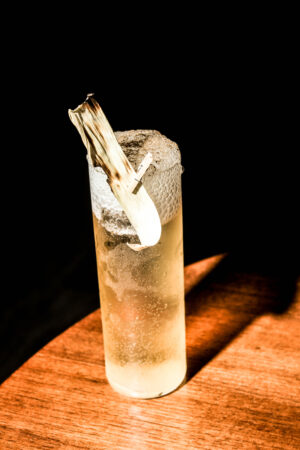
Almanac’s Ride on Shooting Star ($21), conceived by Quick, seems deceptively simple and far more straightforward than, say, the Sadotini, a cocktail that requires whisking ceremonial-grade matcha to order. The drink is listed on the menu as: reposado tequila, mugi shochu (distilled from barley), amontillado, corn cob, hojicha milk tea, spice tincture, and corn husk ash.
It’s a cocktail that I found utterly mesmerizing and unlike anything I’ve had before. It’s hauntingly lovely with a light sweetness evocative of peak summer corn. Its effervescence lingers with big, juicy bubbles. It’s also a tiny bit smoky, with a hit of corn curd ash. When diving into how Almanac renders it into existence, I was shocked to find it’s as smart as it is nuanced, perhaps a harbinger of a wider trend toward zero-waste cocktailing coming to Philly.
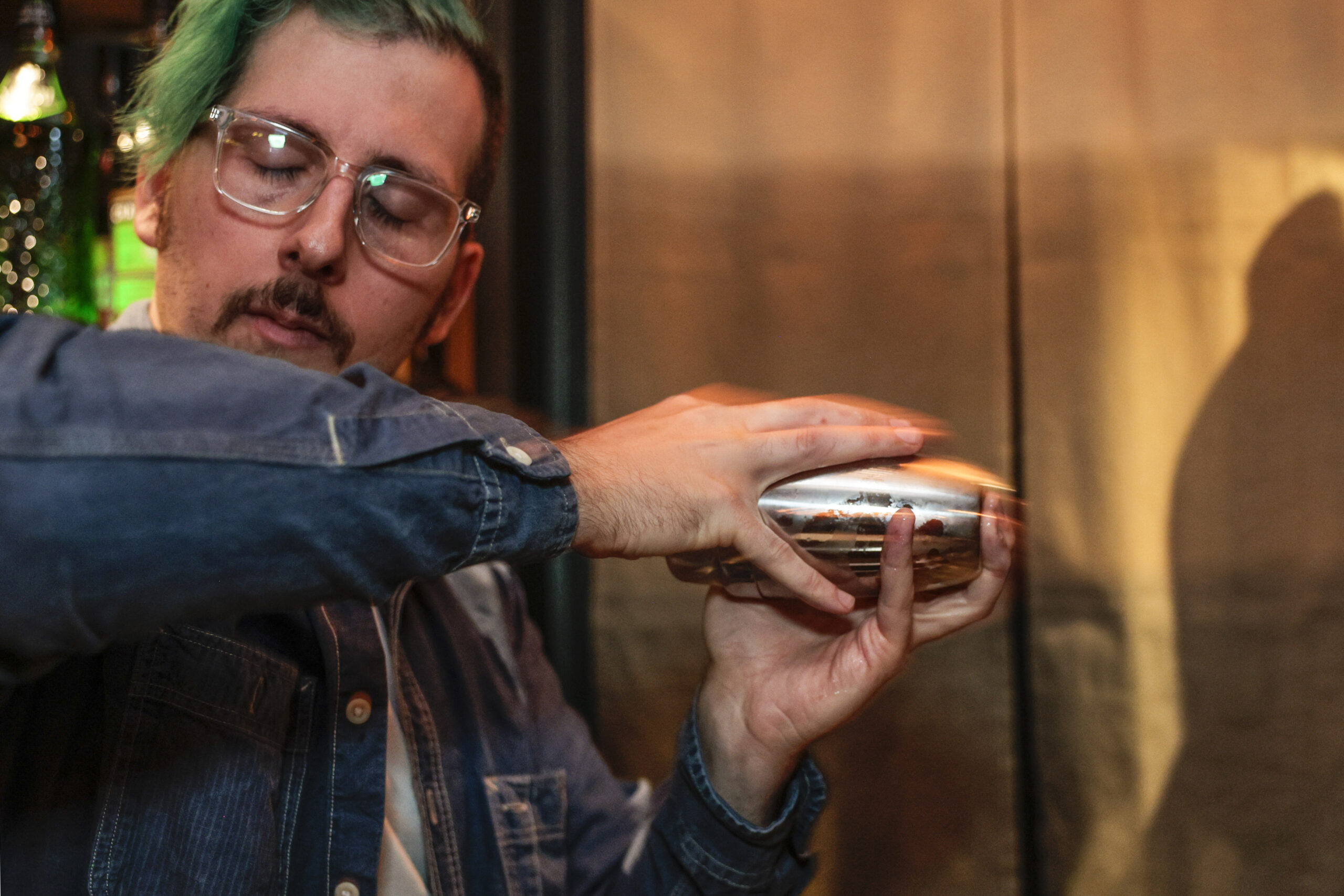
Bar manager Rob Scott making a Sadōtini at the Bar Almanac at Ogawa, 310 Market St., Wednesday, Nov. 20, 2024.
What’s not immediately visible from the list of its ingredients is that Ride on Shooting Star is an ode to corn, with elements coming from every part of a corn cob except its kernels. The kernels are used by Scott for one of his amazakes. Left with the cobs, Scott and Quick make a corn cob stock, turn it into a cordial with some sugar and “acidulation, which just means adding some citric and malic acids to it,” said Scott. To the cordial they add Arette Reposado tequila, Barbadillo Amontillado sherry, Watanabe Mannen Boshi Genshu mugi shochu, and then “make it into a milk punch. But the acid from the cordial can cause the milk to curdle.”
Bar manager Rob Scott making a Sadōtini at the Bar Almanac at Ogawa, 310 Market St., Wednesday, Nov. 20, 2024.
The process uses hojicha tea powder, ground as fine as matcha, and milk powder. “We combine the two ingredients, then rehydrate them to create a hojicha milk tea,” said Scott.
The mixture sits for a day to let its flavors develop while the milk tea powder causes it to curdle, then it is strained.
“We take the milk tea curds and dehydrate them. Once dry, we blend them with corn husk ash and salt and sprinkle it on top of the corn air as both those components are in the air to further reinforce that flavor and aromatic component,” said Scott.
Before service, “the corn cob cordial we make for the drink has corn husk ash, salt, methylcellulose, and xanthan gum added,” said Scott. “And then we use a fish tank aerator in the cordial, which then bubbles up like cool air.”
The result is a clear, gently yellow-hued cocktail, served in a Collins glass, with large bubbles that linger for an improbably long time and are dusted with corn curd ash, like furikake sitting upon rice kernels.
The cocktail uses several layers of ingredients that could have, at any point, been discarded. The primary ingredient, after all, is corn, whose first use was amazake. But its cob is given a second use. The curds rendered from the milk punch are given a third life.
“Last week, I went to Philadelphia, but it was closed,” is the sardonic line by comedian W.C. Fields that my husband, chef Ari Miller, has frequently referenced through the years. He has brought it up when sitting down with me for a 6 p.m. dinner (eating early is a habit I picked up sometime during the pandemic, when I left the restaurant industry), or designing his own menus. But most recently, used when debuting his own late-night menu at Post Haste, to even his own surprise.
New late-night menus have been proliferating again in Philly. (Also, let’s define “late” as after 10 p.m.)
What’s on these menus? There are burgers, fried chicken sandwiches, loaded fries, and hot dogs, but designed and dressed up by chefs using the same premium ingredients that go onto their dinner menus.
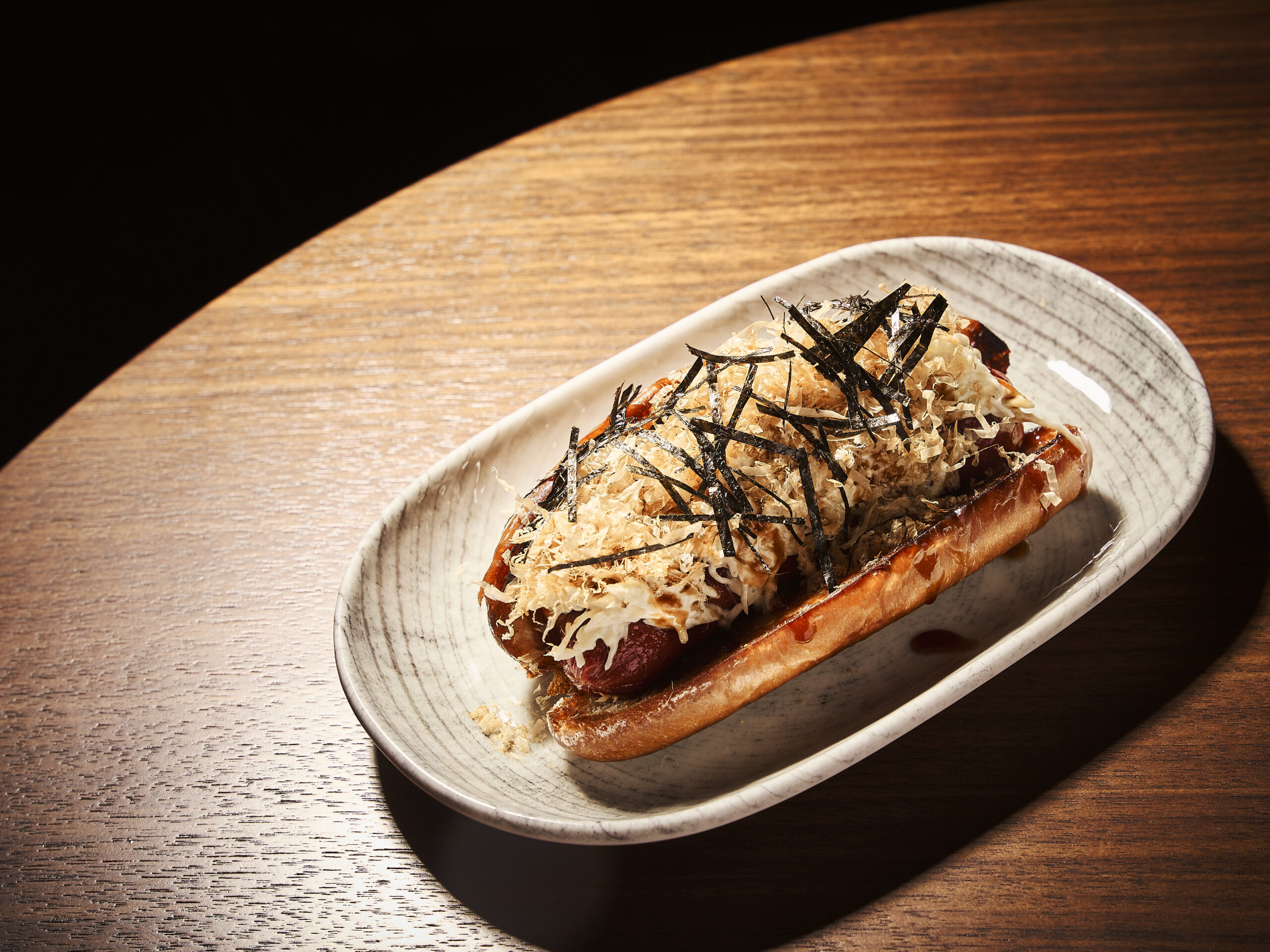
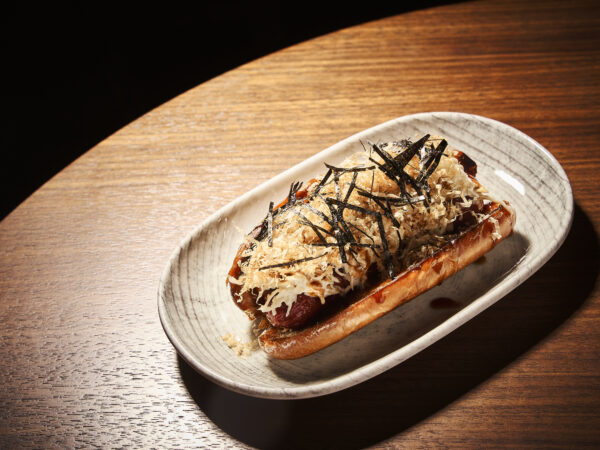
The Wagyu hot dog at Almanac in Old City, topped with tonkatsu sauce, Japanese slaw, bonito flakes, and nori.
Upstairs from Ogawa’s elegant, brightly lit omakase counter, you can let down your hair and ascend into Almanac’s semi-anonymous dark. Come January, the cocktail bar will extend its surprisingly voluminous late-night menu, featuring yuzu and miso glazed wings, an ethereally crispy karaage chicken sandwich, Wagyu hot dog, and barbecued eel donabe, among other refined Japanese comfort foods, until 12:30 a.m.
“Almanac’s food menu is crafted using the same high-quality ingredients chef Carlos Wills sources for Ogawa’s omakase counter, reimagined with a fun, casual twist. Designed for grazing and sharing, the dishes are snack-sized—perfect for enjoying alongside a drink,” said owner Vy To.
Rittenhouse’s dancerobot, a collaboration between chefs Jesse Ito and Justin Bacharach, just debuted a late-night menu last week, served Fridays and Saturdays from 11 p.m. to 2 a.m., with hot dog-stuffed buns, and spicy fried chicken, and some quick-serve baos off the regular dinner menu.
The just-opened Pine Street Grill is serving its usually $22 burger for $20 between 9:30 and 10:30 p.m., paired with a 20-oz. beer.
The burger at Pine Street Grill, 2227 Pine St.
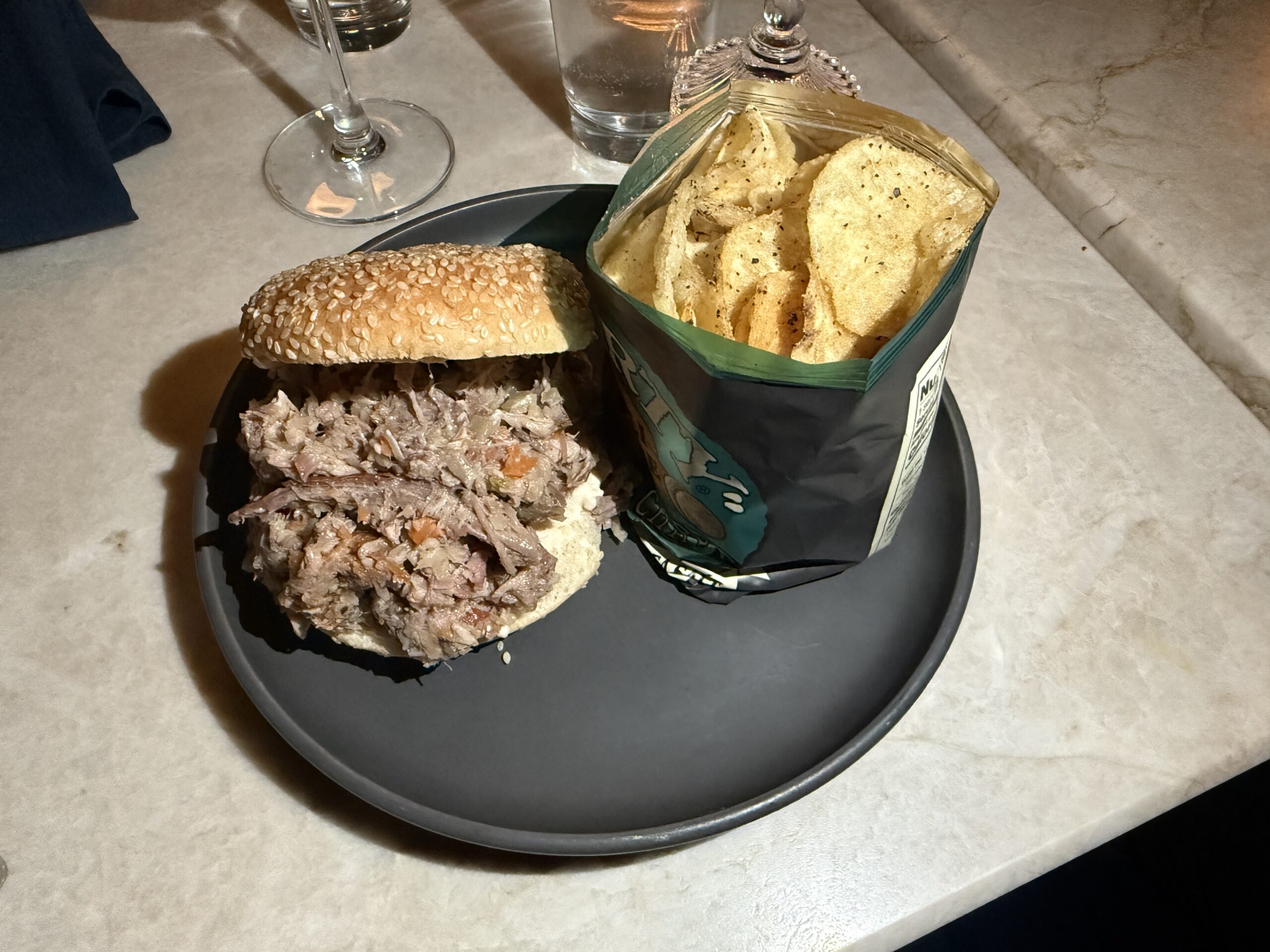
At Messina Social Club, Eddie Konrad makes a roast pork sandwich ($12) that’s only available late night. It’s served on a Martin’s Big Marty seeded roll and served 10 p.m. until 3 a.m. on Friday and Saturday. Make it a Messina Happy Meal, where you get a shot, a can of Coors Banquet beer or wine, and the sandwich for $18.
The pork sandwich at Messina Social Club is only available on the late-night menu, served with potato chips.
The pork is dry-cured overnight with salt and brown sugar, roasted low between 275 and 300 degrees for six to eight hours, then pulled apart with tongs.
It’s then chopped up and “its drippings are emulsified with Italian seasoning, salt, pepper, and MSG,” said Konrad. “This mixture coats the pork, then we adjust the seasoning and top it with a tablespoon of chopped giardiniera, horseradish, and roasted garlic aioli.”
The assembly then takes eight minutes, a crucial number, according to Konrad. “It has to be turned out by the front-of-house staff, and it has to be perfect. They’re busy.”
When I polled chefs and other restaurant workers for where they went post-dinner shift, everyone inevitably named gas stations, restaurants in Chinatown that have since shuttered, and Taqueria La Prima (a fine option but proffered by five different stumped chefs).
Among the restaurant industry crowd, workers have long descended upon Fountain Porter for its excellent cheeseburger, which tastes like someone’s dad grilled it in the backyard, served until 2 a.m. Through closing and reopenings, Sonny’s Cocktail Joint, open until 1 a.m. or midnight, depending on the day of the week, also courts a post-dinner shift crowd, with cracker-thin pies and buffalo chicken dip.
So why the turn to late night? At Post Haste, anyway, it just makes sense.
“The bar is already open those hours, until midnight Wednesday through Saturday. It made sense to have food available while the bar is serving drinks. Last call for food is now 11:45 p.m.,” said Miller. Post Haste’s late-night menu is served Wednesday through Saturday, but its regular dinner menu is pay-as-you-can on Sunday, an option designed with “our industry colleagues in mind. Industry people work all days of the week.”
The accompanying late-night drink specials are bait for industry folks, fueled by Negronis and fernet.
“We wanted to have an option for people to get off their shifts at those hours to get some decent food as opposed to a short-order sandwich,” said Miller.
The late-night menu is simpler than their dinner menu, which features a long list of delicate, handwrought pastas. “It’s crafted so that one person in the kitchen can execute it. We took the fussy dishes off.” It may be 11 p.m., but hey W.C. Fields, Philadelphia is still open.
This Wagyu hot dog is one of the finest bar food snacks in the city. Well, it’s a snack if you share it with a friend as I did. A remarkably juicy dog on a pillowy bun, slicked with tonkatsu sauce and dusted with great handfuls of shredded katsuobushi (bonito flakes) and nori, it’s the perfect thing to soak up the booze from one of Almanac’s complex cocktails. Almanac, 310 Market St. Second Floor, 215-238-5757, almanacphilly.com
— Kiki Aranita
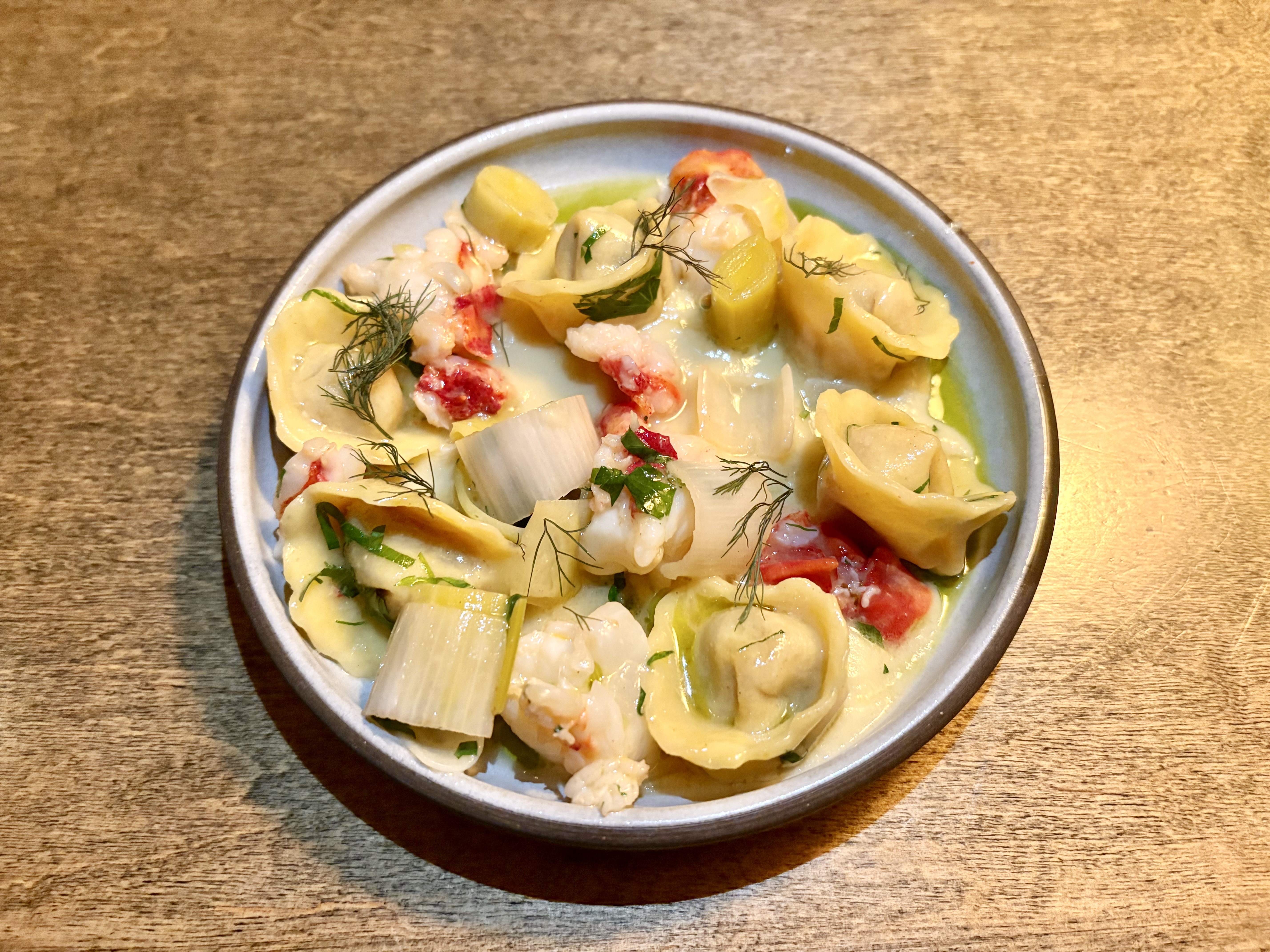
Smoked pumpkin tortellini with lobster, leeks, and fennel-tarragon butter at Southwark.
Smoked pumpkin tortellini with lobster at Southwark
I had my best meal in years the other night at Southwark, the Queen Village standby riding a fresh gust of momentum from its recent recommendation by the Michelin Guide. The bar’s Queen of Cups cocktail was a cold-slayer supreme — a steaming hot toddy variation with Jameson whiskey, spiced apple syrup, and a gloss of brown butter floating atop this lemony brew served in a vintage tea cup. The thick Stone Arch pork chop with charred cabbages was impressively moist, and a hearty white ragù with ground pheasant and chestnuts was the most interesting Bolognese I’ve eaten all year.
But the star of the show was a delicate appetizer featuring tender nuggets of lobster, braised leeks, and tortellini stuffed with smoked Marina di Chiogga pumpkins pureed with mascarpone and brown butter. I’ve seen that pairing of lobster and leeks elsewhere around town lately (a real beauty at My Loup) but that extra wisp of applewood smoke in those dumplings, tossed in fennel-tarragon butter, gave this elegant dish a welcome rustic edge. The impressive pasta craft of those tortellini was also a nice reminder that chef Chris D’Ambro and Marina De Oliveira’s other newly Michelin-recommended restaurant, Ambra, shares a kitchen with Southwark for alta cucina dinners right next door. Southwark, 701 S. 4th St., 267-930-8538, southwarkrestaurantphilly.com
— Craig LaBan
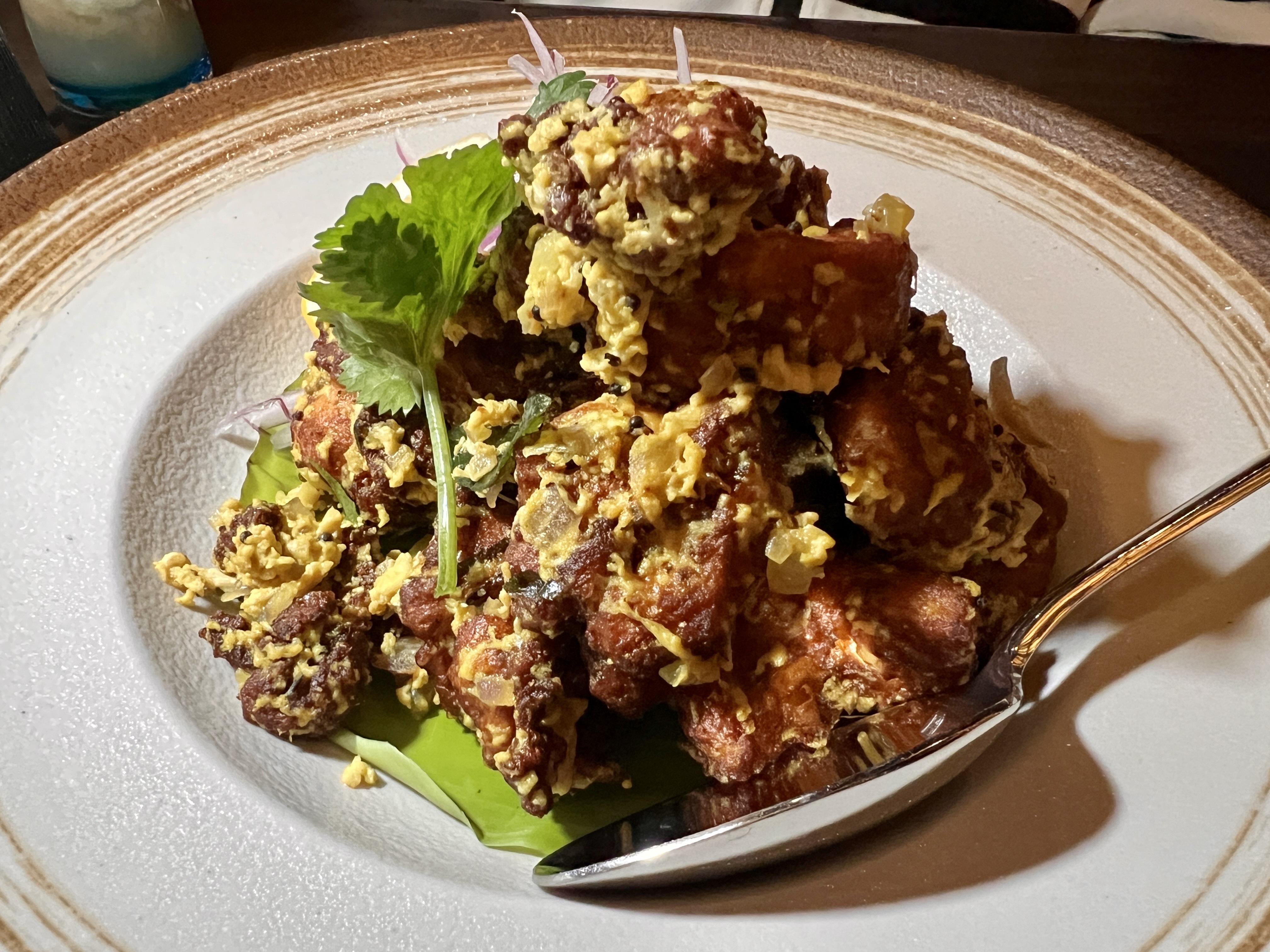
Egg chicken 65 at Amma’s, 1500 Walnut St., Philadelphia.
Egg chicken 65 at Amma’s South Indian Cuisine Center City
Chicken 65 — the fiery South Indian snack that traces back to Hotel Buhari in Chennai in 1965 — gets a luxurious spin at the sumptuously appointed, newly relocated Center City location of Amma’s South Indian Cuisine. (It’s in the former Max Brenner space on 15th Street, just below Walnut.) The dish starts with pieces of chicken marinated with red chilis, ginger, garlic, curry leaves, and other spices. After a dip in the deep fryer, it gets topped with soft-scrambled eggs. The crispy heat and crunch from the chicken and the richness of the silky, fluffy eggs provide a pleasing balance. This variation is available only at the Center City location. Amma’s South Indian Cuisine, 1500 Walnut St., 808-762-6627, ammasrestaurants.com