Author: Jenice Armstrong

  • I visited the Great American State Fair on the National Mall in D.C. It wasn’t great.

    I visited the Great American State Fair on the National Mall in D.C. It wasn’t great.

    WASHINGTON — It was blisteringly hot when I showed up at President Donald Trump’s much-ballyhooed Great American State Fair on the National Mall in honor of the nation’s 250th birthday.

    As I headed off to check in as a member of the media, a friend who’d accompanied me decided to wait at a lemonade stand.

    At first, I was a little concerned, wondering how I was ever going to find her. A lemonade stand on the National Mall in Washington, D.C., was bound to be mobbed on a scorcher of a day like the one we had on Monday.

    I needn’t have worried. It wasn’t that kind of party. Crowds were so thin that I quickly spotted her standing alone and eating a snow cone that cost a whopping $8. “Even on a hot day, there was no line at the lemonade stand,” pointed out my friend, Pamela Thomas of Pathfinders Travel, who had taken the train from Philadelphia with me.

    That should give you a pretty good idea of how it was at the so-called Great American State Fair, brought to us by Freedom 250, an organization created by President Donald Trump.

    Low crowds.

    High food prices.

    Lots of walking.

    The Great American State Fair was downright boring.

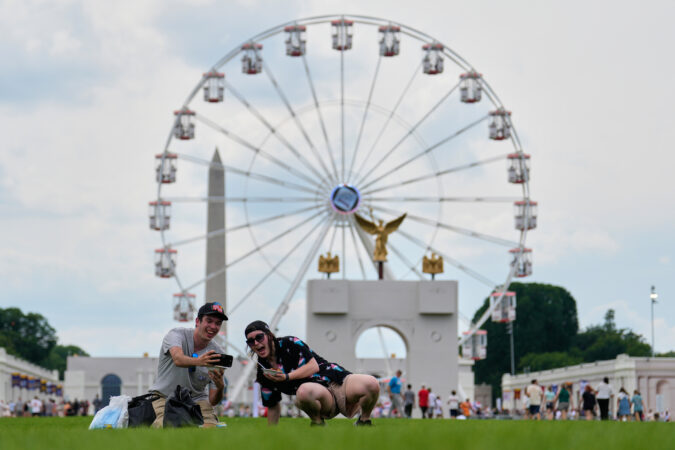
    Oh, there was an 110-foot Ferris wheel borrowed from the Smithsonian Institution. I watched people stand unsheltered under the blazing sun as they waited for their turn. But that’s the only carnival ride I saw.

    This wasn’t like any state fair I’d ever attended. Where was the merry-go-round? Where was the roller coaster? The cotton candy? The local beauty queens? The fair could use a quilting demonstration and band performances. I saw only one cornhole game.
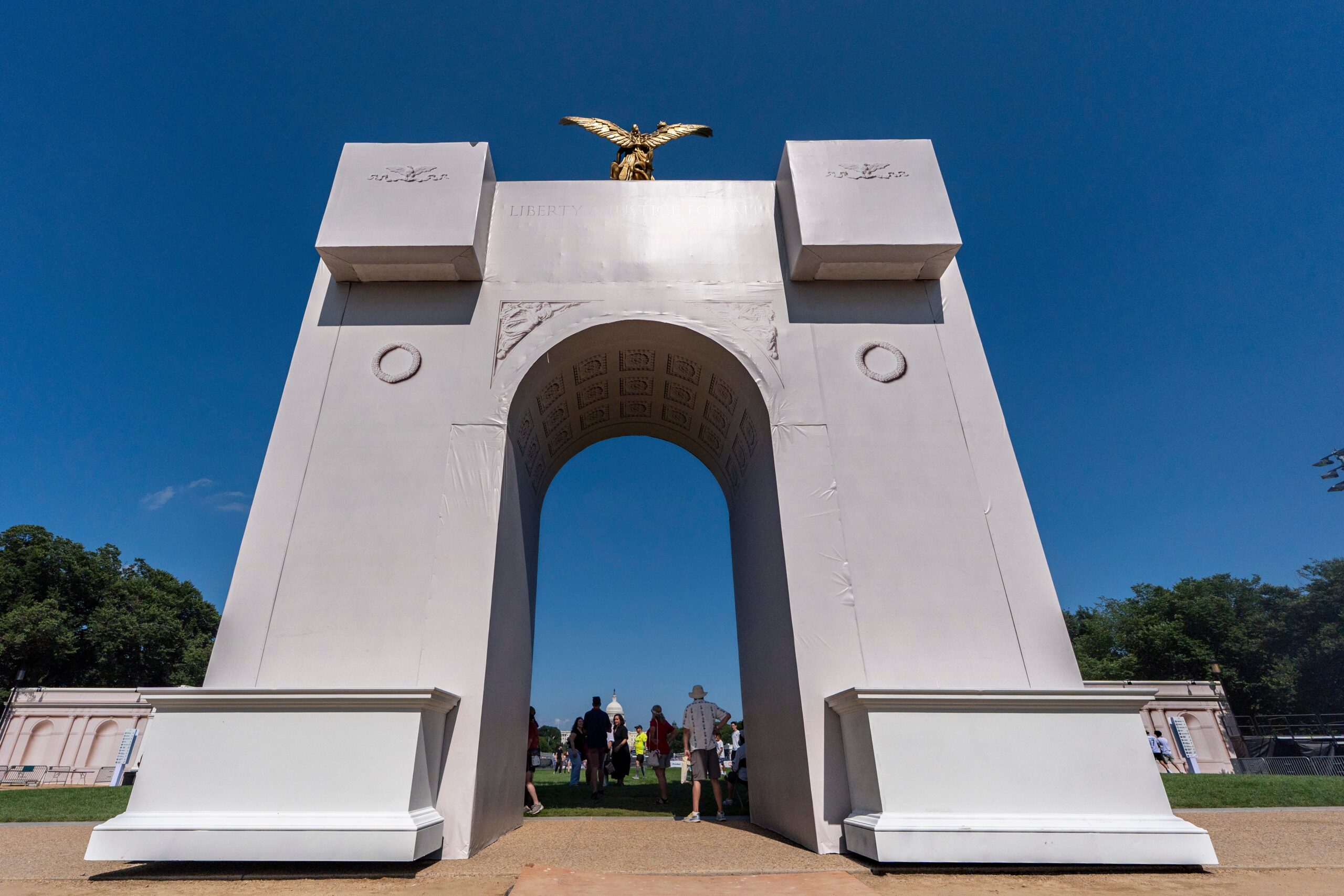
    A mockup of President Donald Trump’s proposed Triumphal Arch stands at the Great American State Fair on the National Mall on June 29.

    The so-called Great American State Fair needs a whole lot more fun and a whole lot less Trump.

    There wasn’t much for children to do besides have souvenir replicas of their new Trump passports stamped.

    I managed to find some shade while sitting on a folding chair inside an area called David’s Tent. As I cooled off, I listened to a woman onstage sing religious songs. Behind me was an aboveground swimming pool set up, ostensibly, for on-the-spot baptisms. In the spirit of inclusivity, there was also a candle-filled menorah positioned in the front of the tent.

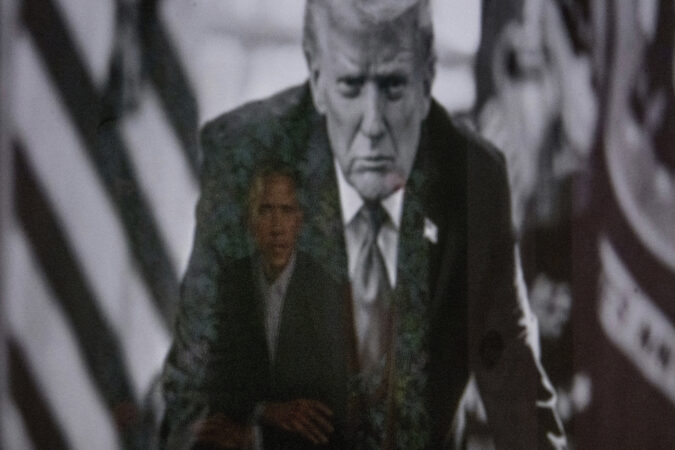
    At one point, we made our way over to the Hawaii booth. Inside, all we saw was a large mural of the Aloha State that included a picture of former President Barack Obama that someone had defaced.

    A smiling woman offered to stamp our “passports.” There was nothing else going on in that booth. Not a flowered lei or macadamia nut in sight. No hula dance demonstration. No ukulele performance.

    Same thing with the neighboring Alaska booth.

    I made a point of checking out the North Carolina booth, which had been criticized for having images of Confederate flags on display on TV monitors. This one was a bit more inviting, with its colorful NASCAR displays. I didn’t see anything resembling a rebel flag — but I did see a bale of cotton just sitting on the floor, which can be seen as offensive because of its slavery connotations. The setup had been organized by private donors. One company, Mt. Olive Pickles, has since pulled out of the fair.

    The D.C. booth had some upbeat music playing, a fake cherry blossom tree, and a giant map of the mall that attendees stuck pins into to represent where they lived. “No go-go music?” I asked an attendant, who assured me that some was in the playlist.
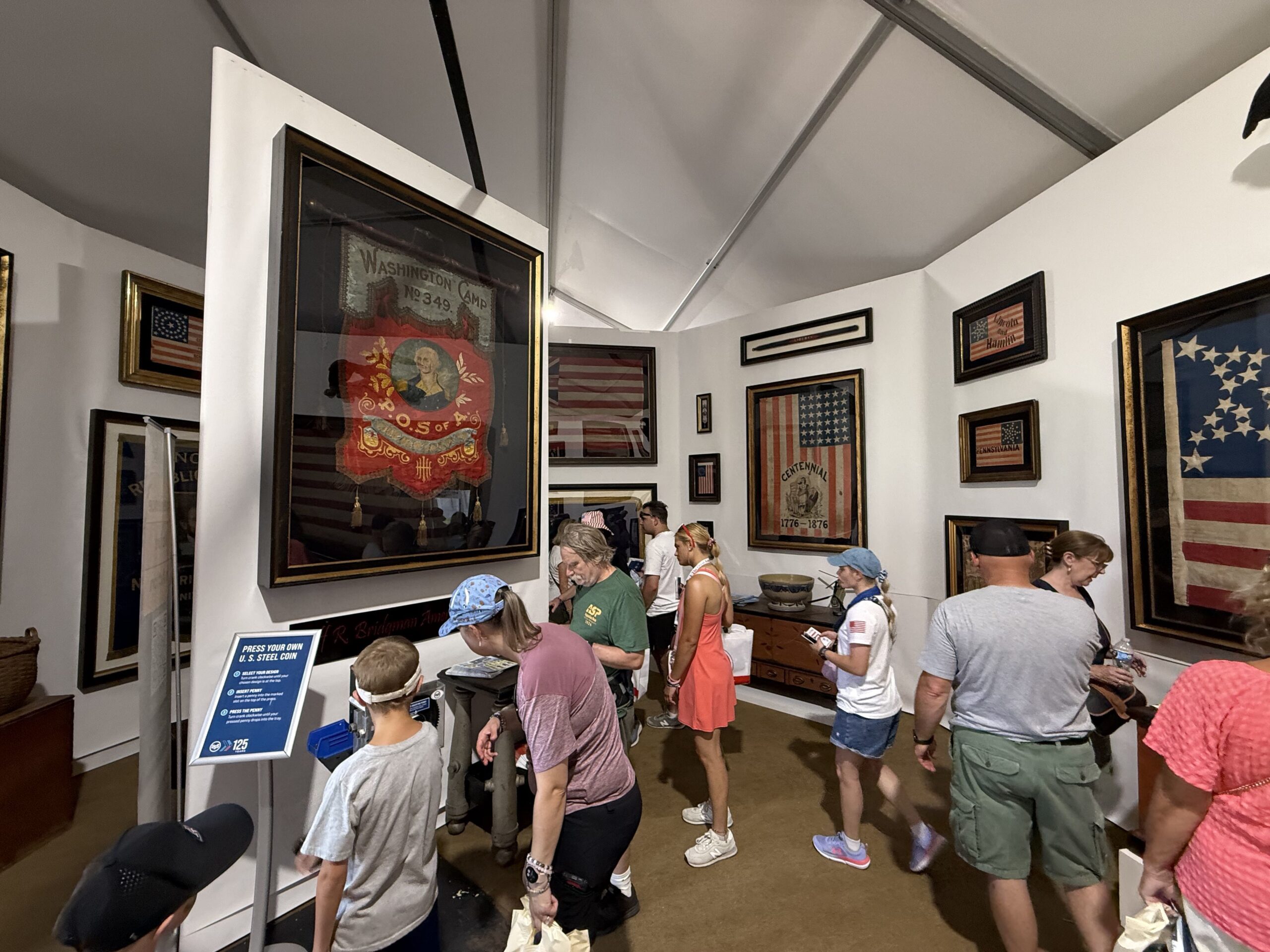
    Pennsylvania’s pavilion showcases state history and memorabilia at the Great American State Fair on June 30 in Washington, D.C.

    Pennsylvania had initially opted out of participating, but its booth opened the day after I was there, funded by private sponsors and pulled together by U.S. Sens. Dave McCormick (R., Pa.) and John Fetterman (D., Pa.) after Gov. Josh Shapiro passed on participating.

    Cape May County, a Republican stronghold, sponsored the New Jersey booth and brought in an impressive-looking eight-foot sand castle. But I noticed one small red plastic bucket of saltwater taffy that a kid was rummaging through. For an area as rich and diverse as the Garden State, the display felt incomplete.

    Soon, I had had enough.

    We stopped by the media table again on our way out and asked about what was on the schedule for later. The answer? A rodeo demonstration at 7 p.m. That was it.

    I was stunned. America deserved more and better for its 250th birthday celebration.

    So, if you decide to go experience the Great American State Fair before it is dismantled on July 10, don’t say I didn’t warn you.
  • Trump’s Reflecting Pool debacle mirrors what’s ailing America

    Trump’s Reflecting Pool debacle mirrors what’s ailing America

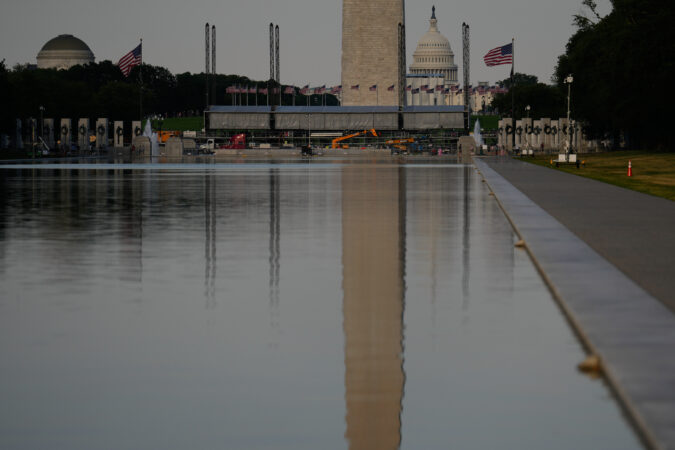
    WASHINGTON — I arrived in Washington, D.C., on Wednesday and headed straight to the Reflecting Pool on the National Mall to see for myself what it looked like.

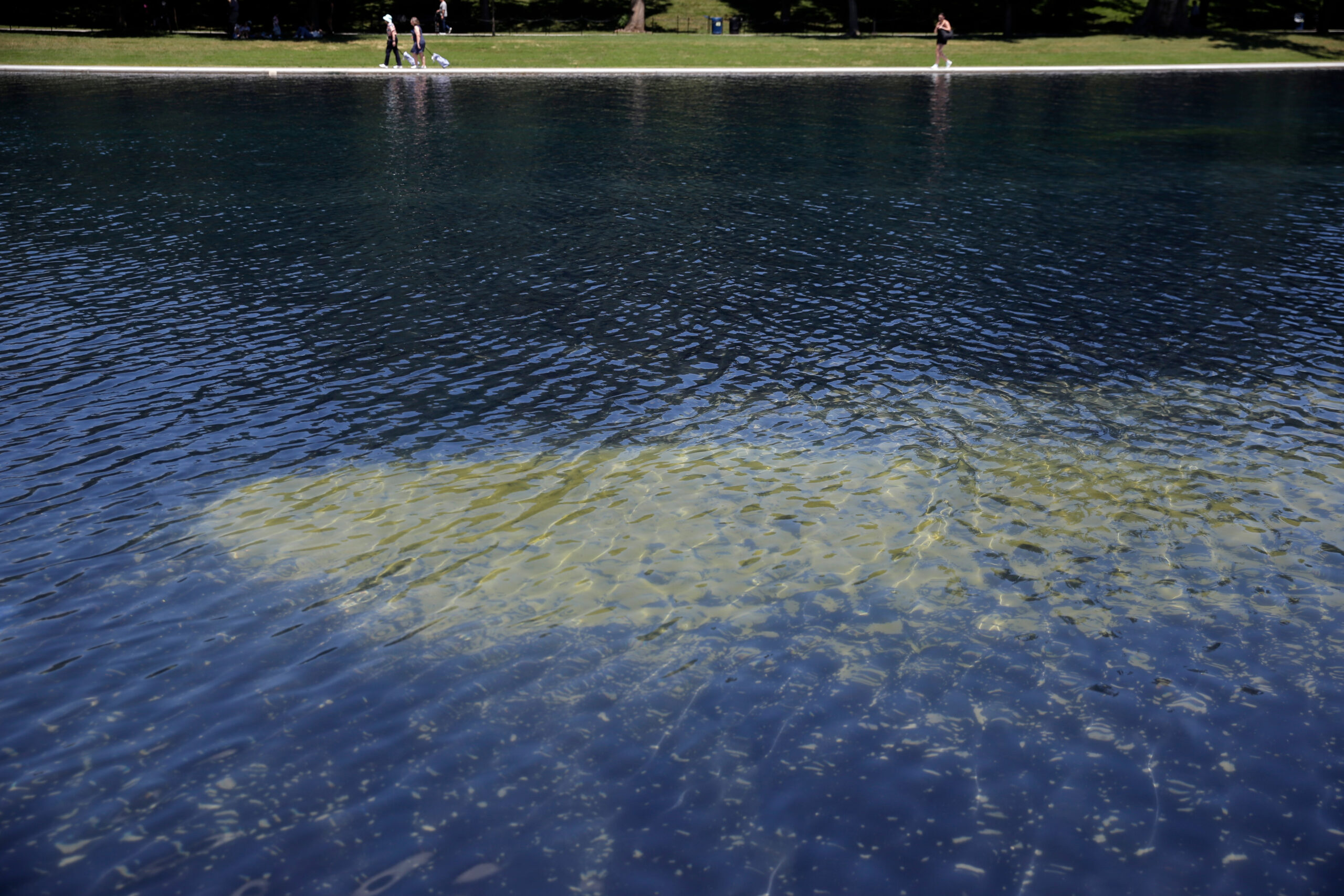
    At first glance, it appeared as if sand had been tossed into the newly renovated water basin located between the Lincoln Memorial and the Washington Monument. But my eyes were mistaken. “The sand” was actually the underlying surface showing through as the coating at the bottom started peeling off.

    Peeling is seen in the blue coating on the bottom of the Lincoln Memorial Reflecting Pool, Wednesday, June 24.

    As I bent down to get a closer look, I made a point to keep my hands close to my body. I knew better than to touch so much as a drop of that water, since people have allegedly been arrested for vandalism after touching the floating detritus.

    President Donald Trump blames “radical lunatics” for defacing his latest renovation project. “This isn’t random mischief — it’s targeted sabotage by anti-American crackpots who despise a strong, proud, and beautiful country. They cannot build; they can only destroy. They cannot celebrate our heritage; they can only deface it,” reads a statement released by the White House.

    I walked around the pool’s entire perimeter. I didn’t notice any stench, not even a whiff. But the reports are true, and Trump’s $14 million no-bid boondoggle to renovate the Reflecting Pool in advance of the nation’s 250th anniversary has faced one stumbling block after another.

    Depending on the angle of the sun and where you’re standing, the combination of the newly added dark paint that’s already chipping away and the algae blooms gives the illusion that the pool is a beautiful aquamarine color. I didn’t expect that.

    But it’s not what the president ordered.

    Nor is it what the American people want or need right now. We want the war with Iran to be over, but Trump is more concerned with putting a Mar-a-Lago-esque stamp on the nation’s capital. He has barely acknowledged that Americans are most concerned about how to pay for gas, food, and healthcare insurance premiums.

    The Lincoln Memorial Reflecting Pool was fine the way it was. Trump should have followed President Joe Biden’s lead and just left it alone. Same thing with the White House East Wing that Trump ordered torn down for a $600 million ballroom project. Same thing with the Kennedy Center for the Performing Arts before Trump made himself chair and slapped his name on the living memorial built to honor the late President John F. Kennedy.

    Trump’s gonna trump, though.

    Back in April, he announced plans to install an industrial-grade surface on the Reflecting Pool. He originally wanted it to be turquoise, but took the contractor’s advice and went with a darker color that he calls “American Flag Blue.” In typical Trump fashion, he claimed it would only take a week to rehab and cost about $1.5 million, only for the project to take months to complete and the cost to balloon to $14 million.

    Workers refilled the pool on June 9. The water quickly turned green, which the U.S. Department of the Interior blamed on “residual algae from the supply lines.” It has since been treated with hydrogen peroxide and ozone nanobubbles. And the blue material coating the bottom has started coming off.

    The century-old Reflecting Pool has had issues for years. But it’s still a beautiful thing to behold.

    Civil rights activists famously flanked it while listening to the Rev. Dr. Martin Luther King Jr. deliver his famous “I Have a Dream” speech in 1963. Same thing when Marian Anderson performed on the steps of the Lincoln Memorial in 1939, after the Daughters of the American Revolution refused to let the African American contralto sing in their concert hall because of her race.

    Under Trump, the Reflecting Pool has become a Rorschach test of where we are right now as a nation. Some only see its beauty, while for others, the bumbling rehab symbolizes yet another Trump failure.

    “I came to see for myself. I wanted to see what all the hoopla was about,” said Cedric Jackson, an Atlanta resident whom I spotted taking photos. “It’s not as green as I thought it was going to be. So they’ve obviously been doing some kind of work.”

    But then he added, “I think this is probably something that could have been avoided.”

    I couldn’t agree more. Like so much damage and harm the Trump administration has inflicted during this second term, it didn’t have to be this way.

  • Trump’s reckless war proves his Board of Peace is a farce

    Trump’s reckless war proves his Board of Peace is a farce

    New York Times-verified images from a scene in southern Iran are horrific. A severed arm of a child lying in the rubble. Backpacks covered in ashes. The dead in body bags. Video of rescue workers digging through the remains of what had been a modest, two-story school near a military installation in southern Iran.

    Please stop for a moment and think about the babies who died over the weekend. I call them that because that’s really what they were: elementary-age schoolchildren learning their lessons on what had started as a typical school day during their holy month of Ramadan, before turning into a nightmare.

    Regardless of what you think about the joint U.S.-Israeli strikes against Iran, these girls were innocents. Students ages 7-12, they didn’t deserve this. Even growing up under the horribly repressive thumb of the late Iranian Supreme Leader Ayatollah Ali Khamenei, they had hopes and dreams for their lives that sadly now will never be realized. Their families must be out of their minds with grief.

    It’s tempting to turn away from such a devastating tragedy, but America needs to bear witness to what has happened. President Donald Trump says the U.S. joined with Israel to bring about regime change and stop the production of nuclear weapons. Iranian security forces have reportedly killed thousands of their own people.

    It’s still unclear exactly how many schoolgirls were killed, and which nation is responsible for the strike. The Times is reporting that at least 175 people altogether perished during the attack on the school, located in the city of Minab in southern Iran.

    Rescue workers and residents search through the rubble in the aftermath of an Israeli-U.S. strike on a girls’ elementary school in Minab, Iran, Feb. 28.

    According to the Times, the school is near a naval base where the Iranian Revolutionary Guards Corps is stationed. Reportedly, it was also struck that day. Various news sources reported that a spokesperson for U.S. Central Command said military officials are “aware of reports concerning civilian harm resulting from ongoing military operations” and are “looking into them.”

    Meanwhile, the reports have sparked worldwide outrage. Nobel Peace Prize laureate and education activist Malala Yousafzai wrote on X, the social media site formerly known as Twitter, “I stand firmly against violence and the targeting of schools and civilians.” She was a child herself when she was shot while returning home from school in Pakistan in 2012.

    Imagine the blanket news coverage that would have taken place if something even remotely like this had taken place at a school on American soil. It would have made the front page of every newspaper. But because it happened in a Muslim country thousands of miles away, it’s easier to act as if it never happened.

    We can’t allow this kind of violence to be normalized.

    Former Vice President Kamala Harris spoke for many of us over the weekend when she said, “Trump has dragged us into a war that we do not want.” The former Democratic presidential candidate added, “I unequivocally oppose this war of choice, and everyone should.”

    Polls show most agree with Harris. Only one in four Americans approves of this war in the Middle East. I get it. We don’t want another drawn-out situation. We didn’t agree to this, and only Congress has the authority to authorize war.

    We don’t even know what Trump’s endgame is, but he has let us know that the U.S. can expect more military casualties. More war means more airstrikes and more civilian fatalities — possibly even devastation like what happened at the girls’ school — where, as Yousafzai said on X, “every child deserves to live and learn in peace.”

    Given the administration’s reluctance to share more about the planned scope and scale of our military engagement, there is little we can say with certainty. Except that Trump’s reckless war proves his “Board of Peace” is a farce.

  • Trump officials used AI to distort a photo of an anti-ICE activist. That’s not OK.

    Trump officials used AI to distort a photo of an anti-ICE activist. That’s not OK.

    In the everyday chaos that characterizes President Donald Trump’s America, the news cycle changes faster than most of us can keep up with it.

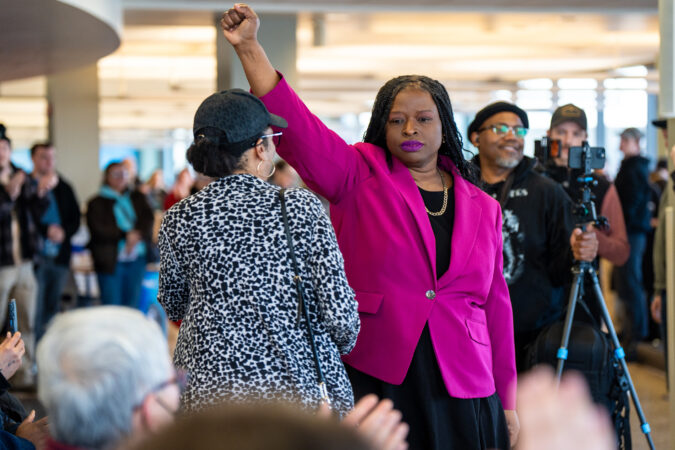
    But can we please pause for a moment and consider the gravity of what happened to Nekima Levy Armstrong at the hands of the U.S. government? She led a group of activists who interrupted a worship service in Minnesota on Jan. 18. The demonstrators went to Cities Church in St. Paul to stage a protest in support of immigrant rights.

    The choice of venue was very much intentional: One of the leaders at the church is an administrator at a local U.S. Immigration and Customs Enforcement office. Four days later, Levy Armstrong, a half dozen other protesters, and two journalists were arrested.

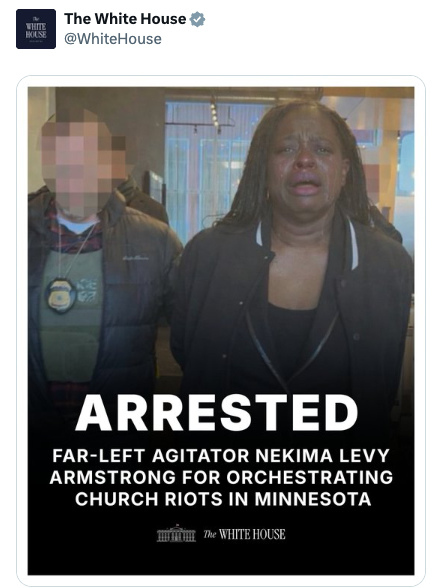
    Afterward, while she was still in custody, Trump administration officials released an AI-manipulated image of her on X, the social media site formerly known as Twitter, on accounts for Homeland Security Secretary Kristi Noem and the White House.

    The doctored image shows Levy Armstrong (no relation) with her mouth open as if she’s sobbing hysterically. Her face also appears to have been darkened. The photo caption reads: “ARRESTED far-left agitator Nekima Levy Armstrong for orchestrating church riots in Minnesota.”

    It wasn’t a riot. Nor was she crying. But all that is beside the point. The Trump administration officials wanted to make her look bad, even if it meant reshaping reality to do so. What’s especially concerning is the dishonest way it went about it. According to photos and video of her arrest, Levy Armstrong maintained a mostly impassive expression on her face throughout the ordeal.

    On Jan. 22, the White House posted an AI-altered image of Nikema Levy Armstrong on the White House’s official X feed. The altered image makes Levy Armstrong appear as crying, the original image shows no such emotion.

    A lot of people might see the digitally altered image of her sobbing and assume that because it was posted on a verified social media channel from the highest levels of government, it is an accurate representation of what happened — when it’s anything but.

    A New York Times analysis concluded that the photo had been manipulated — something the White House admits to doing, and is unrepentant about. The manipulated photo is a meme, according to White House spokesperson Kaelan Dorr, who doubled down on X, saying, in part: “Enforcement of the law will continue. The memes will continue.”

    No one should be surprised at that reaction, considering how many questionable AI images Trump has shared. (And, although it wasn’t artificial intelligence, don’t get me started on his racist post about the Obamas earlier this month.)

    He once posted an AI video of himself — with a crown on his head — flying a plane that dumps feces onto “No Kings” protesters. It was even more disturbing when he released a deepfake video of former President Barack Obama, who seems to live rent-free inside Trump’s head, being arrested in the Oval Office.

    Imagine the uproar if another president had done such a thing. Many people have normalized this kind of corrosive behavior so much that Teflon Don usually gets off with a shrug. But those of us who care about accountability have to keep calling him out.

    Dirty politics are one thing, but when Trump administration officials manipulated the photo of Levy Armstrong, a private citizen, it made my blood boil. It’s another reminder that there’s no bottom with Trump when it comes to how low he will go, and that’s really scary.

    I recently had a chance to speak with Levy Armstrong, and can report that, despite the administration’s efforts, she is unbowed and unbroken.

    She called the government’s use of the fake image “horrifying and deeply disturbing,” and insists “I was cool, calm, and collected” during the arrest.

    “I guess because they didn’t see me broken, they needed to manufacture an image of me broken,” Levy Armstrong told me.

    “This is not unlike what has happened historically to Black people with all of the Sambo imagery and the mammy imagery that’s out there, with exaggerated features and darkened skin,” she said. “That’s the same thing that I went through, and that’s what they did to me. Not to mention making me look hysterical.”

    She added that “I felt caricaturized, just like our people have been during slavery and Jim Crow.”

    While I had her on the phone, I also asked Levy Armstrong about the arrest of former CNN anchor Don Lemon, who covered the protest she organized.

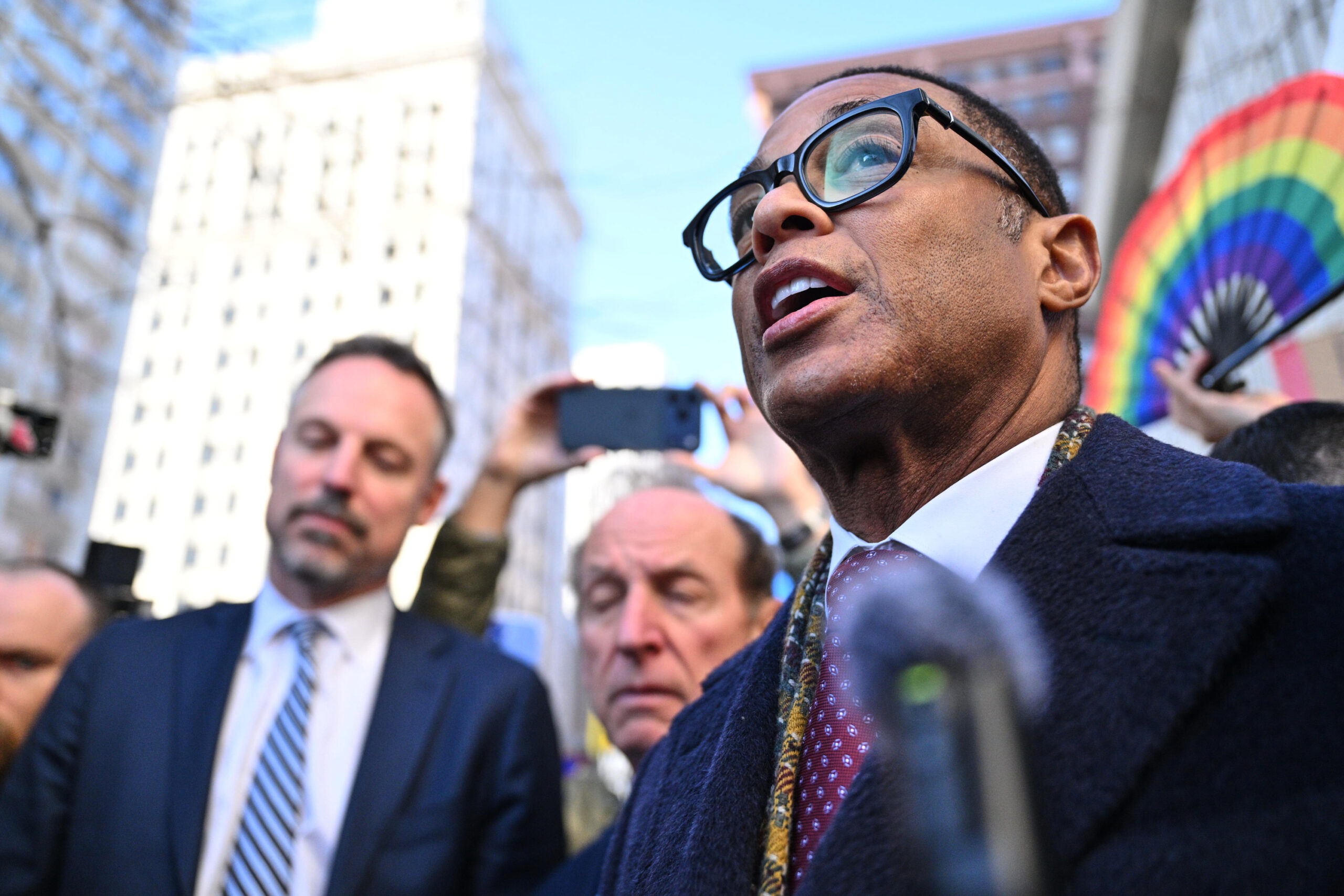
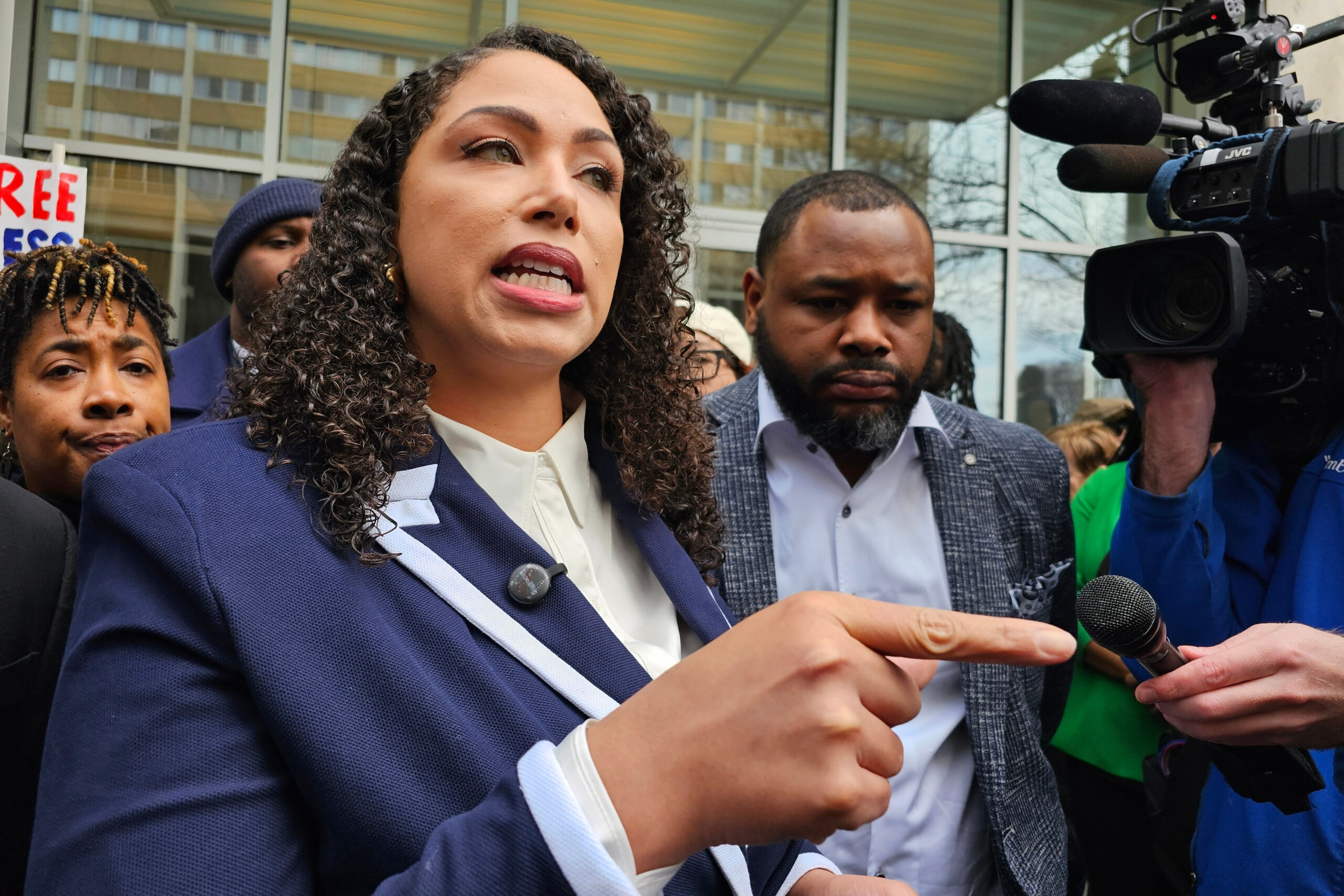
    Journalist Don Lemon speaks to the media outside the U.S. District Courthouse in St. Paul, Minn., on Feb. 13.

    Levy Armstrong disputes MAGA claims that Lemon was a participant in the demonstration, as opposed to being an observer. Levy Armstrong told me, “I just think it’s foolishness that they would try to rope him in as a protest organizer.”

    “He’s not an activist. He’s not an organizer,” she pointed out. “He’s not a protester whatsoever.”

    The former law professor said that referring to Lemon as an organizer was an excuse to attack him, as well as Georgia Fort, an Emmy Award-winning independent Black journalist based in Minnesota, who also faces federal charges after covering the protest.

    Minnesota-based independent journalist Georgia Fort speaks to reporters and supporters outside the federal courthouse in St. Paul, Minn., on Feb. 17, after pleading not guilty over her alleged role in a protest that disrupted a Sunday service at a Southern Baptist church in St. Paul.

    I’ve covered many protests throughout my journalism career, and find what happened particularly upsetting. Republicans talk a good game about upholding the Constitution, but the arrests were clearly an attempt to keep journalists from exercising their First Amendment right to freedom of the press.

    Meanwhile, no arrests have been made in the fatal shootings by Border Patrol and ICE, respectively, last month of Alex Pretti, an intensive care nurse, or Renee Good, a mother of three.

    But Levy Armstrong has been charged for her role in a disruptive but peaceful protest inside a church during which no one was physically harmed. (And, yes, although they are rare, demonstrations in churches happen. During the civil rights movement, demonstrators would hold “kneel-ins” to protest segregated churches in the Jim Crow South.)

    An ordained minister, Levy Armstrong told me she draws strength from such icons of the civil rights movement as Fannie Lou Hamer, Rosa Parks, and the Rev. Dr. Martin Luther King Jr., all of whom had suffered the indignity of being arrested while fighting for their basic human rights.

    “Everybody needs to wake up,” she said. “This is not just about immigration. This is about our constitutional rights. This is about our democracy. This is about our freedoms.”

    Freedoms we stand to lose if we allow the Trump administration to try and silence us the way it has attempted to do with Lemon, Fort, and Levy Armstrong, among so many others.

    Levy Armstrong has nothing but praise for Philadelphia District Attorney Larry Krasner, who is vocal about prosecuting ICE agents who run afoul of the law. Her suggestion for concerned Philadelphians? “Get some whistles,” she said. “Get some people organized. Hold your elected leaders accountable.”

  • Savannah Guthrie’s mother is missing. But let’s not forget many others are, too.

    Savannah Guthrie’s mother is missing. But let’s not forget many others are, too.

    I like to visit Tucson, Ariz., this time of year to get away from the cold. Winters are mild, and it hardly ever rains in the Sonoran desert there, averaging roughly 300 days of sunshine.

    But when I was there last week, it felt as if a dark cloud were hovering. I kept being reminded about the disappearance of Nancy Guthrie, the mother of NBC’s Today show cohost Savannah Guthrie, who is a longtime resident. I checked for updates multiple times a day. Then, one overcast and rainy afternoon, I grabbed a notebook and went to Nancy’s home in the Catalina Foothills.

    TV is a medium that creates false intimacy, making it feel as if we actually know the on-screen performers. I’ve watched Savannah Guthrie coanchor the Today show for years, but I have never met her. When I learned her mother had gone missing, my blood ran as cold as if she had been a close friend.

    I wondered if her family was targeted because of her work as a high-profile journalist. A Today show segment featuring Guthrie giving a tour of her hometown aired in November. It includes footage of the host’s mother and sister sipping tequila from teacups at a popular Mexican restaurant.

    This image provided by the Pima County Sheriff’s Department shows a missing person alert for Nancy Guthrie.

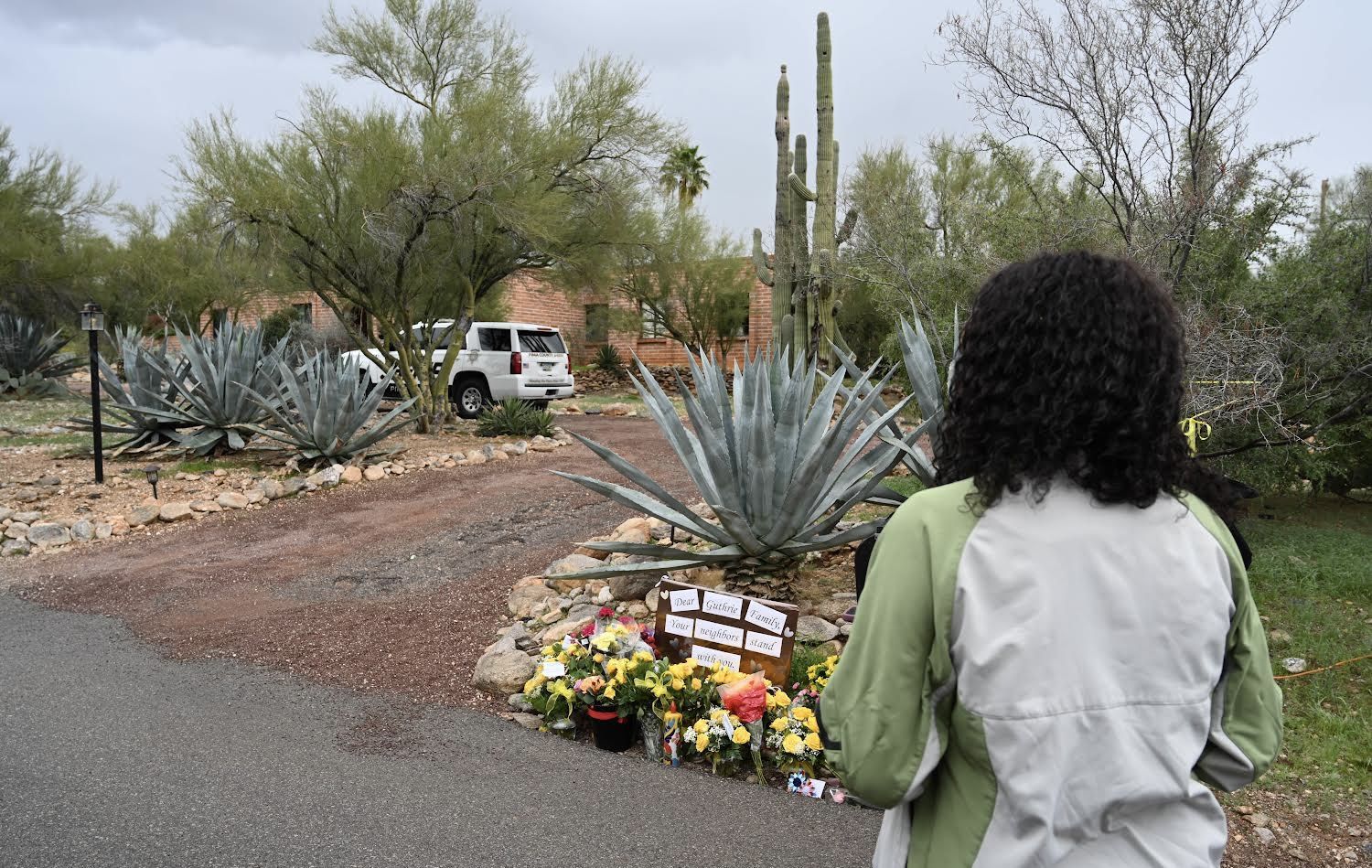
    The day I showed up outside the Guthrie residence, there were no law enforcement officials to interview about the status of the investigation. A lone sheriff’s vehicle was parked in the driveway, near Nancy’s front door, where a masked gunman had been caught on doorbell camera footage around the time investigators say she’s believed to have disappeared on Feb. 1. Blood splatters have been found outside.

    A handful of spiky agave plants flanked a red gravel driveway. People had dropped off yellow roses, potted plants, and other offerings at a makeshift memorial out front. A sign reads, “Dear Guthrie Family, your neighbors stand with you.” Saguaro cacti tower over the scene.

    Meanwhile, reporters and social media influencers milled about on the street, waiting for answers that never came.

    If this had been a targeted kidnapping, Guthrie had said on video, “We will pay.” Why hasn’t Nancy been released? And is she even still alive?

    Inquirer columnist Jenice Armstrong stands next to the Tucson, Ariz., memorial honoring Nancy Guthrie — the mother of the NBC “Today” show cohost Savannah Guthrie — who went missing Feb. 1.

    Two things can be true simultaneously: As much as I felt my heart ache for the Guthrie family, I also spared a thought for other families who are waiting for their missing loved ones to come home, too.

    I also couldn’t help but think that if Nancy Guthrie weren’t related to a celebrity, or if she were a person of color, it’s doubtful we’d even know her name, much less that she was missing.

    It’s also unlikely President Donald Trump would have bothered to offer his condolences and as many resources as he has, posting on Truth Social, “ALL Federal Law Enforcement to be at the family’s, and Local Law Enforcement’s, complete disposal, IMMEDIATELY.”

    He has since threatened to impose the death penalty on the perpetrators.

    Meanwhile, there are so many other missing people whose cases could benefit from just a fraction of the attention Nancy’s case has attracted.

    An estimated 2,300 children are reported missing every day in America. The National Missing and Unidentified Persons Systems database currently lists 134 people — ranging from infants to 85 years old — missing in Philadelphia County alone. U.S. Immigration and Customs Enforcement also snatches up countless undocumented immigrants whose loved ones frequently know only that they’ve suddenly gone missing.

    Roz Pichardo, who runs the Missing in Philly page on Facebook, pointed out that when local people disappear, it often escapes the notice of the media or public officials. “No one is hardly looking at that page other than families who are searching for someone,” she told me.

    Natalie Wilson, cofounder of the Black and Missing Foundation, agreed that not enough is done to find those who have disappeared. “Your observation about the media cycle is exactly why we stay so focused on our mission.”

    None of this takes away from the Guthrie family’s nightmare. But their situation can help us understand how familiar the horror and accompanying heartache might be for people standing in line or sitting on the bus next to us.

    What resources should we allocate locally to help those who are experiencing something similar to what the Guthrie family is going through? What ways can we make sure others who have disappeared get more attention and a share of our concern, as well?

    My prayer is that any family with a missing loved one finds peace, including the Guthries. I hope my friend-in-my-head Savannah will wake up from this bad dream soon — and that Nancy will be safely returned to her beloved home in the Sonoran desert with her agave plants, cacti, spiny ocotillo, and some fresh yellow roses.

  • Jesse Jackson’s death during Black History Month only magnifies an already immense loss

    Jesse Jackson’s death during Black History Month only magnifies an already immense loss

    Pick any of the seminal moments from Black history over the last six decades — from the assassination of the Rev. Dr. Martin Luther King Jr. in 1968 to Barack Obama’s first speech as president-elect 40 years later — and the chances are that the Rev. Jesse Jackson Sr. was there, front and center.

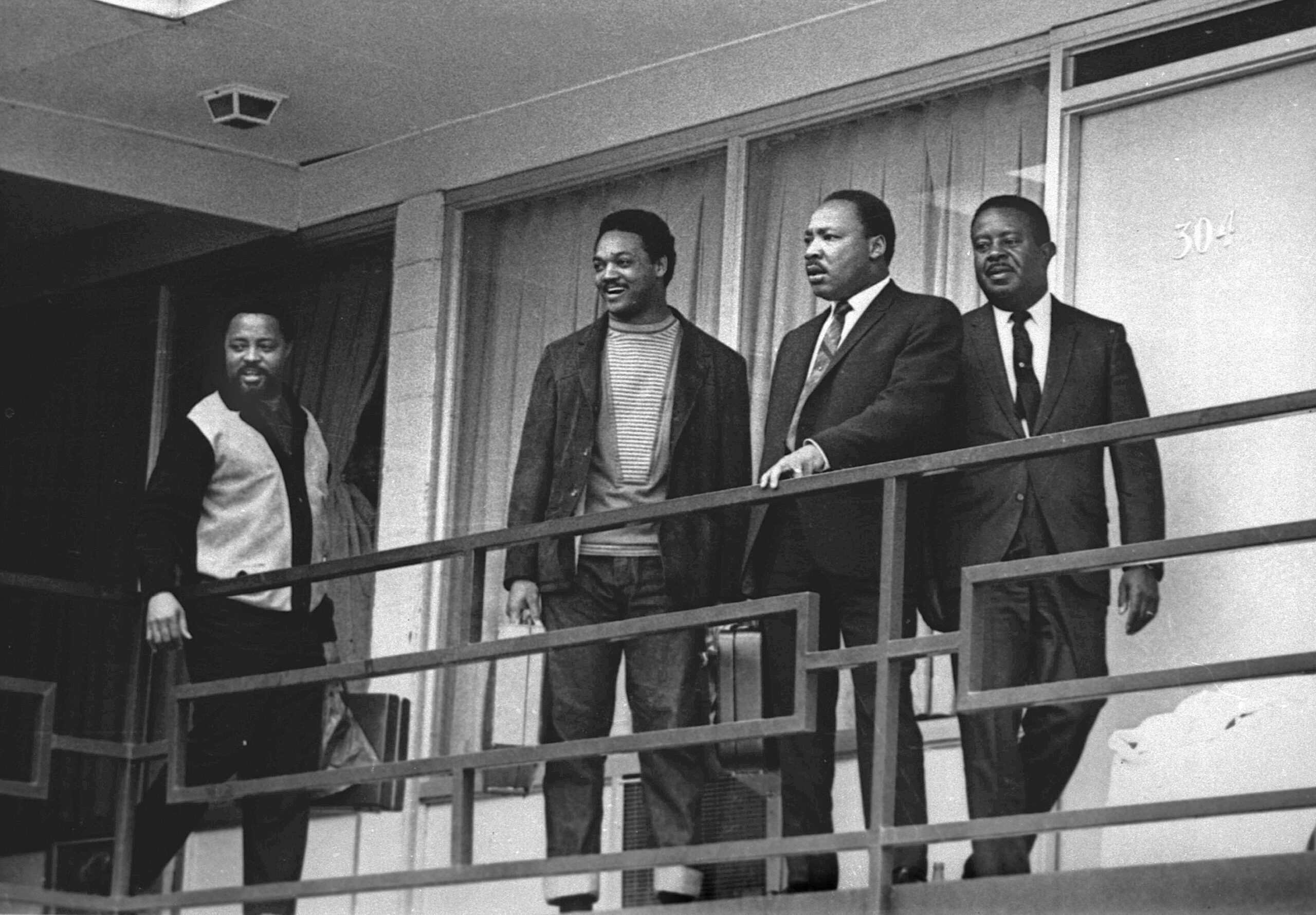
    Jackson had spoken to King only moments before the civil rights leader was fatally shot while standing on a balcony of the Lorraine Motel in Memphis on April 4, 1968. Even though he was only 26 years old, Jackson went on to position himself to take up the mantle of leading the civil rights movement.

    Years later, Jackson explained to an interviewer, “What I was clear on was that we could not let one bullet kill the whole movement.” He used the analogy of an athletic event during which the best player gets hurt. The answer, he said, isn’t to forfeit the game: “You can’t run away. You’ve got to keep fighting.”

    The Rev. Martin Luther King Jr. (second from right) stands with Hosea Williams (left), Jesse Jackson (second from left), and Ralph Abernathy (right) on the balcony of the Lorraine Motel in Memphis on April 3, 1968, a day before he was assassinated while standing in approximately the same spot.

    And that’s what he did for the rest of his life, advocating tirelessly for an end to racial injustice as well as for economic opportunities for poor people of all racial backgrounds through his iconic Rainbow coalition and during his two historic runs for the presidency.

    Back when most Americans couldn’t conceive of a Black man becoming president of the United States, he could and tried to get the rest of us to believe in it, too. Jackson launched his first bid for the Democratic presidential nomination in 1984 and again in 1988.

    Jackson rarely gets the credit, but his run for the White House helped lay the groundwork for the election of Obama, who fulfilled Jackson’s vision.

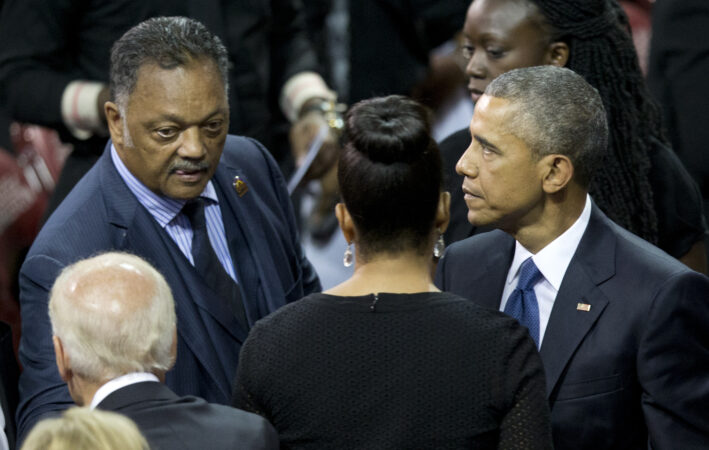
    And, yes, when Obama gave his victory speech in Chicago’s Grant Park on election night 2008, Jackson was there, too. While Obama spoke, Jackson could be seen holding a miniature American flag with tears streaming down his cheeks.

    “I wish for a moment that Dr. King or Medgar Evers” — the civil rights leader who was assassinated in Mississippi in 1963 — “could’ve just been there for 30 seconds to see the fruits of their labor,” Jackson later told the Associated Press about his emotions that night. “I became overwhelmed. It was the joy and the journey.”

    Jackson’s death on Tuesday at the age of 84 came after years of illnesses, including a rare neurological disorder. Even in his later years, however, he stayed in the game — to continue his football metaphor — making an appearance onstage to thunderous applause during the Democratic National Convention in Chicago in 2024.

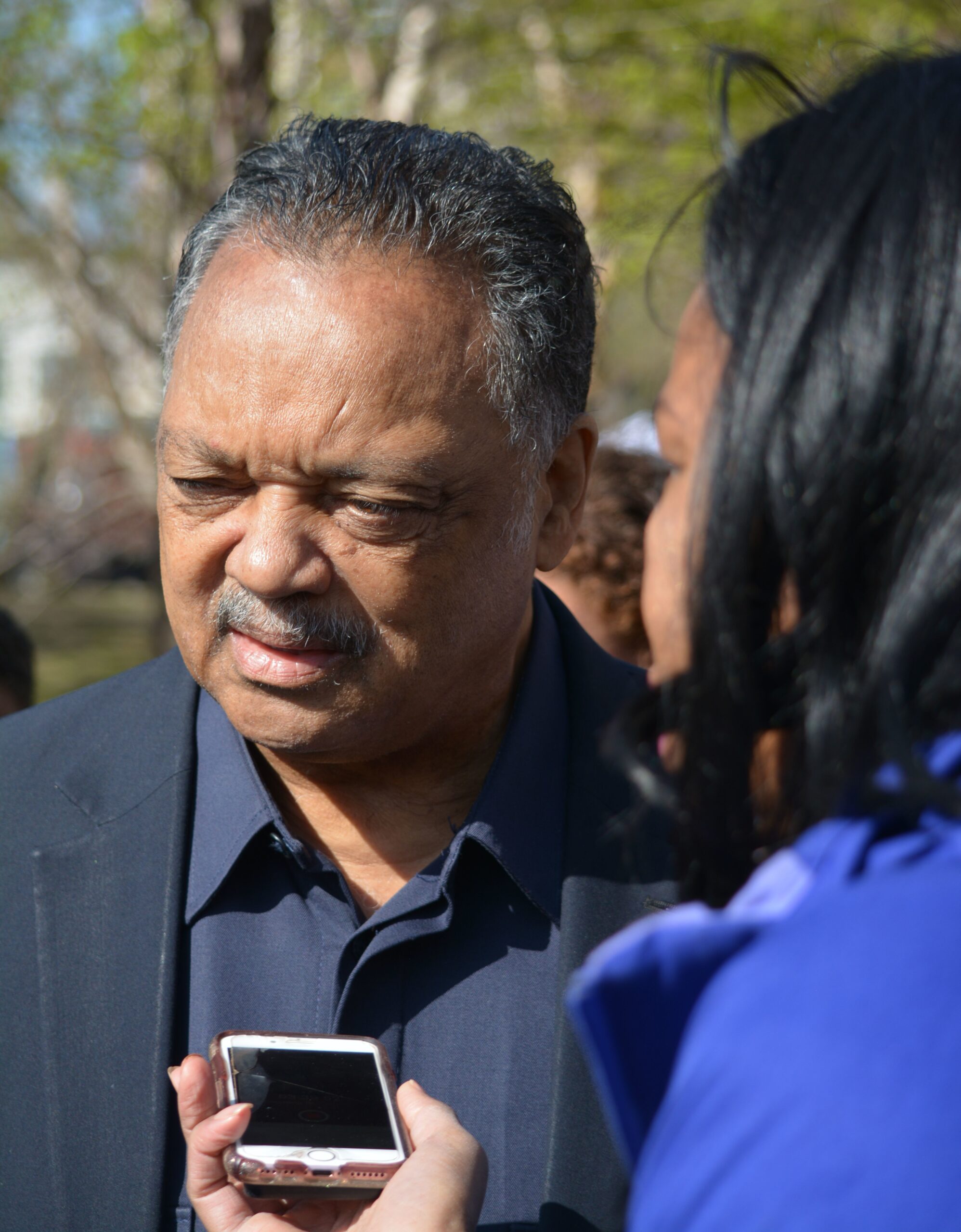
    Inquirer columnist Jenice Armstrong interviews Jesse Jackson during the 50th anniversary commemoration of the assassination of the Rev. Martin Luther King Jr. on April 4, 2018.

    News he had died hit me as hard as if I’d lost a dear relative. I didn’t know Jackson personally, but had the privilege of interviewing him multiple times during my career.

    In fact, the first time I met him was as a student journalist on the campus of Howard University. The last time I’d actually gotten a chance to interview him was in 2018 during the 50th anniversary commemoration of King’s assassination in Memphis outside what had been the Lorraine Motel, which is now part of the National Civil Rights Museum. I wish I’d kept the recording of what he said.

    As I processed the news of his death, I made a point of posting on Abby Phillip’s Instagram page a brief note of thanks for her work chronicling Jackson’s life and legacy in her book, A Dream Deferred: Jesse Jackson and the Fight for Black Political Power. Phillip told me last year that she knew she was working against time and Jackson’s frail health to finish the project before his death.

    Her goal, she said, “was to make sure that this chapter didn’t get lost to history.”

    I was a kid in the 1970s during the Black Power era who repeated his chants, “I am somebody!”

    Back then, it was affirming to see Jackson on TV with his then-signature Afro, or later delivering electrifying speeches during his groundbreaking runs for the presidency. We used to chant, “Run Jesse Run!”

    One of the first articles I wrote for my student newspaper was about Jackson’s Operation PUSH, or People United to Save Humanity.

    Jackson spent his adult life at the forefront of the pursuit of equality for African Americans, and for that, we should always be grateful.

    To me, losing this great leader in February during Black History Month — at a time when our people’s contributions to the nation’s history are being threatened with erasure — only magnifies the sense of loss. It should also remind those of us who care about civil and human rights that it’s our turn to take up the struggle — and keep fighting.

  • Trump’s sharing of a racist video of the Obamas on Truth Social is beyond the pale, even for him

    Trump’s sharing of a racist video of the Obamas on Truth Social is beyond the pale, even for him

    The late Maya Angelou had a saying that goes, “When people show you who they are, believe them the first time.”

    She’s gone now, but that was some really good advice.

    I am reminded of the late author’s wisdom after watching and rewatching a blatantly racist video that President Donald Trump posted on Thursday on Truth Social. It includes AI-generated imagery depicting former President Barack Obama and his wife as dancing primates.

    I am so disgusted.

    Anything to make the Obamas look bad. I wish I could share a photo of it with this column, but it’s too offensive. I’d tell you to go see his Truth Social account and look it up yourself, but I learned while writing this column that he has taken it down.

    Trump’s boorishness is no surprise. He has been showing us who he is and what MAGA is about since even before he came down that escalator at Trump Tower in 2015 and called Mexicans rapists and drug dealers.

    So it’s entirely fitting that night he would reshare a video repeating false claims about the 2020 presidential election, which he lost, that includes vile imagery about the 44th president.

    For many of 44’s supporters, the Obamas represented America at its best. And no matter where one stands politically, it would be hard to argue that Obama himself ever succumbed to the kind of impulsivity, rudeness, and disrespect we regularly see these days out of 1600 Pennsylvania Ave.

    But Trump is a petty, vindictive man whose obsession with the Obamas goes way back. It began in 2011, when Trump deliberately started a campaign of lies about Obama, claiming he wasn’t born in America and therefore ineligible to occupy the Oval Office.

    Some pundits argue that Trump’s Obama envy helped fuel his own run for the presidency. And now that he is in the White House for a second term, you’d think he’d be over it. But judging from the way he keeps disparaging Obama, he’s not.

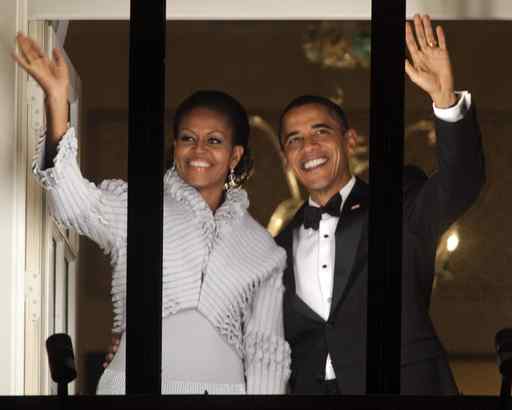
    President Barack and Michelle Obama wave to the crowd from a balcony at the Grand Hotel in Oslo, Norway, after he accepted the Nobel Peace Prize at the city hall in 2009.

    Trump is furious that Obama was awarded a Nobel Peace Prize and he was not — even after relentlessly promoting himself for one. That’s why when Venezuelan opposition leader María Corina Machado offered to give him her Nobel medal, he accepted it despite the Nobel committee’s clarification that possession of the medal alone is meaningless.

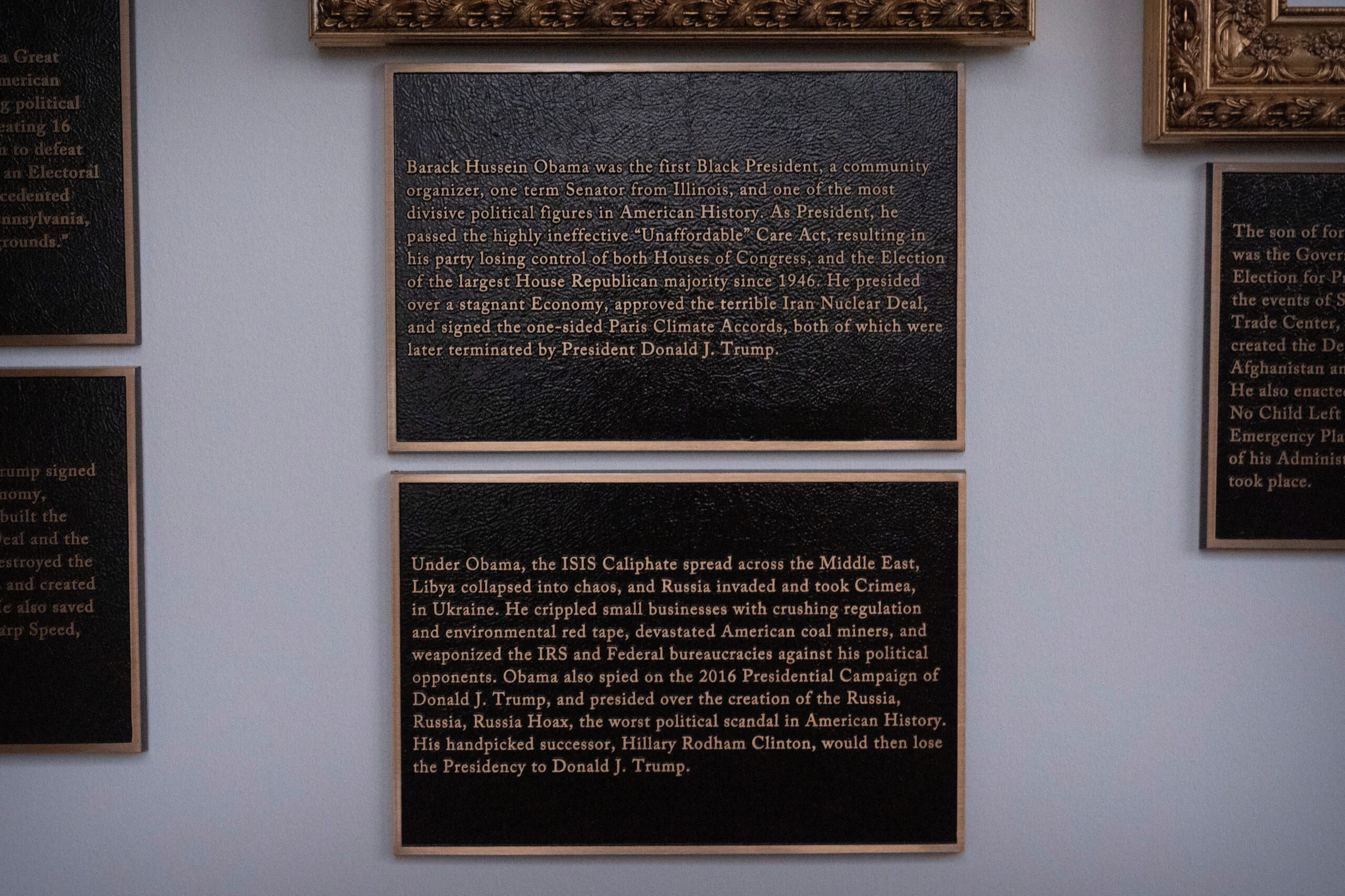
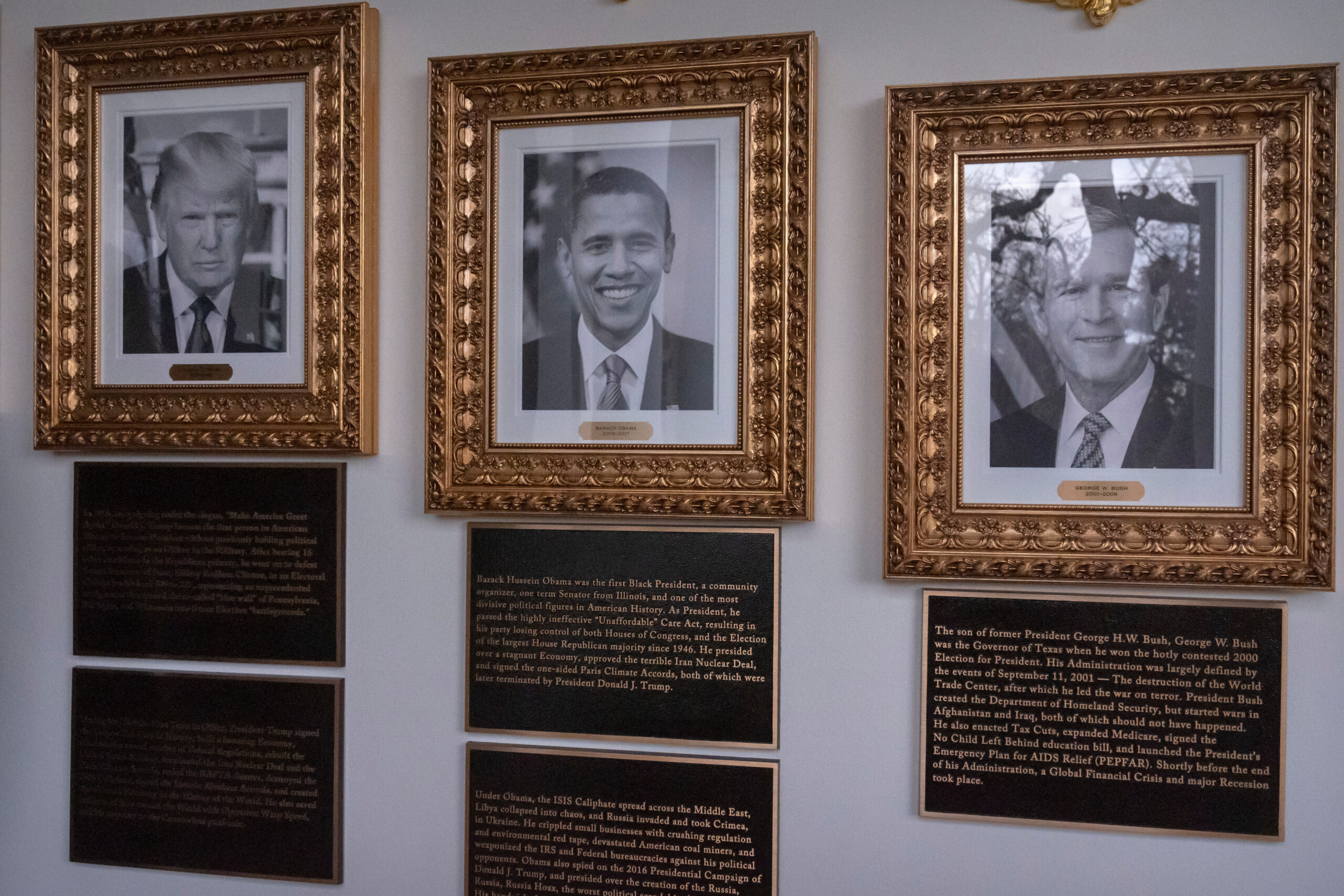
    Trump also ordered the installation of plaques under the photos of his presidential predecessors, and used the one under Obama’s to bash his legacy, calling him “one of the most divisive political figures in American history” and making other false claims.

    Plaques of explanatory text are seen beneath a framed portrait of former President Barack Obama on the Presidential Walk of Fame on the Colonnade of the White House, Wednesday, Dec. 17, 2025, in Washington.
    Portraits of President Donald Trump and former Presidents Barack Obama and George W. Bush with plaques of text below are seen on the Presidential Walk of Fame on the Colonnade of the White House, Wednesday, Dec. 17, 2025, in Washington.

    White House press secretary Karoline Leavitt tried to walk Trump’s post back, writing, “This is from an internet meme video depicting President Trump as the King of the Jungle and Democrats as characters from the Lion King.”

    She added via text, “Please stop the fake outrage and report on something today that actually matters to the American public.”

    There’s nothing fake about our outrage. We see Trump. We know what he’s doing by pulling out that old racist trope. Even Black Trump supporters like Sen. Tim Scott (R., S.C.) see this for what it is. “Praying it was fake because it’s the most racist thing I’ve seen out of this White House. The President should remove it,” Scott wrote on social media.

    Perhaps Scott has a really short memory and has forgotten Trump’s executive orders banning diversity, equity, and inclusion, and his calling Somali Americans “garbage” and African nations “shithole countries.”

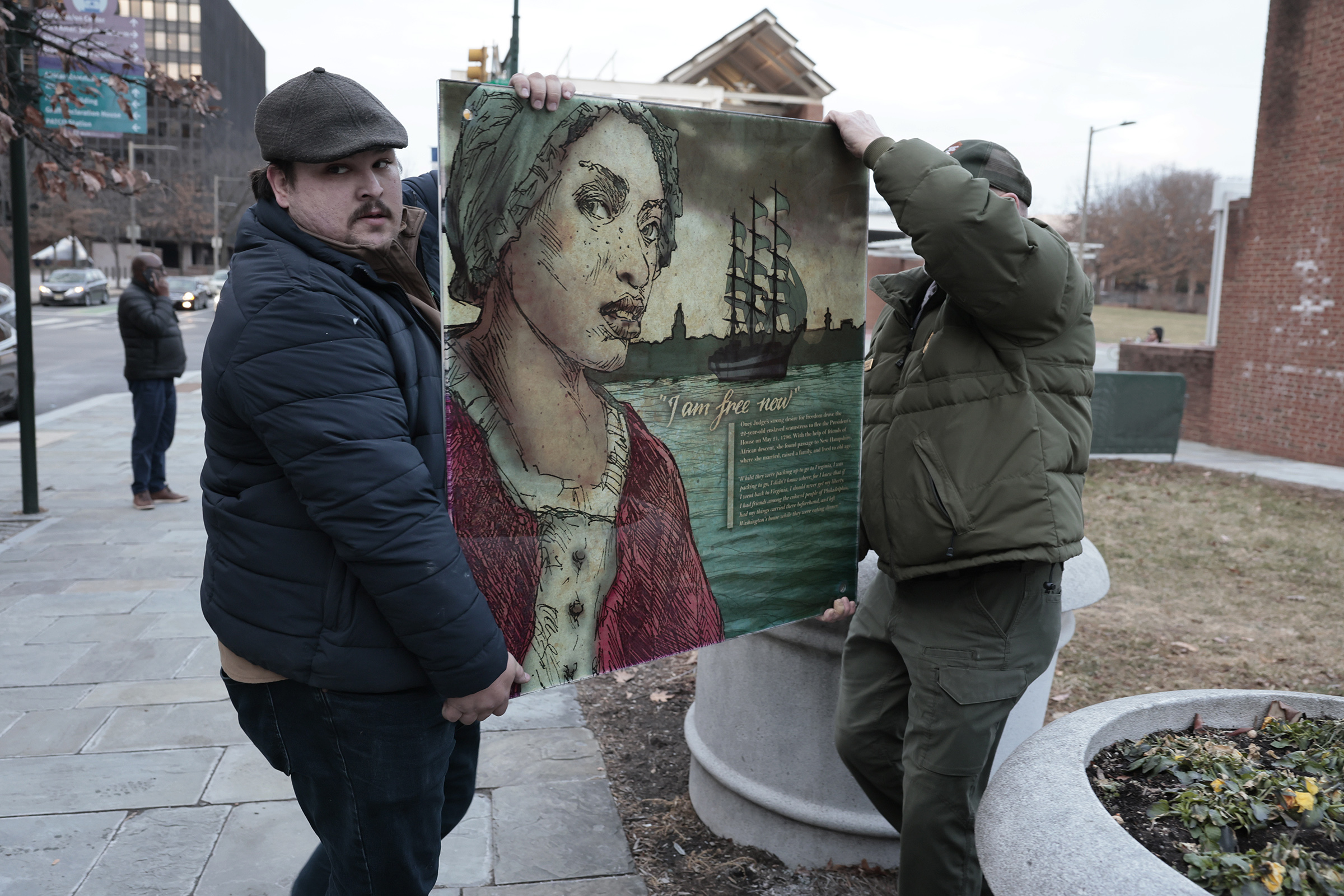
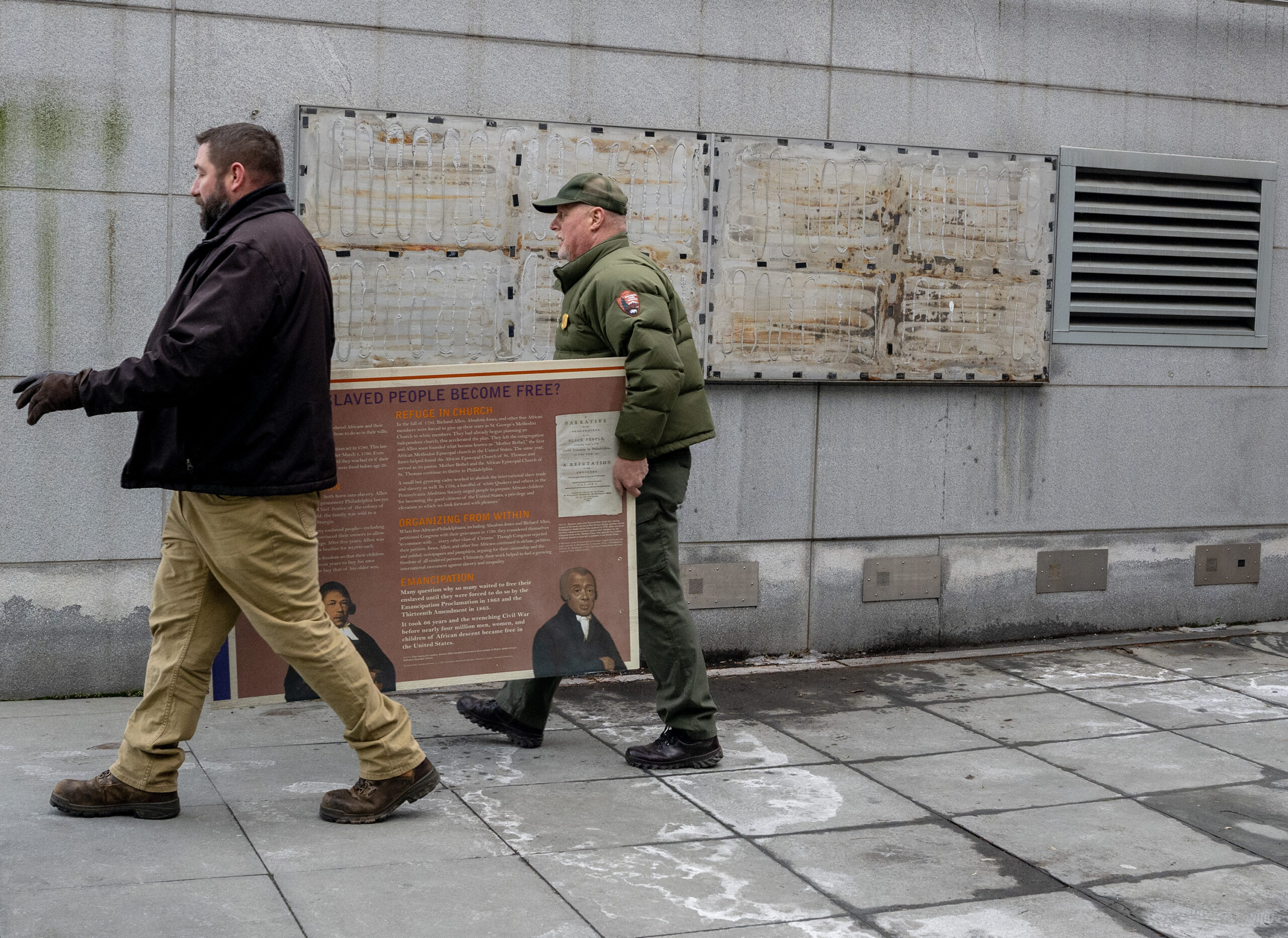
    Maybe Scott also doesn’t recall how Trump administration officials ordered the dismantling of the exhibit about the nine enslaved Africans the nation’s first president held in bondage at Sixth and Market Streets. Same thing with how Trump has ordered the renaming of military bases after the Confederate traitors they once honored.

    To him I say, “Brother, get woke.”

    This is part of a pattern. Trump has been letting us know exactly who he is and what his administration is all about for a long time now.

    MAGA supporters make excuses for his conduct, but when someone shows you who they are, believe them. Maybe they’ll get it now.

  • Trump can try to hide it, but slavery is part of America’s story

    Trump can try to hide it, but slavery is part of America’s story

    It hurts my soul that the Trump administration has made good on the president’s threats to destroy the President’s House slavery exhibit at Independence National Historical Park, something Philadelphians fought long and hard to get. It would hurt President Donald Trump’s soul, too, if only he had one.

    None of this makes America great again. It doesn’t bring down the cost of groceries. It doesn’t help Americans whose healthcare premiums have skyrocketed. It doesn’t make our streets safer. It doesn’t do anything but rile up Confederate flag-waving racists in Trump’s base. They had an awful lot to say about preserving history when monuments honoring traitorous soldiers who fought for the Confederacy and the right to own Black folks were torn down. But not so much when it comes to the destruction that happened at Sixth and Market Streets Thursday afternoon.

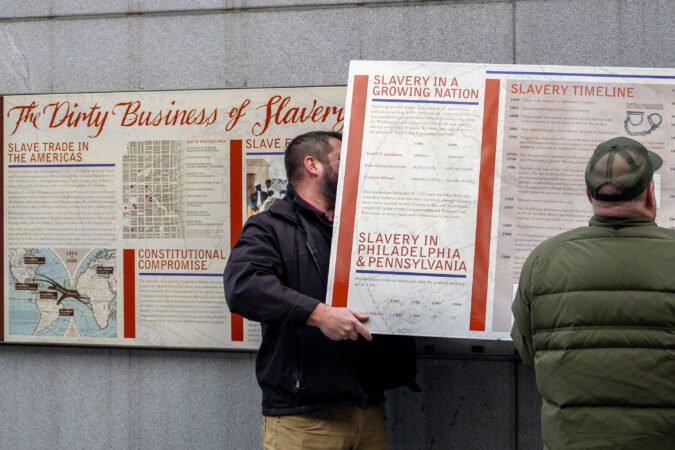
    National Park Service workers remove the displays at the President’s House site in Independence National Historical Park in Philadelphia on Thursday.

    I hope the spirits of the enslaved Africans whose stories had been immortalized in that display adjacent to the Liberty Bell will forever haunt Trump. It is my sincere wish that he and the henchmen who took down signs and dismantled the panels documenting the sad history of the nine enslaved Black people owned by our nation’s first president will never forget what they’ve done.

    From this day forward, may they toss and turn each night as they remember the destruction they have wrought, as well as the names of the enslaved whose memorial they defiled: Austin, Paris, Hercules, Christopher Sheels, Richmond, Giles, Oney Judge, Moll, and Joe.

    Trump and his enablers can try to hide the facts, but chattel slavery is an undeniable part of America’s founding. This nation wouldn’t be what it is now without the free labor of Africans dragged to these shores against their will and forced to toil for free in brutally inhumane conditions. It’s our story and one that should be acknowledged — not played down because Trump says so.

    What will he do next? Take a sledgehammer to the Martin Luther King Jr. statue in Washington, D.C.? Empty out the Smithsonian’s National Museum of African American History and Culture? Burn the books about slavery and Black codes that have been for sale in museum gift shops and national parks?

    The exhibit at the President’s House was the first I’d ever seen that, instead of glorifying the nation’s first president, humanized the poor people Washington held in the worst kind of bondage. The offices of The Inquirer are right across the street, and I’ve walked through the free outdoor exhibit many times. I used to enjoy seeing the expressions of tourists as they learned about the side of Washington that’s left out of most history books.

    Workers remove display panels about slavery at the President’s House site in Independence National Historical Park on Thursday, leaving only empty spaces where history has been redacted by President Donald Trump.

    Now all that’s left are the empty spaces where the various signs used to be. These sudden omissions at Independence Park make it feel like the historical account now being told at the site is a lie — not unlike the foundational lie of white supremacy that was used to justify the sin of slavery in the first place.

    The removals are just another step in Trump’s brutal agenda to take things in America back to how they used to be when white men had everything and Black people had nothing.

    Since his return to power, it has been one thing after another: his attempts to destroy all vestiges of diversity, equity, and inclusion, including his decision to no longer allow free admission to national parks on the federal holidays celebrating the late Rev. Dr. King and Juneteenth. Instead, parkgoers can enjoy free admission on Trump’s birthday, as if that’s really a thing.

    The president would destroy Black History Month, too, if he could, and I don’t put it past him to try. He’s been clear about his racial animus, restoring the names of Army bases to those of Confederate military figures and using U.S. Immigration and Customs Enforcement agents to inflict a reign of terror on Black and brown people.

    I’m proud Philadelphia has filed suit to take back what was removed from the President’s House. This is the beginning of the City of Brotherly Love, showing the Trump administration that, in the words of Sheriff Rochelle Bilal, “You don’t want this smoke.”

  • No matter what Trump may claim, protecting civil rights doesn’t prompt reverse racism

    No matter what Trump may claim, protecting civil rights doesn’t prompt reverse racism

    The days when Black people couldn’t vote, ride on the front of public buses, be served at lunch counters, attend many schools, or sleep in hotels weren’t all that long ago. Thanks to the advocacy of the late Rev. Dr. Martin Luther King Jr. and the passage of the Civil Rights Act of 1964, discrimination based on race is now illegal.

    But President Donald Trump would try to have us believe that the implementation of civil rights policies has hurt white people, when, in actuality, they make life better for everyone because they protect women, religious groups, immigrants, the LGBTQ+ community, and people of different ethnicities and races from discrimination.

    In Trump World, though, up is down and down is up.

    News reports today often read more like satire from the Onion than real life. But journalists still have a responsibility to report on what comes out of the Oval Office, no matter how ludicrous.

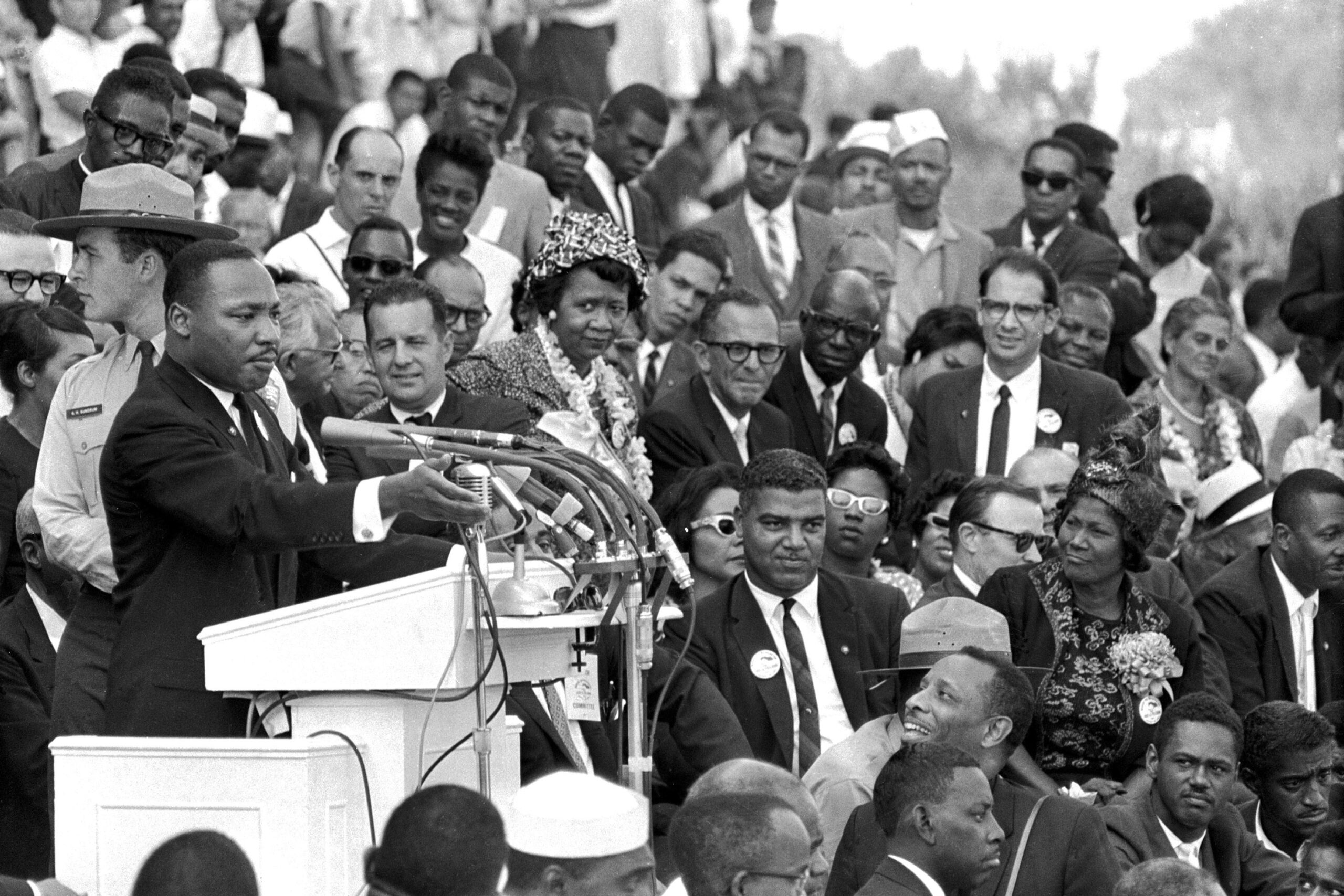
    The Rev. Dr. Martin Luther King Jr. speaks to thousands during his “I Have a Dream” speech at the Lincoln Memorial during the March on Washington for Jobs and Freedom, Aug. 28, 1963, in Washington.

    So when I read that Trump had met with a small group of New York Times journalists at the White House and told them that civil rights led to white people being “very badly treated,” my jaw dropped. I read and reread what his actual words were, which included his saying, “White people were very badly treated, where they did extremely well, and they were not invited to go into a university to college.”

    Trump reportedly added, “So I would say in that way, I think it was unfair in certain cases.”

    That’s like saying the rise of feminism and women’s rights hurt men. But wait, there’s more. Trump also is reported as having said: “I think it was also, at the same time, it accomplished some very wonderful things, but it also hurt a lot of people — people that deserve to go to a college or deserve to get a job were unable to get a job. So it was, it was a reverse discrimination.”

    He apparently was referring to affirmative action, which is rich considering white women are the largest beneficiaries of it. Same thing with diversity, equity, and inclusion initiatives, which were created to give historically marginalized workers, such as women, people with disabilities, African Americans, and veterans, better opportunities in the workplace.

    This attempt by Trump at grievance politics to rev up his base rings hollow to sensible people who recognize that white men have always held the vast majority of upper-level positions in both the private and public sectors.

    In contrast, Black people and Native Americans have always had the highest rates of unemployment. Despite advances, the wealth gap between white and Black people continues to be considerable. This past September, I wrote about how African American women have been the hardest hit by job losses since Trump returned to public office.

    MAGA is big on accusing former President Barack Obama of supposedly dividing the country, while it is Trump who continually stokes racial division.

    He kicked off his presidential campaign in 2015 by maligning Mexicans, saying: “They’re bringing drugs. They’re bringing crime. They’re rapists.” He has referred to Haiti, African nations, and El Salvador as “shithole countries,” accused Haitians in Springfield, Ohio, of eating their neighbors’ dogs and cats, and insulted Somali Americans by calling them “garbage.”

    One of the first things Trump did after being sworn into office in 2025 was to sign executive orders aimed at eliminating DEI. His remarks about civil rights supposedly hurting white people are merely his latest salvo, along with his administration’s calls for white men to file complaints with the Equal Employment Opportunity Commission.

    “There is zero evidence — none — that the civil rights movement harmed white men in any way,“ said NAACP president Derrick Johnson in a statement to the Grio. “[Trump] is hoping we swallow his lie again, so that he can continue to privatize education, cut social services, and repeal civil rights laws and enforcement mechanisms. It’s all about making more money — even if we all suffer as a result.”

    It’s sad — but not surprising — that in 2026 the president would reach for a play out of the tattered segregationist handbook to try and make white people the victims of civil rights.

    Had he lived, King would have been thoroughly disgusted — but would have countered the president’s gutter-level deception with an elevated truth: “If the inexpressible cruelties of slavery could not stop us, the opposition that we now face surely will fail.”

  • We’d be so much better off if Kamala Harris had been elected president

    We’d be so much better off if Kamala Harris had been elected president

    My late father was a high school teacher and basketball coach who learned a lot about the world around him during his 81 years. I’ll never forget how, when he’d hear me grousing about what could have been, he would always give me a look and sternly warn, “Don’t look back.”

    I’ve come to appreciate how wise his words were, but let’s face it, sometimes we don’t need wisdom — we need relief.

    Barely a few weeks into Year Two of Donald Trump’s second term, I can’t help but shake my head when I think about how much better off America (and the world) would be if Kamala Harris had won the presidency.

    She wasn’t a perfect candidate. Far from it. But once in the White House, I have no doubt she would have led the country with dignity and integrity, values currently in short supply inside the Oval Office.

    Under President Harris, the U.S. would not have invaded Venezuela and kidnapped its president, threatened to annex Greenland “the hard way,” or alienated our Canadian neighbors into boycotting American products and selling their Florida vacation homes. Rather than flirting with blowing up NATO, we would be working with our European allies to pressure Russia into ending its war with Ukraine.

    Instead of bringing back American imperialism — something nobody voted for — Harris would be focused on improving the lives of everyday Americans.

    She would be implementing policies such as allowing Medicare to better cover the cost of home care, and working with Congress to extend insurance subsidies to help keep healthcare affordable for millions of people. Meanwhile, the inflation that bedeviled her predecessor would continue to ease, untroubled by haphazard tariffs that are no less than a tax on every U.S. family.

    Elon Musk’s Department of Government Efficiency would be a ketamine-fueled figment of the tech billionaire’s imagination instead of the cause of almost 750,000 deaths — most of them children — due to the dismantling of the U.S. Agency for International Development. At home, the roughly 300,000 federal workers who left or lost their jobs because of DOGE would be serving the public, instead of leaving gaps in crucial agencies such as Social Security, the U.S. Department of Veterans Affairs, and the Federal Aviation Administration.

    You know who wouldn’t have a job under a Harris administration? The thousands of U.S. Immigration and Customs Enforcement agents who will be hired, to the tune of $30 billion, over the next few years. ICE would be targeting criminals in the country illegally, not inflicting a reign of terror on the American people. Renee Nicole Good, a 37-year-old mother of three and U.S. citizen, would still be alive instead of gunned down by an ICE agent in Minneapolis.

    FBI agents across the country would be focused on solving and preventing crimes, instead of thousands being reassigned to immigration enforcement. National Guard members would be with their families, not picking up trash in Washington, D.C., or standing around Portland, Ore., waiting for something to happen.

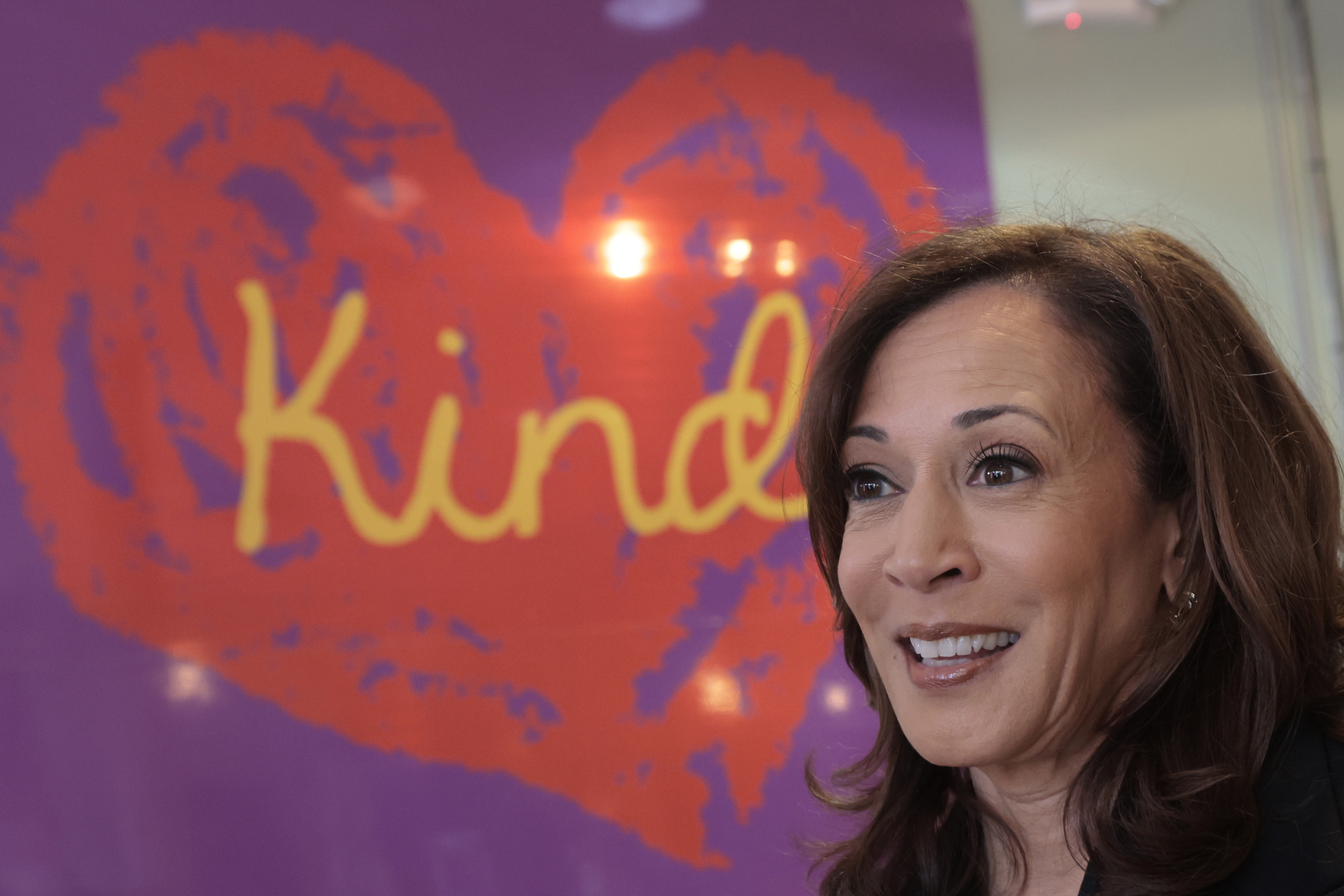
    Kamala Harris during an interview while shopping at Penzeys Spices on Market Street in September.

    Harris, a former California attorney general, would have kept the long-standing tradition of an independent U.S. Department of Justice, instead of turning it into the president’s law firm and using it to go after political enemies. She would have assembled a cabinet stocked with competent and experienced members, one likely as diverse as America. People like Kash Patel and Pete Hegseth would be far away from power, hawking “vaccine reversal” pills and defending war criminals on Fox News, respectively.

    Where would Trump himself be under a Harris presidency? In the same mess of trouble he had gotten himself into.

    Special counsel Jack Smith would be zealously pursuing the case against Trump for illegally retaining classified documents and plotting to overturn the 2020 election. Charges that Smith has said he could prove beyond a reasonable doubt.

    The once and forever former president would not be $3 billion richer thanks to shady crypto deals and other business ventures he has undertaken since returning to Washington. Neither would he be absentmindedly staring out where the East Wing of the White House once stood and imagining his sprawling ballroom, plastering his name on the Kennedy Center, nor costing taxpayers millions to outfit the $400 million luxury jetliner Qatar gave him.

    If anything, he might have found himself with new indictments if he had tried to steal the 2024 election, and the MAGA crowd staged another Jan. 6, 2021-style revolt in protest of a Harris victory. No doubt Harris’ attorney general would have learned a lesson from the previous administration and would not drag his feet, as former Attorney General Merrick Garland did in holding Trump accountable.

    Eventually, though, I’m convinced things would have settled down, and American politics would have gone back to being boring again — like they used to be. Fox News commentators would shift back to their old ways of complaining about Harris’ laugh and occasional lapses into word salad.

    As things calmed down, so, too, would the excitement surrounding her historic win as the realities of governance asserted themselves.

    Signing a bill to restore abortion rights nationwide would have been high on Harris’ agenda, reviving the issue that long fueled a part of the electorate. The culture war over GOP-manufactured concerns about men taking over women’s sports would rage on, never mind that trans people make up only about 1% of the population. So would the debate over the merits of diversity, equity, and inclusion efforts.

    On immigration, Harris would be caught between her party’s activist base and trying to limit people from seeking asylum at the southern border. It’s one thing for Harris to have issued her famous edict telling immigrants, “Don’t come,” and a whole other thing to take substantive steps to stem the flow of people desperate to enter the U.S.

    With Trump out of office, America would continue to be a bulwark for democracy, but the threats of authoritarianism, antisemitism, and racism would not go away. Neither would the voter malaise and congressional dysfunction that have given rise to people like Trump and his supporters. But Harris would fight the good fight for everyday Americans.

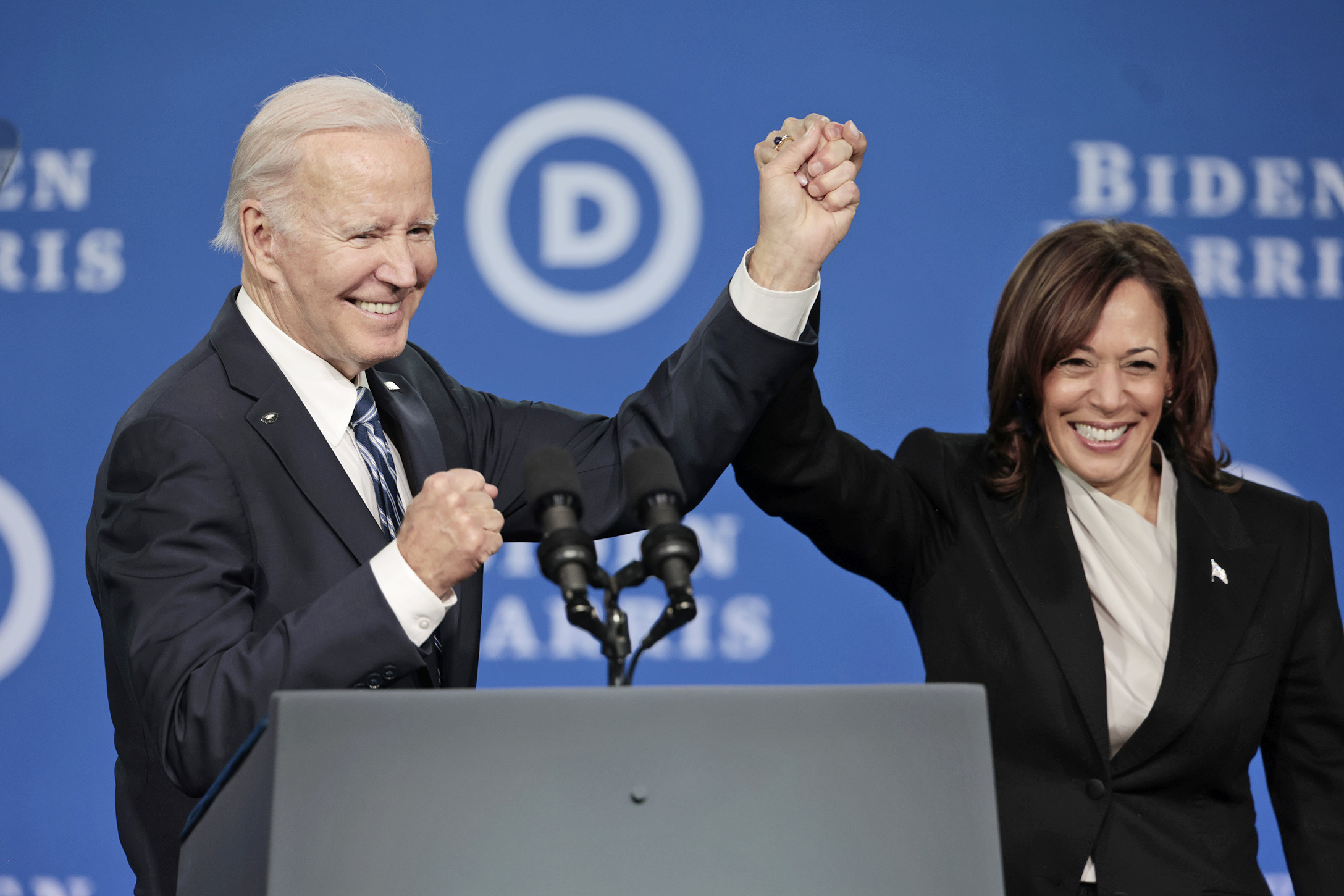
    President Joe Biden and Vice President Kamala Harris wave to the audience after addressing the DNC Winter Meeting at the Sheraton Downtown in Philadelphia in 2023.

    For a few days last month, I’d allowed myself to feel a tad bit optimistic, sensing that America had turned a corner. Maybe it was the eggnog, but the upcoming midterm elections had me feeling a little hopeful. So did the public opinion and court decisions pushing back against Trump’s excess and overreach. And Congress showing a spine and demanding accountability in releasing the Jeffrey Epstein files. If ever there were a year Rep. Jasmine Crockett could win a U.S. Senate race in Texas, 2026 felt like it could be it.

    But then, Trump dropped bombs on an Islamic group in Nigeria on Christmas Day and followed that up by sending troops into Venezuela. Now, he’s staking claims to that country’s oil reserves while looking around to see which nation he can storm next. Will it be Mexico? Colombia? Iran? Greenland? I don’t think even he knows.

    Trump isn’t bound by conventional mores or the Constitution. He’s not restrained by Congress or the U.S. Supreme Court. As he told the New York Times recently, the only thing that can stop him is his own mind. His “own morality,” which is downright scary considering his track record.

    And yet, even as I am knocked down by the reality we’re facing. I can’t help but stand up. My dad was right to warn about not looking back, but in imagining the leadership of someone who is more than worthy of the office of the presidency, I like to think I’m looking forward.

    And maybe I am.