Author: Jenice Armstrong

  • Dear Santa, Trump has been very naughty. Don’t give him anything. Not even coal.

    Dear Santa, Trump has been very naughty. Don’t give him anything. Not even coal.

    Dear Santa Claus,

    I hope you and Mrs. Claus are well. This is the first time in a long while that I have taken the time to write out my Christmas wish list. It’s a long one, but it’s also for the millions of Americans struggling this year to fill their Christmas stockings.

    Donald Trump, a spray-tanned, 21st-century version of Ebenezer Scrooge, claims the affordability crisis is a “Democratic hoax,” and that parents should deal with it by buying fewer toys. With a heart that’s at least two sizes too small, he just can’t relate to those who scrape to get by. The only struggle he can relate to has to do with pronouncing the word acetaminophen.

    Like the main character in Charles Dickens’ A Christmas Carol, Trump enjoys demeaning people — as he did last week when he unveiled a series of plaques near the Oval Office, deliberately distorting the legacies of former Presidents Joe Biden and Barack Obama. Trump isn’t in the same league with either of them. Not even close. Same thing with President John F. Kennedy, but that didn’t stop him from having his name slapped onto the John F. Kennedy Center for the Performing Arts last week.

    Please, Santa, make sure your sleigh doesn’t drop off any presents at the White House on Christmas Eve. Same thing with Mar-a-Lago. Remember Trump’s posting an AI-generated meme dropping what looks like feces on “No Kings” protesters back in October? Just tell Dasher, Dancer, Rudolph, and the rest to fly right on by both of these locations.

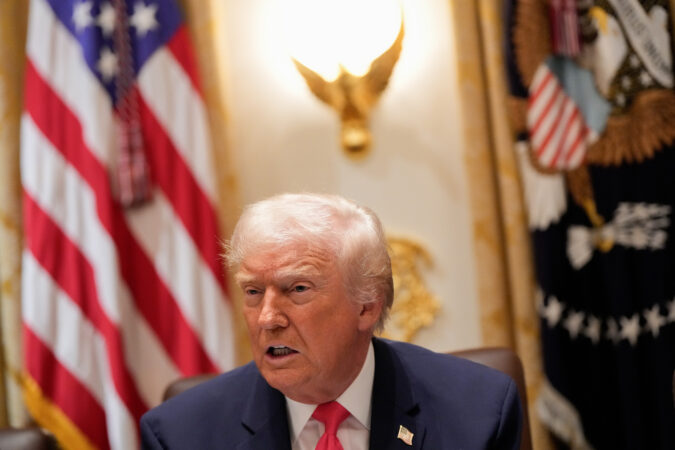
    President Donald Trump speaks during an address to the nation from the Diplomatic Reception Room at the White House in Washington in December.

    Unemployment rose to 4.6% last month, the highest increase since 2021. For African Americans, it’s way higher, at 8.3%. Kudos to Rep. Ayanna Pressley (D., Mass.), among others, for demanding answers about what’s going on. Please don’t forget to drop off something really nice for them.

    Also, as I’m sure you’re aware, America is on the verge of a healthcare crisis. Once federal subsidies to the Affordable Care Act expire Dec. 31, millions will see their health insurance costs skyrocket. This isn’t the kind of thing you and the elves typically work on up at the North Pole, but members of Congress have failed to come up with a solution.

    If something drastic doesn’t happen soon, millions may wind up dropping their policies, which could prove catastrophic. We can’t count on that old Scrooge, I mean the president, who campaigned claiming he had a “concept of a plan” to fix healthcare. He hasn’t done it yet, and I doubt he ever will. Instead of boxed gifts, anything you can do to help us resolve this important issue would be deeply appreciated.

    Trump really deserves that No. 1 spot on your naughty list this year. It’s one thing to try to secure America’s borders, but it’s a whole other thing to allow masked U.S. Immigration and Customs Enforcement agents to carry out a reign of terror on undocumented immigrants and U.S. citizens alike.

    There have been many other lowlights from the first 11 months of his second term: imposing tariffs on foreign countries that have raised costs for American consumers, dismantling the U.S. Agency for International Development, and stopping diversity, equity, and inclusion in the federal government and anywhere else he can.

    On top of everything else, Trump doesn’t even bother to hide his bigotry anymore. Under his leadership, officials have admitted white Afrikaners — descendants of the European colonizers whose segregationist practices led to the formalization of apartheid in South Africa — granting them refugee status while doing everything in his power to deport Black and brown migrants. I haven’t recovered from his calling Somalis “garbage” and saying that they should leave the country.

    They and anyone else Trump doesn’t like have to go because he’s worried about “chain migration,” but first lady Melania Trump, who brought her parents to the States using the same process, can stay? Make it make sense.

    Volunteers take phone calls from children asking where Santa is and when he will deliver presents to their house, during the annual NORAD Tracks Santa Operation, at the North American Aerospace Defense Command, or NORAD, at Peterson Air Force Base, in Colorado Springs, Colo., last Christmas Eve.

    I could go on and on, but I’m trying to embrace the holiday spirit. Please give my regards to Mrs. Claus and to all of the elves who work so hard to make the Yuletide season jolly.

    When you make your way down my chimney, you will find your cookies and milk in their usual place. I don’t need anything personally, but please do what you can to make life easier for Americans scraping to get by in the so-called golden age of Trump. As a certain humbug himself might say, thank you for your attention to this matter!

    Love, Jenice

  • You may not have healthcare but you can get into a national park for free on Trump’s birthday

    Soon, you may no longer be able to afford healthcare since Republicans have once again blocked efforts to subsidize the Affordable Care Act.

    The most recent government shutdown became the longest in history because Democrats insisted on continuing to fund healthcare while the GOP balked. The Republicans won. America lost.

    But don’t despair.

    When President Donald Trump’s 80th birthday rolls around on June 14 — which happens to coincide with Flag Day — you will be able to visit a national park for free.

    See? Trump really is making America great again.

    Kidding aside, most of us aren’t going to mark Trump’s birthday — he hasn’t earned that from us. He can accept all the fake awards he wants, but he’s no hero. He’s a billionaire who has the nerve to claim that “the word affordability is a Democrat scam.” Remember that the next time you’re at the grocery store. Trump promised to bring down costs. It hasn’t happened.

    President Donald Trump picks up his FIFA Peace Prize medal before the draw for the 2026 soccer World Cup at the Kennedy Center in Washington, in December.

    Trump also said he would fix healthcare. That hasn’t happened either. He said he was going to fix the situation at the border. We now have masked ICE agents terrorizing undocumented immigrants and U.S. citizens alike. Entry into America is for sale y’all. As long as you have $1 million to pay for a green card. Make that a gold car with Trump’s image on it. Next up, a Trump platinum card.

    The president’s actions remind me of a narcissist whose world begins and ends with himself. This nation, however, is expansive and needs a president who puts the American people first. That’s not what we have with Trump. He demonstrates that over and over again.

    His administration’s decision to make entrance at national parks free on his birthday wouldn’t be quite as egregious if it hadn’t also revoked free admission for visitors on not one, but two federal holidays that honor Black history — Juneteenth and the Rev. Dr. Martin Luther King Jr.’s birthday. It feels like just another way to antagonize African Americans who still haven’t gotten over his calling Somalis “garbage” and saying they should leave the country.

    But wait, there’s more.

    The Trump administration has ordered the Park Service to clear the shelves of its gift shops, bookstores, and concession stands of any merchandise that runs afoul of its anti-diversity, equity, and inclusion policies. Employees have until Dec. 19 to get rid of any of the so-called offending merchandise. (Note: Let us know when the fire sale is and we’ll take it off your hands.)

    Trump only wants to present a sanitized version of American history: So no mention of slavery and Jim Crow and that sort of thing. But lots of red, white, and blue like he sells in his Trump store.

    As with practically everything else he sticks his suspiciously bruised hand into, he’s making a mess of things at the National Park Service.

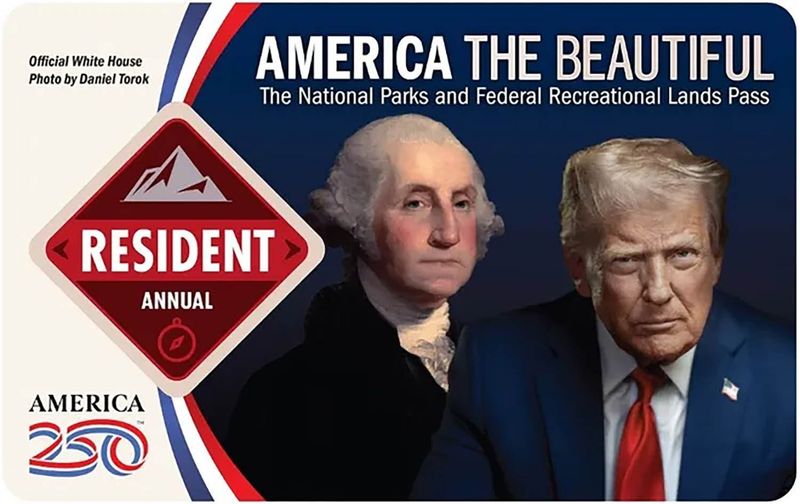
    And I’m not just talking about the way officials have slapped the president’s scowling face on the prized annual park pass. An environmental group is suing him for that. I hope the lawsuit wins. I’d love to get one to give as a present for Christmas but I’m not doing it if his face is on it.

    A 2026 America the Beautiful National Park Service annual pass features President Donald Trump’s portrait. The Center for Biological Diversity sued the Trump administration, saying the pass must have a contest winner photo taken in federal lands, as deemed by federal law.

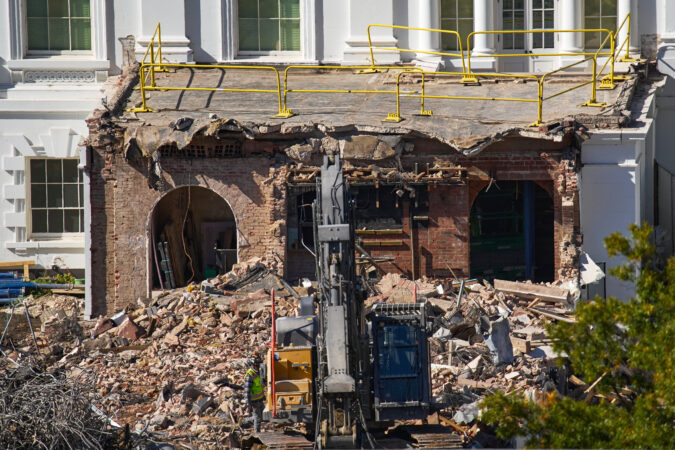
    The Trump administration also has cut numerous jobs and services at national parks, imposed a $100 fee for foreign visitors to certain parks, and stripped conservation protections for public land. I shudder to think about what could be next. Selling off national parks to the highest bidder? I wouldn’t put it past him to try it. We’ve seen what he did to the East Wing of the White House.

    Healthcare premiums for more than 24 million Americans may soon skyrocket without government subsidies to bring down costs for everyday people. Remember who is to blame when your insurance premiums suddenly spike.

    The day can’t come soon enough when Trump is finally out of office for good. That’s when we, the people, can set about undoing all the damage he has done.

    And that includes reinstating admission fees at national parks on Trump’s birthday.

  • Trump says Somalis are ‘garbage’ and wants them to leave America. No one should be surprised by his ignorance.

    Trump says Somalis are ‘garbage’ and wants them to leave America. No one should be surprised by his ignorance.

    Donald Trump let us know exactly who he is when he rode down that escalator in June 2015, declared his presidential candidacy, and said this about Mexicans: “They’re bringing drugs. They’re bringing crime. They’re rapists.”

    We’ve heard him refer to Haiti, African nations, and El Salvador as “shithole countries.” Last year, he accused Haitians in Springfield, Ohio, of eating their neighbors’ dogs and cats. Trump allows mask-wearing U.S. Immigration and Customs Enforcement agents to terrorize undocumented immigrants, most recently in New Orleans, as reported by my colleague Will Bunch.

    No one should be surprised he called Somalis “garbage” who “contribute nothing” and should leave America during a cabinet meeting last week.

    “These are people that do nothing but complain,” Trump said. “When they come from hell, and they complain and do nothing but bitch, we don’t want them in our country. Let them go back to where they came from and fix it.”

    Trump talks a really good game about putting America First, but he really means people of color last. An example of that was when he suspended refugee admissions, but then turned around and made an exception for white South Africans.

    Even knowing Trump’s agenda, it’s still upsetting to hear a sitting U.S. president denigrate the roughly 250,000 Somalis in this country.

    He’s talking about law-abiding folks like Salma Hussein. She made headlines in 2022 when she became the first female Somali principal in her school district in suburban Minneapolis, and possibly in the entire state of Minnesota.

    Hussein was born in Somalia, but has lived in America since the age of 7, and is a naturalized citizen. She’s a wife. She’s a mother of two. She’s a good person. “It’s really hurtful, and he’s giving permission to people to be hateful, and that’s really disheartening,” Hussein said.

    I stumbled across some of her social media posts about what’s been happening and decided to reach out. When I got her on the phone last week, Hussein, 37, and I talked about a lot of things, including how a stranger had emailed her saying: “Watch out. You’re not wanted. We’re taking out the trash from our country.”

    Salma Hussein, a Somali American who’s lived in the U.S. since she was 7, said the president is “giving permission to people to be hateful.”

    I shouldn’t even have to write this: Most Somalis are honest, law-abiding people. Many settled in Minnesota during the early 1990s after fleeing their war-torn country. Of the state’s foreign-born Somalis, most are naturalized U.S. citizens. They have every right to live in the Land of 10,000 Lakes. They vote. They pay taxes. Trump is their president, too. Some, oddly enough, even voted for him.

    I wish they’d thought longer and harder before voting for Trump, who posted on Truth Social that Minnesota is “a hub of fraudulent money laundering” and announced he was terminating Somalis’ Temporary Protected Status.

    Dozens of Somalis in Minnesota are facing charges in connection with a nefarious scheme to defraud the U.S. government of hundreds of millions in funding that had been set aside to feed hungry children at the height of the pandemic. Still, it’s unfair for a sitting U.S. president to stereotype an entire community for the actions of a subset. “As a Somali American, I’m just as upset about the people in my community who use fraud to make money,” Hussein told me.

    Somalis, who have built a large and influential enclave in Minnesota, are terrified that masked agents from ICE will take them into custody. Some have started carrying their passports. Others refuse to even leave their homes.

    “This kind of dangerous rhetoric and this level of dehumanizing can lead to dangerous actions by people who listen to the president,” said Rep. Ilhan Omar (D., Minn.) on CBS’s Face the Nation on Sunday.

    It’s textbook Trump — and, of course, MAGA loves it.

    Rep. Ilhan Omar (D., Minn.) speaks during a news conference, May 24, 2023, on Capitol Hill in Washington.

    In New Orleans last week, Trump sicced ICE on undocumented Hispanic immigrants. At around the same time, his agents were also targeting Somalis in Minnesota.

    Which ethnic minority Trump will single out next for harassment is anybody’s guess. The only thing we can be certain of is that they will be from a Black or brown community.

  • Nothing about Trump’s ballroom benefits us

    Nothing about Trump’s ballroom benefits us

    The White House is the People’s House. Period. It is public property that was paid for by us, built by us, and is maintained by us. And no matter who its current occupants are, we still own that building.

    Yet, we weren’t asked if we wanted a new 90,000-square-foot, mega-ballroom decorated with gold and who-knows-what-else to be added onto our house. But it’s a ballroom we’re getting from President Donald Trump, whether we like it or not. (Count me in the latter group.)

    I agree with those who say the design is tacky. I also agree with those who say we don’t really need it — especially when there is so much our fellow Americans actually need these days.

    The project, which will, of course, be called the Trump Ballroom, is projected to cost $300 million. The president says it will be paid for “100% by me and some friends of mine.”

    Sure. Just like the wall he promised to build and get Mexico to pay for. Same thing with his plan to produce a viable alternative to the Affordable Care Act.

    But even if construction costs are covered, taxpayers will get stuck with paying for maintenance and upkeep.

    A handout rendering of the interior of a “$200 million ballroom” in the East Wing of the White House that was announced by the Trump administration in July. The cost of building it has gone up since then — it is currently estimated at $300 million.

    Between high grocery bills, rising healthcare costs, over-the-top housing prices, and everything else that’s going on right now, building an addition onto the White House should be the lowest Trump priority.

    Yet, the project was very much on the president’s mind Sunday night because he boasted about it on Truth Social, claiming “it will be, at its completion, the most beautiful and spectacular Ballroom anywhere in the World!”

    But for a lot of us, the old East Wing, which was demolished to make way for the Trump Ballroom, was beautiful and spectacular on its own. That includes former first lady Michelle Obama, whose office was once located in the East Wing.

    Just last week, she described on the Jamie Kern Lima podcast what a jarring experience the demolition was for her. “It’s not about me, it’s about us and our traditions and what they stand for,” the former first lady explained. “I think in my body I felt confusion because I’m like, ‘Well, who are we? What do we value and who decides that?’”

    I grew up in Washington, D.C., just seven miles away from the White House. But it could have been a thousand miles away. I felt completely disconnected from the historic landmark and what took place there.

    That is, until Obama moved in with her family. She was the first person whom I ever heard refer to 1600 Pennsylvania Ave. as “the People’s House.” Putting it that way made me feel welcome. It gave me a sense of ownership. I loved how she reminded Americans of that shared ownership throughout her family’s eight years in the White House.

    Former first lady Michelle Obama speaks about her new book “The Look” during an event at Sixth and I Streets in Washington, D.C., on Nov. 12.

    Trump supporters are quick to point out that the Obamas themselves made additions to the White House grounds. When he was in office, President Barack Obama painted lines on an existing tennis court and added basketball hoops. But those are minuscule changes compared with Trump’s addition, which would be almost double the size of the White House itself.

    I listened to Obama’s comments about the White House on the Kern podcast a few days before the Thanksgiving holiday, one of the most American traditions we celebrate.

    And as I mulled over her words, I thought about how, no matter what we think of them, U.S. presidents come and go from their official residence, but the building remains a stalwart symbol of the nation’s highest office.

    A Christmas tree decorates the White House on Monday during a preview of its Christmas decorations, which are themed “Home Is Where the Heart Is.”

    The theme of this year’s White House Christmas decor is “Home Is Where the Heart Is.” But we have to remember that home is ours; Trump is merely a temporary guest at the executive mansion. It still belongs to us, the American people. Period.

  • Trump’s bullying of female reporters won’t stop journalists from asking tough questions

    Trump’s bullying of female reporters won’t stop journalists from asking tough questions

    It has long been established that some of Donald Trump’s most frequently used rhetorical weapons have been misogynistic insults. It is just as well known that the president seldom hides his contempt for journalists.

    So it’s hardly surprising anymore when Trump degrades female reporters. But the president reached a new level of low even for him when he had the nerve to refer to Bloomberg News White House correspondent Catherine Lucey as “piggy” during a briefing with reporters last week aboard Air Force One.

    Trump was angered when Lucey attempted to press him about the government’s case file on convicted sex offender Jeffrey Epstein. Trump literally leaned in Lucey’s direction, jabbed a pointed finger at her, and said, “Quiet! Quiet, piggy!”

    Even after everything we’ve seen from Trump over the past decade, it was a startling and disgusting thing to witness coming from a sitting president of the United States.

    Here’s the thing: Lucey’s a dogged reporter. I know. I used to work with Lucey when she was at the Daily News from 2000 to 2012. Lucey isn’t about to let the president’s schoolyard taunts stop her from asking tough questions.

    Catherine Lucey, now a White House correspondent with Bloomberg, spent a dozen years as a reporter at the Daily News before departing in 2012.

    Same thing with ABC News reporter Mary Bruce. On Tuesday, Trump accused her of being a “terrible person and a terrible reporter.” That’s not going to stop her, either. Journalists are a determined lot. The good ones in the White House pool recognize that their job is to hold him accountable and will stop at nothing short of exposing the truth.

    It’s in our collective DNA.

    Bruce did the right thing when she challenged Trump earlier this week by asking if it was appropriate for his family to be doing business in Saudi Arabia.

    She was also working in the spirit of journalism’s best traditions when she went on to also address Saudi Crown Prince Mohammed bin Salman, asking: “Your Royal Highness, the U.S. intelligence concluded that you orchestrated the brutal murder of a journalist. [The] 9/11 families are furious that you are here in the Oval Office. Why should Americans trust you? And the same to you, Mr. President.”

    After asking Bruce whom she worked for, Trump accused ABC of being “fake news.” He defended his family’s business operations in Saudi Arabia, and said the reporter should not have “embarrassed our guest by asking a question like that.”

    “A lot of people didn’t like that gentleman that you’re talking about,” Trump added, referring to the late Washington Post columnist Jamal Khashoggi. “Whether you like him or didn’t like him, things happen.”

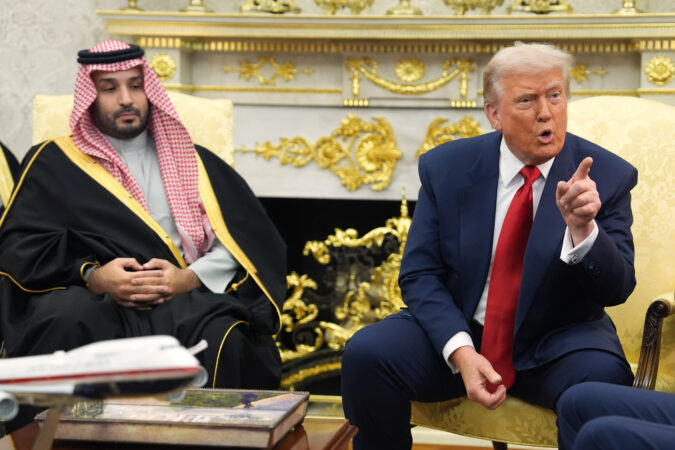
    ABC News reporter Mary Bruce asks a question as President Donald Trump meets Saudi Arabia’s Crown Prince Mohammed bin Salman in the Oval Office Tuesday.

    A chill washed over me when I heard him say that. According to U.S. intelligence, Khashoggi reportedly was killed and dismembered on Oct. 2, 2018, in the Saudi Consulate in Istanbul.

    The National Press Club issued a statement afterward, saying the organization is “deeply troubled by President Trump’s comments today regarding the killing of journalist Jamal Khashoggi. Mr. Khashoggi’s murder inside a diplomatic facility was a grave violation of human rights and a direct attack on press freedom.”

    Just this past September, the president ordered NBC’s Yamiche Alcindor to be quiet and listen, and told her she was second-rate, which she is not. Alcindor had asked about his intentions for the Windy City after he posted a meme saying, in part, “Chicago about to find out why it’s called the Department of War.”

    Trump’s animosity toward journalists goes way back. Following a 2015 Republican primary debate, he said of Megyn Kelly, “There was blood coming out of her eyes, blood coming out of her wherever.”

    Even with the numerous lawsuits he’s filed against news outlets, Trump should have figured out by now that he’ll never stop the press. The president can insult and bar certain news organizations from the White House. But good journalists know how to work around that.

    Even if a network does replace one reporter, another journalist will step in and do the exact same thing. If a newspaper fires a print journalist, these days they’ll move their work to the Substack publishing platform or social media, the way former Washington Post columnist Karen Attiah did shortly after she was let go.

    Observers often wonder why journalists don’t fight back more against Trump’s verbal attacks. “Most reporters want to cover the news, not be the news,” as ABC News correspondent Jonathan Karl told Paul Fahri of the Columbia Journalism Review earlier this year. In other words, they try and stay focused on the job at hand.

    And these days, getting bullied by the man-child in the Oval Office seems to come with the territory.

  • From 2025: Jesse Jackson set the stage for modern-day American politics

    From 2025: Jesse Jackson set the stage for modern-day American politics

    Editor’s Note: This column originally appeared in The Inquirer in November. On Tuesday, the Rev. Jesse Jackson Sr. died at his home in Chicago.

    One of the first articles I wrote for my college paper was about PUSH, the organization founded by the Rev. Jesse Jackson Sr. — People United to Save Humanity.

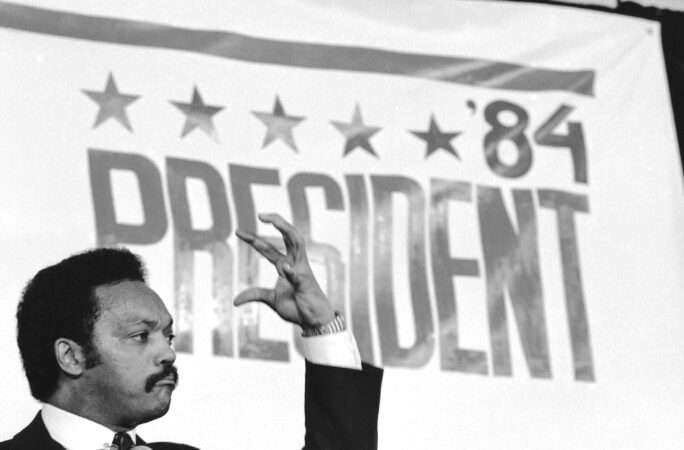
    When the civil rights leader arrived in Washington, D.C., for a presidential campaign rally on the National Mall, I was there. It was electrifying. I remember listening as he called for Americans to unite across racial, gender, and class lines, and become part of his Rainbow Coalition. Looking back, it was a message that would resonate even today. But America wasn’t ready.

    Four years later, he was back on the presidential campaign trail, urging his followers to “keep hope alive.” That time around, he tripled his share of white voters in the Democratic primaries, finishing second to then-Massachusetts Gov. Michael Dukakis. He also pushed the Democratic Party to institute reforms. But once again, America wasn’t ready.

    Although Jackson didn’t clinch the Democratic nomination that time, either, his efforts to become America’s first Black president set the stage for Barack Obama’s historic election.

    CNN anchor Abby Phillip explores the legacy of civil rights leader Jesse Jackson and its impact on American politics in her new book “Jesse Jackson and the Fight for Black Political Power.”

    In 1988, the same year Jackson launched his second presidential bid, CNN anchor Abby Phillip had just been born. I doubt her parents ever dreamed that one day their baby girl would go on to write a seminal tome about Jackson, who at the time was one of the best-known political figures.

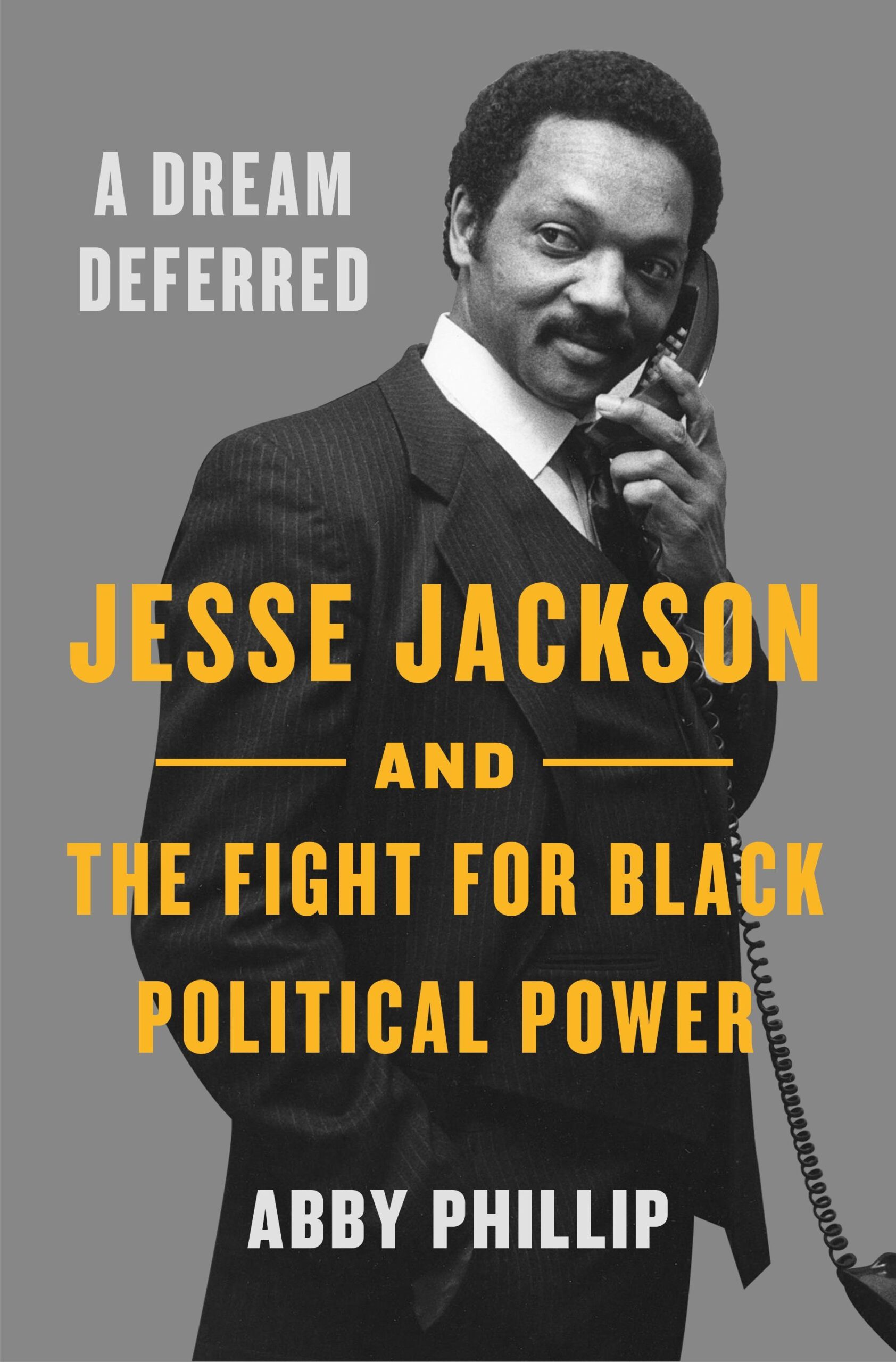
    Published last month, A Dream Deferred: Jesse Jackson and the Fight for Black Political Power takes readers through Jackson’s impoverished childhood as the son of a single mother in the Jim Crow South, to his days in the civil rights movement with the late Rev. Dr. Martin Luther King Jr., and through his historic campaigns for the presidency.

    I read it last month while vacationing. When I reached the end, I turned the last page with a feeling of gratitude, not only for Jackson and his contributions to the cause of civil rights, but also for Phillip for making the time to write it. A graduate of Harvard University, she’s a media superstar, juggling the demands of motherhood with weeknights at the anchor desk and fact-checking the uber-annoying conservative commentator Scott Jennings, a frequent cohost on her show. If Phillip, 36, had chosen to pass on this considerable undertaking, it would have been understandable.

    Instead, she stuck with it through the COVID-19 pandemic, the launch of her first show, Inside Politics Sunday, the 2021 birth of her daughter, a move to New York City, and the creation of her current show, CNN NewsNight with Abby Phillip. The reporting and writing took almost four years to complete, and was somewhat of a race against time.

    “One of the impetuses for writing this book was just a recognition that in order to really get to the truth of a lot of these stories, you really have to get it from the people who were there,” Phillip told me when we spoke last week. “It was important for me to try to reach those people while they are still with us, including Rev. Jackson, and a lot of his aides and staffers and so on and try to get those stories.”

    A new book written by CNN anchor Abby Phillip explores the legacy of civil rights leader Jesse Jackson and its impact on American politics.

    Doctors diagnosed Jackson, now 84, with Parkinson’s disease in 2017. Two years ago, he stepped down as the leader of the Rainbow-PUSH Coalition, which he had led for roughly half a century.

    Since his speech is impaired by the disease, Phillip found it easier to understand him in person and traveled to his home in Chicago for interviews. The CNN anchor also went with him to his hometown in Greenville, S.C.

    “I really got to know his world, and I’m grateful that they trusted me to do my job,” Phillip said.

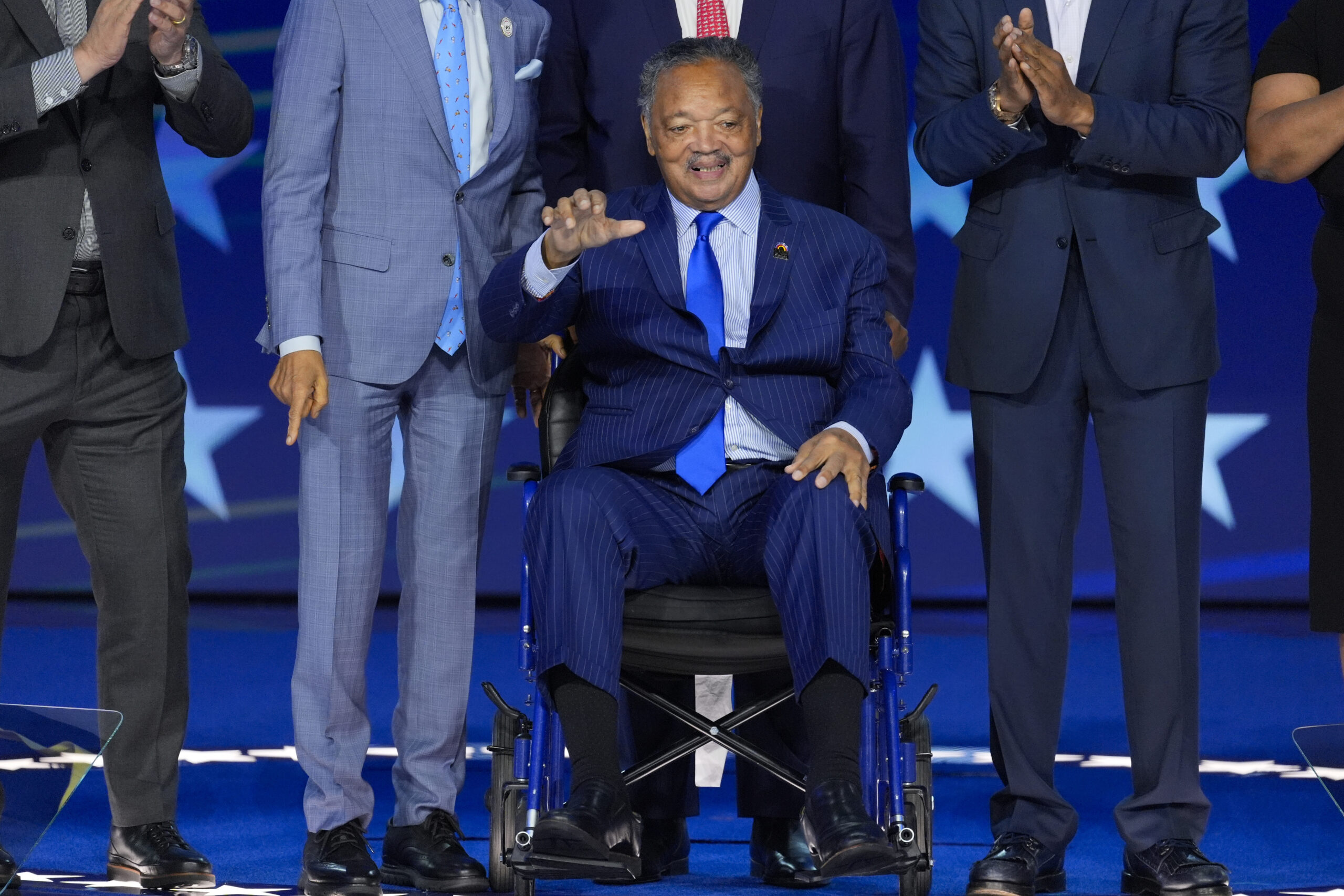
    The Rev. Jesse Jackson waves during the 2024 Democratic National Convention in Chicago.

    Much of the book focuses on Jackson’s presidential campaigns. “This is a major point of pride for him,” Phillip said. “His political campaigns, I think he really sees them as an essential part of his legacy. I do think that there was a sense that they were always underplayed or misunderstood.”

    So many of his accomplishments slip deeper into the recesses of our minds with each passing year. He organized voter registration drives that helped elect Chicago’s first Black mayor, Harold Washington, in 1983, and negotiated with Syria for the successful release of Navy Lt. Robert Goodman. He pushed for changes in how delegates were allotted in the Democratic Party.

    President Donald Trump wants to whitewash American history, as evidenced by his call to sanitize the history of Black people in America. In light of this, it’s more important than ever to preserve these stories. Phillip’s goal in writing the Jackson book, she told me, “was to make sure that this chapter didn’t get lost to history.”

    Thanks to her dedication, persistence, and brilliance, it won’t.

  • Philadelphia has lost a great journalist and a kind spirit

    Philadelphia has lost a great journalist and a kind spirit

    We buried my father on a bitterly cold day in Washington, D.C., in 2010. As I followed his casket out of the church, I spotted journalist Michael Days in the crowd of mourners. I didn’t get to speak with him, but I was deeply touched, not to mention honored, that my editor at the Daily News was there.

    He didn’t have to do that. But Days, who died suddenly on Saturday at the age of 72, was a deeply empathetic man who genuinely cared about people. As former Daily News columnist Howard Gensler wrote on Facebook recently: “He celebrated the wins and keenly felt the losses in his newsroom. He knew when to step in and when to step back and he could go Philly on you when he had to — and then later ask you how your parents were doing.”

    I met the pioneering journalist when he was business editor for the Daily News, and I was applying for a job. During my interview, I got so excited at the prospect of earning twice my salary in D.C. at the time that I didn’t bother to negotiate. But Days kindly arranged for me to have two weeks’ vacation during my first year of employment instead of my having to work an entire year, as stipulated by the terms of the union contract.

    That was my first experience with the kind of leader Days was. He was more than just a boss. He was an editor, mentor, and friend who looked out for his staffers, which engendered our intense loyalty. We used to joke that when Days said, “Jump,” our response was, “How high?”

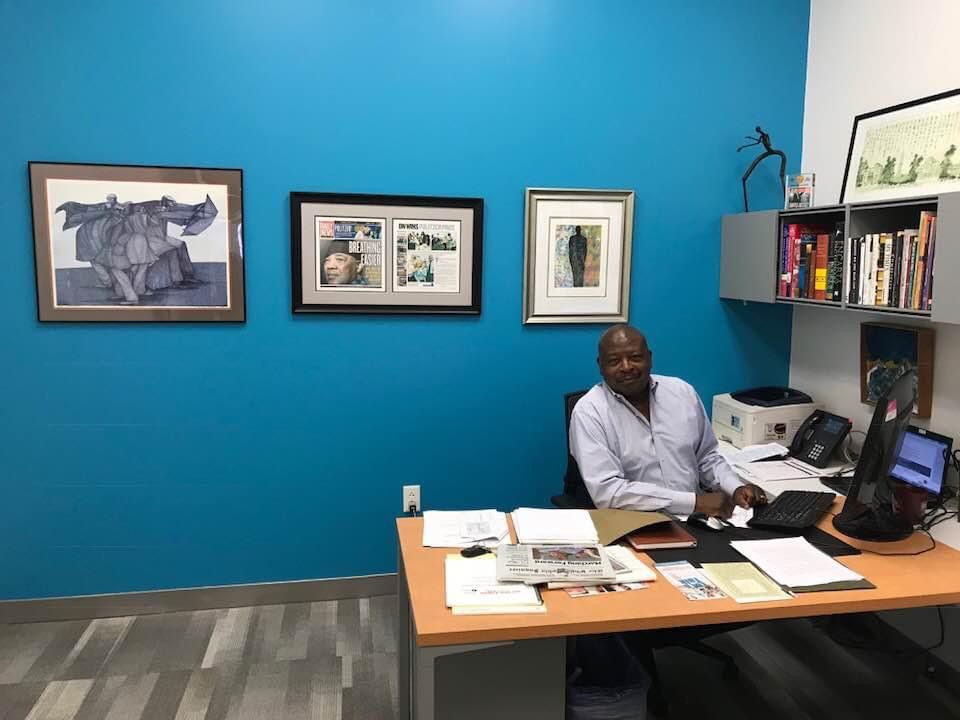
    This is how I’ll always remember Michael Days: sitting in his office with a smile on his face, always ready to talk or just listen.

    As amazing as he was as a newsroom leader, Days was an even better person outside of work. A fellow Catholic, he was a man of great faith who not only attended Mass regularly but whose life exemplified his deeply held Christian beliefs. He and his wife, Angela Dodson — then an editor at the New York Times — adopted not one child, but four brothers all at the same time.

    Once, I had the good fortune of being invited to a holiday party at his home in Trenton — a location picked because it was between his wife’s job in NYC and his own in Philly. Shortly after I arrived, I recall glancing outdoors and spotting four shiny, new bicycles in the backyard. I was in awe. His beautiful home was decorated with a huge tree. I watched as Days’ wife handed each boy a matching Christmas plate. Lunch was a warm, cozy affair with lots of Southern favorites.

    Days’ career took off, as he went on to hold a number of leadership positions in the newsroom. The first time he was in line to make history — as the first African American managing editor of the Daily News — I felt for certain he would get the job. Days had grown up in North Philly and graduated from Roman Catholic High School. Not only did he know the city, he understood the paper’s operations inside and out, and was adept at dealing with its motley crew of reporters and photographers.

    I was outraged when he was passed over for an outsider. But when I stuck my head in his office to check on him, I was startled when he met my gaze with a smile. Days was unflappable like that. Calm. Steady. No matter what happened, he always kept his cool. That’s not easy in a newsroom full of strong personalities, but Days did it.

    Looking back, he had the right idea. Management eventually woke up and named him managing editor, and later executive editor, of the Daily News. Under his leadership, the Daily News excelled journalistically, winning a Pulitzer Prize in 2010 for a series exposing corruption in the Philadelphia Police Department.

    The following year, Days was named managing editor of The Inquirer and left the Daily News for a brief time. When then-publisher Bob Hall announced his return, and Days strode back into the newsroom, we all stood and cheered. Some even cried. Time passed, the papers consolidated, and Days went on to hold other management roles at The Inquirer. Even as he became less involved in the day-to-day newsroom operations, we still streamed in and out of his office, seeking advice about stories we were working on or grabbing a piece of chocolate from his candy dish.

    After he retired in 2020, we continued to seek him out. He would take our calls as if he were still on the clock.

    The author (left) at a WDAS Women of Excellence Luncheon where she was being honored. The late Inquirer Vice President Michael Days is to her immediate right, and former Deputy News Editor Yvette Ousley is next to him.

    Two years ago, a group of Black journalists decided to form a new local affiliate branch of the National Association of Black Journalists after the Philadelphia Association of Black Journalists broke off from the nationwide group. Days, then 70, graciously agreed to serve as NABJ-Philadelphia’s inaugural president, and helped the new group find its footing.

    In September, the group hosted a reception at the Free Library of Philadelphia honoring NBC contributor Trymaine Lee, author of the new book, A Thousand Ways to Die: The True Cost of Violence on Black Life in America. When it was his turn to speak, Days praised Lee, who had been a Daily News intern, and told him, “You are a talent, and nobody is surprised that you have done so well.”

    Afterward, former Daily News reporter Mister Mann Frisby posted on social media: “The way he spoke about Trymaine at his book signing, I have also heard him speak of me the same way. Always encouraging. That makes me know that he was CONSISTENT for decades in regards to how he supported and mentored journalists.”

    When I woke up early Sunday and discovered numerous “call me” texts, I knew something really bad had happened. Days’ death sent a seismic jolt through journalism circles nationwide.

    “He was kind and gentle,” recalled Inquirer columnist Elizabeth Wellington. “I lost my own father earlier this year. And this feels as if I’ve lost a second.”

    I feel the same way. Before Days, I’d never met any man I considered anywhere close to being in the same league as my dad, who was a giant among men.

    Inquirer reporter Melanie Burney, who will finish out Days’ term as president of NABJ-Philadelphia, told me she has found herself in the days after his death asking, “What would Michael do?”

    That’s a question I’ve asked myself a few times recently, as well. Days had been just a quick phone call away. Going forward, we will have to rely on the many lessons he has already taught us.