Author: Jake Blumgart

  • PHA took over its first private-sector apartment building. Tenant reviews are mixed.

    PHA took over its first private-sector apartment building. Tenant reviews are mixed.

    The Philadelphia Housing Authority embarked on a strategy last year unlike anything it has done before.

    The agency is known as the largest affordable housing provider in the city. But in 2025, under the leadership of CEO Kelvin Jeremiah, it began buying struggling private-sector apartment buildings all over the city to expand the affordable housing supply.

    Over the last 14 months, the Philadelphia Housing Authority (PHA) has spent $280.6 million to acquire 17 multifamily properties, totaling 1,515 units. Some have been student apartments or largely empty new buildings. But most have been full of tenants paying market-rate rents, ranging from $1,106 to $2,323.

    That’s a new demographic for PHA, whose renter base often makes less than $30,000 a year.

    PHA plans to fill these buildings with Section 8 voucher holders, who often have a difficult time finding rentals in higher income areas.

    “It’s part of the strategy … to give residents the broadest possible options in terms of their housing choice and one that is not limited to particular neighborhoods,” Jeremiah said.

    In an innovation, the agency intends to keep renting some units in the newly acquired buildings at the market rate, using the income to support operating expenses.

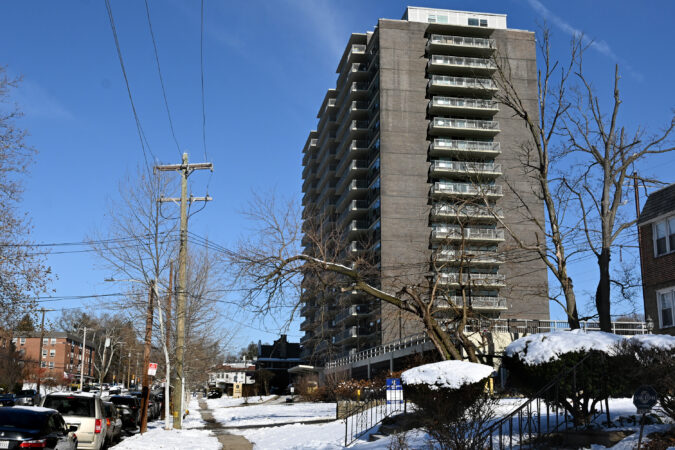
    The first PHA purchase in 2025 was The Dane, a 233-unit building in Wynnefield. It now houses some tenants paying market-rate rents and others using government subsidies.

    Last year, several tenants contacted The Inquirer with concerns about what they described as a rocky transition to PHA ownership. Since then, interviews with 18 tenants at The Dane have laid out challenges within PHA’s new model — and the potential difficulty of retaining renters with options elsewhere.

    Eighty-six people have moved out of The Dane over the last year. That’s about half the original occupants as the building was only 75% occupied when purchased.

    The overwhelming majority of tenants interviewed by The Inquirer said PHA is a better landlord than the previous owner, Cross Properties. But most have moved out or are planning to.

    “The management staff that are there now are better than what we had, but they’re still pretty mediocre,” said one resident, who, like many of the tenants, asked that their name be withheld to preserve relations in the building.

    “Everybody’s very polite; everybody’s very cordial, but it’s only maybe one or two maintenance people,” this multiyear resident said. “The trash pileup is very bad right now … I plan to move elsewhere.”

    Jeremiah noted that most of the properties PHA acquired have not experienced the kind of turnover that The Dane has seen. The building is now almost completely occupied with both market-rate and subsidized tenants, said a PHA spokesperson.

    He said some tenants moved out after the agency began collecting rent again. Many had been withholding payments to Cross, which lacked a rental license at the end of its tenure.

    It’s possible that the turnover at The Dane is largely the result of a difficult property transfer from a troubled previous owner. (Cross Properties is no longer in business.) In that case, the tenant exodus may not be a predictor for PHA’s larger ambitions.

    But given the skepticism PHA faces in many neighborhoods, outside observers say, the agency’s new expansion strategy faces high expectations to get everything right.

    “PHA is under a tremendous amount of pressure,” said Akira Rodriguez, a professor of housing policy at the University of Pennsylvania. “There’s going to be experiences that are uneven for tenants as they navigate this new model of housing provision … [and The Dane] is a really high visibility example.”

    A long troubled apartment building

    In November 2024, residents of The Dane were fed up. Their hot water wasn’t working — again — in apartments where many households paid over $2,000 a month in rent.

    “The owner [Cross Properties] was not the best,” said Akeesha Washington, who has lived in The Dane since 2020. “He just didn’t maintain the building. Over the years, you saw the amenities dwindle.”

    Cross Properties acquired the building in 2016 when it was the Penn Wynn House and converted the rent-subsidized building into market-rate apartments.

    When Washington moved in, she was impressed. The staff were kind to her in 2020 when she contracted COVID-19. They coordinated care with Washington’s mother so she had access to medication without infecting anyone.

    “It was a really nice community. It’s luxury in the 19131 section, where not everyone feels like they can afford it,” said Washington, who loves the diversity of the tenants, which included university students, working-class residents, and doctors and lawyers.

    “You had so many layers of people living and coexisting in this building,” Washington recalled. Rents ranged from $1,100 for a studio to $2,200 for a two-bedroom unit with two bathrooms.

    But by 2024, most tenants said, building management had fallen off. Trash wasn’t picked up regularly; lawns went unmowed and snow unshoveled, and basic amenities like the parking garage door often didn’t work.

    Shortly after another hot water outage, tenants got news in late 2024 that Cross Properties was out.

    “When residents heard it was being acquired, we were excited because we won’t have to deal with not having hot water, especially during the holidays,” Washington said.

    Akeesha Washington in the lobby of her apartment building in the Wynnefield neighborhood in December. She was living in the market-rate building before the Philadelphia Housing Authority (PHA) purchased it to expand the city’s affordable housing supply.

    New management, new problems

    When PHA purchased The Dane, the building had many unresolved issues, said Tonya Looney, who worked for Cross Properties as the building’s manager. And she said there was scarce planning for the details of the transfer.

    “To be fair, this is something new and I understand from a real estate professional’s perspective that there’s going to be hiccups,” said Looney, who stopped working at The Dane last May, although she still manages 15 apartments for long-term corporate stays in the building.

    Looney is in a legal dispute with PHA, which says she owes substantial back rent. “We do not intend to renew the leases that she has in her name,” Jeremiah said. “I do not think she is a good arbiter of the facts in this case.”

    Both Jeremiah and Looney say that after the sale closed, Cross Properties shut down the operating software, cutting off tenants’ ability to pay rent online, see their rental histories, and submit maintenance requests.

    “We had 200 people with no way to log in to pay their rent, no way to submit a maintenance ticket, no idea who to talk to about any issues at the building unless they came downstairs to see what’s going on,” Looney said. “Needless to say, it was chaotic.”

    For much of 2025, residents had to pay with checks, which sometimes went uncashed, according to Washington and Looney.

    Jeremiah says that Cross Properties’ owner asked PHA to pay to access the former tenant management system, although PHA eventually figured out how to get the records.

    Despite the chaotic transition, many tenants said PHA’s ownership brought improvements from previous conditions, especially after Maryland-based HH Redstone was brought in to operate The Dane in August. (That’s when online payments, for example, started working again.)

    “HH Redstone is doing what they can, and I’ve re-signed my lease for one year because I am willing to see what change they can continue to make,” said another tenant who asked not to be named.

    Why tenants are leaving, even with improved conditions

    Other tenants say property services continue to suffer.

    Trash pickup is still persistently late, several tenants said. Pest outbreaks such as bedbug, mouse, and cockroach infestations flare up, which is new in the building, according to Washington and two other tenants. The dog washing station and the dog run are often messy. The garage door continues to break down. This winter, a rash of burglaries spooked residents.

    Jeremiah said PHA is addressing these concerns, and in some cases — such as the dirty dog run — residents are expected to clean up after themselves. He also noted that the agency installed 24-hour security.

    “The idea that this is a new phenomenon to that building, given where it’s located, is just nonsense,” Jeremiah said of the security concerns. “We have a very robust set of layered access control systems in place [and] CCTVs.”

    As PHA was negotiating to buy The Dane, it also sought to save the Brith Sholom House, a dilapidated nearby senior complex linked to a national fraud scheme. After assessing the depths of the building’s issues, PHA determined that to repair it, tenants would have to move out.
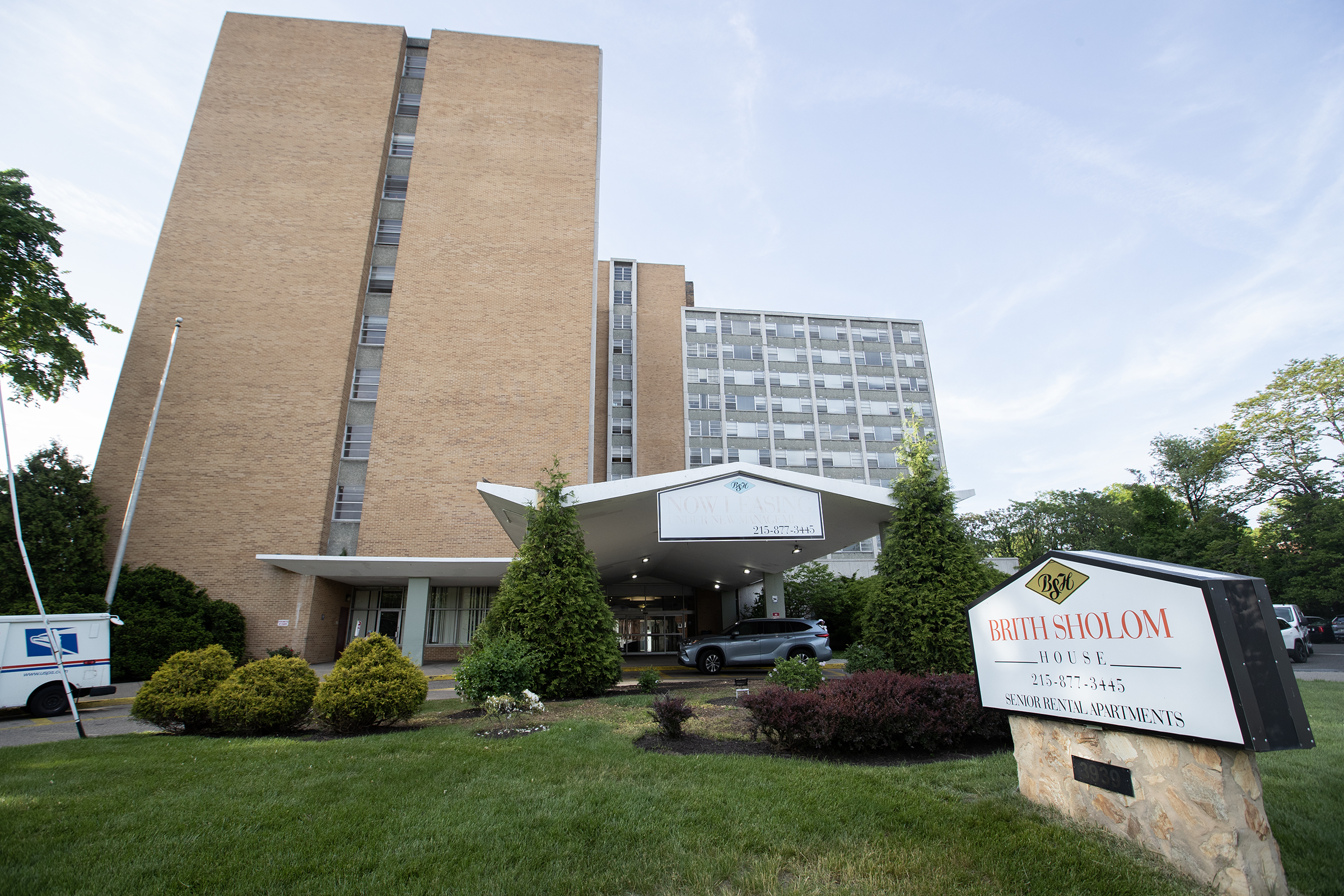
    The exterior of Brith Sholom House on May 8, 2023.

    When they first arrived at The Dane, some elderly residents were not getting the care they need, Washington said.

    One man she ran into frequently often smelled of urine and would walk around with visibly wet pants. She said building management addressed the issues by spraying Febreze on benches the tenant used after he left an area. He has since died.

    Another man screamed for help from his balcony and has since been moved out of the building.

    “We are very used to all kinds of things happening here, from the students being wild to elderly being wild, but not to the level of being unable to take care of themselves,” Washington said.

    Jeremiah says that PHA keeps tabs on the rehoused Brith Shalom residents — who previously were living with no oversight, although there are limits to what it can do. He encouraged tenants to report anyone who needs aid.

    “We provide a robust set of social services to residents we inherited at Brith Shalom,” Jeremiah said. “PHA is not a healthcare provider. We are a housing provider, though we provide access to opportunities for residents who are interested in aging in place.”

    A former Brith Shalom resident had no complaints with The Dane and praised PHA for the improvements in his life.

    “I have no problem with them. I’m happy,” said Barry Brahn, who is blind and has AIDS. “They’re slow at getting things fixed, but they can only do so much and they’ll eventually get on it.”

    What comes next?

    Some aspects of the rocky transition from Cross Properties to PHA have eased. Since October, tenants were able to pay their rent online and submit maintenance requests. Washington says she does not see obviously distressed elderly residents any longer.

    But tensions remain.

    “The transition to PHA has been challenging, and their communication has been sorely lacking,” said Lanese Rogers, who has lived in The Dane for two years. “As someone who pays unsubsidized rent, they deal with us in a condescending manner.”
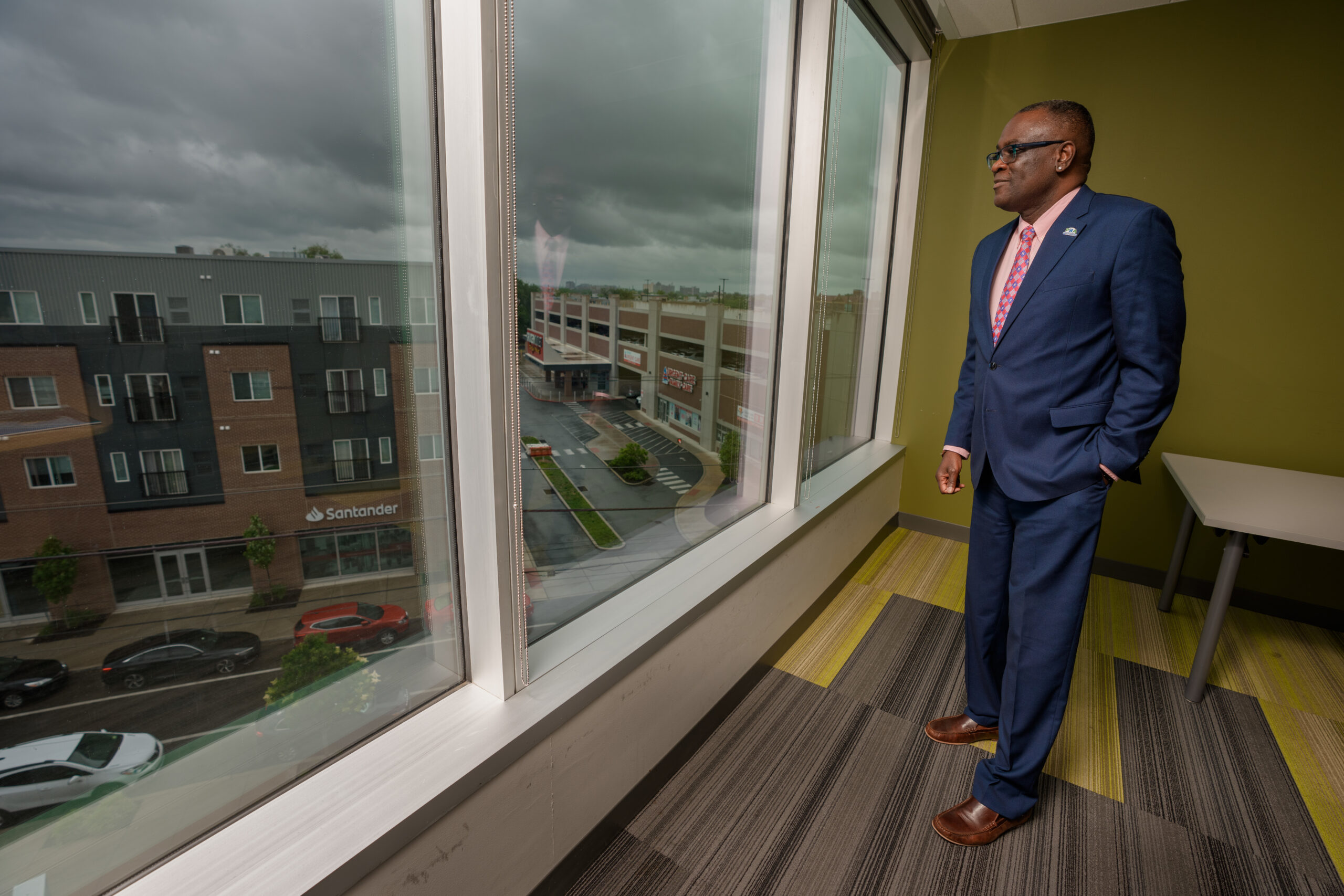
    Kelvin Jeremiah, PHA president and chief executive officer, at PHA headquarters, in Philadelphia.

    Jeremiah says he believes some of the pushback against PHA is due to class prejudice and bias against subsidized tenants.

    “I don’t believe that there is anywhere any Philadelphian, whether or not they’re high income, middle income, low income, shouldn’t be permitted to live,” Jeremiah said.

    He is committed to providing accessibility and affordability throughout the city, he said, and he hopes to retain mixed-income residency in newly acquired buildings with existing tenants.

    So far at The Dane, many of the market-rate tenants are leaving.

    “If I could pick up my apartment and move it to another location, I would,” Rogers said. “The building is changing, and I don’t like the direction it’s moving in.”
  • 260-apartment project is proposed for long-vacant site on Ridge Avenue in East Falls

    260-apartment project is proposed for long-vacant site on Ridge Avenue in East Falls

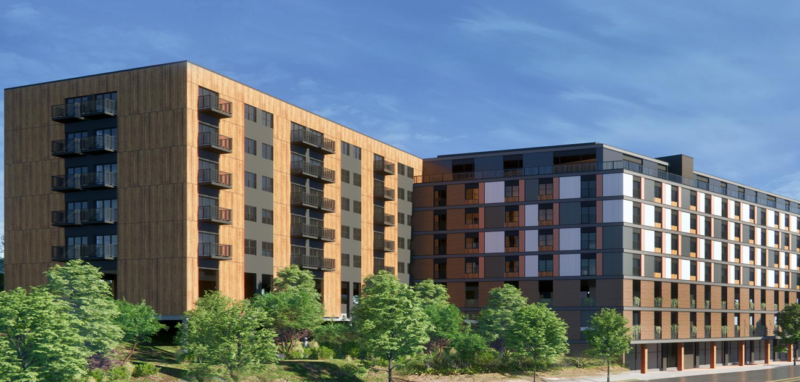
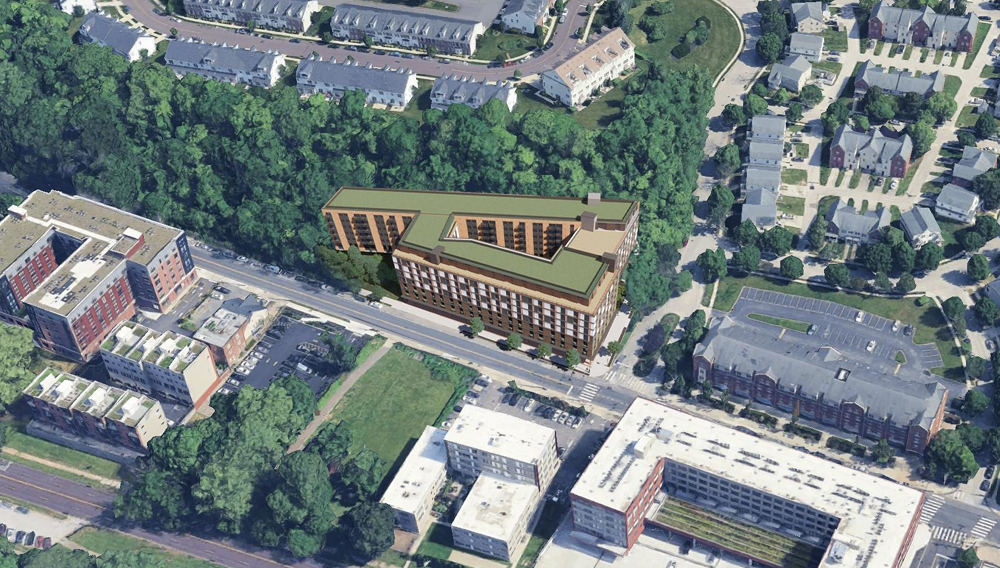
    A 260-apartment development, largely composed of one-bedroom units, is the latest residential project slated for 4401 Ridge Ave. in East Falls.

    The almost two-acre site has been long vacant and is now covered in trees. It is owned by the Philadelphia Housing Authority, which operated a dozen rental homes there until the late 1990s. The property is under an agreement of sale, according to the agency.

    Plans for the project were posted on the Philadelphia Planning Commission’s website Tuesday, showing a six-story building from Stokes Architecture & Design.

    The zoning paperwork in city records is signed by Eric Marshall, who is the principal with MGMT Residential. The company, based in Northwest Philadelphia, owns and manages hundreds of units in neighborhoods including Roxborough and Manayunk.

    MGMT itself is not the developer and will not own the property, according to the project’s zoning lawyer, Richard DeMarco, although the company will manage it once construction is completed.

    The development team declined to comment in advance of a neighborhood meeting Wednesday night.

    The plans show that the apartment building proposed for 4401 Ridge Ave. will offer 217 parking spaces. It will also host at least 8,000 square feet of commercial space, according to the East Falls Community Council, which has been negotiating with the developers.

    The neighborhood group’s zoning chair, Hilary Langer, reports progress at the discussions.

    He says that many neighbor concerns center on traffic, parking, and the preponderance of smaller units — a concern he does not personally share.

    “The … fact is that one-bedroom apartments are in demand and their vacancy rate is [almost] 10%, which is really the same as annual natural turnover,” Langer said in an email.

    Langer said that by his calculations, 115 two-bedroom apartments have been built in his neighborhood since 2021, and a quarter of them are still vacant. But 399 one-bedroom or studios have been constructed in that time frame, and only 12.5% of them are empty.

    An aerial rendering of the 260-unit apartment building proposed for 4401 Ridge Ave.

    The project needs approvals from the city’s Zoning Board of Adjustment to move forward, with a hearing set for March 25. It will appear before the advisory-only Civic Design Review committee on March 3.

    The last proposal for the site came in 2021 from Baltimore-based Atapco Properties. That project included 189 parking spaces for 185 apartments.

    That former proposal’s frontage was pushed back from Ridge Avenue, which the East Falls Community Council feared would make an already pedestrian unfriendly environment even worse.

    The newer development has the apartment building fronting on the sidewalk.

    “You’re not going to get walkability if you just put in plazas and parking lots,” Langer said. “This building, at the very least, it provides the chance of walkability.”

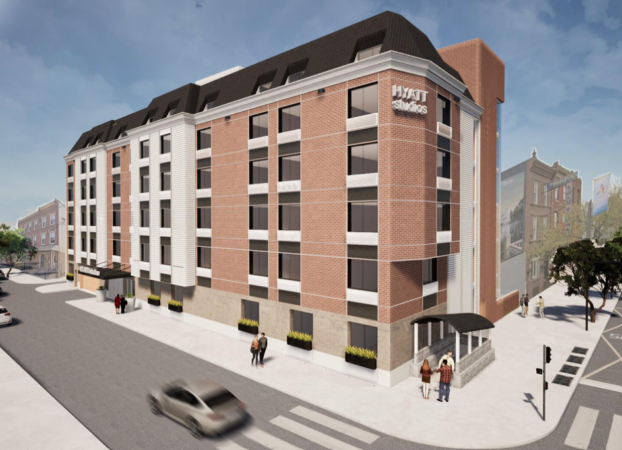
  • A six-story Hyatt Studios hotel is planned for the Broad Street Diner site

    A six-story Hyatt Studios hotel is planned for the Broad Street Diner site

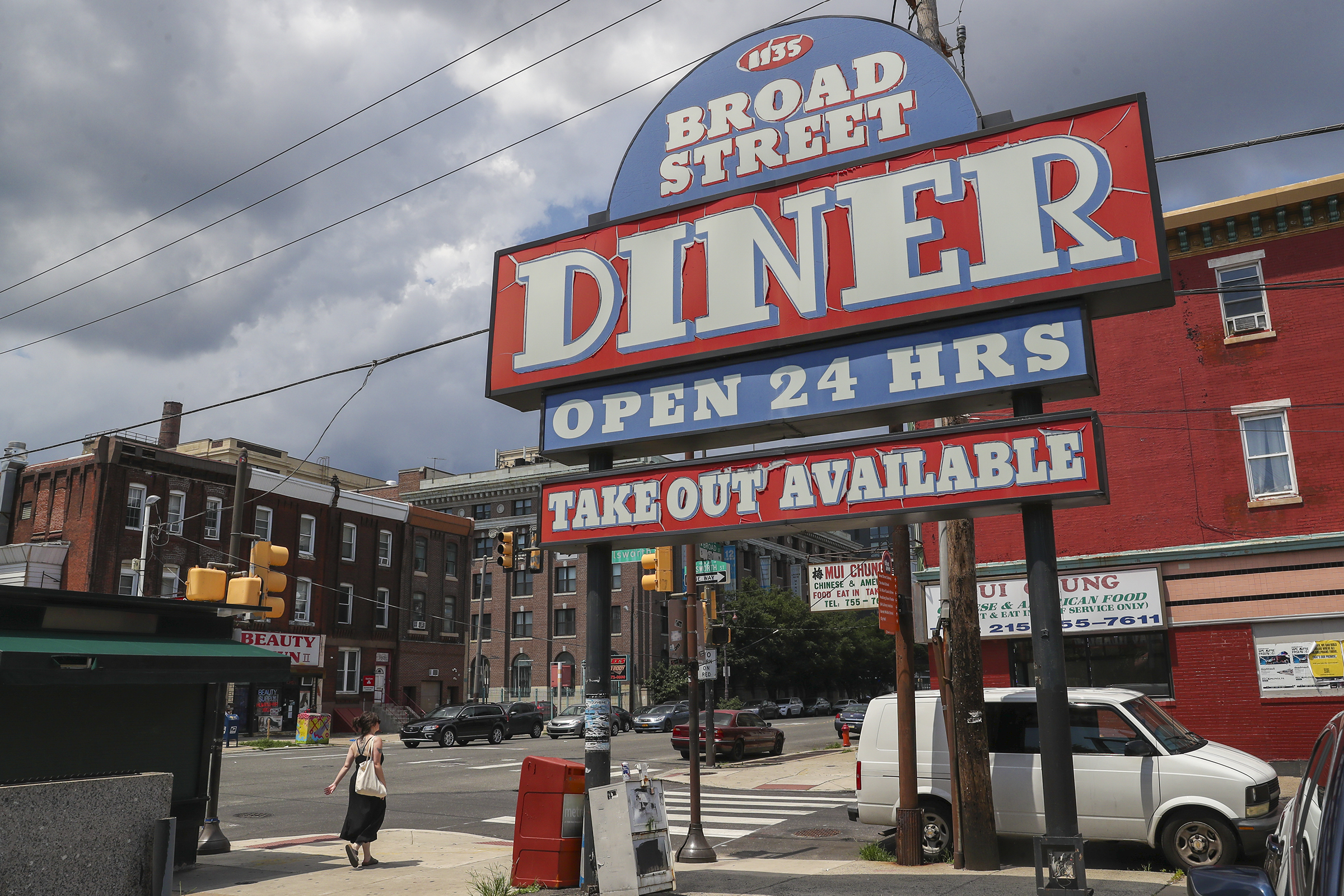
    The Broad Street Diner’s days may finally be coming to an end.

    Although demolition permits were issued for the building at 1135-43 S. Broad St. in 2022, it has remained in business.

    But on Tuesday, plans for a six-story Hyatt Studios hotel were posted on the Philadelphia Planning Commission’s website, indicating that the project is moving forward.

    It will be subject to the advisory only Civic Design Review process on March 3.

    The proposal includes 105 hotel rooms and 42 underground parking spaces. Hyatt Studios is a recently launched extended-stay brand of the larger hotel chain.

    The plans are credited to Philadelphia-based architect Plato Studio, led by Plato A. Marinakos Jr. The document submitted to the planning commission was rife with errors, including mislabeled street names and neighboring developments.

    The architect’s plan highlights the project’s proximity to SEPTA’s Broad Street subway line.

    “The hotel will benefit from direct subway line access connecting guests to major sightseeing destinations, entertainment venues on South Broad Street near [Pattison] Avenue and Center City,” the plans say.

    The Hyatt Studios hotel will require approvals to move forward from the Zoning Board of Adjustment.

    A sign outside the Broad Street Diner in South Philadelphia in 2022.

    Maria Petrogiannis, head of development for MR Realty Associates, which owns the property, was not immediately available for an interview.

    Her father, Michael Petrogiannis, is a longtime owner of beloved eateries in the region, including the Mayfair, Melrose, and Country Club diners.

    The Broad Street Diner’s demolition permits were issued at the same time as the Melrose Diner at 1501 Snyder Ave. on the West Passyunk Avenue corridor. But the Melrose was demolished in 2023, after 67 years in business at that location.

    Today, its site sits vacant, hemmed in by a chain-link fence, and is a frequent subject of nuisance complaints from neighbors.

    A planned apartment building for that site, which MR Realty said would include a new version of the Melrose Diner, has not materialized.

    In a 2025 interview, Maria Petrogiannis said the hope was that the apartment building and replacement diner on West Passyunk would be completed by the time the hotel project came to fruition, giving workers a site to move to when the South Broad Street eatery was razed.

    Editor’s note: A previous version of this story incorrectly identified Pattison Avenue.

  • Redevelopment is coming to a former factory in East Kensington after years of delay

    Redevelopment is coming to a former factory in East Kensington after years of delay

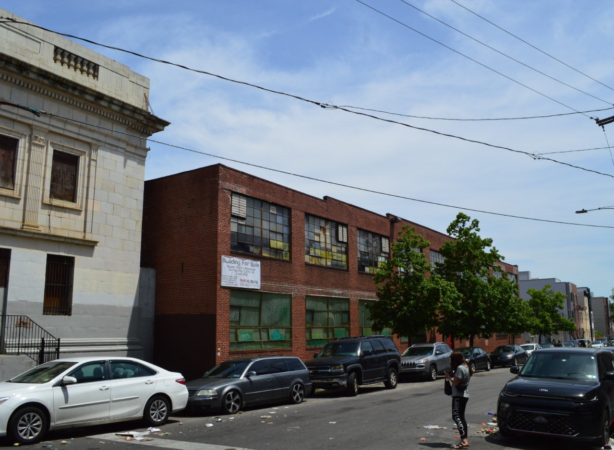
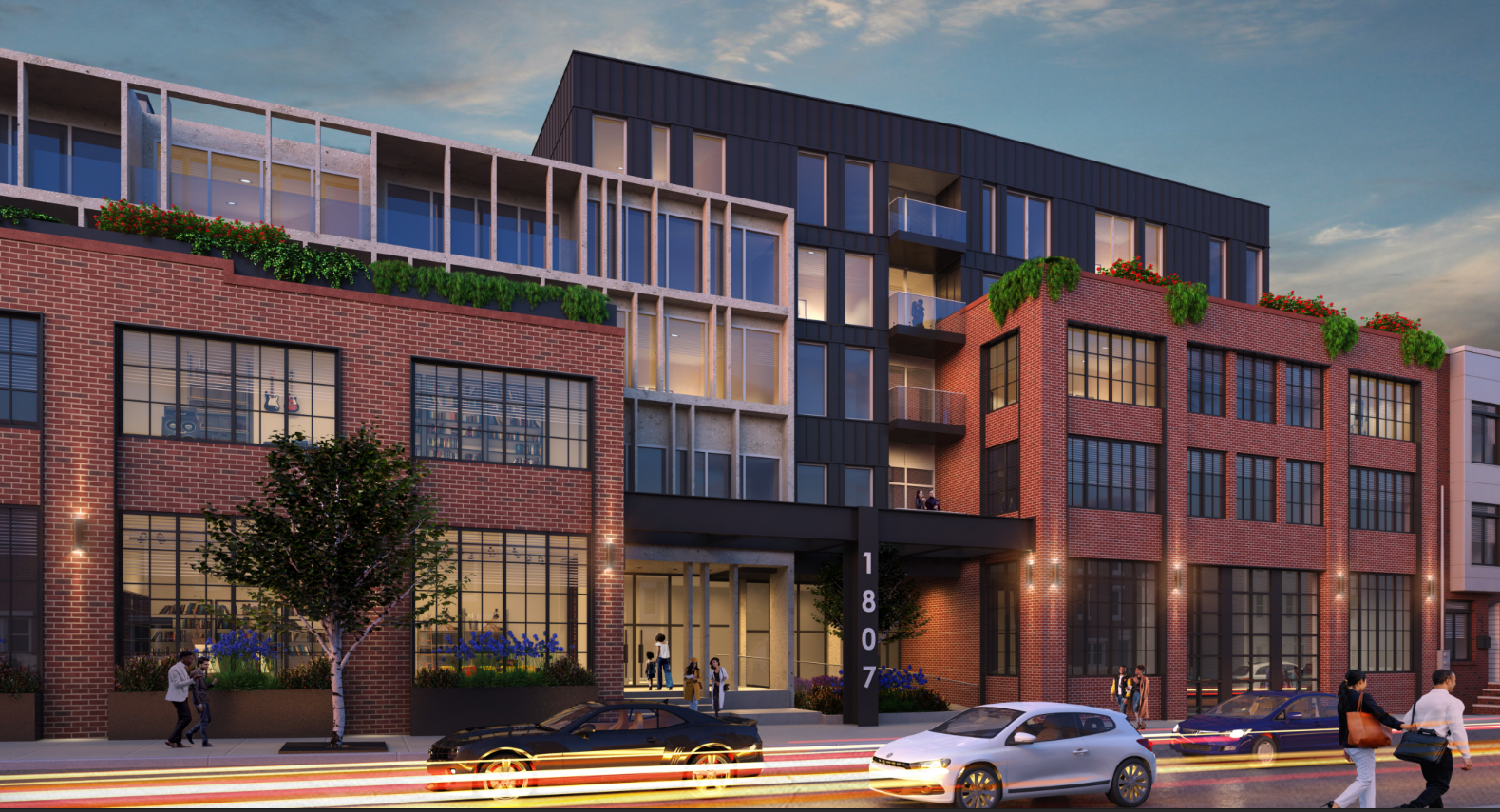
    The long vacant industrial building at 1807 Huntingdon St. in East Kensington is moving toward redevelopment after seven years of setbacks.

    Philadelphia-based Smith & Roller has been eyeing the faded brick structure since 2019 but struggled with funding following the COVID-19 pandemic and the loss of a lender after Silicon Valley Bank’s collapse in 2023.

    But last week New Jersey-based Ellavoz Impact Capital announced that it was acquiring the building in partnership with Smith & Roller, allowing the developers to move forward with their plans near SEPTA’s Huntingdon stop on the Market-Frankford line.

    Developers Tayyib Smith and Jacob Roller see the project as a catalyst for change around the elevated train station, which is haunted by the opioid crisis.

    “I’ve always imagined connecting nodes of vitality and then seeing how it almost has a regenerative spring of people looking at a neighborhood differently,” Smith said.

    “I can imagine that block having a different feel, a different type of lighting, a different type of walkability, more socio-economic diversity, more eyes on the corridor,” he added.

    The developers plan to break ground on the project in about six months.

    Smith & Roller’s neighboring development, 1801 Huntingdon, will transform a historic bank building into a banquet hall and commissary kitchen for Black-owned caterer Strother Enterprises, which has been expanding elsewhere in the city recently. That development will need approval by the city’s Zoning Board of Adjustment and is on a longer timeline.

    Over the years, the project at 1807 Huntingdon has added more housing and cut back on space for businesses.

    The current version of the project includes 109 residential units and 8,600 square feet of commercial space. According to Ellavoz Impact Capital’s news release, the commercial space has been preleased, but the tenant list is not public yet.

    A rendering of the redeveloped factory building, as a mixed-use apartment building.

    An earlier version of the project, reviewed by the city’s Civic Design Review committee in 2022, would have contained 80 apartments and 38,000 square feet of light industrial space.

    That’s partly because the federal program Smith & Roller originally planned to use, New Market Tax Credits, requires that at least a fifth of a mixed-use project be devoted to commercial development.

    But the project at 1807 Huntingdon has been in process for so long that this part of Kensington no longer qualifies for the federal incentive, which is meant to spur investment in struggling areas.

    The project is still in a Keystone Opportunity Zone (KOZ), however, which will give state tax breaks to businesses at the 1807 and 1801 Huntingdon projects.

    That policy is also meant to incentivize development in lower-income areas, but there are many examples of its application to parts of Philadelphia like the Navy Yard and University City.

    “I don’t know many [KOZs] that are in neighborhoods like Kensington,” Smith said, “where there’s somebody trying to use it in the spirit and intent of how the legislation was written.”

    The project will include both the redeveloped factory with additional space above it and an adjacent parking lot, which will have multiple stories of housing on top.

    It will include a mix of studios, one-bedroom, and a few two-bedroom apartments, along with loft-style units that can be rented out as either short-term rentals or office space.

    Sixty percent of the units will be set aside for households earning 80% of area median income, or almost $67,000 for one person.

    “We don’t have a direct subsidy, like a Low Income Housing Tax Credit or anything like that,” Roller said. “In some cases, it’s not that different a number than a market rent in the neighborhood.”

    Jacob Roller (left) and Tayyib Smith last June outside the historic bank they plan to turn into a base for Black-owned businesses, which is next to the apartment project farther down Huntingdon Street.

    Roller said the project is inspired in unit mix and general location by the success of Shift Capital’s mixed-use project at 3400 J St., home to Càphê Roasters. Smith & Roller was a junior partner in that project.

    The Huntingdon Street project will be the firm’s largest project by unit count.

    “I am extremely impressed by the work of Smith & Roller,” Jeffrey Crum, president of Ellavoz Impact Capital, said in the news release. “They have proven themselves as professional and experienced urban redevelopers who have a unique vision for revitalizing neighborhoods in partnership with local communities.”

    The proposal has been presented to the East Kensington Neighbors Association several times over the years, and the community group is supportive of Smith & Roller’s proposal.

    The group also sees the development project as a means to bring new life to the block, where the current dilapidated state of the buildings often attracts opioid users from nearby open-air drug markets on Kensington Avenue.

    “The block has been challenged for a long time,” said John Theobald, president of the East Kensington Neighbors Association. “It’s really where a lot of the Kensington Avenue activity impacts the neighborhood, so hopefully more people living there and less vacancy will help.”

  • Under new leadership, Women’s Community Revitalization Project is developing apartments on public land in Kensington

    Under new leadership, Women’s Community Revitalization Project is developing apartments on public land in Kensington

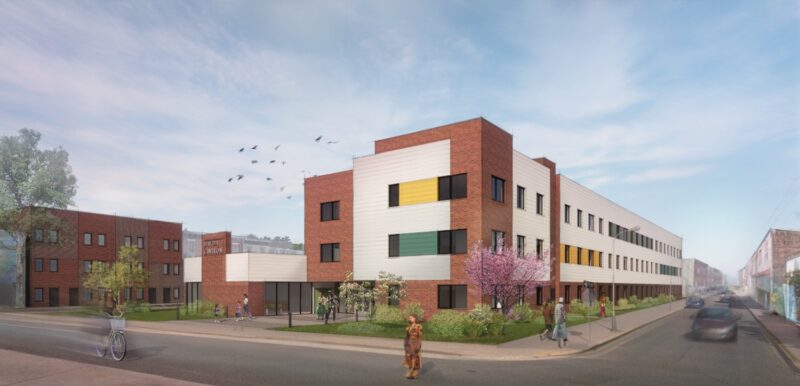
    The Women’s Community Revitalization Project is planning a 34-unit apartment building, flanked by two triplexes, on city-owned land in Kensington.

    All of the units will be available to those below 60% of area median income, or almost $72,000 for a family of four.

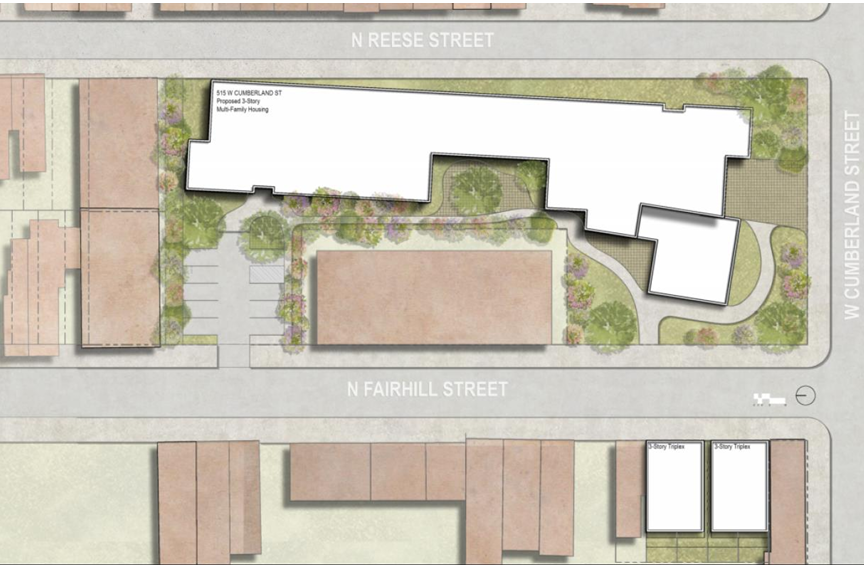
    The apartment building at Cumberland and Reese Streets is designed at an angle slashing across the lot, using only a portion of the city-owned land.

    “Having a solid wall of building directly across [from rowhouses], we just felt wasn’t really contextual to the neighborhood,” said Lorissa Luciani, who has been the executive director of Women’s Community Revitalization Project (WCRP) for the last nine months. “Then there’s height limitations so we couldn’t go any higher.”

    The project is funded through federal Low Income Housing Tax Credits (LIHTC), which the nonprofit group obtained in 2025. The land will be obtained for a nominal cost from the city.

    WCRP has been meeting with local community groups since 2024. Luciani said organizations such as Xiente, APM, and the 19th Ward RCO have been supportive of this project.

    The development, designed by Philadelphia-based CICADA Architecture & Planning, will cost over $26 million and is slated for completion 18 months after the group settles on the land. It will include 10 parking spaces.

    On Tuesday, the Philadelphia Land Bank’s board voted to approve the sale of the property to WCRP. The plan also has the backing of Councilmember Quetcy Lozada, which is essential because she will need to introduce legislation to move the property out of the Land Bank.

    “It’s an amazing project,” Lozada said. “We are in need of partners like the Women’s Community Revitalization Project who understand the need for not just affordable housing, but deeply affordable housing.”

    Without Lozada’s support, the project would be impossible. Final passage of the legislation could come as soon as later this month.

    The three buildings being developed by WCRP can be seen from above, highlighted in white, with the apartment project’s slanted angle readily seen from above.

    Luciani said WCRP would close on the project in the fall.

    This will be Luciani’s first ground-up development with the organization. She joined the nonprofit in 2025 after WCRP’s longstanding executive director and founder Nora Lichtash retired from her leadership role with the group after 35 years. She still works for the group as a consultant.

    WCRP was founded in 1986 to serve Fishtown, Kensington, and other neighborhoods in North Philadelphia east of Broad Street. Since then, it has developed projects in other corners of the city, such as Germantown and Point Breeze.

    “My predecessor has a substantial amount of experience and relationships with many of these organizations” in Kensington, Luciani said.

    “I’m trying to work to have my own relationships with them,” Luciani said. “They’re a really organized, sophisticated community that really understands their needs, and they’ll fight for it as hard as they need to.”

    Luciani previously worked in New Jersey local and state government and planning for decades and has a deep familiarity with subsidized housing policy.

    “I grew up in public housing in North Jersey,” Luciani said. “So it’s been a personal and professional lens that I utilize to try and continue the good work that helped my family in the hopes of helping others.”

  • Brandywine Realty Trust is opening a $60 million hotel in Radnor

    Brandywine Realty Trust is opening a $60 million hotel in Radnor

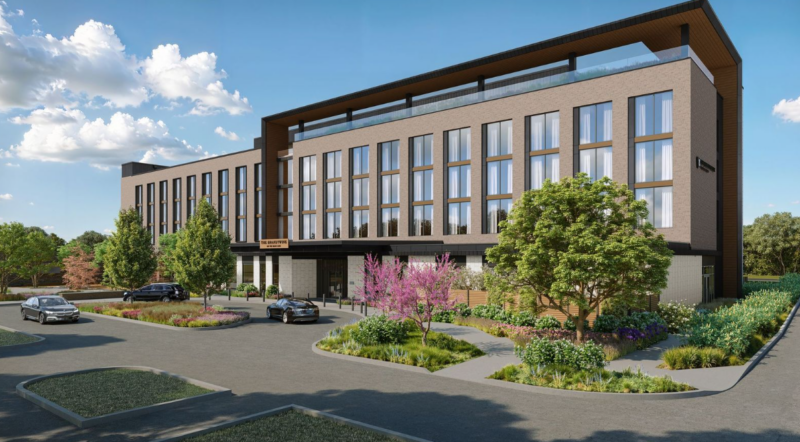
    Brandywine Realty Trust plans to open a 121-room Marriott Tribute Portfolio hotel this spring in Radnor.

    The company is the region’s largest office building owner, and the five-story project at 165 King of Prussia Rd. is meant to cater to their tenants in the suburbs.

    Dubbed The Brandywine, it cost $60 million to develop and will include an expansive roof deck and two restaurants with almost 260 seats between them.

    The 80,000-square-foot hotel will be in the midst of the company’s 2.1 million square feet of holdings in Radnor, its largest suburban cluster.

    “We were constantly hearing from our tenant base that as they were bringing people in from out of town, there was no real high-end, luxury hotel for them to spend time in,” said Jerry Sweeney, Brandywine’s CEO.

    Brandywine’s other large suburban office holdings are in King of Prussia and Conshohocken.

    “We saw a real window of opportunity to really upscale the hospitality experience available on the Main Line,” Sweeney said. “That’s very important to us because we have 3 million plus square feet of office space in the Pennsylvania suburbs, and over 2 million is concentrated within walking distance of this hotel.”

    Sweeney estimates that over a quarter of the hotel’s business will come from Brandywine’s tenants in their Radnor office buildings, which include Lincoln Financial Group, Arkema, and Penn Medicine among many others.

    In Brandywine’s second-quarter earnings call last year, Sweeney said he anticipates additional demand will be drawn from the seven colleges, including Villanova University, that are within a five-mile radius and from nearby healthcare facilities.

    The Brandywine is expected to be open in time for graduation this year, and the company anticipates a boost from sporting events and celebrations this summer, which include World Cup games, a PGA tournament, the MLB All-Star Game, and the 250th anniversary of the United States.

    The hotel’s ground floor will include the 114-seat Merrick’s Tavern, serving regional American dishes, a cocktail list anchored by bourbon and rye, local beer, and what is billed as a wine program. It’s intended for everyday dining and groups.

    The 145-seat Pomelo Rooftop Terrace will operate year-round, serving botanical-forward cocktails and a locally sourced menu.

    Merrick’s Tavern is named after Samuel Vaughan Merrick, the first president of the Pennsylvania Railroad and a founder of the Franklin Institute.

    “With this hotel we really used the historical evolution of the Main Line as a theme, which is tied to the history of the Pennsylvania Railroad,” Sweeney said. “Even some of the motif and interior space designs we have are very reminiscent of the great age of American railroads, where travel was upscale.”

    A rendering of Merrick’s Tavern within Brandywine Realty Trust’s new hotel, opening this spring in Radnor.

    The hotel is next to the Radnor stop on SEPTA’s Norristown High Speed Line and close to two Regional Rail stations.

    The building’s architect is the DLR Group, while interior design is by Restoration Hardware and Bergmeyer. The Brandywine will be operated by Aimbridge Hospitality.

    As part of the Marriott Bonvoy Tribute portfolio, the brand is a boutique hotel within the larger chain, which allows more flexibility for decor and furnishings.

    Brandywine Realty Trust has developed hotels before, notably the AKA University City in the FMC Tower, in partnership with Korman Communities.

    “For us, it was really brand building, expanding our tenant service program to our tenants and creating more connective tissue between us and our customers,” Sweeney said.

    “We saw a great window of economic opportunity to build a high-end hotel that was positioned along two interstates, two train lines that would appeal to a much broader base of customers beyond just the Brandywine universe,” he said.

    The Brandywine will be just the latest hotel added to the Main Line.

    New venues have been opening in recent years in municipalities like Newtown Square and Conshohocken.

    “It wasn’t all that long ago when you just had the [65-year-old] Radnor hotel, but wherever there’s a big business presence, you’re going to need hotel rooms,” said Ed Grose, CEO of the Greater Philadelphia Hotel Association. “These aren’t your typical limited-service hotels. They’re nice. They’re hotels that cater to businesses that are also growing in that area.”

  • A K-8 Jewish day school is proposed for Washington Square West

    A K-8 Jewish day school is proposed for Washington Square West

    A long vacant parking garage at 510-28 S. Eighth St. sits between some of Philadelphia’s most desirable neighborhoods, and Rabbi Yochonon Goldman hopes it could soon be the site of Center City’s only Jewish day school.

    It all depends on how the Zoning Board of Adjustment rules.

    The four-story, almost 36,000-square-foot plan for the building is the third iteration of the proposed K-8 school. Goldman, who is rabbi of B’nai Abraham Chabad, and developer Masada Custom Builders are seeking neighborhood support for the project.

    The proposal has stirred controversy for its height, size, and the inclusion of several apartments. The project needs seven variances from the city’s Zoning Board of Adjustment, largely because the garage is zoned for multifamily rowhouse development, just like most of the surrounding blocks.

    The plan is more likely to succeed at a zoning hearing if it has the support of local neighborhood groups, chiefly the Washington Square West Civic Association.

    “I truly believe that this educational institution will enhance our neighborhood,” Goldman said at a neighborhood meeting last week. “It will be a tremendous asset to all residents of the neighborhood, whether you’re Jewish or not.”

    Goldman’s synagogue runs a successful nearby pre-kindergarten program at the synagogue on 527 Lombard St., and many parents are frustrated by the lack of a Jewish elementary school in the area.

    But the Lombard Mews homeowners association, which borders the site to the west, has organized to negotiate with the development team and hired veteran zoning attorney Paul Boni.

    Immediate neighbors say they are most concerned with the proposed building’s size and height, which in early iterations was five stories. They are skeptical of plans to build three apartments on top of the school, saying the apartments would bulk up the structure.

    Speakers from Lombard Mews included Aren Platt, who served as one of Mayor Cherelle L. Parker’s top advisers during her election campaign and the first year of her administration. He reiterated that his neighbors’ chief concern was with height and size, not the idea of a school in this location.

    Two of the apartments above the school would be small studios for interns who join the faculty and will need affordable nearby residences. The largest would be for the rabbi’s family: a bi-level condo with a private elevator and roof deck.

    A rendering of the Jewish day school planned for the Washington Square West neighborhood.

    At the meeting, the design team noted that the current version of the building is 52½ feet, down from over 70 feet originally. The team reduced the ceiling height of each floor and eliminated one story from the plans.

    Still, critics argued against the apartments — especially given that the classrooms have shrunk to meet neighbor demands but the living units remained intact.

    “We’re puzzled as to why the proposal includes three luxury dwelling units on the top,” Boni said at the meeting. “Eliminating that square footage would seem to go a long way toward meeting our requested building envelope.”

    Goldman argues that the apartments atop the school are essential to the project’s success.

    “A rabbi’s home is not just a private residence; it’s a communal space which builds strong relationships among community members who become like an extended family, sharing meals with the rabbi’s family,” Goldman said in an email. “It’s all part of the educational model which we envision for the school.”

    Goldman also says that having a responsible and active presence on site 24/7 will be a positive for the school building. But most important to him, the close proximity will aid in the religious practice of his community.

    “This space is not just a home. It is a vehicle for hospitality and connection,“ he said. ”Beyond the academics offered in the classroom, the school is a place where the values of Judaism come to life.”

    Some opponents thought the school should be rejected entirely for its attempt to bypass the property’s zoning. The proposal provides only 12 parking spaces, while the zoning requires twice that, and a roof deck is not allowed under current land-use rules.

    Regarding parking and potential congestion from the plan — a fear expressed by some nearby small business owners — the development team said their traffic study showed that 50% to 60% of students would walk to school, as they already do to the pre-K program. Supporters noted that many Jewish families who do not drive on Shabbat and certain holidays would prefer to live within walking distance to school.

    “Right now, we have 75 kids, and at least 60 from those kids are walking,” said Isaac Ohayon of Masada Custom Builders. “They live in the neighborhood. … They’re all no more than 10 to 15 blocks away.”

    The Washington Square West Civic Association will vote Tuesday on whether to support or oppose the project when it goes before the zoning board March 4.

  • A stadium district mega-development opposed by the Phillies, Eagles, and Comcast Spectacor appears to be dead

    A stadium district mega-development opposed by the Phillies, Eagles, and Comcast Spectacor appears to be dead

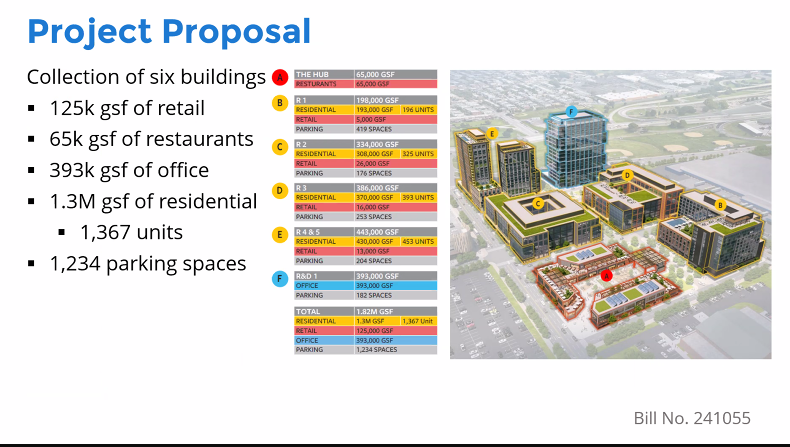
    A major development project that would have brought 1,367 residential units to South Philadelphia’s stadium district seems to have fallen apart since the real estate partnership behind the project ended last summer.

    The project was revealed in 2024 and would have been a collaboration between Hines, an international development company, and the King of Prussia-based Philadelphia Suburban Development Corp. (PSDC), which owns the land.

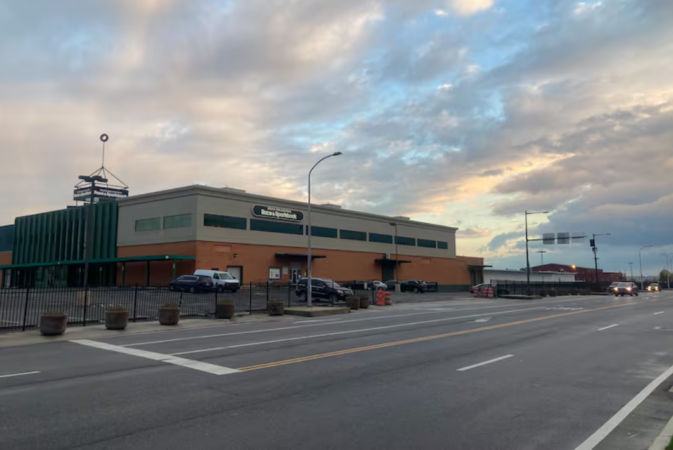
    It would have constructed six buildings, including an office tower and entertainment complex, to the east of the Live! Casino & Hotel where Parx Casino’s South Philadelphia Race & Sportsbook and Packer Avenue Foods once stood.

    Council President Kenyatta Johnson, who represents the area, has moved to repeal several zoning ordinances that he had passed to enable the project, despite protests from PSDC president Mark Nicoletti, who says the move will kill the project.

    “Hines withdrew from the project last summer,” Johnson said in a statement. “Since the plans that were presented to me at the outset of the partnership with Hines and PSDC have significantly changed, I feel it is in the best long-term interest of the residents … to introduce new legislation this year that repeals the original 2024 zoning legislation.”

    Johnson advanced his repeal legislation at an early February hearing of City Council’s Rules committee. A final vote could come as soon as next week.

    Nicoletti says PSDC could have developed the project without Hines, but only if the zoning legislation had remained in place.

    “I’m honestly scratching my head. This makes no sense,” Nicoletti said Tuesday after the City Council hearing. “What happened today was random and inexplicable and unfortunately killed thousands of jobs and a very important economic development project.”

    The project proved controversial early on, with representatives of the Phillies, Eagles, and Comcast Spectacor — which owns the Flyers — expressing concerns at a 2024 City Council hearing.

    Earlier in 2024 those three organizations shared plans of their own for a mixed-use development of their own at the sports complex.

    The release occurred as debate raged around a plan from the 76ers to leave the sports complex and build an arena in Center City — an effort the team ultimately aborted.

    But Nicoletti says his company met with local community organizations and the major sports teams about the proposal.

    “We presented comprehensive plans from a top architectural firm at a dozen meetings with community groups and the teams,” Nicoletti said. “We worked through any concerns the Planning Commission had to win their support.”

    But Nicoletti says the two developers went separate ways last summer because Hines did not exercise an option to buy all or part of the property from the PSDC.

    Hines declined to comment.

    An overview of what Hines and PSDC are planning for the stadium district.

    Johnson’s legislation contained a sunset clause for the zoning overlay he created to aid the project, which would have repealed itself later this year. But he decided to act sooner.

    Johnson also repealed a change in the underlying zoning from industrial to land use rules that allow mixed commercial and residential use.

    If he had left that mixed-use zoning in place, the land value would have increased even without the project moving forward.

    “I look forward to hearing new proposals from anyone, including PSDC, concerning new development plans for the former South Philadelphia Race & Sportsbook location at 700 Packer Ave.,” Johnson’s statement read.

    Johnson emphasized that any new proposal would need to be presented to neighborhood groups and get their support before he introduces any new zoning legislation.

    The Hines and PSDC collaboration promised to create thousands of construction jobs, but the exit of the international developer is seen by union leadership as the catalyst for the project’s death.

    “Hines stepped away from the project, and that caused the Council president to look at it with a new set of eyes,” said Ryan Boyer, who leads the Philadelphia Building and Construction Trades Council and the Laborers District Council.

    “The Council president has approved correct development, but he wants the community to have a say — as is his right,” Boyer said. “But I also think that [Johnson] and Mark [Nicoletti] are both reasonable people and reasonable men will come to a resolution for both of them, and for the building trades.”

  • A quarter-century-old zoning law threatens to block a restaurant and bar in Fishtown

    A quarter-century-old zoning law threatens to block a restaurant and bar in Fishtown

    A plan to revitalize a neglected building at 2043 Frankford Ave. with a ground-floor burger restaurant and second-floor cocktail bar is facing stiff opposition in Fishtown.

    Because of an over-25-year-old zoning overlay — which applies to the east side of Frankford Avenue and not the west side — the Slider Co.’s plans have been hung up for months awaiting a hearing from the city’s Zoning Board of Adjustment (ZBA).

    On Wednesday, the board ruled in the Slider Co.’s favor, but the saga has cost the business owners at least $40,000 and almost six months of waiting for a hearing.

    And that’s if opponents of the project don’t appeal the ZBA ruling to the Court of Common Pleas — adding at least another nine months and more legal costs to the project, probably killing it.

    “We were expecting to have a straightforward project, and then all of a sudden all hell breaks loose,” zoning attorney Alan Nochumson, who represents Slider Co.’s William Johnson and Anesha Garrett, said at a late January ZBA hearing.

    The principal opponent of the project is Ashley Gleason, who owns the clothing shop Vestige next door at 2041 Frankford Ave. She hired a zoning attorney to fight the case. At a Fishtown Neighbors Association (FNA) meeting last year, a narrow majority (36-30) voted to recommend that the zoning board deny the application.

    “Our block is not like the lower part of Frankford. It doesn’t have the bars and restaurants,” Gleason said at the ZBA hearing. “It is mostly residential and retail. So it [the proposal] is out of character for this block.”

    (function() {
    var l2 = function() {
    new pym.Parent(‘fishtownburger’,
    ‘https://media.inquirer.com/storage/inquirer/projects/innovation/arcgis_iframe/fishtownburger.html’);
    };
    if (typeof(pym) === ‘undefined’) {
    var h = document.getElementsByTagName(‘head’)[0],
    s = document.createElement(‘script’);
    s.type = ‘text/javascript’;
    s.src = ‘https://pym.nprapps.org/pym.v1.min.js’;
    s.onload = l2;
    h.appendChild(s);
    } else {
    l2();
    }
    })();

    The property at 2043 Frankford Ave. is a faded two-story building at the end of the row, and it’s been in rough shape for years.

    Unusually for a restaurant application, the case has stirred up allies in the community who submitted a petition in support of Johnson and Garrett, who already have a presence in the neighborhood.

    The former president of FNA, Ashlei Tracy, spoke in support of their application at the zoning board, noting bars and restaurants on the blocks of Frankford to the north and south of this one.

    “A constant complaint that we hear is that Fishtown is becoming very corporate,” Tracy said in an interview after the hearing. “A part of that is that it’s so expensive to even go through this [zoning] process.”

    The cases can also stir neighborhood tensions. January’s ZBA hearing on the matter saw lengthy testimony, weeping, and accusations of racial discrimination. Johnson and Garrett are Black, and Fishtown is an overwhelmingly white neighborhood.

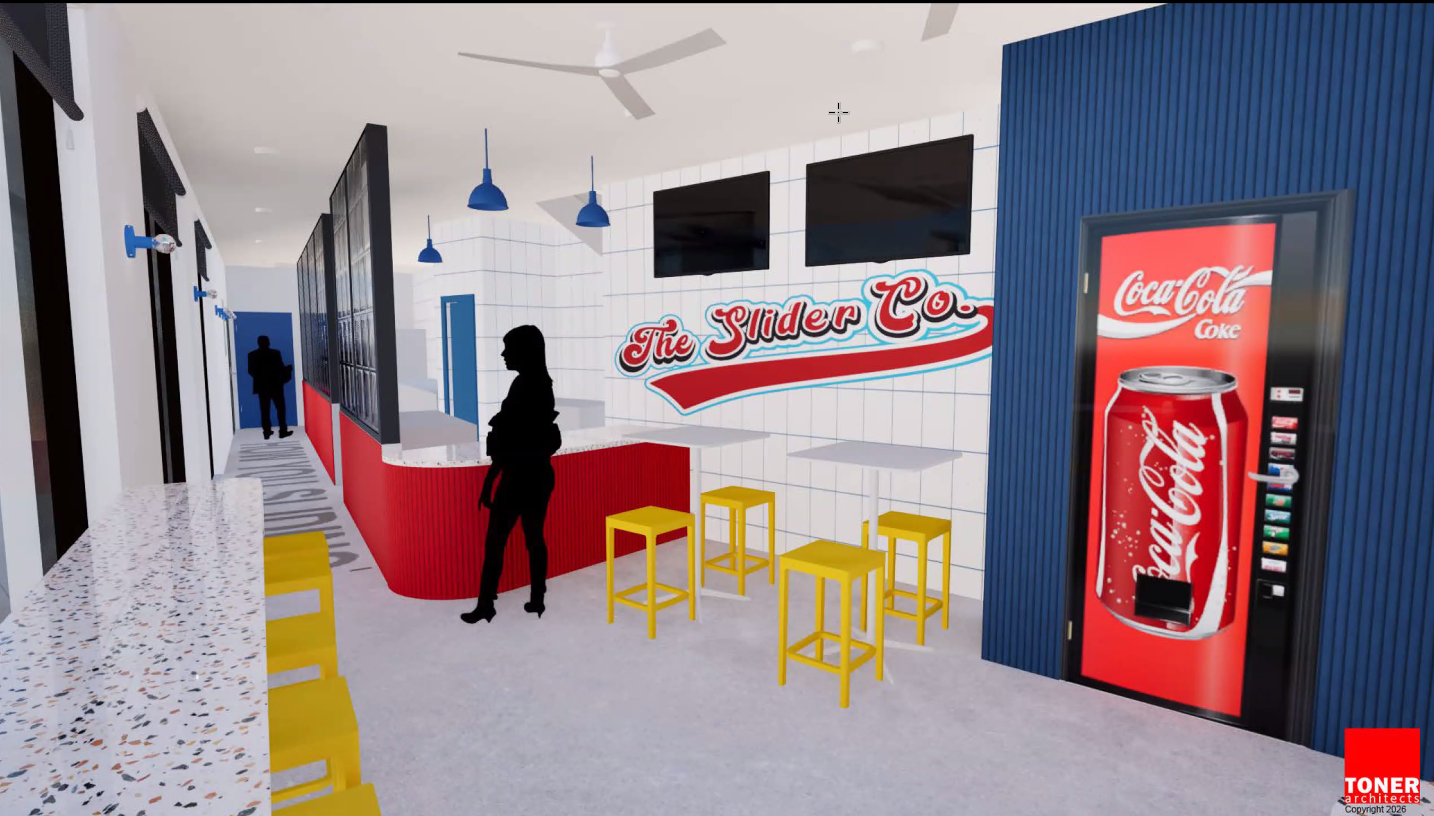
    An interior rendering of the burger place planned by the Slider Co. The Coke machine is a hidden entrance to the upstairs speakeasy.

    The wrong side of the street

    The complexities of the Slider Co.’s attempt to open a new restaurant and bar in one of Philadelphia’s hottest culinary neighborhoods is an effect of a 1990s-era zoning law to address rowdy nightclubs along the Delaware River.

    The “North Delaware Avenue overlay district,” which covers much of Northern Liberties and Fishtown, bans entertainment businesses from the area it covers while requiring food and beverage businesses to secure approval from the ZBA to open.

    The overlay extends from the Delaware River to the east side of Frankford Avenue and from Lehigh Avenue down to Spring Garden Street.

    The law was largely successful in its initial aims, stemming the creation of new nightclubs in the area. The Delaware riverfront is now known for its surplus of rental apartments, not for rowdy nightlife.

    “Everyone agrees that the original purpose of the overlay no longer needs to be served,” said Matt Ruben, a longtime civic activist in Northern Liberties who has been involved with zoning and planning issues in the area — including negotiations around this overlay — for years.

    “Where there is disagreement, and shifting views within some neighborhoods, is on the more subtle question of whether there should be some kind of zoning to help regulate everyday operational nuisances and negative impacts that can come from them,” Ruben said. “Even from operators who are not bad actors at all.”

    Many overlays linger on for decades, long after the politicians who created them are retired because they empower neighborhood groups to stave off changes in their community.

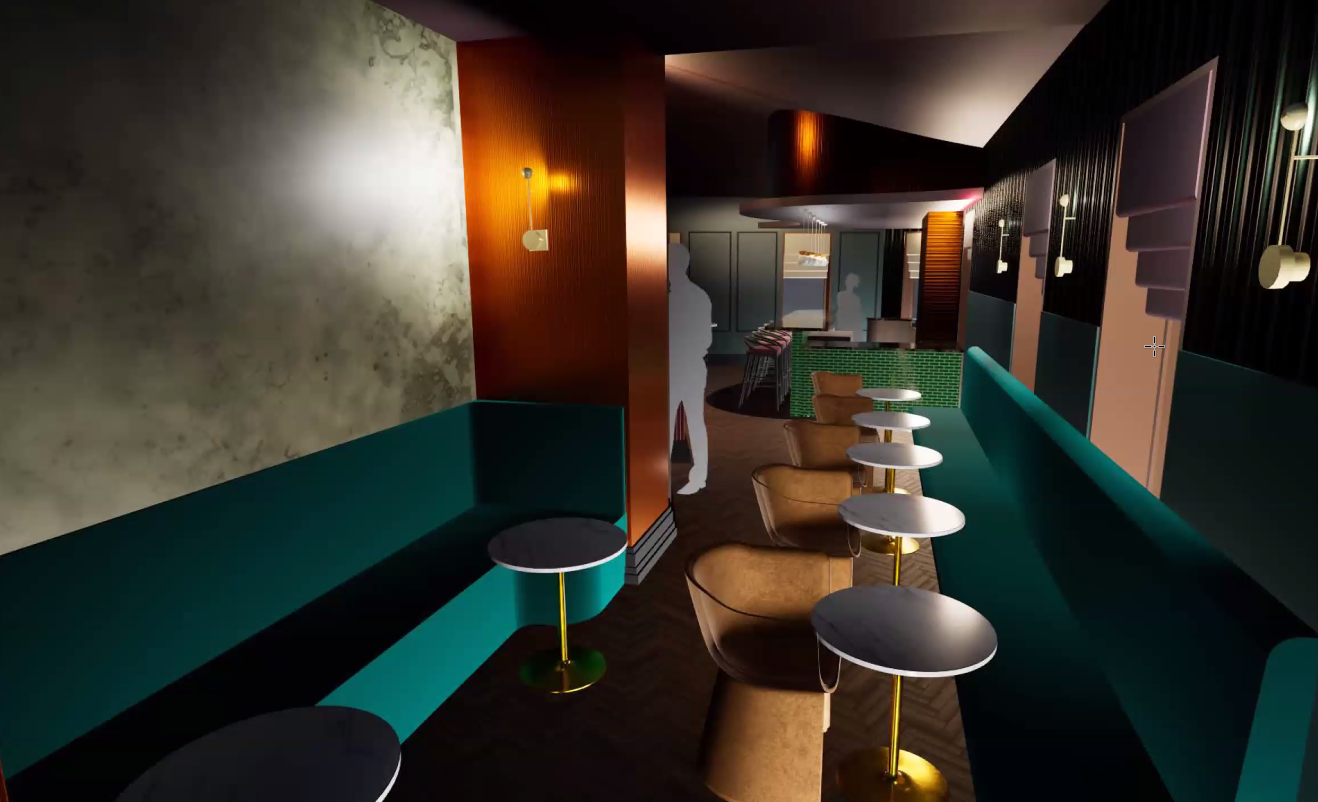
    An interior rendering of the upstairs speakeasy proposed by Slider Co.

    In this case, Councilmember Mark Squilla, who represents the area, says he is open to rewriting or scaling back the overlay, but only if there is unanimity among neighborhood and business groups in Fishtown and Northern Liberties.

    Currently, the Fishtown Neighbors Association (FNA) is in favor of the zoning overlay, which it argues gives residents of Frankford Avenue and the surrounding blocks a say in the restaurant boom.

    The community group says new restaurants and bars have affected quality of life — such as when eateries implement late-night private trash collection that can wake up people who live nearby.

    “I have not seen any interest in our community to get rid of” the zoning overlay, said John Scott, president of FNA. “It’s not seen as a detriment. It’s seen as a way to mitigate some of the impact of the food establishments.”

    Johnson and Garrett fear the old zoning law has given opponents of their project a way to wage legal warfare against their proposal.

    “We have never previously faced opposition to opening a new restaurant,” said Johnson, who has opened numerous culinary businesses in Delaware and Philadelphia.

    “An appeal to the Court of Common Pleas would likely put the project in jeopardy due to the financial strain and delays it would impose on the property owner,” Johnson said.

    Gleason’s lawyer declined to comment, and the property owner, Jordan Claffey, did not respond to a request for comment.

    Staff writer Michael Klein contributed to this article.

  • Large Roxborough apartment project adds more family units and makes changes to appease neighbors

    Large Roxborough apartment project adds more family units and makes changes to appease neighbors

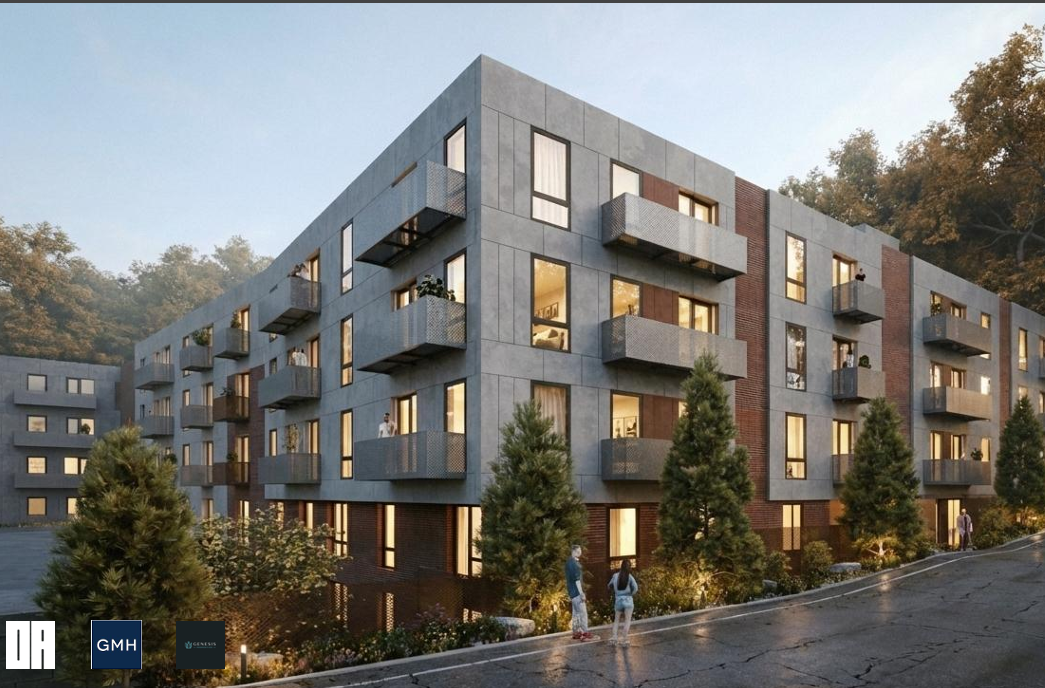
    A large new apartment proposal for 4889 Umbria St. in Roxborough has been altered to appease some neighbor concerns, with more brick incorporated into the facade and design tweaks to ease congestion.

    The developers, Philadelphia-based Genesis Properties and Newtown Square-based GMH Communities, also reduced the number of apartments from 384 to 369.

    But the actual number of bedrooms increased from 481 to 486, as they shifted to larger, family-size apartments.

    “I love the increase of twos and threes [bedrooms] and the availability to families, which I don’t find very common as a developer,” said Maria Sourbeer, vice president at Mosaic Development Partners and a member of the city’s Civic Design Review committee. “The money’s in the studios and ones.”

    The design team explained that the developers felt this corner of Northwest Philadelphia would have strong demand for larger units.

    Last November, the project’s initial consideration at the Civic Design Review committee saw pushback to its fortress-like design.

    Philadelphia-based Oombra Architects sought to soften elements of the project, increasing plantings and street tree coverage.

    More brick has been added as a building material, in a bid to echo the older industrial buildings on the project’s southwestern edge.

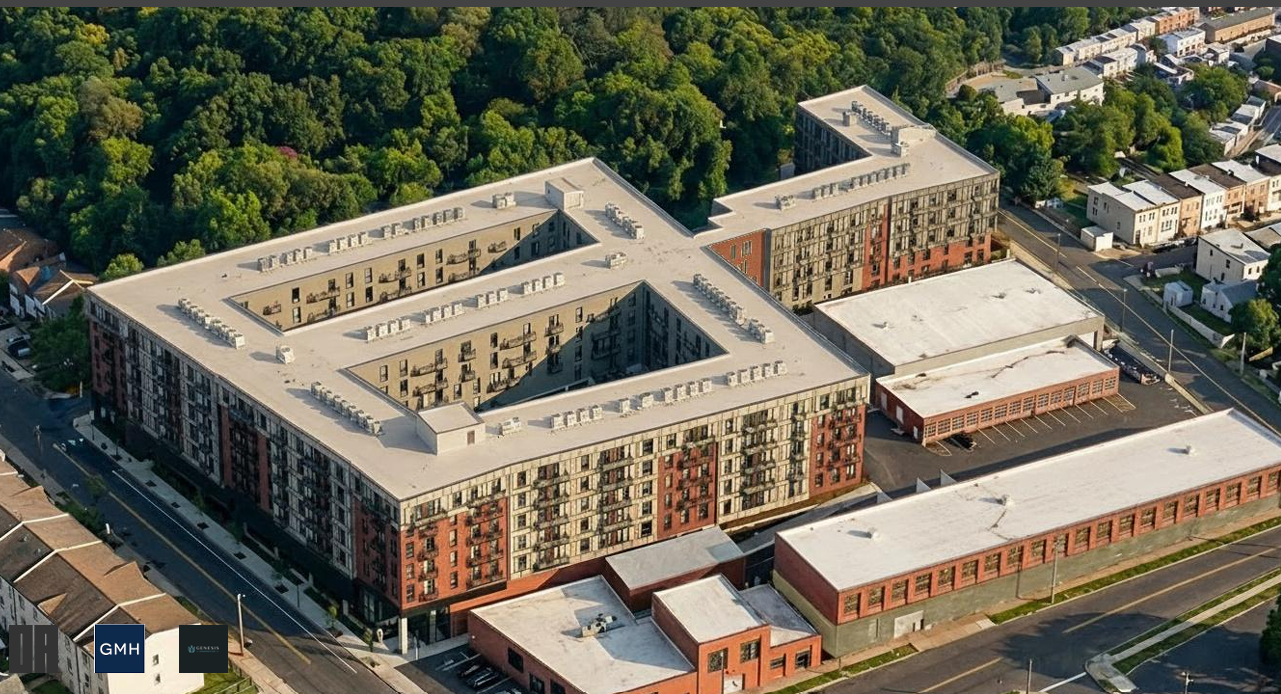
    A bird’s eye rendering of the new development on Umbria Street in Roxborough.

    The 123-space bike parking facility has been moved from the third to the first floor.

    The developers also relocated the parking garage entrance from busy Parker Avenue to Smick Street, which had not previously been publicly accessible. The project includes 380 spaces.

    “[We] want to commend you in taking the process seriously,” said Ximena Valle, an architect who chairs the CDR committee. “We recognize that you could have come here with no changes made. … Overall, there’s a big win here.”

    The Civic Design Review process makes recommendations but cannot force developers to accede to its critiques. The last time the Philadelphia City Planning Commission studied its efficacy in 2019, it found that only a third of projects adopted CDR recommendations.

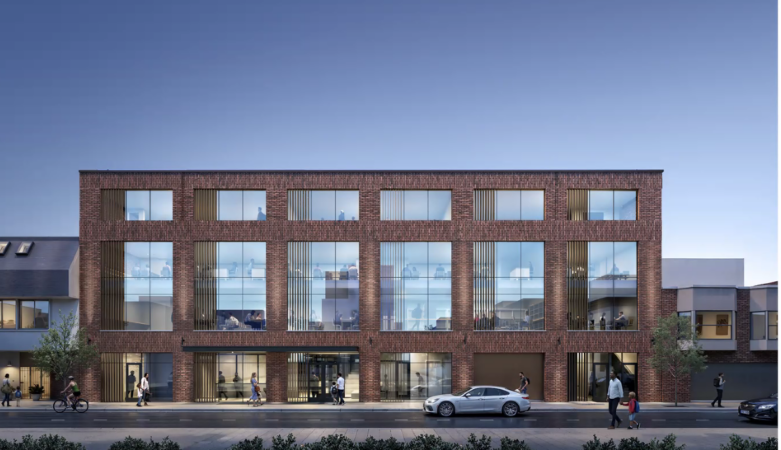
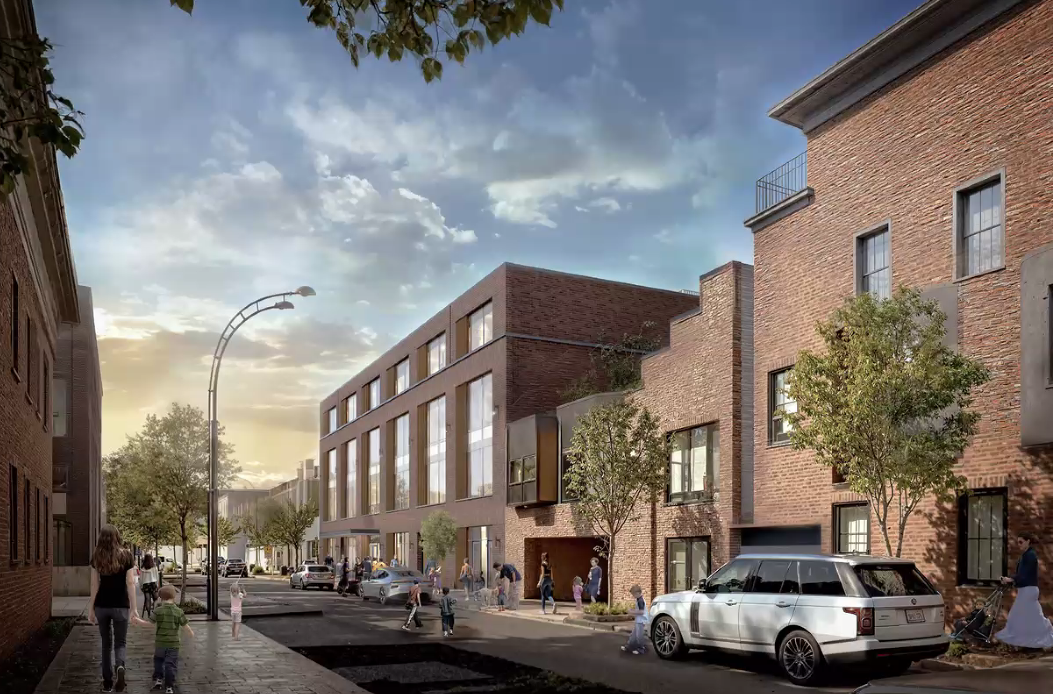
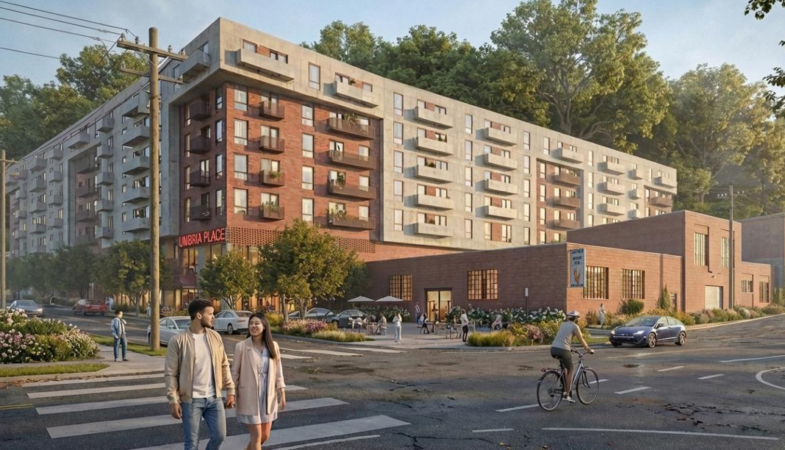
    A rendering of the Lemonte Street side of the project, the largest new apartment building in Roxborough in years.

    Although the project offers nearly one parking space for every apartment — far more than they are legally required — the local community group still held concerns about the amount of parking included in the project as the bedroom count rose.

    Otherwise, they largely embraced the changes.

    “There are going to be more cars on the street. I don’t think there’s any question about that,” said Marlene G. Schleifer of the Ridge Park Civic Association. “But we were pleased with the work that the developer has done to comfort us a little bit and make it easier to swallow.”