The cap over I-95 between Walnut and Chestnut Streets, which will host the 12-acre Penn’s Landing Park, is about 30% complete.
After almost six years of engineering, design, and COVID-related delays, construction began in 2023, and now a lattice of steel beams extends over the southbound portion of I-95.
The cap project is anticipated to be completed in 2029, with the park installed the following year.
Construction of the cap itself is the work of the Pennsylvania Department of Transportation. When it is completed, the Delaware River Waterfront Corp. (DRWC) will build the park and its amenities on top.
Plans call for it to include a water feature, skating rink, amphitheater, sprawling playground with custom equipment, and a mass timber building designed by architect Kieran Timberlake.
“The vast majority of the park is open green space, but there is a building we call it right now, the pavilion and cafe,” said Lizzie Woods, senior vice president of planning and development at DRWC.
A rendering of the mass timber building planned for the Penn’s Landing park.
“It’ll be a net zero carbon building … [and it evokes] the natural systems that we know and love along the waterfront and that warm and welcoming spirit that we want the whole park to have,” Woods said at a meeting of the Center City District on Thursday.
Woods said that some of the features planned for the park are influenced by Center City District’s success at Dilworth Park at City Hall, which offers a water feature in the summer and an ice skating rink in the winter.
But when the new Penn’s Landing park is completed, it will be far larger and offer more unplanned space.
“You see those beautiful gardens there, too, with little nooks for gathering and community programming,” Woods said.
“Those nooks actually came out of a lot of our community engagement process where people were looking for spaces that were not the giant amphitheater for programming, but smaller ones that community groups could use and talk with,” Woods said.
The park’s completion is still many years in the future. Next year, in addition to PennDot’s continuing progress on the cap, a new bridge will go up over South Street as part of this project.
It will be built in a parking lot this spring, and then Columbus Boulevard will be closed for one night and it will be swung into place with plans for opening it at the end of next year.
A rendering of the new South Street bridge, which is set to open a year from now.
Over the seven years of the project, PennDot has been doing most of the heavy lifting — spending a year and a half relocating utilities alone— and that will continue to be the case for the near term.
Project costs have shot up since it was originally proposed in 2017, as the first sustained bout of inflation in a generation took hold. Construction costs have soared.
Original cost estimates for Penndot’s portion of the project were $229 million, which increased to $329 million two years ago at the groundbreaking. DRWC’s portion of the project has so far gone up less, and is estimated at $130 million including $20 million for the Delaware River trail.
Planners and political leaders see the project as transformative and project that it will boost investment and valuation along the Delaware Riverfront by at least three times the cost.
“The opportunity of Penn’s Landing is really the proof of a concept that redevelopment of the waterfront, which is an old idea, can be done in such a way that puts the public and the civic resource of the waterfront at the forefront,” Woods said.
“Then that yields the opportunity for high-quality private investment rather than relying on those private areas to set the tone,” Woods said.
Editor’s note: This story has been updated to clarify the total cost of the project.
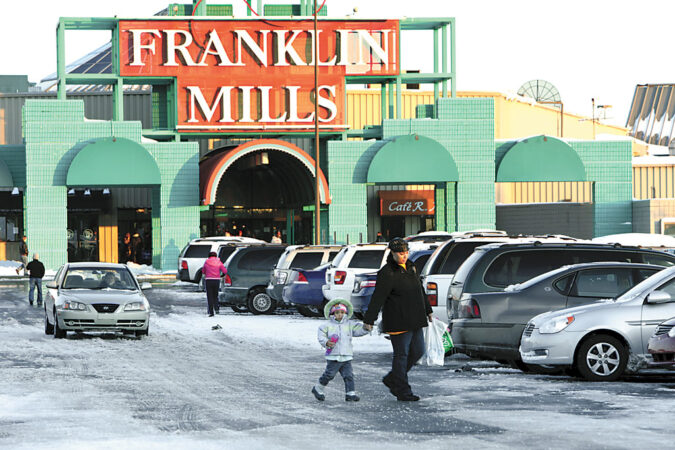
Northeast Philadelphia’s Franklin Mall — better known by its original name, Franklin Mills — is for sale after years of plummeting valuation, occupancy, and visitor numbers.
A listing on the website of real estate brokerage Jones Lang LaSalle (JLL) includes possible uses a new owner can consider, including industrial and office development. The parcels including Sam’s Club and Walmart are not included in the sale.
“Franklin Mall presents the opportunity to acquire meaningful control of more than 137 acres … in a densely populated location that may support additional densification and redevelopment,” the listing reads.
The move comes amid a wave of mall sales and redevelopments in the region, with demolition and residential construction a common fate for many struggling shopping centers.
Over 68% of Franklin Mall is occupied, which could be an incentive for continued retail operations. But sales and visitor numbers have been falling for years,and JLL reports the average existing lease lasts for only another 1.7 years.
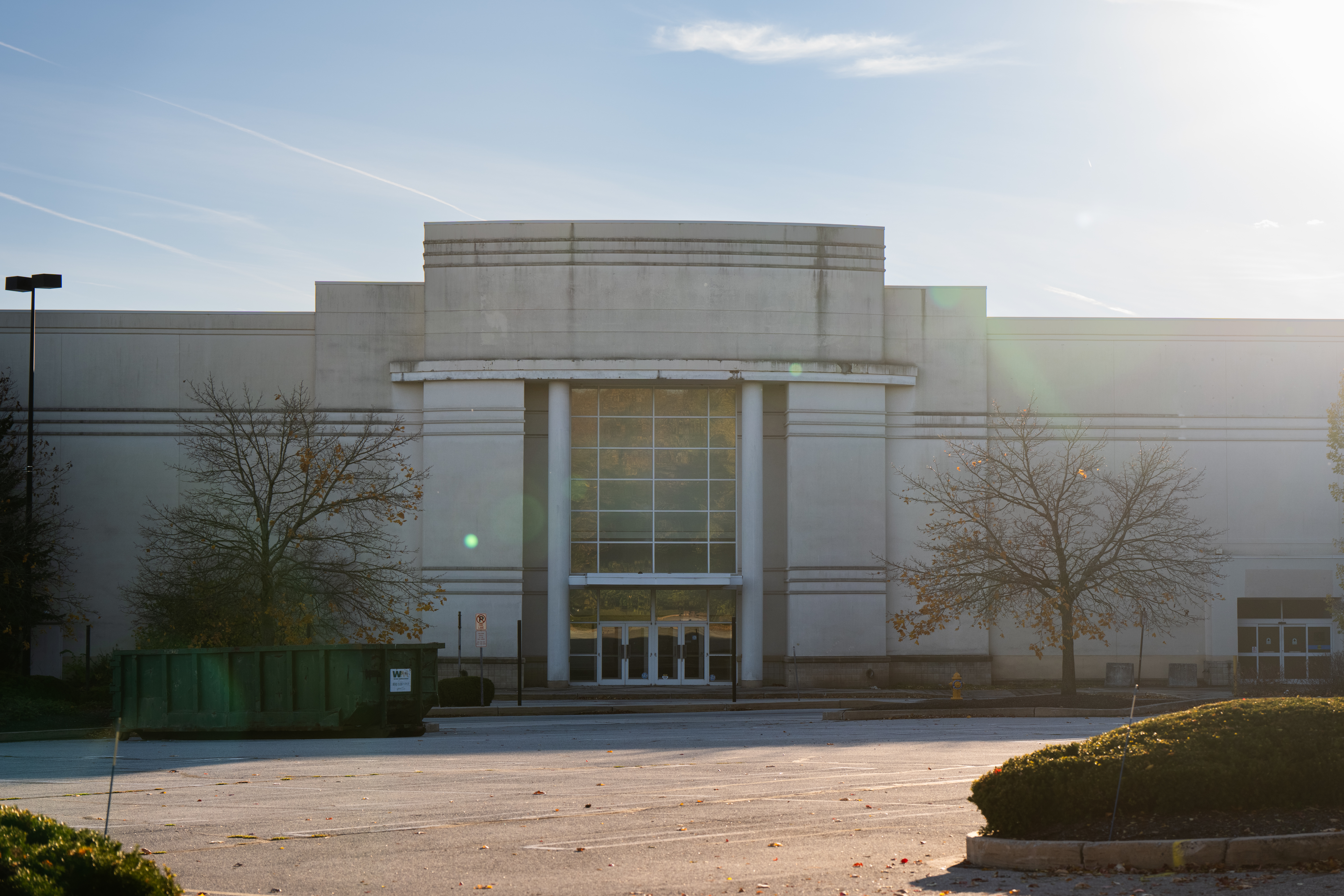
If a new use is sought, the mile-long, one-story structure would be difficult to repurpose.
“I think it’s unlikely to be a shopping mall” again, said Jerry Roller, founder of the design firm JKRP and a longtime architect in Philadelphia. “What could it be? Obviously, residential. It might be a warehouse. It’s essentially a large vacant piece of land. It was fairly inexpensive when it was built, so it’s not hard to demolish.”
The hundred acres of land that Franklin Mills sits on at the edge of Far Northeast Philadelphia is zoned for auto-oriented commercial use.
JLL’s listing advertises the site’s suitability for industrial redevelopment.
“The property’s infill location and highway access make it a strong candidate for redevelopment into a modern industrial facility,” the listing reads. The zoning “could provide a basis for an investor to pursue the development of up to 1.4 million square feet of new warehouse space.”
The residential redevelopment opportunities for the site could be aided by a promised 20-year property tax abatement for the conversion or demolition of outmoded commercial buildings into housing, which Mayor Cherelle L. Parker’s administration promises next year following enabling legislation from Harrisburg.
But the existing zoning would not allow that, so a residential project would need to win the permission of the city’s Zoning Board of Adjustment or have the land-use rules changed legislatively by Councilmember Brian O’Neill.
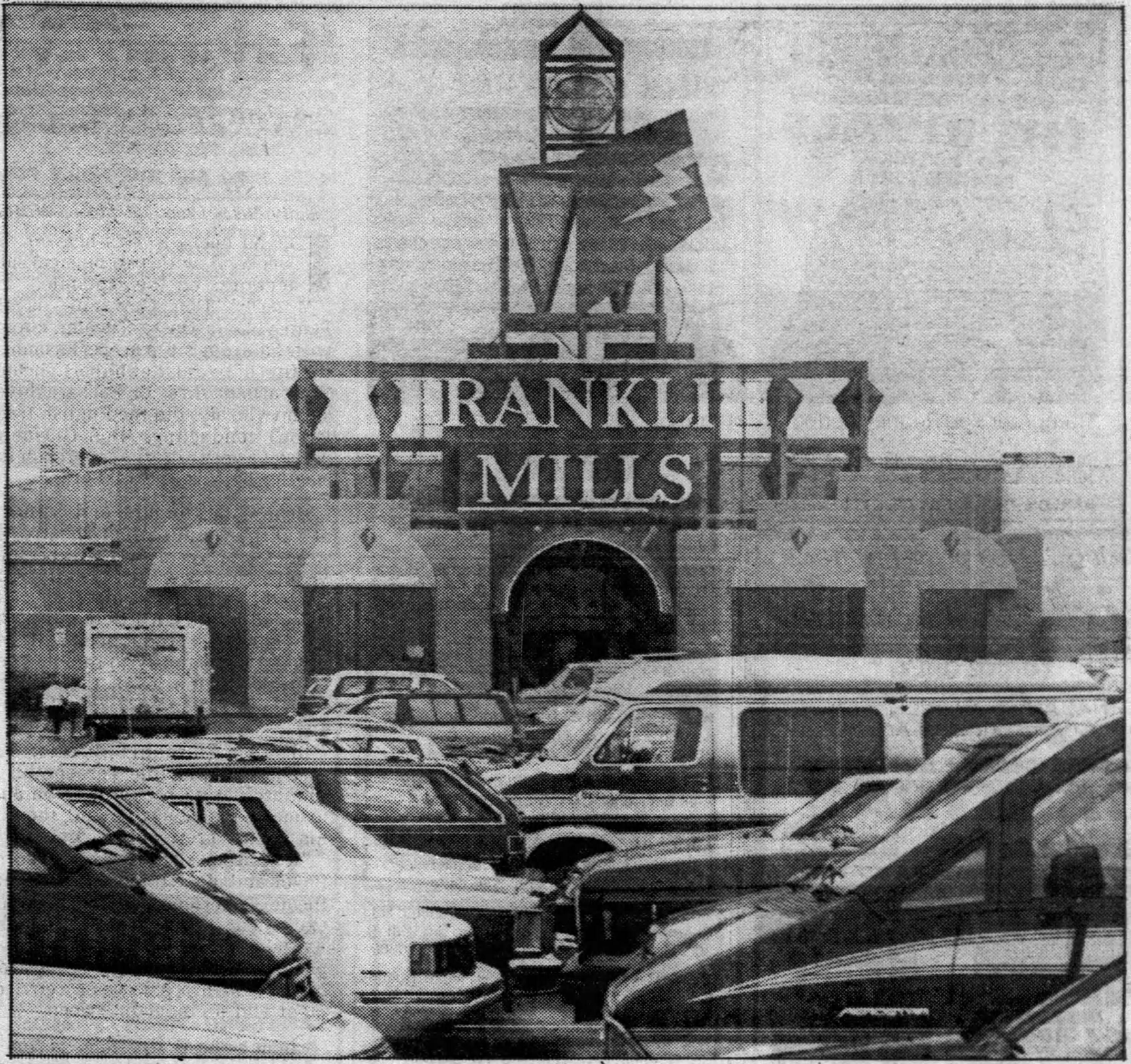
The mile-long Franklin Mills mall drew Christmas-size crowds at its opening in May of 1989.
Tribulations of a Northeast Philly icon
The 36-year-old, 1.8-million-square-foot facility at Knights and Woodhaven Roads is the second largest mall in the Philadelphia area after King of Prussia. But while its larger cousin remains a dominant retail force, Franklin Mall has been struggling for years.
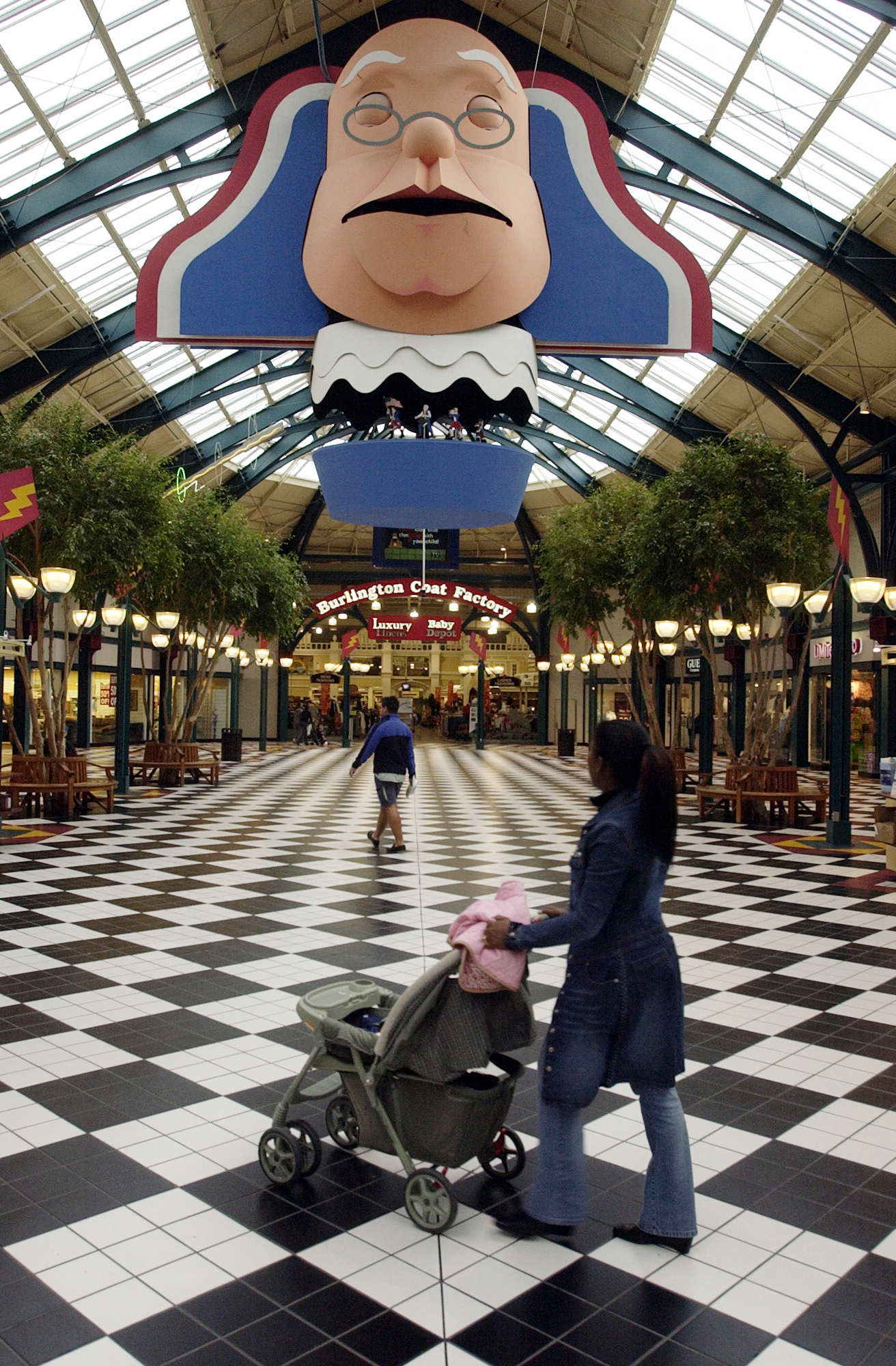
The mall opened in 1989 to great fanfare as the largest outlet mall ever, with an iconic zigzag-shaped concourse that stretched for 1.2 miles.
In 2007, in retrospect near the end of Franklin Mills’ golden era, the property and the rest of the Mills Corp. was taken over by Simon Property Group, the largest mall owner in the country. The new ownership group rehabbed the property in 2014, although there were already signs Simon was distancing itself by moving Franklin Mills (renamed Philadelphia Mills) into a different balance sheet category than its core properties.
Simon’s loan on the property had been intermittently distressed since 2012. An April 2024 report from real estate analytics firm Morningstar Credit was headlined “Legacy Philly Mall Back to Special Servicing for the Umpteenth Time.”
Shoppers stroll through the Franklin Mills mall in 2014.
The 2007 loan still had an outstanding balance of almost $250 million when it came to maturity in July 2024. Simon stepped away from the day-to-day operations at that time, with Philadelphia-based OPEX CRE Management appointed as receiver of the distressed property. The name was changed to Franklin Mall because Mills was trademarked by Simon.
Last year Franklin Mall’s appraised value was $76 million, a precipitous decline from its $201 million valuation in 2012 and $370 million in 2007. According to Morningstar Credit, a new appraisal is likely in the next month.
Full financials haven’t been publicly updated since last year, but at that time, the cash flow for the property was $9.5 million, the lowest since Simon took over in 2007. That’s down from 2019, when cash flow was $17.5 million, according to Morningstar, and from $11 million in 2022.
According to Morningstar, the latest reports from the special servicer for the property, Greystone Servicing Co., say cash flow is even lower this year and occupancy has fallen to 65.4%.
Possible reuses for Franklin Mills
Franklin Mall’s for-sale status comes as some old-school regional shopping destinationsare declining.
While some of its counterparts like King of Prussia and the Cherry Hill Mall are still thriving, there has been a wave of sales and redevelopments of area malls as the nature of retail evolves.
Some ailing malls have been purchased on the cheap, allowing their new owners to reinvest and refurbish the property in its previous mold.
“In terms of using the buildings that are there, it’s a challenge because they are generally big box retail, and they’ve got a center mall, which is completely out of fashion,” Roller said. “Could somebody, if they had the right tenants, recreate the mall? Turn it inside out, open the thing up?”
“Maybe it’s possible,” Roller said. But “I don’t see a lot of uses for the buildings that are there right now.”
The redevelopment of Exton Square Mall is in legal limbo.
When regional malls are redeveloped, more commonly, the retail options are reduced with much of the old structure demolished. Diverse new uses often take a faded shopping center’s place.
In New Jersey, the Echelon, Moorestown, and Burlington Center malls have or are going through a variety of demolition and redevelopment options. The commonality is that residential building is a part of all three plans.
At Franklin Mall, redevelopment would likely require demolition of the existing building.
“Ultimately, it may just be a piece of land” for sale, said Roller.
JLL’s listing, however, pitches the property as either redevelopment or continued mall use.
“This offering presents prospective purchasers with the opportunity to acquire a strategically positioned super regional shopping center with significant upside potential and/or redevelopment opportunity,” it reads.
JLL’s managing directors on the sale are John Plower, David Monahan, and Jim Galbally.
Historic preservation advocates are sounding the alarm about legislation from Councilmember Mark Squilla, which they argue would weaken existing protections in Philadelphia.
The bill, introduced Nov. 20, would institute changes to the city’s Historical Commission, which regulates properties on the Philadelphia Register of Historic Places and ensures that they cannot be demolished or their exteriors substantially altered.
“This is the first time the [preservation] ordinance has been proposed for amendment in decades,” said Paul Steinke, executive director of the Preservation Alliance for Greater Philadelphia. “This is a developer-driven proposal that does not reflect any of the priorities of the preservation community.”
Proponents of the bill argue that it is simply meant to give more notice and power to property owners before their buildings are considered by the Historical Commission.
“The bill does nothing to decrease the power of the Historical Commission to protect important historic resources,” said Matthew McClure, who served as co-chair of the regulatory committee of Mayor Jim Kenney’s preservation task force.
“It is a modest good government piece of legislation,” said McClure, a prominent zoning attorney with Ballard Spahr. He emphasized that he was not speaking on behalf of a client.
The bill was introduced too late in this year’s Council session to receive a hearing. Squilla says it will be considered next year.
Currently, the interest group most supportive of the bill is the development industry. But even some preservation opponents are displeased with Squilla’s effort, arguing that it does too little for homeowners.
“Everybody’s talking, and I think they all agree to move forward with continued conversations to maybe tweak the language a little bit so everybody feels comfortable with it,” Squilla said.
At least one more stakeholder meeting will be held in December.
Tensions over preservation
Squilla’s proposal comes in the midst of heightened debate around preservation in Philadelphia, where the majority of buildings were constructed before 1960.
Over the last decade, the number of historically protected properties doubled, although well below 5% of the city’s buildings are covered. Preservationists oppose what they see as a demolition-first approach to development in the United States’ only World Heritage City.
These have provoked backlash among some homeowner groups and pro-development advocacy organizations, which see these regulations as increasing housing costs.
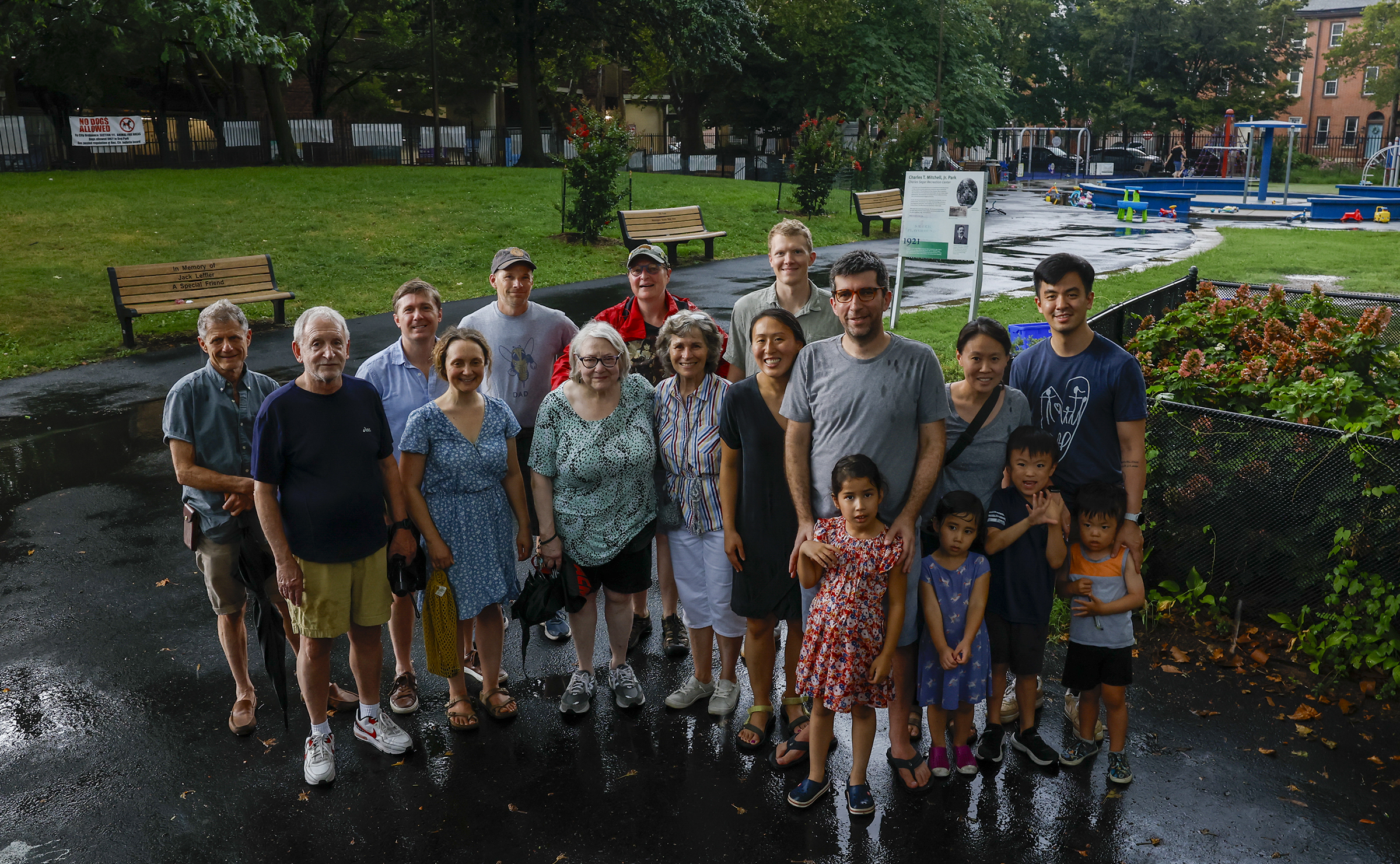
Members of the Philadelphians for Rational Preservation gathered at Seger Park in the Washington Square West neighborhood on July 27 to talk about their opposition to the Washington Square West Historic District.
Some property owners have grievances against the way the local nomination process works.
In Philadelphia, citizens are empowered to nominate buildings to the local register — giving buildings protection from demolition or exterior changes — without input from the property owner until the Historical Commission considers the case.
This practice persistently causes controversy, especially because there are few local incentives for homeowners whose properties get protected.
In some localities, preservation protections are promulgated exclusively by planners. In others, owner consent is required.
“The current historic nomination process is most often dictated by nongovernmental actors who operate without notice to property owners,” McClure said. “The administration’s bill is aimed at increasing transparency and basic fairness during the nomination process.”
Mayor Cherelle L. Parker’s administration did not respond to a request for comment.
What’s in the bill
Squilla’s bill is thick with new provisions to the local historic ordinance. A key aspect of the legislation gives property owners at least 30 days before a pending nomination of their building is considered by the commission and protections kick in.
While homeowners probably would not have time to radically alter the exterior of their house — and presumably wouldn’t demolish it — preservationists fear that developers will use the extra time to begin razing historic buildings.
“No one likes the notice provision the way it’s written; that’s freaking people out,” Steinke said. “We made clear why we think that’s a problem, and we were heard. Of course, the development community would love it to be the way it’s currently expressed in the bill.”
A Victorian home in the Spruce Hill historic district. Recently large new historic districts have been created to cover neighborhoods like Powelton Village, parts of Spruce Hill, and 1,441 properties in Washington Square West.
The delayed provision particularly worries preservationists in combination with a proposed requirement that the commission approve permits — including demolition or exterior design work — if “material commitments” were made to plans before the attempt to protect the historic building.
Other provisions include language to make it more difficult to protect land because it may house archaeological remains. It also limits the ability to consider a property for protection due to its relation to a landscape architect (as opposed to, say, a building designer).
Despite their animus toward existing preservation rules in the city, groups like 5th Square and Philadelphians for Rational Preservation called the legislation a sop to those who least need help.
“While this bill is a boon to developers, it doesn’t help ordinary Philadelphians,” said Jonathan Hessney of Philadelphians for Rational Preservation.
He argues that Squilla isn’t curbing historic districts that burden homeowners, “while at the same time risks allowing genuinely historic properties to be destroyed in the new 30-day race to demolish or deface it creates.”
A possible reform that some critics of the bill would like to see are flexible, tiered historic districts, where only a select group of buildings would be fully regulated. Demolition protections would still exist for many buildings, but most would not be subjected to oversight for changes like replacing a door or window.
“That was discussed as something that the preservation community would like to see that was mentioned in the original draft and then stripped out,” Steinke said.
Squilla said the pushback surprised him, given that negotiations have been held since June. He’s confident a compromise can be reached.
Beyond the Preservation Alliance — the advocacy group with the most funding and pull in City Hall — the bill has caused alarm among historic activists.
“It was a blindside to the progress that many stakeholders in the preservation community felt they were reaching with him,” said Arielle Harris, an advocate. “Squilla understands the preservation climate in the city — given that he was on the preservation task force — so this is out of left field.”
State police Cpl. Joshua Mack is suing the Pennsylvania State Police in federal court, arguing that he lost a lucrative position on the governor’s security detail because of racial discrimination.
Mack, who is white, claims that his superiors reassigned him earlier this year and that he had heard them talk about the “need” for “more minorities” on Gov. Josh Shapiro’s security team.
Mack had been the longest-serving member of the governor’s security detail, joining the elite squad in 2011 when Ed Rendell was in office.
“Mack’s removal and replacement on the Governor’s Detail were motivated by race considerations and intended to satisfy [Pennsylvania State Police’s] stated goal of increasing minority representation in the Governor’s Detail,” the lawsuit reads. “As a result, Mack suffered loss of pay, loss of overtime income, diminished professional opportunities, and emotional distress.”
Mack joined the state police in 2004 and went on to protect four governors. The lawsuit claims that he “consistently received strong performance evaluations” and that guarding the governor came with opportunities for specialized dignitary-protection training, state-owned vehicles, and far more overtime than other state troopers have.
Pennsylvania State Police declined to comment, saying that they don’t respond to queries about personnel matters or pending litigation. Shapiro’s office declined to comment as well.
According to the lawsuit, Mack lost the position on March 25 — although he retained his rank of corporal — and was told that it was only because of “administrative changes.” His supervisors repeatedly informed him their decision was not due to any deficiencies in his performance, the lawsuit states.
“As a result of his removal from the Governor’s Detail, Mack was reassigned to another unit farther from his home, lost access to a state vehicle, and lost substantial overtime opportunities,” reads the lawsuit, which was filed on Nov. 25.
“He was assigned back to patrol, which was a drastic change, as he was out of patrol work for so long and much has changed during that time,” wrote Anthony T. Bowser, who is representing Mack, in an email to The Inquirer.
Mack alleges he was then replaced by two non-white troopers “who were substantially less qualified and lacked any dignitary-protection experience.”
Mack is demanding a jury trial. He is alleging damages stemming from lost wages and benefits, damage to his professional reputation, and “emotional distress, humiliation, and embarrassment.”
Bowser says that while the damages would have to be determined during litigation, the lost overtime amounts to over $50,000 annually because it is capped in Mack’s new patrol position. The lost overtime would also affect his pension.
Mack is specifically suing the Pennsylvania State Police and his superiors Cpl. John Nicholson and Lt. Col. George Bivens. Shapiro is not mentioned by name in the suit.
Mack first filed an administrative charge of discrimination with the Equal Employment Opportunity Commission, a necessary first step before filing in federal court.
Mayor Cherelle L. Parker unveiled her planning process for the future of Market East earlier this month to a room packed with many of the city’s top developers, lobbyists, and business leaders.
Her news conference followed the announcement that the alliance between the Philadelphia 76ers and Comcast had plans to demolish buildings on the 1000 block of Market Street, without saying what they plan to do with the soon-to-be vacant space.
A Comcast executive’s promise to “turbocharge” development on the beleaguered corridor did not quiet dissent in the packed room from a group of historic preservationists who stood solemnly holding signs reading “No More Holes On Market Street” and “No Plan, No Demo.”
The moment captured a recurring dynamic in modern Philadelphia, a city where over 70% of buildings reportedly date to before 1960 but only 4.4% of them have a degree of protection from demolition by the Historical Commission.
Now two bills in City Council would require property owners to get a building permit for a new structurebefore they move forward with demolition.
“This bill is about putting commonsense guardrails in place,” said Councilmember Jeffery “Jay” Young, who represents much of North Philadelphia and part of Center City.
His bill, which covers his entire district, requires a building permit before a property owner can demolish a structure, with exceptions for dangerous buildings.
“It ensures property owners are prepared to move forward responsibly and that residents aren’t stuck living beside another empty lot with no timeline or plan,” Young said in a statement.
“This isn’t about slowing down development; it’s about preventing speculative demolition that destabilize blocks. This is about preserving communities,” Young said.
Councilmember Jamie Gauthier’s bill would enact similar rules for parts of University City, where higher education institutions are dominant, as part of a larger package of land-use regulations.
Builder and developer advocacy groups say the legislation is a potential new burden on a key economic sector that’s been flagging in recent years.
The Building Industry Association (BIA), the trade association for residential developers, cautioned that new regulations were especially unwelcome in a time of higher interest rates and high construction material prices, especially as Parker makes housing a centerpiece of her agenda.
“I’m not sure why Council would create more barriers for delivering new homes,” said Sarina Rose, president of the BIA and an executive with the Post Brothers development firm. “It’s a really bad time to do that. Unfortunately, some old buildings simply are not good fits for adaptive reuse.”
The BIA and its allies are backing legislation that would make it easier to demolish some older buildings for new construction.
Councilmember Mark Squilla introduced legislation the week before Thanksgiving that would weaken protections for structures nominated to the Philadelphia Register of Historic Places.
At the same time, Parker promises to pursue legislation in the next year to prompt adaptive reuse or demolition of underused buildings by offering a 20-year property tax abatement.
Demolition policy in other cities
In a city as old as Philadelphia, razing buildings is often a fraught process.
Currently the only safeguards against demolition come with a successful nomination to the Philadelphia Register of Historic Places, and in the handful of neighborhoods protected by conservation zoning overlays, property owners have to get building permits before demolition (a template for Gauthier and Young’s bills).
But given the city’s economic and demographic doldrums in the second half of the 20th century, municipal government enacted most of the demolitions of unsafe and abandoned buildings, usually in lower-income neighborhoods.
Mayor John F. Street’s Neighborhood Transformation Initiative, the centerpiece of his administration, spent half its $300 million (in George W. Bush-era dollars) on demolishing thousands of buildingsin the early 2000s.
That dynamic changed in the last decade, as low interest rates and a surge of new residents juiced real estate development to levels not seen in the city for generations. The private sector began to regularly outpace city government in demolition permits, as developers cleared the way for new projects.
Preservationists pushed back. Under Mayor Jim Kenney’s administration (2016-24), the movement demanded new policies such as a demolition review requirement. Before an applicable building could be razed, municipal authorities reviewed its historic merits and adaptive potential.
Similar policies of varying strength exist in cities from Santa Monica, Calif., to Chicago. In the latter case, it applies to buildings from before 1940 that were included in a citywide survey of historic places.
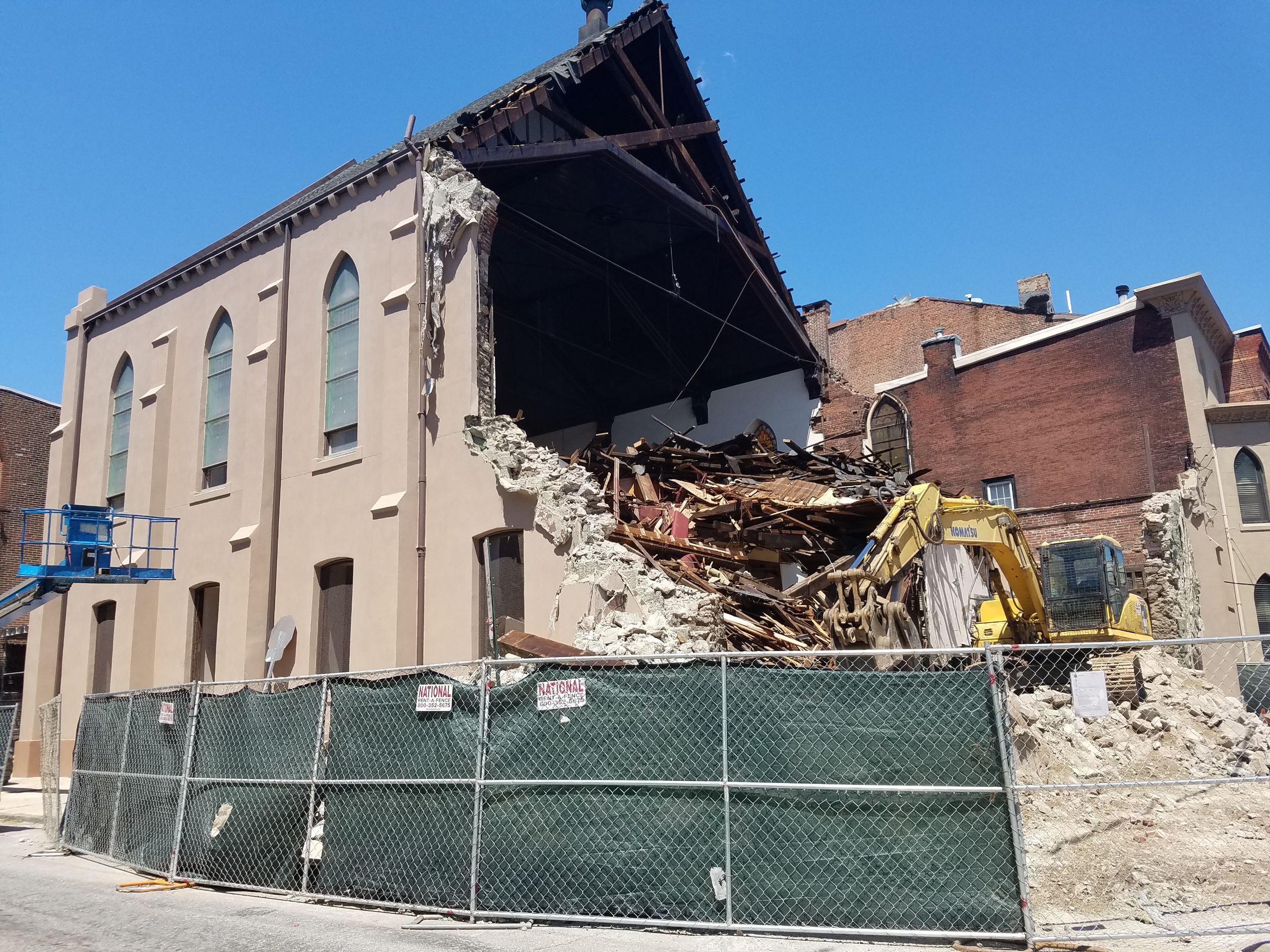
Demolition of New Light Beulah Baptist Church at 17th and Bainbridge Streets, a block below South Street.
During Kenney’s administration, a preservation task force called for a survey and demolition delay as in Chicago, but no elected officials championed the ideas.
Laws like the ones Gauthier and Young are proposing are less common but are used in municipalities like Spokane, Wash., and Pasadena, Calif. Similarregulationsexist for properties in Philadelphia’s conservation districts.
In Spokane, the regulations apply to buildings in the downtown core, those along commercial corridors and buildings on the National Register of Historic Places, which is more of an honorary designation that affords protections.
“You have to have that building permit in hand, plus you have to show us that you have the financial backing to build that replacement building,” said Megan Duvall, Spokane’s historic preservation officer. “If you also can’t show us that you have the construction loan in hand, we won’t allow you to demolish that building.”
Why City Council is acting now
The sudden renewal of interest in demolition policy began when St. Joseph’s University sold much of its West Philadelphia campus, acquired through a merger with University of the Sciences in 2022, to a charter school operator founded by student housing mogul Michael Karp.
After the sale, Gauthier proposed placing controls on the sprawling higher education footprint in her district.
As higher education comes under acute financial and demographic pressure, she fears that building sales by struggling universities could result in demolition and resale of newly vacant lots to developers without the wherewithal to complete projects or speculators with no desire to build quickly.
“The safety and quality-of-life in our neighborhoods should not be disrupted by incomplete or uncertain projects,” Gauthier said in a statement. “I believe requiring responsible development practices is a commonsense approach in today’s uncertain development market.”
Jeffery “Jay” Young outside Independence Hall.
Young’s bill covering much of North Philadelphia and parts of Center City followed the introduction of Gauthier’s legislation. Neither bill has been passed by City Council.
According to the Philadelphia Planning Commission, from January 2022 through November 2025 approximately 580 demolition permits were issued in Young’s district. The Department of Licenses and Inspections said that with a few tweaks, his proposed bill would be enforceable.
Young says his legislation was inspired by frequent calls from constituents who hate the vacant lots that dot their neighborhoods and are frustrated with promised development that never comes to fruition. Both bills exempt buildings in poor condition that are considered dangerous.
While welcoming this spate of demolition regulation, preservationists would prefer citywide policies, not district by district.
“These bills are important first steps, and this is the moment to build them into a modern, citywide framework consistent with approaches already used in several peer cities,” said RePoint, the preservation advocacy group that protested the mayor’s Market East announcement, in an unsigned statement.
Real estate industry backlash
At the same time, Philadelphia’s development industry is embarking on its own campaign to ease existing preservation rules and to push back against these new bills. Both Gauthier’s and Young’s bills have been critiqued by business groups and by the zoning lawyers who often represent developers.
“This is one-tenth of the city of Philadelphia, just based upon a political subdivision [that] changes every 10 years,” Matthew McClure, a prominent zoning attorney, said in testimony about Young’s bill before the Planning Commission. “It’s the exact opposite of planning.”
Groups including the Building Industry Association are backing a new bill from Squilla that the Preservation Alliance for Greater Philadelphia fears will stoke more demolitions.
It would require a new 30- to 60-day window before a building nominated to the local register of historic places could be given protection, which critics believe will incentivize owners to tear down empty buildings quickly.
The mayor’s proposed 20-year property tax abatement proposal for adaptive reuse projects also allows room for demolition if buildings are considered unadaptable, which preservationists fear will bring back the wrecking ball-forward incentives of the city’s earlier abatement policies.
In the last week, groups like the Preservation Alliance have pivoted from thinking about new demolition regulations to playing defense.
“We’re still trying to wrap our heads around it all,” said Paul Steinke, the Preservation Alliance’s executive director. “It’s a lot to take in, and it’s happening after a decade or so of a building boom where we lost a chunk of the historic fabric.”
Philadelphia developers may soon benefit from a 20-year property tax abatement to convert large, underutilized properties into residences.
Buried among the litany of provisions in the state budget and fiscal code in Harrisburg, which both passed last week, new language was included that allows Philadelphia to exempt “improvements that convert deteriorated property into residential housing units” from property taxes for up to 20 years.
If a building is deemed too difficult to convert to housing, the new legal language will allow a developer to demolish a building and still get the abatement.
The legislation defines “deteriorated property” as “any industrial, commercial or other business property, or property previously used for government purposes, including a school” that is located in what the legislation calls “a deteriorating area.”
It isnow up to City Council and Parker’s administration to craft a local law within the confines of what the state government newly allows. According to state law, local officials must also define what geographic areas under their purview qualify as “a deteriorating area.” Council President Kenyatta Johnson says he supports the 20-year abatement.
The abatements would “ensure that there are no vacant office buildings here in the city, and …incentivize the building of affordable housing,” said Parker in an interview. “That’s where I think it’s going to matter the most.”
Shuttered schools and the Roundhouse
Currently, the city has a10-year abatement that applies to all residential properties for renovations — which includes conversions — and a half-strength abatement for new construction that begins with a 100% break on a project’s property taxes and then tapers by 10% annually over a 10-year period.
Parker said that her administration worked with State Sen. Vincent Hughes (D., Philadelphia), State Rep. Jordan Harris (D., Philadelphia), and State Sen. Joe Picozzi (R., Philadelphia) to get the new language into the contentious Harrisburg budget.
The administration is now working on crafting legislation to present to Council early next year. She sees it as a crucial incentive in her H.O.M.E. effort to build or preserve 30,000 units of housing.
Parker emphasized that while the new legislation is meant to help solve the office market crisis in Center City, she is most excited for it to be applied to shuttered public schools and other large, underused buildings in outlying neighborhoods.
“We have a menu of options, and this tool, this puts our efforts on steroids to build affordable housing in the city of Philadelphia,” Parker said. It is a “public good [that is] underproduced and has to be incentivized, and not just in Center City.”
Lewis Rosman, the city’s chief deputy solicitor, pointed to the architecturally unique former police headquarters known as the Roundhouse as a property that could possibly benefit from the 20-year abatement as a way to demolish the existing structure and build a new one.
“If you have a property like the Roundhouse that you can’t directly turn into housing, you got to take it down,” said Rosman, who helped write the statelegislation. “It will be a new development, but presumably under enabling legislation from Council that will be implemented, it would be subject to the abatement.”
Impact on affordable housing?
Real estate groups in the city hailed the new legislation out of Harrisburg as a tool to fight blight and reactivate historic buildings.
“For years, [we have] advocated for tools that make it possible to convert blighted, deteriorated properties into vibrant residential communities, and this expanded abatement authority does exactly that,” said Sarah Maginnis, executive director of the Commercial Real Estate Development Association’s (NAIOP) Philadelphia chapter.
Mayor Parker said she plans to include provisions in thecity’s abatement legislation to support affordable homes.
“This is not a blanket windfall for billionaires,” Parker said.
Councilmember Jamie Gauthier, who chairs City Council’s housing committeeand has been a champion of affordable housing, said she also supported the concept of a 20-year property tax abatement for residential conversion with the proviso that the city requiresome housing for lower-income residents in exchange for the tax incentive.
“Construction costs are really high right now, and we need more housing, so I’m not against an abatement that would generate more housing,” said Gauthier. “At the same time, if we’re going to incentivize developers through a vehicle like this, it needs to have an affordability component.”
Mayor Cherelle L. Parker speaking at a press conference on the future of Market East earlier this month. Jessie Lawrence, Philadelphia director of planning and development, is pictured left.
But developers with expertise in residential conversions warned against adding additional requirements, saying that the incentive is not generous enough to support below-market-rate rents.
“A 20-year abatement without any strings attached will make a difference in Philadelphia,” said Leo Addimando, managing partner with Alterra Property Group, which has successfully executed many office-to-residential conversions in the city. “But if you attach any strings to it, you neuter it.”
Addimando said a 20-year tax abatement could make some conversion projects viable by allowing developers to qualify for better financing, lowering their borrowing costs. But he argues those cost savings are not enough to pay for housing that would be affordable to low-income renters.
Addimando said the subsidy could probably allow fordevelopers to create lower-priced units for households who earn 120% to 80% of area median income — less than $123,000 to $85,000 for a family of three — but he assumed city policy would want to help lower-income families.
The Philadelphia Housing Authority (PHA) is planning sweeping layoffs that will affect almost 300 of the agency’s 1,200 employees, beginning in January 2026.
The cutbacks are the result of dramatic changes in how PHA, which provides affordable housing to thousands of families across the city, does maintenance and repair work. Instead of directly employing union electricians, carpenters, and other workers, beginning next year, the agency will contract out for those jobs as needed.
“This is a housing program, it is not a jobs program,” said Kelvin Jeremiah, the president and CEO of PHA, in an interview.
“Do I use the resources that we have to protect residents, to advance the availability of affordable housing to the families that are most in need? Or do I use those limited resources to fund positions that I don’t need?” Jeremiah said.
There are 620 members of the Philadelphia Building and Construction Trades Council employed full-time by the agency as maintenance staff. Jeremiah estimates that by almost halving that number PHA will see a cost savings of $24 million annually.
The agency said it currently costs $15,500 to maintain a single unit of traditional public housing annually, due to the agency’s complex work rules, which require many different union workers to make repairs. Most other multifamily providers have dramatically lower per-unit maintenance costs.
“PHA has engaged the unions throughout this process and can proceed with this policy decision without additional approvals,” an agency spokesperson said in an emailed statement.
Although in-house building trades workers will constitute the majority of lost jobs, other positions will also be affected, including 33 managerial roles in PHA headquarters. Overall, PHA’s workforce will shrink by about 20%.
“We are going to talk and try to offer some alternatives, but this is an issue of price sensitivity and we have to understand, given the new environment, that there are less funds to do the same mission with,” said Ryan Boyer, business manager for the Philadelphia Building and Construction Trades Council, whose unions represent many of the affected workers.
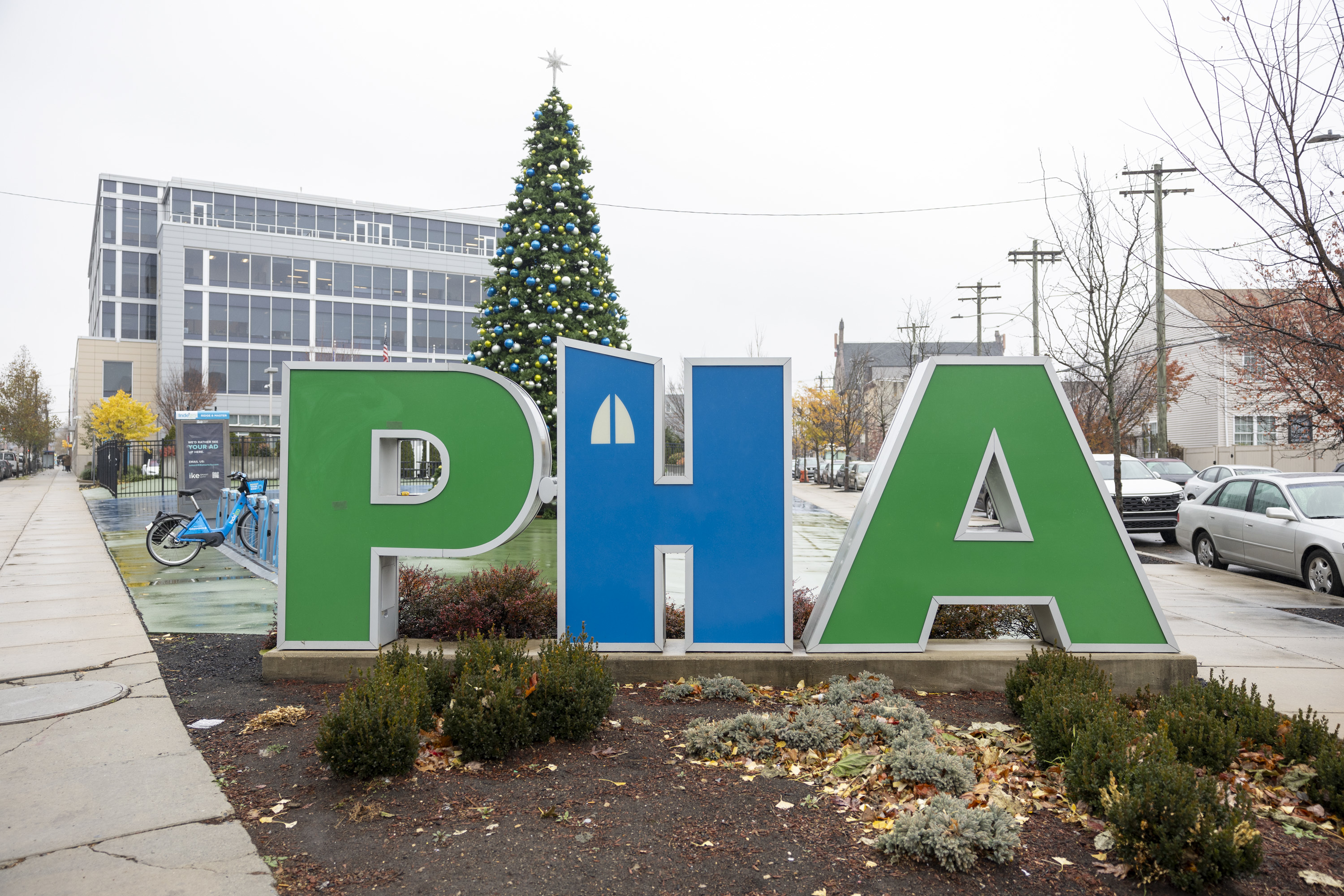
The Philadelphia Housing Authority Headquarters is planning sweeping layoffs that will affect almost 300 of the agency’s 1,200 employees, beginning in January 2026 in Philadelphia, on Wednesday, Nov. 19, 2025.
More with less?
The cutbacks come amid an aggressive $6.3 billion plan unveiled earlier this year, through which the agency hopes to expand its housing portfolio by 7,000 units while rehabbing the 13,000 units it already owns.
Jeremiah said that the staff reduction should not be seen as PHA doing more with less, and that it will not limit the agency’s ability to execute his planned expansion.
“We will not be doing less than what we’re doing now, but we have been doing too little with too much,” Jeremiah said. He said other market-rate and affordable housing multifamily operators are able to do unit repairs for far less than what PHA pays.
“My colleagues have all been doing this at substantially less cost,” Jeremiah said. “The only difference between us is that they have an operating model that does not require six different trades to do a single thing.”
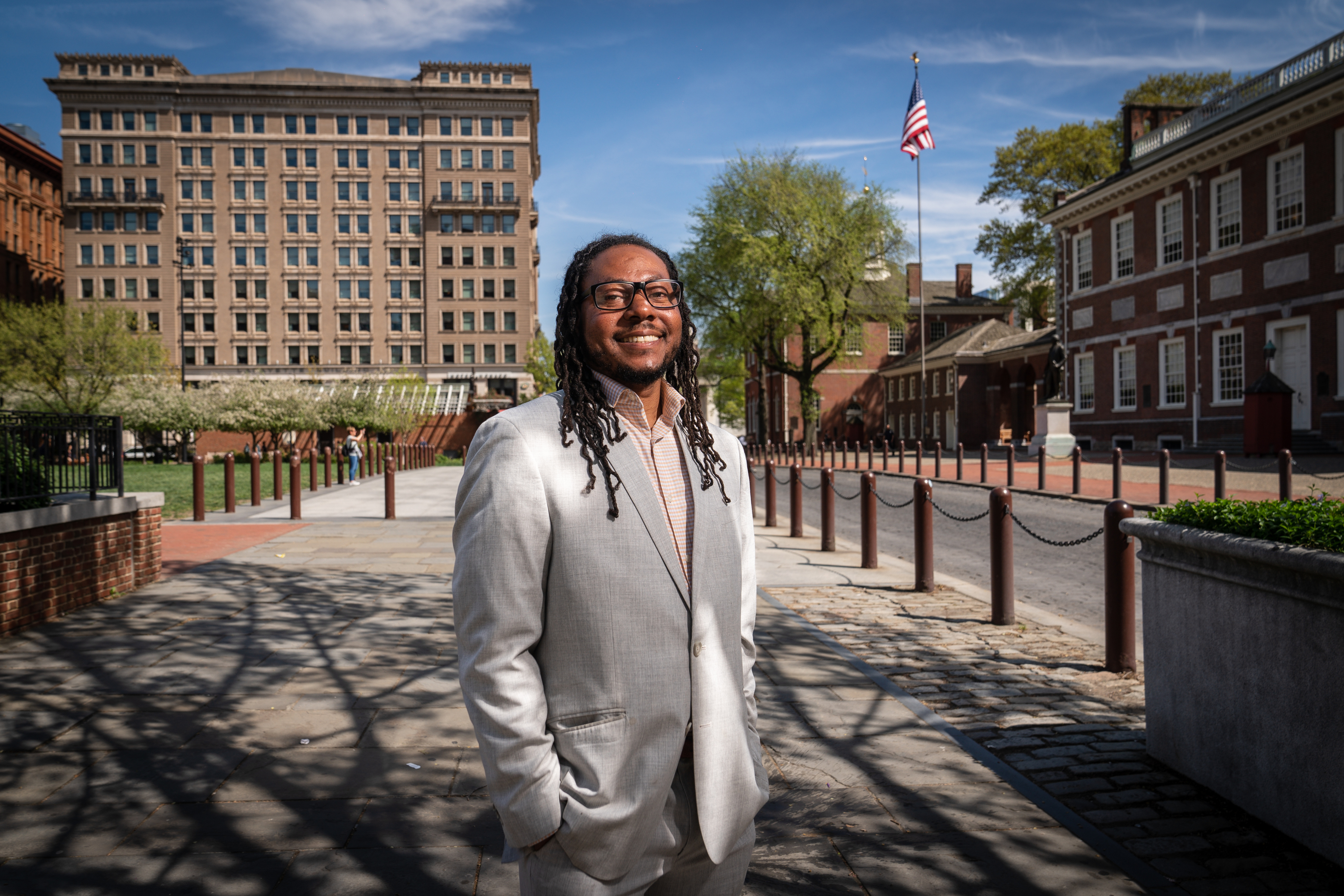
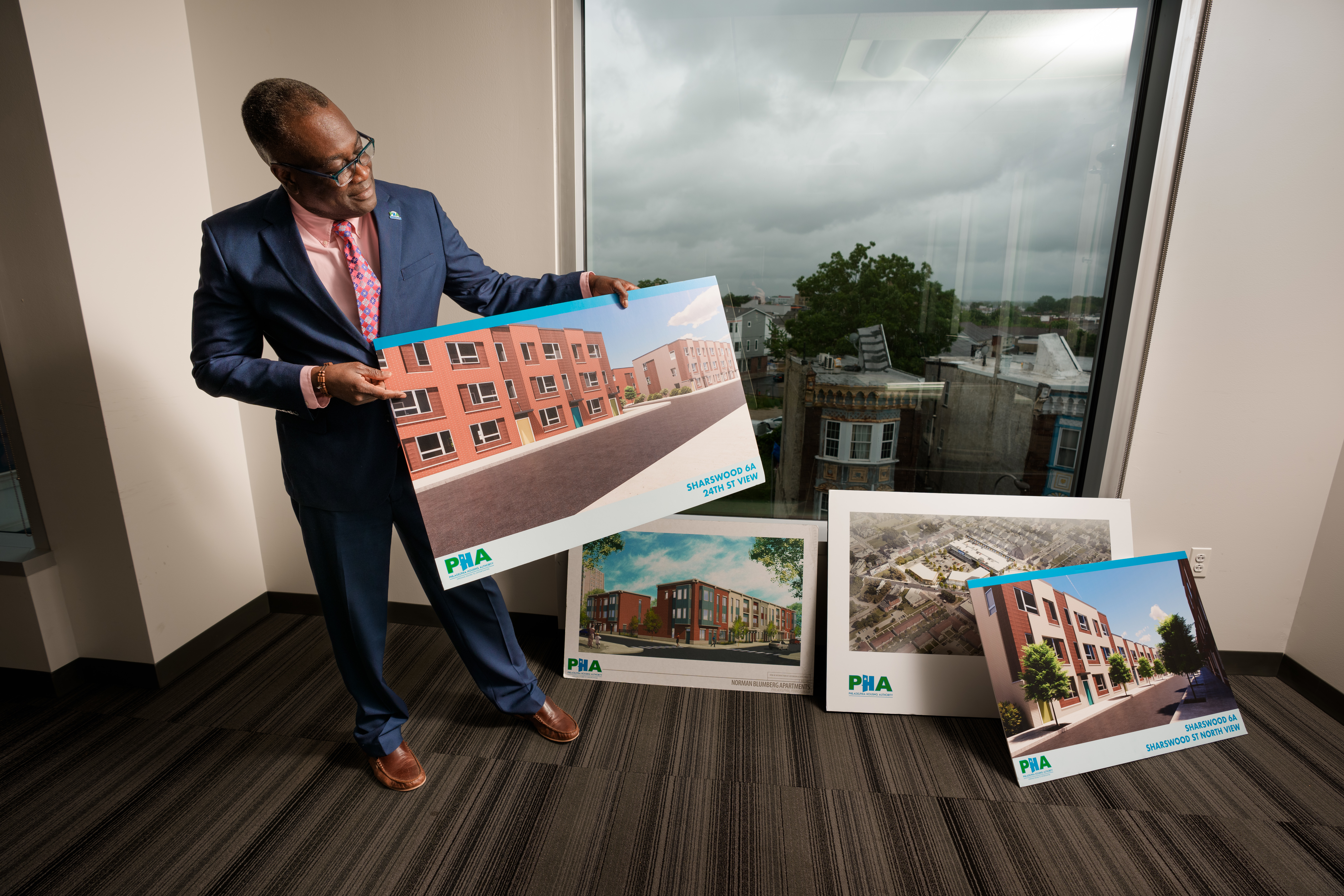
Kelvin A. Jeremiah, PHA President & Chief Executive Officer, at PHA headquarters, in Philadelphia, May 21, 2025.
Because PHA’s layoffs will affect hundreds of members of Philadelphia’s influential building trades unions,Jeremiah said, he has been negotiating with Boyer on the work-rule changes.
“My reaction is one of disappointment. However, we remain partners with PHA and we will still build most of the stuff on the capital side,” Boyer said. “I don’t want it to be lost that when they build stuff, they will still be members of the Philadelphia building trades working, and there will still be members doing maintenance work.”
Jeremiah said maintenance technicians, laborers, and painters will be the only trades that remain directly employed with the agency after the work-rule changes go into effect.
The electricians union, IBEW Local 98, said it is still studying PHA’s new policy.
PHA will also still work with the trades for discrete repair and maintenance jobs within the agency’s housing portfolio but will no longer directly employ as many workers full-time, Jeremiah said.
The Trump effect?
PHA’s layoffs, and its expansion plan, are unfolding during a period of uncertaintynationwide for affordable housing policies and organizations like PHA.
Nearly all of PHA’s funding — 93% — comes from the federal government, according to the agency.
“If Congress and the administration coughs, it impacts us,” Jeremiah said. “If there is a reduction [in funding], it impacts us.”
Jeremiah said he is seeking to operate within the mandates set by Trump’s administration while continuing to support PHA’s tenant base and plans.
“Subsidizing employment … is just not the way to go at a time when we’re looking at less funding on the horizon,” Jeremiah said. “Where am I to get the funds not only to do more developments, acquire more, and preserve what we have at the same time[that] we have a workforce that is, quite frankly, I will dare to use the word bloated?”
Waves of layoffs
Despite the layoffs, Jeremiah believes the agency will still be a rich source of jobs for the building trades unions as the $6.3 billion plan unfolds. He points to an analysis of PHA’s 10-year plan byeconomic consulting firm Econsult Solutions, which said it would create 4,900 jobsannually in the city.
The first round of 260 job losses will hit in mid-January 2026, although Jeremiah says 93 of those workers will be retained in new positions as maintenance aides, laborers, and painters. A further 116-position reduction will occur next summer.
A vice president of development, Greg Hampson, also recently left PHA, although the agency declined to comment on that case. Jeremiah said that several vice president and director-level positions will be among the coming layoffs.
The last major round of layoffs at PHA was in 2016, when 14% of the staff was cut. Those positions were mostly administrative roles.
Editor’s note: A previous version of this story misstated the number of employees impacted.
Three large stand-alone parking garages have been proposed in Philadelphia this year, unusual projectsin a city where parking operators have long complained that high taxation makes it difficult to run a business.
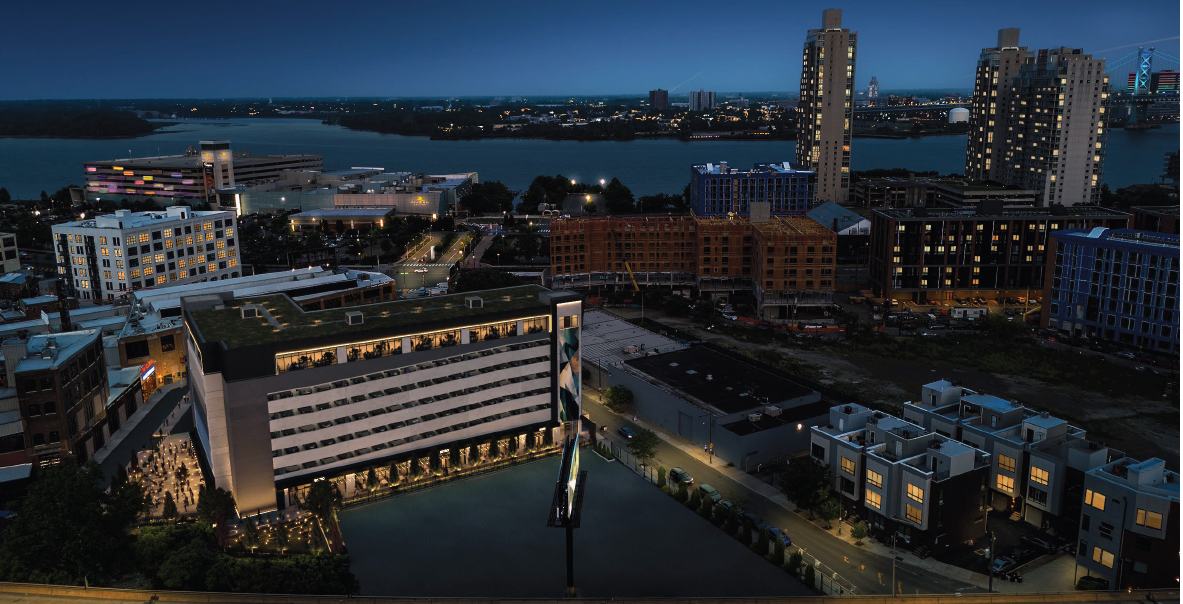
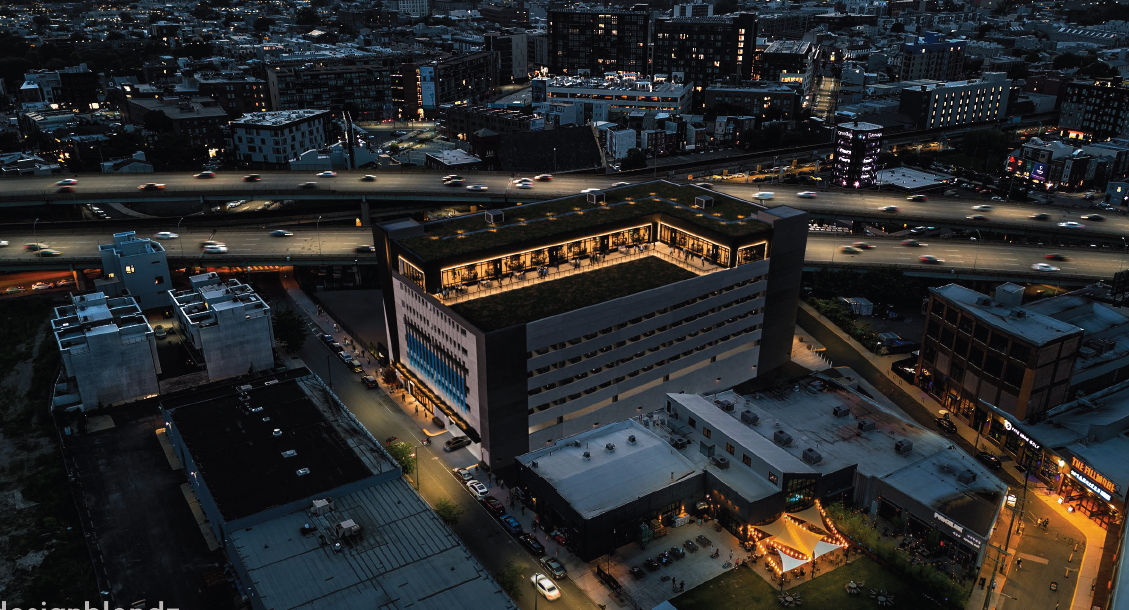
The latest is a 372-unit garage near Fishtown and Northern Liberties at 53-67 E. Laurel St. near the Fillmore concert hall and the Rivers Casino.
“There’s been about 2,500 units that have come online within a 5- to 10-minute walk” of the planned garage, said Aris Kufasimes, director of operations with developer Bridge One Management. “When you’re building those on 7-1 [apartments to parking spaces] ratios, that leaves a massive hole. Where is everybody going to put their vehicles?”
Despite central Philadelphia’s walkability and high levels of transit access, two other developers have made similar calculations this year.
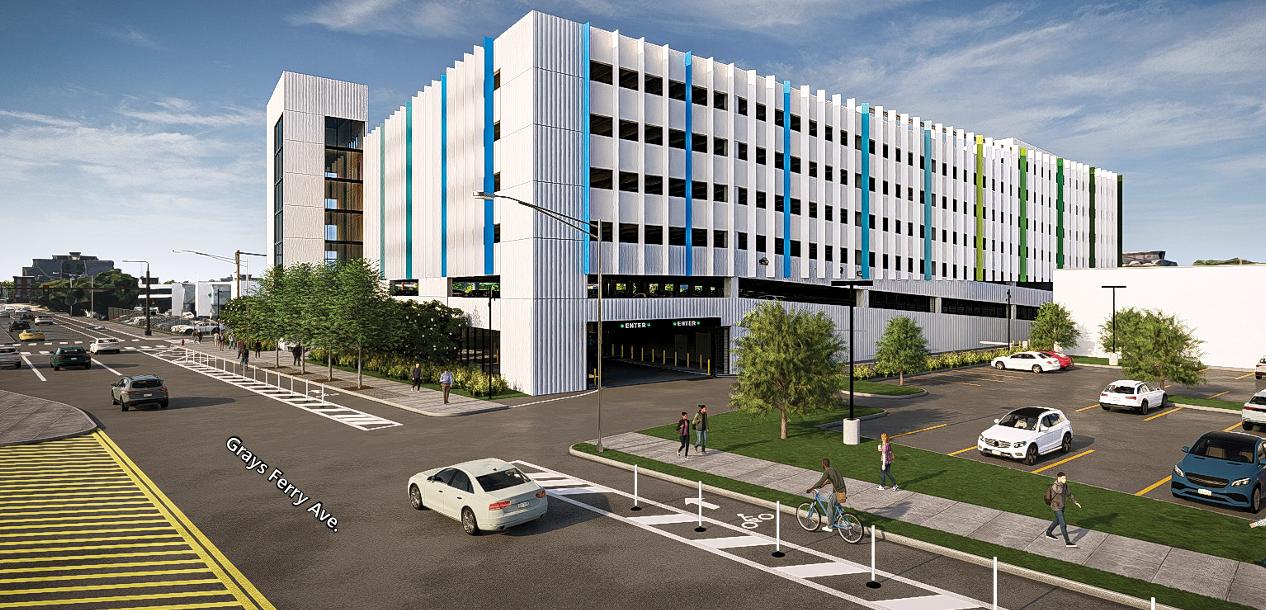
In the spring, Children’s Hospital of Philadelphia (CHOP) revealed plans for a 1,005-space parking garage in Grays Ferry along with a shuttle service to spirit employees to the main campus a mile away.
In August, University Place Associates unveiled plans for a 495-unit garage. About a fourth of it will be reserved for the use of the city’s new forensic lab, but the rest will be open to the public.
All three projects have baffled environmentalists and urbanists, who thought Philadelphia was moving away from car-centric patterns of late 20th-century development.
It’s also surprised parking operators in the city, who say national construction cost trends and high local taxation make it difficult to turn a profit.
Legacy parking companies in Philadelphia like E-Z Park and Parkway Corp. have been selling garages and surface lots for redevelopment as anything other than parking. They say the city has lost 10,000 publicly available spaces in the last 15 years, bringing the total to about 40,000 in Center City.
“I don’t think I’ll ever build another stand-alone parking facility,” said Robert Zuritsky, president of Parkway Corp. and board chair of the National Parking Association. “It doesn’t make any sense.”
Zuritsky and other parking companies have long noted that operators in Philadelphia, who often have unionized workforces, get hit with parking, wage, property, and the Use and Occupancy Tax.
When combined with the soaring cost of building new spaces across the nation, it’s difficult to turn a profit in Philadelphia.
A rendering of the Fishtown garage, looking towards the Delaware River.
Zuritsky says it costs $60,000-$70,000 a space to build an aboveground lot in today’s environment and $100,000 to $150,000 below ground.
“It’s like building a house for a car,” he said.
Depending on hyperlocal peculiarities, Zuritsky says that taxation in Center City can eat up to 60% of the money they bring in and that to profit from new construction, an operator would have to charge $3,000 per space a month.
“I wish people luck, the ones that are moving in,” said Harvey Spear, president of E-Z Park. “Between taxes, insurance, and labor, it comes to, like, 70-some percent of what we take in. We have more equipment now that does away with a lot of labor; we’re trying to compensate with that.”
Urbanist and environmental advocates, meanwhile, have condemned the new garage projects, arguing that they will add to carbon emissions, air pollution, and traffic congestion.
“A massive parking garage less than half a mile from the El [in Fishtown] is the wrong direction for any city that claims to take climate action seriously,” said Ashlei Tracy, deputy executive director with the Pennsylvania Bipartisan Climate Initiative. “SEPTA is already working to get more people out of cars and onto transit, but projects like this one and the one from CHOP only make that harder.”
Here are the parking projects in the pipeline.
Fishtown: 372 spaces
The garage, with architecture by Philadelphia-based Designblendz, doesn’t just contain parking. It includes close to 14,000 square feet of commercial space on the first floor, which the developer hopes to rent to a restaurant — or two — on the edges of one of Philadelphia’s hottest culinary scenes.
Another over 16,000-square-foot restaurant space is planned for the top floor, with views of the skyline and river. Both the top and bottom floors also could be used as event spaces.
Kufasimes says that this aspect of the project could partly offset the kinds of costs that parking veterans warn of.
“Our due diligence team went through those numbers and vetted them pretty thoroughly: The returns are what they needed to be,” Kufasimes said. “It’s got a multifunction of income streams, so we think that that really will help play a larger role.”
Kufasimes also said a parking garage made sense in an area that’s seen more development than almost any other corner of Philadelphia. When investors purchased the land at 53-67 E. Laurel St. and approached his company for ideas, they met with other stakeholders in the neighborhood and determined parking would be appreciated.
“It wasn’t necessarily all about the profit,” Kufasimes said. “A lot of people this day and age, that is their number-one goal. If this is a slightly lower return in the long run but can be better accepted by the community as a whole, we think that actually raises the value of the asset.”
An overhead-perspective rendering of the Fishtown garage.
At an October meeting of the Fishtown Neighbors Association, that argumentappeared to pay off. Unlike most community meetings where a large new development is proposed, there were no adamant opponents of the project. The project also includes a 20,000-square-foot outdoor space, a green roof, and a to-be-decided public art component. All of that helped, too.
“It’s nice seeing a parking garage, of all things, be as pedestrian-friendly and thoughtful as this,” one speaker said during the Zoom meeting.
Dubbed University Place 5.0, it largely exists because of a major expansion of the municipal bureaucracy west of the Schuylkill.
For years the city has sought a new location for its criminal forensics laboratory. The debate became heated in City Hall, with numerous Council members making the case for locations within their districts.
Councilmember Jamie Gauthier pushed for its location in University City Place 3.0, a newly built, state-of-the-art life sciences building that was coming online just as its intended industry was slowing down in the face of higher interest rates.
To get the crime lab, Mayor Cherelle L. Parker’s administration said the police department would need ample parking. That’s where the new garage comes in.
In June, Gauthier passed a zoning overlay that cleared away the regulatory hurdles to the project. Six weeks later, the developers revealed University City Place 5.0, which has 29 parking spaces on the ground floor reserved for official use by forensics vehicles and 100 spaces reserved for city employees.
A rendering of the proposed University City parking garage as seen from 42nd and Filbert Streets.
Designed by Philadelphia-based ISA Architects, the garage is also meant to serve University Place Associate’s other large developments in the area. Akin to the Fishtown garage, they have also sought to make the development pedestrian friendly, with a dog park, green space, and public art.
The local community group, West Powelton Saunders Park RCO, also embraced the proposal.
“The community met regarding this project back in August, and … they were all in support of this project,” Pamela Andrews, president of the West Powelton Saunders Park RCO, said at the city’s September Civic Design Review meeting. “We have a tremendous problem with parking, and the community members felt this was a much needed and welcome addition.”
Grays Ferry: 1,005 parking spaces
CHOP’s thousand-car parking garage by far has been the most controversial of the proposals. But it also makes the most economic sense for the owner. Unlike the other garages — or those owned by Parkway and E-Z Park — it will be owned by a nonprofit and exempted from many of the taxes that make it so expensive to own parking in Philadelphia.
A rendering of the new parking garage CHOP plans for Grays Ferry.
The hospital purchased the property at 3000 Grays Ferry Ave., next to the Donald Finnegan Playground, for almost $25 million last year.
The seven-story development, which, plans show, would have far fewer amenities than its University City and Fishtown counterparts, is meant to serve CHOP’s new research facilities in Fitler Square and the new patient tower set to open in 2028.
“We recently secured permits and have begun construction on the new parking garage at 3000 Grays Ferry Ave.,” a CHOP spokesperson said. “The full construction is expected to go through the fall of 2026. CHOP continues to engage with the community by providing support, timely updates and addressing feedback during construction.”
At the time of its unveiling, CHOP argued that the massive garage was needed as SEPTA threatened to become unreliable due to a political funding crisis in Harrisburg. But detractors appeared almost immediately to denounce the hospital for worsening air quality in a lower-income neighborhood that is already a hot spot for asthma.
There are no regulatory hurdles to the development, but changes in the political or economic landscape could make it difficult to embark on a large capital project. Notably, the University of Pennsylvania proposed an 858-space garage in 2023 for the nearby Pennovation Center and has never broken ground.
Mayor Cherelle L. Parker is shaking up the board of the Philadelphia Land Bank, which helps control the sale of city-owned land but hasn’t been moving fast enough to advance her housing priorities.
Parker’s first land bank board chair, Herb Wetzel, has been asked to step down as well as board member Majeedah Rashid, who leads the Nicetown Community Development Corp. The board has 13 members.
Angela D. Brooks, who serves as the city’s chief housing officer, will be joining the board. Earlier this year Parker appointed Brooks to lead the mayor’s campaign, Housing Opportunities Made Easy, or H.O.M.E., to build or renovate 30,000 houses over the course of her administration.
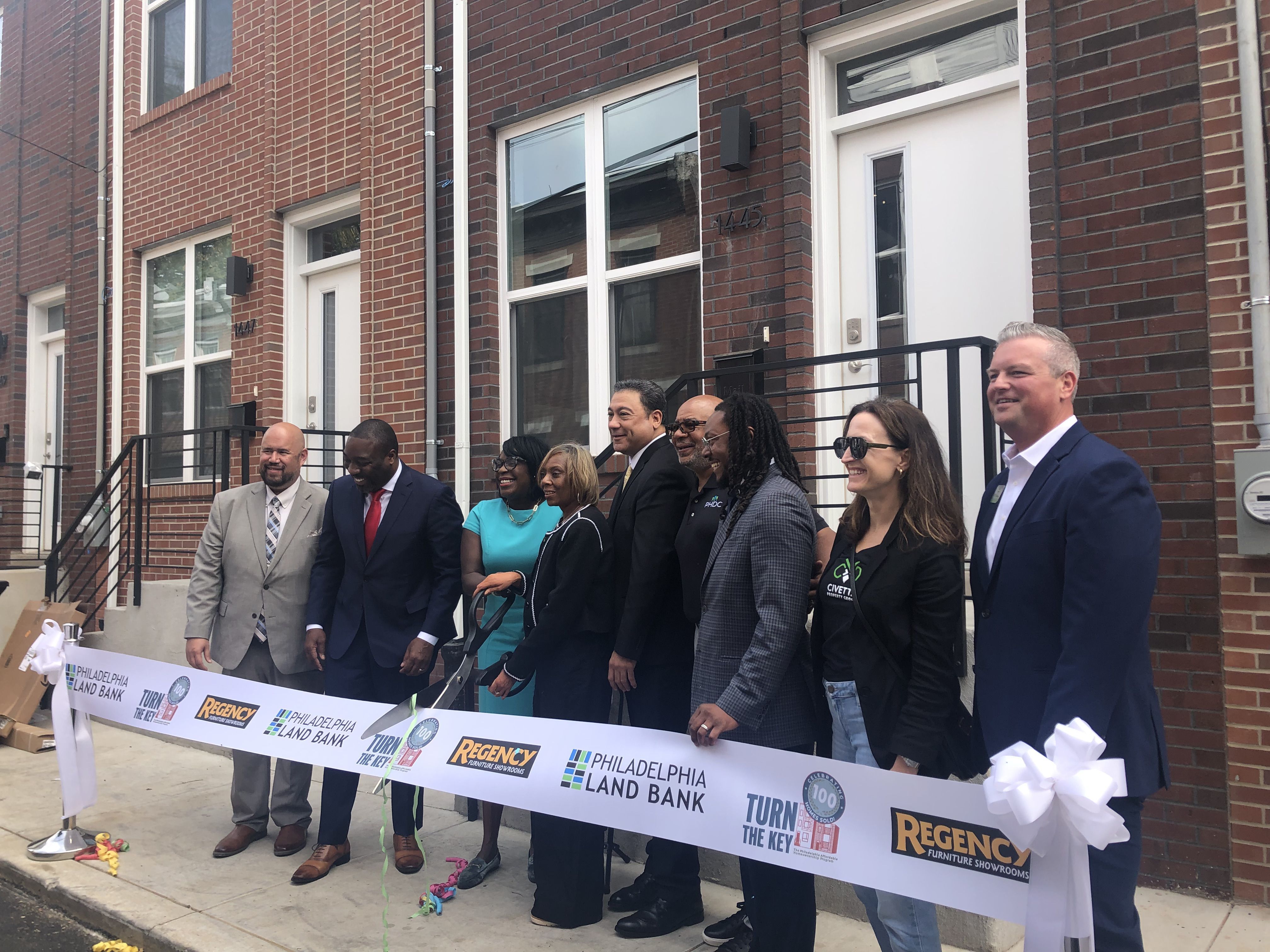
The mayor has long championed the Turn the Key program as part of that plan, a policy that depends on getting inexpensive city-owned land to developers so they can build houses that are affordable to working and middle-class families.
Rashid is being replaced by Alexander Balloon, who formerly served on the Land Bank’s board and is the executive director of the Passyunk Avenue Revitalization Corp.
“It is clear from the Land Bank’s success with its Turn The Key program: A strong and effective Land Bank is essential for reaching the H.O.M.E. initiative’s goal to produce and preserve 30,000 homes,” Parker said in a statement.
Several Turn the Key proposals have been held up by the Land Bank board, which has been riven between factions that are either more or less friendly to private-sector developers.
Rashid and other board members who come from a nonprofit development background have argued that scarce city-owned land should be earmarked for affordable housing, community gardens, and similar projects.
Mayor Cherelle L. Parker and Turn the Key’s 100th homebuyer hold giant scissors as they prepare to cut a ceremonial ribbon.
Although the Turn the Key program produces units that are more affordable than market-rate homes, many of the projects are built by private-sector developers and still unaffordable to Philadelphians with low incomes.
“Majeedah Rashid has worked with me on economic development issues dating to my time in the Pennsylvania General Assembly, and her advice has been invaluable,” Parker said in a statement. “Our city is stronger for Herb’s and Majeedah’s public service.”
Rashid did not respond to a request for comment.
During Balloon’s previous tenure on the board, he was among members who pushed for vacant city-owned land to be put back into productive use as quickly as possible because empty lots attract crime and litter and are a drag on city services.
Private-sector developers often can build more — and faster — than their nonprofit counterparts because they are less reliant on public funds, which are increasingly unreliable from the federal level.
“I’m excited to rejoin the Philadelphia Land Bank and help Mayor Parker deliver on her bold vision to build and preserve 30,000 homes across our city,” Balloon said in an email statement. “This is an inspiring moment for Philadelphia’s growth and the success of the Turn the Key program and other initiatives.”
“Herb Wetzel has been a subject matter expert for me on any housing issue that I’ve worked on throughout my career as an elected official, and I have always relied on his counsel,” Parker said in a statement. “He will continue to be part of my circle of advisers on housing issues, just in a different capacity.”
But according to three City Hall sources, who did not have permission to speak to the media, Parker’s team felt Wetzel sought to play peacemaker between the factions and was not always able to get their favored Turn the Key projects moving. As a recent arrival to the city and leader of the administration’s housing initiative, Brooks is expected to pursue the mayor’s priorities.
Brooks said in an interview that her appointment was no reflection on Wetzel’s performance and that he would continue to serve on the H.O.M.E. advisory board.
“I don’t have any thoughts on what he didn’t do or didn’t other than he’s been a great supporter of both the mayor and me and this housing plan,” Brooks said. “He’ll continue to be a part of that as we move it forward. [It’s just that] historically, we have had a city staff person to sit on the Land Bank board, and since I’m spearheading the H.O.M.E. Initiative, it seemed to be time.”
Frequent stalemates on the board were not the only challenge facing Turn the Key projects. Under the tradition of so-called councilmanic prerogative, the Land Bank requires action from City Council to release property for development even if the mayor backs a particular proposal.
For example, the administration sent over a 50-unitTurn the Key proposal in North Philadelphia to City Council last November, and District Councilmember Jeffery Young simply never introduced it, effectively killing the deal.
Or in Kensington, Councilmember Quetcy Lozada declined to endorse several Turn the Key proposals, leading developers to abandon them.
Parker sought to loosen Council’s grip on some city-owned land during budget negotiations earlier this year, but the campaign was largely unsuccessful. National land bank experts have long argued that land banks like Philadelphia’s are much less effective than counterparts that do not have political veto checkpoints.
During budget hearings this year, Council asked for an organization assessment of the Land Bank, and some members questioned why its staff wasn’t more robust.
Brooks said that an assessment will be released soon from the consultant group Guidehouse and that the Land Bank “is in the process of filling positions.”
In City Council on Tuesday, St. Joe’s confirmed that the sale has closed.
In reaction, Gauthier had authored legislation that sought to require more community oversight when large institutions make significant land sales in University City, which is part of her district. She thinks this sale might not be the last, given the turbulent state of higher education.
Her original legislation was deemed legally dubious by the city’s law department and by most zoning attorneys consulted by The Inquirer.
Gauthier amended the bill and got the new version passed by City Council’s Rules Committee on Tuesday.
“It is an indisputable fact that college campuses significantly impact the communities that surround them,” Gauthier said at the hearing.
“As higher education undergoes its most significant change in our lifetime,” she continued, “we must ensure that land-use decisions are made with their communities in mind, and recent actions by multiple universities prove this will not happen without legislative action.”
The original bill sought to regulate how higher education institutions use their land, which is illegal. Zoning concerns land use generally, not only land use of specific actors.
Gauthier amended the bill so it is triggered not by a change in ownership from a university to a non-higher education buyer, but by a proposed change away from educational use on lots over 5,000 square feet.
So if a university sold land to a housing developer, the law would be triggered. It is not clear it would be triggered by what St. Joe’s did, which was selling land used for university purposes to another educational provider that claims to want to start a teaching college.
The amendments also removed clauses that would have required neighborhood residents to join the Philadelphia City Planning Commission when it reviews land-transfer proposals, as is required by this bill.
Gauthier pushed back against arguments that her bill is an overreach by noting that it simply requires a meeting with neighborhood groups, a review by the planning commission, and a demolition moratorium if there are no permits for new construction.
“This bill doesn’t cripple anyone’s property values,” Gauthier said. “It doesn’t restrict anyone’s use or density rights. It adds more eyes and more transparency to land-use decisions for major properties that change entire neighborhoods. The idea that this could ever be wrong is simply preposterous.”
The IPEX building at St. Joseph’s University in Philadelphia on Sept. 12.
Representatives from a host of West Philadelphia neighborhood groups testified in support of Gauthier’s bill. They detailed their anxieties about living in the shadow of large institutions with expensive real estate portfolios and their frustrations with what they felt had been duplicity by St. Joe’s during a public engagement campaign about the sale.
During neighborhood meetings earlier this year, attendees detailed their desire for a community college, health clinic, parking, or affordable housing on a post-sale St. Joe’s campus.
They said they felt that the university ignored their feedback.
“This thing about community engagement, we feel as though it was false,” said Jacquelyn Owns, a committeeperson in the 27th Ward. “It was just something to keep the community quiet while they did exactly what they wanted to do.”
St. Joe’s representatives argued that Karp’s plans for the site are in keeping with the neighborhood’s broad desires, given that his Belmont organization runs charter schools.
St. Joe’s also noted that it will still retain some property in the area affected by Gauthier’s bill and contended that the legislation would have deleterious effects on higher education institutions in University City.
“It probably would devalue our real estate holdings, which, in turn, would then devalue our balance sheet, which would then restrict our ability to offer financial aid,” said Joseph Kender, senior vice president at St. Joe’s. “It would restrict our ability to start new construction projects. It would restrict our ability to offer new academic programs.”
A lawyer for St. Joe’s, Ballard Spahr zoning attorney Matthew McClure, said that even the amended bill might still be illegal.
Despite the protests by St. Joe’s, Council’s Rules Committee passed the amended bill.
That may be the last movement on the controversial legislation for a while. At its October meeting, the planning commission requested a 45-day hold on the bill to consider its ramifications more thoroughly. That means the full City Council will not be able to consider it until late November.