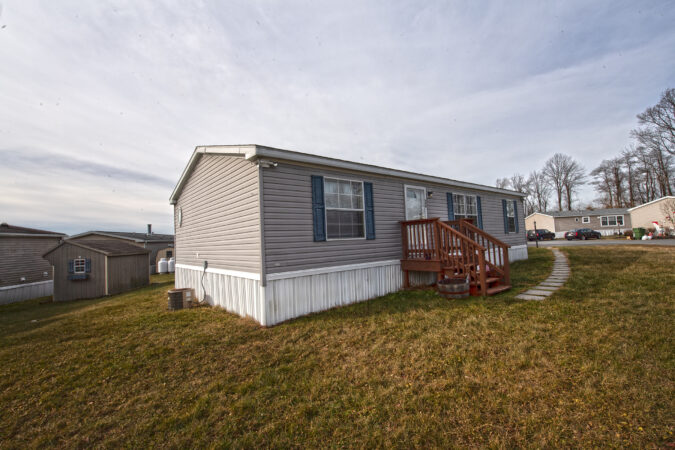
Manufactured homes — single-family dwellings often built off-site and placed on a lot — areone of the most affordable forms of homeownership. But families who live in these homes are often left vulnerable, because companies that own the land can hike rents for their lots or sell communities for redevelopment.
This type of unsubsidized affordable housing tends to be more accessible for low-income households than typically built homes.
A bill that former N.J. Gov. Phil Murphy signed last week makes it easier for manufactured home and mobile home residents to buy their communities when a landowner decides to sell or change the use of the land.
Landowners who want to sell or redevelop these communities must give notice to residents and local and state leaders. If 51% of residents agree to purchase the community, and they meet the price and conditions of the sale, they have 120 days to buy it. Previously, this action required two-thirds of residents, who had 45 days to sign a contract.
Lawmakers found that the prior parameters were too high of a bar for residents to meet.
New Jersey’s new law is based on model legislation from the National Consumer Law Center. There are more than 1,000 resident-owned mobile and manufactured home communities across the country. None are in New Jersey.
Almost 100,000 New Jersey residents live in 250 manufactured or mobile home communities, many of which are in South Jersey, said State Assembly member David Bailey Jr., a Democrat who sponsored the legislation and represents residents in Gloucester, Salem, and Cumberland Counties.
Imagine you’ve owned your home for 20 years and “somebody comes and says, ‘We’re selling this land and you either follow these new rules or you gotta move,’” Bailey said. “That would never happen in suburbia. But that’s what could happen to these people. Because they have no choice. They’re stuck.”
He said that when he took office in 2024, he immediately started getting calls from constituents in Salem County who lived in manufactured home communities. They told him about rising costs to rent the land their homes were on and deteriorating property conditions and infrastructure in their communities.
Many of the properties had been owned by local families who later sold the land to companies that hiked rents, Bailey said. In 2022, the CEO of the Lincoln Institute of Land Policy said that in the prior eight years, roughly 800,000 home sites in manufactured housing communities were bought by private equity companies and other institutional investors. Rent hikes tended to follow.
Another recent New Jersey law addresses this reality.
After an earlier version of the legislation passed the state Senate this spring, Sen. Paul Moriarty said in a statement that the usual renting setup of mobile and manufactured home communities “often leads to unfair price hikes by landlords, as they know that there is no other option besides moving the home to another site.”
Moriarty, a Democrat who represents residents in Gloucester, Camden, and Atlantic Counties, noted that moving these homes to different sites can be “incredibly difficult” because of “potential difficulties in financing a move, exclusionary zoning practices, and restrictions on the age and condition of incoming homes.”
A previous version of this story misstated the number of mobile homes purchased by private equity companies. It is roughly 800,000 manufactured home sites.
Last week, I visited two subsidized apartment communities in North Philly. One was newly built and still leasing, and the other was built years ago.
But they had something in common that set them both apart from other subsidized housing complexes: They are also sites of playful learning.
Basically, that’s the concept of engaging children and their caregivers in skill-building lessons through play. Think matching games that help kids recognize patterns and the classic I Spy game that teaches kids to describe their surroundings.
An organization founded in Philly has brought educational play spaces to laundromats, grocery stores, and parks. But this is the first time it’s taken playful learning to subsidized housing. Supporters hope Philly can be a national model.
Keep scrolling for that story and more in this week’s edition:
Timing is everything: Read why an economist says this spring may be the time for hopeful homebuyers to make moves.
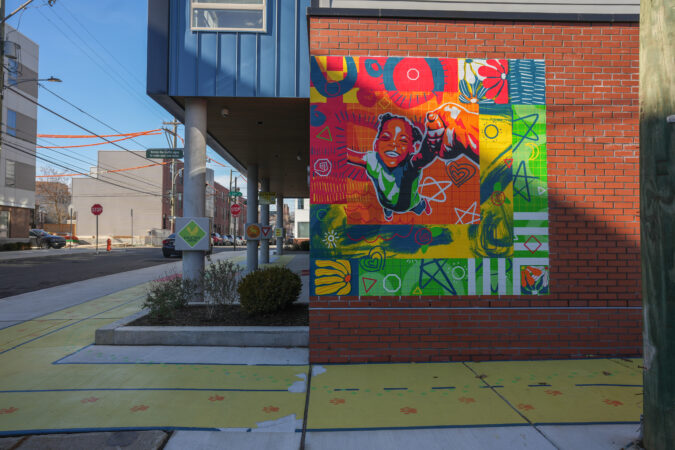
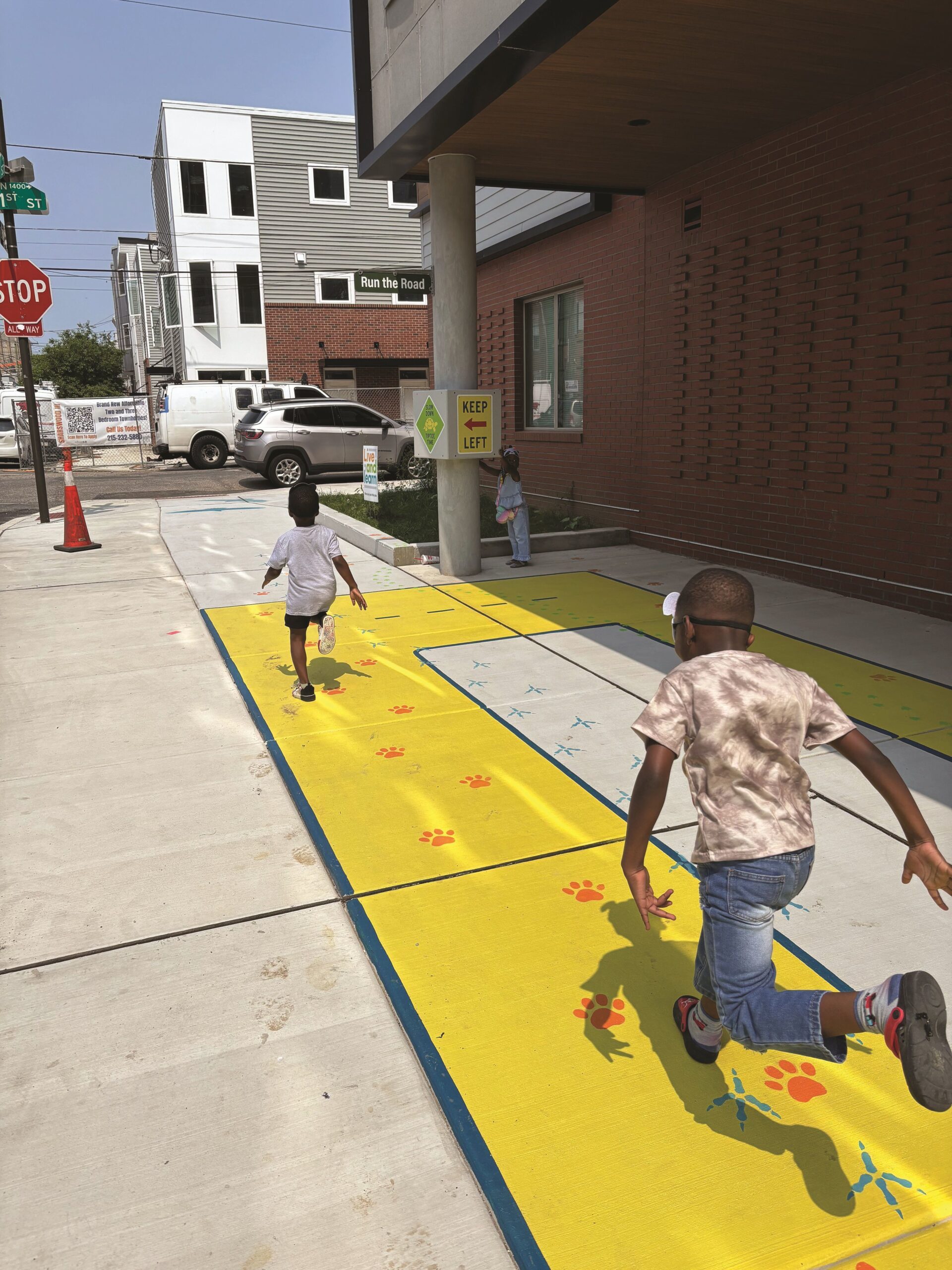
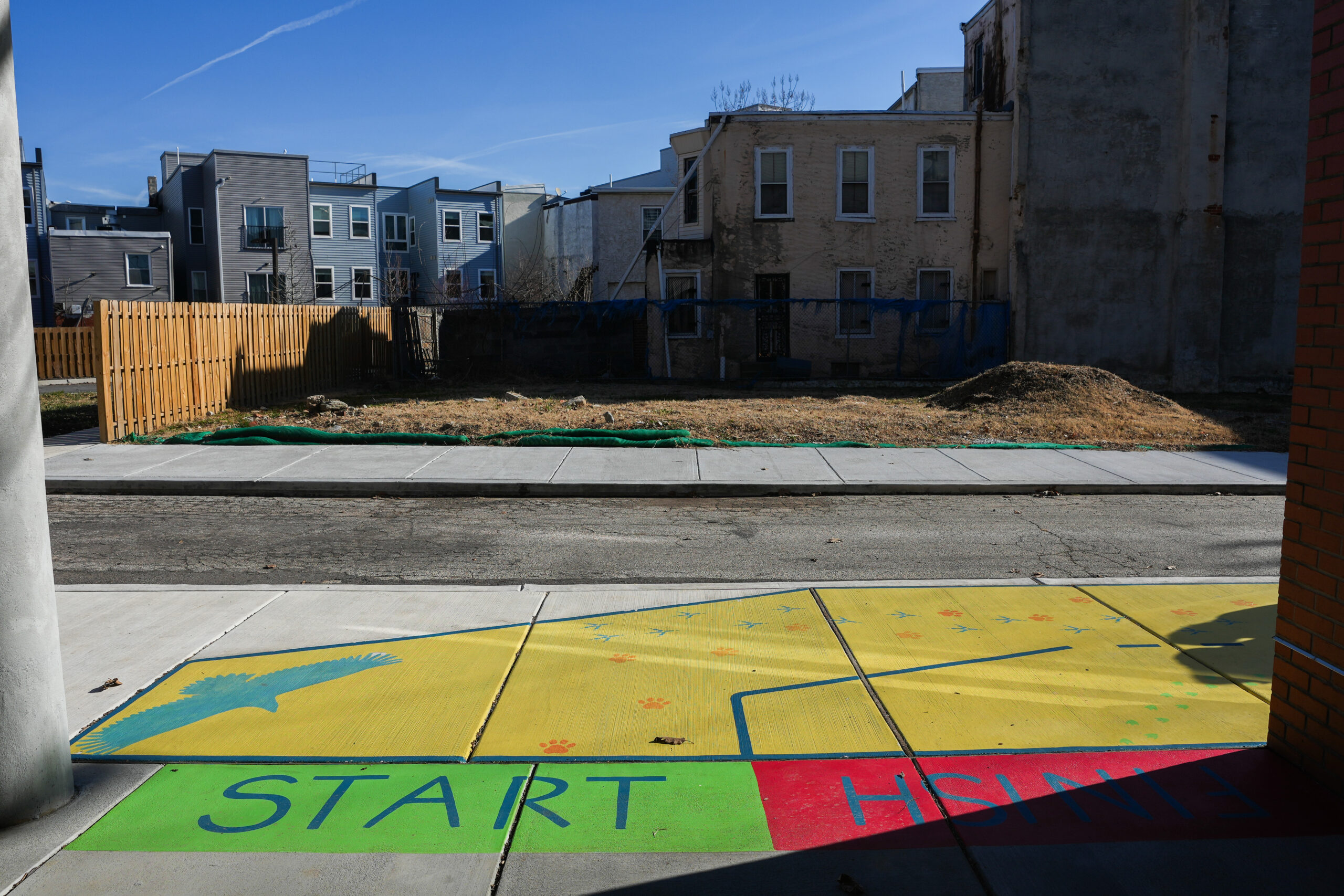
In Sharswood, a yellow street painted on a sidewalk teaches children rules of the road. A few minutes away, what was once just a bike rack has become a place children can picture themselves as superheroes and act out stories they create on a stage.
Bringing playful learning to subsidized housing communities is a matter of educational equity, said architect Heidi Segall Levy.
She’s the project manager for the Live and Learn pilot that brought playful learning to North Philly.
Kids do a lot of their learning outside the classroom, and this initiative is meant to help vulnerable children catch up to peers who have access to more educational opportunities.
The goal is to incorporate playful learning into subsidized housing developments across the country. And Philly is the test case.
Everyone from your coworker to your Lyft driver has an opinion (in my personal experience).
But if you’re looking to hear from someone who’s a bit more of an expert, we’ve got some advice from Mark Zandi, chief economist at Moody’s Analytics.
He reinforces some of what you’ve seen and felt. Homes have gotten a lot more expensive. There aren’t that many properties to choose from. Renting can be the more affordable option.
But Zandi says that if you’ve been thinking about buying a home, this spring could be the time to make the leap.
I feel like it’s never good when someone in the home design industry calls your house “an interesting design dilemma.”
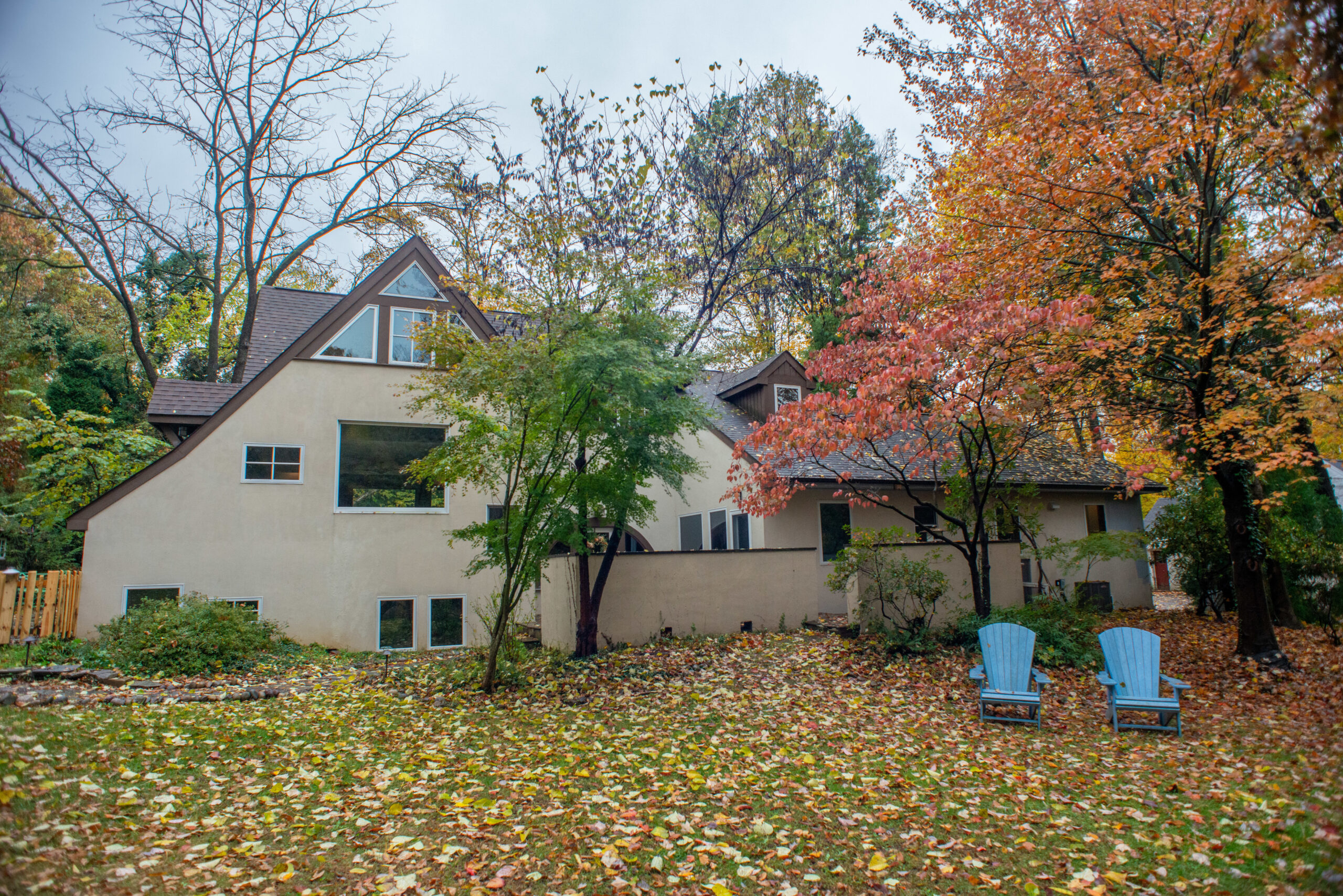
But the home that Diane and Keith Reynolds bought a few years ago in Rydal, Montgomery County was all over the place.
It was originally built in the Cape Cod style, but the previous owner had added on to the home in the Craftsman style.
The designer had to make sense of elements that didn’t go together and kitchen features such as the loft, beams, and floor plan that made for an “unusual design problem.”
“The reclaimed wood loft installed by the previous architect is something I’ve never seen before, and I’m sure will never see again,” he said.
Regina Robinson isn’t used to being asked what she wants out of her home.
But for about a year, architects and designers had detailed discussions with her and other tenants at the Susquehanna Square subsidized apartment community in North Philadelphia about how to transform the look and feel of the development.
Robinson and her now 8-year-old daughter, Faith, went to every meeting. Residents talked about their love of graphic novels and the inspiration they found in superheroes — not just those who can fly, but real people they saw making a difference in their own families and communities.
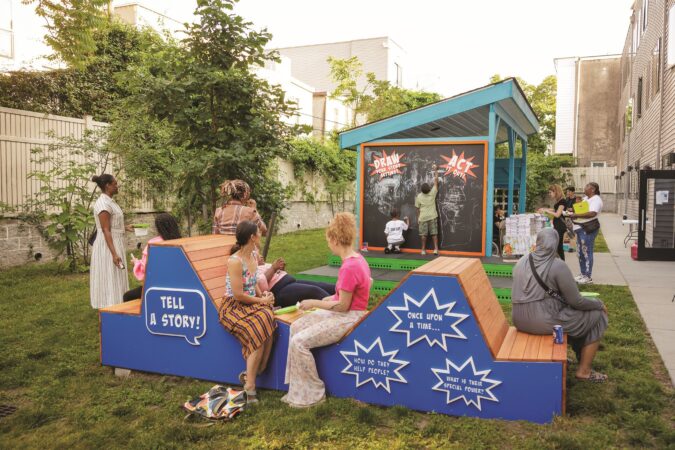
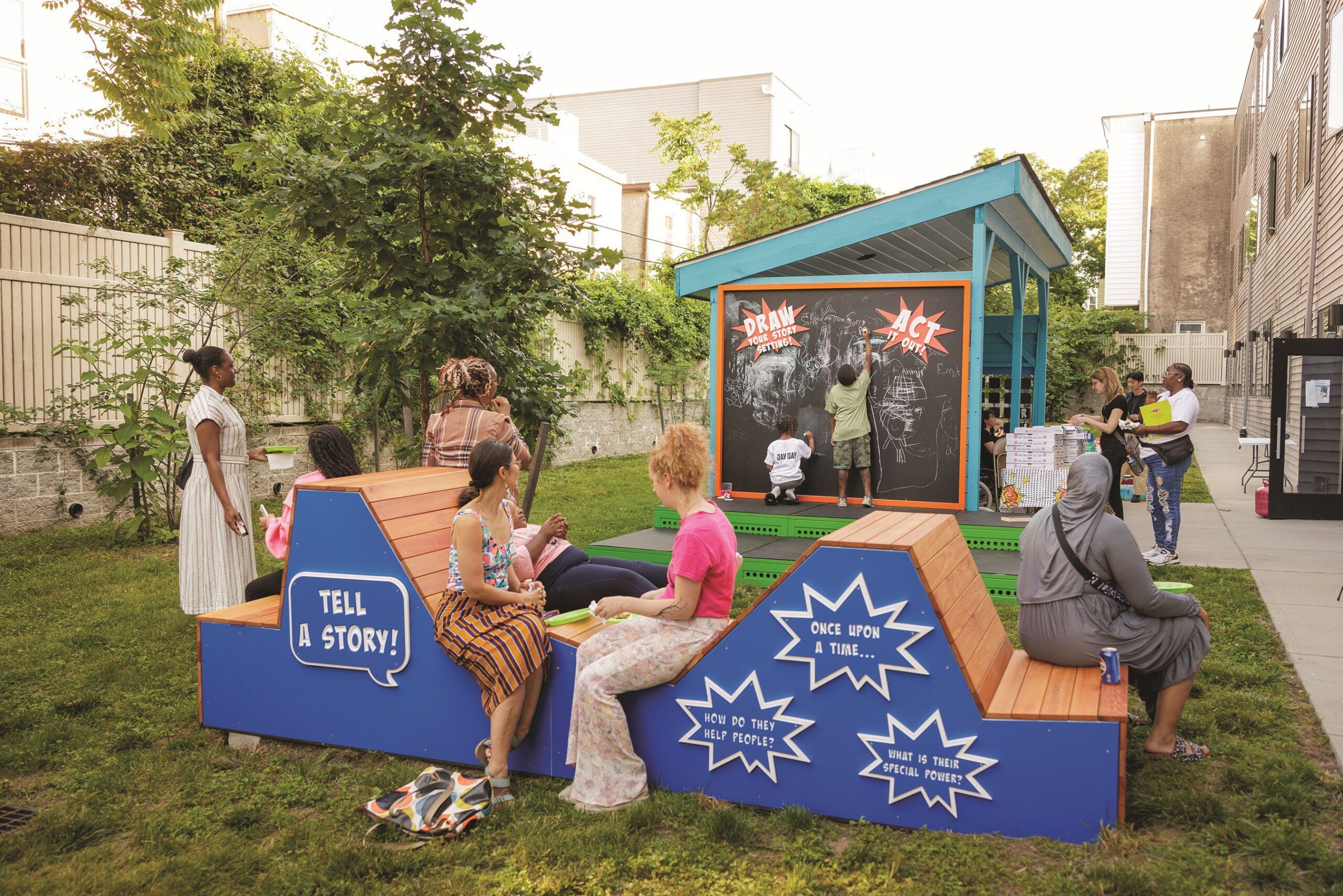
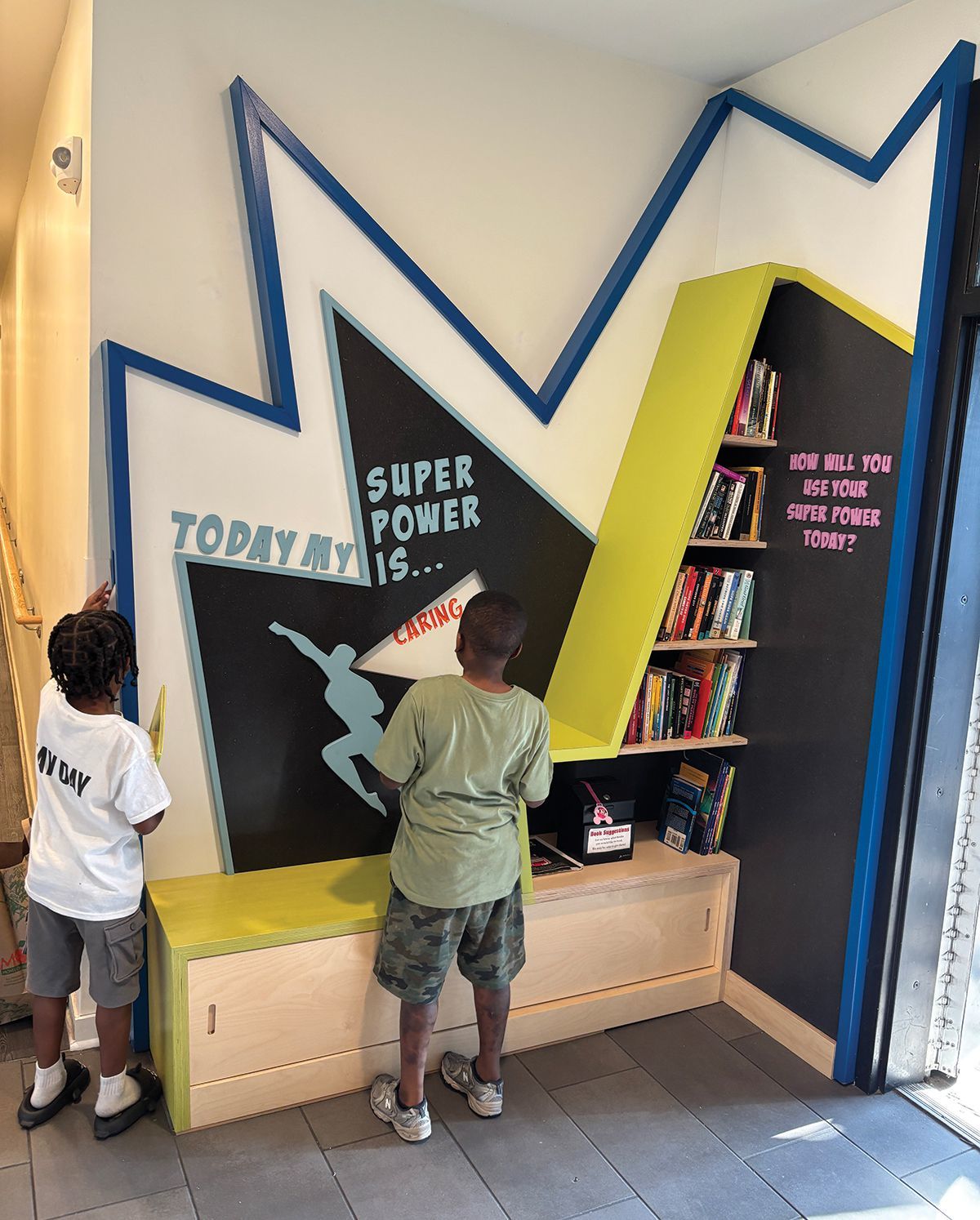
Blank white walls in apartment hallways became canvases for colorful murals of people in capesmeant to inspire children and adults to have self-confidence and set goals. A previously unused bike shed now stores bikes but is also a stage for acting out stories and a puzzle wall for spelling words. In courtyards, residents got new places to sit that double as little libraries. Prompts ask them to think about the books they read and create characters and stories of their own.
“They really listened to us. … They were taking our ideas and they actually brought it to life,” Robinson, 52, said. “It really brought tears to my eyes.”
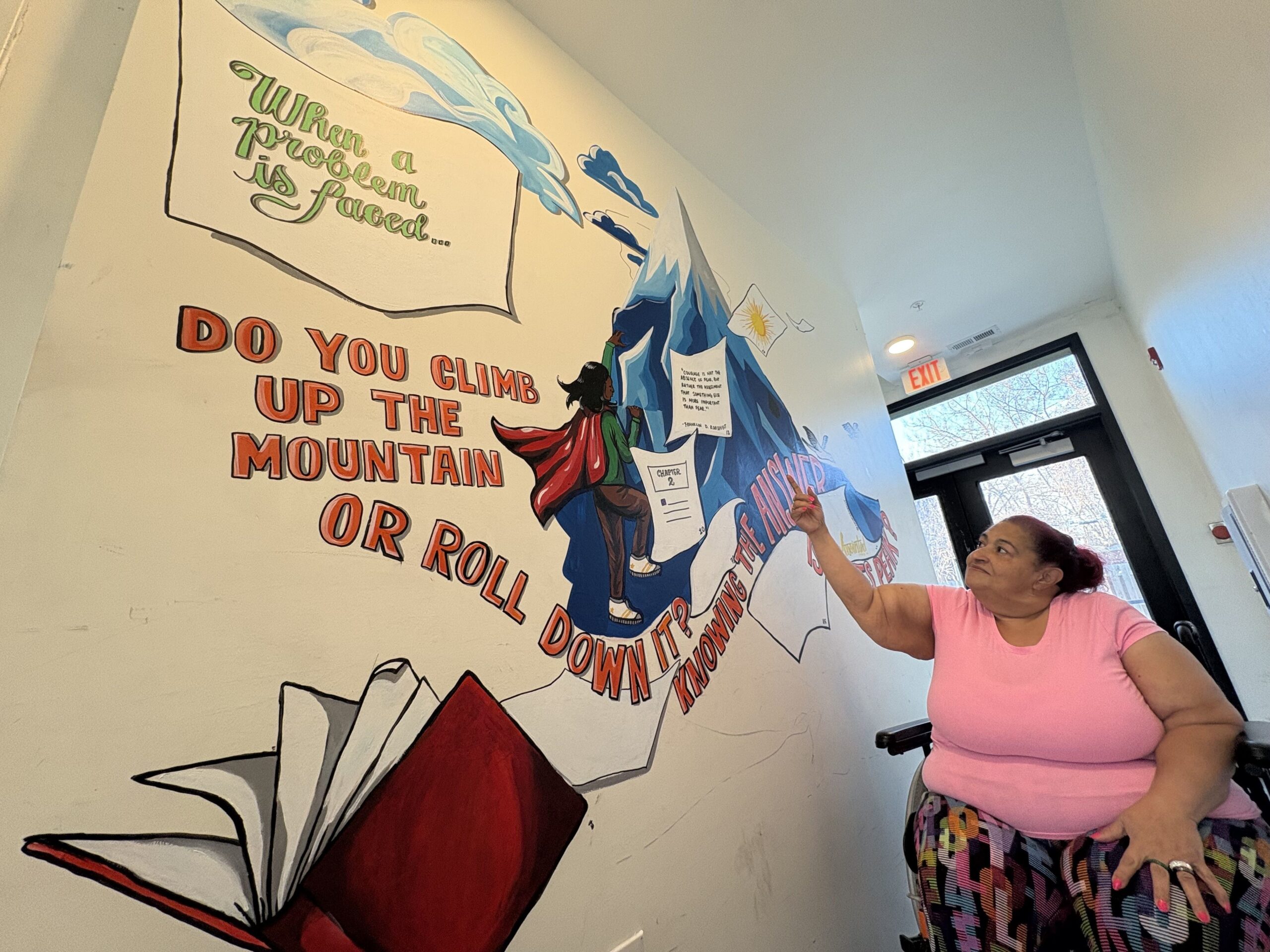
A mural asks “What is your superpower?” in the hallway of an apartment building in the Susquehanna Square development in North Philadelphia.
The project was an initiative of Playful Learning Landscapes, cofounded in Philadelphia in 2009 by Temple University professor Kathy Hirsh-Pasek and University of Delaware professor Roberta Michnick Golinkoff. The organization has brought the concept of playful learning — engaging children and their caregivers in skill-building lessons through play — to spaces such as laundromats, parks, grocery stores, sidewalks, and subway stops.
But installations at two sites in North Philadelphia are the organization’s first that bring playful learning to subsidized housing. And the organization and its partners hope the Live and Learn pilot will lead to similar projects across the country that help vulnerable children catch up to peers who have access to more educational opportunities.
The goal is to incorporate playful learning into all subsidized housing developments, said architect Heidi Segall Levy, project manager of the Live and Learn initiative and an associate at Watchdog, a Philadelphia-based real estate consulting firm.
“We were really trying to increase educational equity,” she said. “And the way to do that is to really bring it into [people’s] homes.”
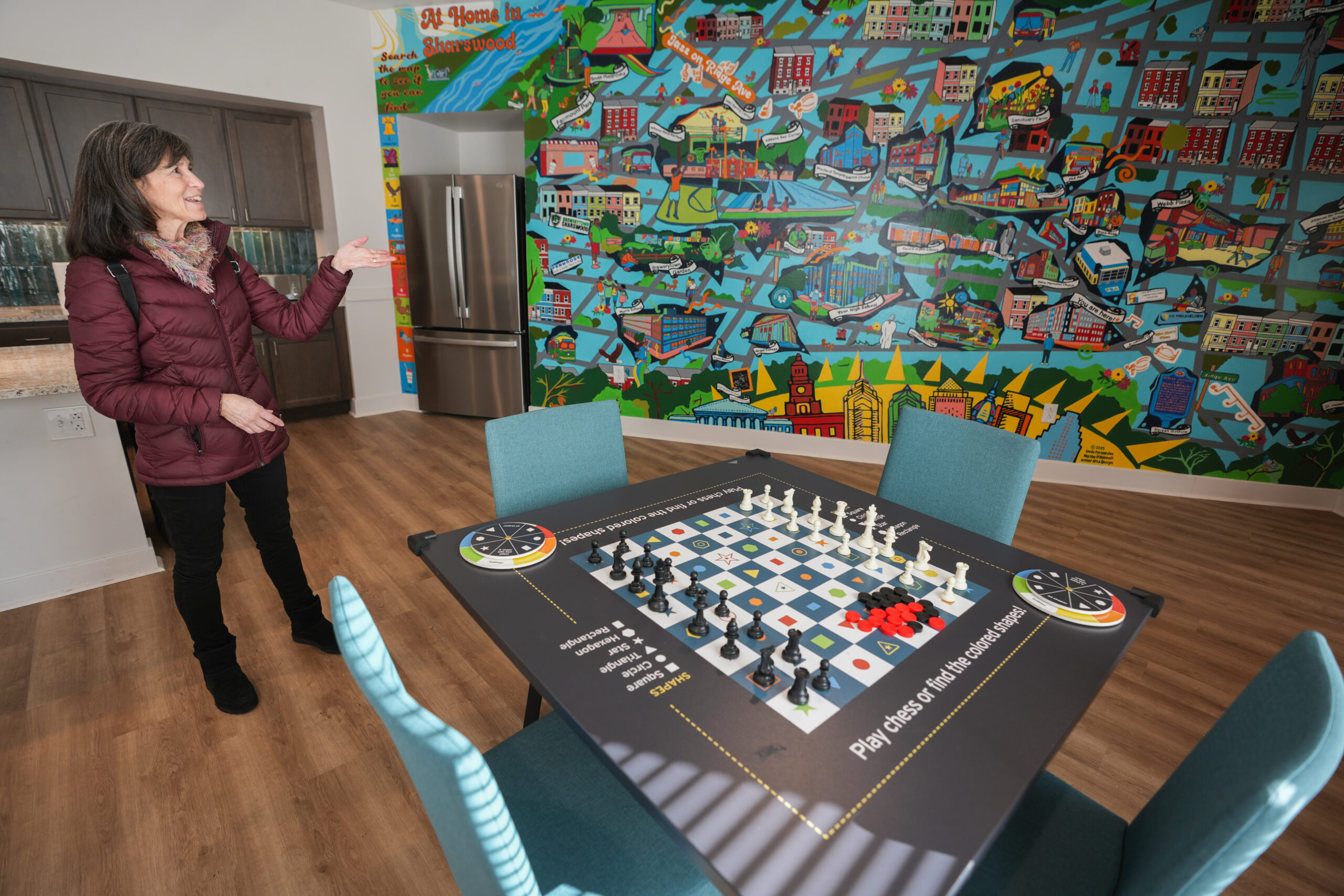
Architect Heidi Segall Levy, manager of the Live and Learn project, shows a mural by Linda Fernandez and Martha O’Connell from Amber Art & Design, at one of the educational play spaces at 2000 Ridge Ave.
About playful learning
Adults might not immediately understand what playful learning is until they’re reminded of childhood games.
Take Simon Says, for example. Children learn to retain information, evaluate the directions they’re given,and follow through. I Spy helps children learn how to describe their surroundings. Matching games strengthen memory and help kids recognize patterns.
Playful Learning Landscapes wants to transform any space where children and caregivers spend time into somewhere they can engage with each other. The organization has dozens of installations in Philadelphia and projects in about 30 U.S. cities and about 10 countries.
Now an activity hub, this transformed bike shed invites children and caregivers to draw, act, and tell stories together. Interactive puzzles, a chalkboard, and a small stage surround a multi-seat bench that doubles as a learning prompt and bookshelf.
One goal of the Live and Learn pilot was to train housing providers to continue the work.
“Our hope in the future is that developers and designers will be thinking about how to build playful learning into the architecture,” Segall Levy said. And eventually, “playful learning will just be included in public space design.”
Most of the pilot’s funding came from the William Penn Foundation, which contributed $647,250.
The foundation has invested about $26 million in playful learning projects in Philadelphia over the last decade and wants to see playful learning elements become standard in recreation centers, parks, libraries, and other places, said executive director Shawn McCaney.
“We believe every neighborhood should have access to high-quality public spaces” that can support community building, safety, and children’s development, McCaney said. “These kinds of spaces can become really important points of pride and engagement in communities.”
Super at Susquehanna Square
David La Fontaine, whorecently retiredasexecutive director of the nonprofit housing developer Community Ventures, was immediately interested when he was approached about adding playful learning to his Susquehanna Square apartment complex.
“A program that helps young kids in school was really what made me most interested,” La Fontaine, the son of a public schoolteacher, said.
Residents at Susquehanna Square spin the wheel to discover their superpower — a feature of the Book Nook. This custom Playful Learning installation is designed to create a sense of arrival while encouraging reading and social connection.
Community members’ vision came to life with the help of KSS Architects.
Susquehanna Square resident Merlyn DeJesus, 61, likes to sit in her building’s backyard and take in what the space has become. Young residents now have things to do when they go outside. They draw on a chalkboard, spin the letter tiles of a puzzle, and turn wheels to create their own superheroes.
DeJesus and her 8-year-old granddaughter read books together from the little library, where community members can take and leave titles. Her granddaughter also helped paint superhero murals, which are on each of her building’s three floors.
It all makes the space feel “more homey,” DeJesus said.
“I feel proud inviting people to come to my home,” she said.
Merlyn DeJesus, a resident of the Susquehanna Square subsidized housing development in North Philadelphia, points to one of the murals painted in her apartment building as part of the Live and Learn project.
Transforming community spaces
Playful Learning Landscapes focuses on tailoring projects for specific communities based on extensive outreach.
For example, residents in the Sharswood area of North Philadelphia noted that nearby Ridge Avenue has lots of fast-moving traffic. So they said they wanted their children to learn about street safety in the Live and Learn project that was focused on subsidized homes developed by Pennrose in partnership with the Philadelphia Housing Authority.
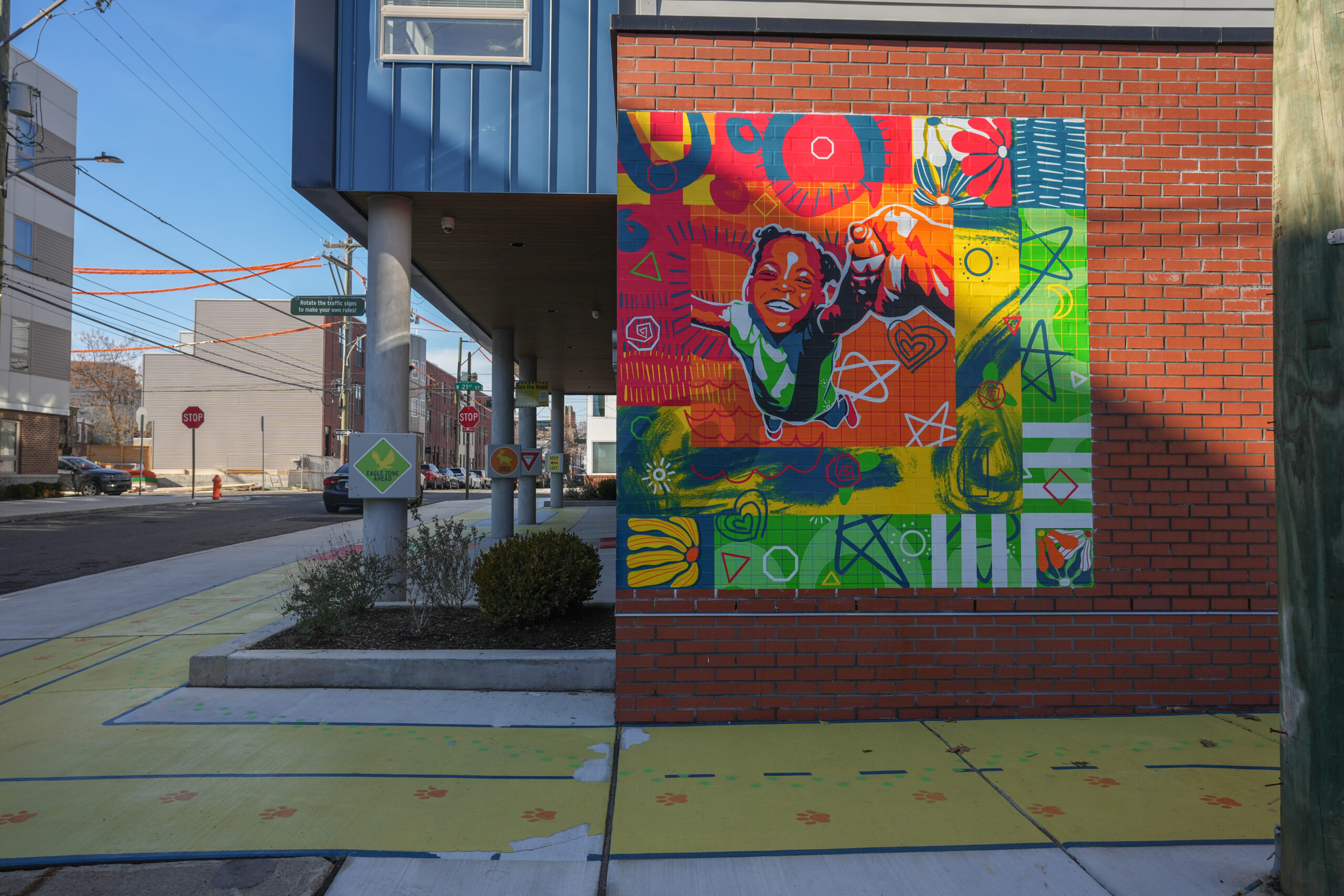
Children in Sharswood “run the road” along a new Playful Learning track painted on the sidewalk of a Pennrose housing development.
At the “Run the Road” installation, a colorful street is painted on a sidewalk. Children can spin traffic signs and learn what “yield,” “keep right,” and “one way” mean. They learn about crosswalks. They can step on animal prints and walk like the creatures.
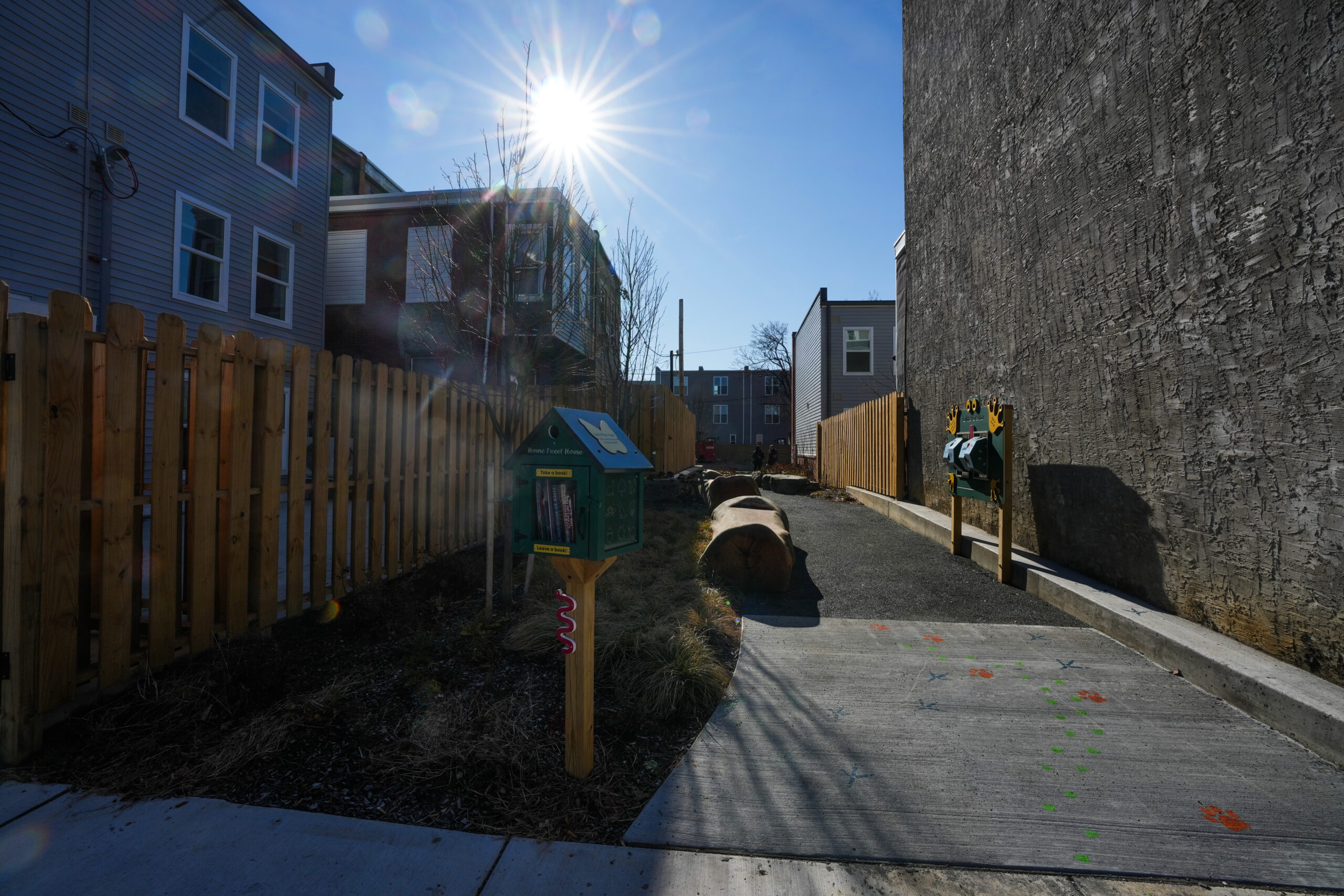
Residents also said they didn’t have open space they could enjoy. So the Live and Learn project transformed a small strip of unused land into a pocket park. It has seating anda little library. There’s a puzzle and matching game and wheels children can turn to create their own animals and tell stories based on their creations.
A pocket park is one of the educational play spaces that the Live and Learn initiative brought to a subsidized housing community in the Sharswood area of North Philadelphia.
“Anytime you take blighted property and change it into a beautiful play and sitting area, I think that’s great,” she said. “There is no longer an eyesore in this community.”
Inside the community room of a new subsidized apartment building at 2000 Ridge Ave., what was originally going to be a blank white wall became a mural featuringa map of the neighborhood with cultural landmarks. The room also features tabletops with activities, such as chess, matching games, word games, and storytelling prompts.
A young Sharswood resident explores a custom-designed Playful Learning chess table in the community room of a Pennrose housing development. The table is one of six navigation stations that help children build skills through play where they live.
Architecture firm WRT worked on the installations. Associate Lizzie Rothwell has been an architect for more than 15 years and said she doesn’t usually get so much breathing room to collaborate with community members.
“Within my professional career, it was a pretty unique opportunity,” Rothwell said. “It was one of the more rewarding experiences I’ve had working with a community on a design.”
A forgotten strip of land wedged between housing developments on 22nd Street between Ingersoll and Master Streets in Sharswood is now “The Backyard,” designed with Playful Learning installations, including this Critter Creator, two nature-themed standing puzzles, and a little library with a built-in I Spy game.
Looking ahead
Now, Playful Learning Landscapes wants to pursue public policies that support the expansion of playful learning projects and provide incentives for developers and architects to incorporate this work into their plans, said Sarah Lytle, the organization’s executive director.
Playful learning advocates briefed City Council members this fall about their work. In September, the city’s Department of Planning and Development issued a call for proposals to create or preserve affordable housing and encouraged developers to include art or design elements that foster children’s development.
“We’re starting to see some traction,” Lytle said.
More than seven months after the opening of the play spaces at Susquehanna Square, Robinson and her daughter now live in South Philadelphia, but they’ve come back to visit the murals they helped paint and the installations they helped develop.
“To see it and to know it’s going to always be there,” Robinson said, “it brings a lot of joy to me.”
The “Run the Road” installation on a sidewalk at 2045 Master St. teaches children in Sharswood about traffic rules.
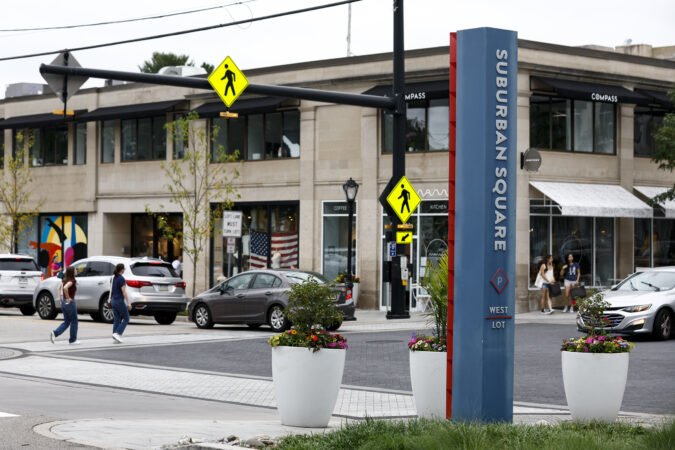
This week, owner Kimco Realty and developer Bozzuto Development announced the opening of Coulter Place, the first apartment community in the Ardmore shopping destination.
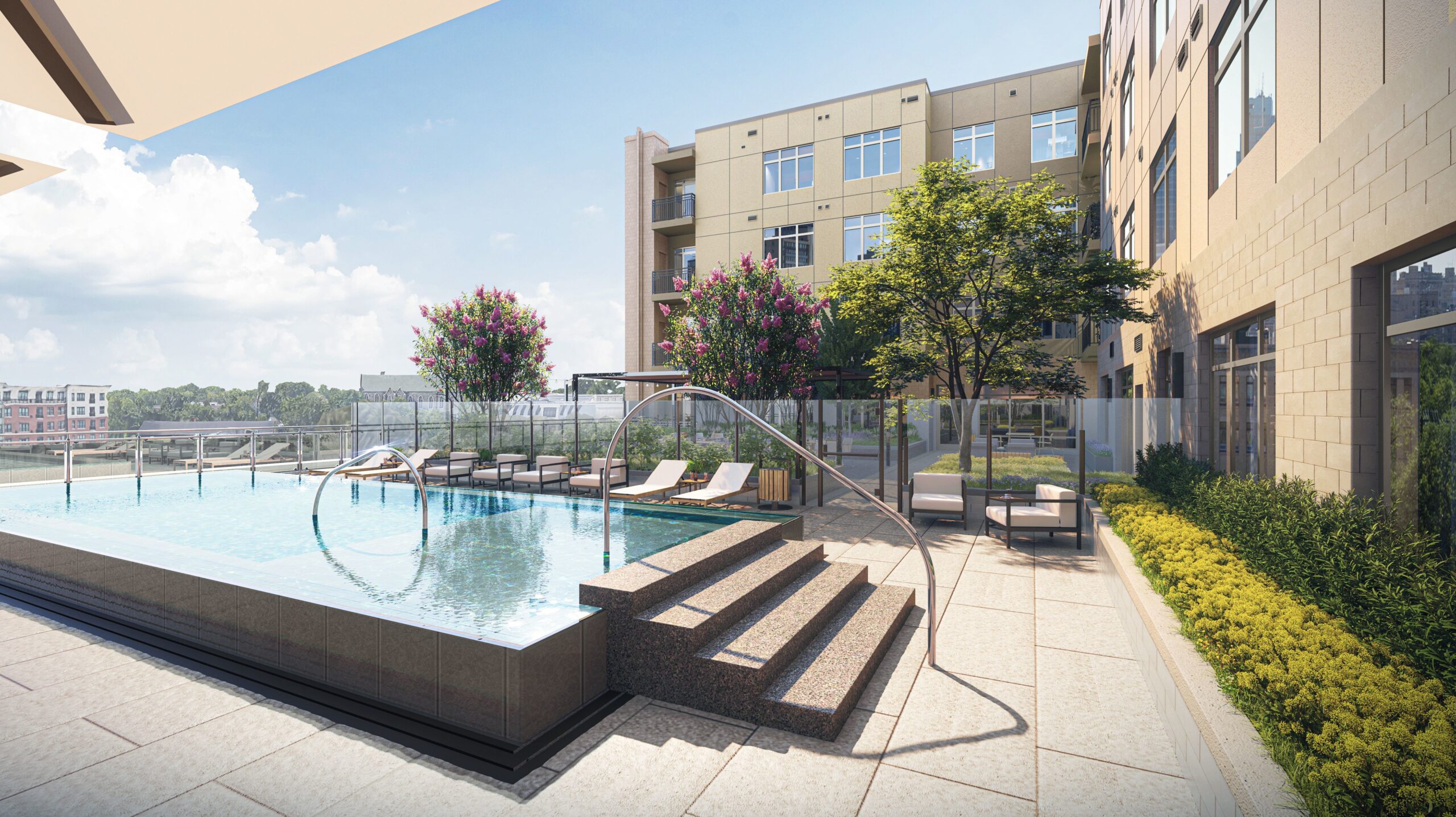
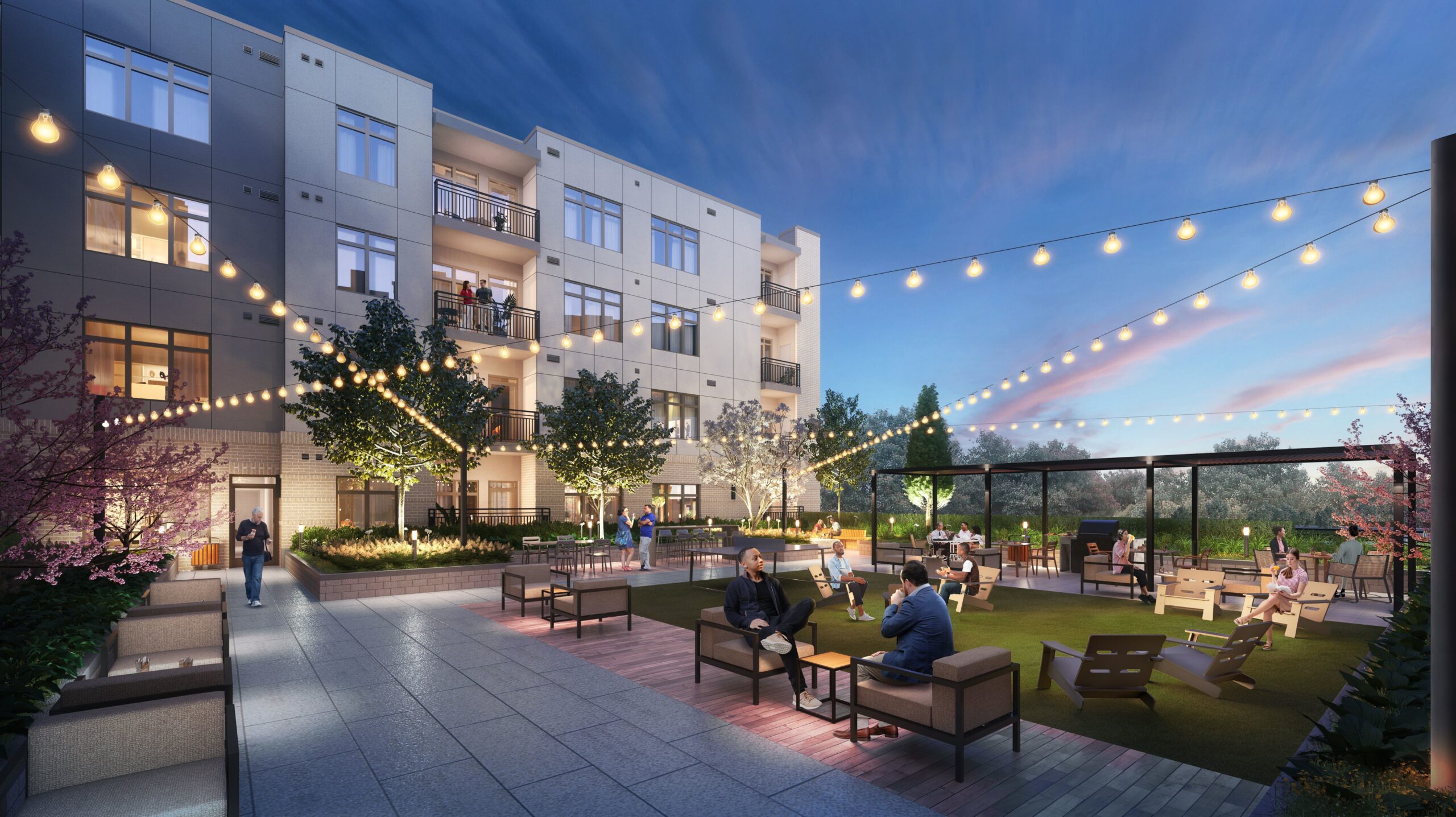
The five-story, mixed-use development includes 131 apartments with one to three bedrooms and about 20,000 square feet of ground-floor retail space. Amenities for residents include a fitness center, clubroom, game room, pool, coworking spaces, and pet-care spaces. It has two courtyards and garage parking with electric-vehicle charging stations.
The promise of apartment residents helped attract new retailers to Suburban Square, including New Balance, Sugared + Bronzed, and the apparel brand Rhone on the ground floor of the apartment building.
The complex is one of a few projects planned in recent years that have added or will add hundreds of apartments near Lancaster Avenue in Ardmore. One Ardmore, a 110-unit apartment complex, opened in 2019 after a yearslong campaign by residents to stop it. The long-awaited Piazza development is expected to add 270 apartments and almost 30,000 square feet of retail space when it opens in a couple of years.
This rendering shows the outdoor pool at Coulter Place.
Conor Flynn, CEO of Kimco Realty, said in a statement that Suburban Square is an “iconic, walkable destination” and that the addition of apartments creates “a more vibrant, connected experience for residents, retailers, and visitors alike.”
“Coulter Place represents the next chapter in Suburban Square’s evolution and a clear example of how we’re unlocking long-term value through thoughtful mixed-use development,” Flynn said.
The apartments are across from Trader Joe’s and the Ardmore Farmers Market and within walking distance to the Ardmore station for SEPTA and Amtrak trains.
Apartments available for lease at Coulter Place range from one-bedroom, one-bathroom units for about $3,030 per month to a three-bedroom, two-bathroom unit for $7,035 per month.
Philadelphia-based JKRP Architects designed the apartment building.
Suburban Square was developed in 1928 and now has about 80 shops, restaurants, fitness spaces, and more. Businesses include Apple, SoulCycle, Warby Parker, Van Leeuwen Ice Cream, CAVA, and Di Bruno Bros.
This rendering shows one of the courtyards for residents of Coulter Place.
Through the years, friends and family members have floated the idea of a group of us buying houses next to each other or in some kind of compound. It’s a nice dream, although it probably won’t become a reality.
But three childhood friends have taken this dream a step further. The besties bought a communal house together in West Mount Airy.
Rachel Luban, Rachel Neuschatz, and Lizzy Seitel had always talked about living together. They ignored the haters who said it wouldn’t work.
The Rachels met when they were 5 and 6, and then Seitel became an honorary “Rachel” after they all met in middle school.
The friends lived apart as young adults, but when they were ready to settle down, they decided to do it together.
A few years ago, they and Seitel’s husband bought a 4,470-square-foot old stone house in West Mount Airy. Seitel was pregnant with her first child at the time.
One of the Rachels said, “A lot of people, including lawyers, told us not to do this.”
When Casey Lyons and her husband, James, bought their home in 2021, there was a lot to like.
The almost 5,000-square-foot house had oak floors, two fireplaces, and a beamed cathedral ceiling in the living room.
The basement included a sauna, gym, and full bathroom.
The home had a three-level deck with a hot tub and covered porch.
But Casey didn’t love the house. So she asked interior designers to help change that.
The homeowners got rid of dated features. They added a white marble island and new tiles and fixtures in the kitchen. They whitewashed the stone fireplace in the family room. They painted the deck so it blends better with the surrounding greenery.
Across the Mid-Atlantic last year, people who wanted to buy homes couldn’t afford to, and that held back the housing market. The total number of homes sold in 2025 — more than 235,000 — was only 0.1% higher than the number sold in 2024, according to the multiple listing service Bright MLS.
Lisa Sturtevant, chief economist at Bright MLS, said the market has “a lot of pent-up demand,” and buyers have more choices now because more homeowners are listing their properties for sale.
“But even with mortgage rates coming down, affordability is still a major challenge for many buyers, particularly first-time buyers,” Sturtevant said in a statement.
Still, our region had strong home sales last month. The number of closed sales was up 7.1% compared to last December.
In the Philadelphia metro area, according to Bright MLS:
🔺The number of closed home sales was up 1.3% in 2025 compared to 2024. Bucks and Chester Counties had the strongest sales increases — 7.7% and 5.3%, respectively.
🔺The number of new listings in 2025 was up 2% from the year before.
🔻But the number of homes for sale is still only about half — 54% — of the pre-pandemic number in 2019.
🔺The median sale price in 2025 was $390,000 — 4% higher than in 2024.
📷 Photo quiz
Do you know the location this photo shows?
📮 If you think you do, email me back. You and your memories of visiting this spot might be featured in the newsletter.
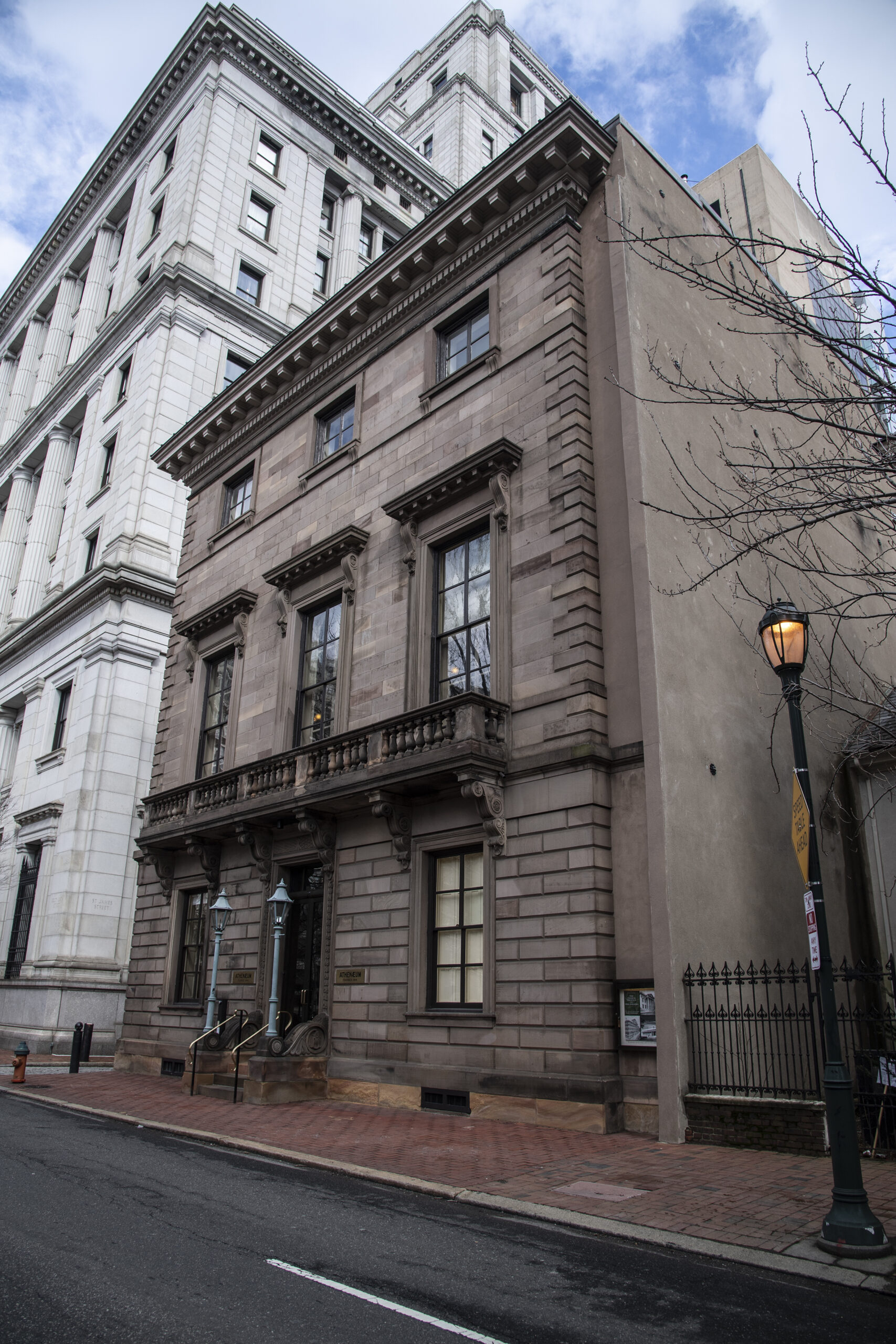
Props to Evan N., Ann B., and Timothy S. for getting that right. Ann told me she wants her ashes to rest in the Reading Room. I’ve walked by this building countless times, but this is what makes me want to go inside.
Enjoy the rest of your week.
By submitting your written, visual, and/or audio contributions, you agree to The Inquirer’s Terms of Use, including the grant of rights in Section 10.
But Zillow’s ranking of the country’s 50 most-populous metros is based on housing market fundamentals that have nothing to do with one-off events. The company examined markets’ home value growth and competitiveness.
“Competition among buyers will be stiff, and sellers will have the upper hand in this year’s hottest markets,” Mischa Fisher, Zillow’s chief economist, said in a statement. “Shoppers will need to tap all the resources they can muster in these fast-moving markets, from their team of experts to tech aids to financial assistance, but successful buyers will quickly gain equity.”
In the Philadelphia area, the number of homes for sale last year was about 40% lower than the average pre-pandemic. And demand is outpacing supply. That has made local housing markets more competitive.
Two in five homes sold for more than the asking price from September 2024 to September 2025. And homes typically spent just 13 days on the market in the year ending in October 2025.
During that same period, 22% of listings had a price cut on Zillow. Among the 50 most-populous metros, this share ranged from 13.5% to 33%.
And Zillow estimates that Philadelphia-area home values grew by 3%. It forecasts that values will grow by another 1.7% over the next year.
window.addEventListener(“message”,function(a){if(void 0!==a.data[“datawrapper-height”]){var e=document.querySelectorAll(“iframe”);for(var t in a.data[“datawrapper-height”])for(var r,i=0;r=e[i];i++)if(r.contentWindow===a.source){var d=a.data[“datawrapper-height”][t]+”px”;r.style.height=d}}});
This is Zillow’s second recent recognition of the strength of local housing markets. Last month, the company revealed that Philadelphia was the only large city that made its list of the 20 most popular housing markets of 2025. That analysis included many more markets — not just the largest ones — and the list was dominated by midsize cities in the Midwest.
On Zillow’s list of the predicted hottest major metros of 2026, Hartford, Conn., knocked Buffalo, N.Y., from the No. 1 spot. Zillow had ranked Buffalo as the hottest metro two years in a row.
In Hartford, more than two-thirds of homes sold above the listing price on average between September 2024 and September 2025. That’s the largest share among major metros. The typical home for sale spent about a week on the market. And Zillow expects home values to grow by about 4% from October 2025 to October 2026.
The New York metro area, which includes parts of New Jersey and Pennsylvania, ranked third-hottest for 2026. Among major metros, it had the lowest share of listings with a price cut: 13.5%.
Picture this. You’ve been with your romantic partner for years, and you’ve seen each other through all kinds of ups and downs. Your relationship seems unshakeable. Then you decide to renovate your home.
Renovations can be a source of stress for individuals and for a relationship.
As a couples therapist in Center City put it, “the list of things that can trigger people during a renovation is very long.”
The home remodeling and design platform Houzz surveyed hundreds of couples for its 2025 report on remodeling and relationships.
According to the study, couples most often fight over:
🙎🏽 staying on budget
🙎🏽 deciding on products and materials
🙎🏽 agreeing on the project’s design or scope
Don’t feel bad if a renovation strains your relationship. Even a local couple who builds homes for a living had to bring in a third party to help settle disagreements on the design of their own home.
At the end of 2024, Montgomery County had no full-time shelters, even though the number of people without homes was growing as the cost of housing increased.
Now, the county has three emergency shelters.
The county’s Democratic and Republican commissioners have led an unusually bipartisan effort to tackle homelessness. The Republican commissioner said he and his colleagues came to the job with similar goals around addressing the issue.
It’s not unusual for residents to fight against new homeless shelters and low-income housing in their backyards. The county commissioners have been getting personally involved in pushing local governments to allow more housing.
But 2026 will bring more challenges.
Keep reading to find out what’s ahead this year, where shelters have been built, and why one commissioner says that making sure residents are housed takes “political courage” from local officials.
What is it with Philly and trees growing in houses?
While I was reporting my story about dangerous vacant homes last year, I came across two families in two different neighborhoods who were living next to empty houses with trees growing in them.
And now Nate Carabello says that when he bought a rental property in Bella Vista in 2005, the rowhouse had been boarded up for 30 years and a tree was growing in the middle of it.
The house is now home for Katie Kring-Schreifels, who lives in one of its apartments.
She’s filled her space with art and things she’s found in a variety of places, including a Habitat for Humanity ReStore, eBay, and Ikea. A leather trunk in her bedroom was her great-grandmother’s. Her mom found the flock of paper bluebirds at a craft show.
📮 If you think you do, email me back. You and your memories of visiting this spot might be featured in the newsletter.
Last week’s quiz showed a photo of the “Weaver’s Knot: Sheet Bend” public artwork on the Delaware River Trail along Columbus Boulevard. The stainless steel piece is between the Cherry Street and Race Street Piers.
Shoutout to Lars W. for getting that right.
Enjoy the rest of your week.
By submitting your written, visual, and/or audio contributions, you agree to The Inquirer’s Terms of Use, including the grant of rights in Section 10.
On Creighton Road in Lower Merion, it’s not unusual for residents to buy the house next door.
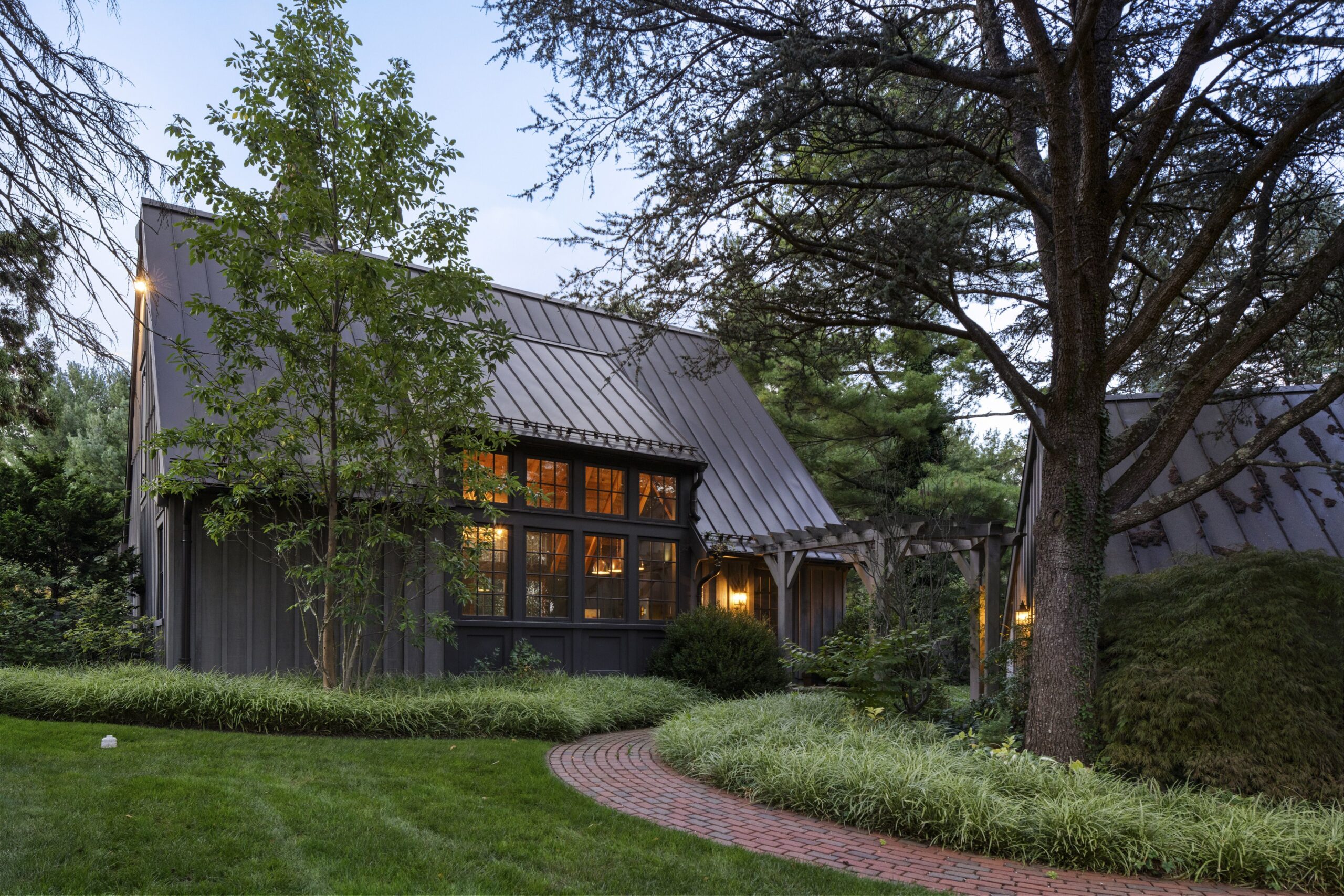
The owners of the 3.85-acre property at 648 Creighton Rd. did just that when they purchased the home but wanted a pool. They decided to put one on the neighboring property.
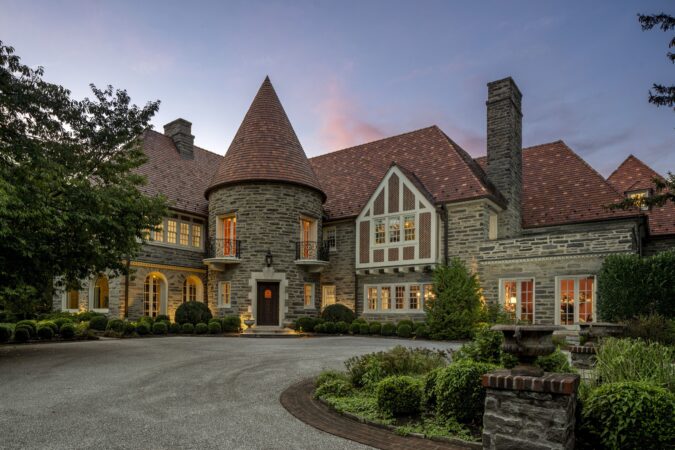
The century-old main house with seven bedrooms, seven full bathrooms, and three half bathrooms is available for $7.9 million. And the one-bedroom, one-bathroom carriage house next door that was rebuilt in 2015 is on the market for $2 million.
Creighton Road “has become the estate street,” said listing agent Lavinia Smerconish with Compass Real Estate.
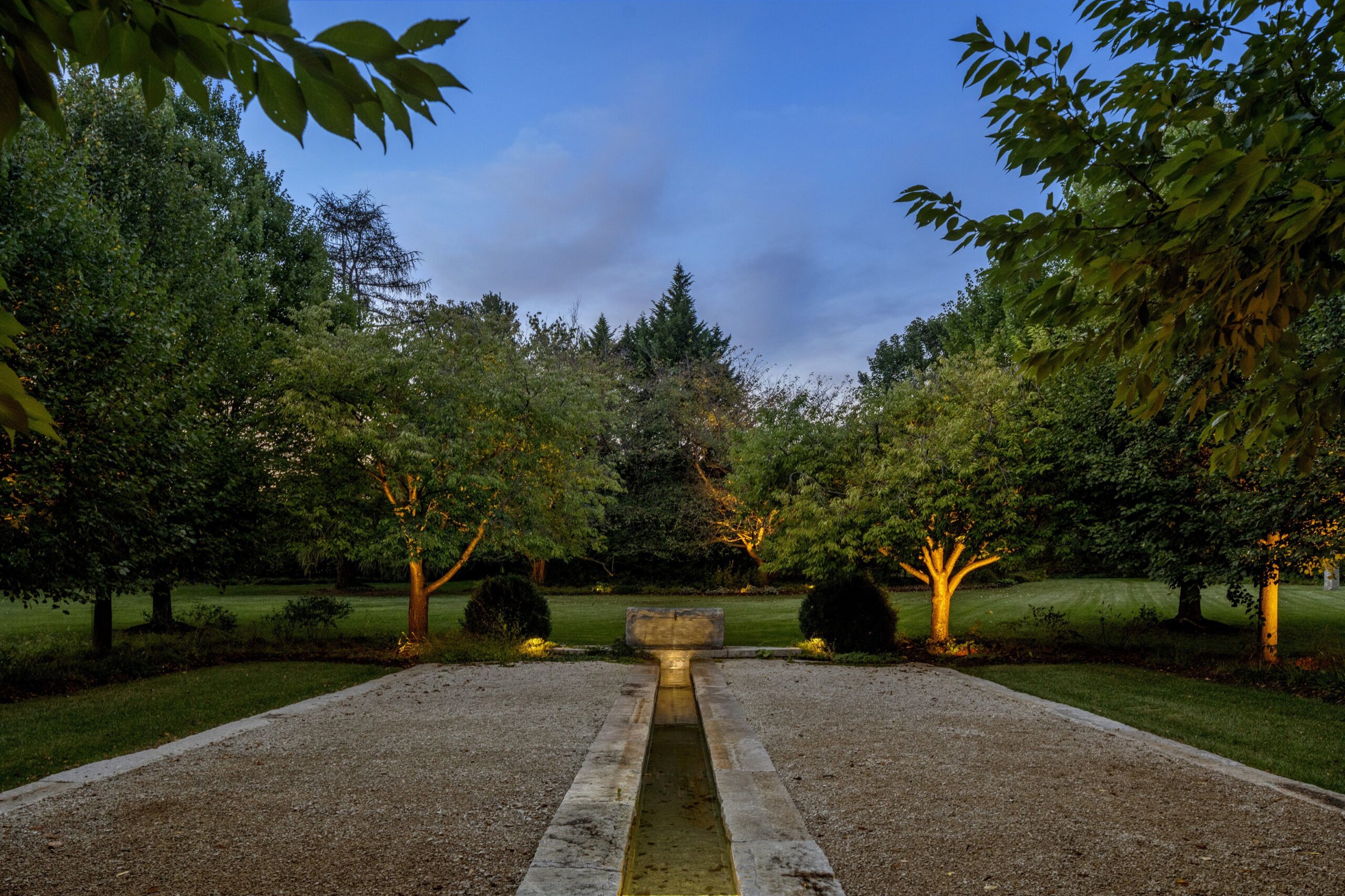
The property is 3.85 acres and includes a sprawling yard.
The owners are open to selling their properties separately, but they won’t sell the carriage house before the main one in case a buyer wants both.
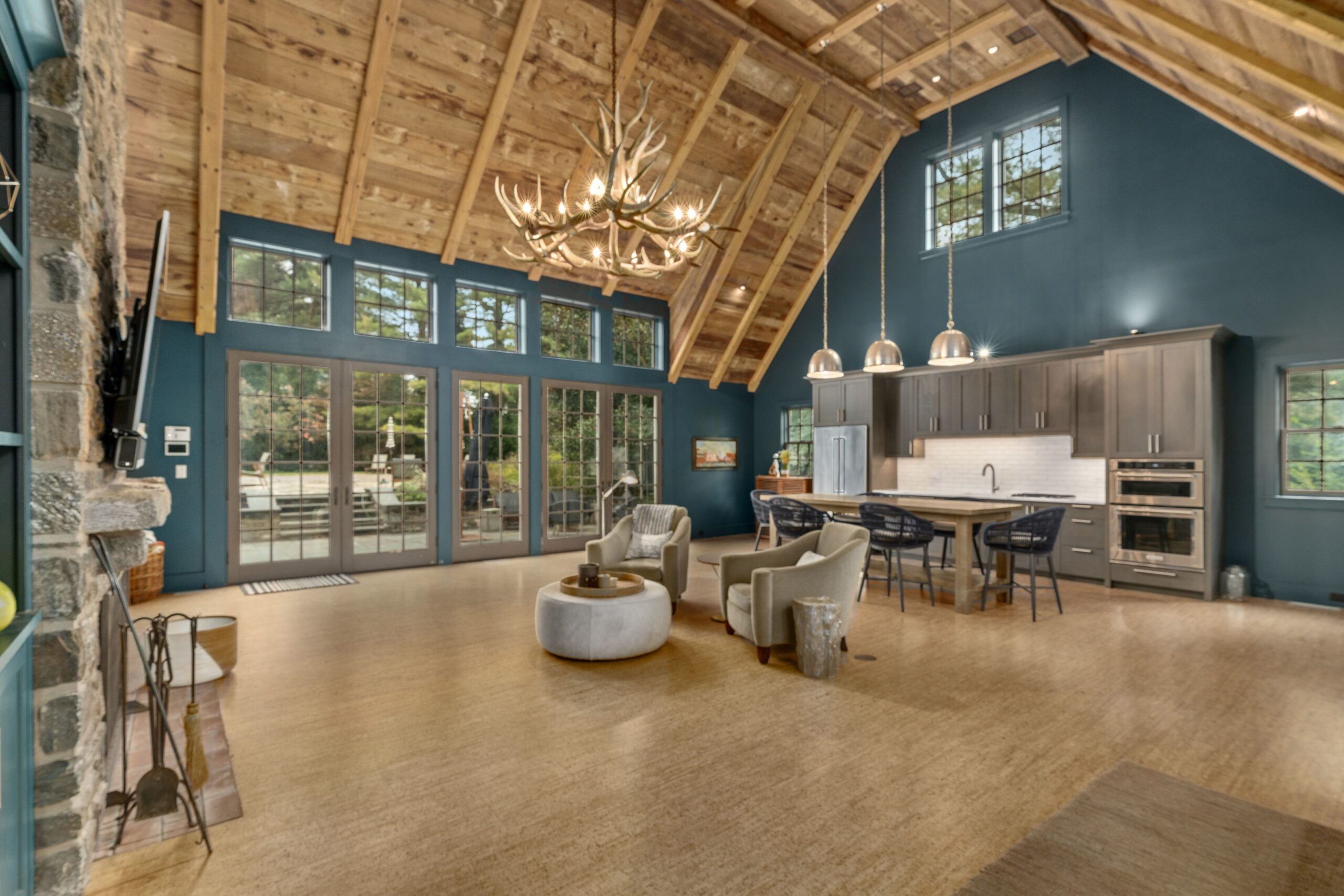
The fieldstone main house is 11,418 square feet. It used to have a series of small rooms for staff and a giant entrance that looked like a banquet hall that no one knew what to do with, Smerconish said. A previous owner reimagined the home with larger rooms, more natural light, and more functional space.
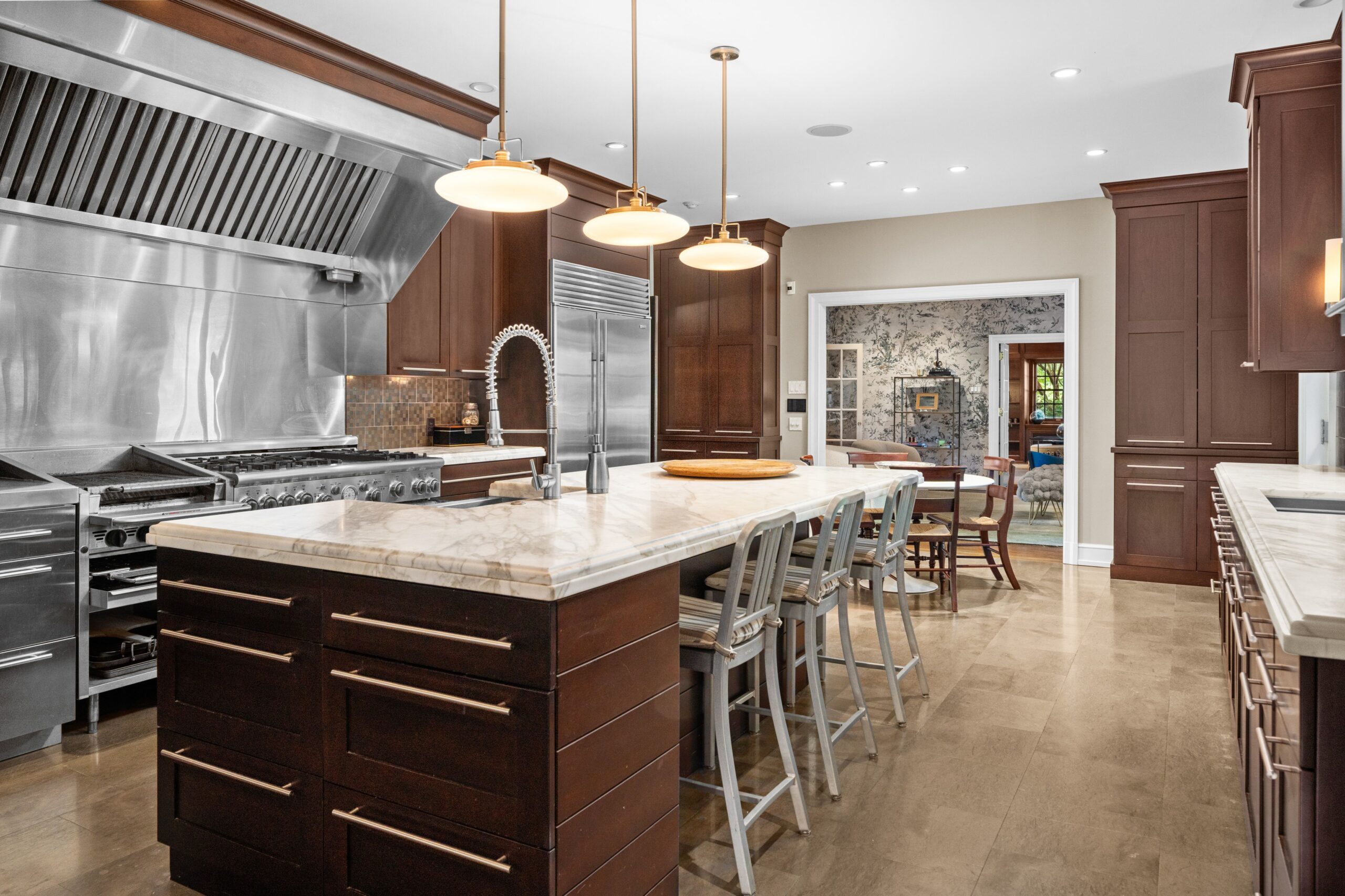
The home has a commercial kitchen with a large island with seating.
The front door opens to an entrance tower with a chandelier and winding staircase. Living and dining rooms branch off from the foyer with the family room straight ahead.
The home has a commercial kitchen with an island with seating. The property includes an exercise room, solarium, four fireplaces, suite above the attached garage for guests or a nanny, sprawling yard lined with trees and hedges, terraces, and detached garage. The sitting room off the primary bedroom could be kept as is or turned into a huge closet, Smerconish said.
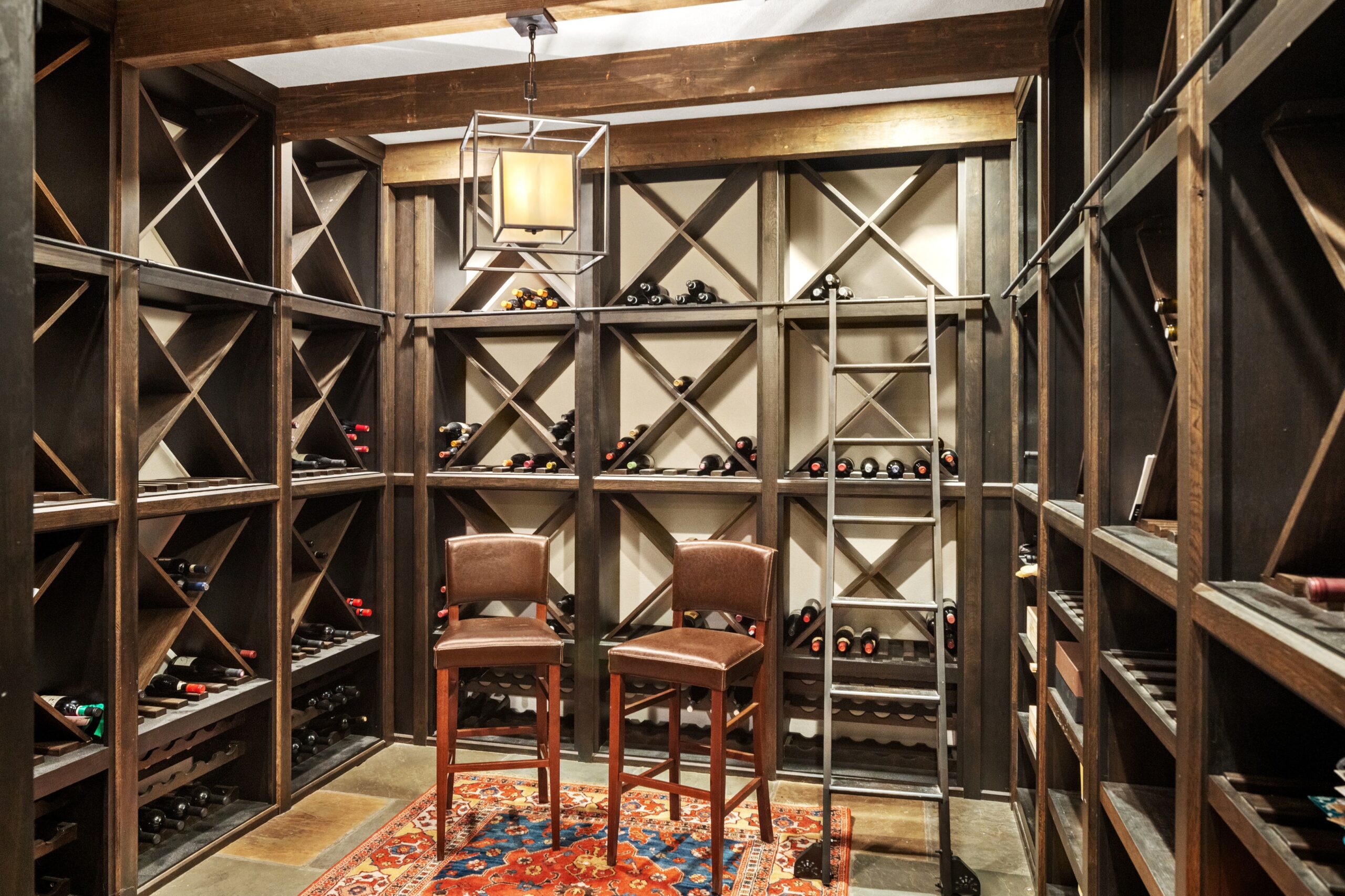
The finished basement spans 1,538 square feet and includes a wine cellar.
The basement includes a sports bar with TVs, wine cellar for up to 3,000 bottles, movie room, gym, and bathroom.
The property “is both impressive and cozy at the same time,” Smerconish said.
The carriage house on the market for $2 million on Creighton Road in Lower Merion is being sold as a package along with the $7.9 million house next door.
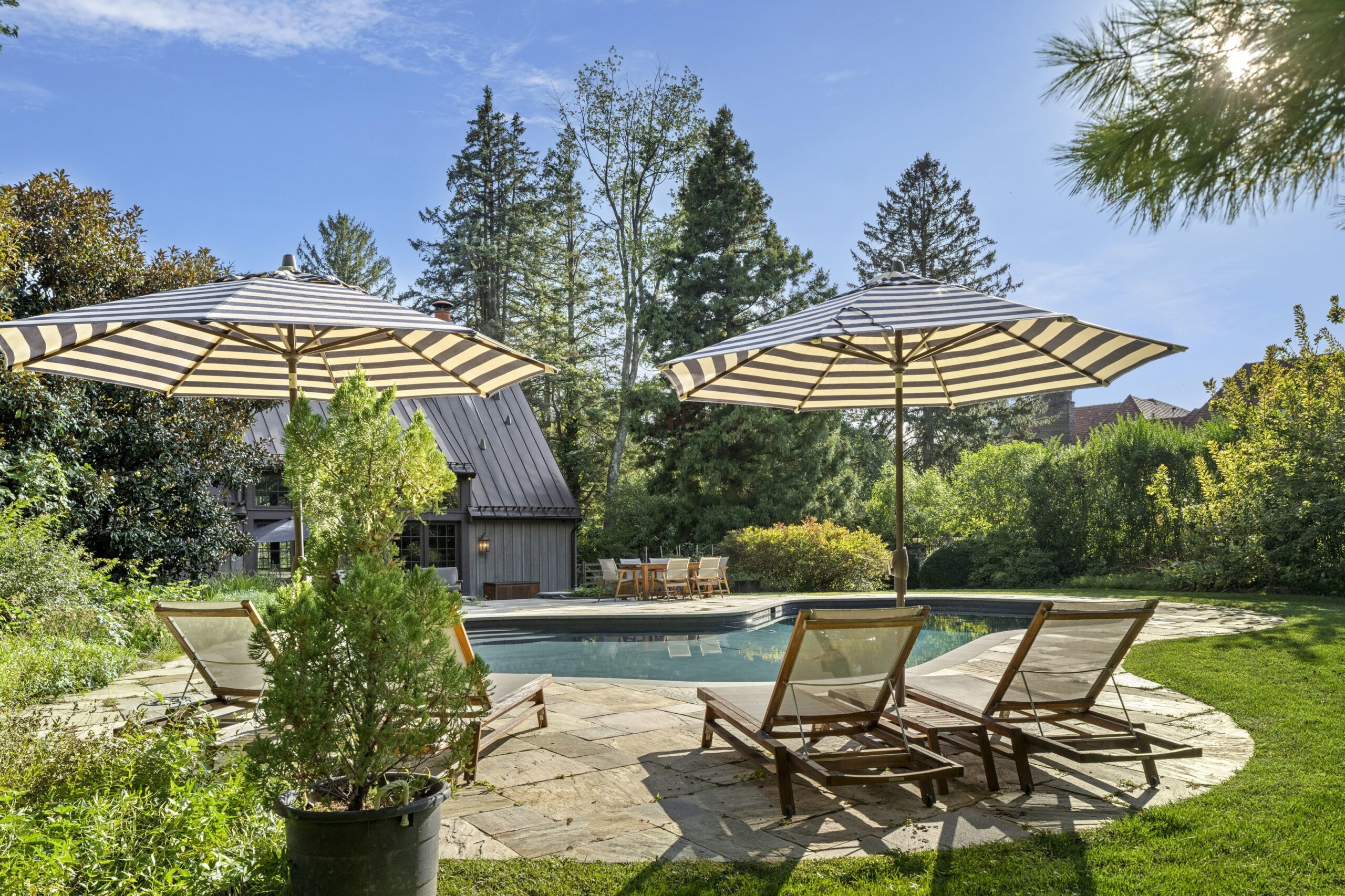
The carriage house next door spans just over 1,000 square feet on an almost one-acre lot. It has a bedroom, bathroom, laundry room, eat-in kitchen, and living room. A flagstone patio leads to the heated saltwater pool.
The properties are walking distance from the Appleford estate, which is an event venue, bird sanctuary, and arboretum with gardens and walking paths. They are minutes from Villanova University and Stoneleigh, a public garden of the nonprofit Natural Lands.
And they’re also minutes from the Schuylkill Expressway and I-476.
The carriage house includes a kitchen, bathroom, and bedroom.
The properties were listed for sale on Dec. 5. Now that the holidays are over, Smerconish said, she will start accepting appointments to tour them. She said photos of the main house especially don’t do it justice.
“You get more with a physical tour and experiencing it,” she said.
Flagstone surrounds the carriage house’s heated saltwater pool.
New Jersey lawmakers passed a bill to prohibit households from being denied housing because they use public assistance.
The legislation, which lawmakers passed on Dec. 18, makes explicit that the state’s anti-discrimination law includes protections for residents based on their source of income for housing payments, including government vouchers, child support payments, and assistance from nonprofits. And the bill affirms that protections apply both to people paying rent and those paying mortgages.
State Sen. Angela V. McKnight (D., Hudson County), one of the bill’s sponsors, said the legislation will protect the rights of homeowners and tenants.
“Access to stable housing should never hinge on the source of a person’s legal income, especially for vulnerable populations like single parents, veterans, or those living with disabilities who often rely on assistance to make ends meet,” she said in a statement.
The legislation, which would take effect immediately after Gov. Phil Murphy signs it, is part of local and national efforts to prevent people from being denied housing because they use public assistance to pay for it. More than 2.3 million families use federal Housing Choice Vouchers, formerly known as Section 8 vouchers.
In September, Democratic U.S. Sen. John Fetterman cosponsored a bill that would create federal protections for these tenants. The Fair Housing Improvement Act of 2025 would prohibit landlords from denying housing to tenants because they pay rent using Housing Choice Vouchers; Social Security benefits; payments from a trust; income from a court order, such as spousal or child support; or other legal sources of income.
It also would expand protections in the Fair Housing Act of 1968 to prohibit discrimination based on source of income or military or veteran status.
“It’s hard enough to find an affordable place to call home,” Fetterman said in a statement. “Every veteran and every family struggling to keep a roof over their head deserve dignity and our support, not discrimination based upon their service or if they use a voucher.”
Chantelle Wilkinson, vice president of strategic partnerships and campaigns at the National Low Income Housing Coalition, said source of income discrimination “is far too often a main barrier for households seeking stable housing.”
“When a landlord denies a voucher holder access to housing despite meeting all other qualifications, that ‘no’ is not just about a home: it’s denial of opportunity, equity, and stability,” she said in a statement.
In Philadelphia, the city’s Fair Practices Ordinance bans rental property owners from discriminating against potential tenants based on the source of the income they will use to pay their rent. That includes housing vouchers and other public assistance.
In June 2024, City Council passed a bill to expand protections under the Fair Practices Ordinance. The legislation explicitly stated that housing providers renting or selling a property cannot advertise or communicate that they do not accept housing vouchers. It also explicitly says that Housing Choice Vouchers are an example of a protected income source.
And it makes fighting this type of housing discrimination easier for renters.
Happy New Year! Start it off by judging other people’s homes.
In the latest installment of my Price Point series, I compare three local homes on the market for about $390,000 — the median sale price in the Philly area in November.
Bucking a trend: Learn about the challenges that help explain why homeownership in Philadelphia fell during the pandemic while rates grew nationally and in other big cities.
Every couple of months, I set out to help homebuyers get a sense of their options by featuring three local properties for sale for about the same price.
This time, I’m answering the question: What can a homebuyer get with a budget of $390,000 in the Philly area?
These homes offer a taste of what’s out there.
🏠 A condo located on what a real estate agent calls Haverford’s “golden mile.”
This unit is one of the larger layouts at Haverford Hunt Club and is close to restaurants, stores, and public transportation.
🏠 A twin that has a private bathroom attached to the primary bedroom, an uncommon feature among older homes in Philly’s Mayfair neighborhood.
The home also has a garage and a finished basement with a bathroom.
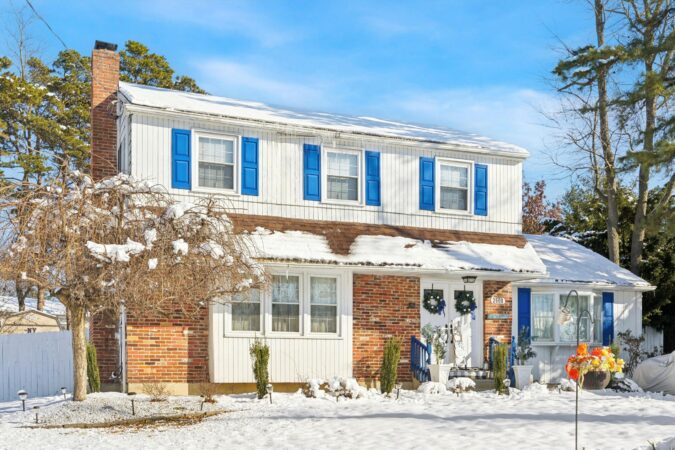
🏠 A Gloucester Township house that has a more open layout than the traditional Colonial.
This house has a deck in the spacious backyard and a bunch of recently updated features.
Have you noticed that a lot of the new rowhouses and apartments in Philly look alike? Architecture critic Inga Saffron has, too.
And she’s not shy about sharing her thoughts: “The streets of Fishtown and Graduate Hospital and Spruce Hill are now awash in interchangeable blocky structures, all dressed in the same dreary gray clothing, their aluminum panels shrink-wrapped around the exterior like a sheet of graph paper.”
Saffron says no one likes these buildings, which opponents snarkily refer to as fast-casual architecture, McUrbanism, and developer modern.
But they’re cheap and easy. So they’re everywhere.
Cue the rebellion: The arch is making a comeback. And it’s shaking up the city’s built environment.
Are you looking for some interior design tips in the new year? Jaden Daubert in Old City is @homedecorhomie on TikTok, where he shares his ideas and vintage finds.
But he doesn’t think anyone should blindly follow advice from influencers, him included. He even breaks his own rules.
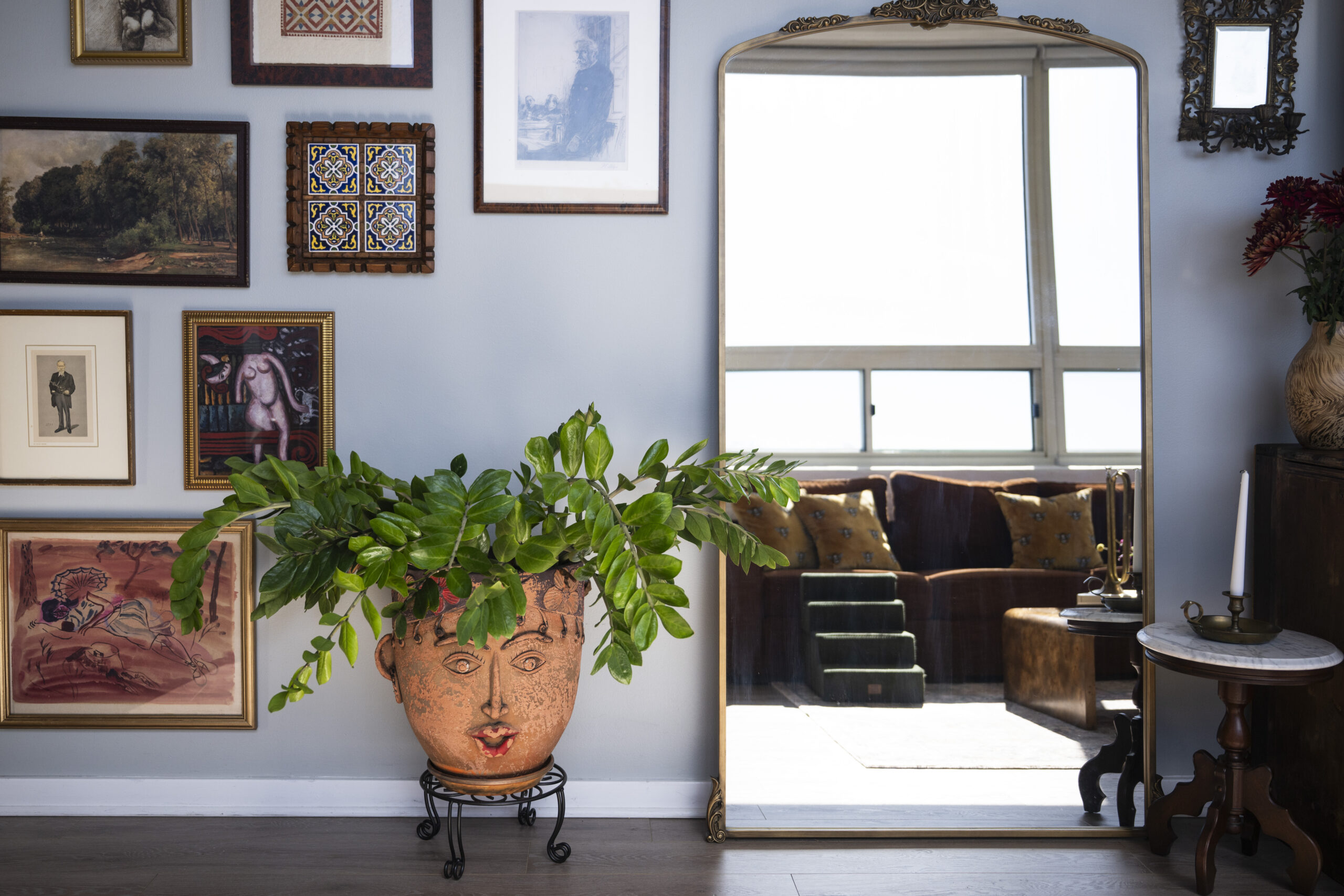
“My goal is to be authentically unique,” he said. He plays with patterns and textures and describes his apartment’s aesthetic as maximalist and eclectic.
Daubert likes to collect vintage pieces, and he’s a regular at thrift stores. His walnut dining room table was built in the early 1900s. He has two vintage Tiffany lamps.
Art fills his home and even decorates his doors.
Daubert’s two-bedroom corner apartment spans 1,400 square feet, has 14-foot ceilings, and features two walls of windows that let in sunlight and frame city views.
It’s actually his second stint in the same apartment after he moved out in 2020. Daubert said being back feels “meant to be.”