Author: Michaelle Bond

  • Selling the family Shore house | Real Estate Newsletter

    Selling the family Shore house | Real Estate Newsletter

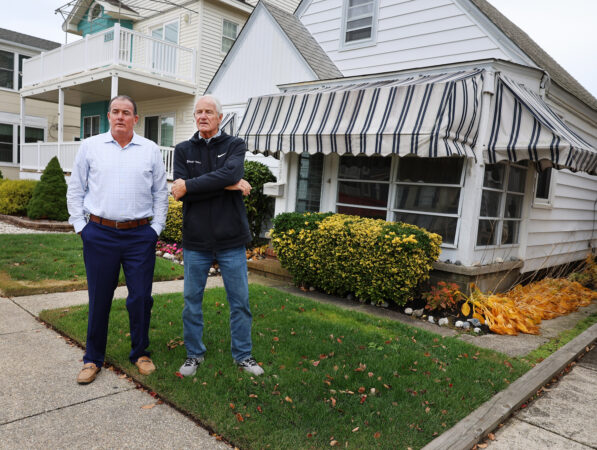
    The cottage on Asbury Avenue in Ocean City has been in the Smith family for seven decades. Now, it’s most likely at the end of its life.

    The 957-square-foot home two blocks from the beach is under contract with a developer for $1.4 million. And the family knows that the buyer will probably tear it down.

    That’s what happens down the Shore. The cottage sits on a large lot ripe for development and surrounded by larger neighbors.

    Keep scrolling for that story and more in this week’s edition:

    📮What type of nonresidential building would you want to live in if it were converted into a home? Maybe you even have a specific building in mind. Let me know.

    — Michaelle Bond

    P.S. The newsletter will be taking a break for Thanksgiving. So I’ll see you bright and early in your inbox the following Thursday, Dec. 4.

    If someone forwarded you this email, sign up for free here.

    Selling a piece of family history
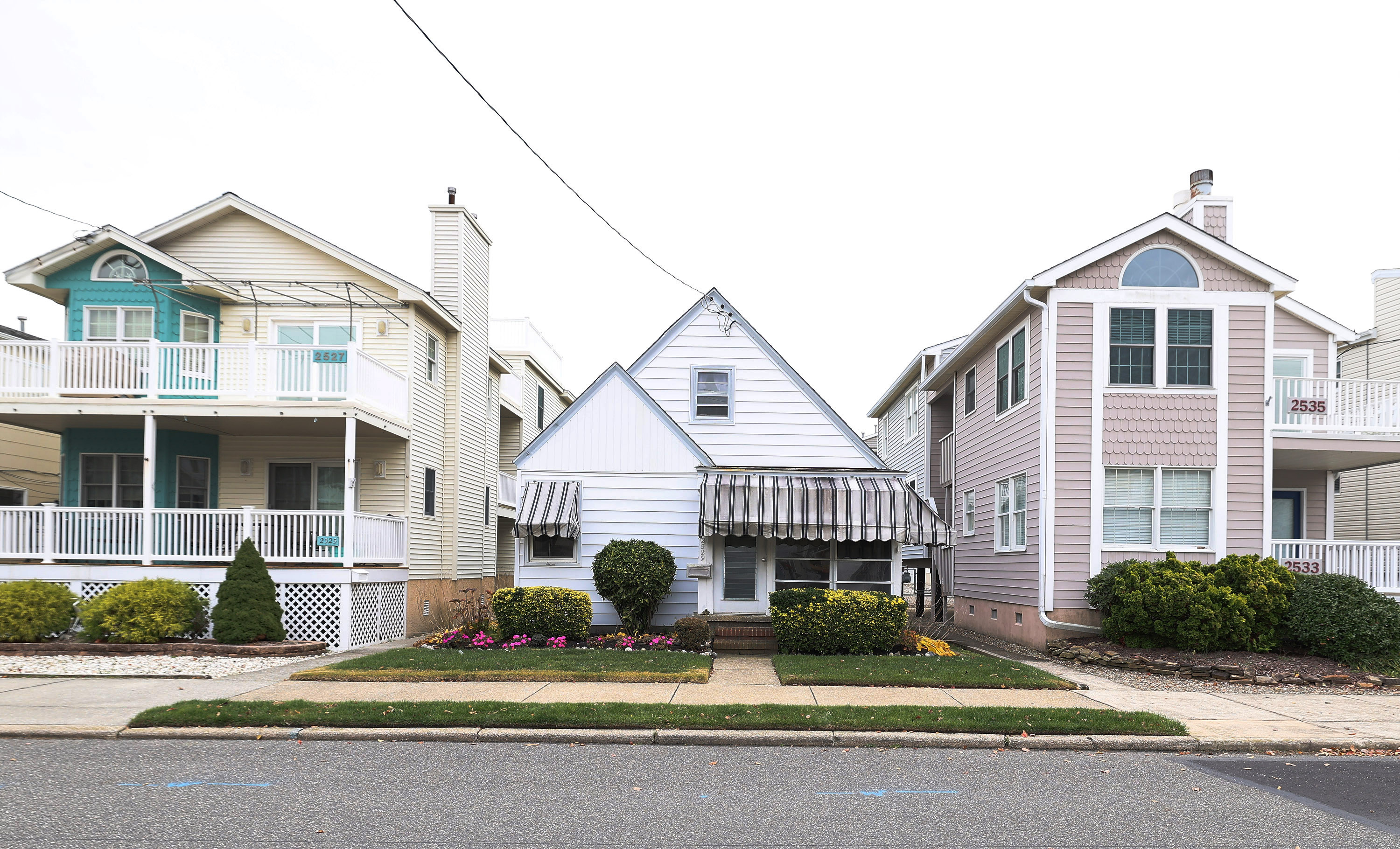
    Norman and Elizabeth Smith bought the two-bedroom, one-bathroom cottage in 1956 for $13,500. Generations of Smiths spent summers crammed into every corner of the home.

    And they watched over the years as small cottages like theirs were demolished and replaced with larger homes.

    After Norman and Elizabeth died, one of their sons moved in. But when he died in September, the family decided to sell the property that’s unique in the neighborhood for its small house and grass-covered yard.

    The home was listed for sale at the end of October. The family immediately received a bunch of offers, mostly from developers. Now the property is under contract with a developer for $1.4 million.

    My colleagues wrote last year about the owners of tiny Shore homes who refuse to sell their million-dollar properties.

    But that’s not the usual choice. Take a look inside the Smith’s Shore cottage before it’s gone.

    Fuel leak upends a Bucks neighborhood
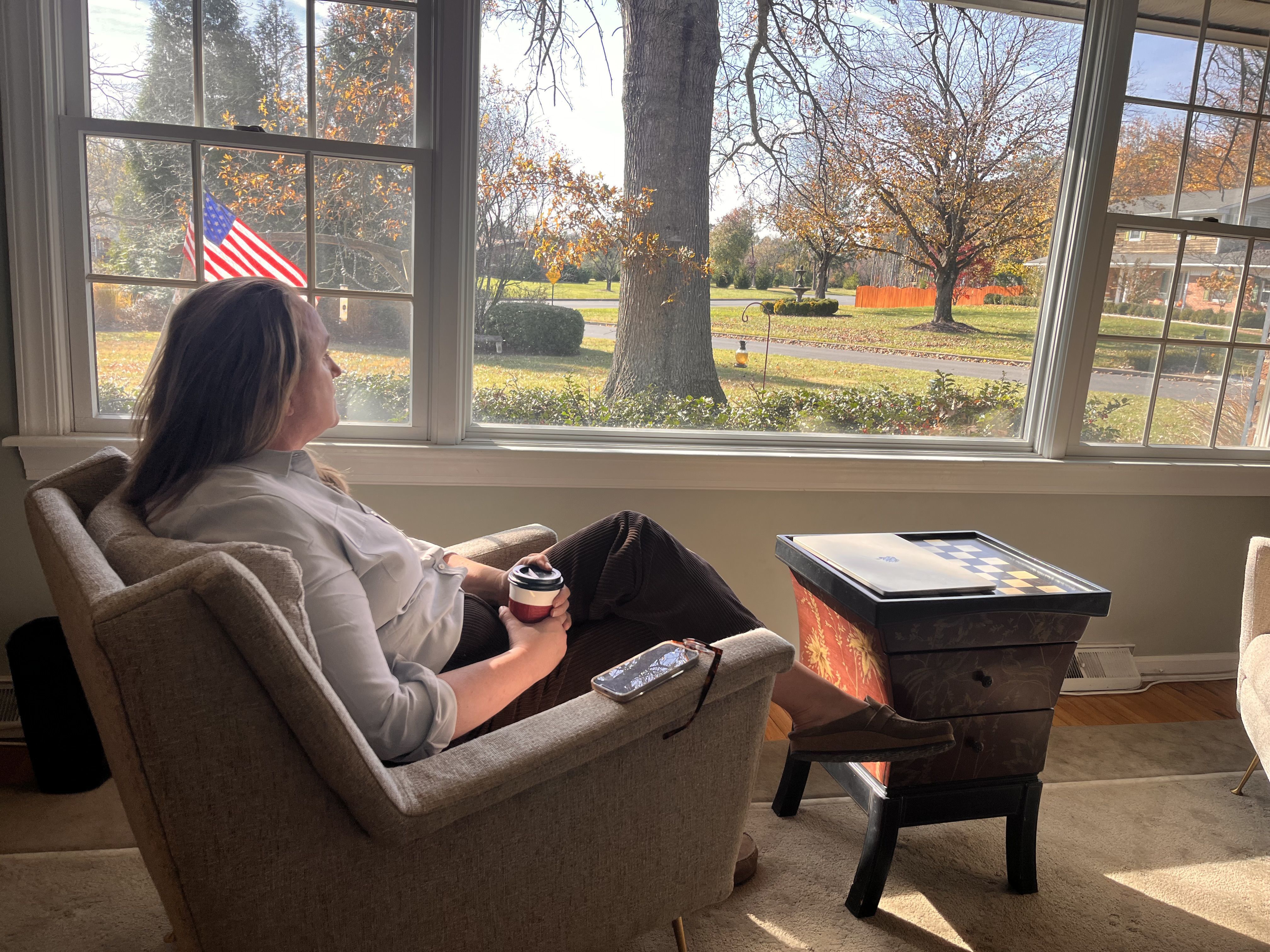
    “We will never drink the water in this house again,” a Bucks County homeowner said.

    Kristine Wojnovich and her husband don’t bathe in their home either. That’s because they get their water from a well, and that well was one of six that a pipeline leak contaminated with jet fuel.

    The leak has disrupted life in a quiet, suburban neighborhood, which happens to have a 14-inch-wide pipeline running underneath it that carries jet fuel, diesel, or gasoline from Delaware County to Newark, N.J.

    State inspectors discovered the leak in January. But Wojnovich told my colleague that she first knew something was wrong with the water coming from her well in 2023.

    Many residents of the neighborhood won’t drink or cook with their water. They watch as neighbors put their houses up for sale.

    Keep reading to learn more details about the leak and what life is like now for the people who live in the neighborhood.

    The latest news to pay attention to

    Home tour: Church turned apartments

    The four women in their 20s all separately found Christ Reformed Church on Facebook. But they didn’t come to worship. They wanted to live there.

    The Romanesque-style brownstone structure was built in 1860 as a church, but now it’s an apartment building with 17 multilevel units.

    Corwynne Peterson, Riley Sperger, Ashlee Propst, and Magdalena Becker live in one of those units. They moved in at different times over the last 2½ years.

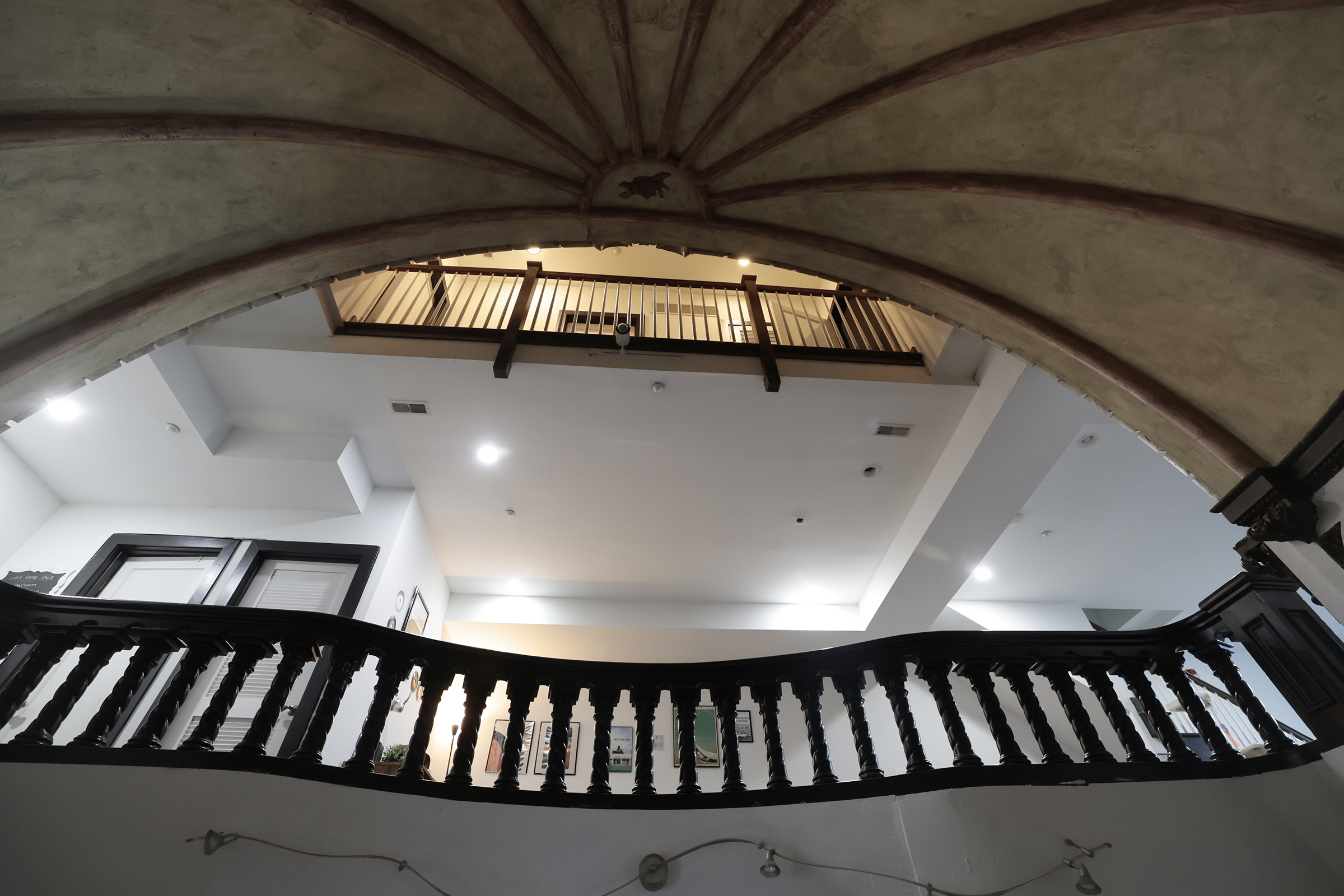
    Their four-level apartment includes soaring ceilings, stained glass, columns, and ornate carvings.

    The women throw parties in the home and screen movies on the dome of what used to be the church’s sanctuary. They call the sanctuary’s raised platform “the stage” and have furnished it with a dining table, chairs, and a rug.

    Peek inside their unique Spring Garden apartment.

    📷 Photo quiz

    Do you know the location this photo shows?
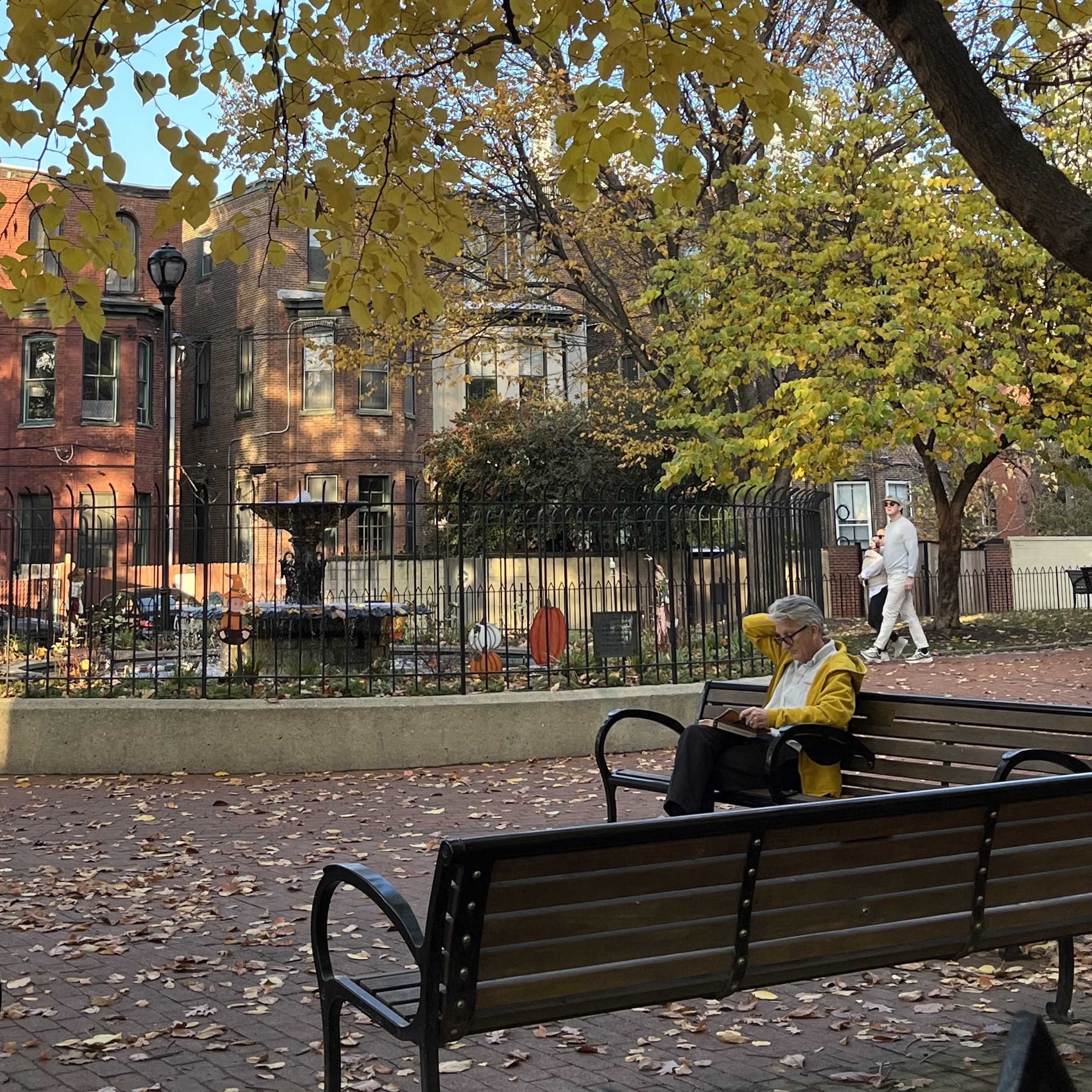
    📮 If you think you do, email me back. You and your memories of visiting this spot might be featured in the newsletter.

    Shout-out to Janet P. and Gary G., the first readers to answer last week’s quiz correctly. That photo featured the statue of activist Octavius V. Catto on the south side of City Hall.

    Enjoy the rest of your week and your Thanksgiving. We’ll meet back here on Dec. 4.

    By submitting your written, visual, and/or audio contributions, you agree to The Inquirer’s Terms of Use, including the grant of rights in Section 10.
  • In Philly and Delco, listings and sales of luxury homes are down from last year, but prices are up

    In Philly and Delco, listings and sales of luxury homes are down from last year, but prices are up

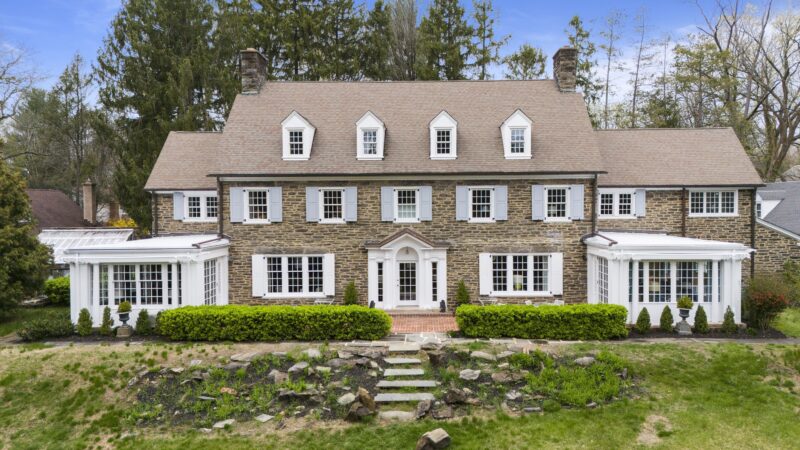
    In Philly and Delaware County, listings and sales of luxury homes are down from last year, according to an analysis by the real estate brokerage Redfin.

    The luxury home market in the counties is relatively small, “so it can be somewhat volatile,” said Chen Zhao, head of economics research at Redfin.

    In the combined market of Philadelphia and Delaware Counties, 285 luxury homes sold between July and September of this year. That’s down about 16% from the same time last year.

    Redfin defines luxury homes as those in the top 5% of an area’s prices. The median luxury sale price in this region was about $1.3 million, according to Redfin.

    A low supply of homes for sale is helping drive luxury trends. At the end of September, the number of active listings of luxury homes — 503 — was down about 23% from last year, the sharpest drop out of the 50 populous metro areas that Redfin analyzed.

    Zhao noted that luxury home owners are less likely to need to sell their properties, and decisions to hold onto multiple luxury homes during a time of economic uncertainty may be contributing to the tight supply.

    window.addEventListener(“message”,function(a){if(void 0!==a.data[“datawrapper-height”]){var e=document.querySelectorAll(“iframe”);for(var t in a.data[“datawrapper-height”])for(var r,i=0;r=e[i];i++)if(r.contentWindow===a.source){var d=a.data[“datawrapper-height”][t]+”px”;r.style.height=d}}});

    Faster price growth for luxury homes

    Prices for luxury homes have grown faster than prices for other homes both in the Philadelphia region and nationwide.

    In the combined market of Philadelphia and Delaware Counties, sale prices grew by almost 8% for luxury homes and about 6% for homes in the middle-price range over the last year.

    Nationally, luxury prices increased by about 5%. Prices for homes in the middle range increased by about 2%.

    “Luxury prices are outpacing the rest of the market because the people buying at the top end are playing by different rules,” Sheharyar Bokhari, senior economist at Redfin, said in a statement.

    Unlike middle-income homebuyers, people purchasing homes at the highest price points don’t need mortgage interest rates or prices to fall before they can afford to buy. They’re more likely to pay in cash or take out smaller loans. Some are choosing real estate as a more stable investment.

    “That demand, even at a smaller scale, is enough to keep pushing luxury prices up faster than the broader market,” Bokhari said.

    How other metros compare

    Between 2024 and 2025, luxury sales rose the most — almost 31% — in the pricey market of San Francisco. The median luxury sale price was more than $6 million.

    Luxury homes sold the fastest — in a median of 14 days — in the San Jose, Calif., region and the slowest — in a median of 130 days — in the Miami metro area.

    Florida is home to the areas where luxury prices rose and fell the most over the last year. They increased by about 15% in the West Palm Beach metro, and decreased by about 3% in the Tampa area.

  • Corporations bought 1 in 4 homes sold in Philly from 2017 to 2022, new report says

    Corporations bought 1 in 4 homes sold in Philly from 2017 to 2022, new report says

    Roughly one in four small residential buildings bought in Philadelphia from 2017 and 2022 were purchased by corporations, according to a new report about investor activity in the city.

    Most of these corporate buyers are renting out the properties, which have one to four housing units, according to a report about corporate investors that was released Monday by researchers at Reinvestment Fund, a Philadelphia-based community investment nonprofit, and the Center for Law, Inequality, and Metropolitan Equity at Rutgers Law School in Newark.

    Investors compete with low-income homebuyers. They are more likely to pay with cash and less likely to be denied mortgages. They sometimes pursue properties before they hit the market.

    “There are a lot of neighborhoods that are seeing investor activity, that are raising concerns,” said Emily Dowdall, president of policy solutions at Reinvestment Fund. “Our hope is that this report, that other reports, are going to help inform a strategy going forward.”

    Smaller operators are buying most Philadelphia homes purchased by investors. But researchers have seen an increase in larger corporate landlords.

    Researchers looked at sales of residential buildings with one to four housing units. Most were single-unit homes, but the city records that researchers classified properties with one to four units as single-family housing.

    Researchers found that 13 investors bought 100 or more properties and eight bought more than 200 from 2017 through 2022.

    Here are some other takeaways from the new study.

    No sign of big national players

    From 2020 through 2022, 91% of homes purchased by corporations were bought by smaller investors.

    Researchers said they found no evidence that the biggest national investors in single-family homes — such as the private equity firm Blackstone and Invitation Homes, one of the country’s largest landlords of single-family homes — are active in Philadelphia.

    Private equity-backed national investment organizations have bought single-family homes in bulk in places such as the southeastern United States, which has been targeted because it has newer housing stock and fewer tenant protections, Dowdall said.

    These types of investors have been tied to rent increases and fewer opportunities for first-time homebuyers and buyers with low and moderate incomes.

    Philadelphia is less likely to see these organizations operating here because of the city’s many renter protections and an older housing stock that needs a lot of investment, Dowdall said. The city’s foreclosure prevention program and the relatively long foreclosure process in Pennsylvania also deter these organizations, which like to quickly buy and lease homes on a large scale.

    “It’s still possible that we could see more national players, as they have already saturated the easier markets to get into,” she said.

    During the pandemic, some larger regional and national companies started to come to Philadelphia, researchers found.

    Investor activity is concentrated in certain areas

    Corporate investors mostly buy single-family homes in areas of the city where prices are lowest. Those neighborhoods also are predominately Black and Hispanic, including Brewerytown, Germantown, Juniata Park, and Kingsessing.

    From 2020 to 2022, the median purchase price for an investor was $129,000, compared to the citywide median purchase price of $225,000 and individual buyers’ median purchase price of $247,000.

    During this time, investors were most active in North, West, and Southwest Philadelphia and sections of Lower Northeast and Northwest Philadelphia. Investors bought more than half of all homes sold in these areas.

    Before sheriff sales paused because of the pandemic, investors often bought a chunk of their properties that way.

    The share of foreclosed homes purchased by investors grew from 31% of properties sold in sheriff sales in 2012 to 60% in 2019.

    From 2017 to 2019, high-volume investors got about a third of their single-family properties through sheriff sales.

    From 2020 through 2022, fewer than 40 properties were auctioned off each year. So investors relied more on other ways of acquiring properties, including buying directly from homeowners, “potentially creating more direct competition with individual homebuyers,” the report said.

    More eviction filings and code violations

    Large corporate landlords were more likely to file in court to evict tenants than smaller investors.

    About one in seven homes bought by high-volume investors were associated with eviction filings within five years, compared to less than one in 20 homes bought by smaller investors.

    Investors of all sizes were more likely than individual homebuyers to have code violations. About 20% of properties bought by investors had violations within five years of the purchase. The share of violations in owner-occupied properties was 9%.

    Researchers plan to learn more about the types of code violations these properties generate, since violations can range from trash issues to unsafe conditions.

    More work on properties

    Researchers also uncovered “potentially positive findings” about large investors, Dowdall said.

    Philadelphia’s aging housing stock needs investment for renovations and maintenance, and the report found that larger investors were more likely to get permits to alter their properties than smaller investors. “Bringing much needed dollars in to refurbish our housing stock,” she said.

    Large corporate investors received alteration permits for 42% of the properties they bought, compared to 29% for smaller investors and 13% for individual homebuyers.

    Like code violations, projects that need permits can range from the minor to the major, from adding electrical outlets to total renovation.

    In future analyses, researchers plan to drill down on the specific work being done on investors’ properties.

    Researchers’ recommendations

    Many investors purchase properties using a variety of corporate names, so identifying who is in control of corporations can be challenging, researchers said. That makes it difficult to hold operators accountable for problems at their properties.

    Researchers recommend state lawmakers require limited liability companies to disclose who is in control.

    They also recommended that the city:

    • Enforce rental license requirements to create a more complete inventory of rental properties
    • Use public data to understand how investors operate and their effects on the market and renters
    • Prioritize individuals and nonprofits at sheriff sales
    • Help individual homebuyers compete in the housing market, including by giving more money to homebuyer assistance programs
  • A local architectural retreat | Real Estate Newsletter

    A local architectural retreat | Real Estate Newsletter

    Pamela and David Anderson were living in New Hope but “wanted a place to get away.”

    So they bought an 11-acre forested property in the little Bucks County borough of Riegelsville.

    Not only do they live there now, but they also host events and retreats there. The income helps the Andersons maintain the property.

    The couple built Copper House as an architectural retreat in the woods.

    Keep scrolling for that story and more in this week’s edition:

    — Michaelle Bond

    If someone forwarded you this email, sign up for free here.

    ‘A place to get away’

    Pamela Anderson is a cookbook author, and she puts her skills to good use as cooking for the corporate events and retreats that she and her husband, an Episcopal priest, host on their 11-acre property in Bucks County.

    Groups come for yoga and sound baths and to meditate. On a recent afternoon, about a dozen architects and interior designers held a corporate retreat to learn about sustainable flooring.

    The Andersons added gravel trails, grottos, and fire pits to their property to make it a getaway. And the home’s living room has 180-degree forest views through floor-to-ceiling windows.

    Keep reading to learn more about the home that Pamela says is “like living in a snow globe” during the winter.

    📮Is your home your retreat? How’d you pull that off? We’re staring down the darkness and cold of winter, so please share your stories and tips.

    A will to protect the family home

    Do you have a will? Does everyone in your family?

    Besides telling loved ones what to do with your stuff, a signed will could help protect the family home.

    I’ve written a bunch of stories about tangled titles, Philly’s name for when it’s not clear who legally owns a property. A common way this happens is when a homeowner dies and the deed isn’t transferred to a new owner.

    People living in properties with tangled titles can’t:

    • use home equity
    • sell their homes
    • take advantage of home repair or other homeowner assistance programs

    And these properties are vulnerable to scammers who steal deeds.

    Fixing tangled titles is more complicated when the owner dies without a will that says who should inherit the property.

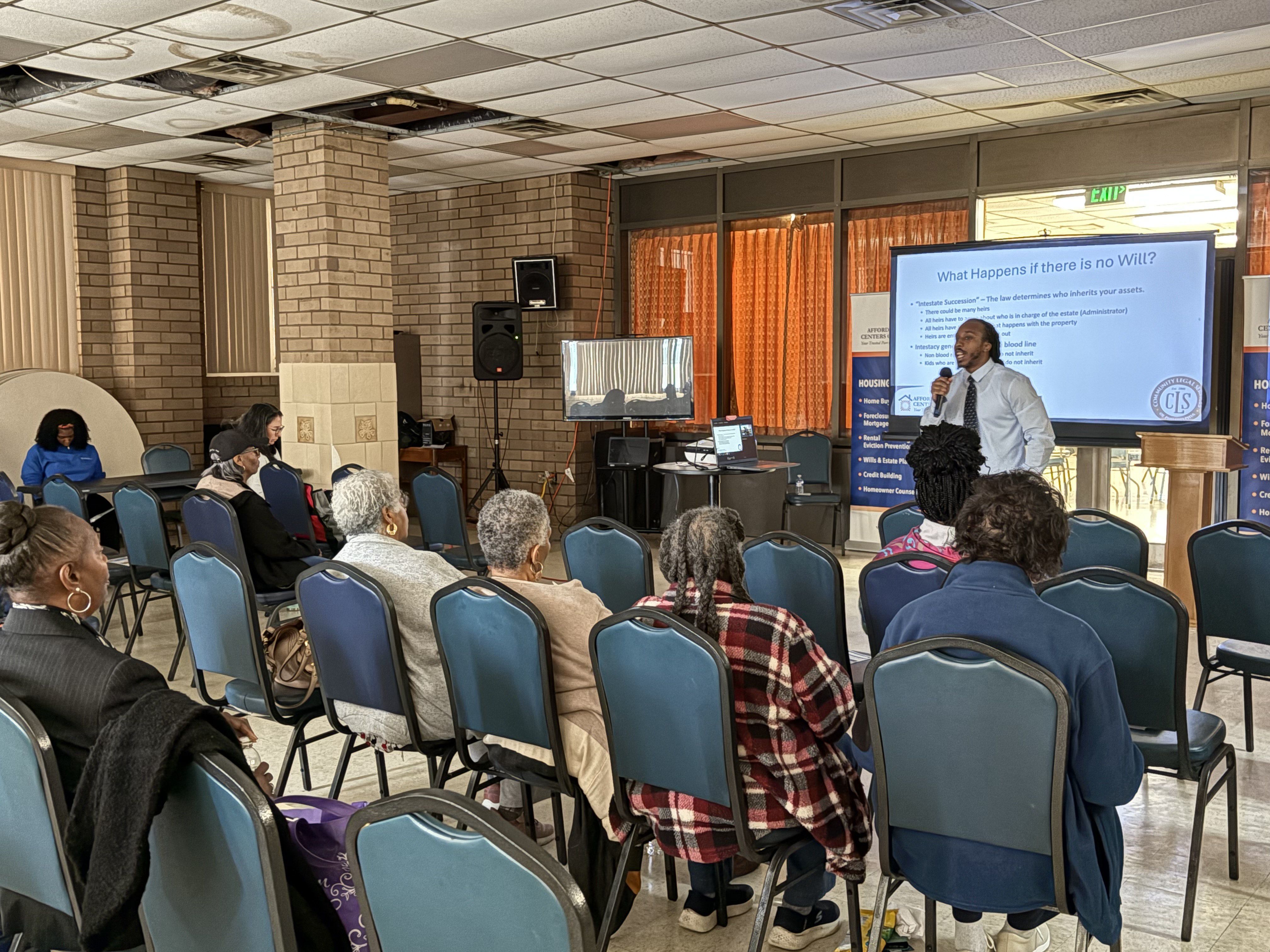
    For the last three years, two Philly-based nonprofits have been running the Will Power Program to help low- and moderate-income homeowners with estate planning so they can protect their properties.

    They’ve helped 1,000 Philly homeowners write wills, and that’s just the beginning.

    News to pay attention to

    Home tour: Staying in South Philly

    When Danielle Abrams was pregnant with her daughter, “everyone” asked whether she and her husband, Jonah, were moving to the suburbs.

    “Instead, we doubled down on our investment in our home by renovating,” Danielle said.

    The Abramses love their South Philly location and get along well with the other residents of their block.

    But they needed to make some upgrades to their two-story rowhouse so they could stay.

    That included redesigning their bathroom and adding a shelf for their daughter’s books and toys that is also a railing to the basement.

    Peek inside the family’s home and learn which kitchen feature Danielle is particularly proud of.

    📷 Photo quiz

    Do you know the location this photo shows?

    📮 If you think you do, email me back. You and your memories of visiting this spot might be featured in the newsletter.

    Last week’s quiz showed a detail shot of statues atop the Philadelphia Museum of Art.

    Or I guess it’s the Philadelphia Art Museum now.

    Either way, a handful of readers knew where the photo was shot. Shoutout to Joe C. and Amanda C. for being the first two to give me the right answer.

    Back in August, my colleague asked Inquirer readers, “What’s your happiest place in Philadelphia?” The question was inspired by a Drexel University professor’s project with his students that mapped their happiest places.

    Now, The Inquirer has its own map of 20 spots, based on readers’ favorite places. See where in Philly folks said they feel happy.

    Enjoy the rest of your week.

    By submitting your written, visual, and/or audio contributions, you agree to The Inquirer’s Terms of Use, including the grant of rights in Section 10.

  • Preserving older properties drives housing affordability, population growth, and investment, says study by historic preservation group

    Preserving older properties drives housing affordability, population growth, and investment, says study by historic preservation group

    For years, the Preservation Alliance for Greater Philadelphia has heard the same arguments: Preservation is a barrier to development. It reduces density. It restricts the housing supply.

    “And we knew in our gut that that wasn’t true, but we didn’t have the data to support it,” said Paul Steinke, executive director of the Preservation Alliance, which works to protect historic properties from demolition. “Now, we do.”

    The Preservation Alliance commissioned its most comprehensive analysis of how historic preservation affects the city’s economy and housing. The report, released Wednesday, found that preservation of Philadelphia’s older properties protects housing affordability, drives investment, preserves housing density, and supports population growth.

    In Philadelphia, $4 billion has been invested in historic rehabilitation projects, which have created thousands of jobs each year.

    Steinke said the Preservation Alliance commissioned this study now because of current debates about Philadelphia’s growth and affordability, the need to increase the housing supply, and development policy as Mayor Cherelle L. Parker rolls out her Housing Opportunities Made Easy, or H.O.M.E., initiative to build or preserve 30,000 homes.

    “We wanted to develop some data to demonstrate preservation’s role in those conversations,” said Steinke, who is on the H.O.M.E. advisory committee. “And the reality is the data show that historic preservation is a powerful engine … for investment, jobs, affordability, and inclusive growth.”

    The study was completed by PlaceEconomics, a Washington-based firm that analyzes the economic impacts of historic preservation in cities across the country. The purpose of the analysis in Philadelphia was to understand the economics of the preservation of older properties in general and not only those properties that are historically designated, Steinke said.

    Preservation debates

    Historic designation is a divisive topic, and preservationists have found themselves clashing not only with developers who want to demolish properties but also with homeowners and pro-housing groups.

    Historic designation shields properties from demolition and means owners have some restrictions on what they can do to the outside of their properties. Decisions about doors and windows, for example, are subject to the scrutiny of preservation officials. And owners who fight the designation of their properties argue that regulations can be a burden.

    Residents have challenged in court three historic districts that Philadelphia recently created — the most significant pushback against the city’s preservation ordinance in 15 years.

    In response to the Preservation Alliance’s study, 5th Square, a Philadelphia-based urbanist political action committee, said it supports efforts to rehabilitate older buildings and that “Philadelphia’s dense, historic neighborhoods are a beloved feature of the city.”

    “However, we remain concerned about the proliferation of historical preservation districts across the city,” Brennan Maragh, cochair of the group’s housing committee, said in an emailed statement. “These districts … impose real costs on families, small businesses, and owners attempting to maintain or improve their properties.”

    Almost 5% of Philadelphia is historically designated

    Almost 5% of the city’s land area is a historic district or is property individually designated as historic outside of historic districts, the study found.

    The share of properties historically designated by the city has increased from 2.2% to 4.4% since 2016, when the city started ramping up its historic designations. Philadelphia has caught up with other large cities.

    In 2023, about 56,000 residents lived in a local historic district.

    Tax credits have created jobs and revenue

    Between 2010 and 2024, 295 projects that used state and/or federal historic preservation tax credits were completed in Philadelphia, according to the study. This ranks Philadelphia first in the nation.

    Projects that use historic tax credits have created an average of 1,777 direct jobs and 729 indirect jobs each year in Philadelphia over the last 15 years. Each year, they have created an average of about $95 million in direct income and about $47 million in indirect income.

    If historic rehabilitation were a single industry, it would be the city’s 25th-largest employer.

    Historic tax credit activity also has generated about $8 million in local tax revenue.

    Older homes are more affordable

    Two-thirds of Philadelphia’s residential buildings and half of the city’s housing units were built before 1950, according to the study. This older housing tends to be smaller in size and lower in cost.

    So preserving older homes helps preserve housing affordability. The study did not consider the historic designation status of these homes.

    “While it is true that Philadelphia’s older housing stock remains affordable compared to new construction,” said Maragh at 5th Square, “historic preservation districts can also have the unintended consequences of excluding low-income residents from large parts of the city, raising lifetime housing costs on owners and creating unnecessary regulations that slow down the process of adaptive reuse.”

    The study found that the city’s historic districts have higher shares of high-income households and lower shares of low-income households compared to the rest of the city.

    Outsize population growth in historic districts

    Donovan Rypkema, principal and CEO at PlaceEconomics, said a “myth” of historic preservation is if “you create those historic districts, you just set neighborhoods in amber and nothing can ever change.”

    The firm’s study found that population growth in historic districts outpaced growth in the rest of the city.

    In historic districts created before 2010 — so before the recent push for more districts and ones that are more geographically and racially inclusive — the population grew by about 27% between 2010 and 2020. Over the same time, the rest of the city’s population grew by less than 5%.

    More than 79% of the homes in historic districts are in buildings with two or more units, compared to 32% in the rest of Philadelphia. Historic districts also offer a wider range of housing types.

    The densest areas of the city are in historic districts, according to the study. There are 10,000 more people per square mile in historic districts than in the rest of the city’s residential areas.

    These statistics speak to the “inherent attractiveness” of historic districts and also that “they can accommodate that growth,” Rypkema said.