Author: Matt Breen

  • Everything you need to know about the MLB All-Star Game coming to Philly

    Everything you need to know about the MLB All-Star Game coming to Philly

    The wait is finally over.

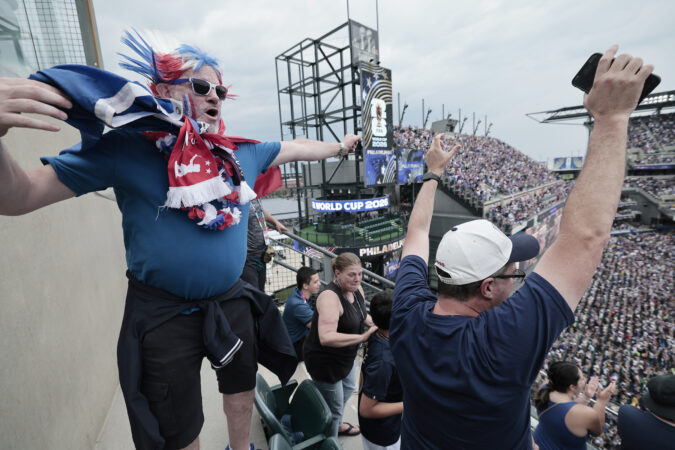
    It was more than seven years ago that Major League Baseball announced the All-Star Game would come to Philadelphia for the nation’s 250th birthday. The game is the bookend to a season of big events following March Madness, the PGA Championship, and the FIFA World Cup.

    Baseball’s midsummer classic, which returns to Philly for the first time since 1996, will be more than just a game, as the city will be the center of the baseball world for nearly a week.

    Here’s a look at what to expect:

    HBCU Swingman Classic

    When: 7 p.m., Friday

    TV: MLB Network

    Location: Citizens Bank Park

    What you need to know: The fourth annual game is a showcase of the best players from historically Black colleges and universities. The classic was founded by Ken Griffey Jr. as a way to give a platform to players who often are overlooked.

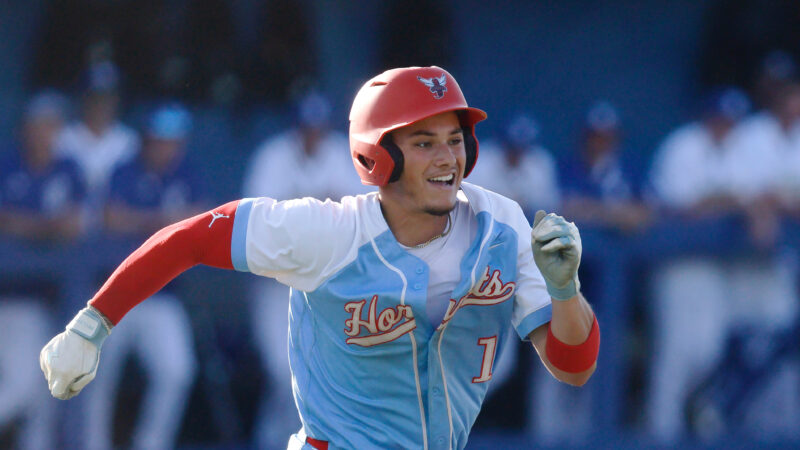
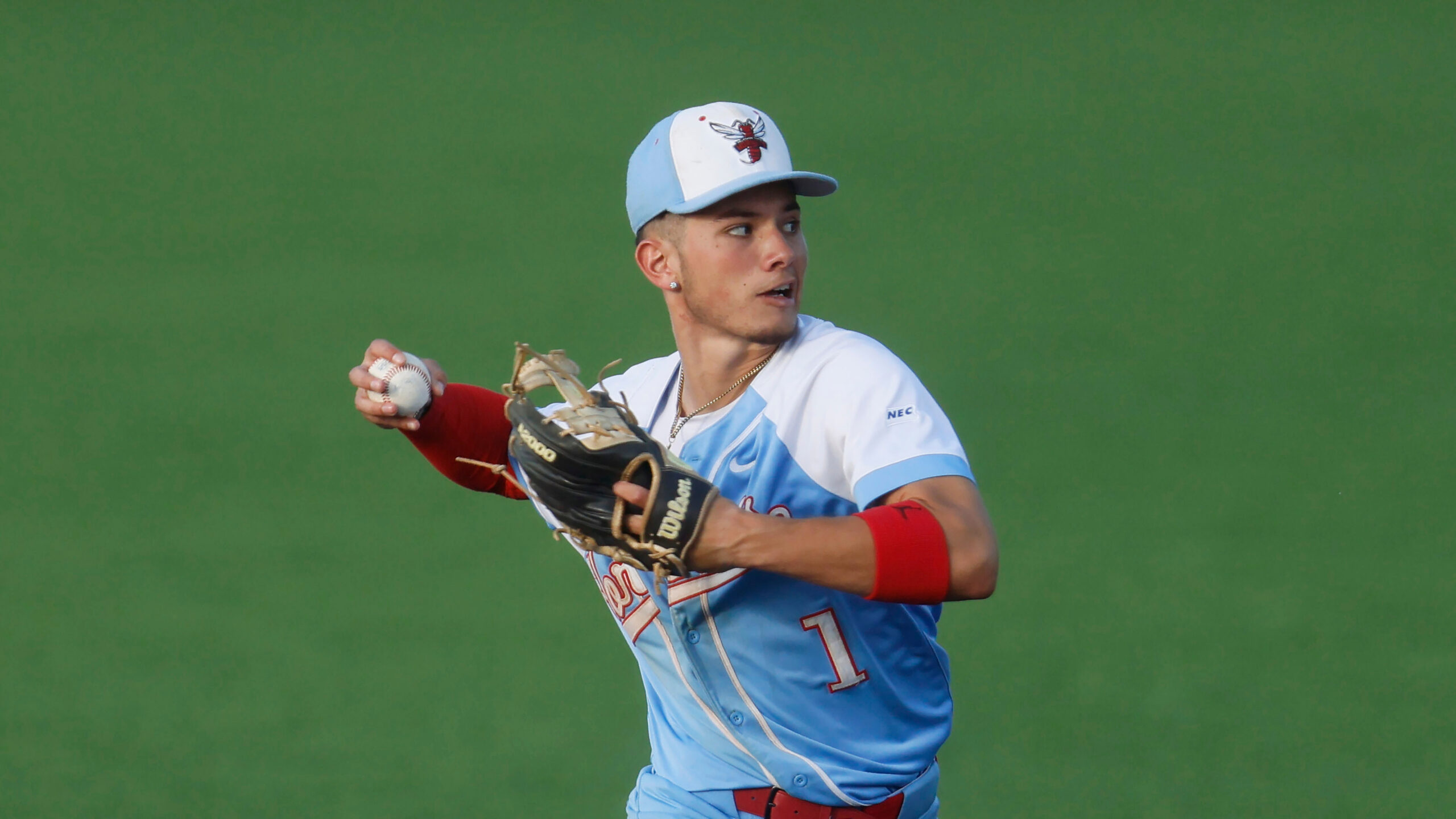
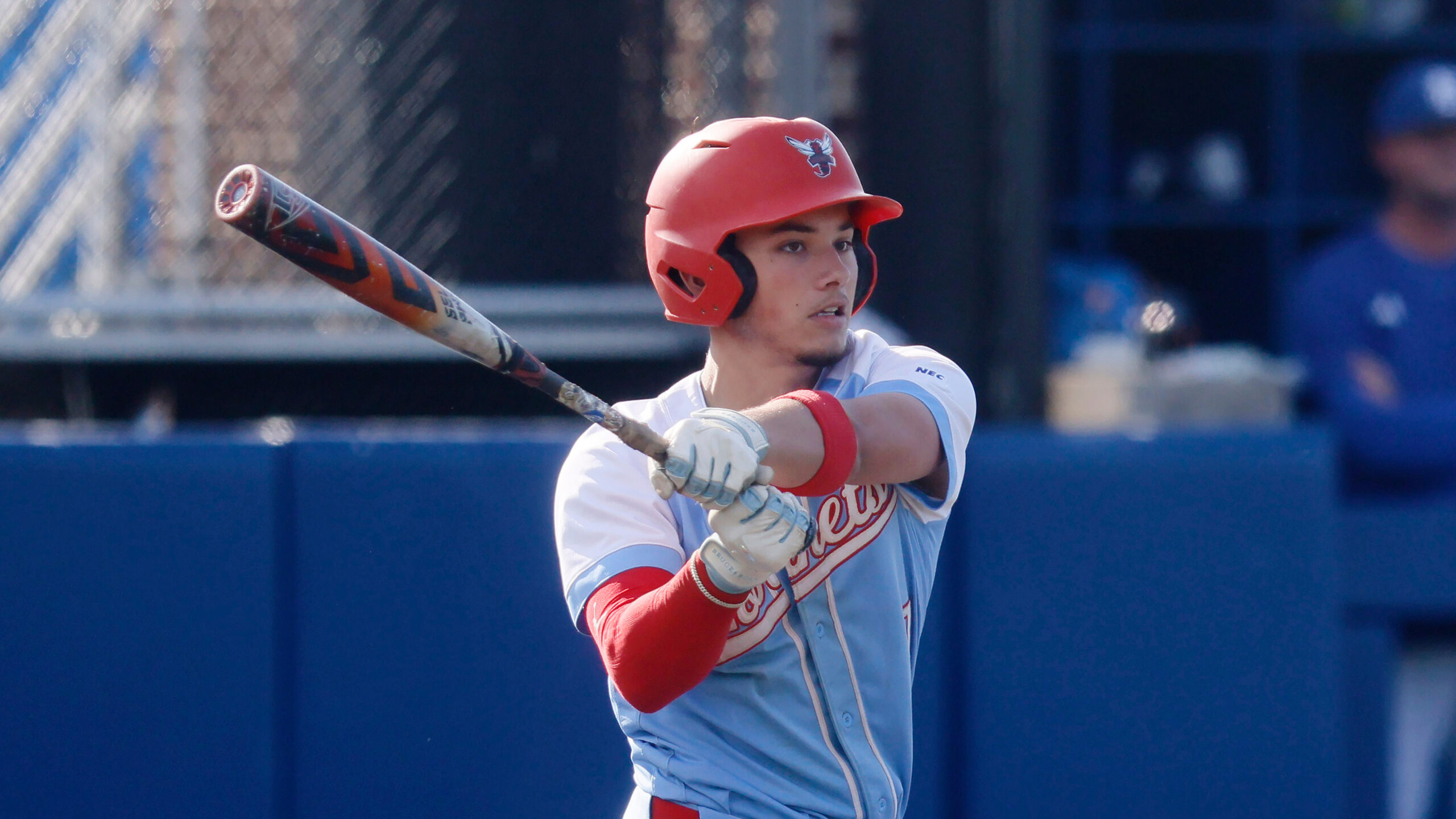
    The local connection: Jimmy Rollins will manage one of the teams, and Mayor Cherelle L. Parker will throw out the first pitch. The teams will visit City Hall before the game to honor Octavius Catto, a civil rights activist who cofounded one of America’s first organized Black baseball teams in 1865. There is a statue of Catto outside City Hall. Mayfair’s Santino Harwood will play in the game. The Roman Catholic grad is a shortstop at Delaware State.

    Pitcher Gage Wood was the Phillies’ top pick in last year’s MLB draft.

    The MLB draft

    When: 1:30 p.m., Saturday; TBD Sunday.

    Location: Pennsylvania Convention Center Grand Hall

    What to know: The event is free to attend, but ticket registration has closed. The draft used to be held at MLB Network’s studio in Secaucus, N.J., before the league moved it to All-Star Week starting in 2021. The White Sox have the first pick, and the Phillies have to wait until No. 36 for their first selection.

    All-Star Village

    When: 10 a.m.-8 p.m. Saturday and Sunday; 10 a.m.-6 p.m. Monday and Tuesday

    Location: Pennsylvania Convention Center

    What to know: The event is similar to Fan Fest that came with the 1996 game, but it’s much bigger now. The village will feature big league mascots and appearances by a cast of Phillies legends including Steve Carlton, Cole Hamels, John Kruk, Larry Bowa, Dave Cash, and Carlos Ruiz. Fans can make their own strikeout call, test food from around the majors, throw a pitch, take batting practice, see the World’s Largest Baseball, and even strap on a Velcro suit, jump, and stick on a wall for a home run-robbing photo op.
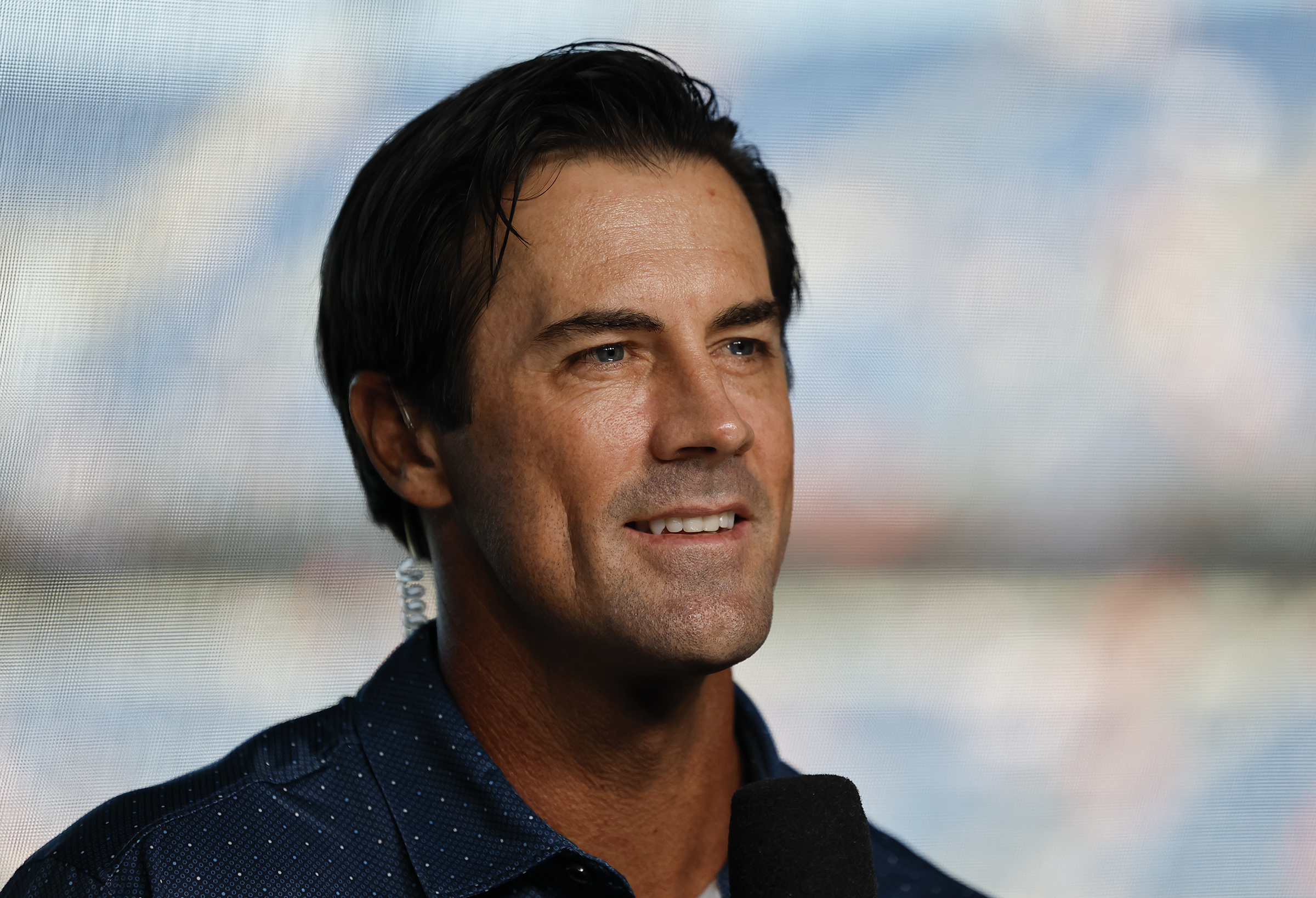
    Former Phillies pitcher Cole Hamels is scheduled to make an appearance at MLB’s All-Star Village.

    Futures Game

    When: Noon Sunday

    Location: Citizens Bank Park

    TV: NBC10

    What to know: The game is a collection of baseball’s best prospects as each team sends two players from its farm system. The players are split into American League and National League squads. The game will feature nine of MLB Pipeline’s Top 10 prospects including top-ranked Jesús Made, a shortstop in the Milwaukee Brewers’ system.

    Local connection: The teams will be managed by Larry Bowa and Shane Victorino. Gage Wood, who may have a shot to reach the majors this year, will represent the Phillies a year after they drafted the hard-throwing right-hander 26th overall. Wen-Hui Pan, a right-handed reliever, also was selected for the Futures Game. Both pitchers are with double-A Reading.

    MLBx All-Star 3-on-3

    When: Following the Futures Game on Sunday

    Location: Citizens Bank Park

    What to know: New this year, MLBx replaces the Celebrity Softball Game. The fast-paced event is a modified home-run hitting challenge in which players are awarded points for their hitting and the catches they make in the field.

    Local connection: Ryan Howard, Rollins, and Victorino will captain teams, with Atlanta Braves legend Andruw Jones leading the fourth squad. Howard has Eagles wide receiver DeVonta Smith on his team while Rollins is teamed up with Terrell Owens. Each team includes an MLB legend, a professional softball player, and a nonbaseball celebrity.
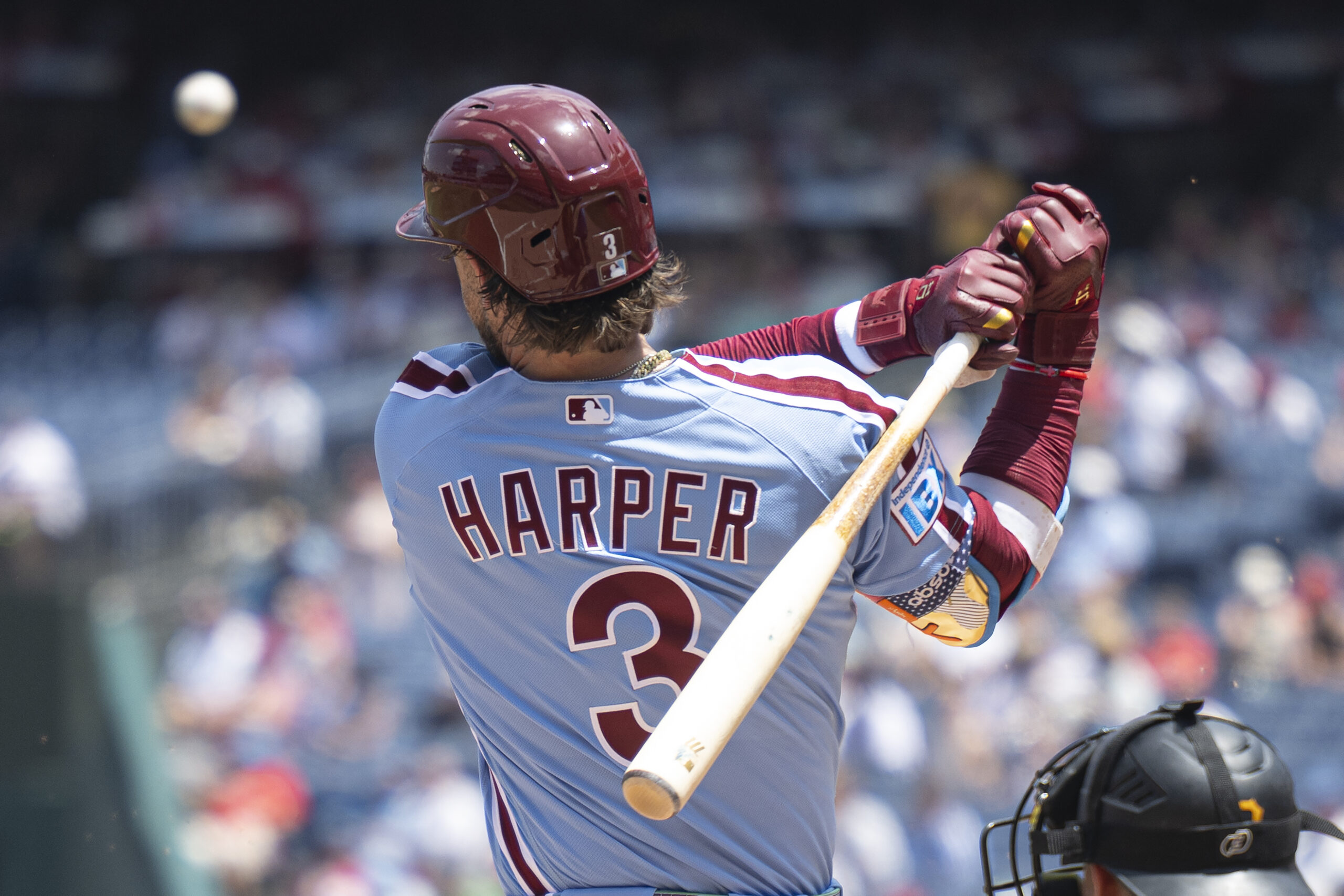
    Bryce Harper was the last slugger to win the home run derby in his home ballpark. However, that was in 2018 while he was with the Nationals.

    Home Run Derby

    When: 8 p.m. Monday, July 13

    TV: Netflix

    Location: Citizens Bank Park

    What to know: It’s been 20 years since Howard won the Home Run Derby. The Phillies are due. Bryce Harper is the last player to win the derby in his home ballpark, which he did with the Nationals in 2018 by beating … Kyle Schwarber in the final round.

    The competitors: There will be eight participants, but could two of them be Phillies? Perhaps we’ll see a rematch of the 2018 final.

    The format: The league is ditching the clock that governed the derby since 2015, as players now will be given a finite number of swings per round. A batter gets 20 swings in Round 1, 15 in Round 2, and 15 in the final. If a batter homers on their final swing, they keep swinging until they come up empty. The top four players from the first round move to Round 2, and the top two then move to the final round. The tiebreaker in Round 1 is home run distance, and Rounds 2 and 3 use a three-swing swing-off.

    The red carpet

    When: 2 p.m. Tuesday, July 14

    TV: MLB Network

    Location: Independence Hall

    What to know: The players will showcase their fashion just steps from the Liberty Bell before walking all the way to South Philly. Just kidding. They’ll board a bus and head to the game after walking the red carpet. This event is free for fans to attend, but ticket registration has closed.

    All-Star Game

    When: 8 p.m. Tuesday, July 14

    TV: Fox29

    Location: Citizens Bank Park

    What to know: Only one player has won back-to-back All-Star Game MVP awards, Mike Trout in 2014-15. Could Schwarber be the next? It’ll be hard to match last year’s heroics, when Schwarber won the game for the NL in a dramatic swing-off at the Atlanta Braves’ stadium. Expect the game to have a star-studded lineup for pregame ceremonies and something special during the game. Last year’s tribute to Hank Aaron set the bar.

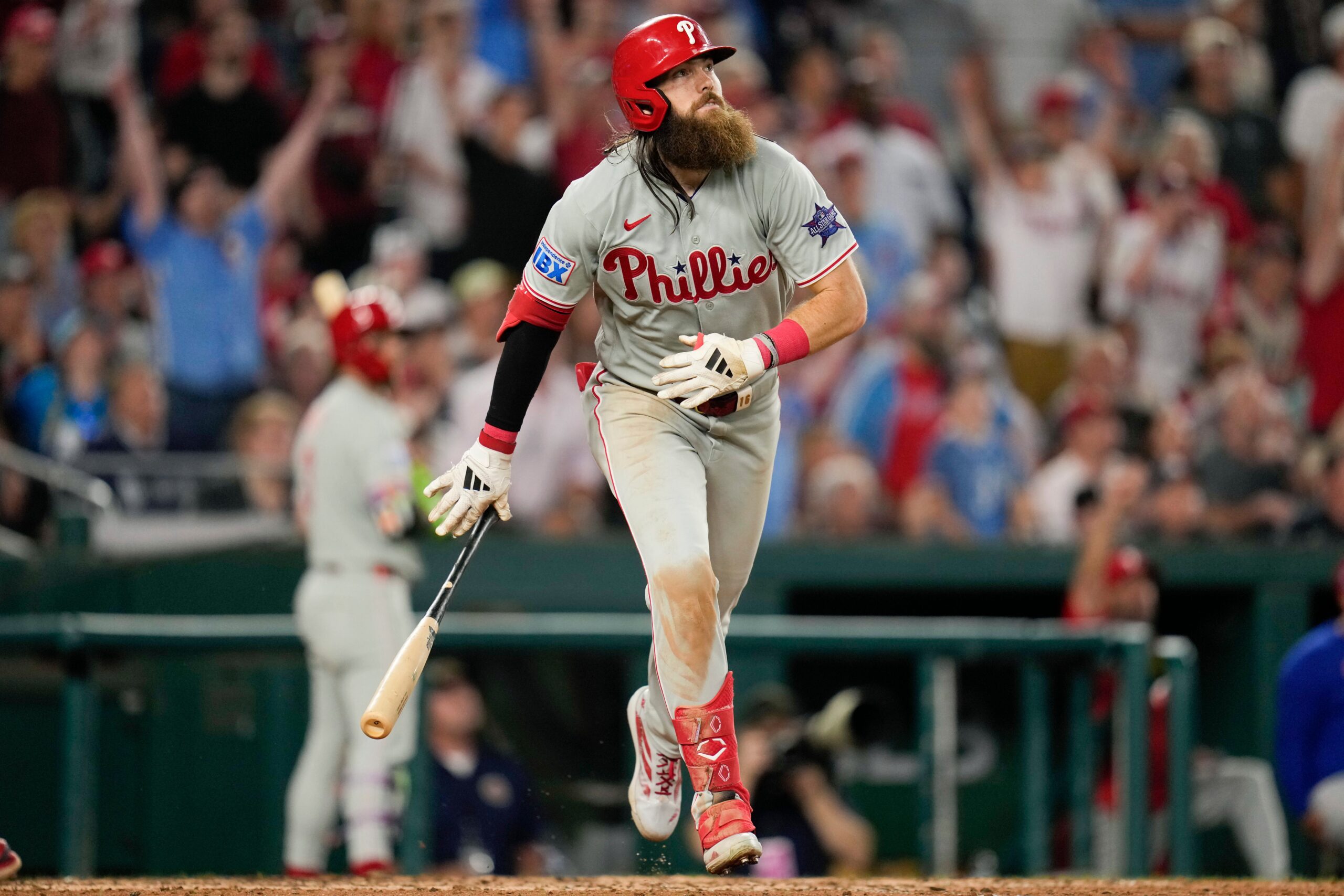
    Phillies in the game: Brandon Marsh will start after receiving the most votes on the fan ballots. He will be joined by Bryce Harper, Kyle Schwarber, Jhoan Duran, and Cristopher Sánchez.
  • Phillies radio calls give him ‘goose bumps.’ Then he shares those chills with everyone on social media.
    Phillies radio calls give him ‘goose bumps.’ Then he shares those chills with everyone on social media.

    The Phillies game wasn’t over yet last month but it was over as Nick Piccone kept the TV on mute like a distraction in the background. The Phils trailed the Nationals by two runs and were down to their last strike with the bases empty in the ninth on June 23. It was over.

    But Piccone — just like lots of diehards who accepted a loss but refused to stop watching — didn’t turn it off.

    “Just in case,” he said.

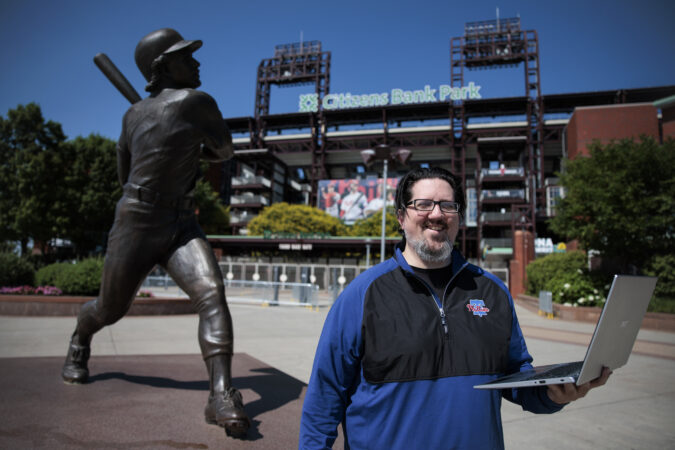
    And then it happened. The Phillies scored eight runs with two outs, delivering the most unlikely win of the season. It was time for Piccone to work. He’s built a following in recent seasons for being the guy who clips the radio calls of Philly sports highlights and posts them to social media.

    First, he had to listen to how Scott Franzke — the Phils’ radio voice on 94.1 WIP — described the action.

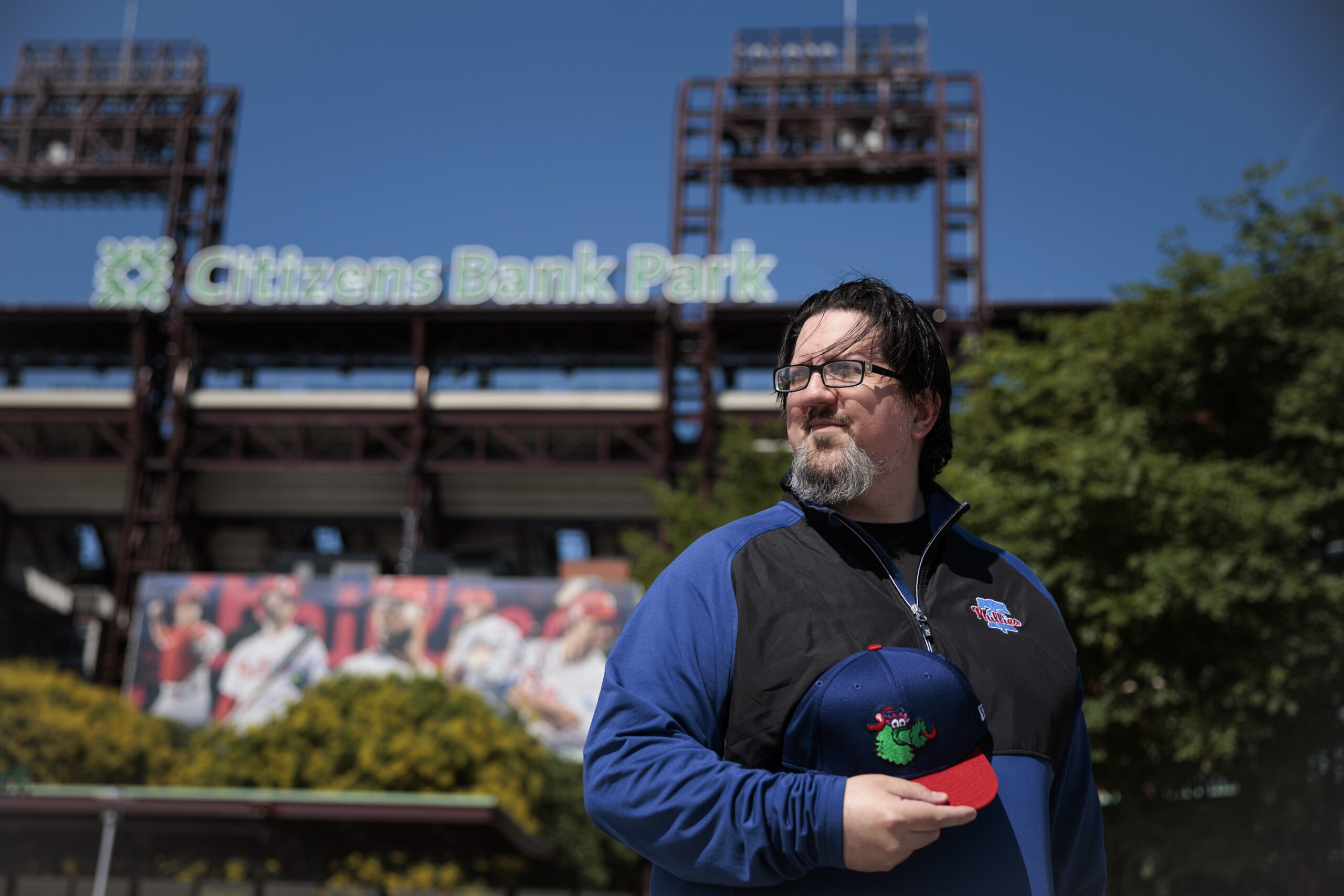
    “I got goose bumps when I listened to it,” said Piccone, who lives in Delaware County. “And I just knew Phillies fans are going to love this.”

    He posted a montage of Franzke’s pitch-perfect calls that night and then watched them go viral. Philadelphia loves its teams but the city has always had a deep relationship with the voices, putting Piccone at the intersection of fandom and the way we enjoy it.

    Brandon Marsh’s homer was thrilling, but how much better did Franzke’s narration make it feel?

    “You could tell that the fan kind of came out,” Piccone said. “Like, he didn’t think that was going to happen. He had the same reaction that we did, and he’s calling it. He reaches that second level for a regular season game when I’m sure he probably thought this was going to be a loss. You could hear the surprise in his voice.

    “If you’re listening live on the radio, you feel that instantly. And even if you’re watching the video, you’re like, ‘Oh my God.’ Having him feel what we feel and hear his voice match what we’re feeling inside, makes it so much better. It makes those moments so much better.”

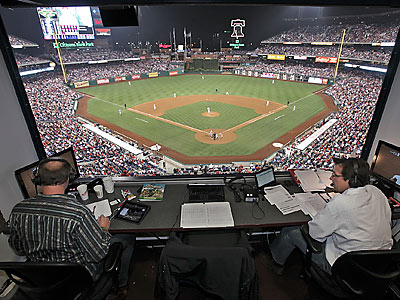
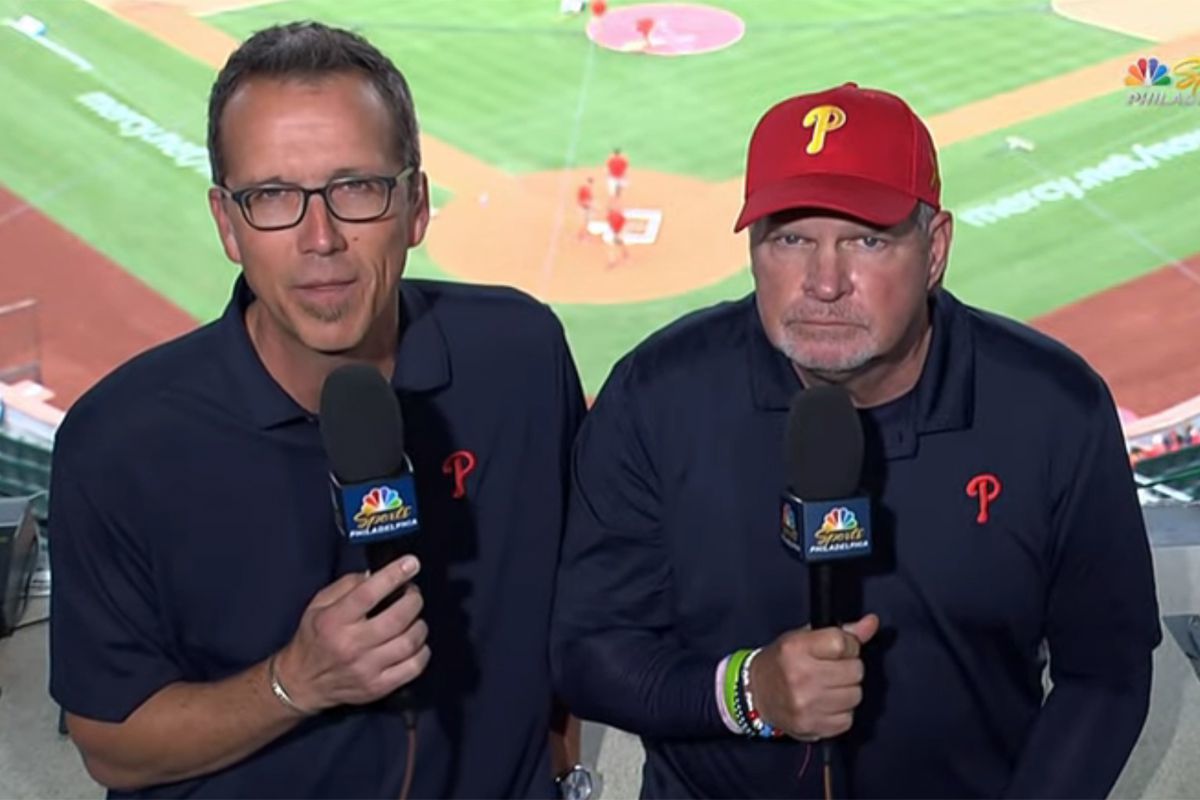
    Phillies radio play-by-play announcer Scott Franzke (left) with TV analyst John Kruk.

    Piccone does not get paid to post his videos, but he commits himself every game — “I watch every pitch,” he said — to tracking the calls of the big plays and sharing them on social media. He does the same thing for other teams. It’s how he enjoys the game.

    It takes about 10 minutes for Piccone to edit the clip on his computer and post it on social media.

    “People would message me from Europe or Asia and say, ‘I’m stationed here’ or ‘I moved here for work, and your videos make me feel like I’m home,’” Piccone said. “When I started doing it, I wasn’t even thinking about that stuff. So when people say that I was able to provide that, I was like, ‘Wow.’ That’s a huge reason why I continue to do it.”

    His hustle gives a radio broadcast a new life, allowing Franzke’s words to be heard again and again. Some people want to relive a moment they already enjoyed. Others want to feel closer to home.

    “It’s flattering, honestly,” Franzke said. “It’s humbling to know that it resonates enough with someone to know that they’re willing to go through that sort of trouble and effort to spread the word.”

    Brandon Marsh watches the ball after hitting a two-run home run against the Washington Nationals on June 23.

    From Dolly to Franzke

    Franzke was told when he first got into the business to have someone in mind to whom you are broadcasting.

    “For me, the general Delaware Valley listener is stuck in traffic on the Schuylkill,” Franzke said.

    His voice is the soundtrack of traffic jams, days at the beach, and backyard barbecues. Kids tune their radio to the Phils while they’re putting on their PJs, just like their grandparents used to sneak transistor radios under their pillows. They listen to Franzke on their porch at night and power walk around the neighborhood with his voice in their earbuds.

    Radio broadcasters Larry Andersen (left) and Scott Franzke (right) call a Phillies game in 2011.

    The Phillies broadcast their first game on the radio in 1936 with a former umpire named Dolly Stark calling the action. He was regarded as the National League’s top ump but quit after the 1935 season when the league balked at his request for a raise from his $9,000 salary.

    “A new sports thrill,” said the advertisement for the games that were broadcast on WIP 610. “Seeing the game through the umpire’s eyes! Hearing what he thinks about every play, while that play is being made! And it’s a thrill that will last all summer.”

    Stark called games for just one season before he returned to calling balls and strikes. But the game became the perfect radio sport. The pace is slow enough for the broadcaster to share a story and make you comfortable. Yet the action becomes exciting enough for them to build drama and make you feel something.

    The umpire was followed by greats who became voices of summer like By Saam, Bill Campbell, Harry Kalas, and Franzke. Richie Ashburn ordered pizzas, Chris Wheeler taught you something, and Larry Andersen admires the umpire. There’s just something about baseball on the radio. It works.

    “I think one of the reasons that baseball on the radio still works is because people can consume it passively,” Franzke said. “They’re driving, falling asleep in their beach chair, or doing yard work. They can do other things and be a part of it. A lot of people like the audio wallpaper, if you will. It’s there. It’s around them. They enjoy it passively and do other things in their life. We’re just along for the ride, I guess.”

    Piccone’s clips show that Franzke is more than just enjoying the ride. He’s driving the car. It wasn’t a silent clip of Marsh’s homer that went viral last week. It was the clip of Marsh’s homer with the announcer sounding just as stunned as you were that it happened.

    Franzke said it’s the moment that “generates the goose bumps,” since he’s just a guy. And it was the guy calling that moment last week that gave Piccone chills.

    “It doesn’t matter when it is during the season, September or April, the story of the game takes over,” Piccone said. “I think he tells that story perfectly in his calls. Offense, a great defensive play, a strikeout. That emotion comes through and you know it’s a big moment.”

    Nick Piccone says he’s “kind of jealous” of people who grew up listening to baseball games on the radio. “I didn’t even think of consuming sports in that way when I was younger. I’m glad I’m able to do it now.”

    Being that guy

    Piccone grew up on the 1993 Phillies and started watching the other teams in 1999 as a freshman at Kingsway High School. He soon was a diehard: devastated when they lost and elated when they won.

    “I just consume it,” Piccone said last month. “Like, I’m mad the Phillies lost today.”

    But the guy who chops up the audio of every radio broadcast didn’t grow up listening to the radio. He just watched it on TV.

    “People who say they were brought up listening to sports on the radio, I’m kind of jealous of them,” Piccone, 40, said. “Because I didn’t even think of consuming sports in that way when I was younger. I’m glad I’m able to do it now.”

    “We just have amazing play-by-play guys. You think of the Phillies, you think of Franzke. You think of the Flyers, you think of Tim Saunders. You think of the Sixers, you think of Tom McGinnis. Eagles, Merrill Reese and Mike Quick. They’re synonymous with the teams.”

    Piccone planned to do what he does now — clip the radio call and match it to the TV feed — when the Eagles played the Patriots in Super Bowl LII. But his buddy’s Wi-Fi dropped that night, so Piccone closed his laptop and watched the game like a normal fan. And then the Eagles won, and he wished he had the clips.

    He made sure to have a stronger connection in 2022 when the Phillies went to the World Series. He clipped every call that October, and his social media following soared.

    He sends out Franzke’s call along with the team’s Spanish broadcasters and the opponent’s call. Piccone noticed that the TV calls are the ones usually shared by the teams or networks. The radio guys, he thought, weren’t getting their due.

    People soon started messaging him for specific calls or pointing out things he may have missed. He suddenly felt like he had a responsibility. He became that guy.

    “It’s fun being known for that,” said Piccone, who writes for Crossing Broad. “I like being that guy.”

    The Phillies season likely will end in October again, giving Piccone plenty of moments to share. The goose bumps, he said, usually are felt in the fall when the stakes are higher. But sometimes the broadcaster makes you feel it on a weeknight in June. And that’s why you leave the game on.

    “People will say, ‘I heard your call,’” said Franzke, who is not on X, formerly known as Twitter. “And there’s two places they heard it: WIP playing it back or on social media. It’s cool that Nick invests that kind of time. At the end of day, this promotes what we’re doing.”

  • They were owned by Peter Frampton and hung with The Rolling Stones, but the Fury couldn’t make soccer happen in Philly

    They were owned by Peter Frampton and hung with The Rolling Stones, but the Fury couldn’t make soccer happen in Philly

    The word spread through the Veterans Stadium locker room: The Rolling Stones were at the bar across the street, and the Fury were invited.

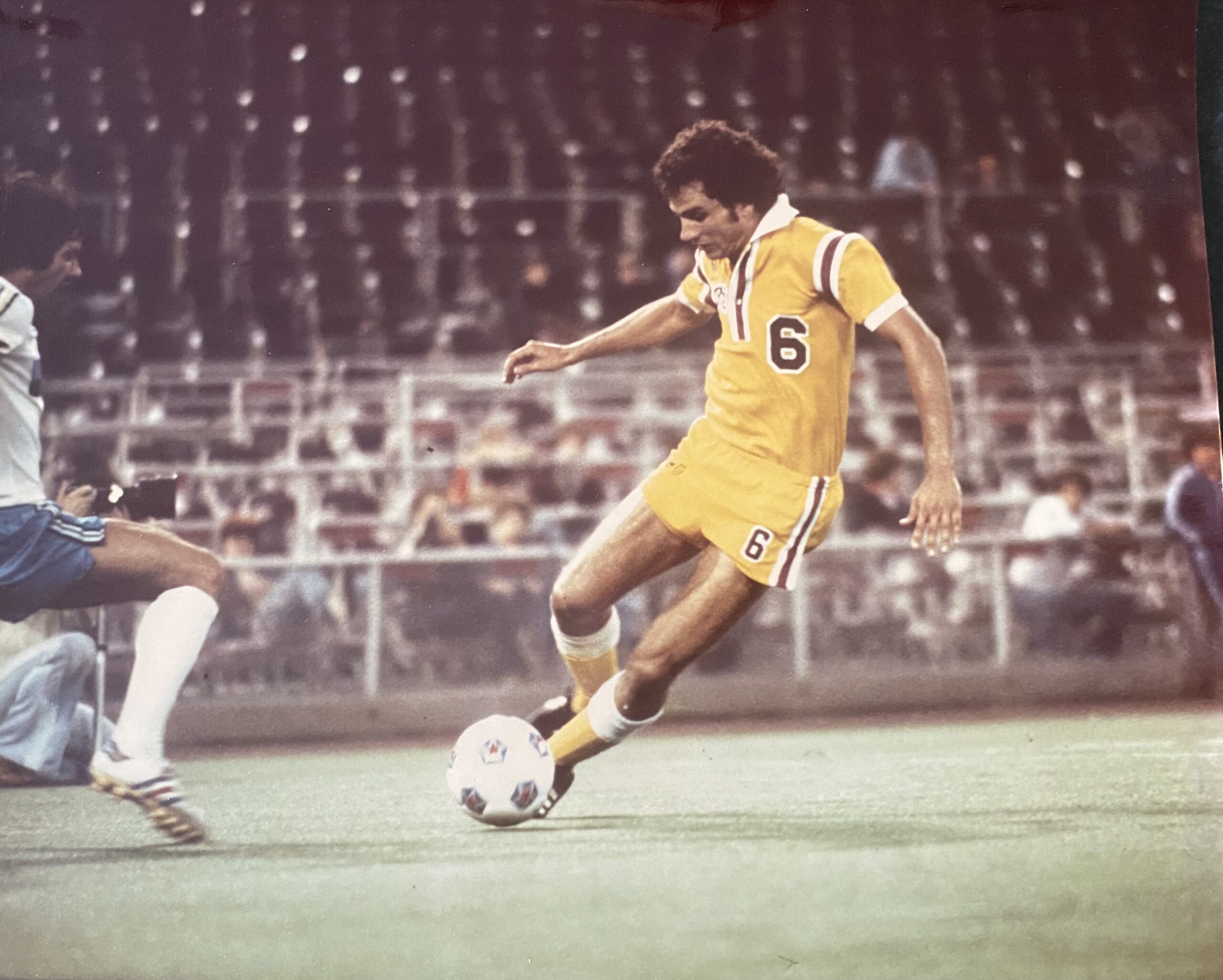
    The Philadelphia Fury played on artificial turf that goalkeeper Bob Rigby said “might as well have been black rocks on Iwo Jima.” The crowds, Rich Reice said, often were so sparse that he could point to the people he knew in the stands. The players didn’t make much, the team lasted only three seasons, and the losses piled up.

    The team’s publicist, Thom Meredith, said a few years ago on a podcast that the Fury — a North American Soccer League franchise that debuted in 1978 — were “a poster child for what not to do.”

    But the players still had someone waiting for them at the back entrance of the Holiday Inn, opening the door and ushering them to where the Stones were hanging while a mob of fans were kept in the hotel lobby.

    The Fury was owned by rock stars — Peter Frampton, Paul Simon, and Rick Wakeman of Yes had stakes — and rock executives like Stones manager Peter Rudge and music agent Frank Barsalona. They entered when the NASL was riding the momentum of Pelé, who had retired a season earlier.

    But that wave faded, and the Fury struggled to grab Philly’s attention before moving to Montreal in 1980, leaving Philadelphia without a first-division men’s soccer team until the Union arrived in 2010.

    “The Fury is a story in and of itself,” Rigby said. “Oh my God. Really. There’s aspects of it that are mind-boggling. It’s a fascinating tale.”

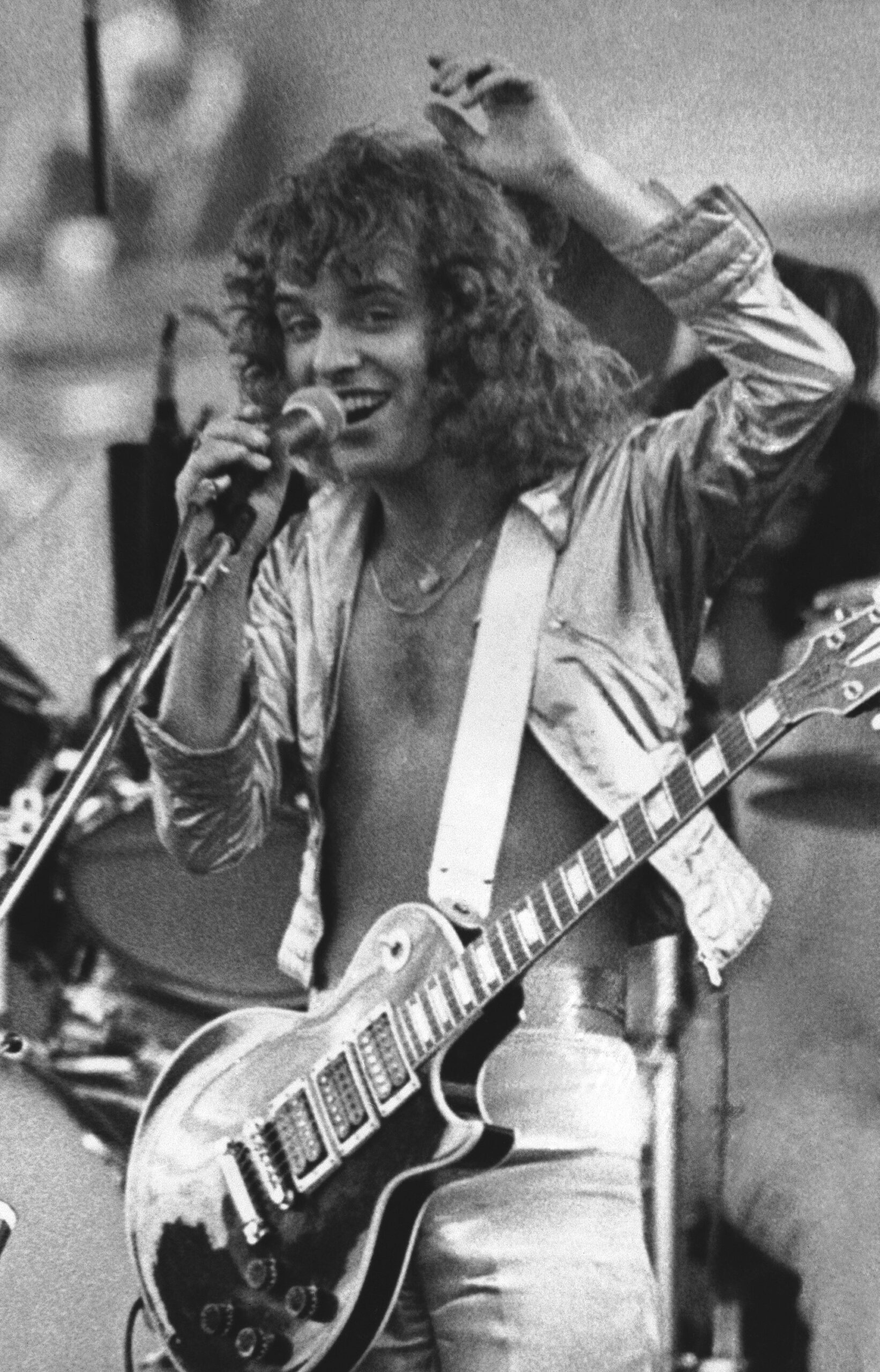
    Peter Frampton, one of the owners of the Fury, performs during a concert at JFK Stadium in 1977.

    The sport has been met this summer in Philadelphia with fanfare as the city hosts its sixth World Cup match on Saturday at Lincoln Financial Field. But the game still was a curiosity to most of the region in the 1970s. Philly had soccer hot spots — places like Kensington, Frankford, and Roxborough, along with ethnic clubs in Bucks County — surrounded by soccer deserts.

    The Fury players grew up in those soccer neighborhoods, and that was enough to get them a drink with the Rolling Stones.

    “They were just as excited to talk to you as you were excited to talk to them,” said former Fury player Bill Straub. “You were a professional soccer player, and they were wide-eyed. What’s it like to play professional soccer? It was nothing to us. It was just what we did.

    “These rock stars all grew up wanting to be professional soccer players in the Premier League. And we were here, we wanted to be rock stars.”

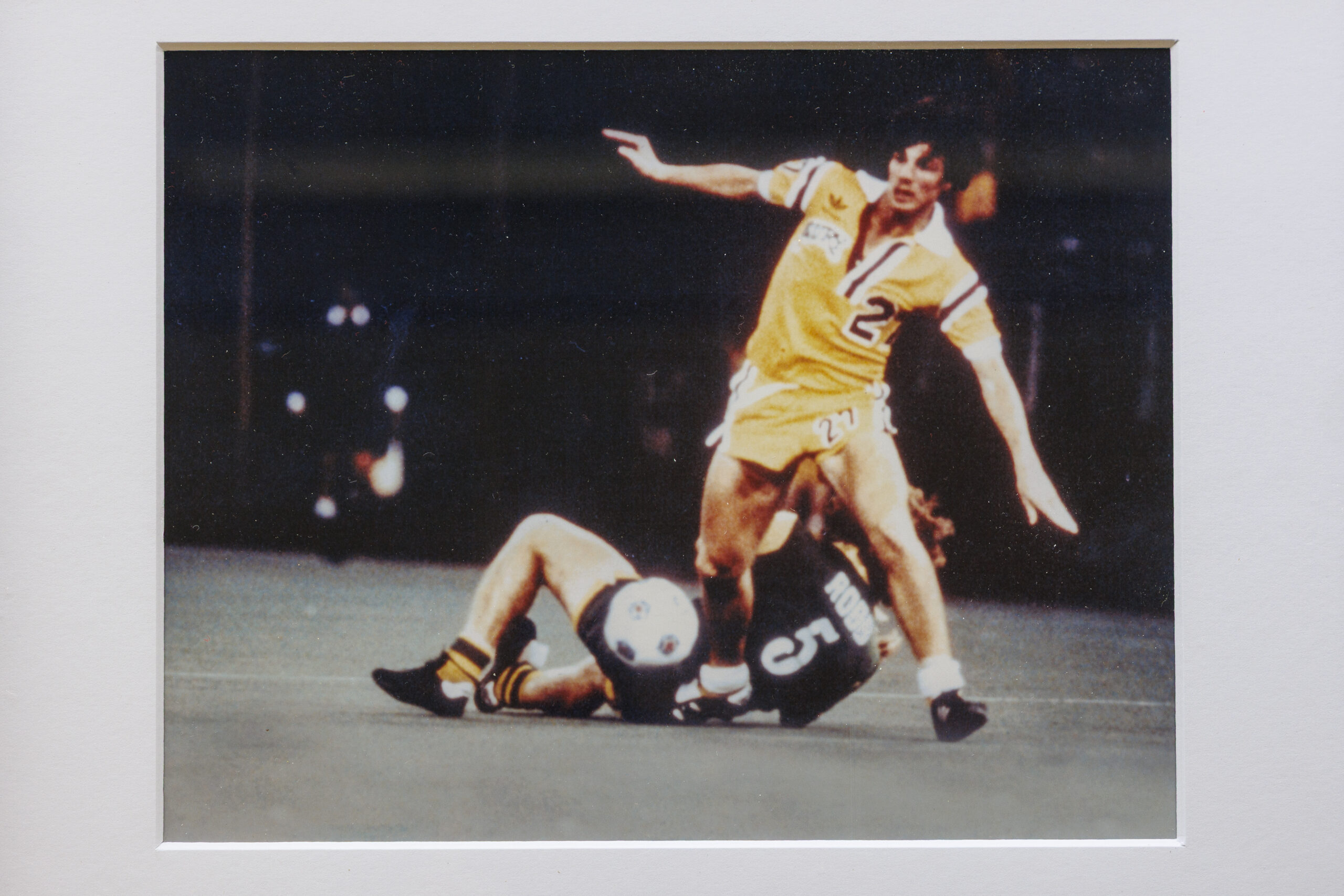
    Kevin Murphy when he played for Philadelphia Fury. He now owns Varsity Pizza and Subs in Lawrenceville, N.J.

    A mini-circus

    Philadelphia had an NASL team for four seasons, but the Atoms flamed out shortly after winning an unlikely title in 1973 as an expansion team. The local owners sold the team in 1975 to a Mexico-based group that stocked the roster for a season with Mexican players. Interest dipped lower, and the team folded with $90,000 in unpaid bills.

    The NASL returned to Philly a year later when the league added six expansion franchises. The Fury signed Irish midfielder Johnny Giles, 1966 World Cup champ Alan Ball, and former Chelsea forward Peter Osgood.

    “They have books written about him,” former Fury player Brooks Cryder said. “The Wizard of Os, they used to call him. But it was a little soon for soccer in the United States.”

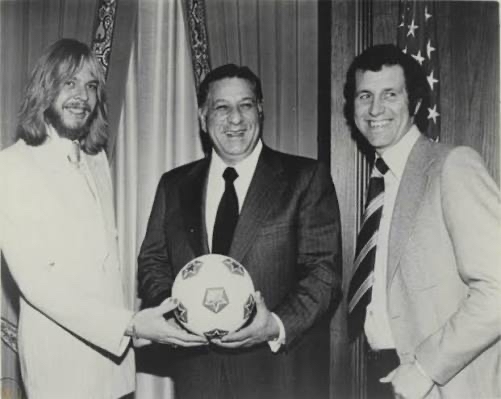
    Rick Wakeman of Yes with Philadelphia mayor Frank Rizzo and Fury player Peter Osgood.

    The real attractions were the stars in the crowd. An Amtrak train brought a cast of A-listers from New York for the season opener at the Vet. Gilda Radner, James Taylor, and Peter Wolf of the J. Geils Band joined owners Frampton, Simon, and Wakeman in a super box.

    “It wasn’t the Cosmos with Pelé,” Straub said. “That was a real circus. But this was a mini-circus here in Philly because you never knew who was going to show up.”

    The Fury drew 18,191 to their opener, but the crowds soon dwindled. The Fury averaged 8,075 fans in 1978 and had the league’s lowest attendance in the 1979 (5,624) and 1980 (4,465) seasons. They had cheerleaders, held free clinics at schools, and even tried to spice up their uniforms. Nothing worked. Veterans Stadium felt cavernous.

    “It was tough because it seemed like everyone was far away from the actual field,” Dave MacWilliams said. “It was a different environment, for sure. I wanted it to succeed and do well, but it was tough.”

    The team’s uniforms were designed by fashion designer Sal Cesarani after Ralph Lauren outfitted the Cosmos. Barsalona told The New York Times in 1978 that the Fury wanted their uniforms to have “a touch of show business and a lot of sex appeal.”

    They were inspired by the wife of owner Larry Levine, who Barsalona said struggled to follow the play at a soccer game but enjoyed seeing “guys running around in what looked like their underwear.” Cesarini had simple instructions: the tighter, the better.

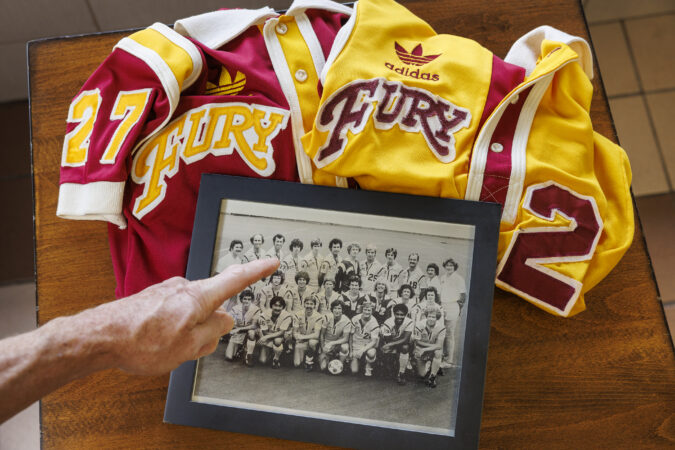
    The burgundy and gold jerseys, which were made by Adidas, had a three-button collar and capped sleeves. The shorts were two inches shorter than the usual soccer shorts. It was as close to underwear as Cesarini could get.

    “Looking back, they do show a lot of leg,” Reice said.

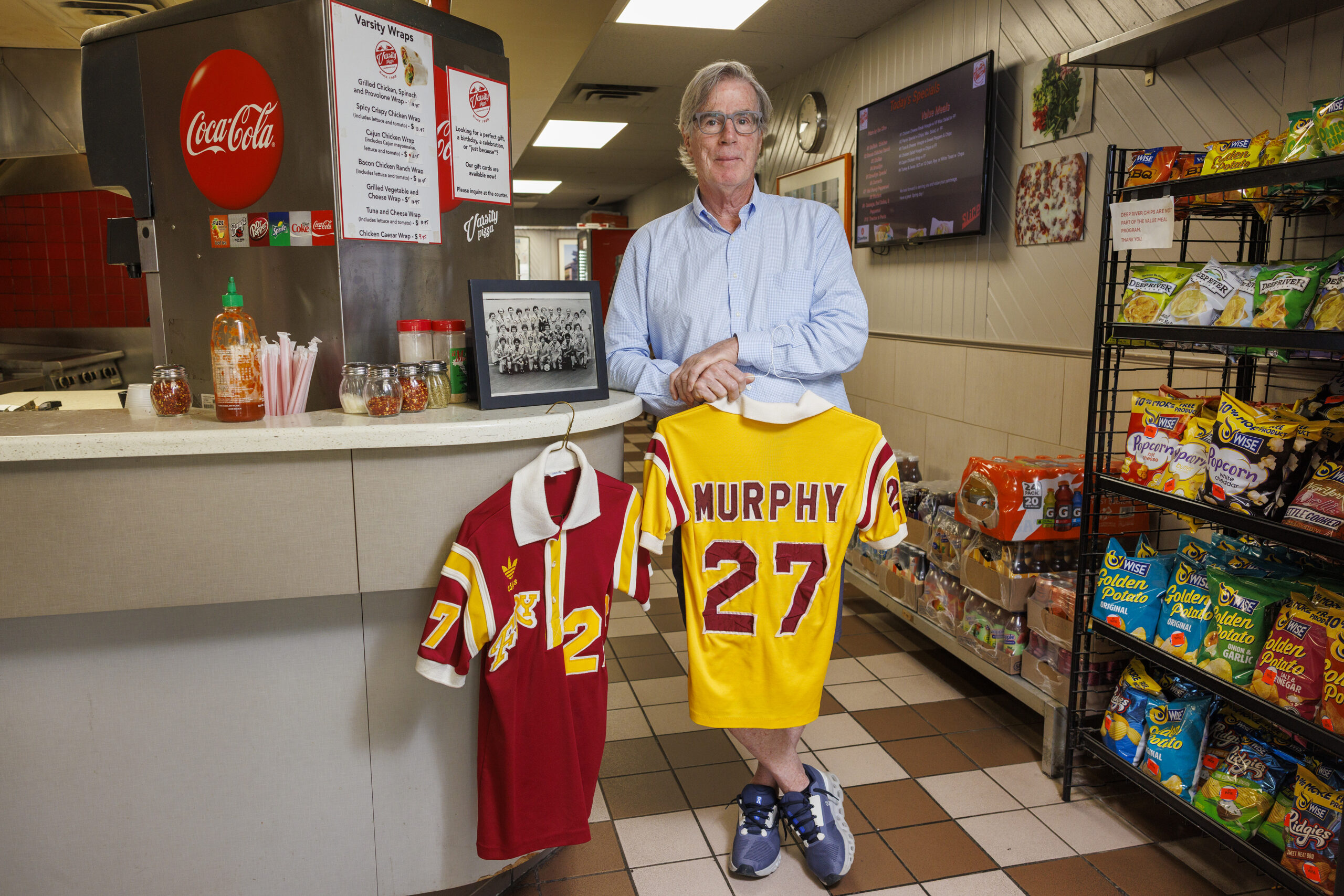
    Kevin Murphy, shown at Varsity Pizza and Subs in Lawrenceville, N.J., displays his Fury jerseys from the 1970s.

    The stars

    Kevin Murphy was a senior at Pennington Prep near Trenton when a group of Fury decision-makers visited his home to meet his parents and ask if he was willing to turn pro. The new franchise planned to use its draft pick on Murphy as the NASL introduced a rule allowing teams to draft high schoolers.

    Murphy was in, as Walt Chyzowych — “Philadelphia soccer royalty,” Murphy said — told him earlier that year that he had the skills to be a pro. A few months later, he sat in a suite at the Vet with Frampton to sign his contract.

    “It was Frampton’s birthday,” Murphy said. “I thought, ‘Well, I probably made a good decision.’ That was pretty amazing.”

    Pelé retired in 1977, but the NASL still was filled with some of the game’s biggest names. The Cosmos had Giorgio Chinaglia, Carlos Alberto, and Franz Beckenbauer. The Los Angeles Aztecs had George Best. Johan Cruyff played for the Washington Diplomats, Gerd Müller was with the Fort Lauderdale Strikers, and the Tampa Bay Rowdies had Oscar Fabiani and Rodney Marsh.

    Bill Straub playing for the Fury at Veterans Stadium.

    The foreign Fury players had great careers overseas but were past their primes and did not draw in Philly. They filled their roster with a cast of locals. Straub went to Germantown Academy, MacWilliams played on a cinder field in Kensington, and Bobby Smith was from Trenton. Rigby grew up in Ridley and was on the cover of Sports Illustrated. Cryder learned to play at a YMCA in Roxborough, and Pat Fidelia went to Rancocas Valley Regional High School.

    “It was exciting because as American players we had a chance to play in a professional league,” Fidelia said. “But you knew sooner or later that it wasn’t going to last because we weren’t getting paid much at all. It was like we were amateur players in a professional league. My first contract was $20,000. They gave you a car and an apartment to share with two other players.”

    The Fury could not match the star power of the other NASL squads, but they did have actual rock stars. The players could score tickets to any concert they wanted. They were backstage at JFK Stadium, in boxes at the Spectrum, and saw the Stones at a tiny theater in North Jersey.

    “We would drive back and we’d say, ‘This is unbelievable. How are we in these places?’” said Straub, who was working at his family’s jewelry store while playing for the Fury.

    The Fury played a charity game at Franklin Field with Wakeman and other members of Yes. Frampton, whose industry-shifting live album Frampton Comes Alive! was released in 1976, regularly popped into the locker room after games. And Murphy found himself backstage at Madison Square Garden standing with Dan Aykroyd before riding an elevator with Meat Loaf, Debbie Harry, and the Wailers.

    “That was pretty good,” Murphy said. “It was more than pretty good. It was awesome.”

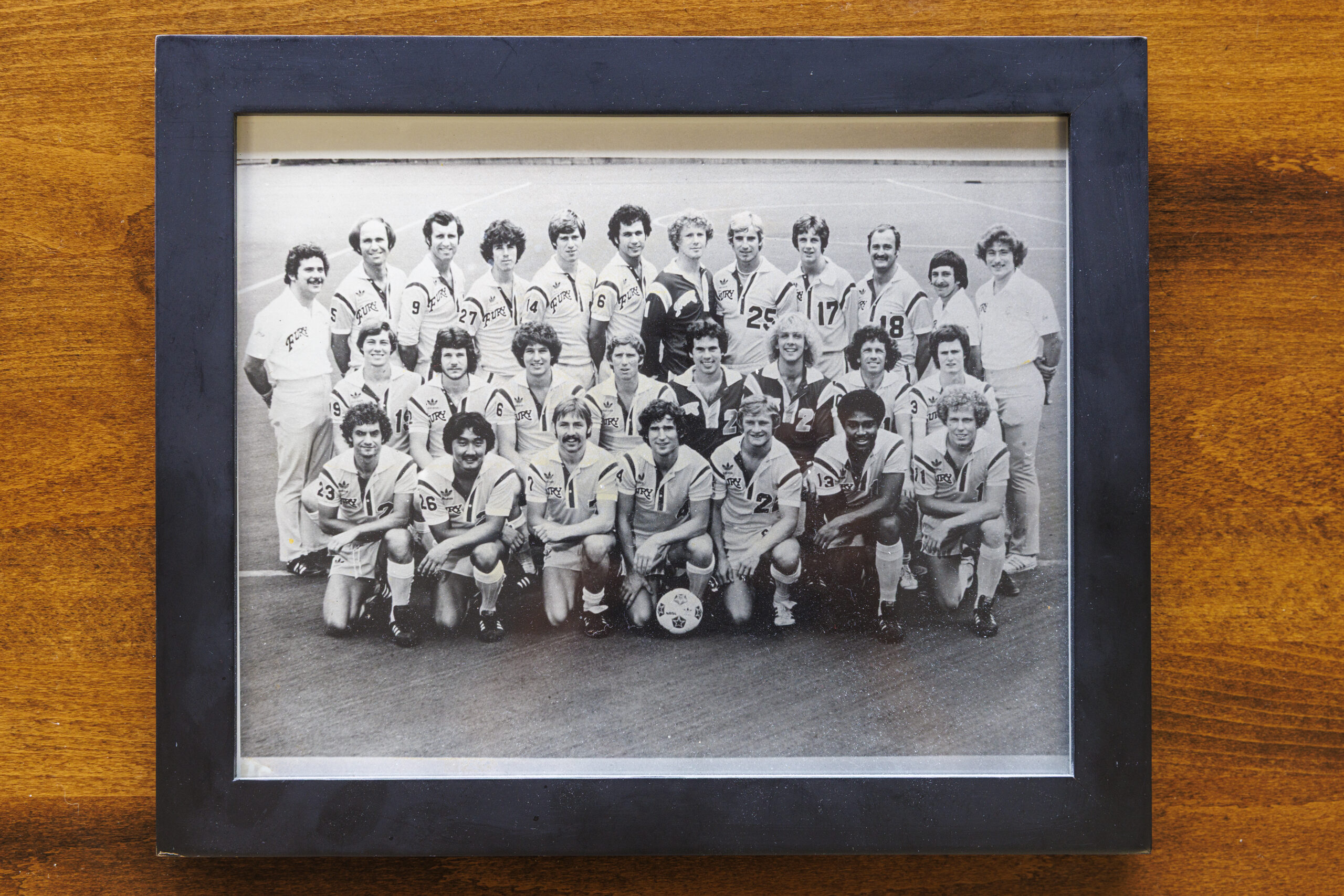
    Kevin Murphy’s photograph of the Fury.

    ‘No sun. No sun.’

    The Fury fired their first manager midway through the season, finished the year with a player-manager, and hired Marko Valok in 1979. The former Yugoslavian national team coach didn’t speak much English.

    “I used a line from him for years on the kids I coached,” said Reice, who coached soccer at Neshaminy High School for 17 seasons. “If I took a bad shot at goal, he would say, ‘Reach, why you make present to goalie?’ He would be thinking in Yugoslavian and then it would come out in English.”

    Rigby, the goalie for the Atoms’ title squad, returned to Philly during the 1979 season after being traded from the Aztecs. He was told by the Fury to join the team in Houston, but they said Rigby would be on the bench. That was good by Rigby, since he had not practiced in a week while his trade was finalized and spent his final night in L.A. at a going-away party with his Aztecs teammates at Best’s bar in Hermosa Beach.

    And then Valok approached him in the locker room and asked through an interpreter if he was ready to go.

    “I have no clothes and no intent to play,” Rigby said. “I’m literally not playing. I’m just coming in. Honest to God. I played a half. I’m thinking, ‘If this is the onus of coming back to Philadelphia, I probably made the biggest mistake of my life.’ But what was I supposed to say, ‘I’m not going to play’ in front of a new team?

    “Then I’m sitting during the pregame meal, and Marko Valak stands in front of the team with a chalkboard for 45 minutes just drawing arrows all over the place. Speaks no English. I’m going, ‘I just left five guys who played in the World Cup final and the most tightly run team,’ and I’m like, ‘What is this?’”

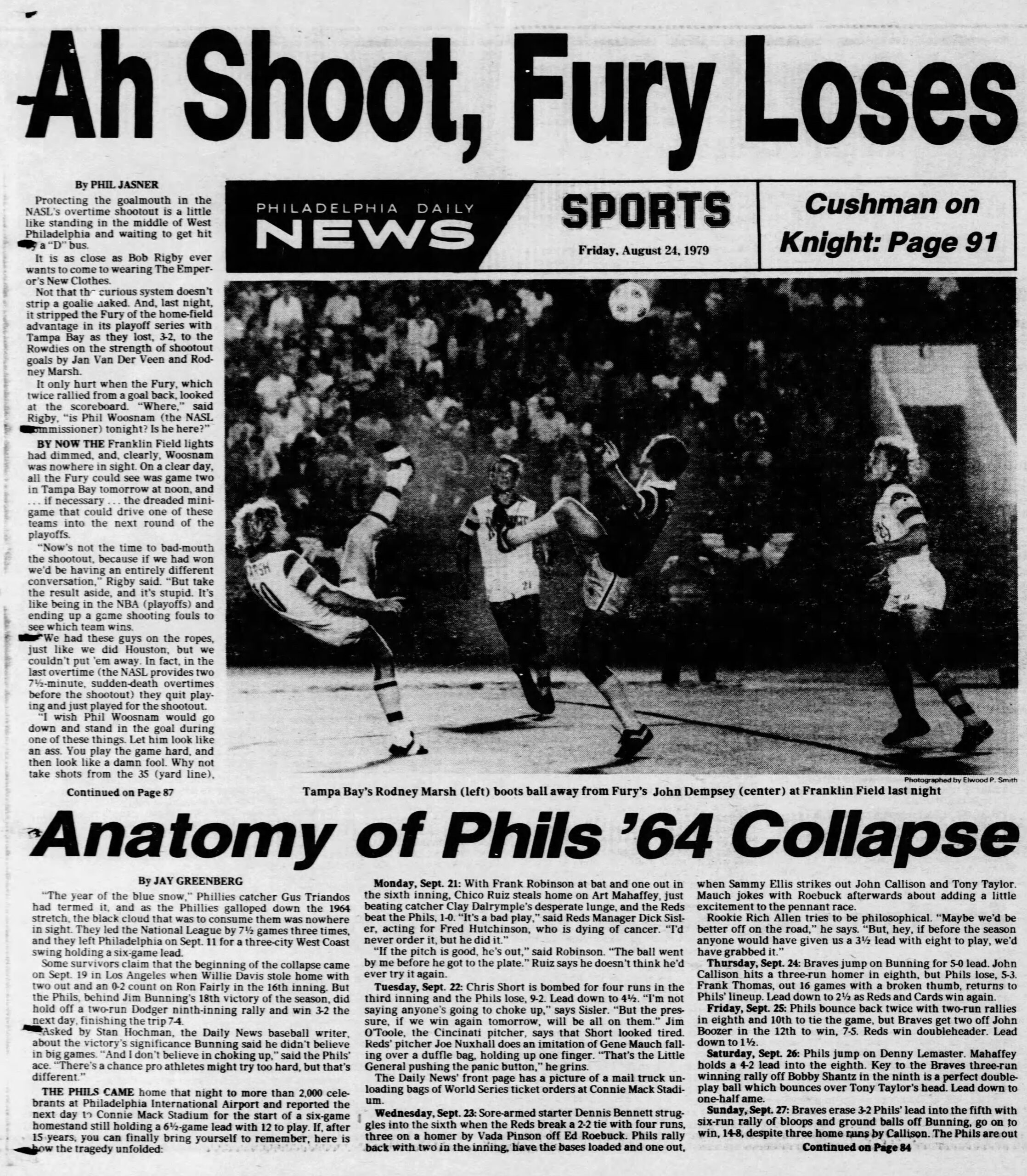
    The Fury’s 1979 playoff game at Franklin Field against the Tampa Bay Rowdies headlined the back page of the next day’s Daily News.

    Frank Worthington, a Fury forward from England, left the team that season when Valok had the team practice at the public fields in FDR Park instead of the Vet or JFK Stadium. He flew to Memphis, visited Graceland, and returned to the Fury after a few days.

    The Fury advanced that season to the playoffs despite having a losing record and played the Houston Hurricane at the Astrodome. The team practiced at the stadium and then returned to their hotel. Valok told his players to stay inside — “No sun, no sun,” he said — and rest for the game.

    “I look out the window when we get back, and Frank is laying out, reflecting himself with a sun blanket,” Reice said. “All of the energy is being zapped out of his body. Frank was a free spirit, to say the least.”

    The Fury still had enough energy to win that game before falling in the next round to Tampa Bay. The franchise lasted one more season before soccer left Philadelphia again.

    A cast of rock stars tried to make soccer happen in Philadelphia, but it proved to be too tall a task. Nearly 50 years later, the game has found its place in Philly. The Linc has been a happening this summer. If only the Holiday Inn — which was razed in 2019 — was still here to see it.

  • Philly’s Jaron Ennis knocked out Xander Zayas to become junior middleweight champ and take career to ‘next level’

    Philly’s Jaron Ennis knocked out Xander Zayas to become junior middleweight champ and take career to ‘next level’

    NEW YORK — Jaron Ennis’ head tilted back Saturday night and his feet wobbled after a right hand from Xander Zayas snuck through Ennis’ guard and rocked his face.

    Ennis won his previous 35 fights but this — appearing hurt in a ring surrounded by a Brooklyn crowd roaring for him to be finished — was uncharted territory.

    The fighter from Germantown has long been considered to be a future superstar of boxing. He had all the skills — defense, footwork, and power — to make it happen. And he never seemed to be in danger in the ring, often outclassing foes who could not match his talent.

    Now, he was in the deep end. And everything — the career that started with a kid wanting to be like his older brothers who became a world champion under the tutelage of his dad — was on the line with more than 60 seconds left in the third round at the Barclays Center.

    Ennis had to find a way to survive the bigger Zayas, who was pushing for a knockout. He did just that.

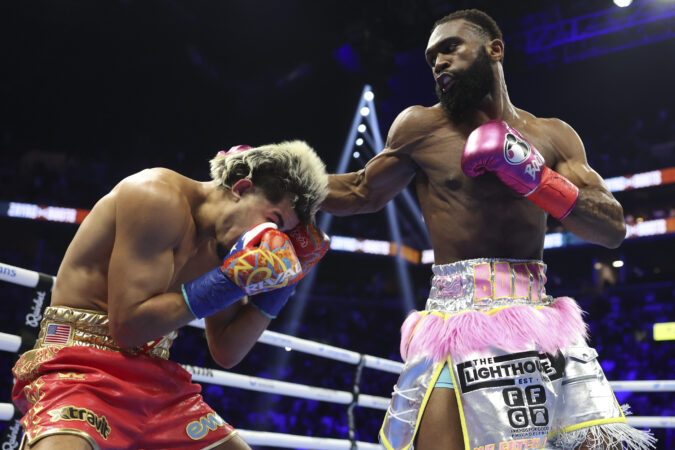
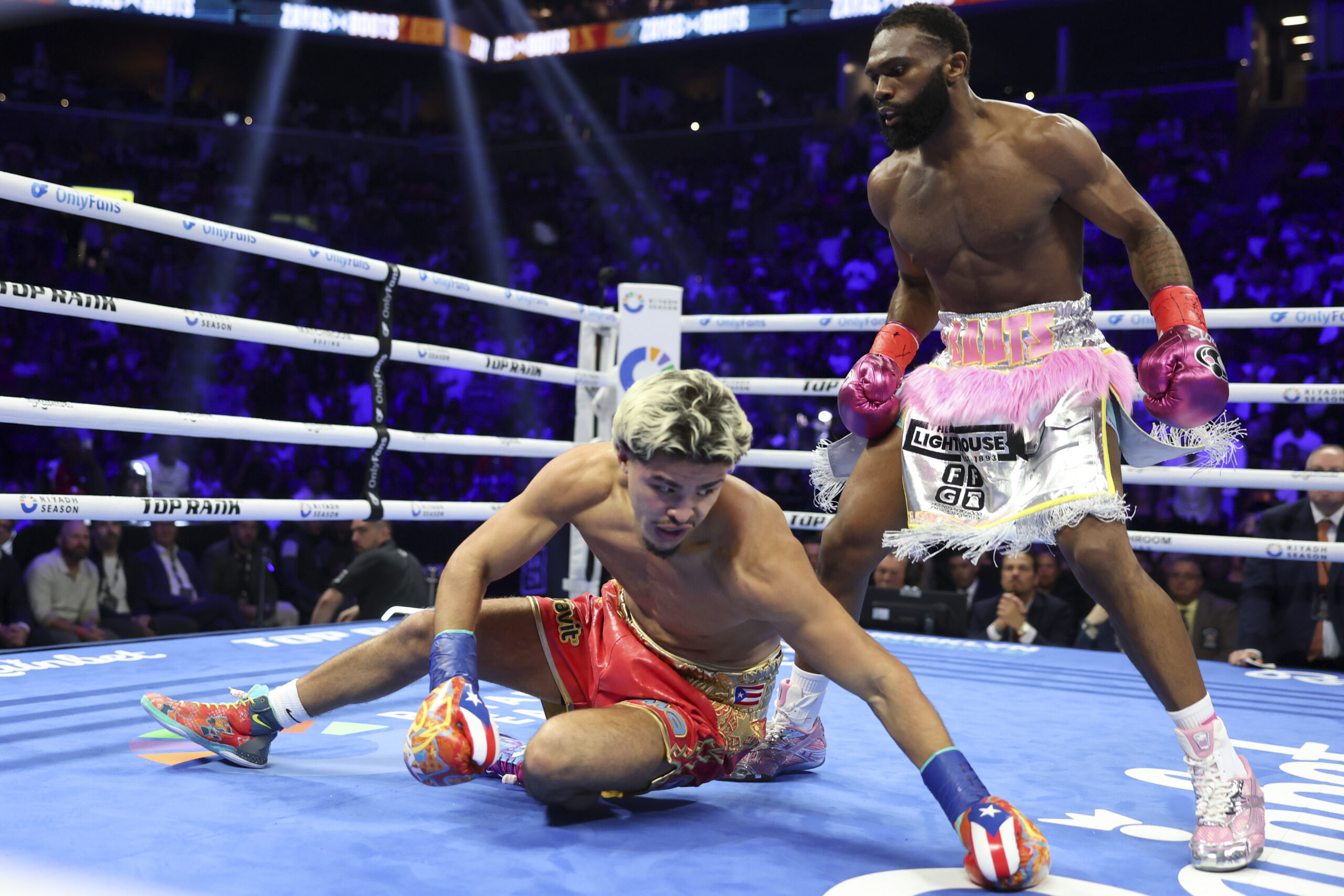
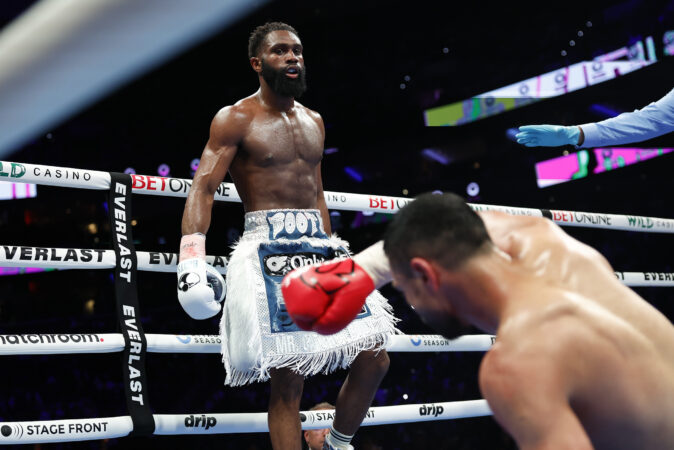
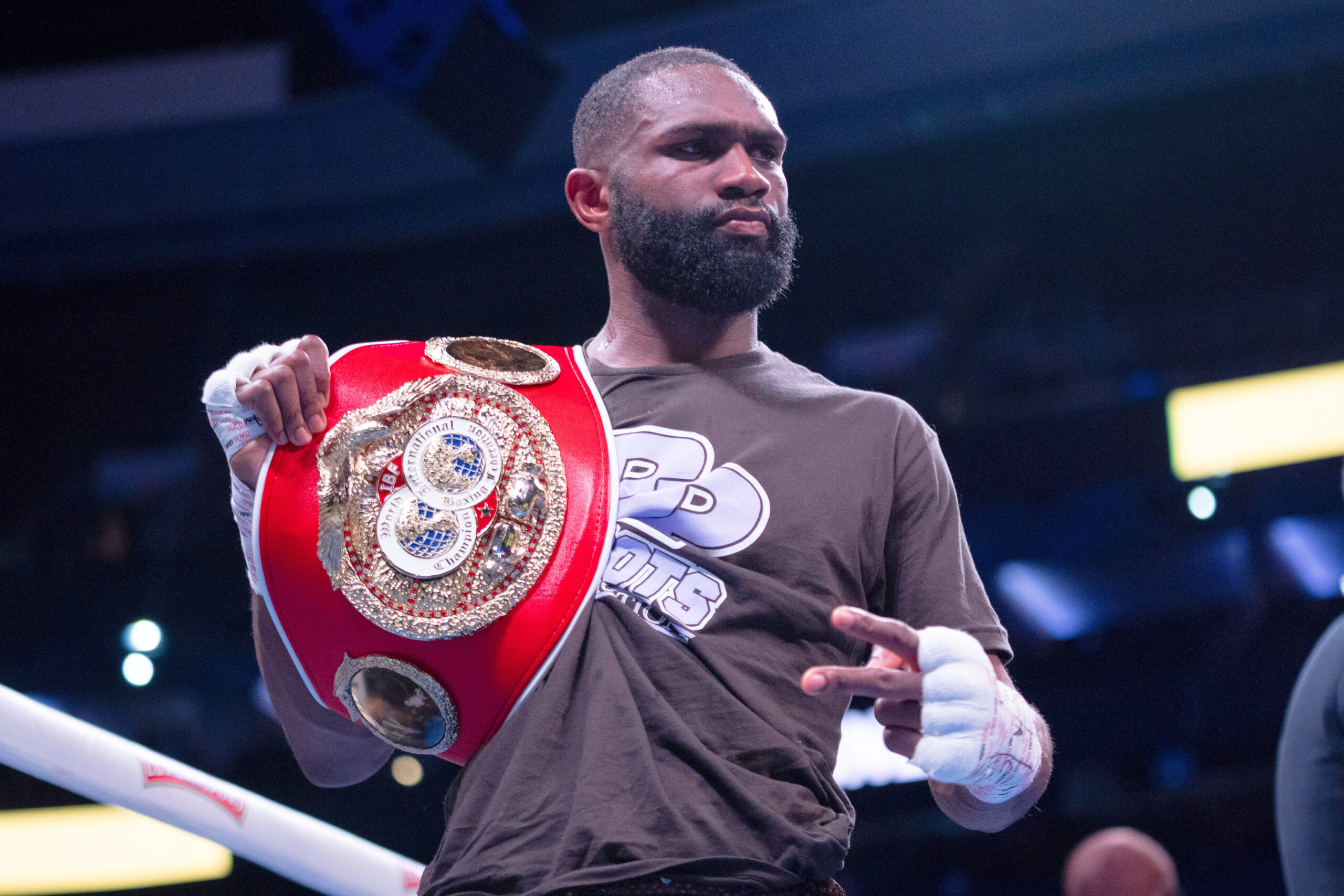
    Ennis didn’t just escape the danger but rallied from that stomach-churning round to deliver an all-time Philly boxing performance. He regained control, knocked down Zayas in the fifth round, and then again in the seventh before the Puerto Rican’s corner stopped the fight as Ennis became the WBO and WBA junior middleweight champion.

    “I think this is the one that takes it to the next level,” Ennis said. “We’re just getting started. I’m a pay-per-view superstar and the face of boxing.”

    It was hard to doubt Ennis’ skills before Saturday night, which was the first time he headlined a pay-per-view event. But he had yet to enter a fight where the result seemed in question when the bell rang. This was the biggest test of his career, and it was his resilience — the ability to take a punch and keep moving — that was most impressive.

    Ennis wants to be the “face of boxing.” Now it’s obvious that his face has the chin to make that happen.

    “I came back to the corner and he was like ‘Yo man, stop playing,’” Ennis said, imitating his father and trainer Bozy. “I was chilling. I’m cool, calm, and collected. When there’s madness going on, I just get calm and be patient.”

    “They might have thought I was hurt. But I was calm and relaxed. I was catching a lot of shots, too.”

    Ennis was booed by the partisan crowd, who waved Puerto Rican flags for the island’s 23-year-old star. Ennis joked that they weren’t booing him but yelling “Boots.” He’s never been jeered before and didn’t mind being the foil, holding his hand to his ears when the boos drowned out the ring announcer when he was introduced.

    “Give Boots credit, it changed quickly,” said Ennis’ father, Bozy, who trains his son. “But we don’t care about the boos. We just do our job.”

    Ennis (36-0, 32 knockouts) came out throwing as he pushed the pace against Zayas (23-1, 13 KOs) and knocked him down with a right less than two minutes into the first round.

    He controlled the ring in the second round before Zayas found his shot in the third round. The building rocked but Ennis dug deep. Thirty seconds after being dazed, he was already bobbing his head away from Zayas’ onslaught. It was as if he had been revived in the ring.

    “Boots was dazed? He wasn’t dazed,” Bozy Ennis said. “He wasn’t dazed. How are you going to be dazed and come back like he came back? If you’re dazed, you’re going to be done. You know what I mean? That’s what dazed is.”

    Undeterred, Ennis started the fourth-round by dragging Zayas into the center of the ring. The fighters exchanged phone-booth punches, giving the crowd the action they came to see.

    Ennis was not hurt again after that third round. He used a perfectly placed hook to score another knockdown in the fifth and a left-right combination to drop Zayas to a knee in the seventh. The fighter looked to his corner, who decided Ennis had inflicted enough punishment and stopped the fight.

    “I was being lazy on the inside,” Ennis said of the punch he took in the third round. “That’s on me. I have to sharpen that up. I’m going to sharpen that up. Don’t worry about that. It was a cool, little performance but I give myself a ‘C.’ I’m just getting started. I’m way better than that.”

    Ennis, according to Compubox, landed 148 punches while Zayas landed just 90. Some questioned how Ennis would combat the bigger opponent as perhaps he would have to be crafty to win. The Philadelphian simply went right at him. Ennis was already a boxing star. But he left the ring as a superstar while Zayas was taken to the hospital as a precaution.

    “I knew I would be too strong and I was the faster guy,” Ennis said. “He wouldn’t be able to see my shots.”

    Ennis will likely return to the ring later this year against WBC champ Sebastian Fundora (24-1-1, 16 KOs) as the boxer wants to become the undisputed champ at 154 pounds. A fight with Vergil Ortiz Jr. (24-0, 22 KOs) was supposed to happen earlier this year before litigation between Ortiz and his promoter squashed the bout. That fight remains in play.

    The next year could be career defining as Ennis will have the stage to prove himself as a pound-for-pound boxer and flag bearer of the sport. The journey to those fights started long ago in the gritty Philadelphia gyms his dad calls “dungeons.” He watched his older brothers train in a church basement with neighborhood kids in Germantown and dreamed of doing the same thing.

    Jaron Ennis landed 148 punches while Xander Zayas landed just 90.

    Ennis was there every afternoon, waiting for his dad to finish work so they could train in a gym without air conditioning. Boxing is all Ennis ever wanted to do since he was a boy in the “Brickyard” neighborhood.

    And it was those dungeons that prepared Ennis for what happened on Saturday night when the walls appeared to be closing in. But everyone who knows where Ennis came from knew the Philadelphian was never in danger.

    “He likes to fight,” Bozy Ennis said. “He can box. You can see he can box. You see what he’s doing with that jab. Pop. Pop. But then he likes to fight. I told everyone that Boots is going to stop him. They said Boots was the bully at 147 but he would be the bully at 154. I said ‘It doesn’t make a difference because he can knock heavyweights out.’”

  • Philly’s Jaron ‘Boots’ Ennis wants to be the ‘face of boxing.’ First, he had to learn to fish.

    Philly’s Jaron ‘Boots’ Ennis wants to be the ‘face of boxing.’ First, he had to learn to fish.

    Bozy Ennis taught his sons to fish on the weekends, leaving Germantown to catch trout, catfish, and sunnies. They cast their rods in Perkiomen and Phoenixville. They hung by the water in Gladwyne and New Hope. Bozy Ennis took his sons Derek and Farrah everywhere. But he never taught his youngest son, Jaron.

    “You know why it skipped him?” Farrah Ennis said. “Because he and my dad were always in the gym. They didn’t have time to fish.”

    Jaron Ennis is a world champion boxer on the verge of becoming a superstar. He was molded by his father in gritty neighborhood gyms they respectfully called “dungeons.” There was no time to fish.

    But there he was last August with his brother Farrah — a former pro boxer — and an afternoon to fill in a California town near Lake Tahoe. The brothers traveled there so Jaron could train with Canelo Alvarez, one of boxing’s biggest names. Now he finally had time to fish.

    The Ennis brothers sat for three hours as the sun set. Jaron Ennis — who is known as “Boots” — won his professional boxing debut in 42 seconds. Fishing proved to be a different challenge.

    “We didn’t catch anything,” Farah Ennis said. “Fishing teaches you patience. For me, it’s not a big deal. I’ve been fishing for eight hours or longer and didn’t catch anything. You just have to have patience.”

    Jaron Ennis says he wants to become the “face of boxing,” a role he’s seemed destined for since he turned pro. But his promise was often slowed by things outside the ring: litigation against a former manager, opponents unwilling to fight him, mandatory title defenses against overmatched foes, and a signature fight earlier this year that fell through while Ennis’ opponent was stuck in a lawsuit with his promoter.

    The 28-year-old’s career has often felt like a fisherman waiting for a bite. But now things seem to be breaking his way. Ennis (35-0, 31 knockouts) will fight WBA and WBO super welterweight champ Xander Zayas (23-0, 13 KOs) on Saturday night at the Barclays Center in Brooklyn. The bout, the main event of a DAZN pay-per-view telecast, is the biggest of Ennis’ career.

    Jaron “Boots” Ennis will fight WBA and WBO super welterweight champ Xander Zayas on Saturday night at the Barclays Center in Brooklyn.

    A win would surge Ennis up boxing’s pound-for-pound lists, which he started to appear on earlier this year. It would then position him for a 154-pound unification fight against WBC champ Sebastian Fundora or a long-awaited bout against Vergil Ortiz, who was slated to fight Ennis this year. Defeat those three fighters and Ennis could stake a claim to being the face of the sport. His fishing rod finally has some nibbles.

    “That’s why I’m trying to teach him fishing,” Farrah Ennis said. “You have to be patient.”

    Next best option

    Ennis flew to Texas in November to watch Ortiz’s fight from ringside and then climbed into the ring for a promotional staredown after Ortiz won by knockout. All signs pointed to Ennis and Ortiz meeting a few months later in a long-awaited title fight. But those plans were scrapped in March because of ongoing litigation between Ortiz and Golden Boy Promotions.

    Ennis, left without a fight, said he told his own promoter — Eddie Hearn of Matchroom — to make a match with Zayas, a popular 23-year-old Puerto Rican fighter with a promising future. A few weeks later, it was official.

    “That was the next best option,” Ennis said. “He has two belts. That’s halfway to being undisputed. That’s where I want to be. Winning two belts on June 27 and it’s only up. I’m going to be the face of boxing.”

    Ennis never hid his ambition to land a big fight as he tried to arrange bouts with stars like Terrence Crawford, Errol Spence, and Keith Thurman. But none of those fights materialized, leaving Ennis to face lesser foes as he climbed the ranks. Saturday will be his biggest challenge. And he asked for it.

    “We sounded everyone,” Bozy Ennis said. “That’s from the beginning of time. Everyone knows that. Then they go back and say, ‘He didn’t fight that guy.’ Well, you can’t fight the guys who don’t want to fight you. You know what I mean? Spence, Crawford, Thurman. All those guys, we sounded. We tried. ‘Oh, yeah. He didn’t really fight anyone.’ But they didn’t want to fight us and made up all kinds of excuses.”

    Ennis’ biggest challenge will also come on his biggest stage: the main event of a pay-per-view. Headlining a pay-per-view is a status in the sport, something usually reserved for a fighter who can claim to be “the face of boxing.”

    Ennis said he’ll know he’s the face of boxing when fight-night becomes an event. Remember how it was when Floyd Mayweather Jr. fought? Or the audience that tuned in last year to watch Terrence Crawford defeat Canelo Alvarez after Ennis sparred with him in camp? That’s what Ennis envisions. A win on Saturday will move him closer to that.

    “It’s not boxing anymore at that point,” Ennis said. “It’s like a fashion show slash boxing slash concert. It’s an all-around thing, and that’s what I want my fights to be. I want everyone to come and enjoy themselves, get fly, get dressed, and enjoy a beautiful fight and a beautiful knockout that I’m going to deliver.”

    “You have to have a fanbase that’s outside of just boxing. You have to have the rappers, the entertainers, the TV stars, the movie stars. That’s what I’m looking to do and that’s what I’m going to do come June 27.

    “Everyone already knows me now. But after this performance I put on, the world is really going to see, and I’m going to be the face of boxing and a guy who everyone wants to see fight.”

    Jaron Ennis after defeating Karen Chukhadzhian in an IBF World Welterweight title bout in 2024.

    The face of boxing

    Ennis spent 13 days last year in Alvarez’s camp, which he said he did not get paid to do as he made sure he wasn’t mistaken for a “sparring partner” before Alvarez met Terrence Crawford in the biggest fight of the year. Ennis was there to work just like Alvarez was. But he did get to spend nearly two weeks around a fighter who was often the face of boxing during his career. He saw how Alvarez worked and how he trained.

    “He’s out there with the face of boxing and was just having a great time,” Farrah Ennis said. “That put it in his head like, if he’s the face of boxing, then so can I.”

    The fighter’s biggest takeaway? Superstars are just as normal as him.

    “We’re all normal,” Jaron Ennis said. “People think we’re not normal. We do normal stuff. Everybody thinks that since we’re on this high pedestal that we do these crazy things or have camp in a certain way. But it was just a normal camp.”

    Ennis trains in the Northeast in the basement of an animal adoption center on Grant Avenue. Ennis’ father keeps the door locked because too many people brought their dogs to the gym thinking it was an animal clinic. It’s here where Ennis works nearly every day. His brothers assist his dad, and other fighters are from the Germantown neighborhood they call “Brickyard.”

    “I don’t care how big I get, I’ll always train with my guys,” Ennis said. “That’s how you have to be. You can’t get too bigheaded when you get to a certain level. You always have to stay humble and grounded and keep working.”

    Ennis has what it takes to be the face of boxing as he matches an affable personality with the skills to both dazzle and punish. He has won all but four of his fights via stoppage, yet is more than just a puncher. He can fight southpaw, has smooth defense, and has great footwork.

    “People like to see him fight because he’s a boxer and he’ll fight you,” his father said. “People come to see you fight. They don’t want to see you run around. He does both. He can do what he wants to do, and I’m just waiting for someone to take him to another level. They haven’t seen anything yet.”

    Bozy Ennis didn’t travel with his son to California last year, as the trainer has built a stable of world-class fighters that he works with along with Boots. He had to stay home in Philly while his son struggled to catch a fish. He said they would’ve caught something if his rod was in the water.

    “Nah,” Boots shouted from across the gym. “He don’t got it anymore.”

    The dad laughed. He said he’ll get back out there and prove that he can still fish. First, they have to see what they catch this weekend as their patience is finally being rewarded.

    “You have to carry yourself like you’re the face of the sport,” Ennis said. “That’s how I carry myself already, and that’s how I’m going to carry myself June 27. I already fight how I fight. I fight fan-friendly. I have the speed. I have the power. I do everything. I’m explosive. I have defense.

    “Whatever I do, people are going to want to see it. On June 27, I’m just going to stamp it and show even more and in an even better way.”

  • Philadelphia’s World Cup love affair shows just how far we’ve come

    Philadelphia’s World Cup love affair shows just how far we’ve come

    Karl Wallenda walked across Veterans Stadium on a tightrope, dazzling a nearly sold-out crowd when he stopped halfway to do a headstand and unfurl American flags from the ends of his balancing pole.

    It was exactly what the more than 50,000 fans came to see between games of a Phillies doubleheader on Memorial Day 1976. And the show across the street, a soccer game featuring Pelé and other all-time greats — didn’t stand a chance against The Great Wallenda.

    Philadelphia has become soccer-infused this summer with six games of the World Cup at the sports complex Center City bars were packed Monday afternoon hours before France and Iraq played, banners hung from City Hall, the Broad Street Line carried fans to Lincoln Financial Field, and even the mayor was spotted last week buying soccer jerseys.

    The games are so massive that the Phillies had a rare Friday off last week because Brazil and Haiti were playing at what is temporarily called Philadelphia Stadium.

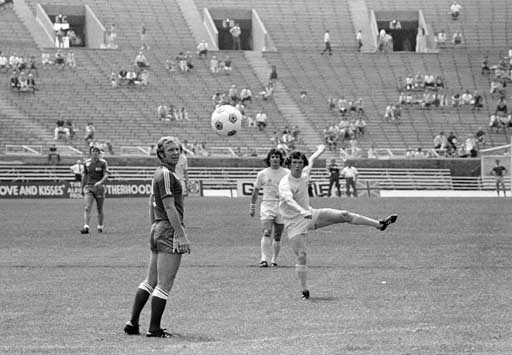
    But 50 years ago, soccer was still finding its footing in Philadelphia. And that’s why the eyes of the city were fixated above Veterans Stadium while Pelé, Italian superstar Giorgio Chinaglia, and Bobby Moore — the captain of the last English team to win the World Cup — were in a match across the street.

    The soccer icons played for Team America in the Bicentennial Cup against the English National Team at JFK Stadium in front of just 16,000 fans and a lot of empty bleachers.

    Play during the Bicentennial Cup between Team America and England before a sparse crowd at JFK Stadium in South Philadelphia on May 31, 1976.

    Philadelphia now has a professional team with staying power, local players on the U.S. team that have people dreaming this summer, and a stadium full of crazed fans. That was hard to imagine 50 years ago, when the gods of soccer passed through without much notice.

    “Jeez, 50 years,” said Bob Smith, a Trenton native and member of the National Soccer Hall of Fame who played for Team America against the British. “There’s no comparison. The game just grew, and the community grew. The spread of the game is just unbelievable.”

    Gateway to soccer

    Smith learned to play the game as a 9-year-old when an Irish neighbor in Trenton organized a recreation league. He played four-on-four for hours with his buddies and organized games against kids from neighboring towns. Today, the sport is played everywhere, but it was concentrated in the 1960s to neighborhoods in Trenton, just like in Philadelphia.

    Soccer was huge to those who knew it.

    And a mystery to those who didn’t.

    “We’d go to our high school field on weekends to train and see like 2,000 people in our football stadium,” Smith said. “We were freshmen in high school, and we knew exactly where we fit in the spectrum of sports. ‘Who are these guys running around with shorts on?’ But we just fell in love with it.”

    Smith was plucked as a teenager by Manfred Schellscheidt, the legendary coach who assembled an All-Star team with the best players in New Jersey. Schellscheidt brought the Jersey boys to his German hometown, where they beat every team they played. It was an unbelievable experience, Smith said, and it gave him and his buddies the confidence that they could do it.

    “I was like ‘Damn, I can do that,’” Smith said. “We felt like ‘we’re OK here.’”

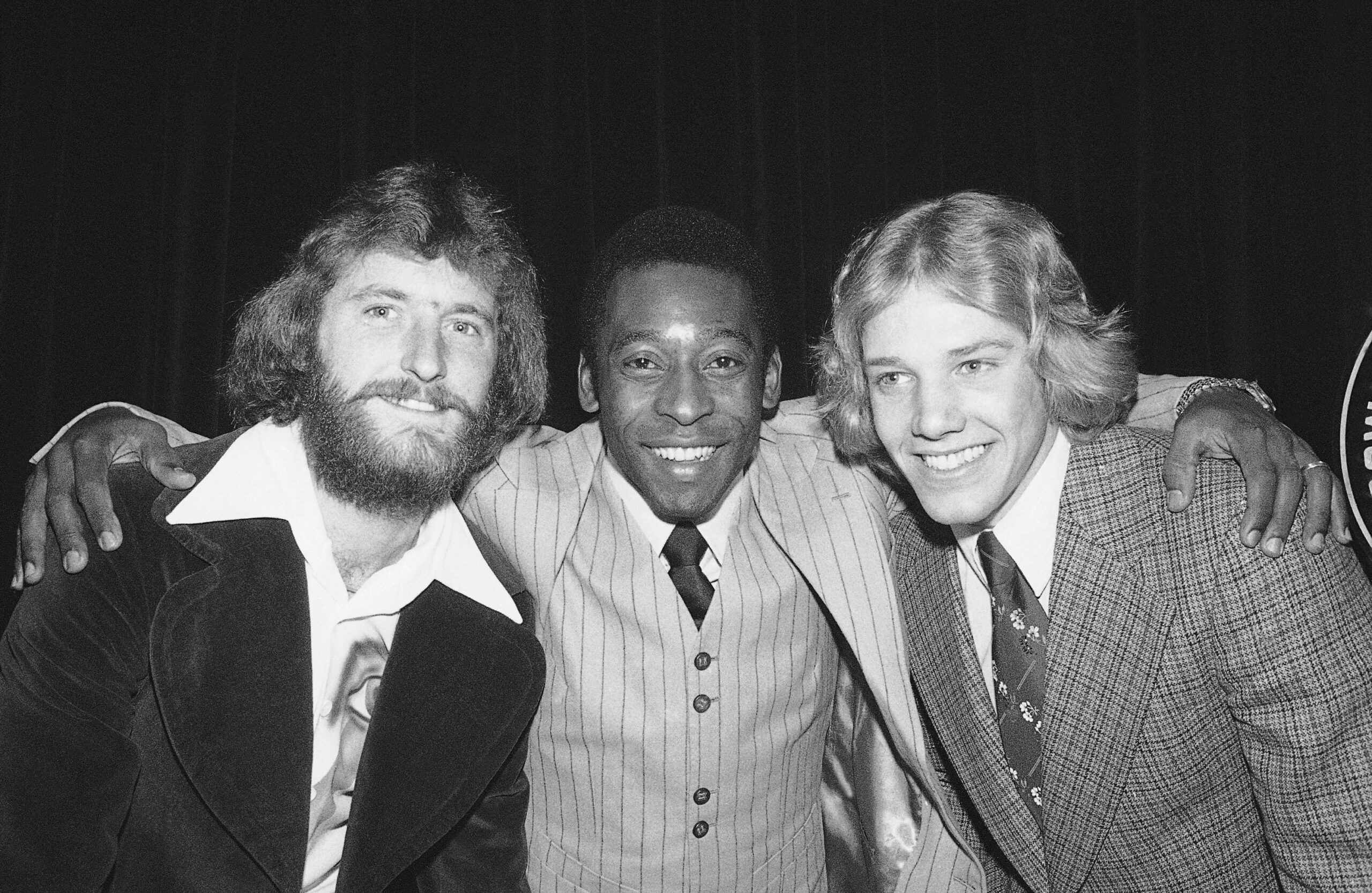
    Bob Smith (left), a Trenton native, shown with soccer star Pelé (center) and Bob Rigby on Jan. 6, 1976.

    Smith played at Rider University before turning pro with the Philadelphia Atoms and helping them win the North American Soccer League championship as a rookie. The league didn’t pay the players enough for soccer to be a full-time gig, so he worked as a laborer at a construction site during the day and practiced in South Philly at night. But he was still a professional soccer player.

    “A lot of guys were schoolteachers,” Smith said.

    This U.S. team started nine players in their World Cup opener who are on professional teams overseas. Smith, who had 18 games for the U.S. team, played overseas in 1975, with Dundalk F.C. in Ireland. Unlike today’s players, Smith and Dave D’Errico — his buddy from New Jersey — didn’t get paid much. No team was looking then for an American player, Smith said.

    “When we got off the plane, a guy picked us up at the airport in Dublin,” Smith said. “We signed this five-quid-a-week contract. We stayed over top [of] this garage, and I pumped gas at night, making a quid an hour.

    “But we were in Ireland playing soccer. What the heck? We didn’t care. You were broke your entire career playing soccer. I never cared about what I made because it was a thrill of a lifetime.”

    ‘It was just wild’

    The starving artist returned to the U.S. after a year abroad and joined the New York Cosmos, which had become America’s traveling band of soccer stars. They had Pelé and Franz Beckenbauer on the field and Mick Jagger and Henry Kissinger in the dressing room after games.

    “The Cosmos years were like a circus,” Smith said. “It was just wild.”

    The NASL brought Pelé out of retirement in 1975 with the hope that the all-time great could spread the gospel of soccer through the country. Every Cosmos game felt like the opponent’s biggest game of the season.

    “It was always a show,” Smith said. “The expression with us was always, ‘We’re with him.’ There was a lot going on in restaurants and clubs and all that. We went to Denver and they rode him on a horse. There was so much marketing stuff, and he got pulled into an awful lot of stuff.

    “I felt sometimes that he was being pushed to sell the game to this country, and I think that was difficult to him. He just wanted to get on the field and play with the guys. Off the field, it was crazy with the commitments he had to fulfill. But he did it 100% with a great attitude. But it was tiring.”

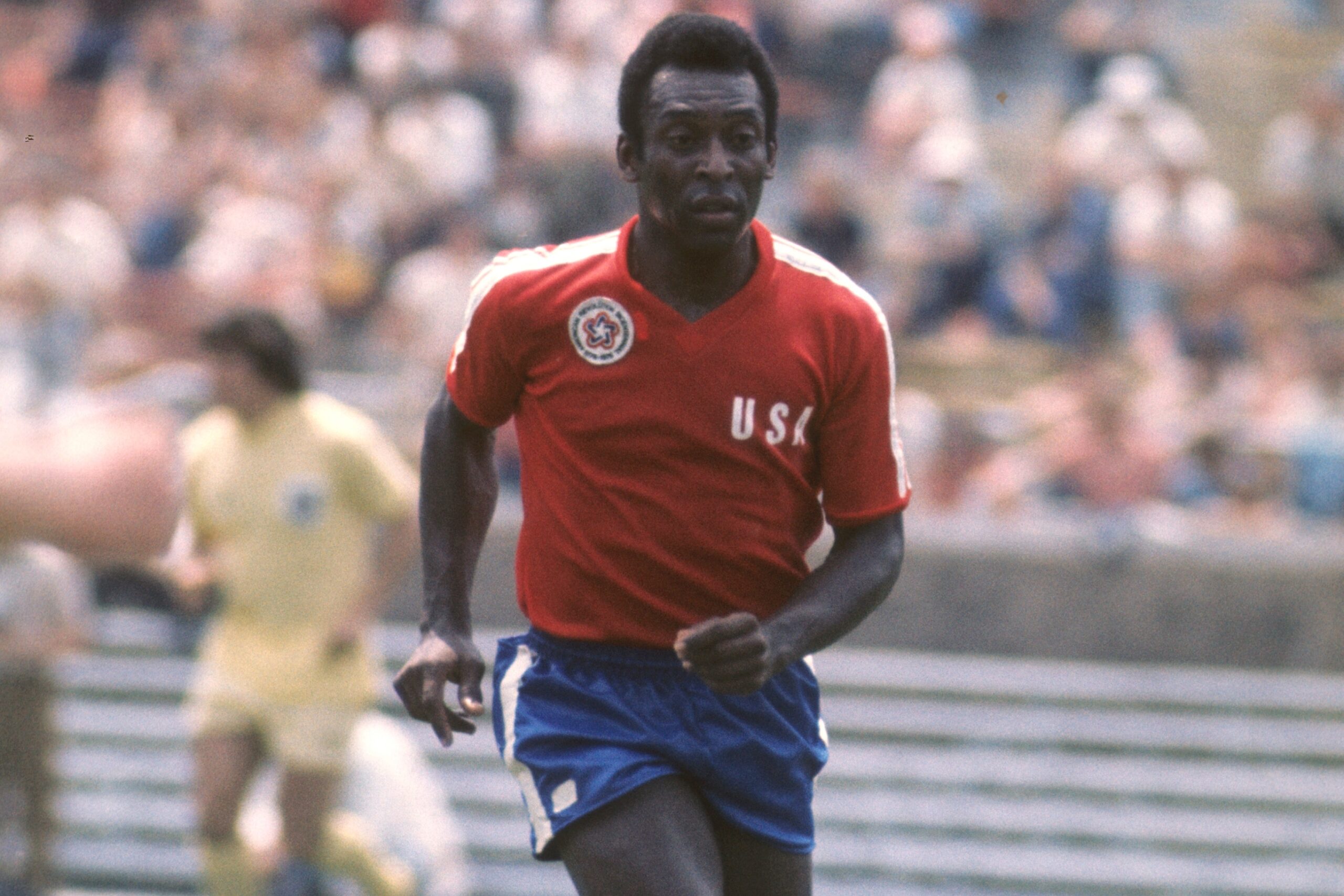
    Pelé playing for Team America against England in the American Bicentennial Cup in 1976, played at JFK Stadium, which is where Xfinity Mobile Arena now stands in the sports complex.

    The 1976 Bicentennial Cup was another attempt to grow the game as Brazil, England, and Italy came to America for tuneups before qualification began for the 1978 World Cup. They played in Washington, New York, and Seattle before finishing in Philadelphia.

    The organizers knew that the U.S. national team wouldn’t be able to keep pace with the world powers, so they filled Team America with the stars of the NASL. That’s how Smith and Delaware County’s Bobby Rigby got to play with a dream team. The stars of the soccer world came to South Philly.

    Philadelphia just wasn’t yet ready in 1976 to embrace what was happening. The city was too distracted by the guy walking in the sky.

    “It was such a thrill to play with those guys,” Smith said. “It was a great honor, and it was also a blur.”

  • ‘Overlooked’ Santino Harwood got his chance at an HBCU despite not being Black. Now he’s in the Swingman Classic.

    ‘Overlooked’ Santino Harwood got his chance at an HBCU despite not being Black. Now he’s in the Swingman Classic.

    Santino Harwood was set on playing baseball at a Division I school but his chances were dimming when he started his senior year at Roman Catholic without a college offer. He had chances to play at Division II and Division III schools but the infielder from Mayfair always dreamed of Division I.

    “Kids these days want to hear that they’re a D-I player and going to a D-I institution,” said his father, Edgar. “I said, ‘That really does not matter.’ You need to go where you fit in and where you like the program. They feel like they’re disfigured if they’re D-II or D-III and they don’t have that status symbol next to them.”

    Santino played like a Division I player in high school, but he was just 5-foot-11, causing college coaches to overlook the shortstop. Finally, an assistant at Delaware State noticed. They didn’t have a scholarship for him but told him he could walk on. Deal, he said. And then the coach made sure Harwood knew that the school was a historically Black college and university.

    “He said, ‘You have to understand that you’re going to be a minority’,” said Edgar, as his son is white.

    Santino didn’t mind. He just wanted a chance. He was in. The shortstop hit .296 this season, played crisp defense, and stole bases with ease for Delaware State, which reports its student body as 76% Black. Harwood grew up playing baseball with kids of various races — “Being from Philly, my friend group is mostly Black,” he said — so being a white kid at an HBCU was nothing new.

    “It’s a great environment to be around,” Santino said of Delaware State. “It’s a great energy. They make you feel comfortable … I feel like baseball has the most diverse community. We have a lot of Hispanic, Black kids, white kids. Everyone comes together and is here for the same reason. That’s why we all get along.”

    And next month, he will represent Delaware State at Citizens Bank Park days before the All-Star Game when he plays in the HBCU Swingman Classic on July 10.

    The event was developed by Hall of Famer Ken Griffey Jr. to give players from HBCU schools — overlooked guys like Harwood — a chance to showcase their skills. Jimmy Rollins will manage a team, Griffey will be there, and Harwood will get his chance to star in a big-league park.

    “Our president Dr. [Tony] Allen, his goal is to create the most diverse HBCU at Delaware State University,” baseball coach Pedro Swann said. “If you walk around campus, you’ll see all types of shade. There’s a mixture of everything. Plus, Santino has a little drip and a little swag to him. So he fits right in and has no problem blending in with the HBCU culture. That’s what I love about him. He’s friends with everyone.”

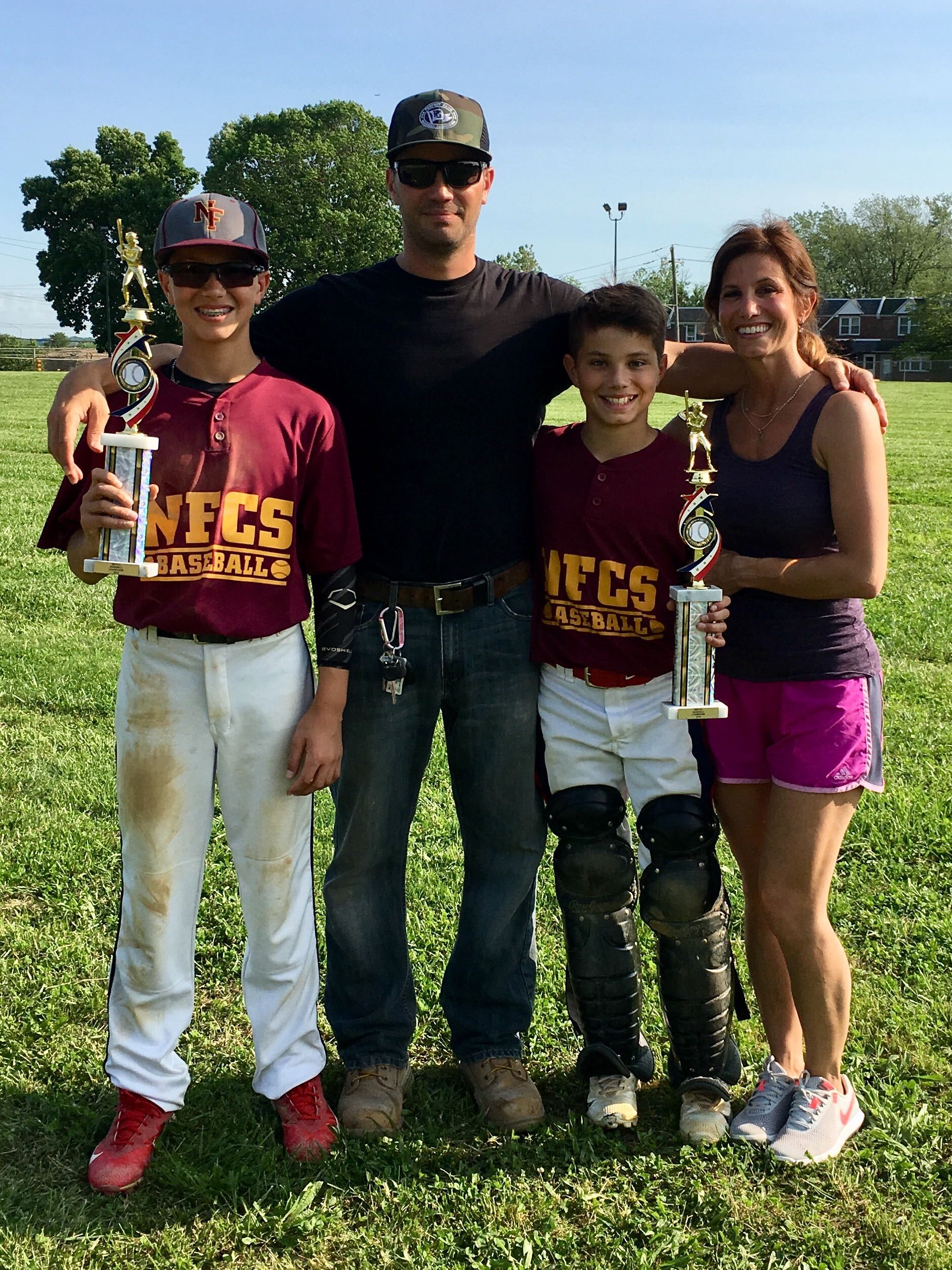
    Santino Harwood (second from right) and his brother, Edgar; father, Edgar, and mom, Michelle after a game at New Foundations Charter School.

    The Santino Rule

    The 8- and 9-year-olds from Holy Terrors were called to the stage at the end-of-season banquet years ago when a table in the catering hall started to boo. Edgar looked around and saw it was another team from Northeast Philly that played in the age group above his son’s team. Fine, he thought. We’ll play up in age and beat them.

    Holy Terrors — a youth organization at Brous and Princeton Avenues — won the Department of Recreation title against 11- and 12-year-olds despite 8-year-old Santino batting leadoff. Opposing teams were livid.

    “I said, ‘Why are you mad? He’s 8 years old,’” Edgar said. “‘He’s my leadoff hitter. Just strike him out if you can. But that’s probably not going to happen.’”

    A year later, Edgar said the league instituted a new rule that banned players from playing up in age.

    “The Santino Rule,” Edgar said. “The pamphlet came out, and, boy, they put that sucker in boldface lettering. It was really weird. For me, playing up is a bonus if you can do it and you can hold your water.”

    Edgar soon started a travel team called Falcons Baseball that practiced for three to four hours at fields in the Northeast. Even that wasn’t enough for his son, as the coach often would cap practice by driving his car up to the cage and turning on the headlights so Santino could get more swings after dark.

    “There was always that want and desire,” Edgar said.

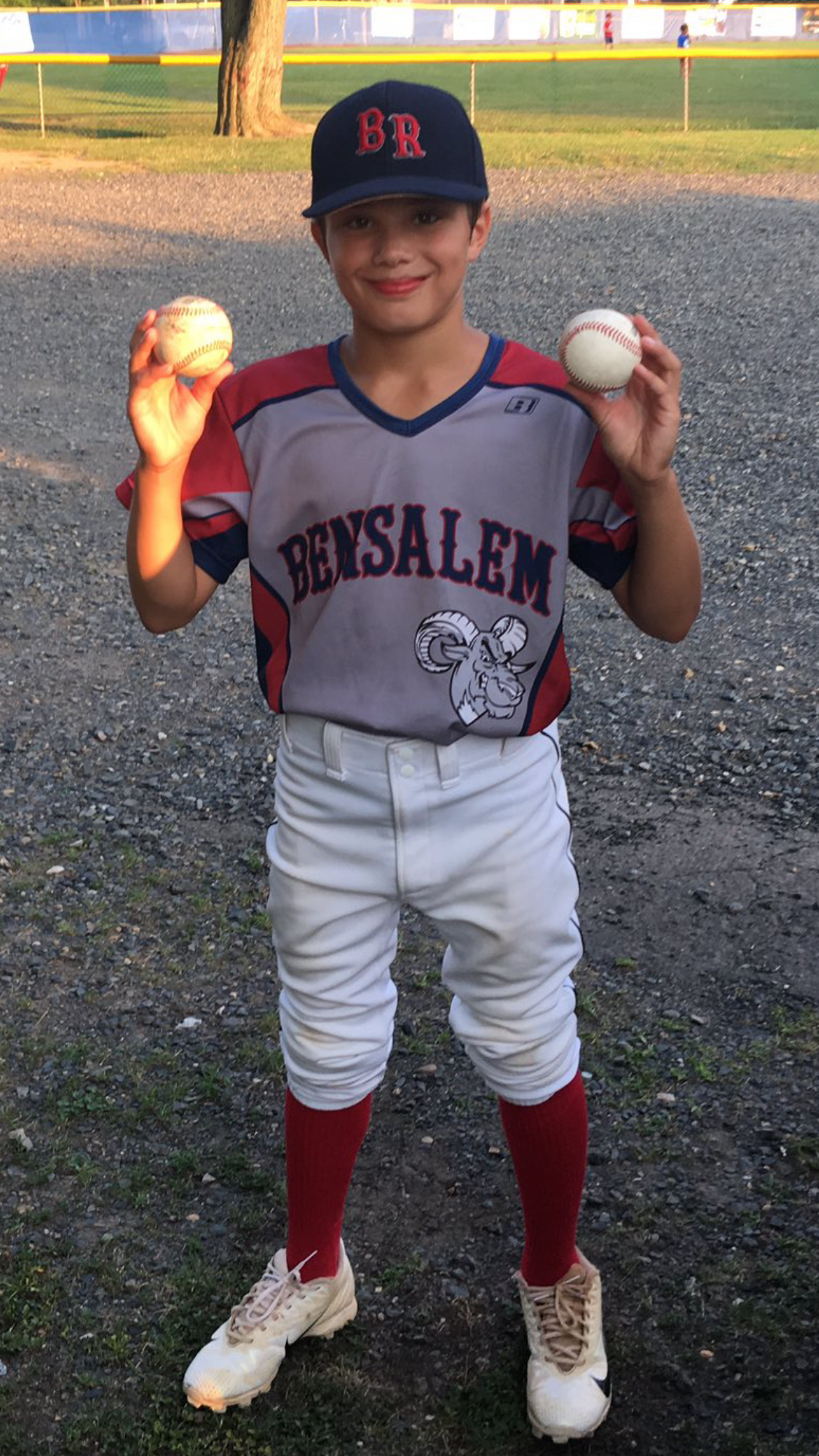
    Santino Harwood after a game with the Bensalem Ramblers.

    Those Falcons teams were diverse — “Black, white, Hispanic,” Edgar said — and the players became more than teammates. They hung out at the Harwoods’ home, barbecued, and bonded like “brothers” over their love of baseball.

    “You have a melting pot of identities in the United States now,” Edgar said. “You have to get an understanding and learn to love one another and understand each other. Just like brothers, you’re going to bump heads. Everyone bumps heads whether you’re at work or on the baseball field or with your neighbor.

    “But you have to learn these things now that you have to understand each other. You have to have a respect for different attitudes, different thought processes, different identities, cultural or national.”

    Santino Harwood went to Delaware State without a scholarship.

    Earning his way

    The Delaware State baseball team is full of players like Santino, who were overlooked by other programs before finding their way to the Hornets. The roster is racially diverse, just like that Falcons team.

    “Last season, we had a guy from Idaho,” Swann said. “You pair him with someone from like Teaneck, N.J., and it’s polar opposites. But the guys got along. When you get out on that field, it’s not about what color you are. It’s about how you catch and throw the ball.”

    Santino went to Delaware State without a scholarship, but his dad told him not to worry.

    “You need to be prepared for the opportunities that can get you to that scholarship,” Edgar said. “Whether or not you think someone in front of you doesn’t deserve it, that’s irrelevant. When you have your opportunities, can you showcase to the point where you get that same bonus or package?”

    He hit .296 as a freshman in 2025, and his coach called him into the office after the season. He was no longer a walk-on. Harwood called home and told his parents. They were thrilled.

    He stole 15 bases last season as a sophomore with a .413 on-base percentage in 44 games. Swann told him early in the season that he was building a case to be picked in the Swingman game.

    “I said, ‘Man, that would be cool. You’d get to play in your hometown. That would be awesome,’” Swann said. “Then he ended up getting selected. He took the lead role in the infield this season and was our quarterback out there. He never backed down from any battle. He’s a Philly kid, so he has that fighting spirit and chip on his shoulder. I love the way he plays the game.”

    Delaware State shortstop Santino Harwood had a .409 on-base percentage and 15 stolen bases in 45 games last season.

    Santino grew up an Atlanta Braves fan — his dad is from Georgia — but still is honored to play at Citizens Bank Park.

    “This is a once-in-a-lifetime experience,” he said. “It’s a privilege to play there. I feel like that’s every kid’s dream. For me to get a taste of it in the Swingman is nothing more than a blessing.”

    Santino dreamed of playing Division I baseball but had to wait for his opportunity. Even then, he had to earn a scholarship. First, his coach had to make sure he would be comfortable. Santino didn’t think twice about it. The HBCU, he said, has felt like home. And he’ll represent it next month on a big stage.

    “I’m so happy to see him get an opportunity that he’s really worked so hard for,” Edgar said. “No one knows the hours and the days that we’ve been out there trying to get him better at this sport. And it doesn’t really matter if anyone knows or not, right? It’s an opportunity that me and his mom are going to enjoy.”

  • A fan kept Tug McGraw’s 1980 World Series jersey in his dresser. Now it’s being auctioned off.

    A fan kept Tug McGraw’s 1980 World Series jersey in his dresser. Now it’s being auctioned off.

    The pass allowed the fan entrance into a party Philadelphia thought it would never see: a World Series celebration in the Phillies clubhouse at Veterans Stadium. And he left the champagne-soaked room with a one-of-a-kind souvenir: the jersey of the pitcher who threw the clinching pitch.

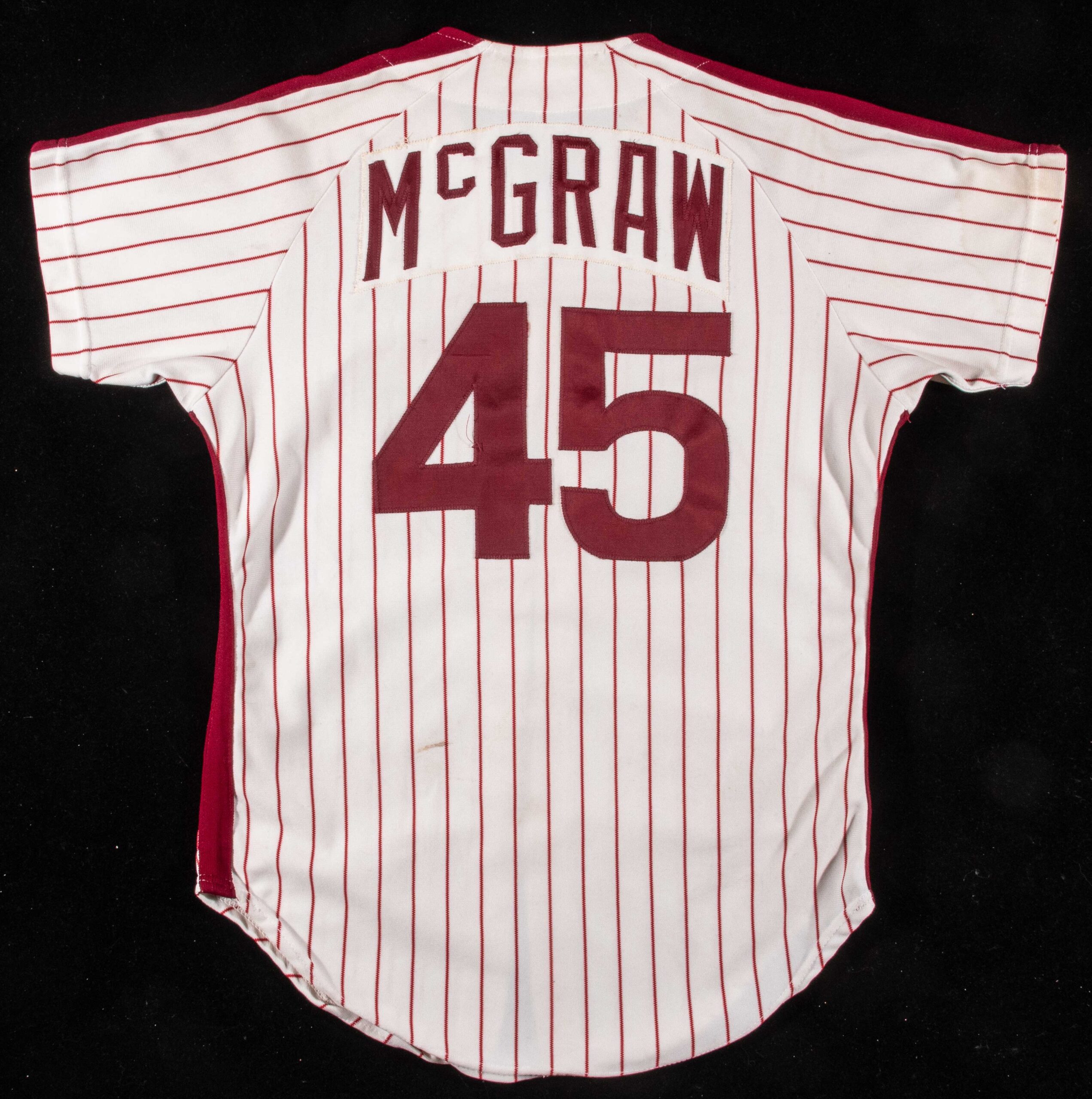
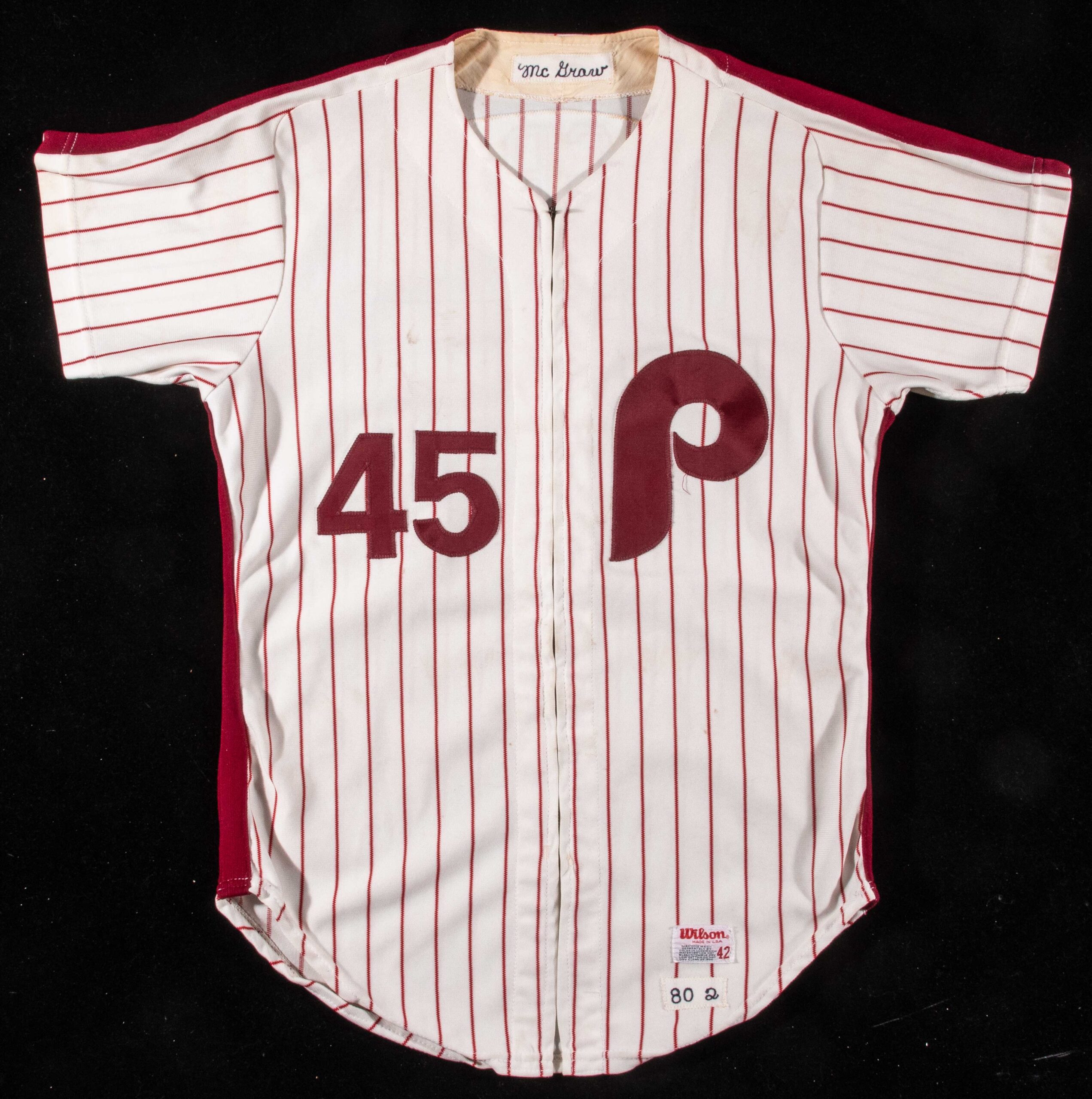
    Tug McGraw simply handed the 19-year-old fan his jersey that night in 1980, shortly after he struck out Kansas City’s Willie Wilson to clinch the Phillies’ elusive crown. The fan kept the jersey in his dresser drawer, removing it only to show friends or bring to his children’s schools for show-and-tell.

    It will soon find a new home as the white jersey with No. 45 on the back will be up for bidding in July at a live auction during the MLB All-Star Village at the Convention Center.

    “That was the first moment of its type in the city’s history,” said Dave Hunt, the president of Hunt Auctions. “There were championships before that but not like that one. I think the Flyers would be right before it but I feel like that moment was a different type of celebration and what it did for the city. And what moment do you think of? You close your eyes and that’s it. That’s the one.”

    The fan, who is remaining anonymous, was the son of an acquaintance to Ruly Carpenter, who owned the Phillies in 1980 when they won it all. He suffered a knee injury in 1978 as “a young athlete” and the Carpenters invited him to rehab at Veterans Stadium under the tutelage of Phillies trainer Gus Hoefling.

    He spent time around the Phillies and became close with some of the players, allowing him to score a pass to enter the clubhouse after Game 6 of the World Series.

    “He goes down into the celebration and obviously, it’s chaotic,” Hunt said. “But it settles down and Tug is one of the people he got acquainted with. He’s like ‘Here. This is for you.’”

    Tug McGraw’s jersey from Game 6 of the 1980 World Series is being auctioned off in July by Hunt Auctions.

    A few months ago, the man brought the jersey to Hunt Auctions, which is based in Exton. He expects the jersey to bring more than $300,000. The jersey passed the eye test as it had all the stitches and tags to match other game-worn Phillies jerseys from that era.

    But they needed to make sure this was the jersey. They used a third-party photo matching company that “definitively” ruled that the jersey was worn by McGraw in Game 6. The authentication company, MeiGray, studied the alignment of the pinstripes under the left arm of McGraw’s jersey in photos and videos before ruling that images from Game 6 matched the jersey but Game 1 did not.

    Tug McGraw gave his jersey to a teenager after the Phillies won the 1980 World Series. It’ll be auctioned off in July.

    McGraw’s jersey is still in great condition as it rarely left the fan’s drawer.

    “Frankly, thankfully,” Hunt said. “That is one unfortunate part of the world that we’re in. Many times, we’ll be presented with incredible pieces that have since deteriorated because they weren’t taken care of. This was just indiscriminately stored safely in a drawer for all these years. It’s beautiful. The condition is what you want to see. It’s not cleaned. It’s not altered. It’s not changed. But it’s also not abused or damaged.”

    The jersey has been in the fan’s possession for nearly 46 years, but Hunt said the fan is not sad to part with something he cherished.

    “Having worked with so many different players and their families, it’s a natural course of life that we all go through,” Hunt said. “You decide, ‘How do I want to make sure these things survive going into the future?’ This wasn’t a case of needing to sell it or anything. It just sort of naturally came to be, and here we are.”

  • Philly’s Scott Bandura was teammates for a day with Bryce Harper and Kyle Schwarber. It was ‘surreal.’

    Philly’s Scott Bandura was teammates for a day with Bryce Harper and Kyle Schwarber. It was ‘surreal.’

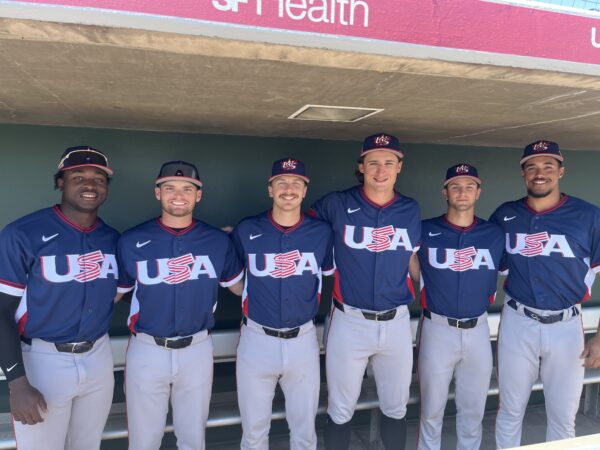
    Scott Bandura and the other San Francisco Giants minor leaguers dropped their bags Tuesday morning in the dugout of Team USA and headed for the clubhouse. They were called to be extra players, dreamers who would be part of the Dream Team for the day.

    The clubhouse doors opened, and there they were — Bryce Harper, Kyle Schwarber, Aaron Judge, and a cast of former MVPs and future Hall of Famers — preparing for an exhibition game in a cramped spring training clubhouse.

    It was a final tuneup for the stars before the World Baseball Classic. Bandura, who grew up in Mt. Airy and fell in love with the game at a rec center in South Philly, was in the same room.

    “We walked straight into every guy in there getting ready to go, and we were like a deer in headlights,” Bandura said. “It was surreal. The older guys on that team were the guys I grew up watching and were winning MVPs when I was in middle school and high school. Those are the guys who inspired me to play, and then the two Phillies are two of the top five most beloved athletes in Philly. It was unreal.”

    Bandura was the catcher for Mo’ne Davis with the Taney Dragons, a team of 12-year-olds who captured Philly’s imagination at the 2014 Little League World Series while playing in front of 40,000 people. He played youth baseball across the country with his dad’s Anderson Monarchs, had a terrific college career at Princeton, and was drafted in 2023 by San Francisco.

    Yet Bandura told his dad on Tuesday night that his hourslong stint on Team USA was the best day of his career. The back of his jersey was blank, no name or number. But Bandura was a teammate of the stars.

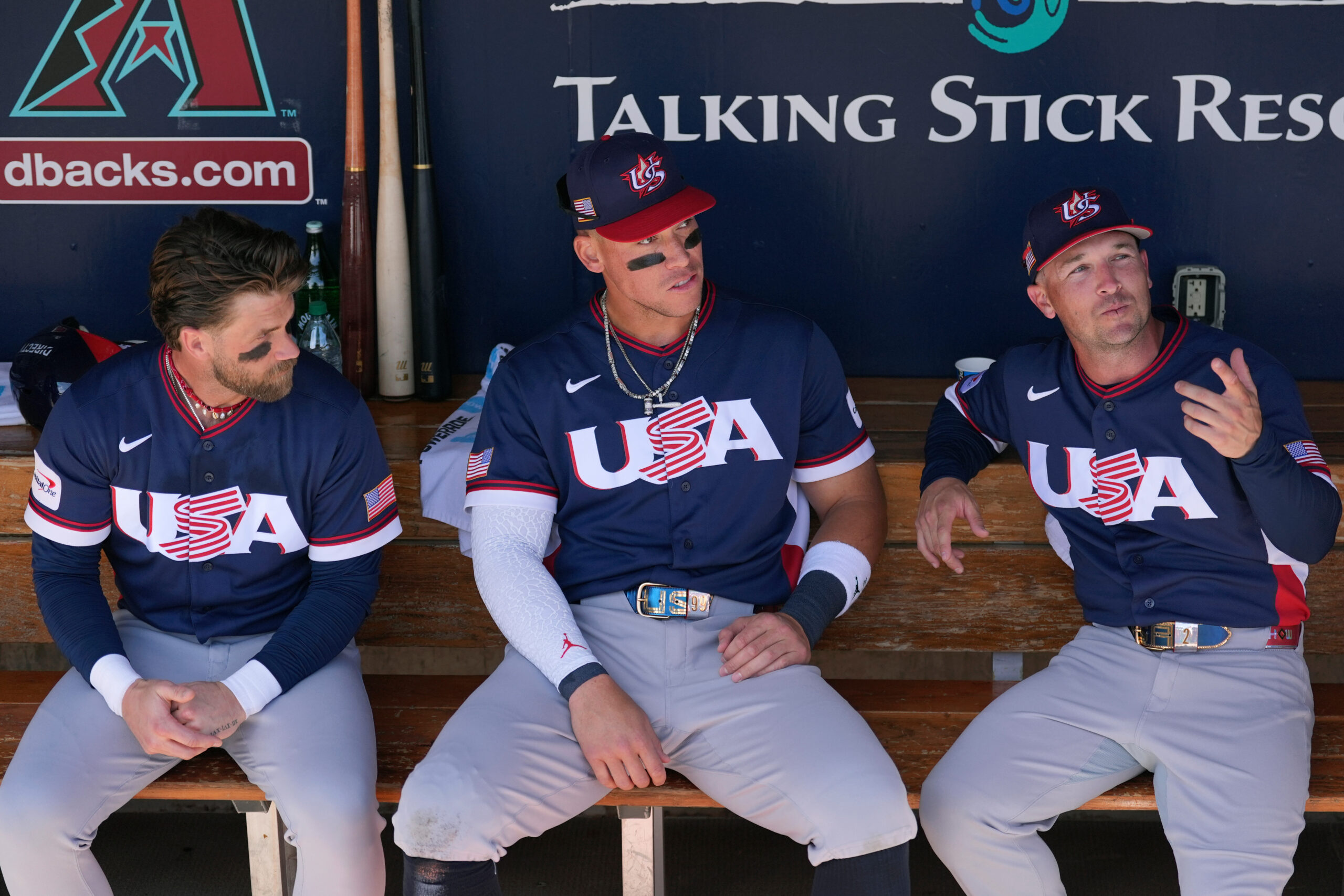
    Team USA’s Bryce Harper (left) Aaron Judge, and Alex Bregman sit in the dugout before an exhibition game against the Rockies on Wednesday.

    “Draft day in 2023 was No. 1 to start because that’s the day that dreams started to come true,” Bandura said. “But this was the next step up from that. Now, all of a sudden, I’m sharing the dugout with Hall of Famers and guys I grew up watching and feeling somewhat like I’m meant to be there. They were telling us to go show everyone something. This had to be No. 1.”

    Bandura and the other minor leaguers heard how Team USA plucked a few Giants prospects in 2023 when they played an exhibition before the World Baseball Classic. They hoped it would be their turn this year. Bandura received a text on Monday from the Giants front office: He was playing Tuesday for Team USA.

    The minor leaguers were to be late-inning substitutes as most of the Team USA players were not going to play nine innings against the Giants.

    Team USA manager Mark DeRosa welcomed the Giants minor leaguers, and Judge — “He’s way bigger than he looks on TV,” Bandura said — told them to be themselves in the dugout. They were part of the team, the reigning two-time American League MVP said.

    Bandura, a 24-year-old outfielder who finished last season in double A, has spent some time the last two springs with the Giants big-leaguers. But this was different. He entered in the sixth inning, played in the outfield next to Pete Crow-Armstrong, and hit a single in the 10th. The game was on ESPN, and his phone buzzed all night.

    “Some people thought I was actually on the team,” Bandura said. “I had to explain to them that I’m not quite there yet.”

    Bandura’s parents, Steve and Robin, were watching on TV when their son came to bat for Team USA.

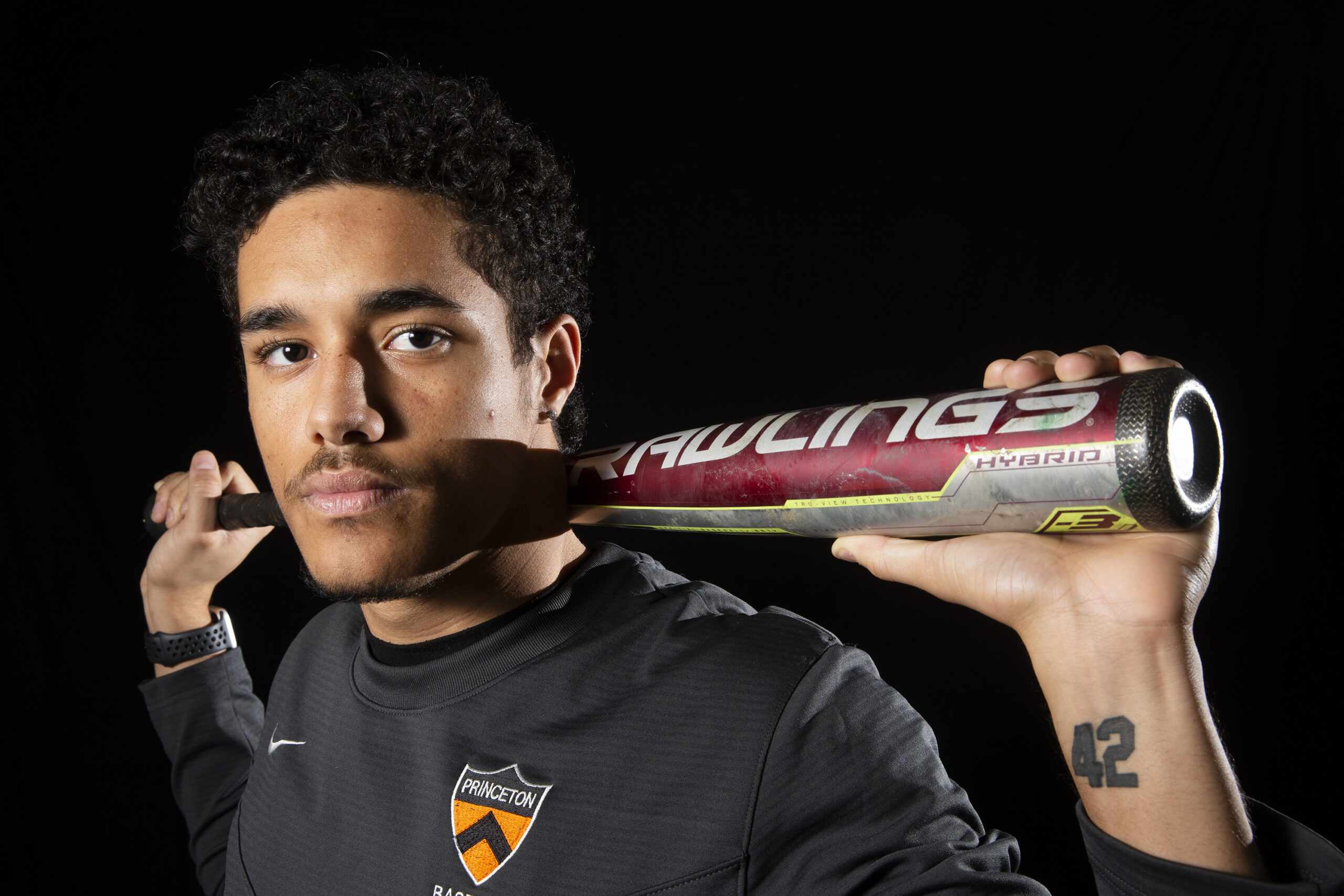
    Scott Bandura is a former Anderson Monarch and went to the Little League World Series as a member of the Taney Dragons. He’s pictured here while playing for Princeton.

    “There was a camera shot from behind the dugout just panning across all the guys who were up on the railing,” Steve Bandura said. “It panned across all those jerseys and names. [Cal] Raleigh, Harper, Schwarber, Judge, [Bobby] Witt Jr. All those guys. Then, bang. Right to him. It was like, ‘Wow.’ Oh my goodness. It was a big-time proud parent moment.”

    Bandura grew up a diehard Phillies fan and was in high school at Springside Chestnut Hill when Harper signed with the team. The 2022 World Series, which came in Schwarber’s first season with the team, was a year before Bandura was drafted by the Giants, so he still was a Phillies fan. For a few hours, he called those guys his teammates.

    “The first thing I thought about was how any of my friends from back home would think if they were in that situation,” Scott Bandura said. “I didn’t even know what to do. I wasn’t going to bother them, but these guys were huge inspirations. It was just weird. I’ve seen those guys so many times on TV. I’ve rooted for them so many times. And then to be in the dugout as somewhat equals, it was just weird.”

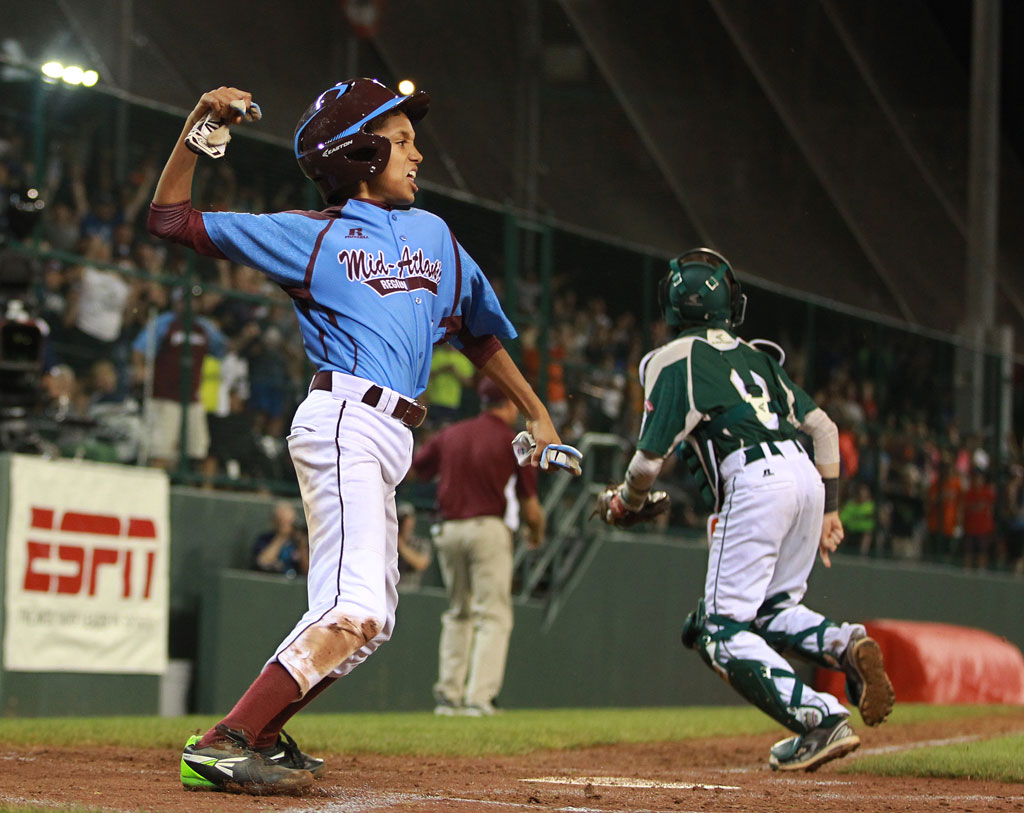
    Taney’s Scott Bandura celebrates as he slides home to score in a Little League World Series game in 2014.

    Bandura will start his season next month at a minor league outpost still a few steps from reaching the major leagues. He showed enough promise last season (Bandura hit .307 in 81 games in high A) that getting there feels tangible. He reported to spring training last month 26 pounds heavier than he was last season. This was the first fall, his father said, since he was 3 years old that Bandura did not go to school as he finished his college degree during the last two offseasons. Finally, it was just baseball.

    “I’m just so proud of him because I see how hard he works,” Steve Bandura said. “I’ve seen how hard he’s worked to get here. I saw how every morning he was up and worked on his diet, measuring everything, and following his plan.”

    For now, the No. 1 moment of Bandura’s career was being close to the guys he admired. In a few years, Bandura could have a new moment at the top of his list. Perhaps his few hours on Team USA could propel him there.

    “The goal is to have a really good big league career,” Bandura said. “And I got a taste of that with the Team USA environment. The only way to get there is to have an All-Star-caliber career. As cool as that was the other day, it definitely served as motivation to get where I want to go.”

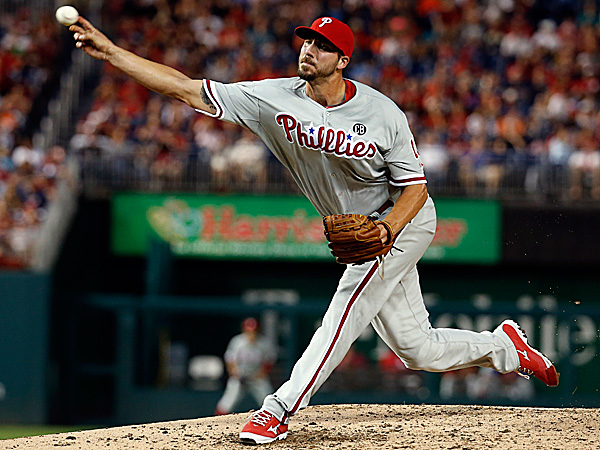
  • Former Phillies pitcher Phillippe Aumont left baseball to become a farmer. Now he’s back on the mound.

    Former Phillies pitcher Phillippe Aumont left baseball to become a farmer. Now he’s back on the mound.

    Phillippe Aumont retired from baseball in the summer of 2020 after the pandemic paused the major league season. Once a Phillies prospect, Aumont had been a professional since he was 18. He grew up in Canada, dedicated his life to baseball, and pitched in 46 big-league games with the Phillies before deciding it was finally time to leave the game. He needed to find something else.

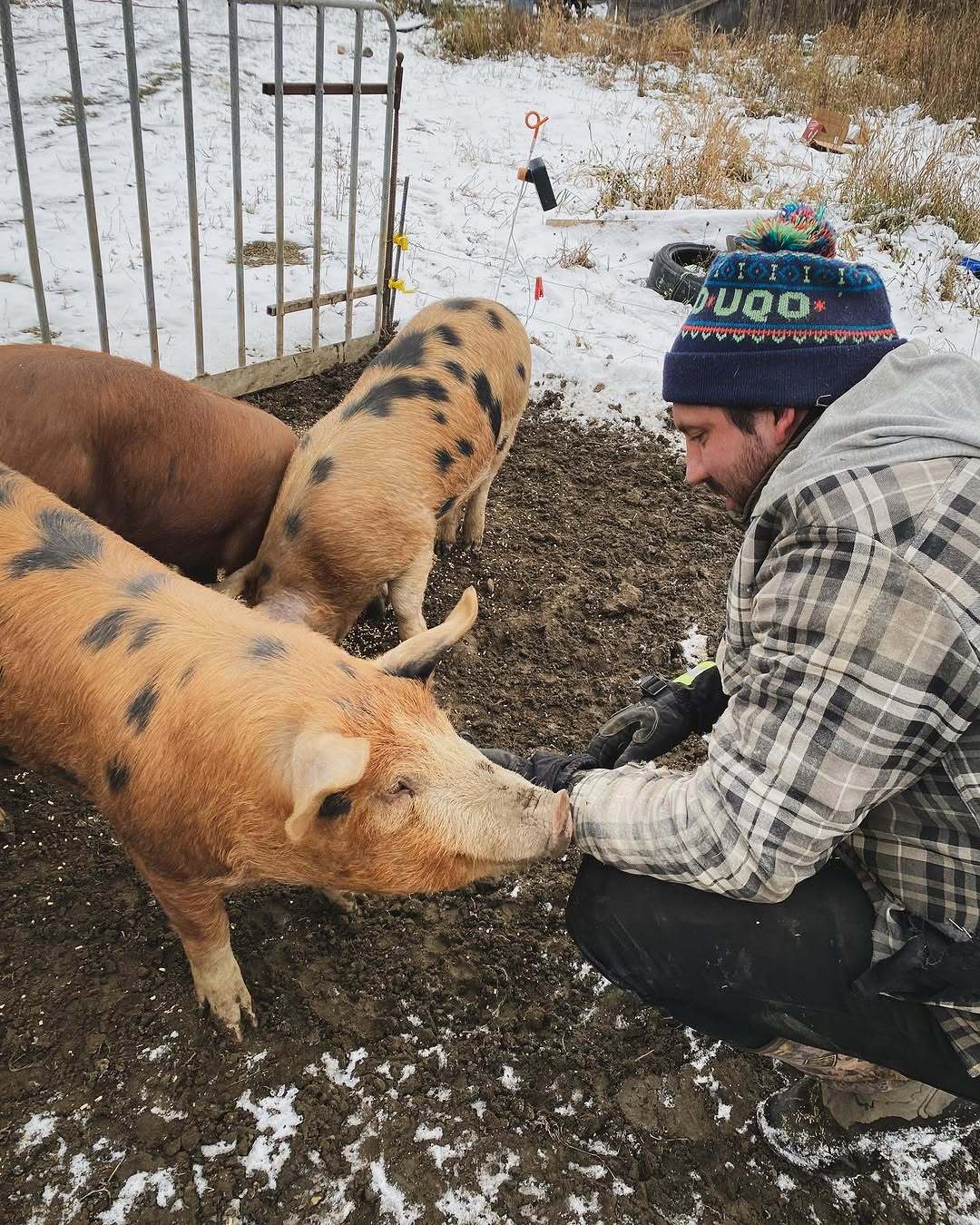
    So he became a farmer, purchasing 220 acres of land in his hometown in Quebec. And the first animals he acquired were pigs.

    “I played for the IronPigs for the longest of times, and I remember we used to always get those bacon slices,” said the 37-year-old Aumont, who spent five summers in Allentown with the Phils’ triple A team. “Now, I was like, ‘Well, I can probably produce pig meat for the IronPigs’. That would be hilarious. I used to wear my IronPigs gear to go and wrestle the pigs and move them.”

    Even as a farmer 400 miles from the Lehigh Valley, Aumont was reminded of baseball. Shaping his new identity was not as easy as purchasing land.

    “To be honest, it took longer than I thought to get comfortable,” Aumont said. “You’re stepping away from the game because you’re like, ‘This is enough. There’s plenty of stuff in the world to do. I have a family now. I want to do other things.’ But the baseball player inside never dies. It’s fun, but it also feels like a curse. You can’t let him go. It was you your whole life. But you have to let him go. It took me a while.”

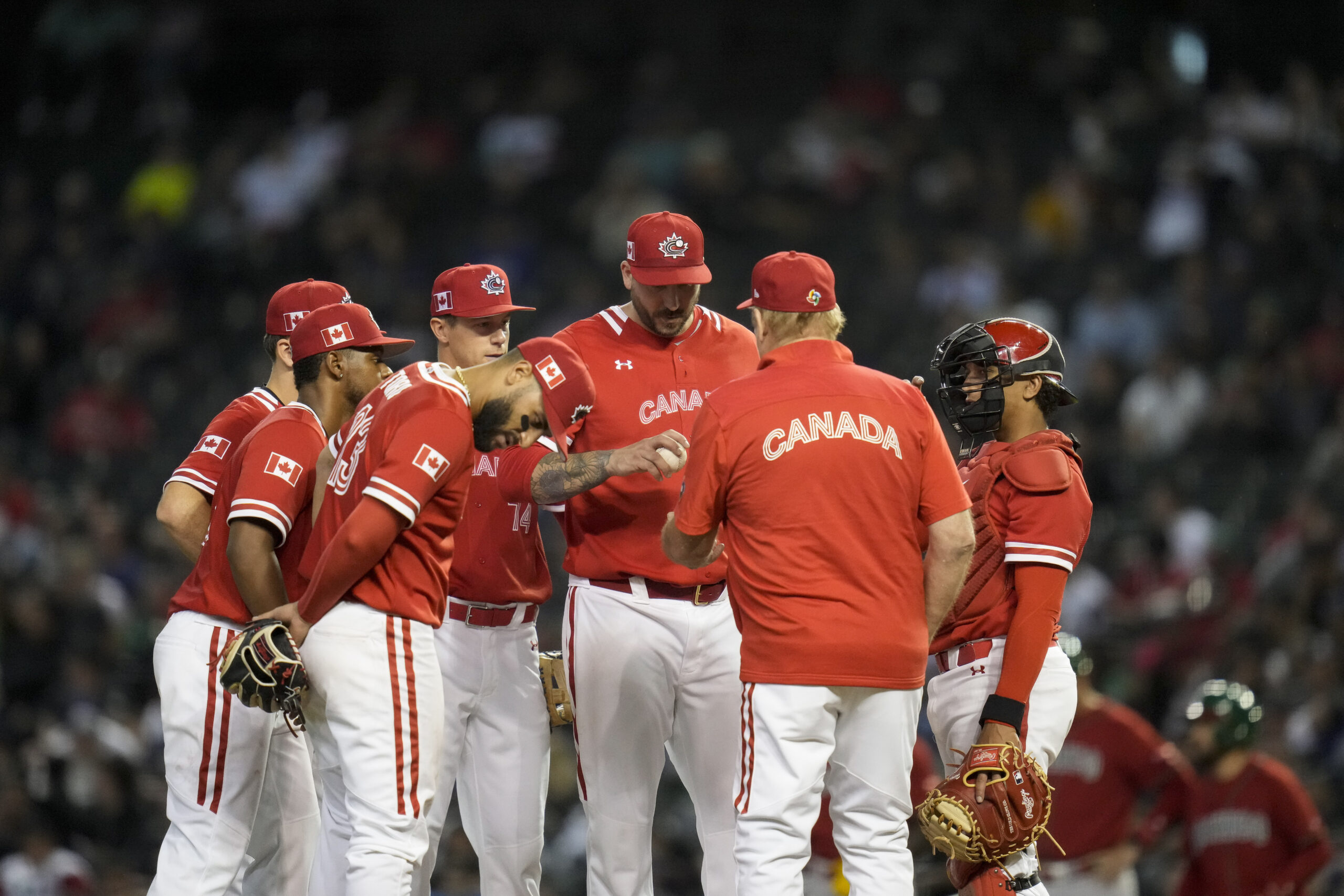
    Phillippe Aumont (middle) pitched for Team Canada during the 2023 World Baseball Classic.

    Aumont hangs his old Phillies jerseys in a closet and still has his baseball cards. His baseball life is finally behind him, but his arm is not yet done. He’ll pitch this month in the World Baseball Classic for Team Canada, which plays Wednesday in an exhibition against the Phillies in Clearwater, Fla. Aumont is scheduled to pitch against the Phils.

    Aumont last pitched there in 2015 as a Phillie struggling to hold onto a dream. He’ll return this week with a new perspective.

    “Let’s say you see Daniel Radcliffe and you’re going to be like, ‘Holy s—. That’s Harry Potter.’ But, no, it’s Daniel Radcliffe,” Aumont said. “It was always, ‘Hey, Phillippe. He’s the guy who plays for the Phillies.’ There was no human to it. At some point, you’re like, ‘OK, I need to make a separation, and I need to find an identity.’”

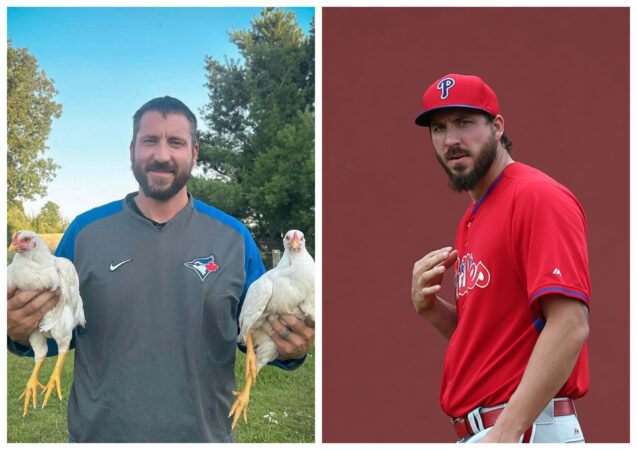
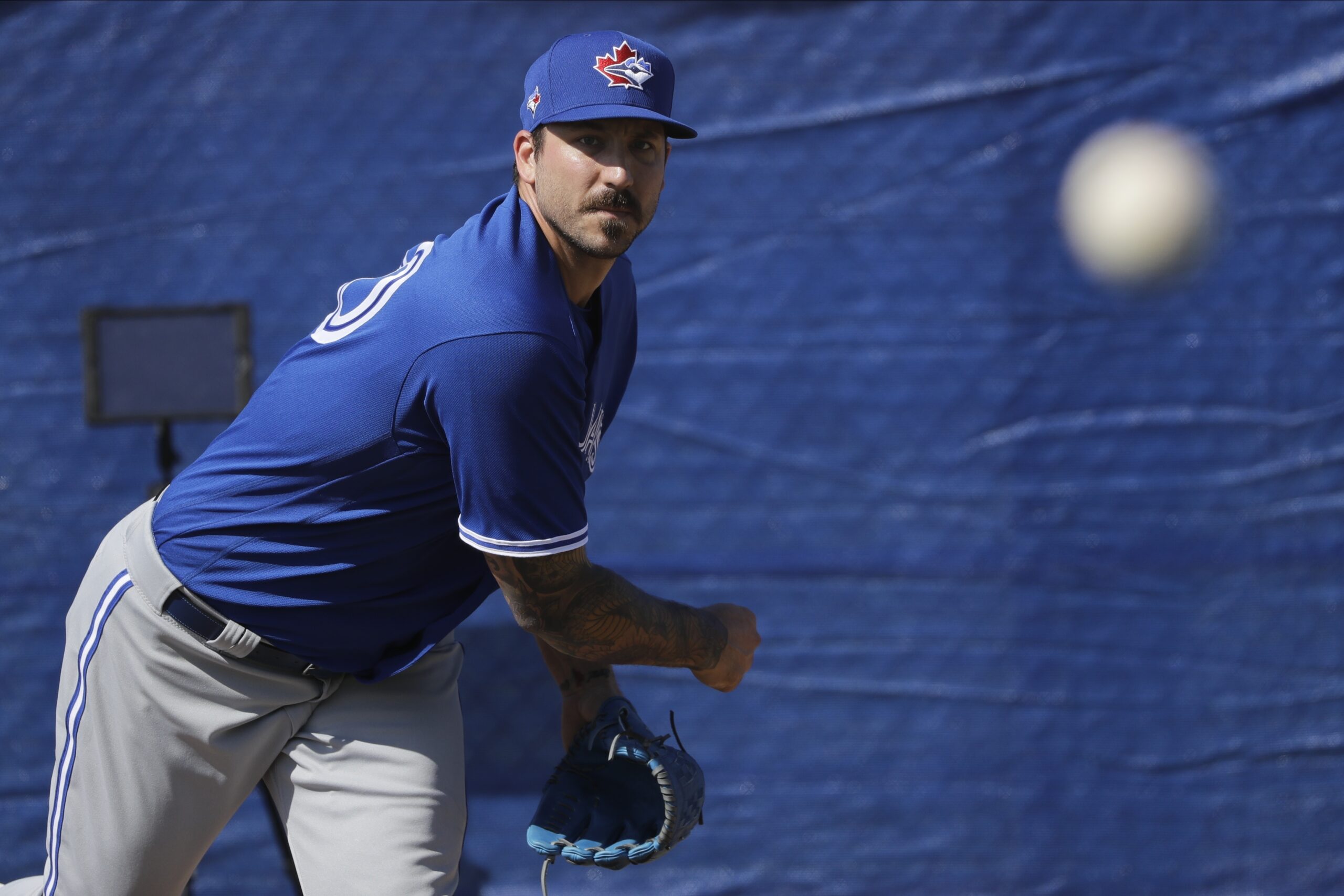
    Phillippe Aumont wrapped up his career on a minor league deal with the Blue Jays in 2020.

    Leaving the game

    Aumont spent spring training in 2020 with the Toronto Blue Jays on a minor league deal after spending the previous season with an independent-league team in Ottawa. It seemed like one last shot to keep his career churning. The pandemic closed spring training, and Aumont returned to Canada.

    His first daughter was born the previous summer, making the baseball lifestyle — “hotels, planes, trains, buses, big cities,” Aumont said — harder to fathom. So when a farm in his hometown of Gatineau, Quebec, hit the market that summer, Aumont and his wife, Frédérique, pounced. They already had planned to buy a ranch, as Frédérique grew up riding horses. Buying the farm accelerated their plans. Aumont told the Blue Jays he was finished.

    “I loved baseball, but I didn’t love it as much as I loved my kid,” Aumont said. “I just felt like there was a shift in priority back then, and I made a decision based on that. No regrets. Sometimes, I’m like, ‘Damn, I could still be playing. I could’ve turned it around somewhere else and kept the career going.’ But, no. I own up to my decisions, and I think they were the best at the time.”

    The Aumonts named their farm La Ferme Pure Alternative, and their introduction seemed easy, as Aumont said prices were low during the pandemic.

    “It was, like, more expensive to buy water than gas back then,” Aumont said.

    But that soon changed. The expenses of farming caused the couple to shift plans. They no longer grow crops, instead leasing land to farmers who do. The Aumonts raise chickens, rabbits, and pigs and sell meat. They also have horses.

    “I was raised on real meat. I’m going to die on real meat,” Aumont said. “We’re going to try to produce clean food as much as we can for a decent amount of money. We’re not trying to sell filet mignon for 75 bucks a pound. We’re slowly doing the things that we want on the farm, and hopefully it grows to something bigger and nice when we do retire, or if we ever retire. Or we just hand it to our daughters.”

    Former Phillies pitcher Phillippe Aumont at home on his farm in Quebec.

    The farm is just 30 minutes from Ottawa, which Aumont said is close enough to be near a major city but far enough to feel secluded. He no longer plays baseball or keeps his arm loose, but there’s a facility near his farm where he worked out a few weeks before joining Team Canada. This month’s World Baseball Classic is Aumont’s second WBC with the Canadian team since he retired. He knows how to get ready.

    Aumont keeps up with the farm while working an administrative job with the Canadian government and finishing schoolwork to become a building inspector. He’s no longer just a baseball player.

    “It’s fun,” Aumont said. “I get to take that guy with me once again, and then I come back home, put him back in the box, and move on to being a husband, dad, and friend.

    “It’s our lives. It’s how we wake up everyday. When people come here, they’re like, ‘Wow, it’s quiet.’ This is our daily life. It was definitely a culture shock when we first came. Now I just wake up to the sound of the rooster.”

    Phillippe Aumont made 46 appearances with the Phillies over parts of four seasons from 2012-15.

    Finding peace

    Aumont ended spring training in 2015 by packing his belongings in a red duffel bag and walking across the Phillies’ complex to the minor league camp. Six years earlier, he was acquired as part of the return in the trade that sent Cliff Lee to Seattle. But he could not crack the opening day roster for a team that lost 99 games. It was difficult.

    He’s been to Clearwater as a fan since that afternoon — “I sat in center field,” he said — but has not yet pitched there in a game since his time with the Phillies ended. He could do that on Wednesday with Team Canada.

    “I’m actually already nervous about it,” Aumont said. “I do have butterflies. I can’t hide it. It’s going to be emotional. I don’t know if I’ll be happy or sad. I don’t know.”

    He hasn’t been back to Allentown, either, but would love to visit the Chipotle near the ballpark where he said he “definitely paid a few months’ rent.” And then maybe he could get back to Philadelphia, where his final big league appearance came in June 2015 with a painful four-inning start against St. Louis. Aumont became a free agent a few days later and spent the next five seasons bouncing around the minor leagues.

    “Philly will always have a special place in my heart. It’s always a place where it’ll be warm to my heart,” Aumont said. “I do hope I get to go back and enjoy it from the outside with the family, and my daughters can see where I was playing one day. I’m looking forward to going back one day just as a fan. I’m not looking to get attention or anything. I just would love to go back, feel those memories, and go back down memory lane and enjoy it once again.”

    And if Aumont ever makes it back to Philadelphia, he’ll be more than just a baseball player this time.

    “We’re just doing the small things,” Aumont said. “We enjoy peace. We get our bits of society interaction when we want to. Other than that, we stay on the farm and raise our two daughters and produce our own meat. Then I play baseball when they need an old 37-year-old retired guy.”