Author: Jesse Bunch

  • Man steals bike from SEPTA bus before shooting a man dead in Southwest Philadelphia, police say

    Man steals bike from SEPTA bus before shooting a man dead in Southwest Philadelphia, police say

    A 19-year-old man was arrested and will be charged with homicide in the fatal shooting of another man in Southwest Philadelphia on Wednesday night, according to police.

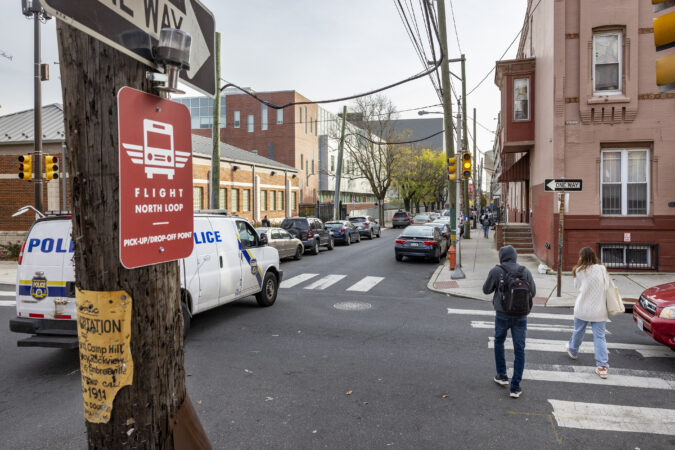
    The shooting occurred at 66th Street and Dicks Avenue just after 10 p.m.

    The suspect, whom police did not immediately identify, had just stolen a bicycle from a SEPTA bus at a nearby intersection, police said, when he encountered the man he later shot, also a 19-year-old whom police did not identify.

    Police responded to the scene to find the victim unresponsive with a gunshot wound to the throat. He was taken to Penn Presbyterian Medical Center and pronounced dead around 10:20 p.m.

    The shooter fled after robbing a second person of an electric bicycle, police said.

    Investigators tracked the shooter to 84th Street and Bartram Avenue, where they took him into custody and recovered a firearm, police said.

  • A Bucks County bust that ‘dismantled’ a drug ring yielded 8 guns and $4 million in drugs, officials say

    A Bucks County bust that ‘dismantled’ a drug ring yielded 8 guns and $4 million in drugs, officials say

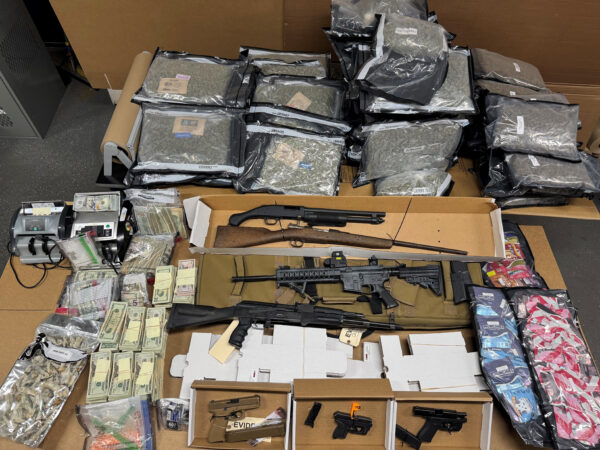
    Bucks County prosecutors charged a man who fired a gun at police during a narcotics operation this month with attempted murder and related crimes, authorities said Tuesday. It was the latest development in a multistate investigation that led to the recovery of eight firearms and $4 million in drugs.

    Police arrested the man, Nicholas Sperando, 26, of Philadelphia, on Jan. 15 after the shooting at his rowhouse on Fairdale Road in Northeast Philadelphia, according to Bucks County District Attorney Joe Khan’s office.

    Sperando’s home was one of several locations involved in an extensive drug-trafficking organization, officials said.

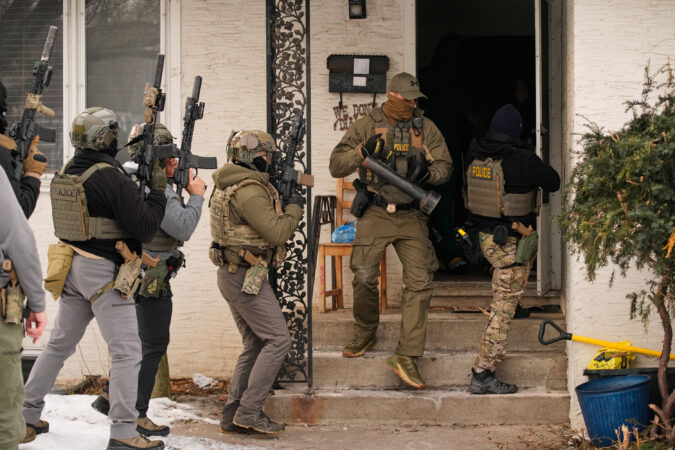
    After announcing their intent to serve a warrant at Sperando’s home that day, agents with the Pennsylvania Attorney General’s Office and Pennsylvania state troopers prepared to breach Sperando’s door with a battering ram.

    Instead, they were met with gunfire from inside the home.

    After firing a round, Sperando fired a second shot through the front door, “directly targeting the position where the officers had been standing,” officials said.

    No officers fired their weapons or were injured in the operation.

    “This cowardly act against our officers was an attack on the rule of law, and our office will always protect those who risk their lives to protect us, even when that happens across county lines,” Khan said when announcing the charges.

    Sperando surrendered during the incident and is being held without bail on two counts of attempted murder and attempted murder of a law enforcement officer, as well as three counts of aggravated assault and related drug crimes.

    The arrest, Khan’s office said, was the culmination of a monthslong investigation that “dismantled” a multimillion-dollar trafficking organization.

    For months, authorities said, undercover officers had purchased drugs from Sperando in Levittown and Northeast Philadelphia. Bucks County officials asserted control of the Philadelphia jurisdiction for the sake of their investigation, according to officials.

    Investigators searched Sperando’s residence and recovered a FN Herstal 5.7 pistol that they said was used in the shooting — including a live round jammed in the gun, which, in prosecutors’ view, likely prevented fatalities among law enforcement officers.

    Meanwhile, authorities said, investigators found a variety of controlled substances and other weapons located across Sperando’s residence, his place of work on James Street, and a stash house on Day Street.

    At the Day Street house, officers arrested another man, David Tierney, who they say was also involved in the operation.

    Investigators said they seized an AR-style rifle, a Glock handgun with extended magazine, and bulk quantities of marijuana and proceeds from drug sales from Sperando’s home, while the alleged stash house yielded a firearm found under a pillow and a trailer containing “enormous quantities” of marijuana and THC vaporizers.

    At Sperando’s workplace, which officials did not name, officers recovered a Mossberg pump shotgun, a Ruger .380 pistol, and a “significant supply” of psilocybin mushrooms and edibles, authorities said.

    In all, officials said, the operation yielded 300 pounds of marijuana and 17,000 vaporizers, as well as 80 pounds of THC concentrate, 600 bags of THC edibles, 15 pounds of mushrooms, 75 mushroom edibles, 300 Adderall pills, and two ounces of cocaine.

    Sperando is being held in custody without bail. Tierney is being held on $250,000 bail. A third suspect in the operation, Nicholas Keenoy, surrendered to authorities on Tuesday.

  • ‘The favorite Auntie’: Woman who died after a car struck her wheelchair remembered at sentencing for the vehicle’s driver

    ‘The favorite Auntie’: Woman who died after a car struck her wheelchair remembered at sentencing for the vehicle’s driver

    She was more than just an unhoused person.

    That’s the way Sharon Cary-Irvine would like the world to remember her sister, Tracey.

    In 2024, Tracey Cary was struck and killed by a 39-year-old driver in Lower Merion as she crossed City Avenue in a wheelchair.

    The driver, Jamal McCullough, assessed his vehicle for damage before fleeing the scene without helping her or calling police, prosecutors said. He turned himself in to authorities after reports of the collision — and his photograph — aired across local news outlets.

    On Friday, McCullough was sentenced in Montgomery County Common Pleas court to serve three to six years in a state prison, the mandatory minimum for such a crime. While prosecutors said he was not at fault in the fatal collision because Cary was crossing outside of a posted crosswalk, they said his actions after the crash were criminal.

    For Cary-Irvine, the hearing was a chance to offer the public a more complete image of her late sister.

    Cary, 61, was an avid reader who loved children, traveling, and the outdoors, according to Cary-Irvine. She was a fan of spelling bee competitions, and she had a sense of humor: she was known for calling up her nieces and nephews and speaking to them as Cookie Monster, her sister said.

    “She had a love of people — babies were her specialty,” Cary-Irvine said. “She was the favorite Auntie. To know Tracey was to love Tracey.”

    Cary was also a mother to a son who is in his 20s, her sister said, and she held a variety of jobs throughout her life, working for the Philadelphia School District, St. Joseph’s University, and later UPS.

    She was a singer of gospel songs, and grew up attending Union Tabernacle Baptist Church in West Philadelphia.

    Before Cary’s death, the siblings’ father died from COVID-19, leading Cary to struggle with mental illness, her sister said. Soon she was living on the street.

    It was on the street where McCullough struck Cary shortly after 2 a.m. on Nov. 11, 2024.

    Surveillance footage showed that McCullough, of East Germantown, struck Cary with enough force to eject her from her wheelchair. After checking on his vehicle, he walked within feet of Cary’s body but did not stop to help her, prosecutors said.

    The father of two was en route to a shift as a sanitation worker with Waste Management.

    During his sentencing, McCullough apologized for the incident, which he said was an accident.

    “I want to apologize for my ignorance, apologize for maybe how I went about things,” McCullough said.

    “If I could take it back, I definitely would.”

    Minutes earlier, Cary-Irvine read a victim impact statement aloud, telling the court that, in her view, McCullough acted “entitled and without remorse” that morning.

    “This sentence is not about revenge — it’s an opportunity, perhaps your last, to reflect honestly on your life,” Cary-Irvine told McCullough.

    “If you do not learn from your mistakes,” she continued, “you will repeat them.”

  • Three people targeted, two of them Temple University students, in armed robberies near campus this week

    Three people targeted, two of them Temple University students, in armed robberies near campus this week

    A Temple student and another individual not associated with the university were robbed by armed men near the school’s North Philadelphia campus early Thursday, according to university officials.

    Around 1:30 a.m., the Temple student was walking near the 1500 block of Oxford Street when two men approached with a handgun and stole the student’s phone, Jennifer Griffin, Temple’s vice president for public safety and chief of police, said in a statement.

    The men ran off and fired one shot in the air as they fled.

    Minutes earlier, in a separate incident several blocks away, those men robbed another individual, stealing that person’s phone, near the 1300 block of Carlisle Street.

    The robberies were the second instance of phone theft near Temple’s campus this week.

    Around 6:15 a.m. on Wednesday, a man with a handgun approached a Temple student walking on the 1800 block of West Montgomery Avenue and stole that person’s phone, Griffin said in an earlier statement.

    The robber fled north on 18th Street. No arrests have been made in the incidents.

    On Thursday, Griffin announced that Temple and Philadelphia police would be coordinating a concentrated presence in the area as both departments investigate the robberies.

    “Incidents like this are deeply troubling,” Griffin said.

    Later in the day, Temple’s public safety department released an image of two suspects wanted in connection with Thursday’s robberies, urging anyone who recognized them to contact Investigations@temple.edu or call 215-204-6200.

    Griffin also highlighted that students who were affected by the incidents may use the campus’ walking escort program, its nighttime fixed-route shuttle service, and the school’s personal safety app.

  • Man found dead in shuttered senior housing complex was electrocuted, authorities say

    Man found dead in shuttered senior housing complex was electrocuted, authorities say

    A man died after being electrocuted inside a dilapidated West Philadelphia senior housing complex Wednesday morning, authorities say.

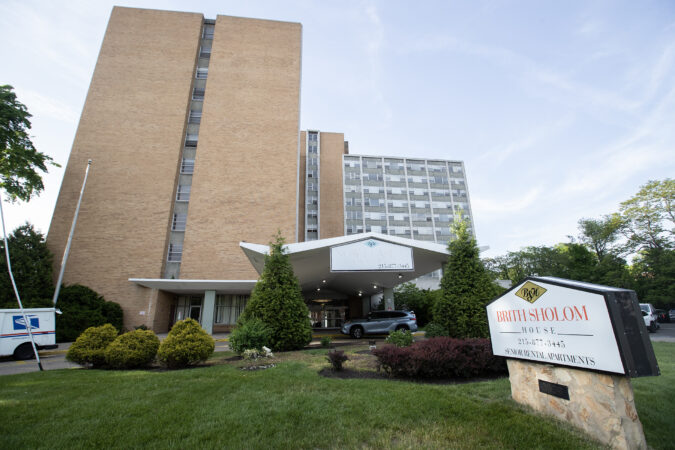
    The discovery came a day after city officials touted a $50 million investment into the vacant property, the Brith Sholom House,which is owned by the Philadelphia Housing Authority and has been shuttered since August 2025.

    The man’s body was found around 5:45 a.m. after police were called to the property, located on the 3900 block of Conshohocken Avenue.

    The man, whom police did not identity, was pronounced dead at the scene at 6:40 a.m.

    Kelvin A. Jeremiah, president and CEO of the Philadelphia Housing Authority, said the complex’s doors and windows on the lower floors have been sealed since tenants left the property, though there have been several instances in which individuals managed to enter in an attempt to steal copper wiring from within the structure.

    Early Wednesday morning, a 911 call was placed from Brith Sholom by a man who told police that a contractor had gotten hurt on the job and needed assistance, Jeremiah said.

    But Jeremiah said the housing authority had not authorized any such work, and no one was permitted on the property at the time.

    The housing authority later learned that the man was electrocuted and died after he tried to strip copper wire from the complex’s basement. The body was found next to the switch gears, Jeremiah said.

    The CEO suspects the person who called 911 was an accomplice in the break-in, though police are still investigating.

    The housing authority’s security cameras were not active during the incident because much of the building’s power is off, and other cameras have been destroyed by bad actors, according to Jeremiah.

    He said the individuals might have used a ladder to enter the complex through the third floor.

    Just a day earlier, Brith Sholom received a much different sort of attention.

    On Tuesday, Mayor Cherelle L. Parker announced that the city’s powerful building trades unions would offer PHA a sizable loan to redevelop the complex, which the housing authority purchased from its former owners in 2024 in order to preserve it.

    Prior to the sale, tenants had complained of rampant neglect and repeated code violations, including deteriorating infrastructure, threats of utility shutoffs, squatters, and severe pest infestations.

    After PHA acquired the property, it initially told its 111 residents they could remain in their units. But upon discovering some units were damaged beyond repair, officials told those residents they would need to move out and return at a later date.

    The Brith Sholom project, when completed, is expected to add 336 affordable units for seniors on fixed incomes, Parker said in her announcement Tuesday.

    The mayor cast the complex’s revival as a first-of-its-kind approach to expanding the city’s affordable housing stock, one that would help her administration reach its goal of building, redeveloping, or preserving 30,000 units.

  • Chester County man who abused and tortured his daughter, killing her, pleads guilty to murder and is sentenced to life in prison

    Chester County man who abused and tortured his daughter, killing her, pleads guilty to murder and is sentenced to life in prison

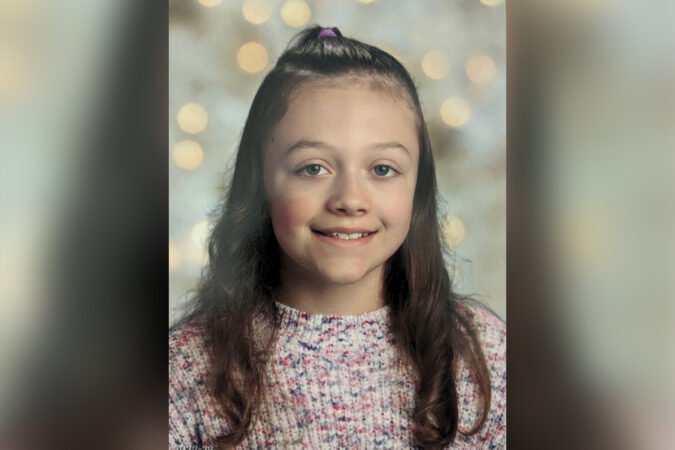
    By all accounts, Malinda Hoagland was the kind of 12-year-old girl who would make any parent proud.

    She received A’s in school, loved unicorns and going to Wawa with her older sisters, and wrote her lunch ladies notes thanking them for stocking the cafeteria with applesauce and milk.

    But her father, Rendell, clearly didn’t see that little girl, prosecutors said Friday in Chester County Court.

    Instead, Rendell Hoagland and his fiancee, Cindy Marie Warren, tortured Hoagland’s daughter for months in their West Caln home, depriving her of food and medical care.

    They chained her to furniture and forced her into stress positions for hours, beating her if she moved or displeased them.

    Once, when the girl forgot her jacket at school, they forced her to do push-ups in the kitchen late at night, striking her with a belt. Other times, the beatings came with a metal spatula.

    The lack of care ultimately killed Malinda in May 2024.

    Medical examiners found the girl died from severe malnutrition, her organs atrophied from starvation. More than 70 bruises, ulcers, and sores riddled her body, which by then weighed just 50 pounds.

    It was the rare type of crime that brought tears even to a judge’s eyes.

    On Friday, that judge, Anne Marie Wheatcraft, accepted a guilty plea from Hoagland on one count of first-degree murder and related crimes. The 54-year-old will be confined in prison for life without the possibility of parole.

    “This was calculated, sustained cruelty inflicted on an innocent child,” said Malinda Hoagland’s maternal aunt, Christine Mayrhauser, as the girl’s family read tearful victim impact statements.

    Rendell Hoagland, a bald man whose size tested the limits of a red prison jumpsuit, gazed on.

    “A quick execution is too good for him,” Mayrhauser said.

    Warren is also charged with first-degree murder and related crimes. Her trial, scheduled for early January, has been delayed and she will receive a pretrial hearing in May.

    Lead prosecutor Erin O’Brien described Malinda Hoagland’s final years as a period of abuse no child should ever endure.

    After Rendell Hoagland separated from his wife, he received custody of Malinda in 2020 and moved with the girl from Monroe County to West Caln.

    He enrolled the girl at school, but she soon began missing day after day of classes. By 2023, Hoagland had pulled Malinda out of school entirely, and she was completing school online under his and Warren’s near-constant supervision.

    After the girl’s death in 2024, investigators recovered photos, videos, and text messages from both Hoagland and Warren that detailed the girl’s horrific life at home.

    She was often chained to an air hockey table or other pieces of furniture, even sleeping there, O’Brien said, or made to run in place or do jump squats at Hoagland and Warren’s command.

    They punished her with scalding showers and ice baths, forced her to hold books over her head for hours, and poured hot sauce down her throat. The couple monitored the girl through security cameras they had installed throughout the home.

    They also kept locks on the refrigerator and snack cabinet, and the girl lost more than a third of her body weight in the last two years of her life. She was often sleep-deprived or suffering open wounds; by the end of her life, she struggled to do her homework because of her eye injuries, O’Brien said

    The abuse ended only with death, prosecutors said.

    On May 3, 2024, Hoagland called 911 claiming that Malinda had fallen off her bike and had lost consciousness at a campground in Quarryville.

    But prosecutors say that the girl had been unconscious for hours, and that Hoagland had driven to CVS the night before, looking for smelling salts in an attempt to wake her up. He propped up the girl’s body so that she did not raise the suspicions of passersby.

    It was a common pattern in attempted cover-ups, O’Brien said, and Hoagland and Warren were also known to use makeup to cover up the girl’s bruises for the few people they allowed to see her.

    One of the last people to see Malinda Hoagland alive was William Delmedico, an emergency medical responder who wrapped the barely conscious girl in his sweatshirt as he rushed her to a hospital, where she died after surgery.

    “I kept telling her she’s not alone, she’s loved, and that we’re doing everything possible to help her,” Delmedico told the court, his voice breaking.

    Hoagland and Warren managed to keep the abuse hidden from Malinda’s extended family, prosecutors said, including her three older sisters, his biological children. The women were not living in Southeastern Pennsylvania during the time of the abuse, they said.

    In addition to murder, “You should also be facing several counts of robbery,” said Emily Lee, Malinda Hoagland’s older sister, addressing her father. “You robbed my baby sister’s future. You took a life she deserved.”

    Jamie Hoagland, another sister, said she begged her father for access to Malinda, sending her sister cards and gifts and playing Minecraft with her online when possible.

    “I fought for every inch of communication,” Jamie Hoagland said. She later lamented: “Instead of taking her to the movies, I visit her grave.”

    When given the chance to speak, Rendell Hoagland told Wheatcraft he had “nothing to say at this time.”

    Wheatcraft said she was not surprised that Hoagland did not express remorse.

  • ‘Some sort of connection’: Police investigating whether three Philly slayings tied to towing industry are related

    ‘Some sort of connection’: Police investigating whether three Philly slayings tied to towing industry are related

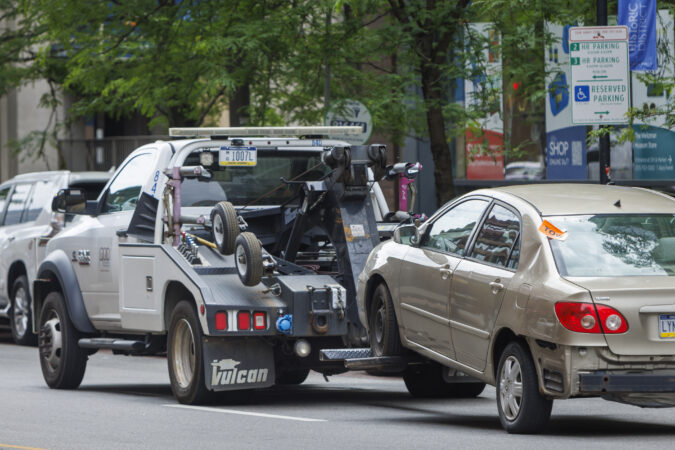
    Philadelphia police are investigating whether the separate slayings of three men, all of whom worked in the city’s towing industry, are connected, authorities said this week.

    Two of the men, who were shot and killed in December and January respectively, worked as truck operators for the Jenkintown-based company 448 Towing and Recovery, according to police.

    The other man, who was shot and killed in November, is connected to a different towing company and worked as a wreck spotter.

    Investigators began looking at a possible connection between the killings after the shooting death of 25-year-old Aaron Whitfield Jr. on Sunday, according to Lt. Thomas Walsh of the department’s homicide unit.

    “On the surface, there’s obviously some sort of connection,” Walsh said.

    Whitfield was in a tow truck with his girlfriend outside of a Northeast Philadelphia smoke shop near Bustleton Avenue and Knorr Street that evening when two men pulled up in another vehicle. They fired at least a dozen shots at the truck before speeding off.

    Whitfield died at the scene, while the woman was hospitalized with gunshot wounds to the leg.

    The shooting came after another 448 Towing and Recovery driver, David Garcia-Morales, was shot on Dec. 22 while in a tow truck on the 4200 block of Torresdale Avenue, according to police.

    Police arrived to find Morales, 20, had been struck multiple times. They rushed him to a nearby hospital, where he died from his injuries on Dec. 26.

    While Walsh could not conclusively say whether investigators believe the killings were carried out by the same person or by multiple individuals, he noted that two different vehicles had been used in the crimes.

    One of those vehicles, a silver Honda Accord used in the shooting of Whitfield, was recovered earlier this week after police found it abandoned in West Philadelphia, Walsh said.

    Meanwhile, police are investigating whether the shooting death of 26-year-old Aaron Smith-Sims in November may also be connected to the killings of Whitfield and Garcia-Morales.

    Smith-Sims, who Walsh said was connected to a different towing company, died after he was shot multiple times on the 2700 block of North Hicks Street in North Philadelphia the morning of Nov. 23.

    Investigators are now looking to question the owners of both towing companies involved, according to Walsh.

    So far, they have failed to make contact with the owner of 448 Towing and Recovery.

    “Obviously the victims’ families are cooperating,” Walsh said. “They’re supplying all the information that they have.”

    An industry that draws suspicion

    Philadelphia’s towing industry can appear like something out of the Wild West, with operators fiercely competing to arrive first at car wrecks and secure the business involved with towing or impounding vehicles.

    Police began imposing some order on the process in 2007, introducing a rotational system in which responding officers cycle through a list of licensed towing operators to dispatch to accident scenes.

    But tow operators often skirt that system, employing wreck spotters — those like Smith-Sims — to roam the city and listen to police scanners for accidents, convincing those involved to use their service before officers arrive.

    The predatory nature of the industry and, in some cases, its historic ties to organized crime make it rife with exploitative business practices and even criminal activity.

    But Walsh cautioned the public against jumping to conspiracy theories about the killings, which have proliferated on social media in the days after Whitfield’s death and the news of a possible connection between the murders.

    Those suspicions aren’t entirely unwarranted.

    In 2017, several employees who worked for the Philadelphia towing company A. Bob’s Towing were shot within 24 hours of one another — two of them fatally.

    Police and federal investigators later arrested Ernest Pressley, 42, a contract killer who was sentenced to life in prison after pleading guilty to killing six people between 2016 and 2019.

    Pressley admitted to accepting payment in exchange for killing one of the towing employees, 28-year-old Khayyan Fruster, who had been preparing to testify as a witness in an assault trial.

    Pressley shot Fruster in his tow truck on the 6600 block of Hegerman Street, killing him and injuring one of his coworkers.

    And in an effort to mask the killing — and to make it appear as if it had been the result of a feud between towing operators — Pressley earlier shot and killed one of Fruster’s coworkers at A. Bob’s Towing at random, according to prosecutors.

  • Haverford Township bars police from cooperating with ICE in noncriminal immigration enforcement

    Haverford Township bars police from cooperating with ICE in noncriminal immigration enforcement

    Haverford Township officials voted this week to bar the township’s police department from cooperating with U.S. Immigration and Customs Enforcement in the agency’s civil deportation efforts.

    Township commissioners overwhelmingly approved the resolution, which says Haverford police officers and resources will not be made available for ICE’s 287(g) program. The nationwide initiative allows local police departments to perform certain federal immigration duties, should they choose to enter an agreement with the agency.

    The Monday evening vote came after a weekend of anti-ICE protests in cities across the country spurred by the fatal shooting of 37-year-old Renee Good by an immigration agent during an enforcement operation in Minneapolis.

    On Wednesday, Bucks County’s sheriff ended the department’s own 287(g) agreement with ICE, saying the “public safety costs” of the partnership vastly outweighed the benefits.

    “The last thing I want to see happen is that our relationship with our police department be hurt by the reckless and criminal activity of ICE,” Haverford Commissioner Larry Holmes said before the vote. “We have the power to prevent that.”

    Local law enforcement agencies that enter a 287(g) agreement with ICE are offered a variety of responsibilities and trainings, such as access to federal immigration databases, the ability to question detainees about their immigration status, and authority to issue detainers and initiate removal proceedings.

    The program is voluntary and partnerships are initiated by local departments themselves, though some Republican-led states are urging agencies to enter them. The Department of Homeland Security recently touted that it has more than 1,000 such partnerships nationwide, as the Trump administration continues to make a sweeping deportation effort the focus of its domestic policy.

    Critics such as the American Civil Liberties Union say the program turns local departments into an “ICE force multiplier” and that the agreements, which require officers to shift from local to federal duties, are a drain on time and resources.

    Haverford Township’s police department has not made any request to initiate such an agreement with ICE, according to commissioners, who called the resolution a preemptive measure. While ICE has ramped up enforcement in Philadelphia and in surrounding communities like Norristown, there have not been sizable operations in Delaware County.

    Judy Trombetta, the president of the township’s board of commissioners, said the resolution was about protecting the civil liberties of those living in Haverford, as well as the township’s public safety.

    In Trombetta’s view, a 287(g) agreement could mean those without legal immigration status could be deterred from reporting crimes to Haverford police or showing up to court hearings, while leaving officers confused about their own responsibilities.

    And as a township, she said, it is “not our role” to act as federal immigration agents.

    “It’s our job as a township to keep people safe, [to] uphold the Constitution,” Trombetta said.

    Commissioners voted 7-2 to approve the resolution.

    The motion still requires Haverford police to cooperate with federal immigration agencies in criminal investigations. But because many cases involving those living in the country illegally are civil offenses, much of ICE’s activities are exempt.

    Commissioner Kevin McCloskey, voicing his support for the resolution, said the week after Good’s killing had been “incredibly taxing on the American people,” and in his view, it was important to adopt the resolution even if ICE wasn’t active in the community.

    But for Commissioner Brian Godek, one of the lone holdout votes, that reality made the resolution nothing more than “political theater.”

    Tensions over Good’s killing were on full display during the meeting, as both the resolution’s supporters and detractors filled the seats of Haverford’s municipal services building.

    “I do not want my tax dollars or Haverford’s resources to be used to support a poorly trained, unprofessional, and cruel secret police force that is our current federal U.S. Immigration and Customs Enforcement agency,” said resident Deborah Derrickson Kossmann.

    Brian Vance, a resident and a lawyer who opposed the resolution, said he was approaching the matter like an attorney. He questioned whether noncompliance with a federal department would open up the possibility of lawsuits, or the federal government withholding funds for the township.

    “It’s legal, it’s proper, whether we agree with it or not,” Vance said of ICE’s authority.

    After the vote, McCloskey, the commissioner, made a plea for unity to those divided over the issue.

    That included residents who said the resolution’s supporters had gotten caught up in the “emotion” of the Minneapolis shooting.

    “I just ask that you take a step back,” McCloskey said. “On some level, we should all be able to appreciate that none of us wanted to see a 37-year-old mother in a car get shot.”

  • ‘He snapped’: Lawyers offer differing accounts of fatal stabbing of Bucks woman

    ‘He snapped’: Lawyers offer differing accounts of fatal stabbing of Bucks woman

    The trial of a 25-year-old Bucks County man charged with stabbing his former girlfriend to death in front of a police officer last year began Tuesday with differing accounts from lawyers about what happened on that February day.

    Prosecutors say Trevor Christopher Weigel, of Churchville, broke into the Yardley home of 19-year-old Jaden Battista in February 2024 with the goal of stabbing the young woman to death.

    The couple had broken up months before, prosecutors said, and Weigel became enraged after learning that Battista had blocked his phone number.

    In all, prosecutors say Weigel stabbed Battista 13 times throughout her upper body, leaving her bleeding outside the home just as police arrived.

    “If he couldn’t have her, nobody was going to have her — and he made sure of it,” Assistant District Attorney A.J. Garabedian told jurors Tuesday in a Bucks County courtroom.

    Garabedian said prosecutors have a variety of evidence showing Weigel broke into the house, where Battista was on a FaceTime call with her friend at the time. The friend called 911, spurring Lower Makefield police to respond while Weigel led Battista to his car, prosecutors said. With the passenger door open, prosecutors said, Weigel began chasing Battista and stabbed her repeatedly.

    A police officer captured Battista’s final breaths on a body-worn camera, they said.

    Meanwhile, Weigel ran away, and another officer chased him on foot to the nearby Interstate 295 freeway as the young man repeatedly stabbed himself in the neck. Police used a Taser to subdue and apprehend him.

    Prosecutors later charged Weigel with first-degree murder, burglary, attempted kidnapping, and related crimes.

    Weigel’s defense lawyers, meanwhile, disputed the prosecution contention that the couple had split. Lead defense attorney Brian McBeth told jurors Weigel had not left his house that morning planning to kill Battista. Rather, he said, Weigel had acted in response to the “soul-crushing” realization that the young woman had cheated on him.

    McBeth said that did not excuse Weigel’s actions. But he urged jurors to question prosecutors’ suggestion that the crime was premeditated and consider whether Weigel had committed involuntary manslaughter, a lesser crime that does not carry the same penalties as first-degree murder.

    In prosecutors’ telling, Weigel had left his job at a Warminster manufacturing plant that afternoon with a clear intent to kill.

    They said Battista, still on a video call with her friend when Weigel arrived, became distressed as he banged on the door and demanded to be let inside. The friend told Battista to run and hide, prosecutors said.

    Weigel lied to Battista, prosecutors continued, telling her he wanted to come inside to collect belongings he had left there after their two-month relationship ended late in 2023.

    Once inside, Weigel forcefully led Battista outside to his red Ford Mustang, prosecutors said. Garabedian told jurors they would hear from a neighbor who described Battista as barefoot and not wearing clothing suited for winter.

    “She’s not going willingly,” Garabedian said.

    Defense attorneys strongly disputed that account.

    McBeth said Weigel and Battista had gotten back together in early February, even going out to dinner together on Valentine’s Day.

    Over the following days, however, Battista stopped responding to Weigel’s calls and texts in which he asked whether she was OK, McBeth said.

    McBeth said Weigel left work early because he was worried about Battista, who he said had previously struggled with depression and self-harm. The young woman let Weigel inside the home willingly, he said, and an argument began when Weigel noticed hickeys on the girl’s neck.

    “She told him she cheated, and he snapped,” McBeth said.

    Proceedings are set to continue in the courtroom of Bucks County Judge Charissa J. Liller over the next week.

  • Philadelphia man who goes by “YP SlumBoy” accused of killing the mother of his child in October after arrest by U.S. Marshals

    Philadelphia man who goes by “YP SlumBoy” accused of killing the mother of his child in October after arrest by U.S. Marshals

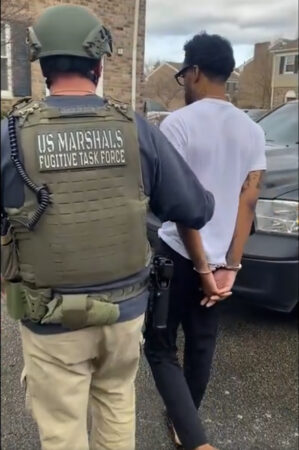
    A Philadelphia man who goes by the alias “YP SlumBoy” was arrested Thursday by U.S. Marshals and charged with killing the mother of his child, tampering with evidence and other crimes.

    Quamir Jones, 25, is accused of fatally shooting 23-year-old Siani Smith early in the morning of Oct. 12, according to an affidavit of probable cause for his arrest.

    Investigators say Smith was in the passenger seat of a vehicle with another man on the 7400 block of Dicks Avenue in the city’s Eastwick neighborhood when Jones pulled up in a car shortly after 5 a.m.

    Jones approached the front driver side of the vehicle, the affidavit says. The other man, surprised at Jones’ presence, asked whether he was blocking the driveway.

    After a short exchange between the two men, Jones drew a gun, stuck it inside the vehicle and fired once. As the vehicle sped off, Jones fired the weapon again, according to the affidavit.

    Finding Smith had been struck, the man drove her to a nearby hospital, where she was pronounced dead around 5:30 a.m.

    Meanwhile, Jones called Smith’s mother, police said. He told the woman that a group of men had been outside her home, and that she needed to go outside and pick up shell casings they left behind.

    Jones told Smith’s mother that the casings would lead back to a gun registered in his name, but she did not find any casings outside, according to the affidavit.

    Smith’s mother later told investigators she was asleep during the shooting but was awoken when she heard “five to six gunshots outside.”

    The last time Smith’s mother had seen her daughter was earlier that evening, when Smith arrived home after a night out.

    Smith’s mother said she had heard her daughter talking to the child she shared with Jones, according to the affidavit. Siani Smith and the child had moved back into the home two weeks prior.

    The woman told police Jones was known to carry guns, and investigators later learned Jones had a valid permit to carry a concealed firearm, a Glock 9mm pistol that was registered in his name in Delaware County.

    Jones had two prior arrests for gun crimes in 2022, according to the affidavit. One of those cases was dropped for reasons that were not immediately clear, and the other was dismissed for lack of evidence.

    On Thursday, Marshals arrested Jones on the 200 block of E. Mermaid Lane in Chestnut Hill, nearly three months after Smith’s death. It was not immediately clear where Jones resided during that time.

    In a post on X, the U.S. Marshals of Eastern Pennsylvania alleged Jones is a member of the city’s “Blumberg” gang.

    In addition to murder, prosecutors charged Jones with possessing an instrument of crime, criminal solicitation, recklessly endangering another person, and tampering with evidence.

    He is being held at the Curran-Fromhold Correctional Facility and was denied bail, court records show. He is represented by a court-appointed defense attorney.

    Philadelphia police confirmed Friday that Jones went by the alias “YP SlumBoy,” a rap name that has garnered a modest following on social media.

    A music video posted on YP SlumBoy’s Instagram in November includes a clip of a news anchor discussing the search for Tyvine Jones, or “Blumberg Eerd,” a North Philadelphia gang member arrested by Marshals in December for three separate killings.

    Another post on the page promotes a song called “Saddam” and features artwork depicting the former Iraqi dictator.