President Donald Trump and top White House officials offered a starkly different view, saying Good tried to run over the officer with her car.
Department of Homeland Security Secretary Kristi Noem said the officer,identified Thursday as Jonathan Ross, was justified in shooting the woman because he feared for his life. She said Good, a mother of three, had committed an act of domestic terrorism.
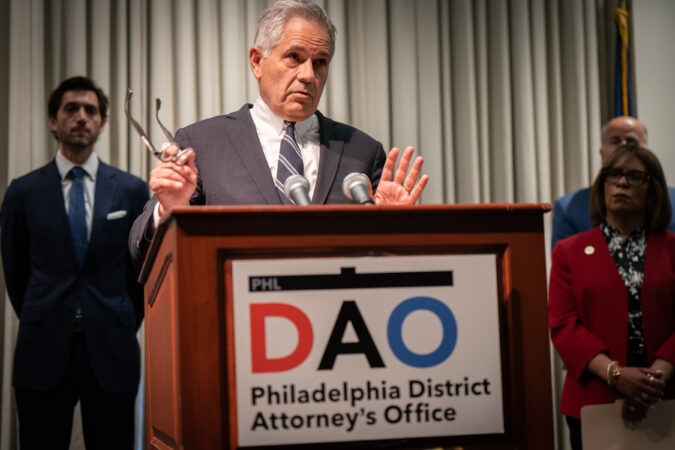
But Krasner, flanked by a group of Philadelphia City Council members and the sheriff, called the actions criminal.
The top prosecutor said that he has family ties to Minneapolis, and that he had reviewed the videos of the shooting, about a mile from where George Floyd was killed by police in 2020. He held a moment of silence for Good and displayed her photo before leading the group in a chant of her name.
“We have to use our voices to call out people who commit terrible crimes,” Krasner said. “Or who justify them.”
That last part was aimed at Trump, whom Krasner has sharply and repeatedly criticized.
The progressive prosecutor often uses his platform to openly decry the president and his policies, most recently when he urged Philadelphians to film ICE agents who have ramped up immigration enforcement since Trump’s return to office.
He said that tactic had been a success in Minneapolis because the video brought widespread attention to the incident.
After Good’s killing, Krasner said, “The first thing out of Trump’s mouth was a lasagna of lies.”
“She behaved horribly,” Trump told reporters. “And then she ran him over.”
Krasner said he could not even be certain that Good was blocking officers from the roadway, as some officials have suggested. Had Good done so, Krasner said, she would have been engaging in an act that “protesters have done forever.”
And that behavior, he said, does not justify a fatal shooting.
Any law enforcement agent inclined to behave similarly in Philadelphia should “get the eff out of here,” Krasner said. And should such an incident happen in the city, the DA said, he would charge the offending officer in state court, where presidential pardons have no effect.
“There are honest decent moral law enforcement officers by the bushel — this is not for you,” Krasner said of his warning. “This is for any one of your colleagues who thinks they are above the law.”
In Kensington, a program to mitigate street violence was hitting its stride.
After joining the New Kensington Community Development Corporation in 2023, outreach coordinators with Cure Violence began responding to shootings in the neighborhood, connecting folks with mental health services and other wellness resources.
They hosted men’s therapy groups, safe spaces to open up about the experience of poverty and trauma, and organized a recreational basketball league at residents’ request. Their team of violence interrupters even intervened in an argument that they said could have led to a shooting.
Cure Violence Kensington was funded by a $1.5 million federal grant from the Department of Justice, part of a Biden-era initiative to combat the nation’s gun violence epidemic by awarding funds to community-based anti-violence programs rather than law enforcement agencies.
One year after a political shift in Washington, however, federal grants that Philadelphia’s anti-violence nonprofits say allowed them to flourish are disappearing.
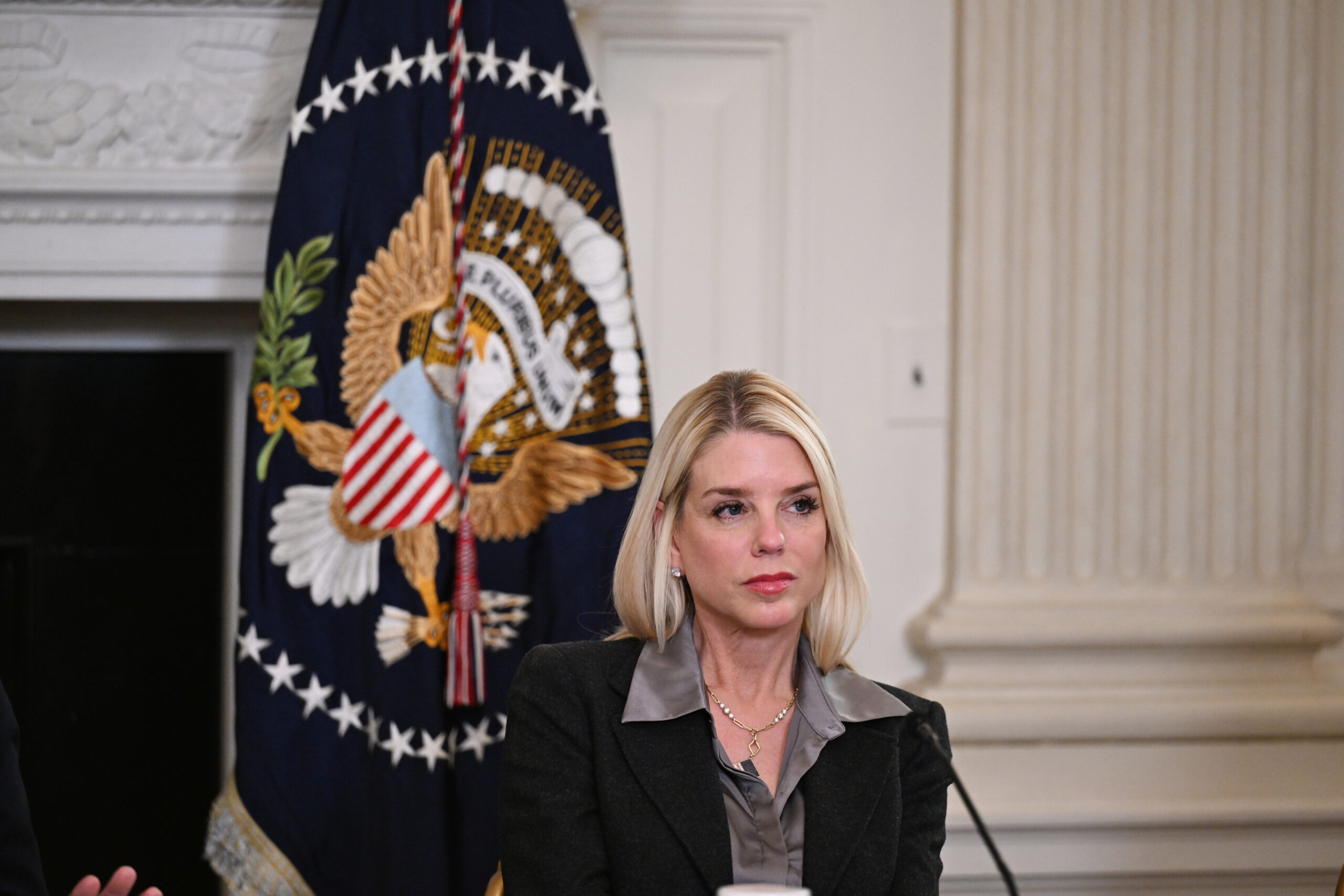
In the spring, New Kensington CDC received a letter from the Justice Department, saying that under the leadership of Attorney General Pam Bondi it had terminated the grant that would have funded Cure Violence for the next three years.
The work, the letter said, “no longer effectuates the program goals or agency priorities.” In the future, it said, the department would offer such grants exclusively to local law enforcement efforts.
“It was a heavy hit,” said Bill McKinney, the nonprofit’s executive director.
The cuts come amid a Trump administration crackdown on nonprofits and other organizations it views as either wasteful or focused on diversity and DEI.
It spent 2025 slashing funds for programs that supplied aid abroad, conducted scientific research, and monitored climate change. At the Justice Department, cuts came for groups like McKinney’s, which aim to target the root causes of violence by offeringmental health services, job programs, conflict mediation, and other alternatives to traditional policing.
In Philadelphia, organizations like the Antiviolence Partnership of Philadelphia and the E.M.I.R. Healing Center say they, too, lost federal funding last yearand expect to see further reductions in 2026 as they scramble to cover shortfalls.
A Justice Department spokesperson said changes to the grant program reflect the office’s commitment to law enforcement and victims of crime, and that they would ensure an “efficient use of taxpayer dollars.”
“The Department has full faith that local law enforcement can effectively utilize these resources to restore public safety in cities across America,” the spokesperson said in an email.
Nonprofits may appeal the decisions, the spokesperson said, and New Kensington CDC has done so.
Attorney General Pam Bondi takes part in an event at the White House on Oct. 23.
Philadelphia city officials, for their part, say they remain committed to anti-violence programs, in which they have invested tens of millions of dollars in recent years.
“There are always going to be things that happen externally that we have no control over as a city,” said Adam Geer, director of the Office of Public Safety.
The reversal in federal support comes at a time when officials like Geer say the efforts of anti-violence programs are beginning to show results.
Violent crime in Philadelphia fell to historic lows in 2025, a welcome relief after the sharp upturn in shootings and homicides that befell the city at the height of the pandemic.
In 2021, the city announced a large-scale campaign to combat gun violence that,in the past year, included nearly $24 million for anti-violence programs.
That was on top of the Biden administration’s Community Based Violence Intervention and Prevention Initiative. Since launching in 2022, the DOJ program awarded more than $300 million to more than 120 anti-violence organizations nationwide.
In April, many of those groups, including New Kensington CDC, lost funds. And in September, a larger swath learned they were now barred from applying for other Justice Department grants that would have arrived this spring.
“We’ve seen enormous dividends” from the work of such groups, said Adam Garber, executive director of CeaseFirePA, a leading gun violence prevention group in the state. “Pulling back now puts that progress at risk — and puts lives on the line.”
Philadelphia feels the squeeze
Federal grants helped Natasha McGlynn’s nonprofit thrive.
McGlynn, executive director of the Antiviolence Partnership of Philadelphia, said a DOJ grant called STOP School Violence allowed her organization to launch a counseling program for young people who had been victims of violence or otherwise exposed to it in some of the city’s most violent neighborhoods.
The nonprofit used the grant to hire therapists to help students develop healthier attitudes around conflict and trauma, she said.
The $997,000 grant was cut in April, and when McGlynn went to apply for another round of funding in the fall, she learned that nonprofits were no longer eligible. The lost funding means some services, like counseling, could now be eliminated, she said.
“I would say several positions are in question,” McGlynn said. “I would say the program is in question.”
Chantay Love, the director of Every Murder is Real, said her Germantown-based victim services nonprofit also lost Justice Department funding in 2025.
Federal grants are not the nonprofit’s only source of income, Love said, but she along with other nonprofit leaders in the city are considering whether they’ll need to cut back on programs this year.
Record-setting investment
The decade before the pandemic saw gun-related deaths in the state climb steadily, spiking during the lockdown as social isolation, school closures, shuttered community services, and higher levels of stress contributed to a spate of gun homicides and shootings that began to ease only in 2024.
Two years earlier, the state began dispersing more than $100 million to community-based anti-violence programs, much of the money coming from the American Rescue Plan, a sweeping Biden administration pandemic recovery package that also sought to reduce rising gun violence. And when those funds expired, state lawmakers continued to invest millions each year, as did Philadelphia city officials.
Garber, of CeaseFirePA, said those efforts “get a lot of heavy-lifting credit” for Philadelphia’s historic decrease in violence.
A report compiled by CeaseFirePA cites studies that found outreach programs like Cure Violence helped reduce shootings around Temple University, as well as in cities like New York and Baltimore, where homicides and shootings in some parts of the city fell by more than 20%.
While it’s too early for data to provide a full picture on how such funding has contributed to overall violence reduction, officials like Geer, the Philadelphia public safety director, agreed that programs like Cure Violence have helped crime reach record lows.
Philadelphia acting chief public safety director Adam Geer attends a news conference on Jan. 30, 2024, about a shooting that left an officer wounded and a suspect dead.
Outreach workers with the city-supported Group Violence Intervention program made more than 300 contacts with at-risk residents in 2025, according to data provided by Geer’s office, either offering support or intervening in conflicts.
And they offered support to members of more than 140 street groups — small, neighborhood-oriented collectives of young people that lack the larger organization of criminal gangs — while more than doubling the amount of service referrals made the previous year.
In practice, a program’s success looks like an incident in Kensington in which Cure Violence workers intervened in a likely shooting, according to members of New Kensington CDC.
In April, a business owner called on the nonprofit after seeing a group of men fighting outside his Frankford Avenue store and leaving to return with guns. Members of the outreach team spoke with both parties, de-escalating the conflict before it potentially turned deadly.
“Each dollar cut is ultimately a potential missed opportunity to stop a shooting,” Garber said.
Cutting off the ‘spigot’
Even as community-based anti-violence programs have risen in popularity, they are not without their critics.
While some officials champion them as innovative solutions to lowering crime, others say the programs can lack oversight and that success is difficult to measure.
In 2023, an Inquirer investigation found that nonprofits with ambitious plans to mitigate gun violence received millions in city funds, but in some cases had no paid staff, no boards of directors, and no offices.
A subsequent review by the Office of the Controller found some programs had not targeted violent areas or had little financial oversight. But by the next round of funding, the city had made improvements to the grant program, the controller’s office found, adding funding benchmarks and enhanced reporting requirements.
Meanwhile, as Philadelphia continued its support these programs, President Donald Trump’s Justice Department began a review of more than 5,800 grants awarded through its Office of Justice Programs. It ultimately made cuts of more than $800 million that spring.
Among programs that lost funding, 93% were “non-governmental agencies,” including nonprofits, according to a letter DOJ officials sent to the Senate explaining the decision.
The balance of remaining funds in the violence prevention grant program — an estimated $34 million — will be available for law enforcement efforts, according to a DOJ grant report. In addition to fighting crime, the money will help agencies improve “police-community relations,” hire officers, and purchase equipment, the document says.
Agencies conducting immigration enforcement are also eligible for grants, the report says, while groups that violate immigration law, provide legal services to people who entered the country illegally, or “unlawfully favor” people based on race are barred.
One group lauding the cuts is the National Rifle Association, which commended the Trump administration in November for cutting off the “spigot” to anti-violence nonprofits.
‘[T]he changes hopefully mean that nonprofits and community groups associated with advocating gun control will be less likely to do it at the expense of the American taxpayer and that real progress can occur on policing violent criminals,” the NRA’s legislative arm wrote in a blog post that month.
Nate Riley disagrees.
Riley, an outreach worker with Cure Violence Kensington, said the cuts threaten to reverse the progress New Kensington CDC has made since he joined the program early last year.
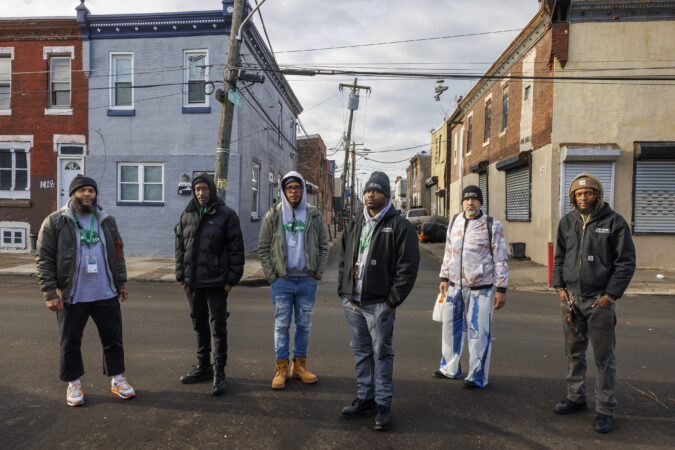
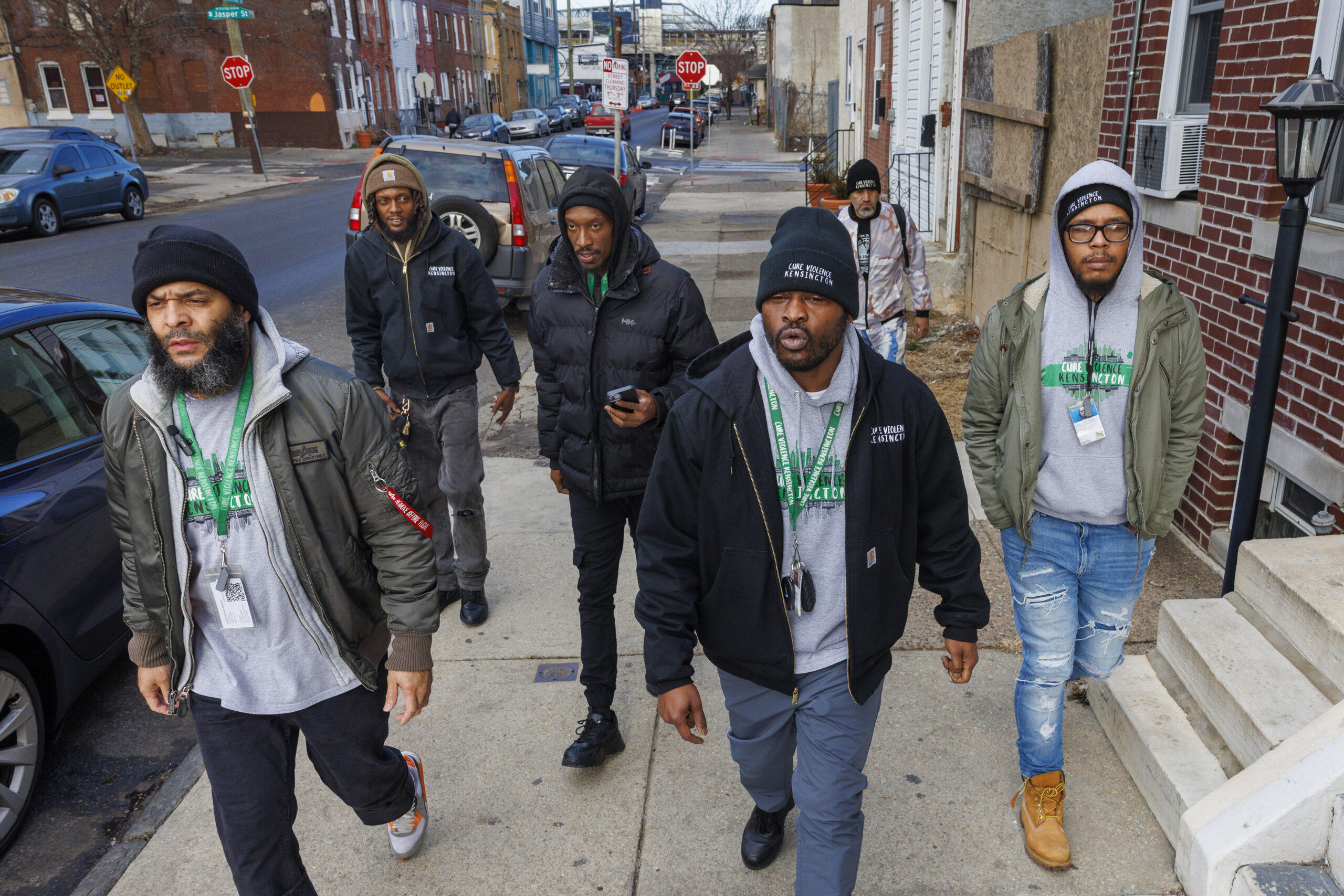
Nate Riley (from left), Tyree Batties, Dante Singleton, Tyreek Counts, Ivan Rodriguez, and Jamall Green-Holmes, outreach workers with New Kensington Community Development Corporation, making their rounds on Wednesday.
Cure Violence’s six-person outreach team is made up of people like Riley, who grew up in North Philadelphia and says he is well-versed in the relationship between poverty, trauma, and violence and brings that experience to Kensington.
“This is a community that’s been neglected for decades,” Riley said. “For lack of a better term, you’ve got to help them come in outside of the rain.”
In a recent month, Cure Violence outreach workers responded to 75% of shootings in the Kensington area within three days, a feat Riley is particularly proud of.
He said the program is not meant to supplant the role of police.
Instead, Riley sees street outreach as another outlet for those whose negative experiences with authorities have led them to distrust law enforcement.
Those people may alter their behavior if they know police are present, he added, giving outreach workers embedded in the community a better chance at picking up on cues that someone is struggling.
From Kensington to Washington
McKinney, with New Kensington CDC, said the group was still expecting about $600,000 from the Justice Department when the grant was cut short.
The nonprofit has since secured a patchwork of private donations and state grants that will keep Cure Violence running through much of 2026, he said.
After that, the program’s future is uncertain.
In the wake of the cuts, national organizations like the Community Justice Action Fund are advocating for federal officials to preserve funding for community-based anti-violence programs in future budgets. Adzi Vokhiwa, a federal policy advocate with the fund, said the group has formed a network of anti-violence nonprofits dubbed the “Invest in Us Coalition” to do so.
The group petitioned congressional leadership in December to appropriate $55 million for anti-violence organizations in the next budget — a figure that both Democrats and Republicans in the Senate have previously agreed on and that Vokhiwa views as a sign of bipartisan support for such programs.
McKinney, with New Kensington CDC, said it was impossible to ignore that the nonprofit and others like it provide services to neighborhoods where residents are overwhelmingly Black and brown. In his view, the cuts also reflect the administration’s “war on cities.”
He was bothered that the Justice Department did not seem to evaluate whether New Kensington CDC’s program had made an impact on the neighborhood before making cuts.
“We’re in a situation where the violence isn’t going away,” he said. “Even if there’s been decreases, the reality is that Kensington still leads the way. As those cuts get deeper, we are going to see increases in violence.”
Two men died in a shootout that began over a domestic issue in the city’s Castor neighborhood on New Year’s Day, authorities say, and police have charged a man and a woman with murder for their involvement.
The victims, 52-year-old Luis Colon and 21-year-old Quadir Tull, both died from their injuries at local hospitals, according to police.
Tyriq Williams, 21, and Cara Williams-Reeves, 44, were charged with murder and related crimes on Friday.
The incident began Thursday when a group of family members related to the ex-boyfriend of Colon’s stepdaughter showed up to Colon’s residence on the 7100 block of Oakland Street shortly after 11 a.m.
The group, which included Tull, Williams, and Williams-Reeves, had come to “initiate a confrontation” with Colon’s stepdaughter, police said. The ex-boyfriend was not present.
A struggle broke out when two women in the group — including Cara Williams-Reeves — began assaulting Colon’s stepdaughter and wife on the front lawn.
When Colon intervened, Tull and Williams pulled out firearms and pushed Colon.
Colon then pulled a firearm, and a shootout between the three men began, police said. They did not specify which man fired the fist shot.
Colon was struck multiple times in the chest and was transported by police to a nearby hospital, where he was pronounced dead just before noon.
Tull and Williams fled the scene in a dark-colored Chrysler 300 along with Williams-Reeves.
Tull had been shot multiple times and was driven in the Chrysler to a different hospital, where he was pronounced dead around 11:50 a.m.
Williams was shot in the hand and is in stable condition, police said.
When Nicole Lauria met Daniele Grovola more than a decade ago, it was clear that the little girl from Upper Darby would one day become a star employee at her karaoke company.
“She was amazing,” said Lauria, the owner of Lucky Music Productions. “A lot of people use the phrase, ‘She lit up a room.’ But she really did.”
Tragedy struck the Grovola family days before Christmas.
Police arrested the young woman’s mother, Diane Grovola, 57, whom they have accused of stabbing her daughter to death in the home. Her husband, John, Daniele Grovola’s father, discovered the horrific scene as he arrived home from an overnight shift at the airport, authorities said.
Friends of Daniele Grovola are shocked by a crime they are struggling to understand.
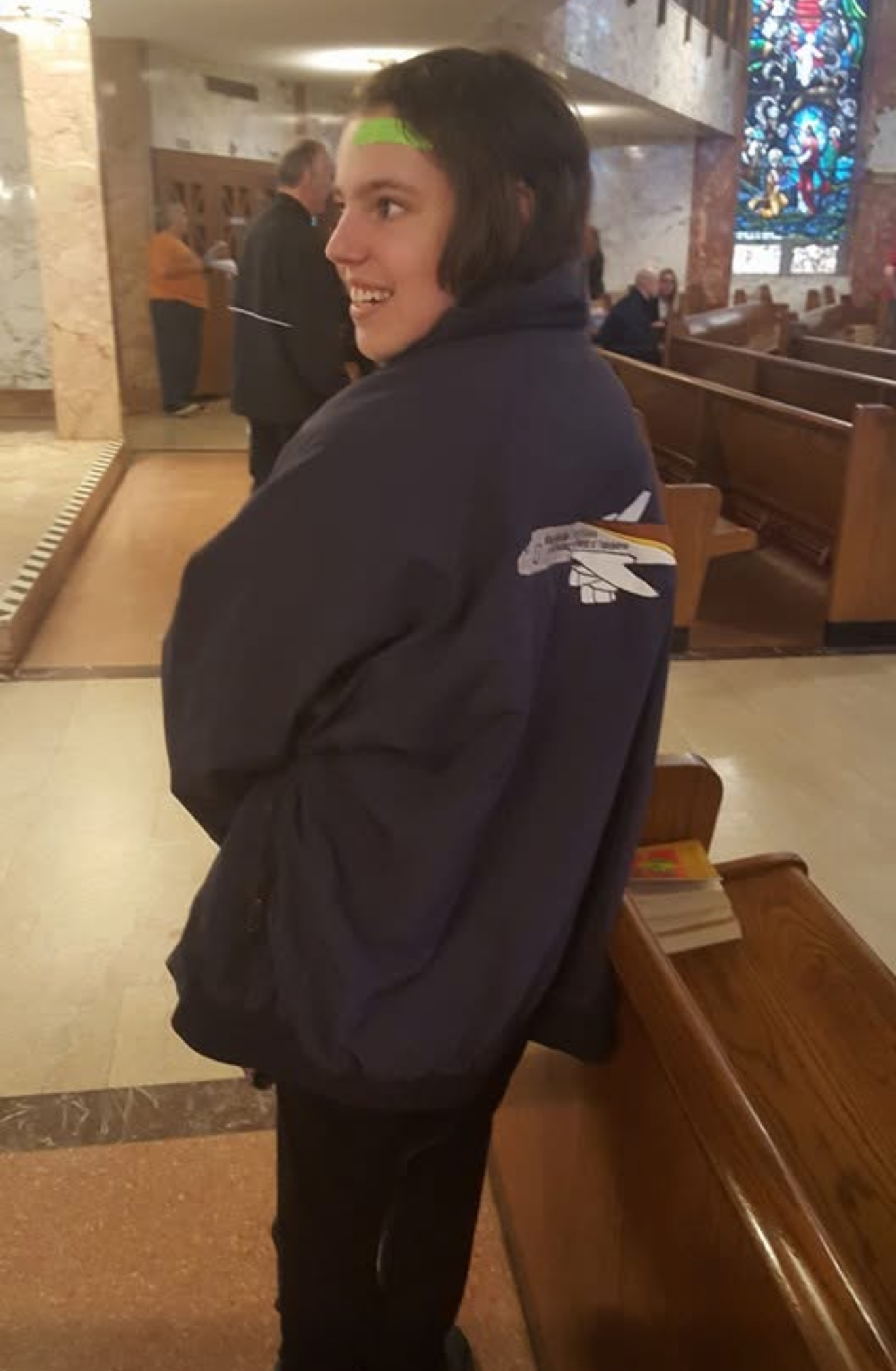
Photo of Daniele Grovola.
In the week since Grovola’s death, they have launched a fundraiser to support her father and cover the young woman’s funeral costs. The money will also go toward veterinary bills for the family’s dog, Ezra, which police suspect Grovola’s mother also stabbed that morning.
And loved ones are sharing memories of Daniele Grovola, who brought joy and warmth to those she encountered.
Lauria met John Grovola around 15 years ago, when he made the leap from singing karaoke to joining Lucky Music as an equipment manager and DJ. The company hosts events at venues throughout Delaware County and Philadelphia.
Grovola soon began to bring around his daughter, who took a fast interest in her father’s work.
The father and daughter were “immensely close,” Lauria said. Following in her father’s footsteps, Daniele Grovola eventually joined Lucky Music herself, managing the company’s DJ equipment.
She was training to become a bar trivia host before she died.
Her radiant personality shone on the job, according to Lauria, including at a karaoke party the company hosted in 2024 for children who had disabilities and were on the autism spectrum.
“[Daniele] was just amazing at encouraging them to sing, helping them to feel positive about themselves,” Lauria said. “She was just a warm person.”
Hailey Geller, 23, said she and Grovola had been best friends since the third grade. The girls went on to attend Upper Darby High School together.
“She was never a bother,” Geller said. “She was really good to me, and I was good to her.”
Hailey Geller with Daniele Grovola and her father, John.
Grovola had her quirks, Geller said, amusing friends with her obsession with Sharpies. The girls would spend afternoons at the mall, where Grovola would hunt for multicolored markers to use in her artwork.
She was an avid fan of anime shows, Geller added, and, as a music lover, adored her headphones.
Geller said Grovola was always there to confide in. In recent months, however, some of Grovola’s comments about her home life had concerned her.
Grovola told Geller that her mother had been “in and out” of local crisis centers. And Grovola described her mother as having “mental issues,” Geller said, once disclosing she had locked herself in the basement to avoid her.
Still, Geller believes Grovola did not share the complete story of possible tensions with her mother. Police have yet to identify a motive in the killing and continue to investigate.
Friends like Lauria said those who knew the Grovola family did not suspect such a crime was possible.
“It makes no sense,” Lauria said. “[Daniele] was a great daughter to her mother … loved her mother very much. This just came out of nowhere.”
A Delaware County woman was charged with first-degree murder for allegedly stabbing her 23-year-old daughter to death in their Upper Darby Township home two days before Christmas, authorities say.
Police found Diane Grovola, 57, naked, covered in blood, and suffering self-inflicted stab wounds when they responded to a 911 call at the family residence that morning, according to the affidavit of probable cause in her arrest.
Grovola’s daughter was in an upstairs bedroom with knife wounds to her face, chest, legs, and back. Her eyes were open but she was unresponsive, the affidavit says. She was pronounced dead shortly after.
“Sorry, I should have stabbed myself first,” Grovola told officers as they placed her in wrist restraints, according to the affidavit.
Grovola’s husband, the young woman’s father, was first to discover the distressing scene.
The man arrived at the home on South Bishop Avenue in the Secane section around 6:30 a.m. after returning from a shift at Philadelphia International Airport, the affidavit says. He had stopped at McDonald’s to get breakfast for his family.
Once inside, the man was greeted by the family dog, which had suffered knife wounds to its abdomen and “got blood on his clothing,” according to the affidavit.
He found his wife seated on the living room sofa with a knife in her hand.
“I stabbed our daughter,” she told him, according to the affidavit.
As her husband dialed 911, Diane Grovola told him she did not want to live anymore and began to stab herself in the chest, according to the affidavit.
The operator told the man to flee the residence.
During that time, Grovola stripped naked and began breaking items in the kitchen until police arrived. They eventually recovered a large stainless-steel knife that appeared to have blood on it, the affidavit says.
In addition to first-degree murder, prosecutors charged Grovola with third-degree murder, possessing an instrument of a crime, and aggravated cruelty to an animal.
She is being held in the George W. Hill Correctional Facility and was denied bail, court records show.
For years after the abrupt folding of a South Philadelphia-based company that promised big returns on cryptocurrency, investors who lost thousands of dollars had two questions — where was the firm’s elusive CEO, and when would he be held accountable?
A lawsuit brought by the Securities and Exchange Commission this month is offering answers.
Danh C. Vo, the 37-year-old founder of the now-defunct VBit Technologies Corp., was accused last week of misappropriating more than $48 million of investor funds in a nationwide scheme that affected 6,400 people. Vo’s alleged victims, many of them in the Philadelphia region, gave him money to maintain highly advanced computers they believed would generate passive income through the cryptocurrency Bitcoin.
While Vo possessed some of the computers — devices that process cryptocurrency transactions and reward the owner with a fraction of Bitcoin in exchange for maintaining the costly technology — SEC investigators found VBit’s customers did not own the computers Vo said he had sold them.
That was hardly the only alleged fabrication in VBit’s four-year existence.
In all, Vo raised more than $95 million from investors and kept much of the Bitcoin the company generated in a personal account before fleeing the Philadelphia area to Vietnam in 2021,SEC investigators say.
Weeks earlier, Vo had learned he was the subject of a federal investigation.
As customers grew increasingly suspicious of VBit’s supposed sale that winter to an “Asia-based company” — an organization the SEC now says existed only on paper — Vo blamed his lack of communication on mysterious health issues, the complaint says.
All the while, the company’s day-to-day operations ground to a halt and investors found they were no longer able to withdraw their money.
The complaint also names a handful of Vo’s family members, who are not accused of wrongdoing but have been ordered to return investor funds.
Investigators say that before he fled the country, Vo gifted $5 million to his wife and others close to him.
Vo has yet to hire an attorney, court records show. The complaint does not show whether investigators know his current location.He could not be reached by phone, and a number for his wife was disconnected.
Bitcoin ‘without the headaches’
Before the cryptocurrency industry’s rise in the public eye, Bitcoin and other digital tokens were considered niche financial tools used by only the most devout believers.
Then, in the thick of the pandemic, crypto was seemingly everywhere, from Matt Damon-assisted Super Bowl commercials to the portfolios of billion-dollar hedge funds and international banking institutions.
When used for making transactions or storing value, Bitcoin and other cryptocurrencies can serve legitimate purposes.
But companies like VBit took the hype a step further. In the view of burgeoning executives like Vo, “mining” for Bitcoin with advanced computers offered the average person a near-mythic opportunity to get rich.
Vo started VBit Technologies in 2018 with the uninitiated in mind. He set up shop in a redbrick office building on bustling Washington Avenue, keeping a small staff of employees there.
The scene at 1625 Washington Avenue Tuesday Dec. 13, 2022. The sign reads “Advanced Mining” the business that acquired the cryptocurrency company VBit Technologies which is facing several new lawsuits in federal court after its customers claim the company froze them out of millions of dollars in assets this summer.
An investigation published in The Inquirerin 2022 found some of Vo’s customers had little knowledge of how cryptocurrencies actually worked. SEC investigators say customers believed VBit would provide them with a “turnkey solution” for those complexities.
Vo sold investors “hosting agreements” for the computers that, in some cases, cost upward of $100,000 per package, according to the complaint. VBit told customers that if they purchased one of the Bitcoin-earning computers, the company would pool together their devices’ collective computing power, generating even greater returns.
Vo owned a building in rural Montana and leased facilities elsewhere to house thousands of the noisy devices, which use massive amounts of power and rarely make sense for an individual to operate at home.
As the Bitcoin piled up, customers tracked their profits on digital portals that VBit had created for them.
According to the SEC, those figures were nothing more than pixels on a screen.
The complaint says the actual profits went directly into accounts that only Vo controlled. Meanwhile, customers had no way to know what exactly the CEO had even sold them.
Investors were not provided serial numbers for their computers, and were largely barred from visiting the far-flung facilities that housed them, according to the complaint. Instead, Vo alone controlled the devices — and sold many more than he actually possessed.
In 2021, the company’s peak sales year, VBit sold agreements to host more than 8,400 computers, according to the complaint. The company had just 1,643 on hand.
Meanwhile, of the $48 million of investor funds Vo allegedly misappropriated, the CEO “gambled away” around $32 million on other cryptocurrency investments, the complaint says.
For customers who did choose to cash in on their profits, Vo kept several million in a separate account to dole out. Still, the SEC found that VBit had never had enough money to back up the total value of the investments.
And because many customers had only partially purchased their computers, using their newfound income to pay VBit back the balance they owed on the device, the scheme largely averted their suspicions.
At least until the company’s final days.
A mysterious exit
On Oct. 19, 2021, Vo learned the SEC was investigating his company for selling unregistered securities, according to the complaint.
The CEO soon began laying the seeds of a supposed sale of his company to a new firm, Advanced Mining Group.
A website for Advanced Mining was registered on Nov. 1, and by January 2022, a news release went out to crypto-related news outlets announcing that VBit had been sold for more than $100 million.
The sale would give Vo “peace of mind and freedom to focus on my health,” the CEO said in a cryptic statement.
Meanwhile, investigators say, Vo began transferring investors’ money to his family and himself.
More than $15 million went to Vo’s personal bank account, according to the complaint. His sister received $300,000, his brother, $500,000, and his mother, $100,000.
Vo’s daughter, who is a minor, received $1 million in a trust fund. None of the family members provided services in exchange for the funds, the complaint says.
The only person who received more than Vo’s daughter was his wife, Phuong D. Vo. The CEO gifted her $1.8 million over a monthlong period, according to the complaint.
And on Nov. 19 — the day Vo began transferring the funds — he filed for divorce from his wife, the complaint says. The CEO’s travel records indicated he was headed for Vietnam the following day.
For VBit’s customers, Vo’s secretive exit and the supposed sale to Advanced Mining began a period of decline and confusion.
Customers who had been incentivized to recruit other investors through video-based information sessions soon began to lose communication with those higher up in the marketing chain.
And for the sliver of investors who had been cashing in, withdrawals went from taking hours to weeks. By June 2022, customers found they were frozen out of their accounts entirely.
Attempting to explain the chaos, representatives with Advanced Mining told customers through email that the company was having regulatory issues with the SEC. The agency declined to comment on any such probe at the time.
In July, Advanced Mining promised refunds that investors say never came. By the fall, company communication had gone dark.
Customers soon launched a series of unsuccessful lawsuits in multiple states, hoping to claw back their money via a judge. In Washington state, financial regulators opened a smaller-scale investigation into potential fraud on behalf of a group of residents.
In group chats on the messaging app Telegram, hundreds of investors began to gather, finding solace that others, too, had allegedly been victims of Vo’s company. Members spent the months after VBit’s collapse speculating about the CEO’s whereabouts and the increasingly unlikely odds of getting their money back.
The SEC’s lawsuit this month signals the first sign of closure in those customers’ yearslong quest for justice.
There has not been a post in one of those chats, dubbed “PA Advanced Mining Lawsuit Group,” since 2023.
Atlantic City Mayor Marty Small Sr. was acquitted of child endangerment and related crimes Thursday after being accused of repeatedly assaulting his teenage daughter.
Small, 51, faced charges stemming from a handful of incidents in late 2023 and early 2024 in which prosecutors said he and his wife abused and assaulted the teen. The couple said the incidents stemmed from their disapproval of their daughter’s relationship with a young man, leading to escalating tension and arguments in the family home.
The jury delivered its verdict at 12 p.m. after deliberating for two days. They found Small not guilty of endangering the welfare of a child, aggravated assault, making terroristic threats, and witness tampering.
“Thank you, Jesus! Thank you, jury!” Small said as the verdict was announced and broke into tears.
Speaking to reporters outside the courthouse, Small said he and his family were prepared to “put this chapter behind us, in peace.”
“It’s a lot of political forces out here that are against the leadership of my wife and I,” Small said. “But guess what? The people of Atlantic City want us, the people of Atlantic City need us, and the people of Atlantic City deserve us.”
Had Small been convicted of any of the crimes, he would have been required by state law to cede his office.
Those stakes were evident as the mayor’s friends and supporters packed into the courtroom for nearly two weeks of the trial. Supporters surrounded Small and broke into cheers outside the courthouse, celebrating a political career whose future had depended on the opinion of jurors.
Small said he had been heavily scrutinized for more than a year after news of the allegations broke in spring 2024. He said he and his wife had since been “drug through the mud” and cast as child abusers by the media.
Small’s defense attorney, Louis Barbone, said the verdict was “absolute proof that our justice system works” and that “honest men like Marty Small are vindicated.”
Atlantic County Prosecutor William Reynolds said he and his office “respectfully disagree with the verdict.”
“We acted based upon the complaints of the victim,” Reynolds told reporters. “The trial in this case was truly to give the victim a voice — the jury chose not to believe that voice.“
Prosecutors said Small, a Democrat who was reelected this year amid his legal struggles, punched his daughter and beat her with a belt. In an incident central to their case against the mayor, prosecutors said, Small struck her in the head with a broom multiple times, knocking her unconscious.
Jurors heard a conversation the teen recorded on her phone, in which Small told the girl he would “earth slam” her down the staircase. And prosecutors said that after the girl reported the abuse and investigators stepped in, Small encouraged his daughter to “twist up” her account of the events to minimize his involvement.
Over the course of the trial, Small and his wife, La’Quetta — who also faces charges of abusing the teen — looked on as prosecutors described the mayor’s actions as criminal. Prosecutors presented photos of the teen’s bruises and listened to testimony from a pediatrician who said the injuries did not appear accidental.
Small’s defense team, by contrast, told jurors that the teen had lied to investigators and exaggerated the extent of her injuries, and that she and her boyfriend had conspired against her father.
Barbone had called the trial “extortion by child.” He said the mayor was a caring father who was only attempting to discipline an out-of-control child, and presented jurors with more than 40 character witnesses on his behalf.
Small also testified and said he loved his daughter. He denied abusing her in the manner she described, telling jurors: “I did not hit my daughter with a broom.”
Thegirl, now 17, took the stand last week and described being punched in the legs by her father in his “man cave” after her parents found out she had sneaked her boyfriend into the family home to have sex.
“He said some words and put his hands on me,” the teen testified. Her father, she said, “was punching me in my legs and he hit me with a belt.”
Prosecutors said the girl’s decision to testify was one of the most challenging things a teenager could do, and they rebuffed Barbone’s suggestion that the girl was a liar who sought retribution againsther politically powerful father.
As for the broom incident, Barbone said, the mayor had not hit the girl but was wrestling the broom out of her hands when she fell and hit her head.
Prosecutors showed jurors photos of marks on the girl’s face. But a nurse who treated the teen at a hospital several days after the girl complained of headaches said she had not been able to find signs of injury.
Jurors asked to review multiple pieces of evidence during their deliberation, including video of Small’s testimony about the broom incident.
Again they watched the mayor recall the morning he urged his daughter to get ready to attend a peace walk in January 2024 following a spate of killings in Atlantic City.
The teen refused, cursing at Small before ripping his shirt and throwing laundry detergent on him, the mayor testified. A scuffle broke out when she picked up a butter knife and the broom, he said.
Mentioning the hospital examination, the mayor asked: “Where is the bruise, where is the bump, where is the bleeding?”
In less than half an hour, jurors returned their verdict.
Small, in his post-verdict remarks, described his daughter as “lost” and vowed to right the course of his family life.
“I’m gonna get my daughter back,” Small said. “In the Bible, it says, ‘Father, forgive her, for she know not what she do.’ And that’s what we’re gonna do.”
Prosecutors declined to comment on what would happen to the girl, who is still a minor and does not currently live with her family.
Small’s wife, La’Quetta, is scheduled to stand trial in January on charges of endangering the welfare of a child and simple assault. La’Quetta Small, the superintendent of Atlantic City public schools, is accused of repeatedly beating her daughter.
Also facing a forthcoming trial is Constance Days-Chapman, the principal of the Smalls’ daughter’s high school. Prosecutors say when the teen reported her parents’ abuse, Days-Chapman failed to notify child welfare authorities and instead told the couple of the report.
Days-Chapman, who is Marty Small’s former campaign manager, was later charged with official misconduct and related crimes.
Reynolds, the county prosecutor, said his office would hold an internal meeting to discuss the charges against La’Quetta Small and Days-Chapman. They will also meet with the Smalls’ daughter, he said.
“We need to get the victim in here and have a discussion with her before any decisions are made — and that’s out of respect for her,” Reynolds said.
MAYS LANDING, N.J. — After a week in court, attorneys delivered closing arguments Tuesday in the child abuse trial of Atlantic City Mayor Marty Small Sr.
Defense lawyers for Small, a 51-year-old Democrat who was reelected this year, said the allegations that he and his wife had abused their teenage daughter multiple times in late 2023 and early 2024 were false.
“We are not guilty,” his attorney, Louis Barbone, told jurors in New Jersey Superior Court.
Small faces charges of endangering the welfare of child, aggravated assault, making terroristic threats, and witness tampering. He has denied the charges, and testifying in his own defense last week, he told jurors he “would do anything to protect” the girl and said he did not strike her with a broom as she has alleged.
Prosecutors say Small not only struck his daughter but also attempted to cover up the abuse as he and his wife, La’Quetta, grew increasingly in conflict with the teen over a relationship with a boy they did not approve of.
They said he punched her and beat her with a belt in addition to hitting her with a broom, and later told her to “twist up” her account of the incidents to investigators to minimize his involvement.
“Violence is not a solution,” Assistant Prosecutor Elizabeth Fischer told the panel. “Abuse is not parenting.”
But Small’s lawyer, Barbone, told jurors prosecutors lacked sufficient evidence to make their case and said they had inappropriately interceded in a private, family matter in the Small household.
“Why have we taken this man’s life and made a spectacle of it?” Barbone asked. “Because they can.”
He scoffed at prosecutors’ idea that the teen had been intimidated by her father’s political power, calling the trial “extortion by the child.”
The girl, Barone said, had lied about her injuries to both doctors and investigators, conspiring with her boyfriend to secretly record her father and compromise him.
Much of the attorney’s attention fell on the January 2024 incident in which Smalls’ daughter said he struck her multiple times in the head with a broom during an argument over her attending the Atlantic City Peace Walk.
Barbone said the girl had also been holding a butter knife and that as the mayor struggled with her over the broom, the teen fell and hit her head.
The attorney said the teen then exaggerated her injuries, and he said the bristle side of a broom couldn’t do damage. He told jurors to look no further than the testimony of the girl’s nurse, who could not rule that the teen suffered a concussion as she contended.
And Barbone returned to the topic of Small’s daughter’s sexually explicit messaging with her boyfriend, which prosecutors called a “shining ball in the corner” meant to distract jurors from both the teen’s testimony of the alleged abuse and the photos of her bruises.
Barbone said the conflicts began after the Smalls discovered their daughter had sneaked the boy into the family home and had sex without their knowledge. He later displayed an emotionally charged text chain between the girl and her mother in which the teen threatens to go off birth control.
Meanwhile, Fischer, the prosecutor, asked jurors to remember the “truth” of what Small’s daughter had endured. .
Fischer said the teen had been brave to testify against her father — arguably the most powerful figure in Atlantic City government — as well as her mother, who is the superintendent of Atlantic City Public Schools. La’Quetta Small also faces a child endangerment charge in a case scheduled for trial in January.
It was “the most difficult thing a person can do,” Fischer said of the girl’s decision to testify against her parents, giving her little incentive to lie.
The prosecutor said a nurse who tended to the girl’s injuries had diagnosed the teen with a head injury, and that it was impossible to tell if she was concussed through a CT scan alone.
And a pediatrician who specializes in child abuse testified that the girl’s injuries were “nonaccidental,” Fischer added.
Prosecutors said the girl first reported the abuse to her principal, Candace Days-Chapman. They say Days-Chapman, who previously served as Marty Small’s campaign manager, did not file a report with child welfare authorities. She instead told Smalls herself, and staff at the school only learned of the abuse after the teen reported it a second time after watching a mental health presentation. Chapman was later charged with official misconduct and related crimes.
Fischer, her voice swelling with emotion, expressed disbelief that Small had allowed his attorney to characterize his daughter as both an “animal” and “Tasmanian devil” in describing their conflicts at home.
“This is offensive at its highest level,” she said.
And she told jurors that some of those who testified on behalf of the mayor had strong ties to Atlantic City government and stood to gain from the mayor’s success. And in the end, she said, they had not witnessed the conflicts between Small and his daughter.
“Character,” the prosecutor said, ”is how you act when no one is watching you.“
Amadou Thiam lived the American dream — and then some.
The immigrant from Côte d’Ivoire worked his way up at a major airline as a flight attendant, purchased a home in South Philadelphia, and traveled to exotic locations when his schedule allowed it.
He danced with friends at Philly’s nightclubs, even crafted a stage name for a yearly drag performance he gave at Voyeur — “Ama-Diva,” a play on his name that Thiam’s loved ones say reflected the 50-year-old’s playfulness and unapologetic charm.
He was rushed to a nearby hospital and died from his injuries.
The medical examiner’s office has yet to release the cause and manner of Thiam’s death. But homicide detectives are investigating, and police believe Thiam either fell — or was thrown — out of his third-floor window. They have identified two men they believe may have been involved.
Amadou Thiam’s partner Barry Rucks displays a photo of Amadou before a memorial service at Voyeur Nightclub on Saturday, Dec. 13, 2025 in Philadelphia.
It was jarring news for those who knew Thiam, a beloved member of Philadelphia’s flight attendant community who had worked for American Airlines since 2011.
A group of his loved ones gathered at Voyeur on Saturday to memorialize their friend, sipping drinks and sharing stories beneath the shimmering glow of a disco ball. A DJ played soulful dance music. Some of Thiam’s acquaintances, his “chosen family,” donned dresses, high heels, and flashy jewelry.
In the face of tragedy, they were celebrating in style — the way Thiam would have wanted them to.
“He was just a happy person, and he took advantage of his environment and did the best with it,” said Barry Rucks, Thiam’s partner of five years. “You and me take things for granted — he didn’t take anything for granted.”
Rucks said Thiam started at American Airlines as a baggage claims worker but quickly rose to become one of their “number one” flight attendants.
A native French speaker, Thiam worked on international flights to Paris and Zurich, posting photos to social media of the luxury hotels and historic monuments he visited along the way.
It was a life he could have hardly imagined in western Africa, Rucks said, where he was raised alongside nine brothers and sisters.
After getting his American citizenship, Thiam was proud to vote in elections and serve on jury duty, Rucks said. He marveled at the economic opportunity here, and developed an affinity for purchasing lavish clothing items on Amazon when he wasn’t helping siblings out with money.
“He would never say no to anyone, because he knew how hard it was to be an American,” Rucks said.
Voyeur was a fitting setting for Thiam’s memorial.
The Center City nightclub is where Thiam and a friend once dressed as Glinda and Elphaba from Wicked and performed during an annual drag benefit for flight attendants who had fallen on hard times.
Amadou Thiam’s partner Barry Rucks speaks to guests during a memorial service at Voyeur Nightclub on Saturday, Dec. 13, 2025 in Philadelphia.
“He was just such a shining star in this community,” said Aurore Dussh, one of Thiam’s friends. She said Thiam performed at Voyeur on numerous occasions, balancing his diva reputation with an undeniable sweetness in his relationships.
He was “such a superstar,” Dussh said. “Yet he made everyone else feel seen.”
Police continue to investigate Thiam’s death
In the weeks since Thiam’s death, police have sought two men they believe are connected to the unusual circumstances surrounding his death.
Sources familiar with the investigation say investigators have evidence that suggests Thiam was assaulted that night.
That evidence includes video footage showing the men outside Thiam’s home around the time his body was found. The two, an older and younger man, appear to be carrying clothing from Thiam’s home, according to those sources.
Neighbors, too, recalled seeing the men leaving Thiam’s home.
This image, taken Nov. 16, 2025, shows the third-story window (second from left) from which neighbors say Amadou Thiam fell on Nov. 10.
Finding Thiam’s door cracked open, the neighbors entered to find blood smeared across his kitchen and third-floor bedroom. Back outside, they noticed a stream of blood that led them to Thiam’s body on the pavement.
Rucks, Thiam’s partner, said he has been in touch with investigators and that none of Thiam’s friends and acquaintances recognized the two men in the video.
Rucks, who lives in Montgomery County, lived separately from Thiam, who prized his independence, he said.
He recalled Thiam was nothing but happy the Sunday morning he left his house to return to Philadelphia, a day before his death.
It was the last time Rucks saw his partner alive.
“I can’t speculate and I’m refusing to,” Rucks said. “We will find out what happened.”
When it comes to funding his presidential library, former President Joe Biden is far behind on funds, the New York Times reported Saturday.
The report cites recent Internal Revenue Service filings from Biden’s library foundation, finding that the organization had not raised any money in 2024, the last year Biden was in office.
The fund contains just $4 million in leftover funds from Biden’s 2021 inauguration, according to the Times. The former president’s aides have suggested their vision for a library could cost $200 million.
The library foundation declined to say what it had raised in 2025. Biden is holding his first public event for potential library donors on Monday, the Times reported.
Should it ramp up fundraising, Biden’s team still anticipates raising a little more than $11 million by the end of 2027, according to the filings viewed by Times reporters.
Biden, who turned 83 this fall and is being treated for prostate cancer, has kept a low public profile since stepping back from his official duties.
Some of the former president’s loyal donors told the Times they had not been contacted for library contributions; other Democratic donors said they were not likely to give even if they are asked, saying they had soured on Biden’s legacy or were focused on projects to combat President Donald Trump.
Biden’s aides declined to make him available for an interview with the Times, though there are signs he has begun to step up his fundraising effort.
The former president and his wife, Jill Biden, penned a letter to donors in September asking them to schedule interviews with a private firm hired to assess financials for a future library, according to the newspaper.
Former presidents must raise their own money to fund their libraries, which have evolved from modest spaces to sprawling complexes complete with museums and other extras.
Former President Barack Obama’s still-unfinished “presidential center” in Chicago is expected to cost hundreds of millions of dollars and will include a basketball court and vegetable garden in addition to a city library branch. Trump plans to raise nearly $1 billion for a library in downtown Miami, tax documents show.
Biden has said he would like his library to be built in his home state of Delaware. That decision comes as recent reporting found the University of Pennsylvania, where the former president has familial ties, did not express interest in hosting the library in Philadelphia.
Coupled with a lagging fundraising effort, Biden’s desire to keep his library near his home has spurred discussions among those close to him that he could merge his presidential library with the preexisting Biden institutions at the University of Delaware, according to the Times. The Newark-based university is the former president’s alma matter.
With the help of the Delaware state government, the university has already raised more than $20 million for a forthcoming “Biden Hall,” an extension of the Joseph R. Biden Jr. School of Public Policy and Administration.
Merging the library with the hall would be far cheaper — and modest — than other modern presidential libraries, though the Times reported that both projects currently remain separate.
Few details surrounding the library appear set in stone, however.
Asked about the prospect of a merger, a Biden spokesperson declined to comment to the Times, saying the former president’s team continues to be in an “exploratory and planning phase.”