Author: Jesse Bunch

  • CEO of South Philadelphia Bitcoin mining company defrauded investors out of $48.5 million, regulators say

    CEO of South Philadelphia Bitcoin mining company defrauded investors out of $48.5 million, regulators say

    For years after the abrupt folding of a South Philadelphia-based company that promised big returns on cryptocurrency, investors who lost thousands of dollars had two questions — where was the firm’s elusive CEO, and when would he be held accountable?

    A lawsuit brought by the Securities and Exchange Commission this month is offering answers.

    Danh C. Vo, the 37-year-old founder of the now-defunct VBit Technologies Corp., was accused last week of misappropriating more than $48 million of investor funds in a nationwide scheme that affected 6,400 people. Vo’s alleged victims, many of them in the Philadelphia region, gave him money to maintain highly advanced computers they believed would generate passive income through the cryptocurrency Bitcoin.

    But Vo, whose company lured potential investors into a multilevel marketing program with sports cars and luxury watches, instead ran something of a one-man shadow company, according to the SEC’s 28-page complaint, filed in federal court last Wednesday.

    While Vo possessed some of the computers — devices that process cryptocurrency transactions and reward the owner with a fraction of Bitcoin in exchange for maintaining the costly technology — SEC investigators found VBit’s customers did not own the computers Vo said he had sold them.

    That was hardly the only alleged fabrication in VBit’s four-year existence.

    In all, Vo raised more than $95 million from investors and kept much of the Bitcoin the company generated in a personal account before fleeing the Philadelphia area to Vietnam in 2021, SEC investigators say.

    Weeks earlier, Vo had learned he was the subject of a federal investigation.

    As customers grew increasingly suspicious of VBit’s supposed sale that winter to an “Asia-based company” — an organization the SEC now says existed only on paper — Vo blamed his lack of communication on mysterious health issues, the complaint says.

    All the while, the company’s day-to-day operations ground to a halt and investors found they were no longer able to withdraw their money.

    The complaint also names a handful of Vo’s family members, who are not accused of wrongdoing but have been ordered to return investor funds.

    Investigators say that before he fled the country, Vo gifted $5 million to his wife and others close to him.

    Vo has yet to hire an attorney, court records show. The complaint does not show whether investigators know his current location. He could not be reached by phone, and a number for his wife was disconnected.

    Bitcoin ‘without the headaches’

    Before the cryptocurrency industry’s rise in the public eye, Bitcoin and other digital tokens were considered niche financial tools used by only the most devout believers.

    Then, in the thick of the pandemic, crypto was seemingly everywhere, from Matt Damon-assisted Super Bowl commercials to the portfolios of billion-dollar hedge funds and international banking institutions.

    When used for making transactions or storing value, Bitcoin and other cryptocurrencies can serve legitimate purposes.

    But companies like VBit took the hype a step further. In the view of burgeoning executives like Vo, “mining” for Bitcoin with advanced computers offered the average person a near-mythic opportunity to get rich.

    Vo started VBit Technologies in 2018 with the uninitiated in mind. He set up shop in a redbrick office building on bustling Washington Avenue, keeping a small staff of employees there.

    The scene at 1625 Washington Avenue Tuesday Dec. 13, 2022. The sign reads “Advanced Mining” the business that acquired the cryptocurrency company VBit Technologies which is facing several new lawsuits in federal court after its customers claim the company froze them out of millions of dollars in assets this summer.

    An investigation published in The Inquirer in 2022 found some of Vo’s customers had little knowledge of how cryptocurrencies actually worked. SEC investigators say customers believed VBit would provide them with a “turnkey solution” for those complexities.

    Vo sold investors “hosting agreements” for the computers that, in some cases, cost upward of $100,000 per package, according to the complaint. VBit told customers that if they purchased one of the Bitcoin-earning computers, the company would pool together their devices’ collective computing power, generating even greater returns.

    Vo owned a building in rural Montana and leased facilities elsewhere to house thousands of the noisy devices, which use massive amounts of power and rarely make sense for an individual to operate at home.

    As the Bitcoin piled up, customers tracked their profits on digital portals that VBit had created for them.

    According to the SEC, those figures were nothing more than pixels on a screen.

    The complaint says the actual profits went directly into accounts that only Vo controlled. Meanwhile, customers had no way to know what exactly the CEO had even sold them.

    Investors were not provided serial numbers for their computers, and were largely barred from visiting the far-flung facilities that housed them, according to the complaint. Instead, Vo alone controlled the devices — and sold many more than he actually possessed.

    In 2021, the company’s peak sales year, VBit sold agreements to host more than 8,400 computers, according to the complaint. The company had just 1,643 on hand.

    Meanwhile, of the $48 million of investor funds Vo allegedly misappropriated, the CEO “gambled away” around $32 million on other cryptocurrency investments, the complaint says.

    For customers who did choose to cash in on their profits, Vo kept several million in a separate account to dole out. Still, the SEC found that VBit had never had enough money to back up the total value of the investments.

    And because many customers had only partially purchased their computers, using their newfound income to pay VBit back the balance they owed on the device, the scheme largely averted their suspicions.

    At least until the company’s final days.

    A mysterious exit

    On Oct. 19, 2021, Vo learned the SEC was investigating his company for selling unregistered securities, according to the complaint.

    The CEO soon began laying the seeds of a supposed sale of his company to a new firm, Advanced Mining Group.

    A website for Advanced Mining was registered on Nov. 1, and by January 2022, a news release went out to crypto-related news outlets announcing that VBit had been sold for more than $100 million.

    The sale would give Vo “peace of mind and freedom to focus on my health,” the CEO said in a cryptic statement.

    Meanwhile, investigators say, Vo began transferring investors’ money to his family and himself.

    More than $15 million went to Vo’s personal bank account, according to the complaint. His sister received $300,000, his brother, $500,000, and his mother, $100,000.

    Vo’s daughter, who is a minor, received $1 million in a trust fund. None of the family members provided services in exchange for the funds, the complaint says.

    The only person who received more than Vo’s daughter was his wife, Phuong D. Vo. The CEO gifted her $1.8 million over a monthlong period, according to the complaint.

    And on Nov. 19 — the day Vo began transferring the funds — he filed for divorce from his wife, the complaint says. The CEO’s travel records indicated he was headed for Vietnam the following day.

    For VBit’s customers, Vo’s secretive exit and the supposed sale to Advanced Mining began a period of decline and confusion.

    Customers who had been incentivized to recruit other investors through video-based information sessions soon began to lose communication with those higher up in the marketing chain.

    And for the sliver of investors who had been cashing in, withdrawals went from taking hours to weeks. By June 2022, customers found they were frozen out of their accounts entirely.

    Attempting to explain the chaos, representatives with Advanced Mining told customers through email that the company was having regulatory issues with the SEC. The agency declined to comment on any such probe at the time.

    In July, Advanced Mining promised refunds that investors say never came. By the fall, company communication had gone dark.

    Customers soon launched a series of unsuccessful lawsuits in multiple states, hoping to claw back their money via a judge. In Washington state, financial regulators opened a smaller-scale investigation into potential fraud on behalf of a group of residents.

    In group chats on the messaging app Telegram, hundreds of investors began to gather, finding solace that others, too, had allegedly been victims of Vo’s company. Members spent the months after VBit’s collapse speculating about the CEO’s whereabouts and the increasingly unlikely odds of getting their money back.

    The SEC’s lawsuit this month signals the first sign of closure in those customers’ yearslong quest for justice.

    There has not been a post in one of those chats, dubbed “PA Advanced Mining Lawsuit Group,” since 2023.


  • Atlantic City Mayor Marty Small Sr. found not guilty on all counts of abusing his teenage daughter

    Atlantic City Mayor Marty Small Sr. found not guilty on all counts of abusing his teenage daughter

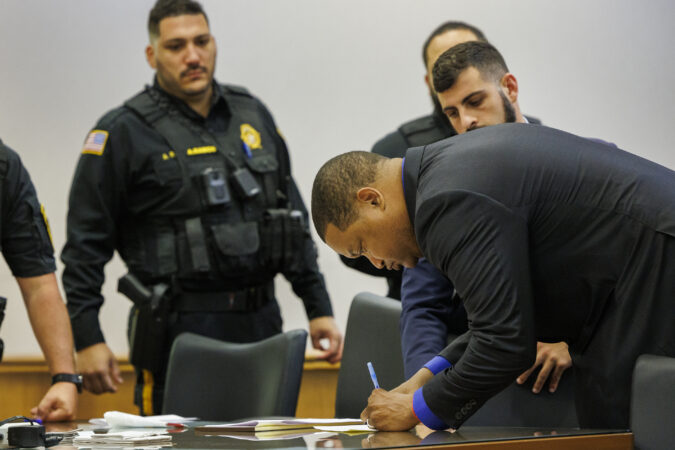
    Atlantic City Mayor Marty Small Sr. was acquitted of child endangerment and related crimes Thursday after being accused of repeatedly assaulting his teenage daughter.

    Small, 51, faced charges stemming from a handful of incidents in late 2023 and early 2024 in which prosecutors said he and his wife abused and assaulted the teen. The couple said the incidents stemmed from their disapproval of their daughter’s relationship with a young man, leading to escalating tension and arguments in the family home.

    The jury delivered its verdict at 12 p.m. after deliberating for two days. They found Small not guilty of endangering the welfare of a child, aggravated assault, making terroristic threats, and witness tampering.

    “Thank you, Jesus! Thank you, jury!” Small said as the verdict was announced and broke into tears.

    Speaking to reporters outside the courthouse, Small said he and his family were prepared to “put this chapter behind us, in peace.”

    “It’s a lot of political forces out here that are against the leadership of my wife and I,” Small said. “But guess what? The people of Atlantic City want us, the people of Atlantic City need us, and the people of Atlantic City deserve us.”

    Had Small been convicted of any of the crimes, he would have been required by state law to cede his office.

    Those stakes were evident as the mayor’s friends and supporters packed into the courtroom for nearly two weeks of the trial. Supporters surrounded Small and broke into cheers outside the courthouse, celebrating a political career whose future had depended on the opinion of jurors.

    Small said he had been heavily scrutinized for more than a year after news of the allegations broke in spring 2024. He said he and his wife had since been “drug through the mud” and cast as child abusers by the media.

    Small’s defense attorney, Louis Barbone, said the verdict was “absolute proof that our justice system works” and that “honest men like Marty Small are vindicated.”

    Atlantic County Prosecutor William Reynolds said he and his office “respectfully disagree with the verdict.”

    “We acted based upon the complaints of the victim,” Reynolds told reporters. “The trial in this case was truly to give the victim a voice — the jury chose not to believe that voice.“

    Prosecutors said Small, a Democrat who was reelected this year amid his legal struggles, punched his daughter and beat her with a belt. In an incident central to their case against the mayor, prosecutors said, Small struck her in the head with a broom multiple times, knocking her unconscious.

    Jurors heard a conversation the teen recorded on her phone, in which Small told the girl he would “earth slam” her down the staircase. And prosecutors said that after the girl reported the abuse and investigators stepped in, Small encouraged his daughter to “twist up” her account of the events to minimize his involvement.

    Over the course of the trial, Small and his wife, La’Quetta — who also faces charges of abusing the teen — looked on as prosecutors described the mayor’s actions as criminal. Prosecutors presented photos of the teen’s bruises and listened to testimony from a pediatrician who said the injuries did not appear accidental.

    Small’s defense team, by contrast, told jurors that the teen had lied to investigators and exaggerated the extent of her injuries, and that she and her boyfriend had conspired against her father.

    Barbone had called the trial “extortion by child.” He said the mayor was a caring father who was only attempting to discipline an out-of-control child, and presented jurors with more than 40 character witnesses on his behalf.

    Small also testified and said he loved his daughter. He denied abusing her in the manner she described, telling jurors: “I did not hit my daughter with a broom.”

    The girl, now 17, took the stand last week and described being punched in the legs by her father in his “man cave” after her parents found out she had sneaked her boyfriend into the family home to have sex.

    “He said some words and put his hands on me,” the teen testified. Her father, she said, “was punching me in my legs and he hit me with a belt.”

    Prosecutors said the girl’s decision to testify was one of the most challenging things a teenager could do, and they rebuffed Barbone’s suggestion that the girl was a liar who sought retribution against her politically powerful father.

    As for the broom incident, Barbone said, the mayor had not hit the girl but was wrestling the broom out of her hands when she fell and hit her head.

    Prosecutors showed jurors photos of marks on the girl’s face. But a nurse who treated the teen at a hospital several days after the girl complained of headaches said she had not been able to find signs of injury.

    Jurors asked to review multiple pieces of evidence during their deliberation, including video of Small’s testimony about the broom incident.

    Again they watched the mayor recall the morning he urged his daughter to get ready to attend a peace walk in January 2024 following a spate of killings in Atlantic City.

    The teen refused, cursing at Small before ripping his shirt and throwing laundry detergent on him, the mayor testified. A scuffle broke out when she picked up a butter knife and the broom, he said.

    Mentioning the hospital examination, the mayor asked: “Where is the bruise, where is the bump, where is the bleeding?”

    In less than half an hour, jurors returned their verdict.

    Small, in his post-verdict remarks, described his daughter as “lost” and vowed to right the course of his family life.

    “I’m gonna get my daughter back,” Small said. “In the Bible, it says, ‘Father, forgive her, for she know not what she do.’ And that’s what we’re gonna do.”

    Prosecutors declined to comment on what would happen to the girl, who is still a minor and does not currently live with her family.

    Small’s wife, La’Quetta, is scheduled to stand trial in January on charges of endangering the welfare of a child and simple assault. La’Quetta Small, the superintendent of Atlantic City public schools, is accused of repeatedly beating her daughter.

    Also facing a forthcoming trial is Constance Days-Chapman, the principal of the Smalls’ daughter’s high school. Prosecutors say when the teen reported her parents’ abuse, Days-Chapman failed to notify child welfare authorities and instead told the couple of the report.

    Days-Chapman, who is Marty Small’s former campaign manager, was later charged with official misconduct and related crimes.

    Reynolds, the county prosecutor, said his office would hold an internal meeting to discuss the charges against La’Quetta Small and Days-Chapman. They will also meet with the Smalls’ daughter, he said.

    “We need to get the victim in here and have a discussion with her before any decisions are made — and that’s out of respect for her,” Reynolds said.

  • In Marty Small Sr. trial, jurors will decide whether A.C. mayor is guilty of child abuse

    In Marty Small Sr. trial, jurors will decide whether A.C. mayor is guilty of child abuse

    MAYS LANDING, N.J. — After a week in court, attorneys delivered closing arguments Tuesday in the child abuse trial of Atlantic City Mayor Marty Small Sr.

    Defense lawyers for Small, a 51-year-old Democrat who was reelected this year, said the allegations that he and his wife had abused their teenage daughter multiple times in late 2023 and early 2024 were false.

    “We are not guilty,” his attorney, Louis Barbone, told jurors in New Jersey Superior Court.

    Small faces charges of endangering the welfare of child, aggravated assault, making terroristic threats, and witness tampering. He has denied the charges, and testifying in his own defense last week, he told jurors he “would do anything to protect” the girl and said he did not strike her with a broom as she has alleged.

    More than 40 people testified on behalf of Small in the trial’s final days. It comes as Atlantic City ends the year in struggles both political and financial.

    Prosecutors say Small not only struck his daughter but also attempted to cover up the abuse as he and his wife, La’Quetta, grew increasingly in conflict with the teen over a relationship with a boy they did not approve of.

    They said he punched her and beat her with a belt in addition to hitting her with a broom, and later told her to “twist up” her account of the incidents to investigators to minimize his involvement.

    “Violence is not a solution,” Assistant Prosecutor Elizabeth Fischer told the panel. “Abuse is not parenting.”

    But Small’s lawyer, Barbone, told jurors prosecutors lacked sufficient evidence to make their case and said they had inappropriately interceded in a private, family matter in the Small household.

    “Why have we taken this man’s life and made a spectacle of it?” Barbone asked. “Because they can.”

    He scoffed at prosecutors’ idea that the teen had been intimidated by her father’s political power, calling the trial “extortion by the child.”

    The girl, Barone said, had lied about her injuries to both doctors and investigators, conspiring with her boyfriend to secretly record her father and compromise him.

    Much of the attorney’s attention fell on the January 2024 incident in which Smalls’ daughter said he struck her multiple times in the head with a broom during an argument over her attending the Atlantic City Peace Walk.

    Barbone said the girl had also been holding a butter knife and that as the mayor struggled with her over the broom, the teen fell and hit her head.

    The attorney said the teen then exaggerated her injuries, and he said the bristle side of a broom couldn’t do damage. He told jurors to look no further than the testimony of the girl’s nurse, who could not rule that the teen suffered a concussion as she contended.

    And Barbone returned to the topic of Small’s daughter’s sexually explicit messaging with her boyfriend, which prosecutors called a “shining ball in the corner” meant to distract jurors from both the teen’s testimony of the alleged abuse and the photos of her bruises.

    Barbone said the conflicts began after the Smalls discovered their daughter had sneaked the boy into the family home and had sex without their knowledge. He later displayed an emotionally charged text chain between the girl and her mother in which the teen threatens to go off birth control.

    Meanwhile, Fischer, the prosecutor, asked jurors to remember the “truth” of what Small’s daughter had endured. .

    Fischer said the teen had been brave to testify against her father — arguably the most powerful figure in Atlantic City government — as well as her mother, who is the superintendent of Atlantic City Public Schools. La’Quetta Small also faces a child endangerment charge in a case scheduled for trial in January.

    It was “the most difficult thing a person can do,” Fischer said of the girl’s decision to testify against her parents, giving her little incentive to lie.

    The prosecutor said a nurse who tended to the girl’s injuries had diagnosed the teen with a head injury, and that it was impossible to tell if she was concussed through a CT scan alone.

    And a pediatrician who specializes in child abuse testified that the girl’s injuries were “nonaccidental,” Fischer added.

    Prosecutors said the girl first reported the abuse to her principal, Candace Days-Chapman. They say Days-Chapman, who previously served as Marty Small’s campaign manager, did not file a report with child welfare authorities. She instead told Smalls herself, and staff at the school only learned of the abuse after the teen reported it a second time after watching a mental health presentation. Chapman was later charged with official misconduct and related crimes.

    Fischer, her voice swelling with emotion, expressed disbelief that Small had allowed his attorney to characterize his daughter as both an “animal” and “Tasmanian devil” in describing their conflicts at home.

    “This is offensive at its highest level,” she said.

    And she told jurors that some of those who testified on behalf of the mayor had strong ties to Atlantic City government and stood to gain from the mayor’s success. And in the end, she said, they had not witnessed the conflicts between Small and his daughter.

    “Character,” the prosecutor said, ”is how you act when no one is watching you.“

  • ‘Such a superstar’: Beloved Philly flight attendant remembered after his puzzling South Philadelphia death

    ‘Such a superstar’: Beloved Philly flight attendant remembered after his puzzling South Philadelphia death

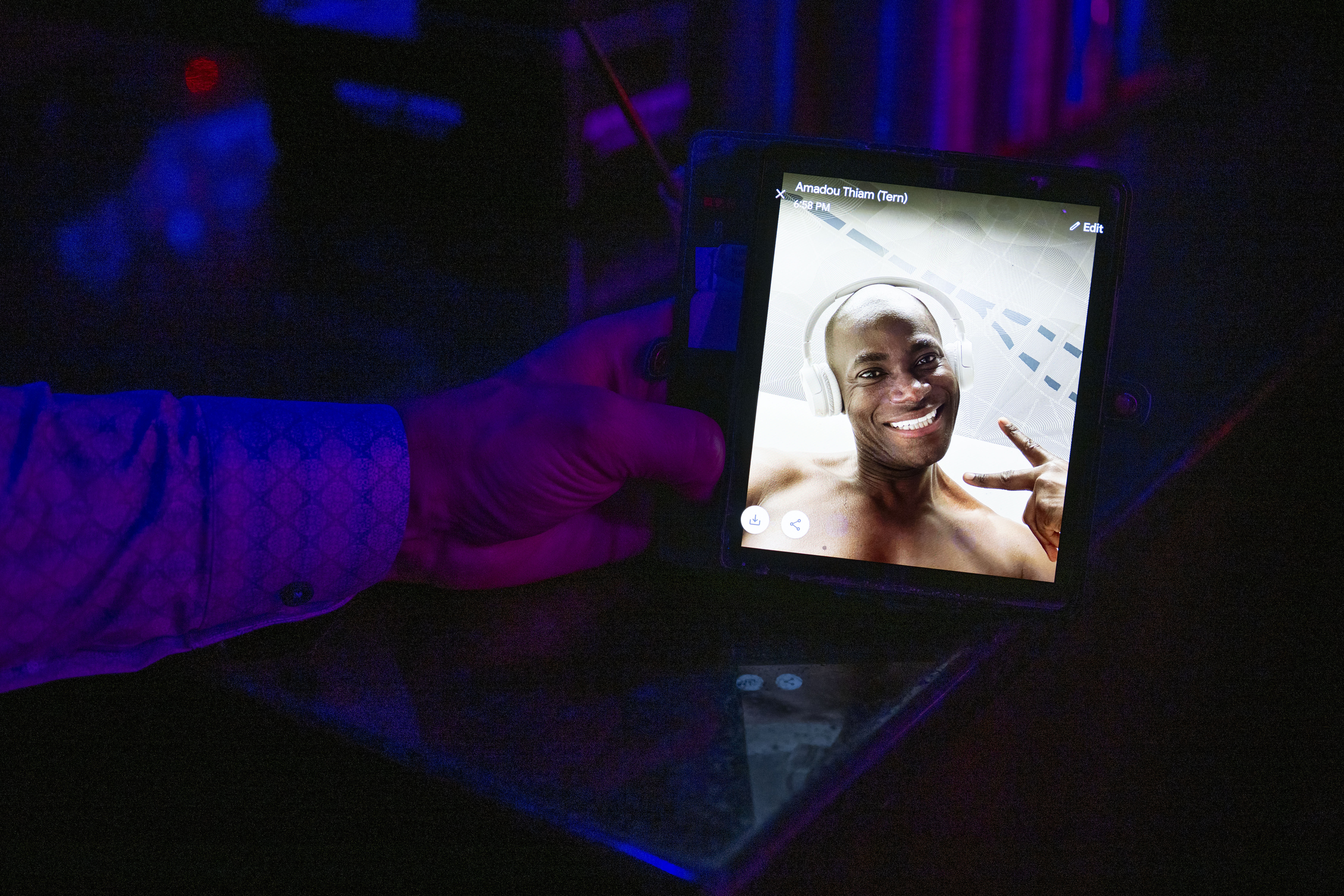
    Amadou Thiam lived the American dream — and then some.

    The immigrant from Côte d’Ivoire worked his way up at a major airline as a flight attendant, purchased a home in South Philadelphia, and traveled to exotic locations when his schedule allowed it.

    He danced with friends at Philly’s nightclubs, even crafted a stage name for a yearly drag performance he gave at Voyeur — “Ama-Diva,” a play on his name that Thiam’s loved ones say reflected the 50-year-old’s playfulness and unapologetic charm.

    That dream was cut tragically short last month.

    A quiet neighborhood of rowhouses was rattled Nov. 10 when neighbors found Thiam lying naked on the pavement behind his home on the 2400 block of Federal Street suffering severe injuries to his face, neck, and body.

    He was rushed to a nearby hospital and died from his injuries.

    The medical examiner’s office has yet to release the cause and manner of Thiam’s death. But homicide detectives are investigating, and police believe Thiam either fell — or was thrown — out of his third-floor window. They have identified two men they believe may have been involved.

    Amadou Thiam’s partner Barry Rucks displays a photo of Amadou before a memorial service at Voyeur Nightclub on Saturday, Dec. 13, 2025 in Philadelphia.

    It was jarring news for those who knew Thiam, a beloved member of Philadelphia’s flight attendant community who had worked for American Airlines since 2011.

    A group of his loved ones gathered at Voyeur on Saturday to memorialize their friend, sipping drinks and sharing stories beneath the shimmering glow of a disco ball. A DJ played soulful dance music. Some of Thiam’s acquaintances, his “chosen family,” donned dresses, high heels, and flashy jewelry.

    In the face of tragedy, they were celebrating in style — the way Thiam would have wanted them to.

    “He was just a happy person, and he took advantage of his environment and did the best with it,” said Barry Rucks, Thiam’s partner of five years. “You and me take things for granted — he didn’t take anything for granted.”

    Rucks said Thiam started at American Airlines as a baggage claims worker but quickly rose to become one of their “number one” flight attendants.

    A native French speaker, Thiam worked on international flights to Paris and Zurich, posting photos to social media of the luxury hotels and historic monuments he visited along the way.

    It was a life he could have hardly imagined in western Africa, Rucks said, where he was raised alongside nine brothers and sisters.

    After getting his American citizenship, Thiam was proud to vote in elections and serve on jury duty, Rucks said. He marveled at the economic opportunity here, and developed an affinity for purchasing lavish clothing items on Amazon when he wasn’t helping siblings out with money.

    “He would never say no to anyone, because he knew how hard it was to be an American,” Rucks said.

    Voyeur was a fitting setting for Thiam’s memorial.

    The Center City nightclub is where Thiam and a friend once dressed as Glinda and Elphaba from Wicked and performed during an annual drag benefit for flight attendants who had fallen on hard times.

    Amadou Thiam’s partner Barry Rucks speaks to guests during a memorial service at Voyeur Nightclub on Saturday, Dec. 13, 2025 in Philadelphia.

    “He was just such a shining star in this community,” said Aurore Dussh, one of Thiam’s friends. She said Thiam performed at Voyeur on numerous occasions, balancing his diva reputation with an undeniable sweetness in his relationships.

    He was “such a superstar,” Dussh said. “Yet he made everyone else feel seen.”

    Police continue to investigate Thiam’s death

    In the weeks since Thiam’s death, police have sought two men they believe are connected to the unusual circumstances surrounding his death.

    Sources familiar with the investigation say investigators have evidence that suggests Thiam was assaulted that night.

    That evidence includes video footage showing the men outside Thiam’s home around the time his body was found. The two, an older and younger man, appear to be carrying clothing from Thiam’s home, according to those sources.

    Neighbors, too, recalled seeing the men leaving Thiam’s home.

    This image, taken Nov. 16, 2025, shows the third-story window (second from left) from which neighbors say Amadou Thiam fell on Nov. 10.

    Finding Thiam’s door cracked open, the neighbors entered to find blood smeared across his kitchen and third-floor bedroom. Back outside, they noticed a stream of blood that led them to Thiam’s body on the pavement.

    Rucks, Thiam’s partner, said he has been in touch with investigators and that none of Thiam’s friends and acquaintances recognized the two men in the video.

    Rucks, who lives in Montgomery County, lived separately from Thiam, who prized his independence, he said.

    He recalled Thiam was nothing but happy the Sunday morning he left his house to return to Philadelphia, a day before his death.

    It was the last time Rucks saw his partner alive.

    “I can’t speculate and I’m refusing to,” Rucks said. “We will find out what happened.”

  • Joe Biden has raised little of what he needs to build his presidential library, a new report finds

    Joe Biden has raised little of what he needs to build his presidential library, a new report finds

    When it comes to funding his presidential library, former President Joe Biden is far behind on funds, the New York Times reported Saturday.

    The report cites recent Internal Revenue Service filings from Biden’s library foundation, finding that the organization had not raised any money in 2024, the last year Biden was in office.

    The fund contains just $4 million in leftover funds from Biden’s 2021 inauguration, according to the Times. The former president’s aides have suggested their vision for a library could cost $200 million.

    The library foundation declined to say what it had raised in 2025. Biden is holding his first public event for potential library donors on Monday, the Times reported.

    Should it ramp up fundraising, Biden’s team still anticipates raising a little more than $11 million by the end of 2027, according to the filings viewed by Times reporters.

    Biden, who turned 83 this fall and is being treated for prostate cancer, has kept a low public profile since stepping back from his official duties.

    Some of the former president’s loyal donors told the Times they had not been contacted for library contributions; other Democratic donors said they were not likely to give even if they are asked, saying they had soured on Biden’s legacy or were focused on projects to combat President Donald Trump.

    Biden’s aides declined to make him available for an interview with the Times, though there are signs he has begun to step up his fundraising effort.

    The former president and his wife, Jill Biden, penned a letter to donors in September asking them to schedule interviews with a private firm hired to assess financials for a future library, according to the newspaper.

    Former presidents must raise their own money to fund their libraries, which have evolved from modest spaces to sprawling complexes complete with museums and other extras.

    Former President Barack Obama’s still-unfinished “presidential center” in Chicago is expected to cost hundreds of millions of dollars and will include a basketball court and vegetable garden in addition to a city library branch. Trump plans to raise nearly $1 billion for a library in downtown Miami, tax documents show.

    Biden has said he would like his library to be built in his home state of Delaware. That decision comes as recent reporting found the University of Pennsylvania, where the former president has familial ties, did not express interest in hosting the library in Philadelphia.

    Coupled with a lagging fundraising effort, Biden’s desire to keep his library near his home has spurred discussions among those close to him that he could merge his presidential library with the preexisting Biden institutions at the University of Delaware, according to the Times. The Newark-based university is the former president’s alma matter.

    With the help of the Delaware state government, the university has already raised more than $20 million for a forthcoming “Biden Hall,” an extension of the Joseph R. Biden Jr. School of Public Policy and Administration.

    Merging the library with the hall would be far cheaper — and modest — than other modern presidential libraries, though the Times reported that both projects currently remain separate.

    Few details surrounding the library appear set in stone, however.

    Asked about the prospect of a merger, a Biden spokesperson declined to comment to the Times, saying the former president’s team continues to be in an “exploratory and planning phase.”

  • Police seek suspect in killing of 93-year-old man in Logan

    Police seek suspect in killing of 93-year-old man in Logan

    Police are seeking a suspect wanted in connection with the killing of a 93-year-old man in the city’s Logan neighborhood last week, authorities said Friday.

    The victim, Lafayette Dailey, was found dead in his home on the 4500 block of North 16th Street when medics were called there around 3 p.m. on Friday, Dec. 5.

    Dailey had suffered a laceration to the chest and trauma in his head, police said. A medical examination found that he died from multiple stab wounds, and his death was ruled a homicide.

    Investigators are now searching for 53-year-old Coy Thomas, who police say is considered a suspect in their homicide investigation. His last known address was on Ashmead Place in Germantown, police said.

    They found Dailey’s wallet, keys, and vehicle missing from his home. They later found his car, a white Chrysler 300 sedan, several days after his death.

    A department spokesperson declined to comment on the circumstances around the discovery of the car, citing an active investigation.

    The department is urging anyone with information on Thomas’ whereabouts to Contact the homicide unit at 215-686-3334 verified or call its anonymous tip hotline, 215-686-TIPS (8477).

  • ‘I didn’t want to get hit’: A.C. mayor’s teen daughter testifies against him in child abuse trial

    ‘I didn’t want to get hit’: A.C. mayor’s teen daughter testifies against him in child abuse trial

    MAYS LANDING, N.J. — The daughter of Atlantic City Mayor Marty Small Sr. took the stand in an Atlantic County courtroom Tuesday morning to testify against him at trial as he stands accused of physically abusing her.

    As a Superior Court judge looked on, the teen told jurors her father had beaten and punched her and struck her with a broom.

    “He put his hands on me,” she said.

    Small, a Democrat, faces charges of child endangerment, aggravated assault, and witness tampering in connection with a series of incidents in which prosecutors say he punched, beat, and threatened his then-15-year-old daughter, largely over his disapproval of her relationship with her boyfriend. He has denied any wrongdoing, and his lawyers have challenged his daughter’s credibility.

    The girl, now 17, recounted the abuse in a soft voice, calmly answering prosecutors’ questions — and rejecting suggestions by an attorney for her father that she had lied about key details.

    “My dad came home and he was like, upset,” the girl said as prosecutors asked her about crimes they allege took place in the Small family home in January 2024.

    She said her mother had recently gone through her phone and learned that she had sneaked her boyfriend into the house. Her father, she testified, was “mad and disappointed.” As she sat in a chair that she recalled as having a Philadelphia Flyers theme, she told the jury, he hit her with a belt and punched her in the legs.

    Louis Barbone, an attorney for Small, maintained that there were inconsistencies in statements the girl gave to investigators, and he disputed her account of the incident with the broom.

    Earlier in the day, prosecutors played video footage they say the teen recorded at home.

    Though the camera did not show images of Small or others, it captured the sound of the girl and her parents screaming amid what prosecutors described as the chaos that descended on the home after the teen started a relationship they did not approve of.

    Prosecutors also showed Instagram messages the girl exchanged with her boyfriend about the alleged abuse, including one in which she told him, ”I’m scared to get in the shower because my bruise is gonna burn.”

    Small’s daughter told jurors that as her father was rousing his family one January morning to attend the Atlantic City Peace Walk, she did not have her hair done and didn’t want to go. She said she and her father argued and he pushed her, so she splashed him with laundry detergent.

    Small, she said, then got a broom and struck her multiple times in the forehead. She testified that she passed out, and the next thing she remembered was her father telling her brother to get her some water.

    On cross examination, Barbone returned to a theme he struck in his opening statement to the jury on Monday — that Small was a caring father who, watching his daughter’s life veer off course because of a relationship he believed to be manipulative and inappropriate, had legally disciplined a disobedient child.

    He told jurors prosecutors did not have a recording of the incident involving a broom, and he said the girl had been wielding a butter knife and the injuries she sustained that day happened when she fell as the two wrestled for the broom.

    Barbone said the teen had exaggerated her injuries, and he noted that when initially questioned by investigators, she told them she felt safe at home.

    “I didn’t want to get taken away,” the girl said, “so I said, ‘yes.’”

    The trial is expected to continue through the end of the week.

  • Man and woman shot dead in Kensington murder-suicide, authorities say

    Man and woman shot dead in Kensington murder-suicide, authorities say

    A man and woman were shot and killed Wednesday afternoon in Kensington in what police believe was a murder-suicide, according to a law enforcement source who asked not to be identified to discuss an ongoing investigation.

    The two, whom police did not identify, were shot on the 3400 block of Hartville Street around 1:15 p.m., according to the department. They were pronounced dead just after 2 p.m.

    Investigators believe the man shot the woman with a shotgun, according to the police source.

    Police continue to investigate.

  • University of Delaware student facing weapons charges after plotting attack on campus police, feds say

    University of Delaware student facing weapons charges after plotting attack on campus police, feds say

    A University of Delaware student who planned to target a campus police building with firearms was arrested last week and charged with federal weapons crimes, authorities said.

    Luqmaan Khan, 25, of Wilmington, vowed to “kill all” as he mapped out violent schemes in his journal — ones that involved Glock pistols, stun grenades, an assault rifle, and other “urban warfare setups,” according to a criminal complaint filed by the FBI.

    New Castle County police discovered the alleged plot when, authorities say, they happened upon Khan behaving suspiciously in a disc golf park late last Monday.

    When officers found Khan alone in a Toyota around midnight after the park had closed, they said, he repeatedly reached around in the vehicle and became nervous when questioned why he was there.

    Khan was arrested for resisting arrest after he refused to get out of the driver’s seat. When officers searched the car, they found a loaded Glock .357 handgun, a brace for semiautomatic pistols that have been converted into machine guns, four loaded extended ammunition magazines, body armor, binoculars, and a notebook, according to the affidavit of probable cause for his arrest.

    That notebook is now the center of an investigation being handled by agents with the FBI’s Wilmington office.

    The marble composition book was littered with references to different firearms and the ideal scenarios for their use, the affidavit said.

    Khan noted that an assault rifle was best for “open spaces,” while a Glock pistol was better for “fast transition fighting.” He suggested tear gas could be used for “room clearing,” the document said, while a sword or knife would allow for “no noise kills.”

    Khan’s notebook also included a hand-drawn map of a building that federal authorities say appears to be the University of Delaware campus police station. It included notes about entry and exit points to the building at certain times of the day, the affidavit says.

    Meanwhile, Khan named a University of Delaware police officer as a “specific target” according to the affidavit, which did not identify the officer.

    Khan, the document said, “intended to use the weapons he amassed to commit ‘ambushes’ and ‘surprise attacks’ on targets” at the university.

    Laura Carlson, the university’s interim president, said in a letter to the campus community that Khan has been “temporarily separated” from the university as the investigation continues and is barred from accessing campus buildings.

    “There are no known or immediate threats to the University of Delaware community,” Carlson wrote. “However, [police described] evidence of a plan that targeted the University of Delaware Police Department (UDPD). This is frightening to all of us.”

    Khan’s writings repeatedly mentioned becoming a “martyr,” authorities said. In an interview with the FBI after his arrest, the affidavit said, Khan told investigators that martyrdom was “one of the greatest things you can do.”

    Khan, who was born in Pakistan and emigrated to America in his youth, is a U.S. citizen who lived alone and had no criminal convictions, federal authorities said.

    Federal agents searched his residence last week and recovered an additional unregistered 9mm Glock pistol with a machine gun conversation kit, an M4 rifle with a scope and red dot sight, 10 more extended magazines, and a second body armor plate.

    Federal prosecutors charged Khan with possessing a machine gun and an unregistered firearm. If convicted, he faces a maximum sentence of 10 years in prison, according to the U.S. Attorney’s Office.

    Khan faces additional state charges for resisting arrest and other misdemeanors.

    His lawyer, Eleni Kousoulis, was not immediately available for comment.

  • Philly’s new unarmed volunteer ‘auxiliary police’ unit could launch in 2026

    Philly’s new unarmed volunteer ‘auxiliary police’ unit could launch in 2026

    The Philadelphia Police Department is forming an “auxiliary” unit that may be ready as early as next year, according to a department spokesperson, adding to its ranks volunteer members who will assist officers at large public gatherings.

    Auxiliary police will not carry weapons and will not be assigned typical law enforcement duties, according to Sgt. Eric Gripp, a department spokesperson. They will not be authorized to make arrests.

    But the department wants the unit to act as a link between the public and police, participating in community engagement and, according to Gripp, serving as additional “eyes and ears” for officers on the ground.

    As Philadelphia prepares to host a series of widely attended events in 2026 — the country’s 250th July Fourth anniversary celebration, FIFA World Cup matches, and more — the police department will be tasked with maintaining order amid an influx of visitors.

    An auxiliary unit would assist police during those types of events, according to Gripp. He said the department had tasked its academy recruits with similar duties during citywide celebrations after the Eagles’ Super Bowl victory in February.

    It is unclear whether the auxiliary unit will be ready in time for the summer.

    The department does not have an official estimate on when it plans to introduce the unit; the idea is still in the planning stages and targeted for 2026, Gripp said. The only confirmed requirement is that recruits must be 18 years old to apply.

    Police departments in municipalities large and small have used auxiliary units, sometimes called reserve units, for years.

    The New York Police Department has maintained its auxiliary unit for more than half a century; major cities like Baltimore also have reserve officers, as do smaller townships like Cranford, N.J.

    Criminologists and former law enforcement officers say police departments use these units to assist with traffic management, crowd control, and community engagement, and for reporting more serious issues to officers who have the authority to intervene.

    Experts say the units are a boon to departments facing recruitment and retention issues, providing unpaid assistance from those who are already curious about life as a police officer and who often hail from the communities they are assigned to.

    But departments must invest time, money, and adequate training into auxiliary units for them to be successful.

    Joseph Giacalone, a retired NYPD sergeant and criminal justice instructor at Pennsylvania State University’s Lehigh Valley campus, said the New York department often uses its 3,700-member auxiliary unit for crowd control during “fun events” like parades and street fairs.

    Most importantly, Giacalone said, departments should not view their auxiliary unit as a crime-fighting tool; members should be provided uniforms that are recognizable to the public, he said, distinct from those of actual police officers.

    “We’re not talking riots,” Giacalone said of situations in which auxiliary officers are useful. “We don’t want them really identifying things such as drug dealing, dens of prostitution, things like that. We can get that from ordinary intelligence — we don’t want ordinary citizens doing that.”

    Still, auxiliary members may help officers with other duties.

    During Giacalone’s tenure with the department, the NYPD’s auxiliary unit proved beneficial when members reported quality-of-life issues such as abandoned vehicles and broken traffic lights, he said.

    Given the potential danger that accompanies police work, Giacalone said, he hopes the Philadelphia department’s plan includes extensive training for auxiliary recruits — as well as protective gear.

    The former sergeant still recalls a harrowing day in 2007 when two unarmed New York auxiliary officers were shot and killed by a gunman in the city’s Greenwich Village neighborhood while out on patrol.

    Gripp, the Philadelphia department spokesperson, said the city’s auxiliary unit would not conduct foot patrols. He said members would be trained by the department’s internal staff.

    Meanwhile, New York auxiliary officers must pass hours of training courses in first aid, self-defense, and patrol technique; in Giacalone’s experience, those trainings require more experienced officers to sacrifice time and energy to the project.

    By the former sergeant’s estimate, for Philadelphia, “it’s going to take a while to get this up and running.”