Author: Luis F. Carrasco

  • DACA and TPS recipients pump billions into the U.S. economy. Trump wants them gone anyway.

    DACA and TPS recipients pump billions into the U.S. economy. Trump wants them gone anyway.

    Immigration is complicated. That makes polling on the topic difficult, as the same Americans who will tell you they support mass deportation one day will turn around and say they back a path to citizenship the next. So, which is it? Well, it depends.

    As crowded scenes of immigrants clustering at the southern border were endlessly repeated on TV, many Americans felt the Biden administration was not taking national security seriously and had flung open the golden door to anyone with a pulse and a sob story.

    Then, as U.S. Immigration and Customs Enforcement agents descended on Minneapolis, masked, heavily armed, and dangerously encouraged to ignore people’s constitutional rights — ultimately killing two U.S. citizens because they dared to question authority — even many Donald Trump supporters rose up to say this is not what they voted for.

    Unsurprisingly, most Americans fall somewhere in the middle — where balancing immigration control with humanitarian values looks at what makes the most sense for the country and for the people who are looking for a better life here.

    But that’s illegal immigration. On legal immigration, most Americans are all in, with only one in five opposing it. Why, then, is the Trump administration hell-bent on making life miserable for legal immigrants?

    Earlier this month, a court ruled against an administration decision that froze processing of immigration benefits like work permits and green-card applications for nationals of 39 countries targeted by a travel ban. These are people already in the United States legally who found themselves in limbo for months — many losing their jobs and risking deportation — after U.S. Citizenship and Immigration Services determined in January it would keep the $1 billion in fees these immigrants paid and give them nothing in return.

    Meanwhile, renewals under the Deferred Action for Childhood Arrivals (DACA) program for immigrants brought here as children have been hit with delays, and approvals of legal permanent residency applications, known as green cards, have fallen by around 16% — all part of the administration’s strategy of bureaucratic sabotage in the guise of “enhanced security.”

    The administration has also banned permanent legal residents from qualifying for government-backed small-business loans, while some immigrants, including DACA recipients, can no longer hold commercial driver’s licenses, regardless of possessing a legal work permit.

    Two U.S. Supreme Court decisions released last week will only continue to embolden the administration’s anti-legal immigrant push.
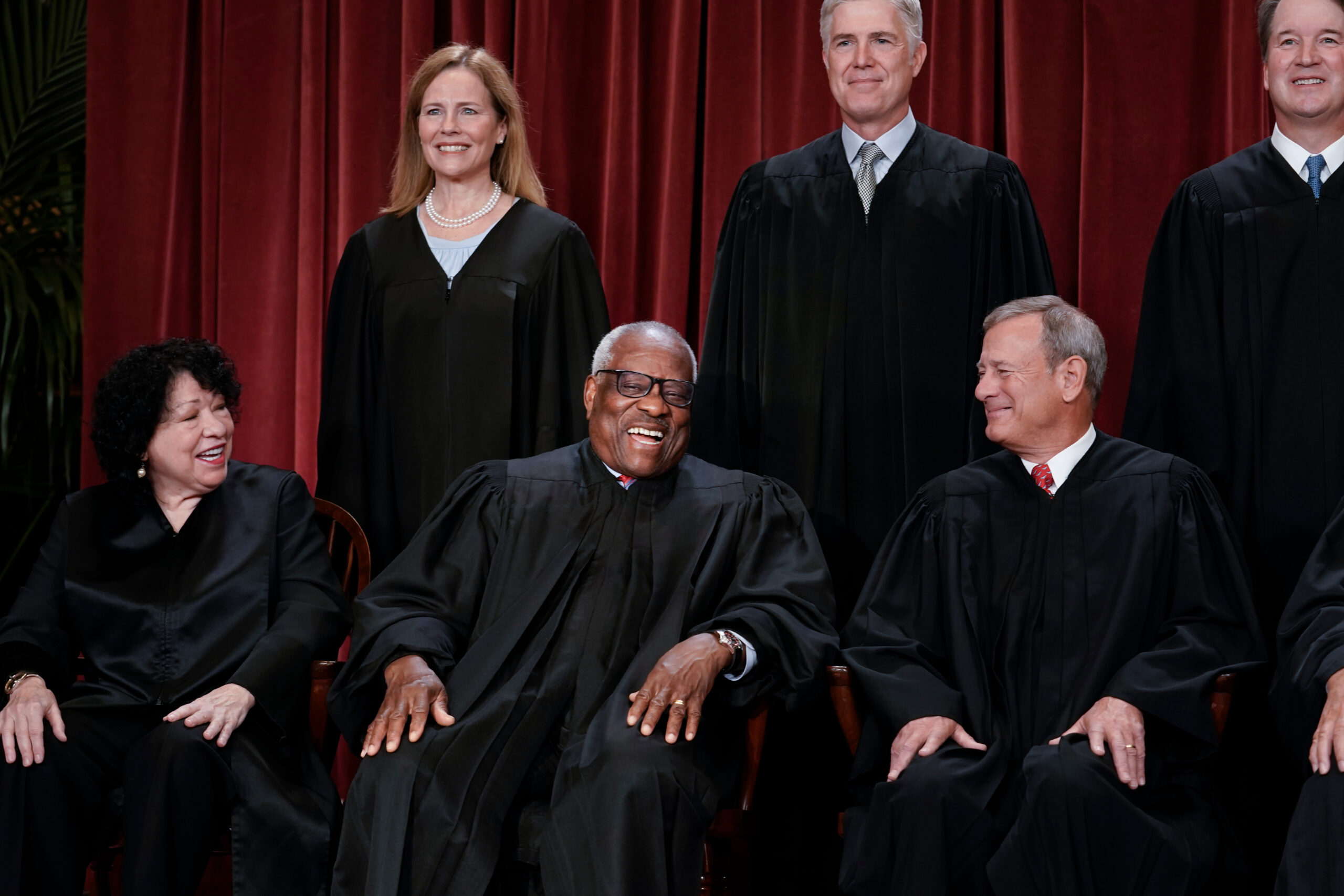
    Members of the Supreme Court sit for a group portrait in 2022. Bottom row, from left, Associate Justice Sonia Sotomayor, Associate Justice Clarence Thomas, and Chief Justice of the United States John Roberts. Top row, from left, Associate Justice Amy Coney Barrett, Associate Justice Neil Gorsuch, and Associate Justice Brett Kavanaugh.

    On Tuesday, the court’s conservative justices affirmed that border officers do not need “clear and convincing evidence” that a green-card holder seeking to reenter the U.S. has committed a crime to deny them entry. While I hope that one day the Clarence Thomas “border vibe check” joins the “Kavanaugh stop” in the annals of legal ignominy surrounding immigration enforcement, the court’s 6-3 decision makes a mockery of the idea that someone is innocent until proven guilty.

    Perhaps even more immediately concerning is the high court’s ruling Thursday allowing the president to end Temporary Protected Status, or TPS, for roughly 350,000 Haitians and 6,000 Syrians.

    The TPS program, a bipartisan congressional creation under President George H.W. Bush, gives immigrants work permits and protection from deportation if they come from countries determined to be too dangerous to go back to. While the word temporary is right there in the name, some program participants have been in the country for decades and have built lives here. For others, the nations they fled are still unsafe to return to, including Haiti, which is in the grip of gang violence and widespread hunger.

    That the conservative justices also found that Trump’s comments against Haitians were not “overtly racial” is absurd. Trump infamously referred to Haiti and African nations as “shithole countries” in the same 2018 meeting in which he wondered aloud why America couldn’t have more immigrants from places like Norway. For context, this is the same administration that considers white South Africans the only persecuted minority worthy of asylum in the U.S.

    For the moment, the court’s decision applies only to Haitian and Syrian immigrants with TPS, but it has opened the door for the president to do what he has wanted to do since his first term, which is to end the program wholesale. That would impact the 1.3 million TPS holders from around 17 nations and their families, many of whom are U.S. citizens.

    While the human impact on communities of this mass de-legalization effort is immeasurable, the economic damage of Trump’s anti-immigrant policies is not.

    The 500,000 or so DACA recipients, for example, contribute nearly $17 billion to the U.S. economy annually, also paying into federal social safety net programs they are not legally able to access themselves, according to the immigration rights group FWD.us. TPS recipients contribute about $29 billion a year to the economy and pay $7.8 billion in combined federal, payroll, state, and local taxes.

    An immigration policy calculator produced by the Manhattan Institute finds that the kind of policies favored by the administration would add $618 billion to the national debt over 10 years, and leave every American poorer.

    Reasonable people can disagree on immigration, but at the very least, Trump’s exclusionary ideas are an economic dead end.
  • Republicans continue to sow distrust in elections. The SAVE America Act won’t change that.

    Republicans continue to sow distrust in elections. The SAVE America Act won’t change that.

    It is not unreasonable for people to be concerned about voter fraud or noncitizens voting. Not because it happens at a scale that could swing an election — researchers say it is so rare as to be statistically insignificant — but because Republican leaders have been pounding on that drum for so long that some can’t help but sway to the beat.

    As U.S. Sen. Dave McCormick recently reminded, more than half of Americans worry about fraud at the polls.

    “We have a duty to root out the source of this distrust and restore the integrity of our democratic process,” McCormick said, speaking on the Senate floor in defense of the SAVE America Act, the GOP’s latest effort to restrict voting.

    If Pennsylvania’s junior senator will allow me, I think I’ve cracked the case.

    Casting doubt on election security did not begin with Donald Trump and his bombastically false claims of hacked voting machines and millions of illegal immigrants voting. It started long before that, with “traditional” Republicans like McCormick legitimizing allegations of widespread fraud.

    Under President George W. Bush, Attorney General John Ashcroft warned that “votes have been bought, voters intimidated and ballot boxes stuffed” at a 2002 Voting Integrity Symposium. Yet, bringing the power of the U.S. Department of Justice to investigate these allegations resulted in few prosecutions by the time Bush left office.

    After 2013, when the U.S. Supreme Court removed a provision of the Voting Rights Act, thereby ending federal supervision of nine states with a history of racial discrimination, there was a slew of voting restrictions pushed by Republicans under the guise of voter integrity.

    By the time Trump came along, GOP voters were more than primed to believe that an election could be stolen, with the nadir being the Jan. 6, 2021, attack on the U.S. Capitol.

    Having learned no lessons from what happened, Republicans continue to stoke doubt about elections.

    McCormick shamelessly used a November incident in Chester County, where independent and unaffiliated voters were left off the county’s poll books, to allege that “registered voters were turned away at the polls. And an unknown number of unverified voters cast regular ballots.”

    There is no evidence that either of those claims is true.

    What happened in Chester County was human error that was corrected later that day. In the meantime, anyone who wanted to vote but was not in the poll books was asked to fill out a provisional ballot that would later be verified for eligibility.

    Elections are run by people, and mistakes happen. There are 3,069 counties in the U.S. in charge of administering elections. It’s a testament to the dedication of local officials that voting is as smooth and secure a process as it is.

    McCormick is a smart man. He likely knows the facts. He also knows that nothing included in the SAVE America Act would have prevented what happened in Chester County.

    What is included in the legislation requires people to show proof of citizenship when registering to vote and produce ID when casting a ballot. It stiffens penalties against election officials for registering voters without proof of citizenship, and forces states to submit their voter rolls to the U.S. Department of Homeland Security to ensure only citizens are registered.

    All of that seems reasonable, but seeing as how folks like McCormick are using deception in its promotion, you will forgive me for being skeptical. I don’t buy the catastrophism coming from Democrats, either, but there are valid objections.

    For example, some people who could otherwise vote do not have ready access to the documents required in the law — that’s about 20 million Americans, according to some estimates. That the proposal would take effect immediately, just in time for the midterm elections, guarantees that millions would be disenfranchised.

    Information sharing with DHS is also problematic, as the tool used to identify potential noncitizen voting registration “keeps making mistakes,” according to a ProPublica/Texas Tribune investigation.

    None of these issues is insurmountable. Instead of blocking legislation like the SAVE America Act, Democrats should fight to improve it.

    For example, if you need documentation to exercise your rights, then that documentation should be free, and requirements should be implemented after a reasonable grace period. Any mandate should come with the funding to ensure every American has access to their birth certificate, or that every citizen can easily obtain a passport. Congress should also make Election Day a holiday, while they’re at it.

    Ironically, voter suppression efforts, which traditionally fall hardest on communities of color, come from the idea that the changing face of America would turn away from Republicans. Put another way, this line of thinking suggests that as the U.S. barrels toward becoming a majority-minority nation, the GOP would be at a disadvantage.

    But some high-turnout elections, including the 2024 contest that put Trump back in the White House, have shown that less frequent voters — i.e., those least likely to jump through the hoops put up by something like the SAVE America Act — back Republicans.

    Instead of making up stories and assuring the long-term erosion of democracy for short-term political gain, McCormick and his GOP colleagues should partner with Democrats to make elections secure and voting easy.

  • Trump didn’t bring impunity to immigration enforcement

    Trump didn’t bring impunity to immigration enforcement

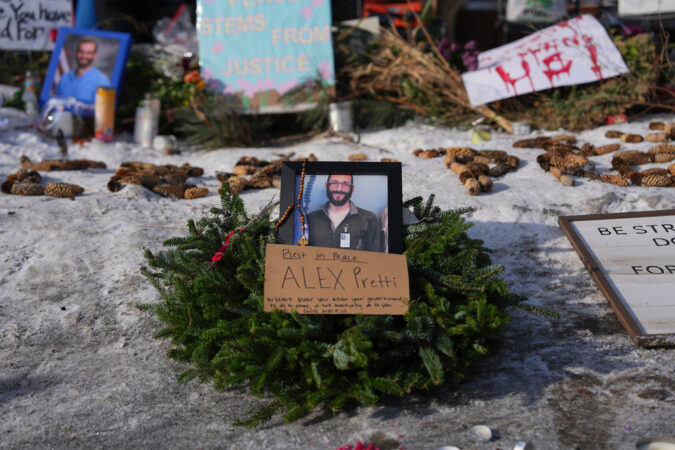
    Many Americans were shocked by the killings of Renee Good and Alex Pretti at the hands of federal immigration agents. Many more were repulsed by the federal government’s lack of transparency, victim blaming, and obfuscation of the facts regarding the shootings.

    But as border residents can tell you, what’s playing out in places like Chicago and Minneapolis is, in many ways, nothing new.

    Although the administration has taken that lack of accountability to a nauseating low — interfering in federal and local investigations — impunity around immigration enforcement did not begin when Donald Trump took office.

    Since 2010, more than 300 people have been killed in incidents involving on-duty Border Patrol agents, according to a tally kept by the Southern Border Communities Coalition. Out of that number, 74 have been killed by agents using force.

    Those figures are likely an undercount, as the agency has a history of failing to report deaths its agents are involved in. It also consistently fails to seriously discipline agents who face abuse complaints. A 2017 report by the American Immigration Council found a host of problems with the complaint system and investigation process, resulting in little accountability.

    Focusing on the use-of-force killings, I am not saying that all 74 were unjustified. As Gil Kerlikowske, who led U.S. Customs and Border Protection from 2014 to 2017, told me, agents often work by themselves in rural border stretches and can run into dangerous smugglers.

    But as Kerlikowske also told me, when he arrived at CBP, the agency had an outdated use-of-force policy that wasn’t available publicly, had no internal affairs division, and the only tools available to agents were firearms.

    “They’ve always had a culture that’s distinct, you know, going back to their early days,” he said. “They did have that kind of Wild West kind of culture.”

    That’s putting it mildly. While Kerlikowske instituted a series of important reforms around use of force, which he said his successors continued and improved upon, deep lasting change is slow and difficult.

    As a 2021 report detailed, the agency “has been steeped in institutional racism and has committed violent acts with near impunity” since its creation in 1924. Lest you think that attitude got left behind last century, in 2019, a Facebook group that included around 9,500 current and former agents was found to be littered with racism and misogyny.

    While I’ve known Border Patrol agents who zealously enforce the law while never losing sight of their humanity, who would hand over their lunch to a hungry migrant they just detained, current and former CBP agents were involved in the killings in Minnesota.

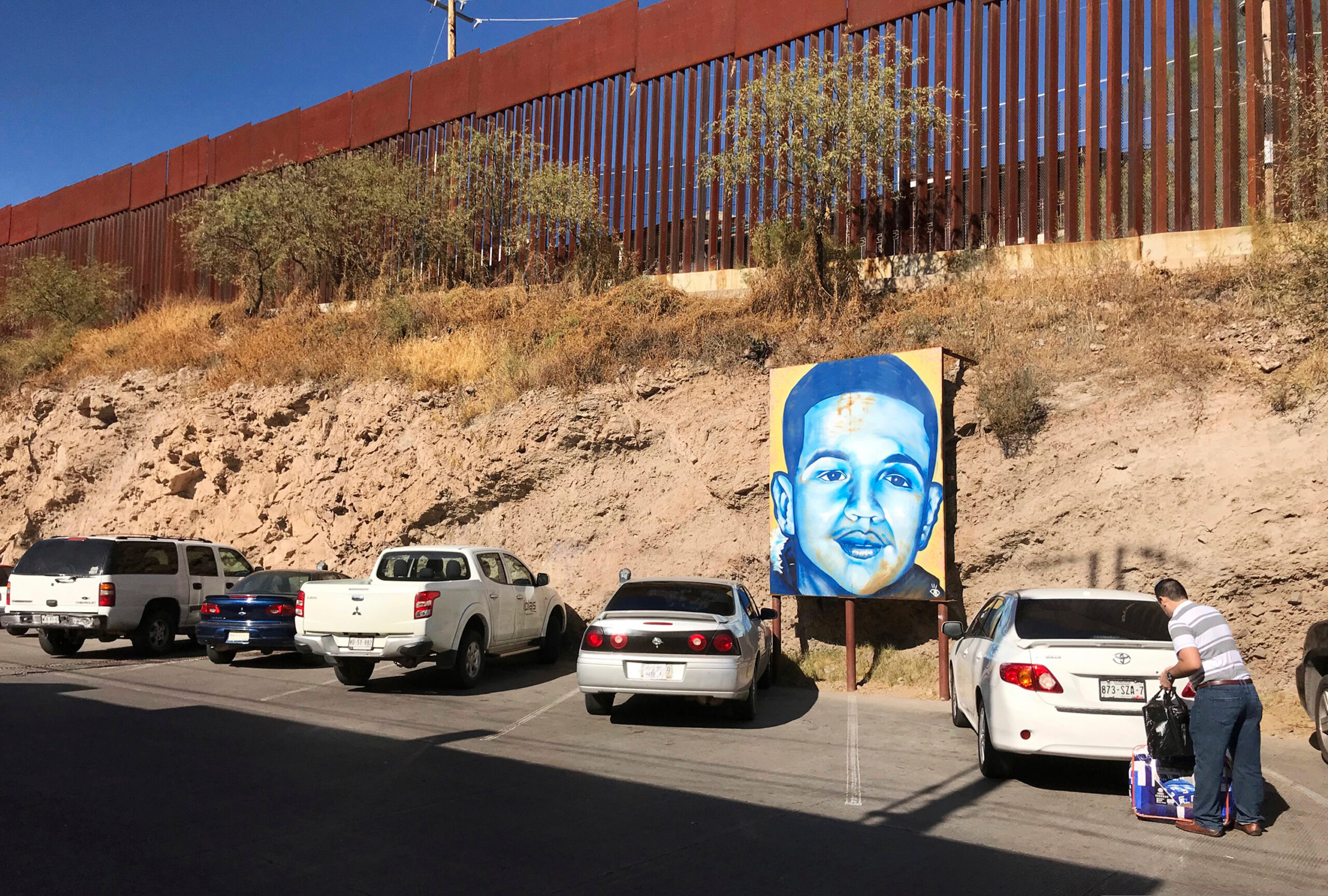
    This file photo taken in 2017 shows the boundary in Nogales, Mexico, with the United States and a poster of Juan Antonio Elena Rodriguez, a teen who was shot and killed across the line by a Border Patrol agent in 2012.

    The men who shot Pretti were identified by ProPublica as Border Patrol agent Jesus Ochoa and CBP officer Raymundo Gutierrez. Jonathan Ross, the U.S. Immigration and Customs Enforcement agent who killed Good, began his law enforcement career in 2007 as part of the Border Patrol.

    I hate to be cynical, but if past is prologue, President Trump and administration officials needn’t have bothered putting their thumb on the scale after the shootings. The few times agents are held to account, the result is rarely justice.

    In the last 35 years, only three Border Patrol agents have been charged and tried for killing someone in the line of duty. In all three cases, juries failed to convict.

    Michael Elmer was charged with second-degree murder after the 1992 shooting of Dario Miranda Valenzuela in Nogales, Ariz. Elmer fired 12 shots, hitting Valenzuela twice in the back. He then moved the body and didn’t immediately report the incident, according to the Arizona Daily Star. He was acquitted.

    Nicholas Corbett was charged with murder for killing Francisco Javier Domingo Rivera near Douglas, Ariz., in 2007. The agent’s account did not match up with eyewitness testimony or the physical evidence. The Cochise County Attorney’s Office eventually declined to prosecute after two trials ended in hung juries.

    Lonnie Swartz was tried twice, once for second-degree murder and later for involuntary manslaughter, in the 2012 shooting death of 16-year-old Jose Antonio Elena Rodriguez. I was an opinion writer at the Daily Star in Tucson, Ariz., when this case went to trial in 2018. The facts were undeniable: Swartz shot across the Nogales border fence into Mexico a total of 16 times. He stopped and reloaded. He hit the unarmed Elena Rodriguez eight times in the back and twice in the head from an elevation of around 14 feet.

    That two juries found Swartz not guilty is unconscionable.

    Taken in total, the message that federal immigration agents keep receiving — from the government and from juries — is that they can continue to operate with impunity.

    Those who have long advocated for reform in these agencies say perhaps things will begin to change as a result of the deaths of Good and Pretti because they were white Americans. But this isn’t about race or immigration status, it’s about unchecked power.

    Kerlikowske, at least, is optimistic about what happens once Trump is out of the White House.

    “The Border Patrol isn’t trained to work in cities. That’s not why they hired on. They didn’t hire on to go work in Chicago or Minneapolis,” he said. “I think the vast majority of these folks will be happy to be back doing what they were doing.”

    Let’s hope that when they do, they do so with a renewed commitment by the government to transparency and accountability. Otherwise, it may be back to business as usual.

  • Trump’s immigration crackdown also threatens Americans’ pocketbooks

    Trump’s immigration crackdown also threatens Americans’ pocketbooks

    Regardless of how you feel about immigration, President Donald Trump has made a mess of his promise to deport the estimated 13 million people who are in the U.S. illegally. A vow that more than half the country supported last year, and which undoubtedly (along with the high cost of eggs) helped him take back the White House.

    Today, not only has a majority of the electorate soured on the idea — including some Trump voters — but almost half are also ready to abolish U.S. Immigration and Customs Enforcement after the administration’s heavy-handed tactics have cost two U.S. citizens their lives in Minneapolis.

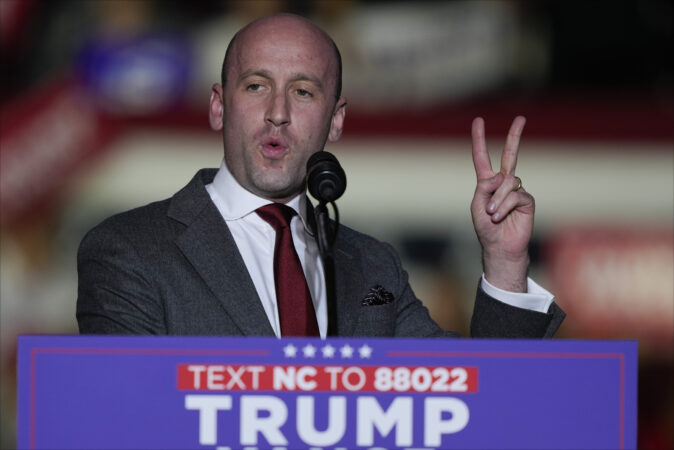
    But let’s step back for a moment and imagine a world where Trump’s agenda was not being implemented by a white supremacist like homeland security adviser Stephen Miller or run by incompetents like Homeland Security chief Kristi Noem.

    In that world, members of the administration would still have their work cut out for them, and protests would surely erupt. But ICE methodically engaging in workplace raids, for example, would prove a much more palatable (and effective) strategy than having masked federal agents arrest people using weapons and tactics that scream invasion, not law enforcement.

    Still, at the end of a year or two of those more restrained efforts, we would likely be where we are now — with most Americans realizing mass deportations and limiting legal immigration don’t make much sense.

    It wouldn’t even be about the human cost of blanket immigration enforcement; it would be about the expense.

    No, not just the $170 billion devoted to detention and deportation in Trump’s Big Beautiful Bill Act. Under the president’s immigration policies, American families will end up paying an additional $2,150 a year for goods and services by 2028.

    That’s a 14.5% increase on food, 6.1% on housing, and almost 4% on leisure and hospitality services, according to a study by FWD.us discussed at a panel Tuesday, hosted by the nonpartisan policy group and the Economy League of Greater Philadelphia.

    Researchers say that one of the most striking long-term impacts will be the tens of thousands of first-generation American children who are forced to become breadwinners as foreign-born members of their families are deported. There’s also the matter of billions of dollars in lifelong earning contributions to the U.S. economy lost, as well as the unquantifiable innovation and economic growth that will go missing as immigrants take their entrepreneurial spirit elsewhere. Remember that nearly half of Fortune 500 companies were founded or cofounded by immigrants or their children.

    Like the United States as a whole, the Keystone State and the Philadelphia area reap the benefits of immigration.

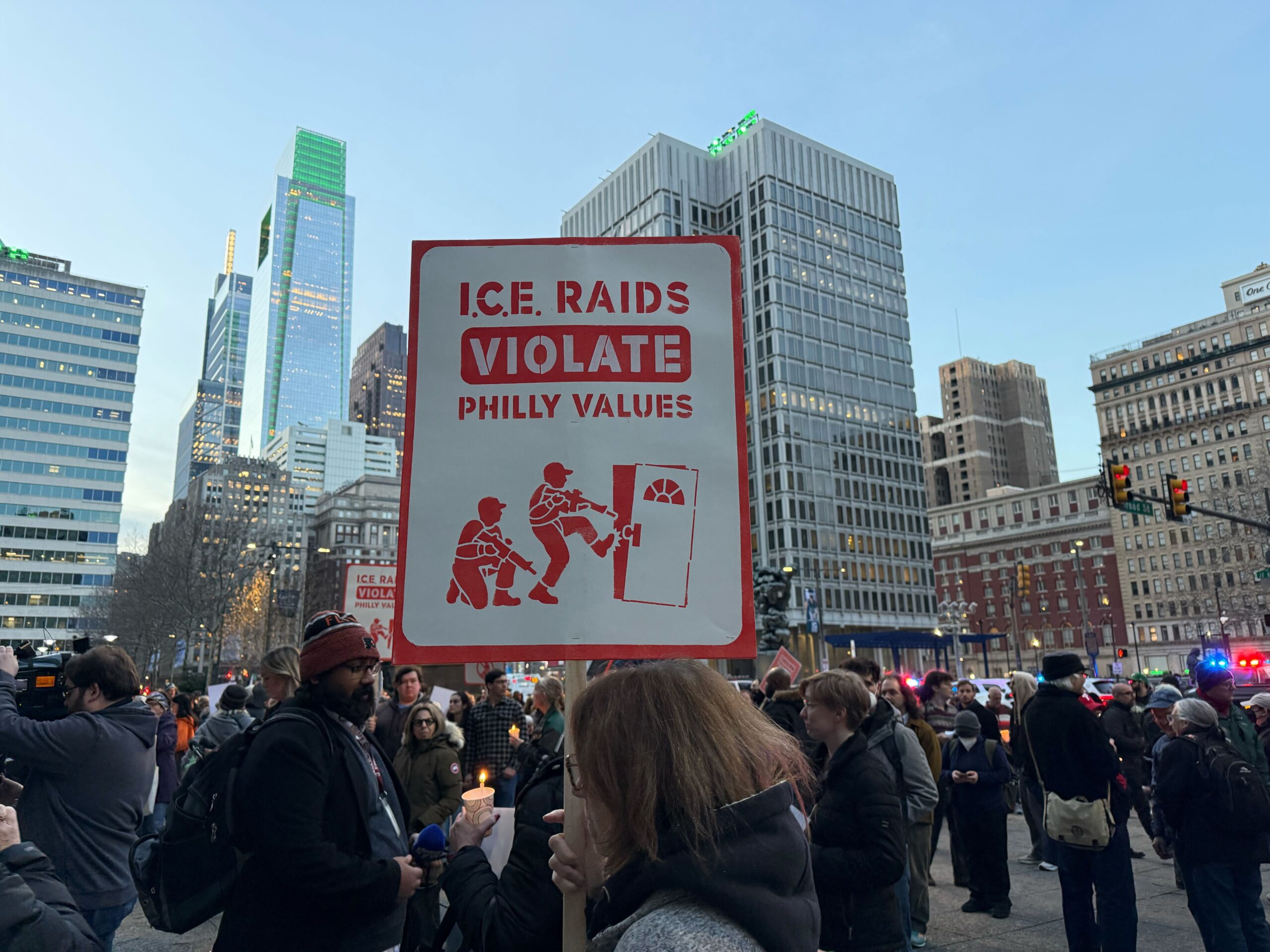
    Demonstrators gathered in Center City to protest the death of Renee Good, a 37-year-old mother of three who was shot and killed by a U.S. Immigration and Customs Enforcement agent in Minneapolis in January.

    More than a million immigrants live in Pennsylvania — about 80% of them in the Philadelphia area. They possess almost $40 billion in annual spending power and pay about $13 billion in taxes. In Greater Philadelphia, immigrants make up an estimated 21% of the construction industry, 48% of agricultural work, 18% of manufacturing, 16% of business services, and 15% of leisure and hospitality.

    About 367,000 immigrants in Philadelphia are U.S. citizens, 202,000 are legal permanent residents, and 64,000 are foreign nationals here on a work visa or as international students. Immigrants protected from deportation through policies implemented by past administrations that are now in jeopardy — including Temporary Protected Status, Deferred Action for Childhood Arrivals, and those waiting on asylum decisions — number about 84,000.

    If you think it’s unfair to include legal immigrants in a discussion about the president’s immigration crackdown, then you haven’t been paying attention to the Trump administration’s broader plans.

    Immigration visa processing has been indefinitely shut down for 75 countries, including Brazil, Colombia, Egypt, Pakistan, and Thailand. The administration has frozen refugee resettlement, placed exorbitant fees on new H-1B visas for skilled workers, made international students feel unwelcome, and instituted new restrictions on family-based immigration.

    A recent study by the nonpartisan National Foundation for American Policy found that Trump’s proposals will reduce legal immigration by as much as 50% through 2028. New numbers released by the Census Bureau on Tuesday already show a sharp slowdown in the U.S. population, as immigration of all kinds is curtailed.

    As the nation’s birthrate continues to decline, reducing immigration will stunt economic growth and further endanger Social Security as fewer young workers contribute to that crucial program, which helps keep many older Americans from slipping into poverty.

    I’ll refrain from using whataboutism regarding an administration that has shown open contempt for the rule of law and say that the appeal of Trump’s promise to deport those who entered the country illegally is understandable. In black-and-white terms, these people broke the law, and they should be held accountable.

    But reality is somewhere in the middle. The truth is that we depend on and greatly benefit from immigration — of all kinds — and we should work to make legally coming to the U.S. easier, not harder.

    As Trump’s reaction to the backlash prompted by the ICE killings in Minneapolis shows, the president responds to political pressure and can change tack. He should realize that much like immigration and the high cost of groceries helped him win the 2024 election, it may be the same issues that cost his party the 2026 midterms and beyond.

  • Alex Pretti is the latest victim in the Trump administration’s drive for dominance

    Alex Pretti is the latest victim in the Trump administration’s drive for dominance

    There I was, by myself late at night, manning the inspection point at a pedestrian border crossing in Nogales, Ariz., when a shifty-looking man approached. He had short-cropped hair and a good 30 pounds on me. I asked him for ID, and he failed to comply.

    “I forgot my ID,” he said aggressively, coming in close. “Why you wanna do me like this? Just let me cross.”

    I thought back to my training — mainly the Police Quest series of computer games — and put some distance between us as I attempted to talk him down. A few seconds later, he had stabbed me in the ribs, and I had shot him dead.

    “You see what happened there?” I was asked by the U.S. Customs and Border Protection official who ran me through the scenario as part of the CBP media academy.

    “I tried to engage and de-escalate the situation,” I said. In lieu of a head shake, he smiled.

    “You have to exert control,” he told me.

    In the 11 years since I went through my crash course on what CBP does — from officers manning the ports of entry to agents out on the border line — the mock use-of-force examples remain top of mind. It was a deadly five days, after all, as I also shot and killed a man who was throwing rocks at me in the desert. Control exerted, I guess.

    It was no accident that these scenarios involved unavoidable use of lethal force. It was undoubtedly a way to show the bleeding-heart media types who participated in the academy what law enforcement could encounter in the field, day to day.

    They needn’t have bothered with me. Yes, I was a bleeding-heart type, but I already knew law enforcement was dangerous. I also knew Border Patrol agents, liked them, and believed most of them were genuinely trying to do good out there.

    I also knew that excessive use of force was bad, and that a desire for control can curdle.

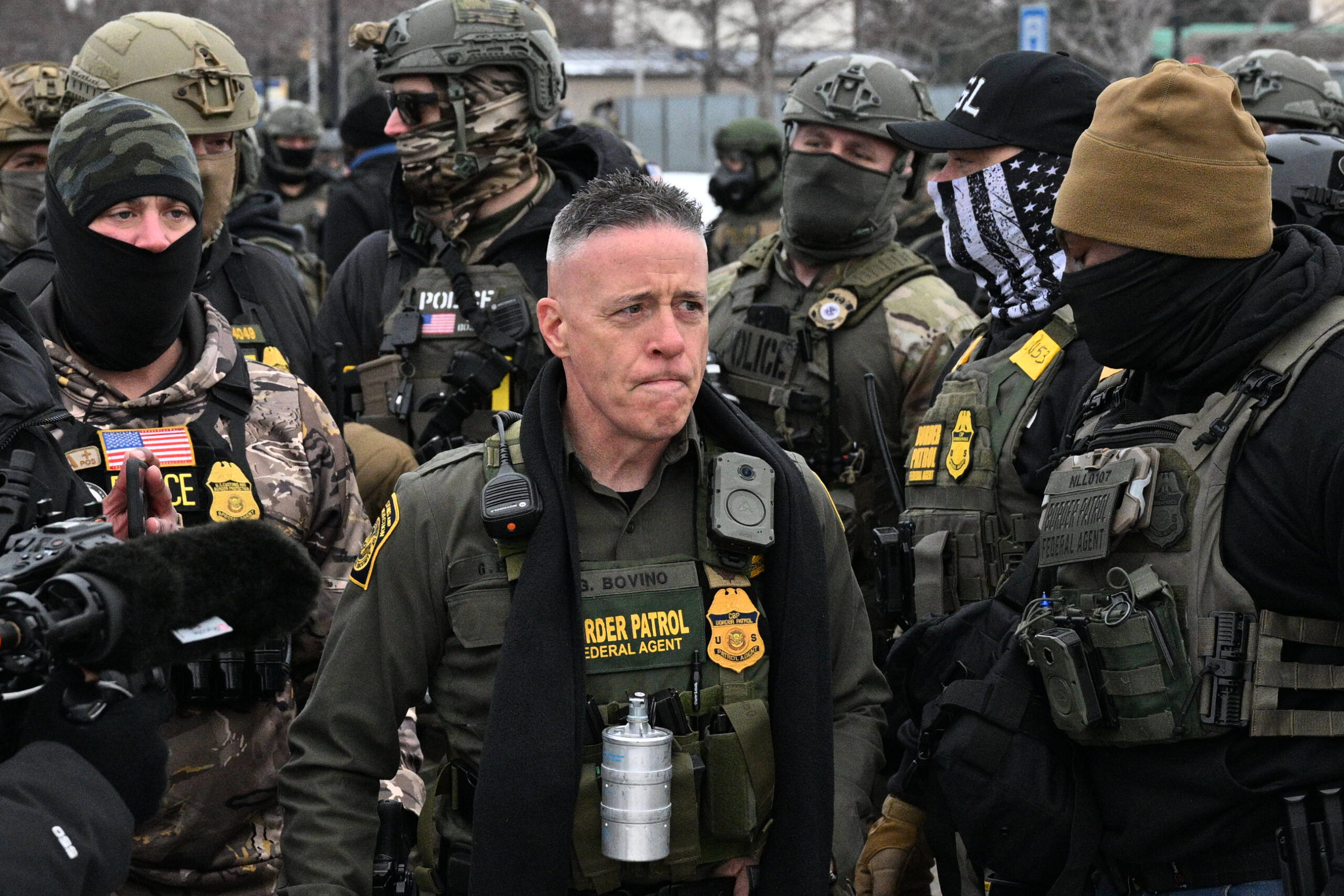
    U.S. Border Patrol Cmdr. Gregory Bovino arrives as protesters gather outside the Bishop Henry Whipple Federal Building, Jan. 8 in Minneapolis, Minn.

    That’s what I see in videos of Border Patrol and of U.S. Immigration and Customs Enforcement agents who are smashing car windows or clashing with protesters. In recordings of interactions that quickly turn violent, I see the operational need for control (in theory, to ensure the safety of both civilians and law enforcement) devolve into the personal need for dominance.

    It was that need to be the big man in charge that likely made ICE agents stop their vehicle and confront Renee Good almost three weeks ago — when she was neither an obstacle nor a threat inside her SUV — on a residential Minneapolis street. It was the anger and frustration at being questioned, at being disobeyed, that placed both agents and civilians in danger and ultimately cost Good her life. Shot in the head because … how dare she.

    Before Alex Pretti was shot and killed Saturday by federal forces, he was defending two women who were being violently shoved after challenging Border Patrol agents. The minute that agent started pushing those women with little provocation beyond whatever words were exchanged, Border Patrol relinquished control of the situation.

    The scrum that followed — as multiple agents pounded Pretti on the ground — was chaos. Chaos that eventually turned deadly, as agents saw that Pretti was carrying a gun.

    Much as they did after Good’s death, administration officials tried to control the narrative of what happened, blaming the victim. Good was a “terrorist” who, according to Homeland Security head Kristi Noem, tried to run over federal agents. Pretti was a “would-be assassin,” according to Stephen Miller, Trump’s homeland security adviser, who was out to “massacre law enforcement,” according to Border Patrol operations chief Greg Bovino.

    Multiple videos from the scene disprove the government’s story.

    This sad quest for dominance, regardless of the consequences, comes from the top, of course. The latest example: Barely three days before Pretti was killed, Donald Trump apparently gave up on his bid to control Greenland. This came after days of speculation over whether the U.S. would invade a NATO ally over the president’s deranged demands.

    In that case, Western allies came together and held firm in the face of Trump’s bullying. In Minneapolis, and whatever city is next on the White House’s hit list, Americans need to remind the administration of what it couldn’t and can’t control.

    It could not control Good’s First Amendment right to speak out and stand up for what she thought was wrong, nor Pretti’s Second Amendment right to carry a firearm.

    And it can’t control our Fourth Amendment right to protection from unreasonable use of force by law enforcement.

  • Trump wants to control Latin America, but he can’t even manage to sell oil to energy interests

    Trump wants to control Latin America, but he can’t even manage to sell oil to energy interests

    Donald Trump gathered U.S. energy executives on Friday to tell them of the nice crude, heavy oil he had procured for them by invading Venezuela — killing dozens of people and kidnapping President Nicolás Maduro and his spouse in the process — only for the men to respond that they couldn’t invest in that country because they’d spent all their money getting Trump elected.

    It was a twist right out of an O. Henry story. Call it, The Gift of the Megalomaniac.

    Well, not quite. While Big Oil did indeed spend at least around $500 million last year on the presidential campaign and other lobbying efforts, it fell short of the reported $1 billion Trump asked oil executives for during his run for the White House. And even that amount would hardly make a dent in industry profits, which in 2022 reached nearly $200 billion.

    I’ll get to Trump’s deranged, illegal attack on Venezuela and its larger implications for Latin America — which plays less like literature and more like a bad ‘80s sitcom episode (“The Dumbroe Doctrine,” Season 2, Episode 1) — in a bit. First, let’s talk oil.

    The reason why energy executives didn’t jump at Trump’s offer for them to spend $100 billion in Venezuela to boost oil production is that while there may be massive, untapped potential there, it’s going to take a long time to realize, said Harold York, a fellow at the Center for Energy Studies at Rice University’s Baker Institute.

    To start, York told me, companies need a technical assessment of the state of the Venezuelan oil industry’s infrastructure, which is believed to be in serious disrepair. Then, the U.S. must help establish a credible and trustworthy legal and fiscal framework for international companies to participate in Venezuela. After that, executives will begin to figure out what a development plan looks like.

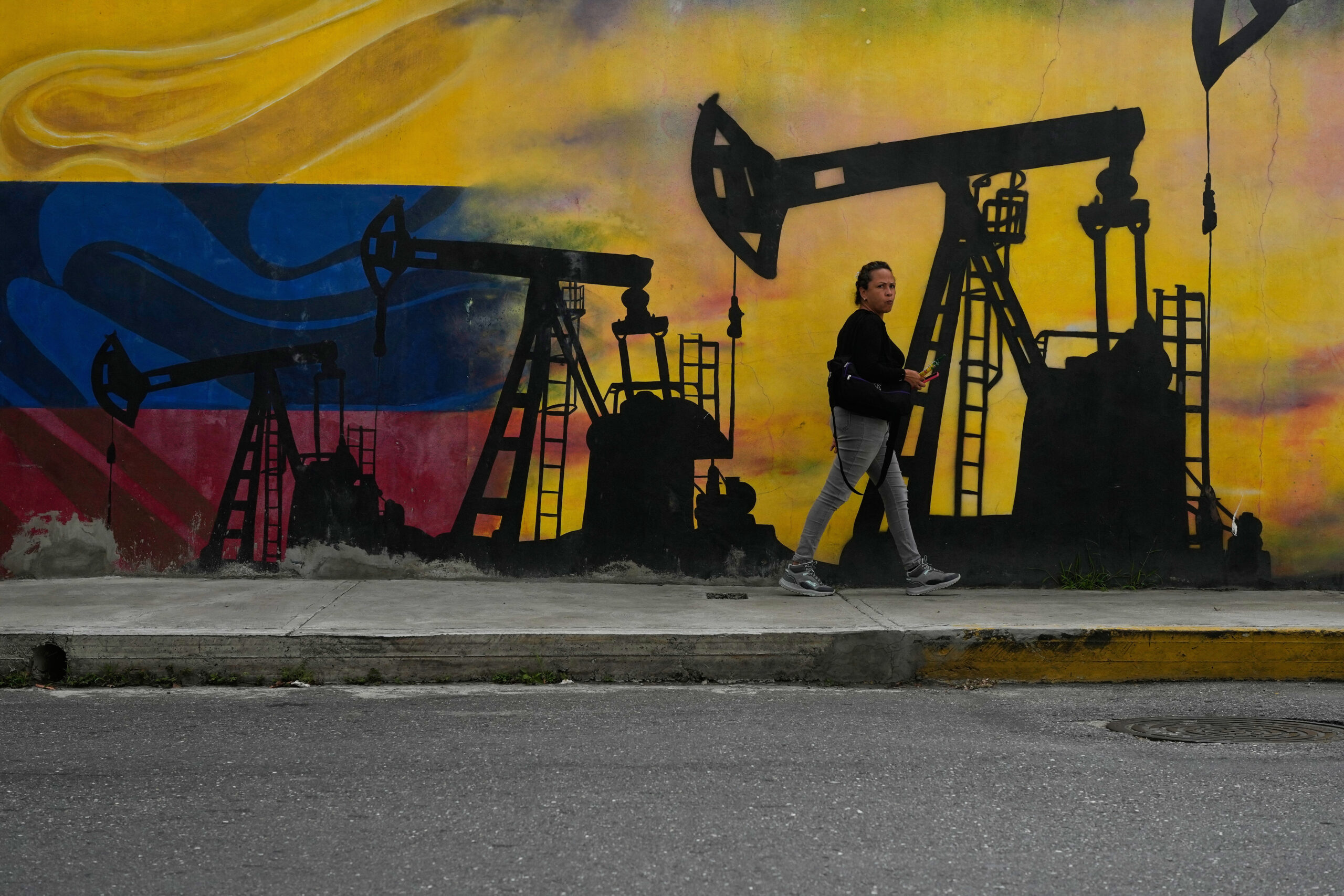
    A local walks past a mural featuring oil pumps and wells in Caracas, Venezuela, on Jan. 6.

    While some have pointed to the current low price of oil as a roadblock, York doesn’t believe that’s an impediment, since the decision to embark on a yearslong project would consider what the price will be in the future, not what it is now.

    “I think there will be appetite precisely because they may not need the production today,” York said. “If you’re looking to keep your portfolio diversified, then Venezuela is something you would look at as one of your long-run assets.”

    What will most likely temper that appetite is that the requirements that need to be met for Big Oil to return in earnest to Venezuela also depend on the kind of stability no one can guarantee. You don’t even need to get to the unknown unknowns, as one former failed nation builder once coined. In Venezuela’s case, it is the known unknowns that will get you first.

    Trump is offering companies security guarantees, but can a president who routinely reneges on agreements promise a subsequent administration won’t do the same? Future leaders in Venezuela may decide to take back their oil with minimal compensation to U.S. companies, as the government did in 1976, and America could just shrug its shoulders. Or even a pro-U.S. Venezuelan government may decide it wants to renegotiate at some point.

    All of that to say, if Trump removed Maduro from power to gain control of Venezuela’s oil, the administration did not seem to give the plan much thought.

    What Trump was successful at, other than violating international law and the Constitution — no matter how coyly the administration insists that what it did was a law enforcement action and not an act of war — is in bringing the Monroe Doctrine back to bloody life.

    A man wears a T-shirt with a image of President Donald Trump during a government-organized rally against foreign interference, in Caracas, Venezuela, in October.

    As presented by President James Monroe in 1823, it was a warning to European powers to stay out of the Western Hemisphere, and an assertion of the United States’ sphere of influence. By the start of the 20th century, the doctrine was used as an excuse to exert power in Latin America to protect U.S. interests as Washington saw fit, including using the military.

    Trump allowing Venezuela’s authoritarian regime to continue in every way except having Maduro at the top is in keeping with Cold War U.S. interventionism in Latin America, when U.S.-friendly forces were backed at the expense of civil rights and liberties.

    Even before he ordered the kidnapping of Venezuela’s leader to kick off 2026, the president had already spent his first year back in the White House punishing his perceived enemies (imposing sanctions and tariffs on Colombia and Brazil, bombing alleged drug boats) and rewarding his friends (bailing out Argentina, paying for prisoners in El Salvador).

    In retrospect, the escalation to full military invasion should not be that surprising, even as the long-term consequences remain uncertain, both for America as a continent and for the system of laws and alliances that has kept the world from war for 80 years.

    After Venezuela, Trump threatened Cuba, Colombia, and Mexico. Hearing from friends from Latin America, the feelings that have emerged there in the last week over U.S. actions seem to be fear and loathing.

    There is much more to say about this in a future column, but ultimately, neither sentiment is in America’s best interest.

  • Reaction to Trump’s unpopular policies offers hope for fixing our broken immigration system

    Reaction to Trump’s unpopular policies offers hope for fixing our broken immigration system

    EL PASO, Texas — I had barely been in the city for a few hours before I was asked the same question by two different people: Had I heard about the four panadería workers who were arrested by immigration agents?

    It was a bit of a rhetorical question that led to similar expressions of sympathy for those detained, and it also underscored two distinct truths: 1) Without employees, the bakery owner would have to close, so this hurts people who just want to work. 2) Everyone knew what they were doing, and the law is the law.

    Like most in the political middle, I agreed.

    My conversations with people on both sides of the border reinforced something that should go without saying, yet here it is: There is a sensible middle ground between the Biden administration’s ill-advised border strategies and the Trump administration’s virulent anti-immigrant policies and dehumanizing rhetoric.

    Over the years, polling has shown that commonsense immigration reform has broad support. Bipartisan bills have failed in the recent past, but perhaps something good can come out of the Trump administration’s cruel overreach on immigration enforcement.

    The border is far away from most Americans. It’s easy to scapegoat and demonize. As one activist here told me, even Democrats have been fine with throwing money at the continued militarization of this part of the world in the name of “border security.” That militarization is now knocking at people’s doors in places like Chicago and New Orleans, and folks across the country don’t like what they see.

    Jonathan Escalante stands over the broken window of his mother’s car, which was shattered by federal immigration agents who took her away, during a federal immigration crackdown in Kenner, La., on Dec. 9.

    Most Americans want immigration control; they are not anti-immigrant. Let alone supporters of what’s becoming a “papers, please” society under Donald Trump, where simply having the wrong skin tone or speaking another language can put a target on your back.

    As the outrages pile on and voters turn against the president’s tactics, it opens an opportunity. If Democrats capture the White House in 2028, they must make fixing our broken immigration system a priority — with public sentiment on their side.

    In that vein, the United States needs a functioning immigration system that keeps people from coming illegally, allows immigrants to fill jobs U.S.-born workers won’t do, honors America’s commitment to protecting those seeking asylum, and creates that line immigrants are supposed to queue up in to come here “the right way.”

    Broadly speaking, deterring people from crossing illegally should not depend on immigrants being afraid to die in the Arizona desert or be maimed by razor wire trying to ford the Rio Grande into Texas. Humane deterrence would involve not only expedited deportation if caught, but also holding employers accountable for hiring people who are not authorized to work.

    While some immigrants are fleeing their country over safety concerns, economic migrants are looking for a better life. I hate to break it to you, but people come to the U.S. not because they admire Jeffersonian democracy, but because there are jobs here.

    Brothers Leonardo Oviedo, 22, (right) and Angel Mota, 19, (left) swipe through photos of family they left behind in Venezuela. Both arrived in New York in 2020 with other asylum-seekers seeking refuge and spoke of plans to land jobs.

    Many of those jobs are the kind that citizens will not do. Not because they’re lazy or afraid of hard work, but because they have other opportunities. For immigrants, it’s all relative. Monthly pay in Venezuela is roughly $130. In the U.S., you can make twice that in a week earning minimum wage.

    Whether it’s picking fruits and vegetables, putting up houses, processing meat, taking care of the elderly, or other demanding and arduous tasks that are not going away, the U.S. needs immigrants for these jobs — ideally through a dynamic work visa system that responds to demand. We also need — and should welcome — specialized professionals, such as medical doctors or tech workers.

    A potential pathway to permanent migration, if desired, could start with a work visa. I say “if desired” because many immigrants would love to come here to work temporarily and then return home. A side effect of stricter border controls after 9/11 was that immigrants no longer went back and forth as readily, and instead remained full time in the U.S.

    For asylum-seekers, more immigration judges — under the judicial branch, instead of the U.S. Department of Justice — could speed up adjudication, granting protection to those who qualify and rejecting those who don’t.

    A working immigration system also means hitting the reset button and adjusting the legal status of the 13 million or so immigrants who are currently in the country without authorization.

    Undocumented immigrants who have been here for a determined amount of time and meet agreed-upon criteria (pay taxes and/or fines) should be able to earn permanent legal residency, known as a green card, and be able to eventually attain citizenship if they qualify. Worried Republicans need only look at the increased support Trump gained among naturalized Americans in the 2024 election if they think that being an immigrant means you automatically vote for Democrats.

    Of course, there is still a long way to go before any of these proposals has a shot at being considered. And while there is still time for the president to change his approach, the $45 billion authorized for new immigration detention centers and almost $30 billion going toward U.S. Immigration and Customs Enforcement likely means there’s no turning back.

    Things will get a lot worse before they get better. But as the new year approaches, there is at least some hope.

  • At the border, fear and uncertainty as Trump seeks to remake the immigration court system

    At the border, fear and uncertainty as Trump seeks to remake the immigration court system

    EL PASO, Texas — A small group of immigrants gathered in the lobby of the Richard C. White federal building downtown here on a cool early morning in November. They waited to be allowed up to the seventh floor, where they would appear before a judge as their case made its way through the immigration system.

    Among them were Noemi and her 6-year-old daughter, Abigail. They had driven more than four hours to get to their court date and were hoping to head back the same day. While Noemi was soft-spoken, Abigail was sharp and spirited, more than willing to answer all the questions she was being peppered with by strangers.

    She spoke about where she was from (El Salvador), her favorite show (Bluey), about school (It’s all right), and about her older best friend (She’s 8).

    Abigail has been in the U.S. since 2021, arriving with her mother in search of a better life. They were welcomed by a Biden administration that, despite its many faults, initially asserted an immigration policy that was deeply humanitarian.

    But that was then.

    While the immigrants sat and waited, Sigrid González introduced herself. She was a volunteer doing court accompaniment. They could not offer legal advice but were there to observe and help immigrants plan — did they bring a car? Do they have kids in school? Do they know whom to call? — in case they were detained.

    “ICE is here. They have a list. We don’t know who they will take,” González said. “This is not to frighten you, but to let you know.”

    Later, as the elevator doors opened on the seventh floor, a group of about half a dozen Immigration and Customs Enforcement agents were indeed there. Dressed as civilians but still in uniform: blue jeans, sneakers, and dark jackets.

    El Paso has not seen the kind of excessive use of force seen in places like New York, but as in immigration courtrooms across the country, ICE agents stand in wait to arrest people who are following the rules.

    Immigration and Customs Enforcement agents escort a detained immigrant into an elevator after he exited a New York immigration courtroom in June.

    The government’s strategy is to ask the court to dismiss an immigrant’s case, making them eligible for expedited removal, a relatively quick process under which a noncitizen can be deported back to their country, potentially without any additional immigration court hearings, Emmett Soper, a former immigration judge in Virginia, told me.

    In practice, however, ICE agents regularly detain immigrants regardless of a judge’s decision on dismissal.

    “I denied every single motion to dismiss. I set the case for a further hearing. I gave all the required advisal, things like that,” Soper said. “Every single person was arrested, to my knowledge, after I denied the motion to dismiss.”

    The Trump administration is not stopping at ignoring due process, it is also working to reshape the immigration court system. Soper is one of about 100 immigration judges fired this year. There is no explanation for the dismissal of the judges, other than many of them having a record seen as out of step with the administration’s hard-line approach.

    Instead of an experienced jurist like Soper, who took the bench in 2017 and understands that every case should be given a fair hearing according to the law, Department of Homeland Security Secretary Kristi Noem is looking for people who want to be a “deportation judge” and want “to restore integrity and honor to our Nation’s Immigration Court system.”

    In case there was any doubt what the Trump administration wants to restore, DHS clarifies in a recruitment ad: “Defend your communities, your culture, your very way of life.”

    As Abigail sat next to her mother inside Judge Judith F. Bonilla’s courtroom, coloring an image of two cats sitting side by side handed to her by the court clerk, it was hard to see what the White House is so afraid of.

    Noemi was so concerned about her legal case that she would only speak with me on the condition that her last name not be used. She did not have a lawyer. The judge asked her a series of questions and she responded in turn: She had no family in the U.S., she had not been a victim of a crime, it was her first time in the country, she had never been arrested. She was not afraid to go back to El Salvador.

    It was clear from her answers that Noemi did not want to fight her case.

    The only relief available for her, the judge said, was voluntary departure. If she took that option, Noemi waved her right to appeal but it left the door open for them to return legally in the future.

    “I want voluntary departure,” she said.

    Noemi and her daughter had 90 days to leave the U.S.

    Outside the courtroom, Noemi met with González, who asked her if she wanted to share any contact information in case they were detained by ICE. Noemi looked confused.

    “I have voluntary departure; can they still take me?” she asked. Based on experience, González did not hesitate to answer: “Yes.”

    I have been thinking for weeks about Noemi’s face at that moment. How to describe what it looks like when someone who has gone through the legal process and made peace with the fact she cannot stay in the U.S. must still face the random cruelty of an administration that sees her and her 6-year-old as a threat.

    Crestfallen, Noemi shared her information with González.

    Across the hall, the ICE agents began to move toward the elevator. Apparently, they were leaving. Everyone around Noemi and Abigail sighed in relief. The mother and daughter were not among those taken, which that day included a man and a mother and her older son.

    As Noemi and Abigail left the federal building to drive back home through the west Texas desert — back to the life they had built for themselves over four years and now had 90 days to leave — the only thing I could think was, how does this benefit America?

    More from the border: Trump may have shut down the border to asylum-seekers, but he can’t end immigrants’ hope

  • Trump may have shut down the border to asylum-seekers, but he can’t end immigrants’ hope

    Trump may have shut down the border to asylum-seekers, but he can’t end immigrants’ hope

    JUÁREZ, Mexico — Carolina was living in Colombia as a refugee when her 15-year-old son disappeared. Almost a year after her boy went missing and she mourned his loss, she got a call from an international number.

    Her son was alive 3,000 miles away in this historic Mexican city once known as “the Pass of the North,” nestled along the Texas border.

    “I was so happy, but I didn’t know how to get here, without knowing anything, without money, with nothing,” she told me when I met with her recently at an immigrant shelter in Juárez. “I sold my house and came here alone.”

    After a harrowing three-month journey during which she made her way across seven countries, survived two kidnappings, and endured beatings and sexual assault, she reunited with her son on Jan. 10.

    They tried to get an appointment to cross the border through U.S. Customs and Border Protection’s CBP One app — part of a program launched by the Biden administration to allow people to come to the U.S. legally while they waited for their asylum or other immigration case to be processed.

    Carolina and her son were still trying when President Donald Trump ended the program the day of his inauguration.

    They’ve been stuck in shelters ever since.

    Speak to immigrants at the border, and what happened to Carolina is sadly common. Some people are luckier, some less so, but no one comes out unscathed from their journey. And while some are willing to see their dreams deferred, there are and will continue to be more people who see coming to the United States as the only way out of a desperate situation.

    Visiting the border nearly 10 months after Trump took office and essentially ended the ability to seek asylum in the United States, you see what many Americans — even some begrudging critics — credit the president with doing.

    Trump has been brutally effective at limiting border crossings. The quiet downtown streets and plazas, the nearly empty shelters in both El Paso, Texas, and its sister city of Juárez in Mexico, are a testament to that fact. Only a few years ago, thousands of immigrants crowded sidewalks and shelters here, straining the region’s spirit of hospitality.

    Today, the immigrants left behind are the vulnerable among the vulnerable, advocates said. People who are unable to move out or move on, stuck in shelters with the hope that Trump’s “hard heart will soften,” as one woman told me.

    My own heart was not hard enough to dash her dream. Perhaps it should have been.

    The last thing immigrants need is for some well-meaning dope to ignore the facts for short-term comfort. They had enough of that during the Biden administration.

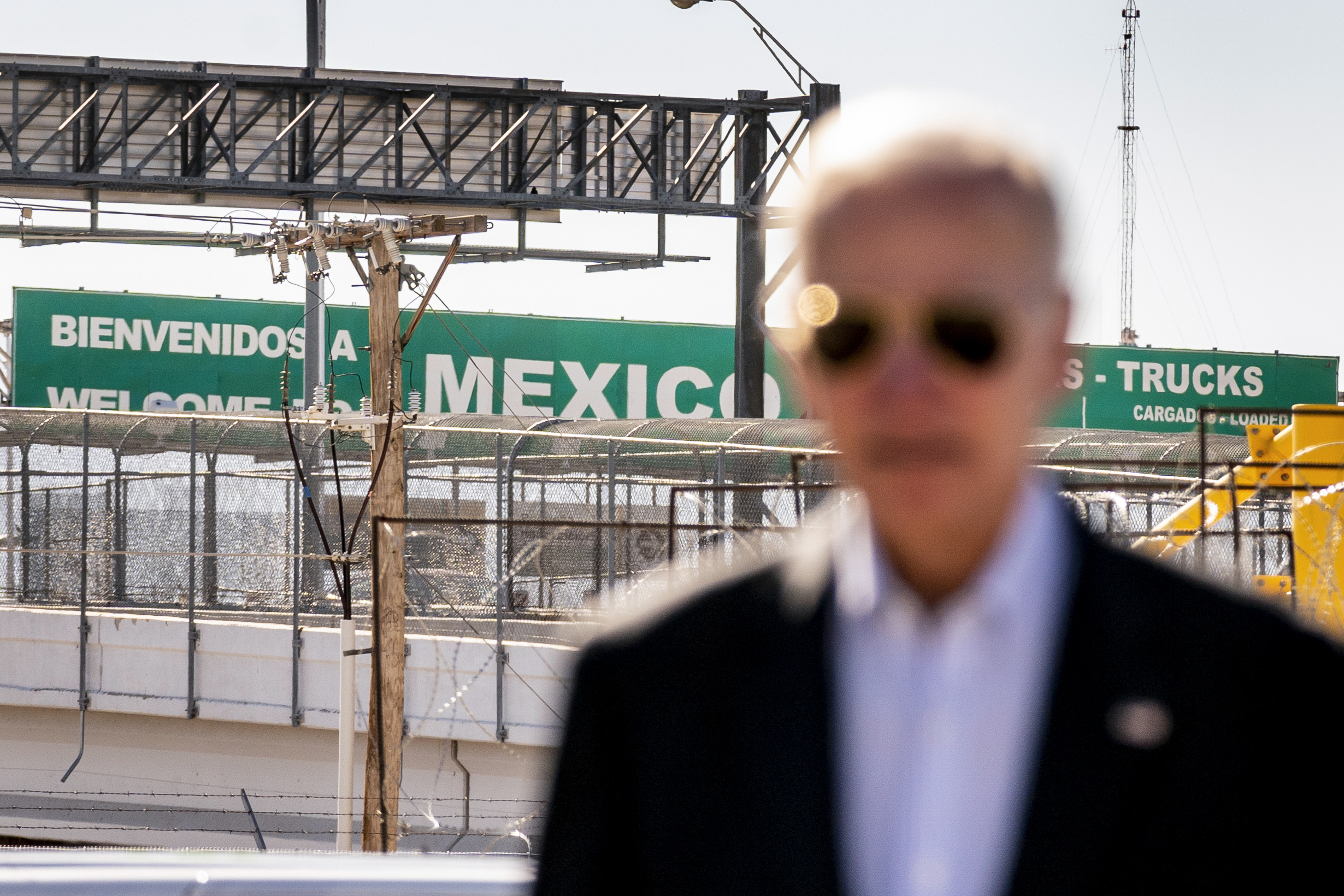
    A large “Welcome to Mexico” sign hung over the Bridge of the Americas is visible as President Joe Biden talks with U.S. Customs and Border Protection officers in El Paso, Texas, in 2023.

    Good intentions

    Under President Joe Biden, about six million people were allowed entry to pursue asylum applications and other immigration cases, according to the Migration Policy Institute.

    I believe that all things being equal, the U.S. has no trouble absorbing these immigrants. Call me cynical (I prefer pragmatic), but our economy runs on cheap labor and consumer spending — six million people give you both. It gives you adults who are willing to do the work Americans won’t, and kids who will go to school and graduate for the jobs there aren’t enough Americans for.

    But the problem is the president can only do so much. The executive can allow people to remain in the country under some sort of limited parole, it can direct enforcement toward higher priority targets, such as immigrants with criminal records, but it cannot grant legal status.

    Only Congress can do that, and legislators have decided there is no major issue they can’t shrug off as intractable and call it a day.

    So the Biden administration opted to let people in — regardless of whether they had a good asylum case — knowing full well that just as one president could open the door for immigrants, another could slam it in their faces.

    Biden himself shut that door halfway as the 2024 presidential election neared, but the political damage had already been done, because the administration at no point made the argument for why it was doing what it was doing.

    As desperate people who wanted a better life clustered at the border — partly because of the pent-up demand that grew under pandemic restrictions Trump put in place — Biden could have made a moral argument, or laid out the economic benefits of immigration. He could have done more than introduce immigration reform shortly after taking office, and then just as quickly give up on it.

    Instead, it was never clear what Biden wanted other than not to be seen as the bad guy.

    His administration’s humanitarian intentions, coupled with incessant fear-mongering on the right, paved the way to where we are today.

    Flags from North, South, and Central America line the left side of the chapel inside the Casa del Migrante in Juárez, Mexico, in November.

    All for nothing

    It took Helen, her husband, and their 3-month-old baby three months to travel from Ecuador to the Casa del Migrante shelter in Juárez, which is run by the Roman Catholic Diocese of Ciudad Juárez.

    Like Carolina, Helen — who remains concerned about the status of her potential immigration case — would speak with me only on the condition that her last name not be used.

    Helen and her husband, both in their early 20s, arrived in October of last year after leaving their home because of growing gang violence. “You couldn’t have any peace anymore,” Helen said.

    The family crossed the dangerous jungle and rode through Mexico on the freight train known as “the beast.” She saw a man die, falling under the wheels of the cars.

    While her husband goes out to work odd jobs, she takes care of their daughter. The routine gets to her, she said. Once a month, they’re able to go out and splurge on a meal, even as they’re afraid to walk the city’s streets.

    Her daughter has now lived most of her life inside a shelter, but Helen told me they will continue to sacrifice.

    “We are waiting to cross. Whatever it takes,” she said.

    Across town at the Vida shelter, Carolina, 53, is torn about what to do.

    Her journey to Juárez began 14 months ago. Distraught over her son’s disappearance, she went back to her native Venezuela to be with her mother.

    When Mexican officials informed Carolina that her son was alive, she left Venezuela on Oct. 20, 2024, and traveled across Central America. She was kidnapped twice, Carolina said. Once when she crossed the Guatemalan border into Mexico, and again when she got to Juárez in December.

    “The one here was the worst. The one here was rape, beatings. I still can’t fully touch myself here,” she said, grimacing as she moved her hand along her left breast. “They left me with nothing.”

    Although she’s grateful for all the help she’s received, she said, it’s coming up on a year of living in shelters, and the uncertainty is becoming overwhelming.

    Her son is going to high school, and sometimes works with a handyman. She sells donated used clothing in front of the shelter and cleans houses, but work is sporadic.

    “I tell my son we should go back,” Carolina said. “He says he came here for a future.”

    Her mother calls and tells her she doesn’t have food, she said. She trusts that God has a plan and things will work out accordingly — even if it means returning home to struggle there — but there must be a point to her journey.

    “You go hungry, you grow tired, it’s raining, you see corpses. You spend sleepless nights, running from people who want to rob you, kill you,” she said.

    “Do you know what it’s like to go through what I went through and not be able to cross?”

    President Donald Trump during a July tour of “Alligator Alcatraz,” a migrant detention facility at Dade-Collier Training and Transition facility in Ochopee, Fla.

    No turning back

    Many immigrants who are still in shelters, and those who have decided to remain in Mexico, are in a state of flux, waiting for the opportunity to cross the border.

    Trump may have succeeded in curtailing illegal immigration through a mix of enforcement, deterrence, and cruelty, but it is unsustainable. While he may be able to delay the inevitable — especially if he manages to crash the economy and there are fewer jobs for immigrants to fill — eventually, people will return.

    “Listening to people’s stories, we’re really at a critical moment,” said Alejandra Corona, who heads Jesuit Refugee Services in Juárez, a nonprofit that serves the migrant community. “The world is broken, and there are no options.”

    You see it in the eyes of parents who are deeply wounded because they cannot provide for their families even in the most basic ways, Corona told me, and the reasons why are far from simple.

    “It’s not just, ‘Oh, I lost my job,’” she said. “It’s, ‘I had a job, but couldn’t afford to pay off the gang member or the cartel. I stopped paying for protection and had to flee. I was discriminated against, I’ve never had a passport, I’ve never been to school, I’ve never had access to my rights. I do not exist, and no one wants to see that I don’t exist.’”

    The lesson to be drawn from the border today is that immigrants may not be as visible, but they haven’t gone away.

    If Democrats capture the presidency in 2028, they will likely not follow the Trump administration’s amoral ruthlessness, but they cannot repeat the Biden administration’s aimless permissiveness, either.

    Everyone suffers under the current seesaw approach to immigration, where an immigrant can come here “the right way” under one administration, only to see things turn out wrong under the next. Trump has tried — successfully and unsuccessfully — to kill programs for immigrants established under Presidents George H.W. Bush, Barack Obama, and Biden.

    Whether or not you support immigration, the whims of an individual — even if it’s the president — are no substitute for the legislative process.

    The United States is a nation of immigrants. America has thrived economically and culturally thanks to this fact. On immigration, it’s Congress, as representatives of the people, who must determine the who and how, the when and where, that makes the most sense for the country.

    Until then, immigrants will be ready and waiting — and praying for a softer heart in the White House.

    More from the border: At the border, fear and uncertainty as Trump seeks to remake the immigration court system

  • We’re executing people with impunity. Why are so many of us OK with this?

    We’re executing people with impunity. Why are so many of us OK with this?

    The only thing more shocking than Donald Trump having dozens of people killed on his word — no trial, no jury, just execution — is that more than 70% of voters seem to be fine with this. Even when broken down by political identification, 89% of GOP supporters, 67% of independents, and 56% of Democrats are all right with the U.S. military blowing up civilians.

    Well, maybe.

    The polling that produced those stomach-turning results comes from a Harvard CAPS/Harris Poll released earlier this month, with a headline takeaway that most voters support Trump’s strikes on boats smuggling drugs.

    As the administration escalates its attack on alleged smugglers in international waters, this wide approval is bad news for anyone who cares about (in alphabetical order) human rights, international law, and the Ten Commandments.

    However, I am counting on something I usually rail against — how uninformed most people are — to optimistically dismiss these poll numbers as a bad question about an abhorrent policy.

    You see, the question in the poll was, “Do you support or oppose the U.S. destroying boats bringing drugs into the United States from South America?” Asked in that manner, I wouldn’t be surprised if a lot of people were torn between answering “Absolutely!” or “Totally!” After all, who wouldn’t want to stop dangerous drugs from coming into the country?

    Of course, the way that question should have been asked is, Do you support or oppose the U.S. destroying boats nowhere near the United States and killing their crew under the mere suspicion they are traveling with drugs?

    I hope the answer to that question would have been “Hell no!” or, as U.S. Sen. Rand Paul more elegantly put it when speaking on Fox Business recently, “You cannot have a policy where you just allege that someone is guilty of something, and then kill them.”

    Unlike the voters who were presented with an anodyne version of the president’s actions, the Republican senator from Kentucky knows the deadly reality. At least 42 people have been killed across 10 reported strikes on boats as of Friday; eight bombings occurred in the Caribbean, and two in the Pacific.

    The administration’s legal rationale seems to be that the drug cartels (allegedly) running these boats are designated foreign terrorist organizations, and represent a clear and present danger to the American people, and must be dealt with accordingly. Or, as the president so chillingly put it at a news conference Thursday: “I think we’re just going to kill people that are bringing drugs into our country. OK? We’re gonna kill them. They’re gonna be, like, dead.”

    Like, yikes.

    A combination image shows screen captures from a video posted on the White House X account in September depicting what President Donald Trump said was a strike on a Venezuelan drug cartel vessel.

    Where do you start? A motorboat that (maybe) is carrying drugs 1,000 miles from a U.S. coastline is hardly an imminent threat, and most of the strikes have involved Venezuelan vessels, a country that plays a very small role in drugs that reach the U.S.

    Even if these are drug runners, trafficking is not a capital crime. And let’s say that it was, you must prove a crime has been committed before you pass sentence, yet all we have to go by are the administration’s claims. Forgive me for doubting, but this is the same bunch who sent hundreds of immigrants to a Salvadoran torture prison, saying they were the “worst of the worst,” only for it to come out that their only sin was having the wrong kind of tattoos.

    For Trump’s supporters, didn’t the president run on keeping us out of foreign entanglements, on America no longer being the world’s policeman? Because this sounds a lot like a police officer who’s way out of his jurisdiction deciding to shoot someone for loitering.

    If there were any doubts about the real motives of Trump’s strikes, consider the fate of two survivors of the U.S. attack on Oct. 16. If you think these two men were detained, questioned, and booked for processing as dangerous members of a foreign terrorist organization who merit death on sight, then you will be sadly disappointed to hear they were released.

    Responsible members of Congress have tried to rein in the administration’s blatant lawlessness.

    An Oct. 18 resolution to block the U.S. military from engaging in hostilities with “any non-state organization engaged in the promotion, trafficking, and distribution of illegal drugs and other related activities” without congressional authorization was voted down in the Senate.

    While most Republican senators went on the record with allowing the president to freely continue killing, U.S. Sens. Paul and Lisa Murkowski of Alaska voted their conscience. On the Democratic side, Pennsylvania’s own John Fetterman, we must assume, also voted his when joining the GOP majority.

    Folks like Fetterman have no excuse. They know what the administration is doing and condone it. My hope is that as more people learn the details of what’s happening, as voters pay attention to what is being done in our name, they will respond accordingly.

    The only principled reaction to what Trump is doing should be revulsion.