Author: Luis F. Carrasco

  • As clashes with ICE heat up, Trump’s cold war against immigration rages on

    As clashes with ICE heat up, Trump’s cold war against immigration rages on

    Clashes between U.S. Immigration and Customs Enforcement agents and members of targeted communities continue to intensify as the Trump administration gleefully condones a dangerous mix of heavy-handed enforcement tactics and zero accountability.

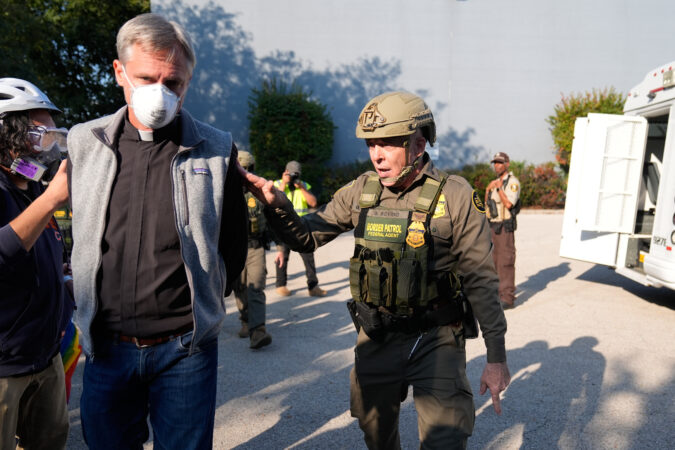
    Recent examples of intimidation, harassment, and excessive use of force by ICE and U.S. Customs and Border Protection agents have been piling up, ranging from a praying minister being shot in the head with a pepper ball to a woman allegedly taunted to “do something” before an officer opened fire.

    Americans who care about the rule of law — whether they support mass deportations or not — must speak out against the inhumane theater of cruelty put on by Donald Trump’s secret police.

    Yet, beyond the daily outrage of immigrants being disappeared off the street, or citizens detained without reason by jeering masked thugs, there is another insidious level to the administration’s anti-immigrant efforts.

    From the moment Trump came into office, he has shut down or obstructed the country’s legal immigration pathways. No shots have been fired in this cold war, but the long-term economic damage will leave most Americans worse off.

    Starting in January, the administration froze the U.S. Refugee Admissions Program, leaving more than 100,000 highly vetted immigrants who had already been approved for resettlement stuck in limbo.

    According to reports, the program will restart in 2026, but the cap will be lowered from the 125,000 set under President Joe Biden to 7,500. Not only that, but many of those limited slots will be reserved for white South Africans.

    You have to give it to white supremacists in the administration; they are not subtle.

    The refugee freeze may not be the largest cut to legal immigration, but it is the most significant, said David J. Bier, director of immigration studies at the libertarian Cato Institute.

    “All these people who would have been here with a path to permanent residence and citizenship — it’s just gone,” he told me. “Over the next four years, it’s basically the equivalent of half a million people who are going to be lost as a result of that decision.”

    Refugees are fleeing from persecution, have gone through extensive background checks, and likely waited for years for a chance to come to the U.S. — all of which is meaningless to an administration for whom a foreigner is just an “illegal” who hasn’t overstayed their visa yet.

    Federal agents from U.S. Immigration and Customs Enforcement and U.S. Customs and Border Protection walk north on North Clark Street in the River North neighborhood of Chicago in September.

    And, if and when Trump leaves office, the system itself will be damaged, atrophied after years of disuse and partner agencies that have moved on.

    The administration has also ended all humanitarian parole initiatives launched during the Biden years, which allowed some immigrants who had a sponsor in the U.S. and who passed a background check to come to America for a period of two years to live and work lawfully.

    International students, long a wellspring for high-skilled workers in the U.S. and a major revenue driver for colleges and universities, have also been targeted by the administration. As the new academic year began in August, the number of international students declined by almost 20% from 2024. Difficulties getting visas, fears of getting caught up in the wider immigration crackdown, or ending up in jail for saying the wrong thing played a part in the drop, according to reports.

    These are no idle concerns. The best and brightest around the world can quickly find validation for their worries in what happened to Columbia graduate student Mahmoud Khalil, who was detained after leading pro-Palestinian protests, or Tufts doctoral candidate Rumeysa Öztürk, who spent six weeks in custody over an op-ed she wrote for her student newspaper.

    There are also travel bans targeting 19 countries and a proposal to charge a $100,000 fee for H-1B visas for skilled workers. Meanwhile, U.S. Citizenship and Immigration Services — the agency tasked with overseeing legal immigration, including legal permanent residence and citizenship applications — is being weaponized against the people it’s meant to serve.

    The agency will now have armed special agents engaged in immigration enforcement, even as its backlog hits an all-time high and fee-paying applicants face worsening delays for USCIS services.

    It’s going to be some time before the full economic effects of mass deportation, plus legal immigration being throttled so aggressively, manifest themselves, but the math is clear. The consequences of Trump’s legal immigration crackdown will not play out in the streets, but around people’s kitchen tables.

    “It’s going to mean less economic growth for the United States,” the Cato Institute’s Bier said. “You’re reducing business creation and entrepreneurship and innovation, which drives improvements in economic growth over the long term.”

    With less economic growth, it means lower living standards for the U.S. population, Bier added. “It’s a bleak picture.”

    Much as the reality of who’s being targeted for deportation puts the lie to the administration’s claims that they are focusing on “criminal” immigrants and “the worst of the worst.” So the gutting of legal immigration removes all doubt over what this is really about, or for whom it’s really for.

    As I said, these folks are not subtle.
  • Trump’s cronyism crosses borders as we bail out his Argentine buddy

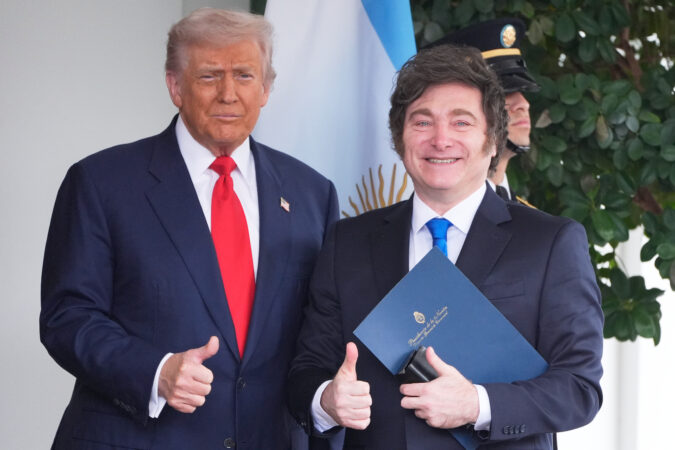
    Trump’s cronyism crosses borders as we bail out his Argentine buddy

    With a government shutdown looming, Jimmy Kimmel coming back, and former FBI Director James Comey being indicted, it would be easy to miss that the Trump administration has promised billions in taxpayer money to bail out one of the president’s buddies after he got in trouble down south.

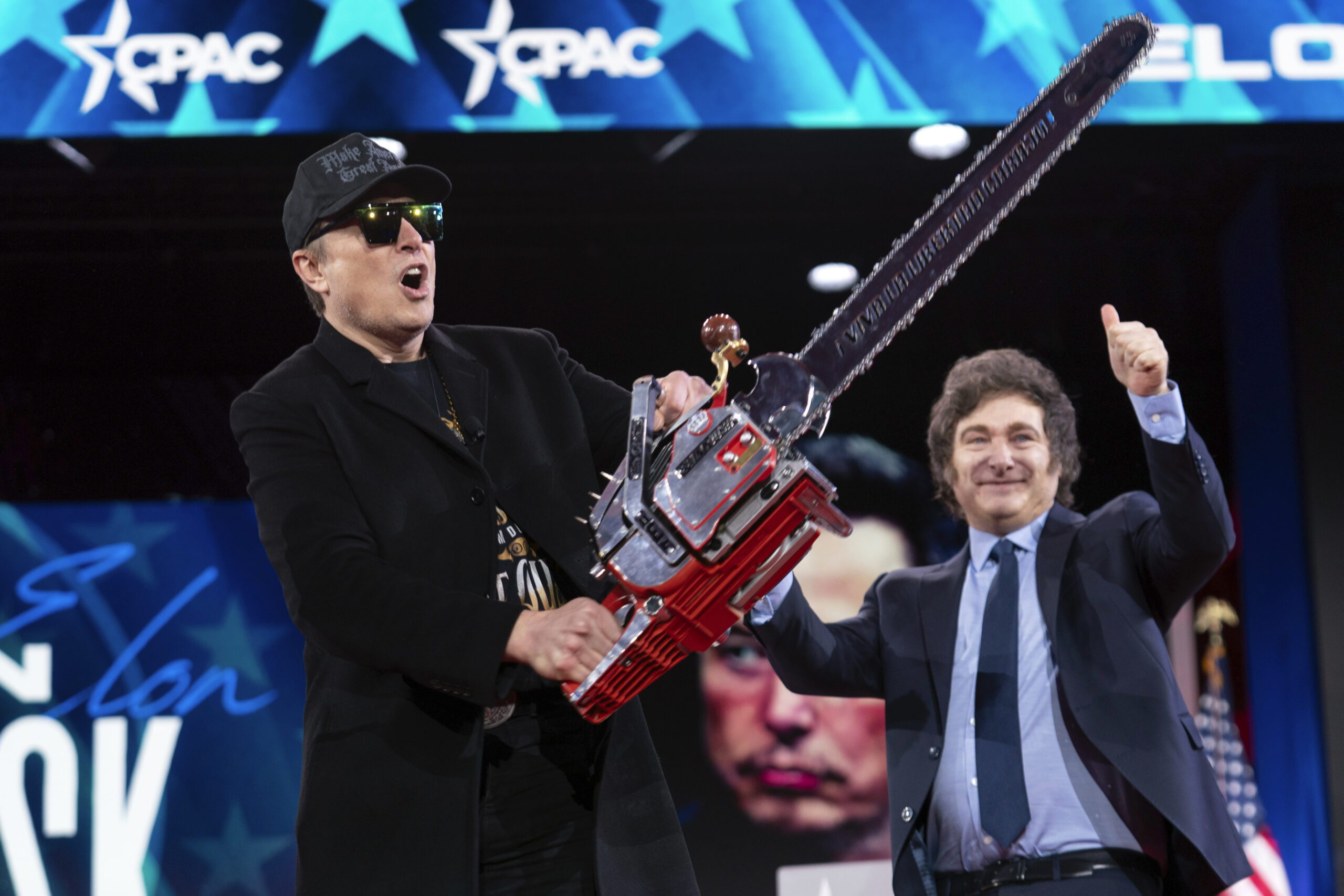
    Argentine President Javier Milei, who you may remember gave Elon Musk a “bureaucracy chain saw” onstage at the Conservative Political Action Conference in February, has put the power tools down and brought out the collection plate.

    “As President [Donald] Trump has stated, we stand ready to do what is needed to support Argentina and the Argentine people,” Treasury Secretary Scott Bessent posted on X Wednesday. “The Treasury is currently in negotiations with Argentine officials for a $20 billion swap line with the Central Bank.”

    That influx of cash is, of course, timed to the forthcoming midterm elections, as Milei is challenged over his poor handling of the economy and other political woes. Elected in 2023, the brash self-proclaimed anarcho-capitalist has cut a Trumpian path, governing by decree and force of personality. But corruption allegations surrounding his sister, growing wage stagnation, and rising unemployment have him on the ropes.

    Now, helping a neighbor facing hard times is not a bad thing. I was in Mexico when President Bill Clinton took it upon himself to approve a $20 billion loan in 1995 to help stabilize the peso after that country’s economic collapse. But helping the nation next door was also in America’s best interest.

    Elon Musk holds up a chain saw he received from Argentina’s President Javier Milei (right) as they arrive to speak at the Conservative Political Action Conference in February at the Gaylord National Resort and Convention Center in Oxon Hill, Md.

    The U.S. had just entered into a trade agreement, and there were American jobs dependent on exports. Clinton also pragmatically argued that a broke Mexico would likely lead to more illegal immigration and destabilize the southern border.

    The gamble worked. Mexico ended up paying back the loan, along with half a billion dollars in interest, ahead of schedule. The country also continued down the road to true democracy, with an opposition party winning the presidency in 2000 for the first time in more than 70 years. But Argentina is not Mexico.

    The country is hardly a top export destination for American goods (imports from China almost double what U.S. producers sell there), and Milei has already burned through $15 billion in International Monetary Fund money. Not to mention Argentina owes another $45 billion from an IMF loan taken out in 2018.

    Those are a lot of hopes and dreams riding on the right-wing Milei. As U.S. Rep. French Hill, the GOP chairman of the House Committee on Financial Services, wrote after a trip to Argentina recently, if Milei’s policies are successful, they could “reverse 150 years of macro financial disappointment to creditors.” I believe in long shots, but I’m not taking that bet.

    Oh, wait. As a taxpayer, I guess I am.

    Scott Bessent, U.S. Treasury secretary, (left) and Argentine President Javier Milei during the Atlantic Council Global Citizen Awards in New York on Wednesday.

    What’s maddening about this situation is that it’s part of the cronyism that defines Trump’s second term. The president has made no secret, as usual, of what his motivations are, calling Milei “a very good friend, fighter, and winner” on Truth Social, and telling Argentines their president has his complete and total endorsement and “will never let you down!”

    We can argue on the merits of propping up Argentina’s economy, but this is no way to run foreign policy in Latin America.

    Not while the U.S. cozies up to the “world’s coolest dictator” (and America’s jailer) Nayib Bukele in El Salvador. Nor when we’re imposing 50% tariffs on Brazil — a country with an economy more than three times the size of Argentina’s — for convicting former president (and Trump pal) Jair Bolsonaro over a coup attempt after his electoral defeat in 2022.

    Nor when Trump continues to order the extrajudicial killings of Venezuelans — at least 17 people — the White House claims were drug running in the Caribbean.

    The little Republican pushback over the administration’s efforts to rescue Milei’s political career has come from U.S. Sen. Chuck Grassley, who objects to Argentina’s undercutting of U.S. farmers trying to sell to China. “Why would USA help bail out Argentina while they take American soybean producers’ biggest market???” Grassley posted to X on Thursday.

    Not exactly a clarion call to action, but it’s a start. Maybe if we put soybeans on those Venezuelan boats the U.S. keeps blowing up, we’ll get some needed outrage from the right.

    I won’t take that bet, either.

  • Why Jimmy Kimmel’s forced hiatus isn’t just another cancel culture rampage

    Why Jimmy Kimmel’s forced hiatus isn’t just another cancel culture rampage

    Too many people in this country think free speech comes with no consequences. A constitutionally protected free pass to say whatever you want with zero repercussions. But that’s not true. There is a cost to speaking out.

    On the left, think Colin Kaepernick being blackballed by the NFL for taking a knee during the national anthem. On the right, think every yahoo who’s ever been fired from their job over some racist/sexist Facebook post.

    If you think that’s an unfair comparison, write about it. Yell at me about it. That’s how free speech works. I say something, and you can say something back. How it definitely does not work is when the government steps in. The courts have been very clear that the First Amendment protects us from government censorship.

    That means calls to boycott comedian Tony Hinchcliffe after he called Puerto Rico a “floating island of garbage” at a Donald Trump rally? Legal. ABC firing comedian Bill Maher for insensitive comments after 9/11? Legal. However much you or I can loathe so-called cancel culture, it’s legal.

    What happened to Jimmy Kimmel is something else.

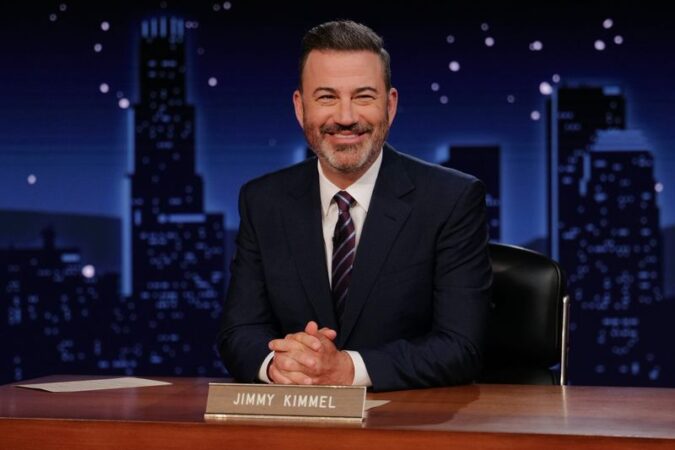
    On Wednesday, Disney-owned ABC put the late-night talk show Jimmy Kimmel Live! on indefinite hiatus. This happened soon after Nexstar Communications Group said it would pull the program from its 23 ABC-affiliated stations over a joke Kimmel had made Monday about the MAGA reaction to the killing of Charlie Kirk. The leaders of the conservative-leaning Sinclair Broadcast Group also announced they would be preempting the show.

    So far, so wrong, but within these private companies’ rights. The problem is that also on Wednesday, the head of the Federal Communications Commission, Brendan Carr, went on the right-wing podcast The Benny Show and laid out how the government could go after those who gave the late-night comedian his platform.

    “There’s calls for Kimmel to be fired. You can certainly see a path forward for suspension over this. And again, the FCC is going to have remedies that we could look at,” Carr told host Benny Johnson. “Disney needs to see some change here, but the individual licensed stations that are taking their content, it’s time for them to step up.”

    Now, the FCC cannot go after ABC because, like the other national networks, it does not hold a broadcast license to transmit over the public airwaves (although Disney owns a few stations), but it can absolutely go after local affiliates.

    Not only that, but much like in the case of CBS’s cancellation of The Late Show with Stephen Colbert — which put the Trump-mocking show on the chopping block after the network’s parent company needed government approval for a merger — Nexstar is also in merger talks.

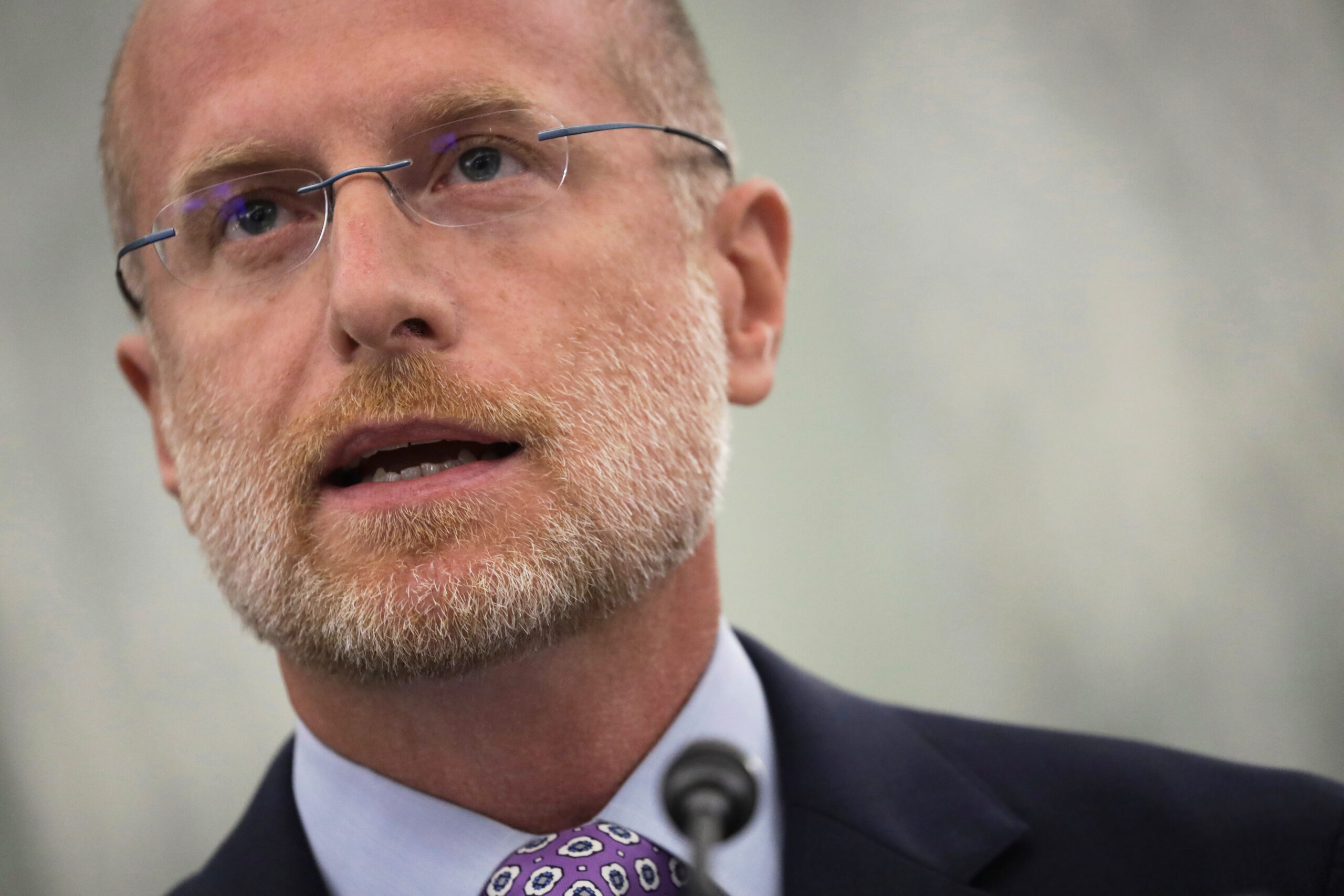
    Brendan Carr, then a Federal Communications Commission commissioner, speaks during a Senate Commerce, Science, and Transportation committee hearing on Capitol Hill in Washington, in 2020.

    With The Late Show, CBS executives could at least make the case (transparent as it was) that their decision was justified because ratings were down, and they would allow the show to run until the end of the host’s contract next year.

    But for Kimmel, there hasn’t been even an attempt at that kind of pretense. He’s been suspended following a barely veiled threat by the guy in charge of allowing TV stations to do business. Now, I think what Nexstar did is cowardly, but it is by no means nonsensical.

    Add it to the list of companies, universities, and law firms that have sold out American principles and are fully on board with endangering democracy by enabling Trump’s worst instincts — all for the sake of doing business.

    Also, add this incident to the long list of examples of hypocrisy from the Trump administration and the right-wing commentariat. Unsurprisingly, back in 2023, Carr posted on X that “Free speech is the counterweight — it is the check on government control. That is why censorship is the authoritarian’s dream.” The same day Kimmel was suspended, Trump criticized England’s laws limiting speech (he’s right) while praising ABC’s decision.

    The president has repeatedly threatened networks over their news coverage, and raged against late-night comedians like Kimmel and Colbert for making fun of him. Of the Big Three networks (sorry, kids, I’m old), Comcast-owned NBC has so far stood its ground.

    This is important because Saturday Night Live alone has produced some definitive presidential portraits that have stood the test of time. In my late-night TV-watching lifetime, we’ve seen George H.W. Bush as awkward and out of touch (Dana Carvey), Bill Clinton as hungry horndog (Phil Hartman), George W. Bush as clueless bro (Will Ferrell), Barack Obama as professorial but cool (Jay Pharoah), and Donald Trump as game cue card reader desperate for love and attention (Donald J. Trump).

    The show may want to amend Trump’s portrayal, though, to a thin-skinned demagogue who lost his sense of humor about the same time he found love and attention among the vilest peddlers of right-wing vitriol and hate on his way to authoritarianism.

    As to what those of us who consider free speech one of the vital ingredients in the American Experiment can do, well, that’s easy.

    Speak out, loudly and often — ideally respectfully, but the Constitution doesn’t say you need to be nice. What’s happening is not right, and we need to say so. Damn the consequences.