Author: Abigail Covington

  • He cut his rent by $2,000 a month. Then he bought a $165,000 house in Southwest Philly. | How I Bought This House

    He cut his rent by $2,000 a month. Then he bought a $165,000 house in Southwest Philly. | How I Bought This House

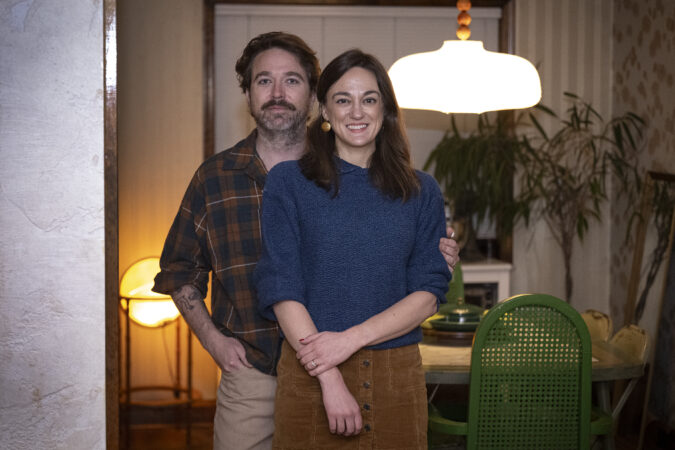
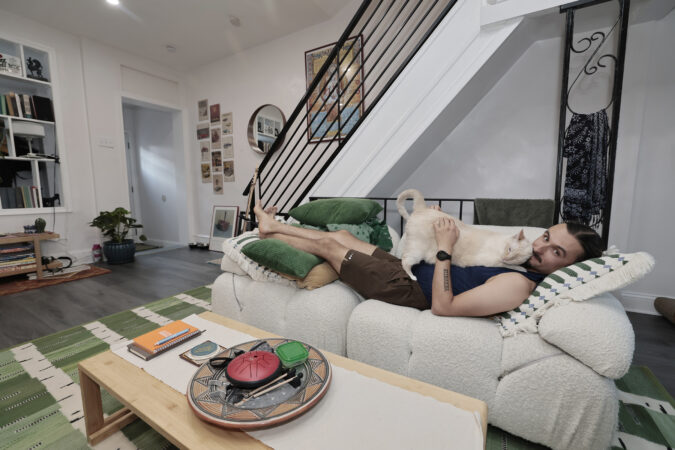
    The buyer: Dylan Foglesong, 28, program manager

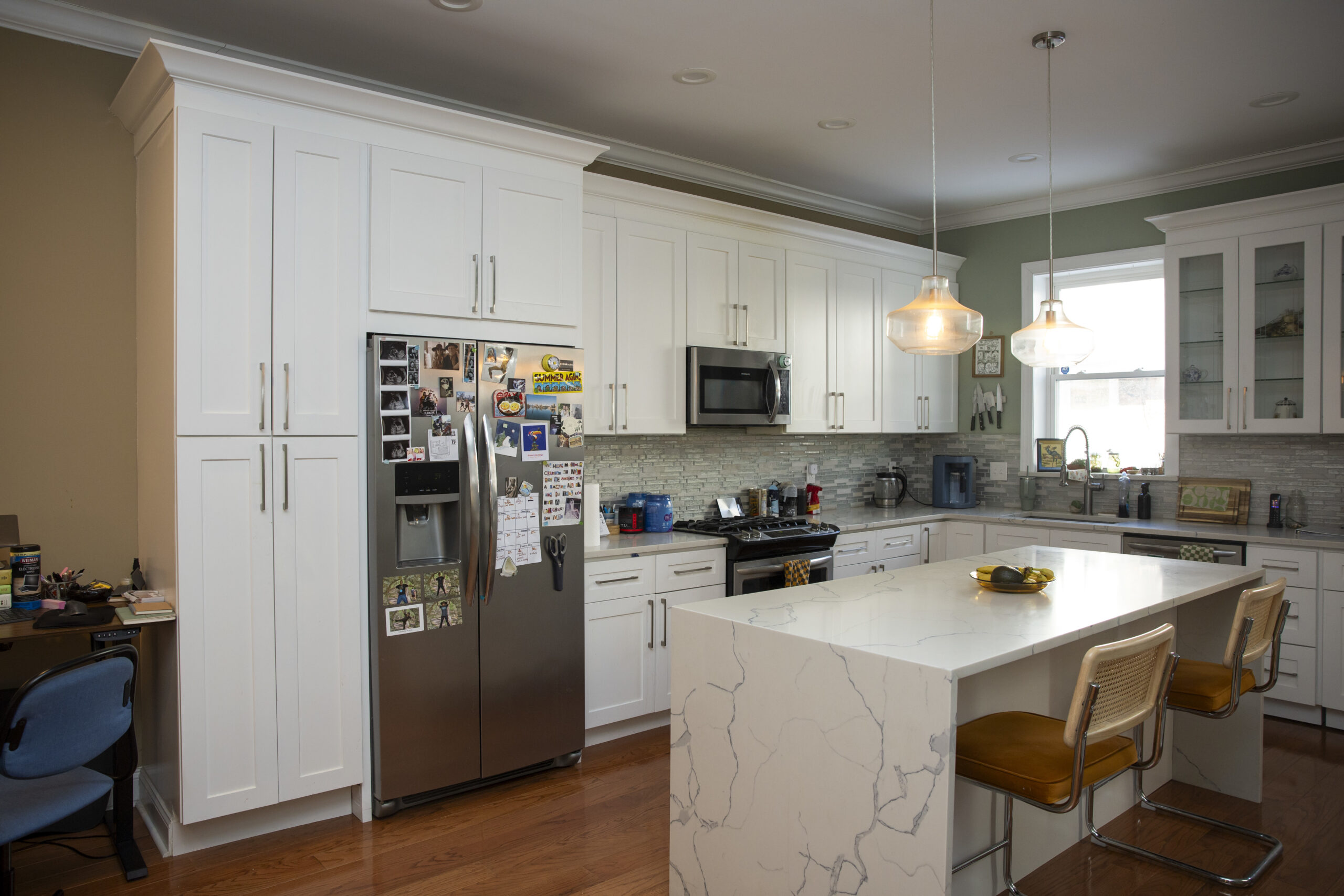
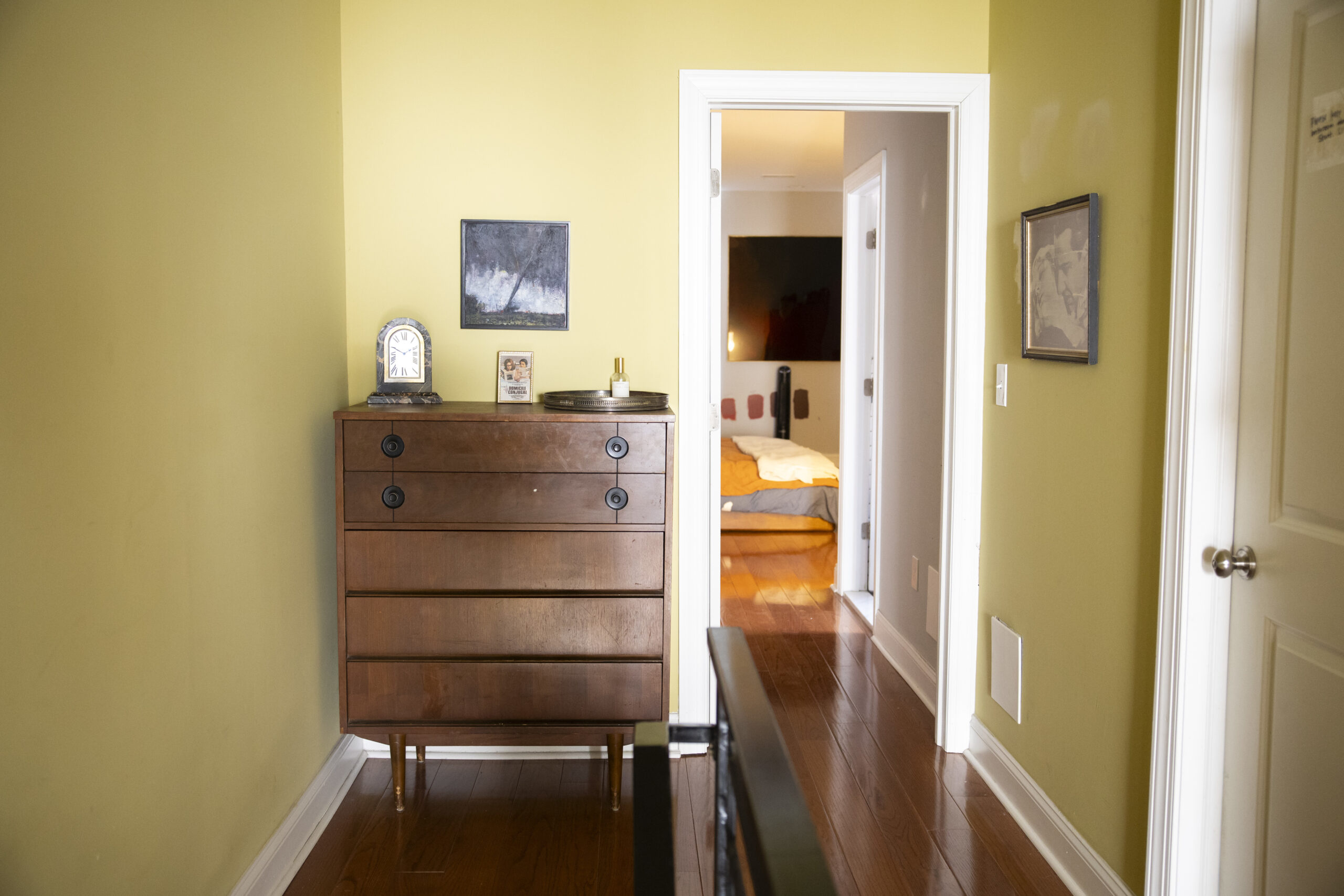
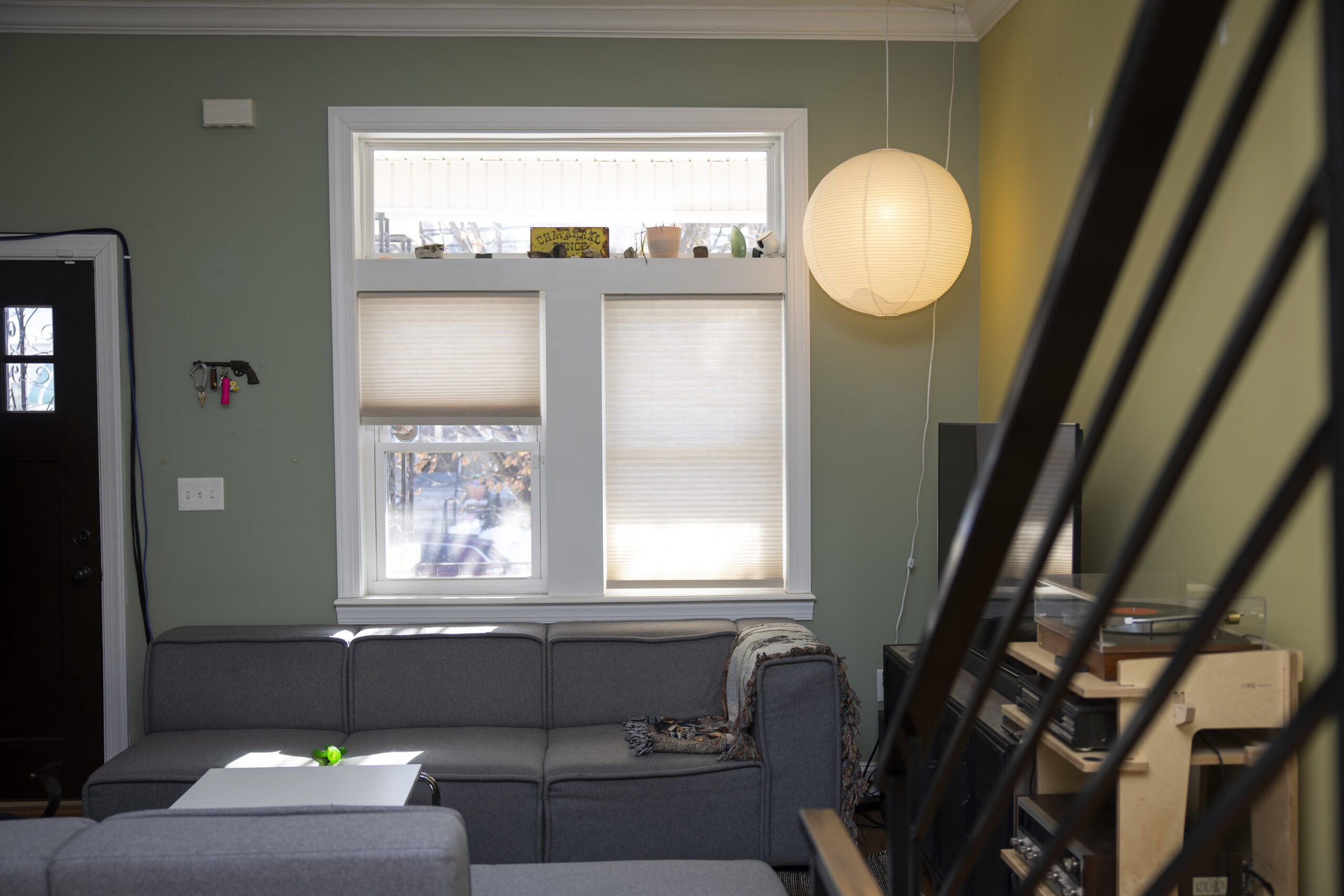
    The house: A 1,150-square-foot townhouse in Southwest Philly with two bedrooms and two bathrooms built in 1925.

    The price: Listed for $180,000; purchased for $165,000.

    The agent: Kristie Bergey, Coldwell Banker

    The ask: Dylan Foglesong felt like he was overpaying for his apartment. He was spending $2,600 a month, plus utilities, for a two-bedroom place in Manayunk, and the money was going toward a place he would never own.
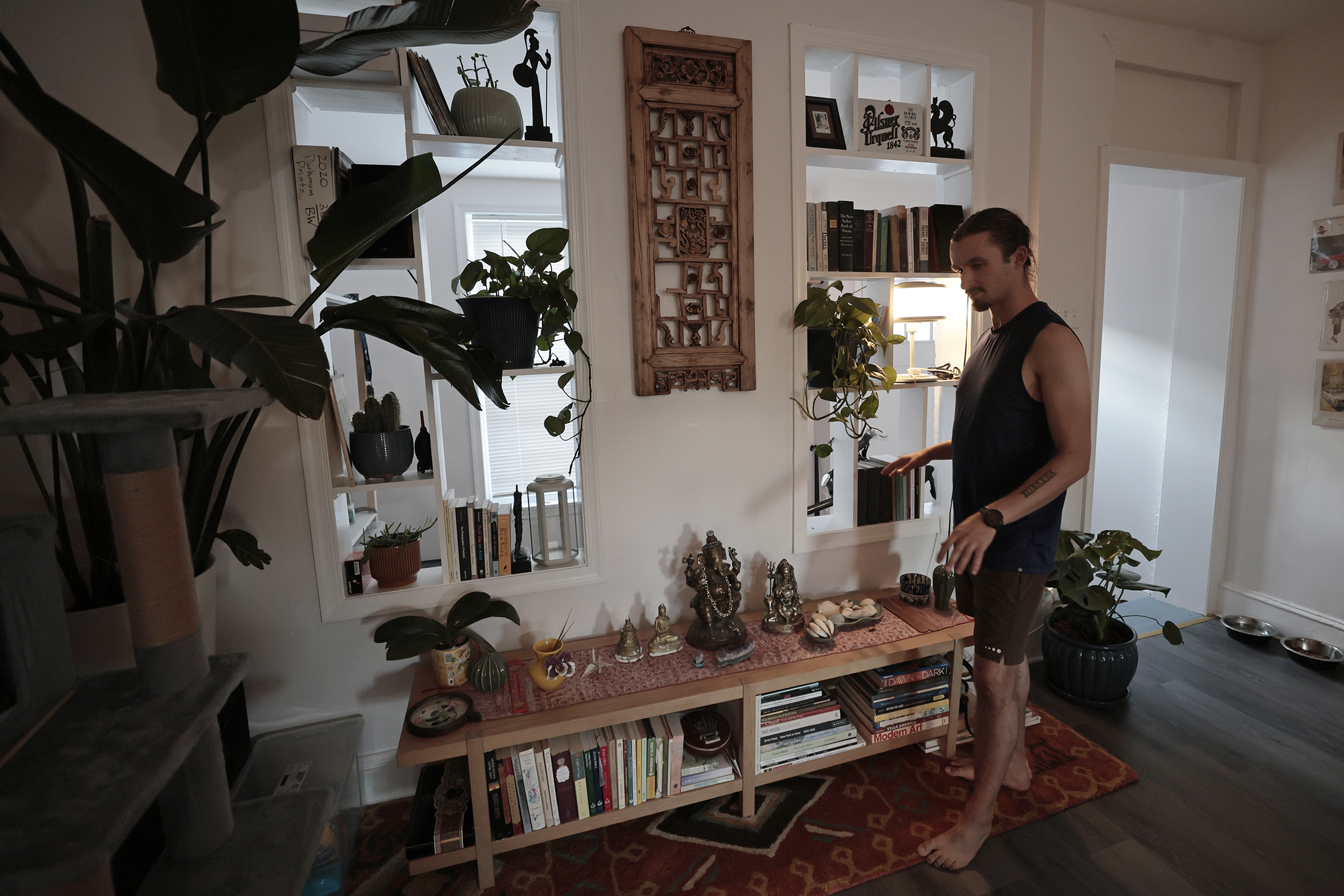
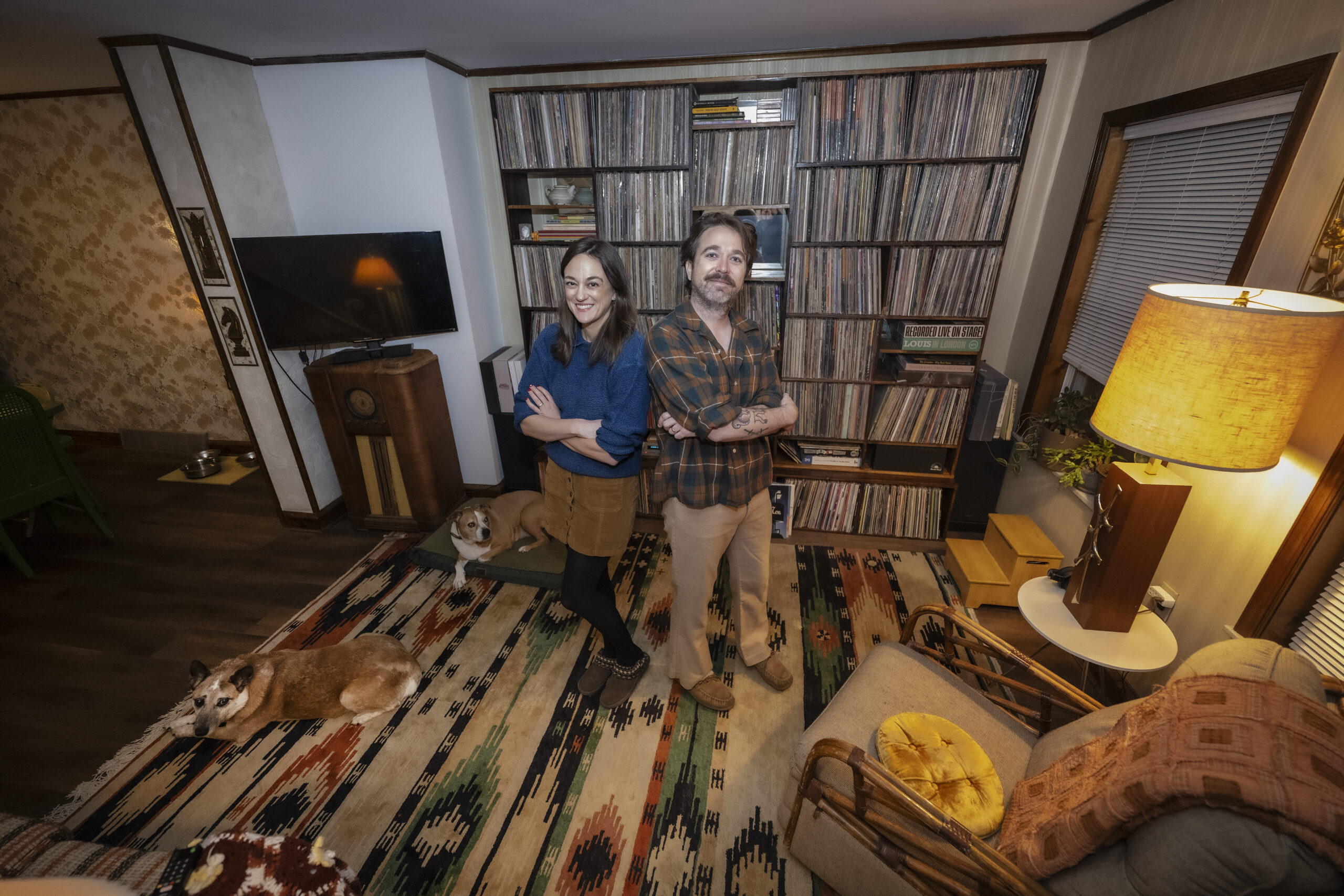
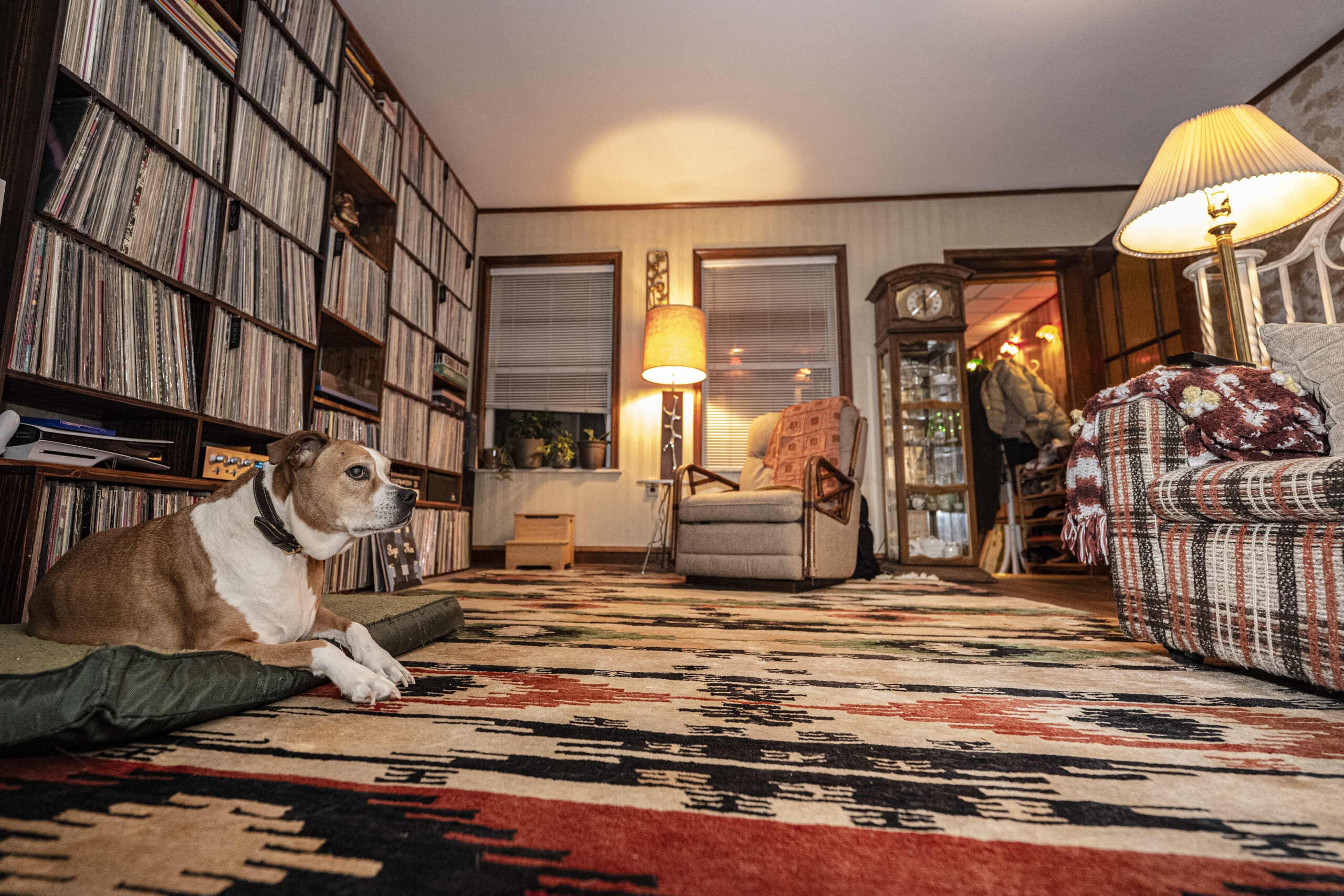
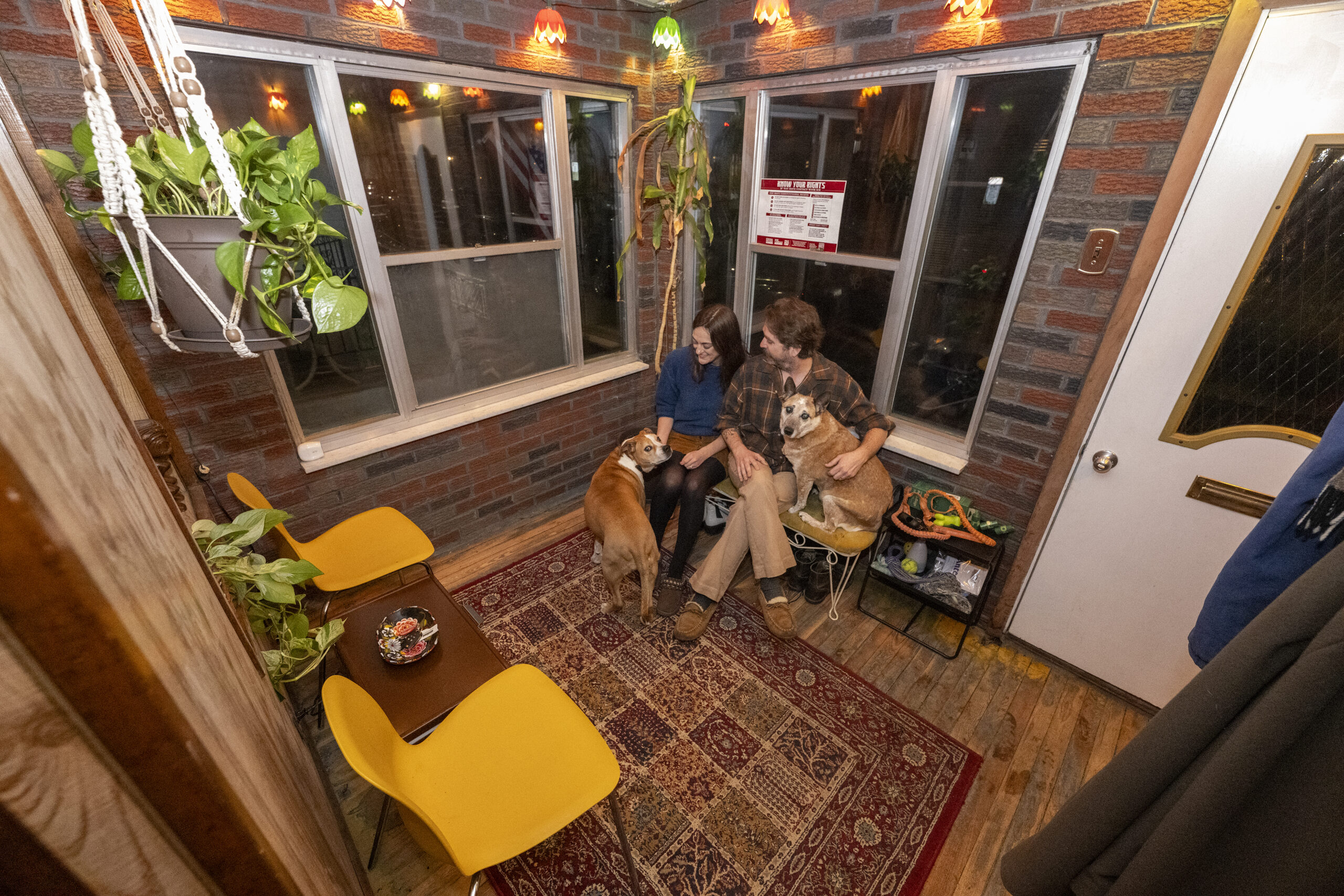
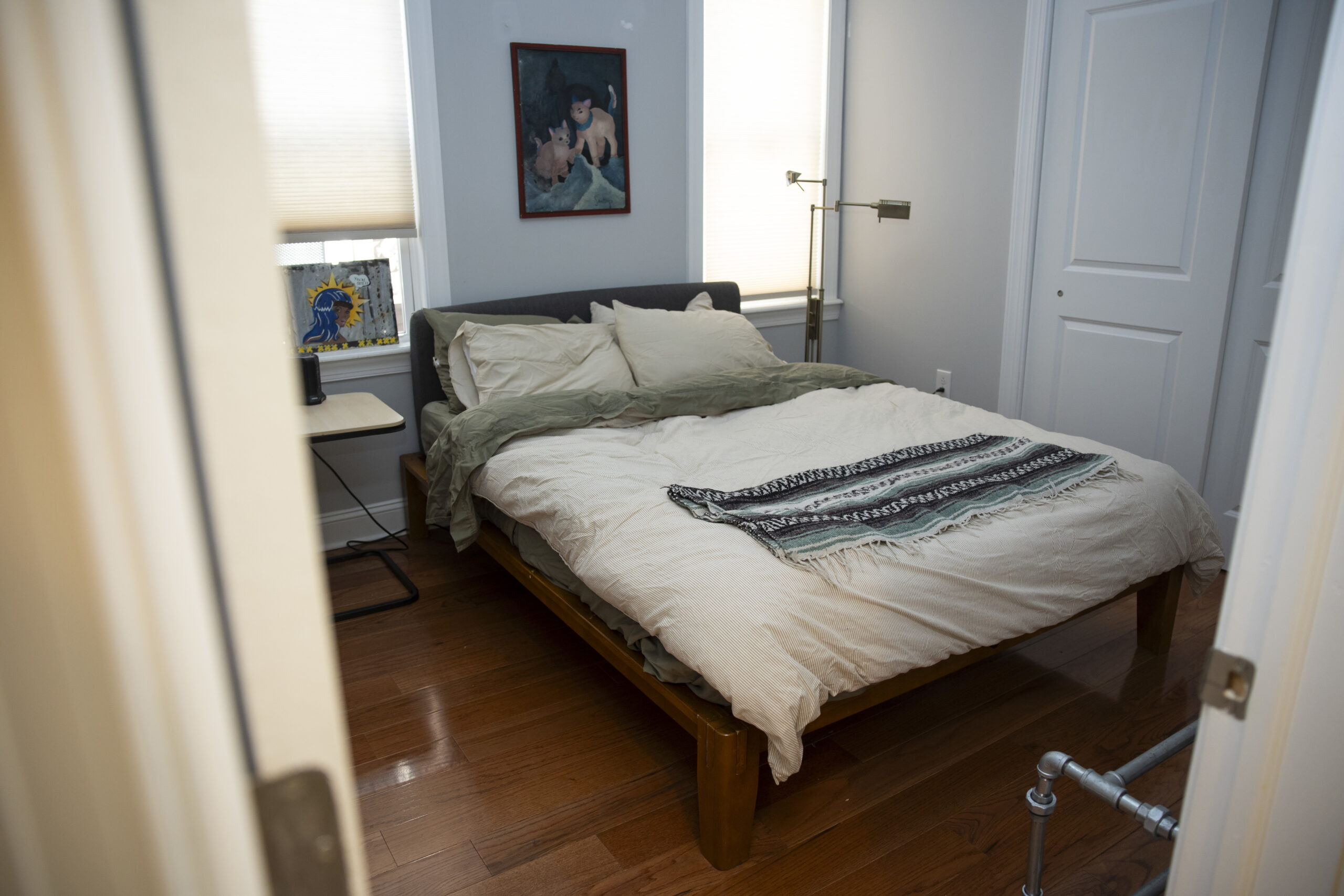
    Dylan Foglesong tends to an area he calls the shrine in his home.

    After six months, he paid the fee to break his lease and moved into a house with friends. His rent dropped to $600 a month, and because he was subletting month-to-month, he could leave whenever he wanted. He was saving more than $2,000 a month, and he realized he could put that money toward buying a house.

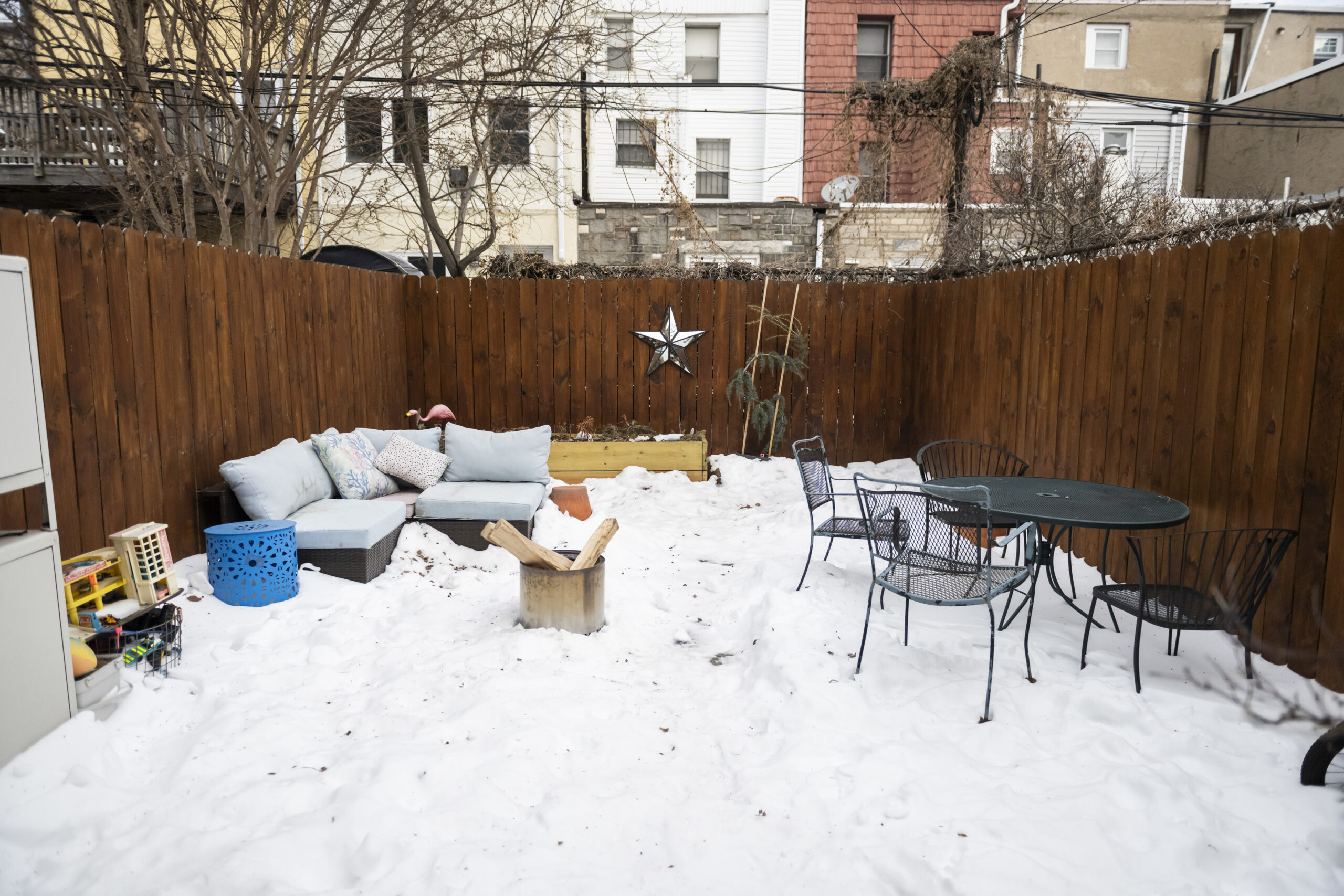
    Foglesong had a simple wish list. As an avid cyclist, he wanted to be near multiple bike paths. He also wanted outdoor space, two usable bedrooms, and a low price. He did not care about central air or polished finishes. “I just wanted a cheap place that worked,” he said.

    The search: Foglesong started searching in January, focusing on a small section of Southwest Philadelphia near Bartram’s Garden and the trail network along the Schuylkill. He wanted to remain close to Center City so he could bike to work.
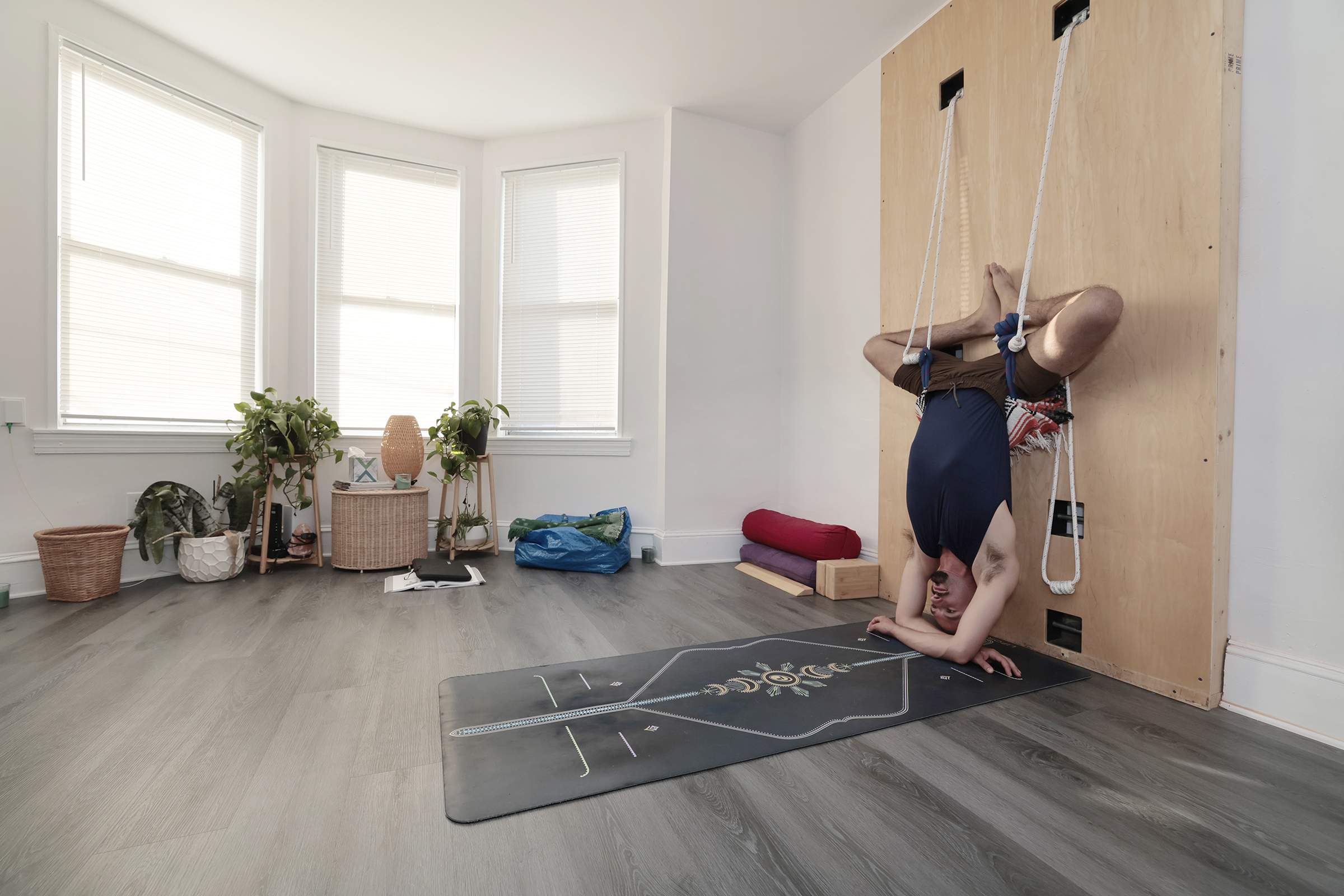
    Foglesong uses the rope wall to work out in the studio of his home.

    He saw five houses. The first one was in his ideal location, but the floors were scratched and coming up, the kitchen looked decades out of date, and the upstairs had the cramped three-bedroom layout he wanted to avoid. It would have taken too much work to reach a point where he was not “barfing every morning at how much of an eyesore it was,” he said.

    The only other serious contender had a large backyard, a clean basement, and an updated kitchen. But a quarter of the ceiling in one upstairs room appeared to be collapsing because of a leak. The house was listed for about $212,000. Foglesong offered $190,000, figuring he could use the difference to repair the roof, but the seller rejected the offer.

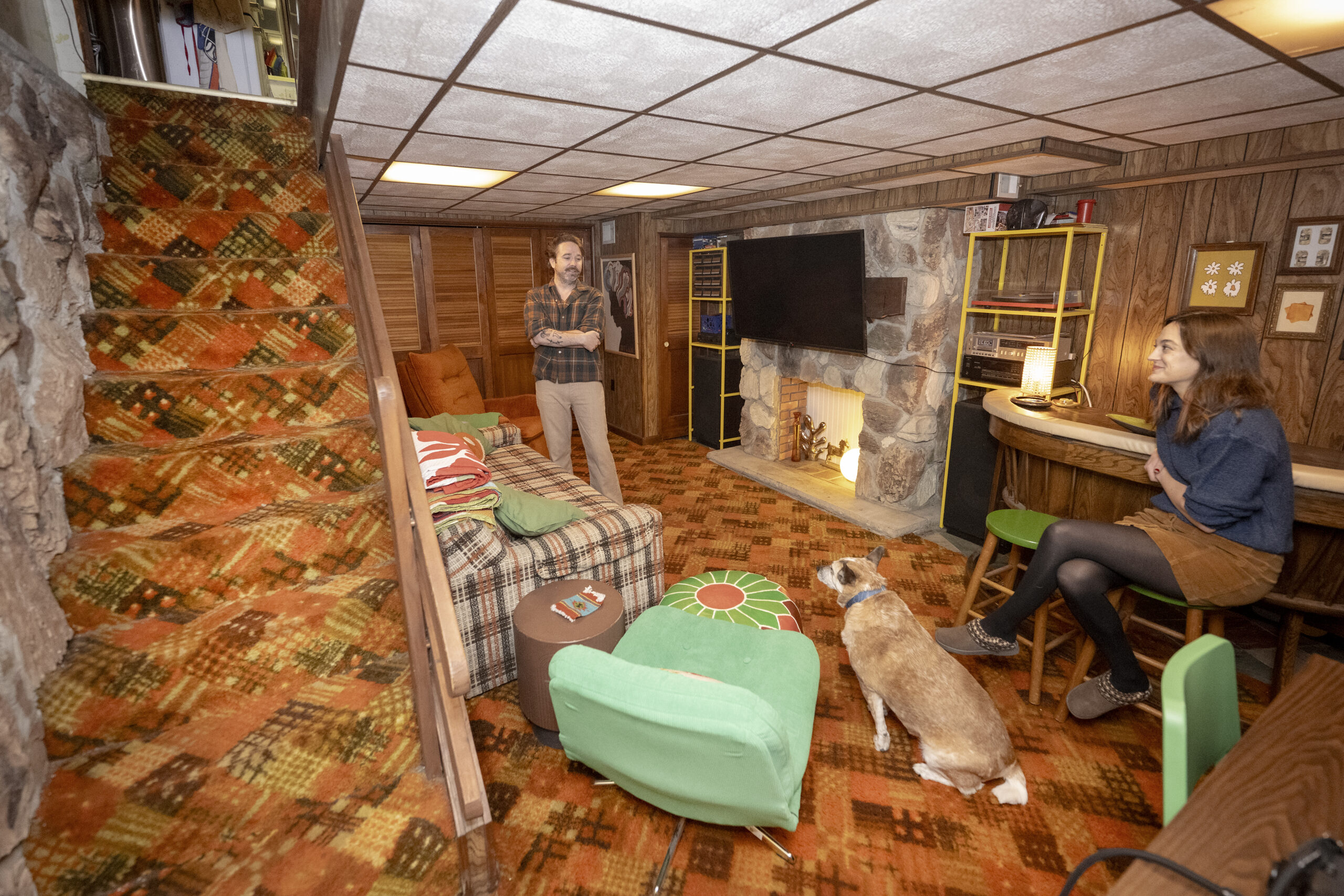
    The appeal: The fifth and final house had a great layout. Both rooms upstairs were large. It also recently had “a really thoughtful renovation,” Foglesong said. The updates included a new HVAC system and appliances, while the house also had a finished basement with high ceilings, outdoor space, and an enclosed front porch where he could store his bikes.

    Foglesong also liked the location on a quiet side street with little through traffic. “It’s on the kind of street that you wouldn’t drive down unless you lived there or you knew someone who lived there,” Foglesong said. Most of the houses on the block were occupied, which made the neighborhood feel established.
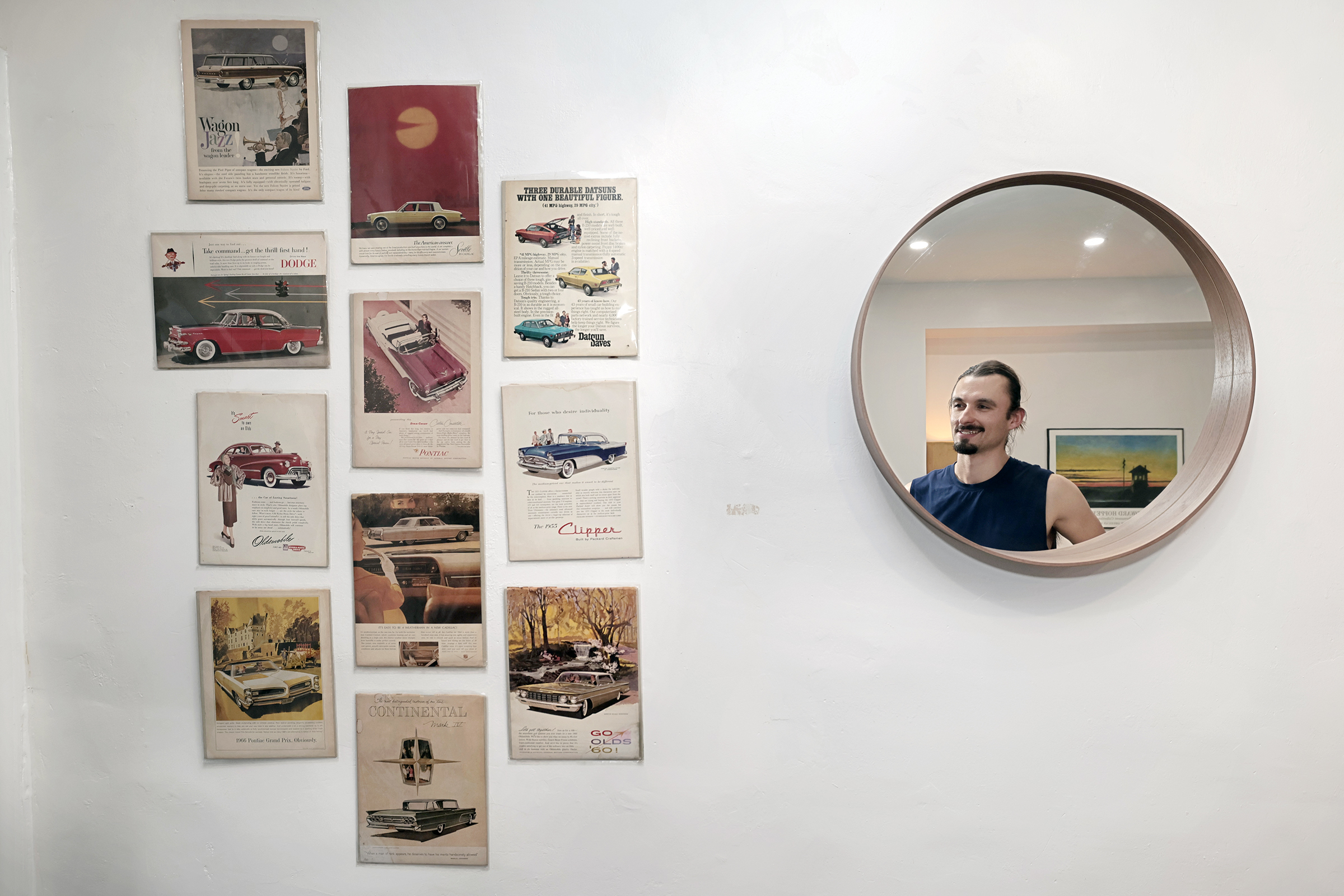
    Dylan Foglesong is reflected in a mirror that hangs, next to classic car ads, in the foyer of his home.

    The deal: The house had initially been listed for a little more than $181,000 before the seller lowered the price to $180,000. It had been on the market for roughly five months by the time Foglesong saw it.

    He offered $170,000 and asked the seller to contribute 3% toward closing costs. They declined the closing assistance but countered at $165,000. The lower price ended up saving Foglesong the same amount of money, so he accepted.

    The inspection was clean, save for one issue with the electrical. When Foglesong called Peco to arrange service, he learned that the house was not legally connected, even though the power was on. An electrical inspection found that the breaker box needed work, and the seller hired an electrician to set it up properly. But Foglesong still could not transfer the service into his name until the seller paid thousands of dollars in outstanding utility balances. The whole thing “seemed a little sus,” Foglesong said, but it worked out.

    The money: Foglesong put 3% down, or $4,950. Including his closing costs, he paid about $11,600 out of pocket to buy the $165,000 house. His mortgage rate is 6.25%. Today, his monthly payment, including property taxes, is $1,300.

    He already had some savings when he moved in with roommates, but the drop in rent allowed him to build the rest quickly. He estimates that he was saving nearly $3,000 a month. Within 3½ months, he had accumulated enough to cover the down payment and closing costs. “You take that little compromise for a couple of months,” Foglesong said about moving in with friends, “and all of a sudden you have $11,000 in your bank account.”

    The move: Foglesong closed in April and moved his belongings from the shared house into a 10-foot U-Haul. Everything fit in one load, and he completed the move over two days without hiring movers or asking friends to help.

    He managed it alone because he did not own much heavy furniture. His couch comes apart into sections, and he sleeps on a futon that he could fold and carry over his shoulders. For everything else, he improvised. “You put a blanket on the stairs, slide the furniture down,” Foglesong said. “You figure it out.”

    Life after close: At first, buying the house felt less momentous than Foglesong expected. He had imagined “a really grand, movie-montage sequence,” he said, but moving in felt much like any of the other moves he had made during his 10 years in Philadelphia.

    But as the weeks passed, the difference between his new home and the others became clearer. He was no longer paying rent for a place that belonged to someone else. He owned the house, and the monthly payment was within his budget. “It’s very grounding to wake up in a place that you can afford,” Fogelson said.

    The experience also reinforced his belief that young buyers may need to reconsider what they expect from their first home. “You have to be realistic about what you can access right now,” Foglesong said. “Your first house doesn’t have to be your dream home.”

    Editor’s note: This article has been updated to correct real estate agent Kristie Bergey’s name.

    Did you recently buy a home in the Philadelphia area or South Jersey? Share the story of how you did it. Email Inquirer real estate reporters at properties@inquirer.com.
  • He’s 102 years old. During World War II, he helped predict the weather.

    He’s 102 years old. During World War II, he helped predict the weather.

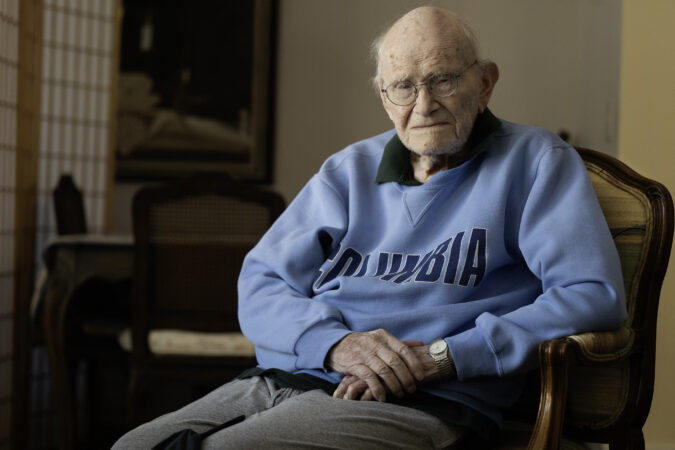
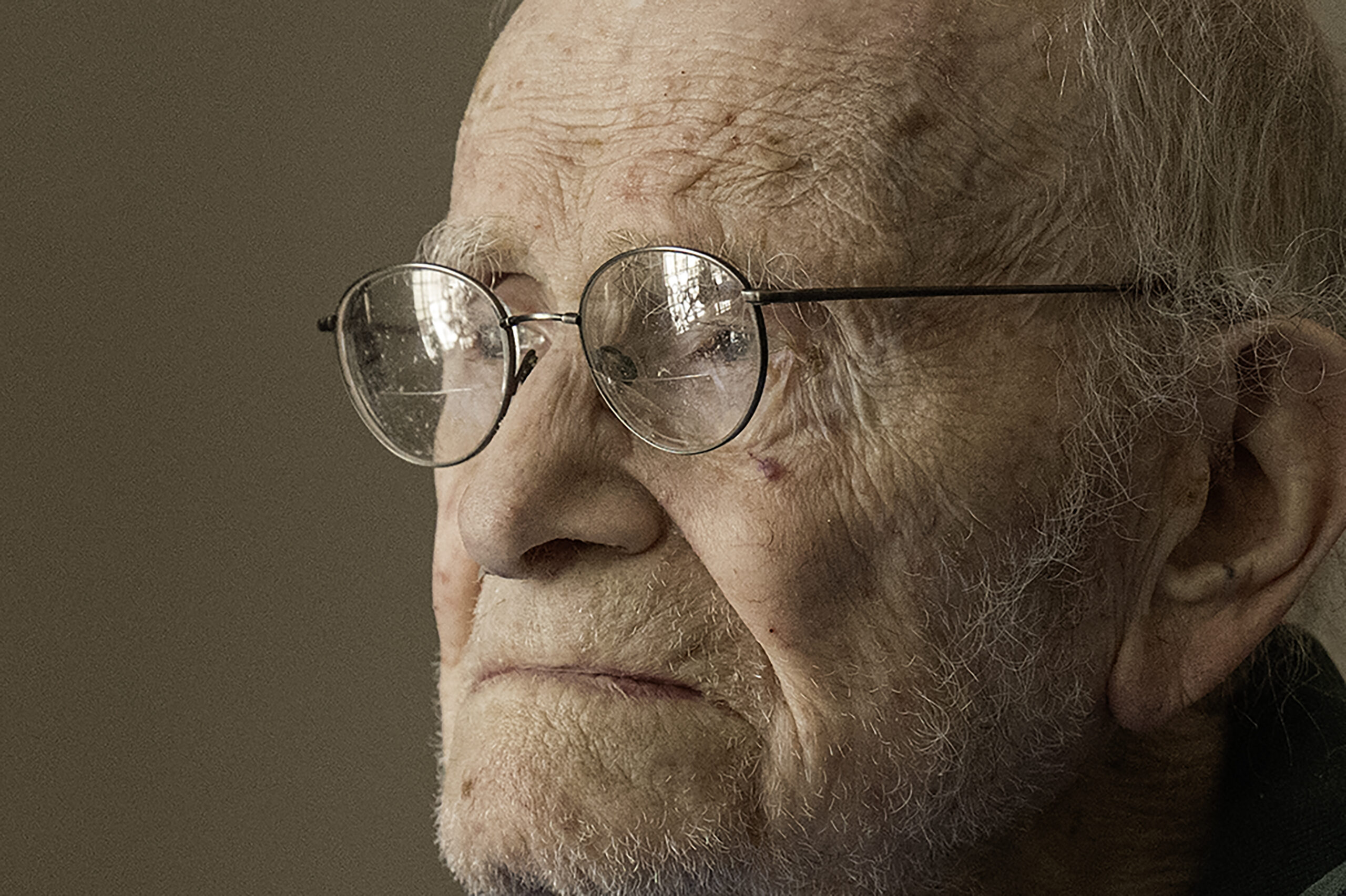
    At 102, Cyrus Bloom does not pretend that old age is pleasant.

    “It’s hard,” he said during a recent interview at his Center City apartment. He can barely walk, even with a walker, and he lives with the constant fear of falling. His short-term memory is shot, too. Walking into a room to get something, only to forget what he went there for, is an everyday occurrence. “It’s terrible,” he said matter-of-factly.

    But his long-term memory? That’s a different story.

    Bloom can still recall names, places, and details from more than 80 years ago, when he was one of the 16.4 million Americans who served in World War II. He can rattle off the details of his first assignment as a meteorologist with the Army Air Corps and the names of the bomber bases that dotted the coast of England where he was stationed. He remembers everything about “the very big war,” as he called it, even though he spent most of his life not talking about it.

    Bloom, who was born in Newark, N.J., was a sophomore at Columbia University when he enlisted with the Army Air Corps and began training as a meteorologist. It was March 1943. He received his commission as a second lieutenant on June 6, 1944, the same day the Allied forces landed on the beaches of Normandy.

    The invasion, Bloom noted, had originally been scheduled for June 5. But bad weather over the English Channel prompted Gen. Dwight D. Eisenhower to postpone it for a day. Bloom had no role in that decision; he had only just completed his training. But the delay demonstrated how heavily the Allied war effort depended on accurate weather forecasts.

    Cyrus Bloom, 102, is photographed at his home in Philadelphia on Tuesday, June 9, 2026. Bloom worked as a meteorologist during World War II.

    Bloom’s first assignment took him to Bergstrom Air Force Base in Austin, Texas. There, he and the other meteorologists gathered reports on temperature, wind, and air pressure from weather stations across the country. They plotted the information on maps and drew isobars — lines connecting places with the same air pressure — by hand. Those lines revealed high- and low-pressure systems and helped meteorologists predict how the weather would move.

    In September 1944, the Army sent Bloom overseas. Like so many young soldiers, he had never been abroad before. Today, he remembers every step of the journey. He left Washington on a military transport plane bound for Europe. The first stop was Goose Bay, Labrador, in northeastern Canada, where the plane refueled.

    “It was just wilderness,” Bloom recalled, “very rugged country.”

    From there, he flew across the Atlantic to Prestwick, Scotland, then continued south to London. The Army later sent him to the Cotswolds for additional training in British forecasting procedures. He remembers the region for its thatched-roof houses.

    His final assignment took him to East Anglia, on England’s eastern coast. The countryside was crowded with airfields used by the U.S. Eighth Air Force, which carried out bombing missions over Germany. Bloom was stationed at Bovingdon, code-named Earl’s Court. His job was to brief bomber crews on the weather they could expect en route to Germany. His briefings were based on forecasts prepared at Eighth Air Force headquarters, which was called Pinetree.

    “Everything had a code name,” Bloom said.

    That world of code names, weather maps, and high-stakes forecasts is the subject of Pressure, a new film about the meteorologists who advised Eisenhower in the tense days before D-Day. In the film, a meteorologist stands at the center of a decision that could determine the fate of the war. But Bloom describes his own wartime work in much plainer terms. Asked whether it felt consequential, he said he did not think about it that way.

    “I was simply doing what I was supposed to do,” he said.

    After the war, Bloom returned to college and then attended Columbia Law School. His college roommate was also a veteran. So was almost everyone in his law school class. But none of them talked about the war. Bloom and his roommate didn’t even know what the other one did in the war.

    “Everybody knew that they had served,” Bloom said, “but nobody knew how they served.”

    The silence continued as Bloom built a life after the war. He became a litigator and, in 1962, married Nanette, who is 13 years younger. They raised two sons in South Orange, N.J. But Bloom rarely spoke to his family about his service. His son Josh said they didn’t hear much about it until Bloom was around 90, and they interviewed him about it.

    “It’s funny,” Bloom said of the veterans he knew. “They had the biggest experiences of their lives having been at war, but nobody talked about it.”

    For most of his own life, neither did he. And yet, when asked to name the biggest experience of his century-long life, a period that included the moon landing and the collapse of the Soviet Union, Bloom didn’t hesitate.

    “World War II, of course,” he said.

  • They paid $259,000 for a South Philly rowhouse with vibes and an ‘eagles nest’ | How I Bought This House

    They paid $259,000 for a South Philly rowhouse with vibes and an ‘eagles nest’ | How I Bought This House

    The buyers: Katherine Rumble, 38, public engagement manager; Benjamin Rumble, 39, graphic designer

    The house: a 960-square-foot-home near South Philly’s Marconi Plaza with three bedrooms and one bathroom, built in 1957

    The price: listed for $259,000; purchased for $259,000

    The agent: Sue Liedke, Compass

    Benjamin and Katherine Rumble pin their new home in South Philadelphia.

    The ask: Katherine and Benjamin Rumble were looking to leave Nashville. They wanted a city that was affordable, walkable, and had decent public transit. “Philadelphia was pretty much the only option,” said Katherine. After falling in love with South Philly, they moved in 2023 and rented a place in Point Breeze.

    Two years later, they started searching for their forever home. Their wish list was specific: proximity to the Broad Street Line, central air, office space for both of them, and ideally a home that hadn’t been gutted, flipped, and turned “millennial gray.”

    “We did not want to live in a doctor’s office,” Katherine said. “We wanted to live in a place that felt warm and welcoming like your grandma’s house.”

    Benjamin and Katherine Rumble’s dog, Miller, relaxes in their living room.

    The search: The couple already had a habit of checking Zillow regularly, but the listing that caught their attention came through Instagram.

    They had long followed the account of Sue Liedke, a Philadelphia real estate agent who highlights vintage homes across the city. “We were obsessed with her account,” Katherine said. When Liedke posted a house near Oregon Station, they reached out.

    The home checked many boxes. It was close to the Broad Street Line and near Marconi Plaza, which was a major plus for the couple, who have two dogs. It also had central air and enough space for both of them to work from home.

    The appeal: They went to see the house immediately and loved it. “It had vibes,” Benjamin said. “The basement looked like people had been watching Eagles games down there since 1974.”

    “The basement looked like someone had been watching Eagles games down their since 1974,” said Benjamin.

    Upstairs, there were original wood doors, wood trim, and wallpaper that appeared decades old. The bathroom featured seafoam-green and pink tile and a skylight.

    “We loved everything already in it,” Benjamin said. “I thought I wanted to buy a house so I could paint the walls. Then we bought this house and realized we didn’t want to change anything.”

    At the front of the house was a small screened-in room sometimes referred to as a Florida room, a term Katherine rejected immediately. “I said, ‘We’re not calling anything Florida in this house,’” she recalled. They renamed it “the eagles’ nest.”

    For all its charm, the house did still have its drawbacks. There was only one bathroom, and the kitchen was tiny. But “it had so many of the things we wanted that it felt worth it,” Katherine said.

    The deal: The house had been on the market for only a few days when they saw it. The listing price was $259,000, and it was being sold as-is, meaning the seller was not required to pay for any issues uncovered during the inspection. “It was a risk,” Katherine said.

    They offered the full asking price and requested a $5,500 seller’s assist to help cover closing costs. The seller agreed and even repaired a plumbing issue that came up during the inspection, despite selling the house as-is. In the end, the appraisal came in $5,000 above the asking price, which reassured the couple that the deal made financial sense.

    The money: The couple put down 5%, or $12,590.

    The money came from a second retirement account Katherine opened several years earlier. “It wasn’t really making any money,” she said. She decided cashing it out to buy a home was a better investment.

    Benjamin and Katherine Rumble and their dogs, Miller and Bambi, in the eagle’s nest.

    After the seller credit and deposit adjustments, the couple needed $24,225 in cash to close. They used almost all their personal savings to cover the remaining costs. They are rebuilding their nest egg from $2,000.

    One thing boosting their savings is their low mortgage payment. They purchased mortgage points, an upfront fee paid at closing that lowers your interest rate, to get their monthly payment below $2,000. “That was our big goal,” Katherine said. “It’s a miracle.”

    The move: To save money, the couple moved themselves. They couldn’t get a full-sized truck down their narrow street, so they rented a U-Haul van and shuttled their belongings back and forth across four weekends. They also had to get rid a lot of their existing furniture, requiring extra trips to 2A Thrift and Philly AIDS Thrift. “It was harder moving 10 minutes down the road in South Philly than it was moving from Nashville to Philadelphia three years ago,” Katherine said.

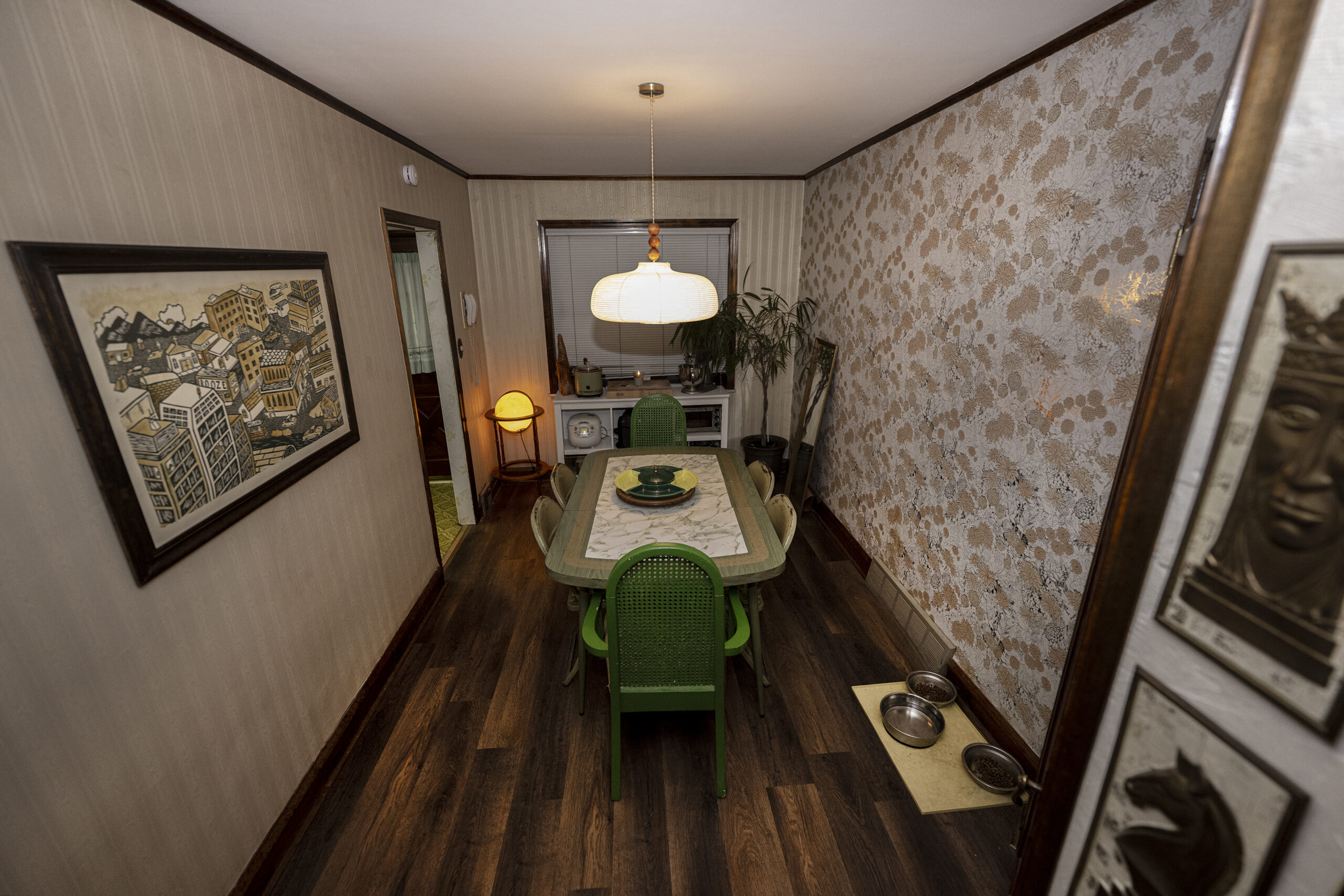
    Benjamin and Katherine fell in love with the home’s original details, like the wallpaper in the dining room.

    Any reservations? One thing the couple wasn’t prepared to deal with was a private neighborhood sewer line. It connects all the houses on the block before linking up with the main public sewer line. The couple both grew up in parts of the country where individual houses connect directly to the main sewer line. After moving in, neighbors explained the history of the sewer line. It hasn’t caused any major issues yet, but if something goes wrong, the neighbors will have to pay for the repairs together.

    Life after close: The house has influenced their interior design choices. Because it was built in the 1950s, the couple has tried to source furniture from the 1960s and 1970s.

    They regularly browse thrift stores, Facebook Marketplace, and vintage shops such as Thunderbird Salvage and Jinxed.

    “We’re trying to find things that fit the character of the house,” Katherine said. “It takes time to find the things you want. But it’s really exciting when you do.”

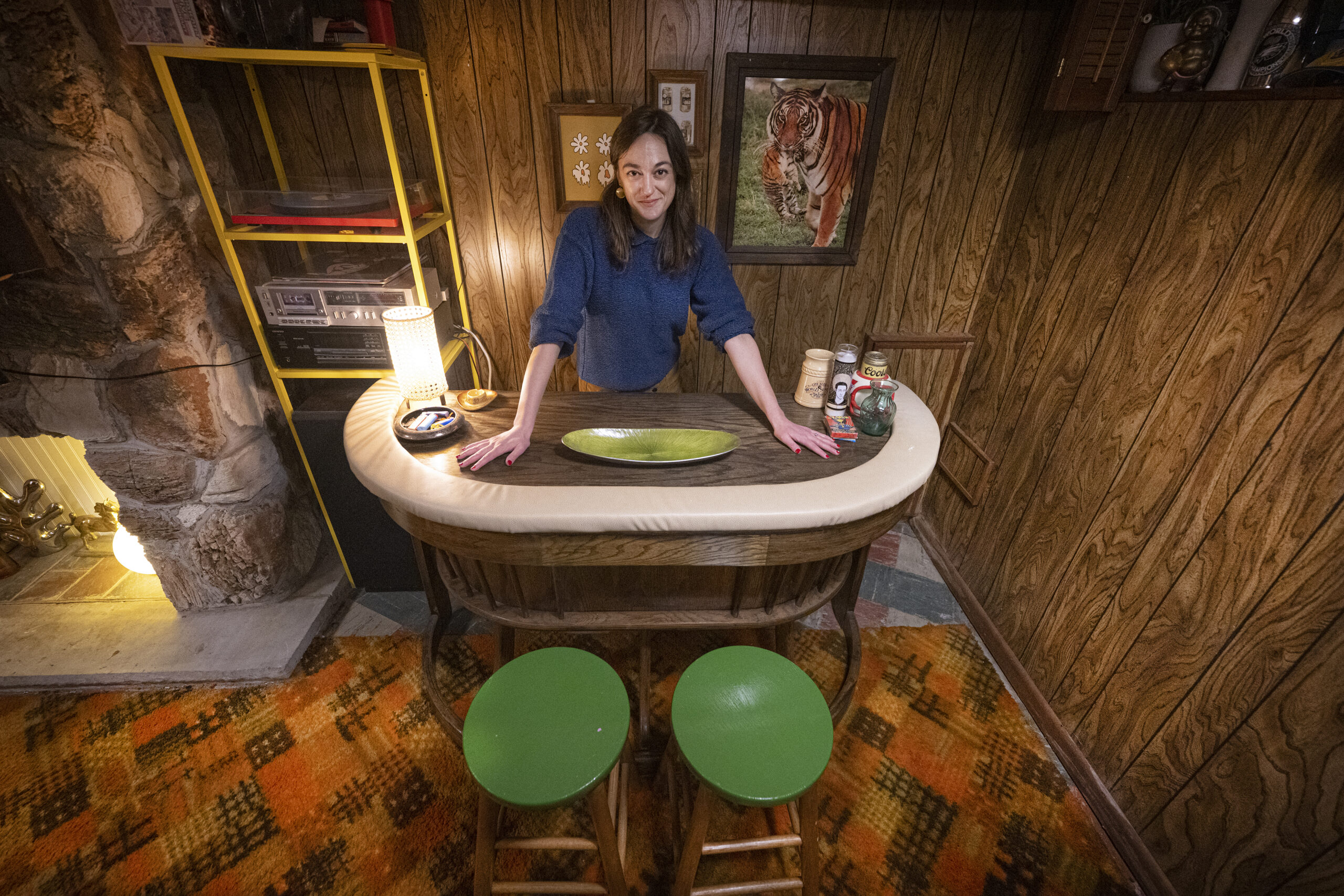
    Katherine Rumble behind the bar.

    It also helped that the previous owner let them keep some furniture, including, said Benjamin, “a really rad set of couches.”

  • Delco, apparently, is the place where the country’s best Scrabble players meet and compete

    Delco, apparently, is the place where the country’s best Scrabble players meet and compete

    South Philly’s Mark Abadi has had a way with word games since he was old enough to pick up a Scrabble board.

    By 10, he would complete large-print mini games and crossword puzzles, and started playing Scrabble against his parents.

    He became what he calls a “word nerd,” obsessing over newly-learned words and trying out new strategies in hotly-contested Scrabble battles at home.

    “I could never compete with my parents,” he joked. His parents always matched his competitive spirit.

    Eventually, he lost interest in the game until, at 15, he found his childhood Scrabble board and began playing again. Only this time, he had spent days studying the Scrabble dictionary, which made him better equipped to out-point his parents.

    “I looked through the [dictionary] pages, and was like, ‘Oh my God, that’s a word? You can play ‘A‘ā’ because it’s a kind of lava? What?’”

    Mark Abadi is one of several nationally-ranked Scrabble players in the country. He recently struck gold on the CW game show based on the iconic board game.

    Abadi, a copy editor at Business Insider, found immediate inspiration reading the 2001 Word Freak by Stefan Fatsis, a journalist who explored the underground Scrabble community and became an expert-level player. Soon, he’d follow Fatsis’ footsteps and become a nationally-ranked Scrabble player.

    For nearly two decades, Abadi, 35, has competed in tournaments throughout the country. He’s won regional matches and scored top five finishes in world-class competitions, including the North American Scrabble Championship.

    The Montgomery County native has continued to sharpen his skills by rubbing shoulders with other world-class players, many of who (like Abadi) are members of the Delco Scrabble Club.

    “I casually hop on SEPTA and then I’m face-to-face with the best Scrabble players in the country. It’s kind of intimidating,” he said.

    ‘We’re waiting for you’

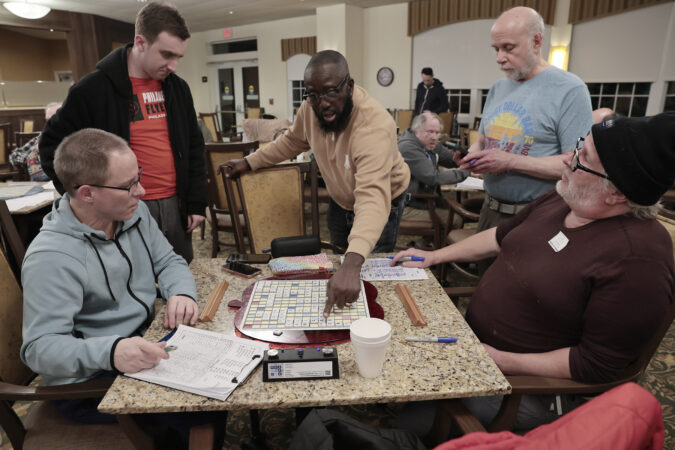
    The Riddle Village dining room was pin-drop quiet on a recent evening, save for the occasional shaking of Scrabble tiles. The Delco Scrabble Club had gathered at the assisted living facility, where one of their oldest members lives, for their weekly meeting.

    When The Inquirer got there, the members were halfway through their first of five 50-minute games.

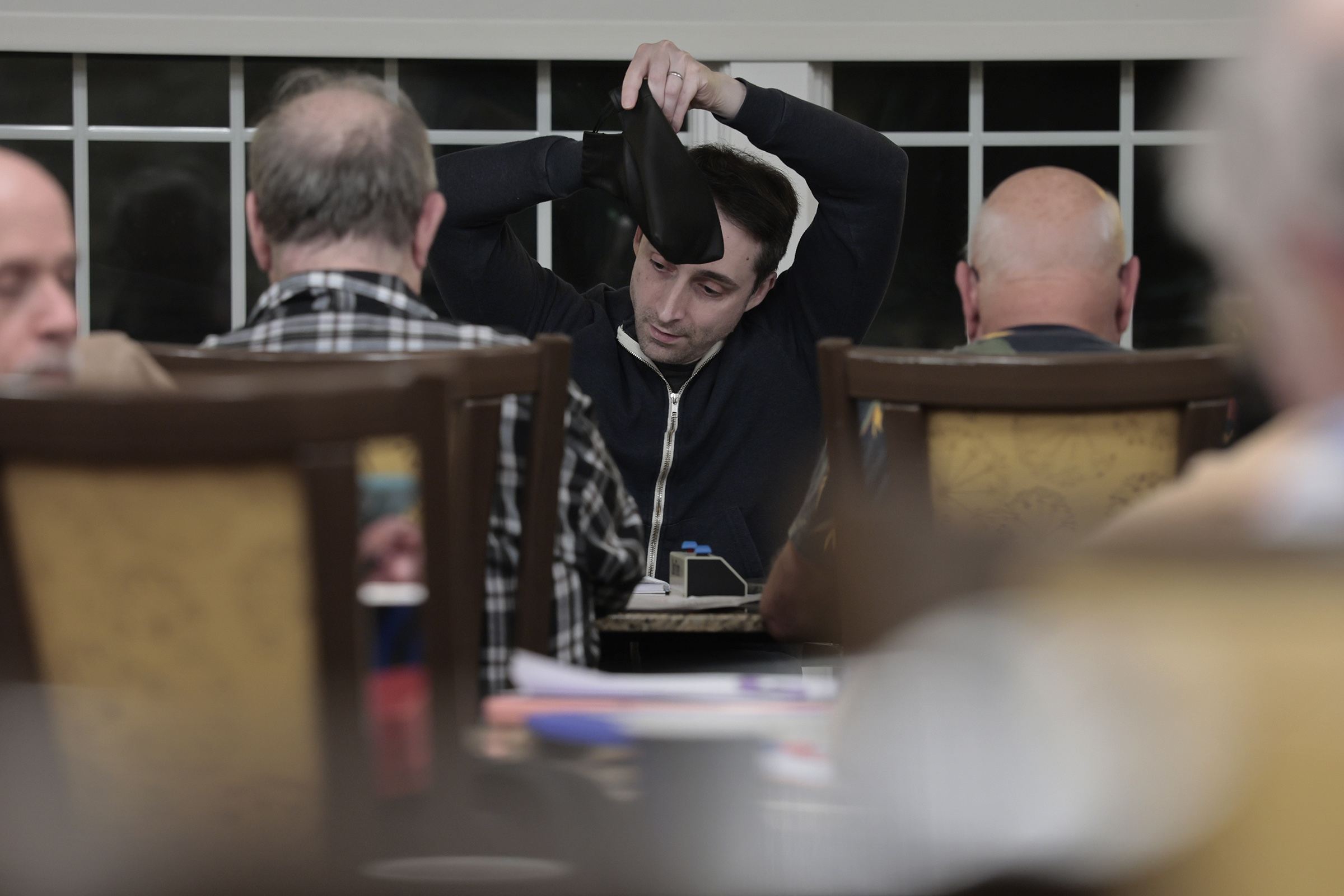
    Will Anderson, a 41-year-old national Scrabble champion, reached into the black drawstring bag suspended above his head and plucked a plastic tile. “We do this as a courtesy to our opponents,” he said, glancing at the bag. “So you aren’t doing any shenanigans when you’re drawing.”

    Will Anderson picks his tiles from the bag while playing Scrabble during a Scrabble group meetup at Riddle Village in Media on Thursday, Feb. 12, 2026.

    Unlike Abadi, Anderson did not grow up playing Scrabble. He started as an adult, partly to break a World of Warcraft addiction. That was in 2009.

    Since then, he’s won multiple tournaments and become an online Scrabble celebrity of sorts. After building an audience on Twitch, he turned to YouTube, where he currently has 70,000 subscribers and regularly posts “Scrabble History” videos detailing legendary games and players.

    “It’s more growth than I ever could have imagined,” Anderson said. His online following even led to his day job as a content producer at Scopely, the mobile gaming company behind the Scrabble app.

    In Riddle Village, Anderson was playing two games at once because the group had an odd number of players. “We call it good Will and evil Will,” said Samuel Moch, a top-10 player in Pennsylvania, also a club member. “And that’s appropriate because I’m playing good Will and I’m beating him.”

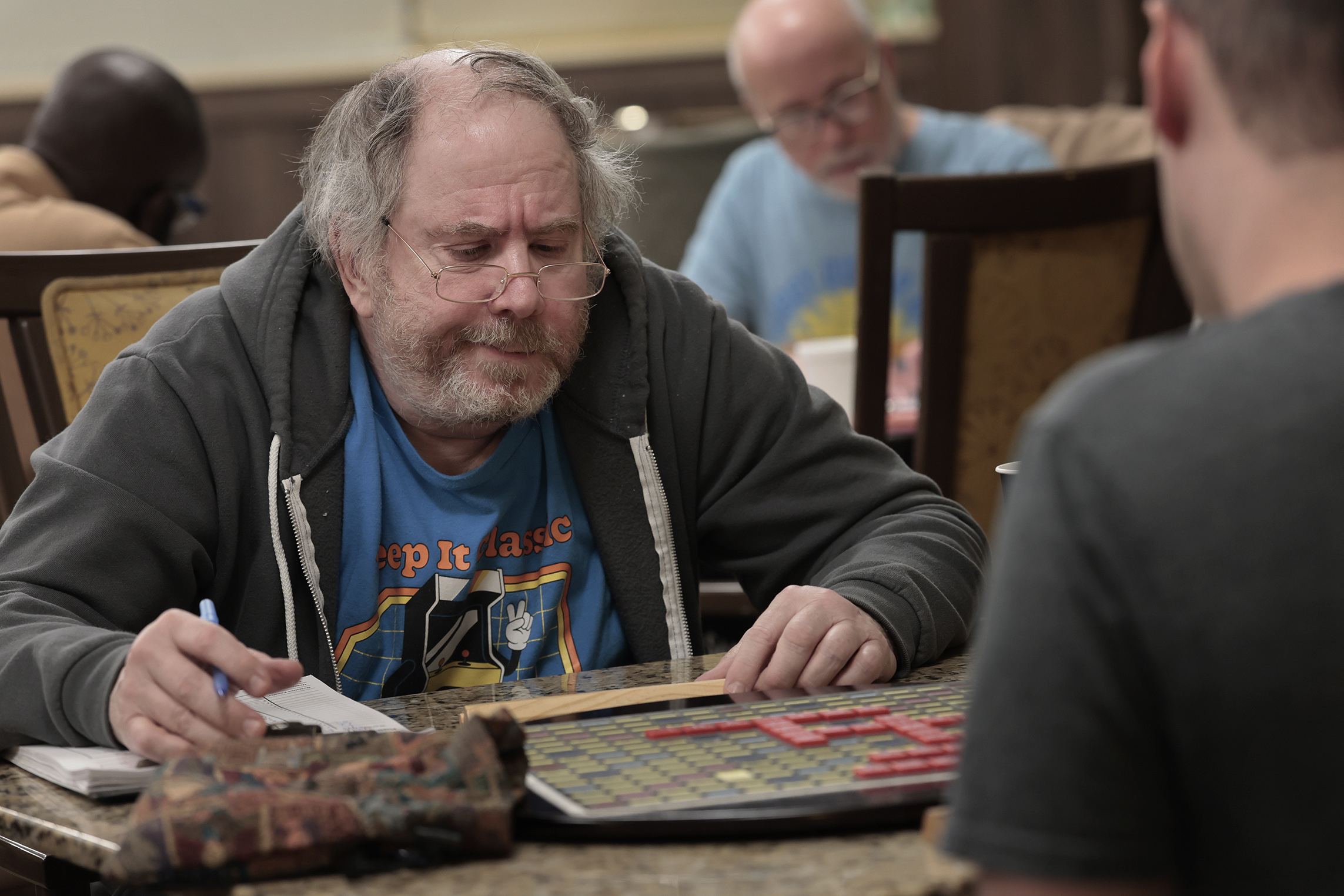
    Meanwhile, “Evil Will” was facing Jeff Jacobson, a retired tuxedo salesman and another top player in the state, and winning.

    Jeff Jacobson of Philadelphia (left) ponders his next move while playing Scrabble with Samuel Moch of Philadelphia (right) during a Scrabble group meetup at Riddle Village in Media on Thursday, Feb. 12, 2026.

    Anderson, who lives in Aston, said part of the reason Philadelphia is home to so many strong Scrabble players may simply be its size.

    “You have a higher chance of these unusual hobbies in urban areas,” he said. Or perhaps, he added, the city’s competitive sports culture spills over into word games. “There could be something to that.”

    The competitive scene also benefits from the fact that Scrabble is a universally known game. Almost everyone learns it at home, as did several members of the Delco Scrabble Club.

    They grew up playing with friends and relatives, got so good that nobody around them could beat them, and began looking for tougher opponents.

    “If you’re that person in your family,” Anderson said, “we’re waiting for you with open arms.”

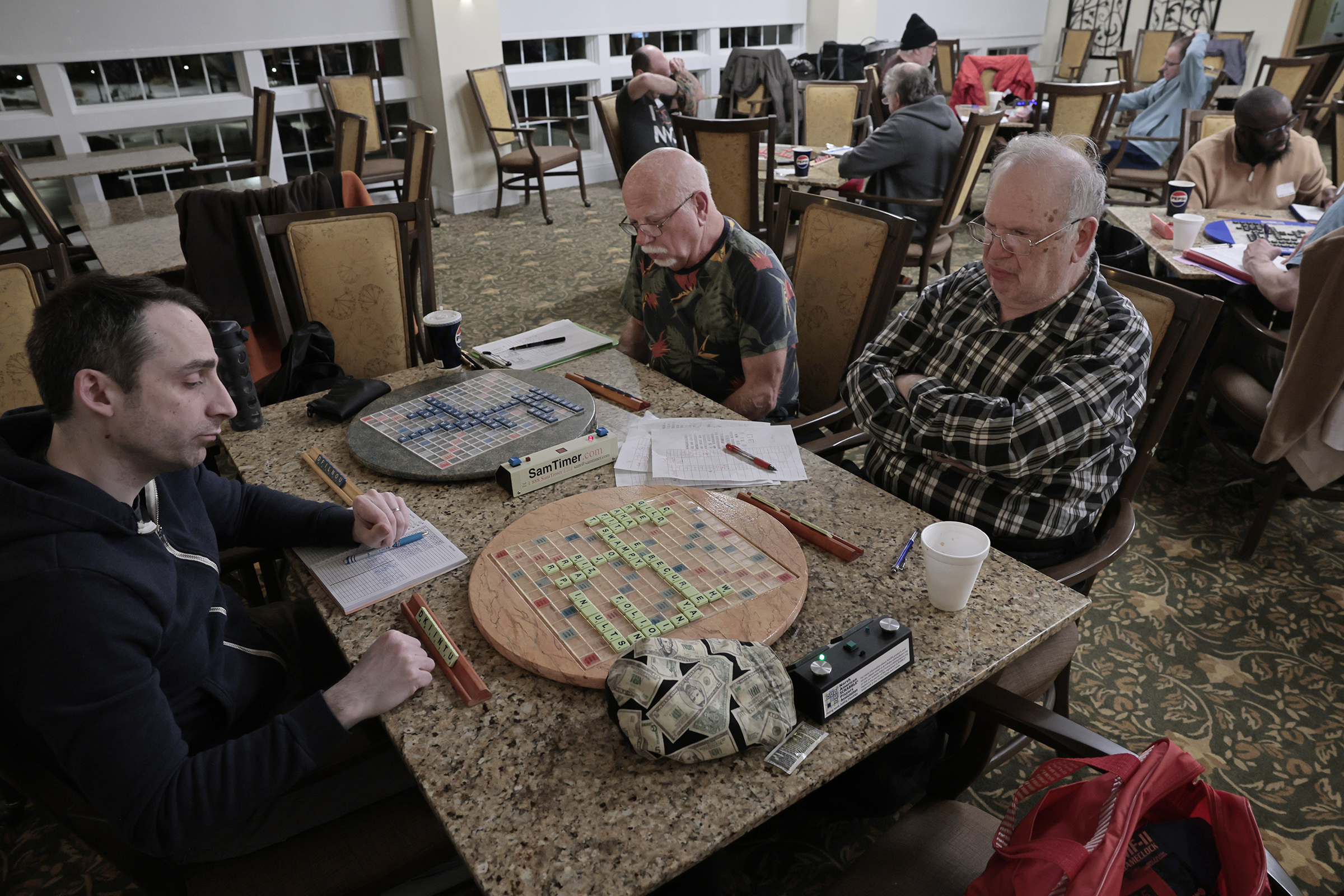
    Will Anderson (left) plays Joe Petree (middle) and Marty Fialkow (right) during a Scrabble group meetup at Riddle Village in Media on Thursday, Feb. 12, 2026.

    At the Delco Scrabble Club, it quickly becomes clear that Scrabble has more in common with chess than it does with word games.

    “As a tournament player, you realize how deep and how beautiful the strategy of Scrabble is,” Anderson explained. “And in your pursuit of playing better and better, you leave the word game part of it behind and embrace it as a strategy game.”

    Often, players don’t even know the definitions of the words they play.

    Evan Chester, the fifth-best player in Pennsylvania and one of the top 50 players in the country, doesn’t know the definition of unaus, the word he had put down in the Riddle Village game. He knows it because he memorized the dictionary.

    “But it’s a very useful and playable word,” said the 22-year-old.

    “It’s a two-toed sloth,” said fellow club member Brendan McClanahan. Other club members, like de facto leader Ed Roth, who has been hosting the club at his house regularly for six years, nodded in agreement.

    “Yup, two-toed sloth,” he said, as he laid down the word decrial.

    A completed Scrabble game board during a Scrabble group meetup at Riddle Village in Media on Thursday, Feb. 12, 2026.

    Delco to TV

    The Delco Scrabble Club is drawing the attention of national TV audiences. Abadi and Anderson are competing on CW’s Scrabble game show, hosted by comedian and former late-night show host Craig Ferguson.

    Last summer, Abadi submitted an application to audition for the game show. And after meeting with the casting director, he was invited to compete in London for the show’s $10,000 prize.

    Abadi scored a win last week and will advance to future episodes of the show.

    “I put my fist up and clapped and everything,” he said. “I was way more peppy than I am in real life, to be honest.”

    Anderson, who applied to audition after a show producer reached out to him on YouTube, won’t appear until the tail-end of the season in August. He was equally enthusiastic during his run.

    “I kicked up the hooting and hollering far beyond my norm,” he said. And while he was nervous in the lead-up to the game, “when it came to actually playing Scrabble,” he said, “the muscle memory kicked in, and it just became fun again.”

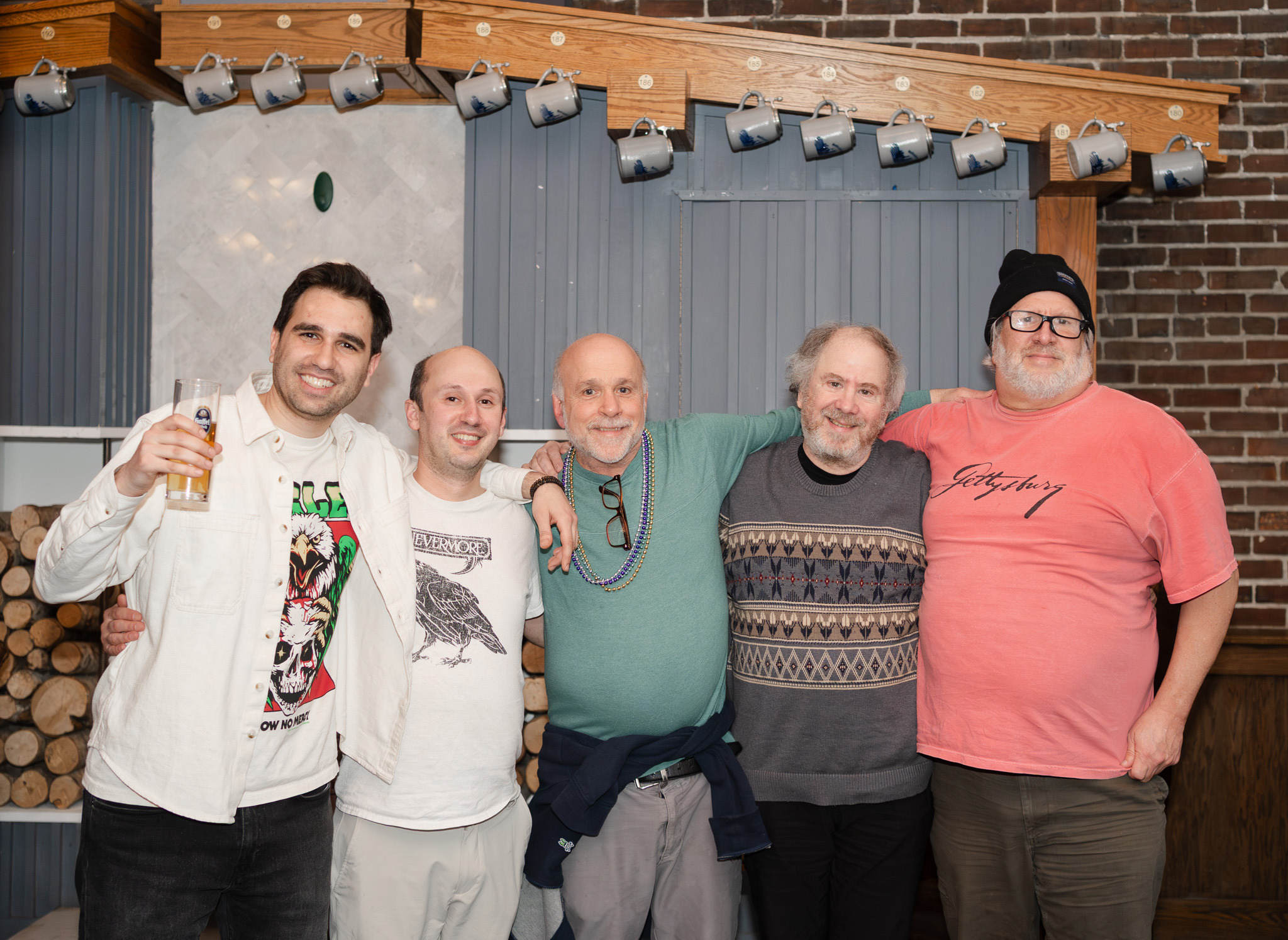
    A group of Mark Abadi’s friends, family, and Scrabble club members celebrate his win on the CW game show, “Scrabble.”

    Anderson and Abadi signed NDAs preventing them from discussing their performance, but both said winning wasn’t their main goal. Abadi wanted to “have fun” and represent the Philly and Scrabble communities well, which he thinks he did. Anderson just hopes his appearance on the show is entertaining for viewers.

    Through the show, Abadi is hopeful more people are drawn to the iconic board game. It’s not just a “vocabulary contest,” or a “game made for grandparents,” he said, adding there’s “something for everyone to appreciate about it.”

  • I overpaid the neighborhood kids to shovel my snow. I highly recommend it.

    I overpaid the neighborhood kids to shovel my snow. I highly recommend it.

    When my neighbor told me during last month’s snowstorm that I had to shovel the sidewalk around my house, I thought she was joking. It’s my first winter in the city. It didn’t snow much where I grew up, so the whole idea of shoveling snow was foreign to me. Call me naive, but I assumed the city would do it. Or my landlord. But no. Evidently, it was my responsibility. I guess that’s why there was a shovel in the shed. I remember seeing it when I moved in and wondering when, if ever, I had shoveled before.

    Well, I was about to make up for lost time. My house sits on a corner lot, which means I pay for the great light it got with extra sidewalk that now had to be shoveled. I tried to convince myself and my partner, whom I forced to help me, that it would be a fun family adventure. A little bit of exercise in the fresh air. Honestly, how long could it take? 15 minutes, max, I thought to myself as I strapped my 4-month-old baby, who is basically an 18-pound kettlebell, to my chest and got to work.

    Within minutes, my baby was asleep, the steady digging and chucking motion of shoveling lulling him even as it shredded back muscles I never knew I had. At least one of us was at peace. An hour into the job, with the end still nowhere in sight, my 11-year-old neighbor waddled over and asked if she could do my stairs for me. Was she acting out of goodwill, or had she heard me hacking up a lung through her double-pane bedroom window? I wasn’t sure. I didn’t care. “You sure can,” I said.

    She knocked on my door to let me know she was done. She didn’t ask for any money, but I gave her $10 anyway. I probably would’ve given her $100 if she’d asked. That’s how desperate I was not to have to shovel anymore. This is what economists call demand.

    And it was clear this past Monday, when it snowed again, that word had gotten out about me, because not one, not two, but three kids offered to shovel for me. Except this time, they wanted to be paid. And they already had a price in mind: $30 to do the remainder of my sidewalk.

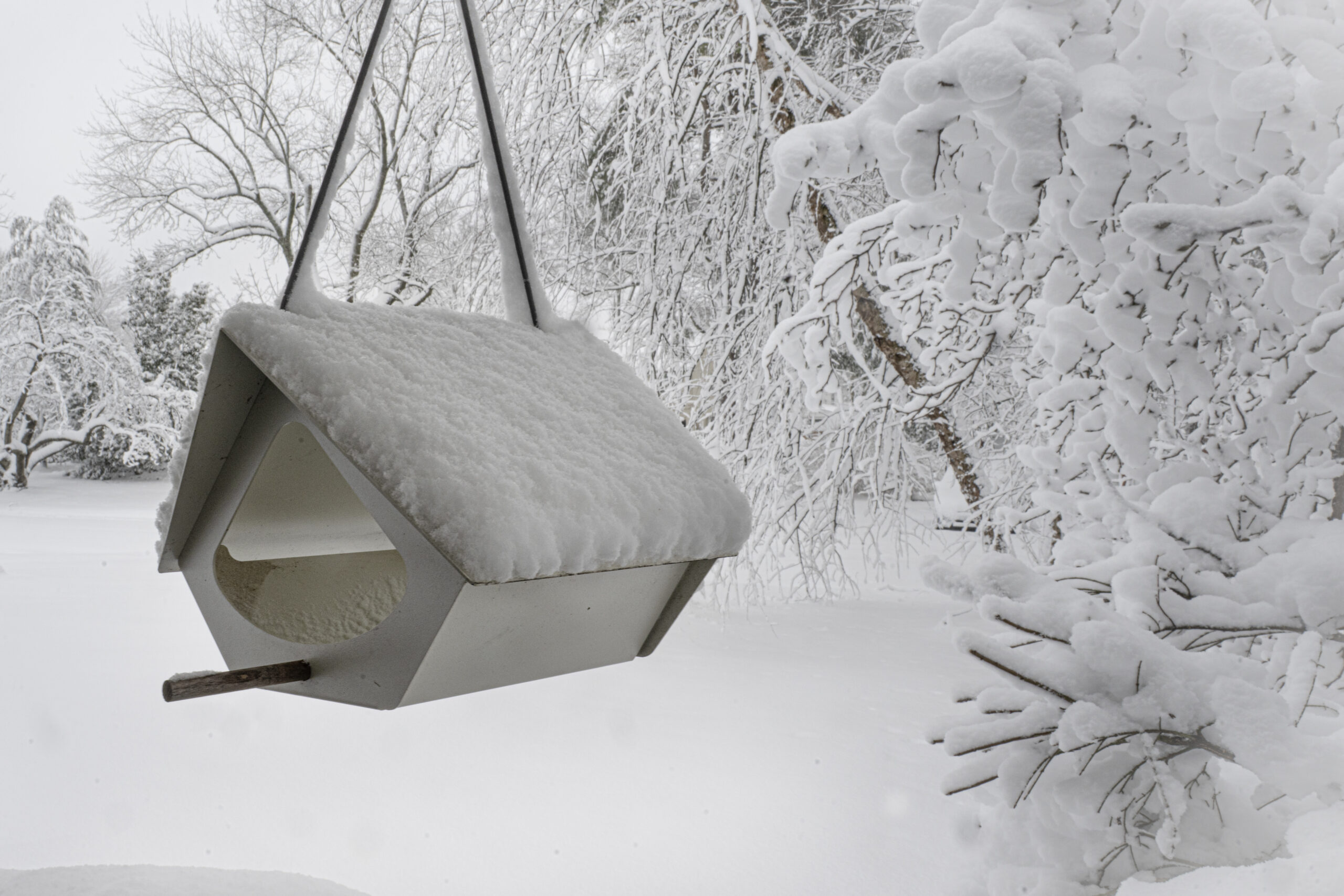
    Snow caps the roof of a birdhouse outside a home in Wallingford, Monday, Feb. 23, 2026, a day after a blizzard swept through the Philadelphia region.

    But I had already spent two hours doing the majority of it. Between the three of them, it would probably take about six minutes to do the rest. That’s an hourly rate of $300. Were they shoveling my sidewalk or representing my company in court?

    Obviously, that was an absurd amount of money for a small amount of work. I should’ve refused to pay, if only to teach these kids a lesson about hard work and economic fairness. On the other hand, I was sleepy. I’m a new parent. I didn’t want to shovel anymore.

    So, yes, I paid them $30, and I would do it again. Was it highway robbery? Definitely. But the richest I ever felt in my life was the moment I tossed that stupid shovel back into the shed and locked the door.

  • Towed by the PPA, frustrated with SEPTA, he took an electric scooter onto Lincoln Drive

    Towed by the PPA, frustrated with SEPTA, he took an electric scooter onto Lincoln Drive

    Saladine Sherrod was in a jam. The 34-year-old handyman from North Philly needed to get to a job in Roxborough, but he didn’t have a car. He says the PPA had towed it the night before. “I was on top of the snow,” Sherrod said. “There weren’t any lines of demarcation.”

    And speaking of the winter storm, it was still wreaking havoc on SEPTA. “It was detour after detour after detour,” Sherrod said about the bus routes that day. It had been two weeks since it snowed, but cold weather had kept the city encased in snow and ice, and a brutal wind chill had plunged temperatures to historic lows. Sherrod said bus operators were unavailable as a result. “Employees were calling off because of the weather or some craziness like that.”

    He would have to take three buses to get to his job and three more to get home. That would cost almost $18. He only had $40 to get through the rest of the week, and several more jobs lined up. Plus, “with the way the weather was,” he said, “I’d be sitting outside for hours.”

    So Sherrod came up with a different plan. He found a shop that would finance an electric scooter for $40 down and set off toward Roxborough, following the “via bike” route on Google Maps. Having moved to Philadelphia from the Bronx in 2022, Sherrod still wasn’t all that familiar with the city. He knew his part of town, near Broad and Logan, but Germantown was a mystery. Still, he zipped along its side streets on his newly purchased Yaddea Elite Prime without much concern for his safety.

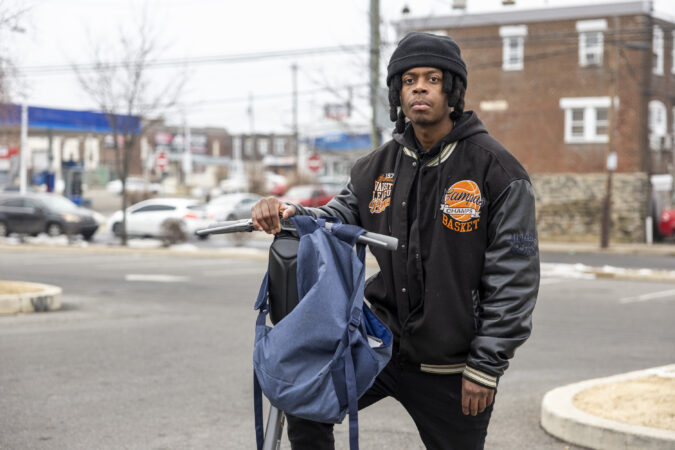
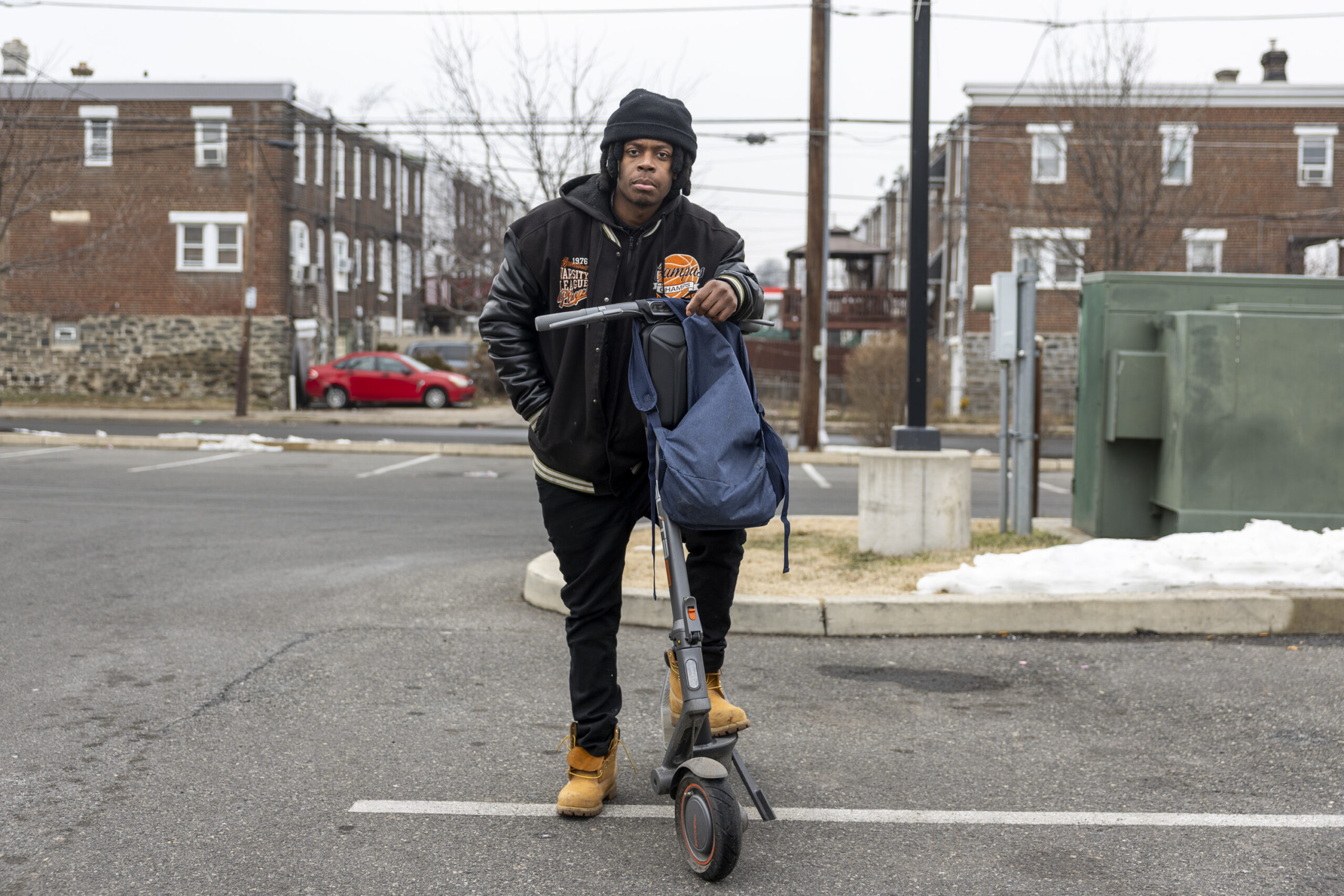
    Saladine Sherrod, 34, of North Philadelphia, Pa., poses for a photo with his electric scooter in Philadelphia, Pa., on Wednesday, Feb. 18, 2026.

    It wasn’t until Google Maps ushered him out of the neighborhood and pointed him toward a busy intersection in a dense, wooded area that his anxiety spiked. He could see he was meant to reach a bike path dotting the four-lane road he was about to turn onto, but it was closed because of the snow. He had no choice but to take the “via car” route. As he turned, the road narrowed. Vehicles flew past him. Unbeknown to Sherrod, he was now on one of Philadelphia’s most dangerous streets: Lincoln Drive.

    Car accidents occur almost every day on Lincoln Drive, a treacherous, shoulderless state road that winds along the perimeter of Wissahickon Valley Park. Drivers regularly take its hairpin curves at nearly twice the posted speed limit of 25 mph. Since 2019, five people have died driving on it. Fed-up residents who live nearby have long pushed for additional safety measures. In September 2023, the city’s Streets Department added speed tables along one of the most dangerous stretches to force drivers to slow down.

    But that mid-February afternoon, they still appeared to be speeding to Sherrod. “It looked like a NASCAR rally,” he said. Sherrod had never driven on Lincoln Drive, but he immediately sensed he was in a precarious situation. He maneuvered as far to the right as he could and focused on the snaking road ahead. He tried to ignore how cold he was. “My hands were numb,” he said. “My legs were dead. If I moved them, it felt like a bunch of needles were poking me.”

    He wasn’t wearing a helmet. He was scared, he said, but he had a job to get to. “It was one of those scares that, because you have the responsibility, it’s almost OK,” Sherrod said. “Like, ‘I heard that there are alligators in this lake, but I’ve got to get to the other side.’”

    What Sherrod saw as commitment, though, others saw as recklessness. He remembers one driver shouting at him “out of concern.” Sherrod let them know he was OK with a nod, and they drove off. But unbeknown to Sherrod, the driver had filmed him and uploaded the video to Instagram. “WHO MANS IS THIS??? Only in Philly electric scooter seen driving on Lincoln Drive,” the caption read.

    The clip was already pinballing across local feeds when Sherrod finally escaped Lincoln Drive via Henry Avenue and arrived at work. A few hours later, he finished building furniture for his customer, and they paid for an Uber so he would not have to ride the scooter home in the freezing cold. By then, the video had spread across Philly.

    Still, it would take a few days to reach Sherrod. He only saw it when a friend reached out to show it to him, wanting to know what happened to his car. Sherrod was stunned. But the commenters seemed to understand his circumstances. “That’s probably his only transportation to work,” read a typical comment. “He not tryna get fired cuz SEPTA on bulls—,” read another.

    Sherrod seized the moment and reposted the clip. In follow-up videos, he criticized the PPA and SEPTA and hawked T-shirts he made to commemorate his ride.

    He’s only made $50 so far, but it’s not his only income stream. In addition to his handyman work, he recently picked up a part-time job as a cashier at the Dollar Store. He hopes to be back behind the wheel soon. For now, he is still riding the scooter to work. “It’s all working itself out,” Sherrod said. “Slowly, but surely.”

  • In a Facebook Marketplace and Depop world, Philly Craigslist still endures

    In a Facebook Marketplace and Depop world, Philly Craigslist still endures

    Every morning, Julie Parlade, a 34-year-old stylist, wakes up and does what most millennials do. She reaches for her phone and checks her apps. Instagram, Gmail, maybe the news. Then she checks one more: Craigslist.

    Yes, that Craigslist. The classified advertisement website that was popular in the early aughts and 2010s. She checks it later in the day, too, pretty much whenever she has downtime. “It’s so automatic for me,” said Parlade, who lives in Springfield, Delaware County. “I have an obsession.”

    Parlade mostly sticks to the free section, where she has scored everything from a pair of Frye boots in perfect condition to an entire set of Le Creuset cookware. Half of her house is furnished from the Craigslist free section: the claw-foot tub in the bathroom, the subway tile in the kitchen, the mid-century modern furniture in the living room.

    She started using Craigslist around 2010, first for jobs and apartments, and never really stopped. Today, it’s still her go-to source for secondhand items, despite the rise of other online marketplaces like Depop and Facebook Marketplace.

    “Everyone uses Craigslist,” Parlade said, “so I feel like I’m able to get better things. It’s a much broader net.”

    Does everyone still use Craigslist? Maybe not everyone, but more people than you might think. Despite its reputation as a digital relic, Craigslist draws more than 105 million monthly users, making it the 38th most popular website in the United States, according to internet data analytics company SimilarWeb.

    And in Philadelphia, the site remains a daily resource for people seeking work, housing, materials, and other necessities.

    University of Pennsylvania professor Jessa Lingel, 42, who interviewed hundreds of Craigslist users in Philadelphia for her book An Internet for the People: The Politics and Promise of Craigslist, says the platform functions as a kind of parallel infrastructure to more polished platforms, particularly for people with fewer financial resources.

    “Craigslist still has a role to play for a lot of Philadelphians who are just trying to live their everyday lives,” Lingel said.

    Access to affordability

    That role shows up most clearly in the kinds of jobs and housing that still circulate through Craigslist. Lingel, who lives in North Philadelphia, said many of the users she interviewed relied on the site to find warehousing shifts, construction work, and short-term gigs paying around $20 an hour — work that rarely surfaces on platforms like LinkedIn or Indeed because “those other platforms haven’t called those folks in,” she said.

    The same pattern holds for housing. Affordable apartments and private rooms for rent still appear regularly on Craigslist, posted by college students seeking temporary roommates or by landlords unwilling to pay higher listing fees. As one of Lingel’s interviewees put it, the cheap housing is on Craigslist, not Redfin. He called Craigslist the “poor people’s internet,” Lingel said.

    Craigslist does not release detailed user data, so there’s no way to know how many Philadelphians still rely on the site. But, Lingel said, given that Philadelphia is the second-poorest big city in the country, it would not be surprising if the ”poor people’s internet” remained especially relevant here. “Craigslist is gritty,” Lingel said, “and so is Philly.”

    Privacy protection and net nostalgia

    For some Philadelphians, the appeal of Craigslist isn’t affordability so much as how little of themselves it asks for in return. Unlike newer marketplaces that tether buying and selling to social profiles, Craigslist allows users to remain largely invisible — no profile photos, no friend networks, no algorithm stitching transactions back to a personal identity.

    It hearkens back to a simpler time on the internet, and, according to Lingel, holds special appeal for young tech skeptics who “are more ideologically attached to Craigslist.” .

    “The comparison that I think of is children of the ’80s going to ’50s-themed diners and getting really into Lindy Hop. It’s like, ‘Oh, this is a vision of the internet that I want to have experienced but have not.’”

    That simplicity is precisely what draws people like Raquel Glassman, a cofounder of a local kombucha company from Port Richmond, who mostly uses Craigslist to give things away. When she’s decluttering, she’ll box up items, leave them on the sidewalk with a handwritten “Free” sign, snap a photo, and post it online. “It’s always gone within the day,” she said.

    If Glassman, 31, is going to sell an item, she likes that she can do it anonymously on Craigslist. Facebook Marketplace is more efficient, she says, but it’s not a great place to go if you don’t want your aunt to know that you’re getting rid of the “ugly lamp” she gave you. “She’ll see it on my Facebook because we’re friends,” Glassman said. “You put that on Craigslist if you want to sell that.”

    IRL effects

    But the funny thing about Craigslist is that while it lets you be a stranger online, it forces you to be your full self in real life, and some people prefer that. According to Lingel, hobbyists such as musicians and car enthusiasts are among the most active Craigslist users.

    Indeed, two of the most popular “For Sale” subcategories on Philly Craigslist are auto parts and instruments — both of which benefit from face-to-face transactions. They allow sellers to avoid shipping costs and allow buyers to inspect their purchases.

    As Michael Lesco, a 33-year-old musician and marijuana dispensary manager said, “If I’m going to put $300 into something, I want to meet you in person and put the money in your hand.”

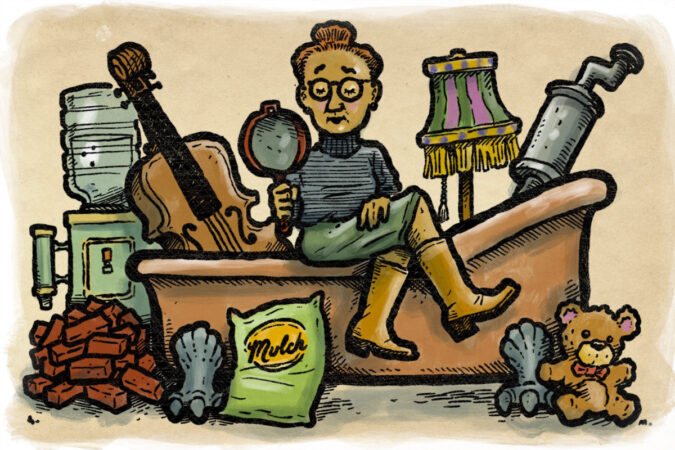
    Like Parlade, Lesco also makes good use of Craigslist’s free section. Last summer, he used it to get mulch and brick for the garden he was building in the abandoned lot next to his house in West Philly. The project could’ve easily cost $5,000. Instead, he and his wife did it for less than the cost of their West Philly Tool Library membership.

    “We could not have done it without Craigslist,” Lesco said.

    Parlade’s most recent Craigslist score was also construction-related: free drywall from a contractor. “We’re going to use it to fix my dad’s house,” she said. Craigslist, she added, is “almost like a service.”

  • They put $300,000 down to move up in Passyunk Square | How I Bought This House

    They put $300,000 down to move up in Passyunk Square | How I Bought This House

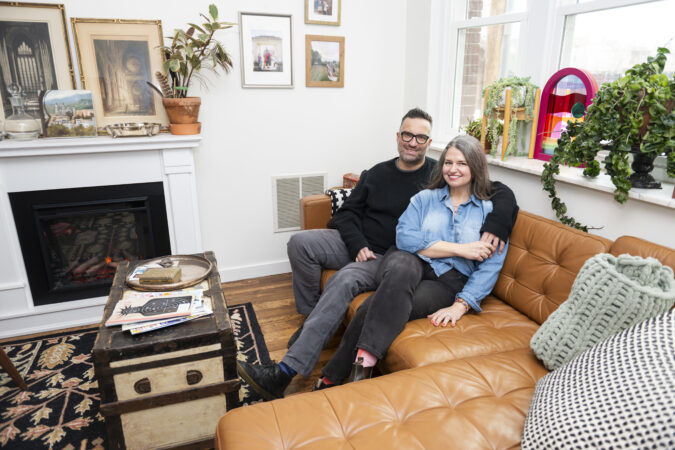
    The buyers: Catherine Wargo Roberts, 45, content designer; Karsten Roberts, 46, respiratory therapist

    The house: A 1,700-square-foot townhouse in Passyunk Square with three bedrooms and two bathrooms built in 1915.

    The price: listed for $725,000; purchased for $725,000.

    The agent: Ashley Miele, Compass

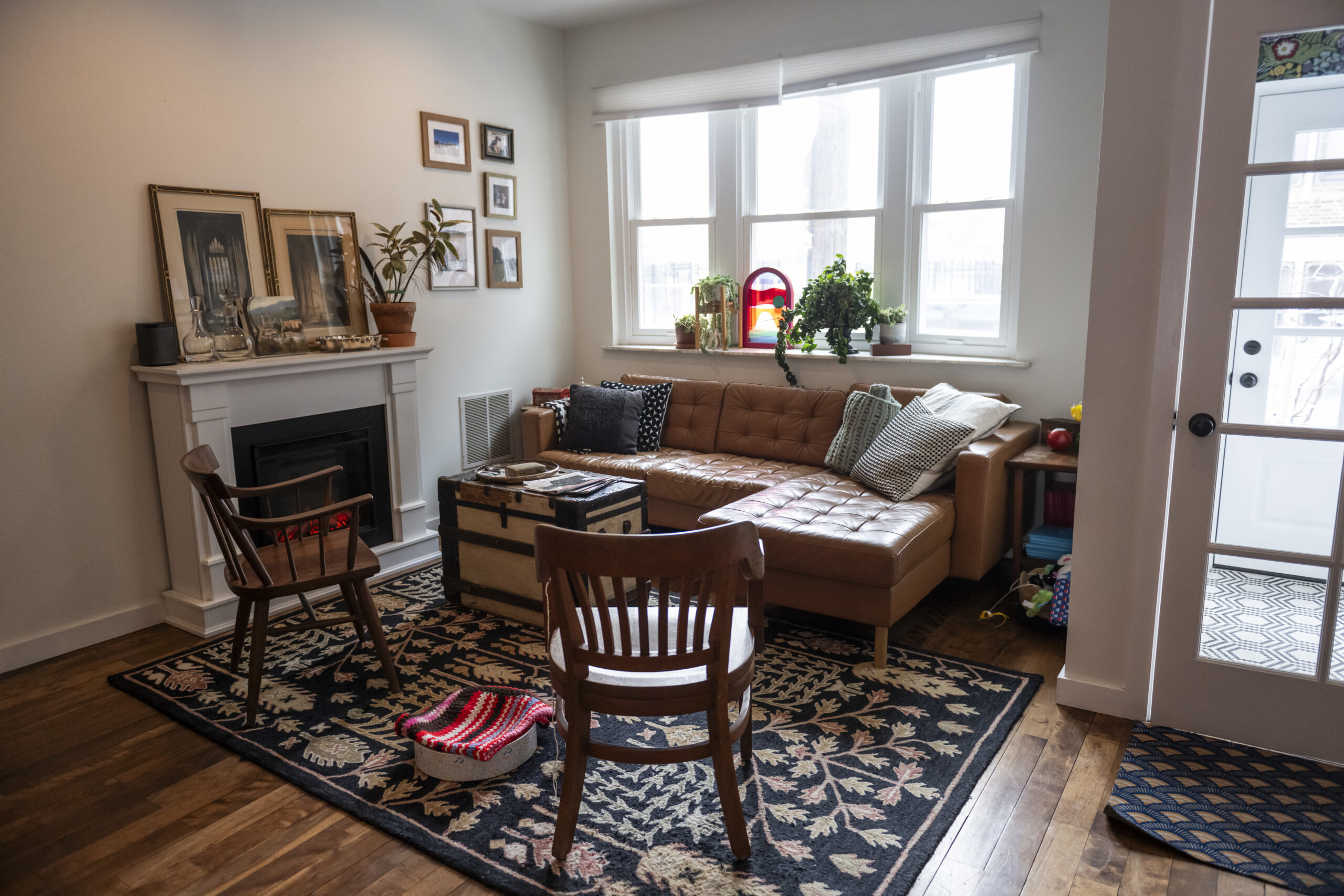
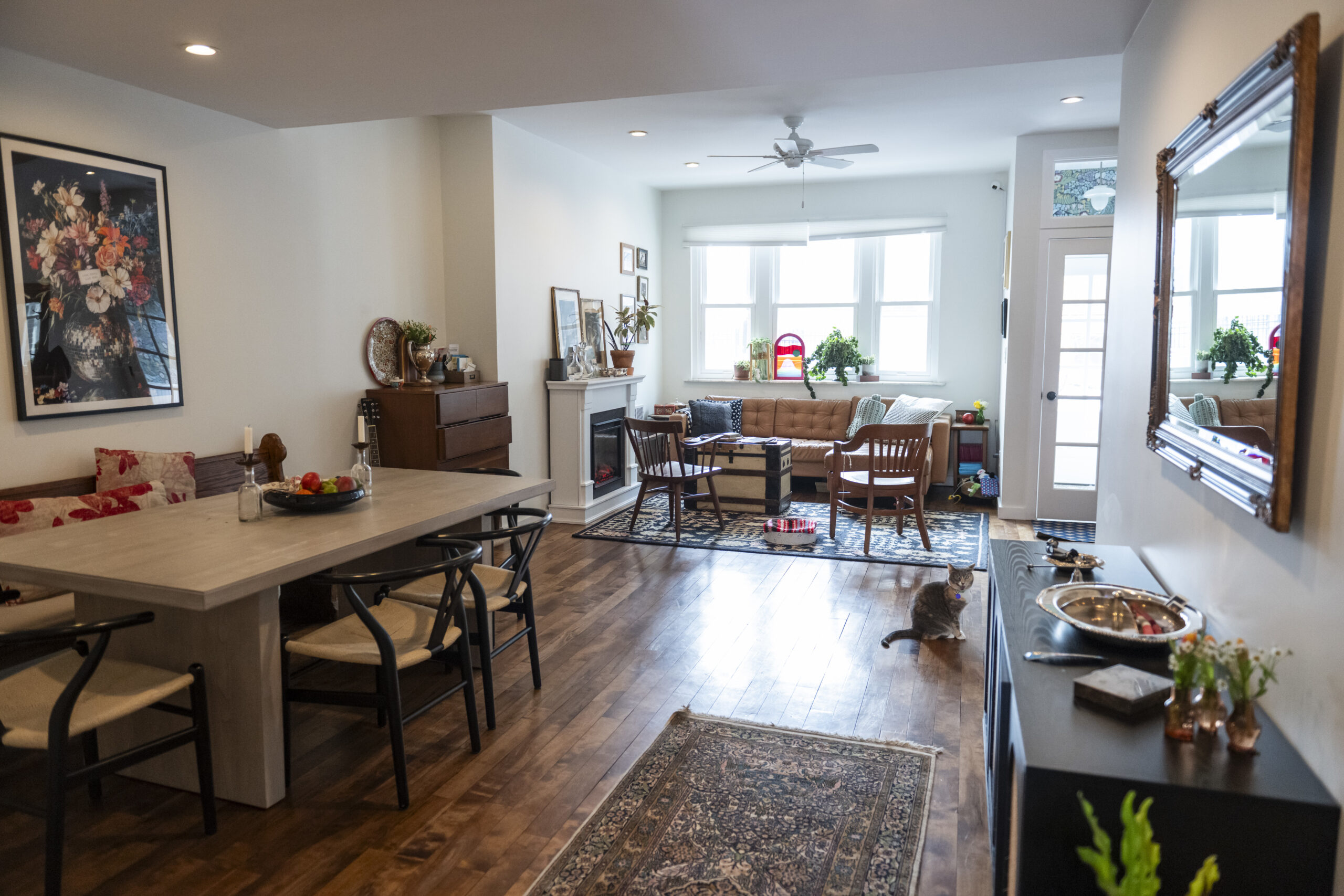
    The living area in the home in South Philadelphia.

    The ask: Catherine Wargo Roberts and her husband, Karsten Roberts, had no desire to leave Passyunk Square. They were already deeply rooted in the neighborhood, with two kids enrolled at the local school and a daily life that revolved around a few familiar streets. But they had grown tired of their mixed commercial and residential block. “We were very happy for new businesses to come into the neighborhood and thrive,” she said. The block had become “just a little bit busier … than we wanted.”

    The search: In fall 2024, the family set off in search of a new house. They wanted more square footage, lots of outdoor space, and an unfinished basement. “Everybody in Philadelphia wants a finished basement, but everybody’s basement floods,” Wargo Roberts said. “I want an unfinished basement so that if it fills with water, I’m not freaking out.” They also needed to stay in their kids’ school catchment.

    The couple only looked at two homes. The second home was listed as a private sale.

    Their list narrowed the search to just two houses. One was north of Washington Avenue, which Wargo Roberts said “felt like a whole different ballgame,” even though it was close to the kids’ school. It also didn’t have any outdoor space.

    The other house they had to wait for. An agent friend had given them a heads-up that it would be on the market in a few months. The couple grabbed the first viewing available on the first day it was open for a private sale.

    The appeal: Inside, Wargo Roberts was immediately drawn to the home’s size and layout. It was 250 square feet larger than their previous home, and most of the extra space was in the first-floor living area, which Wargo Roberts appreciated. “I didn’t care about a big bedroom,” she said. “That’s not something I need.”

    Outside, the house offered outdoor space that felt special: a large backyard, plus a deck that connects to the master suite on the top floor and a second deck above it. “Most people walk in our backyard and are like ‘holy s—,” Wargo Roberts said.

    Wargo Roberts’ favorite thing about their new house? The giant backyard.

    The deal: The house was listed for $725,000. The couple submitted a full-price offer the same day they saw it. It was within their budget, and “the comps supported it,” Wargo Roberts said. The next night, they learned their offer had been accepted.

    The inspection revealed a failing sewer line and a bowing brick facade. The sellers agreed to a $7,000 credit for the sewer repair but declined to cover the estimated $8,000 cost of stabilizing the front wall. “They played hardball,” Wargo Roberts said. “They knew we wanted the house.

    The kitchen in Catherine Wargo Roberts and Karsten Roberts home in South Philadelphia.

    The money: The couple’s path to a $725,000 home began more than a decade ago in San Francisco. In 2012, they bought a condo for $562,000 with help from Wargo Roberts’ parents. “We never would have been able to do that without help,” she said. They sold the condo in 2017 and walked away with $330,000. They used $235,000 for a down payment on their first Philadelphia home, which cost $470,000.

    To purchase their current house, they used an interest-free bridge loan to cover the down payment while they waited for their old house to sell. “It kept me up at night every single night for 30 days,” Wargo Roberts said. “Because if the house you’re selling doesn’t sell in a certain amount of time, the interest ramps up.” Nine days after it went on the market, their house sold for $612,000, netting them $360,000. They put $300,000 toward the down payment on the new house — roughly 41% of the purchase price. Their monthly mortgage payment is $3,600. “That’s only possible because we had a giant down payment,” Wargo Roberts said.

    Marzipan the cat sits in the master bedroom in the home of Catherine Wargo Roberts and Karsten Roberts.

    The move: The family closed on their new house in April, but the sellers continued to live there for free until June, when they moved to Florida. Becoming a landlord for six weeks wasn’t worth the hassle, Wargo Roberts said. The sellers, she added, “got a sweet deal.”

    She did, however, request a security deposit. “What if they decided to chainsaw the fridge in half?” she said, laughing. “You have to protect yourself to some degree.”

    Because of the delayed closing, the family had time to prepare. They put seasonal items, books, and decor into storage to reduce moving costs and packed everything else themselves. The kitchen was the only thing they outsourced. “It’s a huge pain,” Wargo Roberts said.

    A friend with a pickup truck moved the family’s plants over, and Broad Street Movers took care of the boxes and furniture. “It’s always the skinniest dudes that you’re just like, ‘I can’t understand how you walk, much less carry my couch up three floors,’ but they did it,” Wargo Roberts said.

    The couple installed custom built-ins to cover up a neon wall in the master bedroom.

    Any reservations? “We probably overpaid a little bit,” Wargo Roberts said. “I would’ve loved to get it for $700,000 instead of $725,000.” Still, she is happy with the outcome. “We’re in a house that I feel pretty certain we’ll live in until our kids are out of high school,” she said.

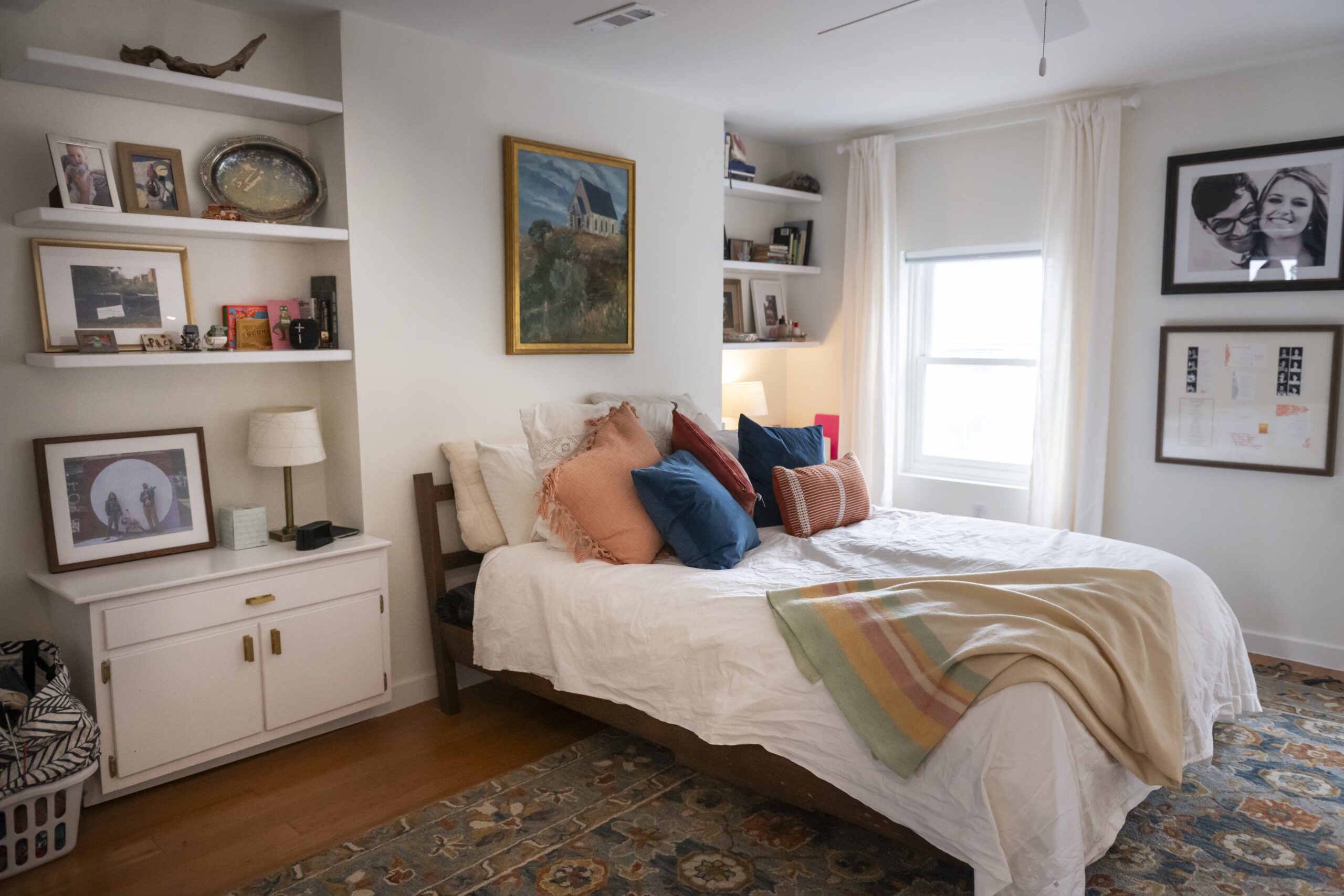
    Life after close: Wargo Roberts wasted no time making changes. She painted multiple rooms and tackled one feature she couldn’t live with: a neon-lit wall in the master bedroom. “I called it the portal to another dimension,” she said. “It was so weird.” They used money they had set aside from the sale of their previous home to install custom built-ins on either side of the bed, covering it completely.

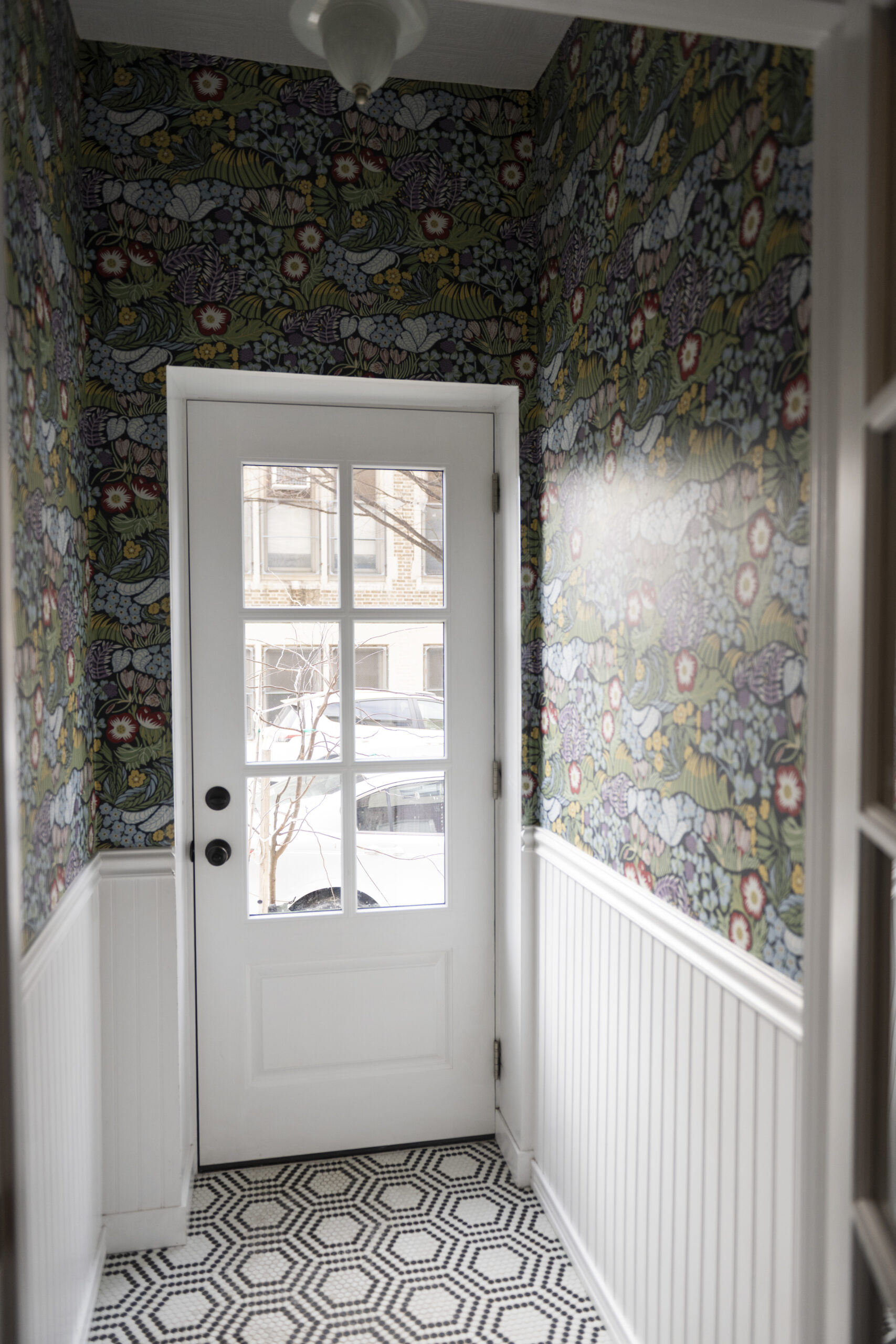
    The traditional South Philly vestibule that the couple rebuilt after moving in.

    They also rebuilt a traditional South Philly vestibule in the front of the home. “It was a vanity project for sure,” Wargo Roberts said, “But I just really wanted one.” She doesn’t regret it. “Best money I ever spent.”

    Did you recently buy a home? We want to hear about it. Email acovington@inquirer.com.
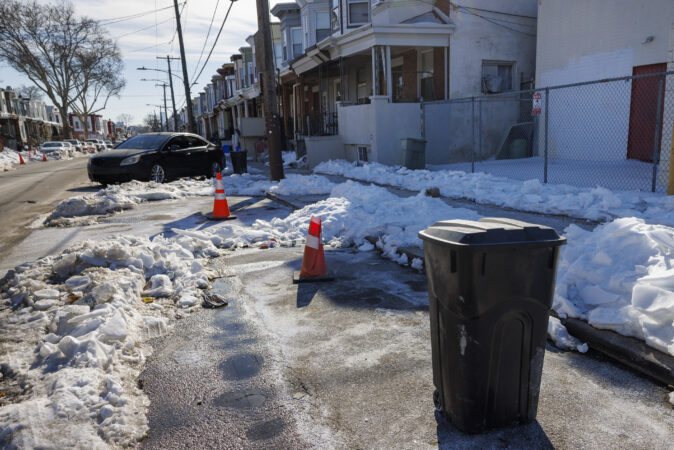
  • Philly residents thought they had a winter parking system. Then the snow stuck around.

    Philly residents thought they had a winter parking system. Then the snow stuck around.

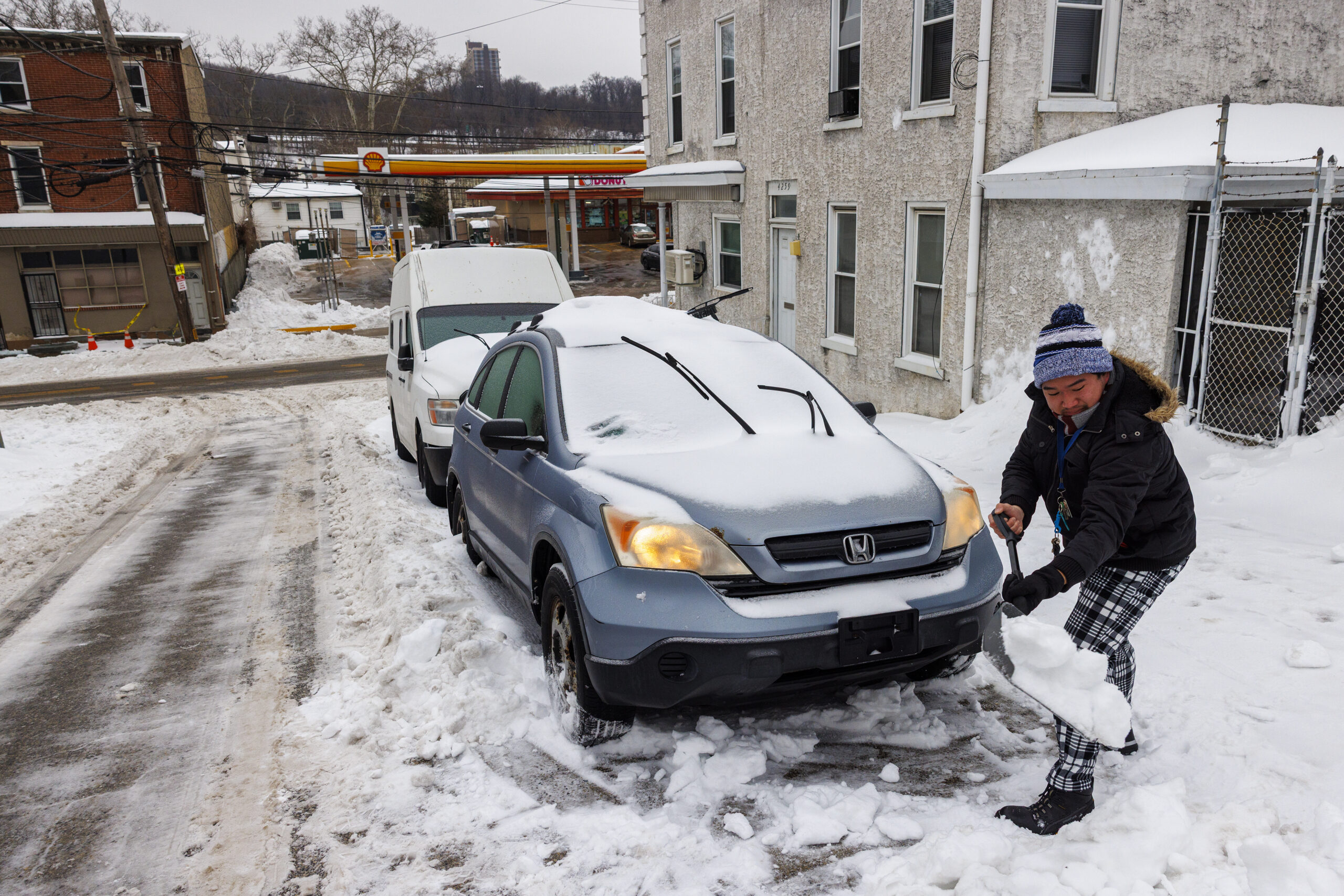
    By the time Taylor Schuler finally freed their car, they were exhausted. It had taken five hours across two days, hacking at the wall of ice encasing their Prius’ bumper, shoveling piles of frozen snow off the tires, to complete the job. As the sun set on their afternoon of labor, they were tempted to put a piece of furniture in their hard-earned spot, a practice sometimes known as “savesies” in Philadelphia.

    But they knew better. Having just moved to Philly from Houston, the 28-year-old academic librarian wasn’t all that familiar with cold-weather etiquette, so they took to the internet ahead of January’s snowstorm to figure out what exactly Philly’s rules are. They gathered that people weren’t all that fond of the “savesies” practice, so, tempted as they were to hold onto their spot, they let it go.

    Once the spot was cleared, they circled the block, a quick trip to make sure their car was still working. Their internet research had also led them to believe no one would just take their spot immediately. As they rounded the corner toward their house, though, they saw another driver lurch into the spot they just spent hours digging out.

    “Oh jeez,” Schuler thought to themselves. “It’s like the Wild West out here.”

    In some snow-burdened cities, saving a shoveled-out parking spot is a deeply ingrained winter habit. Boston even formally acknowledges the practice by allowing residents to mark a spot they dug out for up to 48 hours after a storm. In Chicago, protecting your precious dug-out parking space with a lawn chair is called “dibs,” and it’s been a beloved and widely accepted tradition since the great blizzard of 1967.

    But Philadelphia exists in a murkier middle ground. Until about two weeks ago, it snowed infrequently enough and melted fast enough that any theory about our collective approach to storm parking was never really put to the test. But the lingering snow has revealed a kind of civic chaos, with neighbors operating under wildly different assumptions and fights breaking out over who is entitled to snow-cleared parking spots.

    The divide is often generational. Older residents, who experienced harsher winters, are more likely to embrace savesies as another classic Philly tradition while younger residents and transplants see it as territorial nonsense, out of step with the values of densely populated city life.

    Schuler finds the entire debate exhausting. “I just want to be able to go to work and come home,” they said. “I didn’t ask for any of this.”

    Connor Phan digs his car out after the recent snowstorm.

    Jeff Martin, 43, who lives in South Philly, describes himself as firmly “no savesies” but with caveats. He won’t put out a chair. He won’t defend one. But he also won’t move someone else’s. “I don’t believe in the chair,” Martin said. “But I’m going to obey the chair.” His reasons are entirely practical. “I don’t want to get keyed,” he said.

    Martin argues Philadelphia’s parking wars are a symptom of the changing climate. “The fact that over the last 20 years, we haven’t gotten as much snow as we did over the previous 20 years has made us forget how to deal with it,” he said, “and the city forget how to deal with it to the point where they don’t properly fund the removal of snow.”

    For the record, the city is firmly in the “#nosavesies” camp, and the police routinely remind Philadelphians that saving parking spots is illegal. Of course, that doesn’t stop people from doing it — and other people complaining about it.

    Lucas Tran didn’t see the cinderblock in the spot he parked in on Tuesday night. It wasn’t until another driver pulled up and told him that he was in her spot that he became aware of it. She said she had dug out the spot herself, saved it with the cinderblock, and that Tran had to move.

    At first, he refused. But he backed down after she called him a liar and a “little b—.” He didn’t want things to escalate. The next day, she left a handwritten apology on his car. “Thank you for moving your car,” it read. “You are NOT a little b—.”

    Tran takes a “special exception” approach to the savesies debate. If the woman had been elderly or a first responder, or if it had been two or three days after the storm rather than a full week later, he might have been more understanding. “But the roads are drivable now, he said. “There are more options to park. You can’t keep claiming a spot that’s public property.”

    Back in West Philly, Schuler spent the week parking wherever they could. The spot they dug out remained occupied until one evening, when they pulled up, excited to reclaim what was once theirs — only to find a folding table balanced on two overturned pots in their way. Someone had “savesied” Schuler’s spot.

    Schuler snapped a photo and uploaded it to Reddit, where the response was nearly unanimous. As one Redditor put it, “that’s diabolical.”

    It was the one version of “savesies” Schuler had never seen defended. “If there’s anything people agree on,” they said, “it’s that you don’t do that.”

  • It only took one day to buy their West Philly dream home | How I Bought This House

    It only took one day to buy their West Philly dream home | How I Bought This House

    The buyers: Malcolm Critcher, 32, creative director; Rhiannon Critcher, 32, communications analyst

    The house: A 1,590-square-foot rowhouse in West Philly with three bedrooms and two bathrooms, built in 1925.

    The price: listed for $425,000; purchased for $410,000

    The agent: Benjamin Camp, Elfant Wissahickon

    Rhiannon and Malcolm Critcher bought their West Philly home after a very short search. They saw only two other homes.

    The ask: After a few years in Tucson, Ariz., Malcolm and Rhiannon Critcher knew they wanted to return to the East Coast. They tested a few cities first. Washington felt “a little too nerdy,” Malcolm Critcher said. New York swung too far in the other direction: “a little too main character.” Philadelphia felt just right. “It was a Goldilocks situation,” Critcher said. “We both came here and instantly fell in love.”

    They moved in 2023 and rented in Center City for a year to get their bearings and explore neighborhoods. They fell in love with South and West Philly, but the latter’s parks and tree-lined streets ultimately won them over. They wanted to start a family soon, and West Philly‘s “green, verdant life,” Critcher said, “just felt like a really cool place to be a kid.”

    Their must-have list was short but specific: a kitchen meant for hosting, an open-concept floor plan, and a basement big enough for Critcher, who is 6-foot-4, to stand in.

    The search: One morning in November 2024, after getting breakfast in West Philly, they decided to walk to nearby open houses. They saw three houses. The third was a recently renovated semi-detached twin with light pouring in from multiple sides.

    One of three bedrooms in Malcolm and Rhiannon Critcher’s home.

    They both wanted to buy it right away, but worried they were being impulsive, so they decided to test the walk to the train. The couple doesn’t have a car and relies heavily on public transportation. It took less than five minutes. On the ride home, they realized they weren’t interested in delaying for the sake of process. “If you find the perfect thing early on, it’s still the perfect thing,” Critcher said.

    Having previously bought and sold three houses, Critcher had the confidence to move quickly. “I know what I’m looking for and what I want,” he said. They called their agent and made an offer that afternoon.

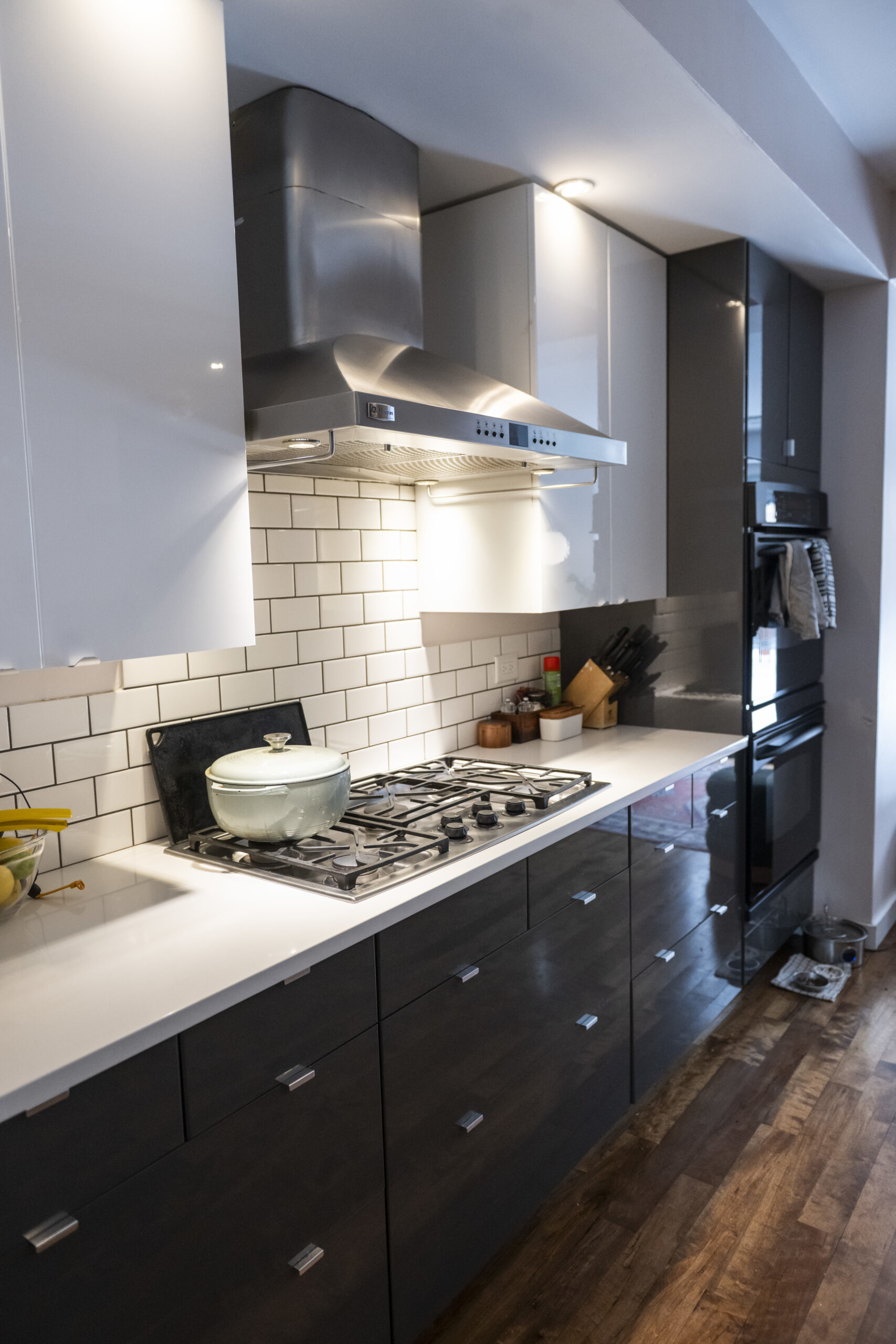
    The appeal: The layout was the first draw. The open first floor flowed naturally from the living room to the kitchen, making it feel larger than its footprint. Then there was the renovation. Unlike the gray-floored, hastily flipped houses they had seen elsewhere, this one felt considered, as if the sellers had remodeled it for themselves, not for resale. They liked the finishes, the flow, and little design choices like the kitchen backsplash. “My wife walked into the kitchen and was just like, ‘Wow, this is my favorite kitchen I’ve ever been in,’” Critcher said.

    The couple wanted a kitchen that would be great for hosting.

    For him, the basement stole the show. It was finished, spacious, and didn’t require him to duck.

    The deal: The house was listed at $425,000 — the very top of the couple’s budget. It had been on the market for just one day when they saw it. They decided to offer $25,000 below the asking price, but they promised to take it as-is, as long as the inspection didn’t reveal anything concerning. The sellers agreed to the terms but requested $410,000, which the couple agreed to.

    Light pours in from multiple sides of the Cratchers’ semi-detached twin.

    The inspection came back spotless. The appliances had all been replaced in 2018. The sewer line had recently been redone. There were no structural issues. “Literally the most perfect housing inspection possible,” Critcher said.

    The money: All told, Critcher and his wife brought a little over $100,000 to closing. Most came from the sale of their previous home in Tucson. They bought that house in early 2020 for $179,000 and sold it in 2024 for $300,000. The proceeds went straight into a high-yield savings account and remained untouched until the couple was ready to buy again.

    The couple’s dog, Pablo, likes to hang out in the second bedroom.

    The down payment on their new house came in just under 20% — about $82,000 — and closing costs were $26,000.

    For Critcher, the exact breakdown mattered less than the total. He approached the purchase with a fixed pot of money and trusted their lender and agent to structure the details responsibly.

    The couple loved the open floor plan on the first floor.

    The move: The couple closed in mid-December 2024 while they were out of town. A notary in Arizona helped them file the necessary paperwork. The move itself happened in mid-January. Compared to moving across the country a year earlier, moving from Center City to West Philly wasn’t too bad. They hired movers to load a U-Haul from their sixth-floor apartment, then unloaded it themselves at the new house. Packing took about a week. The move took two days. Unpacking stretched on for a month.

    Any reservations? Critcher wouldn’t recommend their approach to first-time homebuyers. “It was very impulsive,” he said. “But we both just fell deeply in love with it.”

    Life after close: They’ve kept things simple since moving in. They haven’t undertaken any major renovations or upgrades. “We’re just kind of floating,” Critcher said.

    Did you recently buy a home? We want to hear about it. Email acovington@inquirer.com.