Author: Abigail Covington

  • After a breakup, he left Graduate Hospital for a giant backyard in Port Richmond | How I Bought This House

    After a breakup, he left Graduate Hospital for a giant backyard in Port Richmond | How I Bought This House

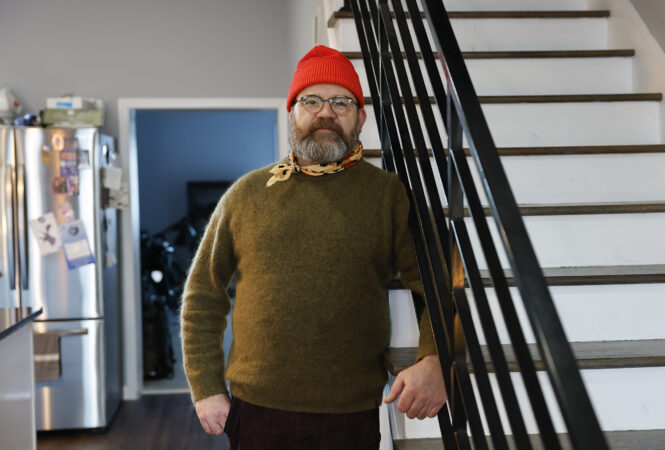
    The buyers: David Snelbaker, 59, finishing technician

    The house: a 1,440-square-foot townhouse in Port Richmond with three bedrooms and two baths built in 1925.

    The price: listed for $275,000; purchased for $269,500

    The agent: Allison Fegel, Elfant Wissahickon Realtors
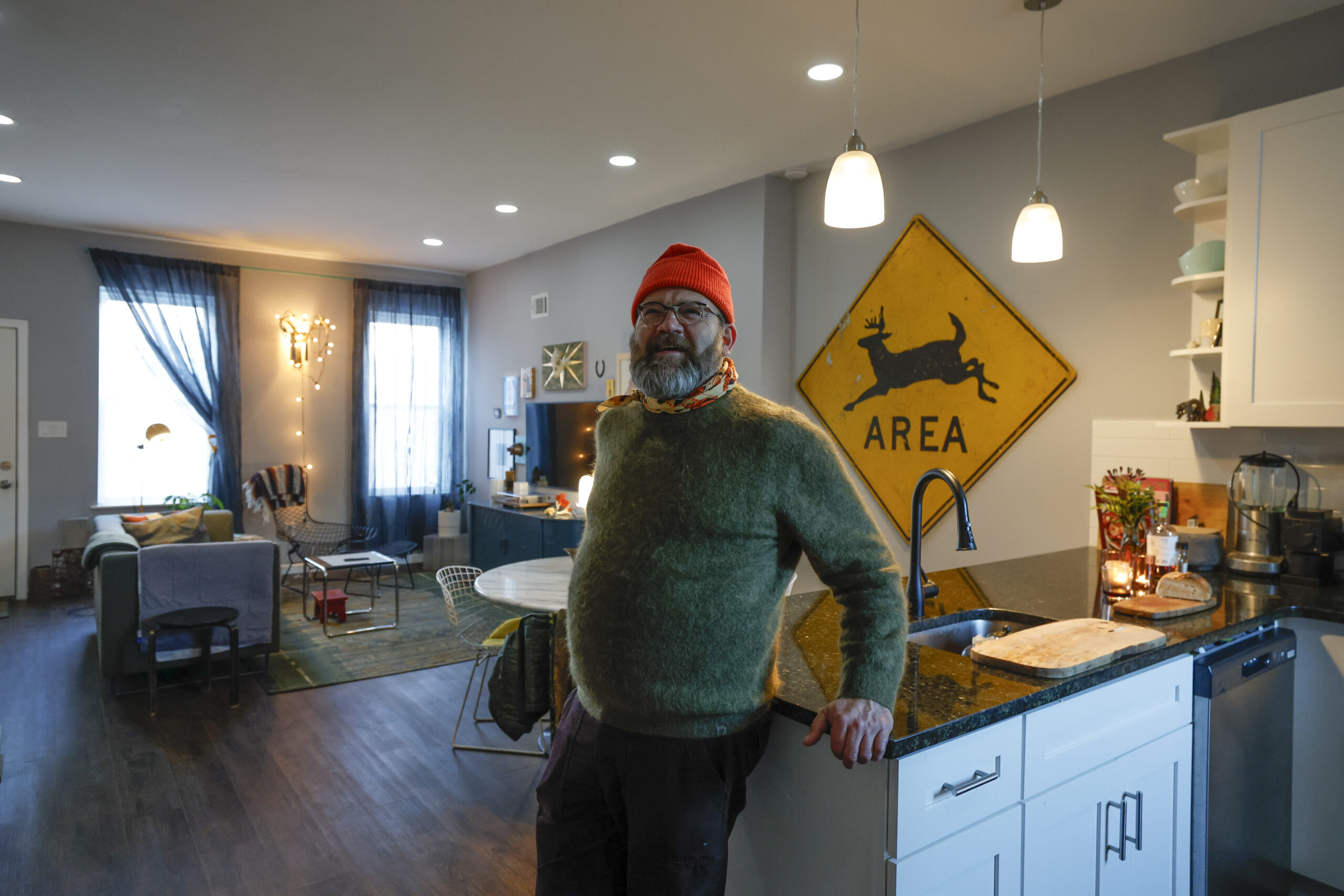
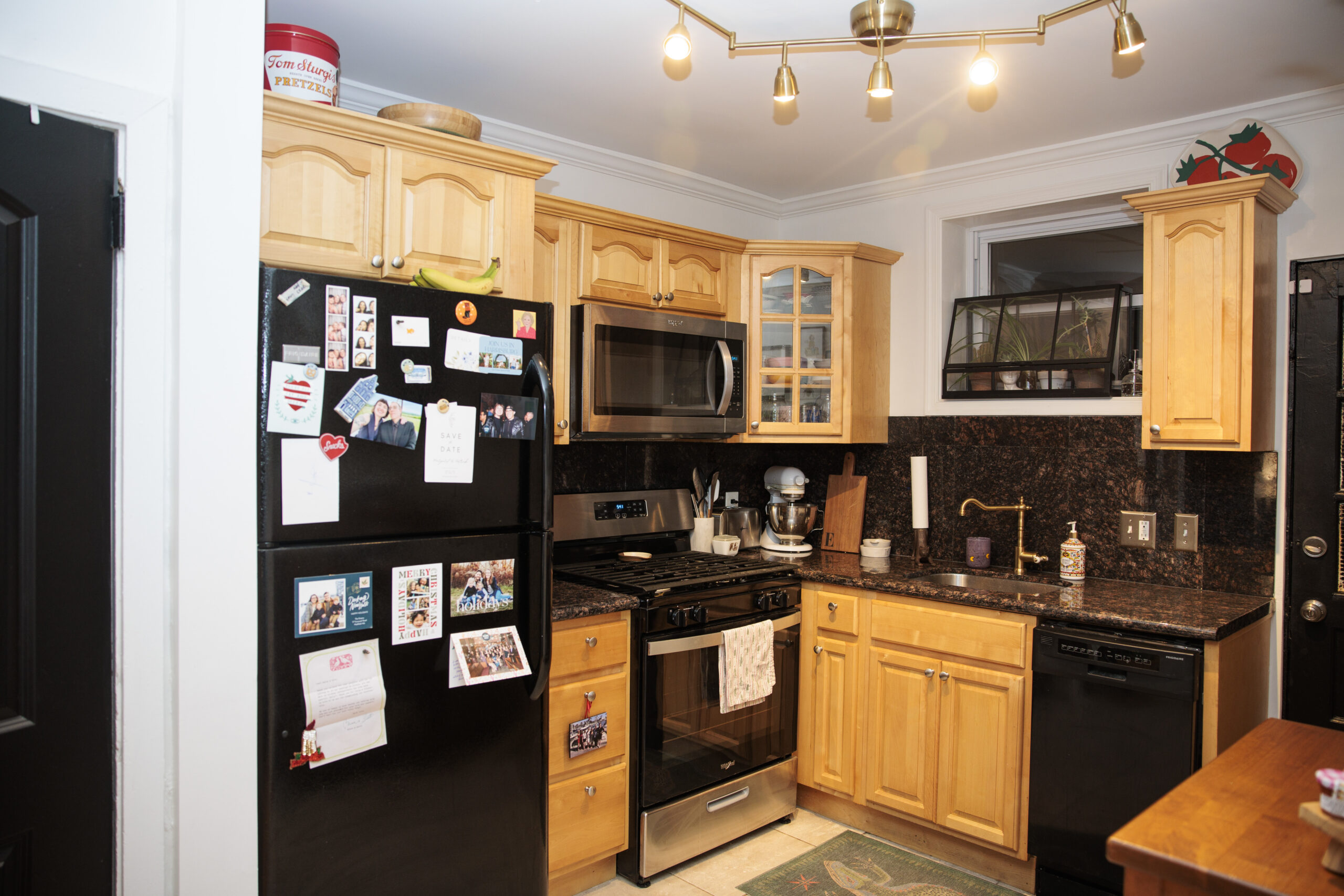
    Snelbaker in the kitchen of his Port Richmond home.

    The ask: Snelbaker didn’t want to give up his house in Graduate Hospital. He’d spent years rehabbing and repairing it. But in 2023, on the heels of a breakup, he determined he couldn’t afford to keep it on his own. He needed to downsize, but he wanted to stay in his neighborhood. Other than that, his list was short but firm: a backyard for gardening and a rowhouse that wasn’t too narrow.

    His budget was $300,000 — a number driven less by lender approval than by self-preservation. “I didn’t want to be house poor,” he said. “I have friends who are. They don’t go on vacations. They’re just kind of financially stuck.”

    The search: Snelbaker needed to sell his old house before he could make an offer on a new one, which made it difficult to compete in South Philly’s hot market. “A lot of the places I wanted to jump on would just go so fast,” he said.

    He expanded his search and discovered better stock in Fishtown and Port Richmond. “For the same price for something in South Philly, it was a fixer-upper,” he said. “And here, it was in good shape.” Snelbaker had already lived through years of construction in his old house and wasn’t eager to do it again. “I just didn’t want to get into another fixer-upper situation,” he said.

    He checked out a few places in Fishtown but settled on Port Richmond because it was closer to his work. The prices were better, too. “It was a win-win,” Snelbaker said. The only other place he considered was a recently renovated rowhouse close to the river. “It was laid out well,” he said. “That was my second choice.”
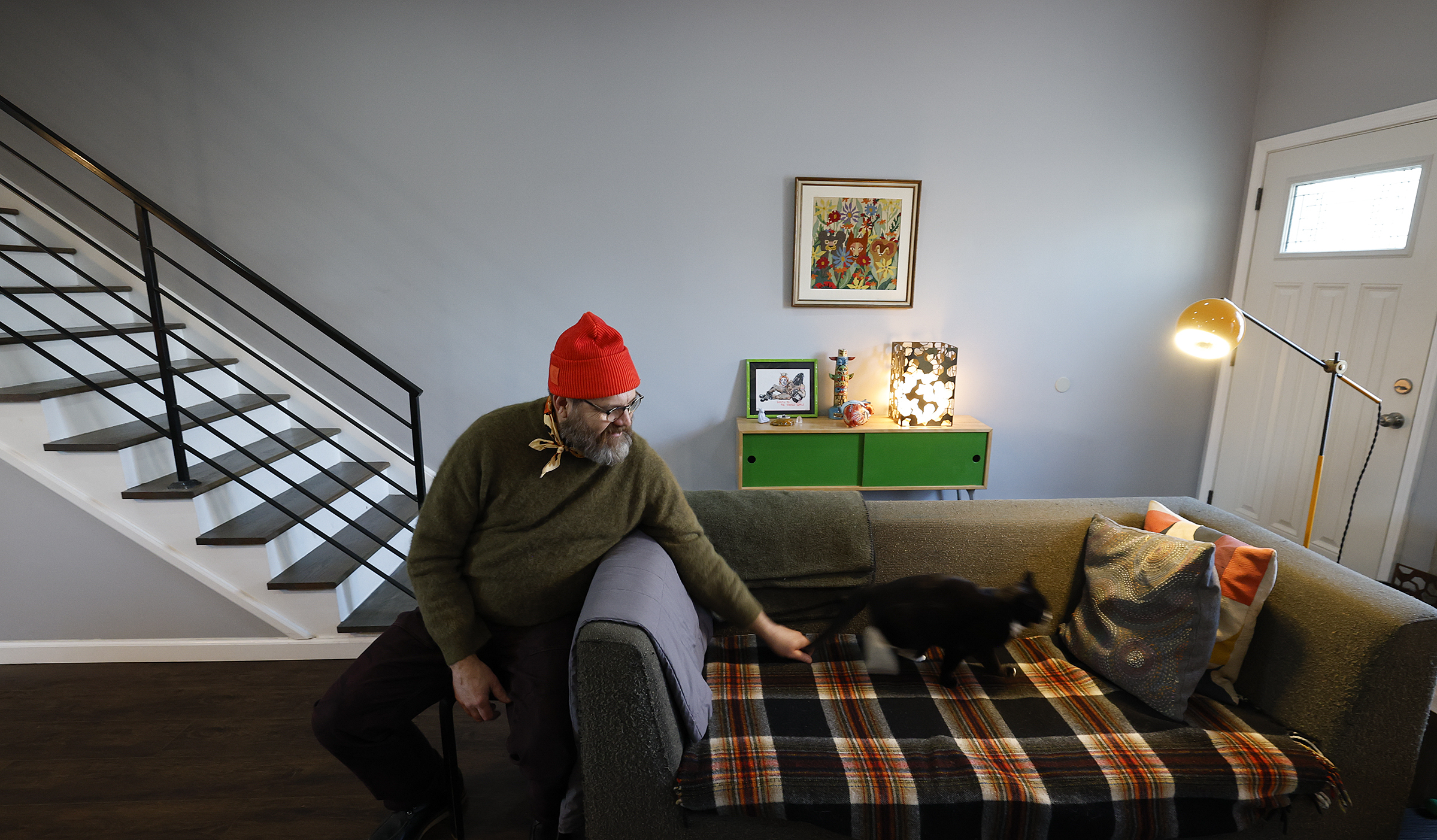
    Snelbaker liked that the house was recently renovated and move-in ready.

    The appeal: Snelbaker knew he’d found the one when he stepped out back. “The backyard was unbelievably, unbelievably big,” he said. “It’s like 27 feet long and 18 feet wide.” Plenty of space for the major landscaping projects he wanted to do, like planting several trees and building raised beds. Even better, one side of the yard abutted a warehouse, not another rowhouse, which gave him “a level of privacy,” he said.

    Inside, the house was open, newly renovated, and neutral. “It didn’t have a lot of personality,” Snelbaker said, “but it wasn’t a lot of work either.”

    The deal: Snelbaker saw the house at the end of the summer, but because he needed the proceeds from his Graduate Hospital home for a down payment, he couldn’t make an offer right away. Thankfully, the Port Richmond house lingered on the market until he sold his place in October. “I was surprised it didn’t move,” Snelbaker said.

    Once his old house sold, Snelbaker moved quickly. He offered $269,500 — $5,500 under the asking price — and the seller accepted without pushback. The inspection brought little drama. The sellers, who were contractors, handled minor repairs. “They did some patching on the roof and some stuff on the brick in the front,” Snelbaker said. “There was something with the dishwasher … they repaired that. That was pretty much it.”
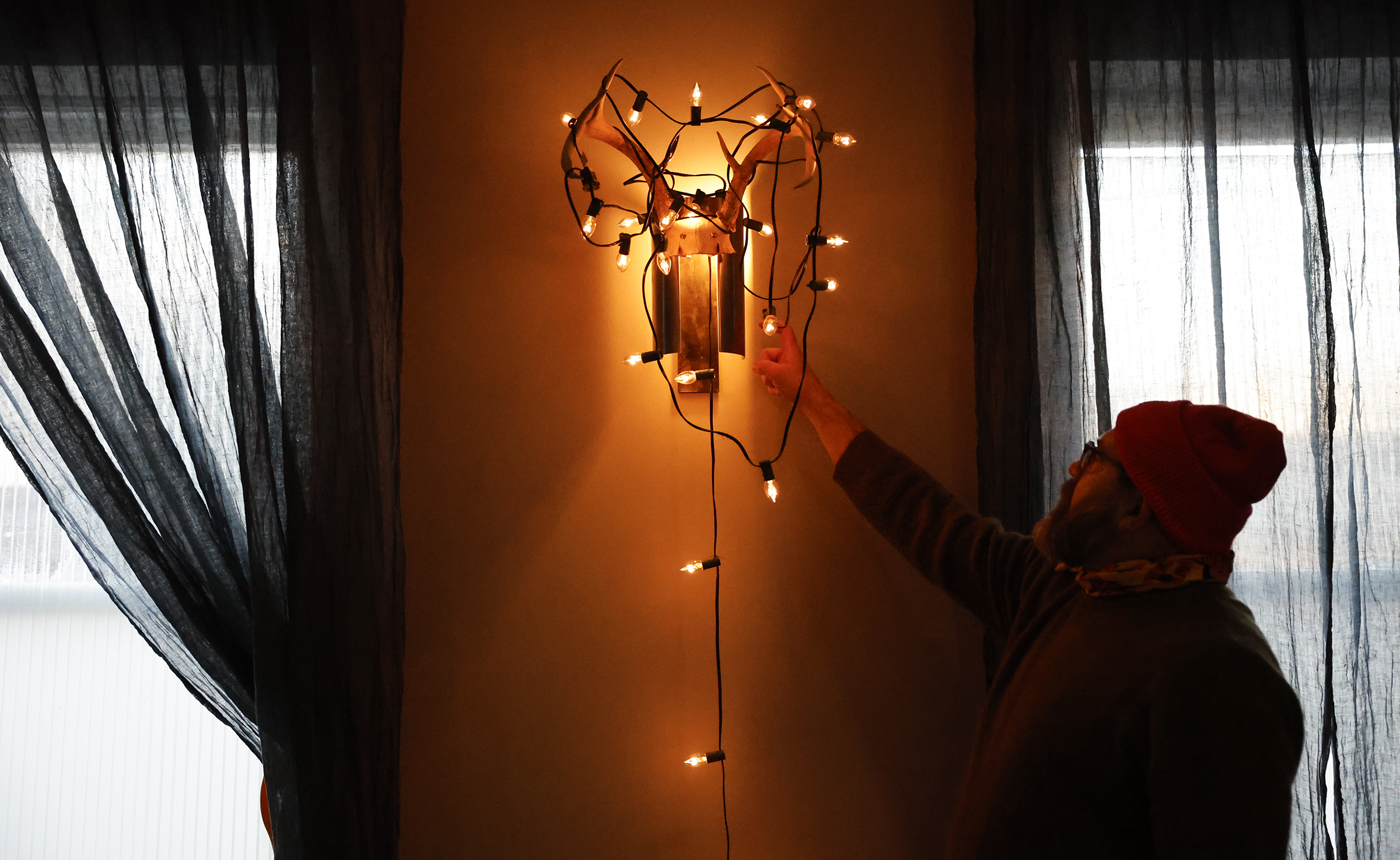
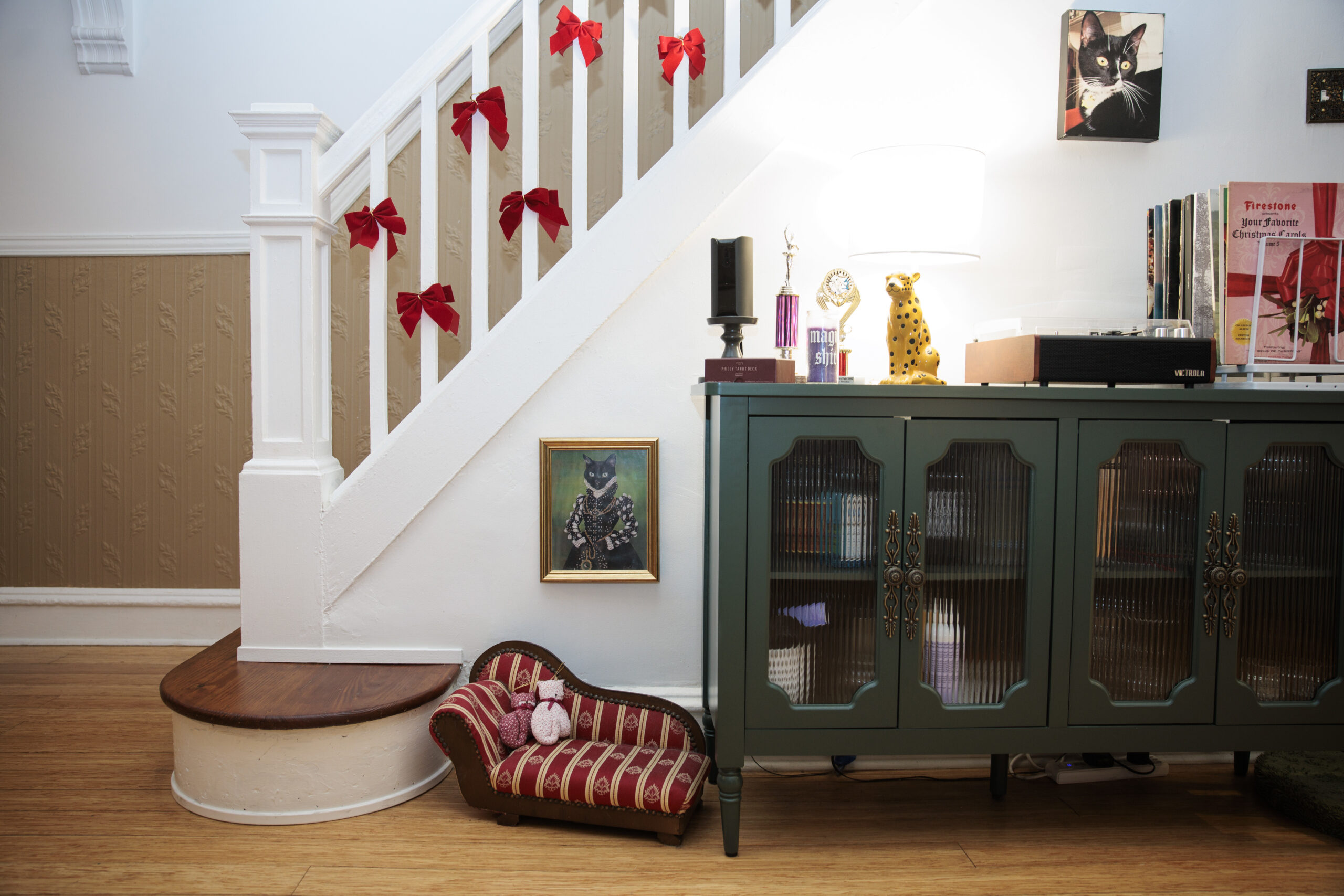
    Since moving in, Snelbaker has added personal touches like this antler lamp to give his house more personality.

    The money: Snelbaker walked away with $240,000 from the sale of his previous home. He put a chunk of it into a certificate of deposit and used the remaining $180,000 for the down payment. “I put more than 20% down because I wanted to keep my monthly payment low,” he said.

    Even so, timing worked against him. Interest rates climbed to 7% as he was shopping, and insurance costs jumped a few months after he moved in. His monthly payment was originally $1,300. Now it’s $1,900. He plans to refinance once interest rates drop a few percentage points, and he’s actively looking for a better rate on his home insurance.
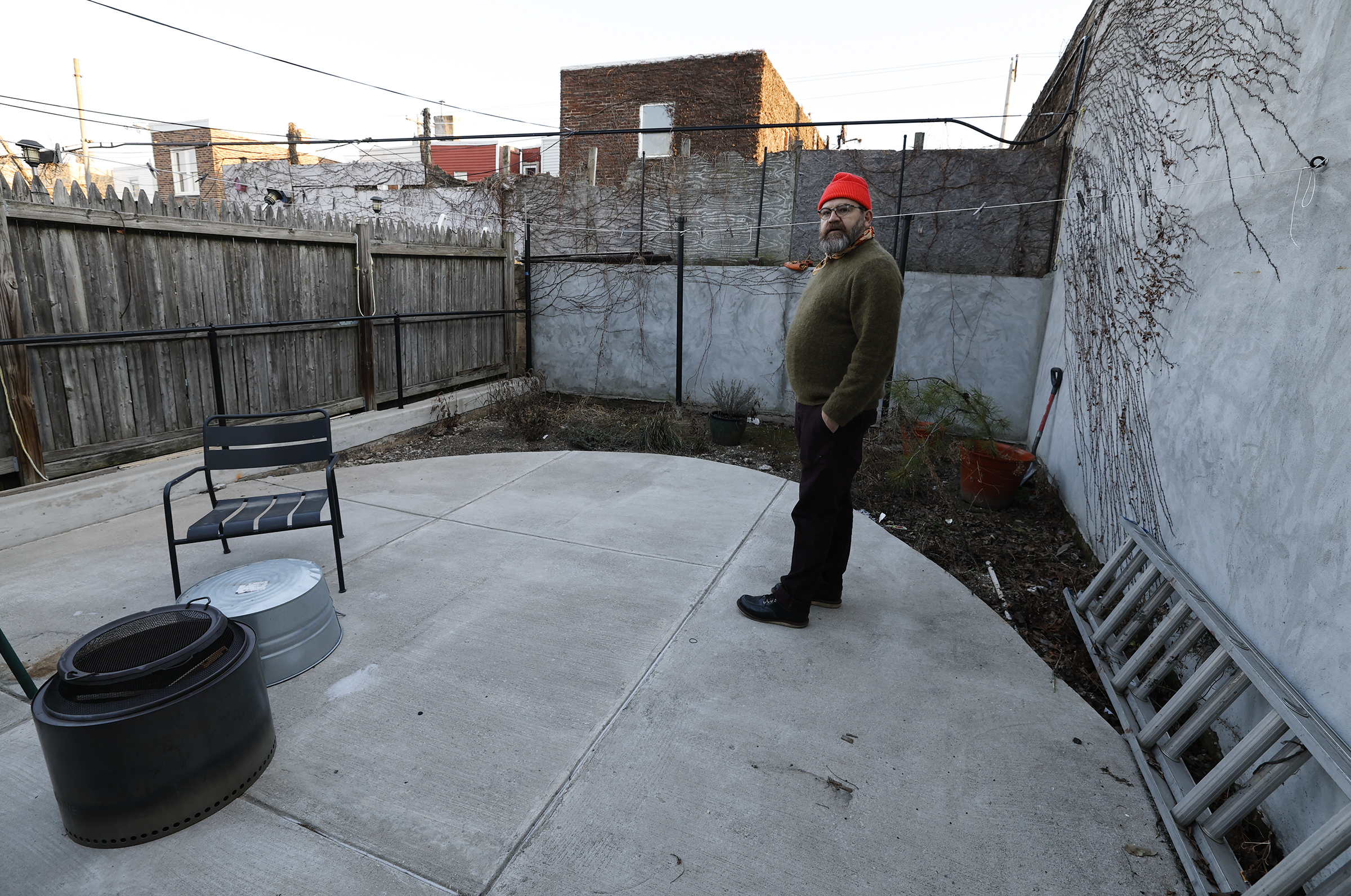
    Snelbaker removed some of the concrete in the backyard to plant trees.

    The move: Snelbaker sold his old house in mid-October and officially closed on his new one on Halloween, but he wasn’t ready to move in right away. His agent did some “fancy footwork” and worked out a deal for Snelbaker to rent his old house from its new owners for a few weeks. “She negotiated a really good timeline that gave me space to pack and wrap up everything at the old house,” Snelbaker said.

    Even better, he celebrated Halloween with his old neighbors. “We handed out candy, and they made me dinner. It was very sweet,” Snelbaker said. He moved into his new home the week before Thanksgiving.

    Any reservations? Without an attached neighbor on one side, the house runs colder than Snelbaker expected. He contacted an energy auditor who advised him not to do anything until he insulated the roof. It’s pricey, but worth it, Snelbaker said. “It’ll definitely increase the comfort and lower my heating bills.”

    Life after close: Since moving in, Snelbaker has focused on the backyard. He removed slabs of concrete to make room for trees and raised beds. “That was important for me,” he said. “I really wanted to get a garden going again like I had in my old spot.”

    Did you recently buy a home? We want to hear about it. Email acovington@inquirer.com.
  • How to have a Perfect Philly Day, according to 92.5 XTU’s Nicole Michalik

    How to have a Perfect Philly Day, according to 92.5 XTU’s Nicole Michalik

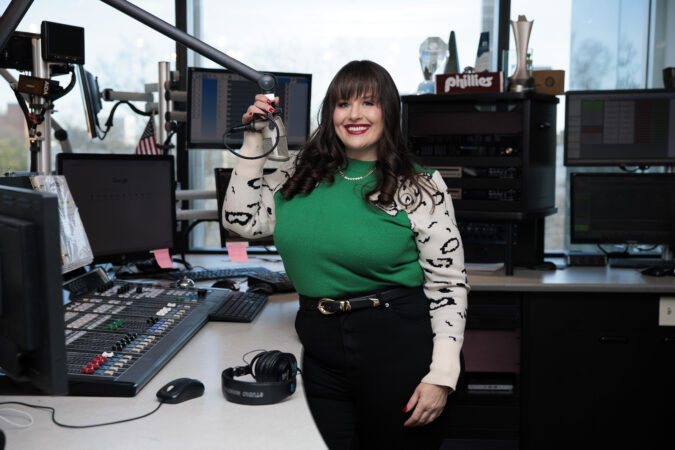
    Nicole Michalik spends her afternoons talking directly to Philadelphians as they make their way home. As a host on 92.5 XTU, the city’s country music station, she’s on air from 2 to 7 p.m., juggling live breaks, listener calls, and interviews with artists like Luke Combs and Parker McCollum. Radio, she insists, is still relevant, “sexy” even. “I’m live, I’m local, I’m talking about stuff that’s going on in Philly,” Michalik said. What more could you want?

    Michalik lives in Midtown Village, but her days stretch across the city, including a trek to Bala Cynwyd, where the radio station is located. She loves her job. In fact, she loves it so much that her perfect Philly day includes a trip to the office. Here’s what else it includes.

    This interview has been lightly edited for clarity.

    7:30 a.m.

    I usually wake up somewhere between 7 and 7:30. First thing I do is check socials and email, then I make coffee at home. I need it piping hot. I use a Keurig — no judgment — with organic half-and-half.

    I take it back to bed and do my Instagram bit, “Coffee Under the Covers.” I started it during COVID and it just became a thing. I’ll take a sip and talk about whatever’s on my mind. People have sent me mugs. It’s wild.

    After that, I record my Boston radio show from home. I’m on Country 102.5 up there, so I have a whole setup — computer, mic, everything. I want it to feel as local as possible, even though I’m not physically there.

    10 a.m.

    I force myself to work out. I walk to XForce to train with James, who keeps me accountable. I hate working out, but I don’t hate it there, so that’s a win for me.

    When I cross Broad Street, I always take a photo of City Hall and post the temperature. It’s become a thing. One of my friends who lives in Portugal checks it every day. He calls me his Cecily Tynan.

    11:30 a.m.

    After the gym, I get my hair blown out at Dina Does Glam inside Sola Salons at 15th and Walnut. I go at least once a week. I love that Sola lets people in the beauty industry run their own little studios.

    From there, I walk to Gran Caffè L’Aquila for an iced coffee. It’s the best iced coffee in the city. That’s nonnegotiable.

    I try to head home after that, because if I don’t, I’ll get sucked into Sephora buying makeup I absolutely do not need.

    1 p.m.

    I get ready for work and drive to Bala Cynwyd. On the way, I stop at the Starbucks on City Avenue. I order an iced Americano with almond milk and a drizzle of caramel. They know me there.

    I don’t even know if caffeine really affects me that much. I just love the ritual. I like sipping it throughout the show.

    Nicole Michalik works at 925XTU on Monday, Dec. 1, 2025 in Philadelphia.

    2 to 7 p.m.

    I’m live on the air. On my perfect day, I’m doing a Zoom interview with Luke Combs, and he finally announces he’s coming back to Philly. We’ve been mad at him for skipping us for a few years, so this would be huge.

    7:30 p.m.

    After work, I meet friends at Lark in Bala Cynwyd. It’s right across from the station, and it’s one of my favorite places. I’m ordering the gnocco fritto — they’re like little puffy clouds with lemon ricotta — and the striped bass. Nick Elmi just knows what he’s doing.

    9 p.m.

    I’m heading to a Sixers game. In my perfect world, it’s the Eastern Conference finals, Joel Embiid has great knees, and we’re winning. I live in the city and love walking everywhere, but I also love that Philly is easy to drive around — as long as the PPA doesn’t get you.

    11 p.m.

    Once 11 p.m. hits — I’m like Cinderella — I’m ready for bed. I love going home to put my pajamas on.

  • After walking away during an inspection, she rebounded with a two-bedroom in Newbold | How I Bought This House

    After walking away during an inspection, she rebounded with a two-bedroom in Newbold | How I Bought This House

    The buyers: Emily Miles, 34, lawyer

    The house: A 784-square-foot rowhouse in Newbold with two bedrooms and one bath, built in 1920.

    The price: Listed and purchased for $249,000

    The agent: Allison Fegel, Elfant Wissahickon

    Miles in her two-bedroom home.

    The ask: The only good thing about Emily Miles’ old apartment was the price. Miles was making a “nonprofit lawyer salary” and trying to save money. But “it was terrible,” Miles said. Disgusting even. And by November 2024, she’d had enough.

    Owning a home felt aspirational, if vague. “It was always something I wanted to do,” she said. “But I didn’t know when I’d be able to do it.”

    It didn’t seem like the right time. Miles had student loans. She was bartending in the evenings to make ends meet. Nevertheless, she decided to check out the market and searched for an agent with grant experience. She kept her house wish list short: three bedrooms, outdoor space, and central heat and air.

    The search: Miles had no sense of budget until her lender preapproved her for about $310,000. From there, her agent began sending her listings across the city, including large homes far from the neighborhoods Miles associated with Philadelphia.

    “They were still in Philadelphia County, but not really Philly as you think of it,” Miles said. West Philadelphia, where she was living, was not affordable. Other neighborhoods lacked reliable transportation.

    Between late November and January, Miles saw 30 to 40 homes. “They were a lot of flips, and I didn’t want that,” she said.

    Eventually, Miles found a place and made an offer. But during the inspection, they discovered damage to the front door that indicated someone had kicked it in, and Miles decided to walk away. She was out $1,500. “My pride was hurt a little bit,” she said.

    Miles took a brief break, then started attending open houses on her own. That’s how she found the one, a little less than a month after she backed out of the first house.

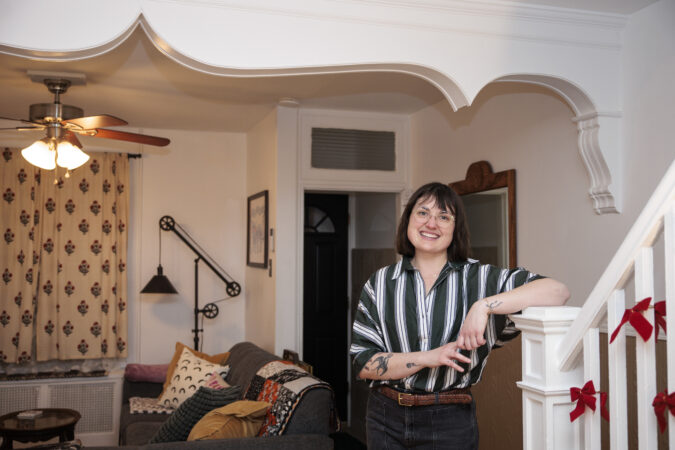
    Miles liked the house’s original features and character, such as the arched framing of the living room.

    The appeal: The house Miles ultimately bought — a two-bedroom, one-bath, 780-square-foot rowhouse in South Philadelphia — checked none of her original boxes. “The big LOL about the whole thing is that I ended up with something I didn’t want at all,” she said. It had radiator heat. No air-conditioning. Less space than she planned. The house had been a rental for more than a decade. Carpet covered original features. Paint concealed years of wear. “It was a real landlord special,” Miles said. But when she stepped inside, something clicked. “I walked in, and I could see it,” she said. “It’s full of character.”

    The deal: Miles stumbled into the house she would buy while walking to a bar with her boyfriend on a Friday night. The listing price was $249,900. She offered the asking price the following morning.

    The seller took days to respond but eventually accepted her offer after no one else made a bid.

    When the inspection revealed issues, Miles asked for $5,000 to $7,000 in credits. The seller countered with zero. “He redlined all my stuff,” she said. “So I re-redlined all of his stuff.” The back-and-forth ended with $2,000 in seller’s credit. “Which is better than zero,” Miles said. “I’m pretty proud of that.”

    Miles filled her home with vintage furniture she found at local thrift shops. Her cat, August, has his own bed.

    The money: Miles had about $20,000 saved from her time before law school, when she worked as a human resources manager in New York City. She had an additional $10,000 from the Philly First Home program, $2,000 from the seller’s credit, and $1,000 from her Realtor’s Building Equity program.

    Her lender approved her to put down only 3%, so she made a $7,500 good-faith deposit and brought $1,500 to closing. Miles’ credit score and salary qualified her for a 5.75% interest rate at a time when average rates hovered closer to 7%.

    Her monthly mortgage payment is about $1,800 and includes $120 for private mortgage insurance, which she must pay until she reaches 20%. She recently applied for a Philadelphia homestead exemption, which reduces the taxable portion of your house by $100,000 if you use it as your primary residence, and expects her monthly payment to drop closer to $1,700 as a result.

    The move: Miles closed on March 19 and moved on April 29. She broke her lease without penalty. “I had been complaining about it being a bad apartment for months,” she said, “so I think they were just happy to be rid of me.”

    Miles had to get rid of a lot of her stuff because her new house was so much smaller than her apartment. “I downsized quite significantly,” she said. She also discarded stuff that wouldn’t fit through the house’s small, 30-inch doorway, like her couch. “Luckily, I had some foresight and got rid of it before I moved it over,” she said.

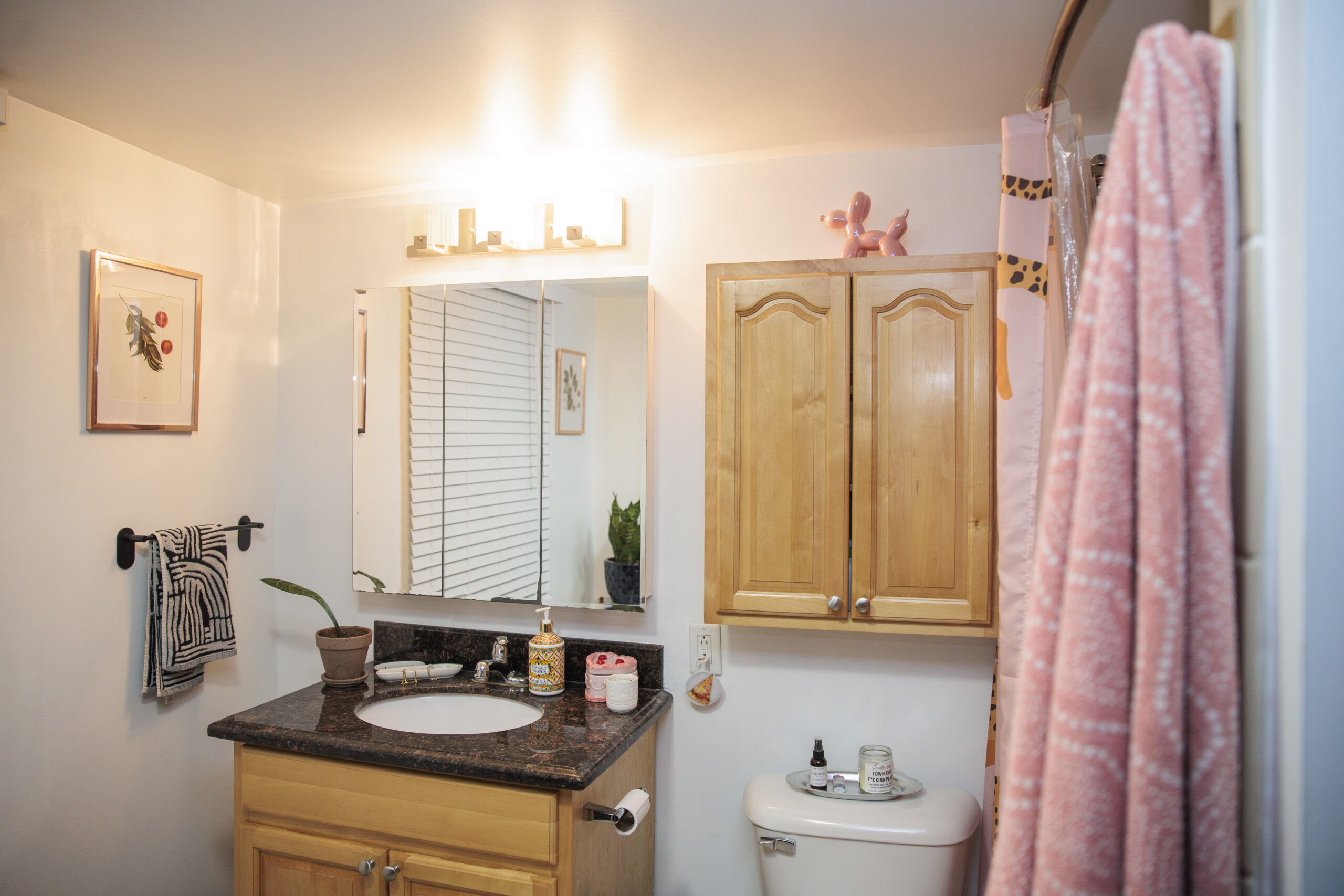
    Miles installed new lighting and faucets to make her home feel less like a rental.

    Any reservations? Miles wishes she knew that refinished floors can take weeks to fully cure. She had to sleep on the living room floor while she waited for the fumes to fully dissipate upstairs. “It was just my cats and me on the ground for about a month,” she said. Still, she doesn’t have any regrets. “Live and learn,” she said.

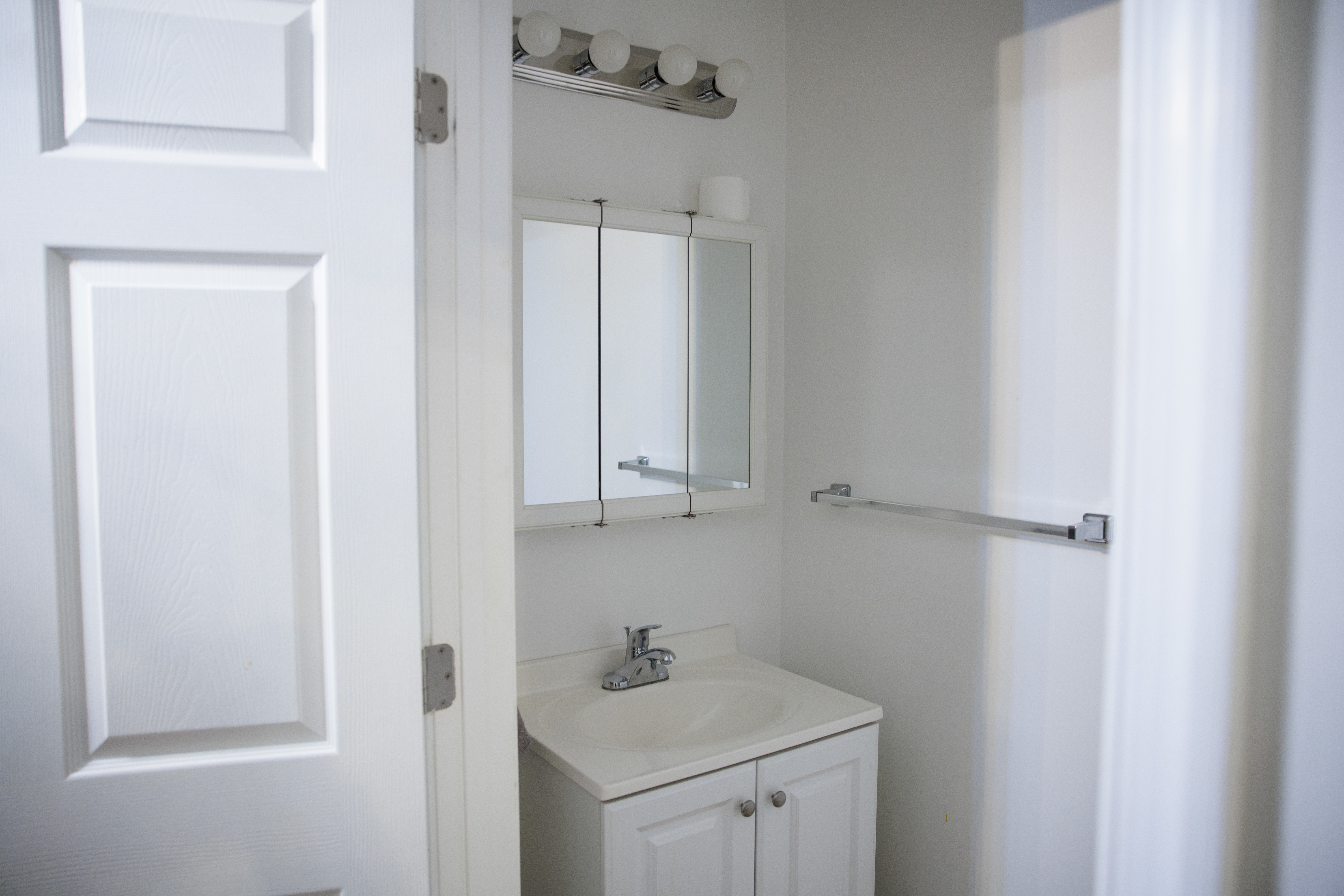
    The bathroom in Emily Miles’ Newbold home.

    Life after close: Miles used the money her parents had saved for her wedding to make a few cosmetic updates. She fixed the back patio, refurbished the upstairs floors, and replaced light fixtures and faucets so that the house felt less like a rental. She put in a new boiler, too. And filled the house with vintage furniture she thrifted locally. “Stuff that fits the vibe of the house,” she said.

    Did you recently buy a home? We want to hear about it. Email acovington@inquirer.com.

  • She needed to leave fast. She bought a four-bedroom house in Germantown without any money saved. | How I Bought My House

    She needed to leave fast. She bought a four-bedroom house in Germantown without any money saved. | How I Bought My House

    The buyer: Kia Wilson, 53, behavioral specialist

    The house: a 1,620-square-foot single-family residence in Germantown with four bedrooms and 1½ bathrooms built in 1900.

    The price: listed for $170,000; purchased for $165,000

    The agent: Shante Jenkins, Long & Foster Real Estate

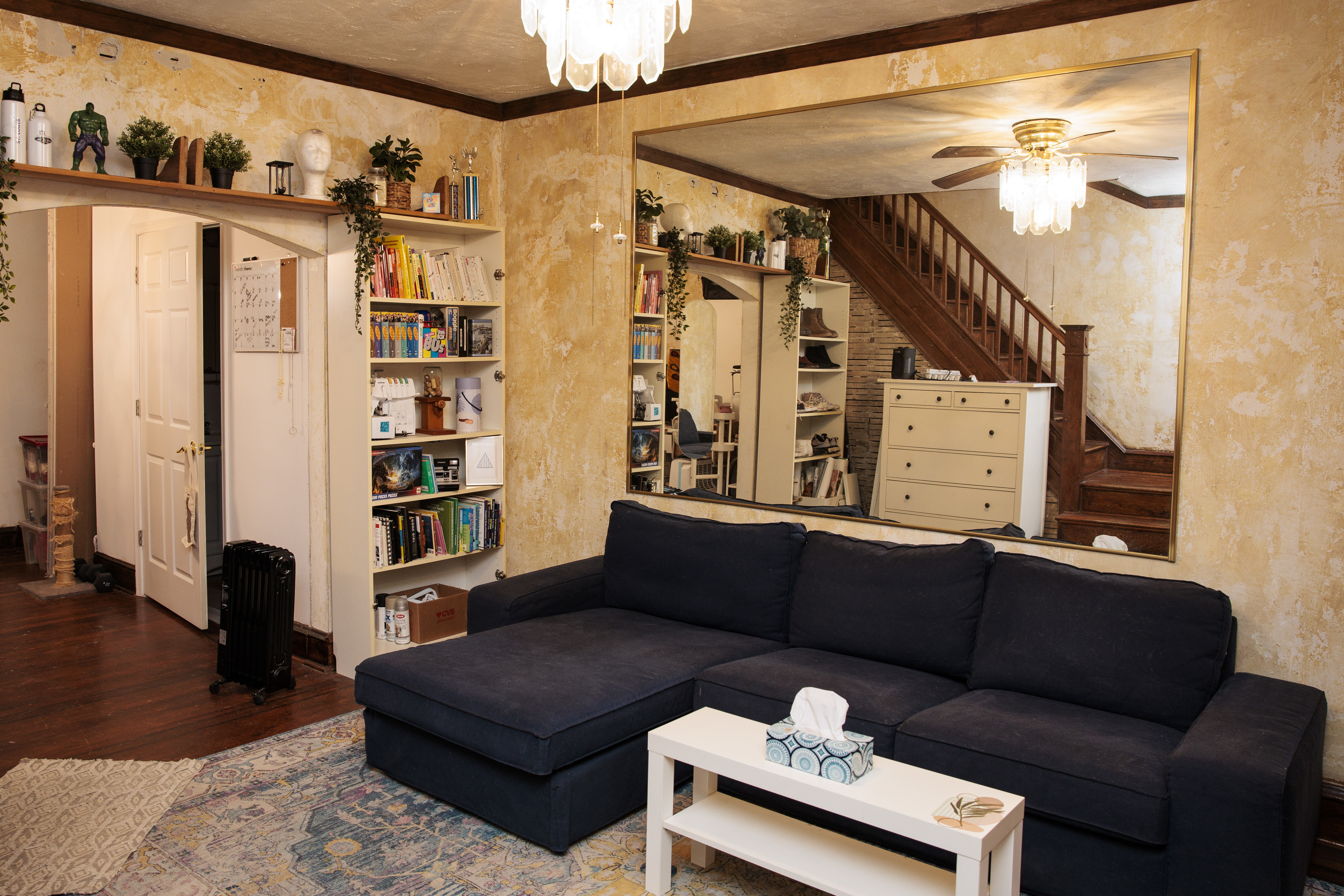
    The living room in Kia Wilson’s home in Germantown.

    The ask: For years, homeownership was something that Kia Wilson considered in the abstract — something she might get to one day. In 2020, she gave herself a timeline. Within five years, she told herself, she would buy a home. She would save. She would fix her credit. She would do it the “right” way.

    Then everything changed.

    In 2021, a relationship turned unsafe. Wilson’s then-partner threatened her family, including her children. “I was like, ‘I need to leave now,’” Wilson said. ‘Without the money saved up, without my credit being good. I just needed to move.’”

    Wilson’s requirements were practical and shaped by urgency. She needed space for herself, her two children, and eventually her mother. She wanted her teenage daughter to have her own bathroom, and she needed a fenced-in backyard for her dogs. Above all, she needed a mortgage she could afford. She wanted it to be $700 a month — the same she paid in rent.

    As for location, “I didn’t care,” she said. “Just not Kensington.” And not near her ex’s parents.

    The dining area in Wilson’s home.

    The search: Wilson began looking seriously in late 2022, working with a friend and coworker who had just gotten her real estate license. Together, they saw about 15 houses over a few months. Some were impractical. Some were strangely laid out. One was in a flood zone, so Wilson didn’t even bother going inside. Another, she is convinced, was haunted. During the showing, a radio suddenly began playing in the basement. “That radio was loud enough for us to hear it on the third floor,” Wilson said.

    That house wasn’t the only one that lingered. Wilson and Jenkins returned to another three separate times just to switch off the lights they’d accidentally left on in the basement and on the porch. That hadn’t happened anywhere else. “I was like, ‘Why does this house keep calling me back?’” Wilson said.

    Wilson wanted two bathrooms so that her teenage daughter could have her own.

    The appeal: The house Wilson ultimately bought wasn’t perfect, but it checked her most important boxes. It had four nice-sized bedrooms, a small backyard with a full basement, and a semiattached layout that gave the house a little breathing room.

    But the feature that sold Wilson was surprisingly specific. “At the very top of the steps is the bathroom,” she said. “If I come in the house from work and I have to pee really bad, I can run straight up the steps to the bathroom.”

    The kitchen was a major upgrade from her previous place, where the kitchen had essentially been an unheated shed. This one was huge and had cabinets. That alone felt luxurious.

    The deal: The house was listed at around $170,000. Wilson offered $160,000, expecting a counteroffer. The sellers came back at $165,000, which she accepted.

    Wilson likes how big and open her kitchen is.

    Since the sellers wouldn’t meet her lowest price, Wilson requested that they remove a large oil tank from the basement. They agreed. They also patched flooring gaps in the kitchen and near the front door and removed a mysterious electrical switch that carried power but didn’t control anything.

    Flush with the concessions she’d already secured, Wilson made one more request. “I was like, wow, what else can I ask them to do?” she said, laughing. She asked for a sump pump in the basement, but the sellers said no.

    The money: Wilson didn’t have savings for a down payment. “People think you have to have this ridiculous amount of money [to buy a house],” she said. “I had nothing.”

    What she did have was persistence — and grants. She took first-time homebuyer classes and applied for multiple assistance programs, including funding through the Mount Airy CDC and her employer. In total, she received four grants and roughly $16,000. Her mortgage company told her they’d never seen someone with so many grants. Her mother also contributed $1,000, which served as Wilson’s down payment. All in, she spent $17,000 on her home.

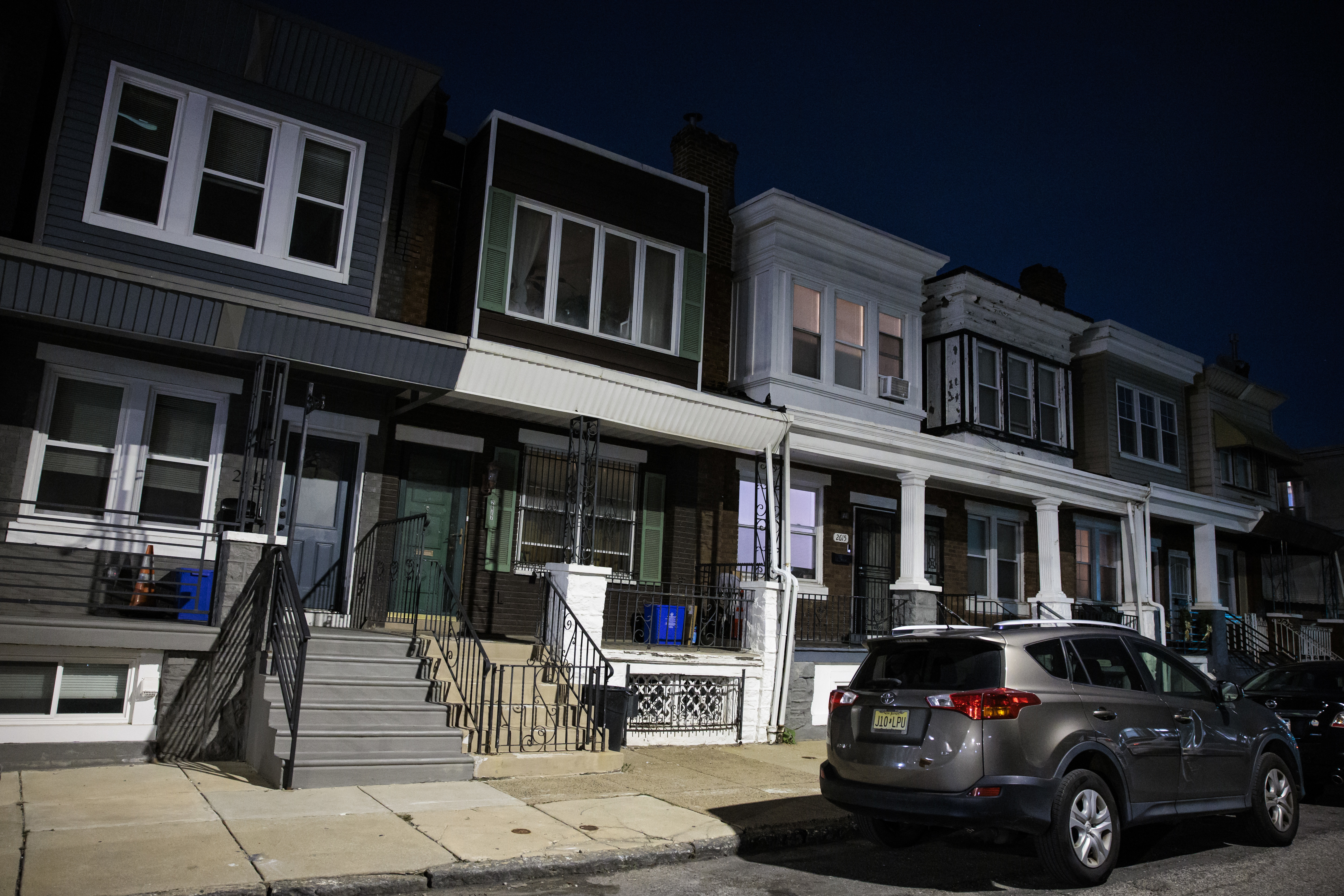
    The exterior of Wilson’s home in Germantown.

    The move: Wilson closed on March 12, 2023, and moved in one month later. Moving was a “pain in the butt,” she said. “I was trying to do it myself because I didn’t have any money.” The friends who promised to help bailed, and the coworkers who stepped up broke her dresser and her refrigerator. “It was terrible,” Wilson said. “I didn’t have a refrigerator for two weeks.”

    Any reservations? Some days, Wilson wishes she never bought the house. It’s old and needs extensive work. “Things are falling apart,” she said.

    If she could do it again, she would prioritize a house where the cosmetic work was already done and pay closer attention to small details — like mismatched bathroom tiles. Still, the house has “great bones,” she said.

    Life after close: Since moving in, Wilson has taken classes at the West Philly Tool Library, where she learned to patch drywall and tile. The bathroom is now all one color. She’s changed the locks, plans to replace the front door, and has begun slowly making the house her own. This year, she grew a watermelon in the yard.

    “It’s really surreal,” Wilson said. “I’ve owned a house for two years. Only 28 more to go.”

    Did you recently buy a home? We want to hear about it. Email acovington@inquirer.com.
  • A seller backed out after verbally accepting their offer. It led to their dream home in Point Breeze. | How I Bought This House

    A seller backed out after verbally accepting their offer. It led to their dream home in Point Breeze. | How I Bought This House

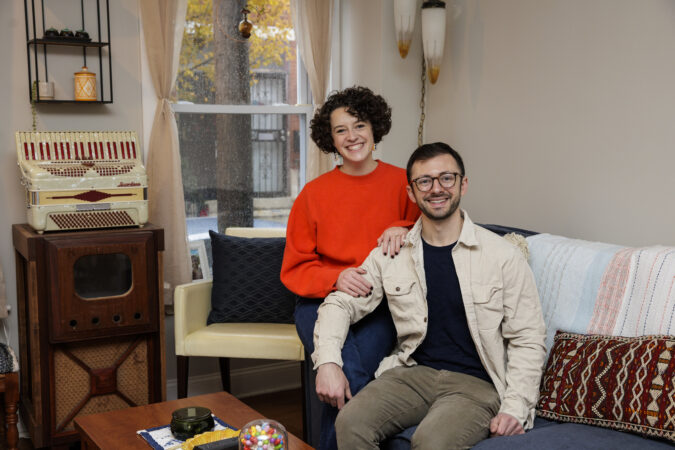
    The buyers: Casie Girvin, 30, performer and voice teacher; Steve Crino, 32, musician

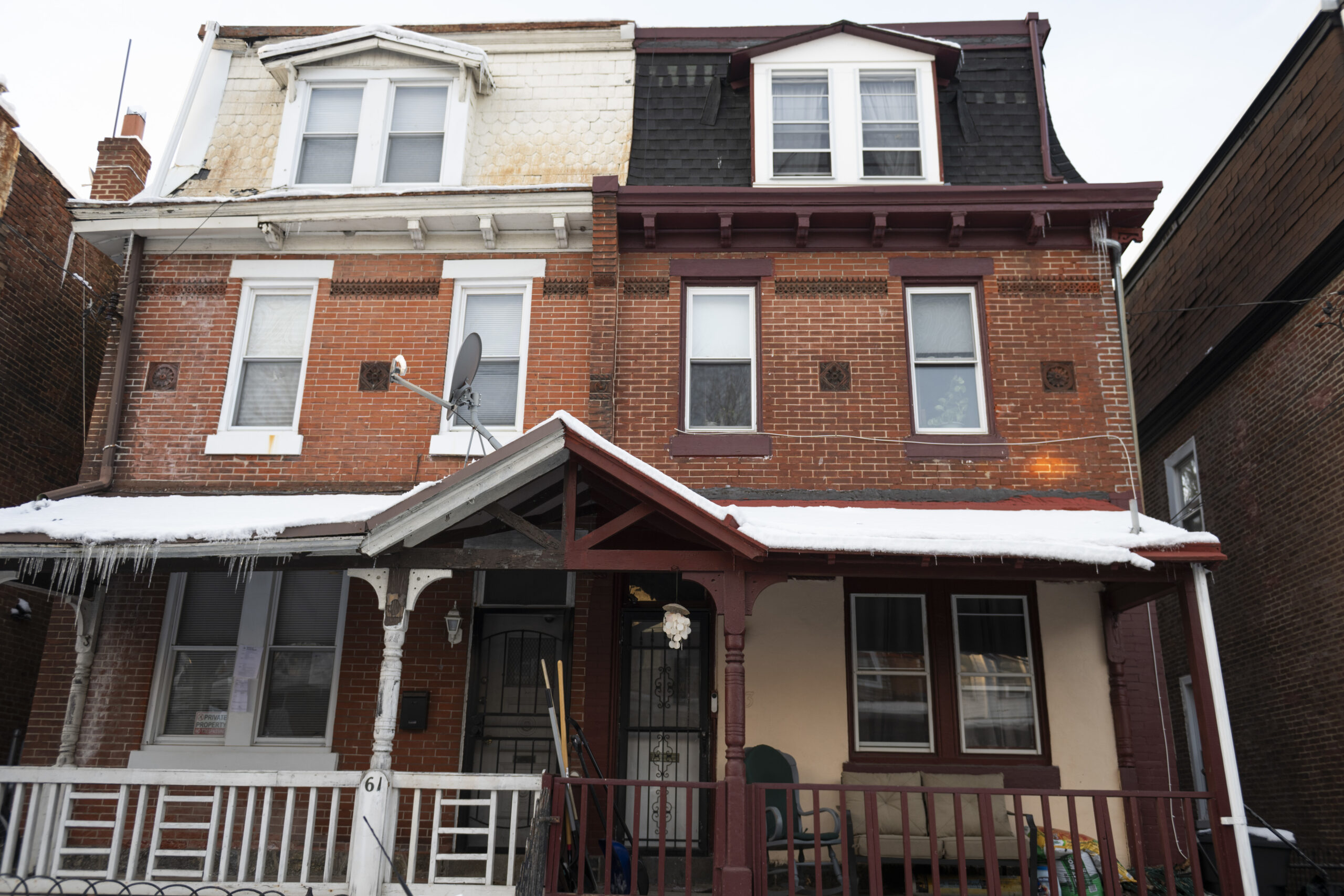
    The house: A 984-square-foot rowhouse in Point Breeze with three bedrooms and one bath, built in 1923.

    The price: Listed and purchased for $305,000

    The agent: Benjamin Camp, Elfant Wissahickon

    The ask: For Casey Girvin and Steve Crino, the home-buying journey began long before they opened Zillow. “We always knew that we wanted to be homeowners,” said Girvin. “It’s something we were saving for a long time.”

    Both musicians, they spent years learning what did and did not work for their lifestyles. They started in a one-bedroom, which didn’t work because their practice sessions often overlapped, creating a cacophony of noise. Eventually, they moved into a bi-level apartment where they had room to work.

    That experience shaped their home-buying wish list. That meant they needed at least three bedrooms — one for sleeping and two for music studios — and a layout that let two musicians practice without driving each other mad. “We needed it to be either like a bi-level space, or we needed a buffer room between the two of us,” Girvin said.

    They also wanted a backyard. “We learned during COVID that having an outdoor space was really important to us,” she added. So was being close to the Broad Street SEPTA line. Fixer-uppers were a nonstarter.

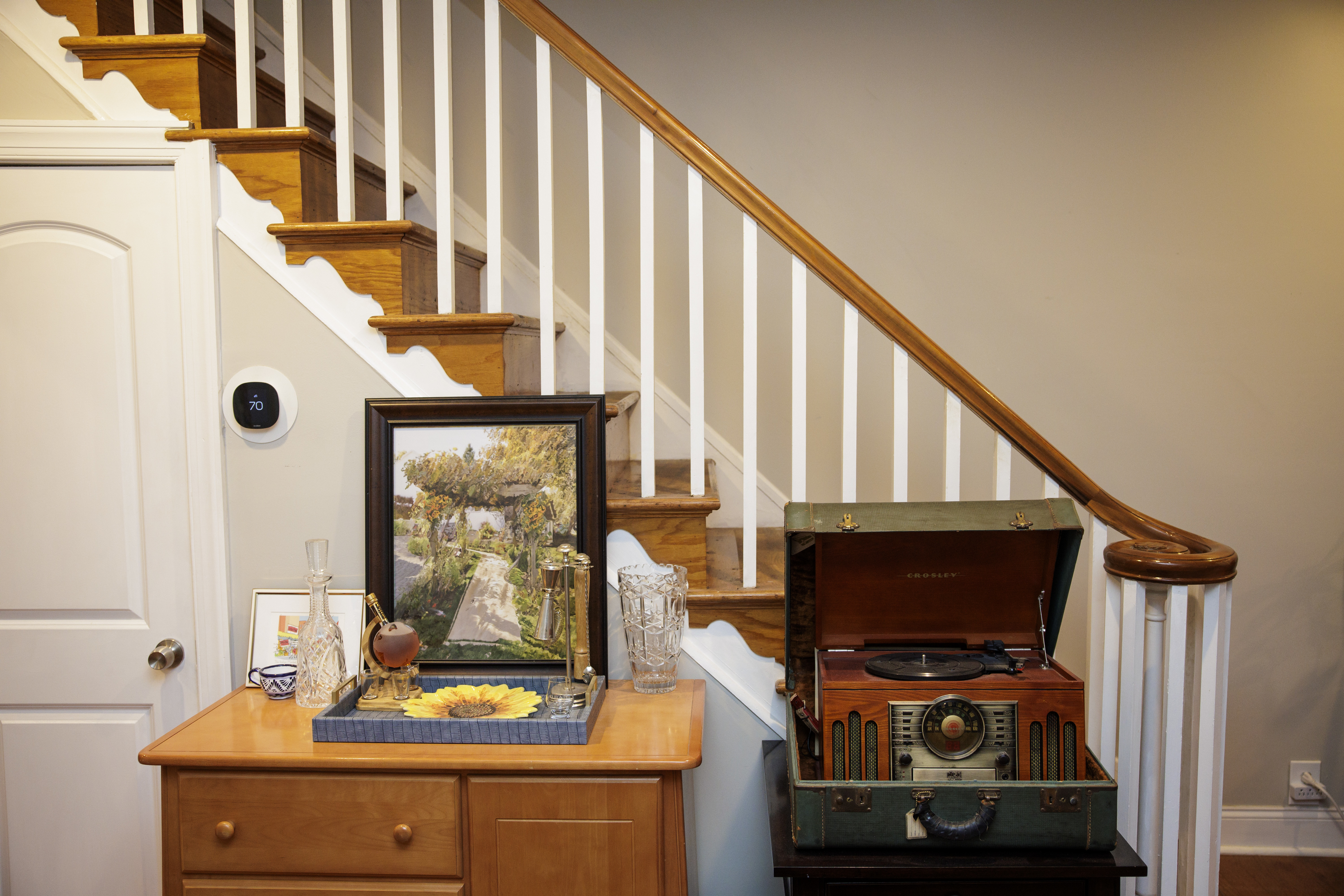
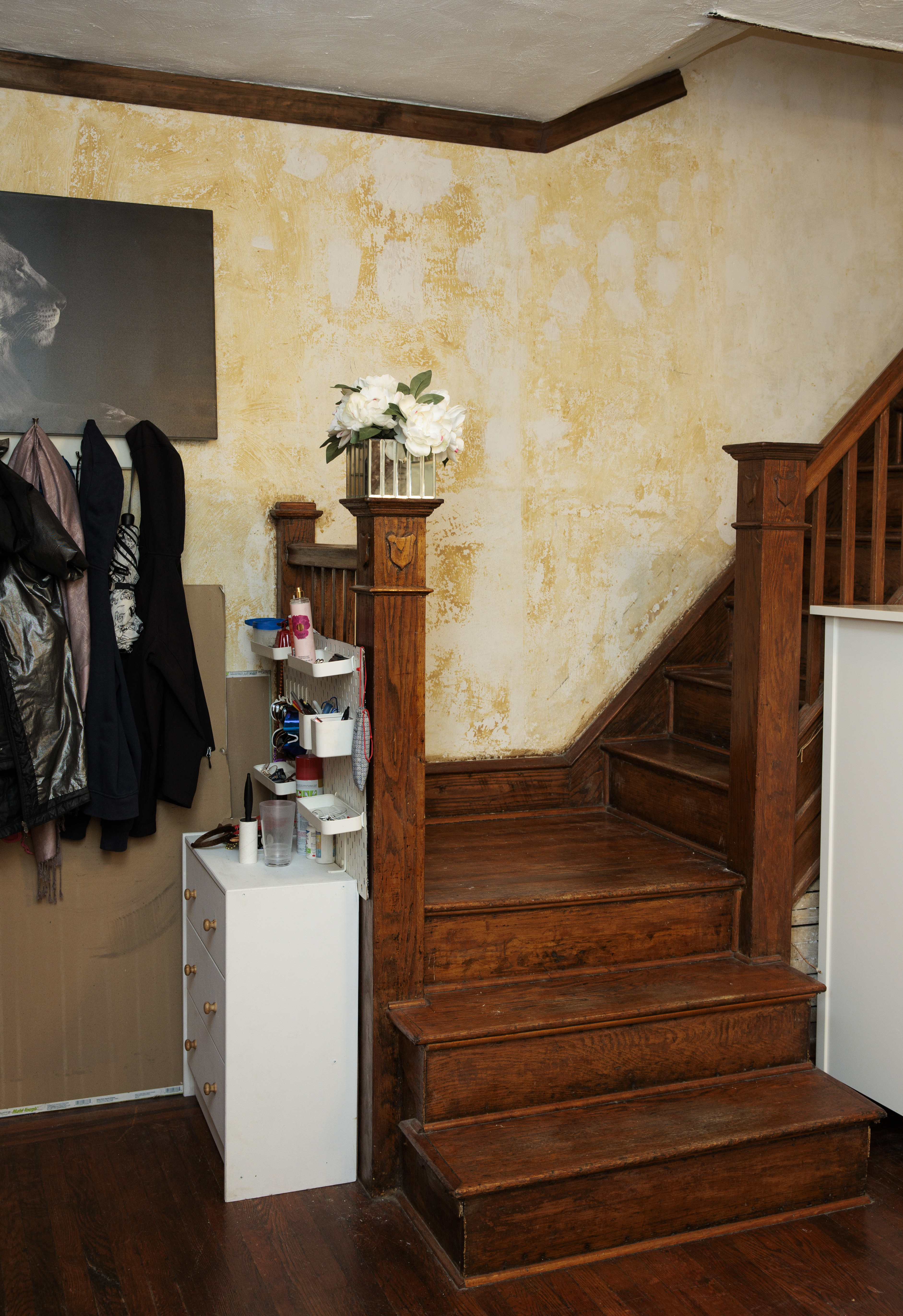
    Upon entering the house, the couple immediately fell in love with the staircase, especially its architectural detailing.

    The search: The couple intentionally waited until winter to search, hoping for lower prices. They saw 21 houses in Point Breeze and liked a lot of what they saw, but tried to be ruthless when it came to making an offer. “That was a very informative part of the process, Crino said, “because when you’re contemplating actually putting an offer down, your preferences emerge.”

    They ended up making only one other offer on a house they nicknamed “the Grandma house” because of its funky carpeting and wallpaper. The seller verbally accepted it but eventually pulled it from the market.

    “Ultimately, we’re happy with what happened,” said Girvin.

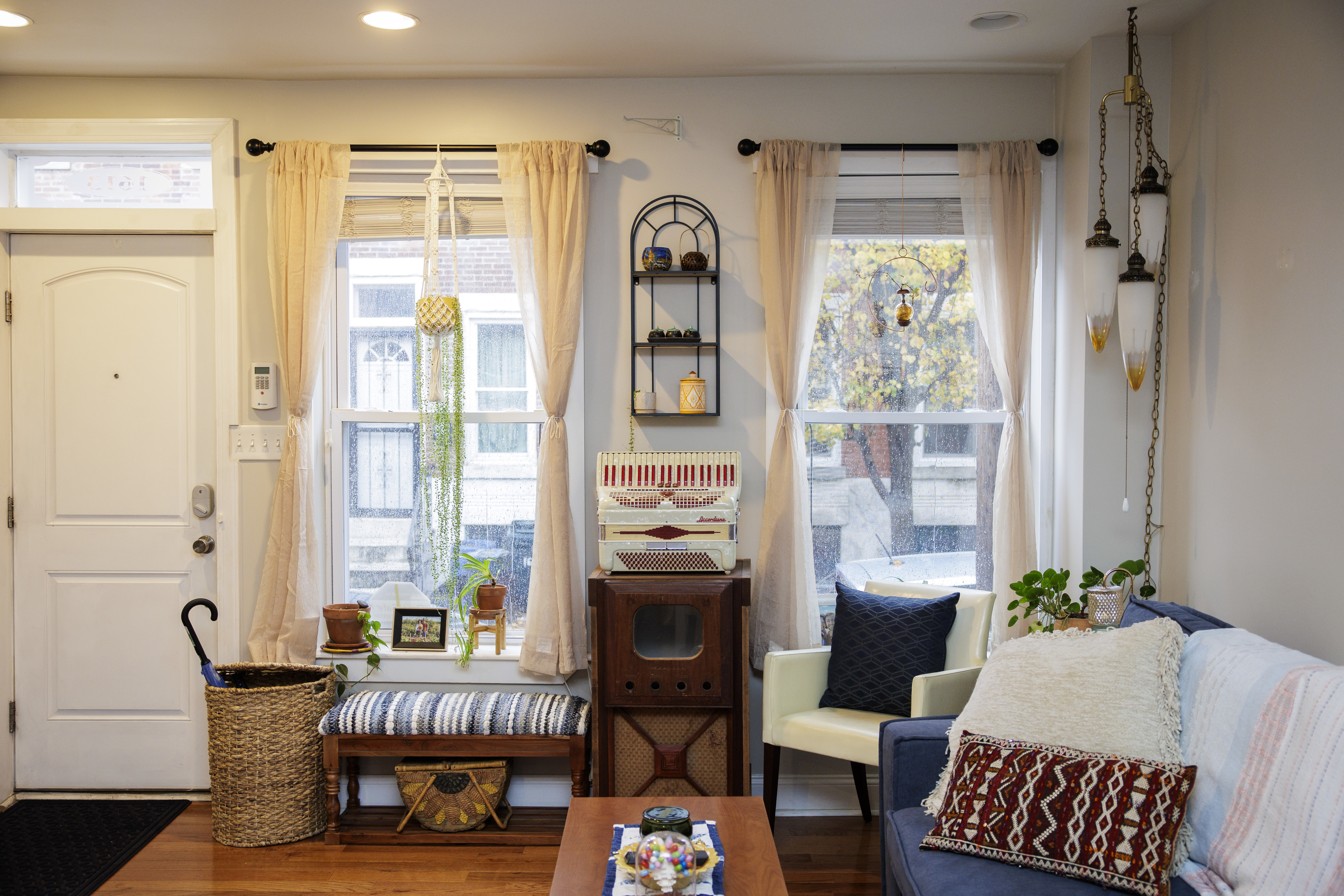
    Girvin and Crino love all the natural light pouring through the living room windows.

    The appeal: Girvin had a good feeling about the house when she saw it online. “I was like, ‘Wow, that looks exactly like where we want to be, at a price point that was quite exciting,’” she said. Even better, it had central air, beautiful hardwood floors, and matched the couple’s aesthetic. But the couple panicked when they saw an open house the next day. They called their agent and secured a same-day viewing.

    Inside, the house aligned almost perfectly with what they had been searching for. What they weren’t expecting, though, were interesting artistic details, like the sunflower etched into the banister and the mural in the backyard. They loved the staircase, the amount of natural light pouring through the living room windows, and the view from their bedroom window of a church they admired. “The house is on a nice, little, cute side street,” Cirsi said. And crucially: “It’s so close to the subway.”

    The second floor sealed the deal. The layout was perfect: a bathroom between the two smaller bedrooms. A built-in sound buffer for their future studios. “Most Philly rowhomes, you go up the stairs, it’s like a bathroom right at the top, and then the three bedrooms in a row,” Girvin explained. “But this one has bedroom, bathroom, bedroom, bedroom. That was ultimately one of the main reasons we bought the house.”

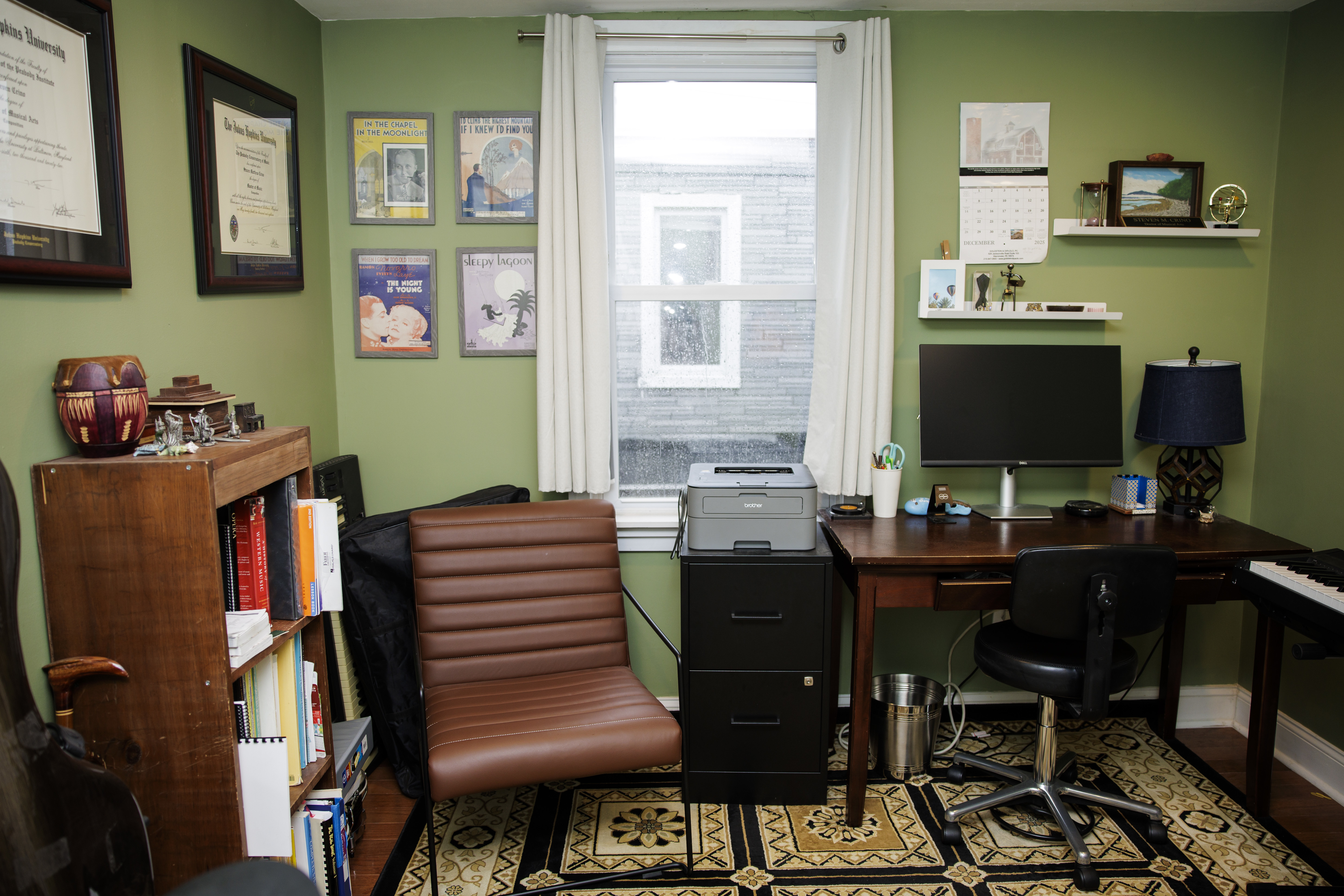
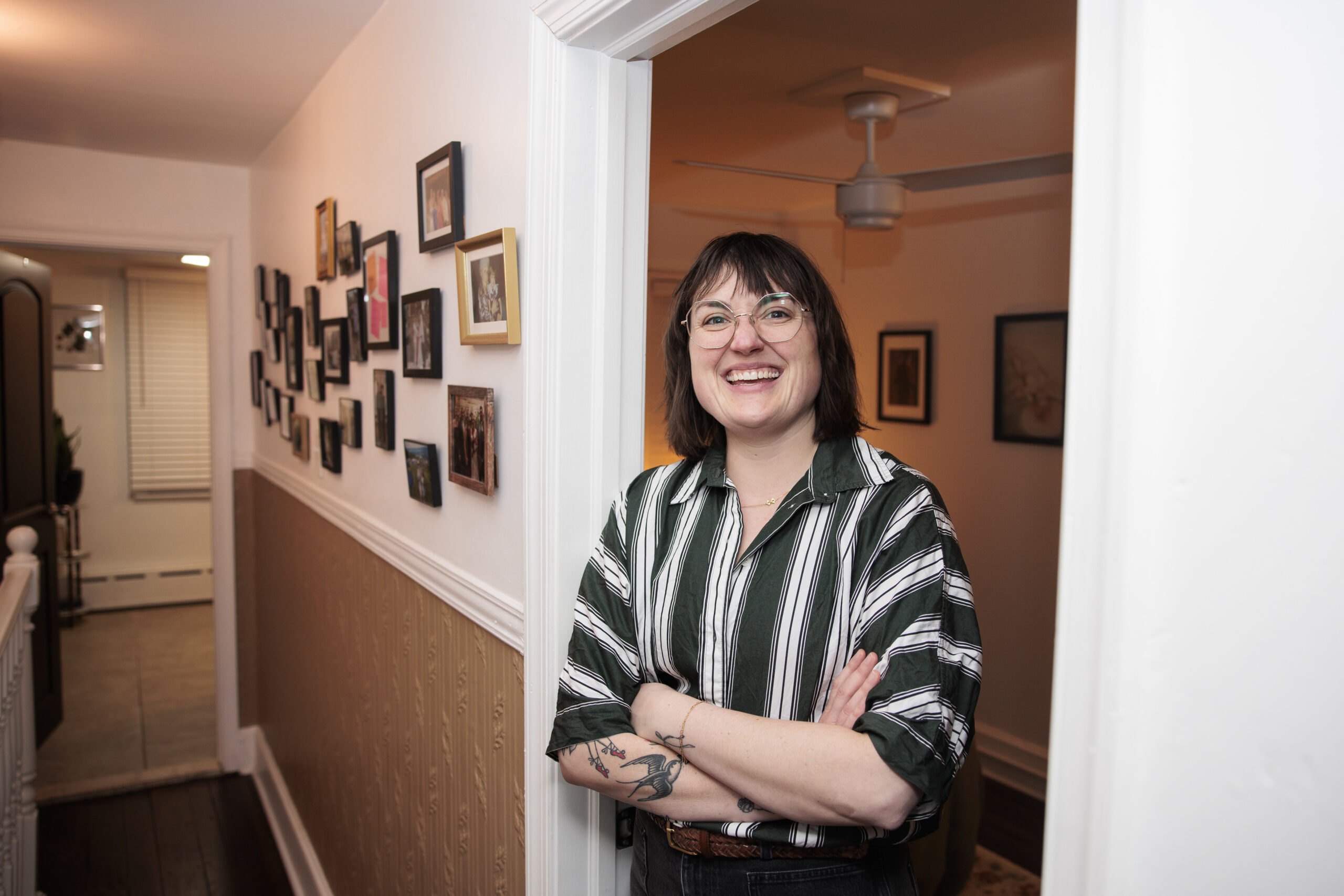
    Crino’s studio is separated from Girvin’s by a bathroom, allowing the couple to practice music at the same time without disrupting each other.

    The deal: The couple made an offer that evening. They offered the listing price — $305,000. “We felt that the house was worth what it was asking,” Girvin said. The sellers accepted right away.

    The inspection revealed two issues. First, the oven needed to be replaced. The sellers issued the couple a credit to buy a new one.

    The bigger issue was the HVAC system. The breaker tripped during the inspection. “We watched it go boop,” Crino said. The fix required electrical work, and they insisted it be completed and certified before closing. “That was the right decision because it definitely was pricier than they thought it was going to be,” Crino said.

    The money: Girvin and Crino had been saving for almost a decade. Every month, they set aside a portion of their earnings in a separate account. They also had money saved for a wedding that they decided to put toward their house instead. “At one point we thought about having a really big wedding,” Girvin said, “but we decided to do the whole micro wedding, DIY backyard thing.”

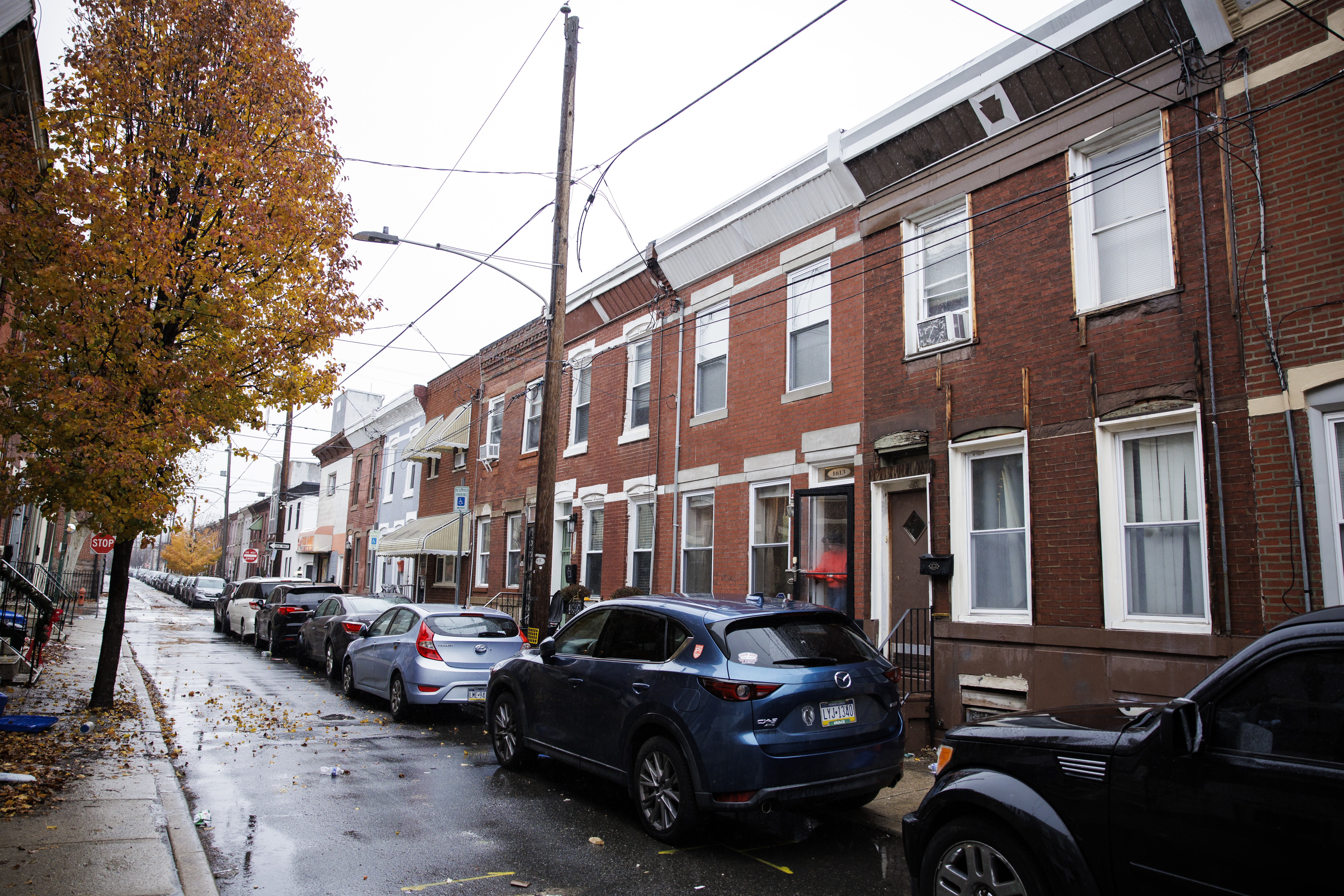
    The small side street the couple lives on was no sweat for their movers, Old City Moving Co.

    Between their life savings and the wedding savings, plus generous gifts from wedding guests, Girvin and Crino had “$80,000-ish” to spend. They put 20% down, which was $61,000, and spent the rest on closing costs, which were $27,000. “That was the $80K right there,” Girvin said. Their mortgage is a little less than $1,800, which is exactly what they had been paying in rent.

    The move: The couple moved in mid-March, one month after they closed. “Moving was relatively painless,” Girvin said. “We hired Old City Moving Co., and they were really great.” They navigated getting a giant moving truck down a tiny side street like pros, backing in so that they could get out more easily.

    Any reservations? None worth mentioning. The only thing they’d add is a second bathroom — another half bath someday, maybe in the basement. But that feels like a future luxury, not a present problem. “Most days we’re like, I love this house,” Girvin said.

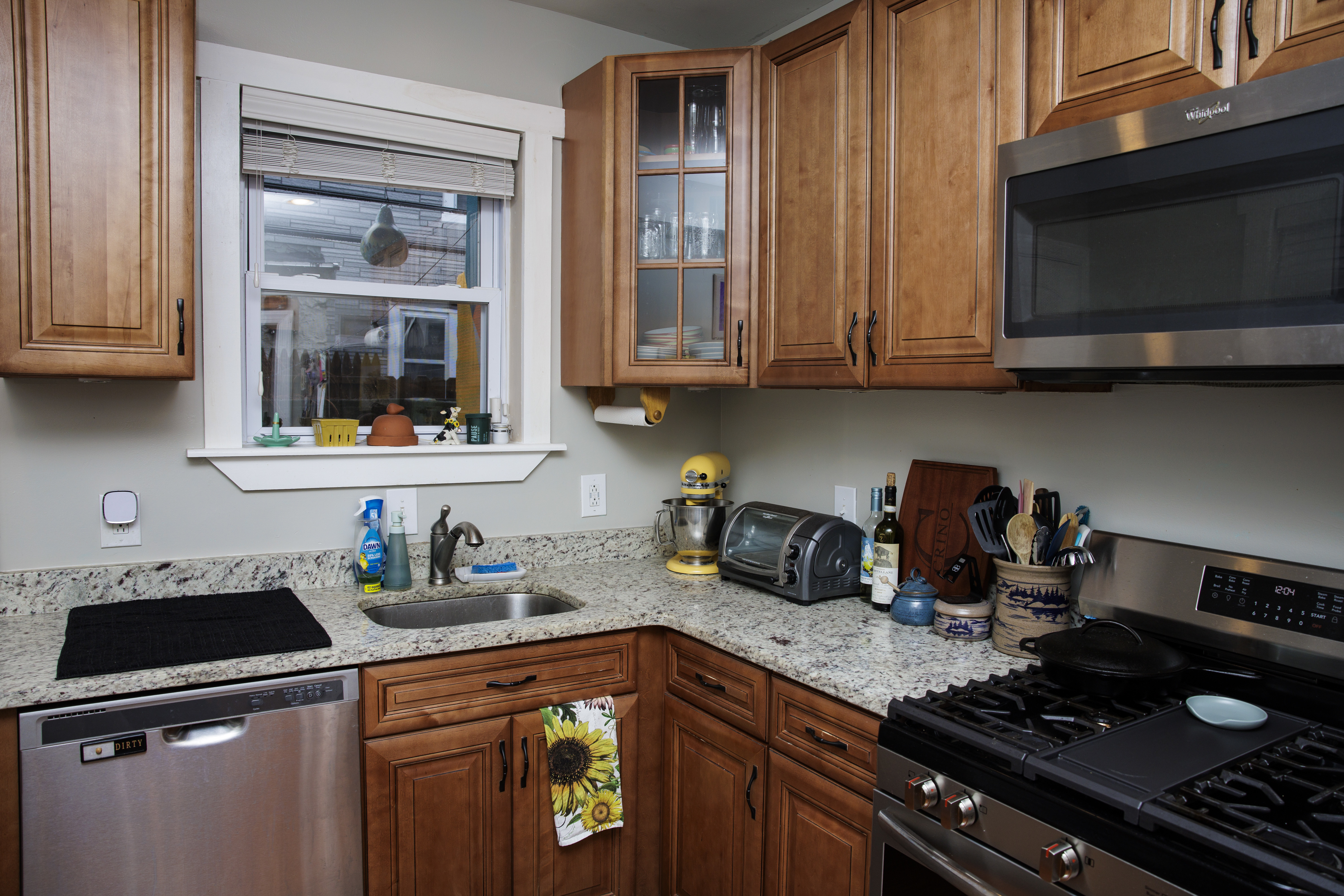
    Girvin and Crino purchased a new oven with help from a seller’s credit.

    Life after close: Their first major purchase was a new oven. “When people come to the house, I’m like, ‘You know, we bought that oven,’” Crino said, laughing. Decorating has been slow and thoughtful. The most sentimental change is the three-teardrop lamp from Steve’s grandmother, now hanging from their ceiling — something they never would have installed in a rental. The backyard is next.

    Did you recently buy a home? We want to hear about it. Email acovington@inquirer.com.
  • Her Brewerytown home search spanned just four blocks. It was enough. | How I Bought This House

    Her Brewerytown home search spanned just four blocks. It was enough. | How I Bought This House

    The buyer: Lulu Tunis, 39, communication specialist

    The house: A 1,060-square-foot rowhouse in Brewerytown, with three bedrooms and one bathroom, built in 1925

    The price: Listed for $270,000; purchased for $240,000

    The agent: Rachel Shaw, Philly Home Girls

    The ask: For Lulu Tunis, it was simply time to buy a house. She had been living in Brewerytown for a decade. Her one-bedroom apartment on Girard Avenue was fine, but she wanted more space. More importantly, she felt financially prepared to buy. “I think I was just ready,” Tunis said.

    Her needs included three bedrooms, easy street parking, and a backyard large enough for the dogs she often pet sits. Proximity to Girard Avenue was also important. “I didn’t want to be too far off where I normally hang out,” Tunis said. She was OK with only one bathroom and also a fixer-upper. “I’m pretty handy,” she said.

    The hardwood staircase leads to three large bedrooms upstairs.

    The search: Tunis began looking in April 2024 and narrowed her search to a four-block radius. “There were actually a lot of options,” she said. Her budget was $250,000.

    In the 10 homes she saw, she ran into all kinds of strange layouts. Some of the third bedrooms were the size of a closet. Others didn’t have closets. Neither situation would do. Nor would the house with the extra narrow hallways upstairs, or the one that smelled like cat pee. She considered a couple of duplexes in case her family moves in with her down the road, but they needed too much work.

    Tunis was OK with just one bathroom but has enjoyed having a remodeled half bath on the first floor.

    She fell in love with a house on a corner lot that had great light and tried to make an offer, but someone beat her to it. “I still walk by it all the time,” said Tunis, “and I get a little jealous.”

    The appeal: The house Tunis bought charmed her immediately. There was a large, golden mirror near the entrance. “It’s great for ‘fit shots,’” Tunis said. She liked how open the downstairs was and that the laundry was right off the kitchen. The unfinished basement needed some work, but it had plenty of room for storage. Upstairs, Tunis was delighted to find three relatively large bedrooms (each one can easily fit a bed and a desk) and recently redone hardwood floors. It also has 1½ bathrooms.

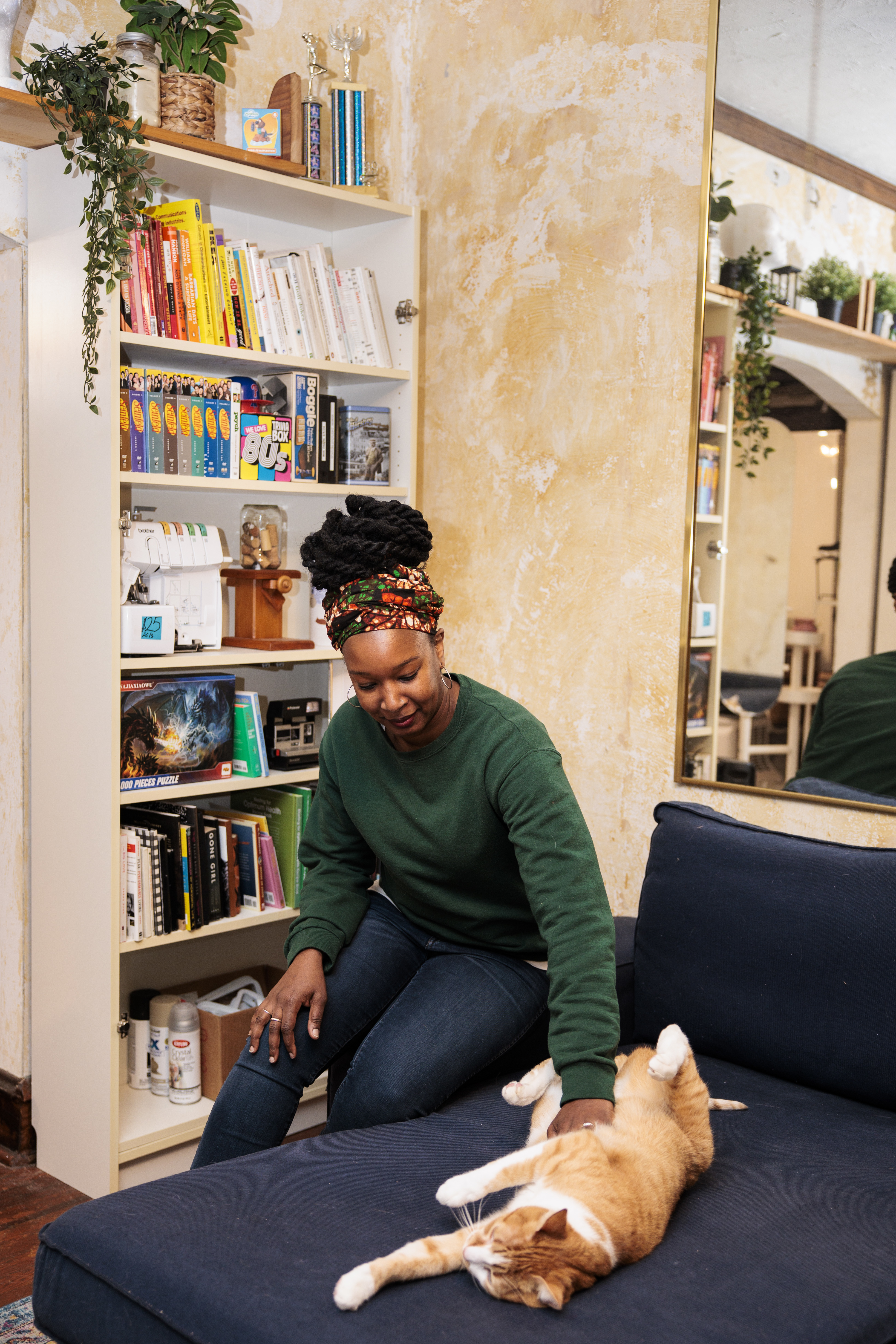
    The large gold mirror that Tunis immediately fell in love with when she stepped inside the house for the first time.

    The downstairs floors weren’t in great condition, but Tunis liked that they were original to the home. Despite being dated, the house was full of great features. “I could see the potential,” said Tunis.

    The deal: The house was above Tunis’ $250,000 budget, but it had been on the market for 80 days, so her real estate agent suggested they submit a bid under the asking price. Tunis offered $240,000 and the seller accepted immediately.

    During negotiations, Tunis asked the seller to pay for termite treatment and a home warranty, which covers the cost of repairing or replacing major appliances and systems. The inspector warned Tunis that the heater would probably have to be replaced within the year. Everything else looked good.

    The money: Tunis had a little under $5,000 saved for her home purchase. Her aunt gave her another $5,000. She also received a Keys to Equity grant for $20,000 and a Philly First Home grant for $10,000. She used $17,000 for the down payment and shelled out $16,000 for closing costs. With a 6.375% interest rate, her monthly mortgage payment is $1,392.

    The move: Tunis officially closed on Nov. 15 but waited until the end of December to move in. She wanted to tear down the wallpaper in the living room. The process took longer than she expected and forced her to abandon her other pre-move-in home-improvement plans. “I just lost motivation,” Tunis said.

    The house has plenty of places for Tunis’ cat, Huey, to nap.

    Because Tunis’ new house was only a block from her old apartment, she moved gradually at first, carrying small loads on foot. Her family arrived the day after Christmas to help move bigger stuff. They rented a U-Haul and moved everything in two trips. Tunis’ first night in her new house was Dec. 29. She started a new job the next day.

    Any reservations? The biggest disappointment in the house has been the lack of natural light. It’s blocked most of the day by a five-story school across the street. “I only get sun first thing in the morning and then around sunset,” Tunis said. Her plants are suffering.

    Tunis’ house is in the middle of the block and across the street from a tall building, so it doesn’t a lot of light.

    Life after close: So far, Tunis is happy with the way her bedroom looks, and that’s about it. The rest of the house remains a work in progress. “There’s always some half-built furniture somewhere,” she said.

    Her next big project will be replacing the drywall in the back room downstairs. She took a class at West Philly Tool Library and plans to do it herself — or at least try. “I’m not ready to pay anyone yet,” she said. Once the walls are complete, she’s going to paint the kitchen, which is currently bright blue. She’d prefer terra-cotta or dark tan.

    Tunis says that even though her space is currently a “hot mess,” she likes coming home to it. “Coming to an apartment was fine. But coming to my house? It’s like ‘OK, this is my home.’ I’ve always got little projects to do.”

    Did you recently buy a home? We want to hear about it. Email acovington@inquirer.com.
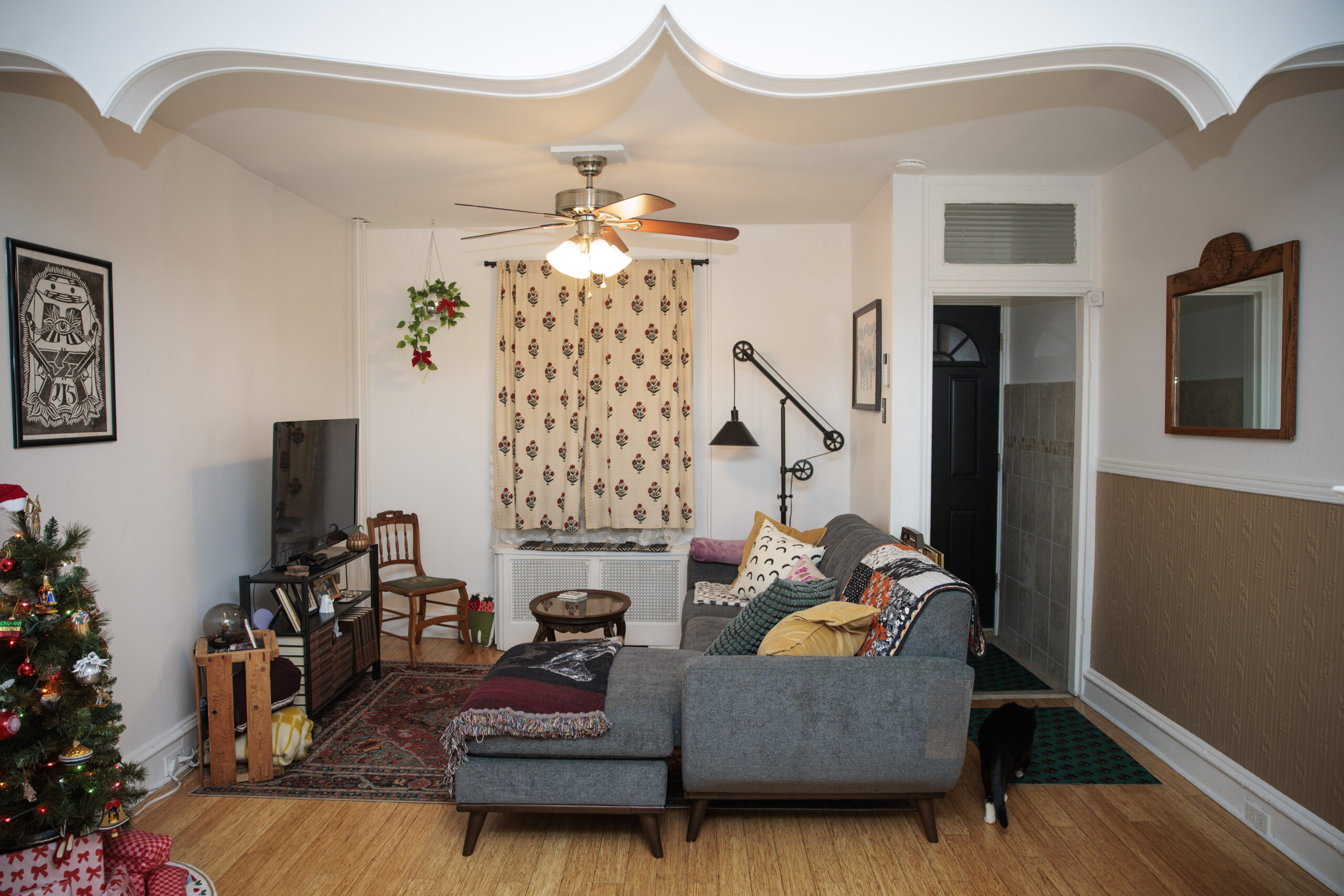
  • How to have a perfect Philly day, according to indie rocker Golden Apples

    How to have a perfect Philly day, according to indie rocker Golden Apples

    Russell Edling has been in Philly long enough to remember when Fishtown was quiet — “pretty sleepy,” he said. That was more than a decade ago, when he was a fresh Temple grad.

    Things have changed a lot since then, both for Fishtown and Edling. A musician who records under the name Golden Apples, Edling just released his fourth album, Shooting Star, in September. It’s a “record of songs about writing songs,” he said — and about trusting your creative instincts.

    Edling’s own instincts extend beyond music. He also dabbles in design and helps run Freehand Supply, the art shop he and a friend opened in the neighborhood earlier this year.

    “When I first moved here for college in 2008, there was nothing like that in Fishtown,” he said. “I used to bike up to Temple just to get art supplies. It feels good to be able to offer that to people now.”

    Here’s how Russell Edling would spend a perfect day in Philadelphia.

    7 a.m.

    I get up around 7 and I like to go running. I do a casual jog through the neighborhood and loop through Penn Treaty Park, then run around the casino and come home. It feels special to wake up and, in like 15 minutes, be running by a river through a park.

    9 a.m.

    My wife and I have a favorite spot to get breakfast. It’s this place in South Philly called Comfort Floyd. It’s wonderful. I think it’s the best pancake I’ve ever had. All their food is so good. The ambience is very chill and pleasant, too. We will ride our bikes down there and hang out as long as we want.

    Noon

    After that, we will bop around South Philly a little bit. I really like Brickbat Books. It’s a great spot. They have a lot of art books, a lot of used books, a really great curated selection. They also have some records.

    We will probably go to Retrospect on South Street, too. My partner, Mimi, really loves thrifting. I have less of an appetite for it. I get exhausted by the experience sometimes and have to dissociate.

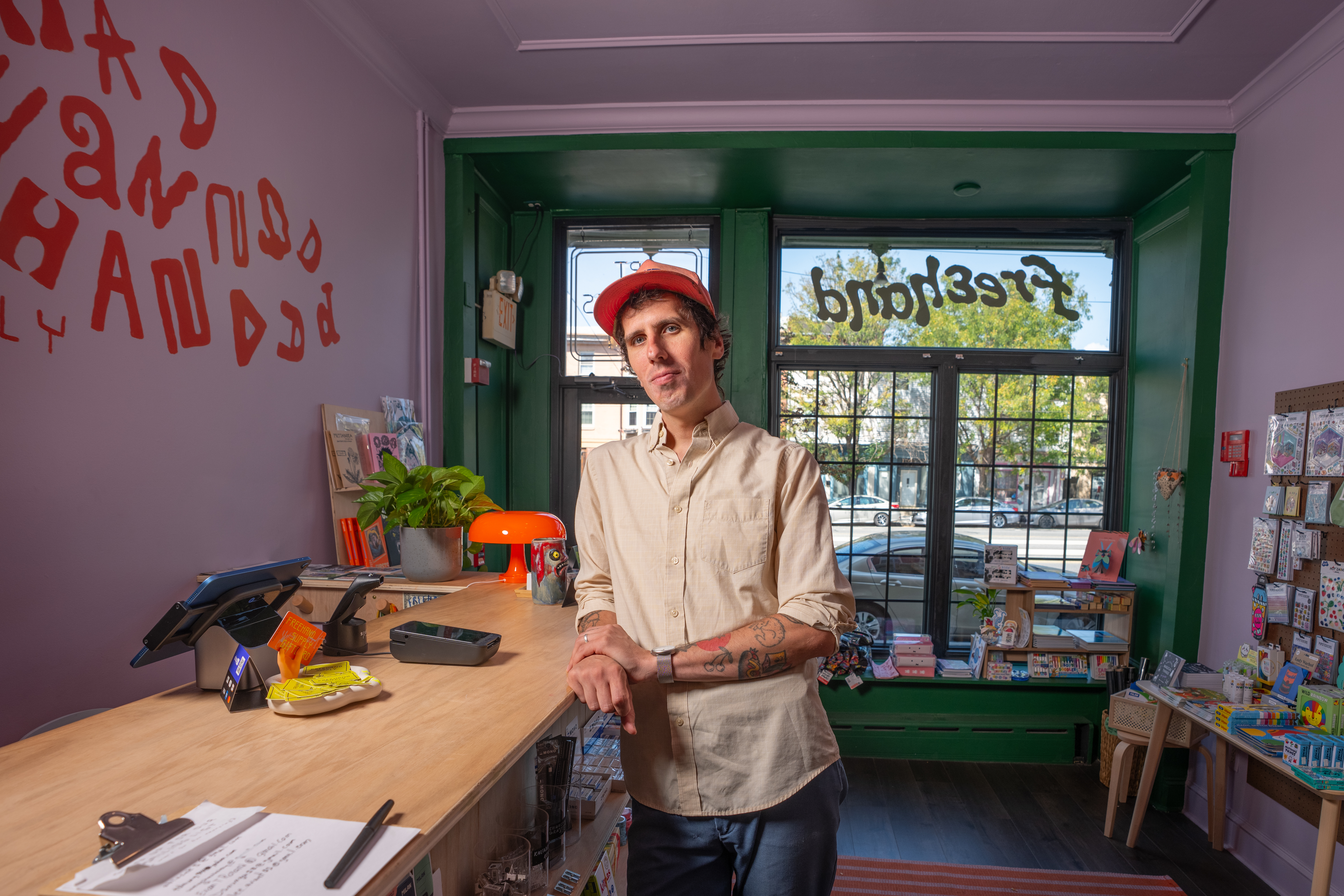
    Russell Edling, a musician who goes by the moniker Golden Apples, in his art supply store, Freehand, in Fishtown.

    2 p.m.

    On our way back up to the neighborhood, we might stop at Freehand just to make sure everything’s going all right there. Then we’ll head home to walk the dog. We have a wonderful black German short hair–pointer–lab mix. We live right by a soccer/baseball field that he loves to run around. You’re not supposed to bring your dogs in there, but everybody does anyway.

    Basil cream, confit garlic, ricotta, fontina, and mozzarella atop a white pizza at Pizza Richmond.

    3:30 p.m.

    If it happens to be a weekend when the Richmond Street Flea is happening, we’ll definitely go to that.

    There are a bunch of little shops on Richmond Street, and they all open their doors. Everybody’s out on the street. They have vendors, food, and pop-ups. Even live music.

    We’ll end up popping into different shops. There’s a vintage store called Big Top. There’s Launderette Records, which is an incredible record store. There’s a jewelry store called Tshatshke, where my partner and I got our wedding bands. And there’s a great pizza spot — Pizza Richmond. They also have soft-serve ice cream. We’ll hang out at the flea market for a while. Maybe see some music, talk to some friends, and just hang out.

    6:30 p.m.

    If we’re still out for the day after the flea market, we’re going to see a show. Our favorite venue is Khyber Pass Pub. It’s been around for a really long time. I think Nirvana played there. Guided By Voices played there. So many legendary people have played there over the years. It’s a small, intimate space, but they have great shows all the time, and they have an incredible menu.

    Franklin Fountain ice cream: “Our equivalent of a nightcap.”

    11 p.m.

    Our equivalent of a nightcap is ice cream at Franklin Fountain because they are open until midnight.

    There are two Franklin Fountains in the same building. One is 1920s style. The other is 1950s style. No one goes to the 1950s one for some reason, so we go to that one to skip the line. I know it’s very touristy, but I have worked in ice cream throughout my life, and I think it’s the best ice cream in the city.

  • It’s 35 degrees — and there is a nearly naked man standing on a box by the Liberty Bell

    It’s 35 degrees — and there is a nearly naked man standing on a box by the Liberty Bell

    On Thursday, when low temps hit 35 degrees and a wild wind whipped down Market Street, a young man climbed on a box in front of the Liberty Bell and stripped to his underwear.

    Turns out the nearly naked man on the box is an artist from Baltimore. His name is Ham. “Like the sandwich,” he said. Standing on a platform in his underwear is, evidently, performance art — a commentary on social media. “Rather than using digital platforms to share art and gain exposure,” Ham told me, “I’ve made a physical platform to stand on in public and talk to strangers.”

    In other words, he doesn’t want to be a content creator; he wants to be the content and let others do the creating. And they do.

    People snap photos of him, take videos of him, and scan the QR code on the corner of his platform, which links to, what else but his Instagram. It’s part performance art, part guerrilla marketing.

    “I do recognize that as an artist I need to have some form of digital presence,” Ham said, “I just don’t want to be responsible for creating it.”

    He’d rather shiver.

    Ham has been standing on platforms in his underwear on and off for two years in several frigid cities, including New York, Berlin, and a small village in Norway. “I use it as my excuse to travel,” he said.

    Ham is saving the money people give him for an engagement ring for his girlfriend.

    He also uses it as a way to raise money for an engagement ring for his girlfriend — although that wasn’t the original goal. He only decided to write “engagement ring savings fund” on the side of the platform after he grew tired of explaining to people that he wasn’t freezing in his underwear for money.

    “I was like, ‘if people have to have a financial explanation for this, I’ll say it’s an engagement ring fund for my girlfriend,’” he said. Ham wouldn’t disclose how much money he has made, just that it’s “more than you might think,” and enough to afford a custom-designed ring in New York. (I’m guessing at least $2,000.)

    Ham is enjoying his time in Philadelphia more than other cities.

    “This is actually the most fun I’ve had in terms of the quality of interaction and number of people,” he said, visibly shivering.

    Several people have approached him to ask him what he is doing. Two National Parks officers checked in after receiving calls of concern. They offered him clothes; he declined. A police officer stopped by to ask if he was OK. One woman wanted to know whether he was promoting a cause.

    But the number one question Ham gets from strangers? “Is this a fantasy football punishment?”

    No. It is art.

    If you’re interested in seeing a nearly naked man shiver on a box, Ham will be at the Liberty Bell all day Friday and Saturday. He leaves around 4:30 p.m., partly because he’s noticed people don’t like to talk to him as much once it’s dark.

    Understandable.

  • How to have a Perfect Philly Day, according to Gritty

    How to have a Perfect Philly Day, according to Gritty

    Ever since he emerged from the rubble of the Wells Fargo arena construction site in 2018, the Philadelphia Flyers mascot, Gritty, has been busy wreaking havoc across Philadelphia. One moment he’s dumping popcorn on Flyers fans in the Chaos Corner, the next he’s mooning the goalkeeper for the Boston Bruins. More often than not, he’s behaving recklessly with a T-shirt cannon.

    Gritty shows his rear end to the Boston goal keeper during the Boston Bruins at Philadelphia Flyers NHL pre-season game at xfinity mobile ARENA in Philadelphia on Sept. 27, 2025.

    Despite being famous for his game day antics, Gritty arguably gets into even more mischief off the ice. Who can forget his infamous Kim Kardashian impression?

    Or that time he crashed Stephen Colbert’s Super Bowl party. Or how about when he tore through the streets of Philadelphia on a motorcycle to celebrate his third birthday. What did he do on his fourth birthday? Get divorced and start smoking Marlboro Reds?

    Does Gritty like being so busy? If he could spend his day doing anything he wanted, would he really spend it throwing sheet cake at people and making celebrity appearances everywhere? To find out, we asked the bright orange, googly-eyed mascot to walk us through his perfect Philly day, and he responded in his perfect Gritty way.

    4:55 a.m.

    I roll out of bed just so I can tell people that I get up before them. I’m no hero, so I go back to bed. I sleep naked on a concrete floor, no covers, with a memory foam pillow.

    8:30 a.m.

    By this point in the morning, I’ve hit snooze a fistful of times. Time to start my lil day. First things first, coffee. I like my coffee like I like myself: gritty. I make it with no filter because I like the pulp. I drink it outside so I can bask in the sweet sounds of I-95 rush hour traffic.

    10 a.m.

    I’m a pretty busy Gritty. I make appearances at events all over the city. I’m also incredibly photogenic, as you know. I reserve my midmornings for events and photoshoots. My favorite thing to do is the 2026 Gritty calendar. It’s for charity, NBD. I’ll do anything for the perfect shot, like squeezing my nude body into one of those skinny rowboats at Boathouse Row and laboring my way down the Schuylkill.

    Gritty likes to spend the afternoon bouncing around Philadelphia, posing for photos and popping up at special events.

    Noon

    I’ll do a little lunch at one of my favorite Philly spots. There’s a dumpster on Broad Street that serves the most delicious half-eaten burritos. I’m gatekeeping the location because I don’t want to see my favorite burrito spot overrun with tourists. But trust me, they’re decent.

    2 p.m.

    I usually eat until I feel sick, so I like to take a nap after lunch. I’ll sneak onto one of those ships at the Navy Yard and go down for about an hour. Hopefully my upset tum tum settles.

    3:30 p.m.

    I’ve got people to see and places to be. But instead I do neither. The afternoon is my moment of zen. Maybe a quiet walk, maybe a light jog, maybe a full sprint after a group of strangers just to keep them on edge. There’s not a bad place in the city to chase strangers. Head on a swivel, Philly.

    6 p.m.

    Time for dinner. I’m a bit of a health nut, so I’m having a salad with a steak on the side. Maybe my steak is slathered in cheese. Maybe I eat it on a roll. OK, maybe it’s a cheesesteak. It could be from anywhere. I don’t judge a cheesesteak on taste. Only on girth. Maybe I don’t stop at just one. Maybe I didn’t want to talk about it because I thought you’d judge me. Maybe get off my case about it. Maybe cheesesteaks are the state fruit of Philadelphia, and I’m a supportive citizen.

    Maybe you wouldn’t be so quick to judge if you relaxed a little bit and had a cheesesteak for yourself. Maybe I’m just built different and my body craves protein, and this is the only way to maintain my perfect fazeek. Maybe you’re just jealous that you’re counting calories while I’m counting empty wrappers. Anyway, yeah cheesesteak dinner.

    Maybe Gritty eats a cheesesteak from John’s Roast Pork.

    7 p.m.

    It’s game time. I’m spending the next few hours at Xfinity Mobile Arena getting the people going! My favorite place, my home. I like to keep it out of pocket at Flyers games. Make some people laugh, throw some cake at people. No perfect day of mine would be complete without hurling a sheet cake through the air at a stranger’s face. Highly recommend if you’ve never tried. I live for chaos and chaos lives for me.

    11 p.m.

    Time to sleep. Naked. Airing out the follicles is a very important part of my fur care routine.

  • In Port Richmond, this new homeowner found a way to buy her house without sacrificing all her savings | How I Bought This House

    In Port Richmond, this new homeowner found a way to buy her house without sacrificing all her savings | How I Bought This House

    The buyer: Sindhu Nair, 46, product manager

    The house: a 1,254-square-foot rowhouse in Port Richmond with 3 bedrooms and 2½ bathrooms, built in 1925.

    The price: listed for $315,000; purchased for $325,000

    The agent: Rachel Shaw, Philly Home Girls

    The ask: The first time Sindhu Nair tried to buy a house, the deal collapsed the day of closing. A lender told her last minute that he couldn’t approve the loan after all. The experience left such a sour taste that she stepped away from the market for years. But by 2025, she felt ready to try again, especially after seeing how much money she had sent her landlord on Cash App in the past two years. She was done giving her money to someone else, she said.

    Sindhu Nair loved the light and the “good vibes” in the house’s living room.
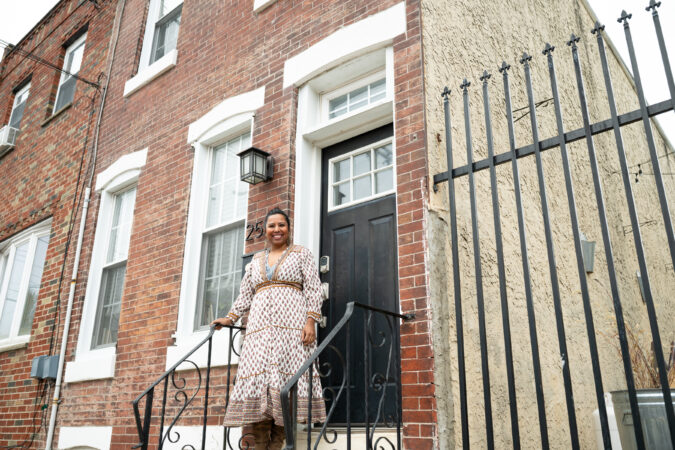
    Nair had been looking for a house for years and knew what she wanted. “I trusted my gut instincts,” she said. She needed at least two bedrooms and a bathroom on the ground floor. She also wanted a small backyard for her dog and access to easy street parking. She limited her search to the Port Richmond area. “My dog walker lives in this area,” Nair said, “so I’ve been in the neighborhood a lot, and it’s just so cute.” Her budget was $350,000.

    The search: Nair began her search in July. The first place she toured had two private parking spaces but needed a gut renovation. “I didn’t want to take on that financial burden,” she said. She visited two other open houses that afternoon. Both appealed to her, and she hoped to make an offer on the less expensive one, but it already had two bids. She would have had to offer well over the $250,000 asking price to be competitive.

    Meanwhile, the pricier home — the one she actually preferred — had no competing offers. After running the numbers and realizing the difference in cost was smaller than she expected because of the competing offers, she shifted course. “I decided just to go for the house that I wanted,” Nair said.

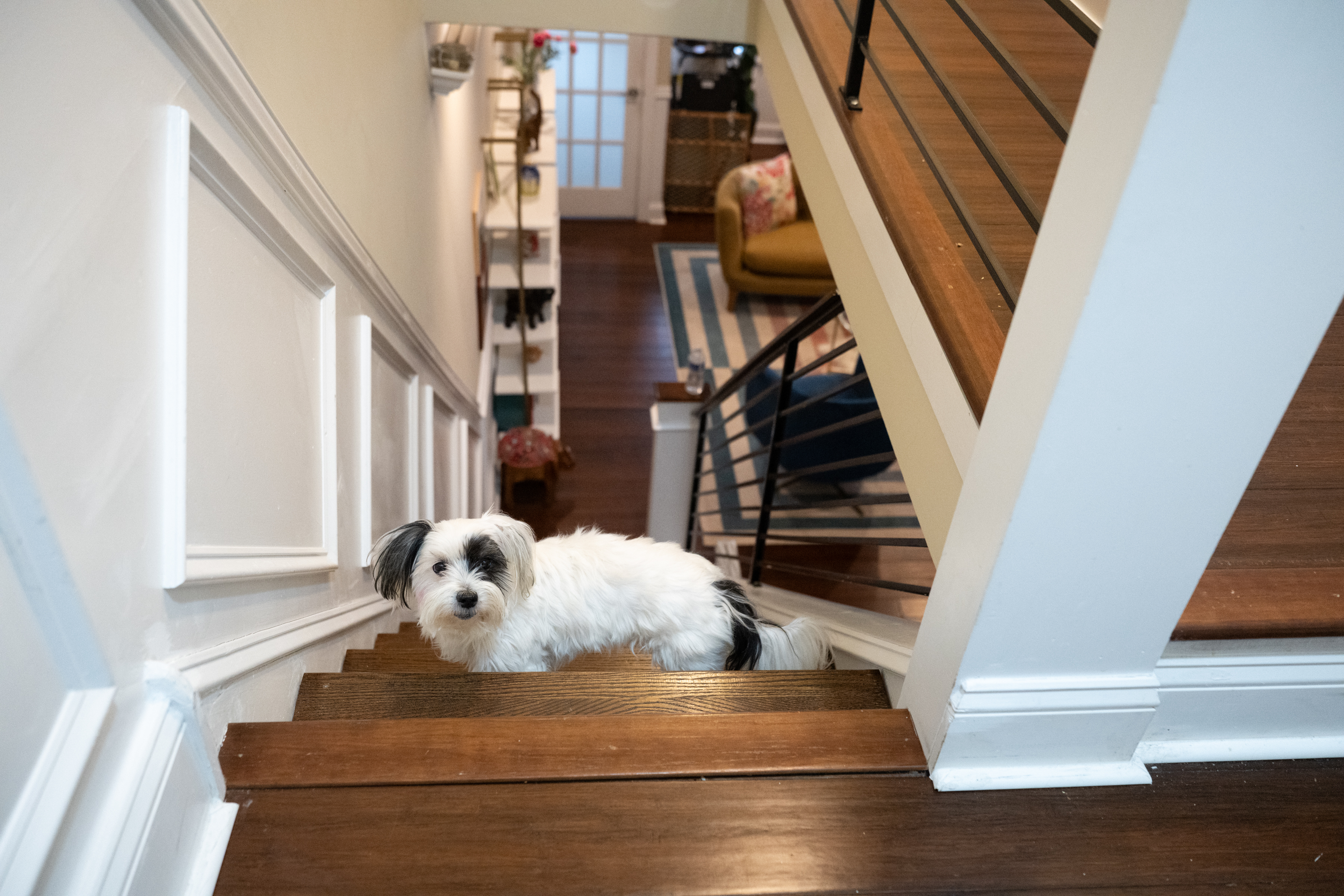
    Sindhu Nair’s dog, Scotty, approves of her purchase.

    The appeal: Nair says she knew she had found the one as soon as she stepped inside. “I think the universe was ready to provide me with this house,” Nair said. The light looked amazing, the space had a “good vibe,” and the backyard was the perfect size for her dog, Scotty. She loved that it was move-in ready. “Whoever rehabbed it did a beautiful job,” Nair said.

    The deal: The seller’s agent told Nair at the open house that the seller was motivated and willing to offer a seller’s assist, which is when the seller agrees to cover a portion of the buyer’s closing costs. Nair and her agent asked for enough to cover nearly all of Nair’s closing costs.

    In return, Nair offered $325,000 — $10,000 over the asking price — even though there weren’t any other offers. “We wanted to make sure that with the seller’s assist, she was still going to make a profit,” Nair said. She views the seller’s assist as a tool she used to keep more money in her bank account after she purchased the home. “It has nothing to do with financial stability,” Nair said. “It’s a financial tool that people should take advantage of.”

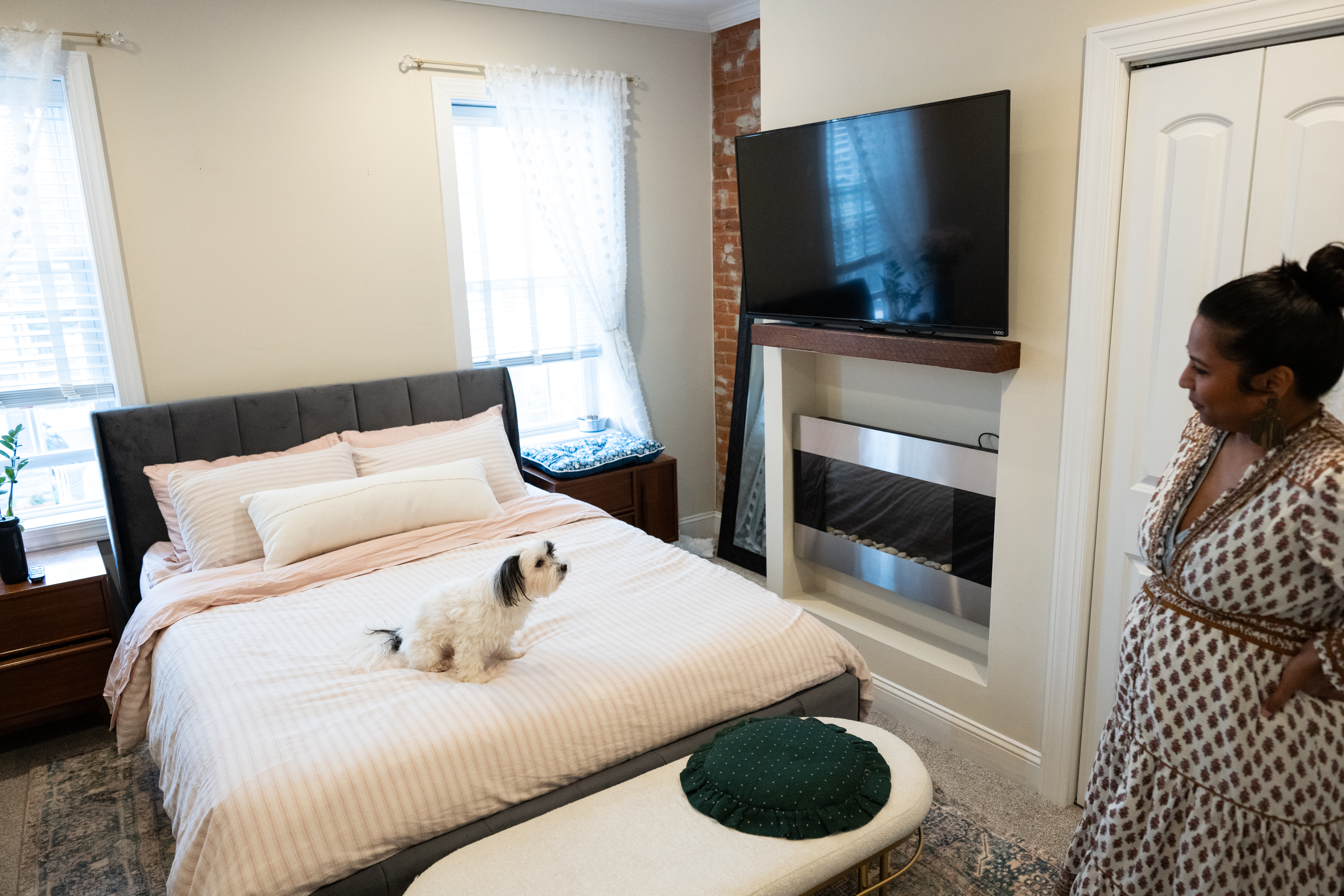
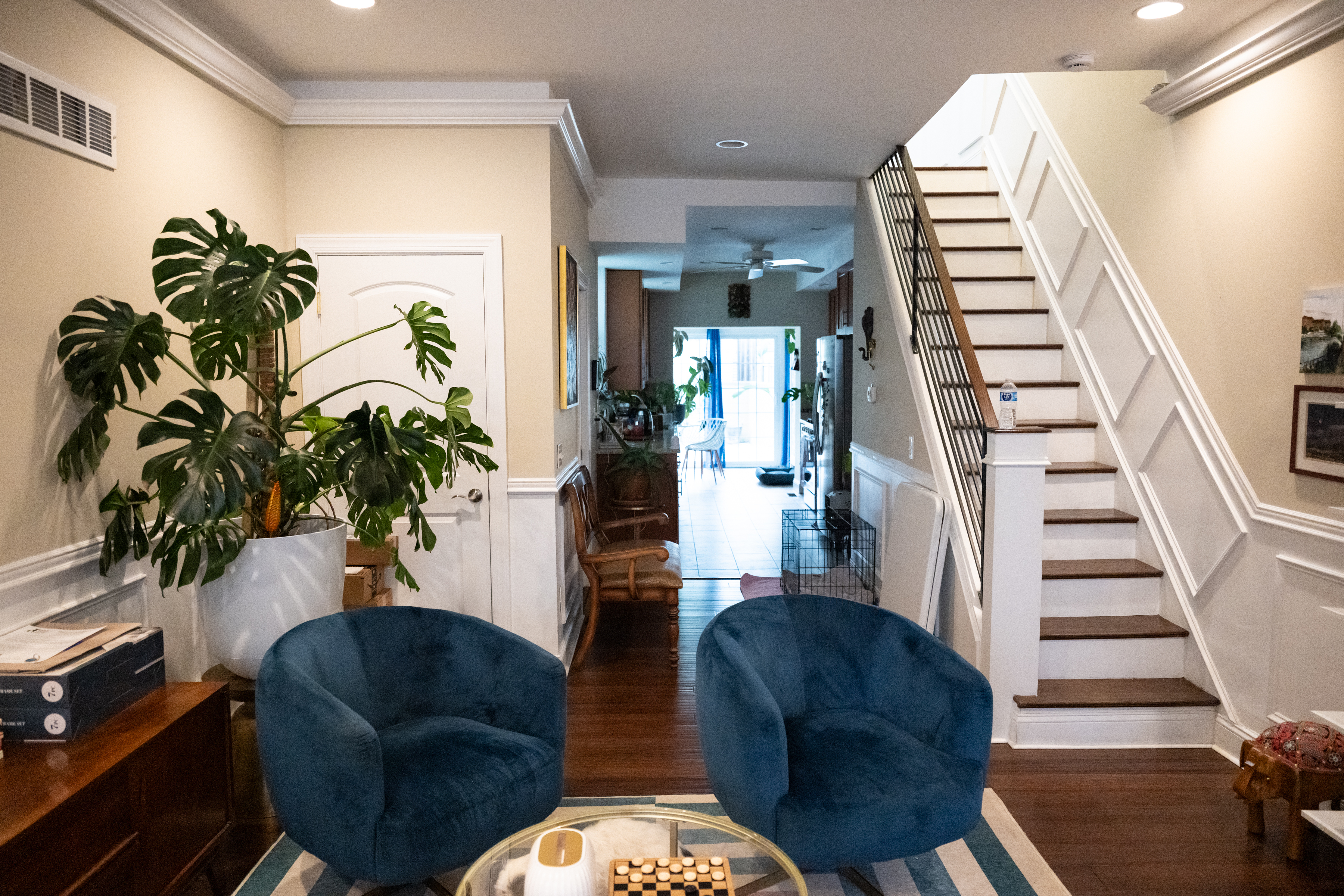
    There are three bedrooms in Nair’s home. Scotty sleeps in the bedroom with Nair. Nair’s foster cat has her own room.
    The seller accepted Nair’s offer and agreed to the amount for the seller’s assist.
    The money: Nair began the year with about $60,000 in savings, but she used roughly half to pay off her private student loans. “They’d been the bane of my existence,” she said. “I imagined being 70 or 80 years old with debt collectors still calling me.” Paying off that balance left her with about $30,000, money she had saved gradually over the years. She didn’t want to use all of it for a down payment, though. “I wanted to have a cushion for anything that came up after I bought the house,” she said.

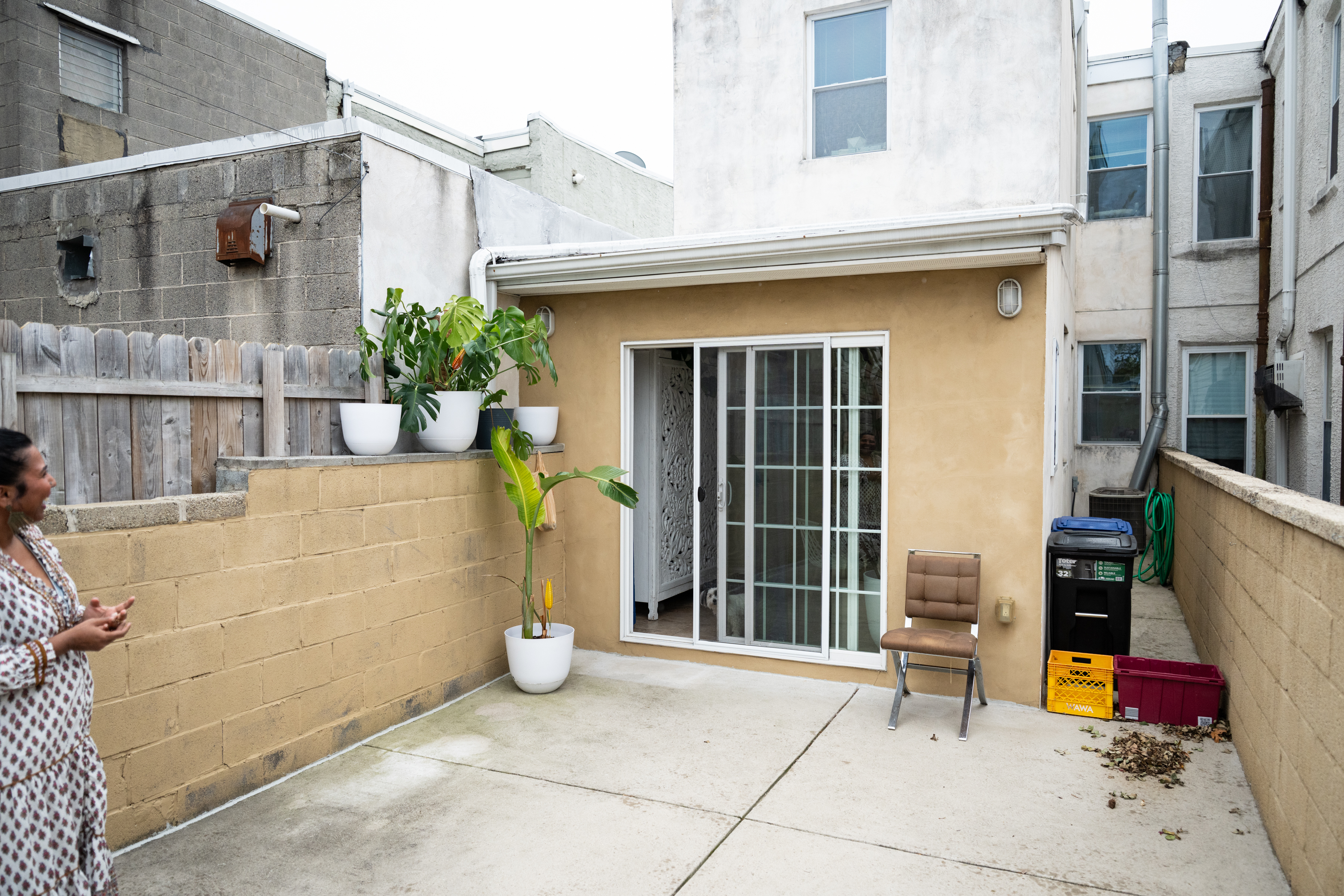
    The back patio is the perfect size for Scotty, Nair says.

    To keep more cash on hand, she worked with her lender to take out an FHA mortgage, which requires as little as 3.5% down and allows sellers to contribute to closing costs. With a seller’s assist, her out-of-pocket contribution dropped to around $10,000. Without it, she would have paid closer to $20,000. “It’s my first home,” Nair said, “and I’m proud of the strategies I used to get it.”

    The move: Nair closed on the house on Aug. 25, a few days earlier than planned. The original closing date was Aug. 28, but she asked to move it up so she could leave her apartment before Sept. 1 and avoid paying another month of rent. She admits she was nervous while she waited for her mortgage to be approved. “I was sweating because of my first experience,” she said. “But my lender kept telling me, ‘Nope, you’re good. I would have told you if there was an issue.’”

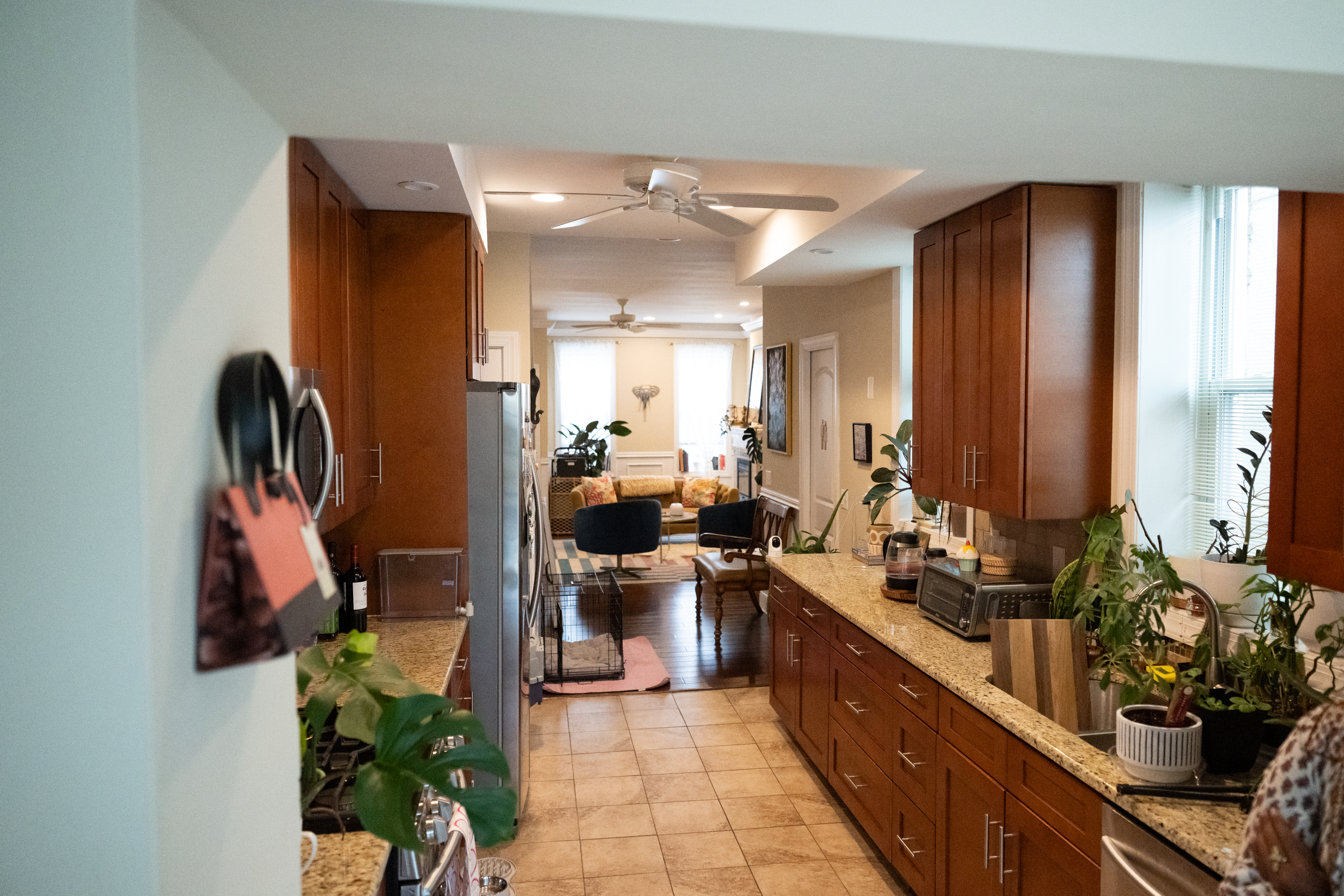
    The kitchen and living room in Sindhu Nair’s home.

    Once her approval came through, she began lining up help. She hired someone to assist with packing and brought in movers for the actual move, but the two-step arrangement proved more frustrating than she expected. “I realized I didn’t save any money, and I just gave myself a headache,” she said. Next time, she plans to hire a company that handles everything — packing, loading, unloading, and unpacking — in one coordinated sweep.

    Any reservations? Nair says she doesn’t have any regrets about the purchase. “I think I got lucky, and I feel very proud of myself for having this accomplishment,” she said. She’s thrilled to have paid off her student loans and bought a home in the same year, and she hopes her experience sends a message to others. “I want people to know, especially single women, that you can do this,” she said. “It’s not easy; it’s very hard, but it’s doable.”

    Life after close: A Halloween housewarming party forced Nair to get the main parts of her house unpacked and organized, but there is still work to be done. She just started unpacking her basement and is getting ready to set up her office in the smallest bedroom. She’s not sure what she’ll do with the other bedroom. It currently houses an animal. “I have a cat that I’m fostering,” Nair said, “and that’s her bedroom.”

    Did you recently buy a home? We want to hear about it. Email acovington@inquirer.com.