Dien has accepted a consulting opportunity and was not available for an interview on Tuesday. The museum had no further details to share, a spokesperson said.
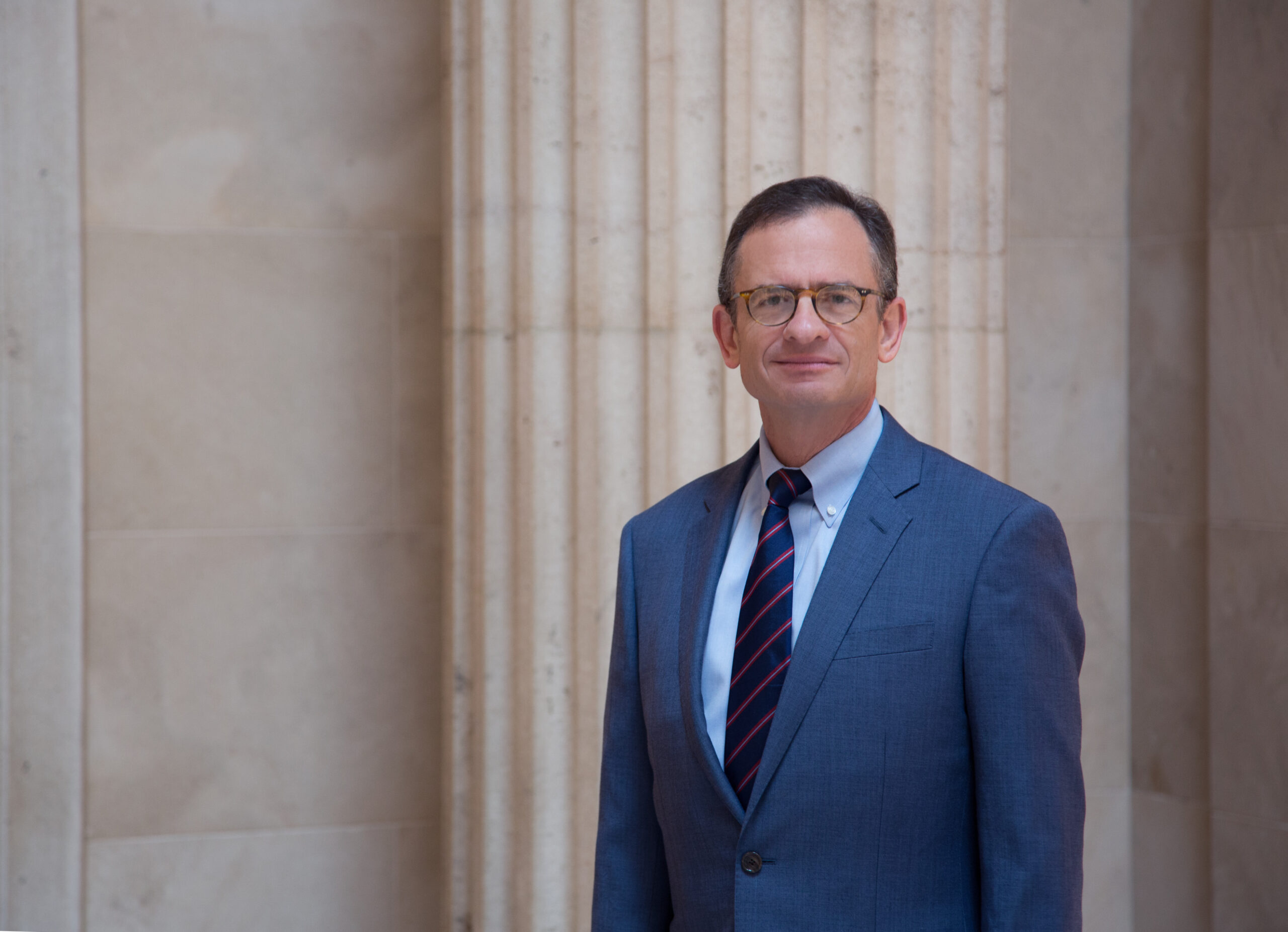
The change is the first in the senior executive team since veteran museum and nonprofit leader Daniel H. Weiss was brought in as director and CEO about eight weeks ago.
The museum is currently mulling whether to keep or alter the rebrand, Weiss said in a recent interview.
Dien, who was previously vice president of advancement and partnerships at the Grammy Museum in Los Angeles, oversaw the Art Museum’s name change and new visual identity. He and Suda had hoped the museum’s rebrand would revive sagging attendance after its unveiling in early October.
“It’s going to bring people in and help put us more clearly on the map,” Suda said at the time.
“We have so much research that shows there is this brand perception that we’re the castle on the hill,” Dien said last November, during the rebrand’s rollout. “And so my job right now is [to ask], ‘How do we come down the steps and meet people where they’re at?’”
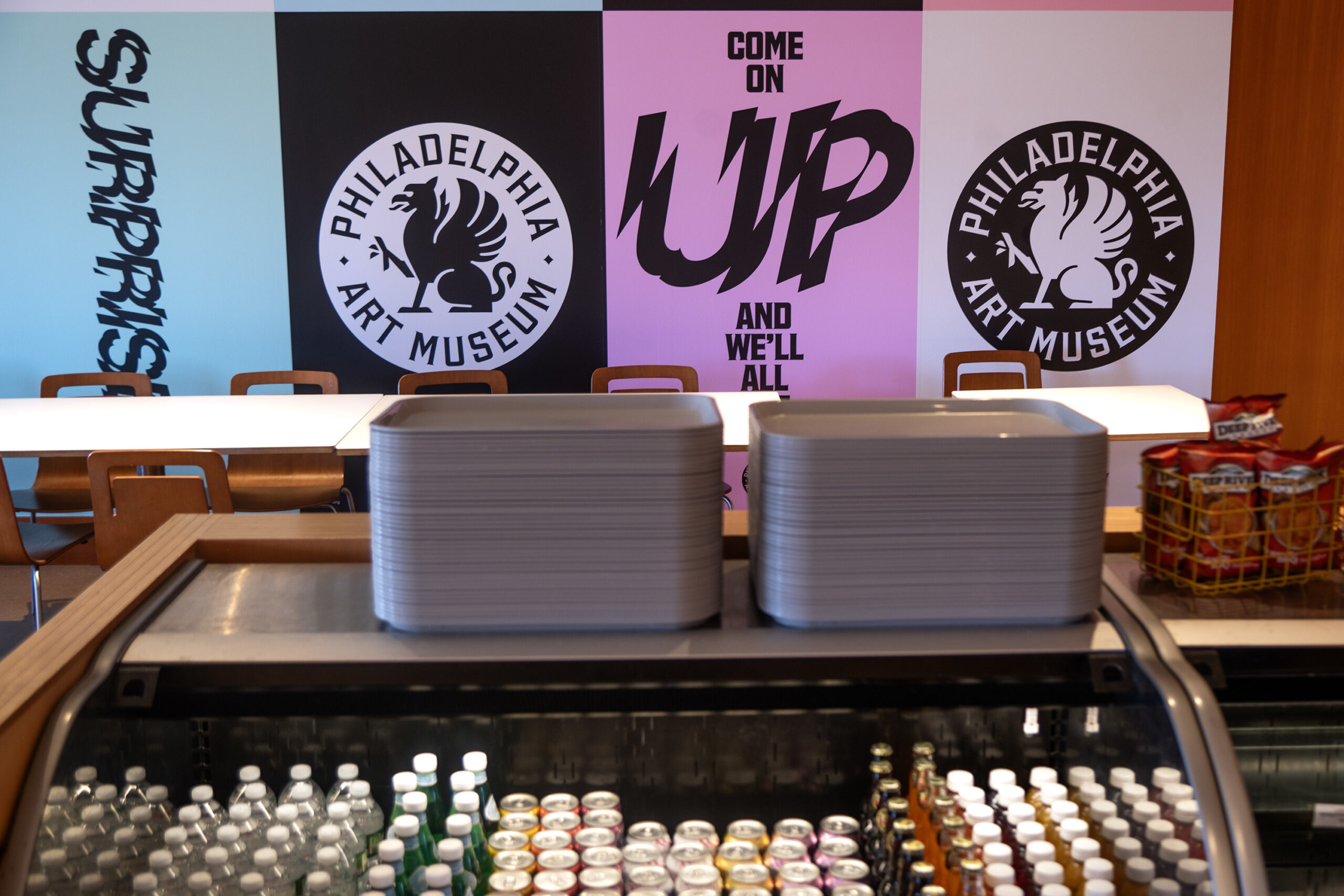
New signage in the Art Museum’s cafe, Oct. 6, 2025.
But the campaign was widely — though not universally — mocked.
A Hyperallergic story carried the headline: “People Really Hate the Philadelphia Art Museum Rebrand.”
A review in trade blog Brand New praised the rebrand, saying that it infused the museum with a “much needed, new, distinct, and energetic identity that was sorely missing.”
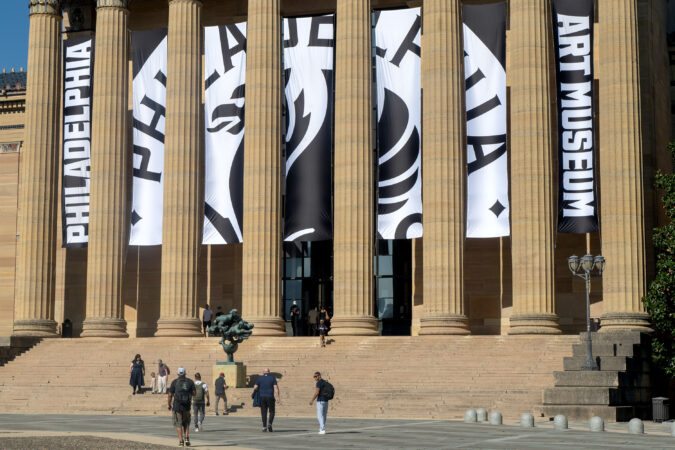
The rebrand, designed by Brooklyn-based branding and design firm Gretel, came with a name change for the institution, from Philadelphia Museum of Art to Philadelphia Art Museum, as well as a shorthand moniker — PhAM, which the museum has used for its new web address, visitpham.org, and in some marketing materials.
That drew an unfortunate joke moniker from wags — PhArt.
“We are an amazing museum with an amazing collection, amazing curators, and an amazing experience, and it’s really a shame, the jokes and negative reaction to the rebranding,” said museum trustee Yoram (Jerry) Wind a few weeks after the rebrand was introduced.
Another board member, Jennifer Rice, expressed support for it shortly after its launch.
“I do like it. I love the tagline ‘Wall to Wall Art for All.’ I like that it feels fresh and feels new and feels like it would connect with the audience we’ve had trouble connecting with,” Rice said
Some critics complained that a new logo inspired by the griffin figures adorning the building’s roofline looked less like that of an art museum and more reminiscent of a beer label or soccer team emblem.
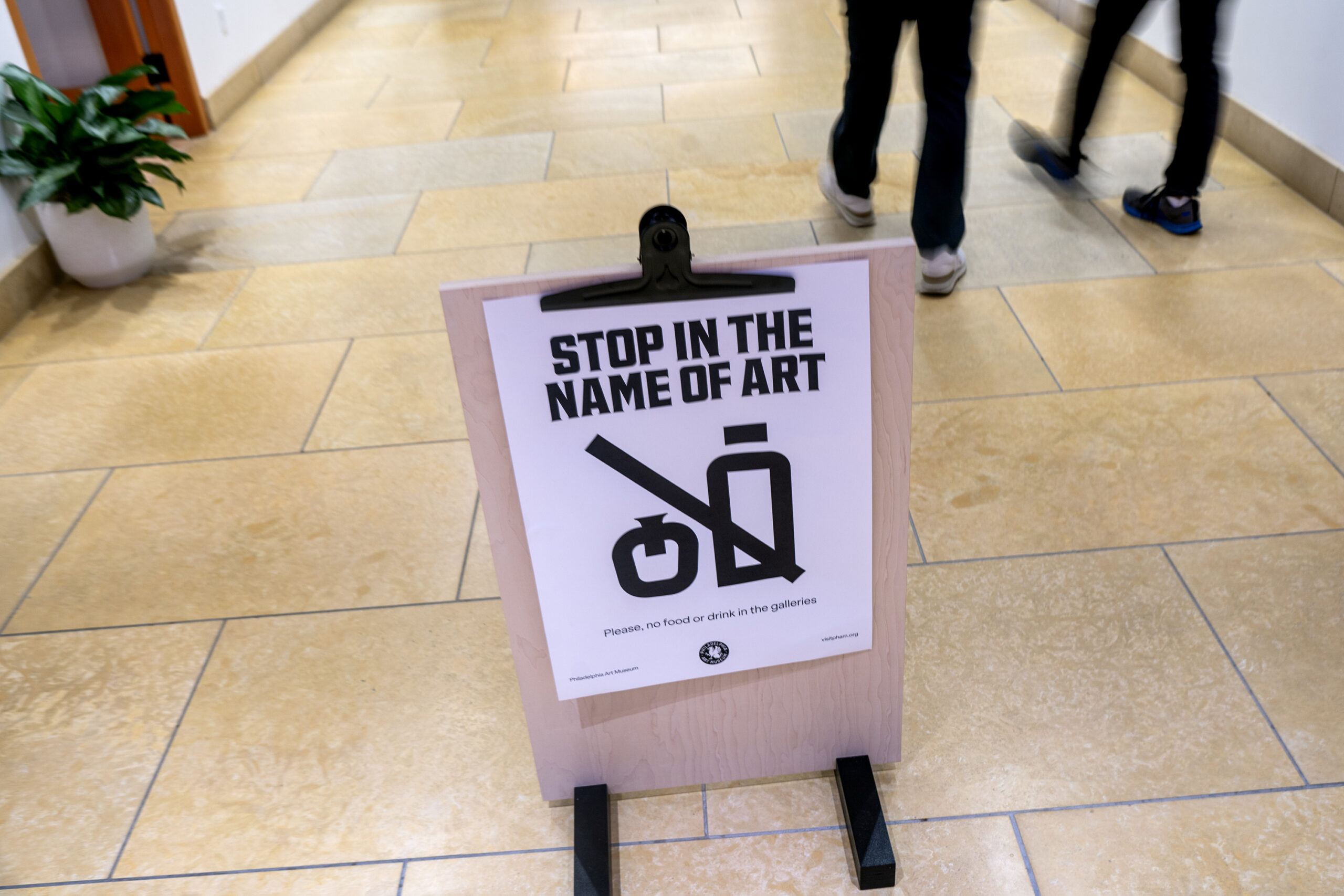
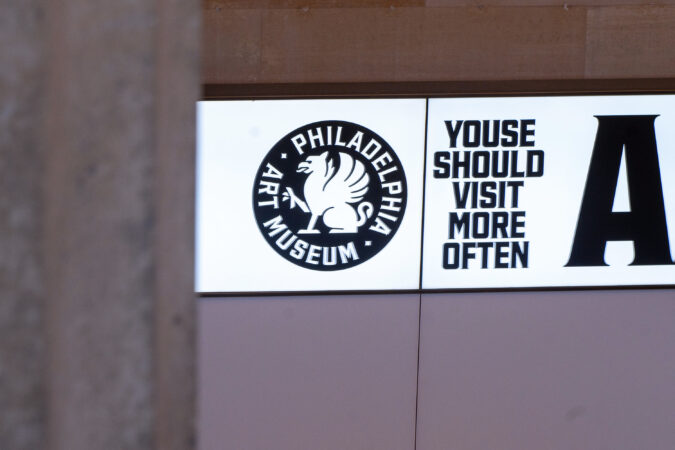
“Please no food or drink in the galleries” sign outside the cafe at the Philadelphia Art Museum, Oct. 6, 2025, showing the museum’s rebrand graphics.
The rebrand, including the name change, new logo, and bolder graphics, also comprises a series of punchy taglines, like “Made You Look” and “Revolutionary Since 1876.”
Weiss has set up a task force of board and staff to evaluate the rebranding to “take a look at how it’s playing, what works, what doesn’t work, to do some analytical work around that and get a sense of how our various constituencies are perceiving it, recognizing that almost any rebrand is controversial at first,” he said. “The question is whether we’re in the territory of a rebrand that is counterproductive to our ambition or not.”
Their findings will be presented to the board for discussion on whether “we stay as it is now or make changes.”
Suda was ousted as director and CEO in November, three years into her five-year contract. She filed a wrongful-dismissal lawsuit against the museum about a week later.
Despite recent cuts and an uncertain future, the National Endowment for the Humanities has awarded about $3 million in new grants to Philadelphia groups. The local awards are part of $75.1 million in new grants announced this month by the NEH for 84 projects across the nation.
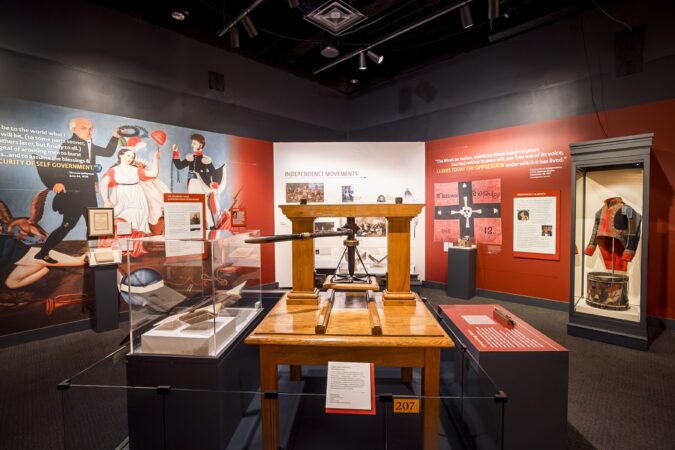
The biggest local award went to the Museum of the American Revolution, which is receiving $2,247,435 for the planning and production of a conference, podcast series, exhibition catalog, digital interactive, and activities related to the museum’s current exhibition about the Declaration of Independence, “The Declaration’s Journey.”
The NEH’s latest round of grants reflects the federal agency’s ongoing ideological shift to align with President Trump’s agenda. In April, the NEH announced that “future awards will, among other things, be merit-based, awarded to projects that do not promote extreme ideologies based upon race or gender.” Critics say grants canceled by the Trump administration last year were revoked because they represented viewpoints such as diversity, equity, and inclusion.
U.S. Rep. Chellie Pingree (D., Maine) raised the concern in a November letter to acting NEH chairman Michael McDonald that the agency is now making awards in some cases without peer review, giving “massive grants through questionable non-competitive processes.”
“Moving forward,” the NEH’s April statement said, the agency is “especially interested in projects on the nation’s semiquincentennial and U.S. history more generally.”
That directive connects to projects of all six of the new recipients in Philadelphia.
The Conservation Center for Art and Historic Artifacts is receiving $349,927 over two years to fund its preservation field services for small- to mid-sized organizations around the country. The program provides assessments and education to groups like museums, libraries, archives, and historical societies — as well as individuals — on how to care for their collections.
A $200,210 NEH grant to the American Philosophical Society will help fund “These Truths: The Declarations of Independence,” an exhibition at the society’s museum opening in April. It explores the first 50 years of the document and its evolution from “a pronouncement of news, [to] political tool, [to] national symbol,” says an exhibition description.
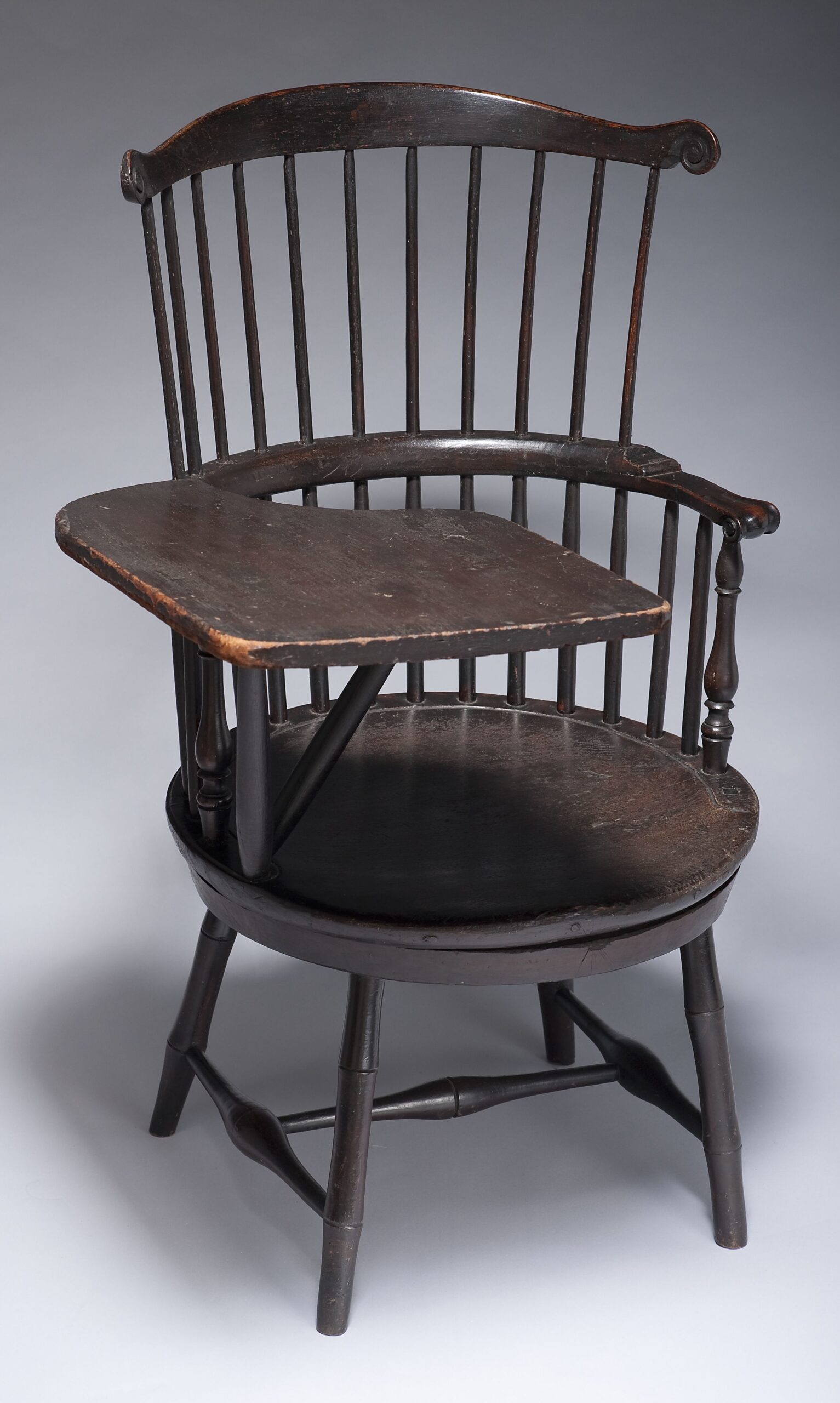
The Windsor chair Thomas Jefferson used while drafting the Declaration of Independence at the 7th and Market Sts. house he was renting.
The show includes 19 early printings of the Declaration from 1776 through 1824 and the Windsor chair in which Thomas Jefferson sat while writing the document. The NEH grant will go toward the exhibition, its catalog, and a related conference in June.
The NEH was among the federal agencies whose budgets and staffs were slashed last year by the Department of Government Efficiency, headed by billionaire Elon Musk. Arts and culture groups in Philadelphia and across the country had grants revoked from the NEH, National Endowment for the Arts, and Institute for Museum and Library Services.
Some grants were restored without explanation. A $750,000 IMLS grant to the Woodmere Art Museum was rescinded, and, a little more than a week after the Woodmere filed a lawsuit against the Trump administration, was reinstated.
In this new round of funding, three other NEH grants were awarded locally, each for $100,000: to Eastern State Penitentiary, the National Liberty Museum, and the Weitzman National Museum of American Jewish History.
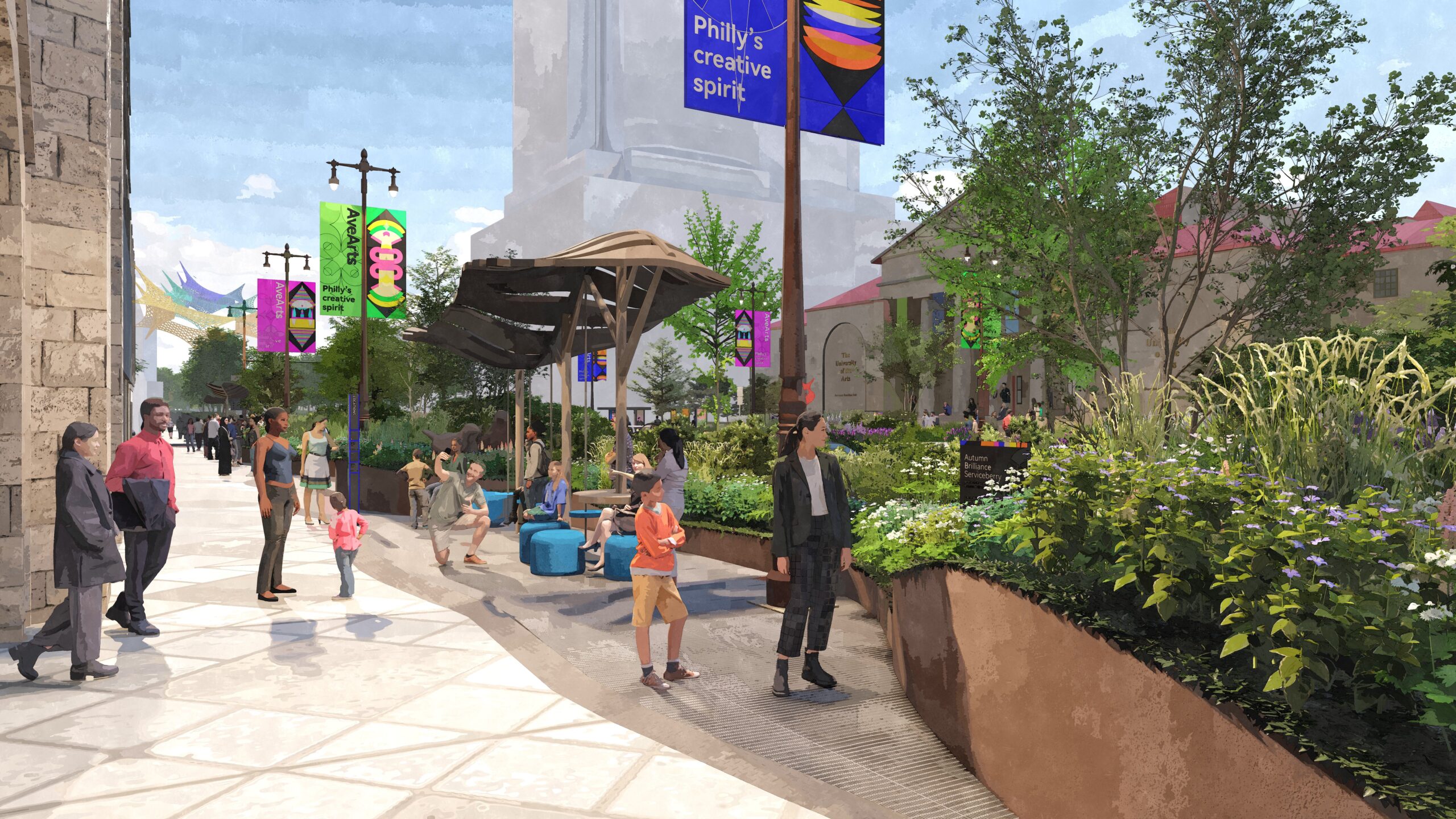
Lush landscaping and public art will soon line Broad Street, impromptu performances may pop up, and vehicular traffic will be calmed with a new Avenue of the Arts south streetscape about to take shape.
The project — estimated to take $150 million and a decade to realize — will begin modestly.
The groundbreaking ceremony was held Wednesday morning in front of the Kimmel Center and was attended by more than 200 dignitaries, including Mayor Cherelle L. Parker, City Council President Kenyatta Johnson, and other members of City Council, state representatives, and officials from groups along the Avenue of the Arts.
The actual construction is slated to start at the end of January on a small portion of the project: remaking the median strip between Spruce and Pine Streets. That phase is expected to be completed by June.
In 2027, after the end of an anticipated swell in tourism and street activity during the Semiquincentennial, sidewalk beautification will begin on both the east and west sides of that block.
Eventually, pending funding, all of the blocks between City Hall and Washington Avenue will be remade.
Looking north toward City Hall, a rendering shows the completed first phase of a South Broad Street streetscape project slated to break ground in January 2026.
The current streetscape of planters, pavers, and retro light fixtures was designed and installed more than three decades ago. In addition to the wear and tear of the existing scheme, the thinking around public space has evolved since then, said Carl Dranoff, board chair of Avenue of the Arts, Inc., which is overseeing the project.
“It’s become somewhat aged and dog-eared,” said Dranoff. “In 1993 you didn’t need to have outdoor cafes. We need to activate the street, not just make it palatable. We have the opportunity to really elevate the Avenue of the Arts into one of the world’s great streets.”
The project was announced in July 2024 at $100 million, but inflation and a more detailed cost analysis has now put the total price tag at about $150 million — $15 million per block. These numbers include not just the planters, lighting, public art, street furniture, and aesthetic elements, but also infrastructure work beneath the surface, said Dranoff.
“A lot of it is things you don’t see. There’s a lot of underground construction,” he said. “Right now water is leaking from the median strip into the subway concourse. One of the reasons we got support from SEPTA and PennDot and [the Philadelphia] Streets [Dept.], is as we are building the median strips, we are improving deficiencies in the street in each block.”
In addition, some utilities will have to be moved. One PECO relocation, for instance, will cost the project $250,000, he said.
Dranoff has a vested interest in the vitality of the Avenue of the Arts. He has led several development projects on South Broad Street, including Arthaus, which is on the same block as the first phase of the new streetscape, and, one block south, Symphony House. He compares the investment in the new streetscape to the ones made in the Pennsylvania Convention Center, Philadelphia Navy Yard, Kimmel Center, and Schuylkill River Trail.
“If we don’t make investments in the future, which are going to increase revenue and population, we are relegating ourselves to second-place status.”
The new $15 million streetscape in the block from Spruce to Pine, which includes a $1 million endowment fund to underwrite maintenance, native-species plants, a rainwater-collection cistern, lighting, curved raised planting beds, public art, seating, way-finding devices, and artist-designed banners.
Of the $15 million needed, $5 million has been raised so far: $3 million from the city over two budget years, $1 million from the state, and $1 million from private donors. Other funding requests are pending, which planners call “very promising.”
A sidewalk garden on the east side of Broad Street between Pine and Spruce Streets is planned for installation in 2027 as part of a new Avenue of the Arts streetscape.
Dranoff says that construction of the median between Spruce and Pine — which is the block occupied by the Kimmel Center and defunct University of the Arts — won’t cause “a lot of disruption. They’re only working business hours, not on weekends.” Any blocked lanes will be reopened after work is done for the day, he said.
The next block to be redesigned hasn’t been decided, but it will likely be north of Spruce Street, Dranoff said. “Part of it will depend on funding. If we get a donor, someone whose offices are near the Academy of Music and is donating $15 million for that block to be next, we might accommodate that,” he said.
Funding for the entire project is expected to be a mix of public money, corporate and individual donations, and foundation support, he said.
The goal isn’t to have the mile-plus between City Hall and Washington Avenue end up with a streetscape that looks uniform, Dranoff said. Instead, design firms Gensler and OJB Landscape Architecture may come up with different ideas for different blocks.
“You don’t need a master plan that’s set for 10 blocks. Every block is different, the institutions are different. It lends itself to block-by-block planning tied together by a common theme.”
Dranoff said once the block from Spruce to Pine is done, it will show the potential, which he expects will spur fundraising to complete the streetscape for the entire Avenue of the Arts south.
“The difference between now and the first block being finished is, you’re going to be driving down a tree-lined boulevard.”
The article has been updated with details from the groundbreaking ceremony.
The Philadelphia Art Museum has reiterated its position in court that a dispute with ousted director and CEO Sasha Suda should be resolved through arbitration.
Later that month, museum trustees fired back at her lawsuit and said she was dismissed after the investigation determined that she “misappropriated funds from the museum and lied to cover up her theft.”
Her contract with the museum stated that “any and all claims or controversies” against the museum should be pursued in “private, confidential arbitration.” But in a filing this month Suda argued that her contract contained “an explicit exception” to the arbitration provision.
But “Suda has no credible response to the museum’s commonsense reading” of her employment contract, the museum said in a Dec. 19 Philadelphia Court of Common Pleas filing by the museum. The nearly 150-year-old organization is represented by lawyers from Philadelphia’s Cozen O’Connor and Washington, D.C. firm Kellogg, Hansen, Todd, Figel & Frederick.
“Arbitration clauses are interpreted literally, but not foolishly,” the new filing argues.
It asks the court to enter an order compelling Suda to submit to arbitration, and to stay legal proceedings until the matter is resolved in arbitration.
On Nov. 21, the museum named former Haverford College president and Metropolitan Museum of Art leader Daniel H. Weiss as new director and CEO.
As Philadelphia’s largest visual arts institution heads into the new year, it does so shaken by disorder and strife — reeling under a drama as extraordinary in substance as the public nature with which it is playing out.
In a recent court filing from Suda’s legal team, the ousted director was described as a “visionary leader” recruited to “save a struggling museum.” Her efforts, the filing reads, “collided with a small, corrupt Board faction determined to preserve the status quo.”
Daniel H. Weiss, director and CEO of the Philadelphia Art Museum
All this comes after three years of organizational turbulence that has left staff angry and bewildered.
“There’s a lot of nervousness about what’s to come now,” said one longtime staffer. “It’s been so chaotic for so long. Nobody feels steady. We’re supposed to be just chugging along like business as usual, but nothing feels stable.”
Though Weiss started at the museum this month, he will also maintain his position as an art history professor at Johns Hopkins University though May 2026.
Among the challenges facing Weiss: depressed attendance, an operating deficit, low staff morale, deferred maintenance on existing buildings, and questions about how to prioritize stalled expansion plans.
This account is based on interviews with former and current staffers, both union and nonunion, ranging from curatorial affairs to finance and operations. All of them spoke on condition they not be named.
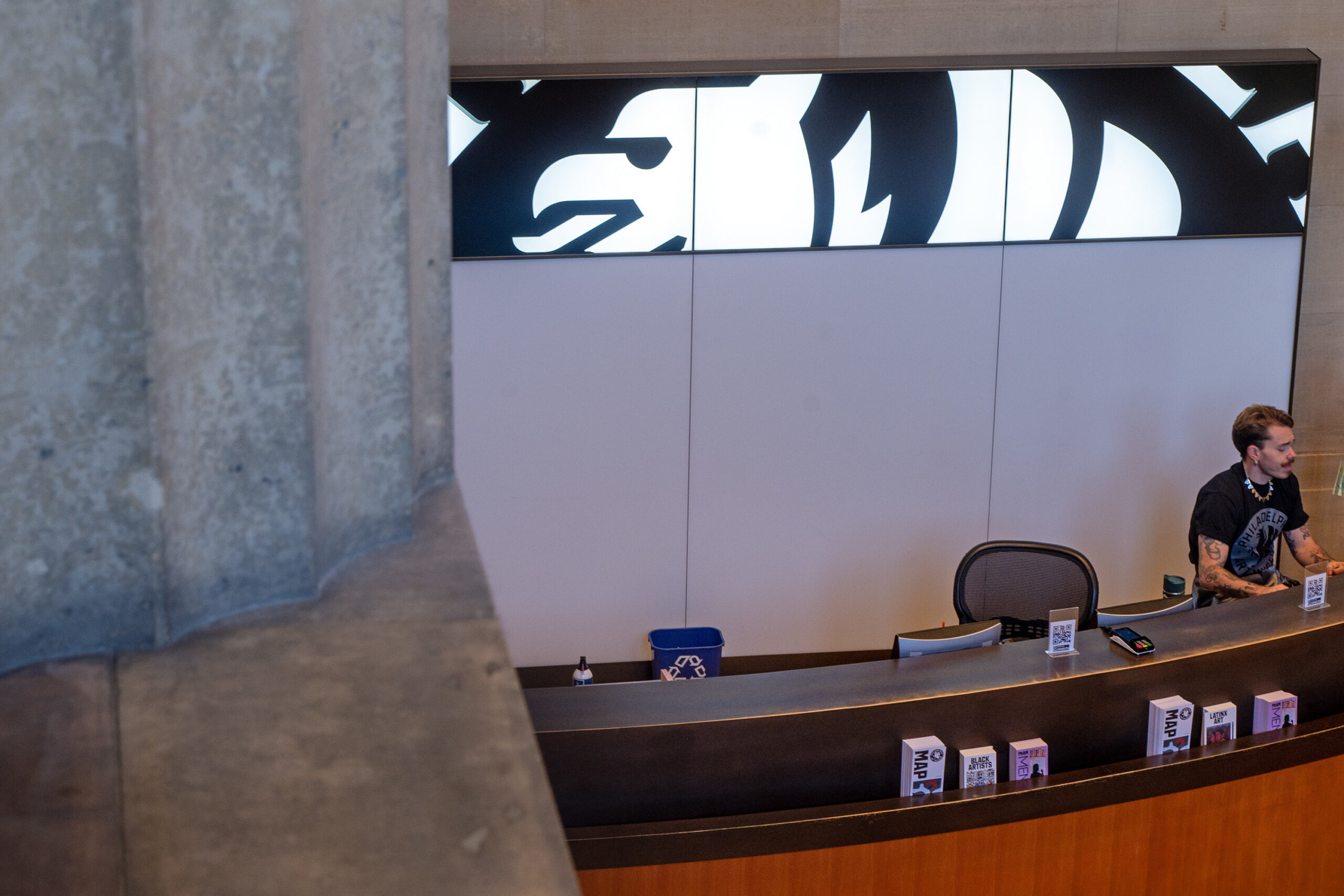
Visitors services staff member Tiago Segundo works the admissions counter at the west entrance of the Philadelphia Art Museum, Oct. 6, 2025.
Staff shortage
Weiss will have to contend with a shortage of staff — which has dropped from 500 in 2019 to 375 today — following years of significant employee turnover.
During Suda’s tenure, at least 60 employees — many from the senior executive team — were fired, laid off, or pressured to leave across departments. These include human resources, curatorial, digital content, communications, facilities, conservation, the library, visitor services, and more, according to museum insiders.
Suddenly gone in the fall of 2024 without explanation to the staff was Carlos Basualdo, earlier promoted by Suda to deputy director and the museum’s first-ever chief curator; he was highly respected and held several important relationships with collectors and top international artists like Jasper Johns and Bruce Nauman.
Basualdo was named director of the Nasher Sculpture Center in Dallas in April.
Curator Kathryn B. Hiesinger, who had been with the museum for 53 years, had talked to Suda in the summer of 2023 about her desire to retire at some point, and discussed ideas about winding down her tenure.
“She said it all sounded very reasonable,” said Hiesinger, 82, in a recent interview.
Several months later, Hiesinger said her computer stopped working and she was called into Suda’s office. A woman Hiesinger didn’t know — who turned out to be from human resources — and Suda handed her a sheath of papers, which she was asked to sign.
“I didn’t realize I was being fired,” Hiesinger said. “I was actually quite shocked by the whole way it was handled. It was so unnecessary. All she needed to do was say, ‘I think it’s time for you to retire; let’s see how we can make it work.’ But it was just like that — shut down the computer, call me into the office, and sign the papers, and that was it.”
A few weeks later, Suda called Hiesinger to apologize after museum leaders intervened. She was given the title of senior curator emeritus of European decorative arts and was told she would be allowed to complete her pending projects for the museum.
Hiesinger has had no official contact with the museum since.
Among others whostopped working at the museum during Suda’s tenure, several were made to sign nondisclosure agreements and could not speak to the media.
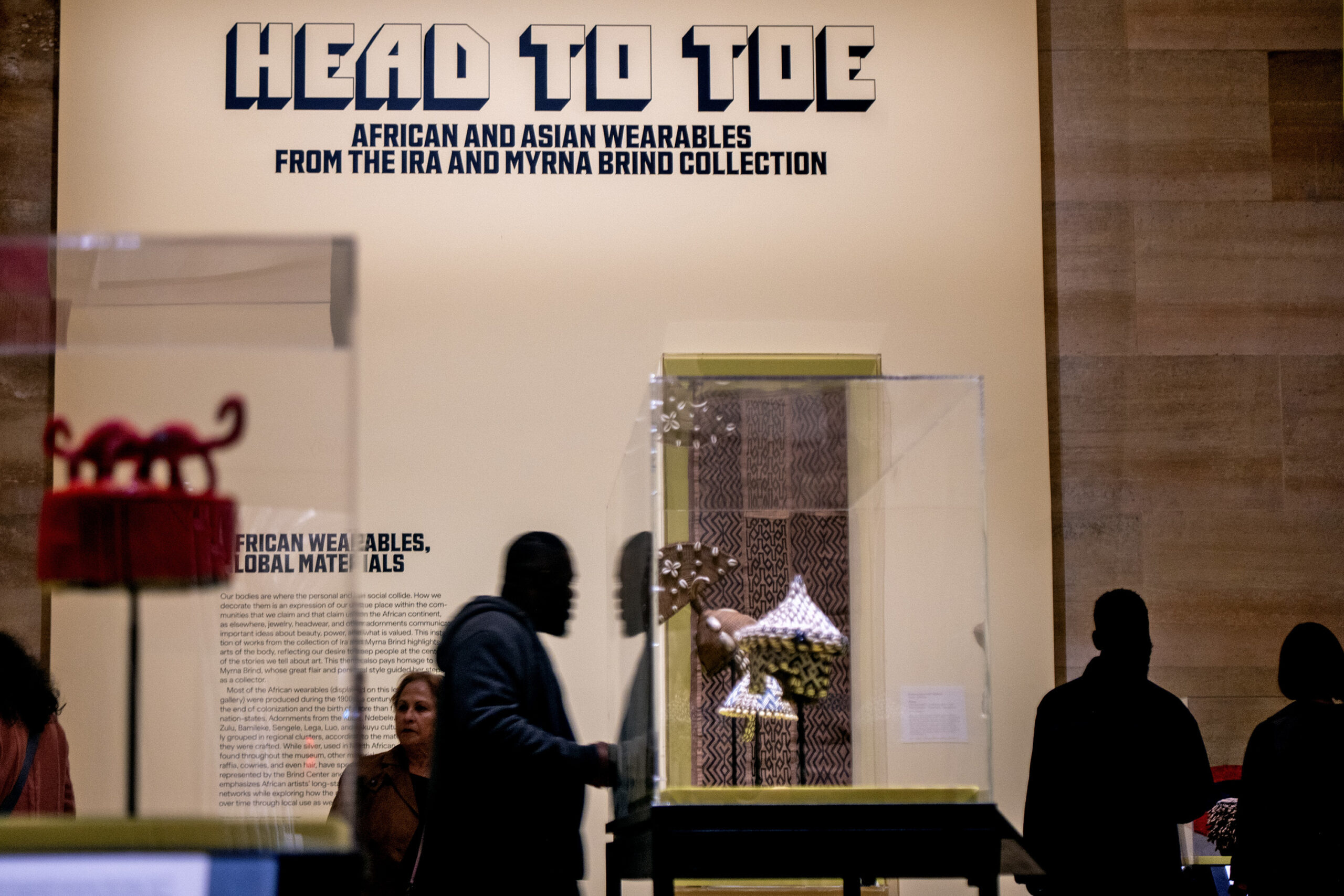
At the museum’s “Head to Toe: African and Asian Wearables” display, Oct. 6, 2025
A declining reputation
For staffers who have remained, there is a sense of internal disorganization.
“We’ve had three reorganizations within three years, and we were only given an org chart [and] an understanding of it in the last couple months,” said a longtime staffer.
Ultimately, the staffers The Inquirer interviewed believe the reputation of the museum has diminished over the years. Colleagues in the larger museum world, another staffer said, “look at me sideways, because this place has gotten such a bad rap … we’ve become a joke.”
Low morale has been a longstanding issue.
In her lawsuit, Suda detailed two instances of board members allegedly “yelling and berating staff.”
At one event, an unnamed board member “verbally assaulted a Museum employee,” the suit said, leading to a formal complaint. The board member later apologized to the staffer.
The second incident reportedly happened in the winter of 2024 when the museum hosted two simultaneous events for major donor Bank of America and a group invited by Philadelphia City Council President Kenyatta Johnson.
According to the lawsuit, board member Melissa Heller was allegedly “berating staff, cursing, and shouting that the team was unprepared.” Suda alleged that a Bank of America representative “witnessed this awful altercation” and called her to discuss it. Board chair Ellen T. Caplan spoke to Heller about it and “declared the matter closed.”
Suda’s lawsuit also recounted an incident when former board chair Leslie Anne Miller allegedly screamed and cursed at Suda.
Miller declined to comment and Heller did not respond to The Inquirer’s request for comment.
Several employees said Suda regularly engaged in similar behavior herself.
Sasha Suda, former director of the Philadelphia Art Museum, at the museum on Jan. 30, 2024.
“Sasha has done the same thing, [being] verbally abusive to staff, yelling at them, telling them that nobody likes them and people don’t want to work with them,” said the longtime staffer who spoke to the museum’s recent reorganizations.
The staffer worried about the museum’s diminishing reputation also claimed that the programming team became less autonomous and more risk-averse under Suda.
Managers, the staffer said, use threats of dismissal and public humiliation, leading curators and others to feel that their jobs depend solely on the success or failure of an exhibit. Staff members are wary of Suda’s executives continuing this culture of insecurity.
“People are afraid to do their work. Curators are afraid to put on exhibitions. They’re afraid to spend money,” the staffer said. “I feel like my work has ground to a near halt. I do a fraction of what I used to do, just in a very dysfunctional way now.”
The museum now puts on fewer of its own shows,a departure from previous administrations. Some of the biggest exhibits in recent years, like “The Time Is Always Now” and “Dreamworld: Surrealism at 100,” have been touring shows organized elsewhere and adapted for the museum.
A forthcoming programmatic highlight is the show “A Nation of Artists.” Featuring art from the family collection of Phillies managing partner John Middleton, the show is scheduled to run at the museum April 12, 2026, to July 5, 2027. It was conceived before Suda’s time at the museum.
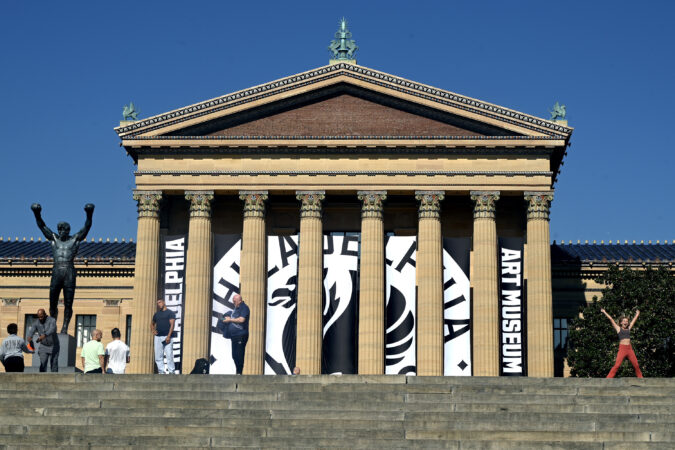
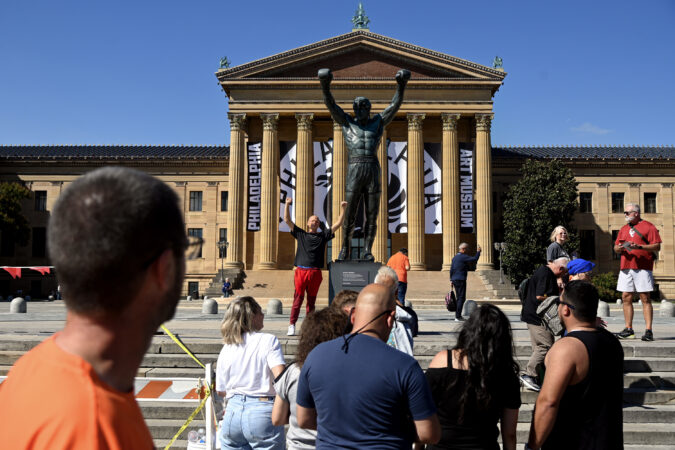
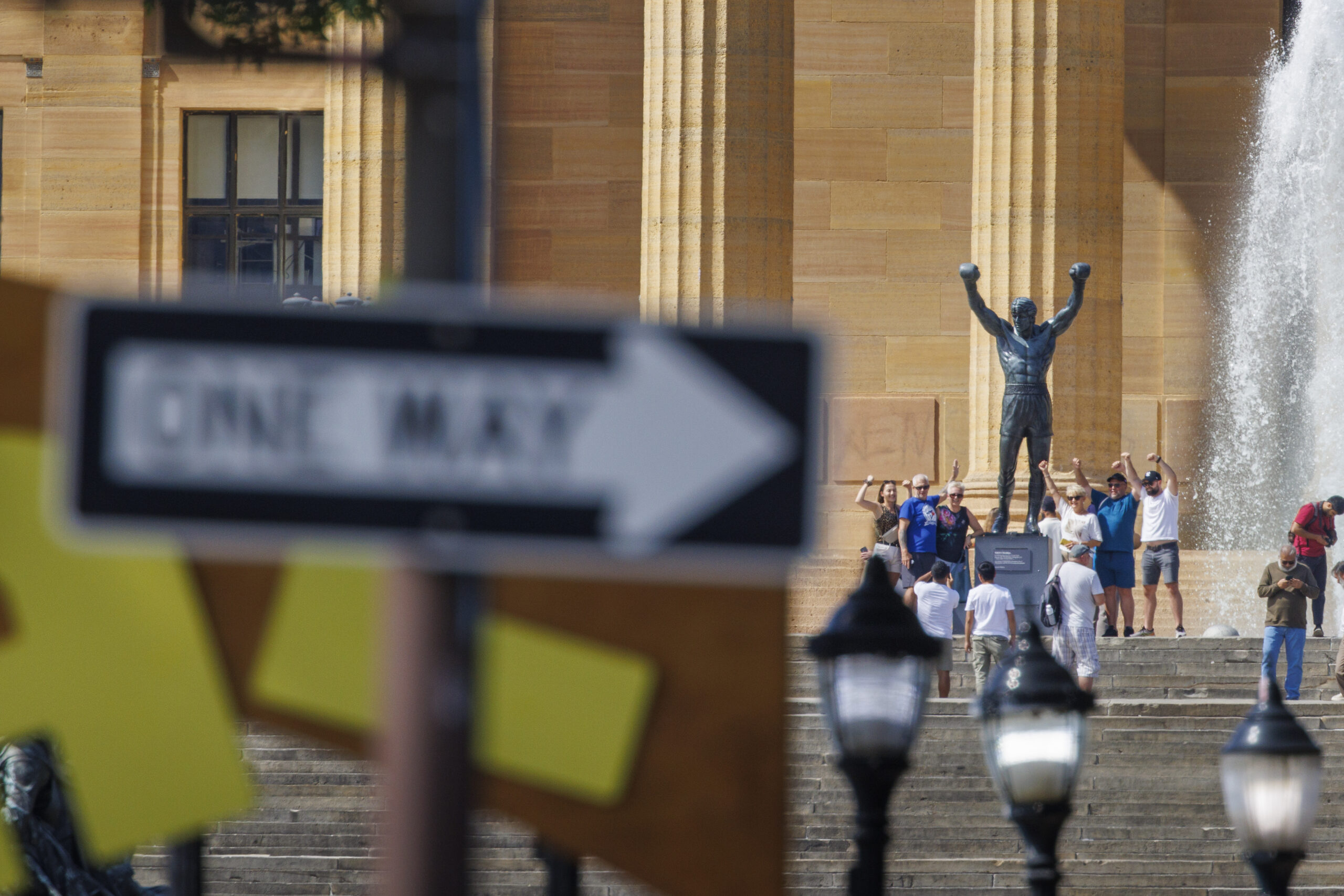
Tourists pose with “Rocky” statue on the steps of the Philadelphia Art Museum, Thursday, September 11, 2025.
Ongoing financial struggles
Over the last several years, the nearly 150-year-old museum has operated with a persistent deficit.
In 2025, that number was forecast as around $2 million on a budget of $62 million. The fiscal year ending June 30, 2023, was the museum’s last period with no deficit. Suda began her tenure as director and CEO in September 2022.
Attendance has not rebounded to pre-pandemic levels. As of Nov. 30, the museum was still falling short of its goal for the fiscal year, clocking 266,282 visitors against a to-date goal of 306,750. Its total goal for the fiscal year — which goes through June 30 — is 731,000. (All of these numbers include not just visitors, but also school groups and people attending special events.)
And even that goal is a considerable downgrade from previous ambitions. A decade ago, the museum in its strategic plan stated the goal of increasing attendance to a million visitors per year within five years.
The museum’s widely panned rebrand and name change in October has proven divisive externally and internally. The campaign unveiled a new logo and changed the name of the institution from Philadelphia Museum of Art to Philadelphia Art Museum. Its cost totaled more than $1 million, according to two sources familiar with the details who spoke on the condition of not being named. Leaders hoped the rebrand would drive up attendance and cut down current operating deficits; the impact remains to be seen.
Suda’s lawsuit, staff worry, could worsen the financial outlook.
“We’re already broke as an institution. We could have a messy lawsuit that really takes a lot of funding away,” said the longtime staffer.
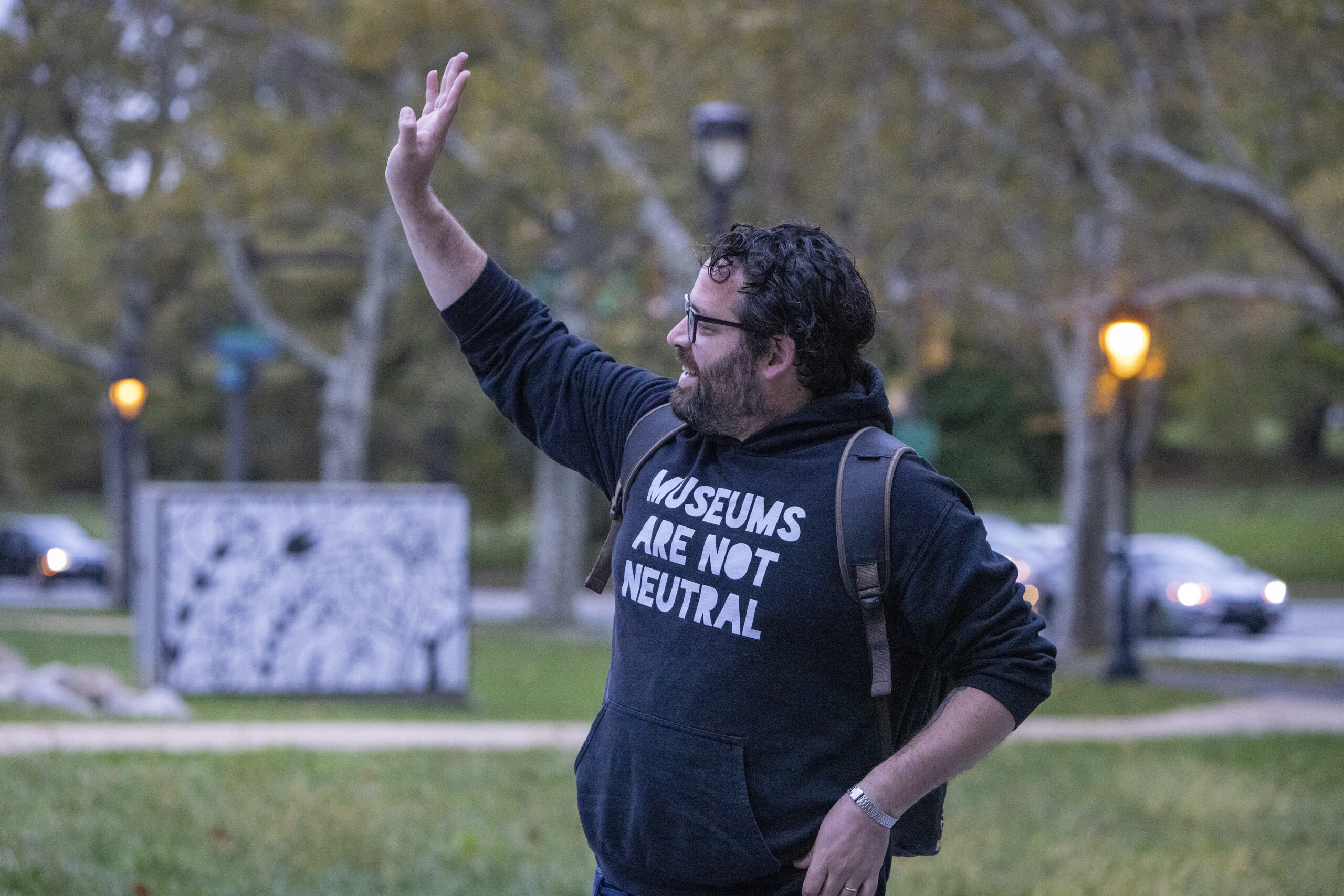
Adam Rizzo, former president of the Art Museum union, an affiliate of AFSCME DC47, waving to a honking supporter on the morning museum employees returned to work after a strike in 2022.
A new contract ratified in July 2025 ensured 3% annual pay raises and increased parental leave from four weeks to eight. But a number of grievances remain unresolved. The PMA Union, part of AFSCME Local 397, which represents Philadelphia culture workers, did not comment for this story.
After their boss was fired earlier this year, a staffer said, they were expected to take on extra responsibilities, with the promise of an hourly wage increase. Eight months later, the employee has not received that compensation and has been working with the union to address the problem.
“What they would rather do is have me go to the union, grieve it, and get the lawyers involved, and that way they can drag it out for another like six to eight months and not have to pay me,” the staffer said. “But they would still have to pay me all the back pay. It’s just them dragging their feet and penalizing people. To be honest, if they get me the higher end of [the raise], it’s only 90 cents extra.”
A museum spokesperson could not respond to this claim, deeming it “a personnel matter.”
Several other staffers have had similar experiences. Under the new leadership, they hope to have these disputes resolved amicably without the need of a grievance process.
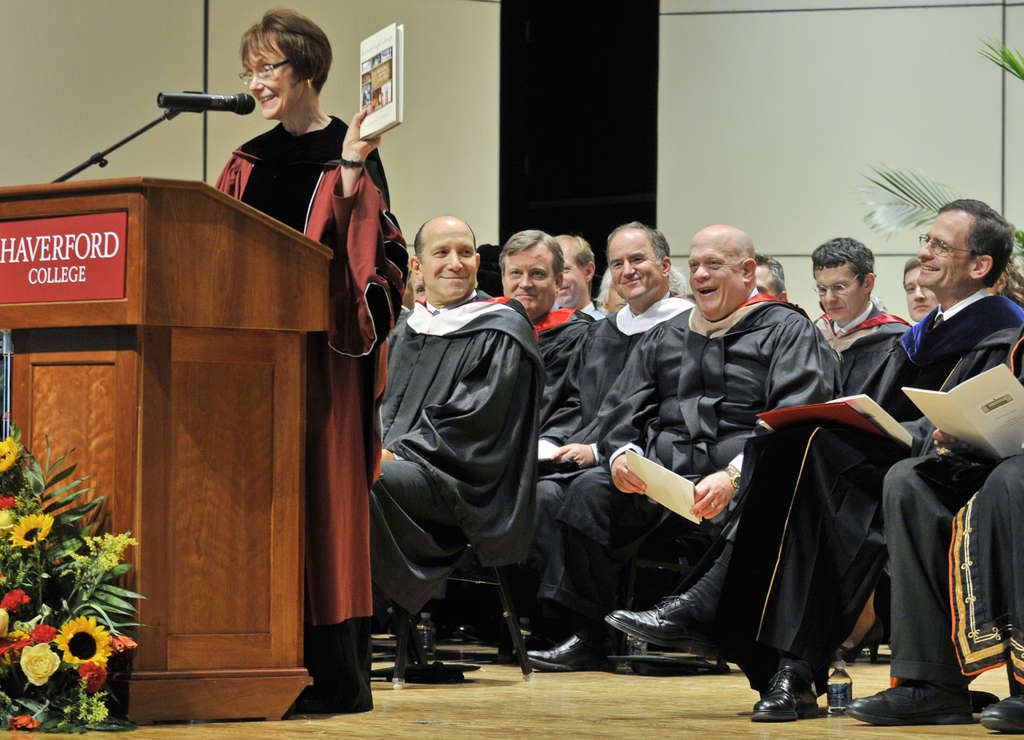
A 2013 photo of then-Swarthmore College president Rebecca Chopp showing off a copy of “Remaking College” at the inauguration of president Daniel H. Weiss at Haverford College, who is now director and CEO of the Philadelphia Art Museum.
What comes next
Weiss declined to be interviewed about specifics of his tasks and priorities, but the museum released a general statement:
“Daniel Weiss was appointed for his extensive leadership experience at major educational and cultural institutions. He began his tenure only weeks ago, and he is focused on learning the nuances of the museum’s ongoing operations regarding its programming, education initiatives, fundraising, and strategic planning. Mr. Weiss is currently working with senior staff to review key priorities and will address updates in the new year.”
Amid the leadership crisis and transition, staff has been kept mostly in the dark with little communication. The staffer seeking a raise shared that during the interim they received invitations for hot chocolate and parfait socials from human resources.
“It’s what the senior management do. That’s their usual MO, like, ‘Oh, well, have a cupcake,’” they said. “They treat us all like children, or like we’re all dumb. It’s pretty insulting.”
Weiss officially began his tenure on Dec. 1 but held an all-staff meeting before Thanksgiving. One staffer who attended said Weiss “said all the right things” so they are feeling “cautiously optimistic.”
“Everything he’s doing, he’s doing with such integrity. It’s heartwarming,” said a member of the curatorial affairs division.
But, they cautioned, “he’s going to lose people’s optimism if he doesn’t make any moves soon.”
Her contract, the brief states, contained “an explicit exception” to the arbitration called for.
Much of the brief repeats the narrative laid out in the initial lawsuit filing, like her struggle to modernize the museum and her friction with former board chair Leslie Anne Miller and current board chair Ellen T. Caplan.
In another broadside against the board of the Philadelphia Art Museum, ousted director and CEO Sasha Suda has once again portrayed her difficulties at the museum as a struggle for modernizing an institution in the face of the status quo. A new court filing from Suda, filed on Thursday night, argues for a trial with jury rather than settling the dispute with the museum through arbitration.
The opposition brief, a response to the museum’s petition last month stating that the matter should be resolved in arbitration, says that Suda’s employment contract contained “an explicit exception” to the arbitration called for by the museum.
“The Court should therefore deny the museum’s motion and retain jurisdiction over this case — as the parties’ agreement and Pennsylvania law require,” states Thursday’s filing in Philadelphia Court of Common Pleas.
Suda, 45, was fired Nov. 4 for what the museum said was cause. Less than a week later, she filed a lawsuit against the museum claiming she was dismissed without a “valid basis.”
Suda’s lawyer, Luke Nikas, did not immediately comment on the matter Friday. The Art Museum had no comment on the new filing, an Art Museum spokesperson said.
Suda was dismissed after an investigation determined that she “misappropriated funds from the museum and lied to cover up her theft,” the museum alleged in a November court filing in response to her lawsuit.
Nikas, of Quinn Emanuel Urquhart & Sullivan, at the time called the accusations false. The money in question, $39,000, came in the form of increases to Suda’s compensation, and these increases were “authorized” and “budgeted” cost-of-living increases that were “fully approved” and “disclosed,” a source close to Suda previously stated.
Much of the new filing repeats the narrative laid out in the initial lawsuit filing, detailing Suda’s unhappiness with former board chair Leslie Anne Miller and current board chair Ellen T. Caplan, as well as a recounting of Suda’s accomplishments at the museum.
Suda and Miller experienced ongoing friction, and Miller “told third parties that Suda was untrustworthy, incompetent, a snake, immature, would not last, and that others were ‘drinking the Kool-Aid’ by supporting her,’” the new filing states.
“Those comments from an officer and agent of the Museum violated the Employment Agreement’s Non-Disparagement Clause,” and that violation entitles Suda to “immediate injunctive relief and a temporary order restraining any threatened or further breach, in addition to or in place of the arbitration provisions,” the filing states.
Miller declined to comment on Friday.
Sasha Suda, former director of Philadelphia Art Museum, Jan. 30, 2024.
Suda’s contract stipulates that any changes in her compensation would be determined at the “sole and absolute discretion” of the compensation committee. In its November petition, the museum said that Suda requested, and was denied, a salary increase from the compensation committee on Feb. 8, 2024. She then “awarded herself the salary increase” effective March 1, 2024, followed by a second “unauthorized” increase in July of that year, the petition claims.
In July 2025, according to the museum’s petition, Suda “awarded herself a third unauthorized pay increase, which she once again failed to disclose to the board.”
The new filing includes text messages of praise and encouragement from board member John Alchin. It says that in September 2023, Alchin — identified in the filing as chair of the finance committee — examined a draft report for a compensation subcommittee meeting and requested “schedules of salaries along with proposed/recent salary increases.”
“Suda’s compensation was also reviewed,” the filing states.
“As the board member with the most oversight of Suda’s financials, Alchin expressed no concerns about Suda’s approach to salary schedules or financial governance, which were discussed openly in committee meetings,” the filing states.
It provides a copy of an August 2025 letter from the museum to Suda outlining her annual salary increase, from $749,087 to $771,560. The letter is not signed by a specific person — only the museum’s human resources department — and was cc-ed to “finance.”
The new filing also includes 2023 correspondence from the museum’s CFO, Katherine Harper, to its HR director, Meredith Clayton, “trying to figure out what increase Sasha might be entitled to,” adding that “prior to finalizing, I will check with John Alchin or Leslie to make sure they are comfortable.”
Suda was in the third year of a five-year contract when she was dismissed in the beginning of November.
On Dec. 1, she was succeeded by veteran nonprofit administrator Daniel H. Weiss, former chief of the Metropolitan Museum of Art, who had already been engaged by the museum as a consultant prior to being named director and CEO.
When Christina Vassallo was head of the Fabric Workshop and Museum, she landed several substantial grants from the Pew Center for Arts & Heritage.
Now she is moving to the other side of that donor-recipient relationship.
Vassallo is the newly named executive director of the Pew Center for Arts & Heritage, starting Jan. 5, Pew announced Monday.
“The center embodies everything I value about arts leadership — intellectual curiosity, rigorous support for artists and arts organizations, and a true commitment to public life,” said Vassallo. “So for the center, I’m drawn to its dual identity as a grantmaker and as a hub for ideas, and for the opportunity to connect the arts with civic purpose.”
Leadership and operational changes at the Pew arts center are closely watched in Philadelphia’s arts and culture community since the center, along with the William Penn Foundation, accounts for some of the largest foundation giving in the area.
Pew’s center, for instance, also announced on Monday that it has awarded $8.6 million to 44 Philadelphia-area groups — nearly $180,000 to the Black Pearl Chamber Orchestra for a project on Black women composers, $360,000 to Monument Lab for the creation of environmental soundworks as a “living monument to Philadelphia’s birds,” and to projects by Mural Arts Philadelphia, Philadanco, Philadelphia’s Magic Gardens, theater companies, dance troupes, and museums.
After leaving the Fabric Workshop in 2023, Vassallo became director of the Contemporary Arts Center in Cincinnati. Before the Fabric Workshop, she was executive and artistic director of the alternative art gallery SPACES, in Cleveland. She was born in the Bronx and grew up in New York City and northern New Jersey, and holds two degrees from New York University — a bachelor’s in art history and a master’s in nonprofit visual arts management.
Vassallo arrives as Philadelphia’s arts scene grapples with a number of challenges. Many groups are facing the double whammy of attendance numbers that are still lower than pre-COVID levels, and cuts in federal funding under the Trump administration.
The Pew arts center specifically has undergone a significant change with the 2024 collapse of the University of the Arts, which had been its operational partner. In June, Pew announced that the Barnes Foundation would take UArts’ place, and Vassallo suggested that the Barnes — which also had a hand in her hiring — could take on a more significant role.
“I think there is tremendous potential there programmatically beyond their administrative role,” said Vassallo, who called the relationship between the Pew center and the Barnes an “evolving” one.
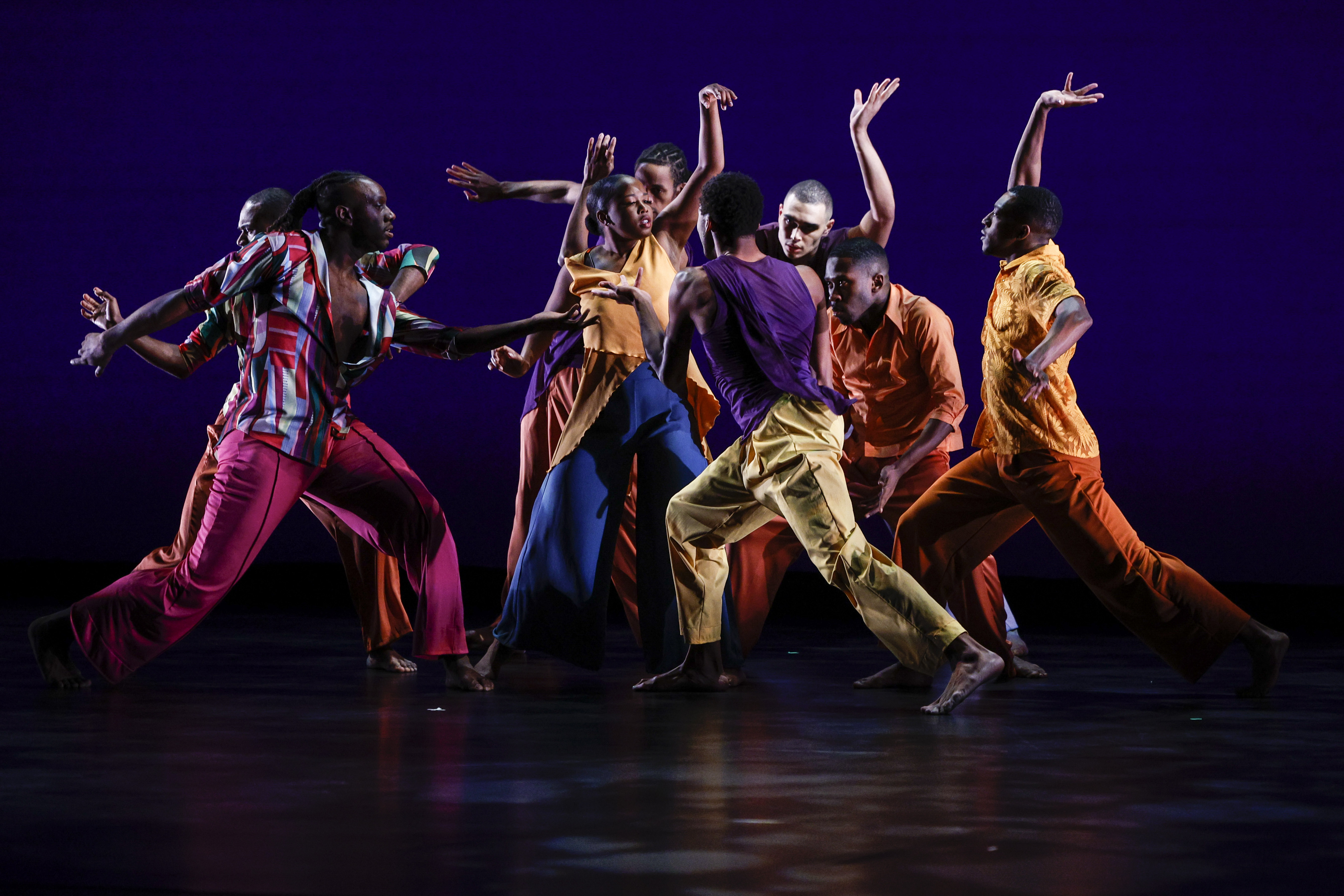
Dancers from Philadanco, which received a grant from the Pew Center for Arts & Heritage.
One significant change has already occurred. Vassallo will report to Barnes Foundation executive director and president Thomas Collins, whereas Marincola reported directly to Pew. The Barnes isn’t seen as getting involved with the Pew center’s grant-making process, but, rather, could work with the center on creating new programming.
“We could imagine partnerships between the [Pew Fellowships in the Arts] fellows … being able to engage in the collection at the Barnes, for example, we can imagine the center and the Barnes partnering on community conversations,” said Elinor Haider, senior director of Pew’s Philadelphia Program.
The Pew Center for Arts & Heritage will continue to be based in its offices on Walnut Street, Haider said.
Vassallo called Philadelphia’s arts scene “incredibly rich and vital.” About its challenges, she said — while noting that she needs to relearn Philadelphia’s arts and culture community — that “we are having to find new ways to fund our work. I have seen this in the form of creating new business models, coming up with innovative ways to increase ticket sales and engage current and new audiences to create new revenue streams.”
She said she has “always been a strong believer in nurturing the next generation of art enthusiasts, ensuring that kids have access to the arts across disciplines.”
As for future funding priorities, the center has not yet determined whether it will undertake a strategic planning process, she said.
“Not only are we assessing feedback from grantees and external parties, but we’re also understanding the state of the city, and then you have the various partners involved — you have Pew, you have the center staff, and now you have the Barnes. So I think within that there’s going to be a very special alchemy that starts to further determine the future of center funding decisions.”
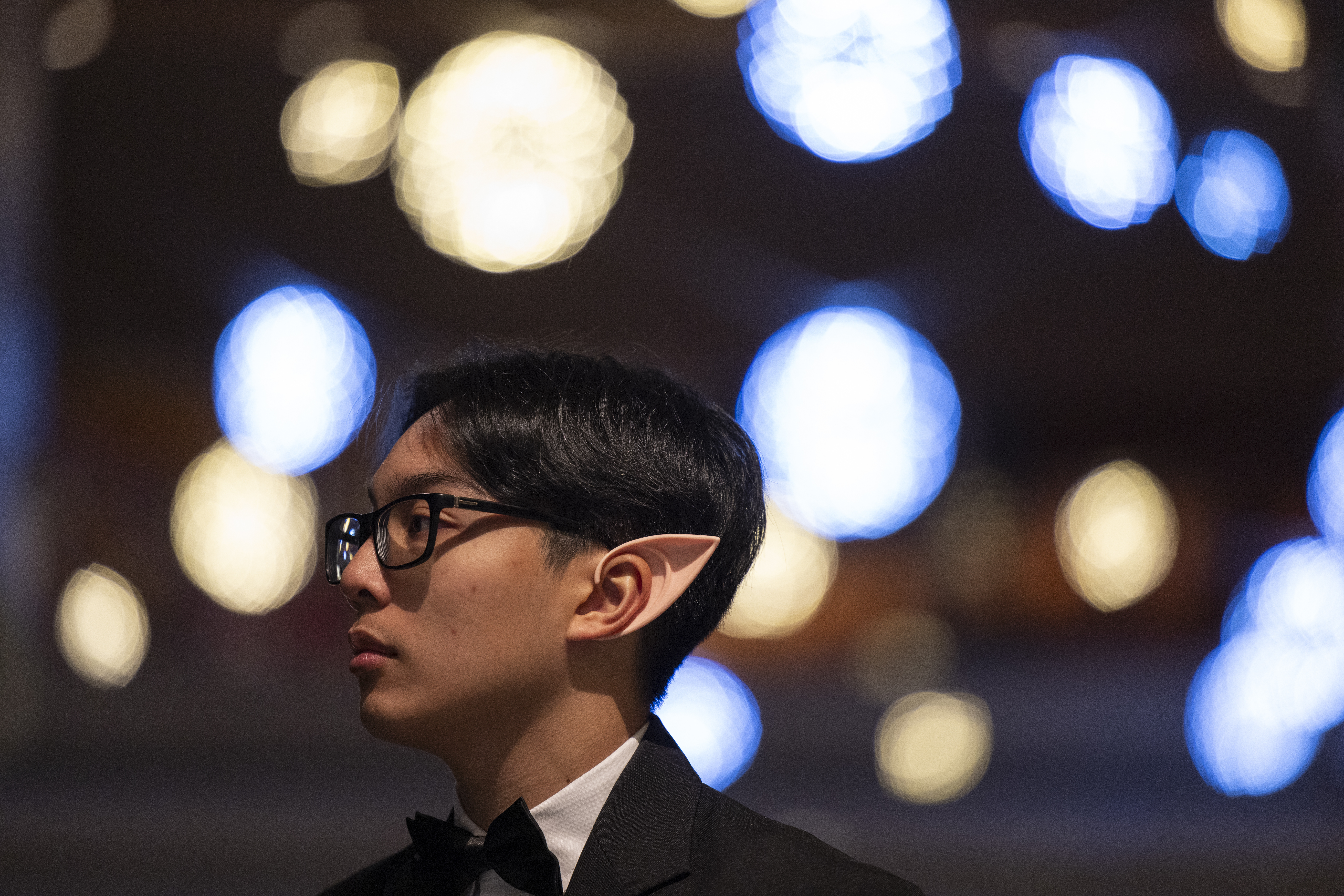
It was the kind of night at the orchestra when any good hobbit could show up in a Bilbo Baggins waistcoat and feel right at home. Previously-human ushers had suddenly sprung elven ears. And the action on stage involved a twisty, unlikely tale of a magical gold ring whose purpose seemed to be to exploit the flaws and weaknesses of those who encounter it.
The Philadelphia Orchestra’s presentation of The Lord of the Rings: The Fellowship of the Ring Friday night in Marian Anderson Hall was one of those cross-cultural experiences that ricocheted with surprising power. Two subcultures, each with its own specialized language — classical music, and the fandom around J. R. R Tolkien’s world of wizards, dwarfs and the dark forces — intensified the other.
The Philadelphia Orchestra, Singing City and Philadelphia Boys Choir on stage in Marian Anderson Hall for ‘Lord of the Rings: The Fellowship of the Ring.’
For anyone keeping score in the ongoing battle for younger audiences in classical music, Friday was a night when it seemed everyone in the hall was 31 years old and deeply engaged. Never at an orchestra performance have I heard the audience break in so many times with applause and hoots of approval.
Of this happy synergy, the orchestra sold out all three performances, with tickets topping out at more than $250 a pop.
Lead usher Ryan Viz, in elven ears, in the Kimmel Center lobby Friday night.
Not all of the orchestra’s live-to-screen presentations have justified themselves musically, but here, Howard Shore’s score was a canvas both vast (about three hours of music) and colorful.
If there’s a single label for Shore’s musical language, it’s Celtic Craggy — with notable excursions into the bellicose, sentimental, and moods more subtle. The great value of hearing a great orchestra live in dialogue with the screen is in the emotional epiphanies, moments where the music tells you something the dialogue and action alone can’t.
The sound engineering on this night favored the music over the dialogue, and smartly so.
Ian McKellen as Gandalf looms over members of Singing City Friday night in Marian Anderson Hall during a Philadelphia Orchestra live-to-screen presentation of ‘Lord of the Rings: The Fellowship of the Ring.’
The other beautiful dynamic at play: You didn’t have to walk into the hall with any prior knowledge of classical music or Middle-earth nomenclature to feel the experience. This level of communication is simply embedded deep in being human.
The definition of human becomes hazy in the 2001 installment of Peter Jackson’s film trilogy. But time and time again, the musical score honed in on the universal goodness and country-folk sincerity embodied in instruments. Two different soprano tin whistles (one in C, the other in D), whose very pitch and story-telling inflection were skillfully stretched by orchestra flutist Erica Peel. Hornist Jennifer Montone perfectly conveyed what it feels like to be a lonely leader in the Council of Elrond scene.
The percussion section was a city in itself, conjuring folk sounds on the bodhrán drum, and the anvils of war (struck by musicians on, essentially, flat sheets of steel).
Brian Johnson sits rapt with attention at the Philadelphia Orchestra’s live-to-screen presentation of ‘Lord of the Rings: The Fellowship of the Ring’ Friday night.
Anvils? The quest for a magical ring? Dwarfs, warriors and flawed characters? Tolkien drew on some of the same sources as Wagner did in his Ring Cycle, and while Shore’s score might have a Wagnerian touch here or there, the larger influence was Carl Orff, whose Carmina Burana became the musical DNA of video games and car commercials.
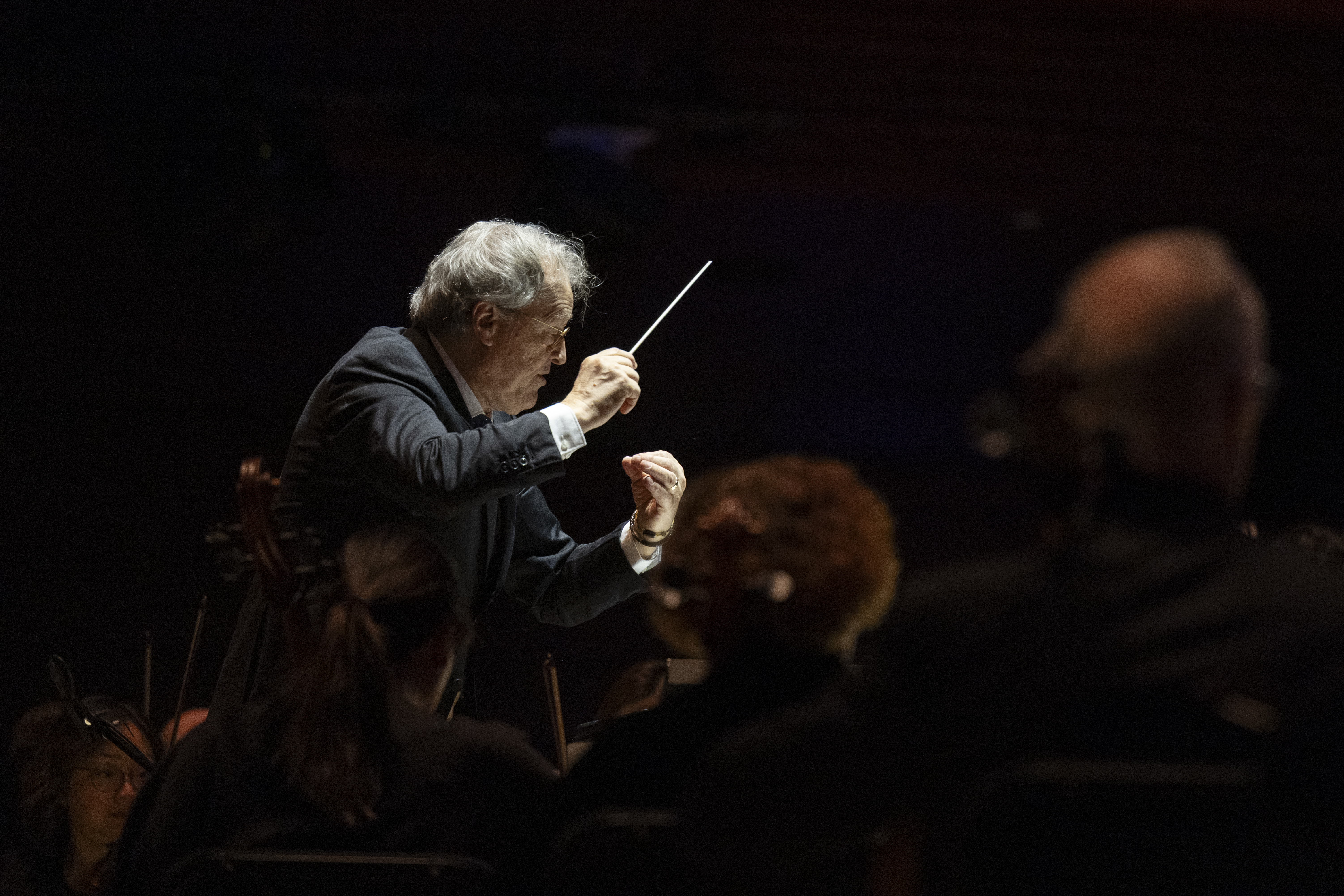
Conductor Ludwig Wicki leading the Philadelphia Orchestra and other musical forces in Marian Anderson Hall.
Colossal forces brought both precision and brutality, particularly in the repeating combination of driving percussion, screaming brass and blocs of choral sound amassed for battle. With Ludwig Wicki conducting, the Singing City Choir and Philadelphia Boys Choir — both quite strong — provided chaos and balm. Vocalist Kaitlyn Lusk and chorus were the gentle healing we needed to hear after Gandalf’s death.
The good thing was, when you tired of watching yet another wave of fiendish Orcs getting clobbered, you could always turn your eyes to the stage, decode the instrumentation and imagine for yourself an entirely different narrative. This is the enduring promise of orchestral sound on any night at the orchestra.
The proposed merger of Temple University and the Library Company of Philadelphia moved closer to reality this week with a nod from the library’s shareholders.
Shareholders voted Tuesday 174 to 33 in favor of the deal, and the action was followed Thursday with approval by the executive committee and finance and investment committees of Temple’s board of trustees.
But for that to happen, they must get approval for the merger from the Pennsylvania attorney general’s office and Philadelphia Orphans’ Court.
“We are delighted to help preserve one of Philadelphia’s most important educational and historical institutions through this partnership,” Temple President John Fry said in a statement. “This will help bring stability to the Library Company while also ensuring that its legacy does not just live on but also thrives. For Temple, this is also an opportunity to further enrich our academic and research resources.”
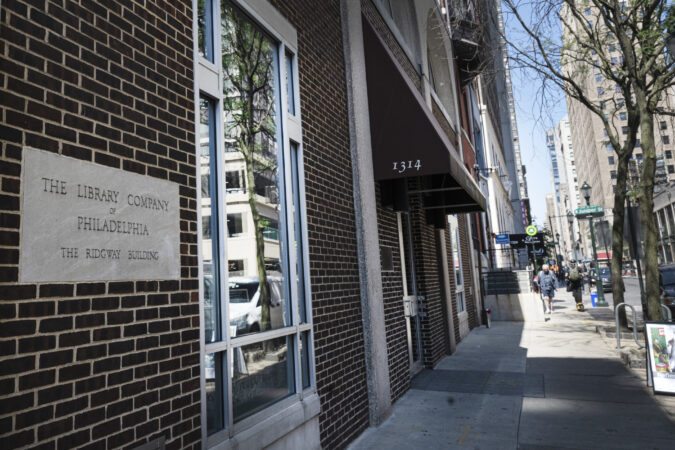
Not much will change for the Library Company’s day-to-day operations, at least immediately. It will remain at its 1314 Locust Street location in Center City and keep its collections, staff, identity, mission and programming, Temple said. It will operate as its own division within Temple Libraries and maintain its own board of visitors.
The Library Company will gain access to Temple’s research arm, grant-writing help, facilities and administrative functions, the university said.
“The Library Company has been an important resource for Philadelphians for nearly 300 years, ever since Benjamin Franklin first envisioned a shared library as a tool for advancing the self-education of his circle of artisans and tradesmen,” John Van Horne, Library Company director, said in a statement. “I am certain that Franklin would heartily approve of our expanded education mission over the last few centuries, and I have no doubt that he would also approve of this partnership with a university dedicated to serving his city and beyond.”
The move comes after the Library Company, faced with a string of operating deficits, began exploring merger possibilities with a number of other institutions. Financial data given to shareholders showed substantial operating deficits for most years since 2017, as well as projections for deficits continuing into 2030.
Officials estimated that in order to remain independent, the company would need to raise $23 million to add to existing endowment.
Van Horne previously said that raising that kind of money would be “an incredibly steep hill to climb, and probably unrealistic.”
The library houses more than 500,000 rare books, manuscripts, prints, photographs, works of art, ephemera, and other objects. It boasts items once owned by Benjamin Franklin and William Penn, and has a concentration in African American and women’s history.
Some shareholders strongly preferred that the library ― founded in 1731 as the first subscription library in the U.S. ― would have remained independent, even as they recognized the current financial bind.
Shareholder Joel Gardner was philosophical about the merger.
“I think it’s the only solution the Library Company could find. We all have to keep our fingers crossed that it works out,” he said while declining to add how he voted.
It didn’t seem likely that the Library Company would be able to raise the money required to remain independent, he said, “in a city that is not notable for having a large number of philanthropists and depends on just a few of them.”
Michelle Flamer, a shareholder who in an Inquirer opinion piece mourned the impending loss of the company’s “historical identity,” said Thursday that the deal “seemed like it was a fait accompli, and there was not very much we could do about it.”
The Library Company also will be incorporated into the university’s fundraising plans, Temple said, though the merger agreement made no promises. It calls for including the Library Company in Temple’s upcoming capital campaign, “with the goal of raising $25 million in new endowed funds to permanently and exclusively support the LCP Division.”
“This is especially significant as the Library Company will soon celebrate its 300th anniversary in 2031, which presents a major opportunity for fundraising,” the university said in its announcement.