Author: Thomas Fitzgerald

  • Gov. Shapiro allocated $220 million to SEPTA to get Regional Rail back on track

    Gov. Shapiro allocated $220 million to SEPTA to get Regional Rail back on track

    Gov. Josh Shapiro is sending $220 million to SEPTA as it repairs fire-prone Silverliner IV Regional Rail cars and a damaged overhead power system in the trolley tunnel that together have brought commuting chaos.

    With the new capital funds, SEPTA will be able to restore Regional Rail to its normal capacity within a few weeks.

    Shapiro has directed PennDot to transfer money set aside for emergencies from the Public Transit Trust Fund to SEPTA, his office said.

    SEPTA’s increasing needs

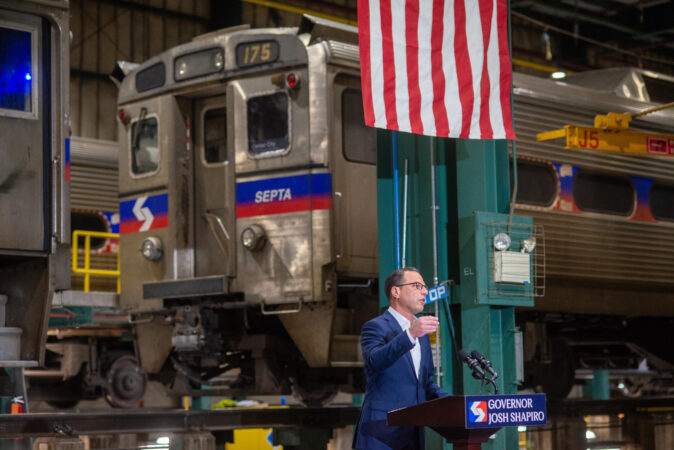
    He announced the aid Monday at the transit agency’s train yard and maintenance shop in Frazer, Chester County.

    Federal regulators on Oct. 1 ordered SEPTA to inspect and repair, as needed, all of its Silverliner IV fleet after five train fires involving the 50-year-old cars.

    Delays, cancellations, station skips, and overcrowded Regional Rail trains running with fewer than the normal number of cars have been regular challenges for riders during six weeks of inspections and repairs focused on electrical components of the 223 Silverliner IVs.

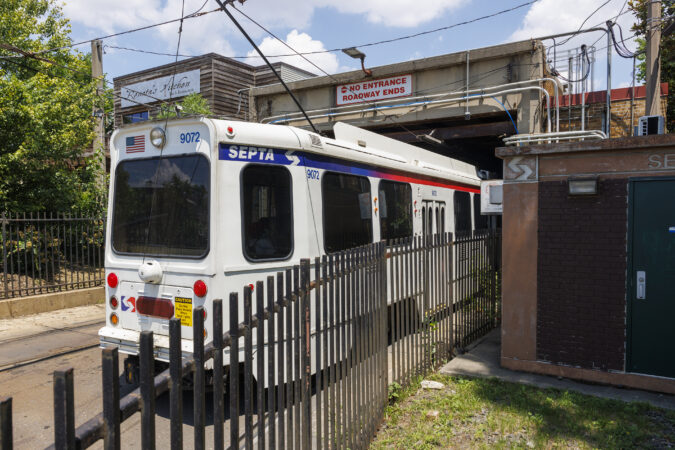
    Earlier this month, the Federal Transit Administration ordered SEPTA to inspect its trolley power system after four incidents, including two times trolleys stalled in the Center City tunnel, requiring 415 passengers to be evacuated.

    The budget impasse

    Shapiro said he was forced to act for the second straight year because Senate Republicans wouldn’t support additional recurring funding for mass transit operations in the state budget.

    “They’ve come up with a ton of excuses, but they haven’t come up with the funding,” Shapiro said.

    Last November, he redirected $153 million in federal highway funding to SEPTA following a similar impasse in passing state transit subsidies.

    After the governor decided in September that no budget agreement on transit funding was possible, PennDot allowed SEPTA to tap $394 million in state money allocated for future capital projects to pay for two years of operating expenses.

    The transit agency was facing a $213 million recurring deficit in its operating budget.

    In late August, SEPTA had canceled 32 bus lines and significantly curtailed other service as part of a “doomsday scenario” the agency said was caused by lack of new state funding.

    Riders were inconvenienced, a lawsuit was filed, and a Philadelphia judge ordered the cuts to be reversed.

    Then the $394 million reprieve arrived.

    Yet the problems with the rail cars and trolleys served to underscore the risks of using capital funds for day-to-day operations.

    “A history of chronic underinvestment has led us to this point,” said Chester County Commissioner Marian D. Moskowitz, who is vice chair of SEPTA’s board.

    She noted that SEPTA has a much smaller capital budget than other large transit agencies.

    What this money will do

    In addition to the repairs, $17 million of the new state money announced Monday is intended to pay for the lease of 10 Silverliner IV rail cars from Maryland’s commuter railroad and the possible purchase of 20 cars from Montreal.

    Highlights of SEPTA’s plans for the $220 million:

    • $95 million for electrical system upgrades, overhauled propulsion motors and more on the Silverliner IV train cars and the newer Silverliner V models.
    • $48.4 million to update the overhead catenary wires in the trolley tunnel, along with three new catenary-maintenance cars for the tunnel and along trolley lines, and on long Regional Rail lines.
    • $51.5 million to upgrade 13 escalators at SEPTA stations, install AI-powered inspection cameras to catch potential problems earlier, and technology improvements at SEPTA’s Control Center
    • $8 million to install replacement parts for Broad Street Line and Norristown High Speed Line cars.

    “These funds are going to make a significant difference in our efforts to overcome the current crises,” SEPTA general manager Scott Sauer said, and to help avoid future ones.

    He thanked the governor and pledged “a comprehensive effort to identify potential problems sooner before they grow and lead to delays, cancellations, or shutdowns.”

    Shapiro had proposed an increase in the share of general sales-tax revenue devoted to transit subsidies over five years.

    Leaders of the GOP-controlled Senate said the $1.5 billion price tag was too high and proposed shifting capital money to operating subsidies for the state’s transit systems and roads — an idea partially reflected in the Shapiro administration’s temporary solution.

    “I am glad the Governor continues to take our advice and use existing resources to support public transit,” Senate Majority Leader Joe Pittman (R., Indiana) said in a statement.

    “It’s unfortunate that just one year ago, he took $153 million of funding from critical [road] infrastructure projects to fund transit, neglecting the needs of those who use our roadways every single day,” Pittman said.

    Republicans also argued that SEPTA had been mismanaged and needs change.

    As the next state budget cycle nears, the debate is likely to continue.

    “I want you to know I’m going to be a continue to be a governor who supports mass transit, who gives a damn about SEPTA, who cares about those 800,000 people that rely on SEPTA every single day,” Shapiro said.
  • Trolley tunnel to remain closed until at least Nov. 30

    Trolley tunnel to remain closed until at least Nov. 30

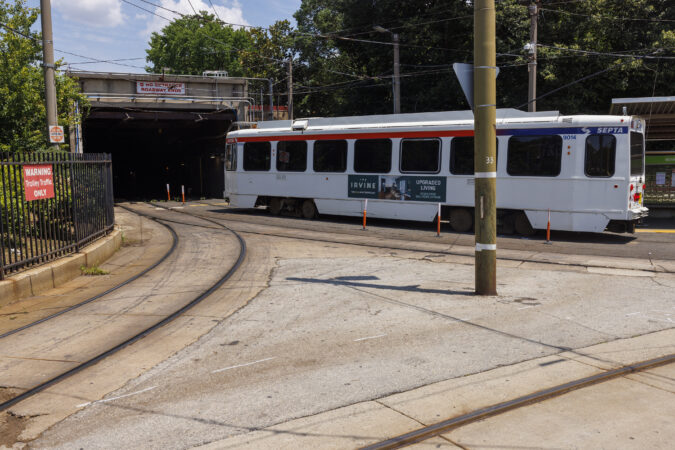
    SEPTA is extending its trolley tunnel closure through at least Nov. 30, hoping to use the extra time over the Thanksgiving holiday to complete repairs to the overhead catenary power system.

    The tunnel has been shut down for most of the last two weeks as crews work on the problem.

    Riders should use the Market-Frankford El to travel through Center City, catching the trolleys at 40th and Market Streets.

    “My wife, daughter and I are totally dependent on the trolley to get us to work and school, and with a prolonged trolley-tunnel diversion, the system has become unreliable and, frankly, unusable,” Will Tung, a Southwest Philly resident, told the SEPTA board during public comments at its Thursday meeting.

    Trolley ridership is typically lower during the week of the Thanksgiving holiday so the closure should be less of a disruption, spokesperson Andrew Busch said.

    SEPTA is contending with glitches in the connection between the overhead catenary wires in the tunnel and the pole that conducts electricity to the vehicle.

    The issue led to two trolleys becoming stranded in October, with a total of 415 passengers needing to be evacuated.

  • Free SEPTA fares for low-income riders could end next year. Advocates are pushing to save it.

    Free SEPTA fares for low-income riders could end next year. Advocates are pushing to save it.

    SEPTA’s 21.5% increase in transit fares and service cuts fell hardest on disadvantaged Philadelphians this year, showing an urgent need to make the city’s Zero Fare program permanent, City Councilmember Nicolas O’Rourke argues.

    He touted his proposal to dedicate 0.5% of the city budget each year to pay for the initiative that provides free SEPTA passes to people living in poverty.

    O’Rourke’s proposed Transit Access Fund would be written into the City Charter “so it can’t be yanked away at a moment’s notice when somebody wants to shift something around in the budget,” he told about 150 people in a town hall at the Friends Center on Cherry Street.

    O’Rourke, Democratic State Sen. Nikil Saval, and the advocacy group Transit Forward Philadelphia called the meeting to push for affordable public transportation and ways to sustainably fund SEPTA after Harrisburg’s failure to provide new state money for mass transit agencies.

    Their affordability agenda is in keeping with the message in Democratic wins for governor in New Jersey and Virginia, as well as Zohran Mamdani’s election as mayor of New York.

    A broad coalition and patience are needed in Pennsylvania, Saval said. ” Every major political win comes from months, years, sometimes decades, of work,” he said.

    Earlier this year, Mayor Cherelle L. Parker’s budget would have eliminated funding for Zero Fare, a two-year pilot program launched in 2023. Money was restored after backlash.

    “We pushed back hard,” said O’Rourke, a member of the Working Families Party. “People with the least income are paying a larger share of their money just to get around. That’s upside down.”

    Funding is not guaranteed after June 30, when the current budget expires, however.

    If enacted, a Transit Access Fund would generate an estimated $34 million in the 2026-2027 fiscal year, O’Rourke’s office calculates.

    That would generate enough money — between $20 million to $25 million, according to managers of the Zero Fare program — to give free SEPTA passes to 60,000 Philadelphians at or below the federal poverty standard.

    O’Rourke and his staff also are considering using the remaining $10 million to $14 million for matching grants to help businesses, landlords and housing developments to join the SEPTA Key Advantage program, which provides subsidized transit passes.

    People living at or below the federal poverty standard are eligible for the Zero Fare SEPTA passes. For 2025, that is $15,650 for an individual and $32,150 for a family of four.

    Philadelphia’s poverty rate was 19.7% in 2024, the latest figure available, according to the U.S. Census.

    To win sustainable state funding for SEPTA, activists need to break through the narrative that urban and rural areas of Pennsylvania are hopelessly divided on transit.

    This year, the Transit for All PA coalition campaigned for more state dollars for transit systems in every county of the state. About 45,000 people representing every legislative district participated.

    “When we’re made to feel like we’re on opposite sides of the fight, our numbers become smaller and we focus on the wrong targets,” said Saval.

    “It’s not the person in Schuylkill County frustrated about potholes and road conditions that’s to blame for lack of transit funding” he said. “That person deserves to get safely where they need to go, too.”

  • SEPTA trolley tunnel will stay closed until next week

    SEPTA trolley tunnel will stay closed until next week

    Philadelphia’s trolley tunnel has been closed for most of the last two weeks as SEPTA contends with glitches in the connection between the overhead catenary wires and the pole that conducts electricity to the vehicle.

    The tunnel will remain closed at least until next week for repairs, and city trolleys will operate from West Philadelphia. Riders can take the Market-Frankford El to get to and from Center City to 40th and Market Streets.

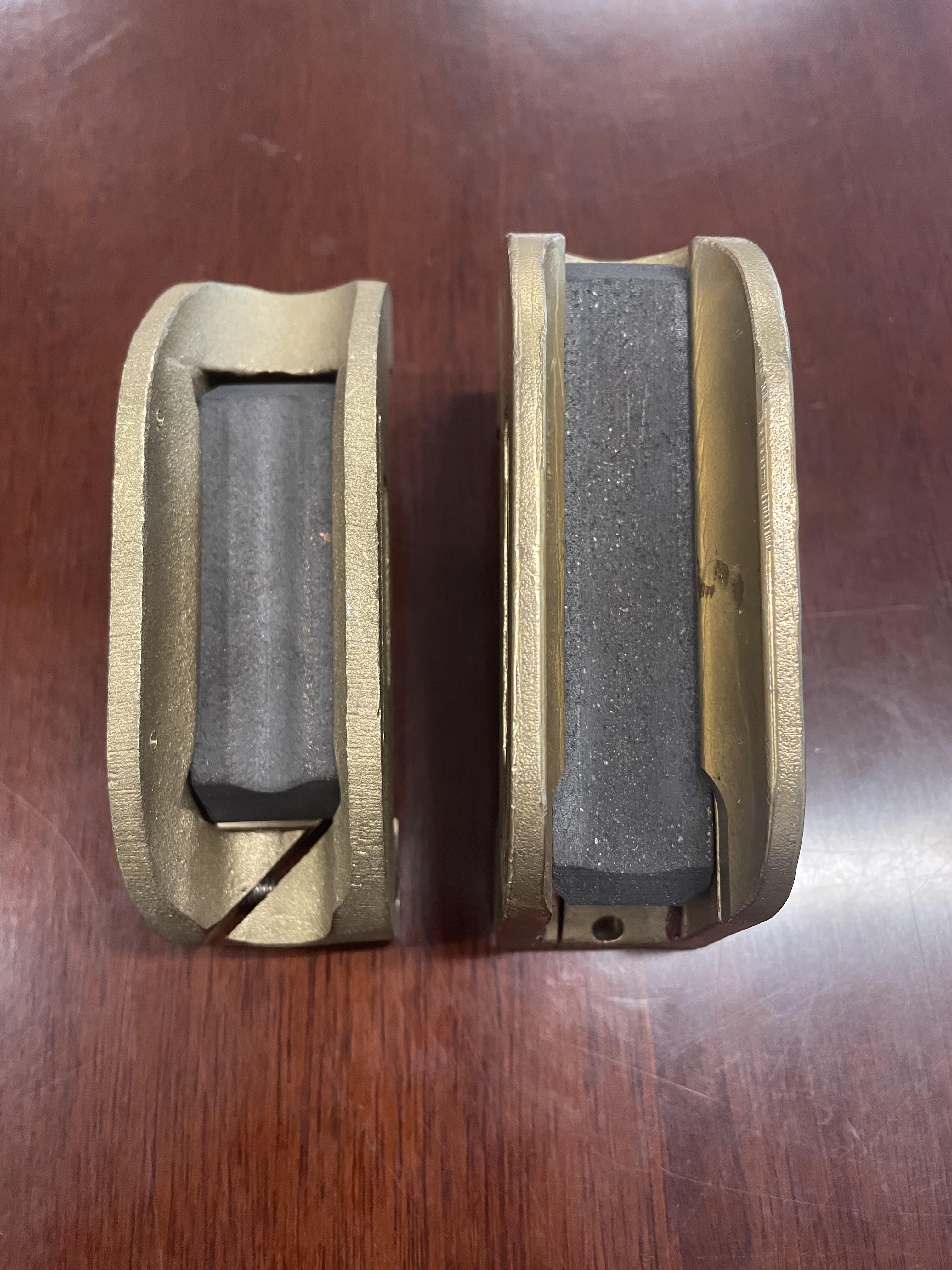
    At issue is a U-shaped brass part called a slider that carries carbon, which coats the copper wires above that carry electricity.

    “There’s a lot of friction and heat. The carbon acts as a lubricant,” said John Frisoli, deputy chief engineer for SEPTA.

    A 3-inch slider (left) and a 4-inch slider, which coats electric-powered wires with carbon to reduce friction. When they fail, trolleys are stranded.

    Earlier in the fall, SEPTA replaced 3-inch sliders with 4-inch models in an effort to reduce maintenance costs, but the carbon in the longer units wore out sooner than they should have, causing metal-on-metal contact between the trolley and the copper wires.

    Soon after, there were two major incidents when trolleys were stranded in the tunnels. On Oct. 14, 150 passengers were evacuated from one vehicle and 300 were evacuated from a stalled trolley on Oct. 21.

    SEPTA went back to the 3-inch sliders.

    On Nov. 7, SEPTA shut down the tunnel to deal with the issue, which had cropped up again, then reopened it on the morning of Nov. 13, thinking it was solved. But it discovered further damage to the catenary system and the tunnel was closed at the end of the day.

    “It’s just unfortunate that we’re dealing with the damage that decision caused,” said Kate O’Connor, assistant general manager for engineering, maintenance, and construction.

    The transit agency is running test trolleys and has found minimal wear of the wires rather than the extensive wear earlier, O’Connor said. Her department is working on a plan to replace wires by sections and will continue test runs until it’s determined the tunnel is safe for passenger traffic again, she said.

    “We have far more traffic in the tunnel than on the street — all five routes use it — and the overhead system there is more rigid,” O’Connor said.

    Trolleys have been unaffected traveling on the street. Jason Tarlecki, acting chief deputy engineer for power, said that the wires have “a lot more upward flexibility to absorb the shock,” he said, leading to less friction.

    The Federal Transit Administration on Oct. 31 ordered SEPTA to inspect the overhead catenary system along all its trolley routes.

    The directive came in response to four failures of the catenary system in September and October, including the tunnel evacuations.

  • SEPTA workers authorized a strike for the fourth year in a row. Here’s when they walked off the job in the past.

    SEPTA workers authorized a strike for the fourth year in a row. Here’s when they walked off the job in the past.

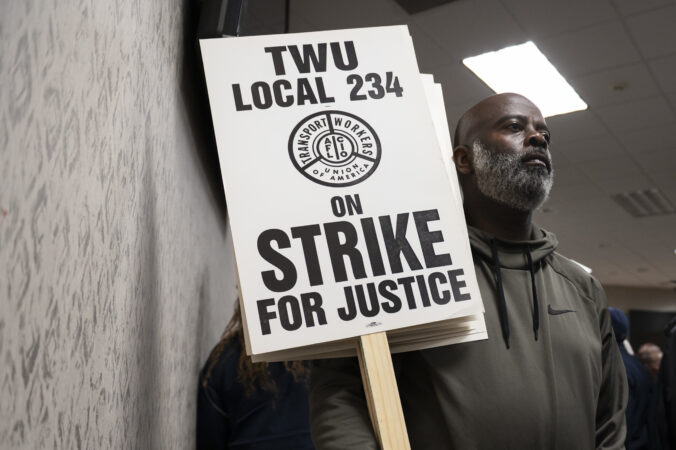
    Members of the Transport Workers Union Local 234 on Sunday, Nov. 16 voted to authorize a strike if union and SEPTA negotiators can’t reach an agreement on a new contract.

    Shortly before the current contract ran out at 11:59 p.m. on Nov. 7, TWU’s new president, Will Vera, urged union members to stay on the job. In an unusual move, he delayed a strike vote at the time of contract expiration, saying he had hope that a deal could be reached without the usual brinksmanship.

    “We’re asking you to please continue to come to work and put money aside. We want you to be prepared in case we have to call a work stoppage,” he told members in a video at the time.

    Local 234 leaders say they’re prioritizing a two-year deal with raises and changes to what the union views as onerous work rules, including the transit agency’s use of a third party that Vera said makes it hard for members to use their allotted sick time.

    Three TWU contracts in a row have run for one year each, all negotiated as SEPTA weathered what it has called the worst period of financial turmoil in its history.

    In a statement, SEPTA said it was aware of the authorization vote and is committed “to continue to engage in good-faith negotiations, with the goal of reaching a new agreement that is fair.”

    SEPTA unions have walked off the job at least 12 times since 1975, earning the authority a reputation as the most strike-prone big transit agency in the U.S.

    Here is what happened in previous SEPTA strikes:

    2023 Fraternal Order of Transit Police Lodge 109 (three days)

    SEPTA police officers walked off the job after bargaining with the transit agency for almost nine months, largely over the timing of a 13% pay raise for members. The agreement, partially brokered by Gov. Josh Shapiro, came amid heightened fears about safety on public transit and a funding crisis for SEPTA.

    2016 TWU Local 234 (six days)

    TWU Local 234 walked off the job for six days; the biggest issue was retirement benefits. SEPTA’s contributions toward union members’ pensions did not rise in tandem with wages when workers made more than $50,000. Managers’ pension benefits were not capped. The union also wanted to reduce out-of-pocket health-care costs and win longer breaks for bus, trolley, and subway operators between shifts and route changes.

    SEPTA and the union reached an agreement Nov. 7, the day before the general election. Democrat Hillary Clinton’s presidential campaign was worried about voter turnout, and the city sought an injunction to end the strike. It proved unnecessary.

    2009: TWU Local 234 (six days)

    Talk about leverage. TWU was ready to strike just before the first home game of the World Series between the Phillies and the New York Yankees. Gov. Ed Rendell pushed the two sides to continue talking, and the transit workers waited to walk out until three hours after the end of Game 5, the last in the series played at Citizens Bank Park.

    It was a bitter strike, coming just a year after the stock market’s meltdown started the Great Recession. TWULocal 234 President Willie Brown called himself “the most hated man” in Philadelphia. Mayor Michael Nutter was harshly critical. Brown called him “Little Caesar.”

    The strike was settled Nov. 7 with a deal on a five-year contract. Transit workers got a $1,250 bonus, a 2.5% raise in the second year, a graduated increase in SEPTA pension contributions from 2% to 3.5%, and the maximum pension benefit was raised to $30,000 from $27,000.

    2005: TWU Local 234 and United Transportation Union Local 1594 (seven days)

    Two unions walked off the job on Halloween, halting most bus, subway, and trolley service in Philadelphia and its Pennsylvania suburbs.

    Negotiations collapsed mostly over SEPTA’s insistence that workers pay 5% of medical insurance premiums. At that point, the authority paid 100% of the workers’ premiums for family coverage.

    In the end, it was solved by Gov. Rendell, a Democrat who had been Philadelphia mayor in the 1990s. He agreed to give promised state money to SEPTA early, so it could pay premiums in advance, reducing its costs.

    In the resulting four-year deal, the unions had to pay for 1% of their medical premiums. They also received 3% yearly raises.

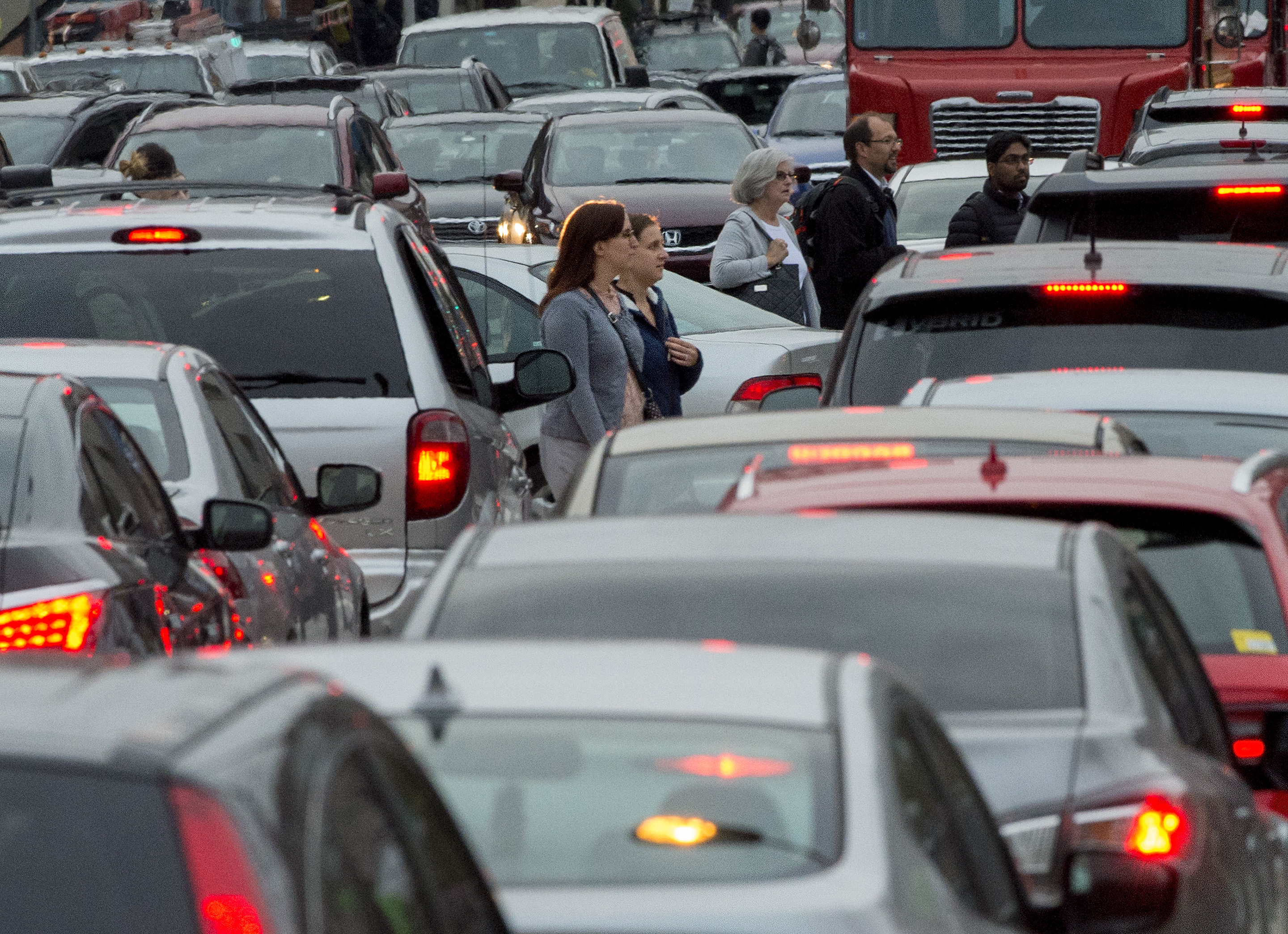
    Pedestrians and cars in a chaotic dance at the intersection of Market and 30th Streets during the afternoon commute on the first day of the SEPTA city workers’ strike Nov. 1, 2016.

    1998: TWU Local 234 (40 days)

    City transit workers’ contract expired in March, but they did not strike until June — and then stayed out for 40 days. The two sides reached an agreement in July, but it fell apart. TWU members had returned to their jobs and kept working under an extension of their old contract. A final agreement was signed Oct. 23.

    The union agreed to SEPTA’s demand that injured-on-duty benefits be limited. The old contract gave them full pay and benefits while on leave after a work injury. SEPTA wanted to hire an unlimited number of part-time workers. The union agreed to 100 part-timers to drive small buses.

    SEPTA’s chief negotiator was David L. Cohen, famous for reining in unions representing city workers during Philadelphia’s bankruptcy in 1992, as Rendell’s mayoral chief of staff.

    1995: Local 234 TWU (14 days)

    A two-week strike stilled city buses, trolleys and subways until an agreement was reached April 10. Transit workers would get 3% raises per year over the three-year span of the new contract, as well as increases in pension benefits and sick pay.

    The union agreed to several cost-reduction measures, including a restructuring of SEPTA’s workers compensation policies.

    Mayor Ed Rendell, a villain to many in labor for winning givebacks from city unions in 1992, pushed SEPTA to offer more generous terms to TWU than it had initially. Cohen, who was his chief of staff, crunched the numbers to make it work. Three years later, out of the city administration and working as a lawyer, he was hired as SEPTA’s chief negotiator.

    1986: TWU Local 234 (four days) and UTU Local 1594 (61 days)

    When TWU struck the city transit division in March 1986 over a variety of economic issues and work rules, some bus drivers pulled over mid-route and told passengers to dismount, The Inquirer reported.

    Members were particularly incensed at what they considered SEPTA’s draconian disciplinary procedures. Union leaders said the issue was a basic lack of respect. The strike was settled in four days.

    Drivers for 23 suburban bus routes, two trolley lines in Delaware County and the Norristown High-Speed Line — all members of the United Transportation Union — struck for just over two months, affecting about 30,000 passengers a day.

    Employees in what was then known as SEPTA’s Red Arrow Division — after the private transit company that used to own the routes and lines — made considerably less than their city counterparts and had weaker pension benefits. They won raises and pension changes that brought them closer to parity.

    1983: Regional Rail (108 days)

    Thirteen separate unions walked off the job on the commuter rail lines that SEPTA had taken over at the beginning of the year from Conrail, successor to the bankrupt Pennsylvania and Reading Railroads.

    In addition to wages, a key issue was SEPTA’s demand that union train conductors accept pay cuts. The authority had already cut the number of those workers by more than half.

    Eventually SEPTA reached deals with a dozen of the unions. The 13th local, which represented 44 railroad signalmen, held out longer. Main issue: Whether SEPTA had the right to contract with outside firms for some types of signal work.

    The Regional Rail strike remains SEPTA’s longest work stoppage since 1975.

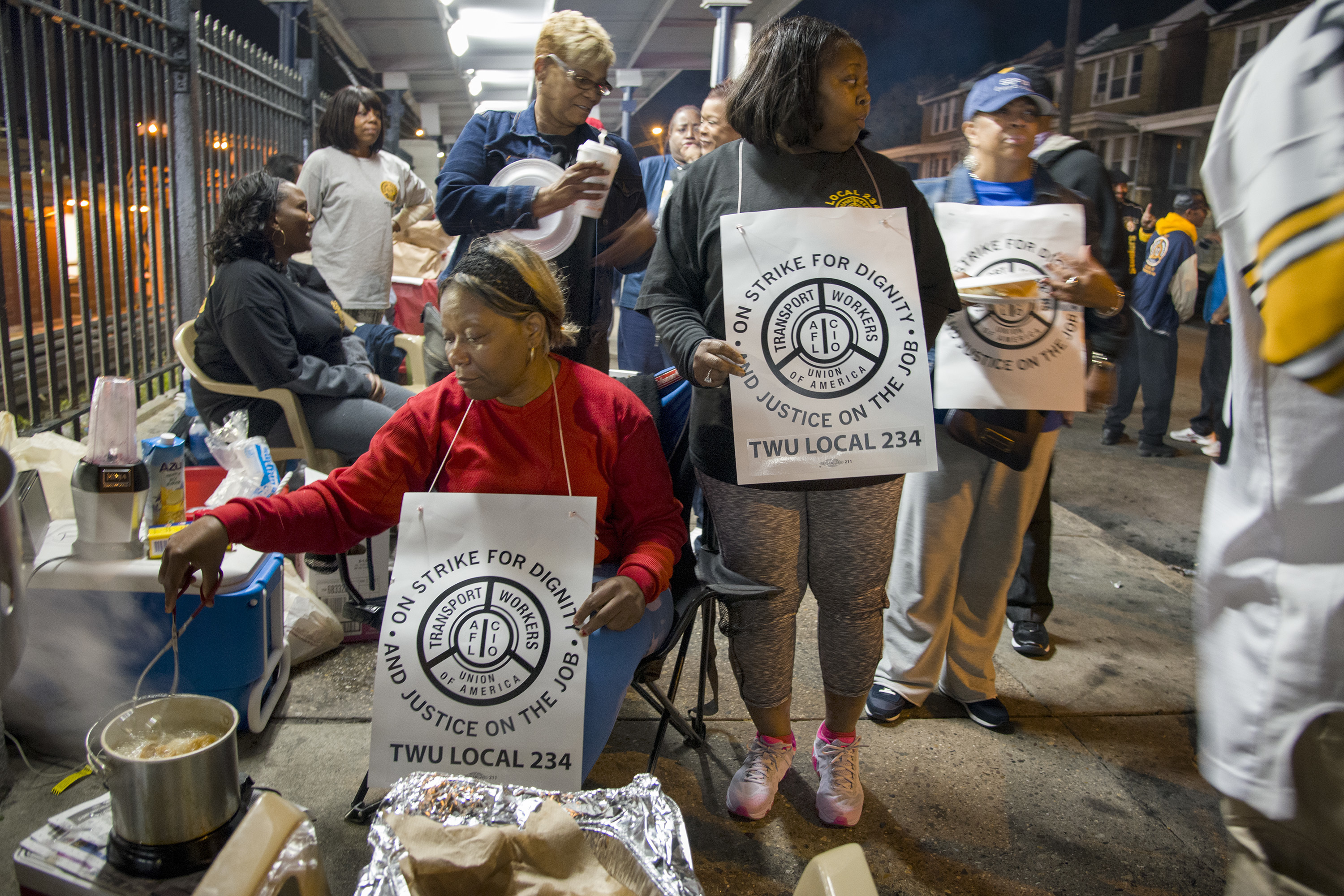
    Joyce Woodford (center), a 25-year veteran cashier on SEPTA’s Broad Street Line, serves up fried fish for her fellow striking cashiers outside the Fern Rock Transportation Center during dinnertime on the third day of the SEPTA strike in 2016.

    1982: TWU Local 234 (34 days)

    About 36 suburban bus drivers and mechanics operating routes primarily in Montgomery County, and some routes in Bucks, won an 8.5% wage increase over three years.

    The bus routes were the descendants of the Schuylkill Valley Lines and the Trenton-Philadelphia Coach Lines, which SEPTA acquired in 1976 and 1983, respectively. Service has grown, and the collection of bus routes is known as the Frontier Division today.

    1981: TWU Local 234 (19 days) and UTU Local 1594 (46 days)

    Transit workers shut down buses, trolleys and subways in the city on March 15, seeking job security in the form of a no-layoff clause, wage increases and a bar on SEPTA hiring part-time workers.

    And the Red Arrow division went out for 46 days seeking higher wages and better medical benefits. SEPTA also backed down a demand for permission to hire private contractors for some work on the suburban buses, trolleys, and the Norristown High Speed Line.

    1977: TWU Local 234 (44 days)

    After a bitter strike, union members who run the city transit division got higher wages and more benefits, after rejecting an arbitrator’s proposed contract that was portrayed in news reports as generous.

    A furious Mayor Frank Rizzo told reporters the strike “can last 10 years for all I care.” He said of the union’s rejection of the earlier offer: “It is outrageous, and I hope the people won’t forget it.”

    1975: TWU Local 234 (11 days)

    Transit workers, concerned about the ravages of inflation, wanted a clause giving them cost-of-living increases and enhancements to health-care benefits. Those were granted after Rizzo agreed to add $7.5 million to the city’s annual SEPTA contribution. Perhaps that’s one reason the mayor was so annoyed two years later.

    Staff writer Erica Palan contributed to this article.

  • A new bridge could replace another spanning the Delaware River. Eventually.

    A new bridge could replace another spanning the Delaware River. Eventually.

    Pennsylvania and New Jersey turnpike officials have settled on two alternative plans for replacing the Delaware River Bridge that has linked their toll roads for 70 years.

    Traffic has mushroomed since the interchange with I-95 opened in 2018, and the four-lane span is often congested, along with highways and roads in Bucks and Burlington Counties.

    “We have a lot more traffic here … and it will keep growing,” said engineer John Boyer, the Pennsylvania Turnpike Commission’s project manager. “We need additional capacity.”

    Before the I-95 connection was finished, about 42,000 vehicles a day crossed the Delaware River Bridge. Now, that’s up to around 67,000. Average daily traffic is projected to be 90,000 vehicles by 2050.

    What are the two ‘finalist’ options for a new bridge?

    In one scenario, the new bridge would be constructed at once about 75 feet north of the existing span over four years. Pennsylvania- and New Jersey-bound lanes (six in all) would be built 15 feet apart. When finished, all traffic would be moved to the new bridge. The existing bridge would be removed.

    The other option: constructing the new bridge in stages, about 40 feet north of the existing bridge — over eight years. Initially, the first half of the new span would go up. Then four lanes of traffic would be diverted to the new half while the old bridge is demolished, after which the second half of the new bridge would be built. When complete, there would be six traffic lanes.

    What are the next steps?

    Turnpike officials are preparing a new environmental impact statement, required for federal approval and funding. The 2003 version is outdated.

    The plan is to unveil the site decision in the spring. Then would come final design and the rest of the bureaucratic steps in building transportation infrastructure.

    Construction could start in 2031.

    The final cost of the project has not yet been estimated, officials said, but it won’t be cheap.

    What’s the history of the project?

    Talk of fixing the crossing started more than 30 years ago, and by 2003, after exhaustive environmental impact and engineering studies, authorities proposed building a modern bridge alongside the old one, which would be refurbished.

    Federal highway officials signed off, but it never came together.

    In 2010, the Pennsylvania Turnpike Commission formally deferred the project “due to funding constraints,” spokesperson Marissa Orbanek said.

    A crack in a steel truss supporting the bridge closed the span for six weeks in 2017 and rekindled the idea. Engineers combed through nine possible sites north and south of the bridge and decided to replace rather than refurbish the span, as first planned.

    The Pennsylvania Turnpike Commission and New Jersey Turnpike Authority are working together on the project.

    Beginning in 2007 with Act 44, the Pennsylvanian Turnpike assumed a major role in state transportation funding that limited its ability to spend on other things. The law used turnpike toll revenues to secure bonds that would provide revenue for public transit and highway and bridge projects.

    In addition, the turnpike prioritized the connection to I-95 and widening the roadway to accommodate the additional traffic, as well as other projects — including removal of toll booths and switching to gantries that charge drivers by reading an EZ-Pass or snapping a picture of a vehicle’s license plate.

    Act 44 was a workaround for a state constitutional prohibition on the use of the gas tax for public transit and legislators’ reluctance to hike that tax for highways and bridges.

    The turnpike would contribute $750 million a year to the Pennsylvania Department of Transportation, split evenly between transit and roads.

    That formula was tweaked in 2013 with Act 89, which raised the gas tax to finance roads and bridges and cut the turnpike’s annual payment to $450 million — with all of it going to transit — through 2022.

    The toll road’s obligation to PennDot then dropped to $22 million a year.

    Will the Pa. Turnpike need to acquire properties? Where?

    It’s too early to say. Officials working on the project said they would have a better idea after the final proposal is chosen, expected in spring 2026. The two northern options are seen as likely to have fewer impacts than other alternatives considered.

    What about a shared-use path for bikers and walkers?

    Pennsylvania Turnpike officials have ruled that out, citing regulations barring pedestrians or nonmotorized vehicles on turnpikes and interstates — the connector is part of I-95 — as well as future maintenance costs. Advocates still want access.

    John Boyle, a staffer for the Bicycle Coalition of Greater Philadelphia, pointed to several toll bridges with free paths that accommodate cyclists and pedestrians.

    The Great Egg Harbor Bridge on the tolled Garden State Parkway, for instance, has bike and pedestrian lanes.

    So does the Mario M. Cuomo (Tappan Zee) Bridge, which carries the New York Thruway over the Hudson River about 20 miles north of New York City.

    And the Gordie Howe International Bridge, a toll facility between Detroit and Windsor, Ontario, nearing completion, will have separate shared-use lanes.

    What considerations guide the choice?

    Boyer said they boiled it down to picking a site that would have the lowest negative impact on the built and natural environments.

    “We’re looking at it from a 10,000-foot view in the entire corridor: commercial impacts, industrial impacts, residential impacts, and potential impacts to billboards or cell towers in the area,” Boyer said.