Author: Beatrice Forman

  • A tale of two festivals: Philly Bierfest wants NYC-rooted Philly Beer Fest to stop confusing customers

    A tale of two festivals: Philly Bierfest wants NYC-rooted Philly Beer Fest to stop confusing customers

    A battle of the beer festivals is brewing in Philadelphia, and it’s set to come to a head next weekend, when Philly Bierfest and Philly Beer Fest — two completely unrelated beer festivals with names that are homophones — take place on the afternoon of Saturday, Feb. 28.

    This isn’t a coincidence, according to some members of Pennsylvania’s beer scene who claim the New York City-based organizers of the two-year-old Philly Beer Fest are deliberately trying to capitalize on the good name of Bierfest, a long-standing event with deep local roots.

    “It’s a very pointed move,” said Meredith Megan Rebar, the founder of Home Brewed Events, which plans major food and drink festivals in the Philly region. “They’re just doing this intentionally to mess with the event that’s been around longer.”
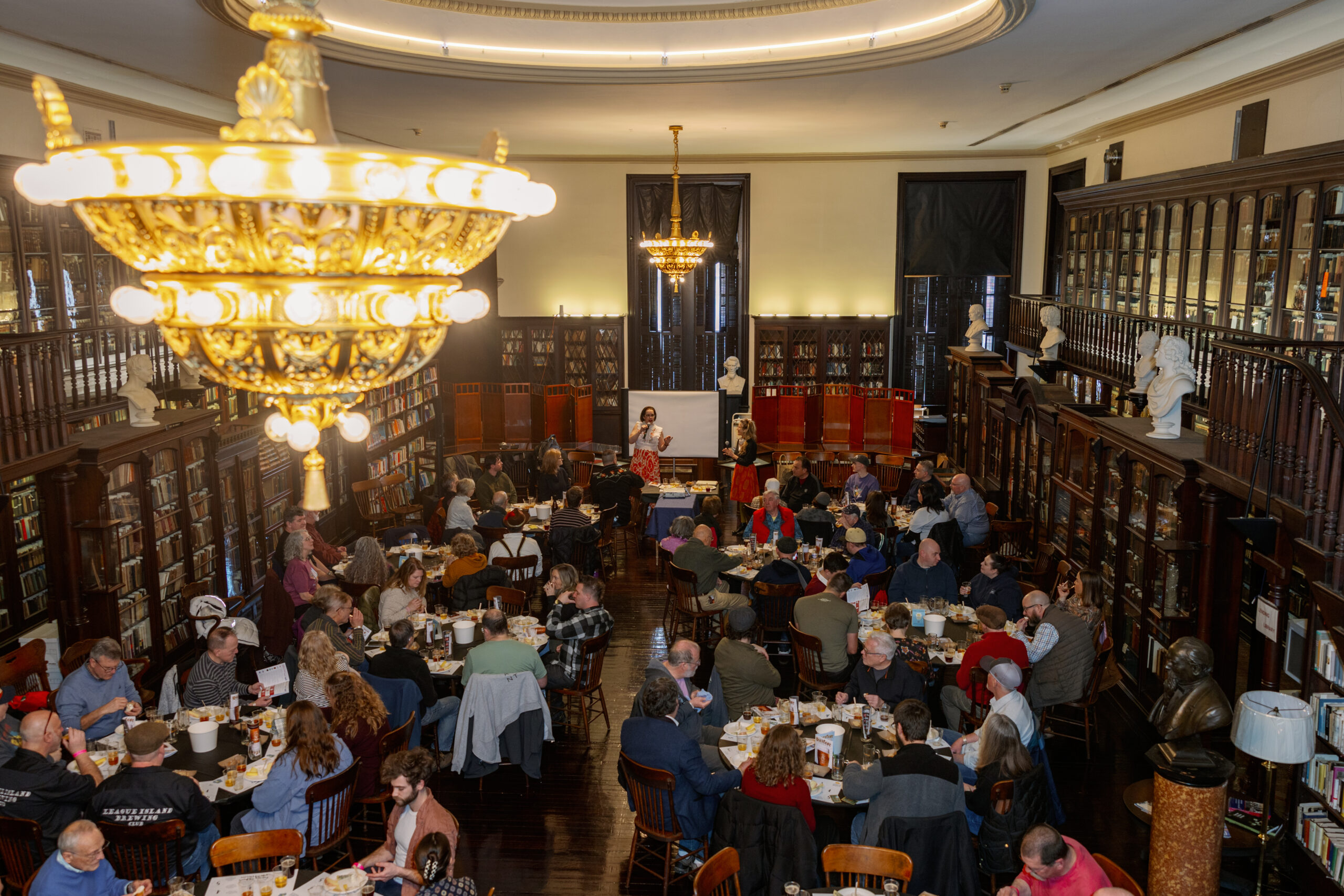
    The 2024 Philly Bierfest, held at the German Society of Pennsylvania at 611 Spring Garden St. The event spans two buildings and includes a food hall, beer classes, and burlesque performances, among other things.

    Philly Bierfest was created in 2013 by Northern Liberties-based nonprofit the German Society of Pennsylvania and Marnie Old, a local wine author and longtime freelance columnist for The Inquirer. It began as a way to honor the state’s rich tradition of brewing German-style beers, such as pilsners, kölsches, and lagers. With a deep bench of Pennsylvania- and Germany-based brewers — there are 45 pouring at this year’s event — the festival sells out each year, and was named one of the best beer festivals in the U.S. by USA Today in 2023. The event’s proceeds have gone to the Philly Roller Derby and Brewers of PA since its inception.

    Philly Beer Fest, on the other hand, is hosted by by Craft Hospitality, a national events company headquartered in New York City that organizes beverage festivals across the U.S., including the Philadelphia Zoo’s Summer Ale Festival. Craft Hospitality launched Philly Beer Fest at the 23rd Street Armory in 2024. Just over 30 Philadelphia-area beverage makers are featured this year, and proceeds partially benefit the Trauma Survivors Foundation.

    In 2024 and 2025, Craft Hospitality scheduled Beer Fest on the weekends immediately before and after Bierfest, which has been held on the last Saturday of February for 13 years (save for a pandemic-induced disruption).

    This year’s identical scheduling hasn’t necessarily hurt Bierfest, Old said, noting that tickets sold out this week. But it has caused some headaches. Bierfest’s barbecue vendor accidentally showed up to the wrong venue for a site visit, and Old has spent a great deal of time confirming with vendors that they’re signed up for the right event. In past years, Old has heard from some disappointed Beer Fest attendees who showed up to their event expecting it to be the German-themed Bierfest.

    The nonprofit-run festival tried to get ahead of any confusion this year. Prior to Bierfest selling out, it had a pop-up on its website that read: “Friends don’t let friends get the wrong tickets. Share this link to ensure pals get tickets to the original, authentic Philly Bierfest and not the other similarly named event.”

    Old isn’t sure if the warnings entirely worked.

    “We don’t hear from anyone who got tickets to the wrong festival until after our event,” she said. “I don’t know what their intention is because I’m not on their team, but misleading [the consumer] does seem to be the end effect.”

    Craft Hospitality denies scheduling Beer Fest for Feb. 28 as a way to undercut its preexisting competitor. In a statement, the company attributed the scheduling snafu to the event being held at a National Guard facility, which limits scheduling.

    “Event dates are determined based on venue availability and planning logistics, and are often set by contract approximately 12 months in advance,” the statement read. “Philadelphia has an incredibly active event calendar — this year especially with the World Cup … Overlap between events is not uncommon.”

    ‘It just feels predatory to me’

    This isn’t the first time Craft Hospitality’s Beer Fest has been accused of riding Bierfest’s coattails.

    After a Craft Hospitality employee emailed Ploughman Cider owner Ben Wenk in Nov. 2023 to gauge interest in vending at the first Philly Beer Fest — then scheduled for Feb. 17, 2024 — Wenk said his cidery would boycott all future Craft Hospitality events over what he felt was the company’s “intentional and malicious” attempt to deceive.

    Scheduling a beer festival with an identical-sounding name just a week before its established competitor, Wenk said, went too far.

    “Our people and our brand won’t be devoting any further resources towards an organization such as yours that is so brazenly and transparently willing to act in such a predatory way towards an established event like Philly Bierfest, who, by our estimation, have done nothing to deserve it,” Wenk emailed the Craft Hospitality employee in February 2024.

    Another Craft Hospitality employee replied to Wenk days later. “No one else has ever mentioned this other beer fest to me personally. Brands have just signed up fairly easily but I do see the conflict you’re pointing out. I will be looking into this,” they wrote.

    No one followed up with him, Wenk said, and Craft Hospitality didn’t respond to questions about this interaction.

    “Why is this New York events company coming down here to Philadelphia and thinking they can get one over on us?” Wenk said. “It just feels predatory to me.”
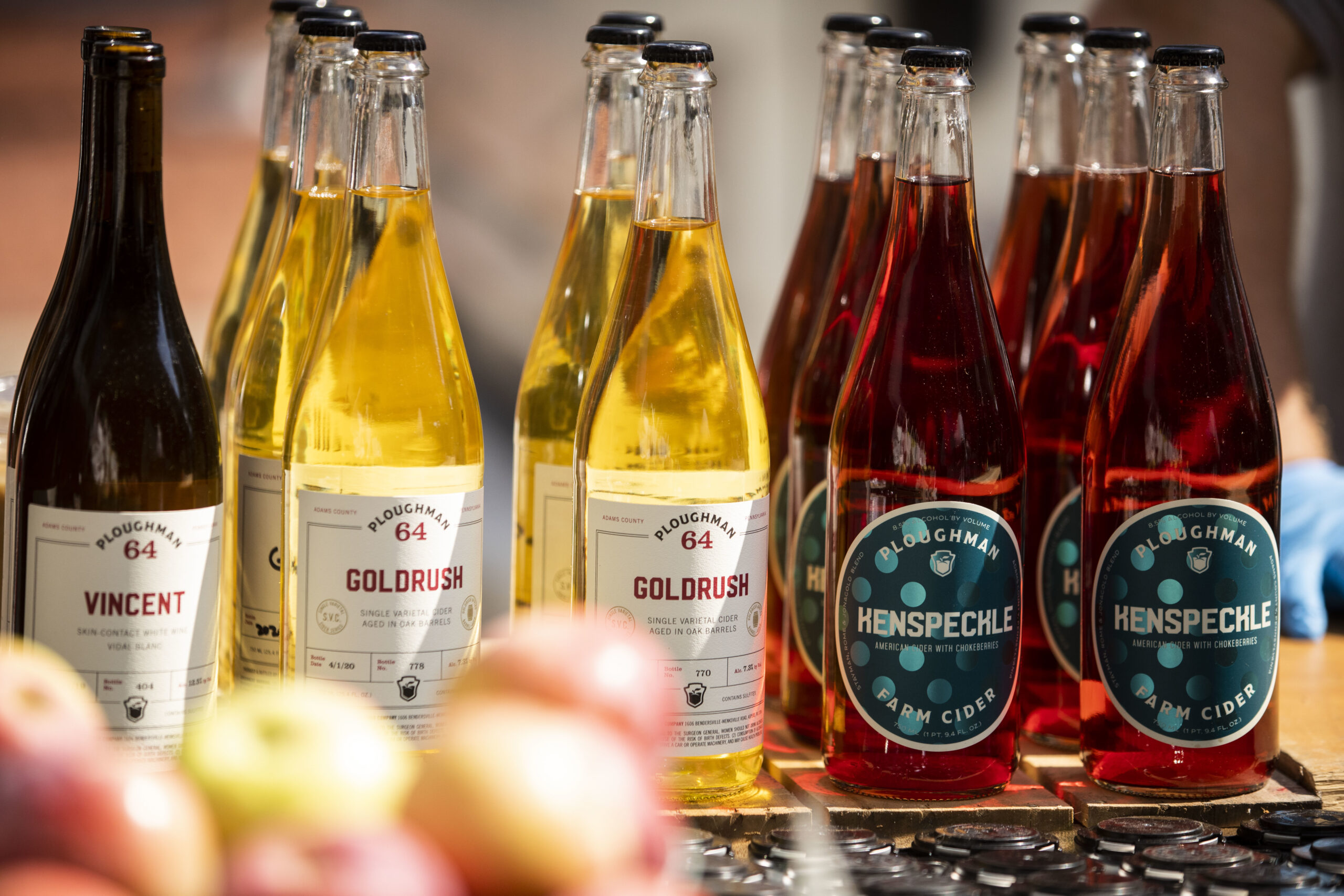
    Ploughman Ciders, of Adams County, Pa., is boycotting Philly Beer Fest and all other Craft Hospitality events.

    Bierfest co-creator Old had also directly flagged issues to Sam Gelin, Craft Hospitality’s founder. Shortly after both beer festivals wrapped in 2024, Old learned Craft Hospitality had scheduled its 2025 Beer Fest on the same day as Bierfest. When she asked Gelin if he would consider moving his event out of concern that it would confuse customers and vendors, Old recalled that Gelin said it would be “desirable” for the events to share the date. Still, Gelin obliged. Philly Beer Fest 2025 took place one week after Bierfest.

    “After that conversation and then for this year, I didn’t think I needed to follow up with them. I assumed that they would continue choosing a different date,” Old said.

    When she learned in September that this year’s Beer Fest was once again set for same exact date as Bierfest, Old figured it wasn’t worth reaching out to Gelin again.

    “If you’re renting your venue, it’s too late to change by that point. Six months is cutting it too close to make any changes,” she said. “And it was clear to me at that stage that [Craft Hospitality] saw having [its] event on the same date as ours as a benefit.”

    Craft Hospitality did not respond to questions about whether its founder had been contacted by Old. “Philly Beer Fest is not affiliated with Philly Bierfest,” they said in their statement. “They are separate events with different producers, different names, different socials, different formats, different pricing, different breweries, different cultural focuses, different venues, and overall different experiences.”

    Festivals with different aims

    The different vibes are part of the problem, according to Rebar, the festival organizer who specializes beer festivals.

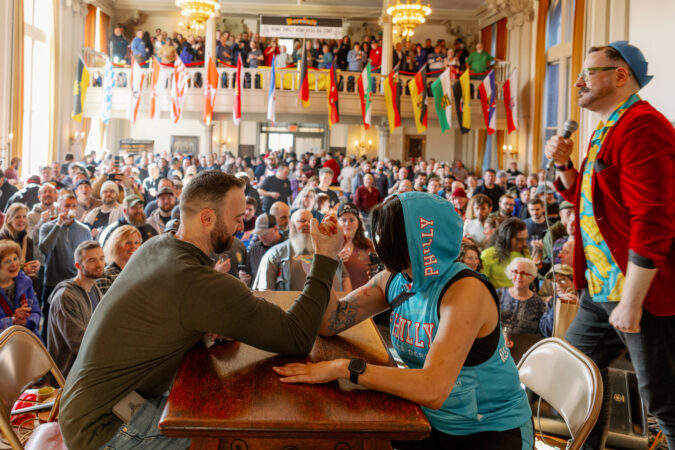
    Bierfest typically draws “real beer enthusiasts,” who are there to drink but also to deepen their understanding of German brewing techniques and beer culture. The festival’s format includes beer seminars, a food hall showcasing traditional German eats by local makers, a German Masskrugstemmen (stein-holding) strength competition, and performances from Bavarian folk dancers.
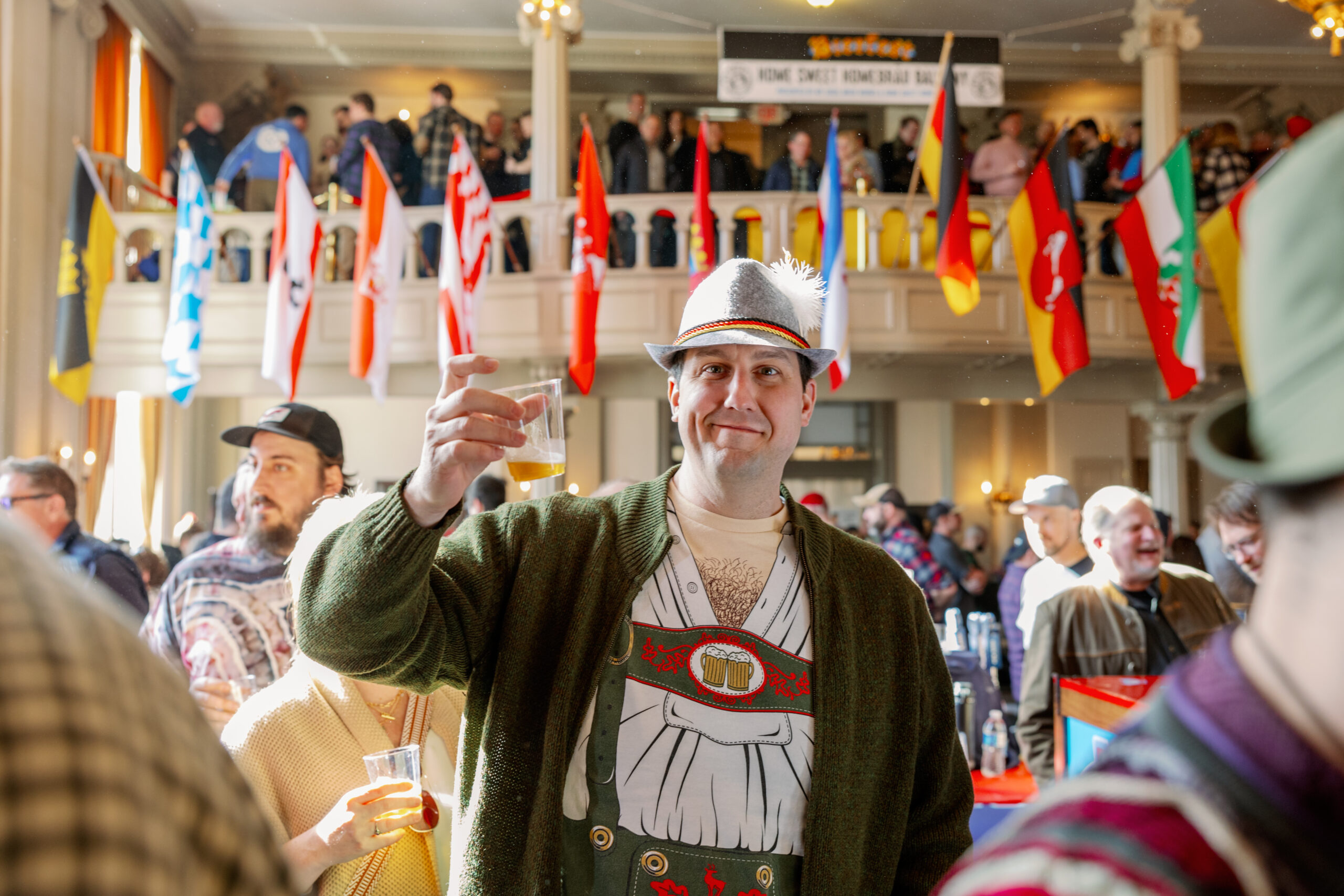
    An attendee at the 2024 Philly Bierfest, which has been held on the last weekend of February since its inception in 2023.

    Beer Fest, said Rebar, is for people who want to party. The festival is a hodgepodge of beer, hard seltzer, and spiked tea purveyors compared to Bierfest’s lineup of respected German beermakers and Pennsylvania brewers making traditional German beer styles.

    “There’s no educational standards to it. It’s just a generic festival, and it’s not [organized] by anybody local,” said Rebar, who attended the first Beer Fest in 2024. “Philly Bierfest has been around for so long, has a really good representation, and has a very clear mission.”

    Craft Hospitality did not respond to questions about whether it would provide refunds to attendees who showed up thinking they were at Bierfest and are dissatisfied with their experience.

    And while Rebar concedes that it would’ve been difficult for Craft Hospitality to reschedule given the impact on vendors, she said the winter months are typically slow for beer-industry events.

    “There’s plenty of other weekends in January, February, [and] March when there’s not a lot going on,” Rebar said.

    Not everyone views the festivals as being in competition. Currently three local breweries are participating in both festivals: Norristown’s Von C Brewing, Broad Street Brewing in Bristol, and Triple Bottom Brewing in Spring Garden.

    Old said she didn’t force any vendors to choose between the two events. “I hate to put my vendors in an awkward situation … We do not have a problem with anyone being registered for both.”
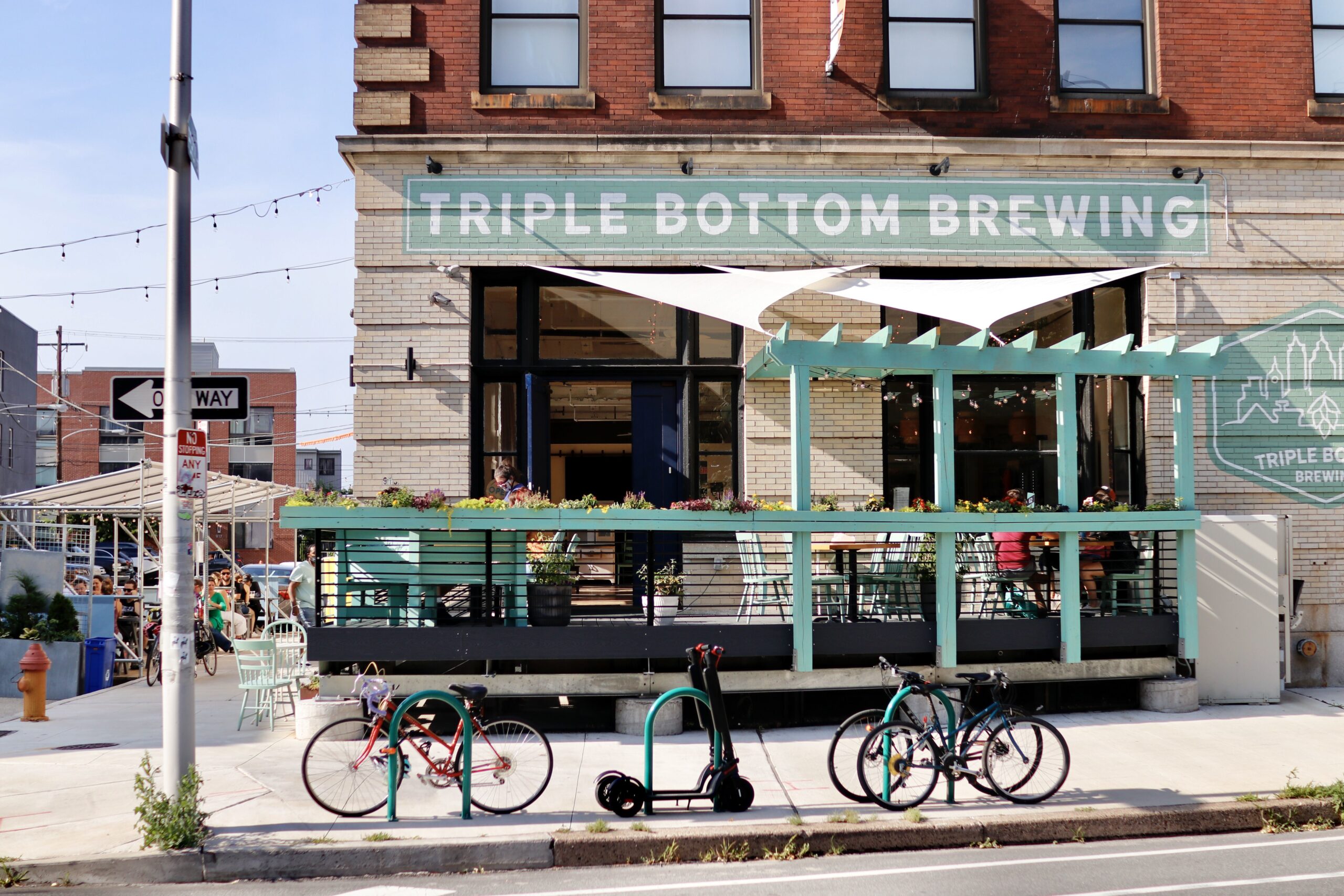
    Triple Bottom Brewing is one three breweries participating in both Philly Bierfest and Philly Beer Fest on Feb, 28, 2026.

    Triple Bottom Brewing co-owner Tess Hart has found a silver lining to the fest-on-fest drama. The six-year-old brewery has repeatedly participated in both festivals. The dual events kick off Triple Bottom’s 16-week brewer apprenticeship program for individuals impacted by the justice system and housing insecurity, she said.

    This year’s 10-person cohort started last week, Hart said, and they’ll be staffing both festivals concurrently. The challenge, she thinks, will be rewarding.

    “We’ll be stretched a little thin on Saturday,” Hart said. “But this will be a good opportunity to get them out of the taproom and really well-practiced about talking about beer in a high-volume situation. For us, that’s a big benefit.”
  • Old City’s latest all-day cafe doses coffee, tea, and mocktails with kava and kratom

    Old City’s latest all-day cafe doses coffee, tea, and mocktails with kava and kratom

    A new all-day lounge in Old City is betting on kava and kratom — two controversial psychoactive plants — to pull crowds away from bars.

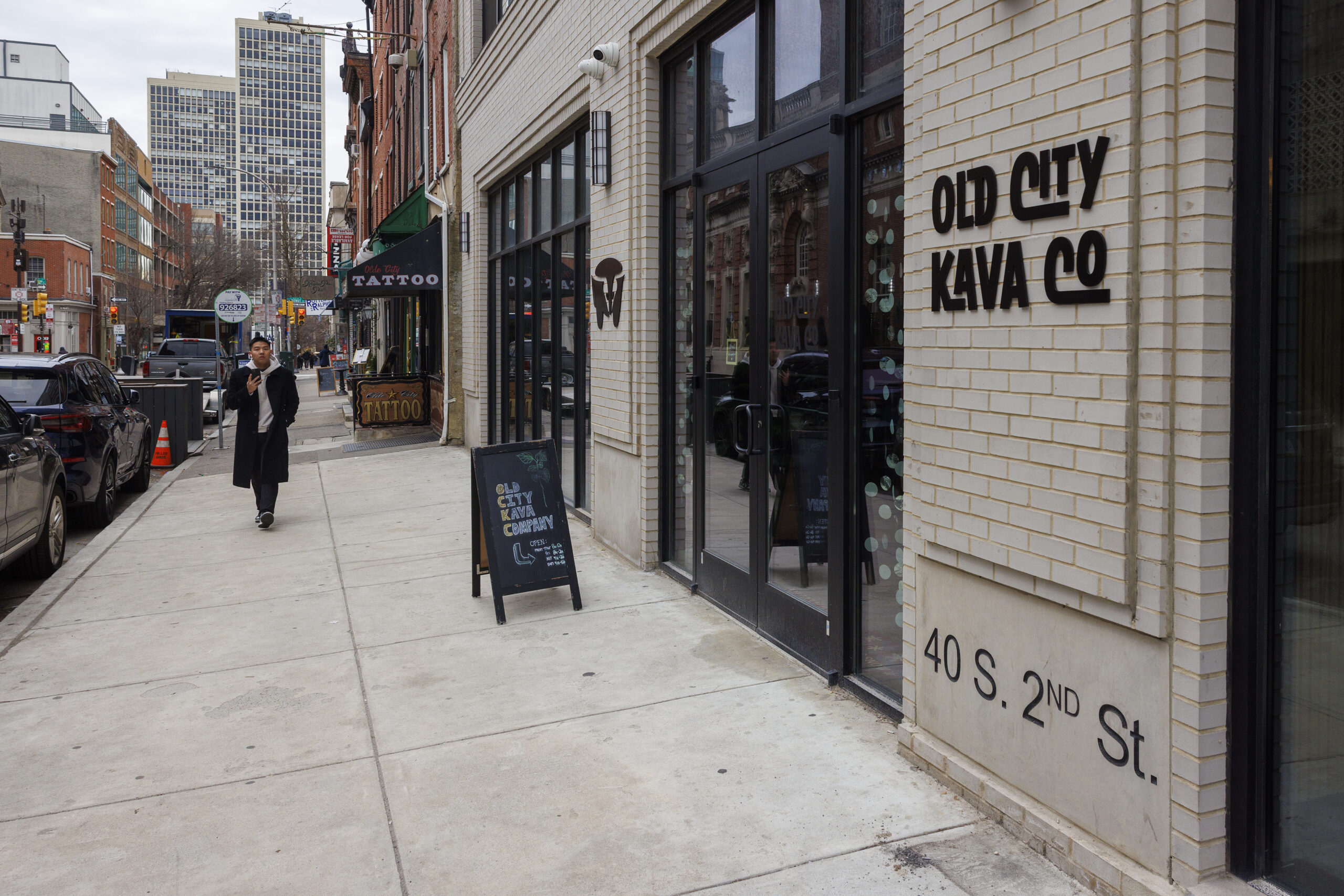
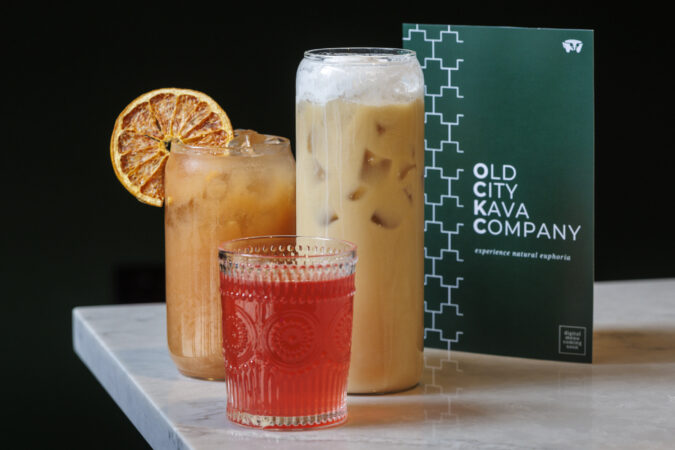
    Old City Kava Company opened in December at 40 S. Second St., across from a Fine Wine & Spirits and a honky-tonk bar. The lounge specializes in kava and kratom mocktails intended to boost mood and lower inhibitions, not unlike knocking back of a couple drinks. The establishment’s co-owners, Luca Kobza and Adam Lagner, believe the substances can open up a new social scene in Philly — namely, one that isn’t centered on alcohol.

    “We’ve had groups of people showing up who I otherwise believe would’ve been at bars… maybe having a cocktail and then regretting it the next day,” said Kobza. Customers have told them the space is a welcome change from bars and nightclubs, Kobza said.

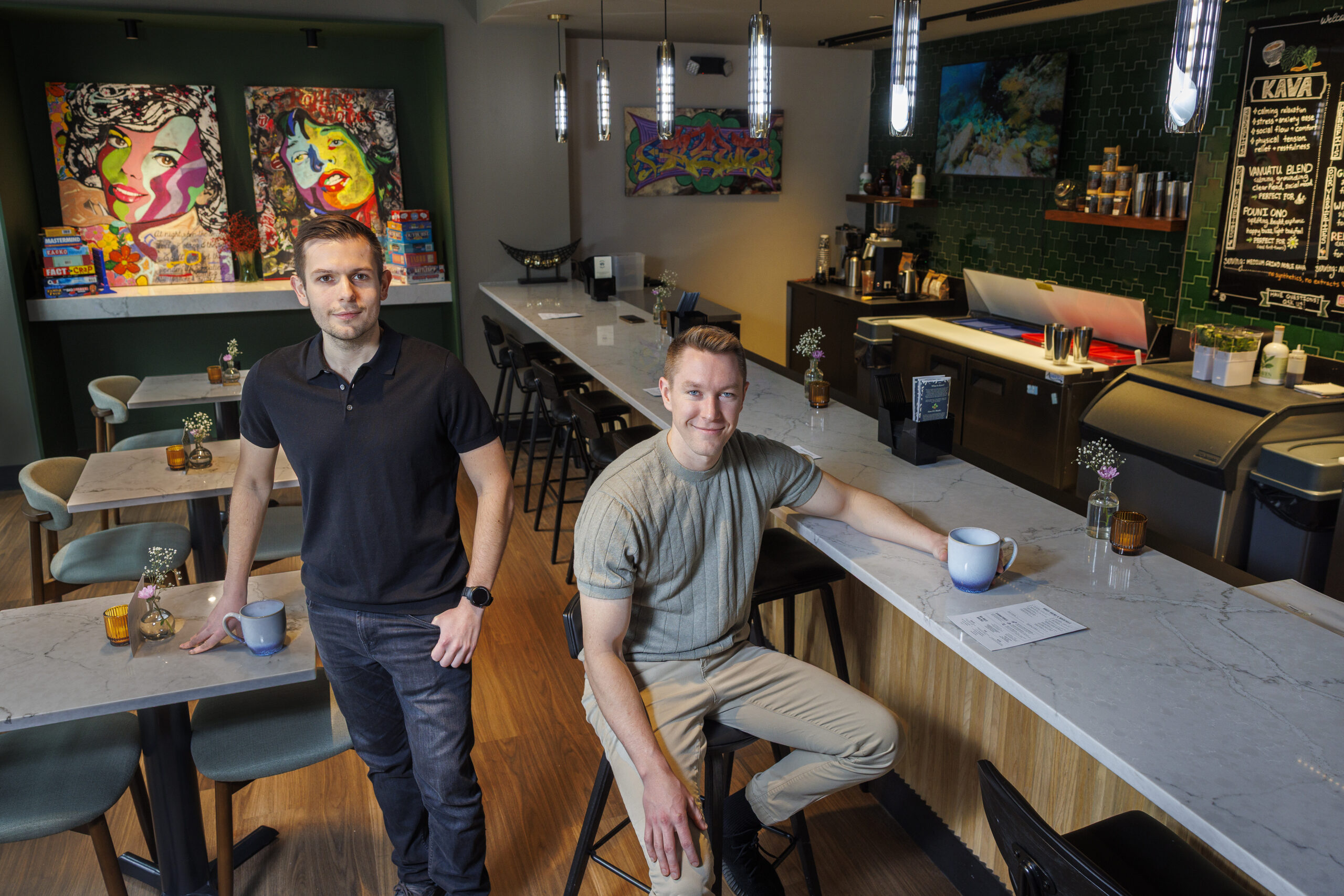
    Old City Kava Company co-owners Luca Kobza (left) and Adam Wagner (right) met in college at the University of Miami and ran a kava bar in Naples, Fla. before moving to Philly.

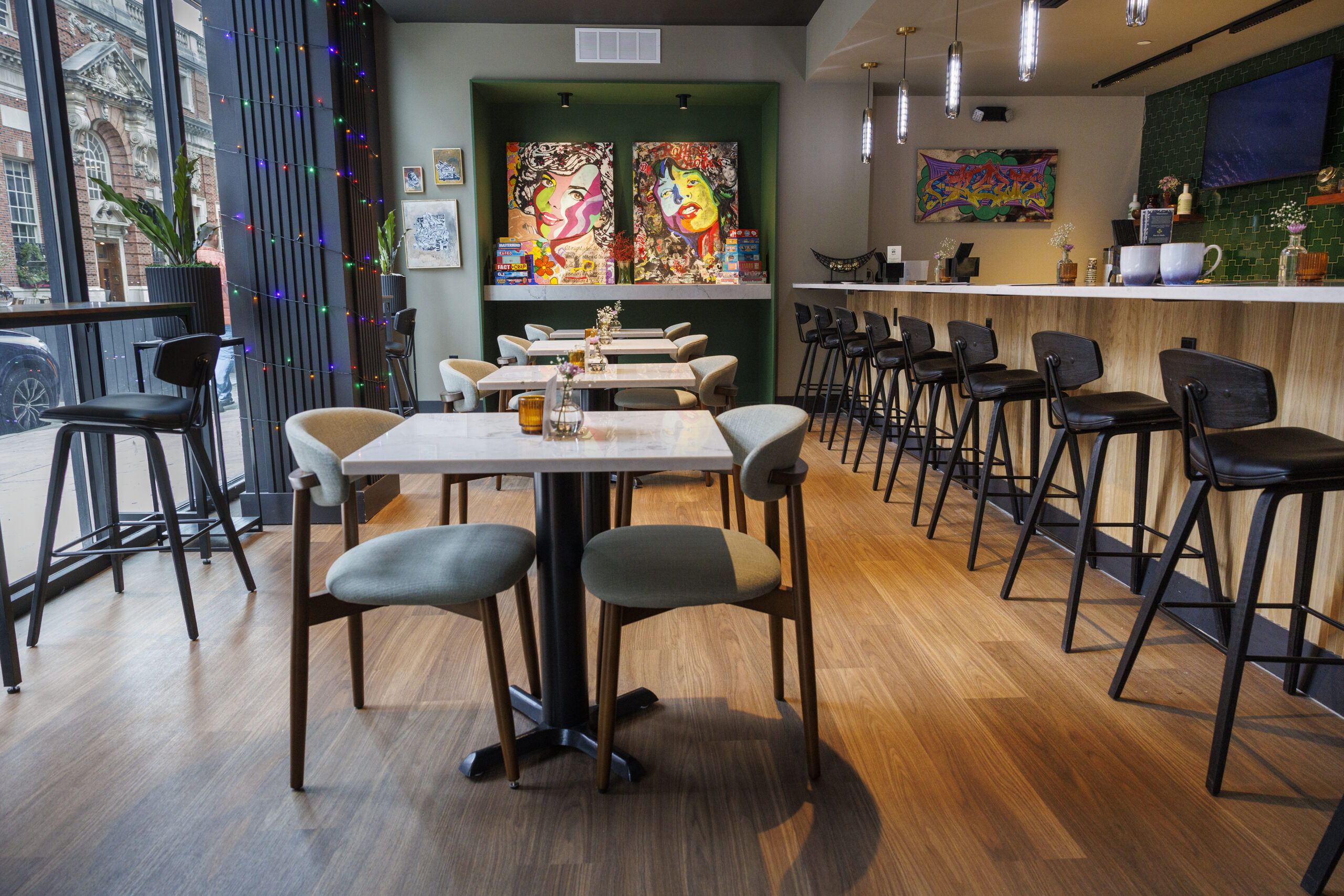
    The 1,900-square-foot lounge is designed for lingering, with 60 seats between its bar, two-top tables, and plush jeweled-toned couches. The space has a small-yet-serviceable board game collection, plus a rotating display of contemporary art for sale from Kensington’s Vizion Gallery.

    Old City Kava opens at 10 a.m. daily, serving its kava and kratom- infused mocktails alongside drip coffee from ReAnimator, teas from Random Tea Room, and a selection of pastries from wholesaler Au Fornil. By day, it largely functions as a co-working space.

    The atmosphere shifts at night. Open till midnight on weekdays and 2 a.m. on weekends, the space feels cocktail bar-adjacent, with a menu of 16 kava and kratom-infused mocktails. They range from a kava-lemongrass-and-guava paloma to a kratom-kombucha-ginger beer mule and a matcha tonic shaken with kava and kratom. Lagner and Kobza have already hosted run clubs, singles events, and book clubs to highlight the spectrum of Philly’s sober-curious scene.

    The interior of Old City Kava Company at 40 S. 2nd Street.

    What are kava and kratom?

    Old City Kava sources kava — derived from the leaves of the piper methysticum, a large plant that grows in Hawaii and other South Pacific islands — from Fiji, Tonga, and Vanuatu and kratom from Vietnam, Thailand, and Malaysia. They brew both as teas, adding roughly a tenth of an ounce to each mocktail.

    The lounge’s eight employees had to undergo 15 hours of in-house “kava-tending” training, which mostly involves learning how to educate first-timers. Lagner hated kava the first time he tried it.

    “It’s bitter, earthy. I was very off-put,” said Lagner. At the age of 30, he now prefers drinking it straight.

    Kava is traditionally brewed as a tea for religious ceremonies. Advocates say the substance can briefly reduce anxiety or stress.

    Kratom, on the other hand, comes from the leaves of a Southeast Asian tree and acts like a caffeine-esque stimulant in small doses and a sedative in larger ones. Users treat it as a catch-all to self-soothe pain, depression, and anxiety.

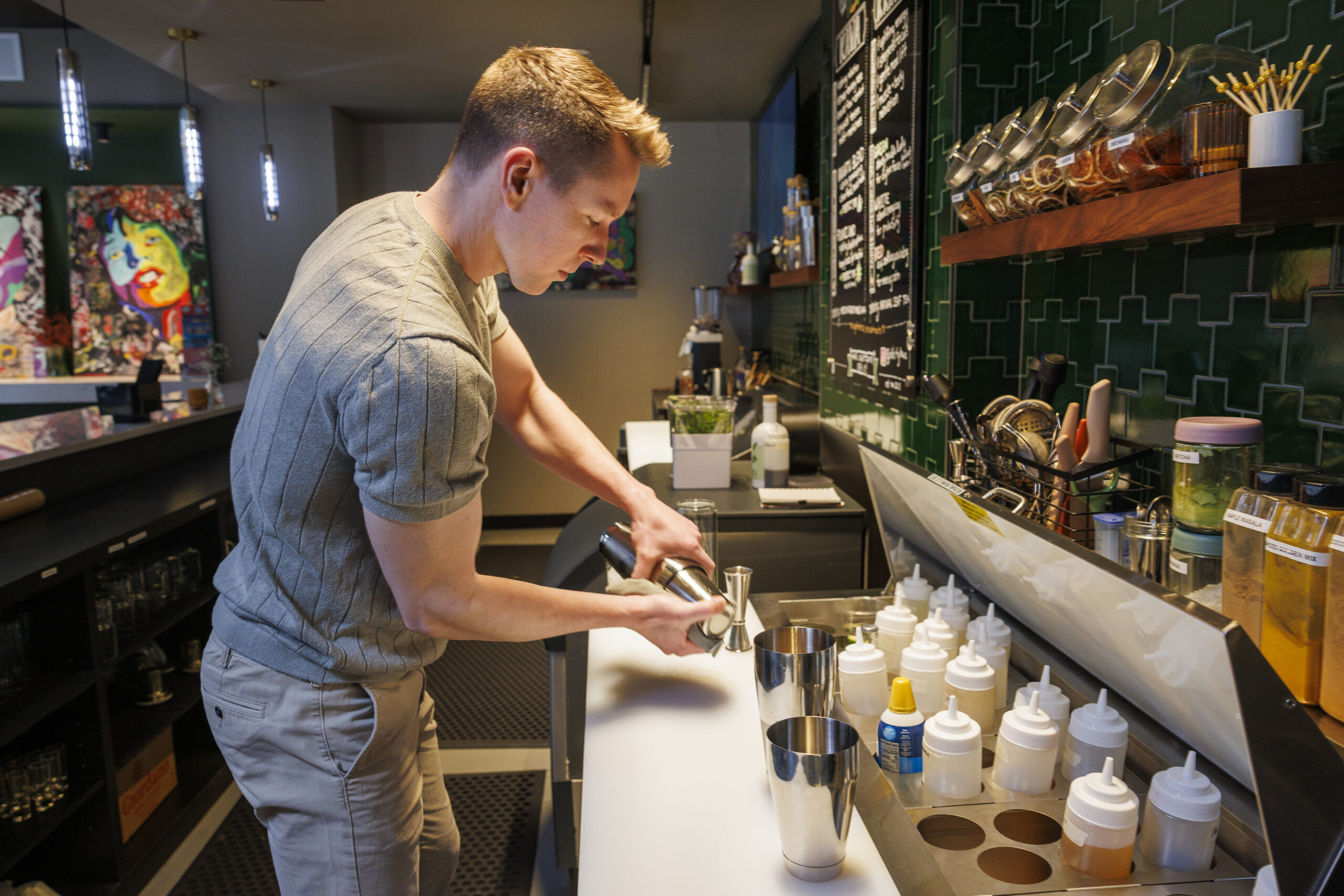
    Adam Wagner making Old City Kava Company’s Lemongrass Paloma, which swaps alcohol for kava.

    A visit to the lounge starts with a kava-tender offering samples of pure kratom or kava tea, the latter of which makes your lips tingle with a mild numbness. Despite having no real relationship with one another, kava and kratom often come as a package deal in kava bars across the U.S., which have exploded in popularity as an alternative to traditional bars during a time when fewer young people are choosing to drink.

    Both substances are contentious, having raised public concerns about addiction and other risks. Neither is currently regulated by the Food & Drug Administration, but the FDA announced plans last summer to schedule kratom as a controlled substance after an uptick in reports of synthetic kratom addiction. Sold in tiny bottles at gas stations and smoke shops, synthetic kratom isolates 7-OH, a compound that can cause intense opioid-like addiction and withdrawal symptoms. Kratom is currently banned in seven states. In December, two Pennsylvania state representatives introduced a bill that would prohibit the sale of the synthetic variety.

    These laws and the FDA’s plan include carve-outs for the botanic kratom from the leaf — which Old City Kava uses in its mocktails. The varieties are fundamentally different, Lagner said.

    “A lot of people conflate the two. … when they hear ‘kratom,’ they think of the products you’re seeing in gas stations,” he explained. “We serve natural kratom leaf tea how it’s been consumed safely for centuries in Southeast Asia. They’re much less potent in their natural form.”

    That may be true, but experts still have concerns about botanic kratom. According to Dr. Adam Scioli, chief medical officer of Wernersville, Pa.’s Caron Treatment Centers, botanic kratom is five to 20 times less potent than its synthetic counterpart. But it still carries an addiction risk, Scioli said, and can cause other health issues, such as nausea, high blood pressure, a racing heartbeat, and averse drug interactions, particularly when consumed with sedatives.

    “What concerns me most clinically is that kratom is often perceived as ‘natural and therefore safe,’” said Scioli. “History has repeatedly shown us that natural substances can still carry significant addiction risk, especially once commercialized.”

    A bar, but not

    Lagner, a Blue Bell native and La Salle High School grad, met business partner Kobza, also 30, when they were both students at the University of Miami. The duo would study together at kava bars on South Beach, and after graduating in 2018, opened their own, called Nektar Lab, in Naples, Fla.

    Lagner and Kobza sold their stakes in Nektar in 2022. They moved to Philly shortly after, where they found a far less vibrant scene than what they were used to in Florida, the U.S.’s kava capital. (Philly has only one other kava bar, Queen Village’s Lightbox Cafe.)

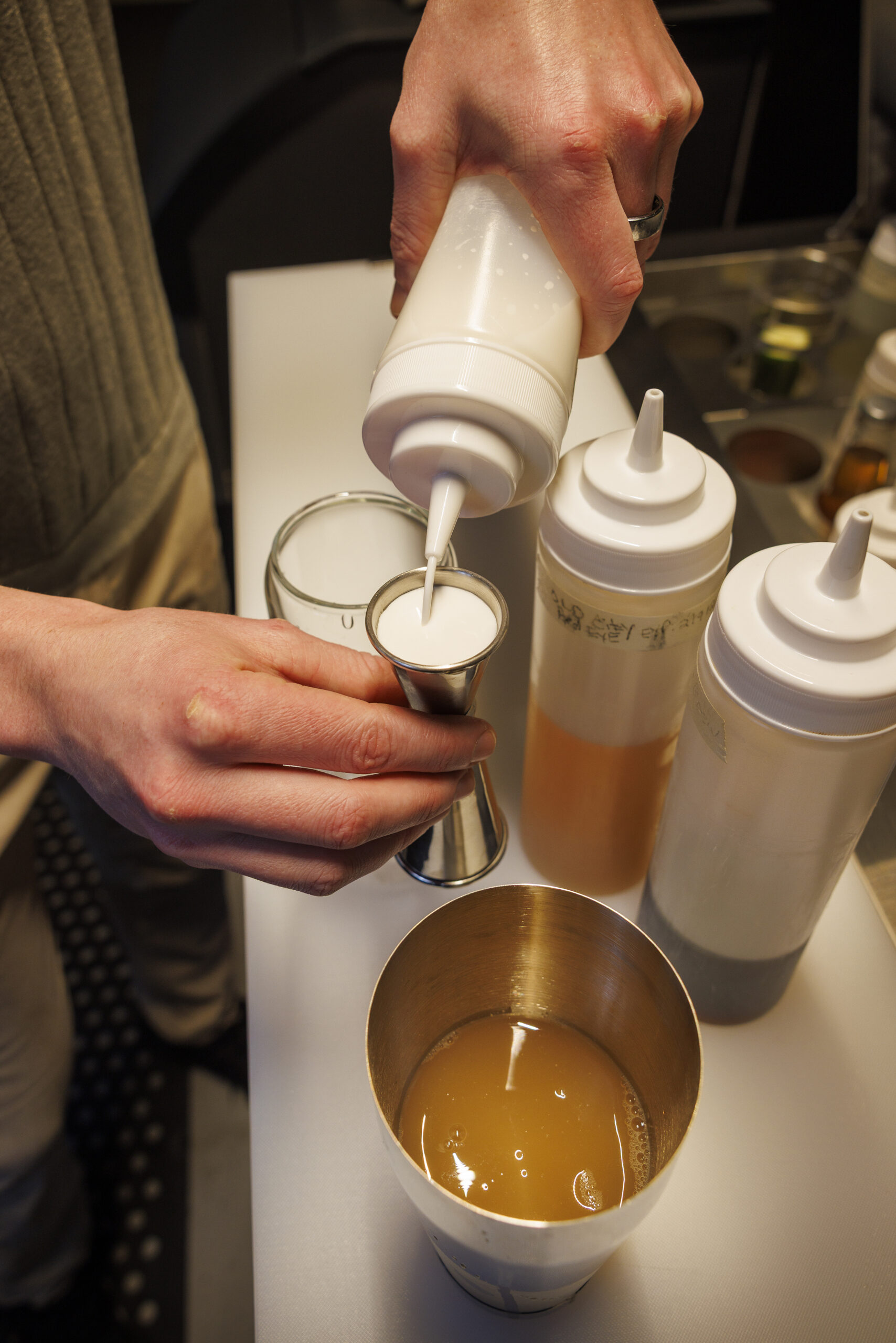
    Adam Wagner pours a shot of creamer for Old City Kava Company’s Old City Red Eye, a coffee drink that includes kava and kratom.

    “Most kava bars around the country are very grungy and tiny,” said Lagner. “And there haven’t been enough concepts [in Philly] to show people that this can be a a nice alternative to the social scene that revolves around alcohol and can also fill gaps in some of the daytime third-space sort of sphere.”

    Old City Kava’s bestseller is the Old City Red Eye: kava and kratom tea shaken together with ReAnimator cold brew, oat milk creamer, agave, and vanilla syrup. “You would think the kava and kratom cancel each other out because, at face value, it’s an upper and a downer in the same drink,” said Kobza. “But in reality they complement each other. The kava takes the edge off the coffee … the [kratom] just adds a mild euphoria.”

    Kobza said first-timers shouldn’t have kava or kratom on an empty stomach, or try too many cocktails at once. (That’s what this Inquirer reporter did, and she ended up with a splitting headache plus lingering nausea.)

    The exterior of Old City Kava Company at 40 S. 2nd Street.

    Carissa Kilbury, 24, goes to Old City Kava weekly. Sometimes, she spends full workdays at the lounge, sipping a few infused drinks while at her computer. A slow drinker, Kilbury said she doesn’t feel much other than mild relaxation.

    “When I’m stressed at work, I feel a little bit less stressed, which is nice,” she said. “It feels like a bar without really being a bar. I like that vibe.”

    Old City Kava Company, 40 S. Second St., 215-402-7047, oldcitykava.com. Hours: 10 a.m. – 12 a.m. Sunday through Thursday; 10 a.m. – 2 a.m. Friday and Saturday.

  • Northern Liberties now has TikTok-famous Dominican smashburgers topped with queso frito

    Northern Liberties now has TikTok-famous Dominican smashburgers topped with queso frito

    Philly’s burgeoning smashburger scene just got a little more crowded, thanks to a New York City-based Dominican restaurant with a huge social media following.

    El Sazón R.D. — home of lower Manhattan’s viral queso frito-topped smashburger — has opened a location in Northern Liberties at 1030 N. Second St. It replaced smoothie shop Essex Squeeze, another NYC import.

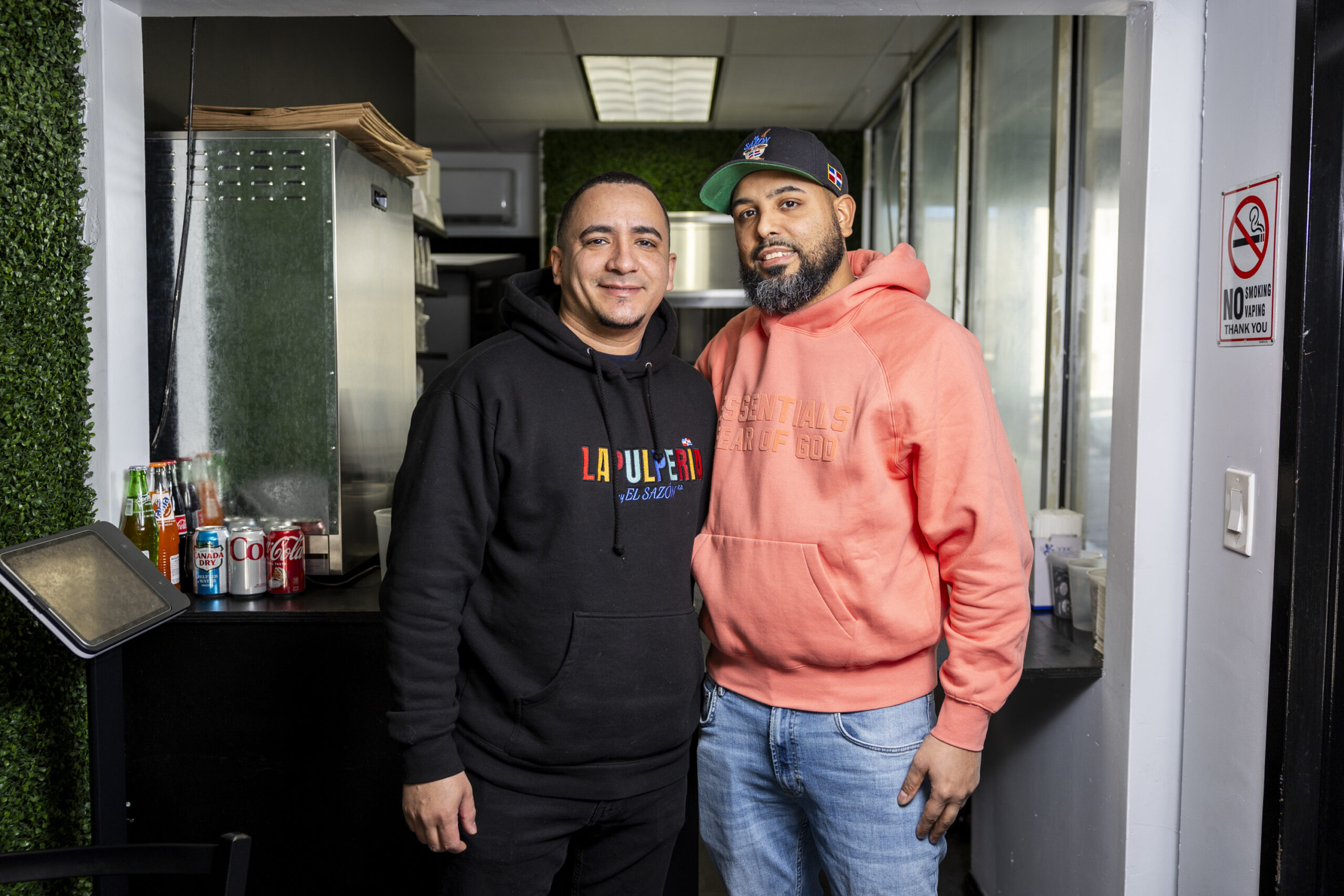
    Owned by cousins Edwin Collado and Ari Valerio and their friends Glenn Almanzar and Michael Tsang, El Sazón R.D. has created a takeout empire out of adding queso de freír — salty and melty white Dominican frying cheese to a set of distinctly American comfort foods: smashburgers, crinkle-cut fries, and deli-style egg-and-cheese sandwiches.

    The first El Sazón R.D (which roughly translates to “the Dominican flavor”) opened in 2024 in New York’s Chinatown, where it built a following among the city’s content creators. Almost immediately, Almanzar said, videos of influencers taking exaggerated bites of towering double cheeseburgers racked up millions of views.

    @jnov__ El Sazón📍 83 Baxter St, New York, NY #smashburger #nyceats #dominican #nycfood #foodreview #dominicanfood #chinatown #manhattan #foodtok #cheapeats #foodreview ♬ original sound – Johnny Novo

    Within two years, El Sazón opened three more locations: one in Tribeca, a second location in Tribeca and another in the East Village, the latter of which is a full-service bodega that also serves cheesesteaks alongside platters of chicharrón and pernil with all the fixings. The shop’s Philly location, its first outside New York, soft-opened two days before February’s record-setting snowstorm and deep freeze. Neither, Almanzar said, slowed business.

    “We’ve been selling out of stuff. That’s how busy we’ve been,” he said.

    Valerio, who grew up in the Dominican Republic’s countryside, is the chef of group, whose menu is inspired by Valerio’s relationship with his 78-year-old uncle Bijo. When he was 13, Valerio said, his uncle allowed him to set up a grill in front of his corner store and sell sandwiches.

    “I was his first customer. I was the one who told him could make money doing this,” said Almanzar, who is from the Lower East Side and would visit the D.R. on family vacations.

    El Sazón R.D co-owners Ari Valerio (left) and Glenn Almanzar (right) pose inside the restaurant’s first Philly location. The other three are in New York City.

    To open El Sazón R.D, Valerio and Alamazar partnered with Collado and Tsang, who own SET, the thumping Asian-fusion bar known for bottomless margarita towers that started in NYC and expanded to Philly in 2020. As for uncle Bijo, everything on the menu had to get his stamp of approval.

    “He’s very old-fashioned,” said Valerio. “We’d do these early-morning tasting sessions and he’d get on me about making sure I was measuring all my ingredients exactly right.”

    Deep-fried cheese, please

    El Sazón’s Philly menu only has four distinct food items on it, but it pulses with tastes of the Dominican Republic.

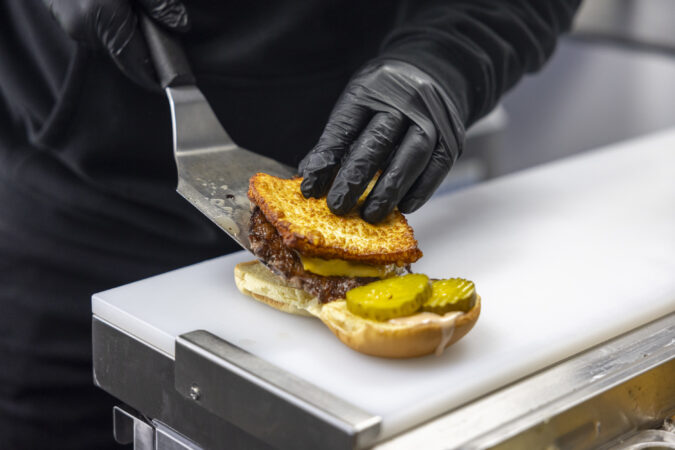
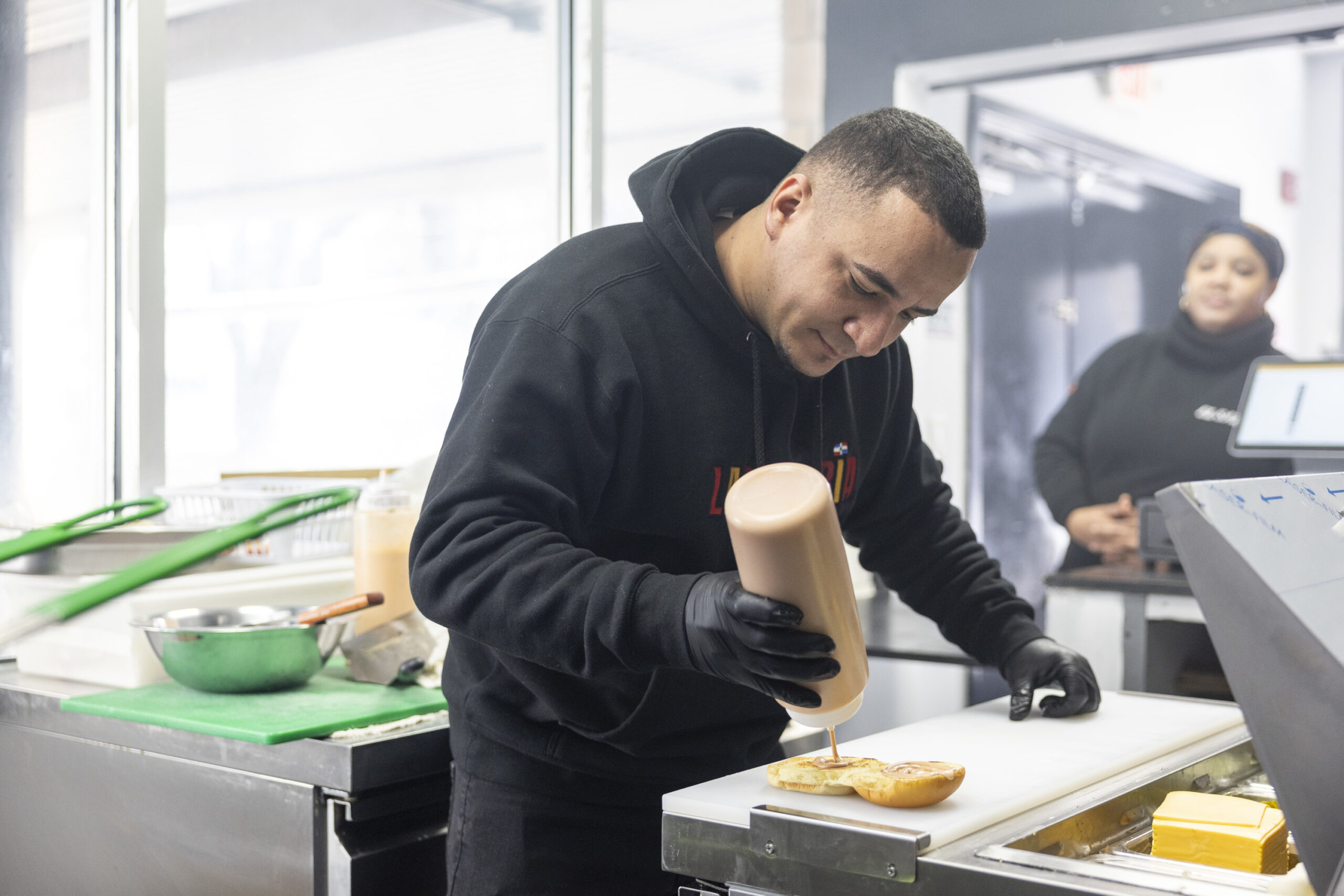
    The restaurant’s smashburger starts with a Martin’s potato bun slathered with “chimi” sauce, a tangy mayo-ketchup mixture ubiquitous across Latin America. The condiment is a nod to the Chimi, a popular Dominican street food sandwich that involves spreading mayo-ketchup onto rolls of crisp pan de agua piled high with beef and a cabbage slaw.

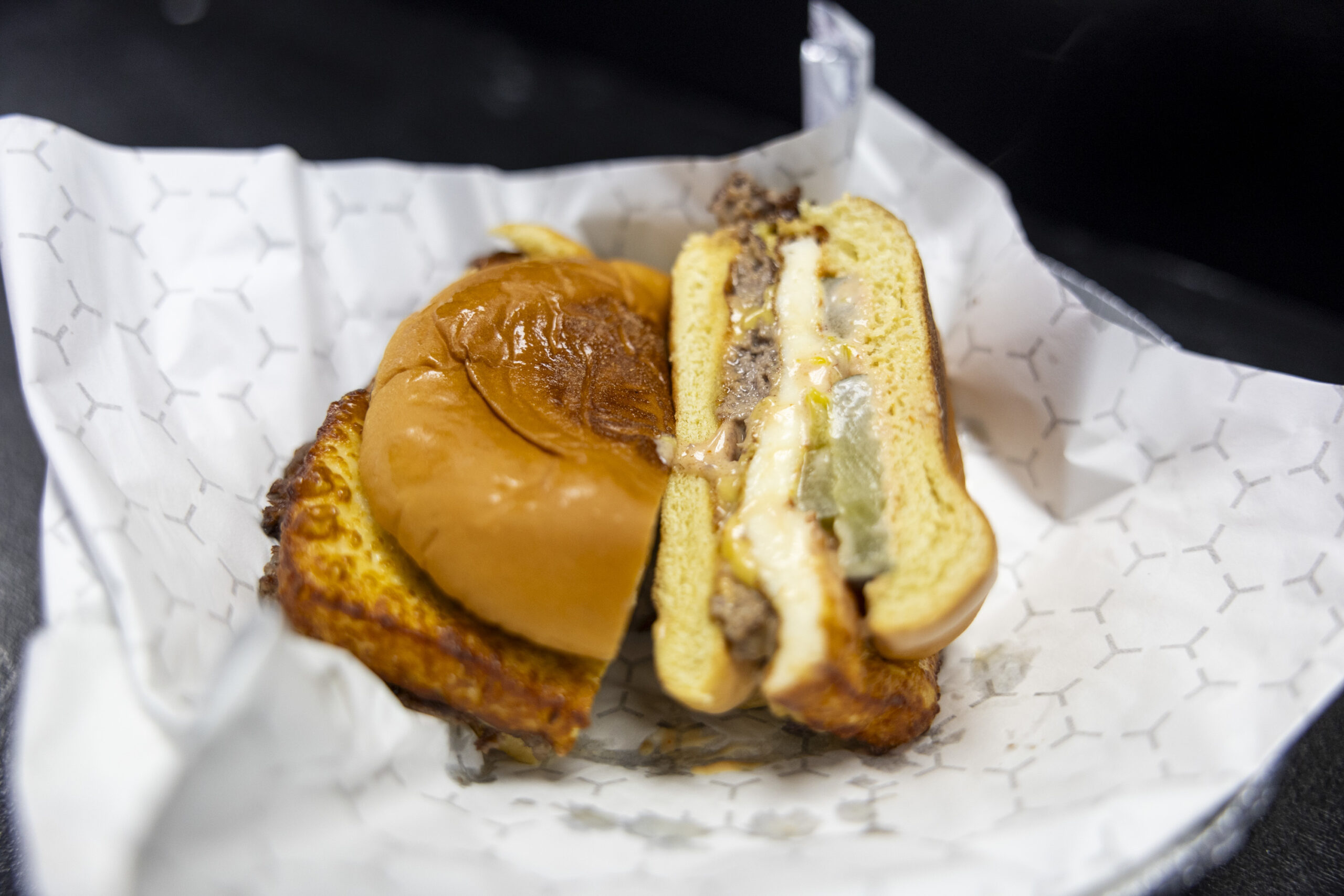
    El Sazón R.D’s Dominican smashburger comes with American cheese, a slice of queso frito, pickles, and “chimi” sauce, also known as mayo-ketchup.

    “People always ask us why our mayo-ketchup tastes different than when they make at home,” bragged Almanzar. “There’s nothing special about it, but at the same time, you can’t recreate it by squirting mayo and ketchup packets together. It’s about balance.”

    Valerio smashes a Pat La Frieda beef patty onto a flat-top grill with a meat press, spreading out the edges so they become lacy with a slight crunch. The key to perfecting the queso frito, he said, is to deep-fry the slices for exactly 45 seconds at 350°F. A moment longer and the cheese turns rubbery, not unlike a Wawa mozzarella stick that’s sat on the hot tray for too long.

    The result is a $10 smashburger that is hefty and satisfying. The fried cheese adds dimension, its saltiness mixing with the acidity of the chimi sauce and pickle slices to dress up an otherwise plain burger patty. To Almanzar, that’s the point.

    El Sazón R.D. co-owner Ari Valerio squirts mayo-ketchup onto a burger bun. Valerio, who grew up in the Dominican Republic, first started cooking at his uncle’s bodega.

    “With a smashburger, it’s not about the burger itself but what you put on it — the fried cheese, the sauce,” he said.

    Popularized by chains like Shake Shack, the smashburger has overtaken the plump pub burger in the past decade on menus around the country. The slim and crispy patties are cheaper and quicker to make, and, since precise temperature isn’t a factor, easier to cook. This year, Philly is also poised to get a Harlem Shake and a 7th Street Burger, two other New York City-based smashburger chains. They’ll join a scene already saturated with local iterations with cheffy flourishes; think burgers topped with chili jam, Yemenite-spiced mayo, and pickled green tomatoes.

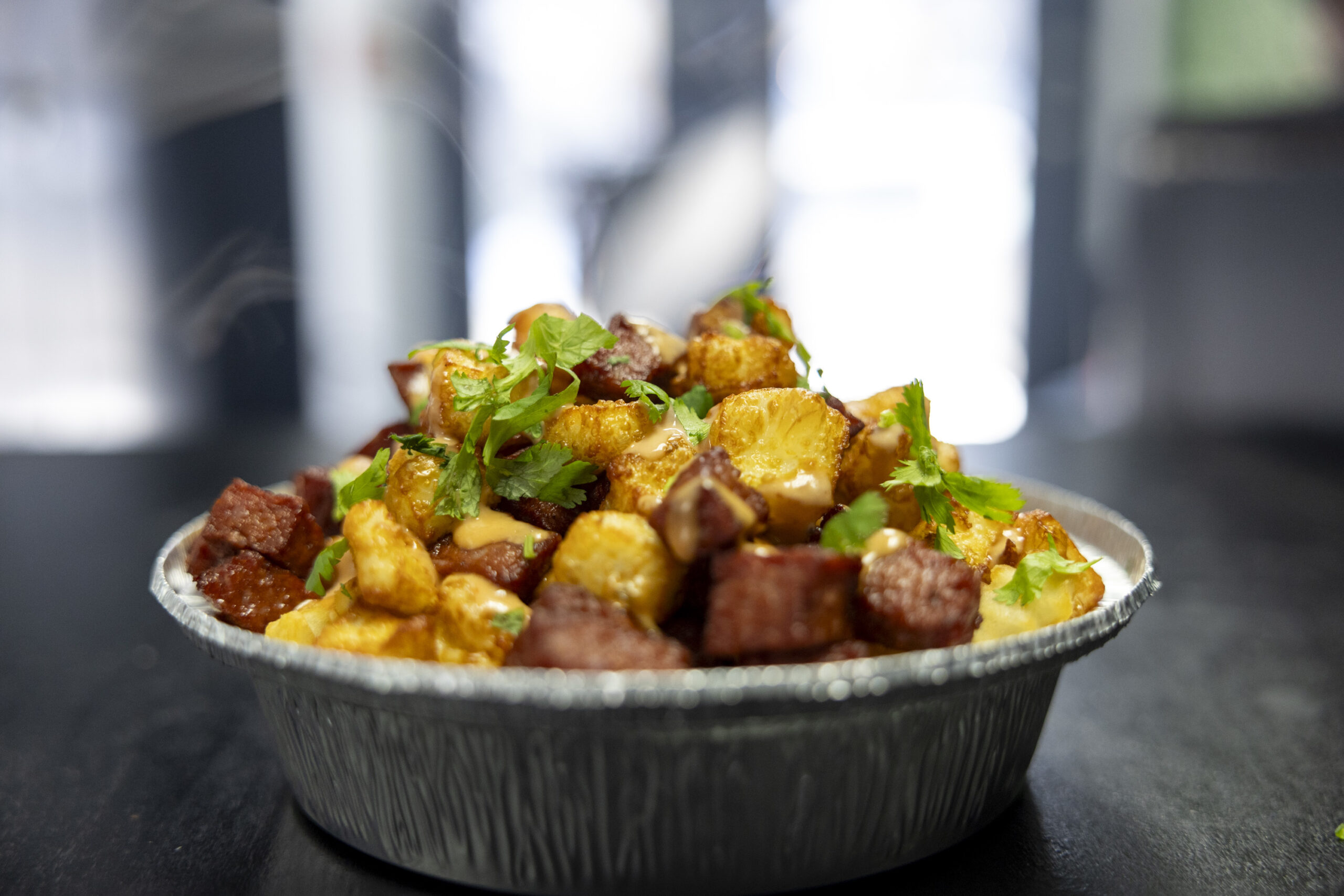
    El Sazon R.D’s loaded fries come topped with cubes of queso frito and fried salami.

    El Sazón also sells loaded crinkle-cut fries layered with two hefty squirts of mayo-ketchup, cubes of queso de frier, and fried salami chunks that pop in your mouth like blistered cocktail sausages. It’s yet another play on Latin American street food, said Valerio: Vendors selling salchipapas — French fries topped with hot dogs — are a staple across Peru and the Caribbean, he said.

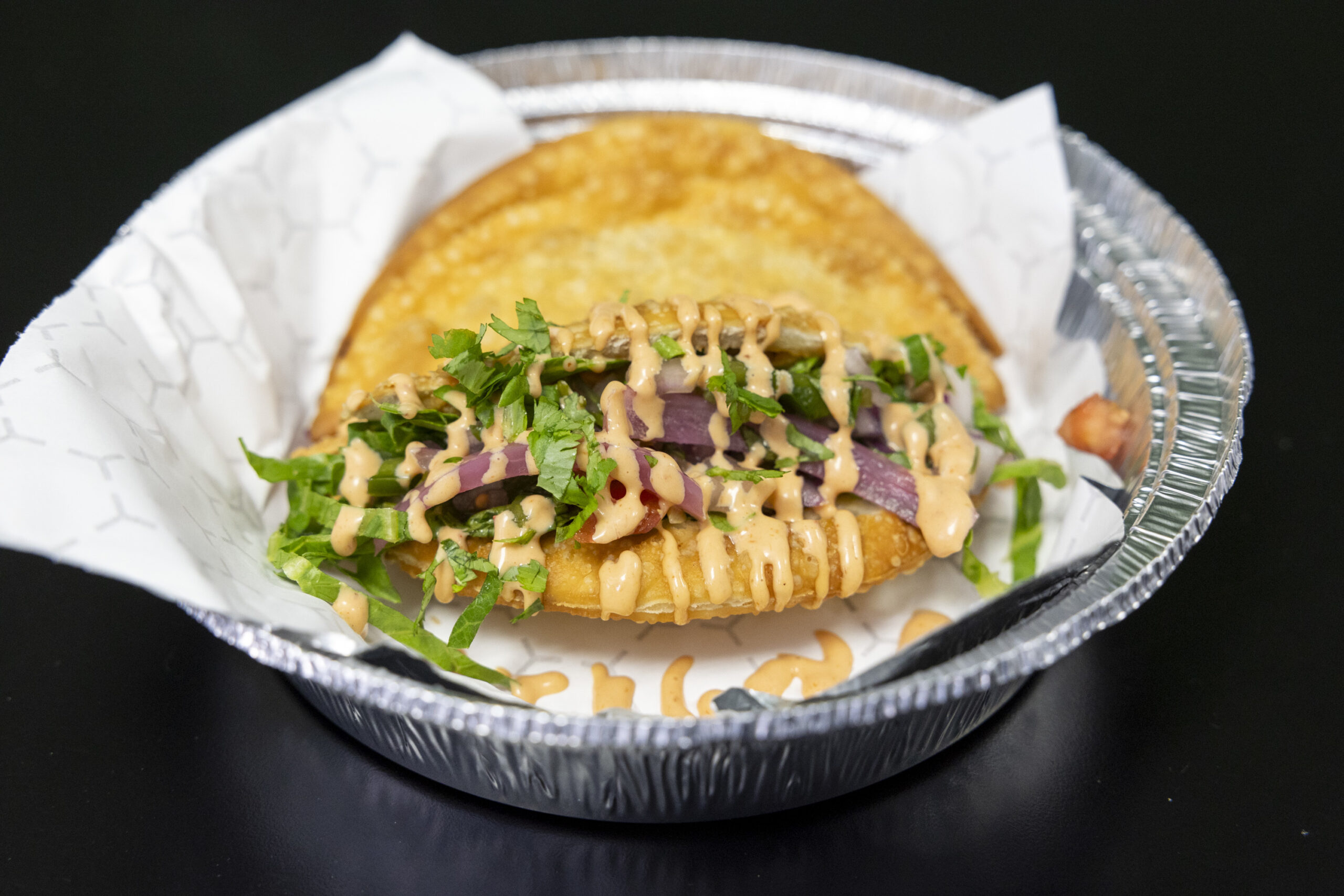
    Also on the menu: Beef, chicken, vegetable, and salami and cheese empanadas made fresh daily by another one of Valerio’s cousins. The turnovers can be served as is or taco-style, wherein the empanada is sliced open and lined with pico de gallo, pickled onions, and drizzles of chipotle aioli.

    Eventually, Almanzar hopes to extend El Sazón’s Philly hours until midnight or later on weekends to capitalize on bar crowds seeking something filling, cheap, and a little comforting.

    “That’s our kind of food,” he said.

    The empanada taco at El Sazón R.D.

    El Sazón R.D., 1030 N. 2nd St. Ste. 201, elsazon-rd.com. Initial hours: noon to 9 p.m. daily.

  • A Philly restaurant regular’s devotion inspired his son to build a $1,500 Lego replica

    A Philly restaurant regular’s devotion inspired his son to build a $1,500 Lego replica

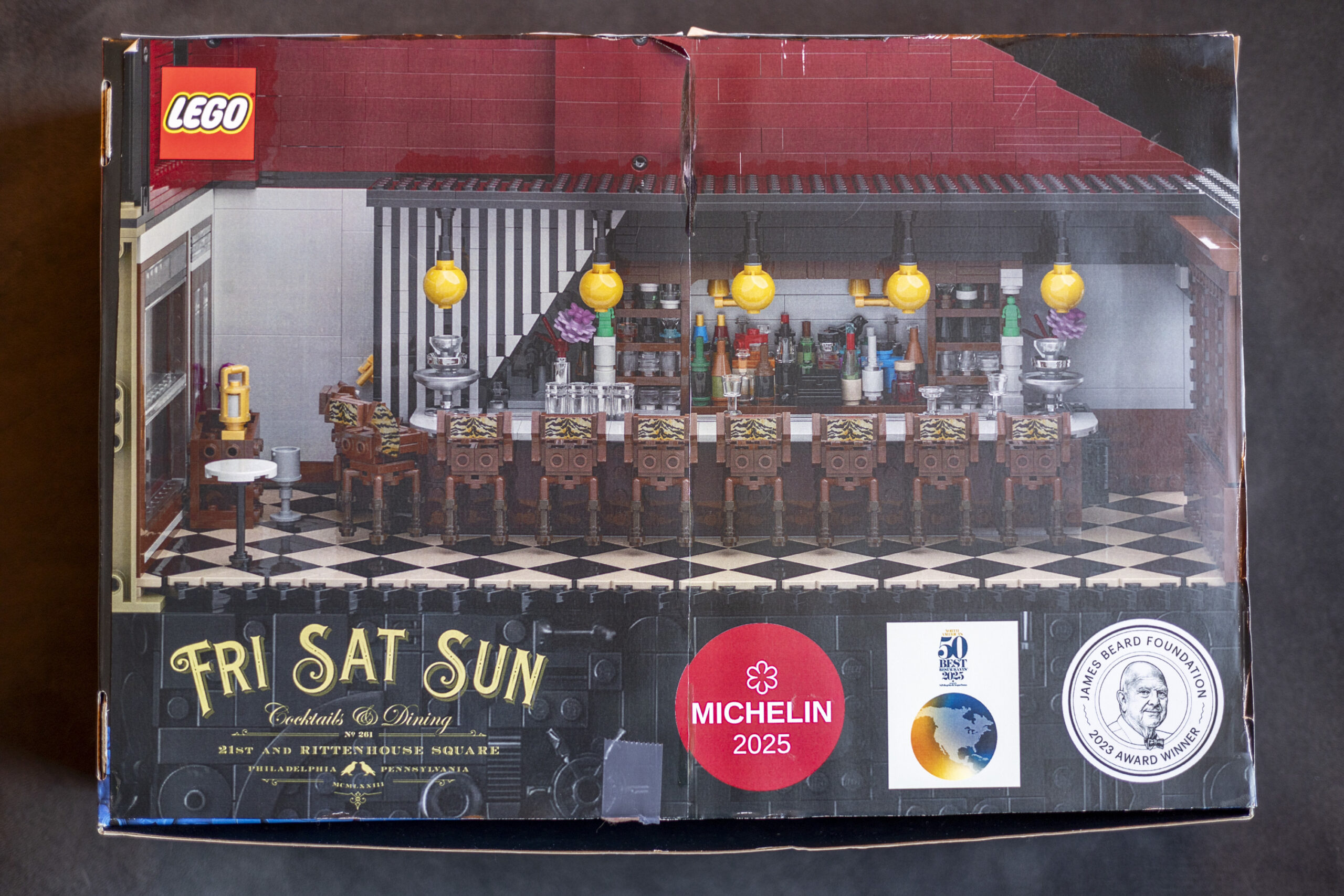
    To be loved is to be known — or, better yet, to inspire a 3,233-piece custom Lego set.

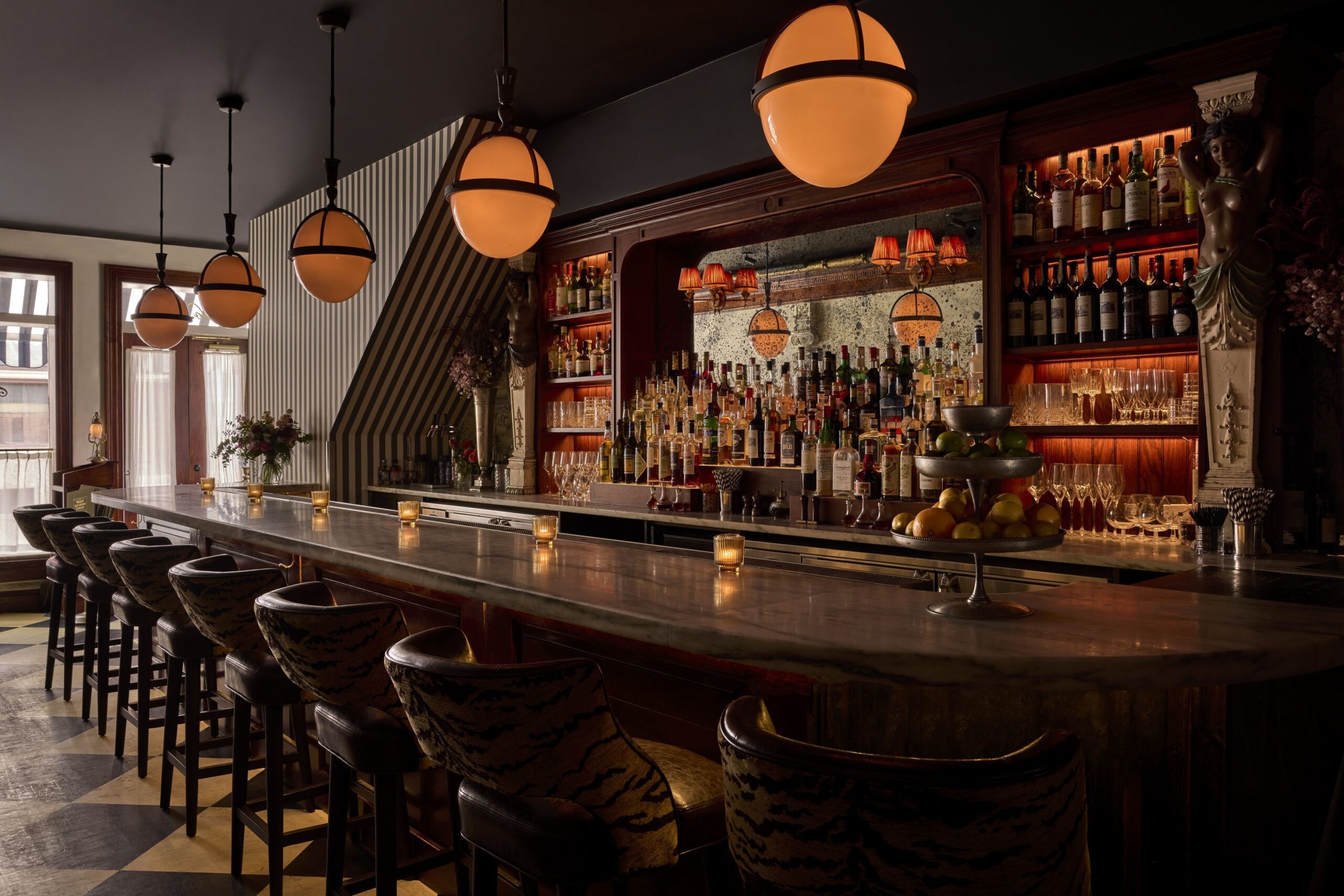
    Gene Gualtieri is devoted to Friday Saturday Sunday. Almost every Friday since 2021, the Fitler Square resident has lined up at 4:30 p.m. to score the same seat at the first-floor bar of Chad and Hanna Williams’ acclaimed Rittenhouse Square restaurant, where he is known to house a full roast chicken — bones and all — and order off-menu sherry martinis from bartender Paul MacDonald. It’s a ritual that has inspired a tattoo on Gualtieri’s bicep: “B9,” code for bar seat no. 9.

    “It’s my seat,” said Gualtieri, 57, an engineer. “This feeling of hospitality and being welcomed [at the bar] … it’s a social hub for me.”

    So when Gualtieri’s 21-year-old son, Leo, needed a Christmas present for his father, everyone from his aunt Claire to his older brother Sam had the same idea. What if, Leo recounts them wondering, there was a way to shrink Friday Saturday Sunday so it fits in your house?

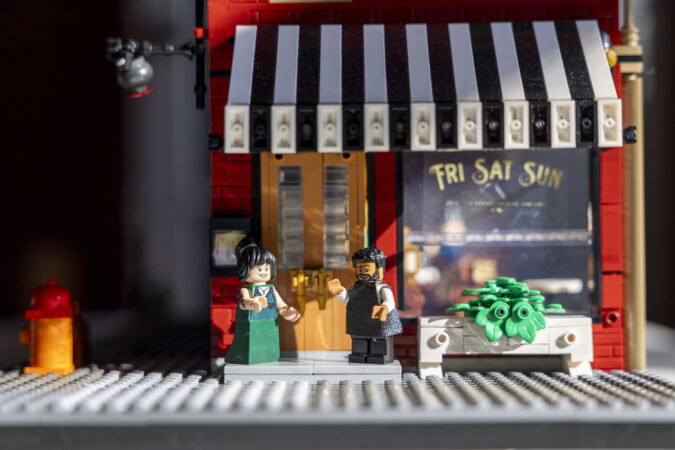
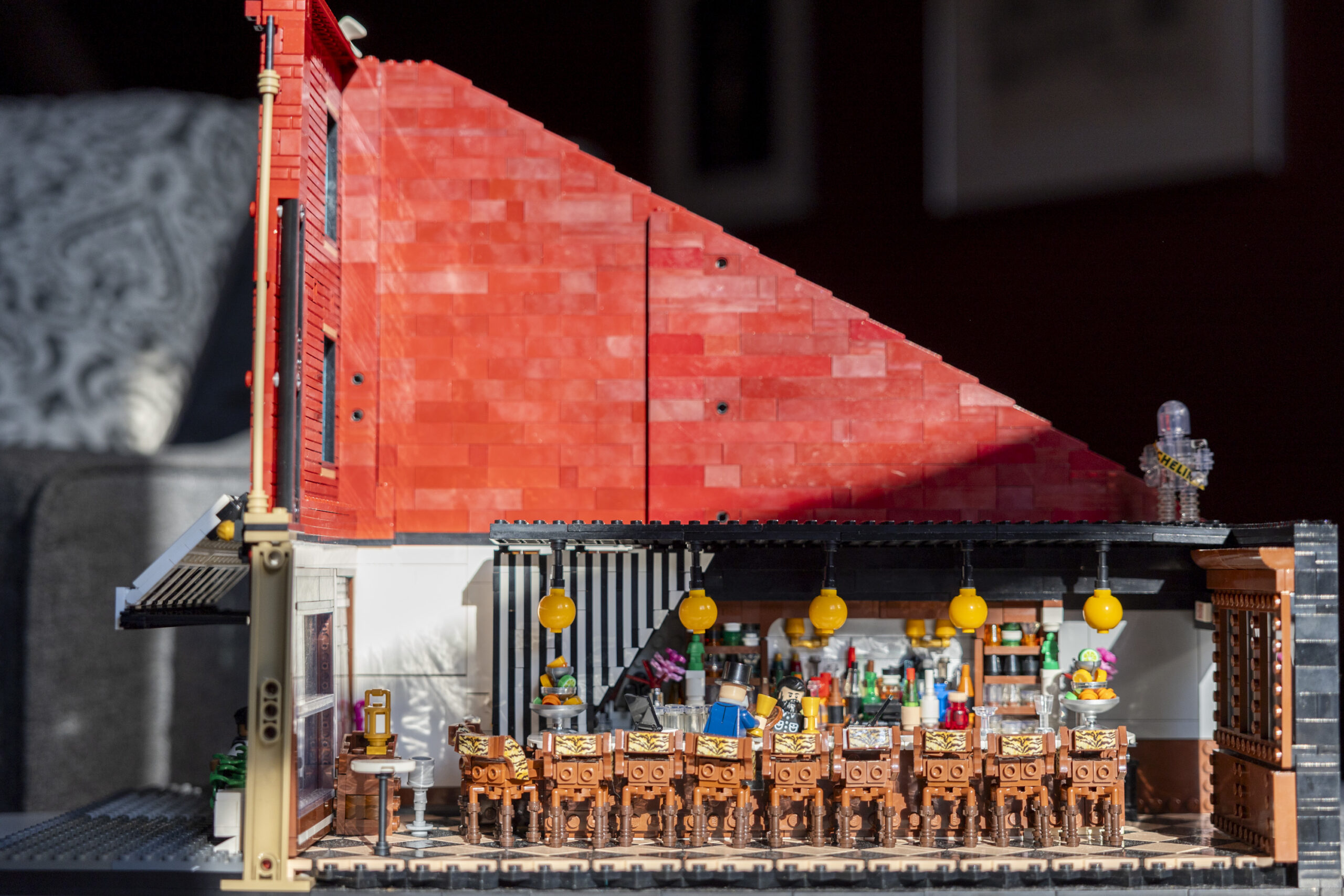
    The resulting gift — a 1½-foot-tall replica of Friday Saturday Sunday’s facade and its ground-level Lovers Bar, constructed out of more than 3,200 Legos — doesn’t skimp on the details. Leo recreated everything, down to the discolored patches of sidewalk out front.

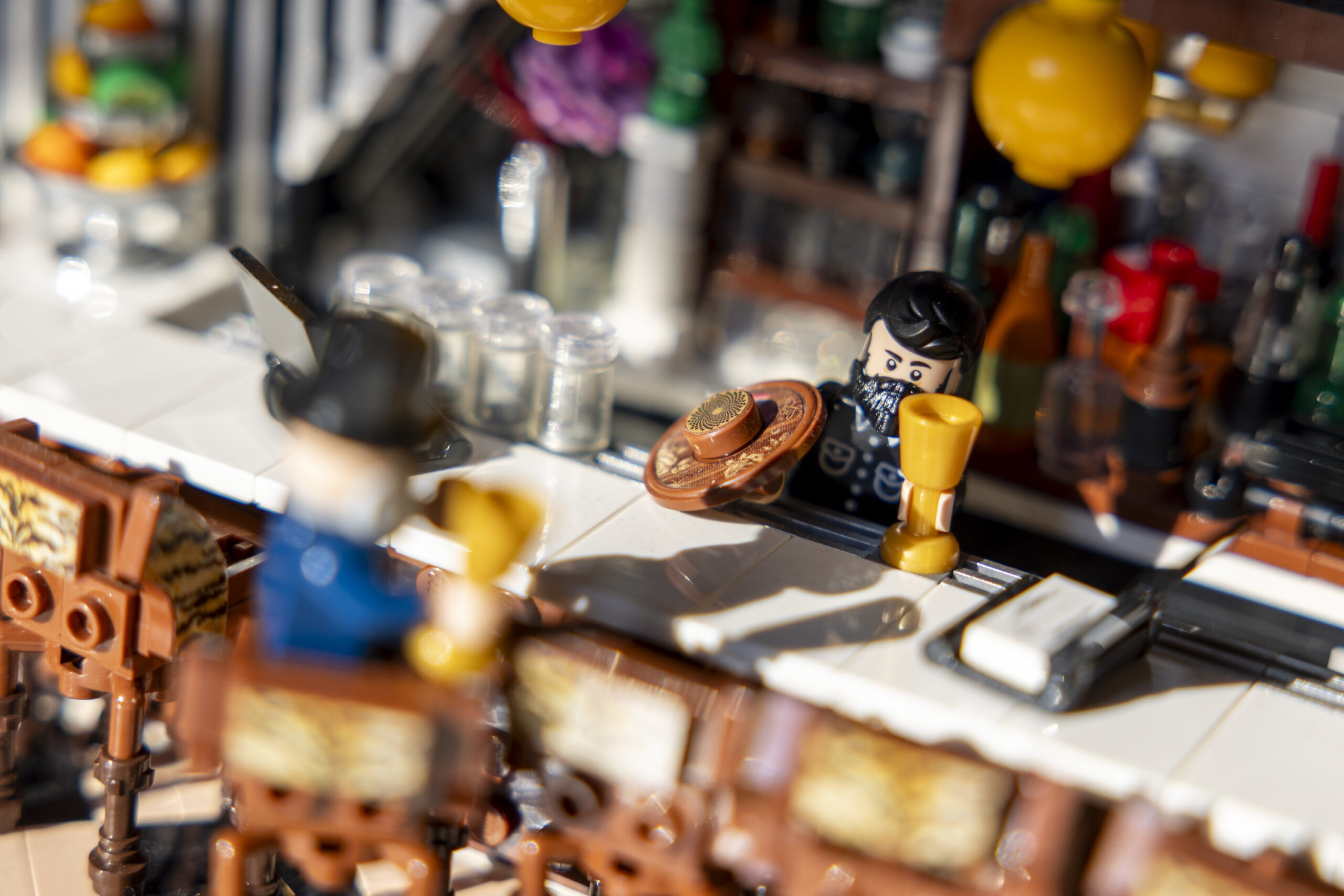
    A figurine of bartender Paul MacDonald shows off a Lego version of his Fibonacci sequence wheel to a miniature of Gene Gualtieri inside a Friday Saturday Sunday replica his son built out of Legos.

    Friday Saturday Sunday (Leo’s version) comes with Lego figurines of the Williamses, bartender MacDonald, and his father that can be posed to sit in one of the bar’s 13 tiger-print chairs. There’s a petite version of the Fibonacci carousel MacDonald uses to perfect his mixology, plus miniatures of the bar’s gargoyle- and raven-shaped pour spouts, mermaid caryatids, and towering citrus bowls. In honor of restaurant’s Michelin star, Leo even included a tiny and perfectly rotund Michelin Man.

    Leo stored the pieces in a repurposed Seinfeld Lego set box that he wrapped in a rendering of the finished design. When Gualtieri opened it on Christmas morning, he cried. The finished version inspired a similar response from others after Gualtieri and the restaurant posted photos on Instagram at the end of January.

    Leo Gualtieri made custom packaging for the Friday Saturday Sunday Lego set he got his father Gene for Christmas.

    “This is so beautiful I wanna cry,” commented one person. “Top 10 most impressive things I have ever seen,” wrote another.

    Leo’s dad concurs. “I was pretty blown away,” Gualtieri said. “At first glance, it looks like a Lego set you’d get a store.”

    A replica built brick by (plastic) brick

    Recreating Friday Saturday Sunday was a labor of love for Leo, a self-described former Lego kid currently finishing up his senior year at Emerson College as a comedy major. As a child, Leo was fixated on building an ever-expanding amusement park out of the plastic blocks alongside his dad. It was an obsession that served him well this holiday season.

    To reconstruct the restaurant, Leo first had to create a rendering of the bar and its exterior in Brick Link, Minecraft-esque software that lets users build and source their own custom Lego sets. Leo said he spent roughly 100 hours translating all the tiny details into Lego form, working first off images of the facade from Google. When those weren’t precise enough, he said, Leo begged MacDonald to send him photos of all the minutiae, from the glassware to close-ups of the light fixtures.

    A replica of the Lovers Bar at Friday Saturday Sunday, built out of more than 3,200 custom Legos by Leo Gualtieri.

    “It was addicting … I would work on it in class,” said Leo while on Zoom with his father, who scoffed at the admission. “Time would pass much faster because I was locked in.”

    Once the rendering was complete, Leo and his mom spent $1,500 on the Lego pieces, sourced from 13 different Lego resellers across Japan, Spain, and the Netherlands. To find a realistic version of Chad Williams’ beard and apron, Leo had to commission custom blocks from an Etsy seller.

    After Christmas, Leo spent the remainder of his winter break from college building mini Friday Saturday Sunday, developing calluses from clicking the bricks into place. Dad, Leo said, wasn’t much help.

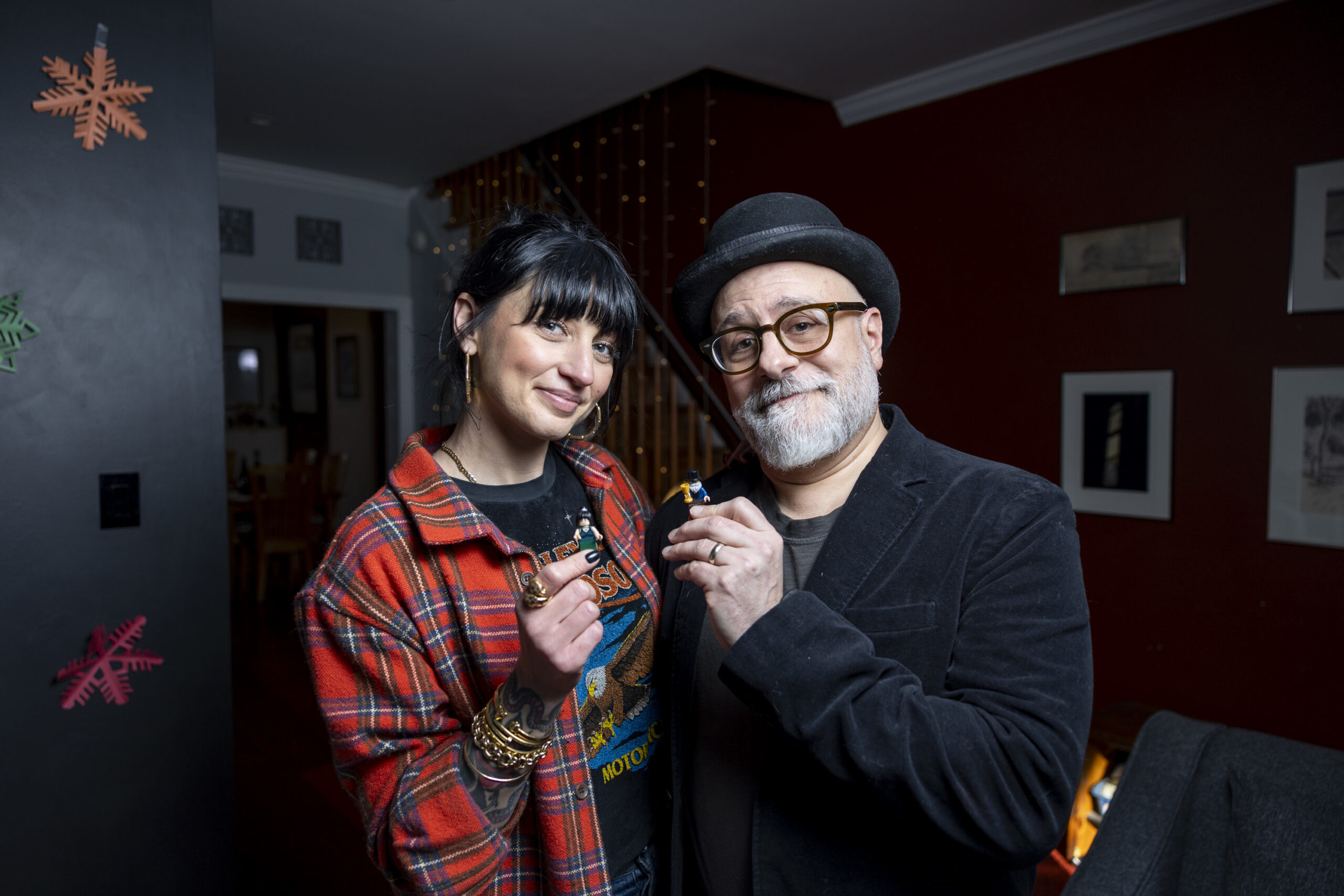
    Hanna Williams, co-owner of Friday Saturday Sunday, holds Lego characters of herself and Gene Gualtieri, whose son Leo spent over 100 hours creating a miniature version of the restaurant out of the plastic blocks.

    “He tried to build some chairs,” Leo said of his father. “I don’t think he’s cut out for it.” (Gualtieri agreed. Leo, he admitted, gets his dexterity from his mother.)
    Every time he looks at the replica, Gualtieri said he discovers new details, like how the bottles mimic the exact ones behind MacDonald’s bar. Hanna Williams, Friday Saturday Sunday’s co-owner, felt the same when Gualtieri sent her progress updates on the build out.

    Hanna Williams, co-owner of Friday Saturday Sunday, and Gene Gualtieri, a regular at the restaurant, pose with Lego action figures of themselves created by Gene’s son Leo.

    “I think [Leo] might know every inch of the bar better than me,” she said. Williams especially loves her Lego dopplegangër: “A high bun, bangs, and tattoos? That’s so me.”

    Williams is used to her restaurant being the recipient of the highest order of affection. In the decade since she and her husband revamped Friday Saturday Sunday from a classic fine-dining restaurant with excellent mushroom soup into cozy bar for walk-ins with a top-floor tasting menu that melds Caribbean, Asian, and soul food influences, the restaurant has earned a Michelin Star, a James Beard Award, and a spot on the World’s 50 Best North American restaurants. Just last week, Friday Saturday Sunday won an award for excellence in hospitality from the Tasties, Philly’s homegrown culinary honors.

    And yet, Williams said, the Lego replica represents an extra-special type of achievement.

    “It’s completely overwhelming,” she said. “But at the same time, there’s nothing that could make you feel better.”

  • Lou Capozzoli, steward of Ray’s Happy Birthday Bar in South Philly, has died at 86

    Lou Capozzoli, steward of Ray’s Happy Birthday Bar in South Philly, has died at 86

    Lou Capozzoli, 86, of Southwest Philly, a dive bar owner and band front man with a penchant for telling jokes, died Sunday, Feb. 1, after battling a brief illness at Mercy Fitzgerald Hospital while surrounded by family.

    Mr. Capozzoli, born April, 4, 1939, was just one year younger than the bar he would eventually take over at the intersection of East Passyunk Avenue and Federal Street, then called Ray’s after the nickname bestowed on his father, Anthony.

    Almost immediately, the bar became the center of Mr. Capozzoli’s life. He grew up in the apartment upstairs and as a toddler would sit quietly on the bar downstairs, eating cornflakes, while his mom poured beers. His dad, meanwhile, would wish every customer a happy birthday, even if it wasn’t theirs to celebrate.

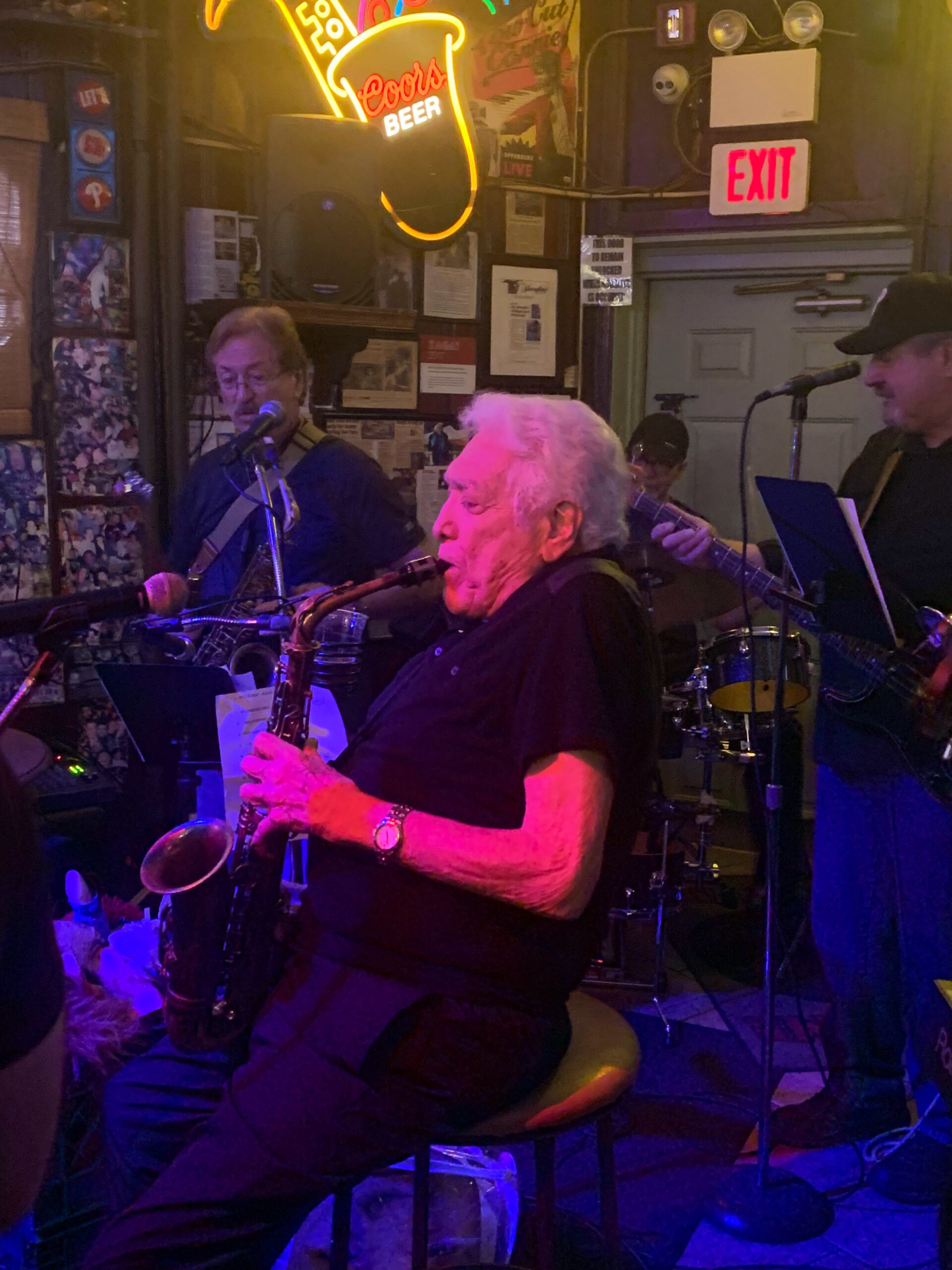
    It was a gesture that stuck with Mr. Capozzoli, who would go on to spend the rest of his life doing whatever he could to earn smiles from strangers, whether it meant serving birthday shots of cake-flavored vodka with a candle or performing to crowds as a singer and saxophonist across Las Vegas, the Jersey Shore, and South Philly.

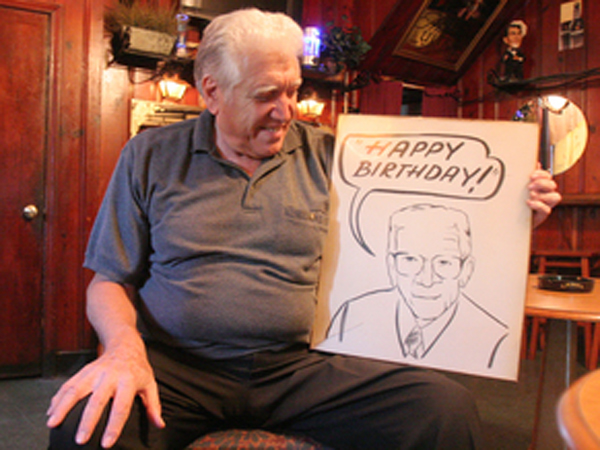
    Mr. Capozzoli with a drawing of his father, Anthony “Ray” Capozzoli, who opened Ray’s Happy Birthday Bar in South Philadelphia in 1938. Mr. Capozzoli took over the bar when his father died in 1997.

    “That’s all he wanted, for his father to be proud of him,” said Rose Capozzoli,Mr. Capozzoli’s wife.

    And he would be, Rose is certain. Mr. Capozzoli took over the bar when his father died in 1997, rechristening it Ray’s Happy Birthday Bar in honor of his dad’s slogan. Under his stewardship, Ray’s would go on to become the gold standard of Philly dive bars, known for $4 citywides, Friday night karaoke, staying open on Christmas, and an unwavering adherence to theme. Mr. Capozzoli would call regulars on their birthdays to wish them well and maintained a calendar of seemingly all the birthdays in the world to help his staff keep tally on the outdoor chalkboard.

    As a boss, Mr. Capozzoli was “pretty silly,” said bartender T.C. Cole, who also played guitar in Mr. Capozzoli’s band. “He would call you at 1:45 in the morning when you’re trying to close just to tell you a joke.”

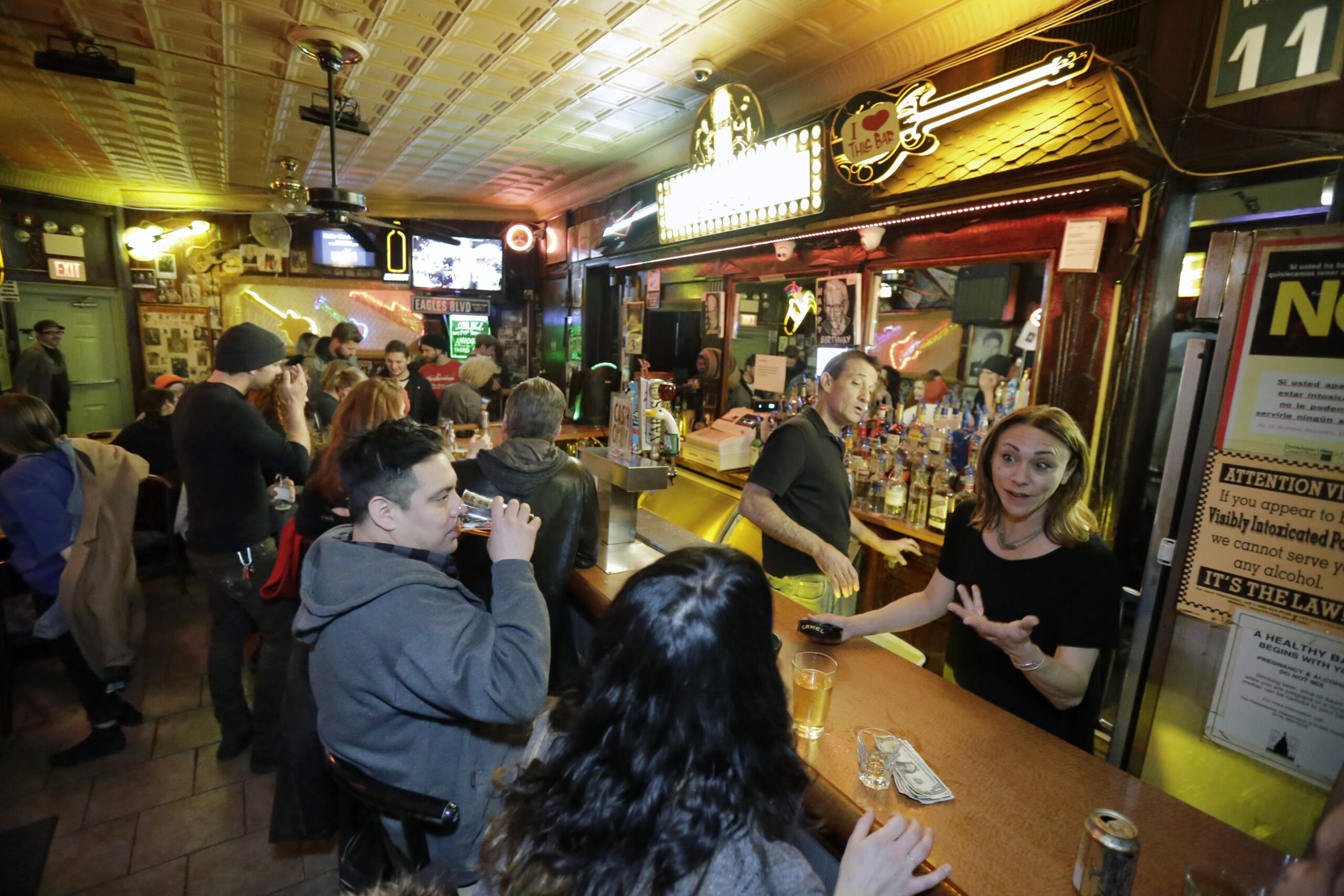
    The inside of Ray’s Happy Birthday Bar. Mr. Capozzoli was known for calling regulars on the mornings of their birthdays.

    If jokes were a currency, Mr. Capozzoli was a billionaire, friends and family said. He’d fire them off incessantly — during closing shifts, band performances, family dinners — and had enough discretion to whisper the most risqué in your ear. Mr. Capozzoli’s style was modeled after that of Buddy Hackett and Rodney Dangerfield, his favorite comedians, but the punch lines didn’t matter as much his delivery.

    Mr. Capozzoli “would laugh with the person he was telling the joke to,” his son Anthony Capozzoli, 55, said. “If you weren’t laughing with the punch line, you were laughing at how much he enjoyed getting to it.”

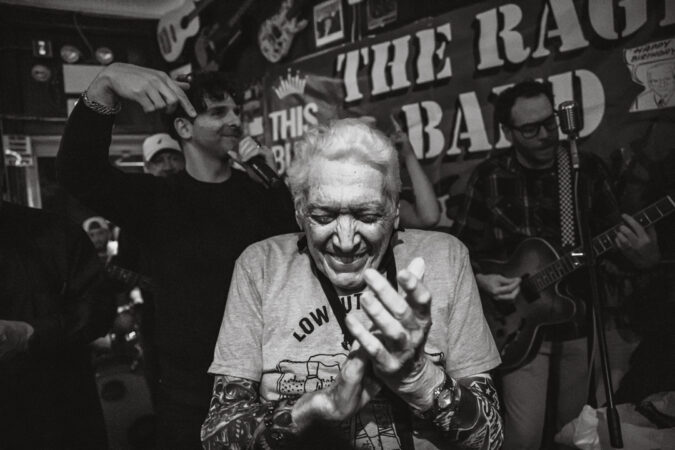
    More recently, Anthony said, his father would call him just to workshop material, most of which isn’t fit to print. Mr. Capozzoli’s favorite jokes were set to music in 2023 for a five minute-long comedy track as part of a studio EP for the Rage Band, the seven-piece group that Mr. Cappozoli sang with for 41 years alongside a rotating cast of characters.

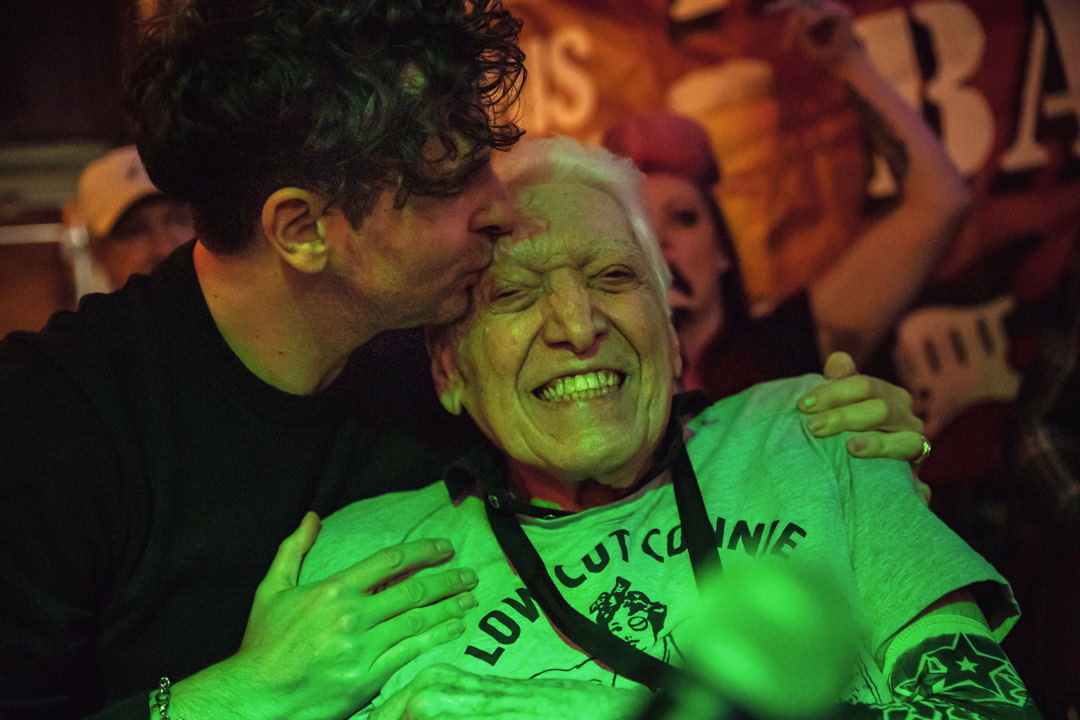
    Low Cut Connie front man Adam Weiner recorded the EP. He and Mr. Capozzoli grew close after Weiner played a gig at Ray’s in 2012, bonding over their shared love of captivating a crowd.

    “Not everyone is about joy when they perform … People care about their ego, people care about fashion,” Weiner said. “But Lou was always about fun, just radiating 100% joy.”
    Mr. Capozzoli started performing professionally when he was 14, sneaking into clubs to accompany bands on the alto sax. The stage was a calling that helped him fall in love. It also took him to the edge of celebrity.

    After serving in the military in the early 1960s and playing for Sophia Loren as part of an army band, Mr. Capozzoli told jokes and sang standards at the Stardust and Flamingo casinos in Las Vegas. At the peak of his fame, he opened for Diana Ross at the Riptide Club in Wildwood in 1965. That same year Mr. Capozzoli met his wife, Rose, who was charmed by his talents at another Wildwood concert. They wed three years later.

    Mr. Capozzoli bonded with Low Cut Connie’s Adam Weiner over their shared love of performing.

    Mr. Capozzoli’s steadiest gig began in 1984 with the Rage Band, once the house act for Sea Isle City’s now-shuttered Springfield Inn. There, Mr. Capozzoli settled into his larger-than-life style, commanding a crowd of roughly 1,000 people a night on summer weekends. He’d serenade Burt and Ernie puppets for a medley of Sesame Street songs and show tunes, or don outlandish masks for a Mummers tribute. Both brought down the house, but never as much as when Mr. Capozzoli would cover “Those Were The Days” or ”Sweet Caroline,” which were always punctuated with jokes.

    “I call him the showman’s showman,” said Brian Saunders, one of band’s saxophonists. Tony DiMattia, a bassist for the band, concurred: “He didn’t just entertain the crowd. He entertained us as musicians.”

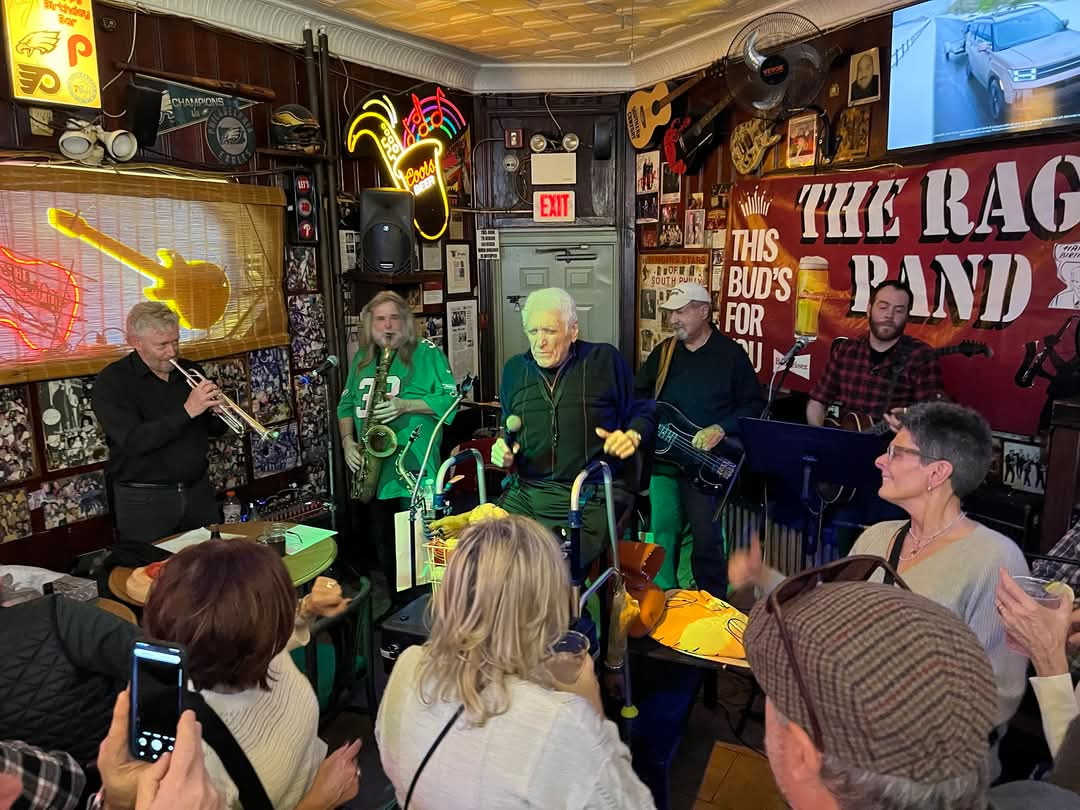
    The Rage Band stopped their Sea Isle residency in 1999, only to pick up at new one at Ray’s in 2003, where they have performed on the first Saturday of every month from October through April ever since. The band never rehearsed, DiMattia said. Mr. Capozzoli’s stage presence could smooth over just about any kink.

    Mr. Capozzoli played in The Rage Band for 42 years, performing for packed houses at the Springfield Inn in Sea Isle City and Ray’s Happy Birthday Bar.

    “There is no Rage Band without Lou,” Saunders said. “He was the glue that kept us together.”

    Outside of music, Mr. Capozzoli’s greatest loves were his wife and children. He was a dedicated father who enjoyed cooking large French toast breakfasts, organizing tee ball games, and ensuring the family always had a rescue dog to snuggle. Laughter — and his wife’s minding — kept Mr. Capozzoli going, even as the decades of working in a smoking bar wore on him.

    “I don’t think I’ve ever seen Lou angry,” said Saunders. “I don’t think he’d ever not had a smile on his face.”

    Mr. Capozzoli was an accomplished saxophonist who started playing professionally when he was 14 years old.

    In addition to his wife, Rose, and son, Anthony, Mr. Capozzoli is survived by his daughters, Dyan Wixted and Luann Capozzoli, and three grandchildren: Louis, Daniel, and Delaney.

    Visitation with the family will be held from 6 to 9 p.m. Feb. 6, and from 9:30 to 11 a.m. Feb. 7 at Pennsylvania Burial Company, 1327-31 S. Broad St., Philadelphia, Pa., 19147. Services will follow Saturday at 11 a.m.

    Donations in Mr. Capozzoli’s name may be made to an animal shelter of your choosing or ACCT-Philly, c/o Development, 111 W. Hunting Park Ave, Philadelphia, Pa., 19140. Alternatively, his wife said, stories about Mr. Capozzoli or jokes he would’ve enjoyed can be sent to the family via email at rayshappybirthdaybar1@gmail.com.

  • Who won big at the Tasties, Philly’s homegrown culinary awards?

    Who won big at the Tasties, Philly’s homegrown culinary awards?

    How does Philly celebrate Philly’s food scene? With an awards show that includes a special category for condiments, an honor for the best neighborhood restaurant, and an after-party with an Italian Market-themed speakeasy.

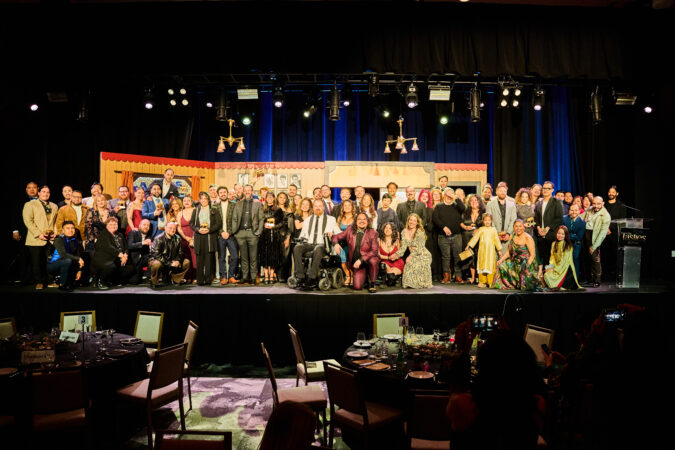
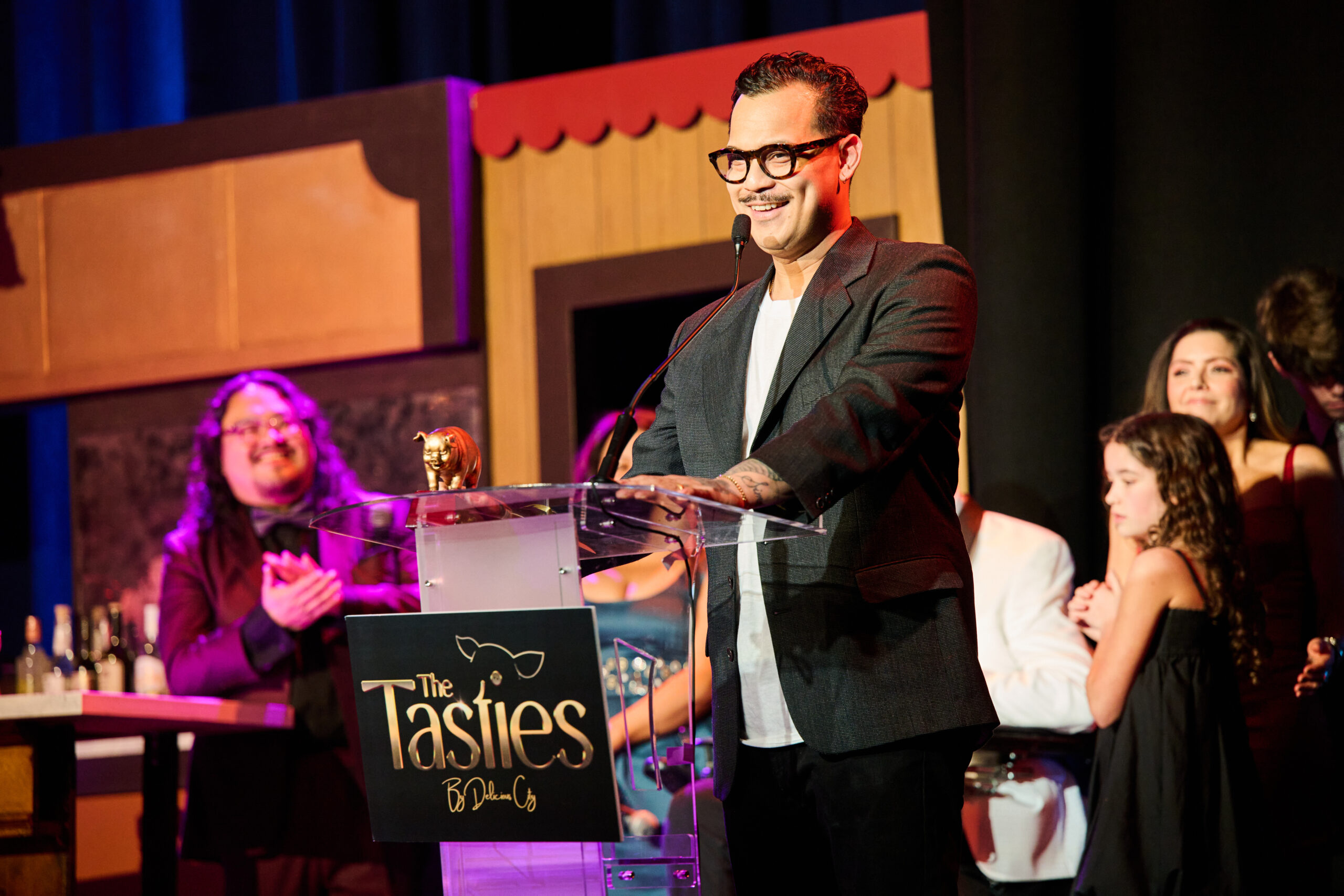
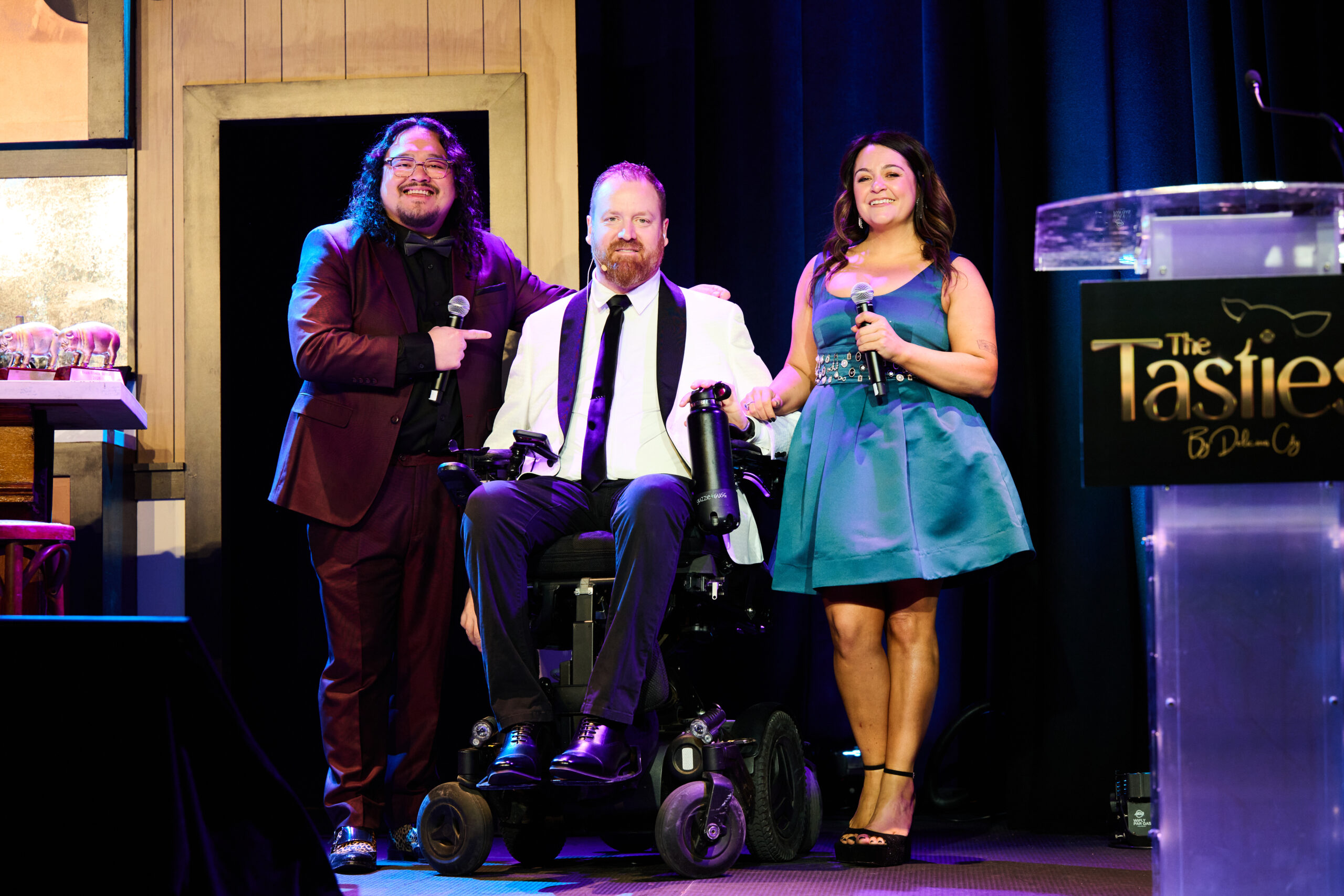
    Those were some of the highlights from the Tasties, the second edition of the Philly-based culinary awards for hospitality professionals. The party is thrown by the hosts of the Delicious City podcast (James Beard award-winning chef Eli Kulp, food influencer Dave Wez, and 93.3 WMMR radio host Marisa Magnatta). Chefs, bartenders, and dishwashers were among the more than 600 attendees at Sunday night’s event at South Philly’s Live! Casino.

    Here are the Tasties’ 2026 winners, from Philly’s best new restaurant to city’s best hospitality experience, frozen dessert, and breakfast. Read on for more background on this now-annual awards ceremony.

    Best New Restaurant & Craft Cocktail Excellence: La Jefa

    It was a big night for La Jefa, the “Guadaladelphian” all-day cafe and cocktail bar from the Suro family that functions as the trendier sibling to the more distinguished Tequilas next door. The restaurant, which opened in May, took home two honors — for Best New Restaurant and Craft Cocktail experience — making it one of two restaurants to do so. La Jefa beat out Little Water, Emmett, and Amá in the Best New Restaurant category, as well as Kampar, Messina Social Club, and Next of Kin for craft cocktails.

    By day, La Jefa is a destination brunch and coffee spot, with a menu that spans omelette-style chilaquiles, huevos verdes, conchas, and experimental lattes with flavors like burnt corn tortilla and guava caramel. At night, the space transforms into a sleek cocktail bar with light bites and easy-drinking cocktails, like tepache highballs, agua frescas spiked with aged El Dorado rum, and cilantro gimlets. Its back bar, La Jefa Milpa, is a more serious drinking experience, with a cocktail list designed in consultation with James Beard award-winning mixologist Danny Childs.

    The Lovers Bar at Friday Saturday Sunday, which won Excellence in Hospitality at the The Tasties in 2026.

    Excellence in Hospitality: Friday Saturday Sunday

    Friday Saturday Sunday won Excellence in Hospitality, an award that celebrates the front of the house, said Kulp. The Michelin-starred, James Beard award-winning restaurant helmed by Chad and Hanna Williams is notably unstuffy, with its downstairs walk-ins-only bar taking on a reputation of its own as the perfect place to fall in love or become a regular. Friday Saturday Sunday was up against Her Place Supper Club, Honeysuckle, and Kalaya.

    Standout Bakery or Pastry Chef: Emily Riddell, Machine Shop

    Machine Shop owner and pastry chef Emily Riddell took home the Tasties’ award for Standout Bakery or Pastry chef, adding to the South Philly bakery’s honors from Food & Wine magazine and the New York Times. Riddell, who honed her pastry skills at Le Bec-Fin, is known equally for her savory laminated pastries (think everything bagel croissants and shakshuka-esque danishes) as she is for her sweets, which include ginger-spiced cookies and lemon tarts topped with torched meringues. Riddell beat out Majdal Bakery’s Kenan Rabah, Baby Kusina’s McBryan Lesperance, and Provenance’s Abby Dahan.

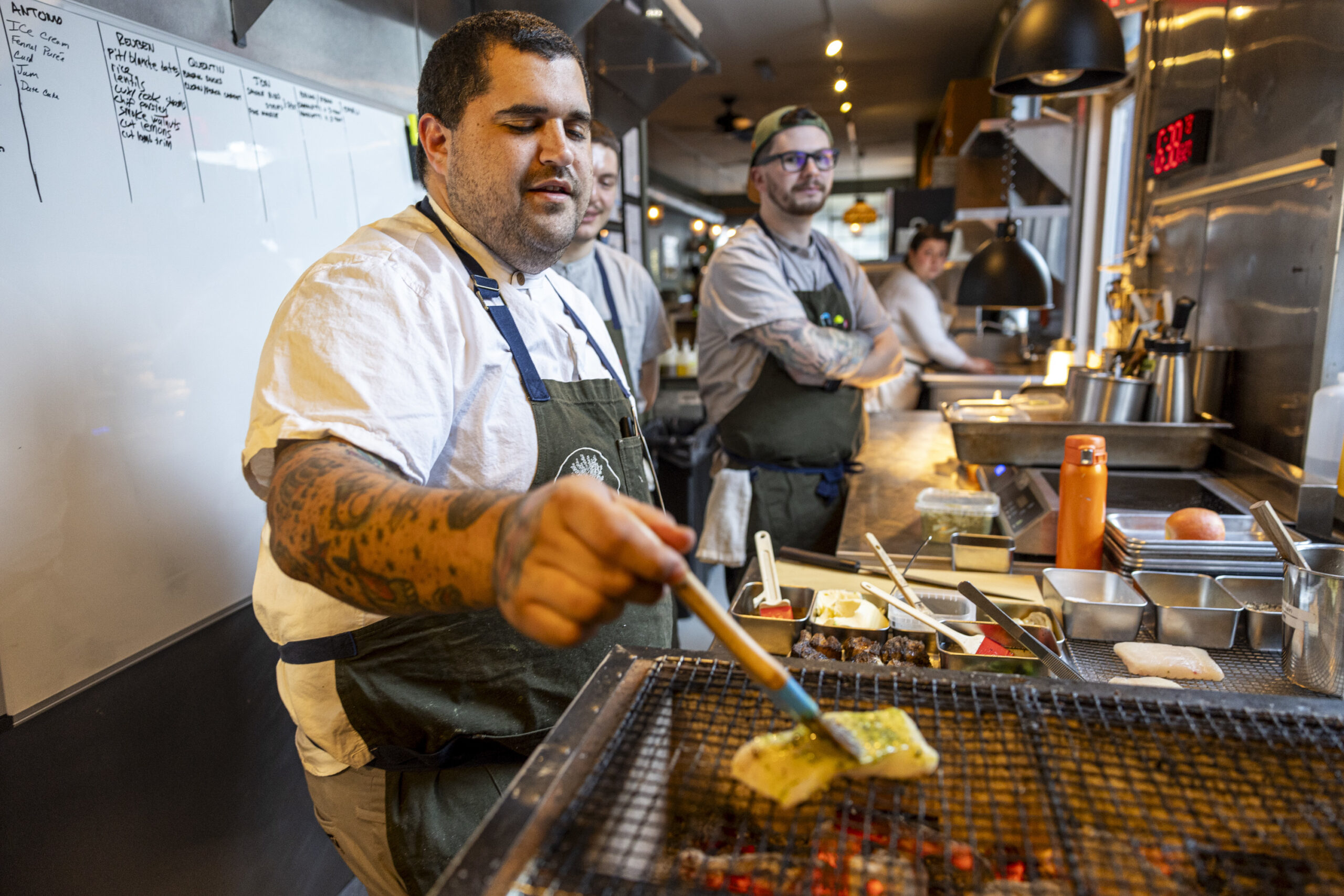
    Chef-partner at Emmett Evan Snyder grills a halibut over charcoal. Snyder won Breakout Chef at the 2026 Tasties awards.

    Breakout Chef: Evan Snyder, Emmett

    Chef-owner Evan Snyder took home the Tasties’ Breakout Chef award for his work at Emmett, the Levantine-inspired restaurant he opened on Girard Avenue last January. Named after his toddler, Emmett is a forum for Snyder to revamp flavors of his childhood: His grandmother’s stuffed cabbage become malfoufs stuffed with foie gras, and traditional boreks are reimagined with braised short rib and melted comté cheese. It’s a menu that landed Emmett on Esquire’s best new restaurant’s list, plus praise from Inquirer critic Craig LaBan. Snyder has a knack for “artfully layering multiple components into a dish that eats like a journey,” LaBan wrote in April.

    Others in the Breakout Chef category were Dane DeMarco of Gass & Main, Jacob Trinh of Little Fish, and Sam Henzy of Fork.

    Icon Award: Tequilas Casa Mexicana

    La Jefa didn’t steal all the thunder from its older sibling. Tequilas, the fine-dining Mexican restaurant from David Suro-Piñera, took home the night’s Icon Award. Suro-Piñera first opened Tequilas in 1986 to celebrate traditional Mexican cooking and agave spirits beyond its namesake alcohol. After a kitchen fire closed the Locust Street restaurant in 2023, Suro-Piñera and family spent two years rehabbing Tequilas (and creating La Jefa inside of its adjoining Latimer Street space). The original restaurant reopened last spring, with the same ornate decor and a menu that reaches far beyond Suro-Piñera’s native Guadalajara to other regions of Mexico. Tequilas “not only came back” Kulp said, “they came back bigger and better.”

    Fork, Monk’s Cafe, and Oyster House were the other Philadelphia institutions vying for the Icon Award.

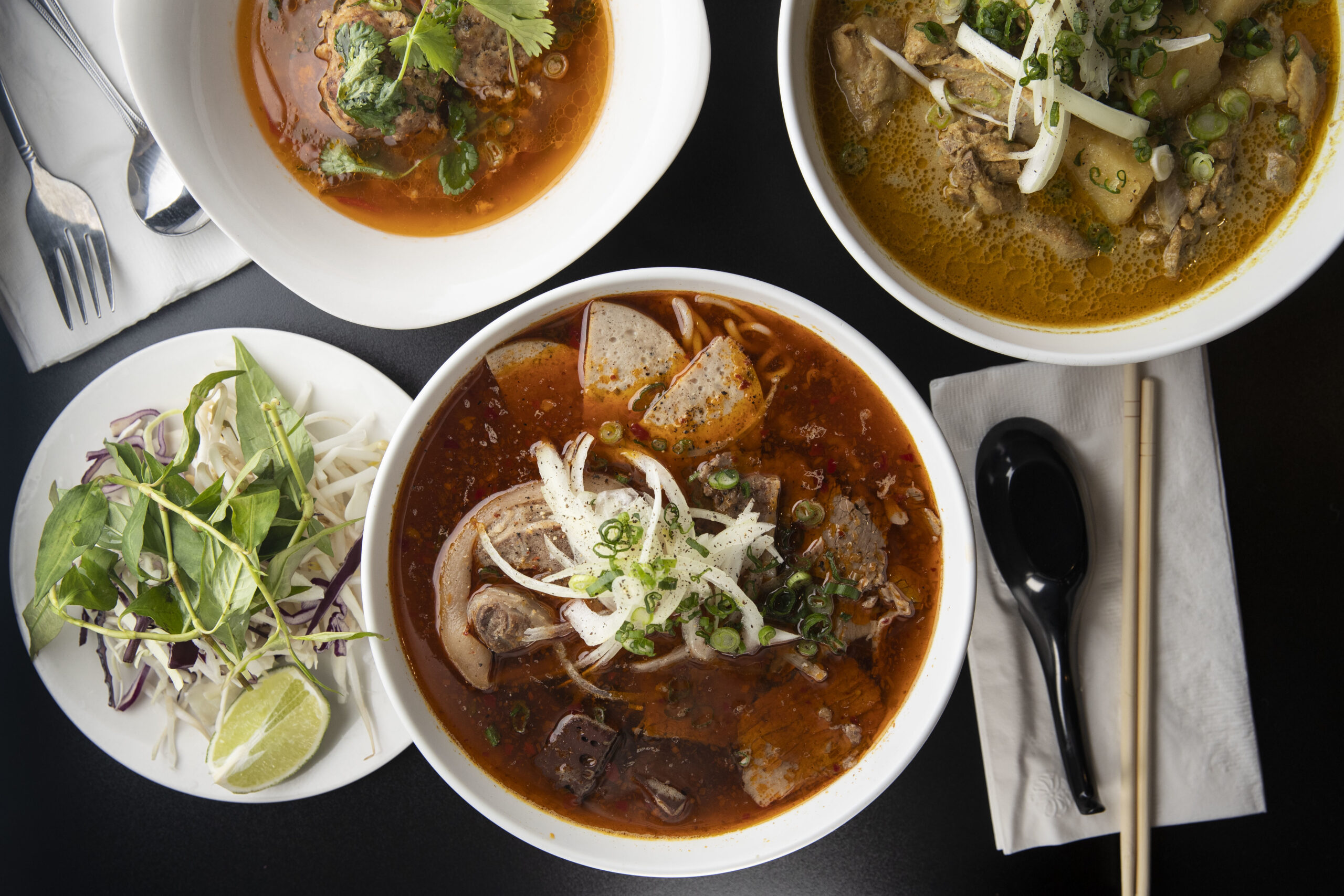
    From left: The Banh Mi Xiu May, Bun Bo Hue Dac Biet, and the chicken curry at Cafe Nhan, which received the Best Neighborhood Gem award at the 2026 Tasties.

    Neighborhood Gem: Cafe Nhan

    Vietnamese restaurant Cafe Nhan won the Neighborhood Gem award. Run by mother-son duo Nhan Vo and Andrew Dinh Vo, Cafe Nhan is a West Passyunk go-to for hearty bowls of soup and crispy fried chicken wings. The restaurant’s signature bún bò hue dac biet — a spicy lemongrass soup from Central Vietnam loaded with brisket and pig’s feet — and gluten-free pho — rank among the best in the city.

    Other contestants for Neighborhood Gem included Cafe Nhan neighbor Stina, as well as Baby’s Kusina in Brewerytown and the Breakfast Den on South Street.

    Restaurant and Chef of the Year: Phila Lorn & Mawn

    The Mawn team, including chef-owner Phila Lorn, added another feather to their caps at the Tasties, taking home top honors for both Restaurant and Chef of the Year. According to Kulp, Lorn brought the entire staff of both Mawn and its sister oyster bar, Sao, to the Tasties Sunday night.

    Phila and his wife, Rachel, opened Mawn in 2023 as a 28-seat Cambodian BYOB with a menu inspired by Phila’s parents. After racking up honors from the James Beard Foundation, Food & Wine magazine, and the New York Times, Mawn has become one of the toughest tables to get in Philly.

    Mawn co-owner and executive chef Phila Lorn accepts the award for Chef of the Year at the 2026 Tasties.

    Blue Corn, Her Place Supper Club, and Royal Sushi were also nominated for Restaurant of the Year. Royal Sushi owner Jessie Ito rounded out the Chef of the Year category alongside Thanh Nguyen of Gabriella’s Vietnam and Omar Tate and Cybille St.Aude-Tate of Honeysuckle.

    People’s choice awards

    Brain Freeze Bestie: Milk Jawn

    Celebrating excellence in all matter of frozen desserts (ice cream, gelato, and water ice), the Brain Freeze Bestie people’s choice award went to Milk Jawn. Co-owned by Amy Wilson and Ryan Miller, the small-batch ice cream purveyor started as a hobby before spawning two storefronts in South Philly and Northern Liberties. Milk Jawn beat out Franklin Fountain, Coco’s Gelato, John’s Water Ice, Siddiq’s Water Ice, and Cuzzy’s Ice Cream.

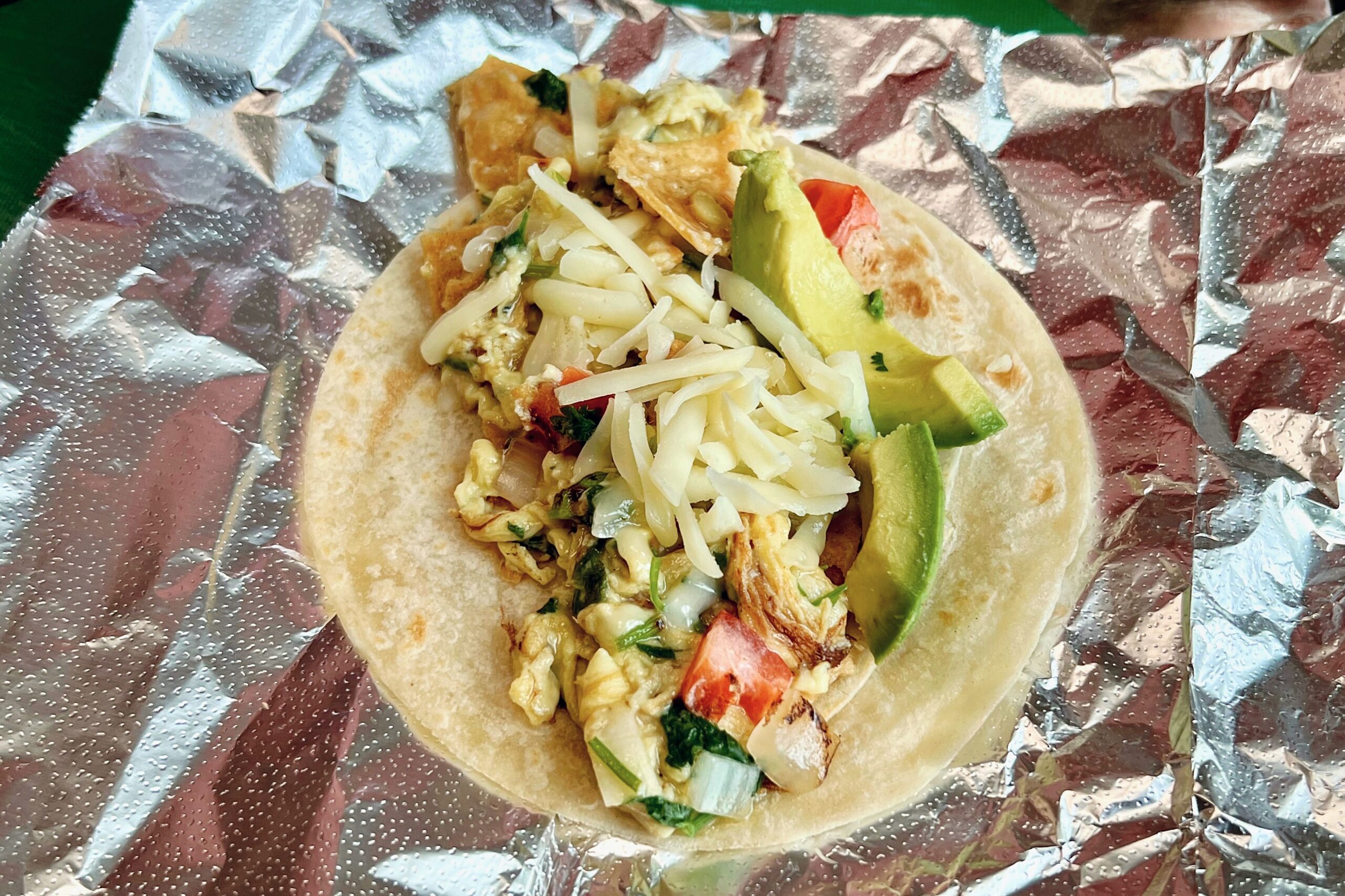
    The Migas breakfast taco from Taco Heart, which won the people’s choice Breakfast of Champions Award at the 2026 Tasties.

    Breakfast of Champions: Taco Heart

    The Breakfast of Champions pitted breakfast sandwiches against tacos against diner plates. Austin-style taqueria Taco Heart and its flour-tortilla wrapped breakfast tacos ultimately won, beating out Fishtown diner Sulimays, and breakfast sandwiches from Fiore, Gilda, Paffuto, and Homegrown215.

    Sauce Boss: Hank Sauce

    The Sauce Boss is the Tasties’ people’s choice award for best condiment. Sea Isle City hot sauce brand Hank Sauce took home the prize, likely pushed over the edge by an Instagram endorsement from their new investor Jason Kelce, who called it the perfect condiment for “eggs without any f— flavor.” Other nominees included boutique mayo brand Jawndiments, Willow Grove’s Mammoth Sauce Co., Sunny Chili Oil, Kensington Food Co., and Chili Peppah Water from Inquirer food writer Kiki Aranita’s sauce brand Poi Dog.

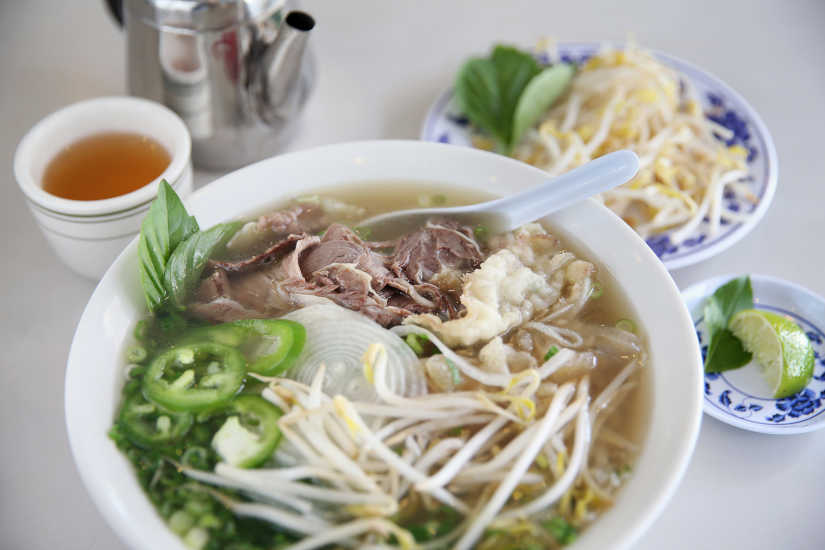
    Pho with steak, flank, fatty brisket, tendon, and tripe from South Philadelphia’s Pho 75, which received the people’s choice Supreme Slurp Award at the 2026 Tasties.

    Supreme Slurp: Pho 75

    The Supreme Slurp is exactly what it sounds like: A people’s choice award for soup. Washington Avenue pho shop Pho 75 took home the prize, beating out potato soup from dive bar Cherry Street Tavern; French onion soup from Forsythia; matzo ball soup from Hershel’s East Side Deli; ramen from Terakawa; and the Souper Bowl from Sang Kee Peking Duck House.

    Background on the Tasties and ‘Delicious City’

    Now in its second year, the Tasties has morphed into a foil for the Michelin Guide and James Beard Awards, where outsiders are made to judge the best of Philly’s food scene, often with varying degrees of depth.

    Deliberations started in October, when a 14-member nomination committee of local food writers, content creators, and past winners whittled down a list of hundreds of restaurants. From there, a smaller panel of judges (including Inquirer food desk editors Margaret Eby and Jenn Ladd) rate the finalists. People’s choice voting occurs for sillier categories; more than 1,200 people cast ballots for the people’s choice awards this year, Kulp said.

    From left: “Delicious City” podcast cohosts Dave Wez, Eli Kulp, and Marisa Magnatta post onstage at the Tasties culinary awards at Live! Hotel & Casino on Feb. 2, 2026.

    The Tasties includes all the standard award show categories, as well as more bespoke accolades. At Sunday’s ceremony, Miriam Bautista of Vernick Fish won the Dish Wizard award, an honor bestowed upon the city’s best dishwasher. Sous chefs at La Croix, Little Water, and Pesto all took home Future Tastemaskers awards, which come with $1,000 grants for professional development.

    At the Tasties, “there are no losers,” Kulp said. “It’s so cliche, but it’s really an award [show] where you can throw a dart to pick a winner and no one would argue.”

  • Fourth base or football? The story behind the viral naughty bears outside a Southwest Philly strip club.

    Fourth base or football? The story behind the viral naughty bears outside a Southwest Philly strip club.

    “Am I being pranked?”

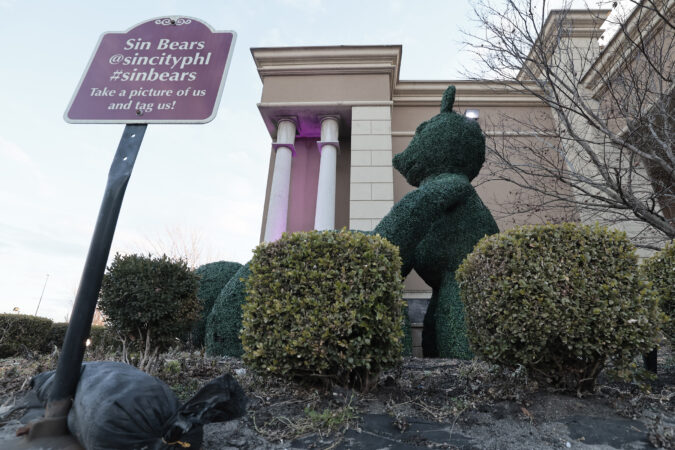
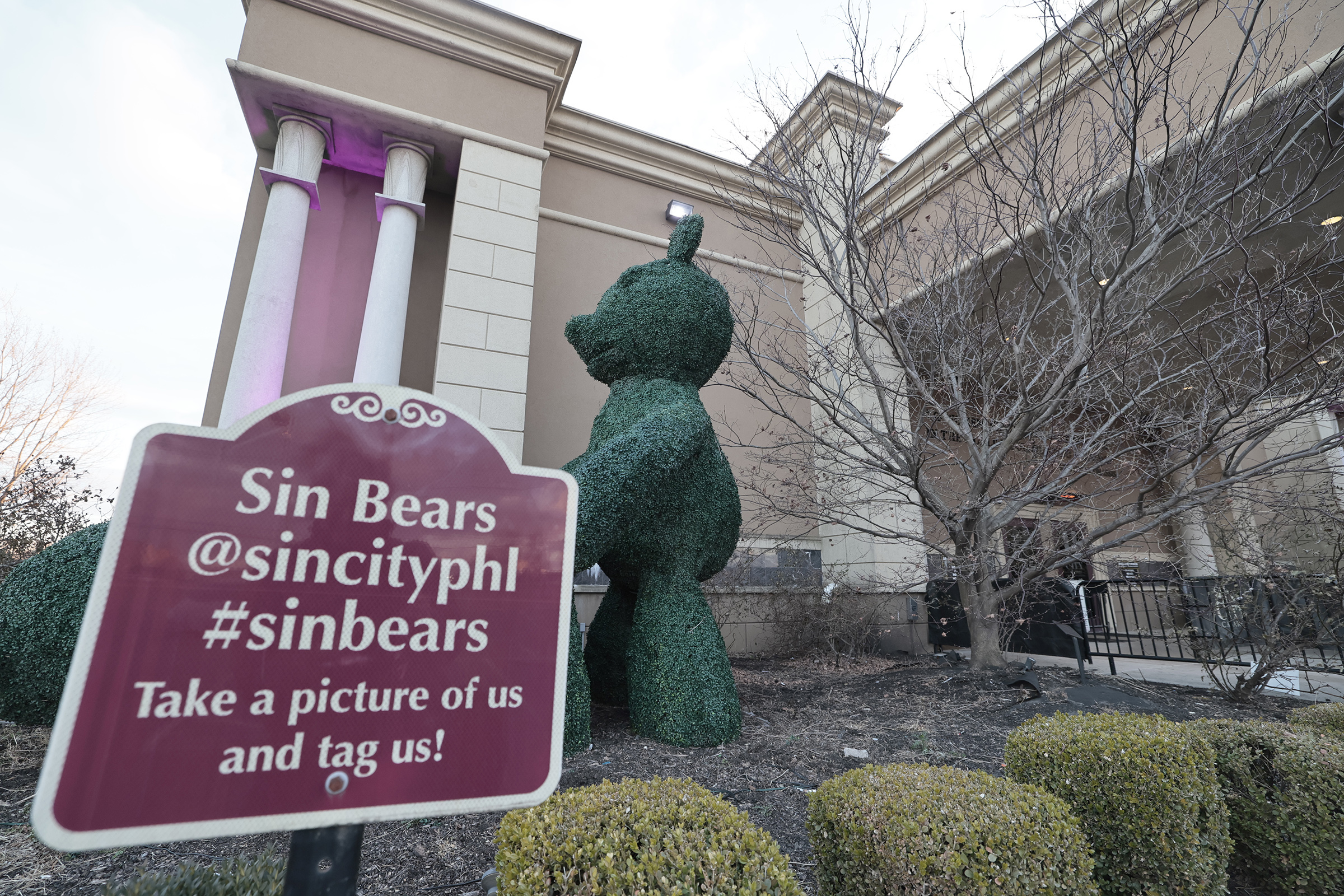
    That’s what Gloucester County resident Gabby Weiland recalled thinking after she made a wrong turn while Doordashing in Southwest Philly earlier this month. Instead of finding a customer waiting on the curb for her lunch, Weiland found herself outside of Sin City Cabaret Nightclub at 6130 Passyunk Avenue. One 8-foot-tall topiary Care Bear bending over another greeted her.

    “Got lost in Philly and pulled over to see where I was … looked up and —,” Weiland captioned a TikTok that pans from the fourth-base bears back to her face, which appears equal parts mortified and confused. The 12-second clip has racked up more than 1.4 million views — and its fair share of jokes.

    @healinwithgab

    What

    ♬ original sound – Life with Gab🌜🪬

    “What in the bear necessities?” commented one TikTok user. “They…they’re…playing leapfrog…RIGHT???” wrote another. Others assured Weiland not to worry because the bears are clearly in a committed situationship.

    Many, however, knew where the bears were. “Oh, you found Sin City,” read a comment that’s been liked more than 8,600 times. According to strip club owner Gus Drakopoulos, that means the topiaries are working.

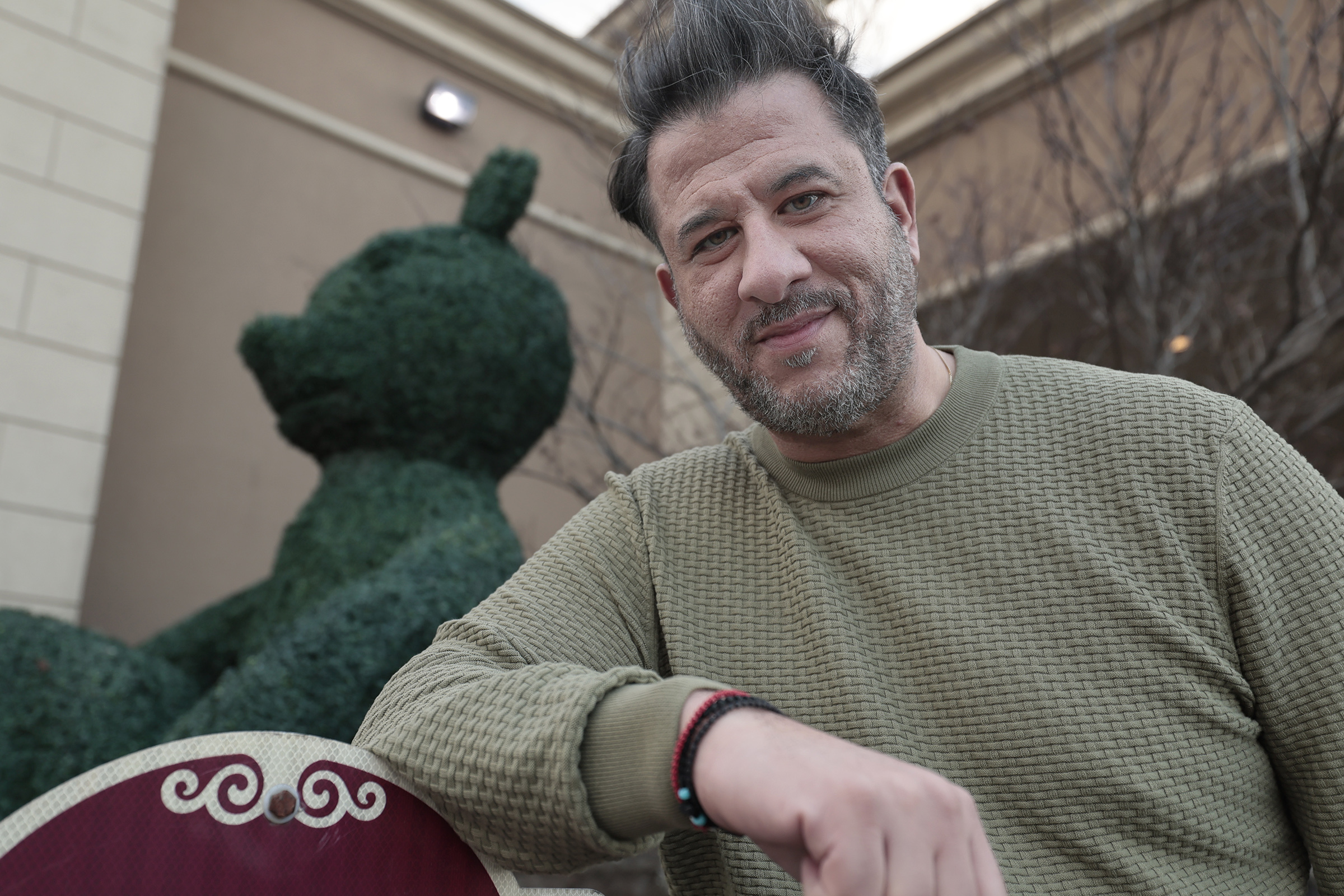
    “If someone does a double take and posts a video or selfie, then the art did it’s job,” said Drakopoulos, 49, who had the topiaries installed in 2021. “I want images of those bears to be synonymous with the brand Sin City.”

    Drakopoulos opened the original Sin City in the Mott Haven section of the Bronx in 2002 at age of 25 after a securities fraud conviction sidelined his career as a stockbroker. Almost immediately, the club earned a star-studded reputation: Rapper Cardi B was discovered while performing there, and celebs ranging from Mike Tyson to Philly’s own Meek Mill were regulars.

    Sin City owner Gus Drakopoulos poses in front of the 8-foot-tall bear topiaries that sit in front of his nightclub. The bears cost $18,000, Drakopoulos said.

    Drakopoulos was forced to close the OG Sin City for good in 2018 after the club lost its liquor license. He relocated it to Philly in 2020 just before the COVID-19 pandemic. The bears came a year later in November 2021, Drakopoulos said, as a way to signal to patrons that Sin City is a more artful, avant-garde gentleman’s club experience.

    “The bears are playful and open for interpretation,” he said. “You can say they’re playing football. Go Birds.”

    For some good-time bears, pay $18,000

    Sin City’s bear bushes are, surprisingly, not the only ones in existence. They’re inspired by a series of topiaries that line the Moxy Hotel’s rooftop bar in New York City, where patrons can ogle bears in a variety of X-rated positions, few of which could be confused for football.

    “I fell in love with the idea,” Drakopoulos said. “The bears look so innocent and at the same time, depending on the eye of the beholder, so not.”

    Both sets of bears are designed by celebrity topiary artist Joe Kyte, whose 2-acre topiary garden in Tellico Plains, Tenn., has churned out larger-than-life dragons, Formula 1 cars, and semi-realistic bottles of booze for clients ranging from Legoland and Ferrari to Absolut Vodka since 1992.

    Kyte got his start working as a subcontractor for Disney parks in the 1980s, he previously told The Wall Street Journal, fashioning hippos and various versions of Mickey Mouse out of materials ranging from ivy to moss. He told The Inquirer that his clients have only gotten raunchier. In 2020, Kyte was commissioned by a Dutch adult magazine to create a photorealistic vagina out of hydrangeas, rosemary, and mullein leaf for a launch party in Holland.

    Drakopoulos, Kyte said, was the first strip club owner to ever contact him. It was an immediate yes, he said.

    “This is the first time a strip club has paid me. Normally it’s the other way around,” Kyte, 67, joked over the phone.

    Drakopoulos paid $18,000 for two bears, which Kyte took two weeks to construct by arranging weather-resistant artificial boxwood atop custom-made metal frames. To finish the job, Kyte and an employee had to drive to 687 miles to Philly to install the bears, at one point getting stuck for hours in standstill traffic on I-81 in Virginia. Bored drivers, Kyte recalled, couldn’t stop taking photos.

    “It’s wonderful that the bears are standing the test of time … Wouldn’t you be proud of them?” said Kyte, who is planning another trip to Philly to do maintenance on the Sin City bears later this winter. The sun’s UV rays have bleached parts of the deep-green topiaries.

    Another angle of the bear topiaries outside of Sin City Cabaret Nightclub on Passyunk Avenue. “The bears are playful, and open for interpretation,” owner Gus Drakopoulos said.

    It’s unclear if the bears have lead to more business for the club, Drakopoulos said, which has a roster of roughly 500 dancers. In 2022, rapper and Super Bowl LIX halftime performer Bad Bunny dropped $50K at Sin City hours before his Made in America performance. It’s not uncommon for some of the Eagles roster to come through, Drakopoulos said, though he declined to name specific players out of respect for their privacy.

    Weiland, whose video went viral, was unaware initially that the bears belonged to a strip club. She’s never been to one, though Sin City may wind up being her first.

    “Apparently, they have good food,” Weiland said. “And it looked like a very well taken care of place.”

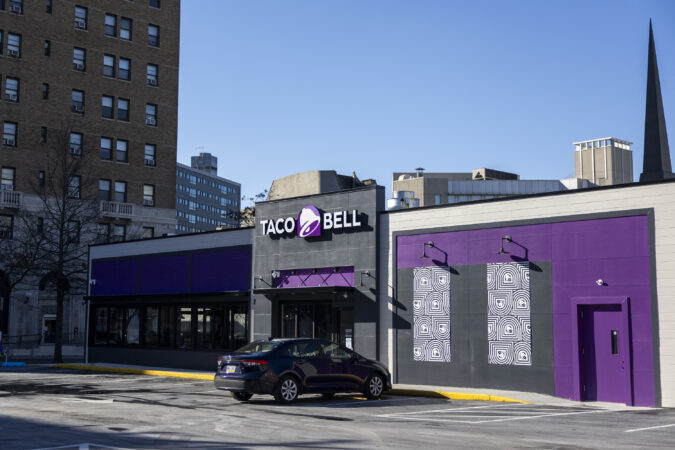
  • Why is everyone so excited about University City’s new Taco Bell?

    Why is everyone so excited about University City’s new Taco Bell?

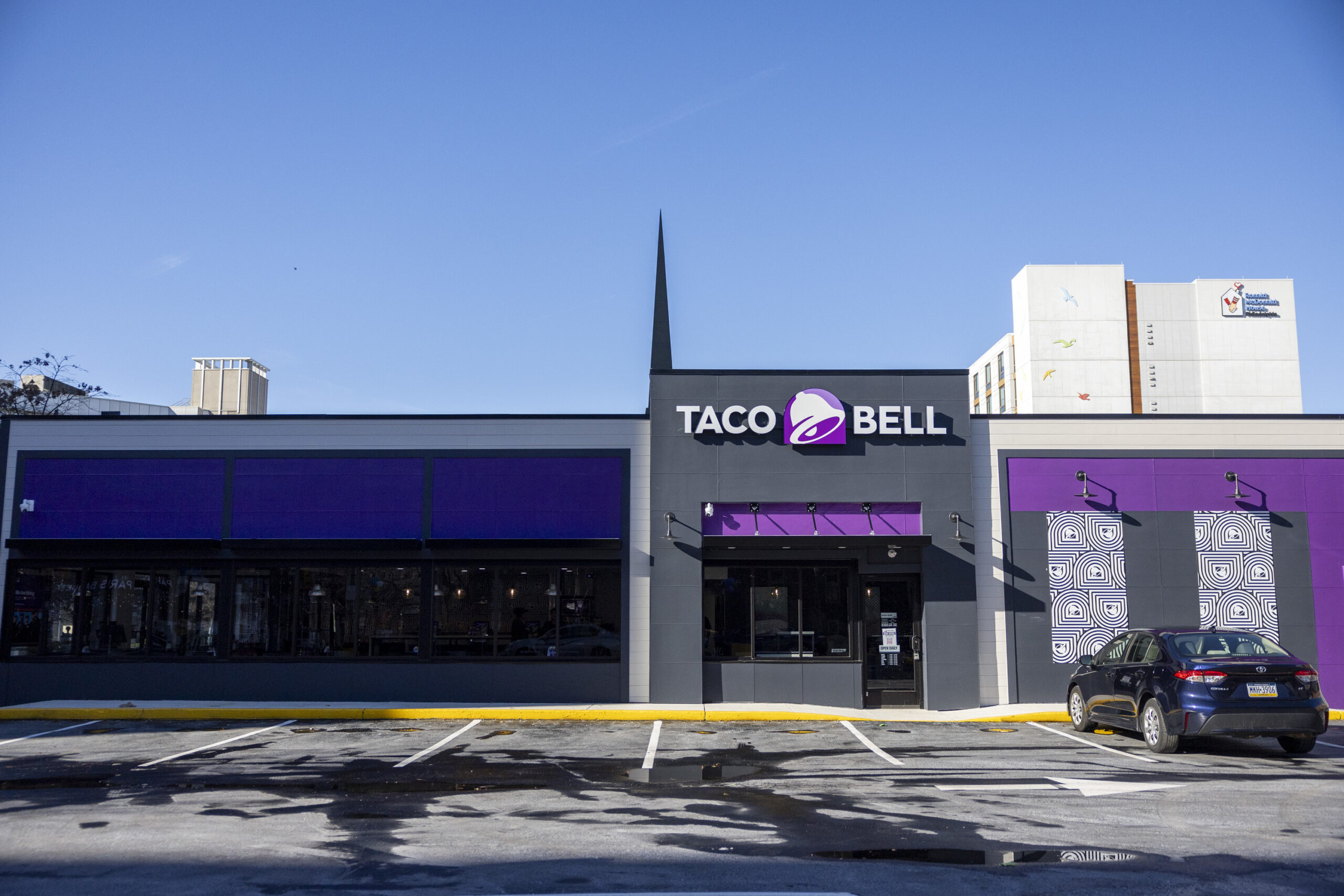
    It was a Christmas miracle of the fast food variety: A 24-hour Taco Bell had opened in University City.

    The Mexican-ish chain opened its 16th Philly location in late December at 3901 Chestnut St., where it replaced a Boston Market outpost that once owed nearly $220,000 in rent after defaulting on a lease. To hear some Philadelphians tell it, the opening was practically heaven-sent.

    The new Taco Bell generated two separate posts from different users last month in the 95,000-member r/Philly subreddit. Other restaurants yearn for that kind of word-of-mouth marketing.

    “Anyone have any info on the Taco Bell they’re putting on 39th and Chestnut?” asked user 8hivefiend8 on Dec. 17. “I have high hopes that maybe it will open soon because it looks so close to finished.”

    Six days later, user rad_rascal posted pictures of the Taco Bell in all of its grand opening glory under the title “New Taco Bell in West Philly!” In the days leading up to the opening, the user wrote, they “would pass it every day and peer in like a buncha [sic] creeps.”

    New Taco Bell in West Philly!
    byu/rad-rascal inphilly

    Under both threads, commenters expressed the kind of jubilation normally reserved for, say, rotisserie chicken-eating stunts or Super Bowl parades. “This just made my day,” commented one Taco Bell enthusiast. Others chimed in. “This the best Christmas present yet,” wrote one user. “My new home away from home,” said another.

    In a city with no shortage of affordable (and excellent) Mexican food, why do people care so much about a Taco Bell that doesn’t even serve alcohol? And could this Taco Bell possibly live up to Reddit’s expectations?

    Is it normal to care this much about a Taco Bell?

    Taco Bell is as much a fast food chain as it is a borderline “cult,” according to chef Reuben Asaram, one of Philly’s most notable Taco Bell enthusiasts.

    The 34-year-old’s love affair with Taco Bell began after his family emigrated from India to Queens in 1993, the chain quickly becoming a staple for weekend meals out. Taco Bell partially inspired Asaram’s Mexican and pan-Asian pop-up menus, which led the chain to name him one of three chefs allowed to reimagine the iconic Crunchwrap Supreme in 2024. At one point, Asaram was so tight with the staff at the 1037 Chestnut St. Taco Bell that they would turn part of restaurant into a private space for him to take dates.

    Philly chef Reuben Asaram was one of three chefs tapped by Taco Bell to revamp the Crunchwrap Supreme. The local Taco Bell enthusiast created a butter chicken version.

    True Taco Bell devotees will go out of their way to try a new location, Asaram said, because “they’re obsessed with getting the perfect bite” and need to know if there’s a reliable option nearby in case a Dorito Locos Taco emergency hits. Asaram is one of those people.

    “If I have a craving and know I’m going to be in a random place, I have to know where the [nearest] good Taco Bell is,” said Asaram while sipping a Baja Blast on Zoom. Asaram’s preferred locations are the two closest to his house in Cherry Hill. He must visit the University City outpost before it can be added to his reserves.

    Taco Bell has spent decades converting its Mexican food into a lifestyle brand with legions of devoted fans by pushing the boundaries of fast food marketing. There’s a Taco Bell wedding chapel in Vegas and a faux-retirement community in San Diego, plus an ultramarathon that requires stopping at nine Taco Bells. The brand occasionally rewards that devotion by letting fans contribute to the menu, at one point even bringing back the Mexican pizza based on an online petition.

    In Philly, Taco Bell is best known for bait and switches. On April Fools’ Day 1996, the chain took out a full-page ad in The Inquirer claiming it had purchased the Liberty Bell, a prank that sparked both outrage and a boost in sales. Nearly 30 years later, the brand announced that it would plant the region’s first booze-serving Taco Bell Cantina at 1614 Chestnut St., only to reverse course and open a regular location after failing to obtain a liquor license.

    Perhaps the University City Taco Bell is a representation of what could’ve been, four walls for Philly fans to place their shattered hopes and dreams. Or maybe people are just happy something replaced the Boston Market.

    “That Boston Market was profoundly cursed,” one Philadelphian wrote on Reddit. Others claimed they got food poisoning there.

    “Everyone I know that ever went into the Boston Market when it was open has a horror tale about it!” wrote user rad_rascal, who broke the Taco Bell news.

    window.addEventListener(“message”,function(a){if(void 0!==a.data[“datawrapper-height”]){var e=document.querySelectorAll(“iframe”);for(var t in a.data[“datawrapper-height”])for(var r,i=0;r=e[i];i++)if(r.contentWindow===a.source){var d=a.data[“datawrapper-height”][t]+”px”;r.style.height=d}}});

    What are the vibes?

    The University City Taco Bell has all the makings of what some in the Taco Bell-loving community refer to as a “Taj-Mah-Bell,” or a higher-end location.

    This Taco Bell location is large, with a mix of booths, standard tables, and counter seating that isn’t sticky: When I visited on a Wednesday afternoon in early January, employees were cleaning tables within minutes of customers leaving. There were ample napkins (necessary for taco spillage), and the soda machine dumped out pellet ice, perfect for fountain drinks. It made my medium-size Baja Blast taste extra electric.

    The outside of University City’s new Taco Bell, which is open 24-hours, seven days a week.

    The only downside: Humans don’t take your order. Customers use one of several digital kiosks spread across the store. That’s a bummer for Asaram.

    “What makes a good Taco Bell franchise is mainly how the workers treat their guests,” he said.

    How’s the food?

    Not Taj-Mah-Bell quality, I’ll tell you that much.

    I ordered a beef Crunchwrap Supreme, beef Doritos Locos Taco, cinnamon twists, and the all-important beef chalupa. The latter, Asaram said, is key for understanding the quality of a Taco Bell.

    “You want to see all the components of your Taco Bell [at once]. You want to see if the fryer oil is fresh, if their vegetables and other garnishes are good,” he said.

    A textbook chalupa is golden brown, Asaram said, with firm tomatoes and a layer of ground beef on the bottom that’s roughly an inch thick. If the deep-fried flatbread shell has a sheen — or worse, approaches a russet shade of brown — it means the fryer is dirty.

    “That’s when you know the Taco Bell [location] doesn’t give a s— and you want to dip out,” said Asaram.

    A tray of menu items from University City’s new Taco Bell, which includes a Crunchwrap Supreme, Doritos Locos Taco, Chalupa, and cinnamon twists.

    Despite receiving my chalupa in less than five minutes, it was cold. The fried shell was inexplicably both light brown and vaguely sparkly. Who knows what that means for the fryer oil.

    They also skimped on the meat, which was not evenly distributed across the bottom. The Crunchwrap and taco had the same issues: cold and limp.

    Perhaps this was my fault. I ordered close to 2 p.m. The prime time to visit a Taco Bell is between 11 a.m. and 12:30 p.m., Asaram said, when the morning and afternoon shifts switch over.

    At that time, Taco Bell is “like an omakase,” he explained. “They just make everything in front of you and hand it to you to eat.

    Taco Bell, 1037 Chestnut St., 215-925-1037. Hours: Open 24 / 7.

  • Reservation scalpers are headed for Philly. Can restaurants clap back?

    Reservation scalpers are headed for Philly. Can restaurants clap back?

    Flip a reservation and find out — or at least that’s how the warning goes at South Philly’s acclaimed Cambodian restaurant Mawn.

    Last week, the restaurant’s owners, Phila and Rachel Lorn, took to Mawn’s Instagram to lambaste a woman attempting to sell coveted dinner reservations on the “Buy, Sell, Trade” section of Philaqueens, a private Facebook group with 75,000 members.

    “Selling a Mawn dinner reservation for this month and February if anyone is interested,” read the since-deleted post, which did not specify a price. Commenters were split on the unorthodox offering. Three people immediately replied to say they were interested, while another didn’t mince words.

    “Selling a free reservation?” she wrote. “Horrible.”

    The Lorns agree.

    “Eww. Gross … Don’t play with us,” they wrote, sharing a screenshot of the Facebook post that included the seller’s name. “All 11 of this person’s reservations are canceled.”

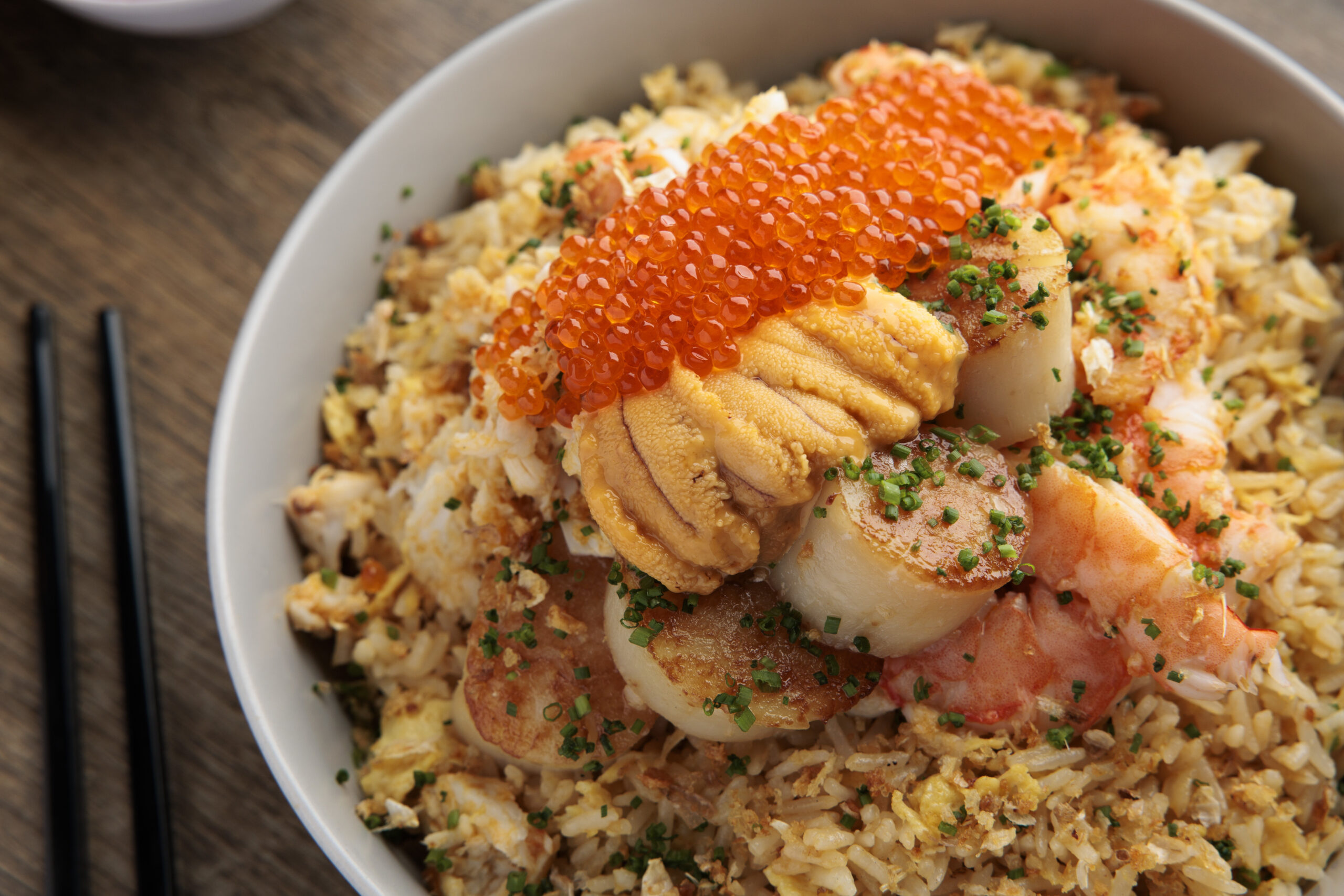
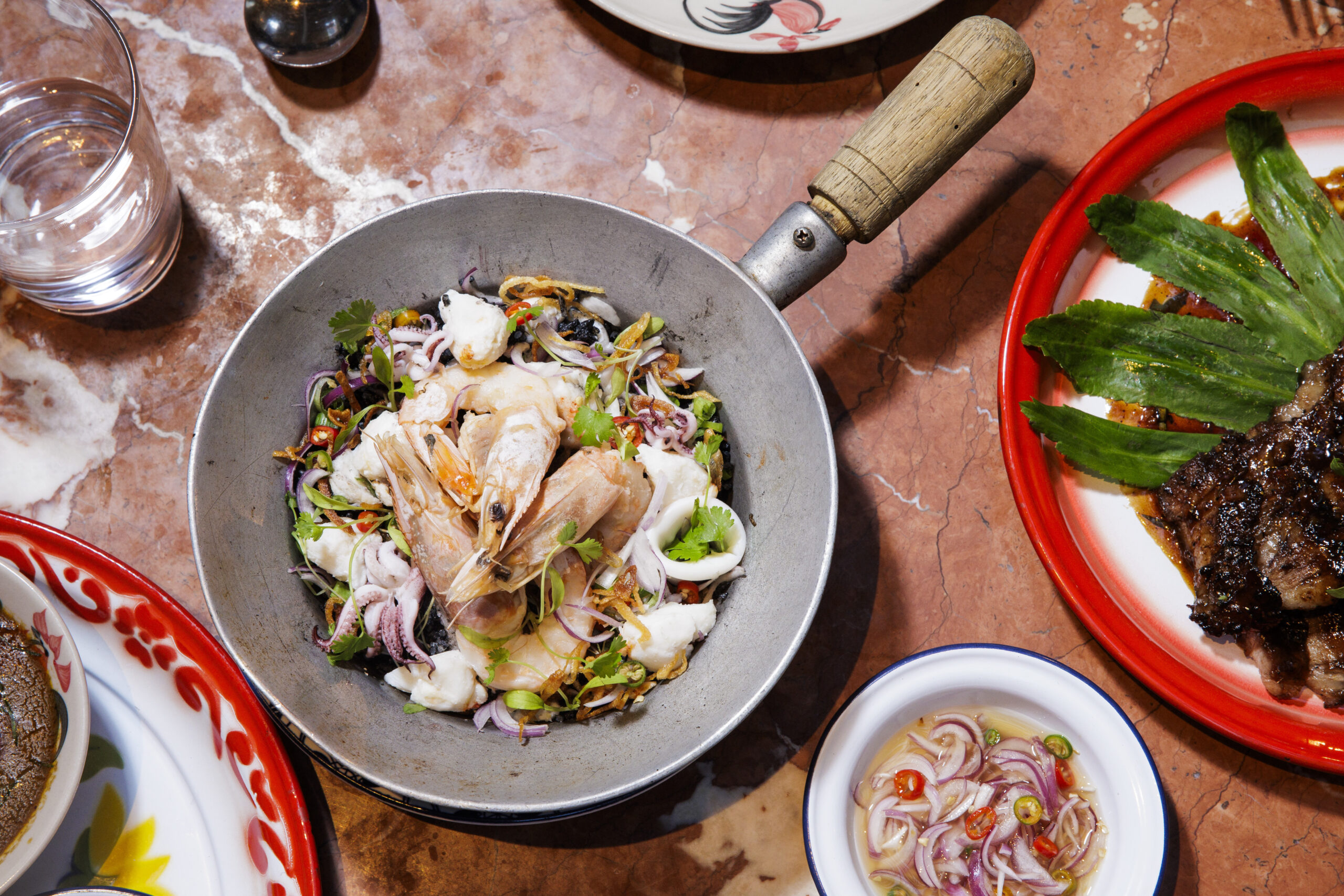
    The “all star seafood rice” at Mawn, an acclaimed South Philly restaurant targeted by reservation scalpers.

    The interaction was a glimpse into the burgeoning underbelly of restaurant reservation scalping, in which enterprising individuals can make a lucrative side hustle using bots and other means to snap up free reservations at in-demand restaurants, then selling them at a premium.

    The reservation black market is more established in New York City, Chicago, and Miami, where tables at celebrity-favorite Italian restaurant Carbone or Ralph Lauren’s notoriously exclusive Polo Bar can fetch between $350 and $1,700 on the third-party website Appointment Trader. One Brown University student told the New Yorker in 2024 that he made $70,000 just by using fake phone numbers and aliases to book reservations to flip on Appointment Trader. The website itself claims that sellers average $172 per reservation.

    The practice has spread to smaller cities, too: During Super Bowl LIX weekend in New Orleans, a once-free reservation for a table at the French Quarter restaurant Antoine’s went for $2,138.

    As reservation scalping becomes more widespread, so has legislation attempting to guard against it. Philadelphia City Council unanimously passed a law in December that would prohibit third-party websites from selling reservations without a restaurant’s consent, fining platforms such as Appointment Trader $1,000 per violation. The bill was signed last week by Mayor Cherelle L. Parker, who joined leaders in New York, Louisiana, and Illinois in banning the practice.

    Still, these bills do not prevent savvy foodies from making under-the-table reservation deals in, say, a Facebook group.

    ‘Nobody should be making money off a free reservation’

    Rachel Lorn said that she and husband Phila found out about the offending Facebook post from several back-to-back direct messages tipping her off.

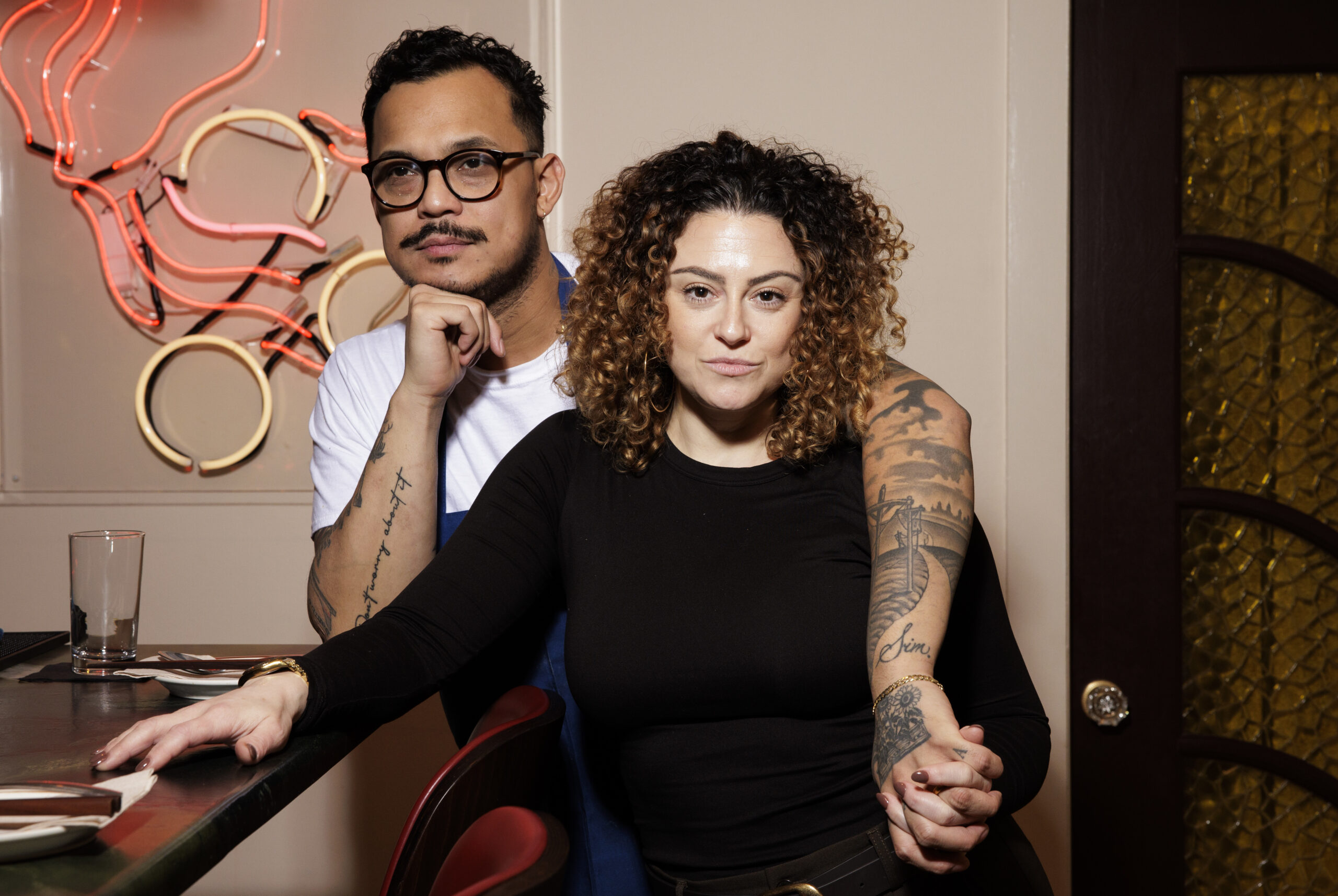
    Mawn co-owners Phila (left) and Rachel Lorn, who say reservation scalpers are unwelcome at their James Beard-award winning restaurant.

    “It’s disrespectful. Nobody should be making money off a free reservation. … We felt like we had a responsibility to [say to] all the people who can’t get a reservation, ‘This is not OK,’” said Rachel Lorn, who oversees front-of-house operations for Mawn, including the restaurant’s packed guest book.

    Nowadays, scoring a Mawn reservation is about as hard as getting off the wait list for Eagles season tickets. The Lorns, who met while working at Zama, opened the cozy, 28-seat restaurant at 764 S. Ninth St. in 2023 as an ode to Phila’s parents. It was an immediate hit and has only gathered steam, garnering accolades from the James Beard Foundation, Food & Wine magazine, and the New York Times in 2025 alone.

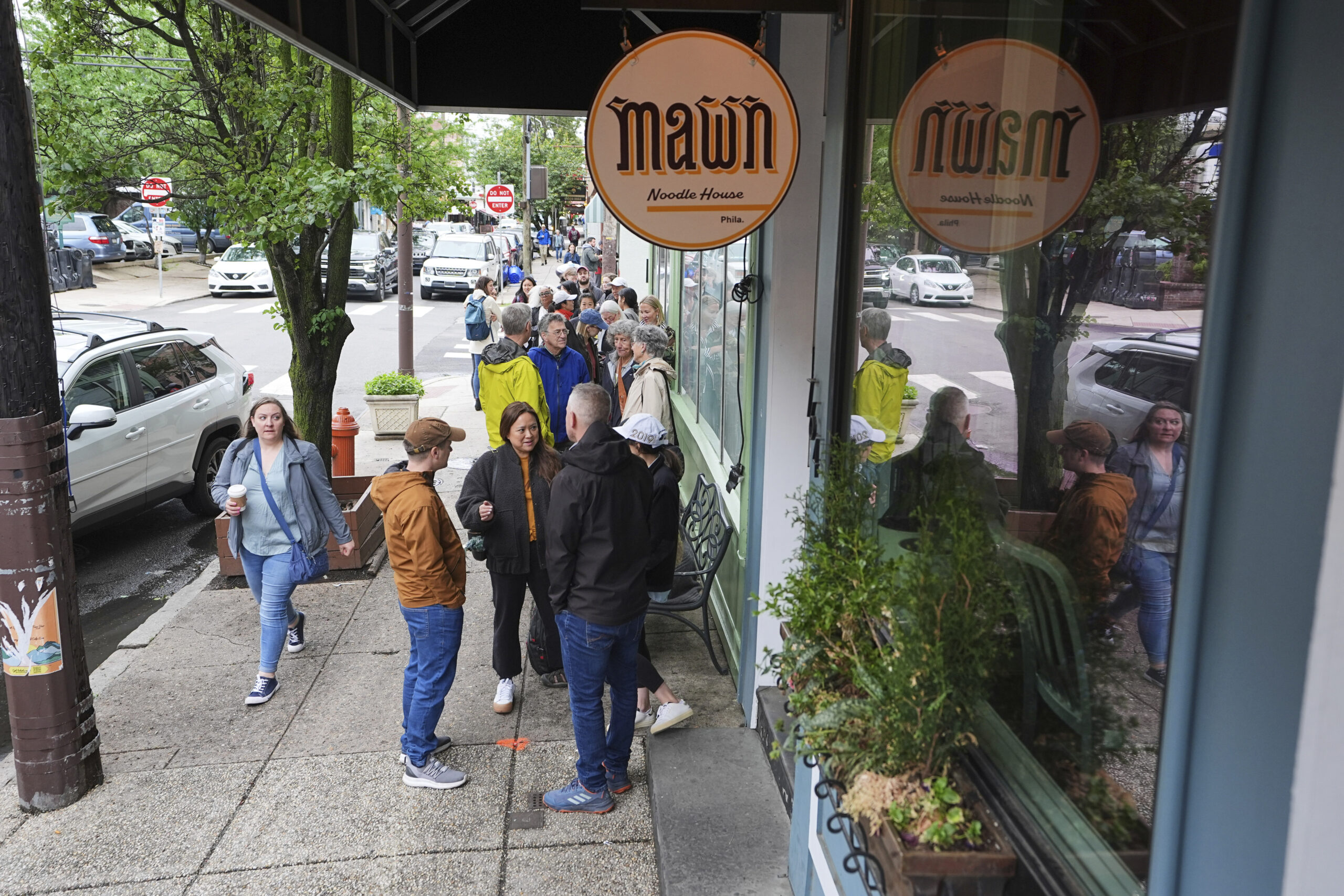
    Customers wait in line for Mawn to open for lunch.

    Mawn draws lines that wrap around the block for its first come, first served lunch service, but dinner reservations are the hotter commodity. Rachel Lorn uses OpenTable to drop reservations at noon on the first of every month, making roughly 650 total tables available at once. Customers are allowed to book multiple reservations, Lorn said, and many regulars manage to do so. It’s a pain point for would-be diners who miss out, whom Lorn said she hears from nonstop.

    “I watch [the reservation drops] from our computer. They sell out in seconds,” she said. “We never imagined that this would be the response to our restaurant. … It’s amazing, but it’s also a really tough position to be in. There isn’t much I can do with our small restaurant and how many seats we have.”

    Upon learning of the attempted black market deal, Rachel Lorn checked OpenTable and found that the Philaqueens poster had dined at Mawn six times prior and had 11 dinner reservations booked on different days throughout January and February. Lorn canceled them all immediately.

    Mawn’s dining room, which has only 32 seats. The restaurant is first come, first served for lunch, but dinner reservations are snapped up in seconds.

    She also reached out to the seller directly, who Rachel Lorn said didn’t respond but did manage to change the name and email associated with her OpenTable account. The Lorns said they would ban the seller, if only they could figure out a way to do so; OpenTable currently does not allow for restaurants to prevent specific users from making reservations.

    “It felt like she was trying to trick us further,” Rachel Lorn said. “She shouldn’t be coming to our restaurant.”

    The reservation seller declined to comment to The Inquirer, citing privacy concerns. She said only that she “meant no harm and there was no ill intent,” and declined to answer questions about why she was selling the reservations. The Inquirer is not releasing her name since the attempted sale happened in a private Facebook community.

    $221 for a table at Barclay Prime?

    For the most part, the Mawn incident is an anomaly in Philly. Reservation scalping has yet to take off here, according to Ben Fileccia, the senior vice president of strategy for the Pennsylvania Restaurant and Lodging Association, which worked with at-large Councilmember Isaiah Thomas to draft Philly’s anti-reservation scalping bill.

    Fileccia said that this was the first time he had ever seen someone try to sell a reservation on Facebook, and that he had only seen a smattering of reservations for Philly restaurants on third-party platforms before working on the bill. Free trades are more common, he said, likely because cost is more top of mind for diners in Philly, a city with large wealth inequality.

    “When you have an audience of folks to which prices are no object, [reservation scalping] becomes more of a problem,” Fileccia said. “Whereas when I discuss this issue and ask people [in Philly], ‘Would you pay $500 for reservation at 7:30 p.m. at X restaurant?’ … They usually laugh and roll their eyes.”

    The gaeng pae, khao mun klone, and moo yaang prik at Kalaya, one Philly restaurant featured on reservation resale platform Appointment Trader.

    That doesn’t mean scalping doesn’t happen here.

    A recent search on Appointment Trader found prime-time Saturday night reservations at Kalaya averaging $113 and 9 p.m. reservations for any day at raw bar Tesiny for between $107 and $360. A 7 p.m. Saturday table for six at Stephen Starr’s Barclay Prime steakhouse, or a reservation for two for literally any day or time at Pine Street Grill, Amanda Shulman and Alex Kemp’s new spot? That will cost at least $241 or $124, respectively, on Appointment Trader.

    Until recently, Appointment Trader functioned similarly to StubHub, where buyers could purchase reservations that scalpers had already acquired. Now, founder Jonas Frey is shifting the model to a concierge system: Buyers request a certain reservation and an algorithm spits out an average price based on demand. Once a bid is placed, Appointment Trader matches you with a seller whose job it is to secure the reservation by any means possible. There’s a 100% refund guarantee if the request goes unfulfilled.

    Representatives for the restaurants The Inquirer recently found on Appointment Trader were initially unaware they were listed on the platform.

    “We do not have experience with guests utilizing this platform,” said Kalaya chef and co-owner Chutatip “Nok” Suntaranon. “All reservations for Kalaya run through Resy.”

    Tesiny owner Lauren Biederman called the discovery “concerning.”

    “There isn’t too much we can do in terms of figuring out if the reservation is scalped really, though,” she said, noting that Tesiny requires customers provide a credit card upon booking and charges $25 per person for late cancellations and no-shows.

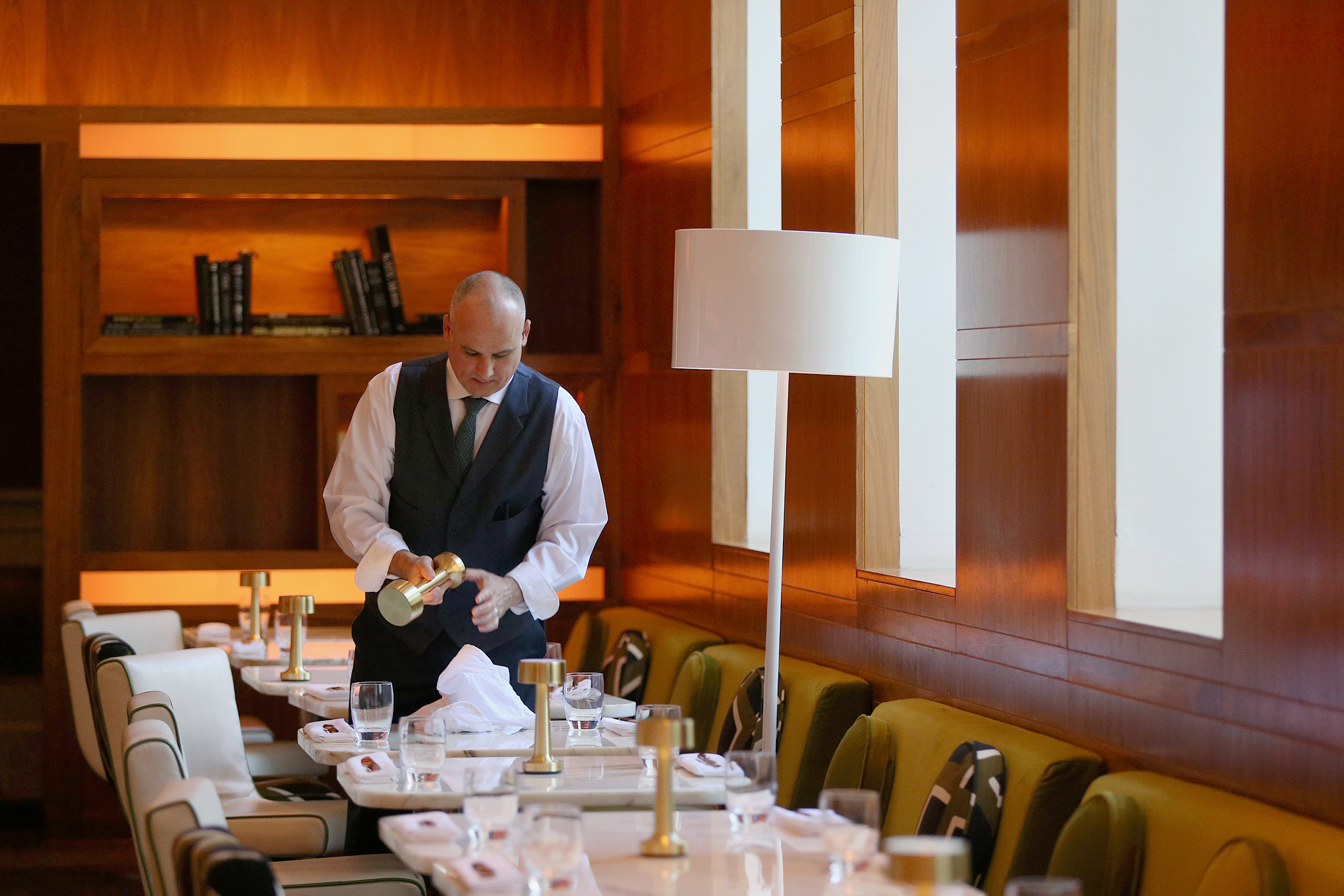
    Longtime server Matthew Penn prepares for dinner service at Barclay Prime, Stephen Starr’s steakhouse, where a table can go for upwards of $221 on Appointment Trader.

    When Shulman and Kemp opened Pine Street Grill last month, they designated half the nightly seats for walk-ins, in part to keep it a neighborhood restaurant. “We were especially surprised to see Pine Street listed for such a hefty price since it’s by far our most casual restaurant,” the couple wrote in a statement. “Oftentimes a dinner for two at Pine Street is less than the reservation cost you shared.”

    Rachel Lorn said she feels “powerless” against platforms like Appointment Trader. She often finds out after the fact when a reservation has been resold. She also tries to hide her suspicion when a guest shows up and struggles to recall the name a table is under.

    “What am I going to do in that moment?” she asked, exasperated. “Accuse them?”

    Why exactly is reservation scalping bad?

    Chief among the concerns reservation scalping has raised in the restaurant industry: It overinflates the demand for a restaurant.

    Often, scalpers will sit on hundreds of reservations that go unused, leading to no-shows that can hurt a restaurant’s bottom line and lead to less tips for servers. At COQODAQ, an upscale fried chicken joint in New York that’s popular on Appointment Trader, the no-show rate more than tripled after the website took off, Fox Business reported.

    Fileccia said it’s hard for some establishments to make that business back.

    Chefs Amanda Shulman and Alex Kemp at Pine Street Grill, another Philly restaurant that has appeared on Appointment Trader.

    “The types of restaurants that have reservations being sold are not restaurants that are going to get walk-ins to refill those seats,” he said. “These are places that people know they need a reservation for.”

    Frey, who founded Appointment Trader in 2021 after he struggled to get an appointment at the DMV, has pushed back against that narrative repeatedly in interviews. He argues that the site has gone to great lengths to tamp down on no-shows by penalizing reservation sellers for a low “sell-through rate.” If less than 50% of an account’s reservations go unsold, he has said, those accounts can no longer upload new reservations; if that rate dips below 25%, those accounts are banned altogether. (Between 2023 and 2024, Frey reported Appointment Trader did $6 million in reservation sales.)

    It’s unclear if reservation scalping will find a foothold in Philly. But at Mawn, at least, it’s deeply unwelcome.

    Rachel Lorn said the practice reminds her “of when everyone went and bought up all the toilet paper during COVID. There was nothing left for anyone else,” she said. “It boils down to a human decency thing.”

    Correction: An earlier version of this article stated City Council’s unanimously passed bill banning reservation scalping had yet to be approved by Mayor Cherelle L. Parker. Mayor Parker signed the bill into law on Friday, Jan. 9.

  • We debated the best ways to snuff out bad SEPTA etiquette. The best advice came from you.

    We debated the best ways to snuff out bad SEPTA etiquette. The best advice came from you.

    New year, same old SEPTA dilemma: What to do when someone’s bad public transit etiquette gets in the way of your commute?

    Last month, my colleague (and fellow SEPTA superuser) Henry Savage and I debated if it’s worth it to speak up when someone is blaring music, vaping, or puff, puff, passing while riding the El for The Inquirer’s regular weekend advice column.

    Our verdicts were split: Henry keeps his head down for fear of becoming a subway Karen or worse, and my solutions-oriented approach of offering up a pair of wire headphones yielded less-than-stellar results. (A high schooler laughed at me.)

    You, dear readers, also had a lot say: We received dozens of impassioned takes from current and former SEPTA riders about how to manage subpar public transit manners. Frankly, most of your advice was better than anything we had to offer.

    The responses speak to just how ubiquitous bad SEPTA interactions are: Everyone, it seems, has a story about the time someone loudly gossiped on speakerphone all the way from Girard Ave. to 30th Street Station, or the time someone refused to stop smoking on a crowded train.

    The sum total of these anecdotes played a small yet crucial role in SEPTA’s terrible, horrible, no good, very bad 2025, when it took months to patch a $213 million funding deficit and prevent sweeping service cuts. The transit agency has yet to recapture its pre-pandemic ridership, which some attribute to a mixture of chronic lateness and bad manners that can make taking public transportation feel like a chore you’d rather opt out of.

    “Frankly, I have chosen biking and buses to avoid the El for these specific reasons,” wrote Rachel Howe, 48, who has lived in South Philly since 2013. “But my older children have to take the [train] to and from school and I especially worry about smoking and vaping becoming normalized to them when they see it on the regular at 8 a.m.”

    Howe’s 13-year-old said he “sometimes has to hold his breath” for his entire ride to school because of smokers, though he finds the people who blast music to be the worse offenders because “it’s so in your face.” Speaking up, he said, feels like a non-option. What if it starts a fight?

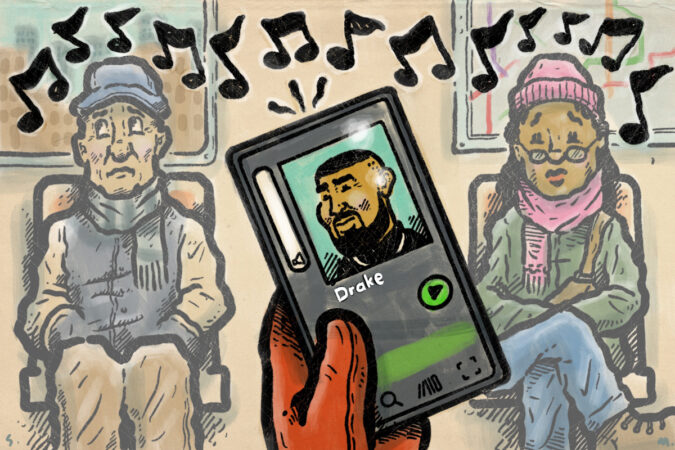
    And yet for many like myself, riding SEPTA is an inevitability. We have to get from point A to point B somehow, even if it means sitting through a medley of Drake hits or a cloud of smoke, so we need to make the best of it.

    Here’s more advice for how to handle awful SEPTA etiquette, according to eight fellow riders.

    Tip 1: Download SEPTA Transit Watch

    Someone lighting up in the seat next to you? Or getting belligerent with another passenger? There’s an app for that.

    The transportation authority launched the SEPTA Transit Watch app in 2017 as a means for riders to text anonymous tips to transit police over suspicious activity, harassment, and quality of life issues like smoking. Depending on the nature of the incident report, an officer may be dispatched to handle the situation at the next stop.

    According to our readers, the app works — at least when it comes to pawning conflict off on someone who is trained to handle it.

    “I love the SEPTA Transit Watch app. You can report loud music, smoking, substance abuse, etc. on it and somebody will respond ASAP to help take care of the situation,” wrote in Tyler Johnson, a current Fishtowner who has lived in Philly for 19 years. Johnson has only used the app twice to report situations that involved substance use, he wrote over email. Both times, he said, he got “immediate assistance.”

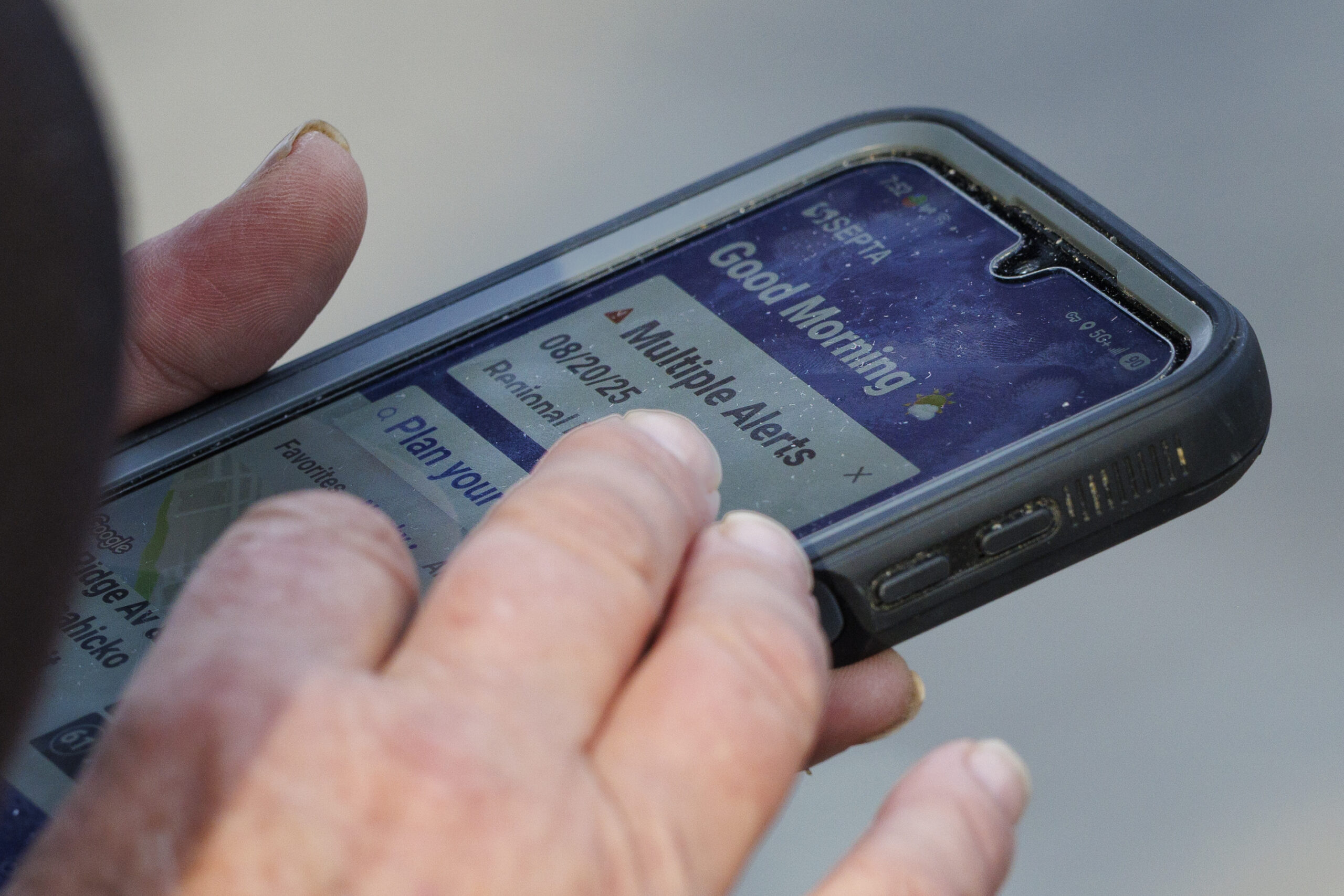
    SEPTA riders can send anonymous tips to transit police via the “Help” tab on SEPTA’s standard app or the separate SEPTA Transit Watch app.

    29-year-old SEPTA rider Danny Buckwalter said she uses the app regularly. “Sometimes, they’ll actually hold up the train so the engineer or an officer can tell the person to stop,” she wrote.

    SEPTA Transit Watch is free and available in the Google Play and Apple app stores, though the same reporting mechanism is also available under the “Help” tab in SEPTA’s standard app. Those without smartphones can text a tip directly to SEPTA police at 215-234-1911.

    Tip 2: Watch out for the conductor

    For some, dispatching the police via an anonymous app or tip-line is a good solution. For others, it might feel like an overreaction depending on the situation.

    Should you alert the police over loud music? Or text them to complain about a group of people who decided to DJ on the BSL?

    @magglezzz

    Shout to @Rosie Simmons my partner in crime!!! #fundsepta #philly #phillydjs #jerseyclub

    ♬ original sound – Magglezzz

    The calculus is up to you. But for situations where you’re not bothered enough to contact the police but are bothered enough to pull out your hair, our readers recommended some alternatives we wish we thought of.

    “I carry earplugs with me wherever I go,” wrote in Melinda Williams, 55, of Oreland. They come particularly in handy when Williams takes the BSL to and from Eagles games, when the noise of fans blasting hype music triggers her migraines. Wireless earbuds, of course, also do the trick (except for when they’re dead).

    Mary Falkowski, 72, recommends riding in the first car, when you can, on El and Regional Rail. “I find there’s less loud music and disruptive riders when you ride close to the driver.”

    Tip 3: Try a little tenderness — or don’t

    Sometimes, a gentle nudge really is all it takes. You’ll never know if the only thing sitting between you and a peaceful commute is the courage to tell someone to cut it out.

    Reader Gary Bolton keeps it direct, but nonconfrontational. “I’m a fan of ‘not everyone wants to hear your music, you know,’” Bolton wrote. “These types of disturbances should never be tossed off as consequences of living in the city. They are violations of basic civic consideration.”

    And sometimes even the people meant to do the enforcing could use an etiquette reminder. Robin Salaman, 66, of Center City, was at 30th Street Station recently waiting for the train when a SEPTA employee was playing videos on his phone “loud enough that I couldn’t hear the train announcements.”

    Passengers wait for a southbound Broad Street Line train at City Hall Station.

    “I got up my nerve and very nicely asked if he could lower the volume a little — and he did! He turned them off completely soon after,” Salaman wrote. Sometimes, if the vibe and the situation (and the moon and stars) are right, [politeness] works.”

    You do have to read the room first. Milton Trachtenburg, an 86-year-old Philly lifer, has a formula when he decided to speak up. “If I’m on the El and there are 50 students and me, and one group of students is responsible for the noise, I suck it up and let it go,” he said. “If it’s one rowdy person among 50 [passengers], I say something … I wouldn’t make an epic production of it. I’m a peacemaker.”

    Of course, you can also just try what this anonymous Inquirer tipster does: ‘I sit as close to the person [as possible] and blare bagpipes on my phone.”

    If it works, it works.

    Tip 4: Just enjoy the ride

    Sometimes, though, it’s about the journey and not getting to the destination. For every unwanted and ill-timed subway showtime I witnessed while growing up in and around New York City, there was one that put a smile on my face when I really needed it. And for every awful song blasted from a speaker on a train, I hear one that sneaks onto my playlists.

    A little whimsy is good for the commute. Just take it from Johnson, one of the SEPTA Watch enthusiasts.

    Visitors tour a SEPTA bus decorated for a Care Bears party as part of the transit authority’s 2025 Festibus competition. Who says public transit can’t be fun?

    “This morning, a man was blasting Celine Dion at 6 a.m. on my commute on the El and I didn’t hate it as I usually do,” he wrote in late December. “It felt so out of place during my early morning commute that I just had to laugh and enjoy the moment.

    That’s one of my favorite pieces to commuting on public transit, it’s always an adventure.”