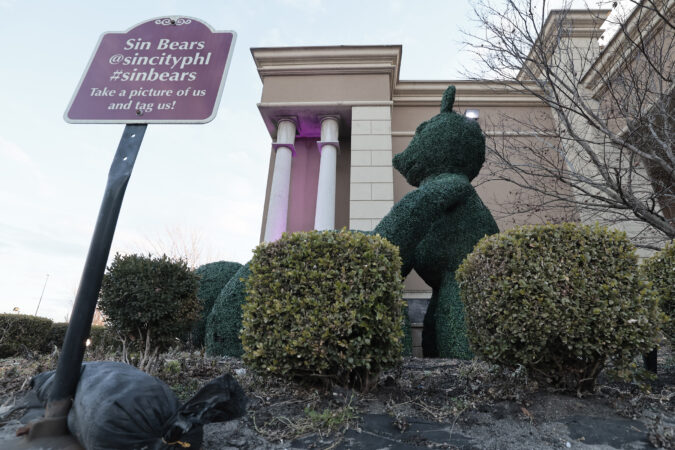
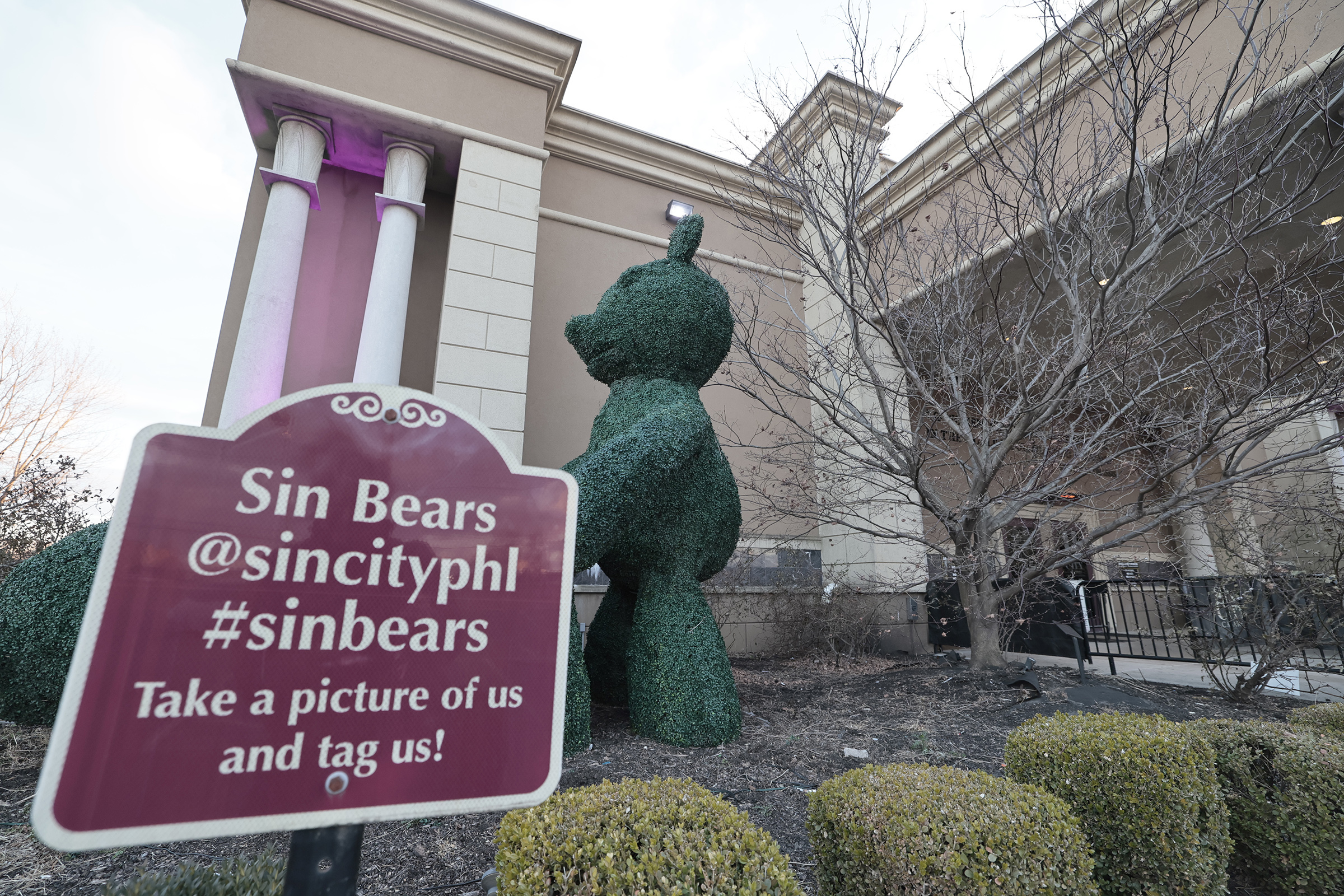
That’s what Gloucester County resident Gabby Weiland recalled thinking after she made a wrong turn while Doordashing in Southwest Philly earlier this month. Instead of finding a customer waiting on the curb for her lunch, Weiland found herself outside of Sin City Cabaret Nightclub at 6130 Passyunk Avenue. One 8-foot-tall topiary Care Bear bending over another greeted her.
“Got lost in Philly and pulled over to see where I was … looked up and —,” Weiland captioned a TikTok that pans from the fourth-base bears back to her face, which appears equal parts mortified and confused. The 12-second clip has racked up more than 1.4 million views — and its fair share of jokes.
“What in the bear necessities?” commented one TikTok user. “They…they’re…playing leapfrog…RIGHT???” wrote another. Others assured Weiland not to worry because the bears are clearly in a committed situationship.
Many, however, knew where the bears were. “Oh, you found Sin City,” read a comment that’s been liked more than 8,600 times. According to strip club owner Gus Drakopoulos, that means the topiaries are working.
“If someone does a double take and posts a video or selfie, then the art did it’s job,” said Drakopoulos, 49, who had the topiaries installed in 2021. “I want images of those bears to be synonymous with the brand Sin City.”
Drakopoulos opened the original Sin City in the Mott Haven section of the Bronx in 2002at age of 25 after a securities fraud conviction sidelined his career as a stockbroker. Almost immediately, the club earned a star-studded reputation: Rapper Cardi B was discovered while performing there, and celebs ranging from Mike Tyson to Philly’s own Meek Mill were regulars.
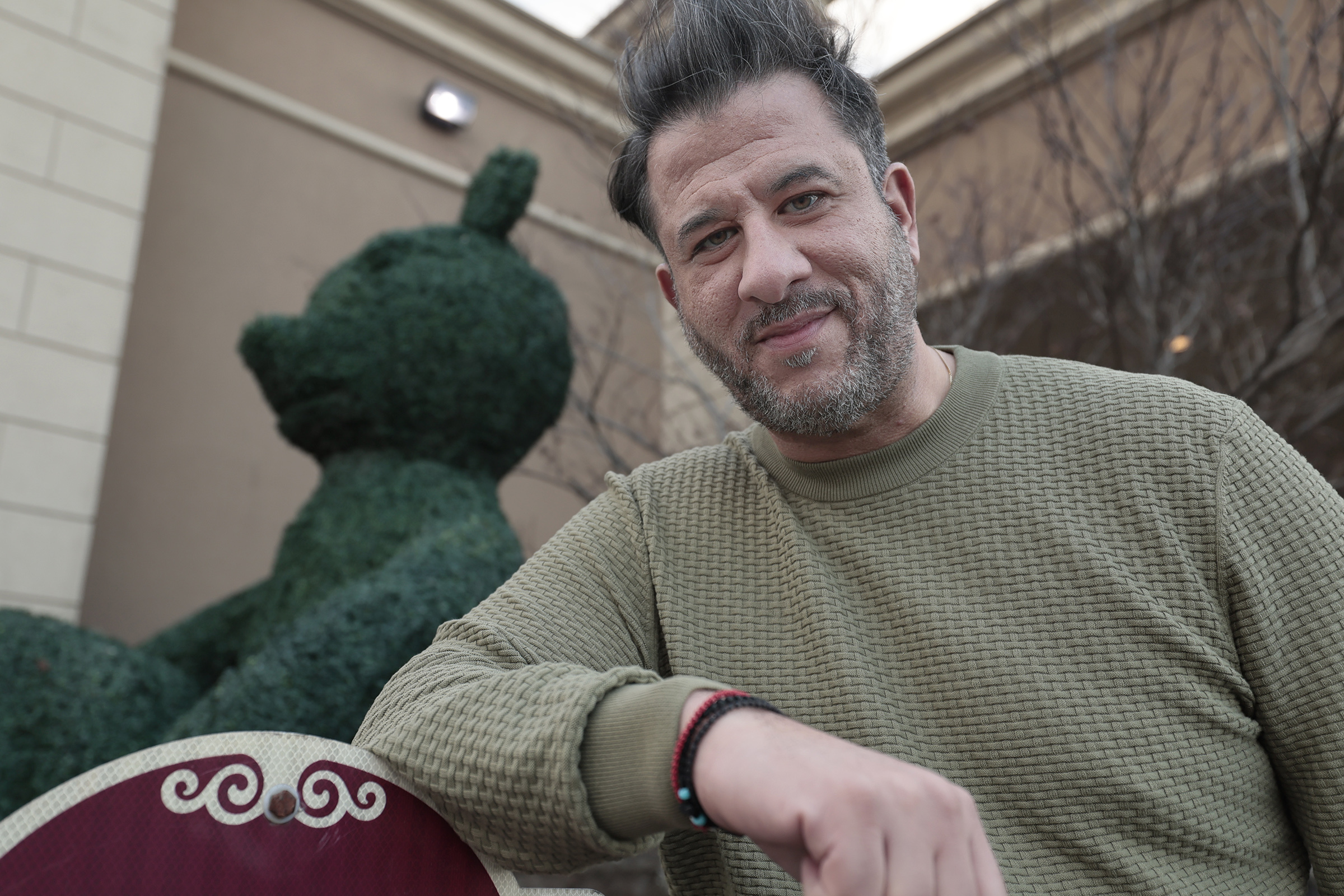
Sin City owner Gus Drakopoulos poses in front of the 8-foot-tall bear topiaries that sit in front of his nightclub. The bears cost $18,000, Drakopoulos said.
Drakopoulos was forced to close the OG Sin City for good in 2018 after the club lost its liquor license. He relocated it to Philly in 2020 just before the COVID-19 pandemic. The bears came a year later in November 2021, Drakopoulos said, as a way to signal to patrons that Sin City is a more artful, avant-garde gentleman’s club experience.
“The bears are playful and open for interpretation,” he said. “You can say they’re playing football. Go Birds.”
“I fell in love with the idea,” Drakopoulos said. “The bears look so innocent and at the same time, depending on the eye of the beholder, so not.”
Both sets of bears are designed by celebrity topiary artist Joe Kyte, whose 2-acre topiary garden in Tellico Plains, Tenn., has churned out larger-than-life dragons, Formula 1 cars, and semi-realistic bottles of booze for clients ranging from Legoland and Ferrari to Absolut Vodka since 1992.
Kyte got his start working as a subcontractor for Disney parks in the 1980s, he previously told The Wall Street Journal, fashioning hippos and various versions of Mickey Mouse out of materials ranging from ivy to moss. He told The Inquirer that his clients have only gotten raunchier. In 2020, Kyte was commissioned by a Dutch adult magazine to create a photorealistic vagina out of hydrangeas, rosemary, and mullein leaf for a launch party in Holland.
Drakopoulos, Kyte said, was the first strip club owner to ever contact him. It was an immediate yes, he said.
“This is the first time a strip club has paid me. Normally it’s the other way around,” Kyte, 67, joked over the phone.
Drakopoulos paid $18,000 for two bears, which Kyte took two weeks to construct by arranging weather-resistant artificial boxwood atop custom-made metal frames. To finish the job, Kyte and an employee had to drive to 687 miles to Philly to install the bears, at one point getting stuck for hours in standstill traffic on I-81 in Virginia. Bored drivers, Kyte recalled, couldn’t stop taking photos.
“It’s wonderful that the bears are standing the test of time … Wouldn’t you be proud of them?” said Kyte, who is planning another trip to Philly to do maintenance on the Sin City bears later this winter. The sun’s UV rays have bleached parts of the deep-green topiaries.
Another angle of the bear topiaries outside of Sin City Cabaret Nightclub on Passyunk Avenue. “The bears are playful, and open for interpretation,” owner Gus Drakopoulos said.
It’s unclear if the bears have lead to more business for the club, Drakopoulos said, which has a roster of roughly 500 dancers. In 2022, rapper and Super Bowl LIX halftime performer Bad Bunny dropped $50K at Sin City hours before his Made in America performance. It’s not uncommon for some of the Eagles roster to come through, Drakopoulos said, though he declined to name specific players out of respect for their privacy.
Weiland, whose video went viral, was unaware initially that the bears belonged to a strip club. She’s never been to one, though Sin City may wind up being her first.
“Apparently, they have good food,” Weiland said. “And it looked like a very well taken care of place.”
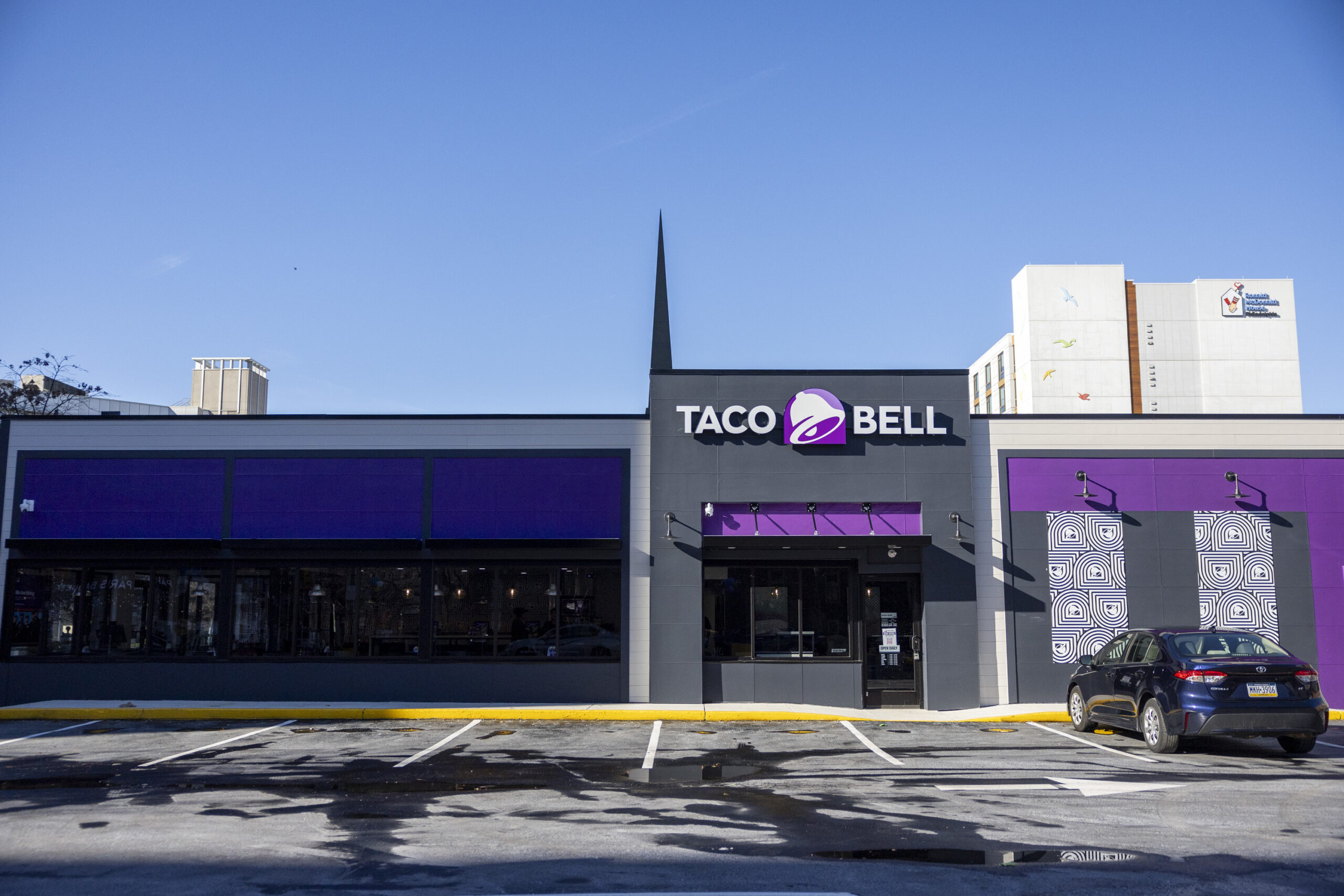
It was a Christmas miracle of the fast food variety: A 24-hour Taco Bell had opened in University City.
The Mexican-ishchain opened its 16th Philly location in late December at 3901 Chestnut St., where it replaced a Boston Market outpost that once owed nearly $220,000 in rent after defaulting on a lease. To hear some Philadelphians tell it, the opening was practically heaven-sent.
The new Taco Bell generated twoseparate posts from different users last month in the 95,000-member r/Philly subreddit. Other restaurants yearn for that kind of word-of-mouth marketing.
“Anyone have any info on the Taco Bell they’re putting on 39th and Chestnut?” asked user 8hivefiend8 on Dec. 17. “I have high hopes that maybe it will open soon because it looks so close to finished.”
Six days later, user rad_rascal posted pictures of the Taco Bell in all of its grand opening glory under the title “New Taco Bell in West Philly!” In the days leading up to the opening, the user wrote, they “would pass it every day and peer in like a buncha [sic] creeps.”
Under both threads, commenters expressed the kind of jubilation normally reserved for, say, rotisserie chicken-eating stunts or Super Bowl parades. “This just made my day,” commented one Taco Bell enthusiast. Others chimed in. “This the best Christmas present yet,” wrote one user. “My new home away from home,” said another.
In a city with no shortage of affordable (and excellent) Mexican food, why do people care so much about a Taco Bell that doesn’t even serve alcohol? And could this Taco Bell possibly live up to Reddit’s expectations?
Is it normal to care this much about a Taco Bell?
Taco Bell is as much a fast food chain as it is a borderline “cult,” according to chef Reuben Asaram, one of Philly’s most notable Taco Bell enthusiasts.
The 34-year-old’s love affair with Taco Bell began after his family emigrated from India to Queens in 1993, the chain quickly becoming a staple for weekend meals out. Taco Bell partially inspired Asaram’s Mexican and pan-Asian pop-up menus, which led the chain to name him one of three chefs allowed to reimagine the iconic Crunchwrap Supreme in 2024. At one point, Asaram was so tight with the staff at the 1037 Chestnut St. Taco Bell that they would turn part of restaurant into a private space for him to take dates.
Philly chef Reuben Asaram was one of three chefs tapped by Taco Bell to revamp the Crunchwrap Supreme. The local Taco Bell enthusiast created a butter chicken version.
True Taco Bell devotees will go out of their way to try a new location, Asaram said, because “they’re obsessed with getting the perfect bite” and need to know if there’s a reliable option nearby in case aDorito Locos Taco emergency hits. Asaram is one of those people.
“If I have a craving and know I’m going to be in a random place, I have to know where the [nearest] good Taco Bell is,” said Asaram while sipping a Baja Blast on Zoom. Asaram’s preferred locations are the two closest to his house in Cherry Hill. He must visit the University City outpost before it can be added to his reserves.
Perhaps the University City Taco Bell is a representation of what could’ve been, four walls for Philly fans to place their shattered hopes and dreams. Or maybe people are just happy something replaced the Boston Market.
“That Boston Market was profoundly cursed,” one Philadelphian wrote on Reddit. Others claimed they got food poisoning there.
“Everyone I know that ever went into the Boston Market when it was open has a horror tale about it!” wrote user rad_rascal, who broke the Taco Bell news.
window.addEventListener(“message”,function(a){if(void 0!==a.data[“datawrapper-height”]){var e=document.querySelectorAll(“iframe”);for(var t in a.data[“datawrapper-height”])for(var r,i=0;r=e[i];i++)if(r.contentWindow===a.source){var d=a.data[“datawrapper-height”][t]+”px”;r.style.height=d}}});
What are the vibes?
The University City Taco Bell has all the makings of what some in the Taco Bell-loving community refer to as a “Taj-Mah-Bell,” or a higher-end location.
This Taco Bell location is large, with a mix of booths, standard tables, and counter seating that isn’t sticky: When I visited on a Wednesday afternoon in early January, employees were cleaning tables within minutes of customers leaving. There were ample napkins (necessary for taco spillage), and the soda machine dumped out pellet ice, perfect for fountain drinks. It made my medium-size Baja Blast taste extra electric.
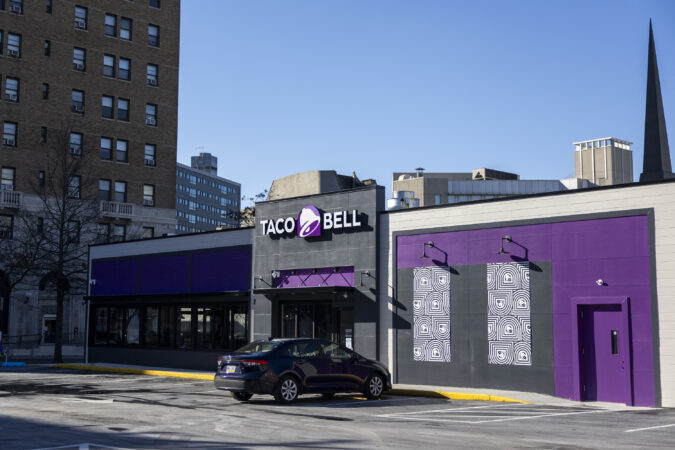
The outside of University City’s new Taco Bell, which is open 24-hours, seven days a week.
The only downside: Humans don’t take your order. Customers use one of several digital kiosks spread across the store. That’s a bummer for Asaram.
“What makes a good Taco Bell franchise is mainly how the workers treat their guests,” he said.
How’s the food?
Not Taj-Mah-Bell quality, I’ll tell you that much.
I ordered a beef Crunchwrap Supreme, beef Doritos Locos Taco, cinnamon twists, and the all-important beef chalupa. The latter, Asaram said, is key for understanding the quality of a Taco Bell.
“You want to see all the components of your Taco Bell [at once]. You want to see if the fryer oil is fresh, if their vegetables and other garnishes are good,” he said.
A textbook chalupa is golden brown, Asaram said, with firm tomatoes and a layer of ground beef on the bottom that’s roughly an inch thick. If the deep-fried flatbread shell has a sheen — or worse, approaches a russet shade of brown — it means the fryer is dirty.
“That’s when you know the Taco Bell [location] doesn’t give a s— and you want to dip out,” said Asaram.
A tray of menu items from University City’s new Taco Bell, which includes a Crunchwrap Supreme, Doritos Locos Taco, Chalupa, and cinnamon twists.
Despite receiving my chalupa in less than five minutes, it was cold. The fried shell was inexplicably both light brown and vaguely sparkly. Who knows what that means for the fryer oil.
They also skimped on the meat, which was not evenly distributed across the bottom. The Crunchwrap and taco had the same issues: cold and limp.
Perhaps this was my fault. I ordered close to 2 p.m. The prime time to visit a Taco Bell is between 11 a.m. and 12:30 p.m., Asaram said, when the morning and afternoon shifts switch over.
At that time, Taco Bell is “like an omakase,” he explained. “They just make everything in front of you and hand it to you to eat.
Flip a reservation and find out — or at least that’s how the warning goes at South Philly’s acclaimed Cambodian restaurant Mawn.
Last week, the restaurant’s owners, Phila and Rachel Lorn, took to Mawn’s Instagram to lambaste a woman attempting to sell coveted dinner reservations on the “Buy, Sell, Trade” section of Philaqueens, a private Facebook group with 75,000 members.
“Selling a Mawn dinner reservation for this month and February if anyone is interested,” read the since-deleted post, which did not specify a price. Commenters were split on the unorthodox offering. Three people immediately replied to say they were interested, while another didn’t mince words.
“Selling a free reservation?” she wrote. “Horrible.”
The Lorns agree.
“Eww. Gross … Don’t play with us,” they wrote, sharing a screenshot of the Facebook post that included the seller’s name. “All 11 of this person’s reservations are canceled.”
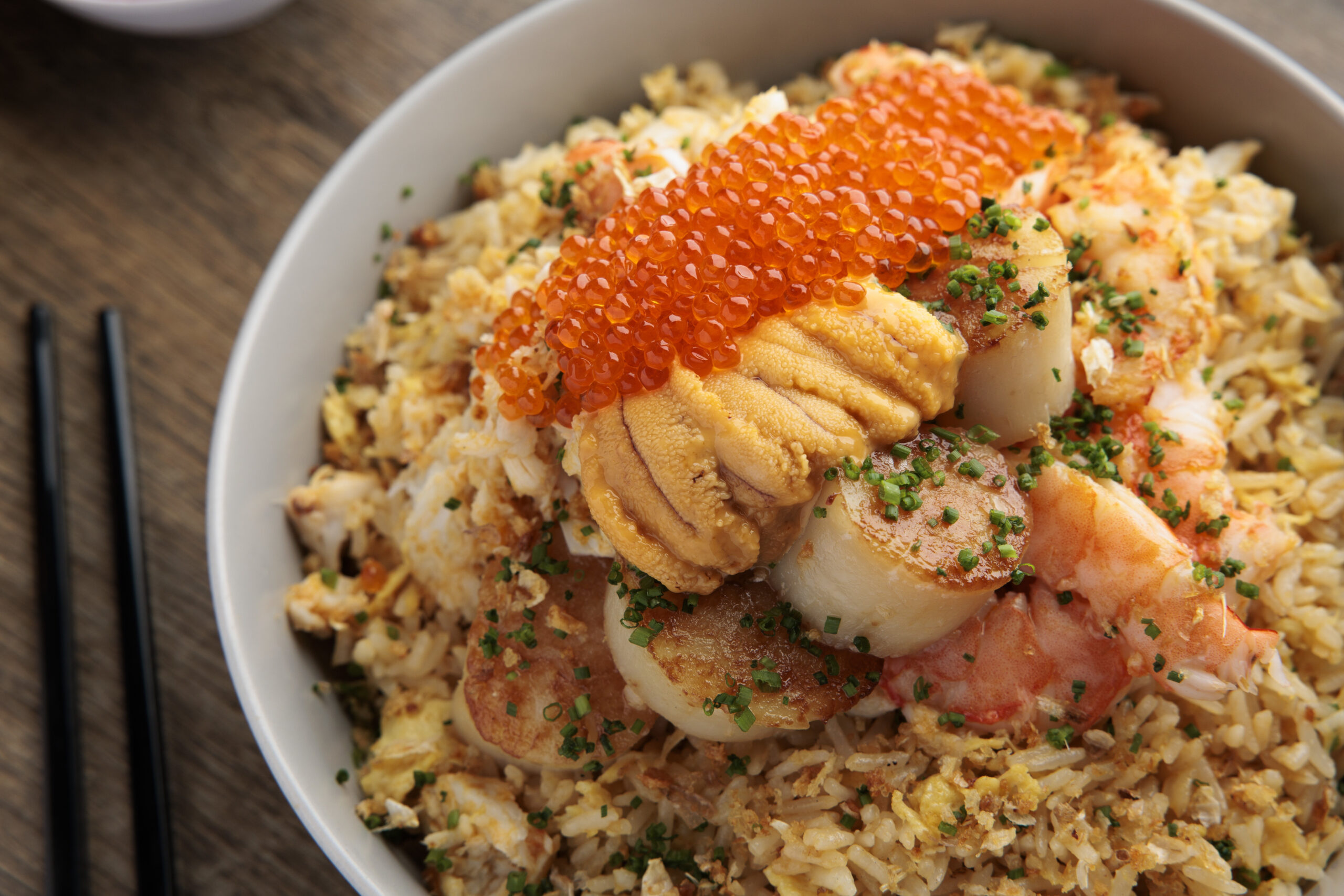
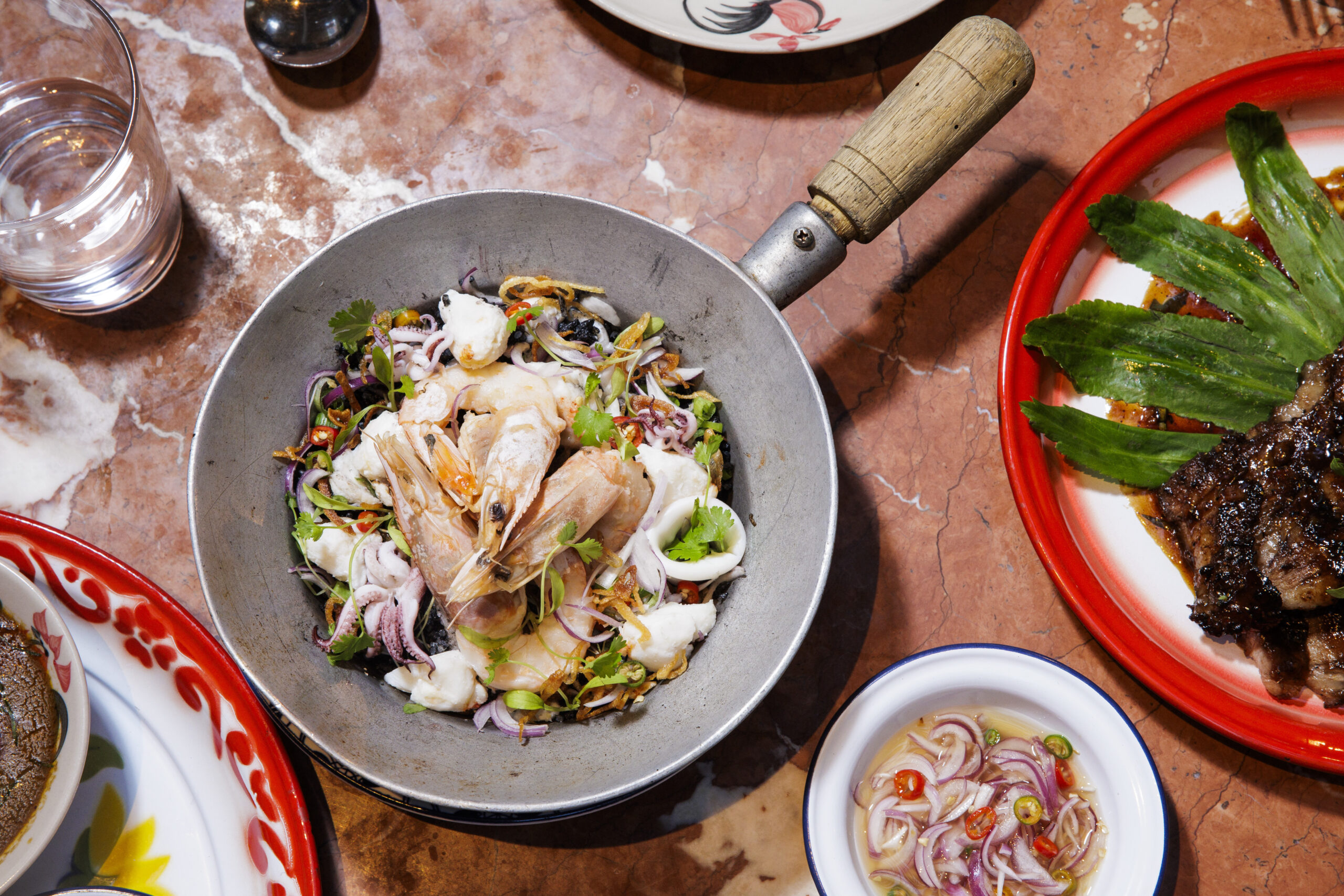
The “all star seafood rice” at Mawn, an acclaimed South Philly restaurant targeted by reservation scalpers.
The interaction was a glimpse into the burgeoning underbelly of restaurant reservation scalping, in which enterprising individuals can make a lucrative side hustle using bots and other means to snap up free reservations at in-demand restaurants, then selling them at a premium.
The reservation black market is more established in New York City, Chicago, and Miami, where tables at celebrity-favorite Italian restaurant Carbone or Ralph Lauren’s notoriously exclusive Polo Bar can fetch between $350 and $1,700 on the third-party website Appointment Trader. One Brown University student told the New Yorker in 2024 that he made $70,000 just by using fake phone numbers and aliases to book reservations to flip on Appointment Trader. The website itself claims that sellers average $172 per reservation.
The practice has spread to smaller cities, too: During Super Bowl LIX weekend in New Orleans, a once-free reservation for a table at the French Quarter restaurant Antoine’s went for $2,138.
As reservation scalping becomes more widespread, so has legislation attempting to guard against it. Philadelphia City Council unanimously passed a law in Decemberthat would prohibitthird-party websites from selling reservations without a restaurant’s consent, fining platforms such as Appointment Trader $1,000 per violation. The bill was signed last week by Mayor Cherelle L. Parker, who joined leaders in New York, Louisiana, and Illinois in banning the practice.
Still, these bills do not prevent savvy foodies from making under-the-table reservation deals in, say, a Facebook group.
‘Nobody should be making money off a free reservation’
Rachel Lorn said that she and husband Phila found out about the offending Facebook post from several back-to-back direct messages tipping her off.
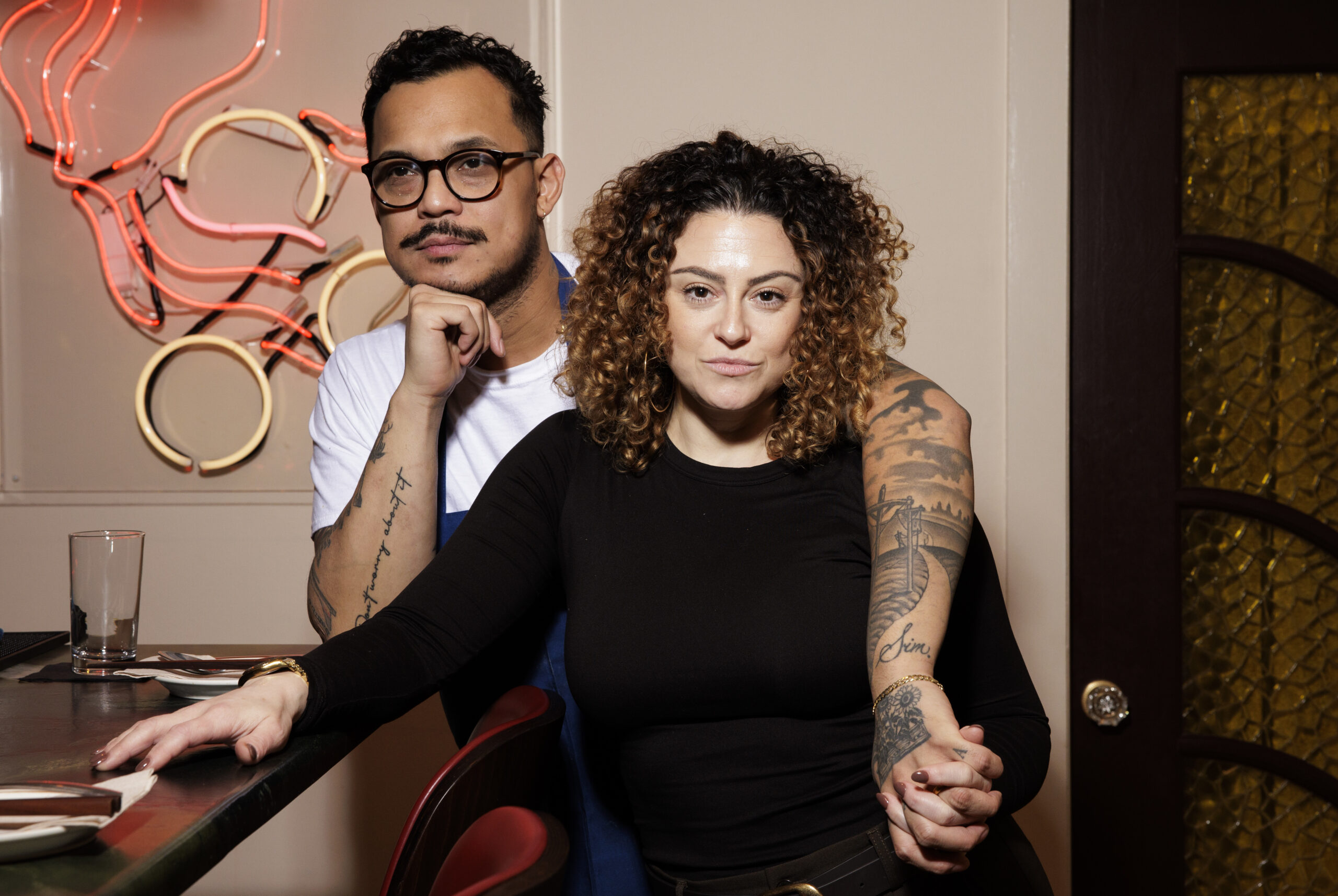
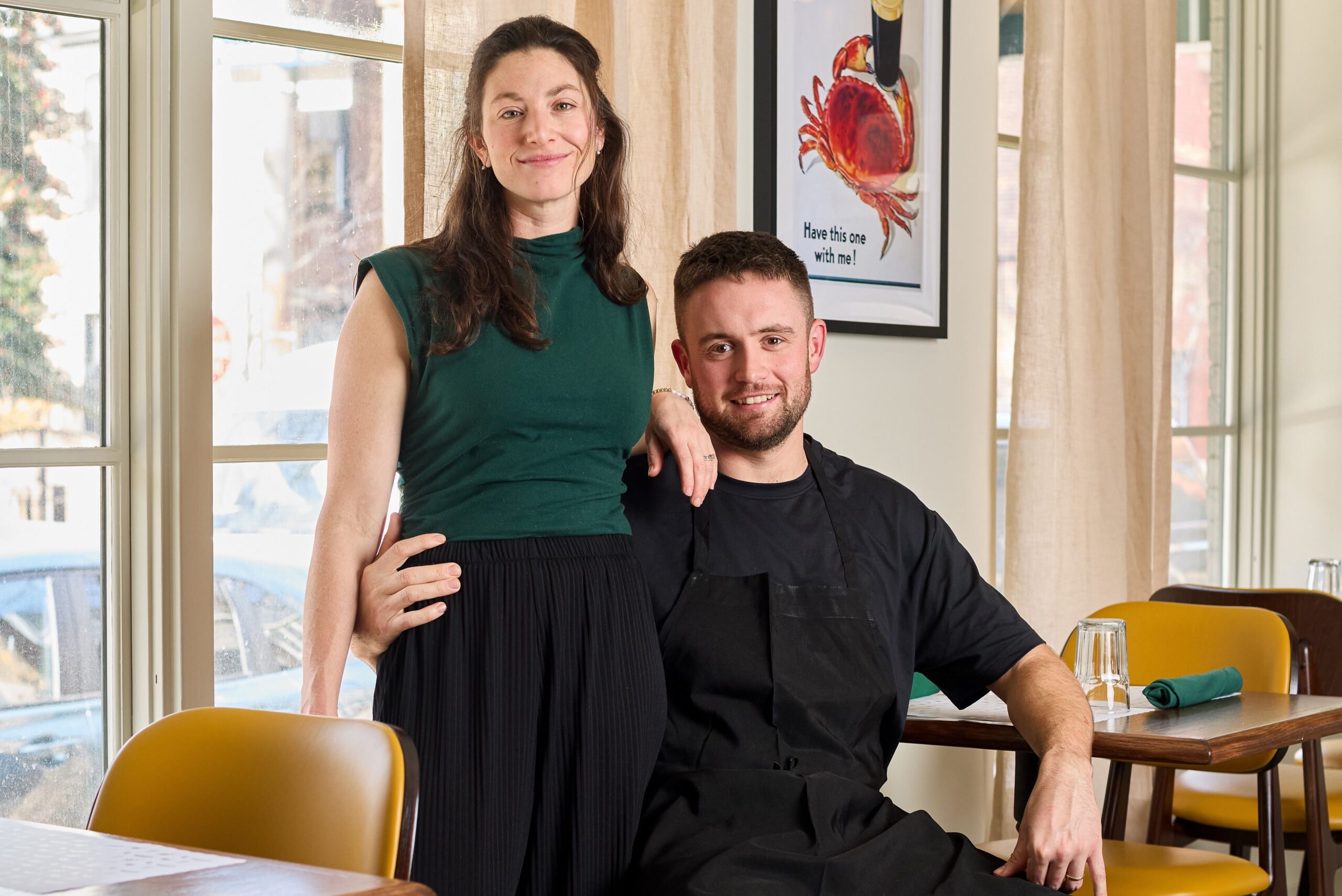
Mawn co-owners Phila (left) and Rachel Lorn, who say reservation scalpers are unwelcome at their James Beard-award winning restaurant.
“It’s disrespectful. Nobody should be making money off a free reservation. … We felt like we had a responsibility to [say to] all the people who can’t get a reservation, ‘This is not OK,’” said Rachel Lorn, who oversees front-of-house operations for Mawn, including the restaurant’s packed guest book.
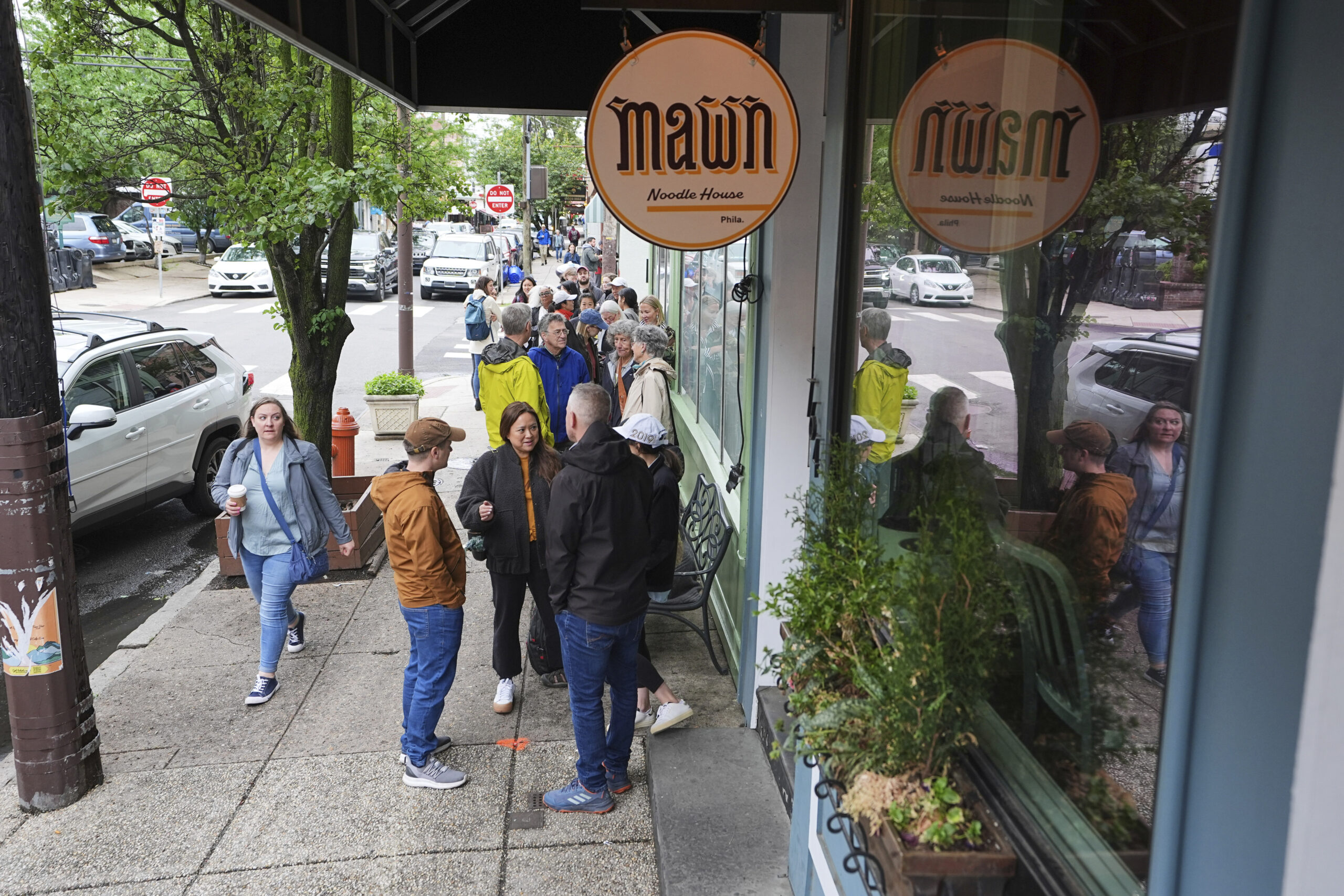
Customers wait in line for Mawn to open for lunch.
Mawn draws lines that wrap around the block for its first come, first served lunch service, but dinner reservations are the hotter commodity. Rachel Lorn uses OpenTable to drop reservations at noon on the first of every month, making roughly 650 total tables available at once. Customers are allowed to book multiple reservations, Lorn said, and many regulars manage to do so. It’s a pain point for would-be diners who miss out, whom Lorn said she hears from nonstop.
“I watch [the reservation drops] from our computer. They sell out in seconds,” she said. “We never imagined that this would be the response to our restaurant. … It’s amazing, but it’s also a really tough position to be in. There isn’t much I can do with our small restaurant and how many seats we have.”
Upon learning of the attempted black market deal, Rachel Lorn checked OpenTable and found that the Philaqueens poster had dined at Mawn six times prior and had 11 dinner reservations booked on different days throughout January and February. Lorn canceled them all immediately.
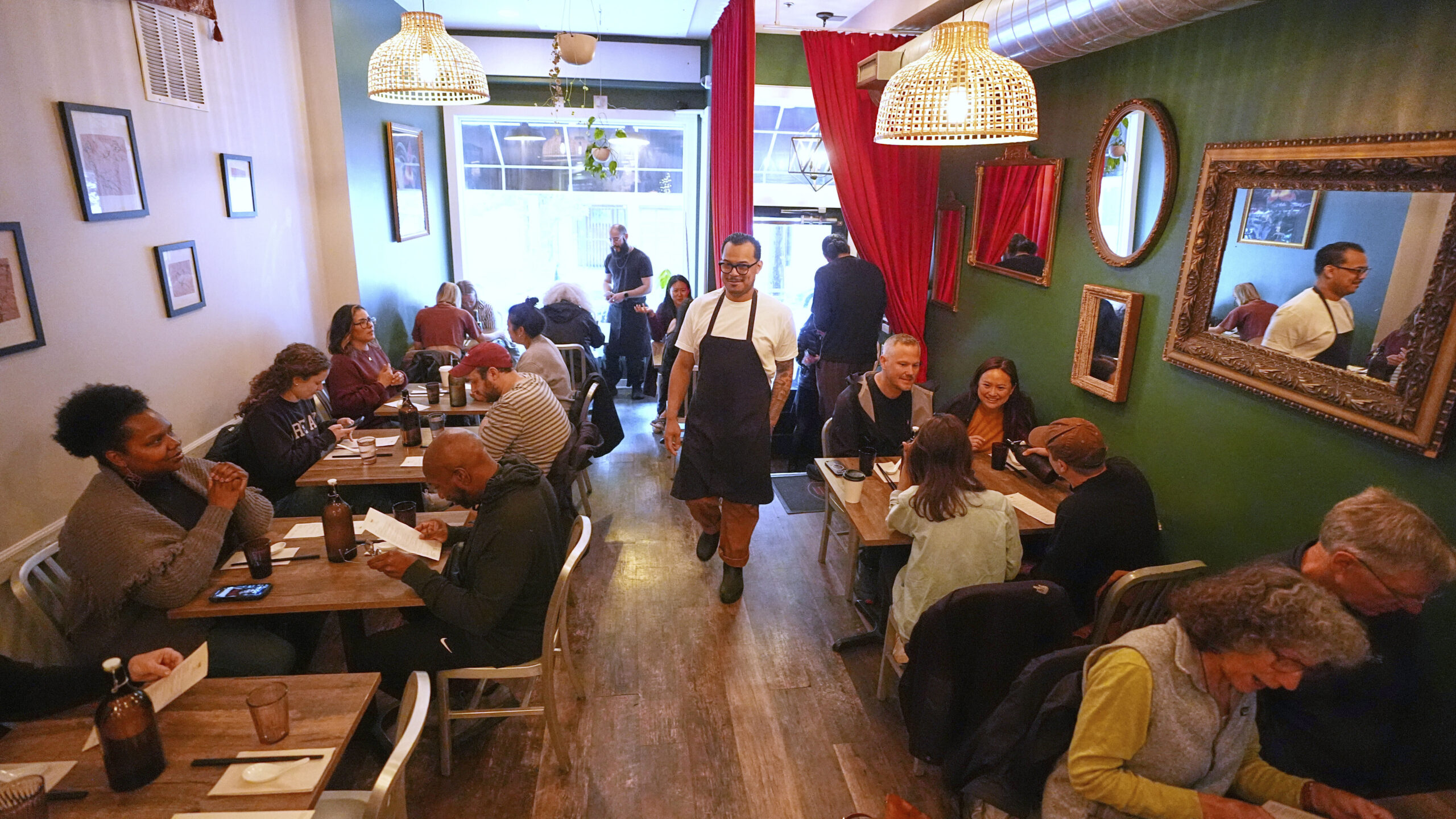
Mawn’s dining room, which has only 32 seats. The restaurant is first come, first served for lunch, but dinner reservations are snapped up in seconds.
She also reached out to the seller directly, who Rachel Lorn said didn’t respond but did manage to change the name and email associated with her OpenTable account. The Lorns said they would ban the seller, if only they could figure out a way to do so; OpenTable currently does not allow for restaurants to prevent specific users from making reservations.
“It felt like she was trying to trick us further,” Rachel Lorn said. “She shouldn’t be coming to our restaurant.”
The reservation seller declined to comment to The Inquirer, citing privacy concerns. She said only that she “meant no harm and there was no ill intent,” and declined to answer questions about why she was selling the reservations. The Inquirer is not releasing her name since the attempted sale happened in a private Facebook community.
For the most part, the Mawn incident is an anomaly in Philly. Reservation scalping has yet to take off here, according to Ben Fileccia, the senior vice president of strategy for the Pennsylvania Restaurant and Lodging Association, which worked with at-large Councilmember Isaiah Thomas to draft Philly’s anti-reservation scalping bill.
Fileccia said that this was the first time he had ever seen someone try to sell a reservation on Facebook, and that he had only seen a smattering of reservations for Philly restaurants on third-party platforms before working on the bill. Free trades are more common, he said, likely because cost is more top of mind for diners in Philly, a city with large wealth inequality.
“When you have an audience of folks to which prices are no object, [reservation scalping] becomes more of a problem,” Fileccia said. “Whereas when I discuss this issue and ask people [in Philly], ‘Would you pay $500 for reservation at 7:30 p.m. at X restaurant?’ … They usually laugh and roll their eyes.”
The gaeng pae, khao mun klone, and moo yaang prik at Kalaya, one Philly restaurant featured on reservation resale platform Appointment Trader.
That doesn’t mean scalping doesn’t happen here.
A recent search on Appointment Trader foundprime-time Saturday night reservations at Kalaya averaging $113 and 9 p.m. reservations for any day at raw bar Tesiny for between $107 and $360. A 7 p.m. Saturday table for six at Stephen Starr’s Barclay Prime steakhouse, or a reservation for two for literally any day or time at Pine Street Grill, Amanda Shulman and Alex Kemp’s new spot? That will cost at least $241 or $124, respectively, on Appointment Trader.
Until recently, Appointment Trader functioned similarly to StubHub, where buyers could purchase reservations that scalpers had already acquired. Now, founder Jonas Frey is shifting the model to a concierge system: Buyers request a certain reservation and an algorithm spits out an average price based on demand. Once a bid is placed, Appointment Trader matches you with a seller whose job it is to secure the reservation by any means possible. There’s a 100% refund guarantee if the request goes unfulfilled.
Representatives for the restaurants The Inquirer recently found on Appointment Trader were initially unaware they were listed on the platform.
“We do not have experience with guests utilizing this platform,” said Kalaya chef and co-owner Chutatip “Nok” Suntaranon. “All reservations for Kalaya run through Resy.”
Tesiny owner Lauren Biederman called the discovery “concerning.”
“There isn’t too much we can do in terms of figuring out if the reservation is scalped really, though,” she said, noting that Tesiny requires customers provide a credit cardupon booking and charges $25 per person for late cancellations and no-shows.
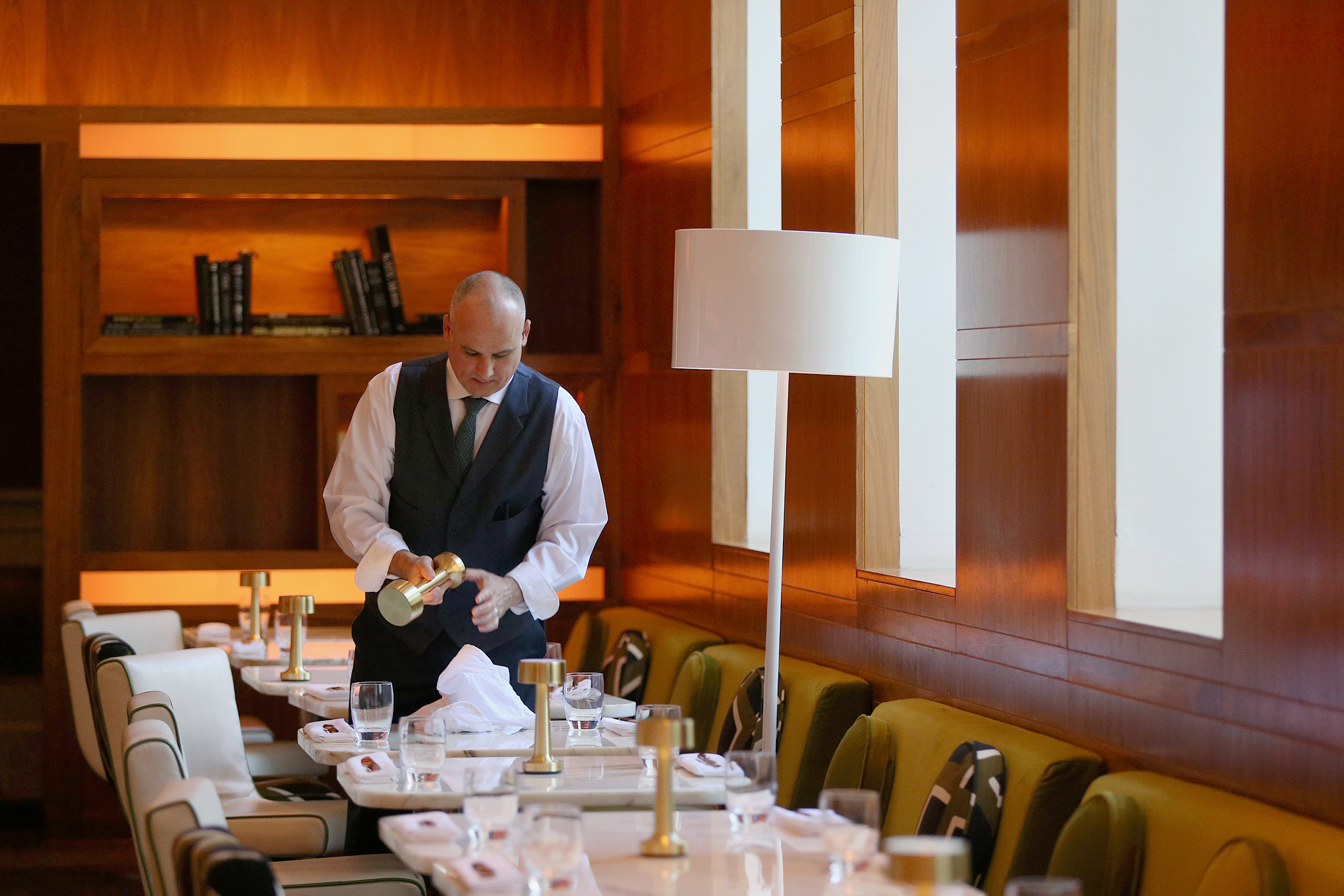
Longtime server Matthew Penn prepares for dinner service at Barclay Prime, Stephen Starr’s steakhouse, where a table can go for upwards of $221 on Appointment Trader.
When Shulman and Kemp opened Pine Street Grill last month, they designated half the nightly seats for walk-ins, in part to keep it a neighborhood restaurant.“We were especially surprised to see Pine Street listed for such a hefty price since it’s by far our most casual restaurant,” the couplewrote in a statement. “Oftentimes a dinner for two at Pine Street is less than the reservation cost you shared.”
Rachel Lorn said she feels “powerless” againstplatforms like Appointment Trader. She often finds out after the fact when a reservation has been resold. She also tries to hide her suspicion when a guest shows up and struggles to recall the name a table is under.
“What am I going to do in that moment?” she asked, exasperated. “Accuse them?”
Chief among the concerns reservation scalping has raised in the restaurant industry: It overinflates the demand for a restaurant.
Often, scalpers will sit on hundreds of reservations that go unused, leading to no-shows that can hurt a restaurant’s bottom line and lead to less tips for servers. At COQODAQ, an upscale fried chicken joint in New York that’s popular on Appointment Trader, the no-show rate more than tripled after the website took off, Fox Business reported.
Fileccia said it’s hard for some establishments to make that business back.
Chefs Amanda Shulman and Alex Kemp at Pine Street Grill, another Philly restaurant that has appeared on Appointment Trader.
“The types of restaurants that have reservations being sold are not restaurants that are going to get walk-ins to refill those seats,” he said. “These are places that people know they need a reservation for.”
Frey, who founded Appointment Trader in 2021 after he struggled to get an appointment at the DMV,has pushed back against that narrative repeatedly in interviews. He argues that the site has gone to great lengths to tamp down on no-shows by penalizing reservation sellers for a low “sell-through rate.” If less than 50% of an account’s reservations go unsold, he has said, those accounts can no longer upload new reservations; if that rate dips below 25%, those accounts are banned altogether. (Between 2023 and 2024, Frey reported Appointment Trader did $6 million in reservation sales.)
It’s unclear if reservation scalping will find a foothold in Philly. But at Mawn, at least, it’s deeply unwelcome.
Rachel Lorn said the practicereminds her “of when everyone went and bought up all the toilet paper during COVID. There was nothing left for anyone else,” she said. “It boils down to a human decency thing.”
Correction: An earlier version of this article stated City Council’s unanimously passed bill banning reservation scalping had yet to be approved by Mayor Cherelle L. Parker. Mayor Parker signed the bill into law on Friday, Jan. 9.
Our verdicts were split: Henry keeps his head down for fear of becoming a subway Karen or worse, and my solutions-oriented approach of offering up a pair of wire headphones yielded less-than-stellar results. (A high schooler laughed at me.)
You, dear readers, also had a lot say: We received dozens of impassioned takes from current and former SEPTA riders about how to manage subpar public transit manners. Frankly, most of your advice was better than anything we had to offer.
The responses speak to just how ubiquitous bad SEPTA interactions are: Everyone, it seems, has a story about the time someone loudly gossiped on speakerphone all the way from Girard Ave. to 30th Street Station, or the time someone refused to stop smoking on a crowded train.
The sum total of these anecdotes played a small yet crucial role in SEPTA’s terrible, horrible, no good, very bad 2025, when it took months to patch a $213 million funding deficit and prevent sweeping service cuts. The transit agency has yet to recapture its pre-pandemic ridership, which some attribute to a mixture of chronic lateness and bad manners that can make taking public transportation feel like a chore you’d rather opt out of.
“Frankly, I have chosen biking and buses to avoid the El for these specific reasons,” wrote Rachel Howe, 48, who has lived in South Philly since 2013. “But my older children have to take the [train] to and from school and I especially worry about smoking and vaping becoming normalized to them when they see it on the regular at 8 a.m.”
got on @septa on my way home and the two guys in front of me were smoking full on cigarettes. they got off and the two dudes who replaced them started playing music off their with the volume up. what an experience!
Howe’s 13-year-old said he “sometimes has to hold his breath” for his entire ride to school because of smokers, though he finds the people who blast music to be the worse offenders because “it’s so in your face.” Speaking up, he said, feels like a non-option. What if it starts a fight?
And yet for many like myself, riding SEPTA is an inevitability. We have to get from point A to point B somehow, even if it means sitting through a medley of Drake hits or a cloud of smoke, so we need to make the best of it.
Here’s more advice for how to handle awful SEPTA etiquette, according to eight fellow riders.
Tip 1: Download SEPTA Transit Watch
Someone lighting up in the seat next to you? Or getting belligerent with another passenger? There’s an app for that.
The transportation authority launched the SEPTA Transit Watch app in 2017 as a means for riders to text anonymous tips to transit police over suspicious activity, harassment, and quality of life issues like smoking. Depending on the nature of the incident report, an officer may be dispatched to handle the situation at the next stop.
According to our readers, the app works — at least when it comes to pawning conflict off on someone who is trained to handle it.
“I love the SEPTA Transit Watch app. You can report loud music, smoking, substance abuse, etc. on it and somebody will respond ASAP to help take care of the situation,” wrote in Tyler Johnson, a current Fishtowner who has lived in Philly for 19 years. Johnson has only used the app twice to report situations that involved substance use, he wrote over email. Both times, he said, he got “immediate assistance.”
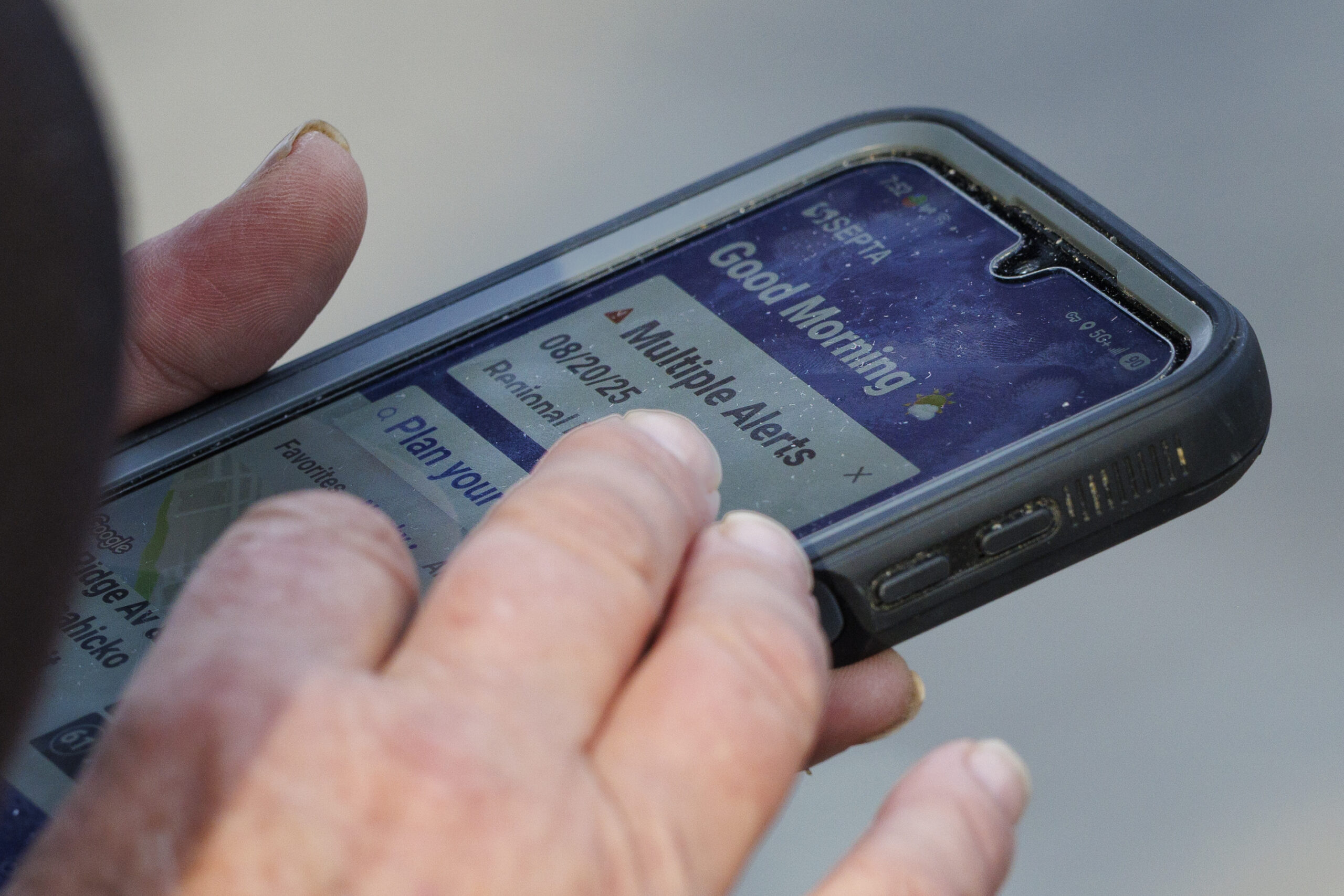
SEPTA riders can send anonymous tips to transit police via the “Help” tab on SEPTA’s standard app or the separate SEPTA Transit Watch app.
29-year-old SEPTA rider Danny Buckwalter said she uses the app regularly. “Sometimes, they’ll actually hold up the train so the engineer or an officer can tell the person to stop,” she wrote.
SEPTA Transit Watch is free and available in the Google Play and Apple app stores, though the same reporting mechanism is also available under the “Help” tab in SEPTA’s standard app. Those without smartphones can text a tip directly to SEPTA police at 215-234-1911.
Tip 2: Watch out for the conductor
For some, dispatching the police via an anonymous app or tip-line is a good solution. For others, it might feel like an overreaction depending on the situation.
Should you alert the police over loud music? Or text them to complain about a group of people who decided to DJ on the BSL?
The calculus is up to you. But for situations where you’re not bothered enough to contact the police but are bothered enough to pull out your hair, our readers recommended some alternatives we wish we thought of.
“I carry earplugs with me wherever I go,” wrote in Melinda Williams, 55, of Oreland. They come particularly in handy when Williams takes the BSL to and from Eagles games, when the noise of fans blasting hype music triggers her migraines. Wireless earbuds, of course, also do the trick (except for when they’re dead).
Mary Falkowski, 72, recommends riding in the first car, when you can, on El and Regional Rail. “I find there’s less loud music and disruptive riders when you ride close to the driver.”
Sometimes, a gentle nudge really is all it takes. You’ll never know if the only thing sitting between you and a peaceful commute is the courage to tell someone to cut it out.
Reader Gary Bolton keeps it direct, but nonconfrontational. “I’m a fan of ‘not everyone wants to hear your music, you know,’” Bolton wrote. “These types of disturbances should never be tossed off as consequences of living in the city. They are violations of basic civic consideration.”
And sometimes even the people meant to do the enforcing could use an etiquette reminder. Robin Salaman, 66, of Center City, was at 30th Street Station recently waiting for the train when a SEPTA employee was playing videos on his phone “loud enough that I couldn’t hear the train announcements.”
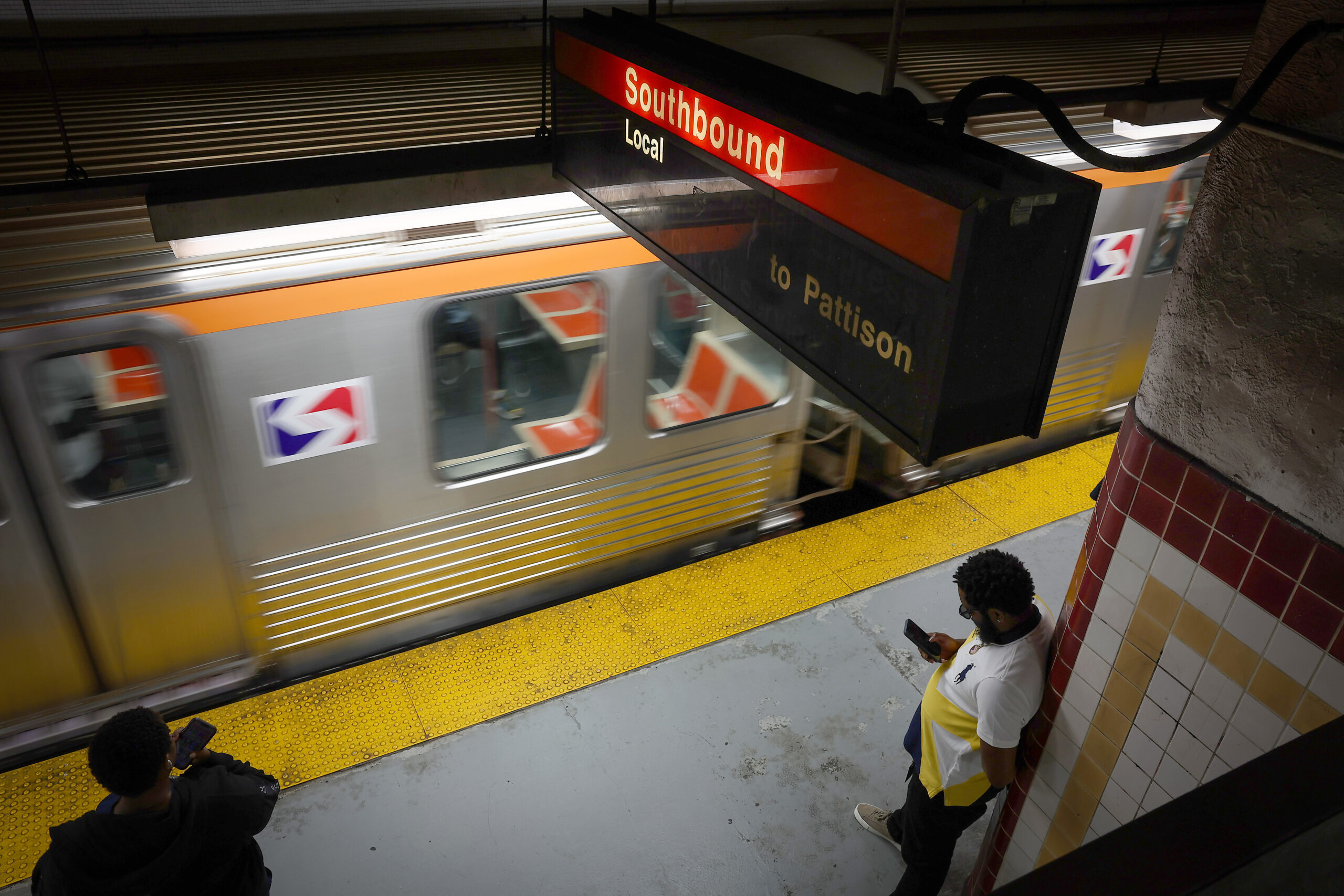
Passengers wait for a southbound Broad Street Line train at City Hall Station.
“I got up my nerve and very nicely asked if he could lower the volume a little — and he did! He turned them off completely soon after,” Salaman wrote. Sometimes, if the vibe and the situation (and the moon and stars) are right, [politeness] works.”
You do have to read the room first. Milton Trachtenburg, an 86-year-old Philly lifer, has a formula when he decided to speak up. “If I’m on the El and there are 50 students and me, and one group of students is responsible for the noise, I suck it up and let it go,” he said. “If it’s one rowdy person among 50 [passengers], I say something … I wouldn’t make an epic production of it. I’m a peacemaker.”
Of course, you can also just try what this anonymous Inquirer tipster does: ‘I sit as close to the person [as possible] and blare bagpipes on my phone.”
If it works, it works.
Tip 4: Just enjoy the ride
Sometimes, though, it’s about the journey and not getting to the destination. For every unwanted and ill-timed subway showtime I witnessed while growing up in and around New York City, there was one that put a smile on my face when I really needed it. And for every awful song blasted from a speaker on a train, I hear one that sneaks onto my playlists.
A little whimsy is good for the commute. Just take it from Johnson, one of the SEPTA Watch enthusiasts.
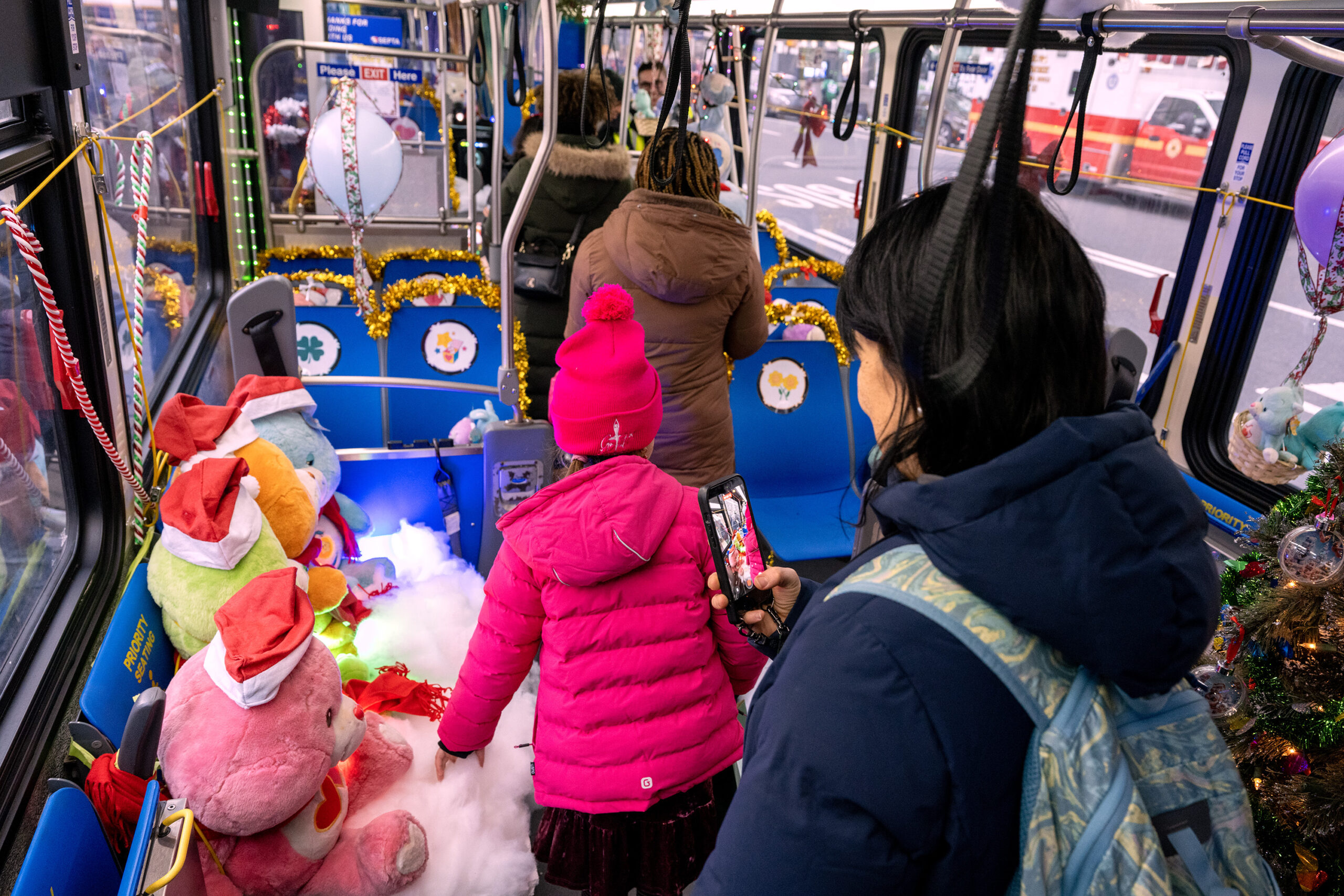
Visitors tour a SEPTA bus decorated for a Care Bears party as part of the transit authority’s 2025 Festibus competition. Who says public transit can’t be fun?
“This morning, a man was blasting Celine Dion at 6 a.m. on my commute on the El and I didn’t hate it as I usually do,” he wrote in late December. “It felt so out of place during my early morning commute that I just had to laugh and enjoy the moment.
That’s one of my favorite pieces to commuting on public transit, it’s always an adventure.”
Frosted vegan pop-tarts, swirls of dairy-free soft serve, and meatless bacon-egg-and-cheese croissants have officially arrived in East Falls.
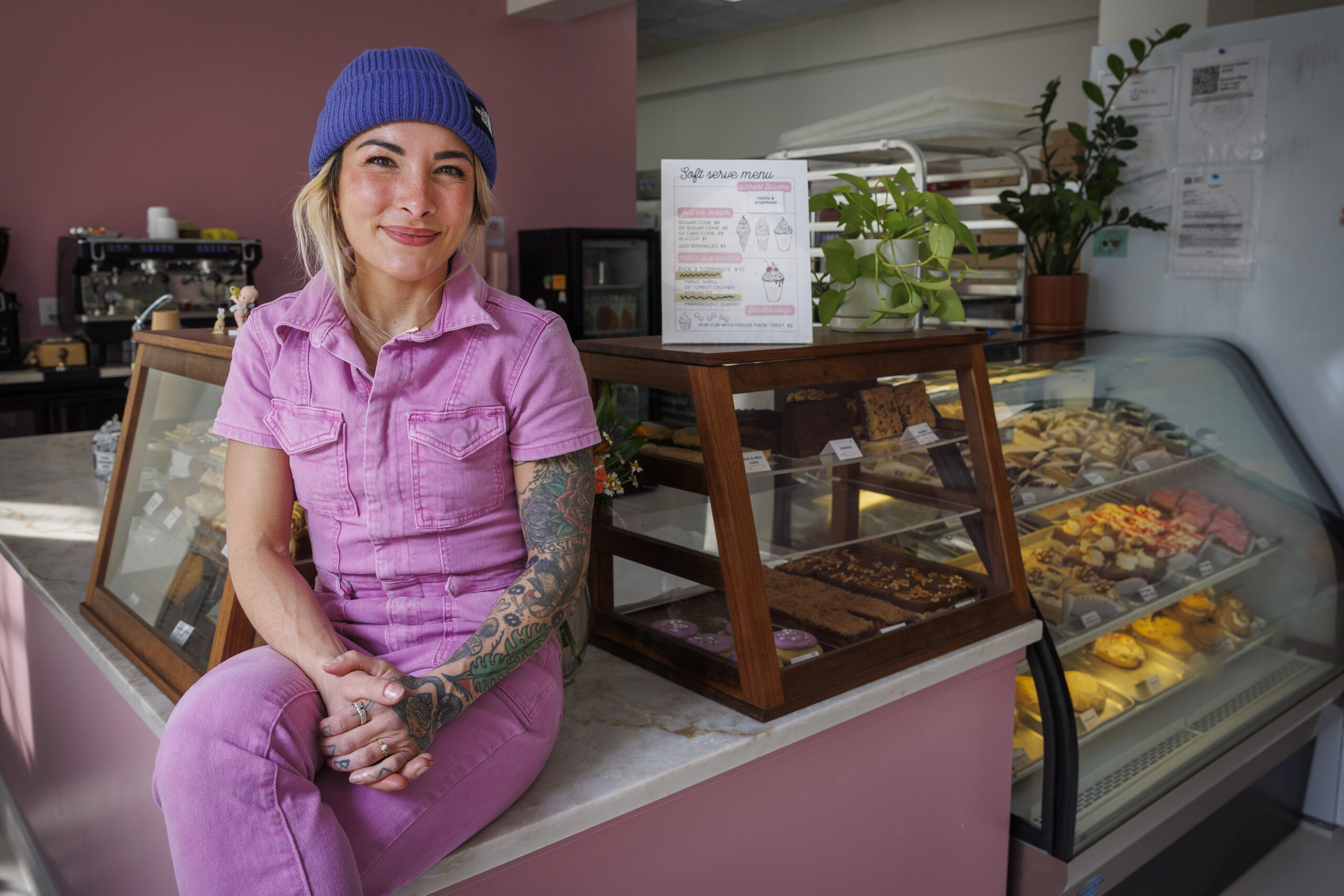
Crust Vegan Bakery opened Thursday at the intersection of Ridge and Midvale Avenues, just off Kelly Drive. The move from its two-space operation in Manayunk to a larger location enabled the confectionery to consolidate its retail storefront and commercial kitchen, said owner Meagan Benz.
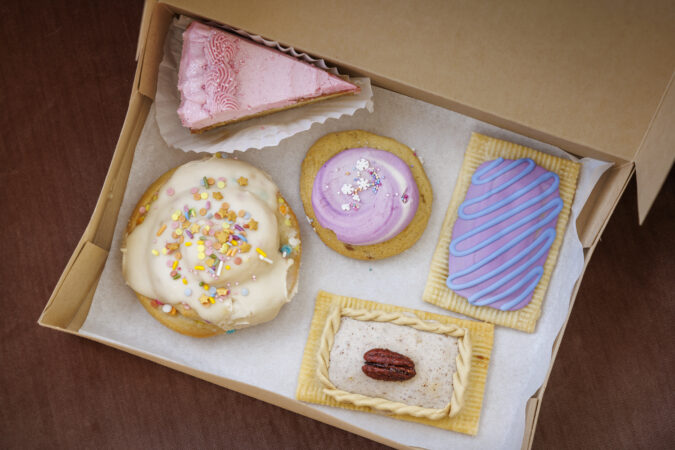
Benz spent more than nine months transforming a 3,000-square-foot office along the Schuylkill River into what she called a “cakelike retail space” with baby-pink walls piped with white paint and ceiling tiles modeled after Lambeth-style cake trims. Light from oversized front-facing windows dapple a trio of pastry cases filled with batches of all-vegan sweets, from cheesecake slices and cinnamon buns to black-and-white cookies and crumb-coated coffee cakes. Baristas-slash-bakers pull espresso shots and whisk matcha for lattes sweetened with house-made syrups.
“I wanted to create a place where people think, ‘Oh, I can get everything I need there,’” Benz said.
Crust Vegan Bakery owner Meagan Benz with a display case of treats on opening day Jan. 8 at the bakery’s new location at 4200 Ridge Ave. in East Falls. Crust moved there from Manayunk.
Benz, who went vegan in 2009 while a freshman at University of North Carolina Greensboro, launched Crust in 2015 as a wholesale vegan bakery out of a commissary kitchen at 220 Krams Ave. in Manayunk. When custom cake and wholesale orders dried up almost overnight in 2020, she and then-co-owner Shannon Rocheopenedtheir storefront at4409 Main St.as a way to keep on staff they would’ve otherwise had to lay off during the pandemic, a move Benz said ended up making Crust profitable enough to bring on more employees.
“Retail is where we make more money,” said Benz, 35.
Now, the business has outgrown the satellite storefront that saved it.
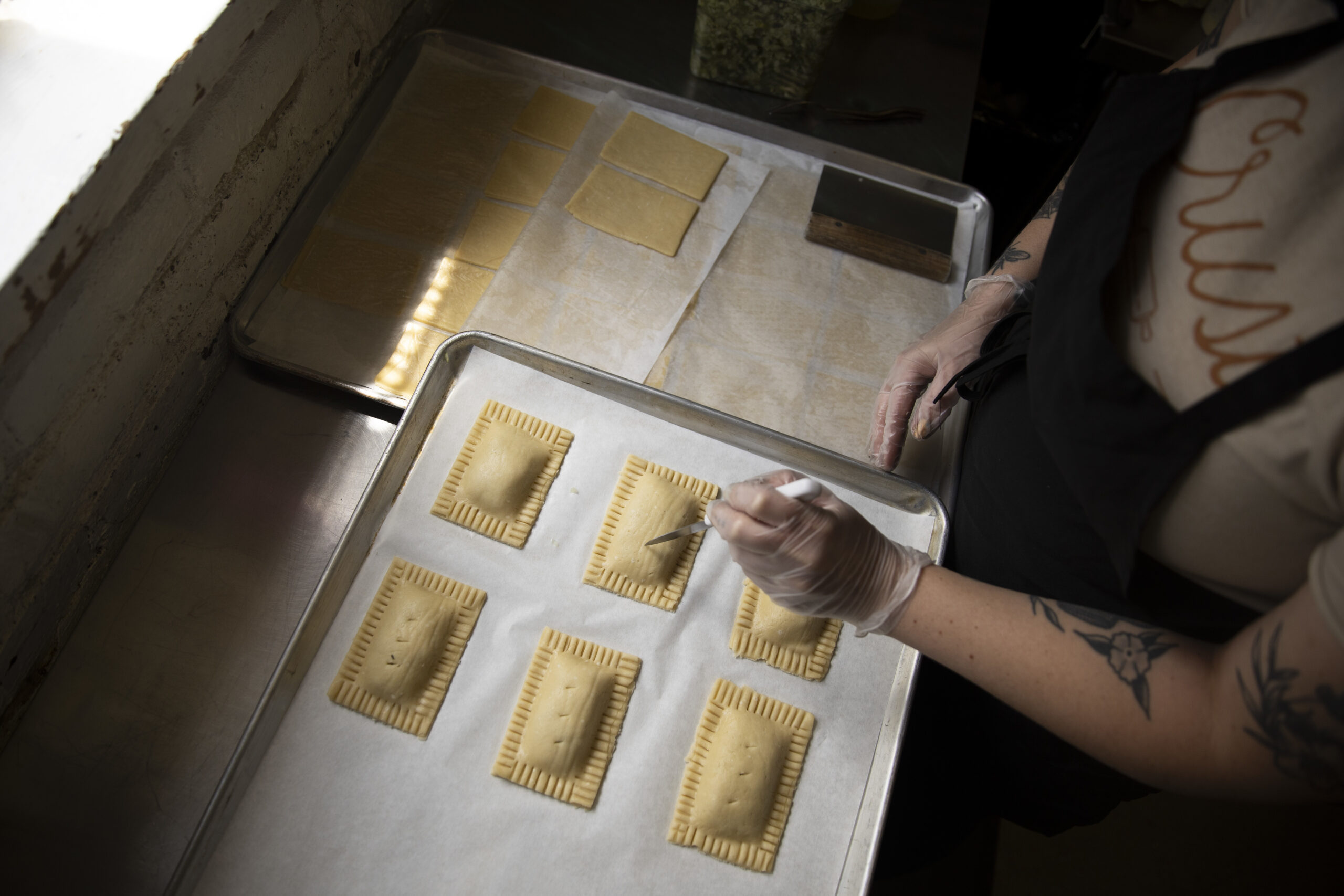
Jordan Fuchs prepares pop-tarts at Crust Vegan Bakery’s former commercial kitchen space on Krams Avenue.
Splitting time and staff between the retail space and commercial kitchen proved logistically challenging. Benz said Crust’s storefront manager wound up spending most of her time ferrying pastries between locations, a half-mile journey that led to lots of wasted product.
“It was a really short distance, but people drive crazy — someone slams on the brakes in front of us and we’re done for,” Benz said. “We had many times where things would tip over and we’d have to determine if it was still usable.”
At Crust’s new location, a sparse yet cozy cafe area with two tables and a large, lived-in green couch bleeds into the kitchen, where staff pivot from packaging cakes and swirling soft-serve cones to frosting pop-tarts. The streamlined setup has allowed Benz to dream big. Already on her wish list for the future: a separate convection oven for made-to-order breakfast sandwiches, a back room for cake-decorating classes, and more room for colorful displays.
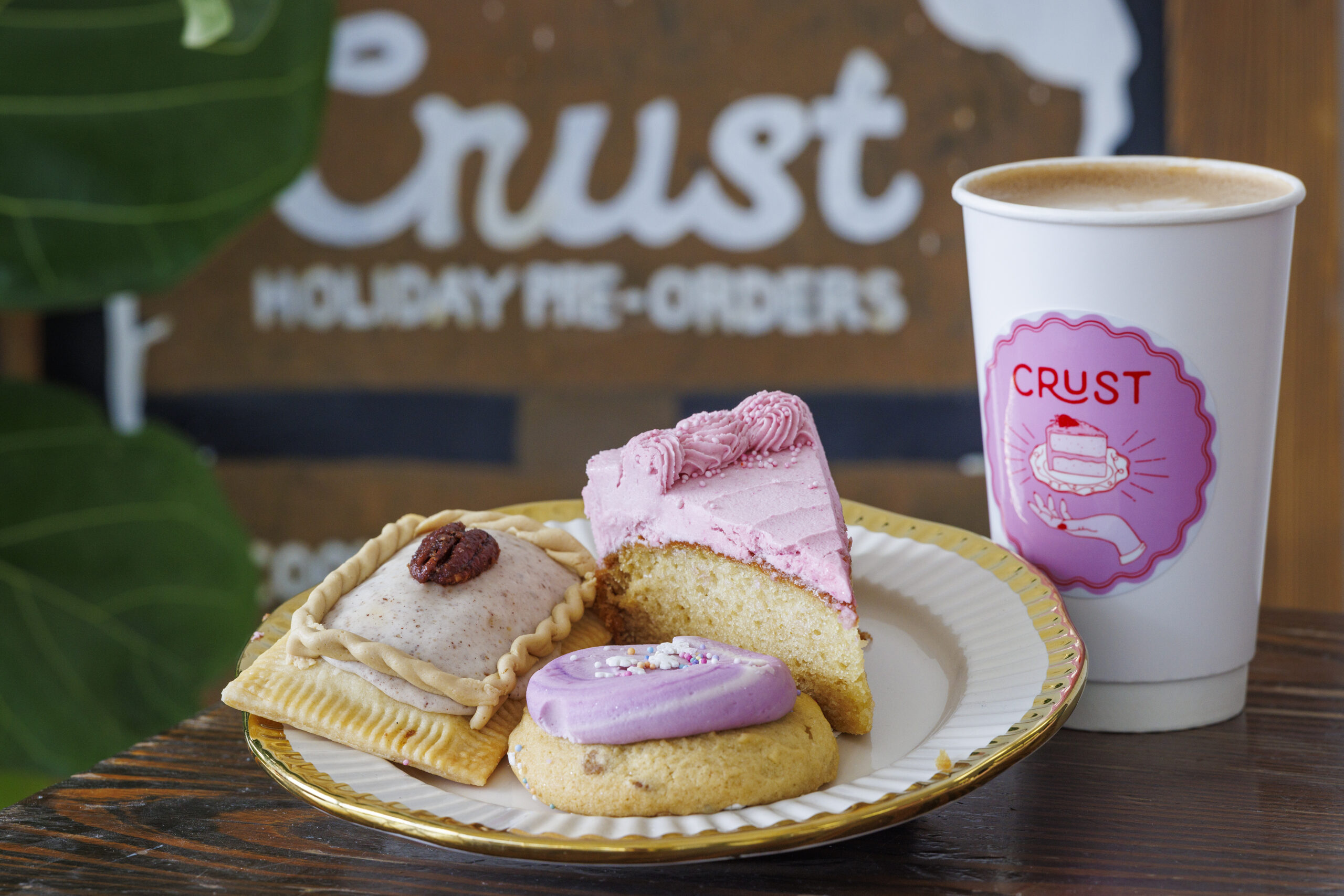
A brown sugar pecan pie pop-tart, soft frosted cookie, and vanilla strawberry cake from Crust Vegan Bakery are plated next to a hot latte. Beverages are new to the bakery.
Benz spent two years looking for the right location, unwilling to compromise on a short list of non-negotiables. Most of the bakery’s 15-member team live in Northwest Philly, she said, so the new space needed to remain in the area while being more transit-accessible.
Crust’s new location sits at the convergence of five bus lines. It also will leave Manayunk without a pastry specialist when Crust’s former commercial-kitchen neighbor Flakely decamps for Bryn Mawr in February.
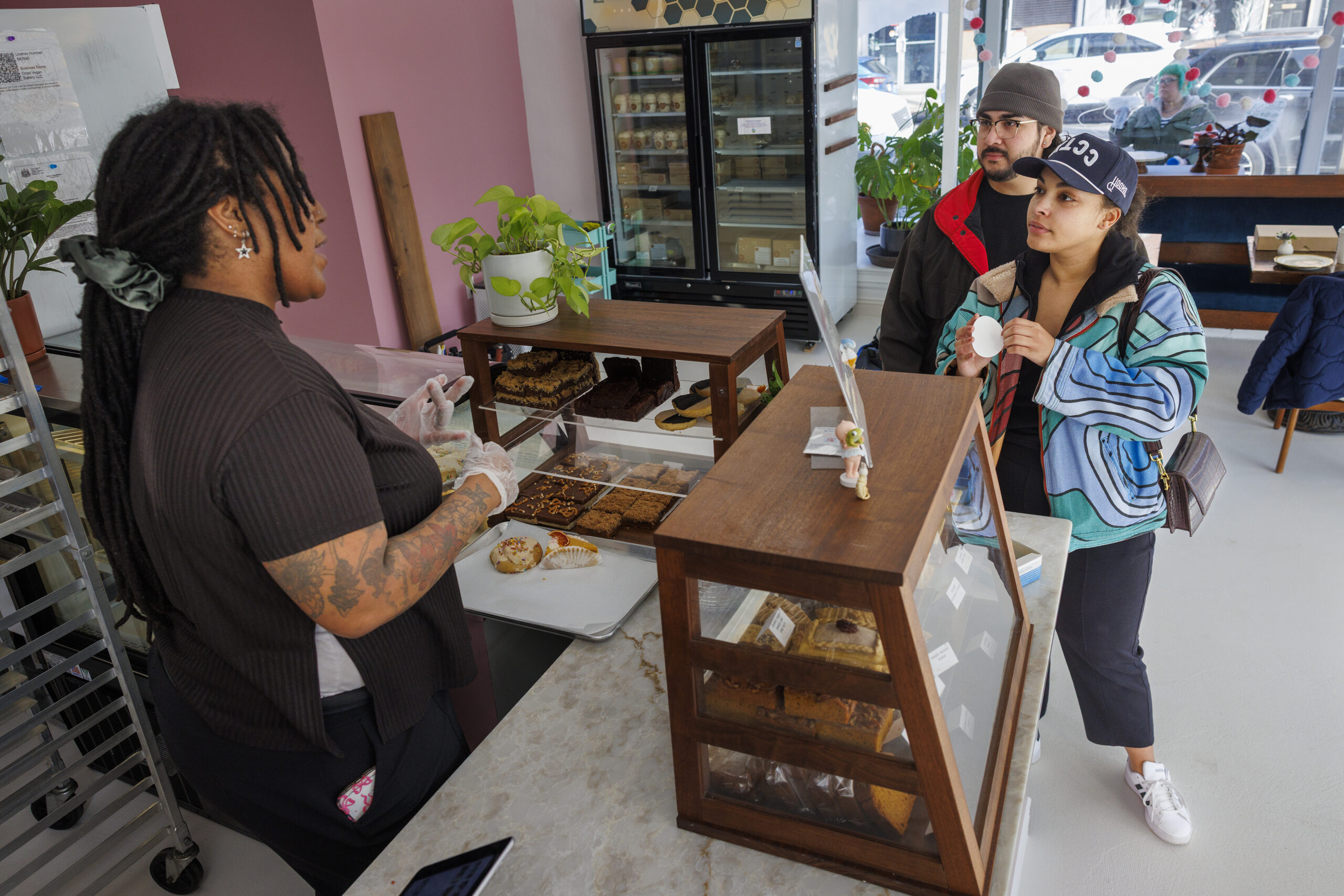
Taleema Ruffin takes an order from Chase Sanders and Ryan Martinez-Peña, of East Falls, at the counter of Crust Vegan Bakery’s new location at 4200 Ridge Ave. on opening day, Jan. 8, 2026.
Crust’s move also marks the launch of its first-ever coffee program, headed by cake decorator-turned-beverage coordinator Jordan Fuchs.
The bakery will serve a short but sweet menu of coffee and tea drinks, with beans and matcha sourced from Rise Up Coffee, a fair-trade roaster based in Maryland. Crust makes its own vanilla and mocha coffee syrups, and Fuchs has plans for a rotating menu of seasonal additions. The signature drink will be a black sesame latte, Fuchs said, and she’s currently perfecting a chocolate-covered strawberry latte in time for Valentine’s Day.
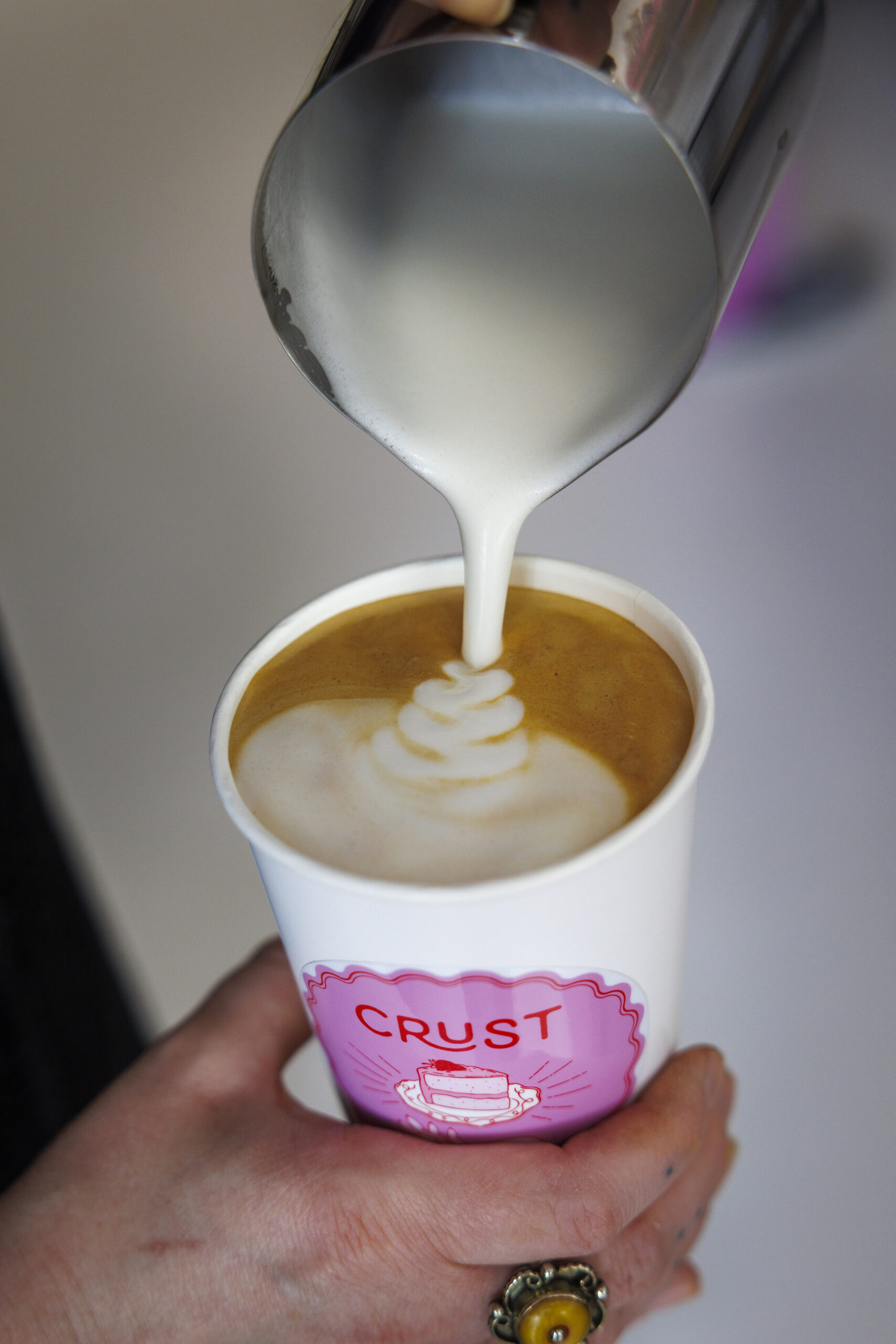
Jordan Fuchs pours a rosetta on top of a hot soy latte inside Crust Vegan Bakery. Its new retail space in East Falls has enabled the bakery to start a beverage program.
Crust will also continue selling two things Benz said many of her vegan customers desperately miss from their dairy-consuming days: soft-serve ice cream and hulking breakfast sandwiches.
Benz’s breakfast sandwiches are served on flaky vegan croissants or thick biscuits, both made in-house, with Just Egg patties and seitan bacon that crisps up like the real thing.
The bakery started offering nondairy soft serve year-round in 2023, Benz said, as a way to satiate her own craving. Crust uses a vanilla base made with pea protein and then adds mix-ins for flavors that rotate every two weeks. The ice cream is silky, and curls out of the machine with the flourish of a Dairy Queen swirl. It’s sweet, but doesn’t quite capture the essence of its full-dairy counterpart; Benz said that’s the point.
“If our ice cream doesn’t exactly taste like dairy ice cream, that’s OK,” she said. “I just want it to taste really good.”
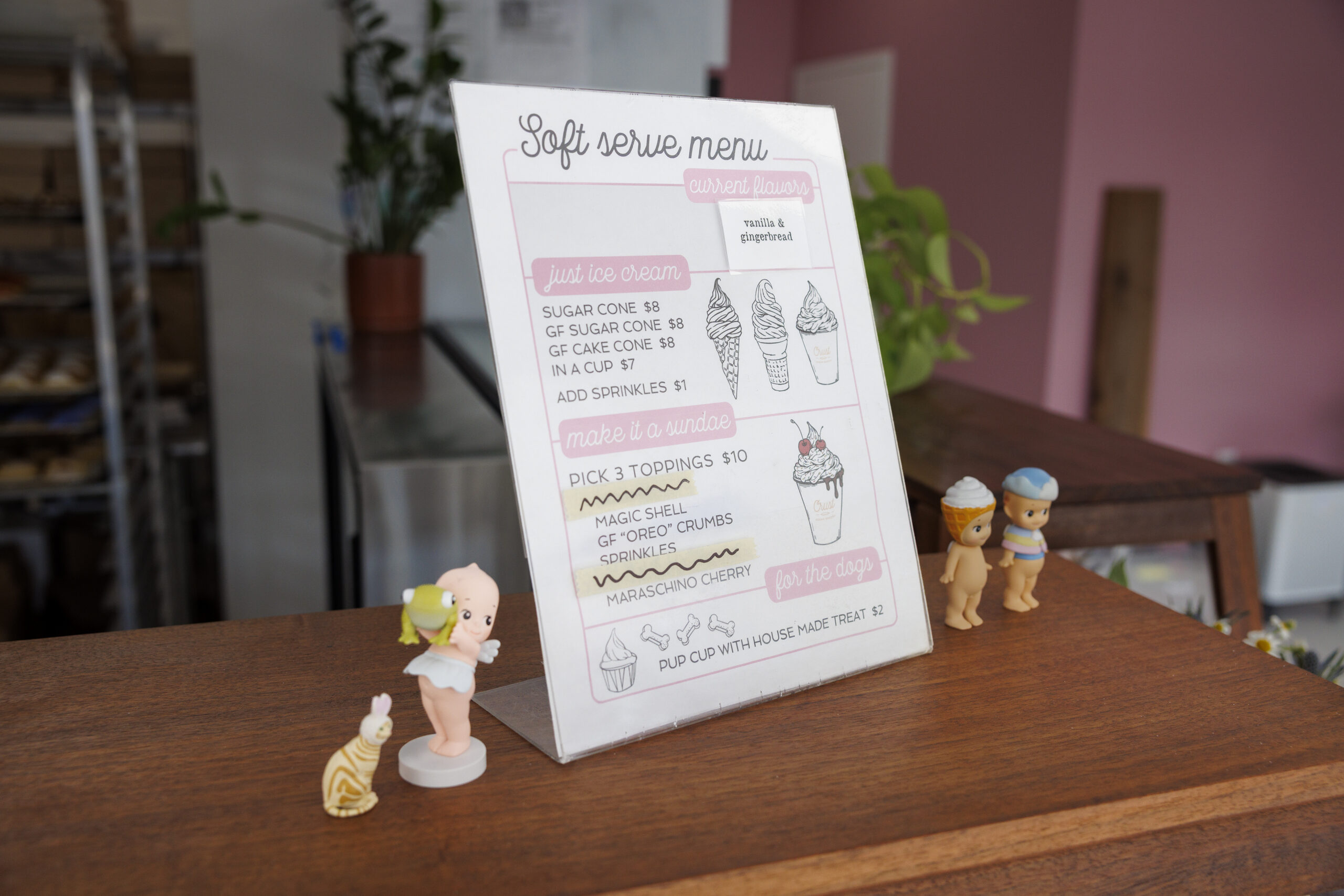
Crust Vegan Bakery’s dairy-free soft serve menu, which is offered year round and includes toppings.
Pastries are still the main event at Crust’s new location. The bakery’s staff make roughly 22 dozen pop-tarts a week, with some bakers spending a full eight-hour shift solely on rolling out dough, preparing fillings, and sealing the edges for baking. To make the process smoother, Benz made a custom crimping tool that creates cartoonishly perfect hash marks. Her favorite flavor is the wild berry, a dead ringer for the purple-frosted Kellogg’s version.
Also on offer: slices of sweet potato, Oreo, blueberry lavender, and funfetti cheesecakes (gluten-free and vegan) that take up a pastry case’s entire top shelf. The secret to Benz’s recipe is Tofutti cream cheese, which is versatile enough to be customizable and easily whipped into a dairy-accurate texture.
“I make a lot of things because I want them, I miss them,” Benz said. “Then I hope other people do, too.”
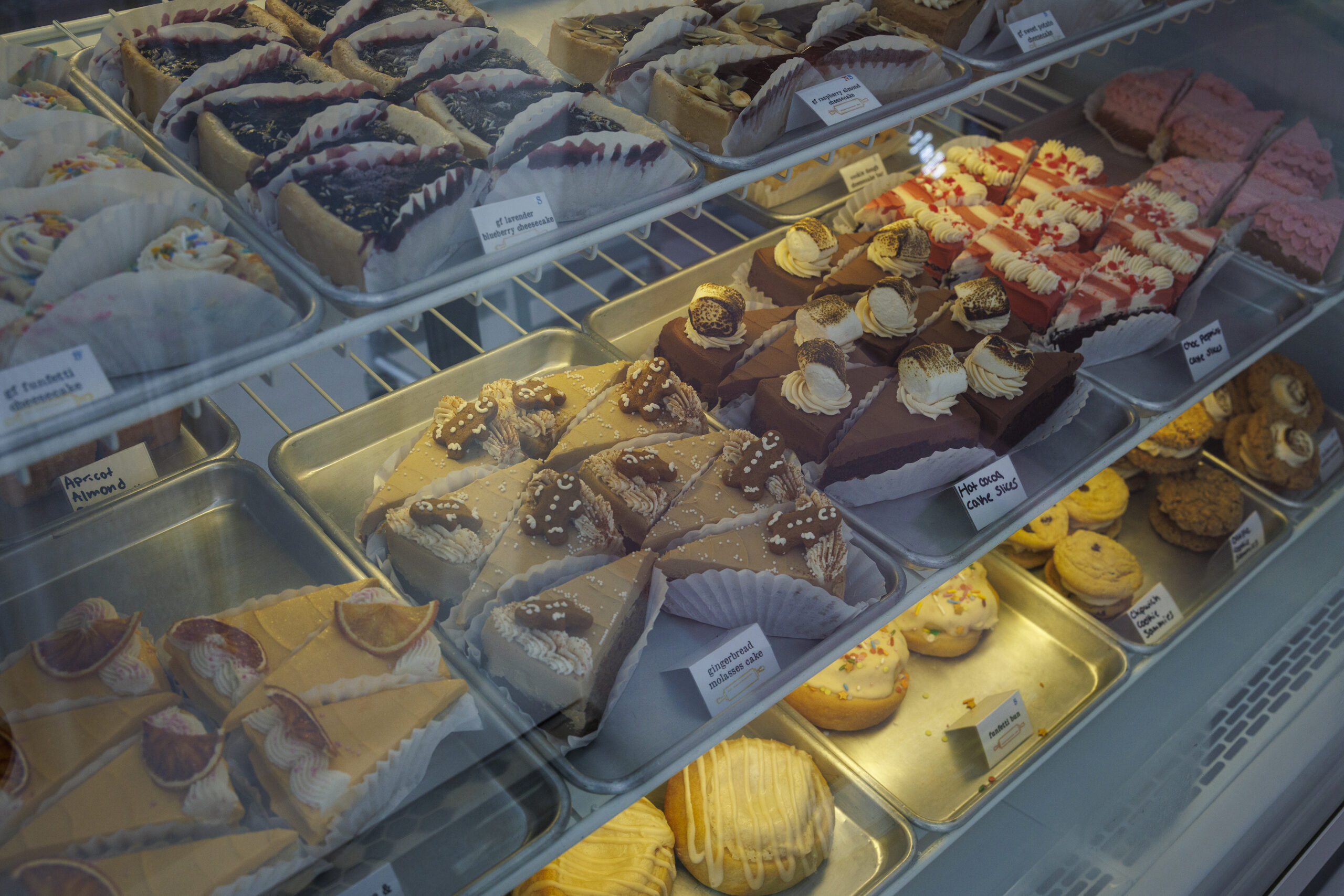
A display case of vegan cheesecake, cake slices, and cinnamon buns inside Crust Vegan Bakery’s new location at 4200 Ridge Ave. in East Falls.
Crust Vegan Bakery, 4200 Ridge Ave., Philadelphia, 215-298-9969. Hours: 10 a.m. to 6 p.m. Wednesday and Thursday, 8 a.m. to 8 p.m. Friday and Saturday, 8 a.m. to 6 p.m. Sunday.
Fairmount’s pup-friendly pub the Boozy Mutt is closing its doors Jan. 3 after just over two years in business, co-owners Sam and Allison Mattiola announced via Instagram on Monday.
“After much thought, we made the difficult decision to close the Boozy Mutt … What began as a dream became something truly special because of our community — our guests, our team, and all the good mutts who walked through our doors,” read the post, which has been shared over 1,400 times. Nearly every comment is from a dejected dog parent wishing for another round of beer and belly rubs.
The Mattiolas, who are married, opened the Boozy Mutt at 2639 Poplar St. in December 2023, transforming former rock-and-roll dive the North Star into roughly 7,000 square feet for pooches and their people to roam across two floors and an outdoor patio. The venture was inspired by pandemic-era trips to a dog park with Bernadoodle Buba, where the couple would camp out with lawn chairs and a pack of beers to make friends.
At the Mutt, as regulars called it, dogs are allowed to mingle off-leash under the supervision of aptly-named “Rufferees” who monitor and facilitate healthy play. All owners had to register their pet’s vaccinations before gaining access to the space, which includes a self-service dog wash room, outdoor TVs, a summertime-only puppy pool, and a menu of bite-sized “human grade” dog treats.
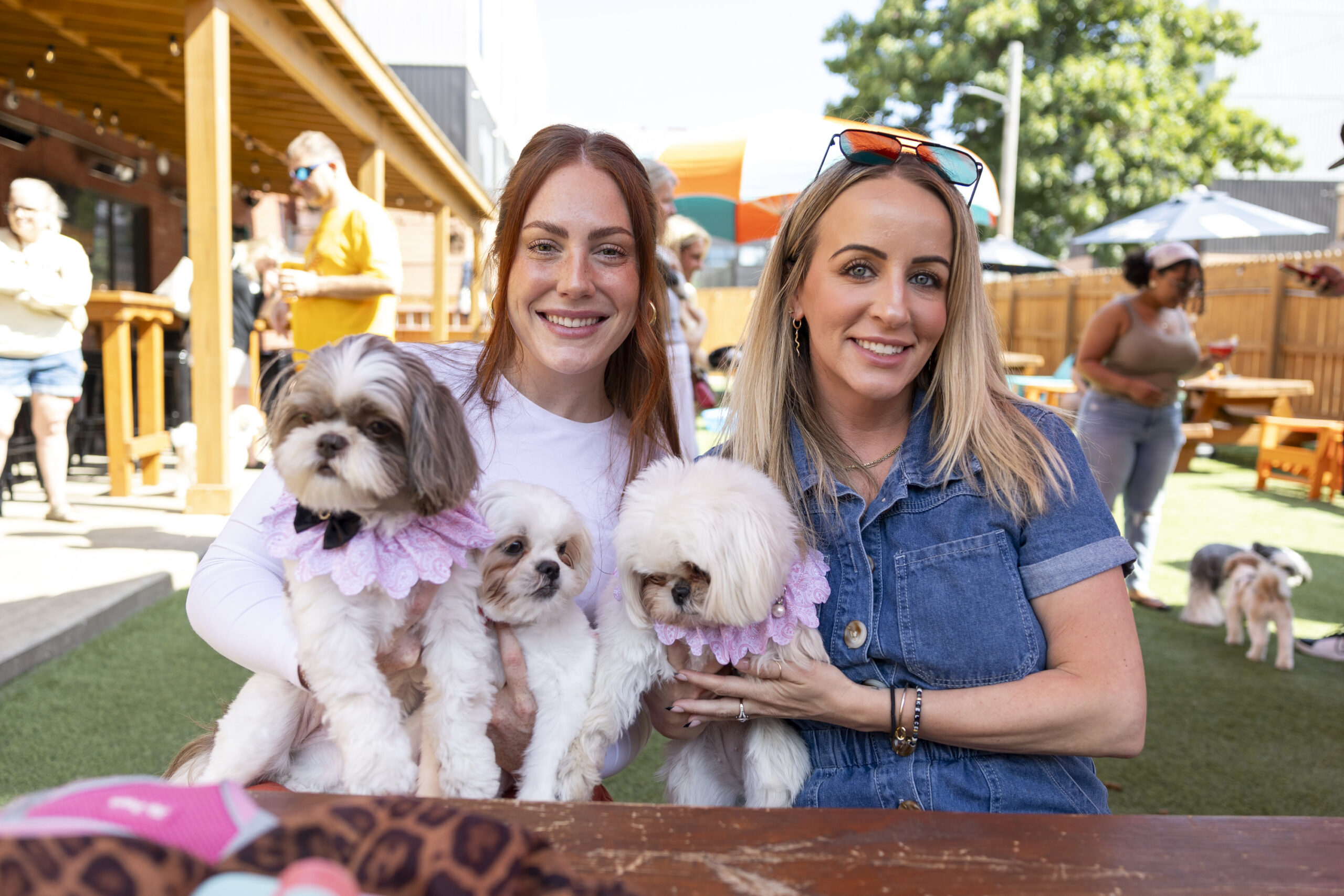
Tess Bodden (left) and Jenn Maher pose with their pet shih tzus Hazel, Hendrix, and Kelce at the Boozy Mutt, a popular third space for dog parents in Fairmount.
The bar felt like a version of Cheers for pet parents almost immediately, regulars told The Inquirer, thanks in part to a rotation of events that ranged from weekly quizzos to breed meetups and Pitch-A-Friend nights for singles. A monthly membership was $40, while an annual Mutt subscription cost $360.
The bar had upward of 100 regular members, Sam Mattiola said, all of whom will receive prorated refunds in the coming days. “People would tell us that this was their third space, that they go home, they go to work, and they go to the Boozy Mutt,” he said. “We walk away with our heads held high knowing that we achieved our goal of creating a place that made people feel at home.”
And yet, the Mattiolas said, running a bar that catered to dogs and their owners in equal measure proved increasingly challenging as the cost of rent, insurance, food, and alcohol continued to increase. While dog-friendly bars and beer gardens have taken off in the South, the concept has had mixed success in Philly: Manayunk dog bar Bark Social closed abruptly last year after its parent company declared bankruptcy. Its replacement, an outpost of the Atlanta-based company Fetch Park, opened in November.
“It’s a pretty overhead-intensive business model that we have, and it’s just gotten pretty hard to make the math work after the last couple of years,” Sam Mattiola explained. “There was just always something new hitting [us] in the face.”
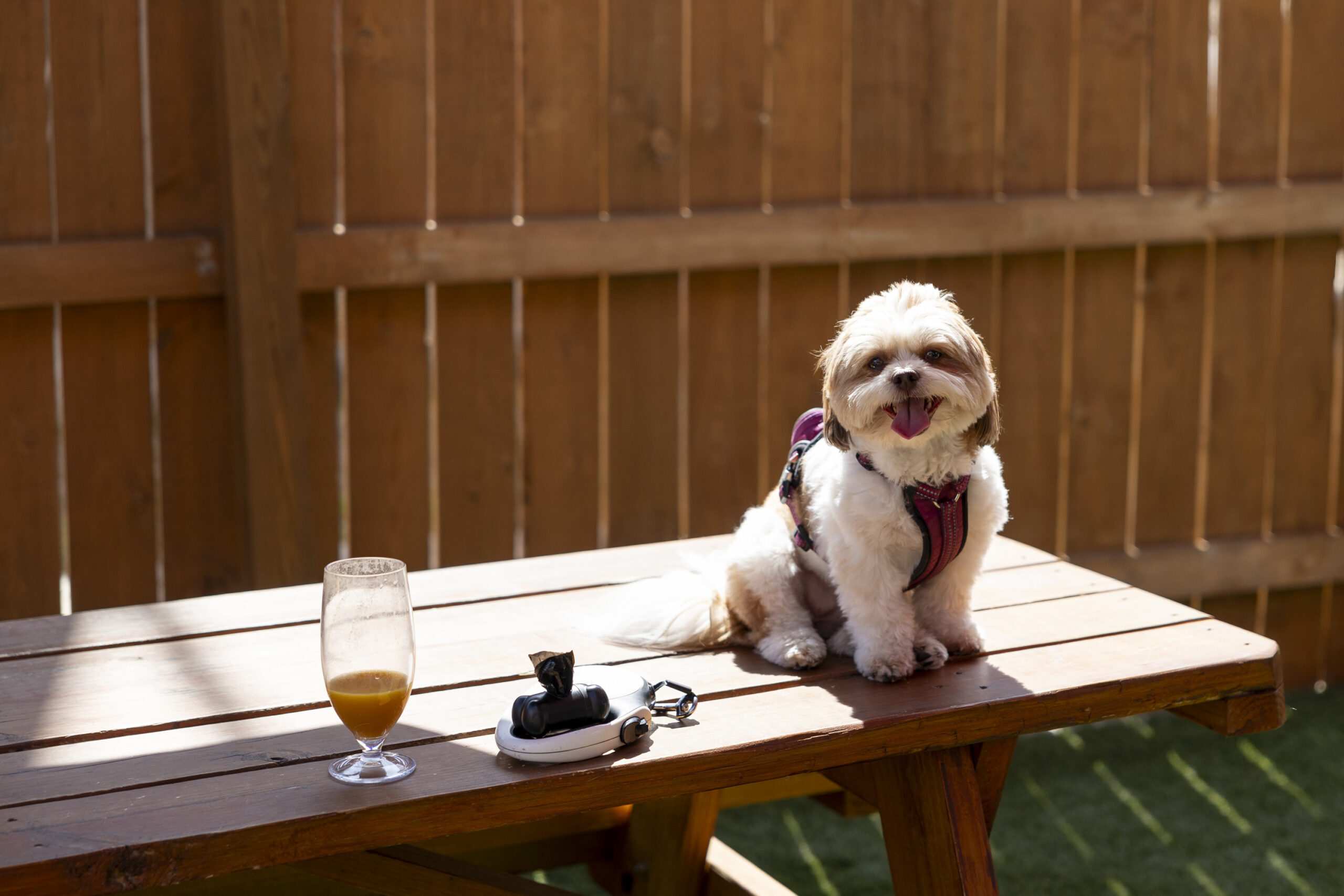
Darby, a 5-year-old shih tzu, sits on a picnic table at the Boozy Mutt in Fairmount during an August 2025 breed meetup.
The Boozy Mutt’s 26 employees were informed of the impending closure before the announcement went public Monday, Allison Mattiola said, and the couple has spent the last three days putting together job recommendations. Neither she or her husband had worked in hospitality prior, and the couple has no immediate plans to revive the business elsewhere.
Where is Fido to go?
Already, the Boozy Mutt’s impending closure has been ruff — pun intended — for Fairmount pet parents.
“It’s a loss for us and a loss for the dogs,” said Sarah Kuwik, whose 2½-year-old pooch Willie “grew up at the Mutt.”
Kuwik started taking what she described as her “50-pound mutt” to the bar almost immediately after it opened. It has given Willie a social life most adults would envy.
Willie goes on dates at the Mutt with his girlfriend Bea, a 3-year-old golden retriever who clings to him like a magnet. And in June, Willie had a joint WrestleMania-themed birthday party with his best friend Levon, also a mutt with boundless energy.
Willie (left) poses with his golden retriever girlfriend Bea (right) and his best pup friend Levon at the Boozy Mutt, where the trio first met.
Kuwik doesn’t know how Willie will handle the news: “He’ll pull us toward [the Boozy Mutt] every time we’re on Poplar [Street] … it’s going to be very confusing.”
The Boozy Mutt is also what drew Valerie Speare to Fairmount in the first place. Speare put an offer on her current rowhouse a mere four blocks from the bar after grabbing brunch there in between open houses last spring. Now she goes to the Mutt four times a week with her pugs Lily and Winston, who are both deeply playful (and deeply codependent).
The Mutt “is exactly the kind of thing I want in a neighborhood,” said Speare, who has lived in the area for a year-and-a-half. “Where else can I go have a mimosa on a Saturday morning and have my dog sitting in my lap?”
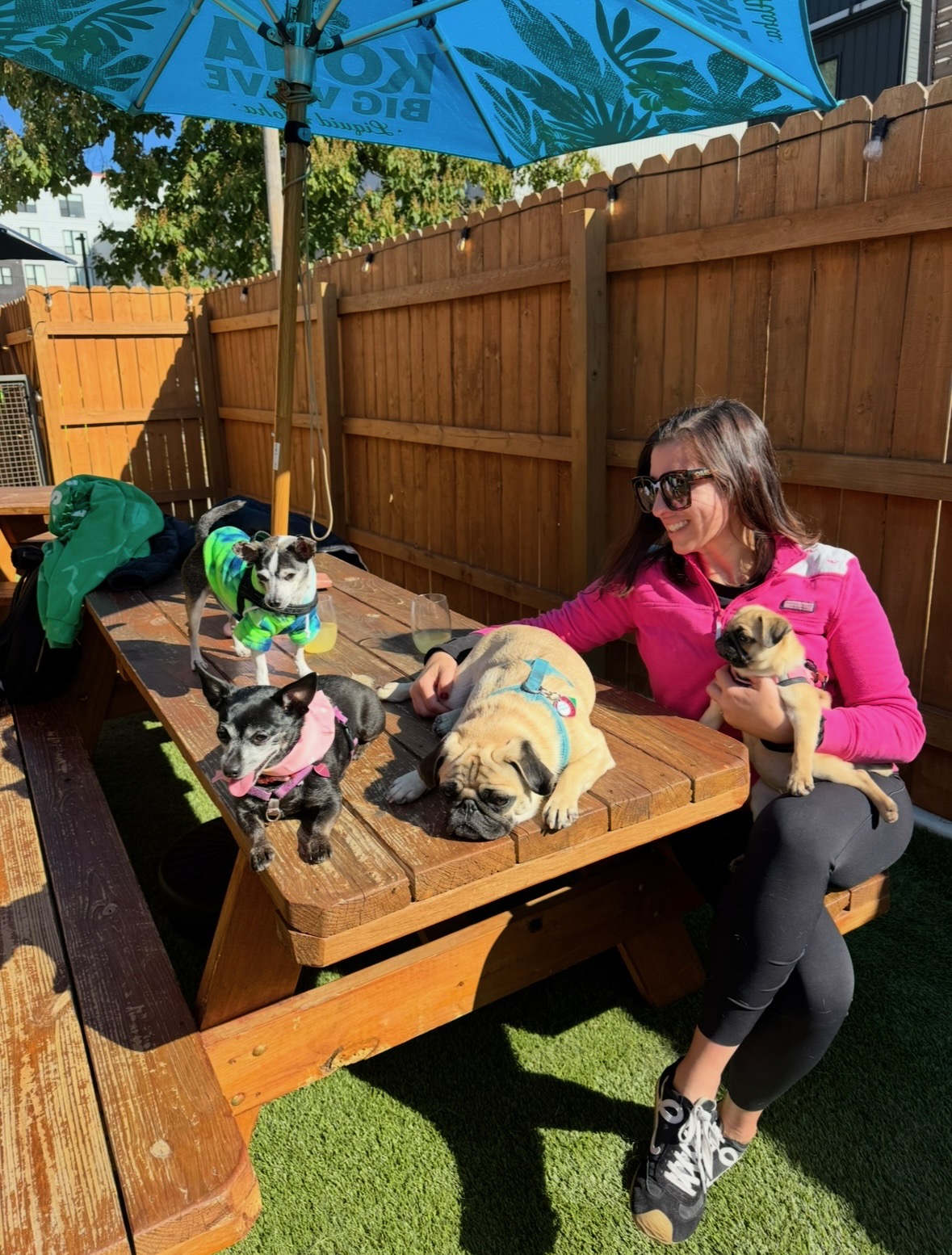
Valerie Speare, of Fairmount, and her pugs Winston and Lily lounge with Chihuahua pals at the Boozy Mutt. Speare takes her pugs to the bar four times a week, she estimates.
For others, the bar has fostered connections that extend beyond puppy playdates. Katherine Ross has lived in Fairmount since 2004, but has seen the neighborhood — and the people in it — with new eyes, thanks to her 4-year-old pug Hoagie.
At the Mutt, Hoagie likes to beg for bites of Old Bay and truffle-coated fries or splash in the puppy pool. Ross, meanwhile, has enjoyed getting to meet her neighbors.
“I’ve lived in this neighborhood for over 20 years, and to be honest with you, I didn’t know all that many people until I got a dog,” Ross said. “Having a place like the Boozy Mutt brought a lot of friendships together.”
A popular gluten-free bakery is coming to the Main Line.
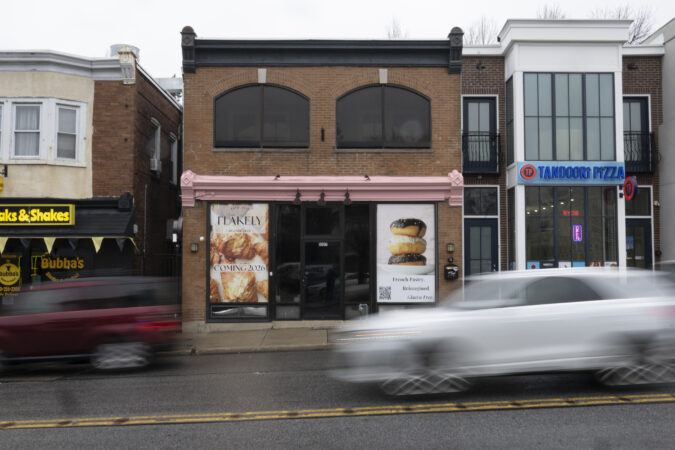
Flakely is moving from behind the bright pink door at 220 Krams Ave. in Manayunk to a Bryn Mawr storefront in early February, said owner Lila Colello. The new takeout-only bakery will replace a hookah lounge at 1007 W. Lancaster Ave.
“We’ve really outgrown our space,” Colello told The Inquirer. Manayunk “wasn’t ever meant to be for retail.”
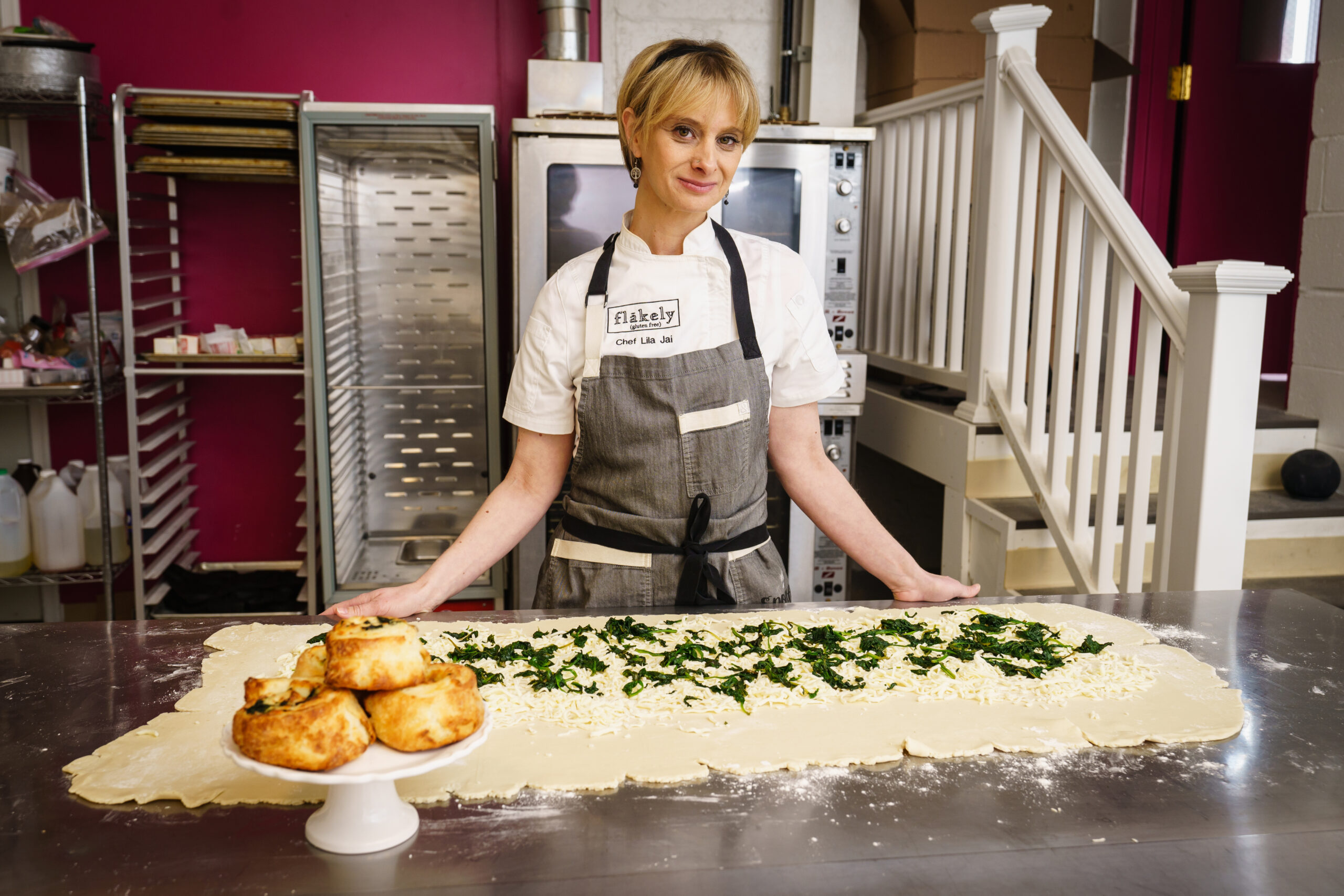
A trained pastry chef who worked for the Ritz Carlton and Wolfgang Puck Catering, Colello was afraid she’d have to give up the best things in life — bread and her career — when she was diagnosed in 2010 with celiac disease, an inflammatory autoimmune and intestinal disorder triggered by eating gluten.
Instead, Colello spent the next seven years finding ways to get around gluten, a protein found in grains like wheat, rye, and barley (and thus most breads, bagels, and pastries). She perfected kettle-boiled bagels and pastry lamination before starting Flakely in 2017 as a wholesaler.
Colello moved into the commercial kitchen at Krams Avenue in 2021, where customers have spent the last four years picking up buttery chocolate croissants, brown sugar morning buns, and crusty-yet-chewy bagels from a takeout window in an industrial parking lot. Inquirer restaurant critic Craig LaBan has called Colello’s bagels “the best he’s tasted outside of New York,” and in 2024, Flakely was voted one of the best gluten-free bakeries in the United States by USA Today.
Lila Colello, owner and head baker at Flakely, helped patent a way to laminate gluten free dough for croissants.
Flakely’s industrial Manayunk location has required some concessions, Colello said: The majority of their goodies are par-baked and frozen by Colello and three full-time employees for customers to take and bake at home. Otherwise, Colello explained, the lack of steady foot traffic would lead to lots of wasted product.
In Bryn Mawr, Flakely will be a fully functional takeout bakery with a pastry case full of fresh-baked goods, from full-sized baguettes and browned butter chocolate chip cookies to danishes and Colello’s signature sweet-and-savory croissants. A freezer will also include packs of Flakely’s take-and-bake doughs, bagels, and eventually, custom cake orders.
Once she’s settled in, Colello said, she hopes to run gluten-free baking classes and pop-up dinners out of the storefront — offerings (besides the ingredients) that she hopes will differentiate her from other bakeries in the area.
“My vision is for this to be a magical space where people can come in and leave with a fresh croissant, which people can’t really do” when they’re gluten-free, said Colello, who lives in Havertown. “We offer our customers things they miss. That’s kind of our thing.”
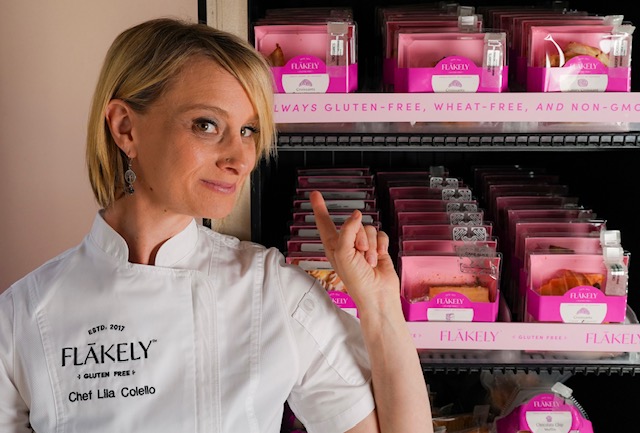
Flakely owner Lila Colello poses in front of one of Flakely’s pink gluten free pastry ATMs, which vend take-and-bake goods at four locations in the Philly area.
What about the pastry ATMs?
The permanent storefront does not mean Flakely’s signature pink pastry ATMs will disappear, said Colello. But they will move.
Colello installed Flakely’s first pastry vending machine inside South Philly’s now-shuttered Salt & Vinegar. With the tap or swipe of a credit card, the smart freezer would open to let customers choose their own take-and-bake pack of croissants, pop-tarts, muffins, or danishes. Using it felt like a sweet glimpse into the future.
Flakely currently operates pastry ATMs inside Collingswood grocer Haddon Culinary, the Weaver’s Way Co-op in Ambler, Ardmore smoke shop Free Will Collective, and Irv’s Ice Cream in South Philly, where enterprising customers top their pastries with scoops fresh out the freezer.
Irv’s ATM will make the move to Reap Wellness in Fishtown on Jan. 5 when the ice cream shop closes for the season, Colello said. And come February, the smoke shop’s ATM will transition to Lucky’s Trading Co., a food hall at 5154 Ridge Ave. in Roxborough. The hope, Colello said, is to space the locations out enough so she’s not competing with herself.
“We’re finally in the middle of where everything is,” Colello said. “And that’s kind of the goal.”
Flakely, 1007 W. Lancaster Ave., Bryn Mawr, 484-450-6576. Hours: 9 a.m. to 4 p.m. Tuesday to Saturday.
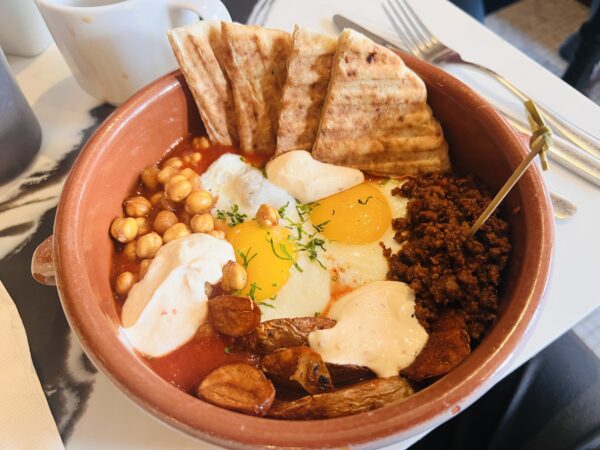
There’s a whole lotta shakshuka going on at Café La Maude, Nathalie and Gabi Richan’s snug, perpetually busy French-Lebanese bruncherie in Northern Liberties. In fact, the café offers two varieties of the comforting sunny-side-up-egg-topped dish that traces its roots to Amazigh (also known as the Berbers of North Africa). The red shakshuka, more prevalent on local menus, floats beef sausage, crispy chickpeas, pesto, sliced fingerling potatoes, and harissa labneh atop a rich, spiced tomato sauce studded with onions and peppers. Café La Maude’s green version sits on the opposite side of the color wheel: green tomatoes, spinach, kale, and green fava beans, plus sweet potatoes and fried cauliflower, with a drizzle of carrot tahini sauce and a sprinkle of toasted almonds. Budgeting your pita consumption is essential so you can be sure to get every drop of sauce.
Café La Maude, 816 N. Fourth St., 267-318-7869, cafelamaude.com
— Michael Klein
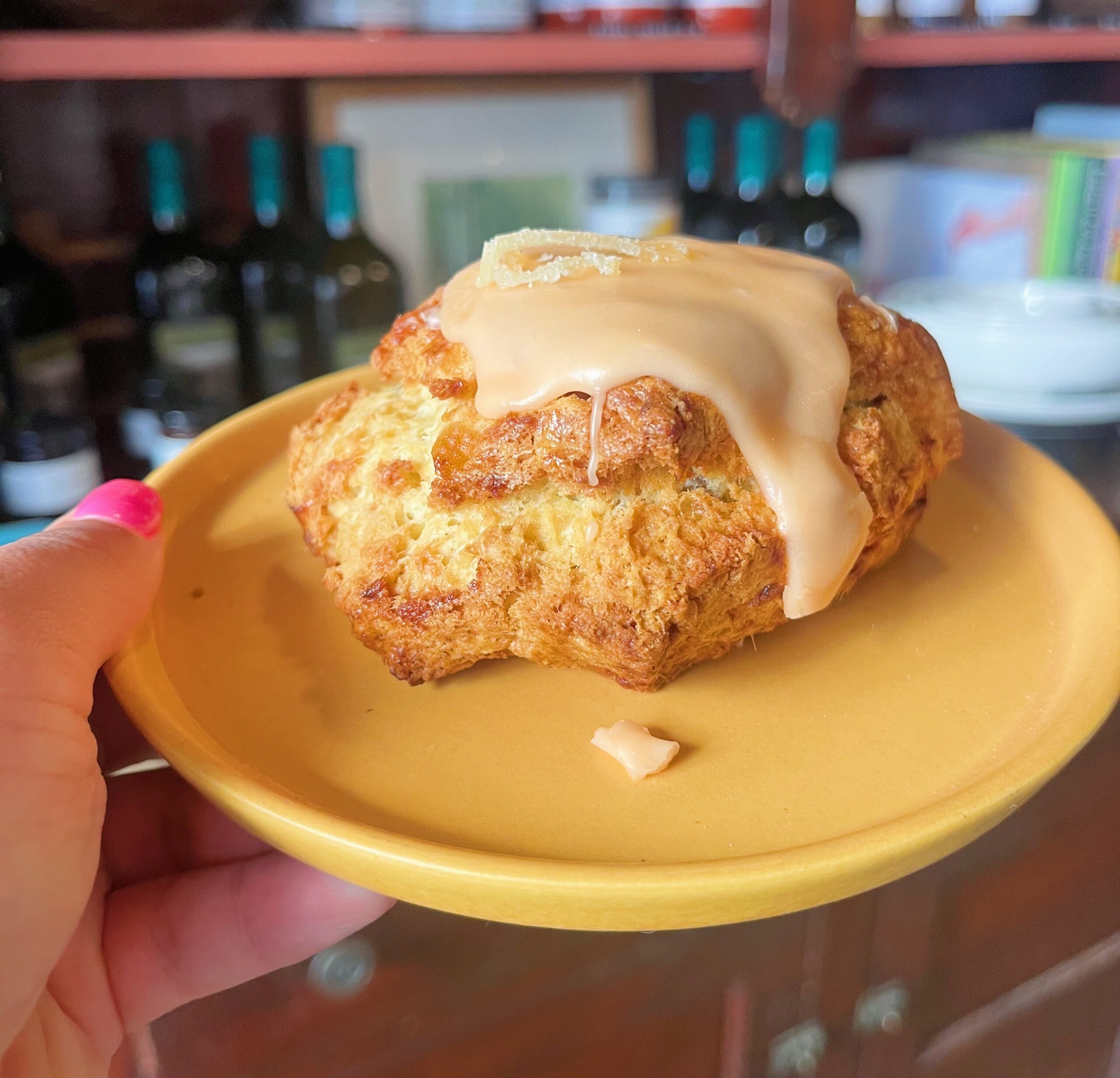
The candied ginger scone from The Bread Room, Ellen Yin’s new-ish bakery at 834 Chestnut St.
Candied ginger scone at the Bread Room
There’s a lot to love about Ellen Yin’s new-ish bakery The Bread Room — the fudgy olive oil brownie, the large hoagie salad with capicola, and the holiday pies — but perhaps the menu’s most overlooked gem is the humble candied ginger scone. I’ve been getting it almost weekly as a reward for braving the cold (and my perpetually late SEPTA bus) to go into the office, and it’s often the best bite of my week. What makes the Bread Room’s scone so distinct is the texture, dense enough to verge on a biscuit with an outer crust only made better by a light pink ginger glaze. It feels like biting into just-hardened royal icing, and reveals a soft and sweet crumb. The ginger is potent but never overpowering, more sweet than zesty.
The Bread Room, 834 Chestnut Street Ste. 103, 215-419-5830, thebreadroomphl.com
— Beatrice Forman
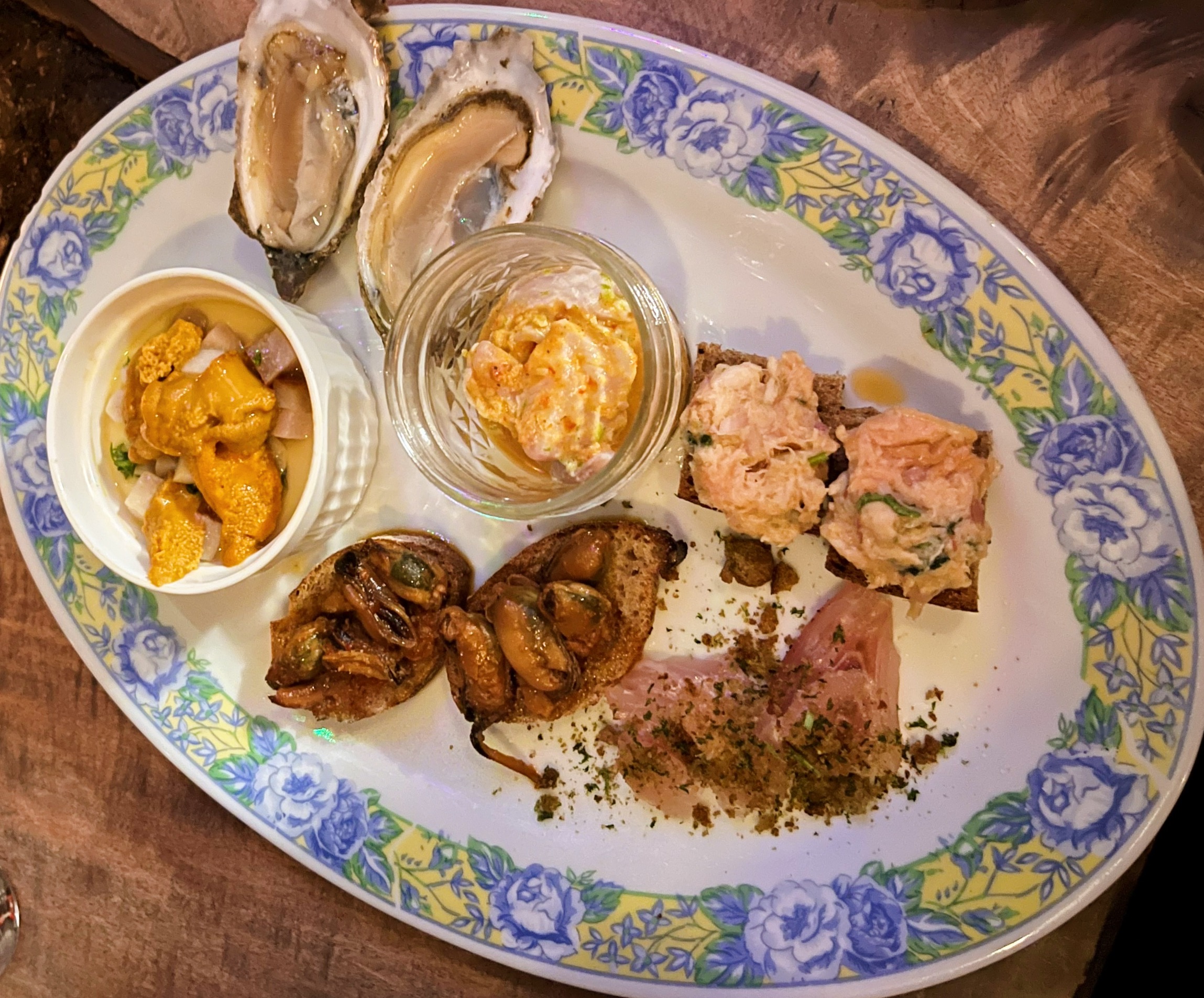
The egg custard with uni and swordfish bacon (far left) was served as part of a platter of raw and cooked seafood for the first course at Heavy Metal Sausage Co.’s Feast of More Than Seven Fishes.
Egg custard with uni and swordfish bacon at Heavy Metal Sausage Co.
On Monday night, my partner and I got to experience the absolute feat that is Heavy Metal Sausage stuffing 14 people into their butchery for an honest and approachable — yet extremely technical — meal that adds layers to the Italian American tradition. Every bite was wonderful, including a key lime cured mackerel and an acidic eel stew over Bloody Butcher polenta. But the night’s showstopper was a velvety egg custard, served in a ramekin and finished with heaps of uni and cubes of swordfish bacon alongside a platter of other raw and cooked seafood.
Did you know swordfish bacon was a thing? I didn’t, and now I want it forever. Chef Pat Alfiero said he salted, cured and cooked his swordfish the same way he would for pork bacon. Perhaps pig bacon might be overrated.
I could go on and on about the amazing duck wings glazed with black pepper hoisin at Atlantic City’s Cardinal, a cavernous restaurant with an inventive menu from chef Michael Brennan. The kitchen and bar focus on the details (my reposado and biscotti liqueur cocktail came topped with a literal biscotti), but it was the main course that left me truly wide-eyed.
Behold the Halibut Schnitzel, two words I’ve never heard said together. It arrived with two meaty pieces of lightly pounded out and schnitzel-ed halibut perched happily atop a very caper-forward lemony sauce and a carpet of tiny bell peppers. A charred lemon sat beside them. It was a puckery, flaky, satisfying coat of many flavors. Delish.
Cardinal Restaurant, 201 South New York Ave., Atlantic City, N.J., 609-246-6670, cardinal-ac.com
— Amy S. Rosenberg
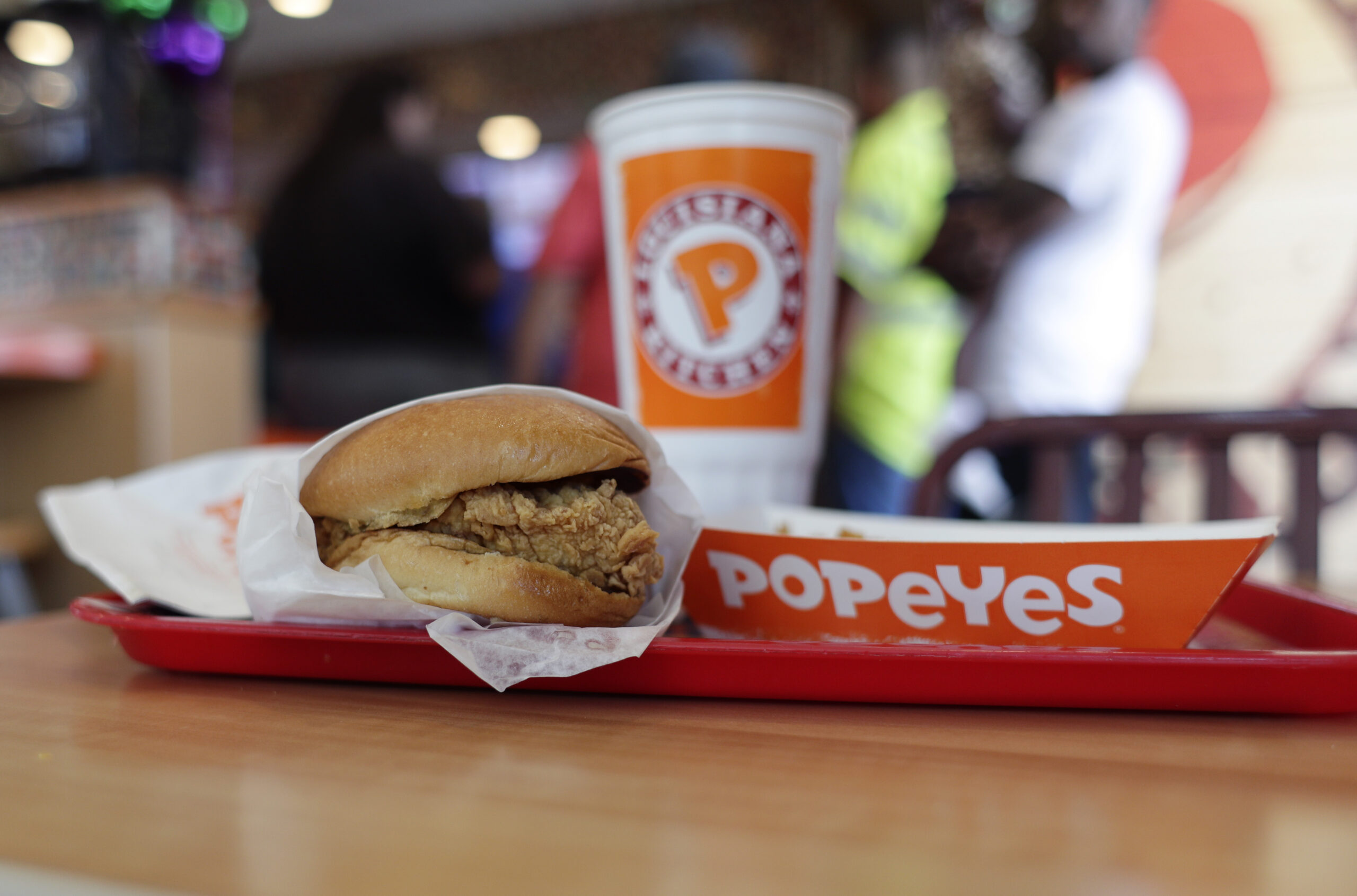
A Popeyes chicken sandwich and fries almost made Inquirer reporter Dugan Arnett miss his train to Boston. It was well worth it, he writes.
No. 1 Combo from Popeyes Louisiana Kitchen
As a kid, whenever I’d complain of being hungry, my dad would respond with one of his favorite idioms: “Hunger,” he’d say, “is the best sauce.” He was wrong, of course. The best sauce is the blackened ranch dipping sauce at Popeyes Louisiana Kitchen.
I was already running dangerously late to 30th Street Station to can an Amtrak train to Boston, when I stumbled upon a Popeyes on Market Street. In no world was this a responsible detour, particularly with a $200 train ticket hanging in the balance. But Popeyes is an American culinary institution, and when you come across one in the wild, you must take advantage. (After all, there’s a reason a trendy Long Beach, Calif. brunch spot once got caught serving Popeyes chicken with its dishes and then vehemently defended itself.) I ordered a spicy chicken sandwich combo meal with a biscuit and proceeded to eat it the way fast food is meant to be eaten: Out of the bag, standing, with only a modicum of self-shame. The chicken patty? Juicy and impossibly plump. The fries? Psoriasis-scabbed and fresh out of the fryer. The biscuit? A butter-kissed dream.
In the end, I still managed to make my train — though, after that meal, it would’ve been well worth it even if I hadn’t.
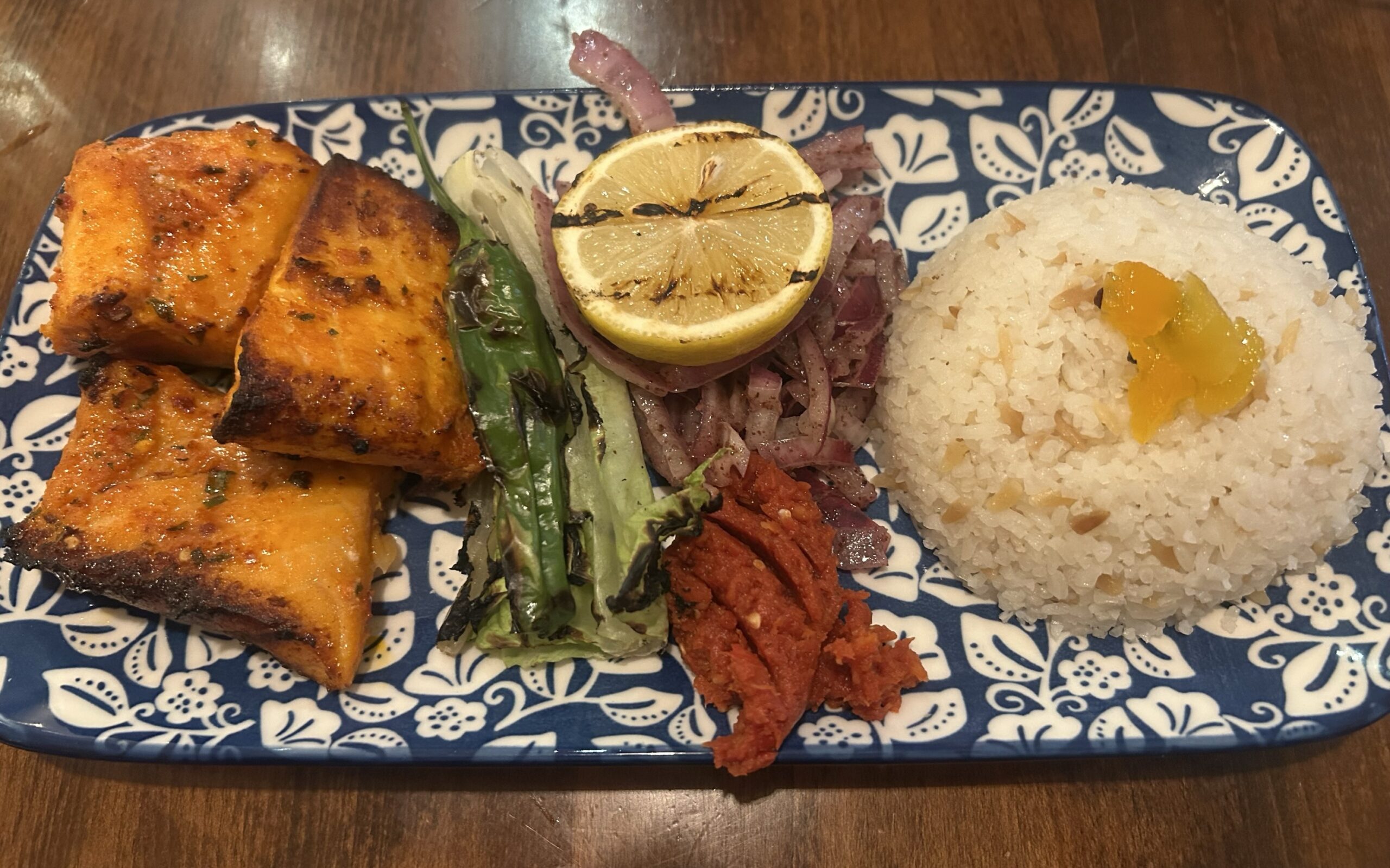
The salmon kebab from Kanella comes plated with grilled green lettuce, fiery red harissa, sweet purple onions, and a wedge of lemon.
Salmon kebab at Kanella
It’s not island weather, but the best thing I ate this week was the salmon kebab with a squeeze of sumac-sprinkled grilled lemon at Kanella in Center City. The salmon was a succulent orange-pink, crispy on the outside, tender and juicy within. Yes, my mom and I were the only patrons in the middle of a weekday afternoon. Yes, it was nearly sleeting outside, but the restaurant was so charming. And none of that mattered when this dish arrived. The salmon shared a plate with grilled green lettuce, fiery red harissa, sweet purple onions, and that wedge of bright lemon. The service was warm; holiday covers played on the sound system. I’d come back in any time.
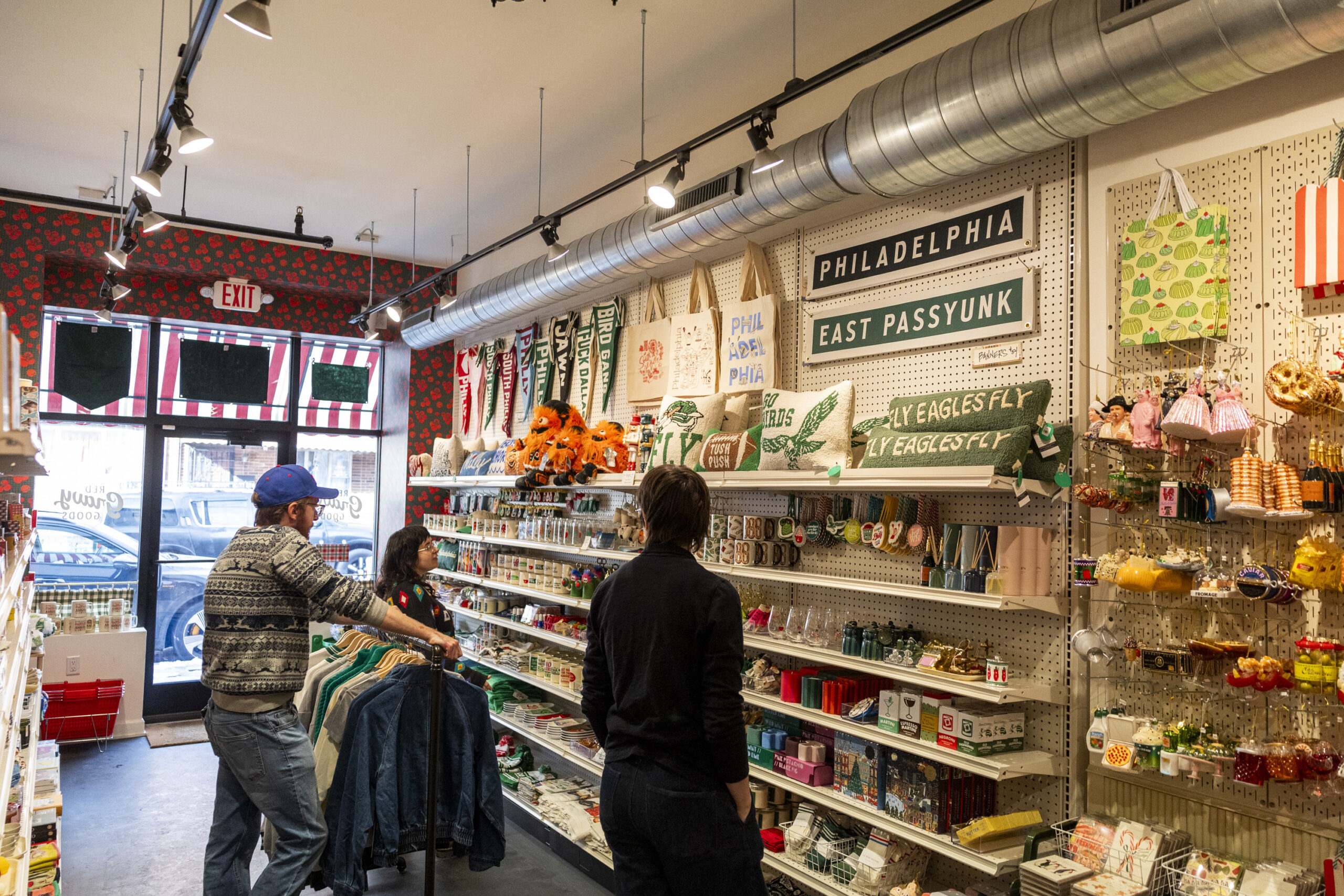
A ceramic coffee mug shaped like a stick of salted butter. Glittery Christmas tree ornaments fashioned after tins of beluga caviar, knotted pretzels, and even an Ozempic syringe. A Phanatic-shaped bottle opener made from discarded wooden baseball bats, plus Phillies-themed press-on nails, sweatshirts printed with South Philly landmarks, and lots and lots of bespoke Eagles merch.
Those are just some of the wares on offer from Red Gravy Goods, a new food and Philly-centric gift shop that opened earlier this month at 1335 E. Passyunk Ave. The store is the latest project from Valerie Safran and Marcie Turney, the married entrepreneurs who helped revitalize the Gayborhood with a string of boutiques and restaurants along 13th Street.
Some — like gourmet food market Grocery and vibey Mexican restaurant Lolita — puttered out during the pandemic. But others — Barbuzzo, Bud & Marilyn’s, and beloved Italian spot Little Nonna’s — have stuck around to become Center City stalwarts. Safron-Turney’s last project was Darling Jack’s Tavern, a casual-yet-design-forward bar that opened in 2023.
The East Passyunk Avenue gift shop Red Gravy Goods is stocked with Philly-coded merchandise, ranging from decks of pasta-printed tarot cards to Jason Kelce prayer candles.
Red Gravy Goods is the couple’s first foray into South Philly. It’s as much an homage to their new neighborhood as it is to their other brands.
“We really just love everything that South Philly is. Yeah, it’s Philadelphia, but it’s also its own thing — red sauce and pasta,” said Safran, 50. “It just feels like [South Philly] never goes out of style.”
Though the pair now lives in Chestnut Hill, South Philly has long captivated Safran and Turney. They pick up breads from Sarcone’s Bakery and certain pastas from Claudio Specialty Foods for Little Nonna’s, and often sneak sweet treats home from Mighty Bread for their two daughters. Whenever Turney passes the uniform store at Ninth and Christian Streets, she said, she cracks a smile.
The couple purchased the East Passyunk Avenue building in 2017, which property records show used to be an auto body shop. The name comes from Little Nonna’s Sunday Gravy, a pasta dish heaped with a San Marzano marinara and a side of beef short ribs or meatballs. To reiterate the theme, Turney covered accent walls in a tomato-printed wallpaper.
“You have to respect those old businesses that are still here, still kicking,” said Turney, 55. “We’re a good connector to what’s happening further up the avenue.”
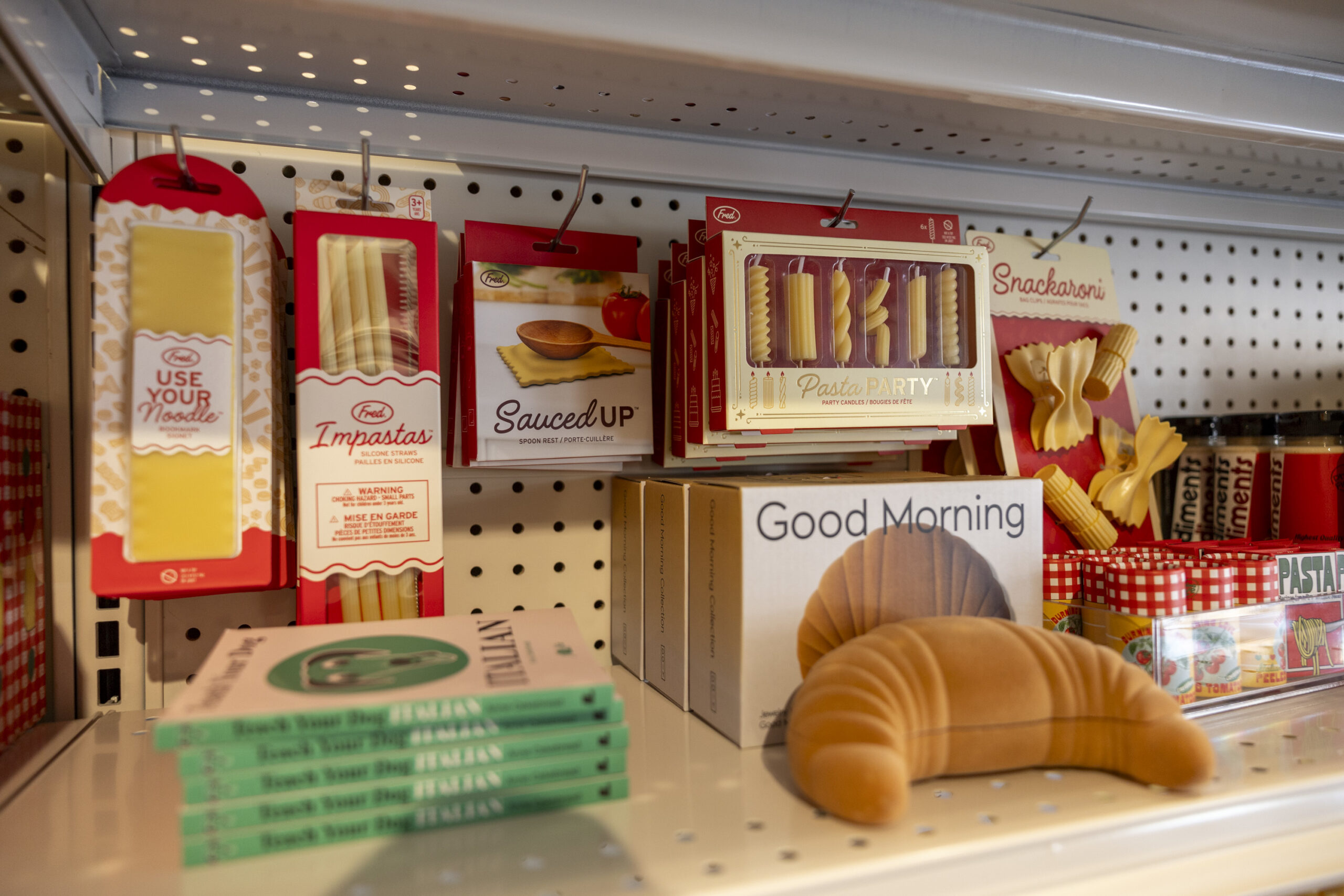
Croissant-shaped jewelry organizers and sets of pasta candles are sold at Red Gravy Goods, a new South Philly gift shop.
Curating a Philly “shoppy shop”
Red Gravy Goods is what the internet calls a “shoppy shop”: a broad collection of highly curated gift shops, artisan markets, and modern-day general stores where, as Emily Sundberg wrote in New York Magazine, “you can touch all of the products you see on Instagram.” Shoppy shops are places of discovery, often merchandising things like trendy condiments next to goods from small local brands.
What differentiates Red Gravy Goods is that more than half the stock comes directly from Safran’s brain. Roughly 60% of the store is exclusive to the Safran-Turney universe, where Safran works with a rotation of top-secret local illustrators and designers to create prints sold only at Red Gravy Goods, Open House, and Verde (the duo’s other gift shop).
The rest, Safran said, is sourced from trade show trips and social media. She never peers into other Philly boutiques for inspiration.
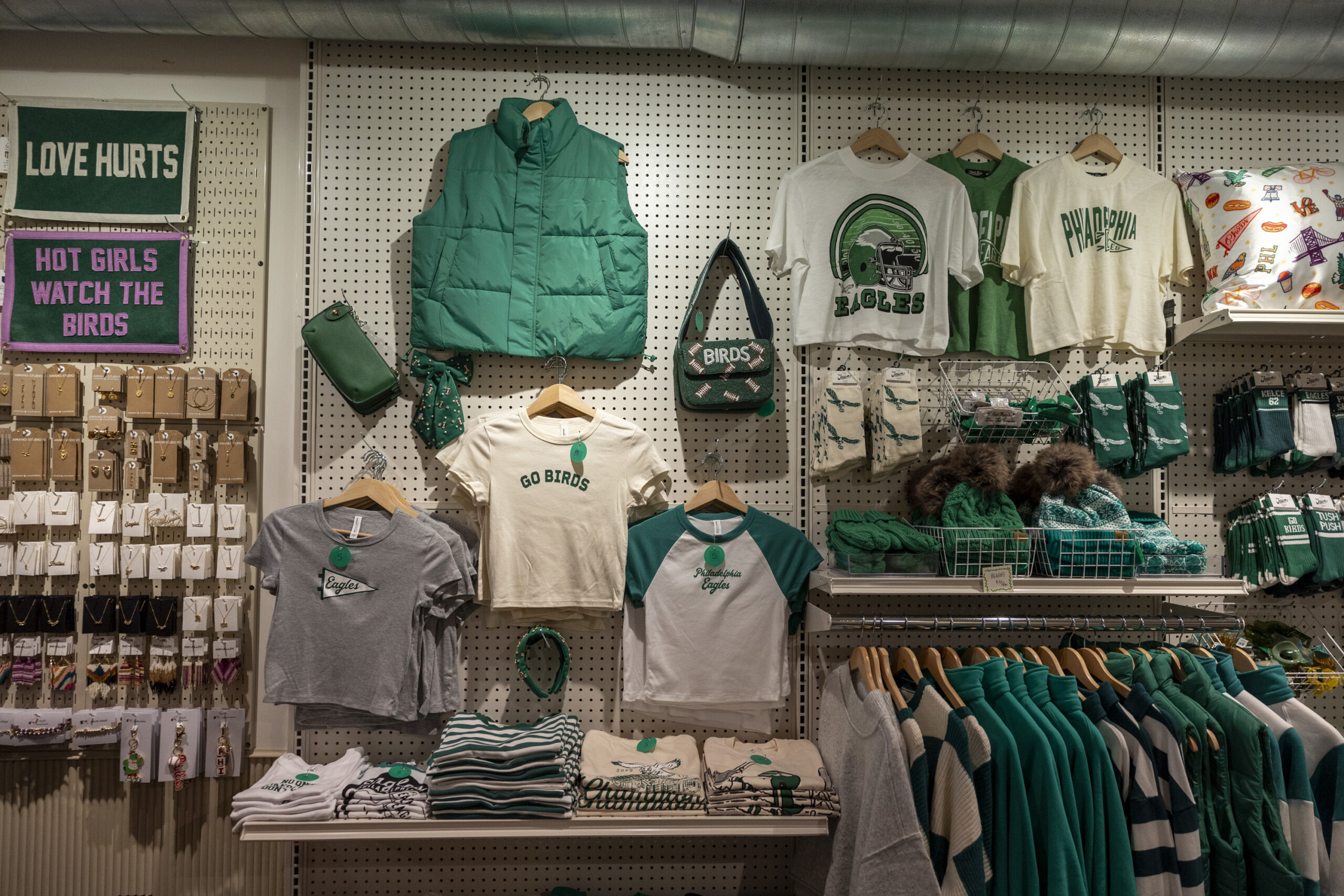
Roughly 60% of Red Gravy Good’s merchandise is exclusive to the East Passyunk Avenue gift shop — including unofficial Eagles gear.
“I don’t want what they have … because everything gets repeated,” Safran said. “If it brings me joy, it’ll bring someone else joy … There’s nothing serious about this.”
Nearly everything in Red Gravy Goods costs under $100, save for a couple of big-ticket items, like a forest green shoulder bag covered in beaded footballs from local apparel brand Phannies, that retails for $120.
The front of the 1,000-square-foot store is a hodgepodge of Philly-coded food paraphernalia, from butter-shaped coffee mugs and a deck of pasta-themed tarot cards to shimmering Italian cookie ornaments, and a candle that smells exactly like a soft pretzel. Like any good shoppy shop, there’s also condiments from trendy sauce brands such as Ayoh!
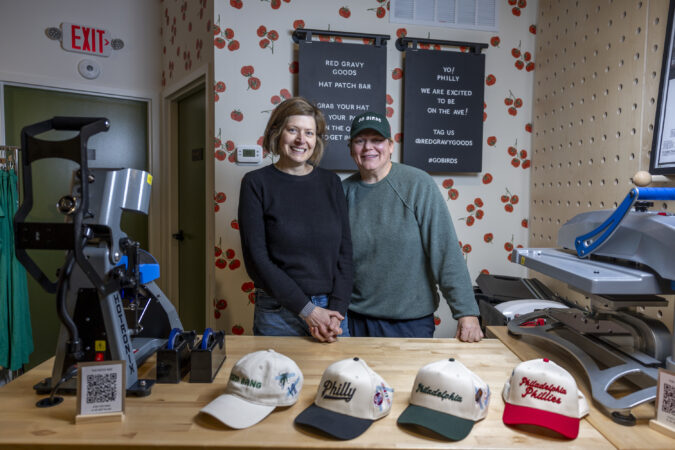
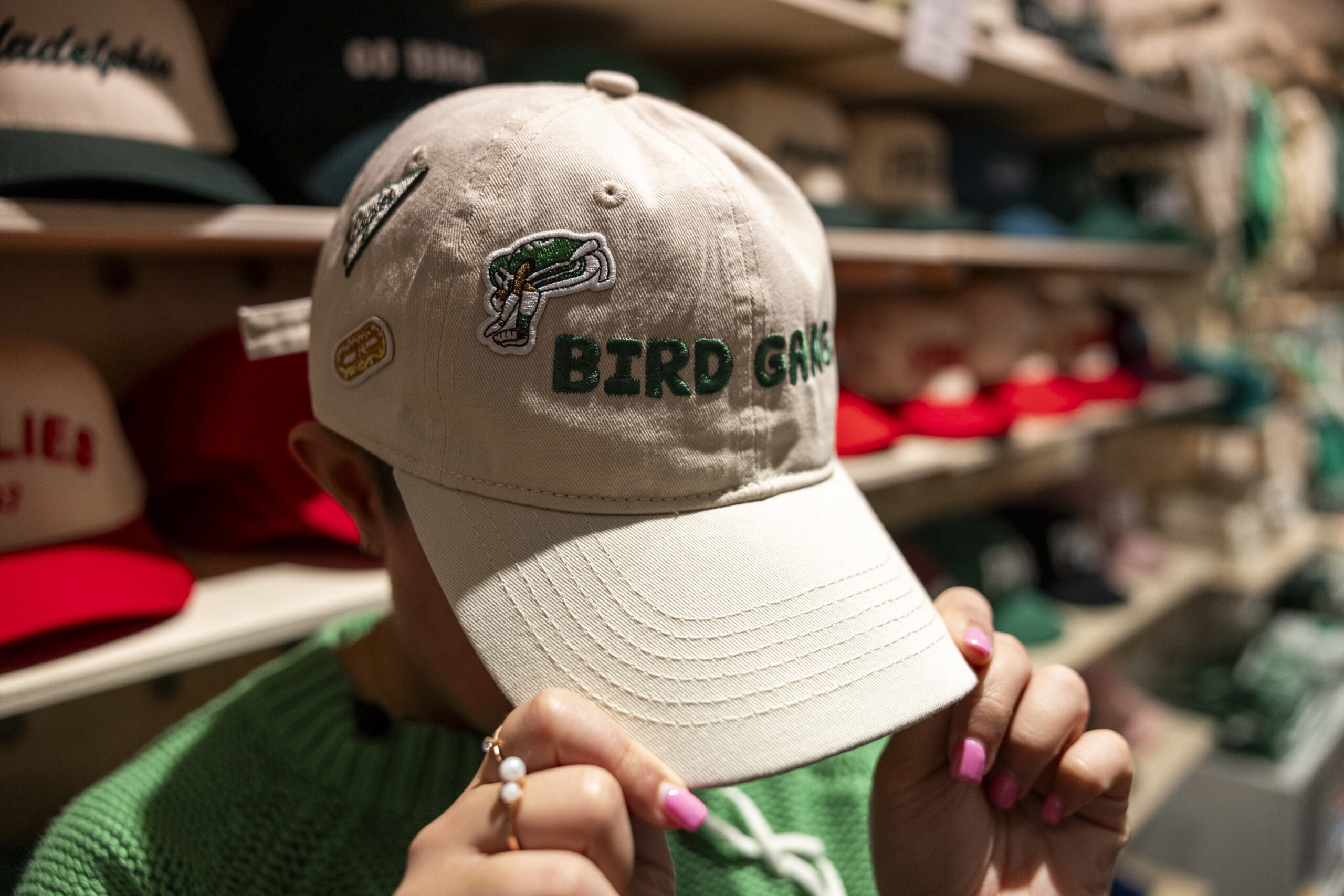
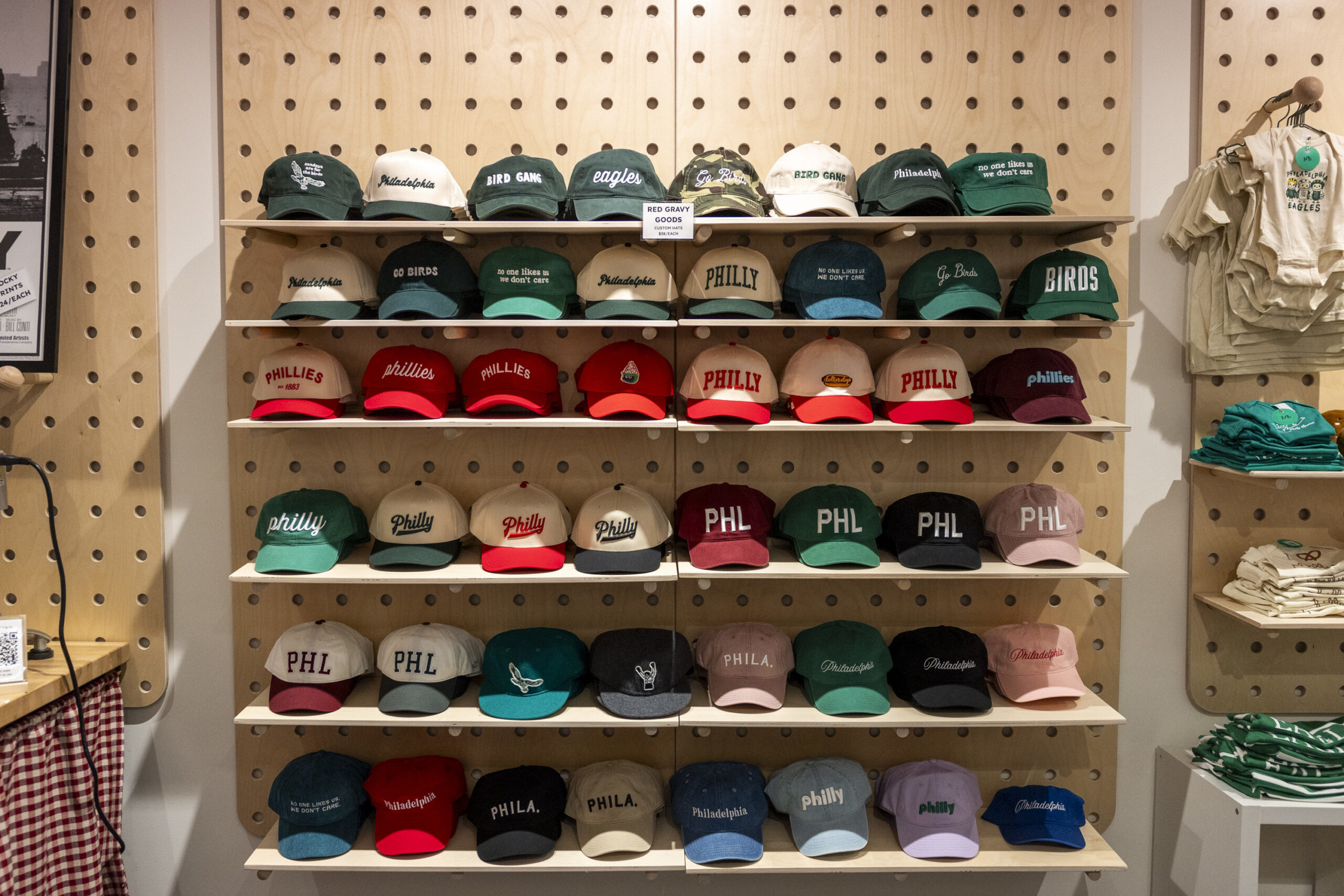
Customers are able to customize caps with upward of 50 patches designed by Valerie Safran, who co-owns Red Gravy Goods.
The back of the store, meanwhile, is for apparel and accessories, from claw clips (shaped like cannolis) to children’s clothes and a wall of unofficial Eagles swag.
Already, most of the store’s bestsellers are Safran’s designs: A mug printed with “F— Dallas” in cartoonish script; a children’s nursery sign that says “Shhh … an Eagles fan is sleeping”; and a new crew neck covered in illustrations of South Philly iconography that range from a Mummer and a cup of John’s Water Ice to the awning of P & F Giordano Fruit & Produce.
The piece-de-resistance of Red Gravy Goods is a custom hat patch bar currently manned by Turney.
Customers choose a Philly sports hat for $34, and then can add a patch from what will eventually become a line of roughly 250 patches designed by Safran. Each costs $6.
Inquirer reporter Beatrice Forman shows off a customized “Bird Gang” baseball cap from Red Gravy Goods. It features a heat-pressed patch of Saquon Barkley’s iconic reverse hurdler.
The first 52 patches are already in store, and run the gamut from sports pennants and cartoonish pretzels, to depictions of Saquon Barkley’s iconic reverse hurdler, and uncannily accurate miniature versions of a SEPTA bus.
The hats are prepared on-demand, with Turney operating a heat press machine. When done right, Turney said, it should take less than a minute to press down a trio of close-together patches.
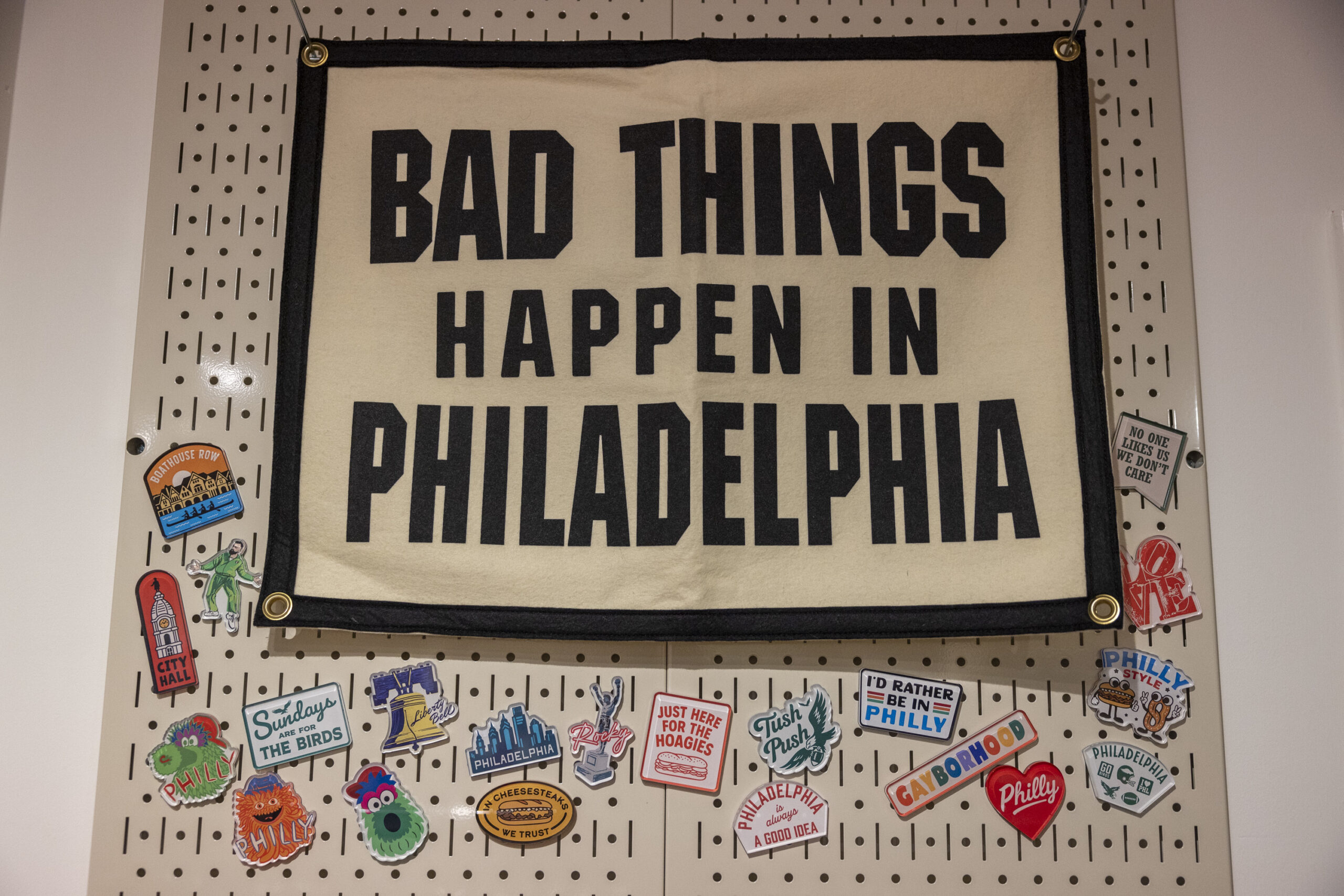
A sign reading “Bad Things Happen in Philadelphia” is seen with various stickers, at Red Gravy Goods at 1335 E. Passyunk Ave.
Already, said Turney, their 7-year-old Harlow aspires to be a shop owner when she grows up — just like her moms.
Red Gravy Goods, 1335 E. Passyunk Ave., 267-764-5532. Hours: 11 a.m. to 7 p.m. daily
Customizable hats inside Red Gravy Goods, which will heat press patches on demand. A hat costs $38, and each patch costs $4.50.
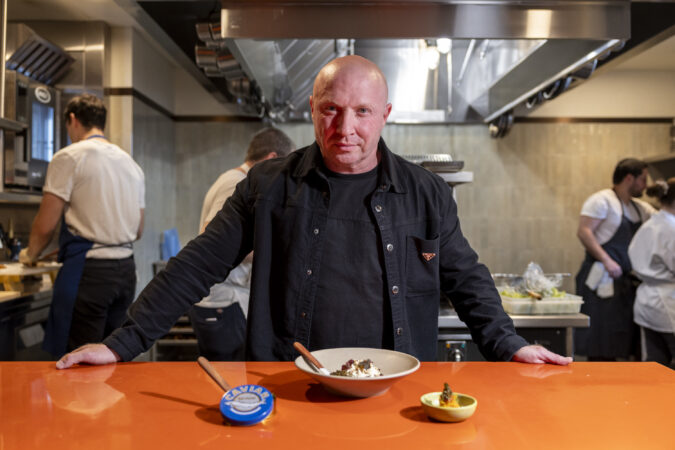
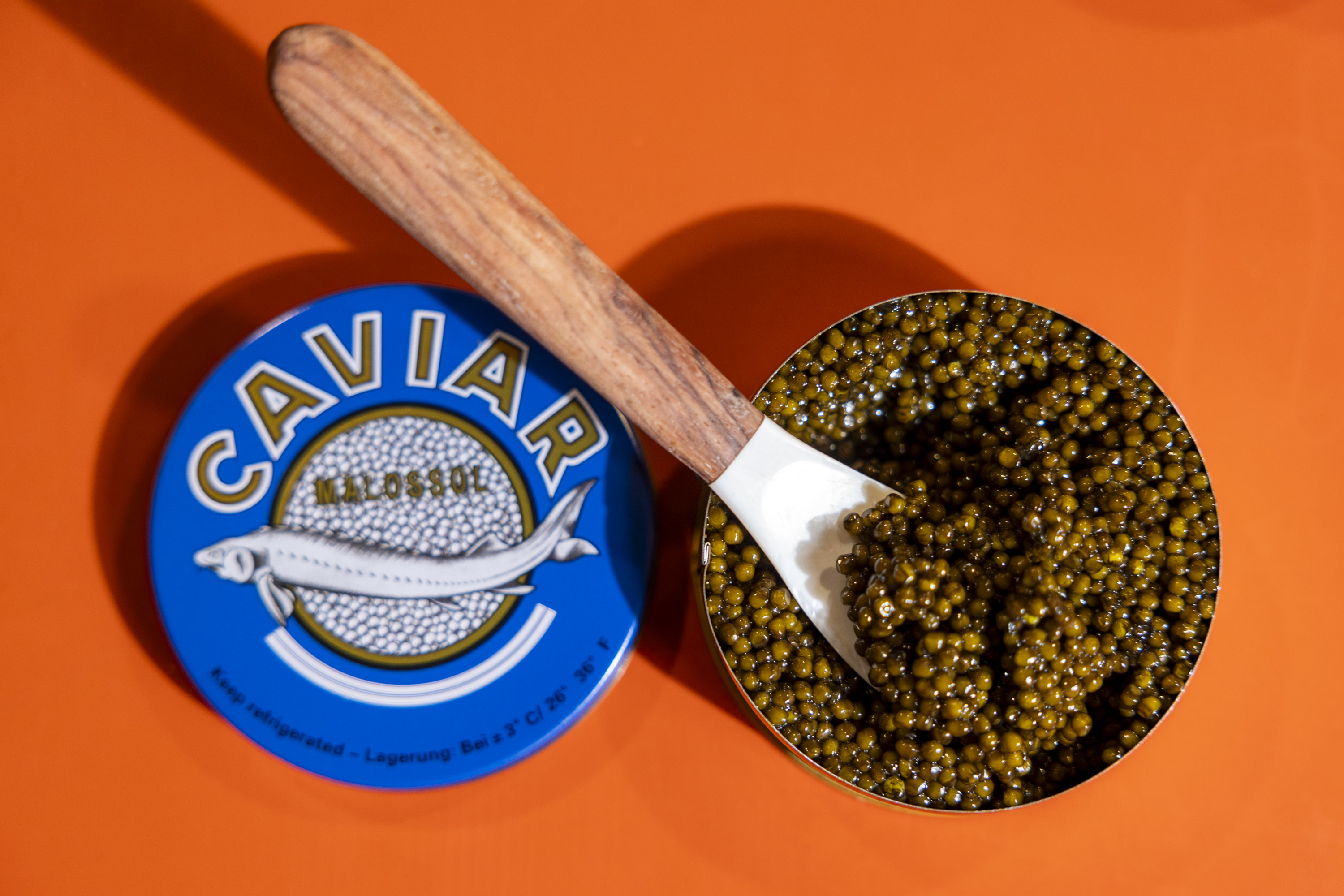
On a November afternoon, Gary Shusman slid hundreds of dollars’ worth of caviar across the counter for inspection at the Center City oyster bar Pearl & Mary. The seven 1-ounce tins were flipped upside down so the chef could scan the individual eggs for irregularities. Deep-green pearls of golden osetra glistened like tiny emeralds in the overhead light.
They were all perfect.
Shusman, 50, is in the business of tiny fish eggs. His company CaviarXS supplies the Philadelphia region’s most in-demand restaurants with sturgeon caviar imported from parts of Europe and Asia. Shusman only sells wholesale so his prices don’t reflect retail rates, he said, but a single kilogram of similar-grade caviar could cost consumers roughly $3,500.
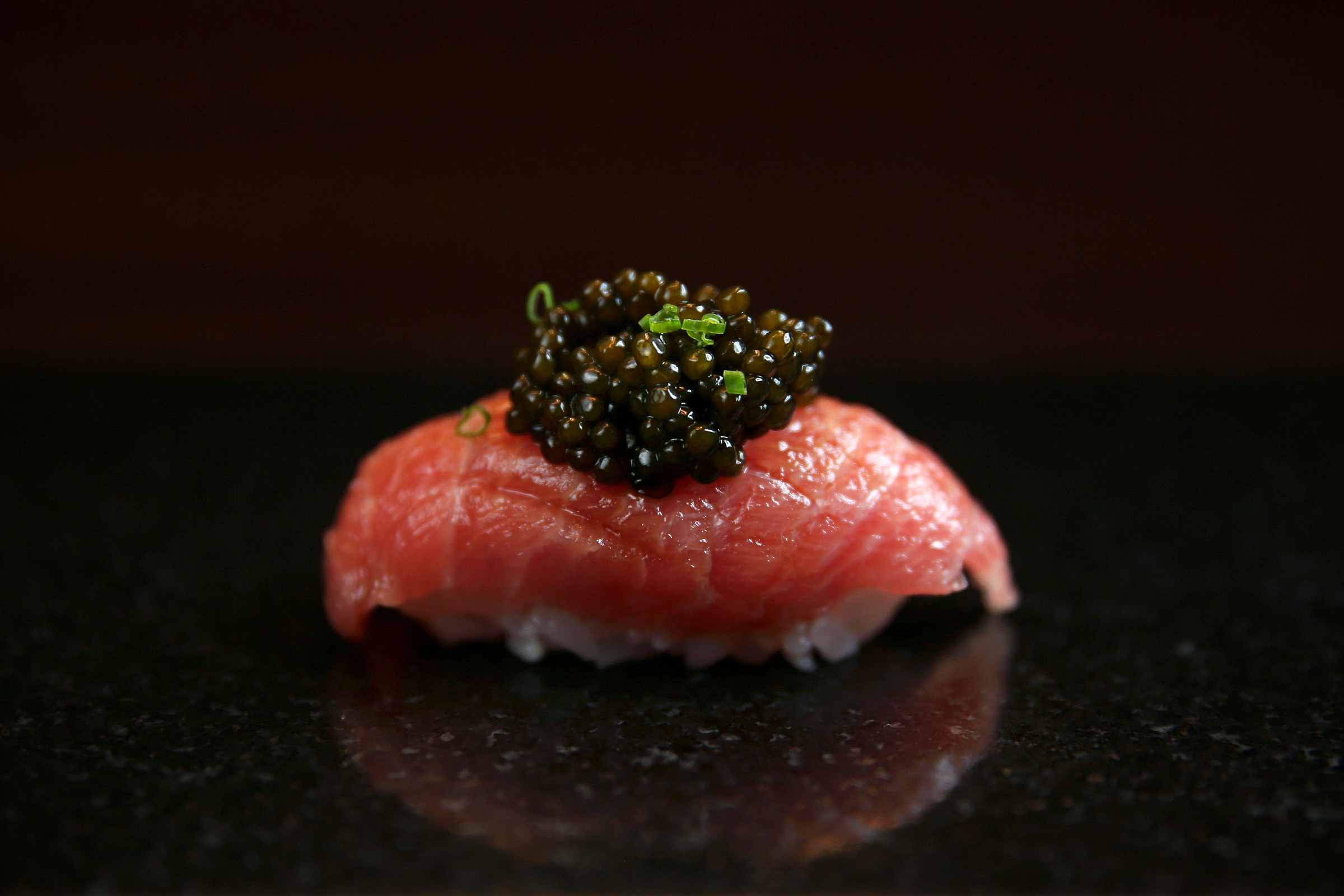
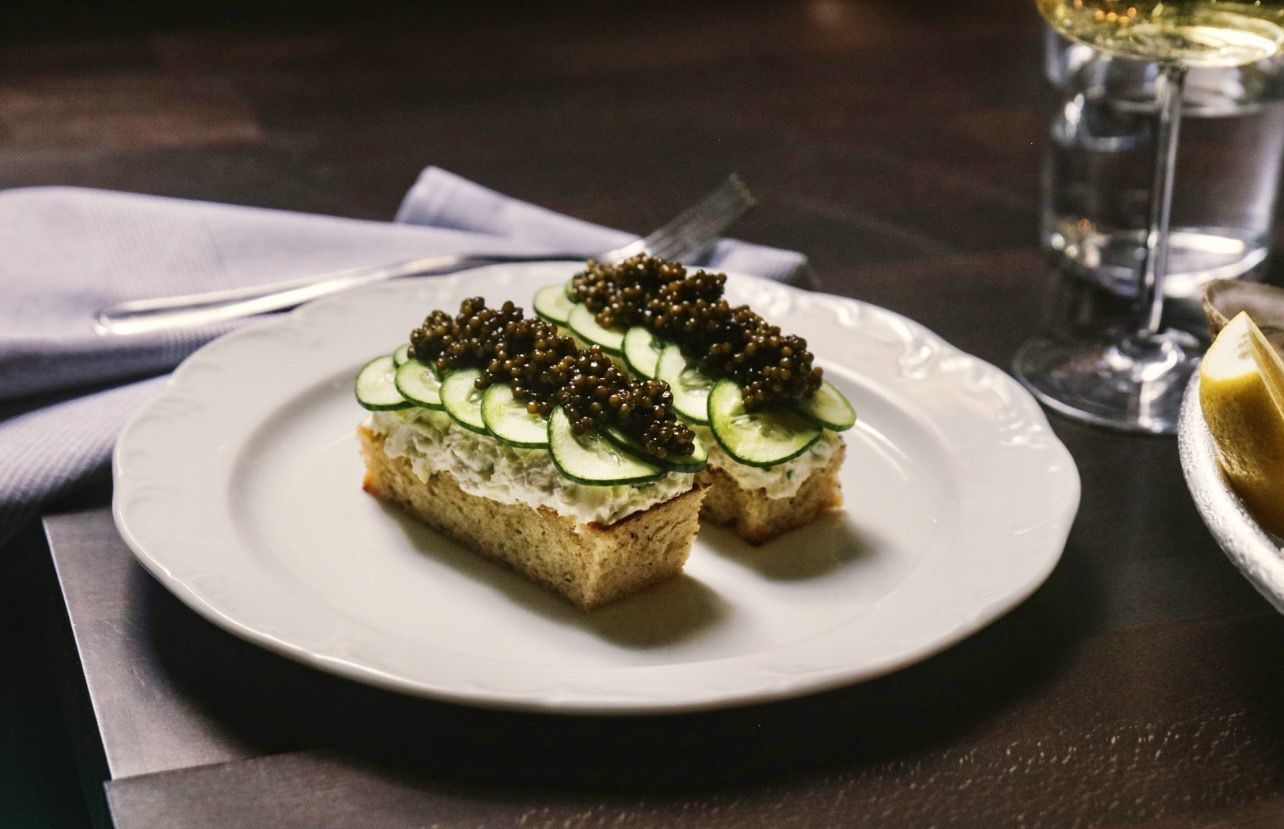
These precious beads are on the menu at nearly 50 upscale hotels and restaurants in and around Philly. They’re heaped on bluefin tuna nigiri at Jesse Ito’s notoriously difficult-to-book Royal Sushi omakase. They ooze out of a $65 double cheeseburger from Honeysuckle. They’re spooned onto petite rye tartlets filled with wagyu tartare at Emmett and plated next to crispy gold pierogis at Harp & Crown.
A tin of golden osetra caviar sourced by Gary Shusman’s CaviarXS, which supplies caviar to many of Philly’s most in-demand restaurants. Similar grade caviar retails for $3,500 per kilogram.
Provenance, Her Place Supper Club, and Friday Saturday Sunday — three of Shusman’s top clients — all took home Philadelphia’s first Michelin stars. Several others, including Honeysuckle, earned recommendations from the storied gastronomic guide.
Chefs choose to work with Shusman because his concierge-esque style adds an extra layer of luxury to caviar — something his clients say they appreciate as the fish eggs become trendier and more “accessible.”
“I think chefs are artists,” Shusman said, “and what I do is like supplying paint to Michelangelo.”
Despite the hoi polloi’s enthusiasm,caviar still occupies a mostlyrarified space in Philly. It’s largely reserved for high-end tastings and prix fixe menus, meted out carefully with a mother-of-pearl spoon. The fish eggs’ growing presence represents a rising tension in Philly’s food scene, which attracts national acclaim — and with it, more expensive restaurants — as the city continues to have a stark poverty rate.
Some chefs say, let caviar be caviar.
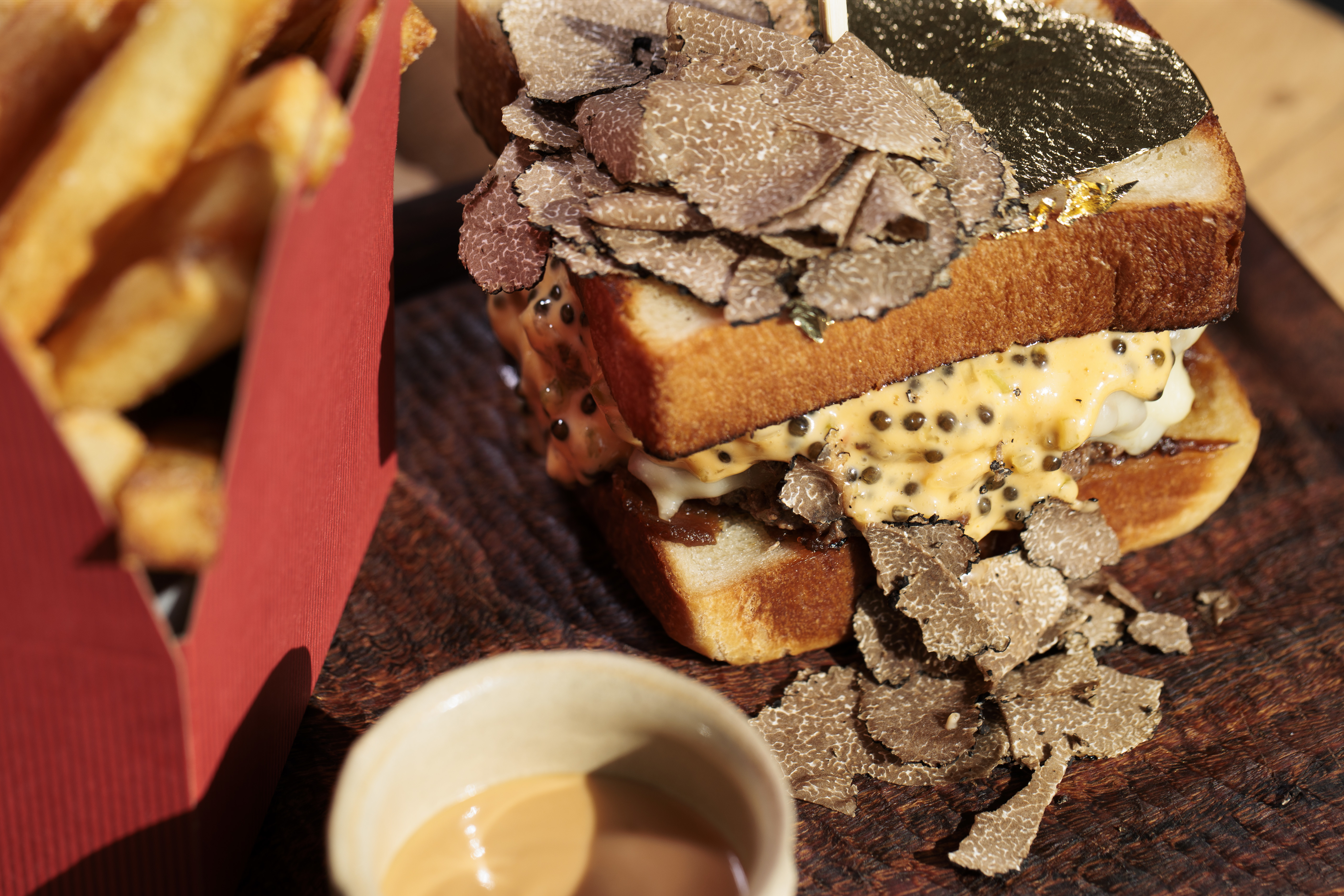
Class dynamics are top of mind at North Broad Street’s Honeysuckle. Chef Omar Tate uses Shusman’s caviar for the McDonald’s Money: a pricey burger sandwiched by milk bread that’s adorned with black truffles, flecks of edible 24-karat gold, and golden osetra pearls.
The McDonald’s Money double cheeseburger from Honeysuckle includes CaviarXS golden osetra, truffles, and edible gold fleks. “It’s a metaphor for consuming the money you don’t have,” said Tate.
It’s an ode to Tate’s childhood in Germantown. When he would ask parents for money to get McDonald’s, “I’d get told no because we didn’t have it,” he said. “There’s truffle on this burger, there’s caviar … It’s a metaphor for consuming the money you don’t have.”
Like most everythingat Tate’s culinary celebration of the Black American diaspora, the burger elicits a big reaction. The presentation’s dramatic irony makes the fish eggs feel more relevant, said Tate, who didn’t learn what caviar was — let alone taste it — until his mid-20s. He doesn’t feel like he was missing out.
“Caviar was never meant to be something consumed at scale, Tate said. ”It’s not food … it’s more closely related to a drug.”
In Society Hill, Provenance chef-owner Nich Bazik agrees that caviar isn’t meant for mass consumption. “Making it cheaper and more accessible just dilutes the product and takes away that exclusiveness, takes away from that moment you want to save up for,” said Bazik, who has a course dedicated to caviar at his French and Korean tasting counter.
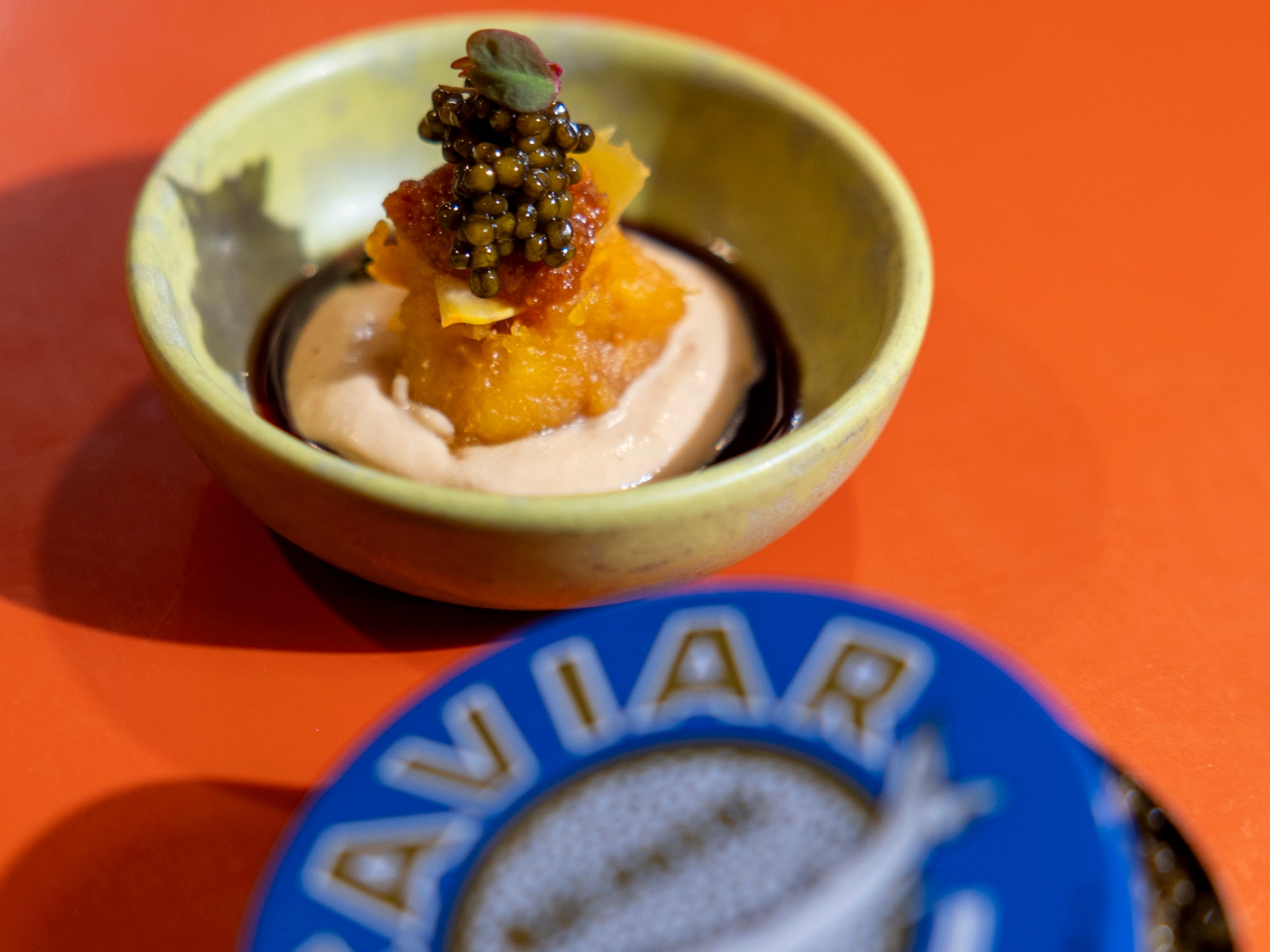
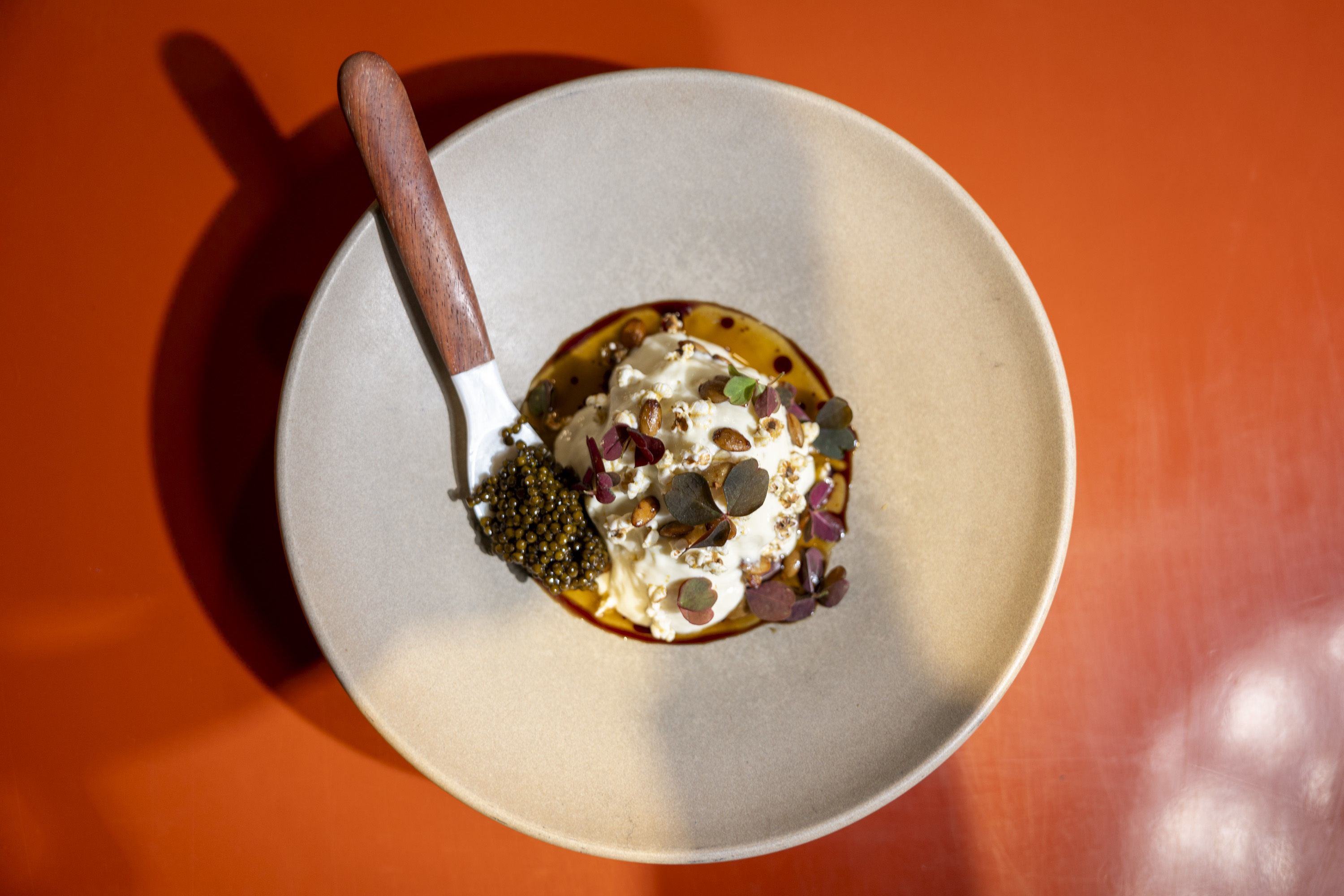
Pearls of golden osetra caviar sourced by Gary Shusman sit atop a pile of crème fraîche and squash at chef Nicholas Bazik’s Provenance in Old City.
From nightclubs to caviar bumps
Like Tate, Shusman remembers what it’s like to go without. He and his parents immigrated from Kyiv to Philly in 1989 as the Soviet Union collapsed. He can still recall the scarcity he felt during his childhood in Ukraine, where supermarket shelves would frequently be bare from food shortages.
Caviar has captivated him since he was a kid. He had his first taste while still living inthe U.S.S.R. The pearls, served straight from the tin, were a rare treat procuredfrom the black marketby his uncle, a butcher, or his mother, who worked in food transportation. Once stateside, Shusman’s father made his living by importing Eastern European foods, including caviar.
“I don’t remember ever not liking [caviar], mostly because there was no telling when I would have it again,” said Shusman, licking his lips. “It transports you. You taste the sea.”
Caviar eggs take a decade to develop inside the stomachs of female sturgeon, a hulking freshwater fish most closely associated with the beluga native to the Caspian Sea. To harvest the eggs, you must kill the sturgeon — a controversial process that involves slicing open the stomach to reveal walls of tiny black, amber, or deep-green pearls.
While the caviar industry was undergoing its first major transformation, Shusman, then in his 30s, was partying in Philly. He owned a trio of now-shuttered nightclubs — including Rittenhouse Square’s Rumor and beloved EDM venue Soundgarden — when his wife asked him to consider leaving the industry to focus on fatherhood.
“It was a nonstop party, but it was a lot of work, a lot of stress,” said Shusman, who lives in Richboro, Bucks County, with his wife and two preteen sons. (So far, only one son likes caviar.)
Shusman was working as a real estate developer in 2017 when he found his way back to caviar. He was dining at Royal Sushi’s omakase counter when he gave chef Jesse Ito some unsolicited feedback about the caviar being served.
Royal Sushi’s chutoro tuna nigiri is topped with a heap of CaviarXS’s golden osetra. Chef Jesse Ito was the company’s first official client.
“His caviar wasn’t — I don’t want to say it was bad. It was just OK,” recalled Shusman. “I told him I could find him something better.”
Shusman has supplied Ito with caviar ever since, establishing CaviarXS in 2018. His business largely comes from word of mouth: Bazik learned of Shusman from a Bon Appétit video about Royal Sushi, then recommended him to Evan Snyder at Emmett. Friday Saturday Sunday co-owner Chad Williams connected him to Tate. Chef Amanda Shulman sent Shusman’s number to her husband, Alex Kemp, before the couple opened My Loup in 2023.
CaviarXS’ clients almost exclusively choose golden osetra caviar, a mild, slightly nutty variety that Shusman believes to be the best. He sources it from the Caspian region, though he declines to divulge the names of the farms (or his prices).
“It’s hard to get an exact answer out of people as to where the caviar really comes from, which creates a general distrust,” said Provenance’s Bazik. “I could go online or talk to a rep from a company that says they source their caviar from this place or that place with no stamp of authenticity. Or I could call Gary.”
Crab toast from My Loup topped with CaviarXS pearls. The restaurant, co-owner and chef Alex Kemp said, is loyal to Gary Shusman and his company.
A milkman for fish eggs
Origin aside, chefs choose Shusman’s caviar because he personallydelivers it, kind of like a high-end milkman.
“It’s about the way you make them feel … Chefs like when you hold their hand,” Shusman said. “It’s my personality. I’m very likable.”
Twice a month, Shusman travels to the Brooklyn warehouse where his caviar is stored to handpick the roe he sells to chefs. He searches for perfect pearls — uniform beads of amber that sparkle. They should burst when pressed to the roof of your mouth, he said.
On any given Tuesday or Thursday, Shusman drives around Philly for hours in his white Mercedes-Benz, dropping off tins of caviar in cooler bags printed with photo-realisticfish eggs. In between stops, he take meetings on his phone for his real estate business.
Shusman makes upward of 10 caviar deliveries a day. Often, he’ll clinch a sale by asking chefs to taste the product on the spot.
The pearls permeate much of Shusman’s life. He spoons beads of golden osetra atop of fluffy scrambled eggs for breakfast. Even Shusman’s dog — a 6-year-old Yorkie — gets caviar as a treat. Every time he starts the engineof his car,Shusman’s electronic dashboard beams the words “Hello, Gary Caviar.”
Shusman’s personal deliveries stand out because Philly doesn’t yet have a caviar market large enough to demand that level of service, said Bazik, unlike New York City or Chicago. (That may change now that the Michelin Guide has landed here, Bazik hopes.)
Provenance’s fall 2025 tasting menu included a squash and licorice powder custard topped with a whipped tofu mousse, sorghum puffs, and a spoonful of CaviarXS golden osetra caviar.
“I’m so spoiled … I can count on Gary to go above and beyond,” said Alex Kemp, whose wife and My Loup co-owner earned a Michelin star for Her Place Supper Club.
At My Loup, Shusman’s caviar currently speckles a $35 whitefish doughnut. In the past, Kemp said, he’s used the osetra to top a sour cream-and-onion pork rind and creamy sea urchin mousse: “It tastes so clean.”
Kemp’s loyalty to Shusman runs deep. When My Loup first opened, the restaurant lost over a pound of caviar overnight after a cleaning company accidentally unplugged its refrigerator. Shusman replaced it free of charge.
“I could’ve been lying, but he didn’t ask any questions. It was big for us as a new business,” Kemp said.
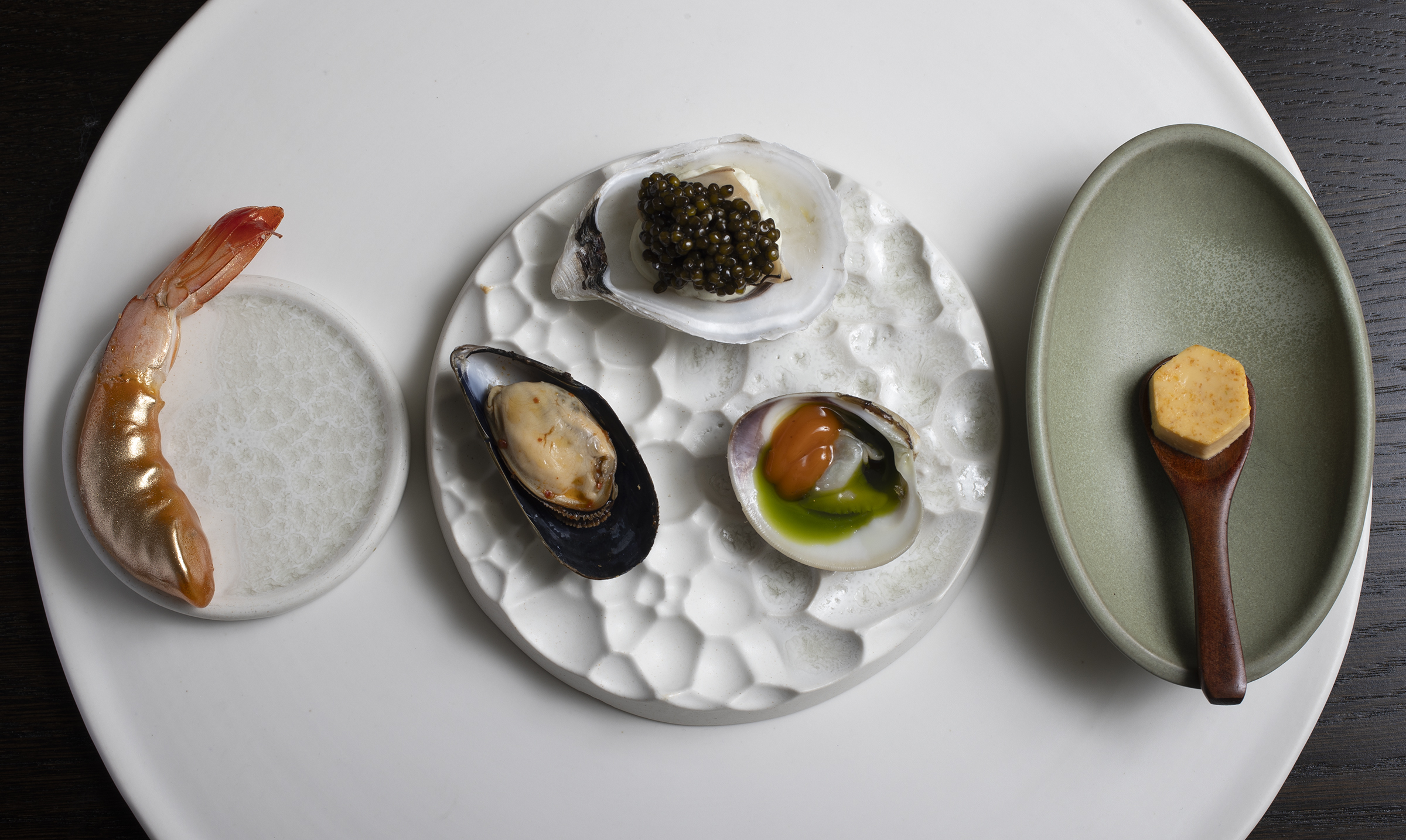
Provenance’s October 2024 caviar course, which included Caledonian Blue Prawn, oyster with sweet potato mousseline, and CaviarXS’ golden osetra caviar. Chef-owner Nich Bazik said he spends between $2,000 and $4,000 a week on caviar at the restaurant.
That loyalty boosts sales. Provenance goes through roughly a kilo of golden osetra eggs a week for its caviar course. In the fall, Bazik spooned it atop a whippedtofu mousse that enclosed a firm block of a sweet potato-and-licorice powder custard. Puffs of sorghum sat contrasted with the fish eggs, Bazik said, giving each bite a simultaneous crunch and pop.
The dish was inspired by things Bazik’s 4-year-old son eats (minus the caviar). Provenance pays roughly $2,000 a week — or $8,000 a month — for the fish eggs alone.
“The amount of money we spend on caviar for that one dish isn’t the best business decision I’ve ever made,” Bazik said. “But I keep doing it because it’s Gary. It comes with generosity.”