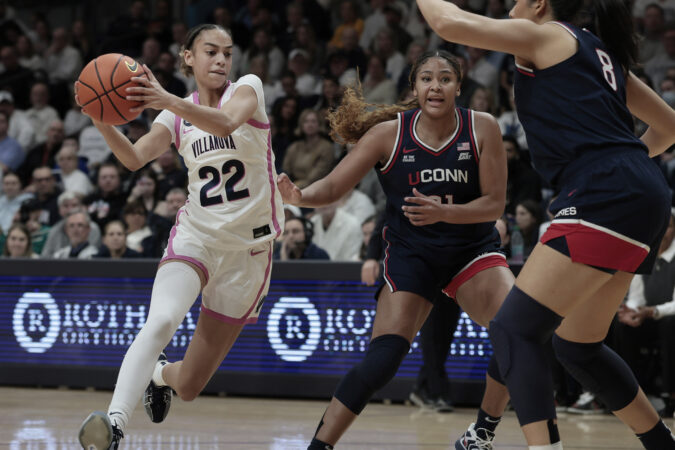
It would be unfair to call Wednesday night’s Big East clash between Villanova and No. 1 Connecticut anything other than what it ultimately was: a litmus test for the Wildcats.
Villanova may sit in second place in a demanding Big East, but in Wednesday’s game against UConn, the Wildcats once were again looking up at a Geno Auriemma-coached Huskies program, which entered Finneran Pavilion undefeated with 27 wins.
Technically, make that 43 regular-season games, if you consider the Huskies haven’t lost since last February when, as the No. 1 team in the land, they suffered a four-point upset against then-No. 19 Tennessee.
A perennial power team in a power conference, Villanova wasn’t just playing the women wearing the Huskies’ deep blue on the other side of the floor; it was playing to prove itself against UConn’s stature, its reputation.
And, if we’re being honest, the result of UConn’s tens of millions in NIL funding, ready for distribution.
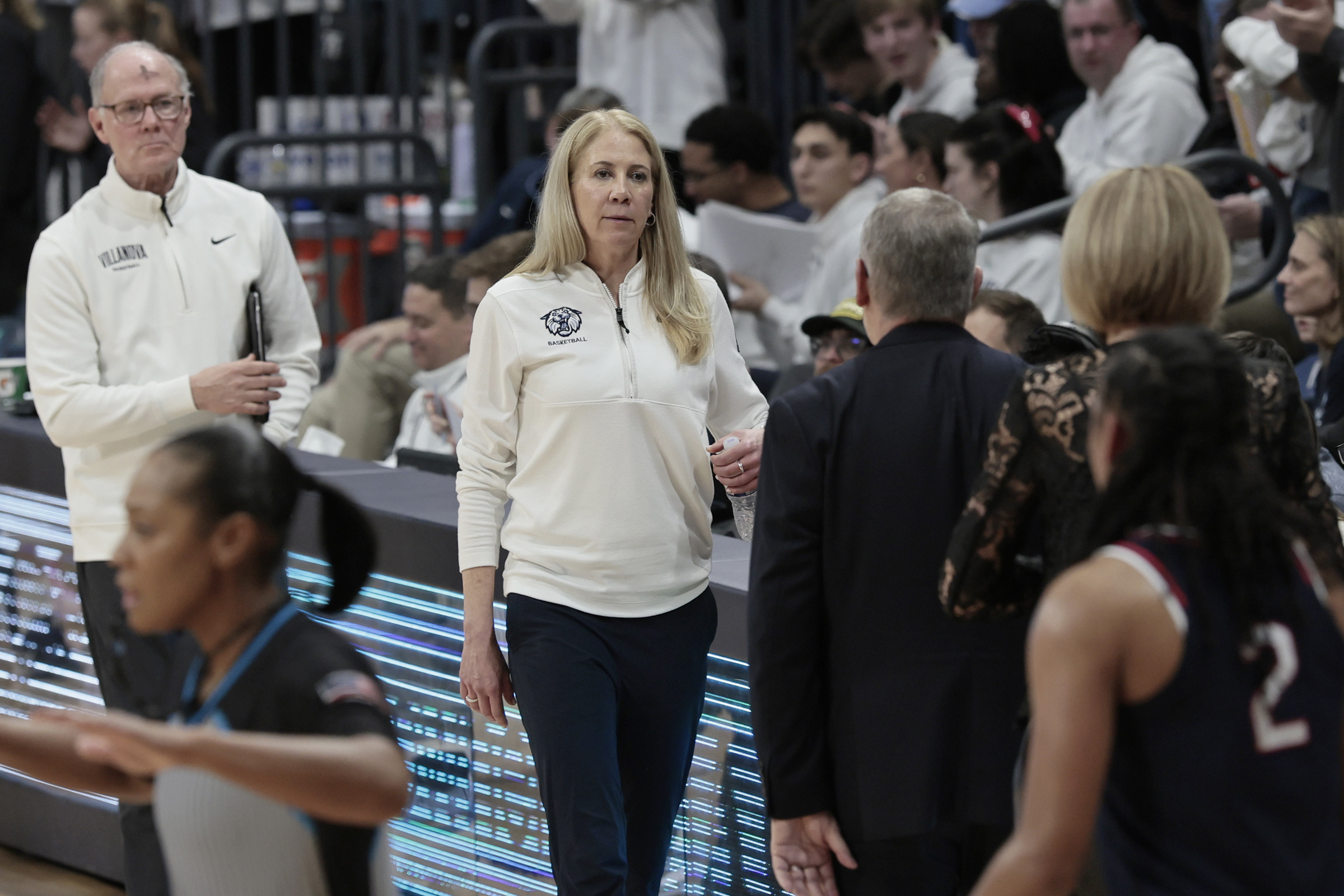
Villanova coach Denise Dillon approaches UConn coach Geno Auriemma following Wednesday’s game between the two at Finneran Pavilion.
In her six years as head coach, Denise Dillon has never made concessions for her team after it came up short against UConn, time and time again.
But if she wants this year’s Wildcats to dance far into March, their performance has to match what was on display in the first half on Wednesday night. And look a heck of a lot better than a second-half fallout that resulted in an 83-69 loss.
“Honestly, give them credit. [UConn] stuck to their game plan,” Dillon said. “I think we let up on what we needed to do … miss a possession here or there, they’re going to take advantage.
“And that’s what happened.”
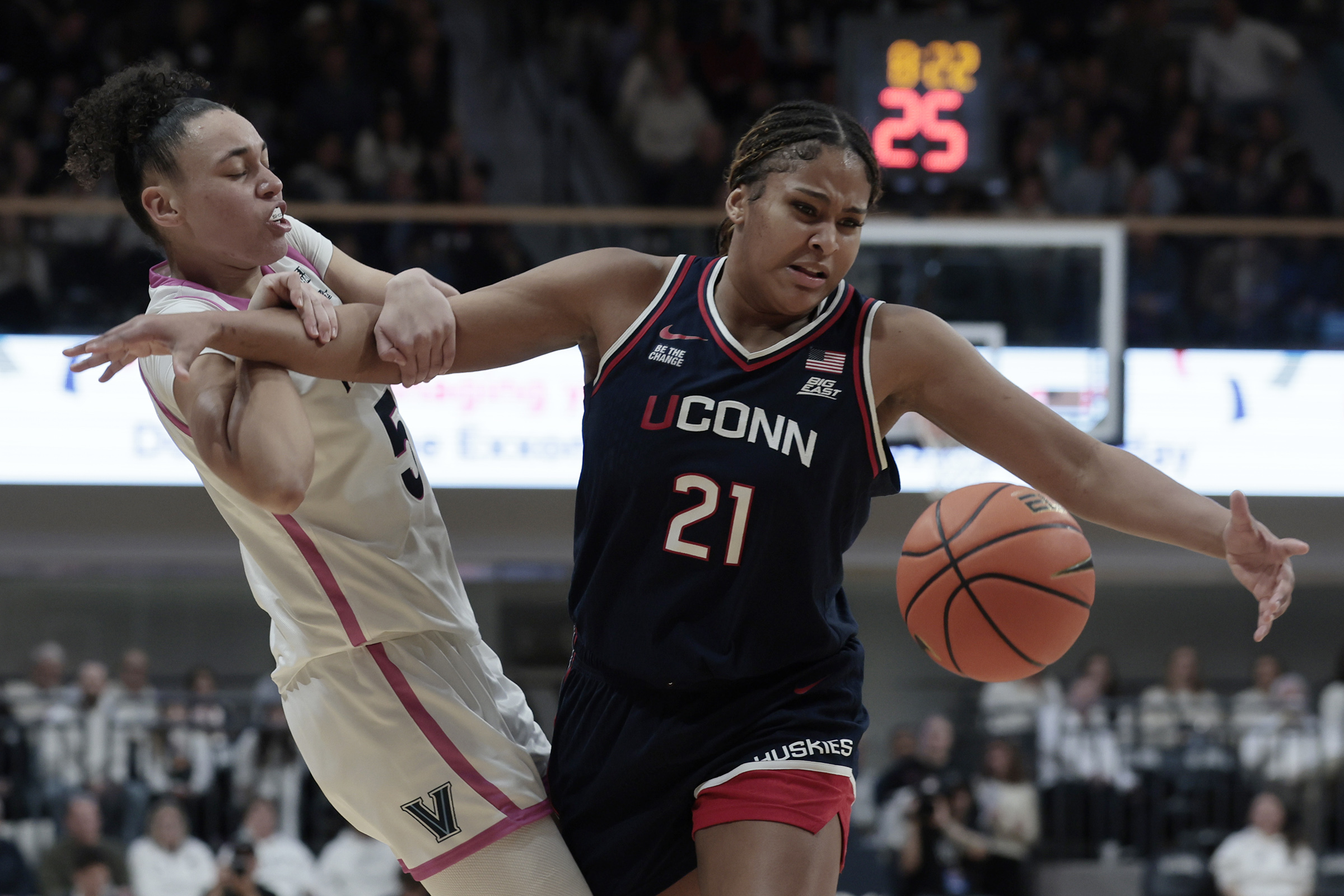
Villanova’s Ryanne Allen (left) is held back by UConn’s Sarah Strong during their game on Wednesday. Strong finished with 21 points and 12 rebounds.
Don’t sleep on the Wildcats
Villanova (21-6, 14-4 Big East) looked like a true contender in the first eight minutes. The Wildcats held a one-point lead at the first television timeout with 4 minutes, 38 seconds remaining and went into halftime up three.
It marked the only time UConn (28-0, 17-0) has trailed at halftime this season and one of its longest deficits, with the Wildcats ahead for 16:10 of the first half, compared to just 2:09 for the Huskies.
“How we started the game was unacceptable,” said UConn guard Azzi Fudd, who finished with a team-high 25 points. “We need to be able to start the game strong, play the full 40, and not take the game or a team for granted. I think they proved we cannot overlook anyone.”
One player UConn certainly couldn’t overlook was Jasmine Bascoe, who had a game-high 26 points and was a rebound shy of a double-double. She got help from Denae Carter (21 points) and freshman Kennedy Henry, who finished with nine, but played one of her best games of the season.
“If it weren’t for my two girls [Fudd and forward Sarah Strong], she’d be the best player in the Big East, hands down,” said Auriemma, who lauded Bascoe’s performance. “Just an amazing talent, and she made it really tough for us tonight.”
Villanova’s Jasmine Bascoe signals one of her four made three-pointers in Wednesday’s game against UConn.
Lessons learned
The reason UConn is No. 1 — besides having one of the most dominant players in women’s college basketball in Strong — is an ability to grind out wins.
Speaking of Strong, while she finished with 21 points and 12 rebounds, the Wildcats frustrated the sophomore enough that by the third quarter, she was in danger of fouling out. She kept her composure and aided the Huskies in outscoring Villanova, 46-29, in the second half.
Strong and Fudd did what they do, but in the end, turnovers were the Wildcats’ undoing; UConn scored 28 points off 26 Villanova turnovers.
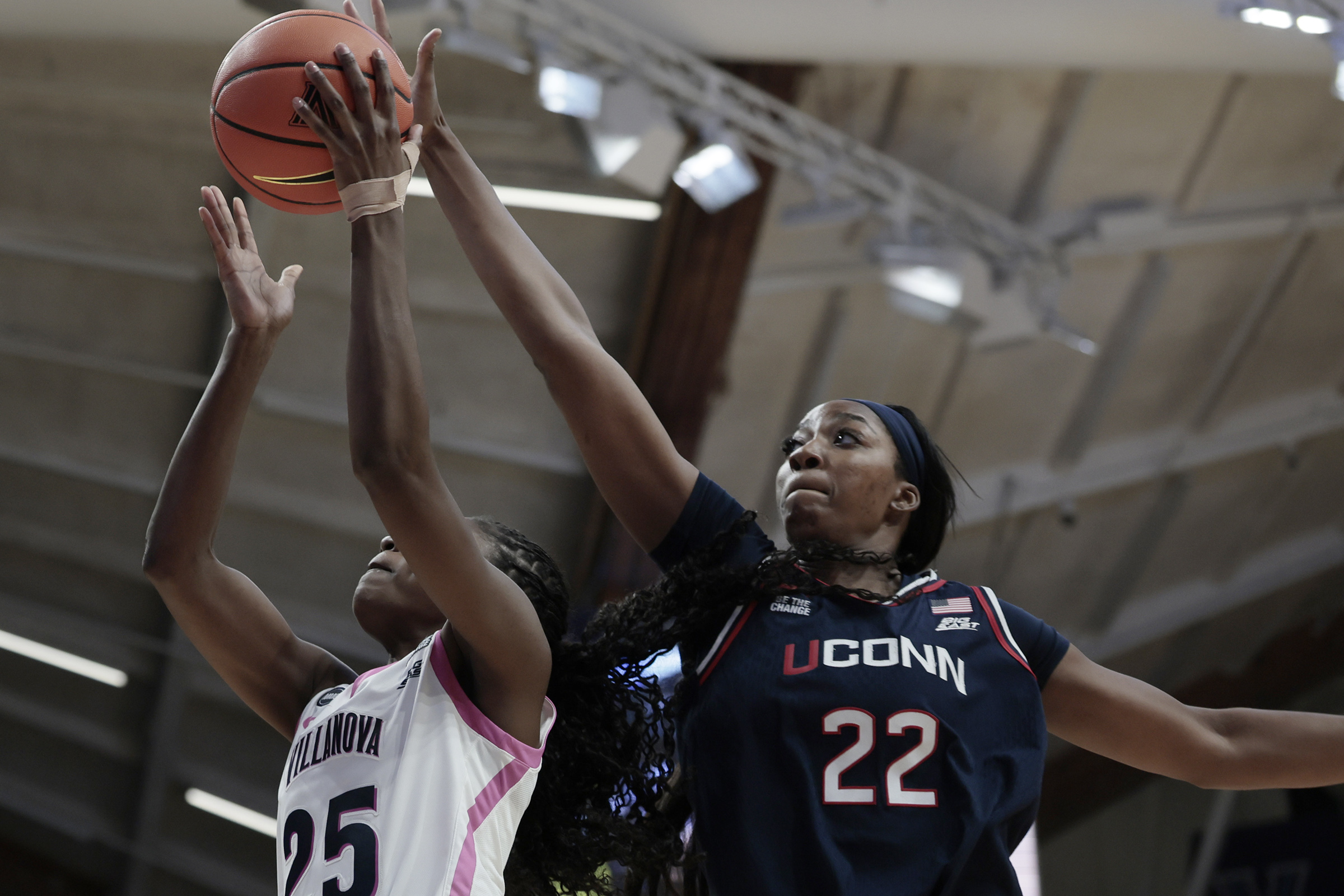
Villanova’s Denae Carter has her shot blocked from behind by UConn’s Serah Williams.
“We talked about it, even at the end of the first quarter,” Dillon said. “I said, ‘Imagine if we’d got 8-10 more shots off in that period, what a difference it could make.’ We just have to focus our attention on taking care of the basketball.”
Before the game, ESPN bracketologists had Villanova as a bubble team, projected as the No. 9 seed in the NCAA Tournament. Judging by last night’s performance, it feels like a pretty fair assessment.
“The goal is to get to the [Big East] championship game and [get into] March Madness,” Dillon said. “We’re preparing for that every day. We talk to our players about our practice plan, which is to prepare to face a UConn; and if they train that way, you’re going to have a lot of success along the way.”
scoop it. score it.@Denaeca25 is having a dayyy🙂↕️
But the consolation? They did more than enough to impress a storied coach who has firsthand experience of what success looks like.
“They’re a team that will be in the tournament, I think,” Auriemma said. “They’re really well coached. Denise [Dillon] does a tremendous job. You know, this felt like one of those old-school Big East games tonight where you have to grind it out, and that’s usually what it’s like when you play here.”
Villanova will remain in town in preparation for Marquette at the Finn on Sunday (3:30 p.m., Peacock). The Golden Eagles (16-10, 10-7) are coming off a 71-56 Valentine’s Day loss to UConn and will look to snap a three-game losing streak.
It’s Huskies week in Philly
On Saturday, Villanova’s men host No. 5 UConn (24-3, 14-2) at Xfinity Mobile Arena (5:30 p.m., TNT). The Wildcats (21-5, 12-3 Big East) are on a six-game winning streak and are looking to avenge a 75-67 overtime loss against then-No. 2 UConn on Jan. 24.
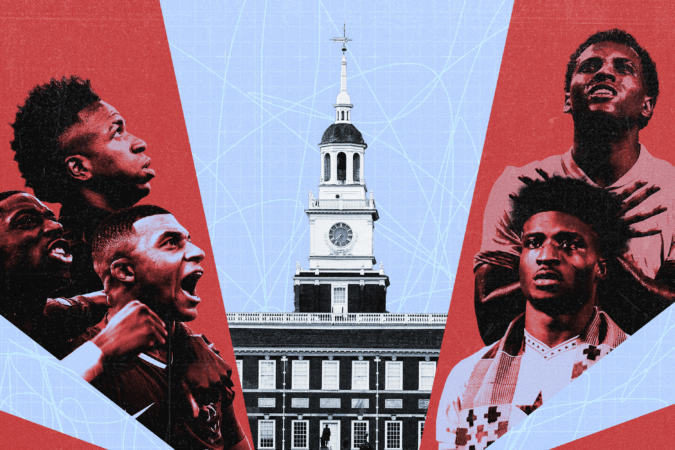
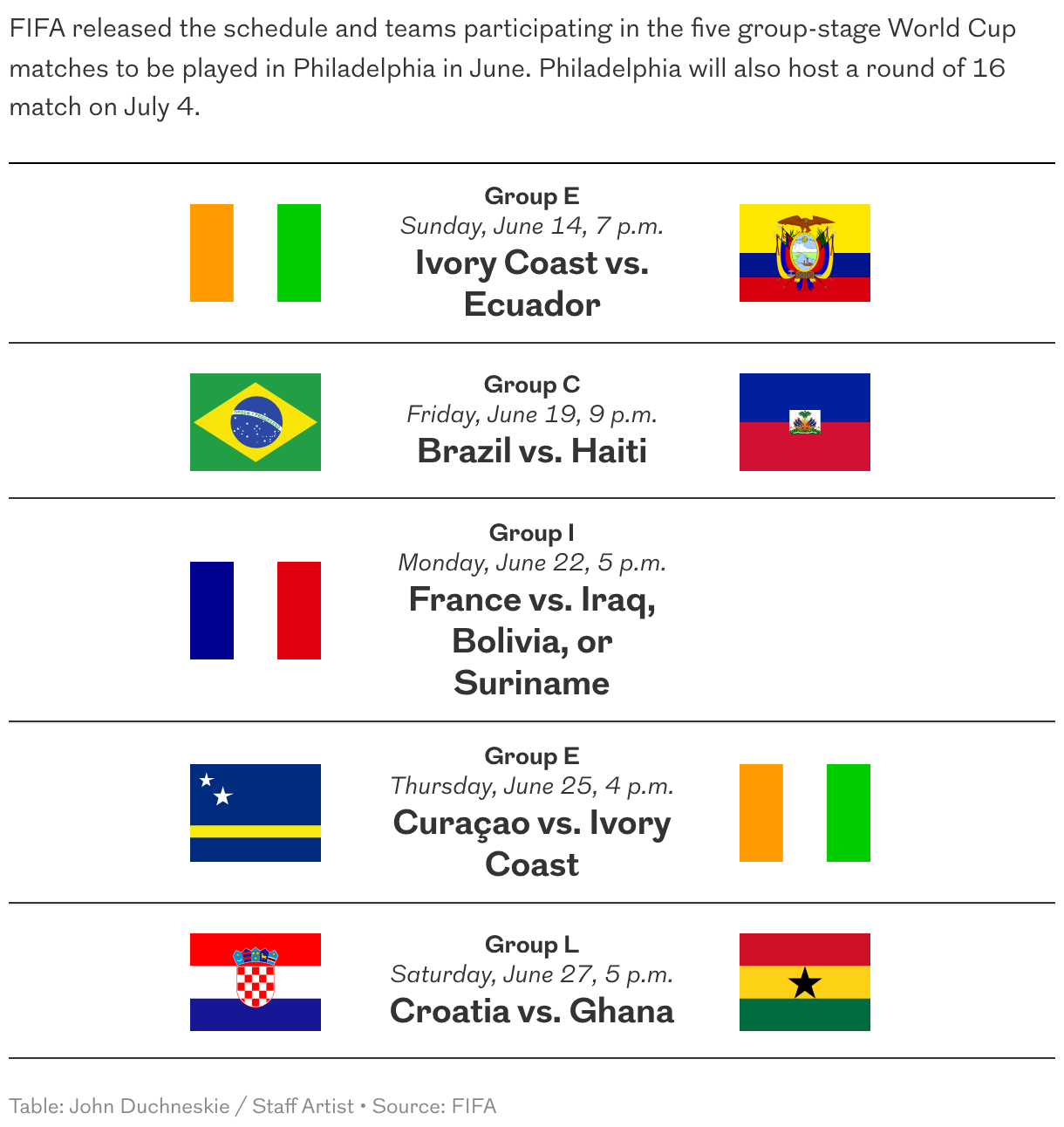
Nine nations will compete in five group stage matches this summer, plus two more in a knockout game on July 4. Here’s what you need to know about those countries and their fans — and what those fans need to know about Philly.
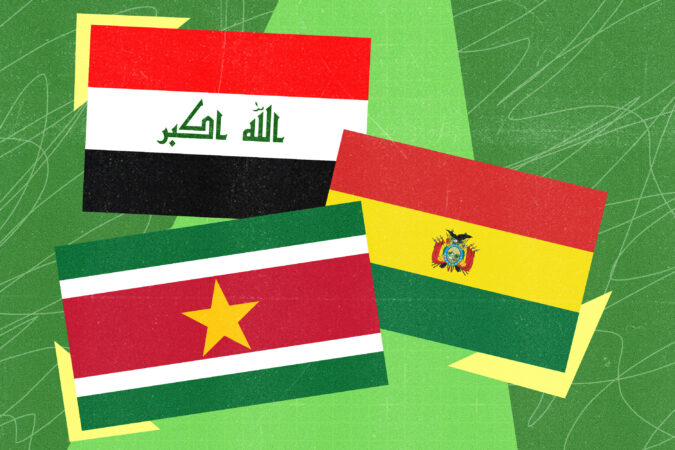
The long road to World Cup qualification isn’t over for six non-European countries.
Of those final six, three, in Iraq, Bolivia and Suriname will head to a FIFA playoff round in late March to battle it out for the last spot in Group I. Win, and in addition to a berth into the World Cup alongside Norway, France and Senegal, a stop in Philly awaits for one of the three group stage games to be played against France on June 22 (5 p.m., Fox29, tickets).
No pressure.
What’s that road look like? For Suriname and Bolivia, it’s a first-round, single-elimination playoff match in Monterrey, Mexico, on March 26 (5 p.m.). The winner will then face Iraq, again in Monterrey on March 31. That game is currently scheduled to start at 9 p.m.
Your matchups for the FIFA World Cup 26 Play-Off Tournament! 🆚
Here’s your guide to all three ahead of March’s playoff rounds, the key players who could help their nation get over the hump, and if any of these three nations have previously had a footprint here in Philly.
About the nations
BOLIVIA
Confederation: CONMEBOL; FIFA world rank: 76
A seventh-place finish in grueling CONMEBOL qualifiers is what led to the South American nation needing to win two more matches for a trip to what would be its fourth World Cup finals appearance. Coincidentally, it would be Bolivia’s first trip since 1994, the last time the event was held in the United States — should they qualify. Bolivia will look to advance out of the group stages, something it hasn’t done in any of its previous appearances in 1930 and 1950.
IRAQ
Confederation(s): AFC and WAFF; FIFA world rank: 58
The Lions of Mesopotamia, as this team is affectionately known are looking for just its second ever World Cup berth, qualifying for the 1986 edition in Mexico. The team qualified for this year’s FIFA playoff by way of originally finishing third in their qualifying group, and then needing to playing a pair of inter-confederation playoff matches. The first one against Saudi Arabia, saw the Saudis book its second consecutive trip to the World Cup at the expense of Iraq. Iraq would redeem itself by defeating the United Arab Emirates, securing this final opportunity to qualify. As the nation with the highest FIFA ranking of the three, Iraq will face the winner of March 26 first round playoff match between Bolivia and Suriname.
A second place finish in Group A of Concacaf World Cup qualifying is what kept hopes alive for this tiny South American nation which is home to a little over 600,000 people according to 2024 World Bank data. Nestled between, Guyana and French Guiana, this Dutch colony is just two matches away from qualifying for its first ever World Cup. To get it over the hump, the country appointed former Ajax manager Erik Ten Cate as its coach in December ahead of the March playoff match against Bolivia. Ten Cate, 71, has experience with the national team as its assistant in 2023.
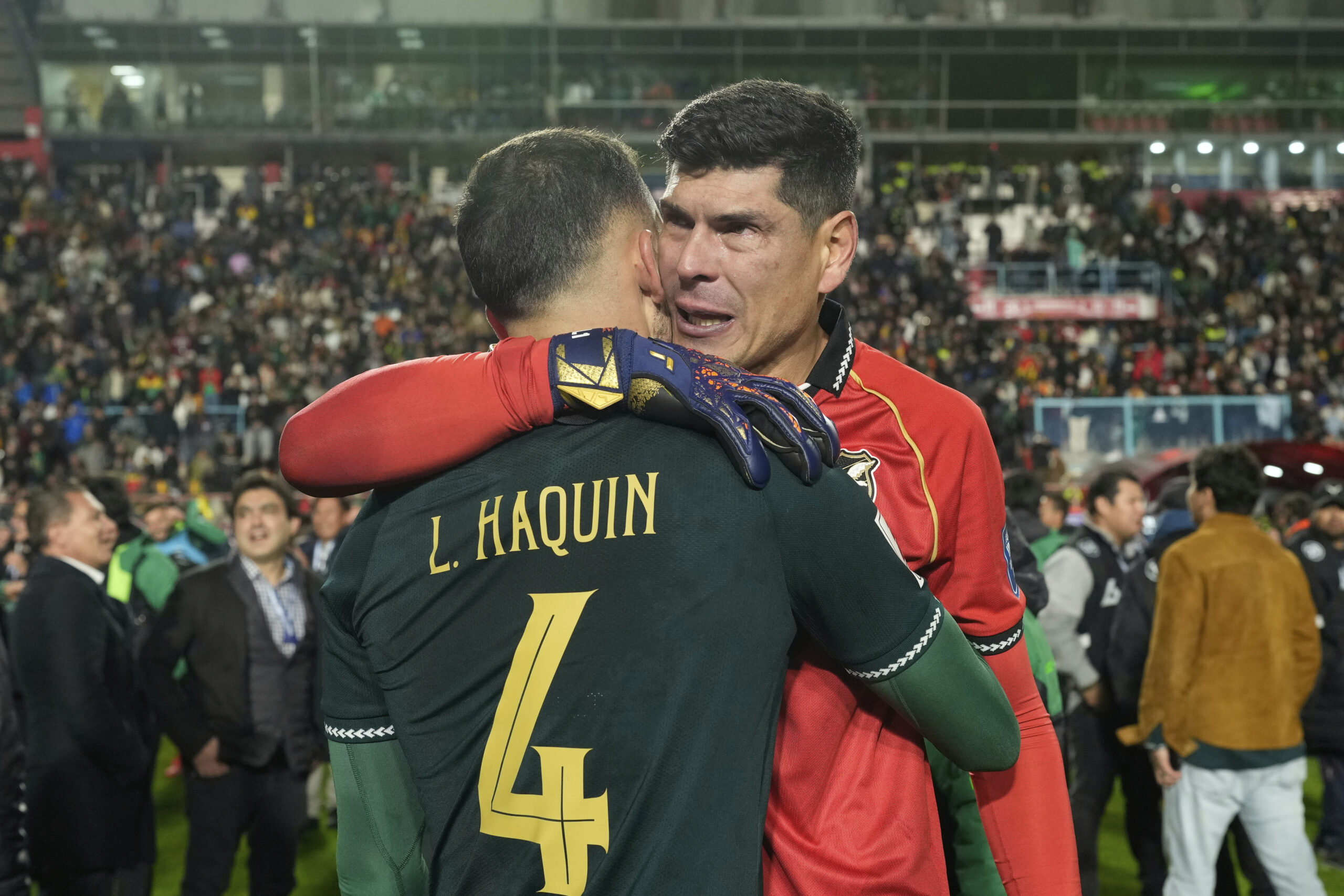
Bolivia’s goalkeeper Carlos Lampe (right) celebrates with teammate Luis Haquin following their team’s 1-0 victory against Brazil in a 2026 World Cup qualifying match on Sept. 9, 2025.
Players to watch
Carlos Lampe (Bolivia): The longtime goalkeeper wasn’t in net for his nation in the 2024 Copa America tournament in the United States, but is expected to lead this team in March’s playoff round. Lampe, 38, who has dual citizenship in Argentina, plays his club ball for Bolívar La Paz in the first division of the Venezuelan league.
Sheraldo Becker (Suriname): Becker has had a healthy career in Europe as a forward since 2019. Currently, he’s signed with CA Osasuna in Spain’s La Liga, but is on loan with Mainz 05, in Germany’s top division. He appeared in in 20 matches for his country including six games during qualifying.
Aymen Hussein (Iraq): Hussein ranks fifth all-time on his nation’s list of top goalscorers. Since debuting for his national team in 2015, Hussein, 30, has had 88 appearances, scoring 31 goals, 12 of which have arrived in World Cup qualifying campaigns. He’s expected to lead again as Iraq will look to qualify for the World Cup for the second time ever.
Philly ties
While it would be a first for both Suriname and Iraq to have passed through the Greater Philadelphia Region as a soccer nation, Bolivia trained at WSFS Sportsplex took part in a June 12, 2024 friendly against Ecuador at Subaru Park in Chester as part of a tune-up game ahead of that summer’s Copa America tournament. Bolivia was in a group with the U.S. men’s national team and in the first match for both countries, the Americans trounced the South American nation, 4-0.
Casual soccer fans, and even those who know nothing about the sport itself, know that when it comes to soccer excellence on a global scale, Brazil’s track record is unparalleled.
As five-time World Cup champions, with one of those titles coming the last time the tournament was held in the United States in 1994, the Seleçao holds the record for the nation with the most World Cup trophies, dating back to 1930, their first appearance in the tournament, and in 2002, the last time they won it all.
Brazil’s lore largely is propped up by its legends, players past — and even a few still present, who have put the sport on the map. However, even with a crop of natural talent, the nation has struggled over the last few years to regain its former dominance.
Brazil has struggled in every men’s World Cup tournament since its 2002 victory, crashing out in the quarterfinals four times and the semifinals once, though that might just be the tournament many won’t soon forget: a 7-1 loss to Germany in the 2014 World Cup in Brazil.
Now, the nation that has qualified for every World Cup since the first iteration in 1930 will return to the United States, with its tournament aspirations making a stop in Philly against Haiti in Brazil’s second game of Group C on June 19 (9 p.m., Fox29).
Brazil’s World Cup schedule
(All times Eastern)
June 13: vs. Morocco in East Rutherford, N.J. (6 p.m., FS1)
June 19: vs. Haiti at Lincoln Financial Field (9 p.m., Fox29, tickets)
June 24: vs. Scotland in Miami Gardens, Fla. (6 p.m., Fox29)
Lincoln Financial Field, which will be renamed to Philadelphia Stadium, will host six matches in the upcoming FIFA World Cup.
Fast facts
Brazil is currently ranked fifth in FIFA’s latest world rankings. … Neymar, who has been a key figure in Brazil’s attacking corps for over a decade, isn’t a guarantee to make manager Carlo Ancelotti’s team. Despite playing well for Santos in the Brazilian league, he’s still coming back from a meniscus tear. … Croatia in Group L also will be coming to Lincoln Financial Field this summer. The Vatreni knocked Brazil out on penalty kicks in the quarterfinals of the 2022 World Cup in Qatar. … According to city data, Northeast Philadelphia has one of the largest Brazilian contingencies in the city, housing the bulk of what’s an estimated 20,000 people living within the city limits.
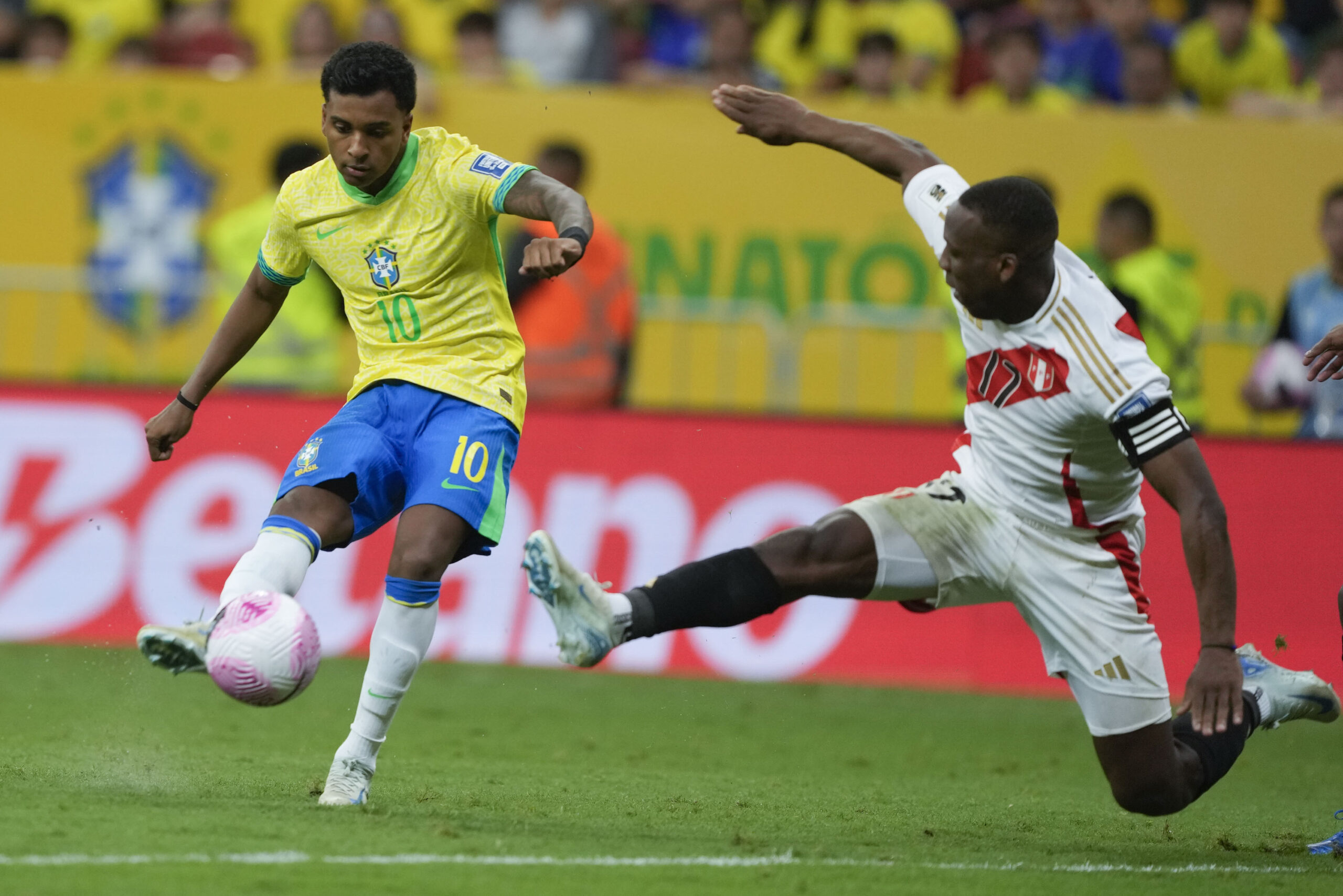
Brazil’s Rodrygo (left) is expected to have a breakthrough performance in this World Cup.
Three players to watch
It’s hard to just name three on a roster that undoubtedly will feature players competing on the top club teams in world soccer. However, the biggest name at the moment is Vinícius Jr., the 25-year-old star forward for Spanish club giants Real Madrid. Vinicius led the team to the semifinals of last summer’s FIFA Club World Cup. He’s played in 45 matches for Brazil since debuting for the first team as a 19-year-old in 2019, with eight goals.
He’ll most likely be joined by Rodrygo, his teammate at Real Madrid, who is a danger at either inside a four-man attacking front in Brazil’s iconic 4-2-4 formation but mainly outside on the right wing, where Rodrygo, 25, has scored nine goals for his country in just 37 matches.
Finally, there’s a case to be made for Gabriel Magalhães, who, at 28, can be considered one of the most complete defenders in the world, starring in the back for Arsenal in the English Premier League.
Philly meets Brazil moment
One of the biggest arrived just last year, when Vini Jr. dazzled at Lincoln Financial Field during the FIFA Club World Cup, where he scored a remarkable goal in a win over Red Bull Salzburg, and then dished out the assist with a no-look back-heel pass on the game-winner just before halftime.
Make sure you check out …
If you’re rooting for Brazil, food writer Beatrice Forman has not one, but two great recommendations for you, covering sweet and savory:
Brazilian-born pastry chef-owner Mallory Santos-Cepeda has a South Philly monopoly on the country’s traditional confections. Her bakery, Kouklet & Tanda, specializes in bolo de rolo (ultrathin cake rolls from northern Brazil), plus airy sourdough doughnuts called sonhos that are stuffed with a rotating fillings, from fig butter to white chocolate custard and poached pears. Kouklet & Tanda has two locations, both of which are takeout only, so grab empanadas to snack on in the stands of the Linc or fuel up with a big focaccia sandwich on the Broad Street Line. 📍 1647 E. Passyunk Ave. and 1429 Wolf St.; ☎️ 973-664-7076, kouklet.com
Picanha Brazilian Steakhouse: For a savory (or celebratory) option, Northeast Philly’s Picanha steakhouse is open late daily, serving up charcoal-grilled cuts of rodizio (all-you-can eat meats) that theatrically turn on skewers in the back of the dining room. Picanha is BYOB with a salad bar that’s less upscale than those Brazilian steakhouse chains, so there’s nothing stopping you from celebrating a dub with mountains of pão de queijo (cheese bread) or Brazilian-style lasagna. 📍 6501 Castor Ave., ☎️ 215-743-4647, picanhasteakhouse.com
Support a local Brazilian small business:
By Brazil: It may look like your average convenience store on the outside, but inside the revamped shop, you can pick up authentic Brazilian wares, food items, and more. Soccer is a passion here, too, as By Brazil has a decent selection of jerseys on the club side along with the national team. 📍6400 Castor Avenue, ☎️ 215-533-9200.
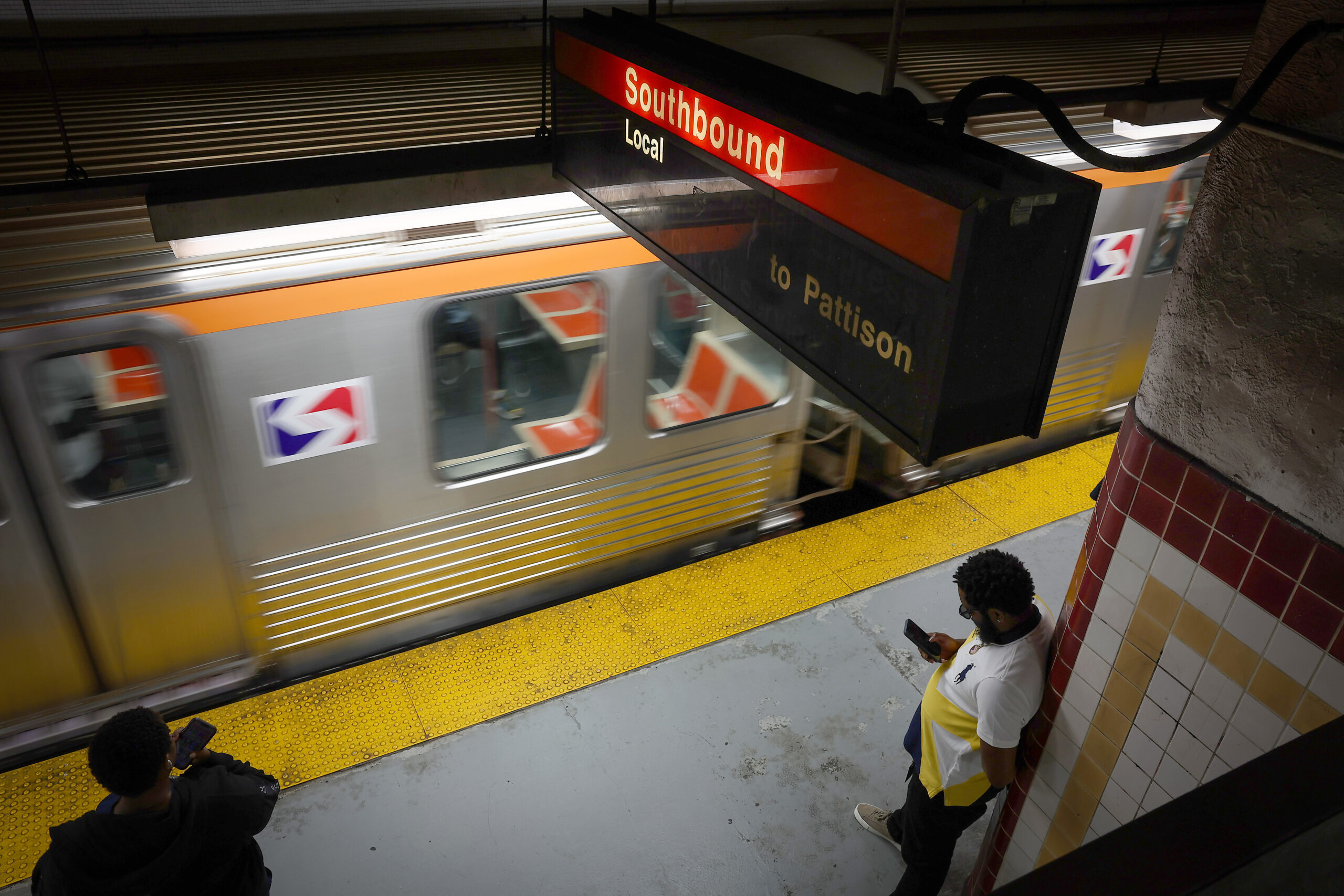
SEPTA’s Broad Street Line train is a direct path from the city to the stadium on game day.
Navigating Philly
The best way to get to the stadium area where the games will be held is via SEPTA, the city’s public transportation system. The network has its own app and is fully integrated into apps, including Google Maps, Apple Maps, Transit, and CityMapper.
Whether you’re coming in by way of Philadelphia’s international airport or its main train hub, William H. Gray III 30th Street Station, it’s easy to get around Philly’s Center City district and other neighborhoods by bus, train, or trolley.
Don’t feel like figuring out all the schedules? Taxis or ride shares via Uber or Lyft also are quick and convenient options.
If you’re in Philly or headed to Philly over the course of the six scheduled FIFA World Cup matches from June 14 to July 4, you’re in for a treat.
And we’re not even talking about the football, fútbol, fussball, voetbal, or soccer as we know it here, we’re referring to being in the nation’s birthplace on the year of its 250th anniversary.
Philadelphia is scheduled to be “on and poppin’,” as the kids say, with a host of special events over the two glorious weeks Philly joins 16 other cities to host the largest edition of the FIFA World Cup in history.
Just how poppin’? For starters, the World Cup isn’t the only major sporting event coming through our region. Later this year, the area will host golf’s PGA Championship (May 14-17) and Major League Baseball’s All-Star weekend and the events that surround it from July 10-14.
But with a host of other events, happenings, places, and parties set for what’s expected to be quite the summer, consider this your guide to the city and what to do in addition to watching the world’s largest sporting event come through the City of Brotherly Love.
What to know about Philly
Our fair town is considered the birthplace of the United States, where the laws that govern this nation were signed and, for a while, was the nation’s capital. That changed on Nov. 17, 1800, when Washington was designated as the new capital.
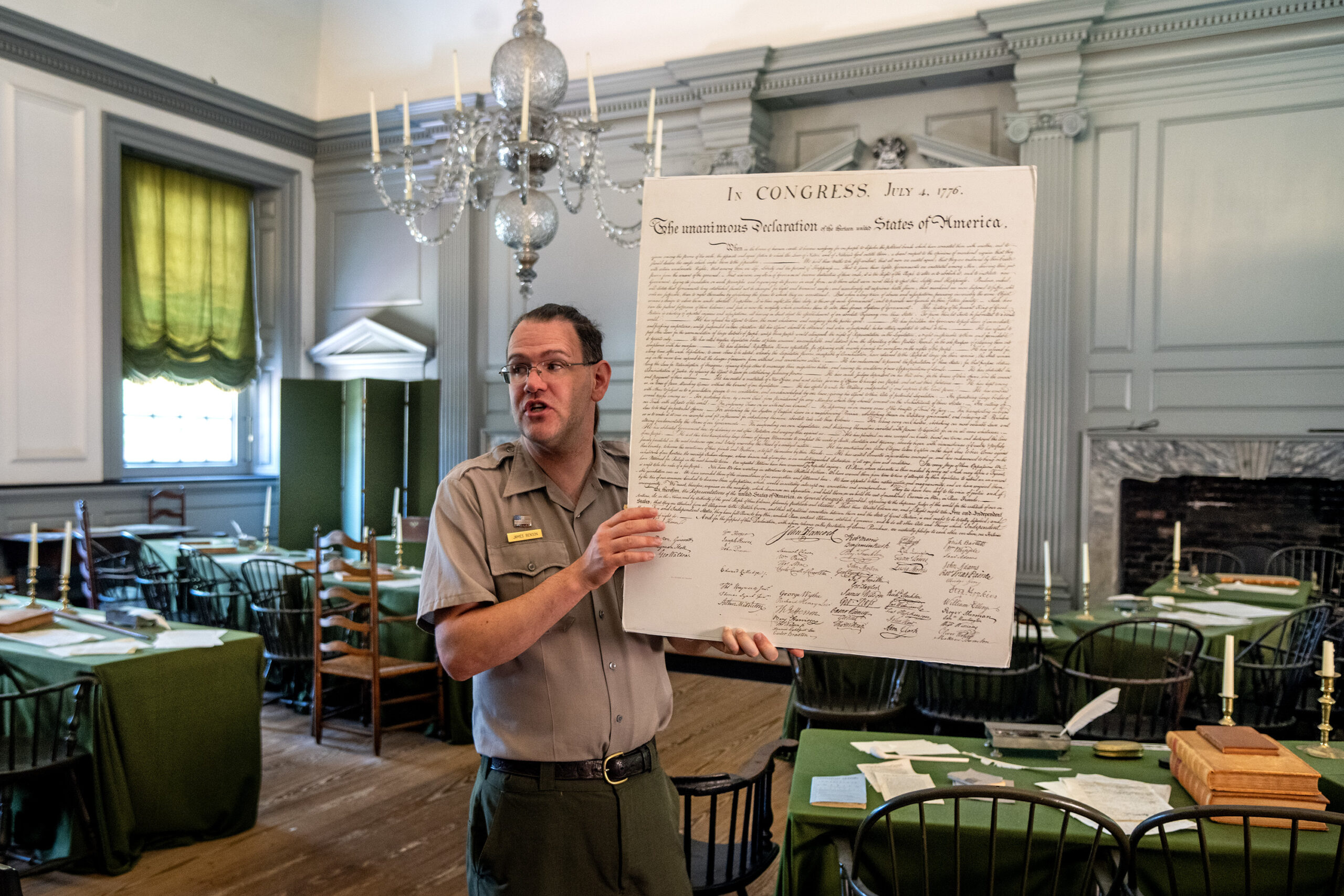
National Park Service ranger James Benson uses an enlarged copy of the Declaration of Independence while talking to visitors in the Assembly Room – where both the Declaration and the U.S. Constitution were signed – on the first floor of Independence Hall.
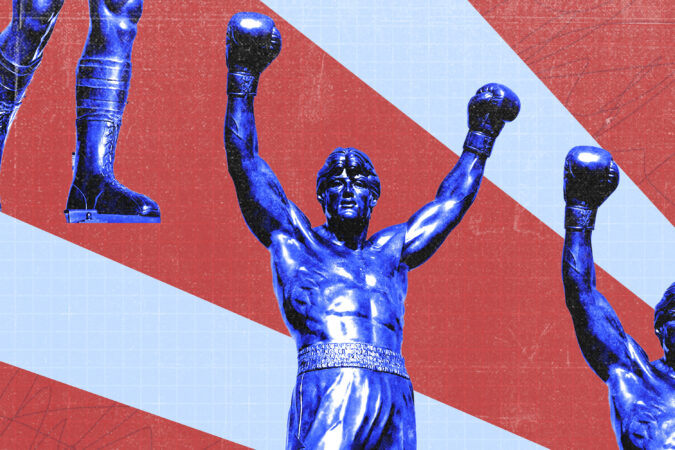
There are a host of iconic sites, but if you’re here for the first or want to explore, we offer a look at the best things to do around the city in addition to climbing the steps of the Art Museum, taking a picture at the foot of the Rocky statue or finding the best cheesesteak in town, the latter of which varies depending on who you ask and which neighborhood you’re in.
Oh, and our food scene is one of the best in the world. Hands down.
Here’s what’s great about Philly. We have a few diagonal arterials, but the Philly metro runs on a grid, with two major highways, I-76 (east-west) and I-95 (north-south), that can get you anywhere you want to go if you’re traveling by car.
If we’re talking about matchdays and getting down to Philadelphia Stadium — which, outside of the World Cup, is Lincoln Financial Field, the home of the city’s beloved NFL franchise, the Philadelphia Eagles — then SEPTA, the city’s public transportation system, is your best bet.
SEPTA’s Broad Street Line train is a direct path from the city to the stadium on game day.
Don’t feel like figuring out all the schedules? Taxis or ride shares via Uber or Lyft also are quick and convenient options.
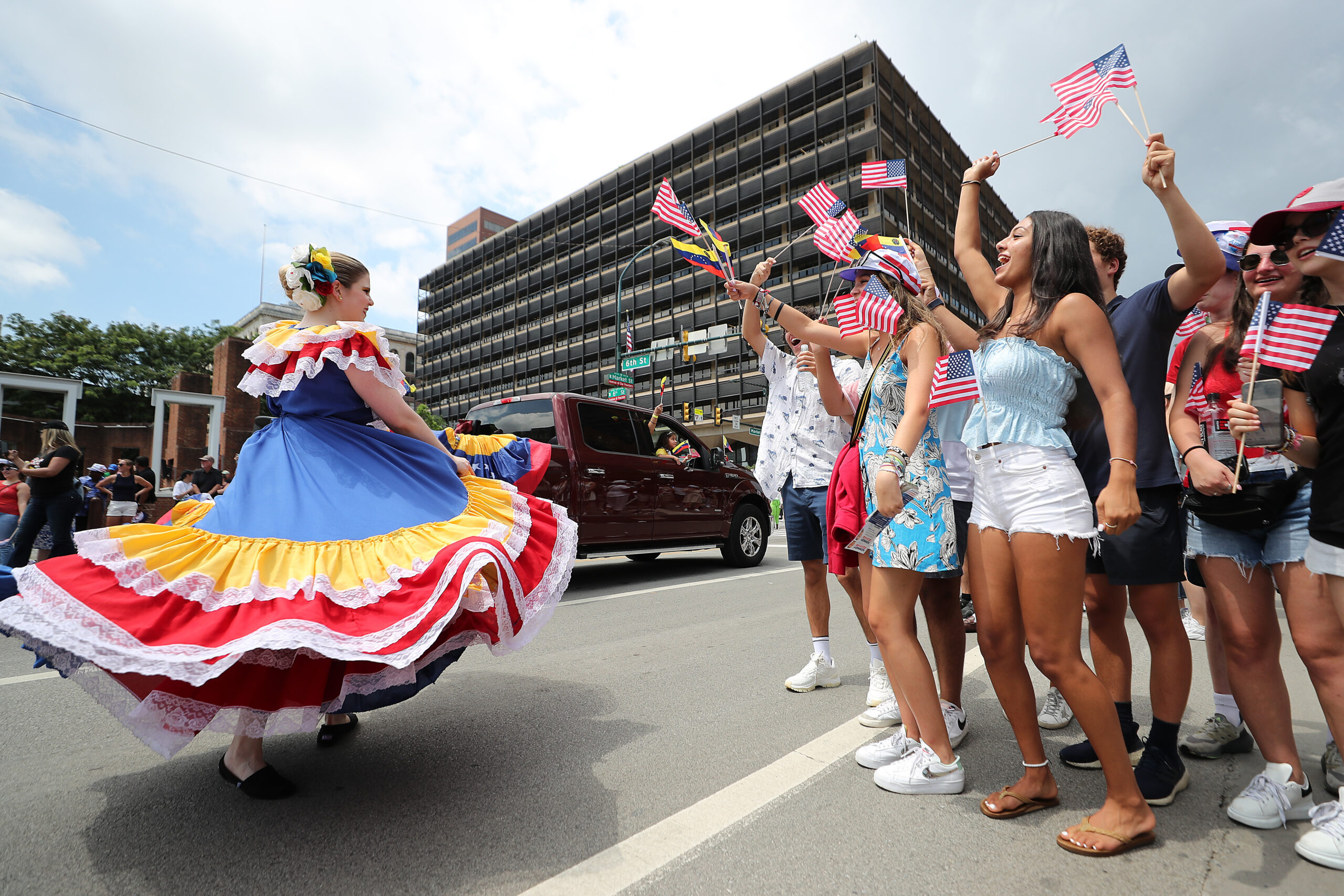
Spectators dance in the street as a Venezuelan dancers perform during the Wawa Welcome America Salute to Independence Day Parade in Philadelphia.
Other events coming to Philly
Here’s a highlight of just a few big events interspersed over the course of the three weeks the city will host World Cup group stage matches and the round of 16 match on July 4.
Wawa Welcome America: Philly’s annual celebration that features everything from free food, block parties, a concert, and, of course, fireworks. Oh, and it’s all free to attend. What does all that look like? Here’s what you can expect. 🗓️ June 19-July 4
What Now 2026: A five-week-long arts festival featuring works from a number of Philly artists across music, film, and, of course, art. 🗓️ May 27-July 4
America 250 at Penn: As part of a host of events, the University of Pennsylvania has an exhibit focusing on France, Haiti, and their touchpoints in our city. For any French or Haitian fans coming to town for those games who consider themselves history buffs, this might be worth checking out. 🗓️ Feb. 26-Sept. 4
What other events are on the schedule ahead this year? Take a look.
Where to watch the World Cup
Don’t have a ticket? All good.
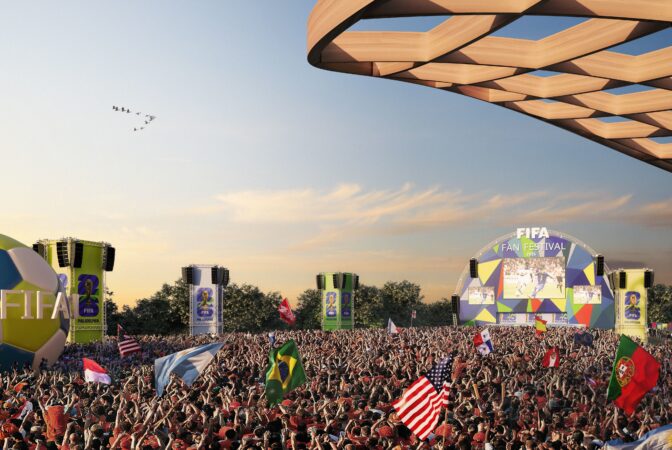
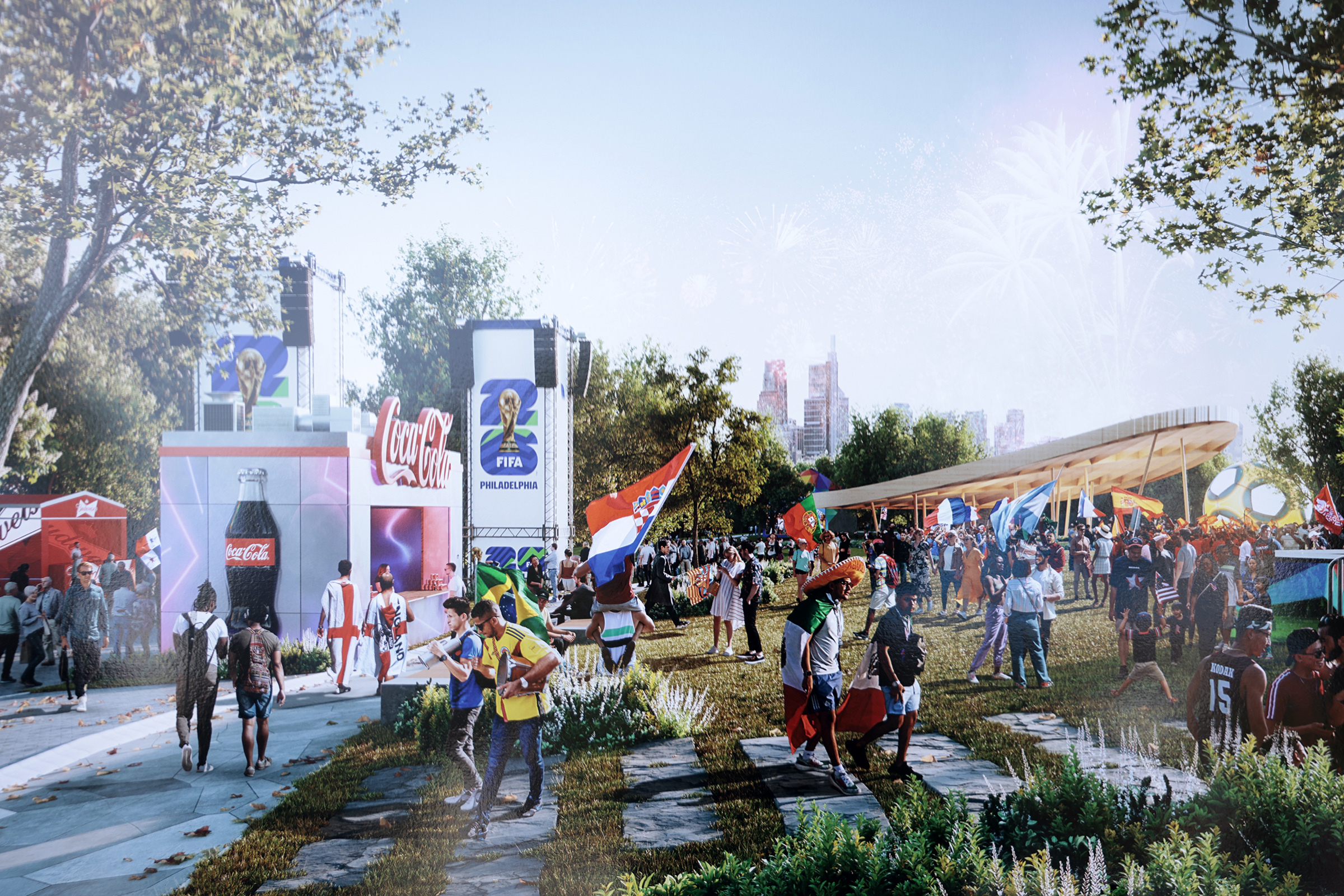
In addition to the free FIFA Fan Festival coming to the historic grounds of Lemon Hill Mansion, Philly has a host of bars and restaurants that already serve as soccer hubs across the city. Last summer, we offered a list of the best 11 spots ahead of the FIFA Club World Cup, and we can confirm that these will be the go-to places again ahead of this summer’s edition.
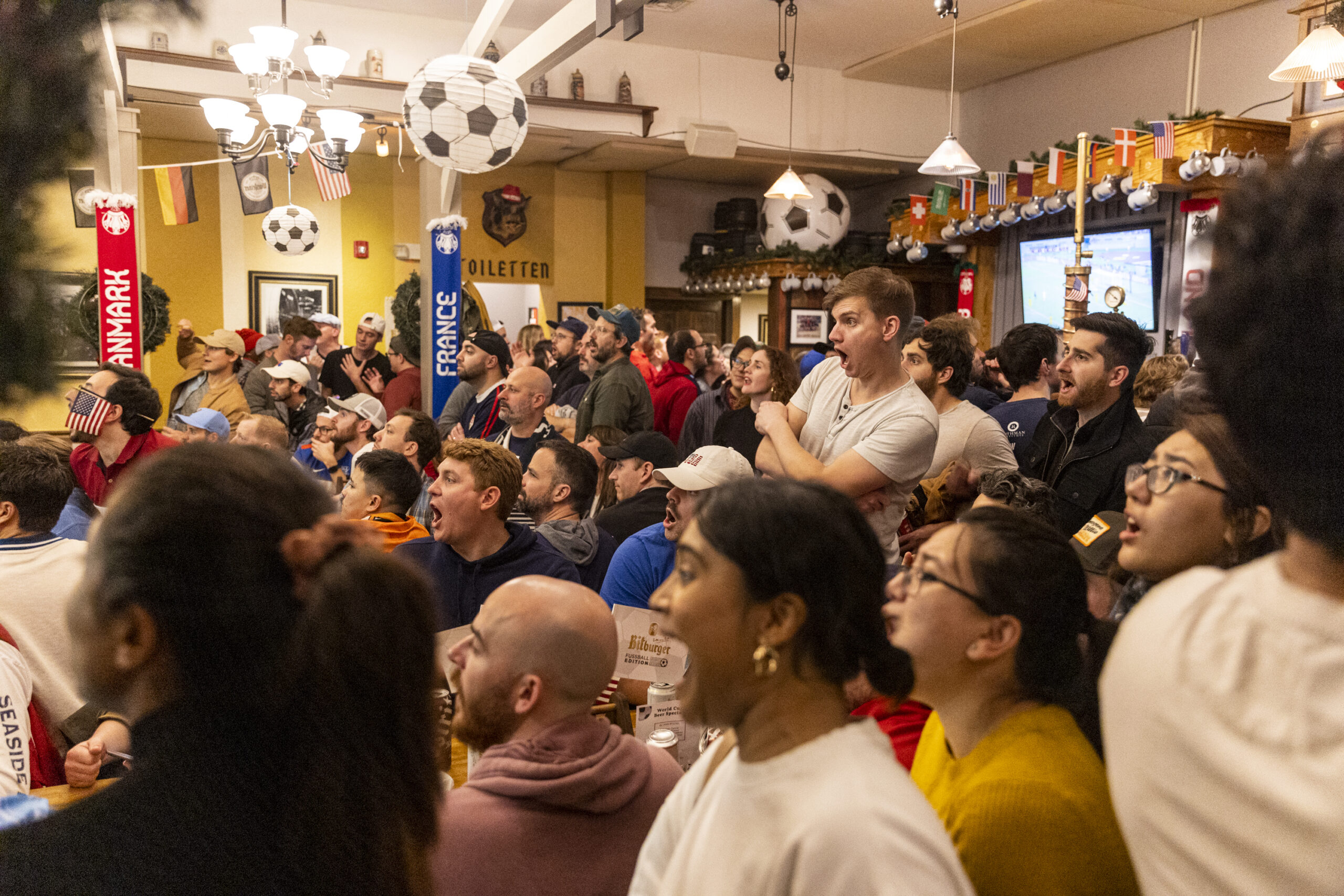
You’ll certainly find a soccer crowd at Brauhaus Schmitz, which was packed during the last World Cup.
We’re hearing that local host city organizers, Philadelphia Soccer 2026, in addition to the hometown Major League Soccer team, the Philadelphia Union, also are planning watch parties across the city.
Did you know …
That the first event at Lincoln Financial Field, er, sorry, “Philadelphia Stadium,” was a preseason friendly between European club giants Manchester United and Barcelona in 2003? One could say that Philly was built for soccer.
Eight area organizations have been named as host city supporters for the six matches in Philadelphia ahead of this summer’s FIFA World Cup, beginning June 14.
Comcast, Independence Blue Cross, PECO, Penn Medicine, the Eagles, and tourism board Visit PA were named, along with Conshohocken-based pharmaceutical giant Cencora, and the William Penn Foundation, a philanthropic organization.
According to a release from Philadelphia Soccer 2026, the organization tasked with the planning and execution of events, “these organizations will play a vital role in ensuring the success of the tournament while creating a powerful and lasting legacy of this generational event for the City of Philadelphia and the Commonwealth of Pennsylvania.”
Perhaps more importantly for these companies, the designation approves them to advertise and have branded signage in-stadium at Lincoln Financial Field (which will be renamed to Philadelphia Stadium for the matches), offer rights to host activations at FIFA’s fan fest at Lemon Hill Mansion, and, according to a release, offers “exclusive hospitality and ticketing opportunities, and visibility through local marketing and promotional campaigns.”
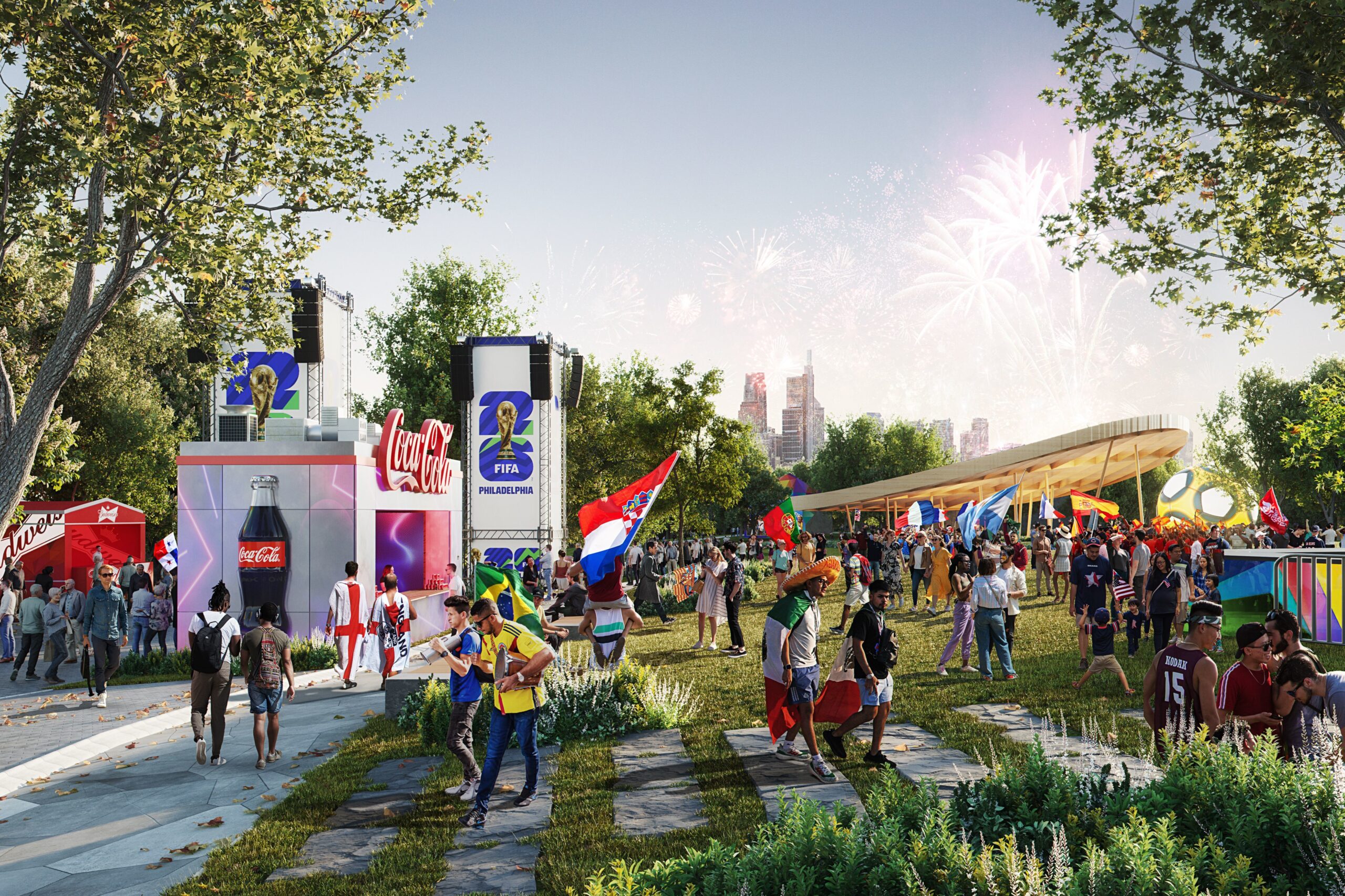
Renderings provided last year of what Philadelphia’s version of FIFA’s fan fest site on the grounds at Lemon Hill will look like.
Historically, FIFA, soccer’s world governing body, has kept stringent rules around who can advertise or align. But in the last several years, it has granted host cities the ability to look for businesses willing to put up a financial commitment to aid in offsetting the cost of putting on the tournament — and add its name to FIFA’s list of global supporters.
The designation for host city supporters was afforded through a minimum financial commitment of $5 million, according to a report from the Philadelphia Business Journal.
The deal would also appear to grant specific naming rights. In Wednesday’s announcement, Penn Medicine referred to itself as the host city’s “official medical services provider,” in reference to the games coming to Philadelphia.
“We’re all extremely excited to see the World Cup come to Philadelphia,” said Dr. Patrick J. Brennan, chief medical officer for the University of Pennsylvania Health System. “Being the official medical services provider for the Philadelphia World Cup 2026 host city, in what will be the largest sporting event Pennsylvania has ever seen, is a great responsibility that we’re ready and excited for.”
Philadelphia Soccer 2026 projects an economic infusion of nearly $770 million into the city, as half a million visitors are expected to come to Philly for the five group-stage matches and a Round of 16 knockout game on July 4.
Being front and center as a host city supporter is an immense opportunity for exposure for these organizations, many of which have been tasked with, or have taken on, legacy projects long after the tournament passes through.
“The William Penn Foundation is interested in helping to ensure that this global moment delivers meaningful, lasting benefits for Philadelphians,” said Shawn McCaney, the organization’s executive director. “We’ve focused our investment on strengthening community soccer programs and facilities, as well as improving Lemon Hill so that it can serve as a vital park space for residents and visitors to the city for years to come. These investments strongly align with our commitment to improve public spaces for the people of Philadelphia.”
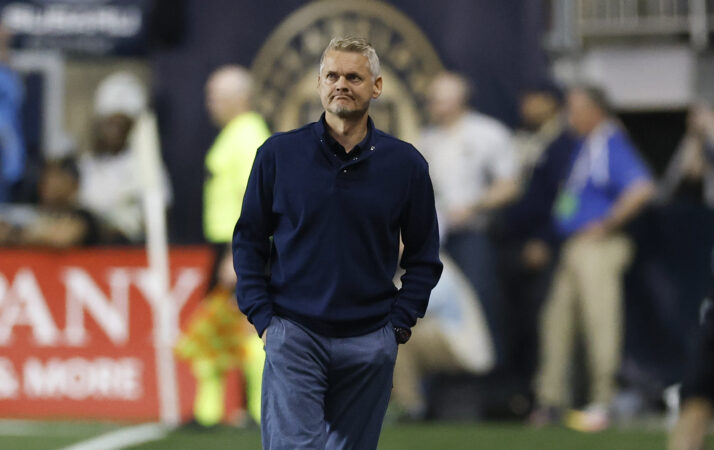
Nestled under all the success of last season for the Union is that their manager, Bradley Carnell, proved yet again that he’s one of Major League Soccer’s bona fide tacticians.
In his first season at the helm, he came within one point of the club’s record, a statistic that originally took more than a decade to amass. He guided the Union to their second Supporters’ Shield, which is given to the club with MLS’s best regular-season record.
With 30 teams vying for the shield, that’s no small thing.
While aspirations of their second MLS Cup final appearance were dashed in the Eastern Conference quarterfinals, success was already apparent, and Carnell, 48, was orchestrator, the proof in the form of the 2025 MLS Coach of the Year award.
However, in the afterglow of a banner year for the Union, Carnell knows the limelight, particularly for him, is fleeting. He’ll never admit it, but his vision board, whether real or imaginary, surely includes the notion that success this season would right a lot of wrongs along his coaching path.
He knows it. It’s why in a conversation with Union sideline reporter Sage Hurley, he said: “I take personal accolades and forget about them very quickly. In our business, it’s very fluid, very daily, and we focus on the present.”
Bottom line: Judge this manager not by what he has done, but by what he does in 2026.
Here’s why:
Been here before
It’s important to remind folks that what Carnell accomplished with the Union last season wasn’t new for him over his nine seasons in MLS. Replicating it or even eclipsing it in Year 2 would be.
Why? Because he’s well aware of just how quickly a sophomore slump can turn into a crash-and-burn.
In his previous stint as a manager, Carnell’s St. Louis City SC became the first expansion team to win its conference in its inaugural season. St. Louis topped the Western Conference with a 17-12-5 record and reached the 2023 MLS playoffs.
Like the Union this year, St. Louis crashed out of the playoffs early. It was swept in a best-of-three first-round series against Sporting Kansas City after entering the tournament with the fourth-highest point total (56) that season.
Copy and paste.
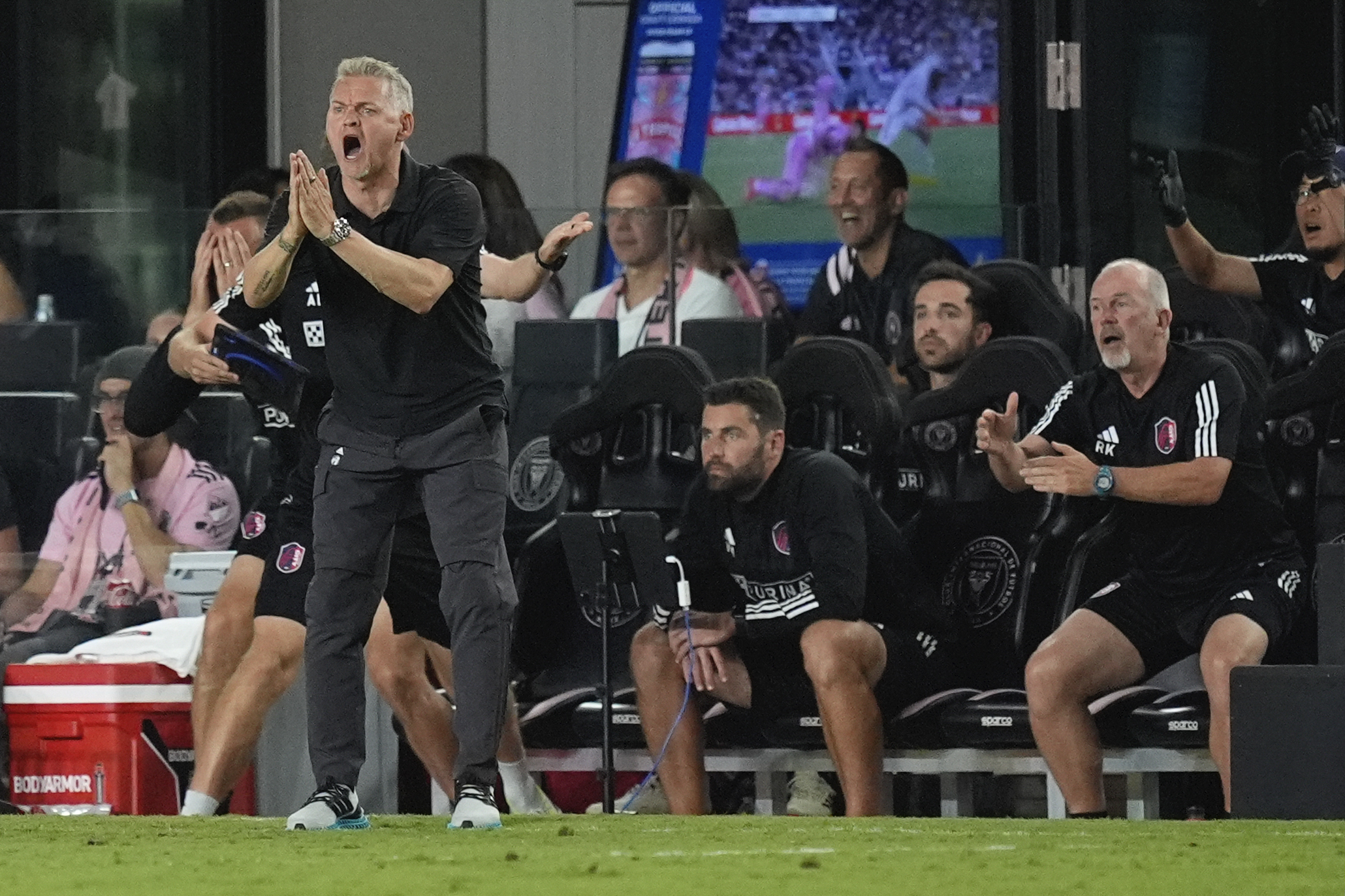
As coach of expansion team St. Louis City SC, Carnell led the team to the best regular-season record in MLS’s Western Conference.
Carnell didn’t even finish the following season. He was replaced in July following a dismal start in which St. Louis was at the bottom of the Western Conference standings with just three wins.
But in his final regular-season news conference of 2025, while answering questions about who will orchestrate player moves with sporting director Ernst Tanner on leave amid an investigation into his alleged misconduct, Carnell was asked what he learned from the season to ensure he doesn’t find himself in the same boat.
He seemed like he couldn’t wait for someone to bring it up.
“This has been an amazing journey for me as a coach,” Carnell said. “I’ve grown up, and I’ve learned a lot more through the players and the engagement and just the people here at the front office. [I’ve learned that] when there’s support, alignment, [and] collaboration, a lot can be achieved. I think we’ve shown that over the course of the year that we are all pulling in the same direction.”
A big takeaway, Carnell said, too, is just how easily he assimilated into the culture of the club, its fans, and the city. Philly feels like home for the South Africa native, as he noted that the team and front office have made it easy for him and others who felt like outsiders to want to be here.
“I think about [former Union defender] Kai Wagner, who has been here multiple years now. You would assume he’s from Philadelphia,” Carnell said. “There’s a certain edge and a drive and a determination and a quality about this group. That speaks volumes for the development of the club and the development of people, staff, and players.”
It’s safe to say the pressure Carnell will feel entering Year 2 will eclipse his second year with St. Louis. The Union made massive changes in the offseason, as proven players (like Wagner) were brokered for top dollar and replaced by some complete unknowns.
Bradley Carnell (right) was all smiles last season, celebrating the Union’s Supporters’ Shield title with midfielder Danley Jean Jaques.
Also, Carnell wasn’t operating St. Louis City during a FIFA World Cup year in a city that will host six matches. Soccer eyes will be on MLS — and just how good the local MLS club is. Especially one that was the league’s best under his guidance a year before.
Another thing he won’t admit: There is newfound pressure for the Union to come out strong — not just to further erase the pain of coming up short last season, but also because events like a World Cup tend to bring transformative change within an organization.
The club won’t admit it, but there are questions in the background that perhaps only top Union management and ownership can answer. But no one expects those questions to arise until the afterglow of the World Cup.
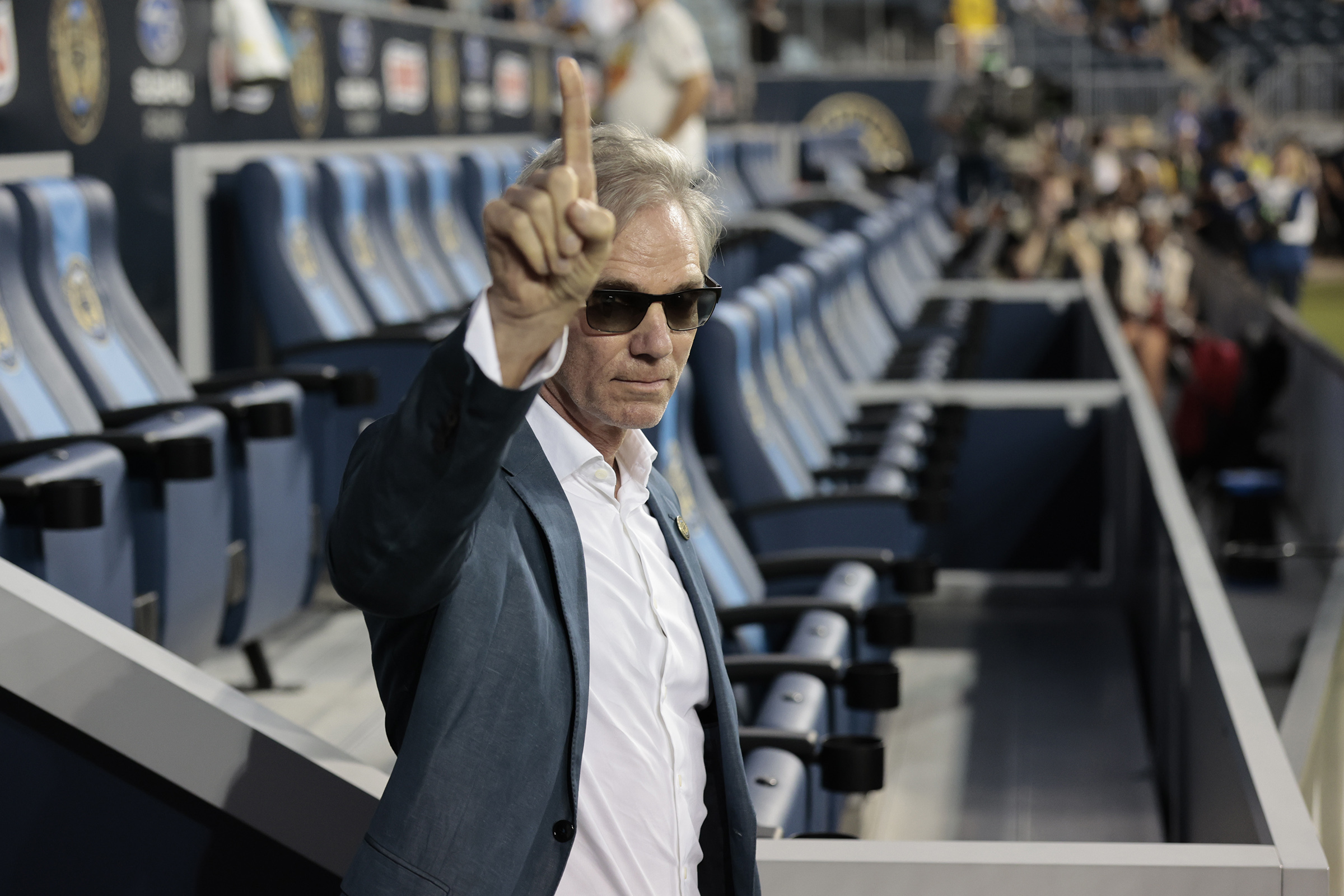
Union majority owner Jay Sugarman has figured out how to remain one of the league’s best clubs on a shoestring budget. Carnell is a big reason.
There also are other reasons. The obvious is that, entering a seven-week World Cup break beginning in May, sitting near the top of the Eastern Conference standings bodes well once MLS play resumes.
And while he’ll naturally mask that last factor by suggesting that the focus is “on the collective,” a familiar phrase from his first season in Philly, nothing would make people forget his sophomore slump in St. Louis more than not replicating something similar in 2026 with the Union.
“Around 11 months ago, we stepped in here in a world of our own,” Carnell said. “I hope 11 months later, through the team’s performance and collective effort, some of those questions have been answered.”
Some have, sure. But on a personal level for this manager, heading into 2026, just one more needs closure.
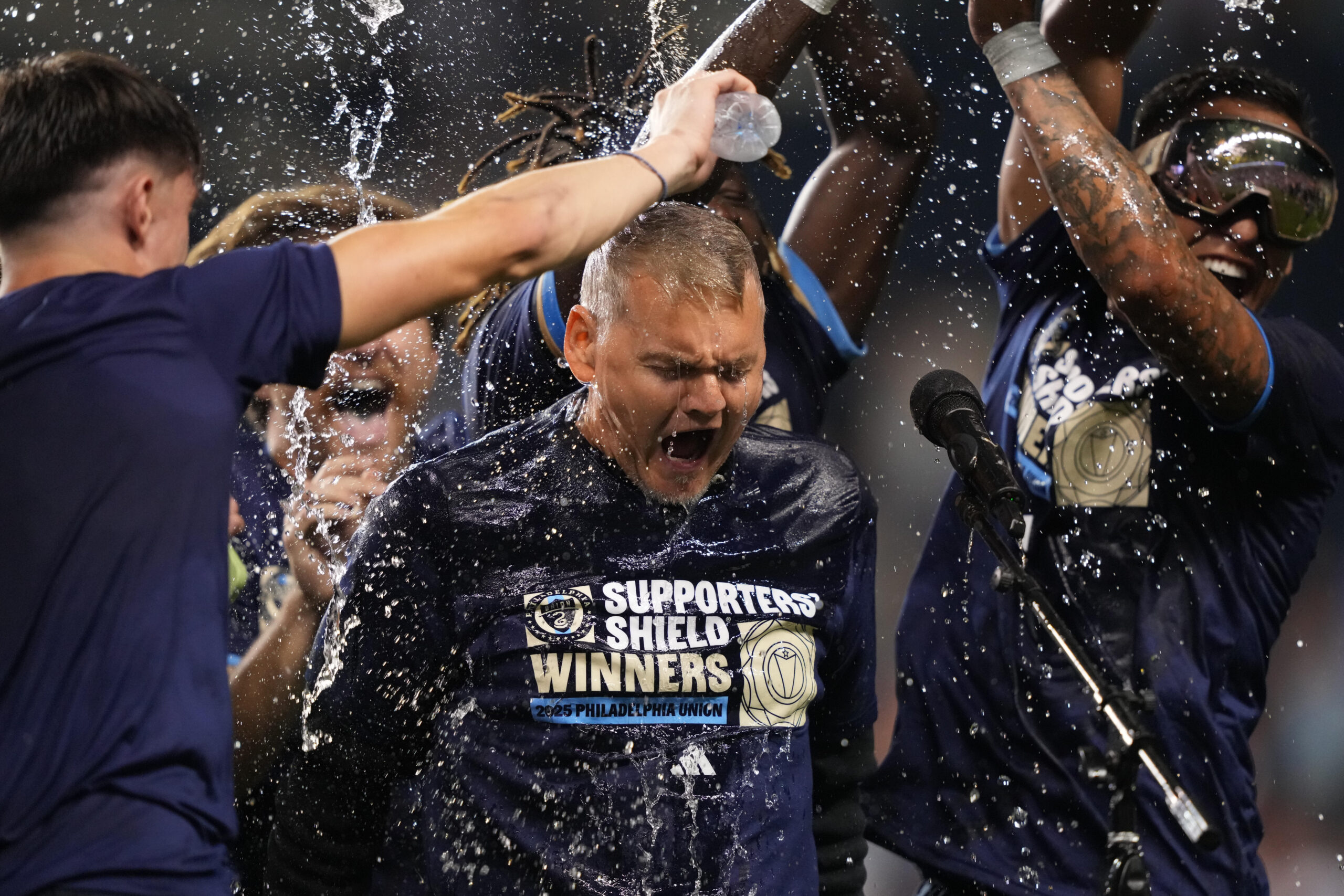
Players showered manager Bradley Carnell with a lot more than just praise after the team’s massive 2025 season.
But another recent announcement seemingly sent people over the edge. For the first time in the history of the tournament, FIFA will charge fans to attend its fan festivals across many of the 16 cities in North America selected to host games in the monthlong tournament.
And while that has been made public for at least one of the hosts, general admission to Philly’s fan festival, scheduled for June and July on the grounds of Lemon Hill Mansion in the Brewerytown section of the city, will remain free, according to Philadelphia Soccer 2026, the committee responsible for the planning and execution of Philly’s tournament footprint.
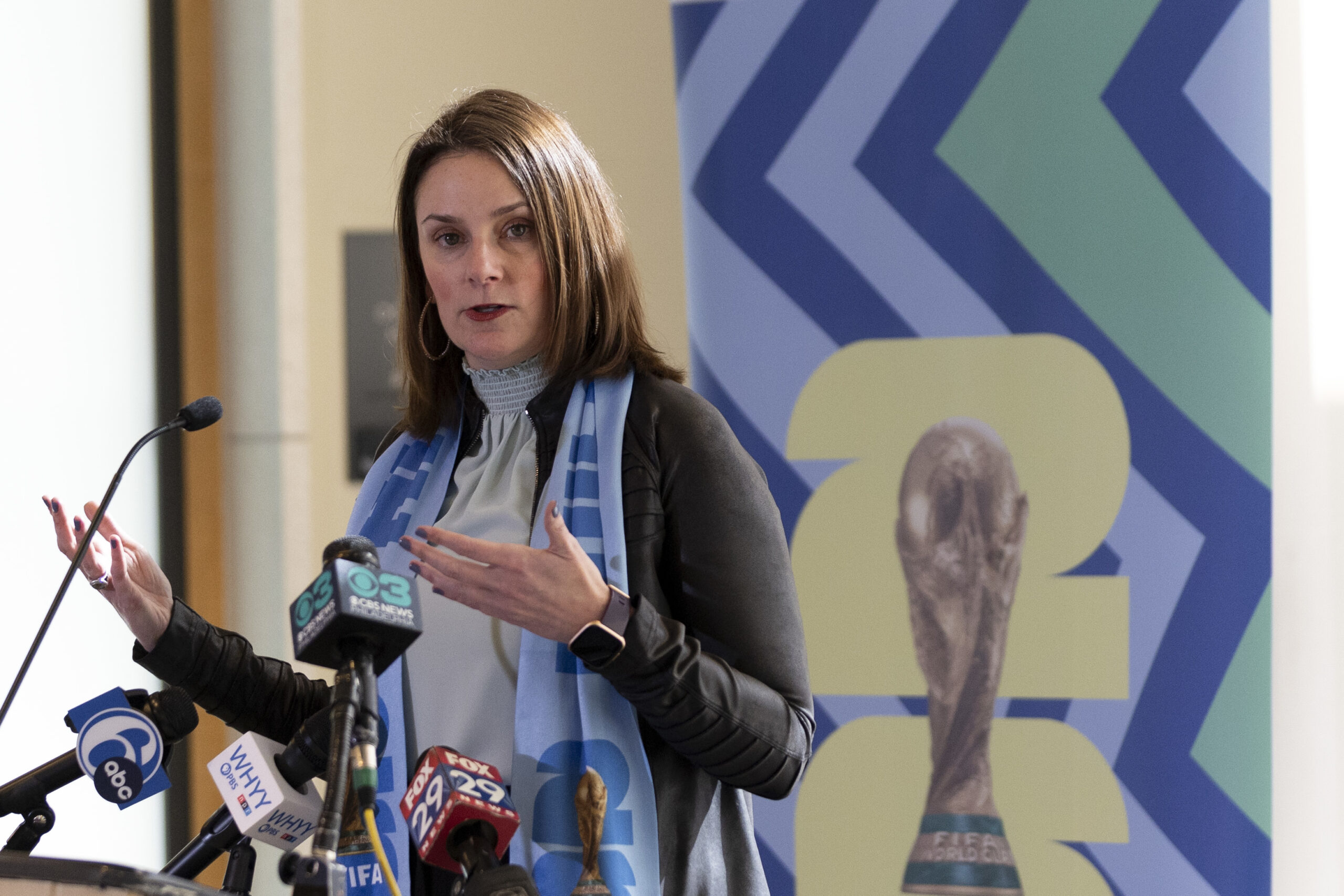
Meg Kane, host city executive for Philadelphia Soccer 2026, said Philly’s version of FIFA’s Fan Fest will remain free, as the event is “committed to making sure every fan can share in the excitement.”
“Since our selection as a host city in 2022, Philadelphia Soccer 2026 has remained committed to making sure every fan can share in the excitement, culture, and community of this generational sporting event,” Meg Kane, host city executive of Philadelphia Soccer 2026, said in a statement to The Inquirer on Wednesday.
“Essential to that commitment, we made the decision to offer free general admission to FIFA Fan Festival at Lemon Hill, ensuring an inclusive and welcoming environment where fans from all backgrounds can come together to celebrate the world’s game.”
While general admission will remain free for the scores of fans who are expected to descend upon Philly over the course of five group matches and a massive round of 16 game on July 4, there will be “optional VIP experiences,” including expedited entry into festival grounds, and are expected to be available for purchase at a later date.
Kane’s announcement mirrors that of other cities, such as Kansas City and Vancouver, which also have stated their intention to keep admission free for their events.
But when the news of potential fees at fan festivals initially landed, it certainly didn’t appear that would be the case.
Amid the news that FIFA plans to charge for its fan festivals, it was overlooked that only one delegation has formally announced its intent to charge an upfront entrance fee.
In fact, a spokesperson with knowledge of the proceedings told The Inquirer that any intention to add a fee to the festivals was not a blanket decision made by FIFA as soccer’s world governing body; instead, it is left to host city committees to decide.
A FIFA spokesperson confirmed this and added on Thursday that while some host city delegations have begun relaying their fan festival plans, “FIFA will communicate the full suite of details [for all 16 host cities] in the first quarter of 2026,” where, in addition to what’s to come at those sites, announcements of which ones might consider charging a fee will be made public.
Artists rendering of what Philadelphia’s 2026 World Cup fan fest site at Lemon Hill will look like.
“From the outset, FIFA has worked closely with host cities and local stakeholders to help shape meaningful fan experiences beyond the stadiums that are community-led, fan-oriented and aligned with the spirit of the FIFA World Cup,” a FIFA spokesperson said in a statement to The Inquirer. “It is important to recognize that there is no one-size-fits-all model for fan engagement across a tournament of this scale.”
FIFA’s spokesperson also noted that “fan experiences can take many forms — from large-scale gatherings to more decentralized, community-driven activations,” which dovetails into the preliminary plan of attack of the New York-New Jersey delegation, which isn’t viewing its overall fan engagement strategy as hosted at one large site, but several.
For soccer fans planning a trip for the World Cup final or New Yorkers who can’t afford it but want in, tickets are available for New York’s main fan festival at Liberty Park via Ticketmaster for $12.50.
But there’s a methodology at play here.
According to a host city committee official, the move isn’t as much a revenue driver as a crowd management strategy designed to regulate capacity and effectively coordinate staffing, security, and transportation.
Essentially, by putting a limit on the number of people expected to descend upon the area to watch a series of matches in June and July, the Liberty Park fan festival can be capped at a number, one anticipated to still be in the tens of thousands, daily.
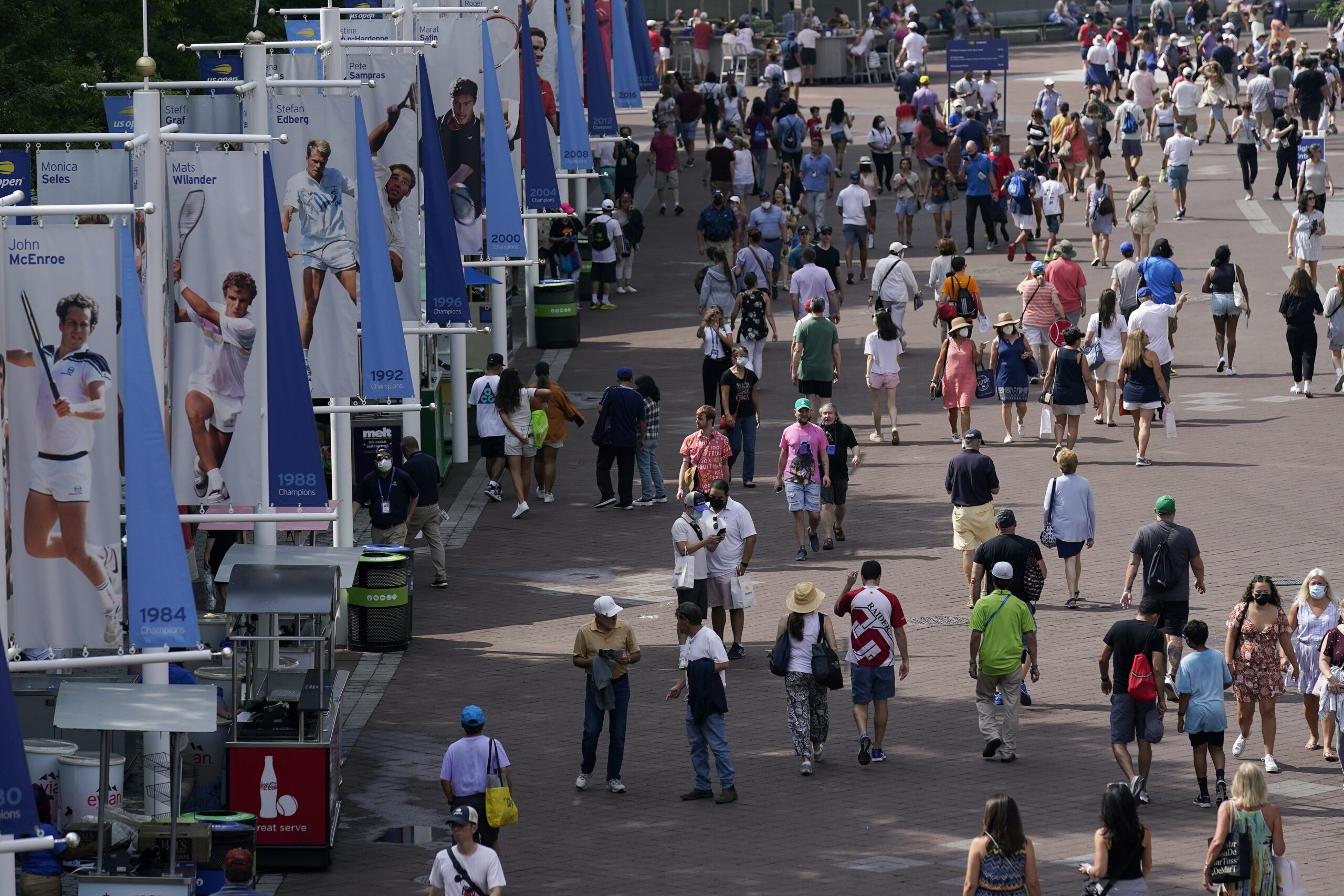
To accommodate a global population, the delegation plans to bring in a scaled-down version of its festival, termed as “fan zones,” into all five New York boroughs. The first two have already been announced: Rockefeller Center in Manhattan will host a “fan village,” as will the Billie Jean King National Tennis Center, the home of the U.S. Open in Queens.
The grounds of the Billie Jean King National Tennis Center will also be utilized as one of five FIFA World Cup “fan zones” across New York’s five boroughs in addition to the Liberty Park Fan Festival on the banks of the Hudson.
More are expected to be announced later, and the fan village at Rockefeller Center will be free to attend. As of now, New York-New Jersey is the only host city committee planning fan experience that’s not situated in a single location.
“New York-New Jersey is building a regional fan experience unlike anything seen in World Cup history,” Alex Lasry, CEO of the New York-New Jersey host committee, told The Inquirer. “We’re proud to have announced three official NYNJ Host Committee fan experiences that will bring the World Cup far beyond the stadium.
“These spaces are essential to the World Cup experience, creating accessible and affordable places for people to come together and experience the biggest games in one of the world’s most iconic venues. And this is just the beginning — we look forward to announcing additional fan engagement opportunities so the entire region can feel the impact of the World Cup.”
When he returned to the Philly area for the U.S. men’s national team’s penultimate game of 2025 against Paraguay, it was a homecoming that he said grounded him.
He was groomed in the Union’s academy system, having spent three seasons as a homegrown player on the club’s first team, but this marked the first occasion in quite some time that McKenzie, a native of Bear, Del., returned to his old grounds.
Well, they were technically all-new grounds, considering that when he came up the ranks, Subaru Park was named Talen Energy Stadium, and the sprawling expanse that is now the WSFS Sportsplex was still a rendering.
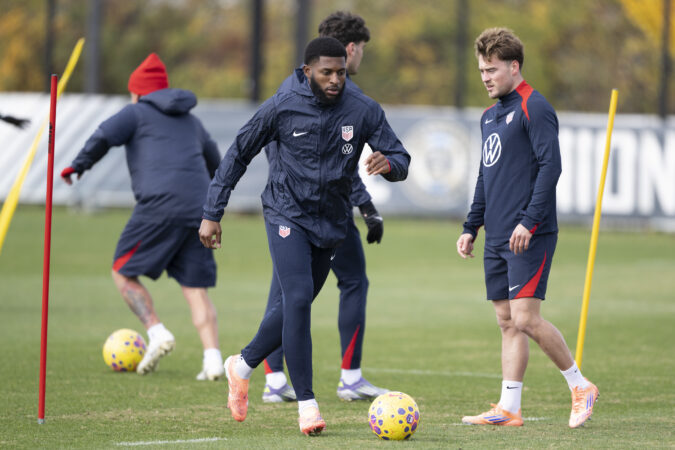
But being back, seeing familiar faces, training with the national team in Chester, and even briefly seeing a few family members brought perspective to what he’s ultimately trying to do: find his name among 25 other hopefuls eager to make the American roster ahead of June’s FIFA men’s World Cup.
At the time, McKenzie, 26, noted that packing in all of that perspective was part of a “business trip,” one that has continued under the watchful eye of U.S. men’s manager Mauricio Pochettino as the starting center back for Toulouse, in France’s first division.
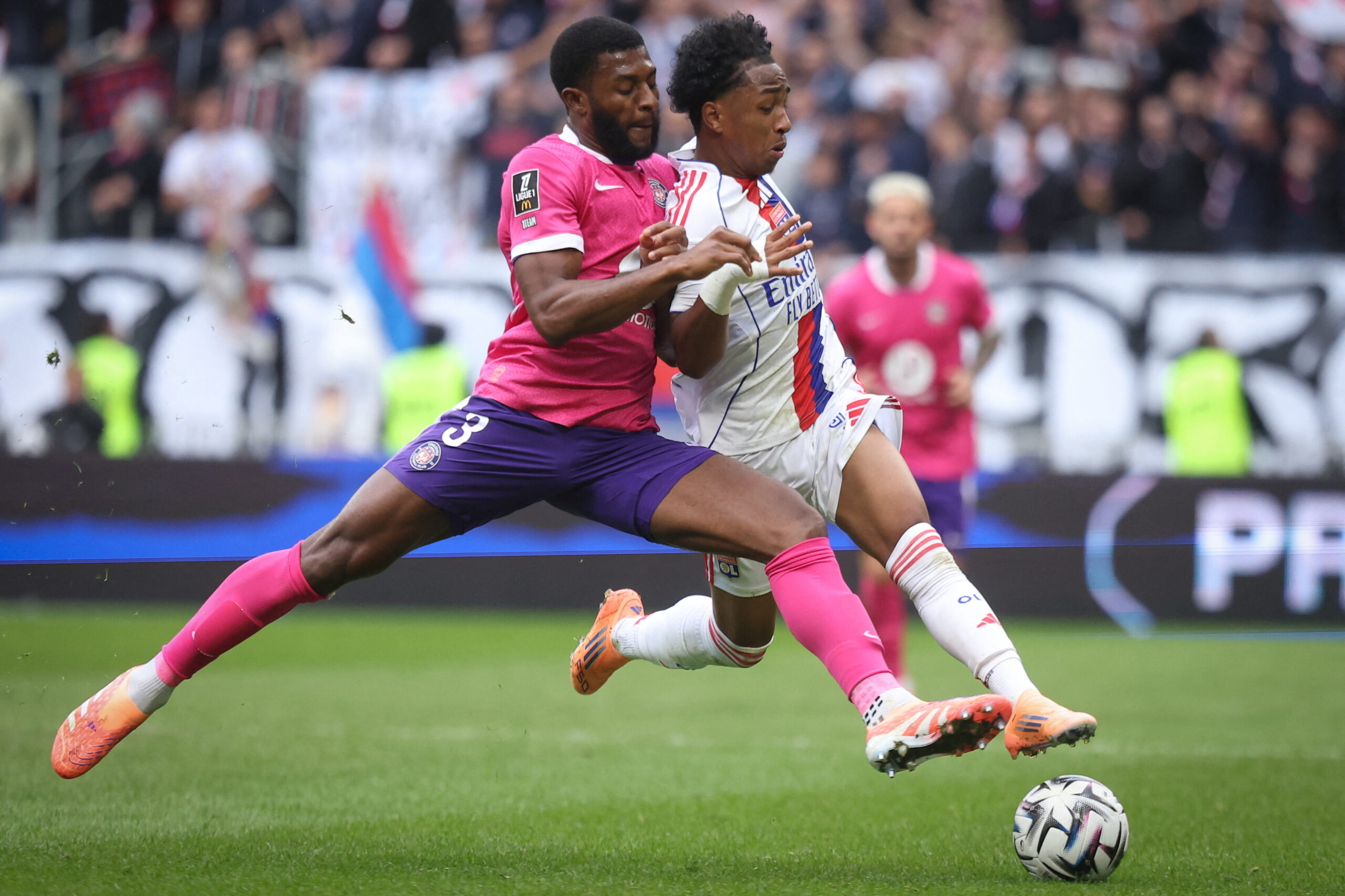
Mark McKenzie (3) has appeared in 17 matches for Toulouse this season, with 16 starts at center back.
“It’s always special coming back to Philly,” McKenzie said following the U.S. win against Paraguay at Subaru Park on Nov. 15. “I saw some old friends, my family came by the hotel, and just that time to take a little stroll and grab a bite to eat reminded me of who’s been behind me on this journey, and who I’m playing for.”
Playing time has been consistent for McKenzie, who has appeared in 17 league matches for Toulouse this season, starting 16 at center back. That bodes well, as Pochettino has repeatedly noted that consistency in match play is a plus in his eyes. And considering there’s not a clear early favorite as the No. 2 center back on the field for the Americans, McKenzie has to know that his chances are as good as anyone’s.
“The biggest thing is controlling what I can control,” McKenzie said. “Sure, I think about that stuff, but ultimately it’s not up to me. That’s my mentality, my attitude going into my performances.”
Defensively, McKenzie is taking control of a Toulouse team that is eighth in the Ligue 1 standings, just two spots outside of qualifying for the UEFA Europa League next season. There’s still plenty of time for McKenzie and the team to climb before the season concludes in May, though it will take a better run than the seven points out of a possible 15 the club has collected in its last five league matches.
“Going back to my [home] club [in Toulouse], that’s where a lot of the hard work is done,” he said. “So I’m just handling myself in those ways, and just not trying to worry about the things outside my control. My job is to keep getting selected for my club, play well, and hope it’s enough to prove that I deserve the opportunity to represent my country.”
Trying to qualify for the second men’s World Cup in the United States isn’t the only thing on McKenzie’s mind. In October he became a dad, and he is trying to find the balance between those early days of fatherhood, his responsibilities to his club, and staying on Pochettino’s radar.
It seemingly worked out as McKenzie was called up for every U.S. camp in the fall cycle in October and November. In October, he told CBS Sports that the birth of his son made him feel like he had “more to play for.”
And even though his baby wasn’t old enough to understand the rigors McKenzie is going through, having his son while going through this process appeared to mean the world to the center back.
“He can’t really hold his head up right now, and he’s not really watching …,” joked McKenzie on CBS Sports’ Morning Footy show in October, “but when we look back on these moments, this is something that I’ll cherish forever; just to say that he’s out there watching his daddy play is something that I’ll hold dear to my heart.”
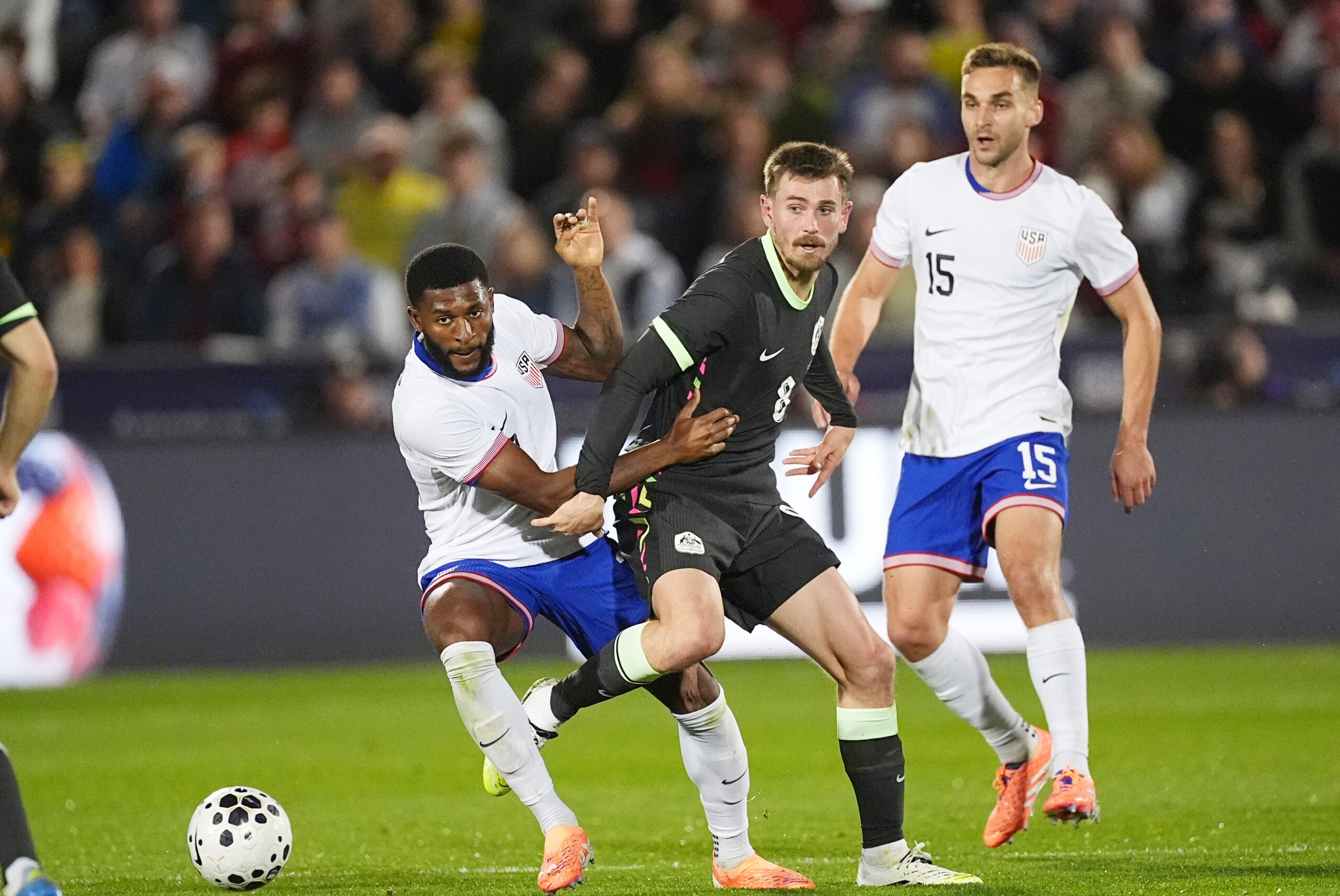
In just his second game with the national team since becoming a father, Mark McKenzie (left) battles Australia’s Connor Metcalfe in their meeting on Oct. 14, 2025.
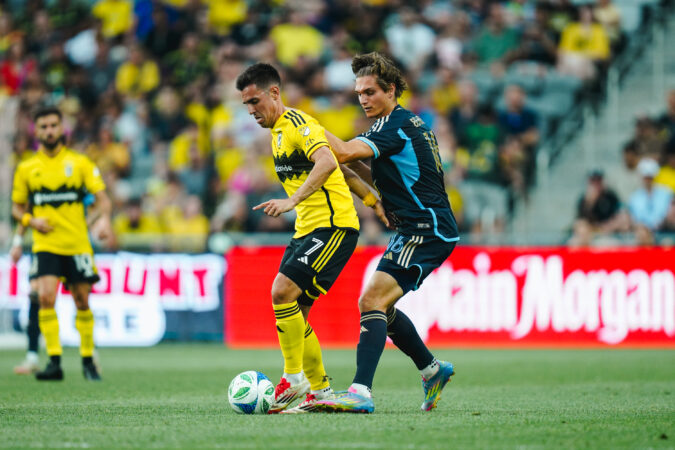
If fate has its way, McKenzie would be one of four players in the U.S. player pool who came up in the Union’s academy system or spent time on the club’s first team who could find themselves on the World Cup roster.
That list includes Medford’s Brenden Aaronson, Wayne native Matt Freese, and Media’s Auston Trusty, the latter also vying for a spot along the back line. Each player has been invited to recent camps, and there’s a belief that one, if not all, has a good chance to crack Pochettino’s World Cup squad.
But there’s still time before that happens. Six months, to be exact — meaning all McKenzie can do is focus on the now.
After all, it is the only thing in his control.
“Look, I’m trying to make the decision as difficult as possible [for the U.S. coaching staff],” he said. “I only do that by being at my best when I’m with my club and making the most of my opportunities when I get them. I just plan to do what I do and showcase my talent to the best of my ability, and hope that’s enough.”
Homegrown midfielder Ben Bender has reached an agreement on a new contract with the Union that could see him remain with the club through 2028, the team announced Wednesday.
Bender, 24, who was in the club’s academy system and was a first-round MLS SuperDraft selection in 2022 by Charlotte FC, agreed to a deal that retains him through the June 2027 transfer window, with an option to remain until the June international transfer window in 2028.
Bender appeared in seven league matches after joining the club in May of last season. Manager Bradley Carnell lauded his “work ethic” in addition to the “positive contributions” he made on the field.
Ben is back 🐍
Philadelphia Union has reached an agreement on a new contract with midfielder Ben Bender.
“Ben has been a positive addition and has made meaningful contributions since returning to the Union last May,” Carnell said in a statement. “When given opportunities, he’s consistently made the most of them, bringing a high level of competitiveness and a strong work ethic to the pitch every day. We’re confident in his continued development and future impact with the team.”
Bender will remain in what looks to be a crowded yet versatile attacking midfield corps. He’ll primarily compete with midfielders Milan Iloski, Indiana Vassilev, and brothers Quinn and Cavan Sullivan, the latter of whom is heading into his third season of a five-year deal before departing for Manchester City of the English Premier League.
With Tai Baribo’s departure, Iloski could move into an attacking role, much like he did when he was paired with Baribo in a two-man attacking formation. This would create more opportunities for a player like Bender, who can work effectively in a supporting role for the forward units or play as a more box-to-box midfielder.
The Union will begin the first phase of a two-part preseason on Jan. 17 in Marbella, Spain, before returning at the end of the month to prepare for their second camp in Clearwater, Fla. The club’s first official match will be in the Concacaf Champions Cup against host Defence Force in Port of Spain, Trinidad and Tobago, on Feb. 18, followed by a return leg at Subaru Park on Feb. 26.
The club will open MLS play on the road against D.C. United on Feb. 21 (7:30 p.m., Apple TV).