Author: Jeff Gammage

  • Going green: Why frogs are appearing at ICE protests

    Going green: Why frogs are appearing at ICE protests

    The frogs are all over social media, playing and prancing in front of the ICE building in Portland, Ore. The demonstrators in big, green inflatable costumes have grown from local oddity to symbol of the resistance, undermining President Donald Trump’s claim that “war ravaged” Portland is under siege by “domestic terrorists.”

    Protests that started with a single amphibian have in recent weeks expanded into full ponds, particularly after a viral video showed officers pepper-spraying a demonstrator through the air-intake of his costume. The frog corps there has been joined by a shark, giraffe, chicken, and raccoon, and during the recent nationwide “No Kings” marches expanded its web-toed footprint to places including Philadelphia.
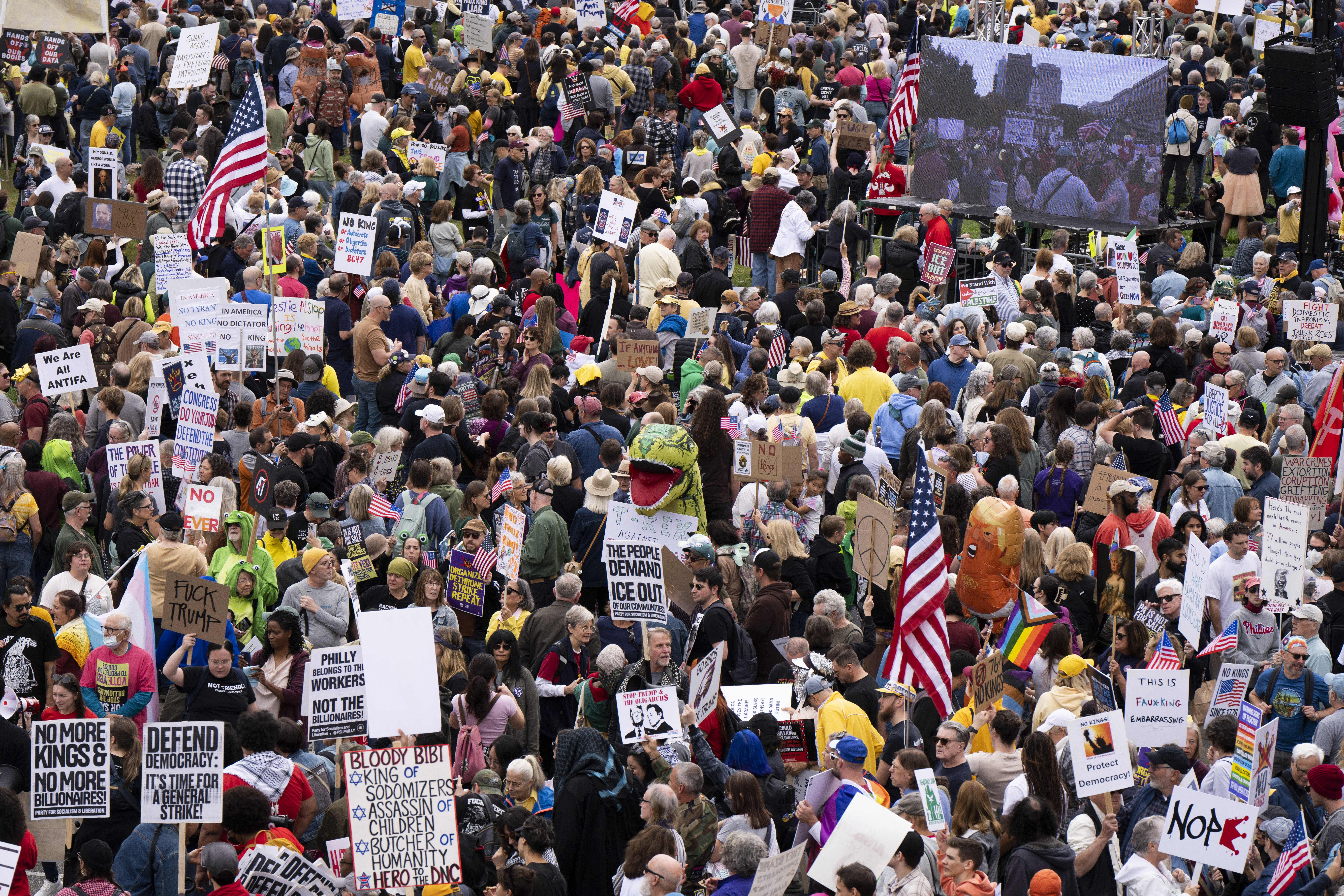
    Demonstrators gather for a ’No Kings’ rally in Philadelphia on Saturday, Oct. 18, 2025.

    Why has the frog become so popular?

    People following the news on the internet and TV see the paramilitary might of helmeted ICE agents arrayed against … frogs. And unicorns. And other dancing creatures.

    For demonstrators, it’s a way to make the other side look ridiculous by embracing ridiculousness ― a staple of effective political street theater, said Temple University professor Ralph Young, an expert on protest and dissent.

    “Trump saying Portland is occupied by terrorists, it’s so over the top,” Young said. “How do you respond? I guess you put on a frog outfit.”

    What has made Portland a center of immigration protest?

    Demonstrators oppose Trump’s effort to deport millions of people. And Portland has long been a target of the president, who last week again falsely claimed that the city was “burning down.”

    He wants to deploy National Guard troops in response to the protests outside the city’s Immigration and Customs Enforcement facility. An appeals court last week reversed an earlier ruling and said that deployment could proceed.

    Wearing animal costumes “dismantles their narrative a little bit,” chicken-suited protester Jack Dickinson told Willamette Week. “[Homeland Security Secretary] Kristi Noem is up on the balcony staring over the ‘Antifa Army’ and it’s, like, eight journalists and five protesters and one of them is in a chicken suit.”
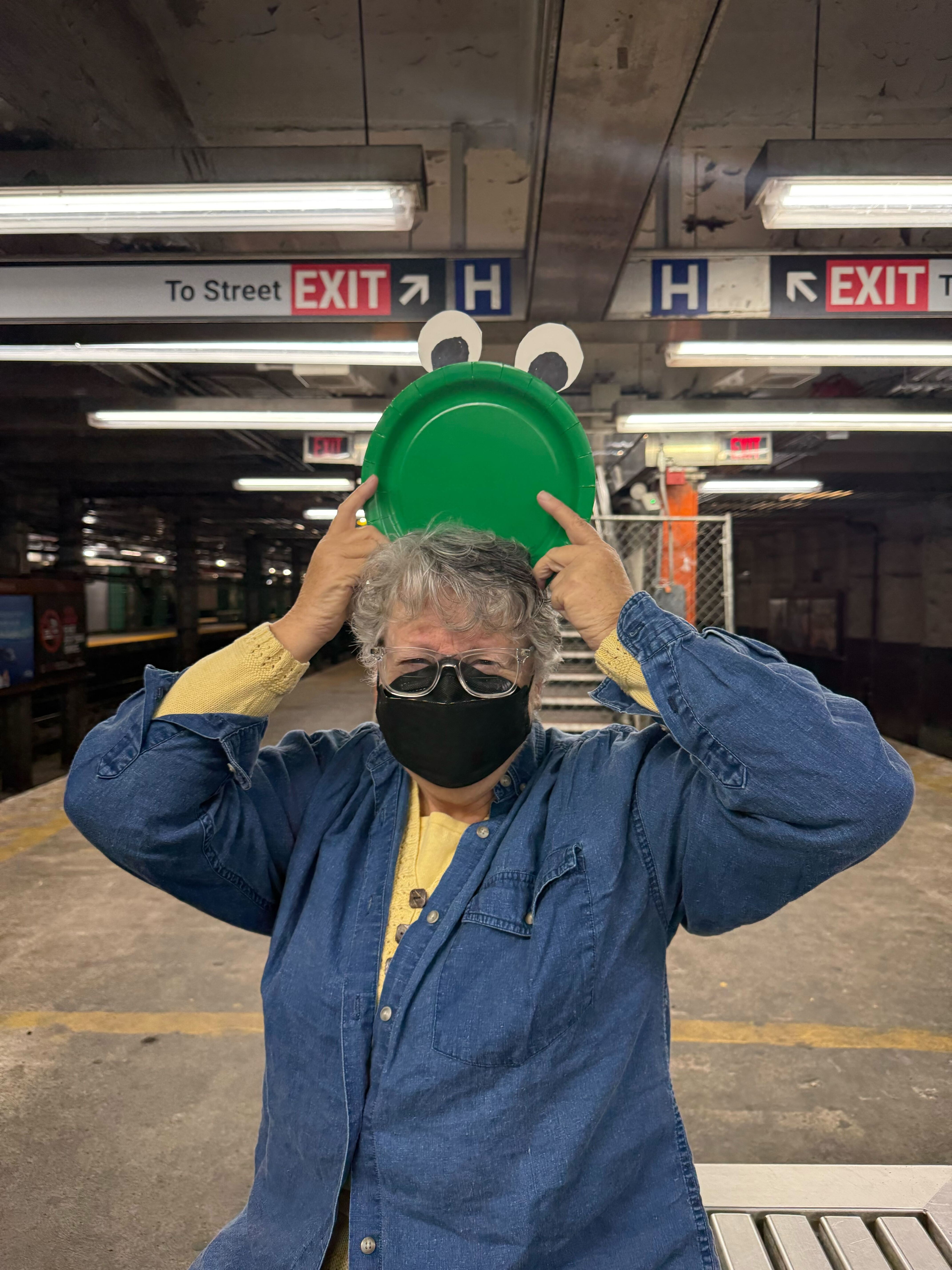
    Laura Murphy, 74, wears a handmade tiara inspired by a Portland, Oregon, protester’s frog costume, on her way to the No Kings protest on Oct. 18 in Philadelphia.

    Where did the idea for the frogs come from?

    The frogs, Temple’s Young said, come out of a court jester tradition. In ancient times, jesters could speak to the king in ways that might get someone else beheaded. They offered what others might be unwilling to say ― the truth, cloaked in humor.

    Since that time there have been many other instances of truth-in-comedy protests.

    At the 1968 Democratic National Convention, the Youth International Party, the Yippies, nominated a 145-pound pig for president. Pigasus, sarcastically named for the winged horse Pegasus, served to protest the political establishment and the sorry choice many voters felt they faced in choosing between Richard Nixon and Hubert Humphrey. The pig’s campaign slogan: “If we can’t have him in the White House, we can have him for breakfast.”
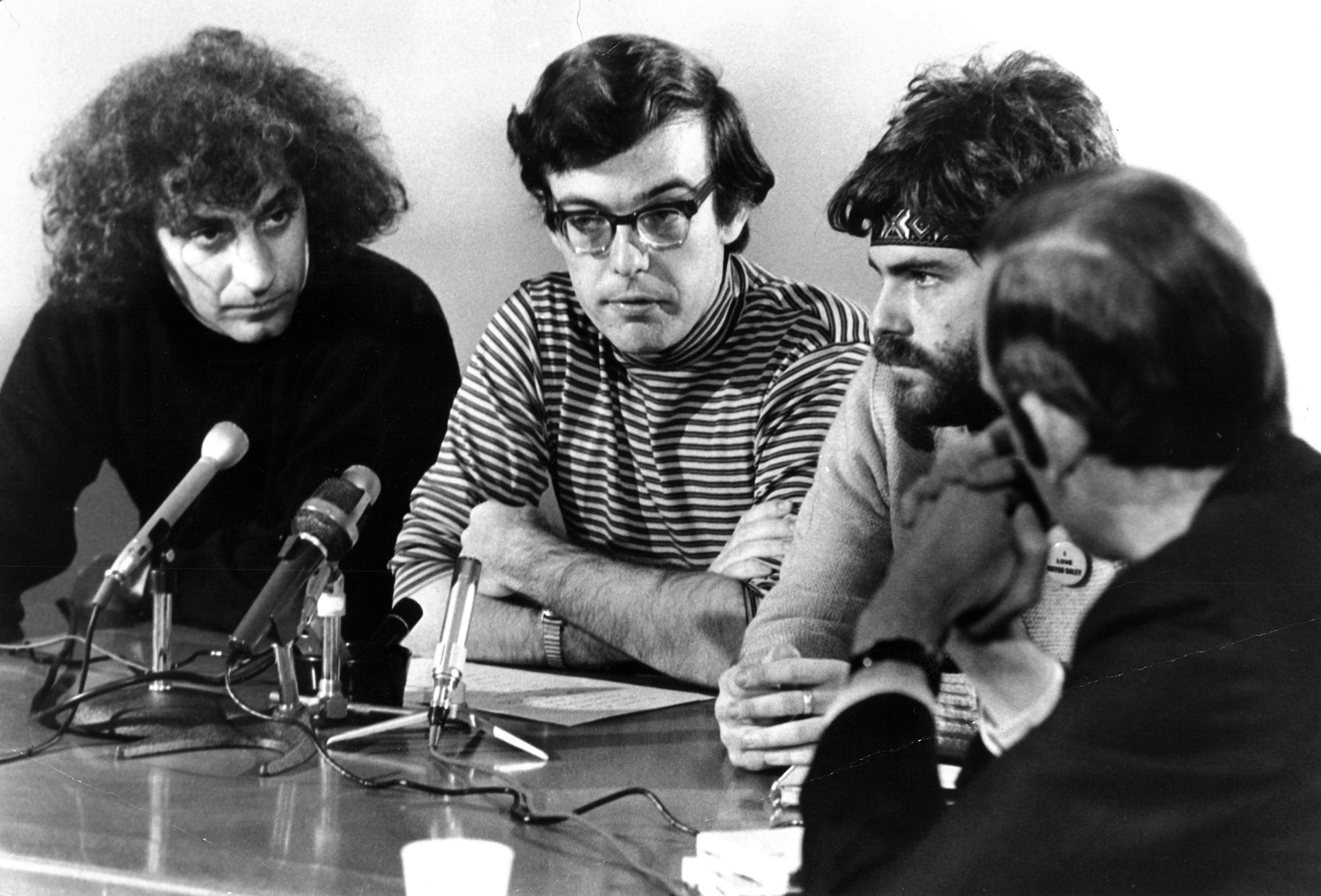
    Here on trial as part of the Chicago Seven, Abbie Hoffman (left) and Jerry Rubin (right), with beard and headband, helped nominate a pig for president. In center in striped shirt is defendant Rennie Davis. They’re picture here on Oct. 23, 1969, at the Federal Building in Chicago.

    The same year, the New York Radical Women attracted huge news coverage at the Miss America pageant when they dumped bras, makeup, and girdles into a “Freedom Trash Can” set up on the Atlantic City Boardwalk. The demonstrators were labeled “bra-burners,” though organizers insisted no bras were actually burned.

    Have frogs been spotted in Philadelphia?

    Yes, including at the recent “No Kings” protest that drew thousands onto city streets. One person carried a sign endorsing “Amphifa,” or “Amphibians Against Fascism.”

    Frogs are appearing on posters and T-shirts in a variety of poses: Raising the U.S. flag at Iwo Jima, with the help of a chicken and a unicorn. And as the subject of the famous Barack Obama campaign portrait, this one captioned not “HOPE” but “HOP.”

    So far the ICE field office in Philadelphia has not been the target of sustained protests, though the exterior of the building is now guarded by heavy concrete blocks. The group No ICE Philly plans to hold an all-day, Halloween Eve demonstration on Thursday, complete with costumes, live music, art, and free food.
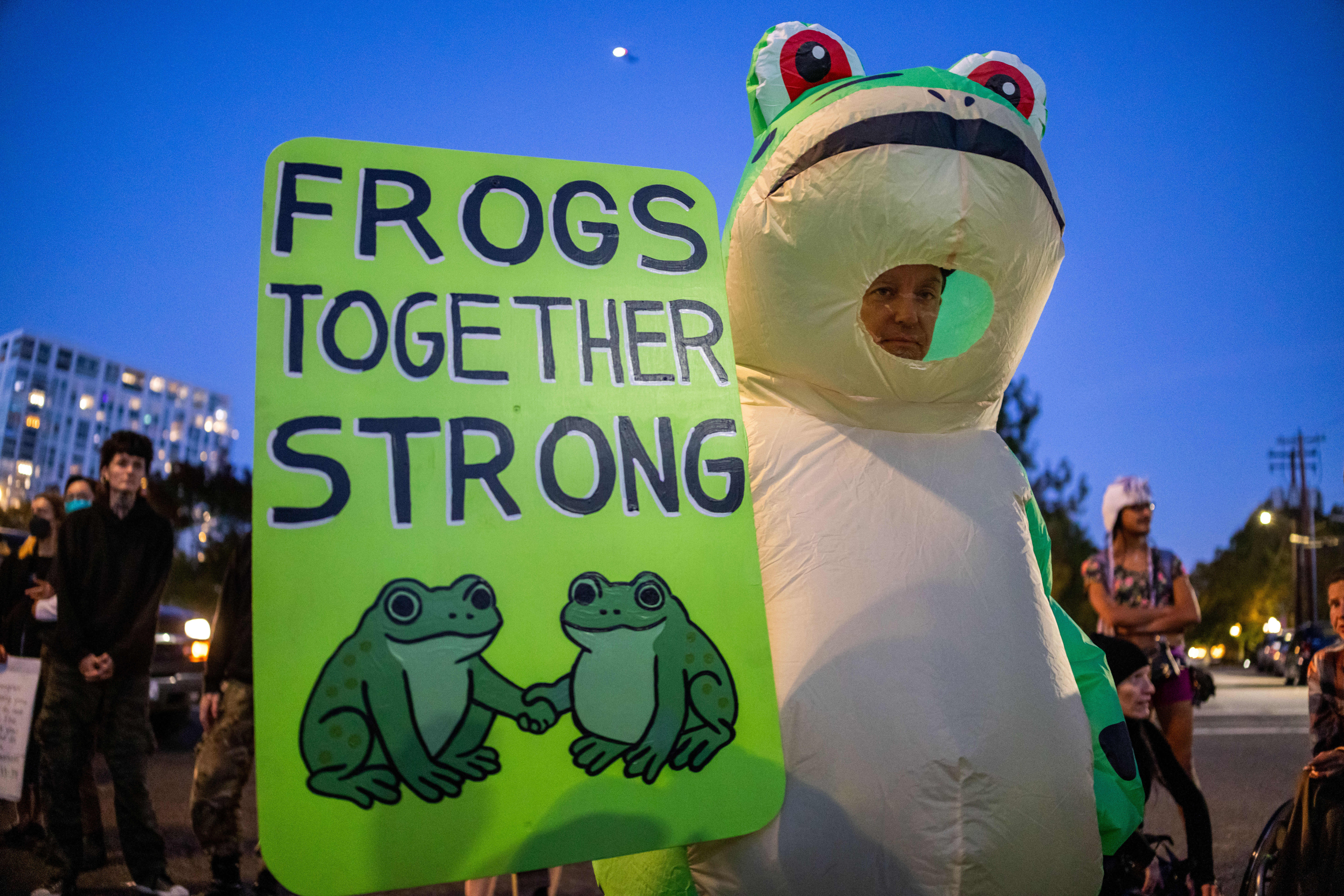
    A demonstrator wearing a frog costume stands outside a U.S. Immigration and Customs Enforcement facility on Tuesday, Oct. 7, 2025, in Portland, Ore. (AP Photo/Ethan Swope)

    Is it true the frogs are meant as a biblical reference?

    Let’s not get carried away. But, yes, some people have posted social media photos of the Portland frogs captioned with a verse from Exodus 8:2-6: “If you refuse to let them go, I will bring a plague of frogs on your whole country. … The frogs will jump on you, on your people, and on all your officials.”

    Staff writer Michelle Myers contributed to this article.

  • Protesters rally outside Philly ICE office as Catholics launch ‘One Church, One Family’ campaign for immigrants

    Protesters rally outside Philly ICE office as Catholics launch ‘One Church, One Family’ campaign for immigrants

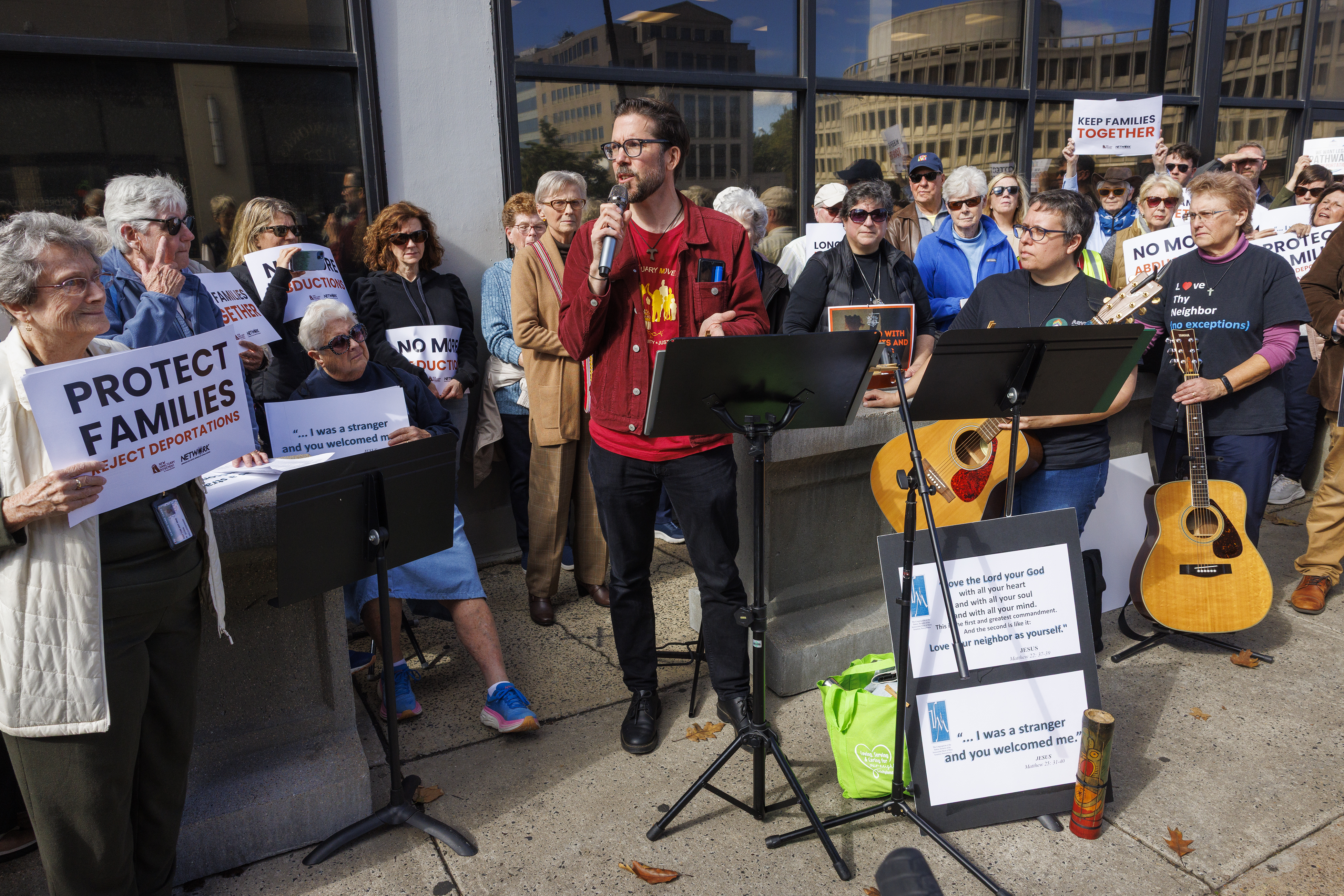
    Lifted by song, prayer, and Scripture, dozens of Philadelphia-area Catholics rallied outside the Center City ICE office on Wednesday, joining a pro-immigrant push undertaken by fellow church groups around the country.

    Catholic priests, nuns, and other supporters prayed and sang outside the field office near Eighth and Cherry Streets, joining a nationwide show of solidarity with migrant families, refugees, and asylum-seekers.

    “We reject the culture of fear that dehumanizes,” Michelle Cimaroli of Handmaids of the Sacred Heart of Jesus, an international community of Catholic women, told the crowd of about 50 people. “As Catholics, we stand with immigrants.”

    Speakers called on people to see the face of God in every human face. And to be as confident as Jesus in sharing the truth.

    Catholic organizations across the country are taking part in a campaign called One Church, One Family: Catholic Public Witness for Immigrants. The movement invites parishes, schools, and faith-based groups to host prayerful public events that proclaim the dignity of every person.

    U.S. Immigration and Customs Enforcement officials said in a statement: “ICE respects the rights of individuals to peacefully protest.”

    A second day of prayer is planned for Nov. 13, timed to coincide with the feast of St. Frances Xavier Cabrini, an Italian immigrant who became the first U.S. citizen to be declared a saint, according to the National Catholic Reporter.

    Peter Pedemonti of the New Sanctuary Movement addressing Catholics gathered outside ICE office at Eighth and Cherry Streets on Wednesday. They are protesting against the detaining and incarceration of immigrants.

    “I want us to take a moment to just let our hearts break,” Peter Pedemonti, codirector of New Sanctuary Movement of Philadelphia, told the crowd in Center City. “That we don’t let the daily barrage of bad news harden us.”

    He and other advocates said they believed ICE arrested four people in Philadelphia on Wednesday, including a man at the Italian Market.

    “We’re trying to get Catholics across the country to listen to Pope Leo’s message: Migrants lead us, they lead us to a true set of values,” said Jerry Zurek, who serves as local co-organizer of NETWORK, the Catholic social-justice group, and who took part in the Philadelphia rally.

    This month the pope described migrants and refugees as “privileged witnesses of hope through their resilience and trust in God,” maintaining their strength while seeking a better future “in spite of the obstacles that they encounter,” Catholic News Service reported.

    Big and small protests continue to take place in the Philadelphia area and around the county in opposition to President Donald Trump’s effort to deport millions of people. The number of people arrested by ICE in Delaware, New Jersey, and Pennsylvania has surged since the agency reportedly implemented a 3,000-arrests-a-day quota in late May.

    Arrests doubled from an average of 26 a day since Trump took office through May 21, to an average of 51 a day between May 22 and June 26 for the three states. At the same time, the proportion of people arrested without a criminal record or pending criminal charges soared, up two-thirds since the directive to ICE was issued.

    “As Catholics and people of deep faith, we reject the culture of fear and silence that dehumanizes, and we choose instead to stand with migrants,” local organizers said in a statement, pledging “to defend the dignity of our neighbors, family members, fellow parishioners, classmates, coworkers, and friends.”

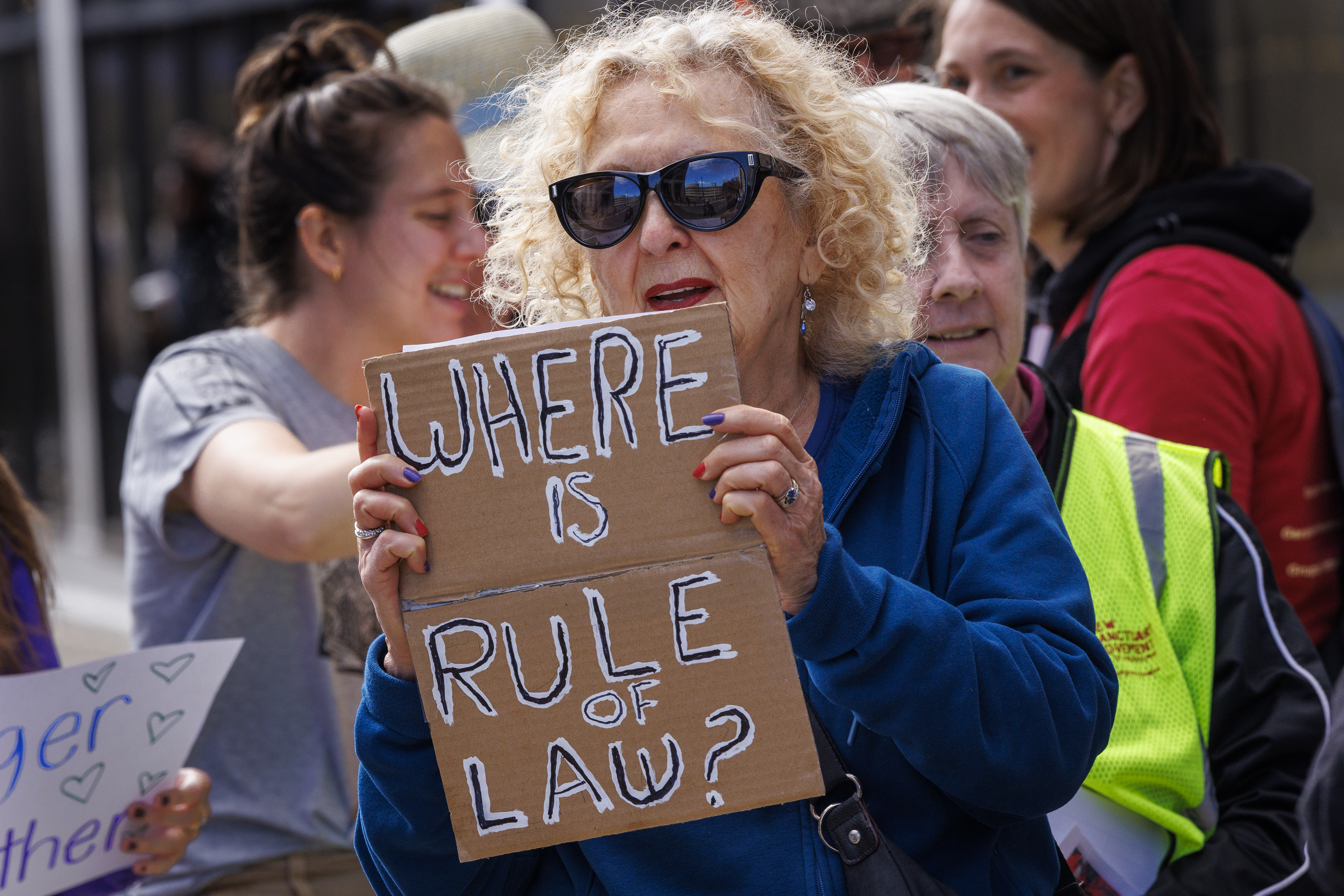
    Vicki Guinta-Abbott, a concerned citizen and a Catholic, gathers with others outside the ICE office at Eighth and Cherry Streets on Wednesday.

    The body of U.S. bishops, individual bishops, and Catholic organizations have been speaking out against what they call inhumane policies that go against church teachings on immigration.

    Local leaders said the campaign is sponsored by the United States Conference of Catholic Bishops Migration and Refugee Services, the Leadership Conference of Women Religious, Jesuit Refugee Service/USA, and many others.

  • Before the Day of the Dead, a time to welcome departed dogs and cats as families create ‘pet ofrendas’

    Before the Day of the Dead, a time to welcome departed dogs and cats as families create ‘pet ofrendas’

    The spirits of the pets come first, treading home on soft, shadowy paws, making their way by the light of altar candles and guided by the eternal tie of love.

    They are welcomed with offerings of favorite treats and fresh water, and by the careful placement of old toys and worn collars that have become cherished mementos.

    It’s a new tradition connected to the Day of the Dead, the ancient Mexican holiday where people honor and celebrate the lives of family members at a time when the wall between worlds melts.

    Now, in Philadelphia and elsewhere, people have begun to recognize not just human relatives but those with wings and whiskers, the departed dogs, cats, birds, and other animals that enriched their lives. And who, like family, continue to be mourned and missed.

    The souls of pets are said to return on Oct. 27, a few days before the Dia de Muertos on Nov. 1 and 2.

    “The day,” said Gerardo Coronado Benitez, manager of the Association of Mexican Business Owners of Philadelphia, “is not about death, but about celebrating and remembering people, keeping memories alive. Of course many people want to keep alive the memories of their pets.”

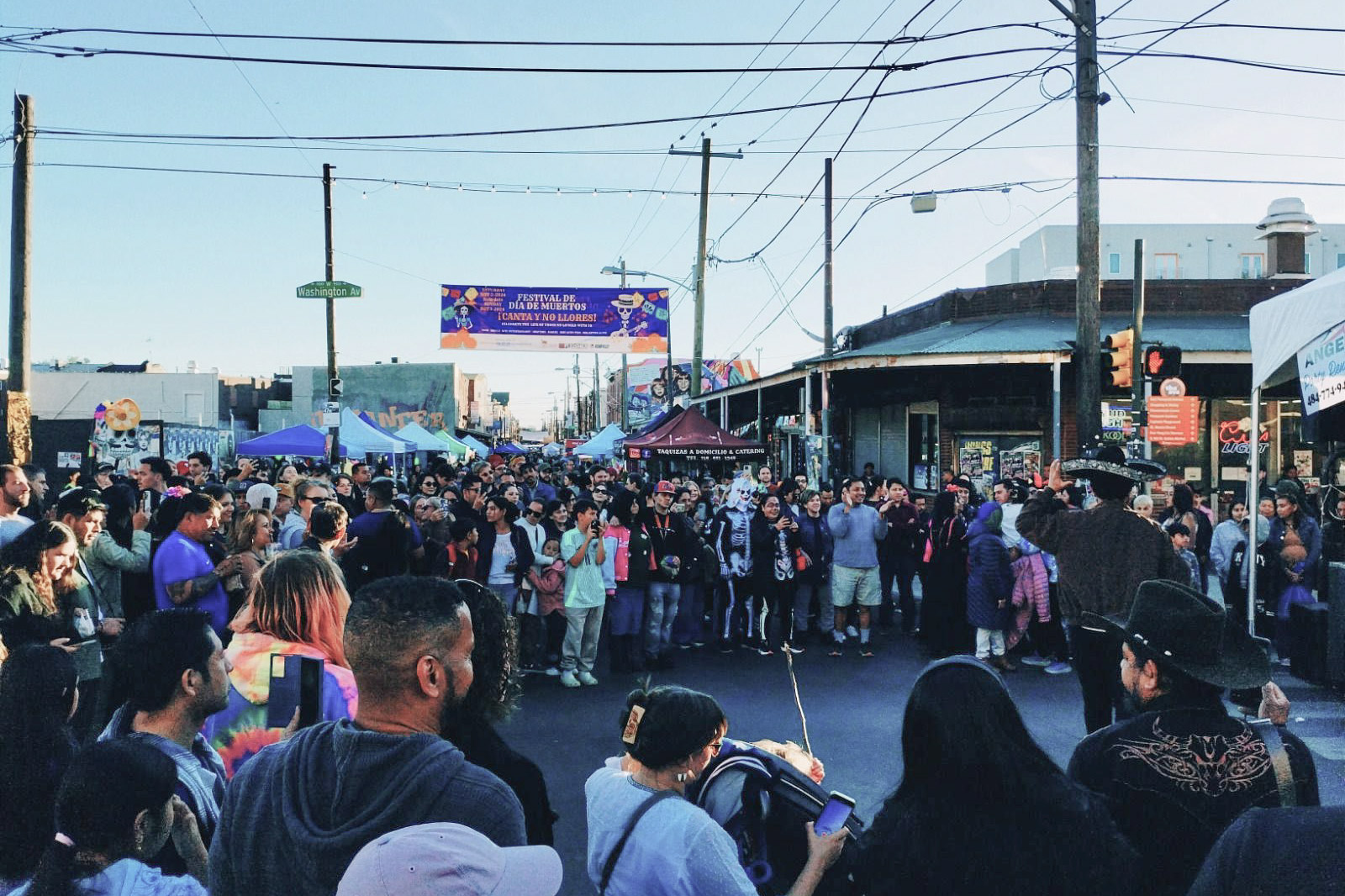
    He is helping organize a big Day of the Dead event at the Italian Market on Nov. 2, where people will be able to place photos of relatives and pets on a community ofrenda ― a decorated altar ― at Ninth Street and Washington Avenue.

    A crowd gathers at last year’s Day of the Dead celebration at the Italian Market in South Philadelphia.

    Others have set up altars in their homes. These ofrendas may be adorned with traditional marigolds, with candy skulls, paper skeletons, and photographs. But they may also feature a snatch of fur or a whisker left behind.

    Genesis Pimentel-Howard created an ofrenda for her cat, Mobi, on a bedroom shelf of the West Philadelphia home she shares with her husband, Yaphet Howard.

    It’s hard for her to talk about Mobi, who died suddenly in May at only 4 years old.

    He was, she said, an adorable menace. Mobi loved to poke at and play with the couple’s other cat, Sannin, though Sannin didn’t always appreciate the attention.

    Mobi sometimes stole food from the trash. And he managed to push over and break Pimentel-Howard’s flat-screen TV. Still, she said, he followed her everywhere. She couldn’t even use the bathroom without him trailing her inside.

    “A sweet momma’s boy,” she said. “Always next to me.”

    On the ofrenda, Pimentel-Howard placed her grandmother’s pearls. And photos of her family dogs, Ella and Red, and her hamster, Shia LaBeouf. She added a shadow box that holds Mobi’s collar and an impression of his paw.

    “I’ll stay up as late as I can to welcome him,” she said. “I like to think he’ll be around.”

    Genesis Pimentel-Howard lights a candle for her late cat, Mobi, beside a lovingly crafted ofrenda in her Philadelphia home on Monday. The altar glows with candlelight, welcoming the spirits of her beloved departed pets. The ritual is part of a growing tradition tied to Día de los Muertos.

    The roots of the Day of the Dead go back 3,000 years, to Aztec and Mayan traditions. It is celebrated not only in Mexico but also in wider Latin America and in communities across the United States.

    Dogs have always played an important role. The ancients considered them sacred, guides that led souls through the afterlife. They revered the Mexican Hairless dog, the Xoloitzcuintle, or Xolo for short.

    It’s a Xolo dog, Dante, that guides Miguel to meet his ancestors in Coco, the popular animated Disney movie. And it’s a song from the movie, “Remember Me,” that has become the soundtrack for countless social media posts about departed pets.

    In Philadelphia, the Italian Market festival welcomes all who wish to take part in its Day of the Dead event to South Ninth Street between Federal and Christian Streets from 11 a.m. to 5 p.m. on Nov. 2

    The Fleisher Art Memorial in South Philadelphia also will hold a big Day of the Dead celebration. Everyone is invited to help with final preparations for the ofrenda from 2 to 9 p.m. on Oct. 31, and to come to the Day of the Dead event the next day.

    “The animals, that’s family, too,” said María De Los Angeles Hernández Del Prado, the artist who led the creation of the Fleisher’s large, three-part ofrenda, which includes a section devoted to pets. “They’re the same as us, they just don’t talk the same language.”

    Pimentel-Howard knew after Mobi died that she would find a way to honor him, along with the other animals she has loved.

    “You don’t know what it’s like to lose an animal,” she said, “until you’ve lost one.”

  • Judge rules Bucks County sheriff’s agreement to cooperate with ICE was ‘reasonable and necessary’

    Judge rules Bucks County sheriff’s agreement to cooperate with ICE was ‘reasonable and necessary’

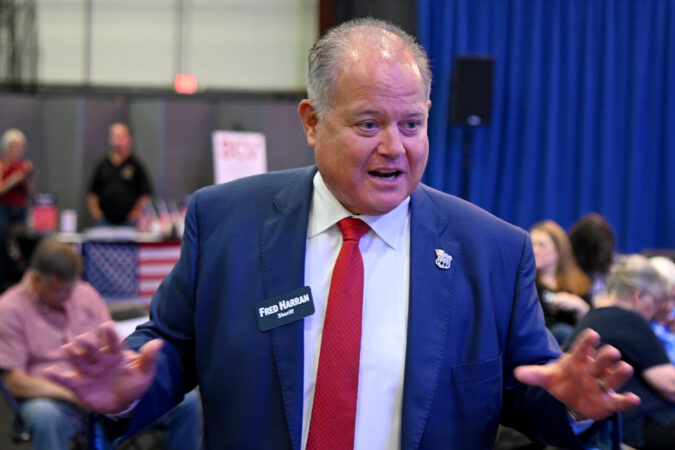
    Bucks County Sheriff Fred Harran acted legally in signing up to have his deputies help ICE enforce federal immigration laws, a judge ruled Wednesday in a case that has riled residents on both sides of a contentious issue.

    Bucks County Court Judge Jeffrey Trauger said Harran’s cooperation with the agency was “clearly lawful under Pennsylvania jurisprudence,” and both “reasonable and necessary” in fulfilling his lawful duty to keep the citizens of Bucks County safe.

    What the judge called “intergovernmental cooperation of law enforcement” is no different under the law at the county, state, or federal level, he wrote.

    The ACLU of Pennsylvania and other plaintiffs had asked Trauger to issue an injunction blocking the partnership from moving forward.

    Reached by phone Wednesday, Harran said he was pleased with the decision and expected his partnership with U.S. Immigration and Customs Enforcement to be fully operational by the end of next week.

    “I knew from the time I started this that I was in the right, that the county commissioners do not control the office of the sheriff,” Harran said.

    A spokesperson for Bucks County said the county intended to appeal.

    Those who sought to block Harran’s efforts said they would continue to battle.

    “This decision doesn’t mean that we’ll stop fighting to hold Sheriff Harran accountable,” said Diana Robinson, co-executive director of Make the Road Pennsylvania, an advocacy group that was one of the plaintiffs. ”Indeed, we will redouble our efforts in this case and continue to fight for what is right.”

    She said an alliance between Harran’s department and ICE was aimed at “turning our neighborhoods into surveillance zones” and “weaponizing local law enforcement to carry out ICE’s harmful agenda.”

    Community members rally in Bucks County before civil rights groups asked a judge to block Sheriff Fred Harran’s controversial partnership with ICE.

    In his opinion, the judge said it did not appear that Make the Road, NAACP Bucks County, or Buxmont Unitarian Universalist Fellowship as organizations had clear standing to sue under Pennsylvania law.

    While individual members might have standing if they were caused harm by the sheriff’s office, he said, the injuries they alleged were “not immediate or substantial,” and their complaint was based in part on speculation about what might happen.

    ACLU of Pennsylvania attorney Stephen Loney, who helped lead the court fight, said Wednesday that he disagreed with the decision.

    “In the most respectful way I could possibly say it, I think the judge got it totally wrong,” he said. “It’s unfortunate.”

    He said the ACLU would appeal the decision.

    ICE officials did not immediately offer comment.

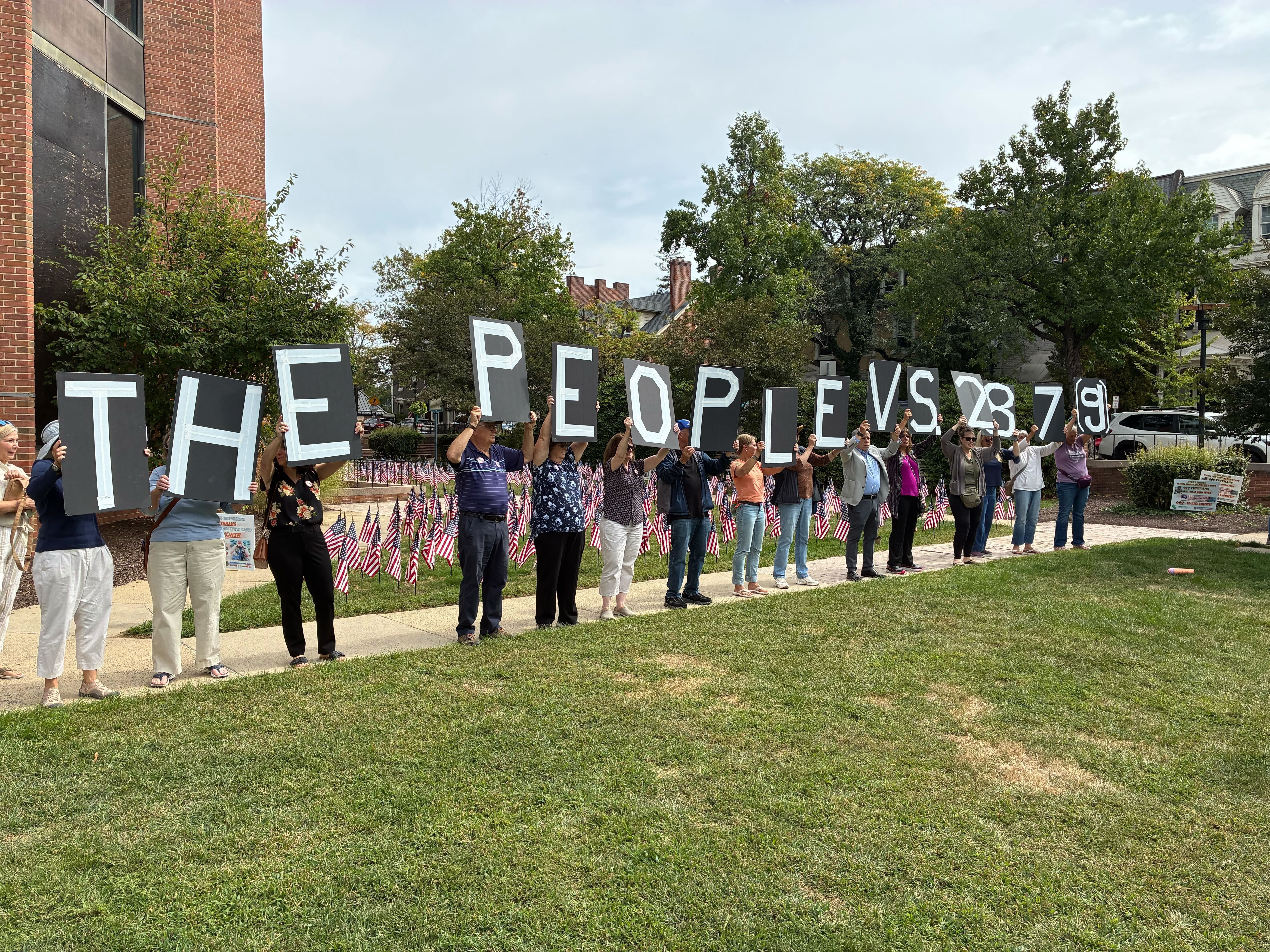
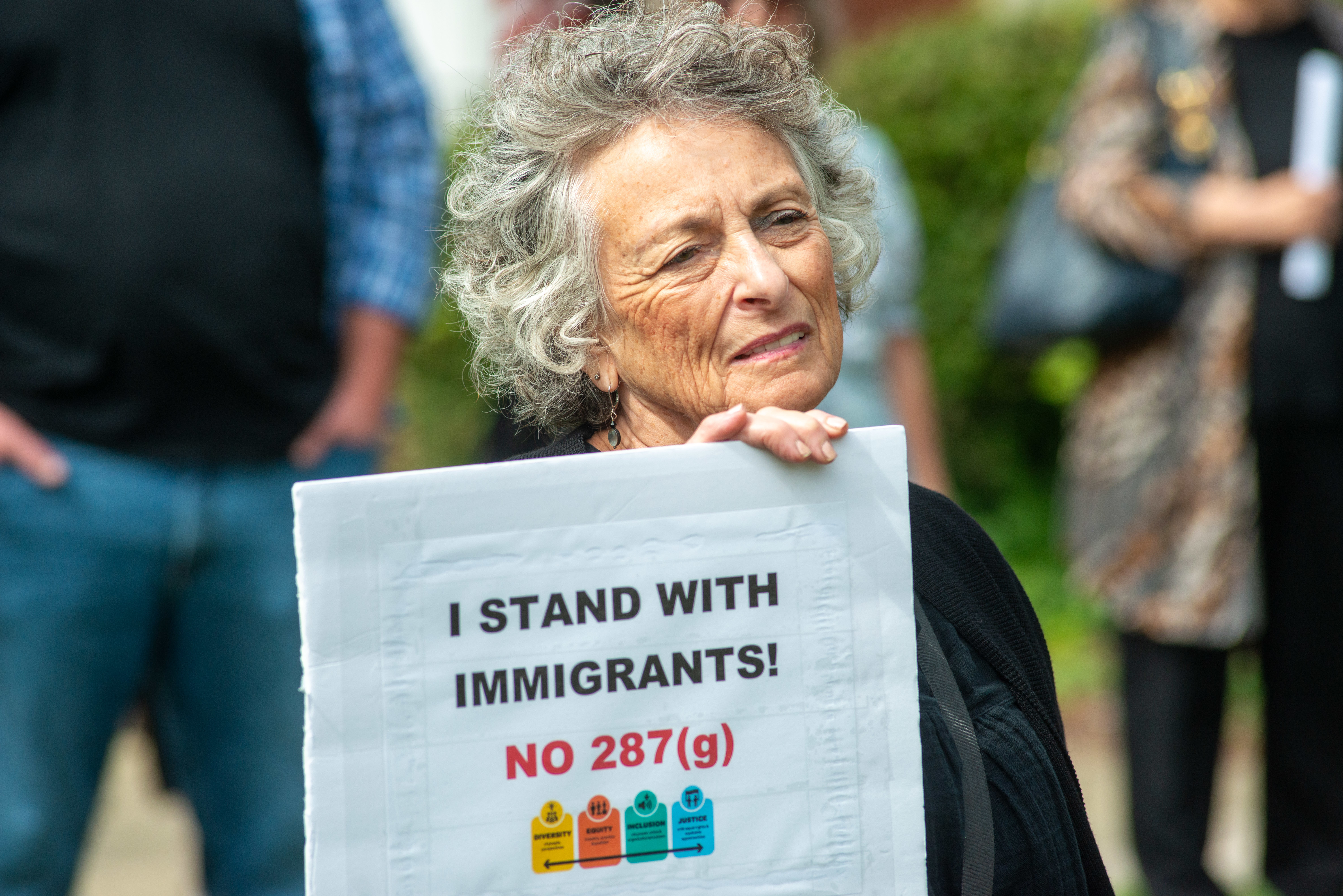
    Melanie Goldstein holds a sign as demonstrators rally outside the Bucks County Administration building before a hearing last month during which the ACLU and other organizations sought an injunction to stop the Bucks County sheriff from going through with his plan to help ICE enforce immigration laws.

    Laura Rose, an organizer with Indivisible Bucks County, said the group was “deeply disappointed in Judge Trauger’s decision” to let Harran proceed “without guardrails.”

    She called the ruling “a profound failure to protect both the immigrants and taxpayers of Bucks County.”

    Rose called on voters to end the local alliance with ICE by voting Harran out of office on Nov. 4.

    Harran’s lawyer, Wally Zimolong, called the decision “a victory for the rule of law and for the safety of Bucks County residents,” and accused the ACLU of maligning the sheriff with false claims.

    “Frankly,” he said, “it is mind-boggling that anyone would oppose this. It is also a vindication for Sheriff Harran, a good and honorable man and dedicated public servant. … It is a proud day when people of good character, like Sheriff Harran, prevail over those that lack it.”

    In the spring, Harran and ICE officials signed what is called a 287(g) agreement, a controversial program named for a section of a 1996 immigration law. It enables local police to undergo ICE training, then assist the agency in identifying, arresting, and deporting immigrants.

    The number of police agencies participating in the program has soared to more than 1,000 under President Donald Trump. Seven states, including New Jersey and Delaware, bar the agreements by law or policy.

    Shortly before the government shutdown, ICE was poised to begin backing its recruitment efforts with money, announcing that it would reimburse cooperating police agencies for costs that previously had been borne by local departments and taxpayers.

    Harran, who is seeking reelection in November, has pledged “zero cost” to local taxpayers.

    He insists the alliance with ICE will prevent crime and keep people safe. Civil rights groups say the sheriff is inviting racial profiling, taxpayer liability, and a loss of trust between police and citizens.

    Bucks County’s sheriff Fred Harran, outside the courthouse in Doylestown, PA, June 9, 2025.

    Contentious legal hearings have come against a backdrop of name-calling and rancor outside the courtroom.

    The Democratic-led Bucks County Board of Commissioners has disavowed Harran’s actions, voting 2-1, with the lone Republican opposed, to approve a resolution that declared the agreement with ICE “is not an appropriate use of Bucks County taxpayer resources.”

    The ICE issue has become central to Democrats’ effort to oust Harran, a Republican, while the sheriff says his intentions have been misconstrued by political opponents and the news media.

    “A judge ruling that he has the authority to enter into this deportation agreement does not make this any less dangerous,” Harran’s Democratic opponent, Danny Ceisler, said in a statement Wednesday.

    The last opportunity to end the partnership, Ceisler said, is by winning the election next month.

    A key issue has been the difference between what Harran says he intends to do and the much broader powers conferred within the agreement with ICE.

    Harran signed up for the “Task Force Model,” the most far-reaching of the three types of 287(g) agreements. It allows local police to challenge people on the streets about their immigration status and arrest them for violations.

    Harran said his officers won’t do that.

    Wednesday’s ruling, Harran said, recognized the limited scope of his plans, and he suggested that every county should partner with ICE.

    “I’m only interested in making the county safer, and I’m only interested in dealing with those folks that are in this country illegally that have committed crimes,” Harran said. “I am not the immigration police. I am not Immigration and Customs Enforcement.”

    Harran has said staff will electronically check the immigration status of people who have contact with the sheriff’s office because of alleged criminal offenses. Those found to be in the country illegally will be turned over or transported to ICE, if the federal agency desires, he said.

    Harran testified in court last month that he planned to create a sheriff’s office policy to specify the limits of his deputies’ powers but had not yet done so.

    He insisted that his office would take only the actions he has described.

    “We will not be stopping people to ask them on immigration status,” he said under cross-examination. “I know what I am doing, and that’s all I intend to do.”

    This suburban content is produced with support from the Leslie Miller and Richard Worley Foundation and The Lenfest Institute for Journalism. Editorial content is created independently of the project donors. Gifts to support The Inquirer’s high-impact journalism can be made at inquirer.com/donate. A list of Lenfest Institute donors can be found at lenfestinstitute.org/supporters.