Anna Stone was doing the first rounds of her nursing shift at St. Luke’s Upper Bucks Campus when she noticed a patient’s heart rate was elevated, a sign that they could be at risk of a cardiac emergency.
Before she could look into the patient’s chart and decide whether to call for help, a critical care doctor came rushing to the patient’s bedside.
A drop in the patient’s oxygen levels had been detected by a monitor that uses artificial intelligence to continuously evaluate vital signs. This triggered an automatic alert for the hospital’s critical care team to send help.
The AI tool is intended to help doctors and nurses more quickly identify patients whose condition is deteriorating — often before signs of distress are visible to medical staff — and intervene sooner.
The approach contributed to a 34% decline in cardiac arrests, and a 12% drop in patients crashing so hard and fast that they required rapid response transfers to the ICU between 2022 and 2024, according to St. Luke’s.
Survival rates among cardiac arrest patients rose from 24% to 36%.
St. Luke’s experiment with a program called the Deterioration Index, created by healthcare software giant Epic, is among the latest ways hospitals are bringing artificial intelligence into their patients’ rooms.
In other Philadelphia-area initiatives, Jefferson Health and Penn Medicine recently debuted an ambient listening tool that records conversations between doctors and patients, distilling the critical details into a well-organized visit note.
St. Luke’s has been using its AI monitoring system across all 16 of its campuses, including Quakertown, Upper Bucks, and Grand View, which the health system acquired in July.
The health system’s initiative was recognized by The Hospital and Healthsystem Association of Pennsylvania, the region’s largest industry group for hospitals, with an award honoring safety and quality initiatives that improved patient care while reducing hospital costs.
Using AI to predict emergencies
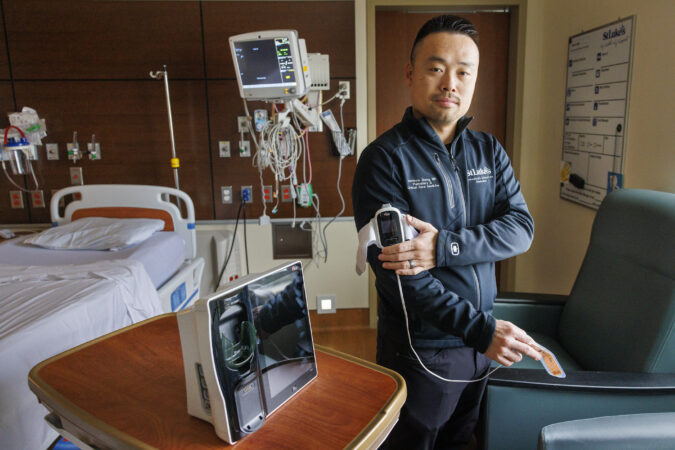
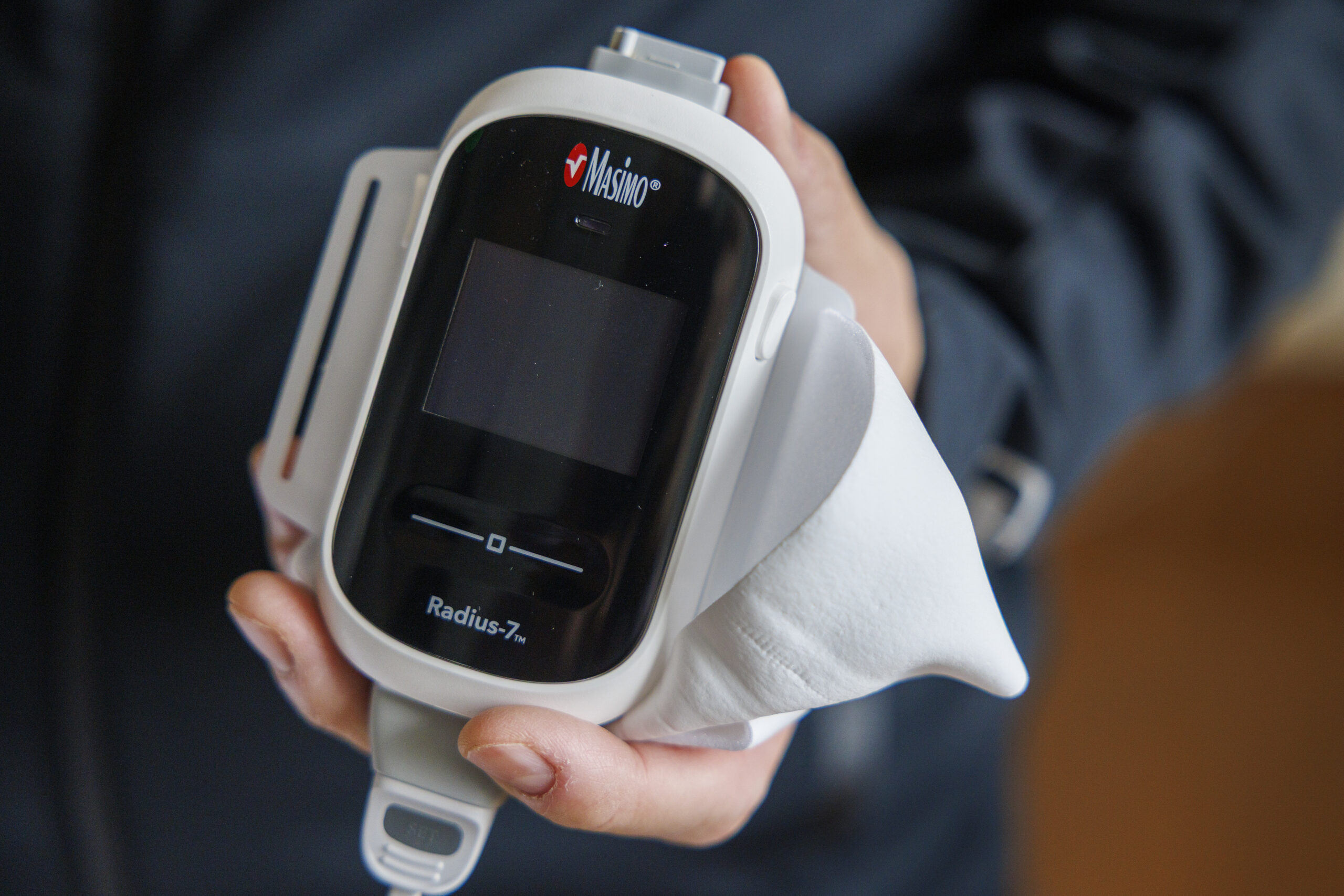
The monitoring device, which attaches to a patient’s finger, records and continuously updates patients’ electronic medical records with vital metrics such as heart rate, blood pressure, and lab work results.
Using this matrix of data points, it assigns each patient a “deterioration index” — a score between 0 and 100 indicating their overall stability — and automatically alerts critical care when the score rises too high.
Matthew Zheng, a doctor at St. Luke’s Upper Bucks, holds the monitoring device used to continuously track patients’ vital signs.
It is not intended to replace in-person monitoring, but serves as an extra set of eyes when nurses are away from their bedside.
What’s more, the sophisticated technology is capable of picking up on nuanced changes in a patient’s status before they show physical signs of distress.
“We would ideally like to intervene on these patients before they reach a point where the intervention isn’t that helpful,” said Matthew Zheng, a critical care doctor at St. Luke’s Hospital — Upper Bucks. “Our nurses work very hard, but they can’t be in the same room all the time.”
When a patient’s “deterioration index” rises above 60, the device sends an alert to the hospital’s virtual response center — a remote hub where a nurse monitors three screens showing the status of all patients.
Alerts may also be sent directly to a patient’s care team or the rapid response unit, if the AI monitoring detects that a patient is quickly deteriorating and needs emergency care.
“What that’s allowed is for us to have a proactive response instead of being reactive to patients,” said Charles Sonday, an associate chief medical information officer at St. Luke’s who leads AI initiatives.
Stone, the Quakertown nurse, said having the tool to constantly watch over patients while she’s out of their room is reassuring.
Doctors like that it enables them to quickly get up to speed on the status of a patient they transferred out of the ICU, and respond more immediately to their new medical needs, said Zheng, the critical care doctor.
St. Luke’s plans to continue fine-tuning the technology, and customize it to meet the unique patient profiles of each of its campuses, which span 11 counties and two states, from the Lehigh Valley to New Jersey.
The social and economic factors that affect patient health, such as pollution, and illness rates, vary significantly across the health system’s sprawling network, Sonday said.
The system will also explore customizing the tool for specialty services, such as pediatrics and behavioral health.
The Philadelphia area’s first baby of 2026 was born at the stroke of midnight New Year’s Eve at Penn Medicine Doylestown Hospital, while fireworks lit up the sky outside their window.
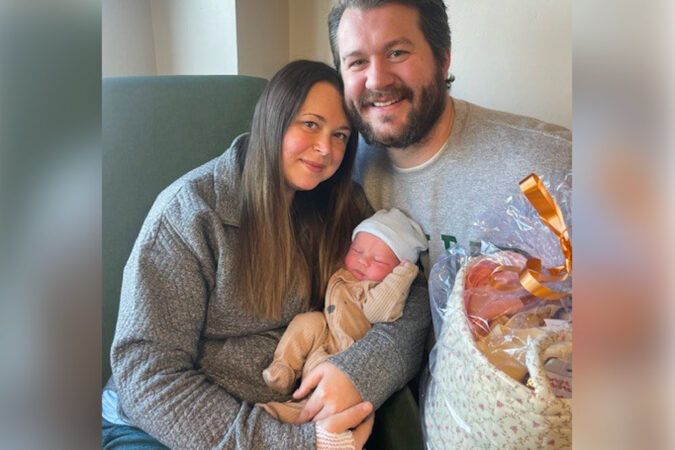
Parents Sarah and Ryan Schamp of Ambler described the moment as “surreal” and “picture perfect.”
“I thought everyone was joking,” Sarah Schamp said of the perfectly timed fireworks display that was visible from their room moments after Henry’s birth.
The family expected to return home later Friday, where they would be greeted by the couple’s 2-year-old daughter, Willow, and 5-year-old Australian shepherd, Winston.
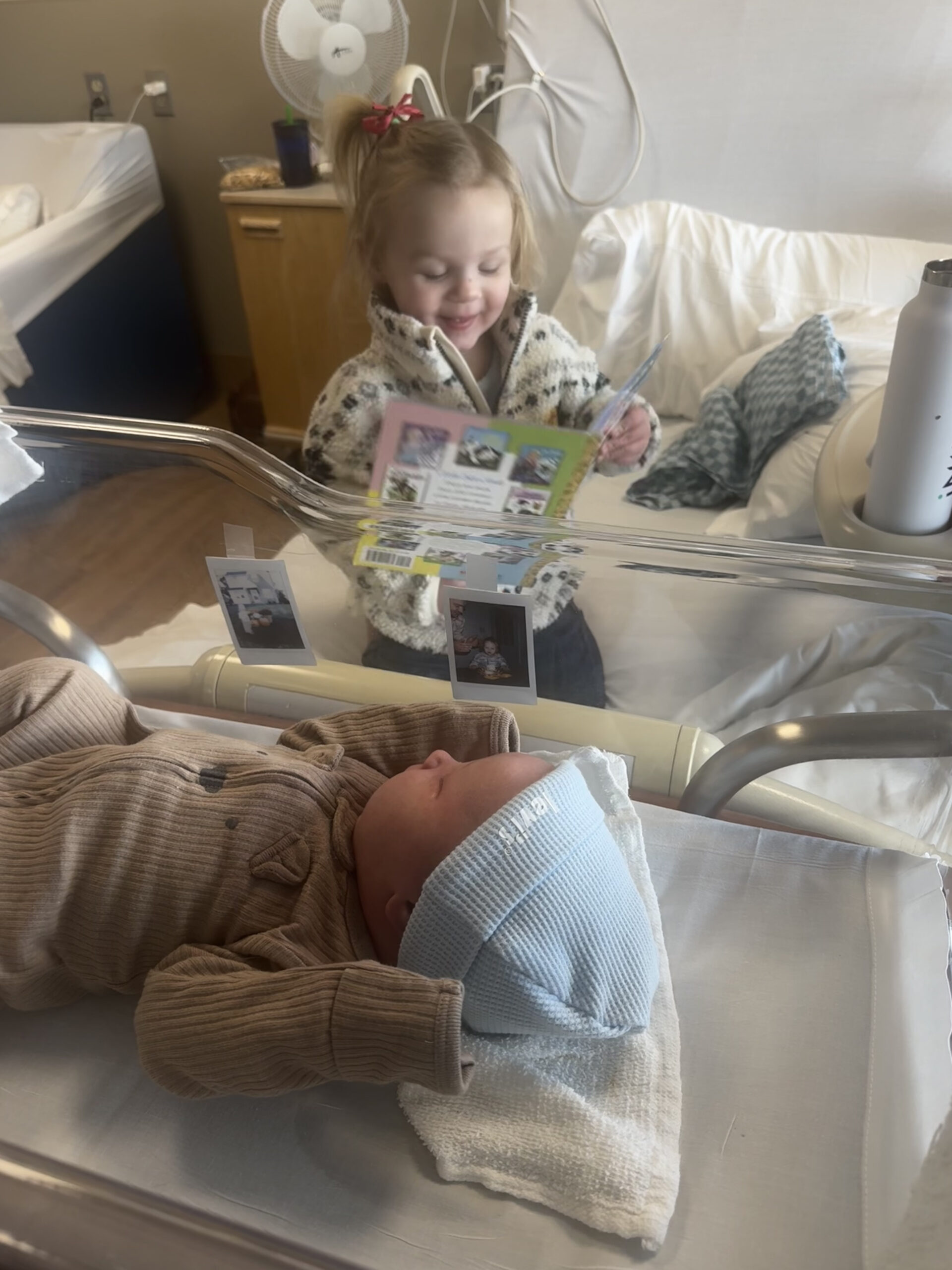
Willow is already embracing her duties as a big sister, piling blankets on him and showing him pictures in her books during visits to the hospital, which was acquired by Penn Medicine in 2025. Henry’s hospital bassinet is lined with Polaroid snapshots of her.
Willow Schamp, 2, shows baby brother Henry a book during a visit at Doylestown Hospital on New Year’s Day 2026.
Henry was one of several babies born at Philadelphia-area hospitals in the first hour of the new year:
Temple Women & Families Hospital, the North Philadelphia facility where Temple moved its labor and delivery services in September, celebrated its first baby of the year at 12:10 a.m. — a boy, Ezekiel Hall, born to Natalie Rivera.
Elliott Sarnoff was born to parents Kim and Jason Sarnoff at Lankenau Medical Center at 12:22 a.m.
Virtua Voorhees Hospital’s first baby of the year was a boy named Landon, born at 12:29 a.m. to parents Caitlyn and Mark. Virtua declined to provide surnames to protect patient privacy.
Lindsay and Matthew Logan of Chalfont welcomed baby Dawson Logan at Jefferson Abington Hospital at 1:01 a.m.
While Henry was born on his due date, the Schamps expected him to arrive early, after Sarah started having contractions on Dec. 30 and the couple headed to the hospital.
“It wasn’t what we planned, but it’s a cool thing and will be a fun tradition,” Sarah Schamp said.
Plus, they joked, he’ll have a fun fact for breaking the ice with new friends and coworkers for the rest of his life.
Nemours Children’s Hospital is launching a new maternal and fetal health program designed to help families with complex fetal diagnoses get specialized care closer to home.
The Institute for Maternal Fetal Health will begin treating patients at Nemours’ flagship hospital in Wilmington in early 2026. The institute’s goal is to provide advanced care for mothers and babies with potentially life-threatening diagnoses, such as congenital heart disease, metabolic disorders, and genetic defects. They may otherwise have had to travel to farther-away hospitals in Philadelphia, Baltimore, Pittsburgh, or New York.
The institute will provide in utero surgery — procedures that are done on a fetus before birth to correct certain debilitating birth defects, such as spina bifida, which is when the spinal column does not completely close and leaves the spinal cord exposed.
It will also offer more education and resources for other family members, especially other children, to help them cope with a fetal diagnosis.
“Our biggest impetus is to help families stay closer to home,” said Julie S. Moldenhauer, a maternal-fetal medicine specialist and the institute’s inaugural executive director.
Julie S. Moldenhauer, a maternal-fetal medicine specialist and fetal interventionalist, is the inaugural executive director of the Institute for Maternal Fetal Health.
Advanced prenatal care at Nemours
The new maternal fetal health institute builds on Nemours growth in the area. The Delaware-based nonprofit health system in 2024 took over pediatric offices previously operated by Crozer Health, which closed under bankruptcy earlier this year.
At its Wilmington hospital, Nemours is adding three new dedicated operating rooms for C-sections, complex deliveries, and fetal surgeries.
The institute will also include more patient rooms and neonatal stabilization rooms for babies who need extra support after birth.
A new wellness room will serve as a place for families to gather for a meal, play time, art therapy, or yoga.
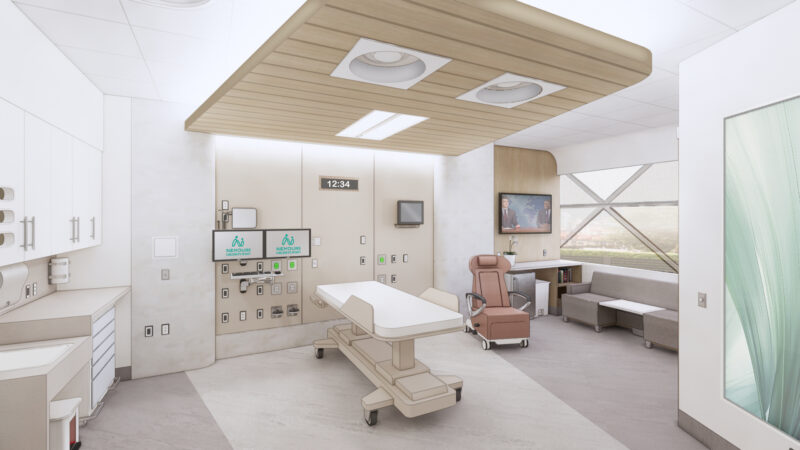
A rendering of a shared patient space planned for the Institute for Maternal Fetal Health at Nemours Children’s Hospital in Wilmington, where families will be able to gather for a meal, play time, or planned activities.
Support for the whole family
For parents, a fetal diagnosis can result in excitement about a new baby being replaced by fear for their child’s health.
What’s more, getting the care they need may involve traveling from home for frequent appointments and procedures. That can be expensive for families who need to take time off work, pay for travel and hotel stays, and find childcare for any siblings remaining home.
“All those hopes and dreams can feel like they’re a candle being blown out,” Moldenhauer said. “Building a beautiful nursery becomes — how are we going to get back and forth to all these appointments?”
When families have to travel for advanced prenatal care, siblings who remain at home may feel left out or scared about whether their parents and the baby will be all right.
At its new institute, Nemours will offer support groups for grandparents, and education for siblings to demystify the medical process.
Psychologists can help couples who are struggling with their relationship during a complex pregnancy, or talk to children who are showing signs of being affected by their parents’ stress.
“Until you see your child with all the tubes in a NICU, in an incubator, it doesn’t feel real,” said Moldenhauer. “We want to fortify the whole family.”
A patient with no home to return to was pushed in a wheelchair to the curb outside Temple University Hospital. Staffers left him sitting on a bench, even though he was considered at a high risk of falling.
An hour later, a security officer found the man had fallen and was lying on the ground.
He was shaking when the guard brought him back into the hospital, but didn’t respond to a nurse’s questions. So hospital staff again sent him away — this time leaving him alone in a wheelchair outside the emergency department.
He was found there five hours later, slumped over, unresponsive, and without a pulse. He died the following week.
Temple’s treatment of the patient during the Oct. 3 incident prompted state and federal investigations. In a report released earlier this month, the Pennsylvania Department of Health cited Temple for violating state rules that require hospitals to provide emergency care.
Experts say the hospital’s actions amounted to “patient dumping,” a practice prohibited under a federal law that requires hospital emergency departments to medically screen and stabilize all patients.
The Centers for Medicare and Medicaid Services (CMS), which oversees hospital safety nationally, confirmed it is also investigating, but has not released details.
Hospitals that violate the Emergency Medical Treatment and Labor Act, known as EMTALA, risk hefty fines or losing their Medicare license, though such penalties are rare.
Temple acknowledged that its own protocols were not followed. Health system officials told state investigators the patient should not have been removed from the hospital without being evaluated and cleared by medical staff.
“The safety of our patients, visitors and staff is Temple’s highest priority,” the hospital said in a statement to The Inquirer. “We believe that everyone deserves high quality care.”
The hospital declined to say whether any of the staff members involved were disciplined or fired.
But such incidents are rarely the fault of one individual, legal experts and homelessness advocates said. Rather, they are a sign of systemic problems, such as understaffing that can leave staff overwhelmed, and bias among medical providers that can put vulnerable patients at risk of being dismissed.
“If you work in an environment where safety is prized and honored and enforced from the top down, everyone feels that’s their mission,” said Eric Weitz, a medical negligence lawyer in Philadelphia. “If that’s not a priority being set by leadership, then it’s no surprise the culture doesn’t reinforce it.”
Hospital administrators said the triage nurse who turned away the patient should have sought help, if the patient wasn’t responding to questions. The nurse said she was overwhelmed and working without sufficient support in one of the region’s busiest trauma hospitals.
“I was busy and alone,” she told state inspectors.
The incident violated Temple’s emergency department protocol, staff told Pennsylvania Department of Health inspectors.
Pa. Department of Health investigates Temple
To piece together what went wrong, Pennsylvania Department of Health inspectors watched security camera footage, interviewed staff members, and reviewed internal hospital reports. Their timeline shows a series of mistakes.
At about 3:15 p.m., an employee brought the patient in a wheelchair to a bench near the curb outside the hospital, and left him there on the mild October day with highs near 70 degrees.
He was being discharged to “the community” because he was experiencing homelessness, according to the inspection report. (The state report does not say whether staff attempted to place him at a skilled nursing facility, rehabilitation center or homeless shelter.)
The man sat alone on the bench for an hour before standing unsteadily, taking a few steps, and ultimately falling to the ground.
He managed to get back up, leaning against a tree for support, only to fall again. He was on the ground for 10 minutes before a security guard found him.
The guard brought the man back into the emergency department in a wheelchair about two hours after he had been released.
Back inside the hospital, the man followed orders to raise his arms for a security check at the door. Then he waited in line to be seen by the triage nurse responsible for checking in patients at the emergency department.
When he reached the front of the line, he did not respond to the nurse’s questions. “He was not answering any questions, just shaking,” according to a Temple incident report reviewed by inspectors. Staff said the patient was “not cooperating” and should be sent to the back of the line.
After two minutes with the nurse, a security guard moved his wheelchair to a corner of the emergency department near the entrance.
The man was once again wheeled outside the hospital a few minutes later and left alone.
He was found by medical staff around 9:30 p.m., slumped over in his wheelchair.
Staff began CPR, rushing him back inside for trauma care.
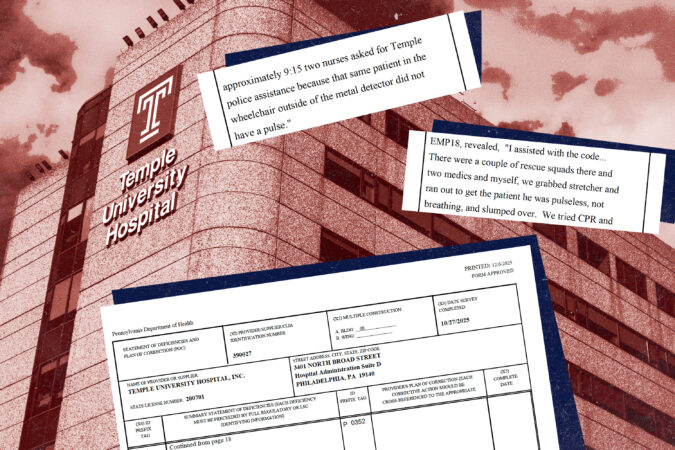
Pennsylvania Department of Health’s inspection report details how a patient in Temple’s emergency department was rolled away in a wheelchair without being evaluated.
The inspection report does not identify the patient’s name, age, or provide details on the medical condition for which he had been hospitalized. It also does not say what happened after he was found unresponsive. He died five days later, on Oct. 8.
Temple responds
Medical screening of every patient who comes to the emergency department is “explicitly required” under Temple’s EMTALA policies, according to the hospital’s response to the state findings.
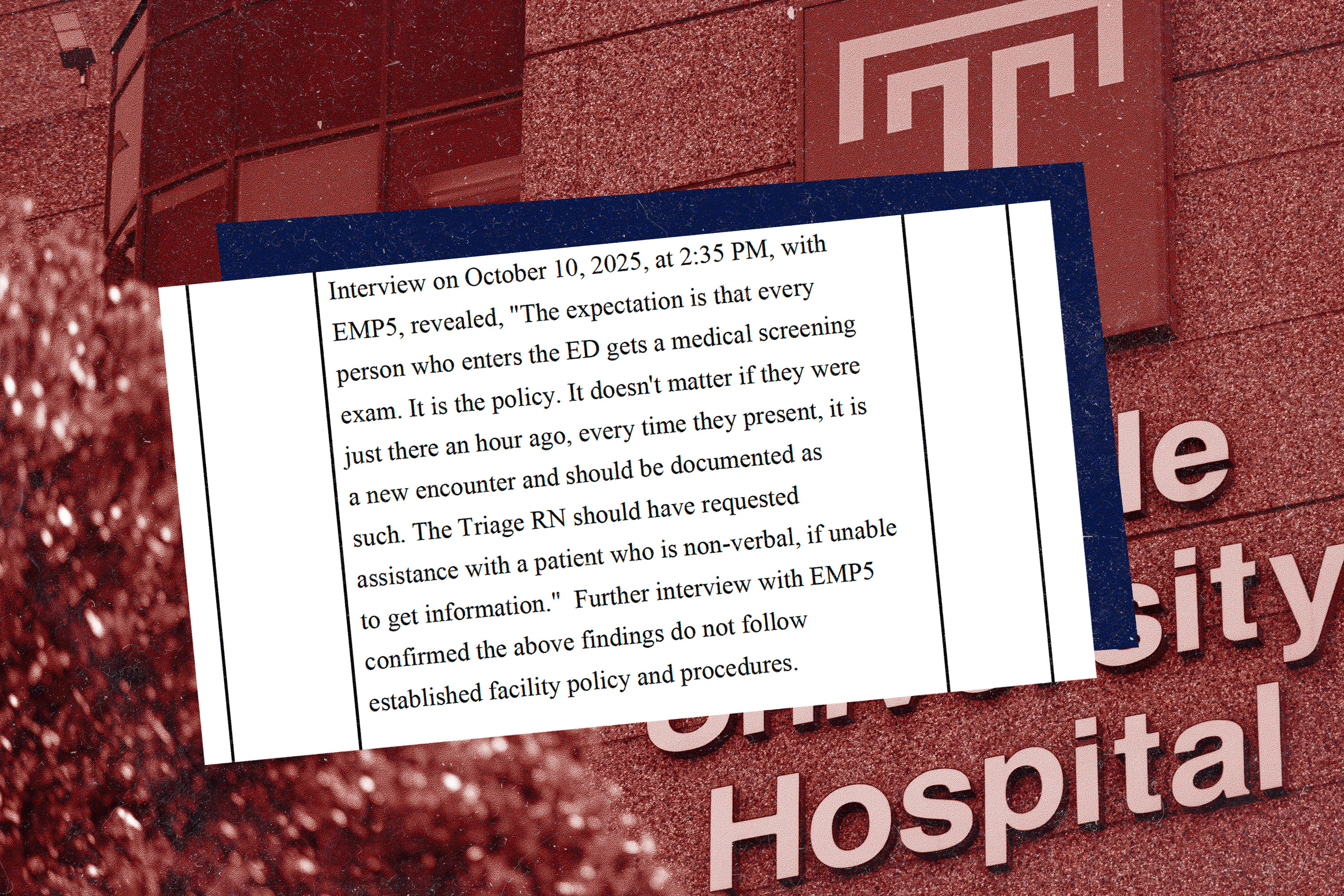
“It doesn’t matter if they were just there an hour ago, every time they present, it is a new encounter and should be documented as such,” a Temple staffer said in an interview with inspectors.
The hospital told the state it would retrain staff on EMTALA rules, making clear that security officers cannot remove patients from the emergency department unless they have been evaluated and cleared for release by a medical professional.
A week after the incident, hospital staff were instructed to keep a log of patients who are removed from the emergency department and the name of the provider who approved their release. (Temple police may still remove patients from the emergency department if they are threatening the safety of other patients or staff.)
The hospital also said that it would order mobility evaluations for patients who are being discharged “to the community” if they had a high risk of falling, with a doctor’s sign-off required.
Temple treats some of Philadelphia’s most vulnerable patients in an emergency room that sees more than 150,000 visits a year, including high numbers of gunshot victims and people experiencing opioid withdrawal. It operates a Level I trauma center in a North Philadelphia community where 87% of patients are covered by publicly funded Medicare or Medicaid.
The emergency department is so busy that about 8% of patients choose to leave before being seen, according to CMS data, compared to about 2% of patients at hospitals nationally and across Pennsylvania.
The triage nurse on duty Oct. 3 is not identified in the inspection report.
Two healthcare lawyers who reviewed the state’s inspection report said the entire episode is troubling.
“It sounds like they violated every part of EMTALA,” said Sara Rosenbaum, professor emerita of health law policy at George Washington University.
The law does not require specific treatment, but mandates that hospitals evaluate everyone who walks in the door seeking care, and prohibits them from sending them away or transferring them until they are medically stable.
“They failed to screen him, threw an unstable person back on the street, and didn’t arrange a medically appropriate transfer,” she said.
What’s more, the hospital could be sued for malpractice over how it initially discharged the patient.
The incident appears to be “a classic EMTALA violation,” said Weitz, the Philadelphia lawyer who serves on Pennsylvania’s Patient Safety Authority, an independent state agency that monitors hospital errors.
The health department’s description of what happened is “almost eerily the exact fact pattern the law was passed to prevent,” he said.
Healthcare challenges for patients experiencing homelessness
People who are experiencing homelessness often receive subpar treatment when they seek medical care, research shows.
One study that analyzed thousands of California patient records found that those who were described in their medical records as “homeless” were more likely than patients who have a permanent legal address to be discharged from the emergency department, rather than being admitted for care.
In the Philadelphia region, caring for this population is increasingly challenging. The number of available shelter beds has declined in recent years, while the number of people who are considered unhoused has risen, according to Philadelphia’s Office of Homeless Services.
Stephanie Sena, CEO of Breaking Bread Community Shelter in Delaware County, said the colder months also see more people experiencing homelessness coming to hospitals to get off the street.
“If they say they’re sick, they might get a bed and be able to survive the night,” Sena said.
The pattern can make doctors and nurses less likely to believe patients when they report real medical needs. Especially when staff are overwhelmed in busy hospitals, patients experiencing homelessness may be at greater risk of getting denied or discharged when they need help, she said.
Sena said she was disappointed to hear about the Temple incident.
“It is tragic,” she said, “but also not at all surprising, unfortunately.”
Fox Chase Cancer Center was not cited by the Pennsylvania Department of Health for any safety violations between November 2024 and October of this year.
Here’s a look at the publicly available details:
Feb. 21, 2025: Inspectors came to investigate a complaint but found the hospital was in compliance. Complaint details are not made public when inspectors determine it was unfounded.
March 17: Inspectors came to investigate a complaint but found the hospital was in compliance.
April 15: The Joint Commission, a nonprofit hospital accreditation agency, renewed the hospital’s accreditation, effective January 2025, for 36 months.
Doylestown Hospital was not cited by the Pennsylvania Department of Health for any safety violations between November 2024 and October of this year.
Here’s a look at the publicly available details:
Nov. 6, 2024: Inspectors came to investigate a complaint but found the hospital was in compliance. Complaint details are not made public when inspectors determine it was unfounded.
Nov. 14: Inspectors followed up on an October 2024 complaint and found the hospital was in compliance. The hospital had been cited for not following protocol for admitting mental health patients.
Nov. 20: Inspectors followed up on a July 2024 complaint and found the hospital was in compliance. The hospital had been cited for not following protocol for identifying patients prior to surgery.
Jan. 10, 2025: Inspectors visited for a special monitoring survey and found the hospital was in compliance.
July 24: Inspectors came to investigate a complaint but found the hospital was in compliance.
A Philadelphia-area infant named Baby KJ made international headlines after doctors at Children’s Hospital of Philadelphia and Penn Medicine successfully treated his rare, life-threatening liver condition with a gene-editing drug earlier this year.
Now back home with his family in Drexel Hill after more than 300 days in the hospital, KJ Muldoon has been named one of 10 people who helped shape medicine in 2025 by Nature, a British scientific journal.
Nature’s 10 is rounded out by career scientists and public health champions, including a neurologist treating brain disorders, an entomologist unearthing new details about mosquito-borne illnesses, and a data researcher who drew attention to troubling patterns in research retractions. The publication honored Baby KJ as a “trailblazing baby.”
KJ was born with a rare disorder that prevented his liver from processing protein. He was at risk of dangerous levels of ammonia, a byproduct of protein, building up in his bloodstream, traveling to his brain, and causing irreparable damage. The condition, called severe carbamoyl phosphate synthetase 1 (CPS1) deficiency, is deadly in more than half of cases.
With few treatment options and limited time, KJ’s doctors proposed a novel treatment using experimental gene-editing technology: They would analyze KJ’s genetic profile to find the genetic mutation that prevented his body from producing a key enzyme that breaks down protein. Then they would infuse a medication laced with bits of genetic code to find the misspelling and fix it, dramatically improving his chances of recovery.
Within six months, researchers at CHOP and Penn had developed a customized drug specifically for KJ using CRISPR, the buzzy shorthand for a scientific tool that works like a find-and-replace command. It is named after a stretch of genetic code utilized — clustered regularly interspaced short palindromic repeats.
KJ received three doses of the medication, and in June, he returned home after 307 days in the hospital. He will need ongoing care, but doctors say the treatment has dramatically improved his liver function.
“This is the future of medicine, a step toward using gene-editing for diseases for which there are few treatments,” Kiran Musunuru, director of the Penn Cardiovascular Institute’s Genetic and Epigenetic Origins of Disease Program and one of the lead doctors on KJ’s case, said during a call with reporters in May.
Baby KJ’s treatment was a first-of-its-kind drug customized to a unique genetic mutation. It will never be used for another patient, but Philadelphia researchers believe the CRISPR framework could be used to customize drugs for other patients.
Musunuru and Rebecca Ahrens-Nicklas, the director of CHOP’s Gene Therapy for Inherited Metabolic Disorders Frontier Program, are developing a new clinical trial to test the CRISPR framework for treating customized gene therapies for urea cycle disorders related to any one of seven genes.
The mechanism will remain the same, but the injection each patient receives will be customized to target their unique genetic mutation.
They are hopeful that their work will make bespoke treatments available to more people with rare diseases, Ahrens-Nicklas told Nature.
“Everyone saw the possibility and thought, ‘Why isn’t this available for my child?’”
For every person who signed up for Obamacare health insurance in Pennsylvania last month, two others dropped their plans in anticipation of skyrocketing costs.
The average cost of a health plan through Pennsylvania’s Affordable Care Act marketplace, Pennie, is expected to double, on average, with some people paying several times more in 2026, if Congress allows a key financial incentive program to expire at the end of this year.
Pennie leaders say sticker shock for 2026 is undermining a program they credit for driving historically low uninsured rates.
Nearly 31,000 people canceled their Pennie health plan in November, the first month of open enrollment, which runs through the end of January. About 16,000 people signed up.
Pennie administrators previously estimated that roughly 150,000 of the nearly 500,000 people who bought plans in 2025 will drop out because they find their options for 2026 unaffordable.
Some level of turnover is normal, as people move out of state, find new jobs, or become eligible for other government programs, such as Medicare or Medicaid. But the sharp rise in plan cancellations — more than the marketplace saw in all of 2025 — shows that cost remains a driving factor in health decisions.
“People want health coverage, and when it can fit in their budget, they buy it,” said Devon Trolley, Pennie’s executive director.
A partisan divide over the so-called enhanced premium tax credits was at the center of this fall’s longest-ever federal government shutdown. The subsidies have helped offset the cost of Obamacare premiums, ensuring no one spends more than 8.5% of income on health insurance through Democrats’ signature health coverage reforms implemented under President Barack Obama.
The federal budget ultimately approved by the current Republican-controlled Congress did not include an extension of the tax credits, and it is unclear whether Democrats or Republicans will be able to secure enough votes for the fixes they have proposed.
U.S. Rep. Brian Fitzpatrick, a Bucks County Republican, is proposing legislation that would extend the tax credits for two years, with some restrictions.
The subsidies have been particularly beneficial to working individuals and families who earn too much to qualify for other, income-based Obamacare tax credits, but who cannot afford to pay full price and do not have access to insurance through an employer. Income-based tax credits for people who earn below 400% of the federal poverty rate are part of the original ACA law and will not expire.
The add-on tax credits have been approved annually by Congress since 2021, and the vast majority of people who buy coverage through Pennie qualify for at least some amount of financial assistance.
Pennie will work to update rates as quickly as possible if Congress renews the tax credits before the end of the year.
In the meantime, marketplace leaders are urging people to consider all the plan options — which range from high-deductible plans with low premiums to plans with steep monthly costs but fewer out-of-pocket expenses — before canceling their coverage entirely.
Plan costs and expected increases vary, depending on age, income, and geography, which is why it is important for people to review their options, Trolley said.
Philadelphia’s Pennsylvania suburbs are expected to see costs increase an average of 40% to 70%, while costs are rising an average of 400% or more in rural communities in the middle of the state.
Increased outreach amid tax credit confusion
State-based marketplaces and their partners have ramped up marketing and outreach in an effort to make sure people are aware of the cost increases.
Pennsylvania Health Access Network has doubled the amount of text messages, phone calls, and emails it is sending past clients. Messages remind people of the deadline to enroll and urge them to review their plan online — even if they intend to keep it.
The nonprofit has seen an increase in people reaching out early for information, compared with past enrollment seasons, as well as more people waiting to make a final decision about coverage, said Antoinette Kraus, the organization’s executive director.
“We’re seeing fewer people say, ‘All right, sign me up today,’” Kraus said. “They’re taking time to figure out how this fits in the budget.”
New Jersey announced it was expanding outreach efforts for its marketplace, Get Covered New Jersey, with more than three dozen enrollment events at shopping malls and grocery stores across the state.
New Jersey has not released enrollment data for 2026.
Justin Zimmerman, commissioner of New Jersey’s Department of Banking and Insurance, urged people not to put off buying a plan, despite uncertainty about tax credits. In New Jersey, people must sign up by Dec. 31 for coverage to take effect Jan. 1.
“It is especially important for consumers to shop and compare plans to find the best options for them,” Zimmerman said in a statement announcing outreach plans.
Fitting health insurance into the budget
People who are used to their plan automatically renewing at the end of the year may be particularly surprised by the new prices when insurers begin sending January premium bills by mid-December.
Pennsylvania’s deadline for insurance that begins in January is Dec. 15, but people have until the end of January to make any changes to their coverage.
That means people who are automatically reenrolled in their existing plan still have time to change it, if they realize after getting their first bill that they cannot afford it and want to look for a less expensive option.
And people who canceled their coverage earlier in the enrollment period can still sign up if they change their mind.
As of Feb. 1, when the enrollment period ends, people can still cancel their plan, but they will not be able to pick a new one until the coming fall.
The marketplace’s enrollment specialists work with people to price out all their options. But Pennie’s executive director fears that without an extension of the add-on tax credits, many will not find an option they can afford.
“We are doing the best we can to provide people with the best information,” Trolley said. “But ultimately, we cannot fill the hole of federal funding.”
Riddle Hospital was cited by the Pennsylvania Department of Health for failing to properly monitor a patient’s vital signs in the emergency department earlier this year.
The incident was among six times inspectors visited the Media hospital, which is owned by Main Line Health, to investigate potential safety problems.
Here’s a look at the publicly available details:
Jan. 10, 2025: Inspectors came to investigate a complaint but found the hospital was in compliance. Complaint details are not made public when inspectors determine it was unfounded.
June 30: Inspectors cited the hospital for failing to properly monitor a patient’s vital signs while waiting for care in the emergency department. Inspectors found that a patient was evaluated in the emergency department as a triage level 3, meaning their vital signs should be checked every four hours. Records show the patient’s vital signs were documented at 12:40 a.m., and not again until almost seven hours later. Administrators reviewed the hospital’s emergency triage policies and retrained staff.
Aug. 13: Inspectors came to investigate a complaint but found the hospital was in compliance.
Sept. 15: Inspectors came to investigate a complaint but found the hospital was in compliance.
Sept. 18: Inspectors visited for a special monitoring survey and found the hospital was in compliance.
Sept. 18: Inspectors followed up on the June citation regarding vital sign monitoring and found the hospital was in compliance.
Tonya Robertson was working one of her three jobs at a charter school in Chester when she broke down crying to a colleague: She was homeless, living in a domestic violence shelter with three children, and pregnant with twins.
Her co-workers suggested she talk to the school’s counselor, who gave her a stack of applications to apply for federally funded food support, at-home prenatal nurse visits, and maternal health resources, all coordinated through The Foundation for Delaware County.
The nonprofit has for almost a decade provided access to safety net programs such as Women, Infants, and Children, the nutrition program known as WIC; Healthy Start; and the Supplemental Nutrition Assistance Program (SNAP), the food program for low-income families. It also offers a menu of other support services for families, such as a program that provides at-home prenatal visits, housing assistance, legal aid, doulas, mental health resources for new mothers, and a fathers’ support group.
“They had so many resources — things I was scared to open up my mouth about, things I didn’t want to say I needed,” said Robertson, 39, of Marcus Hook.
She said she wishes she’d known about the organization sooner, during the years she struggled to raise her three older children as a single mother.
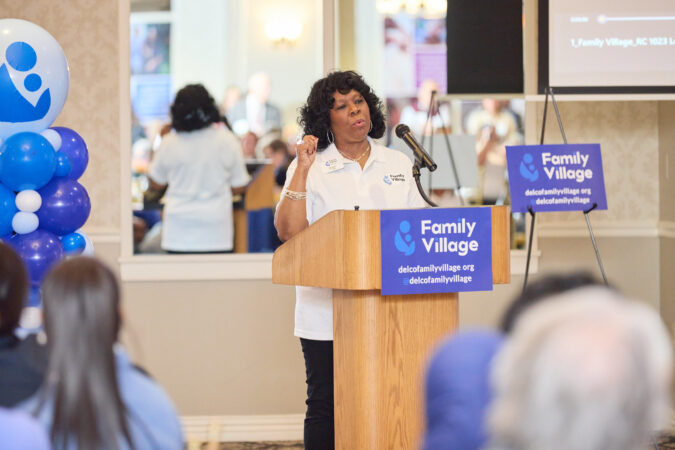
Now the foundation is rebranding its offerings as the Family Village, in an effort to raise awareness about the nonprofit’s full range of services. Foundation leaders said that in the past, people may have connected with the organization for a specific resource, such as WIC or SNAP, without learning about other programs they could benefit from. The idea of the Family Village is to make the foundation’s services more cohesive, wrapping around those in need.
The initiative has been years in the making, but is especially timely after the county’s largest health provider, Crozer Health, closed earlier this year when its for-profit owner filed for bankruptcy. The health system had long been an anchor for Chester and the surrounding communities, providing critical access to maternity, pediatric, and mental health services.
“Children don’t come with instructions. We all need a helping hand at some point,” said Joanne Craig, the foundation’s chief impact officer. “We have this great continuum of resources for families, but from the outside looking in, it wasn’t always easy to see and understand.”
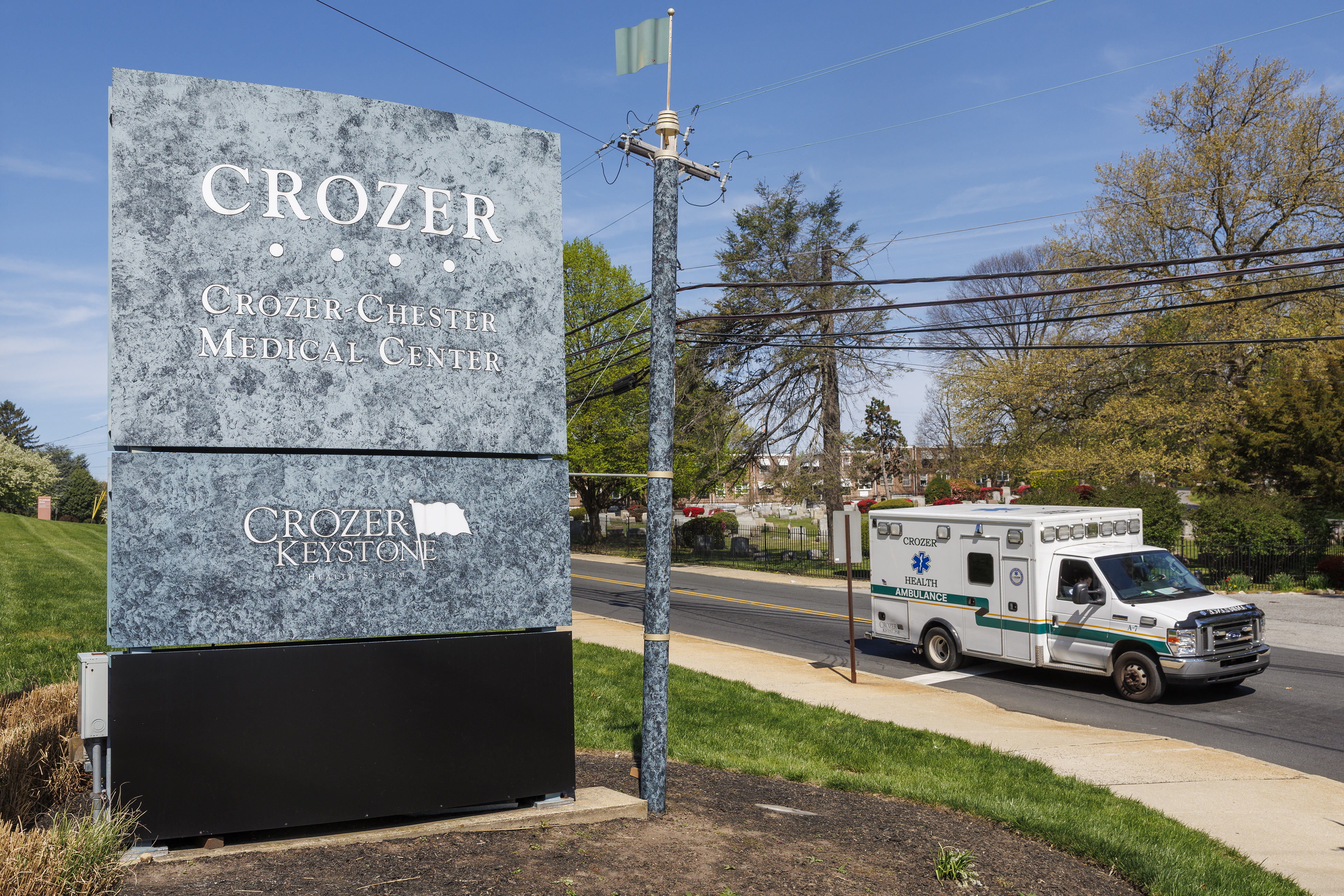
An ambulance drove by the entrance to Crozer-Chester Medical Center, in Upland. This hospital closed earlier this year.
Filling gaps in Delaware County
The Foundation for Delaware County was formed in 2016, when the nonprofit Crozer-Keystone Health System was sold to Prospect Medical Holdings. When for-profit companies acquire nonprofit health systems, Pennsylvania law requires the nonprofit assets be set aside in an independent charity. Crozer’s nonprofit assets became the Foundation for Delaware County.
The foundation’s overarching mission is to support the health and welfare of Delaware County residents by coordinating government safety-net programs and creating its own offerings to help families in need. The foundation also provides millions of dollars in grants to nonprofits and charities to support public health, housing, and youth development.
With $53.9 million in net assets as of October, the foundation is the largest philanthropic organization in Delaware County, serving some 8,000 people a year.
Many of the foundation’s most used programs, such as Healthy Start, a federally funded prenatal and early childhood initiative, began before the foundation was spun out of Crozer, in response to the high infant mortality rate in Chester.
When Prospect said it would close the remaining Crozer hospitals, The Foundation for Delaware County was pressured by the case’s bankruptcy judge to take on part of the company’s debt to keep the hospital open until a new operator was found. The foundation shelled out $20 million to extend operations temporarily and later contributed $3 million to help former patients obtain their medical records.
The foundation’s new Family Village initiative can’t close all the gaps Crozer’s closure left — the area lost its largest emergency department and maternity ward, the only 24-7 mental health crisis center, and critical pediatric care.
ChristianaCare won an auction to take over five former Crozer outpatient locations in Broomall, Media, Glen Mills, and Havertown, and has plans to open two new micro hospitals in Aston and Springfield.
Delaware County in August selected Belmont Behavioral Health to establish a new crisis response center and expand mental health services.
But Craig said she hopes the foundation’s new approach will help families better access resources that remain available — and that they may not have known about.
Help without judgment
Before connecting with the foundation, Robertson was skeptical of organizations and programs that offered help.
Her grandfather, for instance, berated her for enrolling in SNAP and the at-home nurse program, warning her that she could end up losing her children, if coordinators decided her home and parenting weren’t good enough.
“I’m so scared to let someone in, let them come in my house and see that my house is not up to par, see that I’m struggling with this, or that I can’t feed them,” Robertson said.
“If I can’t feed them, they’re going to take my kids, and I’m going to go to jail,” she added.
Research has found that these fears are often justified, with social service workers deeming parents of color unfit at higher rates than white parents, and equating poverty with neglect.
Healthcare workers, social workers, and teachers are among so-called mandated reporters, who are required to report to Child Protective Services any suspicion of abuse. Only a fraction of reports are substantiated after being investigated, but they stoke fear and can dissuade families from seeking help.
But Robertson was working three jobs and still couldn’t feed her family, so she filled out the forms the school counselor had given her.
Her first prenatal visits through the Nurse-Family Partnership were at the domestic violence shelter where she was living.
Robertson was proud when she was able to afford to move her family into an apartment in Chester. But her nurse told her the gaping hole in the ceiling and mold growing in the corners were unsafe. She connected Robertson with the foundation’s Housing Opportunities Program for Equity, which helps people secure safe housing and navigate problems with landlords.
After her twins were born, the foundation’s Moving Beyond Depression program helped Robertson work through postpartum depression, which may have otherwise affected her ability to work and care for her children.
Two years later, Robertson said she still faces challenges. The recent government shutdown cut off the family’s food stamps, making for tough budgeting decisions earlier this month.
But now she knows where to turn for help, if the load ever becomes too heavy again.
Editor’s note: This story was updated with additional information on the foundation’s mission.