Author: Sarah Gantz

  • One year of inspections at Children’s Hospital of Philadelphia: October 2024 – September 2025

    One year of inspections at Children’s Hospital of Philadelphia: October 2024 – September 2025

    Pennsylvania’s Department of Health investigated several complaints at the Children’s Hospital of Philadelphia between October 2024 and September of this year but did not cite the hospital for any safety violations.

    Here’s a look at the publicly available details:

    • Oct. 30, 2024: Inspectors came to investigate a complaint but found the hospital was in compliance. Complaint details are not made public when inspectors determine it was unfounded.
    • Jan. 27, 2025: Inspectors came to investigate a complaint but found the hospital was in compliance.
    • Feb. 18: Inspectors came to investigate a complaint but found the hospital was in compliance.
    • March 11: Inspectors came to investigate a complaint but found the hospital was in compliance.
    • May 15: Inspectors came to investigate a complaint but found the hospital was in compliance.
  • One year of inspections at Temple University Hospital: September 2024 – August 2025

    One year of inspections at Temple University Hospital: September 2024 – August 2025

    Temple University Hospital’s Episcopal campus was cited by the Pennsylvania Department of Health for failing to maintain cleaning logs for the crisis center in May.

    The incident was among more than a dozen times inspectors visited Temple’s main campus, Jeanes campus, or Episcopal campus to investigate potential safety problems between September 2024 and August. The three campuses operate under a shared license, and inspection reports do not always distinguish which campus inspectors visited.

    Here’s a look at the publicly available details:

    • Sept. 27, 2024: Inspectors came to investigate a complaint but found the hospital was in compliance. Complaint details are not made public when inspectors determine it was unfounded.
    • Oct. 1: Inspectors followed up on a January 2024 citation and found the hospital was in compliance. The Episcopal campus had been cited for failing to properly update and document mental health patients’ records and treatment plans every 30 days.
    • Jan. 6, 2025: The Joint Commission, a nonprofit hospital accreditation agency, renewed the hospital’s accreditation, effective May 2024, for 36 months.
    • Jan. 11: Inspectors came to investigate three separate complaints but found the hospital was in compliance.
    • Jan. 16: Inspectors came to investigate a complaint but found the hospital was in compliance.
    • Jan. 21: Inspectors came to investigate a complaint but found the hospital was in compliance.
    • Jan. 29: Inspectors came to investigate a complaint but found the hospital was in compliance.
    • Feb. 5: Inspectors came to investigate a complaint but found the hospital was in compliance.
    • Feb. 11: Inspectors came to investigate a complaint but found the hospital was in compliance.
    • Feb. 21: Inspectors came to investigate a complaint but found the hospital was in compliance.
    • March 4: Inspectors came to investigate a complaint but found the hospital was in compliance.
    • March 10: Inspectors came to investigate a complaint but found the hospital was in compliance.
    • March 12: Inspectors visited for a monitoring survey and found the hospital had violated rules related to patients’ rights to care by competent personnel. Details of the problem were not made public because the issue was fixed before inspectors arrived. The hospital’s correction plan included educating staff about how to protect vulnerable patients from leaving the hospital against medical advice. Administrators also established a system to review patients at risk and an environmental safety checklist.
    • March 31: Inspectors came to investigate a complaint but found the hospital was in compliance.
    • April 4: Inspectors came to investigate a complaint but found the hospital was in compliance.
    • May 6: Inspectors cited Temple’s Episcopal campus for not having sanitation documentation and cleaning logs for the crisis response center. Administrators retrained staff on the hospital’s sanitation policies and record-keeping requirements.
    • May 8: Inspectors came to investigate a complaint but found the hospital was in compliance.
    • June 10: Inspectors came to investigate a complaint but found the hospital was in compliance.
    • July 14: Inspectors came to investigate a complaint at the Jeanes campus but found the hospital was in compliance.
  • Bryn Mawr birth center Lifecycle Wellness to close in early 2026

    Bryn Mawr birth center Lifecycle Wellness to close in early 2026

    Lifecycle Wellness, a birth center in Bryn Mawr that offered an alternative to hospital delivery for Philadelphia-area parents, is shutting down operations amid growing financial pressure, the nonprofit announced Thursday.

    The nonprofit, which provides “homelike” births for low-risk pregnancies at its birth center and at Bryn Mawr Hospital, will stop delivering babies on Feb. 15. Patients who are due on Feb. 1 or later will need to transition to a different provider.

    In an open letter posted on its website Thursday, Lifecycle leaders said the organization was strained by rising operations and medical malpractice costs that outpaced insurance reimbursement rates — industrywide challenges that have plagued small and large health organizations alike.

    “From the beginning, Lifecycle Wellness has been dedicated to providing evidence-based, family-centered care that empowers clients to make informed choices and experience birth in a supportive, homelike environment,” Jessi Schwarz, executive and clinical director, and Lauren Harrington, board president, wrote. But, they added, “growing challenges have made it increasingly difficult for small, independent, and non-profit maternal health providers to exist.”

    Lifecycle reported a profit of $135,303 last year, down from $221,578 in 2023, according to its most recent tax filings.

    The organization provided prenatal and birthing services to about 600 patients a year, according to its 2024 tax filings. It employed 73 people that year.

    But in their letter announcing the closure, Schwarz and Harrington said that “shifts in public health and rising rates of medical complications have reduced the number of families eligible for this model of care.”

    Medical malpractice strain

    The number of malpractice cases rose in Philadelphia after a 2023 rule change allowed patients to sue outside the county in which they received medical treatment.

    Medical malpractice lawsuits are common in obstetrics, and Philadelphia’s court is known for verdicts with high awards.

    In 2023, a Philadelphia jury awarded a record-setting $180 million to the family of a child who was born with severe brain injuries at the Hospital of the University of Pennsylvania.

    The Birth Center is currently facing seven lawsuits in Philadelphia.

    The industry’s financial headwinds can be harder for independent, specialized healthcare organizations to face.

    Last year, Rothman Orthopaedic Institute ended a decades-long run as the official team physicians for the Philadelphia Eagles, citing the risk of medical malpractice liability. A year earlier, a Philadelphia jury awarded $43.5 million to former Eagles safety Chris Maragos, who sued Rothman over the treatment he received for a career-ending knee injury.

    Birth resources outside Philadelphia

    Lifecycle said it would continue to work with families who are expected to give birth by the end of January.

    The organization will work with families due after Feb. 1 to identify a new provider and transition their care.

    Lifecycle plans to continue offering limited prenatal, postnatal, and gynecological care through the end of March. The organization will also phase out its mental health and lactation services in February and March.

    “Access to respectful, equitable, community-based care is shrinking for many, particularly for marginalized communities who need it most,” Schwarz said in a statement to The Inquirer. “Our situation reflects a broader reality that the health, safety, and well-being of pregnant people and families is not prioritized within our current payment structures.”

    They did not offer specifics about where existing patients may be able to transfer their care.

    Birth centers are designed as alternatives to hospitals, offering a more natural, “homelike” setting. They have limited pain medications, and patients are typically not connected to fetal monitoring devices, allowing them to move more freely.

    This type of care is only an option for low-risk pregnancies, as birth centers are not licensed to perform c-section operations, and will need to transfer patients to a hospital if there is a serious complication during birth.

    “I felt very much in the arms of a beloved community of people who were really on your side,” said Monica Moran, who delivered her children with the support of Lifecycle midwives in 2007 and 2009.

    Moran, who lives in Havertown, has continued to go to Lifecycle for routine gynecological services and isn’t sure where she will go instead.

    She said she worries for families who were counting on Lifecycle’s providers for a nonhospital delivery.

    Nearby hospitals with labor and delivery services include Bryn Mawr Hospital and Lankenau Medical Center, both of which are owned by Main Line Health.

    The system is “well-positioned and prepared to manage increased patient volume while maintaining our high standards of care,” a spokesperson said in a statement.

    It has already seen an influx of patients since Crozer Health closed earlier this year. Crozer delivered 960 babies in 2024, according to health department records.


  • Jefferson Abington closes behavioral health unit to accommodate emergency department overflow

    Jefferson Abington closes behavioral health unit to accommodate emergency department overflow

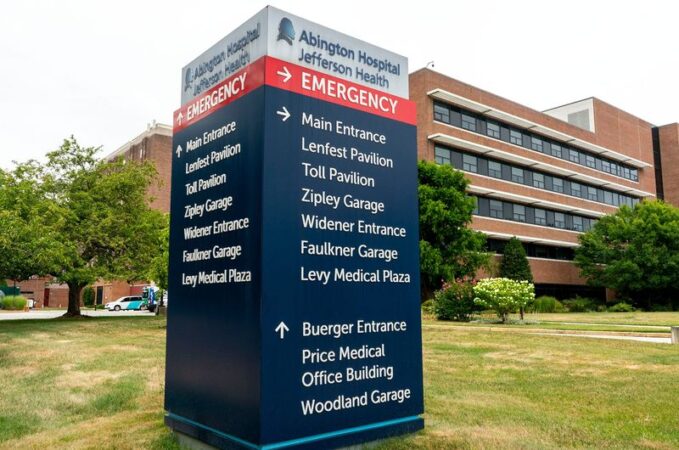
    Jefferson Abington Hospital has closed its inpatient behavioral health unit and will use the 23 beds to accommodate extra patients in its emergency department, the health system said this week.

    Abington will continue to provide crisis services to stabilize patients who are experiencing a mental health emergency when they arrive at the hospital, and will provide psychiatric evaluations needed to transfer them to specialized facilities. The hospital will also continue to provide outpatient behavioral health services.

    The shift “will better serve our emergency department patients both with and without behavioral health needs,” Jefferson Health said in a statement.

    A spokesperson confirmed the change on Tuesday but declined to say when the hospital had transitioned the 23 behavioral health beds into an emergency department “surge unit” or whether any staff members were laid off.

    Jefferson Health announced in October that it had laid off between 600 and 700 of its 65,000 employees. The system reported an operating loss of $104 million in the first quarter of fiscal 2026, which ended in September, driven largely by its struggling insurance business.

    The spokesperson also declined to say whether the hospital had plans to reopen the psychiatric unit in the future, or whether the change was part of ongoing restructuring across the sprawling 32-hospital system. Jefferson leaders have said they plan to streamline services across the Jefferson network, which has grown significantly through acquisitions since 2015.

    The hospital’s inpatient psychiatric unit treated 350 patients in 2024, according to the most recent data from the Pennsylvania Department of Health.

    Patients experiencing severe mental and behavioral health emergencies often need to be admitted to a specialized psychiatric hospital. General hospitals like Abington are critical entry points, helping to stabilize these patients and providing psychiatric evaluations, said Carla Sofronski, executive director of the PA Harm Reduction Network, a nonprofit organization that advocates for people with mental and behavioral health needs.

    Patients must be evaluated by a psychiatrist or psychologist before being transferred to a specialized facility.

    Sofronski said she worries that being in the emergency department could become even more stressful and scary for patients in a mental health crisis if they do not have dedicated rooms to decompress.

    “It’s a very busy emergency department — what does that experience look like for people who are suffering?” she said.

    Last year, an Abington security guard was accused by the Pennsylvania Department of Health of using excessive force against a patient being treated in the hospital’s psychiatric unit. Video footage of the hallway encounter obtained by The Inquirer showed the guard bringing the patient — who was naked beneath a hospital-bed blanket wrapped around her body — to the floor after she ignored his orders to stop walking. Jefferson has said the guard followed protocol.

    Jefferson declined to say where it planned to transfer patients.

    Other options nearby for patients in need of these services include Holy Redeemer Hospital’s 24 inpatient psychiatric beds, according to health department data from 2024, the most recent year available.

    Elsewhere in the Jefferson network, Jefferson Einstein Philadelphia has 37 inpatient psychiatric beds and the system’s flagship hospital has 16.

  • One year of inspections at Phoenixville Hospital: August 2024 – July 2025

    One year of inspections at Phoenixville Hospital: August 2024 – July 2025

    Phoenixville Hospital was not cited by the Pennsylvania Department of Health for any safety violations between August 2024 and July of this year.

    The hospital, located in Phoenixville, is owned by Tower Health.

    Here’s a look at the publicly available details:

    • Sept. 12, 2024: Inspectors followed up on two citations from May and June, and found the hospital was in compliance. In May, the hospital had been cited for discharging a patient to another facility without proper transfer orders. In June, the hospital was cited for using physical restraints on two patients without documenting that staff had first tried less restrictive ways to subdue them.
    • Feb. 18, 2025: Inspectors came to investigate two complaints but found the hospital was in compliance. Complaint details are not made public when inspectors determine it was unfounded.
    • April 17: The Joint Commission, a nonprofit hospital accreditation agency, renewed the hospital’s accreditation, effective February 2025, for 36 months.
  • Joe Biden completes radiation treatment for prostate cancer at Penn

    Joe Biden completes radiation treatment for prostate cancer at Penn

    Former President Joe Biden completed a round of radiation therapy at a Penn Medicine cancer center in Philadelphia Monday as part of his treatment for prostate cancer, according to a family representative.

    Biden, 82, announced in May that he had been diagnosed with an aggressive form of the disease that had spread to his bones.

    A spokesperson for the Bidens, Kelly Scully, said that following his treatment over the course of several weeks, Biden “rang the bell” at Penn, alongside his wife, Jill Biden, his daughter Ashley Biden and grandchildren, Hunter and Finnegan.

    Ringing the bell at Penn typically signifies that a patient has completed cancer treatment, according to the health system.

    But Biden has not yet made a statement on his treatment, and it wasn’t immediately clear if the former president would need additional treatment.

    Ashley Biden posted a story on her Instagram of the bell-ringing moment alongside a woman who Scully confirmed was Biden’s doctor at Penn. Another photo showed the doctor with a bouquet of flowers standing with Biden.

    “Dad has been so damn brave throughout his treatment,” Ashley Biden wrote in her post. “Grateful.”

    A Penn spokesperson directed questions to the Biden family.

    Prostate cancer is among the most common forms of cancer in men. It affects the prostate, a walnut-sized gland located beneath the bladder.

    The prostate naturally grows as the body ages, but when cells begin growing too quickly, a tumor can form.

    Prostate cancer is graded on a scale of six to 10, called a Gleason score.

    A high Gleason score means the cancer is growing quickly and may have already spread to other parts of the body.

    Biden’s cancer was graded a nine on the Gleason scale.

  • Medicare coverage for telehealth suspended as result of government shutdown

    Medicare coverage for telehealth suspended as result of government shutdown

    Steve Hirst relies on virtual visits with his urologist, whose office is an hour away from his Broomall home, to stay on top of his treatment plan and renew medications.

    But earlier this month Hirst, 70, got a notice from his doctor’s office informing him that it could no longer schedule telemedicine visits for patients like him who have Medicare because of new federal policy changes.

    Medicare began covering telemedicine services during the COVID-19 pandemic and has maintained the popular offering through temporary waivers approved by Congress since. But the most recent of those waivers expired at the end of September when Congress failed to reach a budget deal and the government shut down.

    The change specifically affects traditional Medicare, which is administered by the government for people 65 and older and some with disabilities. People with Medicare Advantage plans, which are administered by private insurers, should check with their plan.

    Medicare coverage for virtual visits for mental health was made permanent after the pandemic and are not affected by the shutdown.

    Some of the Philadelphia area’s leading health systems, including Temple Health and Penn Medicine, have said they are continuing to provide telehealth services to people with Medicare and temporarily suspending billing for those services, with hope that coverage will be reinstated when a budget deal is eventually reached.

    But smaller provider practices may not have the luxury of delaying payment for thousands of dollars in services for an indefinite period of time.

    With the government shutdown in its third week, Republicans and Democrats seem no closer to reaching a deal. The next vote is scheduled for Monday evening, though no deal is expected.

    Another health policy issue — tax credits for people who buy insurance through Affordable Care Act marketplaces, including Pennie in Pennsylvania — has been a major sticking point in the ongoing federal budget debate. Democrats want the enhanced subsidies extended permanently as part of the budget deal, and Republicans have refused, arguing that lawmakers could address the issue separately, before the subsidies expire at the end of the year.

    Meanwhile, the waiver’s expiration has left Hirst and others who are covered by Medicare unsure how they will access needed health services.

    Telehealth’s rise

    Telehealth rose in popularity during the COVID-19 pandemic, when people were urged to avoid hospitals unless they were having an emergency and when most routine procedures were canceled.

    The approach was especially helpful to older adults and people with disabilities, who needed to stay in contact with doctors for ongoing treatment and who were considered particularly vulnerable to severe illness from COVID-19.

    After the pandemic ended, many private insurers, Medicaid, and Medicare permanently adopted telehealth coverage for certain services, such as mental health, because of its popularity during the pandemic.

    Medicare has used temporary waivers to continue telehealth coverage for other types of doctors’ visits.

    Beyond patient popularity, research has found that telehealth visits can be as effective as in-person visits for certain types of care, such as palliative care for cancer patients, while improving access to patients with transportation challenges.

    Philadelphia health systems respond

    Philadelphia’s largest health systems said they are optimistic that coverage will be reinstated — either by a new temporary waiver or a permanent change — when Congress reaches a new budget agreement and the shutdown ends.

    Temple Health will continue to provide telehealth services to Medicare patients for the next three weeks, in anticipation of Congress reaching a deal.

    Penn Medicine has not billed Medicare patients for telehealth visits since the shutdown began and has paused its process for filing claims until the government reopens, a spokesperson said.

    “Congress has been vocal in its support of telehealth and its value, and we are hopeful that legislation will be passed to ensure permanent Medicare telehealth coverage and flexibilities once the government reopens,” Penn said in a statement.

    Main Line Health has been reaching out to affected patients to help them change previously scheduled virtual visits into in-person appointments or reschedule virtual visits that can be put off.

    Jefferson Health did not respond to a request for comment in time for publication.

    Patients in limbo

    Hirst drives into Philadelphia to see his urologist in person once a year. Every three months, he has a virtual visit to check in and renew prescriptions.

    Driving to Philadelphia for every appointment would be inconvenient, but Hirst will probably do it “for now,” he said.

    But he worries about older adults and people with disabilities who can’t safely drive to the doctor’s office, and for whom virtual care is a lifeline. They could end up putting themselves or others at risk being on the road when they shouldn’t be. Or they may end up skipping needed care because they don’t have a ride.

    “It makes no sense,” Hirst said.