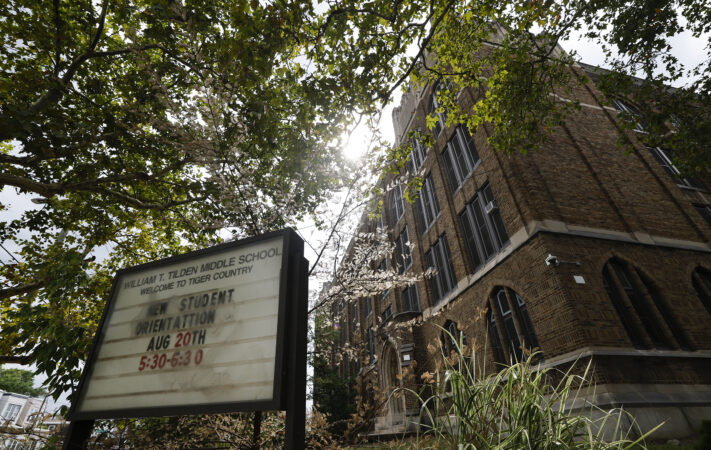
Students streamed out the front doors of William T. Tilden Middle School on a recent Friday afternoon, past the “Welcome to Tiger Country” sign at the corner. As they shouted to friends and threw snowballs to celebrate the weekend, they were dwarfed by the massive brick school building behind them.
That building, which spans half a city block in Southwest Philadelphia, is a primary reason the Philadelphia School District has proposed closing Tilden alongside19 other schools.
Capable of holding roughly 1,400 students, Tilden had only 266 enrolled last year, the district said. That means it is at just 18.5% capacity — the second-lowest of all the schools tapped to close, according to an Inquirer analysis. While enrollment in the school district overall has increased in the last four years, it has declined at Tilden, with just 24 students in this year’s fifth-grade class, district data shows.
The district has rated Tilden’s building as “poor” when it comes to being safe and accessible, meeting environmental standards, and having modern technology. Tilden is also one of six middle schools that Superintendent Tony B. Watlington Sr. has proposed closing in an effort to shift the district’s focus to the K-8 model.
Unlike some of the otherschools on the chopping block, the Tilden community so far has not mounted an organized fight against its closure as the school board prepares to vote this winter on Watlington’s recommendations. Just a dozen employees and residents showed up to an in-person meeting on a frigid Saturday morning earlier this month to discuss the school’s possible closure, according to Chalkbeat Philadelphia, and about 30 attended a virtual meeting about Tilden a few days later. There is no online petition to keep it open, as there are for manyother schools slated for closure.
Students who were set to graduate before the proposed changes would take effect said in interviews outside the school that they did not care much about the possible closure, though some adults expressed more concern.
“This school has had, and still does have, excellent community programs,” said Tilden teacher Cheryl Padgett through tears at the virtual meeting.
The district’s draft facilities plan recommends that in the fall of 2027, Tilden stop accepting new fifth graders, and then gradually phase out its remaining classes, closing for good in 2030.
All of Tilden’s current students would be able to graduate from the school under the proposal; new students who would have attended Tilden for middle school will instead stay at Patterson, Catherine, and Morton — the elementary schools that currently feed into Tilden. The district said all three of those schools would receive increased investment as they add grades and become K-8 schools.
Tilden is in a neighborhood deemed especially vulnerable by the district, which ranked it as “high risk” to account for its experience with previous school closures, as well as its high poverty rate, lack of publictransportation, and language barriers. (The district’s top vulnerability ranking is “very high risk.”)
Tilden’s building would eventually be repurposed as a sports facility for Bartram High and the broader neighborhood under the plan.
At the virtual meeting, community members worried that the buildings slated to become K-8 schools are not equipped for older children, and that younger students would be exposed to problematic behavior from older kids.
Some community members said they feared that changes resulting from the district’s plan, which spans a 10-year period, would not come soon enough.
“Do something now,” said Mama Gail Clouden, a longtime community activist. “While you’re talking about ‘in two years,’ and what you’re planning to do — right now, children and parents and staff are suffering in these schools.”
Tilden also has received additional support and funding from the city’s tax on sweetened beverages through the community schools program pioneered by former Mayor Jim Kenney.
“Our kids can succeed,” Kenney said at a 2017 news conference at Tilden announcing funding for the first group of schools. “They can meet their potential if we give them the resources.”
Asa community school, Tilden’s building serves as a center for such resources: The school hosts a food pantry every Friday, and families can access case management and utility and housing assistance and other supports through a partnership with Methodist Services.
“These kids, they have a way of growing on your heart,” said Wanellie Cummings, an attendance case manager with Methodist Services assigned to Tilden.
Cummings works with kids who have three or more absences to try to address any barriers at home that might prevent them from getting to school. She said she has not heard much from her clients about the potential school closure, though she did worry about Tilden’s food pantry closing.
“When you take that away from a community, what’s left? If those grandmoms and grandpops have to go somewhere else to get food …,” she said.
The district has said it would spend the 2026-27 year planning for how to maintain the resources now offered at Tilden.
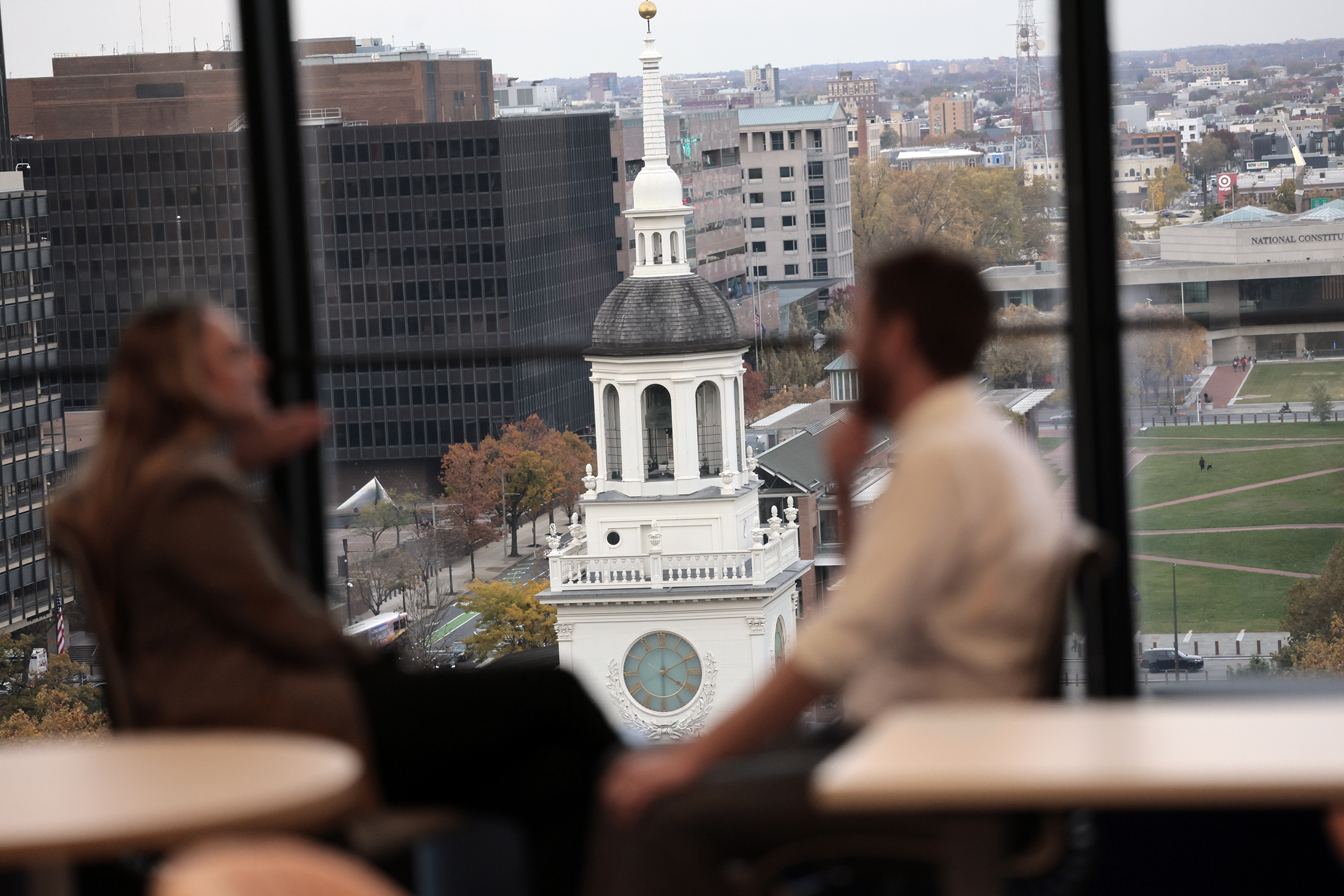
The sleek, modern offices of the Foundation for Individual Rights and Expression, or FIRE, sit on the southernmost edge of Independence Square. The enormous glass windows of a conference room called the Marketplace — a nod to the “marketplace of ideas” — perfectly frame Independence Hall.
The view is no coincidence. The free-speech organization, founded in 1999 and long known for decrying illiberalism and so-called cancel culture on American college campuses, is deliberate in the stories it tells.
In addition to the thousands of case submissions FIRE receives each year, staffers scour social media and news reports for compelling free-speech violations, partly looking, as legal director Will Creeley explained, for “cases you can tell a story with.”
For years, FIRE warned about threats to free speech, primarily on college campuses. Now the crisis it was preparing for has arrived.
The issue today is no longer one of cultural differences — students protesting controversial speakers or agitating for more diverse curricula.
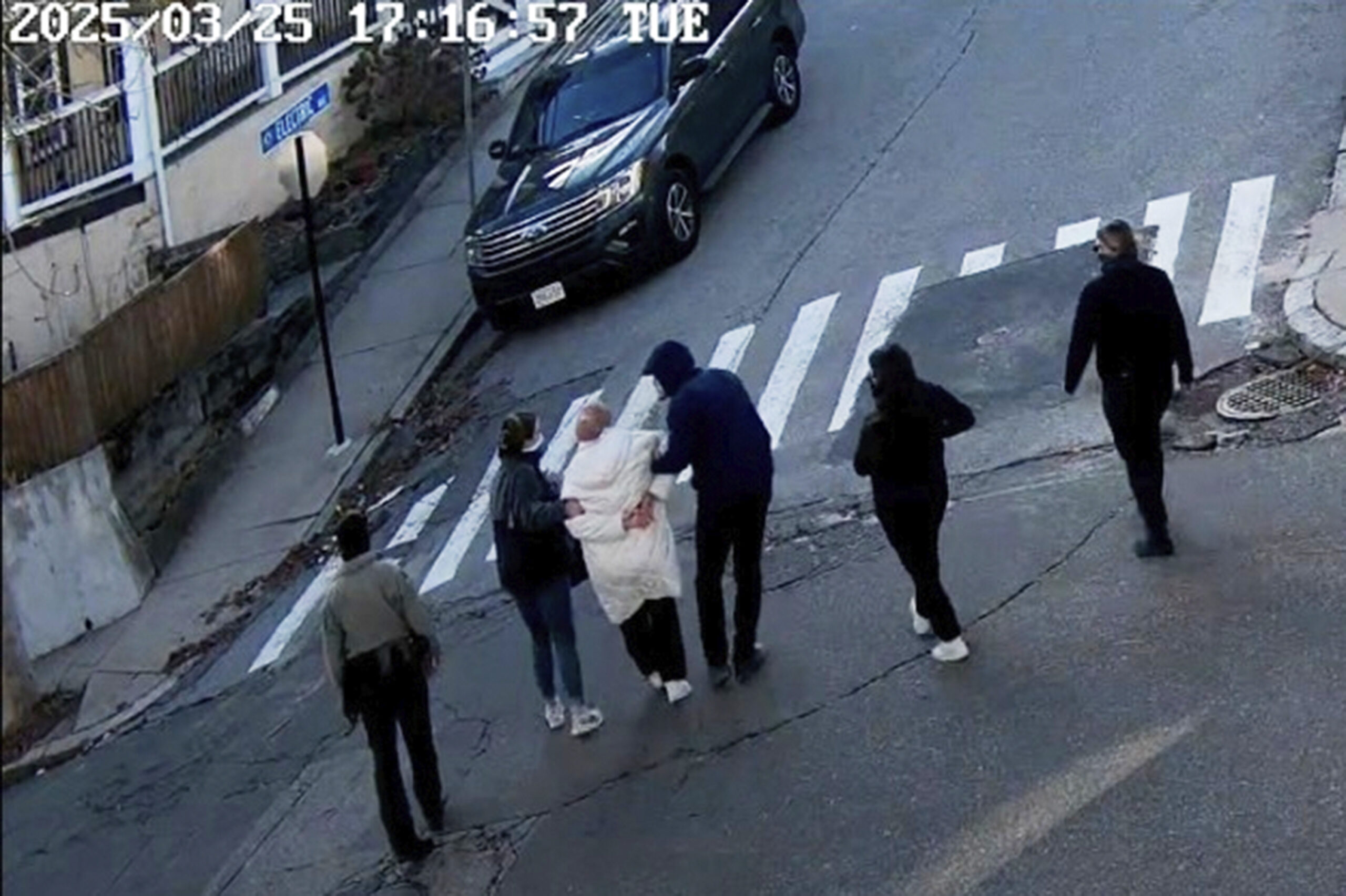
Rumeysa Ozturk, a 30-year-old doctoral student at Tufts University, was detained by Department of Homeland Security agents in March, an arrest captured by security camera footage.
Instead, the full power of the federal government is trained on universities and individual students who disagree with it. The stakes have grown exponentially, as became clear early on when federal agents detained Rumeysa Ozturk, a Tufts University Ph.D. student on a visa, after she cowrote an op-ed in a student newspaper. She then spent 45 days in Immigration and Customs Enforcement detention in Louisiana. (FIRE submitted an amicus brief in Ozturk’s ongoing federal case, in which a federal judge ruled last month that the administration had no grounds to deport her.)
More recently, federal agents arrested and charged journalist and former CNN anchor Don Lemon with federal civil rights crimes for his coverage of an anti-ICE protest inside a Minnesota church. Of his arrest, the organization wrote, “FIRE will be watching closely.”
Journalist and former CNN anchor Don Lemon talked to the media after being detained for covering a protest inside a Minnesota church.
The question FIRE faces today is whether it can effectively meet the moment, and overcome skepticism from the left and from other free-speech advocates, some of whom argue the group helped lay the groundwork for an authoritarian crackdown.
Those critics say the present free-speech crisis is partly the predictable result of FIRE stoking a conservative panic over campus politics, effectively handing the federal government a well-crafted rationale for suppressing progressive voices.
FIRE’s leaders say they were not wrong before about cancel culture. Things were bad, they argue. But this is far worse.
“The threats we’re seeing right now, to me, often feel damn near existential,” Creeley, 45, said in a recent interview. “The incredibly important distinction is that what we’re seeing now from the right is backed by the power of the federal government.”
FIRE described the federal government’s demands on Harvard as “wielding the threat of crippling financial consequences like a mobster gripping a baseball bat.”
When the government becomes the censor
It can sometimes feel as if FIRE has been involved in nearly every major free-speech flash point of the last year — part of an intentional strategy to build the organization’s profile and raise awareness about speech violations, said Alisha Glennon, 41, the group’s chief operating officer.
Among dozens of ongoing cases, FIRE is suing Secretary of State Marco Rubio in federal court over the administration’s targeting of international students who reported on or participated in pro-Palestinian campus activism.
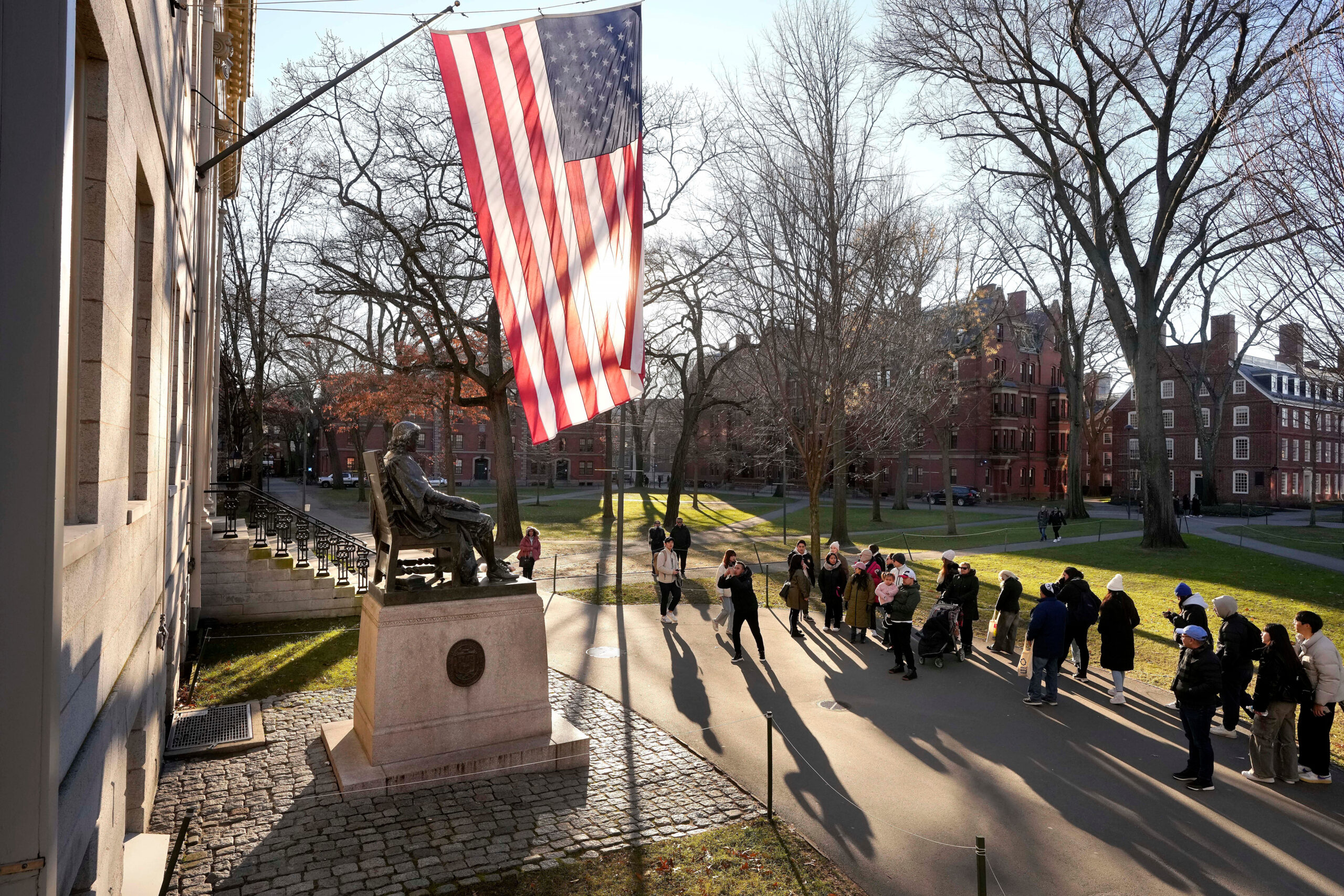
FIRE has also been outspoken in its defense of Harvard University. After the Trump administration sent Harvard a list of demands this spring — including banning some international students based on their views, appointing an outside overseer approved by the federal government to ensure “viewpoint diversity,” and submitting yearly reports to the government — the university refused to comply. Trump then sought to cut off billions of dollars of federal funding in response.
Harvard sued, and FIRE submitted an amicus brief supporting the university, noting that because of its own “longstanding role as a leading critic” of Harvard as a center of cancel culture, it was not less but more alarmed by the government’s “wielding the threat of crippling financial consequences like a mobster gripping a baseball bat.”
FIRE is also preparing to potentially sue Texas A&M University after the university instructed a philosophy professor in January to remove some teachings of Plato from an introductory philosophy course, citing new rules barring public universities in the state from offering classes that “advocate race or gender ideology.” FIRE wrote to the university, calling the move “unconstitutional political interference.”
Removing Plato from an intro philosophy class is the type of absurd, taken-to-the-extreme free-speech dispute that has long been FIRE’s bread and butter, and Creeley was particularly agitated about it.
Will Creeley, FIRE’s legal director, pictured here at the FIRE offices in Philadelphia. He was drawn to First Amendment work partly because his father was a poet.
“What the hell is ‘race and gender ideology’?” he said. “That’s a term so vague you could drive a truck through it.”
He had seen commentary about how 2,400 years ago, Socrates was put to death for corrupting the youth of Athens — and now administrators were, in effect, trying to run Socrates’ student out of College Station, Texas, too.
Creeley was almost laughing, but he was also feeling apocalyptic.
He has been half-joking with his staff that FIRE’s entire litigation program could be dedicated just to Texas. Yet he was also stewing over a decision by the University of Alabama in December to suspend two student publications, one focused on fashion and the other on Black culture and student life.
The university said both violated the Justice Department’s guidance on diversity, equity, and inclusion by narrowly appealing to female students and Black students. FIRE sent an outraged letter to the school, often a precursor to litigation.
“It’s one thing to say, ‘Hey, administratively, we’re not going to have an office of DEI,’” Creeley said. But to say, “‘And students can’t talk about these things.’ … That just drives me nuts.”
Off campus, FIRE is suing Perry County, Tenn., on behalf of Larry Bushart, a retired police officer who spent 37 days in jail after reposting a meme following the assassination of right-wing political activist Charlie Kirk. The meme depicted then-presidential candidate Donald Trump urging people to “get over” a separate shooting the year before.
Defending free speech is notoriously unpopular, and FIRE has leaned hard into a narrative of itself as a pure, principled defender of free speech, regardless of the consequences.
“We always say we just call balls and strikes, no matter what team is up to bat,” Glennon said. “If you are being criticized by both sides and praised by both sides every single day — well, then, that’s something that I wear as a point of pride.”
“Sometimes, if everybody’s criticizing you, you are screwing up,” Creeley acknowledged, and they both laughed. “But here I would say we’re doing it right.”
In 2022, FIRE expanded its purview beyond college campuses, including through a massive media campaign. One of its billboards is pictured here, visible heading north on I-95, in 2023.
From scrappy watchdog to national player
FIRE is insistently nonpartisan; staffers acknowledge the organization’s erstwhile conservative reputation but say it was never accurate.
And under the second Trump administration, it has become one of the most outspoken voices in the country for free expression. The nonprofit has a $32 million budget, about 130 staffers, and roughly 12,000 members paying a $25 annual fee.
Both Creeley and Glennon have been with the organization for nearly two decades, helping it grow from a small advocacy group into one garnering increasing mainstream attention. They said FIRE based itself in Philadelphia, not Washington, so that it would remain free from political interference. (One of the cofounders of the organization, Alan Charles Kors, an emeritus history professor at the University of Pennsylvania, is also based in Philly.)
At the Philly office, copies of the Wall Street Journal and the Chronicle of Philanthropy greet visitors. The conference rooms are named after free-speech references. (“It’s a little kitschy, but it’s cute,” Glennon said of the “Crowded Theater” room.)
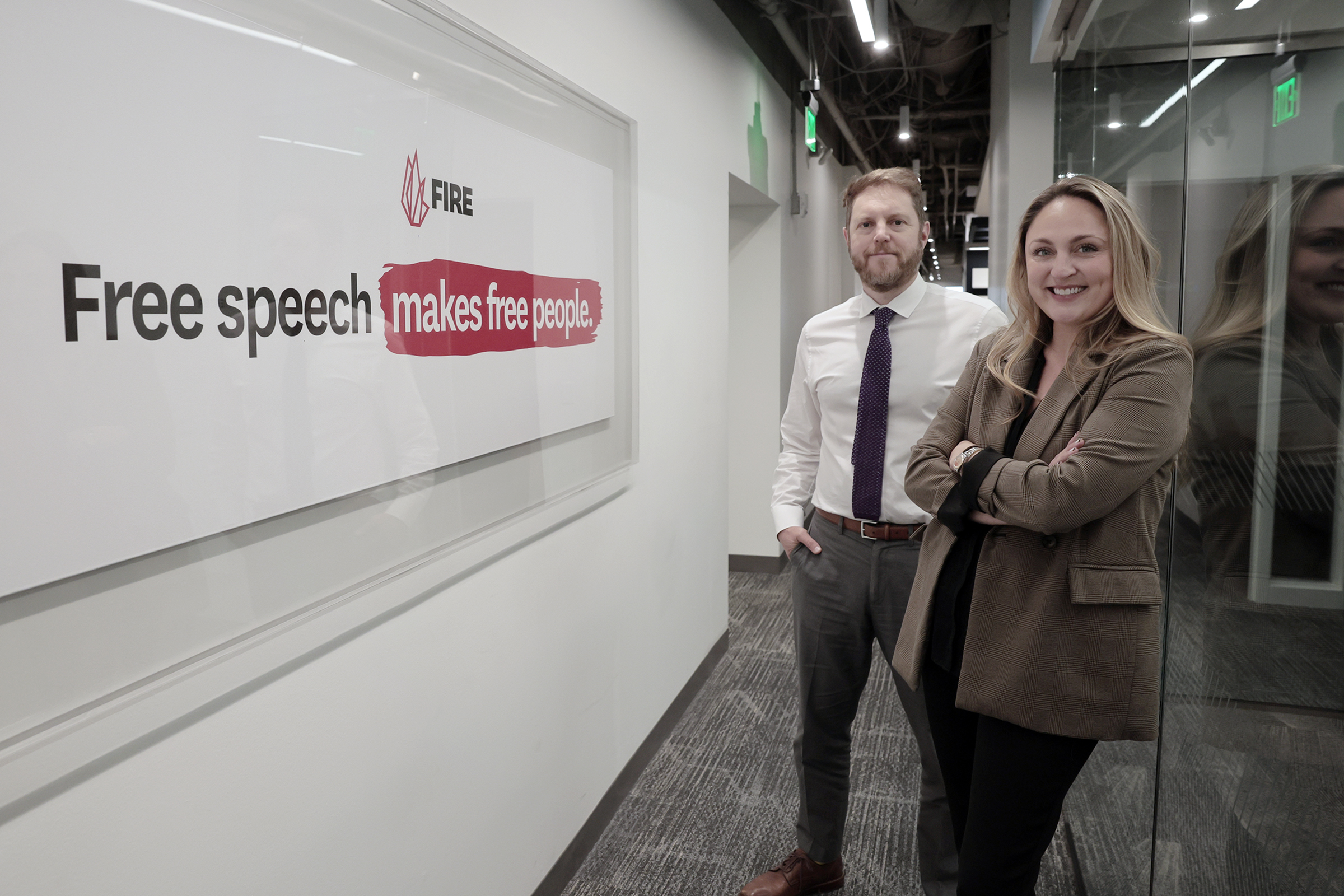
One afternoon this fall, Glennon, in an oversized tan blazer, black pants, and stilettos, her blond hair loose, and Creeley, in a white button-down and purple tie, his auburn beard neatly cropped, were quick to laugh, prone to peppering famous quotes about free speech throughout the conversation.
They appeared to be true believers — in free expression, in their work, in America.
Glennon said she fears “that people will become accustomed to a society that is less free, and that with every generation, we’re losing a little bit of that love for American exceptionalism and what free speech is.”
Creeley nodded.
“What’s the Kors quote? ‘A nation that does not educate in liberty will not long enjoy it, and won’t even know when it’s lost,’” he said, paraphrasing a quote from FIRE’s cofounder.
“‘Won’t even know when it’s lost,’” Glennon echoed. “Gave me chills.”
FIRE’s legal director Will Creeley and FIRE’s chief operating officer Alisha Glennon, pictured here at the Philly offices in November, have both been at the organization for nearly two decades.
From pressure campaigns to the courtroom
FIRE was founded by two civil libertarians who wrote one of the defining campus-panic books of the 1990s, The Shadow University: The Betrayal of Liberty on America’s Campuses, which Publishers Weekly at the time described as a polemic about how “the ‘political and cultural left’ is today the worst abuser of the principles of open, equal free speech.”
Creeley joined FIRE as a law school intern before becoming a full-time staffer in 2006. He comes from a long line of pacifist Quakers and was involved in the campus Green Party as an undergrad at New York University. He said he was drawn to First Amendment work because his father was a poet; words were important.
“I remember the first couple years, I was like, ‘Boy, I’m doing this free-speech work, I’m defending an awful lot of evangelical conservative Christians who I really don’t have much in common with,’” Creeley said. But that was the principle of the thing.
FIRE’s chief operating officer Alisha Glennon in “The Marketplace” conference room overlooking Independence Hall. All the conference rooms are named after free speech references.
Glennon, who was born and raised in Mayfair, joined FIRE around the same time. She had recently graduated from the College of William and Mary and was waitressing while applying for development jobs. “I was like, ‘Free speech! Everybody likes free speech!’” she said, laughing.
For more than a decade, FIRE focused exclusively on advocacy, aiming to “make rights violations so painful for a school that they just would abandon it,” Creeley said. Litigation was plodding and costly, and the awareness campaigns seemed to have an impact.
In 2008, for example, a student-janitor at Indiana University-Purdue University Indianapolis was accused of racial harassment after a coworker saw him reading Notre Dame vs. the Klan: How the Fighting Irish Defeated the Ku Klux Klan, a nonfiction book that depicted robed Klansman and burning crosses on the cover. FIRE took up the cause, and the university eventually apologized to the janitor.
Other early advocacy cases included defending a professor at a New Jersey community college over a photo he posted of his daughter wearing a Game of Thrones T-shirt, and intervening on behalf of a University of Alaska Fairbanks student newspaper accused of sexual harassment for publishing a satirical article about a new building shaped like a vagina.
Then in 2014, FIRE began suing schools. The effort launched with four cases, including one about an unconstitutional “free speech zone” at a college in California and one on behalf of students at Iowa State University who were told they could not use the university’s name while wearing T-shirts representing their chapter of the National Organization for the Reform of Marijuana Laws.
FIRE eventually won all four.
These days, staffers at the ACLU of Pennsylvania and FIRE work closely together, talking weekly and sometimes daily.
“I honestly don’t remember a time where we had a disagreement about how to analyze the case,” said Witold Walczak, the ACLU of Pennsylvania’s legal director.
Despite its ideologically broad legal work, FIRE perhaps became most famous in the mainstream for its conservative-leaning culture work. In 2015, executive director Greg Lukianoff cowrote an Atlantic article — and later a book — titled The Coddling of the American Mind, arguing that efforts to create “safe spaces” on campuses had gone awry. Cowritten with social psychologist Jonathan Haidt, the book portrayed campus identity politics as bordering on the surreal.
That was also the year Lukianoff helped to disseminate one of the defining “cancel culture” artifacts of the decade. He filmed a Yale student, who came to be known online as “shrieking girl,” screaming at a professor in the middle of a simmering debate on campus over what constituted racially sensitive Halloween costumes. The video made national news, eventually racking up nearly 2 million views on FIRE’s YouTube page.
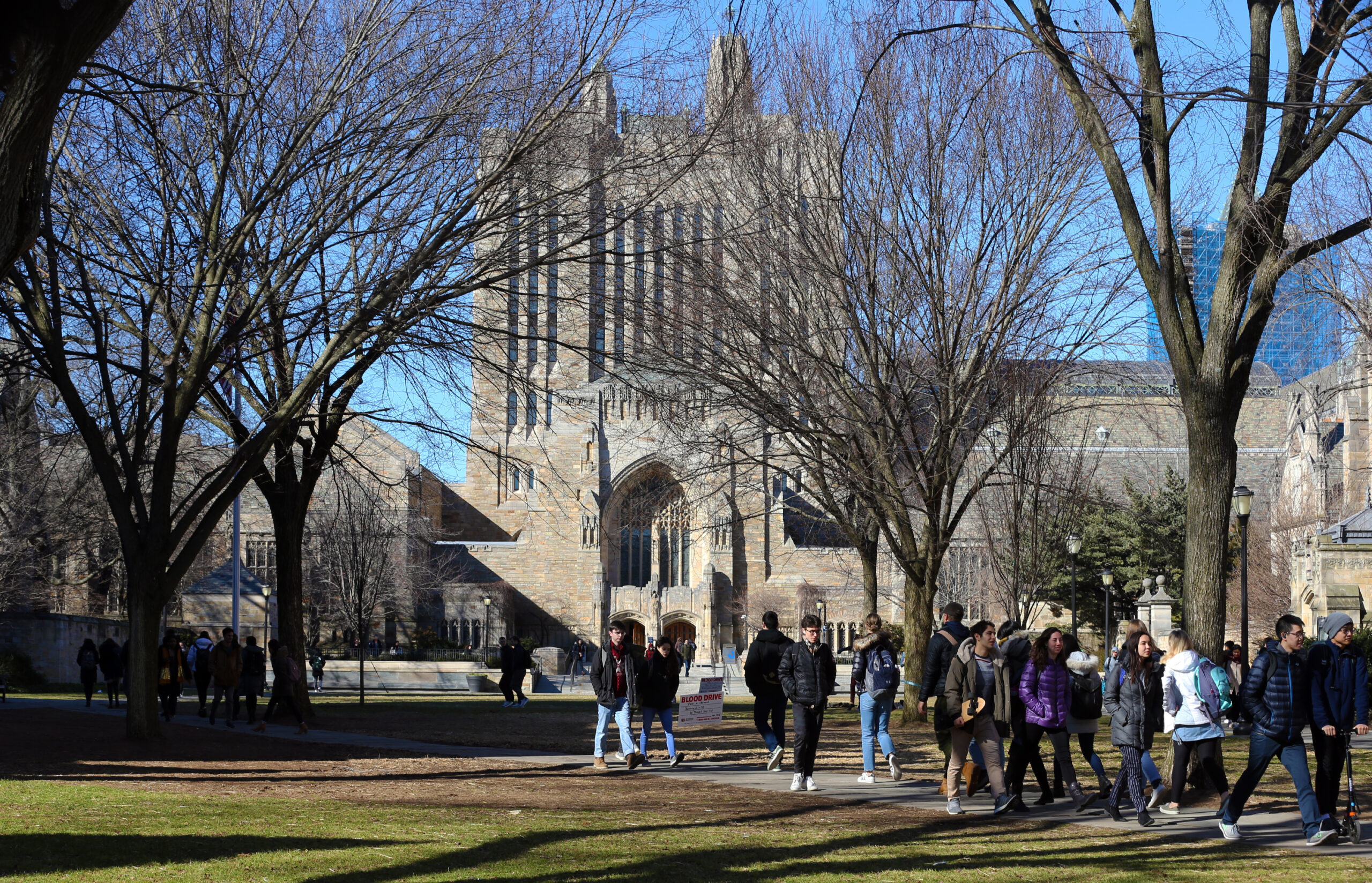
The campus of Yale University in New Haven, Conn.
The rankings — and the reckoning
These days, the organization tracks speaker disinvitations and scholars and students “under fire” through its public databases. Since 2020, it has also published annual “free-speech rankings” based on the databases and student surveys — rankings that have repeatedly placed Harvard at or near the bottom for free speech.
Those efforts underpin one of the central critiques of FIRE: that it has focused not only on government restrictions but also on the actions of private actors, including students.
“The rankings are based on those ideas of ‘cancel culture’ and shaming others and so on. And they’re not based on the First Amendment,” said Charles Walker, a retired attorney based in Maryland who published multiple critiques of FIRE’s rankings last year. “First Amendment law restricts what the government can do with regard to individual speech. It doesn’t address individuals speaking to each other.”
Bradford Vivian, a professor at Pennsylvania State University and the author of Campus Misinformation: The Real Threat to Free Speech in American Higher Education, described FIRE’s databases as “totally subjective, arbitrary, politically motivated tools.”
He argued that FIRE cherry-picks sensational incidents that do not necessarily have anything to do with true First Amendment violations, and prioritizes rankings that will make headlines over those that would be more accurate.
“FIRE has produced misinformation that others can easily use for nefarious purposes,” Vivian said.
FIRE for years whipped up a frenzy over liberal excess on elite college campuses, Vivian and other critics say. The Trump administration seized on that frenzy to slash federal funding and even imprison its detractors. Yet FIRE staffers do not see themselves as part of that story.
Even as FIRE insists it merely “calls balls and strikes,” critics note that state legislatures and the Trump administration have cited FIRE’s rankings as justification for punitive actions against universities.
Adding insult to injury, FIRE staffers have not always expressed much sympathy for the universities that now find themselves in the administration’s crosshairs.
“Administrators, colleges, universities have in some ways done plenty to bring this on themselves,” Sean Stevens, FIRE’s chief research adviser, told The Inquirer. “There was a lot of downplaying or ignoring of the concerns about the homogeneity of politics among the professorate or some of the curriculums.”
Still, Stevens, who oversees the annual rankings, said he disagrees with the Trump administration using his work to cut funding or shut down certain speech or academic departments. “That’s not anything we would advocate for,” he said.
In December, Lukianoff doubled down, publishing what amounted to an “I told you so” essay, arguing that universities now face a “worst of both worlds” scenario, in which government pressure combined with lingering cancel-culture dynamics are producing the “bleakest speech landscape imaginable.”
Creeley and Glennon said they never anticipated their work being used to justify repression.
“It’s galling to me to see our work invoked to justify that kind of illiberal crackdown,” Creeley said, pointing specifically to U.S. Rep. Elise Stefanik (R., N.Y.), who previously said she was a free-speech ally, using FIRE’s rankings in her anti-higher education campaigns.
If onetime allies now seem to have never cared much about free speech to begin with, that’s not on FIRE, they said.
“What we had been saying over the years was true‚” Glennon said. “We’re to blame now for the government overreach? I don’t think it’s a fair assessment.”
“I mean, that’s all we can do: Call out the abuses as we see them,” Creeley said. “If somebody wants to use our work for bad ends, we’ll fight you on it.”
FIRE was based in Philadelphia to avoid the political interference of Washington, D.C.
Can a referee still matter when the rules change?
At FIRE’s daily morning meetings to discuss pressing free-speech problems across the country, the agenda has grown longer. The scope, severity, volume, and nature of the cases they are seeing have changed, Creeley said. (He noted — twice — that an Alexandria Ocasio-Cortez presidency would likely keep FIRE busy as well.)
“In some places, the law is just getting flat-out ignored,” he said.
After two decades defending the First Amendment, Creeley has begun to reflect on whether placing his faith in the collective commitment to the law and the Constitution was the right choice. Still, he remains an optimist. He believes that such a commitment will prevail. That’s the whole promise of the country.
FIRE continues to see itself as a principled referee. Whether a referee still matters when the most powerful player insists the rules no longer apply — that remains an open question.
Shelley R. grew up as a gender-nonconforming kid, and she loves the queer and trans community she’s built in Philadelphia — where sometimes she can feel like the seventh wheel when it’s dinner time and the entire party leaves to go on a group date together.
But she’s also ready for something new in romance. Shelley, who The Inquirer is referring to by her first name and last initial because she doesn’t want her experience to reflect on her employer, is a “nontraditional person seeking normal love.”
A 31-year-old trans woman, she just wants a nice, monogamish boyfriend.
Raised by hippies in Boston who were devotees of New Age spirituality, Shelley was assigned male at birth, and as a teenager came out as gay.
“I’ve never had the choice to just be like, ‘This is my boyfriend. He loves me. We live together and we’re hosting a little board game night,’” Shelley R. said.
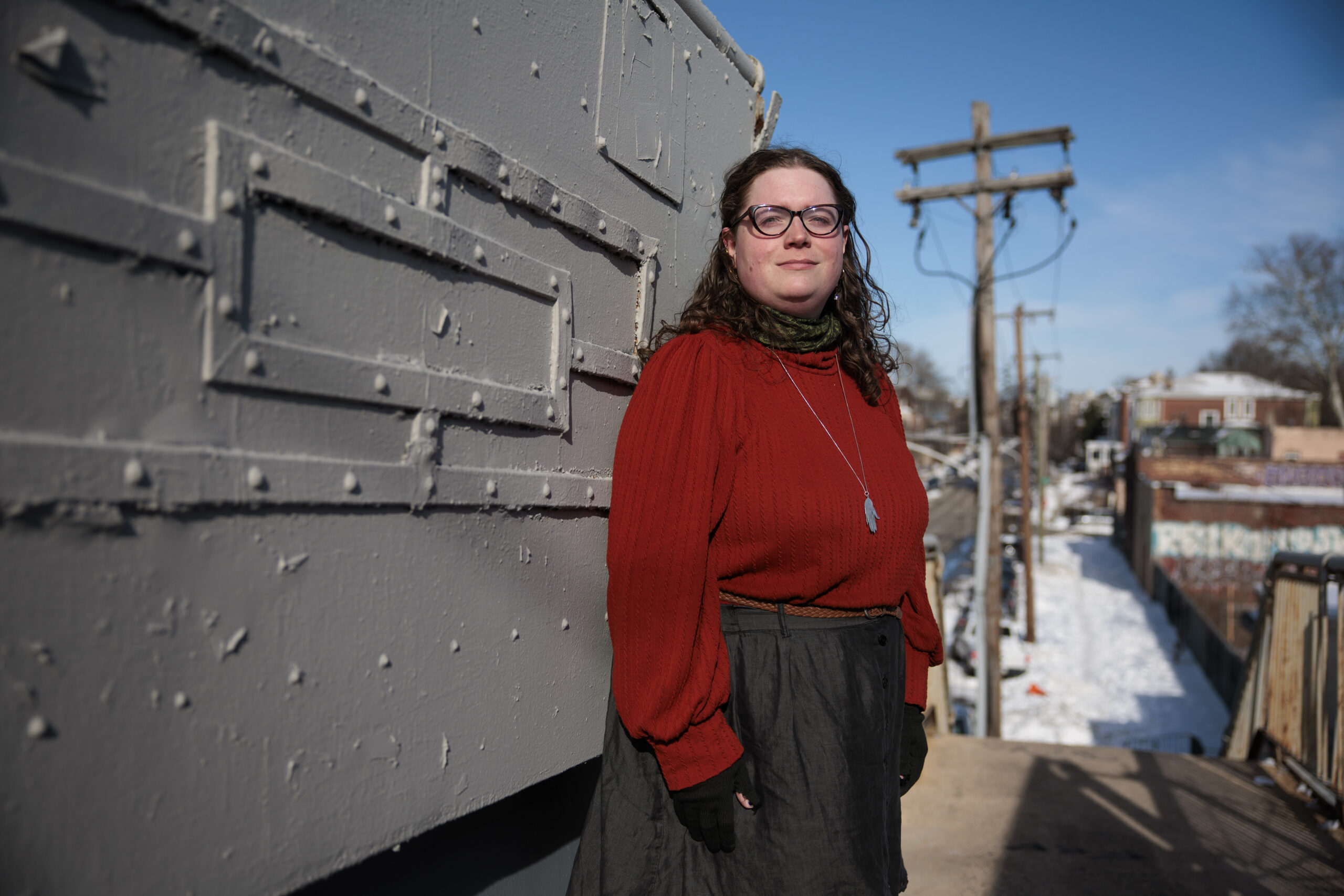
As a young adult, she attended Hampshire College, a small, very progressive school in Western Massachusetts, where she started identifying as trans. After graduation, she moved to Philadelphia, where she underwent gender-affirming surgery as part of her transition. She describes herself now as a “post-op” trans woman, and told The Inquirer, “I’ve had all that work done. I am essentially the same as a cisgender woman in most of the ways that count, except for one big one: fertility.”
She now lives in West Philadelphia and is seeking what she describes as “typical love.”
“I just want a guy who will commit,” she said.
The following, as told to Zoe Greenberg in interviews and a letter, has been edited for length and clarity.
On being a “post-op” trans woman on the dating apps in Philly
If I don’t mention I’m trans on my profile, then I’ll get a lot of men who will immediately turn me down when they learn I’m trans, either due to prejudice or because they value being able to get their future wife pregnant. The “trans panic” can also be dangerous, if a man feels deceived. People get murdered or assaulted this way.
If I just mention that I’m trans on my profile, with no medical information, many will make incorrect assumptions about my genitals, which could be a deal-breaker for them one way or the other.
If I say I’m “post-op trans,” then I’m putting on my dating profile, “BY THE WAY, I HAVE A VAGINA!!!” which makes me come across as very focused on sex. Most men on dating apps already assume that no matter what I say I’m looking for, I’m looking for sex.
I think I might try putting, “I have a little secret, and I’ll tell you when you get to know me a little more.”
I’m only half-serious about that.
On attracting married men and depressed artists
Married men are strangely drawn to me. I’ve set a rule for myself: no more. They weren’t cheating, it was always an open marriage, and yet they all turned out to be quite close to divorce.
I attract a lot of depressed artists and activists seeking a manic pixie dream girl to experiment with. Breakup conversations with me often include things like, “I understand myself better now, and subsequently have decided to move to Iceland.”
Apparently dating me is a therapeutic journey.
On becoming an accidental role model for her crushes
I was on a little trip with my friends this weekend, and we met this guy from Central Pa. He was cute and he was nice, and I was flirting with him a little bit. Then we get back to Philly, and I got a text message from him that’s like, “You’re so cool and so amazing and so smart. You helped me realize I want to transition.”
That’s another common occurrence: people who date me not actually being interested in me as a person, just in getting to know any trans woman, so that they can figure out if they want to transition themselves. Roughly 50% of the men I’ve dated fall into this category.
On wanting a ‘more typical romance’
I was raised by hippies, I’ve been trans and gender-nonconforming my whole life. All my friends are queer, poly, trans, pansexual.
I’ve never had the choice to be in a monogamous, traditional relationship with a man. I’ve never had the choice to just be like, “This is my boyfriend. He loves me. We live together and we’re hosting a little board game night.”
I just want a romantic relationship, like what people have. I mean, a liberal-blue-state-normal relationship. If he was having a busy workday, I’d cook him a meal. Give him a little massage.
I’m a nontraditional person seeking normal love, and not a polycule. Because I’ve already done the polycule, and my polycule was a disaster.
This story is part of a new series about life partners across the Philadelphia area. See other stories in the series here and here.
If you want to share your story about who you’re navigating life with romantically or otherwise, write to lifepartners@inquirer.com. We won’t publish anything without speaking to you first.
McGillin’s Olde Ale House, the 166-year-old pub in Center City long owned by the same family, has determined that being a matchmaker is a strategic advantage in a crowded industry.
Of course they serve draft beer, Philly cheesesteaks, and wings — but the bar has leaned especially hard into being, in its own description, the place where more couples have met than anywhere else in Philadelphia.
At McGillin’s first reunion for such couples this month, attendees seemed less like regulars at a bar and more like alumni of the same beloved college club, touched by those who came before and rooting for those to follow.
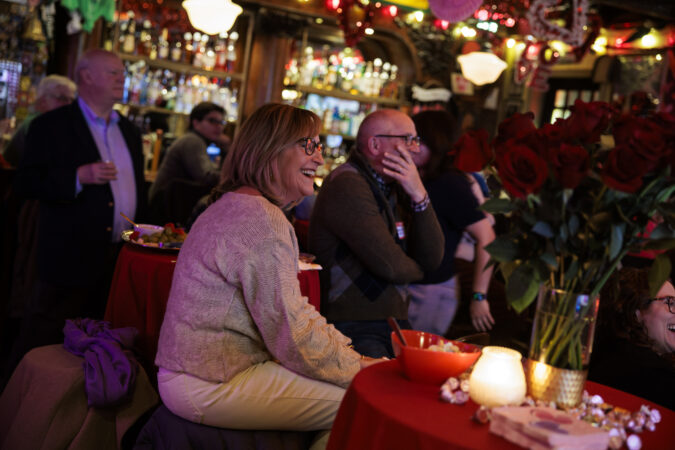
Everyone wore red-and-white name tags with the year their significant McGillin’s romantic event had taken place. The upstairs bar, where couples sat under tinsel hearts and drank from frosted glasses, was warm and close. There was merch; the crowd clapped especially hard for long marriages.
Merch on display at McGillin’s, including a snow globe that says “where it all began.”
It was also a media event: four TV news stations, as well as the Philadelphia Citizen and The Philadelphia Inquirer, came to capture the famous McGillin’s couples. Irene Levy Baker, the bar’s longtime publicist and author of the new book Cheers to McGillin’s, Philly’s Oldest Bar‚ which has its own chapter devoted to “mating magic,” is clearly good at her job.
She is in touch with more than 200 couples who found love at the bar, and McGillin’s has so far filled up four guestbooks of signatures and anecdotes: Met New Year’s Day 2002. Engaged 9/22/12. Met here in 1996 when I was waitressing. Still together in 2024!
“We actually met for the first time one bar stool over. I was eating a grilled cheese sandwich,” said Emily Dowling, 28, sitting beside her husband, Giacomo Trevisan, after a keynote presentation of McGillin’s love stories. Dowling and Trevisan’s name tags were marked 2022.
On the fateful night that year, Dowling was out with a friend and Trevisan was visiting for the first time, having just arrived in the United States on an extended work trip from Italy. Hearing him speaking Italian, Dowling asked what had brought him to town.
“I was impressed that a girl would just start talking to me. In Italy, it doesn’t work like that,” Trevisan, 32, said.
The two got married less than a year later. They closed out the night of their wedding with a drink at McGillin’s.
Irene Levy Baker, McGillin’s longtime publicist, and Chris Mullins Jr., co-owner of the bar, led a toast to couples who met there.
In a world of loneliness and dating app dread, in which people pay matchmakers and make PowerPoint presentations and even take out billboards looking for love, there is a certain nostalgia to the idea that a bar, with salvaged oak tables and framed liquor licenses dating back to1871, is the best place to find it. At some point, the legend probably becomes self-fulfilling.
During an interview, Baker googled “where do couples meet in Philadelphia,” and the AI summary dutifully reported that “couples in Philly meet in classic old spots like McGillin’s Olde Ale House.”
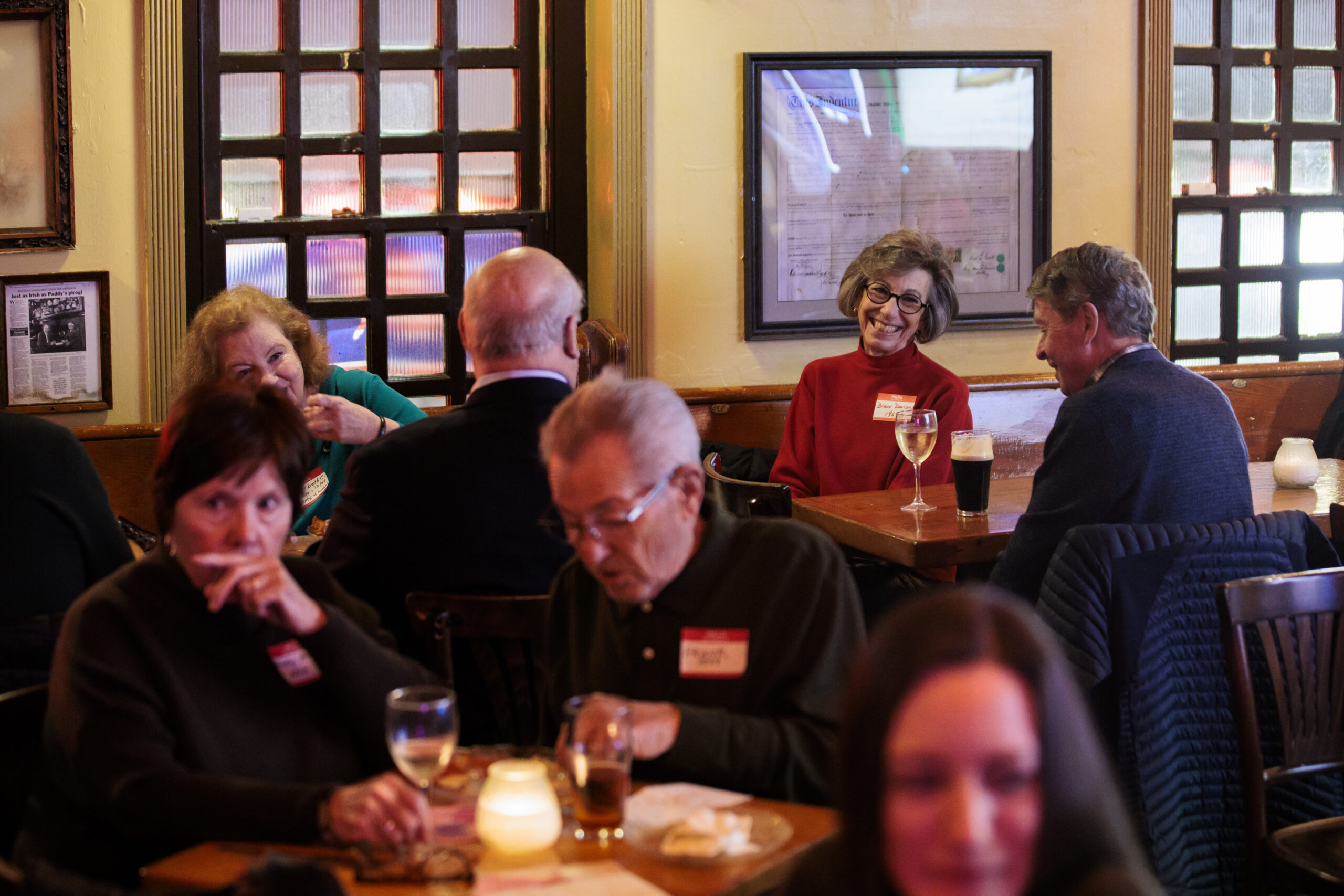
Diane and John Davison, for example, met in 1969: He was a regular, she was a first timer. The downstairs bar was smoky and packed. Patrons passed glasses of beer hand-to-hand above the crowd because no one could reach the bar.
“I remember the first time I saw her face,” John said. “Nice smile.”
“I remember the night,” Diane, 79, said. “John and I don’t exactly agree on some of the details.”
The two have been married for over 50 years, and the bar is an intimate part of their story. John’s brother, who has since passed away, also met his wife at McGillin’s. Just before Christmas, John celebrated his 80th birthday there, and the other diners sang to him.
At right, Diane and John Davison, who met at McGillin’s in 1969.
Both Baker and Christopher Mullins Jr., who co-owns the bar with his parents, have theories about why McGillin’s is a magnet for connection: it’s unpretentious, it’s approachable. The tables are close. The beer obviously helps.
At night it can get packed, but the atmosphere during the day is cozy; a fire crackles in the downstairs grate and patrons order soup for lunch.
“We don’t want to be old-fashioned and forgotten, but we want it to be the same kind of feel that people experienced 50 years ago,” Mullins said.
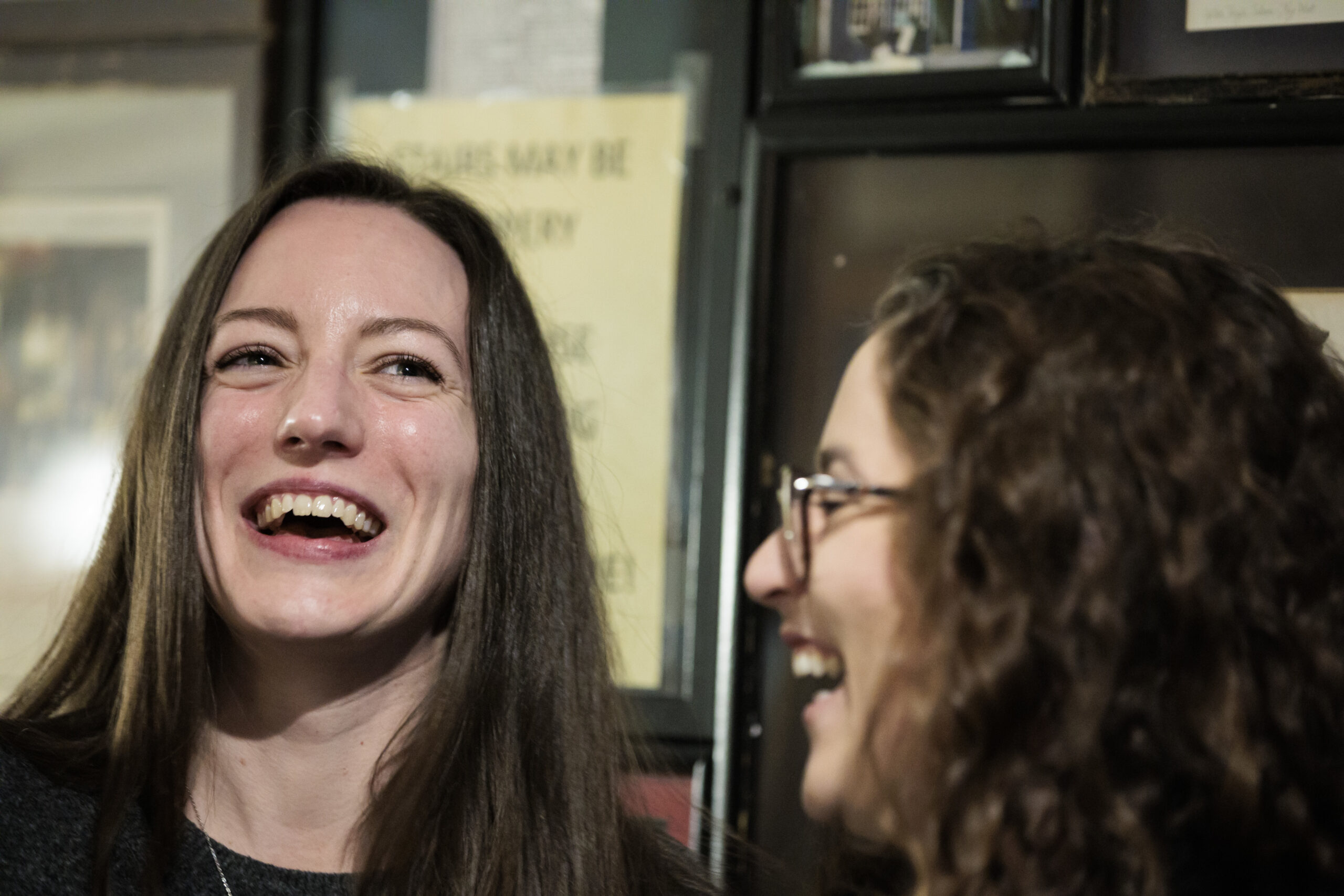
Kaitlynn and Amanda Capoferri laugh while telling their love story at the bar where they met.
Of course, there are some differences. Kaitlynn Capoferri, 32, mentioned wanting to get wings and beers at McGillin’s — on her Tinder profile. So Amanda Capoferri, 32, asked her on a date to the bar in 2017.
When Amanda proposed at the bar threeyears later, “All I could get out of my mouth after stumbling to pull the ring out of my pocket was, ‘I know how much you love McGillin’s, and I can only hope that you love me as much.’” (They’ve been married for four years).
It’s all part of the lore, carefully curated and growing by the day.
“There is one guy who sometimes comments on the Facebook page and he’ll say, ‘I met my wife there and we’re divorced now,’” Baker said. She wasn’t deterred. “I’m like, ‘Well, I’m glad you found love here once. Be sure to come back.’”
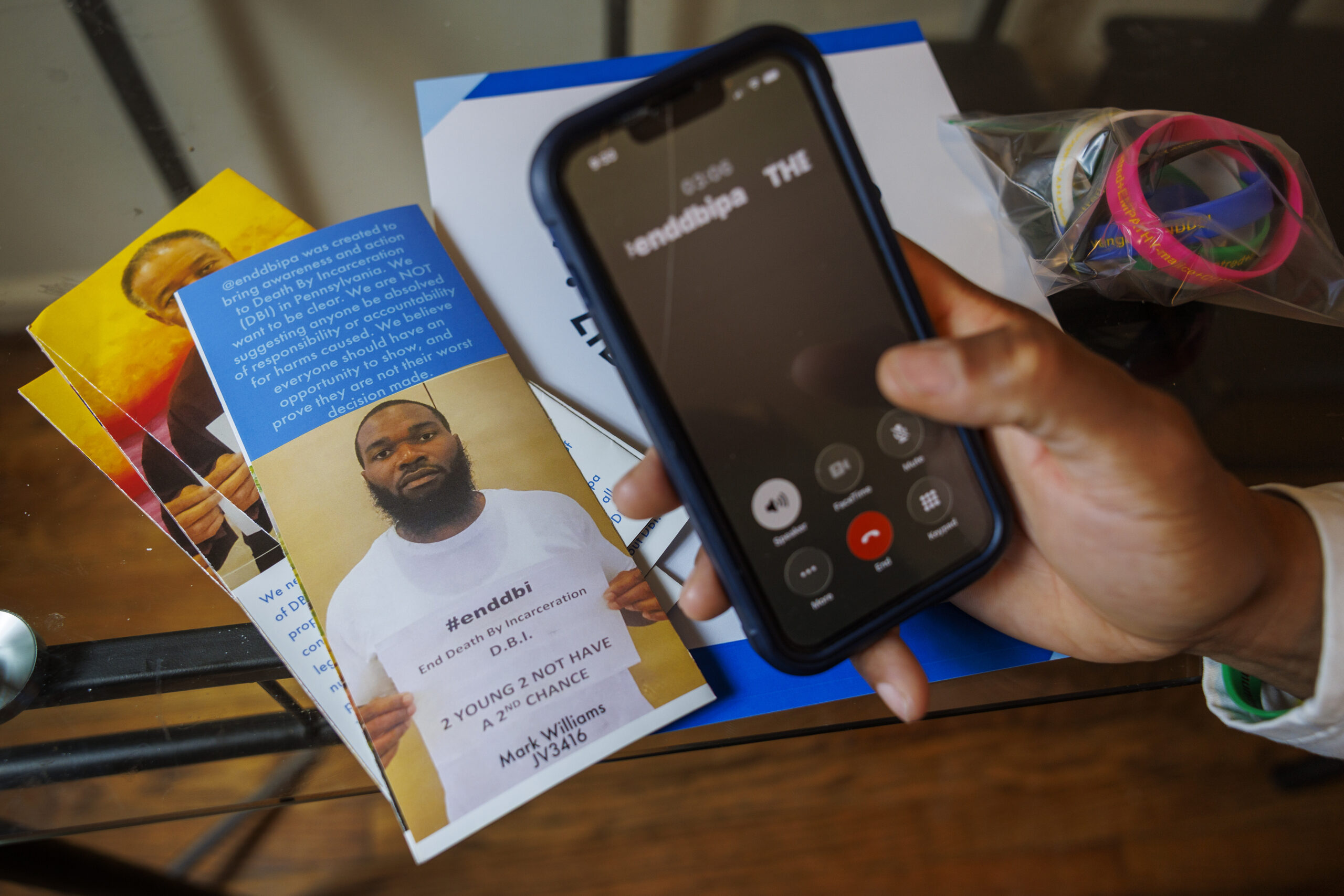
Scott Harmon and Mark Williams met each other in a maximum-security prison in the heart of Pennsylvania coal country in 2012.
They had both grown up in the Philly area; both were in their early 20s, at the very beginning of life sentences without the possibility of parole for homicide convictions. Both had sons.
They were also both desperate to leave State Correctional Institution (SCI) Greene, the isolated prison where they met and which they described as harrowing. They aimed to appeal their convictions and get free.
They clicked as lifelong friends.
In 2018, Williams was transferred to the more desirable SCI Phoenix, in Montgomery County, and soon Harmon was transferred there as well. Both saw the reunion as an unexpected gift, and they became cellmates, or “cellies.”
While organizing with the activist group the Coalition to Abolish Death by Incarceration and working with the same attorney to appeal their separate cases, they maintained a similar mindset: Despite what the courts said, their sentences would not last the length of their lives.
“When you’re sentenced to life, there’s really very little reason to hope that you’re ever going to get out again,” said Catherine Trama, an attorney with Wiseman, Schwartz, Cioschi & Trama who represented both men. They showed “a positivity that would be impossible for most people.”
Harmon was 22 when he was arrested for killing a 24-year-old man, Timothy Haines, in North Philadelphia. In 2011, he was convicted and given a mandatory life sentence without the possibility of parole. He maintained his innocence for the next decade-plus.
In 2024, his murder convictionwas overturned. The District Attorney’s Office stopped short of endorsing his innocence but offered him a plea deal, in which he pleaded guilty to third-degree murder and firearms violations to get out of prison in April 2025. (“When that opportunity is offered to you: you can go home today, or you can take a chance fighting the system again, you don’t fight the system again,” Harmon, 39, said).
Harmon and Williams, who call each other chosen brothers, had been working toward the same goal, but now one had achieved freedom and the other had not.
“It was really difficult for a while. I didn’t want him to feel as though I was upset that he was leaving, or wasn’t happy for him,” Williams, 36, said.
Mark Williams, 36, is currently incarcerated at SCI Phoenix, and challenging his conviction through the Post Conviction Relief Act. He and Scott Harmon call each other chosen brothers.
Williams is still incarcerated at SCI Phoenix, and is currently challenging his conviction through the Post Conviction Relief Act, claiming the state violated his right to due process. He was 21 when he was convicted of killing a 21-year-old man, Isaiah McLendon, in Darby Borough and also given a mandatory life sentence without the possibility of parole.
Harmon is now a utility worker at a country club and lives in the Philadelphia suburbs. He has a girlfriend who he met as a teenager and reconnected with while in prison.
It is against state Department of Corrections policy for Harmon and Williams to meet in person because Harmon was formerly incarcerated, a spokesperson for the PA DOC said. Instead, they speak almost every day by phone.
The following, as told to Zoe Greenberg in separate interviews, has been edited for length and clarity and combined.
On meeting at a maximum-security prison in southwestern Pa.
Mark: Everybody calls Scott “Slim.” I met Slim when he came upstate in 2012. We were young. Just seeing the shock of our new reality setting in with him, I had just experienced that a year ago. I could share how I made it through and hopefully it could help.
Scott: He seemed like a cool dude. We didn’t dive into each other’s cases, we just both knew that we were sentenced to die at such a young age. We call it death by incarceration, or a “DBI” sentence.
We had the same intention, which was getting out of prison.
On boiling water in buckets and grueling workouts together
Scott: We ate together all the time. The commissary is extremely limited — for the bags of instant rice that they sell, you need really hot water, which we figured out ways to make.
We would buy an extra bucket, put water and baking soda or denture tabs in it with an extension cord, and it heats up. You put your food inside a trash bag, you put a trash bag over the bucket, and you set your food on it, and it cooks.
Scott Harmon, who is now a utility worker at a country club, pictured at home.
We also started working out together. In prison, we work out so hard because it’s stress relief. We punish our bodies physically: 100 burpees may be a warm-up.
On the outside, I tried to do 10 sets of 10 pull-ups. Mark laughed at me when I told him I couldn’t.
On being transferred to the same prison, 35 miles from Philly
Mark: SCI Greene was in a very, very racist part of the state. That environment kind of makes tighter bonds in people.
I transferred to SCI Phoenix [35 miles from Philly] maybe six months before Slim did. When I got transferred, it was an emotional time. It was hard. I didn’t really understand how close we were, until it was severed in that way.
Scott: You can’t choose what prison you go to. It’s like rolling a dice.
For those that were sentenced to “death by incarceration,” you have to stay seven years write-up free to get transferred. Now, mind you, you can get a write-up for having the thing that I just told you that we used to cook with. [The state DOC confirmed this.]
Mark: When he got here, that was a huge relief. To have someone back where it’s like, I know this is one of my brothers. It’s something I wasn’t expecting.
At the time, I think I was collecting trash on the walk. He was coming around the walk. And I saw him. We just were yelling and hugging.
On becoming cellies at SCI Phoenix
Mark: As soon as he got to Phoenix, we start pulling strings to get in the cell together.We had to talk to the unit managers, talk about why we wanted to be cellmates, how it would make sense for our incarceration. Our argument was all about compatibility: I’m compatible with this person, and I won’t keep asking you to move me from cell to cell to cell.
Scott: We had bunk beds — two grown men. It’s not normal for two fully grown men to be in such a small space: maybe eight steps to the door, and four steps sideways.
We talked about being free, and what that freedom will look like, and reaching back for each other. He would say, “If I get out, you don’t have to worry, I’m not gonna be like other guys,” and I’m saying the same thing.
On trying to stay connected to the outside together
Scott: I was trying to build a relationship with my son. Mark told me, “Just keep at it, just keep writing, just keep calling.”
It is extremely frustrating when you want to be there, and you’re not being allowed. Had Mark not been there to advise me about the best way to go about it, I may not have the relationship I have with my son today.
Mark: Going through COVID was one of the hardest times. We were locked down all the time — we were getting out less than an hour a day.
The person that you were living with, you had to really be able to tolerate. We were in there, tight, every day, annoying each other, annoyed with what was going on.
You don’t know what your relationship will be with somebody until you’re actually trapped in a small space with them for a year.
On freedom — for one of them
Scott: I get on the phone and my attorney is like, “We heard back from the judge, and they overturned your conviction.”
I lost my breath, got nauseated, I started crying. Mark is two phones down. He started hugging me. It was a moment, man. I couldn’t even talk to him, snot was running down my nose. He was just happy for me, man. So happy for me.
Mark: It was a shock to me, just like it was a shock to him.Immediately I just felt joy, and excitement.
Then as time passed, it was more complicated. It wasn’t anger or jealousy. It was more of maybe sadness, and trying to reconcile the feelings of gain and loss at the same time. The situation was bringing up all types of feelings.
Scott: It’s never a conversation about him not getting out. The conversation is always like, “You’ll be out here soon.”
On saying goodbye
Mark: I think I probably did have a fear that we wouldn’t be as close as we are. Over the years, we experienced a lot of people that we built bonds with who went home. We might still be close with them, but we don’t talk as frequently. It’s not what it was.
Scott: We both worked in hospice, so the nurse allowed us to come down to the hospital and say goodbye to each other a day or two before I left.
I left him all my property. I left my TV to him. I left the books and stuff that he wanted, any clothes or sneakers that I had that he might want. I didn’t take anything out with me.
On keeping in touch now
Scott: I talk to him every day. I know intimately what type of support he needs. Our conversations have changed in that it’s not about our freedom, it’s about his freedom.
The experience is like how guys are in theArmy: because I was dead to the world. I was maybe in contact with 10 people out of the billions and billions of people on the Earth. He talks to maybe 20 people outside of prison. That’s nothing.
Scott Harmon takes a call from Mark Williams at his home in the Philadelphia suburbs.
Mark: We talk about the new realities that he’s facing, and some of the ones that I have to look forward to.
It might have been harder for me to leave him behind. Survivor’s remorse — that can be tough to deal with.
Yes, I want my freedom, but it’s not much more than I wanted him to have his freedom.
This story is part of a new series about life partners across the Philadelphia area.
If you want to share your story about who you’re navigating life with romantically or otherwise, write to lifepartners@inquirer.com. We won’t publish anything without speaking to you first.
Franki Jupiter grew up in St. Louis, the son of a Presbyterian minister and a Bible study teacher. He was raised to believe he should marry young and remain committed — to both Jesus and his wife — for life.
But Jupiter, 39, didn’t end up doing so.
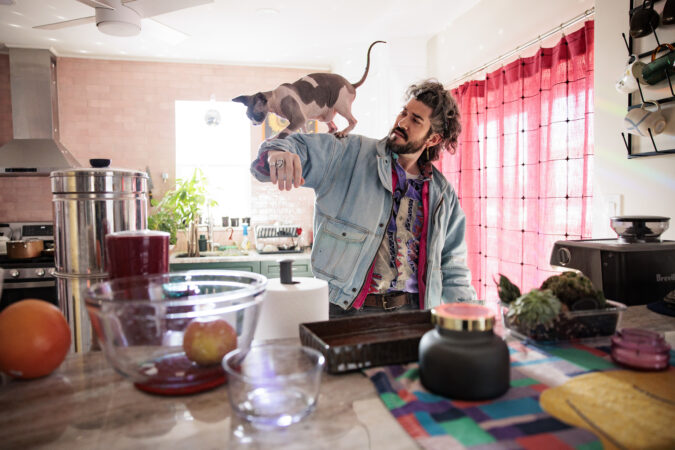
“I love people, and I’m not great with impulse control,” he explained. (Franki Jupiter is a stage name, but it’s also the one everyone in his life uses.)
After years exploring his sexuality, Jupiter became polyamorous. He met his second wife, G, in 2018 in California, and the two married in 2020, first on Zoom during COVID lockdown and then in a four-day Indian wedding with G’s family.
From the beginning, Jupiter and G have been in an open relationship, but they still consider each other primary partners.
“We have a house together. We’re building a life together. We have two cats together,” Jupiter said. “When you’re in any kind of relationship, it always has to be a conversation.”
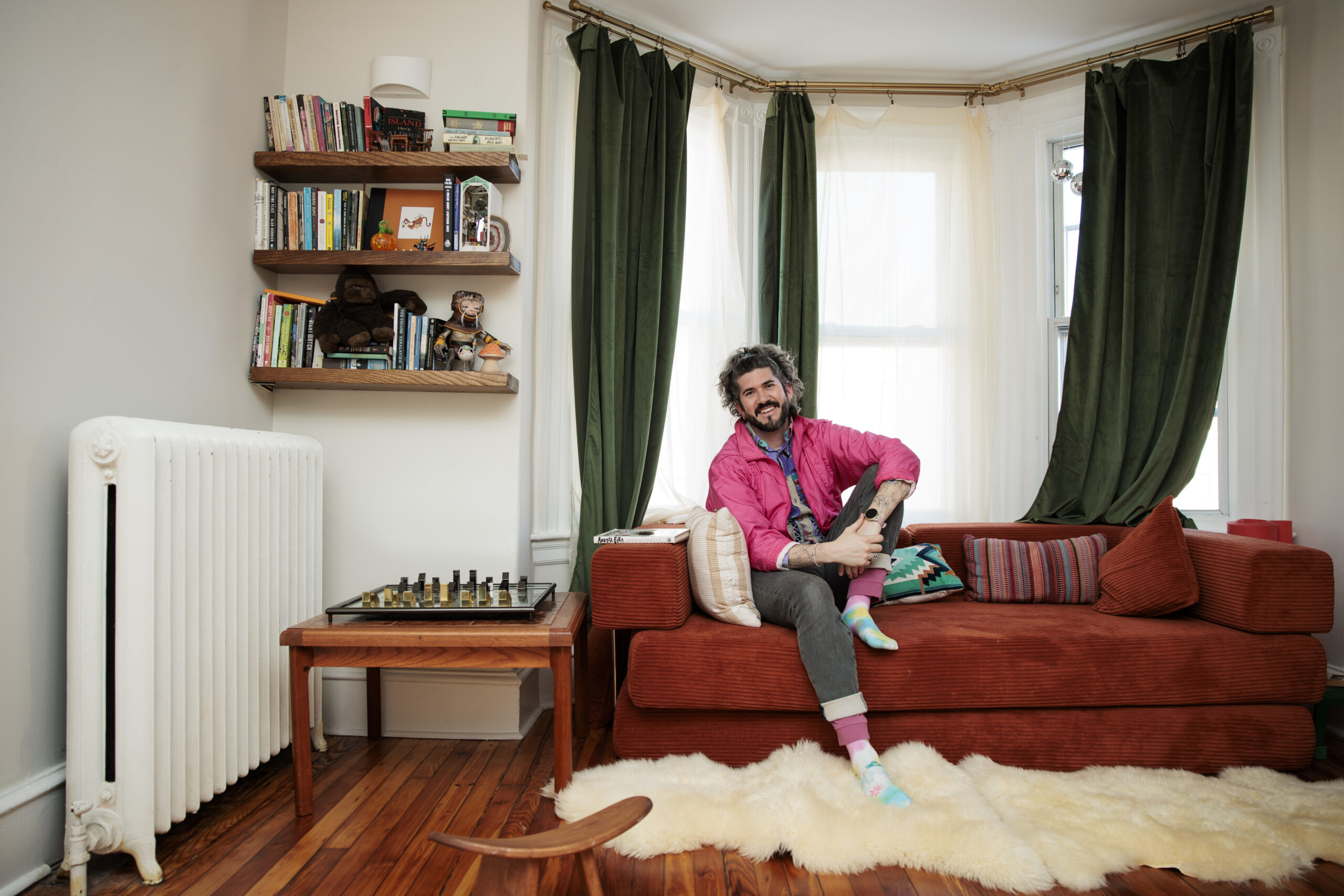
Jupiter in the home he shares with his wife.
Jupiter moved to Manayunk this summer alongside G and his girlfriend of four years, A, who lives a 10-minute walk away. (The Inquirer is referring to his partners by their first initials because they requested privacy.)
He works as a relationship and career coach, and is a singer-songwriter trying to put together a band.
The following, as told to Zoe Greenberg, has been edited for length and clarity.
On being the son of a preacher, and queer
My life partnership, first and foremost, was supposed to be with our Lord and Savior, Jesus Christ. After that, it was supposed to be with one person who you meet and then marry way too early because you’re both eager to have your first intimate relations.
Since I was born, I was queer. I was always putting on my sister’s and my mom’s clothes. There were boys at school that I thought were really cute. I was attracted to drag queens and trans people. I was told very explicitly by my parents and everyone in the church that was not OK.
On having sex before marriage, though he wasn’t supposed to
You’re a 13-year-old boy, and you’re like, “Damn, this is all I can think about. I’m supposed to just give this over to God and actually not think about it?” It just felt less and less biologically possible.
It also messed with my head, because it meant that every person I dated, I wondered, How do I make this person my spouse?
By the time I was 18, I finally had a girlfriend where I could genuinely see us being together forever, which in hindsight is crazy. But I could see it strongly enough that I thought we could probably have sex. And so that was when I decided, All right. This is OK for me.
Having sex as a teenager would not have been in the top 50 things I did that surprised my parents. There was a little bit of a “Don’t Ask, Don’t Tell” policy.
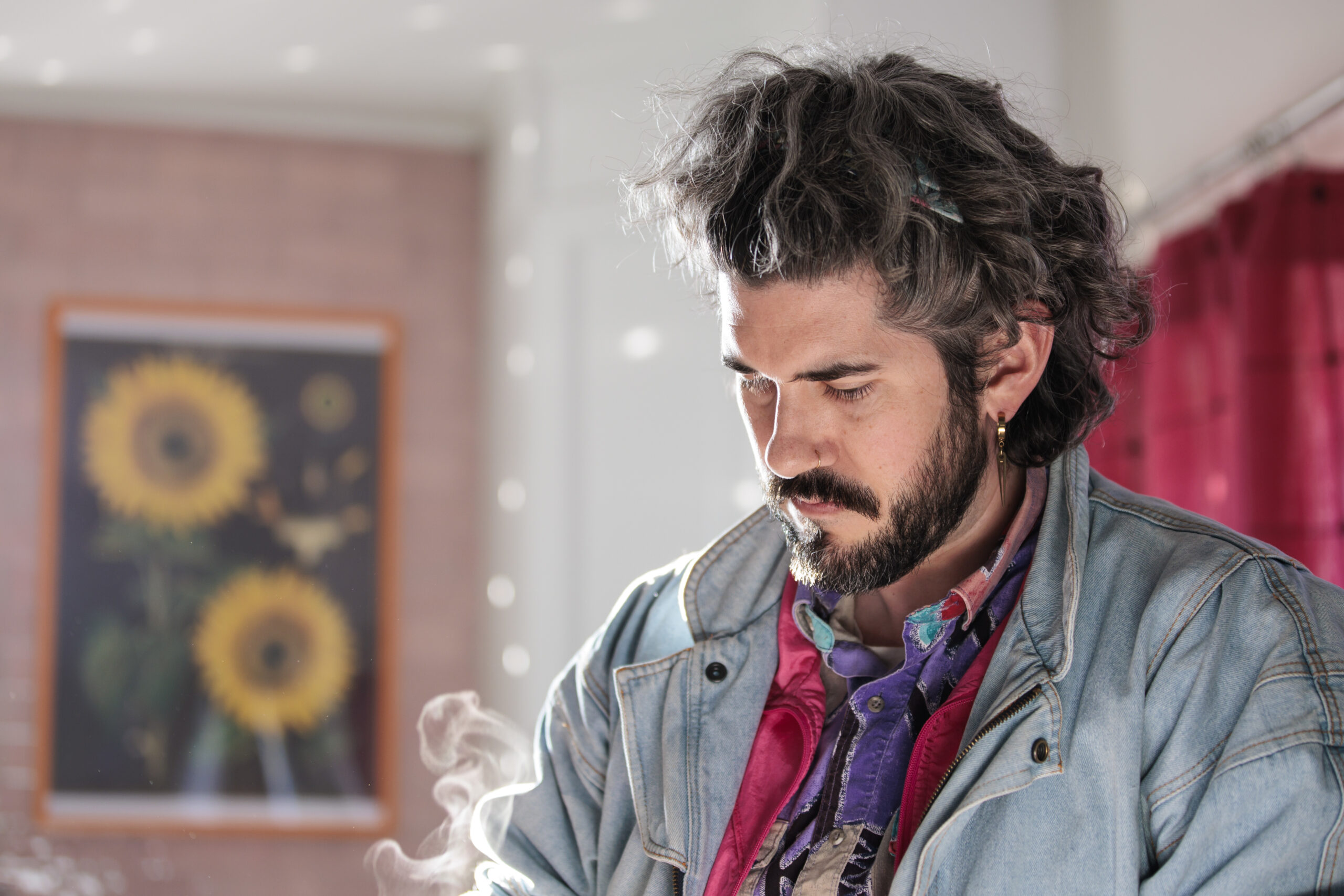
Franki Jupiter makes matcha at home.
On becoming ‘feral’ after leaving home
When I got to college, I went fully feral. I dropped out of school and joined a band. I started taking acid all the time, and moved to Rome briefly and studied photography, fell in love there.
The parts of me that had been repressed for so long all came a bit too much to a head.
After a few years I decided to dial it back and see what I was really looking for. I met someone who ended up being my first wife. She was wonderful and we had a lot of chemistry. We knew that the relationship might not stay steady, but instead of honoring that, we got married.
On discovering polyamory
We sold our car, bought a van, and drove out to California. Within a year of being there, we were separated.
One of the things I realized on the heels of our split was I’m really not a one partner kind of person.
Initially I thought maybe I’d just have to be single forever. Then I read a lot of Reddit threads on people with multiple partners. I read some of the Polyamory 101 hits: The Ethical Slut, Sex at Dawn, Polysecure. I knew lots of people in the Bay Area who were polyamorous.
My whole life, I’ve loved people so much that the idea of not being in some relationship was crazy to me. But I knew that if I was going to be in relationships, they were going to be open.
On meeting G, the woman who would become his second wife
We met for dinner and it was great. One of the first things she asked me was, “Are you gay?” I was like, “I’m not not gay. But no, I’m not gay. I’m open for whatever.”
We went back to her place, had a one-night stand, and didn’t expect anything after that. But we kept coming back. There was this unspoken sense that even if we never see each other again, this has been excellent.
On forgetting to tell G he was still married
I was still legally married to my first wife. I had told G from the beginning, “I’m going to be seeing other people, and I actually don’t want to have a monogamous relationship, ever.” I had also been dating other people concurrently and had told everyone, “By the way, I am technically still married and we’re in the process of getting a divorce.”
I guess I neglected to say it to G.
A few months in, we were at her house and she was cooking dinner. I said something like, “I’d love for us to get together again next week, I just gotta wrap some stuff up with my wife.” She was like, “You gotta what?”
I said, “I gotta wrap some stuff up with my wife.” She said, “What are you talking about?”
I said, “Oh my God, did I not tell you?” She said, “No, you did not.”
I asked if she wanted me to leave and she said she didn’t think so. I asked if she wanted me to rub her feet and she said that would be OK.
After that, she said something along the lines of, “It’s OK. It doesn’t seem like this is something you meant to hide from me. I think we can figure out how to move on from here.”
On marrying G
With G having an Indian passport, our scope as a couple was extremely limited. I could see ways in which marrying her was extremely beneficial for both of us, but definitely for her, because she’d be able to move around much more freely.
Honestly, it felt a little bit like what marriage used to be way back in the day. It wasn’t strictly a love marriage.
She actually proposed to me. We went up to the border of Oregon and California and took a bunch of acid. She took a ring off me and put it back on and said, “Wanna get married?”
Franki Jupiter shows off the disco ball decor in his first floor bathroom.
On meeting his girlfriend, A
Our first date was at a historical gay bar in Berkeley. I told A from the get-go, “I have a wife and my wife is going to be a big part of my life.”
She moved to Philadelphia a little before G and I did this summer. A and I see each other weekly, we take vacations sometimes. As far as I’m concerned, and hopefully as far as she’s concerned, we have no intentions of not being together.
One of the reasons we moved to Manayunk specifically was because she was dating a guy who now lives down the street from me. When we came out to see Philadelphia, he gave us the lay of the land. He and I are still buds. She and him are not dating anymore.
On the relationship between his wife and his girlfriend
My wife and girlfriend have very different personalities. I wouldn’t see them being friends independently of me, like if they had met each other and struck up a conversation, I don’t know that they would necessarily have gone back for seconds. But there’s no bad blood there.
There is a finite amount of time, so I don’t foresee adding other long-term partners. But also, who knows?
This story is part of a new series about life partners across the Philadelphia area. See other stories in the series here and here.
If you want to share your story about who you’re navigating life with romantically or otherwise, write to lifepartners@inquirer.com. We won’t publish anything without speaking to you first.
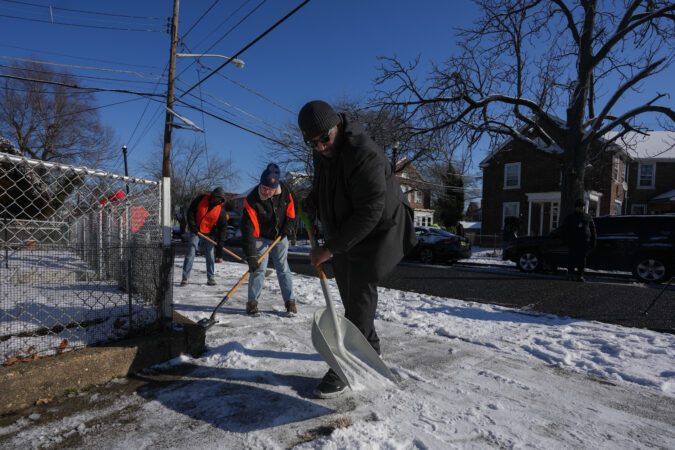
As soon as the snow stops falling, it’s time to get shoveling. In Philadelphia, you have six hours to clear the sidewalks in front of your home before facing potential fines, according to city rules.
For residents, whether you rent or own, here’s what you need to know.
Can I get fined for not shoveling my sidewalks?
Yes. Fines range from $50 to $300 for those who violate city snow-removal rules.
How much time do I have to clear my sidewalks?
You have six hours after the snow stops falling to clear your sidewalks.
From left: Philadelphia Zoo Garden service workers Joseph Mineer, of Fairmount, Naeem Price, of North Philadelphia, and David Wallace, of Southwest Philadelphia, clear snow from the sidewalks near the bus drop-offs in Philadelphia on Saturday, Jan. 17, 2026.
Who’s responsible for clearing the sidewalks? What if I’m a renter?
Whether you rent or own, you’re responsible for clearing a path, unless you live in a multifamily dwelling, like an apartment building or a building with more than one unit. In this case, the building owner or agent is responsible for snow removal.
What about businesses?
For businesses, clearing sidewalks and parking lots is the responsibility of the property owner, said Chris Young, communications manager for the Streets Department.
The city is responsible for clearing sidewalks at city facilities.
How wide do I need to make the path?
A path must be at least 3 feet wide, unless the width of the pavement from your property line to the curb is less than that. In that case, your path can be narrower but has to be at least one foot wide. Paths must be thoroughly cleared, and you can’t dump the snow and ice into the street. Pro tip: Push and clear snow toward your building.
You can use a commercial deicer to salt your sidewalk or driveway, and it’s a good idea to apply it as soon as you see a light layer of snow. If you don’t have a deicer, you can use kitty litter for temporary traction.
Can I report someone who hasn’t shoveled their sidewalk?
If you want to report a sidewalk that has not been cleared, call 311 or report the issue online through the 311 portal.
A Philadelphia Parks and Recreation plow truck heads along Reservoir Drive, Fairmount Park near Diamond Street, after overnight snowfall, Philadelphia, Wednesday morning Feb. 12, 2025.
What happens if I’m parked along a snow emergency route?
When a snowstorm hits, the city may declare a snow emergency. When that happens, the city plows 110 miles of snow emergency routes from curb to curb, which means vehicles and dumpsters within those areas must be moved or you face fines of up to $130. If you can’t get to your car, or if your car can’t be moved, it doesn’t matter. Your car will be towed and ticketed if you don’t move it.
You can view a list of snow emergency routes at bit.ly/3YSMeDm/.
If you live, own a business, or frequently park in these areas, you’re advised to plan ahead as winter weather approaches. Large signs reading “Snow Emergency Route” in white letters on a red background will be posted along the streets once a snow emergency is declared.
If your vehicle was towed from a snow emergency route, call 215-686-SNOW (7669) and be prepared to provide information to identify your vehicle.
What if I live in the suburbs?
If you live outside of the city, the rules vary by township. These include how quickly you have to remove snow and how wide the pathway must be.
In most towns, property owners and tenants can face fines if sidewalks aren’t cleared. Check with your township for specific details.
Chris Summers was born in South Philly and raised by her grandmother and her mother. She knew she was supposed to get married, but she never felt exactly like the people around her.
The main sticking point was sex: She didn’t want to have it, yet she still longed for romantic companionship.
“I really crave connection and spending time with somebody. I would be happy to spend a romantic weekend where we didn’t have to sleep together,” said Summers, 73. ”We would stay up talking and drinking tea and drawing and reading to each other.”
Summers married Fred, whom The Inquirer is referring to by his first name to protect his privacy, in 1975. The two had sex throughout their marriage, because Summers figured that was what a wife was supposed to do, but she never cared about it. They divorced in 1980 after Fred had a series of affairs, she said.
She continued to date men, all the while wondering if she might be a lesbian. Above all, she was attracted to people’s minds; she wanted a connection that had nothing to do with the “groping, kissing, fumbling, and activity that led to orgasms,” as she described it.
“At that time, there was no vocabulary for that. There was no saying: Sex does not interest me at all. Sex is not part of my reality,” she said. It wasn’t until the 2010s that she began reading about asexuality — the term for people who do not experience sexual attraction.
About 1.7% of lesbian, gay, or bisexual adults identify as asexual, according to the Williams Institute, a research center focused on sexual orientation and gender identity at UCLA. The vast majority are young, under 27; a Williams Institute scholar noted that asexuality is an “emerging identity,” and probably likely to become more widespread in the future.
Summers, who describes herself as neuroatypical, now lives with her two cats in Wissahickon. She has posted personal ads on Craigslist and forums for asexual people, but at this point has mostly resigned herself to being alone.
The following, as told to Zoe Greenberg, has been edited for length and clarity.
On meeting her husband
I put an ad in the personals in 1972. I was definitely hoping for romance, but also I was just looking for somebody to hang out and smoke dope with. Fred answered the ad, and he showed up at my house on his Honda 350 motorcycle. He was kind of like my knight in shining armor. We dated for a few months, and then I moved in with him.
On a less-than-romantic proposal
There was no real romance involved in getting married. We were living in West Philly, and I was setting the table for dinner. He came into the kitchen and said, “What do you think about getting married?” I hadn’t really thought about it at the time, and I just said, “Yeah, OK, that’s a cool idea.” I didn’t realize that was a proposal. He said, “I’ll call my parents and let them know we’re going to get married.” I thought, This is what it’s like?
Fred’s a Libra, and he likes to be doing what other people are doing. Friends and people in our age group were getting married. I guess he thought, Everybody else is doing this. So this should be something that we’re doing.
On her mother offering her husband-to-be cash to marry her
Fred and I had been married for several months, and we were having dinner one night. I was complaining about my mother; I always had a troubled relationship with her.
He said, “Did you know that your mother offered me money to marry you?” I thought he was kidding. I said, “What did she offer?” He said, “$1,000.” I said, “Did you take it?” And he said, “Of course not.”
I was horrified. I was raised by my mother to think I better get married, because that way I would have somebody to take care of me. She didn’t believe I could navigate life on my own. I think that on some level, my mother meant well. She thought, I’m going to offer a guy money to marry my daughter, and that way I’ll feel that I’ve done my part.
Summers at home in Philadelphia this month.
On her husband’s (“pedestrian”) fantasies and her evolving sexuality
Fred was into fantasizing. One of his favorites was: you work in a massage parlor, and you’re really a hooker. I like playing, and I like fantasy and dressing up, and I just thought that was so pedestrian. I mean, if he had said, “Let’s dress up like aliens,” I would have thought, This could be fun.
I still thought that it was quite possible that I was a lesbian. I liked looking at women, I found women attractive. When I was in 8th grade, I had a serious crush on my best friend. But in a working-class, blue-collar family, it was not something that you talked about.
On her husband’s infidelities
I thought we were happy. But Fred was a philanderer. He always had a little something on the side, and one of his big things that he really enjoyed doing was confessing his sins later.
For our first wedding anniversary, we saved money so we could take our honeymoon, and we went all the way up through the Eastern Seaboard.
We were at a lovely restaurant having a nice meal. Fred leaned over and said, “Um, there’s something I have to tell you.” I thought, Oh, God, no.
I knew he was going to confess something, and he told me that he had been having an affair with the woman who was our matron of honor. I said, “Why did you have to tell me this on our wedding anniversary?”
On life after divorce and discovering asexuality
I initiated the divorce in 1980 because I was tired of Fred not being faithful. I made sure that he was served at work with the divorce papers, to embarrass him.
After that, I was in California and I was looking for a partner. But I was not looking for somebody to sleep with. Sex to me is like having anchovies — yeah, I suppose I could, but I’d really rather not.
I was always attracted to people who were very intelligent and on the quirky side. For me, it was never about: I want to get in their pants. It was more like, I want to get in their brain.
In the last 10 years, I was trying to figure out, what is different about me? I started seeing things about asexuality. It made me feel like less of a freak, realizing: OK, this me. This is where I fit.
On searching for love but not sex
I’d always been homesick for Philadelphia, and returned in 2015.
At one point I was part of a now-defunct Meetup group for alternative sexualities. I was an old lady in the midst of these 20- and 30-year-olds. They were very dear, they were very accepting. But I was not really considered dating material due to my age.
Since I’ve been back, I have not really had much of a romantic life. I dated a few guys, a few women. But when you say “I really don’t want to have sex with you” — there’s no nice way to say that.
This story is part of a series about life partners across the Philadelphia area. See other stories in the series here and here.
If you want to share your story about who you’re navigating life with romantically or otherwise, write to lifepartners@inquirer.com. We won’t publish anything without speaking to you first.
The Rachels met each other when they were 5 and 6 years old, and they met Lizzy Seitel — who would come to be known as one of the Rachels despite her name — in middle school.
They all lived in the D.C. area, and one weekend they took part in a retreat with Cheder, a progressive Jewish community in the area. In Seitel’s recollection, they listened to Ani DiFranco, went skinny-dipping, and talked about their fears.
“It was just a really crazy, beautiful, life-affirming teenage moment,” Seitel, now 38, said.
It also marked the beginning of a very long friendship.
Soon after, Rachel (Luban), Rachel (Neuschatz), and Seitel began celebrating winter solstice together with a witchy ritual drawn from a pagan book. In the quarter-century since, they’ve never missed the solstice.
Rachel Luban (from left), Lizzy Seitel, and Rachel Neuschatz, pictured in college in 2009.
The Rachels went to the same college; Lizzy went elsewhere.Then, after living apart for some years in their 20s, they decided to settle down, together. By that point, Seitel had married Serge Levin(he grew up in a communal house in Rostov-on-Don, Russia, and was game for an alternative arrangement) and was pregnant with their first child.
In 2022 the four bought a giant old stone house in Mount Airy, where they now live communally. They have a shared bank account for the mortgage, house maintenance, and utilities, along with a shared backyard, basement, porch, and Google calendar.
The Rachels, who both have romantic partners living elsewhere, coparent a dog. Seitel and Levin’s two young children call the Rachels Aunt Lu and Aunt Nu.
The following, as told to Zoe Greenberg in separate interviews, has been edited for length and clarity and combined.
On meeting each other as kids
Rachel Neuschatz: I consider myself a red diaper baby [a term to describe the kids of radical/Communist parents].We lived in a single family home, but we were always involved with the Jewish community Cheder. Rachel Luban and I were in it starting from age 5.
Lizzy Seitel: I grew up in a pretty typical nuclear family, in most ways. But my parents always had an extra room, and they were always having people come stay with us. There was this feeling of people coming in and out, and I really loved that — just the idea of family being expansive.
It was always my fantasy to live in a boarding house.
Rachel Luban and Rachel Neuschatz at house dinner.
Rachel Luban: I feel like we raised each other, and those relationships have always felt as central to me as romantic relationships. Romantic partnership was part of my vision, but as a kid I would never dream about getting married.
On the ‘palace of dreams’
Lizzy Seitel: The Rachels and I always talked about creating a palace of dreams.
Rachel Neuschatz: We’d always talked very vaguely about living together. Of course, people loved to tell us it wouldn’t work, which is a very funny, ubiquitous response.
Rachel Luban: We had been talking for many years about wanting a more communal living situation, some kind of cohousing. We didn’t know exactly what that would look like.
Lizzy was very rooted in Philly. She’d been here for maybe 10 years, she was married, she was pregnant.
So both Rachel and I decided to move to Philly in 2019. We moved within a month of each other, and we were all living in separate apartments in South Philly.
On choosing to buy a house together
Lizzy Seitel: Having a kid, and then it being the pandemic, it was like, “Oh yeah, the nuclear family is bulls—. This is not how anyone should raise kids.”
Rachel Luban: Even though we were all living in South Philly, less than a half hour walk from each other, it felt like seeing each other had to be this big planned thing and you had to clear your night for it.
We wanted lower barriers to spending time together, and more incidental interactions.
On searching for the right place
Rachel Luban: There was really no road map, and that was very challenging. We didn’t have many people to talk to. There are all of these logistics to figure out: Should we become an LLC? We decided not to do that, because then we would need a commercial mortgage.
We wanted a single structure that had separate units. So everyone has their own door, everyone has their own kitchen, but there are some common spaces, and we’re all really close together.
We made our own basic boundaries about what percentage of the property each person would own and therefore, what percentage of the finances they would be responsible for.
Our runner-up was this former nunnery that was three huge conjoined West Philly rowhomes. It had one giant kitchen, 13 bathrooms, and a lot of institutional carpeting. It was kind of cool, but also just an insane space.
The place we eventually found felt like it fell from heaven, because nothing else came close.
Rachel Luban, house friend Fadi Awadalla, and Serge Levin share a moment in the kitchen.
On committing
Lizzy Seitel: I knew that these are the people that are the most committed to me, besides Serge. I know we can fight and that we’re always gonna want to come back together. There’s no question of, is this friendship gonna last? We’re gonna make it last.
Rachel Luban: A lot of people, including lawyers, told us not to do this. They were like, “You intertwine your lives, and then somebody has a falling out, or somebody wants to move, and then you’re in a mess.”
In a certain way, I think it required the kind of psychological commitment that people make when they get married, where they’re throwing their chips in together. Knowing that if something happens, it could be really messy.
We decided we trust each other enough to think that if something changes, everyone will act with good faith.
On their friendships now
Rachel Luban: You get to know people in a different way, and your fates are more tied together. We had to replace our entire heating system, which is actually three different heating systems. There’s a range of different feelings about spending money and what kind of upkeep the house needs. Even whether we should mow the lawn was a discussion that we had to have.
Lizzy Seitel: We might not live in this house or in this arrangement for every year until we die, but we’re thinking that far ahead — about aging and wanting to be together in this life. That feels like a commitment to each other’s future.
Rachel Neuschatz: Probably I will not formally parent. Maybe it’ll still happen, but that’s not on my bucket list. Lizzy’s kids are like my niblings — nieces and nephews.
On telling other people:
Rachel Luban: Most people are like, “I’m jealous. I want to do that.” Then a minority of people are like, “That’s my personal hell.”
Lizzy Seitel: I feel like there’s this thing of people not knowing that they’re allowed to commit to their friends, or have their friends commit to them.
Rachel Neuschatz: I cap myself from gushing too much, because I don’t want to be a jerk. But yeah, it’s a goddamn paradise that we’ve made ourselves.
This is part of an occasional series about life partners across the Philadelphia area. If you want to share your story about who you’re navigating life with romantically or otherwise, write to lifepartners@inquirer.com. We won’t publish anything without speaking to you first.
Susanna Nolt grew up in Ephrata, the eighth in a family of 12 kids. They were Old Order Mennonites and lived similarly to the Amish, though Nolt said her community pushed back against the comparison: “Our buggies are black! The Amish buggies are gray!”
There weren’t arranged marriages, but Nolt knew what was expected: Around age 18, she could begin dating a young man who was baptized in the Church. After marrying, she would raise her own large family within the Old Order Mennonite community, just as her parents and grandparents and great-grandparents had done. A family tree Nolt made when she was 16 went 14 generations back, featuring almost all Mennonites.
When Nolt was 27, she had what she described as a “spiritual rebirth” and decided to leave. She was excommunicated and kicked out of her family’s home.
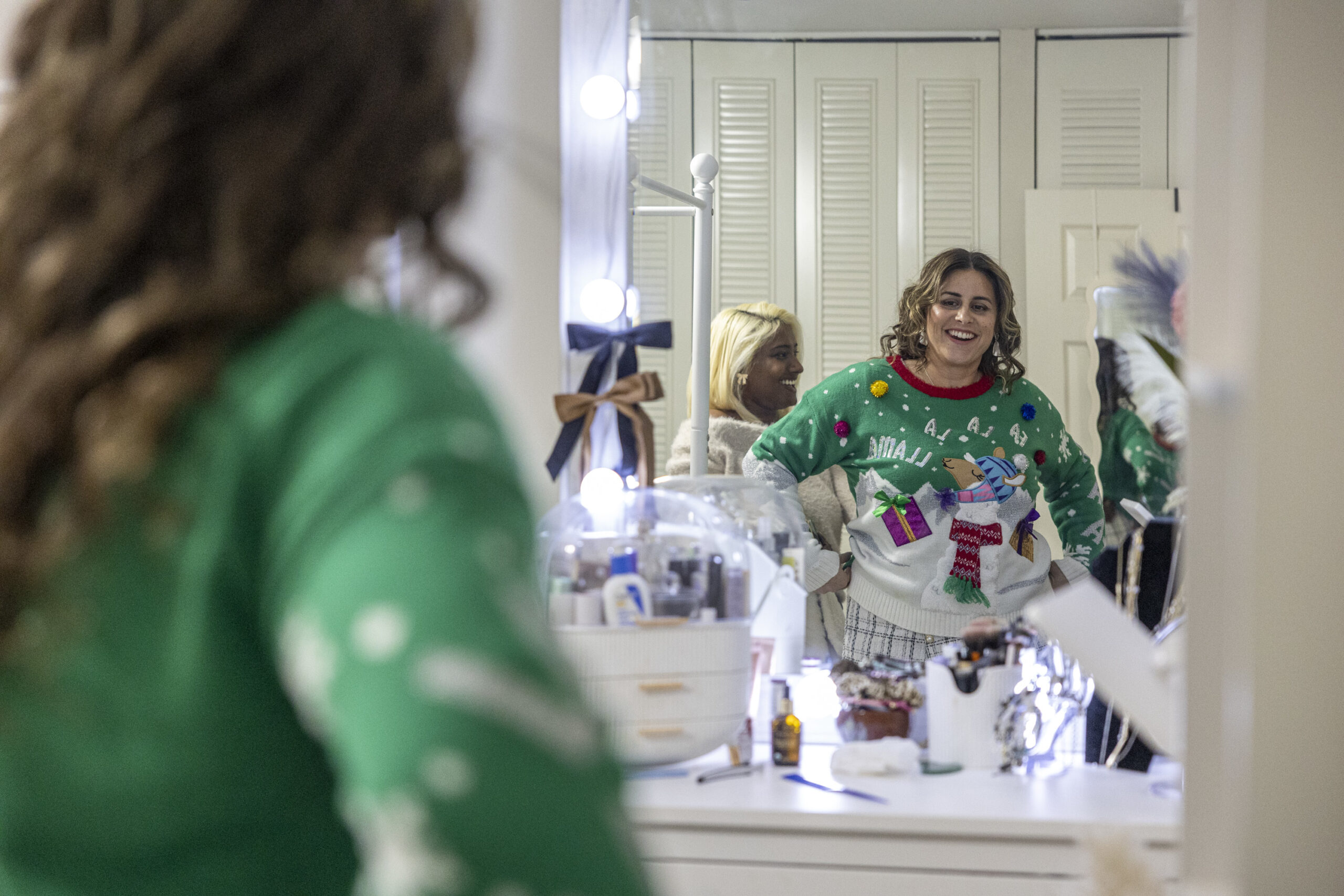
Nolt checks out her Christmas “ugly sweater” before the event.
After a few years of living in Lancaster and nannying in Reading, she moved to Roxborough.
Now 39, Nolt works as a nanny, drives for Lyft, and is earning an online master’s degree in art education from Liberty University. She lives by herself, and is figuring out what romantic partnership might look like in her new future.
The following, as told to Zoe Greenberg, has been edited for length and clarity.
On growing up in a different world
We knew the Church’s rules better than we knew the Bible. They were read to us every half year, the day before Communion: how long the dresses need to be, how big the head coverings need to be.
You didn’t have to work hard to make friends. You had your neighbors, the girls from church. You would go to school in the one-room classroom. We only went till eighth grade; we were prohibited from going to high school or college.
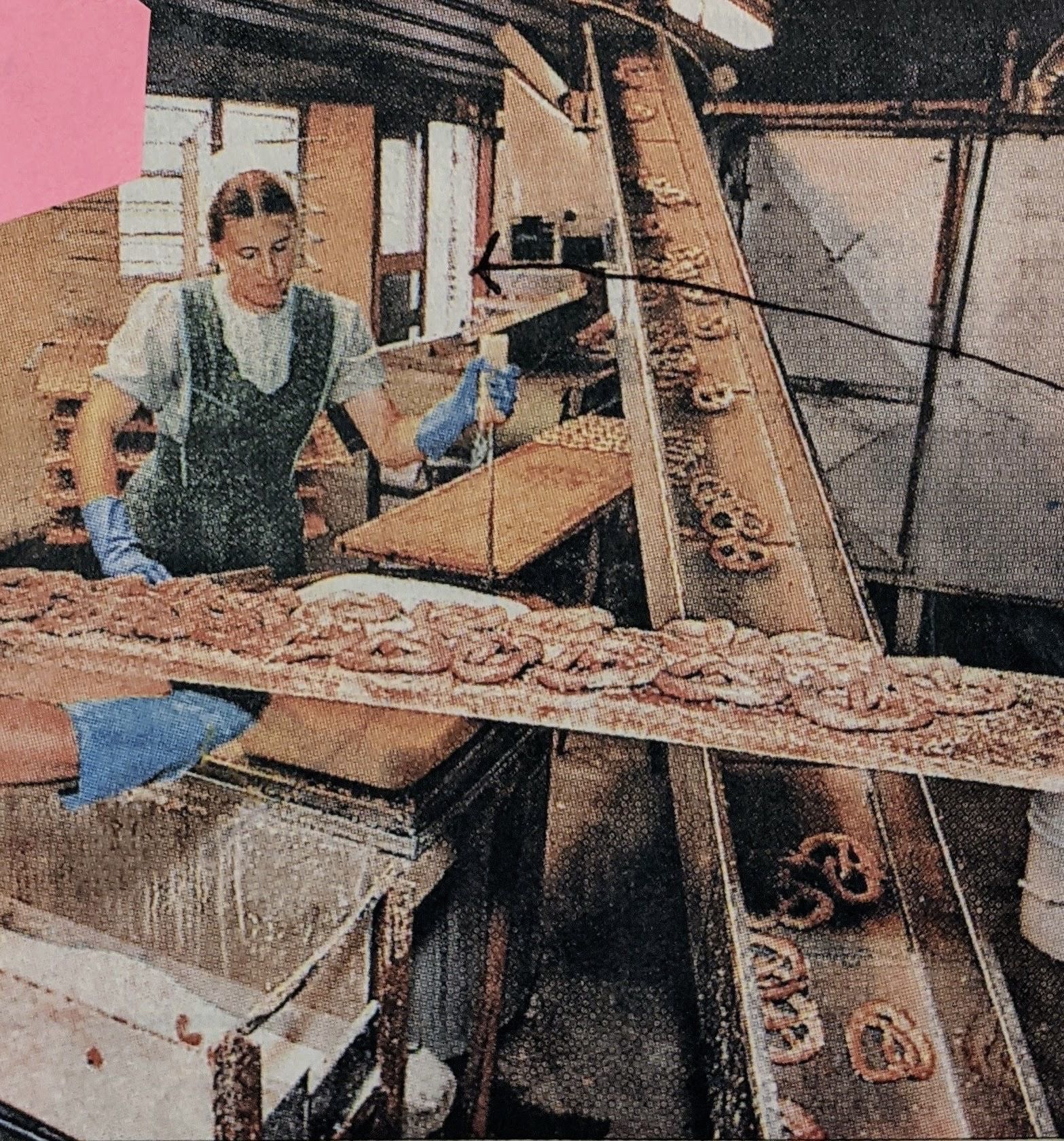
The earliest photo that Nolt has of herself is this newspaper clipping that shows her working at Uncle Henry’s Pretzel Bakery in Mohnton, Pa., when she was 19.
My mom was, obviously, a stay-at-home mom. We did all our cooking, canning, freezing, sewing, baking, gardening ourselves. So that was a full-time job for a mom. We had a ginormous garden.
My dad was a leather worker. He made harness parts for the horses. He was a deacon in the Church, so he was sometimes pretty busy with that, which made our income especially low, because positions in the Church do not pay.
On Sunday nights in the ‘dating parlor’
Young people were pretty much allowed to choose who they wanted to date, with the expectation that you date only someone who’s a baptized member of the Church, to ensure that you can build a good Mennonite family.
We had Sunday night dates, usually five-hour dates at the girls’ homes.
The house was very plain, no pictures. We had a dating parlor — it was the most decorated room of the house. The girls’ boyfriends would come over around seven o’clock on Sundays and stay ‘till 11 or 12.
The couple would sit on the couch and chat. Sometimes younger siblings would go in and play board games with them, or we’d play yard games like croquet or volleyball. Sometimes they would go on a walk in the woods. But most of the time they would spend in the parlor, getting to know each other and discussing their future.
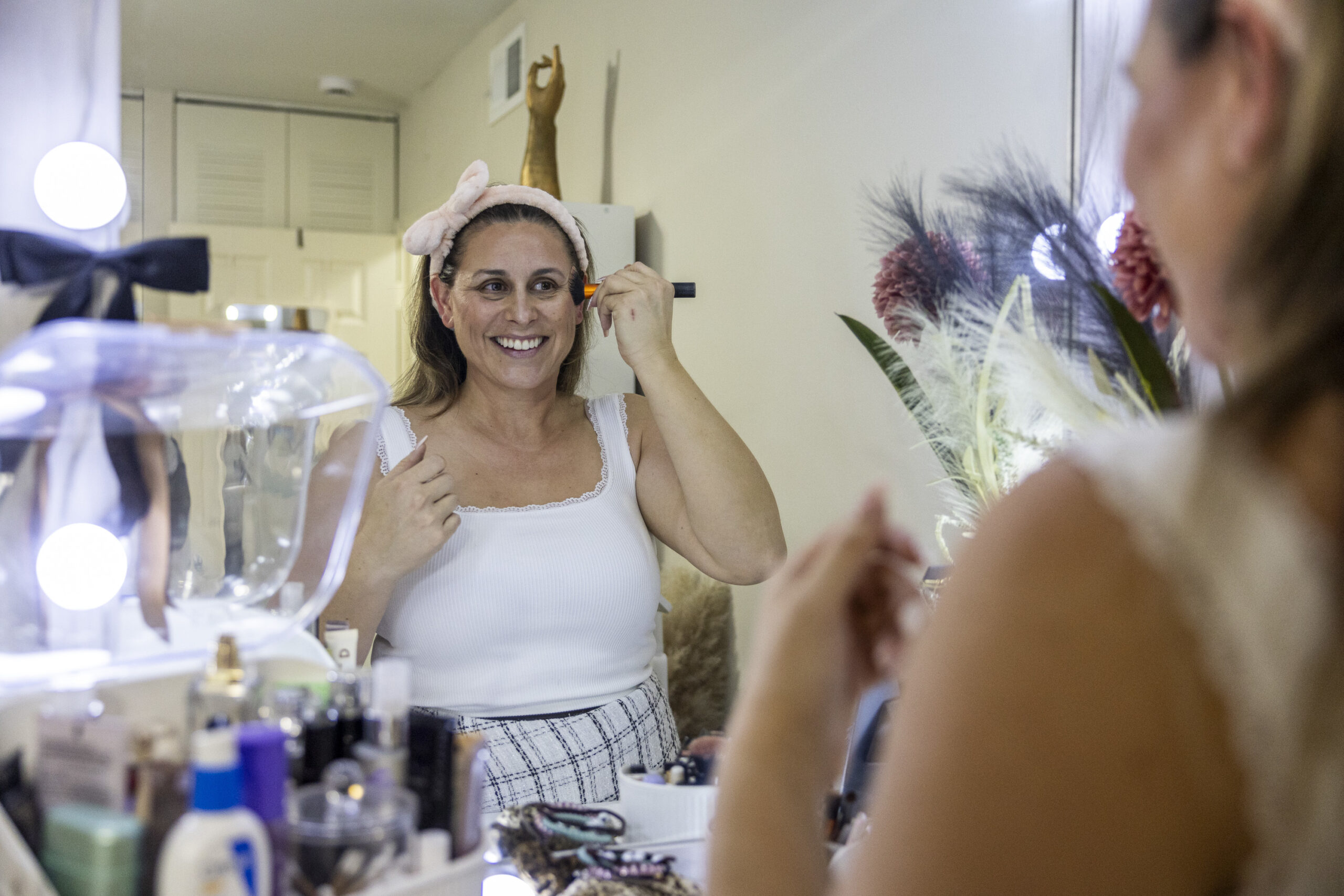
Nolt had never been to a speed dating event before but wanted to try it.
On ‘courting buggies’ and Rumspringa
Sometimes the boys liked to decorate their buggies, to make them courting buggies. They would have a fancy varnished cabinet in the front, and maybe some dice or feathers hanging, and a nice afghan blanket or some kind of throw over the feet, because they wanted to impress their girls. They’d put reflectors on the buggy and some stripes, usually coordinating with the interior of the buggy.
In the outside world, I’ve learned they see Rumspringa as this year where you go out and experiment with the outside world, but that’s not really what it was to us. Rumspringa was just youth group, hanging out with our friends from church on Saturday nights.
Often it was hymn singing, and then afterward we would have a snack and play volleyball. There was usually a dance. We weren’t allowed to listen to music, so the dance itself was often kind of boring, because dance and music kind of need each other.
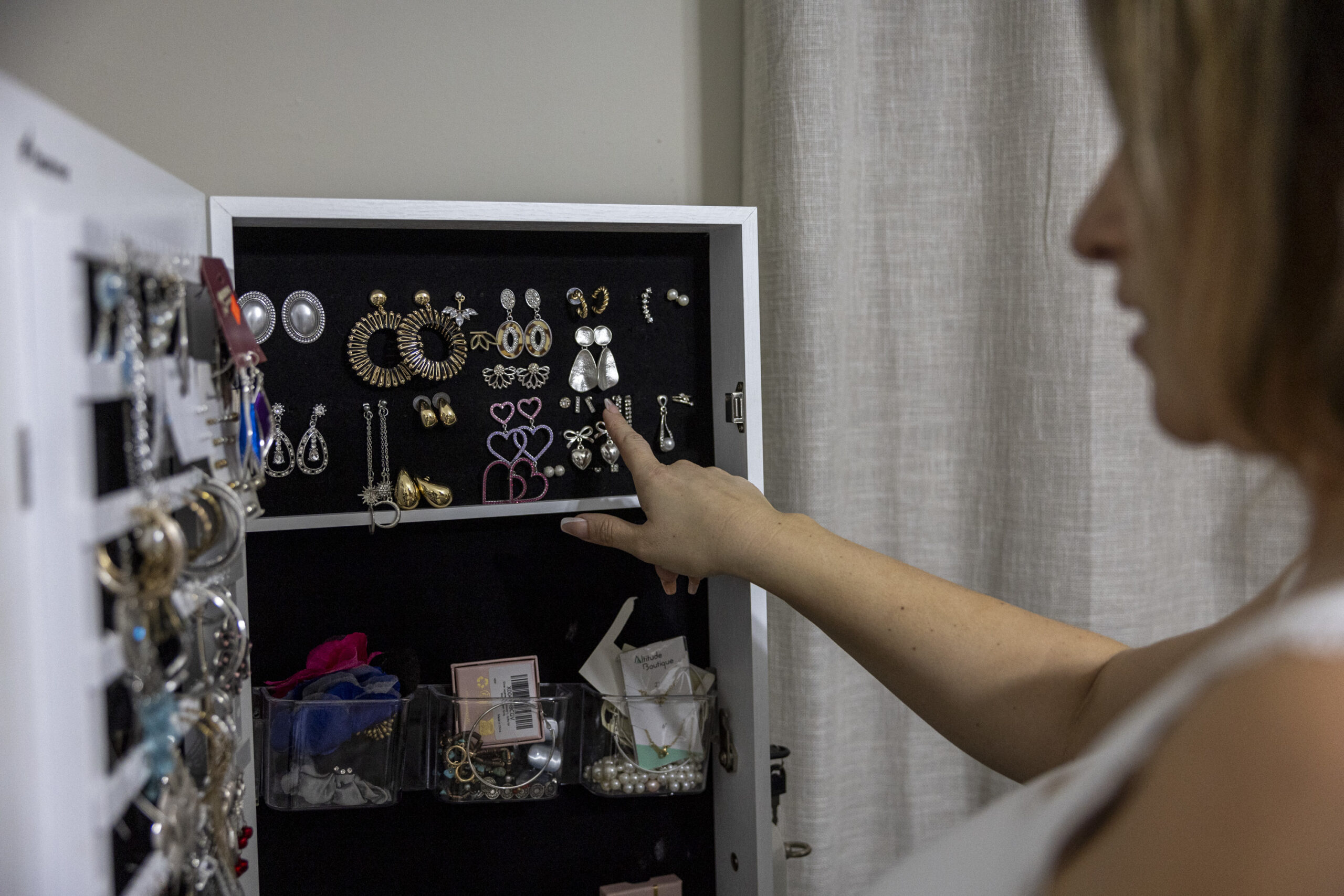
Nolt consulted her friend on which earrings she should wear.
I didn’t date much. In my time, guys didn’t really ask as easily, and the girls had no way of playing into it. You just had to wait until a guy would ask you. That felt very constricting to me.
Only about 50% of my friends were dating, if that. My mom especially, she had no problem with me being single.
Our weddings would happen on Tuesdays or Thursdays at the bride’s house. The bride’s family was responsible for hosting the wedding, which was all day: eight o’clock in the morning to at least eight o’clock at night. I never knew weddings were that expensive, because the family just provided it.
On choosing to leave
Ever since I was 10 years old, I had questions. I wouldn’t ask my questions, because that would make you a troublemaker. Ironically, I was afraid that our rules weren’t strict enough. For example, we weren’t allowed to have cameras or pictures because that was considered a graven image or an idol. I always loved playing with dolls, and I started thinking, “Maybe dolls are graven images or idols.” And I became so obsessed and bothered.
I tried to settle down by getting baptized at 17. But I felt like something wasn’t right, something was missing.
Then, when I was 27, I was teaching out in Kansas for a completely different set of Mennonites. I started realizing that bringing my rules to their community did not help anything. Like, nobody wants more rules.
I had this moment of rebirth in which I realized that Jesus is not the same as being Mennonite and all these rules really have nothing to do with Jesus.
At first I kept it to myself. I didn’t actually get excommunicated and kicked out of my parents’ house until soon after I was 28.
On losing everything
I learned that leaving is a much, much bigger deal than I ever realized, because those relationships were basically severed. I lost all my friends. I lost everything I had ever known. I had no idea how to drive a car. When I finally was able to get a car, it was like, No, you can’t drive it, you have to get a title, you have to get it notarized, you have to get insurance.
In my experience, you just get a horse and a buggy and you go drive.
A year or two after I left, my mom said that they’d been talking about it, and they decided they still want to be family. I’m still seen as the black sheep, but basically if they invite the family, they’re going to invite me. I can visit them, but of course I have to wear a long skirt or dress.
It doesn’t feel like family. It’s kind of this emotional distance.
On assimilating to the ‘English’ world
I had been nannying and I was looking for my next position and all the good ones were in Philadelphia. I moved to Philly, not knowing anyone.
I have to learn how normal people think. I grew up with no music, no media, no TV. A lot of conversations make all kinds of references to singers, actors, movies, shows. It’s a lot of researching all the time to understand what people are talking about.
I was enjoying Christian music already and I wanted to branch out, but found it difficult to connect with the music since it was overwhelmingly new. I could never recognize songs playing in public areas — it just sounded like noise. Until one day I did recognize a song and I felt so connected and happy I got tears.
Nolt in her home in Roxborough, where she lives alone.
So one of the guys I dated would send me playlists of 12 songs every time I requested a new list. I specifically asked to focus on songs that you hear in restaurants, malls, offices, etc. He would send me a list and I listened until I was familiar with each song.
My previous employer composed a list of 50 classic movies from the ‘70s to the current day so I could watch and slowly begin to catch on to references. Over the holidays that year when I was lonely, I binge-watched all those movies.
I found acquaintances in Philly who taught me about football, patiently explaining how the game works. I’ve become an Eagles fan.
On dating and ghosting
Most of the people I dated, I met online. I’ve used Upward, which is a Christian dating app; I’ve used Match. Even though I’m 39, in many ways, I’m just starting my life.
There was a guy who was in the film business, and I said, “I grew up without any of this, and so I’ve always been curious, how do they create this effect?” He got so freaked out that that was my background, and he sent me a long text afterward like, “I think you’re a really wonderful girl, but we’re just not compatible.” And he quickly blocked me.
Dating is much more inconsistent than dating in the Old Order Mennonite community. You think you’re dating them, and then all of a sudden they’re like, “Oh, never mind.”
I don’t expect perfectly scheduled dates like we had back there, but just some sense of consistency.
Nolt headed to the church where the speed dating event was held.
There’s some pretty serious genetic diseases among my people because the gene pool is so small, so I’m really not interested in dating someone from my background. Another reason I’m not interested is that many of them do not really assimilate to the extent that I have.
I’ve taken a number of the people I’ve dated out to Lancaster. They met my parents, and some of them did really well. Others were more just glad when it was over.
I don’t hide my background, because it’s part of who I am. Sometimes I wish it wasn’t, but that doesn’t change the fact that it is.
If I have a long-term committed relationship, I’m going to need to have someone who can be OK with that.
This is the first in an occasional series about life partners across the Philadelphia area. If you want to share your story about who you’re navigating life with romantically, write to lifepartners@inquirer.com. We won’t publish anything without speaking to you first.