Author: Abraham Gutman

  • Trump administration doesn’t need to restore more President’s House exhibits for now, appeals court says

    Trump administration doesn’t need to restore more President’s House exhibits for now, appeals court says

    President Donald Trump’s administration won its first court victory in the President’s House case Friday afternoon, when a federal appeals judge paused the injunction ordering the restoration of the slavery exhibits to the site.

    Third Circuit Judge Thomas M. Hardiman, a George W. Bush appointee, overruled a district judge’s order just an hour before the government’s deadline to comply with the injunction.

    The National Park Service does not need to restore the exhibits for the the moment, the order said, but is enjoined from damaging the exhibits and required to take “all necessary steps” to ensure they are not harmed.

    The order further prohibits the federal government from making any other changes to the site, including setting up replacement exhibits, which the Department of Interior said would have been installed “in the coming days” if not for the injunction.

    “[The Department of Interior and National Park Service] are to preserve the status quo as to the President’s House as of the entry of this order,” Hardiman wrote.

    The order is not accompanied by an opinion or memorandum explaining which of the government’s arguments Hardiman found compelling.

    Hardiman’s ruling landed an hour before the deadline District Judge Cynthia M. Rufe set for the administration to restore the site to its condition before the Jan. 22 abrupt removal of the exhibits.

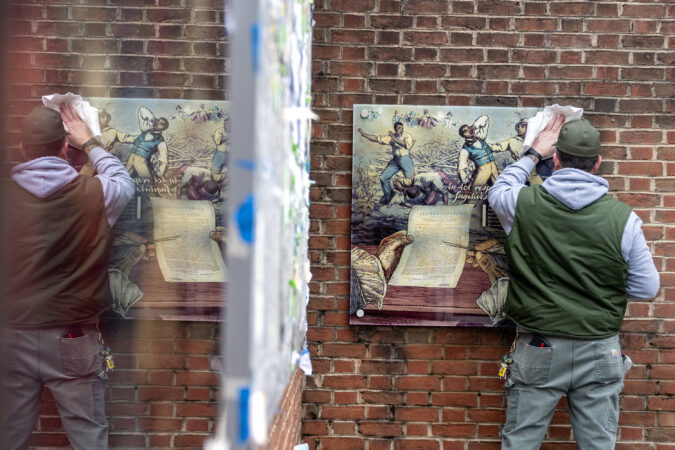
    Park Service staff began reinstalling exhibits Thursday.

    In a legal filing Friday, U.S. attorneys said National Park Service staff had begun planning to reinstall the exhibits once they received the Feb. 16 order to restore the site.

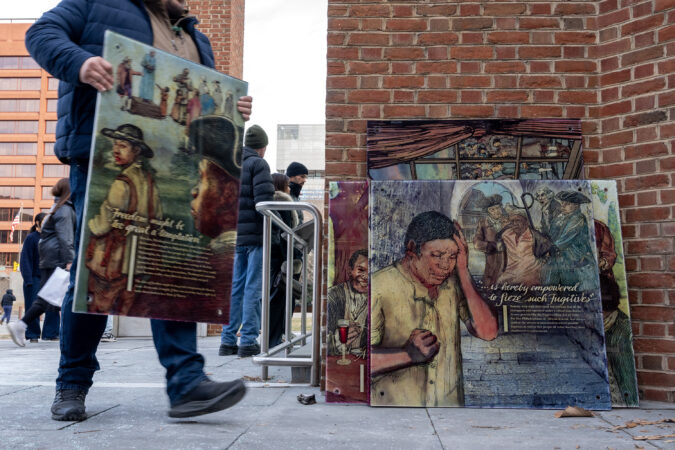
    On Thursday, 16 of 17 glass panels were reinstalled, with the remaining one needing repairs. Prior to the Third Circuit order, National Park Service employees on Friday restored panels around the site’s glass-enclosed archaeological dig, the wayside panel identifying the site, and four functioning video monitors, the federal government said.

    The federal government also had not reinstalled 13 metal panels, but was in the process of doing so prior to the stay, according to the filing.

    The city declined to comment on Hardiman’s order. The National Park Service did not immediately respond to a request for comment.

    The government argued to the Third Circuit that Rufe misunderstood the difference between the laws and agreements that govern the 55-acre Independence Hall National Historic Park and the stricter rules regarding Independence Hall National Historic Site, the city-owned block between Chestnut and Walnut Streets.

    The President’s House, on the corner of Sixth and Market Streets, sits on federal land and the law “imposes no restriction on the government’s removal of the President’s House exhibit,” the filing said.

    The city failed to demonstrate harm from the removal of the exhibits, the administration argued, because it has other avenues to promote the history of slavery in the President’s House.

    But an injunction forcing the restoration of the exhibits violates the federal government’s free-speech rights, the stay request argued.

    “It requires the display and operation of expressive exhibits — at a marquee national historic site in the run-up to the nation’s 250th anniversary — when the government has chosen not to display those exhibits,” the court filing said.

    The city responded to the request in a letter in which it expressed confusion about what the administration was asking for. After all, the government already began restoring the exhibits.

    “It is not clear whether the United States is asking the court for permission to re-remove the panels that were just reinstalled yesterday, or whether they are asking to be relieved of the duty to reinstall the remaining panels, or whether they are asking for more time to restore the remaining panels because today’s deadline is not feasible,” the city’s letter said.

    Either way, the city reiterated its opposition to a stay.

    Philadelphia’s lawsuit was the first in the nation challenging the removal of exhibits from national parks in accordance with Trump’s March executive order, which instructed the Interior Department to remove any content or displays that “inappropriately disparage Americans past or living.”

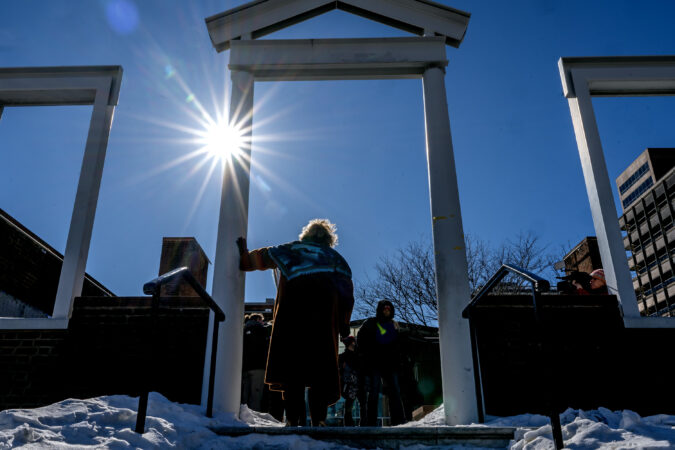
    Advocates celebrated the return of the exhibits commemorating the nine enslaved people who lived in George Washington’s house in a Thursday afternoon rally.

    The site will see no further changes for now. Hardiman placed the injunction appeal on an expedited track. With the current deadlines set by the judge, a ruling on the injunction is unlikely before May.
  • Judge gives Trump administration a deadline to restore President’s House exhibits

    Judge gives Trump administration a deadline to restore President’s House exhibits

    President Donald Trump’s administration now has a hard deadline to restore slavery exhibits to the President’s House.

    The Department of Interior and National Park Service must restore the President’s House to its condition before the exhibits were removed by 5 p.m. Friday, according to a new order from District Judge Cynthia M. Rufe. In a blistering 40-page opinion Monday, the judge had ordered the exhibits to be restored “immediately,” but without a specific time frame.

    Rufe wrote that the deadline follows the agencies’ “failure to comply” with the injunction’s instruction to take action “forthwith,” which is often defined in law to mean as soon as possible or within 24 hours.

    While the federal government appealed the injunction to the Third Circuit Court of Appeals, the judge noted, the Trump administration did not ask for a stay.

    “Absent a stay granted by this Court or the Third Circuit, this Court must enforce its own order,” Rufe wrote.

    The U.S. Attorney’s Office for the Eastern District of Pennsylvania did not respond to a request for comment. The city declined to comment.

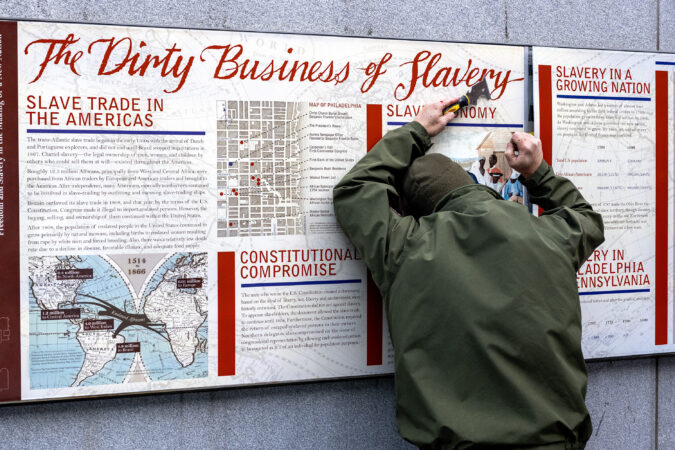
    The National Park Service last month removed exhibits telling the story of the nine enslaved people who lived in George Washington’s Philadelphia home. The city sued the federal government in turn, and following a tense hearing and the judge’s inspection of the exhibits and site, secured an injunction on Monday that required the federal agencies to restore the interpretive panels.

    National Park Service staff were at the President’s House site on Wednesday morning to hose down the walls, which are covered with protest signs in lieu of the exhibits, and place barricades around them.

    The National Park Service did not respond to questions about the activity.

    A spokesperson for the White House, Taylor Rogers, said in a statement Wednesday that the lawsuit brought by Philadelphia was “premature” because the removal of the exhibits from the President’s House and other national parks is not final.

    “The Department of the Interior is engaged in an ongoing review of our nation’s American history exhibits in accordance with the President’s executive order to eliminate corrosive ideology, restore sanity, and reinstate the truth,” Rogers said.

    Staff writer Fallon Roth contributed to this article.

  • Trump administration appeals judge’s ruling over President’s House slavery exhibits

    Trump administration appeals judge’s ruling over President’s House slavery exhibits

    The Trump administration has appealed a federal judge’s order requiring that the National Park Service restore all the slavery-related exhibits it abruptly removed last month from the President’s House Site in Center City.

    The U.S. attorneys representing the federal government argued previously that the White House has full discretion over the exhibits in national parks, an argument U.S. District Judge Cynthia M. Rufe called “dangerous” and “horrifying” during last month’s hearing.

    The notice of appeal to the U.S. Court of Appeals for the Third Circuit at this stage does not require a brief arguing what the government says the judge got wrong when she issued the injunction. But the Department of the Interior and the National Park Service said in a statement Tuesday that the agencies “disagree” with the injunction.

    “The National Park Service routinely updates exhibits across the park system to ensure historical accuracy and completeness,” the statement said. “If not for this unnecessary judicial intervention, updated interpretive materials providing a fuller account of the history of slavery at Independence Hall would have been installed in the coming days.”

    Neither agency responded to a request for more information on the plan for alternative panels. The White House did not respond to a request for comment.

    Rufe on Monday granted Philadelphia’s request for an injunction requiring the full restoration of exhibits removed from the President’s House on Jan. 22. She further enjoined the federal government from making any changes to the site without the agreement of the city.

    The panels that tell the stories of the nine enslaved African people who lived in President George Washington’s house must be displayed again swiftly, the judge said in her 40-page opinion.

    The order directs the agencies to comply “immediately” and “forthwith” but does not include a specific deadline.

    “Each person who visits the President’s House and does not learn of the realities of founding-era slavery receives a false account of this country’s history,” wrote Rufe, who was appointed by former President George W. Bush.

    In addition to the appeal, the federal government will need to ask for a stay on the order or risk not complying with Rufe’s injunction.

    But though the panels have not been restored, the ruling marked a victory for Mayor Cherelle L. Parker’s administration and the advocates who pushed to create the exhibit.

    Parker addressed the injunction in a video Tuesday celebrating the ruling as a “huge win for the people of this city and our country.”

    “This summer Philadelphia will lead a litany of Semiquincentennial celebrations in honor of America’s 250th birthday, and please know that we will do so with a great deal of pride,” Parker said. “A pride that comes from acknowledging all of our history, and all of our truth, no matter how painful it may be.”

    Philadelphia’s lawsuit was the first in the nation challenging the removal of exhibits from national parks in accordance with President Donald Trump’s March 2025 executive order, which instructed the Interior Department to remove any content or displays that “inappropriately disparage Americans past or living.”

    The federal government violated a 2006 cooperative agreement between the National Park Service and the city when it dismantled the exhibits without notice in what amounted to an unlawful “arbitrary and capricious” act, Philadelphia’s lawsuit said. Rufe found that the agreement is still binding.

    As the city’s litigation proceeds following the injunction, it is not the only effort to address changes to historic exhibits on federal parks.

    A lawsuit filed Tuesday by park conservation advocacy groups in Massachusetts federal court says that removals of the type that took place in Philadelphia violate “Congress’s clear instructions.”

    The National Parks Conservation Association’s lawsuit notes that in addition to the slavery signs removed from the President’s House, the Trump administration removed signs about climate change from Maine’s Acadia National Park and a creative exhibit about the women’s role in the history of Muir Woods National Park, among other examples.

    The suit asks a federal judge to order the Interior Department and National Park Service to “cease all unlawful efforts to remove up-to-date and accurate historical or scientific information from the national parks, and order that interpretive materials that have been removed pursuant to the unlawful Order be restored.”

  • Federal judge orders Trump administration to restore slavery exhibits to the President’s House

    Federal judge orders Trump administration to restore slavery exhibits to the President’s House

    A federal judge ordered President Donald Trump’s administration to restore the slavery exhibits that the National Park Service removed from the President’s House last month.

    U.S. District Judge Cynthia M. Rufe issued a ruling Monday requiring the federal government to “restore the President’s House Site to its physical status as of January 21, 2026,” which is the day before the exhibits were removed.

    The order does not give the government a deadline for the restoration of the site. It does require that the National Park Service take steps to maintain the site and ensure the safety of the exhibits, which memorialize the enslaved people who lived in George Washington’s Philadelphia home during his presidency. The exhibits were abruptly removed in January following months of scrutiny by the Trump administration.

    Rufe, a George W. Bush appointee, compares the federal government’s argument that it can unilaterally control the exhibits in national parks to the Ministry of Truth in George Orwell’s 1984, a novel about a dystopian totalitarian regime.

    “As if the Ministry of Truth in George Orwell’s 1984 now existed … this Court is now asked to determine whether the federal government has the power it claims — to dissemble and disassemble historical truths when it has some domain over historical facts,” Rufe wrote. “It does not.”

    Mayor Cherelle L. Parker’s administration filed a federal lawsuit against Interior Secretary Doug Burgum and acting National Park Service Director Jessica Bowron, and their respective agencies, the day the exhibits were dismantled. The complaint argued dismantling the exhibits was an “arbitrary and capricious” act that violated a 2006 cooperative agreement between the city and the federal government.

    The federal government has the option to appeal the judge’s order. The Interior Department and National Park Service did not immediately comment on the ruling, which fell on Presidents’ Day, a federal holiday. The U.S. Attorney’s Office for the Eastern District of Pennsylvania declined to comment.

    During a hearing last month, Rufe called the federal government’s argument that a president could unilaterally change the exhibits displayed in national parks “horrifying” and “dangerous.” She ordered the federal government to ensure the panels’ safekeeping after an inspection and a visit to the President’s House earlier this month.

    Monday’s ruling follows an updated injunction request from the city that asked for the full restoration of the site — not merely that the exhibits be maintained safely — and a brief from the federal government arguing the National Park Service has discretion over the exhibits and that the city’s lawsuit should be dismissed on procedural grounds.

    The federal government’s brief also argued there could be no irreparable harm from the removal of the exhibits because they are documented online and replacement panels would cost $20,000.

    But the judge found the city is likely to prove its case that the removal was unlawful, and the panels should be restored while the litigation continues.

    “If the President’s House is left dismembered throughout this dispute, so too is the history it recounts, and the City’s relationship to that history,” Rufe wrote.

    The judge also found that the cooperative agreement between Philadelphia and the National Park Service remains in “full force,” even though the contract is technically expired.

    Rufe’s memo named the nine enslaved Africans owned by Washington, and noted that two — Oney Judge and Hercules Posey — escaped. The removed displays recognize their struggles and the nation’s “progress away from the horrors of slavery,” the judge wrote.

    “Each person who visits the President’s House and does not learn of the realities of founding-era slavery receives a false account of this country’s history,” the judge wrote.

    The injunction does not resolve the underlying lawsuit, and is in effect for the duration of the litigation. In a January hearing, Rufe said she wouldn’t let the case drag into the summer, recognizing the 250th anniversary celebration being planned for Independence Mall.

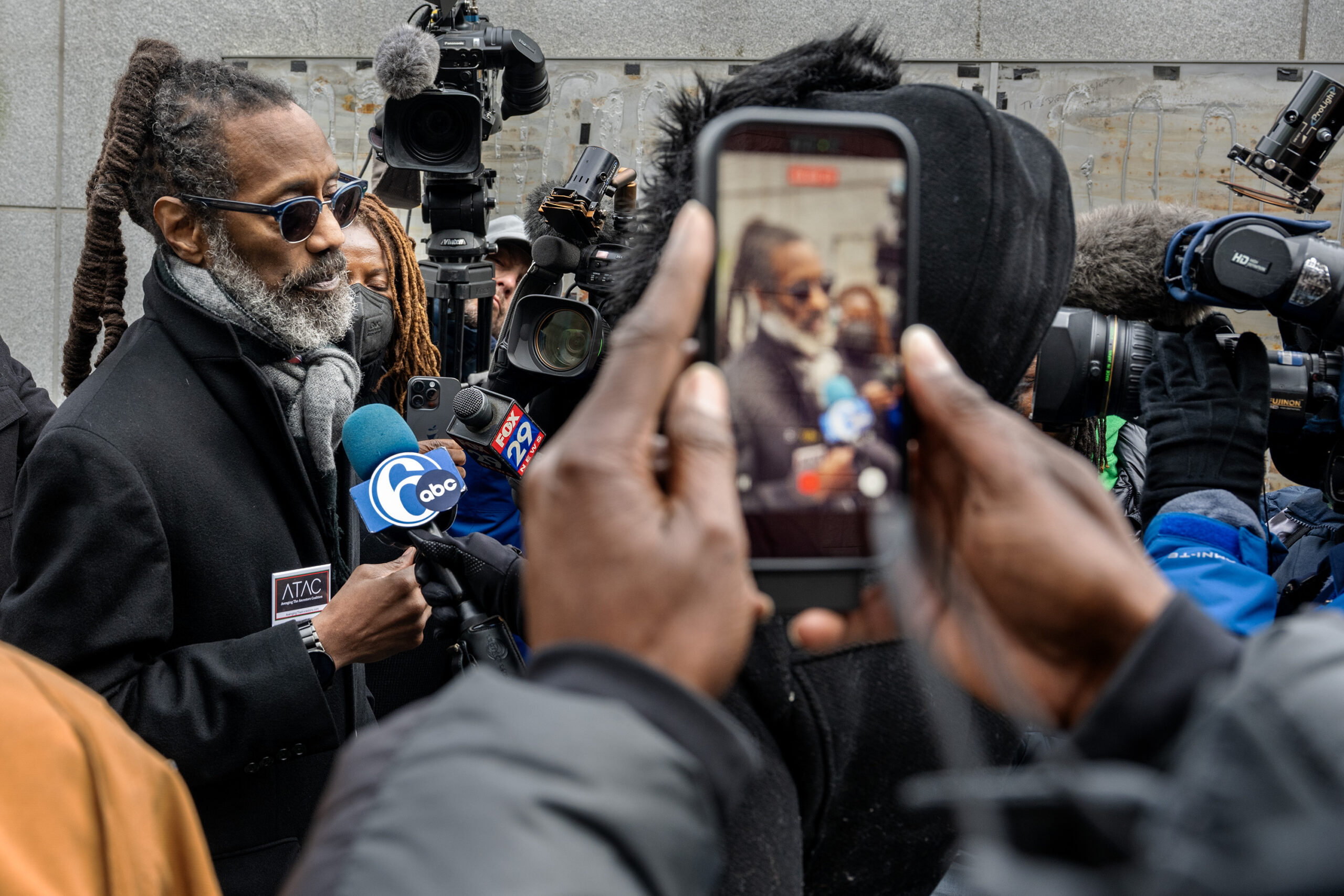
    Attorney Michael Coard, leader of the Avenging the Ancestors Coalition, speaks with the news media Monday after a federal judge ordered the Trump administration to restore the slavery exhibits that the National Park Service removed from the President’s House last month. The group was on the site for an annual gathering for a Presidents’ Day observance when they learned of the order.

    The timing of the ruling underscored its significance to the Philadelphians pushing for the exhibits’ return.

    Avenging the Ancestors Coalition, the main advocacy organization leading the fight to protect the President’s House, was less than an hour into its Presidents’ Day event at the site when leaders got wind of their victory.

    The group’s leaders, excited and completely in shock, congregated behind the site’s Memorial Wall to soak in the news before announcing it.

    Moments later, Michael Coard, an attorney and the coalition’s leader, emerged before the crowd of about 100 people and told them: “Thanks to you all, your presence and your activism, I have great news: We just won in federal court.”

    The crowd erupted in cheers and chants of “When we fight, we win!” and “We have won!”

    Coard told reporters there was “no other blessing that we could have gotten today.”

    The coalition has led dozens of rallies and town halls meant to energize the public in opposing the Trump administration’s ongoing scrutiny of the President’s House. The Black-led advocacy group helped develop the site in the early 2000s before it opened in 2010.

    Dana Carter, the group’s head organizer, said she was in disbelief when she heard about the ruling.

    “After we figured out that it really was the truth, I am just moved. My heart is overflowing with love for the judge who made the ruling, as well as the people who have been with us since the beginning … and also the people who have joined us in this fight to restore the President’s House,” Carter said.

    But the fight is not over, advocates said, with Coard expecting the Trump administration to appeal or ignore rulings.

    “This is a lawless administration. The people are going to have to take over to force them to do the right thing,” Coard said.

    The Trump administration’s attempt to alter the President’s House was part of a wider initiative to remove content from national parks that “inappropriately disparage Americans past or living,” following an executive order from Trump. For instance, Park Service employees removed signage about the mistreatment of Native Americans from the Grand Canyon.

    The fate of the President’s House exhibits was in limbo for months until they were removed by Park Service employees with wrenches and crowbars on Jan. 22. Meanwhile, advocacy groups and creatives behind the President’s House cultivated support for their cause to protect the site. Philadelphia City Council issued a resolution condemning the censorship of the exhibit.

    “Judge Cynthia Rufe made it clear that historical truth cannot be dismantled or rewritten, and that the federal government does not have the authority to erase or alter facts simply because it has control over a national site. … We can not let President Donald Trump whitewash African-American history. Black history is American history,” City Council President Kenyatta Johnson said in a statement Monday.

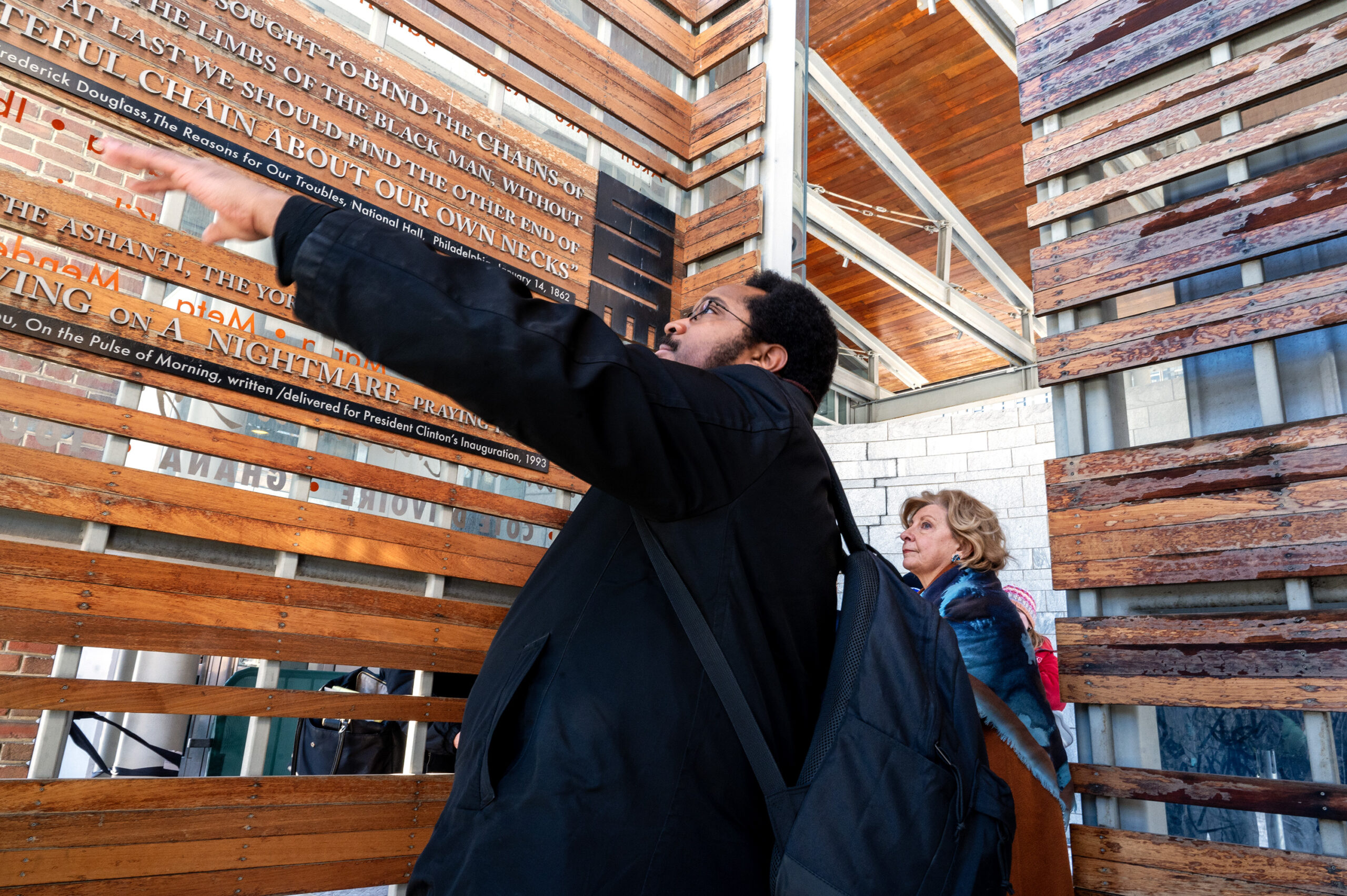
    Mijuel Johnson (left), a tour guide with The Black Journey: African-American Walking Tour of Philadelphia, leads Judge Cynthia Rufe (right) as she visits the President’s House in Independence National Historical Park on Feb. 2.

    Attendees at Monday’s event were invigorated by the ruling.

    Mijuel Johnson, a tour guide leader with the Black Journey who led Rufe through the site earlier this month, said he was “enjoying the moment for now” but then he would be back to work.

    “This is a great win for this movement,” Johnson said.

  • J&J’s baby powder caused a woman’s fatal cancer, a Philly jury finds, awarding her family $250,000

    J&J’s baby powder caused a woman’s fatal cancer, a Philly jury finds, awarding her family $250,000

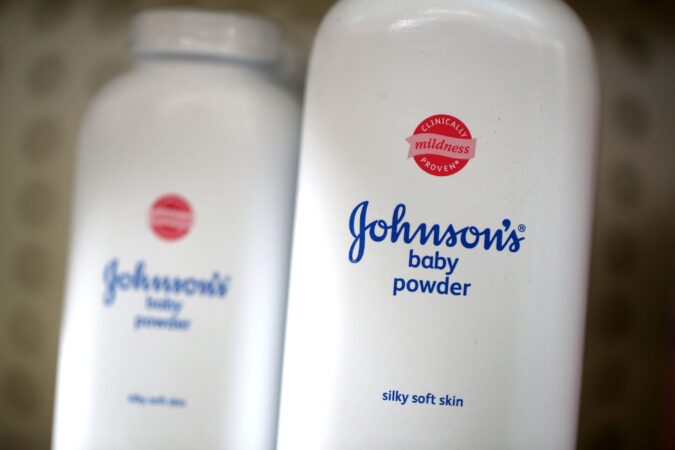
    A Philadelphia jury ordered pharmaceutical and cosmetics giant Johnson & Johnson to pay $250,000 to the family of a York County woman after finding the company’s baby powder product led her to develop cancer.

    Gayle Emerson sued Johnson & Johnson in 2019 as part of a nationwide wave of litigation accusing the company’s talc-based baby powder of causing ovarian cancer. Emerson, who was diagnosed with cancer in 2015, died at age 68, months after filing the complaint.

    The complaint accused the New Jersey-based company of selling a defective product and failing to warn about its risks.

    After a three-week trial, which Common Pleas Judge Sean F. Kennedy presided over, the jury began deliberating Tuesday afternoon and reached its verdict Friday around 2 p.m. During deliberations, jurors asked the judge questions that suggested they grappled with how strongly the evidence showed that external use of baby powder could allow a cancer-causing substance to reach the ovaries.

    The verdict was comprised of $50,000 in compensatory damages and $200,000 in punitive damages.

    “This token verdict reflects the jury’s appreciation that the claims were meritless and divorced from the science,” Erik Haas, Johnson & Johnson’s worldwide vice president of litigation, said in a statement.

    The company plans to appeal the verdict, Haas said.

    Johnson & Johnson specifically advertised the product for women, the suit says, stating on the bottle: “For you, use every day to help feel soft, fresh, and comfortable.”

    Studies have connected talc to ovarian cancer since the early 1970s, according to the complaint. The mineral is excavated from the mines that also contain asbestos, risking contamination from the cancer-causing substance.

    The Federal Drug Administration asked condom manufacturers in the 1990s to stop dusting their product with talc because of the risk to women.

    Johnson & Johnson stopped selling its talc-based baby powder in the United States and Canada in 2020.

    The company was aware of the research about the increased risk of cancer for women who use the powder on their genital area, the suit says, based on internal documents and public statements.

    “Gayle Emerson trusted Johnson & Johnson, and Johnson & Johnson betrayed that trust,” Leigh O’Dell, a Beasley Allen attorney representing Emerson’s family, said in her opening statement.

    Attorneys in Pennsylvania aren’t allowed to advise jurors on how much to award in damages, but O’Dell noted in her closing argument that Johnson & Johnson’s net worth is $72.3 billion and a verdict should be “enough” to get the attention of the company’s boardroom.

    Emerson didn’t rely on any false statement or misrepresentation by Johnson & Johnson before purchasing the baby powder, the company said in court filings. Further, the FDA considered and rejected requests to add a cancer warning to talc powders in the 1990s.

    During the trial, attorneys for Johnson & Johnson said the baby powder, which Emerson used externally, wasn’t responsible for the cancer. Other parts of her feminine care routine, such as douching, are also associated with increased risk of ovarian cancer, the attorneys said, and Emerson had other risk factors such as family history, obesity, and age.

    Emerson’s attorneys ignored those risk factors because they have “talc blinders” on, Shaila Diwan, a Kirkland Ellis attorney representing the company, said to the jurors at the outset of the trial.

    “Ms. Emerson would have still developed cancer if she never used Johnson’s baby powder,” Diwan said in closing.

    It’s important that the jury found that Johnson & Johnson was directly responsibe for Emerson’s cancer but the award is “significantly less than the amount necessary to punish J&J,” O’Dell said in a statement.

    Friday’s verdict follows a $40 million December verdict out of Los Angeles for two women who similarly claimed the talc-based powder caused their cancer.

    While the Philadelphia trial was proceeding, a three-judge panel of a New Jersey appeals court disqualified Beasley Allen from the baby powder litigation in the state for ethical violations. The Alabama-based firm has been accused of receiving privileged information from an attorney who previously represented Johnson & Johnson. The firm said it would appeal the decision.

    It’s unclear if the ruling will impact the Pennsylvania verdict, or future Beasley Allen cases outside New Jersey.

    Emerson’s is the second talc-related lawsuit to reach a verdict in Philadelphia, after a 2021 trial concluded with the jury siding with Johnson & Johnson.

    There are 176 lawsuits similar to Emerson’s pending in the Philadelphia court, and thousands across the nation. Another trial against Johnson & Johnson in a City Hall courtroom is scheduled for April.

    The city has a significant and dark place in the history of talc.

    Records from a 2021 case in California revealed that Johnson & Johnson hired in the 1960s a University of Pennsylvania dermatologist to study talc on the bodies of people incarcerated in Philadelphia’s now-defunct Holmesburg Prison.

    In 1971, Albert Kligman injected asbestos, talc, and other substances into the backs of incarcerated Black men for payments as low as $10 a shot. The study was one of hundreds of human experiments conducted by Kligman, with funding by entities such as Dow Chemicals and the U.S. government.

  • An ex-Philly City Council aide from a prominent political family is accused of sexual harassment

    An ex-Philly City Council aide from a prominent political family is accused of sexual harassment

    After Sharif Street Jr. got into a highly public fight at Mayor Cherelle L. Parker’s 2024 inauguration ceremony, his boss, City Councilmember Jim Harrity, extended him some grace.

    Harrity, who credits Street Jr.’s father, State Sen. Sharif Street (D., Philadelphia), with giving him a second chance earlier in his own career, kept the junior Street on staff as a special assistant, saying the incident was a lapse in judgment.

    But according to another staff member in Harrity’s office, it was not the only transgression.

    Shanelle Davis, a former constituent services representative, filed a federal lawsuit last week against the city claiming that she told supervisors months before the inauguration fight that Street Jr. had sexually harassed her while she was at work, including twice grabbing her and making sexualized comments about her body.

    She said in the suit, filed in the U.S. District Court for the Eastern District of Pennsylvania, that no action was taken and Street Jr. remained on staff.

    Davis is seeking unspecified damages from the city, which she claims violated state and federal laws related to gender-based discrimination. Street Jr. is not named as a defendant in the suit, but he is mentioned throughout the 13-page filing.

    Davis’ complaint portrays a dysfunctional workplace environment in the City Hall office, including an alleged physical altercation between Street Jr. and another staffer for which no one was reprimanded. Davis, who is Black, claimed another colleague in Harrity’s office made racist comments, including hurling the N-word toward her.

    Davis, who was hired in late 2022, said in the lawsuit that she was fired for underperforming at her job about a year later, after Harrity won reelection.

    Her attorney did not respond to a request for comment Monday. Street Jr. did not respond to calls seeking comment.

    Harrity, a Democrat who represents the city at-large and was a longtime aide to the elder Street, said in a statement that he “categorically denounce[s] workplace harassment, or any conduct that undermines a respectful and professional work environment.”

    He declined to comment further, citing the ongoing legal proceedings. A spokesperson for the city law department also declined to comment.

    The lawsuit is the latest legal trouble involving Sharif Street Jr., 26, who over the last three years has pleaded guilty to criminal offenses in Philadelphia, Montgomery, and Delaware Counties. In August, his employment with the city was terminated the week he pleaded guilty to charges in connection with the inauguration assault and another incident.

    City Councilmember Jim Harrity speaks to colleagues on during a Council session in September.

    Street Jr. comes from one of Philadelphia’s most well-known political families. His grandfather is former Mayor John F. Street, his mother is Common Pleas Court Judge Sierra Thomas Street, and his father is a state senator and the former head of the state Democratic Party who is now running for a seat in Congress.

    Anthony Campisi, a spokesperson for the elder Sharif Street’s congressional campaign, said the state senator had “no knowledge” of the sexual harassment allegations.

    “Sharif loves his son unconditionally and has supported his son through personal troubles, like so many parents across Philadelphia,” Campisi said. “That being said, Sharif unequivocally condemns sexual harassment in all its forms and is looking for the legal process to play out.”

    City Council President Kenyatta Johnson, who took over as leader of the chamber in 2024, declined to comment. Under City Council rules, individual members are responsible for hiring and terminating their own employees.

    State Senator Sharif Street (D., Phila.)is in the state House chamber as Gov. Josh Shapiro makes his annual budget proposal Feb. 3, 2026.

    Street Jr. was arrested several times over three years while working in City Hall as an assistant in Harrity’s office, court records show. Davis’ lawsuit comes about six months after Street Jr.’s employment in Harrity’s office ended, according to payroll records.

    In January 2024, Street Jr. punched a security guard at the entrance to Parker’s inauguration ceremony at the Met Philadelphia on North Broad Street. He told The Inquirer at the time that he was defending his grandfather, the former mayor, whom he said the guard had grabbed because they were trying to enter at a back entrance without waiting in line.

    “I saw my grandfather get grabbed and I just sort of blacked out,” Street Jr. said. His father defended him at the time, saying the security guard had initiated the altercation.

    Later that month, Street Jr. was charged in connection with a hit-and-run from the previous August that left a 14-year-old injured.

    The two cases were consolidated in Common Pleas Court, and Street Jr. pleaded guilty in August to charges of assault and causing an accident that resulted in an injury. According to prosecutors, he was sentenced to 60 days in jail.

    Four months later, when he was no longer working in city government, Street Jr. was briefly jailed in Delaware County following what police in Upper Darby described as a “prolonged struggle” during a traffic stop. He pleaded guilty to disorderly conduct, a summary offense.

  • A security fence has sparked dueling lawsuits between Gov. Josh Shapiro and his Abington neighbors

    A security fence has sparked dueling lawsuits between Gov. Josh Shapiro and his Abington neighbors

    Gov. Josh Shapiro’s Abington Township neighbors filed a federal lawsuit Monday against Pennsylvania’s first couple, in what is the latest clash over security upgrades to his personal home following an arson attack on the governor’s Harrisburg residence while Shapiro and his family slept inside.

    In the suit, filed in U.S. District Court for the Eastern District of Pennsylvania, the Shapiros’ neighbors in Abington Township, Jeremy and Simone Mock, accuse the governor and his wife, Lori Shapiro, of illegally occupying part of the Mocks’ yard to build an eight-foot security fence last summer in what they claim in the lawsuit is an “outrageous abuse of power.”

    In short, they asked a federal judge to order the Shapiros off their property.

    The Shapiros quickly filed a countersuit in Montgomery County Court of Common Pleas on Monday against the Mocks, asking a judge to declare that the disputed chunk of the property has been theirs for years.

    The attempt to build the new fence is part of a larger security upgrade for Shapiro and his family, following the April firebombing of the state-owned governor’s residence in Harrisburg, when a man broke in to the mansion and set off Molotov cocktails that quickly engulfed part of the home. Cody Balmer, 38, pleaded guilty in October to attempted murder and was sentenced to 25 to 50 years in prison.

    The Mocks, whose property is adjacent to the Shapiros’ Montgomery County property, say the planned location of the fence is on their property unlawfully and violates their rights, according to the lawsuit.

    The couple is represented by Wally Zimolong, a Delaware County attorney who is described as “the ‘go-to’ lawyer in Pennsylvania for conservative causes and candidates” on his firm’s website. He previously represented the political campaigns of President Donald Trump and U.S. Sen. Dave McCormick (R., Pa.), according to his website.

    “The Governor looks forward to a swift resolution and will not be bullied by anyone trying to score cheap political points, especially at the expense of his family’s safety and wellbeing,” Will Simons, a spokesperson for Shapiro, a Democrat running for reelection, said in a statement.

    According to the Mocks’ lawsuit, the Shapiros approached their neighbors in July to discuss the construction of a security fence near where their yards meet. The Shapiros were interested in purchasing a portion of the Mocks’ property for the fence, and also discussed a lease option. But the couples couldn’t agree on the price, according to the suit.

    Things took a turn in late August, when, according to the lawsuit, the Shapiros’ attorney told the Mocks they would obtain the chunk of land through “alternative actions.”

    “What followed was an outrageous abuse of power by the sitting Governor of Pennsylvania and its former Attorney General,” the complaint says. (Shapiro served as Pennsylvania’s attorney general before he was elected governor in 2022.)

    The Shapiros told the Mock family, according to the neighbors’ lawsuit, that they owned the land through adverse possession, a legal mechanism through which a person can gain ownership of a property they’ve actively used for at least 21 years. The Shapiros have lived in their Montgomery County home for 23 years.

    The governor and first lady then began planting arborvitae-type trees and other plants on the Mocks’ property, flying drones over it, threatening to remove healthy trees, and “chasing away” contractors who came to work in the Mocks’ yard, the lawsuit claims.

    The complaint also accuses Shapiro of directing state police to patrol the property. Troopers instructed the Mocks to leave the area of the yard multiple times, calling it a “disputed” area or “security zone,” the suit says.

    The Mocks purchased the house in 2017, according to property records, and their lawsuit says they have paid taxes on the property over the time period. The offer to purchase the land shows the Shapiros knew it wasn’t theirs, according to the complaint.

    “The Shapiros continue to occupy the Mock Property without permission or any legal justification whatsoever,” the lawsuit says.

    The security fencing for the Shapiros’ home was purchased but ultimately never installed, and is being repurposed at the Pennsylvania State Police training academy, Spotlight PA previously reported.

    Zimolong declined to comment on the lawsuit Monday.

    The Shapiro’s countersuit

    The Shapiros’ lawsuit doesn’t dispute many elements of the Mocks’ suit, but casts them in a different light.

    As the Shapiros tell it, a land surveyor discovered in summer 2025 that the Mocks actually owned about 2,900 square feet of land that the Shapiros had believed was a part of their property since they bought the home in 2003. That time period, 22 years, satisfies Pennsylvania’s adverse possession law.

    The Mocks didn’t consider that part of the property to be theirs, according to the complaint, until the Shapiros told them.

    But after negotiations fell apart when the Shapiros attempted to purchase the land, the Mocks sought a permit to erect their own fence and include the disputed area on their property, the suit says.

    Shapiro’s security detail denied a tree-removal contractor access to the area, according to the complaint, because the first couple believe they possessed the land.

    And the state police troopers the Mocks saw were part of Shapiro’s security detail, which after the April attack have conducted review of his Abington home.

    The governor and his wife are asking a judge to find that they are the “legal and equitable owners” of the area in dispute.

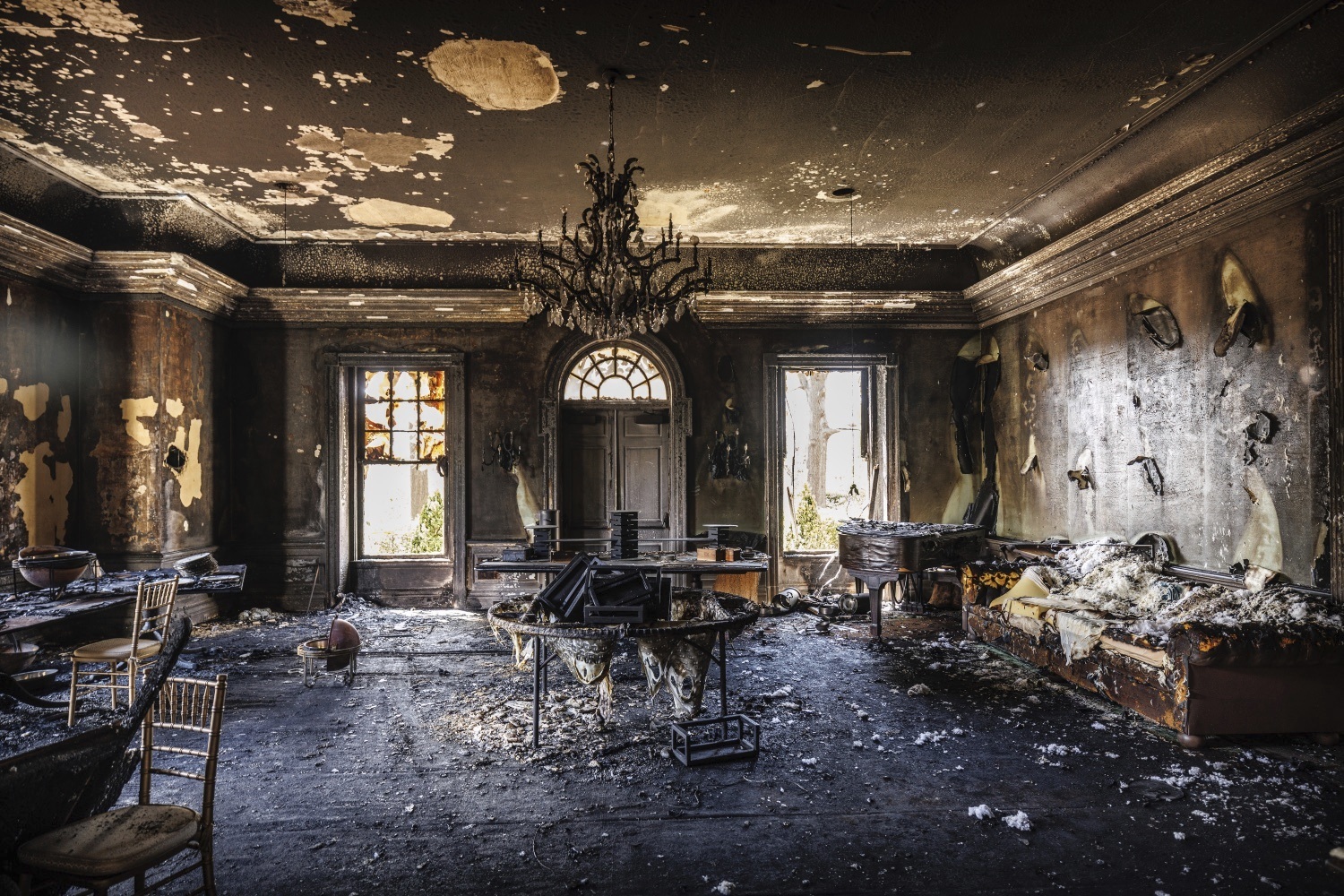
    This image provided by Commonwealth Media Services shows damage after a fire on April 13, 2025, at the Pennsylvania governor’s mansion while Democratic Gov. Josh Shapiro and his family slept inside.

    Scrutiny over security

    Shapiro has faced scrutiny for using taxpayer dollars with little transparency to upgrade the security of his personal home, which is the primary residence for two of his four children, who are school-aged. State Police spent at least $1 million to upgrade security on his Abington Township property, in addition to more than $32 million in upgrades and repairs to the Harrisburg governor’s mansion.

    The GOP-controlled Senate Intergovernmental Operations Committee in December took the rare step of subpoenaing Shapiro for access to records about how taxpayer dollars were spent to upgrade the Shapiro property and home, including a new security system and landscaping work previously reported by Spotlight PA. Sen. Jarrett Coleman (R., Lehigh), who chairs the committee, argued the subpoenas were necessary because the Shapiro administration did not turn over the requested documents, or turned over incomplete records.

    As the Democratic governor of the nation’s fifth most-populous state, Shapiro continues to face threats to his safety. Police arrested a Carlisle man last week for allegedly sending messages to the governor’s office, that said “I do plan on stalking and hurting your family, before adding “metaphorically speaking of course.” The man, George R. Brown Jr., later told police they were “fake threats” and he was trying to get help with an eye injury he suffered while at Cumberland County Prison, PennLive reported.

  • Philly federal judges are growing frustrated with ICE policy to detain most undocumented immigrants

    Philly federal judges are growing frustrated with ICE policy to detain most undocumented immigrants

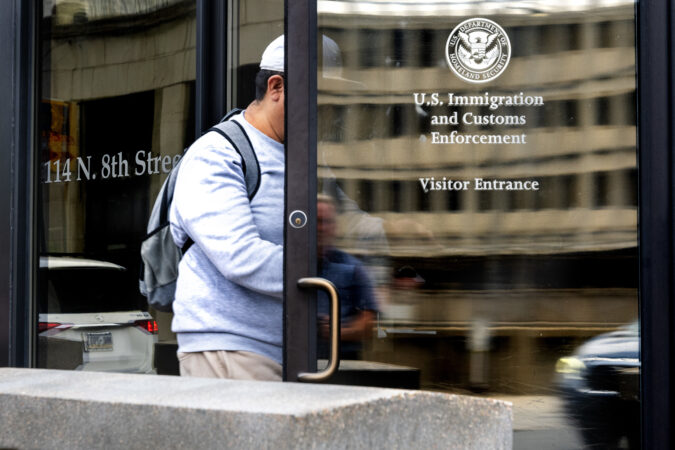
    Federal judges in Philadelphia have been unusually outspoken in recent weeks about what they call the “illegal” policy by ICE of mandating detention for nearly all undocumented immigrants — and have been sharply critical of the “unsound” arguments by government attorneys seeking to justify the approach.

    U.S. District Judge Harvey Bartle III has overturned the government’s attempts to detain people in six cases over the last two months, writing in one opinion that Immigration and Customs Enforcement “continues to act contrary to law, to spend taxpayer money needlessly, and to waste the scarce resources of the judiciary.”

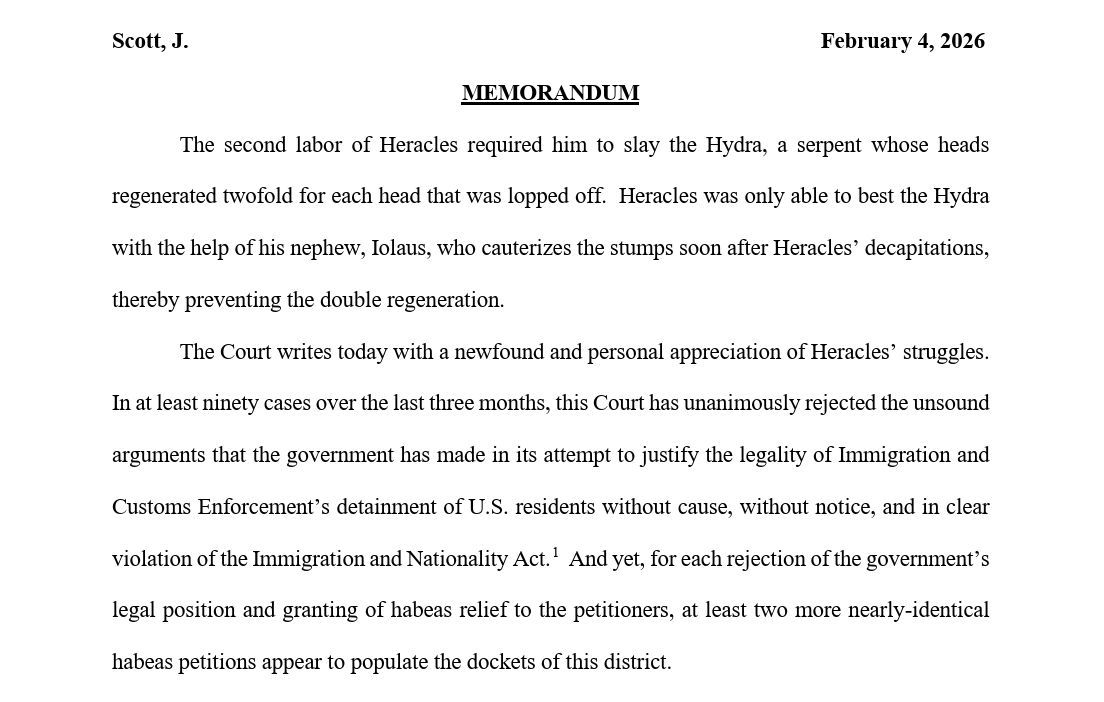
    And U.S. District Judge Kai N. Scott became the latest jurist to equate the ongoing legal battle with the government to Greek mythology, saying she and her colleagues on the bench have been squaring off with the Justice Department in a manner similar to Heracles’ confrontation with Hydra, the serpentlike monster that grew two heads every time one was chopped off.

    Although the region’s federal judges have “unanimously rejected” the government’s attempts to rationalize ICE detention of immigrants “without cause, without notice, and in clear violation” of federal law, Scott wrote, the government has continued to detain people in the same fashion day after day. And after each rejection, she wrote, “at least two more nearly identical” petitions seeking relief pop up on the court’s docket.

    “The Court writes today with a newfound and personal appreciation of Heracles’ struggles,” she said.

    District Judge Kai N. Scott’s Feb. 4, 2026 memo granting another habeas petition filed by an immigrant, and expressing frustration with the federal government’s arguments.

    The judicial rebukes come as immigration authorities have continued sweeping the nation to fulfill President Donald Trump’s promise of mass deportations. The number of detained immigrants has exploded — as has the number of court petitions from people seeking immediate release, which are known as habeas petitions.

    The enlarged legal workload has put a corresponding strain on the nation’s U.S. attorney’s offices, which typically defend ICE’s actions in federal court. Prosecutors from the New Jersey U.S. Attorney’s Office, for example, requested an extension in January to handle part of a class-action suit in order to deal with a surge in immigration release petitions.

    “This Office continues to handle an unprecedented volume of emergent immigration habeas petitions, which we continue to prioritize because of the liberty interests at issue,” the letter said.

    And in Minnesota this week, a federal prosecutor said she wished the judge would hold her in contempt so she could get some sleep in jail. Julie Le seemed exasperated when the judge pressed her on why the government had been ignoring his release orders.

    “What do you want me to do? The system sucks. This job sucks,” Le said, according to a court transcript.

    Le was subsequently fired.

    The issue at the center of each incident involves ICE’s mandatory detention policy. The policy was rolled out over the summer, and it requires that nearly all undocumented immigrants be held in custody as their cases wind through the country’s backlogged and complex immigration system.

    That upended decades of government practice, which typically allowed people who entered the country illegally, but who were otherwise law-abiding, to at least receive a bond hearing and determine if they could remain in the community as their cases moved forward.

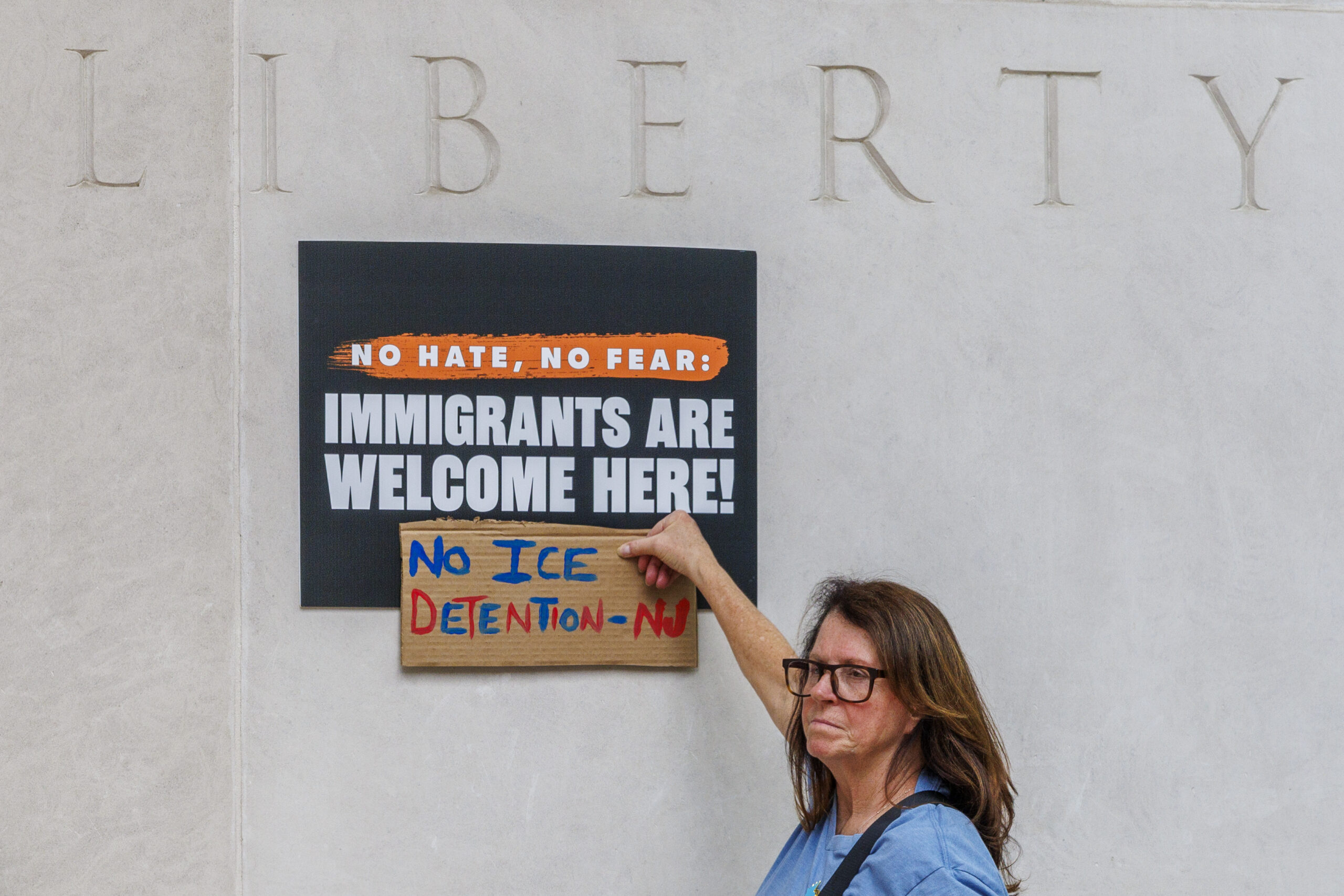
    Jeanne Ottoson with Cooper River Indivisible attends an Immigrant rights groups rally outside the Third Circuit Court of Appeals to defend the New Jersey state ban on immigration-detention contracts on May 1, 2025.

    Some of those detained as a result of the policy have filed habeas petitions, arguing that their detention violates the Constitution. And in the Eastern District of Pennsylvania, Philadelphia’s federal court, judges have granted challenges to the policy at a near-universal rate.

    Still, those decisions have been made on a case-by-case basis, with relief extended only to one petitioner at a time. The U.S. Court of Appeals for the Fifth Circuit, which is based in New Orleans and is considered one of the country’s most conservative jurisdictions, heard a broader challenge to the policy. A divided 2-1 court ruled Friday that ICE can detain undocumented immigrants the agency is seeking to deport, even those who have been in the country for years.

    The ruling covers only federal courts in Louisiana, Mississippi, and Texas, and many legal experts expects the matter to ultimately end up before the U.S. Supreme Court.

    In Philadelphia, Scott’s expression of frustration came this week in response to the release petition of Franklin Leonidas Once Chillogallo. The 24-year-old from Ecuador came to the United States in 2020, lives with his partner and his 6-month-old twin daughters in Upper Darby, and works as a construction worker. He has no criminal history.

    After ICE arrested Once Chillogallo outside his home on Jan. 13, he was held in the Philadelphia Federal Detention Center without the opportunity for an immigration judge to review his case.

    Just as happened in the previous 90 cases, Scott rejected the argument that Once Chillogallo, an immigrant who has been in the country for years, was subject to the same bond rules as those who were caught entering without permission. The judge ordered Once Chillogallo’s release, which took place the following day, according to the court docket.

    Inside the federal courthouse Thursday, judges held three hearings on arcane legal questions surrounding habeas petitions.

    Dozens of other habeas petitions remain pending, court records show. In many that were recently decided, judges used terse or brusque language to point out that the government’s interpretation of the law has been repeatedly rejected.

    “Across the board, there is frustration. There is frustration from attorneys. There is frustration from the judges,” said Kimberly Tomczak, an immigration attorney who represented Once Chillogallo. “Nothing seems to be changing on the immigration side in response to the flood of habeas grants across the nation.”

  • Pa. employers can’t reject job applicants who disclose their criminal history, court rules

    Pa. employers can’t reject job applicants who disclose their criminal history, court rules

    A Pennsylvania law prohibiting employment discrimination against people with criminal convictions has gotten a boost from a federal appeals court.

    A three-judge panel of the Third Circuit Court of Appeals held that regardless of how a prospective employer learned about an applicant’s criminal background, Pennsylvania law prohibits rejecting the application as long as the crime was not related to the job for which they are applying.

    The Jan. 28 ruling resolves a dispute in federal cases over the wording of a 1980 law that some employers argued applied only when the criminal information came from official files of state agencies.

    The Third Circuit opinion came in the case of Rodney Phath, a Philadelphia resident who in 2023 applied to work as a truck driver at Central Transport’s Montgomery County facility. Phath had experience as a truck driver and held the needed license and credential.

    He also had a 2008 criminal conviction for armed robbery, and had served six years in prison.

    Phath told the Michigan-based trucking company during an interview about the conviction and was immediately rejected from the job.

    In a 2024 federal lawsuit, Phath accused Central Trucking of violating Pennsylvania’s Criminal History Record Information Act.

    The company didn’t deny that it rejected Phath because of his criminal background. The law prohibits employers using “information collected by criminal justice agencies,” Central Trucking argued, and did not apply because Phath disclosed his conviction himself.

    District Judge John R. Padova agreed, and tossed out the complaint in December 2024.

    Because the law bans employers from obtaining formal criminal records and using the information in them for hiring decisions, it did not apply when Phath self-disclosed his criminal background, the judge concluded.

    Padova wasn’t the first judge to interpret the law literally, as applying only when an official file from a government agency sits on an employer’s desk — or at least in a computer desktop.

    A Georgetown Law professor, Brian Wolfman, offered to assist in Phath’s appeal with his students.

    The literal interpretation renders the law “meaningless,” the appeal argued, and creates a Catch 22. If an applicant with a criminal record discloses it, they are no longer protected. But if they don’t mention it when asked, they can be rejected for lying in the application process.

    “If that’s true the act would have no force at all, and that can’t be right,” Wolfman said in an interview.

    Phath won his appeal last week, with Third Circuit Judges Stephanos Bibas, Anthony Joseph Scirica, and D. Brooks Smith finding that the law prohibits prospective employers from using information that is included in a criminal history file regardless of how it came about.

    “The employer just has to receive the information,” Bibas, who was appointed by President Donald Trump, wrote in the opinion.

    The judge’s opinion could be appealed to an expanded panel of the court, which has the discretion to pick its cases. But if it stands it would be binding precedent in Pennsylvania’s federal court. The case now returns to the Eastern District of Pennsylvania, where it will head toward trial.

    The attorney who represented Central Trucking in the appeal did not respond to a request for comment.

    Phath’s lawsuit was filed in federal court because Central Trucking is based out of state. But Pennsylvania employees suing in-state employers won’t have the benefit of the binding ruling, although it can be cited in an effort to convince local judges.

    The one in four Philadelphians who have a criminal record also are protected by the city’s Fair Chance Hiring Ordinance, which was updated in the fall.

    The ordinance prohibits employers from considering a misdemeanor after four years from an arrest or release from incarceration, and seven years for a felony. Before that time period, it allows rejecting applicants based on the criminal history only if the employer can show a specific record leads to a specific risk related to that specific job.

    Jamie Gullen, managing attorney of Community Legal Services’ employment unit, said the Philadelphia ordinance is one of the strongest in the country.

    Her unit represents 2,000 people a year who face employment barriers because of a criminal record. The most effective way to prevent this type of discrimination is to seal criminal records, Gullen says.

    The Clean Slate Act, which allows people with certain convictions to have their criminal records sealed by filing court petitions, has long waiting periods and doesn’t cover every offense. So Gullen was glad to see an appeals court acknowledge the barriers people with a criminal history face in the job market.

    “Fair hiring laws are a really important piece of the puzzle,” the attorney said.

  • Police ‘buried’ footage that showed a teen didn’t kill his friend at a SEPTA station, lawsuit says

    Police ‘buried’ footage that showed a teen didn’t kill his friend at a SEPTA station, lawsuit says

    A teenager who faced charges that were later dropped in the killing of his friend, and spent 49 days in jail before video evidence established his innocence, has sued Philadelphia and SEPTA police officers who were involved in his prosecution.

    Zaire Wilson, 18, is accusing law enforcement officers of hiding and ignoring evidence showing he did not shoot and kill Tyshaun Welles on a platform at the City Hall station on Jan. 11, 2024.

    Welles, 16, was hit in the head and his family decided to take him off life support less than a week later. The Frankford High School sophomore was not the target of the shooting, detectives said.

    Tyshaun Welles, 16, was struck in the head by a stray bullet on the subway platform at SEPTA’s City Hall station.

    Wilson and Quadir Humphrey, 20, were arrested the night of the shooting. Police said Wilson pulled out a gun and Humphrey used it to open fire at the group of teens. After Welles died, Wilson was charged with murder and held without bail at the Juvenile Justice Services Center.

    The Philadelphia District Attorney’s Office dropped the charges against Wilson in late February 2024 after prosecutors received surveillance footage from SEPTA.

    “The SEPTA surveillance video of the incident, which was not available to the DA’s Office at the time of Wilson’s arrest, shows that he was clearly not involved in the shooting and murder of Welles‚” the office said in a statement.

    Law enforcement did not share the footage with prosecutors until Feb. 26, 2024, and the district attorney’s office charged Wilson based on a criminal complaint that was riddled with errors and omissions, according to the lawsuit, which was filed last month in the Eastern District of Pennsylvania.

    It is “shocking” that “critical video evidence” was not available to prosecutors at the time of Wilson’s arrest, said Jon Cioschi, a Wiseman, Schwartz, Cioschi & Trama attorney who filed the complaint.

    “It is our view that the video footage conclusively establishes Zaire’s innocence, and that no reasonable officer, taking the evidence seriously, would or could have concluded otherwise,” Cioschi said.

    The city’s law department declined to comment on active litigation. SEPTA did not respond to a request for comment.

    Humphrey pleaded guilty to third-degree murder, aggravated assault, and related crimes, and was sentenced to 17 to 45 years in prison in July.

    What the surveillance footage shows

    Wilson and Welles spent the evening of Jan. 11 with a group of friends at LevelUp, a neighborhood organization in West Philadelphia, the complaint says.

    Surveillance footage reviewed by The Inquirer shows the group, which included the two teens and Wilson’s teenage brother, arriving at the westbound Market-Frankford Line platform at the City Hall SEPTA station around 9:15 p.m.

    As the group waited for the train, the teens chatted and played on the platform as at least four SEPTA officers stood near them.

    Wilson playfully chased a girl in an orange shirt to the east end of the platform. He saw Humphrey, who arrived to the platform separately from the teens, and the two chatted and paced together for a few seconds. As Wilson began to walk back toward the group, a train approached, and Humphrey pulled out a gun and opened fire. Wilson ran to the staircase and got off the platform while Humphrey continued to shoot.

    The teens dispersed during the pandemonium, but one dropped to the ground. After the shooting ended and Humphrey ran away, officers picked up Welles and took him off the platform.

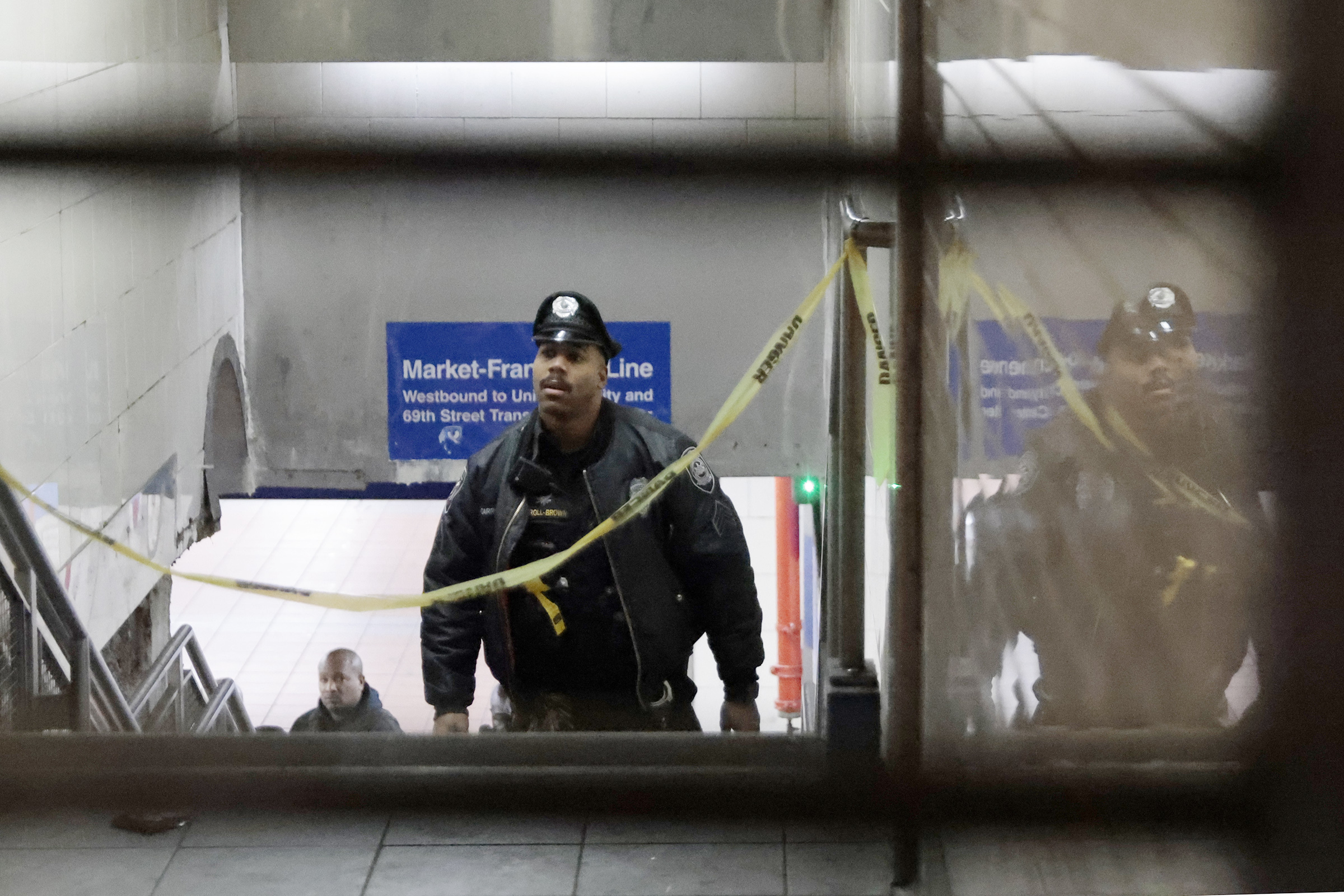
    A SEPTA law enforcement officer walks up stairs from a platform where earlier a SEPTA transit police officer reported a shooting and a victim down on the westbound platform at 15th Street Station near City Hall in Philadelphia on Thursday, Jan. 11, 2024.

    Moments after the shooting, Wilson returned to the platform. He raised his hands as officers with guns drawn rushed to him, pinned him to the ground, frisked him, and let him go. Wilson then walked down the platform where he met his brother and another teen. The three abruptly ran upstairs.

    The footage contradicts police statements that Wilson brandished a gun. That Wilson returned to the scene, where he knew a group of officers were standing, while Humphrey ran away, should have indicated his “consciousness of innocence,” the suit says.

    Humphrey himself told staff at the Juvenile Justice Services Center that Wilson had nothing to do with the shooting, according to the lawsuit, and wrote a letter to a judge on Jan. 16, 2024, days after the shooting, that said “the person I was arrested and detained with has no connection whatsoever.”

    “Rather than follow the facts,” the suit says, “defendants buried them.”