Author: Abraham Gutman

  • A lawsuit challenges arrests of immigrants who come to Philly’s ICE office for routine appointments

    A lawsuit challenges arrests of immigrants who come to Philly’s ICE office for routine appointments

    A 36-year-old survivor of slavery said he has tried to follow all the rules since fleeing Mauritania, a mostly desert land in West Africa, and seeking asylum in the United States in 2023.

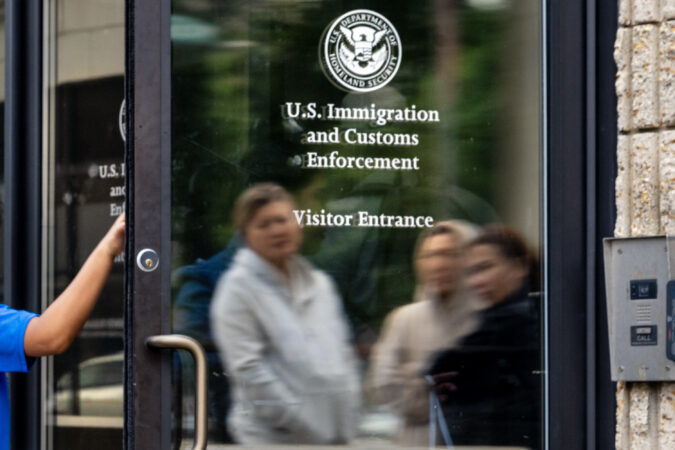
    But when Ousmane Soumare arrived at the U.S. Immigration and Customs Enforcement office in Philadelphia in November for a routine check-in, he was detained by officers.

    Now Soumare, who was released by a federal judge’s order, and two other immigrants who fear a similar fate in their forthcoming appointments are suing ICE and the Department of Homeland Security over the policy change that led to such arrests.

    The Philadelphia ICE field office violated federal law when it “unlawfully rescinded” a longstanding policy that largely allowed immigrants to pursue their immigration cases without fear of rearrest, the suit says. ICE then “began re-arresting and re-detaining people previously determined to pose no risk of flight or danger to the community and still in full compliance with all conditions of their release,” the suit says.

    Soumare, Lassana Dianifaba, and a third immigrant, who was not named in court documents, filed the lawsuit Wednesday in federal court in Philadelphia.

    “When the government releases a person from custody, there is an implicit promise that their liberty will be honored as long as they follow what is asked of them,” said Vanessa Stine, senior staff attorney with the ACLU of Pennsylvania, which represents the immigrants. “These rearrests disregard a decades-old policy and sow fear and chaos.”

    ICE does not comment on pending litigation, a spokesperson said.

    ‘Unheard of’

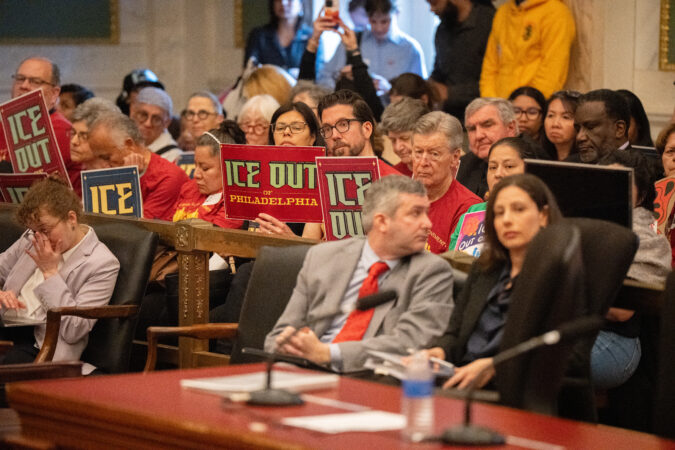
    In Philadelphia, ICE arrests of people who arrive for what they thought would be routine check-ins and appointments have gone from rare to common.

    That is because “sometime toward the middle of 2025,” the suit says, the local ICE office rescinded its policy that required individualized evaluation of new circumstances that would indicate an immigrant is a danger or flight risk.

    Each year thousands of people report to ICE or related immigration agencies for the mandatory check-ins. Some immigrants are required to appear every couple of weeks, some once a month, others once a year.

    The appointments help immigration officials keep track of people who in the past have been low priorities for deportation, allowed to live freely as they pursue legal efforts to stay in the United States. Now that landscape has shifted.

    The change coincided with President Donald Trump’s administration’s implementation of a policy that mandates detention for virtually every undocumented immigrant encountered by authorities.

    These mandatory detentions have led to an avalanche of lawsuits by immigrants. Philadelphia’s federal judges have granted their requests for bond hearings at near-universal rates.

    A ruling from the U.S. Court of Appeals for the Third Circuit on the constitutionality of the mandatory detention policy is pending.

    The changes have put immigrants in risky positions, making every visit to the ICE field office a gamble, because they have little choice but to show up.

    Six immigration attorneys filed affidavits in support of the new proposed class-action lawsuit that detail an explosion of cases. Christopher Casazza estimated his firm has represented roughly 190 people who were detained at ICE check-ins since September.

    Before 2025, it was “unheard of” for a law-abiding immigrant to be detained at a routine check-in, Casazza said.

    Steven Morley, who served as an immigration judge between 2010 and 2022, said in an affidavit that he could not recall “any circumstance” of people being re-detained unless they had committed a crime.

    Philadelphia federal judges responding to the flood of lawsuits by immigrants challenging their detention have also taken notice of the shift.

    In February, U.S. District Judge Gail A. Weilheimer wrote that ICE had set a “trap” for “thousands of noncitizens” by arresting immigrants who were following instructions.

    ICE offices in other cities have similarly reversed course on requiring a material change in circumstance to re-detain released immigrants, and federal judges in California and New York found the lack of individual assessment unlawful.

    The proposed class action in Philadelphia asks a federal judge to certify the class, and declare the rescission of the changed circumstances policy unlawful.

    Soumare’s next check-in is scheduled for July, and he is anxious about visiting the ICE office again.

    “When I think of the risk of being re-detained at my next check in, it scares me,” he said in a court filing. “But I will still attend because I want to follow all the necessary steps to stay here.”

    Visa holders and green card applicants

    Even people who are seeking legal status through lawful government processes are in danger of arrest.

    Green-card applicants, asylum seekers, and others who have ongoing legal or visa cases to stay in the United States have been unexpectedly taken, part of a Trump administration strategy, lawyers and advocates say, to boost the number of immigration arrests and to deport anyone who can possibly be deported.

    Arrests have occurred not just at ICE offices, but also at U.S. Citizenship and Immigration Services and at private offices of federal contractors.

    ICE says that all immigrants who do not hold legal immigration status may be subject to arrest and removal. They say that arrests undertaken at federal agencies are safer for officers, because visitors have been screened for weapons when they enter the buildings.
  • Why a Boston-based appeals court ruling matters for President’s House

    Why a Boston-based appeals court ruling matters for President’s House

    President Donald Trump’s administration is closer to getting its way after a Boston-based appeals court said it doesn’t have to restore exhibits it removed — at least for now.

    The Boston-based U.S. Court of Appeals for the First Circuit ruled the National Park Service does not have to restore all exhibits it removed as part of its “restoring sanity to American history” push before the nation’s 250th anniversary celebration, issuing an administrative stay on a lower court’s order.

    That order protected the historic site of George Washington’s Philadelphia residence on Sixth and Market Streets from further changes after the U.S. Court of Appeals for the Third Circuit ruled last week that Philadelphia does not have the right to dictate the content of exhibits at the President’s House. The exhibits were dismantled by the Trump administration earlier this year.

    But it remains to be seen whether the stay allows the Trump administration to install the newly proposed panels, which historians say whitewash Washington’s culpability in enslaving nine people at his Philadelphia home.

    In a statement, the Department of the Interior responded: “We are confident that as this inferior ruling from an activist lower court judge receives further scrutiny, they will be further restrained.”

    Administrative stays are common steps federal courts take to buy time while judges assess the arguments.

    The First Circuit judges intend to rule “promptly” on a request for a more permanent stay during the appeal, the order says.

    Either way, the ruling marks a second blow in a week to the City of Philadelphia and stakeholders who developed the President’s House Site.

    Michael Coard, attorney and founder of Avenging the Ancestors Coalition, which is leading efforts to protect the President’s House, emphasized that the First Circuit action was not a final decision.

    “The stories of enslaved African descendants and other historically marginalized communities are American history and deserve to be preserved and told truthfully,” he said.

    Here is what you need to know about the status of the President’s House exhibits.

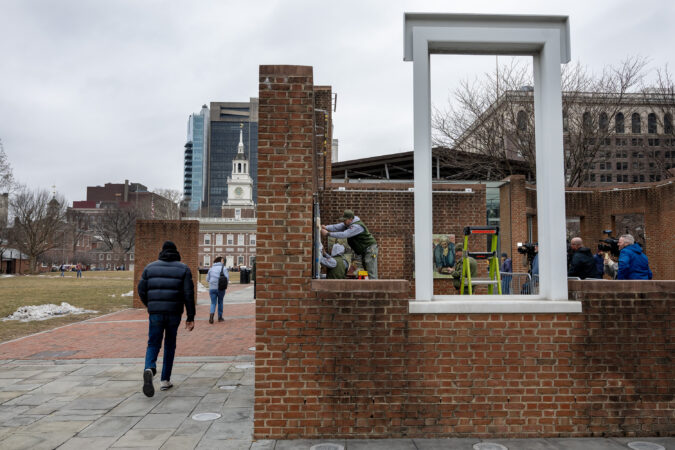
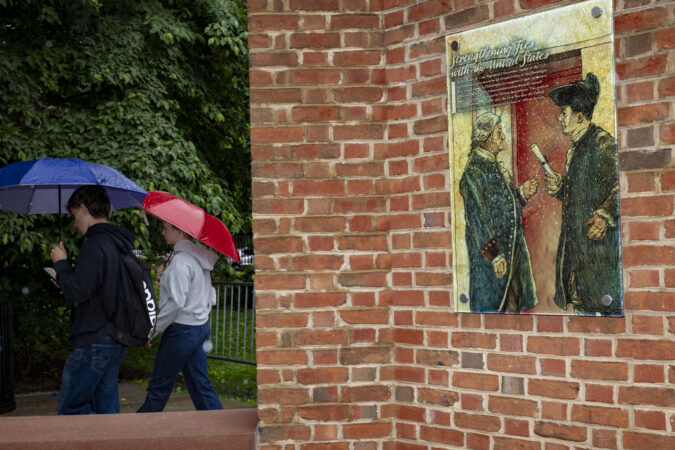
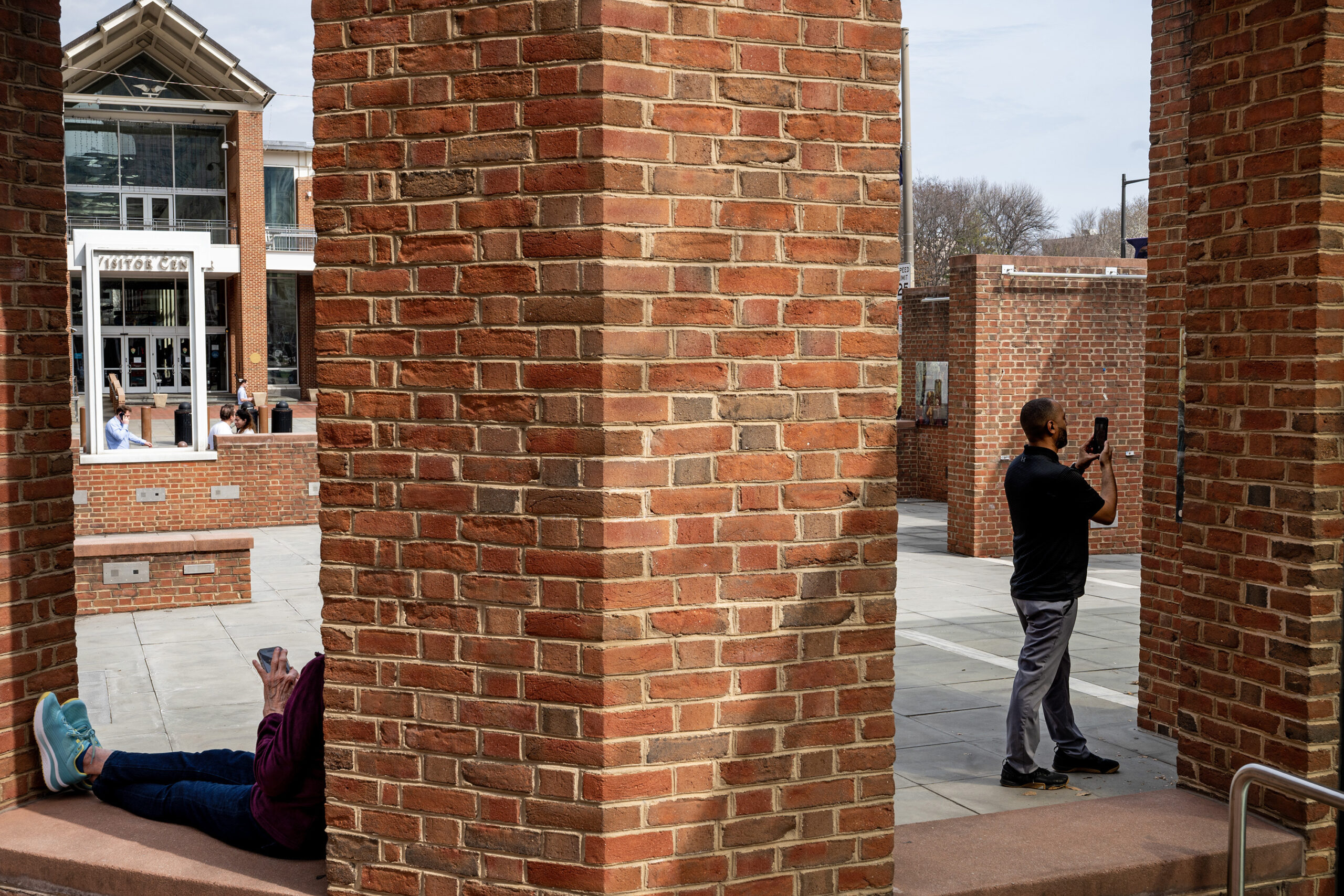
    The President’s House in Independence National Historical Park March 11, 2026.

    What do Boston-based courts have to do with the President’s House?

    Earlier this year, conservation groups sued the Trump administration in federal court in Massachusetts challenging Interior Secretary Doug Burgum’s 2025 order implementing the president’s directive to ensure that no displays at national parks “inappropriately disparage Americans past or living.”

    U.S. District Judge Angel Kelley this month temporarily blocked the National Park Service from removing or altering content at parks across the country, and required the agency to restore before July 4 all exhibits that had been removed.

    The Trump administration’s changes to exhibits “seek to rewrite the Nation’s history with a white-out pen,” wrote Kelley, a nominee of former President Joe Biden.

    At least 50 exhibits were removed from more than 30 sites nationwide, according to court records.

    Justice Department attorneys appealed the ruling to the First Circuit and asked the higher court to issue an administrative stay or a stay for the duration of the appeal.

    The three judges assigned to the case — Chief Judge David J. Barron, appointed by Barack Obama, and Biden appointees Gustavo A. Gelpí Jr. and Julie Rikelman — issued the administrative stay Tuesday pausing the majority of Kelley’s order, including the directive to restore sites such as the President’s House.

    The order is not explicit on whether the National Park Service can make changes to sites, but administrative stays are viewed as a way to preserve the status quo while the appeals court can review the facts and arguments in a case.

    “The administration’s decision not to reinstall and reinstate censored materials, particularly in advance of our nation’s upcoming 250th anniversary, is a disservice to every park visitor this summer and to the broader American public,” the conservation groups, represented by Democracy Forward, said in a statement.

    What did the Third Circuit rule?

    The First Circuit ruling comes on the heels of the Third Circuit’s reversal of a February order entered by a Philadelphia federal judge.

    Judge Cynthia M. Rufe issued an injunction that required the Trump administration to restore the President’s House to its form before the abrupt Jan. 22 removal of exhibits.

    A three-judge panel disagreed with Rufe, finding that Philadelphia gave up its rights over the President’s House when it donated the site to the National Park Service. The judges further said the federal government’s proposed replacement panels were “full of historical context.”

    Mayor Cherelle L. Parker thanks workers as the President’s House site in Independence National Historical Park Thursday, Feb, 19, 2026 during a brief visit to the site as they began to return the slavery displays.

    What are the city’s options?

    After the Third Circuit ruling, Mayor Cherelle L. Parker said she would “pursue every legal action possible in efforts to reverse this decision.”

    The city has a few options, but time is running out for a favorable ruling before July 4.

    The city could ask for a rehearing in front of the same three judges who unanimously ruled to overturn the injunction. It can also ask for a hearing in front of the full Third Circuit court, known as en banc, or ask the U.S. Supreme Court to intervene.

    Philadelphia Law Department attorney Anne Taylor argued at the Third Circuit hearing that the federal government’s attack on these exhibits has caused irreparable harm as the city tries to tell its story ahead of next month’s 250th celebrations.

    Philadelphia is expecting a flood of visitors for the Semiquincentennial celebration, Taylor said, adding: “The President’s House is at the doorway to the Liberty Bell. That history is not being told to all the people who are expected to come here.”

    It could be challenging, or even impossible, to get a new panel of circuit judges or the Supreme Court justices briefed on the case to get a ruling in less than two weeks, legal experts said.

  • Trump administration sues Philadelphia over ‘ICE Out’ face mask ban for law enforcement

    Trump administration sues Philadelphia over ‘ICE Out’ face mask ban for law enforcement

    President Donald Trump’s administration sued Philadelphia and some of its top officials Thursday over a new ordinance that bars law enforcement officers from concealing their identities and effectively bans federal immigration agents from wearing masks.

    The law, part of City Council’s recently adopted “ICE Out” package of legislation imposing some of the nation’s toughest local restrictions on immigration agents, is “blatantly unconstitutional,” the lawsuit said.

    “Such an ordinance also undermines the principles of federalism that underlie our entire constitutional order by seeking to prevent effective federal law enforcement within Philadelphia,” according to the complaint.

    The ordinance makes it a crime for any law enforcement officer, including Immigration and Customs Enforcement agents, to wear face coverings or conceal personal identifiers like badges and nameplates while carrying out their official duties in the city, and it requires officers to identify themselves. It also prohibits the use of unmarked vehicles.

    The bill includes exceptions allowing officers to wear masks in certain circumstances, such as medical emergencies or SWAT operations.

    An officer who violates the ordinance could be prosecuted, and risks up to 90 days in jail plus a fine.

    The suit, filed in the Eastern District of Pennsylvania, names as defendants the city, Mayor Cherelle L. Parker, District Attorney Larry Krasner, and City Solicitor Renee Garcia. It asks a federal judge to find the bills unconstitutional, warning that federal agents could suffer irreparable harm if the policy remains in place.

    “Protecting officers’ personal identities is particularly important during high-risk enforcement operations involving individuals with violent criminal history, gang affiliations, transnational criminal organizations, and known or suspected terrorists,” the suit says.

    The lawsuit marks the Trump administration’s most significant action targeting Philadelphia’s immigrant-friendly policies to date.

    “Today we regrettably had to sue the birthplace of this great Nation,” Associate Attorney General Stanley Woodward said in a statement. “But we will not sit by while Philadelphia flagrantly violates our Constitution, seeking to criminally punish our Nation’s law enforcement heroes merely for doing their job.”

    Philadelphia has long been known as a sanctuary city primarily because it does not comply with ICE-issued detainers, in which federal agents ask local jails to facilitate the arrest of undocumented immigrants in their custody.

    But Parker has largely avoided direct confrontation with the White House over the issue, a reversal from the combative stance of her predecessor, former Mayor Jim Kenney.

    Parker’s supporters credit her with careful, crafty management of the city’s relationship with Trump, noting Philadelphia has been spared from the surges of federal agents the president has sent to other cities. But immigration advocates say Parker has backed away from a fight at a time when strong action is most needed.

    The tension surfaced when Parker decided to let the mask bill became law without her signature, after Garcia warned the mayor that the provisions might not be legally enforceable.

    Council members, however, wanted to take a more proactive stance against Trump’s nationwide deportation campaign. And they seem to have gotten his attention.

    Councilmember Kendra Brooks, who coauthored the “ICE Out” package, said she “will not back down from this fight.”

    “Philadelphia doesn’t like bullies. And we certainly don’t like masked PPD officers or ICE agents terrorizing our neighbors,” Brooks said in a statement. “The people of this city expected our leaders to fight back against Trump’s invasion. That’s what we did when we passed ICE Out.”

    Brooks noted that the lawsuit cites the Parker administration’s publicly aired concerns about the bill, and said other jurisdictions targeted by Trump after they passed legislation restraining ICE have not had to deal with that dynamic.

    “Other lawsuits aren’t dealing with the City’s own words about the laws being used against them,” Brooks said.

    The Parker administration declined to comment.

    The Pennsylvania Immigration Coalition condemned the lawsuit as a political effort to undermine local policies that keep families safe, strengthen public trust, and ensure city resources serve Philadelphians.

    “Once again the Trump administration is using the courts to wage a political campaign against immigrant communities, instead of addressing the real needs of our country,” coalition executive director Jasmine Rivera said in a statement. “Pennsylvanians have been clear, they do not want more immigration enforcement and detention centers, they want affordable education, healthcare, and housing.”

    Councilmember Rue Landau, the legislation’s other coauthor, criticized Trump for “targeting Philadelphia because our city dared to stand up and say that masked federal agents should not be able to operate in our communities and target our vulnerable neighbors without accountability.”

    ‘We will arrest you’

    In addition to banning officers from concealing their identities, the “ICE Out” package, which in April passed Council with a veto-proof supermajority, prohibits federal immigration agencies from staging raids on city-owned property, bans discrimination on the basis of citizenship status, and prohibits the city from engaging in most forms of information-sharing with ICE.

    The legislation also codified some of Philadelphia’s long-standing sanctuary city policies that had been established only through executive order — most notably a ban on city jails honoring ICE detainers not accompanied by judicial warrants.

    Parker signed six of the seven bills in May, and allowed the ban on agents hiding their identities to become law without her signature.

    Parker did not sign the bill after Garcia expressed concern about the ban’s “significant legal and operational challenges,” the suit notes. The mayor’s signature would signal the Parker administration’s intent to enforce the requirement, the solicitor said, and would send an inaccurate signal that the prohibition was enforceable.

    While Parker might have attempted to distance herself from the requirement by not signing the bill, the lawsuit quotes Krasner threatening federal agents with prosecution.

    “We will arrest you. We will put handcuffs on you. We will close those cuffs. We will put you in a cell,” Krasner said in January. “We will do everything in our power to convict you and we will make sure you serve your entire sentence because Donald Trump has no power whatsoever to pardon you.”

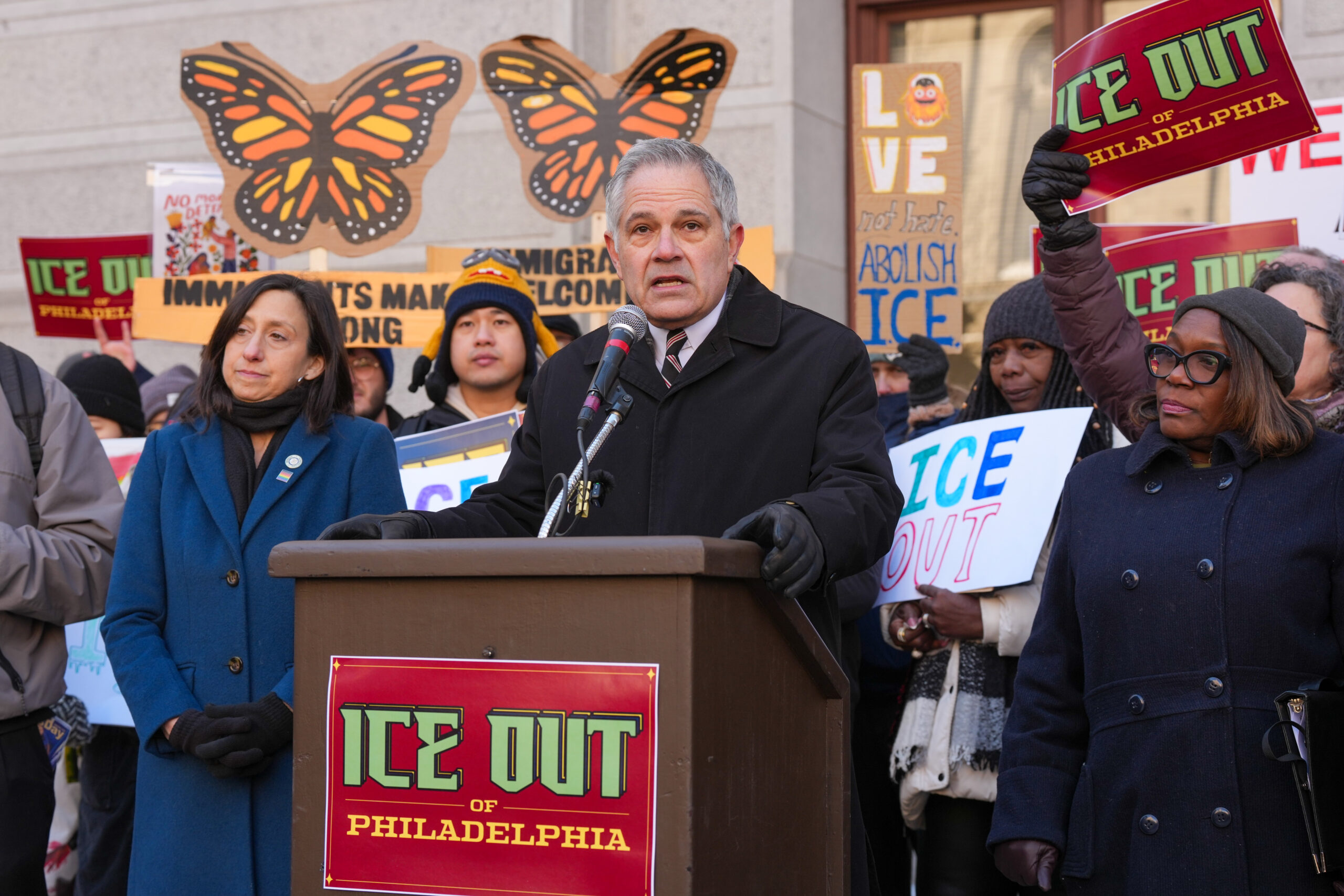
    Larry Krasner shown here during a press conference at City Hall to announce a package of bills aimed at pushing back against ICE enforcement in Philadelphia, January 27, 2026.

    Philly case could have national stakes

    The complaint makes clear that by bringing this lawsuit, the Department of Justice is not closing the door on challenges to other ICE Out ordinances.

    Around the country, more and more Democratic-led communities are attempting to regulate what ICE can and cannot do within their jurisdictions. And doing so with the support of immigrant communities.

    “In all the ways that ICE agents terrorize and violate the rights of our community, masked kidnappings are ones we consistently see and hear about,” said Erika Guadalupe Núñez, executive director of Juntos, the South- Philadelphia-based immigrant advocacy organization.

    She said, however, that “we’re part of a strong local movement organized to fight back, and we all embody the spirit of this city, we will not back down easily.”

    In March, the Montgomery County Board of Commissioners passed a resolution that restricted the agency from using county property or resources for civil investigations.

    Issues around masks and identification have been particularly contentious.

    Activists in Philadelphia and elsewhere say ICE arrests often look like kidnappings or muggings, where men in ordinary clothes, with no visible identification, suddenly descend on their target. The people being arrested may think they are being attacked by criminals.

    Several states, including New Jersey and New York, have passed laws to ban law enforcement officers, including ICE, from wearing facial coverings while on duty.

    In April, the U.S. Court of Appeals for the Ninth Circuit upheld a lower court’s injunction on a California law that required federal agents to “visibly display identification.” The unanimous three-judge panel ruled that the requirement violated the Constitution’s supremacy clause, which bars the states from regulating federal government activities.

    New Jersey Gov. Mikie Sherrill signed bills in March that essentially banned ICE agents and police from wearing masks on the job, drawing pushback from Republican lawmakers. The Trump administration sued New Jersey in federal court in April, and the New Jersey Monitor and others reported that ICE agents continued to cover their faces during recent clashes with demonstrators outside the Delaney Hall immigrant detention center in Newark.

    The Trump administration says federal immigration officers wear face coverings to protect themselves and their families from anti-ICE activists who may seek to identify and harm them. Assaults and death threats are on the rise, the administration said.

  • Trump administration can install its own slavery exhibits at President’s House, Third Circuit rules

    Trump administration can install its own slavery exhibits at President’s House, Third Circuit rules

    President Donald Trump’s administration can replace the slavery exhibits it removed in January from George Washington’s Philadelphia residence, a federal appeals court ruled Thursday.

    A three-judge panel of the U.S. Court of Appeals for the Third Circuit unanimously agreed to toss out an injunction issued by a Philadelphia district court judge in February that ordered the National Park Service to restore interpretive panels telling the history of the nine individuals who were enslaved by Washington at the President’s House Site.

    The city does not have a right to dictate the content of the panels, the court found.

    The judges further found that the federal government’s proposed replacement panels, which historians say whitewash Washington’s role in slavery, “are full of historical context.”

    The proposed panels “highlight the momentous events that took place in the President’s House and the other sites at Independence National Historical Park,” Judge Thomas M. Hardiman, a President George W. Bush appointee, wrote in the opinion. “They acknowledge the evil of slavery, including its injustices and hypocrisies, and, by telling the story of the nine slaves that Washington kept in the President’s House, remind us of their essential humanity.”

    Judges Luis F. Restrepo, appointed by President Barack Obama, and Peter J. Phipps, appointed by Trump, joined the opinion.

    It was not immediately clear what would happen next at the site. The federal government did not immediately outline its next steps, and there are conflicting court rulings over the Trump administration’s push to remove displays from national parks that “inappropriately disparage Americans past or living.”

    But the ruling does bring to a close a chapter in the President’s House litigation, the first courtroom clash between Trump and Mayor Cherelle L. Parker’s administration. Any further review of the injunction is at the discretion of the three judges, the full Third Circuit, or the Supreme Court and is not guaranteed.

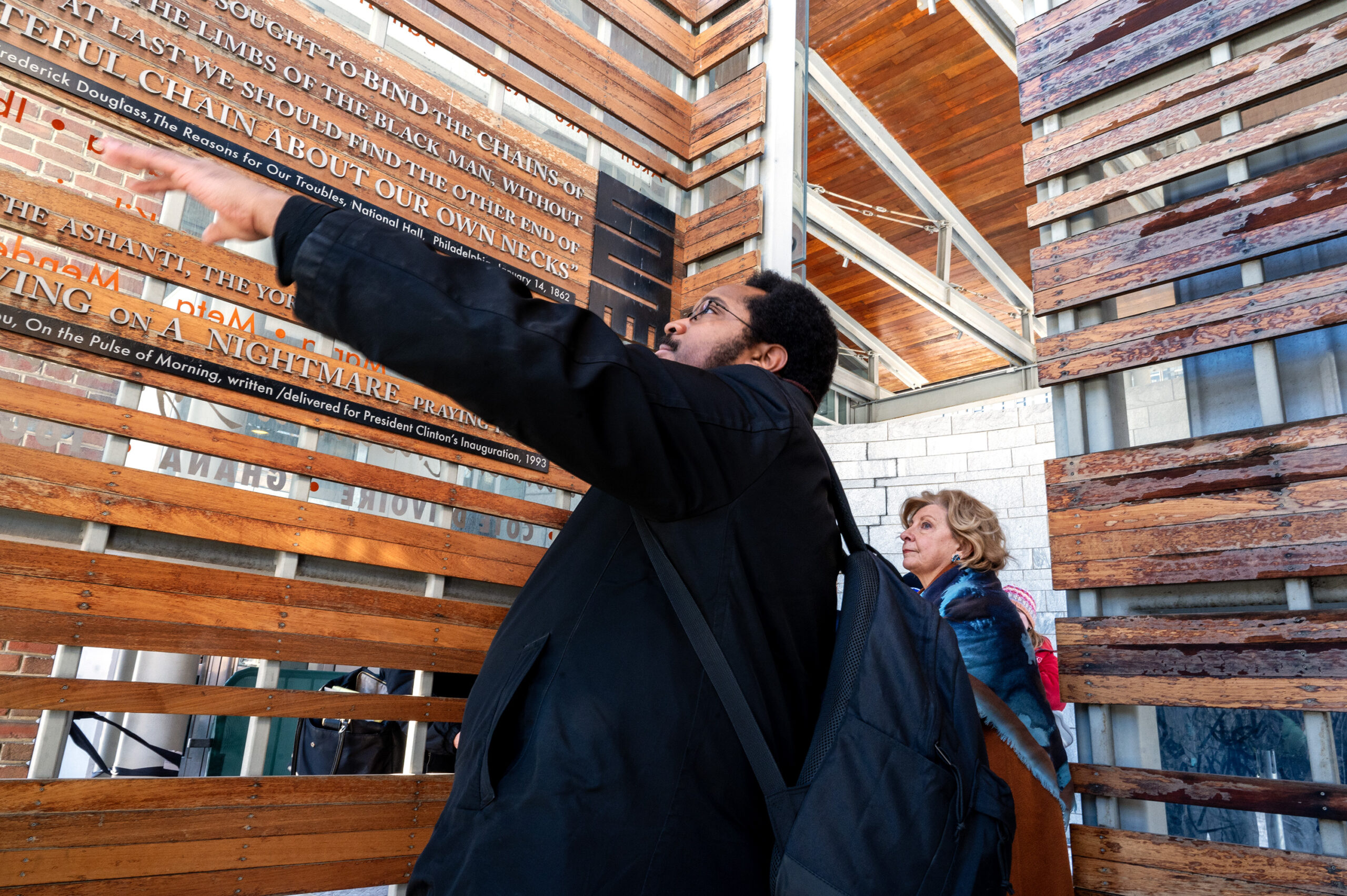
    Mijuel Johnson, a guide with The Black Journey: African-American Walking Tour of Philadelphia, leads District Court Judge Cynthia Rufe (right) as she visits the President’s House in Independence National Historical Park in February.

    The city was unable to convince the Third Circuit panel it has joint decision-making power with the federal government over the entirety of Independence National Historical Park because of the local ownership of Independence Hall.

    Philadelphia has standing to argue in court that the federal government violated the contract signed when the city donated the President’s House to the National Park Service, Hardiman wrote. The agreement included a guarantee the federal agency would maintain the site.

    But the city had to prove it could win based on that argument to keep the injunction alive, and the judges disagreed.

    “The duty to ‘maintain’ is better understood as a general management obligation that accompanies ownership, not a promise that the exhibits will forever remain in place regardless of the owner’s wishes,” the opinion said.

    The city’s claim that the removal was “arbitrary and capricious” under the Administrative Procedure Act also did not find purchase. The federal law allows challenges only to “final” agency actions, but the newly proposed panels show the January removal was not the Trump administration’s “last word on the matter,” the opinion said.

    The ruling vacates U.S. District Judge Cynthia M. Rufe’s injunction from February that ordered the full restoration of the site to its state before exhibits were removed. The National Park Service restored some exhibits, but some metal interpretive panels could not be reinstalled because they required fixes.

    Avenging the Ancestors Coalition, one of the advocacy groups leading efforts to protect the President’s House, said in a statement that the group was disappointed by the decision but would persevere. The coalition was consulting its legal team to consider potential next steps.

    “This is definitely not the end of this fight, nor does it diminish the importance of ensuring that the full truth of our nation’s history is preserved and presented accurately,” the organization said.

    In a video statement Thursday, Parker said, “I will pursue every legal action possible in efforts to reverse this decision.”

    A spokesperson for the U.S. Department of the Interior simply said: “Trust in Trump.”

    Debate over history

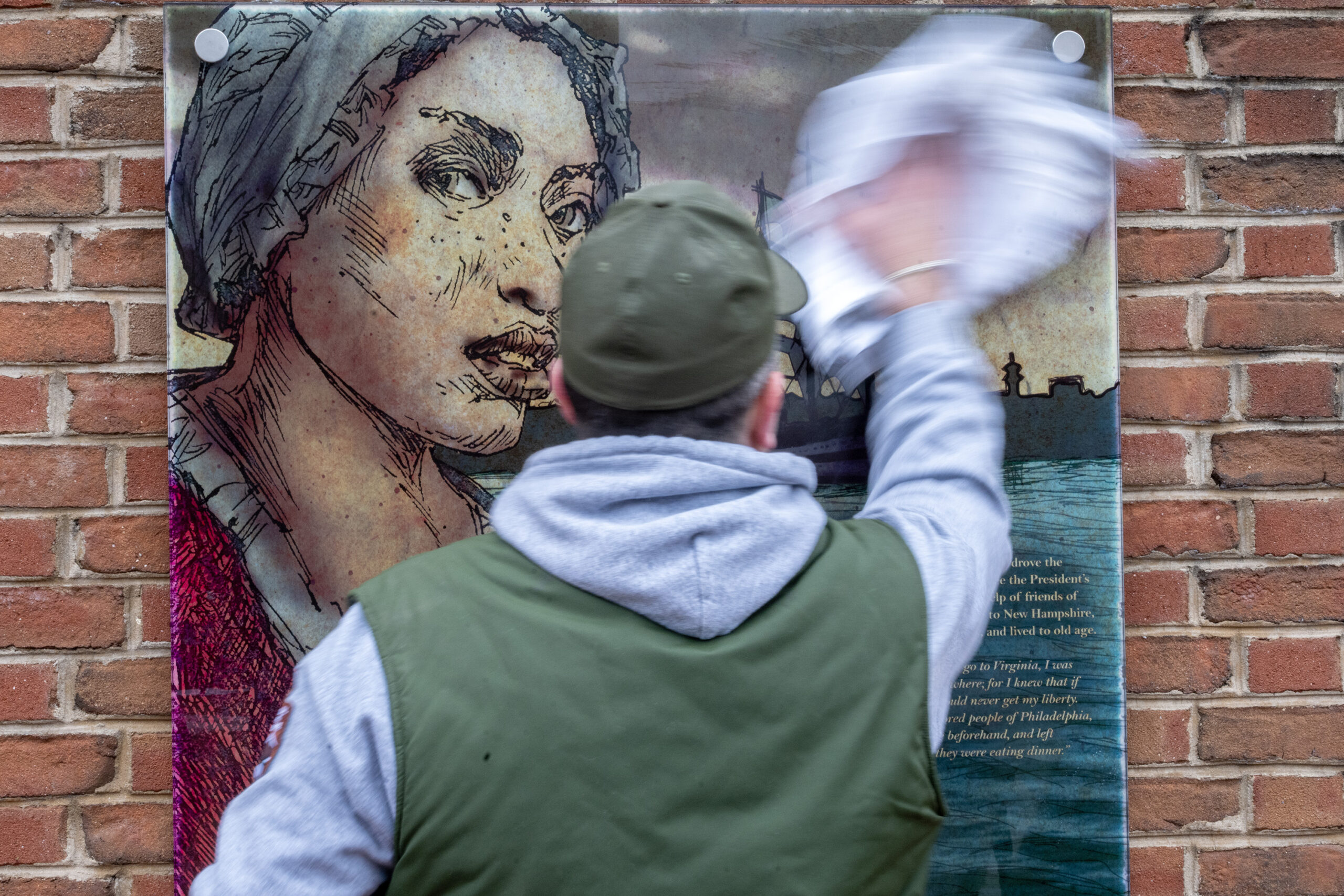
    A worker cleans the glass on the panel for Oney Judge after re-hanging it at the President’s House in Independence National Historical Park in February.

    The ruling is an inflection point in the tumultuous legal saga over whether the federal government has power to determine which version of U.S. history is displayed for public viewing — an issue even more salient ahead of the country’s 250th birthday on July Fourth.

    The Trump administration ordered the removal of the President’s House exhibits in January after almost a year of scrutiny of the site. Months later, the government offered its own vision for how those panels would be replaced, quietly uploading them to the National Park Service website in April.

    An Inquirer review of the panels found that the federal government had softened Washington’s role as an enslaver.

    For instance, one proposed panel argues the people who were enslaved at the President’s House “experienced a greater modicum of autonomy than elsewhere in the South such as to explore the city and sometimes even attend the theater, with Washington buying the tickets.”

    Historians argued the original panels were accurate, well-researched, and site-specific. The development of the site in the early 2000s was the product of collaboration across various disciplines including historians, artists, architects, and advocates.

    But Thursday’s ruling says the Trump administration’s proposed displays offer a nuanced view on Washington’s and John Adams’ roles in or opinions on slavery, adequately highlight the stories of the nine people enslaved at the President’s House, thoroughly acknowledge the horrors and brutality of slavery, and uplift key figures in Black history.

    “One panel … explains that Washington ‘often expressed discomfort with the institution and a desire to see it abolished,’ but, ‘as a Virginia plantation owner, his wealth and livelihood were deeply tied to it,’“ Hardiman wrote. ”Other panels provide an even broader overview of slavery and the struggle to extirpate it.”

    The ruling landed just less than three weeks before the 250th anniversary celebrations, and one day before Juneteenth. Attorneys for the federal government said the new panels had been manufactured and were ready to be installed.

    U.S. Rep. Brendan Boyle (D., Philadelphia), whose district includes Independence Park, said in a statement that Thursday’s ruling highlighted the urgency of passing his Protecting American History Act, which would shield historical displays at the park from government censorship.

    “Just a block away from where our nation was founded, Donald Trump is choosing the path of tyrants who rewrite history instead of learning from it,” Boyle said. “As we approach America’s 250th anniversary, we must tell the full truth of our nation’s history — the good and the bad.”

    Another legal case

    Last week, U.S. District Judge Angel Kelley in Massachusetts ordered the Trump administration to restore all exhibits it had removed as part of its “restoring truth and sanity to American history” push. Following the Third Circuit ruling, the appointee of President Joe Biden rejected a Justice Department request for a stay on the order, saying other circuits’ rulings were not binding on her.

    The administration has appealed to the U.S. Court of Appeals for the First Circuit.

    There is not a prescriptive way to resolve such conflicting rulings, which is why some legal scholars argue against so-called universal injunctions, in which one district judge’s ruling affects the entire country. The Supreme Court signaled its discomfort with those types of orders last year.

    Conflicting rulings have become more prevalent during Trump’s tenure, as his administration has issued drastic measures that take immediate effect, said Michael Foreman, a professor at Penn State Dickinson Law.

    Which order ends up prevailing will depend on whether the Massachusetts ruling is stayed, or if the issue escalates to the Supreme Court.

  • Gov. Shapiro says dispute over security fence with Abington neighbors has no place in federal court

    Gov. Shapiro says dispute over security fence with Abington neighbors has no place in federal court

    While Gov. Josh Shapiro was showing the Dutch royal couple around Independence Mall this week, his general counsel was taking steps to quell a dispute that hit Pennsylvania’s first couple close to home.

    Shapiro asked a U.S. district judge to dismiss a federal lawsuit filed by his Abington neighbors over a parcel of land between their residences.

    Jeremy and Simone Mock accused the governor and his wife, Lori Shapiro, of illegally occupying part of their yard to build an eight-foot security fence last summer in what the Mocks claim in the lawsuit was an “outrageous abuse of power.”

    On the same February day the Mocks filed their lawsuit, the Shapiros sued their neighbors in Montgomery County Court, asking a judge to declare the disputed 2,900-square-foot strip of lawn as part of their property.

    The Mocks’ lawsuit has no place in federal court, Monday’s filing contends, as a controversy over a property boundary is a common matter for state courts.

    Plus, the Mocks cannot bring a lawsuit against Shapiro as governor or against the Pennsylvania State Police because the couple’s claims are against Shapiro as a property owner, not action he took in his official capacity as governor, according to the filing.

    “That the Shapiros allowed [state police] to access the disputed parcel in a manner similar to that which the Shapiros access that parcel does not magically convert this private dispute to ‘state action,’” the motion says.

    The motion also argues the state police are immune from litigation in federal court as a state agency.

    The Shapiros have lived in the sleepy Montco neighborhood for more than 23 years, with the Mocks as their neighbors for less than a decade.

    The feud began when security updates were proposed to Shapiro’s home after a man firebombed the state-owned governor’s residence in Harrisburg in April 2025 while Shapiro and his family slept inside, according to court filings.

    In response, state police proposed security upgrades to the governor’s personal residence in Abington, which included the installation of an eight-foot fence along the property’s perimeter.

    <div data-analytics-viewport="autotune" data-analytics-label="shapiroyard" id="shapiroyard__graphic" data-iframe-fallback="https://media.inquirer.com/storage/inquirer/ai2html/shapiroyard/fallback-mobile.jpg" style="width: 0; min-width: 100% !important; border: none;" data-iframe-fallback-height="643" data-iframe="https://media.inquirer.com/storage/inquirer/ai2html/shapiroyard/index.html" data-iframe-height="620.999999999999" data-iframe-resizable></div> <script type="text/javascript">(function() { var l = function() { new pym.Parent( 'shapiroyard__graphic', 'https://media.inquirer.com/storage/inquirer/ai2html/shapiroyard/index.html'); }; if(typeof(pym) === 'undefined') { var h = document.getElementsByTagName('head')[0], s = document.createElement('script'); s.type = 'text/javascript'; s.src = 'https://pym.nprapps.org/pym.v1.min.js'; s.onload = l; h.appendChild(s); } else { l(); } })(); </script>

    A land surveyor discovered in summer 2025 that the Mocks actually owned about 2,900 square feet of land that the Shapiros had believed was a part of their property since they bought the home in 2003.

    The Mocks, whose property is adjacent to the Shapiros’, say in their suit that the planned location of the fence is on their property unlawfully and would violate their rights.

    The Shapiros began planting arborvitae-type trees and other plants on the Mocks’ property, flying drones over it, threatening to remove healthy trees, and “chasing away” contractors who came to work in the Mocks’ yard, the Mocks’ suit says.

    The complaint also accuses Shapiro of directing state police to patrol the property. Troopers instructed the Mocks to leave the area of the yard multiple times, calling it a “disputed” area or “security zone,” the suit says.

    The Shapiros say they are the rightful owners of the land through adverse possession, a legal mechanism that extends a person ownership of a property they have actively used for at least 21 years.

    The governor and his wife are asking a Montgomery County Court judge to find them the “legal and equitable owners” of the area in dispute. Until the state judge makes a determination, the federal court should abstain from considering the Mocks’ federal lawsuit, the new filing says.

    Outside of court filings, Shapiro attacked the lawsuit as politically motivated.

    The Mocks are represented by Wally Zimolong, a Delaware County attorney who describes himself on his website as the “‘go-to’ lawyer in Pennsylvania for conservative causes and candidates.” Zimolong previously represented the political campaigns of President Donald Trump and U.S. Sen. Dave McCormick (R., Pa.).

    “The Governor looks forward to a swift resolution and will not be bullied by anyone trying to score cheap political points, especially at the expense of his family’s safety and well-being,” Will Simons, a spokesperson for Shapiro, a Democrat running for reelection, said in a statement in February.

    Zimolong did not comment on the new filing, but previously said the Mocks are open to resolving the dispute outside of court.

    “At base, this is a straightforward defense of the property rights of two innocent owners, who were living peacefully next to the Shapiros for over nine years,” the attorney said in a February statement.

    Staff writer Gillian McGoldrick contributed to this article.

  • A Philly ‘wine fight’ is playing out in court as 2 schools battle over cyberbullying and a trademark

    A Philly ‘wine fight’ is playing out in court as 2 schools battle over cyberbullying and a trademark

    Philadelphia’s oldest wine school says a competitor is attempting to erase its existence from the internet through a “cyberbullying” campaign and trademark infringement, according to a federal lawsuit.

    In the suit, PhillyWine LLC alleges that Keith Wallace and Alana Zerbe, the husband-and-wife duo behind the Wine School of Philadelphia, took extraordinary steps to confuse customers and piggyback on PhillyWine’s prestige, causing PhillyWine economic and reputational damage. The suit, filed Feb. 26 in the Eastern District of Pennsylvania, also accuses Wallace, the founder of the Wine School of Philadelphia, of fabricating his credentials and using aliases to open businesses that promote his school.

    Wallace and Zerbe “have made it their mission to destroy” PhillyWine “by attempting to erase its existence and take over its name,” the suit says. The two schools have coexisted since the early 2000s — “although not always peacefully,” the suit notes — but tensions escalated at the end of 2025, when Wallace secured what the suit calls a “fraudulently obtained trademark” for the name “Philly Wine School.”

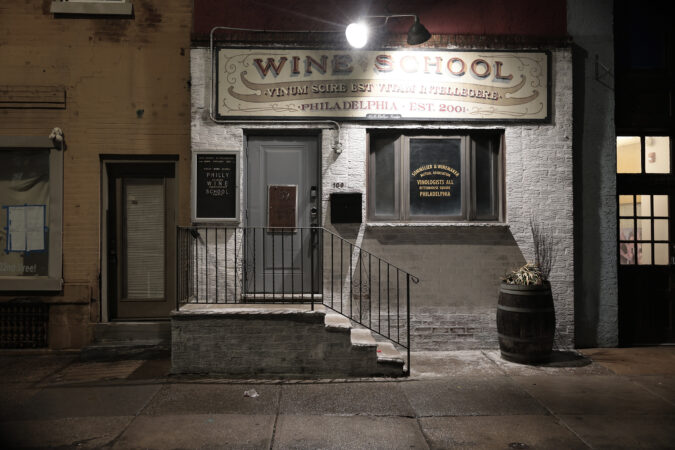
    A screenshot from the Philadelphia Wine School’s website using the Philly Wine School name, which PhillyWine alleges infringed on their brand.

    Armed with the trademark, Wallace convinced Instagram to suspend PhillyWine’s account in December, according to the complaint, and he has since attempted to take over the school’s Google business listing and shut down its website. Meanwhile, he was propping up his own business through a “self-legitimizing web of deception,” the suit says.

    PhillyWine’s enrollment and attendance have been down since December, co-owner Matt Kirkland said in an interview, declining to share specific figures.

    “The name confusion has disrupted student registration and appears to be redirecting traffic” to Wallace’s sites, said Kirkland. “I think there needs to be clarity in naming and clarity for students so they sign up for the classes they think they’re signing up for.”

    PhillyWine is asking a federal judge to issue an injunction that would prohibit Wallace from using Philly Wine School, or any other confusingly similar name, and from attempting to disable PhillyWine’s online accounts. Without an injunction, the request said, PhillyWine would face an “existential threat.”

    “These attacks must end now, and PhillyWine must be allowed to resume its business under normal conditions without further harassment,” the LLC said in court filings.

    The lawsuit seeks profits the Wine School of Philadelphia earned from misappropriating PhillyWine’s name through trademark infringement, unfair competition practices, and false advertising. It also asks a judge to nullify the trademark.

    Wallace denied the allegations and characterized the complaint as a way for PhillyWine to “bully” him out of the business he spent decades building.

    A wine war ferments

    Created by former owner Neal Ewing in 1999, PhillyWine is the city’s only wine educator fully accredited by the Wine & Spirits Education Trust, a nonprofit organization which sets international standards for alcoholic beverage education. PhillyWine is one of 47 programs globally — and the only in the tri-state area — approved to teach the trust’s full wine diploma, which PhillyWine has leveraged to host classes with Drexel and James Madison universities.

    The Wine School of Philadelphia, founded in 2001 by Wallace, is not accredited by the Wine & Spirits Education Trust. It hosts wine tastings as well as semester-long sommelier courses using curricula from the National Wine School, which Wallace also founded. About 3,000 people attend Wine School of Philadelphia classes annually, according to Wallace.

    In 2019, the education trust sent Wallace a letter asking him to cease comparing his school with PhillyWine on his site, the suit says. Wallace said he had “no idea” if he ever received such a letter.

    When Ewing retired in 2022, he sold the business to current co-owners Kirkland, a Penn surgeon, and Noelle Allen, a former banking executive and certified wine educator. Then, a digital wine war began to ferment.

    That August, the school learned that Wallace had claimed the Instagram handle @PhillyWine to “antagonize” Ewing, the suit said, and it had to compromise for the now-defunct @PhillyWineSchool. The account @PhillyWine currently has a photo of Wallace as its profile picture and features videos of Wallace and Zerbe filming their wine podcast.

    Wallace denied obtaining the Instagram handle to grind an axe, but acknowledged a rift between the two wine schools. “Everyone knows — including my wife and therapist — that I have a sharp tongue, and I have always been critical of certain ways of [teaching] … but I have never said anything nasty or even a little mean” about PhillyWine, he said. “They just do not like me.”

    In late 2024, Wallace filed an application with the U.S. Patent and Trademark Office to trademark “Philly Wine School” for use alongside food and wine classes. He obtained the name in December; it had no prior trademarks.

    The move blindsided PhillyWine’s owners. “We frankly saw no reason and anticipated no need for a reason to try to trademark something,” Kirkland said.

    The lawsuit alleges Wallace lied in his trademark application by attesting that the Philly Wine School name “has acquired distinctiveness in the marketplace through nearly two decades of continuous use.” But there is no evidence he used that name on his school’s website before filing the application in November 2024, according to the suit.

    Wallace chalked the sudden use of “Philly Wine School” on his website up to pride in having the trademark. “When you get something, you show it off,” he said.

    Bringing a ‘bazooka’ to a ‘wine fight’

    Once the trademark was issued, Wallace “immediately used the document to inflict cyberbullying on PhillyWine,” the suit said.

    Wallace successfully asked Instagram to suspend PhillyWine’s account, according to the complaint, and has attempted to claim the school’s Google Business profile. He also filed a takedown request with SquareSpace, the host of PhillyWine’s website, and created a Google Maps listing for a “Philly Wine School” at 109 S. 22nd St., the Wine School of Philadelphia’s address. Kirkland said the latter action has led to PhillyWine, which teaches three blocks away at the Fitler Club, receiving negative reviews for classes taken at Wallace’s Wine School of Philadelphia.

    “A review like that — where someone posts about us and they’re not our student and have never taken our classes — is direct reputational damage,” said Kirkland. Lawyers representing PhillyWine sent a cease and desist on Dec. 31, asking Wallace to abandon his trademark and “discontinue his efforts to take over” or remove the school’s online accounts, according to documents reviewed by The Inquirer.

    Wallace confirmed receiving the cease and desist, but rejected allegations of using the trademark to bully PhillyWine or its owners. Instead, Wallace said, he’s the true victim.

    “If they wanted these things, they could’ve done them too,” Wallace said. “We’re nothing but peace, love, and happiness. They just have this tiny little lawsuit, and they filled it with all this nastiness.”

    A negative PhillyWine review on SOMM, a website operated by Keith Wallace, owner of The Wine School of Philadelphia.

    The lawsuit also alleges that Wallace has been untruthful about his credentials and used aliases to start businesses such as the National Wine School and the website somm.us in order to promote his school. (Wallace said he founded somm.us in 2015 and maintains a relationship with the website, but doesn’t control its ratings or content.)

    Wallace’s biography on the Wine School of Philadelphia website previously stated he graduated from University of California Davis and was a professional winemaker in Napa Valley. Neither are true, according to the suit.

    Wallace declined to say when he matriculated at or graduated from UC Davis or elaborate on his stint in Napa Valley. UC Davis has no record of a person with Wallace’s name or date of birth ever attending, a representative for the university said via email.

    The lawsuit’s allegations, he said, have him fearful for the future of his school.

    “They brought a bazooka to a knife fight,” Wallace said. “This isn’t even a knife fight, it’s a wine fight.”

  • Philly clerk shot during a robbery sues ‘skill games’ manufacturers for attracting crime

    Philly clerk shot during a robbery sues ‘skill games’ manufacturers for attracting crime

    A convenience store worker shot during a September armed robbery has sued a “skill games” manufacturer, alleging the casino-style devices on the premises motivated the attack.

    Ahmedine Maham, 27, was working the night shift at Philly Market in Frankford on Sept. 14, the suit says, when two armed men entered the store and shot Maham in the face, according to the complaint, which was filed Monday in the Philadelphia Court of Common Pleas.

    “The robbers targeted the store because the high amount of cash required to be on hand for gambling machine payouts,” the lawsuit says.

    Banilla Gaming, a North Carolina-based skills game manufacturer, is aware of the dangers associated with its “gambling devices,” the suit says.

    The complaint also names Philly Market and associated businesses as defendants.

    Banilla did not respond to a request for comment. The Inquirer was unable to reach Philly Market’s owners based on publicly available records.

    The slot-like devices, commonly placed in bars and gas station convenience stores, have evaded Pennsylvania’s gambling regulations and exist in a gray area of the law. Manufacturers argue the games are based on skill, and are distinct from slot machines that are only legal within the walls of casinos.

    Because they do not fall under gaming laws they are untaxed and unregulated. But their status has been subject to debates in Harrisburg for years.

    Skill games regulations were on the table during last year’s prolonged budget negotiations but lawmakers again punted on the issue, despite bipartisan agreement that they are needed. Gov. Josh Shapiro called the matter “unfinished business,” leaving the door open for future action.

    Law enforcement officials have raised concerns over skill games for years, and earlier this month the Pennsylvania District Attorneys Association sent a letter to Shapiro asking for the devices to be taxed and regulated in a way that would “ensure consumer protection, require security measures, and prevent underage gambling.”

    The Supreme Court of Pennsylvania is considering a case challenging the status of the devices. In a November hearing, justices didn’t seem to view them as different from slot machines.

    Philadelphia enacted a ban on “skill games” in 2024 motivated by concerns the machines attract crime to low-income neighborhoods. Philadelphia Police Department officials testified in City Council in favor of the ban.

    But following an industry lawsuit, the Commonwealth Court lifted the prohibition.

    Matthew Haverstick, a lawyer for Pace-O-Matic who argued in front of the Pennsylvania Supreme Court on behalf of the “skill games” company, said in 2024 that the games were “not crime magnets” but a revenue stream for “small businesses that survive on really thin profit margins.”

    Maham’s lawsuit is the latest in an effort to hold skill games manufacturers, distributors, and store owners accountable for the violence the devices allegedly draw.

    A Philadelphia jury awarded $15.3 million last year to the estate of Ashokkumar Patel, a Hazelton store clerk killed during a 2020 robbery. That suit similarly placed the blame for the violence at the feet of the “skill games” industry.

    Robert Zimmerman, a Saltz Mongeluzzi Bendesky lawyer who represents Maham and represented the Patel’s estate, said the devices force store clerks to act as casino operators without the security measures required in gaming regulations.

    Game manufacturers could improve safety without waiting for regulations, Zimmerman said, by placing terminals in stores that dispense payouts instead of relying on store clerks. But the industry has been resistant to changes that could bite into its profit stream, according to the attorney.

    “This is a danger not only for low-wage workers at these convenience stores, but they are a danger to everyone in the community,” Zimmerman said.

  • A jury awarded $1.67 million to the sons of a diabetic man who died in a Philly jail

    A jury awarded $1.67 million to the sons of a diabetic man who died in a Philly jail

    A federal jury in Philadelphia awarded $1.67 million to the sons of a diabetic man who died in a city jail in 2023, finding the death was part of a pattern in which the Philadelphia Department of Prisons failed to provide access to healthcare for its population.

    Louis Jung Jr. was found dead on Nov. 6, 2023, in his cell at the Curran-Fromhold Correctional Facility. The 50-year-old man died of a condition called diabetic ketoacidosis, in which blood becomes acidic due to high sugar levels.

    His last known insulin dose was two days prior, according to medical records.

    In a four-day trial presided over by U.S. District Judge Timothy J. Savage, attorneys for Jung’s sons argued the death was preventable and the result of jail staff ignoring their father’s medical needs.

    “When the government keeps custody, the government has a duty for care,” Nia Holston, an attorney from the Abolitionist Law Center representing Jong’s sons, told the jury.

    The jury on Monday found that Lt. Wanda Bloodsaw and the city violated Jung’s constitutional right to medical care during his incarceration. The seven jurors cleared a correctional officer, Gena Frasier.

    The jurors further found the failure was part of a pattern under former Prisons Commissioner Blanche Carney’s leadership, which lasted from 2016 to 2024.

    The city has faced multiple lawsuits over deaths in its prisons, including recent lawsuits concerning drug-related fatalities, but those cases are often settled.

    It is notable that a jury held the “highest echelons” of the city jails accountable, said Bret Grote, the legal director of the Abolitionist Law Center, who also represented Jung’s sons.

    “This trial represented justice for the Jung family,” Grote said. “But it’s also a capstone from a very grim era in the Philadelphia Department of Prisons.”

    YesCare, the company contracted to provide medical services in the jail, and three of its medical staffers settled for undisclosed amounts before trial. An additional nurse, working for a separate contractor, settled for $200,000.

    The jury awarded Jung’s sons $1.5 million in compensatory damages. It also awarded $170,00 in punitive damages against Bloodsaw.

    “We are reviewing the verdict and do not have a comment at this time,” Ava Schwemler, a spokesperson for the city’s law department, said in a statement.

    Not ‘a single drop’ of insulin

    Jung was arrested in December 2021 on robbery charges, and his diabetes was poorly managed while incarcerated, the lawsuit says. He was hospitalized for high blood sugar levels four days after he arrived at the correctional facility, and twice more during his first six months there.

    In spring 2023, a judge sent him to Norristown State Hospital for psychiatric evaluation of his ability to stand trial.

    He returned to Curran-Fromhold Correctional Facility on Oct. 28. During his intake, Jung’s blood sugar level was over four times higher than the upper limit of the normal range, according to the complaint.

    Louis Jung Jr., who died in November 2023 in a Philadelphia jail.

    On Nov. 5, Jung asked Frasier to see a nurse. The correctional officer brought a licensed practical nurse to Jung’s cell, where he lay down on the floor at the entrance, according to testimony and video surveillance.

    Frasier and the nurse briefly stood over Jung and walked away.

    A few minutes later Bloodsaw, who supervised the housing unit that day, stood over Jung as two incarcerated men put him back in his cell. That was the last known interaction between Jung and jail staff until his death roughly 20 hours later.

    In that time period, the father of three did not receive “a single drop of lifesaving insulin,” Holston told the jury.

    Frasier and Bloodsaw ignored signs of a medical emergency, and failed to follow a jail policy that requires a follow-up with a medical providers after an incarcerated person refuses to take medications, the attorneys said.

    An internal investigation found that Bloodsaw did not comply with jail policies, and officials suspended her for 15 days. The suspension has not taken place yet, which attorneys for Jung’s sons said demonstrates a culture that does not emphasize accountability.

    The attorneys showed to the jury the results of more than a dozen internal death investigations between 2018 and 2023 that concluded staff did not provide appropriate aid or check their units as required.

    Carney testified that the incidents were not part of a systemic failure. The majority of correctional officers follow their duty with fidelity, the former commissioner said, and should not be painted with a “broad brush” because of the failures of a few.

    Attorneys for the city told the jury that jail staff followed the medical assessment of YesCare staff, and that Jung was noncompliant.

    “I don’t know why he was refusing his insulin,” city attorney Michael Pestrak said. “But he was.”

    The city pointed to a 2023 report commissioned by Carney to review medical care in the jail, including diabetes care, and other policy changes as evidence that city officials were paying attention to medical needs and attempting to improve care.

    Jung’s ex-wife, Evelyn Tyson, provided emotional testimony about the impact of his death. He remained her “best friend” after the divorce, she said, and was committed to their three children, including their eldest, who requires full-time care due to cerebral palsy.

    “I don’t live anymore,” Tyson said.” I’m just existing.”

  • Trump’s Justice Department sues New Jersey for voters’ personal information

    Trump’s Justice Department sues New Jersey for voters’ personal information

    New Jersey joined the growing list of states sued by the Department of Justice after refusing to share personal information of voters with President Donald Trump’s administration because of privacy concerns.

    The Justice Department sued New Jersey on Thursday alongside Utah, Oklahoma, Kentucky, and West Virginia as it escalates its effort to obtain voter data. It previously sued Washington, D.C., and 24 other states, including Pennsylvania.

    The suits follow Trump’s rhetoric in recent weeks about the need to “nationalize elections.” During his State of the Union address to a joint session of Congress this week, the president repeated the unsubstantiated allegation that “cheating is rampant in our elections.”

    The lawsuit in the New Jersey District Court accuses Dale Caldwell, who is serving as the Garden State’s lieutenant governor and secretary of state, of violating Title III of the Civil Rights Act of 1960 by refusing to hand over the list of the state’s registered voters to U.S. Attorney General Pam Bondi.

    “Accurate, well-maintained voter rolls are a requisite for the election integrity that the American people deserve,” Bondi said in a statement. “This latest series of litigation underscores that This Department of Justice is fulfilling its duty to ensure transparency, voter roll maintenance, and secure elections across the country.”

    Caldwell’s office did not immediately respond to a request for comment.

    Acting New Jersey Attorney General Jennifer Davenport said the state would defend against the lawsuit in court.

    “As several courts have already held, the Department of Justice’s request for voters’ personal information, including driver’s license numbers and Social Security numbers, is baseless,” Davenport’s statement said. “We are committed to protecting the privacy of ours state’s residents.”

    Bondi sent a letter to Caldwell on July 15 asking for the statewide voter registration list, the suit says. The letter cited alleged discrepancies in New Jersey’s voting registration statistics compared to national averages. For example, it says the state removes fewer duplicates from its voter rolls.

    A month later, the suit says, Bondi sent another letter asking for the full list including each voter’s full name, date of birth, address, and driver’s license or last four digits of their Social Security number.

    In the months following the August letter, former state Attorney General Matthew Platkin declined to share the information because of privacy concerns — a reason Pennsylvania officials have also cited.

    After the administration of Gov. Mikie Sherrill took office in January, DOJ sent a “courtesy email” to check if the state’s position on sharing the records has changed. But it didn’t.

    The suit is asking a federal judge to find that Caldwell violated federal law by refusing to share the records and order the state to pass over the information.

    The Justice Department filed a similar lawsuit in September against Pennsylvania Secretary of State Al Schmidt, a month after he refused to provide the data.

    Schmidt called the department’s request “unprecedented and unlawful” and promised to “vigorously fight the federal government’s overreach in court.”

    “I have an obligation to protect the personal information that Pennsylvania voters entrust us with, and I take that obligation extremely seriously,” Schmidt said in a September statement.

    The voter roll lawsuit is the second filed by the Justice Department against New Jersey this week. Bondi sued Sherrill on Tuesday over a Feb. 11 executive order that prohibits state agencies to allow federal immigration agents from entering state property for enforcement actions without a warrant.

    The lawsuit said the executive order would disrupt the ability of U.S. Immigration and Customs Enforcement to capture “dangerous criminals” who are in prisons or courthouses controlled by the state.

    Davenport said in a Tuesday statement that the state would continue to ensure the safety of the immigrant communities.

    “Instead of working with us to promote public safety and protect our state’s residents, the Trump administration is wasting our resources on a pointless legal challenge,” Davenport’s statement said.

  • Five Philly police officers sue over DEI, backed by a Trump-aligned legal team

    Five Philly police officers sue over DEI, backed by a Trump-aligned legal team

    Five police officers say in a new federal lawsuit they were skipped over for promotions because of a Philadelphia policy change to promote diversity, equity, and inclusion in the municipal workforce.

    The officers — Christopher Bloom, Kollin Berg, Joseph Musumeci, Marc Monachello, and Leroy Ziegler — claim they were victims of an “illegal and discriminatory” policy change adopted by City Council and Philadelphia voters in the aftermath of Black Lives Matter protests that swept the nation.

    The lawsuit is a proposed class action on behalf of “all white male employees” of the Philadelphia Police Department who were passed over for promotions since 2021 in favor of a candidate with lower exam scores. The complaint was filed by a team of attorneys affiliated with President Donald Trump who have sued the city previously over diversity initiatives.

    The change at the heart of the latest lawsuit is related to the so-called rule of two that required city managers to choose between the two candidates with the highest Civil Service exam scores. The rule was an often-cited reason for the limited diversity in the city workforce.

    Voters got rid of the requirement through a ballot question in 2021, giving the city more discretion to tailor the number of finalists for a position.

    The five officers sought promotions in November, three from lieutenant to captain and two from sergeant to lieutenant. All were “passed over for one of these promotions on account of their race and sex,” the suit says.

    The complaint, filed Wednesday in the Eastern District of Pennsylvania, quotes from legislative documents and statements from politicians to argue that the rule change was racially motivated.

    A 2022 resolution calling on then-Mayor Jim Kenney to study the impact of the rule change “repeatedly bemoans the fact that white men were obtaining too many promotions under the city’s merit-based promotion system,” the suit says, calling it “one of the many examples of the city of Philadelphia’s determination to impose illegal DEI practices that consciously and intentionally discriminate against white men.”

    Another example cited in the lawsuit is a statement by Mayor Cherelle L. Parker, a Council member at the time, who championed the change. She is quoted as saying that “for too long, the Rule of Two has held back Black and Brown employees.”

    The suit is the latest filed by a team of conservative lawyers against Philadelphia over efforts to address racial inequity. The attorneys include Pennsylvania’s self-described “go-to” lawyer for Republicans, Wally Zimolong; Jonathan Mitchell, the former Texas solicitor general who is credited as the legal mind behind that state’s abortion ban; and attorneys from American First Legal, an organization formed by Trump adviser Stephen Miller.

    In October, the group settled a lawsuit that claimed the city violated the Constitution by forcing bidders to sign agreements that included diverse workforce goals. The city agreed to pay $417,000 in attorneys’ fees and clarify that diversity benchmarks in project agreements were aspirational goals, not mandatory quotas.

    Parker’s administration ended a Philadelphia policy prioritizing businesses owned by women or people of color in city contracting shortly after the settlement.

    And earlier this month, the U.S. Court of Appeals for the Third Circuit revived a lawsuit brought by Philadelphia School District parents challenging admission-policy changes to selective schools as racially motivated.

    Delaware County-based attorney, Wally Zimolong, has been filing lawsuits challenging Philadelphia’s programs to increase diversity, equity, and inclusion in hiring and schools.

    The attorneys are not targeting Philadelphia, according to Zimolong.

    “Philadelphia just so happens to habitually enact policies that violate the United States Constitution,” he said.

    Zimolong declined to comment on the current lawsuit, as did the city’s law department.

    The complaint names as defendants the city, the police department, Police Commissioner Kevin Bethel, Deputy Commissioner Krista Dahl-Campbell, and Philadelphia Chief Human Resources Officer Candi Jones. It asks a judge to order the promotion of the officers and declare that the city’s current hiring policies are unlawful because they consider race and gender.

    Passed over

    Police lieutenants Bloom, Berg, and Musumeci sought promotions in fall 2025. There were 10 available positions, and the trio ranked eighth, 11th, and 13th, respectively, on the “captain eligibility” list based on exam scores.

    After interviews, six candidates were passed over in favor of those with lower scores, according to the complaint. Five of those six were white males.

    The lawsuit alleges a similar pattern when the department decided not to promote sergeants Monachello and Ziegler.

    “Monachello and Ziegler were passed over for promotion in favor of lower-ranked female or minority candidates with lower scores on the civil-service examination,” the suit says.

    The Fraternal Order of Police Lodge 5 blasted the police department in a statement following the November promotions, saying the union filed grievances and was considering other actions against “unfair DEI practices in law enforcement.” The FOP also sent a letter asking the U.S. Department of Justice asking to review the promotion criteria, the suit says.

    The police department workforce is 50% white, 34% Black, 12% Hispanic, and 3% Asian, according to data from the city. Nearly 40% of new hires this fiscal year have been Black, compared with 33% white.

    In comparison, the city’s population is 44% white, 42% Black, 16% Hispanic, and 9% Asian, according to the Census Bureau.

    The department has faced racial discrimination lawsuits from employees, including regarding promotions. But usually the candidates allege they were passed over for a white candidate.

    For example, in October, an Asian officer sued after not getting promoted to captain, noting in the complaint that “no person of Asian descent has been promoted to the rank of Captain since 1976.”

    Leslie Marant, the department’s first DEI chief, was fired after less than two years and has filed a suit alleging she became a victim of the systemic sex discrimination she was tasked with fixing.