Author: Abraham Gutman

  • Gov. Shapiro can’t be sued by his Abington neighbors over a property dispute, judge rules. But Josh Shapiro, a homeowner, can.

    Gov. Shapiro can’t be sued by his Abington neighbors over a property dispute, judge rules. But Josh Shapiro, a homeowner, can.

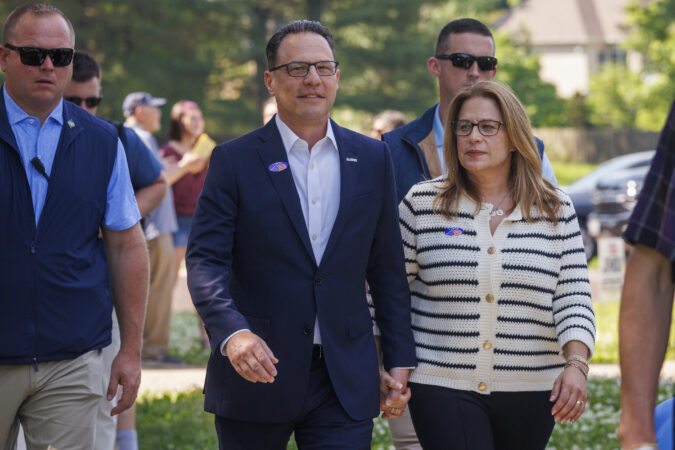
    A federal judge had some good news this week for Josh Shapiro, governor of Pennsylvania, but not so much for Josh Shapiro, resident of Montgomery County.

    Shapiro, as governor, cannot be sued in his official capacity in a dispute over a strip of yard between his and his Abington Township neighbors’ adjoining properties, U.S. District Judge Harvey Bartle III ruled Tuesday.

    But Shapiro and his wife, Lori, will still have to face their neighbors in federal court as homeowners, Bartle also determined.

    The conflict came into public view in February, when Jeremy and Simone Mock, whose backyard abuts the Shapiros’ lawn in a tree-lined neighborhood near Pennsylvania State University’s Abington campus, sued Shapiro — both as governor and in his individual capacity — and George Bivens, acting Pennsylvania State Police commissioner. The lawsuit alleged the officials were illegally occupying part of the Mocks’ yard to build an eight-foot security fence last summer in what they claimed was an “outrageous abuse of power” that violated their constitutional rights. Bartle dismissed those claims in his ruling Tuesday, in what Shapiro’s administration called a major win.

    But while Shapiro and Bivens are immune from the federal lawsuit as state officials, Shapiro as an individual and his wife are not, Bartle’s opinion said.

    “We are pleased that the court has dismissed the claims against the office of the governor and the Pennsylvania State Police, and recognize that the allegations against these officials are without merit,” said Rosie Lapowsky, a spokesperson for Shapiro. “The Shapiros are confident that the facts will ultimately show that the Mocks’ remaining claims are meritless and politically motivated and will fail.”

    The dispute in federal court over the 2,900-square-foot strip of land disrupted the otherwise sleepy suburban neighborhood and led to a separate lawsuit in Montgomery County Court filed by the Shapiros, in their personal capacities, against the Mock family. Shapiro’s office has called the Mocks’ legal effort a political stunt, in addition to other efforts by Republican officials to scrutinize the safety measures state police say are needed to keep Shapiro and his family safe.

    The dueling lawsuits came in the wake of the attempted murder of Shapiro in April 2025 at the state-owned governor’s residence in Harrisburg, when a man firebombed the mansion on the first night of Passover while the governor and his extended family slept inside.

    The attack prompted more than $33 million in security upgrades to the state-owned governor’s residence, in addition to $1 million in upgrades and landscaping to Shapiro’s personal home in Abington Township, where he and his family live part-time.

    Shapiro’s safety remains a priority for state police, as one of the nation’s most prominent Jewish elected officials. A Delaware County man was arrested Wednesday for threatening to burn down the governor’s residence, state police said.

    But the Mocks’ attorney, Wally Zimolong, said the lawsuit at hand is about property rights and due process, and called Bartle’s ruling a “strong decision.”

    “Make no mistake about it,” Zimolong said, “a federal court has said that the sitting governor of Pennsylvania can be held liable for damages over constitutional violations.”

    The Delaware County lawyer who has represented high-profile Republican officials and candidates, including President Donald Trump, said it is “nonsense” to call the litigation political. Zimolong added that he hopes the Shapiros reconsider and attempt to resolve the case amicably.

    The conflict’s origins

    The dispute between the Shapiros and Mocks began last summer when, as part of a plan to build a security fence at the Abington house, a surveyor learned that a sliver of yard that the Shapiros had used for over two decades was actually on property belonging to the Mocks.

    After the Mocks rejected the Shapiros’ offer to buy the land, court fillings said, Pennsylvania’s first couple invoked a state law that allows a person to gain ownership of a property they have actively used for at least 21 years. The Shapiros have lived in their Montgomery County home for 23 years.

    “What followed was an outrageous abuse of power by the sitting Governor of Pennsylvania and its former Attorney General,” the Mocks’ February lawsuit said.

    (function() { var l = function() { new pym.Parent( ‘shapiroyard__graphic’, ‘https://media.inquirer.com/storage/inquirer/ai2html/shapiroyard/index.html’); }; if(typeof(pym) === ‘undefined’) { var h = document.getElementsByTagName(‘head’)[0], s = document.createElement(‘script’); s.type = ‘text/javascript’; s.src = ‘https://pym.nprapps.org/pym.v1.min.js’; s.onload = l; h.appendChild(s); } else { l(); } })();

    A security fence was purchased but never installed, SpotlightPA reported. Instead, contractors hired by the state began planting arborvitae-type trees and other plants on the Mocks’ property. State police also flew drones over the Mocks’ property, threatened to remove healthy trees, and chased away contractors, the Mocks alleged in the suit.

    The complaint also accused Shapiro of directing state police to patrol the property, and instructing the Mocks to leave the “security zone.”

    The Shapiros’ countersuit in Montgomery County asks a judge to find that they are the “legal and equitable owners” of the area in dispute, having tended to the land that borders their front yard for 23 years. That suit is pending and a judge is expected to rule on preliminary objections filed by Zimolong.

    Separately, the Shapiros and state attorneys filed motions asking Bartle to dismiss the federal complaint against them.

    This week, the judge partially obliged, finding the state officials to be immune from the lawsuit while allowing the case against the Shapiros to proceed.

    The judge also refused to freeze the federal case while the lawsuit in Montgomery County plays out, determining that the two cases are different enough to proceed.

    “The claims here extend far beyond a disagreement between neighbors over the metes and boundaries of their properties,” Bartle wrote.
  • A W hotel building contractor is hit with another court judgment, this time for $42.4 million

    A W hotel building contractor is hit with another court judgment, this time for $42.4 million

    One of the largest building contractors in the United States has been hit by another multimillion judgment as a result of the dispute over the W and Element hotels in Center City.

    Philadelphia Common Pleas Judge James Crumlish III ordered California-based Tutor Perini Building Corp. to pay $42.4 million in damages to the subcontractor retained to install the building’s exterior, the Chicago-based Ventana DBS LLC.

    “Throughout the project, Ventana was forced to navigate numerous obstructions and obstacles, stemming from Tutor Perini’s pervasive material breaches of contract,” Crumlish’s ruling read last week.

    That judgment comes on top of a $174.7 million judgment Crumlish issued earlier this year for 2,797 days of construction delays to the 51-story building, to be paid to Philadelphia-based Chestlen Development LP.

    A Tutor Perini spokesperson said in April that the firm disagreed with the decision and intended to appeal it.

    The contractor declined to comment on the new developments.

    “This ruling is an important affirmation of the facts and of the principles that govern successful project delivery,” said Bob Clark, executive chairman of Clayco, a real estate development company that is Ventana’s parent company.

    “We are pleased that the Court awarded Ventana $42 million in damages and recognized that Tutor Perini failed to properly coordinate its subcontractors while acting in bad faith by concealing its knowledge of significant concrete defects,” said Clark.

    The judgment is the latest in the fallout from a construction project that Crumlish has said in an earlier ruling went “off the rails” because of Tutor Perini. Five years after the W hotel opened, the litigation is ongoing.

    Tutor Perini was in court again Tuesday for the start of a new trial, this time for the judge to assess how much a concrete subcontractor, Thomas P. Carney Inc. Construction, owes Tutor for botching the job.

    The proceeding had a tense opening as attorneys for Tutor Perini and Carney spent the morning arguing over motions.

    Crumlish, who has previously chastised the parties for their animosity and turning the litigation into a “challenging behemoth,” expressed frustrations at times and ordered everyone to stop talking.

    “I’m getting cranky, I will admit it,” the judge said at one point.

    Disruptive and costly delays

    Tutor Perini retained Ventana in 2015 for $14 million to assist in the design and installation of the building’ exterior and window-wall systems for floors nine to 50.

    But when Ventana moved to install the hotel’s wall-window systems, they immediately noticed a “big problem,” according to the judge’s October memo. In many places, the concrete was not level or did not meet the elevation requirements in the design.

    Tutor Perini denied there was a problem, while quietly attempting to grind the edges of the concrete slabs to address the issue.

    By failing to supervise the concrete pours, Crumlish wrote in the recent ruling, Tutor Perini caused the “inefficient, obstructed, and impaired installation” of the window-wall systems.

    “Ventana repeatedly encountered disruptive and costly delays due to Tutor’s lack of coordination while attempting to install its window wall systems,” the judge’s memo said.

    Tutor Perini, for example, didn’t clear debris left by other subcontractors, the judge said, to allow the Ventana team to transport the window-wall components.

    And while Tutor’s consultants confirmed the problem was the concrete pour, the company rejected Ventana’s delay notices and stopped paying the contractor.

    Crumlish ordered Tutor to pay Ventana the $7.5 million unpaid subcontractor balance, $7.3 million in labor inefficiency costs, and $2.4 million unpaid change order requests, and $18 million in other costs.

    The company is also on the hook for $7.1 million in attorney’s fees, expert witness fees, and litigation costs, bringing the total judgment to $42.4 million.

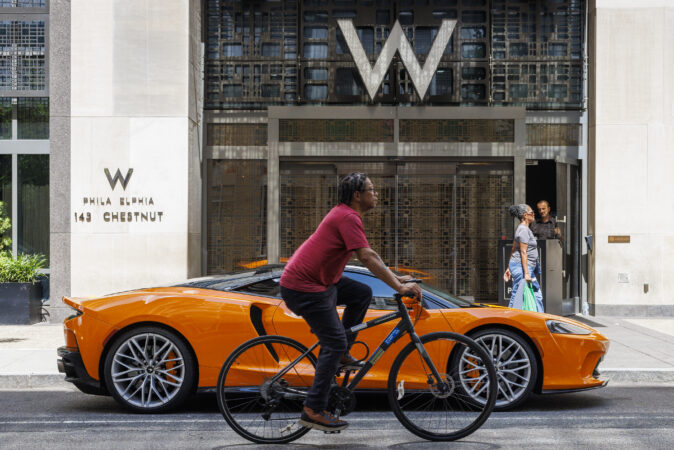
    The W hotel opened in 2021 at 15th and Chestnut Streets, three years after its intended opening date, and it still cannot be fully occupied because some window vents are inoperable.

    The project was developed by Brook Lenfest, son of former Inquirer owner H.F. “Gerry” Lenfest, whose foundation continues to own the newspaper.

    Editor’s note: This article has been updated with a statement from the subcontractor Ventana’s parent company.

  • Hackers stole private information of more than 50,000 clients from a Philly-based law firm, lawsuits say

    Hackers stole private information of more than 50,000 clients from a Philly-based law firm, lawsuits say

    Cybercriminals duped a Blank Rome attorney into sharing the personal information of 57,554 former and current clients, two federal lawsuits filed Monday say.

    The firm, which is headquartered in Philadelphia and has 15 other offices nationwide, notified impacted clients a month after the incident, according to the complaints.

    The two nearly identical proposed class-action lawsuits, filed in the Eastern District of Pennsylvania by former Blank Rome clients from California, accuse the firm of negligence, breach of contract, and violation of consumer protection laws, among other claims.

    Blank Rome failed to use industry standards for cybersecurity and to comply with safeguards mandated by a federal medical privacy law, according to the complaints. It also didn’t appropriately train staff to identify these types of cyber schemes, the suits said.

    The lawsuits asks a judge to certify the class action on behalf of all people impacted by the breach, award them damages, and order action to ensure their identities are protected.

    “The exposure of one’s Private Information to cybercriminals is a bell that cannot be unrung,” the suits say. “Before this data breach, its current, former, and prospective clients’ Private Information was exactly that — private. Not anymore.”

    The incident was limited to one attorney and the firm’s network was never breached, a Blank Rome spokesperson said.

    “We are committed to protecting our clients’ information and maintaining the trust they place in us,” the firm’s statement said. “We believe the lawsuit has no merit and will aggressively defend against it.”

    The firm disputed that all people impacted were clients, but did not say who else was impacted.

    The attorney who filed the two lawsuits did not respond to a request for comment.

    Class-action lawsuits following cybersecurity breaches have become increasingly common. Earlier this year, Comcast agreed to pay $117.5 million to settle two dozen suits over a 2023 data breach, and the University of Pennsylvania was sued multiple times over an October breach that impacted fewer than 10 people.

    They are also lucrative for class attorneys who can pocket as much as a third of the settlement’s amount.

    The Blank Rome data breach took place on May 21 after an “unauthorized third party” posing as a member of the firm’s IT department instructed a Blank Rome attorney to upload files to an external Google Drive, according to a notice of breach attached to the complaint.

    Clients began receiving notice on June 26, the suits say.

    The firm identified the breach within two hours, deleted all the files on the drive, and opened an investigation, the notice said. Blank Rome also notified law enforcement.

    The notice was sent to clients whose information, which included names and Social Security numbers, was stolen. Clients’ addresses, dates of birth, driver’s license numbers, passport numbers, and medical and health insurance information were also potentially obtained by the hackers, the notice said.

    Blank Rome provided complimentary credit monitoring to impacted clients, the notices said, and has taken internal steps “mitigating similar risk,” including by working with cybersecurity professionals.

    “We are notifying you of this incident and want to assure you that we take it seriously,” the firm’s notice said.

  • Trump administration gets final legal OK to install own panels at President’s House, city appeals

    Trump administration gets final legal OK to install own panels at President’s House, city appeals

    A Philadelphia-based federal appeals court gave President Donald Trump’s administration the final go-ahead to install its own exhibit at the President’s House.

    The new panels, which historians have criticized for whitewashing George Washington’s role in enslaving nine people, have been manufactured and stand ready to install, the Justice Department told the court.

    The procedural step, which the U.S. Court of Appeals for the Third Circuit took on an observed federal holiday, followed a Thursday request by Justice Department attorneys to allow the National Park Service to “begin work immediately and install its new exhibits.” The Third Circuit ruled last month that the city has no rights over the President’s House.

    “The President’s House is an important national historical site, and the Government submits that the President’s House exhibits should be fully installed without further delay,” the government’s filing said.

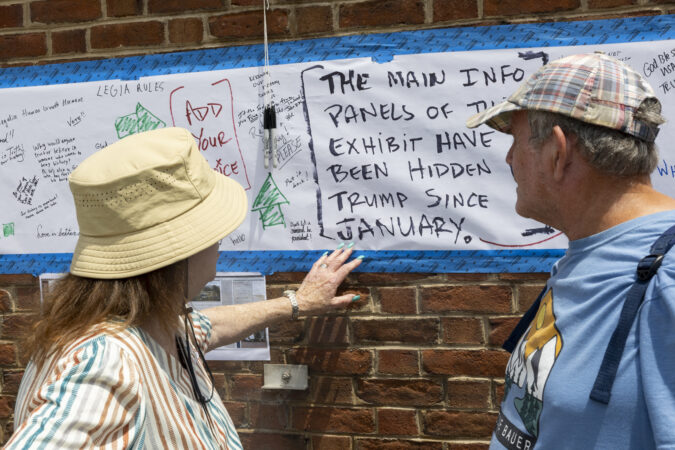
    Only two of 11 new panels mention the people enslaved at the President’s House, which was the exhibit’s original purpose. The exhibits are not factually wrong, historians said, but cast Washington in a more sympathetic light.

    “Slaves living in the President’s House experienced a greater modicum of autonomy than elsewhere in the South such as to explore the city and sometimes even attend the theater, with Washington buying the tickets,” one panel reads.

    The city quickly appealed and asked the Third Circuit court to recall the Friday-morning order, saying it didn’t have time to respond to the Justice Department’s Thursday request.

    And while the federal government asked to install the exhibits “immediately,” the request did not identify a reason for the rush.

    “That is not an emergency,” the city’s filing said, “it is a preference for speed.”

    The court shouldn’t have issued its final approval for changes without waiting the 90 days Philadelphia had to appeal last month’s order, the filing said.

    The city also repeated the argument, which has not found purchase with the appellate judges so far, that allowing the Trump administration to install its own exhibit would cause the city and public irreparable harm.

    The city’s motion does not automatically pause the court’s order.

    But in addition, the city filed a motion for a stay, while the Third Circuit considers the appeal, with District Judge Cynthia M. Rufe, who issued the now-vacated injunction ordering the Trump administration to restore the exhibits it had removed.

    The city and the Department of the Interior did not immediately respond to requests for comment.

    The President’s House has been subject to litigation in federal courts since the Trump administration dismantled the slavery exhibit in January.

    It has been in legal limbo in recent weeks because of litigation in a Boston federal court, where conservation groups sued to stop the Interior Department’s implementation of Trump’s 2025 executive order requiring no national parks displays that “inappropriately disparage Americans past or living.”

    At least 50 exhibits were removed from more than 30 sites nationwide, according to court records. Among them are also mentions of slavery at Independence Hall and the Second National Bank of the United States that the Trump administration quietly removed.

    A federal judge in Boston last month ordered the National Park Service to restore all removed exhibits to parks across the nation. But the Court of Appeals for the First Circuit disagreed and stayed that order Thursday.

    Hours later, Justice Department attorneys asked the Philadelphia-based federal court to clear the final procedural step — and the court obliged before noon Friday.

    The biggest question remaining is whether the Trump administration will attempt to install the panel during this historic July 4 weekend marking the United States’ 250th anniversary.

  • The last legal obstacle for the Trump administration’s own President’s House panels has been removed

    The last legal obstacle for the Trump administration’s own President’s House panels has been removed

    The President’s House has been in legal limbo for weeks.

    Even though a Philly-based federal appeals court gave the green light to President Donald Trump’s administration to install its proposed panels to replace the slavery exhibit National Park Service staff dismantled in January, federal litigation out of Boston placed any actual changes to the site on hold.

    That obstacle was lifted Thursday by a Boston-based federal appeals court, just two days before the nation’s 250th anniversary celebration, and the Trump administration wasted no time.

    Hours after the ruling out of Massachusetts, Justice Department attorneys asked the Philadelphia-based Court of Appeals for the Third Circuit to take the final procedural step so the National Park Service “may begin work immediately and install its new exhibits.”

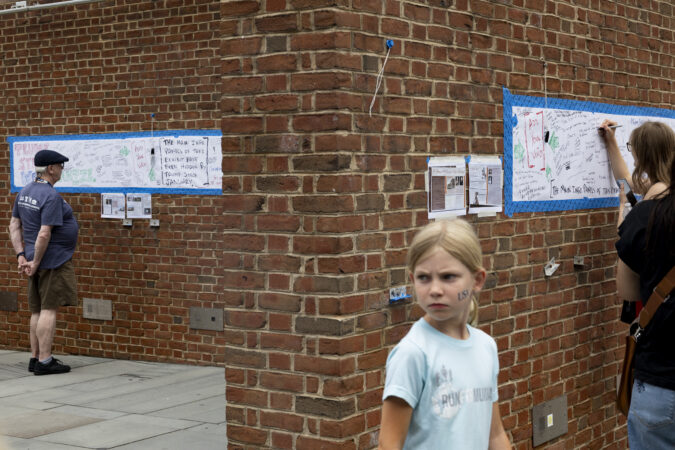
    The Third Circuit ruled last month that Philadelphia doesn’t have rights over the President’s House exhibit, and approved the Trump administration’s proposed panels, which historians criticized for whitewashing George Washington’s own culpability in the enslavement of nine people in his Philadelphia home.

    That ruling vacated a Philadelphia federal district court judge’s February injunction that ordered the National Park Service to restore the President’s House site to its state before any panels were removed in January.

    The federal government on Thursday requested the “immediate issuance” of a procedural order that would enable it to begin installing new panels and said it hadn’t done so before because of the ongoing litigation in New England.

    Still, it’s unclear when the new exhibits could be fixed to the historical site’s walls.

    A spokesperson for the U.S. Department of the Interior did not respond to questions about when the National Park Service intended to install the new exhibit and the time the installation would require.

    Instead, the spokesperson shared a statement saying the Interior Department had “encouraged Americans to visit our cultural and historic sites and engage in meaningful conversations about the moments that have shaped our country.”

    The new panels have been manufactured, Assistant U.S. Attorney Gregory in den Berken said in last month’s Third Circuit hearing.

    A spokesperson for Philadelphia’s Law Department said the city was reviewing its options.

    The change that led to the Justice Department’s request came from the Court of Appeals for the First Circuit, where a three-judge panel ruled the federal government does not have to reinstall before July Fourth exhibits the Trump administration had removed from national parks as part of its efforts to remove displays that “inappropriately disparage Americans past or living.”

    At least 50 exhibits were removed from more than 30 sites nationwide, according to court records.

    The First Circuit previously issued an administrative stay on most of a lower-court ruling that halted the Trump administration’s changes to the parks. Such stays are a way for an appeals court to maintain a status quo while the judges study the case.

    But the new order, which stays the entire ruling, is based on the arguments and facts of the case.

    The First Circuit rejected the Boston district judge‘s finding that anything but restoring the exhibits nationwide would cause irreparable harm.

    The district judge’s ruling ordered the National Park Service to “undertake a burdensome reinstallation and restoration project in short order,” the First Circuit ruling said, while the conservation groups that brought the lawsuit could not show they would be harmed directly by exhibits’ absence or alterations.

    The First Circuit judges assigned to the case were Chief Judge David J. Barron, appointed by Barack Obama, and Joe Biden appointees Gustavo A. Gelpí Jr. and Julie Rikelman.

    The ruling is “merely a temporary procedural setback,” said Brooke Menschel, an attorney with Democracy Forward that represents the conservation groups.

    “Unfortunately, for now, the decision allows the administration to continue removing and altering interpretive materials that are critical for millions of visitors to understand our nation’s history, right at the moment when so many Americans will be enjoying the parks over the upcoming semiquincentennial weekend,” Menschel said in a statement.

    Mayor Cherelle L. Parker vowed to “pursue every legal action possible” in an effort to reverse last month’s Third Circuit ruling.

    So far, Parker’s administration has not taken any action. Legal experts noted that none of the administration’s options are a slam dunk.

    One option would be to file an emergency stay request with the U.S. Supreme Court, which would be up to conservative Justice Samuel Alito to decide.

  • Philly can’t force ICE agents to unmask, federal judge rules

    Philly can’t force ICE agents to unmask, federal judge rules

    Philadelphia can’t prevent U.S. Immigration and Customs Enforcement agents and other federal officers from concealing their identities, a federal judge ruled Thursday.

    U.S. District Judge Chad F. Kenney issued an order preventing Mayor Cherelle L. Parker’s administration and District Attorney Larry Krasner’s office from barring federal law enforcement officers from wearing masks, intentionally covering their badges, or using unmarked vehicles.

    The U.S. Constitution’s Supremacy Clause prevents states — or a city in this case — from imposing requirements on how federal agencies carry out their duties, the judge appointed by President Donald Trump said.

    When City Council passed the bill in April as part of the ICE Out legislative package, the lawmakers “attempted to sidestep the Constitution’s clear mandate and disregarded this fundamental principle of law that has informed American jurisprudence for over 200 years,” Kenney’s opinion said.

    Parker allowed the bill to become law without her signature, following City Solicitor Renee Garcia’s advice that signing the bill “would send an inaccurate signal to the public that the Administration can legally and practically enforce” its provisions.

    “Mayor Cherelle Parker acted with civic wisdom and courage to stand up for the Constitution and follow the rule of law to where it led, despite what may have been strong personal inclinations to the contrary,” the judge said.

    While the ordinance’s requirements apply to all law enforcement, its inclusion in an “ICE Out” package suggested the city planned to be selective in its enforcement, Kenney said.

    And even though the ordinance hadn’t taken effect yet, the judge said, the city never said it wouldn’t attempt to enforce its provision. Krasner’s past statements vowing to “arrest” and “put handcuffs” on ICE officers who break state law, as well as his involvement in a progressive prosecutors’ group committed to such prosecutions, suggest the threat of enforcement is real, Kenney said.

    “The Department of Justice will keep fighting jurisdictions that try to obstruct President Trump’s immigration enforcement with policies that endanger agents and public safety,” a department spokesperson said.

    The city is reviewing the ruling and potential next steps, a law department spokesperson said.

    Kenney showed an “unnecessary urgency” from the beginning of the case, Krasner said.

    “The red-hot rush of this federal district court judge, a Delaware County Republican appointed by Donald Trump, was predictable,” the district attorney said.

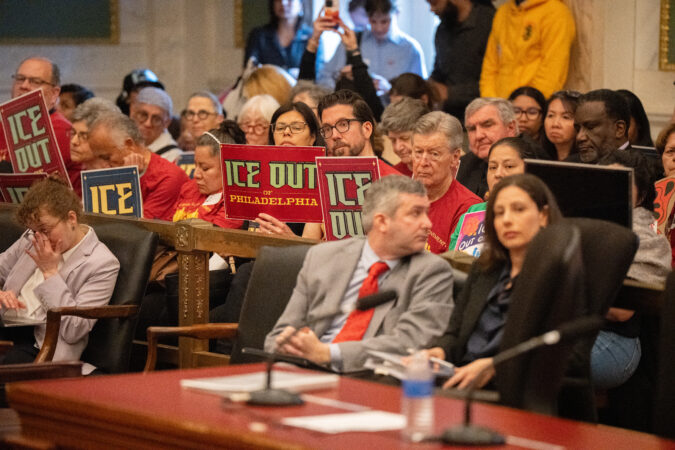
    Defending the ordinance put Parker and her administration in an awkward position. City Council passed the legislation with a veto-proof supermajority as part of a seven-bill package.

    The ordinance at the heart of the litigation made it a crime for law enforcement officers, including Immigration and Customs Enforcement agents, to wear face coverings or conceal personal identifiers like badges and nameplates while carrying out their official duties in Philadelphia, and required officers to identify themselves. It also prohibited the use of unmarked vehicles.

    The bill included exceptions allowing officers to wear masks in certain circumstances, such as medical emergencies or SWAT operations.

    An officer could face up to 90 days in jail plus a fine for violating the ordinance.

    The other bills prohibit federal immigration agencies from staging raids on city-owned property, ban discrimination on the basis of citizenship status, and prohibit the city from engaging in most forms of information-sharing with ICE.

    The legislation also codified some of Philadelphia’s long-standing sanctuary city status, which a recent poll found most city residents support.

    Parker signed the six other bills, which will take effect Tuesday.

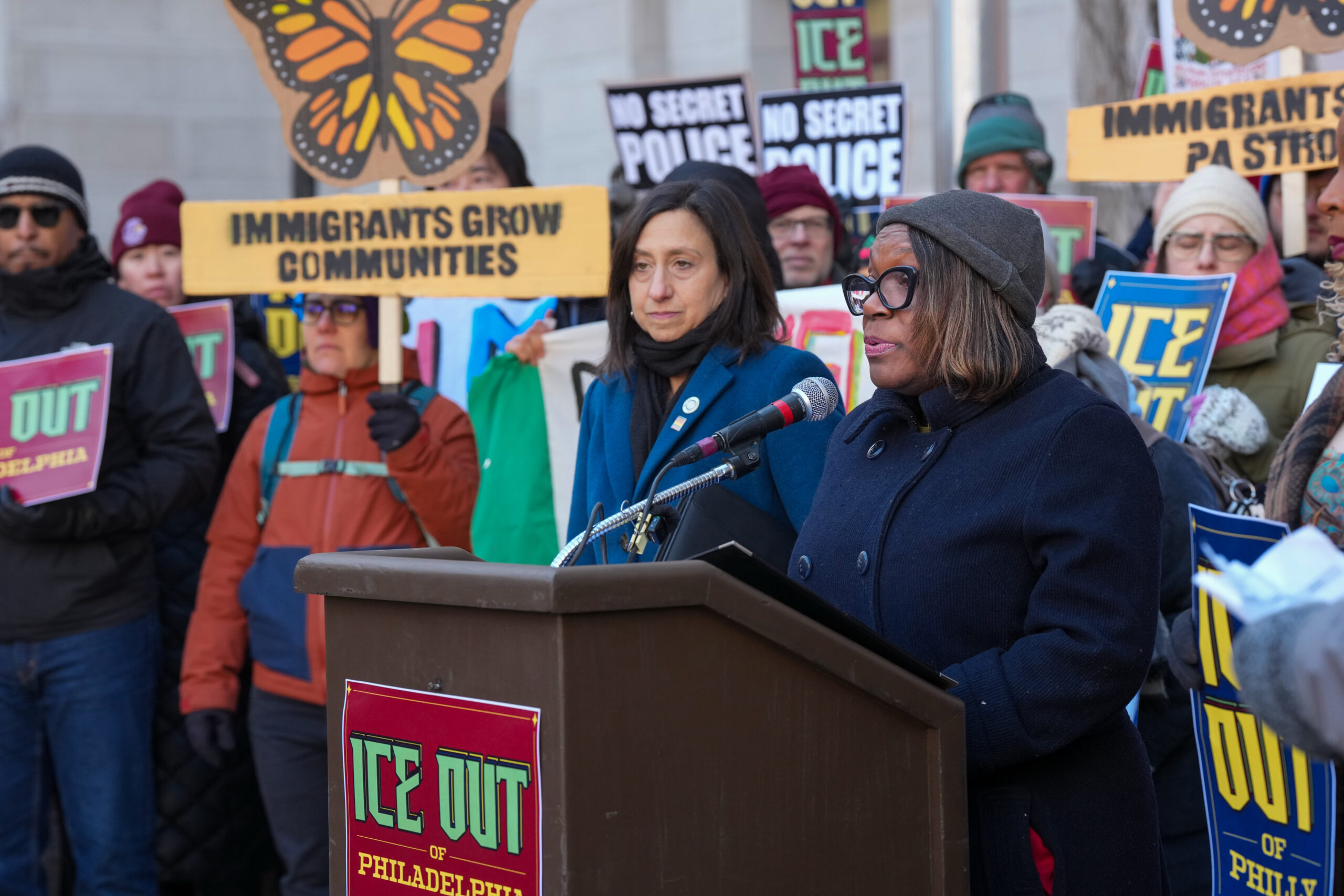
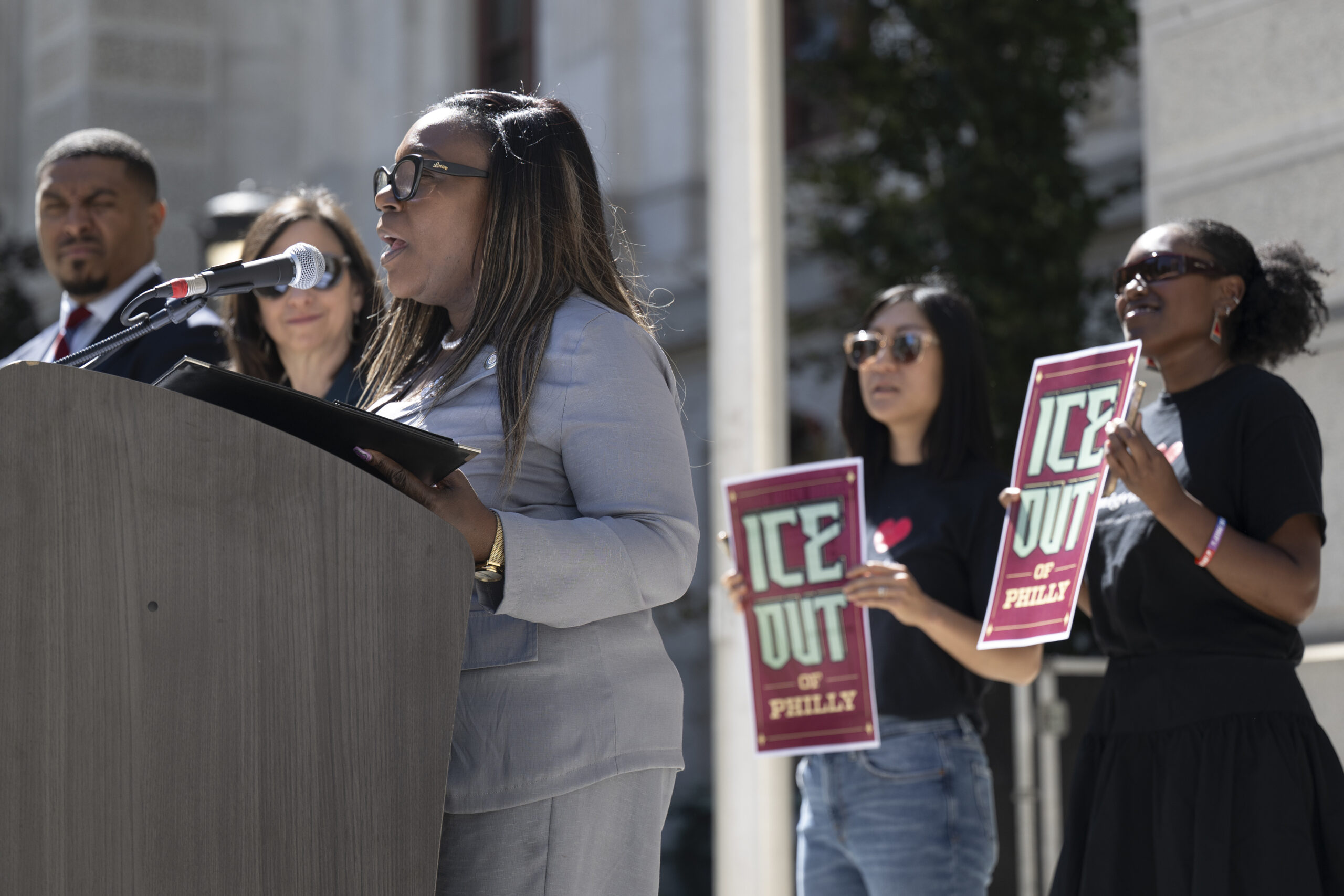
    Kendra Brooks shown here during a press conference at City Hall to announce a package of bills aimed at pushing back against ICE enforcement in Philadelphia, January 27, 2026.

    The Justice Department sued the city, Parker, Krasner, and Garcia in federal court in Philadelphia last month and requested an injunction on the enforcement of the masking bill.

    Officials from various federal agencies told the court the bill would harm their operations and officers.

    Members of the public routinely dox ICE agents, who are later subject to threats, John Rife, acting director of ICE’s Philadelphia field office, said in a filing.

    “Facial coverings reduce the risk of officers’ personal identities being shared publicly, which helps ensure that officers’ privacy and safety, and that of their family members, remains intact,” Rife said.

    The city argued the litigation was premature as the ordinance hasn’t gone into effect and there was no attempt to enforce it.

    The city also said federal agents had applied “aggressive enforcement tactics behind the mask of anonymity, undermining public safety and trust.”

    But Kenney’s opinion said, “there can be no public interest” in enforcing a provision that violates the Constitution.

    It doesn’t make sense that the city can’t hold federal officers to the same standard it holds its own police department to, Councilmember Rue Landau, who authored the bills with fellow progressive Kendra Brooks, said in a statement.

    The Trump administration has sued other jurisdictions, including New Jersey, over similar requirements. In April, the U.S. Court of Appeals for the Ninth Circuit found that a California bill requiring agents to “visibly display identification” was unconstitutional.

    On Tuesday, a federal judge in Richmond enjoined Virginia from enforcing a law barring ICE agents from covering their faces.

    “It’s unfortunate the Parker administration’s own doubts were used against the bill in this injunction,” Brooks said in a statement. “No one else is dealing with that dynamic in their lawsuits.”

  • What to know about symptoms and treatment for dehydration and heat exhaustion

    What to know about symptoms and treatment for dehydration and heat exhaustion

    Brace yourselves, Philadelphians. It’s going to be a hot one out there.

    Staying healthy during the heat wave comes down to two basic things: drinking water and cooling down as much as possible.

    Here is what you need to know about heat-related illnesses:

    What are the signs of dehydration?

    Water serves critical functions in the body, including cooling it down, maintaining blood volume, and balancing electrolytes.

    Dehydration happens when individuals lose more water than they are taking in. Even though it could happen to anyone, dehydration poses a specific risk to children, elderly, and people with chronic illnesses.

    The signs of dehydration are dark-colored urine, less frequent urination, fatigue, confusion, and dizziness. With babies, parents should monitor diapers to ensure that they are continuing to provide urine.

    Untreated dehydration can contribute to heat exhaustion or heatstroke, reduced blood pressure, fainting, and seizures.

    What are the symptoms of heat exhaustion?

    As the body remains overheated, it will continue to sweat and further lose liquids. If individuals’ skin becomes cold and pale, they complain of dizziness and headaches, and seem tired or weak, these are all signs they might be suffering from heat exhaustion.

    At this stage, consider calling 911 if a person is vomiting, the symptoms get worse, or last longer than one hour.

    What are the symptoms of heatstroke?

    Heatstroke is when the body can no longer regulate its temperature. People may stop sweating and spike a fever. The cold, pale skin could turn hot and red. In addition to the fever, people may be confused, pass out, and vomit.

    If someone is vomiting, unable to drink, or losing consciousness, medical attention is likely needed in an emergency department. Medical staff there can cool the person down and provide intravenous fluids. If you suspect that someone is suffering heatstroke, call 911.

    How to prevent and treat dehydration, heat exhaustion, and heatstroke

    Water is your best friend during the heat wave. As much as possible, keep hydrated. Adequate water intake for adults is about 11 to 15 cups a day. While water is not the only hydrating drink, avoid caffeinated and alcoholic drinks, which can contribute to dehydration.

    Cooling down is also critical. Look for shade, avoid the sun, and when possible, stay inside air-conditioned buildings. This will help the body regulate heat and preserve liquid, especially during the hottest hours of the day in the afternoon.

    There are open splash parks and pools throughout the city where people can go to cool down, though if you spend time in the sun, be sure to put on sunscreen to avoid sunburns.

    For people who are dehydrated, get them to a shaded and cooler area and have them drink water. If at any point they lose consciousness, vomit, or are unable to drink, seek medical attention immediately.

    How to treat heat rash and cramps

    Two other potential unpleasant outcomes of heat are rashes and cramps.

    When sweat is trapped in the skin, a potentially itchy heat rash can appear. It can be in the form of small blisters to larger lumps. Heat rashes usually resolve without treatment when the body cools down. The CDC recommends keeping the rash dry and using baby powder to soothe itchiness. Go see a healthcare provider if the rash doesn’t go away within a few days, gets worse, or if you develop additional symptoms or are concerned that other health issues are involved.

    Heat cramps are involuntary muscle spasms that can occur due to fluid and electrolyte loss, which is common when exercising on a hot day. If you have heat cramps, stop any physical activity, move to a cool place, and drink water. A sports drink with electrolytes can also help.

    Seek medical attention if the heat cramps last longer than an hour or if you have a heart condition.

  • A federal judge tossed a Justice Department lawsuit seeking Pennsylvania voters’ private information

    A federal judge tossed a Justice Department lawsuit seeking Pennsylvania voters’ private information

    A federal judge on Saturday dismissed a U.S. Department of Justice lawsuit seeking to obtain Pennsylvania’s entire, unredacted, voter-registration database.

    President Donald Trump administration’s doesn’t have the legal authority to demand the “highly sensitive” information, wrote Cathy Bissoon, Pittsburgh’s federal court chief judge. And while the Justice Department couldn’t articulate the “basis and purpose” for its request, Bissoon said, the administration has been “say[ing] the quiet parts out loud.”

    “Public statements from government officials reveal its intentions: to create a nationwide voter-database, for potential weaponization in future elections; as a ‘fishing expedition,’ hoped to advance unsubstantiated claims of non-citizen voting; and as a tool for immigration enforcement,” the Barack Obama-appointed judge wrote.

    The Justice Department sued more than half of the states in the union for their voter-related records. Bissoon’s ruling marks the Trump administration’s 10th defeat in a district court, which the judge notes with a positive spin.

    “The administration’s demands have yielded one unexpected benefit, namely, bipartisan agreement,” Bissoon said. “Five of the district judges are Trump appointees.”

    The Justice Department did not immediately respond to a request for comment.

    “No matter what the Trump Administration tries next, we’re going to stand up to protect Pennsylvanians’ right to privacy — and our fundamental right to vote,“ Gov. Josh Shapiro said in a post on X.

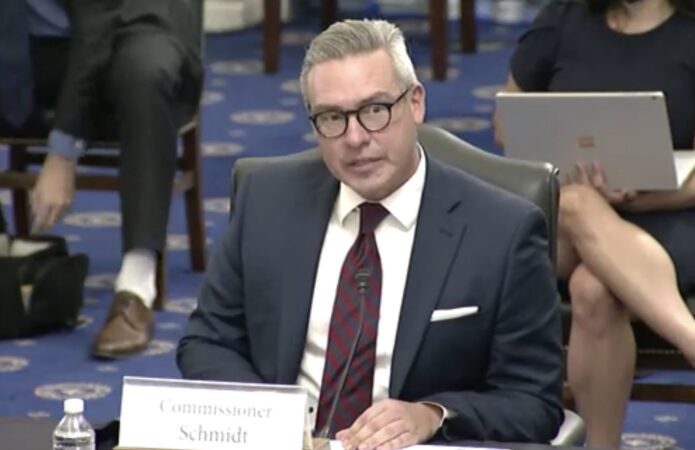
    The Trump administration sued in September after Pennsylvania Secretary of State Al Schmidt refused to turn over all voter-registration data — which includes sensitive information such as Social Security numbers — from the November 2022 election through the 2024 presidential election.

    Schmidt, who previously served as the lone Republican on Philadelphia’s election board, responded to DOJ’s August request by offering to share the redacted public voter file. There is no precedent to justify turning over the unredacted information, Schmidt argued, and releasing the sensitive files would violate state law.

    “This request, and reported efforts to collect broad data on millions of Americans, represent a concerning attempt to expand the federal government’s role in our country’s electoral process,” Schmidt said in his response to the DOJ.

    The federal government sued Schmidt, invoking federal voter election law and “ironically,” according to Bissoon, the Civil Rights Act of 1960.

    “Every state has a responsibility to ensure that voter registration records are accurate, accessible, and secure — states that don’t fulfill that obligation will see this Department of Justice in court,” then-Attorney General Pam Bondi said in a statement announcing the suit.

    The Trump administration’s push to obtain the unredacted voter rolls has alarmed multiple civil rights groups, including the American Civil Liberties Union, National Association for the Advancement of Colored People, and the League of Women Voters.

    Far from boosting the public’s confidence in election integrity, the request seems like an attempt to undermine it, Lauren Cristella, the president of the Committee of Seventy, a Philly-based civic engagement group, previously told the Inquirer.

    “They are insinuating that there’s something wrong,” Cristella said. “Even though there is no credible evidence.”

    Others raised privacy concerns over sharing sensitive information of millions of voters nationwide.

    The Trump administration’s argument hasn’t found much traction in federal courts throughout the country so far. Bissoon joins district judges in Arizona, California, Maine, Maryland, Massachusetts, Michigan, Rhode Island, Oregon, and Wisconsin in dismissing the lawsuits, according to the Brennan Center for Justice, a legal nonprofit affiliated with New York University.

    The U.S. Court of Appeals for the Sixth Circuit last week rejected the Justice Department’s appeal to obtain Michigan’s voter rolls, the first federal appeals panel to do so.

    A lawsuit to obtain New Jersey’s unredacted voter rolls is ongoing.

    Bissoon opened her opinion by saying limiting the federal government’s power has been among the “bedrock principles of conservative political ideology” and quoting former President Ronald Reagan’s commitment to states’ rights.

    “That was then,” the judge said, “this is now.”

  • Philly is defending an ICE Out law in court its top lawyer previously said wasn’t enforceable

    Philly is defending an ICE Out law in court its top lawyer previously said wasn’t enforceable

    There is no obvious way for a mayor to defend a law her lead attorney already said couldn’t be enforced legally.

    But that is the position Mayor Cherelle L. Parker found herself in when President Donald Trump’s administration sued her, the city, and other officials over an ordinance that bars law enforcement officers from concealing their identities as part of the ICE Out legislative package.

    Noted in the feds’ lawsuit: When the ordinance was making its way through the legislative process, City Solicitor Renee Garcia advised the mayor it would be “inaccurate” to suggest the city can “legally and practically enforce the Bill.”

    The city responded Thursday afternoon to the Trump administration’s request for an injunction preventing the ordinance from taking effect next month by arguing the federal government doesn’t have standing until the city attempts to enforce its provisions.

    Even if the administration had standing to sue, the bill’s provisions don’t interfere with the federal government’s work and “at most imposes an incidental burden,” the city’s response said.

    Additionally, the filing contended the Trump administration can’t show irreparable harm because of exceptions that allow officers to conceal their identity. The city, meanwhile, has “a significant interest in protecting its residents and law enforcement officers,” it said.

    “The Bill was enacted in response to the confusion and fear generated by the federal government’s deployment of large numbers of federal agents who subsequently applied aggressive enforcement tactics behind the mask of anonymity, undermining public safety and trust,” the city said.

    The defendants in the case — the city, Parker, Garcia, and District Attorney Larry Krasner — are represented jointly by attorneys from the law firm Ballard Spahr.

    “In essence, the city’s argument, which we have joined, is that this ain’t the right time,” Krasner said in an interview. “The City Council ordinance is not in effect yet. There has been no enforcement by the Philadelphia Police Department yet. You don’t even have a real case to consider.”

    Krasner added that while he was in lockstep with the Parker administration on Thursday’s filing, further developments could necessitate his office to seek separate representation.

    The Department of Justice declined to comment on the new filing.

    A city Law Department spokesperson did not immediately respond to a request for comment.

    The ordinance at the heart of the litigation makes it a crime for law enforcement officers, including Immigration and Customs Enforcement agents, to wear face coverings or conceal personal identifiers like badges and nameplates while carrying out their official duties in Philadelphia, and requires officers to identify themselves. It also prohibits the use of unmarked vehicles.

    The bill includes exceptions allowing officers to wear masks in certain circumstances, such as medical emergencies or SWAT operations.

    An officer who violates the ordinance could be prosecuted, and risks up to 90 days in jail plus a fine.

    The ICE Out package, including the mask law, goes into effect July 7.

    The Trump administration sued in Philadelphia’s district court last week, challenging the ordinance as “blatantly unconstitutional.”

    The bill’s requirements would “prevent effective federal law enforcement within Philadelphia” and put federal officers in harm’s way, the suit said.

    U.S. District Judge Chad F. Kenney, whom Trump appointed during his first term, will rule on the injunction without holding a hearing.

    The Trump administration has sued other jurisdictions, including New Jersey, over similar requirements. In April, the U.S. Court of Appeals for the Ninth Circuit found that a California bill requiring agents to “visibly display identification” violated the U.S. Constitution’s supremacy clause, which bars states from regulating federal government activities.

    An awkward position for Parker

    Defending the bill puts Parker and her administration in an awkward position.

    The ordinance passed City Council with a veto-proof supermajority in April as part of a package of seven bills pitched as “ICE Out” by its authors, progressive lawmakers Rue Landau and Kendra Brooks. The other bills prohibit federal immigration agencies from staging raids on city-owned property, ban discrimination on the basis of citizenship status, and prohibit the city from engaging in most forms of information-sharing with ICE.

    Councilmember Kendra Brooks speaks during a news conference outside Philadelphia City Hall, Wednesday, June 3, 2026, in Philadelphia. Organizers called on local and state officials to restrict U.S. Immigration and Customs Enforcement involvement in public safety operations during the FIFA World Cup.

    The legislation also codified some of Philadelphia’s long-standing sanctuary city status, which a recent poll found most city residents support.

    Brooks said she did not want the lawsuit to hold up the Parker administration’s implementation of the law.

    “There is nothing in the lawsuit stopping the administration from implementing our ICE Out package on time,” she said.

    Brooks had good reason to question the administration’s commitment to the legislation given Parker’s handling of it.

    After the bills’ passage, Garcia advised Parker not to sign the bill banning law enforcement officers from concealing their identity, saying doing so “would send an inaccurate signal to the public that the Administration can legally and practically enforce the Bill.”

    Parker followed her solicitor’s advice, signing six bills and allowing the seventh to become law without her signature.

    As for Garcia’s concerns about the bill, the new filing from the city only notes that her letter advising Parker didn’t address the issue of standing or whether the issue is ripe for litigation.

  • Roundup cases led to eye-popping Philly verdicts. Will that change because of the Supreme Court?

    Roundup cases led to eye-popping Philly verdicts. Will that change because of the Supreme Court?

    The largest verdict issued by a Philadelphia jury in recent years came out of a trial in which a Pennsylvania man accused agricultural giant Monsanto’s weedkiller, Roundup, of causing his blood cancer.

    The jury awarded John McKivison $2.25 billion in 2024.

    The Lycoming County man was not the only one who has sued the German company. Thousands of cases are pending against Monsanto nationwide, including 462 active lawsuits in Common Pleas Court in Philadelphia alone.

    But on Thursday, the U.S. Supreme Court limited the types of claims that people who believe they developed cancer because of Roundup can argue in state courts.

    Here is what you need to know about the Monsanto Co. v. Durnell ruling and how it will affect Monsanto litigation in Philadelphia.

    What did the Supreme Court decide in ‘Monsanto v. Durnell’?

    In a 7-2 ruling, the Supreme Court held that lawsuits against Monsanto in state courts cannot include a failure-to-warn claim.

    The case arose out of Missouri, where a state court jury found that Roundup use caused John Durnell’s cancer, and that Monsanto should have included a cancer warning on the product’s label. Durnell was awarded $1.25 million for the company’s failure to warn him.

    Monsanto appealed, arguing that the Environmental Protection Agency had concluded that glyphosate — the main chemical in Roundup — is not cancer-causing, so the label did not need a warning.

    The case went all the way to the highest court in the land, which decided that states cannot force Monsanto to add anything to the EPA-approved label. So failure-to-warn claims cannot proceed in state courts, the Supreme Court said.

    “In sum, federal law requires Monsanto to sell Roundup with the label that EPA approved at the initial registration and that EPA has subsequently reapproved on multiple occasions — that is, the label without a cancer warning,” Justice Brett M. Kavanaugh wrote for the majority.

    When it comes to pesticide labeling, Kavanaugh said, federal law preempts any state labeling requirement because it would force companies to deviate from the EPA-approved label.

    Not all justices agreed. Justice Ketanji Brown Jackson wrote in a dissent, which Justice Neil M. Gorsuch joined, that adding a cancer warning would be in line with the federal law’s prohibition on misbranding.

    What does the ruling mean for lawsuits in Philadelphia?

    The ruling does not erase the 462 lawsuits in Philadelphia overnight.

    Lawyers usually included multiple claims in each lawsuit in an attempt to advance different theories that could convince a jury a company is liable.

    In the $2.25 billion case, the jury found that Monsanto did not adequately warn McKivison of Roundup’s cancer risk. But jurors also found that the company was negligent and that it sold a defective product.

    While the ruling prohibits failure-to-warn claims from moving forward, Monsanto can still face lawsuits under other claims.

    The Supreme Court ruling “narrowed the playing field,” said Tom Kline, the Kline & Specter attorney who represented McKivison. But “it’s not the end. It’s not lights out. It’s not game over,” he said.

    Juries will have to answer fewer questions moving forward, Kline said.

    Whether the ruling affects trial outcomes remains to be seen. So far Monsanto has lost four of the seven Roundup trials held in Philadelphia.

    The ruling could also affect other product liability lawsuits against pesticide manufacturers, such as those against manufacturers of weedkillers that contain paraquat, a toxic chemical that has been linked to Parkinson’s disease.

    “I think it’s part of a larger part of an industrywide strategy to piece-by-piece dismantle the tort liability for defective products,” Kline said.

    What is Monsanto saying about the ruling?

    The company said that the ruling would result in a dismissal of failure-to-warn claims, which according to Monsanto make up the “vast majority” of the litigation.

    Bill Anderson, the CEO of Monsanto’s parent company, Bayer, said in a statement that the decision provides “regulatory clarity” and brings “overdue justice on an issue that should have been clarified much earlier.”

    “This litigation has enormous costs for the company and has impacted public trust,” Anderson said.

    The executive affirmed the company’s commitment to a proposed nationwide class-action settlement of up to $7.25 billion as part of the company’s “multi-pronged containment strategy” on Roundup lawsuits.

    How does ‘Monsanto v. Durnell’ relate to the MAHA movement?

    The case has put President Donald Trump’s administration in an uncomfortable position with the Make America Healthy Again movement.

    Trump courted the movement during his campaign by recruiting Robert F. Kennedy Jr., whom he later appointed as his Department of Health and Human Services secretary. Before his turn to politics, Kennedy was an environmental lawyer who, in 2018, helped secure a $289 million verdict in the first Roundup cancer trial.

    And while the Trump administration has adopted some of the MAHA movement’s rhetoric on ultraprocessed foods, it took a different approach to pesticides.

    Trump’s solicitor general, John Sauer, filed briefs to the Supreme Court in support of Monsanto’s position on behalf of the White House, which drew the ire of MAHA supporters.

    After the ruling, MAHA influencers expressed anger at the administration.

    Kelly Ryerson, who is known online as Glyphosate Girl, posted Thursday on X that “never in history has an administration so blatantly and willingly sold out our fertility, vitality, and health to corporate interests.”

    Vani Hari, another MAHA influencer who posts to millions of followers as the Food Babe, said on Instagram she was “devastated” by the ruling.

    “We will remember who fought with us and who didn’t.”