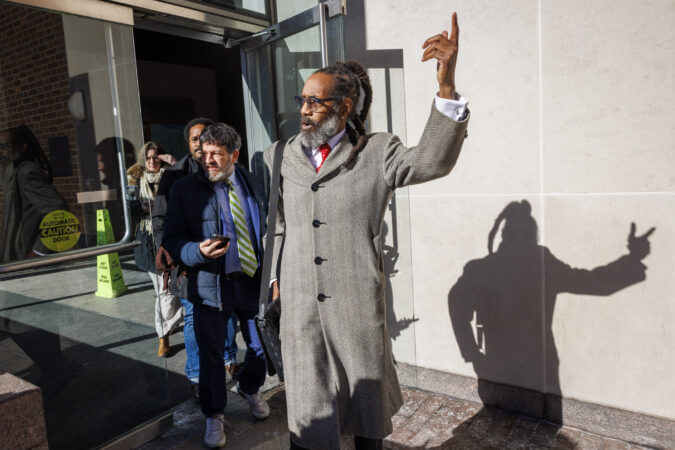
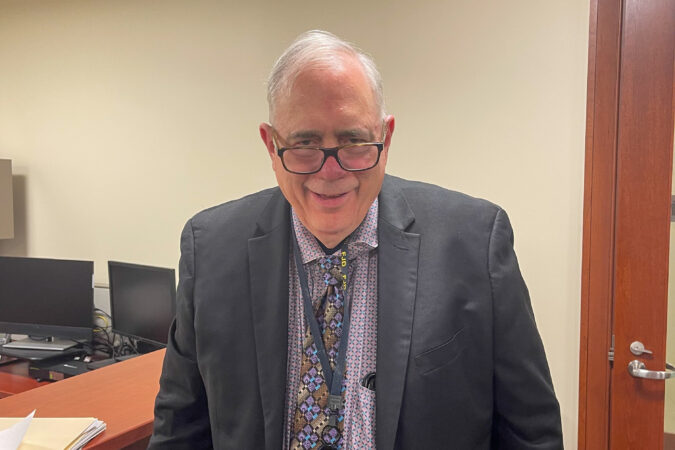
A Montgomery County attorney specializing in personal injury claims against large corporations has been suspended for three years following allegations that he misled at least 16 clients on settlement offers that did not exist.
Brian McCormick was a former partner at Ross Feller Casey, a Philadelphia-based personal injury firm. The conduct that led to his suspension revolves around misleading statements to clients he represented in two types of cases.
The first set of clients are thosewho alleged that using agricultural giant Monsanto‘s weed killer, Roundup, caused their cancer. These cases can be lucrative, as Philadelphia juries returned verdicts against Monsanto for millions, and even billions, of dollars.
Due to the large number of Roundup lawsuits, a federal court appointed a special master who developed a formula to calculate settlement amounts. At least nine of McCormick’s clients rejected the formula-proposed settlement and the attorney claimed he was attempting to obtain, or had obtained, higher offers, according to the suspension order issued last month by the Pennsylvania Supreme Court’s Disciplinary Board.
McCormick went as far as to ask some clients to sign releases to obtain the nonexistent settlements. As his clients waited for their expectedchecks, according to the order, the attorney reassured them via emails, text messages, and voice messages between 2023 and January 2025 that the delays were part of the settlement process.
“[McCormick] did not settle any of the Roundup cases on behalf of the nine clients who rejected the formula determined settlement amount,” the order says.
Clients suing Monsanto weren’t the only ones McCormick misled. The attorney followed a similar pattern with at least seven clients who sued manufacturers of Risperdal, an antipsychotic drug that thousands of men said led them to develop excessive breast tissue, according to the disciplinary board.
McCormick promised settlement to his Risperdal clients, the order said, and at one time even gave a client a specific date on which he should pick up his check “knowing that no settlement check existed.”
Neither McCormick or the attorney who represented him during the disciplinary proceedings responded to a request for comment.
Ross Feller Casey terminated McCormick in January 2025 after finding that he had clients sign settlement agreements even though no settlements were reached.
“The firm’s owners terminated Mr. McCormick’s employment on the very same day they learned of his conduct, and they immediately took steps to ensure that the interests of all affected clients were protected,” said Mario Cattabiani, a spokesperson for Ross Feller Casey.
McCormick admitted to the misconduct and consented to the three-year suspension, the order says. The board noted that he “accepts full responsibility for his misconduct and is remorseful.”
“I did not see anything that concerned me about the condition, because there are some marks, but I can’t portray where they are from, and I do not believe that they’re in a worsened condition now,” Judge Cynthia M.Rufe told reporters after spending about 30 minutes in the storage facility, which is controlled by the National Park Service even though the center is not part of the agency.
After the inspection, Rufe ordered the government to safeguard the removed exhibits and mitigate any potential harm to them.
The suit came after National Park Service employees took down educational panels about slavery from the President’s House at Independence National Historical Park on Jan. 22.
It also follows a hearing in federal court Friday in which city attorneys and U.S. attorneys sparred over the removal of the exhibits. During the hearing, Rufe, a George W. Bush appointee, chastised a U.S. attorney representing President Donald Trump‘s administration for talking out of “both sides of his mouth” and making “dangerous” arguments.
Rufe issued an order Monday preventing further removals or changes to the President’s House until further notice. The judge also instructed the city to file a new injunction request to clarify what it is seeking, and gave the U.S. attorney’s office another week to respond.
Michael Coard, leader of advocacy group Avenging the Ancestors Coalition, which helped develop the President’s House in the early 2000s and is providing legal backing to the city’s suit, told reporters that he didn’t see any damage to the panels, but “there was desecration.”
What he saw was“completely disrespectful, demoralizing, defiling, and desecration,” Coard said, noting that the signs, many of which are fragile, were not cushioned and that some were against the wall on a cement floor.
Coard joined the judge and attorneys in the storage facility as a representative for the coalition’s legal support of the lawsuit.Members of the press were not allowed to review the exhibits.
Before going to the storage facility Monday, Rufe and the attorneys gathered in the lobby of the Constitution Center, which has a direct view to Independence Hall from Arch Street to Chestnut.
Rufe invoked the iconic building Friday to set the stakes for the city’s suit against Interior Secretary Doug Burgum, acting National Park Service Director Jessica Bowron, and their respective agencies.
“It’s threatening to think that that could happen to Independence Hall tomorrow,” Rufe said during the hearing. “It’s frightening to think that the citizenry would not be involved in such an important change.”
After having been in limbo for months, the informational panels were removed by Park Service employees using wrenches and crowbars onorders from the Trump administration, provoking outrage from Philadelphians. The displays were then piled into the back of a pickup truck and transported to the storage facility.
Mijuel Johnson (left), a guide with The Black Journey: African-American Walking Tour of Philadelphia, shows Judge Cynthia Rufe (right) around the President’s House in Independence National Historical Park on Monday.
The exhibits are stored by the National Parks Service in a room accessible through the National Constitution Center, but the civics-nonprofit “does not oversee that space, and Center staff have no knowledge of what materials may be stored there,” a spokesperson said in a statement.
After reviewing the removed exhibits for roughly 30 minutes, Rufe and her law clerks walked across Independence Mall toward the President’s House, a block away at Market Street. The judge stood at the site of the former home of Presidents George Washington and John Adams, as a guide from The Black Journey explained the historical significance of the slavery exhibit.
“This is the first of its kind memorial on federal property to the enslaved people of the United States,” said Mijuel Johnson, who led the tour.
Johnson directed the judge’s attention to panels telling the story of the presidency and the enslaved Africans who lived on the property, part of the routine tour script, but the walls were bare.
Rufe asked questions about the removed panels and what exhibits could be further removed. She walked around the site, still not cleared of the previous weekend’s snow, to review a wall in which the names of the President’s House enslaved residents are etched into the stone.
Judge Cynthia Rufe views the “Memorial to Enslaved People of African Descent in the United States of America,” during a visit to the President’s House in Independence National Historical Park on Monday. This exhibit was not removed with other panels at the site on Jan. 22. The judge visited the site while hearing the Parker administration’s suit to have President Trump’s administration restore the panels.
Outside the location that served as the slaves’ quarters, adjacent to the Liberty Bell, Rufe paused and took out her glasses to read a memorial panel.
“This enclosed space is dedicated to millions of men, women and children of African descent who lived, worked and died as enslaved people in the United States of America,” the panel read. “They should never again be forgotten”
Relevant to the core disagreement in the lawsuit, about who has the right to change the site, the bottom of the memorial panel bears the names of two entities: the National Park Service and the City of Philadelphia.
The hearing centered on the city’s request that the judge order that no more exhibits be removed from the President’s House and that the already-removed exhibits be protected as the effort to return them is litigated.
Mayor Cherelle L. Parker’s administration is “fighting” to restore the panels, City Solicitor Renee Garcia told reporters after the hearing.
“I want to be very clear that we want those panels back up, but we also do not want anything else to come down,“ Garcia said.
Judge Cynthia M. Rufe wasn’t ready to issue a ruling after the daylong hearing in the courthouse across the street from the historic site. On Monday, she wants to visit the President’s House and ensure that the removed exhibits being stored in a National Park Service storage facility adjacent to the Constitution Center are not damaged. She asked the federal government to maintain the status quo until she makes her decision.
But with the nation’s 250th anniversary celebration being planned for the site in dispute, Rufe said she would not let the case drag into the spring or summer.
The George W. Bush-appointed judge chastised the attorney representing the government, Assistant U.S. Attorney Gregory in den Berken, for talking out of “both sides of his mouth” and making “dangerous” arguments.
The federal government argued the injunction request was invalid on procedural grounds, and that the removal was lawful because, in den Berken said, “the government gets to choose the message that it wants to convey.”
“That’s horrifying to listen to,” Rufe said. “Sorry. That’s not what we elected anybody for.”
The judge asked the assistant U.S. attorney to imagine Germany removing a monument for the American soldiers who liberated the Nazi concentration camp Dachau in an effort to erase the crimes of the Holocaust. “What are we doing here? Are we speaking truth and justice?” Rufe asked.
In another notable exchange, the judge read Trump’s posts from then-Twitter in 2017 in which he lamented the removal of statutes of confederate leaders.
“Sad to see the history and culture of our great country being ripped apart with the removal of our beautiful statues and monuments,” Trump wrote. “You can’t change history, but you can learn from it.”
Rufe asked the assistant U.S. attorney to reconcile that sentiment with Trump’s directive to remove slavery-related exhibits.
“Is this a desire to change history?” the judge asked.
In den Berken declined to respond or opine on the motivations of the president or decision-makers at the Department of Interior, and returned to procedural arguments.
A three-way collaboration
Friday’s hearing marked the first timethe City of Philadelphia and Trump’s administration have gone head-to-head in court during his second term.
The city sued Interior Secretary Doug Burgum, acting National Park Service Director Jessica Bowron, and their respective agencies Jan. 22 while Park Service employees were dismantling educational exhibits about slavery at the President’s House.
The President’s House, which opened in December 2010, seeks to inform visitors about the horrors of slavery and memorialize the nine people George Washington enslaved there while he resided in Philadelphia during the early years of the United States. All information at the site is historically accurate.
The exhibits were dismantled after increased scrutiny from the Trump administration. Last year, Trump and Burgum issued orders calling for content at national parks that “inappropriately disparage Americans past or living” to be reviewed and potentially removed.
Garcia argued the removal of exhibits violated federal law and an agreement between the federal government and the city, and caused imminent harm.
“The contents of the removed panels are critical context to share the stories of the individuals enslaved at the president’s home and their fight for freedom” Garcia said.
The President’s House exhibition was the results of yearslong collaboration between the city and the federal government that spanned multiple presidential and mayoral administrations, Garcia said. Two former mayoral chiefs of staff testified to the city’s extensive work alongside the National Park Service.
“I could not imagine that anybody would decide, after all that it took, together, and that we always had each others back, that they would over night tear it down,” said Everett Gillison, chief of staff under former Mayor Michael Nutter. “It boggles my imagination.”
Valerie Gay, the city’s chief cultural officer, also testified to the historical importance of the site to Philadelphians and to visitors for the upcoming 250th anniversary celebrations.
Comcast owes a California company $240 million for infringing on its patent when rolling out a voice-activation feature on television remotes over a decade ago, a Philadelphia federal jury decided.
Promptu Systems Corporation “pioneered” the technology that allows users to control their TVs through voice commands spoken into a remote control in the early 2000s, the company said in legal filings.
After Comcast launched its voice remote in 2015, Promptu sued, accusing the telecommunication giant of utilizing patented technology. Comcast executives were aware of the patents, expressed interest in Promptu’s capabilities as early as 2001, and took steps to launch a remote in collaboration with Promptu, the 2016 lawsuit said.
But Comcast ended up launching a voice-controlled remote on its own, which the suit says was based on technology that Promptu shared with Comcast in demonstrations.
“Promptu technology was exploited without permission over a 10-year period,” said Jerry Ivey, an attorney at the law firm Finnegan who represented the company in the trial.
Propmtu’s attorneys asked the jury to award $346 million, based on a calculation that the company was owed 30 cents per month for each Comcast cablecustomer over a 10-year period.
At the conclusion of a six-day trial in the Eastern District of Pennsylvania, on Jan. 23, jurors found that Comcast infringed on two patents but that only one of them was valid. The jury deliberated for less than three hours and awarded $240 million.
The verdict will have no impact on Comcast’s customers, a company spokesperson said.
“We will continue to pursue our claim in court against Promptu to show that these expired patents are unenforceable and appeal this decision if necessary,” the spokesperson’s statement said.
During the 10 years of litigation, Comcast attacked the validity of the patents. It is pursuing a separate claim arguing that the patent that led to the verdict is not enforceable.
Promptu technology wasn’t ahead of its time, the attorney representing Comcast told the jurors, and the start-up did not succeed in becoming a big player in the TV remote market.
“Investors from Promptu have come here to ask you to not only bail them out of their investment in Promptu but to give them an enormous windfall in profits that they didn’t earn in the marketplace and for technology that they didn’t invent,” said Douglas Lumish, a Weil Gotshal & Manges attorney representing Comcast, according to court transcripts.
By 2017, Comcast said it had voice-activated remotes in about 12 million homes — roughly half its subscribers at the time — and the company expected to process 4 billion voice commands that year. In a 2024 meeting with investors, Comcast said their remotes were processing about 50 million voice commands daily in five languages, allowing users to quickly access cable and streaming content.
The company also developed a large-button voice remote with accessibility in mind. Both have been provided to their cable subscribers at no additional cost.
Comcast’s large-button remote with added accessibility features, as released in 2022.
Even if they don’t directly bring in revenue, these kinds of tech features can help a company keep customers. (In recent years, Comcast has been losing more cable customers than gaining, but it counts its Peacock streaming service among areas of growth.)
On Thursday, Comcast reported its 2025 financial results, showing flat revenue from the year before. The company touted Peacock’s 22% increase in paid subscribers, the release of Wicked: For Good from its studios division, and growth in its mobile phone business.
Its count of cable customers decreased — again — to 11.2 million.
Also this month, Comcast agreed to a $117.5 million settlement to resolve 24 lawsuits surrounding a 2023 data breach. The settlement received initial approval from a judge, with a final approval hearing scheduled for July.
Justice Kevin Dougherty, writing for a unanimous court, said that “protecting the efficiency of justice” including the “independence, integrity, and impartiality of the judiciary” is more important than “Cohen’s interest in posting partisan political content on Facebook where the volume and tone of his posts cast him as little more than a spokesperson for the Democratic Party.”
The former judge was suspended without pay for the remainder of his term in October 2024 by the Pennsylvania Court of Judicial Discipline. The court said Cohen violated the Code of Judicial Conduct when he posted Facebook comments that skewered Republicans and praised Democratic politicians or left-leaning causes.
The Court of Judicial Discipline’s opinion called Cohen’s behavior unprecedented, especially his refusal to stop posting after having been warned by his superiors.
“No other case in the history of the Court of Judicial Discipline has involved such defiance post decision,” the opinion reads. “Judges are not allowed to broadcast their political leanings. People appearing before judges deserve fair, unprejudiced jurists.”
Cohen, 76, is a former member of the statehouse who represented lower Northeast Philadelphia for 42 years. He was elected to the bench in 2017 and was suspended months before the end of his term. Regardless of his suspension, Cohen was ineligible to run for a second term because of Pennsylvania’s judicial mandatory retirement age, which is 75.
The Inquirer was unable to reach Cohen based on publicly available contact information.
Cohen appealed his suspension to the Pennsylvania Supreme Court, telling The Inquirer at the time, “this is a pathbreaking case seeking to severely limit freedom of speech.”
The exact limit on the First Amendment rights of sitting judges is an open question of law that neither the Pennsylvania Supreme Court nor the U.S. Supreme Court hasruled on previously.
Judges have the right to free speech, including some degree of political speech during their ownelections, wrote Dougherty, who campaigned vigorously for his own retention on the state’s highest bench this fall.
The task of the Supreme Court was to balance the right of a sitting judge freedom of speech with the integrity of the courts in Pennsylvania.
Cohen “advocated for legislation,“ ”cheered on Democratic politicians,” and “criticized the policies of predominately Republican legislatures,” Dougherty wrote. The former judge made more than 60 posts that were of concern, all from a Facebook page identifying himself as a judge.
“An ordinary citizen comparing Judge Cohen’s posts with the posts of our state politicians would likely see little distinction,” Dougherty wrote.
The ruling does not intend to muzzle judges or dissuade all social media use, the opinion said. But judges should, like everyone else, make sure that their social media use “comports with the rules of the position they have voluntarily attained or the organization they have voluntarily chosen to join.”
Justice David Wecht also wrote a concurring opinion in which he said it was important to distinguish whether political speech froma judge was made during a retention campaign, in which avoiding politics completely is impossible.
“If the people of this Commonwealth wish to imagine their judiciary to be as pure as the driven snow, and if the people are under some impression that elimination of judicial elections would advance such purity, they are free to alter their Constitution,” Wecht wrote.
Comcast is one step closer to settling 24 class-action lawsuits over a 2023 data breach that potentially impacted over 30 million former and current customers.
Impacted customers would be able to receive three years of financial monitoring and identity-theft-protection service and choose between reimbursement of expenses up to $10,000 or a $50 cash payment, if the current terms of the agreement gain final approval.
Comcast did not oppose the request for preliminary approval of the agreement, but noted in court records that it does not agree with the facts as told by the representatives of the customers and denies all liability.
Neither a representative for the Philadelphia-based telecommunication giant nor its attorneys responded to requests for comment.
The settlement resolves 24 lawsuits, filed in federal courts nationally and consolidated under one judge in Philadelphia.
The flurry of litigation centers on a data breach that took place between Oct. 16 and 19, 2023, when hackers gained access to Comcast’s internal system. The hack was possible because the company delayed implementing a patch to fix a vulnerability in the Citrix Systems cyber software that Comcast has relied on, court records say.
Citrix warned customers of the problem and offered a solution in an Oct. 10 bulletin, court records say. The class attorneys accuse Comcast of having failed to heed the cyber-company’s advice, allowing hackers to take advantage of the vulnerability.
The data breach made the usernames, passwords, names, contact information, privacy questions and answers, and last four digits of Social Security numbers for more than 30 million customers potentially available to hackers, according to court records.
The settlement agreement was reached following a November negotiation session after multiple attempts at mediation.
The $117.5 million would be used to compensate customers, administer the settlement process that includes notifying customers and processing claims, and pay attorneys’ fees. The class attorneys could pocket as much as one third of the total settlement amount, according to court filings, but the exact amount will be decided later.
U.S. District Judge John Milton Young has set a final approval hearing for July. Once the settlement is approved, Comcast and Citrix will be released from all claims related to the data breach.
Citrix’s attorneys did not respond to a request for comment.
A month and a half after Collingswood’s mayor defiantly disagreed with a solicitor’s opinion that she should recuse herself from a vote to grant an ambulance-services contract to Virtua Health, which employs her husband, Daniela Solano-Ward signed a settlement agreement nullifying the vote and recusing herself from the matter.
The shift followed a lawsuit filed by James Maley, who sits alongside Solano-Ward on the South Jersey borough’s three-person commissioners board, accusing the mayor of a conflict of interest. The lawsuit asked a judge to discard a Dec. 1 vote outsourcing Collingswood’s EMS services to Virtua Health.
A Superior Court of Camden County judge, Francisco Dominguez, issued a temporary restraining order on Jan. 5 prohibiting Collingswood from executing the contract with Virtua or making changes to the borough’s EMS services.
The borough settled the lawsuit Jan. 16, in an agreement that voided the contract with Virtua, and requires Solano-Ward to recuse herself from all EMS-related matters, according to a copy of the settlement obtained by The Inquirer.
The settlement instructs Maley and Commissioner Amy Henderson Riley, Solano-Ward’s political ally and the borough’s director of public safety, to devise a plan to select an independent consultant to assist in deciding the future of Collingswood EMS services and a schedule for a public process.
“Today’s settlement allows us to move forward as an elected body in a way that reflects the values of Collingswood,” Maley said in a statement. “My concerns in filing this action were rooted in two core principles: avoiding conflicts of interest under the law and ensuring that major decisions, especially those involving essential services like Fire and EMS, are made with full public awareness and engagement.”
Solano-Ward confirmed she would limit her involvement with the EMS process moving forward, but said she trusted Henderson Riley and Maley to “roll up their sleeves and work together to find a resolution in a timely manner.”
The catalyst for the dispute was concerns that Solano-Ward heard from the borough’s fire chief over his department’s lack of capacity to respond to the 4,000 calls it receives annually, the mayor said in a December commissioners meeting. The emergency medical services generate $450,000 a year, the lawsuit says.
The mayor held a meeting with Collingswood’s fire chief in August, the suit says, and brought her husband, a Virtua critical-care physician, Jared Ward. He does not hold leadership positions in the South Jersey health system.
Virtua was one of two entities that responded to a request for proposals to provide ambulance services for the borough.
At the Dec. 1 commissionersmeeting, Solano-Ward defended her husband’s involvement, saying the borough does not have a medical officer and she wanted to be sure no question went unasked.
“We reached out to our attorney and he agreed that there could be a conflict of interest,” the mayor said in the meeting. “To which I respectfully disagree and I will be voting on the matter.”
The commissioner’s board approved the contract in a 2-1 vote, with Maley opposing. Before the vote, the former long-time mayor, who held the position from 1997 until May, expressed outrage at the lack of transparency during the process and Solano-Ward’s participation.
“It’s absurd, it is wrong, it’s unethical,” Maley said.
The contentious lawsuit spilled into the January commissioners meeting, in which residents seemed divided on the issue. Some complained about the perceived lack of transparency by Solano-Ward in the decision to privatize the borough’s EMS department, while others accused Maley of neglecting the ambulance services during his tenure as mayor.
Apalosnia Watson, 39, was arrested Jan. 14, nine months after Syvir Hill drowned in her home. She was charged with third-degree murder and endangering the welfare of a child, court records show, and was released from custody on a $500,000 unsecured bail bond as her case progressed.
Philadelphia police officers arrived at the house on the 900 block of East Schiller Street on April 15 to find medics performing CPR on an unresponsive 1-year-old, according to the arrest warrant. Watson had left Syvir and two other children alone in the bath and had gone downstairs to get food from the microwave, she told the officers that night. On her way down to the first floor, she heard “flipping in the water,” and when she returned to the second-floor room, the toddler was motionless, facedown in the water. The foster parent attempted CPR and called 911.
“I don’t want to go to jail,” Watson told the officers on the scene, according to the police report. “It happened so fast.”
S. Philip Steinberg, a Schatz Steinberg & Klayman defense attorney representing Watson, said that Watson did not act with malice, which is required for a murder charge.
“It’s a tragic accident but one that Ms. Watson would not have any criminal liability for,” Steinberg said.
The Philadelphia Medical Examiner’s Office conducted a postmortem exam the day following Syvir’s death, but the cause and manner of death remained pending for months. On Dec. 4, the office ruled that the cause of death was drowning and the manner of death was homicide.
A spokesperson for the Philadelphia District Attorney’s Office said charges were brought shortly after the homicide investigation was reopened following the ruling on the manner of death.
Death investigations can vary in how long they take due to a number of factors, saidJames Garrow, a Philadelphia health department spokesperson.
“Above all, our priority is to conduct thorough and accurate investigations,” Garrow said in a statement.
The long gap between the exam and the medical examiner’s ruling concerns A.J. Thomson, a Zafran Law Group attorney representing Syvir’s biological mother in a wrongful-death lawsuit filed in October against Watson and two child-welfare agencies.
Thomson filed a second lawsuit in November, asking a Philadelphia Common Pleas Court judge to compel the medical examiner to make a ruling. That suit accuses Lindsay Simon, the city’s chief medical examiner, of refusing to perform her mandatory public duty, “blocking the family’s ability to settle the estate, pursue insurance and benefits, and understand the cause and manner of death.”
Judge Sierra Thomas Street ordered Simon on Dec. 11 to certify the cause and manner of death within 10 days.
Thomson credited the lawsuit with pushing the medical examiner’s office to issue a finding, which ultimately came before the judge ruled.
The lawsuit from Syvir’s biological mother accuses Tabor Children’s Services and Northeast Treatment Centers of failing when they placed Syvir in the home and did not remove him even though visit notes showed a varying number of children living in the crowded house.
At the time of Syvir’s death, multiple other children lived in the home, including the 4-year-old and 2-year-old who were also in the bathtub, Hill’s 4-month-old sister, and a 17-year-old, according to the police report.
The lawsuit further alleges that after Watson left the children alone in the bath, the 2-year-old told Syvir, “you are not my brother,“ and held the toddler’s head underwater. The police report makes no such claim. The accusation comes from a child’s interview with investigators from the city’s department of human services, Thomson said.
The clothing company founded by Kim Kardashian will pay $200,000 to end an investigation accusing it of charging New Jersey customers sales tax for a period of five years, even though clothing is exempt under state law.
The New Jersey Office of Attorney General accused Skims Body of improperly collecting sales tax between 2019 and 2024. The 6.625% levy applies to most consumer goods, but clothing and footwear for human use — including Skims’ underwear and shapewear — are largely exempt.
The attorney general’s office said that Skims engaged in “unconscionable business practices.” But the company said it “mistakenly” collected the taxes for half a decade, according to the consent order.
“As prices on everything from clothing to groceries soar, our office is committed to protecting our residents from unlawful practices that drive up the prices they pay at the register,” said New Jersey Attorney General Matthew Platkin in a statement.
The tax collection was due to a “technical error,” a Skims spokesperson said in a statement. The company fixed the error and said it is proactively reaching out to all affected customers to provide refunds.
“We remain deeply committed to the highest standards of compliance and have implemented enhanced safeguards to prevent any recurrence of similar issues,” the spokesperson said.
Skims agreed to pay $200,000 to close the investigation, according to a consent order dated Jan. 16. The agreement also requires the company to “use best efforts” for the next four years to refund customers.
The sales tax collected by Skims has already been remitted to the New Jersey Division of Taxes, the attorney general’s office said.
The company had been issuing refunds to New Jersey customers who complained about the sales tax charge even prior to the agreement, according to social media posts.
The apparel brand is valued at $5 billion, according to Fortune, and serves mainly Gen Zers and millennials.
Women working at Trump National Golf Club in New Jersey were required to wear tight uniforms that were too small and told to “smile more,” as they endured “sexist remarks about their bodies and menstruation,” according to two lawsuits by former employees.
Both complaints describe a similar pattern: A female employee at the Bedminster club, working in a culture hostile to women, reported safety issues and was penalized for doing so.
Maria Hadley, a former banquet server who worked at the private club, owned by President Donald Trump, from February until she resigned in August, says she suffered from a retaliation campaign after she reported a manager who spiked the drink of an underage employee with vodka. And Justine Sacks, who was hired as clubhouse manager in 2023, says that she was demoted and ultimately fired in May for reporting health and safety violations, including maggots and mold in the soft-serve machine.
The lawsuits describe a hyper-sexualized work environment, in which female staffers were expected to endure sexual harassment from workers and guests.
Both Hadley and Sacks are represented by the New Jersey-based McOmber McOmber & Luber law firm. Their attorneys did not respond to a request for comment.
The Bedminster club is operated by the Trump Organization, which is led by the president’s sons Eric Trump and Donald Trump Jr. Neither the club nor general manager David Schutzenhofer responded to requests for comment.
In this July 15, 2017 file photo, President Donald Trump turns to wave to the people gathered at the clubhouse as his walks to his presidential viewing stand during the U.S. Women’s Open Golf tournament at Trump National Golf Club in Bedminster, N.J.
Vodka-spiked Shirley Temple
Hadley, a banquet server, says women were treated as “a prop” and “were expected to look pleasing, work without complaint, and stay quiet,” according to the lawsuit filed Monday in New Jersey Superior Court in Camden. Male managers and coworkers harassed their female peers, and called teenage guests “sexy.” When a guest inappropriately touched Hadley, a manager advised “they pay a lot of money to come here, just ignore it.”
Hadley reported in June that a bartender poured vodka into the Shirley Temple of an underage employee without the employee’s consent, saying it would give her energy.
The bartender was temporarily fired, but the club’s management launched a retaliation campaign against Hadley, the complaint says. She was denied a $1,000 bonus, isolated by her peers, and received worse hours and assignments.
Hadley resigned via email in August, the suit says, writing to the club’s human resources representative that her employment became “unbearable.” The club accepted her resignation, which the suit calls “effectively forcing her out,” and rehired the fired bartender.
That man went on to make sexual comments about 12-year-old guests with braces in September, according to a message Hadley sent to Eric Trump, the executive vice president of Trump National, which is included in the complaint.
Maggots and mold
Sacks joined Trump National in January 2023 and was told from the onset to expect “gender differences” in treatment, according to the suit, which was filed last month in Monmouth County Superior Court. She was instructed to hire women based on their looks, and received complaints from multiple direct reports about offensive, gender-based comments from male managers and peers.
The complaints were dismissed by Schutzenhofer, who told Sacks to “vote the mean girls off the island,” the suit says.
The club’s management slowly stripped Sacks’ authority and stopped inviting her to leadership meetings, in what the suit says was retaliation for elevating the complaints of female staffers.
People play golf next to the Trump National Golf Club Bedminster’s clubhouse in Bedminister on Friday, June 9 , 2023, in New Jersey.
Sacks was also retaliated against for reporting unsanitary conditions at the club’s kitchens, which included expired and unlabeled food, and the bistro operating without running water, the complaint says. There were flies all over the clubhouse in the fall of 2023, which even Donald Trump complained about, according to the lawsuit.
Management told Sacks that she was new to working at golf clubs and was “wrapped too tight” when she complained about the sanitation conditions, as well as employees drinking and vaping on the job. But even Eric Trump asked the club’s management team to make sanitation a “huge focus” because a few health inspectors are “eager and politically motivated to try and embarrass us,” according to a copy of an email sent by the executive vice president in January 2024.
The clubhouse’s bistro-area became more unsanitary, and by September 2024 the soft-serve machine was filled with maggots and mold, the suit says.
Sacks was placed on a 90-day performance improvement plan in December 2024 for, among other issues, being “off-putting,” the complaint says. In April, Sacks was reassigned from clubhouse manager to managing the bistro, which the lawsuit calls a clear demotion.
Schutzenhofer terminated Sacks in May, the lawsuit says, shortly after the club “failed miserably” a state health inspection.