In an order issued Tuesday, Common Pleas Court Judge Vincent Johnson awarded Fiorillo $35,000 in compensatory damages and $125,000 in punitive damages. The ruling follows a hearing at which the defendant, Ryan Nelson, did not show up.
“It feels great,” Fiorillo said. “Part of what I said at the beginning is thatI would like to support some LGBTQ causes that the defendant very much would dislike his money going to, and I intend to pursue the matter.”
Nelson never responded to the lawsuit, which was filed in April, and no attorney is listed for him on the court docket. James Beasley, the journalist’s lawyer, did receive a threatening email in June from a person identifying as “RN” that included an expletive aimed at Fiorillo in the subject line.
“Tell him to unblock me and stop hiding behind facebook,” saidthe message, which was presented to the judge. “If not i guess i can go to his house and ask him.”
That email is no longer active, and The Inquirer was unable to reach Nelson through publicly available contact information.
“The only person to agree with you likes seeing dudes in dresses dance with kids,” Nelson wrote.
Fiorillo asked if the suggestion was that he was a pedophile because he performs with a drag queen.
“Yes victoria, corruption of a minor. Same as pedophile,” Nelson wrote, adding, “or do you prefer groomer.”
In another comment, Nelson said he’d “bet” that if a drag queen molested children, Victor would “prob write how the kids are homophobic.”
The lawsuit said others on the Facebook group had read Nelson’s comments, and provided an example of another person repeating them.
“There is nothing in the First Amendment that says you can call me a pedophile and a child molester,” Fiorillo previously told The Inquirer.
Fiorillo was the only witness at the Oct. 8 hearing. Johnson interrupted the lawyer’s line of questioning to ask questions of his own, the reporter said. The judge asked over and over how many times Nelson made the comments.
The Philly Mag writer recalled thinking from the stand that the hearing was not going in his favor, but felt a great sense of moral victory when the judge issued his decision.
He said he hopes the ruling sends a message to all the “keyboard warriors out there, in their mother’s basement.”
“That’s a very big part of why I went down this road to begin with. Part of defending free speech is standing against things that aren’t covered by that.”
Syvir Hill died April 15 while taking a bath with two other children, according to the complaint, which was filed last week in Common Pleas Court. The children were unsupervised by their foster mother, who had left the bathroom to cook in the downstairs kitchen.
The lawsuit accuses the foster mother, Tabor Children’s Services, and Northeast Treatment Centers of negligence that contributed to Syvir’s death.
Tabor Children’s Services had certified the mother and the Harrowgate rowhouse as eligible to foster Syvir, the suit says. The city had contracted Northeast Treatment Centers to monitor the child’s progress.
“We are deeply saddened over this tragic loss of life,” Regan Kelly, president and CEO of Northeast Treatment Centers, said in a statement. “In the meantime, we are doing everything possible to support the family as they deal with their grief.”
Tabor Children’s Services did not respond to a request for comment.
Syvir entered the city’s foster-care system before he was 6 months old and “eventually” was placed in the Harrowgate home, according to the complaint.By December 2024, the rowhouse was crowded, with three foster children — including Syvir — in addition to young family members of the foster parent living in the house.
When Syvir’s sister needed a foster home, Northeast Treatment Centers sought to place the girl with her brother despite noting that the foster parent was “at her max with the children in her home,” according to the complaint.
The foster parent emptied a storage room, which the lawsuit calls a “closet,” to make room for the sister, who was just a few months old.
In visits to monitor Syvir’s progress, Northeast Treatment Centers staff noted the varying number of children living in the house. The complaint accuses the caseworkers of “failing to remove Syvir Hill and other children in an already overcrowded foster home.”
The lawsuit details the horrific last moments of Syvir’s young life based on Philadelphia Department of Human Services investigation records obtained by A.J. Thomson, the attorney who filed the lawsuit.
Three children were splashing in the water, the suit says, when at one point a 2-year-old turned to Syvir and said, “You are not my brother!” The child held Syvir’s head underwater, while a 4-year-old “screamed in terror,” according to the complaint.
When the foster mother came back to the upstairs bathroom, Syvir was submerged. She called police, who found Syvir nonresponsive upon arrival. He was pronounced dead at St. Christopher’s Hospital for Children.
No arrest has been made in connection with the death, the lawsuit says. Court records show no criminal charges against the foster mother.
“All three of these children are victims of the acts of the Defendants in this case and a system that simply piles children into homes without supervision, training, or enforcement of rules,” the lawsuit says.
A judge had removed Syvir from his parents because that house was deemed unsafe for him, Thomson said. The parents visited Syvir and followed the protocols in an effort to get their children back.
Thomson accuses the agencies of failing to inform the parents of their son’s death.
“When he dies, they are the last to find out,” the attorney said.
Both child welfare nonprofits have been previously involved in cases where children were abused, severely injured, or died.
Northeast Treatment Centers settled a lawsuit for $6.5 million in 2022 following the death of 3-year-old Hope Jones, who was beaten to death in foster care. The nonprofit also settled a case involving the death of Su’Layah Williams, a 1-year-old who was allegedly kicked to death in a West Philly foster home. The terms of the settlement were not disclosed.
“There has to be a better way than to put these kids with people who are killing them,” Thomson said.
Three Pennsylvania Supreme Court justices are on the ballot this November, when voters will decide whether to extend each of their tenures for another 10-year term.
There are currently five justices who were elected as Democrats and two who were elected as Republicans on the bench.
This year’s retention race has drawn heightened attention, as Republicans have launched a campaign to sink the retention bids of Justices Kevin Dougherty, Christine Donohue, and David Wecht — all elected as Democrats in 2015 — in hopes of flipping the court’s balance.
Still, advocacy groups on both sides of the aisle are trying to make the case that control of the judicial seats is critical, if not existential, to their causes.
The Inquirer reviewed the cases that have come before the Pennsylvania Supreme Court over the last decade, and how Dougherty, Donohue, and Wecht voted.
Here are some of the most significant cases of their tenure.
The ruling came in a case challenging a state law limiting Medicaid funding for abortions except in cases involving rape, incest, or danger to the life of the mother.
The 219-page majority opinion included language that strongly endorsed access to abortion as a right derived from the Pennsylvania Constitution, but the judges could not agree on whether they were ready to make the call in this case.
The majority sent questions about a specific funding limit and broader constitutional protection for abortion access back to a lower court — setting up another round of legal battles that will likely, again, make it before the state Supreme Court.
How the three justices ruled: Donohue wrote and Wecht joined the majority opinion. The two justices said they believed Pennsylvania’s 1971 Equal Rights Amendment clearly established a right to abortion access. Dougherty wrote a separate opinion saying this case did not call on the court to opine on the right to an abortion. “At least, not yet,” he wrote.
Voting rights and elections
The Pennsylvania Supreme Court has ruled on a litany of challenges to Pennsylvania’s election rules, many of them focused on the state’s mail voting law.
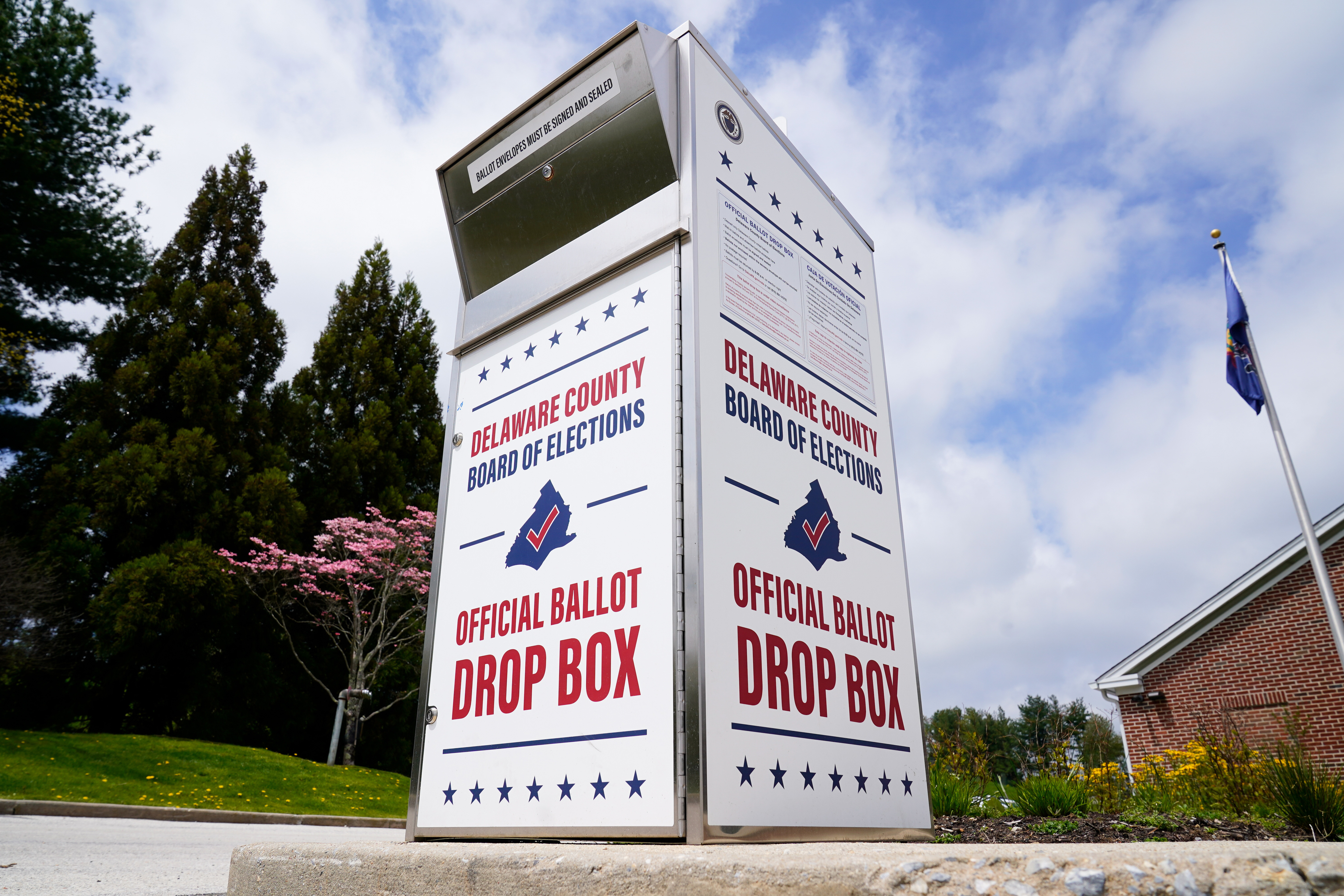
In 2020, the court issued a major ruling ahead of the presidential election allowing for ballot drop boxes and allowing local election offices to accept ballots for up to three days after the election as long as those ballots were postmarked by 8 p.m. on Election Day.
How the three justices ruled: Donohue, Dougherty,and Wecht each joined the majority opinion in the redistricting case. On the 2020 election ruling, Dougherty and Wecht joined the majority opinion. Donohue joined the majority opinion but dissented from the decision to extend the ballot deadline.
A Delaware County secured drop box for the return of mail ballots in 2022 in Newtown Square.
Education
A Delaware County school district had the right to challenge Pennsylvania’s school-funding system, the Supreme Court ruled in 2017.
The decision affirmed the role of courts in ensuring that state funding leads to equitable education and sent the case back to Commonwealth Court to proceed with litigation.
In 2023, Commonwealth Court ruled, as part of the same case, that the state’s funding system for school districts led to disparities that prohibit quality education for all students, rendering it unconstitutional.
How the three justices ruled:Wecht wrote the majority opinion, which Dougherty and Donohue joined.
Environment
Pennsylvania, which partly sits on the natural gas-rich Marcellus Shale, found itself in the midst of the fracking boom of the early 2000s.
The state sold leases to oil and gas companies to drill wells. The practice raised questions, and legal challenges, as to how the state should use the revenues in the context of the Pennsylvania Constitution’s Environmental Rights Amendment.
The court ruled in 2017 that it is unconstitutional for the state to userevenuefrom the royalties of oil and gas leases on public land to pay for anything but conservation and maintenance of the environment.
How the three justices ruled: Donohue wrote the majority opinion, which Dougherty and Wecht joined.
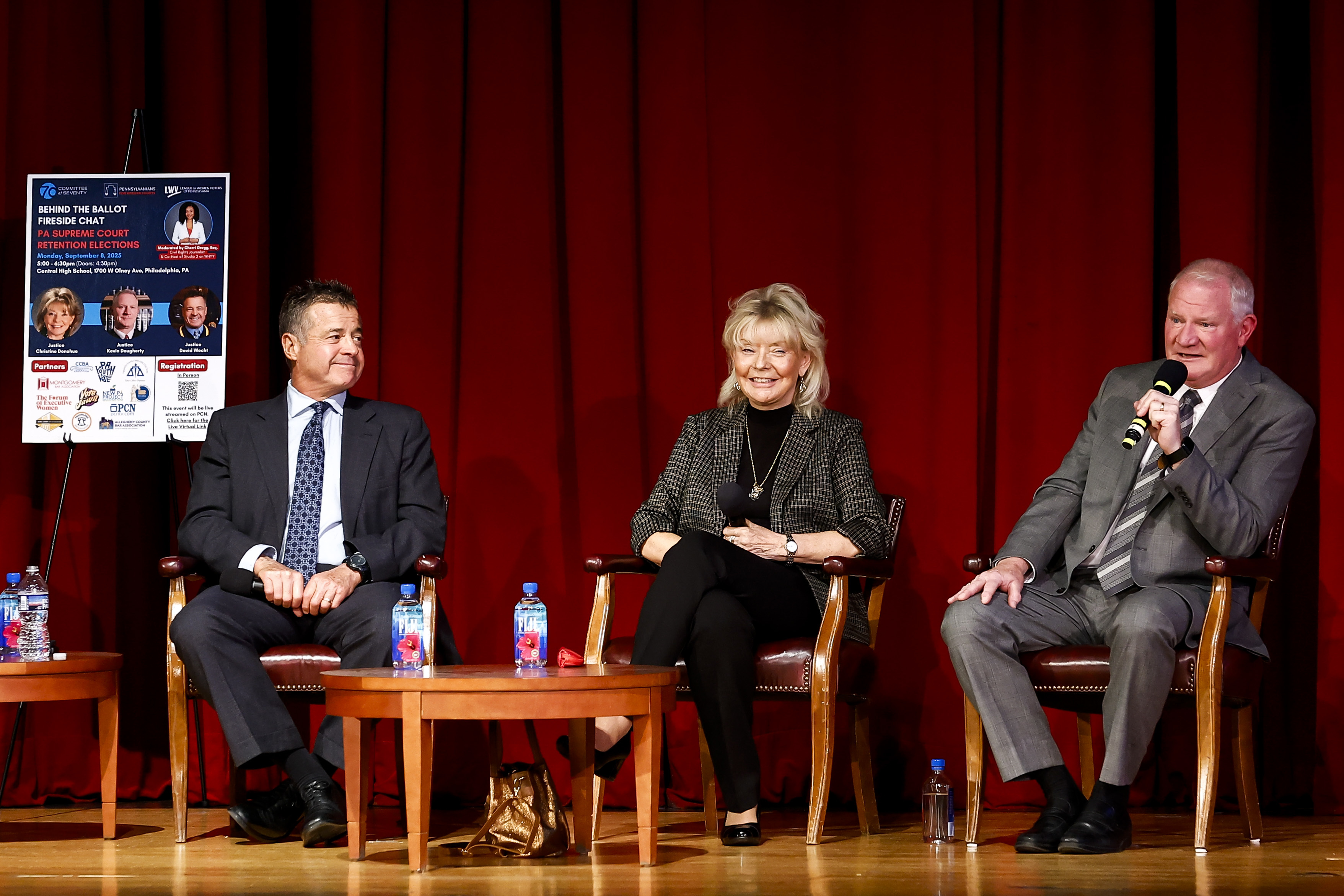
Justices David Wecht, Christine Donohue and Kevin Dougherty sit onstage during a fireside chat at Central High School in September. The conversation was moderated by Cherri Gregg, co-host of Studio 2 on WHYY, and presented by the Committee of Seventy, Pennsylvanians for Modern Courts, and the League of Women Voters of Pennsylvania.
Criminal justice
Pennsylvania has had the nation’s largest population of juvenile lifers: people sentenced as minors to life in prison without the possibility of parole.
In 2017, the Supreme Court made it harder to sentence a juvenile to life. The majority opinion says there is a “presumption” against life without parole for juveniles who are found guilty of murder, and prosecutors must show that the offender is “unable to be rehabilitated” when seeking the sentence.
How the three justices ruled: Donohue wrote the majority opinion, which Dougherty and Wecht joined.
Second Amendment
In 2024, for the first time, the Pennsylvania Supreme Court issued an opinion that interpreted the wording in the U.S. Constitution that gives Pennsylvanians the right to bear arms.
In Stroud Township, a zoning ordinance that prohibited the discharge of a firearm within the township’s borders limited the possible locations for shooting ranges. The ordinance barred a resident from having a personal outdoor shooting range on his property, and he sued the township for violating his Second Amendment rights.
The court ruled that the ordinance was constitutional.
How the three justices ruled: Dougherty wrote the majority opinion, which Wecht joined. Donohuewrote her own opinion, reaching the same conclusion as the majority but disagreeing with the analysis.
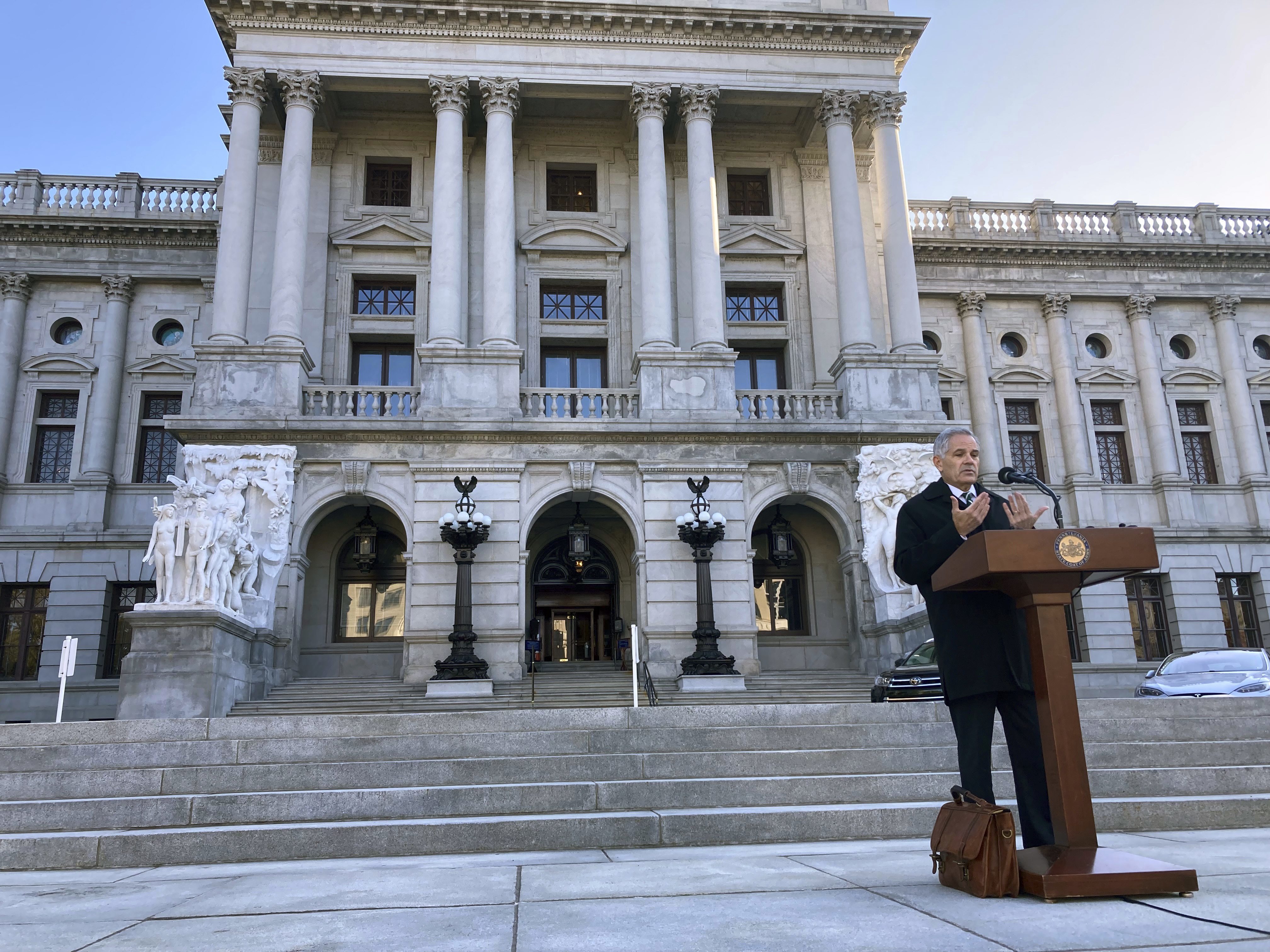
Philadelphia District Attorney Larry Krasner talks about Republican-led efforts to investigate his record addressing crime and gun violence at the Pennsylvania Capitol in 2022.
The decision said that the articles of impeachment approved by the state House in late 2022 were “null and void” because they were sent to the Pennsylvania Senate on the last day of that year’s legislative session, and the upper chamber did not complete its work on the matter before the next session began. The attempt to carry the process from one two-year session to the next was unlawful, the court said.
The majority also agreed with a lower court that none of the articles of impeachment met the required legal standard of “misbehavior in office.”
How the three justices ruled: Donohue and Wecht joined the majority opinion. Dougherty did not participate in the deliberations.
How the three justices ruled: Wecht wrote the majority opinion, which Donohue joined. Dougherty wrote a separate opinion, saying he would allow for Cosby to be retried, but would order his testimony from the civil case to be suppressed.