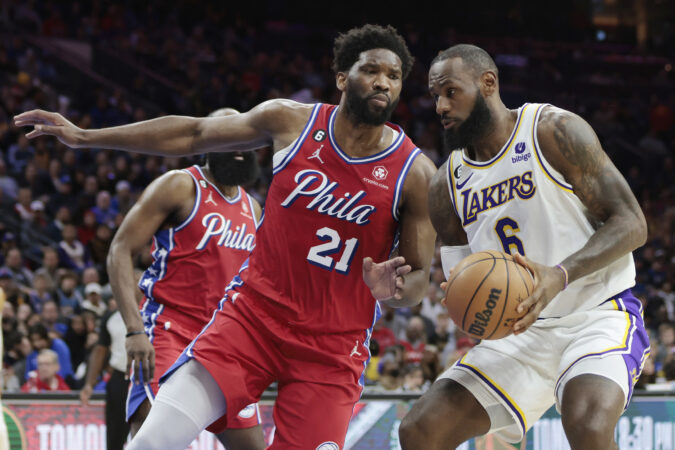
Author: Marcus Hayes

  • LeBron James signing with the Sixers could save Joel Embiid’s career

    LeBron James signing with the Sixers could save Joel Embiid’s career

    Biblical references seem to find a home with the Philadelphia 76ers.

    Moses Malone arrived in 1982 and immediately led the team to the promised land.

    Allen Iverson arrived in 1996 and, five years later, took the Sixers to the NBA Finals. For fans of gospel music, his nickname, “The Answer,” recalled a 1970s hit by Andraé Crouch and the Disciples: “Jesus is the Answer.”

    And, now, LeBron, who was nicknamed “King James” while still a princeling high school star in Akron, Ohio. His namesake, England’s James I, commissioned a translation of the Bible in the early 17th century, the one with all the “Thee’s” and “Ye’s” and my personal favorite, “believeth.”

    Of course, LeBron isn’t a Sixer. Not yet.

    But if, by some miracle, he does agree to a tiny free-agent contract this summer, LeBron surely would make the Sixers a favorite to win their first Larry O’Brien Trophy since Larry O’Brien actually was the NBA commissioner.

    This has not been the case largely because the sole benefit of “The Process,” the disastrous, failed rebuilding strategy that began in 2013, is Joel Embiid. He has MVP talent, and he won the award just three years ago, but his rank unprofessionalism — a refusal to commit to fitness, too much energy focused on extracurriculars, an obsession with personal milestones — has kept Embiid and the Sixers from reaching their potential.

    And, while King James might not save Embiid’s mortal soul, with his special brand of tough love, LeBron very well could save Embiid’s mortally afflicted career.

    Come on, man

    Before this goes any further, I don’t believe LeBron is interested in playing basketball for the Philadelphia 76ers. Yes, the Sixers somehow traded Paul George and picks for Jaylen Brown — Celtics president Brad Stevens must’ve lost either a bet or his mind — which instantly turned the Sixers into a viable Eastern Conference contender. Nevertheless, I think it’s likely that LeBron’s representatives are using this (feigned) interest as leverage to land the King elsewhere.

    I don’t think he wants to be in Philadelphia, which is a much tougher city than anywhere else he’s played. I don’t think he wants to deal with an organization with an absentee owner and a first-time top executive. I don’t think he wants to be associated or represent one of the most dysfunctional organizations in major league sports over the past 14 years, and with the NFL’s Jets, Raiders, and Browns in that mix, that’s quite an accomplishment. I don’t think he wants to play for the NBA veteran minimum, which is all he’d get at this point.
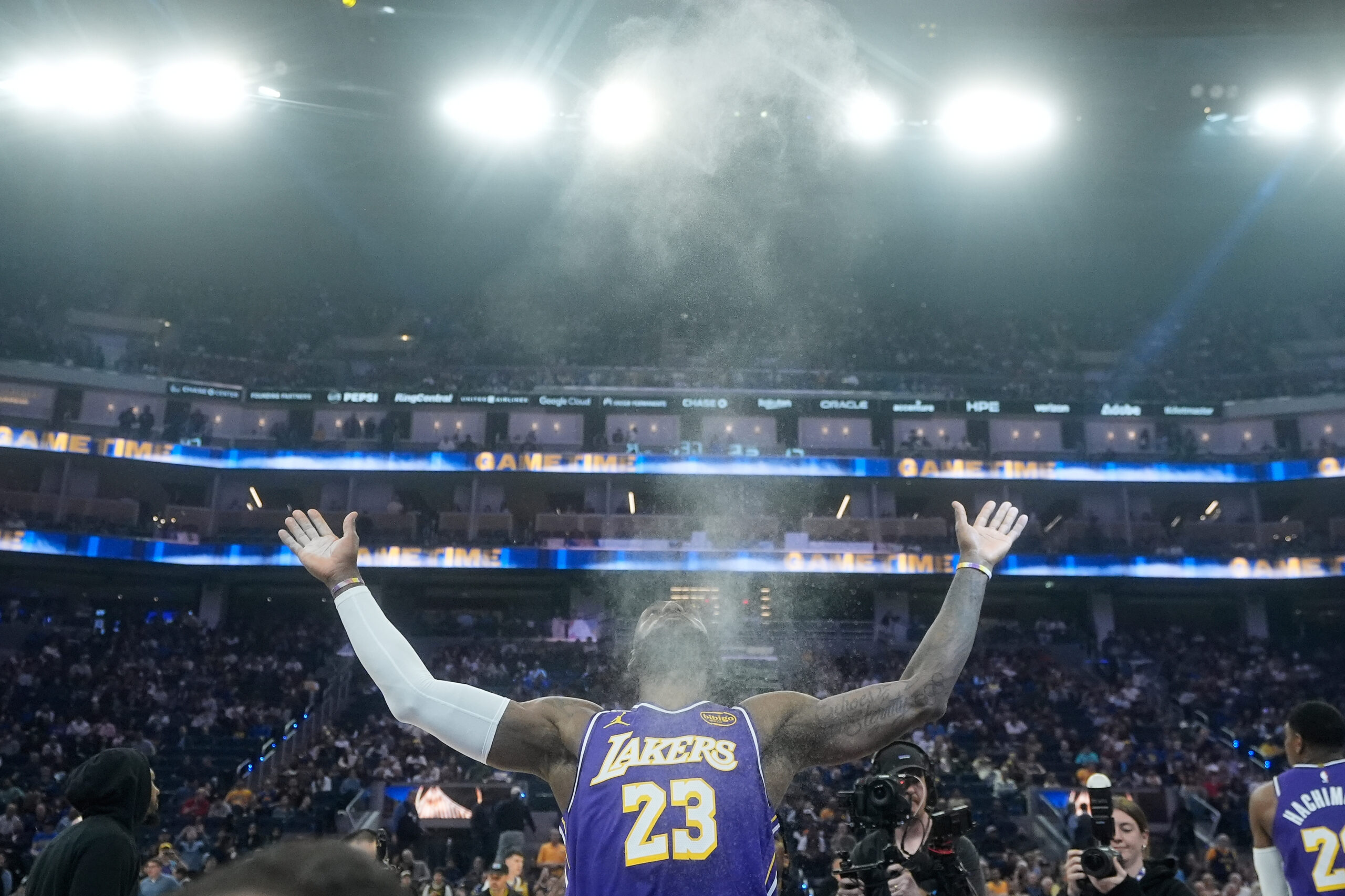
    Would LeBron James be willing to play for the veteran minimum?

    There is a chance, though, that his desire to be worshipped will override his desire to give himself the best chance to win a fifth title, because nowhere would worship him the way Philadelphia fans would worship him, just as they worship Moses for leading them out of the wilderness.

    LeBron already did that in Cleveland and Miami. And, as my colleague David Murphy pointed out on Monday, his agent, Rich Paul, said the Knicks disqualified themselves from the LeBron sweepstakes when they won a championship. Murphy’s logic: He could not end their drought, and therefore could not be seen as their savior, so why bother?

    Now that Jalen Brunson did what Patrick Ewing failed to do, LeBron can’t do it. But he damn sure could help Embiid do what Embiid will be paid an average of $62.6 million a year to do over the next three seasons.

    The Answer

    Winning a title, even with James on board, requires getting the most of whatever’s left out of Embiid, who has bad knees and a bad attitude. Getting the most out of Embiid is something that championship-winning coaches Doc Rivers and Nick Nurse abjectly failed to do, and they had three years apiece.

    This is different.

    LeBron, who is 41 with the body of a 32-year-old, is entering his 24th season. He has gotten the best out of his teammates everywhere he’s gone, whether it’s fellow Hall of Fame-caliber players like Dwyane Wade, Chris Bosh, and Kyrie Irving or lesser lights such as Kevin Love and Mo Williams. He has won four championships because of it. You think Austin Reaves — an undrafted tweener guard who averaged 10.8 points in four years of college — would have been offered $185 million by the Lakers for the next four years if LeBron hadn’t been his teammate for the past five years?
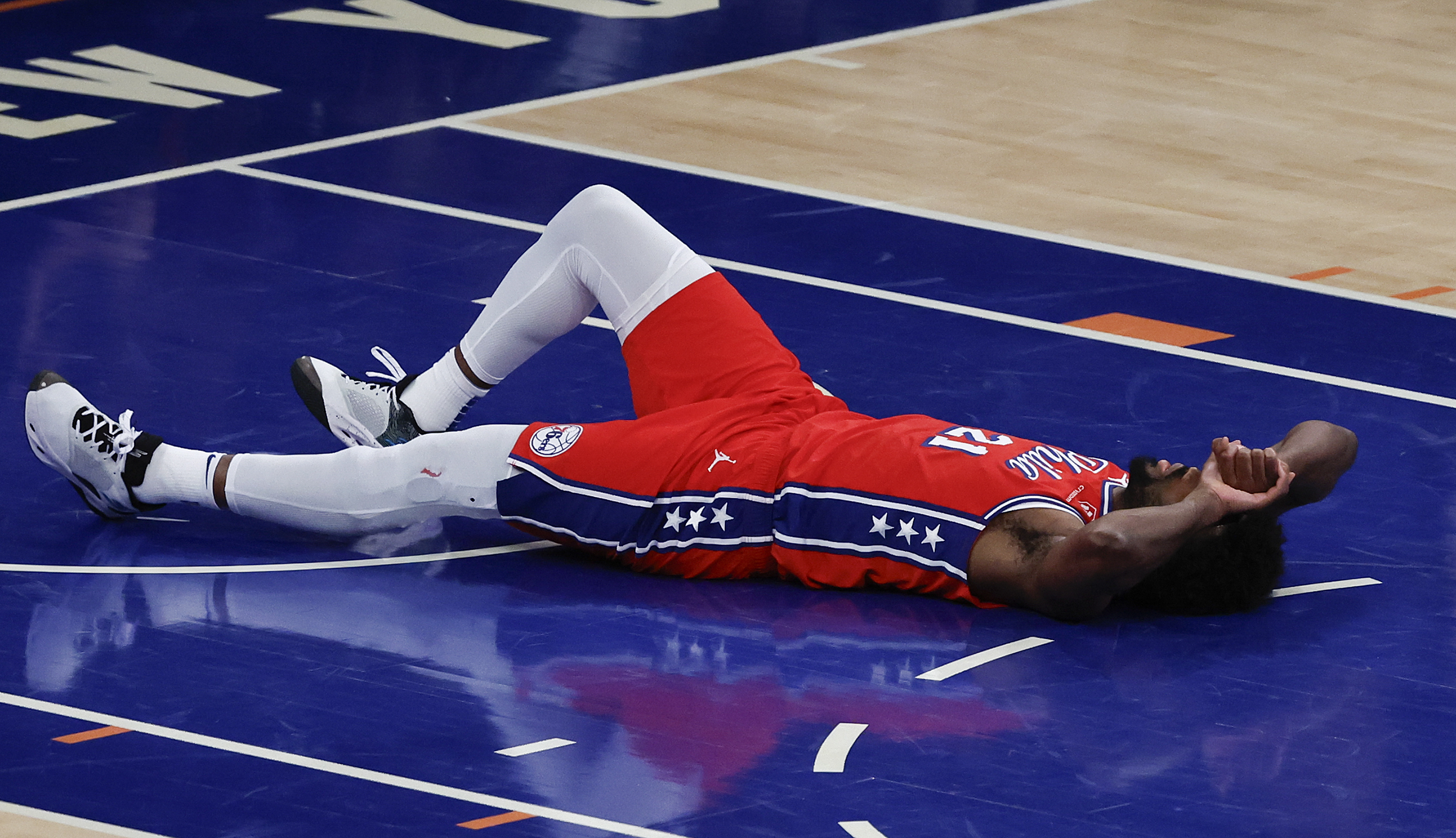
    Injury issues have plagued Joel Embiid throughout his career.

    Embiid, who is 32 with the body of a 42-year-old, is entering his 11th season since being drafted, though he missed the first two seasons with injuries. On the day the Sixers season ended in a playoff sweep (at the hands of those Knicks) he announced that the 2025-26 season had been a success for him. That’s because his left knee no longer impeded him to the degree it had him impeded him for the past several years.

    Embiid then swore that, at the end of this summer, when training camp begins, since his body feels better, he will be better prepared than in recent years to finally get the Sixers … past the second round of the playoffs?

    Talk about aiming low.

    At any rate, no Sixers since Moses himself is better equipped to make sure Embiid follows through on his latest promises. It worked on “big-boned” Charles Barkley.

    Filling a void

    Since trading cornerstone All-Stars Andre Iguodala in 2012 and Jrue Holiday in 2013, the closest the thing the Sixers have had to a real leader was Jimmy Butler, whose headstrong attitude and routine insubordination were less an example of leadership than a display of self-aggrandizement. Embiid was in his third year of actually playing NBA basketball during the Season of Jimmy, and he certainly got that message.

    Who’s the leader now?

    Embiid blew his chance years ago when it became clear that he was less interested in chasing championships than he was in seeking MVP trophies, Olympic gold medals, milkshakes, and Shirley Temples.

    Tyrese Maxey is an ebullient, well-spoken workaholic, but he lacks the gravitas to lead a championship-caliber team, especially when the roster includes more accomplished players like Embiid and Brown.

    As for Brown — well, he might find it hard to lead a bunch of dummies; last week, he called most pro athletes morons when compared to him after unnamed sources accused him of thinking he was the smartest person in the room: “Let’s keep it a buck [100] … The bar is f— low.”

    James might not be a budding chess master like Brown, but he’s smart enough to know how to win a title and how to run a team. After all, the bar is low.

    Do you think LeBron is going to let Joel make his teammates wait for 2½ hours to leave for the plane after road games? Do you think LeBron is going to sit around and wait for Embiid to come to meetings and shootarounds? No. The answer is, simply, no. If you’re James’s teammate, you will be professionalized or you will be marginalized.

    If LeBron James comes to Philly, you will see a fitter, tougher, more committed Joel Embiid.

    James’s habits aren’t contagious, they’re compulsory. It’s a trait he shares with Kobe Bryant. James is kinder than Kobe, and he’s more deferential, but compared to the typical laissez-faire NBA star, he’s neither kind nor deferential.

    He is desperate to win, and if you can’t help him do that, then he doesn’t have time for you.

    Again, I don’t think it’s a realistic outcome. But King James in Philly would be the best medicine for Embiid’s ailing legacy.
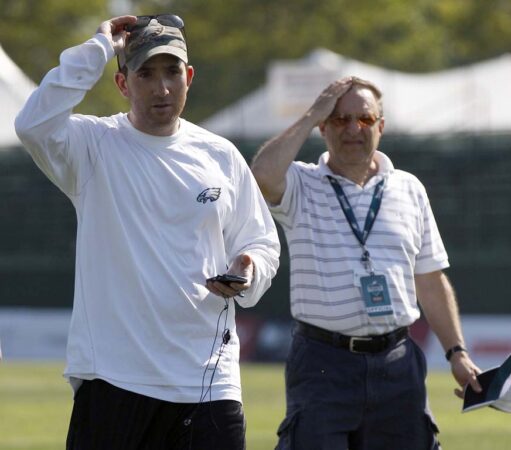
  • Joe Banner reveals Howie Roseman’s greatest hit on Philly guy Cliff Stein’s new podcast

    Joe Banner reveals Howie Roseman’s greatest hit on Philly guy Cliff Stein’s new podcast

    In a world full of blowhard self-promoters who lack expertise in anything outside hat-backward bro-chat, it’s refreshing to hear smart guys talk about interesting stuff in plain words.

    That’s what you’ll get when you find Episode 12 of the Negotiation Warriors podcast on YouTube. On the podcast, former Chicago Bears executive Cliff Stein spends 75 minutes discussing the evolution of NFL front-office practices with a certain former Eagles and Cleveland Browns executive.

    The episode is titled “The Salary Cap Godfather with Joe Banner.”

    This is not hyperbole.

    Banner entered the NFL in 1994 as the salary cap and free agency became the league’s most important drivers of roster construction. Banner was, simply, smarter and braver than almost everybody else making those decisions. It was he who designed the template for salary-cap management, free-agent pursuit, and, to a degree, the maximization of early- and late-round draft pick evaluation.

    Banner (with an assist from his then-administrative assistant, Lee Ann Hartley, who gets name-dropped in the episode), also invented Howie Roseman, who since has led the Eagles to three Super Bowls, two championships, and today generally is considered the NFL’s top executive.

    But everybody has a godfather.

    Banner served a similar role to Stein, a North Philly kid who played receiver for Ron Cohen at George Washington High School and rose from fringe-player agent to the role of senior vice president for 22 years with the Bears, until regime change in 2023 ended his tenure.

    Stein, 59, then became a consultant for college programs dealing with NIL challenges, helped develop software called Front Office 360 to help schools manage their salary caps, and, of course, started the pod. He’s already hosted super-agents Drew Rosenhaus and Peter Schaffer, and he has about 30 more in the bank. None, he said, was as rewarding as the Banner pod.

    “He’s not known as a very tall man, but he is a giant when it comes to negotiations,” Stein says, introducing Banner in anatomically and metaphorically appropriate terms.

    Why Banner? Why now?

    Because the business of the NFL was uncharted territory in the mid-’90s. Banner was Magellan. Now semiretired and semiforgotten by a generation that uses his methods but has no appreciation of their origins, it is important to Stein to shine light on Banner’s massive contribution, from negotiating stadium deals to navigating the cap to assigning values to players on the front and back ends of their careers.

    “My biggest takeaway was the value of a negotiator in the role of a GM, and to show that’s what he was doing,” Stein said.

    Banner’s one of the most respected sports executives, one of the most brilliant minds and canniest negotiators the NFL has ever seen. Some would even call him the Godfather.

    From North Philly to the South Side

    Stein got his business and law degrees at Temple, then began work as a union lawyer in 1994 when he also got his NFL agent’s license. Three years later he partnered with Jerrold Colton, continued his law practice, and acted as agent for a few low-level players such as former Eagles offensive lineman Jerry Crafts and kick returner Michael “Beer Man” Lewis, the 29-year-old Arena Football League speedster who delivered Budweiser but did not play college football. The Eagles cut Lewis in 2000, but he eventually reached the Pro Bowl with the Saints.

    In 2002, the Bears solicited Stein’s application to be their contract negotiator. He spent much of the next 22 years in that role and several others as senior vice president and general counsel, a vital adviser for Bears executives and ownership, until Kevin Warren was hired as president in 2023 and dismissed him.

    Banner was instrumental in nurturing Stein’s development.

    The podcast is 75 minutes of two of the deepest sorts of sports insiders discussing not only the inner workings of the NFL’s well-cloaked business models and practices but also the origins of those practices in the salary-cap, free-agency world, the very creation of which they played a crucial role.

    Detail-oriented pod

    That’s the word that keeps popping up: detail. Banner’s philosophy in preparing to negotiate: be detailed. The key trait in every hire Banner makes or recommends: obsession with detail.

    Stein learned from Banner, and the stories in the podcast episode are clinically detailed.

    They discuss how, under Banner, the Eagles used principals of analytics years before the Moneyball revolution coalesced in the later 2000s.

    The most poignant anecdote involves Roseman’s biggest hit. In 2004, as a low-level assistant — director of football administration — Roseman, in his fifth year with the organization, was eager to add a kid named Jason Peters. At that time, Peters not only was a rookie tight end, but he was on the Buffalo Bills’ practice squad. It would have cost the Eagles nothing to acquire him except a minimum salary. Coach Andy Reid didn’t want to use the roster spot for Peters.

    Four years later, again at the insistence of Roseman, who now was vice president of player personnel, Banner traded three picks for Peters, gave him a six-year, $60 million contract, and watched him go to seven of the next eight Pro Bowls.

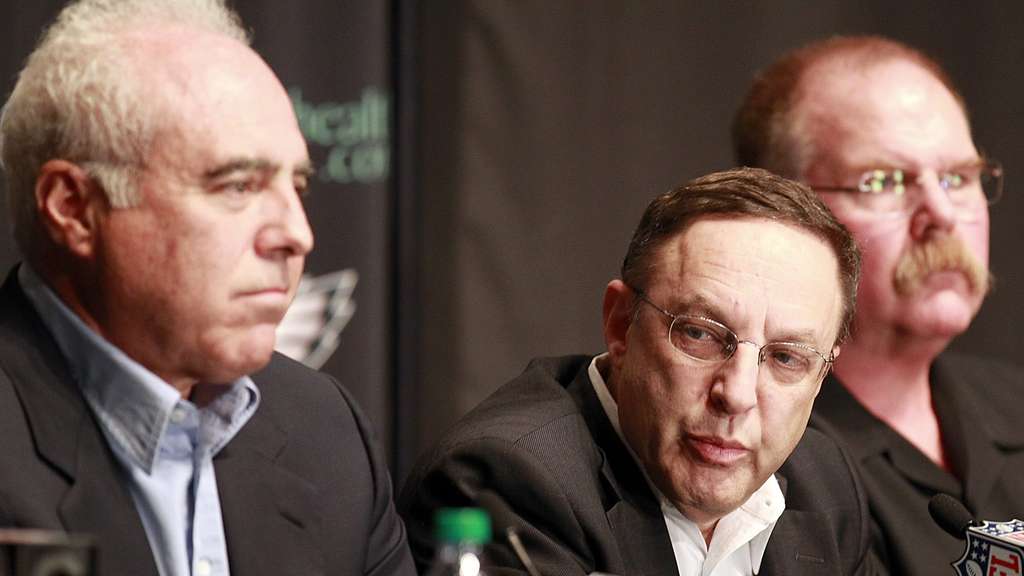
    Joe Banner (center) and Jeffrey Lurie (left) came to the Eagles in 1994.

    Banner had more stories Sunday afternoon, stories that didn’t make the pod. Such as:

    Lurie bought the Birds in 1994, the same year Stein got into the agent game. As newcomers, Banner thought it would be wise to introduce himself and Lurie by entertaining the adversaries.

    In October 1994, at the owners’ meetings in Chicago, Banner and Lurie hosted a cocktail hour for the Eagles’ agents at the time. This was tantamount to Abraham Lincoln, in 1863, inviting Jefferson Davis and his generals to Thanksgiving dinner. The other owners and league office were furious.

    Banner claimed ignorance.

    “We were flagrantly breaking the ‘rules,’” Banner said, “But we honestly didn’t realize how bad a line we were crossing.”

    When Stein was with the Bears, they regularly crossed that line.

    Later in the podcast, in addressing the number of front-office executives who began their careers under Banner, Stein recalled his introduction to Roseman.

    For months, Hartley had received and rebuffed Roseman’s daily letters pleading to join the Eagles — a plea he sent to virtually every other team, too — in any capacity. Roseman’s persistence impressed her, which, Stein said, was key: “I knew that if someone like Lee Ann likes you, you’re going to get the respect of Joe Banner and Jeffrey Lurie.”

    In 2000, after Jets GM Mike Tannenbaum met and vetted Roseman — a Fordham Law graduate, just like Stein — Banner finally relented and gave Howie an interview.

    “I think I saw a little of me in him,” Banner said.

    Banner then fired his current numbers guy and hired Roseman, who took up residency on the corner of Hartley’s desk outside of Banner’s office on the fourth floor of Veterans Stadium. And the rest, as they say, is history.

    Fast forward

    Stein says he’s content to continue his life in Chicago to be near his two grown children, unless some team comes at him with an offer he can’t refuse. For now, he’s eager to plumb the podcast depths. He says he’s gotten a commitment from an executive who said he’d never do a podcast but changed his mind after seeing the Rosenhaus pod.

    Until then, Stein is positively giddy at the chance that the Eagles might make Hartley available for an episode. She now is the vice president and senior adviser to Lurie; essentially, the job she used to do for the president she now does for the owner.

    Imagine the stories she could tell.

    “I’m going to do a behind-the-scenes on someone who knows everything about the business, part of the NFL population that never gets credit,” Stein said. “To have her as a potential guest? I mean, she’s half the reason Howie got hired!”

    As for Banner, he left the Eagles in 2012 to become Cleveland’s CEO, but he was out by 2014. He’s been an adjunct professor at Villanova, a role in which Stein, still in Illinois, now serves at Northwestern. Banner has acted as a consultant on dozens of NFL coach and executive searches; cofounded the 33rd Team group of football consultants with Tannenbaum; acted as an adviser during the 2021 NFL CBA negotiations; and has sat on the board of Patricof Co, a venture capital firm that caters to pro athletes.

    In his dotage, Banner, like so many, splits time between Maine and Florida, enjoys his grandchildren, and hopes to stay relevant and appreciated.

    The pod, and maybe this column, will serve that end.

    “I gotta say, I feel like that 45-year-old golfer who’s leading the Masters after the first round,” Banner said with a chuckle.

    Well, Jack Nicklaus won it at the age of 46. Banner might not be the Nicklaus of the NFL, but he’s at least the Fred Couples of the boardrooms.

    He deserves this moment, and many, many more.

  • Flyers see their Stanley Cup window open as they offer Leo Carlsson the richest salary in NHL history

    Flyers see their Stanley Cup window open as they offer Leo Carlsson the richest salary in NHL history

    The Summer of Bombshells continues.

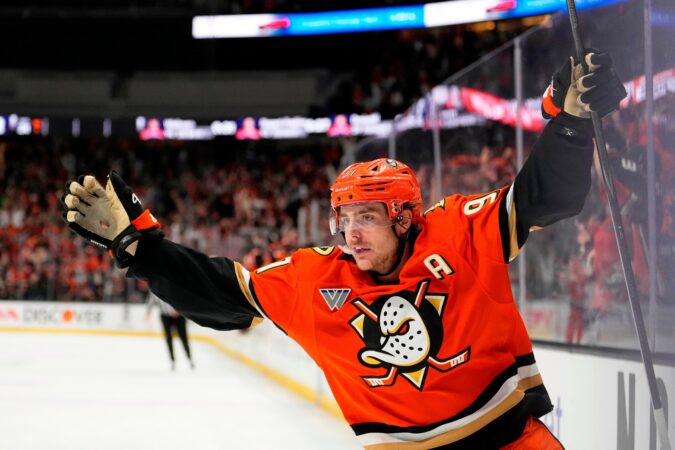
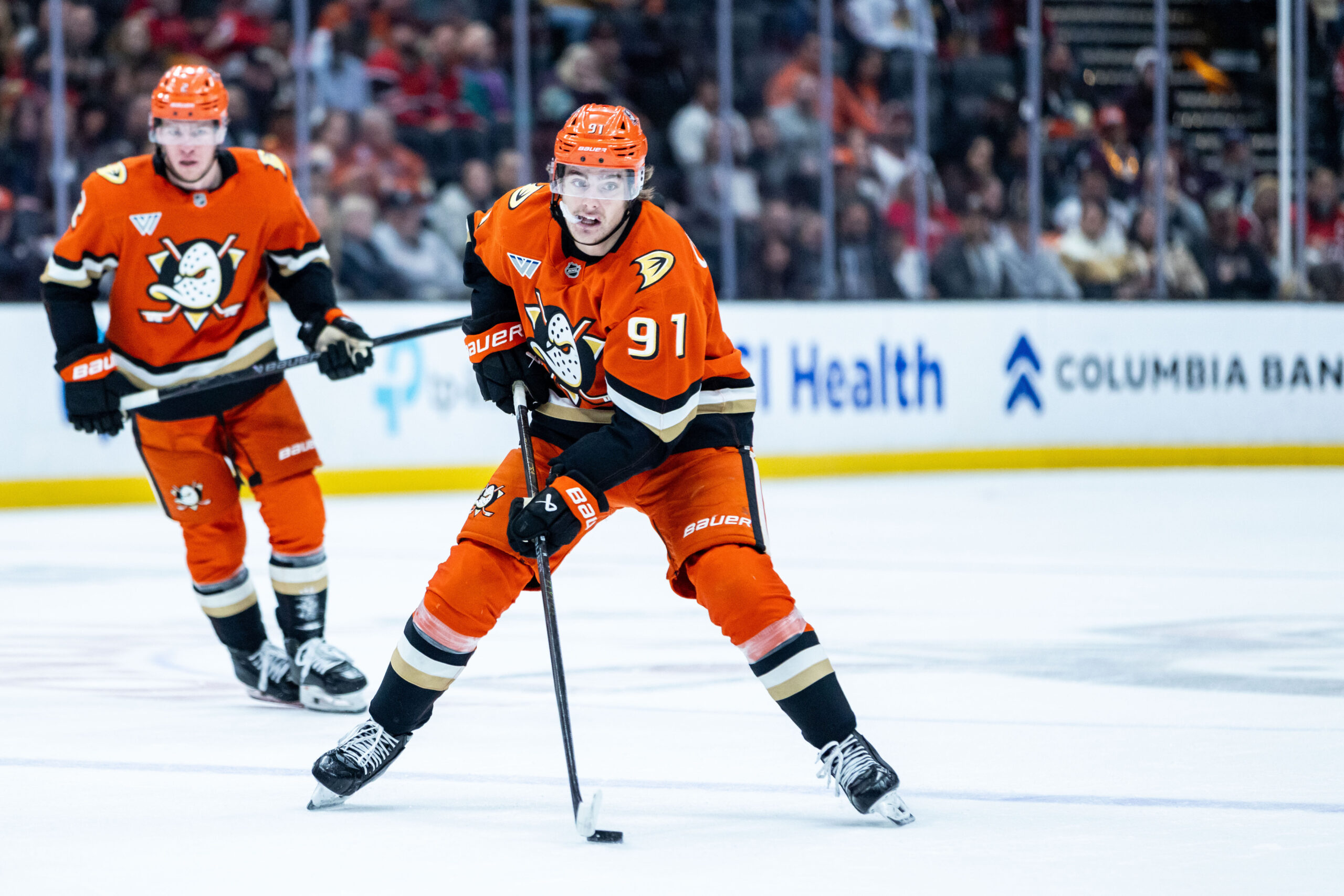
    The Flyers announced they have reached the end of their rebuild on Friday, when they tendered an offer sheet to Anaheim Ducks center Leo Carlsson for five years and $90 million. The average annual value would be an NHL-record $18 million, at least for a while. Carlsson is a restricted free agent, so Anaheim has a week to match the offer. If they do not, the Flyers would send them their next four first-round draft picks as compensation.

    Carlsson would fill the massive hole in the Flyers’ lineup at the first-line center spot that has existed since they traded Claude Giroux in March 2022 and announced the first real rebuild in franchise history. Coincidentally, Giroux, now a 38-year-old free agent, apparently is the consolation prize if the Ducks match the Carlsson offer.

    This is a marked departure from the Flyers’ behavior since Danny Brière became general manager in March 2023. His moves have been conservative. His strategy has been patience. Brière, president Keith Jones, and governor Dan Hilferty have resisted adding pricey veterans and have moved on from aging players to allow younger players the ice time to blossom.

    However, with every move, Brière has said:

    “If something makes too much sense for the future of this organization, we’re going to take it.”

    They took it.

    They had to after this past season.

    They discovered a franchise goalie, they saw their young core overachieve under first-year coach Rick Tocchet, they saw defenseman Travis Sanheim, 30, round into one of the best blueliners in the game, and they realized that their window was opening a year or two earlier than they expected.

    They dabbled in discussions to add other completion pieces, but in the end, going all-in for a 21-year-old budding star in Carlsson just made too much sense.

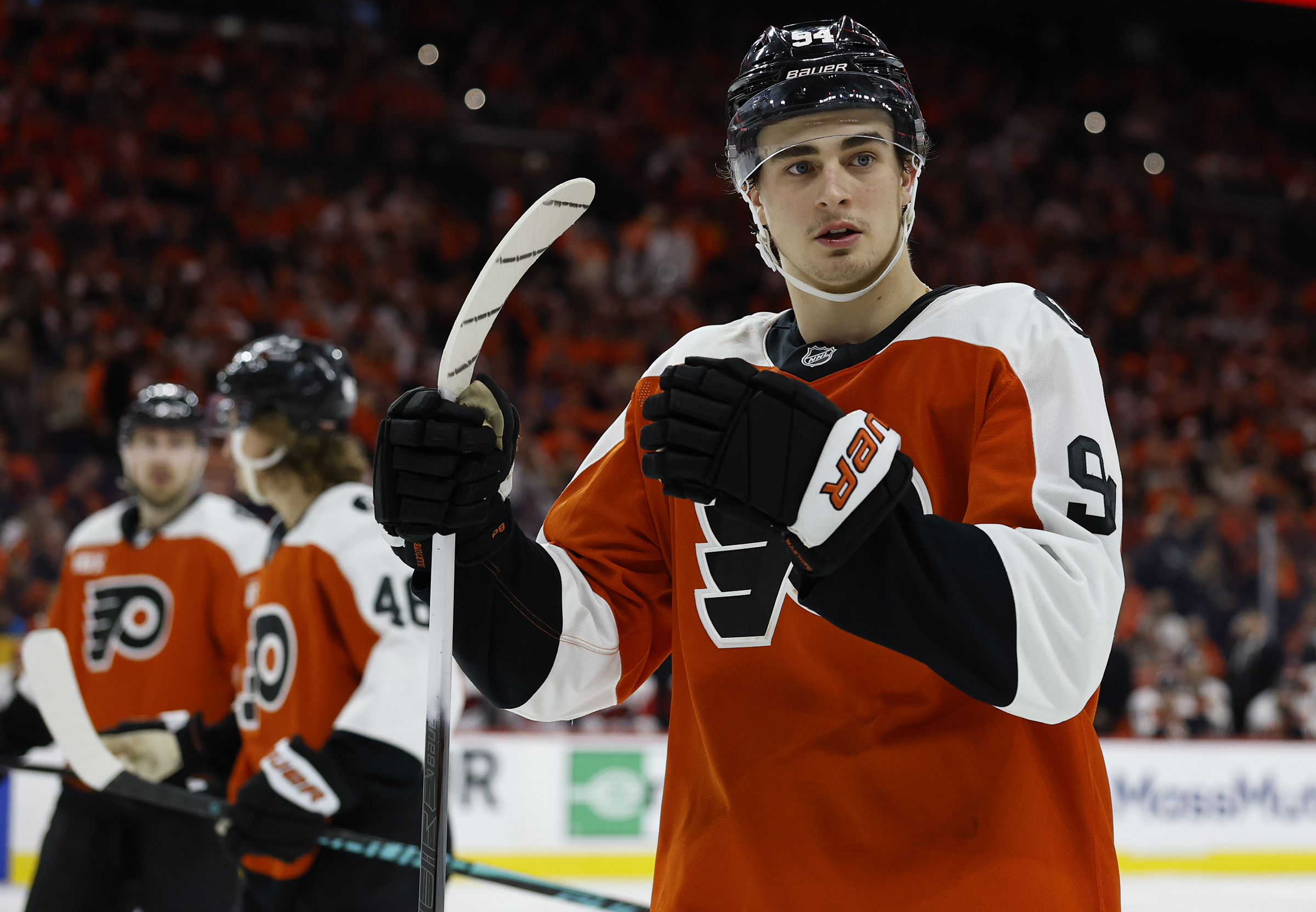
    They made the playoffs on the backs of some of those younger players, such as 21-year-old winger Matvei Michkov, in his second season, and 19-year-old winger Porter Martone, who joined the team straight from the NCAA Tournament, as well as the emergence of late-bloomer goalie Dan Vladař.

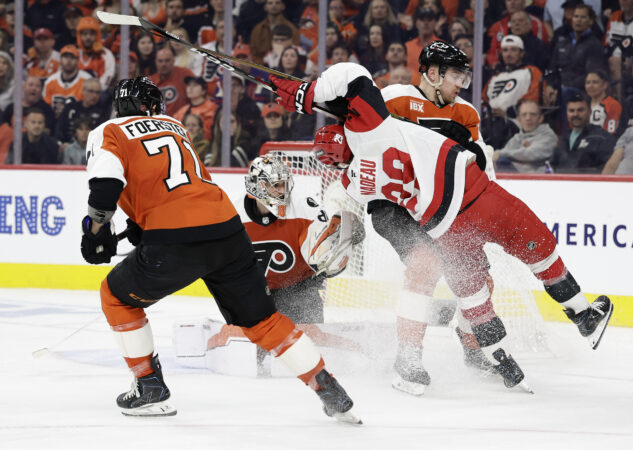
    Then they beat the Pittsburgh Penguins on the backs of some of those same players and, again, Vladař. He just agreed to a five-year extension and will be under contract for the next six seasons. Tyson Foerster, a 24-year-old winger, also had a year left on his contract when, on Wednesday, he signed an eight-year, $56.8 million extension.

    Leo Carlsson, 21, is one of the NHL’s top rising stars. Last year, he averaged just under a point per game for the Anaheim Ducks.

    Now, the Flyers have offered Carlsson the moon.

    Rebuild over.

    This comes on the back of the Sixers’ surprise trade with the Celtics, in which Boston sent star swingman Jaylen Brown, 29, to Philly in exchange for broken-down Paul George, 36, and the crippling contract he carries, as well as two first-round picks and two second-round picks.

    And don’t forget that the Eagles traded disgruntled franchise receiver A.J. Brown to the New England Patriots last month.

    Oh, yeah: LeBron James is considering signing with the Sixers, too.

    Perplexingly, the news about Carlsson might have a larger impact than any of the others — and it could have the least impact as well.

    Four firsts and $90 million is a massive overpayment for a player who, after three seasons, sits firmly in the second tier of NHL stars. But prying a restricted free agent from his team always requires overpayment, and that’s why it happens so seldom.

    That said, Carlsson’s goals and points totals have steadily increased, though his 67 points last season were tied with three other players, including potential new teammate Trevor Zegras, for 57th in the league. The Flyers are banking on the ever-improving Carlsson, who possesses a tantalizing combination of size (6-foot-3, 208 pounds), speed, skill, and goal-scoring ability, growing into one of the league’s top players.

    This (pending) move is sort of a bookend to the trade of Giroux to the Florida Panthers. Part of the return from that deal was cornerstone winger Owen Tippett and a third-round pick that became promising forward Denver Barkey.

    More than anything, though, this move is a recognition that the Flyers believe they are much closer to winning their first title in five decades than they’d previously advertised.

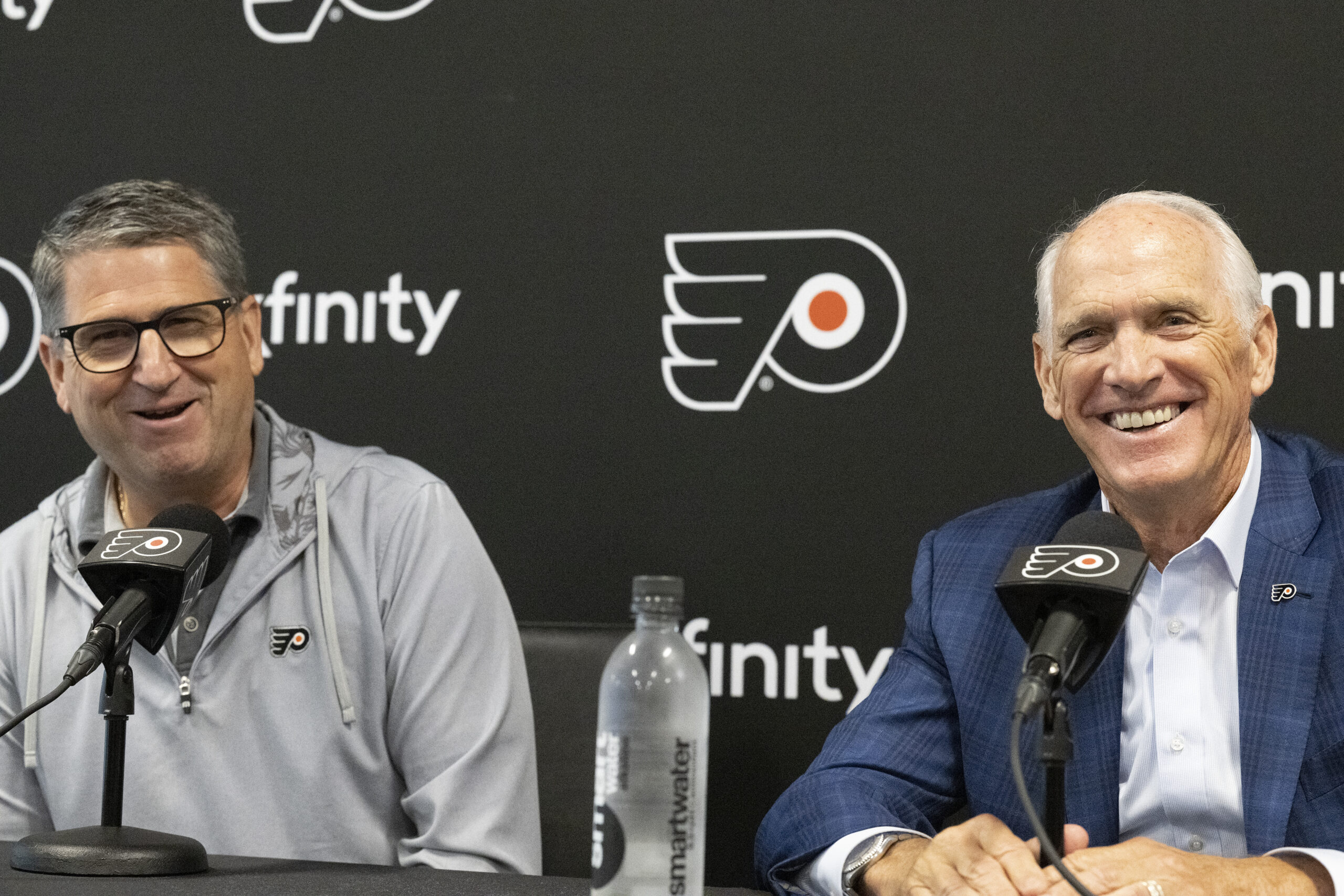
    Flyers general manager Danny Briere’s offer sheet sends a clear signal that he believes the Flyers can win now.

    Between Vladař, Sanheim, 29-year-old All-Star wing Travis Konecny, and 33-year-old captain Sean Couturier, a former first-line center now serving as a fourth-line defensive specialist, the Flyers have a productive veteran core. Couturier has four years left on his deal. Konecny has seven years left.

    What that means is there is a five- or six-year window in which the Flyers, scanning the landscape of the NHL, believe they can win it all. And, apparently, it just made too much sense to add Carlsson to this roster, regardless of the absurd price.

  • The Jaylen Brown trade benefits VJ Edgecombe, who will now have the time he needs to develop

    The Jaylen Brown trade benefits VJ Edgecombe, who will now have the time he needs to develop

    Jaylen Brown loves attention, which is why he went on Twitch to talk about his feelings just hours after releasing a statement on social media expressing his feelings about being traded from the Celtics to the Sixers for a PED cheat and four speculative draft picks.

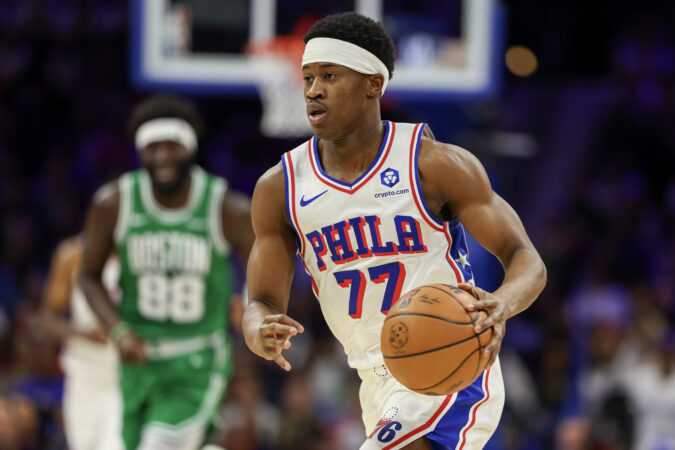
    While Twitch-ing, or whatever it’s called, Brown got a phone call from the coworker who probably is happiest to have him aboard: VJ Edgecombe.

    It was just 30 seconds of Gen Z acknowledgment and ego stroking, but there was a real vibe of Thank God you’re on my team so now I don’t have to play every minute of every game.

    Later, on that Twitch stream, Brown announced:

    “‘The Process is back f— on.”

    Not really.

    Call it Process 2.0, and understand that Edgecombe, properly nurtured, will be as important to its success as anyone.

    That nurturing process got a lot smoother when the Celtics gave Brown away on Wednesday.

    It could get even smoother if King James arrives.

    On Thursday, LeBron James’ camp let it be known that he would consider playing next season in Philadelphia now that Brown has joined Joel Embiid, Tyrese Maxey, and Edgecombe. The King, now 41, is hunting a fifth NBA title, and Philly has become a viable contender within the last few days, even though the Sixers currently can pay him only the veteran minimum, just under $4 million. This would be a $48 million pay cut from last season with the Lakers.

    Don’t hold your breath.

    As insane as landing LeBron would be, shedding a bad contract and landing a superstar is even nuttier. And fishier.

    Something is amiss when the smartest organization in basketball gives away a top-10 player and asks in return for a broken-down PED cheater and two first-round picks that probably aren’t going to be that good anyway.

    At any rate, the Celtics on Wednesday traded Brown, a five-time All-Star, who is 29, to the Sixers for Paul George, who is 36, and who has had just one good season since he was 29. The Sixers also sent first-round picks in 2028 and 2031 and two second-round picks to Boston. The most significant aspect of the deal is that it erased the worst contract in the history of the franchise; George has two more seasons left on a four-year, $211 million deal, and he hasn’t been worth one-tenth of it.

    The move also made the Sixers an immediate NBA title contender, since Brown is everything the Sixers wanted George to be: a shot-creating athlete at all three levels who can play and defend multiple positions.

    The deal also delivers an invaluable byproduct.

    It gives Edgecombe time.

    Time to develop.

    Time to learn.

    Time to rest.

    Edgecombe not only led rookies at 35 minutes per game, he ranked 11th in the entire league and averaged the eighth-most minutes for a rookie guard in the last 17 seasons. As the Sixers dealt with injury absences of Joel Embiid as well as the early load-management strategies and the late PED suspension of George, Edgecombe proved himself too good to not protect.

    “VJ is going to be a lot better in the long run with J.B. around,” said an NBA source who is intimately familiar with the 76ers. “At the end of last season, he was pretty worn out.”

    Outside of a diminished three-point shooting percentage, the wear and tear didn’t really show up in his other raw stats. They dipped in the playoffs, but then, Embiid and George were back on the court for much of the late season and postseason. But his decision-making became errant, his shot selection more questionable, and he tended to disappear. He needed help that his big-money vets were not there to provide.

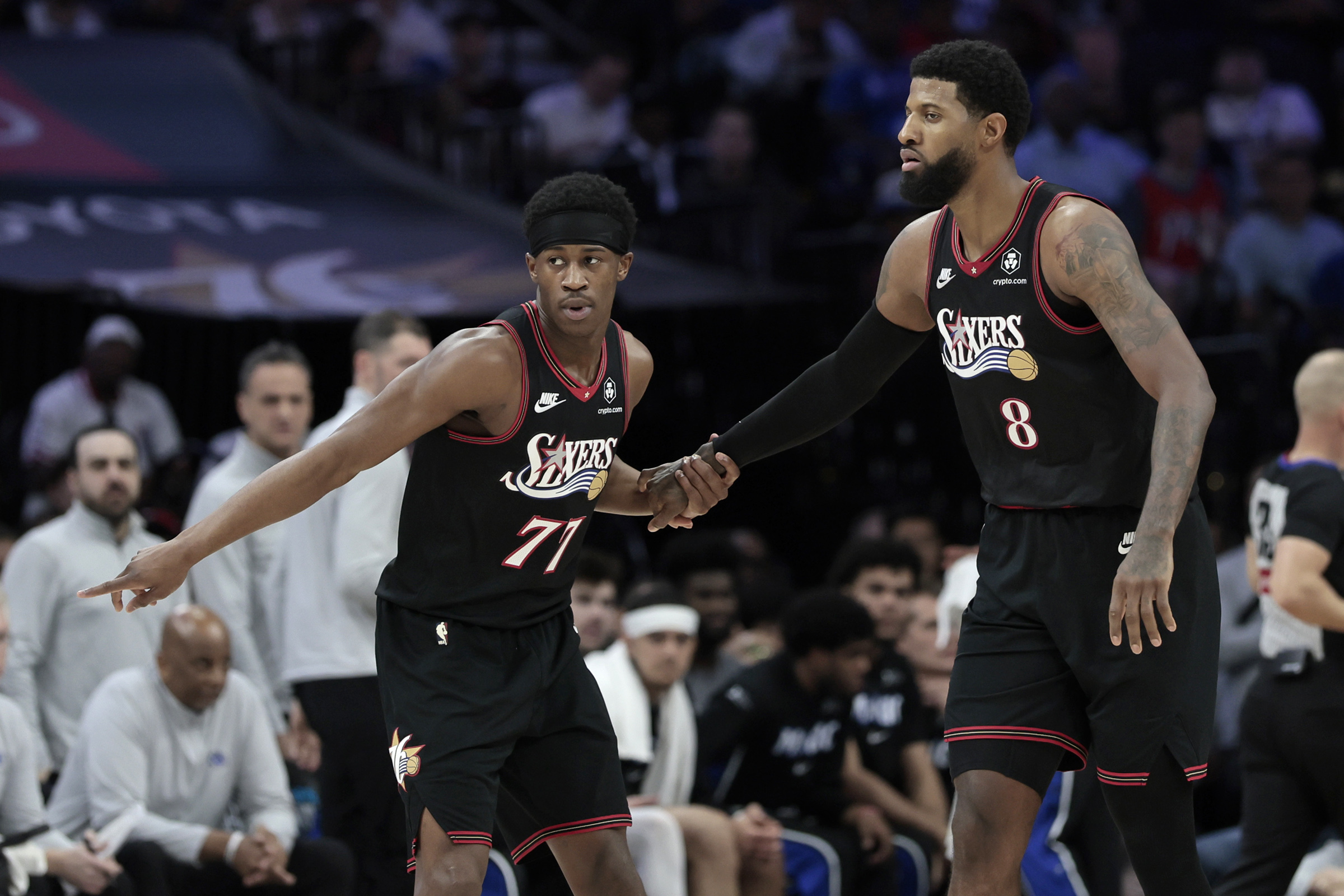
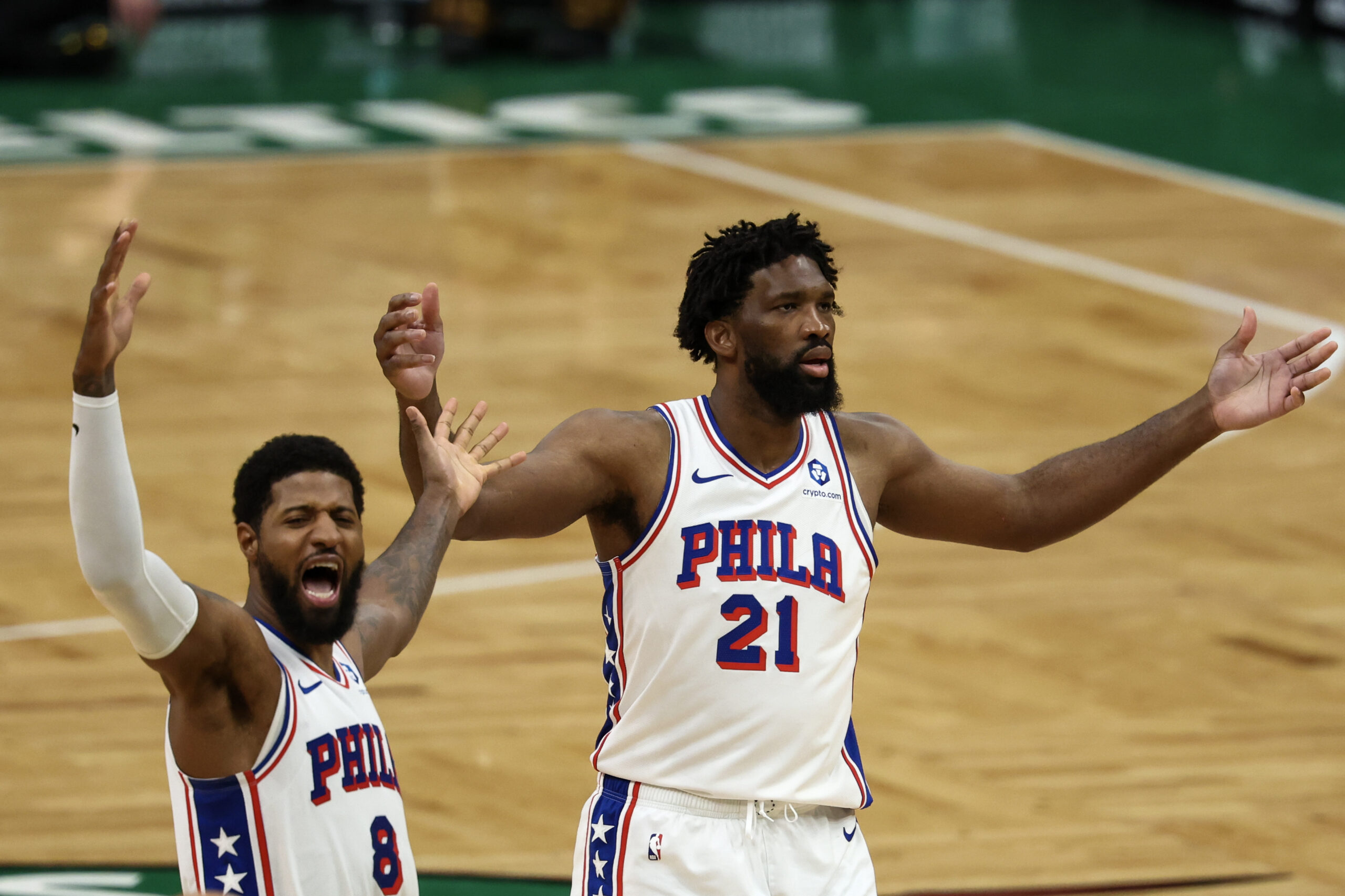
    The absence of Paul George (8) had a trickle-down effect at times on VJ Edgecombe.

    Combined, they missed 89 of 164 games, more than half. This has been the norm for both of them for the past few seasons.

    Brown plays about 20 more games a season than Embiid and George.

    That means that when Embiid misses his 30 or 35 games this season, Brown will be there to carry the load, whereas George was not.

    That also means that when Embiid plays, Edgecombe will not have to serve as the second or third offensive option, using moves he shouldn’t be making and taking shots he shouldn’t be taking for at least another season or two. When the Sixers drafted him third overall, most projections cast him as a superior athlete with unlimited defensive potential but with limited plug-and-play offensive ability. He learned fast, averaged 16 points per game, and made the All-Rookie team, but, man, there were some ugly nights and some ugly shots.

    Brown will also help Maxey get off his feet a little more. Maxey led the NBA at 38.0 minutes per game in an MVP-caliber season, but he wore down, too. Both were affected by the early injury absence of Jared McCain, and then by McCain’s exit at the trade deadline, as well as the lack of consistent contributions from guard Quentin Grimes.

    Edgecombe and Brown don’t play the same position, exactly, but they will combine with Maxey, and possibly rookie Labaron Philon Jr., to manage the primary backcourt duties.

    Brown will arrive motivated to make the best impression possible.

    He’s in line for a two-year, $140 million extension that will put him under contract for the next five seasons. He will be a more focused defender and rebounder, play-make with more alacrity, and, inevitably, he will assume the role of mentor to Edgecombe that George served last year.

    He said in Thursday‘s social media post that he was “Excited and disappointed at the same time” to be leaving Boston, where he won a title, and coming to the Sixers, who bounced him from the playoffs this spring.

    It was delivered with Brown’s typical class and polish.

    The Twitch stuff? Less classy, less polished, but just as real.

    The Celtics, meanwhile, immediately started planting narratives about how zero-time All-Star guard Derrick White is a more valuable player than Brown. ESPN insider Brian Windhorst also reported that the Celtics, after consulting their analytics, considered it imperative to get backup center Mitchell Robinson off the court when they played the Knicks. Then, on Wednesday, they signed Robinson to a three-year, $47.4 million deal.

    No wonder the Sixers knocked them out in the first round.

    There is always the possibility that this trade is not as lopsided as it seems. The Celtics certainly didn’t see the value in retaining a guy who can make more than $320 million if he’s offered an extension.

    The pocket protector crowd loves to cite and manipulate undependable metrics that diminish Brown’s obvious talent, skill, value, and performance. They insist that his playmaking fluctuates, his defense is overrated, and his shot diet doesn’t regularly generate the most efficient looks for him or his teammates.

    Remember, analytics is an industry, and it has to feed itself and convince its consumers of its necessity.

    Therein lies an irony. As much as analytics have torpedoed the Sixers’ plans, execution, and hopes over the past 14 years of “The Process,” it appears that analytics now have delivered an unexpected reward — in the form of Jaylen Brown.

    Bonus: LeBron James?

    Benefit: VJ Edgecombe.

  • Broad Street Bullies, Redux: The Flyers are getting bigger as they’re getting better

    Broad Street Bullies, Redux: The Flyers are getting bigger as they’re getting better

    If we’ve learned anything lately from smallish Flyers GM Danny Brière, it’s that size matters.

    The Flyers were swept out of the second round of the playoffs by the fast, physical, slightly bigger Carolina Hurricanes, and often struggled against bigger, heavier teams. Their defensemen were particularly unimposing, and Brière has been on teams where the bigger, the better. His teams as a young player in Buffalo brought the beef and laid the wood. The 2010 Flyers made their Stanley Cup runs with 6-foot-6, 220-pound Chris Pronger and 6-5, 224-pound Braydon Coburn lying in wait for unsuspecting forwards.

    The Flyers’ most promising prospect is 5-10, 172-pound wing Matvei Michkov. Brière, who was 5-9 and 174 pounds as a player, knows little guys need big guys to protect them.

    For all the beautiful hockey witnessed in South Philly, physicality is part of the Flyers’ DNA. The franchise’s two best players, Bobby Clarke and Eric Lindros, were known as much for their guts as their skill.

    Brière recognizes this.

    His two, er, biggest pieces last offseason were 6-5 veteran goalie Dan Vladař and 6-3 first-rounder Porter Martone, both of whom pushed the Flyers into the playoffs and past the Penguins in the first round.

    Darnell Nurse, Donovan McNabb’s nephew and a defenseman who asked for a trade out of Edmonton, landed with San Jose but the Flyers were in the mix. He’s 6-4, 215, and he would have been the second-biggest skater on the roster if he came to Philadelphia.

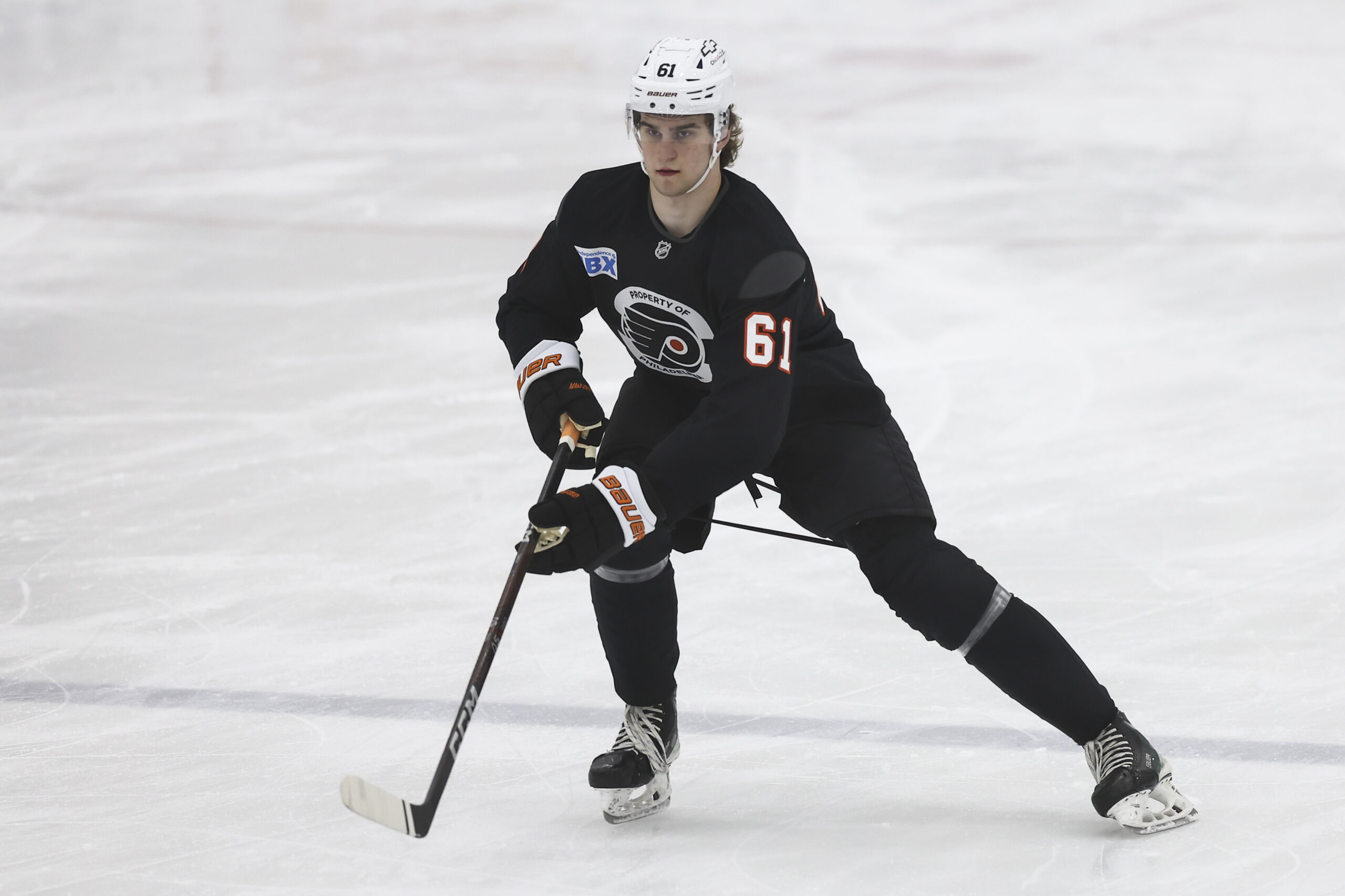
    Porter Martone’s late-season addition to the Flyers helped push them to the playoffs and to a series win over the Penguins.

    The third: Tyson Foerster, a 6-2, 215-pound winger. He’s 24. The Flyers just signed him to an eight-year, $56.8 million extension.

    Vladař also signed an extension, for five years and $27.5 million. Only four other full-time starters are as big as he is; his nickname, “Darth Vladař,” certainly fits.

    Retaining Foerster and Vladař underscored the club’s commitment to heft. The most significant move before those deals included trading talented defenseman Emil Andrae, who, at 5-9, was the shortest of a legion of Lilliputian blueliners. Cam York, the overtime hero who eliminated the Penguins in Game 6 of their first-round playoff series, is listed at 6-foot, perhaps measured while wearing his helmet. Jamie Drysdale, the No. 2 scoring defenseman last season, is 5-11 … ish.

    “It did make our defense a little small at times,” Brière said when Andrae was dealt. “We have Jamie and Yorky there, so the three of them — it wasn’t ideal.”

    It’s notable that Brière recently has traded sizable wingers Garnet Hathaway, who is part wolverine, and Nic Deslauriers, who is not. And Brière will always choose exceptional skill in a smaller package over modest skill in XXL.

    But XXL occupies more space on the ice and carries a lot more punishment in the corners than small/medium. These Flyers are growing by leaps and bounds in performance, expectation, and laundry bills.

    Team Canada defenseman Travis Sanheim, the Flyers’ best player at 6-4 and 222 pounds, is the biggest skater on the roster, and he’s under contract for five more years. The back end of that deal could see the back end of the hockey team grow like Jack’s beanstalk.

    The Flyers used their first-round pick on Maksim Sokolovskii, a 6-7, 240-pound bulldozer with the attitude of that bulldog you see on the grills of Mack dump trucks. Properly fed, he could occupy most of the defensive zone by himself. He doesn’t even turn 18 until July 12.

    Apparently, neither his speed nor his skill warrants a first-round grade, but, as Brière noted, speed and skill can be developed.

    “He was also a big defenseman, something we don’t have a lot of. We don’t expect him to be the next big point producer. We see him as a big physical force, a defenseman that’s going to be tough to face,” Brière said. “The way our development has worked the last few years, we feel confident that it’s going to come. We know there’s a lot of work to be done, but there are things that you can’t teach.”

    Things like size. Things like grit.

    The Flyers selected 6-foot-7 defenseman Maksim Sokolovskii in the first round of the NHL draft last week.

    “He’s still going to be 6-foot-7 two years from now,” Brière said, “and that internal physicalness is something you can’t really teach.”

    That was true when 6-6 Kjell Samuelsson and 6-5 Chris Therien helped the Flyers to the 1997 Stanley Cup Final.

    It was true when — in a different era, when a 200-pound defenseman was imposing — the Broad Street Bullies went to three straight Cup finals from 1974-76, and won twice.

    Will Brière’s strategy revive the Broad Street Bully ethic and swagger?

    No. Nothing will ever do that. The NHL has grown softer than playoff ice, and won’t allow it.

    That doesn’t mean little Danny can’t try.

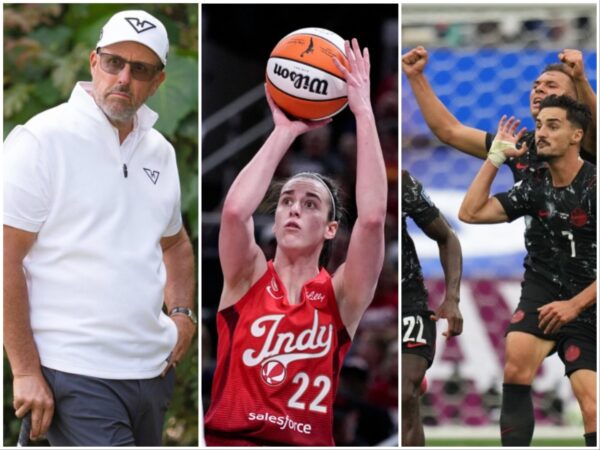
  • Continued abuse of Caitlin Clark; Phil Mickelson’s ultimate disgrace; Canada’s miracle soccer win

    Continued abuse of Caitlin Clark; Phil Mickelson’s ultimate disgrace; Canada’s miracle soccer win

    It’s unorthodox to begin a piece by denigrating a subject of sympathy, but in this case, it applies.

    Indiana Fever superstar Caitlin Clark is smug, and she’s kind of a jerk, and plays a little bit dirty herself. Also, there’s little viable argument that if she were a bit less abrasive then perhaps she would be less of a target.

    But there’s no doubt that she has been a target of jealousy and resentment since her arrival in the league, and there’s less doubt that the WNBA and its officials do a pathetic job of protecting her. She is, after all, the greatest asset not only in women’s basketball, nor in the history of women’s basketball, but in the history of women’s sports.

    That’s with all due respect to Billie Jean King, Babe Didrikson Zaharias, Serena Williams, et al. Clark is the queen of a mainstream team sport in an era when mainstream team sports matter more than ever. She should be treated like royalty. Instead, she’s treated like crap.

    She’s filled arenas, sparked expansion, and sold millions of jerseys, both her own and those of her peers. Her reward? She’s been the victim of nine flagrant fouls since she joined the league in 2024, more than anyone else.

    The latest flagrant wasn’t even called in real time, if you can believe it. As a matter of fact, it wasn’t even called a foul.

    On Wednesday, while pursuing a loose ball, Phoenix Mercury forward Alyssa Thomas kneed Clark in the thigh and jammed her fist into Clark’s throat as Clark lay on the ground.

    The league reviewed the incident, declared that Thomas had committed a Flagrant 2, and suspended her for Saturday’s game against Toronto. Thomas, a hard-nosed, Draymond Green-type of player, has a history of flagrancy; last season, she elbowed rookie Kiki Iriafan in the throat and threw Angel Reese to the ground.

    In the same game Clark was undercut on two jump shots, neither judged flagrant in real time or upon review. She left the game having aggravated a back injury.

    That’s right: The most important player in WNBA history entered the game with a back issue, was the recipient of three dangerous fouls, and left the game having been reinjured.

    She missed the Fever’s game this past Saturday, and her status is unknown for this coming Sunday’s game in Las Vegas.

    She missed most of her sophomore season in 2025 with various injuries.

    Not all of Clark’s missed time has been a result of hard fouls, but that’s the point. She’s the draw. Any hard foul on here should be amplified.

    She should be preserved like ancient parchment. She should be protected like religious relics. She is worth 10,000 times her weight in gold and should be treated accordingly.

    You should get two technicals for brushing her cheek. You should get a Flagrant 1 for coughing on her.

    Intentional foul on a fast break? Twenty years to life.

    Is this fair? Of course not. Is this business? Yes, it is. Business is seldom fair. If you don’t think that’s true, you should study capital gains taxes, corporate tax breaks, and film of Larry Bird in the 1980s.

    It doesn’t matter that Clark is not the best player in women’s basketball history (that’s Diana Taurasi), and it doesn’t even matter that she’s not the best player today (that’s A’ja Wilson). What matters is that Clark’s the most valuable female athlete, at a time when female athletics is finally experiencing its true value.

    One financial projection valued women’s sports revenues to generate at least $3 billion this year, an increase of 340% since 2022. You know what else happened in 2022? Clark, a sophomore at Iowa, became the first player in women’s Division I history to lead the nation in both points and assists. She became a phenomenon.

    A cocky phenomenon; a celebrating, taunting, in-your-face phenomenon — but a phenomenon nonetheless.

    For the record, I don’t like it when Steph Curry or LeBron James flaunt their cellys either. But as much as they mean to their sport, neither touches the importance of Clark either in her chosen profession or in her demographic.

    Protect her at all costs.

    Phil’s just desserts

    Seventeen years ago, the myth of Tiger Woods collapsed when the report of an affair, a car crash, and series of mistresses revealed the greatest golfer of all time, branded as a squeaky-clean, monomaniacal über-athlete to also be one of the greatest hypocrites of all time.

    No one benefited more from Tiger’s downfall than Phil Mickelson, Tiger’s biggest rival. Even after his departure to LIV Golf that sparked a wider exodus and a bitter feud, and even as Mickelson bizarrely delves further into support of far-right policies on social media, there remained a core of Mickelson supporters who adored his magnificent talent, swashbuckling style, and his entertaining public pronouncements.

    That’s all over. Phil’s done.

    Two weeks ago, Golf Digest reported that Phil Mickelson, Woods’ biggest rival, was kicked off The Farms Golf Club near San Diego and had his membership rescinded in the middle of a round after club officials determined that he had made inappropriate advances and contact with a female staff member. Mickelson denied the accusation.

    Two days ago, Skratch Golf correspondent Alan Shipnuck produced a scathing report that detailed several more inappropriate episodes with two other women. It also supplied evidence that Mickelson cheated with at least one woman on a regular basis, paying a pro shop kid $500 to drive around the course with Mickelson’s cell phone so that if his wife, Amy, wondered what he was doing, she would think he was playing golf.

    In light of the transgressions by Woods, which include various addictions, it’s been astonishing to witness the leeway given Mickelson during his three decades in the limelight. He’s been connected with insider trading, he’s been cast as an inveterate gambler — he was accused of trying to bet on the 2012 Ryder Cup, which he and the rest of the U.S. team lost by 1 point (Mickelson went 3-1-0) — and created a legion of enemies on the PGA Tour and in its galleries when he defected to LIV.

    Now, this.

    Now, what?

    Tiger has admitted his transgressions, has faced his demons, and has largely recovered his image.

    Phil never will.

    The biggest difference between Mickelson and Woods is that, whatever advances Tiger made in pursuit of his infidelities, as far as we know, they were at least consensual, if not welcomed or pursued.

    Mickelson isn’t the only distasteful star in professional golf — Fred Couples admitted he cheated on his wife while she was fighting cancer — he’s just the smarmiest, the creepiest, and the phoniest. Golf writers and broadcasters protect their cash cows like baseball writers did in the 20th century: They shield flawed heroes from the glare of reality.

    Phil was especially alluring, since, in contrast to surly, multi-ethnic Tiger Woods, he was a generally affable Great White Hope.

    Regardless, both made their beds. There, they will lie.

    Another ‘Golden Goal?’

    I was there for Sidney Crosby’s overtime Golden Goal that beat the United States at the 2010 Winter Olympics in Vancouver. Wayne Gretzky, the Great One, and Donald Sutherland, perhaps the greatest Canadian actor, sat just above my right shoulder, and they erupted with joy when Sid the Kid potted the winner. It was only the second time since 1952 that Canada won Olympic gold in its national sport. Most Canadians who witnessed it know where they were that day.

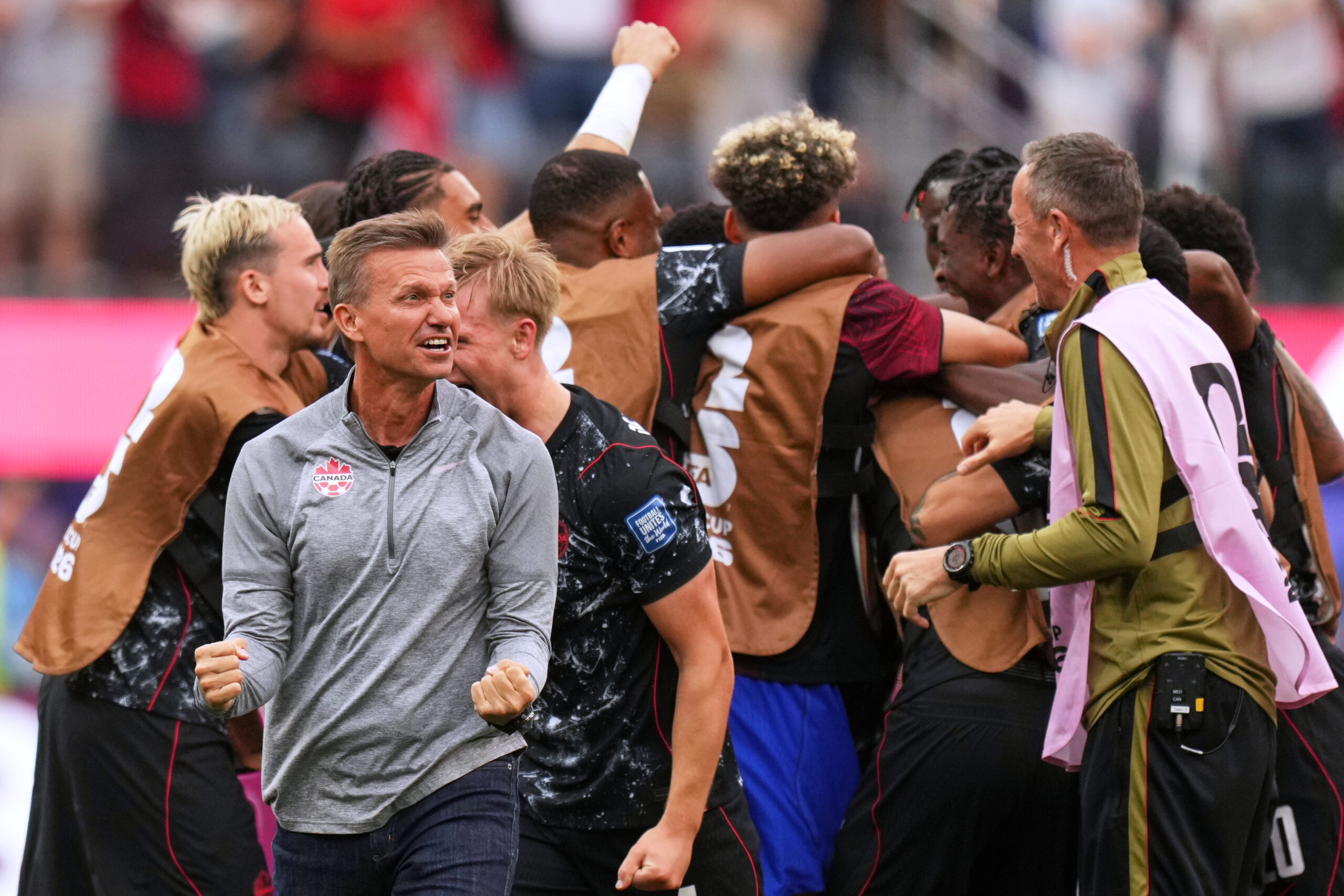
    Canada head coach Jesse Marsch celebrates after Stephen Eustáquio scored their opening goal against South Africa during the World Cup round of 32 Sunday in Inglewood, Calif.

    That was the sort of hyperbole coming from the Great White North when Canada beat South Africa in the World Cup’s Round of 32 knockout stage Sunday. More Canadians play soccer than hockey, and soccer ranks second in popularity with the 40 million Canadians.

    “We really wanted to give this win to all the Canadians,” Stephen Eustáquio said in a television interview. He scored the winner in extra time. “When I shot, I felt everybody shot with me. Everybody put a bit of power on it and it went into the back of the net.”

    It was the first time Canada reached a knockout round, though, even as one of the host nations, they didn’t host the game; they had to travel to Los Angeles because they did not win their group. The Maple Leaf flag will fly next in Houston on Sunday, when our northern neighbors, who entered the tournament ranked No. 30 in the world, will face the winner of No. 6 Morocco and No. 7 Netherlands.

  • You gotta believe: Three miracle wins in D.C., led again by Bryce Harper, recall the 2022 never-say-die Phillies

    You gotta believe: Three miracle wins in D.C., led again by Bryce Harper, recall the 2022 never-say-die Phillies

    Maybe someday we will learn.

    We will learn to believe in these Phillies. These Bryce Harper Phillies. These Kyle Schwarber Phillies. These Zack Wheeler and Cristopher Sánchez Phillies.

    We will learn that, while they might occasionally lose, they are never defeated.

    We will learn that, until the last strike of the last out is recorded, they have not yet lost.

    We came to learn this about the core of these Phillies in the dead of summer in 2022, and perhaps we should relearn it as summer begins in 2026. Then, they sparked a drive to the World Series with a handful of exhilarating victories. Now, after a wild midweek series in Washington, they might be doing the same.

    We will come to accept that, as long as Harp and Schwarbs and Wheels and Sanchey are active and competing and leading the charge, the rest will follow until the very end.

    That quartet might not be the best players in baseball, but they are always the best players they can be, and that’s often all that matters, because it inspires their peers to be the same. That’s how the Phillies manage comeback miracles like they produced in D.C. this past week.

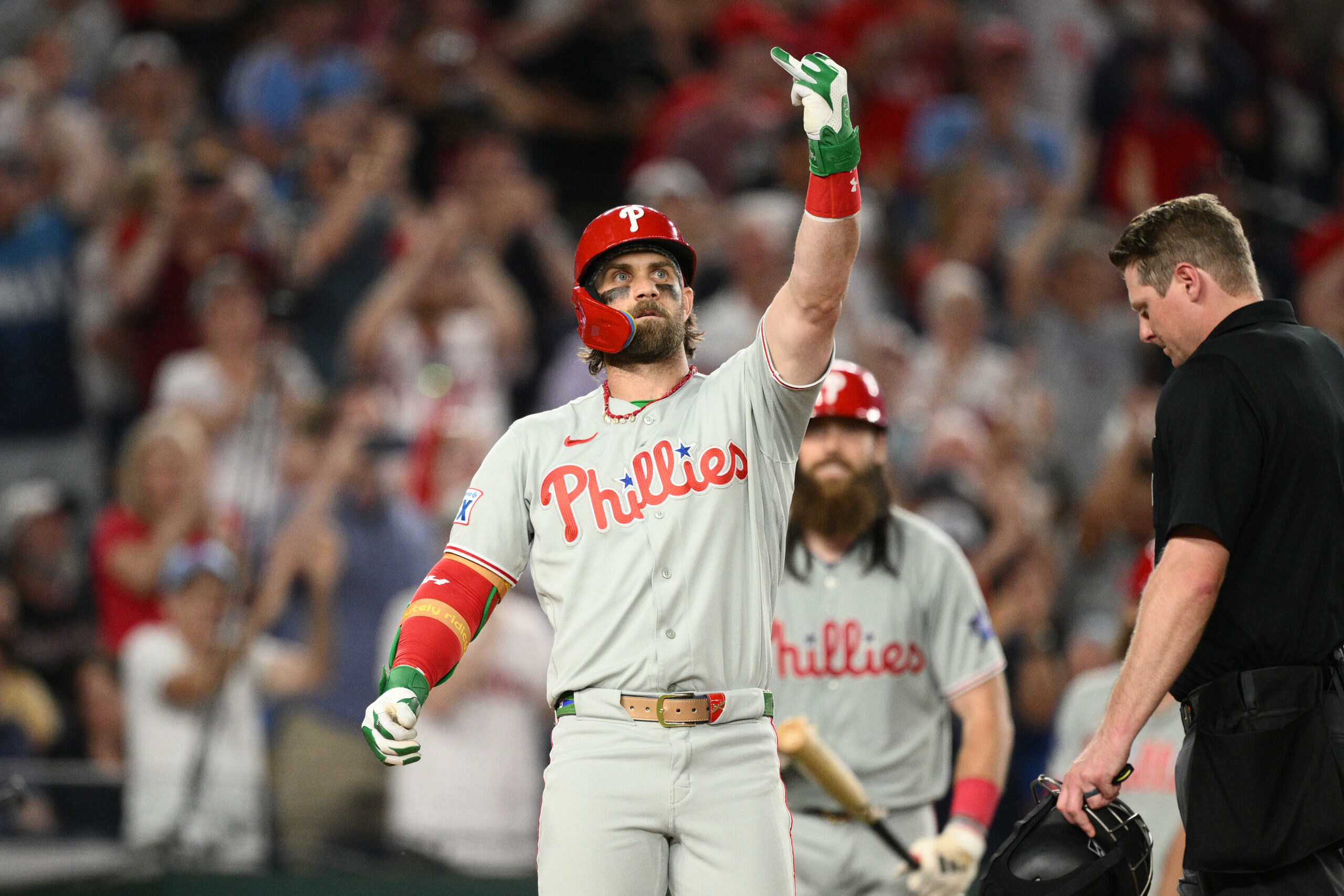
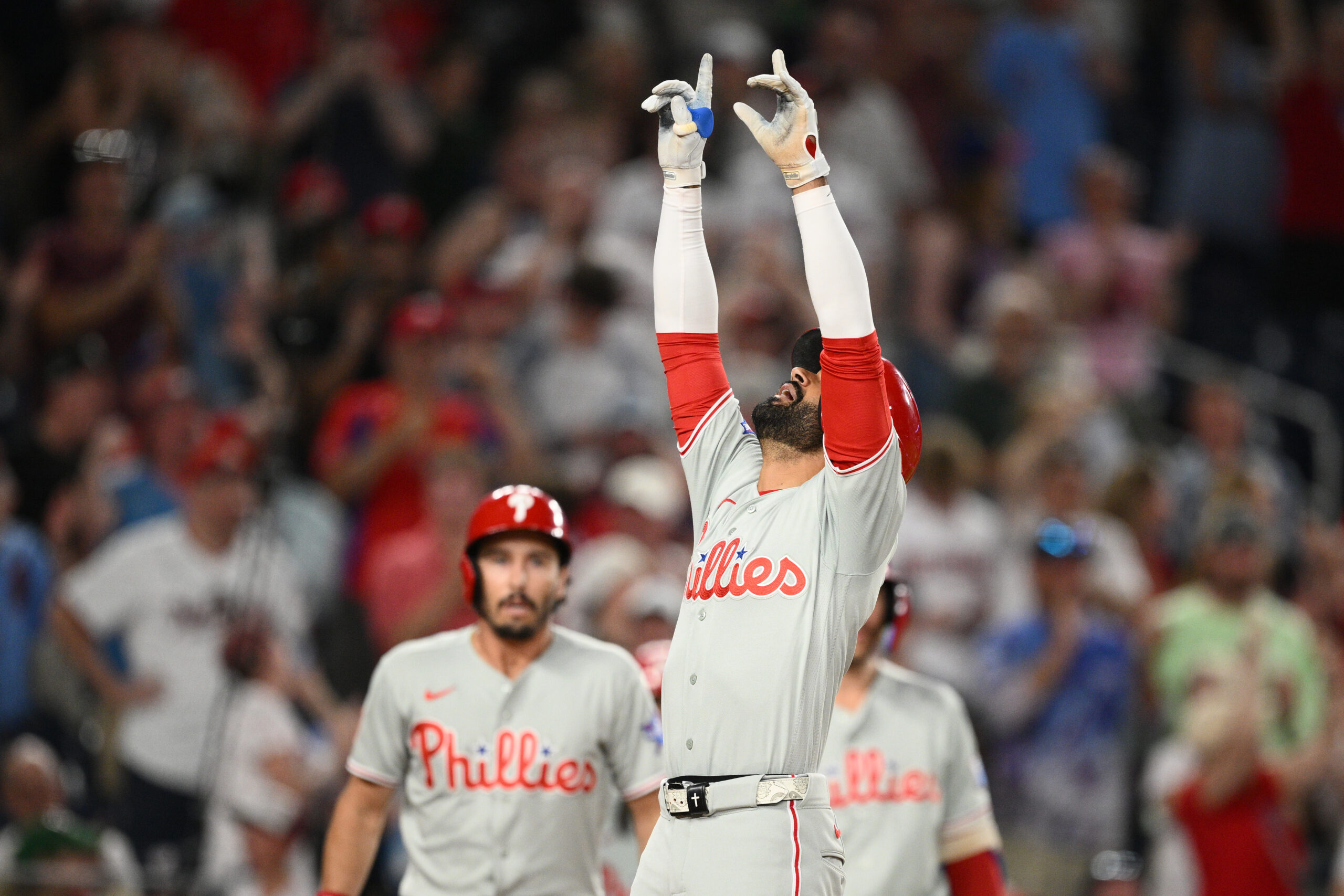
    Bryce Harper flashed a finger — which he clarified was his ring finger — toward the upper deck in right field as he rounded the bases of his go-ahead two-run homer on Thursday in Washington.

    It happened Tuesday. It happened Wednesday. Both nights, the Phillies were down to their last strike; in fact, on Wednesday, they were down to their last strike twice.

    Then, incredibly, it happened Thursday night, too, a 10-5 thriller that launched them to Queens for three against the last-place Mets, who, despite the presence of duplicitous error machine Bo Bichette, have lost six in a row, costing manager Carlos Mendoza his job on Friday.

    They won three of four in D.C. Wheeler was scheduled to start Friday in New York.

    “We’re coming. Watch out,” Harper told 94 WIP radio. “Obviously, we have a great ball club.”

    Great? Maybe.

    The momentum is palpable.

    Why?

    Because the Phillies hit go-ahead home runs in each of the ninth innings of those games, the first time that’s happened in Major League Baseball history.

    Harper, scorching, was in the middle of it all Thursday.

    Down 5-0 in the fifth, Harper beat out an infield single and scored the first run on Brandon Marsh’s third home run of the four-game series. Harper drove in the third run in the seventh with a 3-2 bases-loaded walk that began a three-run, game-tying frame. Then Harper drove in the go-ahead runs with a 390-foot blast to left-center, the surest sign that Harper’s hot: When he’s going “oppo,” he’s unstoppable.

    Harper is 13-for-31 with three homers and seven RBIs in his last eight games. The Phils entered the weekend having won five of six and sit four games behind the idle Braves, the closest they’ve been to the top of the NL East since tax day, when Rob Thomson was still their manager.

    They were 9-19 when Thomson was fired 12 days later, and they’re 36-17 since bench coach Don Mattingly took over as interim manager. Maybe it’s been addition by subtraction. More likely, it’s coincidence, since this core group of Phillies has been winning in heart-stopping fashion since it came together in 2022, when the Phils fired Joe Girardi and Thomson took over as interim manager.

    The DNA of this club seems independent of its boss.

    “Each team is different,” Harper told reporters afterward. “It’s how we are. It’s who we are.”

    There were other big moments from big names Thursday, and all week, really. Schwarber, who didn’t start Tuesday or Wednesday, worked a 10-pitch, two-out, pinch-hit walk in the ninth on Wednesday that framed a bigger moment for a lesser player. Trea Turner put his season from hell on hold for the ninth inning Tuesday, when his two-out single began an eight-run inning in which his second two-out single drove in the eighth run.

    How could something like this possibly happen again Thursday?

    “You’ve got to keep fighting back,” Harper said.

    Sánchez stumbled to a 5-0 deficit after 2⅔ innings but stabilized and faced just one batter over the minimum in recording the final seven outs. That preserved the bullpen, as four relievers pitched a scoreless inning apiece. José Alvarado finally looked untouchable in the seventh, and Orion Kerkering, who’d blown a save two days earlier, earned the win when, in the eighth, he stranded a leadoff double at second base and preserved the tie.

    It is contagious.

    How contagious?

    Derek Hill celebrates his two-run home run during the ninth inning on Wednesday.

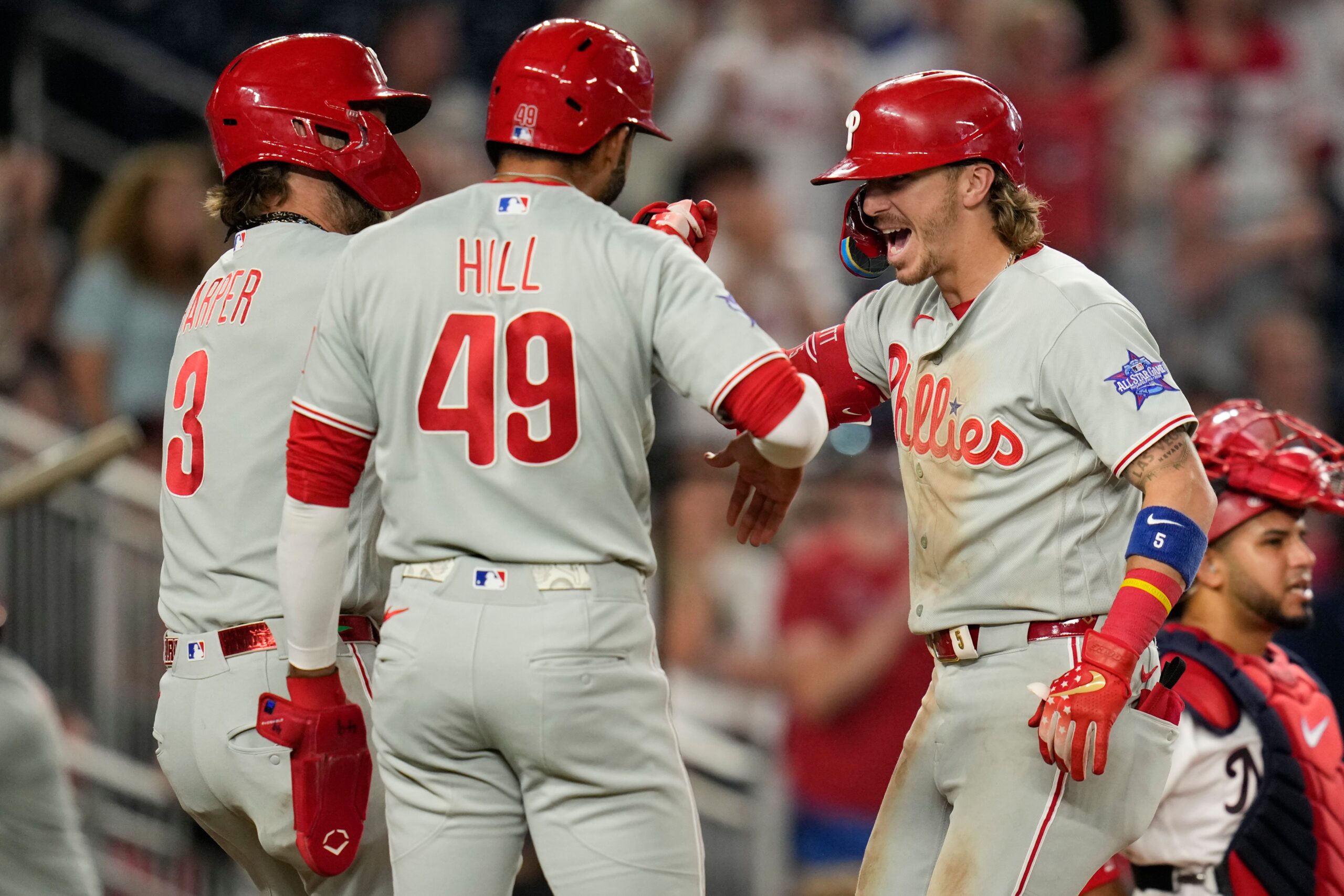
    Derek Hill, who was Wednesday’s hero with a pinch-hit, go-ahead, ninth-inning homer, padded the lead Thursday with a two-run shot for a five-run lead. He’s a journeyman outfielder who has been a Phillie for just two weeks, the roster replacement for the Phils’ latest free-agent outfield bust, Adolis García, who had latissimus dorsi repair surgery and is done for the season.

    How contagious?

    Edmundo Sosa had the first homer, double, and five-RBI night of his eight-year career in Tuesday’s 14-9 win, when they erased a two-run deficit in the ninth. Sosa has a knack for the dramatic. He ended May with a two-run homer in the eighth inning to complete a late comeback in Los Angeles.

    How contagious?

    Bryson Stott’s three-run homer on Tuesday was his first go-ahead homer in the ninth inning in four years.

    “We just have that never-quit mentality,” said Brandon Marsh, the team’s most consistent hitter this season.

    Marsh padded his unlikely All-Star resume with a two-run shot in the ninth inning Tuesday that re-tied the game, 8-8, and set up Stott’s moment. Marsh was 9-for-14 and scored five runs in the three comeback wins.

    Marsh knows of what he speaks because he’s lived this life before. It’s all he’s ever known, really.

    Marsh landed in Philly as a deadline trade piece in 2022 from the Angels having played just 163 games in the majors. He landed in the middle of the Phillies’ crucial surge.

    It began July 25, when Stott’s three-run home run in the eighth inning gave the Phillies a 6-4 lead over the visiting Braves. That was the first of 13 wins in 15 games, which allowed them to play .500 ball the rest of the season and still reach the playoffs for the first time in a decade.

    Bryson Stott (right) hit the go-ahead three-run homer on Tuesday in the Phillies’ 14-9 comeback win over the Nationals.

    It was the first of five games in that span that crackled with late-game electricity.

    On July 29, in the top of the 10th inning, Rhys Hoskins ripped an 0-2 fastball 410 feet over the centerfield wall in Pittsburgh for a 4-2 win. The next night, again in the 10th, Hoskins put a ball in play that the Pirates threw away, and that was the difference.

    On Aug. 3, the day after Marsh became a Phillie, he was in Atlanta and saw J.T. Realmuto drive in Hoskins with a fielder’s-choice grounder to tie it at 1 in the eighth, then saw the next batter, Nick Castellanos, blast a two-run game-winner.

    A week later the Phils managed six hits and three runs in the bottom of the eighth to win, 4-3, over the visiting Marlins.

    Does this recent competence mean that the Phillies will reach the World Series this season? Not necessarily.

    What it means is, with this Core Four, the faithful should never forsake the season … and they should watch every game until the very last out.

  • Daryl Morey planned on the decline of Paul George and Joel Embiid with the Sixers as the Heat land Giannis

    Daryl Morey planned on the decline of Paul George and Joel Embiid with the Sixers as the Heat land Giannis

    At an early summer lunch just before free agency began two years ago, Daryl Morey mapped out the 76ers’ dream scenario.

    If the Sixers could somehow land free agent Paul George, a future Hall of Famer who then was 34, Morey told a trio of esteemed scribes that the Sixers would open a two-year window in which they could contend for the Eastern Conference title, if not an NBA championship. The East looked relatively toothless.

    To his credit, or perhaps not, the team’s former president of basketball operations was being realistic. George had just made his ninth All-Star team and played in 74 games, but he’d also missed about 35 games on average in the previous four seasons.

    Further, Morey had modest expectations for Joel Embiid. Yes, Embiid had just made his seventh straight All-Star team; yes, he was only 30; and yes, he was one season removed from winning his MVP award. But Embiid underwent a second surgery on his left knee a few months before and was significantly hobbled when he returned. Nevertheless, doctors told Morey that, if Embiid was diligent with his conditioning and his rehab, with proper load management, he could resume his NBA career without significant regression.

    Doctors aside, Morey was no fool. He told the writers that if he got two more really good years from Embiid, that would be a good enough return on investment. Overpaying on the back ends of contracts are necessary evils in the sports industry.

    That’s why Morey signed them both to max contracts — George, a delightful surprise in July; Embiid, a necessary evil in September.

    The Sixers still owe Paul George and Joel Embiid almost $300 million.

    Disaster struck.

    Embiid played in the 2024 Summer Olympics in Paris, but, six weeks later, he reported to camp out of shape and so far behind in his rehab that he was unable to start the season. He needed further surgery in the spring of 2025. By the end of last season he’d finally recovered from the knee problem, but he suffered three more injuries: oblique, right ankle, and right hip. He has played in just 64 games in the last two seasons, including playoffs.

    Predictably, George endured a slew of injuries in his first season as a Sixer, then, in an effort to recover from injury, he was suspended 25 games last season for violating the NBA’s antidrug program. He has played a total of 89 games as a Sixer, including the playoffs.

    Which brings us to Monday.

    Blockbuster

    In perhaps the biggest transaction since LeBron James took his talents to South Beach 16 years ago, Giannis Antetokounmpo did the same.

    The Heat and Bucks on Monday reportedly authored a two-team, blockbuster trade. Miami saw blood in the water, jettisoned its ballast, and attacked. Pat Riley, now 81, mortgaged a Heat future in which he likely will play a diminishing a role to support the chances of second-tier star Bam Adebayo.

    Brilliant.

    There have been other big deals, such as the idiocy in Dallas of trading Luka Dončić in 2025 to the Lakers, but Giannis is a bigger deal. He has two MVPs, an NBA championship, and an acceptable BMI. Luka has none of those.

    With the Greek Freak on board, the East is ripe for Miami, and Riley, the Heat president for the past 31 seasons, knows it. After all, he orchestrated the last trade with this sort of effect, when he brought Shaquille O’Neal to Miami in 2004, then won a title with him in 2006. On Monday, Riley’s team immediately became a contender again in a vulnerable Eastern Conference.

    The principals

    Celtics? The patchwork Sixers upset the mighty Celtics in the first round of the playoffs.

    Knicks? The hodgepodge overachievers, the most fun team to watch since Larry Brown pushed the Pistons to the 2004 title, ran off 11 consecutive wins in the conference playoffs to reach the NBA Finals, in which they wore down an inexperienced team and its inexperienced coach.

    The Cavs? They collapsed due to the cold left hand of James Harden, who, to no one’s surprise, shot just 38.9% in the conference final against the Knicks.

    The Pistons? Two words: Tobias Harris.

    Pat Riley, 81, orchestrated the trade of another superstar to Miami in landing Giannis Antetokounmpo in a reported trade with the Bucks.

    The Pacers? Two words: Tyrese Haliburton. He pushed the Pacers to the NBA Finals in 2025 but blew out his Achilles in Game 7. With all due respect to Jalen Brunson, if Haliburton returns at 100%, then he’s the best player in the East. How good is he? The Pacers’ 19 wins were second-worst last season, but with Haliburton returning, their DraftKings odds to win the East are 12-1.

    Upon news of the trade, the Heat’s odds to win the conference on DraftKings improved from 12-1 to 6-1. That’s behind the Celtics, at 2.25-1, and the Knicks, who are at 3-1.

    The Sixers? They’re still seventh, at 19-1, behind the Cavs, who are 13-1, after Tuesday night’s draft. The Sixers used their 22nd overall pick on Labaron Philon Jr., a 6-foot-4 sophomore sniper out of Alabama whom they hope will compensate for Morey’s deadline trade of popular second-year shooter Jared McCain, who flourished in Oklahoma City.

    Philon’s arrival did not move the DraftKings needle.

    Don’t expect those odds to get any better July 6, when free-agent deals and proposed trades like the Giannis deal can be ratified.

    All the Sixers will be able to do is watch.

    They’re still saddled with the crippling contract of Embiid, now 32 going on 52 and who is owed almost $188 million over the next three seasons.

    They’re still saddled with the last two years and almost $111 million owed George, who is 36. A second positive drug test would cost him 55 games. Maybe he needs them.

    He averaged just 14.5 points and shot 40.7% from the field when the Knicks swept the Sixers out of the second round — a sweep that, two days, later, cost Morey his job as president.

    These twin albatrosses will haunt the Sixers for at least two more years. This, remember, is by design.

  • When the Flyers were hopeless, Travis Konecny promised boss Dan Hilferty they’d make the playoffs

    When the Flyers were hopeless, Travis Konecny promised boss Dan Hilferty they’d make the playoffs

    Flyers chief Dan Hilferty and his wife, Joan, traveled to Italy during the Olympics to take in the Winter Games, especially the hockey games, since three Flyers and coach Rick Tocchet were involved. Star winger Travis Konecny did not make Team Canada, but he made the trip anyway. There, he ran into Hilferty.

    After a little small talk, as they ended their conversation, Konecny grabbed Hilferty by the arm. He looked him dead in the eye and, quietly, told his boss’s boss:

    “You better believe.” Pause. “You better believe.”

    At the time, the Flyers hadn’t made the playoffs in five years and, according to one prediction site, had just a 3.8% chance of making the postseason.

    Three months later, they had surged into the playoffs, then they had beaten their archrival, in overtime, at home. Yet neither of these was Hilferty’s favorite moment of the season.

    Hilferty stood on the heights of Citizens Bank Park, a spring wind ruffling the ever-immaculate lapels of his bespoke, dark-blue suit, strong and confident and, then, suddenly, verklempt at the memory of a moment shared with some of his favorite people, including his boss.

    He’d been asked for his most memorable moments of the season his Flyers had just completed. His response was unexpected: The moments just after the team lost its fourth straight game and was swept out of the Stanley Cup playoffs, an overtime defeat to the Carolina Hurricanes in front of the home crowd at Xfinity Mobile Arena.

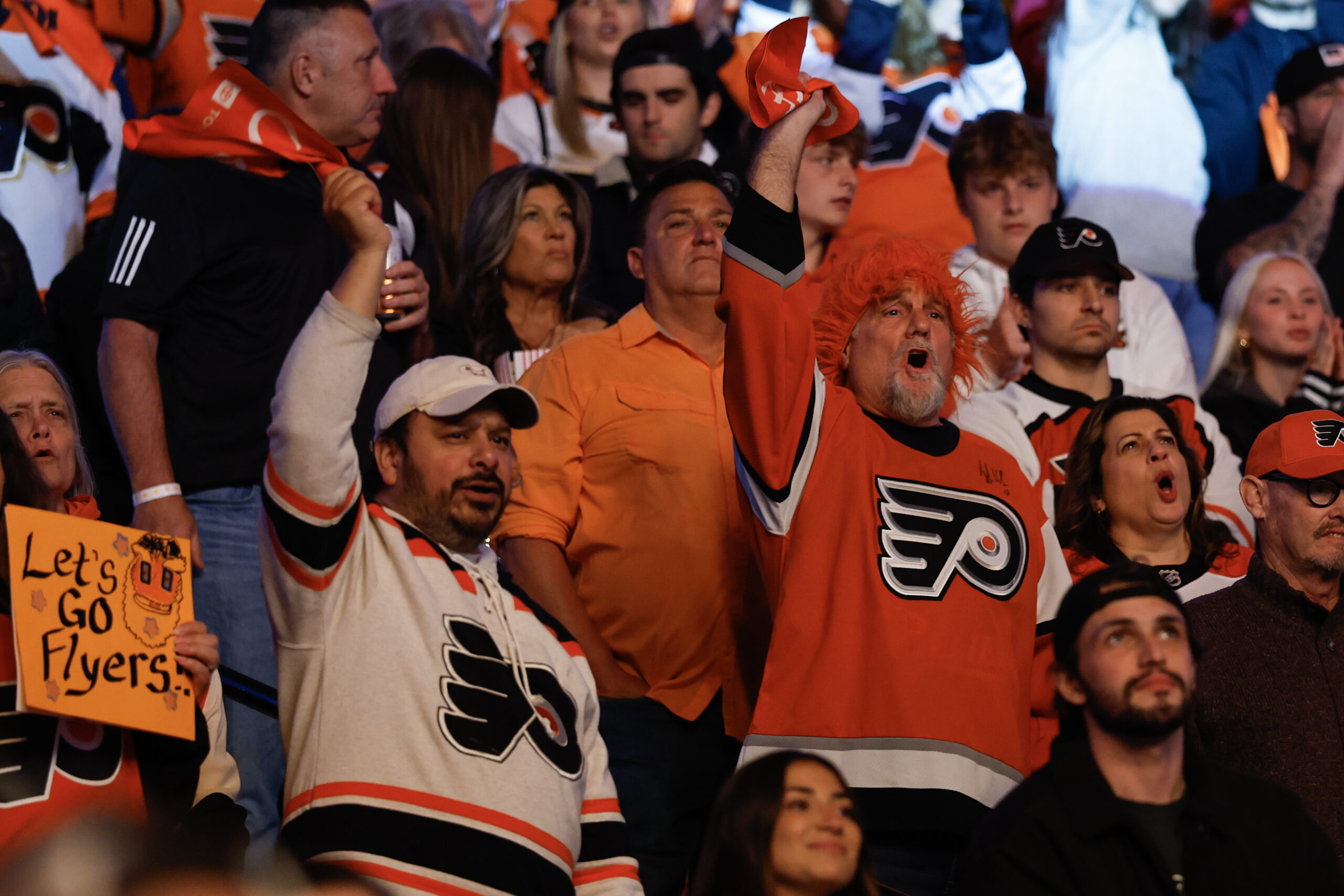
    Flyers fans cheered their team’s effort even after the season had ended.

    This ignominious sweep, the first in 15 years — this was his finest moment?

    “Yes,” he said.

    Why?

    “I go to the locker room after every game, win or lose. So, boom, [the Hurricanes] score, and I get up, go to the elevator, get off the elevator on the event level,“ Hilferty said. ”And I just see a sea of fans. A sea of fans on their feet. And then they start chanting, ‘Let’s go, Flyers!’ And you could see the players, like — their reaction is unreal.”

    That’s where Hilferty’s voice breaks. He’s 69, and he’s been around, a Jersey Shore kid made good: CEO of two health benefits organizations, a midlevel cog in the Pennsylvania government, a candidate for governor in the 1994 Democratic primary, chief of the group that brought the World Cup to Philly, and, for the last three years, he’s held his dream job: governor of the Flyers.

    The new Ed Snider. Connected to the club. Living and dying with every shift. Desperate for his hires to work out. Eager to see validated his oft-questioned decisions, from team president to GM to coach.

    And so, just before 9 p.m. on May 9, Hilferty found validation with the only folks who mattered: Flyers fans. Folks like him.

    Dan Hilferty (right), with team president Keith Jones in September, is part of a decision-making group that has pushed the right buttons of late.

    The scene was as unreal as it was un-Philadelphian. After the teams exchanged handshakes, Flyers players remained on the ice to skate around and wave their appreciation to whoever remained. Usually, it’s a couple of thousand. That night, it was 10 times that much.

    “I just felt — well, I never needed to feel vindicated,” Hilferty insisted. “But I was just so happy for the organization, so happy for the team, for Comcast Spectacor and Comcast.”

    Spectacor is the sports wing of Comcast, and Hilferty is CEO of Spectacor. Brian Roberts is the CEO of it all, and, that night, he was at Hilferty’s elbow. They live and die with the Flyers.

    “I mean, we talk every day,” Hilferty said. “He runs a huge company. He’s a huge fan.”

    After six years of amorphous corporate management in the wake of Snider’s death in 2016, Hilferty’s hands-on approach during the past three seasons of a painful rebuild has borne fruit.

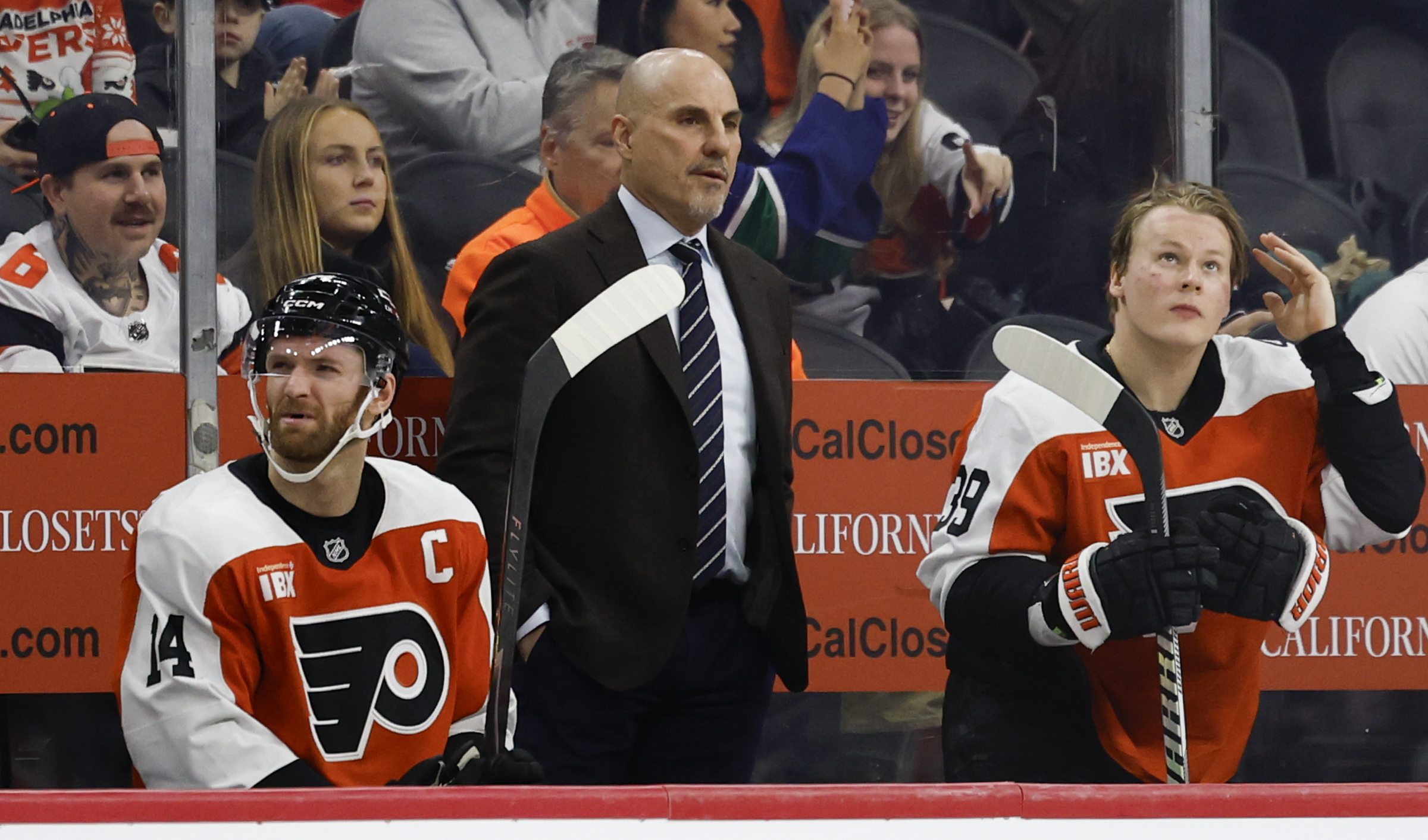
    When he hired an inexperienced GM, Danny Brière, and his nonexperienced president, Keith Jones, it felt like the Flyers were in line for another generation of the nearsighted nepotism that has so badly hindered it so often in the 50 years since its run to three straight Stanley Cup Finals. That sense only increased with the hiring of coach Rick Tocchet, who, like Brière and Jones, is a revered Flyers alum.

    Those decisions could hardly have looked worse as the Flyers entered the Olympic break in February. Tocchet and unmotivated second-year star Matvei Michkov had been feuding for months, and the team had won just three of its last 15 games.

    But, during the 20-day break, Michkov got into shape, Tocchet changed coaching tack, some veterans got healthy and started playing better, goalie Dan Vladař caught fire, and the club added rookie winger Porter Martone, fresh off helping Michigan State reach the NCAA tournament. Not only did the Flyers make the playoffs, they upset the rival Penguins with a six-game, first-round win, in overtime, the sudden-death score coming from Cam York but set up by Michkov.

    Flyers head coach Rick Tocchet (center) received up-and-down play from Matvei Michkov (right).

    And yet this was not Hilferty’s favorite moment. The love after the loss was.

    “I have to say, it was nice to have kind of a public showing of that positive feeling,” Hilferty said. “What I’ve learned, whether it was running a business or doing this now, is that nothing’s perfect, but when you put four people in the room and have a long-range vision of where you want to go — I feel validated in that we’re through a phase of this effort, and we feel like the pieces are starting to fall into place for a long-term sustainable period of excellence.”

    That begins with Tocchet, a hard-nosed coach obsessed with teaching and largely uninterested in your feelings.

    “I couldn’t be more thrilled about Rick Tocchet, the spirit he brings to it,” Hilferty said.

    Even with Michkov?

    “Matvei needed a message,” Hilferty said. “Look, we’re behind him, but it takes two to tango. Everybody’s got to lean in. And although that was uncomfortable for Rick, and maybe uncomfortable for Matvei, I think it paid off in the end.”

    Is this a sea change for a young player?

    “My hope, and real belief, is that Matvei will come back as a different player next year,” Hilferty said.

    Brière recently traded backup goalie Sam Ersson, smallish defenseman Emil Andrae, and a third-round pick to the Maple Leafs for backup goalie Joseph Woll and biggish defenseman Simon Benoît. The draft comes this weekend.

    Since the Flyers’ decline, the Eagles have reached two Super Bowls, the Phillies have reached a World Series, and the Sixers consistently have made the playoffs with Hall of Fame-caliber players and coaches.

    Now, however, there is a buzz in Philadelphia about the Flyers that has been absent for nearly half a decade. Hilferty feels it.

    “We feel relevant again,” Hilferty said. “We feel really excited to be part of the winning ways of the city, but we’re not finished. I mean, our vision is to get to the top. I’m not going to hide from that.”

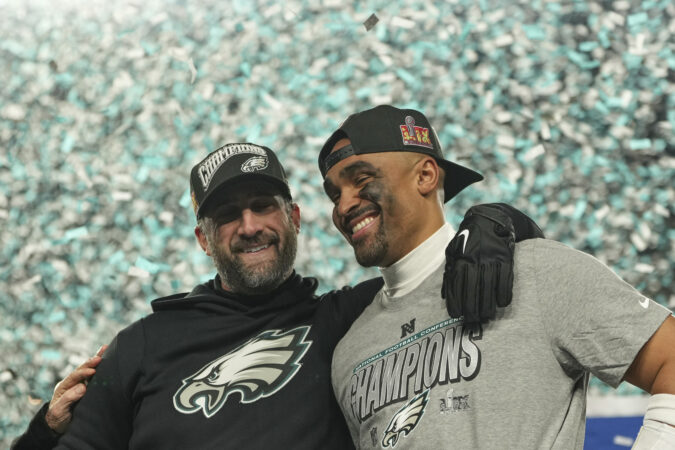
  • Is Nick Sirianni ‘legendary’? Is Jalen Hurts salty? Is Julian Lurie a worthy heir? Eagles revelations abound.

    Is Nick Sirianni ‘legendary’? Is Jalen Hurts salty? Is Julian Lurie a worthy heir? Eagles revelations abound.

    It’s rare that, in the same week in June, you see three separate stories that pull back the curtain on the most secretive team in town, the Philadelphia Eagles.

    That’s what’s happened over the past few days. They sent NFL junkies into paroxysms of delight. They turned radio waves all atwitter with fresh meat during a typical time of famine.

    The most significant and best done of the three pieces involved a look at Julian Lurie, who will one day ascend to the throne occupied by his father Jeffrey, who has owned the Eagles since 1993. Jeff McLane of The Inquirer gave us our first look at the sensitive 31-year-old who already lends his voice to the team’s biggest decisions, just as a crown prince should do.

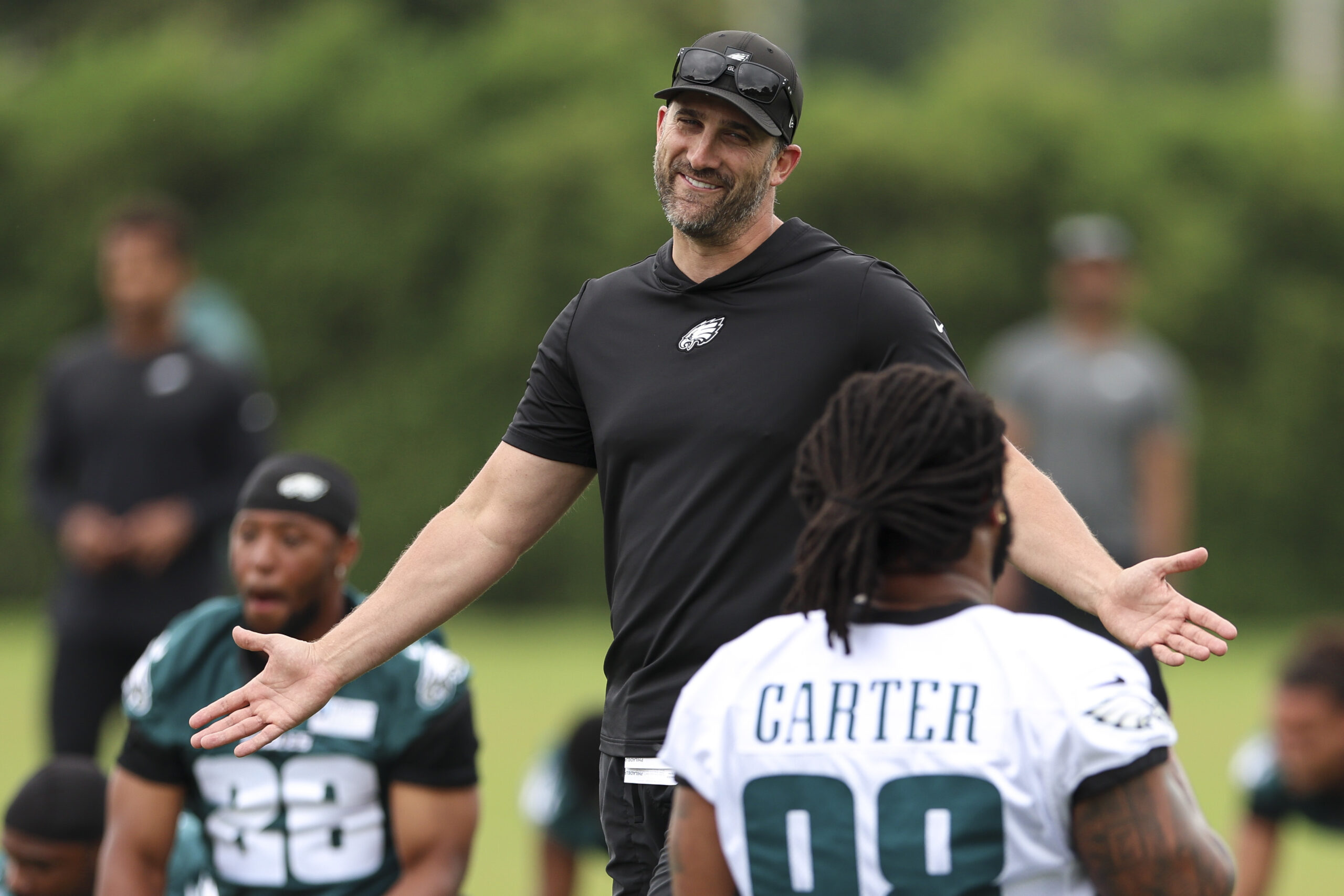
    Mike Silver was the most prolific and capable NFL profile writer when Sports Illustrated remained the industry standard 30 years ago, and he has not lost his fastball at the Athletic. Silver joined combustible coach Nick Sirianni at the Eagles’ annual playground construction project and walked away with superb detail regarding Sirianni‘s unlikely interview and subsequent hiring in 2021, all done from the beach, in flip-flops with a white board. But Silver also got an endorsement of Sirianni from superstar running back Saquon Barkley that sparked debate about how valuable and competent Sirianni is compared with his peers.

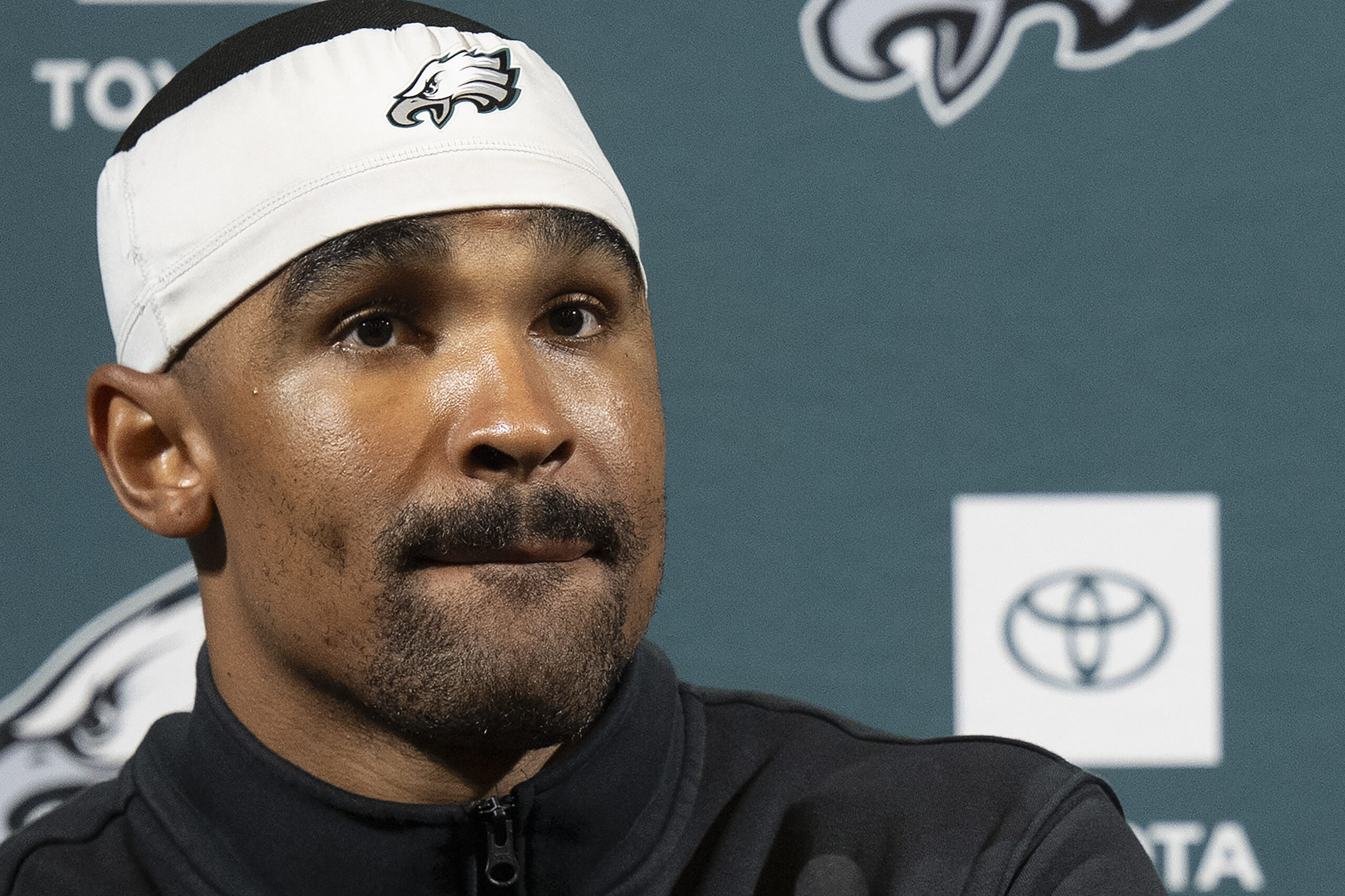
    Finally, our old friend (and sometimes colleague) Joe Santoliquito, a local freelancer who specializes in in-depth exposés and, apparently, in infuriating Eagles executives. He dropped a brief piece on the Bleeding Green Nation website about the most polarizing figure in the city. The story indicates that starting quarterback Jalen Hurts is upset that the Eagles seem willing to replace him if he struggles to produce better numbers for a third straight season.

    McLane‘s trademark thoroughness left little room for controversy or discussion despite the delicate nature of his subject, but that’s to be expected, since McLane is the best-sourced reporter in town.

    But Barkley’s contention to Silver that Sirianni is “legendary,“ and Santoliquito‘s revelation that Hurts is unhappy … well, those struck a nerve.

    Legendary?

    Only four coaches who have coached at least 60 games, including playoffs, have a better winning percentage than Sirianni. All of them — Guy Chamberlin, Vince Lombardi, John Madden, and George Allen — are in the Pro Football Hall of Fame.

    Sounds pretty legendary, right?

    Barkley thinks so, as he told Silver:

    “He doesn’t get enough credit at all, in my opinion. I don’t get why he doesn’t. Like, what he’s doing, in real time, is legendary.”

    Is it, though?

    A head coach’s primary job is to win games, to reach the playoffs, and to battle for a title. Sirianni has not missed the playoffs in any of his five seasons. He’s reached the Super Bowl twice. He’s won it once.

    Sirianni did all that winning while developing Hurts, a quarterback of limited skills but unlimited ambition — a mirror, in some ways, of Sirianni himself. But that’s a different topic for a different day. He won while handling malcontent receiver A.J. Brown. He won while handling distractions that Sirianni himself created, mainly jeering fans of both his opponents and his own team.

    Which brings us to the crux of the matter. Fairly, or not, the narrative surrounding Sirianni is that the team often wins in spite of its coach.

    He has been heavily involved in the offense three times: 2021, 2023, and 2025. Each time, it foundered. The other two seasons, the Eagles went to the Super Bowl and the offensive coordinators were hired away as head coaches.

    An elite defense and a legendary season from Barkley sent the Eagles to their second Super Bowl. Sirianni has no involvement with the defense, which was run by first-year coordinator Vic Fangio, and Sirianni is considered a pass-first coach.

    The Eagles have made the playoffs in each of Nick Sirianni’s five seasons as coach.

    When Sirianni was hired in 2021, he was required to retain Jeff Stoutland, the assistant coach who ran the best overall offensive line in the NFL from 2013-2025. Stoutland, like Fangio, operated with almost complete autonomy, and he was the run-game coordinator to boot.

    Sirianni also took over a talent-heavy team from Doug Pederson, who was fired mainly because Carson Wentz didn’t want him around any more. Sirianni inherited a wealth of mature locker-room leaders with incredible pedigrees: elite tackles Lane Johnson and Jordan Mailata as well as center Jason Kelce; first-round receiver DeVonta Smith; defensive tackle Fletcher Cox; and defensive end Brandon Graham.

    Finally, general manager Howie Roseman has consistently replenished the talent pool — Jalen Carter, Quinyon Mitchell, Cooper DeJean, Jordan Davis, Zach Baun, Landon Dickerson, Cam Jurgens, and Brown — to the degree that it’s fair to wonder if any coach could have failed to win, and win big.

    So now you have a portrait of a coach with a sterling record but without a tangible identity. Nobody questions the character of Vince Lombardi, John Madden, or George Allen, and they all coached for at least a decade.

    It’s hard to call anybody “legendary” five years into a career. Very good? Sure. Excellent? Maybe.

    Legendary?

    Let’s let that one breathe.

    After all, Sirianni has always had stability at quarterback. Is that about to change?

    The 2026 season is shaping up to be a big one for Jalen Hurts.

    Hurt feelings?

    Like McLane, Santoliquito specializes in long-play reporting that coalesces into bombshell stories that cause a sensation. Such was the case in 2019, when his piece just after the disappointing 2018 season included Eagles sources who called Wentz “selfish,” “uncompromising,” and “egotistical,” with crippling insecurities. After the story ran, Santoliquito received death threats, had property vandalized, and was castigated by both the Eagles organization and by Wentz’s camp.

    I ripped him, too, for not giving the Eagles a fairer chance to respond. He admitted his error to me.

    Within weeks, however, Santoliquito’s reporting was largely confirmed … by Wentz himself.

    Unlike the landmark Wentz story, the recent article about Hurts was an opinion piece. The headline read, “Philadelphia better watch itself, or it will lose another superstar,” and Santoliquito wrote, “The fear here is that Philadelphia may be pushing another superstar out of the door.”

    On that: No athlete since Phillies slugger Dick Allen was “pushed out” of Philadelphia by either the fans, the team, or the media. Not future Hall of Fame third baseman Scott Rolen, who was traded after contract negotiations collapsed; not ace Curt Schilling or stud Charles Barkley, who embraced trades after the Phillies and Sixers proved unable to build around them; and not even, as Santoliquito suggested, Wilt Chamberlain, who sought the brighter lights and cooler culture of Los Angeles as the Sixers underwent seismic changes after the 1967-68 season.

    In this instance, Santoliquito, who has long been close to people in Hurts’ camp, relays signals from those contacts that Hurts is displeased that:

    1. The Eagles, who wrote the book on saving money with early contract extensions, have not offered Hurts an extension; and,
    2. The Eagles did not support him well enough when an ESPN story on April 1, citing sources on the team, painted Hurts as stubborn, uncoachable, and reluctant. The fallout from the story created a narrative that these traits have the Eagles considering moving on from Hurts if he struggles with the more complex scheme of new coordinator Sean Mannion.

    Two things.

    First: So what? So what if 2026 is a prove-it year for Hurts? If he plays well, he gets paid. Trust me, he won’t turn down cash. If he doesn’t play well he might get traded.

    Second: The Eagles were irate that, as in 2019, Santoliquito did not come to them for comment in a timely manner (or at all, in this instance). Broadly, that’s a fair point. However, it’s a strange complaint in this instance, since it’s irrelevant whether Eagles players, executives, and coaches actually sufficiently supported Hurts. They did have a few words of support to offer, but it was not overwhelming.

    What’s relevant is that Hurts, or his camp, feels that they didn’t support him enough.

    In Santoliquito’s opinion, that might cost the Eagles the services of Hurts at some point in the future.