Author: Marcus Hayes

  • Tanking NBA teams should lose their lottery slot as ‘The Process’ leaves its rancid legacy

    Tanking NBA teams should lose their lottery slot as ‘The Process’ leaves its rancid legacy

    NBA commissioner Adam Silver last week fined the Utah Jazz $500,000 for tanking. He fined the Indiana Pacers $100,000 for doing the same.

    The Jazz paid Lauri Markkanen more than $500,000 for each of the games in which he was benched to ensure losses. The Pacers paid Pascal Siakam more than five times their fine for sitting him on Feb. 3. The teams literally paid the players more than the fines to not play. The fines were nothing more than performative outrage. The fines were a joke.

    The NBA is fast becoming a joke.

    For years, the NBA has faced the existential threat of dwindling interest because its uninteresting product is infected with the simultaneous practices of tanking, losing on purpose to secure a better draft position; and load management, not playing available players to better ensure their availability in the postseason. The Sixers have been on the vanguard of both of these reprehensible movements; first, by instituting “The Process” 13 years ago, and then by coddling premier players like current centerpiece Joel Embiid.

    Load management might never go away. After all, it kept Kawhi Leonard viable for the Raptors’ 2019 title run, and it’s keeping LeBron James viable at the age of 65, or however old he is (he’s now up to 41).

    Tanking? That’s another story. The NBA could fix that in a hot minute if it wanted to. It is a blight on the sport, a fraud perpetrated on fans, media partners, and sponsors on a nightly basis, all brazenly executed, and with no real penalty.

    It is a league descending into fringe status, one without a universally likable face this century besides, at its very beginning, Michael Jordan, and even he turned out to be kind of a jerk.

    Silver said at his All-Star Game press conference Saturday, “There is talk about every possible remedy now to stop this behavior.”

    There is a simple remedy to stop this behavior: Kick the cheaters out of the lottery and replace them with honestly mediocre teams.

    This penalizes the egregious tankers, but still gives them a reasonable chance to improve despite their crimes against basketball. It rewards non-tankers who played just well enough to miss the lottery.

    This is not the only solution.

    One thought: Silver could fine teams even more. ESPN’s Kendrick Perkins suggested $5 million per infraction.

    The problem: That’s still chump change. The Pacers owners have a combined net worth of about $16 billion; co-owner Steven Rales spends $5 million on biotech research and development every day.

    Another idea: The NBA could abolish the draft entirely. On Monday, David Aldridge of The Athletic wrote exhaustively about such a proposal.

    The problems:

    Teams that play in states without a state income tax, such Florida’s Heat and Magic and Texas’ Mavericks, Spurs, and Rockets, would have a significant financial advantage in attracting young talent. Similarly, big-market teams in Los Angeles and New York would attract big-endorsement players, whose endorsers would make it worth their while to be a Laker or a Knick.

    Ask any 19-year-old kid if he’d rather stay warm with the Heat and make more after-tax money, play for the Clippers in the epicenter of hedonism, or spend six months in frigid, turgid Milwaukee?

    The better solution:

    If you get caught tanking in the manner of the Sixers from 2013-16, when they won a total of 47 games in three seasons, then you lose your place in the lottery. Your chance at the top-tier players of the best draft in eight years — gone.

    In the NBA draft, the top 14 draft slots are lottery slots. That means teams with those picks have a chance for the No. 1 overall pick. Generally speaking, the worst teams have the best chances at the higher picks.

    If a team is found guilty of tanking, they’re out of the lottery. They move to the 15th slot in the draft, and the 15th team moves into 14th and therefore into the lottery.

    If a team has two lottery slots in the draft, their higher-slotted pick gets moved down.

    If a team is found guilty of tanking twice in the same season, they move from 15th to last, or 30th, and the other 15 non-lottery teams move up one slot.

    If a team has two lottery slots in the draft and is found guilty of tanking twice in the same season, that lottery slot is moved to 15th, which bumps their previous lottery slot from 15th to 16th, and it bumps the team with the original 16th slot into 14th, the team with the original 15th slot to 13th, etc.

    It might sound complicated but it’s not. You violate the spirit of the process (delicious usage there), you lose your privilege. It’s not as draconian as it might be.

    You still get to draft, and thereby get a little better.

    Unless you’re an idiot and offend repeatedly, you still get to draft at a decent spot. Tyrese Maxey, Siakam, Jarrett Allen, and Jalen Brunson all were drafted 16th or lower.

    Then again, so were Wade Baldwin, Justin Patton, and, of course, former Sixers prospect Zhaire Smith.

    That should be enough to scare off any would-be tankers.
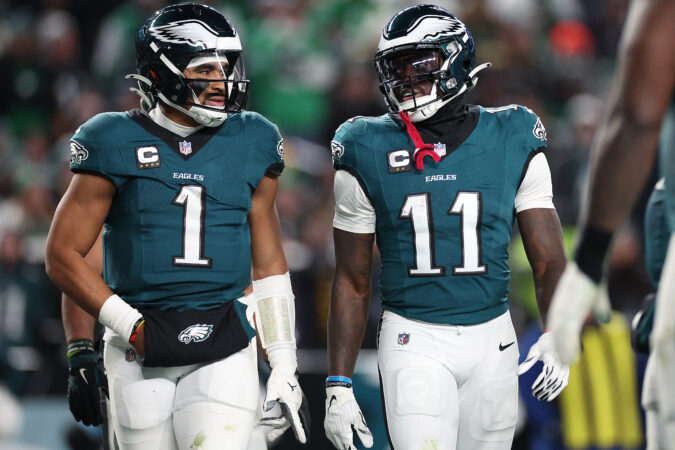
  • All this talk about trading A.J. Brown is madness. Anyway, you’re talking about trading the wrong Eagle.

    All this talk about trading A.J. Brown is madness. Anyway, you’re talking about trading the wrong Eagle.

    In 2014, after one season as the Eagles’ head coach, Chip Kelly decided he’d had enough of DeSean Jackson, who’d been kind of a headache. Jeffrey Lurie had given Kelly power over the roster, and Kelly cut Jackson.

    Jackson proceeded to lead the NFL in yards per catch in three of the next five seasons, two of which were 1,000-yard seasons. The Eagles would have just one 1,000-yard wide receiver in the next eight seasons (2014-21). They later had two in the same year, 2022, and the No. 1 receiver was A.J. Brown.

    Today, 12 years after Kelly’s first foolish move — he also traded running back LeSean McCoy and he drafted disappointing receivers Nelson Agholor and Jordan Matthews — the Eagles again have a high-production receiver who’s been kind of a headache. NFL sources say they Eagles are considering trading him, even though such a trade would carry severe salary-cap ramifications; about $16 million, minimum.

    That receiver is A.J. Brown.

    Trading him would be crazy.

    The Eagles should not even entertain offers for Brown. He is 28. He is driven. He is dedicated. He is irreplaceable. He’s spent the last four years making quarterback Jalen Hurts look good. That’s got to count for something.

    Sure, he’s a diva, but then, he’s always been a diva. He was a diva when they traded for him four years ago. Brown immediately hung an “Always Open” sign above his locker. Huge diva move.

    He has, at times, looked exasperated on the field. He has argued with coach Nick Sirianni on the sideline. For the last two seasons he’s continually criticized the offense both in person and on social media. The Eagles let him get away with it because they knew he’d still play well. They also let him get away with it because they knew, when they made the trade, and when they extended his contract twice, that he was likely to act like this.

    Think about it: If you let your kid throw tantrums on the floor of the grocery store for three years, you can’t expect him to stop throwing tantrums when he’s 4. You just hope the tantrums aren’t so bad you can’t keep shopping.

    Could this behavior be a distraction? On most teams, yes. But nobody in the Eagles locker room pays much attention to Brown’s antics.

    “There is a genuine appreciation for A.J,” Jason Kelce said Wednesday on 94 WIP.

    Kelce has been retired for two seasons, but he remains well-connected to his former coaches and teammates. On Wednesday, Kelce also noted that Brown’s frustrations might be limiting the receiver’s effectiveness. Kelce certainly would know. In his final season, Kelce, himself an emotional player, counseled Brown on harnessing frustration.

    Both Kelce and Brown’s current teammates know Brown for who he is. They also know the Eagles cannot afford the luxury of sudden sanctimony.

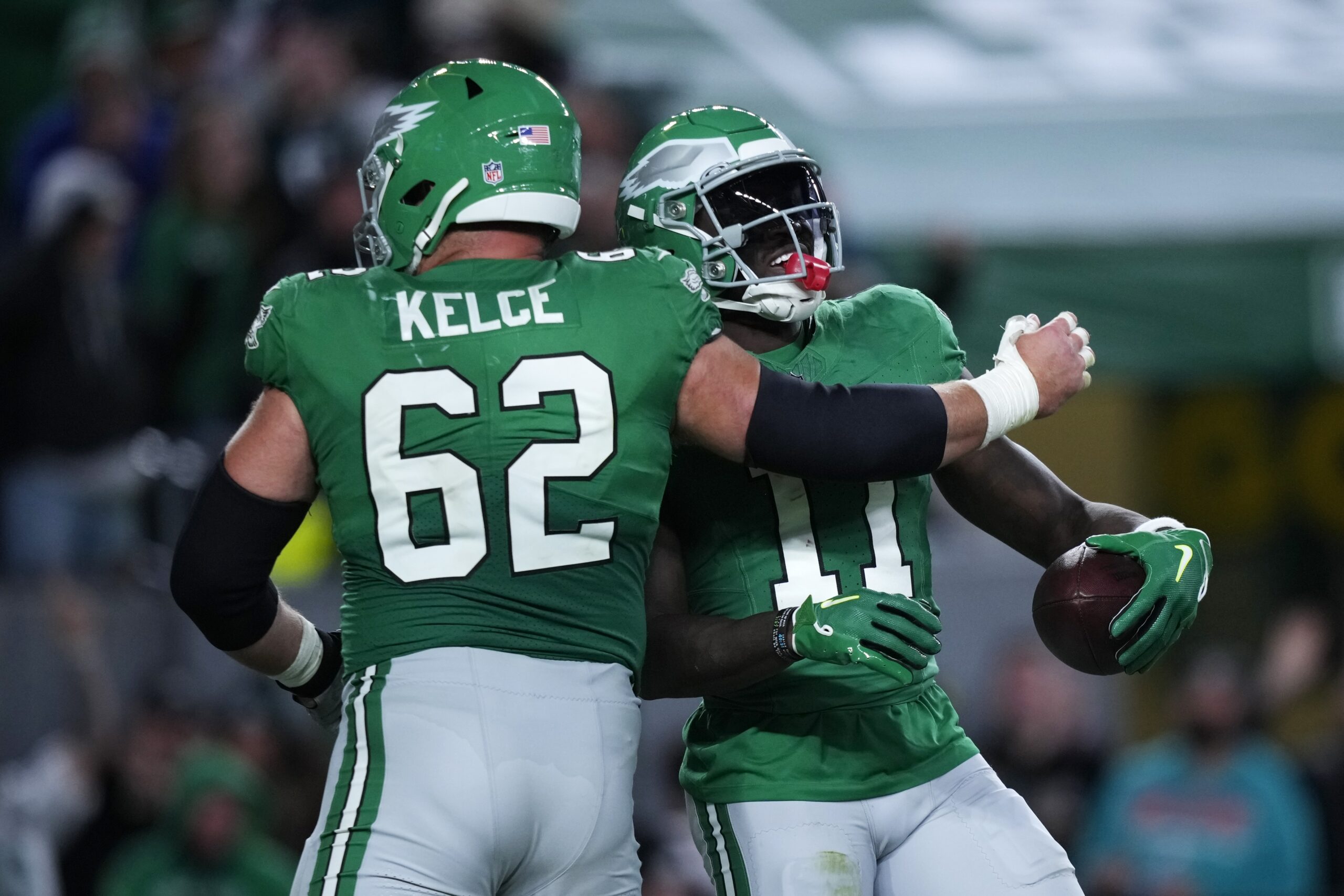
    Eagles wide receiver A.J. Brown (11) celebrates a touchdown with center Jason Kelce during the 2023 season.

    But does he really want to be here?

    Brown hinted during the season that he might want to leave Philadelphia, posting the Bible verse Mark 6:11 after Week 4 on X: “If you’re not welcomed, not listened to, quietly withdraw. Don’t make a scene. Shrug your shoulders and be on your way.”

    He then ignored the media for the season’s final two months. When he departed the locker room after the Eagles’ home playoff loss to the 49ers, he hugged several teammates in scenes that looked like permanent goodbyes.

    However, last week, Brown broke his media silence on Micah Parsons’ podcast, apparently to send the message that he’d be happy to return to the Eagles.

    “As an offense, we just come back and just really watch the tape and rediscover ourselves,” Brown said.

    Asked if he was excited about new offensive coordinator Sean Mannion, he replied, “I’m excited for the season. I’m excited for what’s to come.”

    In the bigger picture, it’s less important whether Brown wants to return than whether the Eagles can win another championship without him.

    They cannot.

    The Eagles have a shrinking window in which to reach another Super Bowl without a significant rebuild. They went to two of the last four Super Bowls. Get rid of Brown, and you can forget reaching a third any time soon.

    He just had a 1,000-yard season in only 15 games, and that was his worst season in Philly. In 2024 he had a 1,000-yard season and played in just 13 games. He gave up on a few routes this season, and he disappeared in the wild-card playoff loss, but even when he’s bad, he’s good.

    How good?

    He’s the best receiver in Eagles history.

    He’s gained 5,034 receiving yards on 339 catches in four seasons. That’s 387 more yards and 76 more catches than Mike Quick’s best four seasons, 986 yards and 104 catches than Harold Carmichael’s best four seasons, and 1,097 yards and 131 catches more than Tommy McDonald’s best four seasons as an Eagle. They played in different eras, especially McDonald, but if you think A.J. Brown wouldn’t have dominated in the 1950s and ’60s, then you need to YouTube some NFL Films.

    Why would you trade the best receiver in team history if he’s still in his prime?

    Which opens another discussion: Is Brown still in his prime?

    If you look at simple stats, then probably yes. If you look at some advanced metrics, you might think his moon is waning.

    For instance, Brown’s average separation last season, according to NFL Next Gen Stats, was 2.2 yards, eighth-lowest among qualified receivers. It also was an improvement; his 2.1 average in 2024 was third-lowest. But does it matter? After all, when he went to the Pro Bowl in 2022 and 2023 his separation averages were 2.6 and 2.4 yards, respectively.

    Brown still consistently draws coverage from the other team’s best cornerback. He still consistently draws double teams. Last season, Pro Football Focus ranked him 11th in all-around play among receivers with at least 60 targets. He was No. 2 in drop rate.

    That’s not to say he couldn’t have played better, but then, the wide receiver position is more dependent on the rest of the team than any other position.

    The Eagles passing offense has averaged fewer than 195 yards per game each of the last two seasons, which seems absurd considering the weapons at Hurts’ disposal, but nobody in their right mind would consider this issue to fall at the feet of Brown, nor DeVonta Smith, nor Dallas Goedert.

    In 2024, with defenses having discovered Hurts’ shortcomings and challenged Hurts’ arm, veteran offensive coordinator Kellen Moore leaned on running back Saquon Barkley and a historically dominant offensive line. That’s how the Eagles won the Super Bowl.

    In 2025, opposing defenses sold out to stop Barkley, which worked, since the line had deteriorated due to age and injury. Challenged again, and with a first-time coordinator in Kevin Patullo, Hurts failed.

    Not Brown. Hurts.

    Let’s be real, folks.

    You’re talking about trading the wrong damned guy.

  • Selfish, insubordinate Nick Castellanos  released by Phillies, then issues a wild manifesto on Instagram

    Selfish, insubordinate Nick Castellanos released by Phillies, then issues a wild manifesto on Instagram

    This is a make-or-break season for the Phillies, so they aren’t taking any chances with any clubhouse cancers.

    A fading talent who will be 34 in less than a month, malcontent right fielder Nick Castellanos was released by the club on Thursday afternoon. That was one day after pitchers and catchers officially reported and four days before full-squad workouts begin, but position players typically trickle in a day or two early.

    The Phillies didn’t want Castellanos showing up. Not after the crap he pulled last season, when he put his desires above the team. And not after the crap he pulled Thursday. In fact, nobody might want Castellanos after his latest stunt.

    It will cost the Phillis the last $20 million on the five-year, $100 million contract that he has never played up to. Twenty mil is a bargain to remove a player like this.

    Their decision to release Castellanos immediately gained merit. Upon his release, Castellanos posted on Instagram a page-and-a-half screed scrawled on loose-leaf notebook paper explaining the notorious incident in Miami last season that betrayed his selfishness, insubordination, and disrespect for the game.

    It was a manifesto that would have made Sam Hinkie proud.

    The details of the incident had been shrouded in mystery. The Phillies said only that Castellanos had been insubordinate to Phillies manager Rob Thomson. Castellanos refused to provide details. As it turns out, according to his post, Castellanos actually brought a beer from the clubhouse to the bench, and then began berating his manager in front of the team.

    He should have been released that night.

    To review:

    On June 16 in Miami, Thomson replaced Castellanos in right field for a defensive replacement. Castellanos is rated by Baseball Savant as the second-worst outfielder in the majors since he arrived with the Phillies in 2022.

    Amid all of the bizarre aspects of the Castellanos situation, that Castellanos took offense to being replaced — a move that clearly benefited the team — is the most appalling aspect. Every star on the Phillies roster has sacrificed preferences at some point.

    Castellanos is a Florida native. He had friends and family in the ballpark that night. He was embarrassed. So, after he left the game, he went to the dugout, got a bottle of Presidenté, and went back to the dugout to insult his boss.

    “I then sat right next to Rob and let him know that too much slack in some areas and to [sic] tight of restrictions in others are not condusive [sic] to us winning,” Castellanos wrote Thursday.

    You know what’s conducive to winning?

    Getting Nick Castellanos out of right field every chance you get.

    Castellanos wrote that, after the game, he, Thomson, and president of baseball operations Dave Dombrowski “[a]ired out our differences” in Thomson’s office and he apologized. Castellanos was benched for the next night’s game as punishment. He wrote that the team told him not to divulge the details of the incident.

    He also wrote that his confession Thursday was spurred not by any heartfelt impulse to make things right, but rather by pure, unadulterated self-preservation; as usual, Nick’s looking out for Nick. Castellanos wrote that he was preempting a story about the incident being written “without my consent or comment.”

    What’s going on in that mind of his? The media have sought his comment for months. The media do not need his consent to write about him.

    At any rate, to Thomson’s discredit, Castellanos got his way.

    Thomson never again pulled Castellanos for defensive purposes. By the end of the season, Castellanos was playing so poorly that he’d been reduced to a platoon role with Max Kepler.

    With Castellanos clearly poised to exit the team one way or another, Thomson was asked at the end of the season if he would have issues managing Castellanos again. Thomson said he would not have a problem.

    Castellanos clearly did have a problem with Thomson.

    As part of the Instagram post, Castellanos included a similar, separate goodbye message for the fans, his teammates, principal owner John Middleton, Dombrowski, and most Phillies personnel. He singled out outfield coach Paco Figueroa, who has spent endless hours working on Castellanos’ defense the past 3½ seasons (after Castellanos conceded that he wasn’t always engaged when playing outfield). To his credit, Castellanos, a converted infielder who is leaden-legged and devoid of outfield instinct, worked hard to improve as a fielder.

    Notably, though, Castellanos clearly made it a point to exclude Thomson in his thanks.

    That “apology” on June 16 certainly was not heartfelt.

    We’re not naive here. If Castellanos had earned his money at the plate, he’d still be a Phillie. If he’d hit .300 with 30 homers every year, he could’ve brought a keg into the dugout and done keg-stands. “Topper” would’ve held his feet.

    However, Castellanos hit just 82 home runs in the next four seasons, which tied for 60th among all players. His OPS of .732 ranked 130th, three points lower than former Phillies prospect Mickey Moniak.

    It will be interesting to see how other teams view Castellanos as a player and a person. Despite his oddities and antics, he remained a popular character in the Phillies’ clubhouse. He has a big personality, he works hard, he is kind, and he is a devoted father.

    There’s plenty of tread left on his tires. He’ll find a home with some team as a right-handed designated hitter. But he’ll be a DH with baggage.

    He wrote in his Miami manifesto:

    “I will learn from this.”

    We’ll see.

  • Tyrese Maxey: The hero Philadelphia needs

    Tyrese Maxey: The hero Philadelphia needs

    There is no Philadelphia sports figure without blemish.

    The Phillies’ hitters failed again, and Zack Wheeler is hurt. The Eagles collapsed en masse after winning their second Super Bowl; even Saquon Barkley took hits before and during the season. The Flyers remain mired in a rebuild. And no team has engendered as much disappointment, if not disgust, as the Sixers over the past 14 years.

    With one exception.

    Tyrese Maxey.

    With his incandescent smile, his irrepressible joy, his boundless energy, and what has turned into a sterling set of skills and talents, Maxey is a beacon among the blurred and foggy landscape of Philadelphia sports.

    Everybody loves Maxey. He’s the breath of fresh air Philly sports needed. He’s never worried about the score of the game. You never see him dog it. He’s Pete Rose with a jump shot.

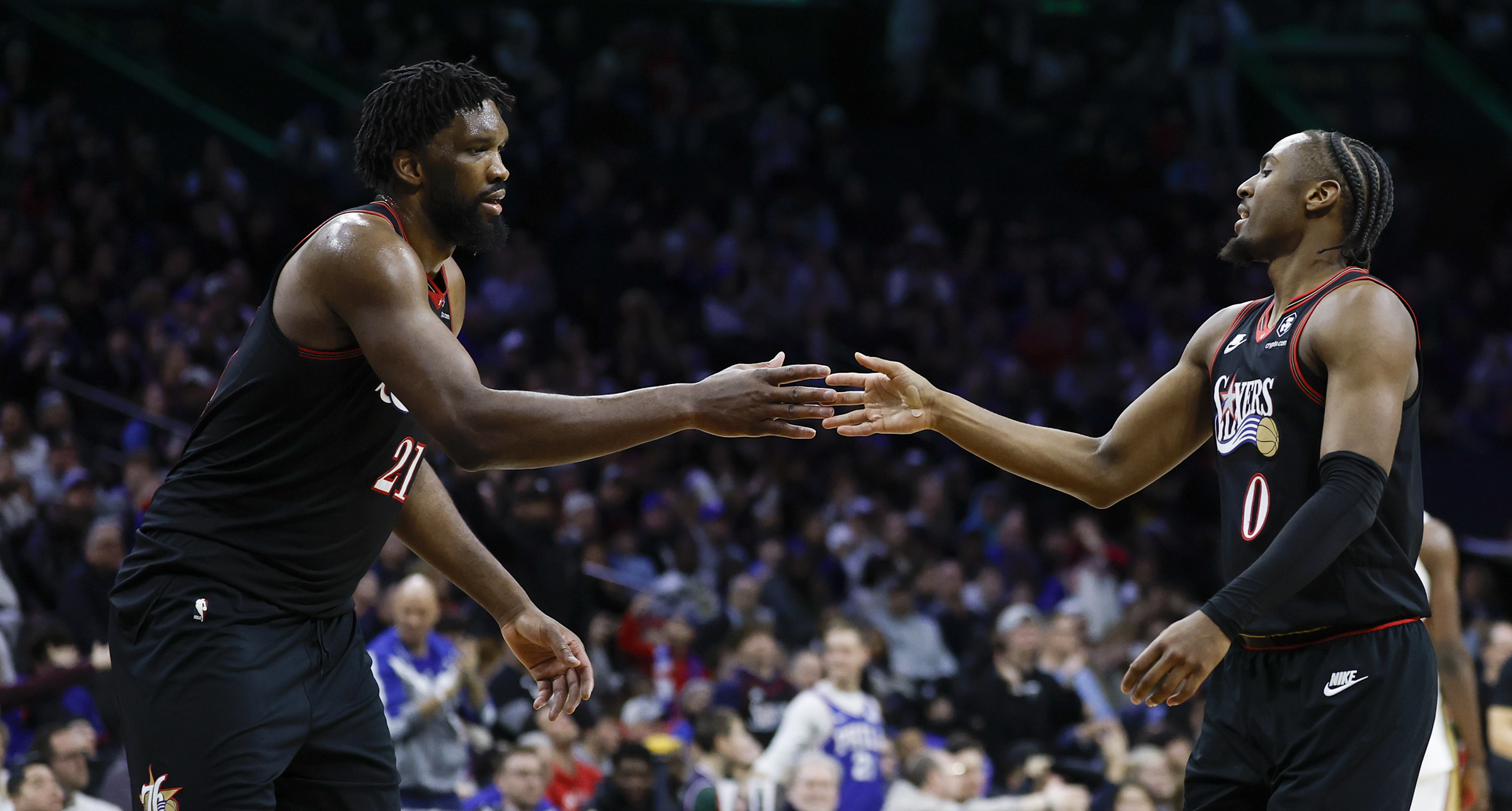
    Sixers guard Tyrese Maxey (right) no longer has to play second fiddle to Joel Embiid.

    Maxey will represent the Sixers as an NBA All-Star Game starter in Los Angeles on Sunday. This is fitting, since he’s the embodiment of what the Sixers hope to be and emblematic of how Philadelphia sees itself.

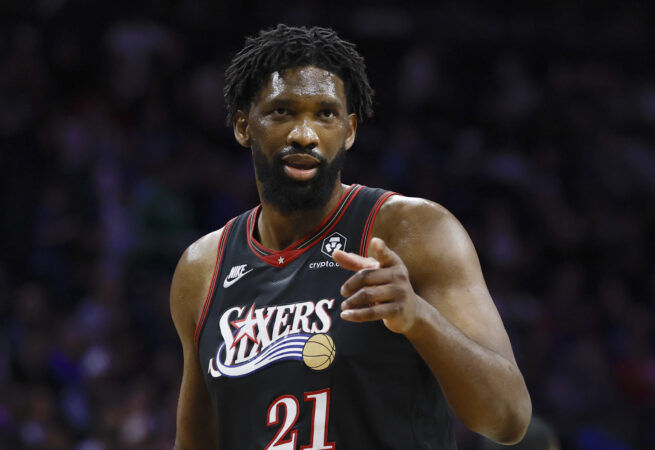
    Joel Embiid represents “The Process,” has been diminished as a part-time role player, and is a reminder of the disastrous slash-and-burn rebuild that began in 2013.

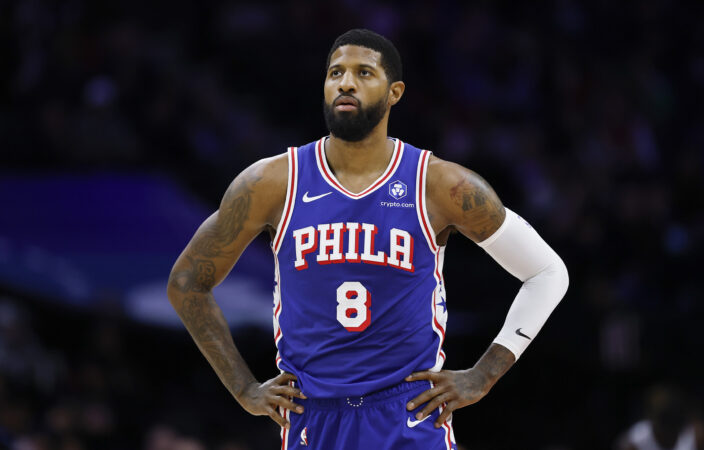
    Paul George represents the failed philosophy of Sixers president Daryl Morey, who bet everything on James Harden both in Houston and Philadelphia and made a similarly bad bet on George, addled by injury and seven games into a 25-game drug suspension.

    Rookie guard VJ Edgecombe was the MVP of the Rising Stars All-Star competition Friday night and represents the future, but it is a future that depends on working in harness with Maxey.

    Maxey represents the Philly of today: a city that sees itself as a collection of hardworking, well-meaning, decent, and spirited underdogs.

    Philly guy

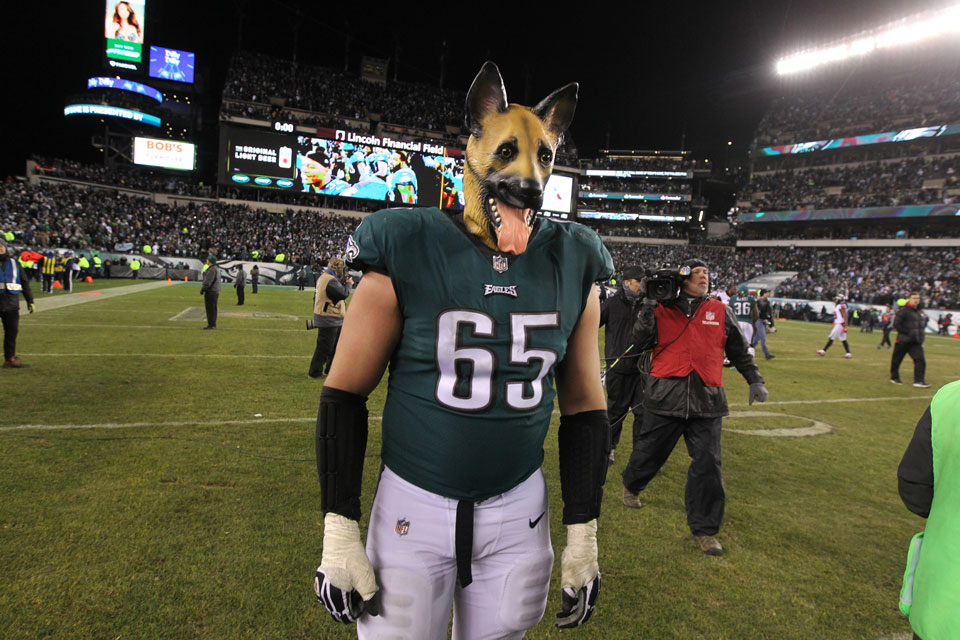
    From Vince Papale to Rocky Balboa to the 2017 Eagles, Philly loves an underdog.

    Eagles tackle Lane Johnson dons a dog mask after a playoff victory against the Atlanta Falcons on Jan. 13, 2018.

    Maxey has always been an underdog.

    He was never touted as an AAU player. He played for Kentucky for one uninspired season. He then was the 21st overall pick of the COVID-19 draft in 2020, behind the likes of Killian Hayes (seventh) and Kira Lewis (13th). A poor shooter, he started just eight games as a Sixers rookie. The Sixers hoped he’d be Dario Šarić or Landry Shamet, players drafted outside of the top 10 who have become dependable, if limited, NBA performers.

    As it turns out, Maxey has no limit.

    His maniacal offseason workout regimen focused on shooting and turned him from a 30.1% three-point shooter as a rookie into a 42.7% bomber in his second season. His scoring average over the years went from 8 points to 17.5 to 20.3 to 25.9, which made him the 2023-24 Most Improved Player and an All-Star reserve. He missed much of last season with injuries and still averaged 26.3 points, and now he’s at nearly 29 points per game, an All-Star starter, and an MVP candidate.

    Like former Eagles offensive line coach Jeff Stoutland said: Hungry dogs run faster.

    Maxey stays hungry. Hungry for wins.

    “I just want everybody to know I try extremely hard, I work extremely hard, and I leave it all out there on the court every single night. I play through whatever,” he said recently. “That’s the legacy I want to leave behind. But the main thing is to win.

    “This is a town that believes in winning. And I believe in winning.”

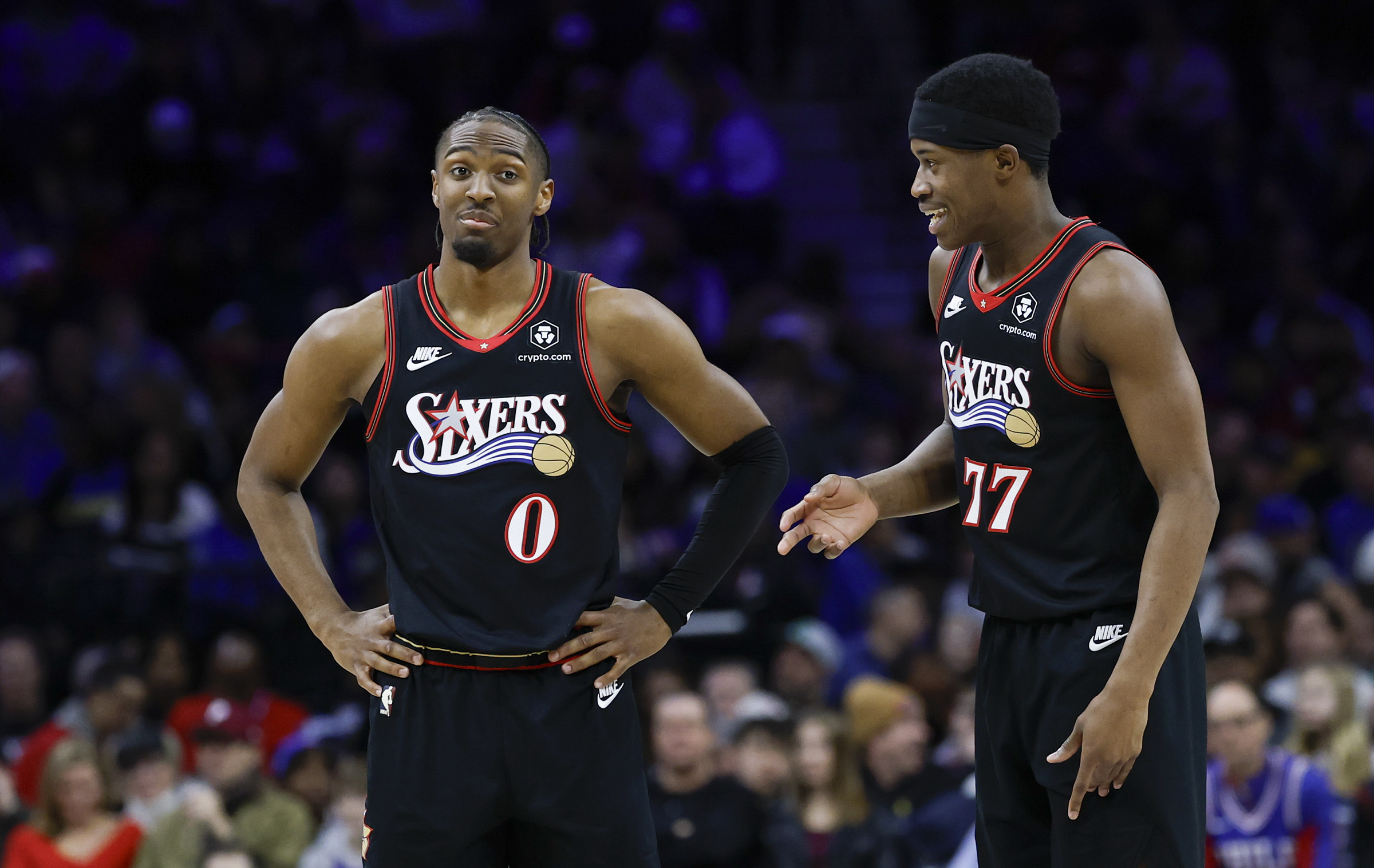
    Tyrese Maxey (left) and VJ Edgecombe form a potent combination at guard for the Sixers.

    Ravenous

    Maxey used to practice so much they had to take away his keys to the gym.

    He never was expected to play point guard. The Sixers drafted Maxey while Ben Simmons was on the team, then traded Simmons for Harden, then, when Harden forced a trade in 2023, Maxey took over the point. It was not pretty. He went to work.

    He’s a complete point guard today. His ballhandling and passing have advanced so much that his Player Efficiency Rating this season is 22.72, about three points higher than his last All-Star season and fifth among point guards. He trails reigning MVP Shai Gilgeous-Alexander, five-time top-10 MVP candidate Luka Dončić, two-time MVP Steph Curry, and 2026 All-Star and NBA champ Jamal Murray. Which is why Maxey is an MVP candidate himself.

    His game has blossomed.

    “I play three different roles on this team,” he said. “Sometimes I’ve got to shoot 30 times. Sometimes I’ve got to get Joel the ball. Sometimes I have to play full-time point guard and guard [elite] people. That’s OK. Whatever it takes to win.”

    He didn’t just develop a three-point shot, he developed Harden‘s three-point shot after pestering Harden to teach him during the Beard’s 1½ seasons with the Sixers. The result: a lethal, sidestep-stepback, coil-and-release mortar shell whose range knows no limit.

    This season, he mastered the most important skill of any backcourt scorer: the pull-up jumper, the most lethal weapon in basketball, from Jerry West to Michael Jordan to Kobe Bryant to Kevin Durant.

    How far has he come? He’d dropped in the draft because he couldn’t shoot. Now, on Saturday, he’ll be the first Sixer to compete in the three-point shooting contest since Kyle Korver in 2005.

    He remains driven by that disrespect, but he isn’t disrespectful, and that endears him to Philly even more. Sure, Philly’s a rough place. Some people got a kick out of Embiid and his Twitter-beefing with players like Karl-Anthony Towns. Some people loved it when Bryce Harper stared down mouthy Atlanta Braves shortstop Orlando Arcia in the 2023 playoffs.

    But those incidents also rubbed some people the wrong way. Maxey seems to always rub folks the right way.

    What’s not to like? After all, Maxey is the No. 1 dog dad in a canine-crazed city.

    Maxey owns three dogs. His first is named Apollo, after the Apollo Creed character in Rocky. Then he got Aries and Arrow. They are his family. Maxey told Sixers videographers that when he bought a house in South Jersey, he insisted it have lots of land: “Try to create a happy home for my dogs. Let them run around in this big backyard.”

    He made a cameo appearance at the National Dog Show when it visited the Philadelphia area in November.

    So, he loves dogs. He loves kids, too.

    Maxey won the Bob Lanier Community Assist Award in 2024 for his offseason work with youths in Philadelphia and his native Dallas.

    With Tyrese Maxey, it’s never about Tyrese Maxey.

    I ran an informal Twitter/X poll Tuesday into Wednesday that asked, “Who’s your favorite Philly athlete?” I listed Harper, Kyle Schwarber, Saquon Barkley, and Maxey. (X only allows four entries.) Maxey won with 38% of the votes. Schwarber got 23%, Harper got 15%, and Barkley got 24%.

    No, it’s not a scientific poll, and yes, it drew only about 400 respondents, but it makes sense nevertheless.

    When the local TV broadcast spotted Maxey’s parents, Tyrone and Denyse (his name is a combination of theirs) at the Sixers’ game Saturday in Phoenix, play-by-play announcer Kate Scott called them “the Royal Family of Philadelphia.”

    That’s because, at this moment, their son is king.

    Always ‘us,’ never ‘me’

    In an era of shameless self-promotion, Maxey never lobbies for personal accolades. He has never deemed himself an All-Star or an MVP until somebody else deemed him thus.

    He’s always accountable, but he spreads the love. When Embiid dropped 40 on Jan. 31, Maxey detailed how the big guy’s game had developed to the point that Embiid found Maxey late in the game instead of forcing his own shot: “He played the right way.”

    When George got suspended in the middle of a playoff push, Maxey never wavered: “We stand with Paul.”

    He plays a child’s game with a child’s glee. It isn’t perfect, but Maxey has the most recognizable Philly smile since Flyers legend Bobby Clarke, and he flashes it all the time.

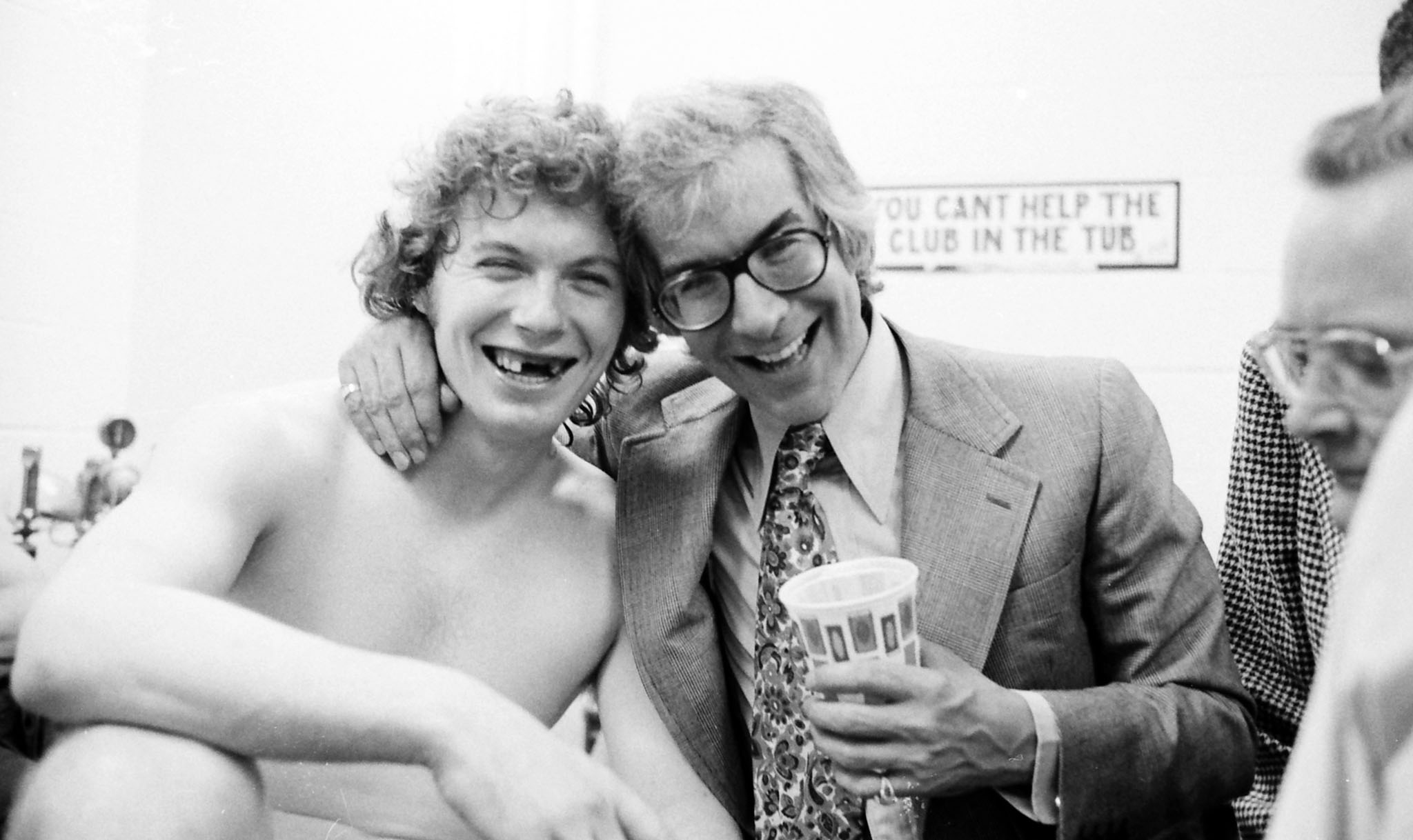
    Bobby Clarke and Ed Snider in the Flyers’ locker room in 1974. (Spectrum Archives)

    From diet to conditioning to practice to rest, he adores the process and the progress as much as he relishes the result.

    It was Maxey who, in a team meeting last season, finally confronted Embiid about his selfishly tardy habits: how he kept teammates waiting at meetings, on buses, and on planes.

    Maxey just shows up on time, pays attention, and plays his hardest every second. He’s the type of player Philadelphians swear they would be if they had the chance. He understands that he has a gift, and that he should rejoice in his gift, even if it doesn’t take him to the top of the mountain.

    This weekend, that gift took him to L.A.

  • Joel Embiid’s return from a mysterious knee problem finally matured him. He’s playing like an All-Star, snubbed or not.

    Joel Embiid’s return from a mysterious knee problem finally matured him. He’s playing like an All-Star, snubbed or not.

    For the first time in a 12-year career that has been as sporadic as it has been incandescent, Joel Embiid is performing to the level of his potential.

    If that sounds demeaning for a player who won the NBA MVP award in 2023, then you didn’t appreciate his unprecedented potential then and you don’t appreciate his diminished potential now.

    Embiid had a chance to be the best big man in NBA history. However, a lack of professionalism rooted in indifference to discipline both on and off the court, combined with a cascade of injuries rooted in bad conditioning and bad luck, always limited his performance. He has missed almost half of the Sixers’ games in his career. This time last year, a lingering knee injury brought him to the brink of irrelevance.

    Now, though, he seems to be the best possible version of himself. His new self. And he’s only getting better.

    “I continue to see improvement,” Sixers president Daryl Morey said last week. “He feels like he’s improving still.”

    How?

    He listened to his doctors. He lost weight. He adjusted his game and is more deferential. He became a better teammate. He might not be going to the All-Star Game this weekend, but he’s playing at an All-Star level.

    Sixers coach Nick Nurse will not play Joel Embiid on the second night of a back-to-back.

    Embiid said last week he doesn’t care about what would be an eighth All-Star appearance: “I don’t need validation from anybody. I’m just excited to be playing every night.”

    Everything is a bonus.

    “Coming into this year, I thought it was going to be more of a tryout year,” he said.

    He’s played in only 31 games, which is probably why he was not elected as an All-Star by the fans, media, and players, who vote on the starters; nor by the coaches, who vote on the reserves.

    After all, Embiid missed 14 of the 76ers’ first 22 games as he grew accustomed to a new body and a new mindset and committed more fully to his rehab regimen.

    That commitment has borne fruit. Embiid has played in 23 of the last 30 games, averaging 29.4 points and 8.2 rebounds in 33.8 minutes in that span. The Sixers were 14-9 in those games entering Monday. They held the No. 6 seed in the Eastern Conference, which is vulnerable due to the absence of stars in Boston and Indiana.

    Given the intermittent nature of a playoff schedule, there’s no reason to think that Embiid couldn’t be similarly productive throughout a postseason run. He doesn’t play in back-to-back games, and he probably never will again, but there are no back-to-backs in the postseason. He did not play Monday in Portland due to right knee soreness, another enduring issue, but missing just seven of 30 games on 31-year-old knees that have undergone a total of four procedures has been a best-case scenario.

    “We thought that Joel could still get to this level and play to this level,” Morey said. “I think there was a lot of very reasonable skepticism. But all I ever had was talking to our medical staff and doctors, and there was a lot of confidence that he could get to this place if he put in the time.”

    That was a big “if.”

    “He has,” Morey said.

    Clearly.

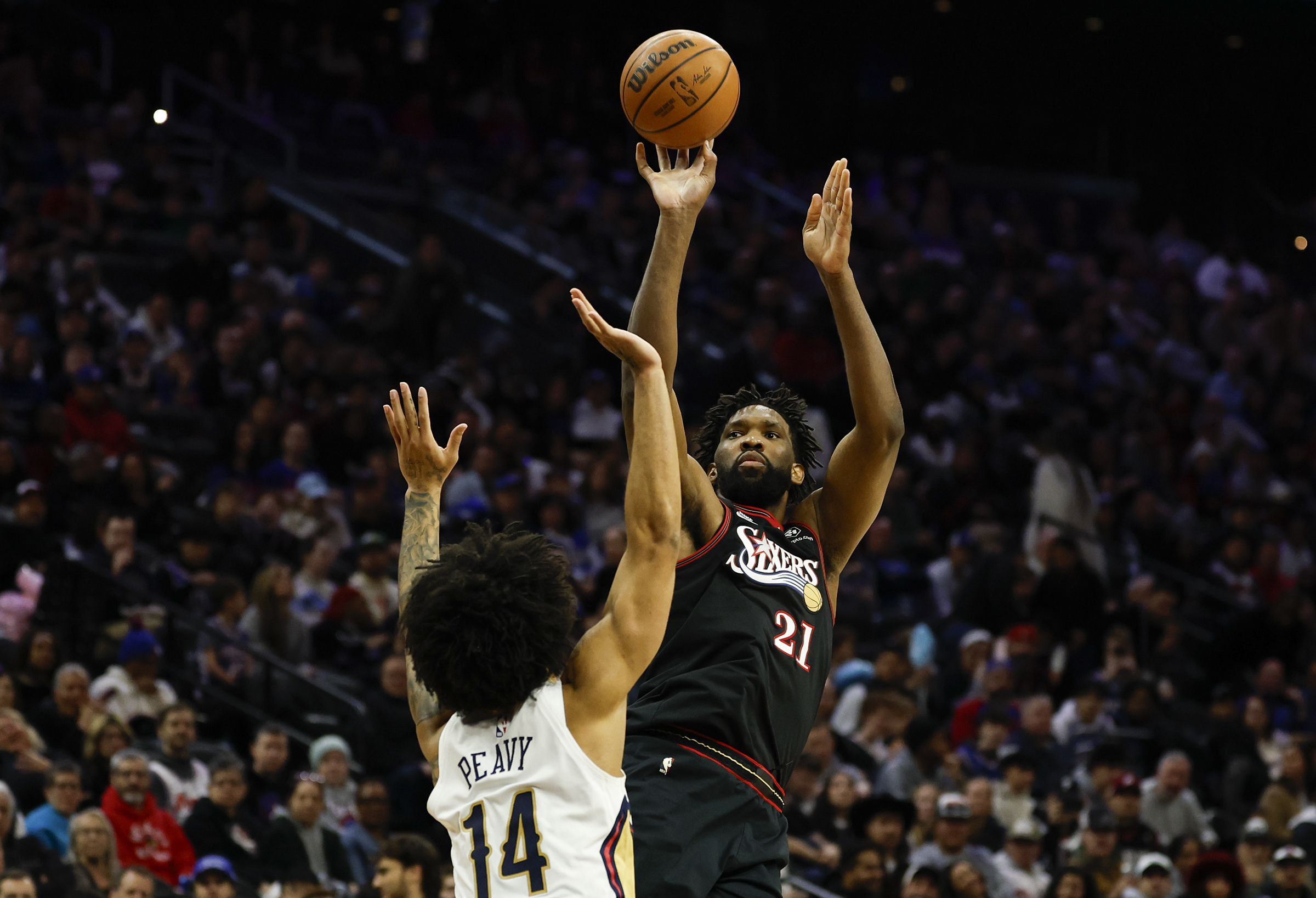
    Sixers center Joel Embiid shoots over New Orleans Pelicans guard Micah Peavy on Jan. 31.

    What, exactly, happened?

    Following the timeline of Embiid’s injuries is as convoluted as reading a map to Blackbeard’s treasure.

    Embiid underwent meniscus surgery in February 2024. He returned in April for the Sixers’ failed playoff run, then foolishly participated in the Paris Olympics with Team USA (he’s a naturalized citizen).

    He showed up for training camp on Sept. 30 both out of shape and far behind on his rehab, and missed the first three weeks of the season. He was hopeless when he returned. The Sixers insisted the knee was fit for play and there was no further injury, but Embiid could not endure the pain and swelling. Doctors said the process of recovery involved strengthening the muscles that surround the knee; weight loss, to reduce the stress on the joint; and overall body strength to better distribute the load. He just got worse.

    Embiid played in just 19 games last season, and, after the 16th one, suggested to a television reporter that he needed another surgery. To that end, Embiid eventually visited Dr. Jonathan Glashow, a Manhattan-based orthopedic surgeon and NBA specialist. Glashow performed an arthroscopic procedure on April 9.

    This, of course, undermined the medical advice Embiid received from at least six other doctors.

    So what, exactly, did Glashow do? Nobody will say. The Sixers, who since 2013 have been cursed by injuries like no other NBA team, are relatively transparent regarding significant medical procedures, at least eventually. Not this time.

    Glashow last month posted on social media, but only to offer thanks to a grateful Sixers community and to offer vague praise of Embiid’s “dedication and hard work.”

    The surgeon did not, however, reply for comment for this story.

    So, the question remains: What did Glashow do? Did he discover an injury other doctors missed?

    About a year ago I wrote a column interviewing orthopedic surgeons who detailed options open to Embiid, many of which might have cost Embiid this season. When presented with the options, the Sixers acknowledged that the list was complete.

    League sources indicate that Glashow did not perform any of the more radical procedures. According to the sources’ knowledge, Embiid underwent the most minor possible procedure on the list: putting the arthroscope into the knee, making sure there was nothing new causing irritation, and getting out.

    After the visit to Glashow, sources say, everything improved. Maybe the big guy got scared straight. Embiid got better rest, he ate smarter, he was even more focused in his rehab sessions. He lost weight. His pain tolerance increased.

    Maybe it just took more time than expected. Everybody heals at a different rate. Everybody’s commitment to rehabilitation is different. Doctors can project typical timelines, but returning to play seldom follows a straight line. There are setbacks. There are plateaus. The body has to develop compensatory strength and stability for strength and stability that has been lost forever.

    At any rate, less than a calendar year later, Embiid is back — at least, he’s more “back” than anyone expected.

    Can it last?

    Joel Embiid’s $188 million contract extension will kick in next season.

    Sustainability

    The Sixers will have 28 games left after the Knicks visit Wednesday and the All-Star break begins, with six back-to-backs. Can Embiid play in, say, 22 games? After this season, the Sixers owe Embiid $188 million over the next three years. How much will he be able to give them when he’s 34?

    “We do think it’s sustainable,” Morey said.

    He’s in good hands. Embiid singled out Simon Rice, the team’s vice president of athlete care, as the main reason for his comeback. But it’s not as if the Sixers hired Rice and then Embiid got better. Rice has been with the Sixers since 2020.

    No: This is less about the doctors than it is about the patient. Since last spring, Embiid simply has been more professional. More mature.

    Sixers sources say that, after Tyrese Maxey called him out last year for chronic tardiness, Embiid has not been as late as often for the team bus or the team plane. He is more present in the locker room during the team’s downtime. He has been more engaging with young players like rookie VJ Edgecombe, with new players like Dominick Barlow, and with fringe players like Quentin Grimes.

    Maybe Maxey’s emergence as the team’s MVP and spokesperson relieved from Embiid the pressure of a role for which he was never equipped.

    “He’s like the fun-loving uncle now,” said one Sixers insider.

    That’s something.

    He’s not MVP-level Embiid, and he never again will be. His defensive movement will never return to the all-defensive levels of his youth, but his positioning is good, and he occasionally blocks a shot. He’s even started dunking again. Gently.

    “I think, from now on, every single day … keep stacking them up, it’s only going to get better. With the hope that, whether it’s by the playoffs or next year, I’m really, really back to being myself. I’m on my way there,” Embiid told the Inquirer during the team’s West Coast trip.

    That’s a pipe dream, of course. But Embiid is so gifted that this new version certainly should be an annual All-Star contender.

    It’s always been hard to quantify Embiid’s intangible value. You can say he’s ninth in “DARKO” or seventh in “PER” or whatever composite metric you like, but the eye test will tell you that Embiid once again is among the NBA’s best players, night in and night out.

    That’s the truest test of an All-Star.

  • Daryl Morey’s message to Joel Embiid and Sixers fans: Trust the Process

    Daryl Morey’s message to Joel Embiid and Sixers fans: Trust the Process

    Last week, with the trade deadline looming, Joel Embiid made a public plea to the 76ers’ front office. He begged them to ignore the luxury tax for once, and to get him the help he needs for what has turned into an unlikely impending playoff run.

    “In the past we’ve been, I guess, ducking the tax,” Embiid said last week. “So, hopefully, we think about improving. Because I think we have a chance.”

    Embiid made this plea knowing that Tyrese Maxey, VJ Edgecombe, and Embiid himself cannot sustain their high level of play if they have to maintain such a high number of minutes.

    Embiid’s plea coincided with the 25-game drug suspension of fellow veteran and max-salary player Paul George, who, like Embiid, was rounding into form after more than a year of debilitating injury issues. George will not be eligible to return until only 10 games remain in the season.

    Embiid’s wishes made sense.

    Embiid’s wishes were not granted.

    In fact, not only did the Sixers fail to make a significant move to improve the roster, they actually got worse: They traded last year‘s first-round pick, sharpshooter Jared McCain, for future draft picks.

    So, despite asking, and asking nicely, Embiid got no help.

    Daryl Morey’s message to Embiid:

    Trust the process.

    “I think we all wanted to add to the team, and, you know, we took his comments to heart,” the Sixers’ president said Friday.

    And?

    “We were trying to add to the team,” Morey said, “and we didn’t find a deal that made sense — one that we thought could move the needle on our ability to win this year.”

    So: Still processing.

    McCain trade

    Maxey is the team’s most important player, so he was never a trade consideration, but Morey acknowledged that both Edgecombe and Embiid were essentially untouchable, too.

    McCain was not untouchable. His departure provided salary-cap relief. Further, though, Morey painted McCain as a long-term project who might not develop faster than whomever the Sixers draft in June with the first-round pick the Sixers got in the trade.

    That seemed harsh. True, but harsh.

    Sixers guard Jared McCain was shipped after only playing one full season in Philly.

    As a rookie, McCain averaged 15.3 points in 23 games mostly as a bench player last season, which was cut short by injury. More injury issues limited his participation this season, and he was averaging just 6.6 points. Morey traded him Wednesday to Oklahoma City for the Thunder’s first-round pick in June, as well as three future second-round picks.

    McCain simply was not in the Sixers’ immediate plans, and Morey insisted that they would not have gotten a better return on McCain in the offseason.

    Morey also said the Sixers hoped to immediately flip some of the draft picks they received in the McCain deal and improve the team thus.

    There were no upgrades out there.

    The emergence of Dominic Barlow, who is starting in place of George, and the continued strong bench play of guard Quentin Grimes convinced him that there were no players available for a sensible asking price that would appreciably improve the Sixers.

    Certainly, there were no players that would have warranted the Sixers exceeding the luxury tax, though Sixers ownership had given him permission to spend whatever he needed to spend.

    “If we had found an [addition] and we were going to end up higher [than the tax], we would have ended up above it. We’ve done it several times,” Morey said. “We didn’t see something that did.”

    So: Still processing.

    The Process

    The catastrophic, scorched-earth strategy of rebuilding the Sixers, begun in 2013, eventually became known as “The Process.” Trusting in it became the mantra of both the franchise and a cult of devoted, long-suffering fans for whom no sacrifice was too outrageous.

    Embiid then hijacked the phrase as his nickname in 2016, after he’d missed his first two NBA seasons due to injury. Personalizing the phrase was an ostentatious act, but, considering the nature of his turbulent career, Embiid has come to embody it.

    Now, 13 years and five decision-makers later — Sam Hinkie, Bryan Colangelo, Brett Brown, Elton Brand, and Morey — the Sixers must ask their best player, the last vestige of The Process, to spend one of his twilight seasons hoping the current chapter of The Process has a happy ending.

    “This team, we think, can make a deep playoff run and is one of the top few teams in the East,” Morey said.

    He’s right.

    The Process has a window. It’s a small window, like that triangular side window on old cars, but it’s a window nevertheless.

    The Least of the East

    As of Friday night the Sixers stood sixth in a sagging Eastern Conference. Injury has diminished both the Celtics, who won the NBA title two years ago, and the Pacers, conference champs last season. The Pistons are in first place, 4½ games ahead of the flawed Knicks and Celtics, but nobody really believes in them. The Sixers are just one game behind the Raptors, who have five players averaging double figures, and 1½ games behind the Cavaliers, who, despite having won seven of their last eight games, were so desperate that they traded for — wait for it — 36-year-old James Harden.

    James Harden, formerly of the Sixers, was traded to the Cleveland Cavaliers.

    As predicted when Celtics star Jayson Tatum and Pacers star Tyrese Haliburton suffered severe injuries in the 2025 playoffs, the East is weak and vulnerable. These are adjectives that often have been used to describe the 76ers during The Process.

    Now, though, the Sixers have won five of their last six games. They’ve ridden Maxey’s MVP campaign, Edgecombe’s Rookie of the Year campaign, and what would be Embiid’s Comeback Player of the Year campaign if the NBA had such an award.

    Can they keep it up? We won’t know for months whether the conference is so bad that even the Sixers can win it.

    So, until then: Still processing.

    You gotta believe

    “I believe in myself, so I’m always going to believe I have a chance, as long as I’m healthy,” Embiid told reporters Thursday night, after McCain had arrived in Oklahoma and no new player had joined the Sixers on the road in Los Angeles. “I believe that we can beat anybody. We hold down the fort until [George] comes back. He’s really needed. He’s irreplaceable.”

    He’s not in demand, though. League sources indicated that no team was interested in trading for George. No surprise there. At 35, not only is George suspended, but he is also owed almost $110 million over the next two seasons, and he has an injury history as bad as Embiid’s.

    That’s OK with the Sixers. George, when not taking banned substances, is probably still very good. Morey adores George, especially as a defensive difference-maker.

    “We really like what Paul gives us,” Morey said.

    Well, he won’t give them anything for the next 21 games. Which, for the moment, is exactly what the Sixers will get from the 2026 trade deadline.

    Process that.

  • Patriots owner Robert Kraft’s snub shows again that Hall of Fame voters don’t like cheaters

    Patriots owner Robert Kraft’s snub shows again that Hall of Fame voters don’t like cheaters

    When Patriots owner Robert Kraft sent his team to his 11th Super Bowl, a record for any owner, in search of a seventh title, which would be a record for any franchise, he expected the team to have to deal with uncomfortable questions.

    Last week, ESPN reported that Bill Belichick, who won all six of New England’s titles, did not receive the minimum number of votes by a committee required to secure induction into the Pro Football Hall of Fame in this cycle.

    Now, Kraft and the Patriots will spend the week answering questions about why Kraft didn’t make it, either. ESPN reported Tuesday that Kraft failed to receive at least 40 of 50 votes required for induction. The 2026 inductees will be officially announced Thursday.

    Several explanations and theories circulated following last week’s news. There were assertions that some voters sought revenge for Belichick’s constant bullying. There were assertions that the new, convoluted voting system is flawed.

    But the reality seems clearer than ever:

    The voters don’t like cheaters.

    The Patriots were found guilty of cheating twice during their run. Spygate and Deflategate cost them millions of dollars and several draft picks.

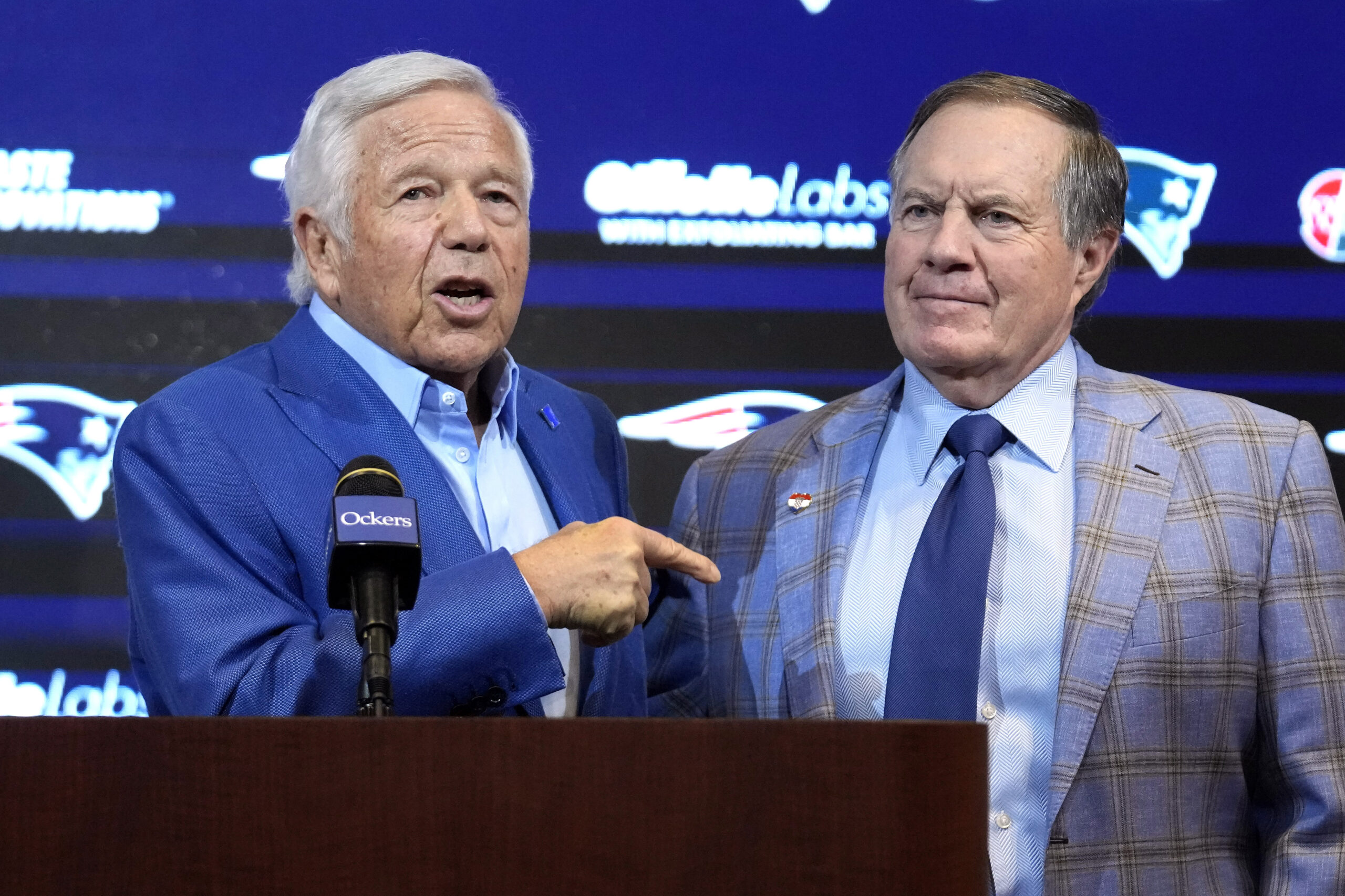
    New England Patriots owner Robert Kraft (left) with coach Bill Belichick on Jan. 11, 2024, the day of Belichick’s exit.

    Notably, the span of cheating included not only Super Bowl XXXIX, when they beat the Eagles, but also all but two of their Super Bowl appearances: their loss in Super Bowl LII to the Eagles and their win the next year over the Rams.

    Clearly, voters believe that cheating devalues winning.

    They also might consider Kraft’s 2019 involvement in a massage-parlor sting a disqualifying element (see below).

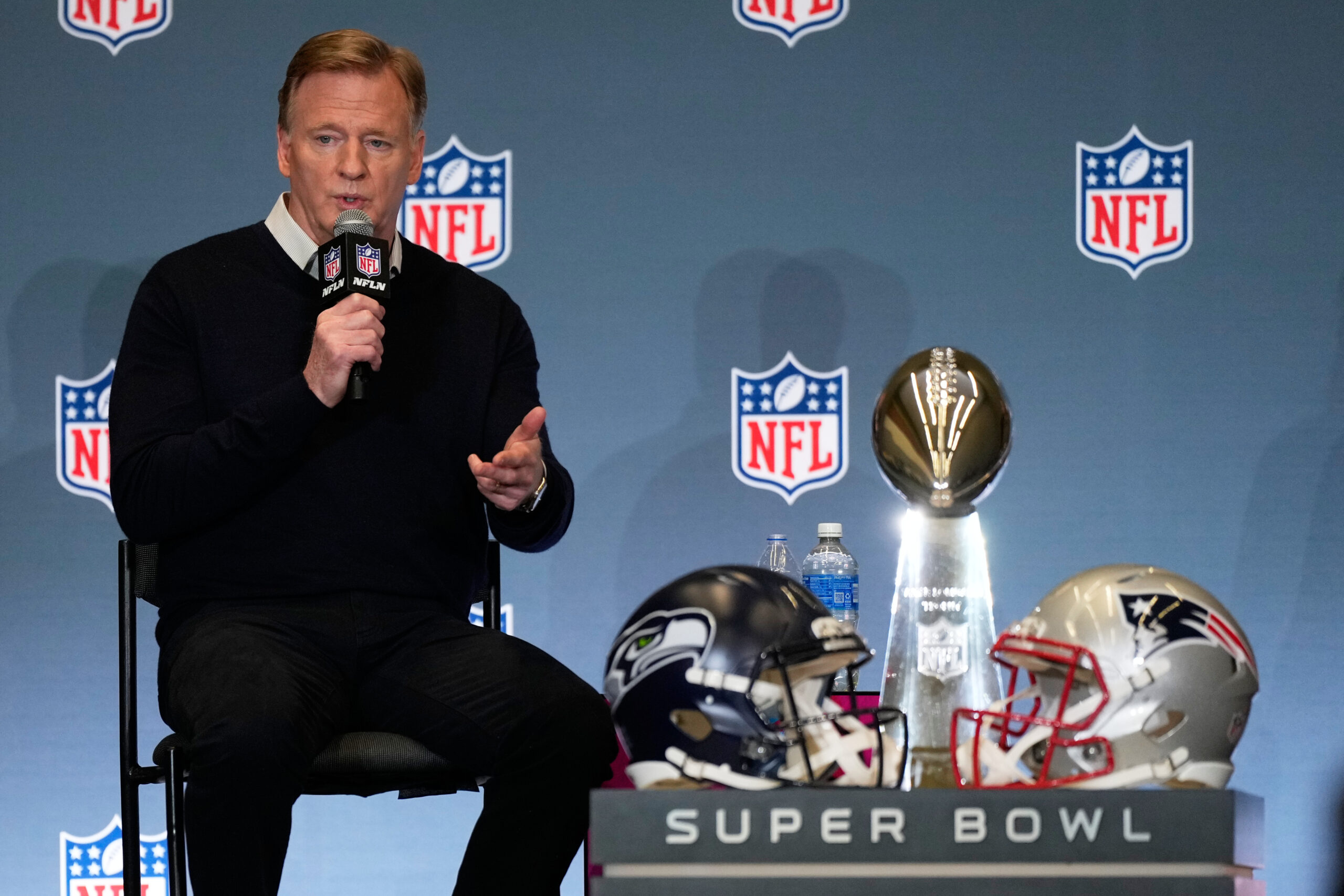
    NFL commissioner Roger Goodell said Monday, before the news broke, “They are spectacular. They have contributed so much to this game, and I believe they will be Hall of Famers.”

    It sounds like Goodell knew that Kraft hadn’t made it, either.

    It also sounds like Goodell knows, as hard as it is to imagine, that their tainted records might keep them out forever.

    NFL’s Epstein hypocrisy

    The NFL is supposed to hold team executives to a higher standard of conduct than it holds players. Don’t expect Deshaun Watson and Justin Tucker to believe that.

    Goodell on Monday indicated that the league will not immediately launch an investigation into Giants co-owner Steve Tisch, and probably never will. Tisch appears repeatedly in the latest released batch of files concerning the activities of convicted pedophile Jeffrey Epstein, who died in jail awaiting trial in 2019.

    There are hundreds of emails between Tisch and Epstein, some of which indicate that Epstein was supplying Tisch with female companionship. This correspondence took place after Epstein had served jail time for soliciting a prostitute and procuring a child for prostitution, the latter conviction requiring him to register as a sex offender in both Florida and New York.

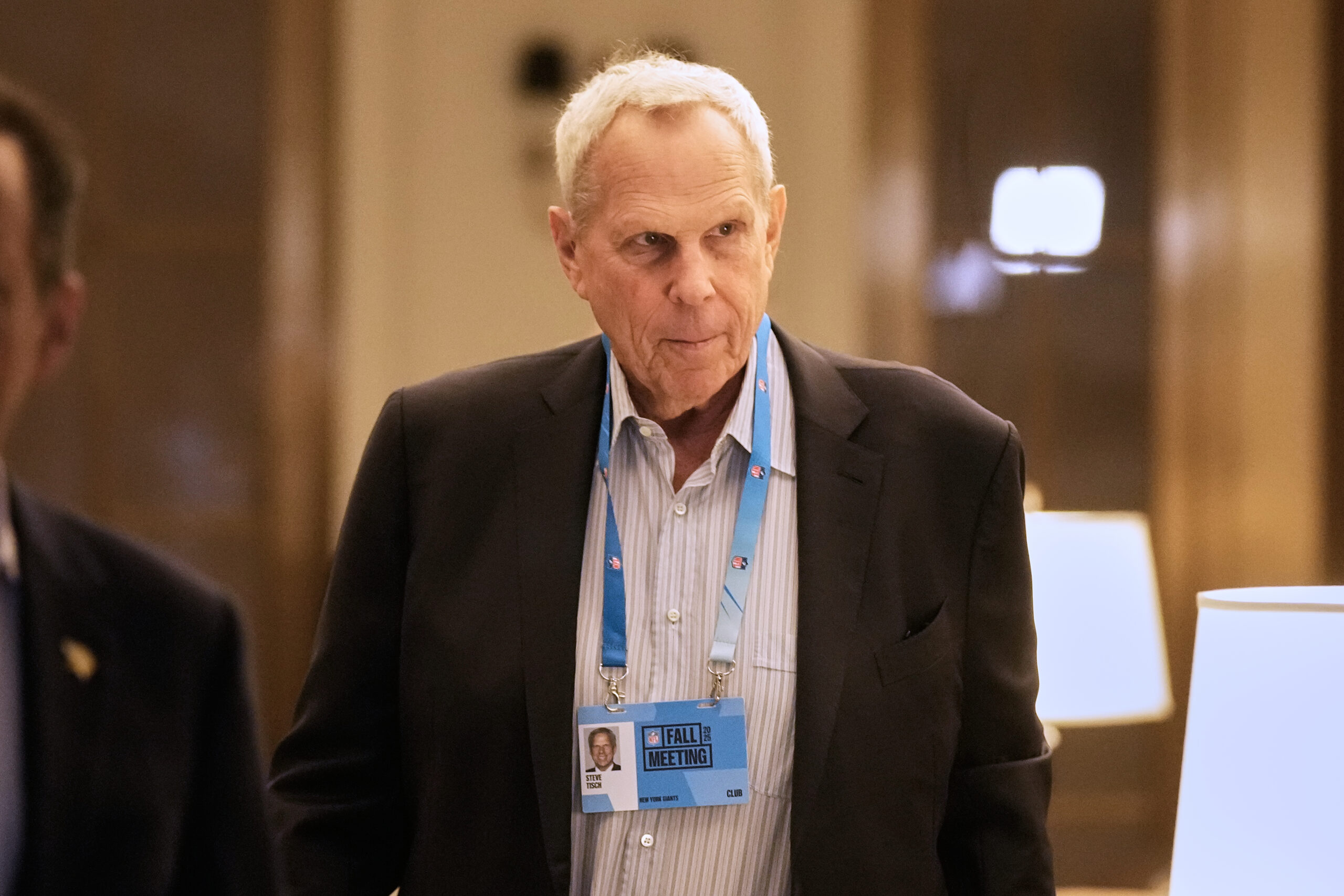
    New York Giants co-owner Steve Tisch’s name appears repeatedly in the latest released batch of files regarding Jeffrey Epstein.

    The nature of the companionship and the ages of those companions Epstein supplied to Tisch remain unknown. Tisch insists that all of the women Epstein supplied him were adults and that he never visited the notorious Epstein island.

    Even Tisch’s apparently legal and possibly acceptable interaction with a man who has become synonymous with sex trafficking and pedophilia sounds like something the NFL should probably investigate, right? The Personal Conduct Policy exists to keep The Shield clean.

    No, said Goodell.

    “We will look at all the facts,” he said. “We’ll look at the context of those, and try to understand that. We’ll look at how that falls under the policy. I think we’ll take one step at a time. Let’s get the facts first.”

    Well, that’s what an investigation does.

    With so many more prominent personalities mentioned in the files, including President Donald Trump, it is likely that the government will have neither the bandwidth nor the incentive (Trump routinely diminishes the files) to pursue a relatively small fish like Tisch.

    Translation: Unless other entities uncover more facts about Tisch’s relationship with Epstein and what services he provided him with, the NFL will turn a blind eye.

    Commissioner Roger Goodell during his state of the NFL news conference on Monday.

    Which is the opposite of what it does with its players.

    I don’t think there’s any question that if, say, Jameis Winston was found to have exchanged similar emails with Sean “Diddy” Combs, who went to prison for sex-related offenses, the NFL would investigate the matter posthaste (sorry for the stray, Jameis).

    But it seems like Goodell will handle this matter the way he handled the Robert Kraft scandal.

    The Patriots’ owner was caught in a sex trafficking and prostitution sting in 2019. Video allegedly showed Kraft paying for sexual acts on consecutive days that year in Florida. The misdemeanor charges were dropped, but Kraft admitted at least a measure of guilt when he apologized for having “hurt and disappointed” fans and family members.

    Unlike Kraft, neither Watson nor Tucker was ever charged with a crime for his alleged sexual misconduct with private massage professionals, but both were suspended without pay.

    Goodell chose to not punish Kraft back then. He seems just as reluctant to hold Tisch accountable today.

    Notably, NFL owners like Kraft and Tisch are the ones who pay Goodell’s $64 million salary.

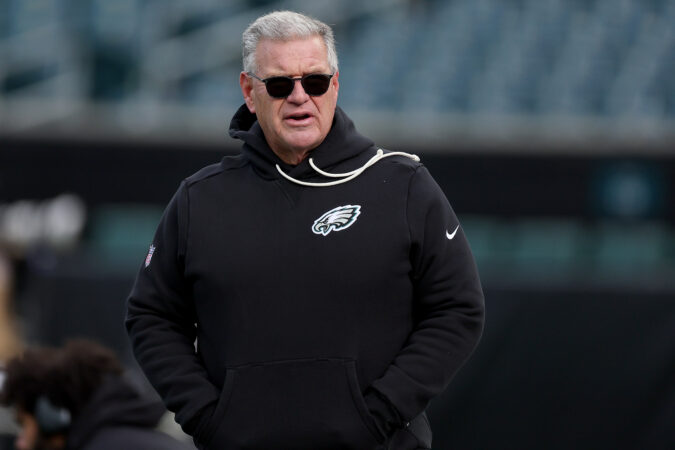
  • Jeff Stoutland exits as Vic Fangio pondered retirement: Eagles drama never ends

    Jeff Stoutland exits as Vic Fangio pondered retirement: Eagles drama never ends

    At this time a year ago, as he celebrated his second Super Bowl title as the Eagles’ offensive line coach, Jeff Stoutland was being hailed as the greatest assistant coach in franchise history. His only real competition: Vic Fangio, whose arrival as coordinator the previous offseason saw the team turn its defense from its greatest weakness to its greatest strength.

    Now, a year later, one considered going and the other now is gone.

    Stoutland announced Wednesday evening on his Twitter/X feed that he had decided “My time coaching with the Eagles has come to an end.”

    Meanwhile, after weeks of rumors and reports, there was still no definitive news regarding Fangio and his annual contemplation of retirement.

    The Eagles and Fangio finally indicated that he will return as the DC. They did so a little more than an hour after this column published Wednesday evening, painting them as a team in disarray.

    Granted, we haven’t yet reached Super Bowl Sunday, but teams that win a Super Bowl within a calendar year and then return to the playoffs usually remain more stable than the Eagles have been the past few weeks.

    It certainly seems like a team in disarray.

    The departure of Stoutland was a seismic development. Since arriving with Chip Kelly in 2013 from the college ranks, Stoutland has become a cult figure in NFL circles and a demigod in football-crazed Philadelphia. His demanding coaching style, dubbed “Stoutland University” by Jordan Mailata, a giant converted rugby player who was his most prized pupil, turned Mailata, Jason Kelce, and Lane Johnson into Hall of Fame candidates and helped several other linemen perform beyond expectation.

    However, the offensive line in 2025 struggled. There was a cascade of injuries, but as the season collapsed, whispers regarding Stoutland’s effectiveness began to circulate.

    He’d also been passed over. Stoutland was not considered a viable candidate to replace offensive coordinator Kellen Moore last year when Moore became the head coach in New Orleans, nor was he considered a viable candidate to replace recently demoted OC Kevin Patullo.

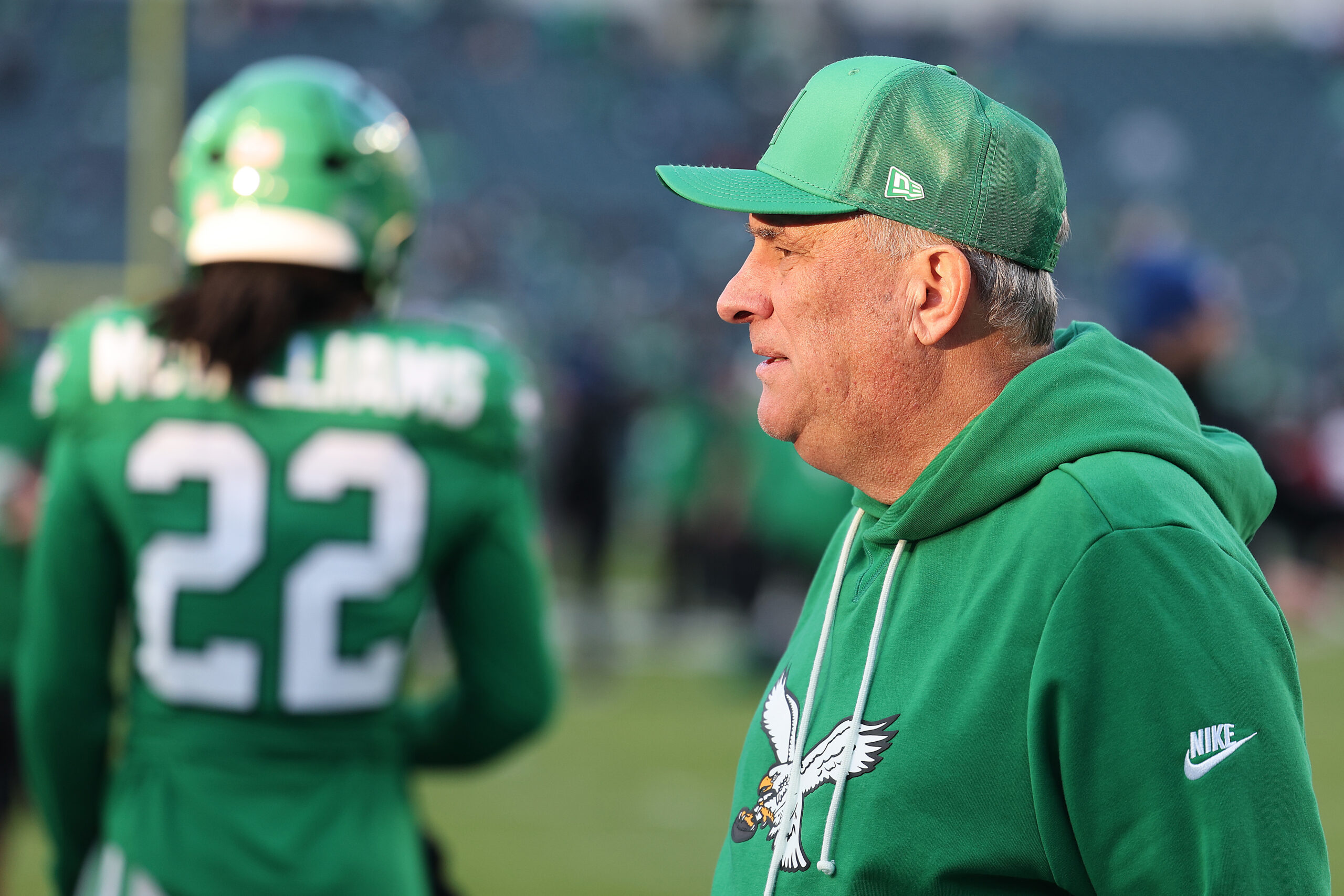
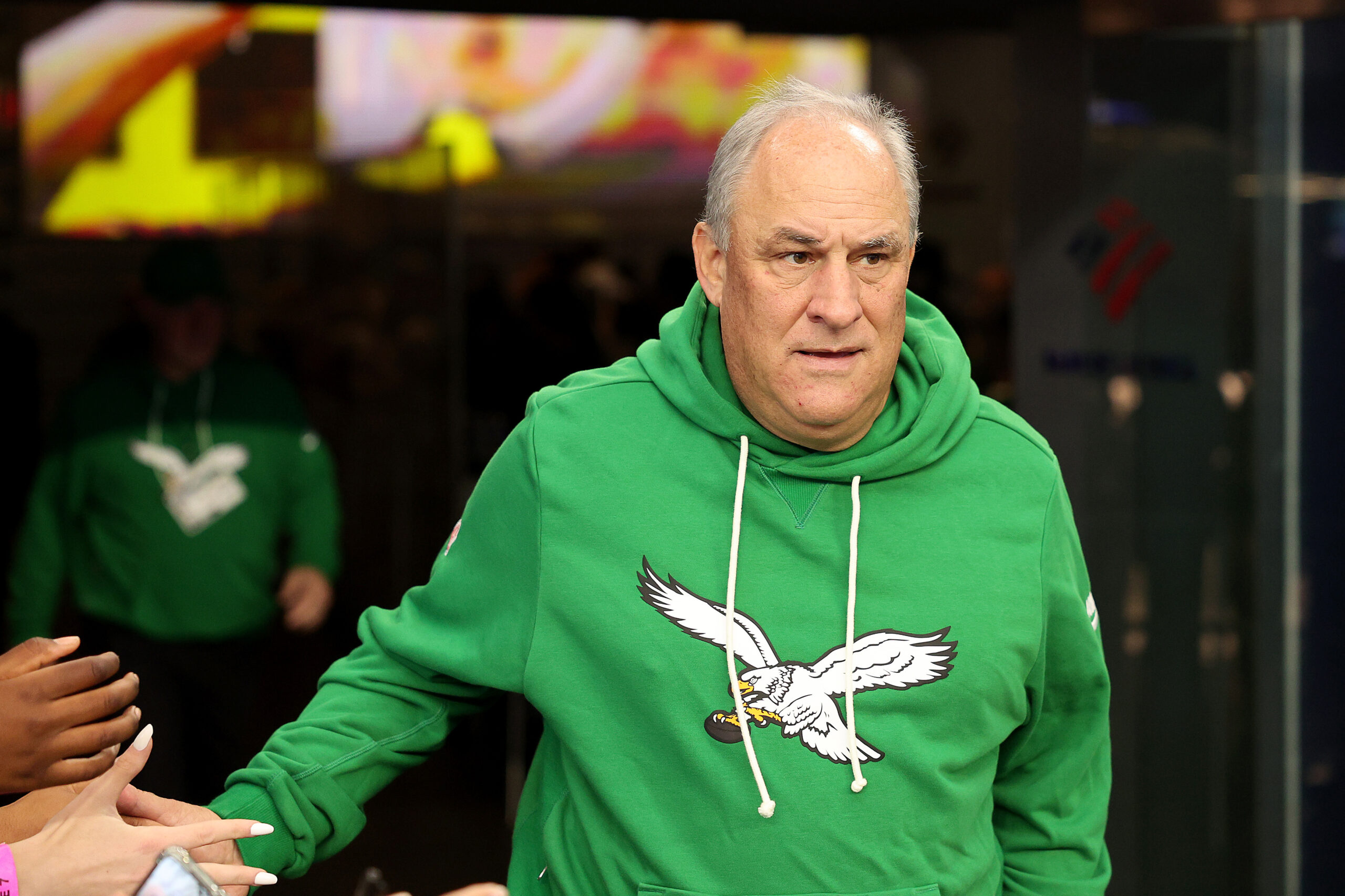
    Eagles defensive coordinator Vic Fangio will return next season, ending talks of retirement.

    During the season, Stoutland, who had been serving as running game coordinator, was stripped of those responsibilities by head coach Nick Sirianni.

    After the Eagles hired Sean Mannion as OC last week, all offensive assistants were put on notice that Mannion might alter the staff. Quarterbacks coach Scot Loeffler was expected to be the first casualty.

    Instead, Stout was out.

    Stoutland is 63, and is contemplating both retirement and remaining with the Eagles in an advisory position, although, given his strong personality and his 13-year tenure, his shadow likely would be too much of a distraction. His status will remain in limbo for the time being.

    For weeks, the same was true of Fangio

    I heard 2½ weeks ago that Fangio, 67, was contemplating retirement, and that it might hinge on a reunion with offensive coordinator candidate Mike McDaniel, under whom Fangio worked as defensive coordinator in Miami in 2023. I couldn’t get it confirmed in the Eagles building, so I didn’t write it, and then PhillyVoice.com broke the story over the weekend.

    The most intriguing parts of that story concerned the news that not only was Fangio so close to retirement that the Eagles alerted possible candidates, but also that one of those possible candidates was former Eagles defensive coordinator Jonathan Gannon, who was generally despised by Eagles fans when he left for the Cardinals’ head coaching job.

    At any rate, my league sources said Fangio decided to not retire last week, which was one reason Gannon went ahead and took the DC job in Green Bay. Then, on Monday, The Inquirer reported that Fangio was still dithering … but the next day, @PHLY_sports reported that Fangio was expected to stay. Which was true. By Wednesday night, anyway.

    As prime candidates to replace Fangio keep getting hired by other teams, Fangio was holding the Eagles hostage.

    Just one more chapter in the story of a very strange workplace.

    The team, with its high-maintenance players, its impulsive head coach, and its eclectic collection of front-office characters, often gets frustrated by the way it is covered.

    This is the sort of behavior that casts the organization as dysfunctional.

    Vic Fangio’s Eagles defense has been dominant for two seasons.

    Sirianni taunts fans, including his own. Diva wide receiver A.J. Brown complains about the offense for three seasons, reads books on the sideline, calls the offense a “[bleep] show” online, and has to be reprimanded by owner Jeffrey Lurie. Defensive tackle Jalen Carter spits on Dak Prescott before the first snap of the season and somehow gets himself ejected and suspended from the same game.

    Fangio likes to golf and fish and watch the Phillies, but as a defensive coordinator, he gets to do that just one month per year.

    There were plenty of reasons besides age that Fangio might’ve wanted to step away.

    First, while the Eagles win, the NovaCare Complex isn’t exactly an easy place to be. Howie Roseman operates with more autonomy than most other GMs, who are more beholden to their coaching staff, especially their coordinators. Additionally, the best defenders will soon be receiving lucrative extensions, which could change the dynamic in the building. It might be a lot more pleasant coaching young, hungry talent like Jordan Davis, Quinyon Mitchell, Nolan Smith, and Cooper DeJean than coaching those same guys minus the financial incentive.

    Fangio has won a title. He has made millions. Maybe, as he ages, he doesn’t want to babysit a well-paid, overweight, under-motivated Jalen Carter.

    The way things go at the NovaCare facility, I can’t say that I‘d blame him.

  • Jeffrey Lurie admired Kellen Moore as OC in Dallas and hired a similar coach, Sean Mannion, for the Eagles

    Jeffrey Lurie admired Kellen Moore as OC in Dallas and hired a similar coach, Sean Mannion, for the Eagles

    Folks keep trying to compare little-known Sean Mannion with previous Eagles hires. In fact, the best comp was in Dallas.

    It’s true that Mannion, the new offensive coordinator, shares some characteristics with former Eagles OC Jon Gruden, a former wide receivers coach whom Jeffrey Lurie and the Eagles hired at the age of 31. Similarly, when the Eagles hired 40-year-old Packers quarterbacks coach Andy Reid to be their head coach in 1999, Reid had never called plays, established a scheme, or formulated a game plan.

    But by 1999 Reid had been a coach for 17 years, and by 1995 Gruden had been a coach for nine years. Mannion, by contrast, has been a coach for just two years, both with the Packers, one of them as Matt LaFleur’s “offensive assistant,” the NFL’s equivalent of an unpaid internship.

    That doesn’t mean Mannion can’t do the job.

    After all, Mannion is no bigger risk for the Eagles than Kellen Moore was for the Cowboys in 2019.

    When Jerry Jones named Moore the offensive coordinator in Dallas, Moore was a short-term, insignificant NFL backup with only one year of coaching experience, as the Cowboys’ quarterbacks coach. He was 29.

    Mannion is a short-term, insignificant NFL backup with one year of experience as a position coach. He is 33.

    He also is a consolation prize.

    The Eagles wanted a Josh McDaniels-type OC like Mike McDaniel or Brian Daboll, former head coaches and accomplished coordinators. McDaniel chose the Chargers. Daboll went to Tennessee.

    The Birds got Mannion. He’s not nothing.

    Sean Mannion, 33, has two years of coaching experience in the NFL.

    This might sound like a desperate attempt to cope with what legitimately should be cast as a repudiation of the Eagles by the best and the brightest. This also might sound like an attempt to diminish the injury concerns the Eagles have at offensive line, the commitment concerns they have with A.J. Brown, and the performance concerns they have with Jalen Hurts.

    Maybe it is, a little bit.

    Sometimes, though, as anyone who’s been married can tell you, your first choice isn’t your best choice.

    Sometimes, you don’t get what you want. You get what you need.

    A grudging admiration

    Few owners keep their ear to the ground the way Lurie does. Over his three decades of ownership he routinely has attended the Senior Bowl, which serves as the NFL’s de facto job fair, where aspiring young coaches gather to distribute resumés and a place where executives meet to gossip about hot new coaching prospects.

    As soon as Moore quit playing in 2017, his sixth season in the NFL and his third with Dallas, including practice squads, he was identified as a comer. In 2018, as QB coach, he corrected Dak Prescott’s slump. In 2019, when Wade Wilson retired, Jones controversially promoted Moore, who wasn’t even 30 and looked like he wasn’t even 20.

    Dallas Cowboys offensive coordinator Kellen Moore watching practice in 2020.

    According to an Eagles executive at the time, no one was more impressed by Jones hiring such an outside-the-box candidate than the NFL owner who spends most of his time thinking outside of the box: Jeffrey Lurie.

    Jones’ gamble paid off.

    In 2019, as OC, Moore pushed Dallas’ offense from 22nd to No. 1. That didn’t save the job of head coach Jason Garrett, but it did convince Jones to ask incoming head coach Mike McCarthy keep Moore as the OC. Sure enough, after a dip in 2020, Dallas was No. 1 in 2021, too.

    All along, Lurie was watching Moore’s success and acknowledging the wisdom of Jones, his archrival, with grudging admiration.

    The Cowboys offense then ranked No. 4 in 2022, but by the end of that season McCarthy had so badly mismanaged the Cowboys that he needed a scapegoat. He chose Moore to be his fall guy, and so fired him. (Two years later, Moore was interviewing for McCarthy’s job.)

    Later that winter the Eagles lost OC Shane Steichen, who became the head coach in Indianapolis. Why didn’t Lurie pounce on Moore then?

    Because the Eagles were coming off a Super Bowl appearance, and, according to league sources, head coach Nick Sirianni, having gained even more authority over his staff, wanted to promote from within. Hurts, in line for a huge contract extension, had earned a seat at the hiring table, too. Quarterbacks coach Brian Johnson had been hired in 2021 in part because of Johnson’s preexisting relationship with Hurts. With Hurts’ blessing, Sirianni promoted Johnson.

    Moore instead went west in 2023 as the offensive coordinator for Justin Herbert and the Chargers. A year later, as part of a purge by new head coach Jim Harbaugh, Moore was available again. Johnson had struggled in 2023, and was fired. Lurie pounced. Moore became the Eagles’ OC. The Birds won the Super Bowl after the 2024 season. Moore then got the head coaching job in New Orleans.

    The Eagles won Super Bowl LIX with Kellen Moore as their offensive coordinator.

    He remains the only offensive coordinator in Eagles history to win a Super Bowl calling his own plays — thereby, arguably, the greatest offensive coordinator in Eagles history.

    Those are big shoes for Mannion to fill.

    Déjà vu and Nick Foles

    Moore declined to comment for this column, which is unfortunate, because, in 2019, he nearly was in Mannion’s exact position as an unproven coordinator in a high-pressure market. He also inherited an offensive roster full of pedigreed players, such as running back Ezekiel Elliott, offensive linemen Tyron Smith and Zack Martin, wideout Amari Cooper, and of course, Prescott, who was an overachieving, second-tier draftee who had not completely polished his game.

    The same can be said of Hurts, who is surrounded by a similarly pedigreed cast: four Pro Bowl offensive linemen, two 1,000-yard receivers, and a running back halfway to the Hall of Fame.

    There are differences, of course. Upon becoming OC, Moore had spent four seasons in Dallas as either a player or coach, and so was familiar with the players, coaches, and the unique culture inside The Star, the Cowboys’ training compound.

    Also, Mannion won’t inherit as stable a situation as Moore, who followed Scott Linehan, who had the job for four years. Mannion will be succeeding Kevin Patullo, Sirianni’s longtime right-hand man who was removed from the job on Jan. 13 following a disastrous one-year run.

    On the other hand, Mannion has more connections than Moore. Between playing and coaching, Mannion has been around accomplished offensive minds such as Packers head coach Matt LaFleur, for whom Mannion worked the last two seasons, and Rams head coach Sean McVay, for whom Mannion played in 2017 and 2018.

    It’s also worth noting that, when Mannion was a rookie in the 2015, the Rams’ starting quarterback was a former Pro Bowl MVP named Nicholas Edward Foles.

    Endorsements

    In 2019, immediately after promoting Moore, Jones defended the move by citing Moore’s ability to communicate clearly, Moore’s high football IQ, and Moore’s strength of character.

    Immediately before the promotion, Moore’s candidacy received a major endorsement from Prescott, who not only had been coached by Moore but also had been Moore’s teammate. On a Dallas radio station, Prescott called Moore a “genius phenom. … He’s special. He knows a lot about the game. Just the way he sees the game, the way he’s ahead of the game. He can bring a lot to us, a lot of creativity.”

    Lurie likely won’t offer comments regarding Mannion until he speaks with the press at the owners’ meetings at the end of March in Phoenix.

    Packers quarterback Jordan Love, in his third season as a starter, cut his interception total from 11 in 2023 and 2024 to six in 2025. Backup Malik Willis got better, too. Neither has called Mannion a “genius phenom.”

    Neither has Sirianni, who has issued the only statement from the Eagles, who have not scheduled a media availability with Mannion and his bosses.

    Eagles head coach Nick Sirianni is welcoming yet another offensive coordinator.

    In a statement that defined banality, Sirianni called Mannion “a bright young coach with a tremendous future ahead of him in this league. I was impressed by his systematic views on offensive football and his strategic approach.”

    The franchise’s excitement paled in comparison to the region’s fascination with this hire.

    Over the last three weeks or so, the process of replacing Patullo received unprecedented media attention, considering it was the hiring of an assistant coach. That’s partly due to intensified media coverage of everything NFL, but also because the Eagles are in a window to win right now. Fairly or not, no one bore as much blame for the 2025 one-and-done playoff run as Patullo. No one will face as much pressure for 2026 as Mannion.

    This is similar to the situation Moore inherited in Dallas in 2019, and he shined.

    That doesn’t mean Mannion will, too, but, in Lurie, Eagles fans can take heart.

    With Gruden and Reid in his history, Lurie has a wonderful track record when over-hiring position coaches from Green Bay.

  • Paul George’s 25-game suspension is just the latest example of the Sixers’ bad karma from The Process

    Paul George’s 25-game suspension is just the latest example of the Sixers’ bad karma from The Process

    In what sort of hellish karmic vortex do the Philadelphia 76ers exist?

    They’d won two consecutive games Tuesday and Thursday. On Tuesday, Paul George made a record nine three-pointers. On Thursday, the win came thanks to a last-second shot by their best and most popular player, All-Star starter Tyrese Maxey.

    They were 26-21 and held the No. 6 spot in the Eastern Conference, with ammunition on the roster for the trade deadline this coming Thursday.

    After last season was lost to injury, and half of this season sputtered through lingering ailments, the Big Three — of Maxey, George, and Joel Embiid — were cooking. With the deadline looming, both Embiid and George, high-mileage thirty-somethings with injury baggage and maximum contracts, finally had played themselves into marketability. The Sixers also finally had assets to trade to augment the current roster, if they wished.

    There was even more to feel good about.

    On Saturday, the Sixers planned to celebrate the 25th anniversary of the 2000-01 team with Allen Iverson that made it to the NBA Finals — which also is the last time the franchise was truly relevant. They are in the 14th year of a scorched-earth rebuild dubbed The Process. However, as Embiid and George gelled with Maxey and rookie VJ Edgecombe, the Sixers looked like they could make a serious postseason run in an Eastern Conference decimated by injury.

    That might still happen, but they’ve hit another roadblock.

    On Friday, Josh Harris appeared in the notorious Epstein files as a business associate of sex trafficker Jeffrey Epstein. While Harris was not implicated in Epstein’s crimes, that’s a hard stench to wash away.

    Then, George was suspended 25 games for violating the NBA’s antidrug policy beginning with Saturday night’s game against the visiting New Orleans Pelicans.

    It goes without saying that George’s carelessness and selfishness are inexcusable. George told ESPN that he mistakenly took a banned medication to address a mental health concern.

    We’re all in favor of addressing mental health, we’re also in favor of telling team doctors about every chemical you put in your body. That’s how you stay available. That’s how you earn that four-year, $211 million contract, the biggest free-agent deal in franchise history.

    The Phillies had a similar issue this past season, when reliever José Alvarado was suspended 80 games in the middle of the season, as well as for the entire postseason, for taking an unvetted weight-loss drug last winter. There is simply no excuse.

    It’s as if all that losing on purpose — The Process — cursed the team indefinitely.

    Since the day Harris bought them in 2011, the Sixers have been an entertaining, if star-crossed, clown show. Much of it has been of their own doing. Following the Andrew Bynum deal in 2012, then the worst trade in Philadelphia history, roster builders Sam Hinkie, Bryan Colangelo, and now Daryl Morey have drafted poorly, have been held hostage by unaccomplished stars, and have hired ill-suited coaches.

    Home-grown cornerstone players declined to properly develop: Nerlens Noel and Ben Simmons refused to learn to shoot, while Embiid, moody and undisciplined, refused to mature into the jaw-dropping professional he might have become.

    But Noel, who was drafted ahead of Giannis Antetokounmpo; Embiid, whom they drafted over Nikola JokićJokic; Jahlil Okafor, whom they drafted over Kristaps Porziņģis; and Simmons, whom they drafted over Jaylen Brown, all were injured almost as soon as they were assigned a jersey number.

    By his third season at the helm, Hinkie, brilliant in some aspects, proved unable to manage a franchise. Colangelo turned out to be more than just a nepotistic mis-hire: He and his wife were accused of using burner social media accounts to criticize Sixers players. Yes, you read that correctly. Former coach Doc Rivers so seriously offended Simmons that he forced his way out of town. James Harden did the same thing after Morey, who’d traded for him and extended his contract once, declined to offer Harden the maximum-salary money he believed Morey had promised.

    There have been dozens of other rake-stepping incidents by the Sixers. None is more consequential than the Sixers’ aggressive initiative to build a downtown arena, only to pull the rug from the project at the last minute and instead build in South Philly.

    That happened about this time last year in the middle of yet another lost season for Embiid, who played just 19 games as he dealt with a knee injury that limited him the previous season, but which did not deter him from a meaningless appearance in the 2024 Olympics. George and Maxey also missed significant time due to injury last season.

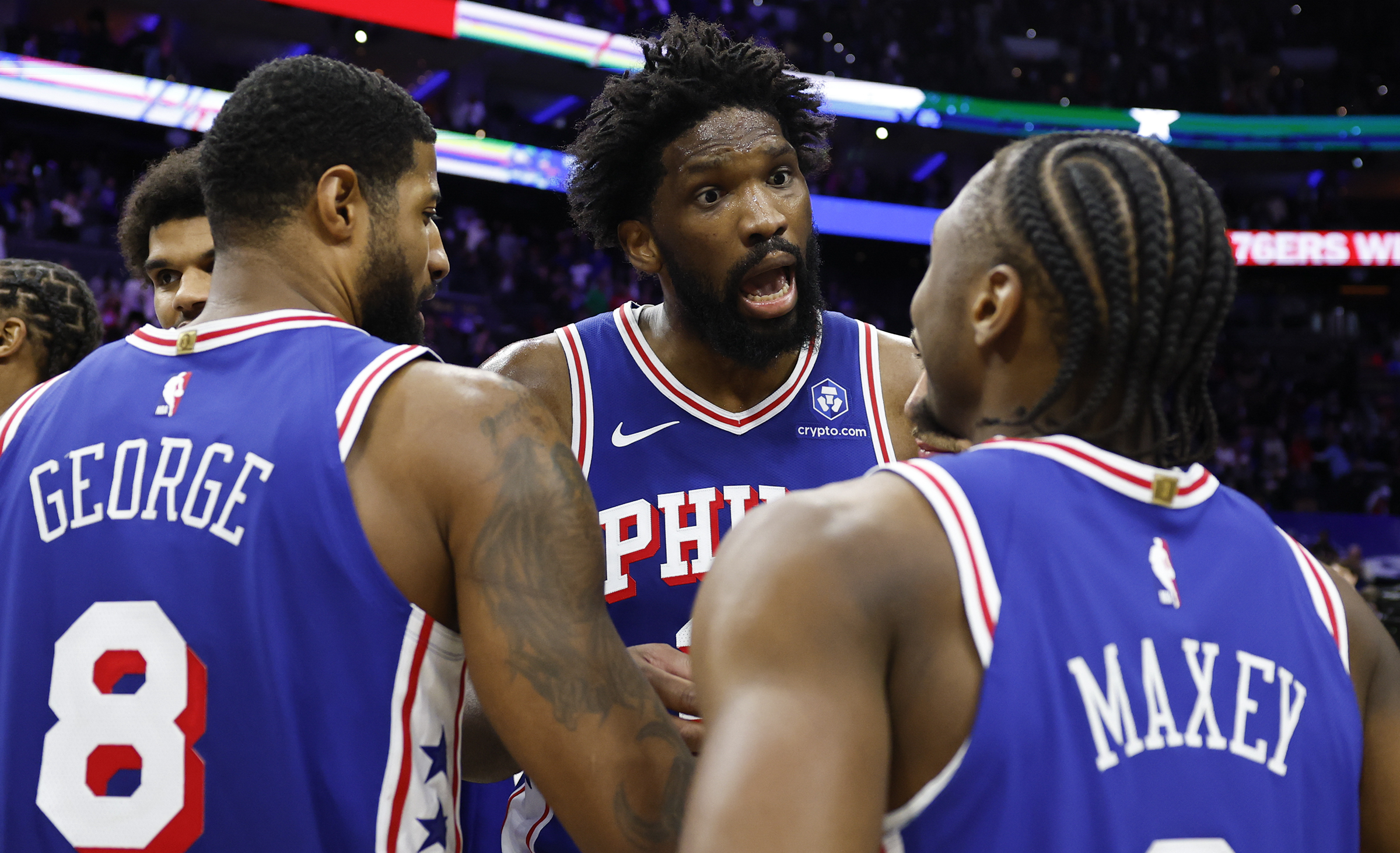
    The Sixers started to look promising, especially when Joel Embiid, Tyrese Maxey, and Paul George were on the court tougether.

    But, as of this past week, things seemed to be rounding into form for the franchise. The Big Three played together Thursday, and, after a disastrous start to the season when playing together, they improved to 9-8.

    Embiid had played in 20 of 27 games, averaging 27.9 points, 8.2 rebounds, and 32.8 minutes. George played in 27 of 35 games, averaging 16.0 points, 5.1 rebounds, and 30.5 minutes.

    For the first time since the end of the 2022-23 season, when they squandered a 3-2 lead in the second round of the Eastern Conference playoffs, things looked legitimately promising.

    Then, on Saturday, George got banned until March.

    You know what they say about karma.

    Rhymes with witch.