Author: Marcus Hayes

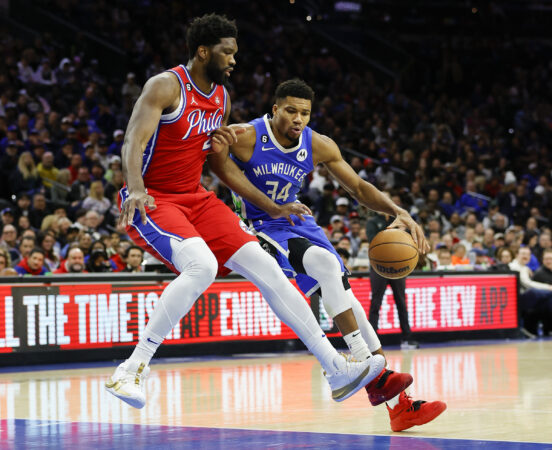
  • Sixers boss Daryl Morey should trade Joel Embiid for Giannis Antetokounmpo — while he still can

    Sixers boss Daryl Morey should trade Joel Embiid for Giannis Antetokounmpo — while he still can

    If I had told you in October, as Joel Embiid recovered from his fourth knee surgery, that the 76ers star would, three months later, have played in 15 of the last 20 games and averaged 28.7 points and 8.1 rebounds in 33.5 minutes per game, you’d have been satisfied.

    If I had told you in October that Giannis Antetokounmpo would, by late January, be open to moving on from Milwaukee, you would have been intrigued.

    And if I had told you in October that Antetokounmpo reportedly would welcome a trade to the Sixers to be paired with starting All-Star guard Tyrese Maxey, you would have been excited.

    Hopefully, Sixers president Daryl Morey is excited. Hopefully, he’s on his smartphone right now, speaking with Bucks GM Jon Horst. Nicely. Generously.

    Hopefully, Morey is trying to trade Embiid for Giannis before the trade deadline Thursday.

    Hopefully, Morey is not swayed by the recency bias that is inevitable when Embiid plays well and when a player like rookie VJ Edgecombe begins to emerge.

    Reports Thursday indicated that the Sixers have not contacted the Bucks, but then, it’s trade season, and everybody lies about everything. Sixers fans should hope that this report is as hollow as the Sixers’ postseason runs over the past 25 years.

    Because, incredibly, against all odds, fate has delivered Morey and the Sixers a miraculous escape route that would repair his recent mistakes and erase the entire 13-year stench of The Process.

    It’s no sure bet, but Morey simply has to push all his chips in and snag the Greek Freak. He should do it today, before anybody else does, and before Embiid gets hurt again. Because, as sure as Democrats are going to cave to Donald Trump on the budget, Embiid — be it feet, eyes, knees, back, or hand — is going to get hurt again.

    Morey needs this as much as the team and the city need it. Since arriving in 2020, he has been a big-move disaster.
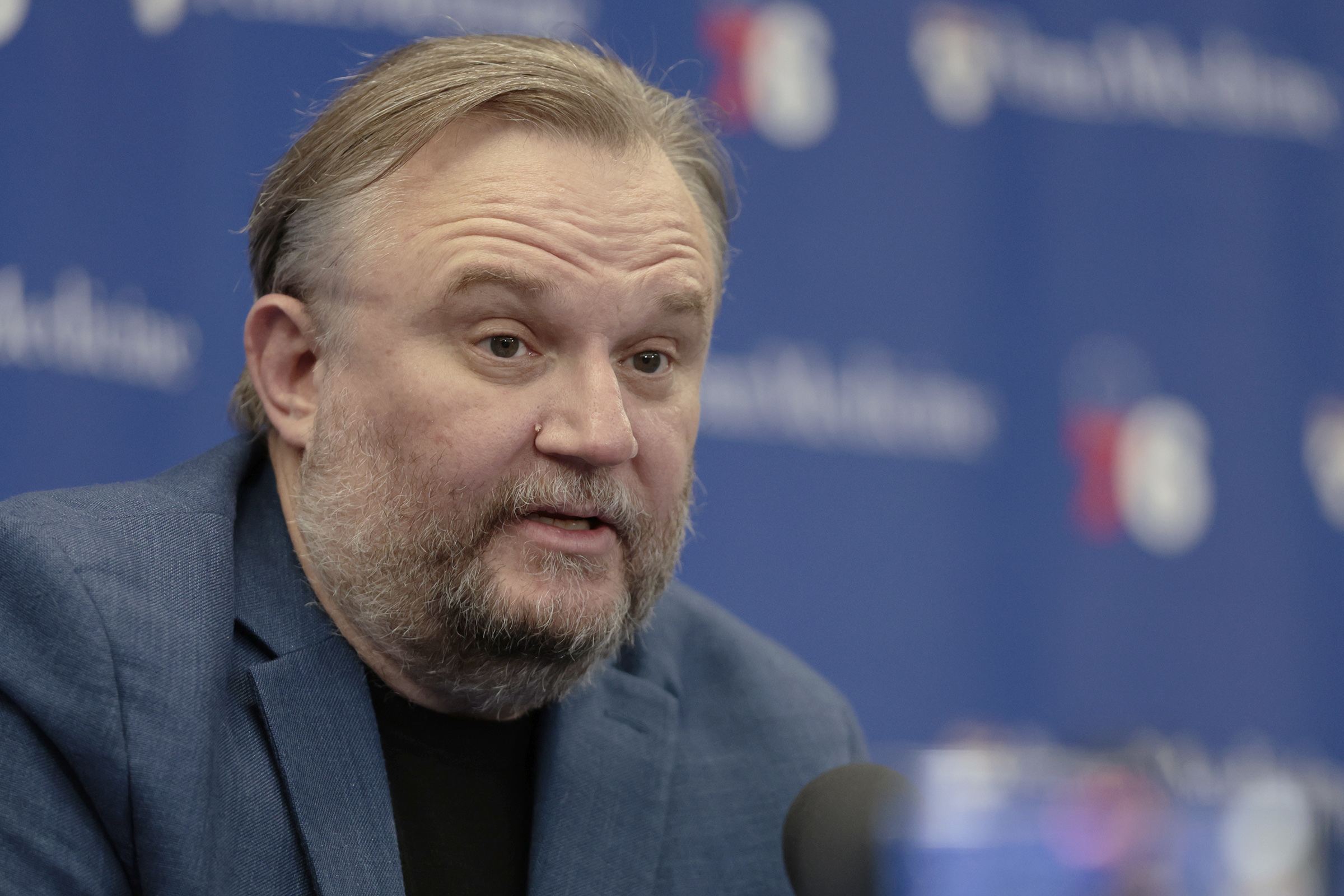
    Sixers president Daryl Morey’s signature moves have not been dazzling so far.

    Morey’s signature transactions: trading for, then extending James Harden, who held out and forced a trade; extending Embiid’s contract before last season, when Embiid was still injured; and, in July 2024, signing 34-year-old Paul George, who has been playing hurt since the ink dried on that deal.

    These are not the sorts of moves Sixers owner Josh Harris hired Morey to make, but they might be the sorts of moves that convince Harris to fire him. Securing Antetokounmpo for the last four-plus seasons of his prime might not win the Sixers their first title since “Thriller” topped the charts, but it could, at least, buy Morey a little more time.

    The Freak won’t come cheap.

    Acquiring Giannis surely would mean trading not only Embiid and Edgecombe but maybe more, too. Perhaps second-year shooter Jared McCain. Perhaps even the Sixers’ next first-round pick, which, thanks to previous deals and contingencies, likely will come in 2027.

    So what.

    While there’s no guarantee Giannis is worth it, there are years of evidence that Embiid is not.

    Antetokounmpo might never come cheaper. In this moment he has a right calf injury hat has lingered since early December, and there’s no timeline for his return, so he might not help much this season. He’s also 31, and he has a history of injury with his left calf. Calf injuries can lead to other issues, especially Achilles tendon injuries; just ask Tyrese Haliburton.

    Again: So what.

    Get the Freak a slant board, or a ProStretch, or whatever. I’ve got an extra one here at home.

    For that matter, get him a litter carried by servants, like Cleopatra.

    Get him whatever he needs.

    Just get his butt to Philly.

    No matter what his current status, Giannis is a far better bet for long-term health than is Embiid, whose long-term health isn’t even debated anymore. Hell, his short-term health is a constant issue. He’s been day-to-day every damn day of his 12-year career, and that’s a lot of days.

    Entering Thursday night he had missed 451 of a possible 929 regular-season games in his career, or just under 49%. I’ve had three-owner used cars more dependable than The Process.

    That said, when Embiid does play these days, he’s playing better basketball, and playing more minutes, than anyone could have reasonably expected in October. He’s in better condition than he’s been since 2017-18, his first full season (and his fourth in the league). For the first time in years, to use Sam Hinkie’s favorite expression, Embiid is a valuable asset.

    You don’t believe Embiid’s a valuable asset? OK, neither do I, really. Fine. That doesn’t matter. It’s Morey’s job to make Horst believe it.

    Morey must convince Horst that Embiid, who is owed an average of $62.7 million for the next three seasons, can help the Bucks in about 50 of their 82 regular-season games. Embiid’s availability for the postseason should be manageable, too; he’s missed only eight of 59 playoff games, and those games aren’t played back-to-back.

    Don’t be sentimental. Be sensible.

    Losing Edgecombe might hurt, but growth requires pain. Entering Thursday’s game, Edgecombe was averaging 15.4 points, 5.4 rebounds, 4.2 assists, and 1.5 steals, hitting 37.2% of his three-pointers. He makes two or three thrilling hustle plays per game and jumps out of the gym. He’s only 20 but he’s mature beyond his years. For that matter, he’s mature beyond Embiid’s years.

    VJ is an excellent prospect with the ceiling of, say, Dwyane Wade. But he’s just that: a prospect, a player you hope develops in the future.

    Giannis is a proven, top-three NBA star, today. For me, it goes Nikola Jokić, Luka Dončić, Freak-ić, and you can argue me into putting Giannis on top.

    Last year, at 30, he ranked among the top five in most advanced metrics. He finished third in MVP voting, his fifth straight year in the top five after winning it twice in a row. It’s a waste of space here to extol Giannis’ inarguable skill and talent … even if former Sixers coach and current Bucks coach Doc Rivers might disagree.

    “Joel’s the most talented player I’ve ever coached,” Rivers said Tuesday after the Sixers beat the visiting Bucks.

    Rivers has coached several Hall of Famers, including Kevin Garnett, and, of course, Giannis.

    Rivers is wrong. He might be nuts, or he might be cagey.

    Doc has a history of sending messages through the media, however ill-advised or awkward. Tuesday’s statement might be aimed at making Giannis even more eager to leave Wisconsin. It also might grease the skids for Embiid to come to Milwaukee. If so, good Doctor, tamper away.

    Giannis and Embiid make about the same amount of money, but, thanks to the labyrinthine NBA collective bargaining agreement, Antetokounmpo needs the deal to be done by the trade deadline so he will be eligible for a four-year, $275 million extension this fall.

    Morey needs the deal to be done by Thursday to save the franchise.

    And, maybe, his job.
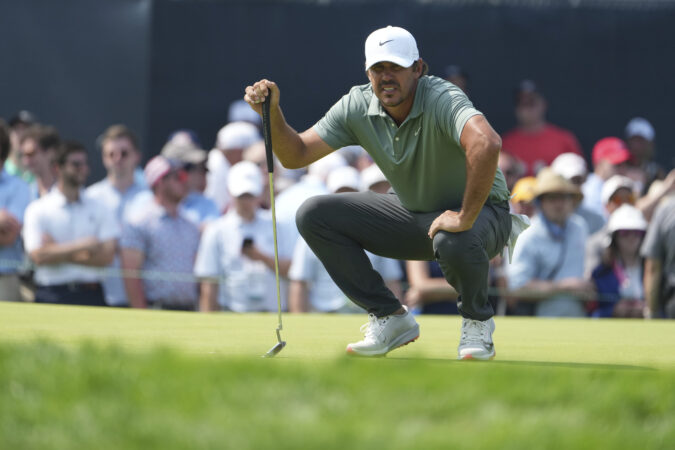
  • Brooks Koepka’s prodigal return from LIV begins the healing the PGA Tour needs

    Brooks Koepka’s prodigal return from LIV begins the healing the PGA Tour needs

    If you’ve never heard the parable of the “Prodigal Son,” you can watch it unfold in real time over the next few months on the PGA Tour.

    LIV defector Brooks Koepka is back.

    It’s the biggest moment in golf since Phil Mickelson announced he was joining the renegade league on June 6, 2022. Koepka, a five-time major championship winner, an all-American success story, is the first LIV player to kneel and beg forgiveness of the men that he betrayed.

    This is biblical, if you will, in its importance to the golf world.

    Briefly: Jesus, in Luke 15: 13-31, tells a tale in which the younger son of a rich man asks to have his inheritance immediately, so he can seek his fortune in the world. The son soon squanders the money, the economy collapses, and he hits rock bottom feeding pigs (sorry, LIV fans). The son then crawls back home, hoping his father will hire him as a servant. Instead, the father rejoices at his son’s return and calls for a feast, featuring a fatted calf.

    In this analogy, Koepka is the son. New PGA Tour CEO Brian Rolapp is the father — or, perhaps the stepfather, considering Jay Monahan ran the Tour when Koepka followed dozens of other LIV defectors, all of whom Monahan banned, and who remain banned by Rolapp.

    The feast of the fatted calf? That would be the Farmers Insurance Open, Koepka’s first tournament during his season of mild penance. It begins Thursday at Torrey Pines in San Diego. Harris English is the defending champion. Two-time major winner Xander Schauffele, ranked sixth, and U.S. Open champion J.J. Spaun, ranked seventh, lead a 147-player field that includes 25 of the top 50 players in the world.

    But make no mistake: This is Brooks Koepka’s party.

    But he’s bringing guests.

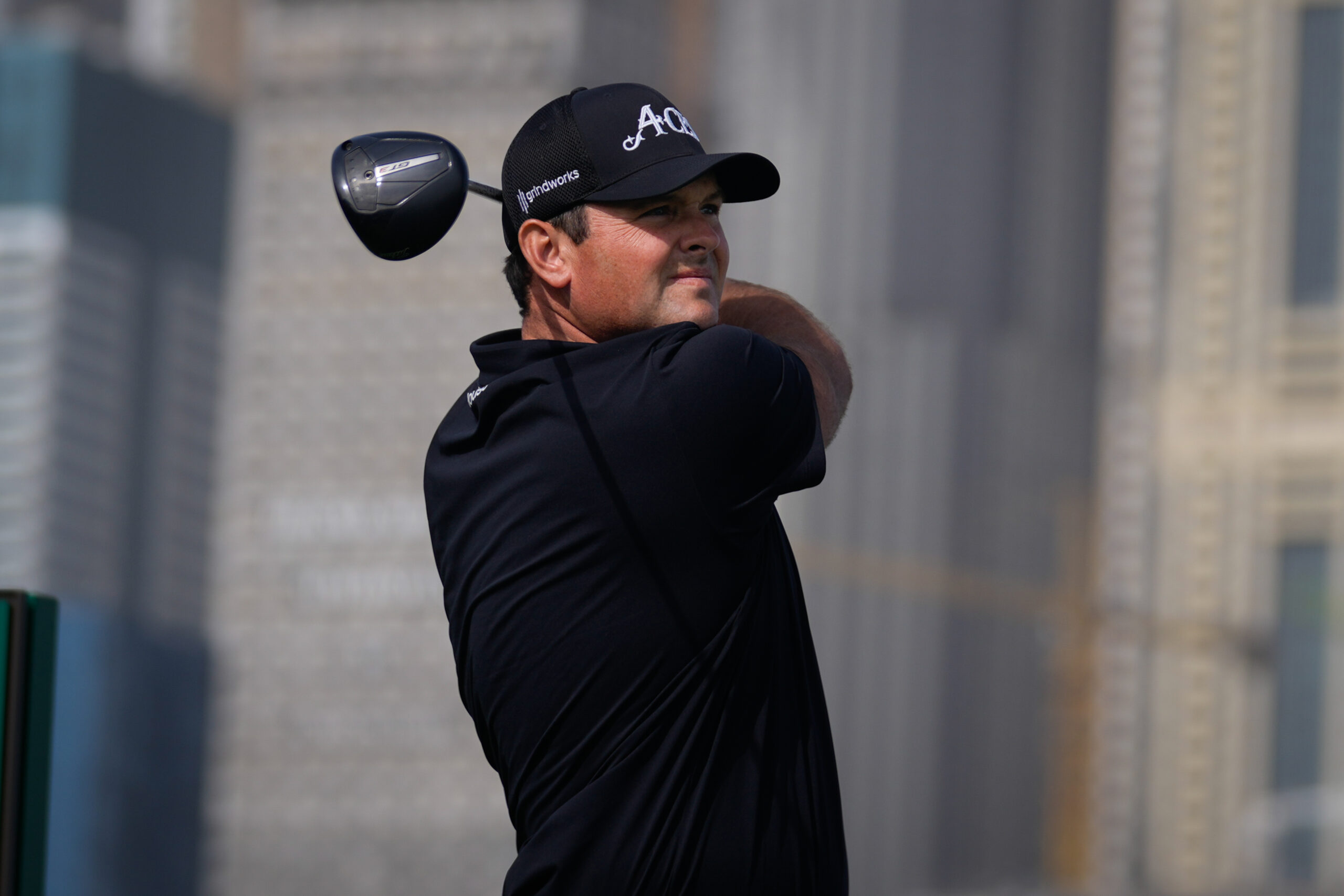
    About 24 hours before Koepka’s marquee comeback tee time, golf’s biggest brat, LIV dud Patrick Reed, announced that he will return to the PGA Tour, too. Reed, who won just once on LIV, on Wednesday said in a statement that he will leave LIV and compete on the DP World Tour until Aug. 25, when he will be eligible to play in PGA Tour events. His DP performances have him ranked 29th in the world, which, along with his lifetime exemption as a Masters champion, virtually assures him entry to all four majors this year.

    The parameters of Reed’s imminent return are murky, and he has applied to return to the PGA Tour in 2027 as a past champion (he has nine wins), but he is not subject to the hastily constructed Returning Player Program (RPP) that Koepka’s interest spurred and targets only the biggest names on LIV.

    One of the facets of the program produced a 147-player field at the Farmers. It would have been a 144-player field, but according to Rolapp’s RPP, the Tour couldn’t kick out an actual qualifier to add Koepka. However, adding Koepka made it necessary to add two other players to balance out the three-player groups. That meant alternates Lanto Griffin and Jackson Suber got spots.

    The eventual return of Reed indicates that Rolapp is eager to build his business and to siphon talent from LIV, no matter how bad the optics or how minor the love. Reed, who won the Dubai Desert Classic last week on the DP World Tour, is a far less formidable presence than Koepka. Further, he has a reputation as a longtime cheater with a bad temper, a potty mouth, and little time for fellow competitors.

    Patrick Reed, who won just once on LIV, is returning to the PGA Tour.

    Rolapp might not kill the fatted calf for Reed, but, as Rolapp knows from his NFL days dealing with Bill Belichick and Tom Brady, every sport needs villains.

    With a 12:32 p.m. EST tee time Thursday and a 1:38 p.m. tee time Friday, Koepka will be part of the featured group with Ludvig Åberg, an inoffensive rising Eurostar, and Max Homa, the PGA Tour’s social media genius.

    The program is open to any LIV player who won a major from 2022-25 and has been away from the PGA Tour for at least two years, a group that includes only Koepka, Jon Rahm, Bryson DeChambeau, and Cameron Smith, all of whom have, so far, decided to stay with LIV. They have until Monday to change their minds, and then the application window closes.

    So, for the foreseeable future, it’s the Brooks Koepka Returning Player Program.

    As a punitive measure, the program restricts Koepka earning power from ancillary means, such as FedEx Cup bonus money and the Player Equity Program, for varied periods of time; makes sure that Koepka doesn’t bump anyone from any field; requires that he plays in at least 15 events this season; and demands a $5 million donation to charity.

    None of this is especially “punitive” for the likes of Koepka, who reportedly made $165 million in signing bonus and winnings on LIV, added to his $43 million he made on the Tour.

    Why does this matter?

    Because it is the first real, tangible, important step into reconciling the best LIV players with the best players in the world, which is what fans deserve.

    The Tour suffered from the absences of superb players in their primes such as Koepka, Rahm, DeChambeau, young Chilean star Joaquin Niemann, who has been the cream of the LIV Tour, and even Mickelson, whose game is garbage but whose name still would sell tickets on both the PGA and Champions tours.

    The careers and games of all of the LIV players suffered, playing benign, inferior courses in 54-hole tournaments against laughable competition.

    The game also lost personalities to LIV obscurity: Koepka’s surliness, Rahm’s earnestness, Dustin Johnson’s goofiness, Mickelson’s buttery condescension, and DeChambeau’s energetic petulance which, thanks to YouTube, has somehow transformed into energetic affability.

    None of the LIV stars has sworn to never return to the PGA Tour, but no one is better suited to begin reconciliation than Koepka.

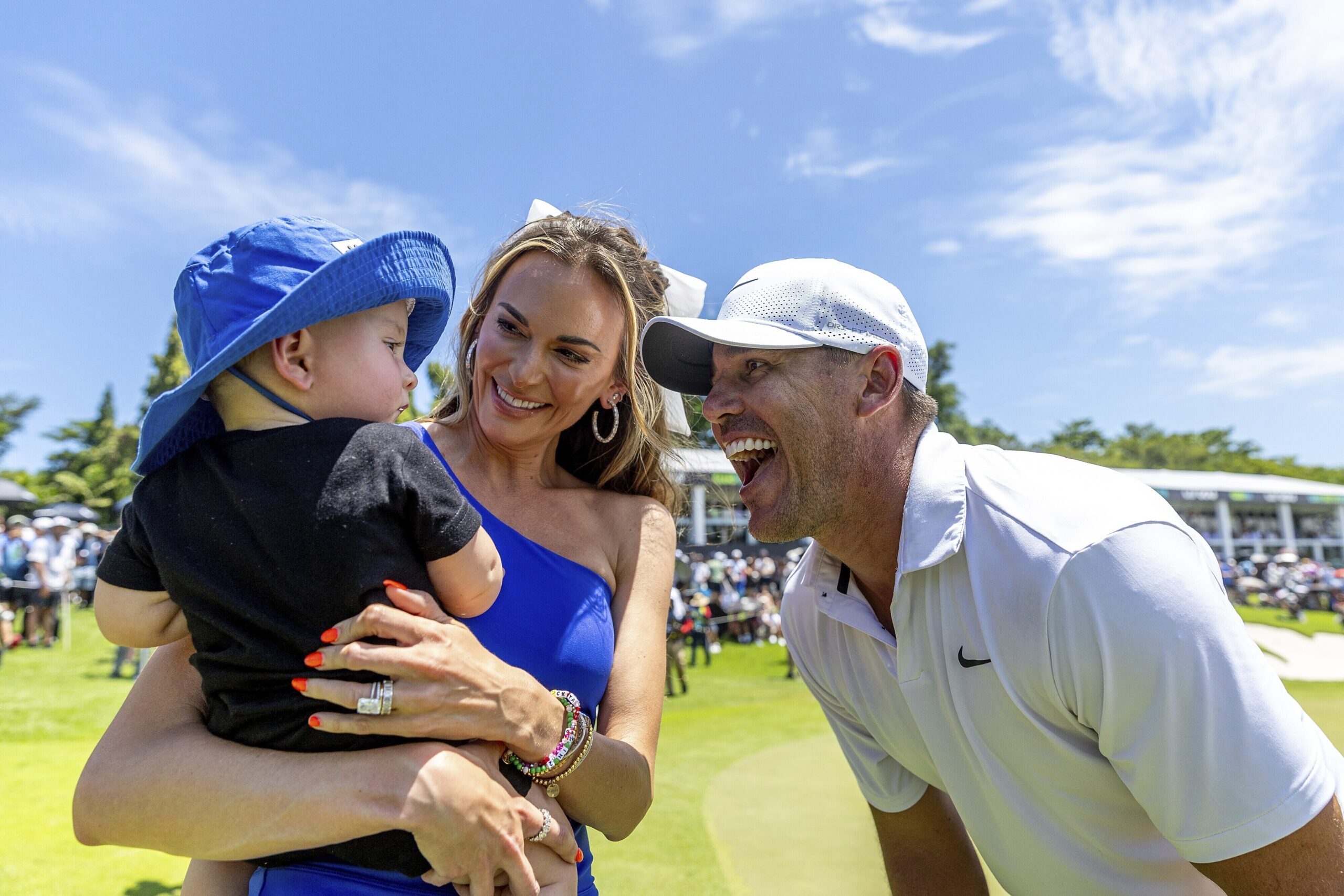
    Brooks Koepka celebrates after a LIV win in 2024 with his wife, Jena Sims, and son Crew.

    When he joined LIV in 2022, in contrast to most players who were clearly interested in only the sportswashing money offered by the Saudi-backed rival tour, Koepka was cast as a reluctant defector — a massive talent who feared that the injuries he’d been dealing with for months might derail the career of the most promising player since Rory McIlroy.

    Koepka, mellowed by years of insignificance and decline, seemed repentant when he addressed his return at a Farmers news conference Tuesday. He was less like the Koepka who belligerently denied cheating at the 2023 Masters, when his caddie told Koepka’s playing partner which club Koepka had used, and more like the Koepka who, in 2018 at Shinnecock, won a second consecutive U.S. Open: reflective, appreciative, mature.

    There are reasons for that.

    Since winning the 2023 PGA Championship, which keeps him qualified for all majors, Koepka has finished inside the top 25 of his last eight majors just once. In 2025, he finished tied for 30th in the LIV rankings among just 52 regular players, many of them the definitions of “washed” and “obscure.” Koepka’s game is poor, and, at 35, time is running out.

    His family life has changed, too. His wife, Jena Sims, suffered a miscarriage last fall.

    Koepka, who has a 2½-year old son named Crew, enjoys fatherhood, and the international nature of the LIV Tour, combined with playing DP World Tour events in Europe to accumulate world golf ranking points, made a normal family life more difficult than he’d imagined.

    “Just having my family around’s really important. I’ve grown up a lot over the last few years, and especially the last few months,” he said.

    The timeline of his decision seems dubious on its face, both from him and the PGA Tour.

    Koepka said Tuesday that he negotiated his release from LIV, finalized on Dec. 23, before contacting any PGA Tour entities regarding reinstatement. He said only then did he contact Tiger Woods, the chairman of the PGA Tour’s competition committee, and, voilá, just 19 days later, over the busiest holiday season of the calendar year, the PGA Tour had devised a comprehensive Return to Play protocol for the Koepka crowd.

    It took five years for these guys to agree on how to limit golf ball flight. So, yeah.

    The machinations that led to Koepka’s return are far less important than the reality of Koepka’s return. In many ways, Koepka was the PGA Tour’s biggest loss to LIV.

    Rahm was more dynamic, DeChambeau was more interesting, Koepka was the best player, was the best athlete, was American, and was a major championship-winning machine.

    Does McIlroy win eight times in Koepka’s absence? Does he complete the career Grand Slam last April if Koepka’s in good form?

    More significantly, does Scottie Scheffler win 17 times, including three majors, if Koepka’s not honing his skills against Pat Perez on a burned-out course in Indiana? (Notably, Perez, Kevin Na, and Hudson Swafford also have been reinstated, sort of, pending unspecified penalties. Perez plans to join the Champions Tour when he turns 50 in March, pending penalties and fines.)

    Maybe Koepka delays Scottie’s ascension, and maybe he slows Rory’s roll. Maybe not.

    He isn’t likely to make much noise any time soon, especially at Torrey, where he’s missed four of five cuts at the Farmers.

    At any rate, the game will be better for the presence of Koepka’s talent. His penalties aren’t nearly harsh enough, considering the hundreds of millions of dollars players like Sheffler, McIlroy, Rickie Fowler, Jordan Spieth, and Justin Thomas left on the table by declining LIV offers, but that isn’t Rolapp’s main objective.

    Rolapp, the NFL’s former chief media and business officer, oversaw much of the growth of the most lucrative league in the history of the planet. Don’t expect Monday to be the last chance for the biggest LIV stars to return. Rolapp clearly will do anything he needs to do to accommodate the return of any player who can help the PGA Tour heal.

    Just after noon on Thursday, Koepka, the prodigal son, begins that healing.

  • Bill Belichick’s cheating cost him first-ballot Hall of Fame induction. It might have also cost the Eagles a Super Bowl title.

    Bill Belichick’s cheating cost him first-ballot Hall of Fame induction. It might have also cost the Eagles a Super Bowl title.

    You’ve probably never heard of Eugène Sue, a French surgeon under Napoleon and later the writer credited with first use of the phrase, “La vengeance se mange très-bien froide.”

    Loosely translated, it means, “Revenge is a dish best served cold.” It has been uttered by characters as diverse as Vito Corleone in The Godfather novel, to Khan Noonien Singh, a Klingon warlord in “Star Trek II: The Wrath of Khan.”

    Now, Philadelphia and the Eagles can say it, too.

    Now, in Bill Belichick’s hour of disappointment and shame, Philly can savor revenge.

    Despite winning a record six Super Bowls, Belichick — whose era as Patriots coach coincided with two of the most notorious cheating schemes in NFL history — failed to secure the minimum 40 of 50 votes required to enter the Pro Football Hall of Fame. He will not be a first-ballot inductee, according to an ESPN.com report Tuesday.

    This shocked the sports world.

    Former defensive lineman J.J. Watt, who never played for Belichick, said on Twitter/X that there is “not a single world whatsoever” in which Belichick shouldn’t be a first-ballot inductee.

    Voters are not required to reveal their votes, but Hall of Fame coach Jimmy Johnson said voters who do not admit to omitting Belichick from their ballot are “cowardly.”

    Like so many, they were shocked. Like so many, they were outraged.

    They should not have been.

    Hall of Fame voters hate cheaters.

    Carlos Beltrán, who helped run an illegal sign-stealing scheme for the Houston Astros, had to wait four years to gain entrance to the Baseball Hall of Fame. Barry Bonds, Alex Rodriguez, Manny Ramirez, and Roger Clemens, Herculean heroes all implicated in PED scandals, might never make it in.

    I voted for all of those guys, and I’d have voted for Belichick, too, if I’d had a vote (the panel is a rotating hodgepodge of 50 mostly credible experts). But I understand. I understand why at least 10 voters banned Bill.

    Why should Belichick, a proven and penalized two-time cheater, be treated any better than other scofflaw? He might not be Pete Rose, but he ain’t Bill Walsh, either.

    Bill Belichick’s wins are a matter of record but some of his off-field tactics apparently gave voters pause.

    The voters convened on Jan. 13 to discuss the fates of the Hall of Fame finalists, among them Belichick, whose 302 wins are a record in the Super Bowl era (30 of Don Shula’s 328 wins predate the Super Bowl). Reportedly amid the discussion: Belichick’s role in “Spygate,” an illegal videotaping scheme that Belichick conducted from 2000, the year he was hired as the Patriots’ head coach, through early 2007, when they were caught red-handed while taping the Jets’ sideline during a road game.

    This incident came just over a year after the league issued a memorandum reminding teams of the parameters and definitions of illegal recording.

    The penalty was a $500,000 fine for Belichick, a $250,000 fine for the Patriots, and the loss of their first-round pick in the 2008 draft.

    But there was no way to secure reparations from the teams who had been cheated — possibly among them, the 2004 Eagles in Super Bowl XXXIX.

    Thanks in part to the efforts of former U.S. Sen. Arlen Specter of Pennsylvania, it has since been established that the Patriots recorded opponents’ signs before and after that game.

    It was a hot topic. How hot?

    Shanin Specter, a Philadelphia attorney and the late senator’s son, told The Inquirer in 2021 that, in 2008, President Donald Trump — then a private citizen — appeared to offer Specter’s father a bribe if he would drop his investigation into Spygate.

    The real ones didn’t need an investigation. They knew what was happening as it was happening.

    In a story in 2018, former Eagles defensive backs coach Steve Spagnuolo told a Philadelphia radio station that, at Super Bowl XXXIX, Eagles defensive coordinator Jim Johnson accused the Patriots of stealing the Eagles’ signs during the game. The Patriots seemed to know what was coming even when the Eagles employed rarely-used schemes and plays.

    How did this specter of cheating arise so many years later?

    The ESPN report indicated that Bill Polian, a Hall of Fame member as an NFL executive and a current voter, lobbied against Belichick during that Jan. 13 meeting. He cited the incidence of Belichick’s cheating, and he had skin in the game.

    Polian was president and GM of the Colts when the Patriots, in the middle of their Spygate era, knocked them out of the playoffs after the 2003 and 2004 seasons. On Tuesday night, Polian denied to ESPN that he had told voters that Belichick should serve a one-year penance, but, incredibly — as in, not credibly — Polian said he was unable to recall if he’d voted for Belichick.

    Polian wasn’t with Indianapolis after 2011, but he remained close to the franchise, so he wasn’t happy when the Colts were victims of Belichick’s other moment of ignominy.

    At halftime of the 2014 AFC championship game in New England, NFL officials were alerted by Colts players that the footballs the Patriots were using seemed soft. The balls were examined, deemed to be illegal, and an investigation commenced.

    That’s how Belichick and the Patriots were implicated in “Deflategate.” Eventually, they were found to have routinely, intentionally, and illegally deflated footballs they used on game days to make them easier to pass, catch, and hold on to. Furthermore, Patriots quarterback Tom Brady was found to have destroyed evidence during the investigation. (Belichick denied knowledge of the matter, and the Wells Report into Deflategate found that Belichick was not involved, but many observers remain unconvinced).

    This time the league fined the Patriots $1 million, suspended Brady for the first four games of the 2015 season, and took away the Patriots’ 2016 first-round pick and their 2017 fourth-round pick.

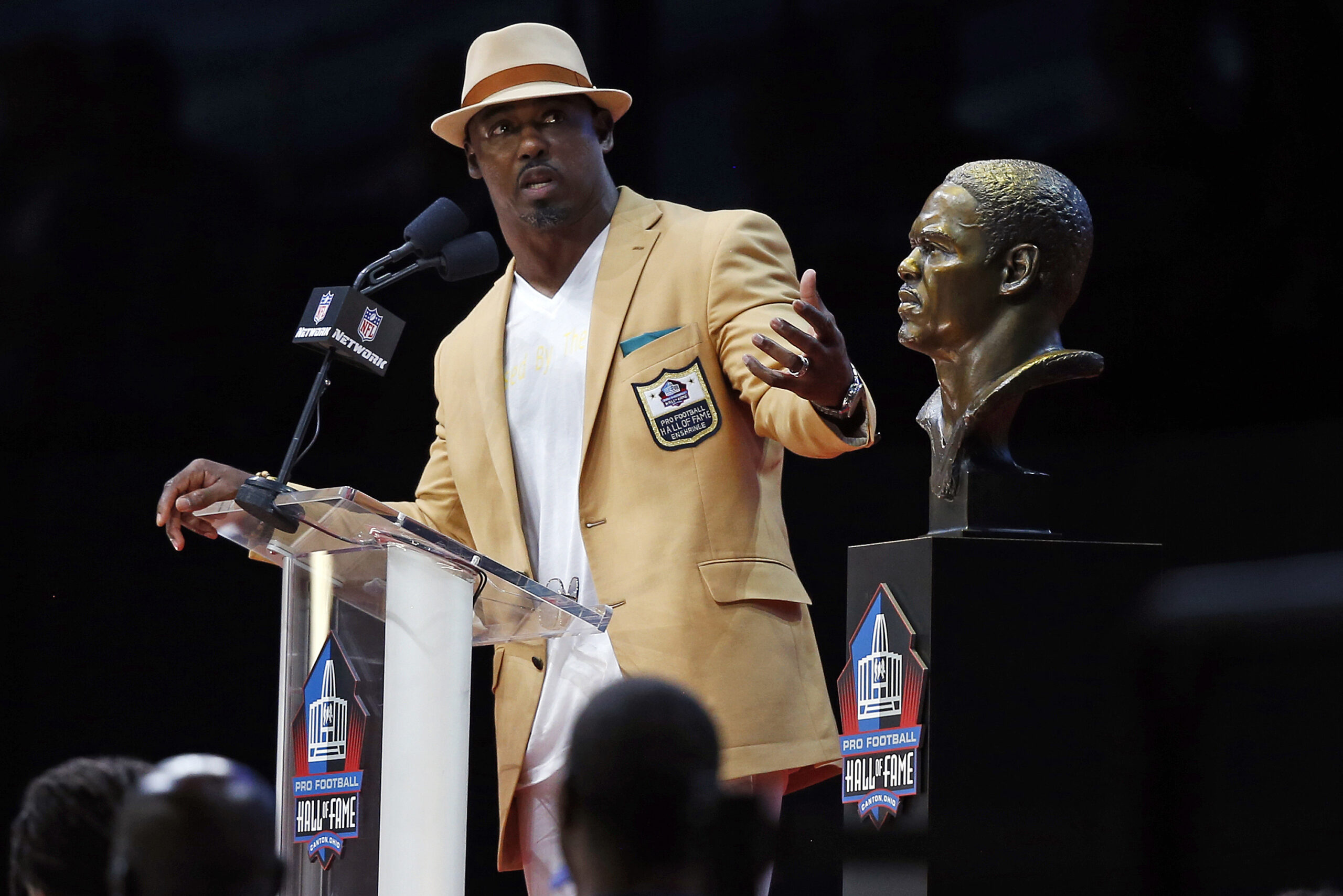
    Bill Belichick will not join former Eagle Brian Dawkins in the Pro Football Hall of Fame … at least this year.

    Today, most folks look past Belichick’s cheating, especially on Tuesday, when the story broke. They point at his innovation, his preparation, and his ability to maximize the abilities of every player, from Brady to Richard Seymour to Rob “Gronk” Gronkowski.

    But just enough folks apparently did not. Just enough folks think Belichick should have to wait a bit before he gets his bust and his jacket.

    Just enough folks did not look past Belichick’s sins.

    Shula died in 2020, but somewhere, you have to think ol’ Don’s smiling. He despised Belichick’s methodology.

    “The ‘Spygate’ thing has diminished what they’ve accomplished. You would hate to have that attached to your accomplishments,“ Shula said in 2007, during the Patriots’ failed attempt to match his 1972 Dolphins’ perfect season.

    Seven years later, when asked about Belichick’s feats to that point, Shula replied with the nickname Belichick’s detractors had given him: “Beli-Cheat?”

    Yes.

    Beli-cheat.

    “La vengeance se mange très-bien froide.”

  • Ranking the NFL color analysts: Tom Brady shines while Tony Romo struggles (just like old times)

    Ranking the NFL color analysts: Tom Brady shines while Tony Romo struggles (just like old times)

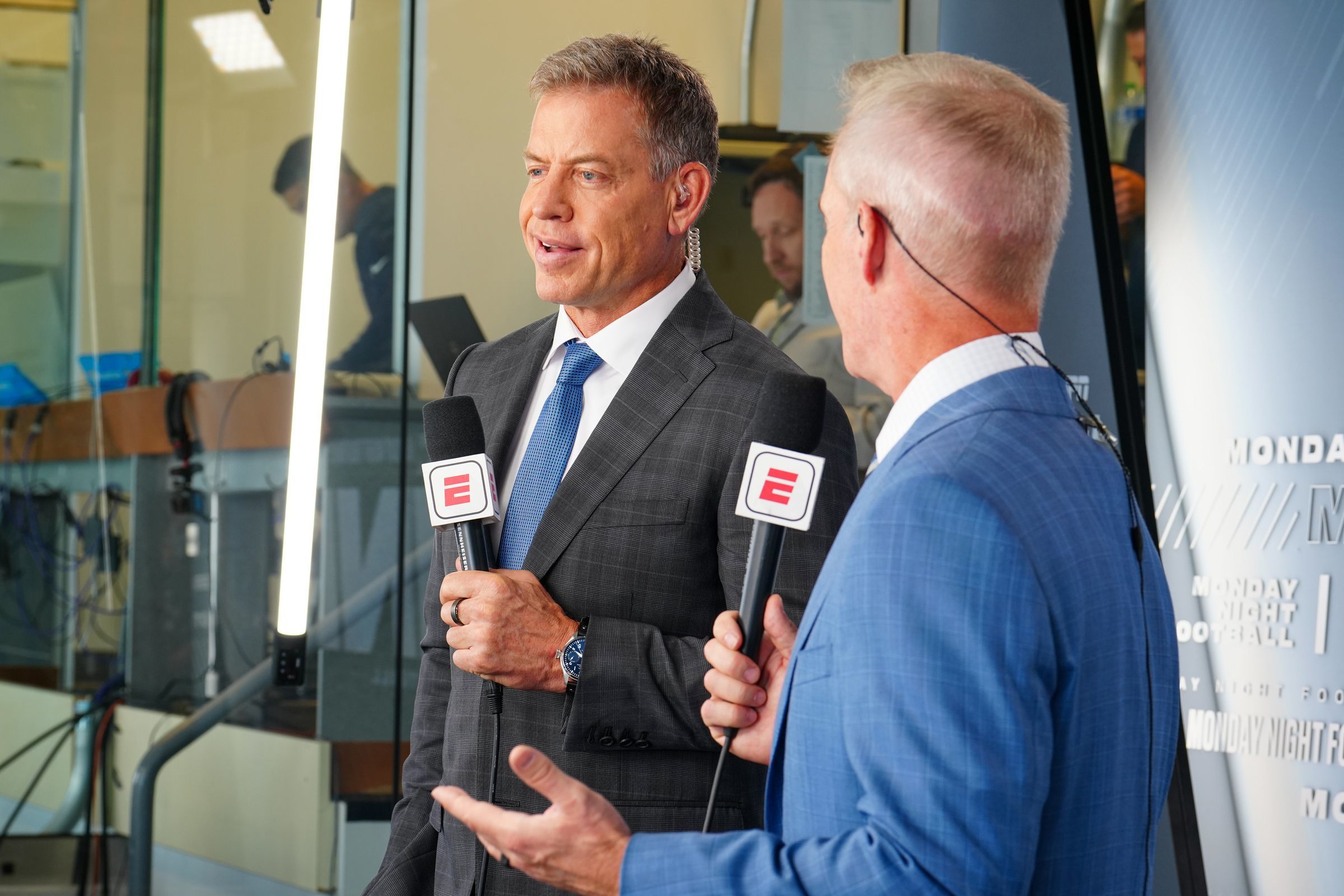
    Tony Romo, as quarterback of America’s Team, went 0-2 head-to-head against Tom Brady.

    Brady, as quarterback of the best team in NFL history, finished his career with seven Super Bowl rings in 10 trips, nine of them with the New England Patriots. Romo never even made it to a conference final.

    When they retired, to the delight of Eagles fans who hated them with equal vigor, each took his fame and fortune and headed to the broadcast booth.

    There, Brady still dominates Romo.

    That was never more apparent than Sunday, when Romo ruined the broadcast portion of an already ugly AFC championship game on CBS. Immediately afterward, Brady burnished a brilliant NFC title game for Fox. As on the field, the contrast in the booths was hideously stark.

    With only one game to go, it seems like a good time to review that most controversial of TV entities: NFL in-game analysts. Mike Tirico, broadcasting’s version of the vanilla milkshake, and Cris Collinsworth, who’s my No. 3, will present Super Bowl LX in two weeks on NBC. It will be fine, but it will be hard.

    Color commentary is vastly more difficult than you can imagine. I’ve done it a few times as an emergency replacement for a basketball broadcast, and, in the parlance of social media, I sucked.

    The job requires research, alertness, rhythm with a partner, familiarity with every coach, and mastery of the game’s history. It requires knowledge of rules, of strategy, of game-day procedures, of tendencies, of strengths and of weaknesses.

    Then, in real time, you have to explain what’s happening to millions of mildly inebriated fans, most of whom wouldn’t know a naked blitz from a naked blintz.

    It’s like a cardiologist describing heart surgery to Grey’s Anatomy fans.

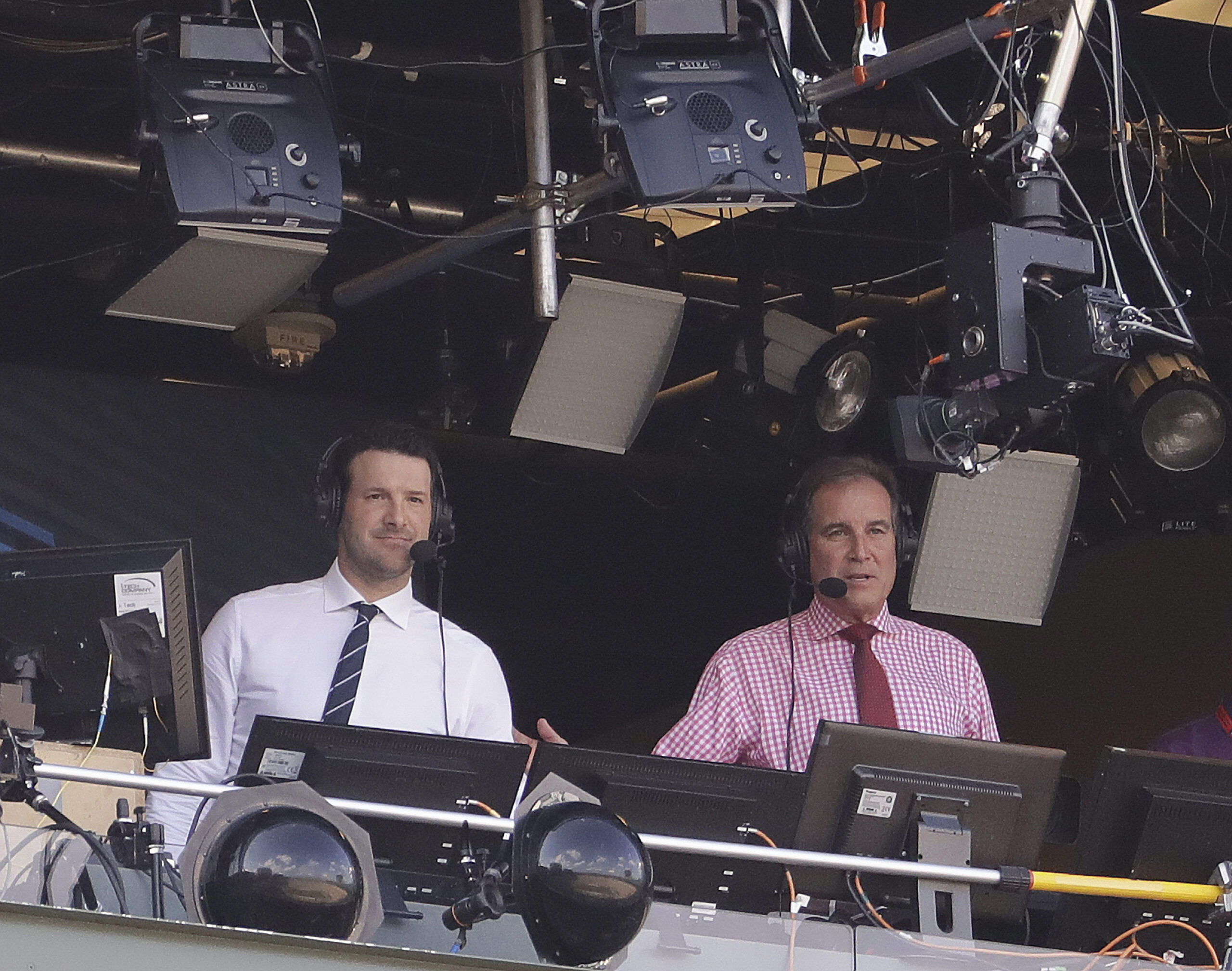
    Tony Romo (left) turned heads early in his broadcast career, but his strengths have become less evident.

    The bashing of NFL booth analysts has become a weekend sport on social media. Keyboard warriors armed with pimple patches and analytics dissect every misspoken word or overlooked strategy, and they attack with verve and glee.

    That said, for years we were spoiled by masters of the craft, none better than Pat Summerall and his partner, the granddaddy of authentic commentary, John Madden, unburdened by the precision of high-definition television and, for the most part, by replay review. It was a simpler, better time.

    My job keeps me busy most football weekends. As a result, I’m not free to watch many other NFL games, and so I am less familiar with the flat-screen visitors to man caves and dens on weekends and Monday nights. However, thanks to Thursday Night Football, other prime-time and Sunday-morning broadcasts, and the Eagles’ recent abrupt exit from the playoffs, for the past few months I’ve been able to catch a few games.

    And … man, was I disappointed.

    Expectations

    I covered Romo and Brady extensively as players. It was hard to dislike Romo and impossible to like Brady. Now, it’s hard to listen to Romo and impossible to dislike Brady.

    I expected Romo to be a star.

    Having covered him extensively and having found him to be comfortable, affable, and knowledgeable, I was delighted with his “Romo-stradamus” debut with CBS in 2017. He seemed to correctly predict every big play call, then offer pointed commentary as to why it worked or why it didn’t.

    He seldom does that now. Instead, he constantly offers banal observations in the most excited of tones, often contradictory and seldom helpful. It’s just a lot of hyperbolic blather, never worse than in the moments after he talked over Jim Nantz following Patrick Mahomes’ game-winning touchdown pass in Super Bowl LVIII.

    On the other hand, I expected Brady to be a flop.

    I covered Robo-Tom in four of his Super Bowls, as well as many other big games, including the Battle of the Unbeatens in Indianapolis in 2007, when he and Randy Moss beat Peyton Manning. I was embedded in New England before the AFC championship game after the 2017 season. Never once did Brady give me any reason to expect he would be anything more than a wax statue in the broadcast booth.

    Wrong.

    Excellence

    It pains me to say that after an uneven debut in the 2024 season, which culminated with an unremarkable Super Bowl LIX broadcast of the Eagles’ win, Brady is getting better every week. As part of Fox’s first team, he often will correctly identify a penalty in real time so, when the play ends, he immediately reports who committed the penalty long before the official announces it. Troy Aikman used to do this with regularity, less so now. Collinsworth and Kirk Herbstreit often get this right, too.

    Brady’s voice sounds like it belongs to a JV basketball player, but he gets his point across. Brady just seems to know more about the game than the rest of the color commentators; or, at least, Brady seems to care more about teaching the game to viewers.

    His concise, clear dissertation on throwing techniques in windy conditions during the Eagles’ windy wild-card loss Jan. 11 was perhaps the best explanatory moment in the history of NFL broadcast booths.

    He was equally brilliant with his explanation Sunday of why Seahawks receiver Jaxon Smith-Njigba’s route-running is so efficient: “He maintains the same shoulder plane when he runs his route, so it’s really hard for any defensive back to get a bead on what he’s doing.”

    Madden, a college lineman and then an offensive line coach, introduced America to the intricacies of trench warfare. Collinsworth is great at diagnosing coverages. Romo, meanwhile, seldom provides a level of detailed technique insight for any position, much less quarterback, receiver, and defensive back, the positions with which he should be most familiar.

    Should Tom Brady’s ownership stake in the Raiders be an issue in his broadcast work?

    Why these two?

    Why does any of this matter? Why pick on Romo, in particular?

    Because Romo is in the middle of a 10-year, $180 million deal that expires after the 2030 season, which makes him the second-highest-paid NFL analyst. CBS reported that it just enjoyed its best season ever, and the network debunked rumors that his future might be in peril. So, at 45, he isn’t going anywhere.

    Fox, meanwhile, was roundly criticized for giving Brady a 10-year, $375 million contract that began in 2024, which made him the highest-paid booth analyst in sports despite his complete lack of experience.

    They’re at the top of the food chain. At least Brady belongs there.

    Incredibly, this was just his second season in the booth. Brady still lacks the strategic chops of, say, Greg Olsen, whom Brady replaced as Fox’s No. 1 color commentator last year, but Brady’s already better than Romo ever was.

    Should Brady continue to be allowed to own part of the Las Vegas Raiders while acting as an analyst? That’s an entirely different conversation. Have at it. I generally figure that leagues can do whatever they want, within the constraints of the law. Besides, any insider information Brady gleaned during his weekly preparation as a Fox analyst certainly didn’t help the Raiders much. They went 7-27 the last two seasons.

    As for his primary vocation: Will Brady, who is 48, be the G.O.A.T. in the booth, as he was on the field?

    Probably.

    Even some of those who disliked Troy Aikman (left) as a player can begrudgingly acknowledge his strengths as a color analyst.

    The ranking

    Madden remains unmatched.

    ESPN’s Aikman remains the best and easiest listen in my book, and has been for most of the last 25 years. Then, Brady.

    Collinsworth annoys people, but I think that’s a byproduct of his natural smarminess, because he’s a perfect complement to Tirico’s earnestness.

    I think I’m in the minority when I say I enjoyed Herbstreit on Amazon Prime, at least I did early this year. In the fourth year of a five-year deal, the college football mainstay seemed to come into his own as an NFL commentator this fall. However, he routinely travels thousands of miles every week covering both pro and college ball, and the toll began to show in his commentary later in the NFL season. He’s a free agent after next season, and he’ll be 57. Hopefully, Herbstreit will dial things back and concentrate on the NFL.

    Romo now comes in last.

    This feels a little like punching down. Romo seems to be doing his level best. Maybe he’s a victim of the lofty expectations his early years created. Maybe he’s been coached to be more expressive and less technical.

    Romo’s current slump reminds me of the point in his career when, after a promising first six seasons as a starter, he led the NFL in interceptions in 2012. Romo then had his best season in 2014 before injury forced him to the booth.

    Maybe he can rebound in this career, too.

    But, as in the NFL, Romo will never catch the G.O.A.T.

  • ‘Not elite’ Bryce Harper might lose his No. 3 spot in the Phillies lineup, flip with Kyle Schwarber at No. 2

    ‘Not elite’ Bryce Harper might lose his No. 3 spot in the Phillies lineup, flip with Kyle Schwarber at No. 2

    Maybe giving Bryce Harper better protection will return him to “elite” status.

    The most intriguing tidbit the Phillies provided Tuesday in their Hot Stove state of the union news conferences concerned how the run-it-back lineup will be organized.

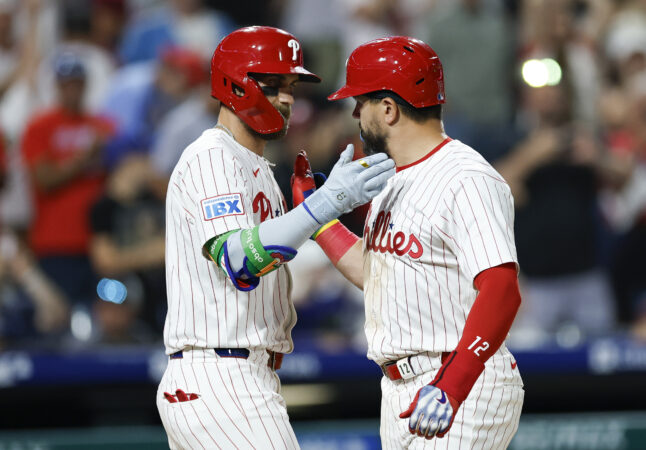
    The Phils led the National League in batting average and finished second in OPS as they won their second consecutive NL East title. That offense was led by a lineup that generally featured Trea Turner leading off, Kyle Schwarber batting second, and Harper batting third. Harper has spent most of his career batting third.

    This year might be different.

    “Yeah, I’ve got some ideas,” said manager Rob Thomson. “I’ve got to talk to the players about it, but you could see a change this year, flipping those guys around a little bit.”

    Asked later if the changes could involve Harper moving out of the three-hole, Thomson said, “Yes.”

    A change might do him good.

    A wrist injury and a steady diet of breaking balls — a career-high 41.3% — led to Harper’s worst season since 2016. His .844 OPS was 22nd in baseball and more than 50 points below his .911 career OPS entering 2025.

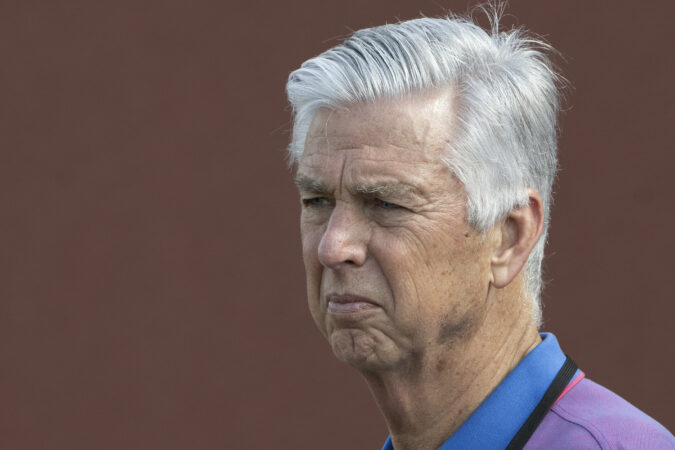
    This dip in production led Phillies president Dave Dombrowski, in his postseason news conference in October, to cast Harper as “a quality player” who didn’t “have an elite season like he has had in the past.”

    This upset Harper, who, nine days later, told The Athletic he was “hurt” by the comments and the resulting fallout. That included speculation that the Phillies might be better off trading Harper — media-fueled speculation, and something the Phillies never considered.

    Dombrowski has said he had a conversation with Harper in November and emerged from that discussion believing that their relationship was fine.

    Then, on Dec. 26, Harper posted a TikTok video of himself hitting in a batting cage while wearing a sweatshirt that said, “NOT ELITE.”

    He doesn’t seem fine.

    Simmering

    Harper had announced via social on Dec. 23 that he plans to play for Team USA in the World Baseball Classic in March.

    Thomson said Tuesday that Harper had been hitting in late December, earlier than usual, to better prepare for the WBC … and, maybe, to make Dombrowski eat his words.

    “I think he’s motivated. I really do,” Thomson said. “I think he’s motivated to play for his country, and I think he’s motivated to win a world championship.”

    Will Harper be motivated to move from the No. 3 spot?

    His career OPS while batting second is .791 in 1,010 plate appearances, though those numbers reflect him as a much younger player. In his most recent stretch of hitting No. 2 — 14 games last season — Harper’s OPS was .900.

    Schwarber, meanwhile, has a career OPS of .882 when batting second and .816 when batting third, though he only has 209 plate appearances batting third. For what it’s worth, Schwarber’s OPS in the cleanup spot is .937 in 475 plate appearances.

    Fair point

    Dombrowski might have put his foot in his mouth in October, but he’s right. Harper’s production lagged in 2025. He’s 33 this season.

    A lineup change might be just what the Topper ordered.

    This isn’t the first time Harper’s spot in the lineup has come into question with spring training looming. In fact, this time last year nobody knew who would hit where, exactly. The three previous seasons, Schwarber had been an unusual leadoff hitter — low-average, high-power, few RBIs.

    The Phillies were eager to harness Schwarber’s power (they did: he led baseball with 132 RBIs last year) and replace him up top with Turner or Bryson Stott. If that didn’t work, they hoped their best hitter since ,might be willing to do the job.

    Harper was not interested in that.

    “Obviously, I’m a three-hole hitter, and I have been, but whenever they’ve told me to hit two or four, I’ve done that in the past,” Harper said last spring. “I like to see pitches before I hit, seeing what the guy’s going to do.”

    It’s unlikely Harper will be asked to hit leadoff this season, considering last year Turner won both the job and the NL batting title, hitting .304.

    But it seems extremely likely that Harper and Schwarber will switch, at least occasionally. Both bat left-handed, but Schwarber hit 23 homers off lefties last season with a .962 OPS, both records for left-handed hitters. Of course, he did this with Harper usually standing in the on-deck circle.

    And when Harper came to bat, pitchers knew the No. 4 hitter wasn’t much of a threat. Usually, it was a right-hander like Nick Castellanos, J.T. Realmuto, or Alec Bohm, all of whom struggled in 2025. Early in the season, it was Schwarber.

    Who now?

    This season, $10 million free agent Adolis García will probably get the first chance. He’s hit mostly cleanup the past four years. He’s a right-handed hitter. He has power potential, averaging just over 30 home runs for the Rangers from 2021-24.

    No other player makes sense, especially since Thomson will want to maximize the number of appearances for his would-be elite players, Schwarber and Harper.

    So, ultimately, who will protect whom? It will be one of the more interesting story lines at spring training.

    It also might not be determined by the end of the Phillies’ preseason. The WBC could occupy Harper for two full weeks right in the middle of spring training.

    That might be irrelevant. In a make-or-break season for a Phillies core that has underachieved the past three years, it sounds like Thomson might juggle the lineup every day of the season if he feels like it, preference and feelings be damned.

    His current philosophy:

    “Whoever’s hitting good — protect them.”

  • Reports: Top OC picks Mike McDaniel, Brian Daboll spurn Eagles. Are they ‘dumb,’ ‘stupid,’ or justified?

    Reports: Top OC picks Mike McDaniel, Brian Daboll spurn Eagles. Are they ‘dumb,’ ‘stupid,’ or justified?

    Jake Rosenberg is Howie Roseman‘s former salary cap wizard who left the Eagles two years ago for greener pastures. Rosenberg now is a consultant for college athletes and administrators, as well as a headhunter for doctors. Quite the CV.

    He’s also a hardy tweeter.

    On Tuesday night, after Brian Daboll interviewed with the Eagles for the vacant offensive coordinator position, Rosenberg quote-tweeted a report from The Athletic’s NFL reporter, Diana Russini, refuting her answer to a question posed during her appearance on 94-WIP’s afternoon show that painted the Eagles’ job as unattractive: “I think coordinators on this list are aware that navigating Philly is difficult.”

    Rosenberg, a fiery sort, called both the question and the answer “dumb,” as he issued what you would have to assume was a state-sanctioned response, with a list of nine reasons.

    Cleaned up from its Twitter-speak abbreviations, the post read thus:

    “Ask dumb questions get dumb answers. …

    “1. Talent at skills positions and quarterback. 2. Market. 3. Head coach with five straight playoff appearances and two Super Bowl appearances. 4. Two offensive coordinators who got head coaching jobs. 5. Best GM in league. 6. Max prime-time games. 7. Offensive line. 8. Draft resources. 9. (Generous) Ownership.

    “I’m sure an OC wouldn’t want this job. So stupid.”

    Minutes before Rosenberg’s post, Russini, among others, reported that Mike McDaniel would take the Chargers’ OC job if he didn’t get one of the head-coaching jobs still in play.

    A league source said Wednesday that McDaniel made his decision after a lengthy virtual interview with the Eagles early this week.

    On Wednesday morning, Russini, among others, reported that Daboll would take the OC job in Tennessee if he wasn’t hired as Sean McDermott’s replacement as the Bills’ head coach. Whatever happened in Philly on Tuesday convinced Daboll by Wednesday that Nashville and Buffalo were better places for him.

    If the reports are correct, it’s a scathing indictment on what appears to be a prime NFL job. Until you look a little closer.

    Then you see the cracks in the Eagles’ foundation, and you realize:

    Maybe it’s not so prime.

    Counterpoints

    The QB

    The Eagles aren’t the only team with QB talent. Bills star Josh Allen and Chargers starter Justin Herbert are simply better than Jalen Hurts. Cam Ward, the No. 1 overall pick by the Titans in 2025, has a much higher ceiling than Hurts has ever displayed.

    Yes, Hurts is the reigning Super Bowl MVP, but he has arm strength that is no better than average. After five seasons as a starter he’s shown himself to be slow to process what defenses present him, and often he is blind to open receivers. After several injuries including a late-season concussion in 2024, he is ever more reluctant to run, which, in his first four seasons, was his superpower. Also, in an era of 6-foot-4 passers he’s just 6-foot-1. As we all know, every inch counts.

    The Philly experience

    Yes, Philadelphia is a big, vibrant market, but lately that passion has boiled over into abuse. The environment for any coordinator or head coach in Philadelphia is especially toxic. It takes a thick skin to survive a fan base that has treated the last two defensive coordinators and two of the last three offensive coordinators horribly. A few days after a Black Friday home loss, Eagles fans egged the house of former offensive coordinator Kevin Patullo.

    The toxicity is driven by two sports talk radio shows and endless podcasts and local TV shows, an ecosystem of which I am a part as a host on 94-WIP. It also is driven by a print and online press corps, also of which I am a part. Finally, it is driven by a hot-take national media industry, mainly podcasts and analyst gaggles, populated mostly by retired athletes and coaches who recklessly farm engagement.

    The combination creates a stressful situation that would affect any human being, as well as his family. None of that is going to change, but, given a choice, you can understand why some candidates would decline to engage with the unique Philadelphia experience.

    The GM

    Roseman might be the best GM in the NFL over the last nine years, but that doesn’t mean he’s going to have the best roster in 2026. Any top OC candidate is looking at the Eagles job as a one-year stepping stone to the 2027 cycle of head-coaching vacancies. The 2026 Eagles are richly talented on paper, but they are saddled with far more questions than answers.

    Further, the Eagles could not land their top candidates when they hired both Nick Sirianni in 2021 and Doug Pederson in 2016. One big obstacle: Eagles head coaches have little say over roster construction, and Roseman can be difficult to work with.

    Why would this matter to an offensive coordinator hire? Because, if the offense shines in 2026 but the team does poorly, Sirianni could be fired. His OC would be considered for the vacancy — a vacancy made less attractive by Roseman’s imposing presence.

    Head coach

    While Sirianni has made the playoffs in each of his five seasons in Philly, he’s also suffered unceremonious defeats in three of those playoff trips. He also has displayed an inability to control his emotions, which causes distractions, whether it’s with his players, like A.J. Brown or Jalen Carter, or with fans, both home and away.

    And, while it might have been entertaining, pairing Sirianni with a combustible coach like Daboll would have been like smoking a cigarette in a gunpowder factory.

    Offensive line

    When healthy and rested, left tackle Jordan Mailata, left guard Landon Dickerson, center Cam Jurgens, and right tackle Lane Johnson are the best combination in the business. However, Dickerson, Jurgens, and Johnson have lingering, if not chronic, health concerns.

    The owner

    Jeffrey Lurie is generous and supportive, but he can be … a lot.

    Mostly through Roseman, Lurie monitors the day-to-day machinations of the team more closely than most owners, more often than not watching practice at Roseman’s hip. Also, after every game, Lurie talks with Sirianni and sometimes with other coaches, very extensively, usually before Sirianni addresses the press — a delay of an hour or more from the game’s end.

    Other owners talk to their coaches, too, but not to this degree.

    Again, for better or worse, anyone who succeeds Sirianni as head coach will be subjected to these weekly postgame interrogations.

    Other issues

    Brown might be the best receiver in Eagles history, but he is, without question, the most distracting. His constant public complaining the past two years, especially on social media, prompted Lurie to publicly reprimand him during a practice in November.

    Also, Brown often did not complete routes and did not make catches he usually makes, particularly in the wild-card playoff loss to the visiting 49ers.

    When asked last week if he planned to trade Brown, Roseman did not say that he would not, despite the crippling salary-cap repercussions that would accompany any trade or cut.

    Regardless, the new OC will inherit the fallout of Brown’s seasons of discontent.

    Other issues include the drop-off in production from Saquon Barkley and the fact that the Birds have no frontline tight end under contract, but these are issues that will accompany most positions.

    The rest of the issues?

    They paint a much less appealing picture.

  • Dave Dombrowski says ‘we’re content’ despite big-name free agents still available. ‘Not elite’ offseason continues for Phillies.

    Dave Dombrowski says ‘we’re content’ despite big-name free agents still available. ‘Not elite’ offseason continues for Phillies.

    In October, in his season-ending news conference following a third consecutive playoff collapse, Phillies president Dave Dombrowski observed, correctly if not wisely, that Bryce Harper did not “have an elite season like he did in the past.”

    Harper took offense. Phillies fans generally sided with Harper, who, on the day after Christmas, posted a video of himself on TikTok taking swings in a batting cage wearing a sweatshirt that said, “NOT ELITE.”

    On Tuesday, in a hot-stove news conference after whiffing on top-level free agent Bo Bichette and instead re-signing J.T. Realmuto, Dombrowski observed, correctly if not wisely, “I think we’re content where we are at this point.”

    This time, every Phillies fan took offense.

    For days, the Phillies had the baseball world on their side. From Thursday at about 4 p.m. until midday Friday, they believed they’d come to a verbal agreement to land Bichette for seven years and $200 million. After Bichette backed out and signed with the New York Mets, the sports world sympathized with Dombrowski, who, in the middle of that same Zoom news conference Tuesday, said:

    “It’s a gut punch. You feel it. You are very upset.” Another top Phillies official said he was “furious.” They were justified, and baseball commiserated.

    But then, with free agents like Cody Bellinger and Framber Valdez still available, Dombrowski dropped “content” … and, well, Phillies nation, still stinging from playoff disasters, was not pleased.

    With one simple sentence, Dombrowski and the Phillies went from being the victims of Bichette’s treachery to being the club that sat on its hands while its chief rivals, the Los Angeles Dodgers and Mets, spent ever more lavishly to pursue winning.

    That’s mostly true. Still, context is important.

    First, as it regards trade targets, Dombrowski can’t say he’s pursuing another team’s player. That’s tampering. Second, tipping his hand regarding any remaining free agents would be poor strategy. Third, he said, “I think.” The phone could ring at any time, be it a general manager proposing a trade or an agent proposing a deal.

    Still, what Dombrowski said imparts a certain finality.

    Or, if you’re a hopeful fan, a certain fatalism.

    Which is fair.

    The Phillies brought back Kyle Schwarber with a five-year, $150 million contract, their biggest move of the offseason to date.

    Dombrowski noted that the Phillies spent money and made moves to remain competitive. Kyle Schwarber re-signed for five years and $150 million, Realmuto re-signed for three years and $45 million, and reliever Brad Keller (Brad Keller?) signed for two years and $22 million. They also traded reliever Matt Strahm for reliever Jonathan Bowlan (Jonathan Bowlan?).

    But are they, as a whole, better?

    No.

    By no stretch of the imagination are they better than they were this time last year, when Zack Wheeler was healthy and Ranger Suárez was on the team.

    And no, they’re not better than they were after they lost Game 4 of the NLDS, when they had Suárez and center fielder Harrison Bader.

    They’re not better. They’re different, but not better.

    They will gamble on outfielder Adolis García, whom they gave a one-year, $10 million deal in the hopes that, at 33, he will improve his .675 OPS and 44 home runs over the last two seasons. Those numbers are chillingly similar to those of the player he will replace, Nick Castellanos, who is one year older (he will be 34 in March), and managed an OPS of .719 and 40 homers in the same time span.

    They will gamble that speedy rookie Justin Crawford can handle center field after acknowledging last year that Crawford might be better served playing in left. They will gamble that hard-throwing rookie Andrew Painter will relocate the command he lost in the minors in 2025 after elbow surgery in 2023 cost him two full seasons.

    Prospects don’t necessarily make teams better; several studies reveal that more than half of the top 100 bust, and of the other half, only a handful make a significant impact. That’s fine. Unless you’re the Dodgers, with their unlimited budget, homegrown talent is the most efficient method to fill the roster.

    The Phillies’ bullpen might be the one unit that is better than it was at the beginning and end of 2025. José Alvarado, who lost time to a PED suspension and an injury, will be back, paired with 100-mph closer Jhoan Duran, Dombrowski’s best deadline addition in years.

    But the Phillies’ starters? Hardly.

    Wheeler is the best Phillies pitcher since Steve Carlton. Since 2021, Suárez ranks seventh in Wins Above Replacement, at 17.7, ahead of Gerrit Cole and Valdez, but still almost 10 behind Wheeler, the leader. Wheeler and Suárez will be replaced by Painter and Taijuan Walker.

    The lineup won’t be better, just older. The principals — Realmuto, Trea Turner, Schwarber, and Harper — will all be at least 33 by the end of the season. Thirtysomethings seldom improve with age. They just age.

    Would Bichette have made the Phillies elite? No. Not elite like the Dodgers, who signed Kyle Tucker to a four-year, $240 million deal. That deal is what spurred Bichette to back out of his agreement with the Phillies, who, in turn, refused to even consider the opt-out years the Mets gave Bichette — a structure that puts all the risk on the team and none on the player. Dombrowski did the right thing, even if he said the wrong thing.

    Bichette wouldn’t have made the Phillies elite. But he would have made the Phillies better, and he’d have made Dombrowski’s offseason “elite.”

    Instead, Dombrowski is “content.”

  • Sean McDermott’s firing could make Eagles’ pursuit of Mike McDaniel, Brian Daboll for OC much harder

    Sean McDermott’s firing could make Eagles’ pursuit of Mike McDaniel, Brian Daboll for OC much harder

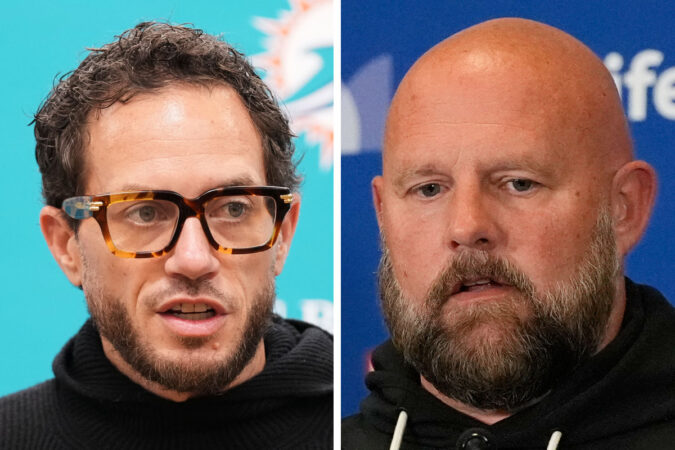
    In the past week, the Eagles have made it known to sources around the league that hiring former Miami Dolphins head coach Mike McDaniel as their new offensive coordinator is their No. 1 offseason priority. That includes fired New York Giants coach Brian Daboll, who is expected to interview for the position this week. Virtually no amount of money, literally no amount of autonomy, and no fear of conflict would deter the team from signing McDaniel, a respected offensive innovator.

    McDaniel and Eagles defensive coordinator Vic Fangio endured a rocky year together in 2023, when Fangio worked for McDaniel as his defensive coordinator in Miami, and their split, while couched as a mutual parting of the ways, was not without acrimony.

    At any rate, league sources indicate that even though Fangio’s work the last two seasons has been integral and possibly unmatched around the league, if the Eagles were somehow able to hire McDaniel, they would not be deterred by any possible discomfort from Fangio.

    Of course, the actual hiring of McDaniel in Philadelphia would be an unexpected coup for the Birds. Right now, he’s a hotter commodity than Venezuelan oil.

    He got even hotter Monday morning.

    The Bills fired head coach Sean McDermott on Monday. McDaniel is sure to be a candidate for that job. So will Daboll, who worked with superstar quarterback Josh Allen as the Bills’ offensive coordinator from 2018-21. And McDermott immediately becomes the top head coaching candidate in the league.

    There’s also a chance McDermott blocks McDaniel from a head coaching position, which pushes him back into the OC market, to the Eagles’ benefit.

    The merry-go-round ever swirls.

    Stay tuned.

    One thing is certain: McDermott’s firing immediately makes the Eagles’ quest for their top two candidates much less likely to succeed.

    McDaniel already has interviewed for head coaching vacancies in Tennessee, Baltimore, and Cleveland, was scheduled to interview in Las Vegas on Monday, and is expected to be interviewed a second time by the Browns this week. He interviewed with Atlanta, too, but the Falcons have already hired Kevin Stefanski, whom the Browns just fired.

    A report last week indicated that McDaniel would consider taking one of the premier offensive coordinator positions in favor of a bad situation as a head coach.

    To that end, McDaniel has interviewed with the Detroit Lions and Tampa Bay Buccaneers. The former is reportedly closing in on a deal with Arizona’s Drew Petzing. The latter offers a head coach in Todd Bowles whose future beyond next season is unsure, and the Bucs are as fervent pursuers of McDaniel as the Eagles.

    After he leaves Las Vegas — or, if he leaves Las Vegas, which owns the No. 1 overall pick and would be an enticing rebuild — McDaniel is expected to interview for the Los Angeles Chargers’ vacant OC job. There, McDaniel would coach Justin Herbert, who, like Lamar Jackson in Baltimore and Allen in Buffalo, is a more enticing option than the QBs on the other teams.

    And yes, that includes Jalen Hurts.

    However, in Philadelphia, McDaniel would have the best offensive roster of any of the other stops. That is, unless you believe: right tackle Lane Johnson is too old, left guard Landon Dickerson never will be healthy, Hurts will never develop past his current skill set, and A.J. Brown and Saquon Barkley, both 28, have lost a step.

    Nick Sirianni (right) and the Eagles reportedly have not yet convinced Mike McDaniel to interview for the offensive coordinator position.

    League sources say the Eagles have not yet convinced McDaniel to interview, which offers a glimpse into how he considers the Philly job. That said, don’t expect money to be an obstacle. Sources say that, for McDaniel, the position could be worth as much as the $6 million annual salary the Raiders gave Chip Kelly, who then was fired just 11 games into 2025, his first of three seasons under contract. At the end of the season head coach Pete Carroll also was fired, which created the current vacancy.

    The Eagles have already interviewed former Falcons OC Zac Robinson, Indianapolis Colts OC Jim Bob Cooter (who does not call plays and therefore can leave), and former Eagles backup QB Mike Kafka, who was Daboll’s offensive coordinator with the Giants. They are expected to interview fired Bucs OC Josh Grizzard on Monday, and have expressed interest in Dolphins passing game coordinator Bobby Slowik, fired Washington Commanders OC Kliff Kingsbury, and former Ole Miss OC Charlie Weis Jr., who was scheduled to follow Lane Kiffin to LSU.

    They’re wise to cast their net wide, because, as of Monday morning, it looked like no amount of money or power will be enough to land their two biggest fish.

  • Baseball Hall of Fame: Cole Hamels’ prospects, Ryan Braun’s PED problem, and Manny Ramirez’s last ride

    Baseball Hall of Fame: Cole Hamels’ prospects, Ryan Braun’s PED problem, and Manny Ramirez’s last ride

    Compared with the rest of the tribe of baseball writers, my criteria for Hall of Fame inclusion are undemanding. The most controversial element: I do not discriminate against the PED crowd.

    I consistently have voted for Barry Bonds, Alex Rodriguez, and Manny Ramirez, titanic talents of their era who are shunned by a voting bloc — us writers — that ignored and profited from rampant steroid use. Further, I know there are plenty of players who juiced and didn’t get caught, so banning the BALCO boys never made sense.

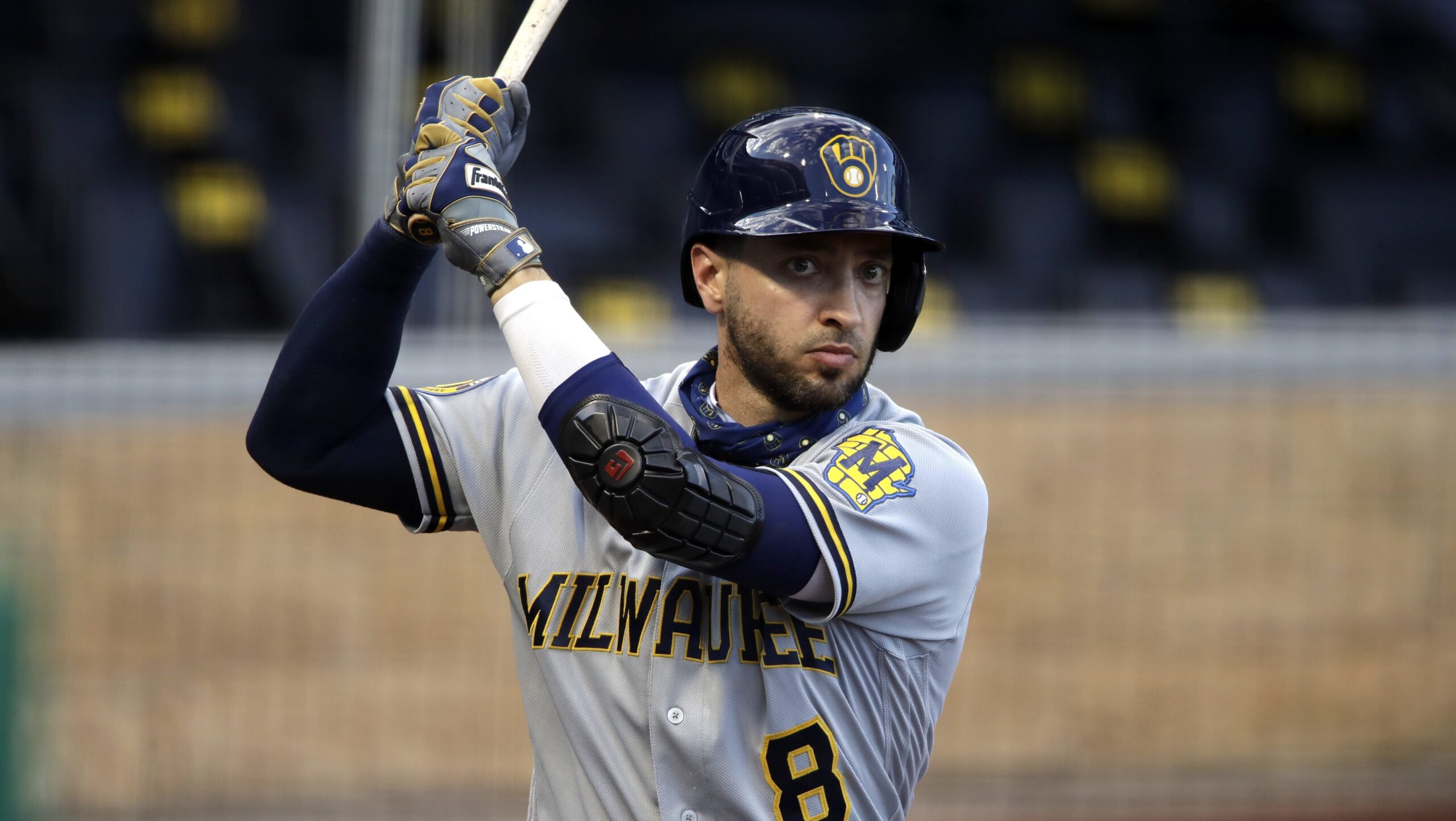
    Which brings us to Ryan Braun, the best of a weak first-year class of Hall of Fame candidates — no offense, Cole Hamels. Inductees will be announced Tuesday. Don’t expect either to be on the list.

    Hamels doesn’t deserve it.

    Braun does, but with a generous dollop of ick.

    Between 2008 and 2016, a nine-season span, Braun was, without question, one of baseball’s best players. He was a five-tool player. He twice hit at least 30 home runs and stole at least 30 bases. His .902 OPS ranks fifth in that period among players with at least 4,000 plate appearances. Ahead of him: future Hall of Fame locks Miguel Cabrera and Albert Pujols, Hall of Famer David Ortiz, and, at No. 2, Joey Votto.

    Braun was Rookie of the Year in 2007 and National League MVP in 2011.

    From 2008 to 2016, Ryan Braun was one of baseball’s best players with a .902 OPS that ranks fifth in that period among players with at least 4,000 plate appearances.

    You know what else happened in 2011? Braun tested positive for synthetic testosterone, and ruined his reputation in the aftermath. He challenged the test, smeared one of the testers as being antisemitic (Braun is Jewish), and had his record cleared on a technicality involving the handling of the sample.

    Then, in 2013, later, Braun tested positive again. That invalidated all of his protestations.

    This time, he served a 65-day suspension. Despite excellent production over the next three seasons and despite an effort to rehabilitate his image through varied good works, he never recovered.

    There’s no way Braun will get the 75% of the vote he needs to qualify for induction; not this year, and probably not for five years or so. He’ll be the next Carlos Beltrán, the scapegoat for the Astros’ signal-stealing scandal in 2017 who should have been inducted years ago.

    Braun certainly belongs in the Hall of Shame, right next to Rodriguez, who once indignantly denied that he’d ever taken steroids then later admitted to juicing as a younger player. A-Rod’s image has never recovered, either. Both belong in the Hall of Fame, too.

    I vote for A-Rod every year. In fact, this is the third consecutive year he’s my No. 1 pick. The only time he wasn’t No. 1 was in 2022, when he was No. 2. Bonds was No. 1.

    Braun’s situation is different. For one thing, he tested positive twice. For another, he was an absolute tool about it. For a third, PED use had plummeted by the time Braun arrived on the scene, so it’s not as if he needed to cheat to keep up. Finally, Braun tested positive in an era in which players knew the likely penalty for testing positive. Mark McGwire, who was first eligible in 2007, was being blackballed every year of Braun’s Hall of Fame run.

    It is a penalty with which I always have disagreed. And, while I acknowledge that Braun’s candidacy is tainted more than any other PED user, I would be as hypocritical as my colleagues if I excluded him purely on the basis of PED use.

    I will vote for him, but, more so than with A-Rod or Bonds or Roger Clemens, I will hold my nose as I check his box.

    And I will think slightly less of myself for doing so.

    The criteria

    I not only divulge my votes, as I believe every writer should do, I also rank my votes and defend them.

    I don’t vote for designated hitters because they don’t play the whole game. That included Ortiz in 2022, and it would have included Harold Baines and Edgar Martinez if I’d had a vote in 2019. Kyle Schwarber one day might make me eat those words.

    I don’t vote for relievers. Traditionally, they’ve been failed starters. I backslid on that criterion in 2025 because I didn’t want to be the reason Billy Wagner didn’t get enough votes in his final year of eligibility. Thankfully, I didn’t have a vote in 2019, when Mariano Rivera was a unanimous selection. I don’t exactly know what I’d have done that year, when two designated hitters also made it. I probably would have abstained. My antireliever stance will further soften as more players who were drafted and groomed as relievers become eligible.

    I use all 10 ballot slots, which means I’ve helped keep Omar Vizquel on the ballot.

    I weigh defense more heavily than most voters, to Jimmy Rollins’ benefit.

    I vote for players nearing the end of their 10-year candidacy limit over players who still have time left.

    The last few players are usually interchangeable: This year, that interchangeability begins at No. 7, with Chase Utley.

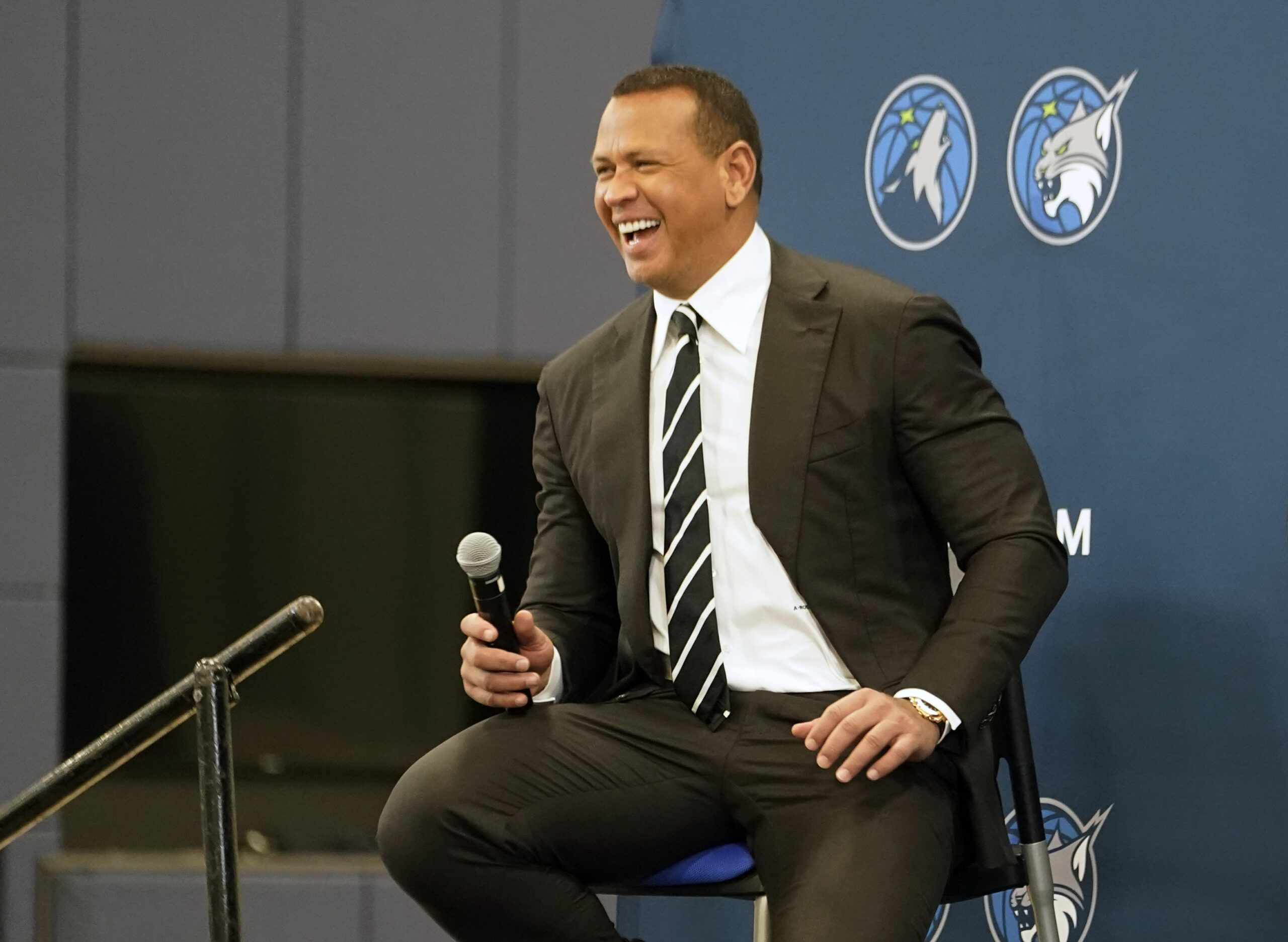
    Alex Rodriguez, here in a 2021 event as co-owner of the Minnesota Timberwolves, was one of the great players of his era.

    The vote

    1. Alex Rodriguez, fifth year

    Hit .302 with 642 home runs from 1996 to 2012, the most homers by a margin of 85 (Jim Thome had 557). Hot or cold in his postseasons. Elite fielder. Smug, condescending, weirdo, Yankee. But still.

    2. Manny Ramirez, 10th year

    In his final HOF run, Ramirez will be remembered less as the most important player on the Red Sox teams that broke the Curse of the Bambino than as a juicer. He led baseball with 1,660 RBIs from 1995 to 2008. He led Cleveland in aggregate OPS from 1995 to 2000 and was fourth in baseball behind McGwire, Bonds, and Martinez among players with at least 3,000 plate appearances. He led Boston in OPS from 2001 to 2006 and was third in baseball behind Pujols and Todd Helton, again among players with 3,000 or more plate appearances. He was the best hitter on loaded teams in Cleveland, Boston, and Los Angeles. He might have been juicing the whole time — he tested positive three times — but, again, PED use was rampant during his prime years.

    3. Carlos Beltrán, fourth year

    In a game rife with cheating, it astounds me that so many people hold the sign-stealing scandal against him, a scandal perpetrated when he was 40, in his final season, after an 18-year run of excellence. That included the 1999 AL Rookie of the Year as a Royal; nine All-Star Game appearances, his ninth at the age of 39; three Gold Glove awards; and incredible playoff production: a 1.021 OPS, a .307 batting average, 16 home runs, 42 RBIs, and 11 steals (never caught) in 65 playoff games.

    That said, he got 70.3% of the vote last year, 57.1% in 2024, and 46.5% in his first year of eligibility. Independent preannouncement polling indicates that Beltrán will cruise into the Hall this year as effortlessly as he played the game itself.

    4. Ryan Braun, first year

    See above.

    5. Jimmy Rollins, fifth year

    I understand why, independent of their controversies, Beltrán and Braun aren’t slam-dunk Hall of Famers. I understand why Rollins isn’t, either. J-Roll is my best example of why defense, baserunning, and availability don’t get enough respect from voters. His 2007 MVP season was the best of an eight-year run in which his most consistent contributions involved superb shortstop play, base stealing, and baserunning, which helped account for his 292 stolen bases and the 395 combined doubles and triples he hit from 2001 to 2008, a league high among players with at least 5,000 plate appearances.

    Rollins also played in 1,237 games in that span, second-most among shortstops (Miguel Tejada) and seventh-most among all players, including the next guy on this list, one of Rollins’ best friends.

    Bobby Abreu had a great career offensively, and he was a good outfielder, but his chances of making the Hall of Fame aren’t good.
    6. Bobby Abreu, seventh year

    Abreu was one of baseball’s best hitters from 1998 to 2009; his .902 OPS is third among players with at least 7,500 plate appearances, behind Helton and A-Rod. He averaged more than 28 stolen bases with a .301 batting average. He was an elite offensive player with one Gold Glove and a golden arm to boot. He got 19.5% last season, but he’s a lost cause.

    Chase Utley is expected to get closer than last year to the needed 75% of Hall of Fame votes.
    7. Chase Utley, third year

    He was a profoundly productive second baseman from 2005 to 2013, so why isn’t “Ut” higher? Because he was a profoundly poor second baseman who played out of position. He should have been at first base. Yes, his .881 OPS in that span ranks 11th among players who played at least 1,000 games, but he missed an average of 30 games per season in that span. He’s compared to Jeff Kent, who peaked at 46.5% in his final year of eligibility, though the new Contemporary Baseball Era Committee wrongmindedly slid him in instead of PED poster children Bonds and Clemens. However, Utley’s current popularity campaign as MLB’s ambassador to Europe — the most unlikely ambassadorship this side of Woody Johnson’s former gig in the United Kingdom — will surely help Utley blast past his 39.8% mark from last year.

    8. Torii Hunter, sixth year

    Hunter’s 5.1% last year barely met the 5% minimum for ballot retention, and he probably won’t be on the ballot after this year, but he was the best center fielder in baseball from 2001 to 2013 and a better player than Dustin Pedroia, Andy Pettitte, Hamels, and maybe even Utley.

    Dustin Pedroia’s career compared favorable to Chase Utley’s, except in home run power.
    9. Dustin Pedroia, second year

    There’s an excellent argument that, if you’re in on Utley, you should be in on Pedroia. His 10-year peak was slightly less homer-heavy than Utley’s, but his overall play probably was better, considering his four Gold Gloves. He also won AL Rookie of the Year in 2007 and was AL MVP in 2008. He won two World Series with the Red Sox, but after his first playoff run in 2007 he hit .212 with a .628 OPS in his next 37 playoff games.

    10. Omar Vizquel, ninth year

    He’s the best defensive shortstop of the modern era after Ozzie Smith. However, his candidacy cratered when, in 2021, he was sued and accused of sexually harassing an autistic adult batboy while managing the White Sox’s double-A affiliate in 2019. No charges were brought, and the sides settled in 2022, but the incident, combined with previous, unproven accusations of domestic violence accusations by an ex-wife, effectively ended Vizquel’s Hall of Fame campaign.

    He peaked at 52.6% in 2020, his third year of eligibility, but hasn’t broken 25% in the past four years, and almost certainly won’t again this year.

    Honorably mentioned

    If I had an 11th vote, I would throw Hamels, Pettitte, and Félix Hernández in a barrel, pick one out, and he would get that vote. None is especially Hall of Fame unworthy, and all were very good long enough to warrant consideration. Pettitte won’t make it this year, his eighth, so, in the spirit of my expiring candidacy criterion, I might vote for him in a couple of years, after some candidates drop off and after Buster Posey gets in next year as a first-ballot candidate.

    Finally, Braves fans: Miss me with Andruw Jones.

  • Can QB whisperers Josh McCown or Cam Turner salvage Jalen Hurts as the Eagles’ new OC?

    Can QB whisperers Josh McCown or Cam Turner salvage Jalen Hurts as the Eagles’ new OC?

    The Eagles don’t just need an offensive coordinator. They need a quarterback whisperer.

    They need Josh McCown. Or maybe Cam Turner.

    Kevin Patullo wasn’t ready for the OC job in Philly, but then, Bill Walsh and Sid Gillman wouldn’t have won a Super Bowl the way Jalen Hurts played in 2025.

    Hurts’ development has stalled. He might even be broken. He’s largely the same quarterback at the end of the 2025 season as he was at the end of 2022. Defenses know that, and they exploit it. As the offensive line deteriorated, and as Saquon Barkley and A.J. Brown started to show their age, more was asked of Hurts, who delivered ever less.

    The Eagles don’t just need a play-caller.

    They need an offensive coordinator who can invigorate a veteran quarterback whose career is idling. Both McCown, a former Eagles backup quarterback, and Turner, who has the bluest of NFL bloodlines, have done just that.

    Fire starters

    The most compelling story of the 2024 season involved Sam Darnold, the No. 3 overall pick in the 2018 NFL Draft and a bust with the New York Jets, Carolina Panthers, and San Francisco 49ers, who made the Pro Bowl in his seventh season and led the Minnesota Vikings to a 14-3 record.

    McCown was Darnold’s quarterbacks coach.

    The most compelling story early in the 2025 season involved not only Darnold’s continued ascendance, now in Seattle, but also Daniel Jones. He was the No. 6 overall pick in 2019 but turned out to be such a bust with the New York Giants in his first six seasons that they released him.

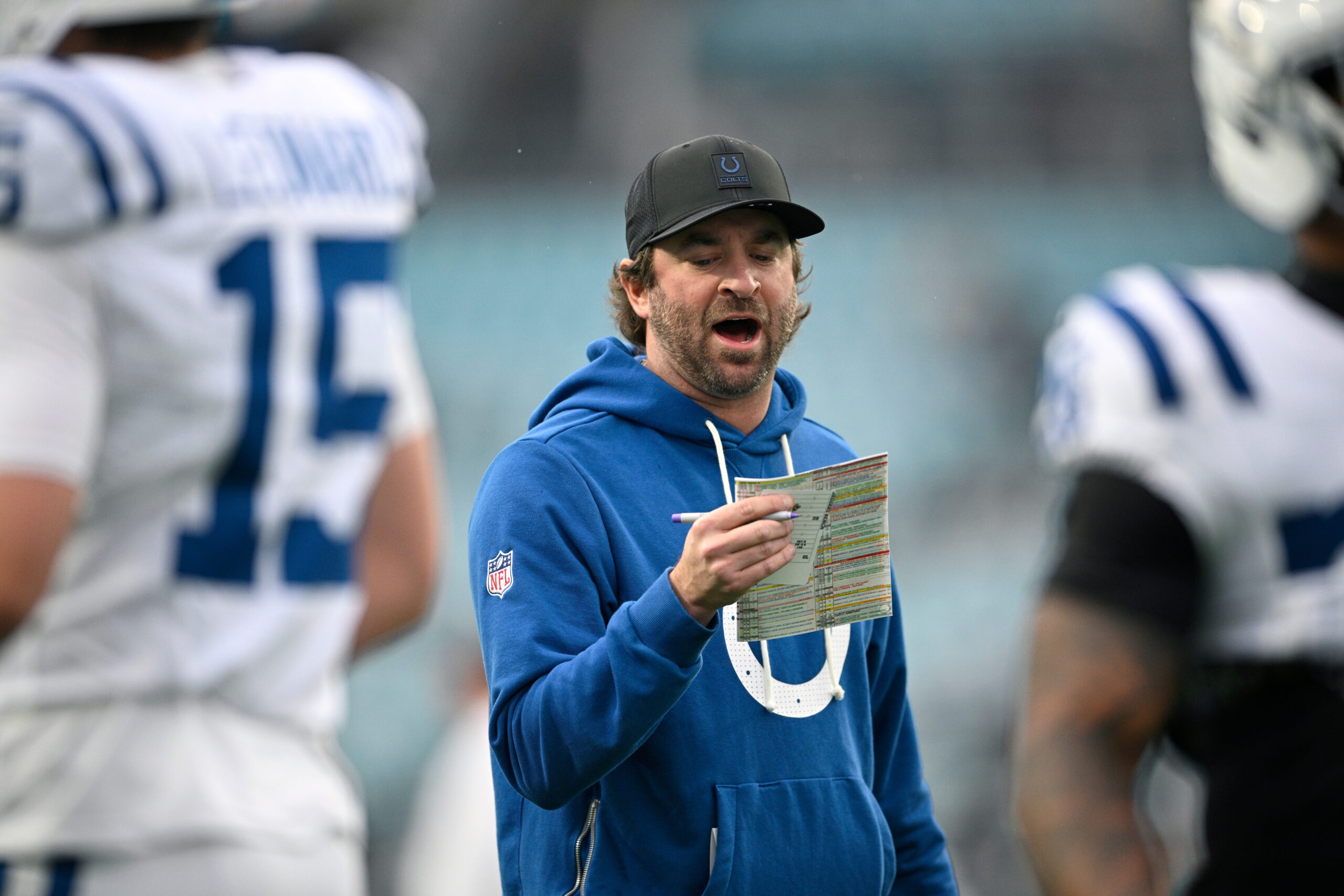
    Jones signed with Indianapolis, where Turner, as quarterbacks coach, had been developing Anthony Richardson, the No. 4 overall pick in 2023, while helping veterans Joe Flacco and Gardner Minshew squeeze out a few more NFL starts. When given an established talent like Jones, though, Turner made hay. Turner convinced head coach Shane Steichen to bench Richardson in favor of Jones, and Turner was right. The Colts were 8-2 and Jones was a dark-horse MVP candidate with a career-high 101.6 passer rating when he broke his leg in Game 11. Jones suffered a torn Achilles tendon two games later.

    Colts quarterbacks coach Cam Turner played a big role in Daniel Jones’ resurgence before the quarterback suffered a season-ending injury.

    So, amid all the flashy possible candidates — fired Miami Dolphins head coach Mike McDaniel, fired Giants head coach Brian Daboll, fired Washington Commanders coordinator Kliff Kingsbury, figurehead 49ers OC Klay Kubiak — you have, in McCown and Turner, two position coaches who played the position, who possess credible pedigrees, and, within the past two years, have salvaged the careers of quarterbacks who were in even worse shape than Hurts.

    Granted, they wouldn’t be acting as Hurts’ position coach. However, if head coach Nick Sirianni — also never a QB, and only briefly a QB coach — will assume more of a role in scheme construction and game-planning, which he’s going to help with anyway, McCown or Turner could spend more time with Hurts than would a normal OC.

    Granted, they haven’t called plays. But then, neither had Ben Johnson when he became offensive coordinator in Detroit in 2022. He’d never even coached quarterbacks. He still turned out to be excellent at running an offense, both with the Lions through 2024, as well as in 2025, his first season as head coach with the Chicago Bears, who are two wins from making the Super Bowl.

    The team desperately needs some QB IQ in the building after the caliber of coaching Hurts received this season. And no, we’re not referring to Patullo.

    Scot who?

    There was a lot of head-scratching last winter when Sirianni hired career college coach Scot Loeffler as quarterbacks coach. Loeffler’s only season in the NFL was as quarterbacks coach for the Lions in 2008, when Daunte Culpepper, Jon Kitna, and current ESPN analyst Dan Orlovsky combined for an 0-16 record. Loeffler coached on the first 0-16 team in NFL history, a season best remembered for Orlovsky, while facing modest pressure, unwittingly scrambling out of the back of the end zone (the Lions lost by two points).

    Unlike Loeffler, McCown and Turner bring significant NFL bona fides.

    McCown played for 10 NFL teams over a 16-year career. He only approached being a full-time starter four times, but at his last eight stops, he was credited with making the other quarterbacks better as a sort of extra coach. In 2006, with the Lions, he actually played wide receiver, and caught both passes thrown to him. In 2019, he came out of retirement and served as Carson Wentz’s backup and mentor. Not coincidentally, Wentz’s career cratered after 2020.

    Even if he doesn’t get the OC job, McCown always will have a home in Philly. Eagles owner Jeffrey Lurie loves him. He offered McCown a coaching job after the 2019 season, which McCown, then 40, declined, hoping to take one more shot as a player. Lurie then signed McCown to the practice squad in 2020 but still let McCown live at home in Texas until the Houston Texans signed McCown onto their active roster in November.

    Other than recently redeeming failed quarterbacks, McCown and Turner share little else in their backgrounds.

    Depending on how you view things, either Turner is one of the NFL‘s most egregious proliferate examples of nepotism, or he has impeccable NFL coaching DNA.

    His uncle, Norv Turner, won two Super Bowls in the early 1990s as Jimmy Johnson’s offensive coordinator in Dallas. His cousin and Norv’s son, Scott Turner, has spent 14 seasons coaching in the NFL, and he’s the Jets’ passing game coordinator now, but that shouldn’t count against Cam.

    Independent of his connections, Cam has proved himself worthy of his appointments. He was the assistant QB coach in Arizona in 2020, when Kyler Murray went to his first Pro Bowl, and was the head QB coach in 2021, when Murray went to his second.

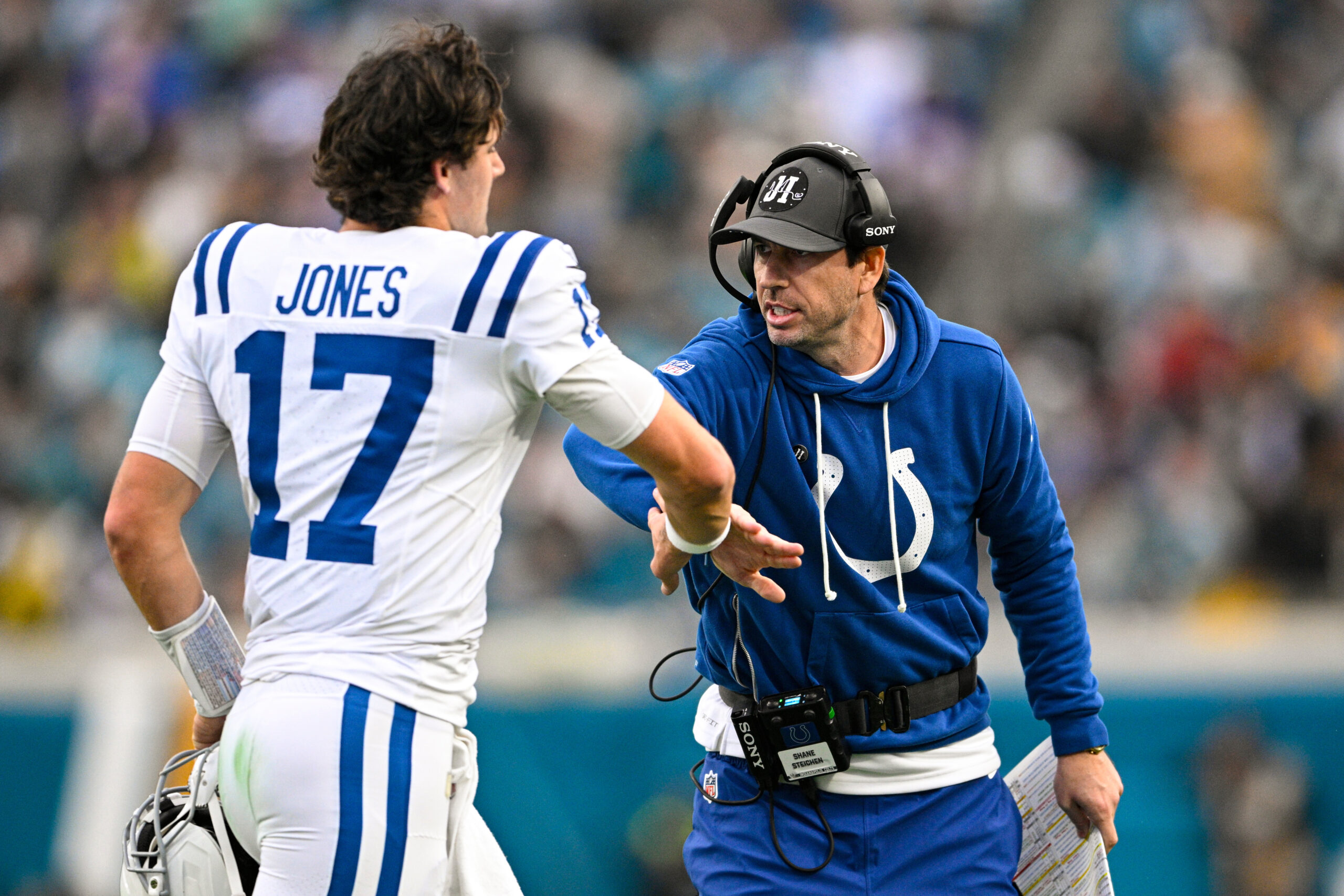
    Turner also has the benefit of working with Steichen in Indy. Steichen, of course, was the OC when the Eagles made it to the Super Bowl after the 2022 season.

    Colts coach Shane Steichen, the former Eagles offensive coordinator, started the 2025 season 8-2 with Daniel Jones as his starter and Cam Turner coaching quarterbacks.

    Turner also worked in Arizona under Kingsbury, one of the retread candidates everyone has been sniffing around since Black Monday began claiming victims last week.

    “Sniffing around.”

    Sounds about right.

    The names

    With a $128 million offense like the Eagles’, why risk a season on lesser-known candidates like McCown and Turner?

    Because being lesser-known doesn’t necessarily equate to lesser ability.

    McDaniel is a big name, but the awkward departure of Vic Fangio as his defensive coordinator after their 2023 season together would cause instant friction if McDaniel joined a franchise and moved to a city where Fangio is worshipped. Anyway, McDaniel seems certain to get another head coaching gig during this hiring cycle. If he doesn’t, he’d be foolish to turn down the Lions OC job if offered, since, in this moment, Jared Goff is a better quarterback than Hurts.

    Daboll was hired by the Ginats to develop Jones. He did the opposite. Also, his combustible personality is likely to clash with Sirianni’s.

    There isn’t a universe in which Ravens offensive coordinator Todd Monken doesn’t accompany John Harbaugh to Harbaugh’s next stop, since Harbaugh’s refusal to fire Monken apparently influenced his firing in Baltimore.

    and got fired by the Cowboys as QB coach after 2022, failed as Kellen Moore’s QB coach with the Chargers in 2023, and was the QB coach in Philly during Hurts’ mediocre 2024 season. Not exactly a sterling resumé.

    Frank Reich, the OC in 2016-17 under Doug Pederson, is Lurie’s favorite employee ever, and, at 64, he’s unlikely to be poached by any other team if the Eagles thrive with him as coordinator. But Reich was less responsible for Wentz’s development than hard-nosed quarterbacks coach John DeFilippo. As for “Flip” himself, team sources have said in the past that DeFilippo long ago burned any bridge that might ever bring him back to Philadelphia, and there have been plenty of opportunities to do so.

    Rams passing game coordinator Nate Scheelhaase has never coached NFL quarterbacks, has one year as a college offensive coordinator, and with all due respect, seems to be this year’s long-shot assistant who gets the Duce Staley Treatment — that is, token interviews for head-coaching jobs with NFL teams trying to fulfill Rooney Rule requirements.

    Still, Scheelhaase seems far more qualified than Klay Kubiak. He spent seven of his first eight years out of college coaching high school, and only three of those as a head coach. He joined the Niners in 2021, and he has been offensive coordinator for just one year, but he doesn’t even call plays. Kyle Shanahan does.

    Maybe it won’t matter who they hire. Considering how so many podcast pundits and online experts spend their Monday mornings eviscerating folks like Kevin Patullo, game planning, sequencing, adjusting, and play-calling can’t be all that hard. Can it?