Author: Jillian Kramer

  • Former Lumberton mayor pleads guilty to DUI, child endangerment charges

    Former Lumberton mayor pleads guilty to DUI, child endangerment charges

    A former Lumberton Township mayor admitted in court Monday that she drove drunk with her toddler in the car last St. Patrick’s Day, bringing to a close a case that prompted calls for her resignation.

    Gina LaPlaca, 46, who served as mayor until December and remains a member of the township committee, pleaded guilty before Burlington County Superior Court Judge Craig Ambrose to driving under the influence and child endangerment, according to Burlington County prosecutors.

    Under a plea agreement, LaPlaca will enter a three-year diversionary program for first-time offenders. She also agreed to attend regular Alcoholics Anonymous meetings and install an ignition interlock device in her vehicle. Over the last year, she has completed inpatient and outpatient treatment, prosecutors said Tuesday. LaPlaca told the judge Monday she had installed an interlock device in October.

    Prosecutors said a motorist captured LaPlaca on cell phone video driving a blue 2019 BMW erratically on Route 38, swerving across the center line and nearly striking a utility pole. After the driver alerted police, officers located LaPlaca and found an open container of alcohol in the vehicle, authorities said.

    LaPlaca told officers she had been drinking before picking up her 2-year-old son from daycare, prosecutors said. At the time, her blood-alcohol concentration measured 0.30% — more than three times New Jersey’s legal threshold for intoxication.

    In the weeks after her arrest, the township committee formally censured LaPlaca for alleged ethical violations. Despite public outcry and calls from state lawmakers to step down, she declined to resign as mayor and remained in office until her term ended in December.

    An attempt to reach LaPlaca on Tuesday was unsuccessful. After her arrest last year, her husband, Jason Carty, told The Inquirer that she was “on a path to recovery” and asked for privacy.

  • Affidavit for arrests in Quakertown protest details injuries to police chief, doesn’t mention chokehold

    Affidavit for arrests in Quakertown protest details injuries to police chief, doesn’t mention chokehold

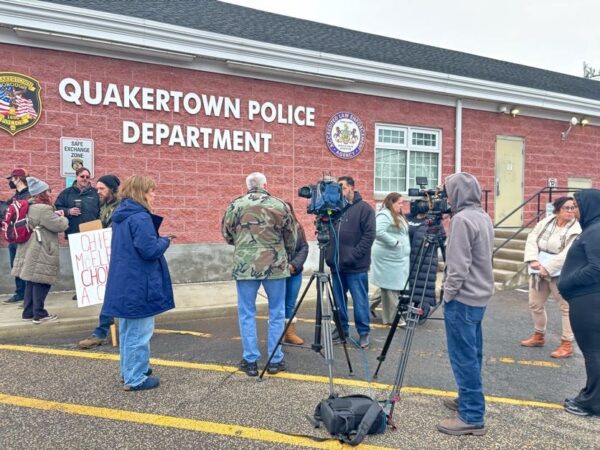
    A student protest in Quakertown last week escalated when officers attempted to detain a teenage girl, police say, setting off a struggle that ended with five teenagers charged and the police chief in the fray.

    The protest quickly devolved into a melee in which students obstructed traffic, struck vehicles, and assaulted Chief Scott McElree as he tried to take one of the teens into custody, according to the affidavit of probable cause for the arrest of one of the students.

    The document, obtained by The Inquirer, offers the most detailed account yet of what law enforcement officials say happened that day.

    The protest took place Friday near the intersection of Juniper and Front Streets, where dozens of students had gathered to demonstrate against federal immigration enforcement actions.

    According to the affidavit, officers were already monitoring the crowd when they observed students walking into roadways, throwing snowballs at vehicles, standing on benches, and, in one instance, kicking a white pickup truck and hitting its side mirror. Officers warned the students to remain peaceful, the document said.

    At some point, the affidavit said, a teenage girl stepped into the street “numerous times, including in front of moving vehicles.” An officer approached her on the sidewalk and told her she would be detained. When the girl attempted to walk away, the officer grabbed her arm, the affidavit said, and was quickly surrounded by other students.

    It was then, according to the document, that McElree intervened. The chief “attempted to make an arrest” of the girl, the affidavit said, but a teenage boy began pulling her away. McElree grabbed the boy, who “began resisting arrest by pulling away” and struck the chief in the ear with a cell phone, the affidavit said.

    The document said several others joined in: One girl struck McElree on the left shoulder. A teenage boy hit him in the head and ribs before an officer took the boy to the ground. Another girl punched McElree with a closed fist, and a different student struck him in the head with a backpack, according to the affidavit.

    McElree, who left the scene with blood on his face, later told officers that he went to a hospital for treatment, according to the affidavit.

    Defense attorneys and witnesses have challenged the account officers detailed in the affidavit.

    Five teenagers were charged with aggravated assault, which is a felony, and other misdemeanor offenses, according to two sources with knowledge of the case.

    Quakertown police and Bucks County prosecutors have declined to release details of the arrests, including the students’ names and ages and the charges against them.

    The teenagers were detained until Tuesday, when they appeared before a Bucks County judge. By late Thursday night , all five teenagers had been released.

    Videos recorded by bystanders and obtained by The Inquirer show portions of the struggle from different angles. In one clip, McElree, who was dressed in plain clothes, appears to wrap his arm around a girl’s neck. Witnesses have said he did not identify himself as the police chief before engaging physically with the teenagers.

    The affidavit makes no mention of a chokehold.

    The Bucks County District Attorney’s Office is investigating the incident. On Thursday, a spokesperson said the office was renewing “our request to the community for any footage, photos, or information that they may have to ensure a thorough investigation.” .

    Timothy Prendergast, who represents the 15-year-old girl seen in videos being held in what appears to be a chokehold by McElree, questioned whether the Bucks County District Attorney’s Office can conduct an impartial investigation while prosecuting the teenagers.

    “It’s hard to believe that a district attorney’s office — which has charged our clients with felonies, continues to argue for their detention, and has already labeled the chief a victim — will do an independent review of what happened,” he said.

    Prendergast and Ed Angelo, who represents a different 15-year-old accused of striking McElree in the shoulder, said they plan to ask the Pennsylvania attorney general to intervene. “We need a truly independent investigation,” Prendergast said.

    Prendergast said his client is the teenager accused in the affidavit of hitting McElree with her backpack. In video footage reviewed by The Inquirer, her backpack appears to remain on her back as McElree takes her to the ground.

    Prendergast contended that affidavits of probable cause reflect law enforcement’s theory of a case, not established facts. “Probable causes are not for the truth of the matter,” he said. “They are for the commonwealth’s circling of the wagons — what their version of the facts are, which insulates their culpability in this matter.”

    Angelo said that his client also denies hitting the chief and that the charges against her should be withdrawn. He said the situation escalated only after McElree inserted himself into the confrontation.

    “I think it’s time for the adults to be adults and pull the plug on this,” Angelo said.

    Another adult who entered the altercation was initially placed in handcuffs but was not charged. In one video, an officer can be heard telling the man that the person involved was McElree — suggesting the man did not realize he was grappling with the police chief.

    McElree has not spoken publicly since the incident and has not returned phone calls and text messages seeking comment.

    Some Quakertown residents have called for McElree’s ouster. Quakertown Community School District officials have said they expected to hear concerns from community members Thursday evening at a scheduled board meeting.

    This article was updated to reflect new information that, as of late Thursday night, all teenagers had been released from custody.

  • City will pay $2,000 toward Philly homicide victims’ funerals in new program

    City will pay $2,000 toward Philly homicide victims’ funerals in new program

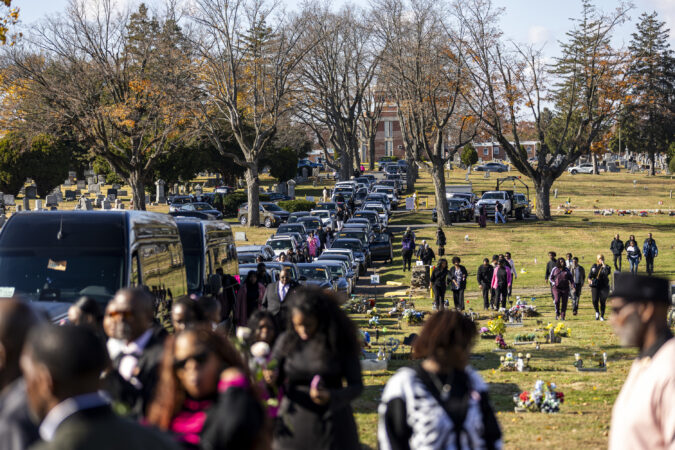
    Families of people killed in Philadelphia will be eligible to receive up to $2,000 to help cover funeral costs under a new city program announced Wednesday.

    The initiative, called the Homicide Victim Funeral Assistance (HVFA) Program, will be available to families whose loved ones are killed on or after March 1, city officials said. The money will be paid directly to funeral service providers, with applications reviewed within 48 hours, they said.

    “Grief is not a bill you should have to carry alone,” said Adam Geer, the city’s chief public safety director, during a news conference unveiling the program.

    The program will be administered by the city’s Office of the Victim Advocate, a division of its Office of Public Safety created last year and led by Adara Combs.

    Combs said the initiative grew out of conversations with families who found themselves planning funerals while still in shock, and struggling financially.

    “This program is born out of listening,” she said.

    The average funeral costs $9,100 in Philadelphia, according to data collected by the Senior Rate Registry. When a loved one is murdered, that expense can arrive suddenly and without warning, Geer said.

    To qualify for aid, families must show their loved one was killed in the city and that their death was ruled a homicide, Combs said.

    The city’s program is meant to be a supplement to existing state aid. Families may also apply for up to $6,500 reimbursement through the state’s Victims Compensation Assistance Program, she said.

    The announcement comes as homicides in Philadelphia have fallen sharply in recent years. After peaking at 562 killings in 2021, the city recorded 255 murders last year — its lowest number in 60 years, according to police data. As of Tuesday, 15 people had been killed so far this year.

    Mayor Cherelle L. Parker said the program is a way for the city to move beyond platitudes.

    “I get so tired of telling people that … our thoughts and prayers are with you,” she said. “We’re sending thoughts and prayers, but they’re literally looking at funeral bills, and they’re trying to figure out, in the midst of this loss, how will we pay?”

    “I am proud that we have been able to come together and use government as a tool to help families in need,” she said.

    To receive additional information or apply after March 1, call 215-686-2115 or email OVAfuneralfund@phila.gov.

  • Teens arrested in Quakertown ICE protest charged with aggravated assault

    Teens arrested in Quakertown ICE protest charged with aggravated assault

    Five teenagers arrested during a protest in Quakertown last week face charges of aggravated assault and related crimes after a judge ruled Tuesday that prosecutors had presented sufficient evidence for the case against them to proceed, according to sources.

    The teenagers had been held since Friday, when they were taken into custody after a scuffle with Quakertown police officers — including the department’s chief, Scott McElree.

    Officials have released few details about the arrests, but two people with knowledge of the case who asked not to be identified to discuss an ongoing investigation confirmed the charges. The police department and the district attorney’s office have declined to disclose the teens’ names, ages, or charges they face.

    After the more than three-hour hearing in Doylestown, which was closed to the public, prosecutors left the courtroom without answering questions. The teenagers’ parents, speaking through intermediaries, also declined to comment Tuesday.

    But Ettore Angelo, a lawyer representing one of the teenagers, said his 15-year-old client had been released to her parents and placed on house arrest. He said she faces an aggravated assault charge — a felony offense that, if sustained in juvenile court, can carry a penalty of up to five years in a detention facility.

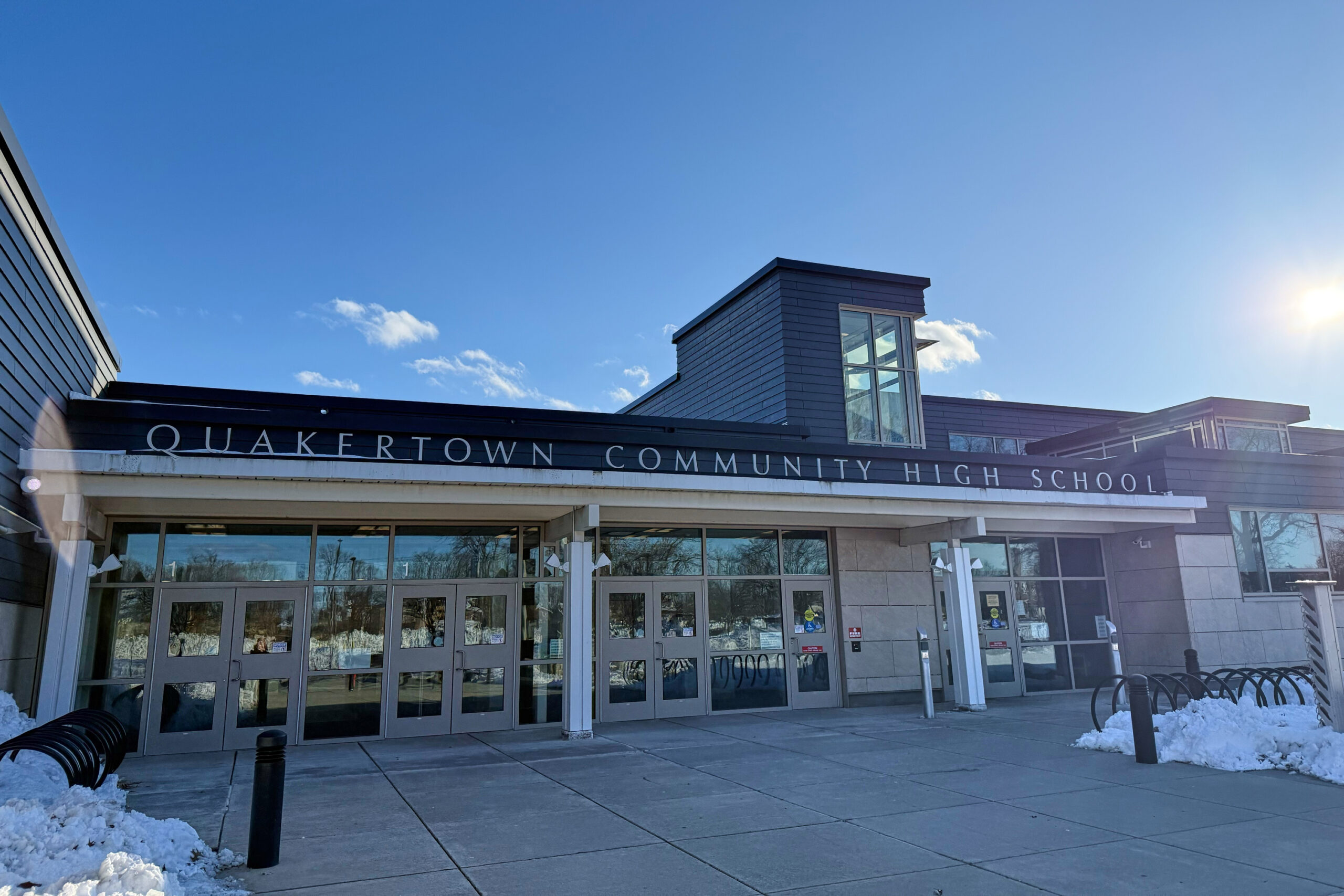
    The teenagers who were arrested had been taking part in a protest of Immigration and Customs Enforcement that began at Quakertown Community High School and moved off campus to Front Street. Witnesses have said that a confrontation erupted there, in front of Sunday’s Deli and Restaurant.

    Students at Quakertown Community High School took part in a protest of Immigration and Customs Enforcement that began at the school and moved off campus to Front Street.

    McElree, the police chief, who was dressed in plain clothes, grabbed a teenage boy and placed a teenage girl in a chokehold, they said, prompting other students to intervene and a larger scuffle to break out.

    Angelo said the central allegation against his client is that she struck McElree during the melee, an accusation she denies. He contended that students reacted in confusion and fear when a man rushed into the crowd.

    He said McElree “put himself smack in the middle and created a melee” when he charged up to the teenagers while out of uniform and without announcing who he was. “I think he owes the community and these teenagers an apology,” the lawyer said.

    He added that, in his view, some of the teenagers had acted instinctively to protect one another.

    Speaking by phone Tuesday afternoon, a 17-year-old girl who participated in the protest but was not among those arrested described what she said had been a peaceful demonstration even as counterprotesters drove past in vehicles, honking and shouting.

    The teen, who asked not to be identified for fear of retaliation, said teenagers were gathered on the sidewalk and speaking with a uniformed officer when a man pushed through the crowd and “barged onto the sidewalk.”

    The man — whom she later learned was McElree — grabbed a teenage boy by the back of the neck, she said. “All the kids thought he was a counter protester,” she said. “So everyone started to protect their friends.”

    The girl said she saw McElree throw one student to the ground and place another in a chokehold. At least three students were injured, she said — one with a broken nose and another who required stitches to his chin. McElree, too, was injured, she said, and left the scene bleeding from his head.

    She recorded portions of the confrontation and shared the videos with The Inquirer.

    “It was really scary, because it was a group of kids versus this really angry man,” the teen said, adding that it took what felt like several minutes for uniformed officers to step in. “It was the kids doing what the police should have.”

    The girl said she did not realize that the man at the center of the fight was the police chief until she returned home and showed the footage to her father, who recognized McElree.

    Manuel Gamiz, a spokesman for the district attorney’s office, said Monday that the investigation remains ongoing and that no additional information was available.

    Police initially said an adult had also been arrested during the confrontation. But the district attorney’s office later said no adults had been charged in the melee.

    Outside the courthouse and along the hallway leading to the courtroom of Denise M. Bowman, more than two dozen community members gathered in quiet support Tuesday. Some held handmade signs: “We support Quakertown students” and “Keep families together.”

    Among them was Lolly Hopwood, 47, of Doylestown, who held a poster reading, “We stand with you.” She said she and others wanted to counter what she described as harsh online criticism directed at the families.

    “There’s a lot of negativity online right now that the parents are seeing,” Ms. Hopwood said. “We wanted to show them the community is really here for them.”

    On Monday night, the episode had spilled into borough politics. At a Quakertown council meeting, several residents called for the teenagers’ release and demanded the resignation of McElree, who also serves as the borough manager. After the public session, the council met privately with its attorney. As of Tuesday morning, it was unclear whether any action would be taken against the chief.

    Members of the borough council and the borough’s attorney, Peter Nelson, did not respond to requests for comment on Tuesday.

    A GoFundMe campaign created to help cover the teenagers’ legal expenses had raised more than $41,000 by Tuesday afternoon. The funds will be divided evenly among the five families, said Heidi Roux, director of immigrant justice at the Welcome Project PA, which organized the drive.

  • Quakertown High School students arrested during ICE protest. Videos show them bloodied after a confrontation with police.

    Quakertown High School students arrested during ICE protest. Videos show them bloodied after a confrontation with police.

    Several students at Quakertown High School were taken into custody on Friday after a student walkout protesting federal immigration enforcement escalated into a confrontation that left at least one teenager bloodied and in handcuffs, according to witnesses and video footage from the scene.

    School officials said the episode began shortly before noon, when dozens of students left campus without permission to demonstrate along Front Street in opposition to the policies of U.S. Immigration and Customs Enforcement. What followed, according to videos posted widely on social media, was a chaotic scene involving students, an unidentified man, and local police officers.

    By late afternoon, authorities had released few details about what prompted officers to intervene or how many students were detained.

    In a letter to parents, Lisa Hoffman, the acting superintendent of the Quakertown Community School District, said 35 students left school grounds at about 11:30 a.m. to stage the protest. She said district officials were informed by the Quakertown Police Department that the students were “engaging in unsafe and disruptive behavior,” though she did not elaborate on what that behavior entailed.

    The school also went on a short lockdown as a precaution, she said.

    Quakertown police contradicted the account offered by school officials, saying in a statement that as many as 50 students were involved in the protest, which “began peacefully” but became dangerous when students entered traffic, threw snowballs, kicked cars, and damaged property, including a car’s sideview mirror.

    “Officers issued additional warnings to maintain civil,” the statement said, before “confrontation escalated, and some individuals assaulted officers.”

    Police said “five to six juveniles and one adult have been taken into custody,” but offered no additional information.

    Videos circulating online offer a fragmented glimpse of the confrontation. In one clip, a man is seen grabbing a teenage girl and placing her in a chokehold. A male student rushes in and strikes the man, after which police officers move in and take the student into custody. Other footage shows protest signs scattered across the sidewalk, speckled with blood, and a teenage girl in handcuffs with blood visible along the side of her face.

    A woman who was dining inside a restaurant along Front Street said she watched the confrontation unfold just outside the window.

    “This man was easily twice her size,” said the woman, who asked not to be identified for fear of reprisal. “She couldn’t have been much more than 100 pounds.”

    When a male student stepped in to help the girl, she said, the scene quickly spiraled. Another woman in the restaurant recalled that several adults — including police officers — forced the boy to the ground.

    “The situation completely escalated,” said the second woman, who also asked not to be identified out of fear of reprisal. “There were multiple grown men getting in the faces of the children, spit flying out of their mouths.”

    It remains unclear what role the man played in the altercation. Both women said they later saw him drive away from the scene in a police vehicle.

    The statement by police made no mention of the man, nor did it include details about any injuries sustained by the students.

    Messages seeking comment from the school district were not immediately returned Friday afternoon.

    The Buck’s County District Attorney’s Office said in a statement Friday that it was aware of the incident and was “gathering information.”

    “We are committed to ensuring public safety and will provide updates if and when legally appropriate,” the office said.

    By late afternoon, the number of students taken into custody had not been disclosed, and school officials had not said whether any would face disciplinary action.

    Videos also showed papers and books scattered on the sidewalk next to dropped and bloodied signs. “These children were thrown around and brutalized by these officers,” said one of the women.

    School officials had been aware of the planned student walk-out, according to the high school’s Facebook page, and canceled it Friday morning.

    “While we respect students’ rights to express their views, our first priority is to ensure a safe and secure environment for all,” House Principal Jason D. Magditch wrote in a letter posted on the Facebook page. “At this time, we believe canceling the protest is the most appropriate course of action in the interest of student safety and well-being.”

  • Two rival sex traffickers arrested in Norristown following shooting, police say

    Two rival sex traffickers arrested in Norristown following shooting, police say

    A street shooting in Norristown last week led investigators to discover two sex-trafficking operations that transported women from New York to Montgomery County to engage in prostitution, prosecutors said Thursday.

    A dispute between two men who ran rival enterprises erupted in gunfire on Feb. 13, police said, when one shot the other in the thigh during a confrontation on the 400 block of Sandy Street.

    On Tuesday, authorities arrested both men.

    Efran Flores-Rodriguez, 24, of Norristown, and Fernando Meza-Ramirez, 42, of Corona, Queens, are each charged with trafficking individuals and involuntary servitude. Flores-Rodriguez faces additional charges, including attempted murder, in connection with the shooting.

    Officers responding to reports of gunfire found Meza-Ramirez inside a bullet-riddled Toyota RAV4, police said. He had been shot in the thigh.

    Meza-Ramirez told police that a stolen white Acura TLX had followed him from Lafayette Street to Sandy Street. When he pulled over, he said, the sedan pulled up beside him and someone opened fire. A witness identified Flores-Rodriguez as the shooter, according to the affidavit of probable cause for his arrest.

    But investigators say the shooting exposed more than a personal feud.

    At the hospital where Meza-Ramirez was treated, officers found business cards in his wallet bearing photographs of scantily clad women posing on beds, according to the affidavit.

    Days later, on Feb. 17, police searched Flores-Rodriguez’s home and encountered a woman from Flushing, Queens, who told them she had worked as a prostitute under his direction last summer.

    She said Flores-Rodriguez, whom she knew as “Guerro,” drove her to Norristown six days a week, provided her a room and charged clients $60 for 10-minute sexual encounters. She told police she sometimes had as many as 15 encounters a day and kept half the money he collected.

    The woman said she also worked this year for Meza-Ramirez, whom she knew as “Leo,” under the same arrangement, according to the affidavit.

    Both men were denied bail at arraignment and are being held at the Montgomery County Correctional Facility.

  • Judge sentences Bucks man who killed his mother and hid body beneath drugs and money to decades in prison

    Judge sentences Bucks man who killed his mother and hid body beneath drugs and money to decades in prison

    Northampton police went to the first-floor condominium on Beacon Hill Drive for a welfare check on Dolores Ingram, an 82-year-old grandmother of three known for gifting her sewn and crocheted creations to family, friends, and those in need.

    Inside, officers found the living room in disarray, a heap of household items stacked haphazardly. They moved the things aside — a flipped-over futon, glass plates, a shattered aquarium that once housed two lizards — until they uncovered a bare foot. It was cold to the touch.

    The body was that of Dolores Ingram, who authorities say died from blunt-force trauma, asphyxiation, and lacerations inflicted by her son, William Ingram, before he fled in her car.

    On Wednesday, nearly two years later, a Bucks County judge sentenced William Ingram, 51, to 30 to 64 years in prison for killing her inside the home they shared.

    Ingram pleaded guilty in December to third-degree murder in the June 2024 killing of his mother, as well as abuse of a corpse and related crimes. He also pleaded guilty to a string of drug offenses, including possession with intent to distribute.

    Investigators said that as they continued searching the pile atop Dolores Ingram that day, they found approximately six pounds of marijuana and more than $53,000 in cash — proceeds, prosecutors said, from a marijuana and psilocybin distribution business that William Ingram ran from the home.

    They also found the family’s pet reptiles dead on the floor.

    “The money you threw on top of her was more than most people make in a year in this country,” said Bucks County Court Judge Stephen Corr, adding that it illustrated Ingram’s “disrespect” for his mother.

    In court on Wednesday, Dolores Ingram’s two daughters described their mother as “generous” and “kind, a “good example of how to treat people.” She loved yard sales and thrift stores, they said. She also had “lifelong anxiety,” including over her son, who suffered from mental illness, they said.

    Authorities initially charged Ingram with first-degree murder, which carries a potential life sentence. In exchange for a guilty plea to the lesser charge of third-degree murder, Bucks County prosecutors agreed to a sentence of 26 to 54 years in state prison.

    Corr used his discretion when he sentenced Ingram to four to 10 years in prison for the drug crimes. He also sentenced Ingram to consecutive terms, calling the move “necessary” given the circumstances of the crimes and the need to “protect the community” from Ingram.

    Defense attorney Riley Downs argued that Ingram has been diagnosed with schizoaffective disorder, which went untreated in the days before the slaying.

    At the sentencing hearing, Downs asked Ingram if he missed his mother. “Yeah,” Ingram replied. He added: “I didn’t mean for this to happen. It doesn’t even seem real to me.”

    Ingram denied hitting his mother and said he did not remember piling things on top of her. However, in an affidavit of probable cause for Ingram’s arrest, Northampton Township police said he confessed to hitting his mother in the head during an argument, then throwing “all this stuff” on top of her body.

    Then, police said, Ingram stole his mother’s Honda Civic and drove to Washington. There, authorities said, he assaulted a local police officer while naked and was taken into custody about a day after the killing.

    Downs asked the judge to sentence Ingram to 26 years, arguing that he would be 75 years old at his first chance at parole — an amount of time he called “significant” for a man Ingram’s age.

    Prosecutor Monica Furber pressed for consecutive sentences. While she acknowledged Ingram’s mental illness, she countered that it “did not stop him in any way from running a criminal enterprise” or covering his mother’s body “in the drugs and proceeds.”

    Before announcing the sentence, Corr said Ingram had “turned” on “the one person who was trying to help him.”

    He added: “I hope you have an opportunity to grow while you spend what is likely the rest of your life in prison.”

  • Norristown police officer who struck a naked man with his patrol vehicle has been charged with assault, authorities say

    Norristown police officer who struck a naked man with his patrol vehicle has been charged with assault, authorities say

    A Norristown police sergeant who struck a naked, unarmed man with his patrol SUV last week has been charged with assault, official oppression, and related crimes, prosecutors said Tuesday.

    Sgt. Daniel DeOrzio, 52, used unnecessary force in the Feb. 4 incident, Montgomery County District Attorney Kevin Steele said. He was placed on administrative leave after the encounter.

    Prosecutors said officers had been dispatched to the intersection of West Airy and Stanbridge Streets after reports that the naked man was yelling and damaging cars in the intersection. DeOrzio was among several officers who responded and, according to investigators, he positioned his police SUV behind a gray pickup truck blocking the roadway.

    After ordering the truck removed, authorities said, DeOrzio accelerated and struck the man, who was standing in the intersection with his hands on his hips.

    The impact sent the man airborne before he slammed onto the pavement, prosecutors said. He was taken to Main Line Health Paoli Hospital and released two days later.

    Investigators concluded that DeOrzio, the highest-ranking officer at the scene, used unnecessary force and failed to attempt basic de-escalation tactics, including verbal commands, before resorting to violence, the district attorney said.

    “This was not a necessary use of deadly force in this response incident,” Steele said in a statement.

    The incident drew criticism at a public meeting last week, where Norristown Police Chief Mike Trail fielded questions from residents upset over the officer’s actions. Trail said he would like to form a mental health co-responder program that would pair officers with mental health experts to de-escalate future situations.

    “People experiencing mental health behavioral episodes are more likely to … be subject to use of force by responding law enforcement officers because they lack the tools and the sophisticated training necessary to de-escalate,” he said.

    DeOrzio turned himself in Tuesday morning and was arraigned. District Judge Cathleen Kelly Rebar set his bail at $100,000. DeOrzio could not be immediately reached for comment.

  • Judge sentences man who decapitated his wife: ‘I don’t think I’ve ever seen a case like this’

    Judge sentences man who decapitated his wife: ‘I don’t think I’ve ever seen a case like this’

    Hours before Ahmad Shareef was arrested for killing his wife, he called his mother and confessed.

    “I cut her head off,” he told her, according to the affidavit of probable cause for his arrest.

    On Monday, Shareef, 37, was sentenced to 16 to 42 years in prison in the decapitation death of Leila Al Raheel inside the couple’s Northeast Philadelphia home. Shareef pleaded guilty to third-degree murder and related crimes in the November 2022 slaying.

    “I don’t think I’ve ever seen a case like this,” said Common Pleas Court Judge Charles Ehrlich.

    New details of the killing also surfaced during the hearing.

    After Shareef confessed to his mother, she asked a neighbor to go to her son’s home in the 300 block of Magee Avenue and check on Al Raheel, according to the affidavit. The neighbor found Al Raheel dead in the dining room, she later told police.

    Officers who responded to the house discovered Al Raheel’s headless body on the kitchen floor, the affidavit said. They found Shareef about four miles away, hiding in bushes in front of a house. His sweatpants, the document said, were stained red with blood.

    Inside a police interview room, Shareef waived his Miranda rights, according to the affidavit. He told detectives he’d argued with Al Raheel after she had called him names.

    Then, he said, he cut off her head with a kitchen knife.

    In court Monday, the neighbor described how discovering Al Raheel’s body upended her life. She said she has been diagnosed with post-traumatic stress disorder. “This isn’t something that time simply erases,” she said.

    No one testified on Shareef’s behalf. His mother, who had been expected to appear, was ill and unable to attend, his defense attorney, Gregg Blender, said.

    Al Raheel, who came to the U.S. with Shareef and his family in 2011, “has no family to speak on her behalf,” said the prosecutor, Maggie McDermott.

    The judge imposed a sentence slightly below the prosecution’s request of 23 to 47 years, after Shareef’s attorney urged him to consider his client’s traumatic childhood and long-standing mental illness, which he said went largely untreated.

    As a child, Shareef moved with his mother from Kuwait to Iraq and later to Syria, fleeing both war and abusive men who, Blender said, subjected them to violence. At the insistence of his family, Shareef later married Al Raheel, a neighbor, Blender said.

    In the U.S., Shareef was treated repeatedly for mental health crises, Blender said. In 2012, he was hospitalized after striking himself and cutting his wrists, and in 2019, Blender said, Shareef stabbed himself in the neck.

    Blender urged the judge to weigh what he described as his client’s “horrific upbringing” against what he acknowledged was “nothing less than a horrific crime.”

    McDermott called the killing the “peak of domestic violence” and “unspeakably awful,” and warned that Shareef posed a continuing danger. If he was capable of such violence toward someone he loved, she argued, then even strangers were at risk.

    Ehrlich said the sentence reflected both Shareef’s traumatic past and the threat he posed going forward.

    “To sever a head with a kitchen knife takes a lot of effort,” he said. “Mr. Shareef, you have lived a life of horrors. I don’t think anyone in this courtroom disputes that.” The question, he added, was what needed to be done to protect others.

    “I’m very concerned about the future — I’m going to be honest with you,” the judge said. “What happened to you as a child was not your fault. But people with this kind of damage can hurt others.”

    After the slaying, neighbors told The Inquirer that several people had been living in the house, which had become an eyesore on the block. Shareef, they said, stood out: He behaved aggressively to other residents, and sometimes appeared outside wearing only underwear.

    Since late 2016, police responded to more than 50 calls on the 300 block of Magee Street for domestic disturbances, reports of weapons, and other complaints. However, police would not disclose exact addresses, and it remains unclear how many of those calls — if any — originated from the home Shareef shared with Al Raheel, where she was eventually killed.

    The city’s Department of Licenses and Inspections also confirmed that inspectors visited the house more than a year before Al Raheel was killed, following reports that the house’s garage was being used as a living space. But the inspectors weren’t able to gain access to the property, according to the department. Instead, they issued violations for weeds and combustible storage.

  • Dozens of surveillance videos and cell phone data led Philadelphia police to Kada Scott’s accused killer

    Dozens of surveillance videos and cell phone data led Philadelphia police to Kada Scott’s accused killer

    Two weeks after Kada Scott vanished, Philadelphia Police Detective Joseph Cremen stood over a patch of disturbed ground in a wooded stretch near an abandoned school in East Germantown.

    He pushed aside a layer of loose twigs and pressed a six-foot branch into the soil. It sank only a few inches before stopping short.

    That, Cremen testified Monday, was when he realized he’d found a shallow grave.

    The Oct. 18 discovery ended a two-week search for Scott, 23, who disappeared on Oct. 4 after leaving the Chestnut Hill senior living center where she worked. An autopsy later determined that she had been shot in the head.

    Cremen testified that the location of the grave was not discovered at random, but emerged from weeks of reviewing surveillance footage, digital data, and tips that helped authorities trace a path from the Awbury Arboretum to the wooded area where Scott was buried — and that linked her killing to Keon King, who is charged with murder, abuse of a corpse, and related crimes.

    During a preliminary hearing Monday that stretched nearly five hours, prosecutors methodically laid out that evidence, replaying video after video on a courtroom TV as detectives testified about how they tracked Scott’s final movements and King’s efforts, they say, to conceal her death.

    At the conclusion of the hearing, Common Pleas Court Judge Karen Simmons ruled that prosecutors had presented sufficient evidence for the case to proceed and ordered it held for court.

    An attorney for Scott’s parents, Brian Fritz, called the ruling a “first step” in getting justice for their daughter.

    “Kada Scott’s family is grieving,” he said. “In fact, their grief is unimaginable. But, so is their commitment for accountability and justice for Kada.”

    Detectives testified that surveillance cameras at the Awbury Arboretum recorded a silver hatchback vehicle pulling into a parking lot less than an hour before Scott’s Apple Watch transmitted its final location at 1:14 a.m. on Oct. 5. Footage from the same cameras appeared to show two men removing an object from the car and walking in the direction investigators later followed to Scott’s burial site.

    An anonymous tip helped lead investigators into the woods nearby the Ada H.H. Lewis Middle School in East Germantown.

    Kim Matthews (second from left), mother of Kada Scott, holds a image of her daughter before a Domestic Violence Awareness walk at the Philadelphia Art Museum on Oct. 26, 2025.

    Additional street cameras, prosecutors said, captured the same hatchback parked in a driveway behind homes on the 2300 block of 74th Avenue. Moments later, video showed a sudden flash of light and flames as the car was set on fire, destroying what authorities believe may have been physical evidence inside.

    Investigators did not rely on any single camera, prosecutors emphasized. Instead, detectives testified that they reconstructed the timeline by stitching together footage from dozens of surveillance systems across the city. That effort, they said, led them to King, 21.

    Street cameras recorded a 1999 gold Toyota Camry registered to King traveling in the vicinity of the arboretum around the same times activity was captured there, they said. Police also tracked the movements of one of Scott’s Apple devices after she left work, comparing its location data with license plate readers and surveillance video, detective Robert Daly testified.

    “Everywhere this device went, Mr. King’s car went,” Daly said.

    Cell phone records presented at the hearing showed that King and Scott had exchanged text messages in the hours before her disappearance, Daly testified.

    The last message Scott sent asked King to call her when he arrived at the senior living center. The final incoming call on her phone, at 10:12 p.m. on Oct. 4, was from King, according to police.

    Before Simmons ruled, King’s defense attorney, Robert Gamburg, argued that the prosecution’s case relied too heavily on circumstantial evidence and failed to place his client directly at the scene of the killing.

    The surveillance footage, he said, did not clearly identify any faces and could not establish who was inside and around the vehicles.

    He also pointed to testimony from a senior living center employee who said she saw Scott leave work that night and noticed a dark-colored Jeep parked outside the facility, not a silver hatchback.

    “There is absolutely nothing connecting this young man to what happened to Ms. Scott,” Gamburg said, urging the judge to dismiss the case.

    “At this level, with this quantum of evidence, for this type of case, it should be discharged today,” he said.

    Assistant District Attorney Ashley Toczylowski countered that investigators had assembled a detailed and corroborated account of Scott’s final hours, one that showed not only King’s proximity to her disappearance, she said, but also steps taken afterward to destroy evidence.

    “This isn’t coincidence,” she told the court. “It’s corroboration.”