Author: Craig LaBan

  • The best restaurants in Philadelphia this year

    The best restaurants in Philadelphia this year

    When you’re building a list of great restaurants to represent a major metropolitan dining scene, the number you pick defines your roster’s ambitions and has implications. In The 76, The Inquirer’s annual dining guide that’s built around a very Philly number, we can paint a broad picture of what moves a city’s appetites. That landscape spans from the coveted seasonal tasting menus of Her Place Supper Club to the Poblano cemitas of El Chingón and the Tibetan momos of White Yak, three personal favorites I got to scout for this year’s guide alongside a hungry cohort of 17 Inquirer eaters.

    My annual Top 10 list asks a different question: Which places are producing meals that capture the most special energy in Philly restaurants right now? This list reflects singular dining experiences that can only happen here, the kinds of magical flavors and hospitality that resonate in my mind after I leave the table and linger in my imagination for days to come. The sparks came when I least expected them: a seemingly simple dish of grilled mushrooms painted in porcini miso over sweet corn at Pietramala that was, in fact, a profound rumination on the shifting seasons; the snap of a tawny crepe perched over Mawn’s banh chow salad, hiding the electric funk and joyful zing of herbal Khmer greens; the mind-expanding creativity of the pasta omakase at Vetri Cucina, where a one-bite Wagyu cheesesteak wrapped inside a grilled pasta coin showed one of the city’s kitchen godfathers still pushing limits, setting standards, and having fun. (For the first time in six years, Vetri is back on my end-of-year list of favorites.)

    This year may go down as Philadelphia’s best ever for ambitious new restaurants — including a couple, Little Water and Tequilas/La Jefa, that are first-timers on this list. But I was heartened to see over the course of several hundred meals that excellence is still being served at several long-standing stars, from the ever-dazzling tasting menu and bar program at Friday Saturday Sunday to the Southern Thai fireworks at Kalaya and to Royal Sushi & Izakaya, where the omakase may be next-to-impossible to book, but every morsel sends a sushi shiver down my spine.

    Each restaurant on this list represents a unique snapshot of what makes Philly a world-class restaurant city. And since I love a succulent lamb kebab as much as a whipped sturgeon doughnut piled high with caviar, here’s another important fact about the number on this list: My Top 10 remains unranked.

    Friday Saturday Sunday

    I rarely use the word “perfection” to describe any meal, let alone a pricey tasting menu with a dozen intricate creations. But the moment I bit into the warm beignet stuffed with tender oxtail and smoked yam purée, I hungrily began scanning our table at Friday Saturday Sunday for the next treasure to devour. A thimble-sized nori pastry stuffed with a tartare of tuna, veal, and caviar? Gone like a Scooby snack. Sweet Hokkaido scallops and long hot pepper jam hiding in a fluted shell beneath a creamy mist of smoked coconut sabayon? Sluurrrp!

    Chad and Hanna Williams haven’t rested on their accolades — a Michelin star, a No. 16 ranking in North America by World’s 50 Best, and a run of James Beard kudos. Their townhouse tasting-menu oasis off Rittenhouse Square has gotten better every year since the couple bought this now 52-year-old landmark a decade ago. That’s true whether you are seated in the plush upstairs dining room or the leopard-print ground-floor Lovers Bar, where walk-in regulars dine a la carte on irresistible FSS classics (smoked herring spaghetti, octopus and beans) and sip brilliantly original cocktails while Aretha Franklin and Herbie Hancock play in the background.

    I marvel at how Williams and his team, including chef de cuisine India Rodriguez, continuously reinvent the tasting menu with globe-hopping inspirations that never feel contrived. Somehow fusilli noodles darkened with allium ash and glossed in luxurious lobster stock seem like the ideal prelude to the next dish, a pairing of sweetbreads and plantains in a buttery vin blanc froth. A deeply savory grilled short rib is slow-poached sous vide for days in lemongrass and shrimp paste before it’s grilled and served with the spark of a chili crunch. I’m still dreaming of the unexpected rice course — a soulful cup of koshikari grains cooked in duck stock with Filipino adobo, studded with smoky bacon, and draped with a rosy, honey-glazed slice of duck breast.

    Pastry chef Amanda Rafalski enters the picture with a palate-cleansing cashew custard topped with pretzel crumbles and a rose-scented granita, and then delivers the tart to end all tarts: an almond pastry shell filled with duck egg semifreddo, strawberry jam, fresh berries, and tangy strawberry top tea. Perfection? This tart — and this whole meal — was it.

    Kalaya

    Philadelphians know Chutatip “Nok” Suntaranon as an underdog success story: the former Thai flight attendant who launched her cooking career in a Bella Vista BYOB, then soared to fame on the wings of hand-pinched, bird-shaped dumplings and the uncompromising fire of her towering tom yum.

    Now the rest of the world knows Suntaranon, too. She was recently crowned “best female chef in North America” by North America’s 50 Best Restaurants, which also named Kalaya the seventh best restaurant on the continent. It’s the latest in a string of awards since her 2022 move to the airy, palm-fringed space of a former Fishtown warehouse for a much grander Kalaya 2.0. The James Beard Foundation, Netflix’s Chef’s Table, and Time100 innovators list have all chimed in.

    Kalaya still delivers spectacularly because Suntaranon is America’s most passionate ambassador for the bold flavors of her native Southern Thailand. Earthy goat and lamb curries. Majestic wok-fried river prawns in shrimp paste and brown butter. Crispy squid with a turmeric-fried crust that unleashes waves of curry, lime, and long hot pepper spice. Those are just a few dishes that make Kalaya so singular.

    Now three years into its current location and Suntaranon’s partnership with the team behind Suraya and Pizzeria Beddia, Kalaya as an operation is in fine-polishing mode, assuring the family recipes are consistent every time, and refining its format so servers can more easily convey a menu of regional specialties unfamiliar to many Americans. The tasting menu option, a three-course feast for $75 that’s the default on weekends, is designed to help guide diners toward a meal of balanced flavors. (Too spicy? There are tropical cocktails and fun shaved-ice desserts to quench the heat.)

    I would start with the crispy chive dumplings and blue flower-shaped shaw muang dumplings. Try the sour fish curry tart with pineapples for a taste of Suntaranon’s mother’s favorite dish (the restaurant, after all, is named for her). There are other favorites I don’t want to miss: the grilled chicken glazed in tamarind, coconut milk, and soy; the whole branzino in fish sauce and lime; the tangy-sweet Mangalitsa pork chop. But Suntaranon is always working new dishes into the mix, like the fisherman’s pot of squid ink-blackened rice jeweled with colossal crab, shrimp, and calamari that tastes like the Andaman Sea. One day, Nok may even get Philadelphians to go for the rustic punch of the fish-innard curry she craves whenever she visits home. If history is any indicator of Nok’s magic touch, we’re going to love that, too.

    Little Water

    At Little Water, where the shrimp cocktail comes beneath stripes of smoked catsup piled high with fresh-shaved horseradish, the swordfish Milanese cutlets are encrusted in potato chips, and the “Caesar-like” salad is dusted with nori, Philadelphia’s once-grand fish house tradition has gotten the modern update it deserves.

    This restaurant, launched a year ago from chef Randy and Amanda Rucker, the married couple behind River Twice, has re-energized a corner bar near Rittenhouse Square. Wrapped in glass cafe walls and pressed tin ceilings, Little Water rides the fine line between neighborhood haunt and destination splurge. You can pop by the bar (always reserved for walk-ins) for the “Low Tide” happy hour of $2 Sweet Amalia oysters splashed in Alabama white sauce and a kombu-infused martini for $10. Or you can dive deep into one of the most innovative raw bars in town — scarlet crab claws dabbed with black walnut mustard, little toasts with tuna ’nduja, a tin of caviar with hush puppies and ricotta — and then embark on a considerable feast.

    If River Twice has remained Randy’s intimate atelier for modernist experimentation, the 78-seat Little Water is geared to be a bit more accessible, with a menu that taps the couple’s residence in coastal regions from Texas to New England. Two recent hits: a bowl of creamy pencil cob grits topped with luscious chunks of lobster and caramelized cippolini onions, and a steak tartare riff on oysters Rockefeller dressed with a Pernod reduction and topped with cornmeal-fried oysters. A massive fried bass over Sea Island peas remains one of my favorite whole fish of the year. And hash browns topped with Jonah crab salad and Maine uni are a must when it’s urchin season, ideal with a glass of sparkling Crémant de Bourgogne or a Müller dry riesling from the concise but smart Euro wine list.

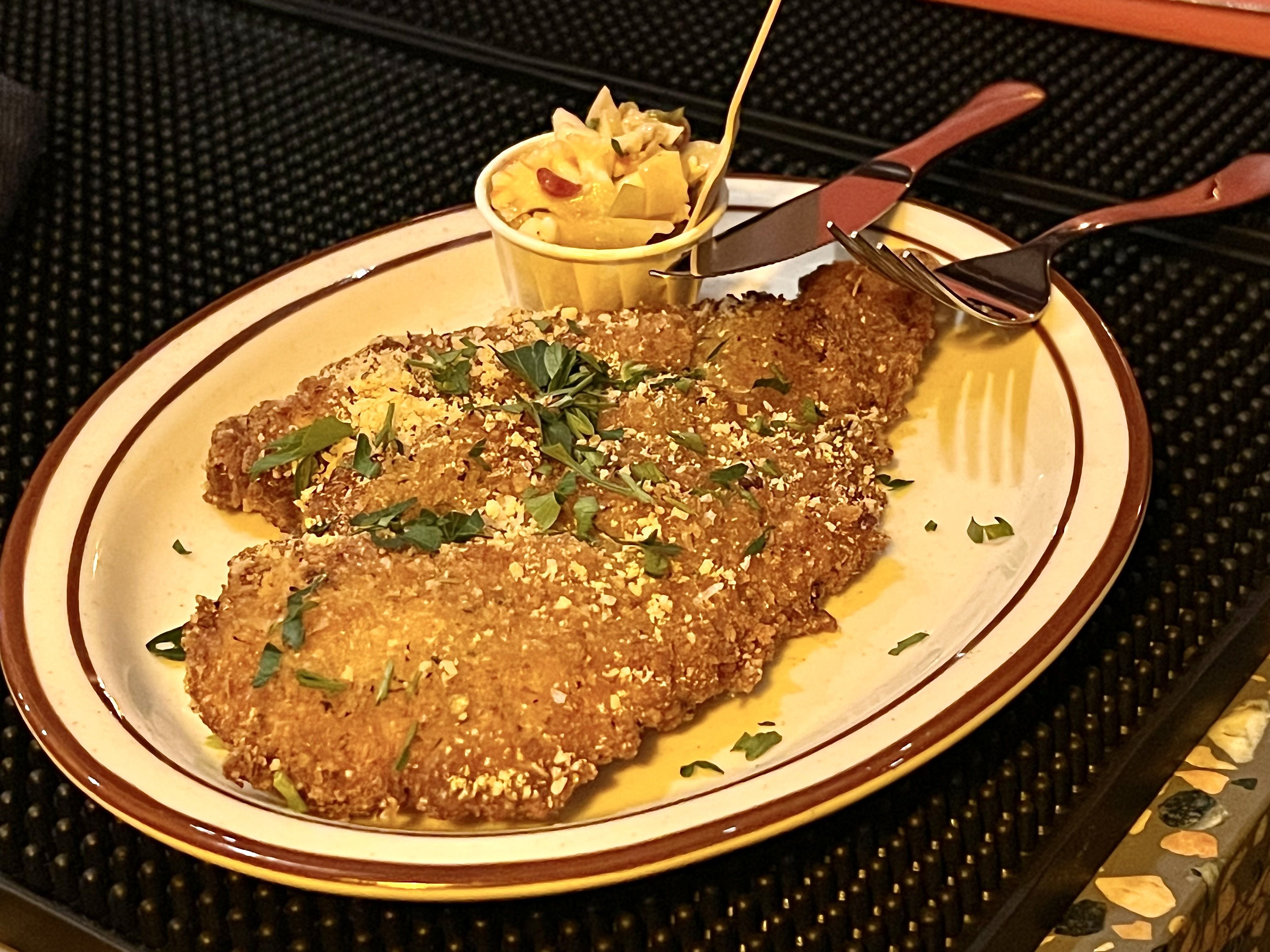
    I go for the turmeric sparkle of the nonalcoholic Golden Hour during Little Water’s mellow lunch service. The midday menu is as ambitious as ever, whether one of Rucker’s peerless gumbos, a meaty Texas redfish roasted “on the half shell” with its char-roasted scales still on, or a juicy chicken-fried chicken on toast. Its tawny crust is drizzled in a buttermilk dressing beaded with smoked trout roe then spiked with a toothpick stack of bread-and-butter pickles. All you need to complete the coastal-picnic vibe is the snappy tang of Little Water’s key lime tart for dessert.

    Mawn

    The Cambodian-inspired flavors are so electric at Mawn, where the funky spice of wild boar prahok dip sometimes comes atop Khmer chili dogs and the fried head-on shrimp are glazed in fish sauce caramel, it can be hard to know where to start.

    That’s when it’s time to go “puck & see,” the Cambodian expression for “eat and drink.” That’s also your cue to skip Mawn’s a la carte menu and let the kitchen produce a family-style feast of multiple dishes that, for $65 a person, is an incredible value.

    “It’s a way for us to create a mixtape for you, so you can understand our music,” says chef Phila Lorn, who co-owns this 28-seat BYOB sensation with wife, Rachel Lorn.

    Just as the restaurant’s own soundtrack bounces from classic Khmer crooners like Sinn Sisamouth to Cambodian rapper VannDa, Mawn’s cuisine is dynamic, ranging from traditional flavors that echo the Southeast Asian Market in FDR Park (amazing lemongrass-marinated beef skewers) to multicultural influences gleaned from Phila’s time in Japanese restaurants and beyond, from Zama and CoZara to Stock.

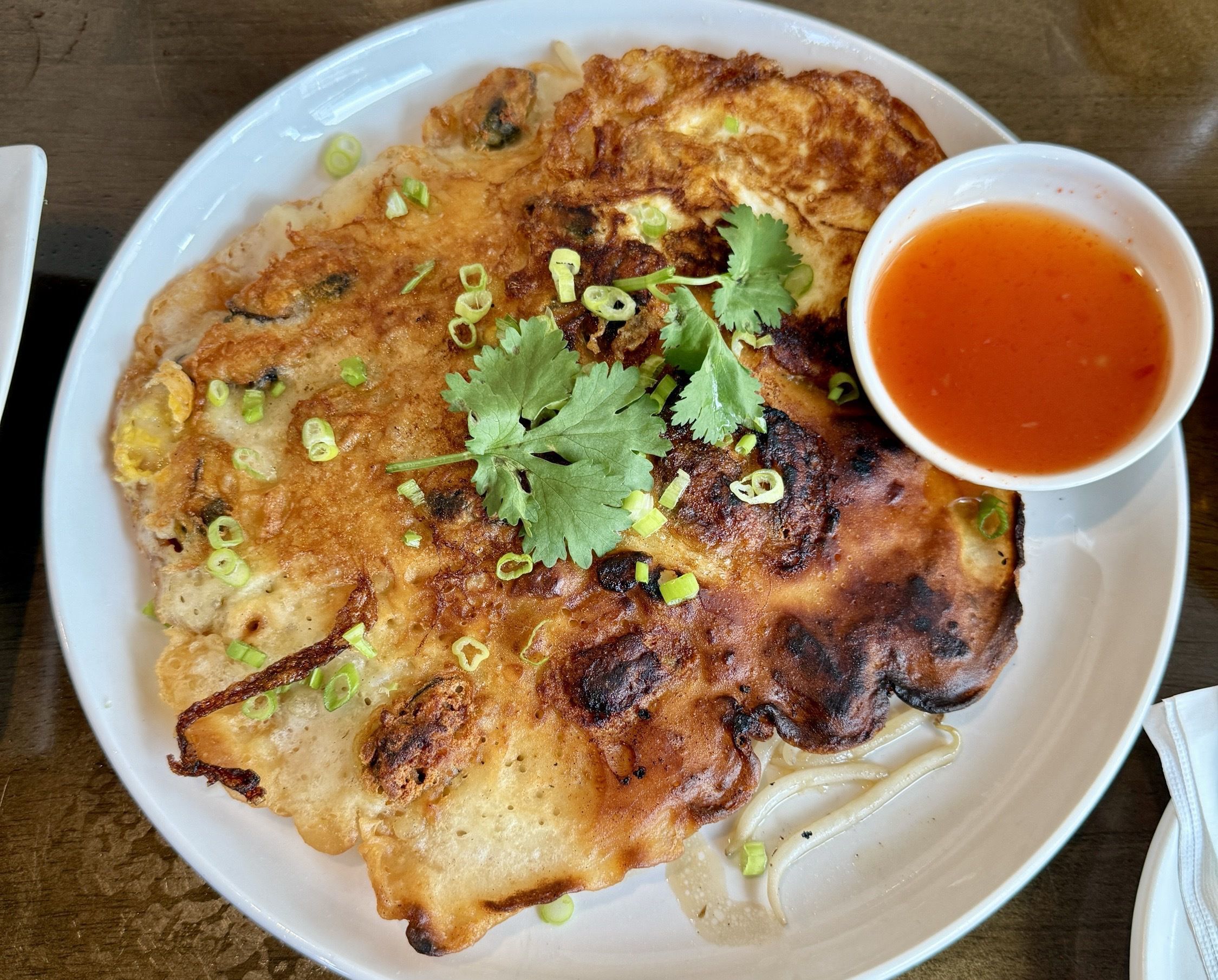
    Mawn calls itself a “noodle house with no rules,” and there are noodle-based highlights, including the signature schmaltz-enriched chicken soup spiked with chili jam. But I think about Mawn’s salads even more, especially the sour and spicy papaya salad made famous on a Food & Wine cover in September, when Phila was named one of America’s “Best New Chefs” following a similar nod from the James Beard Foundation. Other irresistible salads include a Burmese melon salad dusted with lime leaf powder and crispy shallots, and the banh chow, a crispy half-moon crepe that recalls a Southeast Asian tuile inlaid with ground chicken and shrimp, placed atop a tangle of lettuce and minty backyard herbs lashed in Phila’s mom’s galangal vinaigrette.

    And then the free-flowing tasting menu brings pristine raw scallops in chili jam dusted with peanuts, a glimpse of what’s popping at their new oyster bar, Sao. More scallops — seared this time — arrive over a red curry infused with shrimp paste and Japanese chocolate, inspired by a mole lunch at nearby Casa Mexico in the Italian Market. We happily clear space for the “all-star fried rice,” topped with a treasure chest of seafood that’s been wok-fried with crab fat butter. And then my dream steak: a 20-ounce rib-eye piled high with a salad of Thai eggplants and turmeric-roasted tomatoes splashed in lime juice punchy with fermented prahok fish paste.

    Mawn is so bold, boisterous, and tinged with nostalgia for Phila’s South Philly childhood that it’s no wonder Philadelphians cannot get enough of it. Neither can I.

    My Loup

    My Loup burst onto the scene in 2023 with its epic côte de boeuf and jars of pickled shrimp, already primed as the hotly anticipated sequel to Her Place Supper Club from star chef Amanda Shulman and her husband, chef Alex Kemp. The emergence of the Montréal-born Kemp as the kitchen’s driving force, however, has shaped My Loup into the rollicking French-Canadian bistro of my dreams, where the garlic knots explode with escargot, the summer cherry and peach tarts harbor a savory custard of foie gras, and Philly’s farm market seasonality informs every move, down to the cocktails.

    The bar, presided over by gregarious beverage manager Jillian Moore, is one of my preferred places to dine at My Loup. I’ll order her lemon-honeyed Bees Knees, anise-scented fall sangria, or mezcal bijou while devouring the slender razor clam stuffed with the salami-and-olive muffuletta fixings, or Maine sea urchins tucked into their bristly shell cups beneath an orange cloud of sweet potato mousse tart with apple cider vinegar.

    Kemp, who worked at Montréal’s Mon Lapin as well as Manhattan’s Eleven Madison Park, pairs elite culinary chops with a sense of whimsy that brings a welcome touch of levity to French cuisine. “Caviar and donuts” is a revelation of unexpected indulgence that offers a tin of ossetra alongside incredibly airy fritters made with smoked sturgeon, accompanied by a sour cream dip with seaweed and chive that builds layers of oceanic savor into every bite. Kemp’s team debones whole rabbits then reassembles them into bacon-wrapped saddles with garlic sausage and peaches. Juicy roasted chickens appear over mustardy spaetzle beneath truffles and fistfuls of chanterelles.

    In a town once dominated by French chefs, Kemp is one of the few remaining standout sauciers in that genre, with a knack for lightweight-yet-flavorful updates of classics like a silky white blanquette sauce for an osso bucco with sweet baby turnips, or an orchard-bright Calvados brandy reduction that illuminates the novel surf-and-turf pairing of seared scallops with blood sausage.

    My Loup’s menu can lean rich, but the servers are as adept at helping guests order with balance as they are at guiding them through the deep French cellar. Desserts are so straightforward the right answers are self-evident: a stunning bittersweet chocolate layer cake with a polished ganache mirror glaze, and a soft-serve sundae whose flavor combos swirl with the season’s spirit. There was corn and cherry in summer, a fall pairing of caramel apple and graham, and now? I’ve got My Loup on frequent repeat, because I want to try them all.

    Pietramala

    Ian Graye has figured out one of the secrets of becoming a great chef: focusing his energy on polishing one essential combination rather than cluttering plates with too many flourishes. And it has allowed him to unlock greater depths of flavor from vegetables at Pietramala than most chefs can tap from a wide-open world of meats and animal products. But don’t let the minimalist look fool you. The creations at this cutting-edge vegan kitchen in Northern Liberties are almost always the result of days, if not months, of labor — fermenting, dehydrating, smoking over the coals.

    This is the case with his game-changing veggie burger, a special made from smoked mushrooms, heirloom beans, house-made tamari, and miso that has triggered monthly lines down Second Street. Another stunning dish this year essentially paired two ingredients: sweet corn and oyster mushrooms. But Graye teased out a rare complexity by cooking each ingredient within different versions of themselves, simmering whole kernels of Lancaster corn inside their creamy corn puree, then topping the result with a grilled mushroom painted in mushroom miso that’s fermented for months. This duo captured the poetry of shifting seasons: the fleeting sweetness of summer and autumnal umami united onto one haunting plate.

    That sense of wonder here is common. A smoked eggplant in au poivre sauce (with Dad’s Hat rye and creamy onion soubise) will make you forget it’s inspired by the classic steak dish, though it is every bit as satisfying. A corno di toro pepper glazed in orange Jimmy Nardello pepper romesco sauce and stuffed with smoked walnuts, local rice, and foraged lobster mushrooms elevated a potentially frumpy stuffed pepper to a special event.

    Graye’s growth in the three years since Pietramala opened has been impressive. He’s refined his craft and cultivated a vast larder of condiments for maximum flavor control. The intimate restaurant has also evolved, with a steady team in the open kitchen as well as a gracious front-of-house staff. The addition of a winery license for this former BYOB through Northeast Philly’s Camuna Cellars has also allowed Pietramala to add natural wines made from local grapes (the “Let’s Go Swimming” orange wine and blaufrankisch were my favorites) and cocktails with Pennsylvania spirits, lively nonalcoholic shrubs, and ingredients like fresh wormwood, summer plum, and birch bark. The license has also given a 20% revenue boost to this intimate 36-seat gem, which, of course, addresses one of the other key secrets of becoming a great chef: a sustainable business model.

    Royal Sushi & Izakaya

    There’s a practical case to be made for the Royal Sushi part of Royal Sushi & Izakaya to be left off this list. It is as close to a private club as a public restaurant can be. While a handful of newcomers do, in fact, make it off of Resy’s daunting waiting list each week — snagging one of the 16 seats at Jesse Ito’s coveted omakase counter — you otherwise need to persuade a regular to loan you their standing reservation.

    But there’s a reason to keep singing its praises. This is one of the most magical dining experiences Philadelphia has to offer. Ito’s toro-carving artistry is one of the reasons he sets Philadelphia’s omakase gold standard.

    On a recent visit, I took a bite of glistening pink mackerel belly (a gloriously extra-extra-fatty toro sawara) and its fruity tang and buttery richness flooded my body with a pleasure wave of omega-3s. (“Oh yeah…right?!” said a friendly stranger at the counter beside me, as we shared a mackerel moment.) There was the alabaster-smooth scallop dusted with yuzu zest cradling a nub of perfect nigiri rice, each warm grain distinct and full of flavor. A scarlet carabinero prawn melted away like sweet ocean butter.

    Royal Izakaya, the low-lit tavern that occupies the front of this Queen Village building, is a destination on its own, with seating for walk-ins only, serving “tuna-guac,” fish collars, chirashi buns, and Japanese-themed cocktails. Ito’s latest, dancerobot, a playful Rittenhouse Square collaboration with chef-partner Justin Bacharach, is pure Japanese comfort-food fun. But Royal Sushi’s $355-per-head sushi counter (gratuity included), where Ito handcrafts every morsel in tandem with exceptional sake pairings, resides on its own level. Ito’s style is ever-evolving, having graduated beyond the “bro-makase” cliché of pile-it-high luxuries to a more personal, nuanced style.

    His latest creative riff on bibimbap, a nod to his Korean mother, is a treasure hunt through buttered seaweed rice, uni, and cured Jidori egg yolk down to a hidden bottom layer of bluefin, sea bream, and king salmon. The tangy dashi dressing for lusciously thick slices of buri (adult hamachi) exuded a savory whiff of fish sauce, an ode to Ito’s Thai best friend. And then came the A5 Wagyu rib-eye, marinated galbi-style before it’s torched — an extraordinarily beefy add-on that prompted my new counter friend and I to share another knowing glance. “Don’t tell my mother,” he told me, noting his own Korean heritage, “but it’s better than hers.”

    Tequilas/La Jefa

    The Tequilas legacy could have disappeared altogether after a 2023 kitchen fire closed the restaurant for two years. Instead, the Suro family has blazed back to glory this spring with a remarkable vision for an all-day modern Mexican oasis fueled by agave spirits and the aroma of heirloom corn. The realization of this plan honors the traditions of a Philly pioneer, but also celebrates the present and future of one of the city’s most vibrant dining categories with contemporary creativity.

    From fresh-baked hibiscus conchas and morning lattes dusted with tortilla salt to artful ceviches, tequila-splashed langostinos, and cutting-edge cocktails at night, the range of delights here is vast. ¡Bienvenidos a Guadaladelphia! But first, understand how much the institution launched by David Suro Sr. 40 years ago has evolved. As noted in my colleague Kiki Aranita’s review, the revitalized Tequilas is now three places in one: A dining room, an all-day cafe, and a hidden mezcal bar inside that cafe. This Locust Street mansion’s gorgeous dining room, with its 19th-century Baccarat chandelier shimmering over a teal floor of handmade Mexican tile, has been largely preserved. This is where longtime patrons will find some of the restaurant’s classics (the cochinita and a lava rock molcajete bubbling with beef tenderloin and cheese in a chile-fired stew) deftly updated by consulting chef Fabián Delgado Padilla of Guadalajara’s palReal, and executed beautifully here by chefs and cousins Eduardo Moreno Sanchez and Jessica Sandoval.

    Tequilas’ former rear dining room, meanwhile, has been transformed by Suro’s children — David Jr., Elisa, and Dan — into La Jefa, an airy all-day cafe accessed from Latimer Street, offering single-origin Mexican coffees and inventive brunches. Tucked in the back of La Jefa is a moody cocktail lounge called Milpa, which has a modern Mexican menu all its own, aside from its tightly curated (and world-class) mezcal collection, avocado soda, and fascinating drinks (try the shaved ice Raspado or the $27 “Agave Cocktail,” a not-margarita made from premium Cascahuín tequila, Colima salt, lime, and house-made roasted agave syrup).

    Delgado has brought elegant updates to much of Tequilas’ original menu, including a crackling-edged pork belly shingled over sweet mole dulce, an airy guacamole cloud hiding raw tuna at the bottom of a bowl, and an incredibly delicious Tapatía barbacoa made with brisket and dried chilies.

    But La Jefa and Milpa are where the contemporary Mexican flavors really shine. The guacamole comes with house-dried cecina beef jerky instead of chips. A stunning quesadilla made from inky black masa harbors tender squid inside molten quesillo cheese. A soft tetela, or triangular masa pastry, showcases the mind-blowing subtlety of a sweet plantain stuffing against the nutty spice of a pipián verde sauce. La Jefa’s spiced lengua pastrami sandwich is my Mexi-Jewish deli fantasy come true, and the soft huevos verdes are what I crave for brunch.

    Tequilas is part of a wave of thrilling Mexican projects that landed in Philly this year, but its exceptional veteran service team — many with three decades of service — sets it apart. They all returned after two years away because the Tequilas experience is really about them, too, especially as this institution strides into an even more exciting future.

    Vetri Cucina

    “Hug the noodle” has become Marc Vetri’s new favorite slogan. It’s a cooking directive, of sorts, to describe the magic moment when sauce suddenly thickens around pasta just enough to cling to each morsel, forming a creamy halo of cacio e pepe or zesty duck-and-olive ragù.

    But the saying also describes a life’s calling for Vetri, whose nationally acclaimed career has revolved around his passionate embrace of noodlecraft. Vetri radiated pure joy behind the chef’s counter recently as he dazzled a handful of lucky diners with his coveted monthly “pasta omakase,” a 15-course parade of exquisite pasta creations inspired by the sushi tasting format of Japan, where Vetri owns a restaurant in Kyoto. Snappy tagliolini strands arrive in sake butter beneath creamy sea urchin and caviar. Gnocchi clouds come stuffed with lobster mousse. A culurgione of carob dough wrapped around an X.O.-spiked stuffing of duck confit in a citrusy meat reduction sauce was essentially duck à l’orange as a dumpling. Finally, a pasta coin arrived cinched around grilled wagyu beef and Cooper Sharp for a whimsical one-bite wonder that redefined the fancy cheesesteak.

    Even if the limited omakase isn’t accessible to a wide audience, it’s become an essential creative outlet for the chef and his crew at Vetri Cucina to keep evolving after 27 years in this elegant Spruce Street townhouse. It has also helped refresh and inspire Vetri’s regular menu, which is still very much worth your time — and perhaps even more so of late.

    It’s been six years since this Philly fine-dining classic made my end-of-year favorites list. But a pair of recent visits, including for the standard $165 four-course menu, convinced me Vetri is once again having a buzzy moment — hugging the noodle, if you will — as the team’s best new ideas (sweet potato cavatelli with crab and apple) rise seamlessly alongside time-tested standards (melt-away spinach gnocchi).

    With one of Philadelphia’s most gracious service staff drawing from an exceptional collection of Italian wines, the complete experience here goes well beyond pasta. There’s housemade salumi to start the meal, along with a savory pear tarte Tatin with radicchio and Gorgonzola. The kitchen can produce alta cucina at its most precise, with lobster mousse dumplings wrapped in mustard greens or a rosy-hued venison glossed in raisiny Amarone sauce. It can also deliver rustic satisfaction with perhaps my all-time Vetri favorite: smoked baby goat over house-milled polenta. Revived recently after years off the menu, the goat’s crispy-skinned tenderness and earthy simplicity has been a revelation for the latest generation of line cooks. Yes, the cutting-edge pastas are still a major draw. But at Vetri, what’s old is new and beautiful again, too.

    Zahav

    There’s always something new to savor at Zahav, the shimmering glass box in Society Hill Towers whose live-fire interpretations of modern Israeli flavors have transfixed Philadelphians for 17 years and earned national destination status.

    Its standards are still so superb its 100 seats remain among Philly’s toughest to book. But the more co-owners Steven Cook and Michael Solomonov grow their company — now with 14 restaurants in three states (plus 10 Federal Donuts) — the more committed they remain to maintaining their crown jewel as a living, breathing project. Some of that involves constantly improving ingredients, like the newly acquired “oyster cut” of lamb that has taken Zahav’s iconic pomegranate-braised and smoked lamb shoulder to another level of earthy tenderness. Or the vividly fresh Turkish sumac, unavailable when Zahav first opened, that lends a tangy lift Solomonov likens to “sour cherry pink lemonade” for the juicy chicken shishlik with stone fruit amba and crispy chicken skin.

    The prime energy boost, though, flows from a steady infusion of kitchen talent, including cochefs Natasha Sabanina and newly arrived Aiden McGuiggin, formerly of D.C.’s Tail Up Goat. McGuiggin’s talent for preservation contributed to recent memorable bites, including a poppy-encrusted cobia crudo, whose firm white flesh crunched against snappy tiles of locally grown Asian pears compressed with turmeric and fruity yellow jalapeños. Some lusciously rare lamb carpaccio, meanwhile, was elevated by dried, cured, and smoked summer tomatoes dusted in the green chili-cilantro zing of Shabazi spice. And just when I thought the kebabs here couldn’t be more delicious, I forked into a juicy new ground lamb skewer tinted green with crushed pistachios, almost fluffy from the leavening sparkle of ginger beer, alongside a black garlic toum.

    Zahav’s dining room has also gotten a gentle makeover, with a second bar to speed the arrival of za’atar-dusted gin and tonics and sesame-infused bourbon drinks into thirsty diners’ hands, but also to add a few extra seats where lucky walk-ins can order a la carte (even if the four-course mesibah tasting menu remains a great value for $90). A new wooden structure in the central dining room has also added linen-draped cubbies for a touch more intimacy in this boisterous space lined with Jerusalem limestone. There’s even the promise of new acoustic treatments to finally allow easier conversation over the high-energy classic-rock soundtrack. What might people be saying? At my table it was this: Zahav is somehow still exciting and aging gracefully at the same time.
  • Five Philly restaurants worth watching

    Five Philly restaurants worth watching

    All year, when dinner goes exceptionally well, a big question pops into my mind: “Is this one of Philadelphia’s Top 10 restaurants?”

    That’s a lofty status to consider for any place, no doubt, but when you eat at nearly 400 restaurants a year as I do, it arises more frequently than you might expect. The quality of the cooking around here has simply gotten better than ever, in a vast range of styles and price points. So when I set out each year to define an elite group to represent that moment in Philly restaurant time, my mind is open to wherever the most magical dishes take me, to places old and new, where a kitchen’s creative touch pairs with genuine hospitality to elevate a mere dinner date into something truly special.

    The process begins with the year’s first-review meal bites, then truly kicks into gear during summer, when I begin circling back for revisits through at least two dozen promising candidates. Consistency and continuous growth matters.

    Inevitably, an all-star lineup emerges that I’m thrilled to present. And you’ll see it when it lands next week.

    But today I offer another list: Five special places that, for a variety of reasons, are still on the cusp of making the leap to the next level. This isn’t an honorable-mention group so much as a future-cast of exciting places on the rise to watch, along with some standbys still worth celebrating. I’d leap at a dinner invite to any one of them.

    The hush puppies at Honeysuckle

    Honeysuckle

    Honeysuckle’s bold move this year, from a West Philly market-cafe into a sprawling, art-filled space on North Broad Street, complete with an inventive bar and special-occasion prices, has given the chef duo of Omar Tate and Cybille St.Aude-Tate the room to fully realize their dynamic vision of an immersive destination celebrating the culture of the Black American diaspora. One moment you’re eating house-cured country ham over airy hush puppies, the next you’re devouring Haitian-spiced roast chicken or Mississippi Delta-style hot tamales — stuffed here with wagyu beef cheeks and oxtail. Yes, the $65 “McDonald’s Money” burger is an audacious stack of truffled, gold-foiled caviar bling, but it’s also a wry Eddie Murphy reference and a juicy emblem of Honeysuckle’s potential. An anticipated shift from the original $95 prix fixe to an a la carte menu in 2026 shows Honeysuckle is still seeking the ideal format for its new home. An expected 15% dip in check average should fill more seats, while a revival of its ambitious “UNTITLED.” tasting menus assures this uniquely creative kitchen will still be pushing boundaries. 631 N. Broad St., 215-307-3316, honeysucklephl.com

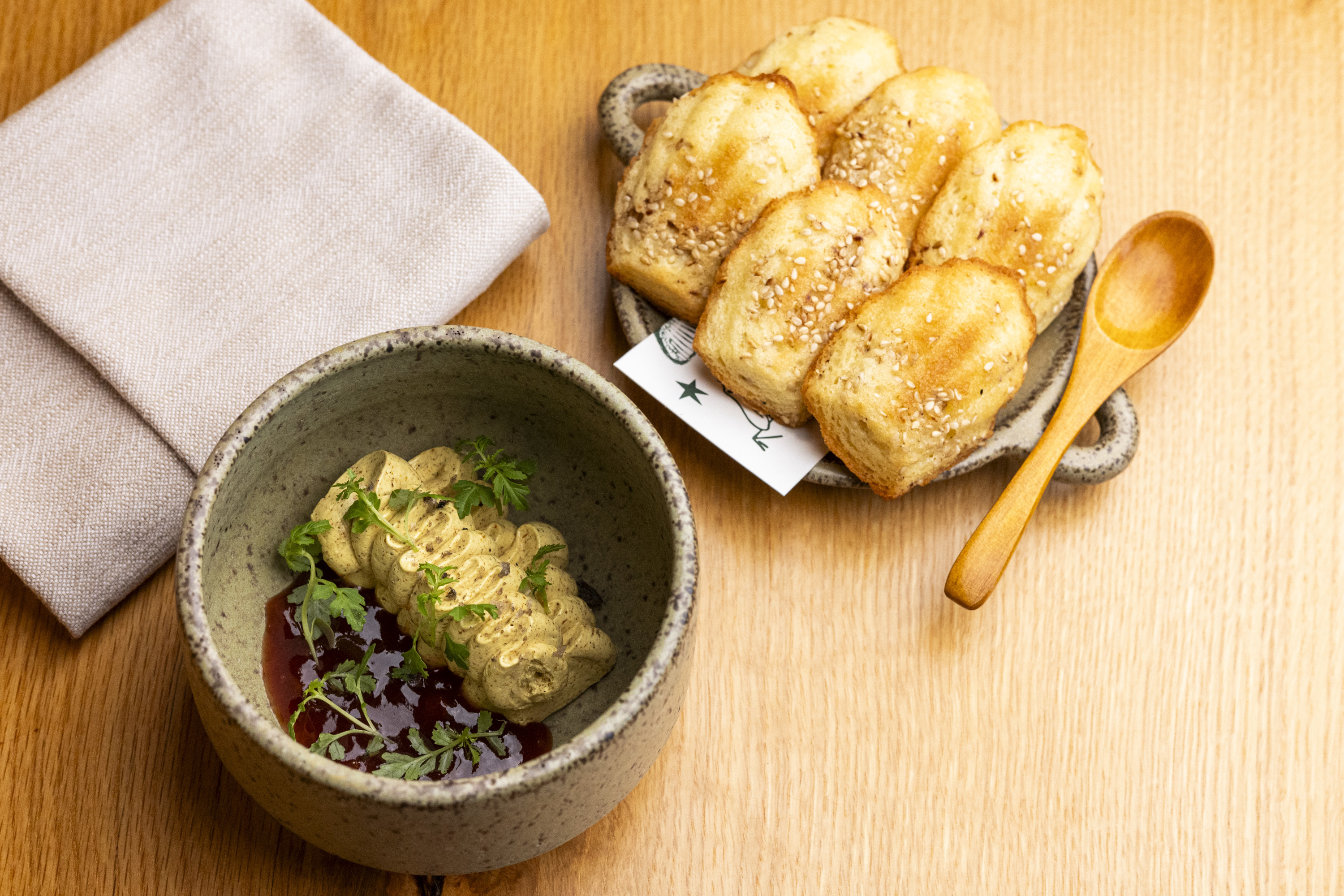
    Sesame madeleines with ras el hanout butter at Emmett

    Emmett

    Philly already has a vibrant Mediterranean dining scene, but Emmett, one of the year’s best new restaurants, offers an original take, from warm sesame madeleines with smoked vadouvan butter to dumplings stuffed with cuminy sujuk sausage. Here you’ll find sticky toffee pudding in Turkish coffee caramel and clever nods from chef Evan Snyder to his love of Jewish deli (wagyu tartare in horseradish-dusted rye tartlets? Yes!). With polished service and a thematically tuned drink program dusted with Levantine spice, this intimate Olde Kensington corner once occupied by Cadence feels like a special-occasion destination again. If Snyder continues refining his sometimes overly busy plates, Emmett can take the next step. 161 W. Girard Ave., 215-207-0161, emmettphilly.com

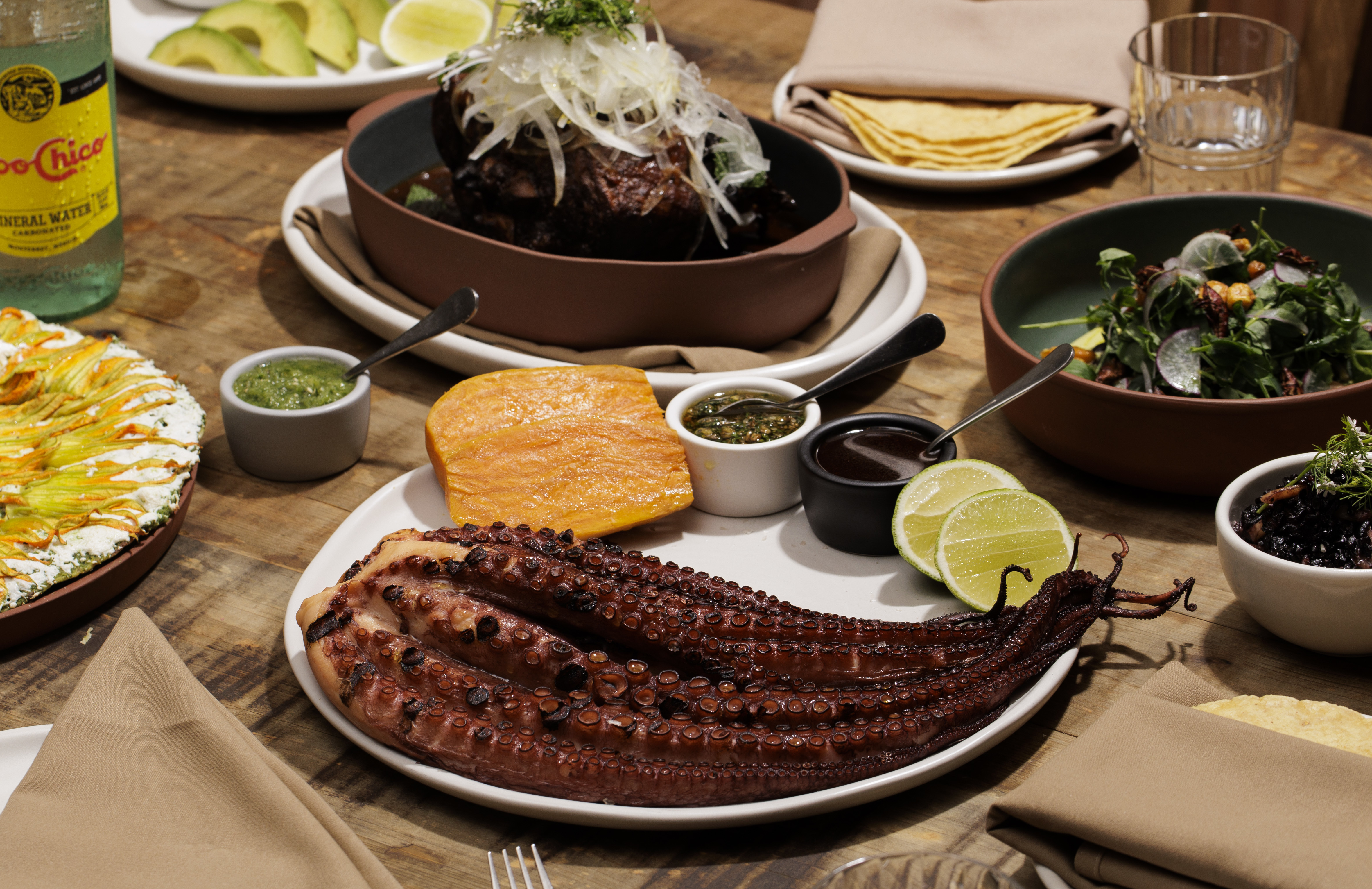
    Assorted dishes including the Wood Fire Pulpo at Ama on Wednesday, July 16, 2025, in Philadelphia.

    Amá

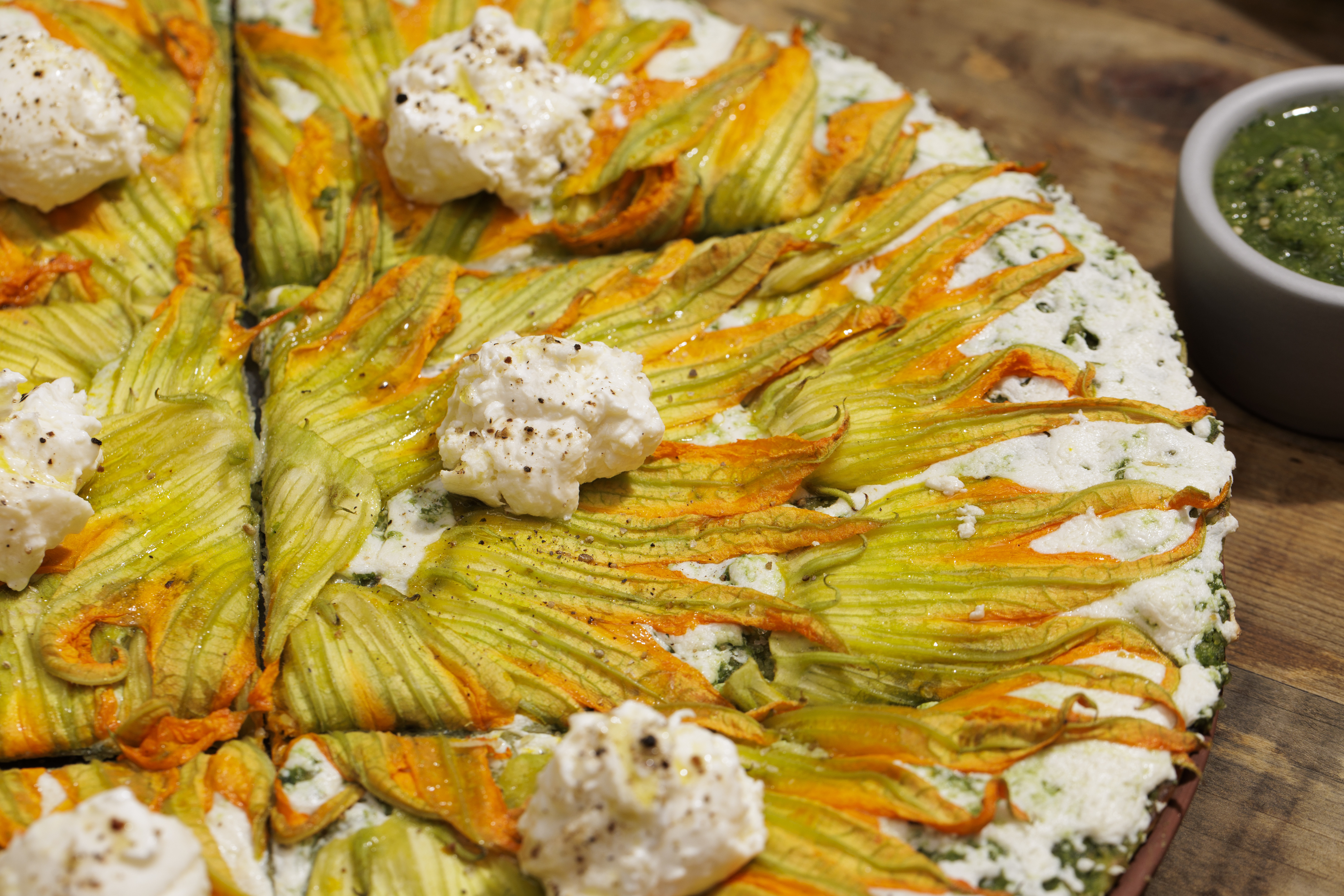
    Frankie Ramirez turned out some of the most memorable and beautiful dishes of the year — squash blossom tlayudas, lamb neck barbacoa — from the live fires of his chef-owner debut, a stylish, modern Mexican newcomer in Fishtown. The chef’s growth since his previous post at LMNO has been stunning, with food that is both personal and daring, like the milpa salad laced with huitlacoche and grasshoppers. The majestic grilled whole octopus that arrives beside a dish of gingery black coconut rice mixed with smoky bits of octopus head is simply a showstopper. This restaurant is large, and it’s not yet as complete as it can be, but with a little more time to hone its service and beverage program, Amá stands to become the upscale Mexican restaurant Philadelphians brag about most. 101 W. Oxford St., 215-933-0707, amaphl.com

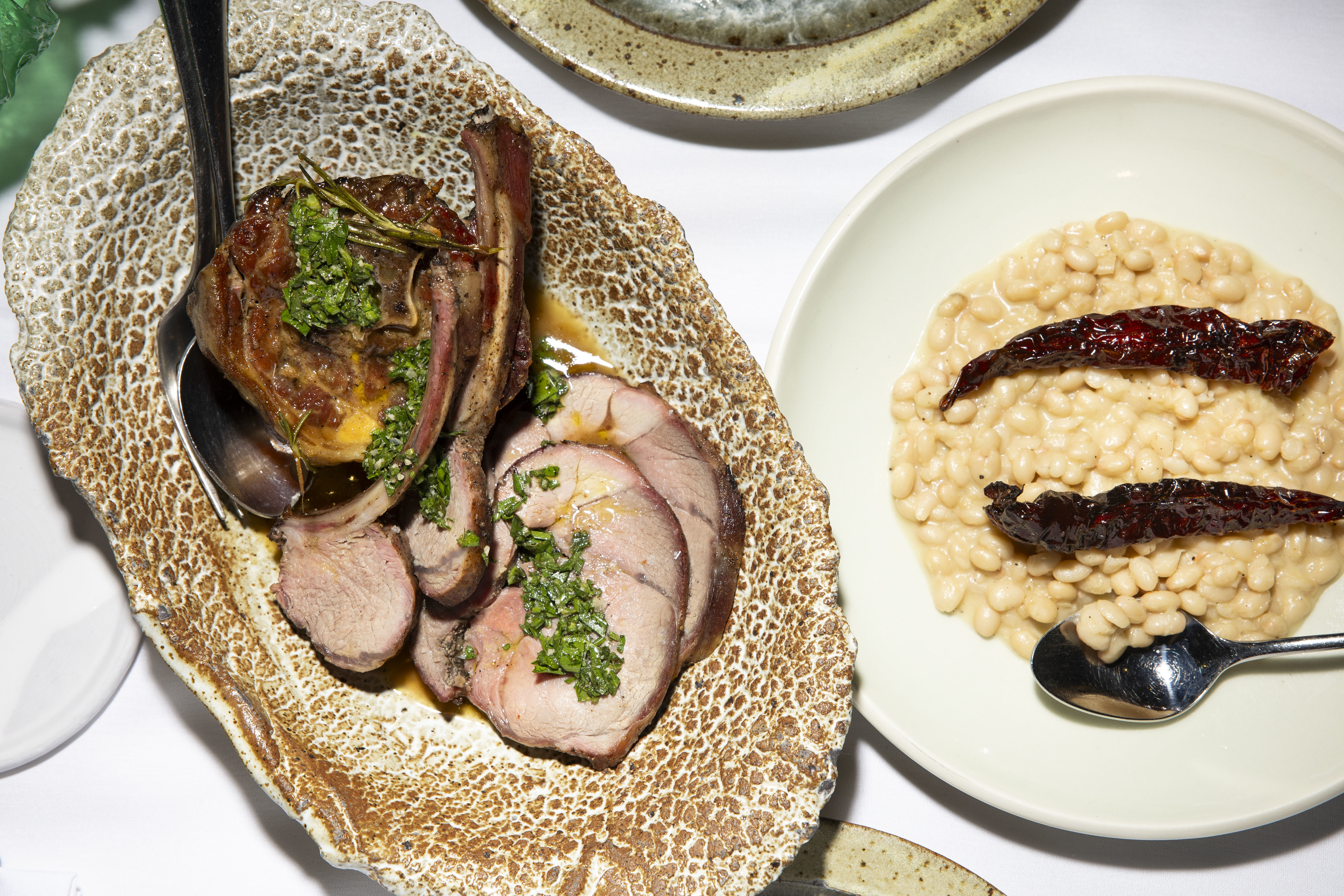
    Lamb with purgatorio beans and peperoni cruschi at Andiario in West Chester

    Andiario

    Every meal at this gem in downtown West Chester is an inspirational experience of handcraft, restraint, and intimate hospitality, as chef Anthony Andiario’s team cooks weekly-changing four-course menus that spontaneously channel the best of Pennsylvania’s seasonal bounty through a rustic Italian lens. My revisit this fall lived up to that standard, with toothy, hand-rolled rigatoni in ‘nduja-sparked roasted pepper sauce and a succulent strip steak roasted over the live fire hearth. Add in outgoing service, a cushy dining room, and exceptional wines chosen by the chef’s wife and partner, Maria Van Schaijik, and dinner at Andiario is still a delight. It hasn’t regressed at all — it was a resident on my Top 10 list the past two years — but competition this year for an ever-evolving group was simply tighter than ever. 106 W. Gay St., West Chester, 484-887-0919, andiario.com

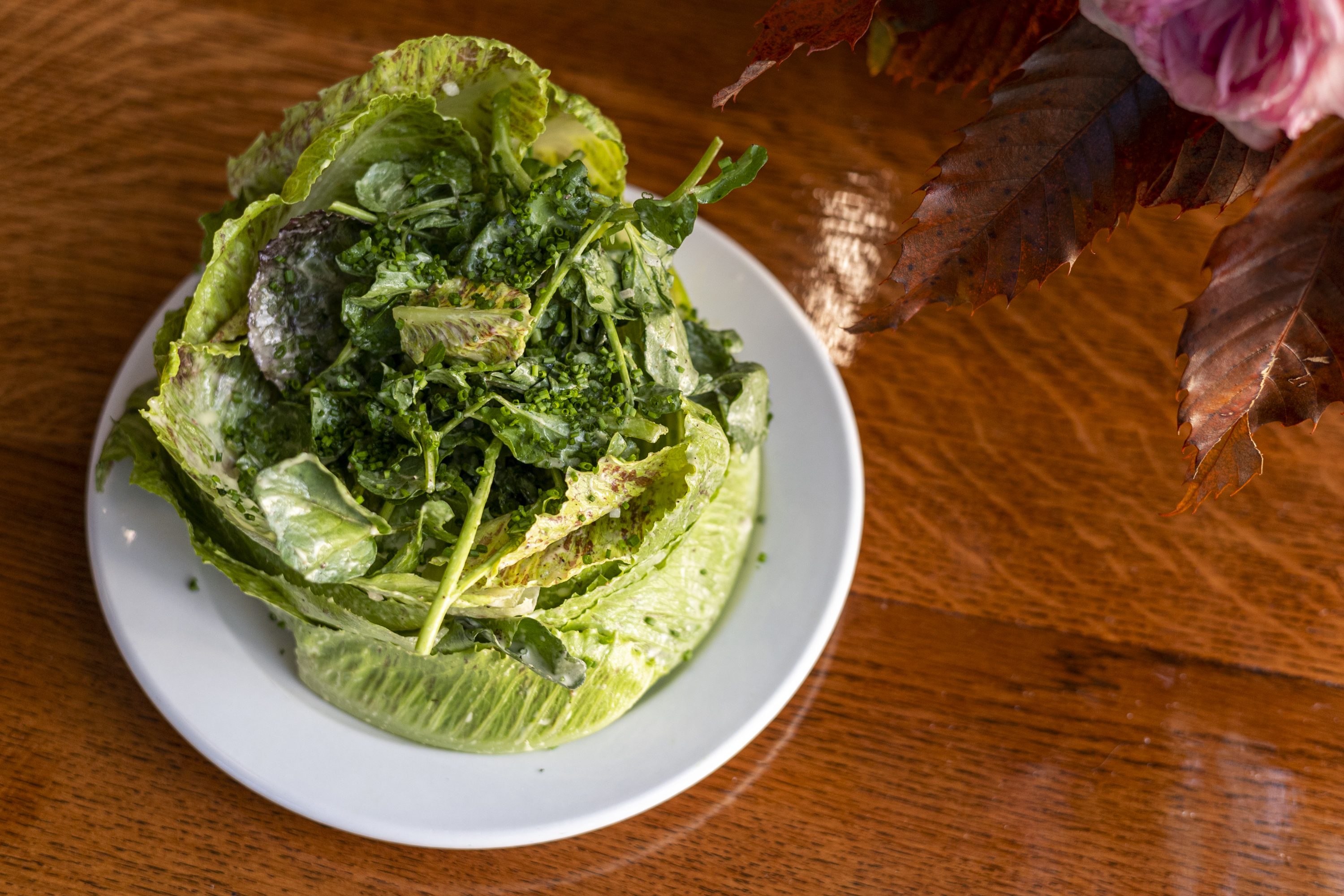
    The green salad at Meetinghouse

    Meetinghouse

    While many Philadelphia chefs are now ratcheting up their gastro ambitions and tasting menus to reach for Michelin stars, Drew DiTomo is focused on polishing the simple, affordable neighborhood bar — an essential source of sustenance and down-to-earth character for this city’s food soul. Meetinghouse is just that kind of place, where the candlelit vibes are warm and cozy, the drink program is impressively focused and quirky, and the “less is more” aesthetic is deliberate in revived retro dishes that are as good as they can be, from a roast beef sandwich and baked clams to turkey cutlets, broiled cod, and a destination-worthy green salad. Thursdays are baked cheeseburger nights! 2331 E. Cumberland St., no phone, meetinghousebeer.com

  • The 14 best whiskeys to give this holiday season

    The 14 best whiskeys to give this holiday season

    Technically it’s always whiskey-sipping season in my house. But there is something extra cozy about the December chill that sparks the spirit of giving whiskey, too. The glint of colorful lights on a big ice cube rattling through a tumbler of amber elixir. The toasty vanilla perfume of barrel char, the punchy spice of distilled rye, a whiff of peat smoke from a faraway land. A great bottle that captures this kind of magic is the definition of a win-win gift because, hopefully, whoever receives it will be in the cheerful mood to crack it open right there and share! That’s just good manners.

    That is exactly what I did recently when I gathered a group of thirsty friends, neighbors, and spirit nerds for an afternoon tasting to determine the stars for my annual holiday bottle list. This year we sniffed, sipped, and selected 14 winners from a competitive collection of 33 bottles from across the world, including intriguing entries from two countries not yet known for whiskey — Mexico and Korea — as well as a pleasant surprise from a music icon more famous for her Billboard hits than her high-rye mashbill. All of these bottles are currently available retail in Pennsylvania and South Jersey, and they suit a wide range of tastes and price points, from a half-dozen sub-$50 values to a handful of triple-digit splurges.

    One noticeable trend is the continued swing toward high-proof spirits, and in particular, whiskeys categorized as bottled-in-bond. This legal designation was created in 1897 to certify purity — with no additives other than water — and that the whiskey in question is produced by one distillery, aged no fewer than four years, and bottled at 100 proof. While the Bottled in Bond Act was launched as an integrity initiative when late 19th-century rectifiers were adding ingredients like creosote and wintergreen to their booze, the reasons for the current resurgence is unfortunately economic.

    America’s craft industry is in the midst of a major implosion, with nearly 25% of America’s craft distillers closing over the past year due to a variety of reasons, from a rise in legalized cannabis and GLP-1 drugs that have cut into liquor consumption to the double-whammy of rising costs and plummeting exports due to tariffs. The net effect, says Rob Cassell of New Liberty Distillery in Northeast Philly, has been a wave of distillers unloading their more expensive aged inventory as the industry consolidates. That’s concerning for whiskey fans.

    The flip side is that I also happen to be a fan of the 100-proof category, which offers more punch (and, often, more flavor) than standard bottlings typically in the 80- to 90-proof range. So I was happy to do my part and support the cause, putting several of these intriguing bottles on my annual tasting table and now passing them along as recommendations. While the industry confronts the sobering facts of its new reality, we can at least drink well.

    Scotch

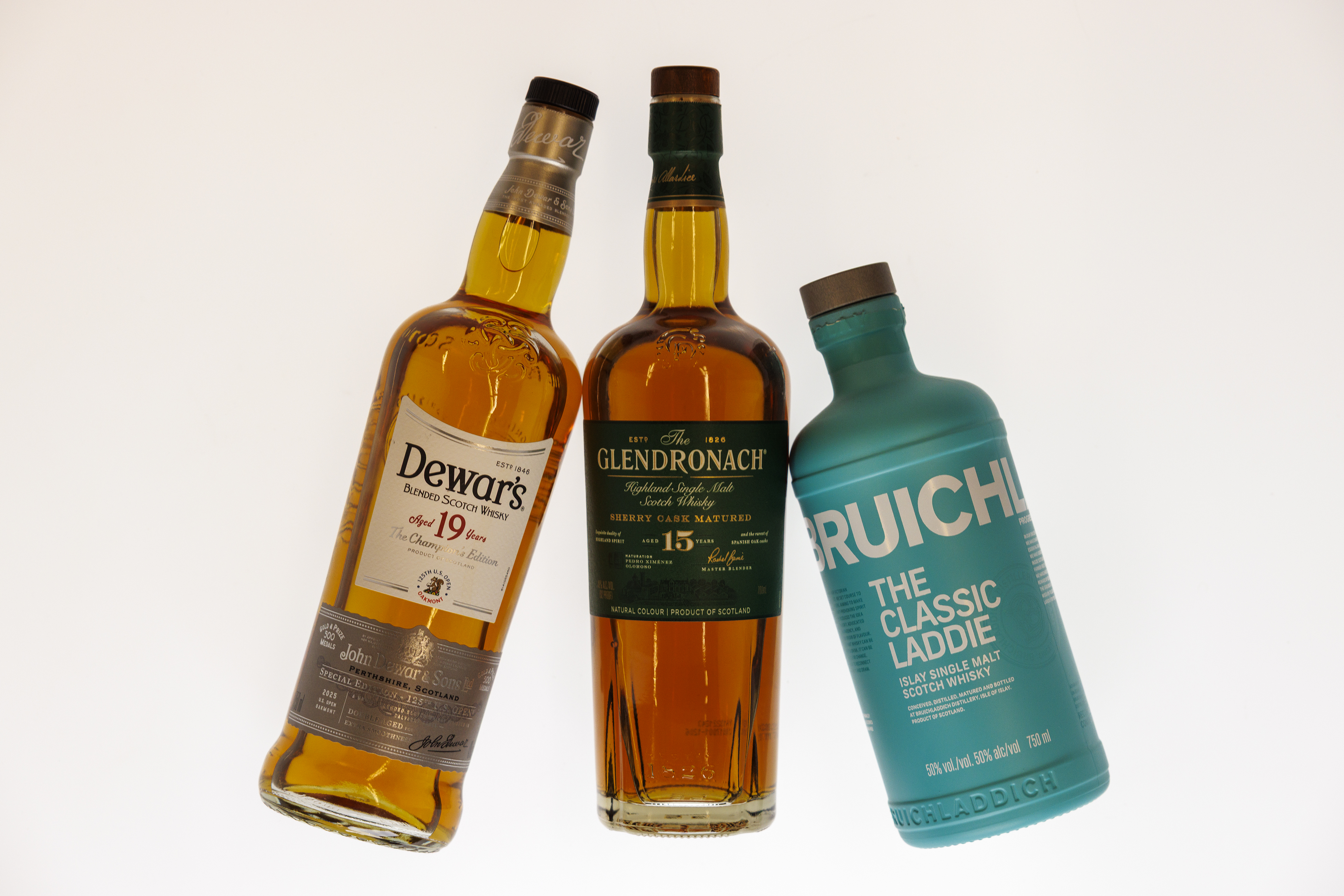
    From left: Dewar’s Blended Scotch Whisky, The Glendoronach Highland Single Malt Scotch Whisky, and Bruichladdich Islay Single Malt Scotch Whisky.

    Bruichladdich The Classic Laddie

    The eye-catching teal blue bottle is only one sign this whisky is different. Bruichladdich, a once-fallow Victorian-era distillery, was revived in 2001 by emissaries of the French wine industry with a modern aesthetic and a focus on locally grown barley, which always comprises at least a portion of the mashbill. It’s one of the only distilleries on Islay (the smoke-shrouded home of Laphraoig) that makes some of its whiskies without peat-smoked malts. (Some of its bottles, like Octomore and Port Charlotte, are actually quite peaty). The Laddie is its signature elegant bottling. It smells of lemon and honey on the nose, then coats your palate with a fresh, clean flavor that evokes a breezy field of grain, then blooms into the fruity flavor of a Bosc pear glazed in salted dark caramel. Remarkably smooth for a 100-proof dram. Bruichladdich The Classic Laddie, 100 proof, 750ml, on sale in Pennsylvania in December ($3 off) for $54.99 (PLCB Item # 000096308)

    Dewar’s Blended Scotch 19-year-old, Champions Edition Oakmont label

    My dear late mother-in-law was a devoted Dewar’s drinker, and what’s fascinating is that even in its fancied-up form, such as this 19-year-old collectible for the U.S. Open Golf Championship, the traditional sweet side notes of this classic blended Scotch hold true: bananas and chocolate, tanged with citrus and baking spice. That profile reads deeper and more resonant in this slightly higher-octane edition (86 proof vs. the usual 80), which also has the added notes of apple brandy from the Calvados barrels used for aging. Apparently, because this 2025 golf tournament was held at Oakmont Country Club in Pittsburgh, Dewar’s wanted to honor Pennsylvania’s long affinity for the fruit, and it landed with my judges. “Smells like Mott’s apple sauce!” said one after a big sniff, while another, who added a splash of water, noted it took on a lovely butterscotch finish. Dewar’s Blended Scotch 19-year-old, The Champions Edition Oakmont label, 86 proof, 750ml, $79.99 (PLCB item #100047823)

    The Glendronach 15-year-old Sherry Cask

    This 15-year-old Highland malt looks and smells like burnished old copper, and delivers a decadent fruitcake of deliciousness on the palate — fudgy chocolate, bitter oranges, toasty walnuts, candied cherries, and figs, all wrapped up in a minty finishing puff of pipe smoke. Aged in Pedro Ximénez and Oloroso sherry casks, which accounts for the nutty and dark caramel notes, this 92-proof dram is both smooth and brawny, so a small splash of water only lengthens the flavors rather than dilutes them. A worthy splurge for the single-malt collector in your life. The Glendronach 15-Year-Old Sherry Cask, 92 proof, 700ml, $114 (PLCB Item #100043250)

    Asian whiskeys

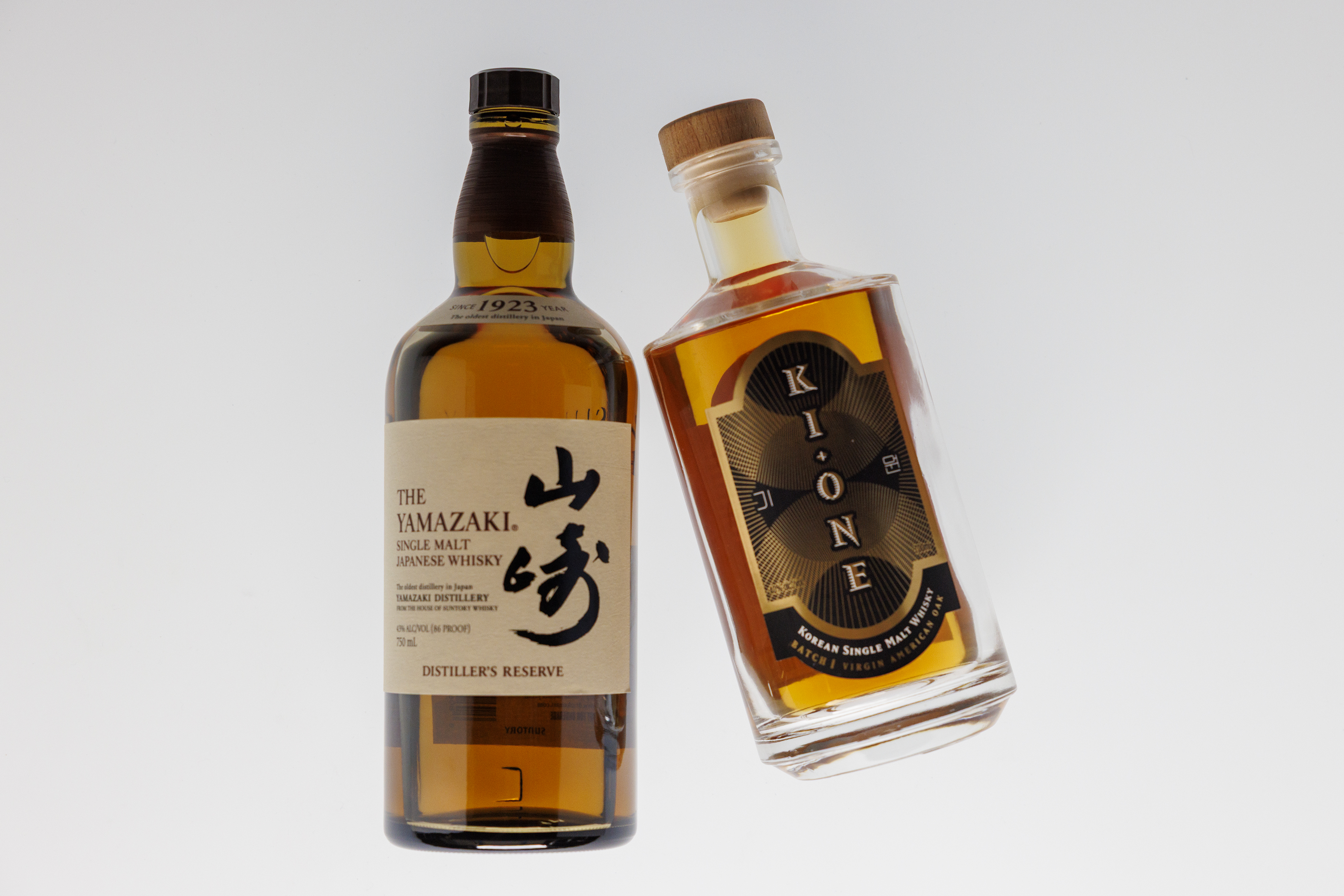
    From left: The Yamazaki, Single Malt Japanese Whiskey and Ki One Single Malt Korean Whiskey.

    Ki One Korean Single Malt Whisky

    The single most fascinating whisky in this year’s tasting came from Ki One, South Korea’s first single-malt distillery, founded in 2020 by Korean American Bryan Do, who quit his job as a Microsoft exec to pursue his passion for spirits. He and master distiller Andrew Shand, who’s worked in both Scotland (Glenlivet) and Japan (Nikka), wanted to create a whisky that spoke to Korea’s love of spice, achieved largely through the choice of casks and the fast-aging properties of the region’s heat. This “Batch 1” edition aged in virgin American oak gets there beautifully, with deep caramel color and tropical fruit notes on the front — bananas, passion fruit, green Gage plums — along with a sweetness that phases into a tingly finish with a peppery, fermented tang reminiscent of gochujang. Not for everyone, considering the price, but well-made and utterly unique. Ki One Korean Single-Malt Whisky, 80 proof, 700 ml, $124.99 at Benash Liquors & Wines, 2405 NJ-38, Cherry Hill, N.J., 856-667-3539, benashliquors.com

    Yamazaki Distiller’s Reserve

    Any good Japanese whiskey under $100 is worth a second look, but especially one from the Yamazaki, Japan’s pioneering single-malt distillery built in 1923. The Distiller’s Reserve is Yamazaki’s entry-level bottling, but it’s still a gloriously smooth and complex sipper that will convey much of what makes the brand so coveted. The use of Japanese mizunara oak casks, along with American and Spanish wood, lends a subtle incense-scented component to the mix. Each sip is like a lovely pastry of beguiling flavors, with spiced stone fruit and caramel-vanilla on the nose segueing to strawberries and toasted coconut on the palate, shaded by a soft backdrop of peated malt. This is the kind of whiskey that coats your teeth in the best way. Its aromatics are also lovely when they sparkle atop the icy fizz of a luxury highball. The Yamazaki Distiller’s Reserve, 86 proof, 750ml, $94.99 (PLCB Item #100051645)

    Mexican whiskey

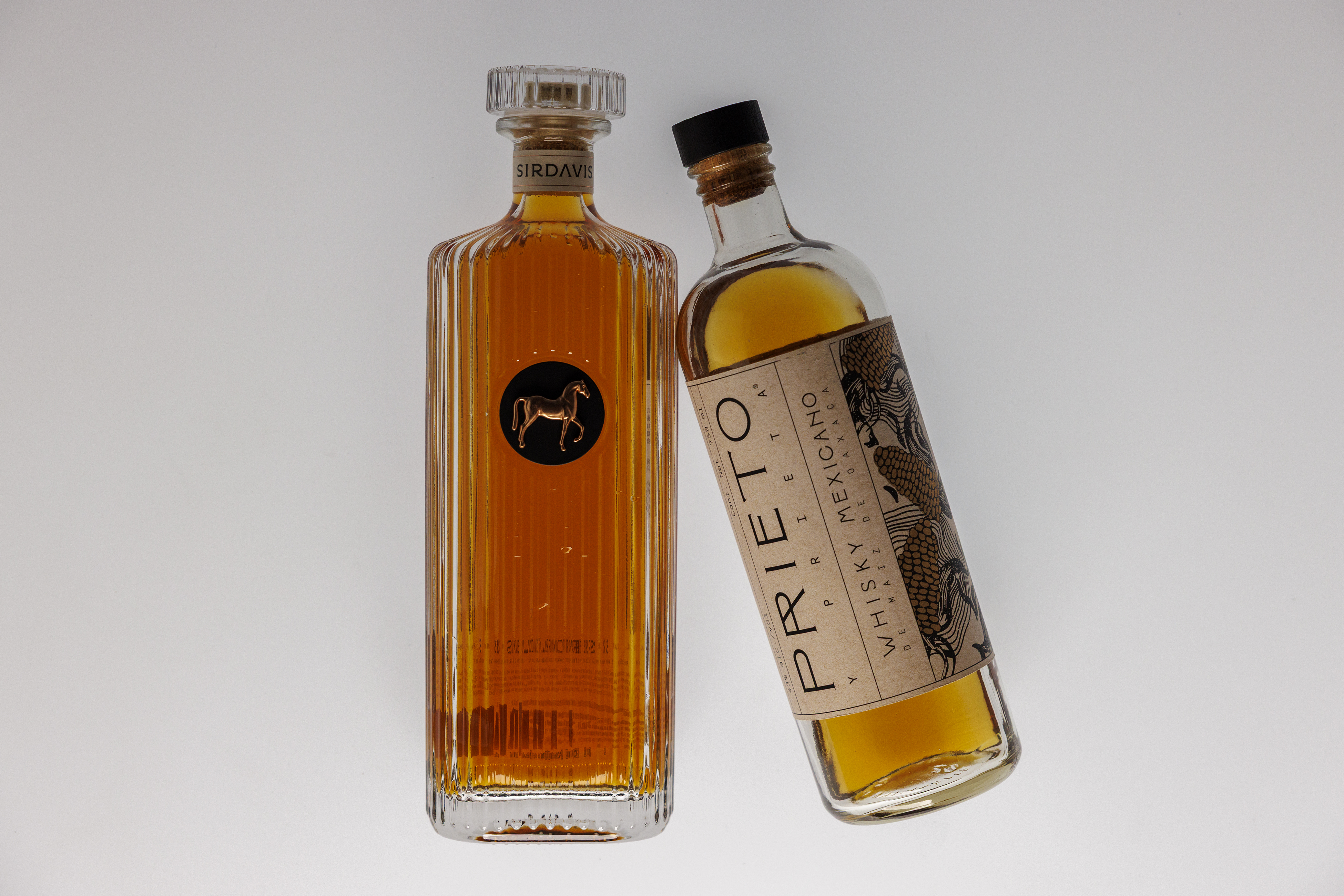
    Prieto y Prieta

    When I think of Mexico, I naturally think of agave spirits, but Mexico’s deep relationship to corn is also inspiring, so why not whiskey? This unique, brassy-colored whiskey de maiz shows what can be done with four heirloom varieties of corn from Oaxaca, and the results are intriguing. Caramel corn, grilled corn husks, and cinnamon are the most obvious aromas that hit you first, but what makes this whiskey so cool are the intensely earthy flavors that emerge on the palate, evoking mushrooms, green peppercorns, and a soft hibiscus tang. Your first instinct might be to add a splash of water to this 86-proof spirit, but that only seemed to dilute the character of its best traits. The label, featuring ears of corn with gilded kernels, will look pretty on any bar cart. Prieto y Prieta Mexican Whisky, $49.99, 86 proof, 750ml, at Benash Liquors & Wines

    From left: Sirdavis Rye Whiskey Finished in Sherry Casks and Preito y Preita Whisky Mexicano.

    American whiskey

    SirDavis American Whiskey

    On the subject of beautiful packaging, the tall, fluted shoulders of SirDavis’ bottle — topped with a cut crystal-style stopper and embossed with a bronze horse — stood out like an oversized bottle of luxury perfume. The soigné Western-themed look made sense once I told the tasting team this American whiskey was created by Beyoncé Knowles-Carter in collaboration with Moët Hennessy in the midst of her Cowboy Carter glory. I did not reveal that fact, however, until after we sipped. And this brilliant copper-hued spirit rose on its own merits. It wore its high-rye spice proud, lending some needed backbone to the pretty flavors of barley malt that followed with toffee-caramel sweetness, baking spice, and a raisiny finish thanks to Pedro Ximenez barrels.

    Celebrity bottles almost always fall flat. But Queen Bey is no ordinary celeb. She also has whiskey roots, paying tribute here to her great-grandfather, Davis Hogue, a Prohibition-era moonshiner for whom SirDavis is named. Not really a profound whiskey, but given the pedigree, far better than it has to be. SirDavis American Whiskey, 88 proof, 750ml, $98, available online at sirdavis.com

    Bourbon

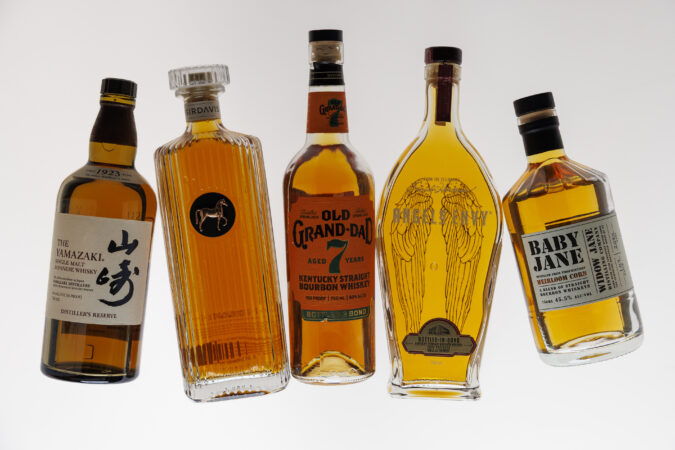
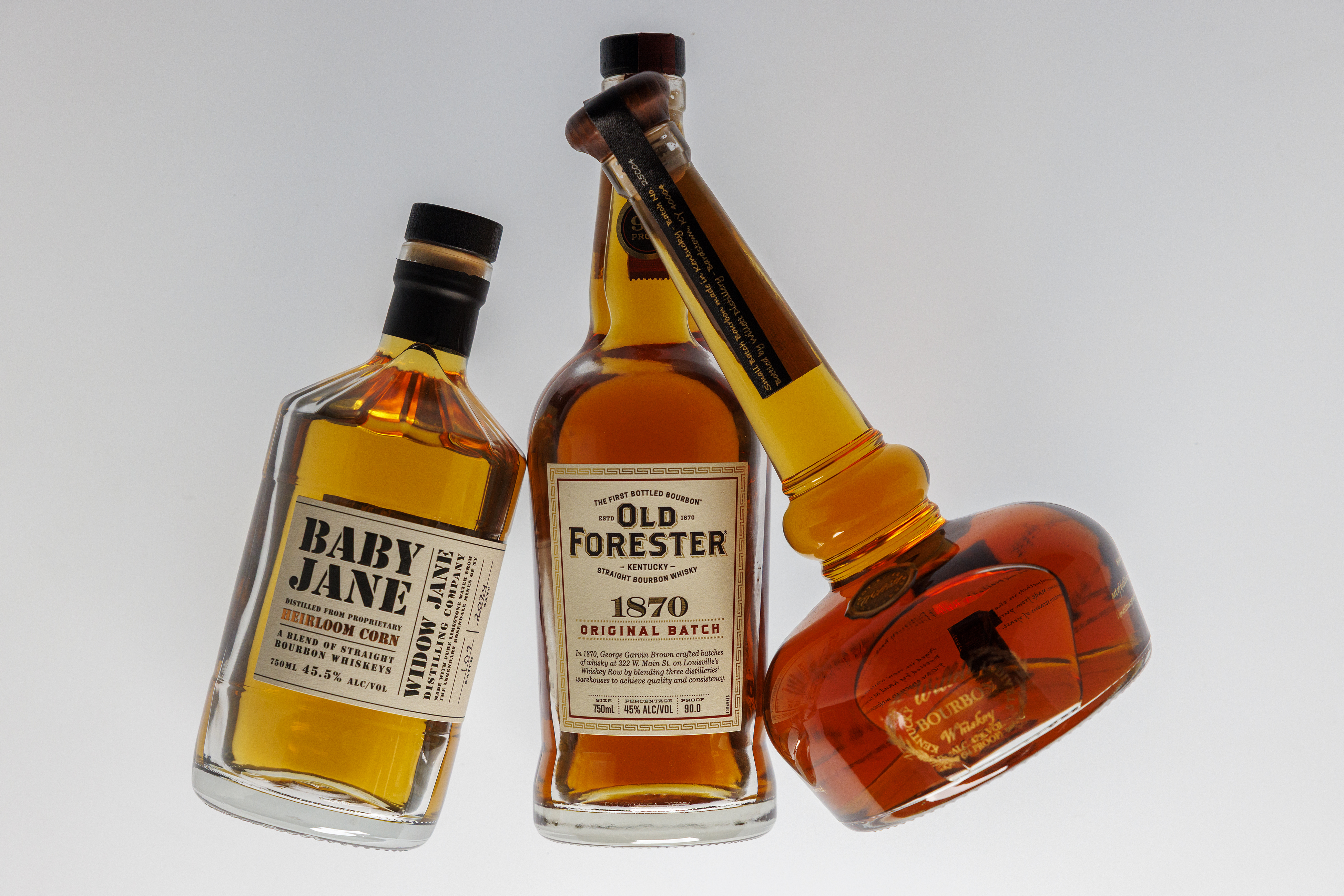
    From left Baby Jane Bourbon, Old Forester Kentucky Straight Bourbon 1870, and Willett Bourbon

    Old Forester Straight Bourbon 1870

    This version of Old Forester is made to the original mashbill and shines like a copper penny in the glass. It’s an easy drinker that shows the brand’s classic chocolate-and-cherry notes, but also floral aromas, citrus, and baking spice. Old Forester aficionados will debate which bottling of its age-dated series is best (I’m still partial to the chocolate-cake goodness of the 1920 label), but this bottle — a stellar sub-$50 value that’s perfect over a big ice cube or two — satisfies every time. Old Forester Straight Bourbon 1870, 90 proof, 750ml, $44.99, (PLCB Item # 9882)
    Widow Jane Baby Jane Bourbon

    The “Baby Jane” edition from Brooklyn’s Widow Jane is the first bourbon that includes whiskey made at its Red Hook distillery in New York. Named for the proprietary Baby Jane breed of heirloom corn that lends this bourbon both creamy and spicy notes, it’s blended with sourced whiskey from Kentucky and limestone mineral water from the abandoned Widow Jane mine in Rosendale, N.Y. (the distillery’s namesake). The nose offers a bright combo of sweet corn and crushed red apple skins, while the flavors channel the advertised duo of sweetness and spice — think strawberry shortcake topped with lots of whipped cream, plus several grinds of black pepper and sea salt. One taster found the name “too creepy,” but the rich texture and balance of this small-batch whiskey, at just under $50, is a worthy gift to give or receive. Widow Jane Baby Jane Bourbon, 91 proof, 750ml, $49.99 (PLCB item # 35053)

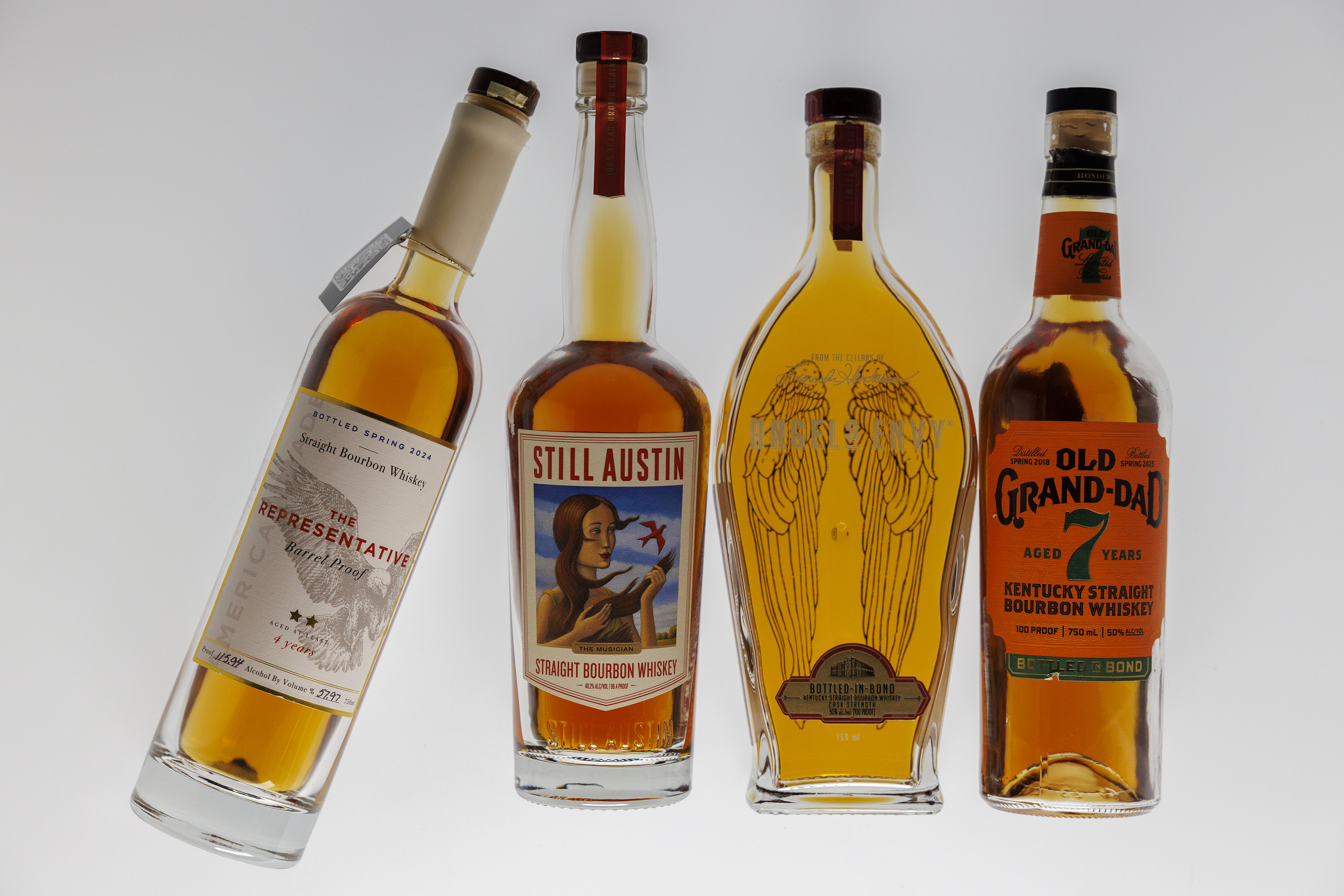
    From left The Representative Straight Bourbon Whiskey, Still Austin Straight Bourbon Whiskey, Angels Envy Kentucky Straight Bourbon Whiskey and Old Grand Dad Kentucky Straight Bourbon Whiskey for Craig Laban, studio, Tuesday, December 9, 2025

    Still Austin “The Musician” Straight Bourbon

    This relatively new distillery from Texas’ Hill Country impressed the tasting panel last year with a rye (“The Artist”) that landed on our final list for its combination of character and value. No surprise Still Austin’s straight bourbon earns another recommendation. This also features a relatively high rye mashbill (25%) among its all-Texas grain, which lends some peppery spark to the honeyed, toasty nose of this deep amber juice. More fruit and nuts rise on the palate, shaded by a finish tobacco, baking spice, and tea. Overall, it’s impressively smooth for a young whiskey (aged just two years) that clocks in just shy of 100 proof. Still Austin “The Musician” Straight Bourbon, 98.4 proof, 750ml, $42.99 at Total Wine (Cherry Hill), $44.99 (PLCB Item #52349)

    Old Grand-Dad Straight Bourbon Bottled in Bond 7-year-old

    The seven-year-old Bottled-in-Bond expression of Old Grand-Dad is a relatively limited seasonal release for this standby bourbon brand. It’s also a step up in character over the basic bargain label associated with Old Grand-Dad, which was founded in 1840 by the grandson of whiskey legend Basil Hayden Sr., also the namesake Jim Beam’s popular (and much more expensive) small-batch whiskey. This 2018 edition is somewhat restrained on the nose, but the initial flavors of grainy graham cracker sweetness open up into a zingy plume of caraway and pepper spice, with a lingering lime-zest acidity that flashes and lingers on the tongue. Those savory elements step forward even more with a splash of water. This would make a fantastic julep. The panel also gave a collective “Wow!” of surprise when I revealed the price: This thrifty Old Grand-Dad rings in just under $40. Old Grand-Dad Straight Bourbon Bottled in Bond 7-year-old, 100 Proof, 750ml, $39.99, (PLCB Item # 100050572)

    Angel’s Envy Bottled in Bond Bourbon

    This is the first bottled-in-bond edition from Angel’s Envy, which also happens to be its first cask-strength spirit, a six-year-old whiskey that is decadent and rich from first sniff to final sip. Its nose of vanilla custard and caramelized Demerara sugar led one taster to declare it “the crème brûlée of bourbons!” On the palate, the dessert notes take a different and fruity turn — like chocolate-covered apricots — that just keep going. Don’t be tempted to add water. Despite the high proof (actually relatively low for a cask-strength), this whiskey is perfect as is. Angel’s Envy Bottled in Bond Bourbon, 100 proof, 750ml, $64.99 (PLCB Item #53715)

    Proof and Wood Straight Bourbon “The Representative”

    I never thought about Congress in terms of whiskey until I encountered this series of Washington-themed spirits from Proof and Wood, which ages whiskeys according to political terms in office, from the “Senator” (six years) all the way up to the Presidential Dram (eight years). The “Representative,” aged “at least two Congressional terms,” is a four-year-old powerhouse distilled in 2020 that blends sweetness and spice with impressive balance considering it’s bottled at 114.8-proof cask strength. (When diluted to 80 proof, the same mashbill becomes Proof and Wood’s Deadwood bourbon.) It’s eminently sippable as is, but a splash of water accentuates the buttery sweetness and also teases forward some of its more interesting notes — sassafras, licorice, and an herbal bitterness reminiscent of amaro. It’s delicious on its own terms, but for a cask-strength whiskey at $50, it’s an absolute deal. Proof and Wood Straight Bourbon “The Representative”, 114.8 proof, 750ml, $49.99 Benash Liquors & Wines

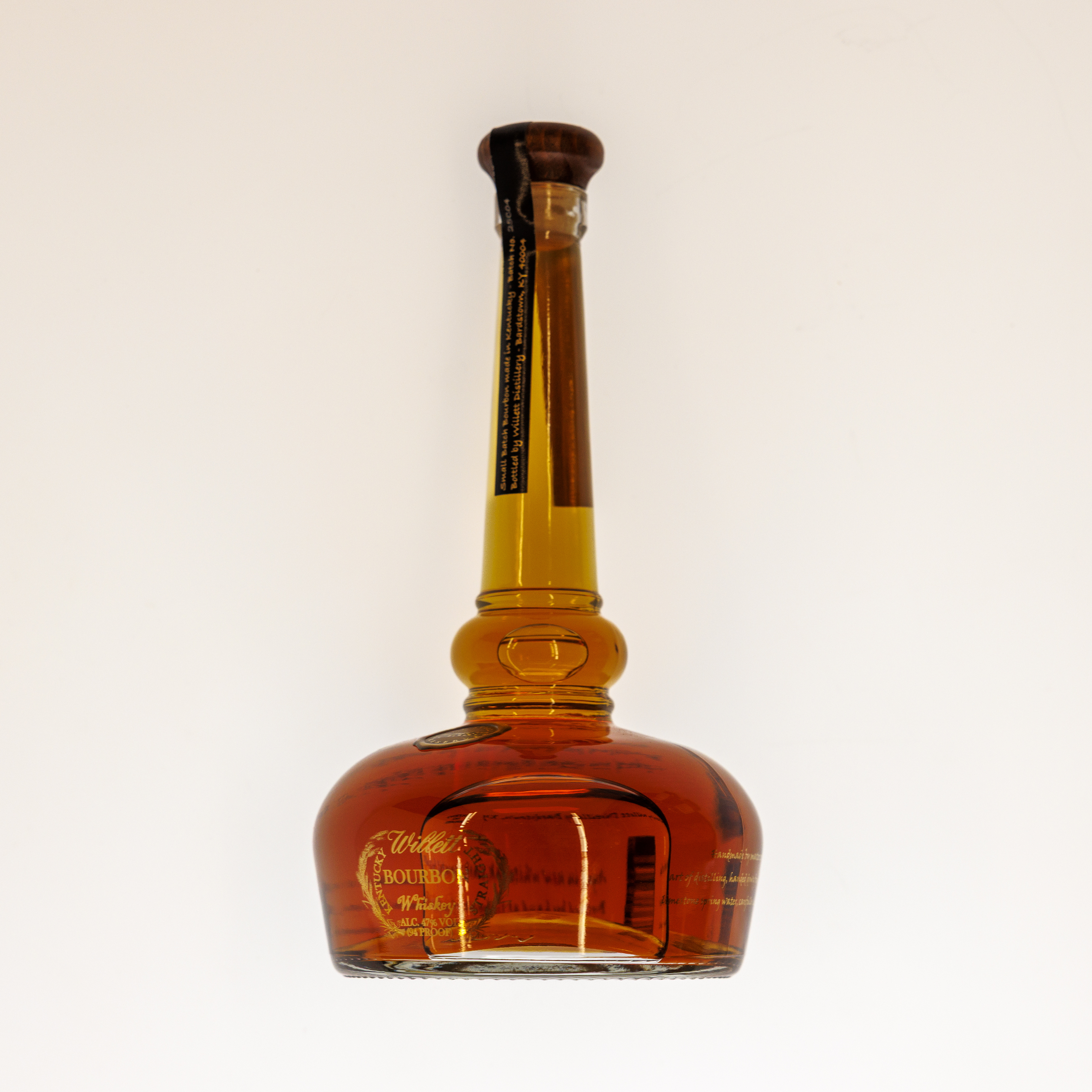
    Willett Pot Still Reserve Small Batch Bourbon

    Despite its slightly elevated heat at 94 proof, this straight bourbon from Bardstown, Kentucky, is an easy sipper that rides the smooth caramel notes of a mashbill that’s mostly corn and wheat, giving off the elegant tang of a moist lemon cake soaked in vanilla syrup. An herbal whiff and salty wave rise just enough to keep the finish peppery and interesting. (“I’d love this in a Manhattan!” opined one judge.) The elegant bottle — shaped like a long-necked pot still — is a major selling point on its own for gift-giving in the $50 range. Even better, this whiskey comes in 50-milliliter minis that makes it perfect for stuffing your stockings with the magic of bourbon, too. Willett Pot Still Reserve, Small Batch Bourbon, 94 proof, 750ml, $46 at Total Wine; 50 ml for $9.49 at Total; $54.99, 750ml in Pennsylvania (PLCB Item #: 30489)

    Willett Bourbon Whiskey
  • Sao brings Mawn’s ‘no rules’ energy to the oyster bar, with intriguing and delicious results

    Sao brings Mawn’s ‘no rules’ energy to the oyster bar, with intriguing and delicious results

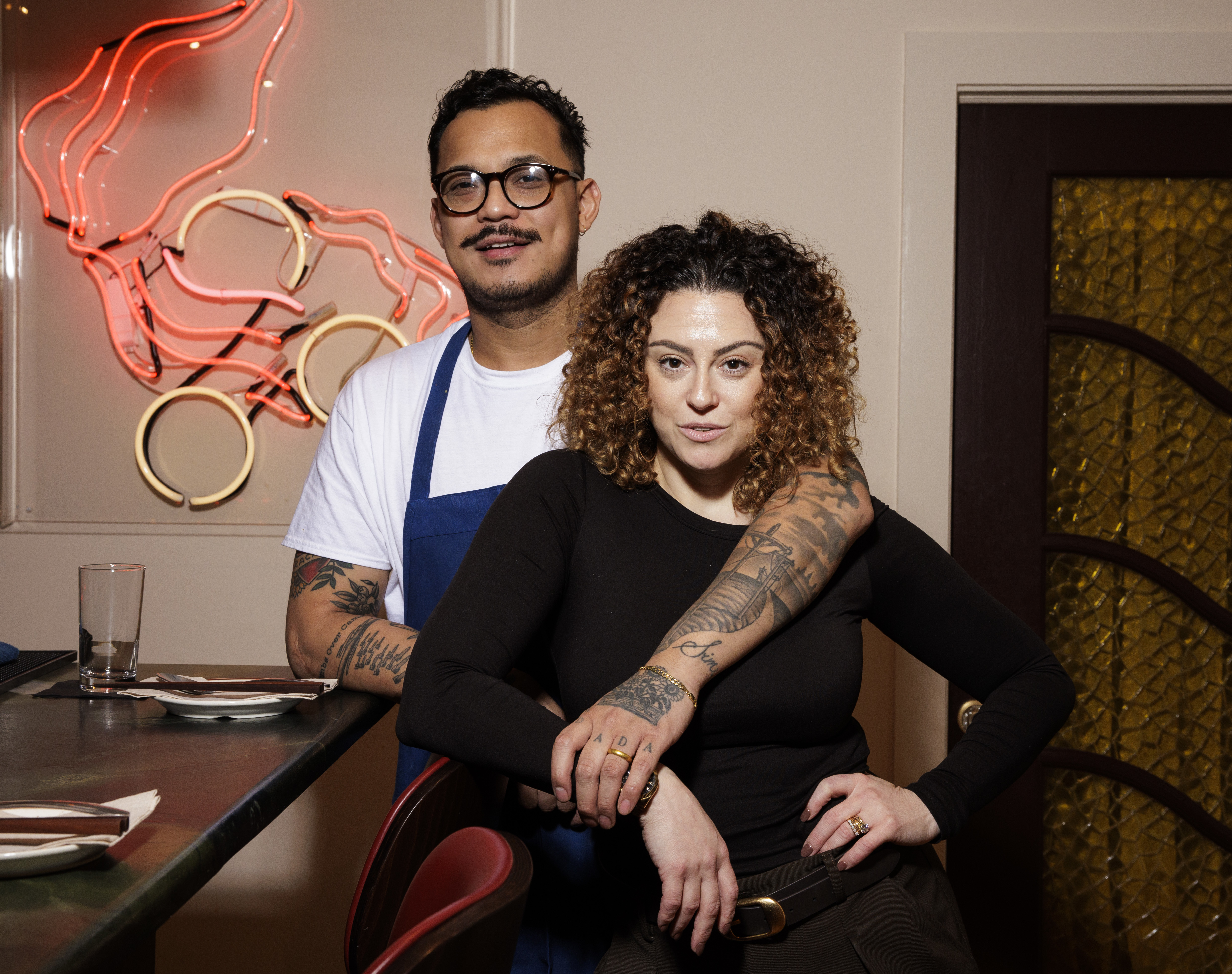
    Philadelphians can’t get enough of Rachel and Phila Lorn. At Sao, their sultry new oyster bar on East Passyunk Avenue, diners pull up at the counter for warm corn cakes soaked in honey and bejeweled with roe, oysters splashed with Cambodian peppercorn fish sauce mignonette, and barrel-aged “Jabroni Negroni” cocktails tinged with Islay whiskey smoke to wash them down.

    Owners Phila and Rachel Lorn at Sao in Philadelphia.

    You’ll find the same high-voltage “no rules” pan-Asian cooking here that propelled this married couple’s first restaurant, Mawn, to an incredible string of local and national accolades (including a spot on The Inquirer’s Top 10 list, a new edition of The 76, a “Best New Chefs” award for Phila from Food & Wine, and a similar nod from the James Beard Foundation). Considering the constant reservation traffic jam of wannabe diners angling to nab one of Mawn’s 28 seats, why open a second restaurant with room for just 33? Surely, this couple could fill a much larger space.

    “Rachel and I have enough, we don’t need more,” says Phila, 39. “I still have that old-school mentality that we protect our family and we funnel our lives through this [little] store of ours. I never wanted to be a rock star or be recognized at Target. We just opened restaurants because that’s what we know how to do.”

    The fact they do it so well is a blessing and a curse. At Sao, the monthly scrum for tables offers the same exercise in reservation-app frustration as Mawn, and the long line for the 30-or-so walk-ins that find their way into Sao over the course of an evening understandably vexes the gift shop next door, whose manager emerged to politely redirect us from blocking her storefront on this lively stretch of Passyunk Avenue.

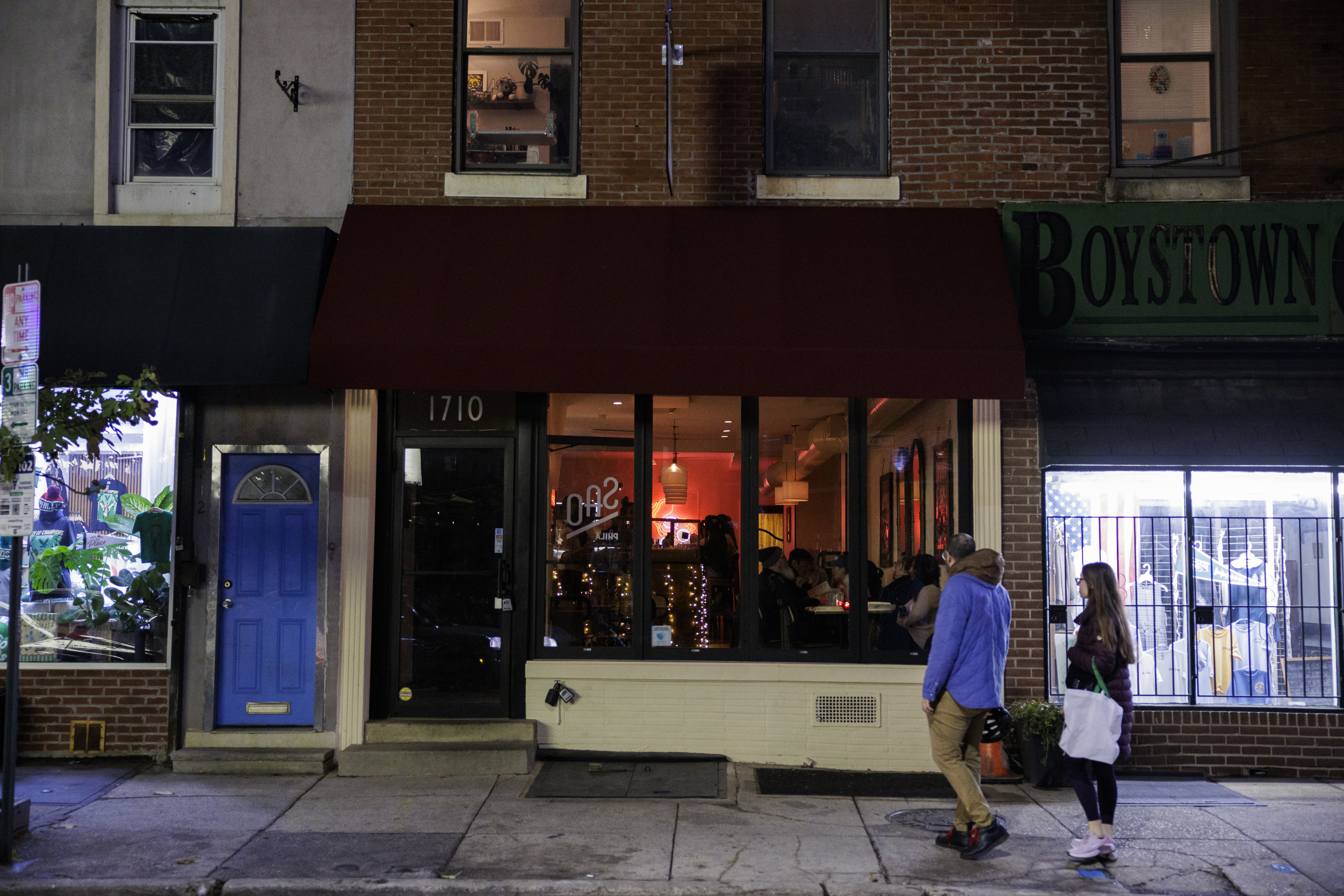
    The exterior of Sao on Wednesday, Nov. 26, 2025 in Philadelphia.
    Owner Rachel Lorn speaks with diners at Sao.

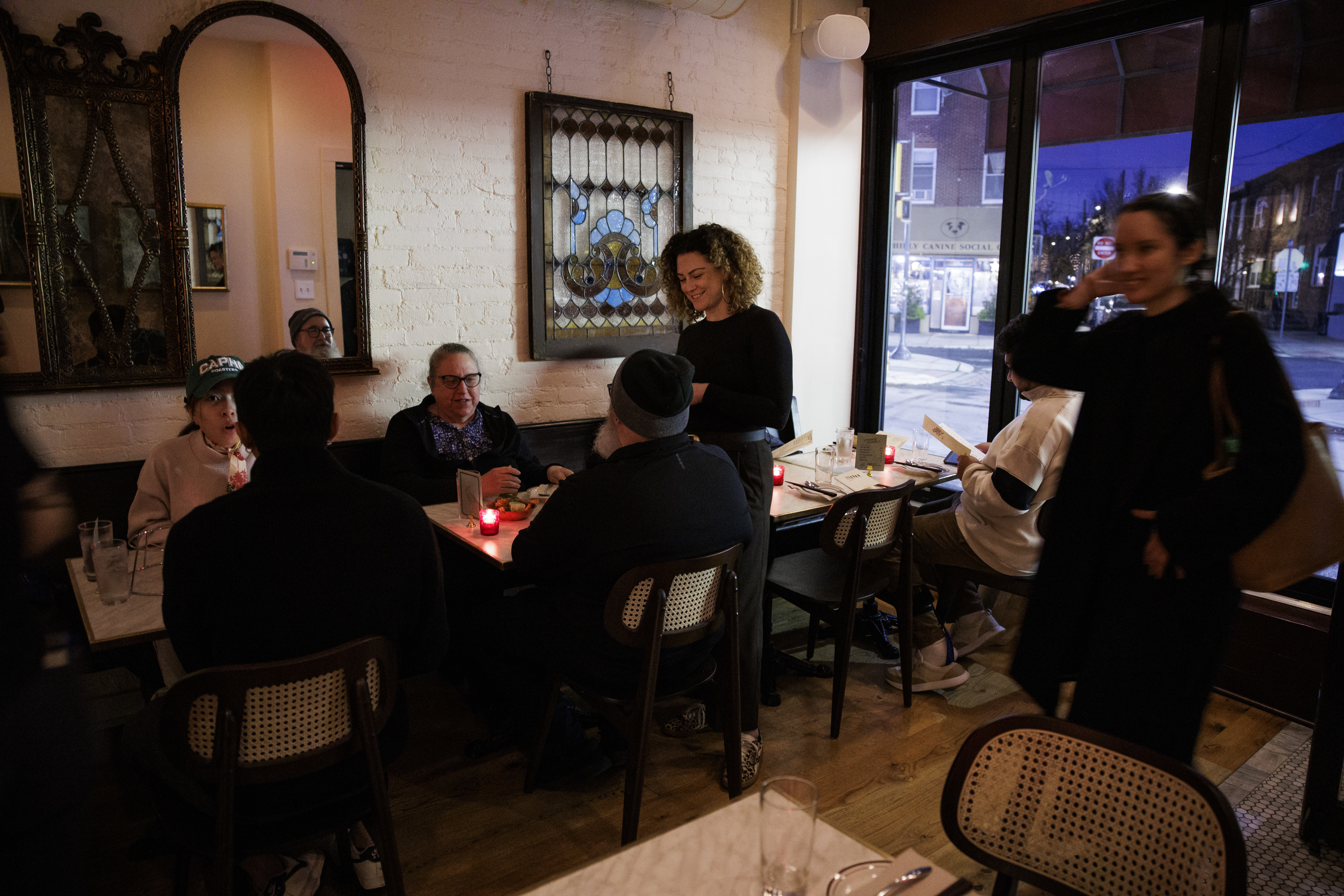
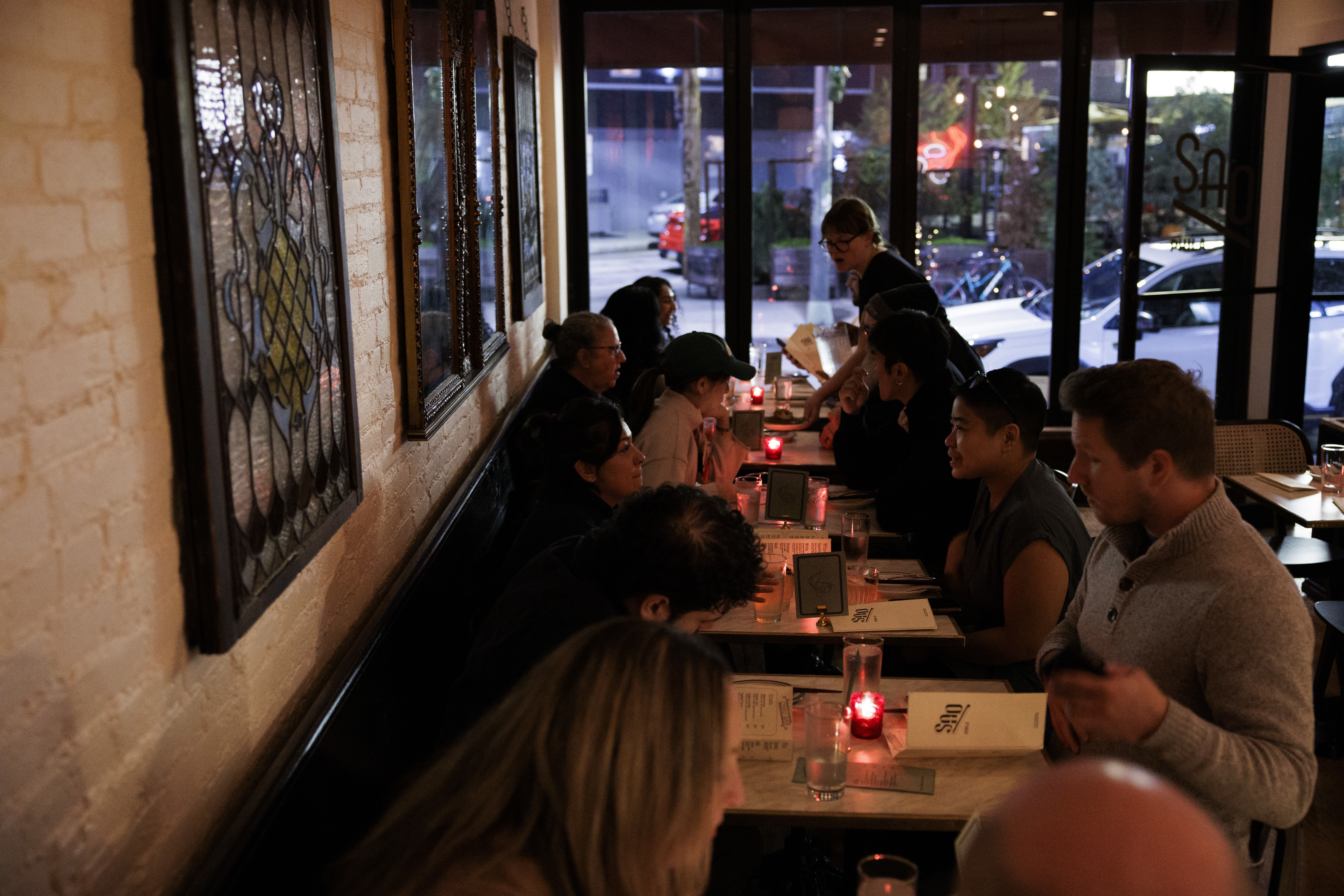
    Once inside, however, the virtues of Sao’s intimate setting are clear, as diners lean into their crudos and cocktails at candlelit banquette tables along a whitewashed brick wall hung with mirrors and stained-glass panes. Another 10 guests — in my opinion, the lucky ones — perch in the red neon glow of the bar counter, where the action unfolds on multiple stages.

    To my right, bartender Steph Liebetreu manages to simultaneously rattle a cocktail shaker in her left hand and stir a crystal decanter of martinis with her right, all while dancing in perfect syncopation to Sao’s soulful soundtrack mix of vintage R&B, Cambodian rap, and Frank Sinatra. To my left, shucker Davina Soondrum (also a talented pastry chef) festoons our icy oyster plateau clockwise from “lemon wedge o’clock” with plump Japanese Kumamotos, tiny-briny BeauSoleils from Canada, and Jersey’s finest, Sweet Amalias. Each one is oceanic perfection on their own, but they become electric when splashed with that Cambodian mignonette, or a spicy-tart jolt of Lao sauce sparked with lime and crushed cilantro stems. Amid Philly’s current boom in new oyster bars, those vivid sauces are part of what make Sao unique.

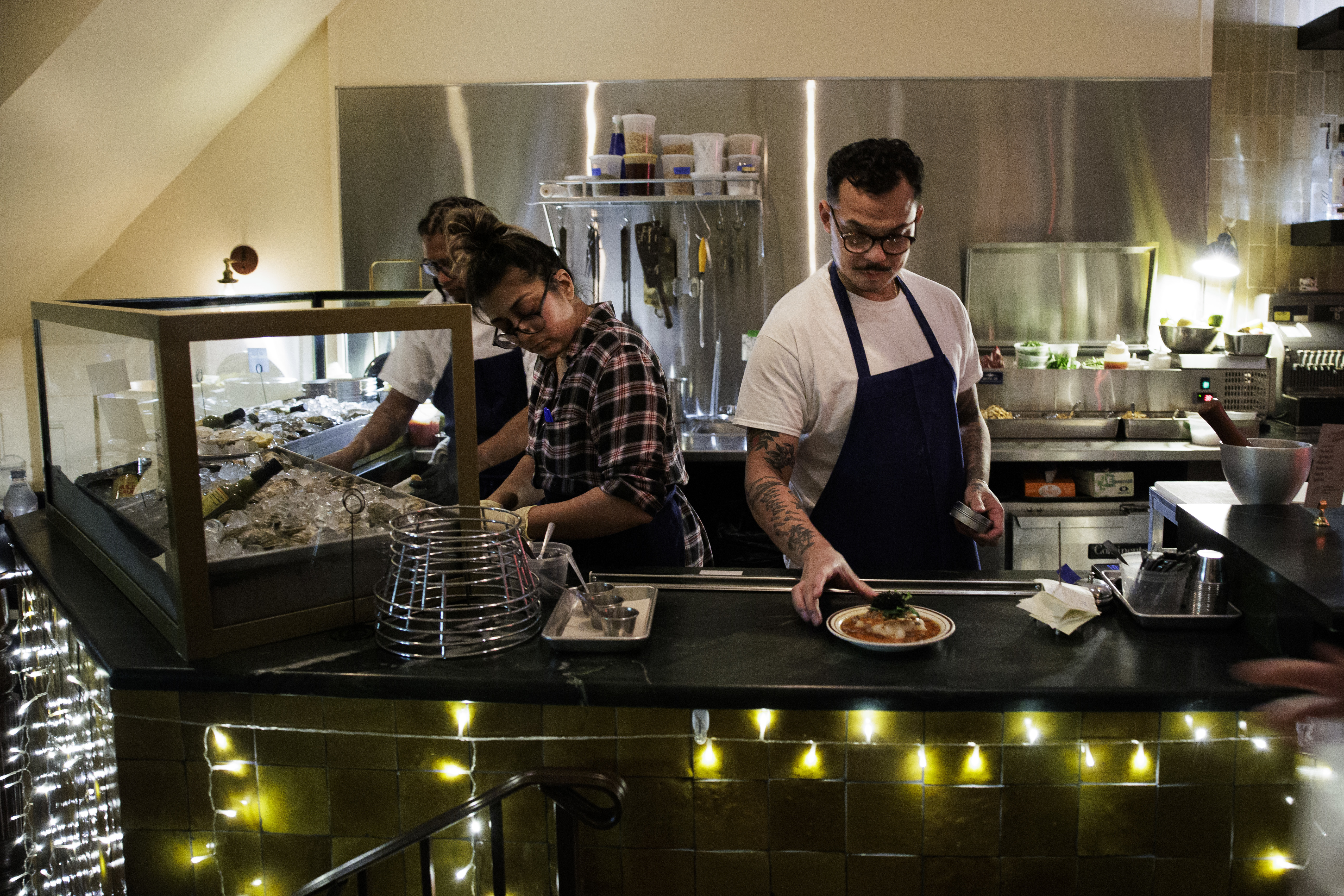
    Chef Phila Lorn places a crudo at the pass at Sao on Wednesday, Nov. 26, 2025 in Philadelphia.
    The dry-aged hamachi crudo at Sao.

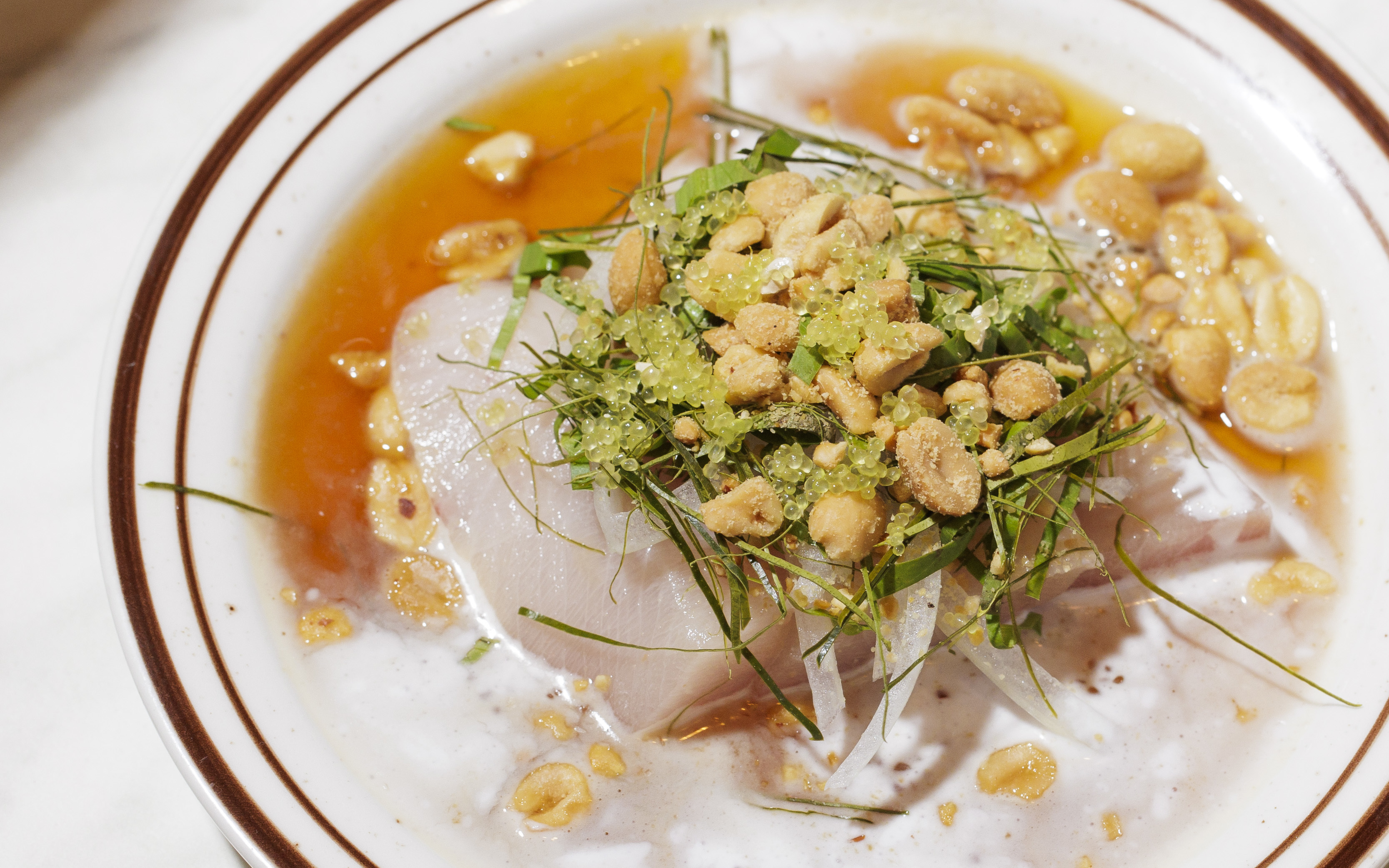
    Front and center, meanwhile, there’s chef Phila himself butchering a whole dry-aged hamachi mid-service to serve raw with fish sauce, coconut milk, and vinegared onions — a salute to the beloved nearby soup hall, Pho 75. He’s slicing thick pink tiles of bluefin tuna and stacking them like a deck of sashimi cards doused with soy sauce and lime beneath fistfuls of roasted green chilies and crushed marcona almonds.

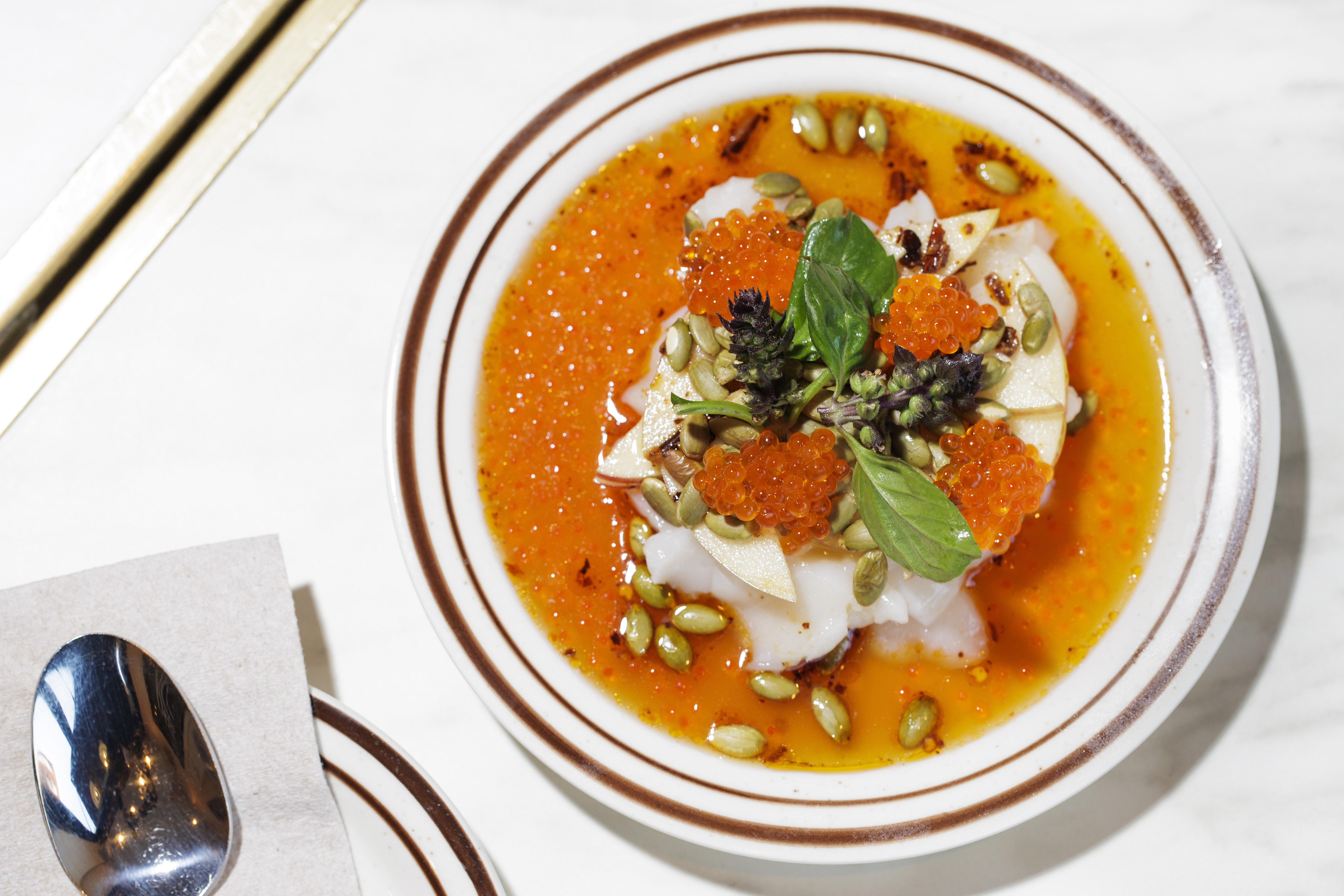
    As I waver on which crudo to order next (perhaps the spot prawns with brown butter and prawn-head oil?), he pours sweet and spicy orange chili jam over an ivory mound of raw scallops, apples, and pepita seeds and I have my answer: “That’s Phila’s favorite,” confides Rachel as she patrols the narrow dining room, ever-playing Tetris with seats to accommodate more walk-ins.

    The Dayboat Scallop Crudo at Sao on Wednesday, Nov. 26, 2025 in Philadelphia.

    That scallop-and-chili jam combo will be familiar to anyone who’s dined at Mawn, where Lorn workshopped many of these dishes for months. There are other overlaps here of Mawn’s greatest hits, like the crispy soft-shell shrimp in fish sauce caramel, or the awesome 20-ounce rib eye piled high with “Cambodian chimichurri,” boosted with lime juice and fermented prahok fish paste.

    One standard you must order, though, is the intricate papaya salad, a colorful crunch-fest of long beans, peanuts, candied shrimp, and shredded green papaya lashed with blasts of sour tamarind, chile, and shrimp paste. It dials your taste buds up to a certain base level of funk and sour heat before moving the conversation to more contemporary flights of fusion fancy.

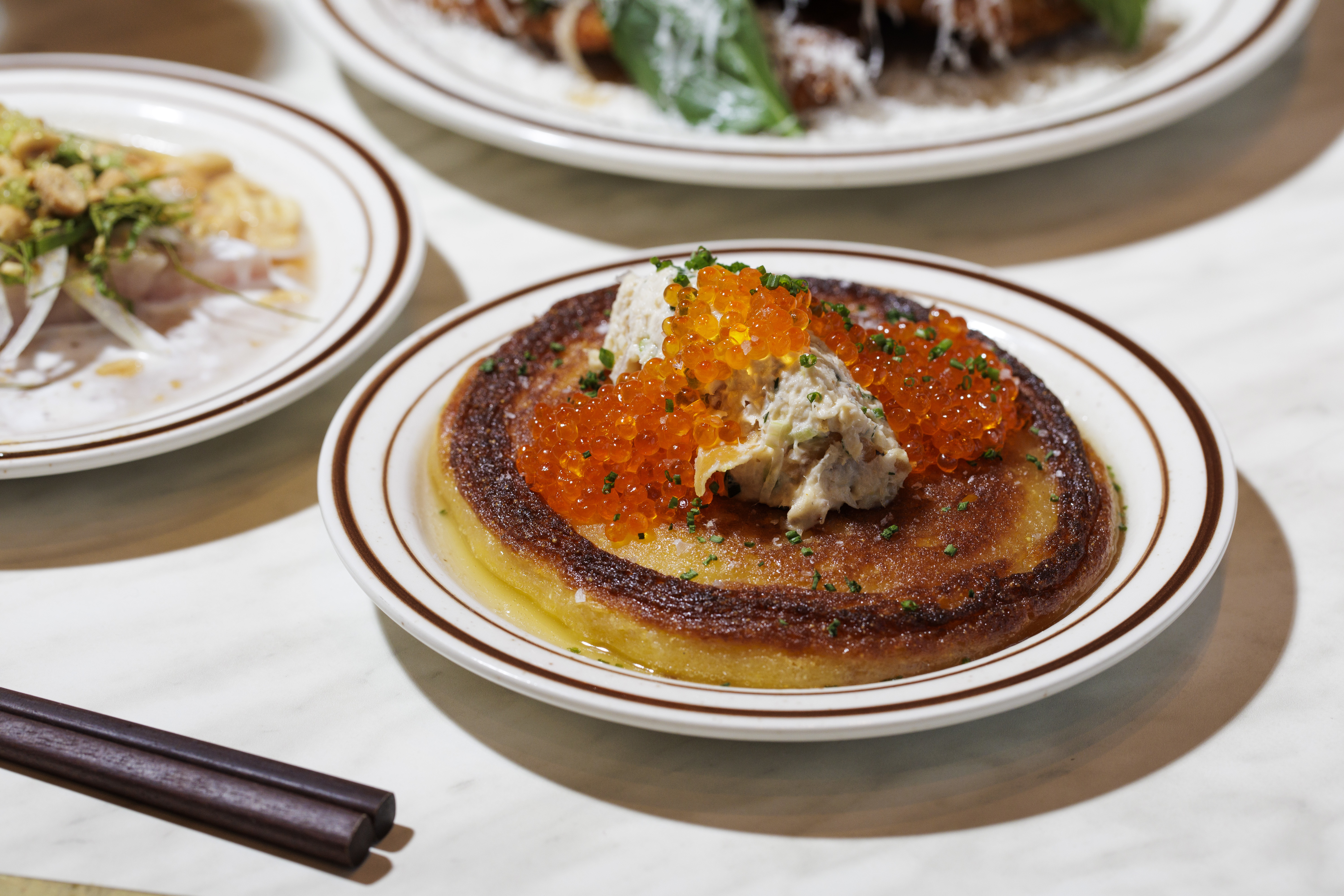
    The Honey Butter Hoe Cake at Sao on Wednesday, Nov. 26, 2025 in Philadelphia.

    Sao’s menu is more an extension of Mawn’s repertoire, rather than something entirely new, with a greater emphasis on raw seafood and an even more playful approach to cooked dishes rooted in tributes to favorite restaurants. Perhaps the most memorable dish at Sao, in fact, is a direct corn cake homage to Boston’s Neptune Oyster bar, whose signature johnnycake is remade here as a warm, honey butter-soaked hoe cake enriched with dashi then topped with cool smoked trout salad and beads of roe, which Phila tends to piles onto Sao’s plates by the spoonful. The lacy crunch of that warm sweet cake against the savory pop of roe, amped by the saline burst of a supplemental scoop of caviar, was one of my favorite bites of the year.

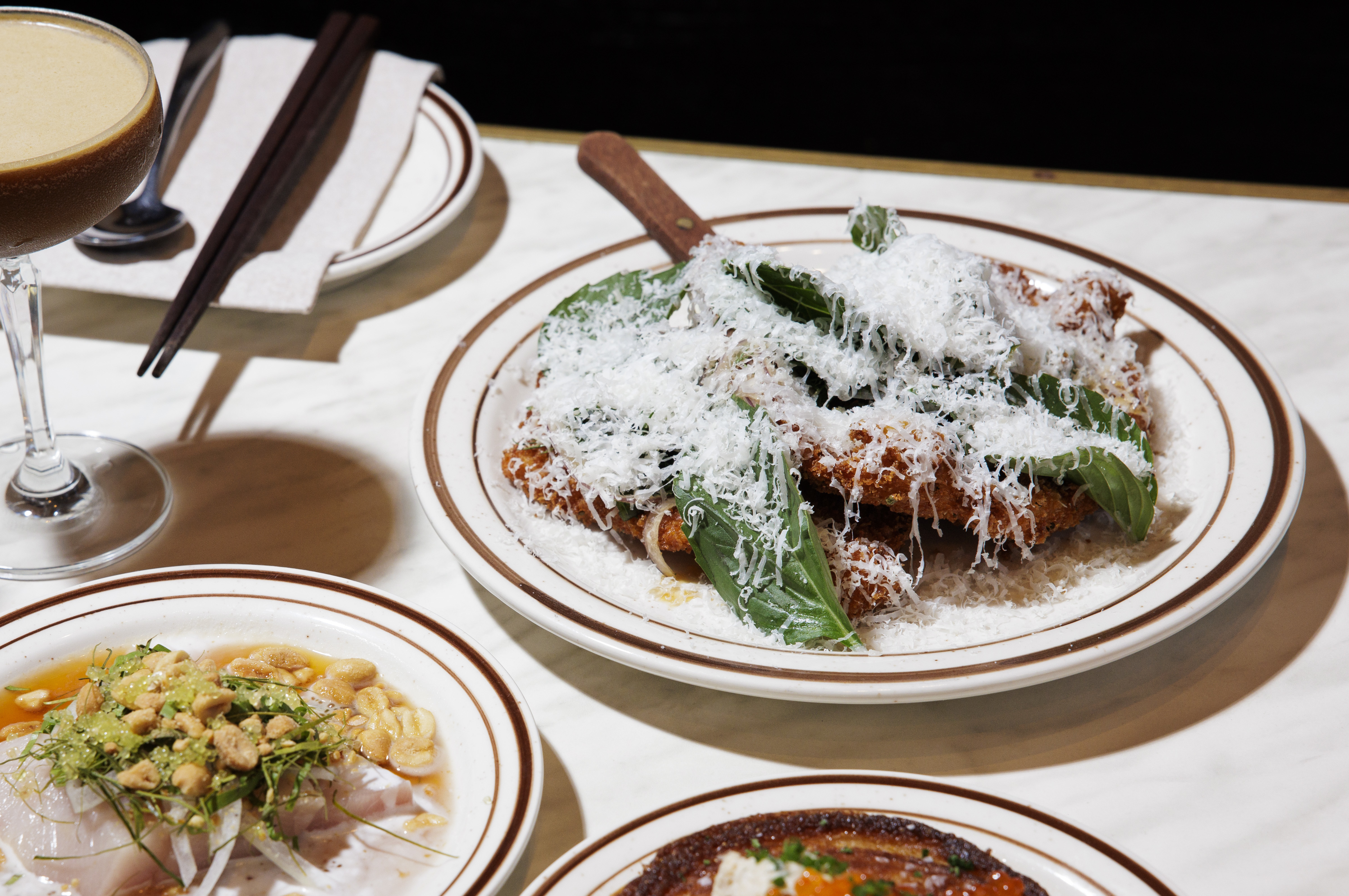
    Sao’s menu is full of Easter eggs for the keen-eyed diner, including an irresistible tuna carpaccio topped with fried shallots, cured chile rings, and a sizzling finish of sesame oil that’s an ode to the “bronzizzle” roll at Zama, where Phila spent some formative years. There’s also a nod to the beloved late-night cutlet from Palizzi Social Club that’s transformed with Southeast Asian pickled cucumbers, Thai basil, and fish sauce caramel. The chef, who grew up just a few blocks from East Passyunk, also pays tribute to South Philly’s Italian “crab gravy” tradition with his own take, a blend of red and green coconut milk curries steeped with crab shells that comes topped with crisply fried scallops.

    The Mawn Cutlet at Sao on Wednesday, Nov. 26, 2025 in Philadelphia.

    A frequent chicken skewer special, whose meat is marinated in kreung spice paste, is grilled over binchotan coals as Phila’s nod to the weekend Khmer barbecues at the Southeast Asian Market. The mee caton is a straightforward stir-fry of velvety soft beef, Chinese broccoli, and fat rice noodles kissed with sesame oil that’s a throwback to one of the best home dishes made by his mother, Sim Khim. (I also loved the seafood rendition.)

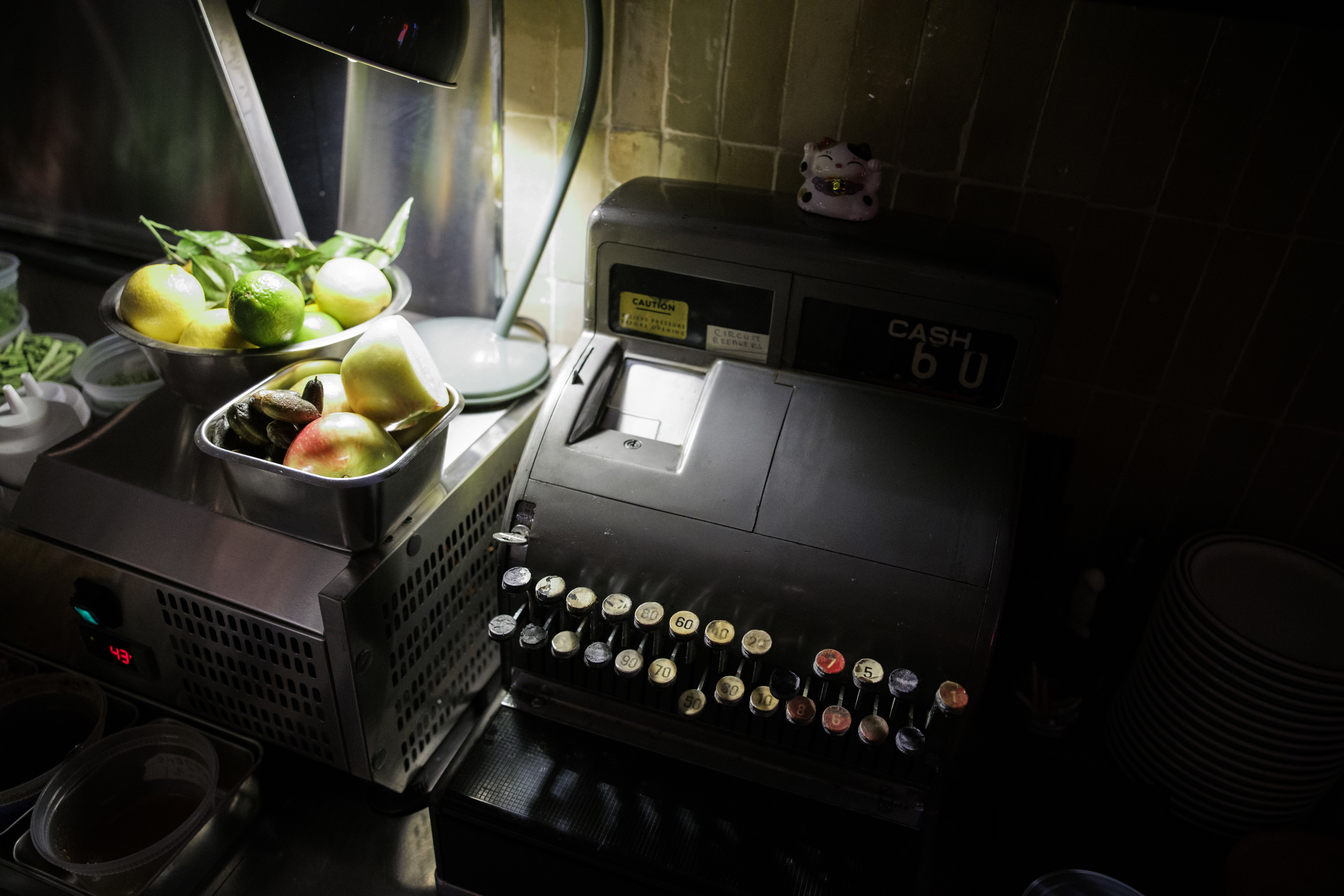
    Nostalgia for family and neighborhood pervades every corner of Sao, from the vintage bathroom door with textured glass and wavy panes that replicates the vestibules of many South Philly rowhouses (including the Lorns’ house), family pictures, and an antique cash register from the Atlantic City Boardwalk hotel once owned by Rachel’s grandparents.

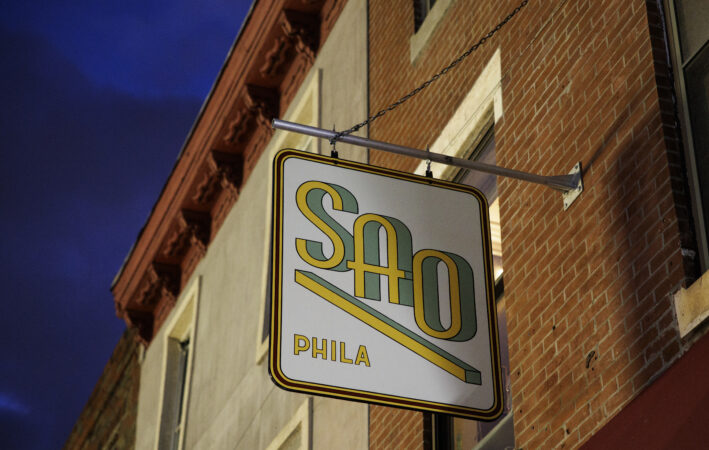
    Even the restaurant’s name channels a sense of place: It’s a phonetic representation of how Phila’s mother, a Cambodian refugee, pronounces the “South” in South Philly. Her son, famously, is also named for the family’s adopted city, although Khim and everyone else pronounce it “Pee-la.” The sign hanging out front — Sao Phila — has multiple meanings.

    An old school cash register from Rachel Lorn’s family at Sao on Wednesday, Nov. 26, 2025 in Philadelphia.

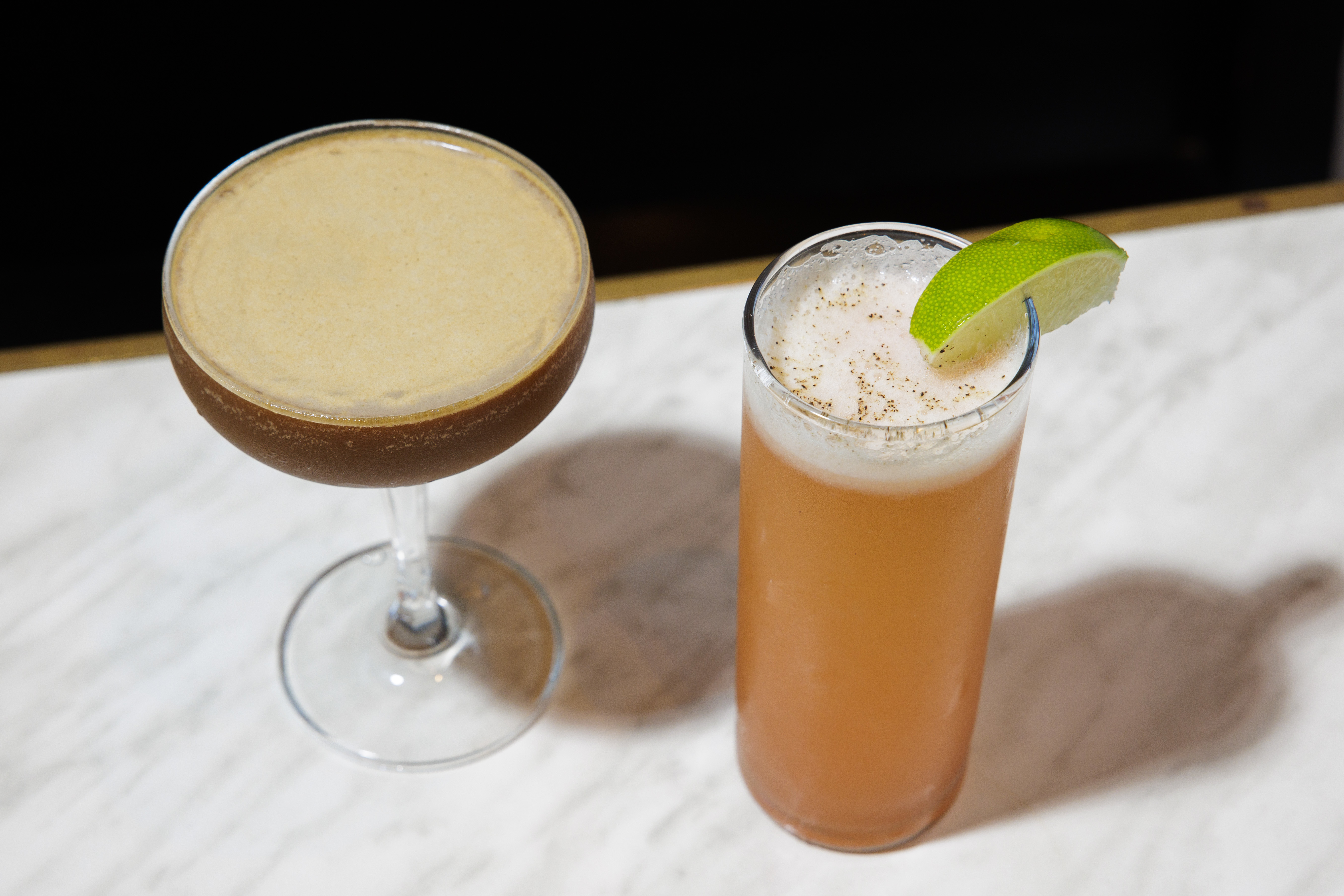
    With the added element of a liquor license at Sao, the Lorns’ business partner and close family friend, Jesse Levinson, designed an opening drink list that follows on theme. The chicory-scented, coconut-creamed Vietnamese coffee martini, Wing Phat Plaza, is named for the bustling Asian strip mall on Washington Avenue nearby. The Angkor Baby borrows a michelada from South Philly’s lively Mexican scene, then adds the Asian touches of ground Kampot peppercorns and a rice vinegar tang.

    The Wing Phat Plaza and Angkor Baby cocktails at Sao.

    Levinson says the drink menu will keep evolving as Liebetreu and her fellow bartender, Lillian Chang, begin to take creative control, supplementing the small but trendy selection of natural wines. I also expect Sao’s sake selection to take a big leap once general manager Kelly Brophy, formerly the lead omakase server at Royal Sushi, begins to share her expertise.

    Indeed, so much is still evolving here, including the tasty but limited dessert selection of crème brûlée and whoopie pies from Soondrum (when she’s not shucking shellfish), that I’m certain we’ve only seen the beginning of what Sao can truly become.

    “We’re locked and loaded for more because we have room to grow,” says Phila, referring mostly to desserts. If only they also had room to grow more seats! Philadelphia’s diners, no doubt, would quickly snap those up, too.

    Diners fill the space at Sao on Wednesday, Nov. 26, 2025 in Philadelphia.

    Sao

    1710 E. Passyunk Ave., saophilly.com; no phone, but staff responds to messages on Instagram or OpenTable.

    Open Wednesday through Saturday, 5 to 10 p.m.

    Reservations are highly suggested, but a handful of walk-in seats are available.

    Not wheelchair-accessible. There is a step up into the restaurant, as well as at the bathroom.

    About 90% of the menu is naturally gluten-free, while certain dishes that typically use the fryer (like the scallops in crab gravy) can be modified to avoid cross contamination.

    Menu highlights: Crudos (aged hamachi; scallops with chili jam); bluefin tuna carpaccio; Cambodian papaya salad; honey butter hoe cake; Mawn cutlet; scallops in crab gravy; mee caton; grilled chicken skewers; crème brûlée.

    Drinks: Cocktails are well-made with a South Philly twist (like the barrel-aged mellow Jabroni Negroni) and on-theme Asian accents, such as Cambodian Kampot peppercorns for the Angkor Baby riff on a michelada, or the chicory-flavored Viet coffee martini named after Washington Avenue’s Wing Phat Plaza.

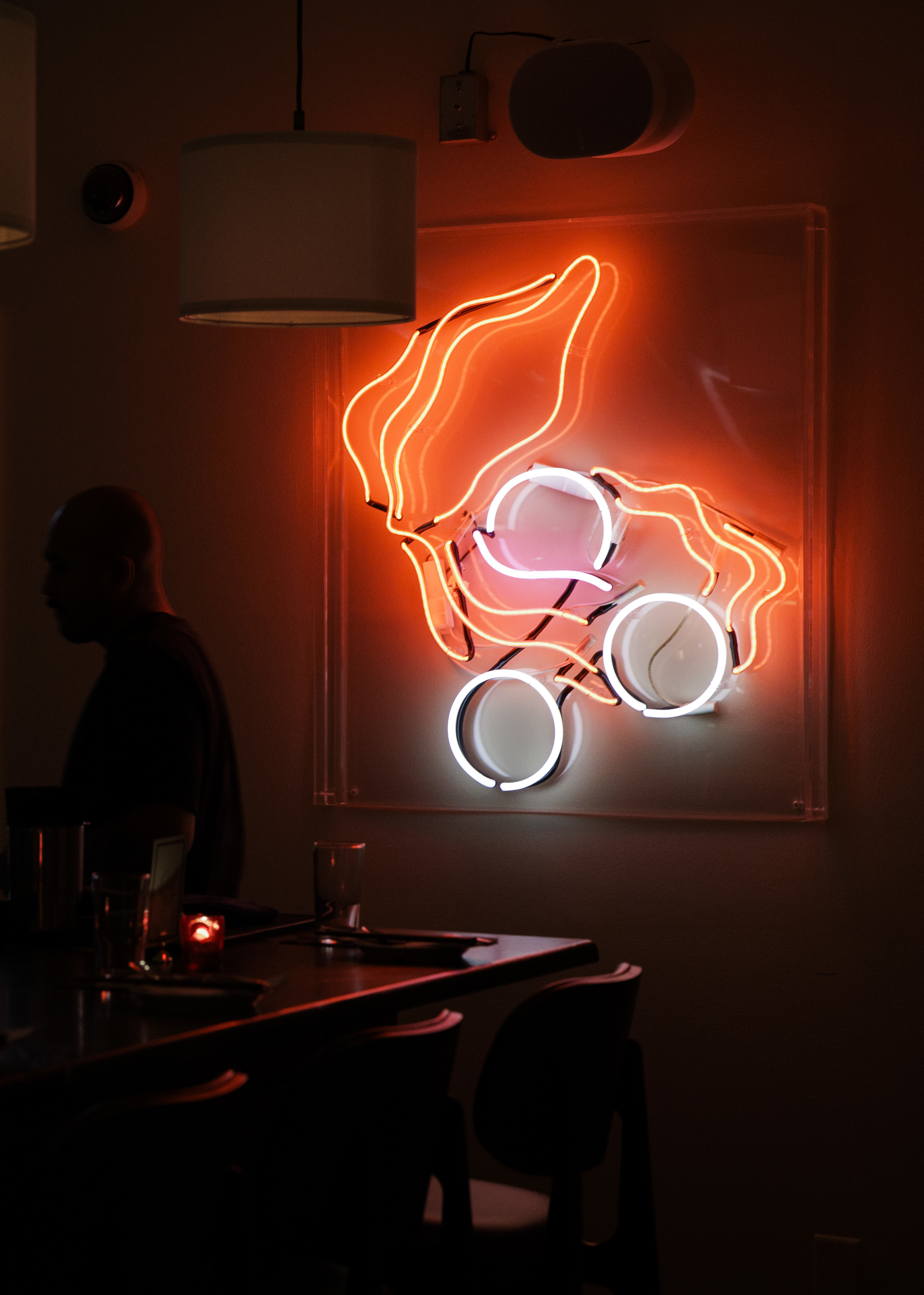
    A neon oyster sign at Sao on Wednesday, Nov. 26, 2025 in Philadelphia.
  • The best things we ate this week

    The best things we ate this week

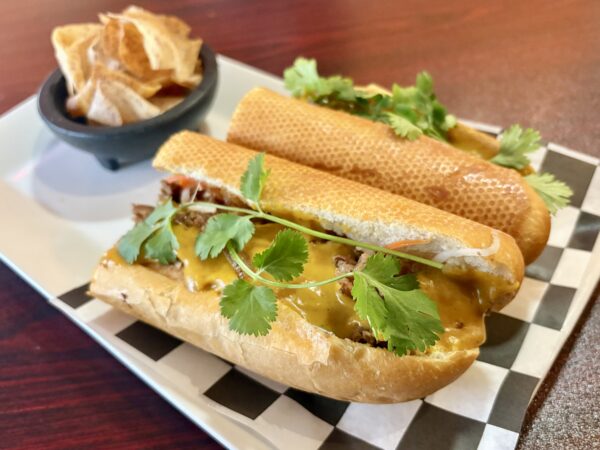
    The cheesesteak banh mi special at Saigon Grace Cafe

    The international cheesesteak genre is as boundless — and as tasty — as Philly’s diverse communities, from the pepper chip-strewn Cambodian lemongrass cheesesteak at Sahbyy Food in the new Gather Food Hall (as well as the seasonal Southeast Asian Market in FDR Park) to the Ethiopian cheesesteak at West Philly’s Gojjo.

    My newest global cheesesteak crush is the Vietnamese banh mi version at Saigon Grace, a sweet fusion cafe on South Street blending Asian and Mexican flavors where I’d already fallen for the intense salt foam Vietnamese coffee. The food has been very good, too, and this recent sandwich special is pretty much exactly the multicultural mashup it sounds like: a griddled hash of flat-iron beef, onions, and melty mozzarella tucked into a delicately crusty Vietnamese roll from South Philly’s Ba Le Bakery along with the classic banh mi fixings of pickled daikon and carrot laces, jalapeño rounds, and crunchy cilantro stems. What ultimately brought this sandwich to the next level, though, was the unexpected flow of golden sauce ladled over top. Was it Whiz? Absolutely not! It was an aromatic Vietnamese curry sauce — a hint sweet and fragrant with star anise — enriched with a creamy kiss of coconut milk that kept the sandwich moist and added an extra layer of nuanced spice to every bite. Saigon Grace Cafe, 1514 South St., 267-423-0081, saigongracecafe.com

    — Craig LaBan

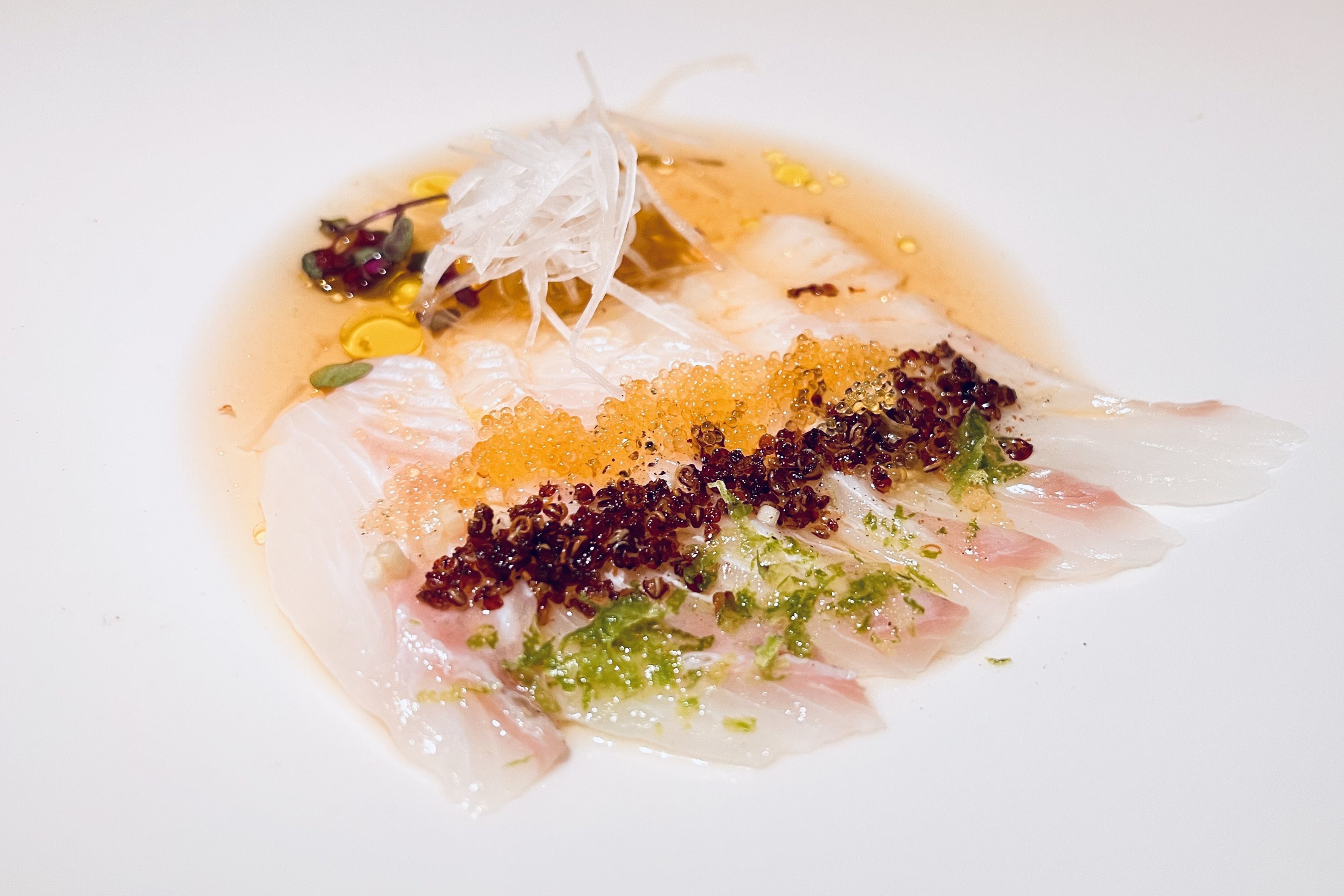
    Hirame usuzukuri as served at Uchi, 1620 Sansom St.

    Hirame usuzukuri at Uchi

    This sleek, sumptuous Japanese spot out of Austin planted its flag in Rittenhouse this month. Its dim lighting makes it a date-night must (sushi bar, drinking bar, dining room options) for high-level fish. This hirame usuzukuri off the cool tastings menu was a crudo surprise — so simple, but so complex: its candied quinoa base gives it a quiet crunch and nutty depth that sharpen the pristine flounder’s silkiness. Uchi, 1620 Sansom St., 215-647-7611, uchi.uchirestaurants.com

    — Michael Klein

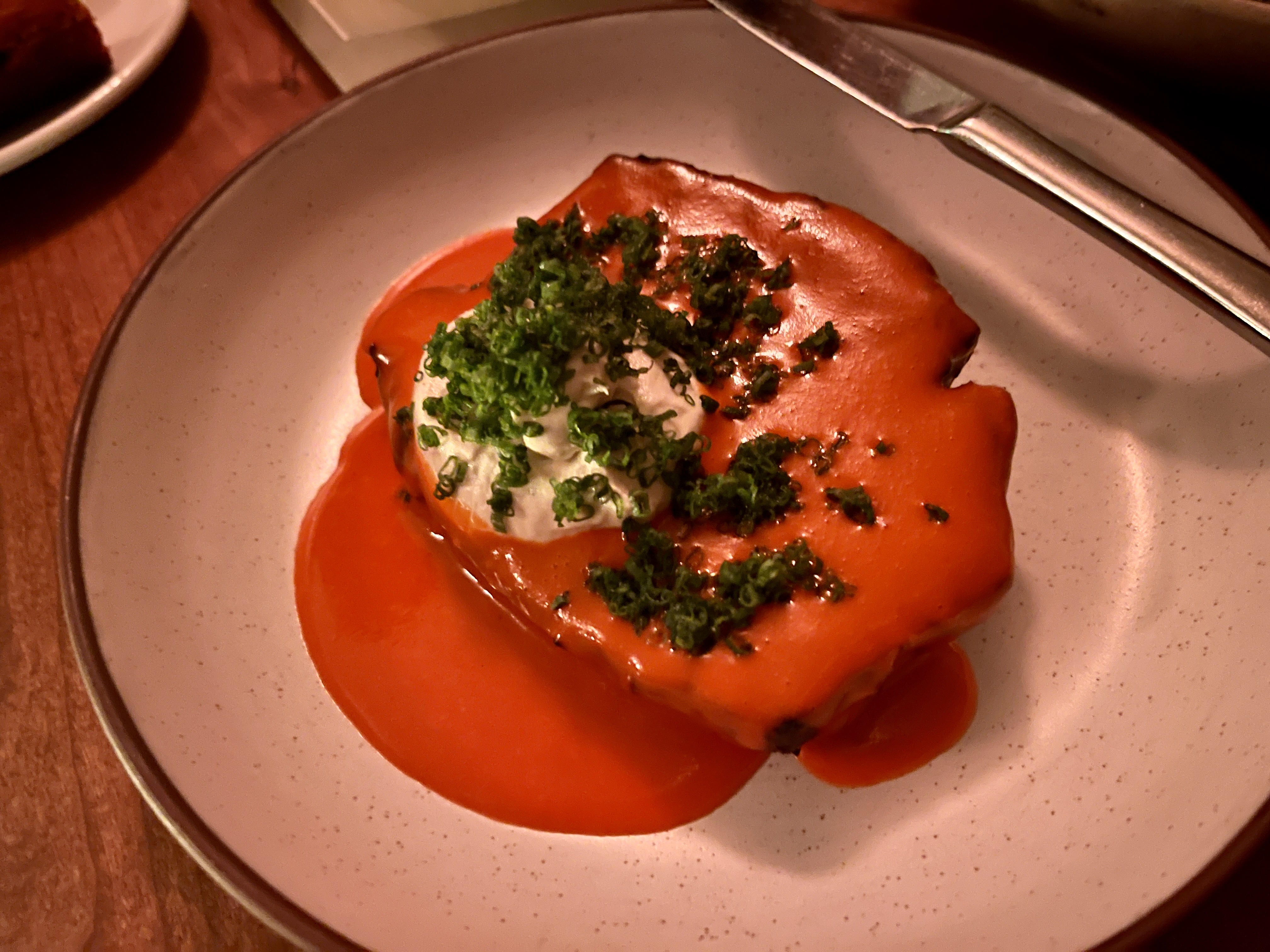
    Murasaki sweet potato with yuzu kosho Buffalo sauce, sour cashew cream, and chives at Pietramala.

    The Buffalo sauce-covered sweet potato at Pietramala

    Lucky me to have a band of friends who were up for sharing the entire menu at Pietramala, Philly’s brightest vegan star, now Michelin-endorsed. On the night I had dinner there, chef-owner Ian Graye was off at the awards ceremony, picking up a Green Star and a Recommended. The meal was no less applause-worthy, starting with the tomato XO sauce-laden focaccia (which Craig LaBan considers one of Philly’s best renditions of tomato pie) and finishing on the chocolate-enrobed peanut mousse bar (which I deeply regret not ordering an individual serving of).

    The menu was full of hits, but a predilection for wings perhaps inspired a deep appreciation of the Buffalo sauce-smothered Murasaki sweet potato. The silken, white-fleshed spuds come from Robin Hill Organics in Newtown Square. Pietramala roasts them, smashes them flat, then deep-fries them to order to yield a crispy-creamy slab of potato. It arrives on the plate positively drenched in a velvety Buffalo sauce made with yuzu kosho (a citrusy fermented chili paste), topped with a generous dollop of sour cashew cream and a shower of fresh chives. When our server put the plate down, they let us know it’s not often Pietramala repeats menu items, but this one’s too good to let go. Pietramala, 215-970-9541, pietramalaphl.com

    — Jenn Ladd

  • Is Michelin’s Bib award for Royal Sushi a snub? Chef Jesse Ito takes the izakaya’s honors in stride.

    Is Michelin’s Bib award for Royal Sushi a snub? Chef Jesse Ito takes the izakaya’s honors in stride.

    There were chef tears of joy, stunned looks from some unexpecting winners, and the silent sting of award-show snubs as the Michelin Guide announced its first-ever round of accolades for the Philadelphia restaurant scene Tuesday night.

    But there was also some lingering confusion that followed the much-anticipated Kimmel Center ceremony. One of the biggest gasps of baffled surprise rippled through the crowd when Royal Sushi & Izakaya, a favorite predicted by many to earn a star, was instead awarded a Bib Gourmand.

    The Bibs are widely coveted as Michelin’s nod to restaurants with “exceptionally good food at moderate prices.” Ten Philly restaurants were awarded Bib Gourmands, including Angelo’s, Dizengoff, and Pizzeria Beddia.

    But how does Royal Sushi & Izakaya — where a seat at chef Jesse Ito’s omakase counter now clocks in at a city-high $355 — qualify? Is it now the world’s most expensive Bib Gourmand?

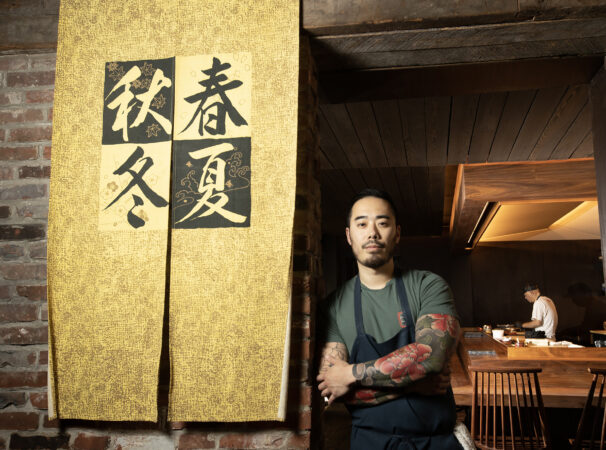
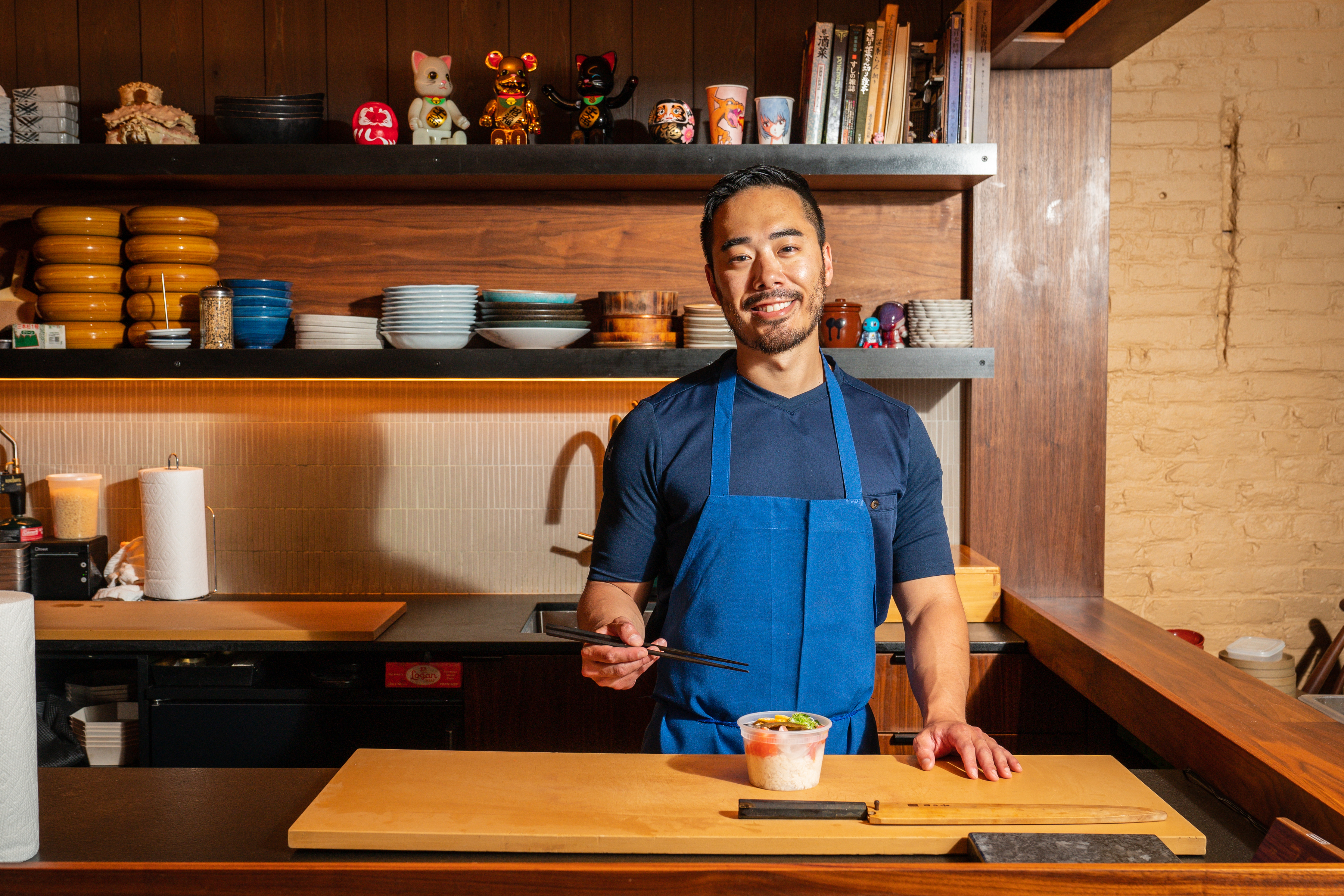
    Chef-owner Jesse Ito at Royal Sushi & Izakaya on Aug. 11, 2023.

    Michelin, which is renowned for secrecy, would not clarify its reasoning: “The Michelin Guide doesn’t reveal specifics,” said spokesperson Carly Grieff.

    The answer, most logically, is that Royal has always been two distinct restaurants under a single name and roof, and the Bib most logically applies to the more casual one: the lively izakaya-style tavern that anchors the front of the Queen Village building, where a relatively affordable a la carte menu of cooked Japanese classics and sushi is served to a walk-ins-only crowd, with cooked items ranging from $6 to $38.

    Ito’s luxury sushi tasting counter, meanwhile, hums along in a separate room in back, where Ito handcrafts every bite with artistry using some of the world’s most expensive ingredients. Such omakase counters are prime candidates for Michelin stars, including at least two (Boston’s one-star 311 Omakase and New York’s three-star Sushi Sho) that picked up accolades at the recent ceremony in Philadelphia.

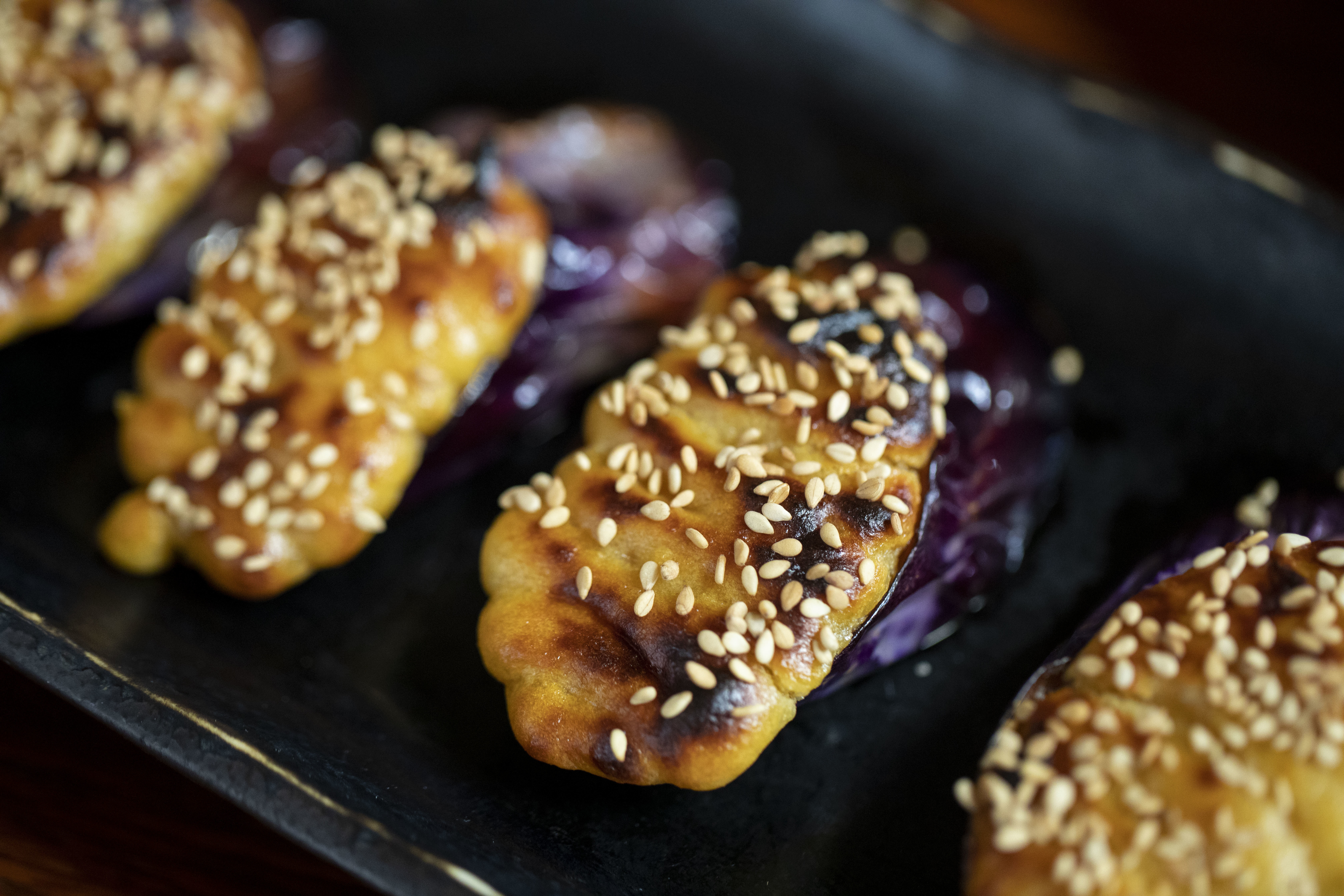
    The sesame-crusted eggplant at Royal Izakaya on Aug. 18, 2022. Royal Izakaya is located at 780 South 2nd St.

    But the 16 nightly seats of Ito’s omakase counter are so locked down with devoted regulars — who can rebook their seats for another meal before leaving their dinner — that even Michelin’s anonymous inspectors, it appears, could not score a reservation.

    “They only ate at the izakaya,” surmises Ito from Michelin’s review, a glowing assessment of the izakaya’s menu range and high-quality ingredients, with only a passing mention acknowledging its “exclusive” omakase counter.

    Ito was hardly a loser at the Michelin ceremonies, even if he didn’t win a star, because he was thrilled with the Bib acknowledgment: “I’m super-proud of the izakaya and this is very fitting for what it does … The stars are really great and obviously every chef wants that, but the Bibs will also prove useful once tourists come, especially next year for the FIFA World Cup and Philadelphia’s 250th anniversary.”

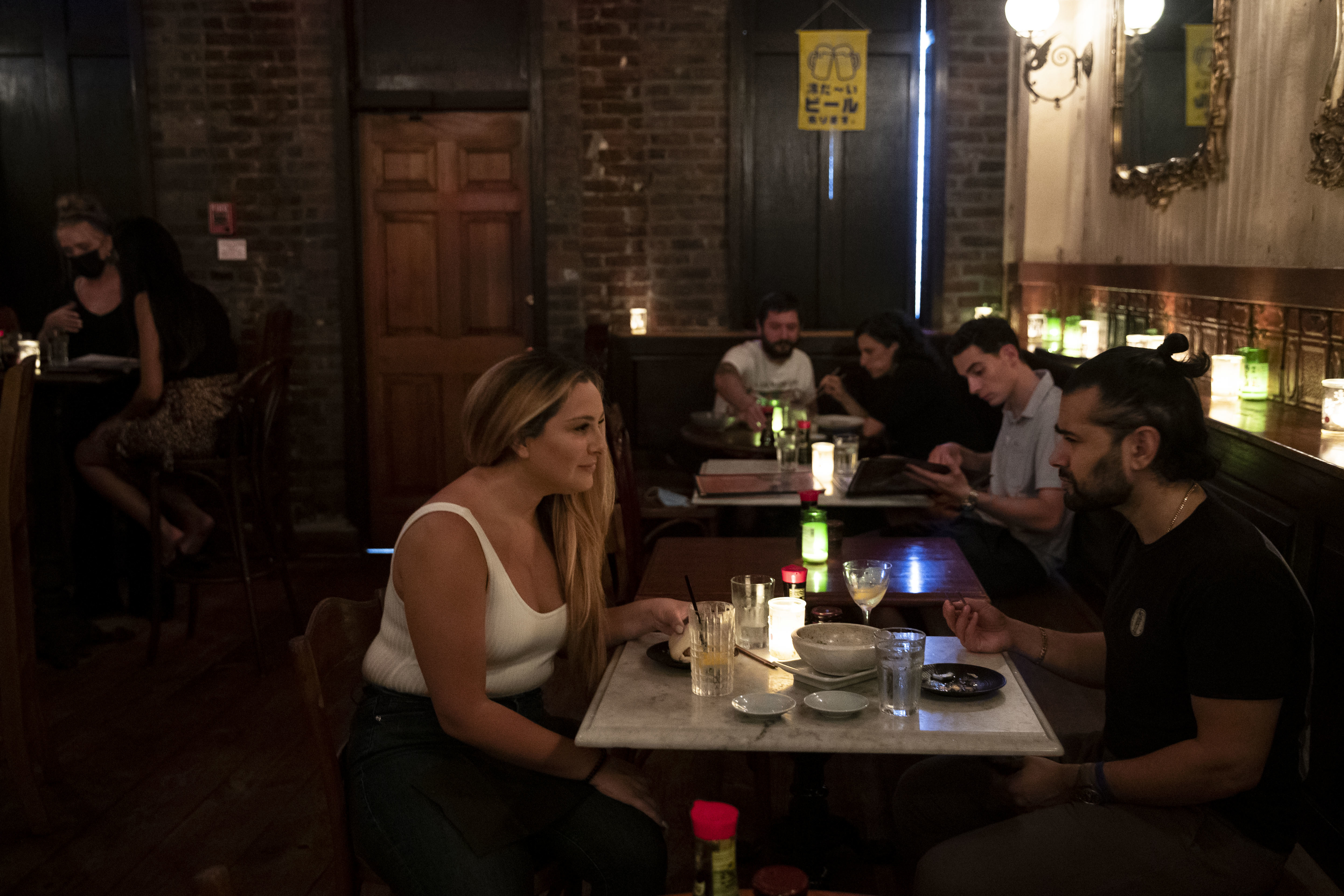
    Diners inside Royal Izakaya on Aug. 18, 2021.

    Nonetheless, the uncertainty of how Michelin might handle his dual-concept space has weighed on the chef, who knows the roller-coaster emotions and anxiety of awards program recognition more than most.

    He’s experienced tremendous highs, such as this fall when his restaurant was named the 32nd best restaurant in North America by World’s 50 Best. He’s also repeatedly dealt with the disappointment of coming up just short with the James Beard Foundation, being named a finalist eight times — only to miss out every year, including once again this spring.

    Ito said he’s considered various ways to more clearly separate the two concepts, or at least make the reservation process for the omakase more accessible.

    “But I wouldn’t even know how to do that,” said Ito, who’s worked through some alternatives and fears that bots would ultimately snap up seats for scalping. “I’m able to have regulars this way, and we have the best guests with whom we’ve created real relationships over time. But I love having new people, too, and that definitely still happens.”
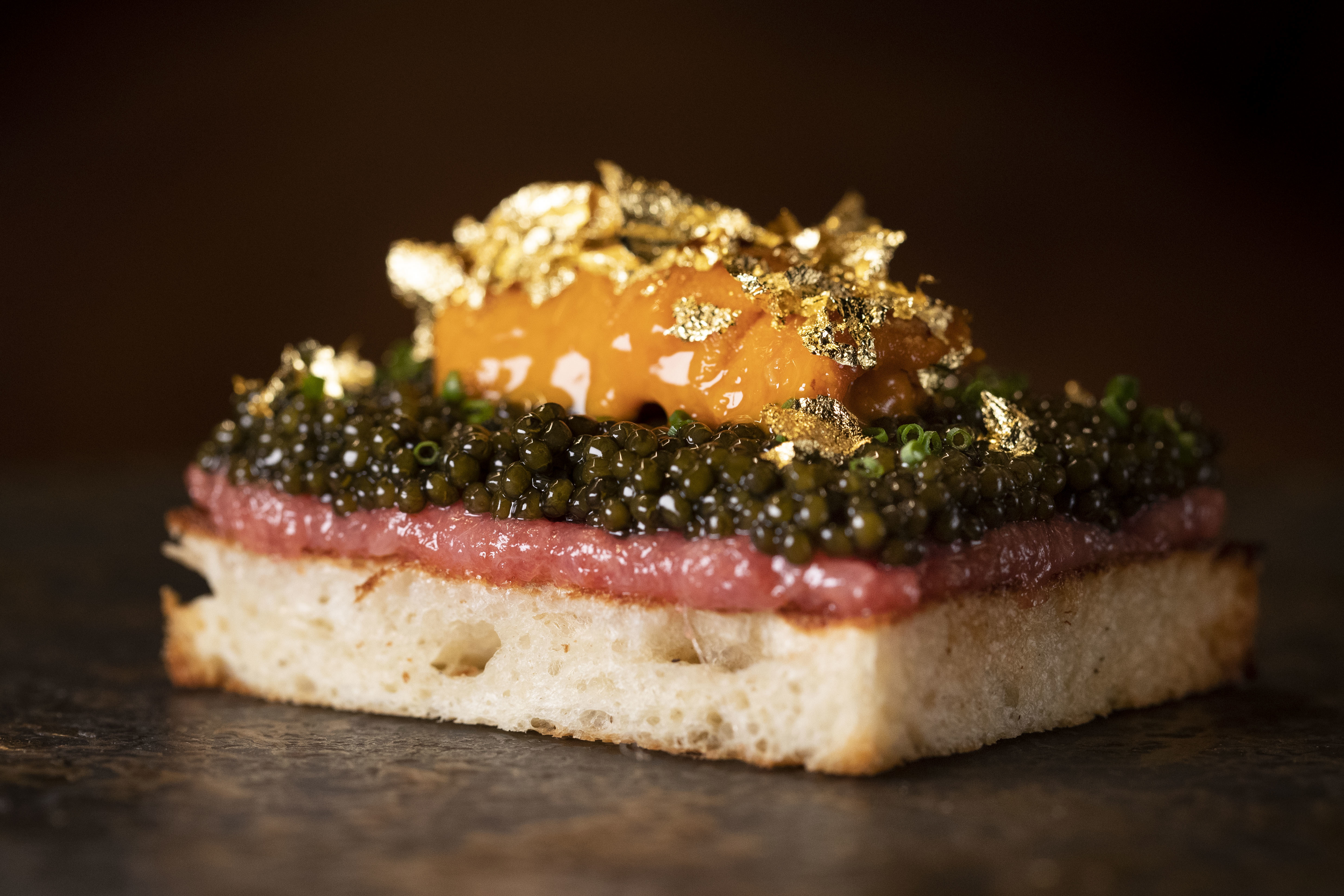
    The exclusive nature of the omakase, and the unintended fallout from such limited reservations — especially with hopeful guests, including possibly judges for potential awards — was never intended. It just happened.

    Chef Jesse Ito and Mia Colona at the Michelin Guide announcements at the Kimmel Center on Nov. 18.

    “I didn’t think about any of this award stuff when I was opening this restaurant nine years ago at age 27 on limited resources,” said Ito, whose initial goals were to support his parents and create something for himself.

    As the restaurant continued to evolve and garner national attention, however, he’s had to learn to cope with the anxiety of increasing acclaim. And no matter how veteran the chef, the nerves always tighten the gut at an awards ceremony, when the announcement draws near. He’s learned the hard way to find a silver lining in whatever the results.

    “Just because you’re not [ultimately] a winner doesn’t mean you’re not deserving,” says Ito. “That’s part of losing the Beard award eight times! You come away with the ability to enjoy the moment of just being recognized.”

    The Royal Toast from the Royal Sushi Omakase at Royal Izakaya on Aug. 18, 2022.

    Ito says he owes much of his current attitude to getting sober five years ago.

    “Beforehand, I used to always crave that external hit, that numbing sensation of having fun. But now in my life, I find happiness in my routine and relationships, my business and personal journey. The awards? I’m happy to be a part of them — but they are not what defines us.”

    What drives Ito is his passion for turning raw fish into edible art for the devoted customer base he values, and “to improve myself and the omakase a little bit each day,” he says, citing the Japanese philosophy of kaizen.

    Chef-owner Jesse Ito at work at Royal Sushi & Izakaya on May 31, 2024.

    So, once the Michelin ceremony concluded — “a weight was lifted from my shoulders,” he says — and it was back to what he loves most. He went straight to dancerobot, his new restaurant in Rittenhouse Square where a Resy-sponsored after-party was in full bloom. He put on his apron and immediately busted out the premium uni and caviar to top hundreds of aka-taka toro rolls brought in from the izakaya, and strolled through the crowd with a tray, handing out $75 bites for free.

    “Everyone was so relieved [it was over], we were just celebrating and having fun,” he said.

    And then out came his secret weapon: the karaoke mic, an important Ito ritual for every post-awards party, no matter the result.

    “I sang ‘Creep‘ by Radiohead,” he said, his usual song. “Then I left when the party was still bumping, because I didn’t want to go to bed too late.”

    He had another busy day to prep for service at Royal Sushi & Izakaya ahead.

    Chef Jesse Ito of Royal Sushi & Izakaya hands out aka-taka tuna belly and pickled radish rolls topped with salmon roe, uni, and caviar to guests at an afterparty for the Michelin awards held at his new restaurant, dancerobot.
  • Stephen Starr’s Borromini should be a showstopper. Instead, it’s a shrug.

    Stephen Starr’s Borromini should be a showstopper. Instead, it’s a shrug.

    Borromini’s 100-layer lasagna looks like a miracle of noodle engineering. It’s the kind of “more is more” pasta spectacle that commands its own showcase box on the menu, puts curious diners in chairs, and requires a team of three dedicated attendants in Borromini’s vast kitchen to meticulously construct its layers — a tall stack of pasta sheets alternating with microscopic schmears of ricotta, creamy béchamel, and tomato sauce — that get baked, sliced, then crisped on one side, to be served atop a puddle of pomodoro.

    Its intricate ridges are beautiful to behold. But to eat, this lasagna is more like a doorstop than a showstopper. The layers are so tightly compressed, it’s closer to a muddled mush than a deck of delicate harmonies, a squidgy blur of cheese and dough whose individual virtues could have been more compellingly conveyed in 10 layers rather than 100. Add a slow-cooked, jammy tomato sauce that leans sweet rather than bright and lively, and the final effect is one-dimensional. It has subtly evolved over the course of my multiple visits, but each time it prompted a disappointed shrug.

    The 100-layer lasagna at Borromini has been constantly evolving. This version, eaten in November, three months after opening, has been called “the final version” by owner Stephen Starr.
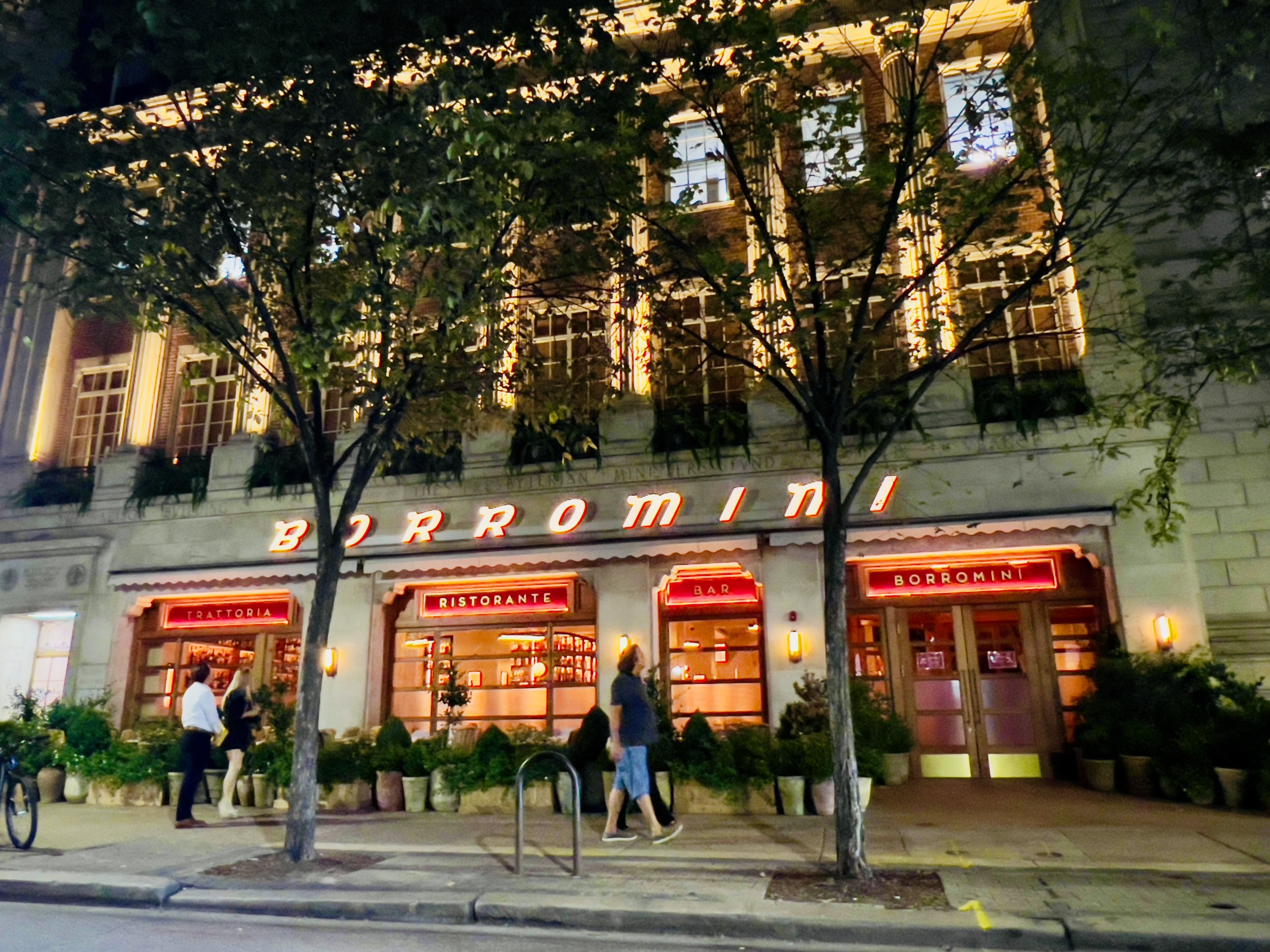
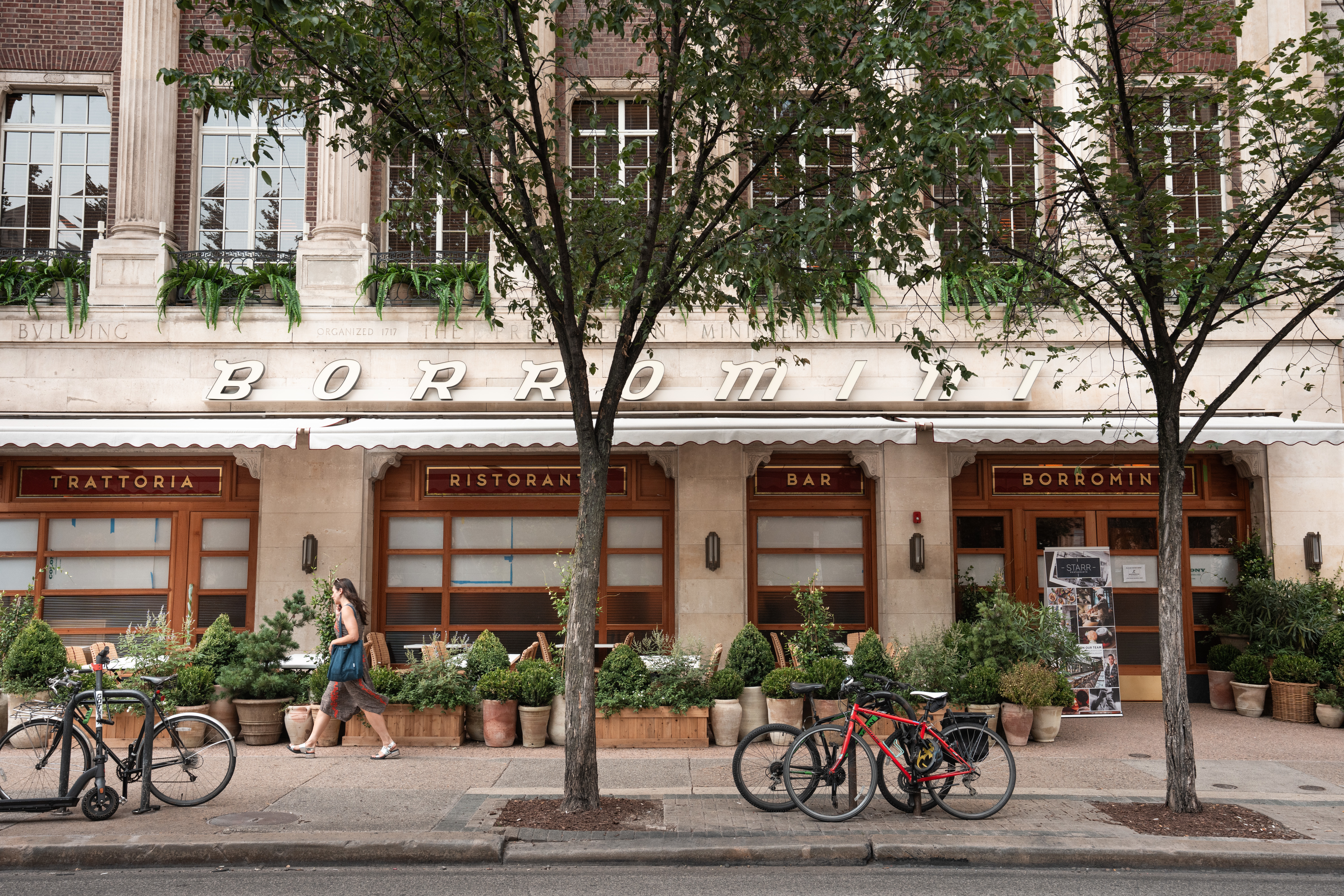
    Borromini, 1805 Walnut St., on Aug. 16, 2025.

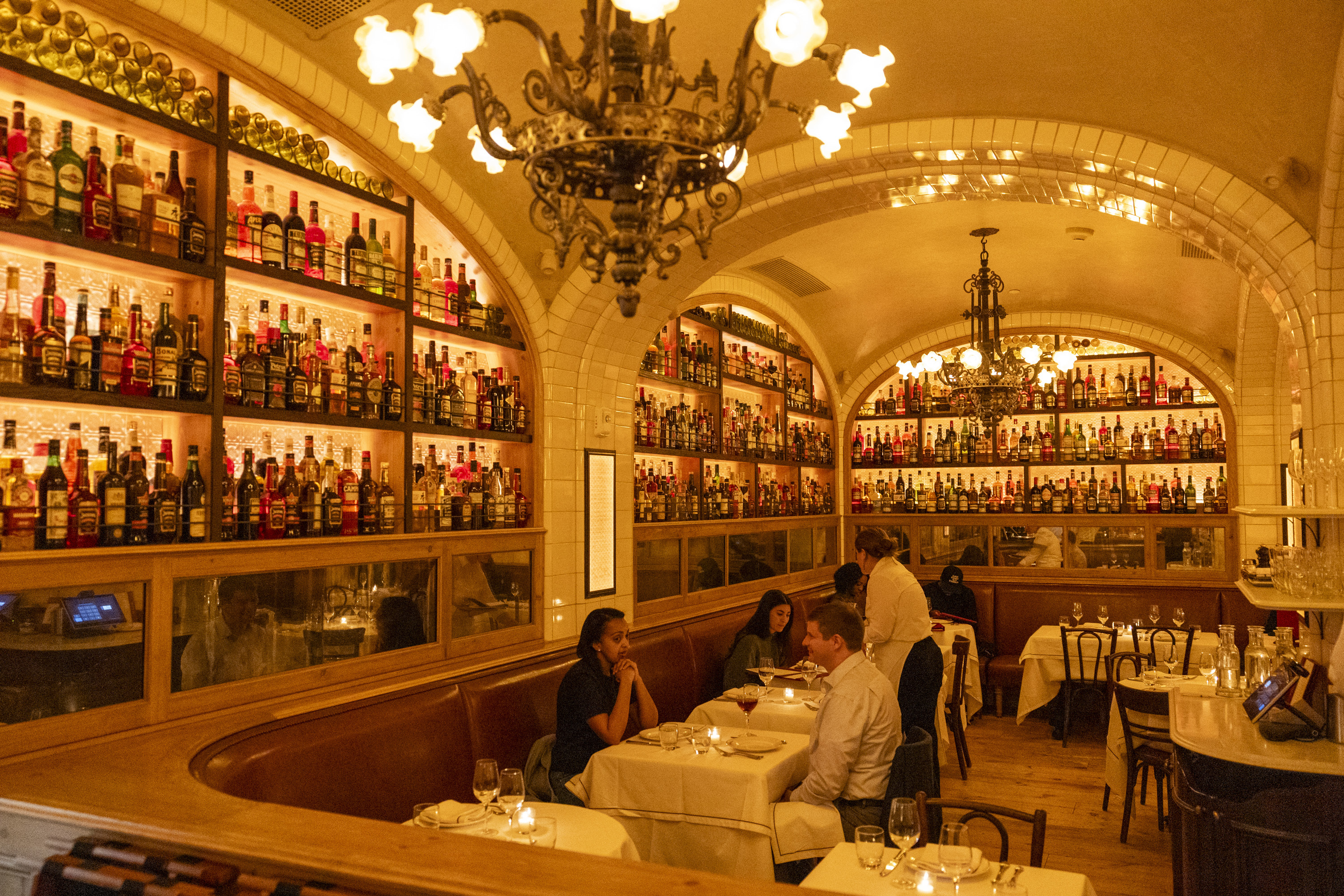
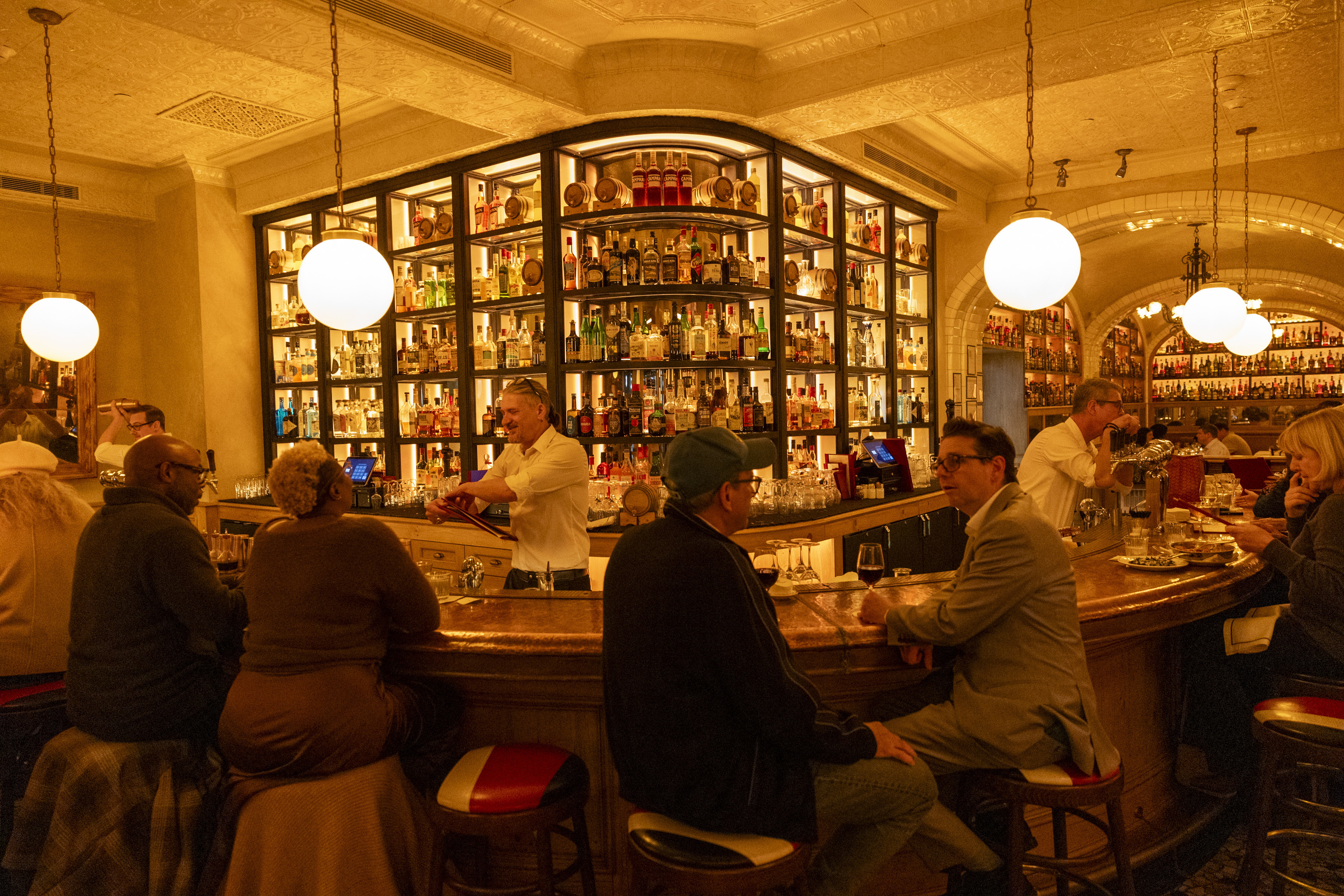
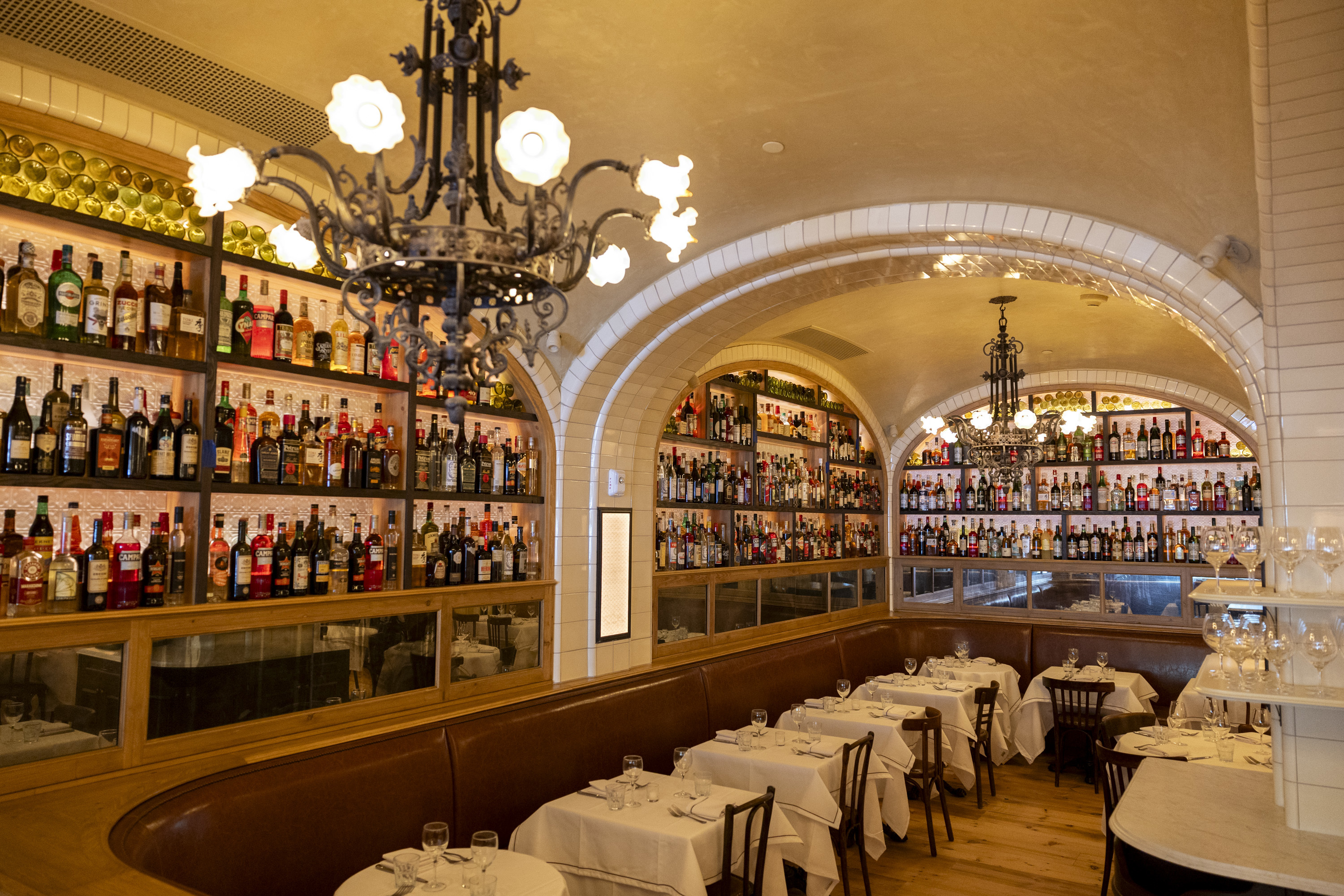
    That’s not the thrill I expected from the marquee dish at this glitzy $20 million, 320-seat trattoria, whose dramatically lit column facade glows red over the northern edge of Rittenhouse Square. Stephen Starr’s first major hometown restaurant in years (and his 41st overall) is arguably the biggest opening in Philly in 2025. He went all out transforming the former Barnes & Noble into what many have aspiringly dubbed “the Italian Parc,” a two-story Roman-themed palace with vaulted ceilings, an intricate stone chip floor, and walls lined with 3,000 bottles. Starr brought on legendary New York restaurateur Keith McNally to design the space (Starr has syndicated McNally’s Pastis bistro to multiple cities since they partnered to revive it in 2018).

    He also enlisted a hive of respected culinary minds to create the menu over the course of 90-plus tastings, with his corporate food team and Borromini’s executive chef, Julian Alexander Baker, collaborating with Mark Ladner, the former chef of New York’s now-closed Del Posto, where Starr first tasted a magical rendition of that lasagna many years ago.

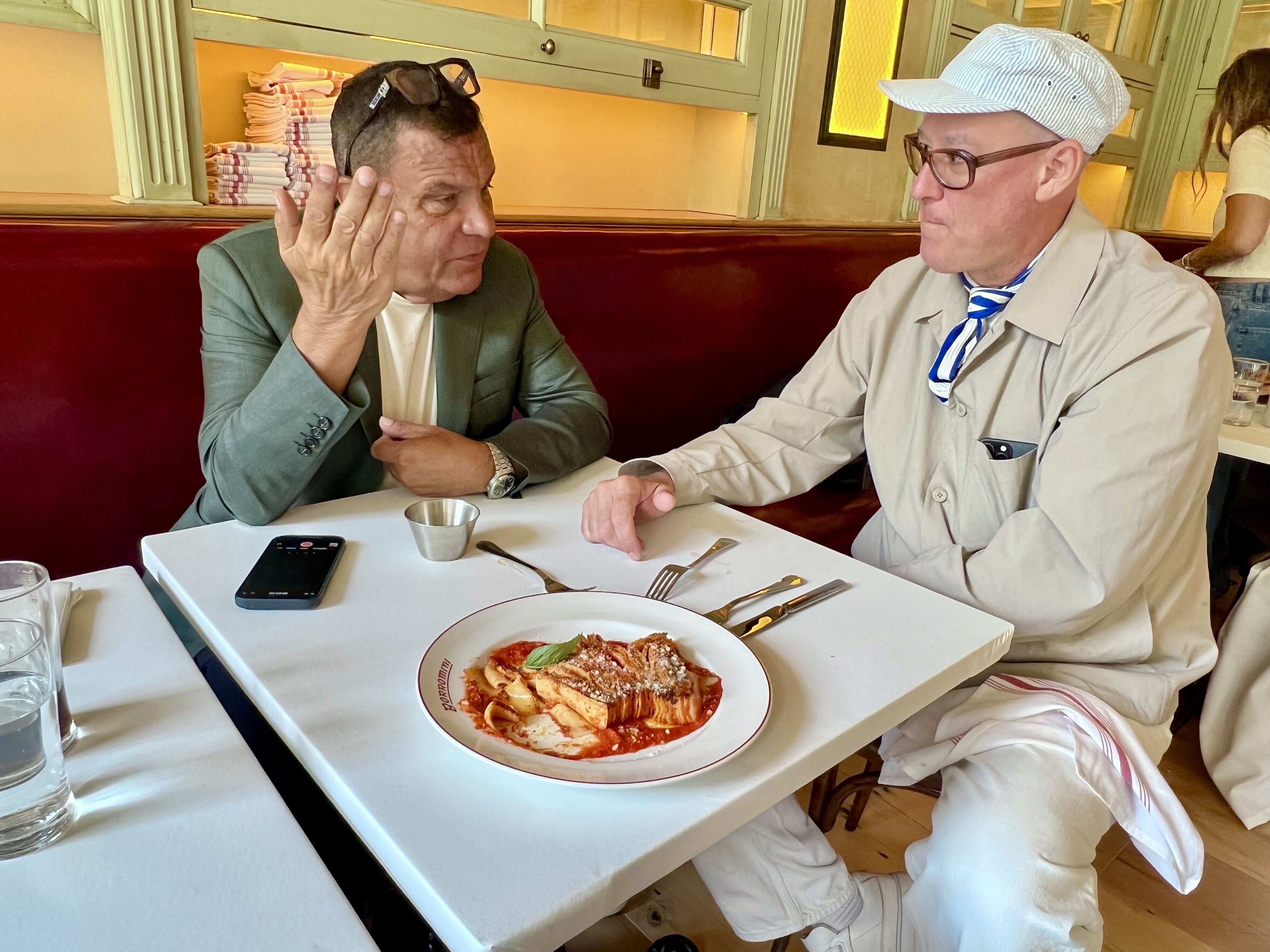
    Stephen Starr (left) and chef Mark Ladner discuss Borromini’s version of Ladner’s signature 100-layer lasagna during a menu tasting at Borromini on July 15, 2025.

    Ladner initially declined to recreate that decades-old hit when first asked. Starr should have listened. But Ladner — now the chef at Babbo, which Starr reopened in New York in October (and where a meaty version of that lasagna is also a menu feature) — ultimately gave in.

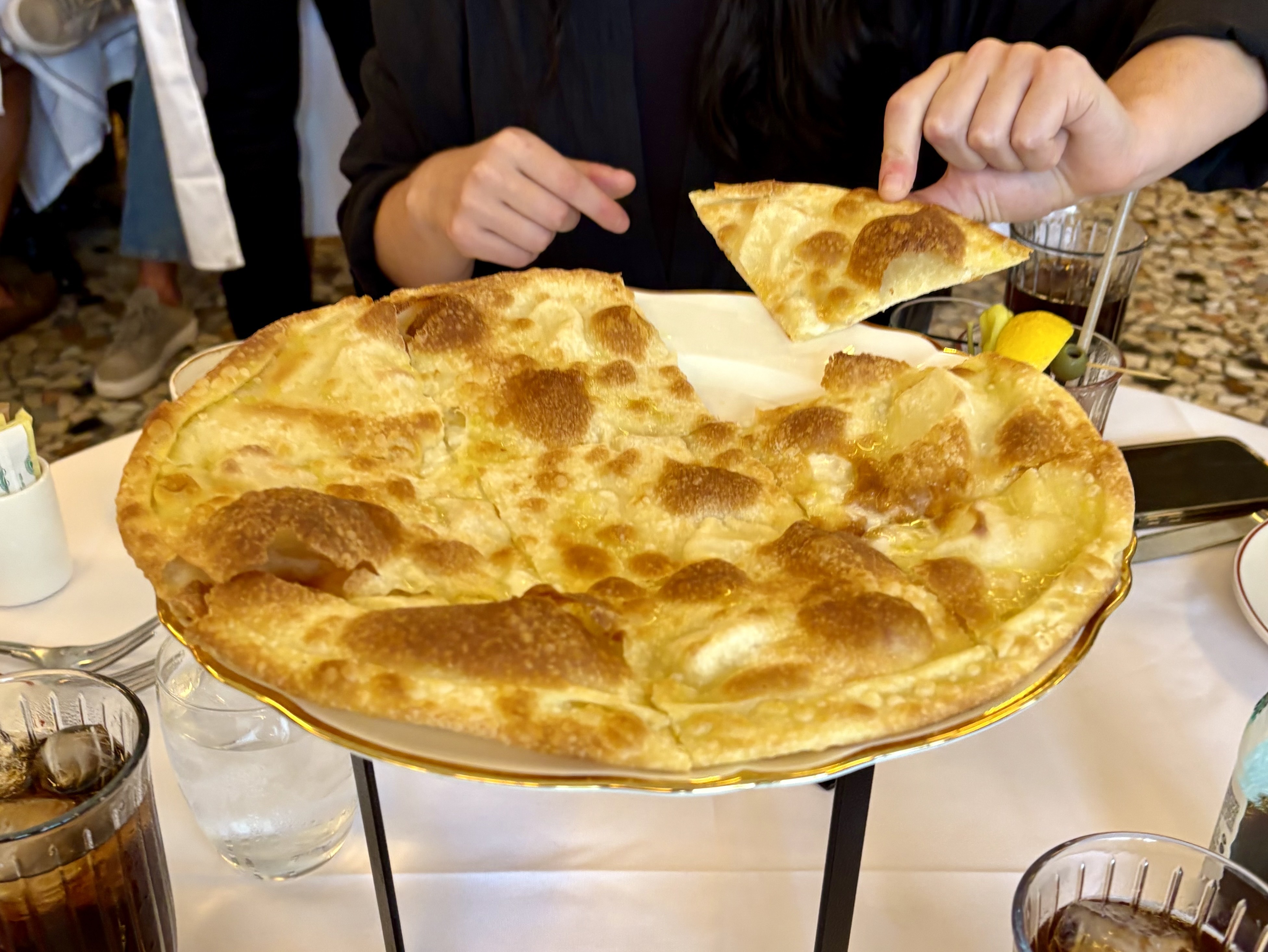
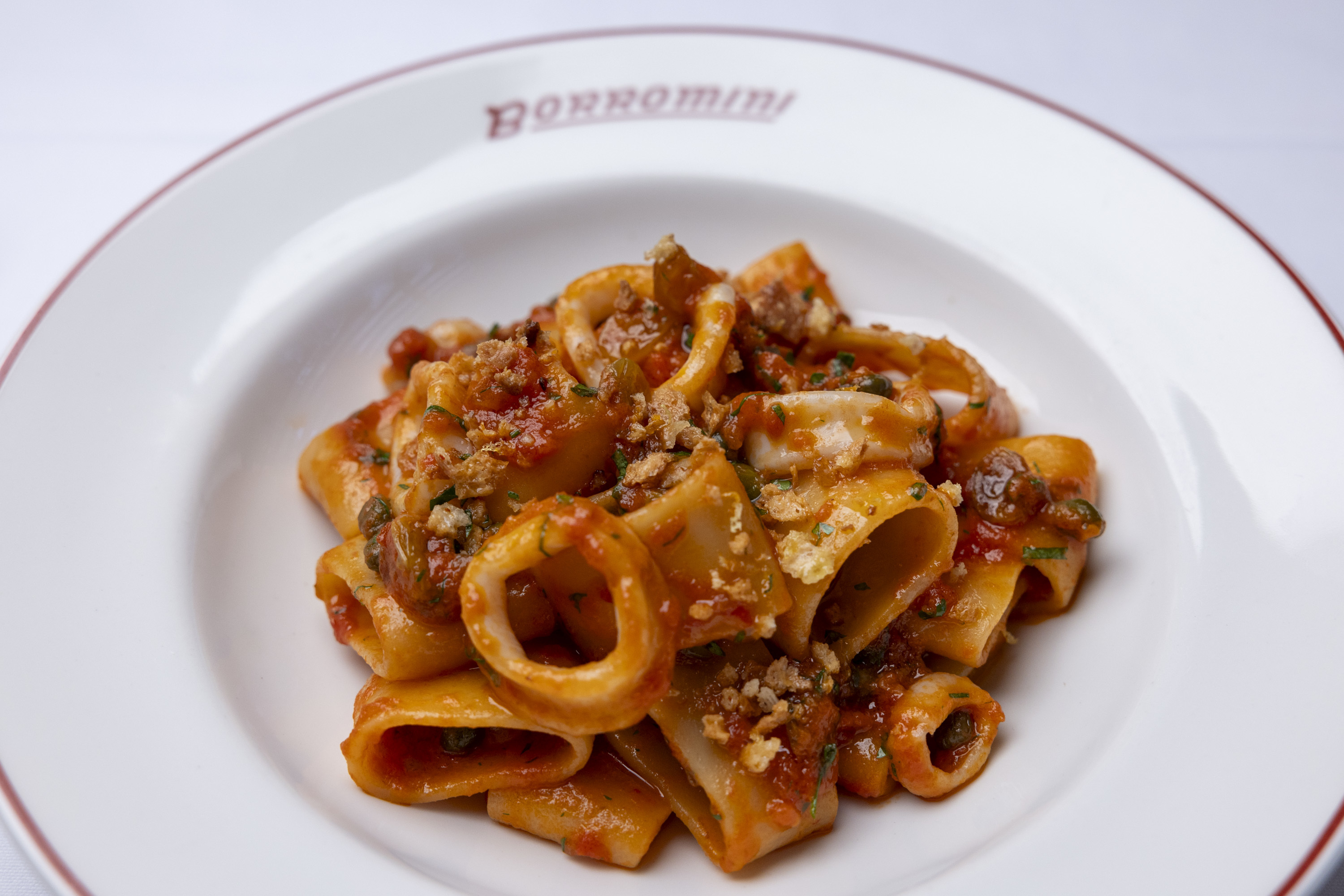
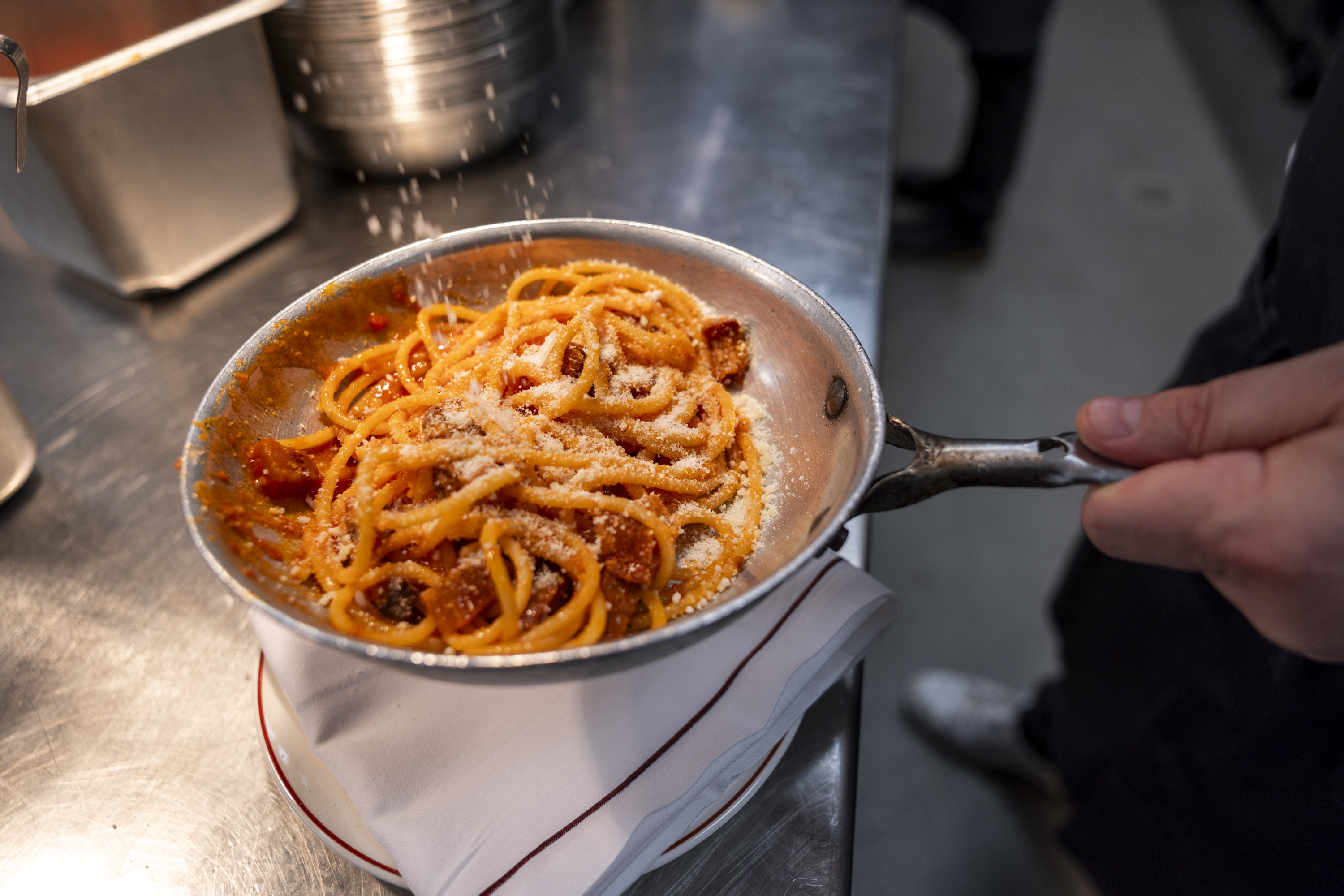
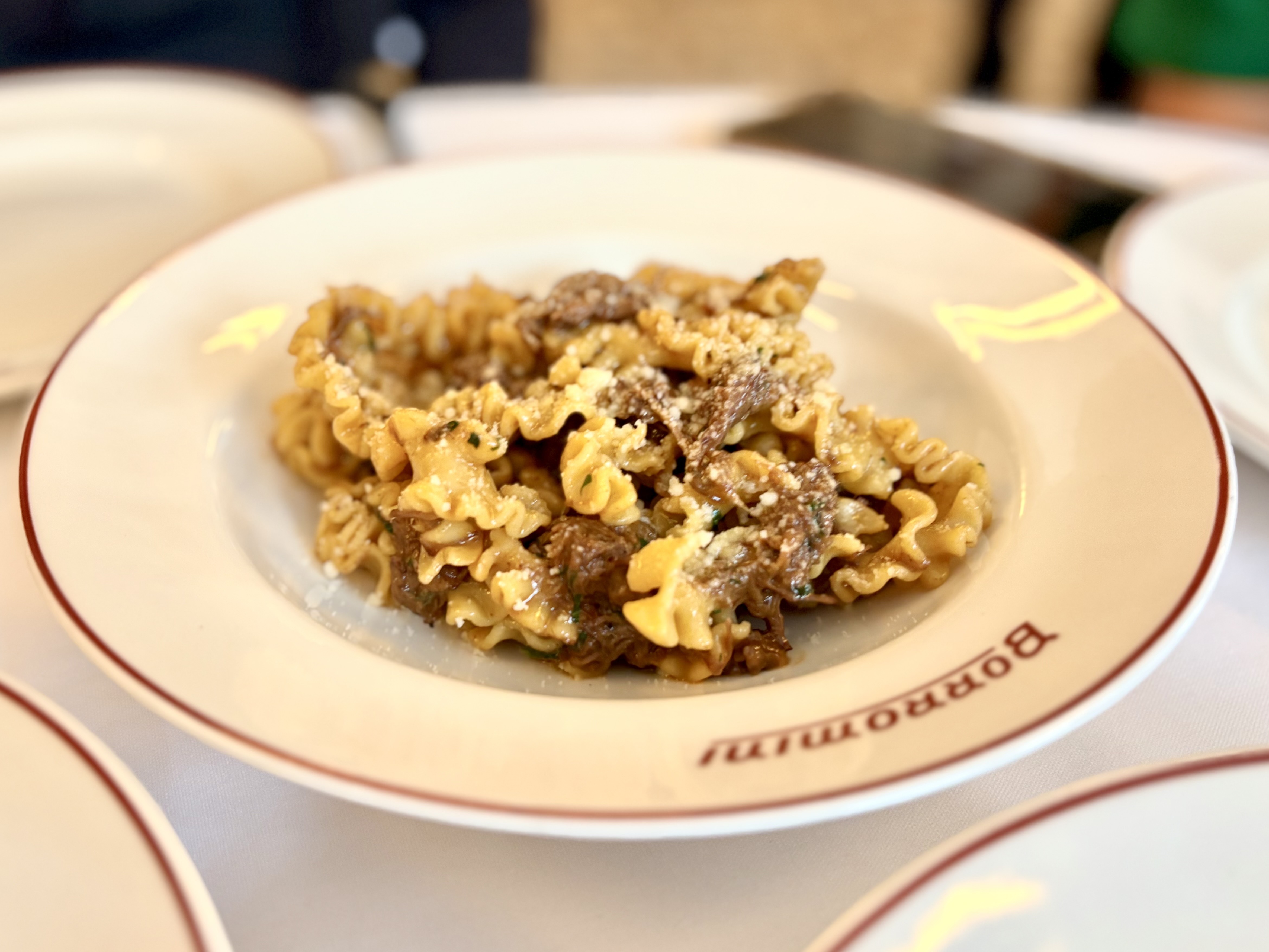
    There are plenty of other, more admirable dishes on the menu here, including the focaccia di Recco from another consulting chef, Nancy Silverton, the LA star with whom Starr runs Osteria Mozza in D.C. The hot crisp of her flatbread’s wafer-thin rounds sandwiching tangy stracchino cheese is the one dish I order every time. I loved the contrast of silky braised oxtail that gathered in the frilly-edged ribbons of the house-extruded mafaldine. And the calamarata pasta loops, paired “Sicilian lifeguard”-style with look-alike rings of tender squid, chili spice, and golden raisins, is exactly the kind of delicious, obscure regional dish that shows how infinitely surprising the world of pastas can be.
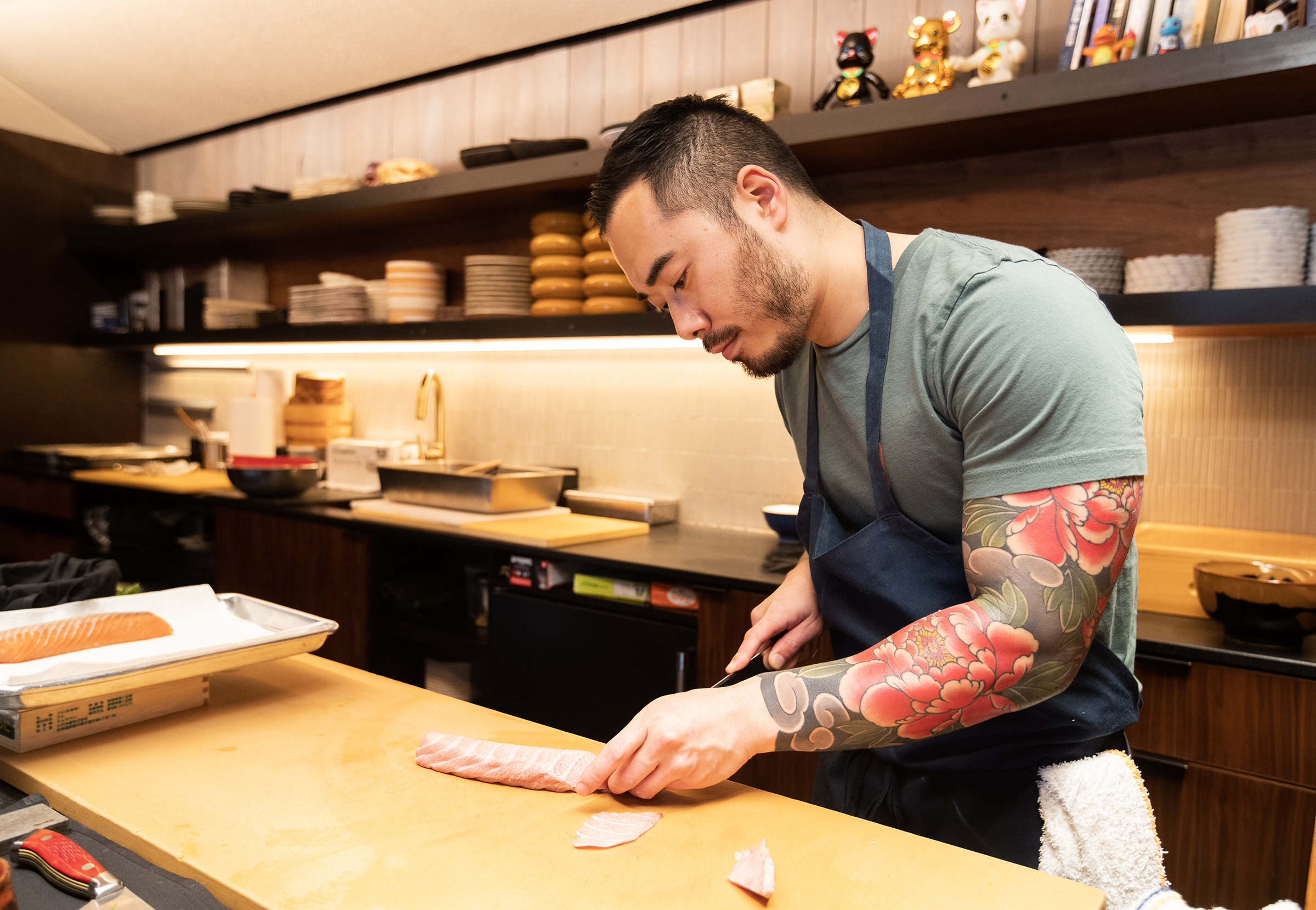
    The focaccia di Recco at Borromini is layered with tangy stracchino cheese.
    The “Sicilian lifeguard” calaramata with calamari and golden raisins at Borromini in Philadelphia, on Thursday, Nov. 13, 2025.

    But Borromini is more about polishing the familiar than unearthing regional quirks. And that big lasagna has become an apt metaphor for why Borromini’s food too often seems off. No matter how grand the ambitions of a dish (or this restaurant in general) may be, stellar Italian food comes down to finesse, touch, and soul — elements that a kitchen-by-committee cannot engineer. In a town with exceptional Italian restaurants in varied styles, not to mention a population with a deep reservoir of red-gravy family nostalgia, the room for error is slim for a dining experience that averages just under $80 per person (before tax and tip).

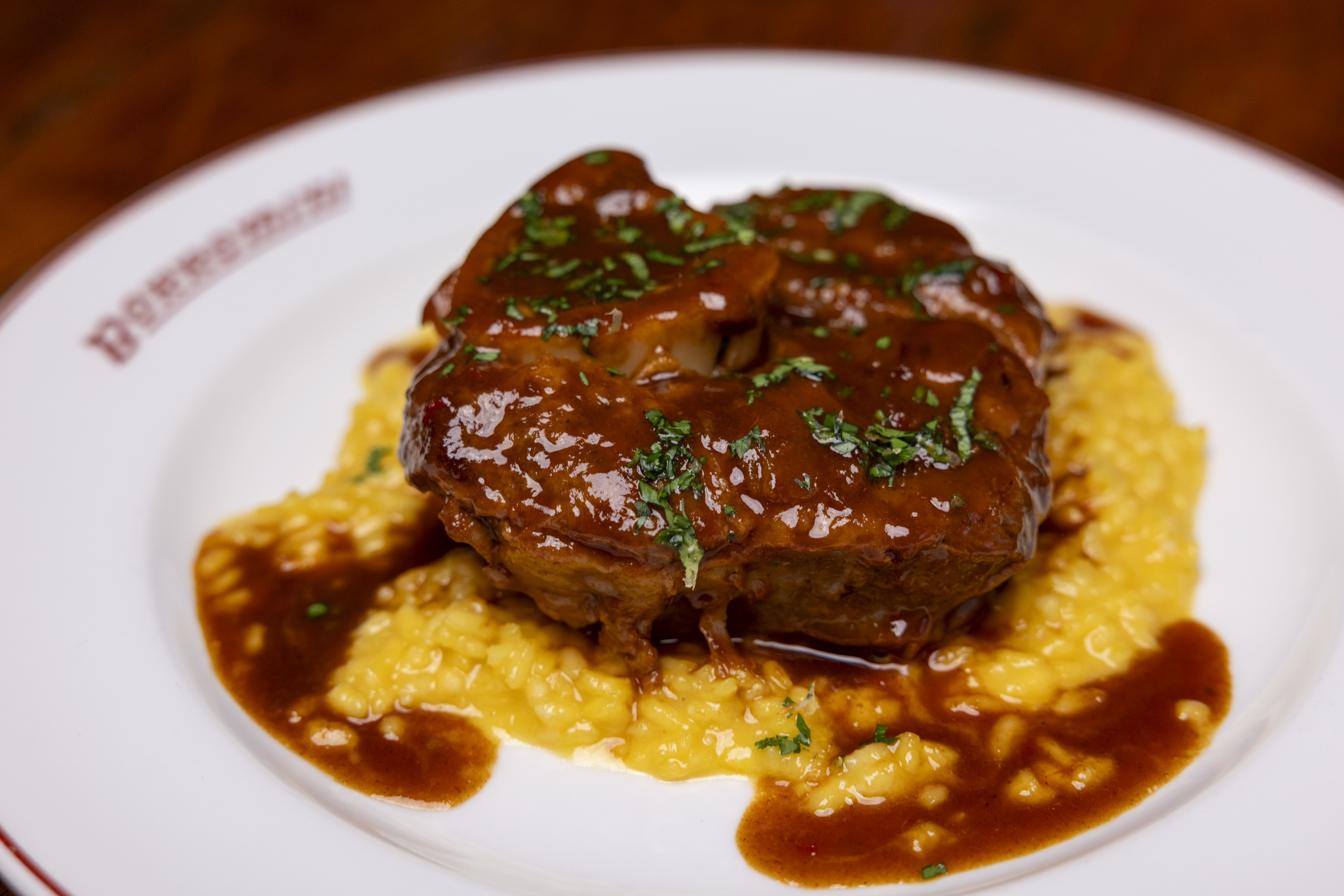
    The crisply fried squash blossoms stuffed with lemony ricotta and the hamachi crudo dressed simply with Meyer lemon and olive oil were tasty, if not necessarily distinctive. The arugula with shaved raw artichokes would be my salad pick. The massive, fork-tender osso buco, a 1-pound shank drizzled with brown jus over saffron risotto with a marrow spoon poking skyward from its bone, is as close to textbook Milanese perfection as Borromini gets.

    The osso bucco at Borromini in Philadelphia, on Thursday, Nov. 13, 2025.

    Borromini’s kitchen, however, struggled with consistency on several other traditional dishes. My favorite of the restaurant’s minimalist Roman-style pastas is the bucatini all’Amatriciana that’s brought to the table in the pan. But will you receive the version I tasted most recently, its simple tomato sauce vividly infused with the juniper- and pepper-sparked savor of properly rendered guanciale? Or will it taste bitter from the scorched nubs of cured pork I encountered at a previous meal?

    The pasta all’Amatriciana at Borromini in Philadelphia, on Thursday, Nov. 13, 2025.
    People dining in at Borromini in Philadelphia, on Thursday, Nov. 13, 2025.

    I might agree with my Italian server, Thomas, that Borromini’s carbonara is one of the best I’ve tasted in Philly, its mezze rigatoni tubes glazed in a golden shine of well-tempered eggs and guanciale fat. Too bad it was already cold when I took a bite the moment it arrived at my table.

    A number of the pastas were notable, including a spaghetti bright with lemon, butter, and pasta water, a deft display of minimalist satisfaction. I was also a fan of the Sardinian gnochetti with blue crab, uni, and tomatoes that brought a burst of seafood savor some other pastas lacked — like the linguine with clams that was virtually brothless, or the lobster spaghetti that was bountiful with crustacean but whose sauce lacked depth. The short rib agnolotti might have been excellent had their dumpling dough not been so thick.

    The cacio e pepe has been consistently disappointing. Its peppercorn-speckled noodles were pasty and dry, with no halo of creamy sauce to spare. The clam pizzetta was a floppy round of spongy dough piled high with chopped Italian clams that radiated raw garlic. The $125 bistecca alla Fiorentina, a 2-pound prime porterhouse centerpiece for sharing, was so achingly oversalted, it wasted an otherwise stellar slab of beef that had been lovingly massaged with confit garlic butter.

    The kitchen’s other stations turned in mixed results, as well. I much preferred the crispy-skinned dorade with salsa verde to the branzino with white beans, which was also horrendously oversalted. The eggplant parm was stiff with too much breading, though the splurge-worthy bone-in veal parm for $72 was good (unfortunately, they’ve since resorted to a boneless version). The lamb chops with salsa verde were more memorable, as was the rabbit cacciatore served in its metal crock with peppers and Castelvetrano olives, a rustic gem inspired by feedback from yet another consulting voice, the legendary Lidia Bastianich.

    The mafaldine with braised oxtail ragu at Borromini.
    Folks dining in at the bar at Borromini in Philadelphia, on Thursday, Nov. 13, 2025.

    It would be wrong to call Borromini a total bomb. Any place with a steady deluge of crowds putting it on target to generate $20 million in annual revenue has to be doing something right, and that would be its La Dolce Vita vibes. These sprawling rooms are a boisterous and glamorous crossroads for a broad swath of Philadelphians out for a night in their finest — fueled by flutes of “mini-tinis” (which my guest gleefully declared “filthy” with salty burrata brine), sweet-side Negronis, and Cynar-spiked espresso martinis.

    Starr’s greatest talent may be his gift for building energetic public spaces that feel as if they’ve always been there. And while Borromini lacks the corner space and open cafe windows that allow Parc in its al fresco moments to become part of the fabric of Rittenhouse Square, McNally has crafted a Fellini-esque stage set of leather booths, honeyed light, and linen-draped wooden tables that feels magnetic — especially the undulating copper bar on the ground floor, where an intriguing collection of 100-plus amari and digestivi awaits.

    All my servers — five different people over the course of my visits — were personable, outgoing, and well-prepared to make smart pairing suggestions.

    I should have stuck with their suggestions to indulge those digestivi with desserts. The airy tiramisu here backfired, its lightweight cloud of whipped mascarpone lacking the richness to counter an overzealous cocoa shower and the wickedly acidic twang of ladyfingers soaked in espresso.

    My favorite finish was sour in the best way possible: a hollowed-out lemon stuffed with sweet-tart lemon sorbetto. You’ve maybe seen something just like this in your neighborhood Italian place, brought in from the Italian frozen dessert powerhouse Bindi. But this was Borromini at its best, transforming something familiar into a better, fresher, more elegant version of itself. It will make you smile even as it puts a pucker on your face.

    The lemon sorbetto served inside a hollowed-out lemon at Borromini in Philadelphia, on Thursday, Nov. 13, 2025.

    Borromini

    1805 Walnut St., 215-596-1000, borrominiristorante.com

    Lunch served Monday through Friday, 11 a.m. to 3 p.m. Dinner served Sunday through Wednesday, 5 to 10 p.m.; Thursday through Saturday, until 11 p.m. Brunch Saturday and Sunday, 10 a.m. to 3 p.m.

    Dinner pastas and entrees, $19-$72.

    Wheelchair accessible.

    There are several gluten-free options, including high-quality gluten-free pasta, which can be substituted with most sauces.

    Drinks: The bar program offers 19 Italian wines by the glass, ranging from $12 house wines to $27 Franciacorta, a deep bottle list with more prestige options, Italian cocktails heavy on the expected spritzes and Negroni variations, and a list of nearly 100 amari and digestivi.

    Menu Highlights: focaccia di Recco, squash blossoms; hamachi crudo; artichoke-arugula salad; pastas (spaghetti al limon, gnochetti sardi with crab, oxtail mafaldine, spaghetti all’Amatriciana, carbonara, “Sicilian lifeguard” calamarata); polpetta; rabbit cacciatore; dorade; osso buco; sorbetto al limon.

    Borromini, the new Italian restaurant on Rittenhouse Square, in Philadelphia, July 29, 2025.
    Some of the first-floor dining area at Borromini in Philadelphia, Pa., on Tuesday, August 12, 2025.
  • The best things we ate this week

    The best things we ate this week

    Lil’ Kahuna burger from Tesiny

    It’s been a year of extraordinary new burgers in Philadelphia, from the McDonald’s Money, the over-the-top double stack of luxury flourishes at Honeysuckle inspired by an Eddie Murphy stand-up routine, to the dessert cheeseburger with raw onions and blue cheese served alongside a chocolate sundae at Roxanne, to Ian Graye’s next-level vegan bean and smoked mushroom burger at Pietramala. Now seafood lovers can rejoice because the Lil’ Kahuna has made the scene at Tesiny, Lauren Biederman’s stylish new oyster bar in the Dickinson Narrows neighborhood of South Philly.

    Perhaps you’ve had a tuna burger before. This is not one of those typically fishy hockey pucks. That’s because executive chef Michael Valent blends the richness of high-quality bluefin tuna belly with hand-minced Iberico pork shoulder, which lends both a fatty savor to the mix, as well as a meaty crumble that lets the patty take on the caramelized sear of a backyard burger over the restaurant’s charcoal grill. Set in a pillowy soft sweet potato bun from Mighty Bread with shredded lettuce, melted American cheese, and a special mayo blended with apricots and serrano chilies, the burger is so meaty, you’d be hard-pressed to guess that it wasn’t beef.

    It is absolutely that savory, but also a touch lighter on the palate, with an almost fruity character from the tuna that swims up to make itself known, in the best way possible, on the finish of each bite. It’s a smart use of trim from two standard items on Tesiny’s menu — a bluefin crudo and a fantastic pork chop — which explains why it’s a nightly special limited to 8 to 12 burgers a night. I predict it’s going to become so popular, though, that Lil’ Kahuna fans may rally for it to become a fixture on its own. Tesiny, 719 Dickinson St., 267-467-4343, tesiny.com

    — Craig LaBan

    The chicken cutlet at Wine Dive, 1534 Sansom St.

    Chicken cutlet at Wine Dive

    If you call your bar a “dive bar,” is it really a dive bar? Especially if the beers, wines, and cocktails are playfully irreverent and unpretentiously sophisticated? Probably not. But the new Wine Dive, in a former nail salon off 16th and Sansom in Rittenhouse, is a fun, boisterous hangout nonetheless, with a tongue-in-cheek attitude and a killer menu that’s many, many levels above the dirty-water hot dog/reheated pizza level at a typical dive.

    Chef Scotty Jesberger goes for hearty comfort with his shrimp Lejon, roast beef sandwich, loaded baked potato, but my go-to is an almost impossibly crispy chicken cutlet for the low, low price of $10, served with what they call antipást. It’s a punchy, old-country mix of whole cherry peppers in hot oil, sliced banana peppers, capers, fresh sliced garlic and granulated garlic, slivers of roasted red peppers, whole green olives, specks of cauliflower and artichoke heart, all bound together with olive oil and cherry pepper brine and artichoke water. Everything is designed for late-night eating; the kitchen stays open until 1 a.m.

    — Michael Klein

    Wine Dive, 1534 Sansom St., instagram.com/winedivephilly

    Chef Shadee Simmons’ Olive Oil cake is drizzled with delectably sweet raspberry and blueberry compote with a light dusting of powdered sugar.

    Olive oil cake from chef Shadee Simmons

    While fashioning a ceramic vessel at Duafe Natural Hair Salon’s “A Lump of Clay,” event on a recent Friday evening, I snacked on mini crab cakes, oxtail sliders, and a bit of beet salad courtesy of Chef Shadee Simmons, the man behind Khyber Pass Pub’s New Orleans-style menu. (You can try his food on the regular at the Old City bar.)

    As I prayed the walls of what I hoped would be a sage burner didn’t collapse, dessert was served. All of a sudden, my poor clay-making skills stopped mattering. The culinary highlight of the evening was upon me: The olive oil cake reminded me of fluffy, not-too-sweet cornbread. The sweet blueberry-raspberry compote drizzle was the perfect consistency. And the cake was covered with a flurry’s worth of powdered sugar — a taste of fall and winter in one bite. Chef Shadee Simmons, Foodheadz Philly, foodheadz20@gmail.com, instagram.com/chefshadee. Dessert available on request.

    — Elizabeth Wellington

  • I went to hoagie boot camp to prepare for the ultimate Philly sandwich smackdown

    I went to hoagie boot camp to prepare for the ultimate Philly sandwich smackdown

    I should have read the fine print before I agreed to participate in a recent “Hoagie Throwdown” at Other Half Brewing in Fishtown, produced by my friends at the Delicious City Podcast. I assumed they’d drafted me simply to be a judge and taste their lineup of sandwiches from 20-plus restaurants vying to be Philly’s hoagie champ.

    Eating hoagies is something I’m very good at. I’ve chronicled the craft and culture of Philly’s greatest sandwich for more than two decades, from the oregano-dusted Italian classics and veggie-hoagie underdogs of South Philly to the “meat wrap” monsters of Delco and the one-meat, never-lettuce cousins of the Norristown Zep.

    Two wrestlers, including one in a hot dog suit, tussle at a match held at Other Half Brewing in Fishtown where hoagies were also in competition.

    But I was not meant to praise hoagies. I was summoned to the wrestling arena at Other Half Brewing to make them, something I’d actually never done before in a city where the meat slicer’s whirring hum is the lunchtime lullaby at a thousand neighborhood delis.

    “Sorry if I wasn’t completely clear in my early communication,” said Eli Kulp after I’d reached out with concern a few days before the event. The former Fork and High Street chef-turned-podcaster thought it would be hilarious for me to participate in an Iron Chef-style “celebrity” hoagie-making scrum inside a wrestling ring against two still to-be-determined foes. “We want this to be fun for you.”

    I couldn’t back out now. But I also wasn’t going down without a fight —and I needed help. A hoagie whisperer. A cold cuts QB coach. A seasoned pro to train me in the sweet science of hoagie-making.

    I knew just who to call: Cara Jo Castellino, the sandwich queen of Fishtown’s Castellino’s Italian Market.

    The owners of Castellino’s Italian Market in Fishtown, Matthew Barrow and Cara Jo Castellino, prepare to run Inquirer Restaurant Critic Craig LaBan through his paces at Hoagie Boot Camp.
    The exterior of Castellino’s in Philadelphia.

    “You should come over to the shop … and make a test hoagie if you’d like to practice,” she told me.
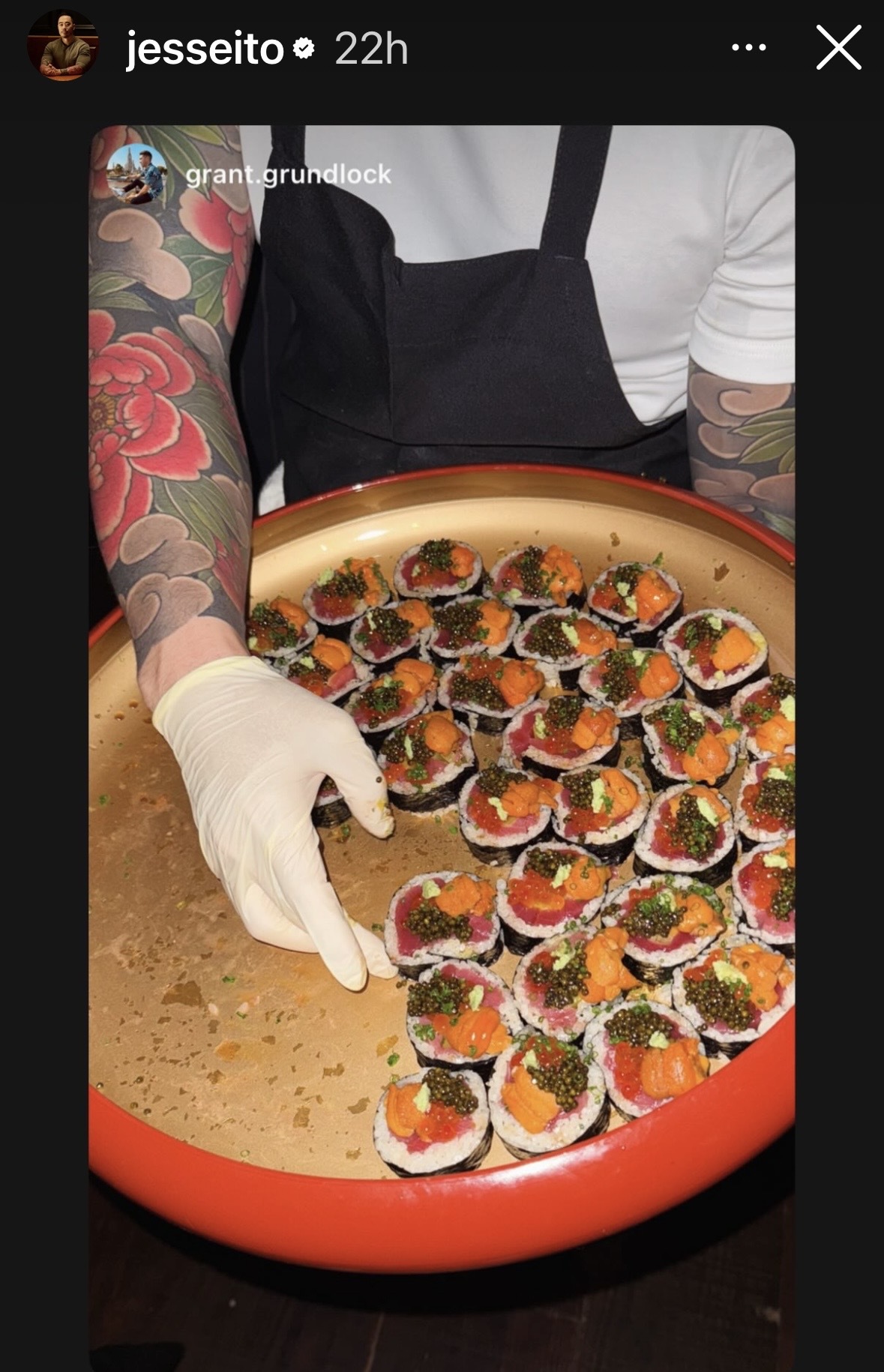
    Hoagie boot camp? That is exactly what I needed! Sign me up, Cara Jo!

    Two days before the event, I stepped inside her little market at the corner of East Palmer and East Thompson Streets, and inhaled the heady aroma of cured meats and pickled peppers. Castellino was waiting. She handed me a black apron. I nervously tied it on as she led me into the narrow space behind the tidy counter, where a friendly crew was already in the lunch-rush groove: her husband and co-owner Matthew Barrow peeling sheer pink rounds of spicy capicola off the slicer; Pat Caviness hand-slicing mountains of ripe tomatoes; A.J. Jones busily assembling hoagies on the board; and Derrick Bobb (“We call him Bobb”) working the register with his unflappable charm.

    Hoagie architecture 101

    The life cycle of every Italian hoagie begins and ends with olive oil, Castellino says, but be careful to stripe the bread side-to-side (as opposed to lengthwise) so it doesn’t pool in the crease of the roll’s hinge and break: “You’ve got to protect the hoagie’s hinge at all costs … When your hoagie’s hinge breaks, it’s very sad,” she says.

    The sandwich is then built atop the bottom of the roll, so that when it’s closed, every bite brings a consistent layer of each ingredient.

    More roll protection comes from provolone rounds layered down like shingles. Castellino prefers mild provolone because its creaminess buffers against the salty meats to come. She deftly forms the slices of soppressata and mortadella into rosettes, whose bouncy pink curls trap flavor-boosting oxygen between their folds. “You don’t want a dense wad of meat,” she says, arranging gossamer kerchiefs of imported prosciutto over top for the finish.
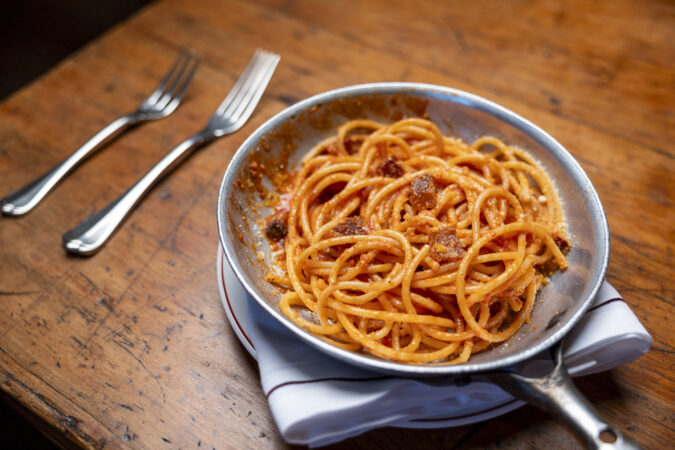
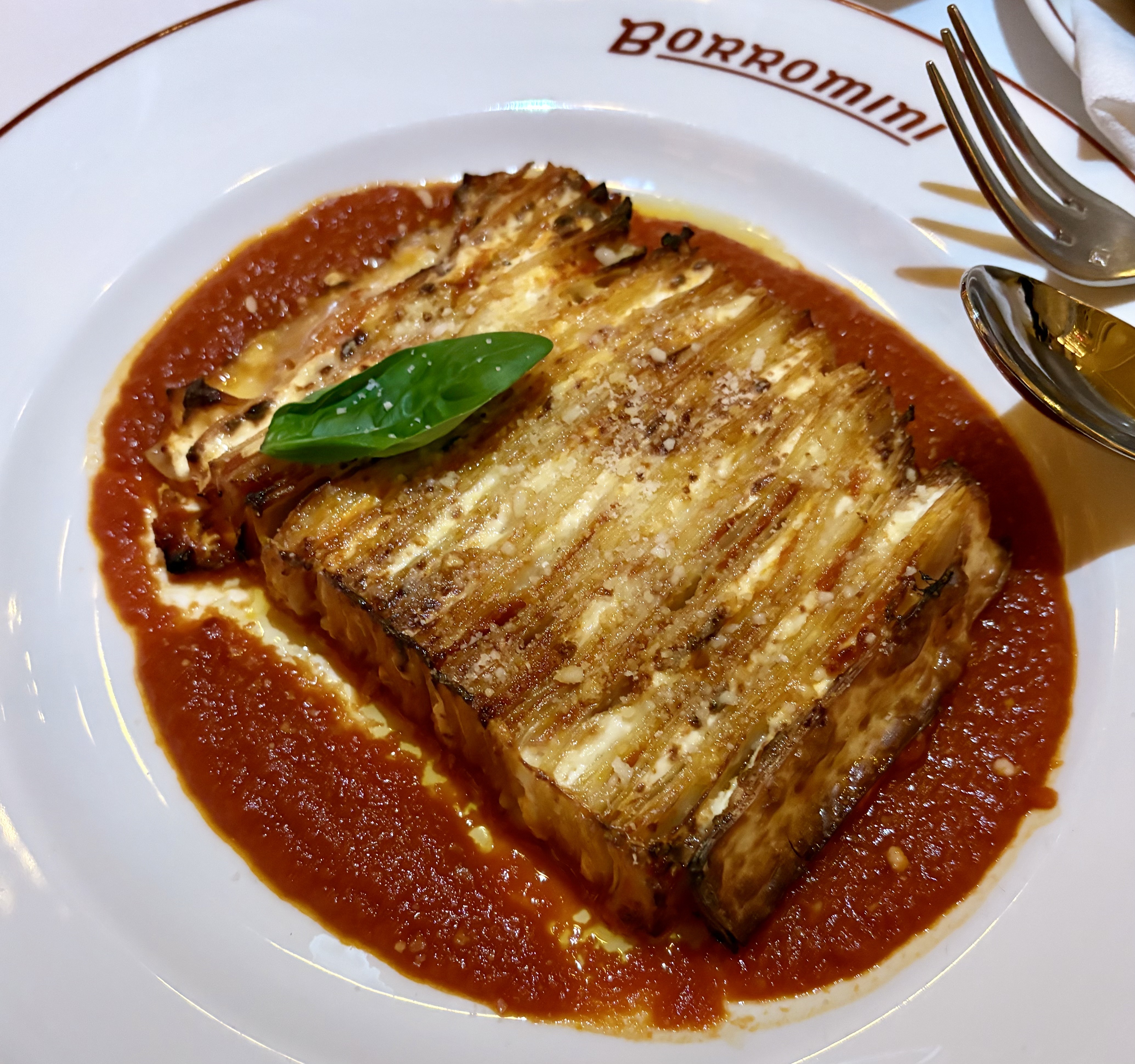
    “Three is the ideal number,” she says, referring to the quantity of different meats preferred for contrasting flavors and textures.

    Castellino’s fingers move swiftly atop each hoagie, layering the tomato rounds, sculpting tufts of arugula (prized for its peppery bite and durability), then seasoning it all with more oil and red vinegar “like a salad.”

    “Tuck her in!” she says, deftly coaxing the ingredients deeper into the roll with the serrated knife’s blade, slicing the sandwich in half and then rolling it inside paper like a lovingly swaddled baby. It’s fastened shut with a piece of tape. Tuck, roll, snap! Tuck, roll, snap! She makes it look so easy.

    The meticulous layers of an Italian hoagie are revealed at Castellino’s Italian Market in Fishtown, built by “trainee” Inquirer restaurant critic Craig LaBan.

    My turn. A mess. Too much olive oil immediately sogs up my hinge. My provolone is layered the wrong direction. My cold-cut rosettes are more crumpled balls than fluffy flowers. I bunch up the tomatoes, leave too many inedible stems on the banana peppers, then pile on so much arugula it looks like I’m trying to tame a wild bush. And whoa … the vinegar comes out in a gush!

    “Once you do 100 of them, you’ll get the hang of it,” deadpans Castellino.

    She patiently coaches me through another classic Italian; the fiery Adronos layered with spicy meats, peppercorn Asiago, and cherry peppers; the mellow Franklin with turkey, cheddar, and sweet bacon jam; a Caprese with milky mozzarella, juicy tomatoes, sweet balsamic, and silky ripples of prosciutto. Only by the last one do I finally manage to wrap a sandwich without half its crust hanging out. I feel encouraged but humbled.

    “I don’t think I’m cut out for the lunchtime pressure of this hoagie counter,” I say as I gratefully hand back my apron.

    “Nah, you absolutely killed it!” says Castellino, who, like any good coach knows just when to pump up her student for a big moment. She offers a parting secret: “Make exactly what you want to eat. People can feel the love and affection that goes into making a hoagie you yourself would want to devour.”

    Three hoagies from Castellino’s Italian Market built by “trainee” Inquirer Restaurant during a stint at Hoagie Boot Camp.
    The Hoagie at Castellino’s in Philadelphia on Sept. 10, 2024. Food Styling by Emilie Fosnocht

    Sandwich smackdown

    I left hoagie boot camp with some genuine new skills. But would they be enough to spin gold from whatever ingredients awaited me on the competition table? Eli Kulp, channeling his best Vince McMahon impresario swagger, encouraged me to bring my own secret ingredient for added assurance: “If you’re not cheating in wrestling, you’re not trying!” I took the advice to heart as I stashed a few surprises in a small cloth bag that I hid beneath my black cape.

    I arrived to the arena incognito, my face obscured by a Zorro mask and a wide-brimmed hat. Kulp’s words rang loudly in my head as I stood ringside and watched the Pro Wrestling Entertainment talent spar with an unlikely food theme: A bug-eyed, psychotic pizzaiolo named Luigi Primo blinded his competitor with spinning rubber pizza dough, while the Sandman (of Extreme Championship Wrestling fame) whacked the same guy across the back with a kendo stick with hoagie rolls taped around it. I watched a large man in a hot dog suit soar from the ropes to flatten his sweaty foe in the middle of that ring, sending the beer-soaked crowd of several hundred fans into a bloodthirsty roar.

    To say I was a tad apprehensive as the hoagie table was set up in the middle of that same ring — with a wooden board of mystery ingredients for my own match — would be an understatement.

    Reluctantly, I stepped into the ring with my competitors, the “cannoli-smashing bar-knuckle brawler” also known as FeedingTimeTV (aka Dave Wesolowski) and influencer “Doug _Chase_U,” who instantly began tossing our prosciutto into the crowd.

    The ensuing mad scramble for ingredients was only the first of my concerns. I really began to sweat beneath my mask when Chase_U suddenly tagged in one of Philly’s best hoagie pros — Jason Okdeh, aka “Gabagool_Papi” of Farina di Vita — to commandeer his roll.

    Only lightly shook, I snapped back to the ingredients before me, remembered my training, and stayed focused on my fundamentals. I quickly gathered three different meats, provolone, tomatoes, onions, banana peppers, and lettuce. But … where was the olive oil?!

    The table was set with bottles of brown mustard, vinegar, and two kinds of mayo, including truffled mayo — the use of which should trigger automatic disqualification. But building my entry without olive oil, the life-giving elixir for any hoagie, would be like trying to play a stadium concert with your amp unplugged.

    That’s when I knew it was time. I opened my cape, reached into my bag, and unveiled my secret weapon to the crowd: a jar of hoagie relish.

    The secret ingredient

    I lathered the spicy pepper spread on both sides of my rolls, aiming to impress the judges with a flash of juicy heat while also protecting the hinge. I tucked in my chosen ingredients, rolled my hoagies into shape, and delivered my tray to the judges: chef Bobby Saritsoglou of Stina (the recipient of multiple favorable restaurant reviews by yours truly), anonymous Instagram food critic Djour.philly, and Maria Maggio of Food Trade News.

    They nibbled and scribbled while I waited, no longer feeling the squeeze. But suddenly I heard my name: I was the winner, with just two points more than Cannoli Crusher Dave.

    Djour praised my hoagie’s “great ratio of salad to meat to wet fixins … (which) may or may not have been legally added.”

    “We wanted to celebrate the Philadelphia hoagie,” wrote Saritsoglou. “And yours checked all the classic boxes (minus the olive oil, lol). My only regret was not jumping into that ring.”

    Craig! Craig! Craig! Craig!

    Was this crowd seriously chanting for me? Yes, they were! The emcee was holding a trophy high and calling back me in, and so I bounded up between the ropes, careful not to trip on my cape, and began babbling through a delirious ringside interview to recap the battle. Was I “having fun?” Oh yeah, you bet, as I took a tart and hoppy swig of Other Half’s Yuzu Queen from the chalice of my trophy.

    It only felt real, though, when I spotted Castellino and her husband Matt in the crowd visibly cheering. I leaned into the mic and publicly thanked my hoagie whisperer in a Stallone-like croak of joy: “We did it, Cara Jo!”

    It’s best for all I now graciously leave the sandwich-making stage to the professionals. No way would I ever wish to replace old favorites like Castellino’s, Lil’ Nicks, Pastificio, Farina di Vita, or upstart chef Reuben “Reuby” Asaram, whose hot pink “Undertikka” roll stuffed with Indian chicken tikka salad won the pro title — a reminder that Philly’s creative hoagie life force is infinite.

    But for this one glorious afternoon, I put my critical cold cuts on the line. I paid tribute to Philly’s sandwich gods, fought to the crusty finish, and earned the title of “Hoagie Hero.”

    Inquirer Restaurant Critic holds his “Hero of the Hoagie” trophy high inside the ring after winning a celebrity hoagie making competition held by the Delicious City Podcast at Other Half Brewing in Fishtown.
  • The 76 scouts’ favorite spots that didn’t make the list

    The 76 scouts’ favorite spots that didn’t make the list

    Seventy-six sounds like a lot of restaurants — until you consider just how many gems there are in the Philly area. We whittled our selections down to the main list, but there were still some scouts’ favorites that didn’t make the cut.

    Amá

    The emergence of chef Frankie Ramirez and his thrilling vision of modern Mexican food at Amá is one of the best food storylines of 2025. His seasonal tlayuda topped with a summer sunburst of squash blossoms over epazote pesto and Oaxaca cheese is one of the most beautiful things I’ve eaten all year. The milpa salad is a poetic tribute to the cornfields of his youth and may be the dish that finally gets Philadelphians to love eating bugs. Ramirez’s large-format sharing centerpieces — lamb neck birria, an entire octopus flashed over the wood-fired grill — are showstoppers that offer a glimpse of contemporary Mexican cooking this city has yet to see. The sunny corner room with white walls and a view of the kitchen’s fiery hearth channels the minimalist-chic vibe of its new building amid the construction boom along Front Street in Kensington-Fishtown, but the large space has also posed persistent challenges for service that need more polish on a number of fronts before Amá can reach its true potential. — Craig LaBan

    Amá, 101 W. Oxford St., Philadelphia, Pa. 19122, 215-933-0707, amaphl.com

    The seasonal tlayuda at Amá.

    Artisan Boulanger Patissier

    It’s been three years since Andre Chin — who co-owned Artisan Boulanger Patissier in South Philly alongside his wife, Amanda Eap — died following a long battle with prostate cancer. But his presence is still felt everywhere: from the baker and pastry artist’s delectable croissants to the framed portrait of him that hangs over the register area, to the handwritten cards and drawings addressed to Eap and taped to the glass. With the help of their two sons, the couple’s James Beard-nominated Cambodian-French cafe continues to stand strong as a community pillar with a devoted fan base churning in for signature cronuts, Vietnamese iced coffee, and over-stuffed banh mis served on perfectly fluffy baguettes. Try the almond sticks, which still draw a line on weekend mornings at this 23-year-old cash-only spot. — Emily Bloch

    Artisan Boulanger Patissier, 1218 Mifflin St., Philadelphia, Pa. 19148, 215-271-4688, instagram.com/artisianbakeryphilly

    Artisan Boulanger Patissier, 1218 Mifflin St.

    Chon Tong

    Located on Vine Street — practically on the expressway — Chon Tong is an unlikely place to find some of Philadelphia’s best Thai food. And yet, their hoi tod, a golden-edged mussel pancake; tum tod (imagine the best, puckeringly sweet-and-sour papaya salad but fried); and jay tod, speckled with juicy-sweet corn kernels and crunchy tofu crackling with crevices, are only three tiny precursors to the spectacular dishes emerging from a kitchen that specializes in Central Thai recipes. Ignore that Chon Tong advertises itself as a Thai dessert kitchen. You’re here for the beefy boat noodles, the moo ping — unctuous, barbecued pork sausages pressed into patties and strung onto skewers — spicy chicken wings, and curries that skew sweet (not a bad thing). — Kiki Aranita

    Chon Tong, 1439 Vine St., Philadelphia, Pa. 19102, 215-394-0121, chontongthai.com

    Hoi Tod is a mussel pancake served over gently stir-fried bean sprouts at Chon Tong.

    D’jakarta Cafe

    Although the Indonesian food scene in Philly — like in its native Indonesia — represents a huge amount of regional variation, most restaurants offer certain dishes recognized as national staples. This is where D’jakarta Cafe, near 16th and Ritner Streets, truly excels. While it specializes in the flavors of Jakarta and West Borneo, nearly every iconic Indonesian dish is available and executed to near perfection. An order of both their nasi rendang and nasi kuning yields an embarrassment of riches: beef rendang, wonderfully crisp fried chicken, ikan bilis (fried anchovies), and turmeric-stained rice. Not to mention their assortment of noodle soto (soups) and a char-grilled pompano (ikan bakar) dressed with sambal that will convince you there’s no better way to eat fish. For dessert, don’t miss the jus alpukat, an avocado-chocolate smoothie that’s a common drink in tropical Indonesia. But instead of the typical drizzle of chocolate syrup, D’jakarta’s rendition resembles a milkshake, topped with a scoop of chocolate ice cream and a Pirouline wafer masquerading as a straw. — Jasen Lo

    D’jakarta Cafe, 1540 W. Ritner St., Philadelphia, Pa. 19145, 215-463-8888, djakartacafephilly.com

    Small egg noodle, big egg noodle (right) and bowls of meatball soup at D’Jakarta, 1540 W. Ritner St.

    El Primo

    This 17-year-old Norristown institution started off as a Mexican specialty grocery store, eventually expanding into prepared food. Last year, it moved to a bigger location next to the town’s DMV. In addition to the grocery store stocked with Mexican chiles, herbs, and a section of vaquero boots, the new locale includes a bakery and carniceria. But there’s also a vibrant dining room covered in murals and featuring bespoke wood seating — a departure from the picnic tables El Primo used in the past. Diners are greeted with a bowl of chips covered in creamy, spicy refried beans; mosey over to the salsa bar for any additional accoutrements. Latin music on the speakers and friendly staff make for a festive dining experience. El Primo’s menu is vast, but standouts include the mole poblano, with its hints of sweetness and spice, as well as the flavor-packed tacos árabes and perfectly cooked lengua tacos. — Ximena Conde

    El Primo, 1700 Markley St., Norristown, Pa. 19401, 610-279-2610, elprimoproduce.com

    Gouldsburger’s

    Yes, Gouldsburger’s original location, in Haddonfield, is the centerpiece of an aspiring franchise empire that has already crossed the Delaware River, opening locations in the territory of already-established steak shops. But have you tasted the sandwich? Have you bitten into that soft, everything bagel-seasoned roll, born in a Moorestown bakery? Usually the goal is to bake a roll that is crusty on the outside and soft inside, but in breaking the rules, Gouldsburger’s separates itself in the best possible way. In the embrace of that roll, tender and carefully griddled ribbons of rib-eye steak marry beautifully with an even spread of yellow Cooper Sharp, composing a symphony of a sandwich that’s well-balanced and not overstuffed. Another standout is the buffalo chicken cheesesteak — but be prepared for a healthy dose of spice sprinkled on the diced chunks of chicken breast. They’ll have you breaking a sweat even on a brisk November afternoon. It’s further proof that Gouldsburger’s can compete with the slew of top-notch offerings across the river. — Tommy Rowan

    Gouldsburger’s, six locations (two in Philadelphia, four in South Jersey), gouldsburgers.com

    Griddle & Rice at 22nd and Jackson Streets.

    Griddle & Rice

    You could easily mistake Griddle & Rice for a diner offering all-American breakfast — the retro checkered-tile interior almost invites that association, and it wouldn’t be entirely inaccurate. The charming brunch spot near Girard Estates serves excellent French toast and eggs Benedict. But once you spot the sink in the corner and the Indonesian aunties happily eating nasi uduk (breakfast rice platter) and satay skewers with their right hands, you’ll realize that Griddle & Rice is also a warung — the Indonesian term for a casual, usually family-run food stall. Sure, you could treat your groggy morning with their omelet breakfast, but ask for a dollop of one of their many sambals to give your eggs a kick, and you’ll be just as nourished by a bowl of bubur ayam — shredded chicken congee garnished with fried shallots, peanuts, scallions. As one of the only Indonesian places in Philly with an espresso machine, Griddle & Rice also serves a unique assortment of Indonesian beverages, such as the nostalgia-inducing milo dinosaur (malted chocolate powder excessively heaped atop iced malted chocolate), coffee with gula aren (palm sugar), and a frothy tek tarik (hand-pulled milk tea). — Jasen Lo

    Griddle & Rice, 2151 S. 22nd St., Philadelphia, Pa. 19145, 267-360-2900, instagram.com/griddlerice

    Congee at Griddle & Rice in South Philadelphia.

    Izzy’s 33

    It doesn’t get more South Philly than a hole-in-the-wall Mexican brunch restaurant that also dishes out brie pancakes and an Old Bay-spiced crab frittata under a big green Eagles banner. The menu is an homage to chef Israel Romero’s upbringing and combines the food he grew up eating as a child in Puebla with the over-the-top American breakfasts he grew to love after immigrating to Philadelphia at age 18. It’s easy to get distracted by the menu’s long selection of sweet breakfasts, including numerous French toast iterations that take inspiration from, among other things, coffee cake and churros. But it’s worthwhile to opt for some savory plates, like the bandeja Mexicana — a little-bit-of-everything platter complete with a twice-cooked tamale and carne asada — or the chilaquiles divorciados, which pairs red and green chilaquiles with a hefty serving of steak and eggs. — Beatrice Forman

    Izzy’s 33, 1703 S. Ninth St., Philadelphia, Pa. 19148, 610-714-3908, izzys-33.com

    Chocolate-chip pancakes at Izzy’s 33.

    Jersey Kebab

    Jersey Kebab became a local rallying point earlier in 2025 when Emine Emanet, the powerhouse matriarch of the restaurant, was detained by Immigration and Customs Enforcement for two weeks. The community came together to support this beloved South Jersey institution, where colorful variations of Turkish delights line the display case up front. In the seating area, plates of iskender, adana kebabs, and baklava are served at comfy tables. Turkish decor and music invite customers to linger. Love for the community comes through with every thoughtful dish they serve, bringing diners from Philadelphia and other cities out to Haddon Township. — Hira Qureshi

    Jersey Kebab, 150 Haddon Ave., Haddon Township, N.J. 08108, 856-240-1390, instagram.com/jerseykebab

    The Jersey Kebab restaurant in Westmont.

    Royal Tavern

    Few curmudgeonly chefs have as much apparent fun as Nic Macri, who likes to shake up the menu at this Bella Vista institution every three months or so with a special event that packs the house — be it a weekend devoted to an international array of pies, from pithiviers to key lime, or a month-long house-made hot dog bonanza. But this gastropub deserves to be on The 76 not for its rousing one-offs but for its day-in, day-out excellence. Royal’s reputation has long been synonymous with its drippy, smoked Gouda-topped burger, but the more intriguing sandwiches — a double-take-worthy vegan gyro, a mesmerizing smoked beef round slicked with maple dijonnaise, a handheld mushroom cutlet with hoagie relish I couldn’t stop eating — have been the real draws since the restaurant reopened in 2023. Round that out with a stellar lineup of snacks (legitimately great beet-pickled eggs, crab puffs showered in grated cheese, house-made ham and focaccia with pickle butter), vegetable-centric sides and fan-favorite desserts, and general manager Eden Beschen’s carefully curated beverage program, and you’ve got one of the most complete neighborhood bars in the city. And the kitchen stays open till 1 a.m. like clockwork, to boot. — Jenn Ladd

    Royal Tavern, 937 E. Passyunk Ave., Philadelphia, Pa. 19147, 215-389-6694, royaltavern.com

    A Chicago-style hot dog that chef Nic Macri offered at Royal Tavern during a “Dog Days of Summer” promotion.

    Sansom Kabob House

    To find excellent Afghan food in Philadelphia, venture to the corner of 13th and South Streets, where platters of raisin-filled qablee palaw and spiced chablee kabobs served with Afghan rice, salad, and bread are the best dishes on the menu. Well-rendered Afghan specialties have emanated from the kitchen at Sansom Kabob House, named after its original address on Sansom Street, since its opening in 2002. We have our favorites, but there’s no incorrect order here — unless you skip dessert. The furni pudding and sheeryaki ice cream will make the savory hits a happy afterthought. — Hira Qureshi

    Sansom Kebob House, 1300 South St., Philadelphia, Pa. 19147, 215-751-9110, sansomkabobhouseonsouth.com

    The ashak dumplings at Sansom Kabob House.

    South

    One crunch into the honey-drizzled fried chicken at South and you’ll understand its staying power. Nearly a decade into its run on North Broad Street, Robert and Benjamin Bynum’s upscale soul foodery — dresses and suits, please — stands apart from the sea of styrofoam takeouts. Of course, that’s due in part to the in-house jazz venue and the brass solos that ooze like chase scenes through the bungalow-style dining room. But South’s menu deserves a separate ovation. Come for the classic skillet of cornbread topped with a decadent pearl of butter, and the rosemary turkey wings, cooked low and slow to perfection. Then venture deeper into the diaspora riffs on the menu, like the brioche crab toasts with salmon roe. Open four nights a week, don’t be surprised if it’s hard to get a prime-time reservation. And make sure you dress to the nines. — Max Marin

    South, 600 N. Broad St., Philadelphia, Pa. 19130, 215-600-2049, southjazzkitchen.com

    Benjamin Bynum Jr. (left) and his brother, Robert Bynum, at South restaurant, 600 N. Broad St.

    Tierra Colombiana

    Jorge Mosquera has operated the Hunting Park institution Tierra Colombiana as a neighborhood catch-all since 1989. The restaurant serves a little bit of everything — from Puerto Rican street food and Argentinian churrasco to Colombian breakfast and filet mignon — creating an experience that’s not unlike dining at the Cheesecake Factory, where combing through a massive menu to find exactly what you’re craving is part of the journey. Politicians use Tierra Colombiana’s first floor to court voters and celebrate life milestones, while the upstairs nightclub hosts a popular singles night every Friday. Come for an oversized margarita and the whole red snapper, stay to salsa-dance the night away. — Beatrice Forman

    Tierra Colombiana, 4535 N. Fifth St., Philadelphia, Pa. 19140, 215-324-6086, tierracolombianarestaurant.com

    The Picada especial at Tierra Colombiana.

    West River Food Truck

    This truck near 33rd and Market Streets in West Philly started out in 2022 as a smoothie spot aimed at thirsty Penn students, but patrons soon discovered proprietors Boronne and Sue Gao were also serving excellent breakfast. Jianbing guozi, a savory crepe, has the regional ubiquity of a bacon, egg, and cheese sandwich in some Chinese cities — but it is nearly unheard of in the Philadelphia region. So, last year, the mother and son duo rebranded altogether. West River’s rendition fills a delectable egg-and-mung bean crepe with crunchy sheets of wonton and a savory filling of your choice; favorites include braised pork brushed with chili oil or a Chinese-style hot dog that scratches a nostalgic itch for students from Tianjin, the city where both the dish and Sue Gao originated. Whatever your choice, the combination of crepe, wonton, and filling adds up to sizzling comfort food that transcends national boundaries. To top it all off, West River also offers a dim sum menu featuring dan dan noodles, bao, and chili oil dumplings. — Ryan W. Briggs

    West River Food Truck, 3300 Market St., no phone