The Pennsylvania Human Relations Commission announced Wednesday the appointment of Amber J.E. Harris as its interim executive director, in what the agency cast as a stabilizing move amid a string of high-level departures and an ongoing probe into its spending.
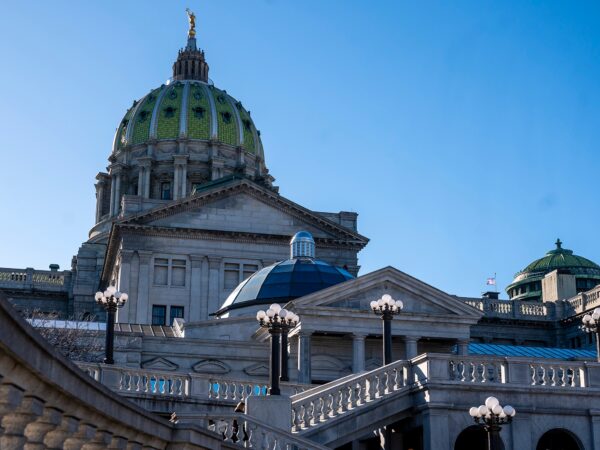
Leadership at the state’s civil rights agency was upended this year after Gov. Josh Shapiro’s administration requested the resignation of Chad Lassiter, the commission’s executive director since 2018. Four commissioners who oversee the agency also stepped down in recent months, creating eight vacancies on the 11-member oversight board.
The three remaining commissioners voted on June 30 to install Harris, a relative newcomer to PHRC, as the temporary head of the agency. The agency announced her appointment on Wednesday.
Debate flared in Harrisburg in February over concerns about the PHRC’s use of taxpayer dollars to attend and sponsor an awards banquet hosted by the Philadelphia NAACP, which honored Lassiter.
Emails show Lassiter instructed his staff to bypass state spending rules to secure taxpayer-funded tables for himself and his team at the event.
Lassiter said the payments were both proper and aligned with the agency’s mission. The NAACP ultimately provided the tables at no cost to taxpayers. The governor’s office has not announced findings from the audit.
City Councilmember Curtis Jones Jr. — a longtime member of the commission who was named interim chair during the shake-up — said Harris will be instrumental in “easing tensions and stabilizing the agency following a period of uncertainty,” according to a statement posted on social media.
Jones did not respond to a request for additional comment on Thursday. The commissioners will lead a search process to determine a permanent replacement, PHRC spokesperson Amanda Brothman Jumper said.
Harris will be “focused on ensuring operational continuity, supporting staff, and maintaining the commission’s commitment to enforcing Pennsylvania’s civil rights laws,” Brothman Jumper said.
Harris was hired in April 2025 as regional director of the commission’s Philadelphia office, overseeing civil rights complaints filed in eastern Pennsylvania. Before that, she spent a decade as a human relations specialist at the U.S. Social Security Administration, worked at American Airlines, and cofounded a nonprofit, according to her LinkedIn page.
Harris said in a statement that she will focus on providing stability to PHRC’s staff of investigators and attorneys, who mediate potential civil rights violations in places of employment, housing, education, and accommodations.
“I believe moments of transition can also be moments of opportunity,” Harris said.
PHRC’s executive director is chosen by the commissioners, who are nominated by the governor and require approval from the state Senate.
A spokesperson for Shapiro said the administration has submitted several nominations to fill the vacant commissioner seats.
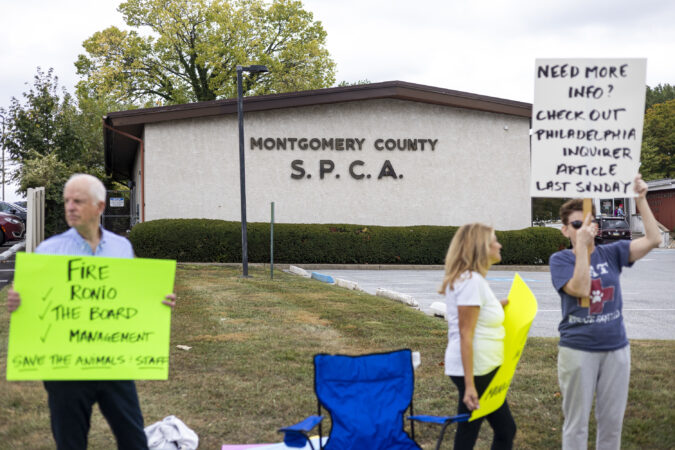
A nearly two-year probe led by the Pennsylvania Attorney General’s Office found the Montgomery County SPCA violated state nonprofit laws, euthanized animals unnecessarily, and failed to use its $67 million in charitable assets to maintain healthy animal shelters, officials announced Wednesday.
The probe began in October 2024, weeks after an Inquirer investigation revealed signs of mismanagement, hazardous conditions, and animal mistreatment at the state’s wealthiest animal shelter.
Attorney General Dave Sunday said his office reached a settlement requiring the nonprofit to replace its board of directors, hire new executive management, bring facilities up to code, and revise old bylaws. The shelter also must pay $21,040 in fines as part of the settlement.
The Montco SPCA said many of the terms of the settlement agreement were either well underway or completed as of Wednesday. The organization touted in a statement its “extraordinary progress” over the last two years, including a $26 million commitment to facility upgrades and an improved save rate for animals.
Following The Inquirer’s reporting on shelter operations, and outcry from animal welfare advocates, some donors pulled the Montco SPCA from their wills, amid concerns that the funds were being misused at the century-old institution.
The Inquirer found squalid kennel conditions, inadequate foster programming, and undertrained staff. The Montco SPCA’s wealth dwarfed that of most animal shelters in the region, yet it spent comparatively little on operations. At the time, it also saved the fewest number of animals among regional shelters, euthanizing nearly one in five that entered the main branch in Conshohocken.
The local SPCA leaders responded with a complete overhaul of operations, beginning with the ouster of its executive director, who had run the shelter for more than 50 years.
The shelter also replaced most members of its longtime board of directors, named a new executive director, improved training for staff, and invested heavily in shelter infrastructure. Plans are underway to build a new shelter.
It is a stark change from just two years ago, when the cash-rich shelter hoarded millions in investment accounts as complaints piled up.
Between 2021 and 2024, the attorney general’s probe found, the board of directors “failed to exercise due diligence and reasonable care” that resulted in multiple violations of Pennsylvania laws governing nonprofits and trade practices, according to the settlement agreement.
The agreement cited “potentially undue and precipitous euthanization of animals,” as well as mistreatment of pets, unsafe conditions, and “undue” stockpiling of charitable funds.
Sunday said that over the four years examined by his office, the Montco SPCA failed donors by spending an insufficient amount to advance the shelter’s mission.
“Pennsylvanians who donate to charities should be able to trust that their money is being used to support an organization’s mission,” Sunday said in a statement. “This settlement holds the Montgomery County SPCA accountable, puts important safeguards in place, and serves as a reminder to other charitable organizations that they will be expected to fulfill their mission and comply with the law.”
Shelter officials said the reforms are ongoing. The Montco SPCA expects to invest $25 million to build a new veterinary clinic and adoption facility in Blue Bell, where the nonprofit purchased a building for $5 million in September, according to a spokesperson. Estimated grand opening: 2027.
Meanwhile, the SPCA’s Conshohocken and Perkiomenville locations remain open for business, while its Abington branch plans to reopen in the fall after a $500,000 renovation.
“The resolution reflects both the substantial progress we have made, and a shared commitment to continue building a stronger, more sustainable organization for the future,” the nonprofit’s statement said.
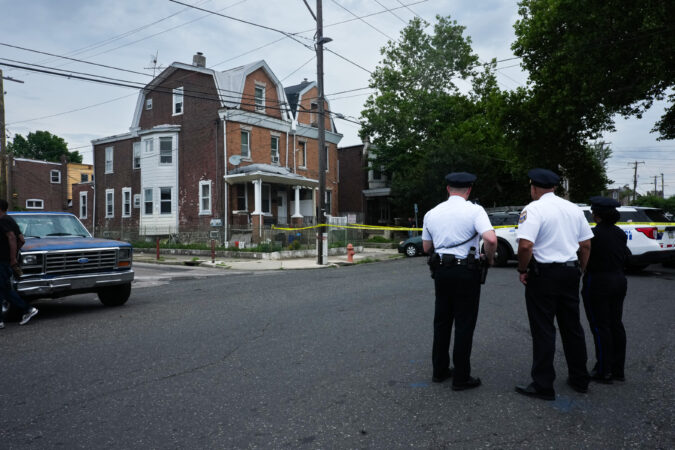
About a year before police raided a crumbling Olney twin in connection to a missing woman last month, Philadelphia narcotics officers scoured Eugene Horsch’s basement and found telltale signs of a drug dealer.
Firefighters had responded to a small blaze on the second floor of the property on May 18, 2025, alerting police to what they said was a sprawling marijuana grow operation. And when narcotics cops searched the home later that morning, court records show they recovered a modified fully automatic assault rifle with an obliterated serial number, a sawed-off shotgun, a pistol, and ammunition.
The top floor was filled with cannabis plants, tents, and UV lights, with exposed wires running between the floors and into the basement, where vats of chemicals were stored, apparently to “cultivate marijuana,” the records said.
The police report detailing the drug bust at the Olney house made no mention of missing women, despite the fact that concerned relatives and friends had told police years earlier that at least two women who stayed at the house had vanished.
Now, the disappearance of one of those women, Blair Tonzelli, is central to an ongoing search at the property, where police found fake IDs and bank cards in her name, among other disturbing evidence.
That law enforcement did not appear to connect the missing women to the search for drugs at the same address raises questions about whether the officers who searched the property last summer were aware of the two missing persons cases. The Philadelphia Police Department declined to comment, citing the ongoing investigation.
Police began reexamining Tonzelli’s disappearance on June 19 after arresting Horsch, whose companion had a fake ID in her name. Investigators reinterviewed witnesses and viewed footage of a statement given in February 2023 by Tonzelli’s friend, who told officers Tonzelli was last seen at 417 W. Chew Ave. Police have also revisited the 2016 disappearance of Amy McHale — the ex-wife of Horsch’s father, erotic filmmaker Raymond C. Horsch — whose mother said she vanished from the Olney home.
Gloria McHale, Amy’s mother, said she was surprised to learn that police had searched the property for drugs in 2025.
“I wish they would have looked deeper,” she said.
Police have not charged Horsch with any crimes linked to missing women. He has been jailed since his arrest last month on $500,000 bail for gun and drug charges, as federal and local police prepare to excavate the property in search of more evidence.
His attorney, Jerome Brown, declined comment. Brown has previously said police had interviewed Raymond Horsch several times over the years about McHale’s disappearance.
When local and federal law enforcement officers searched Horsch’s home last month in connection to the missing women, police said they again found guns, ammo, and drugs. More troubling, according to police records, is that they also found a “significant amount” of blood, a handwritten letter referencing serial killer Ted Bundy, and fake IDs and bank cards in Tonzelli’s name.
The latest search began after police arrested Horsch in his black BMW with an array of weapons, drugs, and a woman donning a fake ID in Tonzelli’s name. A sworn affidavit to initiate the search includes witness testimony that suggested Horsch was a “sociopath” who knew how to dispose of human remains.
But it was a fire that brought police to Horsch’s property one morning in May 2025.
Eugene had been living in the twin with two other women, including his father’s longtime companion, Krista M. Killen. City firefighters said the small blaze was started by “careless smoking” on the second floor, according to Horsch’s arrest report. While extinguishing the fire, a fire marshal and police patrolman on the scene discovered a “marijuana grow operation” on the home’s third floor and basement.
Officers with the PPD Narcotics Strike Force later searched the home and seized 26 pounds of marijuana, 131 grams of dried mushrooms, $1,200 worth of methamphetamine, $800 cash, and “numerous gold colored and silver” coins in a safe, records show.
Police also recovered a BCI Defense AR-15 style rifle modified to be fully automatic, a 12-gauge Stevens Model 67 pump-action shotgun with a sawed-off barrel, a 9mm Girsan MC28 pistol and more than a hundred rounds of ammunition. The serial numbers had been destroyed on all three firearms, according to records.
Horsch had previous felony convictions for drug manufacturing charges and was not legally allowed to own firearms. He was arrested and held on $750,000 bail for manufacturing drugs, illegal gun possession, and related crimes.
Brown, the family attorney, told a judge that the weapons belonged to Horsch’s father, who had died just three days before the drug raid. Brown said Eugene Horsch was planning to properly dispose of the firearms, according to a spokesperson for District Attorney Larry Krasner.
His health became a factor in determining an appropriate resolution to the case. Sources familiar with the case, who were granted anonymity because they are not authorized to discuss the details publicly, said Horsch appeared frail at the time of his 2025 arrest and could barely walk into court.
Horsch pled guilty to manufacturing drugs, and prosecutors withdrew the additional gun charges. He received three years probation.
Within months of his release from jail, Horsch would be locked up again.
In March, police arrested Horsch and charged him with stabbing a man at Eighth and Market Streets. Prosecutors dropped the charges after a witness failed to appear in court, records show, and he was released from lockup in May.
Three weeks later, U.S. Park Police stopped him in his car near Independence Mall, where they recovered a fake ID in Tonzelli’s name.
The search of the Olney property continued Wednesday.
Blair Tonzelli had been missing from Kensington for more than three years when her name turned up somewhere unexpected: on the fake ID of a woman in the backseat of a car parked near Independence Hall.
The woman showed the ID to U.S. Park Police on June 19 after they found her and Eugene Albert Horsch, 44, seated in his black BMW, with drug paraphernalia, guns, and knives stashed in the car, according to police records. The woman later told officers that Horsch made her the fake ID in Tonzelli’s name and urged her to use it if she ever got into trouble.
That encounter sparked a sprawling investigation into Horsch and an ongoing search of his Olney home for connections to Tonzelli and at least one other missing woman. Amy McHale — ex-wife of Raymond Horsch, Eugene’s father — was last seen at the Horsch property on West Chew Avenue in 2016.
Tonzelli was 35 when a friend reported her missing in early 2023. Police records now link her to Horsch following his arrest during the car stop. Philadelphia homicide detectives began probing Tonzelli’s disappearance last week and interviewed at least two women who said they believed something bad may have happened to her, according to police documents.
One reported that Horsch was “a sociopath,” and that while he had never been violent toward her, he said things that suggested he was to others. According to the police documents, the woman told detectives that Horsch said that he knew of three chemicals needed to melt human remains and that he could make a body “so small it could be flushed down a toilet.”
The woman told police that Tonzelli was a home healthcare aide who had worked in Horsch’s Olney house, according to the records. She believed Tonzelli and Horsch had a disagreement over money at one point, the records say, and that he still had access to a CashApp account under Tonzelli’s name.
Horsch remains in a Philadelphia jail after officers searched his car and found two firearms with obliterated serial numbers, as well as cocaine, fentanyl, and marijuana, a cattle prod, switchblade knives, handcuffs, and a fake U.S. Drug Enforcement badge featuring Horsch’s photo. He is being held on $500,000 bail for illegal gun and drug charges.
Jerome Brown, an attorney for Horsch, declined to comment on Monday.
Horsch has not been charged with any crimes linked to Tonzelli’s disappearance. But the statements in law enforcement records raise concerns about her well-being and have provided local and federal investigators probable cause to search the Olney property for more than a week.
Inside the boarded-up twin, officers recovered several fake IDs in Tonzelli’s name and her bank card, according to police records. Investigators also found drugs, guns, vats of unknown chemicals, a 55-gallon drum, and an unsigned, handwritten letter that graphically described hurting people.
Police said they have not recovered any human remains at the house, but law enforcement sources on Monday said there was a “significant amount” of blood inside. Investigators are awaiting forensic testing to determine whose blood it is or if it’s even human, a process that could take weeks to complete.
Police are preparing to excavate the front and backyards of the home, the sources said.
Local and federal investigators continued to scour Horsch’s home Monday for additional evidence.
In the years before her disappearance, Tonzelli struggled with an opioid addiction and floated through the streets of Kensington, spending time in and out of jail on drug and prostitution charges. David McCarty, 72, said that he lived with her for a time in a house on Wensley Street and that their friends would try to look out for one another.
Even in the throes of her addiction, Tonzelli was fiercely loyal, McCarty recalled. She once threw herself in front of a tow truck to prevent the operator from illegally taking McCarty’s car, yelling “You’re not gonna do this to my friend!”
But Tonzelli, he said, would disappear for stretches, often with a man from Olney who sold marijuana. She told McCarty she was visiting with a man named Raymond, he said.
At the time, Eugene Horsch lived with his father, Raymond “R.C.” Horsch, a convicted drug dealer and a producer of erotic films and novels. His work often focused on serial killers and the sexual exploitation of women with substance-abuse problems. The elder Horsch, who died in the Olney house in 2025, often featured women who frequented Kensington in his films.
Tonzelli typically returned from her trips to see Horsch, McCarty said, but then he didn’t hear from her after August 2022.
Joseph Gunkel said in an interview that he and a friend called police to report Tonzelli missing in February 2023 after months had passed without hearing from her.
The friend told police that Tonzelli was last seen at the Olney home of a “sketchy” man who scared her, according to police records. Tonzelli was meant to meet someone one afternoon and never showed up, and none of her acquaintances — from Philly to Florida — had heard from her since, the friend said.
McCarty grew worried as days became weeks. He knew she needed regular medical attention because of a drug-related wound that ran from her armpit down to her knee. McCarty said he replaced the gauze and applied ointment to the open gash twice a day, and Tonzelli needed daily medication to fight off the infection.
“I can’t tell you how many times I spent visiting her and putting her in the hospital,” McCarty said. ”People make choices. She’s an adult, and it didn’t matter what I’d say or what I’d do to help her.”
Gunkel said he didn’t hear from police again about Tonzelli until last week, when homicide detectives asked him to come in for an interview about her disappearance. He said he was relieved someone was finally looking into her whereabouts, even if it was three years later.
“At least reporting her missing helped out some,” he said.
Tonzelli’s Facebook page says she attended Archbishop Ryan High School. Her mother, who grew up in Fishtown, died when Tonzelli was 18, according to an online obituary.
Tonzelli’s family declined to speak this week. McCarty said that Tonzelli was estranged from her relatives but that she had a son who she talked about often.
After she went missing, McCarty urged a mutual friend to file a police report, because he worried no one else would.
“My soul just believes something was going on,” he said.
During a weeklong search of a crumbling Olney twin, federal agents and Philadelphia police found guns and drugs, tubs of chemicals, a curious unsigned letter, and fake law enforcement badges as they were investigating the homeowner’s connection to at least two women who have been missing for years.
The unusual investigation began under similarly bizarre circumstances: U.S. Park Police encountered Eugene Albert Horsch, 44, acting suspiciously in his black BMW parked near Sixth and Market Streets on the morning of June 19, Deputy Police Commissioner Frank Vanore said.
As the ranger approached the car, Vanore said, he heard a woman in the backseat say, “You’re going to hurt me.” The woman then falsely identified herself to the officers using the name of a 38-year-old woman who had been reported missing in Kensington in February 2023, said the sources, who spoke on the condition of anonymity to discuss an ongoing investigation.
The woman, 39, later told investigators that she’d given the alias because she had open warrants for her arrest in ongoing drug cases, and that Horsch had previously made her fake identification cards in that name, telling her she could use it if she was ever stopped and questioned by police, the sources said.
And later, the sources said, she told officials that she did not know that missing woman — but feared something bad may have happened to her.
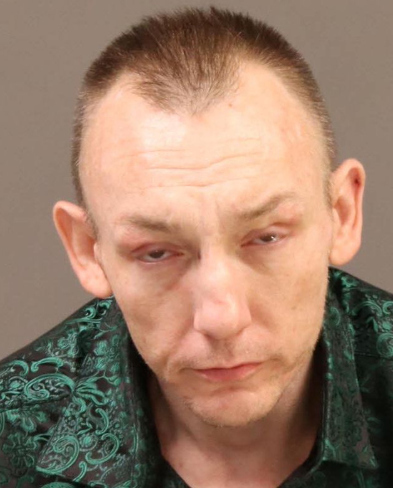
Eugene Albert Horsch, 44, of Philadelphia.
When police searched Horsch’s car outside Independence Hall, they recovered two firearms with obliterated serial numbers, as well as cocaine, fentanyl, and marijuana, according to an affidavit of probable cause for his arrest. What’s more, a source said, the car also contained a collapsible baton, a cattle prod, switchblade knives, and a fake U.S. Drug Enforcement badge with Horsch’s photograph under the name “Eugene Frederick Steiner.”
Horsch was taken into custody and charged with illegal gun possession and drug crimes. He’s currently being held on $500,000 bail at Curran-Fromhold Correctional Facility.
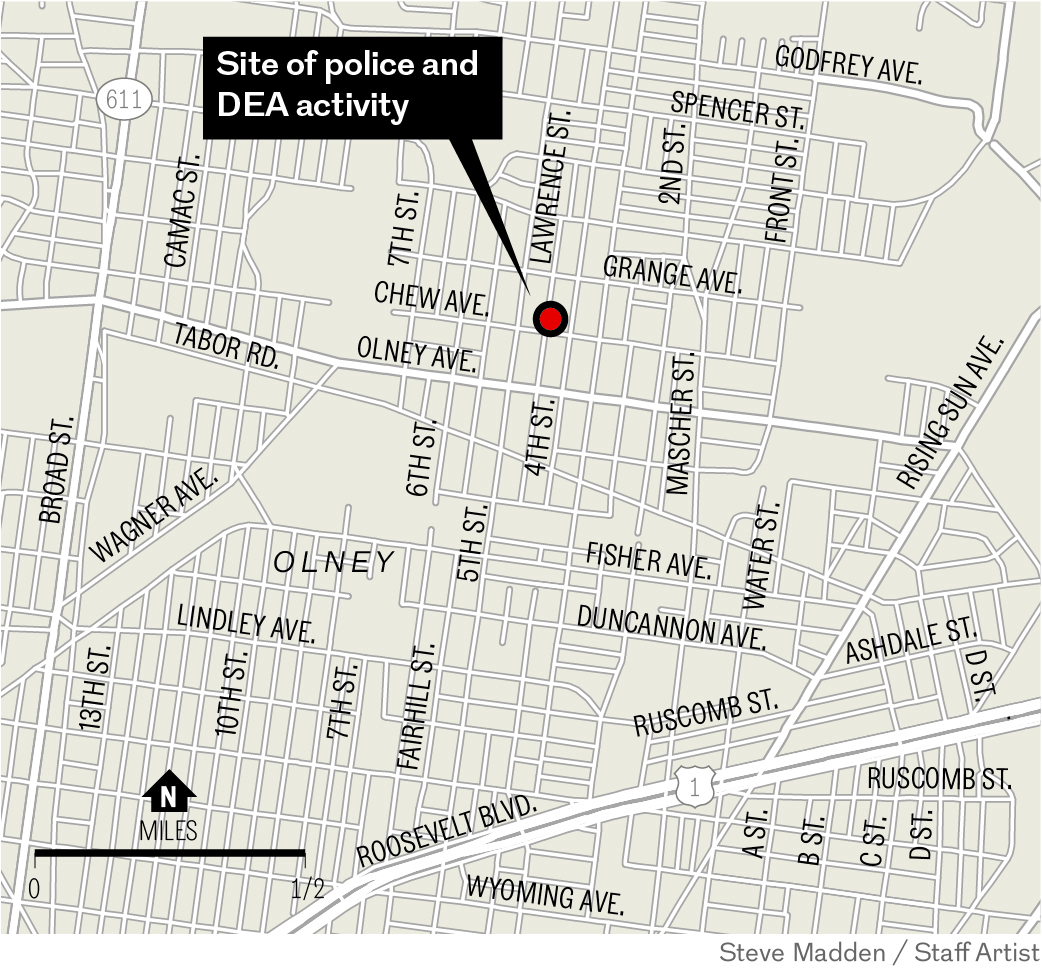
Officials with federal drug enforcement began searching Horsch’s home on the 400 block of West Chew Avenue alongside Philadelphia police on June 19.
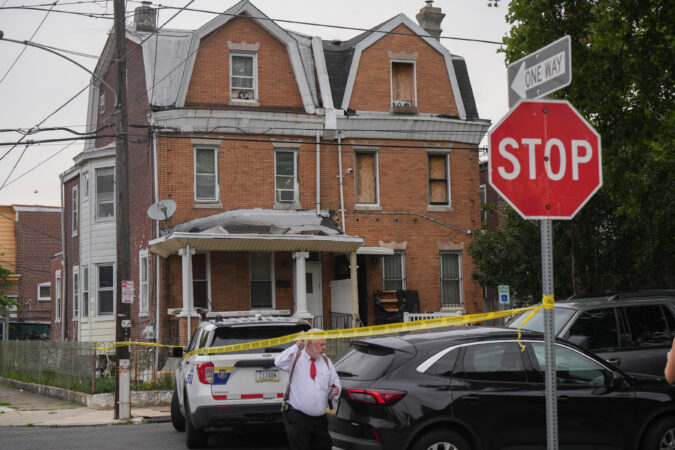
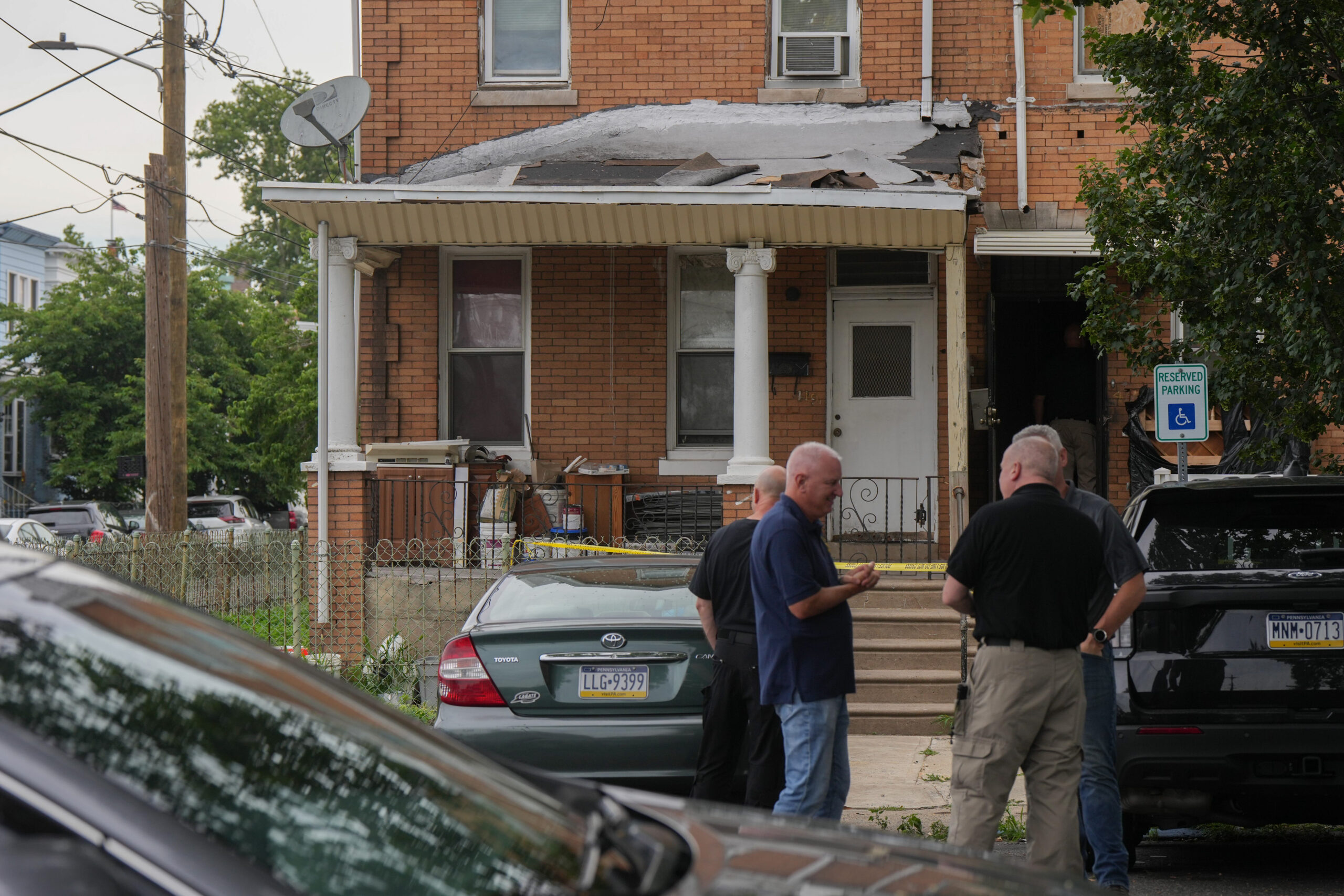
The house at the 400 block of W. Chew Avenue in Olney being investigated.
Vanore, in a news conference Friday, said the conditions of the boarded-up twin and materials recovered inside of it — including hidden compartments, drums filled with chemicals, and what appeared to be urns holding at least one of Horsch’s relatives’ cremated remains — only deepened the mysteries of the case.
And investigators soon found themselves confronting a second concerning thread: Horsch’s late father, R.C. Horsch, a convicted drug manufacturer and erotic filmmaker, had an ex-wife who was last seen at the Olney property in 2016 and has never been found.
Horsch’s attorney, Jerome Brown, said he did not have details about the ongoing police investigation.
Brown said R.C Horsch, who died in 2025, had been questioned in the June 2016 disappearance of his ex-wife Amy McHale, of South Philadelphia. She suffered from mental health and substance abuse issues, he said.
“This is much ado about nothing,” Brown said of the missing persons investigation. “They’re barking up the wrong tree.”
Inside Horsch’s home, investigators found another handgun, chemicals and bottles of liquid that forensics investigators in white hazmat suits were still working to identify on Friday, Vanore said. There was also a 55-gallon drum with connections to waterlines leading into a hole in the ground, he said, and materials to grow marijuana upstairs.
Federal investigators also found a multipage and unsigned handwritten letter that described references to hurting unspecified people, and references to the serial killer Ted Bundy, according to an affidavit of probable cause to search the home that was obtained by The Inquirer.
“Acting on emotion is where problems occur. What I don’t think I told you was that the first time it was planned ahead of time. The threat was made before you know who came over and I already had a 2ft zip tie in my pocket and a drum set up,” the letter said, according to the affidavit.
According to the warrant, it went on: “I had been ready and waiting and I damn sure showed no hesitation. And it was fun.”
Law enforcement sources said investigators were working to verify the authenticity of the letter, who wrote it, and whether it was meant to serve as a portion of a novel or screenplay. Horsch’s father published several works of fiction with masochistic themes, including one described as an “autobiographical memoir of a caring, empathetic serial killer.”
Police also found bank cards in the name of the woman who went missing in 2023, and also recovered what appeared to be a death certificate for another woman who died last year, the document stated.
Vanore said no human remains were found inside the home.
Forensic experts from the FBI are now analyzing the liquids and materials recovered in the home, he said.
Vanore said it wasn’t clear whether the chemicals were intended for a drug manufacturing operation or another purpose.
“We just don’t know what he’s doing, if he’s producing something, if he’s making something, if he’s irrigating something, we don’t know,” Vanore said. “I’m not a chemist, but from what I’ve been told … they could have been explosives.“
And, he said, it was too early to say whether the evidence would speak to any of the missing person cases tied to the property. He declined to identify the woman who had been reported missing in 2023 and did not answer questions related to the ongoing investigation into McHale’s disappearance.
“We’re certainly going to look into the activities that went on at that house,” he said.
Investigators on W. Chew Avenue.
News reports of the search of the Horsch home reopened wounds for McHale’s family. Gloria McHale said her daughter struggled with mental health issues and a drug addiction, and was married to R.C. Horsch for several years before disappearing June 14, 2016.
In an interview Friday, she said when police questioned R.C. Horsch at the time of her daughter’s disappearance, he said he last saw McHale drinking vodka before he went to bed, and that when he woke up, she was gone.
“I knew that wasn’t right,” McHale’s mother said. “She wouldn’t disappear. She had a daughter and grandkids. Her daughter was about to get married.”
Prior to his arrest last week, Eugene Horsch had a criminal history that included at least 10 other arrests for drug possession, dealing, assaults and drunk driving. He was sentenced to four to eight years in prison after police discovered $1.9 million worth of cannabis inside the Chew Avenue home in 2013, court records show.
He was arrested again in May 2025 for possession of marijuana and amphetamines and handed three years’ probation.
Then, in March, he was charged with aggravated assault after police said he stabbed a man in the stomach at Eighth and Market Streets. Prosecutors withdrew the charges in May after a witness failed to appear in court, court records show.
Since his release from jail, he appeared to be living back at his rundown home on Chew Avenue, a property that city inspectors cited as vacant and unsafe in recent years and that neighbors described as an increasingly off-putting presence on the block.
On Friday morning, anxiety swirled along the typically quiet residential neighborhood, about a mile from the Montgomery County border.
A security camera mounted on Horsch’s home between the boarded-up windows on the upper floors looked out over an overgrown yard where at least a dozen local and federal agents collected and tested evidence into the late afternoon.
Sid Brunson, a construction worker who lives nearby and occasionally cut the grass in front of Horsch’s house, said Horsch often had women who appeared to use drugs at his property. A fire broke out on the upper floors of the property several months ago, he said, which led to plywood covering the windows.
He described his neighbor as a “quiet” and “real jittery” man who kept to himself.
“He always had a nice shirt on like he was going to the office,” Brunson said, “but he never gave you enough time to talk because he was always rushing.”
Staff Writers Ryan W. Briggs, Samantha Melamed, Brett Sholtis, Michelle Myers, Isabel Maney, Andrea Padilla, and Jesse Bunch contributed to this article.
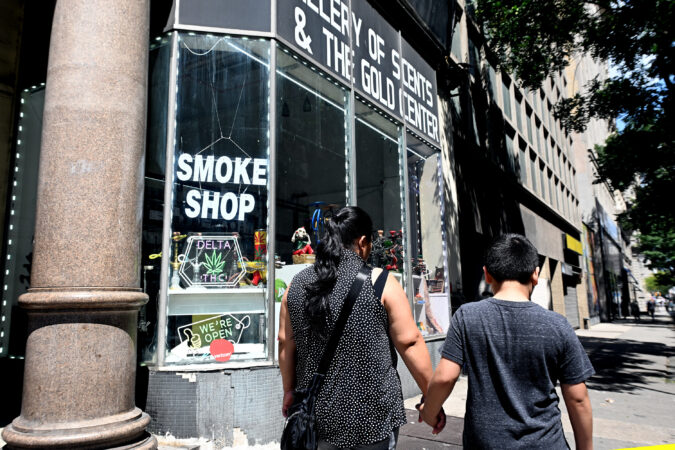
From Bryn Mawr to Bensalem, Abington to Kensington, and West Chester to West Philly, smoke shops are everywhere. So much so that authorities who’ve grown concerned about the booming business model have struggled to track them all.
In Philadelphia, City Councilmember Katherine Gilmore Richardson on Thursday introduced legislation that would establish a permit process, allowing the city to more closely monitor shops that sell unregulated drugs and crack down on those that flout the oft-hazy laws governing them.
The bill would establish a new license requirement for selling “intoxicating substances,” while implementing a series of restrictions around the sale of products like hemp-based THC and kratom. It would also update the city code to define intoxicating products and establish a 21-plus age restriction for purchases.
Gilmore Richardson proposed a second bill that would authorize the city to penalize landlords who rent space to stores selling tobacco products without a license.
“Nine times out of ten these products are being marketed to our children,” Gilmore Richardson said. “We have to do all we can to add a new section in our code.”
The new legislation would further require shops to have their products tested by a licensed lab in Pennsylvania and prove that the products are free from heavy metals, pesticides, solvents, mycotoxins, microbials, and other contaminants.
An Inquirer investigation last year found that hemp products sold at smoke shops throughout the region are often rife with harmful contaminants, and many contain substances that are blatantly illegal. Some of the products The Inquirer tested were, in fact, black-market weed that was labeled as legal hemp.
Shop owners defended the sales with lab results from the manufacturers indicating the products are both legal and toxin-free. Yet The Inquirer found that at least some of the reports were fraudulent or doctored to conceal the truth.
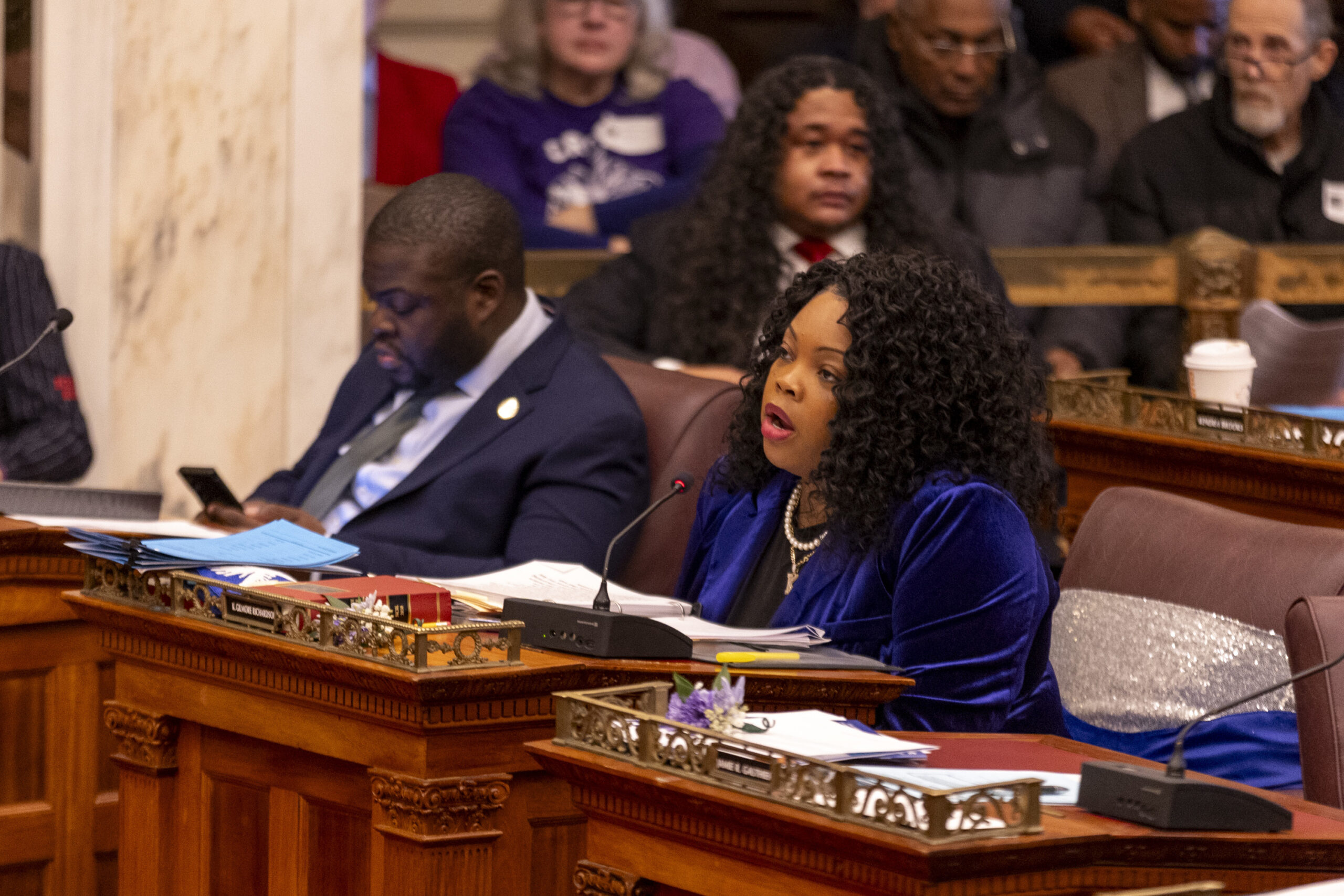
Council member at-large Katherine Gilmore Richardson speaking at the City Council’s first session of the year in Philadelphia, Pa., on Thursday, Jan. 22, 2026.
The bills are the latest proposals from Gilmore Richardson to rein in shops selling these products — many of which the city has labelled as nuisance businesses. Such shops have flourished since a 2018 change in federal law allowed for the over-the-counter sale of certain hemp products that are often indistinguishable from traditional marijuana.
How the proposed new regulations would be enforced remains unclear. As written, the license system and testing requirements would only apply to products that the U.S. Food and Drug Administration has deemed “safe.” Some smoke shop products products are marketed as nutritional supplements, which the FDA does not regulate.
Region-wide, the crackdown on smoke shops has been haphazard, with law enforcement officials often saying they are constrained by nebulous federal drug laws.
“You discover a gray area or a loophole that folks try to exploit, and you have to do another bill to deal with that,” Gilmore Richardson said.
A federal ban on hemp-based THC products could take effect within the next year. Meanwhile, state lawmakers in Harrisburg have done little more than explore the idea of regulating the hemp-based THC market. Other states, including neighboring New Jersey, have for years had a regulated and taxed system of recreational marijuana.
State-issued tobacco permits are needed to sell nicotine products, but there is currently no permit required to sell hemp, kratom or similar smoke shop products in Pennsylvania. A grand jury report unsealed in Montgomery County last fall had to rely on Yelp to estimate that there are likely more than 240 smoke shops in Montco alone. That report called on Harrisburg to establish a permit system and an age restriction on hemp products containing THC.
In Philadelphia, many shops operate under convenience store permits, even if they aren’t selling many groceries. The city’s crackdown efforts have been largely limited to citing shops for fraudulently operating under this permit.
Gilmore Richardson said the intoxicating substances permit is a long overdue solution. The bills head to committee for review.
The second bill introduced Thursday would grant the city power to fine landlords who “knowingly lease” commercial property to a business that sells tobacco products without a permit. Currently, only the business owners face penalties for selling cigarettes without the proper permit.
Gilmore Richardson said she would consider expanding that legislation down the road to include the intoxicating substance permit — should it become law.
“You can’t manage what you don’t measure,” the lawmaker said. “We need to understand where these businesses are located.”
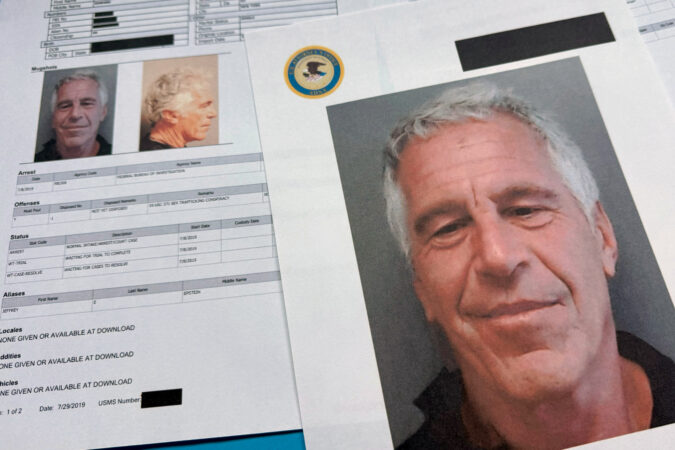
You can add another name to the list of offenders: Jeffrey Epstein.
The convicted child-sex solicitor was also a prolific donor to scientific research programs through the Jeffrey Epstein VI Foundation. A tranche of the disgraced financier’s emails released by the U.S. Department of Justice contains descriptions of dozens of pet projects the foundation supported at elite institutions.
But one of them, the “Quantum Gravity Program” at the University of Pennsylvania, is something of a whodunit involving theoretical physicists in three different countries.
Epstein was a self-proclaimed backer of “cutting-edge science,” and the Quantum Gravity Program is mentioned dozens of times in his personal records. The program and its affiliation with Penn are even referenced today on the Wikipedia page for his foundation.
But there is no other evidence a program by that name ever existed at Penn.
After a series of at-times-uncomfortable calls with confused spokespeople and academics, The Inquirer discovered that Epstein was, in fact, involved with financing researchers in the 1990s at a similarly named program based at Penn State — sometimes referred to as the “loop quantum gravity program.”
A spokesperson for the state-funded university said Epstein’s name was attached to a 1990s grant made through an intermediary nonprofit in support of former PSU physics professor Lee Smolin, who helped lead the loop quantum gravity program and maintained ties with Epstein for years afterward.
German theoretical physicist Olaf Dreyer sought out a doctorate at PSU at that time in hopes of working on the loop gravity program, and said Epstein’s decades-old claim that he had supported such a program at Penn was a classic case of mistaken academic identity.
“The ‘quantum gravity program’ is the program at Penn State,” Dreyer said via email Thursday from Frankfurt, Germany. “It was the loop quantum gravity program that brought me to Penn State.”
Dreyer said that Smolin helped lead the program during his time at the state university, and that the scientist had procured funding from Epstein for the Penn State program.
“Smolin had the connections to Epstein,” he said. “Lee stayed connected to Epstein long after Epstein‘s conviction.”
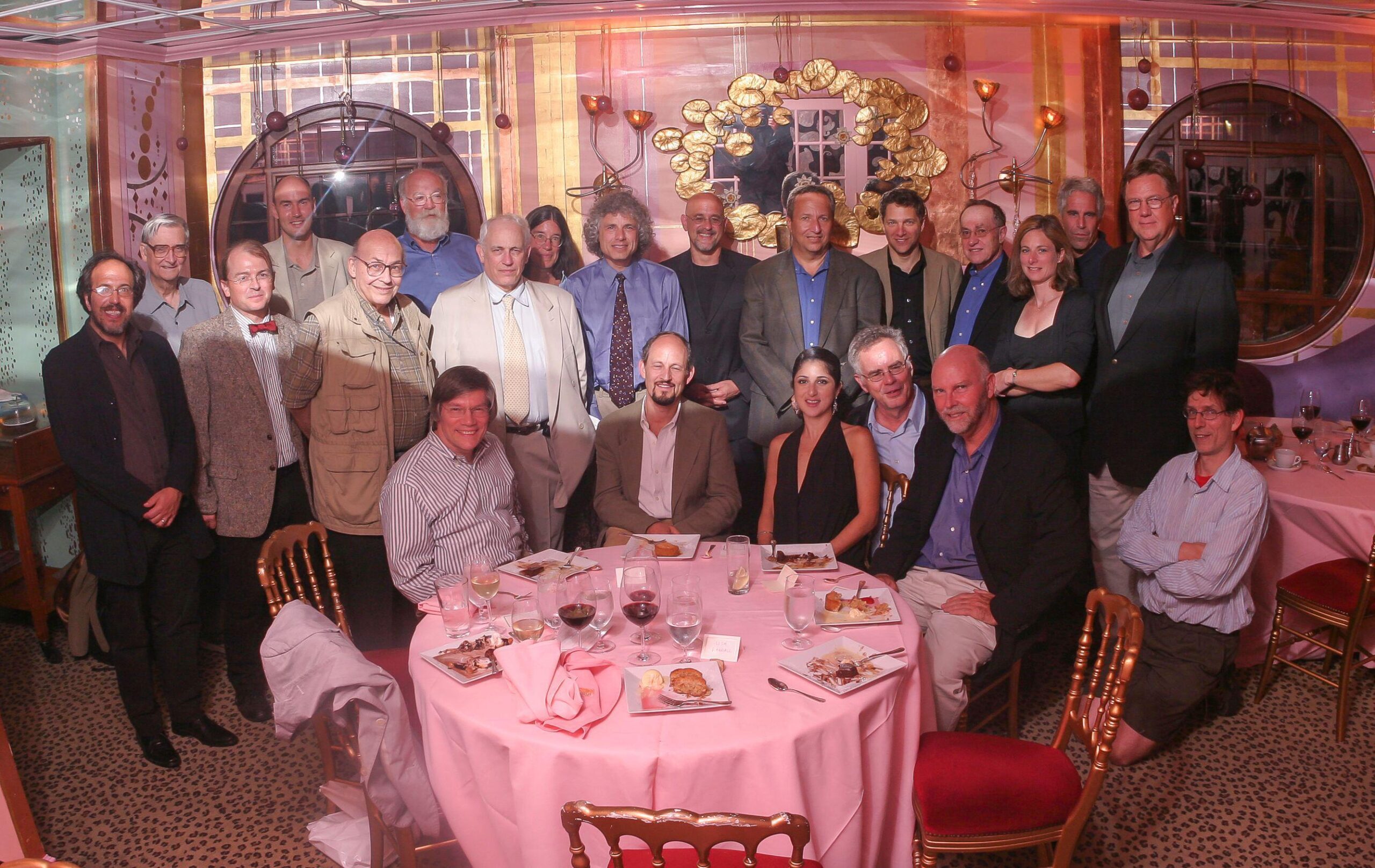
Jeffrey Epstein at a dinner he hosted at Harvard University on Sept. 9, 2004 with Harvard Professors Alan Dershowitz, Stephen Pinker, Princeton Professor Robert Trivers, Larry Summers, E.O. Wilson,, Marvin Minsky, Lisa Randall, Martin Nowak. and Alan Guth. Epstein is in the back row, second from the right. Lee Smolin, a former PSU physics professor, is in the middle row, far left.
A spokesperson for Penn State cited a publicly available research paper from 1999 that showed Smolin’s quantum gravity research was funded by the “Jesse Philips Foundation.” But after reviewing the university’s grants database at The Inquirer’s request, the spokesperson confirmed that Epstein’s name appeared on paperwork related to that foundation gift.
The Jesse Philips Foundation was created by the eponymous Dayton industrialist, who died in 1994. After his death, his widow, Caryl Philips, took over the foundation, which is now known as the Jesse and Caryl Philips Foundation. A request for comment from the foundation was not immediately returned.
A record of another philanthropic donation made in 1998 was described as coming from “J. Epstein Foundation and Jesse Philips Foundation.” And Epstein’s emails indicate Caryl Philips was in contact with both Epstein and his confidant, convicted child sex trafficker Ghislaine Maxwell, as late as 2010.
Dreyer said it was his understanding that Smolin was being funded by Epstein directly.
“He used money from Epstein to pay for grad students,” Dreyer said.
Reached by email, Smolin confirmed Epstein was behind the foundation grant at the time, which allowed him to leave PSU to pursue his research abroad. “These arrangements had nothing to do with UPenn,” he said.
Smolin’s ties to Epstein are now well documented. He was quoted praising Epstein’s support for his research on an Epstein Foundation website.
“I was extraordinarily fortunate to encounter someone who asked me, ‘What would you really like to do? What is your most ambitious and crazy idea?,’” the quote reads. “Then, unexpectedly and generously, Jeffrey Epstein gave me the chance to try to make good on my answers.”
After his time at PSU, Smolin went on to cofound the Perimeter Institute for Theoretical Physics, in Toronto, Canada, now one of the top research programs for theoretical physics in the world. Dreyer followed the physicist to the Perimeter Institute after obtaining his doctorate in 2001, and recalled Smolin taking a group photo of his team to send to Maxwell for inclusion in Epstein’s now-infamous 50th “birthday book.”
“You can imagine how happy I am to be included in that book,” he joked.
Newly released emails from the U.S. Department of Justice (DOJ) disclosed Smolin had kept up a relationship with the financier during this time — and well after Epstein’s 2008 conviction — which led to his ouster in February from the Perimeter Institute.
Epstein’s professed involvement at Penn came as a shock to administrative faculty and longtime physics professors at the West Philadelphia university.
The financier first alluded to the supposed Penn program in a rambling email to his personal assistant in 2006, according to emails released as part of the Epstein Transparency Act. He later commissioned a more detailed description of the foundation’s activities, including a mention of the Penn program on an official philanthropic website that debuted in 2010.
The original text, which was often appended to Epstein’s curriculum vitae ahead of speaking engagements, was likely written in the 2000s by literary agent John Brockman, according to later email exchanges attributing the writing to him. Brockman, who could not be reached for comment, helped Epstein cultivate scientific relationships and promote his foundation.
Epstein’s description of his foundation’s activities underwent several rewrites or revisions, including one iteration alluding to the foundation supporting science programs at a “Penn University” — which also does not exist.
While Epstein’s personal records mention the program at Penn dozens of times, a Penn spokesperson said the university was unfamiliar with Epstein’s long-claimed affiliation until the DOJ record release in December.
“Penn is not aware of a so-called ‘Quantum Gravity Program’ referenced in Jeffrey Epstein’s bio and has no records of his involvement,” said university spokesperson Matthew Grossman in a statement.
Burt Ovrut, a theoretical physicist who helped lead the physics department at Penn, said he would have known if such a program ever existed.
“I would have heard of this,” said Ovrut, who remains a professor emeritus. “We don’t tend to have private grants in theoretical physics.”
The fallout from the Epstein saga has ensnared numerous other universities with ties to the billionaire investor, rocking institutions like Princeton, the Massachusetts Institute of Technology, and Harvard, where the Epstein scandal led to resignation of former president Larry Summers, who was raised in Penn Valley, a Philadelphia suburb.
The lure of Epstein’s wealth and interest in obscure academic fields was powerful.
While Penn had no official relation with Epstein’s foundation, its staffers were not immune to his temptations. In 2012, for instance, a Penn professor wrote to Epstein seeking funding for immersive research on African hunter-gatherer societies. There was no response.
Dreyer, the German physicist, also solicited Epstein for his own research funding in 2009 on the advice of a colleague. While he, too, was never funded, he regrets that he did not do his own due diligence on Epstein.
“If only I had done some research,” he said.
Editor’s note: This article has been updated to include a comment from Smolin regarding the grant.
When Scott McElree was named Quakertown’s top cop in 2004, borough leaders saw a reformer who could boost public trust. And he did so well in the role that, three years later, they gave him a second job — borough manager.
It is rare for a municipality to appoint someone to both run the police department and oversee everyday municipal matters, from payroll to public records. But McElree embraced the challenge.
That unusual arrangement is now under scrutiny after a student protest over federal immigration enforcement escalated into a bloody clash last week involving McElree and his officers — as are social media posts in his name that have criticized Democrats, with one calling them a “domestic terrorist organization.”
Cell phone videos of the Feb. 20 walkout against U.S. Immigration and Customs Enforcement show the altercation began after McElree, 72, confronted a group of Quakertown Community High School students. In the footage, teenagers appear to strike the chief, who was not wearing his uniform, as he attempts to grab a student.
McElree is seen on the sidewalk placing a teenage girl in what appears to be a chokehold. Five teens were charged Tuesday with aggravated assault and related offenses. According to an affidavit of probable cause for the arrest of one of the teens, McElree left the scene bloodied, and later sought care at a local hospital for undisclosed injuries. The affidavit does not mention a chokehold.
The clash has raised questions over whether the plain-clothed McElree was identifiable as the borough’s top police officer when he intervened. The incident also has intensified calls for his resignation and focused a national spotlight on his unconventional dual authority.
“We have a 72-year-old white man, in flannel clothing, angry, unidentified, running into a crowd of children and tackling them,” said Timothy Prendergast, a defense attorney representing the 15-year-old girl witnesses captured on video being held in McElree’s chokehold.
Neither McElree nor the seven elected council members responded to requests for comment from The Inquirer. An attorney for the borough, Peter Nelson, declined to comment by email. He shared a statement from the council, which said its members are “very disturbed by the circumstances surrounding this incident” and have asked the Bucks County District Attorney’s Office to investigate.
Prendergast said the muted response from borough officials over the protest illustrates the conflict with the top manager: “If we wanted to get information on the chief of police, we couldn’t, because we’d have to go through the chief of police. It’s conveniently inappropriate.”
Prior to the protest, McElree did not have a record of aggressive policing. Court documents show he was sued three times in 20 years for alleged civil rights violations, mainly involving subordinate officers whom McElree was accused of failing to supervise. Two of those cases were dismissed. One ended with a $60,000 settlement offer, court records show.
McElree, of Lafayette Hill, has been a police officer in the Philadelphia suburbs for five decades. He graduated from the FBI National Academy in 1995, but his public service remained on the local level.
He served as a detective and sergeant in Whitemarsh Township for 29 years until his elevation to police chief in Quakertown — a rank he had aspired to since his youth. More than 70 police officers applied for the position.
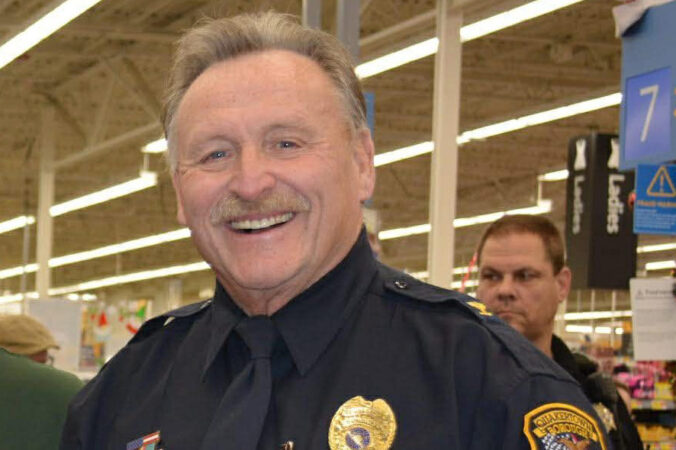
Some Quakertown residents defended police chief Scott McElree, pictured here interacting at a Black Lives Matter protest in 2020, as a thoughtful leader.
“When I was a young officer, I was very desirous of being a chief,” McElree said in 2004, according to an article in the Morning Call. “I wanted to stay in police work and ascend to the top.”
In 2007, Quakertown’s council appointed McElree as interim borough manager after the abrupt departure of longtime manager Dave Woglom. But the borough council never hired a new full-time replacement, instead naming McElree to take on both jobs.
McElree helped modernize the police department and improve morale among officers that had waned under prior leadership, according to a former township official, who spoke on condition of anonymity to frankly discuss his former colleagues.
But the former official said the current situation is an example of what can go wrong with a dual appointment. The borough manager should be able to oversee the actions of a police chief. But in this case, they are one and the same.
“There’s a reason you don’t see this [arrangement],” the former official said. “Council is having to make decisions without the direction of the borough manager, because he’s conflicted.”
Amid calls for his resignation and outrage from parents, speculation has swirled on social media about McElree’s political leanings.
Outside of police work, McElree obtained a master’s degree in business administration from Liberty University, an evangelical school in Virginia founded by Jerry Falwell that calls itself one of the “most conservative” campuses in the nation.
Voting records show McElree and his wife, Arlene Kosh McElree, are registered Republicans. A Facebook account under his wife’s name features a profile picture of a hand-drawn sign that reads: “When I die do not let me vote Democrat.”
McElree’s own social media footprint appears faint. But an account he shares with his wife on Truth Social, which President Donald Trump founded, has made a handful posts critical of Democrats and Democratic policies in recent years. The account features a photo of the couple, though it is not clear which of them penned the posts.
In August, responding to a Trump post criticizing Democrats, the McElree account wrote a screed that described the party as “a deep state oligarchy” and a “domestic terrorist organization.”
“Dem politicians should be impeached/fired and have their salaries & benefits cut off,” the post read. “Dem judges should be disbarred … all should be banned from politics for life.”
“NO MORE DEMS,” read another post, reacting to a Trump statement on the eve of the November general election.
According to open source data, McElree also used an official government email address to create an account on Rumble, a Canadian video-sharing platform that is popular in conservative and far-right circles. He has not posted any videos and his viewing history is not public.
Prendergast, the defense attorney, said he was concerned by the social media posts, which contained what he described as “literally every MAGA hard right-wing talking point.”
An organizer from Bucks Back the Blue, a police support group, stood by the chief and borough manager, describing him as a tireless and level-headed leader. The organizer recalled McElree attending Black Lives Matter protests during the pandemic, “engaging with our community members and listening to their thoughts and concerns.”
“Quakertown has always been an epicenter for peaceful protests,” said the organizer, who spoke on condition of anonymity due to fears of public retaliation. “Chief Scott McElree isn’t a bad cop. He isn’t a bad person. Just like those kids aren’t bad kids.”
A freshman football player at Villanova University has been charged with rape and sexual assault stemming from a December incident on campus, a university spokesperson said Sunday.
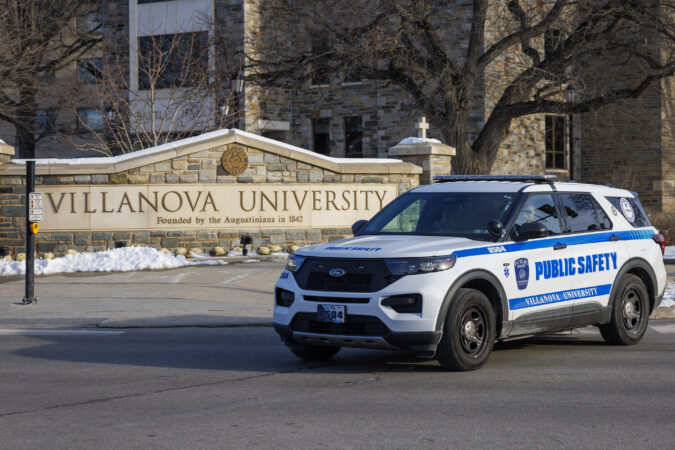
D’Hani Cobbs, 20, faces charges of rape, sexual assault, and related offenses in Delaware County, court records show. He is accused of assaulting another student on Dec. 7, the university said in a statement, which did not provide any additional details about the alleged incident. The arrest was first reported by student newspaper The Villanovan.
Cobbs was arraigned Friday and held on $250,000 bail, according to court records.
A university spokesperson said school leaders reported the incident to law enforcement and “removed” Cobbs from campus shortly after the incident in December.
“Sexual violence of any kind is not tolerated on our campus and we are committed to both supporting the victim and fostering a safe environment for all of our students,” the university said in the statement.
A player bio page on Villanova’s website was out of service with an error message on Sunday, but according to social media and sports news outlets, Cobbs graduated from Camden High School in 2025 and played wide receiver at Villanova. Recruiters for the Villanova Wildcats posted a “welcome to the family” message on social media after recruiting Cobbs in December 2024.
An attorney for Cobbs did not immediately respond to a request for comment Sunday.
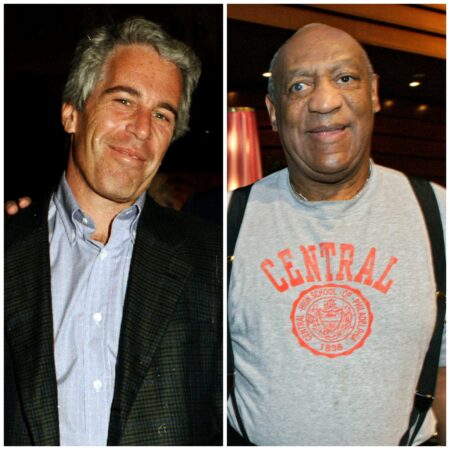
In the mid-2010s, well after he was already a convicted sex offender, Jeffrey Epstein began closely following the sexual assault case against another prominent figure: Philadelphia-born actor and comedian Bill Cosby.
Among the millions of documents released Friday by the U.S. Department of Justice — in the latest tranche of what’s become known as the Epstein files — are emails detailing a neighborly relationship between the disgraced financier and the entertainer, who both owned townhouses on East 71st Street in Manhattan.
Epstein and his representatives corresponded with Cosby, invited him to dinner parties, and at one point sought to retain Cosby’s personal chef as his own.
When Cosby’s prosecution gained steam in 2015, Epstein and his inner circle became devout followers of the legal proceedings in Montgomery County, where Cosby was ultimately sentenced to three to 10 years in prison for sexual assault. (The Pennsylvania Supreme Court overturned the sentence in 2021 after Cosby served nearly three years.) Emails indicate Epstein often saw parallels to his own ongoing legal issues — and also viewed the Cosby case as a valuable distraction from his own misconduct in the news.
“im getting bad press again,” Epstein wrote to a friend in January 2015, days after a new legal development emerged against him in Florida. “as i predicted. now that cosby was off the sex headline they need to resuurect a new one.”
Before their separate criminal troubles escalated, the two men were neighbors, living among other Wall Street elites and big Hollywood names. On Jan. 4, 2013, Epstein ordered his assistant to deliver a typo-strewn dinner invitation to Cosby’s home, with a who’s-who guest list.
“Take this note to bull cosby s house. dear neighbor. woody allen, lewis black, bobbly slayton are having, dinner at my house, thought you might like to join. a neighborhood event,” Epstein said.
Days later, another person, whose name has been redacted from the records, wrote Epstein to say that he heard Cosby was traveling and could not attend the Jan. 23 dinner. “Otherwise, he would have loved to come,” the person wrote, relaying a secondhand message through Cosby’s “house man.”
Attempts to reach Cosby on Sunday were not successful.
Epstein’s interest in Cosby’s case was intertwined with his apparent desire to do business with the comedian. Between 2017 and 2018, he had his real estate broker aggressively pursue Cosby’s team about buying his house across the street from Epstein’s own seven-story home.
Around October 2017, Richard Kahn, a lawyer who worked closely with Epstein, sent the financier an email with the subject line “Bill Cosby is reportedly going broke paying for multiple legal bills.” Epstein asked his New York-based real estate broker David Mitchell to begin looking into purchasing “the Cosby house.”
For more than a year between Cosby’s trial and retrial in Montgomery County, Epstein hounded Mitchell for updates on Cosby’s interest in selling the residence. He even emailed a former New York Times reporter in 2018, saying that he was “trying to buy Cosby.”
Cosby’s attorney eventually told Mitchell the property wasn’t for sale, emails show, but that a good offer might “get a conversation started.” Mitchell did not immediately respond to a request for comment Sunday.
Cosby, now 88, went into foreclosure on both of his Manhattan homes. He listed the East 71st Street address for sale in 2025 for $29 million.
In Cosby, Epstein sees parallel
The records show that by 2015, Epstein and his inner circle were trading emails of news stories about Cosby and analyzing court filings from litigation against the entertainer.
As the case mounted, Epstein and his longtime friend and co-conspirator, Ghislaine Maxwell, looked for rulings that they could use in their own favor.
“Does the new Cosby information cause any issues for you?” someone, whose name is redacted in the files, wrote to Epstein in July 2015. The email was sent shortly after Montgomery County prosecutors reopened a criminal investigation against Cosby for the 2004 sexual assault of Andrea Constand.
In October that year, Epstein emailed Maxwell with a judicial memorandum responding to a motion to get one of the sexual assault lawsuits against Cosby thrown out. (Maxwell’s attorneys would later use Cosby’s overturned conviction in 2021 to argue for the dismissal of her own sex trafficking case.)
Others in Epstein’s network were interested in Cosby as well. Epstein’s accountant emailed him a link to a news story about Cosby’s arrest in December 2015 and continued to send his client updates on the trial over the next several years.
At one point, the case even kindled a creative idea. Epstein emailed film producer Barry Josephson in 2015 with an idea for a movie that was “a fictionalized account of what happens to people falsely accused,” taking inspiration from the Cosby case as well as debunked sexual assault allegations on college campuses that occurred years prior.
“Few willing to stand up and say that these girls are liars,” Epstein wrote. (Josephson did not immediately respond to a request for comment Sunday.)
Allen has faced public criticism for his relationship with Previn — a daughter adopted by his former partner, actress Mia Farrow. Farrow also publicly accused him of sexual abuse of their adoptive daughter, Dylan Farrow, which Allen has repeatedly denied.
In May 2016, while inviting Previn to dinner with Noam Chomsky via email, Epstein offered a seemingly unsolicited take on the Cosby case.
“Whether guilty or not, [he’s] being burned at the stake,” Epstein wrote.
“They all want blood,” Previn responded.
The topic dominated their email correspondence for the next two years.
Allen, now 90, also took the side of Cosby in conversations with Epstein.
“[He] is being persecuted. Ok, even if he’s guilty no one died,” the filmmaker wrote in a 2016 exchange with Epstein. “He’s been publicly humiliated, stripped of honors at schools, forced to cancel comedy tour, dropped from tv series that was in the works, old show taken off the air. Do they want his head on a pike?”
The Inquirer messaged Allen’s last known publicist for comment on Sunday and did not receive an immediate response.
Epstein committed suicide in a Manhattan jail following his 2019 arrest on child sex trafficking charges.