Author: Max Marin

  • Philly is now the No. 1 market for online gambling companies — and addiction helplines are ringing off the hook

    Philly is now the No. 1 market for online gambling companies — and addiction helplines are ringing off the hook

    One man, buried under $20,000 in online gambling debt, became homeless. A woman lost $13,000 and missed her last five mortgage payments. A mother gambled away her son’s college tuition, piling up over $100,000 in debt.

    Such dire stories — shared with gambling helplines in Pennsylvania and New Jersey in recent years — are on the rise. And for the growing number of people, the problem isn’t the casino, but the apps on their phones that let them gamble anywhere, 24-7.

    “My family is hosting fundraisers for my son who had a stroke, and here I am, gambling on my phone,” one caller said. “What’s wrong with me?”

    The Philadelphia media market — which encompasses the city, Southeastern Pennsylvania, and central and southern New Jersey — has become an epicenter of online gambling in the United States. In 2024, internet gaming and sports wagering revenues alone topped $6 billion in Pennsylvania and New Jersey, up from about $3.6 billion in 2021.

    In the same period, the number of calls and texts to 1-800-GAMBLER rose in both Pennsylvania and New Jersey, two of only six states in the U.S. where both sports betting and online casino games are legal. But calls about online gambling problems rose significantly more — 180% in Pennsylvania and 160% in New Jersey in that period. In 2019, only about one in 10 Pennsylvania callers said online gambling was the main issue. By 2024, it was every other caller.

    window.addEventListener(“message”,function(a){if(void 0!==a.data[“datawrapper-height”]){var e=document.querySelectorAll(“iframe”);for(var t in a.data[“datawrapper-height”])for(var r,i=0;r=e[i];i++)if(r.contentWindow===a.source){var d=a.data[“datawrapper-height”][t]+”px”;r.style.height=d}}});

    The Inquirer analyzed anonymized helpline call logs, state revenue reports, and advertising data to shed light on how the Philadelphia-area market has become a hub for the online gambling industry. An increasing volume of gamblers face financial devastation as they struggle to get off the apps.

    As of this fall, the Philadelphia media market outpaced New York City and Las Vegas as the No. 1 market for internet gambling advertisement, with companies spending more than $37 million on ads between January and September, according to data provided by Nielsen Ad Intel.

    As many as 30% of Pennsylvania adults now gamble on online sports with some regularity, according to researchers at Pennsylvania State University who conduct an annual, state-funded survey of online gambling. And as many as 6% of Pennsylvanians, or 785,000 people, are estimated to be problem gamblers, according to the most recent survey, which is not yet published.

    While problem gambling has a range of severity, the American Psychiatric Association recognizes it as a mental health condition. A gambling disorder is defined by a persistent pattern of problematic betting with an inability to limit or stop, leading to emotional, financial, and or relational distress.

    For many, the losses are crushing. In New Jersey, helpline callers reported a combined $28 million in debt at least among people who disclosed this financial information, averaging about $34,000 for each of these callers. In Pennsylvania, 60% of those people willing to share said they owed money, though the state does not track totals.

    Across both states, callers reported they had drained entire retirement accounts, lost homes to bank foreclosure, or blown through entire paychecks. One anonymous caller in New Jersey reported losing $400,000 in a single night — his life savings.

    “We [also] have people who call us and say, ‘I think I’m doing this too much. I think I need a little bit of help,’” said Josh Ercole, executive director of the Council on Compulsive Gambling of Pennsylvania, the state-funded nonprofit that runs the hotline for the commonwealth’s residents.

    Four calls made in New Jersey between 2023 and 2024 were about children under the age of 12 struggling with gambling problems, according to the state’s fiscal year report. Ten other calls were about children under the age of 18. In Pennsylvania, 10 calls involved children between the ages of 13 and 17.

    Experts say the explosion of sports betting and casino apps has fueled what is increasingly seen as a public health crisis, as gambling profits and state tax revenues derived from them have soared since sports betting’s legalization in 2018. And Philadelphia is now viewed as something of a promised land for e-gambling boosters.

    window.addEventListener(“message”,function(a){if(void 0!==a.data[“datawrapper-height”]){var e=document.querySelectorAll(“iframe”);for(var t in a.data[“datawrapper-height”])for(var r,i=0;r=e[i];i++)if(r.contentWindow===a.source){var d=a.data[“datawrapper-height”][t]+”px”;r.style.height=d}}});

    Uttara Madurai Ananthakrishnan, an economics professor at the University of Washington who has studied the psychology of gambling, said lawmakers have struggled to keep pace with the industry’s meteoric growth.

    “I don’t think people expected it to explode at this level,” said Madurai Ananthakrishnan, who previously worked in Pennsylvania. “All of this is going to slowly add up and cause a ton of issues downstream.”

    Harrisburg also benefited handsomely from the high rollers, drawing $165 million last year in gambling taxes, up from $46 million five years prior. About $10 million was earmarked for gambling addiction helplines and treatment programs, which came directly from industry profits.

    Online betting now accounts for nearly half of all gambling revenue in Pennsylvania, according to an Inquirer analysis of state reports. Pennsylvanians wagered a staggering $8.3 billion during the 2024-25 fiscal year in online sports betting alone, making it by far the most popular gambling method. Total revenue for sportsbook and iGaming sites rose past $2.9 billion last year.

    window.addEventListener(“message”,function(a){if(void 0!==a.data[“datawrapper-height”]){var e=document.querySelectorAll(“iframe”);for(var t in a.data[“datawrapper-height”])for(var r,i=0;r=e[i];i++)if(r.contentWindow===a.source){var d=a.data[“datawrapper-height”][t]+”px”;r.style.height=d}}});

    In New Jersey gaming revenue was nearly $6.3 billion in 2024 — $3.3 billion of which came from internet gaming and sports wagering, according to the state’s Casino Control Commission’s annual report.

    Yet the amount spent online is almost certainly higher than what states can track — as is the number of people who have developed online problems.

    Caron Treatment Center, a Pennsylvania-based substance use treatment facility, said 160 people in their inpatient treatment problem were struggling with gambling this year — a 162% increase from five years ago.

    “I’ve been getting call after call about gambling,” said Eric Webber, a behavioral health specialist and gambling counselor at Caron. “It’s a national crisis that doesn’t have a national solution.”

    Fewer than two dozen gambling sites are technically legal in Pennsylvania. But thanks to pervasive online advertising, many gamblers now use so-called offshore gambling sites that are not regulated by the state.

    As of last year, more than 20% of online gamblers were using these illegal or unregulated sites, according to the 2024 Penn State report. Such sites often lack state-mandated guardrails like easily allowing users to set weekly betting limits or request a “self-exclusion” — a voluntary ban from licensed casinos, internet-based gambling, video gaming terminals, and fantasy sports wagering.

    Self-exclusions in Pennsylvania are higher this year than last year — 8,315 people have already opted out compared with the 7,489 people who requested a ban through Dec. 31 of last year.

    Major online sportsbooks say they are going above and beyond.

    Beyond self-imposed spending limits, FanDuel, one of the largest sports betting advertisers in the Philadelphia market, introduced a dashboard to allow gamblers to track their spending habits. The company also began tracking betting patterns on its platform and alerting customers when they bet more than their normal wager.

    “When users attempt to deposit significantly more than their predicted amount, we surface that information to them and prompt them to reduce their deposit or to set a go-forward deposit limit,” a FanDuel spokesperson said.

    DraftKings, in a statement, said it works closely with a gambling company alliance to support responsible betting, “leveraging technology to help detect signs of potentially problematic behavior.”

    Some lawmakers want to see more regulation. State Rep. Tarik Khan, a Democrat who represents parts of Montgomery County and Philadelphia, has called for hearings to examine best practices to rein in an industry that he said heavily targets youth.

    “More and more people, especially young people, are getting addicted to it, and blowing large portions of their paychecks on feeding this addiction,” Khan said. “It’s already pervasive, and it’s going to get worse.”

    ‘I’ve gambled everything away on FanDuel’

    In New Jersey, more than half of the callers to gambling hotlines who disclosed their age were under 35. In Pennsylvania, people under 35 accounted for 41% of callers.

    “Things have shifted to a younger crowd,” said Ercole, of the Council on Compulsive Gambling of Pennsylvania. “Typically our highest call volume used to be in the 35 to 55 ranges.”

    People from all professions are affected — nurses, construction workers, software engineers, chefs, attorneys, postal workers, microbiologists, and tattoo artists. Some are students, retirees, or unemployed.

    Regardless of one’s income level, online gambling can put serious strain on personal and professional lives. Some people told of losing contact with their parents, getting divorced, or being cut off from friends.

    Others lost jobs or had their homes and cars repossessed.

    “I have nothing,” a 30-year-old caller told a New Jersey helpline operator in 2023. “I’ve gambled everything away on FanDuel.”

    Most people are calling about their own gambling problems. But dozens of family members called to ask for help with their loved ones’ betting. In one case, a woman asked if she could use her father’s Social Security number to ban him from online betting apps.

    Many gamblers do not call the hotlines or seek professional help until they face financial ruin or they are confronted by family members.

    At the height of his problem, one man from New Jersey started gambling on Russian table tennis matches and Australian basketball games. His wife, who spoke to The Inquirer on condition of anonymity to discuss a sensitive family matter, said his compulsion had grown so severe that he needed a fix to hold him over between sports seasons.

    “He was betting $1,000 on a sport he knows nothing about, played by people he’s never heard of before,” his wife said.

    The husband kept his gambling hidden for her years, until she found his secret bank account — along with two dozen maxed-out credit cards and records of tribal loans he had taken out, one of them with a 300% interest rate. She also learned that, in 2021, he had quietly lost $70,000 while the newlyweds were on their honeymoon in France.

    “It’s horrifying,” she said.

    FanDuel, DraftKings and other online gambling apps are displayed on a phone. (AP Photo/Jeff Chiu, File)

    The casino-to-app pipeline

    Across Pennsylvania, as of 2024, people sought help for addiction to internet games more than any other type of gambling, especially in the suburbs.

    In Montgomery County, the most common type of gambling problem cited was internet slots — with 47 calls. In Bucks, internet sports had the highest volume with 34 calls.

    In Philadelphia, home to both Live! Casino and Rivers Casino, in-person games remain the largest reported problem for struggling gamblers, according to call center logs.

    Some brick-and-mortar casinos, however, have seen business drop as bettors migrate to their phones. At Rivers Casino Philadelphia, sports-betting revenue fell from $29 million in fiscal 2019 — the first full year of legal wagering — to $11 million in 2024, according to state records.

    But even in Philadelphia, a county with two casinos, the number of calls and texts for online gambling shot up in recent years. And experts say that people who gamble exclusively online show heightened risk.

    “You can get cut off at the casino. You could walk away from the machine,” said Gillian Russell, an assistant Penn State professor who works on the annual online gambling survey. “Those things that maybe cause breaks, a lot of those things are removed.”

    About 13% of people who gamble both online and in person were classified as problem or pathological gamblers, according to the 2024 Penn State survey. Online-only gamblers, though just 3% of the total gambling population, showed even greater risk: 37% fell into problem categories.

    Prop bets, the practice of betting on various occurrences within a game rather than just the outcome, are a pointed concern. Such wagers have come under scrutiny as bet-fixing schemes ensnare athletes from the NBA, MLB, the NCAA, and even niche sports like table tennis.

    Among normal gamblers, however, prop bettors are far more likely to develop problems, Russell said. Webber, the gambling counselor, likened in-game prop betting to a constant stream of small dopamine hits, which create a kind of withdrawal.

    And with gambling sites offering bonus cash and rewards points, he said, the temptation can feel constant.

    “DraftKings says, ‘Hey, I haven’t seen you in a couple weeks, here’s $50.’ The local beer distributor doesn’t say, ‘Hey, you haven’t been here in a while, here’s a cold six-pack,’” he said. “That doesn’t help somebody who’s struggling.”
  • DA Larry Krasner is unusually silent after charging a record number of Philly cops in grant theft scandal

    DA Larry Krasner is unusually silent after charging a record number of Philly cops in grant theft scandal

    Late in the afternoon on Nov. 7, a Friday, the Philadelphia Police Department announced that nine current and former police officers had been charged with conspiring to defraud the city by using a grant-funded youth boxing program to pad their salaries.

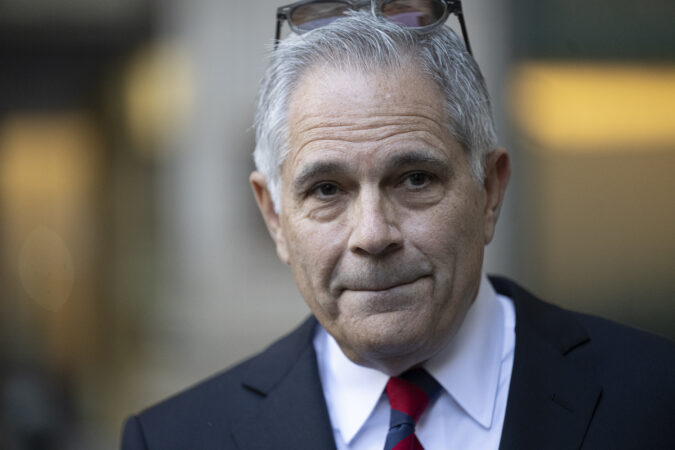
    It was the largest number of Philly officers charged together with misconduct in nearly 40 years — a seemingly splashy case for District Attorney Larry Krasner, a progressive prosecutor who has made charging cops a cornerstone of his two terms in office.

    Yet Krasner has been unusually quiet about it.

    The district attorney was traveling in Switzerland for a conference when the charges became public. His office declined to comment, held no news conference, and issued no public statements — in stark contrast to his trumpeting of police misconduct cases in the past.

    Krasner has charged dozens of police officers since taking office in 2018. But he did not publicly acknowledge his largest booking to date until The Inquirer approached him at an unrelated news conference, nearly a week after these most-recent charges were filed.

    And even then, he was reluctant to talk about it.

    “We had probable cause that they committed the crimes,” Krasner said Thursday. “Having said that, I wanna be very clear: There are a lot of great cops in the city. … I don’t think that this group of nine should in any way taint the rest of them.”

    Prosecutors accuse Nashid Akil, former captain of the 22nd District in North Philadelphia, and eight of his officers of stealing $44,576 in taxpayer-funded anti-violence grant money between January and September 2022, according to charging documents.

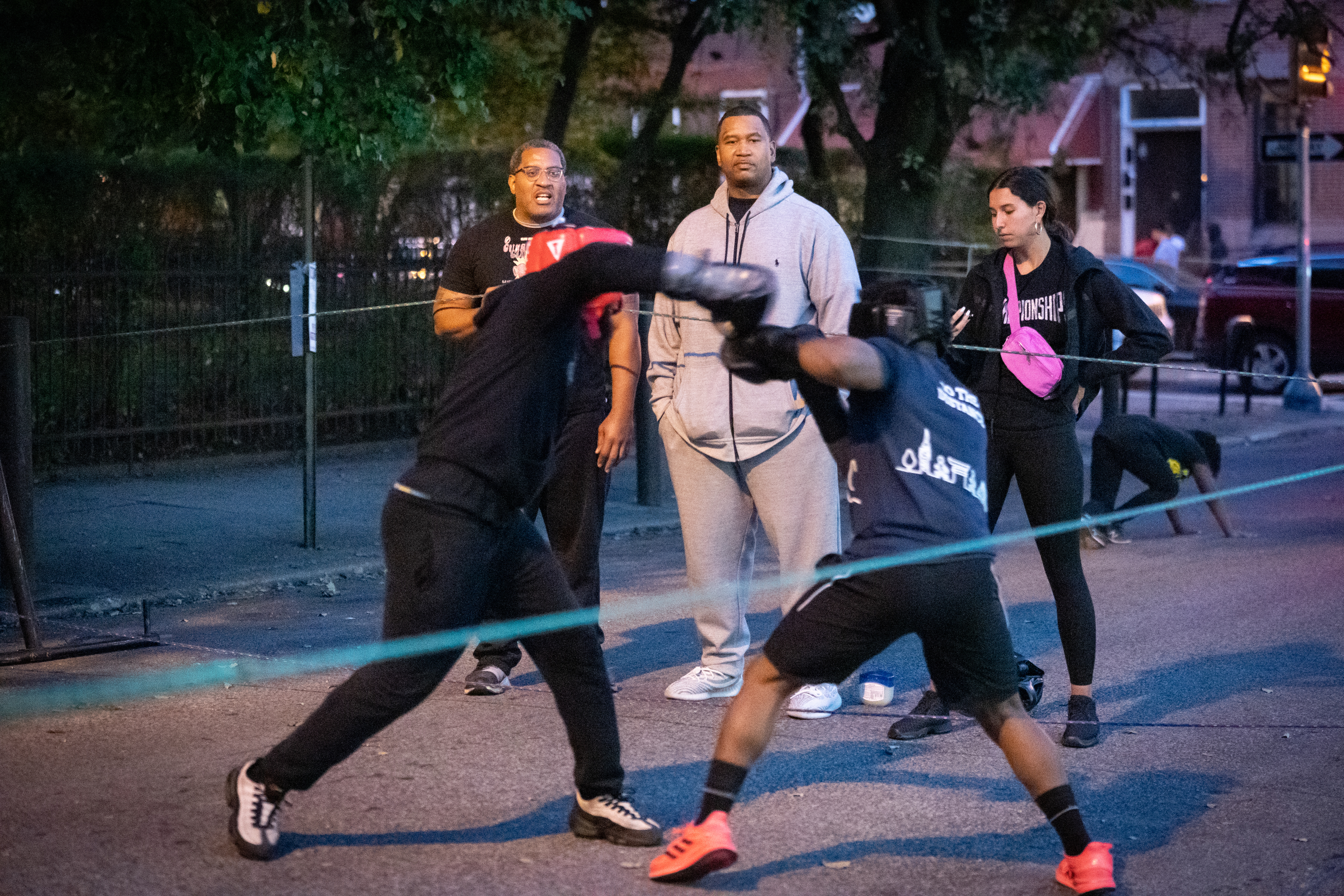
    Those funds came from a $392,000 city grant awarded to Epiphany Fellowship Church to support Guns Down, Gloves Up, a boxing and youth mentorship program that Akil founded at his nearby district building. No one from the church was charged, and Krasner said Thursday the church should not be “tainted” by the allegations against police.

    Former Captain Nashid Akil, shown here while at the boxing program Guns Down Gloves Up, at the 22nd District, in Philadelphia, Friday, October 7, 2022.

    City employees are prohibited from receiving grant dollars. Yet after vowing in the grant application that police time would be volunteered, Akil, using the church as a pass-through, allegedly paid himself and eight district officers for their work as boxing instructors, an arrangement that came to light through an Inquirer investigation in 2023.

    Police now say some officers were paid during their scheduled shift hours.

    A law enforcement source familiar with the case said the district attorney’s office concluded its probe into the grant scheme months ago. Krasner did not approve the charges until Oct. 31, according to a police department spokesperson. That was days before the Nov. 4 election, when Krasner was handily reelected to a third term. The defendants began surrendering to authorities three days later.

    Police Commissioner Kevin Bethel issued a statement after the arrests saying he was “deeply troubled” by the officers’ alleged actions and “particularly disappointed by the involvement of a former commanding officer.”

    But neither Krasner nor his spokesperson responded at the time to repeated requests for comment.

    On Thursday, Krasner attributed the timing of the charges to logistical issues with bringing in the nine codefendants.

    Akil was forced to resign in February 2023 after The Inquirer’s reporting on the boxing program, and three other officers who allegedly took the money had since resigned. Bethel has moved to fire the five active officers.

    Only one of the nine officers listed an attorney in court records, and that lawyer could not be reached for comment.

    Officials at Epiphany Fellowship Church did not respond to a request for comment.

    An unusual silence

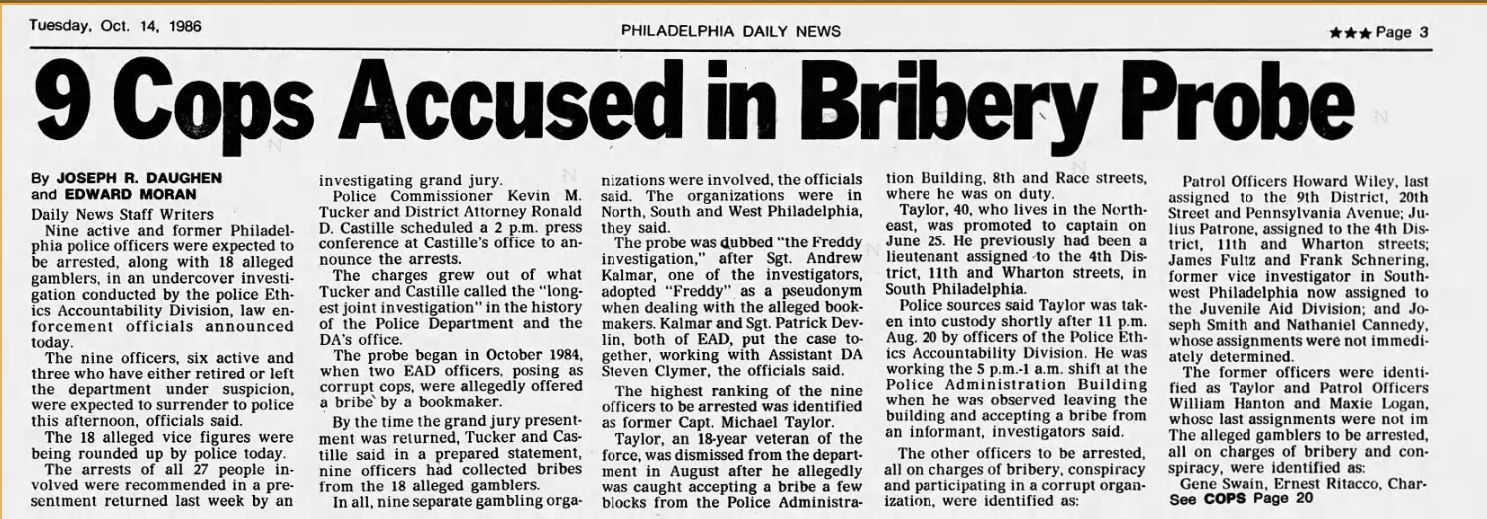
    The last time nine officers were charged together in Philadelphia was in 1986, for taking bribes to conceal an underground gambling ring.

    An Oct. 14, 1986 article in the Philadelphia Daily News shows the last time nine current and former Philadelphia police officers were charged following a single investigation.

    Since the charges were filed in the boxing program scandal, Krasner’s office has put out nine news releases — but nothing on the nine officers charged.

    It’s a departure from how the typically loquacious district attorney has handled previous allegations of police misconduct.

    In 2021, for example, when The Inquirer was reporting on widespread abuse of the department’s injured-on-duty program, Krasner said he believed some officers were “gaming the system, and in my opinion, committing crimes by engaging in fraudulent practices to stay home.” The disability system was reformed and hundreds of officers returned to work, but no criminal charges were filed.

    The next year, Krasner issued a lengthy news release after the arrest of Officer Daniel Levitt on perjury and related charges, stemming from an allegedly illegal search that led to the recovery of a handgun. The charges against Levitt were initially dismissed but have since been refiled.

    In 2023, Krasner was again out front in announcing the arrest of former Officer Patrick Henon for sexually assaulting young girls. Henon pleaded guilty.

    In May, Krasner called a news conference after a jury convicted two former detectives convicted of making false statements about DNA evidence.

    A month later, when Donald Suchinsky, a former homicide detective, was sentenced to prison for sexually assaulting relatives of murder victims, Krasner appeared outside the Criminal Justice Center to condemn Suchinsky’s conduct and urge any other victims to come forward.

    And in July, Krasner again held a news conference to criticize what he called a lenient sentence of former Officer Mark Dial, who was paroled following his voluntary manslaughter conviction in the shooting of Eddie Irizarry.

    “I am deeply disappointed with a verdict that I think makes people lose faith in the criminal justice system,” Krasner said.

    A sensitive issue

    In contrast, when approached by reporters Thursday, Krasner requested an advance list of questions about the alleged grant misappropriation, then huddled privately with two of his top prosecutors for several minutes before offering little comment.

    Asked about his reticence toward this case compared with past cases, Krasner alluded to outside concerns.

    “We have to do certain things in court in a certain kind of way, and we have to operate with our partners, and that’s what we’re going to do,” he said.

    He declined further questions.

    Krasner’s uncharacteristic silence has not gone unnoticed by nearly a dozen communications consultants, lawyers, and law enforcement officials, who spoke with The Inquirer on the condition that they not be named.

    They speculated that Krasner might be downplaying the arrests due to political sensitivities or because — unlike in cases of wrongful arrests and shootings — there is not a clear victim in this case, outside of city taxpayers. Some acknowledged that there could also be legal reasons why Krasner would decline to draw additional attention to the arrests.

    Carl Day, a pastor who runs Culture Changing Christians, noted that Krasner is allied with Black clergy members who have supported his political campaigns. Day suggested that the district attorney might be trying to avoid further scrutiny into the church that was in charge of the grant.

    “My hope and belief is that it’s a level of respect,” Day said. “In this work, you become scrutinized a ton and placed under microscopes, especially when you are a Black-led organization and getting government money.”

    The boxing program scandal is one of several incidents that have raised concern about the city’s oversight of millions of anti-violence grants, scores of which have been awarded to small nonprofits in the Black community.

    Day said nonprofit leaders need to be held accountable for misspent funds, but he argued that Black-led nonprofits, many of which do not have the financial resources of large organizations that typically get city grants, face heightened scrutiny.

    If that is the case, Day said, he is puzzled why Krasner wouldn’t come out and say so.

    “It’s to be continued,” he said.

  • Discovery of Kada Scott’s body at Germantown middle school has reignited debate over the vacant building

    Discovery of Kada Scott’s body at Germantown middle school has reignited debate over the vacant building

    When it opened in 1973, Ada H.H. Lewis Middle School was a source of deep pride for East Germantown, the kind of state-of-the-art educational facility that only suburban kids had at the time.

    But on Saturday, when police found Kada Scott’s corpse buried in a shallow grave in the woods of the long-ago vacated school grounds, ending a two-week search for the missing 23-year-old Mount Airy woman, the Rev. Chester H. Williams saw only decades of failure.

    “It’s a disgrace,” said Williams, a pastor who runs a neighborhood civic group. “We were very hurt to hear that this happened.”

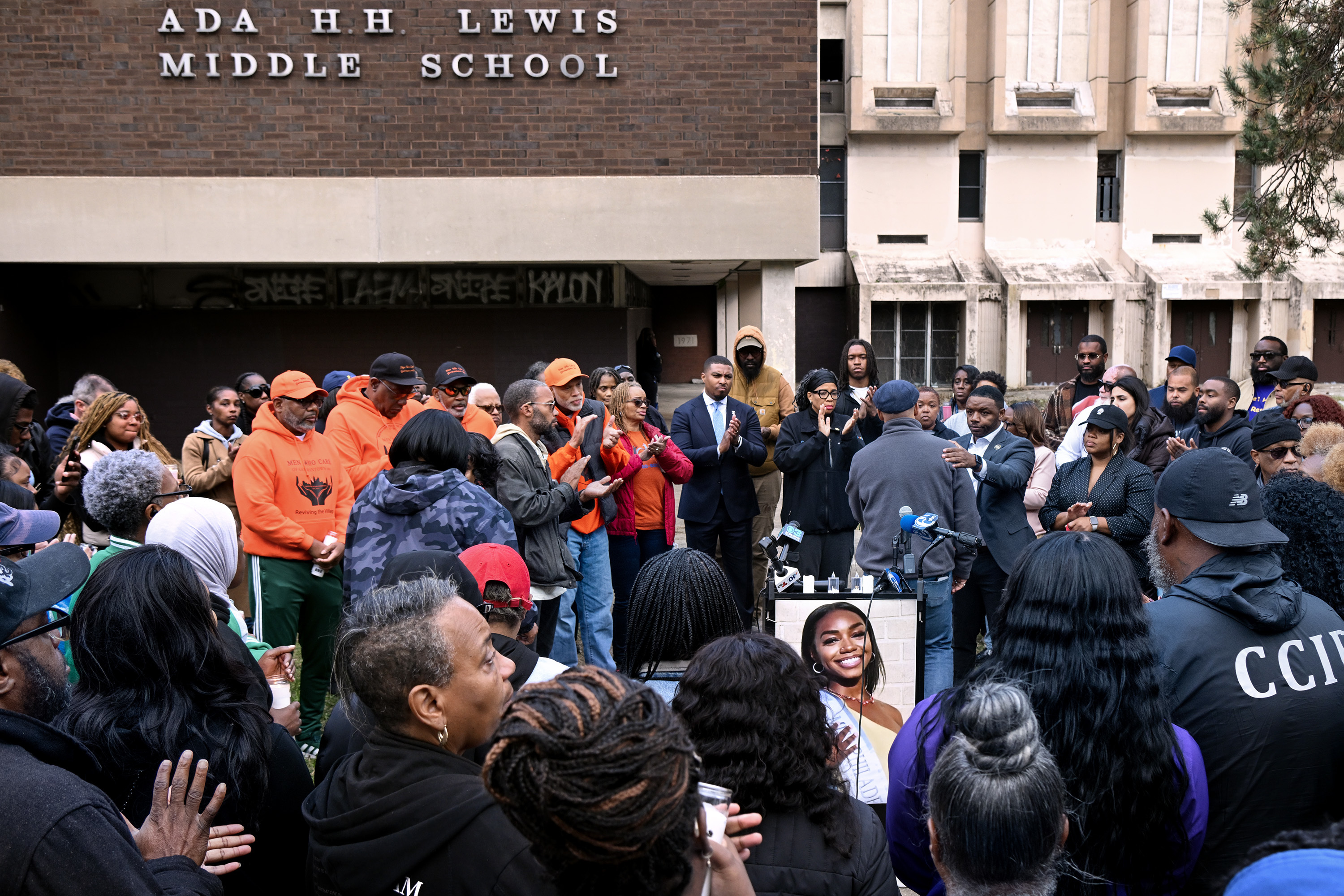
    Community members gather for a candlelight vigil in memory of Kada Scott on Monday at Ada H.H. Lewis Middle School.

    On top of the shock, Scott’s kidnapping and murder has renewed animus in some quarters about the Philadelphia School District‘s failure to repurpose the blighted property, one of dozens of schools shuttered by the district over the last 20 years.

    Since Lewis closed in 2008, local officials and civic leaders said the sprawling seven-acre campus has become a magnet for squatting, illegal dumping, and other criminal activity. City officials have cited the school district 10 times since 2020 for overgrown weeds, graffiti, and piles of trash that blanketed the property, public records show. And four years ago, the district passed on an opportunity to reverse course on the blight.

    A proposal to redevelop the land into new homes, championed by neighborhood leaders like Williams, sat before the school board for approval. But the district abandoned the plan at the eleventh hour without public explanation, which the developer alleged was due to meddling by City Councilmember Cindy Bass — a contention Bass denies.

    “The school district, for some reason, we don’t know why, they put a block on anything being built there,” Williams said.

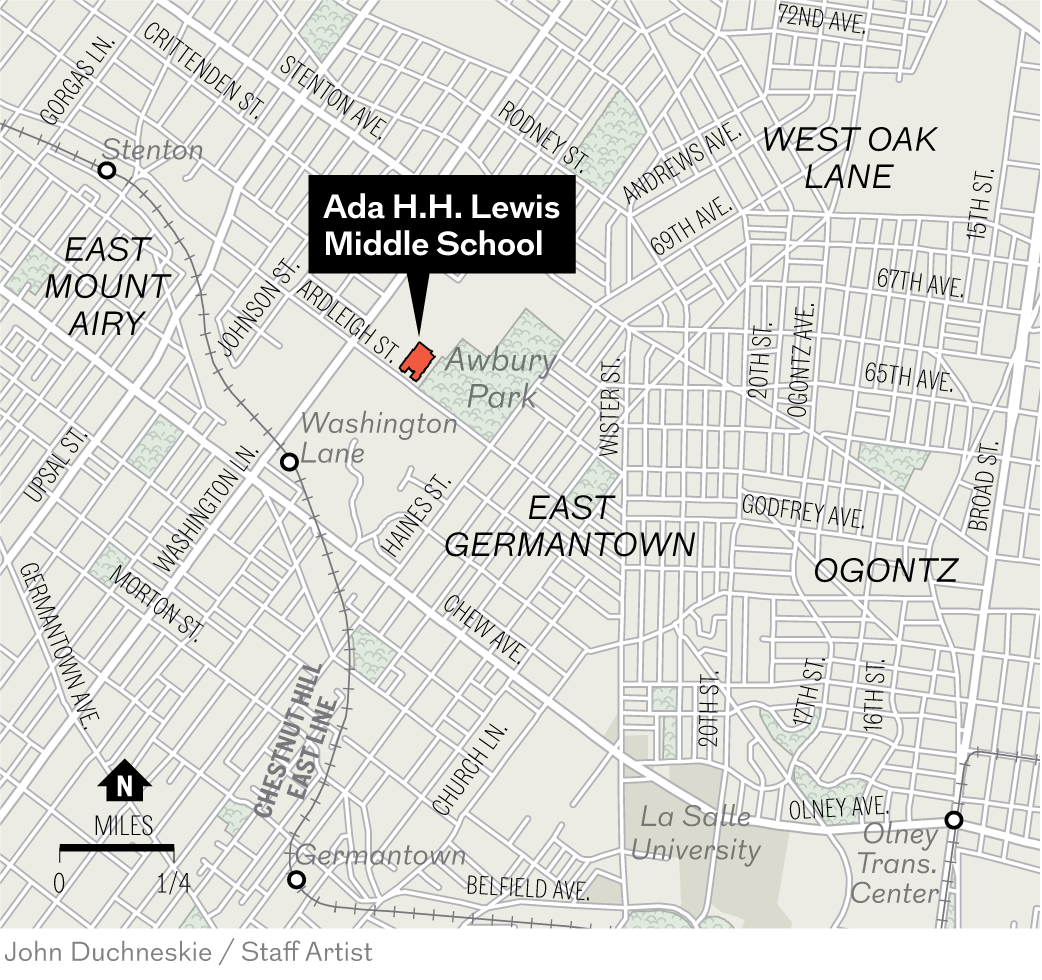
    Map of the former Ada H.H. Lewis Middle School in East Germantown

    Philadelphia Superintendent Tony B. Watlington Sr. extended “deepest sympathies” to Scott’s family and friends in a statement, and said the district’s operations and safety departments will review the vacant-property portfolio “to create and maintain safe and healthy spaces in every neighborhood.”

    While some call Lewis “abandoned,” the district is careful to call the building “vacant,” one of 20 such properties in the district’s portfolio. It says maintenance and inspection logs are kept about work on vacant properties; details were not immediately available.

    The debate over Lewis comes at a crucial time for the district: It is preparing to release recommendations about its stock of 300-plus buildings — and likely add to the list of decommissioned schools-turned-vacant public buildings. The district’s master planning process will contain recommendations for school closures and combining schools under one roof, officials have warned.

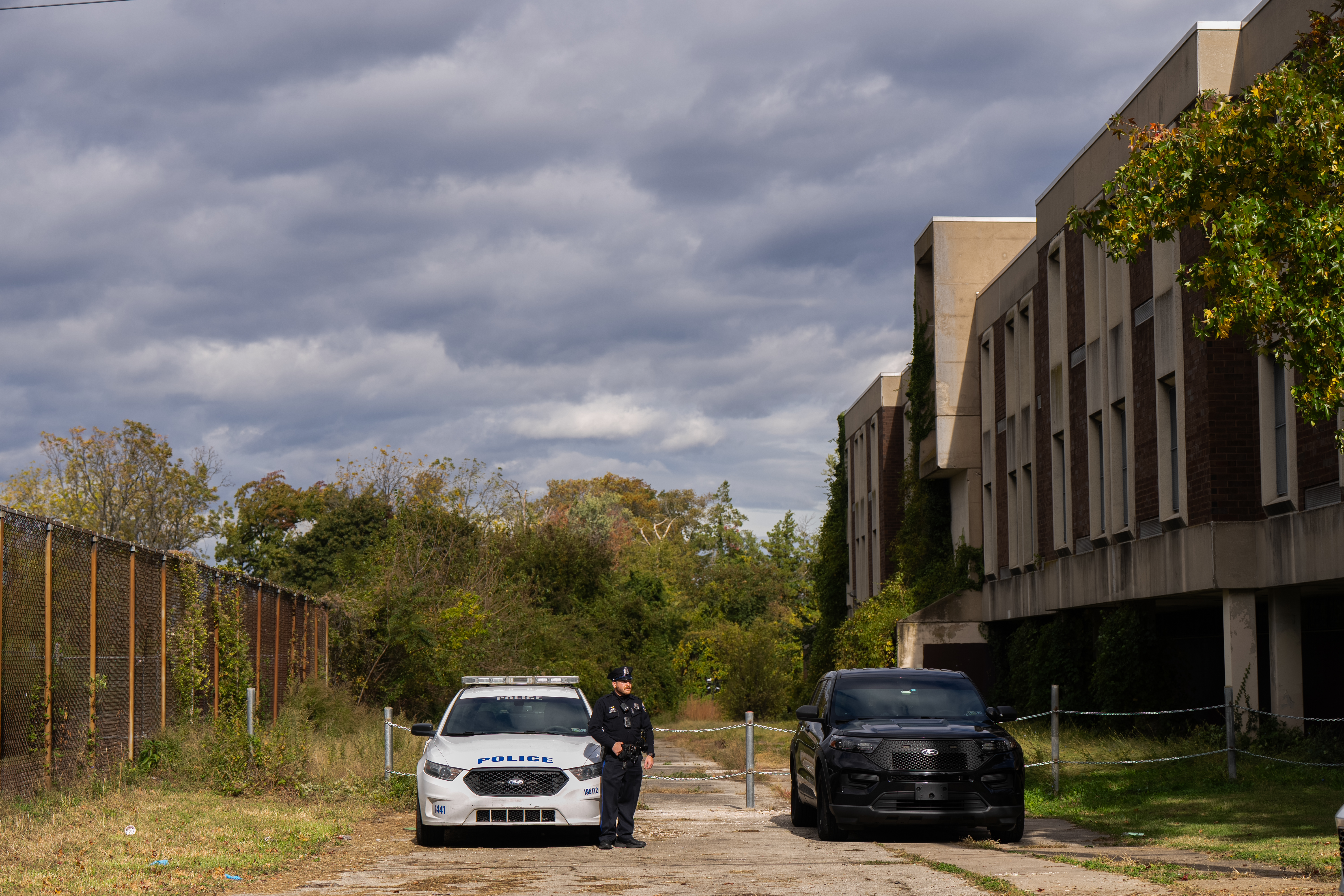
    Police at Ada H.H. Lewis Middle School.

    A fizzled redevelopment

    In 2011, then-City Controller Alan Butkovitz said the district’s vacant buildings were “catastrophes waiting to happen.

    Butkovitz, in a report released that year, said district inaction around such structures was dangerous and noted that the schools were magnets for criminal activity.

    Just before the pandemic hit in 2020, after years of pushback over Ada Lewis, the school district began accepting applications to redevelop the crumbling middle school. Germantown developer Ken Weinstein was one of three developers to place bids. He sought to buy the property for $1.4 million and build 76 new twin homes, at a density that neighbors felt complemented the surrounding area and resolved concerns about density brought by apartment buildings.

    Weinstein said he gathered letters of support from 60 neighborhood residents and elected officials, including U.S. Rep. Dwight Evans and then-State Rep. Stephen Kinsey. The school board seemed eager to move ahead and set a final vote for the proposal in May 2021.

    The vote never happened. The only explanation given that day was that “the Board had concern” about “what the long-term plan is for developing schools for the 21st century,” according to a district spokesperson.

    According to Weinstein, some school board members received calls from Bass asking them to table the vote. Bass has faced criticism for interfering in development projects, including other proposals made by Weinstein, as vacant properties languished for years in her district. Her district includes the Lewis property and parts of North and Northwest Philadelphia, where Weinstein has focused his development work.

    Bass, in an interview Monday, denied meddling in the vote. She acknowledged that she did not support Weinstein’s proposal because of the price of the homes — averaging around $415,000 — which she said would have triggered “immediate gentrification in the neighborhood.” But she said she had no involvement in the board’s reversal.

    “That was up to the school district,” Bass said. “I don’t sit on the school board.”

    While community groups in her district supported Weinstein’s project in 2021, Bass said she objected to market-rate housing as the sole alternative for East Germantown, arguing that it amounted to the district and developers saying “you should just take any old thing just so it’s not vacant.”

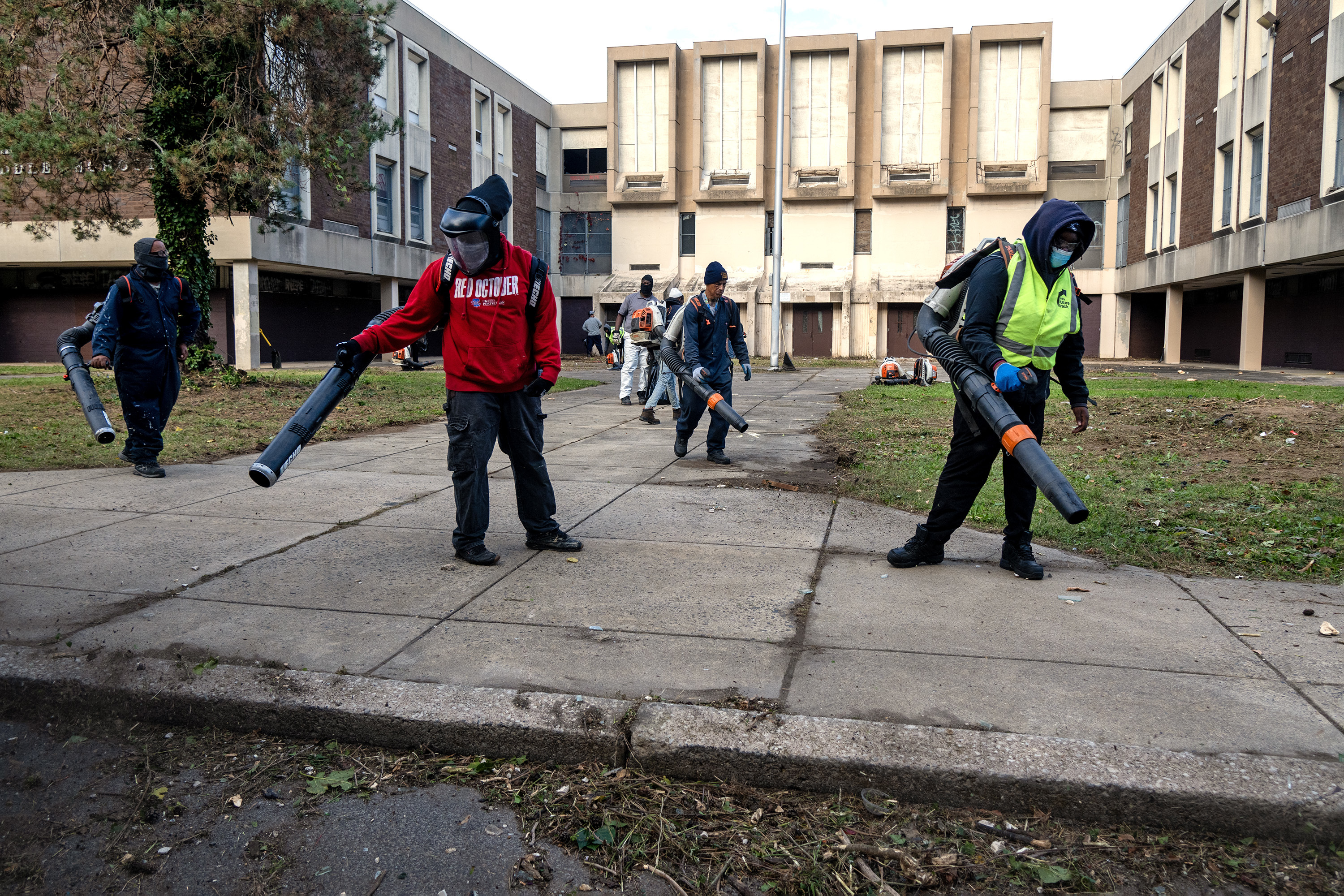
    City workers clean up in front of the vacant Ada H.H. Lewis Middle School Monday, just minutes before the start of a community candlelight vigil in memory of Kada Scott.

    A tragic turn for the property

    In a letter dated Friday, Bass called on the school district to demolish the vacant school, saying she was troubled by the evidence that led investigators to the property during the search for Scott.

    “The continued presence of this unsecured and deteriorating structure is simply unacceptable,” the Council member wrote in a statement, noting the site is now associated with “tragic violence.”

    Cell phone records and tips from the public first led police to the former Ada Lewis school last week, where they found Scott’s pink phone case and debit card, but nothing else. Then, late Friday, police received a new tip saying that they had missed something on their first search of the grounds, and that they should look along the wooden fence that divides the school from the neighboring Awbury Recreation Center. Officers returned to the property Saturday and found Scott’s body, buried in a shallow grave in a wooded area behind the school.

    Prosecutors expect to charge Keon King, 21, with the murder, though police continue searching for others who they believe may have helped dispose of evidence.

    Bass took office in 2012, when the school was already vacant. She said she pushed the school district for several years to take action, as nuisances piled up at the property. She said she still hopes that another “institution” could replace Lewis.

    “I think that having something that the community wants is not hard to figure out,” Bass said. “This is what the community’s interested in — they’re interested in another institution.”

    She said a proposal for a charter school is now in the works, though she said she was unable to provide details.

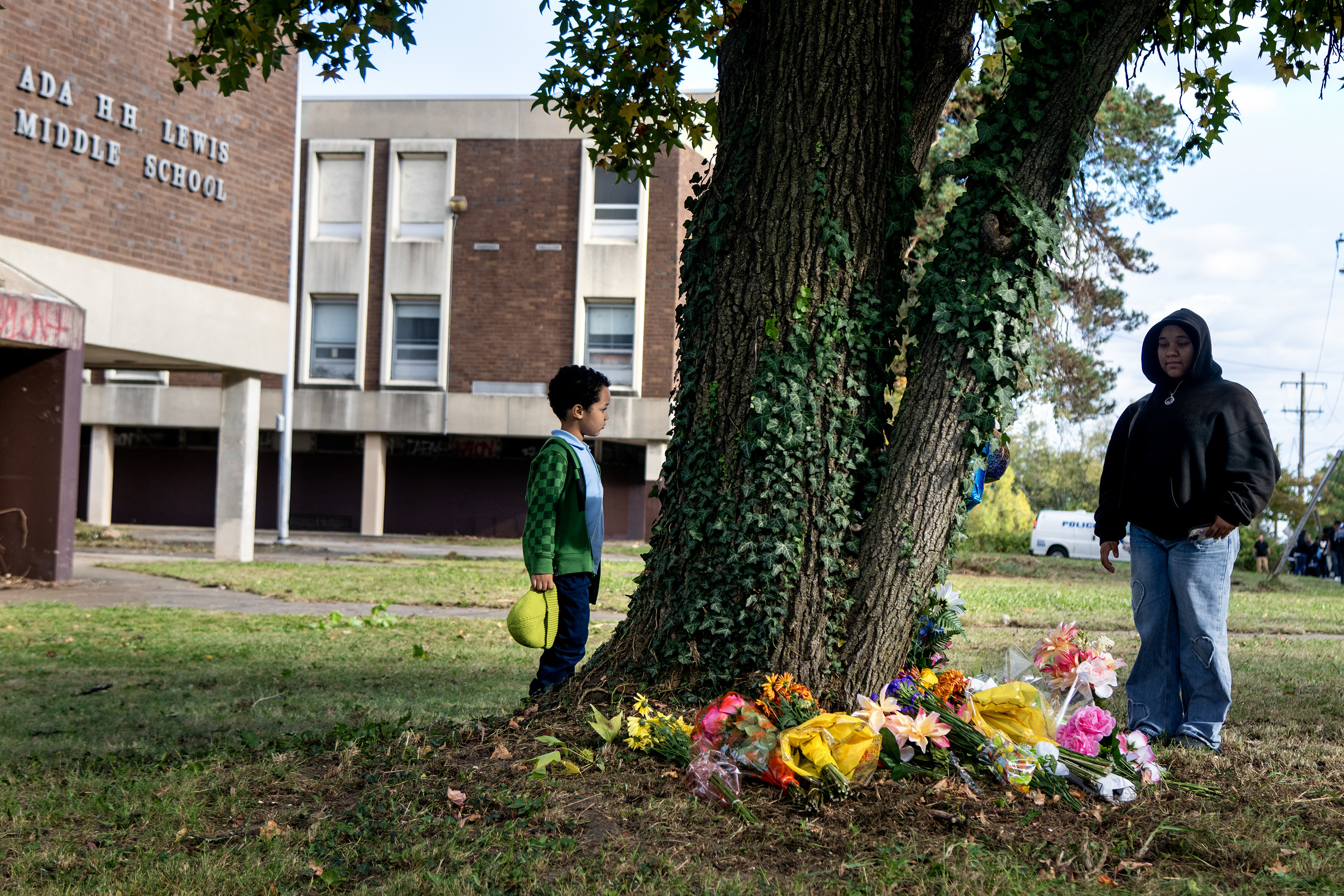
    Julius Peden, 5, and Jaihanna Williams Peden (right), 14, pause at a memorial for Kada Scott on Monday.

    A glut of vacant schools

    The school district still views Lewis as a potential “swing space” — a building that could be used to house students if another district building is closed due to environmental problems.

    There is precedent: The district has used other school buildings for such purposes, like Anna B. Pratt in North Philadelphia, which was also closed in 2013, to house early-childhood programs, and then students from other North Philadelphia schools whose buildings were undergoing renovation.

    Still, it remains unclear how much it would cost to bring the Lewis building back to an inhabitable state.

    The school system currently has about 70,000 more seats throughout the city than students enrolled. Though officials have said their first preference is to have closed schools reused for community benefit, it’s unlikely that all will be able to serve that purpose. And the timetable will surely be slow.

    City officials at times have expressed frustration with the pace at which the district is making decisions about how to manage its buildings. School leaders have said the wait is necessary given the district’s capacity and the need to make correct choices and not rush the process.

    Weinstein said the tragedy that culminated at Lewis reflected the conventional wisdom that blight breeds crime.

    “There’s always consequences to shutting down a proposal that the community supports,” Weinstein said. “In most cases, nothing bad happens. In this case, something very bad happened.”

    Staff writer Ellie Rushing contributed to this article.