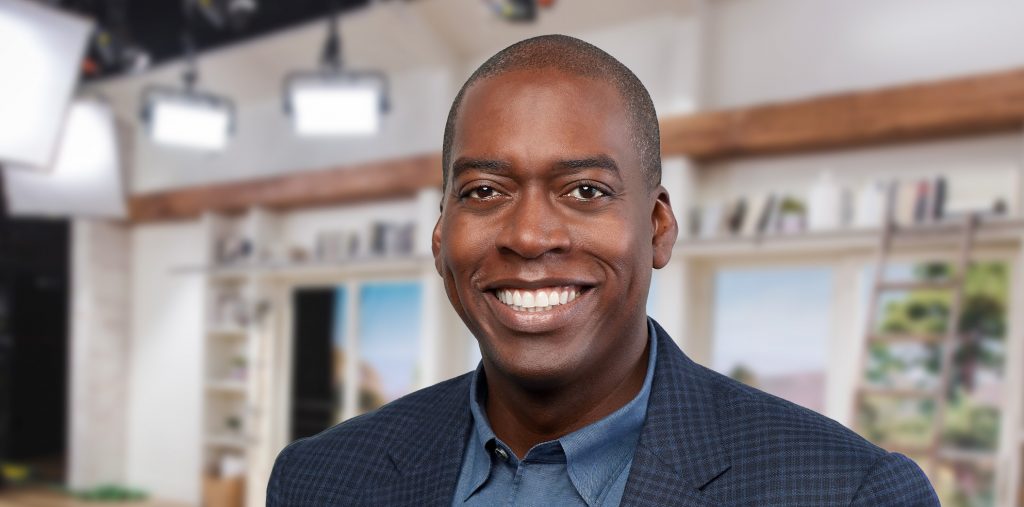
Antthony Mark Hankins, a Savannah, Ga.-based fashion designer who had a 31-year on-air career with HSN until he was terminated in July, filed the lawsuit last week against the network and its parent company, QVC Group, according to federal court documents.
Hankins seeks at least $30 million in damages for what his attorneys describe in the documents as an “abrupt and unjustified termination” that “reflects a pattern of discriminatory treatment, retaliatory conduct, and operational mismanagement.” The lawsuit is filed in the U.S. District Court for the Eastern District of Pennsylvania.
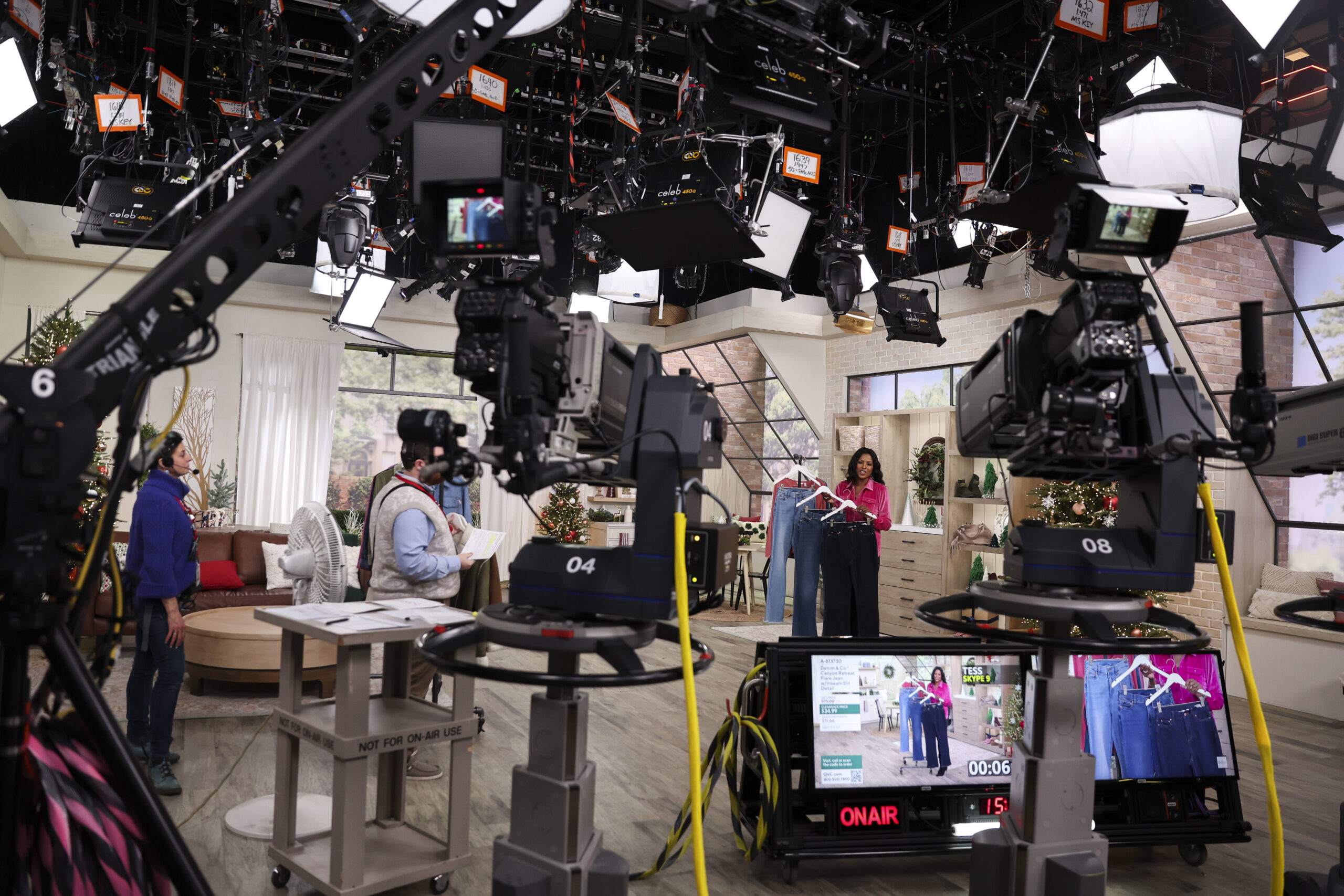
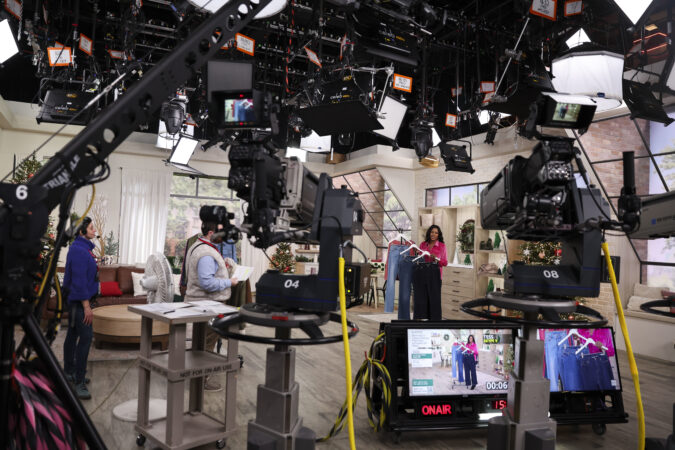
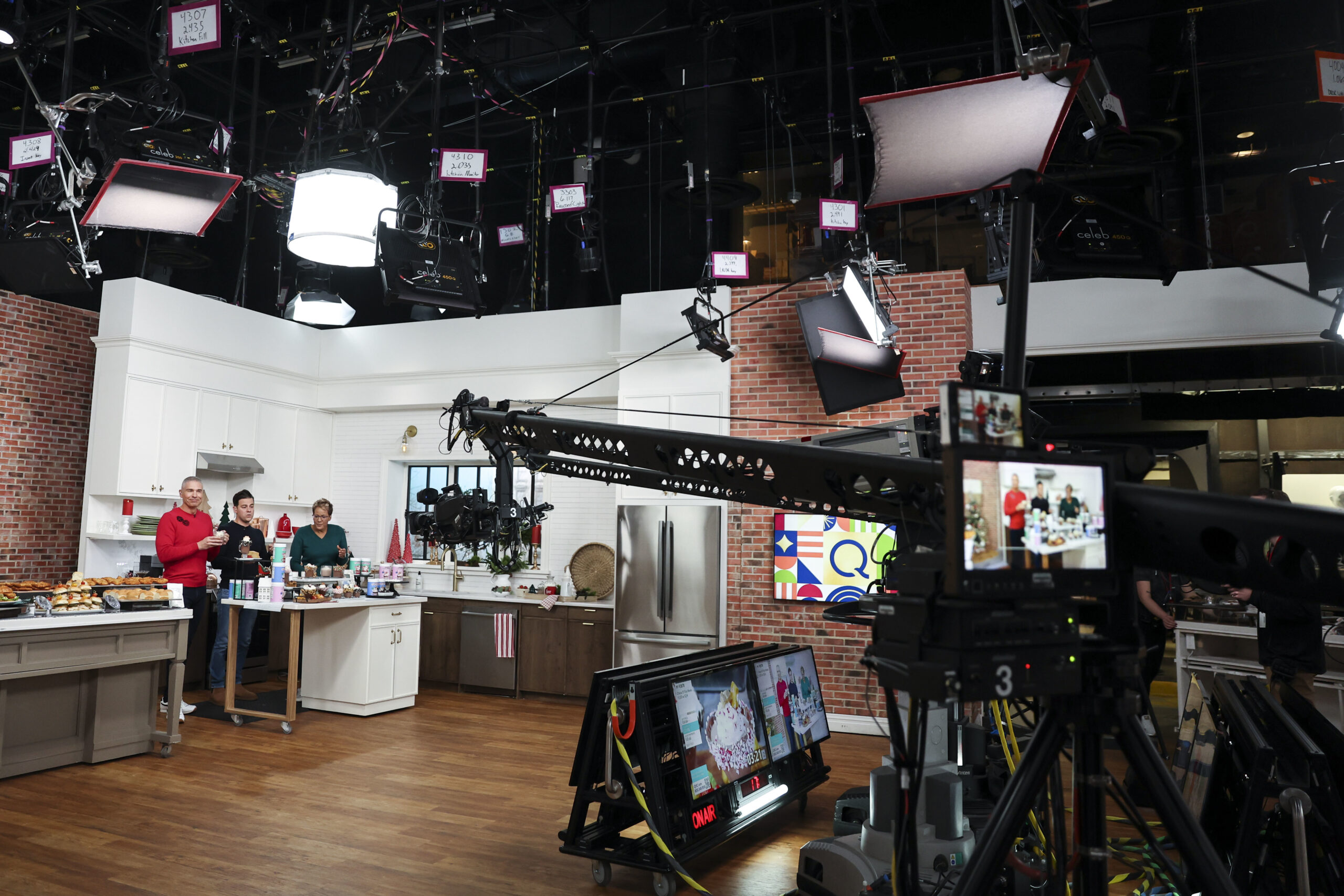
A show is filmed at QVC’s studios in West Chester in 2023.
Between 2023 and 2025, HSN executives reduced Hankins’ airtime and decreased promotion of his brand, Antthony Design Originals, to focus on a “TikTok-centered business model,” according to the designer’s lawsuit. As a result, he says his gross sales last calendar year were $13.24 million, more than $2 million less than projected. When he was more supported by the network, he said, his sales outperformed expectations.
Hankins, who is Black, also says the company discriminated against him based on race, including by promoting him more heavily during Black History Month, firing him without cause, and immediately pulling him off the air despite decades of strong performance, according to the lawsuit.
In the documents, Hankins also alleges breach of contract, defamation, interference with third-party business relationships, and misappropriation of his name and likeness in advertisements.
In a Facebook post on his business page, Hankins said the lawsuit “is about standing up for the values my brand was built on, protecting my legacy, and ensuring that fairness and accountability matter — especially for creators who have given decades of their lives to their work.”
Hankins’ attorney, Samuel B. Fineman of Semanoff Ormsby Greenberg & Torchia in Huntingdon Valley, did not return a request for additional comment.
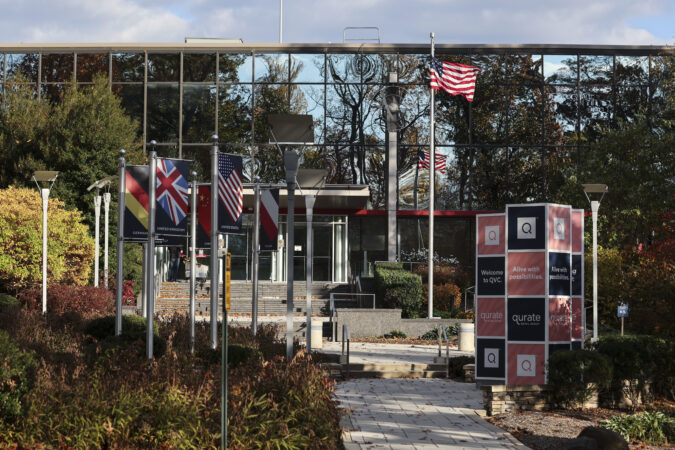
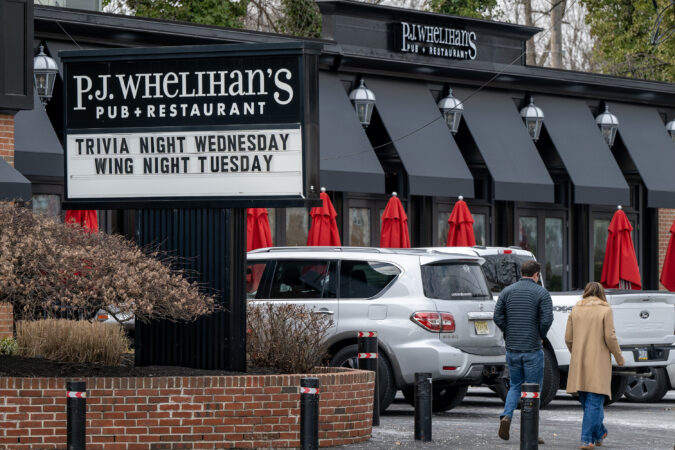
A QVC logo is shown outside its studios in an undated file photo. The company has been based in West Chester for more than 30 years.
The networks’ parent company, which rebranded as QVC Group last year, has struggled recently amid stiff competition from e-commerce and social-media platforms like TikTok Shop.
Its revenue and operating income have been on the decline, and fewer people are shopping. As of September, about 7 million customers had made a purchase on the networks in the past year, down from 8.1 million in fiscal year 2023.
According to Bloomberg’s report last week, company executives were talking with creditors about a potential bankruptcy, but had not made a decision on whether to file.
A search for “QVC Group” in online court records did not show any bankruptcy filings as of Wednesday.
It would be Sheetz’s first outpost in Wawa’s home county.
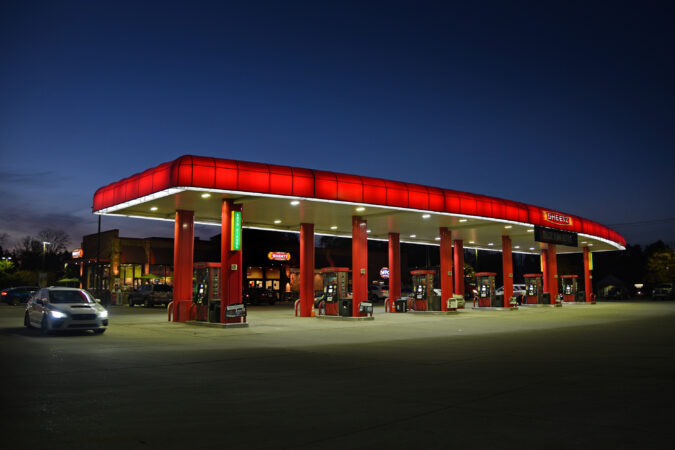
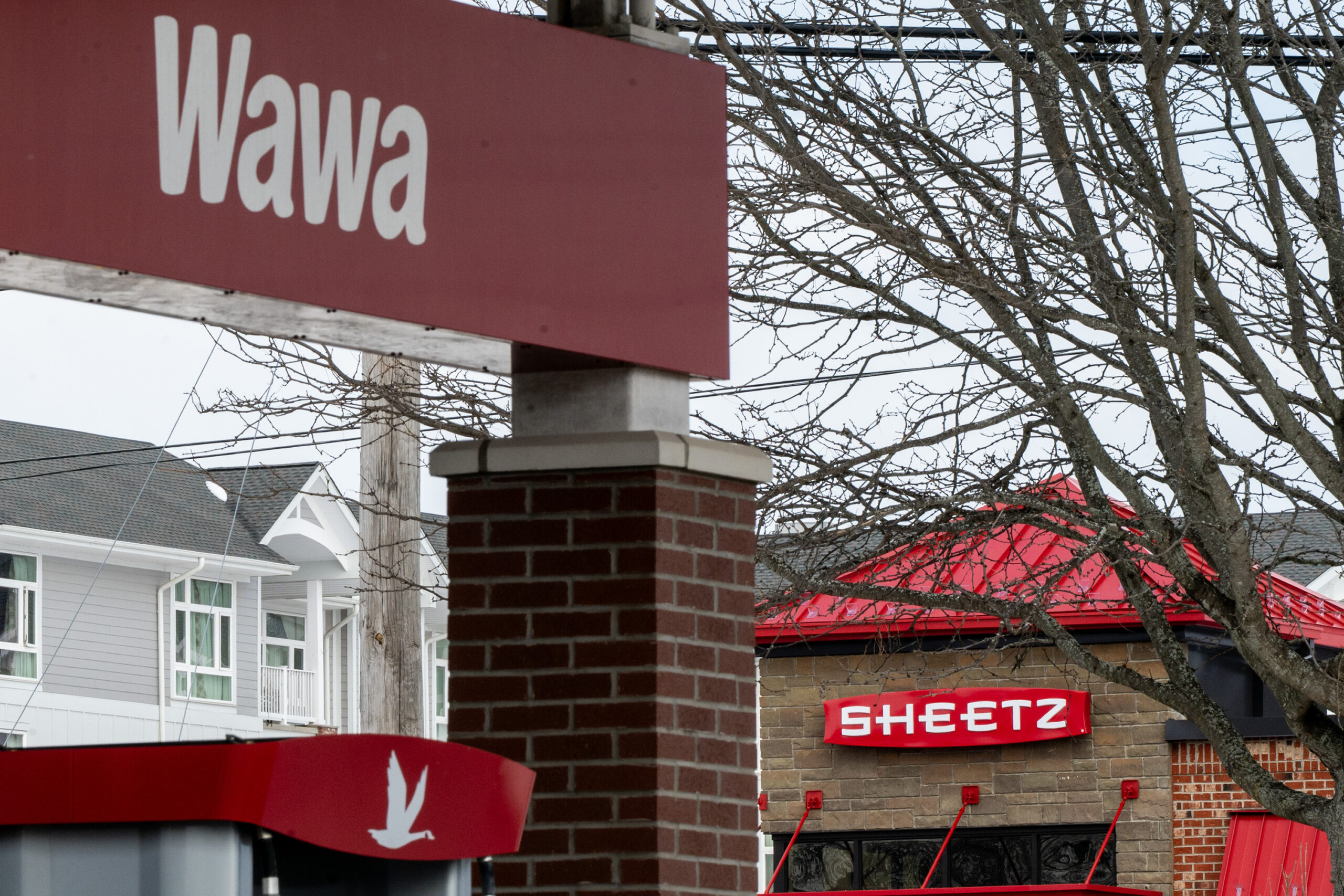
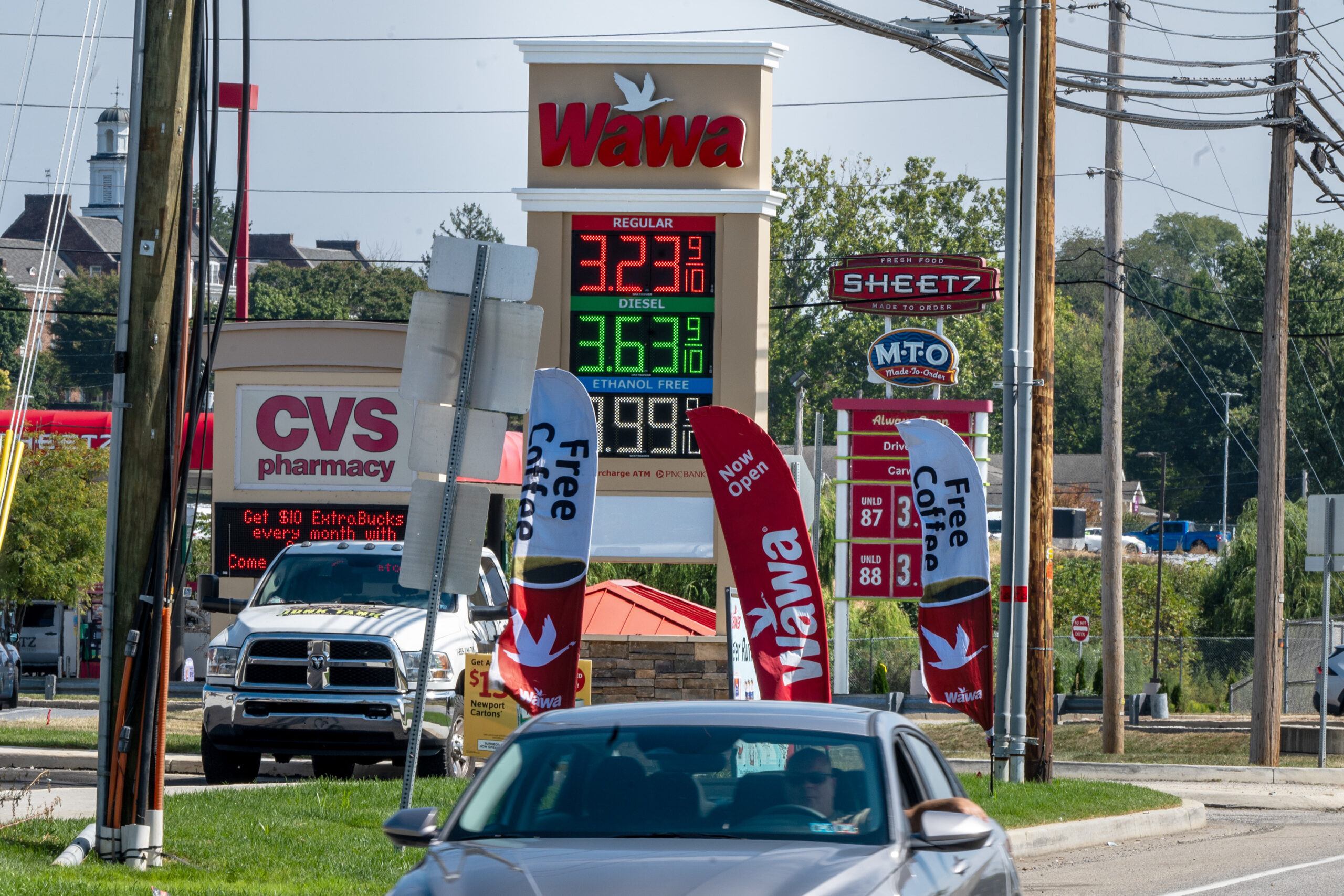
A Sheetz and Wawa now sit across the street from each other in Limerick Township, Montgomery County.
If approved, the store would be constructed about five miles down the road from Wawa’s corporate headquarters, and across the county from the site of Wawa’s first store, in Folsom.
The Sheetz would be in the Village at Painters’ Crossing shopping center near the intersection of U.S. Routes 1 and 202, according to the application. Sheetz would take over a parcel in the northeast corner of the complex that is currently occupied by a vacant former bank and a closed Carrabba’s Italian restaurant.
Along with Sheetz’s usual offerings of made-to-order food, grab-and-go snacks, and drinks, the outpost would include indoor and outdoor seating, two mobile-order pickup windows, and six gas pumps, according to the application. It would not include a drive-through.
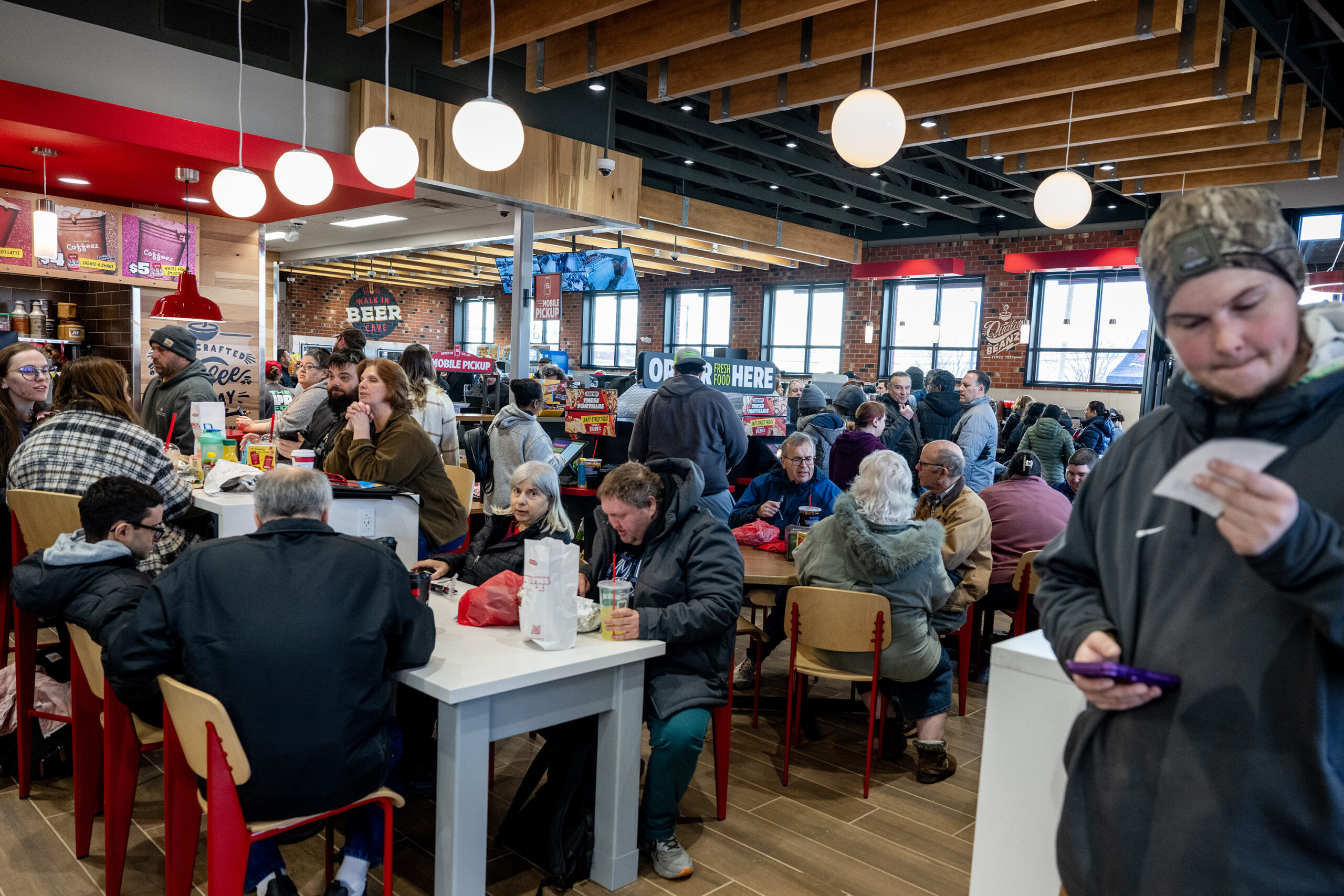
Customers crowd into the indoor dining area at the new Sheetz in Limerick Township that opened last week.
Nick Ruffner, Sheetz public affairs manager, declined to provide additional information about the proposal, saying in a statement that “it is still very early in the process.”
Zoning changes and other approvals would be required before anything is built, Chadds Ford Township solicitor Michael Maddren said. As of Tuesday, Sheetz had only submitted the sketch plan, which was discussed at a planning commission meeting earlier this month, Maddren said.
At the meeting, township officials did not express strong opinions about the sketch, Maddren said: “We need a little more detail.”
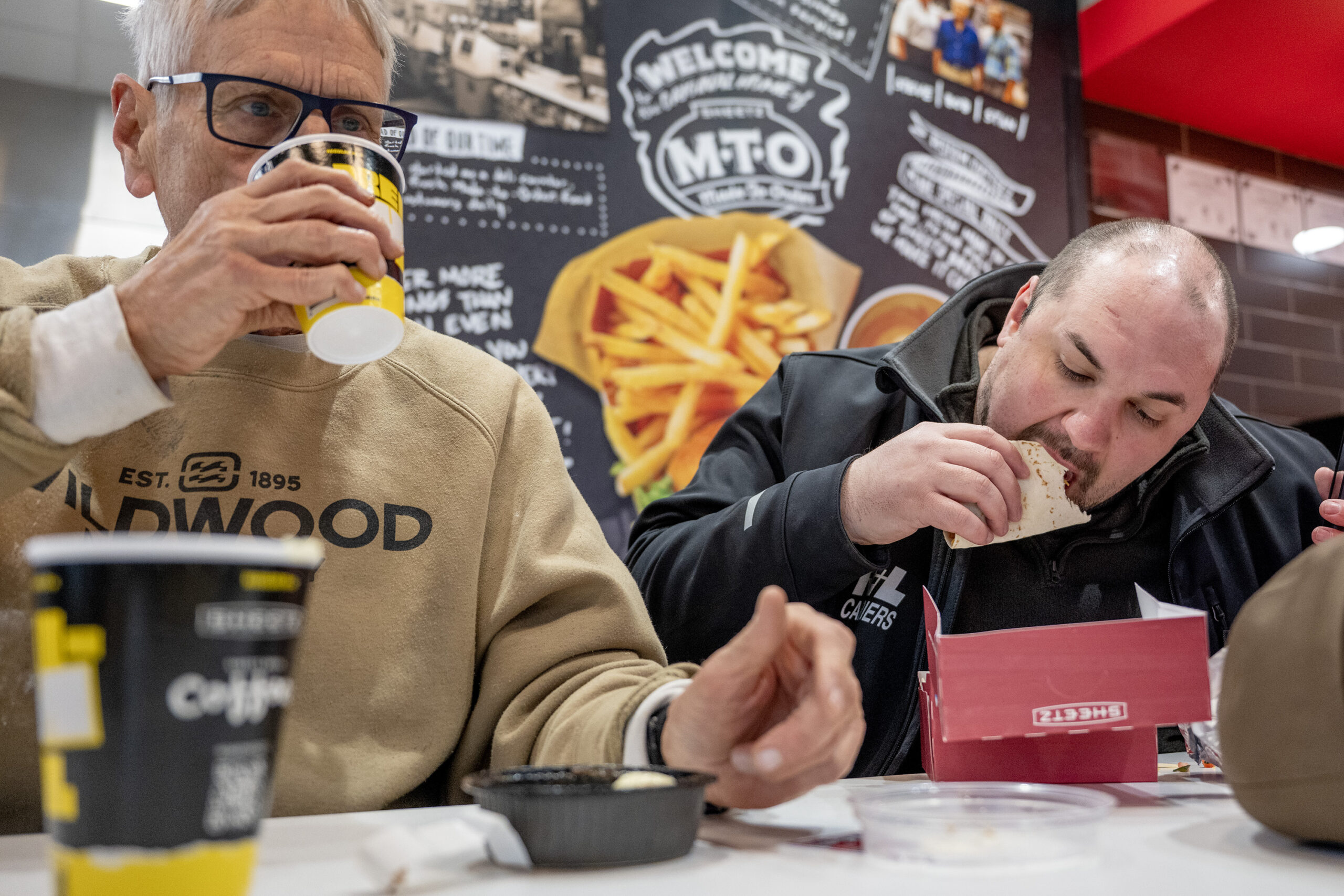
Craig Scott (left) of Wayne and Dave Swartz (right) of Collegeville had breakfast at last week’s grand opening of the first Sheetz in the Philadelphia suburbs.
If the Chadds Ford project moves forward, Sheetz could establish a foothold in three of Philly’s four collar counties: Along with its new Limerick, Montgomery County location, Sheetz also has expressed interest in building a store in Chester County.
In the fall, company officials submitted a sketch plan to Caln Township officials, proposing a location at the site of a shuttered Rite Aid on the 3800 block of Lincoln Highway in Downingtown, according to the township website.
After years of Sheetz opening stores in Western and central Pennsylvania, and Wawa expanding closer to Philly, Sheetz and Wawa’s footprints have increasingly overlapped in recent years.
A Wawa opened outside Harrisburg in 2024, marking the chain’s first central Pennsylvania location. It is down the street from a Sheetz.
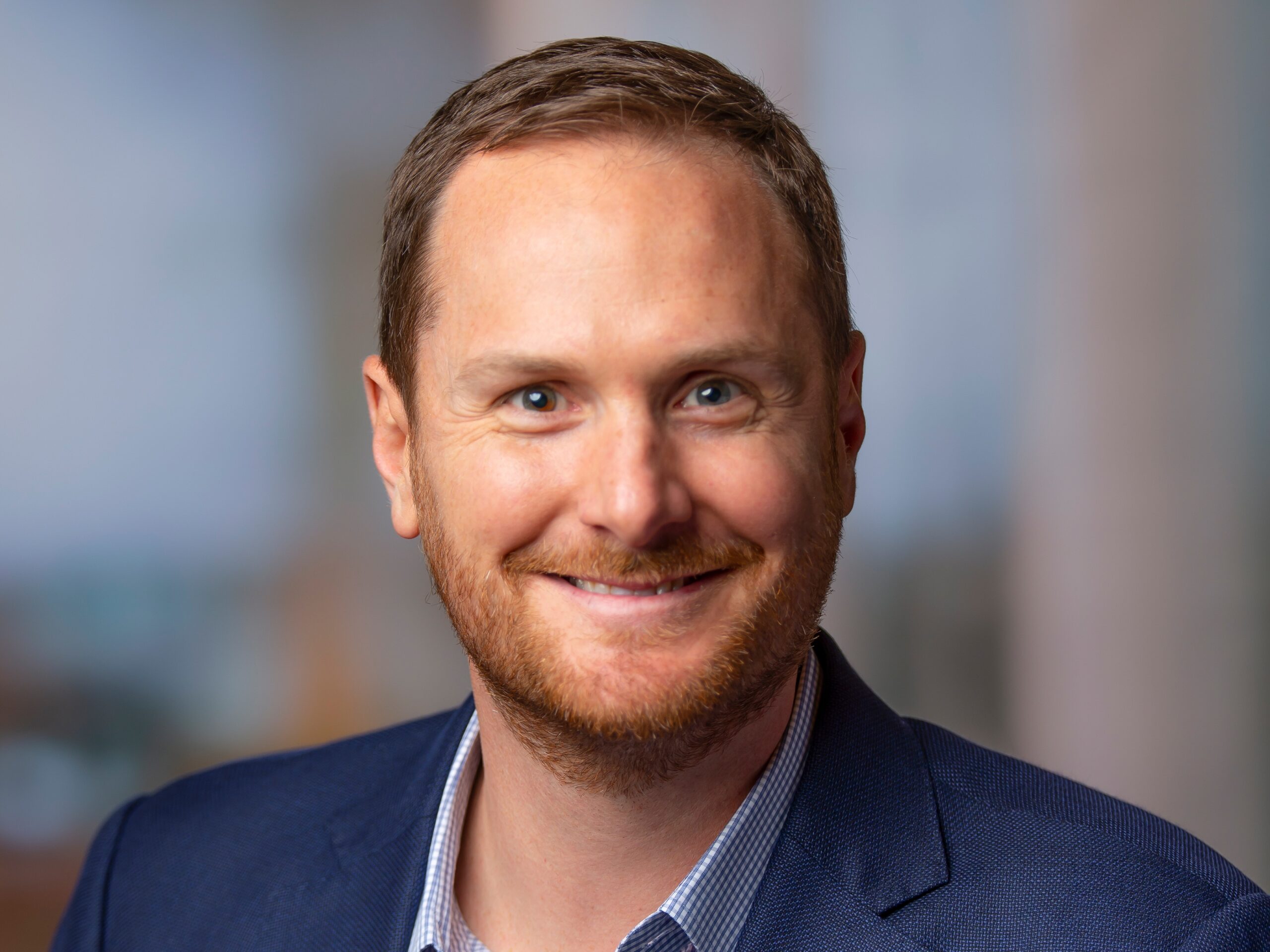
Brian Finnegan, Brixmor Property Group’s new CEO, is a true Philadelphian.
He was born in Southwest Philly, spent his formative years in Roxborough, and graduated from St. Joe’s Prep. He met his wife, Katie, at a Halloween party in his mother’s Packer Park backyard in 2009, while just down the road the Phillies played the Yankees in the World Series and Pearl Jam closed the Spectrum.
Finnegan, now 45, can’t give up his Eagles season tickets, despite living outside New York and traveling the world as a real estate executive, When he can’t make games, he can usually count on his 73-year-old mother, Geraldine, to take the seats.
Brian Finnegan, who was named CEO of Brixmor Property Group last month, said he’s especially proud of the company’s commitment to its more than 20 shopping centers in and around Philadelphia, where he grew up.
Finnegan lives in Rye, N.Y., with Katie and their three young daughters, Magnolia, Daisy, and Poppy.
The company has invested about $180 million in its Philly portfolio over the past nine years, Finnegan said, and calls itself the largest operator of open-air shopping centers in the region.
The following interview has been edited and condensed for clarity.
How would you say Brixmor is doing overall?
The company is in the best position it’s ever been. We’re signing rents at the highest level that we ever have. We have occupancy levels that are close to the highest we’ve had.
Consumers today are demanding much more of the suburbs in terms of the types of services that they’re looking for, the types of restaurant options that they’re looking for. And that’s allowed us to really improve the merchandising mix at our shopping centers with better food and beverage options and better service options in terms of health and wellness.
Why do you think Brixmor shopping centers are thriving while many brick-and-mortar stores falter?
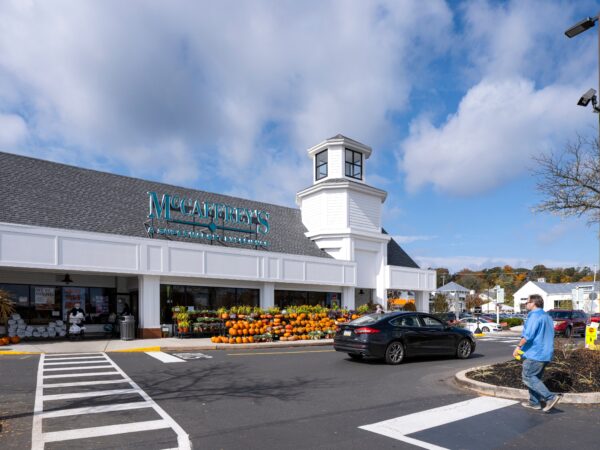
Grocers, especially [tenants like Sprouts, Whole Foods, and McCaffrey’s], have really invested in their stores, and they’re drawing a lot of traffic.
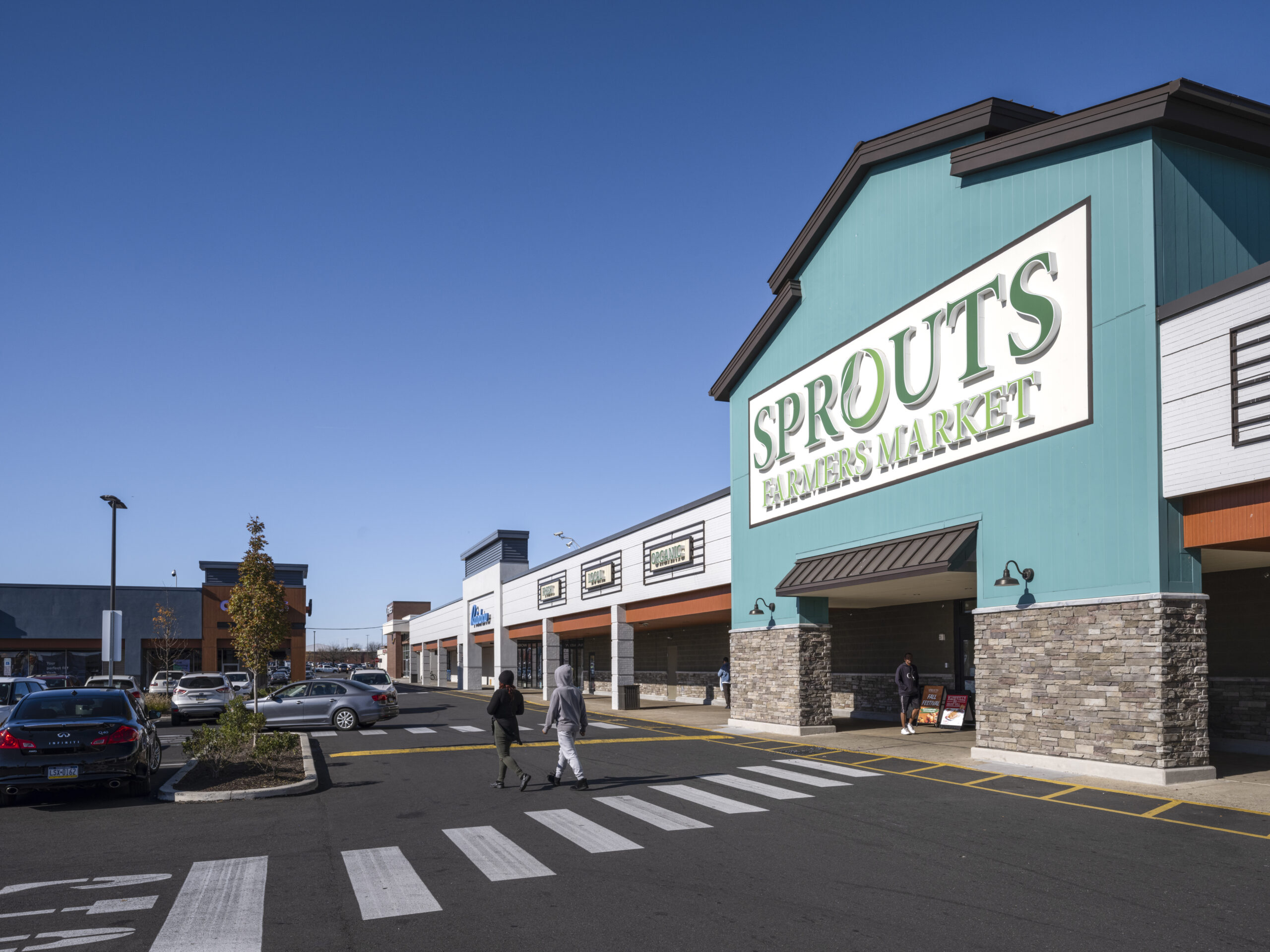
Sprouts is among the retailers located at Roosevelt Mall in Northeast Philadelphia, one of Brixmor Property Group’s complexes in the region.
As it relates to fitness and wellness, and higher quality food and beverage options, I think consumers today care more about what they’re putting in their bodies and how they look than they ever have.
You have to create an environment at specific shopping centers where if one tenant draws traffic, another tenant can complement them.
It really matters who your neighbor is, so if you’re able to put a strong merchandising mix together, which we’ve been able to do at our centers in Philadelphia, you’re really going to see traffic.
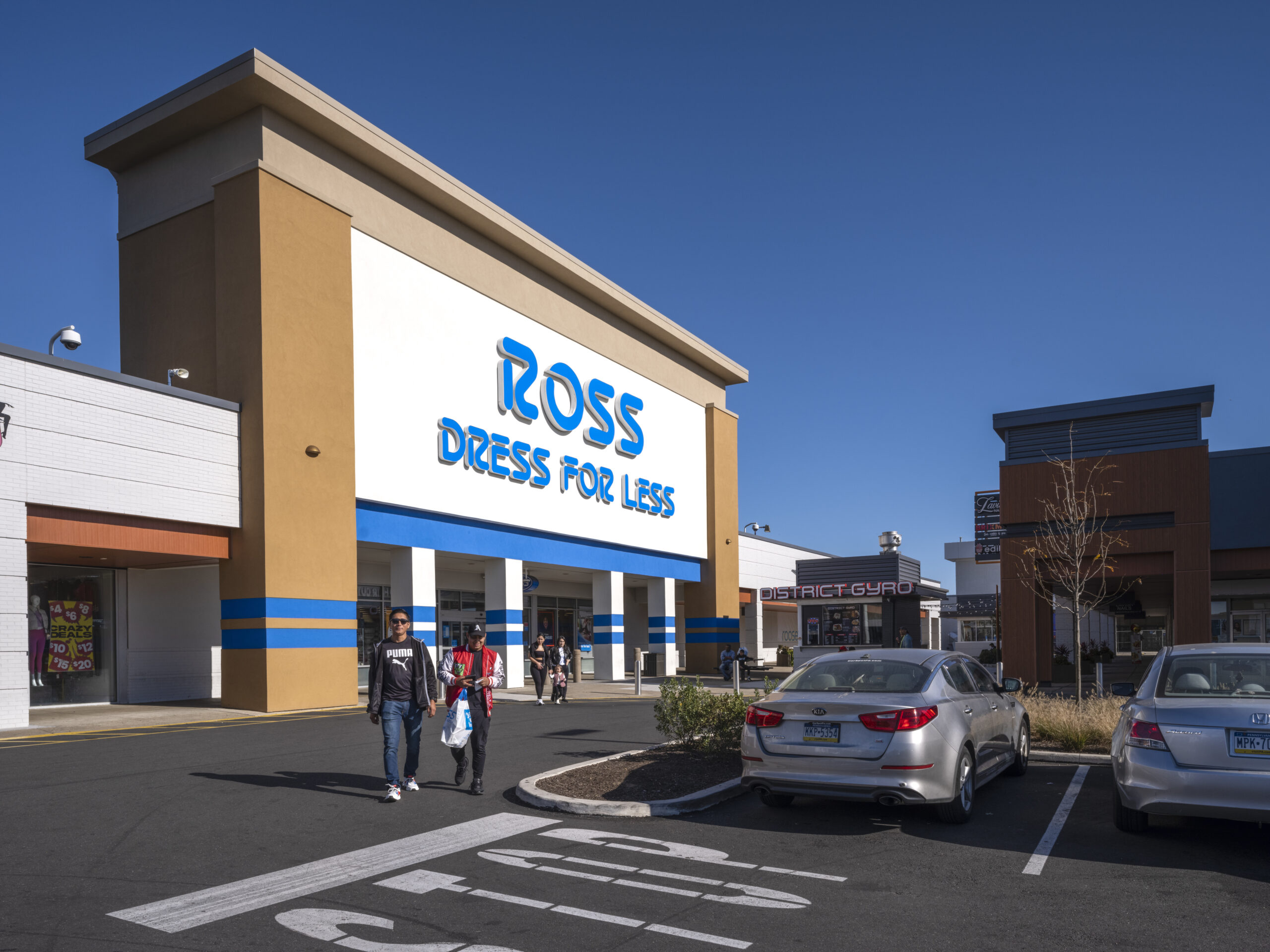
The Ross Dress for Less at Roosevelt Mall is one of several off-price retailers that have found success in Brixmor Property Group centers, according to CEO Brian Finnegan.
What would you like to accomplish as CEO?
We’d love to find some new opportunities to grow our footprint in Philadelphia.
The deals that we’ve done in Philadelphia, many of them are [with retailers new to Brixmor’s national portfolio], like with Lululemon, like with Free People, like with Warby Parker, like with Pottery Barn and Williams-Sonoma.
We think about how our centers connect with the communities that we’re in. We’re part of those communities. We’re actually landlords to Philadelphia institutions like Chickie’s & Pete’s and P.J. Whelihan’s.
The more that we can tie our assets with retailers that are relevant to those communities, the better.
What makes you optimistic about shopping centers amid all the e-commerce competition?
What [the pandemic] showed was that people like connectivity. They don’t like to just have things delivered to their door. They want to go out and experience things. They want to touch and feel things.
Our traffic since the pandemic across the entire portfolio is up 7%.
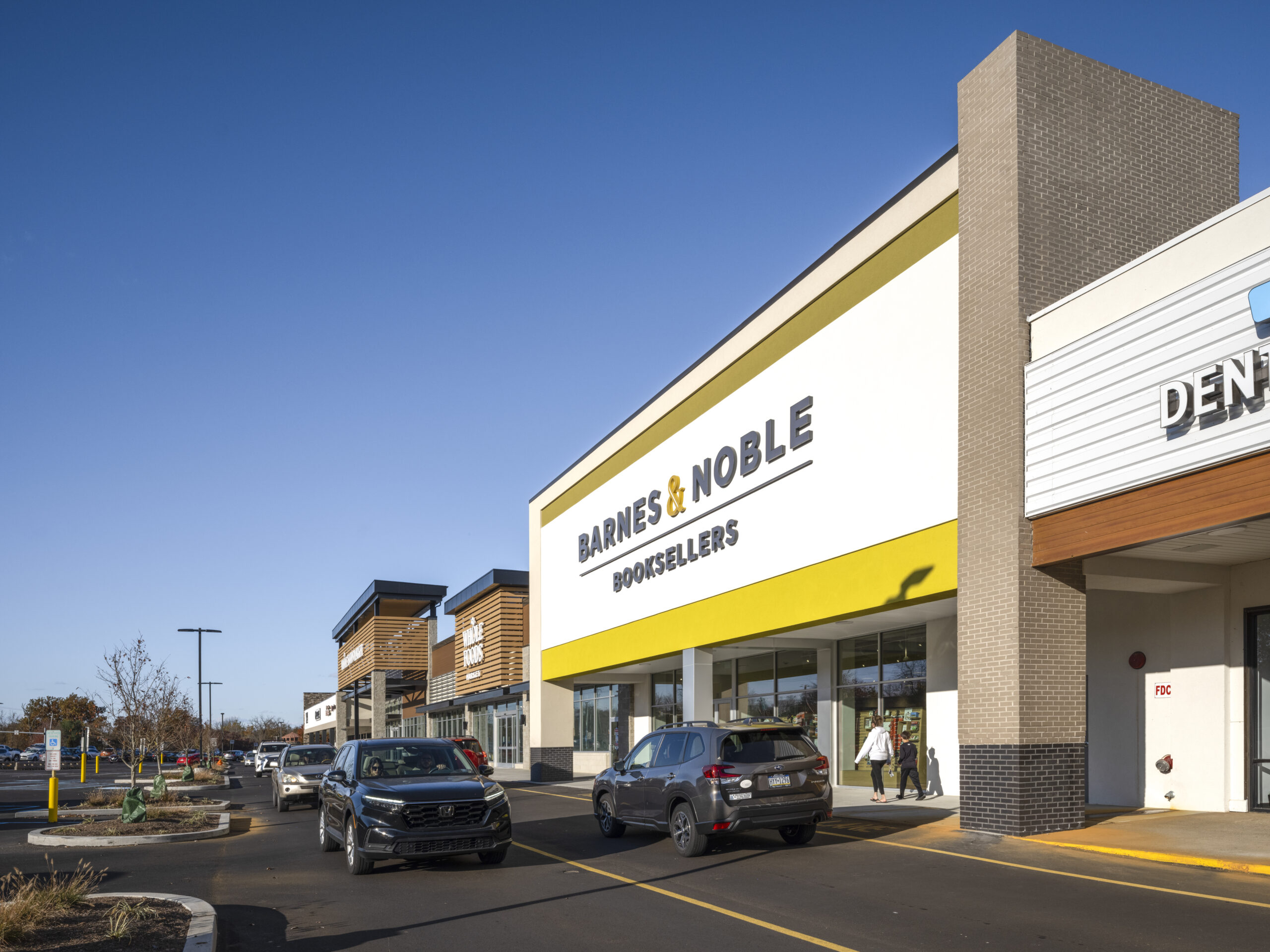
Barnes & Noble is shown at Barn Plaza shopping center in Doylestown, which is one of more than 20 complexes in the region owned by Brixmor Property Group.
If you talk to a lot of these major retailers, what they’ll say is the store is the center of everything that they do. They’re utilizing that store to be able to connect with the consumer in store, at delivery, as part of pickup.
I’m pretty bullish. There are a lot of retailers that continue to thrive despite the fact that consumers have options to be able to get something online if they wanted to.
It came in second in the site’s Pennsylvania rankings after the Nemacolin in Farmington, about 70 minutes outside Pittsburgh. The wooded 2,200-acre golf resort ranked No. 28 on U.S. News’ national list.
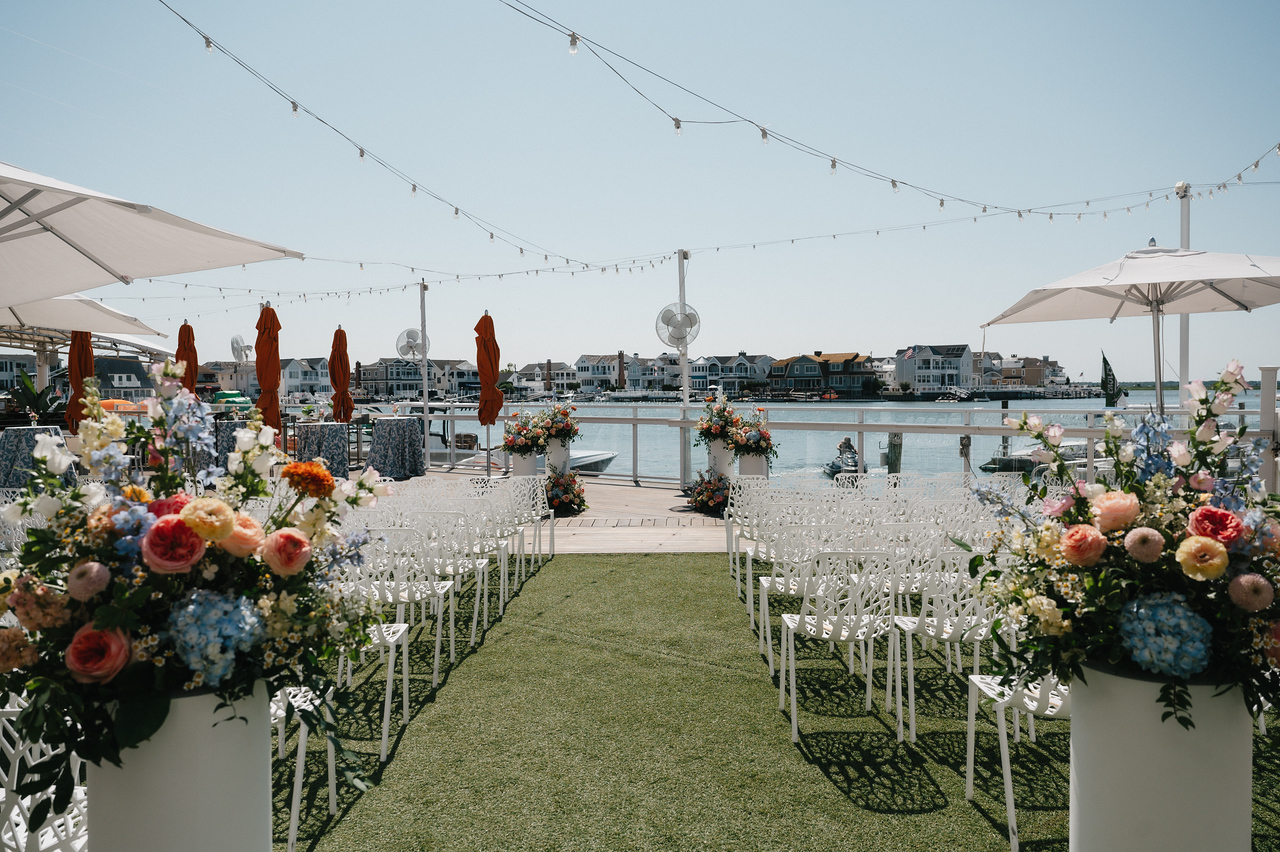
Weddings at The Reeds at Shelter Haven, ranked New Jersey’s seventh best hotel by U.S. News, can take place on the hotel’s bayside lawn.
Hotels were ranked based on their past awards and recognitions, including star ratings, as well as guest reviews, according to the U.S. News website.
“U.S. News predominantly ranks luxury lodgings, as these are the type of accommodations travelers seek when researching the best hotels and resorts in a given destination,” company analysts write, noting that luxury options typically receive 4- and 5-star ratings from multiple expert sources.
The Philly-area hotels on the 2026 lists were no exception.
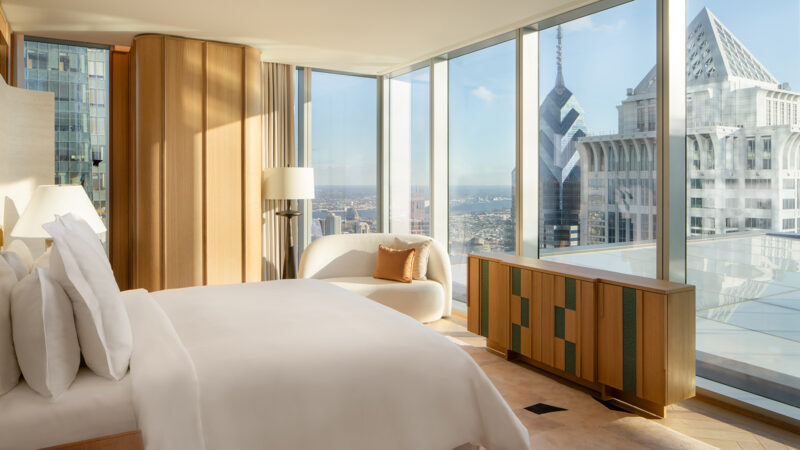
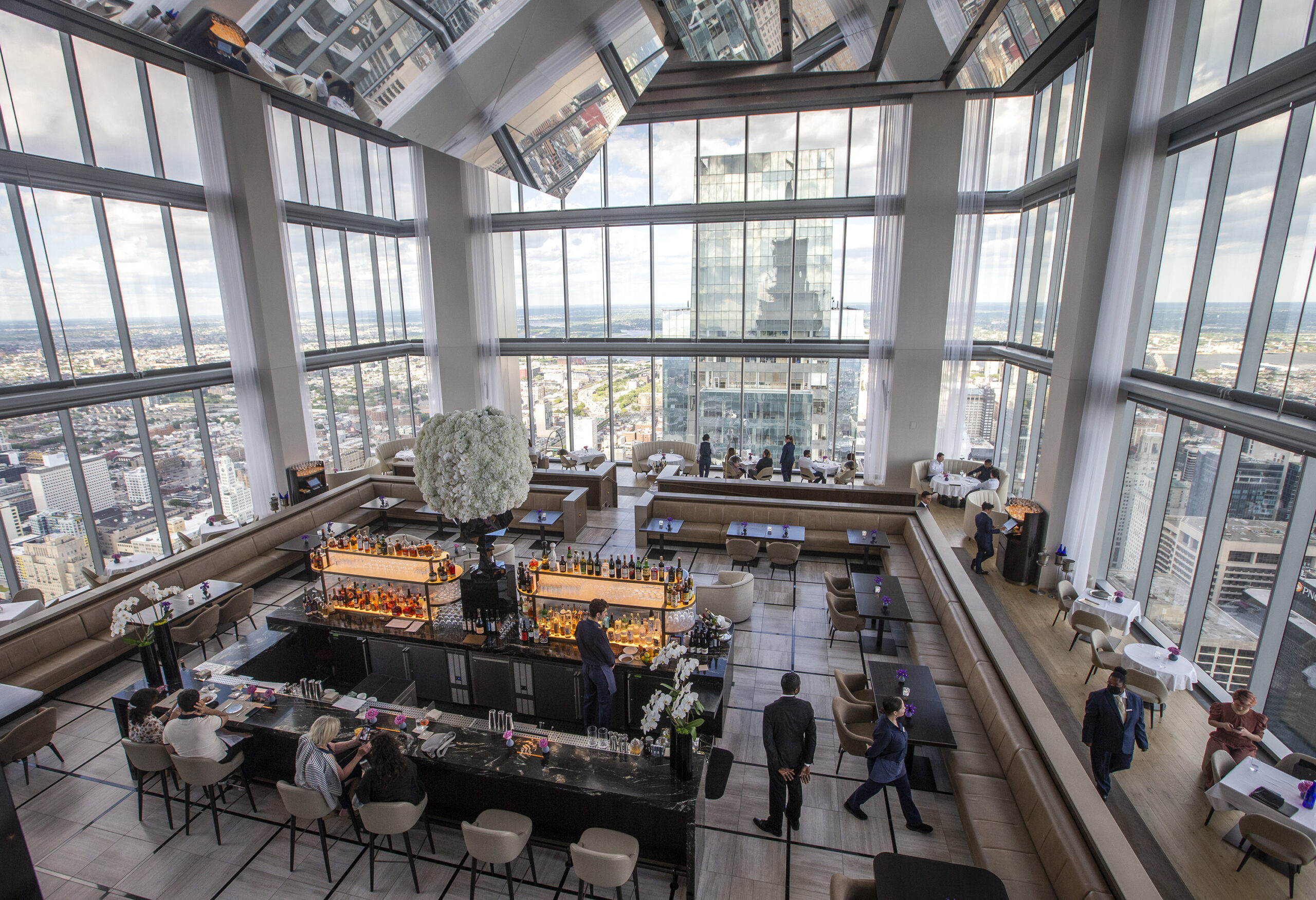
The Four Seasons Philadelphia recently unveiled an ultraluxe floor that includes a 4,000-square-foot penthouse suite costing around $25,000 a night. Other rooms at the hotel start at more than $1,200 a night.
The company behind P.J. Whelihan’s is officially moving into a shuttered Iron Hill Brewery.
The Haddon Township-based PJW Restaurant Group has signed a lease for Iron Hill’s former location at the Village at Newtown, according to Brian Finnegan, the CEO of Brixmor Property Group, which owns the Bucks County shopping center.
PJW marketing director Kristen Foord confirmed the lease signing, saying in an email that the company was “not in a position to share additional specifics” at this time.
Like more than a dozen other former Iron Hills throughout the region, the nearly 8,000-square-foot space in Newtown has sat empty since the Exton-based brewpub chain closed all locations and filed for liquidation bankruptcy last fall.
As part of the revamp, the developer added new buildings, allowing it to bring in shops and restaurants like Iron Hill, Harvest Seasonal Grill, and Turning Point. The 30-acre complex is anchored by the high-end grocer McCaffrey’s Food Markets.
In Newtown, “we’ve got Free People and Lululemon and Ulta that we added to the shopping center,” Finnegan said Wednesday in an interview. “We’ve got a lot of strong service tenants. We also have Capital Grill and Harvest, so some great food and beverage options.”
And soon, he said, that list will also include P.J. Whelihan’s.
PJW’s most well-known restaurant is P.J. Whelihan’s, which started in the Poconos in 1983 and has expanded to include 25 P.J. locations, the majority of which are in the Philly region.
PJW also owns the Pour House in Exton, North Wales, and Westmont, Haddon Township; the ChopHouse in Gibbsboro; the ChopHouse Grille in Exton; Central Taco & Tequila in Westmont; and Treno, also in Westmont.
Some landlords are actively looking for tenants, with West Chester’s John Barry saying he hopes to have a lease signed by the end of this month.
“We have a number of groups interested in the space and a few [letters of intent] have been submitted,” Barry said in an email last month.
In other places, such as Voorhees, township officials and community members remain in the dark about whether another tenant will move in soon, and landlords can’t be reached.
A few of the closed breweries may be revived under new owners, though details are slim.
A final decision had not been made on whether the company would file, according to Bloomberg. As of midday Wednesday, a search for “QVC Group” in online court records did not show any bankruptcy filings.
In September, QVC Group had $6.6 billion in debt and $1.8 billion in cash or cash equivalents, according to its latest earnings report.
A QVC Group spokesperson did not return a request for comment from The Inquirer. On Tuesday, company representatives did not immediately respond to Bloomberg or the Philadelphia Business Journal.
Before consumers could make purchases on laptops and smartphones, the network and its smaller counterpart HSN — which until recently was based in Florida — broadcast on live TV at all hours. Anchors sold a wide array of clothing, electronics, household goods, beauty products, and other wares.
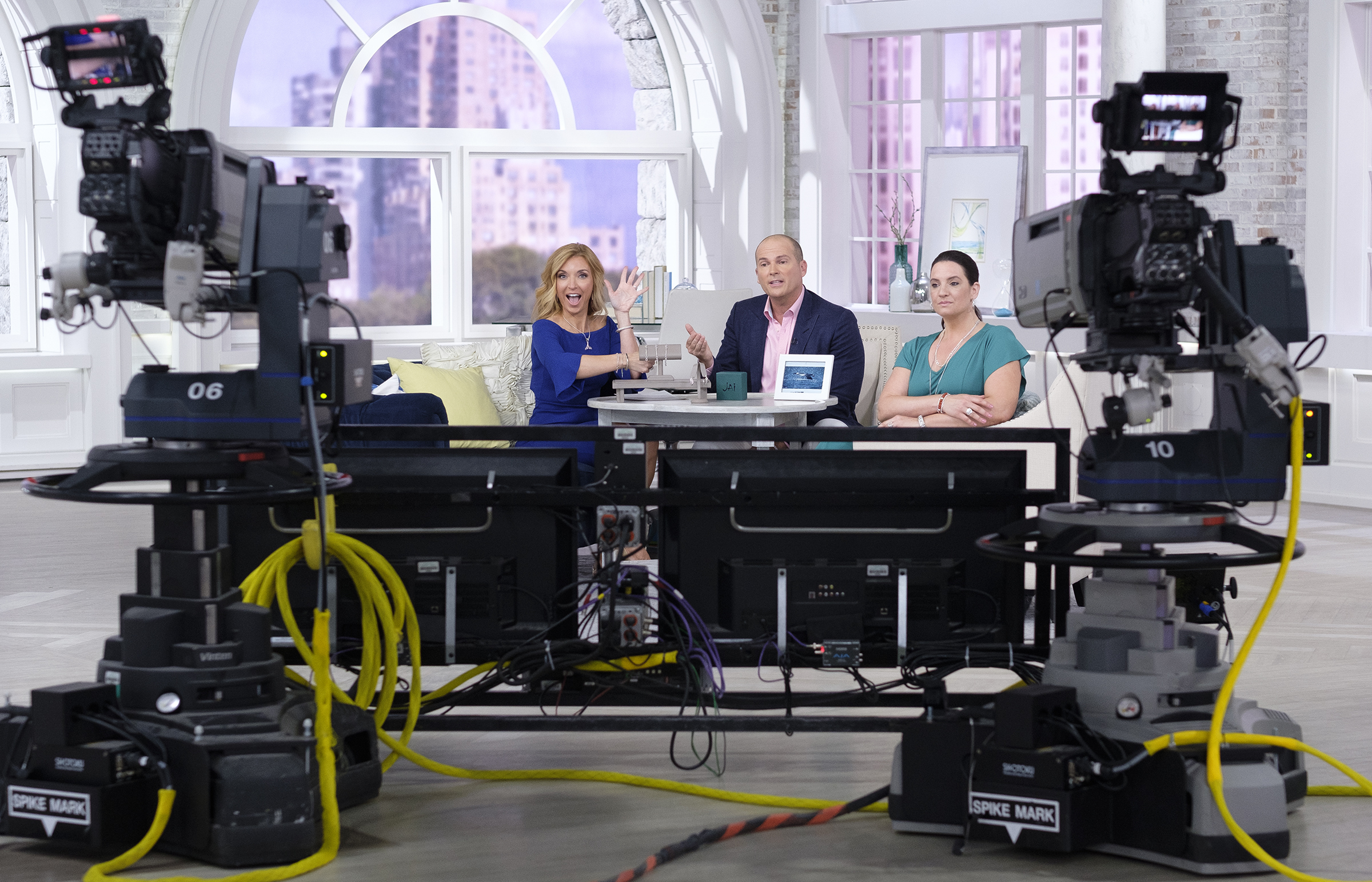
A QVC show is shot at the network’s West Chester studio in this 2019 file photo.
The news of a potential bankruptcy comes after a tumultuous few years.
Around the same time, the parent company rebranded as QVC Group. Executives said they planned to focus more on livestreaming and social-media shopping to keep up with stiff competition from the likes of TikTok Shop.
“Live social shopping is a natural evolution for us,” David L. Rawlinson II, the company’s president and CEO, said in a November 2024 statement. “Our customers are spending dramatically more time on social media, and that is increasingly where they are finding inspiration and shopping.”
David L. Rawlinson II, CEO of QVC Group, is shown in this 2023 file photo.
The strategy did not prove fruitful.
By May, as President Donald Trump’s tariffs took a toll, Rawlinson said the company was taking steps to cut costs and win back customers who were feeling down on the economy. That included an agreement with TikTok that the CEO said would create “the first 24/7 live shopping experience in the U.S.”
Then in August, a company spokesperson announced plans to hire about 250 employees by early 2026. It was not clear Wednesday whether those hires were ever made.
A holiday segment is taped at QVC’s West Chester studio in this 2023 file photo.
A Chapter 11 bankruptcy would not mean the end of QVC.
Chapter 11 is different from Chapter 7, which involves the liquidation of assets. (Iron Hill Brewery closed all restaurants when it filed for Chapter 7 bankruptcy this fall.)
After filing for Chapter 11 protection, companies usually continue to operate, though they often decide to close locations or downsize in other ways amid the restructuring process.
After decades in business, the expansive store along City Avenue is expected to close in April, according to a Saks Global spokesperson, who said decisions were based on several factors, including store performance and “lease economics.”
Fifty workers at the Bala Cynwyd Saks Fifth Avenue will lose their jobs effective April 11, according to a WARN Act filing with the Pennsylvania Department of Labor and Industry. Another 155 workers at a Wilkes Barre fulfillment center will be laid off, according to a separate filing.
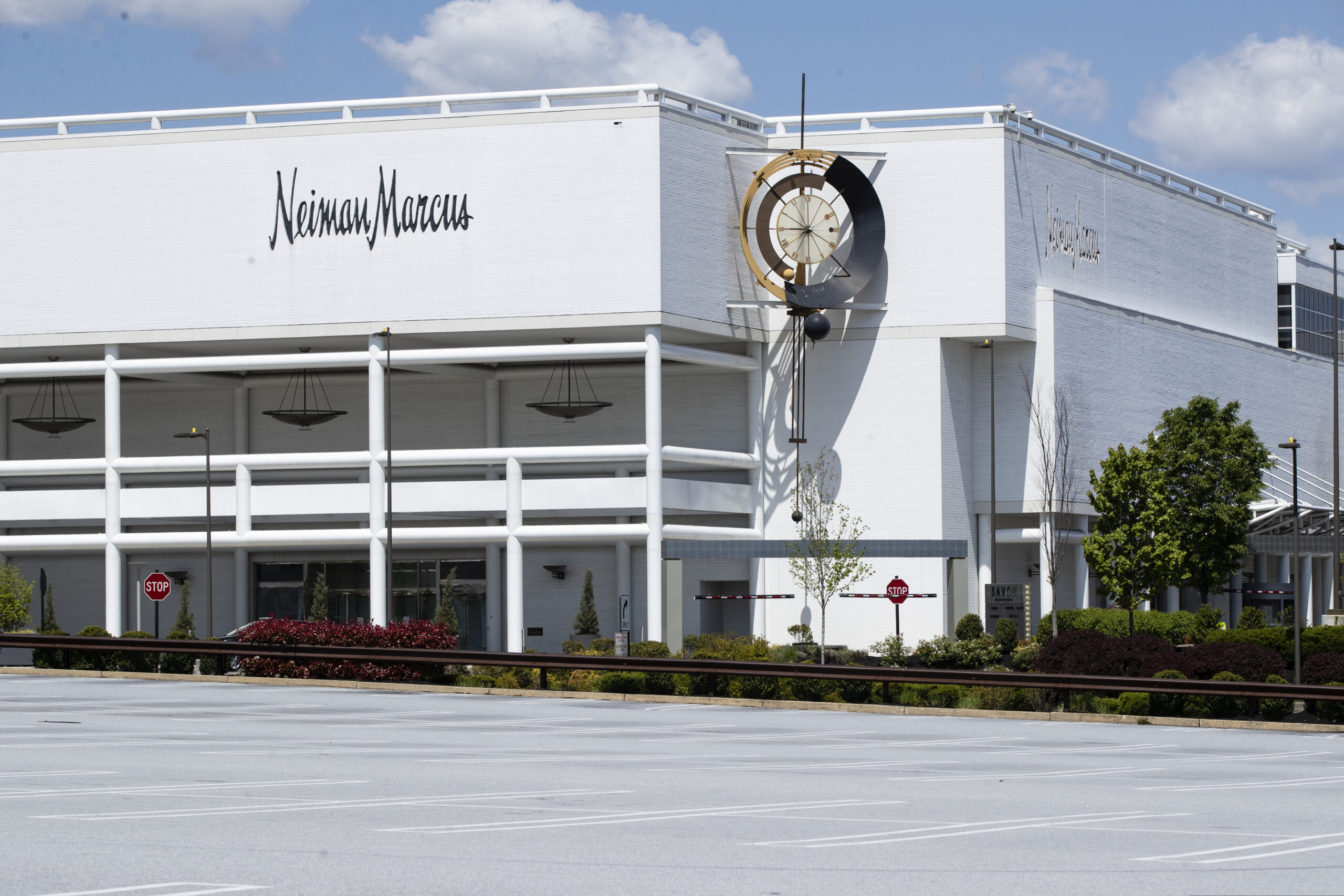
As part of the company’s restructuring, it will shutter seven other Saks Fifth Avenue stores, including at the American Dream mall in North Jersey, as well as a Neiman Marcus in Boston.
“Saks Global is refining its store footprint to focus on profitable locations with the highest growth potential,” company executives wrote on its website, adding that the nine closures represented “the first phase of this ongoing review.”
The move will make the company “better positioned to deliver exceptional products, elevated experiences and highly personalized service across all channels,” CEO Geoffroy van Raemdonck said in a statement.
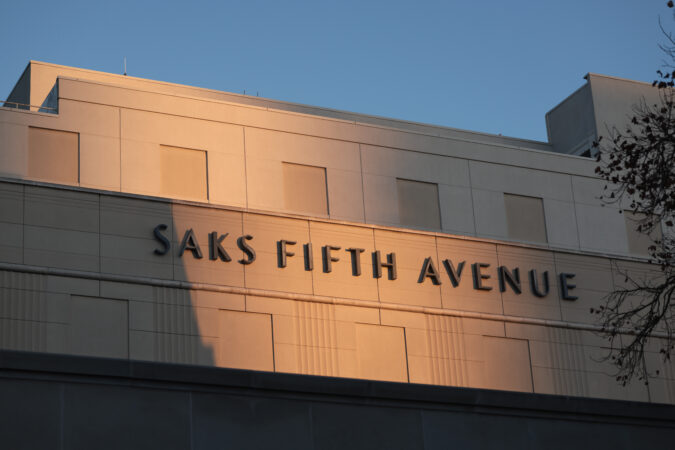
Over the years, the Saks Fifth Avenue in Bala Cynwyd has become the brand’s only physical outpost in the region. It is referred to as “Saks Philadelphia” on the company’s website, despite being located across the city line in a freestanding building at Bala Plaza.
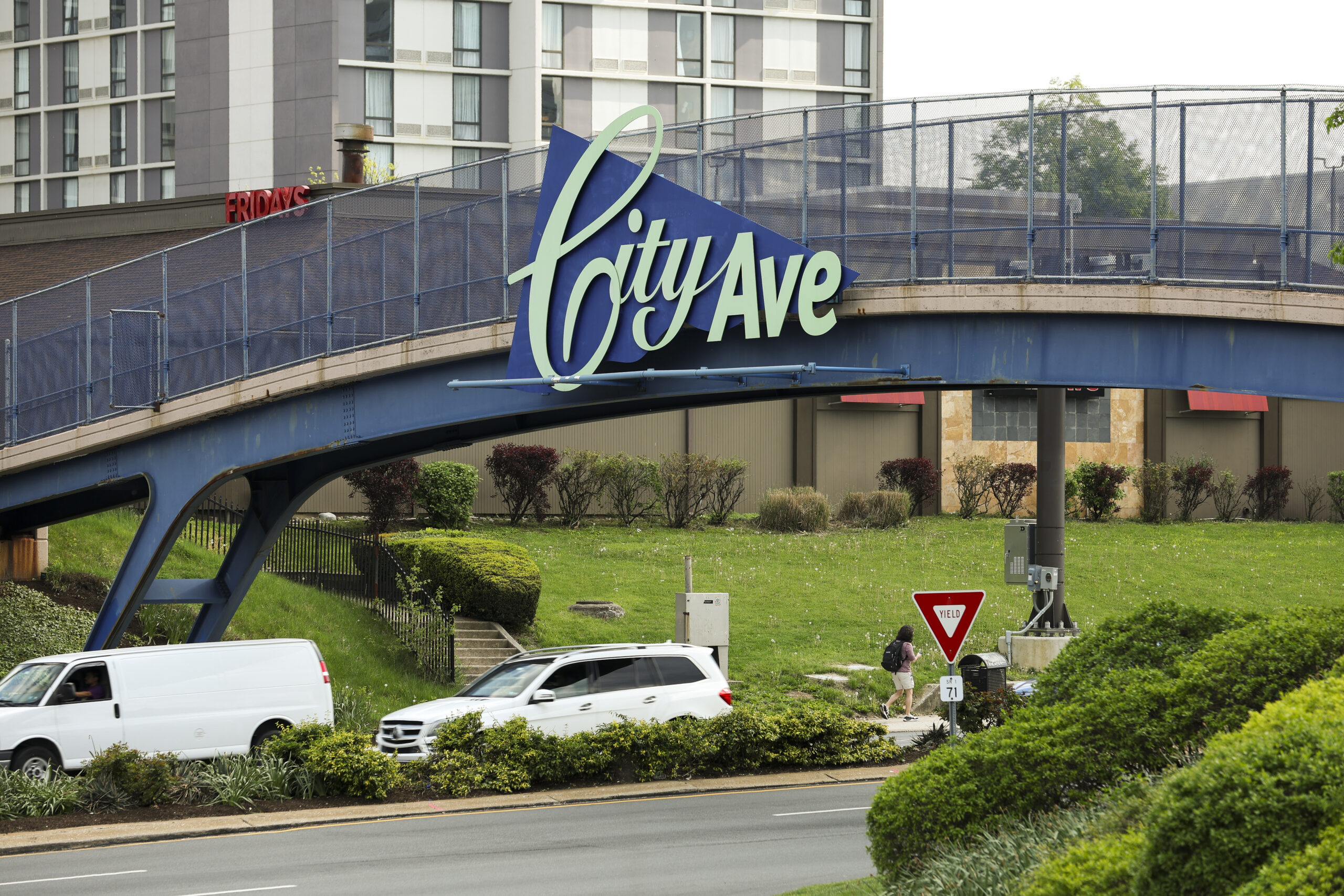
City Avenue is shown in April 2024. The Saks Fifth Avenue along the busy thoroughfare is closing in April.
Until recently, the longstanding Saks Fifth Avenue appeared primed to be part of the area’s future: In 2024, City Ave District, the nonprofit business development agency that straddles Lower Merion and Philadelphia, reported that business at the store was so strong that it had resisted offers to move to King of Prussia.
Once the Bala Cynwyd Saks Fifth Avenue closes, the nearest location will be in New York.
Saks Global also operates a Neiman Marcus at the King of Prussia Mall, which is not on the list of stores to close.
The Neiman Marcus at the King of Prussia Mall, pictured in 2020, will remain open.
Elsewhere in the country, Saks Global is closing the majority of its standalone Fifth Avenue Club personal styling suites, the company said Tuesday.
In New York, Bergdorf Goodman, which Saks also owns, will remain open.
What Philly-area Saks customers should know
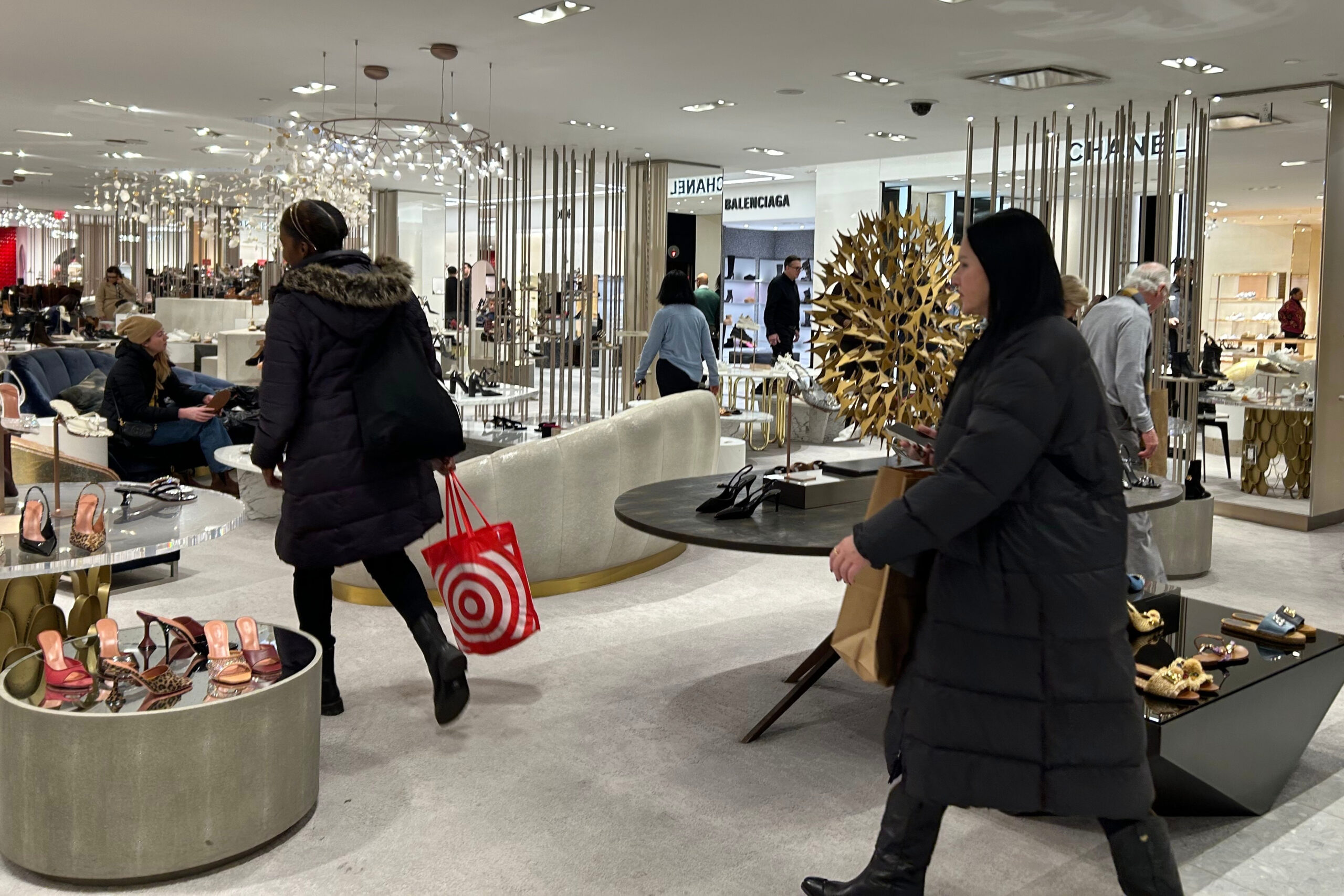
Shoppers walk through Saks Fifth Avenue in New York in January.
Shoppers at the Bala Cynwyd store will no longer be able to buy gift cards in person, according to Saks, and will have 15 days from the start of the closing sale to use existing gift cards.
Items that were bought before the closing sale can be returned or exchanged as usual, the company said, but purchases made during it will be final. Merchandise bought during the closing sale will also be ineligible for return or exchange at stores that are remaining open.
SaksFirst credit cards will still be accepted, according to the company, and customers with those credit cards will still earn points for purchases made in store. Shoppers will no longer be able to make in-person credit card payments or apply for credit cards at the Bala Cynwyd store.
At other Saks locations, including the King of Prussia Neiman Marcus, the company says the customer experience will remain unchanged.
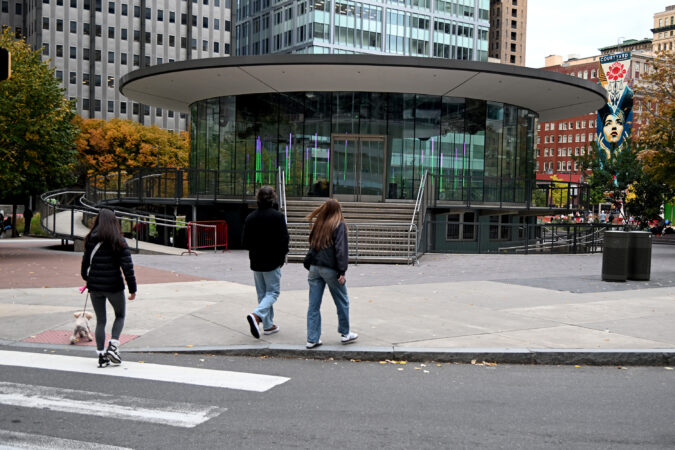
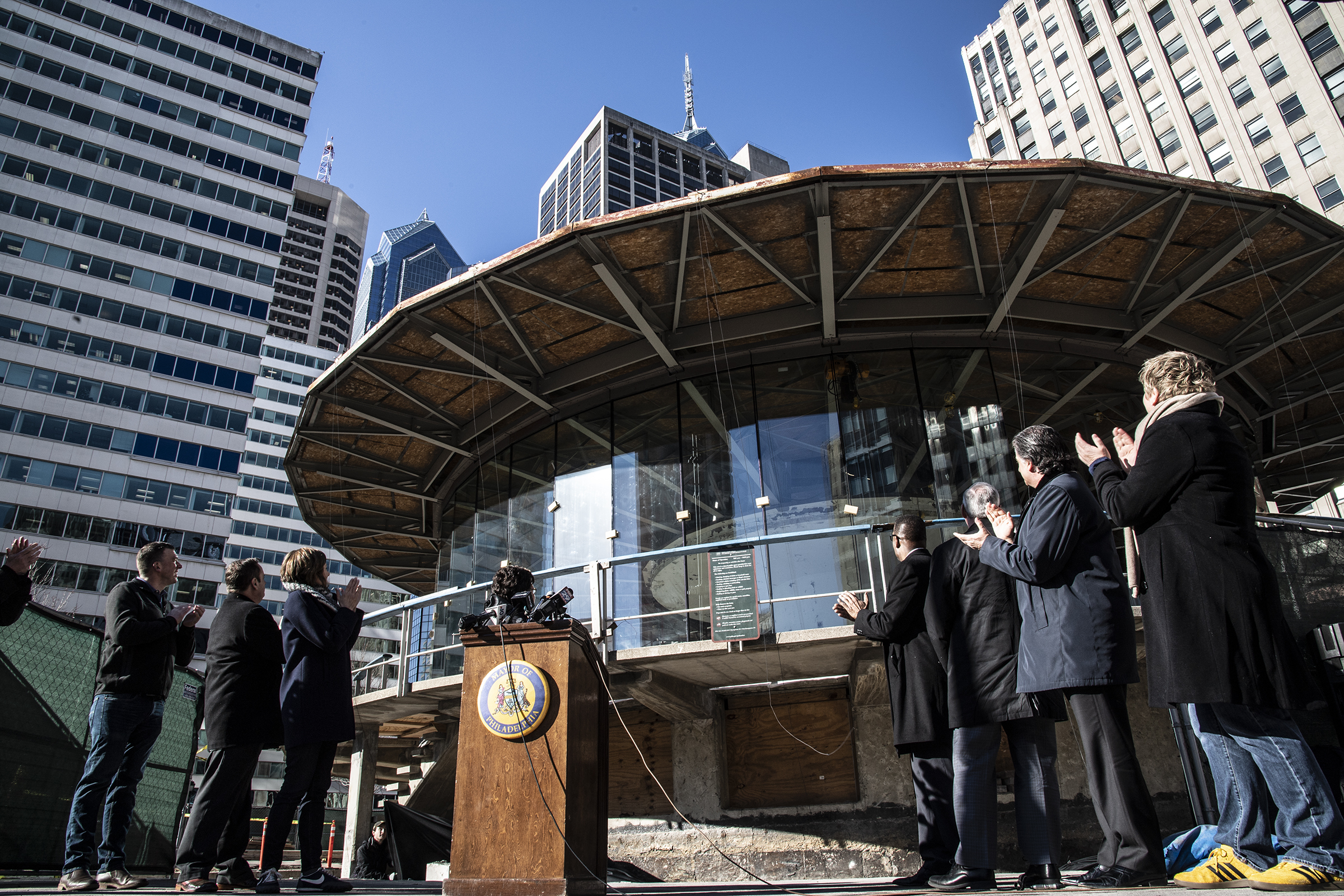
The saucer in LOVE Park finally has a timeline for its revival.
After years of seeking ideas from business owners and other Philadelphians, city officials expect work on the historic building to begin in May, the city’s Parks & Recreation Department says.
But officials are still working to select a partner for the project.
In May, the city issued a “request for expressions of interest” (RFEI) from “visionary businesses, particularly those in food, beverage, retail, or hospitality,” who wanted to partner on the saucer.
City officials said the interest exceeded expectations, with more than 50 applicants submitting ideas. They included “coffee and cafe concepts, casual food offerings, beer garden hybrids, and informal meeting spaces,” according to Parks & Recreation spokesperson Ra’Chelle Rogers.
Among applicants, there was a focus on “flexible, welcoming concepts that function as a true public amenity, encouraging people to meet, linger, and connect in the park,” Rogers said.
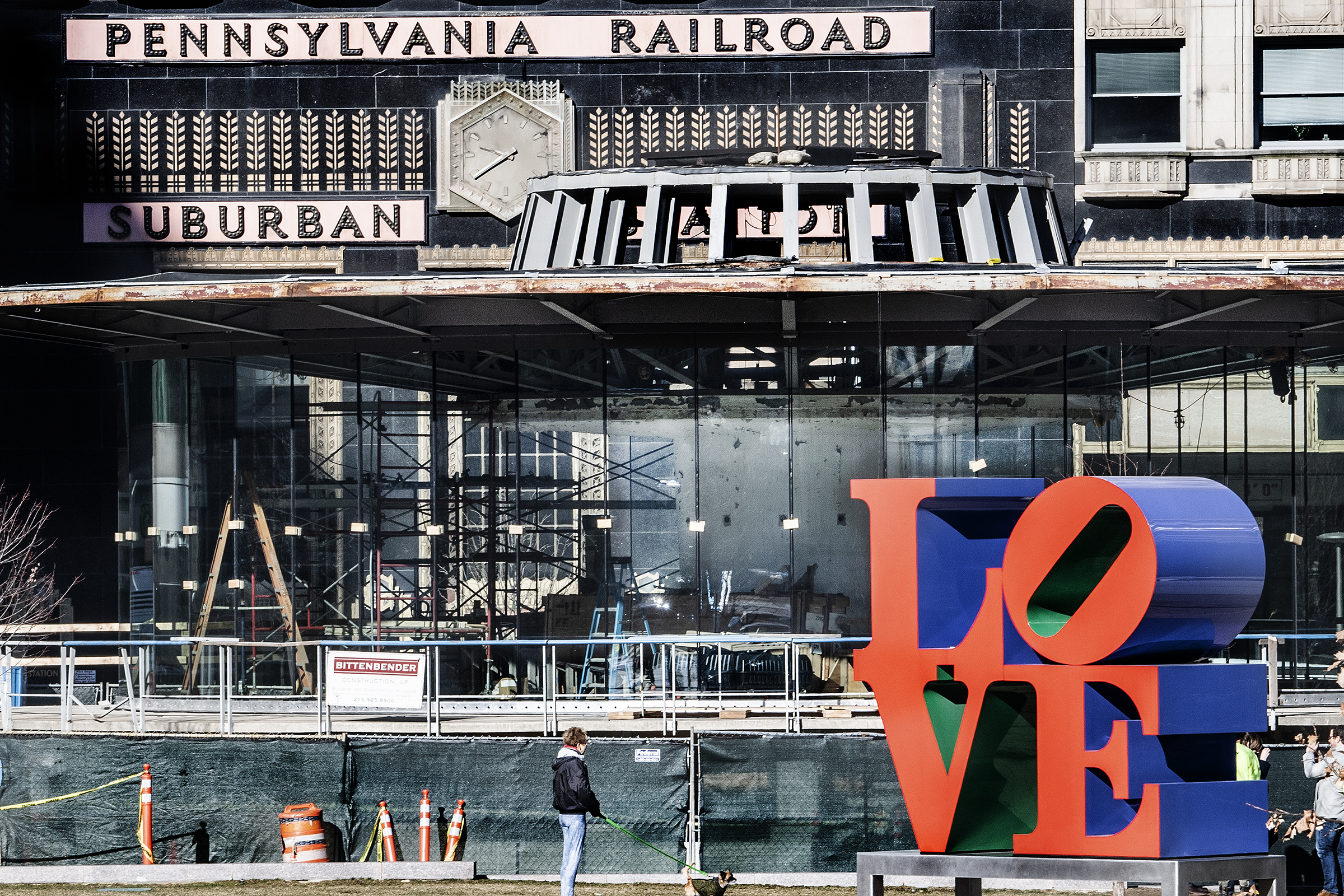
The saucer building in LOVE Park is pictured in March 2019, amid early renovations for a bar-restaurant concept that never panned out.
In light of the demand, the city is moving into its next stage, requiring prospective partners to visit the saucer at 3 p.m. on Feb. 18 and submit a proposal online by March 18.
Prospective partners do not need to have submitted an idea in the spring, Rogers said. Any experienced food, beverage, hospitality, or community operator with the capacity to “generate sustainable revenue to support the park” is encouraged to apply, Rogers said.
“The saucer has always been envisioned as a people-first space — one that complements the park, supports programming, and welcomes both residents and visitors,” said Susan Slawson, the city’s parks & recreation commissioner. The RFEI process has given officials “confidence to move forward with a flexible, inclusive model designed for the way people actually use LOVE Park.”
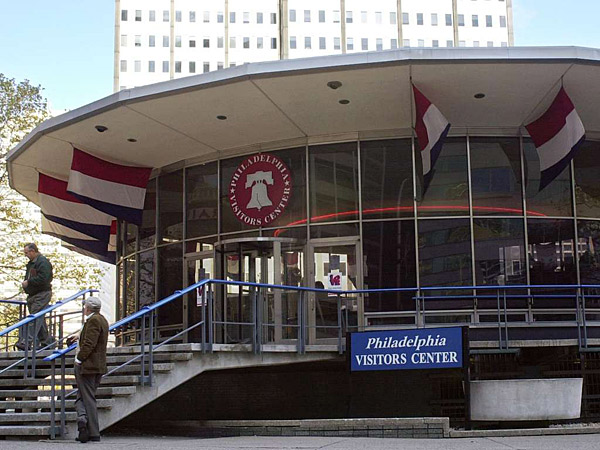
The saucer, also referred to as the UFO, was added to the Philadelphia Register of Historic Places last year. Built in 1960, the building predates LOVE Park, and first served as the city hospitality center. It later housed offices for park staff.
An undated file photo of LOVE Park’s saucer building when it served as the Philadelphia Visitors Center.
For more than a decade, however, the circular structure near 16th Street and JFK Boulevard has largely sat dormant (the building has opened to the public for the Festival of Trees, a Children’s Hospital of Philadelphia fundraiser, during recent holiday seasons).
In March 2019, city officials applauded the early construction of a bar-restaurant that was set to fill LOVE Park’s saucer building. The pandemic later caused the restaurateurs to bow out of the project.
As for this latest request process, city officials said they plan to select a partner by April, and begin work a month later. The timing could coincide with Philly’s celebration of America’s 250th birthday, as well as the city’s hosting of World Cup matches and the MLB All-Star game.
The office of Councilmember Jeffery Young, whose district includes LOVE Park, is set to fund “key utility and infrastructure improvements” at the saucer, according to the city statement, and public grants are being sought to offset other upfront costs.
“Bringing an active, public-facing partner into the saucer is a milestone for LOVE Park and for Philadelphia,” Young said. “I’m proud to support improvements that make the saucer a welcoming hub for years to come.”
When Justin Burkhardt heard that his neighborhood grocery store was closing, just months after it had opened, he felt a pang of sadness.
The emotion surprised him, he said, because that store was the Northern Liberties Amazon Fresh.
“Amazon is a big corporation, but [with] the people that worked there [in Northern Liberties] and the fact that it was so affordable, it actually started to feel like a neighborhood grocery store,” said Burkhardt, 40, a public relations professional, who added that he is not a fan of Jeff Bezos, Amazon’s billionaire owner.
“I don’t feel bad for Amazon,” said Burkhardt, who spent about $200 a week at Amazon Fresh. “I feel bad for the workers. … I feel bad for the community members.”
Burkhardt said he and his wife have been forced to return to their old grocery routine: Driving 20 minutes to the Cherry Hill Wegmans, where they feel the prices are cheaper than their nearby options in the city.
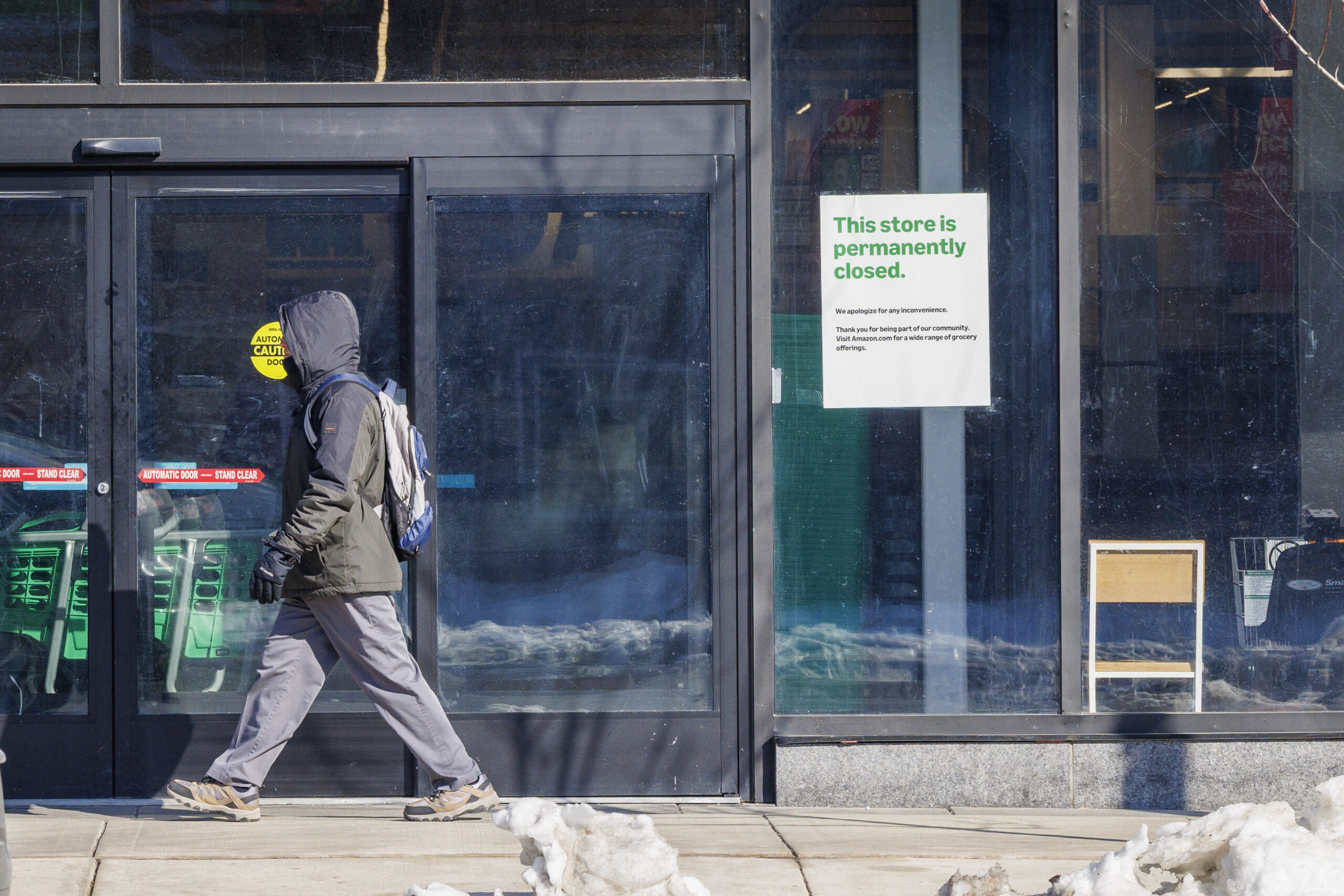
Last week, signs informed customers that the Northern Liberties Amazon Fresh was permanently closed.
In Philadelphia and its suburbs, many former Amazon Fresh customers are similarly saddened by the closure of neighborhood stores where they had developed connections with helpful workers. Several said they are most upset about the effects on their budgets amid recent years’ rise in grocery prices.
“I wasn’t happy about it closing for the simple fact that it was much cheaper to shop there,” said Brandon Girardi, a 30-year-old truck driver from Levittown (who quit a job delivering packages for Amazon a few years ago). Girardi said his family’s weekly $138 grocery haul from the Langhorne Amazon Fresh would have cost at least $200 at other local stores.
At the Amazon Fresh in Broomall, “they had a lot of organic stuff for a quarter of the price of what Giant or Acme has,” said Nicoletta O’Rangers, a 58-year-old hairstylist who shopped there for the past couple years. “They were like the same things that were in Whole Foods but cheaper than Whole Foods.”
She paused, then added: “Maybe that’s why they didn’t last.”
In response to questions from The Inquirer, an Amazon spokesperson referred to the company’s original announcement. In that statement, executives wrote: “While we’ve seen encouraging signals in our Amazon-branded physical grocery stores, we haven’t yet created a truly distinctive customer experience with the right economic model needed for large-scale expansion.”
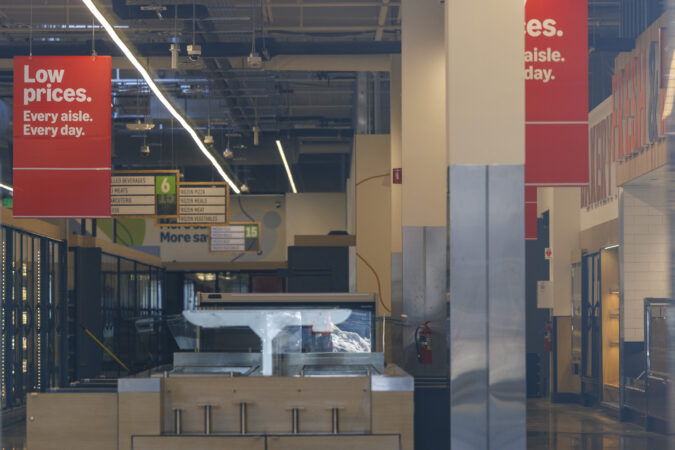
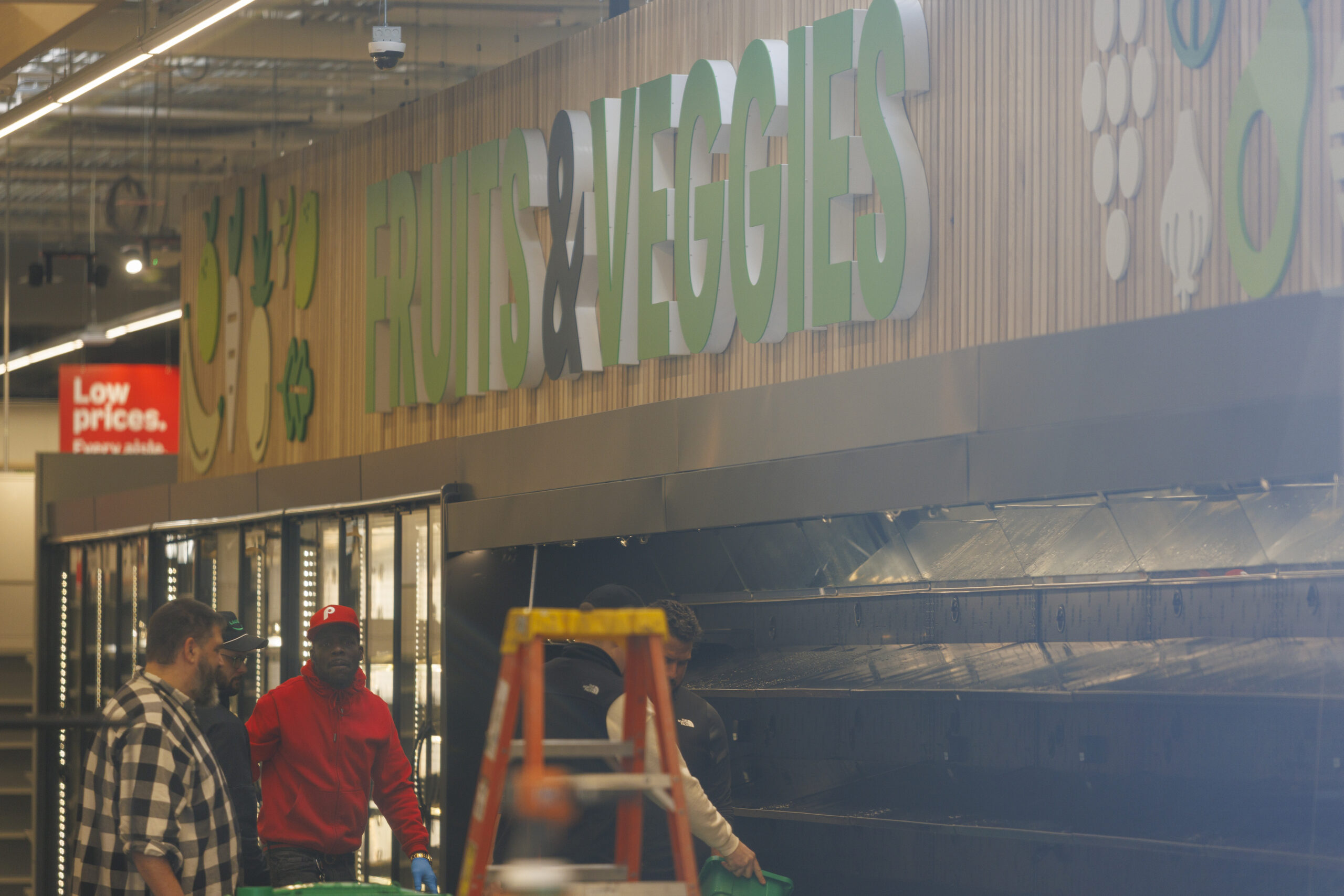
Workers could be seen inside the closed Amazon Fresh in Northern Liberties last week.
What makes a Philly shopper loyal to a grocery store?
Former Amazon Fresh customers say they’re now shopping around for a new grocery store and assessing what makes them loyal to one supermarket over another.
Last week, one of those customers, Andrea “Andy” Furlani, drove from her Newtown Square home to Aldi in King of Prussia. The drive is about an hour round trip, she said, but the prices are lower than at some other stores. Her five-person, three-dog household tries to stick to a $1,200 monthly grocery budget.
As she drove to Aldi, she said, she’d already been alerted that the store was out of several items she had ordered for pickup. That’s an issue Furlani said she seldom encountered at the Amazon Fresh in Broomall, to which she had become “very loyal” in recent years.
“It was small, well-stocked,” said Furlani, 43, who works in legal compliance. “I don’t like to go into like a Giant and have a billion options. Sometimes less is more. And the staff was awesome,” often actively stocking shelves and unafraid to make eye contact with customers.
“Time is valuable to me,” Furlani said. At Amazon Fresh, “you could get in and out of there quickly.”
Shoppers learned how to use the Amazon Dash Cart at an Amazon Fresh in Warrington in 2021.
Girardi, in Levittown, said he is deciding between Giant and Redner’s now that Amazon Fresh is gone. The most cost-effective store would likely win out, he said, but product quality and convenience are important considerations, too.
“We used to do Aldi, but Amazon Fresh had fresher produce,” Girardi said. “I used to have a real good connection with Walmart because my mom used to work there. But I don’t see myself going all the way to Tullytown just to go grocery shopping.”
Susan and Michael Kitt, of Newtown Square, shopped at the Broomall Amazon Fresh for certain items, such as $1.19 gallons of distilled water for their humidifiers and Amy’s frozen dinners that were dollars cheaper than at other stores.
But Giant is the couple’s mainstay. They said they like its wide selection, as well as its coupons and specials that save them money.
“I got suckered by Giant on their marketing with the Giant-points-for-gas discounts. I figured if I’m going to a store I may as well get something out of it,” said Michael Kitt, a 70-year-old business owner who has saved as much as $2-per-gallon with his Giant rewards. “I really at the time didn’t see that much of a difference between the stores.”
How Whole Foods might fare in Amazon Fresh shells
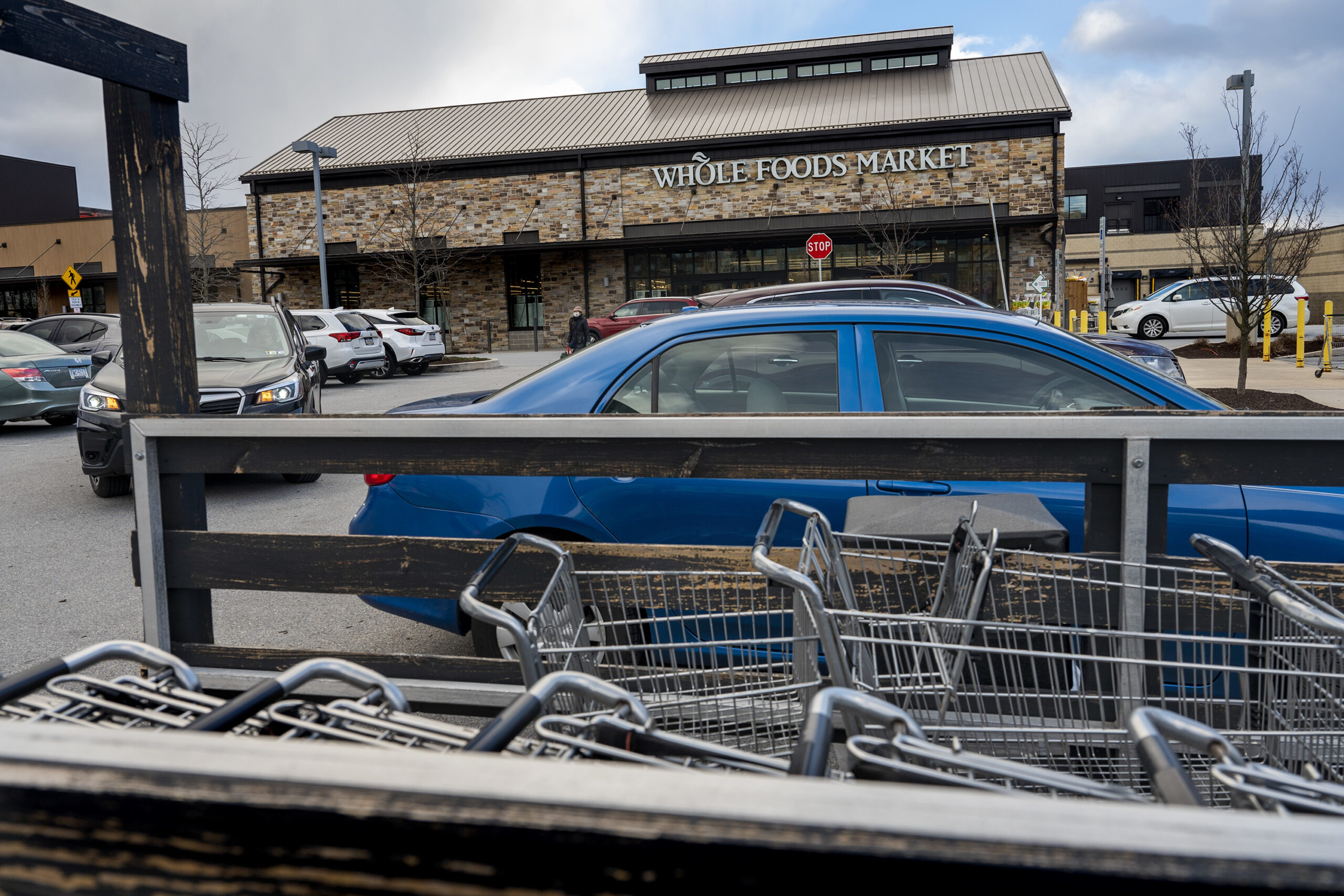
The Whole Foods store on the Exton Square Mall property is shown in 2022.
If any of these local Amazon Fresh stores were to become a Whole Foods, several customers said they’d be unlikely to return, at least not on a regular basis.
Natoya Brown-Baker, 42, of Overbrook, said she found the Northern Liberties Amazon Fresh “soulless,” and she didn’t “want to give Jeff Bezos any more money.” But the prices at Amazon Fresh were so low, she said, that she couldn’t resist shopping there sometimes.
Brown-Baker, who works in health equity,said she came to appreciate that it represented an affordable, walkable option for many in the neighborhood, including her parents, who are on a fixed income.
If a Whole Foods replaces the store at Sixth and Spring Garden Streets, which was under construction for years, Brown-Baker said the area would be “back at square one.”
Burkhardt, who also lives in the neighborhood, noted that Northern Liberties has a mix of fancy new apartment complexes and low-income housing.
“The grocery store should be for everyone,” he said. Whole Foods “doesn’t feel like it’s for the neighborhood. It feels like it’s for a certain class of people.”
A North Jersey developer has plans to finally transform the long-dead Echelon Mall, saying he’d spend more than $250 million to create a “regional destination” with high-end restaurants, entertainment venues, sports retailers, housing, and perhaps even an “upscale supermarket.”
“We’re going to try to make it Voorhees’ main street” inside the old mall building, said George Vallone, president of the Hoboken Brownstone Co. “Just sort of reinvent the whole thing.”
But Vallone said his plans aren’t set in stone: The revitalization of the former mall, now called the Voorhees Town Center, depends on whether Hoboken Brownstone can get financial help from the state.
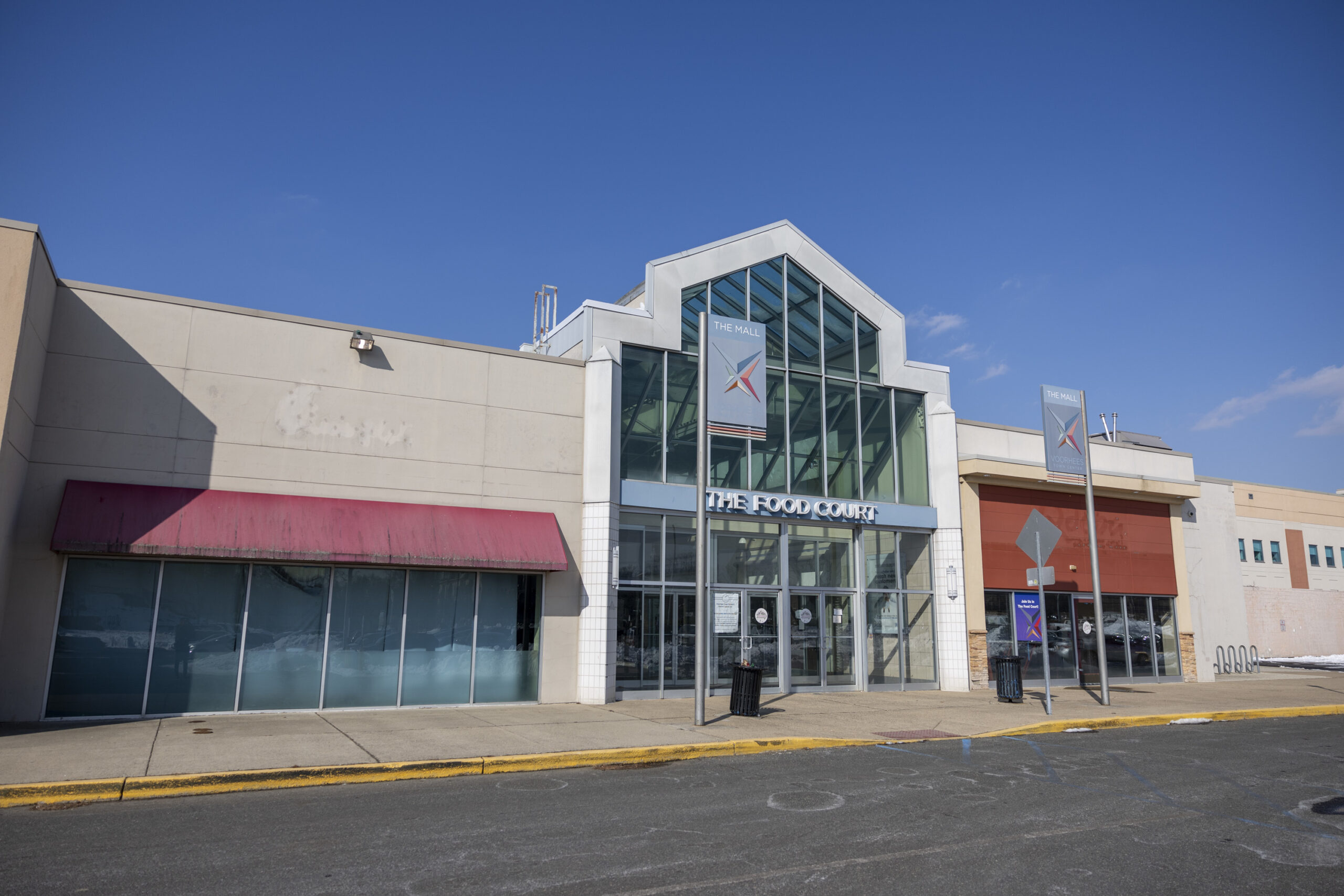
The entrance to the food court at the Voorhees Town Center, which has been closed for nearly two years after a fire.
Vallone said his company is applying for a $90 million tax credit for development projects and expects to hear in the coming months whether it is approved. If not, he said, “we walk.”
Vallone made similar statements in a Philadelphia Business Journal report earlier this week.
Voorhees Township Mayor Michael Mignogna said he supports “the thoughtful redevelopment of the former Echelon Mall site” as proposed by Hoboken Brownstone.
“Throughout the process, the township has worked collaboratively with Hoboken Brownstone and Namdar in their private transaction to advocate for the rejuvenation of Town Center, specifically a strong business and retail presence that will restore the site as the center of Voorhees tradition and community,” Mignogna said in a statement.
He noted that a state tax credit would not affect the developer’s local tax responsibilities.
The uncertainty represents the latest hurdle in the long quest to revive the sprawling complex off Somerdale Road. Over the years, the 400-acre property, one of the Philadelphia region’s many lifeless malls, has been redeveloped in fits and starts under multiple owners.
Recently, transformations have begun at nearby malls, including Moorestown and Burlington Center, as the old Echelon Mall languishes.
What $250 million could do for dead Voorhees mall
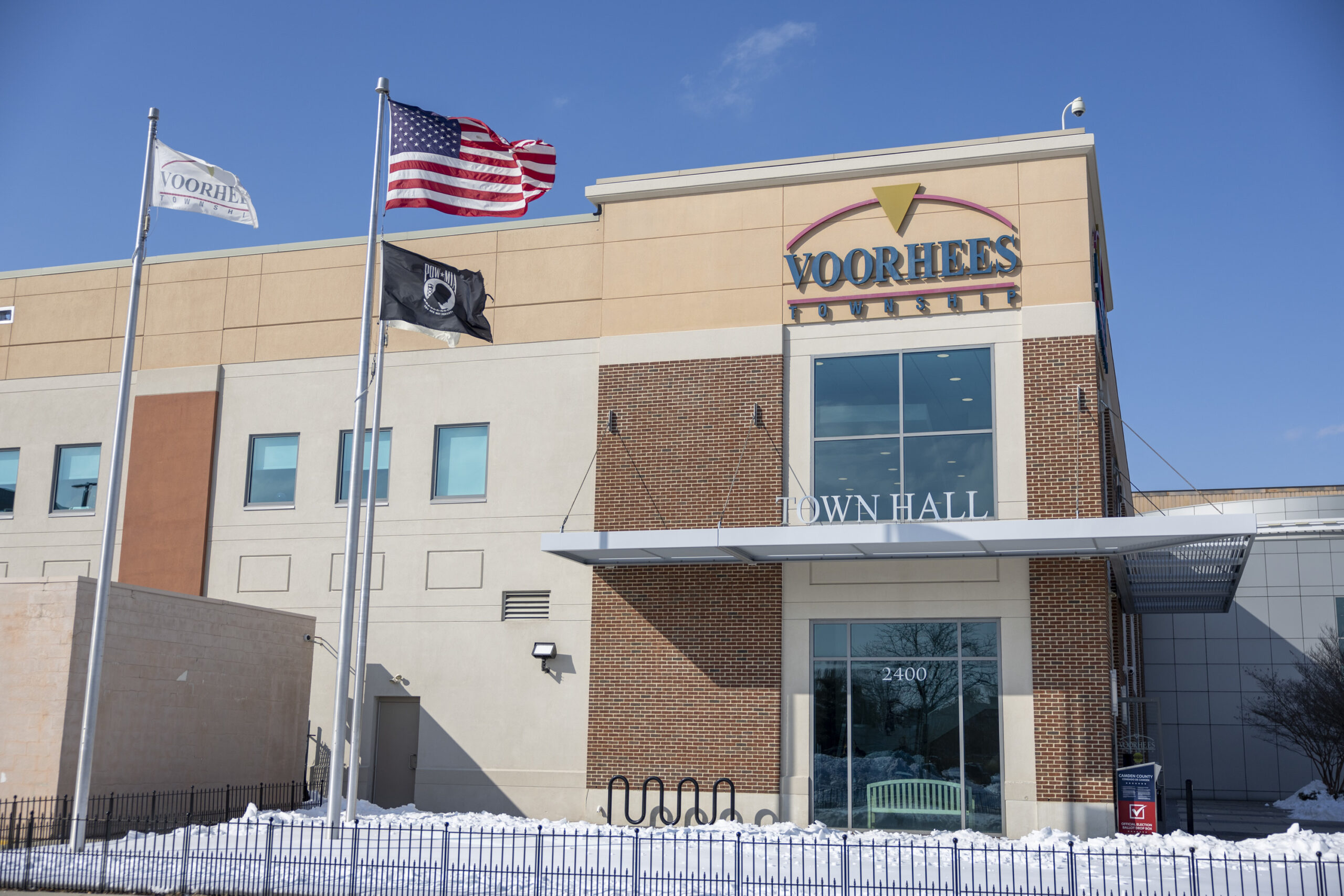
The Voorhees Township Town Hall would not be included in a potential sale of the closed mall building.
In an attempt to turn the mall around, it was partially demolished, and a Main Street-style mixed-use development was built on part of the property in 2008. After this makeover, which cost an estimated $150 million, the complex was rebranded as the Voorhees Town Center.
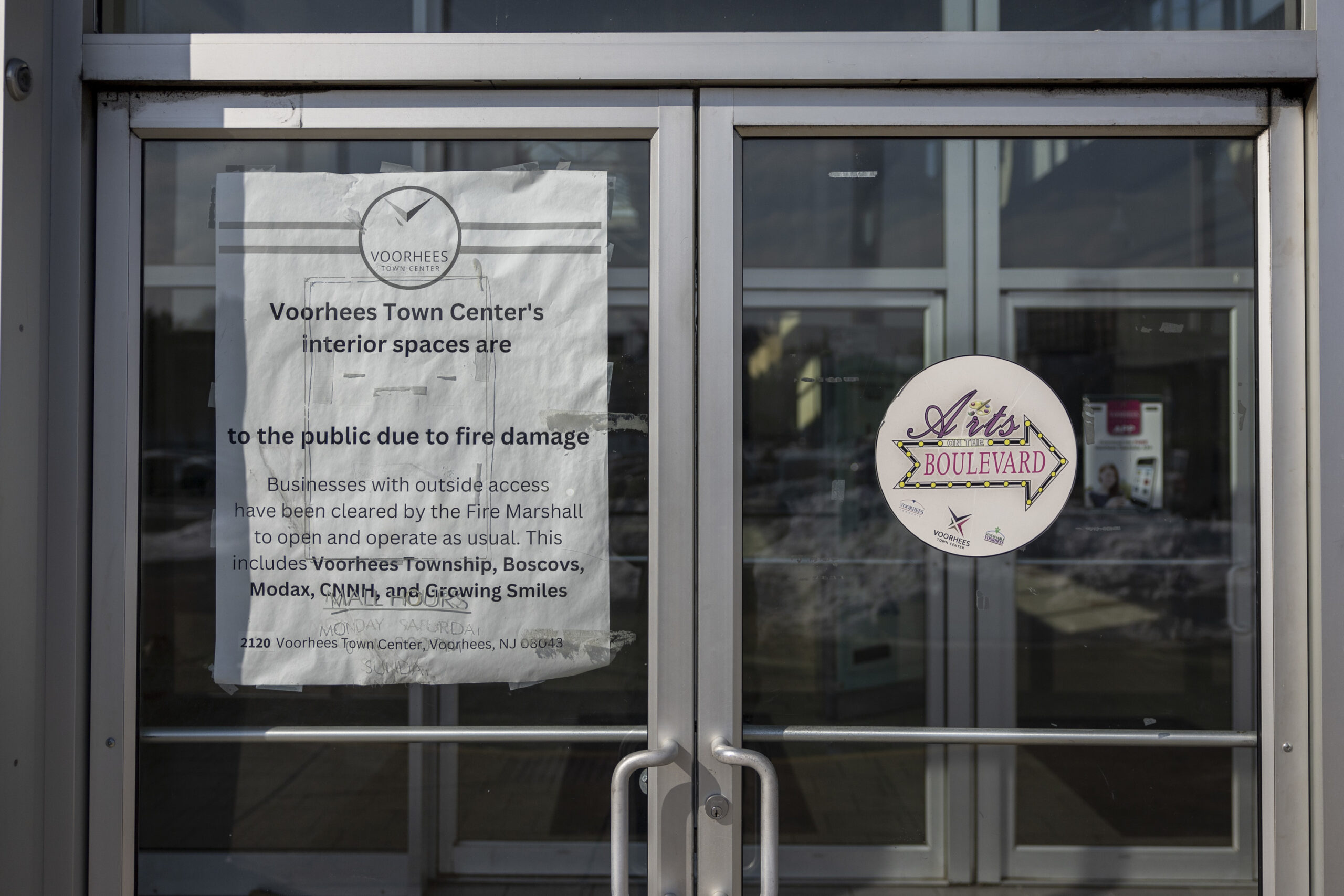
A sign on the door of the Voorhees Town Center, which has been closed for nearly two years due to fire damage.
Hoboken Brownstone plans to buy the mall building from Namdar in a pending sale, dependent on the tax break, Vallone said. He declined to disclose how much he would pay for the property, and Namdar executives could not be reached.
The sale would not include the Voorhees Town Hall, which occupies 22,000 square feet of the mall and cost the township $5.5 million.
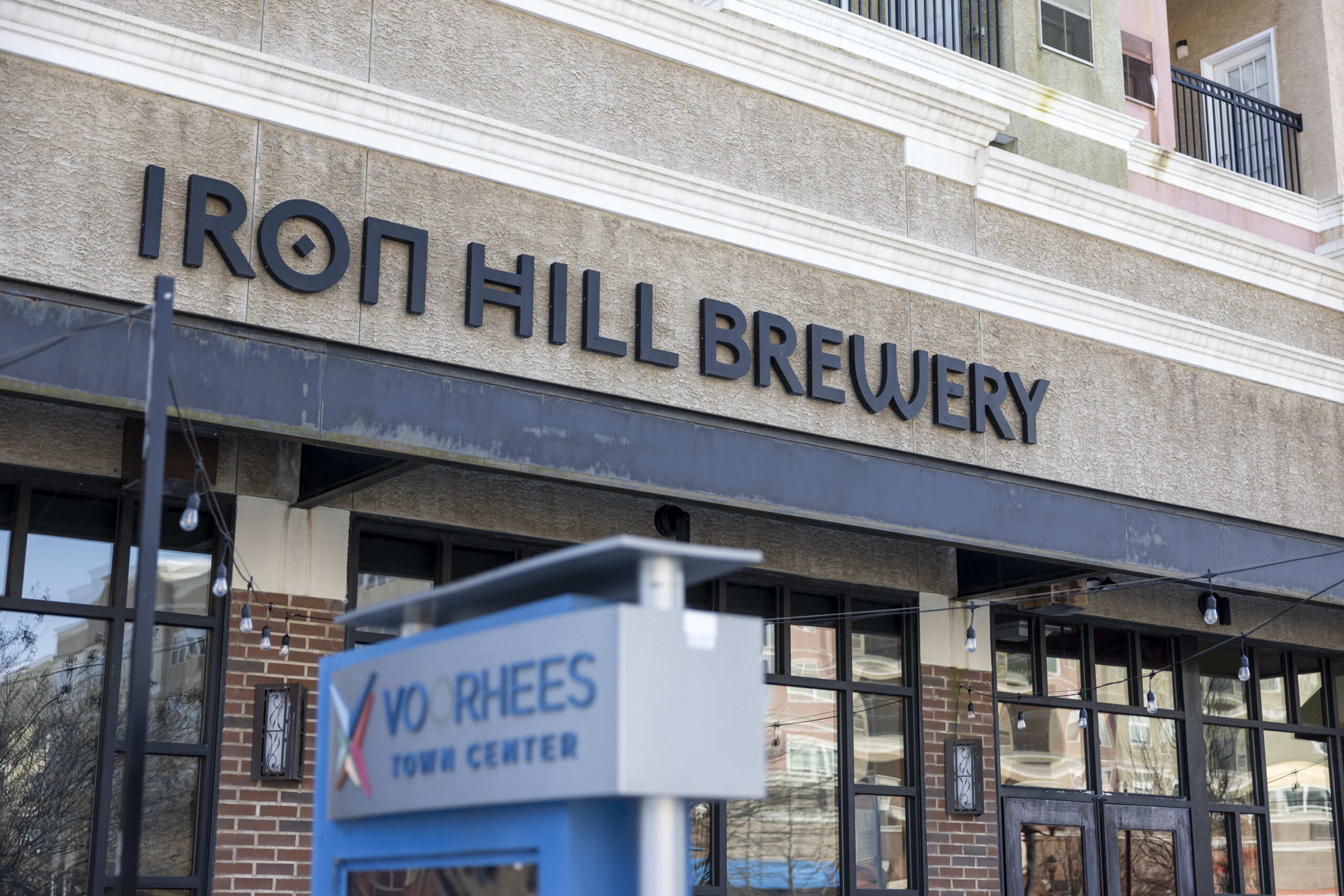
Nor would it include the property’s existing mixed-use section, Boulevard Shoppes, which had been home to an Iron Hill Brewery until the company filed for bankruptcy and closed all locations this fall. (Township administrator Stephen Steglik said Voorhees hasn’t heard anything from Namdar about what’s next for the Iron Hill space.)
Voorhees Township officials are in the dark about the future of the closed Iron Hill Brewery.
If the sale goes through, Vallone said, construction could begin in early 2027.
The company plans to build more than 200 market-rate townhouses; more than 100 units of affordable housing, including for-sale townhouses and rental apartments; and a parking garage with at least 1,300 spaces.
As for the retail space inside the mall, “we’re going to invest a lot of money because there has been very little maintenance done on that thing for the last 20 years,” Vallone said. The mall building will not be torn down, he said, and may look largely the same from the outside.
Why this developer invests in dead New Jersey malls
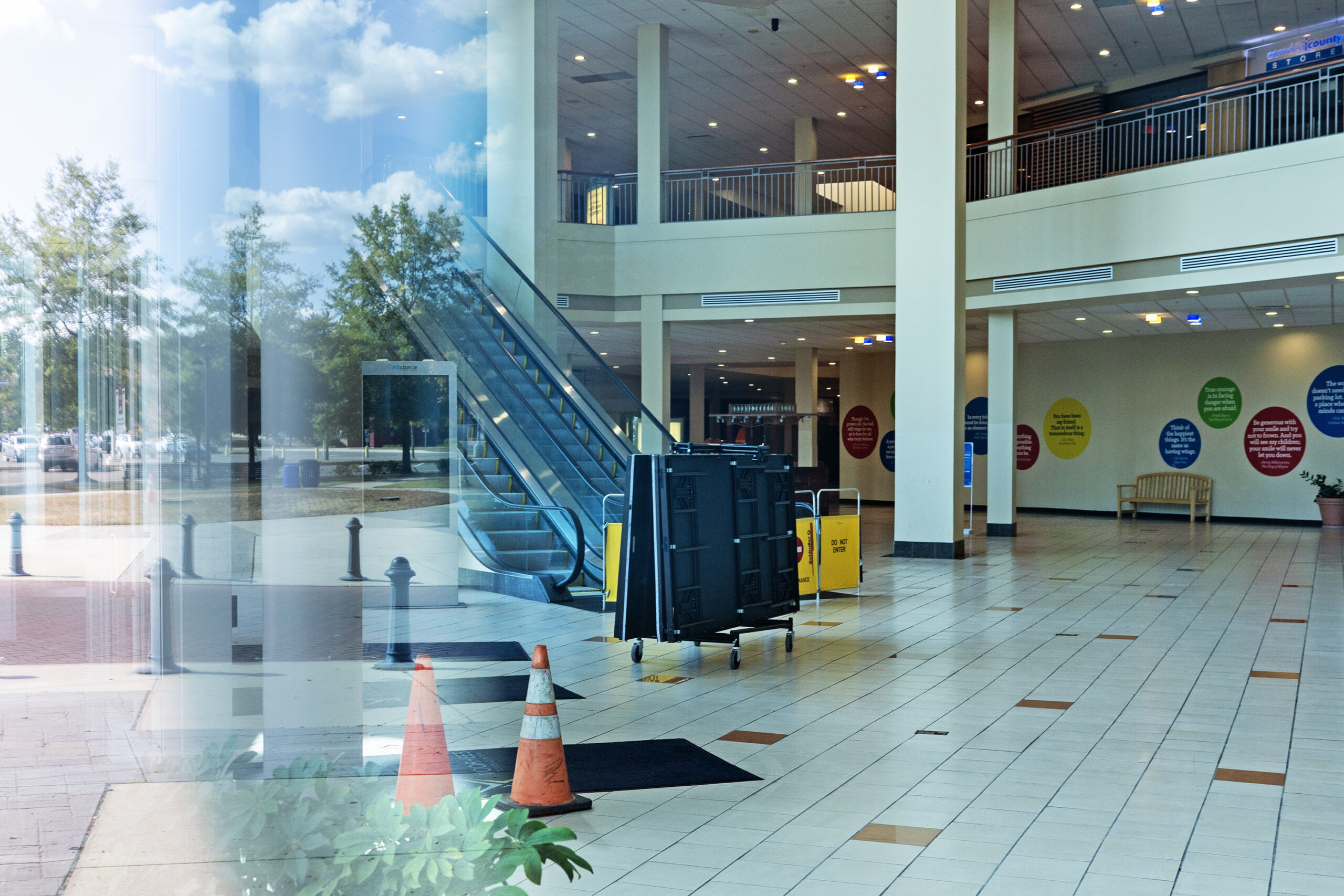
The former Echelon Mail, as seen through a window in October 2024, after a fire damaged the building. The mall has not reopened since.
In Voorhees, Hoboken Brownstone’s plan differs from its other major mall redevelopment in New Jersey.
After buying Liberty Village from Namdar, Vallone said he reached back out to the real estate company to inquire about other mall properties for sale. That’s how he became interested in the Voorhees Town Center.
Vallone said he believes dead and dying malls can make good investments.
“Here we have a substantial amount of infrastructure that is feeding the mall,” including plumbing and electric, Vallone said. “That de-risks the project quite a bit.”
And he said he thinks customers will come to malls-turned-town-centers if they are developed thoughtfully.
After all, retailers like Amazon can’t deliver everything same-day, Vallone said, and shopping online doesn’t offer the same experience as browsing at a store.
In-person entertainment, fine dining, and even grocery shopping are also hard to replicate at home, he said: “Certain things, you have to go somewhere to do.”