Author: Gillian McGoldrick

  • ‘There’s no place like home’: Pennsylvania’s political elite return to New York’s Waldorf Astoria for ritzy dinner in its 127th year

    ‘There’s no place like home’: Pennsylvania’s political elite return to New York’s Waldorf Astoria for ritzy dinner in its 127th year

    NEW YORK — Pennsylvania’s political elite will return this weekend for the first time in seven years to where the annual out-of-state glitzy gathering all began: the Waldorf Astoria New York.

    The Pennsylvania Society began in 1899 in the Waldorf Astoria, after historian James Barr Ferree invited 55 fellow Pennsylvania natives living in New York to the iconic hotel to talk about how they could better their home state. Early members of what was originally called the “Pennsylvania Society of New York” included industrialist titans like Andrew Carnegie and Andrew Mellon, both of whom began their empires in Pennsylvania.

    In the 127 years since, the society has evolved into a nonpartisan, nonprofit organization that has raised millions of dollars for student scholarships and hosts the annual dinner in New York, in addition to events around the commonwealth each year.

    And the event itself has transformed into a full weekend of parties and fundraisers for members of the state’s political elite, where they toast and talk about the state away from the geographic and political divisions of Pennsylvania.

    Gov. Josh Shapiro is slated to deliver a speech at the dinner, as is tradition for Pennsylvania’s governors. Another tradition: honoring a notable Pennsylvanian, and this year that person will be former U.S. Ambassador to Canada David L. Cohen, a Philadelphia stalwart whose long career includes stints as an executive at Comcast, chair of the University of Pennsylvania’s Board of Trustees, and five years as Ed Rendell’s chief of staff during his mayorship.
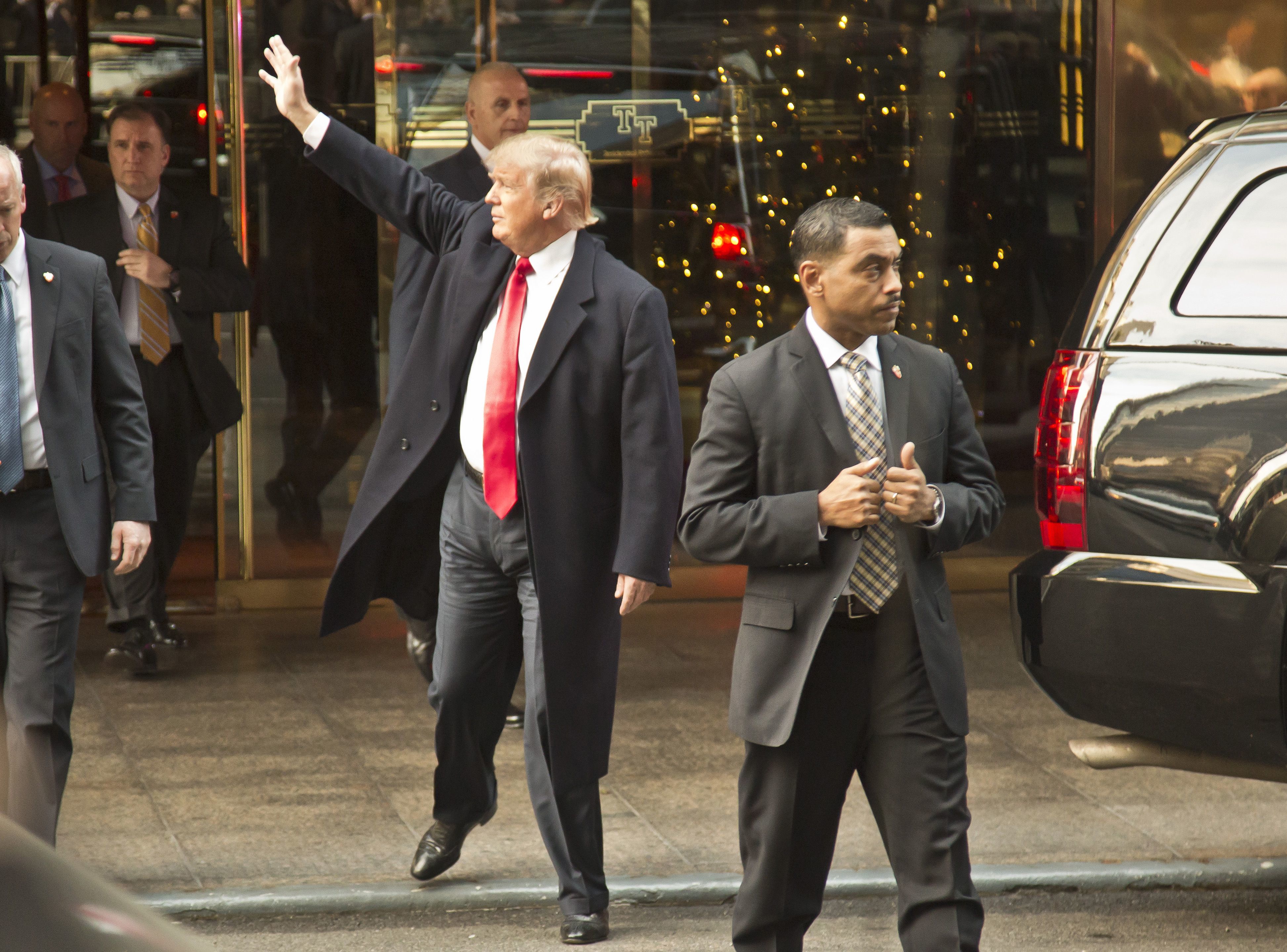
    President Donald Trump waves in 2015 to a crowed outside Trump Tower in Manhattan as he heads to the nearby Republican luncheon that kicks off Pennsylvania Society during his first campaign for president.

    Why does the Pennsylvania Society meet in New York?

    The society hosted its annual dinners at the Waldorf for 119 years, until it was forced to find a new home while the iconic hotel was closed for prolonged renovations.

    “This is where it started: a group of Pennsylvanians living in New York who wanted to come together around their shared love of Pennsylvania,” said Trish Wellenbach, president of the Pennsylvania Society. “There’s no place like home.”

    But that home is not in Philly or Pittsburgh.

    Ballroom of the Waldorf-Astoria, decked out for the Pennsylvania Society dinner.

    The dinner has faced scrutiny for decades for taking hundreds of thousands of dollars that could be spent within Pennsylvania to a different state, as well as often being a tone-deaf showing of wealth while many Pennsylvanians are struggling.

    A standard ticket to attend the black-tie affair cost $1,000 per person, with lower rates available for emerging leaders under age 35.

    Wellenbach acknowledged the longtime criticism, but she said she believes that the weekend away from Pennsylvania helps form new relationships among lawmakers that otherwise would not be forged.

    “New York’s a kind of neutral territory,” Wellenbach added. “No part of the state has a brighter light shining on it than another. … Sometimes you have to get out of your own home territory to think more expansively and strategically.”

    Shapiro, a first-term Democratic governor up for reelection next year, has delivered a speech at the Pennsylvania Society each year of his governorship, breaking from his immediate predecessor, Tom Wolf, who skipped the event during his tenure.

    Shapiro’s likely 2026 opponent, Treasurer Stacy Garrity, the state Republican Party’s endorsed candidate, will also be among the officials attending the annual dinner, where politicians try to position themselves for higher office or reelection.

    The matchup between Shapiro and Garrity promises to be a hot topic among attendees, as will next year’s battle for Congress.

    Sen. Dave McCormick (R., Pa.) will also be among the officials turning up for this year’s dinner. McCormick attended last year’s event just weeks after he ousted longtime incumbent Sen. Bob Casey in November 2024.

    Who is Pa. Society honoree David L. Cohen?

    Cohen, 70, just returned home this year to Philadelphia from his ambassadorship in Canada. He had been appointed by former President Joe Biden, who often touted his own ties to the state while in office.

    Then-Pennsylvania Gov. Tom Corbett, left, talks with David Cohen at the Pa. Society dinner in 2013. Cohen, a former U.S. ambassador to Canada, will be honored at this year’s dinner.

    The former Comcast executive has been attending the Pennsylvania Society, the place where his career paths in politics and business merged, for nearly 40 years. Getting the award this year is a “huge honor,” he added.

    “I’ve been [to the Pennsylvania Society] almost 40 times. I’ve seen 40 gold medal winners,” Cohen said in an interview this week. “I never imagined myself being a gold medal winner.”

    After spending four years away from Philadelphia as an ambassador, Cohen said, he has become keenly aware of the importance that the city and Pennsylvania hold internationally as the origin of modern democracy, ahead of America’s 250th birthday next year.

    “There’s a common perception in the world that Philadelphia and Pennsylvania was the birthplace of democracy,” Cohen said. “I can’t tell you how many times I’d get stopped and asked, ‘You live in Philadelphia? Does that mean you can see the Liberty Bell?,’ just marveling at living in a place where there was so much history relating to the founding of democracy.”

    Guests mill about during cocktail hour at the New York Hilton Midtown before the start of the Pennsylvania Society’s 121st Annual Dinner in 2019.

    Cohen will be honored for his decades of contributions to Pennsylvania and Philadelphia.

    He said his personal proudest achievements include his ambassadorship in Canada, his work during Rendell’s administration to improve the perception of the city, and his work at Comcast to improve internet access across America.

  • Pennsylvania Democrats are beginning their efforts to flip the state Senate in 2026 with this suburban Philly seat

    Pennsylvania Democrats are beginning their efforts to flip the state Senate in 2026 with this suburban Philly seat

    A Montgomery County Democratic Committee leader has set his sights on unseating a Republican state senator in the suburbs — part of a larger effort by Pennsylvania Democrats to flip the state Senate for the first time in 31 years.

    Chris Thomas, the former executive director of the Montgomery County Democratic Committee, who left his role at the end of November to run for Senate, launched his bid on Wednesday to challenge State Sen. Tracy Pennycuick, a first-term senator representing parts of Montgomery and Berks Counties.

    Thomas, 29, is also an Upper Frederick Township volunteer firefighter and taught in a Philadelphia public school for a year prior to his jump into politics. His campaign is focused on increasing public school funding, finding a new funding stream for mass transit, and making Pennsylvania more affordable for working people.

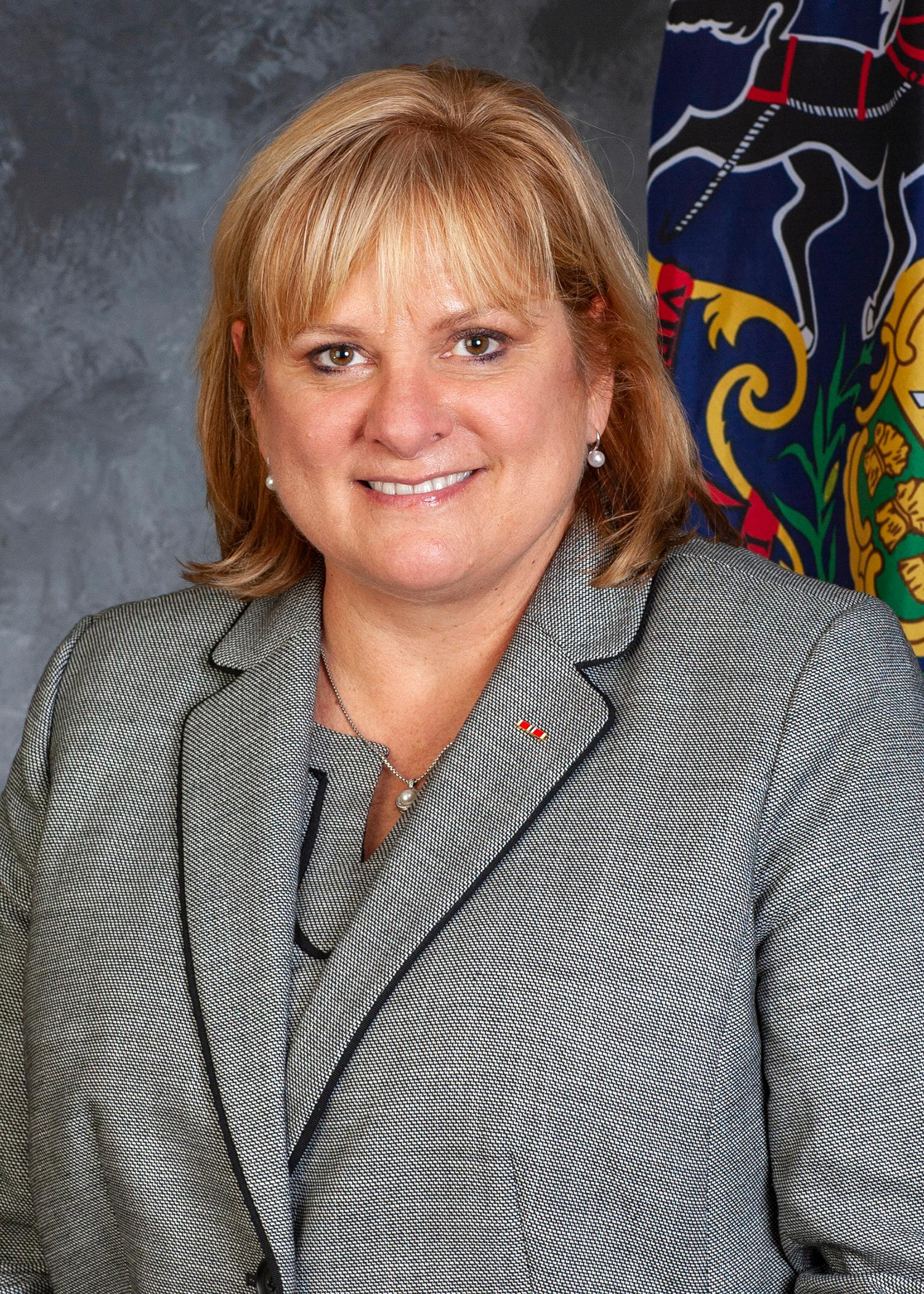
    Pa. state Rep. Tracy Pennycuick (R., Montgomery County). (Photo: Pa. House of Representatives)

    Thomas announced his campaign with dozens of endorsements from state and local elected officials, including five sitting senators from the Philadelphia suburbs. He also secured the endorsement of House Majority Leader Matt Bradford (D., Montgomery), another driving force behind the Democratic efforts to flip the state Senate in the 2026 midterm election in attempts to control all three branches of Pennsylvania’s government.

    Pennsylvania is one of few divided legislatures in the country, where Democrats hold a narrow majority in the state House, 102-101, and Republicans control the Senate, 27-23.

    Gov. Josh Shapiro, a Democrat, and House Democrats frequently butt heads with GOP Senate leaders. By flipping two seats next November, Democrats would tie the chamber 25-25 and Democratic Lt. Gov. Austin Davis would act as a tiebreaker. But Democrats are targeting four GOP-held seats, three of which are in the Philadelphia suburbs, in hopes of gaining control in the upper chamber for the first time in 31 years.

    The GOP-controlled state Senate has been a thorn in the side of Shapiro and House Democrats, as the more conservative members of the GOP Senate caucus have objected to most spending increases and rejected top Democratic priorities, like a long-term revenue source for mass transit. The state budget, passed in November, was 135 days late, requiring school districts, counties, and social service providers to take out loans or lay off staff to continue operating during the monthslong standoff.

    Mirroring national efforts to win control of congressional seats, Pennsylvania Democrats are targeting GOP-held districts that President Donald Trump won in 2024 but Shapiro carried in 2022. With Pennsylvania’s popular first-term governor and potential 2028 contender back at the top of the ticket — and a methodical, behind-the-scenes effort by Shapiro to orchestrate a decisive year for Democrats in 2026 — Democrats see it as possible this time around.

    Thomas’ first order of business if he is elected to Harrisburg and Democrats flip the chamber: electing Democratic floor leaders in the chamber.

    “No meaningful legislation moves in Harrisburg unless we fix who’s in charge, and right now Sen. Pennycuick is supporting a Senate leadership that’s failed working people,” Thomas said.

    Pennycuick said she “welcomes this campaign as an opportunity” to talk about the successes she has achieved while serving in the state Senate, such as her support for public education funding, reducing overreaching regulations, and her bipartisan proposal to create safeguards around artificial intelligence.

    Kofi Osei, a Towamencin Township supervisor and Democrat, has also announced his bid for Senate District 24, which stretches along the northwestern parts of Montgomery County and into parts of Berks County.

    The state Senate Democratic Campaign Committee does not endorse candidates in a primary election, and will support whoever wins the Democratic nomination in Pennsylvania’s May 19 primary. However, State Sen. Vincent Hughes (D., Philadelphia), who chairs the SDCC, said Thomas’ candidacy is “the right time and the right moment.”

    “I’m really excited about having a young person in there, generating young people and getting young people motivated,” Hughes added.

    The state Senate Republican Campaign Committee, meanwhile, is fundraising off Democrats’ efforts to flip the state’s upper chamber, warning voters that Democratic special interest group dollars are already pouring in.

    “State Democrats have made it clear their goal is to have a blue trifecta in Pennsylvania in 2026,” the SRCC wrote in a fundraising email Tuesday. “They know Senate Republicans are the last line of defense against Josh Shapiro and PA House Democrats far-left agenda.”

    Thomas was a public school teacher for one year at the Northeast Community Propel Academy, teaching seventh-grade math and science. He comes from a family of educators, he said, but quickly realized he needed to get more involved to improve the education system and government services to better serve these students. He made the jump to politics to try to make change.

    “I was sitting there, trying to feed my kids in the morning to make sure they had full stomachs to learn, having supplies to make sure they’re fully equipped for the day,” Thomas added. “I saw a system that wasn’t working for our students.”

    If elected, Thomas would be Pennsylvania’s youngest sitting state senator, and would join State Sen. Joe Picozzi (R., Philadelphia), 30, as part of a new generation of leaders hoping to shape the state’s future.

    “Our generation has grown up during economic crashes, school shootings, endless wars, and now we’re watching our parents and grandparents struggle to retire with dignity,” Thomas said.

  • Approximately 2.7 million state agency letters were never mailed to Pennsylvania residents last month, officials say

    Approximately 2.7 million state agency letters were never mailed to Pennsylvania residents last month, officials say

    HARRISBURG — Approximately 2.7 million pieces of state agency mail never reached Pennsylvania residents last month after a state-contracted vendor failed to send them, affecting outgoing correspondence from the state Department of Human Services and the Department of Transportation, officials said Tuesday.

    From Nov. 3 through Dec. 3, officials said, the affected state agency mail was never presorted and delivered by the vendor to the U.S. Postal Service, resulting in a backlog of millions of unsent state communications.

    Late last week, Pennsylvania state officials discovered that a month’s worth of mail had never been sent to residents by the outside vendor, Harrisburg-based Capitol Presort Services LLC. Once the issue was discovered, the state fired the vendor for failing to fulfill its contract and hired another vendor to work through the backlog.

    The state Department of Human Services, which oversees the care of the state’s most vulnerable residents and children, is still determining “the exact volume and categories of delayed mail,” said Paul Vezzetti, a spokesperson for the state Department of General Services. However, DHS was able to confirm that some services were not interrupted: residents waiting on Electronic Benefit Transfer (EBT) cards for receiving food assistance, mail sent by county assistance offices, and notices about suspended benefits during the federal government shutdown were not affected, Vezzetti added.

    PennDot driver’s license and vehicle registration renewal invitations, driver’s license camera cards, vehicle registration cards, and address update cards are all among the routine correspondences that were never sent to residents over the last month, Vezzetti said. Driver’s license suspensions were not impacted by the stalled mail. Vehicle registration and license renewal registrations are sent three months in advance, so anyone who was due to receive one at the start of November will have until February to submit it, the agency said.

    It was not clear on Tuesday which other state agencies’ mail had been impacted by the lapse in service.

    All of the recently discovered unsent state agency mail was transported to USPS on Monday by the state’s new vendor and will be promptly delivered to residents by the Postal Service, officials said. PennDot customers should receive any expected mail from the time period of Nov. 3 to Dec. 3 within the next 7-10 days, Vezzetti added.

    On Friday, the state secured a $1 million emergency contract with another mail presorting company, Pitney Bowes, to handle the multimillion-letter backlog.

    The state had contracted with Capitol Presort Services since May 1, 2021. The company filed for bankruptcy in 2022, but had continued its work for the state until last week, when the agency mail pileup was uncovered.

    It remained unclear Tuesday why it took a full month for officials to determine that 2.7 million pieces of state agency mail had not been reaching residents. It was also unclear how the issue was discovered by officials last week.

    The unsent mail may prove to be a major headache for Gov. Josh Shapiro’s administration, depending on which state communications were not delivered to residents. The backlog could include critical correspondence relating to state services, such as health benefits or food assistance, among others.

    State agencies regularly send communications by mail about an individual’s eligibility for services or benefits, renewals and appeals, and whether a person is due to appear at a hearing about that eligibility, and more.

    “Agencies across the Commonwealth continue to evaluate any potential negative effects of this mail delay and are taking proactive steps to mitigate potential impacts on Pennsylvanians,” Vezzetti added.

    A spokesperson for Gov. Josh Shapiro declined to comment.

    According to the state’s contract with Capitol Presort Services from 2021, the vendor was responsible for delivering more than 16 million pieces of state agency mail each year. Almost all of this mail was to be for the delivery of the state’s First Class and Next-Day mail, which are among the U.S. Postal Services’ fastest delivery options.

    Philip Gray, the president and owner of Capitol Presort Services, did not immediately respond to questions about his company’s bankruptcy and how the backlog of mail came about.

    Capitol Presort Services advertises itself as a way for “companies to maximize postal discounts while improving their mail delivery,” according to its website. Mail presorting allows organizations to prepare mail with the proper bar codes and trays needed for easy delivery by USPS, which USPS offers to companies at a discounted rate.

  • Gov. Josh Shapiro’s administration just fired a vendor for failing to send state agency mail, impacting an unknown number of residents

    Gov. Josh Shapiro’s administration just fired a vendor for failing to send state agency mail, impacting an unknown number of residents

    HARRISBURG — An unknown amount of mail from Pennsylvania state agencies to residents has gone undelivered, Gov. Josh Shapiro’s administration discovered this week.

    The Pennsylvania Department of General Services said in a statement Friday that it has ended its contract with an unidentified vendor that pre-sorts state agency mail before delivering it to the U.S. Postal Service to be sent to residents around the state. The department discovered in the last 48 hours that the vendor “had been failing to deliver Commonwealth mail to constituents,” said Paul Vezzetti, a spokesperson for the department.

    The state is still determining how much and what type of mail was not delivered to Pennsylvania’s residents. It was unclear Friday why the vendor failed to send the state’s mail, where the mail was located when it was not in the state’s possession, how long the mail went unsent, and how the failure was not identified sooner.

    The unsent mail could prove to be a major headache for Shapiro’s administration, depending on the magnitude of the issue and which state communications were not delivered to residents.

    After discovering the backlog, the Department of General Services rapidly hired a new vendor to sort and deliver the unsent mail “as quickly as possible,” Vezzetti said. The unsent mail has already been transferred to the new vendor and the state estimates that it will be mailed by early next week.

    According to an emergency contract made public Friday, the state hired technology solutions company Pitney Bowes for $1 million, citing its preparedness to process and resume mail operations. If the services were not immediately restored, it “could result in missed deadlines, loss of services, delayed benefits, legal exposure, and operational disruptions for multiple agencies and constituents,” according to contract.

    The unsent mail from unspecified state agencies could include critical communications relating to state services, such as health benefits or food assistance, among other potential communications. State agencies send communications by mail about an individual’s eligibility for services or benefits, renewals and appeals, and whether a person is due to appear at a hearing about that eligibility, and more.

    Vezzetti declined on Friday to confirm which agencies were impacted by the stalled mail, or to name the vendor that had been fired.

    Pennsylvania lawmakers last month ended a 135-day-long state budget impasse that required counties, schools and social service organizations to take out loans or limit their services during the protracted budget fight.

    The state is now taking steps to “carefully assess and mitigate impacts” of the mail delay and adjust deadlines for impacted residents.

    Staff writer Ximena Conde contributed to this article.

  • Gov. Josh Shapiro says Kamala Harris’ descriptions of him were ‘blatant lies’ intended to sell books

    Gov. Josh Shapiro says Kamala Harris’ descriptions of him were ‘blatant lies’ intended to sell books

    Gov. Josh Shapiro lashed out over former Vice President Kamala Harris’ portrayal of his interview to become her 2024 running mate, calling Harris’ retellings “complete and utter bulls—” intended to sell books and “cover her a—,” according to the Atlantic.

    Shapiro, Pennsylvania’s first-term Democratic governor now seen as a likely presidential contender in 2028, departed from his usual composed demeanor and rehearsed comments in a lengthy Atlantic profile, published Wednesday, when journalist Tim Alberta asked the governor about Harris’ depiction of him in her new book.

    In her book, titled 107 Days, Harris described Shapiro as “poised, polished, and personable” when he traveled to Washington to interview with Harris for a shot at becoming the Democratic vice presidential candidate during her historic campaign against Donald Trump.

    However, Harris said, she suspected Shapiro would be unhappy as second-in-command. He “peppered” her with questions, she wrote, and said he asked questions about the vice president’s residence, “from the number of bedrooms to how he might arrange to get Pennsylvania artists’ work on loan from the Smithsonian.” The account aligns with reporting from The Inquirer when Harris ultimately picked Minnesota Gov. Tim Walz over Shapiro, in part, because Shapiro was too ambitious to serve in a supporting role if chosen as her running mate.

    But Shapiro, the Atlantic reported, was taken aback by the portrayal.

    “She wrote that in her book? That’s complete and utter bull—,” Shapiro reportedly told the Atlantic when asked about Harris’ account that he had been imagining the potential art for the vice presidential residence. He added: “I can tell you that her accounts are just blatant lies.”

    The governor’s sharp-tongued frustration depicted in the Atlantic marked a rare departure for the image-conscious Shapiro, whose oratory skills have been compared to those of former President Barack Obama, and who has been known to give smiling, folksy interviews laced with oft-repeated and carefully told anecdotes.

    The wide-ranging, nearly 8,000-word profile in the Atlantic also detailed Shapiro’s loss of “some respect” for Harris during the 2024 election, including for her failure to take action regarding former President Joe Biden’s visible decline.

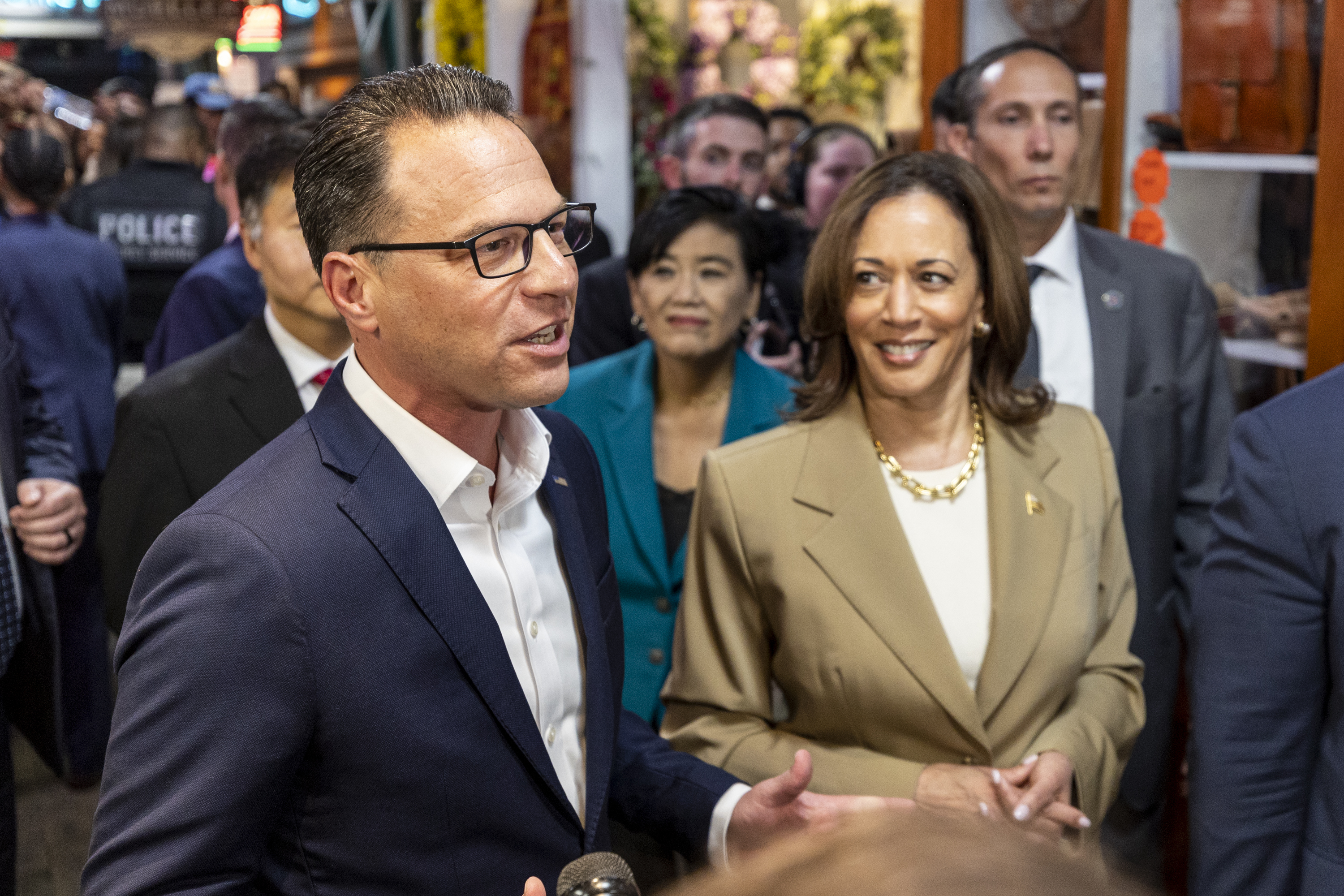
    Governor Josh Shapiro speaks with press along with Vice President Kamala Harris during their short visit to Little Thai Market at Reading Terminal Market after she spoke at the APIA Vote Presidential Town Hall at the Pennsylvania Convention Center in Philadelphia, Pa., on Saturday, July 13, 2024.

    When Shapiro was asked by the Atlantic whether he felt betrayed by Harris’ comments in her book about him, given that the two have known each other for 20 years, he said: “I mean, she’s trying to sell books and cover her a—.”

    He quickly reframed his response: “I shouldn’t say ‘cover her a—,’ I think that’s not appropriate,” he added. “She’s trying to sell books, period.”

    The Atlantic piece, titled “What Josh Shapiro Knows About Trump Voters,” presented Shapiro as a popular Democratic governor in a critical swing state that went for Trump in 2024, and as a master political operator who has carefully built a public image as a moderate willing to work across the aisle or appoint Republicans to top cabinet positions. That image was tested this year during a protracted state budget impasse that lasted 135 days, as Shapiro was unable to strike a deal between the Democratic state House and GOP-controlled state Senate for nearly five months past the state budget deadline.

    The Atlantic piece also outlined common criticisms of Shapiro throughout his two decades in Pennsylvania politics, including those from within the Democratic Party: He is too ambitious with his sights set on the presidency, and his pragmatic approach often leaves him frustrating all sides, as evidenced in his 2023 deal-then-veto with state Senate Republicans over school vouchers. It highlighted some of the top issues Shapiro will face if he chooses to run for president in 2028, including a need to take clearer stances on policy issues — a complaint often cited by Republicans and his critics. If he rises to the presidential field, Shapiro will also have to face his past handling of a sexual harassment complaint against a former top aide that Shapiro claimed he knew very little about despite the aide’s long-held reputation.

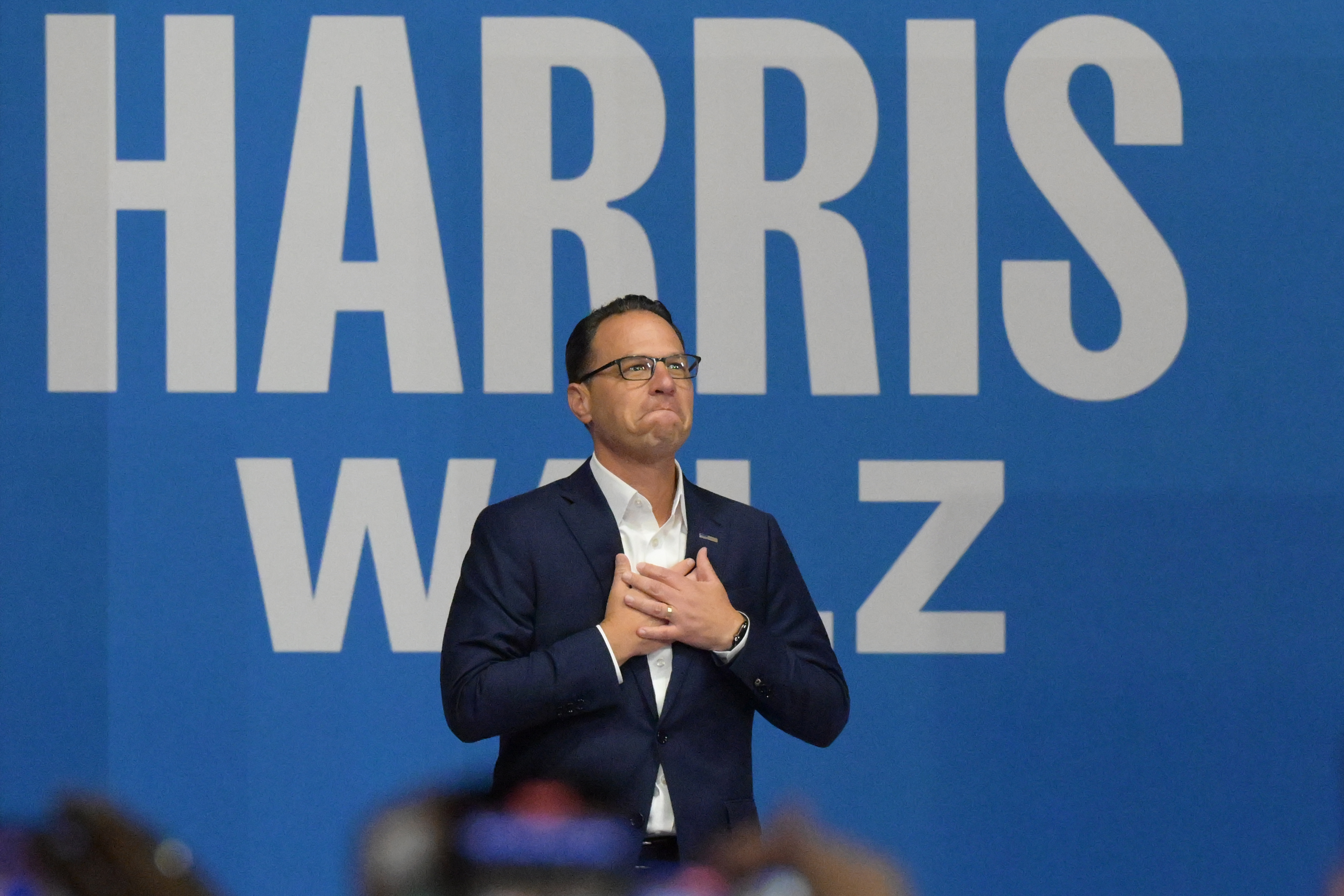
    Gov. Josh Shapiro takes the stage ahead of U.S. Vice President Kamala Harris and Gov. Tim Walz at a rally in Philadelphia’s Liacouras Center on August 6, 2024.

    “The worst-kept secret in Pennsylvania politics is that the governor is disliked — in certain cases, loathed — by some of his fellow Democrats,” the Atlantic reported. Further, Alberta noted that when an unnamed Pennsylvania lawmaker received a call from a member of Harris’ vetting operation, the member said they had never seen “so many Democrats turning on one of their own.”

    Shapiro has been featured in several other prominent national media outlets in recent weeks, including in the New Yorker, which ran a profile about his experience with political violence. He has become vocal on that issue in the months since a Harrisburg man who told police he wanted to kill Shapiro broke into the governor’s residence in April and set several fires while Shapiro and his family slept upstairs. As one of the most prominent Jewish elected officials in the nation, Shapiro has frequently said that leaders must “bring down the temperature” in their rhetoric, and has tried to refocus his own messaging on the good that state governments can do to make people’s lives easier, such as permitting reforms and infrastructure improvements.

    “The fact that people view institutions as incapable or unwilling to solve their problems is leading to hyper-frustration, which then creates anger,” Shapiro told the Atlantic. “And that anger forces people oftentimes into dark corners of the internet, where they find others who want to take advantage of their anger and try and convert that anger into acts of violence.”

  • Meet the three Pa. Supreme Court justices up for retention on the November ballot

    Voters will decide whether the Pennsylvania Supreme Court should be transformed for years to come when they are asked next month whether they should retain three justices for another 10-year term or oust them.

    The justices — Justices Christine Donohue, Kevin Dougherty, and David Wecht — were each elected as Democrats in 2015 during a transitional period for the court when Democrats took a majority, the first time so many seats were open at one time, in part due to resignations of disgraced former justices. Since then, the three justices have played decisive roles on the 5-2 liberal majority of Pennsylvania’s highest court.

    Their decisions have had great impacts on the lives of the state’s residents, including rulings on whose mail ballots should be counted under the law, whether cities can set their own gun laws, and shoring up the state’s constitutional rights for gender equality.

    Now the justices will appear individually on Pennsylvania ballots, where voters will be asked “yes” or “no” on whether each should be retained for another 10-year term.

    Retention elections in Pennsylvania traditionally attract little attention and little money. But Republicans view this as an opportunity to overhaul the court, which has become an even more critical battleground in the Donald Trump era as state-level courts hold sway over everything from abortion rights to congressional redistricting.

    The GOP has spent millions to try to oust the three justices, while Democrats have spent even more to try to keep them on the bench. As of Friday, Republicans had spent or reserved nearly $2.5 million in ad buys, while Democrats had spent more than $7 million.

    The Inquirer spoke with the justices about their last 10 years on the bench, what it has been like to campaign in a hyper-partisan environment for what is intended to be a nonpartisan election, and more.

    Kevin Dougherty

    A small group of volunteers gathered in a Northeast Philadelphia parking lot on a gloomy Saturday afternoon in early September to knock on doors and urge residents to retain the current members of the Pennsylvania Supreme Court.

    Milling among the volunteers was Dougherty. Despite having been on the ballot for local or state office three times, Dougherty, of Philadelphia, never knocked on voters’ doors until this year.

    And he was disgusted by the fact that it was necessary.

    “Judges shouldn’t have to canvass,” Dougherty said several times over the course of the afternoon.

    Justice Kevin Dougherty talks with volunteers before they head out the canvass in Fox Chase Sunday Sept. 7, 2025. Dougherty is one of three Pennsylvania Supreme Court justices up for retention.

    He then proceeded to walk a Northeast Philly neighborhood alongside his son, State Rep. Sean Dougherty, a first-term Democrat who represents the area, and a family friend.

    Kevin Dougherty, 63, is from South Philadelphia and hails from one of the most well-known families in Philadelphia politics. His brother, John “Johnny Doc” Dougherty, is the once-powerful former leader of IBEW Local 98. John Dougherty was convicted in 2023 of embezzling funds from the union.

    Before running for the Pennsylvania Supreme Court, Dougherty spent nearly 15 years on the Common Pleas Court bench in Philadelphia, with much of that time spent serving in the family division.

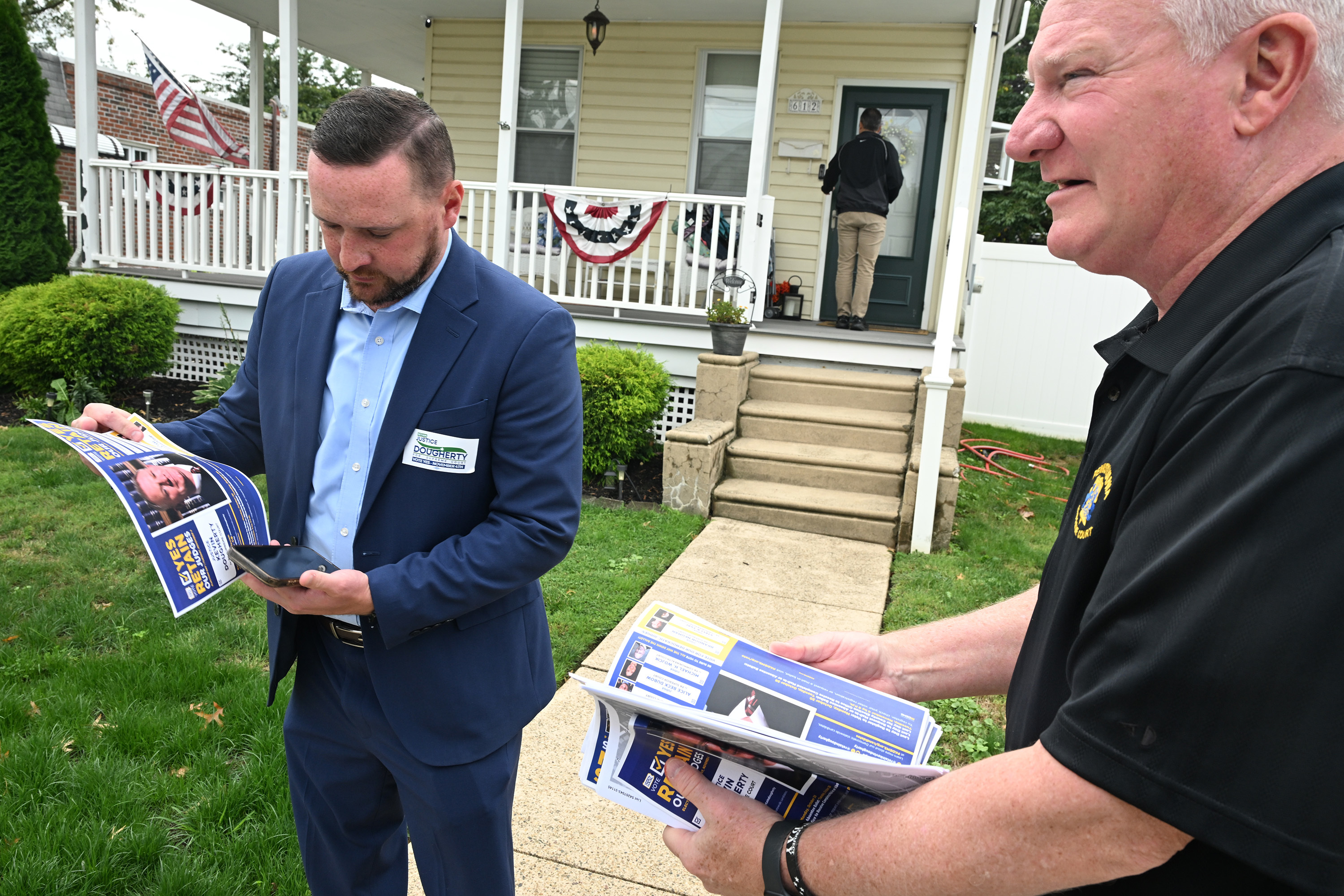
    Justice Kevin Dougherty (right) canvasses with his son, State Rep. Sean Dougherty (left), in Fox Chase Sunday Sept. 7, 2025.

    As a Supreme Court justice, Dougherty has highlighted his work on the autism in courts initiative as a key accomplishment. This program works to educate judges about the particular challenges people with autism spectrum disorder may face when dealing with the justice system, and has grown further into sensory-friendly courtrooms in more than a dozen counties.

    The program, Dougherty said, was inspired by his own experience on the bench when a child stood in his courtroom for a delinquency case showing “all the signs of an incorrigible person.” Then, Dougherty said, the child’s mother pulled him aside and told him her son was on the autism spectrum.

    “It was like a punch in my mouth because I had never been exposed,” Dougherty said. “You’re only ignorant once.”

    Dougherty said he self-educated and began working in Philadelphia to reform the way the court interacts with individuals with autism and brought those efforts to a statewide focus as a justice.

    Justice Kevin Dougherty (left) canvasses with his son, State Rep. Sean Dougherty (center), in Fox Chase Sunday Sept. 7, 2025, stopping at the home of voter Skip Nelson (right).

    “You need to make the system fair,” Dougherty said.

    On the court, Dougherty has often sided with the liberal majority. He recently wrote the majority opinion in a case that allowed local governments to use zoning law to limit where gun ranges could be located. In oral arguments, when attorneys get a chance to argue their cases before the Supreme Court’s seven justices, Dougherty often presses lawyers to refine their arguments.

    Christine Donohue

    Donohue is often the first justice to ask questions during oral arguments.

    Her quick interjections are because of her 27 years as a trial attorney prior to her career on the bench, she said. She cannot help but be inordinately prepared when she puts on her judicial robes and sits on the state’s highest court.

    “Thoroughness is one of my ‘things,’” she said, with a laugh.

    Justice Christine Donohue speaks during a fireside chat at Central High School.

    Donohue, 72, would be able to serve for only two years of another 10-year term. But it wasn’t even a question to her whether she should step aside sooner. She believes she has fulfilled her duty as a justice, and she is prepared to do so until she hits the voter-set maximum age for a justice, 75.

    Donohue authored the court’s ruling last year that signaled some members of the court are prepared to find that the Pennsylvania Constitution secures the right to an abortion. But less discussed from that same opinion, Donohue said, she is proud to have shored up the state’s Equal Rights Amendment.

    Pennsylvania was the first state in the nation to amend its constitution to enshrine that every person has equal rights that cannot be “denied or abridged” because of an individual’s sex in 1971, and the first state to show support for amending the U.S. Constitution to guarantee the same.

    But a 1984 ruling by the state Supreme Court “diluted” the ERA in Pennsylvania, Donohue said. It wasn’t until the justices decided the Allegheny Reproductive Health case 40 years later that the court revisited the state’s Equal Rights Amendment to make it “perfectly clear that a biological difference cannot serve as the basis for a denial or an abridgment of a right,” she said.

    “To me, I’m very proud of many of the decisions I’ve been able to be involved with, but that one really sort of sets the record straight,” Donohue said.

    Outside her legal work on the state Supreme Court, she has been an advocate to offer more young lawyers the opportunity to try a case before a jury, which has become less and less frequent in recent years. Ensuring that the next generation of lawyers knows how to try a case before a jury is critical to guaranteeing the right to a fair trial, and would prevent a potential competency gap for future lawyers.

    David Wecht

    Like many of the justices on the Pennsylvania Supreme Court, Wecht spends much of his free time thinking about legal questions or ethical dilemmas. Or going on walks and listening to podcasts that deal with the same issues. (He recommends Amarica’s Constitution by Yale Law professor Akhil Amar or any of the podcasts by Jeffrey Rosen at the National Constitution Center, among others.)

    He works from his chambers in Pittsburgh each day, unless the court is at one of the state’s many satellite courtrooms for oral arguments. There are times when he is in his chambers reading and writing all day long, which he described as “very, very fun, and very, very interesting and exciting.”

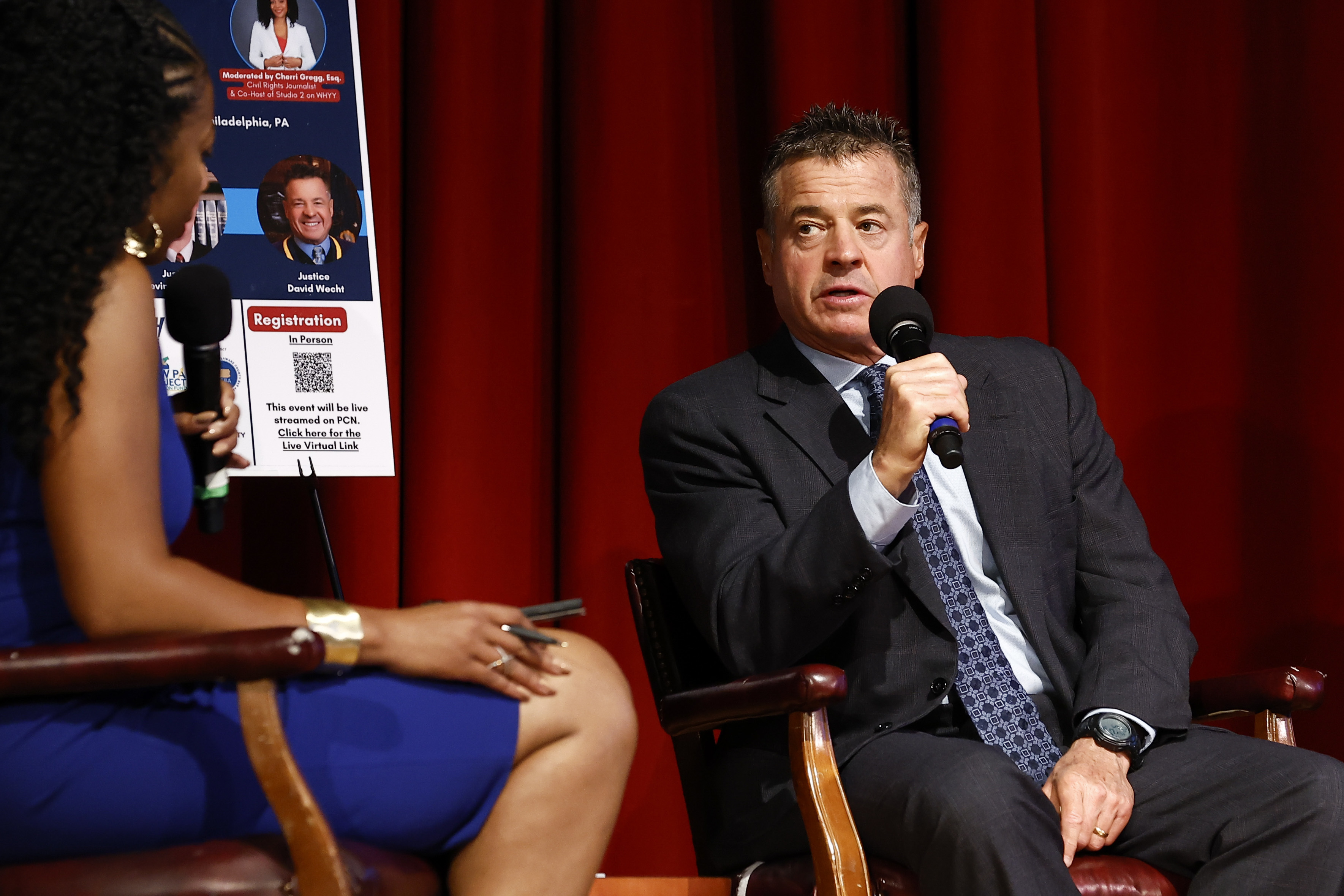
    Justice David Wecht speaks with moderator Cherri Gregg during a fireside chat on retention at Central High School.

    “The work is interesting. It is varied, It is never stagnant. We deal with all areas of the law,” Wecht said. “I’m very grateful that the voters gave me this job 10 years ago, and I hope they’ll see fit to provide me an additional term.”

    Wecht is a true student of the law and said he enjoys probing attorneys’ arguments and the back-and-forth between justices on the bench.

    He sees his role on the court as to decide cases. “Nothing grander, and nothing more,” he said.

    He and the whole court, he said, operate under a “philosophy of judicial restraint.”

    The court’s liberal majority has faced criticism from Republicans during the last 10 years — especially during the COVID-19 pandemic — for decisions they claimed were made by an “activist court.”

    But those rulings, Wecht said, were the justices’ best attempts at deciding what a law passed by the General Assembly means when the lawmakers left it ambiguous, or their best attempt to understand what the framers of the state constitution intended, even if he doesn’t agree with it.

    “It’s not our business whether we like them,” he said.

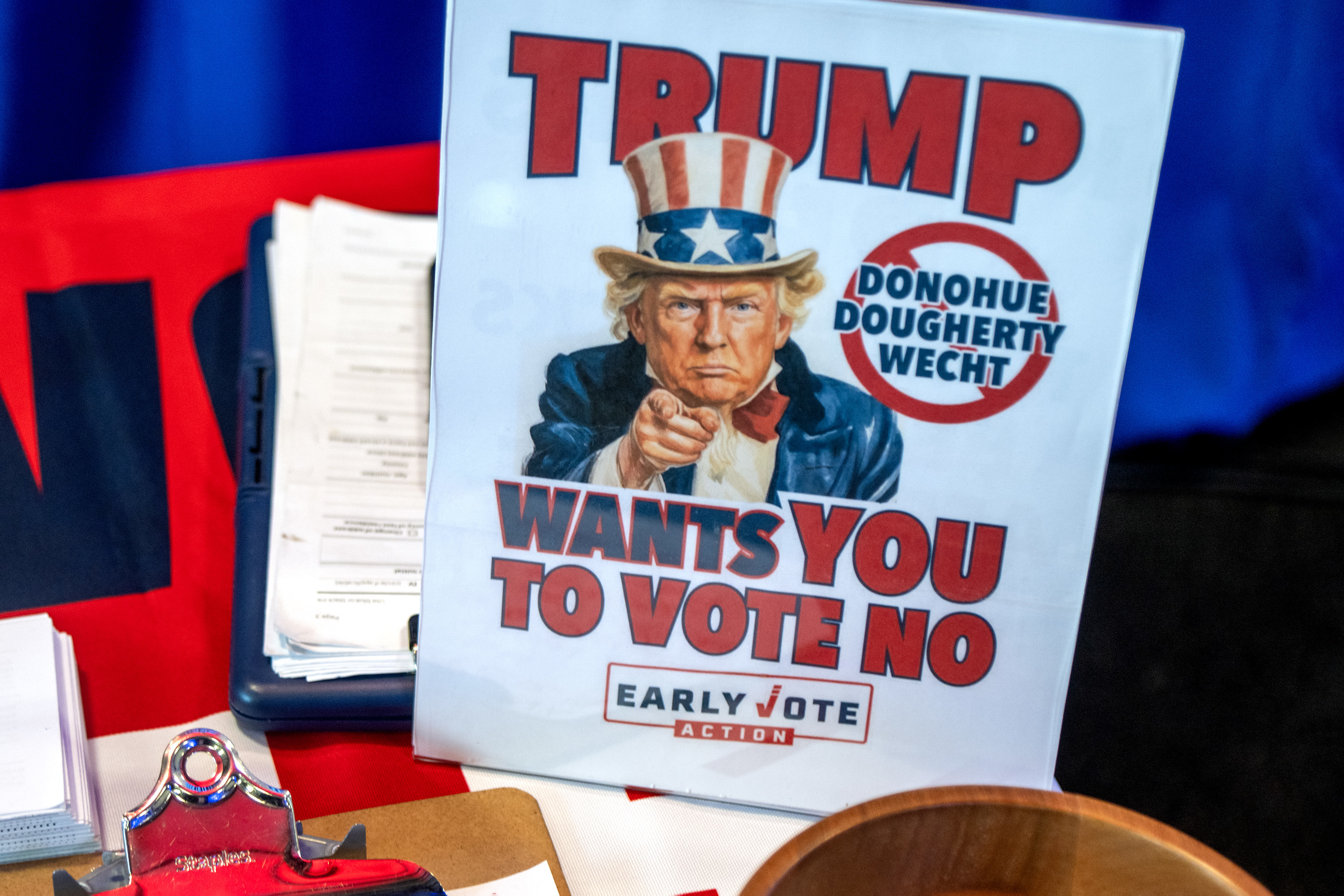
    Early Vote Action, a Republican group, urges voters to vote against retaining the justices at a Republican rally in Bucks County on Sept. 25, 2025 at the Newtown Sports & Events Center. The event was headlined by Treasurer Stacy Garrity, a Republican running for governor.

    Republican groups have attempted to mislead voters in mailers, Wecht has said, about the justices’ role in a 2018 decision that found Pennsylvania’s congressional maps were unconstitutionally gerrymandered. The GOP groups have had similarly misleading ads about the court’s actions on abortion and voting rights, even recently invoking the anti-Trump “No Kings” language to try to sway voters to vote “no.”

    Wecht is a professor at Duquesne School of Law and the University of Pittsburgh, where he has been teaching for years. He is also a visiting professor at Reichman University in Israel each year, and regularly teaches continuing legal education courses for attorneys, which are courses that all lawyers must complete on an annual basis to maintain their active attorney’s license in Pennsylvania.