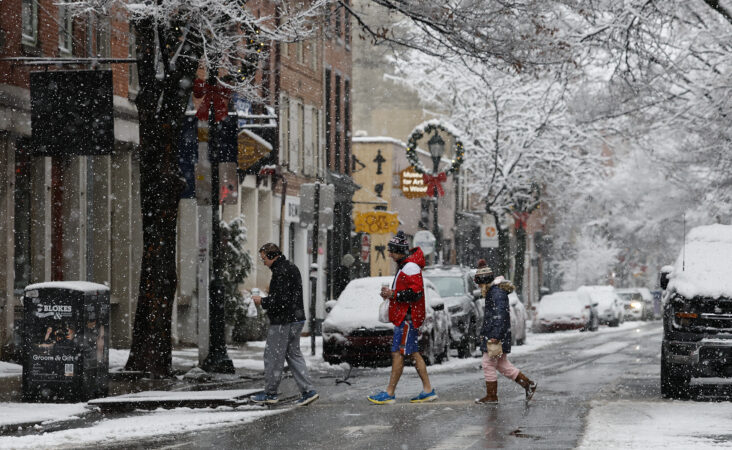
Friday’s snow, sleet, and rain brought a cold mix of precipitation to Philadelphia and surrounding areas, leaving behind slippery conditions Saturday.
“Today looks quiet compared to last night, but watch out for the icy roads,” said Joseph DeSilva, a meteorologist in the National Weather Service’s Mount Holly office.
Saturday looks to be mostly cloudy, with a high of 34 degrees, a low of 25, and no precipitation on the horizon, DeSilva said.
While roads continue to be treated, the Pennsylvania Department of Transportation has already removed a 45 mph temporary speed-limit reduction for major highways in the five-county Philadelphia region, including on Interstates 76 and 95, as well as I-476, I-676, and I-295.
The wintry mix of snow, sleet, and intermittent rain moved into the region overnight, with temperatures hovering in the mid-30-degree range.
Regional accumulation totals varied, from .2 inch in Rittenhouse Square to .3 at Philadelphia International Airport, .4 in Mt. Holly and 1 inch in Skippack.
window.addEventListener(“message”,function(a){if(void 0!==a.data[“datawrapper-height”]){var e=document.querySelectorAll(“iframe”);for(var t in a.data[“datawrapper-height”])for(var r,i=0;r=e[i];i++)if(r.contentWindow===a.source){var d=a.data[“datawrapper-height”][t]+”px”;r.style.height=d}}});
Ray Martin, a meteorologist in the National Weather Service’s Mount Holly office said Friday that even without especially high accumulations, conditions would remain hazardous.
Sleet tends to be more compact than snow, demanding more effort when it comes to shoveling or plowing it off sidewalks, entryways, and garages.
For Martin, thisis: “a lot of little ice balls, basically frozen raindrops, covering the ground. It will be like shoveling sand.”
If possible, he recommended waiting to drive until later Saturday, when temperatures were expected to rise above freezing.
In Northeast Philadelphia, icy roads have already claimed a life.
A 45-year-old woman was killed when her car was struck head-on by a pickup truck, police said. The crash occurred around 2 a.m., when thepickup was traveling north on the 3500 block of an ice-covered Aramingo Avenue when the driver lost control of the truck, police said.
The pickup was moving at an “unsafe speed for the wintry conditions,” police said, crossing into the southbound lanes and striking the woman’s car head-on.
Fire Department medics transported both drivers to local hospitals. The cwoman was transferred to Temple University Hospital, where she was pronounced dead at 2:35 a.m. Meanwhile, the pickup driver is considered stable at Jefferson Hospital.
A third person, a 29-year-old passenger in the truck, was taken to Temple University Hospital with non-life-threatening injuries.
And the snowy, icy conditions aren’t just affecting Philadelphia.
Accumulation totals were higher north of the area, with anywhere from 2 to 6 inches in northern New Jersey.
window.addEventListener(“message”,function(a){if(void 0!==a.data[“datawrapper-height”]){var e=document.querySelectorAll(“iframe”);for(var t in a.data[“datawrapper-height”])for(var r,i=0;r=e[i];i++)if(r.contentWindow===a.source){var d=a.data[“datawrapper-height”][t]+”px”;r.style.height=d}}});
Due to the slippery conditions, acting New Jersey Gov. Tahesha Way declared a state of emergency across her state Friday morning, urging people to monitor official updates, remain off the roads unless necessary, and stay safe.
Due to the severe snowstorm, with the potential of icy and slippery conditions, I have declared a State of Emergency across the state beginning this afternoon.
Please monitor official updates and remain off the roads unless necessary.
As of Saturday afternoon, 27 flights at Philadelphia International Airport were cancelled, and 164 were delayed, due to the storm. Those with holiday traveling around the corner, can track flight statuses at Philadelphia International Airport.
So far this season, Philadelphia has already seen more than half the snow last winter brought. This year’s seasonal total stands at 4.2 inches, while the city saw 8.1 inches during the entire2024-25 winter.
Slight melting is expected through Saturday, but refreezing will come overnight, bringing a rainy Sunday with a high of 43 and a low of 37 degrees.
Conditions are set to improve in Philadelphia by early next week, with Monday expected to bring a high of 58 degrees and a low of 28, and the year waving farewell Wednesday with a high of 38 degrees and a low of 30, according to AccuWeather.
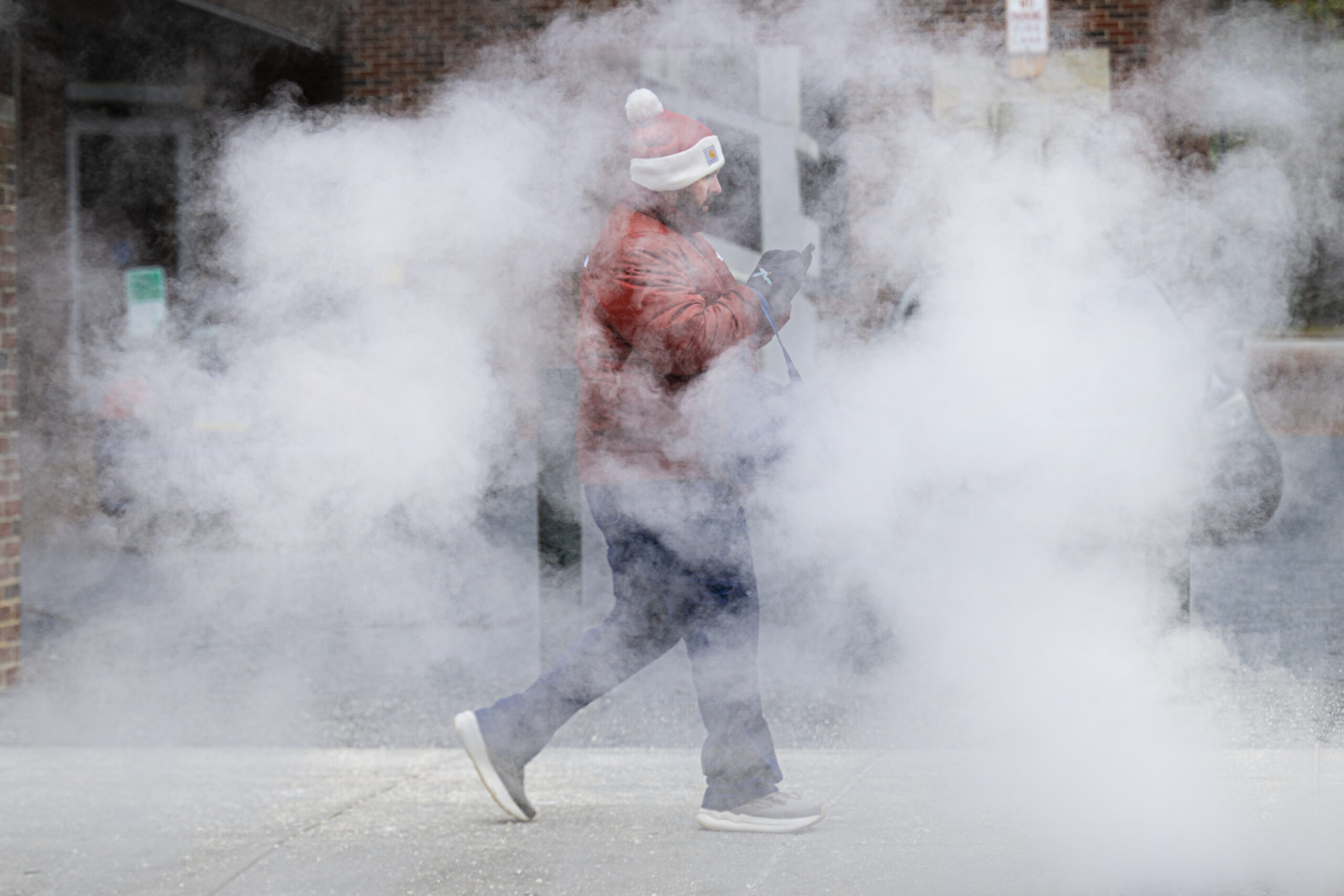
A pedestrian walks through a cloud of steam on a cold winter day in West Philadelphia, Friday, Dec. 26, 2025, as snow and a wintry mix are forecast for the area through Saturday morning.
Turkeys are about to start getting roasted and Philadelphia City Hall’s Christmas Village will soon be packing up. But the magic of the holiday season is never complete without a letter to Santa.
With Christmas Day around the corner, we asked Philadelphians if they could ask Santa for anything on behalf of the city, what would it be? (Spoiler alert: Mr. Claus might need to talk with SEPTA.)
Here’s what we heard:
More housing and less PPA
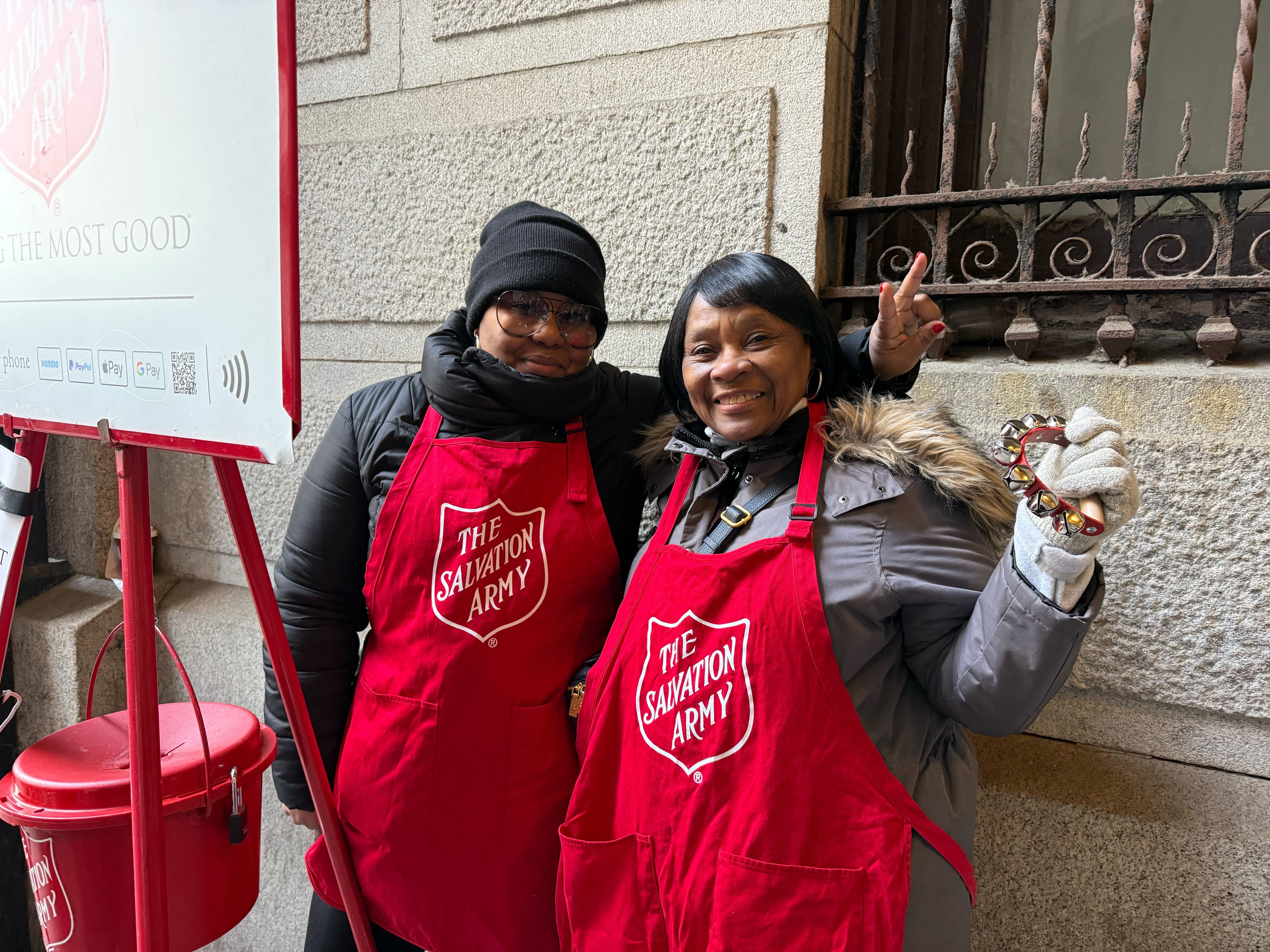
Sharon Wood, 68, and Alexis Rollins, 46, were all smiles and warmth, collecting donations for the Salvation Army at City Hall. But when it came time to ask Santa for a gift, things got serious.
Wood, a North Philly resident, took one look around before declaring: “More housing for the homeless. … Everyone deserves help.”
Despite Philly recently leaving behind its title as the “poorest big city in America,” the number of unsheltered people increased by 20% compared with 2024, a reality Wood said can be felt citywide.
Mayor Cherelle L. Parker announced Friday in her State of the City speech that 1,000 new beds will be added to the existing shelter system by Jan. 31. But to Wood, more needs to be done.
Sharon Wood (right) and Alexis Rollins want more housing and less PPA.
“There are so many buildings [in Center City] and they could use those spaces,” Wood said. “But it’s so much work and [Parker] is only one person — give her some grace, help her. And that falls on City Council.”
Rollins, on the other hand, set aside the power struggles for Santa. Instead, she asked for St. Nick to soften the Philadelphia Parking Authority’s heart.
“No more ticketing: That’s my wish,” Rollins said. “Pricing is too much and people need a break in this economy.”
Crime reduction
Halfway through 2025, Philly hit its lowest homicide rate in recent history. But to healthcare worker Paulette Franklin, 56, reducing homicides is only one leg of a table that could also benefit from providing access to mental healthcare and aiding unsheltered people, she said.
A few months ago, one of her coworkers was chased by an unsheltered man outside a subway station on the Market-Frankford Line, Franklin said. The situation left the South Philly resident wondering if one day she too would have to run for her life.
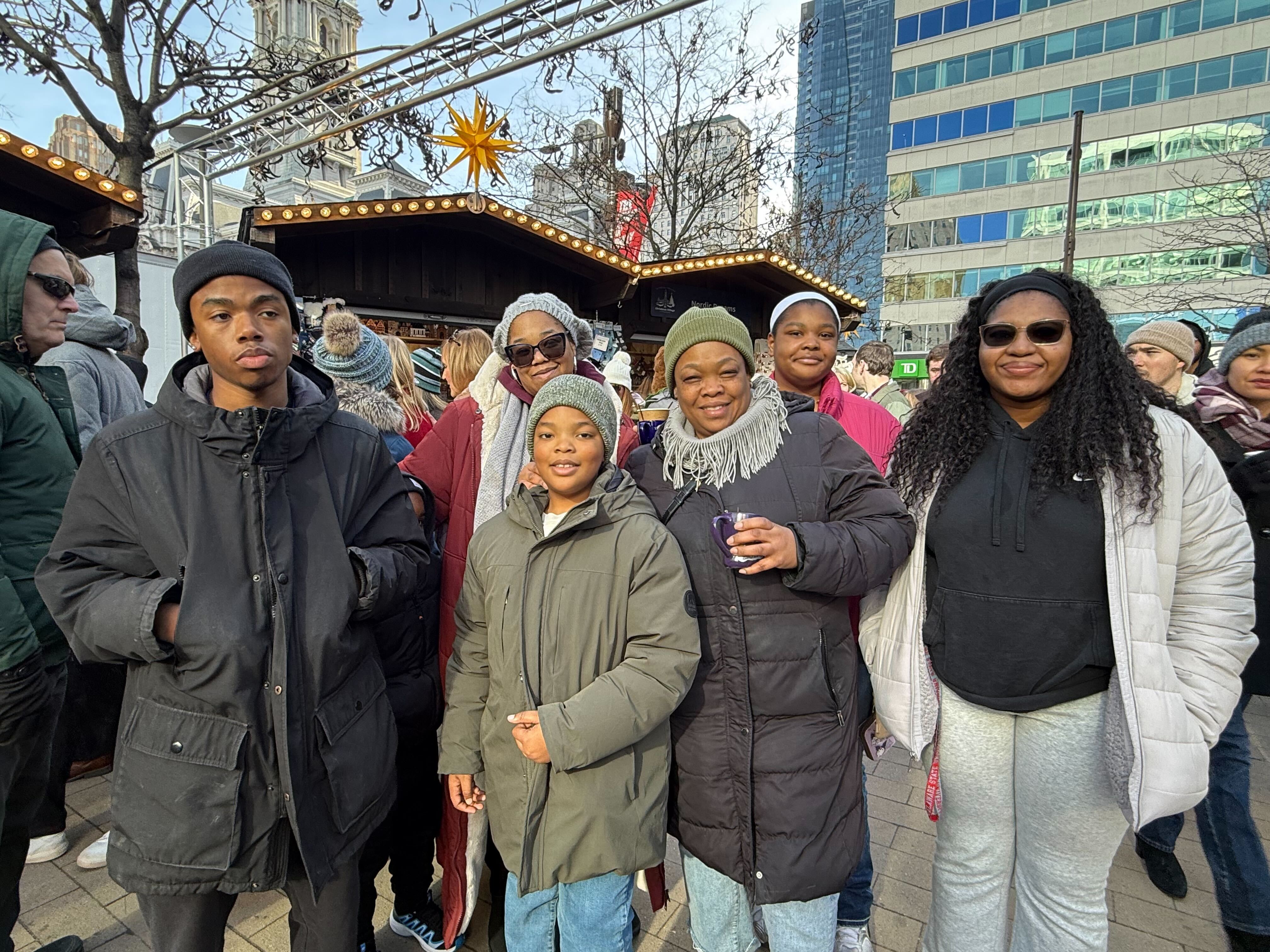
Paulette Franklin, 56, and her grandson, 10-year-old Nathan Dockett with their family at Christmas Village
“You don’t know what can happen and I feel like I always have to be alert. I would like for everyone to be safe; we need safety and they need help,” Franklin said. “Since COVID things got worse and it hasn’t gotten better, helping them would benefit the city.”
Franklin isn’t the only one asking Santa for crime reduction this year. Her grandson Nathan Dockett may only be 10 years old, but hearing his mom and grandma talk about the safety of the city has already made him ask Santa for the end of gun violence in Philadelphia.
“Too many people get killed or hurt around the city, it makes me frightened,” the fifth grader said. “I just want Santa to make all peace around the world.”
Funding SEPTA and accessibility
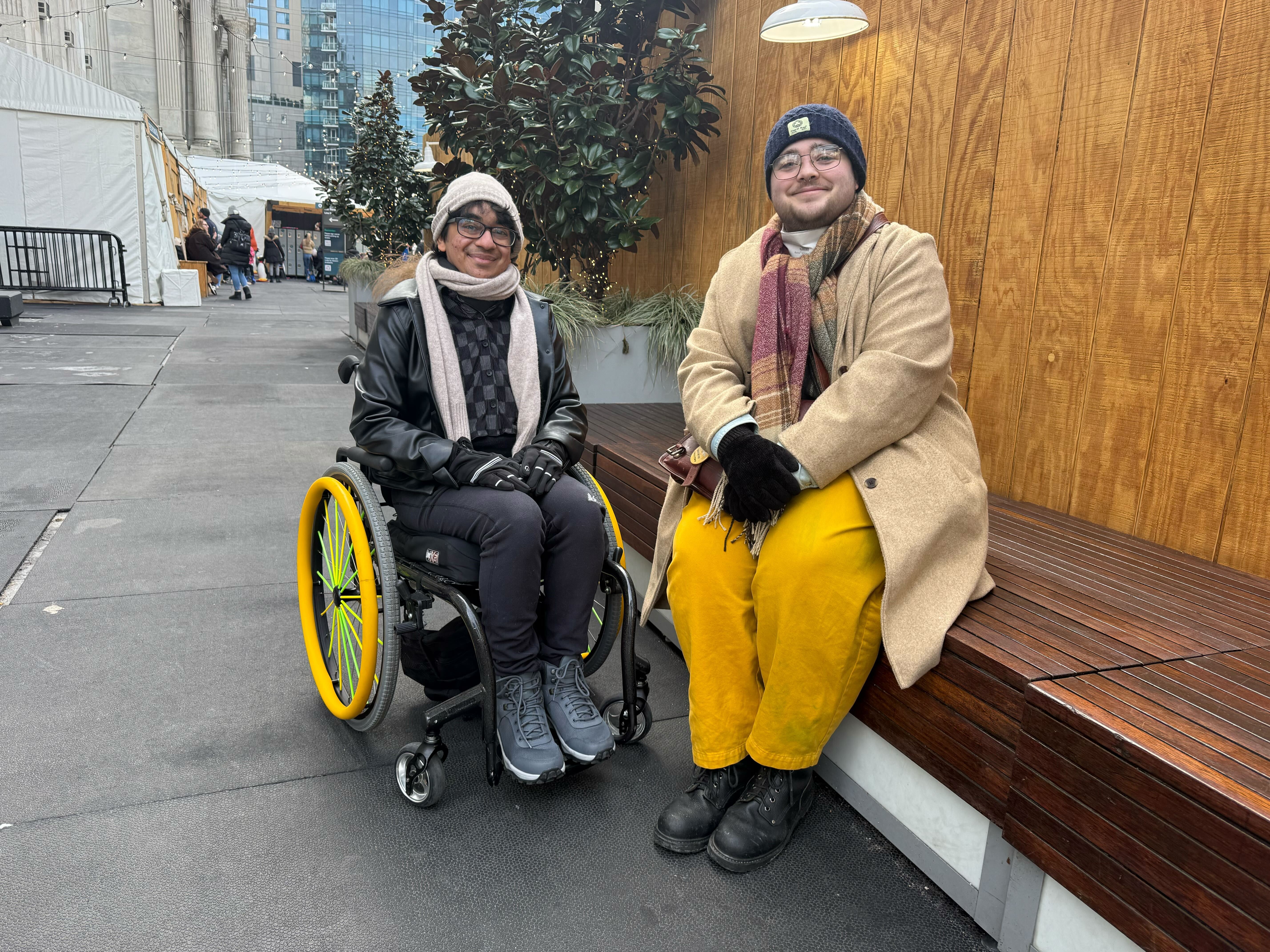
For J.van Kuilenburg, 25, who survived SEPTA cuts in August that left many Philadelphians scrambling, it was a no-brainer what to ask Santa for.
“Santa, please fund SEPTA, give us clean trains, and let our operators be paid a living wage,” Kuilenburg said.
Public transportation was one of the main reasons the museum curator moved to Philly from central Pennsylvania in 2023.
“I hope that we can get funding so we don’t have to keep wondering every two years what’s going to happen to our transportation,” Kuilenburg said.
J.van Kuilenburg (right) would ask Santa for a SEPTA that didn’t have budget issues; while Nush Agarwal wants more ramps in the city.
For his friend Nush Agarwal, 24, the gift would be a more accessible city for people using wheelchairs.
“Philadelphia is more accessible than other places I have been to. It’s easier to roll, most of the subway stops have elevators, but there is still a lot I can’t do that I would love to do,” Agarwal said, pointing out how even going inside a Christmas Village stall is impossible for him due to the lack of ramps.
He would ask Santa for a city grant or program to help with the installation of ramps to have a Philadelphia everyone can better enjoy.
“It’s really important because that’s how you include people: It gives social and mental happiness,” Agarwal said.
A more efficient SEPTA
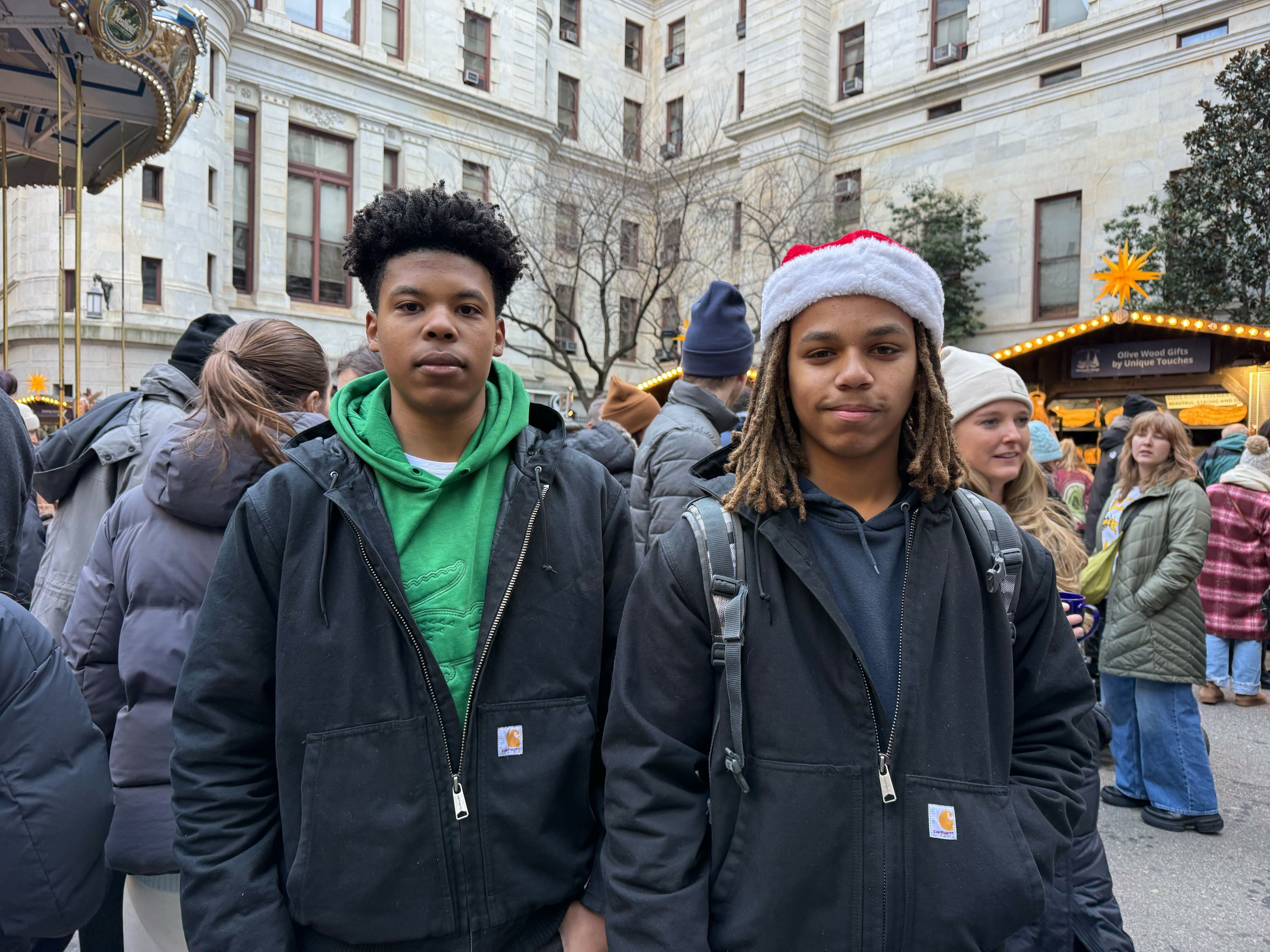
Being teenagers, Raphael Wimmer, 15, and Ayden Devine, 14, aren’t really into Santa these days. Nevertheless, they would be happy to believe if Santa were to help them stop getting in trouble at school due to SEPTA delays.
Raphael Wimmer (right) and Ayden Devine want SEPTA to stop making them late to school.
The pair have trouble getting from North Philly and Mount Airy, respectively, to school in South Philadelphia, and SEPTA delays affect their attendance.
“We have a science teacher that grades you zero if you are not on time,” Wimmer said. “It makes our grades go down for something we can’t control. School should give kids that take SEPTA a grace period,” Devine pitched.
A safer SEPTA
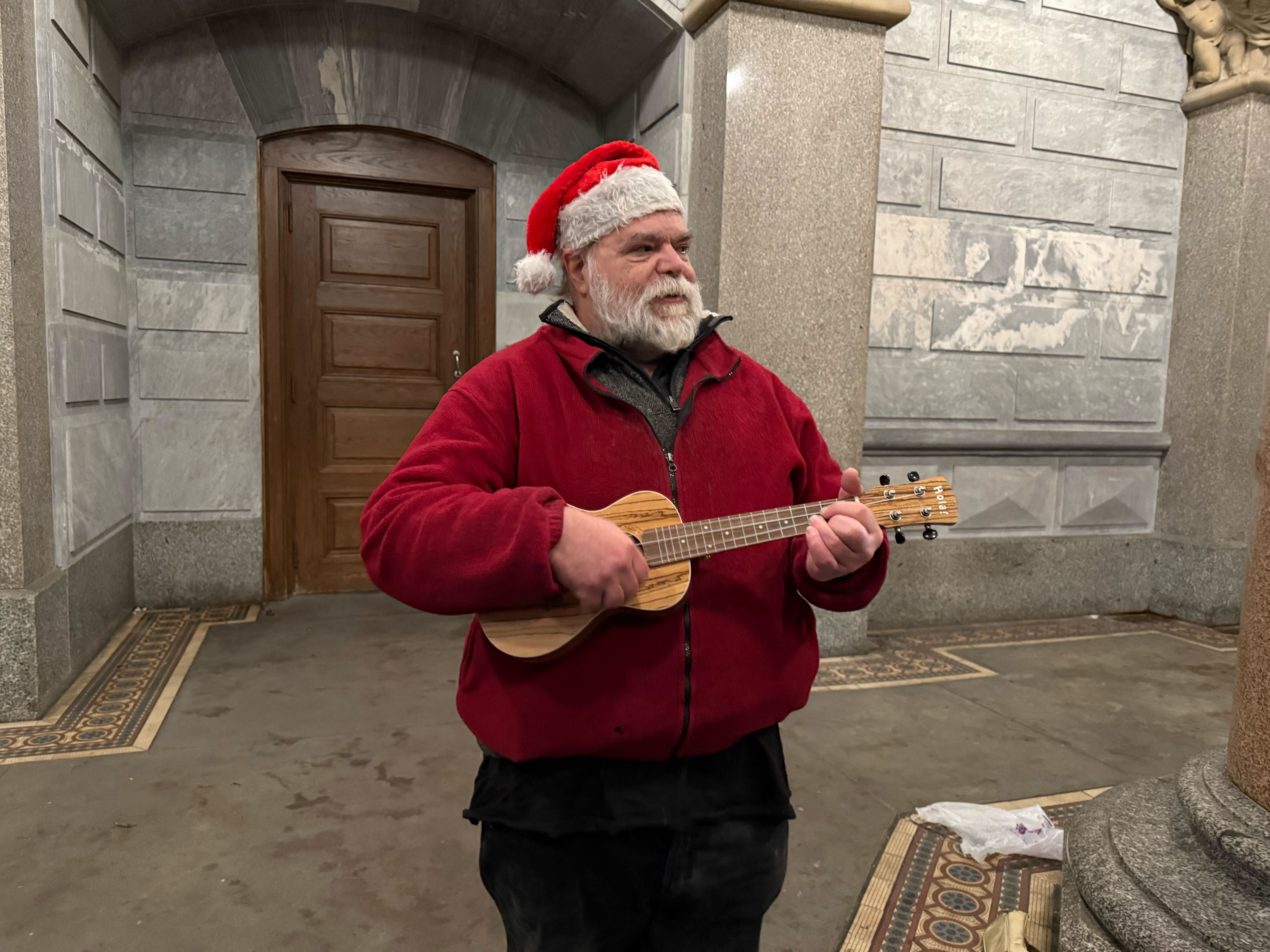
Playing Christmas carols on the north side of City Hall, a white-bearded man dressed in red, hat and all, was surprised to hear our request.
“I can’t answer that: I’m Santa Claus,” Matthew Anthony, 59, said as he laughed like Santa himself. “But I will ask for the state to fund SEPTA’s horrible infrastructure.”
Matthew Anthony, 59, hopes for funding for a safer SEPTA.
The musician feels like the lack of a budget is not only affecting public transportation access, but also the safety of riders.
“Every time you walk inside the system is a nightmare, there is no feeling safe there, but prices are going up,” Anthony said. “We gotta get money from the state to help. Until then, go Birds!”
The intersection of Shelbourne and Willard Streets is known by neighbors as an illegal dumping corner, where debris, trash, and weeds are part of the scenery.
A $17,000 grant from the pilot program Revive and Thrive could change that, as the teenagers from nonprofit Klean Kensington are set to turn the vacant lot at 859 E. Willard St. into a public park.
In Upper Kensington, the typical block has, on average, three or four vacant buildings or lots, an Inquirer investigation found. The problem has been identified as a contributing factor to the open-air drug trade.
Since 2022, Klean Kensington has been trying to address the issue by employing local teens to transform trash-filled parcels into community gardens on Madison, Westmoreland, and Hilton Streets, providing food for neighbors, and offering young residents a way to stay occupied.
For Jeremy Chen, the group’s executive director, the Willard Street project is an opportunity to “activate the corner” by creating a garden that neighbors feel is their own while recognizing the community work.
“The teens have been doing this work for a while, but it’s always encouraging to have their work recognized,” Chen said.
The idea is to keep children and youth at the center of the garden, Chen said. Pollinator flowers, benches, bright art, planter boxes, and a durable trash setup are among the features being considered. Klean Kensington will employ 25 teens for the project, and two or three local high school students will be hired as park ambassadors.
Thomas Jefferson University’s Park in a Truck (PIAT) program, Circular Philadelphia, Trash Academy, and Glitter will partner for the program, providing dumping-prevention workshops, facilitating the design process, documenting the effectiveness of the project, and aiding in weekly cleanups.
Cleanup activities are expected to start early in the spring. And community members will gather to decide what they envision for the 16-by-60-foot space owned by Esperanza Health Center.
For Lois Williams, Trash Academy codirector, this initiative is an opportunity to benefit both the city and neighbors in the fight against illegal dumping.
“This project can demonstrate how neighbors with low budgets, on privately owned lots, can make a difference,” Williams said.
Keeping neighborhoods clean and ending the sprawling drug market have been a focus of Mayor Cherelle L. Parker’s administration. Chen hopes this initiative can show City Hall that funding local organizations to do cleaning in their neighborhoods instead of hiring contractors can give them a sense of ownership, preventing dumping recurrence.
“When it’s locals taking care of their community, it’s more likely for them to care and to self-monitor so it doesn’t become a dumping ground again,” Chen said.
The garden is scheduled to open in the summer of 2026.
The biggest question of Christmas isn’t whether Santa Claus exists. It’s whether to display a real or a fake Christmas tree.
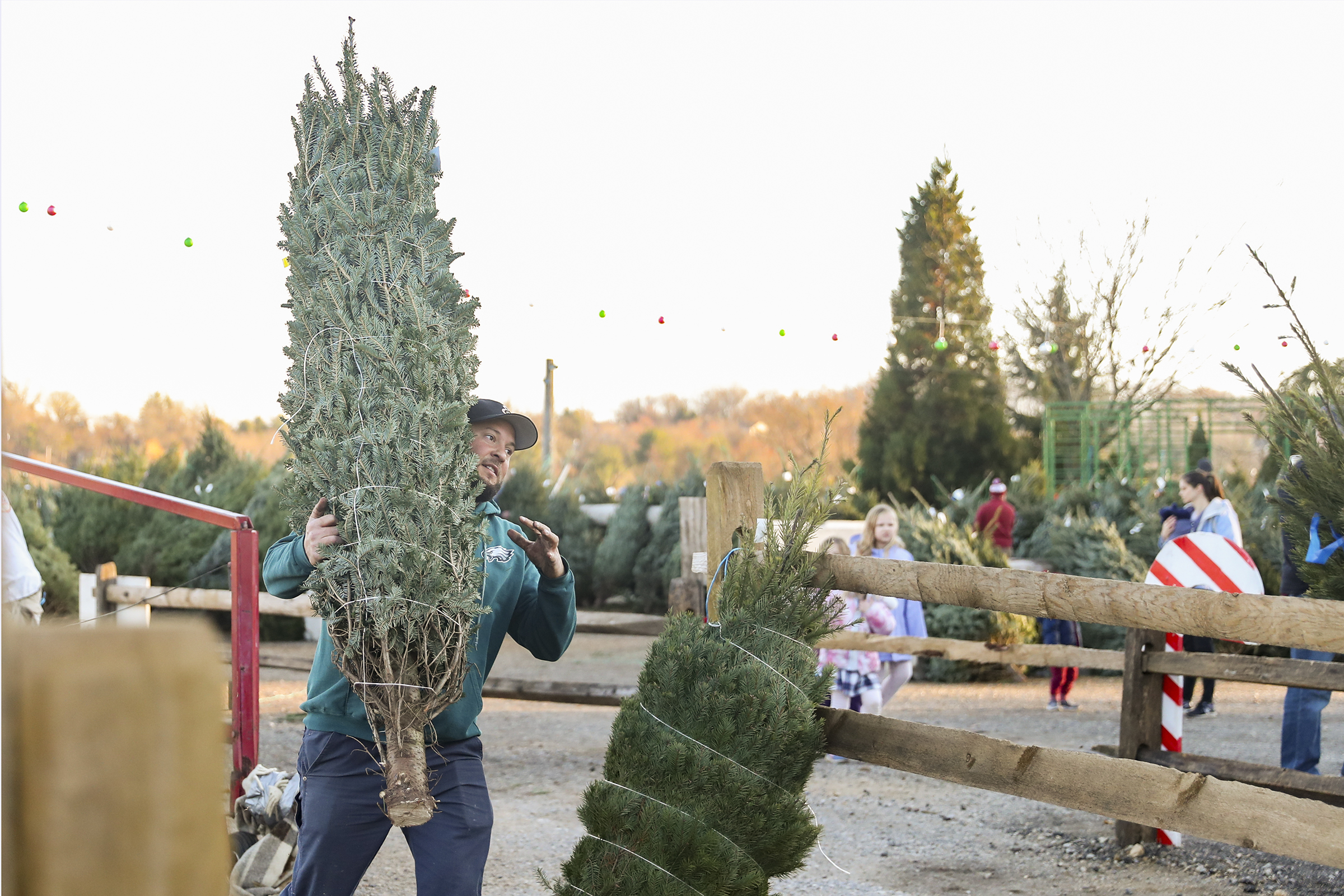
Though many households in the United States have switched to artificial ones, for the purists who splurge each year on the real thing, it’s time to start shopping.
The Philadelphia region offers a number of farms where you can cut down your own tree or find a wide selection of pre-cut varieties — including delivery.
We’ve found farms across Pennsylvania and New Jersey, all within about an hour of Center City. And we’ve included a couple of options where you can buy a fresh-cut tree right in Philadelphia, too. Here’s where to get a real Christmas tree in the region.
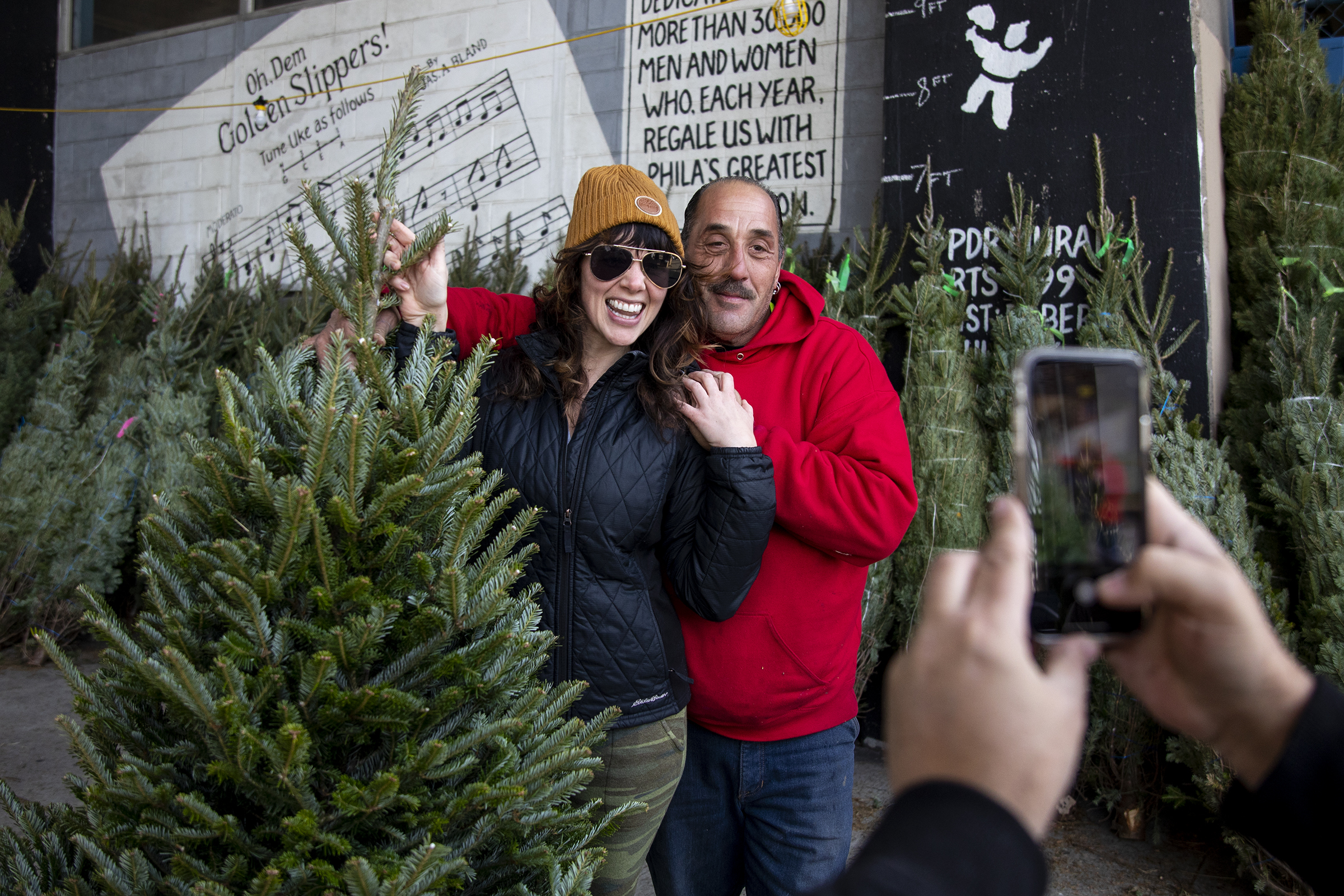
Rocky Yo-Mo of South Philadelphia, owner of Rocky YoMo’s Christmas Trees, takes a photo with Britni Volkman of South Philadelphia, with the tree she purchased in 2019.
Looking for fresh-cut Frasier firs in Philly? Check out Rocky YoMo’s selection in South Philly at Front Street and Washington Avenue. Payments are done in cash. If you don’t have a car, you can still pick a tree and get it delivered to your home for free.
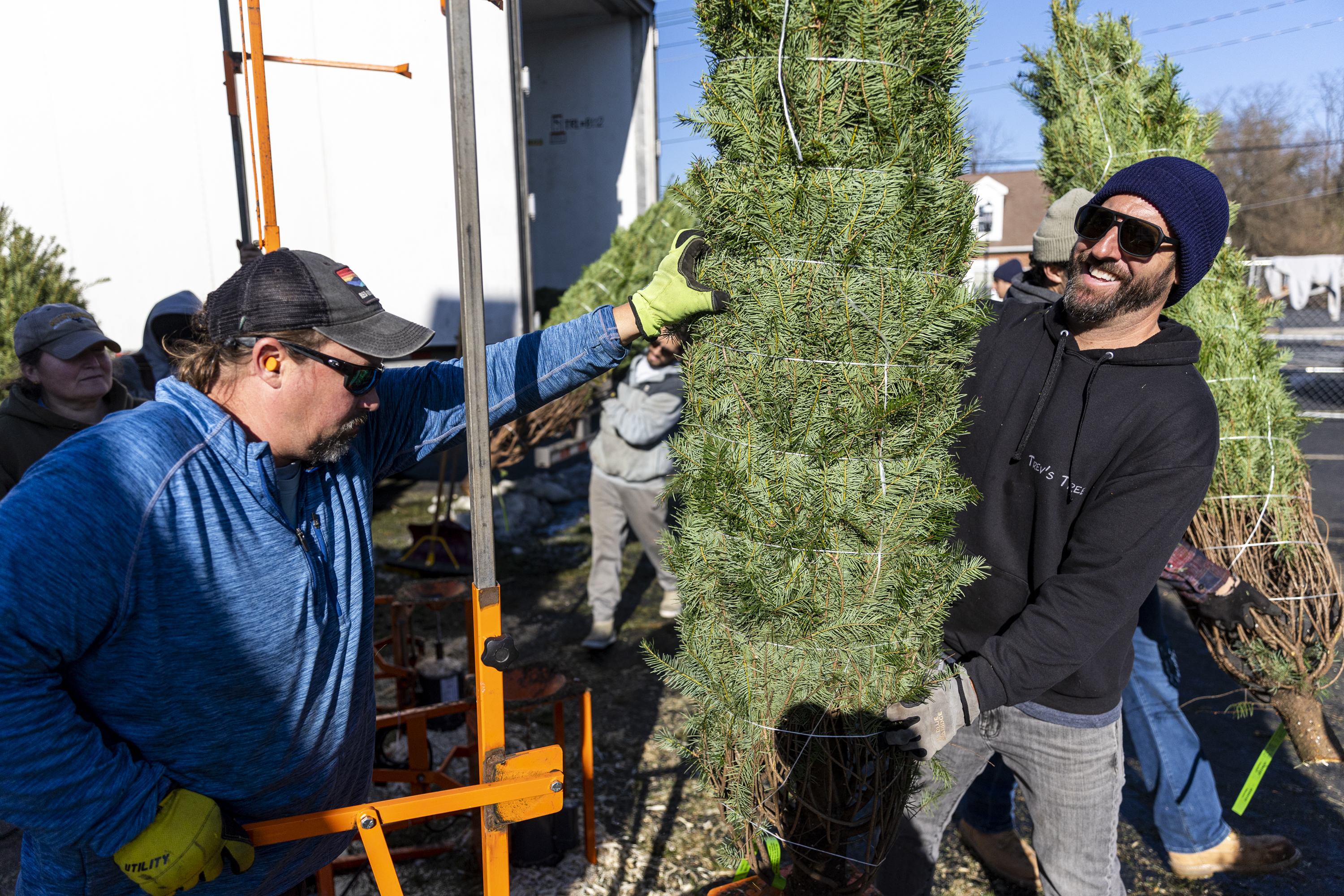
While most people buy their Christmas trees from nearby farms, this pop-up tree seller sources them from the places they’re native to. For instance, Trev’s Trees gets its Douglas firs from places like Oregon and Pennsylvania, its Fraser firs from North Carolina, and its balsams from near Lake Erie. This means you get high-quality pre-cut trees with ease. Typical sizes cost around $120 or less, but Trev’s also offers trees reaching 13- or 14-feet tall for up to $350.
The Christmas Tree Stand is a family business known for its delivery and setup services. They specialize in premium Fraser and Douglas firs, from cozy 3-foot apartment-friendly options to grand 15-foot showstoppers. Visit the Fishtown or West Chester locations to select your perfect tree, or schedule a Christmas tree delivery on the website. Next-day delivery options are available in most areas for orders placed by 4 p.m.
💵 $75 and up,📍Fishtown: 1727 N. Front St., Philadelphia, Pa. 19122 or 📍West Chester: 62 E. Street Rd., West Chester, Pa. 19382, ⌚ West Chester: Mon.-Fri., 1 p.m.-7 p.m., Sat.-Sun., 11 a.m.-7 p.m., or ⌚ Fishtown: Mon.-Fri., 4 p.m.-8 p.m., Sat.-Sun., noon-8 p.m. 🌐 thechristmastreestand.com
This Yardley farm offers a dozen varieties of trees. Swing by any day of the week, before 4:30 p.m., to choose your own tree for staff to cut, or select a pre-cut option. And if you need delivery, call to schedule. The farm makes fresh wreaths daily, too.
This Buckingham farm is entering its 62nd holiday season with a wide variety of trees. Visit the farm to pick a pre-cut tree or balled and burlapped tree and claim a free holiday mug while supplies last. Cut your own blue spruce, Fraser fir, white pine, or Norway spruce on the first two weekends of the season. There is also a holiday shop.
An hour west of Philadelphia is Clark’s Christmas Tree Farm, a 25-acre family business offering Douglas, Canaan, and Fraser firs, pre-cut or take a wagon out to cut one yourself. Prices are based on the tree height. Once there, you can check out the 3,000-square-foot gift shop, with more than 100,000 items including decorative ornaments like bearded dragons, horseshoe crabs, and dinosaurs.
Hop onto a wagon to the cut-your-own (saws provided) tree section of this 200-acre Chester County farm, which is open Friday through Sunday. Choose from a variety of firs, like Douglas, Frazier, and Canaan, as well as blue spruce and Norway spruce. Wreaths, decorations, and other items are available at the gift shop. Tree bailing and help loading your vehicle also offered, and pets on a leash welcome.
Take a tour across 55 acres, pick your favorite pre-cut or cut-your-own tree, and warm up with free hot cocoa. At any given time, at least four varieties of trees are for sale, as well as a selection of wreaths.
This family-owned business has two locations to cut your own tree plus a pre-cut tree lot. The West Chester farm offers Douglas firs averaging 7-feet tall, and the Cochranville location has trees up to 10-feet tall. The pre-cut lot in West Chester has Douglas and Fraser firs up to 12 feet available daily (Pre-cut lot: Mon.-Fri., 10:30 a.m.-9 p.m.; Sat.-Sun., 9 a.m.-9 p.m.) at 1301 West Chester Pike.
Cut your own Fraser, Douglas, Nordmann, concolor, or Canaan fir, or pick out a fresh-cut Douglas or Fraser fir at this Phoenixville farm. For folks looking for family-friendly activities, hayrides run every weekend 9 a.m. to 4 p.m. and Santa visits between noon to 3 p.m. on select weekends. Plus, enjoy a drive ($25-$30 per vehicle) or hayride ($15 per person) through the holiday light show a mile long across the 60-acre Christmas tree farm. There are so many lights that the owners lost count at well over 100,000.
Linvilla returns with free family hayrides to the Christmas tree fields, where you can cut your own trees daily (Mon.-Fri., 10 a.m.-4 p.m.; Sat.-Sun., 9 a.m.-4 p.m.). Most trees are Douglas firs ranging from 5- to 8-feet tall. Offering more varieties, Linvilla’s pre-cuts are also available daily with extended hours on Dec. 5 and Dec. 12. Be sure to stop by Linvilla’s Farm Market, where you’ll find baked goods, gift baskets, and more. Make it an all-day adventure by visiting the winter makers market (Fri.-Sun., through Dec. 21) and the ice-skating rink ($13 per person). Santa will also make appearances.
Corkum Tree Farm has delighted patrons for more than 30 years. Enjoy hot cider as you take your pick of cut-your-own Douglas fir, white pine, and blue and Norway spruce trees. There are four varieties of pre-cut fir trees to select from. Inside the barn, you’ll find fresh wreaths and holly and hand-knit hats, scarves, and mittens, and fair-trade ornaments. A second farm location offers choose-and-cut trees up to 14-feet tall.
💵 $13 per foot, $60-$200 for balled and burlapped trees,📍Main farm: 797 Bridge Rd., Collegeville, Pa. 19426, or 📍 Second farm: 3934 Mill Rd., Collegeville, Pa. 19426 ⌚ Main farm: Mon.-Tues., 10 a.m.-7 p.m.; Wed.-Thurs., 10 a.m.-8 p.m.; Fri.-Sat., 8 a.m.-8 p.m.; Sun. 8 a.m.-6 p.m., or ⌚ Second farm: Sat.-Sun., 9 a.m.-5 p.m., 📞 610-715-4640, 🌐 corkumtreefarm.com
About 30 miles from Center City, Hague’s offers cut-your-own Nordmann fir, Scotch pine, white pine, Eastern red cedar, white spruce, or blue spruce trees, and a variety of pre-cut trees. (Cut-your-own ends before 4:30 p.m. each day.) Be sure to shop the award-winning handmade wreaths and check out wreath-making and tree-decorating classes in the heated barn.
A fourth-generation, 160-acre farm, Westlake offers pre-cut and cut-your-own Canaan or concolor firs. Afterward, check out the Christmas Barn, where families can enjoy a complimentary visit with Santa (through Dec. 7), watch trains, and browse an assortment of ornaments and gifts.
You’d have to walk 13 miles to see every tree in this farm’s 16-acre field in Gloucester County. Cut your own with a provided saw or bring your own. All trees on the farm are available for purchase — all priced at $60 no matter the size. The farm strongly recommends that you arrive before 4 p.m.
Offering pre-cut and cut-your-own trees, Exley’s welcomes families to two locations for Christmas trees and holiday activities. On weekends at the Sewell farm, you can hop on a hayride to Santa Land and see holiday-themed houses. The Monroeville farm has a gingerbread house and other holiday attractions perfect for photo opportunities. Both farms feature visits with Santa on weekends.
💵 Depends on the size,📍 1535 Tanyard Rd., Sewell, N.J. 08080 or📍1512 Monroeville Rd., Monroeville, N.J. 08343, ⌚ Tues.-Sun., 9 a.m.-5 p.m. for pre-cut; Fri.-Sun. 9 a.m.-4 p.m. for cut-your-own, 📞 856-468-5949, 🌐 exleyschristmastreefarms.com
Pick a tree and enjoy a sleigh ride along a decorated path toward the Christmas trees at this small, family-owned farm in Gloucester County. Blue and Norway spruces and concolor and Canaan firs are available to cut yourself or get a pre-cut, with no tree more than 9 feet. Cash and Venmo only.
💵 $80 and under,📍 101 Idle Lake Rd., Franklinville, N.J. 08322, ⌚ Sat.-Sun., 10 a.m.-4 p.m., 📞 609-685-6234, 🌐 facebook.com
This article has been updated since it was first published. Former staff writers Grace Dickinson and Jillian Wilson contributed to this article, as did Steven White.
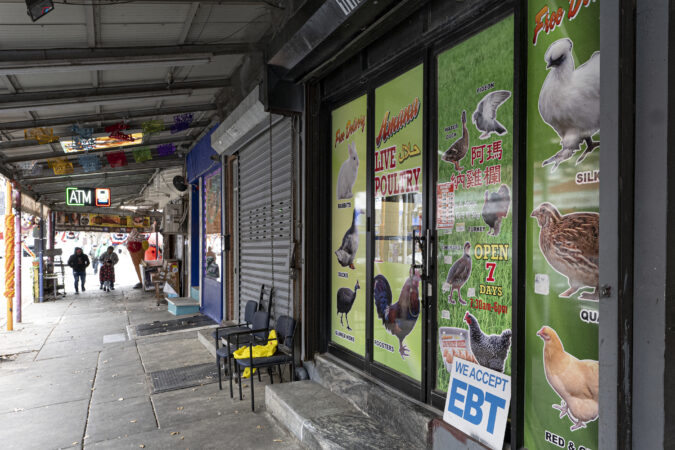
The sounds of clucks and tiny eyes looking through metal cages are part of the Italian Market background, as some stores sell live poultry.
Citywide, chickens, ducks, quails, and other animals are kept alive until purchase, only leaving the store when becoming someone’s food source.
Struggling to understand the dynamics of the live poultry business, a reader asked Curious Philly, The Inquirer’s forum for questions about the city and region: Who is buying these live chickens, where do they come from, and where are they slaughtered?
The Pennsylvania Department of Agriculture oversees what is called the live bird marketing system, a structure that involves farms, distributors, and stores.
About 500,000 birds weekly are sent to live poultry stores across Pennsylvania, New York, and New Jersey, according to an article published in the Delaware Journal of Public Health in 2021.
Statewide there are 17 live bird markets, according to the Pennsylvania Department of Agriculture. Most are in the Philly area, but there is no state registry of the markets.
In the city, the health department licenses and inspects these facilities. The birds are subjected to the same regulations to curb the transmission of avian influenza as all poultry producers in Pennsylvania, a spokesperson for the Pennsylvania Department of Agriculture said.
Alex Lemus, 29, and Juan Amador work at one of South Philadelphia’s live poultry stores. They weren’t authorized to speak for their workplace, but said they put effort into making the chickens feel as comfortable as they can.
“We take good care of them; we give them corn, and they grow up free-range,” said Lemus, who has been working in the live poultry industry for seven years.
The birds sell fast, hesaid, pointing to 16 long metal cages, each with at least 10 chickens and ducks inside. “At least 80 people per day come to buy, mostly Asian and Latino, and that is not counting the holidays,” Amador said.
Among quacks and clucks, longtime customer Nu Aing walked into the store. Stepping over a lone feeder and some light brown liquid residue on the floor, she selected six chickens.
As one worker swept the floor, another weighed the chosen chickens and placed them into a box for Amador to take to the back room. The chickens clucked loudly.
Aing drove an hour and a half from the suburbs because, she said, the chickens here are tender and better for recreating her family’s Vietnamese cuisine.
“Meat is better than the grocery store for soup, but they are good in anything,” Aing said. Around the Vietnamese New Year,“a lot of people are here; the line is long.”
In the back room, the chickens were killed and their bodies plucked and placed in white plastic bags, at Aing’s request.
“It is killed inside in 30 seconds,” Lemus said. “This part of the job was horrible when I started, but you get used to it over time.”
Within 20 minutes, the store is packed with at least 15 people waiting for their orders.
Guatemalan native Carlos Baten, 42, sent pictures of the birds to his family to help him pick the best option. He asked for his chicken to be cut into pieces for a chicken and vegetable soup that would feed three people.
“The freshness of the meat is unmatched,” Baten said. “They just feel like they are healthier and fed with fewer chemicals.”
The idea of eating a healthier type of meat also brought Guatemalan native Mayra González, 35, to the store with her 2-year-old daughter. But as soon as González placed her order, she fled to wait outside.
“I don’t like the scent inside, it smells like chicken feed,” González said. But the meat is “way better than the one at the grocery store,” she said.
To her, live poultry meat feels “silky,” and can feed more people for less. The cost of each chicken depends on the weight, but two chickens are enough to feed 11 people, González said.
“I feel bad for them, but since you can’t see when they are sacrificed, it’s the same as when you buy them at the grocery store,” González said.
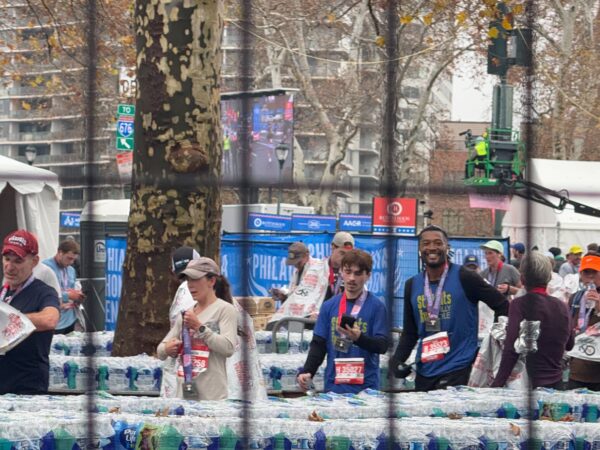
Thousands of runners braved the fog, mud, and light drizzle Saturday for the return of the Dietz & Watson Philadelphia Half Marathon, one of three races on marathon weekend.
Before 7 a.m., participants were in their corrals and ready to go, waiting on the 2200 block of the Benjamin Franklin Parkway, just east of Eakins Oval. The weather did not favor them, but the jackets, winter hats, and layers of clothing covering their bodies would soon be discarded along the track and donated to the Salvation Army.
Corral by corral, racers headed out for the 13.1-mile route, with the light of City Hall’s clock in the distance and the Philadelphia Art Museum behind them.
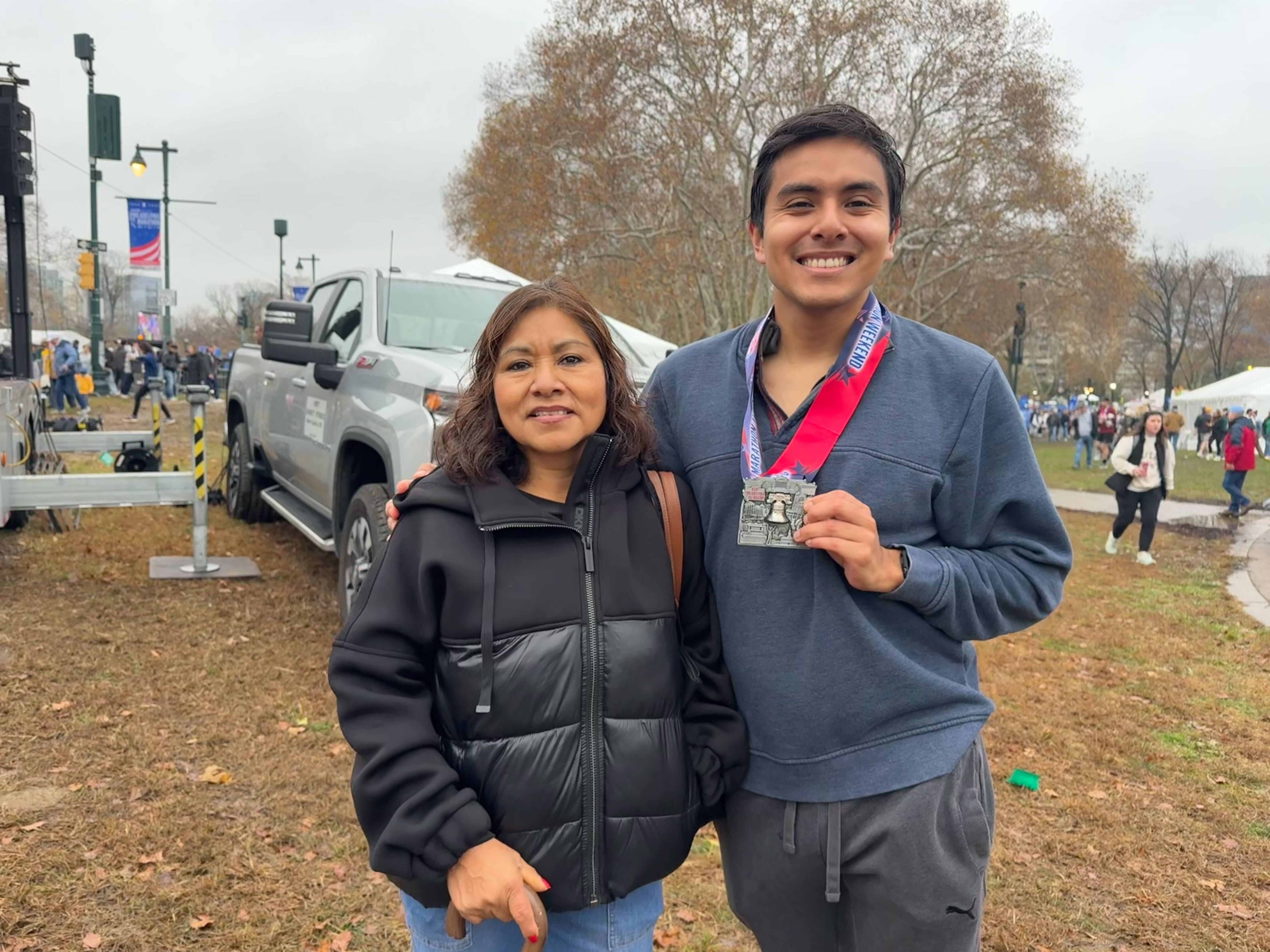
After running through Old City and Center City, across the Schuylkill, past University City, and by Fairmount Park, Ariel Sanchez, 28, was back at Eakins Oval in an hour and a half. His mother, Aurelia Villegas, came from New York City for the day just to see him run.
“I don’t run at all, just when I am trying to make it to work on time,” Villegas said. “But this is my first time coming to see him run in Philadelphia, and I am so proud.”
Sanchez, a medical student, took on running as a break from the books and intense studying. He has been running for the last 387 days.
“It’s kind of nice to be outside. … It’s a really beautiful course,” Sanchez said. “Philly is an underestimated city, so it’s good that people can come and see it.”
Runners braved the fog, mud, and light drizzle on Saturday for the return of the Dietz and Watson Philadelphia Half Marathon
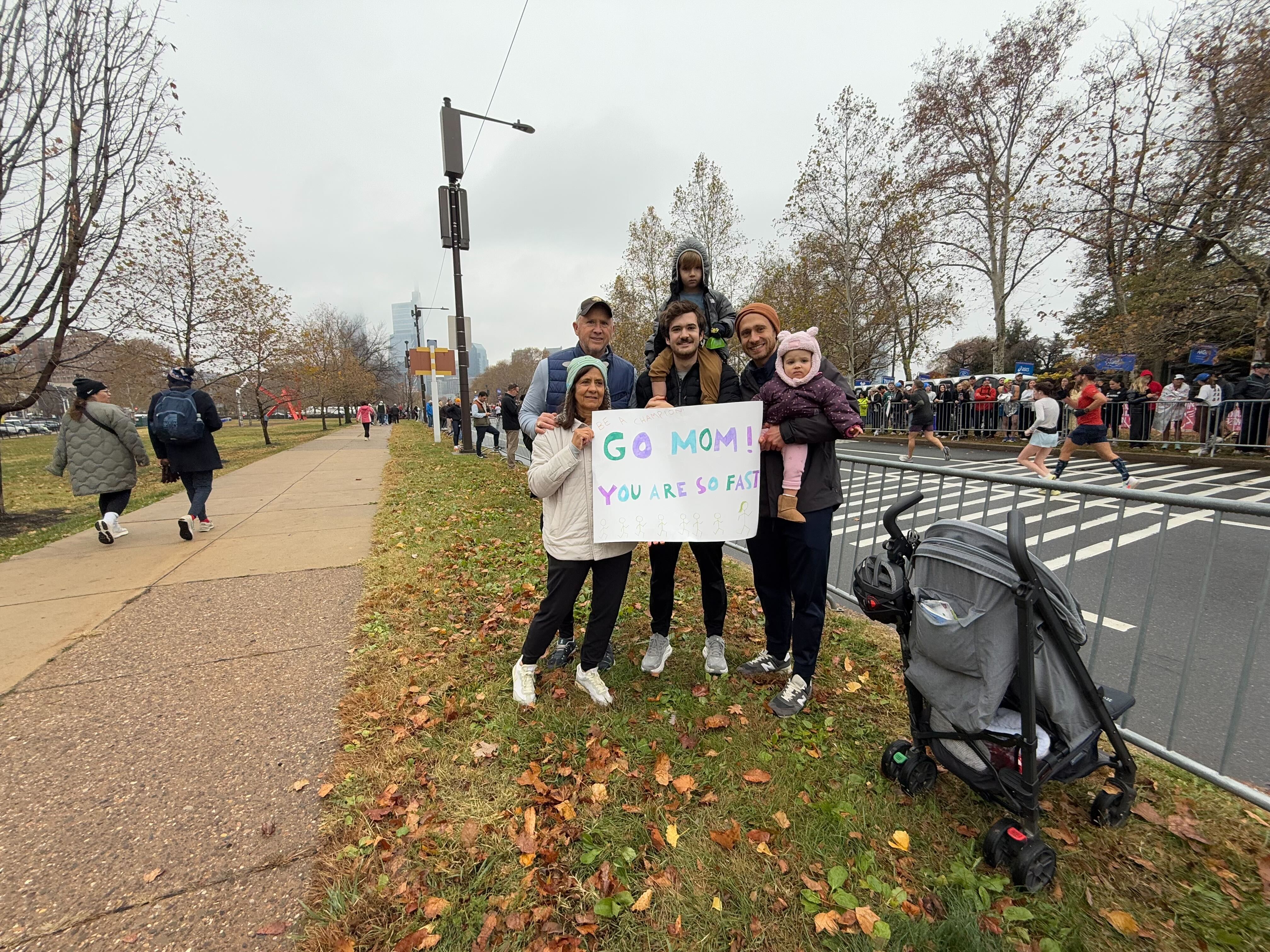
A block away, a 3-year-old boy rose above the crowd on his uncle’s shoulders, looking for his mother, Leora Sauter, with a sign reading: “Go Mom! You are so fast.”
Sauter, 32, has run many races before, including the Boston Marathon, her husband, Daniel Sauter, said. But this half marathon is special: It’s her first race since their daughter was born in 2024.
“It is her way of recovering from postpartum and going back to the things she loves,” Daniel Sauter said. “She spends so much time taking care of us, it’s good she gets to do something for her.”
As the family’s eyes fixated on the runners, Leora Sauter ran by, prompting their cheers. Pushing through her last stretch, she made it to the finish line in less than two hours. The family will be back on the Parkway on Sunday to see Daniel Sauter complete the AACR Philadelphia Marathon.
Runners braved the fog, mud, and light drizzle on Saturday for the return of the Dietz and Watson Philadelphia Half Marathon
Nearly 30,000 participants were expected to run throughout the weekend, including the marathon on Sunday, the half marathon, and Saturday’s Rothman Orthopaedics 8K. Some were professional runners, able to finish the half marathon course in less than an hour. Others were there for the memories.
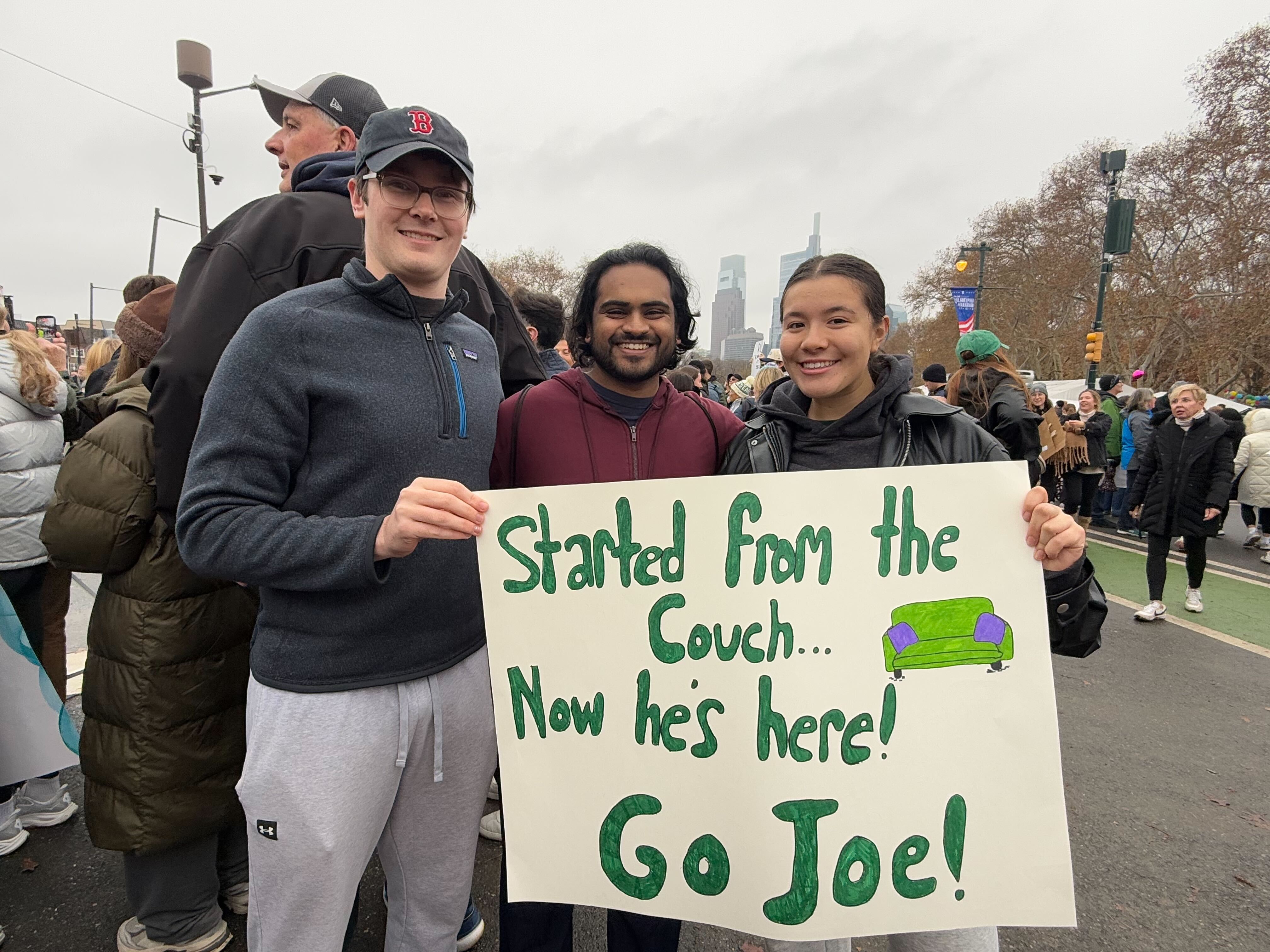
“Started from the couch … now he’s here!” read a sign held by three Villanova college students. They came to support their friend Joe.
“It’s bittersweet. We are graduating this summer, so we are trying to squish every moment together,” said Sofia Arrascue, 21.
After four years of friendship, the half marathon became a way for the seniors to further bond as graduation day approaches. Over the last couple of months, they have been picking up their friend from training locations and giving him confidence to finish the race, so seeing him run by toward the finish line felt like a full-circle moment.
“Everything feels so uncertain; some of us are applying for jobs, others are applying to school, so all we have right now is each other,” said Majo James, 22.
Rory Freeman,Majo Jame, and Sofia Arrascue came to support their friend Joe.
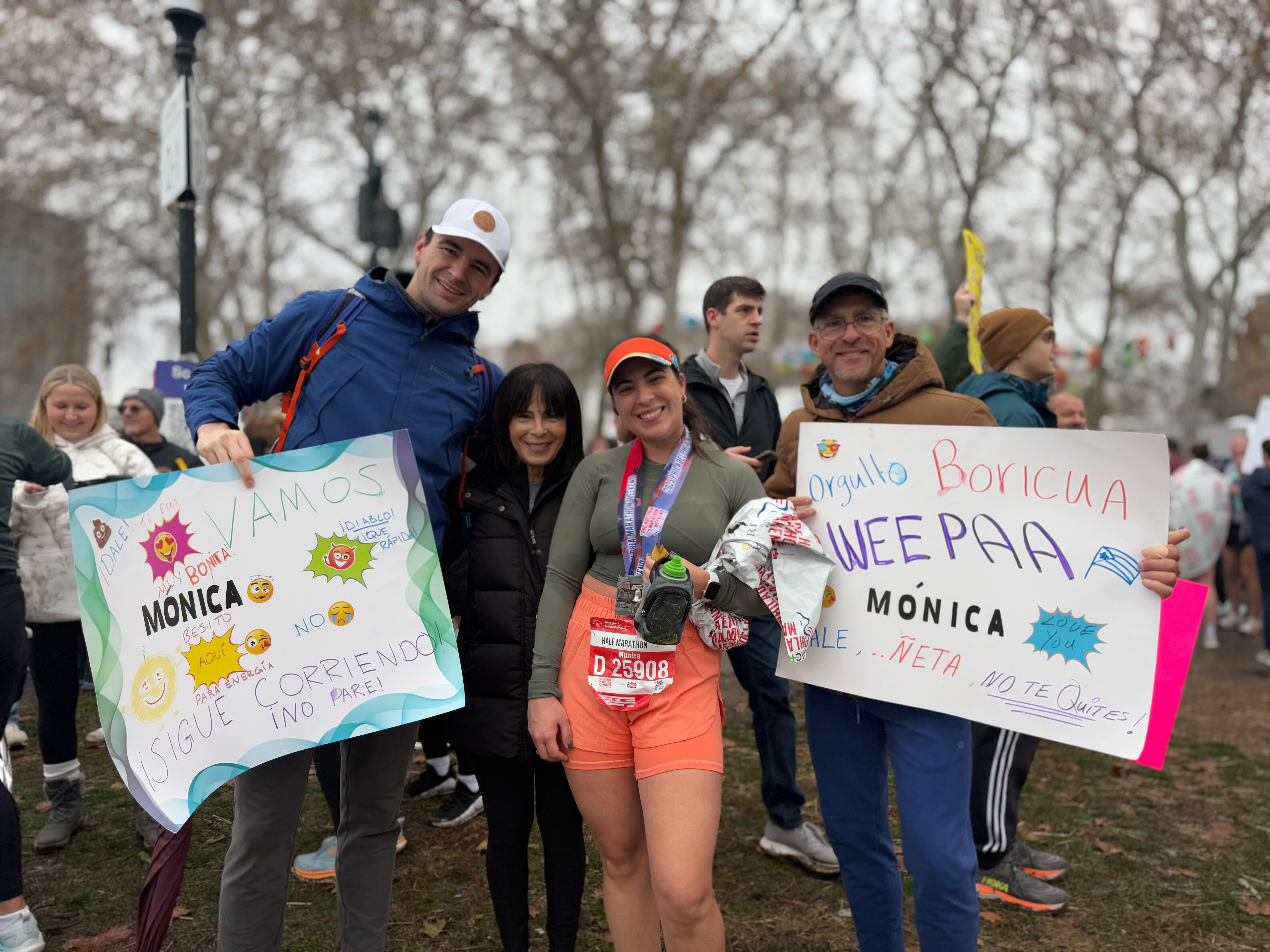
That same desire to show up for loved ones spurred Jose and Mayra Rodriguez to take a plane from Puerto Rico to Philadelphia to see their daughter, Monica, cross the finish line.
“De pura cepa,” Mayra Rodriguez screamed upon spotting her daughter at the finish line, a reference to her Puerto Rican strength.
After running for two hours and 21 minutes, Monica Rodriguez greeted her parents with a hug, banana and water bottle in hand.
“It was hard. My thighs feel like two pieces of ham,” said Monica Rodriguez, 29. “But this is something you have to do at least once, even if it’s just a one-time experience. You are always going to remember it.”
Monica Rodriguez’s parents, Jose and Mayra, came from Puerto Rico to support her.
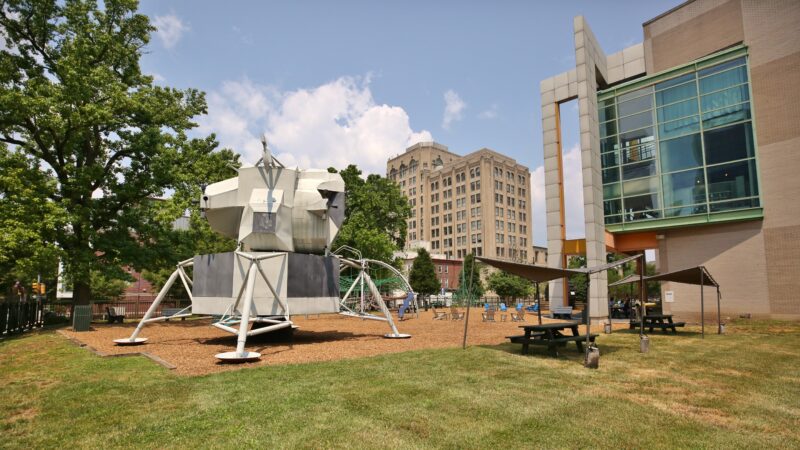
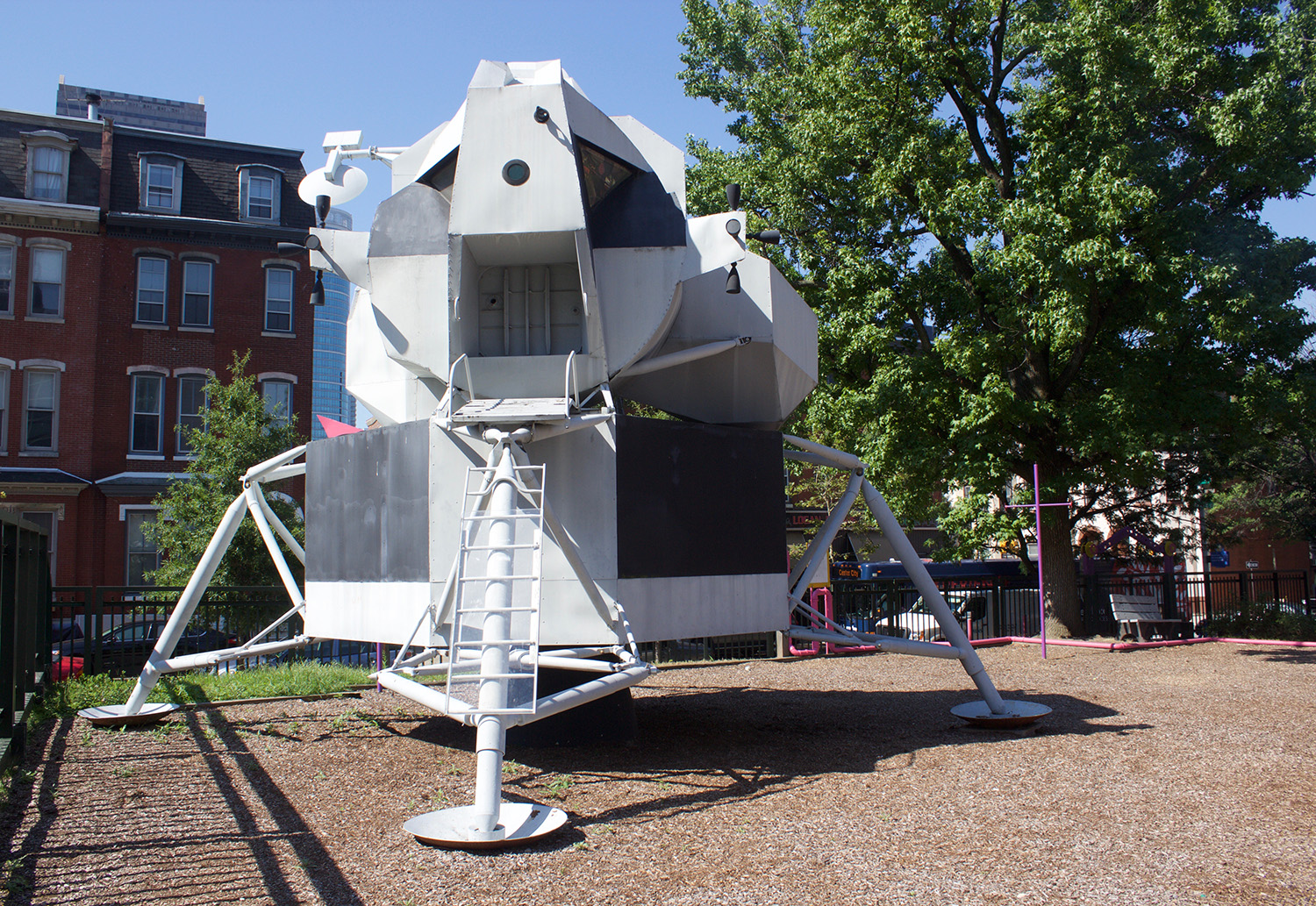
Bill Piccinni, 67, was riding his bike by the Franklin Institute when something halted his pedaling. The lunar module looked as if King Kong had ripped it in half, he said.
Concerned, he asked Curious Philly, The Inquirer’s forum for questions about the city and region: What is going on with the Apollo-era lunar module? Is the Franklin Institute getting rid of it?
“It’s been there for so long; it’s like a part of the city almost,” Piccinni said. “If it disappears, it would just be a shame.”
Sadly for Philly space lovers, the disjointed module does signal a farewell. After 49 years at the museum, it is returning to its previous orbit — Washington.
Neil Armstrong’s ride look-alike, a prototype used in preparations for several Apollo missions, was loaned by the Smithsonian’s National Air and Space Museum in 1976, according to Derrick Pitts, the Franklin Institute’s chief astronomer. Now, that museum has asked for the module’s return.
“All museums, when they are keeping track of their artifacts … set a period of time for how long it’s gonna be borrowed, and then they will ask for it back,” Pitts said.
The Lunar Module was loaned by the Smithsonian’s National Air and Space Museum in 1976.
The chief astronomer is not sure what awaits the Grumman structural engineering test module near D.C. The engineering prototype served to test how the parts and pieces would fit together in preparation for the real Apollo 11 lunar module that took Armstrong to the moon.
To Pitts, that doesn’t make it any less special. On the contrary, he views the equipment as an epitome of the height of space exploration technology at the time. It’s proof that “we successfully sent explorers to the moon and brought them back safely,” Pitts said.
For future generations of Philadelphians, this means no longer being able to see the module up close without leaving the city. People in Washington won’t be seeing this particular module either. There are currently no plans for it to be displayed at the National Air and Space Museum, according to spokesperson Marc Sklar.
For now, the Franklin Institute is considering an array of options for replacing the module in the backyard, but nothing is set in stone, Pitts said. In the meantime, the museum’s Wondrous space continues to be an option for folks wanting to learn about space.
“I am just really appreciative that people have paid attention to the lunar module enough to wonder what is going on with it,” Pitts said. “We are really very glad that you are aware that it has been here and that you are going to miss it.”
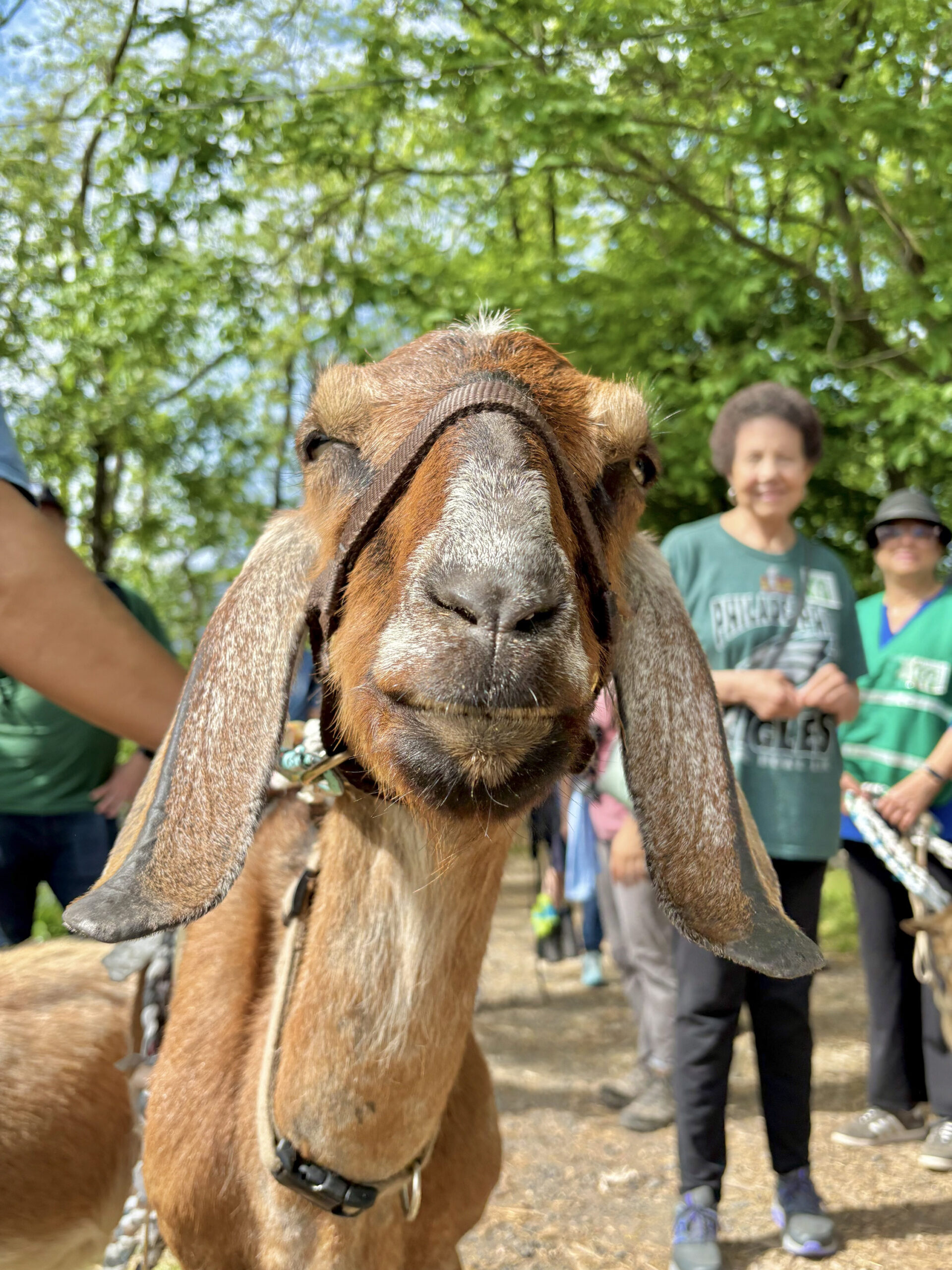
Ray the Nubian goat has come a long way since a parasite threatened to take his life, leaving him with three legs but not dampening his spirit. Now he’s in need of a wheelchair.
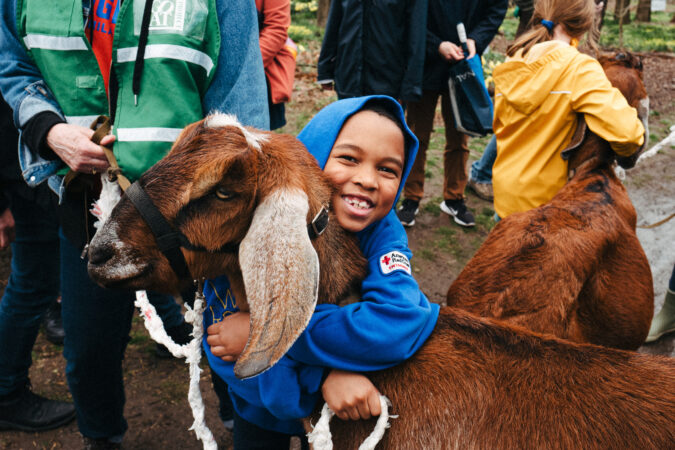
As a jolly middle-aged goat, 7-year-old Ray loved taking long strolls around Awbury Arboretum, supporting people in bereavement with hoofshakes and kisses, and taking children with cerebral palsy on rides.
The wagon was his biggest job, and he took it seriously, said Karen Krivit, the director of Philly Goat Project, an East Germantown nonprofit that provides community wellness through nature connection. So much so that he hid his pain.
“Goats tend to hide their injuries,” Krivit said. “Ray was determined to keep from showing any pain and just trying to pull his head high and be with everybody else.”
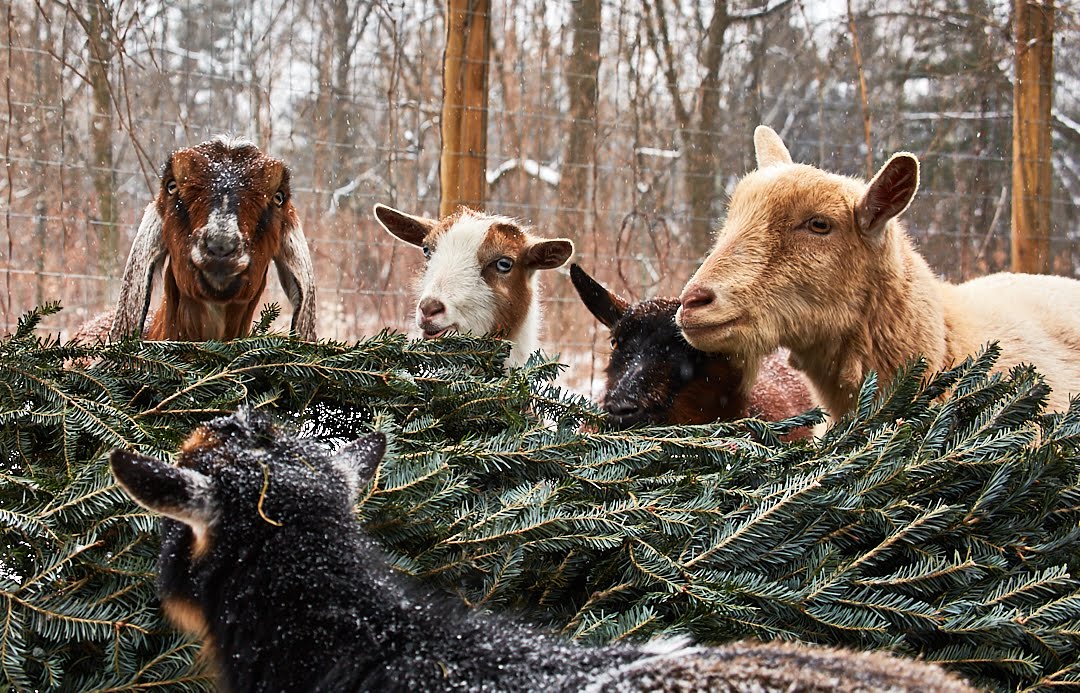
Philly Goat Project’s annual Christmas Tree-Cycle feeds old trees to goats.
Ray had been battling a parasite infection common among outdoor animals, Krivit said. But, as often happens for hisbreed, he was resistant to the medication. As his veterinarian team continued trying for a cure, a slight limp alerted the Philly Goat Project staff that his condition had worsened.
The parasite affected his bone density, causing one of his femurs to break in three places. A big problem for any goat due to their rough-and-tumble nature.
The place Ray had called home since he was 3 months old rallied around him, raising money for a titanium plate to secure the bone in place. But his anatomy once again worked against him.
With Ray standing at a little over 3 feet tall, his natural lanky composition would have made it hard for the plate and the screws to hold onto the bone. The titanium plate could have collapsed his bone in another area, causing additional damage, Krivit said.
“We were able to eliminate the parasite, but not in time enough to save his leg,” she added. “The safest long-term plan was amputation.”
For tall animals in particular, it’s hard to thrive on three legs, Krivit explained. The biggest challenges since the amputation in May have been teaching him how to move around by himself and reintegrating him into his herd of 13 goats.
“Humans tend to be mean to each other if you look different or act differently; it’s the same with goats,” Krivit said. “But humans can use their voices and talk about it; goats can only be mean and exclude another goat. Not being rejected is vital to his survival.”
Ray was placed in a nearby separate stall. His brother Teddy never stopped looking out for him.
Ten thousand dollars and months of rehabilitation later, Ray has a severe limp, but can now stand up and lie down by himself. The herd has accepted him back, but he seems to feel left behind when they go on long walks, often bellowing as the other goats head out without him.
“Because he is moving his body in three legs instead of four, he is at risk for hurting himself further if he goes on a long walk, making it harder for him to stay connected to the herd,” Krivit said.
So Ray needs a wheelchair.
For goats, that involves a metal harness with a wheel on each side of the goat, mimicking a leg. But they are expensive.
The Goat Project needs $2,000 for a custom-made wheelchair for Ray, physical therapy, and proper fitting.
For Krivit, leaving her beloved otherwise-healthy goat without a wheelchair is not an option. She is hoping to raise enough money at the group’s annual GOAToberFest to get him a chair.
The Oct. 18 event will take place at the Conservatory at Laurel Hill West Cemetery, and tickets run for $75, with free snacks, drinks, and goodie bags.
Until then, she hopes folks can see in Ray a symbol of resilience.
“A wheelchair is the missing link for him to safely go on walks that will support his body and his spirit to not be left behind,” Krivit said. “If Ray can be resilient and he can survive this, I hope that gives people hope in their times of adversity.”
Krivit hopes their upcoming annual GOAToberFest can help get Ray a wheelchair.