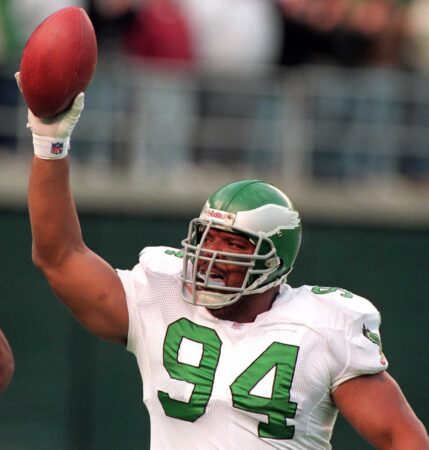
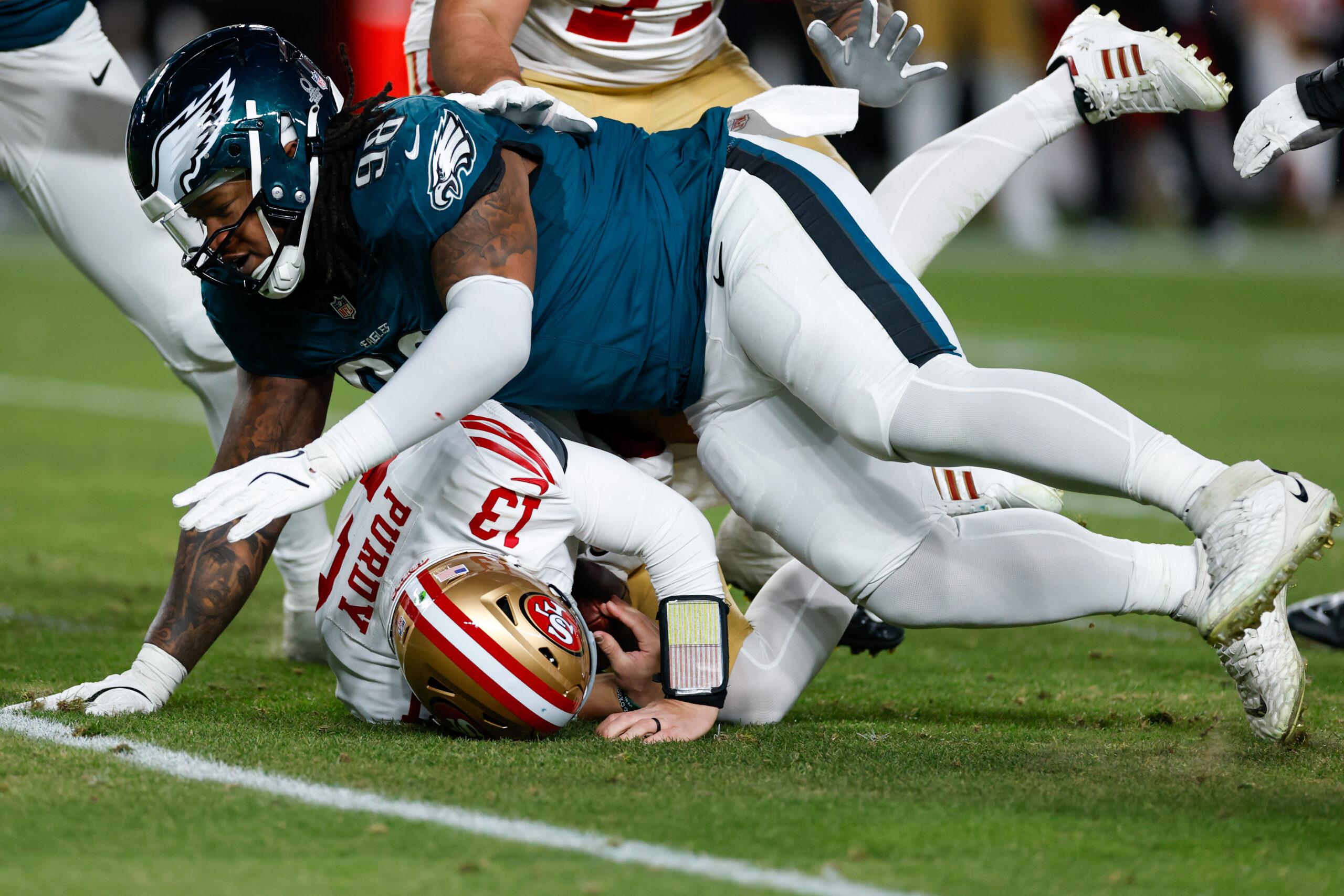
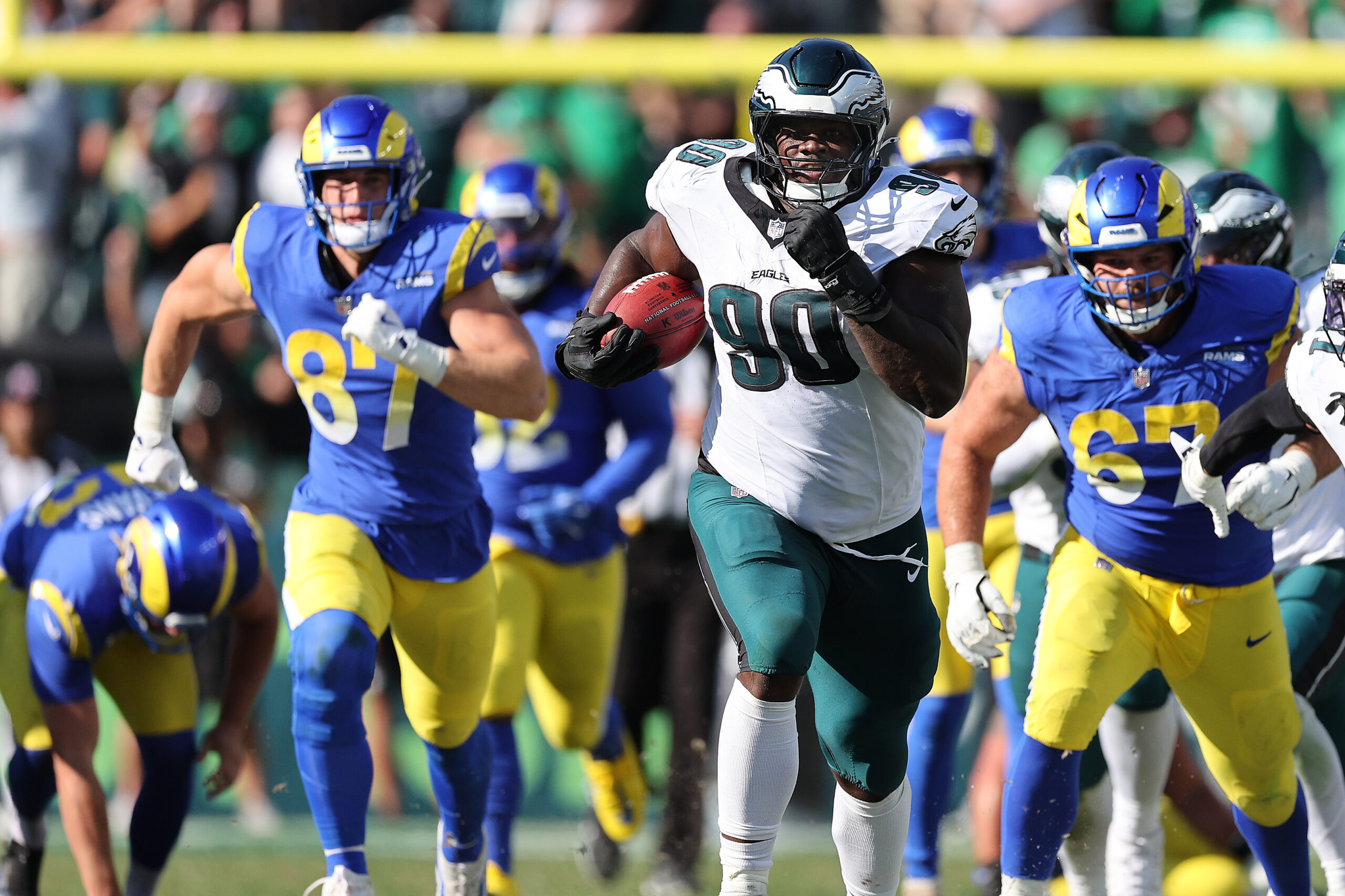
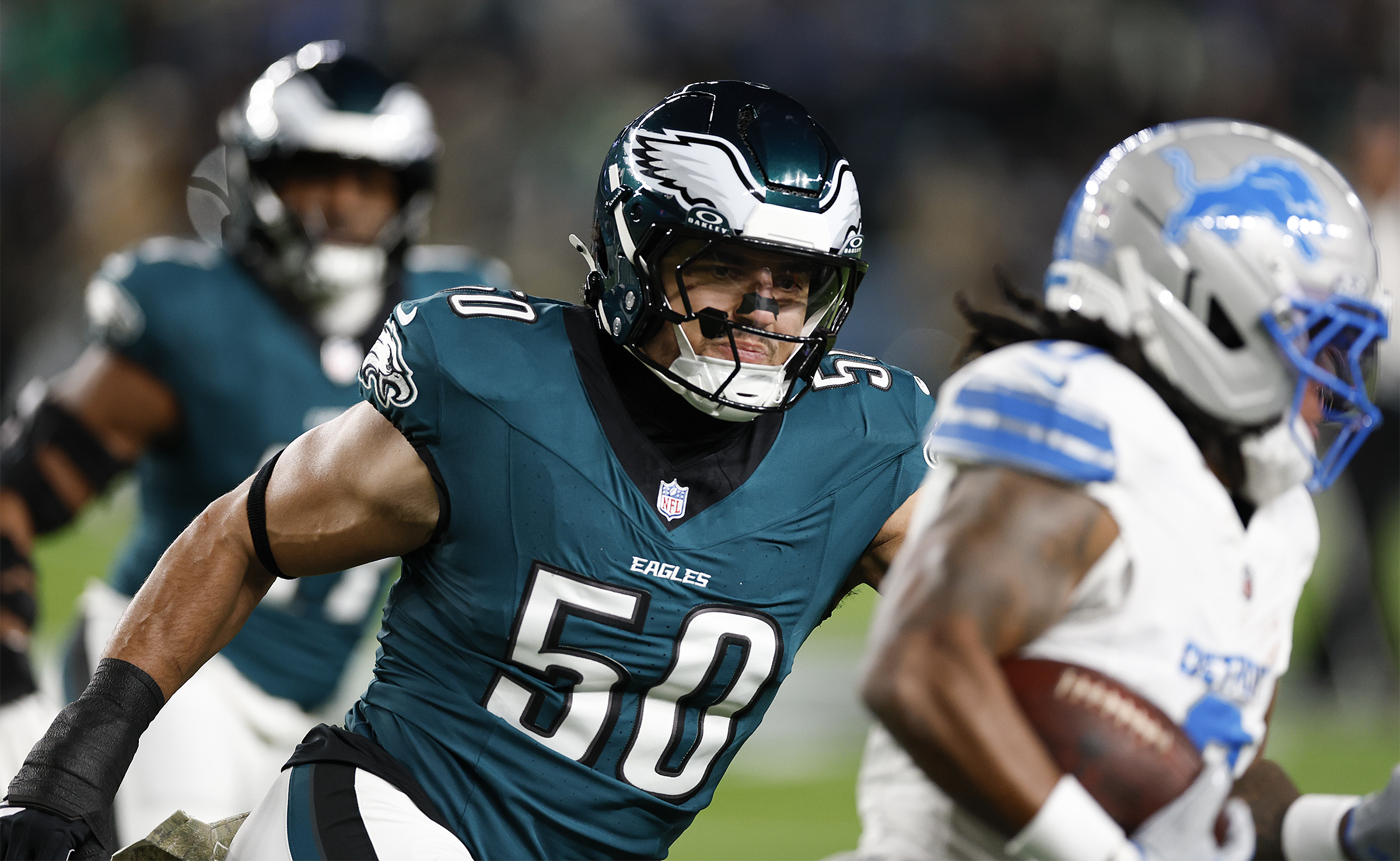
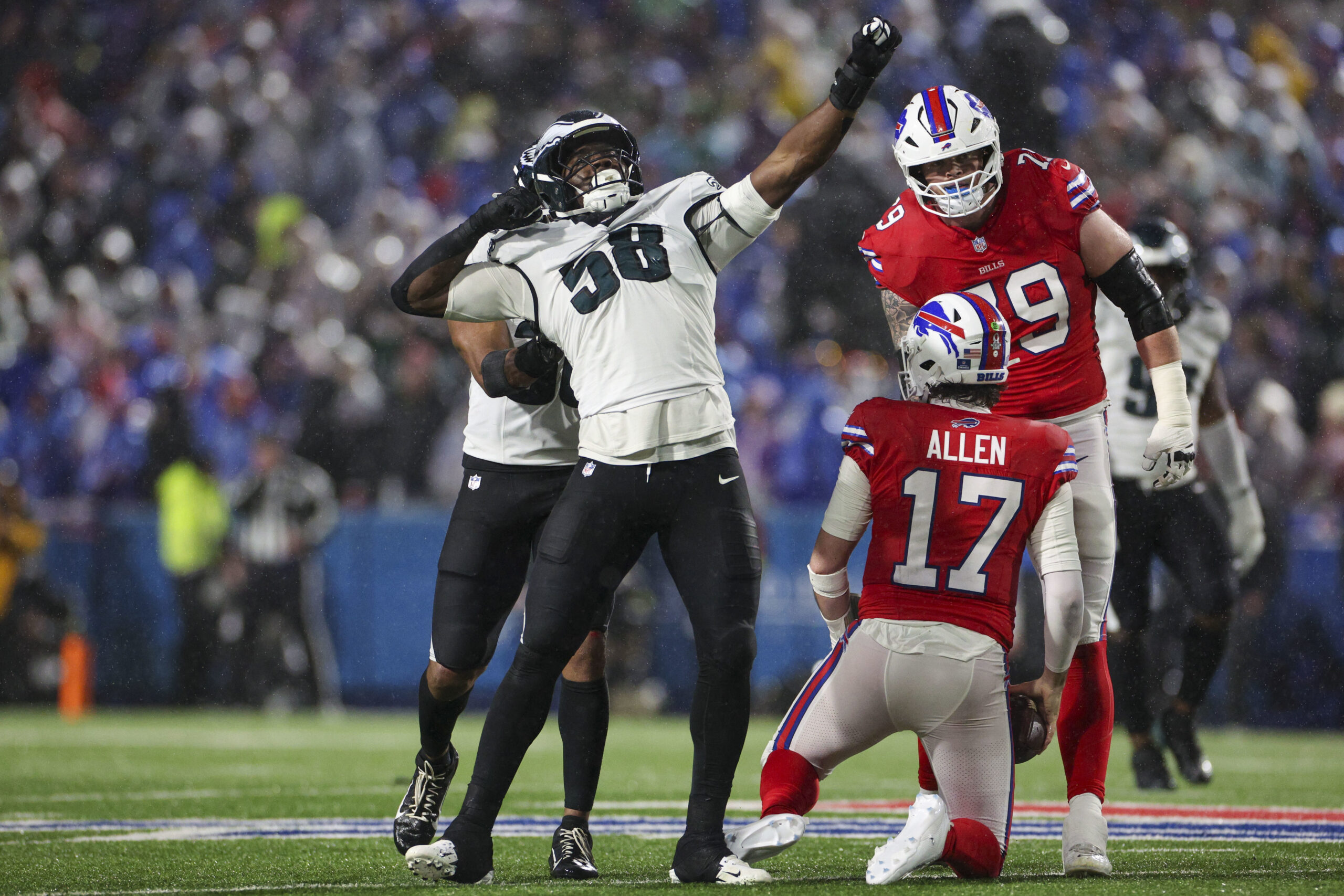
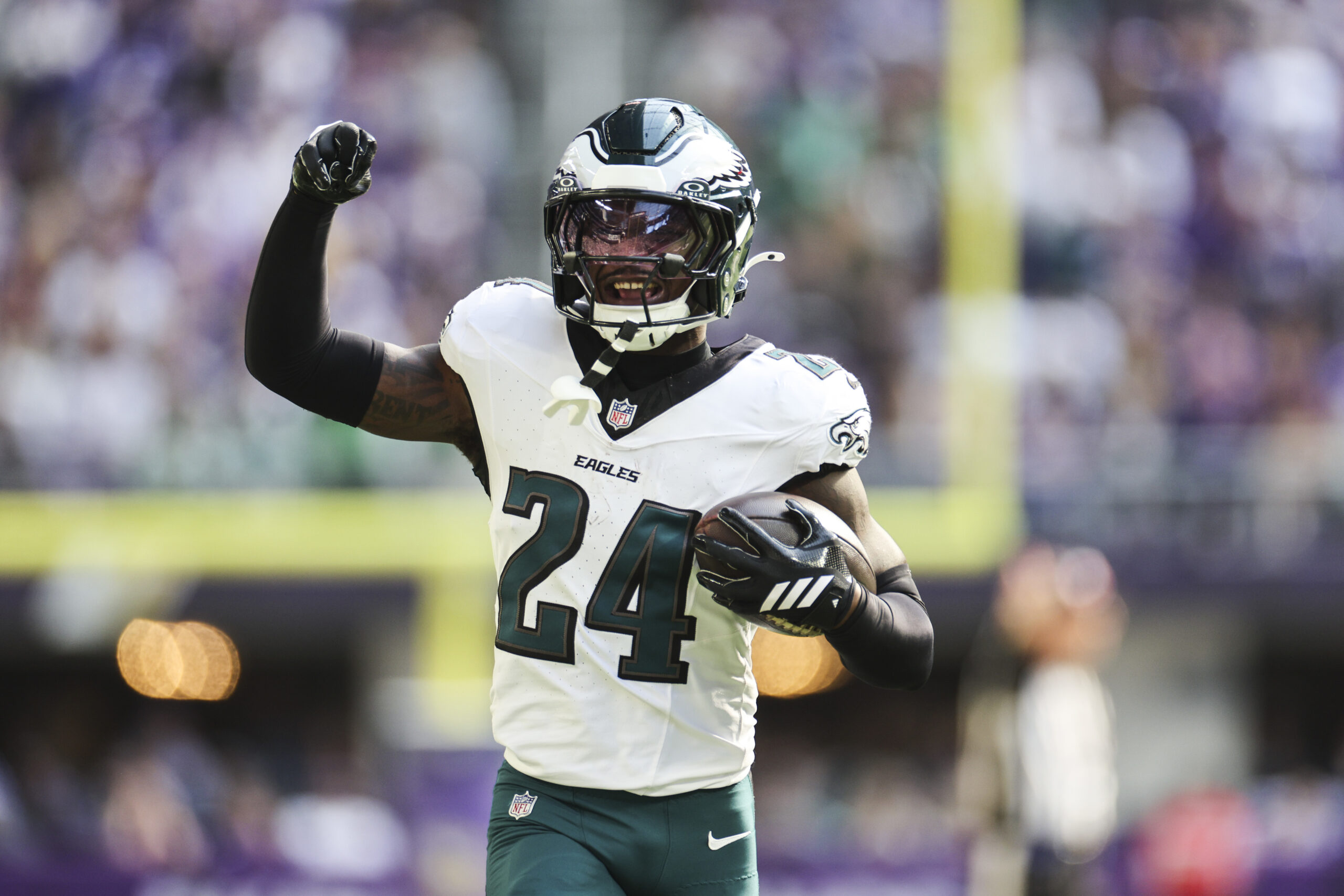
Former Eagles defensive end Kevin Johnson was found dead Wednesday at a homeless encampment in the Willowbrook area of Los Angeles, and a homicide investigation is underway, according to reports.
Los Angeles’ KABC reported that Johnson, 55, was pronounced dead at the scene after police responded to the 1300 block of East 120th Street for a report of an unconscious man. Johnson’s cause of death, according to KABC, citing L.A. County Medical Examiner records, includes “blunt head trauma” and “stab wounds.”
A fourth-round pick of the New England Patriots in 1994, Johnson was claimed by the Eagles after being waived by the Oakland Raiders in August 1995. Johnson, a Los Angeles native, played 23 games (six starts) across two seasons with the Eagles.
He recorded six sacks and appeared in both of the team’s postseason games in 1995. Johnson was released by the team in December of 1996 and later played in 15 games with the Raiders in 1997 before a stint in the Arena Football League.
One by one, offensive coordinator candidates that have been tied to the Eagles have been taken off the big board.
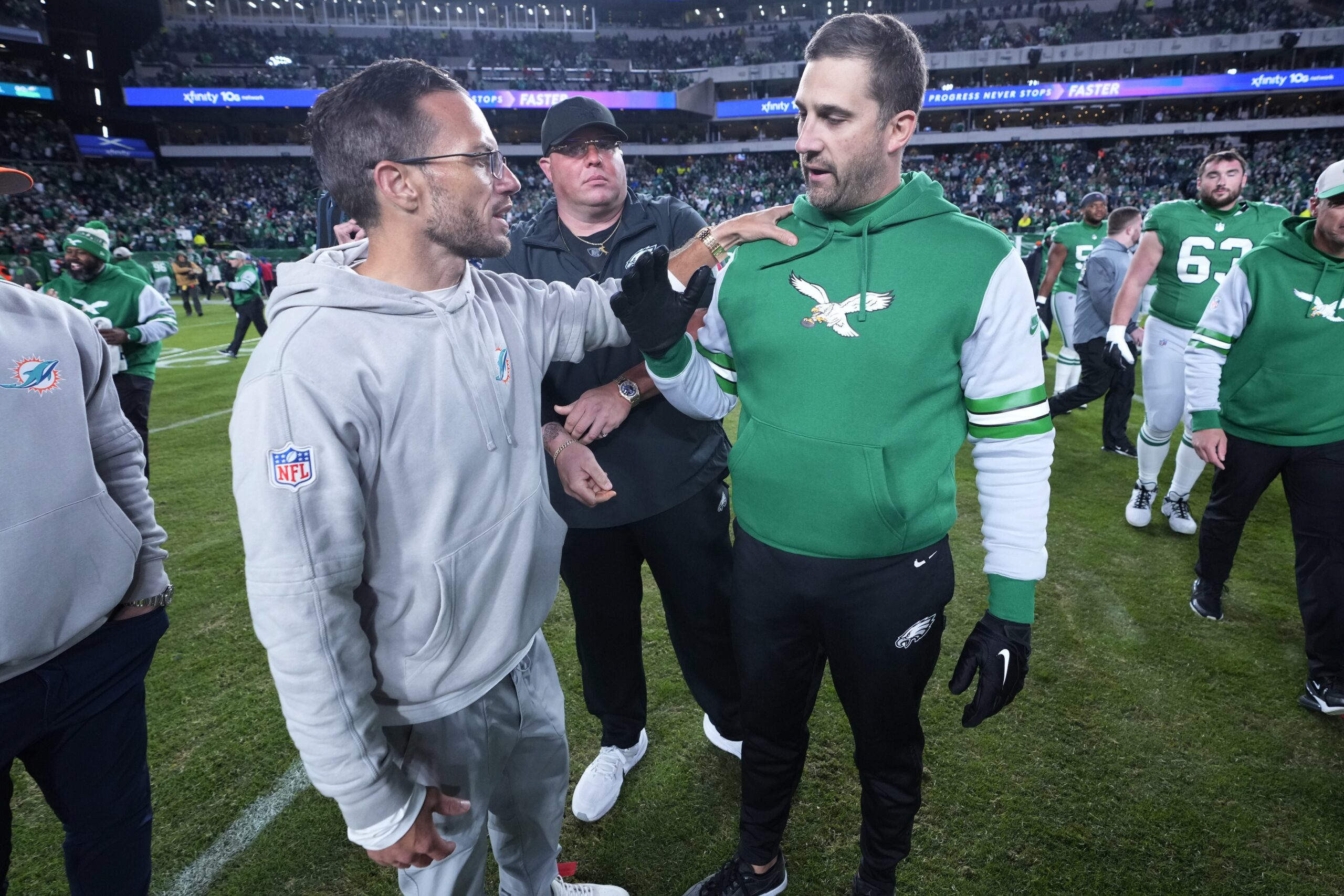
The latest is Zac Robinson, who is finalizing a deal, according to multiple reports, to be the next coordinator in Tampa. Robinson, who interviewed with the Eagles, joins Mike McDaniel, who talked to the Eagles, as candidates who are no longer in the pool. McDaniel will head west to the Los Angeles Chargers.
Another name to potentially cross off is Brian Daboll, who, according to The Athletic, wants to be the next head coach of the Buffalo Bills and otherwise plans to head to Tennessee to be the offensive coordinator under new defensive-minded head coach Robert Saleh.
The Eagles are the only team that didn’t make a head coaching change to still have an offensive coordinator opening. Eight teams that fired their head coach still have an opening at offensive coordinator.
Who’s left among the candidates the Eagles either interviewed or planned to? Another name popped up on the list Thursday morning. Let’s start there …
Declan Doyle
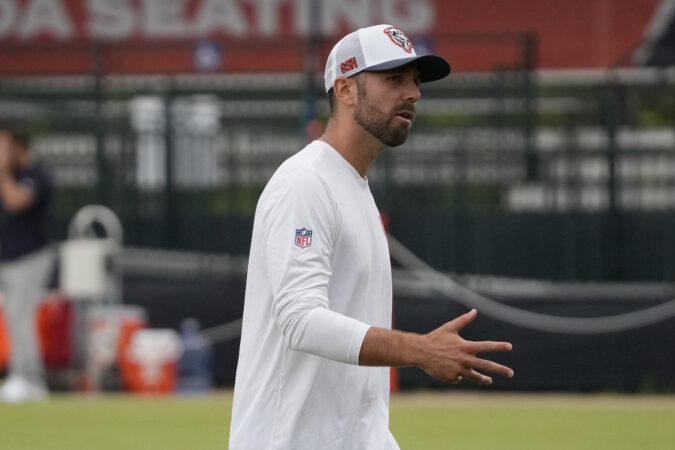
The Eagles, according to ESPN, requested to interview the 29-year-old Chicago Bears’ offensive coordinator. Doyle was hired by Ben Johnson last offseason after serving as the tight ends coach in Denver for the previous two seasons. The Iowa native and 2018 Iowa graduate worked as a student assistant with the Hawkeyes from 2016 to 2018 and then was an offensive assistant with the New Orleans Saints from 2019 to 2022. Talk about a fast riser.
Johnson, of course, has a big hand in the offense and calls plays for the Bears. But Doyle had a hand in the Bears’ sixth-ranked offense by yards per game. Chicago was 32nd a year ago. Johnson gets a lot of credit for that, but Doyle’s role can’t be discounted.
Doyle has never been a play-caller, which makes him an outlier among the other candidates the Eagles have been in contact with. The Eagles seem to be targeting coaches with more experience than Doyle, but there is value in meeting and talking to a young coach like him. Even if it’s not for this job at this juncture.
Jim Bob Cooter
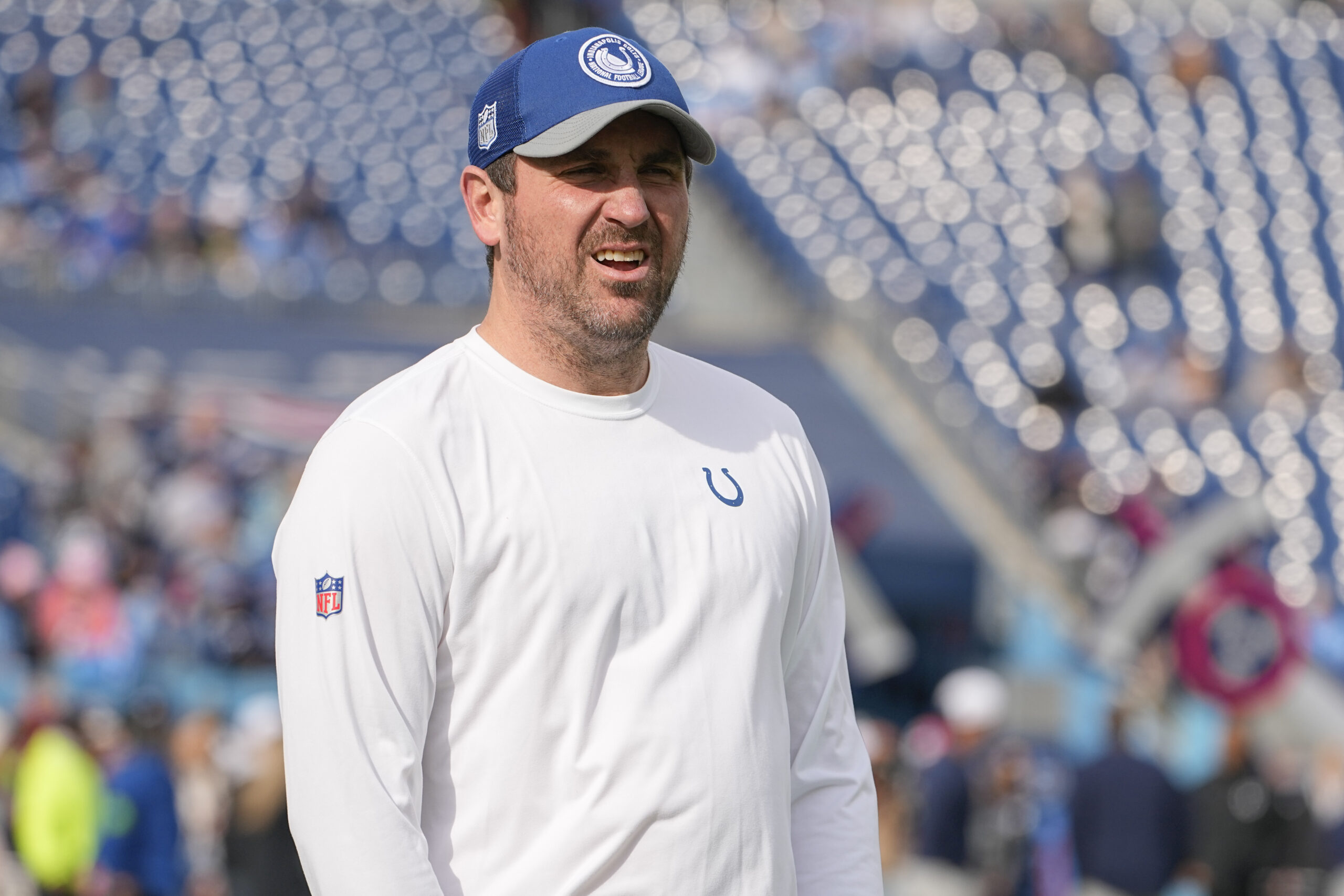
Cooter was a consultant when Nick Sirianni first got the Eagles job in 2021 and has been Shane Steichen’s offensive coordinator in Indianapolis since 2023. The Eagles, according to Sports Illustrated, interviewed Cooter on Friday. Like Doyle in Chicago, Cooter does not call plays for the Colts, which is why the Eagles job would be a promotion.
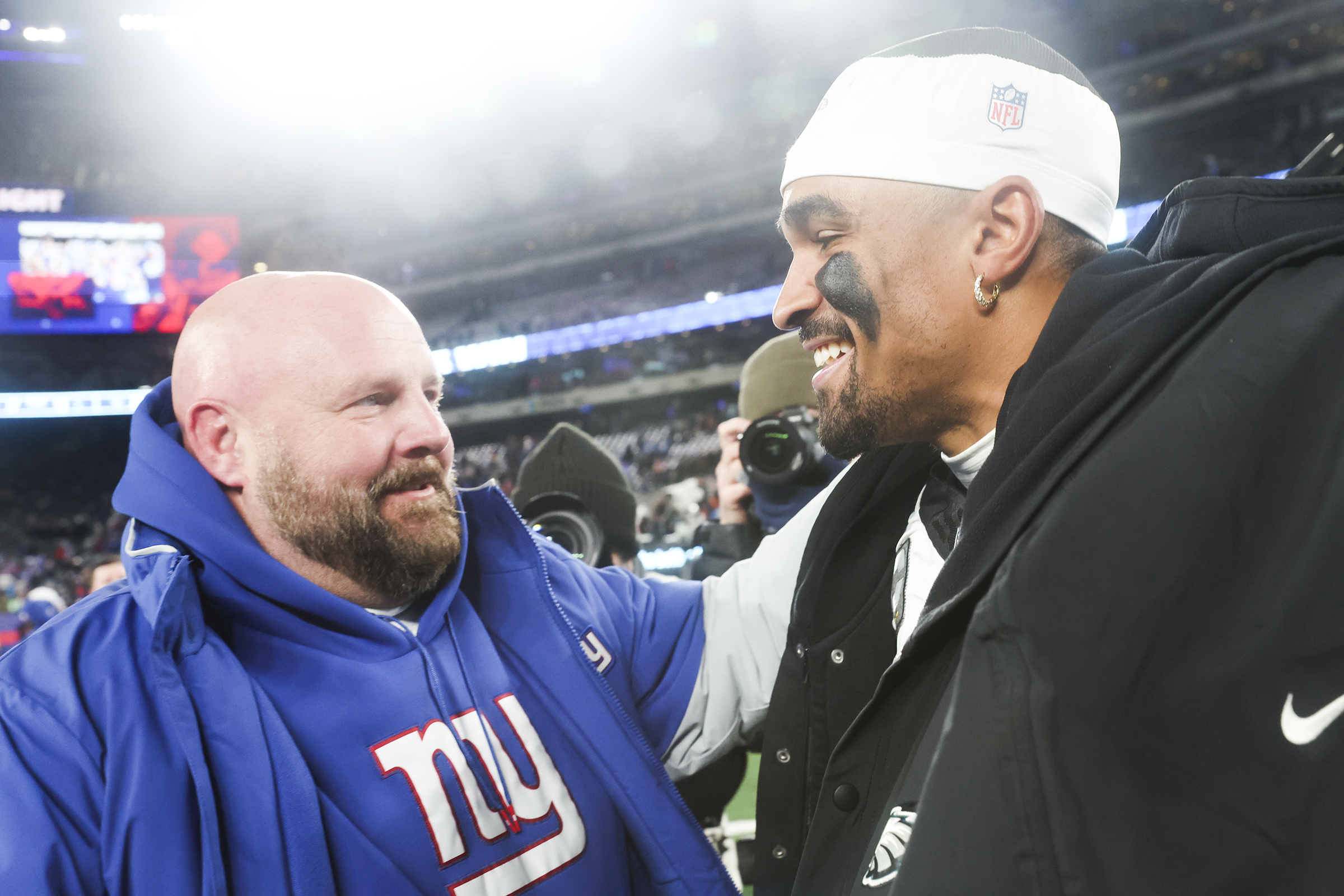
Brian Daboll was one of Jalen Hurts many offensive coordinators over the years. The pair was together during the 2017 Alabama season.
Brian Daboll
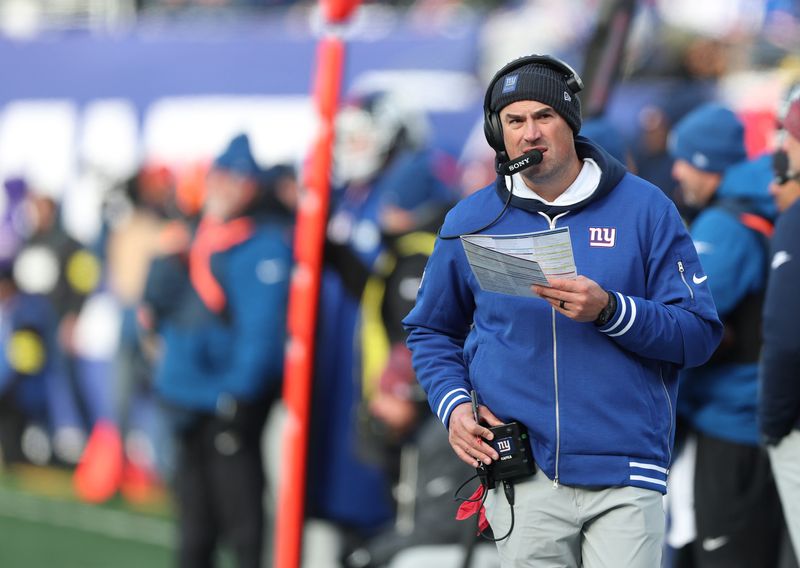
It’s still worth putting Daboll here, despite the report from The Athletic. Until a deal is done, he’s still a candidate. The Eagles, sources said, interviewed Daboll on Tuesday. Daboll was most recently the head coach of the New York Giants, a position he was fired from in November. Daboll wants to be in Buffalo probably for a few reasons: He’s from the area, and his best stretch of coaching came as the OC in Buffalo, where he helped develop Josh Allen.
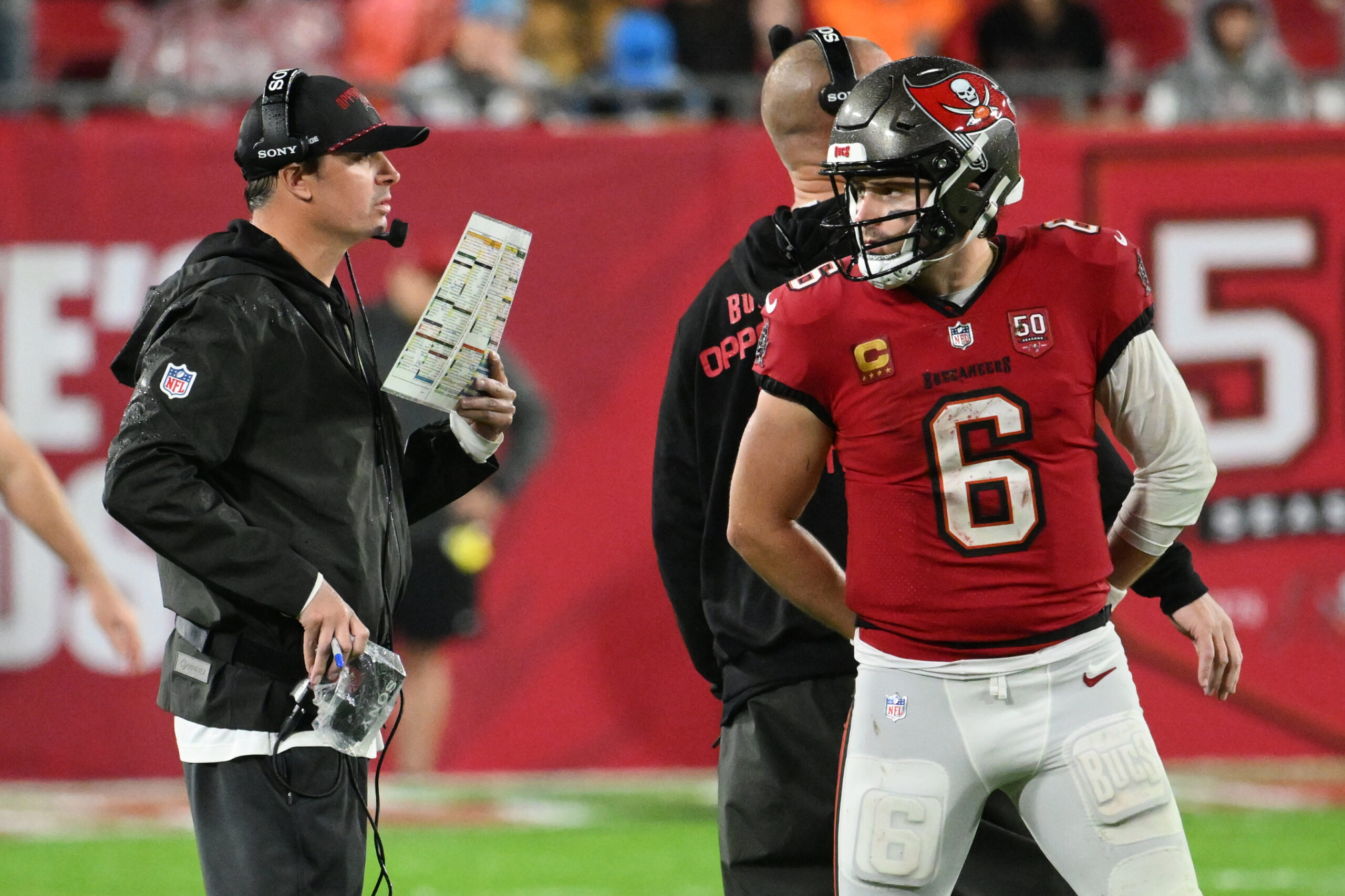
The Eagles, NFL insider Jordan Schultz reported a few days ago, plan to interview Grizzard, who was let go by Tampa Bay. Grizzard, 35, was the offensive coordinator for one season after joining the Bucs in 2024 as a passing game coordinator. Before Tampa Bay, Grizzard worked with McDaniel in Miami and was with the Dolphins during stints with Adam Gase and Brian Flores, too.
Mike Kafka
The Eagles have already interviewed Kafka, who was Daboll’s coordinator in New York before taking over as interim head coach. Kafka is a familiar name around here, having spent two seasons as a backup quarterback after the Eagles selected him in the fourth round of the 2010 draft. During his 10-year coaching career, Kafka has spent time with Patrick Mahomes in Kansas City. He was Mahomes’ quarterbacks coach from 2018 to 2021.
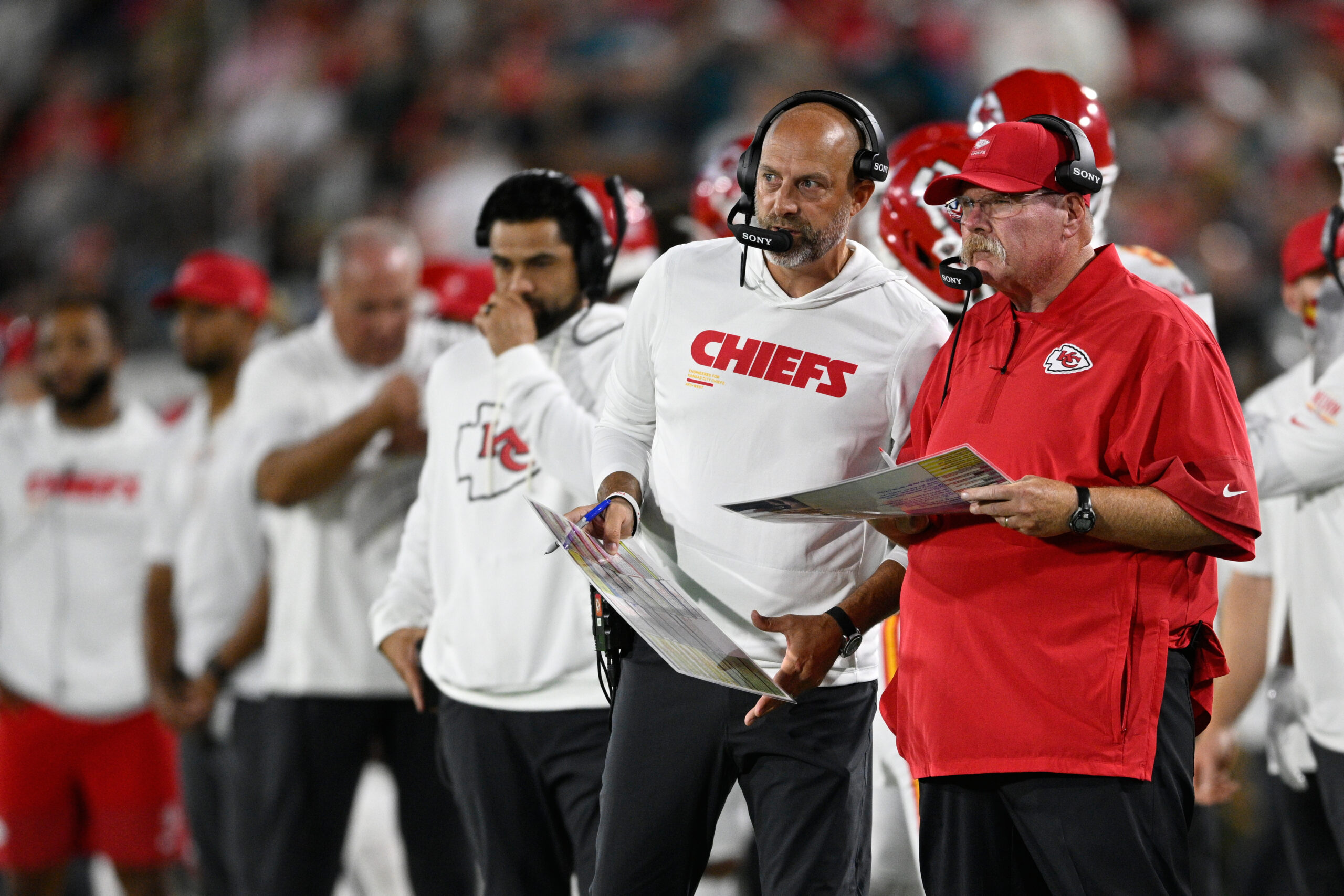
Kansas City Chiefs offensive coordinator Matt Nagy (left) has been with Andy Reid for most of his career, starting as an intern in Philadelphia.
Matt Nagy
The Eagles interviewed Nagy on Wednesday, according to sources. Kansas City just hired his replacement in Eric Bieniemy. Nagy, unlike in Kansas City, would call plays with the Eagles. Nagy, who went to high school in Lancaster County and attended the University of Delaware, got his start in the NFL as an intern under Andy Reid with the Eagles in 2008. Nagy followed Reid to Kansas City, then returned to the Chiefs after his four-year stint as the head coach of the Bears. He had been the Chiefs’ offensive coordinator for the last three seasons.
Bobby Slowik
The Eagles, according to ESPN, requested to interview Slowik, Miami’s senior passing game coordinator. Slowik is another branch on the Shanahan tree. He worked with the Shanahans in Washington from 2011 to 2013 and then was a Pro Football Focus analyst. Kyle Shanahan hired Slowik in 2017 as a defensive quality control coach in San Francisco. Slowik jumped to the offensive side of the ball with the 49ers in 2019. He was the passing game coordinator for the 2022 season before Houston hired him to be its offensive coordinator in 2023. He held that position and called plays for two seasons.
Charlie Weis Jr.
It’s unclear if the Eagles have interviewed Weis, who helped Lane Kiffin run an explosive Ole Miss offense that has been at or near the top of the NCAA rankings in offense the last few seasons. They at least reportedly had interest in Weis, who will join Kiffin in his same role at LSU.
Staff writer Jeff McLane contributing reporting to this story.
The defense was a strength for the Eagles for most of the 2025 season, though not so much in their playoff loss to the San Francisco 49ers.
The Eagles got to 11-6 and won the NFC East in part because of their ability to win low-scoring games. Their defense bailed out the offense in a few marquee victories, like their 10-7 win over Green Bay, their 16-9 victory over Detroit, and when they squeaked by Buffalo, 13-12.
Vic Fangio’s unit lost a few key players from 2024 and dealt with an injured Jalen Carter, but still managed to finish fifth in points allowed per game despite a pretty tough schedule.
What does that mean for 2026, with a handful of key players set to be back? Here’s one compelling advanced stat for each starter, the second in a two-part series that previously analyzed the offense:
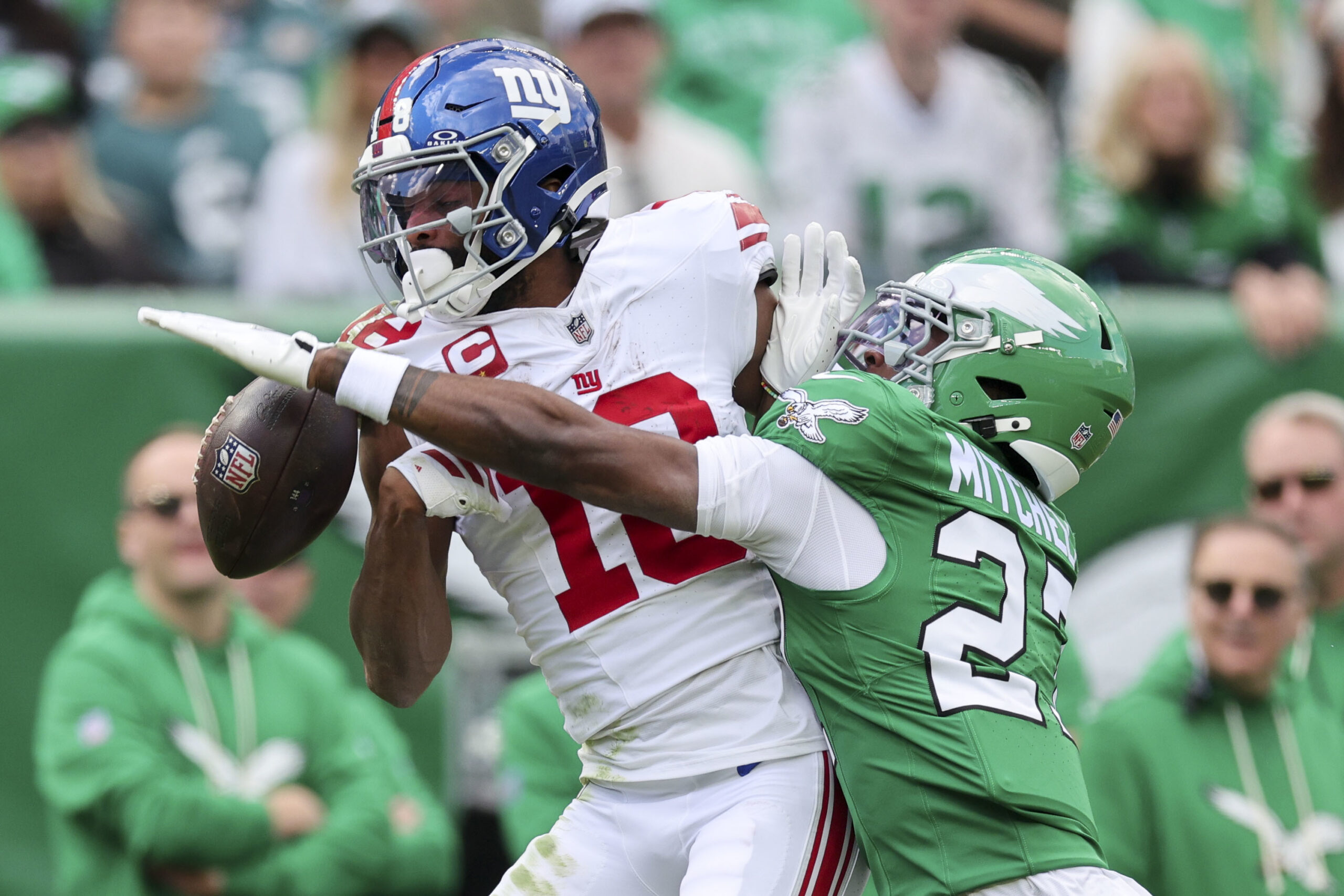
Quinyon Mitchell developed into one of the premier corners in the league in his second season.
Quinyon Mitchell
Let’s start with Mitchell, a first-team All-Pro selection in his second NFL season.
Mitchell emerged as one of the best cover corners in the NFL in 2025, as evidenced by his 42.4% catch percentage allowed, according to Next Gen Stats, a mark that led all corners who played a full season. Mitchell is so good it’s worth including another number: He led all NFL corners with an average target separation of 1.8 yards.
If you were ranking the list of spots on the depth chart you were least worried about, CB1 would probably be at the top.
Cooper DeJean dominated the slot during an All-Pro season.
Cooper DeJean
From one All-Pro to another. DeJean was named first-team All-Pro at nickel, and it’s worth noting that because that distinction is a key one. The Eagles like DeJean in the slot, and DeJean said it’s a spot he’d probably like to remain in.
Why? There’s enough data out there now to suggest that it’s his best spot.
After logging just nine snaps at outside corner during his rookie season (1.5% of his total snaps), DeJean, whom the Eagles kept on the field in their base package, aligned outside on 30.1% of his snaps in 2025.
He fared much better in the slot, where he allowed a .574 completion percentage and 5.9 yards per target, according to Next Gen. Both of those numbers ranked well below the league-average marks of .695 and 6.8, respectively. DeJean allowed a similar .588 completion percentage when he lined up outside, but his 10.9 yards per target ranked seventh among defenders to have faced at least 15 such targets. He was susceptible to the deep ball when facing top receivers outside.
We’ll count Jackson as a starter since the Eagles played more nickel than base and needed another outside corner not named DeJean on the field quite often.
It wasn’t always Jackson’s job. The second cornerback spot was a position with a lot of intrigue in training camp and even early in the season. It was Jackson’s job, then it wasn’t, then it was again.
Jackson was targeted at a higher clip (26.5% of his coverage snaps) through the first eight weeks of the season than any other cornerback in the NFL. After that, though, Jackson was targeted on just 16.5% of his coverage snaps while allowing a completion percentage of .585, slightly below the league average. He did not give up a touchdown during his last five games of the regular season or the playoff game.
Jackson, 30, is a free agent, and the Eagles may need a new cornerback opposite Mitchell next season. But Jackson’s play showed that even an aging and average player can be put in that spot, and the defense won’t fall apart, regardless of the preseason narrative about a certain spot on the depth chart.
Zack Baun generally lived up to his rich new contract in 2025.
Zack Baun
Baun proved he wasn’t a one-year wonder in his second season with the Eagles, who plucked him out of free agency last offseason and turned a player who had mostly been an edge rusher and special teamer into one of the best off-ball linebackers in the NFL.
Baun didn’t earn All-Pro honors like he did in 2024, but he was still really good in 2025. While his tackle total dropped from 151 to 123, his pass deflection number rose from four to seven, and he intercepted two passes in 2025, up from one in 2024. Pro Football Focus ranked Baun as the fifth-best linebacker in the NFL, and the second-best coverage linebacker.
His ability to cover ground may be his best trait. Baun was seventh in the NFL with 17 hustle stops, which Next Gen Stats defines as a tackle during a successful defensive play when a player covers 20-plus yards of distance from snap to tackle.
A quality 2025 season will serve Nakobe Dean well in his next contract.
Nakobe Dean
Has Dean played his last game with the Eagles? And, to that end, can Jihaad Campbell replace Dean’s production?
Because Dean was pretty productive in 2025 after he worked his way back onto the field after surgery to repair a patellar tendon injury, which he suffered in the wild-card round a year ago.
This is what the Eagles could be asking Campbell to replace should Dean not return: Dean’s catch percentage allowed of just 58.3% on targets ranked third among all NFL linebackers who played at least 200 snaps in coverage, according to Next Gen. And Dean was even better as a blitzer: He led all linebackers with a 40.7% pressure rate on his 27 pass rushes and got home for four sacks.
Injuries prevented Jalen Carter from demonstrating his full effectiveness for the NFC East champs.
Jalen Carter
The Eagles will be hoping Carter’s step back is easily explained by the shoulder injuries that limited his production and caused him to miss three games after undergoing procedures on both shoulders in late November.
Carter, according to Next Gen, had a career-low 7.7% pressure rate on the year despite facing fewer double teams (41.7%) than he ever has. Carter generated five pressures against 158 double teams after tallying 12 in 2023 and 15 in 2024. His average time to sack also dropped to 5.32 seconds from 4.85 year over year.
Notably, after Carter returned following his three-game break, he had five pressures and a sack vs. Buffalo and the same output in the playoff loss vs. San Francisco.
Will the shoulder injuries be revisited in the offseason? Will Carter’s slide allow the Eagles to secure him on a long-term deal at a lower price? Lots of intrigue there.
The emergence of Jordan Davis was one of the Eagles’ best stories of the year.
Jordan Davis
Davis was a revelation for the Eagles in 2025, and a big reason that the defense was so successful even as Carter’s play declined a bit.
Davis showed up to camp in much better shape and improved his play in every area. Mainly relied on as a run stopper in the past, Davis showed his pass rushing chops in 2025. Entering the year, Davis had just 3½ sacks on 559 pass rushes through his first three NFL seasons. This season, Davis racked up 4½ sacks on 355 pass rushes.
The run-stopping ability didn’t go away even though he showed up in July a little more svelte. Davis, according to Next Gen, had a career-high 50 run stops (run defenses that result in a negative play for the offense), which was second among all defensive linemen this season.
Davis is in line for an extension, and his play in 2025 earned him a big new deal that will probably come from the Eagles.
Jaelan Phillips played well but was not a sack machine for the Eagles.
Jaelan Phillips
Phillips helped steady the Eagles’ pass rush after he joined the team at the trade deadline, but while he and Jalyx Hunt formed an elite pass-rushing duo — their 61 combined pressures from Week 10 through Week 17 ranked fourth during that span — he had trouble converting his pressures into sacks.
Phillips led the Eagles with 34 pressures after joining the team, but he turned just two of those into a sack. His 5.9% pressure-to-sack conversion rate, according to Next Gen, ranked 10th-lowest among 97 defenders to have generated at least 15 pressures after the trade deadline. Some of that is bad luck. Fangio talks often about the importance of pressures and not getting too hyper-focused on sack numbers.
But the Eagles need a top-end talent at the top of the depth chart to pair with Hunt since Phillips is a free agent. Phillips wants to be back. Is the feeling mutual? We’ll see when free agency arrives.
Jalyx Hunt made an impact as a member of the linebacker rotation in 2025.
Jalyx Hunt
Hunt became the first player in Eagles history to lead the team in sacks (6½) and interceptions (3).
That’s an impressive stat, but this is a compilation of advanced numbers, so let’s point to this one instead: Hunt ranked seventh among all edge rushers who had at least 100 pass rushing snaps with a quarterback pressure rate of 17.3%.
The 2024 third-round pick broke out in a big way in his second NFL season, and the Eagles used his safety background to drop him into coverage with success.
Reed Blankenship was a team leader but the record shows that he struggled at times in coverage.
Reed Blankenship
Blankenship has been a leader on the defense for the last few seasons, but he’s now a free agent and it’s fair to wonder if he’ll be back next season.
Blankenship has been solid against the run, but he’s not great in pass coverage when he’s targeted. After a 2024 season in which he ranked fifth-worst among safeties with at least 500 coverage snaps with an 81.3% completion percentage allowed, Blankenship had the eighth-worst passer rating allowed (116.8) in 2025, according to Pro Football Focus.
It’s unclear what Blankenship’s market will look like in free agency, but it’s a position the Eagles could probably stand to upgrade.
Drew Mukuba’s return from a broken fibula figures to be a training camp storyline.
Drew Mukuba
Mukuba’s first season in the NFL was incomplete. The second-round pick was lost for the season after suffering a fractured fibula in the waning moments of a Week 12 loss to Dallas.
Mukuba wasn’t targeted often in coverage. Before his injury, he was targeted on just 4.2% of his snaps, according to Next Gen. That ranked fifth-lowest among all defenders in the NFL with a minimum of 150 coverage snaps. But when he was targeted, it was on deep balls. He had the fifth-highest total in yards per target allowed (13.5).
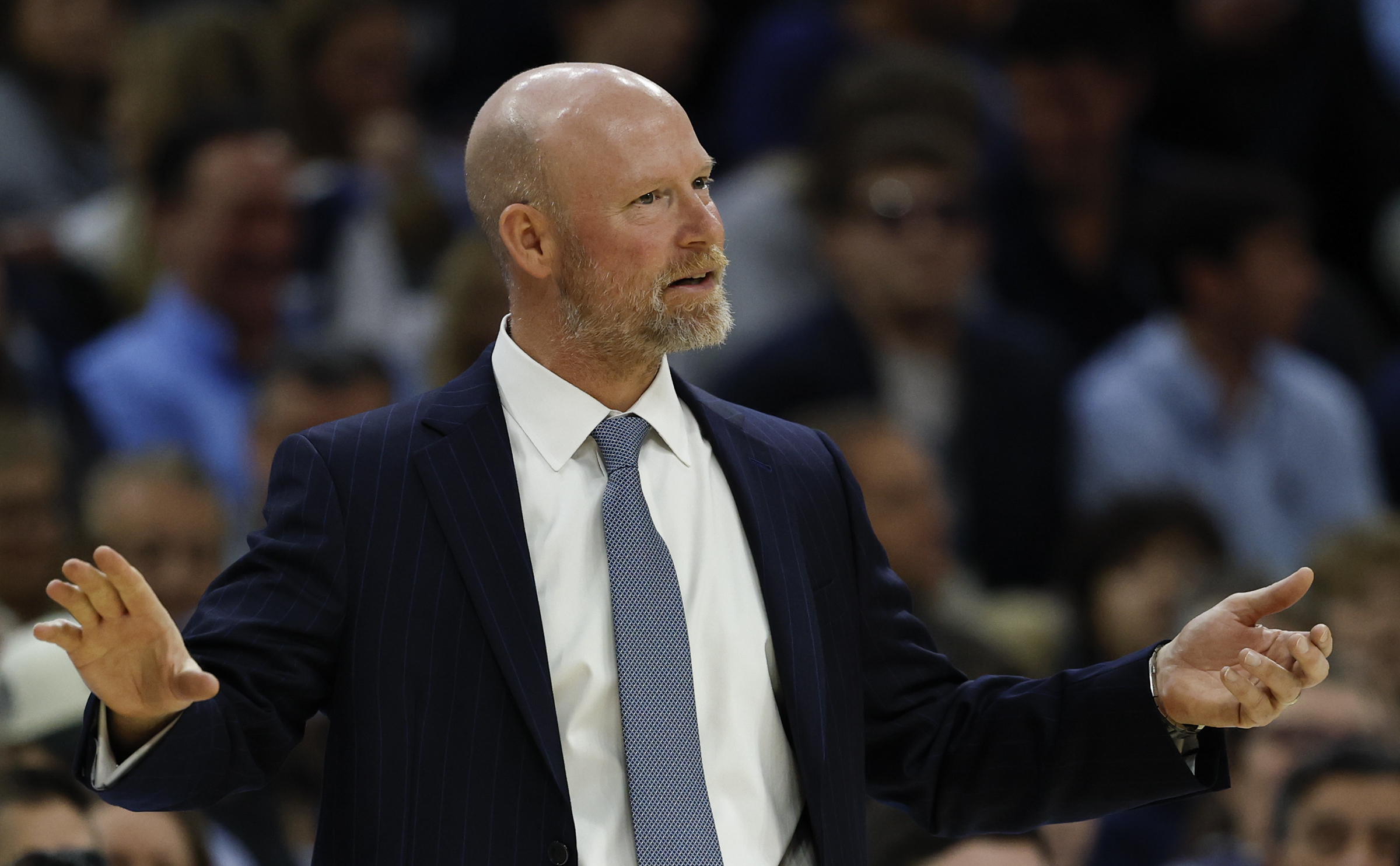
The difference isn’t in the adjustments as much as it is the inherent advantage of the location of each team’s bench during the first half, according to Villanova coach Kevin Willard.
Villanova runs its offense in the first half in front of Ed Cooley and Georgetown’s bench, and the Hoyas run their offense in front of Willard and his bench.
“I get to yell their plays out,“ Willard said after Villanova’s 66-51 victory over Georgetown on Wednesday. ”The coaches all know the plays. I’ve watched Georgetown play nine times now. You know when the center is out in the corner, they’re going to run a boomerang. You know when [Malik] Mack’s on the block, it’s going to be an iso.”
Villanova used a 16-1 surge in the first four minutes to blow open just a three-point halftime lead, and there has to be more to it than the orientation of the court. Save for a few games, Saturday’s loss to St. John’s being one of the outliers, Villanova has been a solid second-half team. It entered Wednesday night with a plus-4.1 margin over its opponents in the second half. That ranked 62nd nationally and fourth in the Big East. It is not amazing, but considering there are 365 Division I teams, it’s not nothing.
There is, of course, more to it than Willard’s initial explanation.
Villanova watches a lot of film at halftime. Willard watches the offense to figure out what he wants to call in the second half, but the rest of the staff and team focus on the defensive end. There was a lot to like on that end from the first 20 minutes. It was an ugly opening frame that ended with the teams combining to shoot 15-for-54 (27.8%). Villanova’s offense looked clunky, but the Wildcats forced nine first-half turnovers from a Georgetown team that entered Wednesday on a five-game losing skid but was 15th nationally in turnover percentage.
There was less tactical messaging during the break, too.
“It’s just getting a very young team to understand, it’s all I talked about at halftime, this is Big East play,” Willard said. “They’re a really good, physical defensive team. It’s not going to be easy. We have to rebound and get out. That’s usually all the message is and just cleaning up what we’re struggling with defensively.”
Villanova allowed a 20-4 St. John’s start to the second half Saturday at Xfinity Mobile Arena, but Wednesday, against a lesser opponent that dropped to 1-7 in conference play, was a much different story. Georgetown turned it over four times in the first four minutes of the second half and Villanova finally got out in transition and found cleaner shots.
“That first stretch won us the game,” said Tyler Perkins, who led Villanova with 16 points.
The 16-1 spurt stretched to 29-8 midway through the second half to give Villanova its largest lead, 55-31. The defense that kept Villanova in the game during the first half carried over. The Wildcats held Mack, who averages 13.8 points, to five points on 1-for-14 shooting. The 51 points the Hoyas scored were the fewest by a Villanova opponent this season.
“I think we all knew we’d be better on offense in the second half,” said freshman point guard Acaden Lewis, who had 15 points and a season-high seven rebounds. “That’s kind of what happened. We stayed solid defensively, and the offense came around late.”
Bryce Lindsay, who hit a three-pointer from the edge of the midcourt logo in the second half, and Duke Brennan joined Perkins and Lewis in double figures with 11 and 10 points, respectively. It was far from the cleanest offensive night from the Wildcats, who got just nine assists on their 24 makes, far below their season-long assist percentage of 53.7. But it was more than enough against a Georgetown team that Cooley said was “emotionally and physically frustrated” by Villanova in the second half.
“Villanova does what they do,” Cooley said. “They use a ball screen 118 times a game, and they took advantage of that and made some shots.
“This game is all about discipline. It’s all about connection. It’s all about emotional and mental toughness.”
One team had it Wednesday, the other didn’t. One team’s season is spiraling, the other’s continues Saturday afternoon in Hartford, Conn., where it gets another opportunity for a signature win.
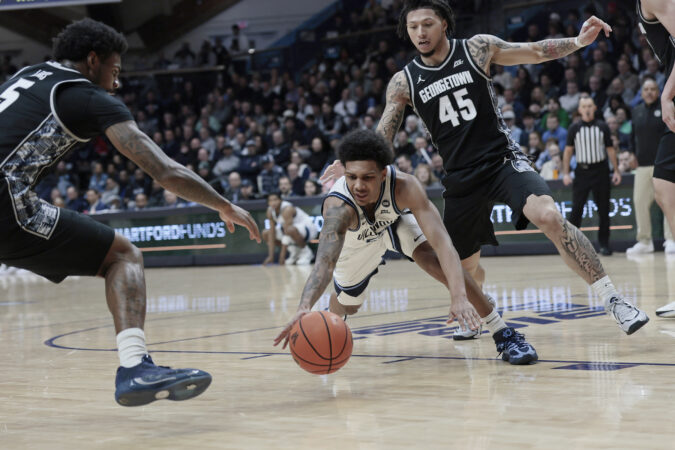
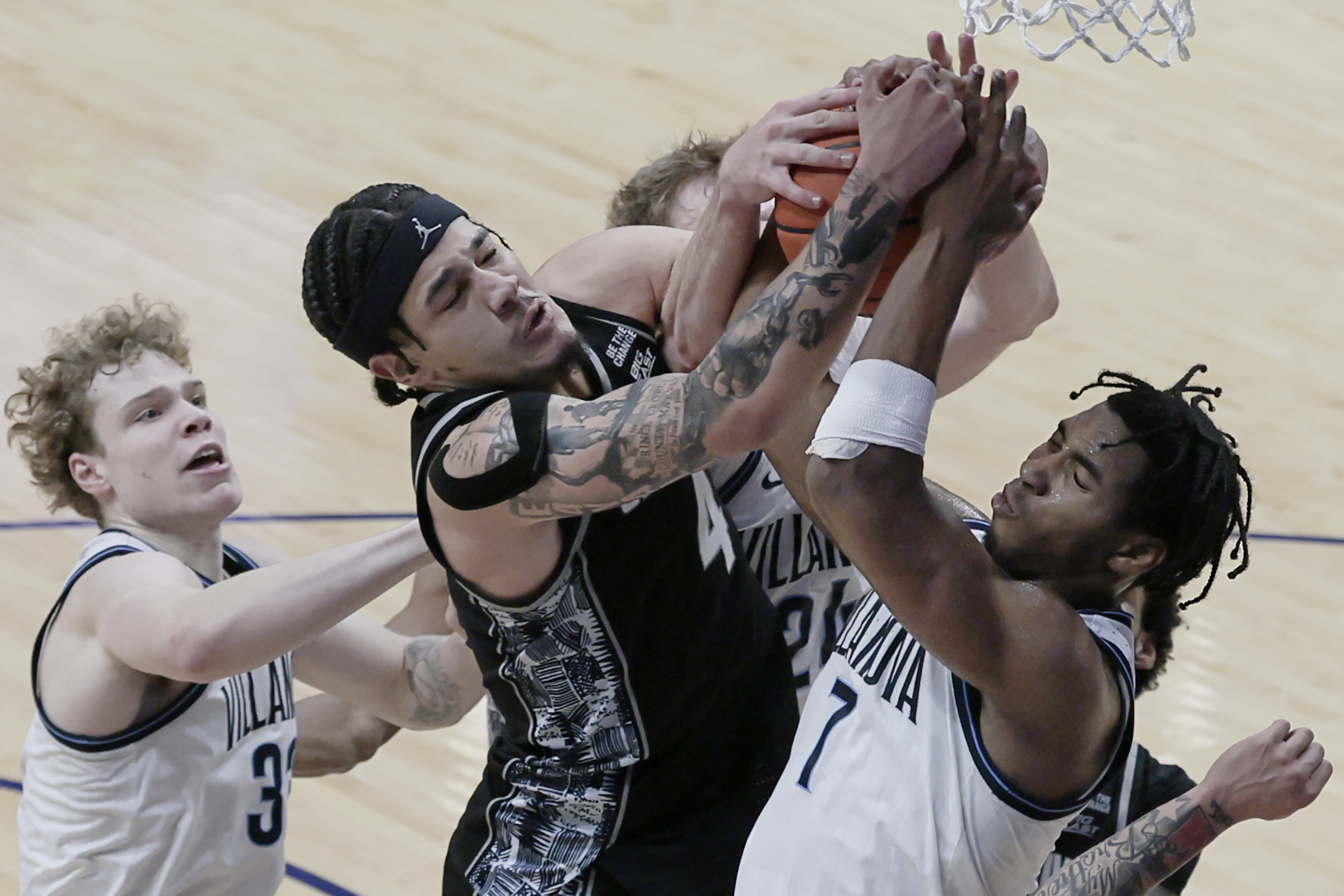
Georgetown’s Caleb Williams is sandwiched between Villanova players on Wednesday.
The good part about this time of year, Willard said, is that he’s seen about all of his conference opponents on film. No. 2 UConn, he said, has a lot of veteran talent and he loves watching freshman Braylon Mullins, who attempts nearly six three-pointers per game in 26 minutes and is “always hunting.”
Villanova entered Thursday rated 24th at KenPom and 34th at Torvik, two of the primary college basketball metrics sites, and was 33rd in the NCAA’s NET rankings. The Wildcats are on a path to snapping their NCAA Tournament drought of three seasons. But what they don’t have yet is a marquee victory, due respect to Wisconsin and Seton Hall. Each major step up in competition has been met with much resistance.
“Every league game is important,” Lewis said when asked about Saturday. “It’s the same approach, same things we always do.”
If that’s not working early on, there’s always halftime.
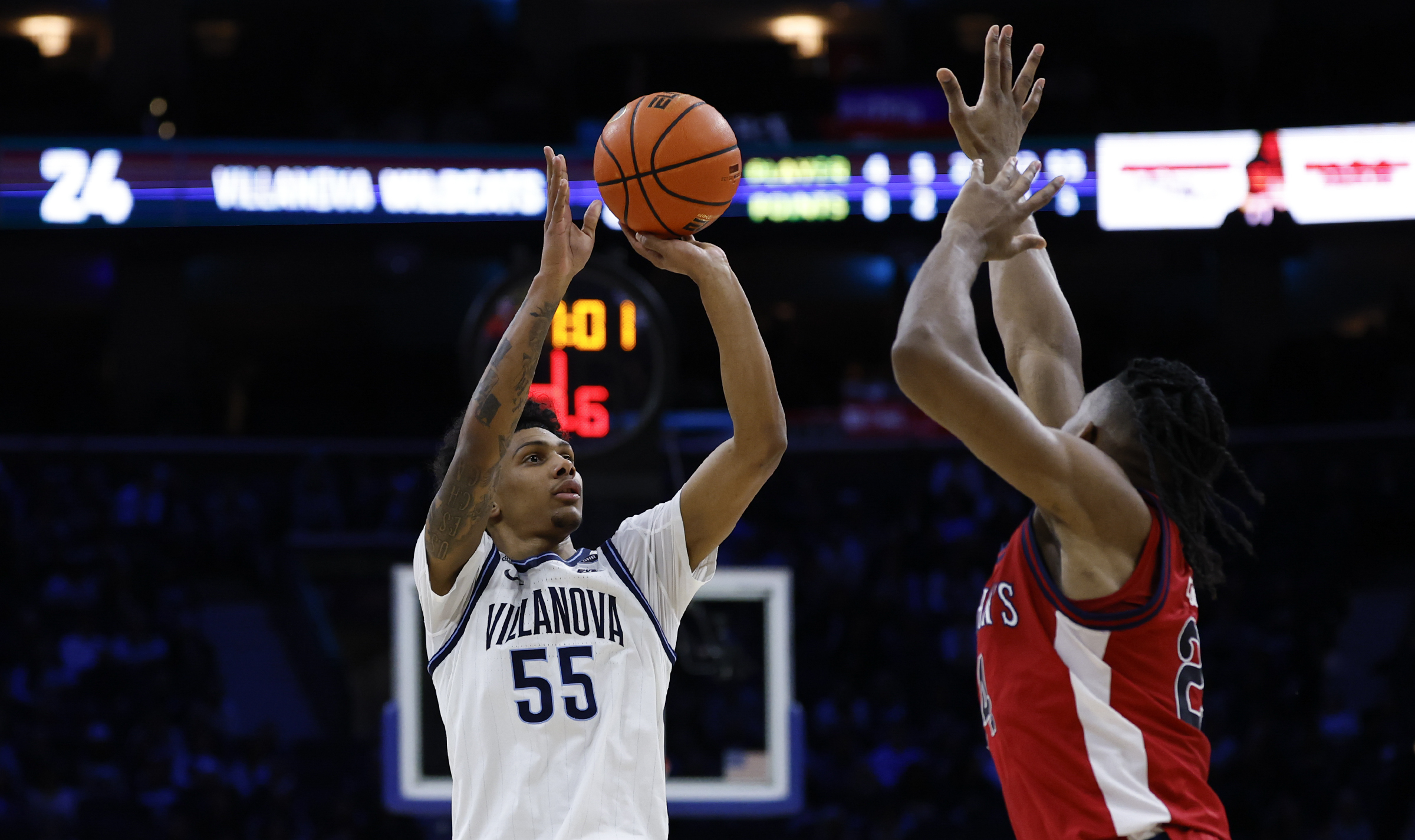
Because Acaden Lewis shoots a basketball left-handed, it is natural for observers to admire the way the freshman Villanova point guard uses his right hand.
The admirers often wear headsets and announce games on television.
There goes Lewis, using his other hand.
Look at that, with the off hand.
For most players, passing the ball with their nonshooting hand, dribbling to their nonshooting hand’s side, and using their nonshooting hand to finish a layup or floater takes a lot of practice. The movements can be unnatural.
To be sure, Lewis has worked hard to sculpt a skill set that has allowed him to play right away and be the lead guard on what looks like an NCAA Tournament-bound Villanova team.
But he isn’t left-handed.
“I can’t do anything with my left hand,” Lewis said by phone this week as he forked noodles into his mouth using his right hand following a post-practice film session. “I can’t palm a ball. I can’t write. I can’t eat.”
Acaden Lewis is averaging 12.1 points, 5.3 assists, and 3.4 rebounds for the Wildcats.
How did a right-handed kid growing up in the nation’s capital learn to play basketball left-handed?
“I actually have no clue,” Lewis said. “I think I just shot with my left hand when I started hooping.”
Whatever works. And it’s working. Entering Wednesday night’s game vs. Georgetown, Lewis is at 12.1 points, 5.3 assists, 3.4 rebounds, and 1.9 steals per game.
His ability to use both hands is all over that stat line.
“I think he has so much confidence in the fact that he can go both ways, and it’s not like you can shade him one way or send him to his weak hand,” Villanova coach Kevin Willard said.
Willard first recruited Lewis out of high school when he was the coach at Maryland, but Lewis initially committed to Kentucky. It wasn’t until April, a few months before summer workouts, that Lewis withdrew his commitment from Kentucky and was back on the market. Villanova needed a point guard.
During the recruiting process, Lewis told Willard and his staff that he actually was a righty.
“I thought he was full of s—,” Willard said. “Because he was doing everything with his left.”
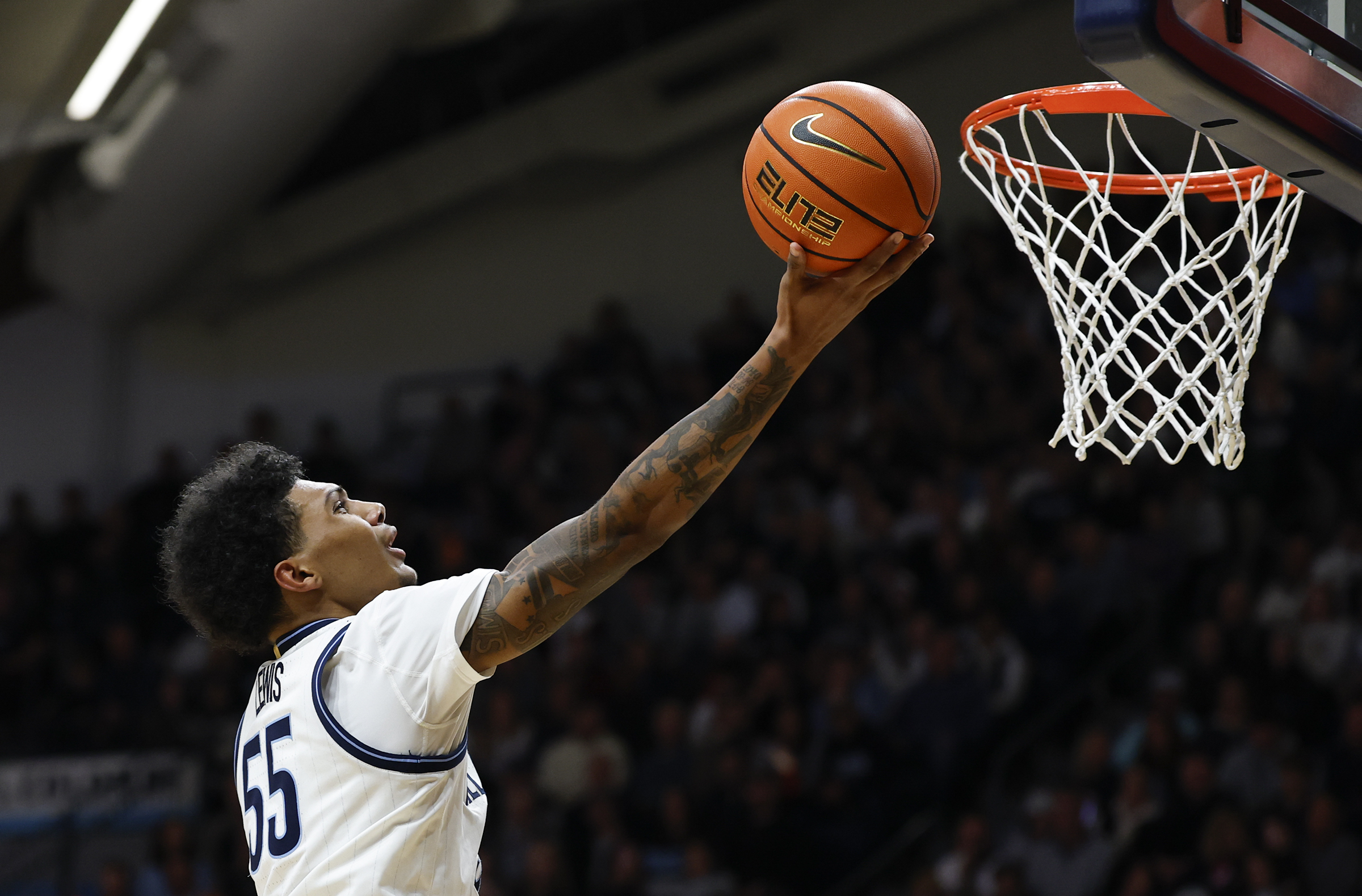
Villanova guard Acaden Lewis lays up the basketball against Duquesne on Nov. 15.
Willard noticed Lewis was good going both ways when he watched him, but it took floater drills during preseason practices for the coach to finally become a believer. Lewis was better with his right.
“I was like, ‘Jeez, he must be right-handed,’” Willard said.
Then, in October, during the installation of Villanova’s pick-and-roll defense, Willard noticed Lewis’ ability to run offense and pass effectively using his right hand. For most players, Willard said, there’s a “dramatic difference” when running an offense to their supposed weak side. With Lewis, it’s a strength.
“We actually run some plays where he’s passing with his right hand because he can do it,” Willard said. “We don’t have to switch sides of the floor because he’s lefty. He gives me flexibility in the fact that we can run certain plays on the same side of the floor.”
Lewis, who has been named Big East freshman of the week four times, agreed with Willard that passing might be the most critical component of him being ambidextrous.
“I think that’s the best thing I actually do with both hands,” Lewis said. “Either that or finishing. I think the passing ability is really dynamic. I can do all types of passing with both hands, so it’s never like I have to come across my body or have to make awkward movements to throw passes. It makes a lot of things comfortable for me.
“It’s a little unorthodox, and it’s kind of hard to guard.”
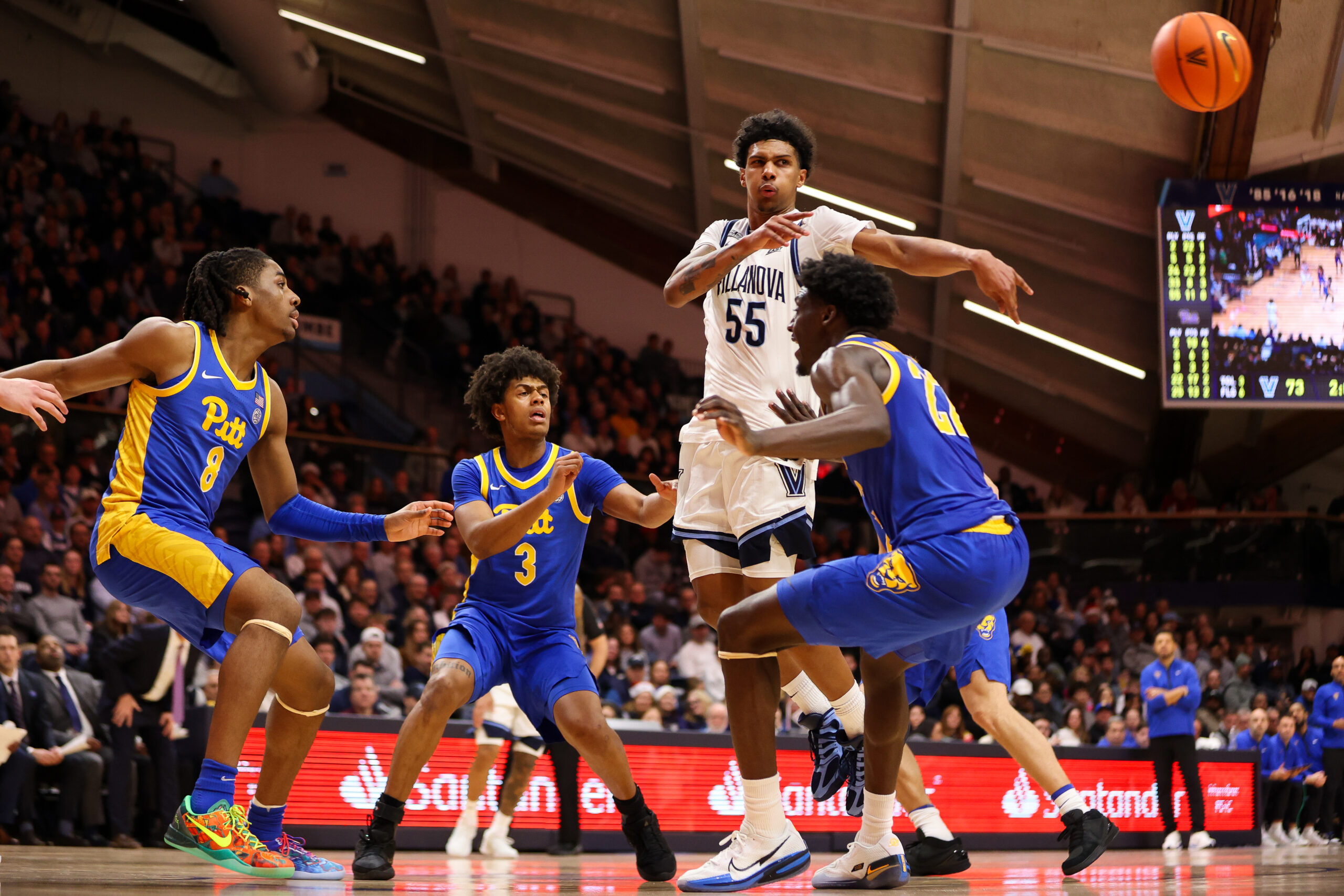
Acaden Lewis firing a pass to his left during Villanova’s win against Pittsburgh on Dec. 13.
There is, however, no advantage to being strong with both hands on the defensive end, Willard said.
“I wish it did [help him],” Willard said jokingly. “I think he wishes it did, too.”
Lewis credited his knack for the ball as the reason he is averaging nearly two steals through his first 18 college games. But while Lewis is fourth in the Big East in steals, his defense and inexperience have landed him on the bench a few times this season, including for all but 19 seconds of the final 11-plus minutes of Saturday’s loss to St. John’s.
Lewis, Willard said, takes to coaching. He was similarly benched during the second half of a season-opening loss to BYU and responded well.
“I think one of the biggest things about a leader is, he admits when he [messes] up,” Willard said. “He owns it. I think other guys have really bought in to the fact that here’s a young guy that’s getting yelled at by the coach because he’s the point guard, but he’s the man taking it.”
Having two dominant hands and arms on the basketball court has been key for Lewis during his first season, but beyond that, Willard said Lewis’ commitment to learning and studying has enabled him to play well right away. That part he expected. Eric Singletary, Lewis’ coach at Sidwell Friends School in Washington, which previously fed Villanova stars like Josh Hart and Saddiq Bey, raved about the student of basketball Willard was getting.
What Willard didn’t know until Lewis got on campus was that Lewis is a “monster competitor,” the coach said.
“I just never knew how much of a competitor, how much he wanted to win, and how much he wants to be good. I don’t think you ever really find that out until you start coaching a kid. He’s blown me away with how much of a competitor he is.”
That, and the right-handed floaters.
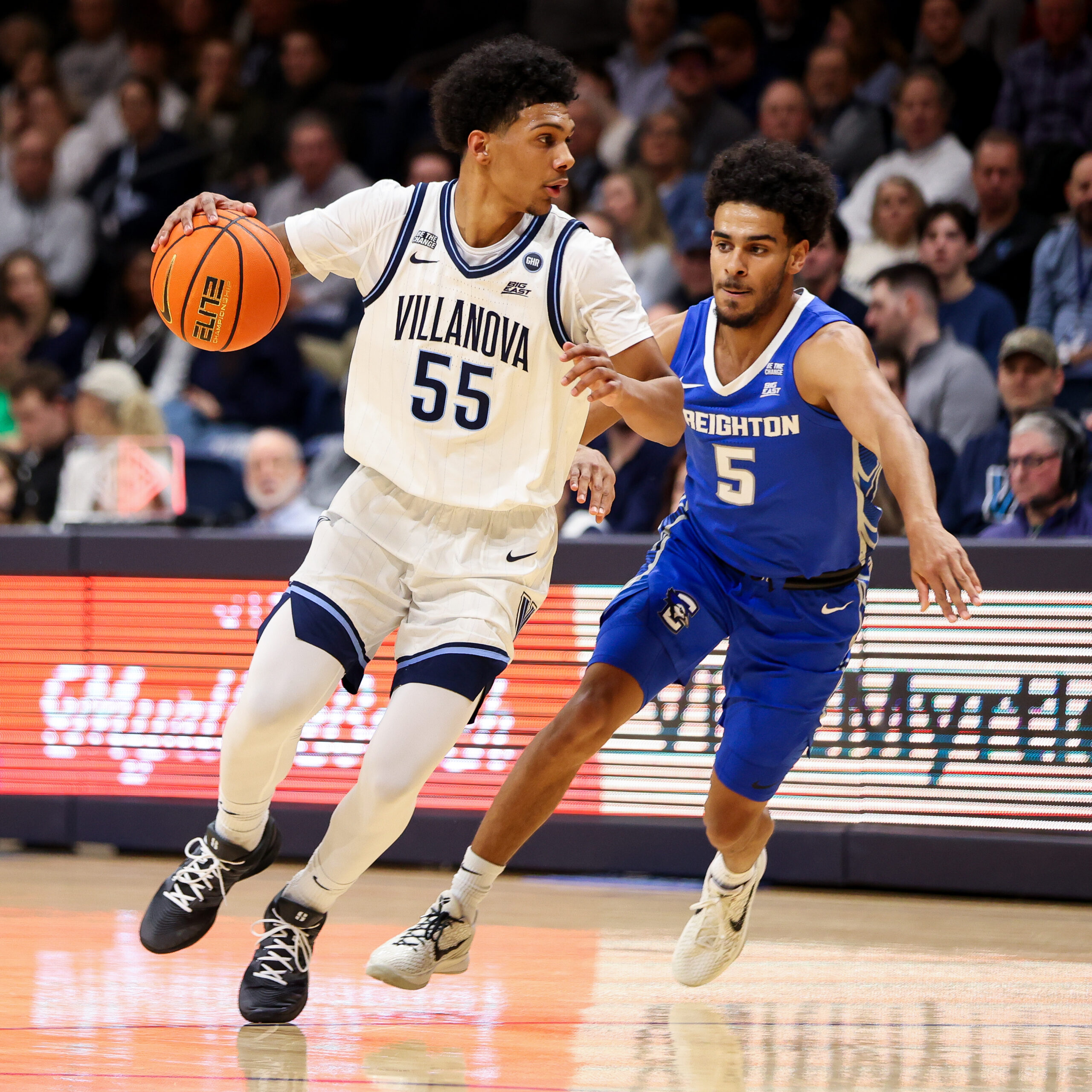
Acaden Lewis dribbles with his right hand as Creighton’s Nik Graves pursues him on Jan. 7.
Those, and Lewis’ ballhandling skills, were developed during early-morning training sessions that started when Lewis was a freshman in high school. While Lewis is right-handed, he spent his youth mostly using his left on the court. His trainer, Kevin “Uncle Skoob” Kuteyi, would pick Lewis up full-court during 6 a.m. workouts and force the teen to beat the pressure, often dribbling to his right, and finish at the rim, again mostly with his right hand.
It came naturally, thanks to Lewis’ right hand being his dominant hand.
“Everything about me in basketball is left-handed, I would say,” Lewis said. “But I’m right-handed, so I’m ambidextrous, basically. It’s weird.”
Weird, even ambiguous.
Does Lewis consider himself right-handed, left-handed, or ambidextrous?
“I’m a right-handed person who is left-handed when I hoop,” he said. “That’s how I would put it.”
From experienced offensive minds and play-callers to young and up-and-coming offensive coaches, the Eagles are looking at candidates from various backgrounds. They have so far been linked to at least eight names.
Let’s take a look at the coaches the Eagles could be looking at, according to reports. (Names are listed in alphabetical order.)
Indianapolis Colts offensive coordinator Jim Bob Cooter has a connection to Eagles coach Nick Sirianni.
Jim Bob Cooter
Cooter was a consultant when Sirianni first got the Eagles job in 2021 and has been Shane Steichen’s offensive coordinator in Indianapolis since 2023. The Eagles, according to Sports Illustrated, interviewed Cooter on Friday after the team requested permission to interview him.
Cooter does not call plays for the Colts, which is why this would not technically be a lateral move to the Eagles.
The Colts revived Daniel Jones’ NFL career before he suffered a season-ending injury this season. While he didn’t call plays, Cooter helped oversee what was one of the best offenses in the NFL before Jones got hurt.
Cooter, 41, was Doug Pederson’s passing game coordinator in Jacksonville during the 2022 season. He previously worked under Adam Gase with the New York Jets as the team’s running backs coach and before that worked under Jim Caldwell and Matt Patricia with the Detroit Lions. Sirianni and Cooter also worked together with the Kansas City Chiefs in 2012 under Romeo Crennel. Sirianni was the wide receivers coach that season while Cooter was an offensive quality control coach.
Eagles quarterback Jalen Hurts has familiarity with former Giants head coach Brian Daboll.
Brian Daboll
ESPN reported Sunday that the Eagles are expected to interview Daboll, who most recently was the head coach of the New York Giants before he was fired in November.
Daboll was also on that 2012 Kansas City staff with Sirianni and Cooter. He was the boss as offensive coordinator. Daboll, 50, worked with Jalen Hurts at Alabama, so there is plenty of familiarity with the coach and quarterback in Philadelphia.
That said, Daboll is also in the market for head coaching jobs, and an interesting one opened Monday morning when the Buffalo Bills fired Sean McDermott. Daboll was born in Canada and grew up in suburban Buffalo. He was the team’s offensive coordinator during the rise of Josh Allen before leaving to lead the Giants.
Daboll is one of the more experienced offensive coordinators on the market. His offenses have been up and down over the years, but when he led the Cleveland Browns, Miami Dolphins, and Chiefs more than a decade ago, he wasn’t working with stellar quarterback talent. His best success was with Allen, who is sort of a unicorn. Could he help Hurts turn the Eagles offense around?
Bucs offensive coordinator Josh Grizzard worked closely with quarterback Baker Mayfield (6) this season.
Josh Grizzard
The Eagles, according to NFL insider Jordan Schultz, plan to interview Grizzard, who was just let go by the Tampa Bay Buccaneers. Grizzard, 35, was the offensive coordinator for one season after joining the Bucs in 2024 as a passing game coordinator.
Before Tampa Bay, Grizzard worked with Mike McDaniel in Miami and was with the Dolphins during stints with Gase and Brian Flores, too.
Grizzard has been a fast riser. He played at Yale and was a student coach there, too. He was hired to David Cutcliffe’s staff at Duke as a 23-year-old and was there for four seasons as a graduate assistant and then a quality control coach before leaving for the NFL.
This past season was Grizzard’s first calling plays, and he oversaw a steep drop-off in Tampa after former coordinator Liam Coen departed for the Jacksonville Jaguars. The Bucs, however, dealt with multiple key injuries.
Mike Kafka was the Giants’ interim coach and knows the Eagles well.
Mike Kafka
The Eagles, according to ESPN, have already interviewed Kafka, who was Daboll’s coordinator in New York before taking over as interim head coach.
Kafka, 38, is a familiar name around here, having spent two seasons as a backup quarterback after the Eagles selected him in the fourth round of the 2010 draft.
Kafka bounced around to seven teams in six seasons before embarking on his coaching career at his alma mater, Northwestern, as a graduate assistant in 2016. He joined Andy Reid’s Chiefs coaching staff in 2017 as a quality control coach and then was Patrick Mahomes’ first position coach as a full-time starter in 2018. Mahomes’ career high in touchdowns (50) came that season, and Kafka was his quarterbacks coach through the 2021 campaign when Kafka left to become Daboll’s offensive coordinator.
The Giants, obviously, did not have a ton of offensive success under the Daboll-Kafka regime. Kafka called plays before Daboll stripped him of those duties in 2024. But Daboll gave that responsibility back to Kafka this past season. The Giants were 13th in yards per game in 2025, up from 30th in 2024. The Jaxson Dart effect.
Mike McDaniel (left) is a popular pick to become Nick Sirianni’s offensive coordinator but could also be in the running for another head coaching job.
Mike McDaniel
The Eagles’ link to McDaniel is a loose one, with ESPN’s Jeff Darlington replying “yes” to a person on X when asked if McDaniel would get an interview with the Eagles. But it’s worth including him as a candidate.
McDaniel, of course, was fired by the Dolphins after it initially appeared as if he’d return for a fifth season.
The 42-year-old went 35-33 as Dolphins head coach. Before that, McDaniel spent 11 seasons working under 49ers coach Kyle Shanahan, who is well respected as an offensive mind. McDaniel was San Francisco’s offensive coordinator in 2021 and helped lead the 49ers to the NFC title game.
His titles before that under Shanahan were running game coordinator, offensive assistant, and wide receivers coach. McDaniel could help revive an Eagles running game that stalled behind a weakened offensive line in 2025.
He is also a popular head coaching candidate.
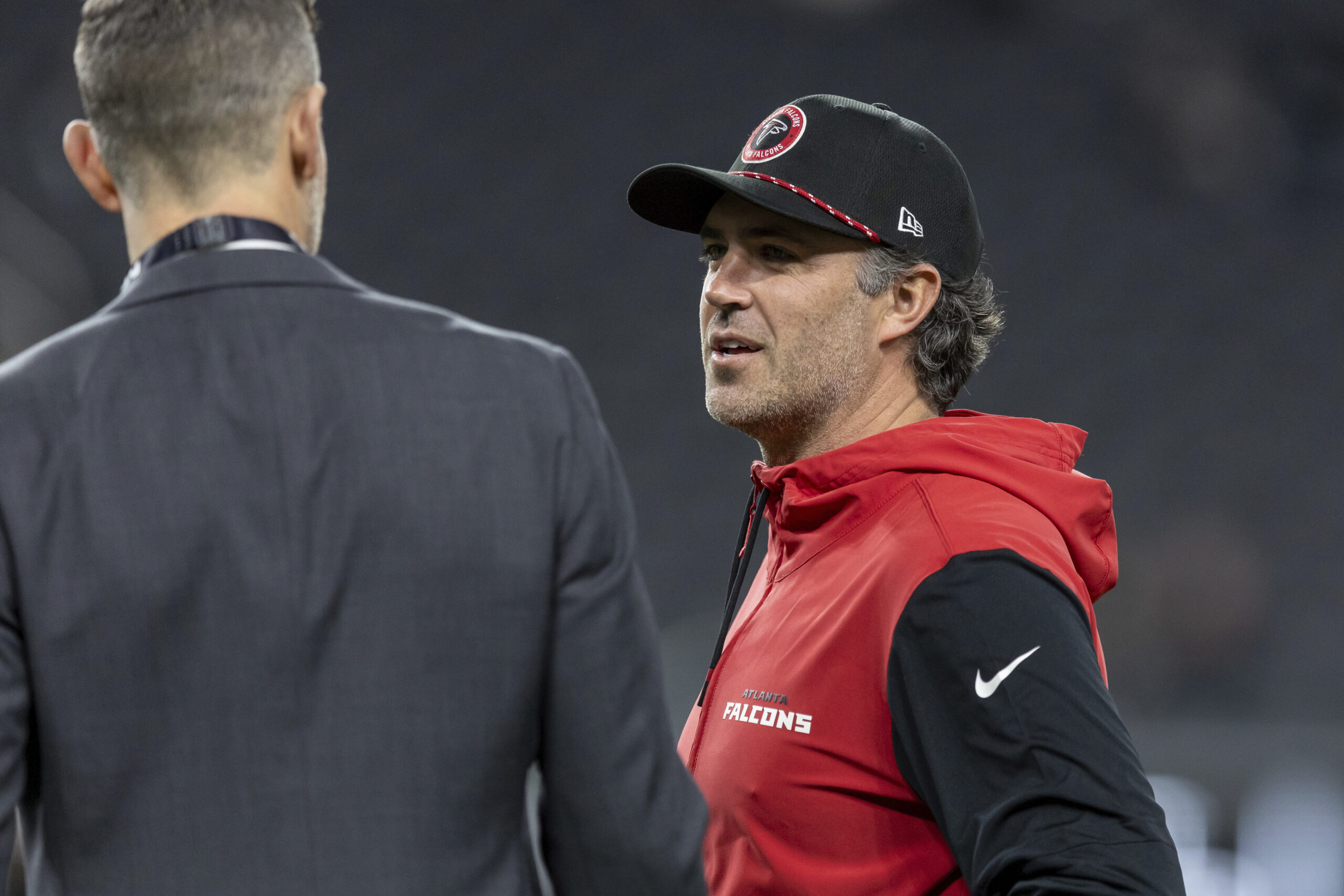
Zac Robinson helped guide Michael Penix Jr. and Kirk Cousins while with Atlanta.
Zac Robinson
The Eagles interviewed Robinson on Friday, according to ESPN. They are among at least three teams who have interviewed Robinson for an OC job, joining the Bucs and Lions.
Robinson, 39, was Atlanta’s offensive coordinator for two seasons. The Falcons had a lot of success on offense in 2024 but took a step back in 2025 as quarterback Michael Penix struggled in his second NFL season (first as a starter).
Robinson, a former quarterback, was a seventh-round pick by New England in 2010 and was in the league for four seasons as a backup or practice squad player. In addition to the Patriots, he spent time with the Seattle Seahawks, Lions, and Cincinnati Bengals.
Robinson then became an independent coach and trainer of quarterbacks and was a senior analyst at Pro Football Focus before Sean McVay hired him in 2019. Robinson eventually became the Rams’ passing game coordinator and quarterbacks coach in 2022.
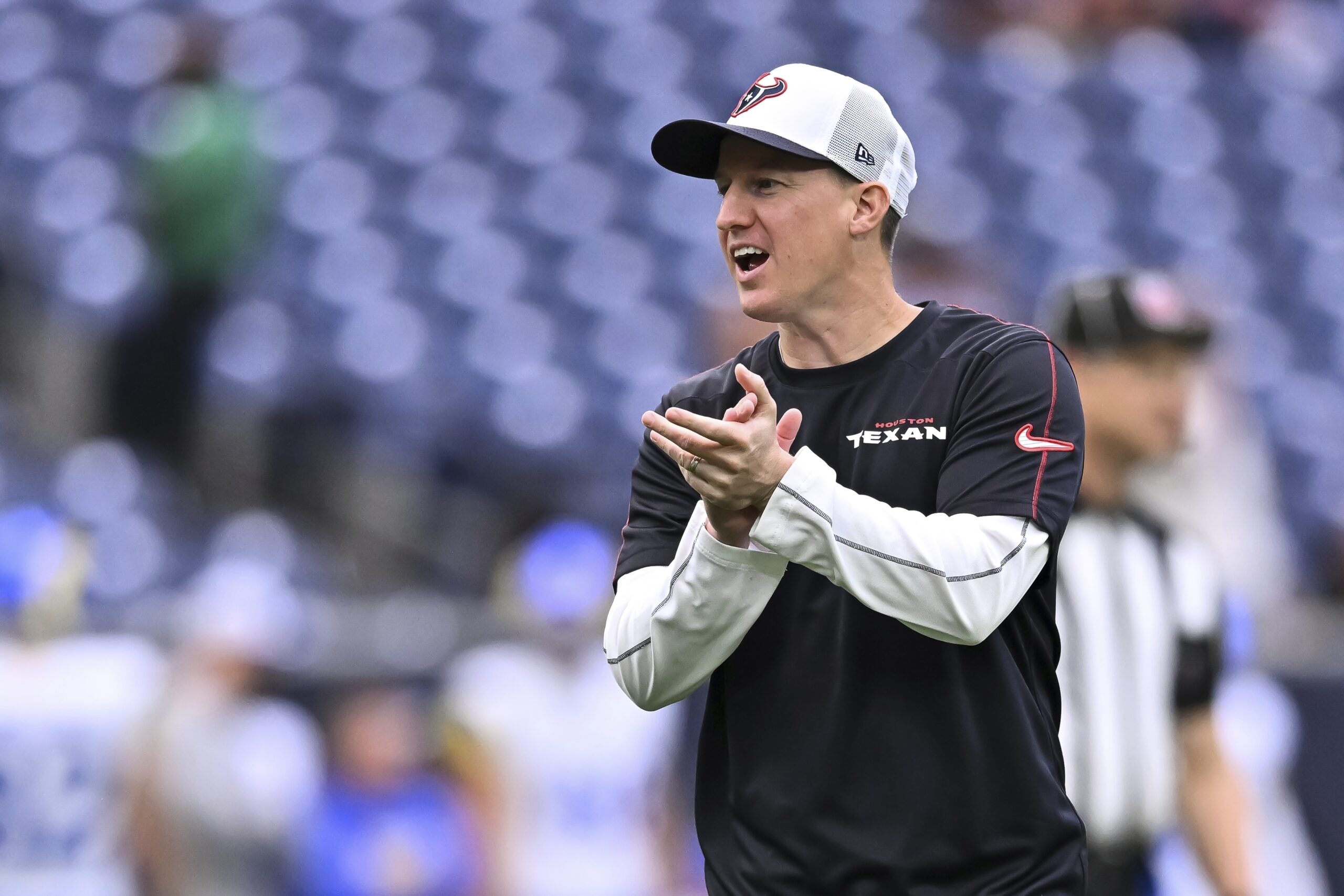
Bobby Slowik had initial success as the Texans’ offensive coordinator but was fired by DeMeco Ryans after the 2024 season.
Bobby Slowik
The Eagles, according to ESPN, requested to interview Slowik, Miami’s senior passing game coordinator.
Slowik, 38, is another branch on the Shanahan tree. He worked with the Shanahans in Washington from 2011 to 2013 and then, like Robinson, was a PFF analyst. Kyle Shanahan then hired Slowik in 2017 as a defensive quality control coach.
Slowik, the son of Bob Slowik, a longtime NFL coach, jumped to the offensive side of the ball in San Francisco in 2019. He was the passing game coordinator for the 2022 season before Houston hired him to be its offensive coordinator in 2023. He was with the Texans during C.J. Stroud’s impressive rookie season but oversaw a decline in 2024 that led to his firing.
Slowik then joined his pal McDaniel in Miami for the 2025 season.
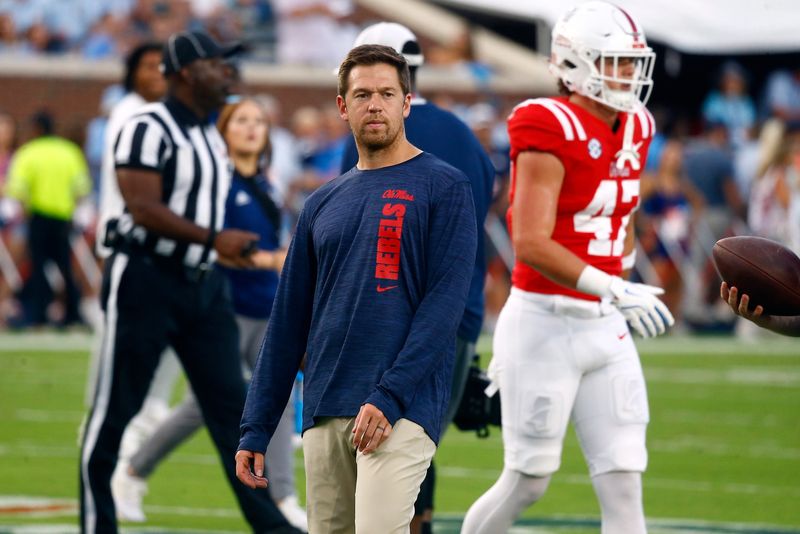
Ole Miss offensive coordinator Charlie Weis Jr. is a wild-card candidate in the Eagles’ OC search.
Charlie Weis Jr.
As with McDaniel, the connection from Weis to the Eagles is a loose one right now. The Eagles, according to the New York Daily News, “poked around” on Weis, the 32-year-old son of longtime coach Charlie Weis.
Weis was just 28 when Lane Kiffin hired him to lead Ole Miss’ offense after the 2021 season. In four seasons at Ole Miss, Weis helped lead one of the best offenses in college football. The Rebels were second in yards per game in each of the last two seasons.
Six minutes was all it took for the things that had to have worried Kevin Willard ahead of Villanova’s Saturday night showdown with St. John’s to make the difference.
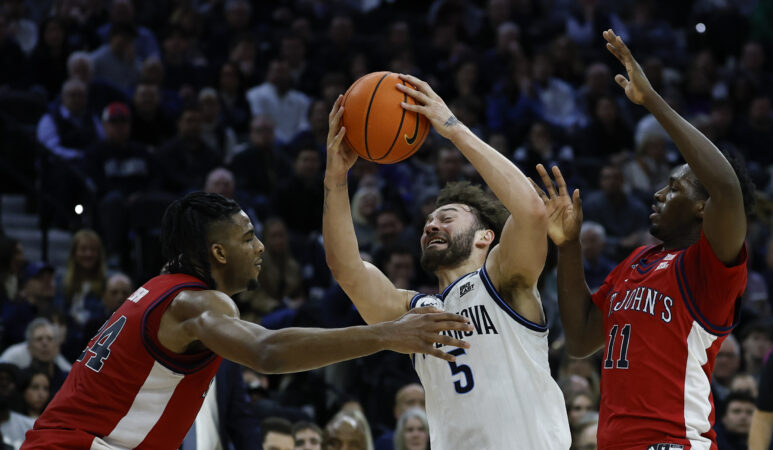
Villanova’s deficit at halftime was just one point, but by the time St. John’s converted the fifth Villanova turnover of the second half into a layup, the deficit was 56-39 with 14 minutes to go in an eventual 86-79 St. John’s victory.
Some inherent disadvantages were working against Villanova at Xfinity Mobile Arena. Chief among them were the size, strength, and experience that St. John’s possesses, and the way its defensive pressure can be unrelenting. Three of Villanova’s top five scorers — Acaden Lewis, Bryce Lindsay, and Matt Hodge — are in their first or second season playing college basketball. The Red Storm, meanwhile, starts four seniors to Villanova’s one. All of that showed during a 20-4 run.
St. John’s had 12 offensive rebounds to Villanova’s seven. Four of the 12 came during that fateful six-minute stretch. Each team had eight turnovers by halftime, but Villanova finished with 14, five during the opening six minutes of the second half, and St. John’s had just one over the final 20 minutes. The Red Storm converted those Villanova turnovers into 17 points. St. John’s had 42 paint points to Villanova’s 22.
The youthful Wildcats eventually got back in the game and trailed by five with 6 minutes, 36 seconds left and again inside of a minute to play. But St. John’s was too big, too strong, and too experienced for Villanova to get over the hump, no matter how hard junior Tyler Perkins and senior Devin Askew — who scored 23 and 21 points, respectively — tried.
Villanova’s lone senior starter, center Duke Brennan, a transfer from Grand Canyon, was no match for his experienced Big East counterparts. Zuby Ejiofor had 17 points and seven rebounds. Bryce Hopkins had 20 and six. Brennan was minus-14 on the night. Lewis finished with a season-low three points and a season-high six turnovers and was on the bench for the final 11 minutes.
Lewis, who was also minus-14, looked like a freshman, which has only happened a few times this season. Hodge normally scores 10.6 points per game but was held to four. Lindsay entered Saturday scoring 15.2 points per game and scored 11, all in the second half.
“Acaden, Bryce, Matt — freshman, freshman, sophomore — against grown men,” Willard said. “That’s why Devin and Tyler played well, because they’re grown men. They’re physical, able to play against a St. John’s where I think Acaden, Bryce, and Matt are all trying to figure out, ‘How do I play when I play against a physically dominant team?’ We’ve struggled against physically dominant teams for that reason.”
Saturday night offered Villanova (14-4, 5-2 Big East) a chance for its first real signature win. Instead, it showed, for now, where the Wildcats are. They have beaten teams projected to make the NCAA Tournament like Wisconsin and Seton Hall, but they have been knocked off by the three big dogs on the schedule so far: BYU, Michigan, and now St. John’s. Villanova is where it is — ranked 25th in the NCAA’s NET rankings and 27th at KenPom as of Saturday — in large part because it has beaten the teams it’s supposed to beat.
Villanova entered Saturday as the 21st team in ESPN bracket guru Joe Lunardi’s projected NCAA Tournament field. The best of all the No. 6 seeds. St. John’s, meanwhile, was 26th. Saturday should at least cause a flip-flop.
“You’ve got to sit back as a coach every once in a while and realize there is a process to this,” Willard said. “Sometimes you’ve got to play bad and go back and watch film and kind of … we did some things in the second half late, defensively, that made no sense.”
It is not a talent thing, Askew said. Villanova has the players, but it needs to play in games like Saturday’s to get better.
“It’s an experience thing,” said Askew, a sixth-year senior who is averaging 18 points off the bench in his last three. “As they play more games in atmospheres like that, they’ll get better. … They just have to get used to it and they will.”
Villanova coach Kevin Willard believes his team is still learning to deal with physical opponents.
The good part for Villanova is that very few teams in the Big East are built to hurt Villanova the way St. John’s can.
The Wildcats are back at the Finneran Pavilion on Wednesday night against Georgetown, which is 1-6 in the Big East. After that is another big test — a road game at No. 3 UConn next Saturday afternoon that will give Villanova a chance to quickly show what it learned from its step up in competition.
“It’s a little bit of a learning process,” Willard said. “This group, they have a great attitude, they work hard. We’re going to have some bumps in the road. It’s a part of conference play.
“We’re not at the level where we’re going to pitch a shutout. We can’t give up 50 points in the second half. We can’t give up nine offensive rebounds in the second half. We can’t come out and turn the ball over three times. That’s all part of the learning curve a little bit.”
The Eagles bowed out of the playoffs in the wild-card round, setting in motion an offseason that likely will feature a lot of change. Players and coaches will come and go, and the team won’t look the same when it takes the field for training camp in July. Some of that began right away, when offensive coordinator Kevin Patullo was relieved of his duties two days after the season ended.
We’ll keep you updated on the entire Eagles offseason at The Inquirer with news and analysis on the team as it goes through a critical offseason.
Is a new deal in the cards for tight end Dallas Goedert coming off a career season?
Roster decisions
Scheduled free agents
The Eagles have 20 pending free agents, 10 on offense, nine on defense, and punter Braden Mann.
Offense
TE Dallas Goedert: Goedert reworked his deal last offseason to stay with the Eagles and scored to a career-best 11 touchdowns, an Eagles tight end record. Considering the Eagles don’t have any tight ends on the roster, they may look to bring the 31-year-old back after he got through the season relatively healthy.
WR Jahan Dotson: The little-used third receiver could find a new home this offseason. WR3 is a tough position on this team behind A.J. Brown and DeVonta Smith, and it seems unlikely the Eagles will find it worth bringing Dotson back.
OT Fred Johnson: Johnson left for free agency after last season, but the Eagles traded for him before the season for some insurance at tackle, and they needed it. It remains to be seen how the Eagles approach the draft and free agency, but Johnson’s return would put an experienced body on the depth chart.
TE Grant Calcaterra: As mentioned, the Eagles don’t have any tight ends. Calcaterra has been productive when the Eagles use him as a pass catcher, but he’s not a great blocker, and the Eagles need their tight ends to block.
OL Brett Toth: The do-it-all lineman has been a valuable asset in Jeff Soutland’s offensive line room. He can fill in at any position.
TE Kylen Granson: Granson was a big part of the Eagles’ special teams, despite having a limited role in the offense. The tight end position is in flux, but Granson could return as a depth piece.
OL Matt Pryor: The Eagles brought back a familiar and experienced face in the offseason for some depth. Pryor gave that and provided positional versatility. But he wasn’t all that great in relief.
RB AJ Dillon: Dillon started the season in the mix to get snaps behind Saquon Barkley, but he fell out of favor after the Eagles traded for Tank Bigsby. Dillon was inactive for most of the second half of the season and logged just 12 carries. The Eagles are pretty set at running back with Barkley, Bigsby, and Will Shipley.
QB Sam Howell: The Eagles weren’t comfortable with Kyle McCord as QB3, so they acquired Howell before the season. Will McCord be ready after spending the 2025 season on the practice squad?
FB Ben VanSumeren: VanSumeren changed positions from linebacker to fullback and made the 53-man roster, but his season ended on the opening kickoff in Week 1. The Eagles signed Kansas City’s Carson Steele to a futures contract. Will they bring back VanSumeren and have a fullback competition?
The Eagles got a good look at linebacker Jaelan Phillips after acquiring him at midseason.
Defense
EDGE Jaelan Phillips: The deadline acquisition stepped in right away and was a difference-maker along the defensive line. The Eagles need a top-end edge rusher to add to a unit that has Jalyx Hunt and Nolan Smith under contract. Phillips would make sense.
LB Nakobe Dean: Dean returned from patellar tendon surgery in the middle of the season and looked like he didn’t miss a beat. But the Eagles drafted his replacement last season in Jihaad Campbell.
S Reed Blankenship: Blankenship has been a big part of the defense for the last four years. He has started 50 games and is a leader. The Eagles are thin at safety, but it remains to be seen what Blankenship’s market looks like and if the Eagles will be in the mix.
CB Adoree’ Jackson: Jackson was up and down in training camp and to start the season, but he played his way into a starting job opposite Quinyon Mitchell. He’ll be 31 next season, and the Eagles probably want to get better at CB2.
S Marcus Epps: Epps stepped in as a starter after Drew Mukuba went down. He’ll be 30 before the season starts, though he could find his way back to the Eagles and compete for a job.
EDGE Brandon Graham: Graham came out of retirement and briefly changed positions when Jalen Carter went down and the interior needed a boost. Will he go back into retirement?
EDGE Joshua Uche: Uche seemed to be playing his way into a bigger role when the Eagles brought Graham out of retirement, which forced Uche to a lesser role. The Eagles are thin on the edge, though Uche seems to be more of a depth piece right now.
EDGE Azeez Ojulari: Ojulari ended up behind Uche on the depth chart and then missed most of the season after being placed on injured reserve.
EDGE Ogbo Okoronkwo: Okoronkwo made the team out of training camp as a depth edge rusher but suffered a season-ending injury in Week 4, the only game in which he played.
Special teams
P Braden Mann: Mann had a great season. He ranked fifth in the NFL in punt average (49.9 yards). It would make sense for the Eagles to want to bring him back.
Jordan Davis, left, and Jalen Carter could both be in consideration for new deals.
New deals?
There are a few players under contract who could be in the running for a new contract with the Eagles.
DT Jordan Davis: The Eagles picked up Davis’ fifth-year option last offseason and he remains under contract for the 2026 season. But after a breakout 2025 season, he likely earned himself a lot of money.
DT Jalen Carter: The Eagles likely will do what they did with Davis and pick up Carter’s fifth year, but it might be time for an extension now. Carter didn’t have his best season after a dominant 2024. The Eagles may be able to sign him to a more team-friendly deal, though Carter and his agent, Drew Rosenhaus, may opt to play 2026 on his current deal and revisit the big-money deal next offseason.
DT Moro Ojomo: Ojomo is set to play the final year of his four-year rookie deal in 2026. The seventh-round pick has been a major success story. Will the Eagles look to lock him up beyond 2026? Will they be able to afford all of these defensive linemen with big contracts coming in the future for other defensive stars like Quinyon Mitchell and Cooper DeJean?
Contracted players who could be on the way out
The Eagles have some players on the 2026 roster who may not be here when training camp starts.
K Jake Elliott: Elliott has had two consecutive seasons where he didn’t perform well enough. His 2025 field goal conversion rate was just 74.1%, the lowest of any kicker who played a full season.
WR A.J. Brown: Will his frustrations with the offense cause him to ask for a trade? It would be a costly move for the Eagles, but they’ve willingly taken on dead cap in the past. The Eagles would have a big hole to fill if it came to that.
RT Lane Johnson: Johnson remains one of the best tackles in football, but his availability was an issue this season. He missed the final eight games of the season after suffering a Lisfranc injury in his right foot. The Eagles probably would love him back, but Johnson will be 36 in May and won’t play forever.
QB Tanner McKee: Will the Eagles look to ship McKee to another team for a draft pick? McKee’s Week 18 performance didn’t help their cause.
CB Kelee Ringo: Ringo remains under contract on his rookie deal, but he seems like a change-of-scenery candidate. He has struggled to get on the field with the Eagles, though he has been great on special teams.
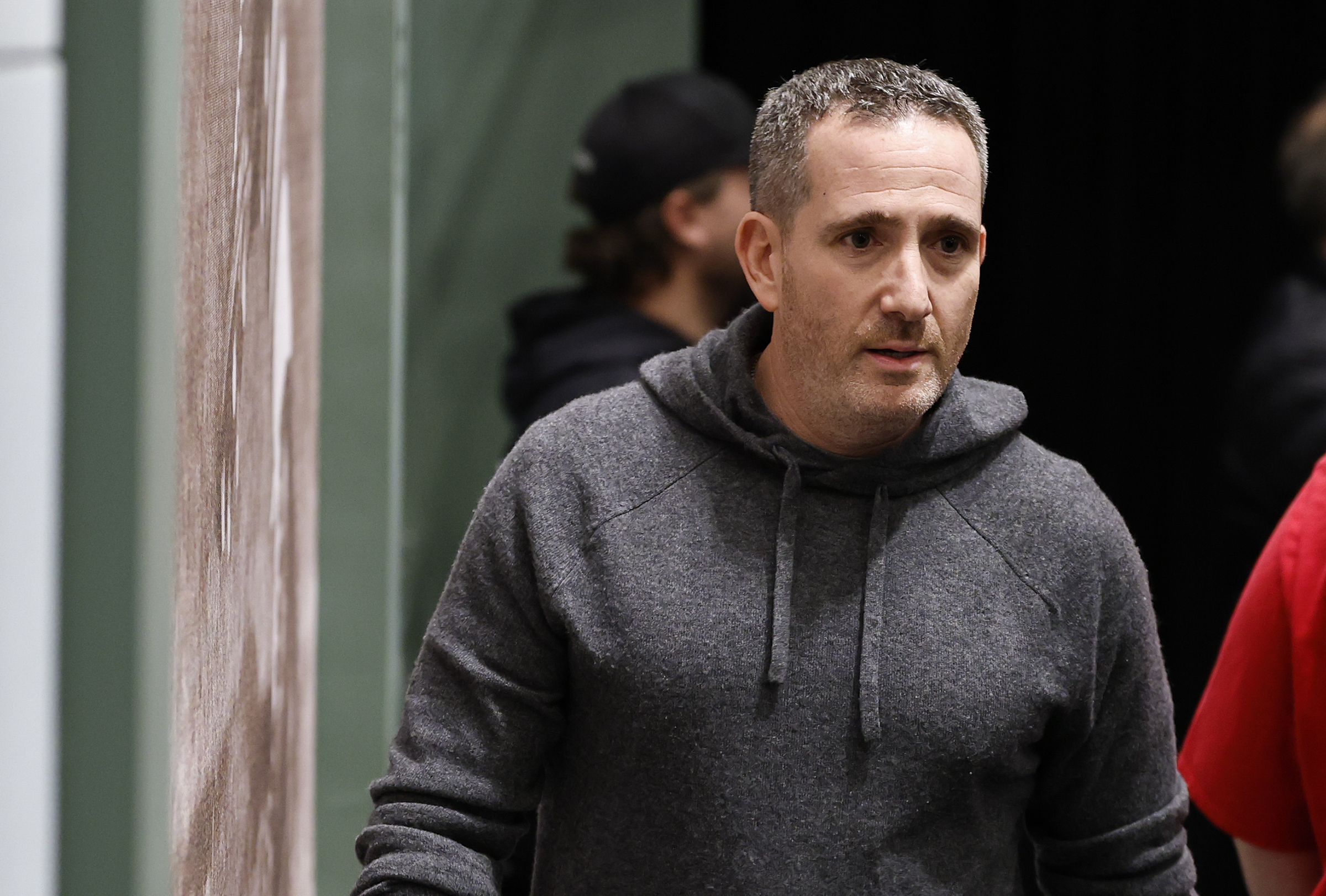
Howie Roseman will be central to the selection of a new offensive coordinator.
Coaching staff changes
Patullo’s ouster kicked off an offseason that could see a few more coaching changes.
The Eagles, of course, are looking to hire an offensive coordinator. Nick Sirianni said he wants the Eagles’ offense to continue to “evolve” and the team appears to be going after some experienced play-callers to get their offense back on track.
Who else could be on the move?
For starters, special teams coordinator Michael Clay is not under contract for next season.
Additionally, defensive backs coach Christian Parker has been a popular name for defensive coordinator openings. Defensive line coach Clint Hurtt has been a coordinator before and, after his work with the Eagles’ front, could get some interviews.
A new offensive coordinator could mean more shakeup on the offensive staff, too.
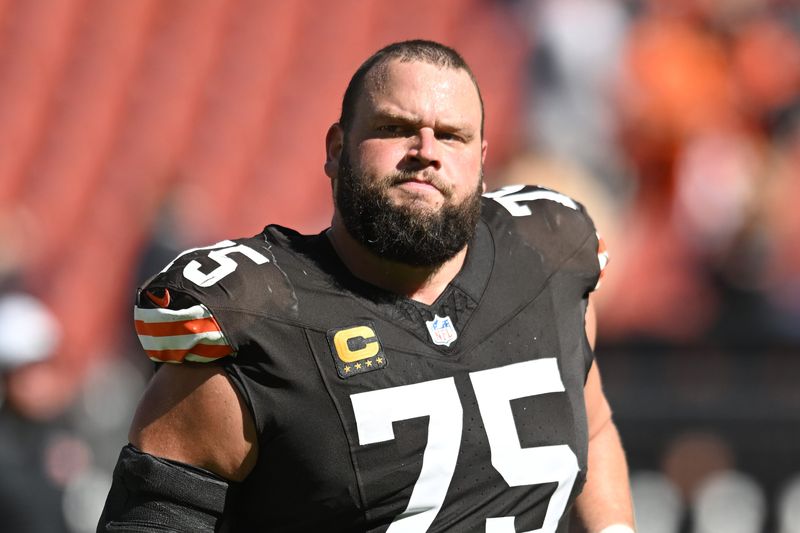
Guard Joel Bitonio has been a respected member of a Browns team that has otherwise struggled for most of his tenure.
2026 free agency targets
What do the Eagles need most? What kind of players will be on the market?
First, the Eagles need to know what happens with the futures of key offensive players like A.J. Brown and Lane Johnson.
At the moment, they have just over $15 million in cap space, according to Over the Cap. That’s not a lot, but Howie Roseman has shown the creativity to use void years and spread cap hits out over multiple seasons.
Free agency begins March 11.
Position groups and players to target
Offensive line: Will Johnson return? Will Landon Dickerson ever be healthy again? Can Cam Jurgens bounce back? Big questions facing the Eagles, who need to restore their offensive line this offseason. Reinforcements likely will come via the draft, but free agency offers some options.
Indianapolis Colts right tackle Braden Smith, for example, has dealt with injuries but could provide insurance for Johnson and help the Eagles bridge their way to the next young tackle. Old friend Isaac Seumalo fits that bill, too, at guard. Same with Cleveland Browns guard Joel Bitonio.
Wide receiver: Regardless of what happens with Brown, the Eagles could use some more help at receiver. They won’t be playing in the George Pickens pool, and probably not Alec Pierce, either, but what about Romeo Doubs, Kendrick Bourne, or Van Jefferson at WR3?
EDGE: Jaelan Phillips should be at the top of the Eagles’ wish list. Jalyx Hunt and Nolan Smith are the only two edge rushers under contract. The Eagles will draft at least one rusher, but they need a top-end talent like Phillips. If not Phillips, other top options would be Trey Hendrickson, Odafe Oweh, Boye Mafe, Joey Bosa, and Khalil Mack. There’s always the possibility of Roseman figuring out a way to trade for Maxx Crosby, too.
Tight end: Dallas Goedert may be in the running to return. But if not, the Eagles could eye someone like Atlanta’s Kyle Pitts, who finally played to his potential this season. Pitts attended Abington and Archbishop Wood before playing at Florida in college. Other free agents include Isaiah Likely, David Njoku, and Tyler Higbee. The Eagles probably will use a draft pick on one, too.
Cornerback: Quinyon Mitchell eventually will re-sign at the top of the market, and you don’t see many teams spending that type of money on two players at this position. But there are some options the Eagles could target, like Tariq Woolen, Roger McCreary, and Jamel Dean. Will those players be too costly? We’ll see.
Safety: Reed Blankenship has been solid for the Eagles, but he’s not great in coverage. The Eagles could be looking to pair Drew Mukuba with a better player on the back line, and they could look to do that via free agency. Old friend Kevin Byard has been really productive with the Chicago Bears, though he could command a bigger contract than the Eagles are willing to give out. Los Angeles Rams safety Kamren Curl could be an option.
The 2026 NFL draft
The Eagles’ needs here will become clearer after free agency, though our Devin Jackson looked at a few potential targets at pick No. 23.
The draft will take place beginning on Thursday, April 23, in Pittsburgh.
Before that, there are some other key dates and events to look out for.
The East-West Shrine Bowl is on Jan. 27; the Senior Bowl is on Jan. 31; the yearly NFL Scouting Combine begins on Feb. 23; and teams have until April 15 to conduct visits, tests, and interviews with prospective draft picks.
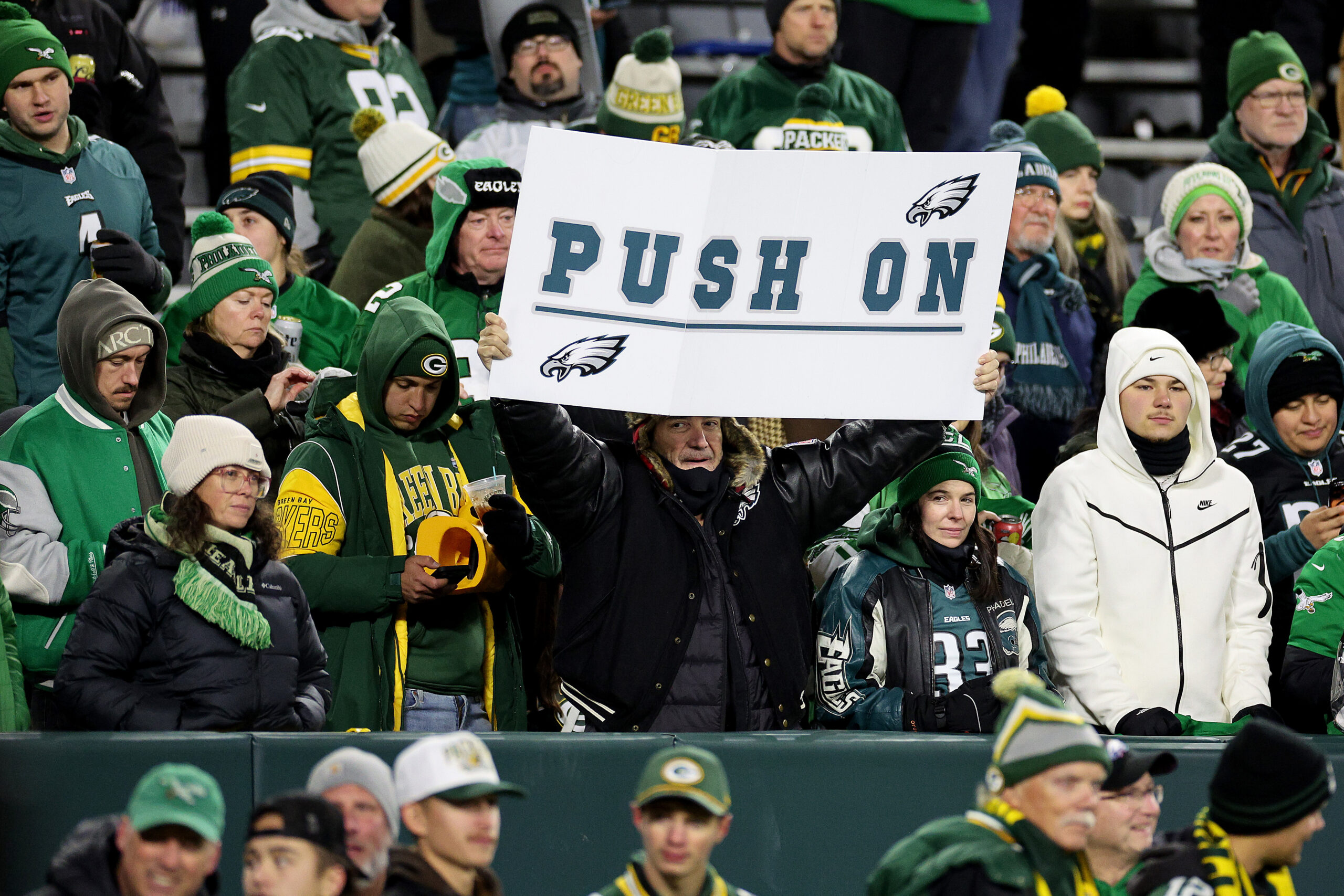
Will there be more drama around the Tush Push this offseason?
League meetings
The annual league meeting is from March 29 to April 1 in Arizona. It is there that the Tush Push likely will be another big topic of conversation and could meet its demise.
But the Eagles’ lack of success using their signature play this season could result in some teams backing off a little bit. We’ll see.
There’s also another league meeting May 19 and 20 in Orlando.
2026 Eagles schedule
The Eagles’ opponents are known. They play home games vs. their three divisional opponents (Washington Commanders, Dallas Cowboys, and New York Giants), as well as other games vs. the Indianapolis Colts, Carolina Panthers, Los Angeles Rams, Seattle Seahawks, Pittsburgh Steelers, and Houston Texans.
Besides their three NFC East road games, the Eagles also travel to play the San Francisco 49ers, Chicago Bears, Arizona Cardinals, Jacksonville Jaguars, and Tennessee Titans.
It remains to be seen if the Eagles will get an international game.
The schedule is due out in May, but international dates will likely be released prior to that.
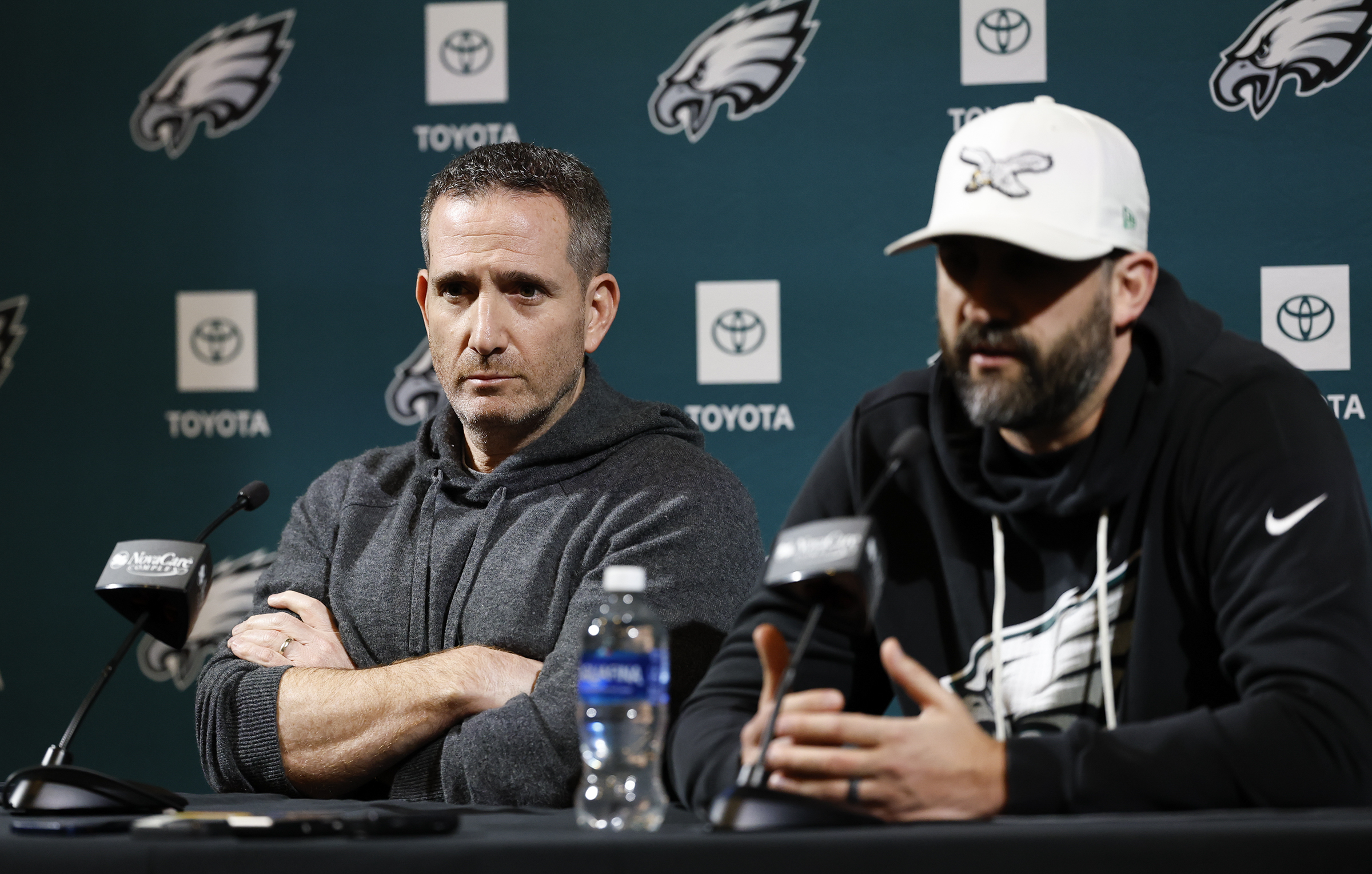
The main topics at the end-of-year news conference Thursday afternoon at the NovaCare Complex mainly centered on why Kevin Patullo was no longer the offensive coordinator of the Eagles, what Nick Sirianni and Howie Roseman wanted in his replacement, and the evolution of the team’s offense.
But two additional questions during the 24-minute session will have an impact on that next coordinator and the Eagles overall.
A.J. Brown’s future in Philadelphia is a major offseason storyline, as is Lane Johnson’s future playing football in general.
Brown’s frustrations this season and last have been well-documented. The star receiver expressed his frustrations with the offense and his involvement in it via cryptic social media posts, on a video game livestream, and in media interviews. He declined to make himself available to the media after the Eagles’ postseason exit, both postgame and the following day as the team cleared its lockers.
Would Roseman be open to trading Brown, or is that a nonstarter?
“It is hard to find great players in the NFL, and A.J. is a great player,” Roseman said. “I think from my perspective, that’s what we’re going out and looking for, when we go out here in free agency and in the draft, is trying to find great players who love football, and he’s that guy. So that would be my answer.”
It was not a yes, and it was not a no. Reading between the lines, trading Brown would require the Eagles to get a haul in return.
A.J. Brown’s unhappiness was apparent during the 2026 season.
There also are salary cap implications.
Brown signed a three-year extension in 2024 that carries through the 2029 season. If the Eagles traded Brown before June 1, they would take on a dead cap hit of $43.5 million. Keeping Brown would mean a $23.4 million hit. Trading him would offer cap savings in 2027 and beyond. The Eagles have been open to taking on dead cap in the past, and Roseman has been a savant at gaming the NFL’s salary cap system to the Eagles’ advantage.
Johnson’s future also is a big factor in the cap math next season and beyond. The future Hall of Fame right tackle missed the final seven regular-season games as well as Sunday’s playoff loss with a Lisfranc injury in his right foot. Johnson has talked publicly last season and before this season about his career timeline.
“My goal is to play well throughout my middle to maybe my upper 30s,” Johnson, who will be 36 in May, said last March. “I love the challenge of being an older player and the routine you got to keep up with.”
Lane Johnson’s injury-related absence in 2025 had a material effect on the offense’s production.
That was, however, before he suffered another injury. Johnson, like Brown, was not available to reporters as the season wrapped.
Did he give any indication to Roseman whether he’ll be back?
“I think all those conversations that we have with our players are between us, and anything they’re doing — I’m not saying that negatively or positively — but anyone you ask about, I think that’s their business to discuss,” Roseman said. “Obviously, you’re talking about a Hall of Fame player who has been a huge, huge part of any of our success we’ve had. And when you watch him play, he’s still playing at an elite level.”
Not a yes. Not a no.
The ‘natural arc’
The futures of those Eagles stars are pivotal because their status impacts how the Eagles approach free agency and the draft. They also make up a large chunk of the team’s high-priced offense.
The Eagles are at an interesting point in the state of their roster. They have an aging and expensive offense that is underperforming relative to its cost and a young and inexpensive defense. That will change soon. Jalen Carter and Jordan Davis are in line for extensions. Quinyon Mitchell and Cooper DeJean are right behind them. The Eagles need to improve at edge rusher and have other holes to fill.
Howie Roseman and Nick Sirianni will have to balance the team’s roster needs with financial pragmatism.
“As you get better, you have a natural arc of the team, and I think that, when you look at our team, we drafted a lot of offensive players, we re-signed a lot of offensive players,” Roseman said when asked if the team had the resources to keep the players it wants to. “We drafted a lot of defensive guys that were young and on rookie contracts. There’s natural transition in what we do … in terms of where you’re paying your guys, which side of the ball you’re paying your guys who are coming up.
“The important thing for us is there are players we can’t lose — obviously, we’re going to do what’s best for us … but within reason — and that we want to keep around here because they’re really good players, homegrown players that are really good people, that are part of our core. With that, you’re going to have to make sacrifices. That’s on me to make sure the sacrifices we make are filled in with really good players again.”
“If it doesn’t end with confetti falling on our head, I don’t feel like it’s good enough,” he added. “I know we’re not going to win the Super Bowl every year. I think I know that from a broad perspective, but I believe we can. I go into every offseason thinking we’re going to do whatever it takes to win a Super Bowl and when we fall short I look at myself. I look at the things that I could have done different and I look to improve.”
It was not Roseman’s best offseason coming off last year’s Super Bowl. The Eagles did not get great production from their 2025 draft class, though they also had a roster without many openings. It’s worth noting that their first two picks in 2024 were All-Pro selections this season, and the jury is still out on their first two picks from the most recent drafts. They did not, however, make adequate upgrades on the edge and twice had to lure players off their couches to join the team before being forced to use a draft pick to acquire Jaelan Phillips. They don’t have obvious answers for what’s next for an aging and declining offensive line.
They need to get younger and cheaper at some positions, but they also have the talent to try to push for another championship. Finding the next offensive coordinator is a big part of that, but roster construction is critical. Roseman’s offseason task is to balance it all.
“You can do whatever it takes to win now and still build for the future and still have those parallel paths,” he said. “I just don’t want it to get confused that we can’t do whatever it takes to build a championship-caliber team next year and also continue to have really good players on this team for the future.”
Jihaad Campbell’s rookie season with the Eagles did not follow a conventional trajectory.
The first-round pick out of Alabama was touted as a versatile defensive weapon who offered the Eagles the ability to line him up in multiple spots. He could align inside or outside, off the ball or on the ball. Nakobe Dean’s injury rehabilitation, however, meant Campbell worked exclusively inside during training camp and started there next to Zack Baun for the first seven games of the season.
Then Dean returned, forced himself back into a permanent role, and the Eagles toyed with Campbell on the edge a little more, at a position that lacked depth, before eventually cutting his playing time when reinforcements emerged. Then Campbell was back to starting inside after Dean suffered a hamstring injury in Week 16. Overall, it’s hard to judge how the 21-year-old’s season with the Eagles went.
“Some adversity points,” Campbell said when asked to summarize his season Monday as the Eagles cleaned out their lockers after their playoff exit. “But when you look back at it, the only thing I can think about is being grateful, being thankful for the opportunities that I learned throughout the season, and just being able to be utilized and be trusted to be on the field.”
Campbell, who’s from Erial in Camden County, played in all 17 games and started 10 of them. He accumulated 80 tackles and had one interception to go with a fumble recovery and one forced fumble. Pro Football Focus graded him as the 13th-best of 88 linebackers. He excelled in pass coverage and was solid against the run.
Campbell is embarking on his first real NFL offseason, and it is an important one. He likely will be, as he said, utilized and trusted more next season because Dean is a pending free agent whose return to the Eagles seems unlikely. The Eagles paid Baun a premium price and have Campbell on a rookie deal waiting in the wings to replace Dean.
“Just hungry,” Campbell said of his offseason approach. “Of course, I’m going to give myself some grace and relax and get my mind off of things, but stay sharp spiritually, stay sharp physically, stay sharp mentally, and really do what I have to do to be the best absolute version of myself so when I come back I’m making sure that I’m staying on top of everything I have to do.”
Jihaad Campbell’s fumble recovery against the Bills was one of his highlight reel-worthy moments of 2025.
Campbell said he wasn’t given specific things to work on from the Eagles’ coaching staff, but he planned to work on “everything.” There were things he learned with the Eagles and from Vic Fangio that he “never really knew.” He learned plenty from Dean, too.
“That’s a damn good football player,” Campbell said. “I learned a lot from that guy, man, in the run game, blitzes, in the passing game. Really just being a baller, a person who knows football in general. It’s hard to come around guys who really know football and really dissect it in a simple format. That’s what he does, and that’s why he’s one of the best linebackers in the world.”
Campbell took his midseason demotion in stride. He said in November that his focus was on helping the Eagles win games in whatever way he could and staying prepared for when his number was called. The Eagles needed him to start their final two regular-season games. He was credited with two quarterback pressures in each of those games and had seven tackles vs. Buffalo and 10 vs. Washington.
How did Campbell handle the ups and downs with ease?
“I think it’s just all about controlling the things that you can control, and only that,” he said. “I make sure that I come in this building every day with a smile on my face, with a getting-to-work mentality, whatever it is.”
Jihaad Campbell’s role increased during the latter stages of the season.
It was unsurprising, then, that Campbell didn’t put himself in a box when asked Monday about his positional future. Nine months ago, the Eagles lauded his ability to be a chess piece at different spots. Where does Campbell see himself long term?
“I think it’s all about the value and how good you can be at anything you can be put in, whether that’s being an R3 or L3 on kickoff or punt return or any of those things on special teams,” he said. “For me, it’s all about just being trusted and being able to be utilized in this scheme wherever they want me to be at, whether that’s inside linebacker, outside linebacker, just making sure that I’m on top of my things and having continuous improvement.”
As he did this past season, Campbell seems content to go with the flow.