Author: Mike Newall

  • On July 4, 1776, a world-changing Declaration rings out from Philadelphia

    On July 4, 1776, a world-changing Declaration rings out from Philadelphia

    Philadelphia. July 4, 1776.

    Independence is real. Philadelphia rejoices.

    And a printer awaits a declaration.

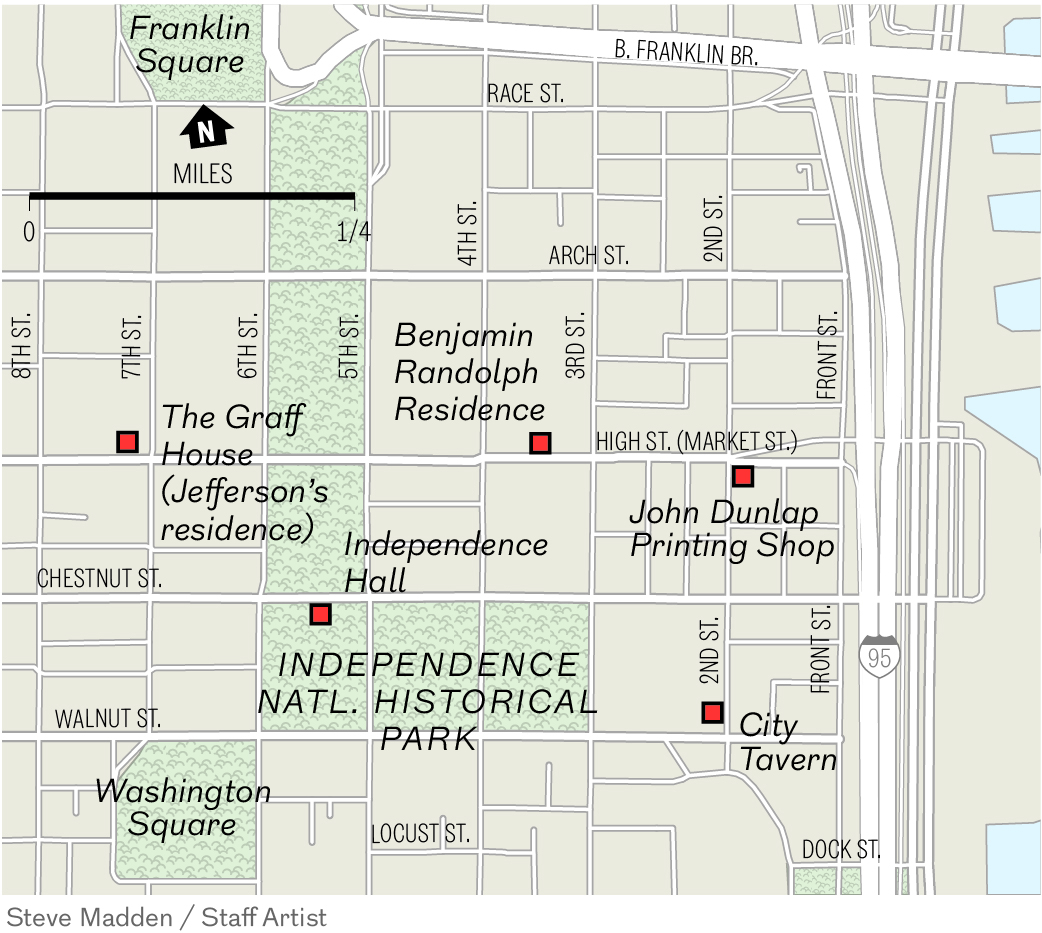
    John Dunlap, 29, an immigrant from Northern Ireland who operates a printing shop at Second and High Streets, a short stroll from the Pennsylvania State House, where the rebels conspire, has watched with keen attention the epochal events of the preceding days.
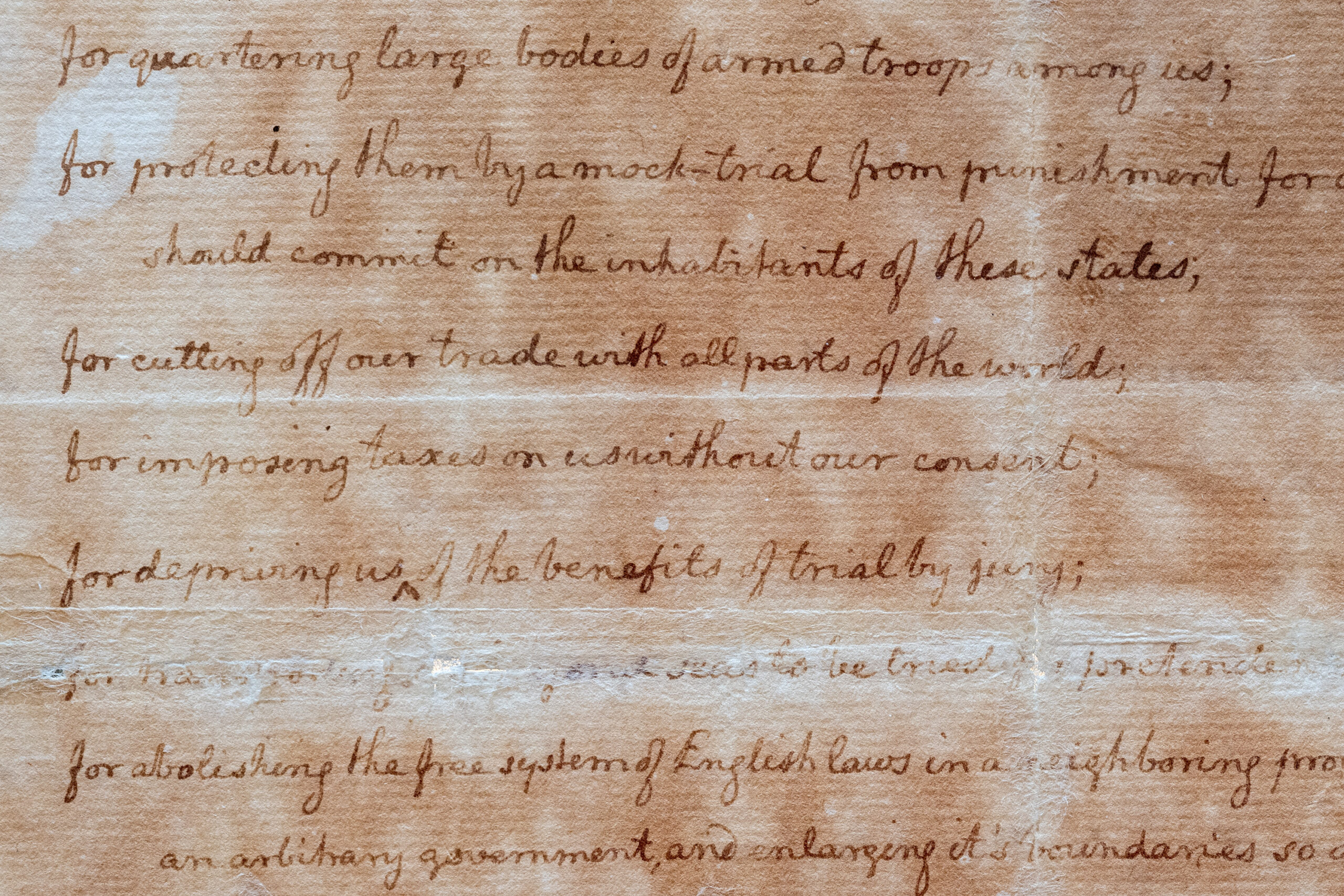
    A faded copy of a draft of the Declaration of Independence handwritten by Thomas Jefferson.

    The exultant patriots and curiosity seekers who braved suffocating summer heat to stand watch outside the State House on July 1, when the 56 delegates of the Second Continental Congress finally commence their locked-door debate on independence. The rapture that seems to ring out from every Philly tavern and tippling joint, coffee house, and street corner on July 2, when word that Congress voted to sever ties with King George III spreads through America’s largest and wealthiest city, like a bolt from one of Dr. Franklin’s electricity experiments. The joy. Hope.
    And now, as an unusually mild morning gives way to rain-laden clouds, Philadelphia holds its breath upon the brink of a mighty happening.

    Cloistered inside their chambers, the delegates fiercely debate and painstakingly parse Thomas Jefferson’s draft of America’s founding creed. Its passage will formalize independence.

    Dunlap, who will eventually serve Washington as an officer in the First Troop Philadelphia City Cavalry, is a patriot. But nobody’s fool. Months earlier, Dunlap had secured a lucrative $654 printing contract with the Congress, and the handsome commission it brings.

    The ink-stained Irishman with the whipcord build of a jockey prepares the shop for the Herculean task he knows is coming. The delegates will desire to thunder out the news of American independence before the iron gall ink even dries on the Dutch paper. John Hancock, 40, charismatic president of the Congress, will want as many broadsides as Dunlap can muster by dawn. Printing broadsides by hand in sweltering, trembling candlelight — meticulously setting the type, carefully rolling the ink, and pulling the heavy presses — is messy, demanding work, the hardened printer knows. He’ll plan to toil until morning’s light.

    Outside, citizens collect in High Street. Soon, the print shop door pushes open. A man, his face obscured by the sun, darkens the doorway. He holds something close. A rag paper manuscript written in fine hand, still wet from fresh changes, and borne by delicate hand to the expectant printer. Words upon which a nation now rests. A declaration.

    July 1, 1776: Three days earlier

    At the Second Street boarding house of Mrs. Sarah Yard, John Adams, 40, awakes before dawn. The unyielding lawyer and farmer from Massachusetts has become accustomed to the city’s morning clarion cry of crowing roosters, ringing bells, clanking ships, and cursing sailors. But not its heat.

    Behold this atlas of independence at his breaking point. Exhausted. Homesick. Hot. Beyond cantankerous that any rational being could yet flinch at the surety and necessity of American independence. For weeks, Adams answers angry letters from citizens demanding to know why Congress stalls.

    “The only question is concerning the proper time for making a specific declaration in words,” Adams writes, barely concealing his own impatience. “But remember you can’t make thirteen clocks strike precisely alike at the same second.”
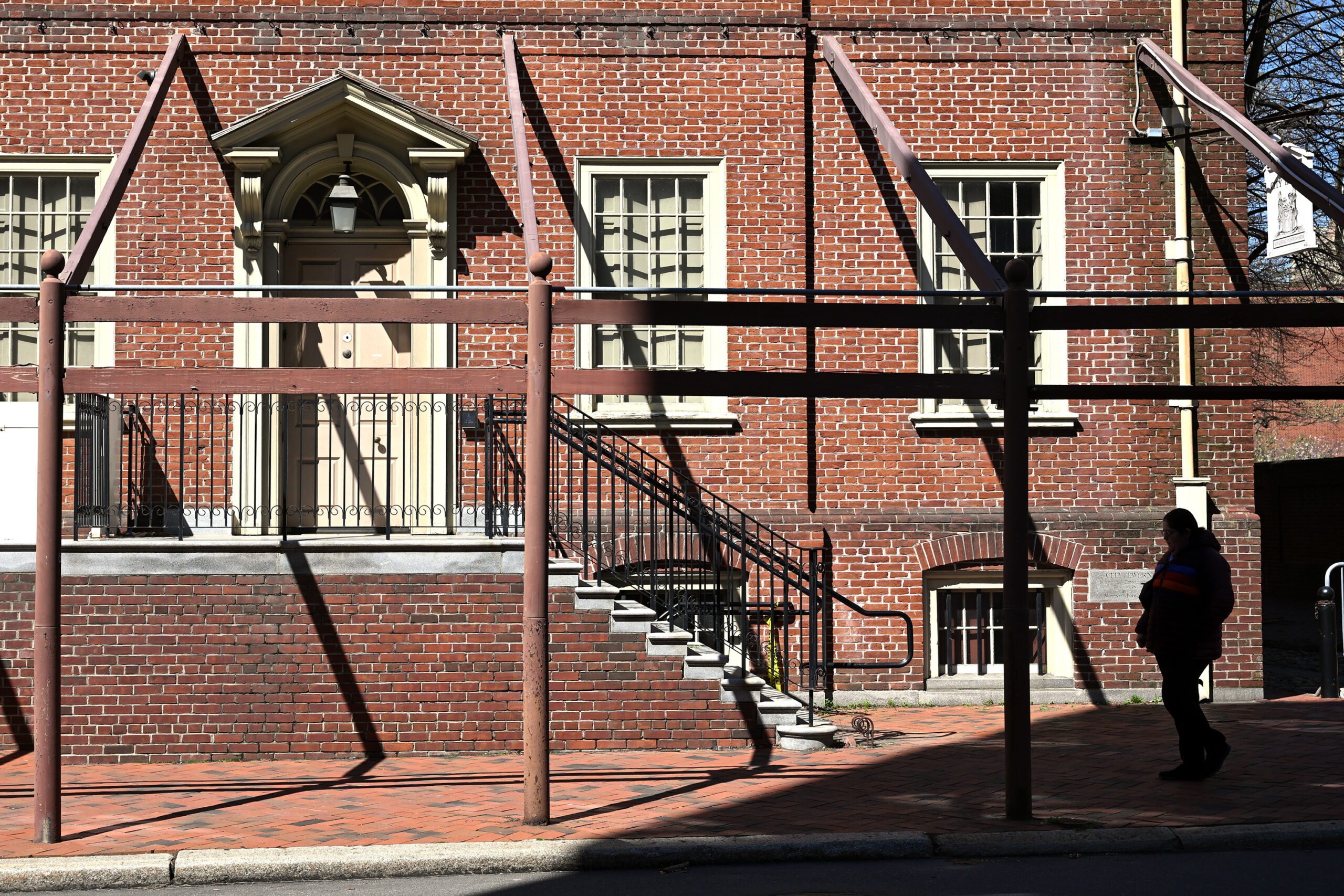
    John Adams and his cousin, Samuel, shared a boarding house near the City Tavern in July 1776. This reconstruction of the original tavern was built in 1975.

    For nearly two years, John Adams has fought for liberty like a bruising prizefighter, while his less refined older cousin, Samuel, 53, conducts a campaign of persuasion in the shadows. No one has done more than John Adams for independence. On this morning, John Adams dresses in the twilight, wishing that he had been blessed with the graces and gifts of ancient orators.

    “This morning is assigned the greatest debate of all,” Adams writes before leaving for the State House. “A declaration, that these colonies are free and independent states, has been reported by a committee some weeks ago for that purpose, and this day or tomorrow is to determine its fate. May heaven prosper this newborn republic.”

    At 9 a.m. on July 1, 1776, Andrew McNair, old and gray bellman of the State House, pulls shut the chamber’s heavy doors. Hancock gavels history to order.

    In the silence, rises Pennsylvania’s reluctant rebel, John Dickinson. His writings once rallied American farmers against British taxes. Now, ghostly and gaunt from illness, he remains a dogged dissenter against independence. Summoning his strength, he abides his conscience, arguing America is not yet ready.

    To proceed with a declaration during an uncertain struggle would be “to brave the storm in a skiff made of paper,” he tells his colleagues, before sitting.

    Outside, the heat breaks. Rain beats against the chamber’s tall windows. Thunder booms. Lightning flashes.

    Adams stands. He speaks over the stormy din. His precise words are lost to posterity. He speaks for two hours. John Adams moves men.

    Adams speaks “with a power of thought and expression that moves us from our seats,” Jefferson, remaining characteristically mum at his table, will later recall.
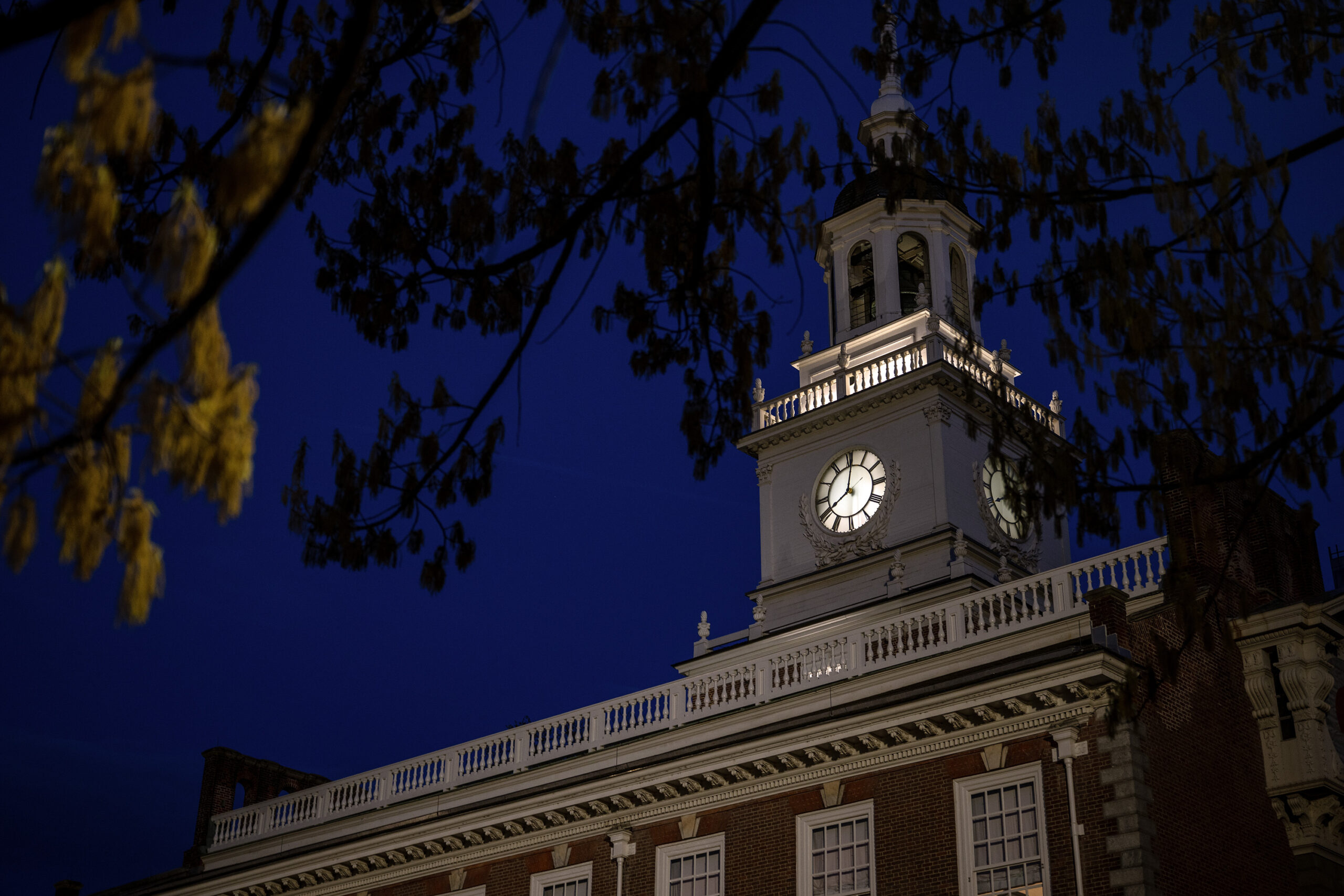
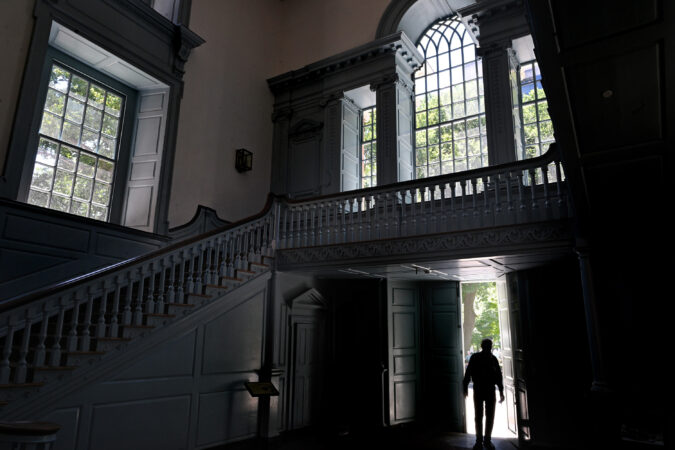
    Recreating the daily hub of the Revolutionary City in 1776. You can hear the cannons from the bell tower of the Pennsylvania State House at Sixth and Chestnut Streets, where the rebels conspire. Now, it’s Independence Hall, photographed April 14, 2026.

    A preliminary vote is taken by candlelight. Despite popular opinion, four colonies — including four members of Pennsylvania’s critical seven-man delegation — vote no.

    Late into the night, at the City Tavern, the delegates drink upon tenterhooks.

    July 2, 1776

    The second day of debate begins with a prosperous portent. Caesar Rodney, of Delaware, mud-splattered boots and spurs, arms akimbo, bursts in before the doors to Congress close. The gravely ill delegate rode 80 miles through the tempest to cast his vote for independence.
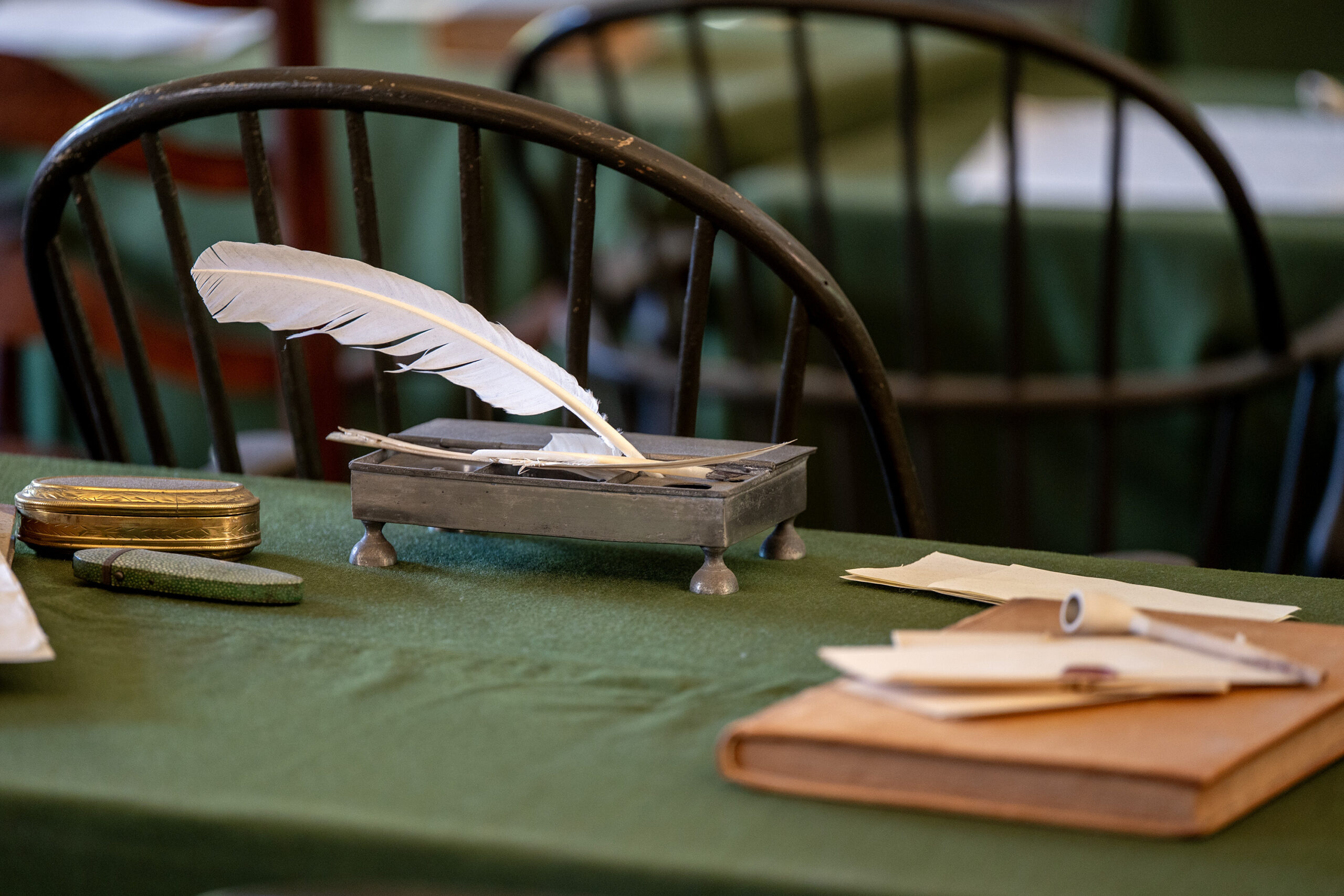
    Replica desks in the Assembly Room in Independence Hall, known as the Pennsylvania State House in 1776. This is the exact space where the Second Continental Congress met and the Declaration of Independence was adopted.

    Better still are the two conspicuously empty chairs at the Pennsylvania table. Unable to vote for independence, but unwilling to thwart unanimity, Dickinson and fellow delegate, Robert Morris, voluntarily abstain. Despite his feelings, Dickinson will soon join the rebel militia — to fight for his country.
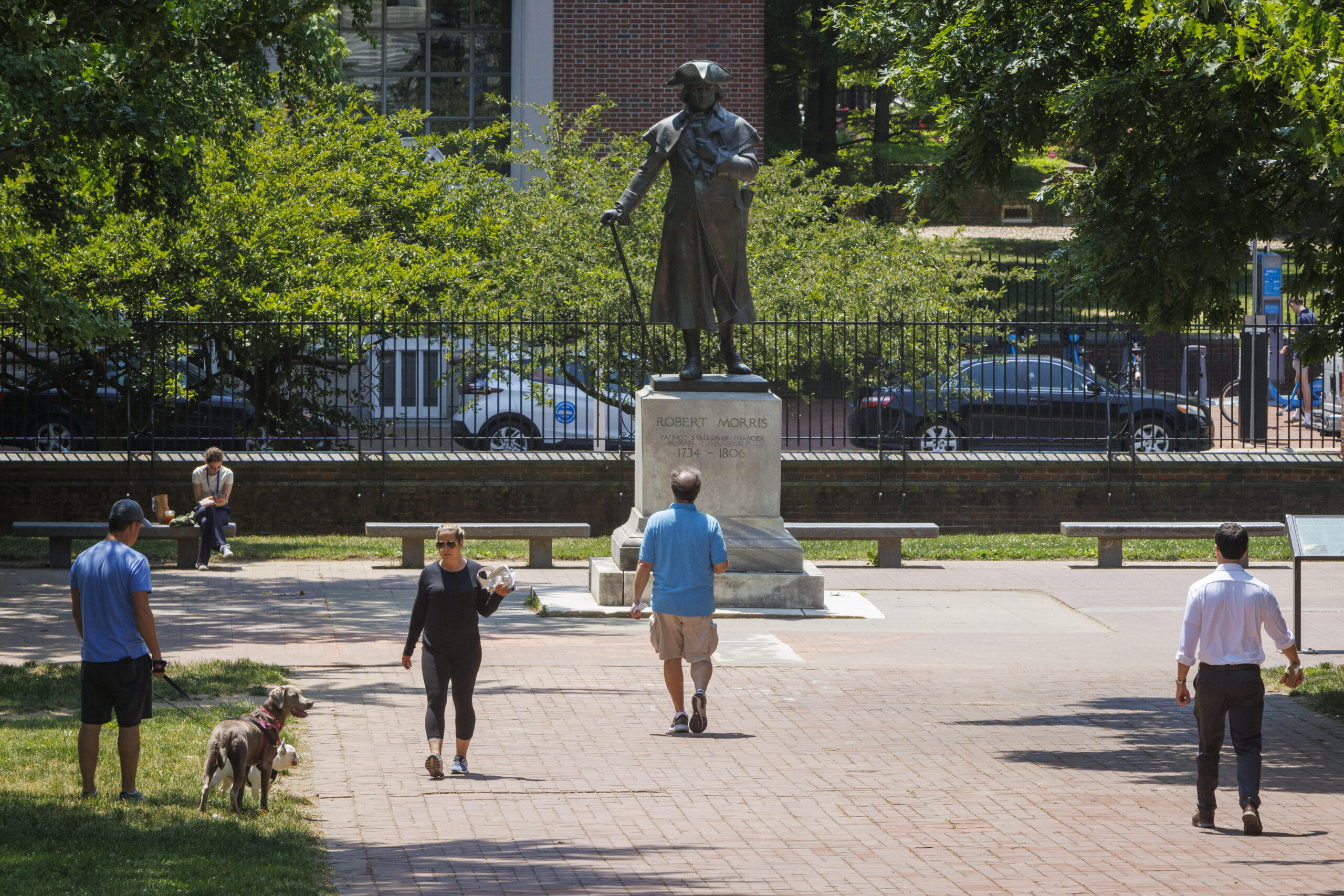
    The statue of Robert Morris in Independence National Historical Park on May 31, 2023.

    Again, the skies open up, raindrops drumming upon the glass.

    With New York abstaining — and Pennsylvania swinging toward independence — the vote goes quick.

    It is done.

    Independence.

    July 3, 1776

    The Congress continues without a break.

    Days earlier, before handing in his draft of the Declaration of Independence, Thomas Jefferson turned to Benjamin Franklin for one last look.
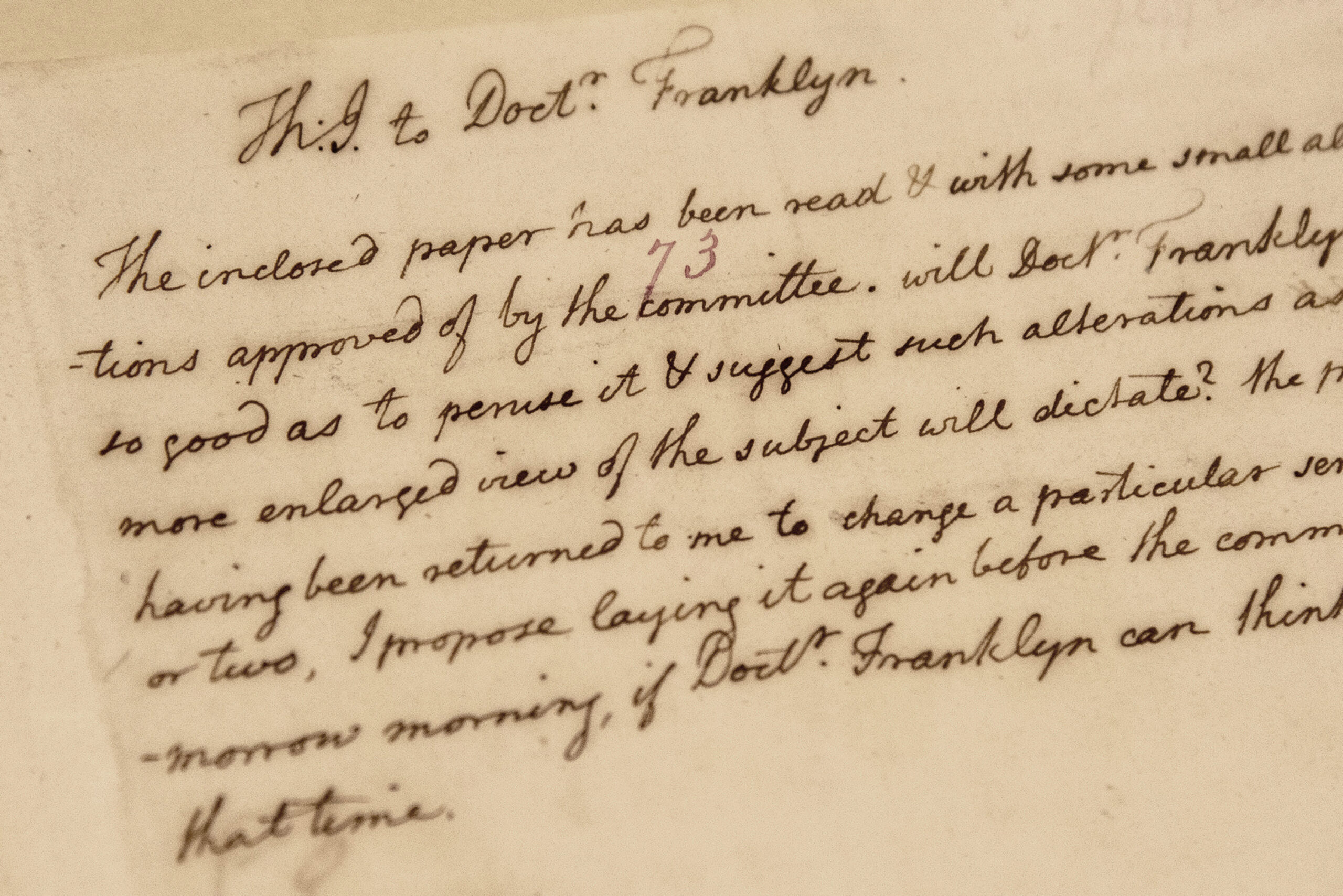
    A letter from Thomas Jefferson to “Doct. Franklyn” (Benjamin Franklin) in June 1776 asking for suggestions on the Declaration of Independence.

    “Will Doctr. Franklyn be so good as to peruse it and suggest such alterations as his more enlarged view of the subject will dictate?” Jefferson inquires, in a note delivered to the silver-haired statesman’s High Street home.

    It’s Franklin, sly satirist, homespun philosopher — grand auteur of America’s self-made aura — who possibly suggests, the inspiring “self-evident” phrasing, replacing Jefferson’s initial “sacred and undeniable truths.”

    And it is Franklin, 70, spectacled lion of liberty, sage of Philadelphia, tamer of lightning, dean of American charm and wit, wooer of women, broad of bow and frame, portly of paunch and plain of coat, a winsome spark dancing across his gray-blue eyes, who comforts the young writer as delegates slash away at his declaration. The winking newspaperman unspools a tale about an enterprising hatmaker who wishes to advertise his wares. By the time the hatter’s friends finish their edits, all that remains is the man’s name, and a photo of a hat, Franklin jokes.

    The delegates trim Jefferson’s harsher language about King George. They excise completely his evisceration of the slave trade. Jefferson does not publicly protest.

    July 4, 1776

    At 11 a.m., debate is closed.

    The moment will eventually be memorialized in painting. The towering trio — Adams, Jefferson, Franklin — presenting America’s credo for approval. Imagine them, these Founding Fathers. These imperfect men for the ages who hazard everything to chance a republic, and change a world.

    There is little ceremony. Horseflies from a nearby stable buzz. One after another, a chorus of “Ayes.”

    Delegates break the tension with gallows humor about whose necks will snap the swiftest.

    History does not record the face of the man who darkens the doorway of John Dunlap’s print shop. Perhaps it was Adams, unable to yield his obsession even in its ultimate realization. Perhaps, it was Franklin, delivering the declaration with a deliciously wry aphorism. Or Jefferson, solemn and silent with the weight of his words.

    Dunlap works all night to the thumping groan of the presses. By morning, roughly 200 broadsides start to spread America’s newly minted founding document far beyond Philadelphia. Breathless riders herald the news in town squares.

    In the trenches in New York, Washington orders the declaration read aloud. Bells ring. Troops parade. Bonfires alight. Candles burn. Prayers are whispered, for those sons and fathers who will die in the bloody conflict ahead.

    By July 6, the Pennsylvania Evening Post, a paper published near Dunlap’s shop, prints the declaration word for word. Its previous issue had been put to press too early to capture the momentous events.

    Instead, the July 4, 1776 edition included usual fare.

    “To be sold,” read one back-page ad. “A NEGRO BOY, about four or five years of age.”

    Crowds pack the State House yard, where the rebels had long conspired. A military officer reads the manifesto to the hushed masses.

    Words that birth the American experiment on an ideal — and the sin of slavery. Words that will endure Civil War and oppression. Words that beckon centuries of American promise and possibility, triumph and failure. Words that inspire new revolutions, new freedoms, new fights. Words that transform. Words that twist. Words that promise a pursuit of happiness — but withhold so much from so many. Words that stand tested still.

    Words written in Philadelphia.
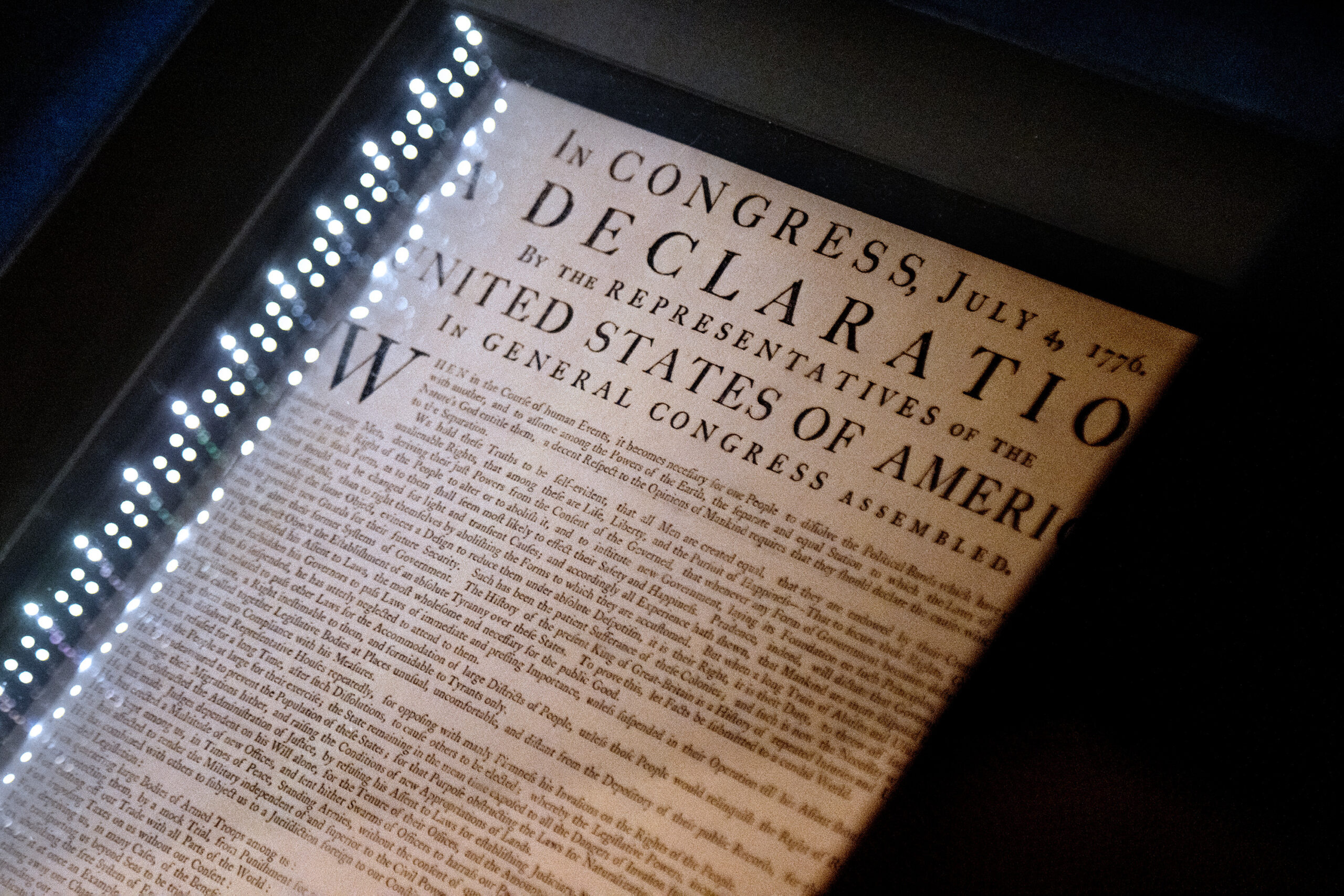
    An original broadside copy of the Declaration of Independence printed by John Dunlap on display in the “Great Essentials” exhibit in the West Wing of Independence Hall on July 29, 2025.
  • How to have a Perfect Philly Day, according to historian, author, and educator Michelle Craig McDonald

    How to have a Perfect Philly Day, according to historian, author, and educator Michelle Craig McDonald

    Philadelphia historian, author, and educator Michelle Craig McDonald knows her coffee. Especially the revolutionary kind.

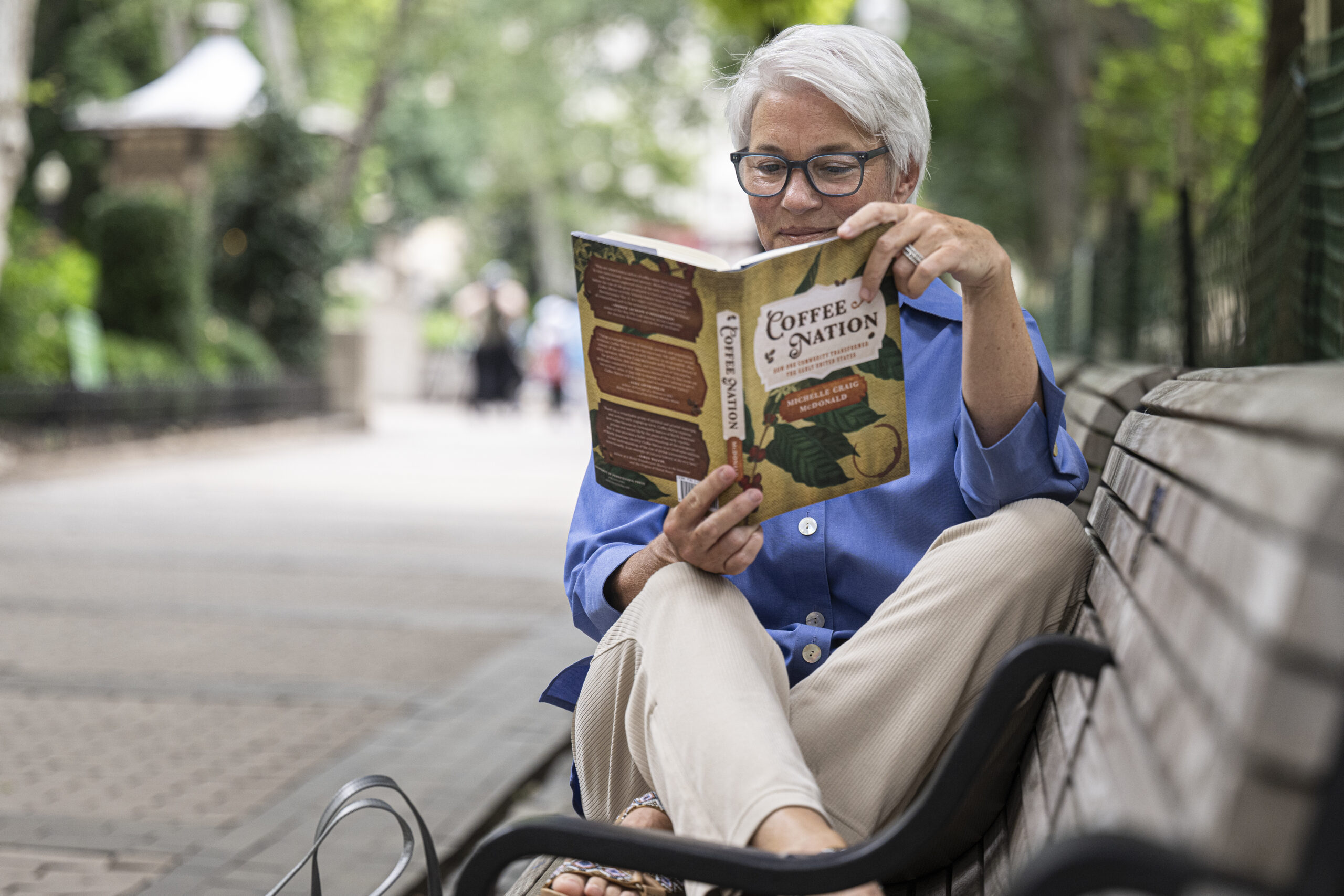
    McDonald, who serves as an academic adviser for PBS’s series Drive By History, is the author of the new book, Coffee Nation: How One Commodity Transformed the Early United States.

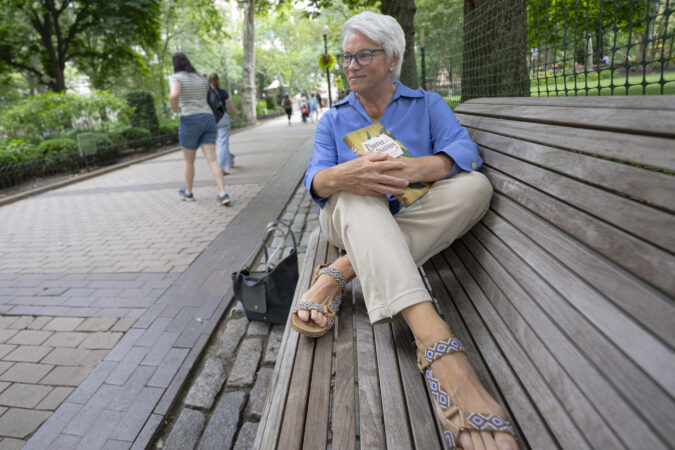
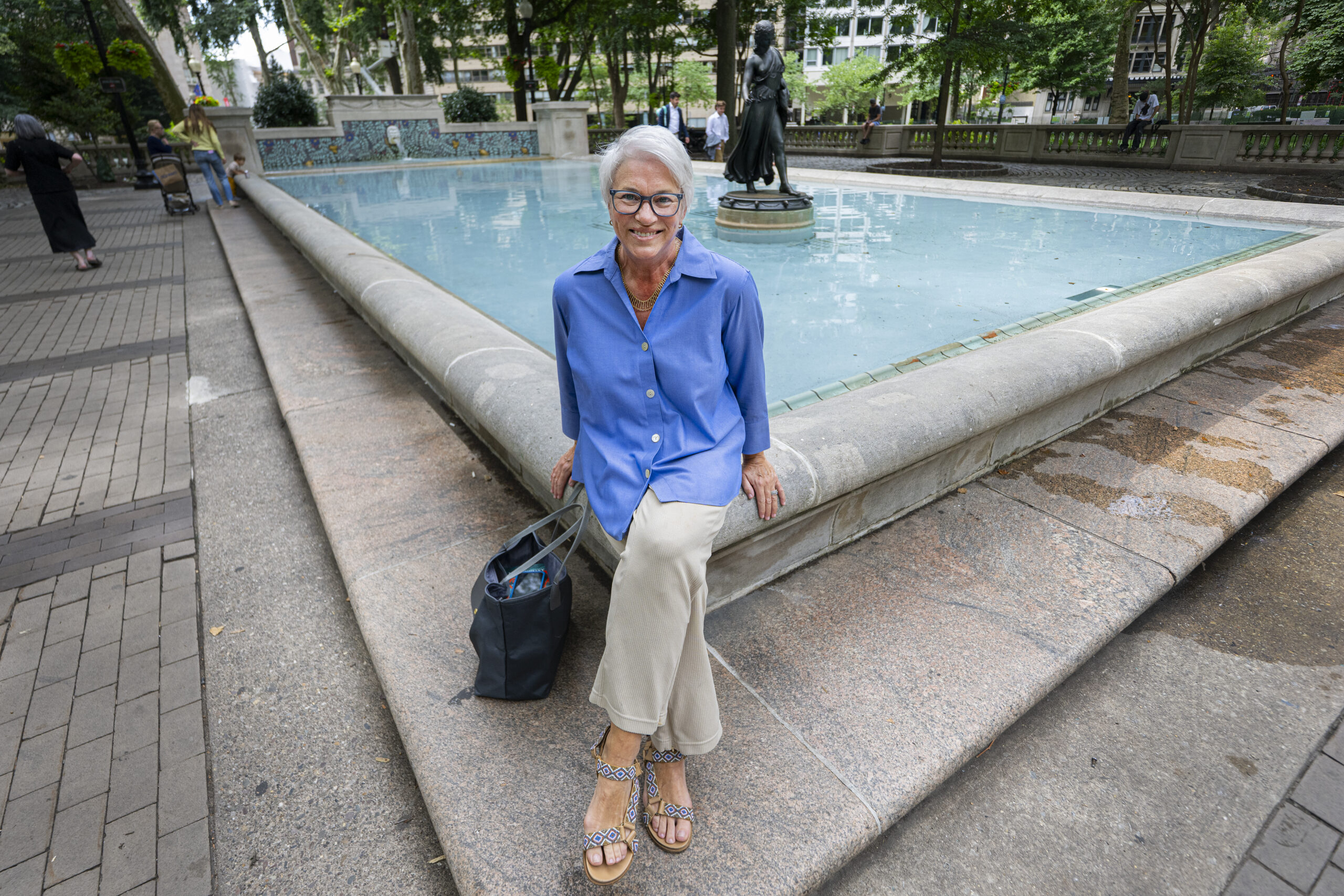
    Philly historian and educator Michelle Craig McDonald enjoys reading in Rittenhouse Square Park. She is the author of “Coffee Nation: How One Commodity Transformed the Early United States.”

    Telling the story of America and coffee, McDonald traces the bean’s beginnings from slavery-based plantations of the Caribbean and South America in the early 1700s through its prominence in Colonial life to the rebranding of the exotic good as an American staple. McDonald details the emergence of coffee shops, like the Old London Coffee House at Front and Market Streets, as critical Revolutionary-era hubs for politics and business.

    “Within 50 years of our independence, the United States becomes one of the largest suppliers of coffee to the world — but we can never grow it,” said McDonald. So in this moment, when we think about independence, coffee really reminds us that the United States remains deeply tied and deeply embedded with the economies of the region. It was not just a self-sustaining nation that looked inward.”

    Given the nature of her research, it’s no surprise that McDonald’s Perfect Philly Day revolves around food and drink. McDonald, a Southern California native who lives in Rittenhouse Square with her husband and fellow historian, Roderick A. McDonald, said her perfect day includes lots of coffee and cooking, a great Philly workout, and reading crime novels in Rittenhouse Square.

    6:30 a.m.

    My coffee pot is my first spot. I’m going to need fortification if I’m going to tackle the day’s news. I just go with the tried and true Colombian roast from Trader Joe’s.

    When we are down the Shore, my favorite comes from Remedee Coffee, started by two sisters who source their beans from Colombia. It’s a great small business.

    On a perfect day, this is when we do our New York Times games — like Connections or Wordle — which we do together. My sister says it’s cheating. I like to say it’s “collaborating.”

    8:30 a.m.

    I love cooking of all kinds, but baking is my first love. My go-to on a perfect day is a batch of scones. I have a recipe that I got online from a website called Love and Lemons. It’s a base recipe. You can make anything you want. Cranberry, orange walnut, apricot, ginger almond, or my brother-in-law’s favorite, which I know because he buys the ingredients every time I visit, blueberry lemon.

    I used to head over to Metropolitan Bakery on 19th Street, which I am still mourning the loss of.

    I loved their Millet Muffins and raisin walnut bread. My freezer is stuffed with both because I bought as many as I could before they closed. And I’m slowly rationing them so I don’t lose them quickly.

    9:30 a.m.

    We have a solid division of labor in the household. I do the cooking. But my husband does the shopping. While the scones are in the oven, he may well be on his way down to the Italian Market on his vintage 1962 Schwinn bicycle — expertly serviced by Curtis at Via Bicycle on Broad Street. He’s a fan favorite!

    My husband is the provisioner of the house. I get to take what he brings back from the list — and sometimes not from the list. It feels like my own personal version of Chopped. He comes home with five ingredients and says, “What can you do with this?’”

    10 a.m.

    I’m hitting the gym. I do love eating, which means I need to pay the piper. I go to Pure Barre in Center City. It’s wonderful. It’s a class — a core-based workout that does weightlifting, planks, pushups. An hour there, any day I can get it, gives me enough brownie points for the rest of the day’s culinary adventures.

    If the weather is nice, we might substitute a bike ride down the Schuylkill River Trail. Manayunk is a great destination.

    Noon

    That’s when Small World Seafood is in the area with deliveries. It’s an Old City business that was born out of necessity. The owner provided fresh seafood to restaurants during the COVID-19 pandemic. Then he began an online business selling directly to customers. You can get anything — halibut, skate steaks, steelhead trout, oysters, clams — for a lazy cooking night.

    Michelle Craig McDonald’s perfect Philly day includes lots of coffee and cooking, a great Philly workout, and reading crime fiction in Rittenhouse Square.

    1 p.m.

    I’ve got the fish and I’m marinating it for dinner. Steelhead trout is one of my favorites, so super easy, a little bit of soy, a little bit of orange, a little bit of brown sugar, a little bit of maple, and garlic.

    2 p.m.

    On a perfect day, when I can while my time away, you will find me reading in Rittenhouse Square. I have an abiding passion for crime fiction. Ann Cleeves. Donna Leon.

    And if it’s not great weather, you could still find me reading, but probably in one of any of a dozen coffee shops that are within walking distance of my house.

    There was a great article that just ran recently in The Inquirer about the rise of Yemeni coffee shops in the city, such as Moka & Co.

    3 p.m.

    This is where it’s going to get busy. I would be remiss if I didn’t bring a little history and culture into this day. The American Philosophical Society has a wonderful project called “The Revolutionary City: A Portal to the Nation’s Founding.” It’s a partnership where five Philadelphia historical institutions — the APS, the Library Company of Philadelphia, the Historical Society of Pennsylvania, the Kislak Center at Penn Libraries, and the Museum of the American Revolution — came together to plan for 2026, and all their exhibits build on each other. Now I know that’s a long afternoon. Readers can pick and choose and see the others on their second favorite perfect Philly day [laughter].

    6 p.m.

    My husband and I cook together. If it’s Saturday, the compulsory listen is “The Many Moods of Ben Vaughn.” Cooking is my way to unwind and my husband is an excellent sous chef.

    8 p.m.

    We tend to have a leisurely meal with a glass of wine or two, and review the day’s exploits. An episode of television in the evening is a good escape. We are huge PBS fans. We love British crime dramas. We are huge fans of Shetland, a Scottish crime drama, and Vera, an old British crime drama with a curmudgeonly police detective.

    10 p.m.

    I am not a night owl. But I will confess to a wee dram of bourbon most evenings. Then, a little more light reading. And it’s time for lights out.


    This interview has been edited for length and clarity.

  • In the weeks before independence, the man from Monticello drafts a declaration

    In the weeks before independence, the man from Monticello drafts a declaration

    Philadelphia. June 1776.

    America stands on the brink. The ultimate question of independence hangs over Philadelphia.

    And Thomas Jefferson has a declaration to draft.

    His heart is in Virginia. His “country,” as he calls it. But here he is at Seventh and High Streets, 33 years old, living in two sweltering rooms, with his chance to make his mark on history.

    Unlike his fellow delegates, lodged in rooms along Philadelphia’s booming riverfront, Jefferson takes quarters along the city’s rural western edge, two blocks from the Pennsylvania State House, where the rebels conspire. The orchards and pastures bordering the downtown of British America’s largest and wealthiest city offer an escape from Philadelphia’s stifling summer heat and foul smells. Its stinking creeks, rotting trash, and unchoked illness. The verdant outpost, elsewise occupied by a bricklayer and his family, provides “the Squire,” as his friends back home call him, some small semblance of his mountaintop mansion, Monticello.

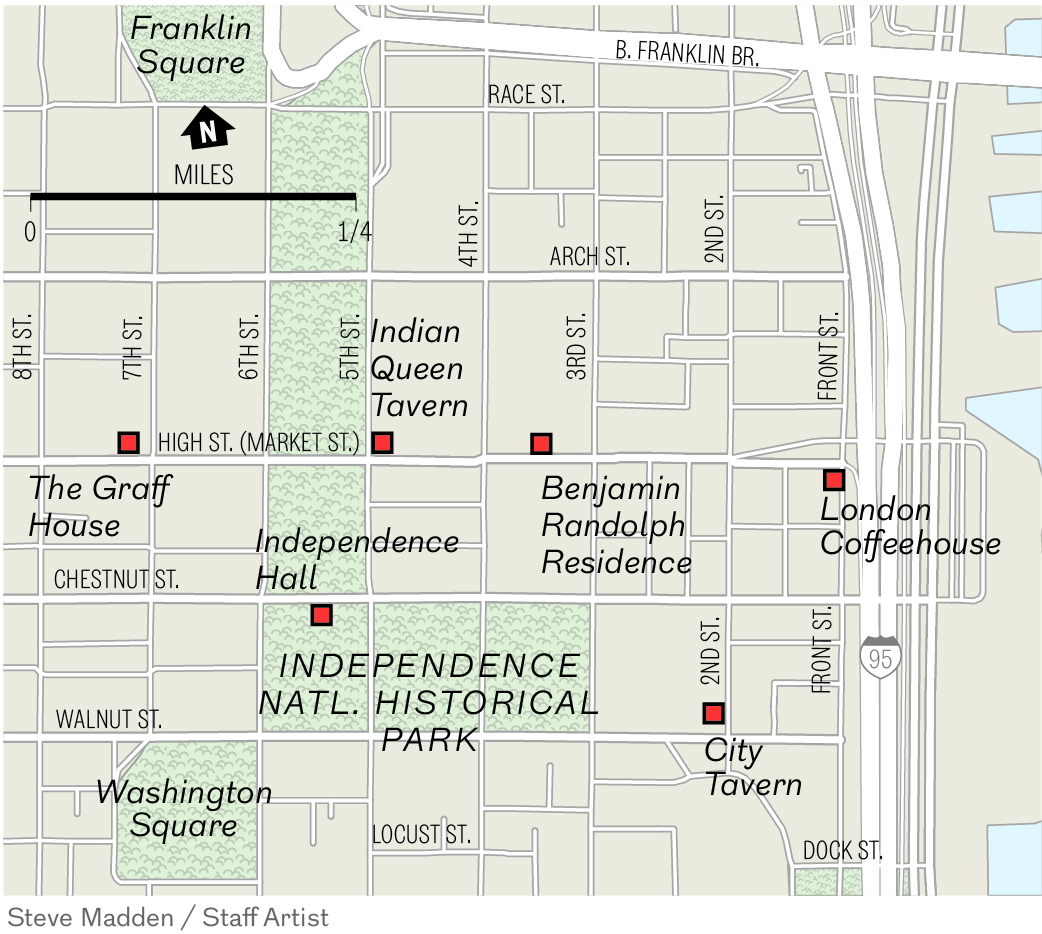
    Thomas Jefferson’s Philadelphia in 1776.

    He is living out of leather-bound trunks. Fresh air and sunlight stream through a window overlooking High Street — Philadelphia’s main thoroughfare, busy even on the outskirts. Hinterland farmers’ wagons clatter over cobbles, headed for the market. The sweet scent of fresh loaves drifts from a shopfront bakery. Jefferson’s thoroughbred — Caractacus, perhaps, his favored bay stallion, whose regal appellation derives from a first-century British chieftain — nickers in a nearby stable.

    Robert “Bob” Hemmings, Jefferson’s 14-year-old enslaved valet — and half brother of Jefferson’s future paramour, Sally — attends his every need in Philadelphia, sleeping in a garret off the writing parlor.

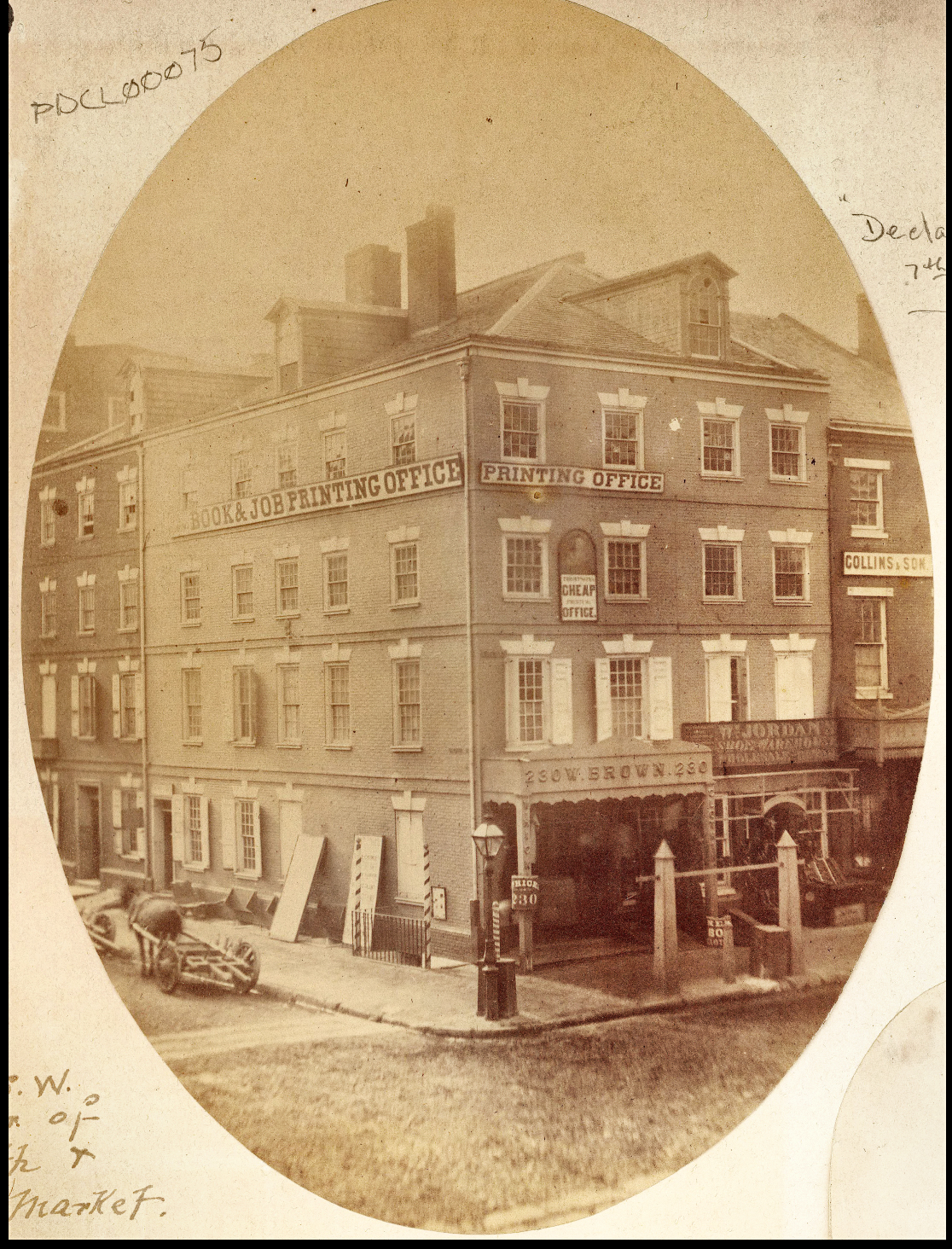
    The Declaration House, 7th and Market Streets, in 1856.

    The rag paper resting on Jefferson’s mahogany travel desk — a small, portable lap device of his own design that the inveterate tinkerer had commissioned from a Chestnut Street cabinetmaker upon his arrival in Philadelphia a month earlier — remains blank. His quill is still. In the shadows, a grandfather clock ticks a stately rhythm.

    Tick … tock … tick … tock.

    The master of Monticello is working on a deadline.

    A momentum for independence

    Tarrying at the threshold of independence for months, the roar of rebellion echoes throughout Philadelphia by late spring.

    Just weeks earlier, more than four thousand Philly patriots braved driving rains to gather in the brick-walled yard of the State House. Celebrating the Second Continental Congress’ decree to form new governments apart from King George III — the masterstroke of John Adams, 40 — the drenched Philly masses thunder for independence.

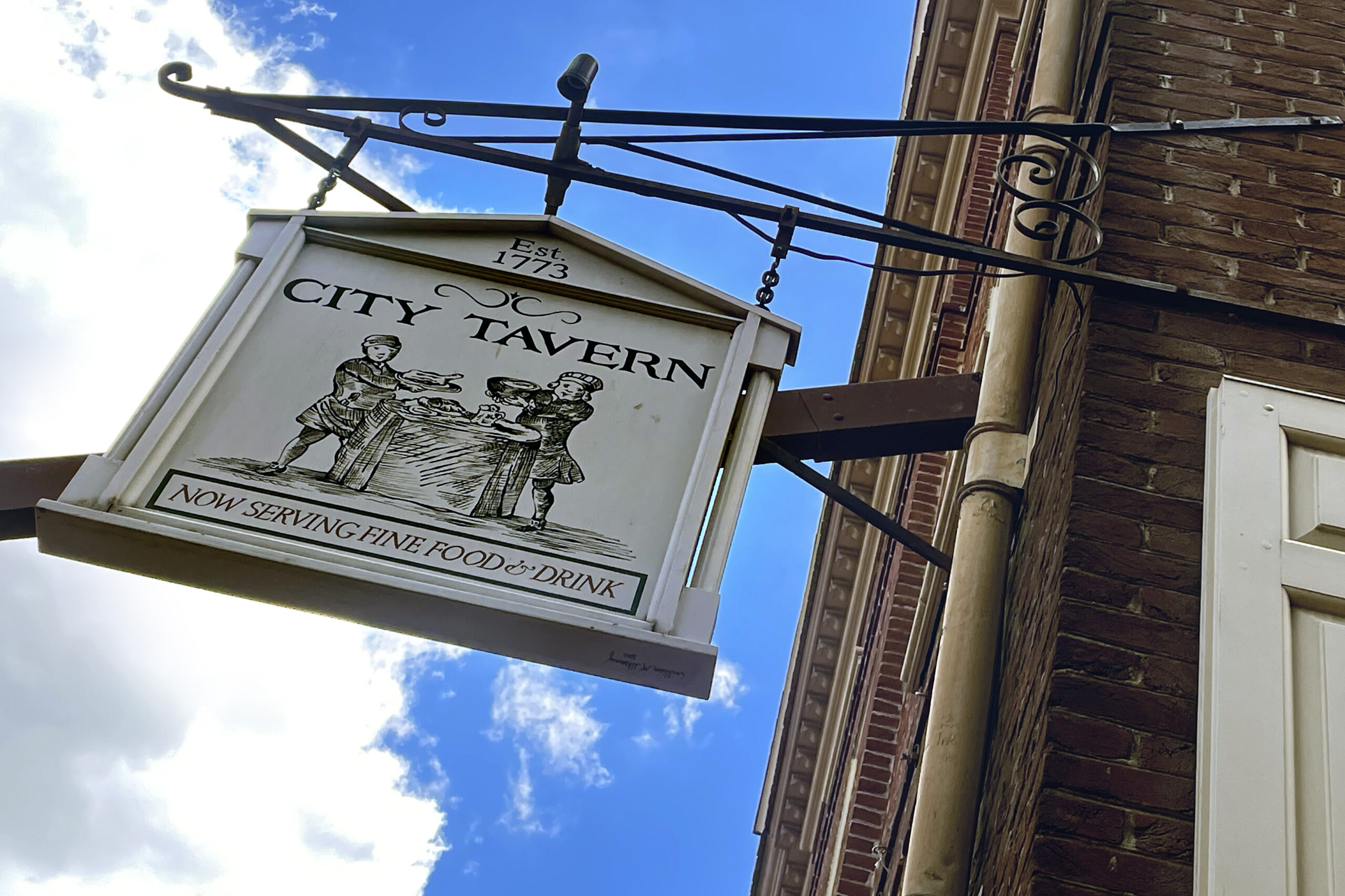
    City Tavern Monday, June 15, 2026. The original building was demolished in 1854 and reconstructed in 1975.

    George Washington himself takes brief leave of his embattled army, digging in for an expected British assault on New York, to update the 56 congressional delegates in Philadelphia. The general’s tidings are lost to the centuries. But hear the lusty huzzahs that greet the stoic warrior at the representatives’ nightly repast at City Tavern, their unofficial headquarters.
    “George Washington, and victory to the American arms!” goes the toast.

    Inside the locked chamber, radicals like Adams and his older cousin, and backroom operator, Samuel, 53, lead the fight for liberty. Jefferson, whose resolve for popular government in America is unquestioned, but who detests public speaking, rarely rises.

    In early June, it is Jefferson’s fellow Virginian, the passionate patriot Henry Lee, who delivers a decisive stroke, boldly uttering words hitherto unsaid in Congress: “That these United Colonies are, and of right ought to be, free and independent.”

    The thunderclap is met by delay. Delegates from powerful colonies, including Pennsylvania’s own reluctant son of liberty, John Dickinson, are hesitant to cut the cord. Radicals work furiously to build unanimity.

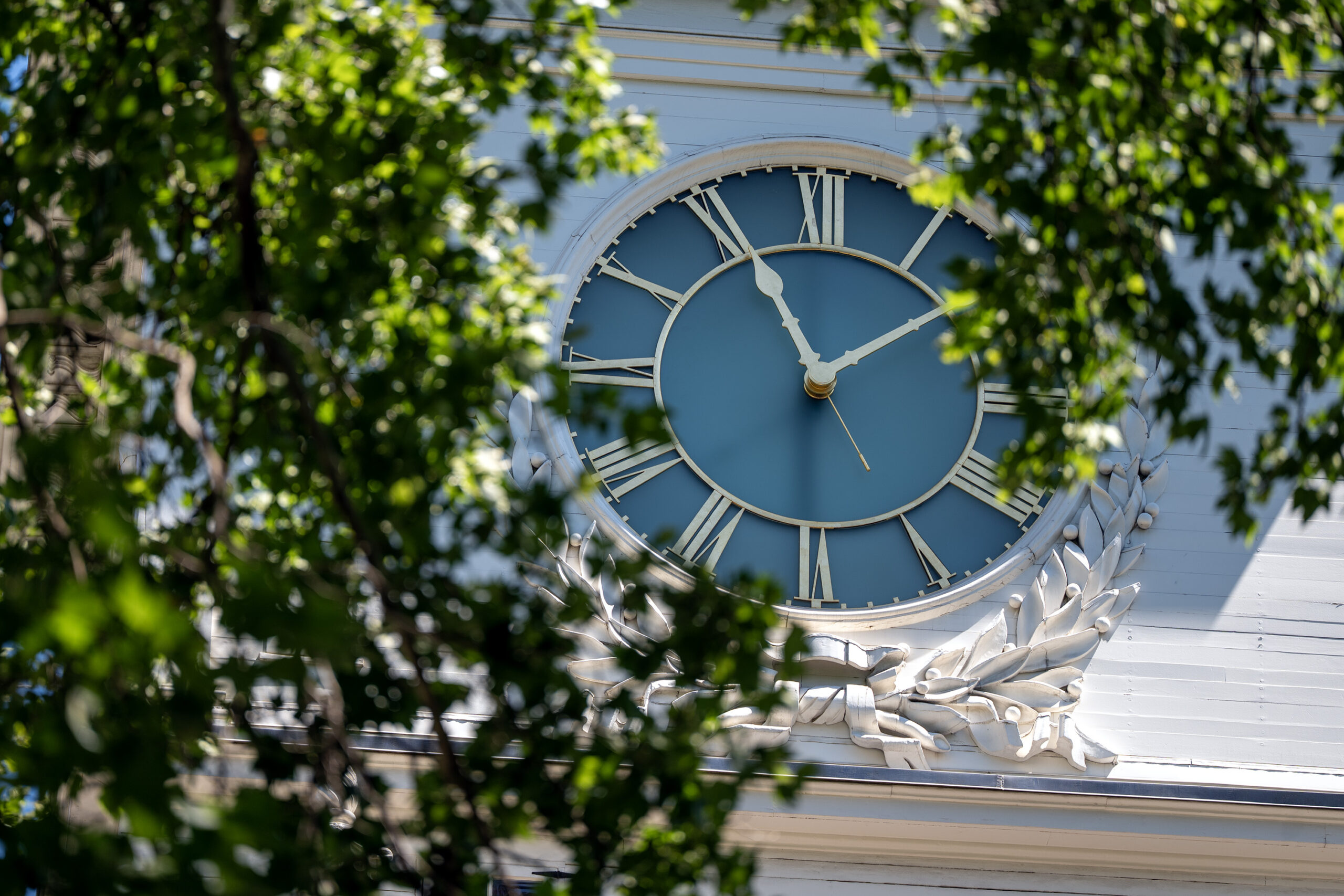
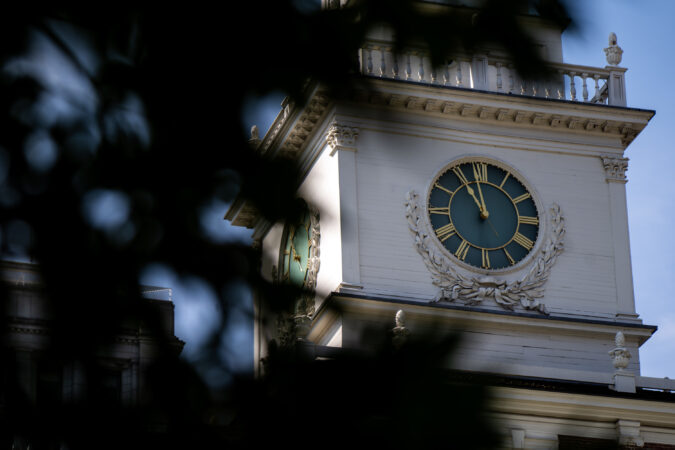
    Clock tower at Independence Hall (Pennsylvania State House) Monday, June 15, 2026.

    Philly headlines — in the same papers publishing fugitive slave ads and notices for the sale of Black children far younger than Bob Hemmings — decry “our mortal enemy the King of Great Britain.”

    “The people wait for us to lead the way,” Jefferson will note.

    During the delegates’ fiery, closed-door debates, his long legs folded underneath his desk, Jefferson stays mum.

    But now the poet-philosopher and slaveholder, whose bright brilliance and dark contradictions mirror perfectly the promise and sins of the nation he seeks to author, must find all the words.

    A renaissance figure among the rebels

    It is John Adams, in characteristically gruff fashion, who appoints Jefferson first quill. The good gentleman from Virginia is but one of five men appointed to draft America’s creed — including Adams and Franklin, home sick with gout and other ailments — but Adams argues it is Jefferson, with his “peculiar felicity for expression,” who should do the writing.

    “Reason first, you are a Virginian, and a Virginian ought to appear at the head of this business,” Adams recalls telling Jefferson in the committee’s first convocation. “Reason second, I am obnoxious, suspected, and unpopular. You are very much otherwise. Reason third, you can write 10 times better than I can.”

    Adams is right.

    Replica desks in the Assembly Room in Independence Hall (Pennsylvania State House) Monday, June 15, 2026.

    Both drawn to the flame of American independence — the noblest cause of their age, and any other, they believe — the freedom fighters cut an odd coupling.

    Adams, short, plump, balding, cantankerous. Jefferson, tall, lean, formidable, a shock of copper hair, freckled in the Philly heat, his illusive eyes described as blue or hazel or light gray. The Southern planter and legislator who matriculated at the College of William & Mary is soft-spoken and painfully gracious and polite, charming, flirtatious. He abhors confrontation.

    Behold this true renaissance figure among the rebels.

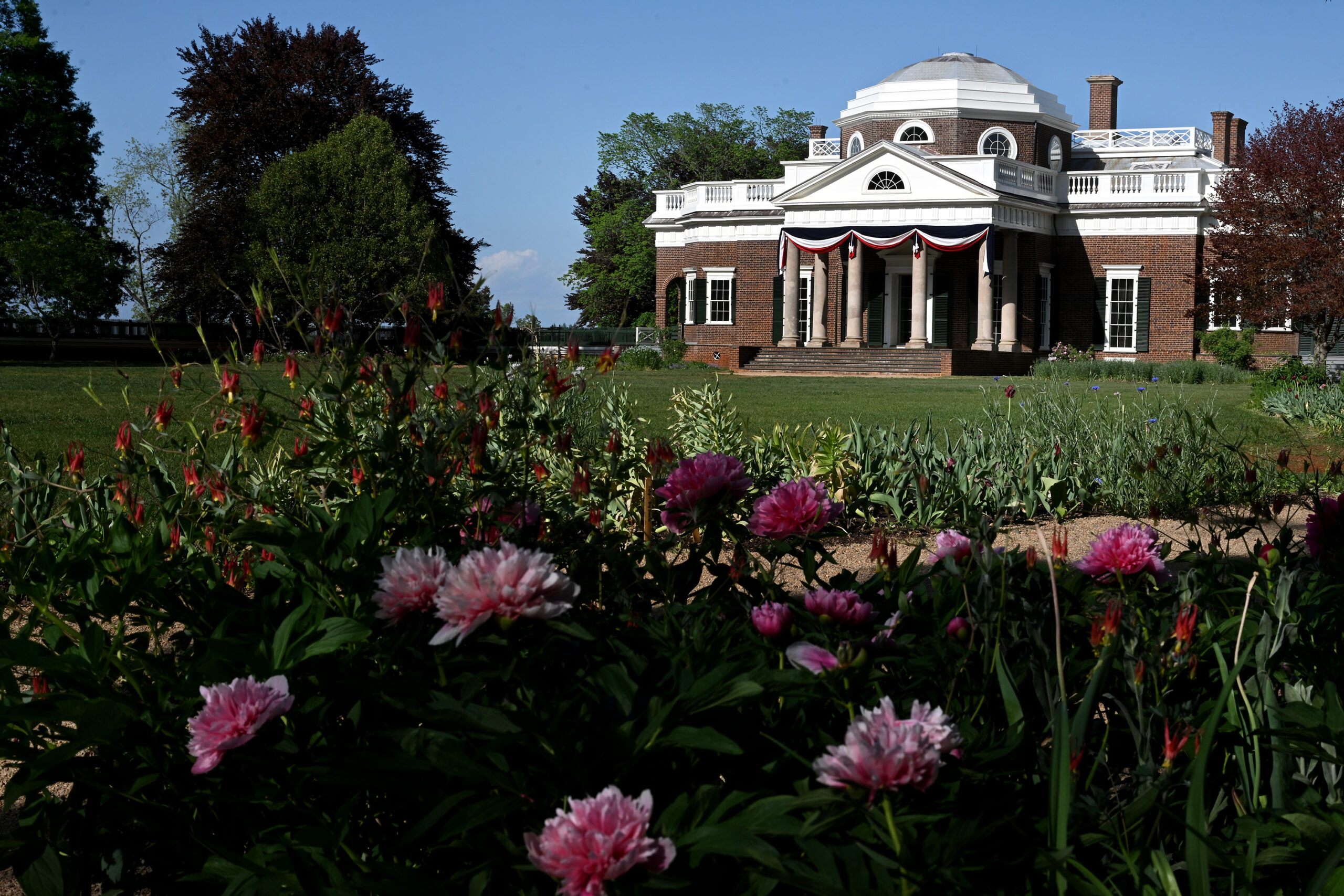
    Monticello, the primary residence and plantation of Thomas Jefferson in Charlottesville, Virginia, April 22, 2026.

    A lover of food and wine and fine things, he studies art and history, philosophy and mathematics, science, botany, astronomy. He speaks four languages and can aptly read ancient Greek. He has been building his Palladian plantation house — situated on land more than five times bigger than the core of Philadelphia, the makeshift colonial capital city, and toiled by more than 100 chained souls — since the age of 14.

    Adams, obsessive even in his sightseeing, catalogs and compares the marvels of Philadelphia — its spacious thoroughfares, leafy green spaces, commanding skyline, including Christ Church’s heaven-kissing steeple, the tallest structure Washington had ever laid eyes on, its booming ports, gleaming institutions, exotic foods, and bottomless wine, porter, and punch.

    During his few hours free from the rigors of revolution, Jefferson shops.

    With Bob touting bulging bundles, the Squire strolls Philadelphia’s abundant artisanal shops, buying maps and books across all his tastes — so many volumes, he commissions his favorite Philly cabinetmaker to make a specialized bookcase to ship them home — and tools for Monticello. He buys fine fabrics for his wife, Martha, whom he is heartsick for. An elegant doll for his 4-year-old daughter, Patsy. He buys a straw hat for himself, and shoes and socks for Bob. At a market stall, he pays a shilling to gaze upon a merchant’s exotic monkey.

    Along with his compatriots, he sups at the City Tavern most nights, enjoying as many as three glasses of wine, but also favors the regal rusticity — and punch — of the Sign of the Conestoga Wagon Tavern on High Street.

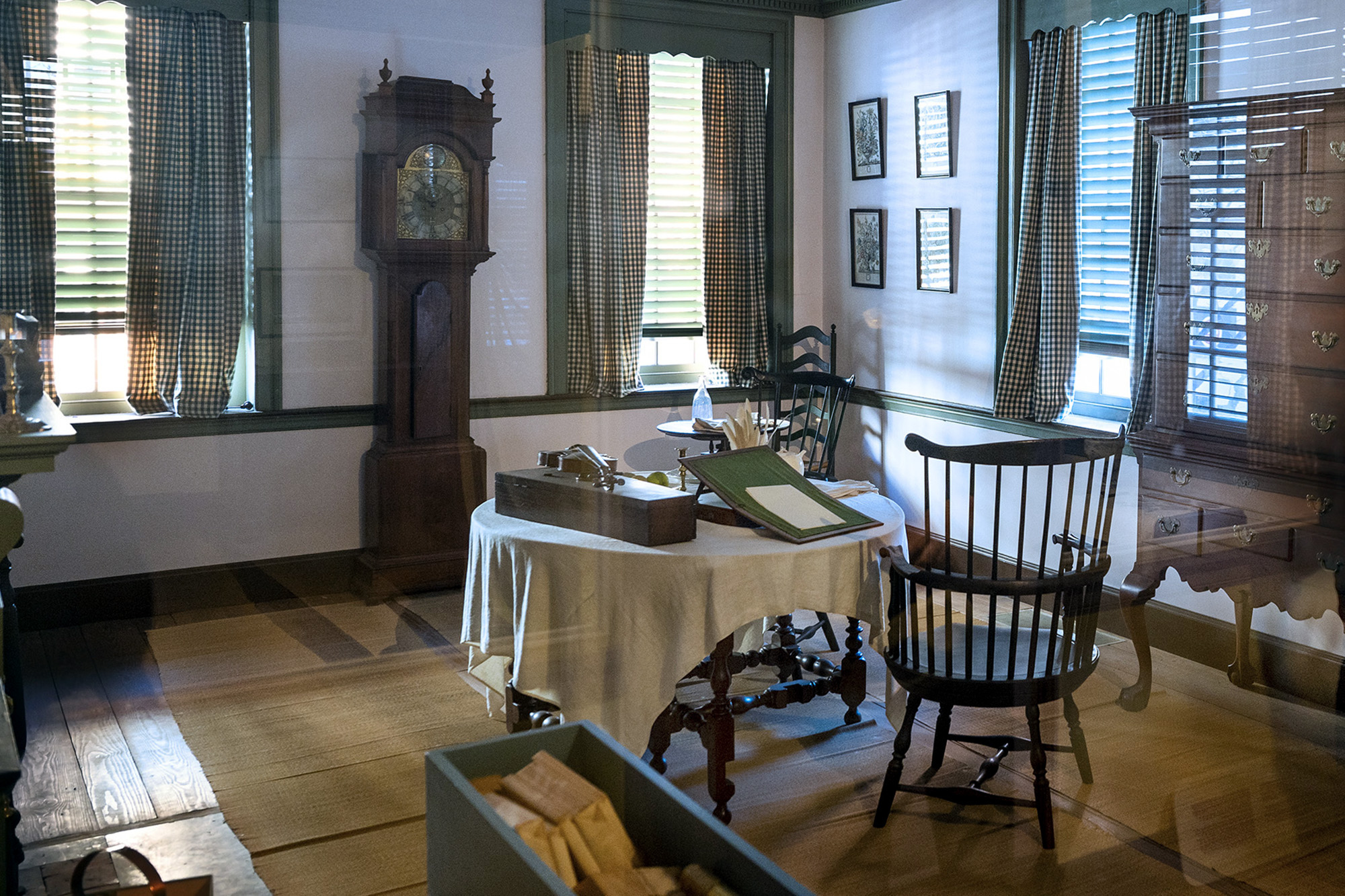
    A replica of the room where Thomas Jefferson wrote the Declaration of Independence, inside Declaration House (home of Jacob Graff, Jr.) Dec. 20, 2023.

    Envision him, this sun-freckled Moses of American history, in flesh and bone, a living, breathing man, donning a sun hat, whose first memory is being held on a pillow by an enslaved worker, and who will within days pen the most revolutionary, if fatally flawed, manifesto ever put to parchment, walking among, but set apart from, the working classes of Philadelphia. The laboring, the indentured, and the enslaved — all those he would conversely see lifted to the altar of democracy or sold at the auction block.

    See this man. And understand America.

    An expression of the American mind

    He envisions his task to “place before mankind the common sense of the subject.” A justification for revolution, yes. A litany of proof that King George was a tyrant — and among other things, in an epic, and ultimately unsuccessful, act of blame-shifting, responsible for the entirety of the slave trade. But not a wholly original document. Rather, a soaring summation of the American revolutionary zeitgeist.

    “Neither aiming at originality of principle or sentiment, nor yet copied from any particular and precious writing, it was intended to be an expression of the American mind, and to give to that expression the proper tone and spirit called for by the occasion,” he will later explain.

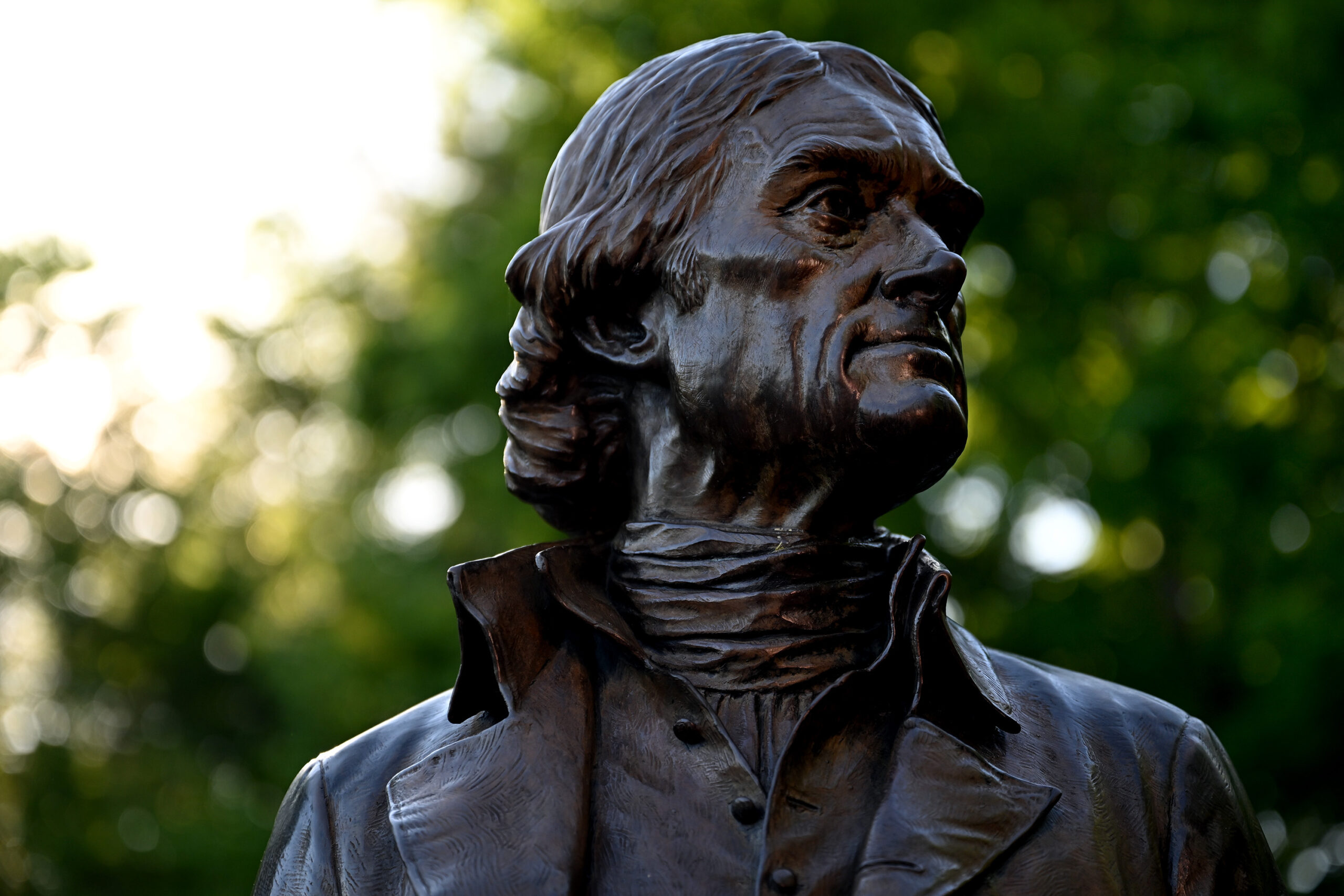
    Statue of Thomas Jefferson at Monticello, his primary residence and plantation of in Charlottesville, Virginia, April 22, 2026.

    In his parlor, with the tall clock ticking and Bob tending to tea, Jefferson works fast, pulling from his own writing — including his recent draft for a new Virginia constitution — and also from a declaration of rights for Virginia, penned by pal George Mason. From the whirling stream of his intellect, he plucks at will the inspirations and ideals of the seminal works of enlightened thinkers like John Locke and David Hume, whose writings on natural rights and freedom (“Life, liberty, and property,” Locke wrote, before Jefferson amends it for the better) provide the bedrock for the revolution.

    Quickly, he begins to find his words. The rag paper fills.

    “We hold these truths to be self-evident,” writes the man from Monticello.

    A faded copy of a draft of the Declaration of Independence handwritten by Thomas Jefferson, known as the “Fair Copy,” on display at the American Philosophical Society Monday, June 15, 2026.

    Dispatches from 1776, Part III will be published online on July Fourth. Read Part I here.

    This historical sketch is based on interviews with Tyler Putman, manager of gallery interpretation at the Museum of the American Revolution, and Michael Idriss, manager of the African American interpretive program at the Museum of the American Revolution, as well as J.M. Duffin, assistant archivist at Penn Libraries, historian and author Michelle Craig McDonald, and Stephen Nepa, history professor at Pennsylvania State University’s Abington campus. The author also based this series on historical newspaper accounts and research from “John Adams,” by David McCullough (Simon & Schuster, 2001), “Declaration: The Nine Tumultuous Weeks When America Became Independent, May 1-July 4, 1776,” by William Hogeland (Simon & Schuster, 2010), “American Scripture: Making of the Declaration of Independence,” by Pauline Maier (Random House, 1997), “The Revolutionary: Samuel Adams,” by Stacy Schiff (Little, Brown & Co., 2022), “Cocked and Boozy: An Intoxicating History of the American Revolution,” by Brooke Barbier (Chicago Review Press, 2026), “Thomas Jefferson: The Art of Power,” by Jon Meacham (Random House, 2012), “Rum Punch and Revolution: Taverngoing and Public Life in Eighteenth Century Philadelphia,” by Peter Thompson (University of Pennsylvania Press, 1999), “The Thomas Paine Reader” (Penguin Books, 1987), and “1776,” by David McCullough (Simon & Schuster, 2005).

  • A Delco man built a Harley in his dad’s basement and could win $10,000 for it

    A Delco man built a Harley in his dad’s basement and could win $10,000 for it

    Behold the bike: a custom Harley-Davidson Panhead chopper painted deep purple replete with classic stylings, an iconic Wassell Banana gas tank, and sharp-as-knives merlot-colored acrylic-glass fins that throw shark-fin shadows when the riding is smooth and the sun hits just right.

    And designed and built by Jack Weidmayer in his dad’s small basement shop over the last three years.

    The custom chopper has won Weidmayer, 27, of Newtown Square, a finalist spot in the Biltwell People’s Champ, an international motorcycle-building competition hosted by the Southern California motorcycle company on June 26.

    Designed to spot up-and-coming, grassroots chopper builders — Weidmayer, a Villanova communications grad who rode his first motorcycle in 2018 — the annual, crowd-voted competition features builders from all over, competing for a $10,000 prize and a coveted chance to display their homemade hogs at Harley-Davidson’s Born Free motorcycle show, on June 27 and 28 in Southern California.

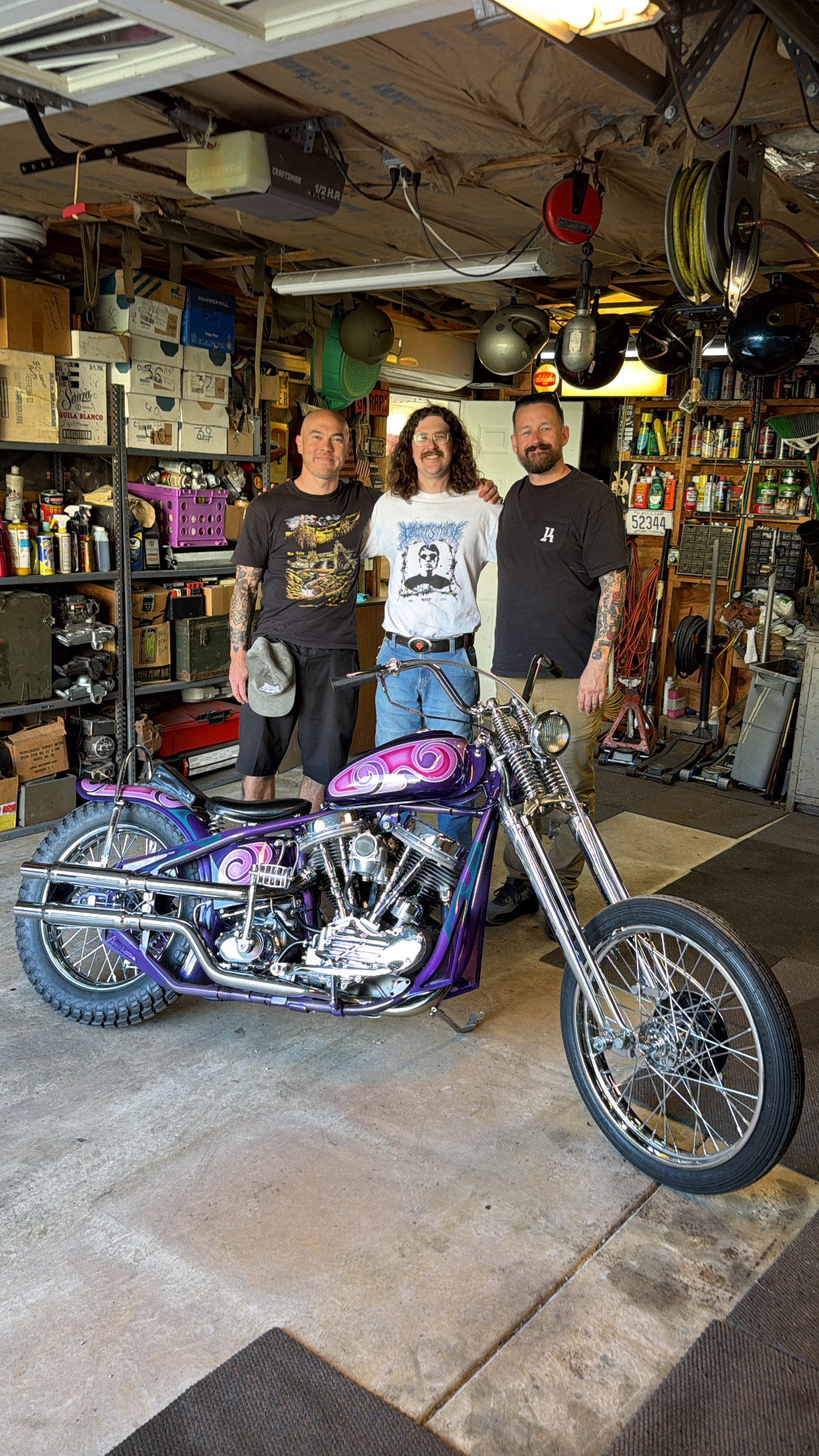
    Jack Weidmayer, 27, of Newtown Square, poses with two officials from the Biltwell motorcycle company earlier this year.

    “I was super surprised to even get in,” said Weidmayer, who works as a machinist at a West Chester tool company when he’s not building bikes.

    The final round of the competition — which annually draws hundreds of thousands of votes — began in September when Biltwell scoured the amateur ranks for prospective builders. As of Monday, Weidmayer and five other finalists are competing in five days of online voting. On Friday, the finalists will ride their creations to the legendary Southern California biker bar Cook’s Corner, where final voting takes place — and a winner is declared.

    “It’d be nicer if he was interested in something a little safer,” joked Weidmayer’s father, Mark, a former Harley-Davidson mechanic, who builds custom bikes and supervised his son. “I cherish the opportunity to be able to have a close relationship with my son — and for us to share the same interests and be extremely enthusiastic about bikes.”

    The bike is a beaut, said the proud dad.

    “It’s 100% his design,” said Mark Weidmayer.

    Jack Weidmayer has been building choppers out of the small shared shop in his dad’s basement for about five years. Using scrap parts — picked up at local swap meets and shows — and mostly basic hand tools found in the average enthusiast’s garage, he has built eight bikes, including a pinstripe S & S-powered Panhead featured in Choppers Magazine in 2024. In February, an initial round of online voting winnowed 16 contestants down to the finalists.

    Weidmayer has worked on the current bike every day for nearly a year, he said.

    “I can’t think of one thing that fit correctly or went according to plan,” he said. “This is probably my most modified bike to date.”

    An aspiring journalist in college, Weidmayer said he discovered his love of building custom bikes during the pandemic, when he first asked his father to show him the ropes.

    It’s the challenge of envisioning a design — and then making it ride from bare-bones parts that he loves most, he said, before loading his chopper onto a trailer for the 2,700-mile journey to the competition.

    “I know so many people who’ve done lots of cross-country trips, I’m scared to call myself a real-deal biker,” he said. “It’s more just having an idea and making it tangible that is the more appealing aspect for me.”

    And he, too, cherishes the time with his dad, he said.

    “He has been an invaluable resource in any build I have done, especially this one,” said Weidmayer. “I would not have finished this project on time or nearly as nice quality without his advice, and pro tips.”

    In true Philly fashion, he considers himself an underdog in the People’s Champ, noting that most of the other builders have bigger social media presences than his own — an unenviable lot in an online voting competition.

    Regardless, he’s truly proud of the purple acrylic-glass fins, which he said give the bike a much more aggressive silhouette.

    “I’ve had that idea in my head for three years now, and it is incredible to see it completed,” he said.

  • A new streaming series tells the story of a Philadelphia high school cheer squad

    A new streaming series tells the story of a Philadelphia high school cheer squad

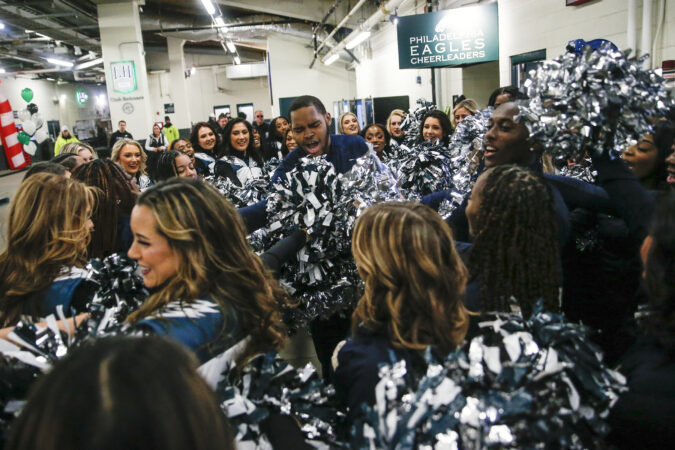
    Spirit, the docuseries on George Washington High School national cheerleading championship run, is now available for streaming on Peacock.

    The four-part series follows the underdog team’s rise to become the first cheer squad from the School District of Philadelphia to compete in the National Cheerleaders Association High School Nationals, the biggest cheerleading event anywhere.

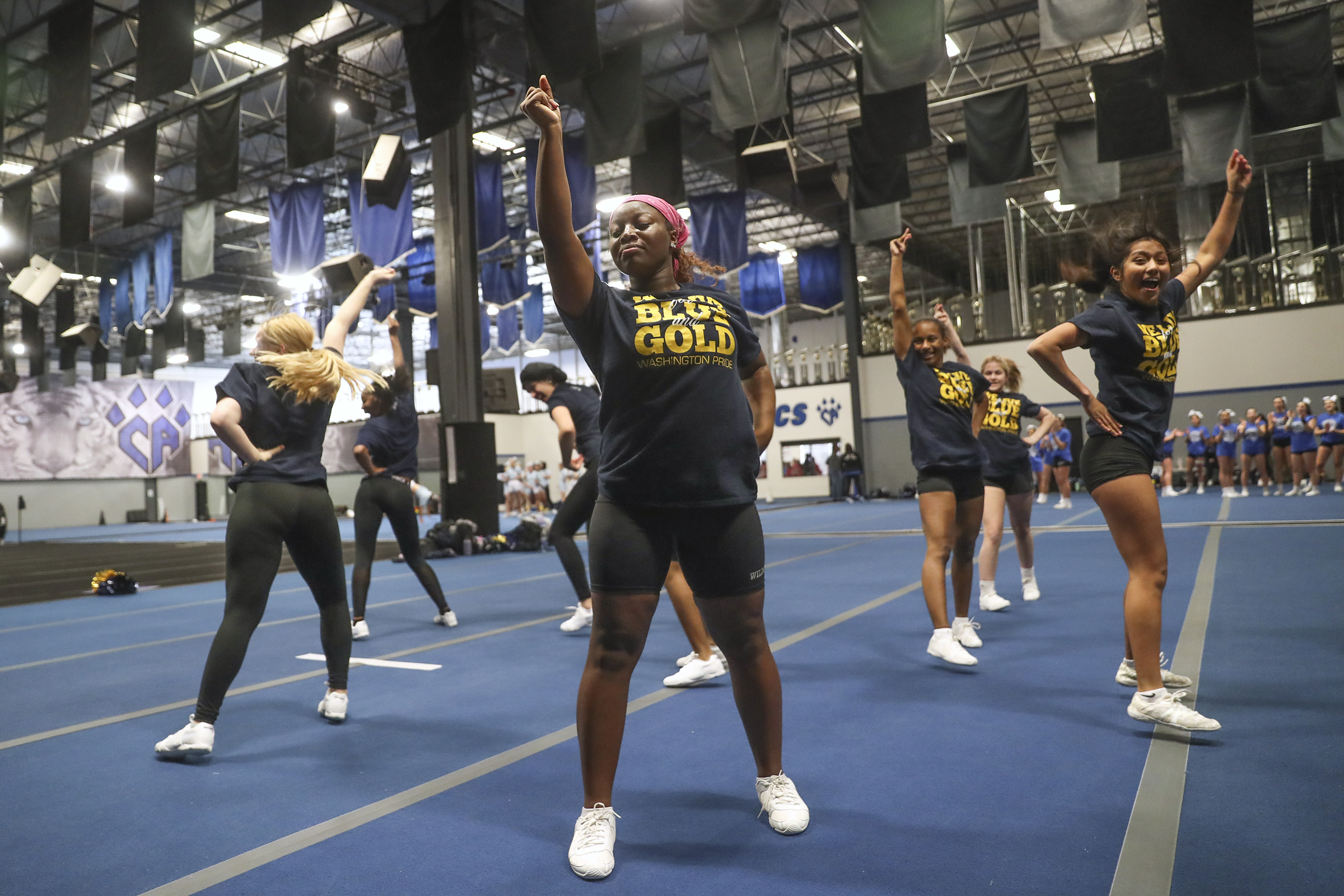
    Aaliyah Armour, center, and the George Washington High School cheer team practicer their routine at Cheer Athletics in Plano, Texas on Friday, Jan. 20, 2023. Cheer Athletics is regarded as one of the best cheerleading gym in the worlds. The George Washington High School cheer team became the first Philadelphia School District cheerleaders in history to qualify for nationals, where they spent the weekend competing in Dallas.

    Produced by basketball star Steph Curry, the series had previously aired to limited audiences on Comcast’s Black Experience platform.

    Directed by Philadelphia filmmaker and La Salle University alum, Matt Howley, who learned about the team through a 2022 Inquirer story, the series tracks the 15-person coed squad from its humble beginnings, including collecting change to scrape their way to the nationals.

    The series delves into the trying home lives of students, like star player Adamaris Lopez, who competed while successfully fighting her father’s deportation.

    “A lot of us come from poverty,” Lopez, who now studies nursing at the University of Pennsylvania, says in the first episode. “People don’t really expect us to come from low-income houses to win a national championship.”

    Other players discuss traumatic home lives and the loss of loved ones from gun violence. Despite placing 10th in the nation, many of the George Washington students had no previous experience in cheerleading, a pricey sport where many children begin young.

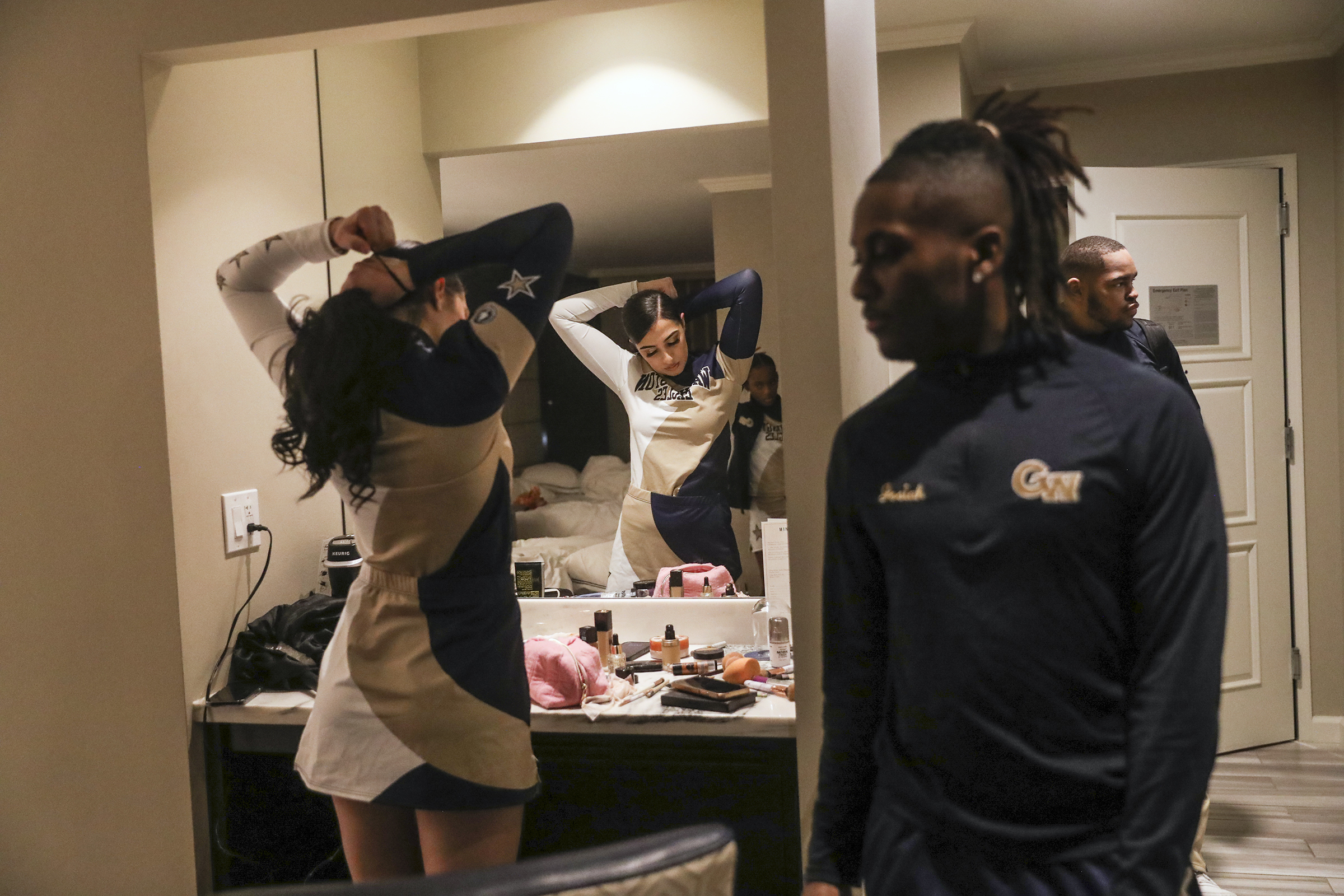
    Irsida Kola gets ready in the mirror for the first day of competition as teammates Josiah Jeudy, front, and Roland Williams enter the room before the team departs at The Adolphus Hotel in Dallas, Texas on Saturday, Jan. 21, 2023. The George Washington High School cheer team became the first Philadelphia School District cheerleaders in history to qualify for nationals, where they spent the weekend competing in Dallas.

    “Matt did a tremendous job capturing the dynamic of the team and the individual stories,” said Coach Michelle Sorkin-Socki. “It really showed that it was more than just cheerleading. They were able to overcome their individual adversities. They found that power within each other.”

    The team, which placed fourth in the nation this year, and has been to nationals now five years in a row, attended a ritzy red carpet premier of the series at the Franklin Institute last year.

    Many of the players have moved onto college, but keep in contact about the film, said Sorkin-Socki.

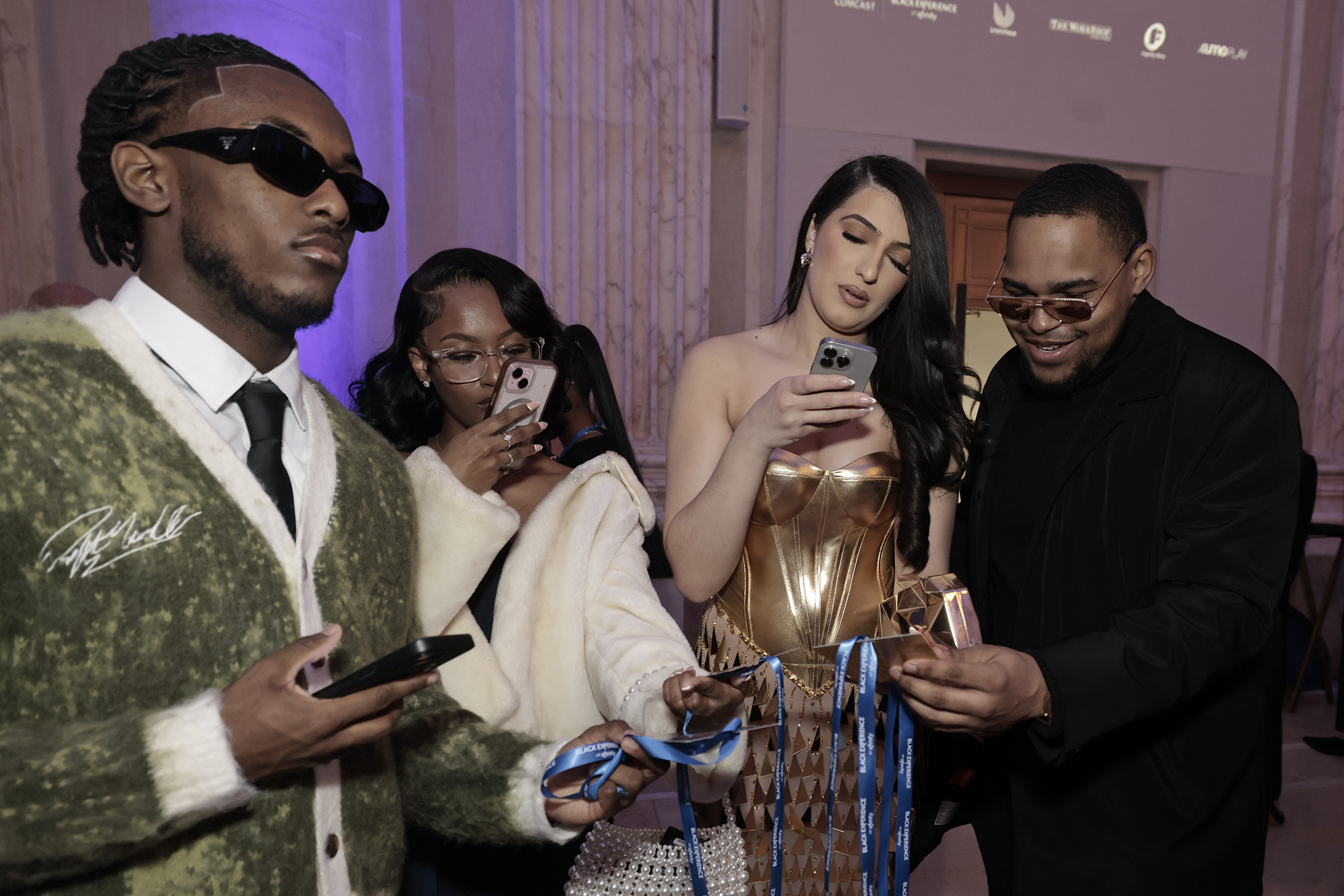
    (L-R) George Washington High School’s Josiah Jeudy, Sarai Jeudy, Irsida Kola and Roland Williams before the premiere of “Spirit,” at the Franklin Institute in Philadelphia, on Thursday, February 27, 2025. “Spirit,” is the story about the George Washington HS cheer team, the first Philly public school team to make it to nationals in a sport that’s dominated by wealthy suburban (and majority white) teams.

    “It’s bonded us,” she said.

    All of it — the national rise, the series, the attention — has been surreal, said Sorkin-Socki.

    “But I think the students felt heard,” she said. “I think they felt seen.”

    The series has not only had an impact on the former players, the coach said. But on younger ones too.

    “They know they can do great things,” she said. “Their trauma doesn’t define them.”

  • Philadelphia opens new LGBTQ+ visitor center, one of few in country

    Philadelphia opens new LGBTQ+ visitor center, one of few in country

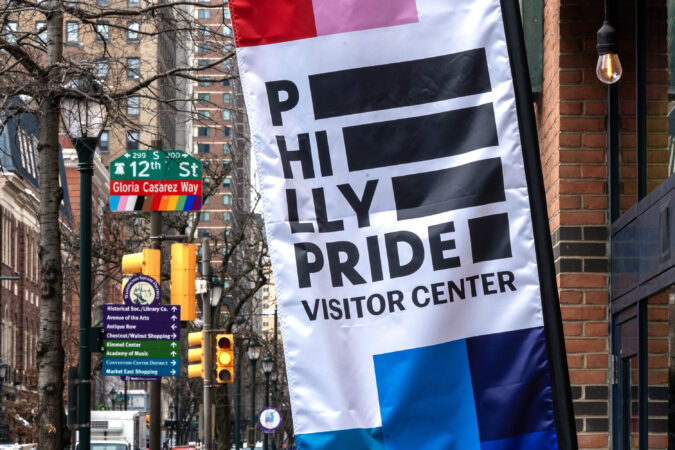
    It is a simple, sleek storefront in the Gayborhood. And it is now a welcoming spot.

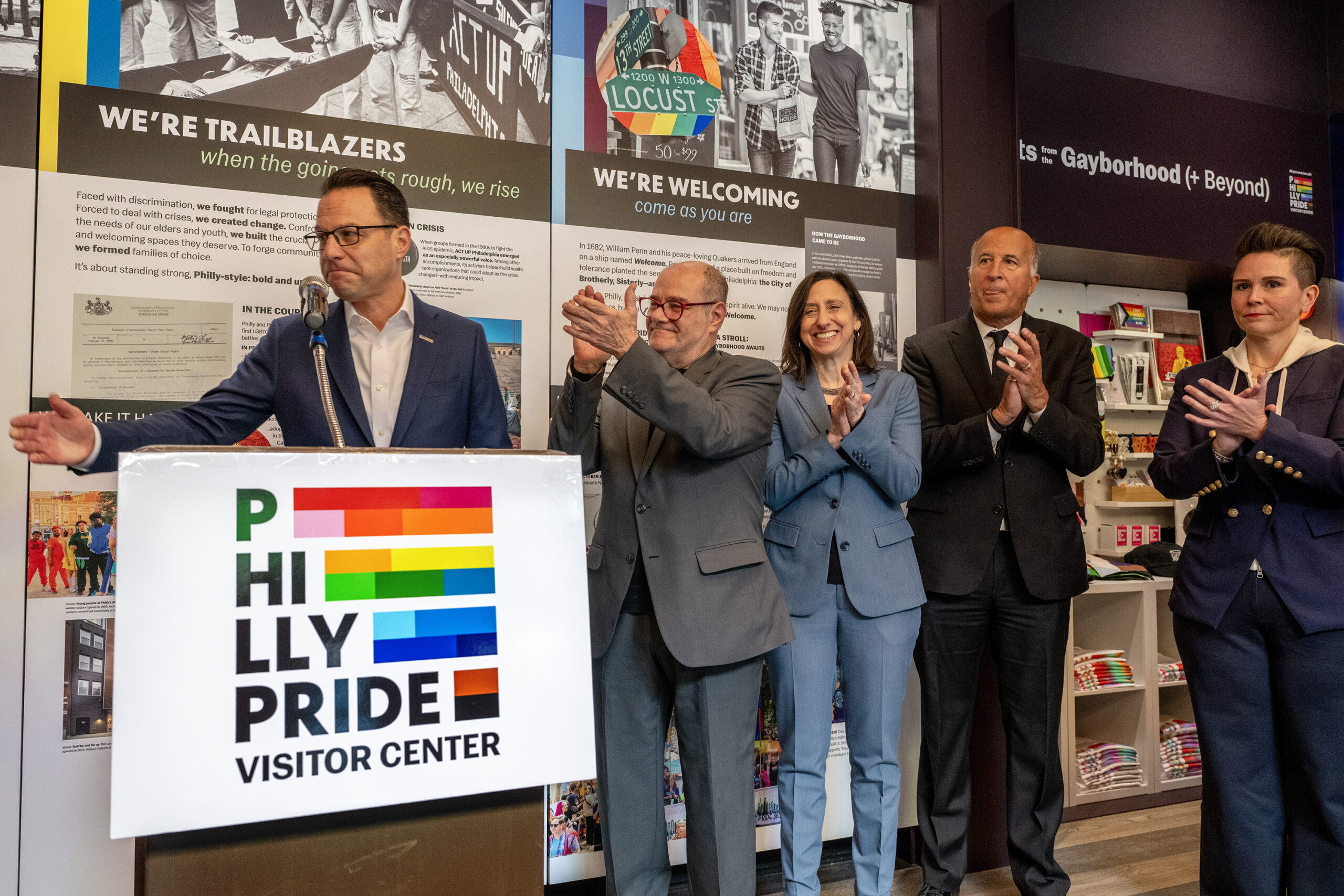
    On Wednesday, Gov. Josh Shapiro, city tourism and marketing leaders, and LGBTQ+ advocates officially opened the Philadelphia Pride Visitor Center, one of the country’s first LGBTQ+ visitor centers.

    “We need happy things in the world,” Shapiro said, during a ribbon cutting at the center. “And we need places like this that bring people together. That is the Pennsylvania way.”

    Gov. Josh Shapiro opens the Philly Pride Visitor Center Wednesday, Feb. 25, 2026, in the heart of the city’s Gayborhood at 12th & Locust. With him, from left, are Mark Segal, Philadelphia Gay News founder; City Councilmembers Rue Landau and Mark Squilla; and Anne Ryan, Pennsylvania Deputy Secretary of Tourism.

    The Philly Pride Center is now just one of a handful of LGBTQ+-dedicated visitor centers in America, including ones in New York and Miami. Opening ahead of Philadelphia’s big summer celebrations for the 250th anniversary of America in 2026, also known as the Semiquincentennial, officials described the center as a symbol that Philadelphia, the city of the nation’s birth, welcomes all.

    “At a time when other states are walking away from their LGBTQ+ community, we are walking toward it,” Shapiro said. “At a time when other states are saying ‘no’ to pride-based tourism, we are embracing it.”

    Located near 12th and Locust Streets, in a storefront connected to Knock Restaurant and Bar, the center offers visitor services, including itinerary planning, attraction ticketing, and travel information, with a focus on LGBTQ+-affirming destinations, businesses, and cultural institutions. Souvenirs made by LGBTQ+-owned businesses and artists are on sale.

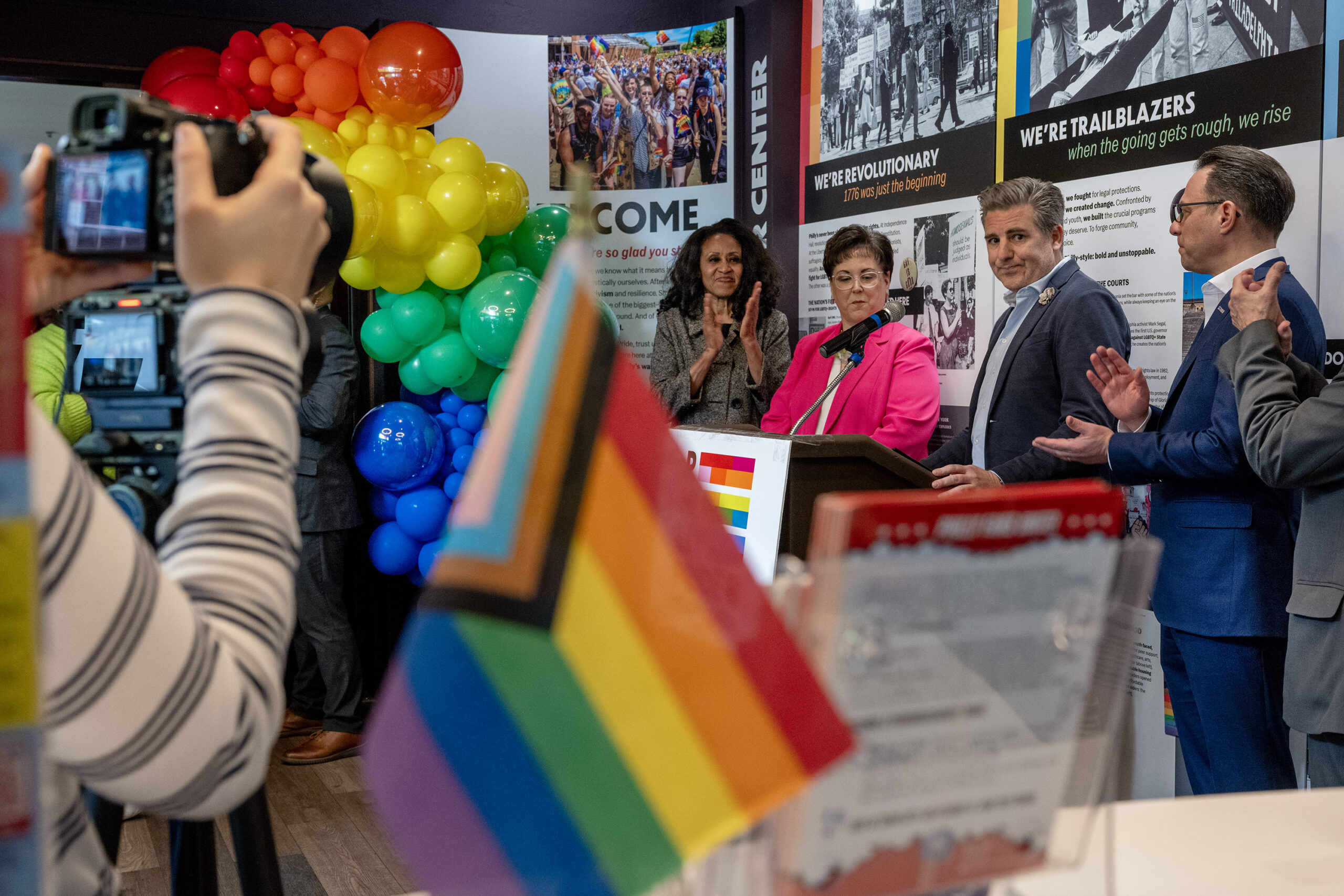
    Neil Frauenglass (second from right), chief marketing officer with Visit Philadelphia, is recognized for his work during grand opening of the Philly Pride Visitor Center Wednesday, Feb. 25, 2026, in the heart of the city’s Gayborhood at 12th & Locust. With him, from left, are Donna Jackson Stephans, Philadelphia’s chief diversity, equity and inclusion officer; Philadelphia Visitor Center President and CEO Kathryn Ott Lovell; and Gov. Josh Shapiro.

    “The Philly Pride Center reflects something we believe with all of our hearts,” said Kathryn Ott Lovell, president and CEO of Philadelphia Visitor Center Corp., which will run the new center. “That every visitor should feel like they are welcome and that they belong. We want the Philly pride visitor center to be both a very practical resource and a very visible statement about who we are as a city.”

    More than a year in the making — and now open Thursday through Monday, noon to 6 p.m., at 1130 Locust Street — the site will represent Philly’s fifth visitor center, including ones at Independence Mall, City Hall, Love Park, and the Parkway Visitor Center & Rocky Shop.

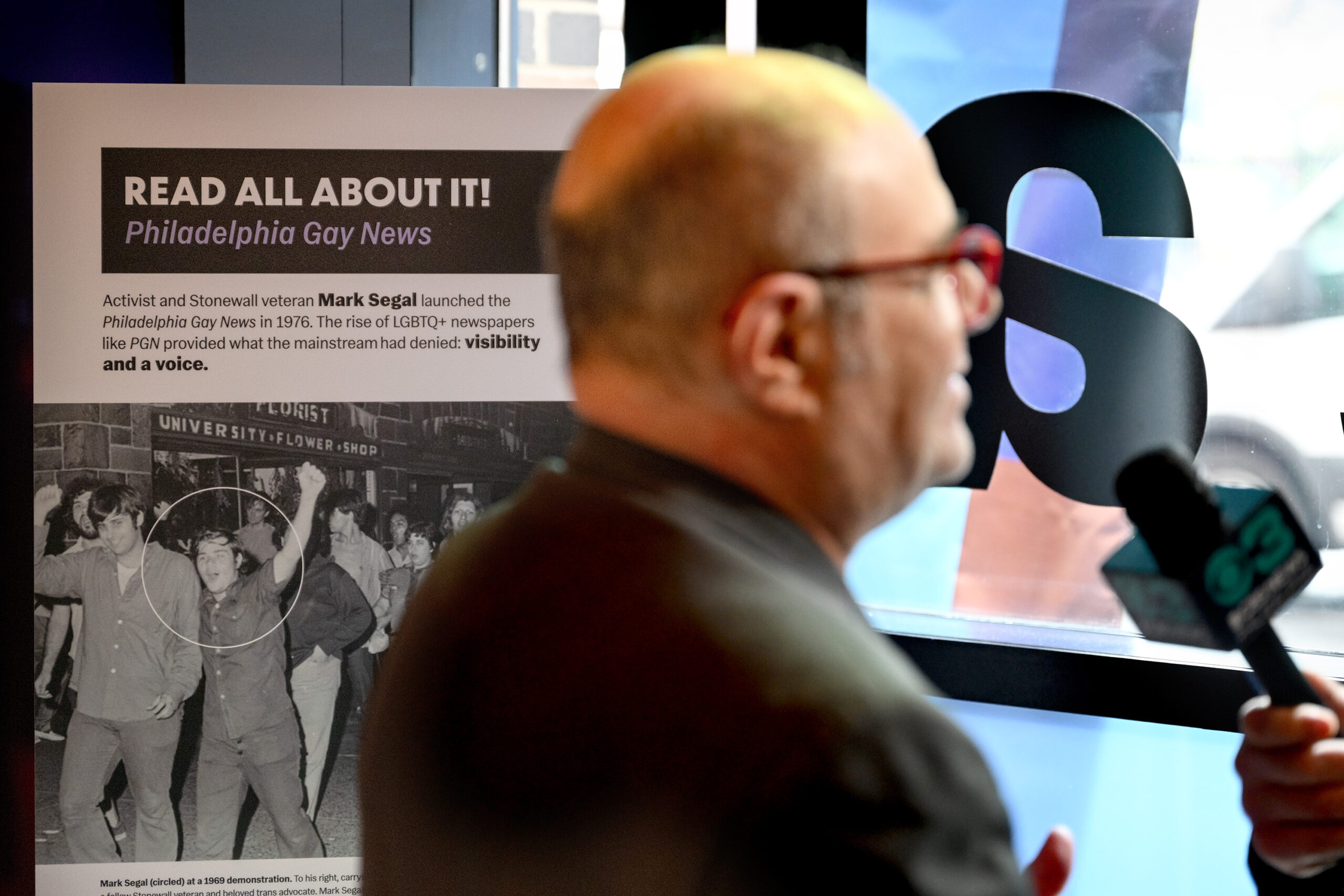
    “Philadelphia’s LGBTQ+ history helped shape this country’s story, and the Philly Pride Center brings that legacy forward in a powerful and visible way,” said Angel Val, president and CEO of Visit Philadelphia, which helped found the center, along with Mark Segal, founder and publisher of Philadelphia Gay News. Segal, an activist and author, who was part of the seminal riots at the Stonewall Inn in Greenwich Village in 1969, curated the historical information exhibited at the center, telling of Philly’s long and powerful LGBTQ+ legacy.

    Mark Segal, Philadelphia Gay News founder and publisher is interviewed during the grand opening of the Philly Pride Visitor Center Wednesday, Feb. 25, 2026. At left is a photo (circled) of him demonstrating for Gay rights in 1969, part of his newspaper’s 50th Anniversary.

    It is a point of pride, Segal said, that the Philly Pride Visitor Center comes at a time when many scholars and activists believe the Trump administration is attempting to sanitize American history.

    “At this time in history, there are many people who are trying to erase us and erase our history,” Segal said. “But today, by opening a new Pride Center, which yells and screams ‘visibility and take pride in who you are,’ we’re saying, ‘No, we’re not going to allow anyone to put us back in the closet ever again.’”

  • Everything you need to know about the 2026 PHS Philadelphia Flower Show

    Everything you need to know about the 2026 PHS Philadelphia Flower Show

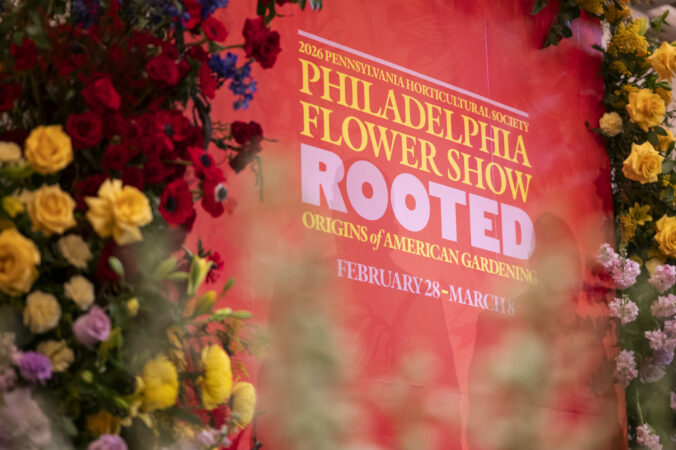
    The iconic Philadelphia Flower Show returns Feb. 28-March 8, bringing a massive, immersive garden world blooming to life within the Convention Center. And more than ever, it promises to be historic.

    Pennsylvania Horticultural officials have billed the 2026 Flower Show as Philly’s first major event of its yearlong festivities planned for the 250th anniversary of America — as a celebration of the history of American gardening.

    The show’s theme, “Rooted: Origins of American Gardening,” honors the people, places, and traditions that have shaped gardening — and invites visitors to consider where their own gardening stories began. The 2026 show will debut a reimagined Marketplace shopping destination and expanded Artisan Row.

    America’s oldest flower show, which began in 1829, the internationally renowned event draws thousands to Center City each year, and represents the Horticultural Society’s biggest fundraiser, supporting its greening efforts across the city.

    Here’s what you need to know if you’re planning to attend.

    Location and schedule

    📍 Pennsylvania Convention Center: 1101 Arch St., Philadelphia, PA 19107

    📅 Feb. 28 to March 8

    ⏰ Hours:

    • Feb. 27: Noon — 4 p.m. Members only Preview
    • Feb. 28 — March 8, 2026
    • Open daily 10 a.m. — 8 p.m., until 6 p.m. on March 8
    A rendering of the 2026 Philadelphia Flower show is on display during a Jan. 14 news conference at Union Trust. The theme of this year’s flower show is called “Rooted: Origins of American Gardening.”

    Tickets and pricing

    Tickets are available online at tickets.phsonline.org and at the Convention Center. Online tickets are cheaper than those purchased at the door, and weekday tickets cost less than weekend tickets. Group discounts are offered to groups of 25 adults or more.

    Online pricing:

    • Adult:
    • Student (18-24 with valid student ID):
    • Children (5-17):
    • Twilight (after 4 p.m.):
    • Any-Day Flex Pass — $60, one-time, any day admission
    • Floral Fanatic Pass — $100 unlimited daily entry for entire run

    In-person pricing:

    • Adult:
    • Student (18-24 with valid student ID):
    • Children (5-17):
    • Twilight (after 4 p.m.):
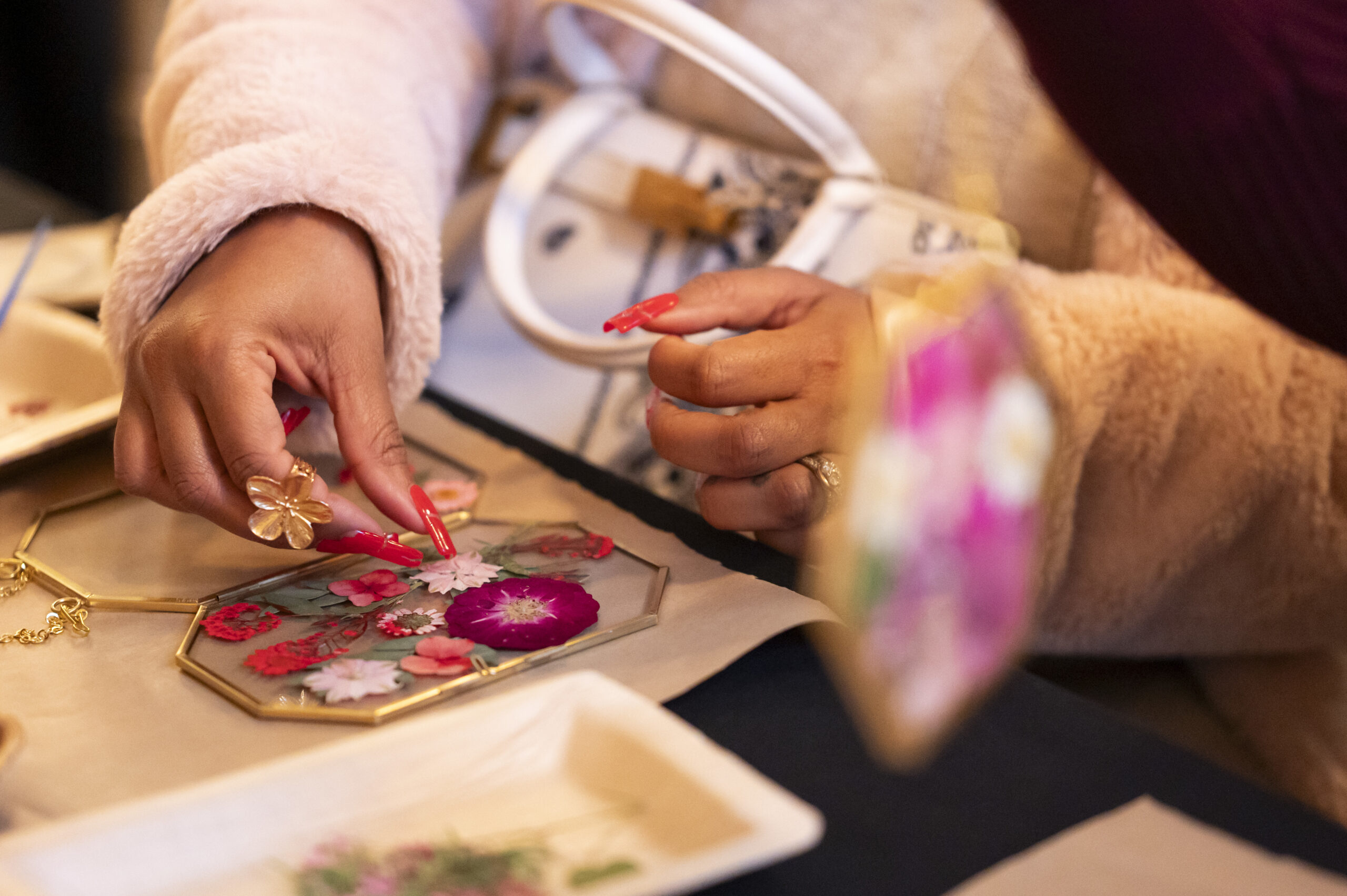
    A participant creates pressed flower art following a Jan. 14 news conference at Union Trust for the unveiling of a first look at the 2026 Philadelphia Flower Show, “Rooted: Origins of American Gardening.”

    Top exhibits and attractions

    For a full list of exhibitors at this year’s Show, please visit phsonline.org.

    The Forest Floor: Flower Show Entrance Garden

    A sprawling, misty forest floor creation drawing on the diverse inspirations of American gardens, and featuring mossy stonework, Zen-like sculptural plantings, water displays, and crowned with a towering, twisting root structure.

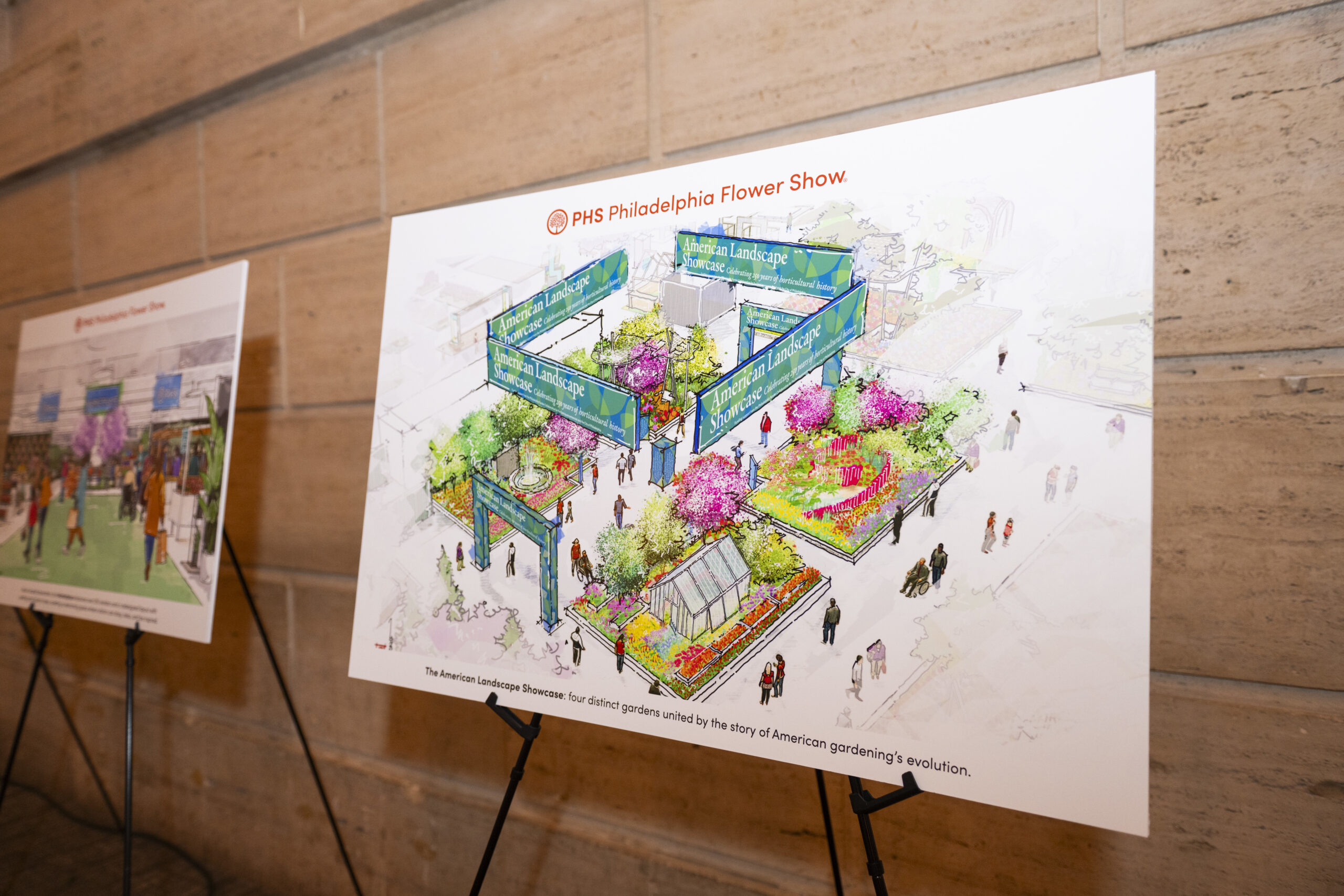
    The American Landscape Showcase: Special exhibition celebrating America’s 250th anniversary.

    This year’s special exhibition celebrates the national milestone, also known as the Semiquincentennial, with four gardens highlighting how gardening has shaped communities and evolved over 250 years.

    First Bloom — Rooted in Memory

    Four acclaimed international florists — Gábor Nagy, Alex Segura, Chantal Post, and Conny van der Westerlaken — showcase the origin moments that sparked their passion for flowers.

    Design Gallery

    Presents floral arrangements crafted for themed challenges, highlighting skill, creativity, and artistic power.

    Hamilton Horticourt

    Each year, thousands of exhibitors compete in more than 900 classes or categories, ranging from horticulture and arrangement to design and photography. With no age limits, winners receive a “Blue Ribbon.” Competitive Class categories are on the show floor, including miniatures, pressed flowers, and specialty plants.

    Artisan Row

    The 2026 show features an expanded Artisan Row, where guests can work alongside nearly 40 vendors and craftspeople to create everything from fresh floral crowns to dried bouquets and terrariums and candles and jewelry and more.

    Marketplace

    A new highly visible, street-level Marketplace below the main exhibit halls, with more than 200 vendors offering a curated selection of live plants, florals, garden tools, decorative wares, and more.

    Potting Parties

    Create your own flower arrangements under the guidance of Tu Bloom, the official botanical artist for the Grammys. $20 per person (reserve at tickets.phsonline.org/events).

    Bloom Bar

    Visit the Bloom Bar or keep an eye out for the cart wandering the show floor to buy gorgeous premade floral crowns.

    Kids Cocoon

    Sponsored by Netflix House Philadelphia, a family-friendly space with reading nooks, craft and digging stations.

    Butterflies Live!

    Hundreds of native and exotic butterflies, including zebra longwings, morning cloaks, and bright blue morphos dance and paint the air with color in the iconic butterfly tent exhibit. Many are happy to land on visitors’ feeding sticks for nectar and sugar water.

    Know to Grow

    Speaker series featuring horticultural experts exploring topics including heirloom and early American gardens, native bees and pollinator habits, resilient ecological design, and the cultural histories that have shaped American gardening traditions.

    Plant People Place

    Interactive area where guests can connect with expert gardeners and industry specialists for advice and insight.

    Early Morning Tours

    Daily early-hour tours offer behind-the-scenes peeks and insights from exhibitors. Early morning photography sessions are also available.

    Family Frolic

    • March 1:10 a.m. — 3 p.m.

    Buy tickets for the March 1 show for a day designed for young families, with educational experiences, playful floral design, coloring, and more. Free with admission, recommended for all ages.

    Blossom & Breathe

    • March 4: 4 — 8 p.m.

    A celebration of beauty, well, and natural healing, including yoga classes, opportunities to work with wellness experts, and mediation. Purchase required for yoga class, all other activities are free with admission. Recommended for all ages.

    Fido Friday

    • March 6: 5 — 8 p.m.

    Bring your best four-legged friend to explore the florals. Proof of current rabies vaccination required.

    Flowers After Hours

    Folklore of the Forest

    • March 7: 8:30 — 11:30 p.m.

    The Flowers After Hours dance party transforms the show into an enchanted, fairytale forest setting with themed cocktails and dancing. Guests are encouraged to wear “fantasy-inspired attire,” planners said. Purchase required. Must be 21.

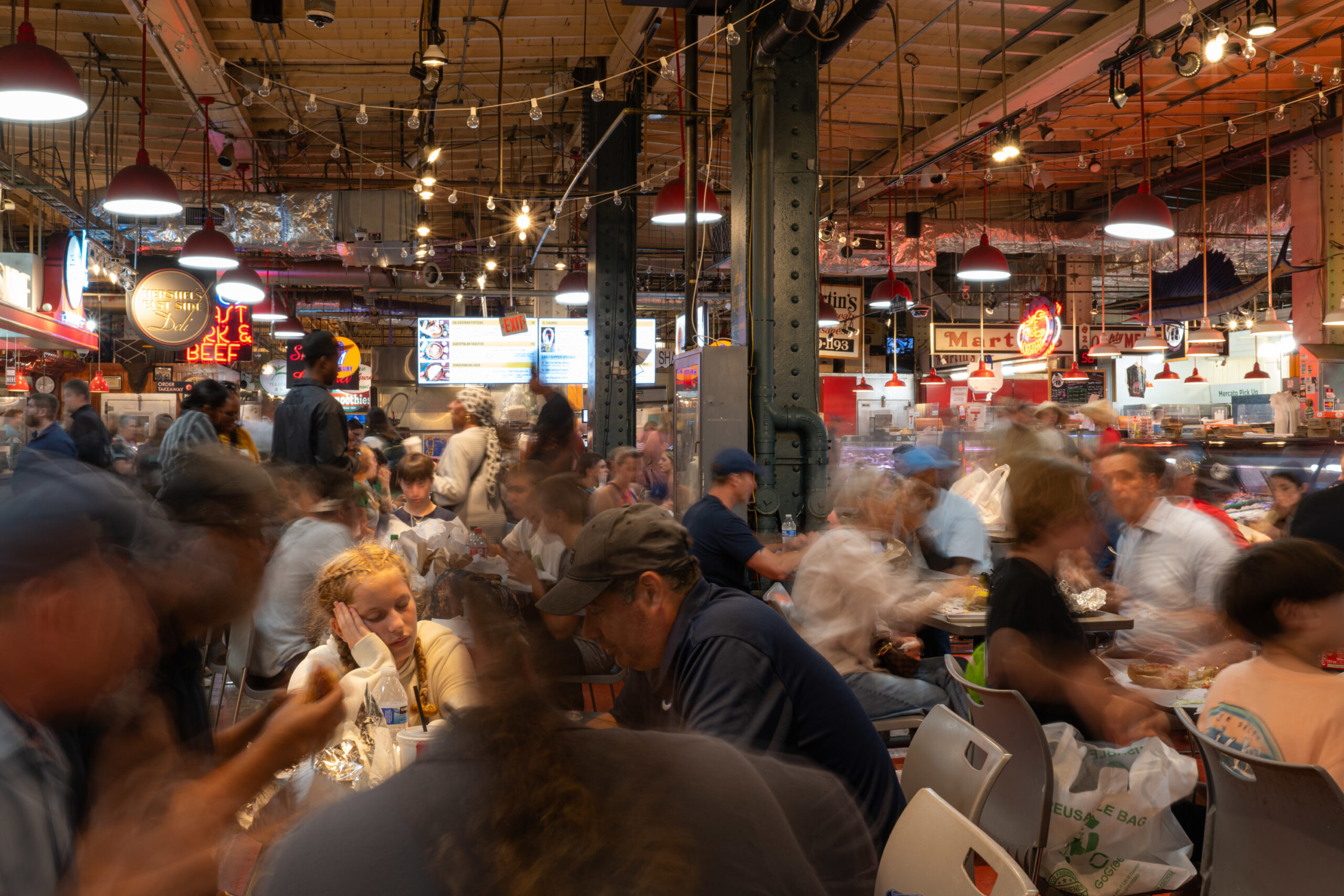
    A young woman falls asleep during the lunch rush at Reading Terminal Market on June 11, 2025, in Philadelphia.
    Food & drinks

    In addition to the convention center’s Saxby’s Coffee and the Overlook Cafe, there are concession areas managed by Aramark serving light bites, snacks, and drinks on the show floor.

    Guests are encouraged to get their hand stamped before exiting the building, if they decide to take a short walk to some of Philadelphia’s famous food destinations.

    How to get to the Flower Show

    • 🚴 Bike: 19 minutes from South Philly, about 30 minutes from North or West Philadelphia.
    • 🚌 Bus: Take lines 4, 10, 11, 13, 16, 17, 21, 23, 27, 33, 34, 36, 38, 42, 44, 45, 47, 48, 61, 78, 124, and 125.
    • 🚇 Subway:
    • 🚉 Regional Rail:
    • SEPTA is running extra trains on these Regional Rail lines on Saturdays and Sundays during the show — March 1-2 and March 8-9:

    Where to park for the Philadelphia Flower Show

    The Convention Center recommends parking at one of the lots closest to the show that are run by ABM Parking, E-Z Park, iParkit Philadelphia, Park America, Parking Facility, Parkway Corp., or SP+ Parking.

    You can also park at a Philadelphia Parking Authority garage:

    • The Autopark at the Fashion District: 📍45 N. Ninth St., 💰 $35 for 24 hours, ⌚ 6 a.m. to midnight, 🚶‍♀️ three minutes.
    • The Autopark at Jefferson: 📍10th and Ludlow Streets, 💰 $36 for 24 hours, ⌚ 5 a.m. to 11 p.m., 🚶‍♀️ 10 minutes.
    • Parkade on Eighth: 📍801 Filbert St., 💰$32 for 24 hours, ⌚ 24/7, 🚶‍♀️ six minutes.
    • Gateway Parking Garage: 📍1540 Vine St., 💰 $16 for 1 hour, $30 for 24 hours, ⌚ 24/7, 🚶‍♀️ five minutes

    Where does the money for the PHS Flower Show go?

    Proceeds from the Flower Show go directly to the Pennsylvania Horticultural Society to disburse among its regional programming. This includes neighborhood programs, city tree-tending, low-cost gardening programs, water conservation, designing and maintaining public gardens, and more.

    For more information, visit phsonline.org/the-flower-show.

  • Philly forecast calls for more than a foot of snow to fall Sunday into Monday

    Philly forecast calls for more than a foot of snow to fall Sunday into Monday

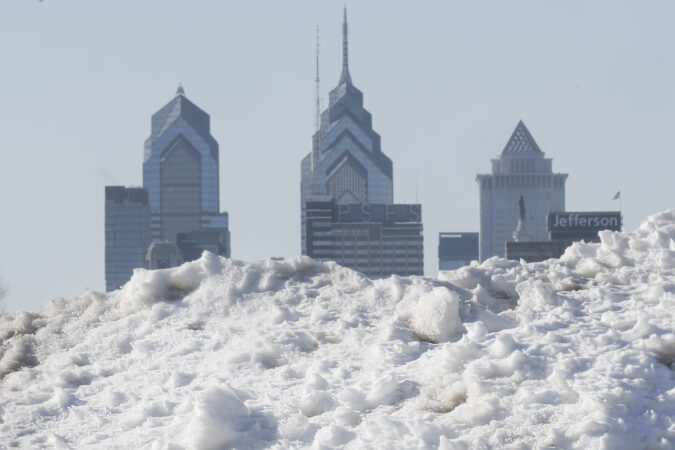
    Philadelphia and its suburbs are forecast to receive 16 to 22 inches of snow and face blizzard conditions beginning Sunday and continuing into Monday, with weather prediction models sharpening their focus as the storm approaches.

    “Mother Nature has spoken again and made it clear that winter is not over,” said Mayor Cherelle L. Parker during an emergency press conference, declaring a citywide snow emergency, starting 4 p.m Sunday. “Yet another big winter storm is coming. It’s a major snow storm with real accumulation anticipated, and it’s heading our way .”

    City government and courts will not open Monday, while public schools will switch to virtual learning. SEPTA riders should expect significant service disruptions over the next three days, said officials, who implored drivers to stay off the road Sunday.

    Dominick Morales, the city’s emergency management coordinator, described the expected storm as “dangerous,” adding that heavy, wet snow could threaten trees and power lines.

    “Dangerous because of the amount of snowfall that is being forecast in about a 24-hour period, but it’s also dangerous because of high winds — and for Philadelphia — near blizzard conditions. When this storm picks up, we have to take it seriously,” he said.

    When all is said and done, the total snowfall may be close to 18 inches in the city, and could surpass 20 inches in South Jersey, where high winds are forecast to create blizzard conditions, according to the National Weather Service. Early Sunday morning, the weather service extended a blizzard warning to cover Philadelphia and Bucks and Delaware Counties, as well as eastern Montgomery County and all of South Jersey.

    “It does look like it’s going to be quite an impactful storm for the whole [I-]95 corridor and further east,” said Sarah Johnson, warning coordination meteorologist at the weather service’s Mount Holly office, on Saturday.

    This will lead to potentially dangerous driving conditions starting Sunday into Monday. And the Shore and Delaware Bay could experience flooding during high tide Sunday evening.

    PennDot and the Pennsylvania Turnpike Commission said interstate and I-76 vehicle restrictions are set to begin at 3 p.m. Sunday. Speed limits may be restricted to 45 mph on these roadways, officials said.

    While forecasters saw trouble brewing for several days, it was not clear how heavily the storm would affect Philadelphia, Johnson said.

    “Pretty much throughout the week, we were aware that there was going to be this storm system off the coast. The question was just going to be how close to the coast it came,” she said.

    The storm is expected to begin with a mix of snow and rain Sunday morning, with the potential for only rain falling before dawn. By early to midafternoon, that is forecast to change over entirely to snow, Johnson said.

    The blizzard warning is in effect from 10 a.m. Sunday to 6 p.m. Monday.

    “We are also going to be seeing some gusty winds with the heaviest snow amounts,” Johnson said. Wind speeds of up to 45 mph late Sunday and early Monday have the potential to cause blowing and drifting snow that may make it difficult to keep roads clear, according to the weather service.

    The blizzard warning is in effect from 1 p.m. Sunday to 6 p.m. Monday.

    Johnson emphasized that whatever the storm brings, it will be significant for Philadelphia.
    “The period that we are most concerned about in terms of both snow rates and wind is Sunday evening through the morning on Monday,” she said.

    The storm arrives while the administration is still stinging from criticism over what many perceive as a slow and ineffective response to the January snowstorm, the biggest to hit the city in a decade, which left many neighborhood streets and byways encased in snow and ice for 25 days.

    On Saturday, Parker said the city would be ready.

    More than 1,000 emergency city personnel, 800 snow removal vehicles, and a reserve of 25,000 tons of salt will be deployed, she said.

    “I want to be very clear,” Parker said. “We will do whatever it takes, for however long it takes, to ensure that we have cleared our streets and are keeping Philadelphians safe.”

    Snowfall rates could intensify to as much as two inches per hour Sunday afternoon into evening, Parker said.

    “It’s going to be a big one, and we’re going to be ready for it,” said Carlton Williams, city emergency management director.

    Williams said two high-powered melters, often capable of melting 135 tons of snow per hour, would be strategically placed near residential locations, where snow removal proves difficult, though he did not exactly say where. He said the city is also adding more locations for residents to pile snow.

    Williams and other officials requested the public’s help, asking drivers not to block corners, which prevents ploughs from accessing snow-clogged streets. Deputy Police Commissioner John Stanford was clear about parking:

    “You cannot save parking spots,” he said. “If we are called to a location for any cones, chairs, or any other items out there, we will remove them.”

    All Philadelphia public school activities will be canceled Monday, officials said.

    SEPTA is expecting major delays.

    “There are going to be significant disruptions to service all throughout the duration,” said SEPTA General Manager Scott Sauer.

    <iframe src="https://media.inquirer.com/nws-snow-map/inq-snow-map.html" scrolling="no" frameborder="0" width="100%"></iframe><script type="text/javascript">(function () {window.addEventListener('message', function (e) { var message = e.data; var els = document.querySelectorAll('iframe[src*="' + message.id + '"]'); els.forEach(function(el) { el.style.height = message.height + 'px'; }); }, false); })();</script>
    

    In contrast to the very low temperatures for days after the Jan. 25 storm that dumped a foot of snow in areas around Philly, temperatures are expected to rise above freezing on Monday afternoon.

    Higher temperatures later in the week may help melt the snow, as opposed to the long-lasting snowpack after the January storm.

    Pennsylvania Gov. Josh Shapiro and New Jersey Gov. Mikie Sherrill urged residents in their states to stay off the roads during the storm.

    On social media, Shapiro said state agencies are prepared to respond to the weather in Eastern and Southeastern Pennsylvania.

    Sherrill on Saturday declared a state of emergency ahead of the storm.

    She said at an afternoon news conference that it was the first time since 2022 that the National Weather Service had issued a blizzard warning along the coastline.

    The state of emergency will go into effect at noon Sunday.

    “I know we just got through a historic winter storm just a few weeks ago — we all did it together by heeding warnings, staying off the roads, and taking public safety seriously,” Sherrill said. “Now we have another serious winter storm on our hands, and my top priority is your safety.”

    Officials urged people to stock up on essentials ahead of the storm, keep electronics like cell phones charged, and avoid driving once the snowfall begins.

    Sherrill advised New Jerseyans to stay home and suggested watching the U.S. men’s Olympic hockey team play for gold Sunday, doing a puzzle, and eating chili.

    Staff writer Stephen Stirling contributed to this article.

  • How to have a Perfect Philly Day, according to Revolution Museum chief R. Scott Stephenson

    How to have a Perfect Philly Day, according to Revolution Museum chief R. Scott Stephenson

    For R. Scott Stephenson, the ghosts of the Revolution are easily conjured. They are found on every block and every corner of his daily walk from his 18th-century home in Queen Village to the Museum of the American Revolution in Old City, where Stephenson has served as president and CEO since 2018.

    “If you close your eyes, you can feel it,” Stephenson wrote about “The Declaration’s Journey,” the museum’s ongoing grand exhibit celebrating America’s 250th anniversary. “Over there, irascible John Adams and taciturn George Washington stroll to their first meeting. Down the street, brooding Thomas Jefferson takes a break from drafting a declaration to stretch his legs and find a nice pint of cider.”

    R. Scott Stephenson has been president and CEO of the Museum of the American Revolution since 2018. This year, as the nation turns 250, the museum takes center stage.

    As Philadelphia takes center stage in 2026 for the national milestone, also known as the Semiquincentennial, Stephenson will no doubt have a little less time to stretch his legs. This year, it falls to him to conjure the spirits of those fiery days of rebellion for the more than 1.5 million visitors Philadelphia is expecting in 2026.

    It is a moment of celebration and introspection the museum has been planning for since before it opened in 2017. With the lauded exhibit exploring the history and global impact of the declaration, and their most robust slate of programming and exhibitions ever, the museum and its staff of about 100 historians and researchers, is ready, said Stephenson.

    “It’s akin to a playwright,” he said. “You’ve written the play, you’ve cast all the characters, you’ve made all the costumes, you built the stage and been through endless rehearsals. We feel so supremely confident to meet the visitors that are coming.”

    A Pittsburgh native, who earned a PhD in American History at the University of Virginia, Stephenson and his wife, a physician, and two adult children, have lived in the Philly area for 25 years. His perfect Philly day would include coffee before dawn, Italian Market shopping and exploring with his daughter, oysters and bookstores, Philly’s only Colonial-era tavern, and a home-cooked meal with the family. And all, with those ghosts trailing close behind.

    Stephenson, 60, a Pittsburgh native, lives in Queen Village with his wife and daughter.

    This interview has been condensed and edited for length.

    5:30 a.m.

    Our beloved adopted Philadelphian, Benjamin Franklin, said, “Early to bed, early to rise makes a man healthy, wealthy and wise.” So far, I’m just healthy, the other two may have not necessarily come (laughter). But I think maybe with the thousands of years of farmers in my past, my circadian clock has never changed. I am up without an alarm between 4:30 a.m. and 5:30 a.m. I start my day with a pot of really strong black coffee. Those first couple of hours before anyone is up is golden time for me. I read my periodicals, my newspapers. I still like the sound of paper wrinkling.

    7:30 a.m.

    We are a cooking family. On weekends, we are all about ending the day with a big meal that we make together. So a perfect day is my daughter and I walking to the Italian Market to browse around at the various shops, figuring out what protein we’re going to build dinner around. And nosing around the produce stands and cheese stops. At Fante’s Kitchen Shop are great reproductions of 18th-century German cookie molds for making gingerbreads.

    I do not have one path to get from Point A to Point B anywhere in Philadelphia, so I’m usually going to want to zigzag around a bit. We like to do a little exploration as we bring the groceries back to the house.

    11:30 a.m.

    My wife and I love to walk over to Rittenhouse. Lunch at the Oyster House. I love that block of Sansom. It’s a street that feels like a previous era. There’s an original oyster house in Pittsburgh. That was a place both of my grandfathers ate lunch often. My father would go there. I was taken there as a kid. Although ironically, I have a great grandfather who died from eating, what was called on his death certificate, a “poisoned oyster.” He ate a bad one and died in 1905 when he ate a bad one that was a little too far from the Jersey Shore when it was consumed.

    1 p.m.

    I’d definitely pop into Sherman Brothers Shoes right next door. Incredible shoe store. I am sort of obsessed with Alden shoes, these great, super sturdy, American made, old school leather shoes. So I am at least going to go drool a little bit, and think, “Oh, when I wear this pair out, what’s my next pair of Alden’s going to be?”

    2 p.m.

    On a perfect day, I’m popping into the museum, and trying to remain anonymous. Just for an hour, and go wander around the galleries or sit through a showing of “Washington’s Tent” — and just talk to guests. A lot of my job is storytelling. Being able to talk about the impact we have on people — the best way to do that is to actually tell a story that happened to me.

    3 p.m.

    Our other routine would be to go to Plough & the Stars in Old City. We absolutely love Plough & the Stars, particularly in the winter, to be able to sit in front of the fire there. Have a shephard’s pie or fish and chips and a Guinness.

    4:30 p.m.

    I’m gonna spend some time up at the Book Trader on Second Street. I’m not actually allowed to buy any more books. My library is mostly in storage right now. We just don’t have the room. But I do love a bookstore, particularly a used one.

    Stephenson said of Man Full of Trouble tavern and museum: “That’s the only surviving tavern in Philadelphia from the 18th century, where you can literally sit in a room where rum punch and revolution was the game.”

    5:30 p.m.

    Walking home, and frankly whether or not I have been to Center City or Old City, I am almost certainly going to stop, and this a new addition since it just reopened, but at the Man Full of Trouble tavern and history museum. That’s the only surviving tavern in Philadelphia from the 18th century, where you can literally sit in a room where rum punch and revolution was the game. To me, it’s just another reason why this is the greatest city in the nation. Being a few blocks from the Man Full of Trouble, creates a lot of trouble (laughter).

    6:30 p.m.

    It’s probably time to start dealing with those groceries at this point (laughter). At least one weekend day every weekend is family dinner day, where we’re all going to be cooking. So my son and his girlfriend will be in — my daughter’s there, my wife’s there, and we’ll have figured out what’s on the menu. We have a long table. We love to have candles and a candlestick on the table, and turn the lights down. A no device moment, where we really are in each other’s presence.

    8 p.m.

    We are probably going to be playing Wingspan, it’s a board game. There’s a new one called Finspan, which is all about fish in the ocean. We are almost exactly a two minute walk from Queen & Rook Game Cafe. So we’re kind of in a board game neighborhood. We’ll be right at our dining room table and we’ll be playing for a while and drinking a little wine.

    9 p.m.

    Going back to Franklin for a minute, and you remember his aphorism was “Early to bed, early to rise.” I am not the life of a party. Most nights by 9 p.m., my eyes are closed and I am sawing wood (laughter).

  • A new streaming series tells the story of America through the lens of Philadelphia

    A new streaming series tells the story of America through the lens of Philadelphia

    By 2019, after a decade of producing dozens of documentaries about Philadelphia history, the filmmakers at History Making Productions realized they had more than just the story of a city.

    They had the story of America.

    On Friday, the studio released its epic, new telling of that 400-year-old story: In Pursuit: Philadelphia and the Making of America. Directed by documentary filmmaker Andrew Ferrett and written by author and historian Nathaniel Popkin — and mixing modern footage with historical recreation and more than 600 on-camera interviews — the 10-episode series explores the history of America through the lens of Philadelphia, its birthplace.

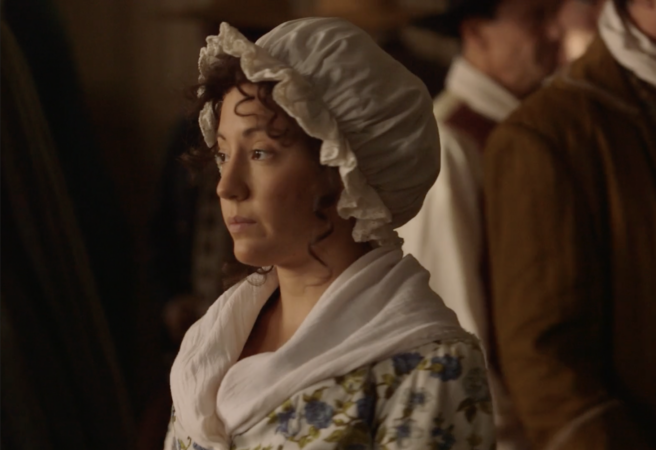
    Belinda Davis as Sarah Forten in “In Pursuit: Philadelphia and the Making of America.”

    Timed to coincide with the 250th anniversary of the Declaration of Independence in 2026, known as the Semiquincentennial, the series provocatively grapples with urgent questions, like how did the American experiment actually unfold? And how can it endure?

    “Philadelphia is not just the birthplace of American democracy — it has been its proving ground,” said Sam Katz, series creator, executive producer, and founder of History Making Productions. “This series looks honestly at how ideals were formed, challenged, expanded, and sometimes betrayed, and why that history matters so urgently.”

    ‘A national moment’

    Spanning 400 years of Philadelphia history, from its Indigenous roots to the MOVE Bombing the series is equal parts entertainment and civic project. Funded by Katz and philanthropies like Pew Center for Arts & Heritage, Penn Medicine, and Lindy Communities, the series premiered at the National Constitution Center on Thursday.

    Episode One is now streaming online. Katz and the filmmakers will host screenings and community conversations at Pennsbury Manor in Bucks County on Sunday, and another screening Feb. 26 at the Bok Building in South Philadelphia.
    Throughout 2026, as the city and country celebrate the national milestone, a citywide “In Pursuit of History Film Festival” will promote each new installment with monthly screenings and public events. 6abc will air monthly hourlong shows to highlight new episodes.

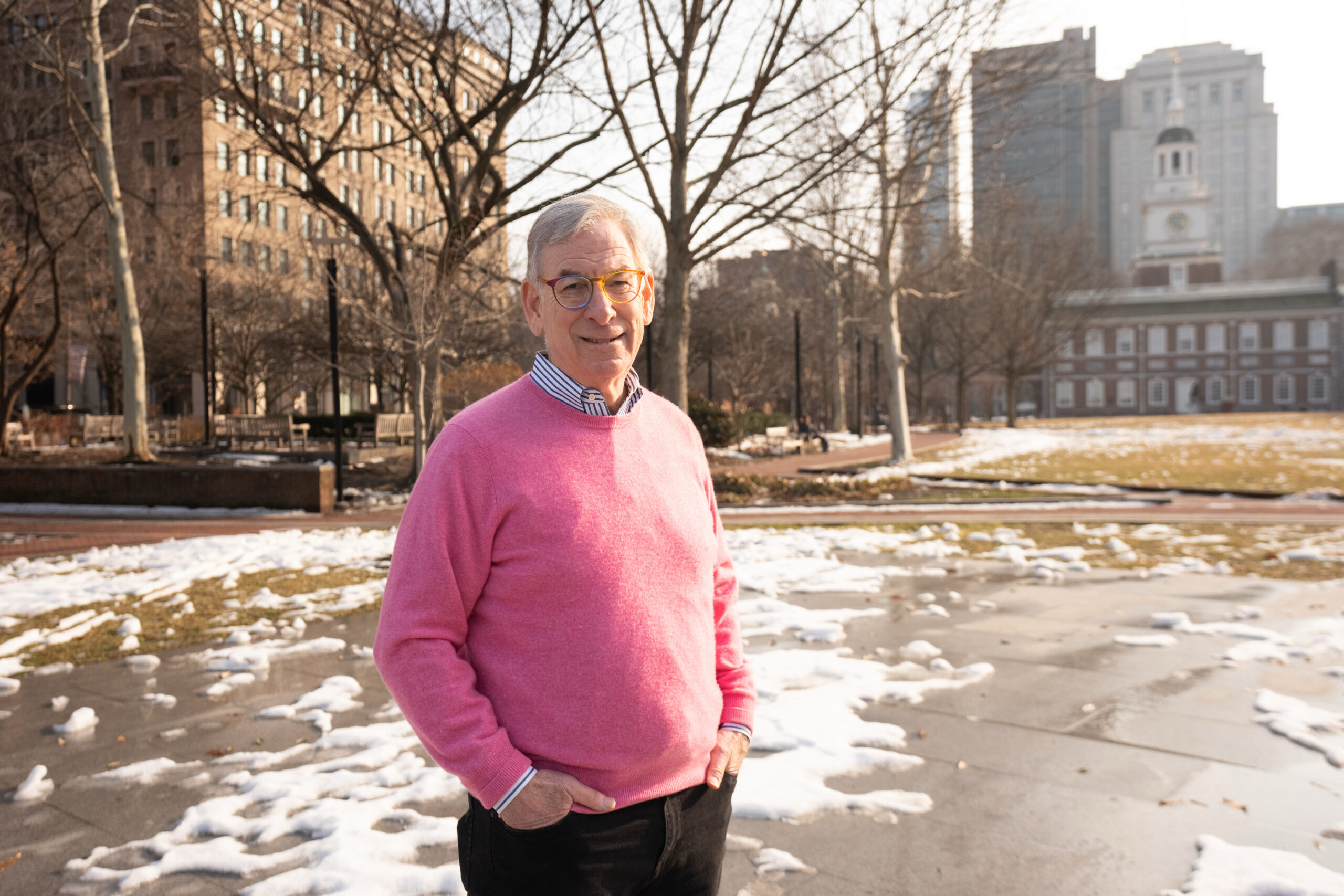
    Sam Katz at Independence Hall, in Philadelphia, Tuesday, Feb. 17, 2026.

    From the beginning, the project was meant to get people talking about the true meaning of the American experience, and those it has left behind.

    “We’re going to get partners all over the city, and we’re going to have screenings all over the place,” said Katz, the civic-leader-turned-producer. “We’re going to create opportunities for people to come and meet the filmmakers, or meet a historian or an artist, who will then lead a conversation. It really is an opportunity for Philadelphia to take stock of itself.”

    Popkin, who cofounded Hidden City Daily, said the project tells the story of events that shaped a city and a country founded on ideals not yet fully realized — and now as divided and tested as they’ve been in decades.

    “The timing is perfect,” he said. “I think a film can really launch a lot of conversations. This is a moment for us as a nation.”

    Fresh portals

    Ferrett, who grew up in Bucks County, and has been directing and producing films at History Making Productions for more than 15 years, said the project revealed itself.

    For earlier Philly projects — including The Great Experiment, an Emmy-award winning, 14-part docuseries spanning 500 years of Philly history, and Urban Trinity: The Story of Catholic Philadelphia — the filmmakers had amassed hundreds of unused hours of interviews with local and national historians, artists, and cultural leaders.

    Over the years, much of it had to be left on the cutting room floor, including magical moments that Ferrett said opened fresh portals to Philly history.

    “We talked to pretty much anyone you can imagine who was either involved with studying Philadelphia history, or in the case of 20th-century history, a lot of witnesses to it,” he said.

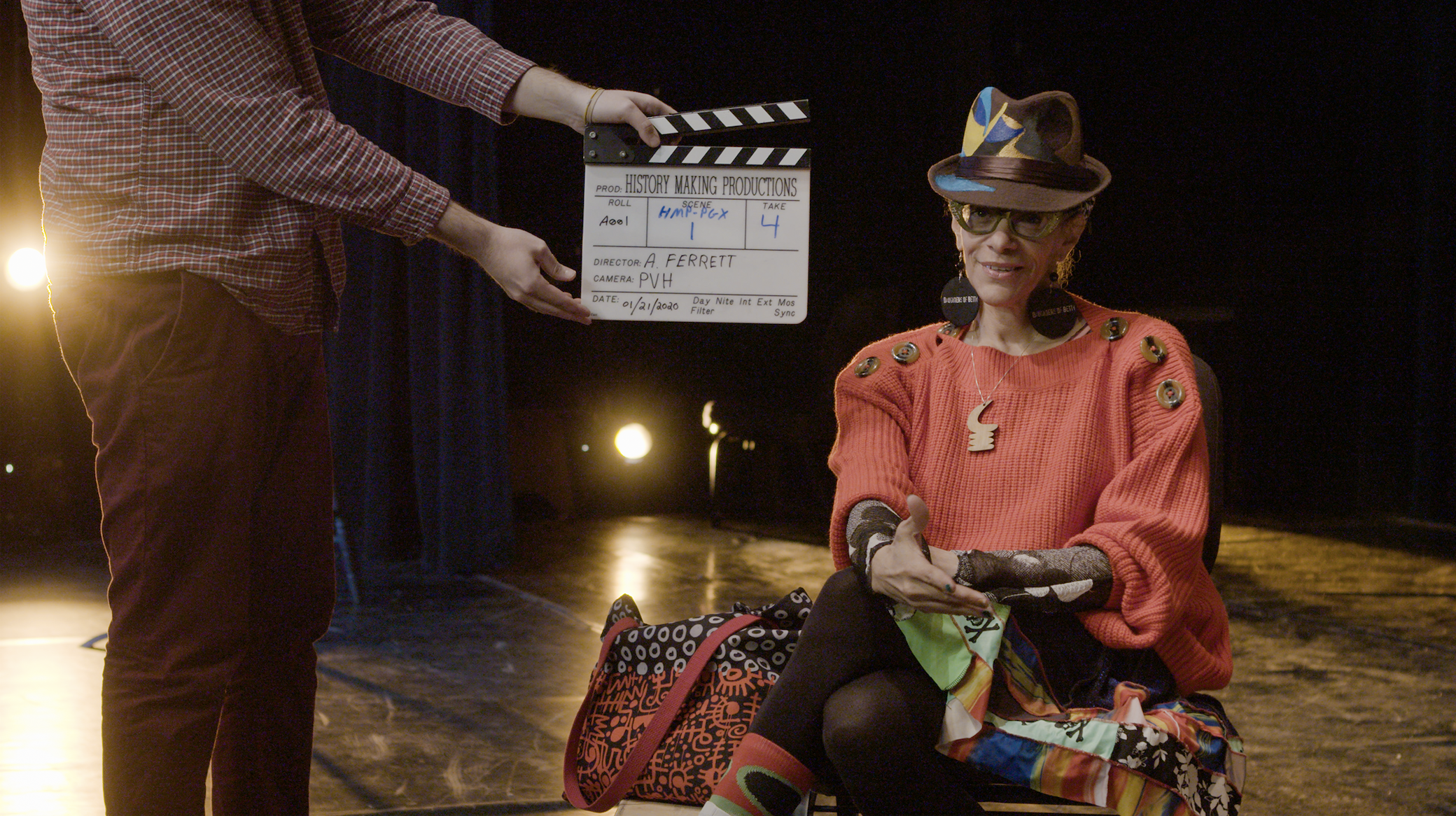
    Poet Ursula Rucker during filming of “In Pursuit: Philadelphia and the Making of America.” The new 10-part docuseries examines the history of America through the story of Philadelphia.
    Besides, he said, nowhere else could hold a better mirror to America than the place of its birth.

    “It really became obvious to us that what we have here is much more than a local history,” he said. “It’s a history of the whole United States because so many consequential moments that shaped the country’s history went through Philadelphia.”

    History that feels alive

    Setting out to tell the story anew, Katz raised money to shoot updated interviews and fresh historical recreations.

    Meanwhile, history did not slow down, from the COVID-19 pandemic, to the killing of George Floyd and the Black Lives Matter movements, to Trump, and immigration crackdowns.

    “We were asking how do we deal with history while all this is happening,” Katz said. “We were writing about it right now.”

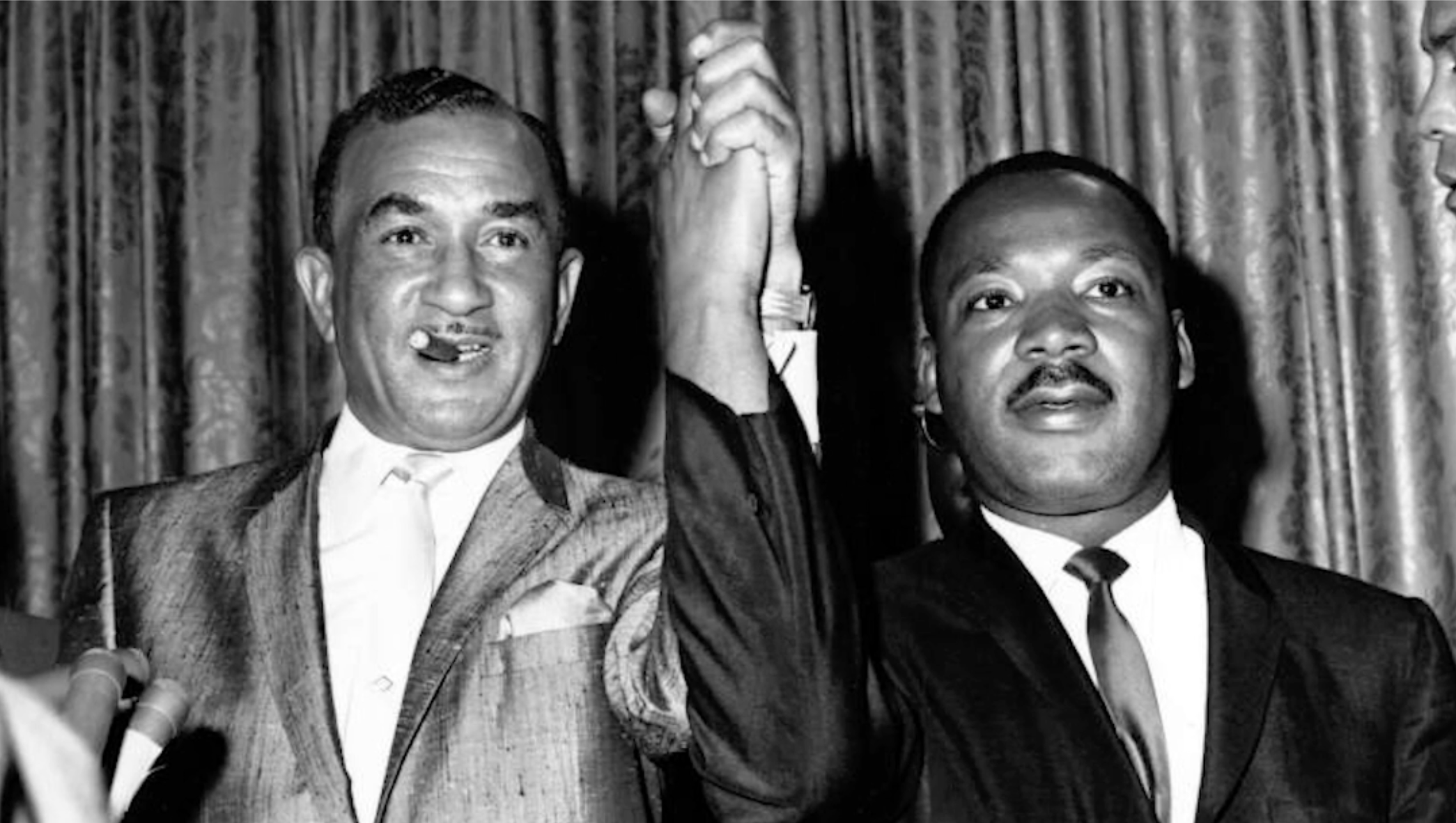
    Cecil B. Moore and Martin Luther King Jr. in footage from “In Pursuit: Philadelphia and the Making of America.”

    Narrated in a warm, resonant baritone by actor Michael Boatman, known for roles in shows Spin City and The Good Wife, In Pursuit is no dull, black-and-white history. The city feels alive, the stakes serious and undecided.

    Threading modern-day footage of bustling Philly streetscapes and soaring neighborhood shots with commentary and historical recreations imprints the series with a powerful immediacy.

    The story stretches far beyond 1776, though the dramatic details of that sweltering summer in Philadelphia are recounted in episode three in gripping scenes of refreshingly believable historical recreations.

    “We were able to shoot these lush and full reenactments,” said Ferrett, of all 10 episodes. “Sam was always like, ‘Where’s the dirt? I don’t want to see people with perfect teeth and smiling.’”

    The start

    Episode One, “Freedom (to 1700),” begins at the beginning, pulling no punches as it tells the story of the Lenape people, Philadelphia’s earliest Indigenous settlers — and of the generations of Dutch and other European colonists’ efforts to eradicate them through violence and disease.

    It surprises even in the telling of William Penn, recounting how the rebellious aristocrat’s nonconformist ways landed him in jail more than once, before he founded a City of Brotherly Love meant to be a better world, and a testing ground of the most advanced ideals in Europe.

    The episode also showcases what Ferrett describes as “deepeners,” when the story cuts away from the arc of history for moments of reflection from modern Philly voices.

    “We all feel it here … it’s all in our bloodstream,” poet Ursula Rucker says in the episode. “What does this city mean to me? Everything. Everything.”