Author: Mike Newall

  • After 50 years devoted to a Logan Square landmark, Cherry Street Tavern’s owners have decided it’s time to sell

    After 50 years devoted to a Logan Square landmark, Cherry Street Tavern’s owners have decided it’s time to sell

    In 1976, when Bill Loughery was a rookie bartender at Cherry Street Tavern, the old-world saloon seemed as abandoned as the neighborhood around it. Back then, the streets around 22nd and Cherry in Logan Square were littered with abandoned warehouses, rusting textile mills, and crumbling body shops.

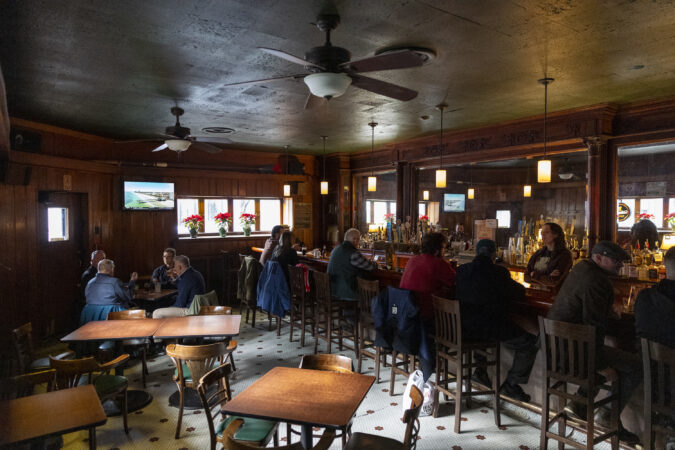
    First operated as a bar around 1902 and surviving Prohibition as a barbershop — at least one where regulars swilled hooch in the back room — the tavern had retained much of its bygone charms into the ’70s. It had an elaborately carved mahogany backbar, vast beveled bar mirrors, pearly white tiled floors, and an old-timey phone booth. Even the tiled water trough running the length of the floor under the bar — a no longer operational relic from the barroom’s pre-World War II days designated for fedora-sporting patrons to spit tobacco juice and relieve themselves — had survived the decades.

    But like the neighborhood, business had faded.

    Bill Loughery, then 24, and his younger brother, Bob, had scored the bartending gigs from their former coach and mentor, legendary La Salle High School football coach John “Tex” Flannery, who purchased the bar in the early 1970s. Serving 25-cent Schaefers, rocking their favorite Grateful Dead tunes, and warmly greeting the newbies filling the barstools, the Lougherys brought life to Cherry Street Tavern, eventually buying it from Flannery in 1990.
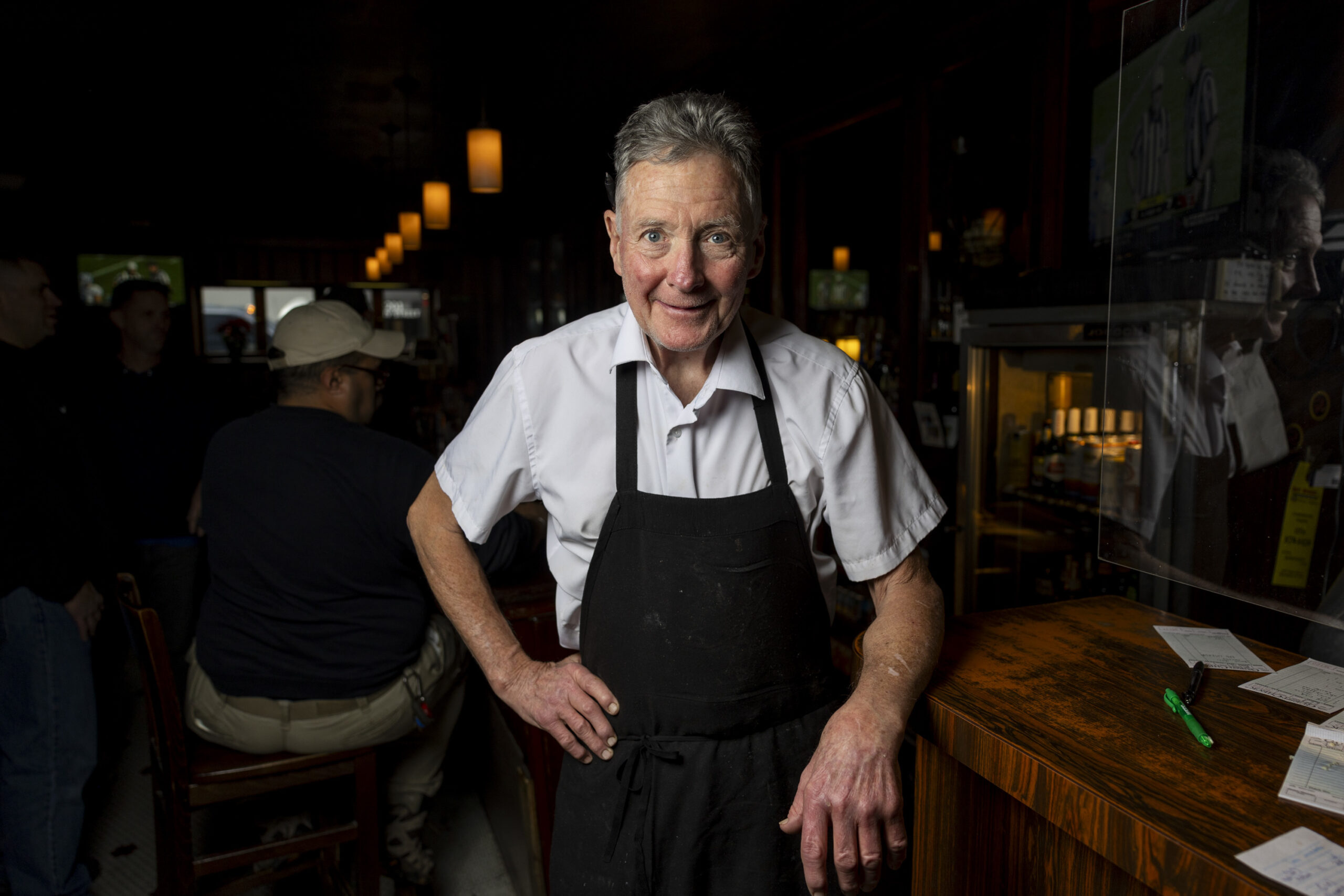
    Bill Loughery, co-owner of Cherry Street Tavern, inside his bar in Philadelphia on Friday, Dec. 19, 2025.

    While burnishing its old-world grace, they had transformed the timeworn taproom into a thriving, in-the-know spot for eating and drinking, with a diverse, dedicated, and colorful cast of regulars from all over. Everyone from construction workers and electricians to lawyers and bankers to art students and professors came to the bar — even rock icons like Jimi Hendrix, who, as the legend goes, knocked on the side door wearing a cape in 1968 after playing a show at the original Electric Factory, just blocks away; he palmed the bartender $100 for a case of Bud and a bottle of Jack Daniels. There were also visiting sports legends like Larry Bird, who would drink at Cherry Street with his staff when he came through town as a coach in the 1990s and 2000s.

    “He’d say, ‘Billy, let me know when you’re closing that kitchen,’” Bill Loughery remembers. “And then he would go back to the Four Seasons with bags of roast beef and roast pork.”

    And always, there were Bill and Bob Loughery, either toiling in the tavern’s tiny kitchen before dawn to prepare steaming cauldrons of Irish potato soup and huge slabs of beef for the bar’s signature sandwiches, or working the wood until closing.
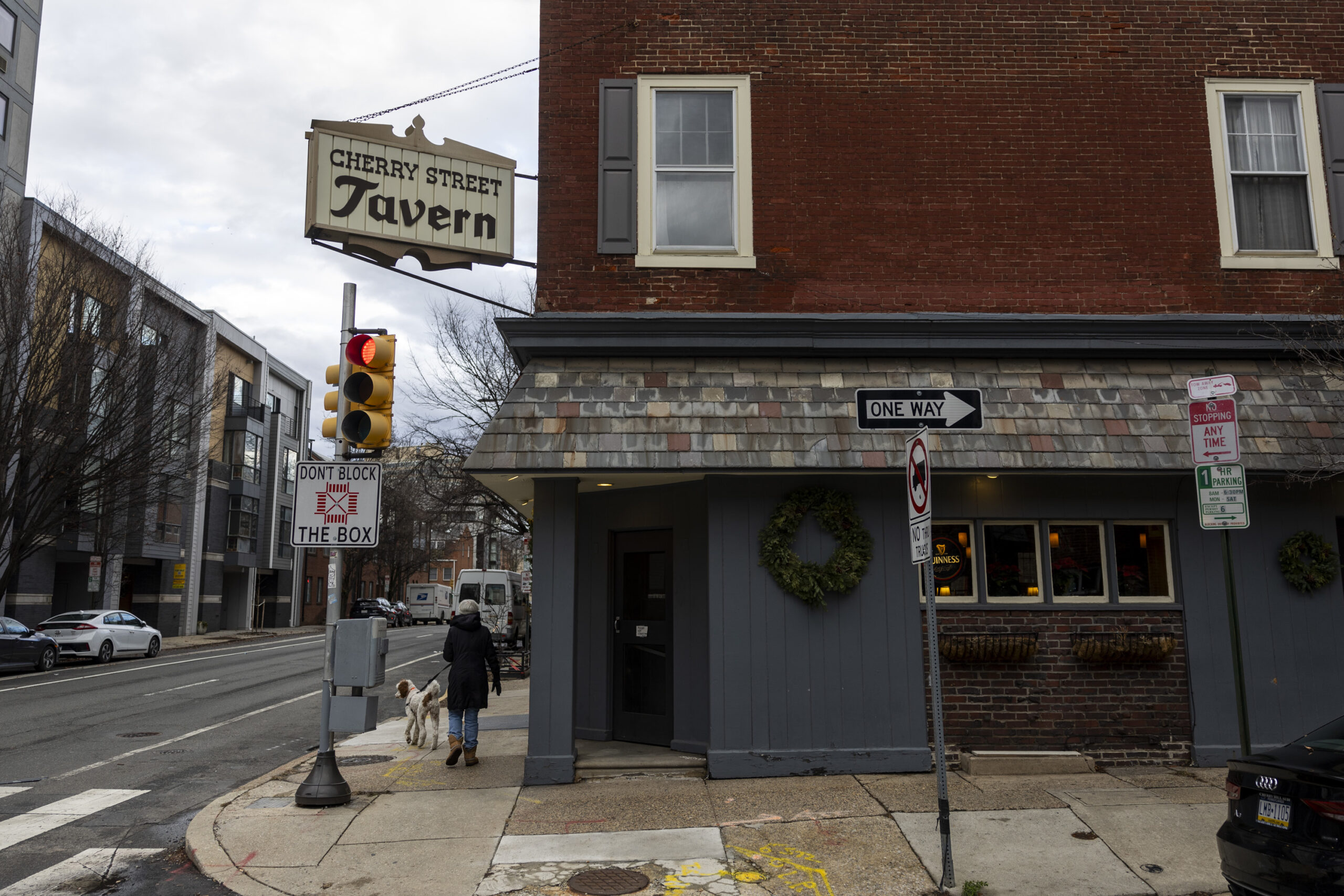
    The outside of Cherry Street Tavern in Philadelphia on Friday, Dec. 19, 2025.

    After 50 years devoted to a tavern that always felt more like a labor of love — and bearing witness to the change all around it — Bill and Bob Loughery have decided it’s time.

    “Time to take off the apron,” said Bill Loughery, taking a quick break on a recent afternoon to sit in the soft sunlight slipping through Cherry Street’s bottle-height barroom windows. “It’s just time.”

    History, for sale

    It’s been time for a few years, but the Lougherys — wanting to preserve the understated elegance and identity of the shot-and-a-beer saloon, especially after revitalizing the bar once again as a popular meeting spot for locals after COVID-era restrictions dried up lunchtime and commuter crowds — have never officially listed the tavern and its upstairs apartment for sale. They began whispering to friends and regulars about selling around 2024.

    “People were always asking us to let them know when we were ready,” Bill Loughery said.

    After months of talks with prospective purchasers, the Lougherys are now in talks with a buyer who they say is interested in expanding the bar’s kitchen and making other renovations.

    The Lougherys’ efforts to find a buyer committed to keeping the spirit of the bar alive have eased the worries of regulars old and new, and loyal staff.
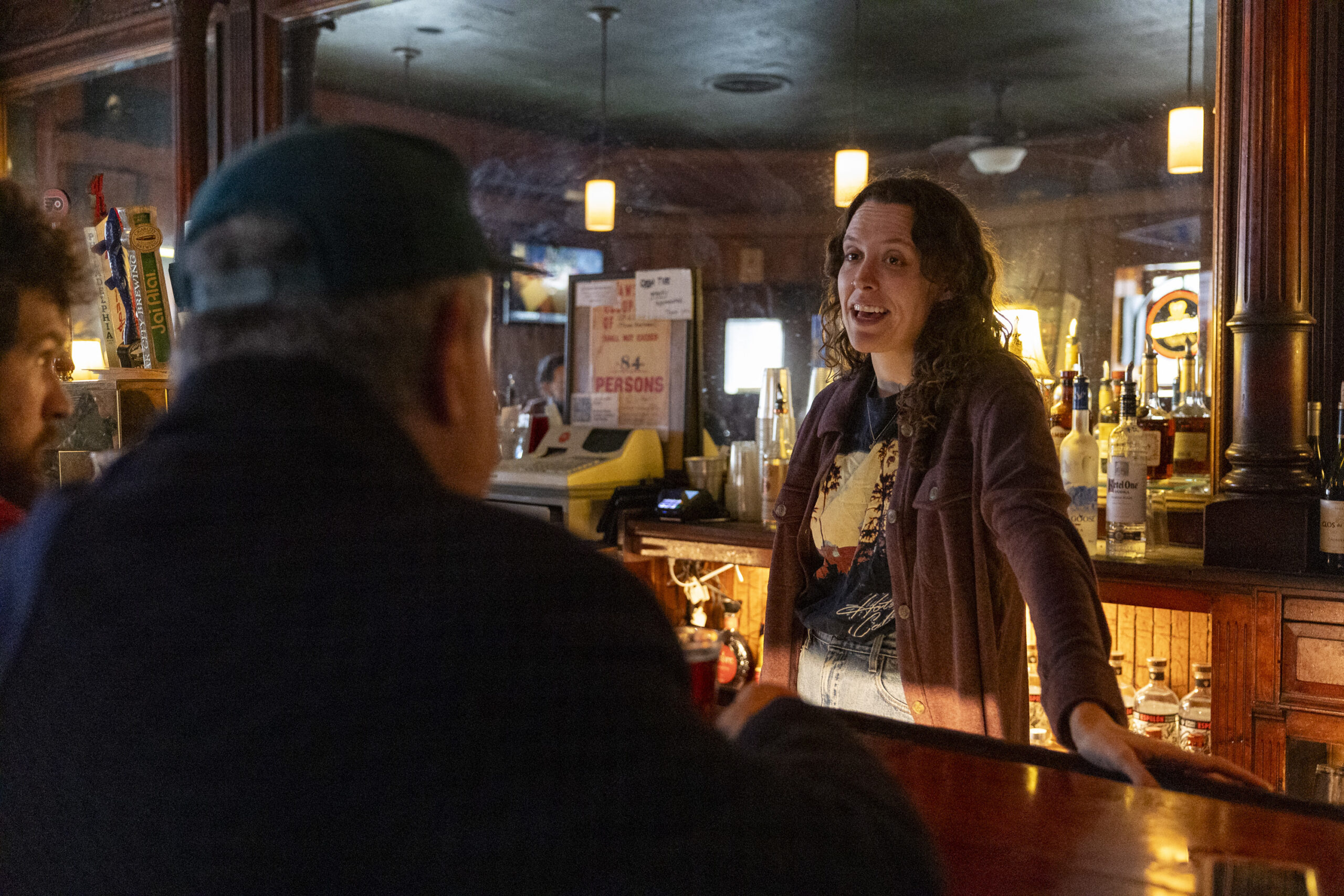
    Kira Baldwin, 27, chats and makes drinks for folks at Cherry Street Tavern.

    “There’s just something sacred about the place,” said Kira Baldwin, 27, of Ardmore, who tends bar at Cherry Street Tavern, along with her brother, Jack, 24, and her mother, Juanita Santoni, with whom she sometimes shares a shift.

    For Baldwin, it’s personal. As a child, she cherished special occasions when her mother allowed her to visit the bar. (Santoni has worked nights and weekends at Cherry Street Tavern since 1991, when she was a part-time child life therapist at CHOP.) On those nights, Baldwin would do her homework in the quiet of the ancient phone booth and swing from the brass dining rails. At the annual Christmas parties, when Bill Loughery hired Moore College of Art & Design students to paint the windows for the holidays, she and her brother received gifts from a regular dressed up as Santa.

    Now, she watches new regulars fall in love with a bar she’s been coming to since “the womb.”

    “People treat it with reverence,” she said. “When they come in, they understand it completely. They have a deep and profound respect for the place.”

    Prohibition, the food, and the regulars

    Little is known about Cherry Street’s earliest days, but by Prohibition, it was known as Dever’s, operated by John “Jack” Dever, a dapper barman who lived above the tavern with his wife and two children, and whose father, Joseph, had run it before him. (Like Flannery and the Lougherys after him, Dever happened to be a La Salle High alum.)

    The barbershop speakeasy had been Jack Dever’s idea, said his grandson, Michael Dever.
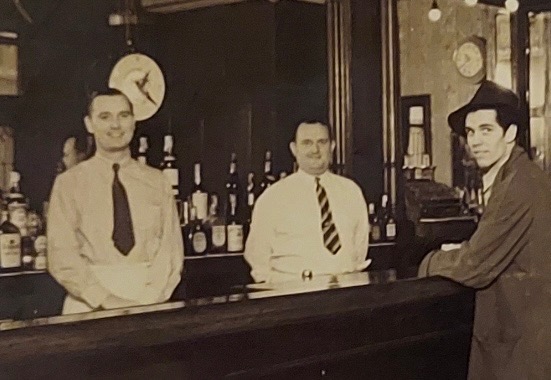
    Before it became Cherry Street Tavern, John “Jack Dever (left) operated the tavern for years, living upstairs with his family, and eventually dying behind the bar.

    “The story always went that, when Prohibition came about, he closed the front door and opened the back door,” said Dever. “It became dangerous. The story was that you were either buying from the mob or dirty politicians.”

    Dever reopened the bar after Prohibition, sponsoring a bar baseball team. But dangers persisted. In 1940, two robbers broke into the bar while Dever and his family slept upstairs, briefly making off with 25 quarts of high-quality whiskey before their bulging bag of booze crashed to the pavement. Nearby patrolmen ran to the scene, “their noses guiding them unerringly as the liquor spilled into the gutter,” The Inquirer reported.

    Dever, who soon moved his family out of the upstairs apartment, ran Cherry Street until 1967, when he died of a heart attack behind the bar, according to granddaughter Maureen Ginley. At first, customers assumed her grandfather had just stepped down a hatch behind the bar, leading to a liquor cellar.

    “But he didn’t,” she said.

    After keeping the bar afloat for five years, Dever’s widow, Mary, sold the bar to Flannery. A local high school football legend who coached at La Salle for nearly 30 years, Flannery operated a no-frills, old-school establishment, refusing to allow a jukebox. Under Tex, the tavern’s old-world grace peeked out from behind a dusty veneer and faded Venetian blinds.
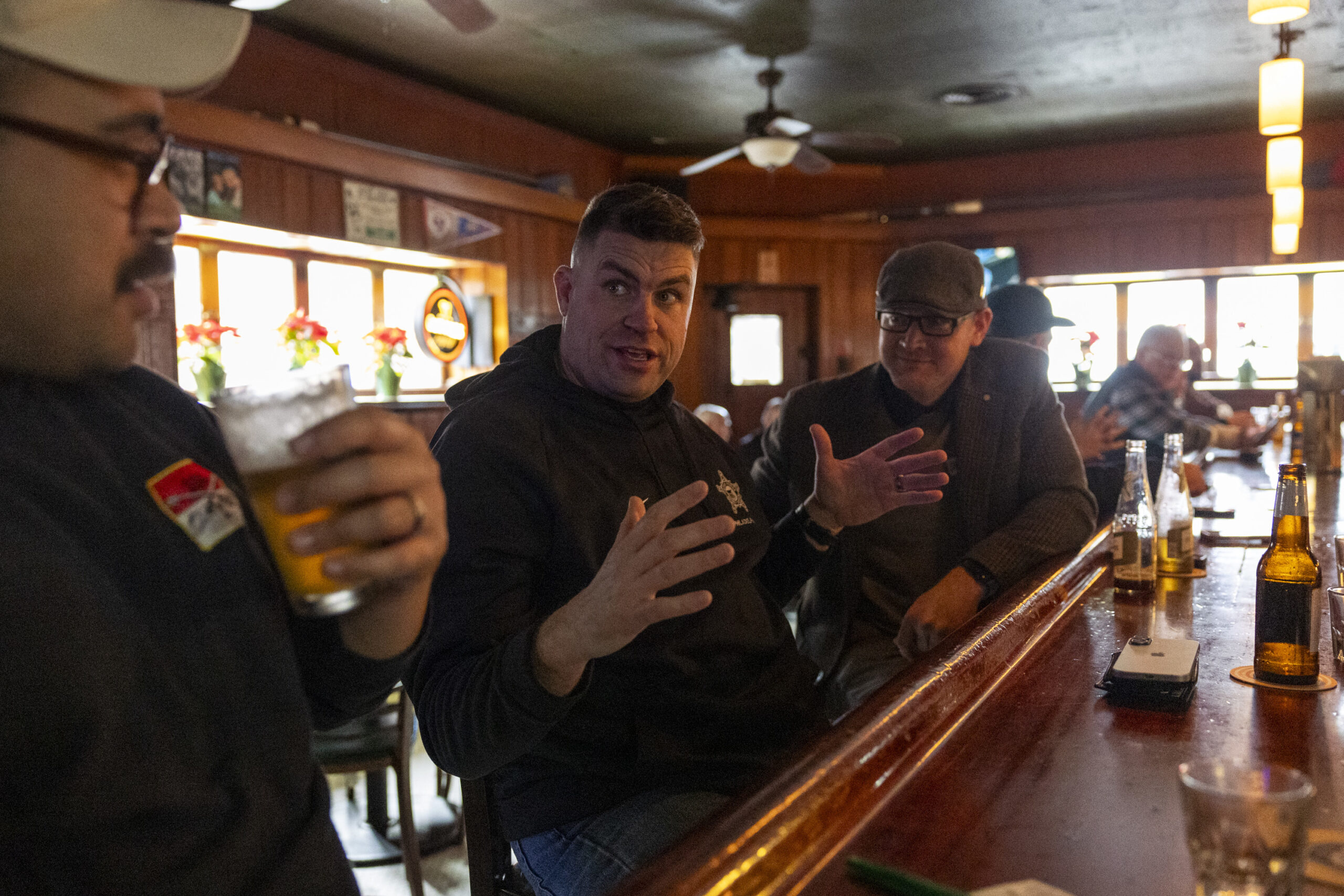
    Kevin Sanders, of Quakertown, Pa., first time at the bar, sharing a story with friends as they enjoy drinks at Cherry Street Tavern in Philadelphia on Friday, Dec. 19, 2025.

    A 1981 Daily News article described the bar “as cave-dark, cave-cool, cave-quiet.”

    “Let’s face it, a guy comes in here, he wants to drink,” the article quoted Flannery.

    For a while, it was just the old-timers, said Bill Loughery.

    “We had the senior citizens from the neighborhood who started drinking right in the morning and went home before lunchtime,” he remembered.

    One Friday during Lent in 1977, Flannery summoned the brothers to a sit-down fish cake dinner and laid it out straight. “He said, ‘Listen, the future of the bar business isn’t 25-cent beers,’” remembers Bill Loughery. “‘You got to come up with a food angle.’”

    With the help of a regular, Bill and Bob Loughery introduced the tavern’s signature hot roast beef and roast pork sandwiches, chili, and daily soups.

    A roast beef sandwich at Cherry Street Tavern in Philadelphia on Friday, Dec. 19, 2025.

    By the 1980s, when condos and townhomes and office buildings and new life began to fill the neighborhood, the Lougherys were ready.

    Soon, the expanded back room was packed at lunch and the stools were filled with regulars who Bill Loughery blessed with nicknames: Happy Bob and Sleeping Charlie, Big Tom and Buddy Bud, Catfish and Canadian John (who eventually became American John). Joe Watson — a beloved old-timer who lived upstairs, and became a “patron saint” to the bar, said Bill Loughery — took a busload of regulars to a Phillies game for his 89th birthday. There were St. Patrick’s parties and fishing trips and softball teams and marriages and births and deaths. It was their “Cheers,” one regular said.

    “What’s Cheers?” Bill Loughery would ask, unironically.

    It was Bill and Bob who brought everyone back, said Frank Oldt, 81, who has been a Cherry Street regular since the days of Tex.

    “They just made it such an easy place to be,” he said.

    It’s bittersweet, said Santoni, who remembers how the bar regulars threw her not one — but two — baby showers when she was pregnant with Kira. She has been trying to get Bill and Bob Loughery to slow down for years. But she understands the special pull of the place.

    “It gets in your bones,” she said.

    Last call

    It all took a toll on Bill Loughery’s bones, who still works 12-hour shifts, splitting days and nights with his brother. Bill’s back is hunched from those endless hours in the kitchen. He doesn’t want to become the second person to die behind the bar at Cherry Street. Sitting down, he flipped through photo albums from the bar’s heyday. They’ll be the last things he takes with him when he leaves, he said.

    “It’s like the Old and New Testament,” Bill Loughery said, opening a near-to-bursting photo album.

    For a few minutes, he allowed himself to recall the faces and the nicknames and the good times.

    “So many nice people,” he said.

    Then, he closed the book and went back to work.
  • Sloppy, slushy snow could hit Philly Sunday, but probably won’t stick around too long

    Sloppy, slushy snow could hit Philly Sunday, but probably won’t stick around too long

    Philadelphia could be hit with some sloppy, slushy snow Sunday.

    After a banner day Saturday, with a downright balmy high of 47 degrees in Philly, forecasters now expect a coastal storm to spread precipitation through the region late Sunday into Monday,

    “It’s one of those situations where if we have just enough cold air and just enough intensity, we could get several inches,” said Ray Martin, a meteorologist in the National Weather Service’s Mount Holly office. “But if the temperature is just a little bit warmer — even just a degree —it could end up being a rain-snow mix where there’s no accumulation. It’s a really borderline situation.”

    Currently, forecasters are calling for an inch of snow in Philadelphia, Martin said.

    “But I wouldn’t be shocked if we got unlucky and maybe got two to three inches of sloppy wet snow,” he said. “I also wouldn’t be shocked if we ended up with just mainly rain. There’s still some uncertainty with this forecast.”

    Still, he said, more snow would not necessarily represent a major blow to Philly’s efforts to dig out from its most stubborn snowpack in 65 years, courtesy of January’s blizzard and recent polar temperatures. With temps expected to climb back into the low 40s Monday, any accumulation will quickly melt away, Martin said.

    “Everything will look less brown,” he said. “But it’s not going to be 10 tons of snow or anything like that.”

    The changing forecast comes 24 hours after earlier weather models showed higher potential snow totals, Martin said.

    “There was some guidance suggesting a significantly higher snowfall of up to six inches of heavy wet snow,” he said. “But it’s way backed off from that.”

  • Philly’s tiniest used bookshop opens in the back of a children’s dress shop on Passyunk Avenue

    Philly’s tiniest used bookshop opens in the back of a children’s dress shop on Passyunk Avenue

    Little Yenta has to be the tiniest used bookshop in Philly. And it’s certainly the only one located in the back of a 40-year-old children’s dressmaking studio.

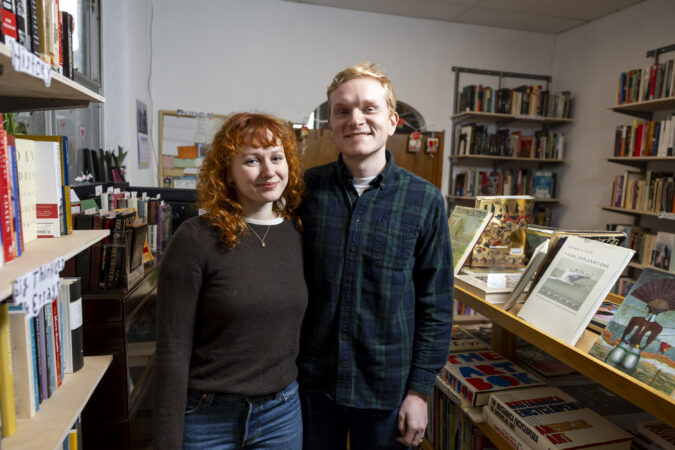
    Ariel and Simon Censor, partners in life and now books, opened Little Yenta Books, their self-described “micro-bookstore,” on East Passyunk Avenue in South Philadelphia on Saturday.

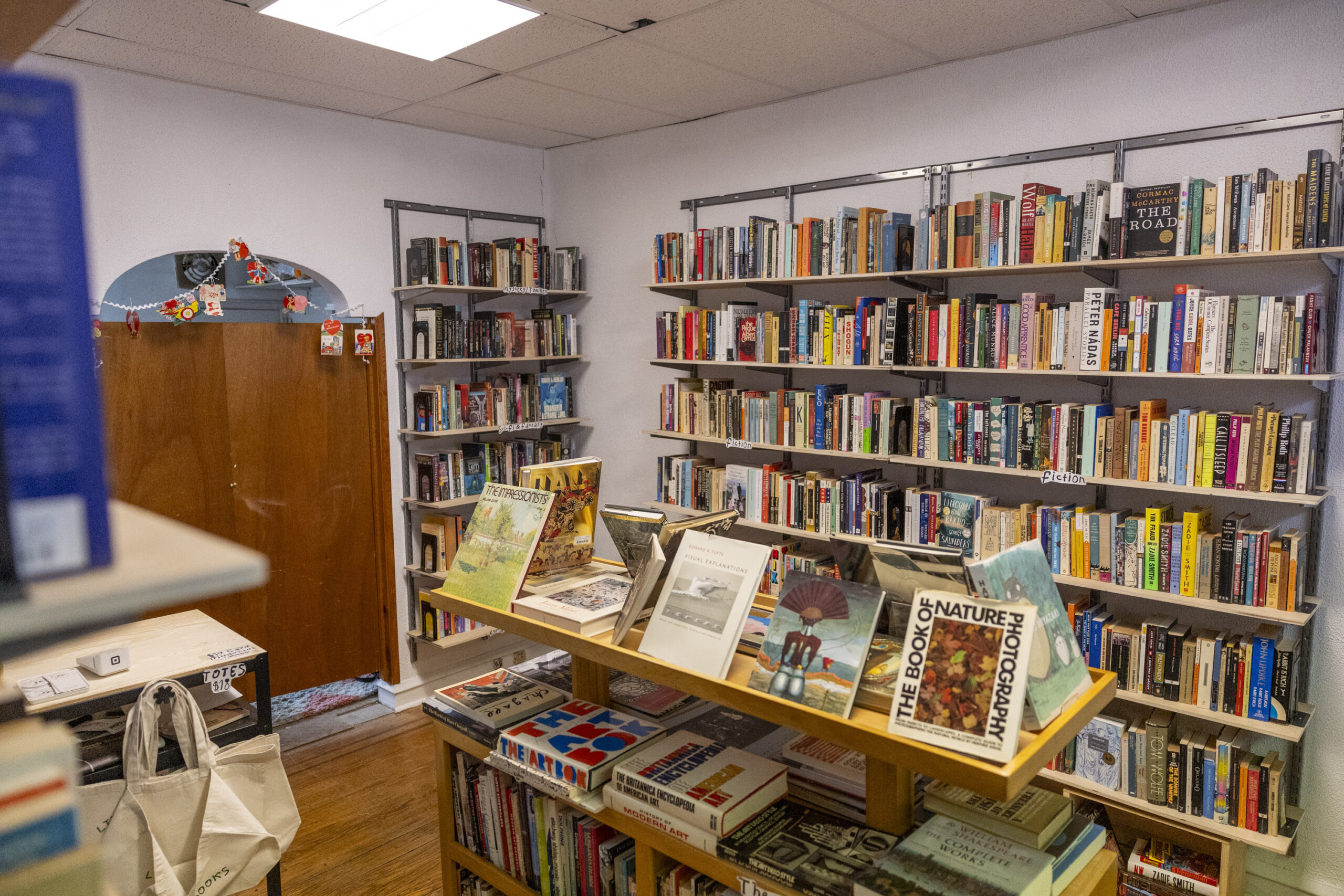
    Situated, speakeasy-style, in a postage-stamp-sized loft above the Painted Lady children’s boutique, the 150-square-foot shop is nearly bursting with over 1,500 titles, including literary fiction, science fiction, poetry, history, graphic novels, plays, and first-edition classics.

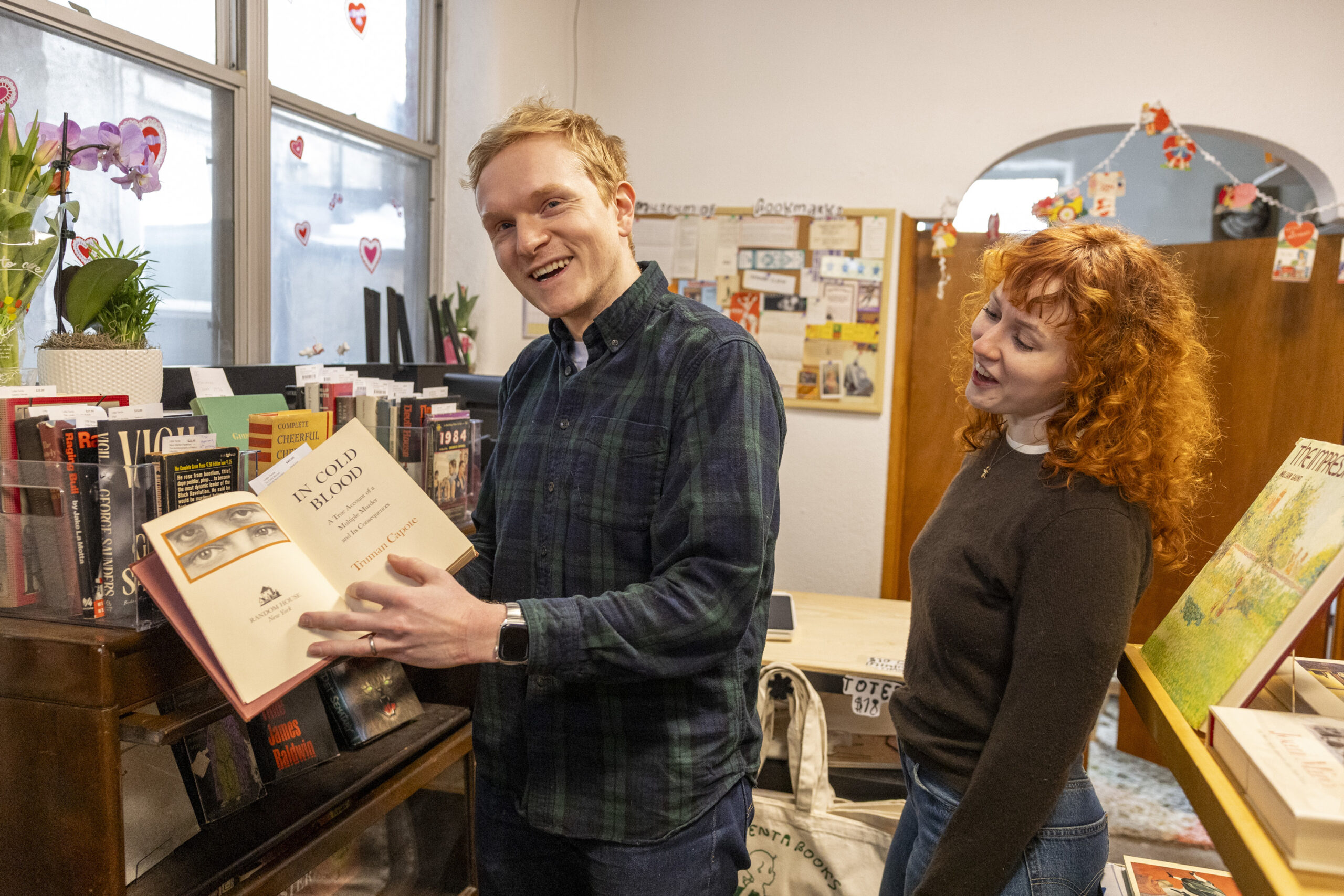
    Simon and Ariel Censor, owners of Little Yenta Books, showing one of their favorite books they acquired, “In Cold Blood,” a novel by Truman Capote, in their small bookshop in Philadelphia, Pa., on Friday, Feb. 13, 2026.

    “We can’t be everything to everyone,” said Ariel Censor, 27, preparing the spine-packed space with her husband on a recent afternoon. “But we want to be something to most people.”

    The shop is a passion project.

    The Haverford College graduates have long been aficionados of used bookshops — believers in the magic of unexpectedly stumbling upon a literary treasure in a sea of cast-off paperbacks. Their South Philly rowhouse could double as a secondhand store itself, the couple jokes.

    “You really couldn’t use the living room anymore,” Ariel Censor said with a laugh. “It was all books.”

    Last year, they decided to host pop-up used book sales around the neighborhood, including at the popular Cartesian Brewery. It was a hit.

    “We got lots of people coming and saying that they wished there was a permanent used bookstore around here,” said Ariel Censor, who works as an associate communications director at the Penn Center for Impact Philanthropy.

    Molly’s Books & Records on Ninth Street in the Italian Market has long been an iconic South Philly used book spot. A Novel Idea, a popular independent bookshop, opened on East Passyunk Avenue in 2018 and mostly deals in new books.

    The couple believed South Philly could handle another used book destination. Selling nearly 100 books at the brewery event, the couple decided to make their dream a reality.

    Searching for a brick and mortar space they could afford — and that boasted a little South Philly charm — they found it in the back of Painted Lady. It’s in a small storefront at 1910 E. Passyunk, where dressmaker Angela D’Alonzo has made custom baby outfits for decades.

    Little Yenta Books is a small bookshop in Philadelphia, Pa., on Friday, Feb. 13, 2026.

    It’s a case of old South Philly meeting new South Philly. For $400 a month, she offered the couple a little loft area storage space five steps above her shop, with no heat or hot water. Warmth creeps up from the basement, explained Simon Censor, 29, who works for a real estate firm. And hot water is not a must for book buying, they added.

    “Your hands are just a little cold, and that’s OK,” Ariel said.

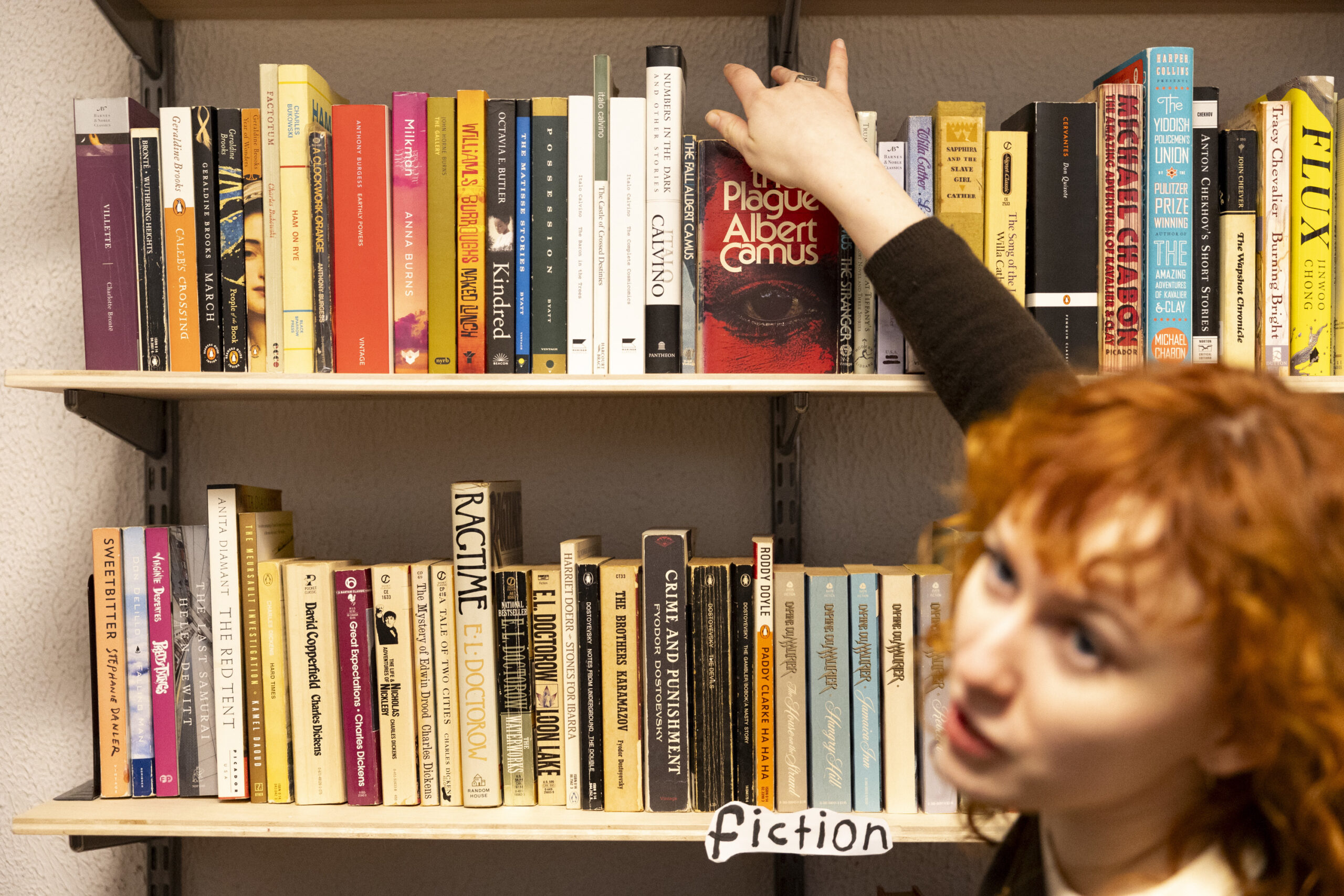
    Ariel and Simon Censor have transformed the tiny space into a literary thicket, with shelves and stacks of titles from their home collections, and ones they’ve purchased from estate sales and sellers. Rare early editions and classics by Truman Capote, James Baldwin, E.L. Doctorow, Octavia Butler, and Willa Cather. Hard-to-find paperback editions of George Orwell, Albert Camus, Italian novelist Elena Ferrante, and cult favorite Charles Bukowski.

    “I always want to fit more books in here,” said Ariel Censor.

    Ariel Censor shows one of the books she and Simon Censor acquired, “The Plague,” by Albert Camus, in their small bookshop in Philadelphia, Pa., on Friday, Feb. 13, 2026.

    On a bulletin board hang keepsakes the couple have discovered in the books, including notes, prayer cards, letters, poems, baseball cards, a high school class schedule from the 1990s, and a vintage recipe for triple chocolate cake.

    “I actually want to make that someday,” said Ariel Censor.

    Opened Thursdays and Fridays from 4:30 to 7 p.m., and weekends from noon to 6 p.m., the spirit of the shop is found in its name, the couple said. In American Yiddish parlance, Yenta can mean matchmaker. For Ariel and Simon Censor, that means that special feeling of playing matchmaker between a reader and a book.

    “Just coming in and stumbling upon a book that you will love,” said Ariel Censor.

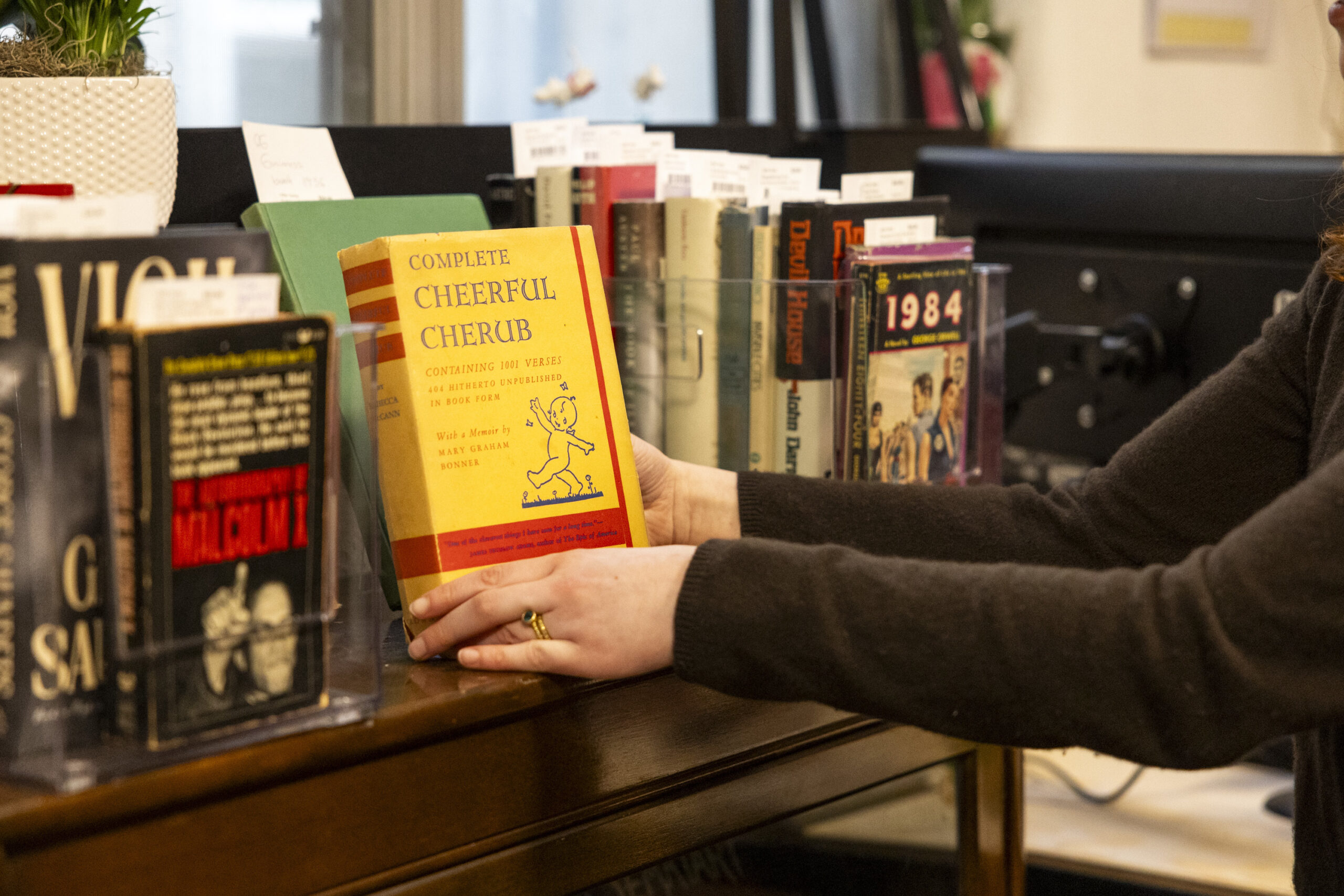
    “Complete Cheerful Cherub” by Rebecca McCann is a book in Little Yenta Books in Philadelphia, Pa., on Friday, Feb. 13, 2026.
  • Independence Hall reopens after a four-month preservation project

    Independence Hall reopens after a four-month preservation project

    The doors of Independence Hall had been flung open, and the British were coming.

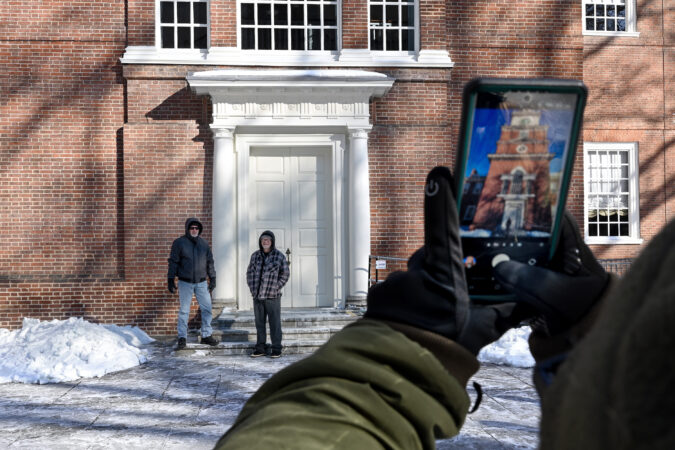
    More specifically, English tourists Chadi Rahim and his daughter, Sophia Rahim, 18, shivered in their parkas Thursday, awaiting one of the first tours of Independence Hall since its 119-day closure.

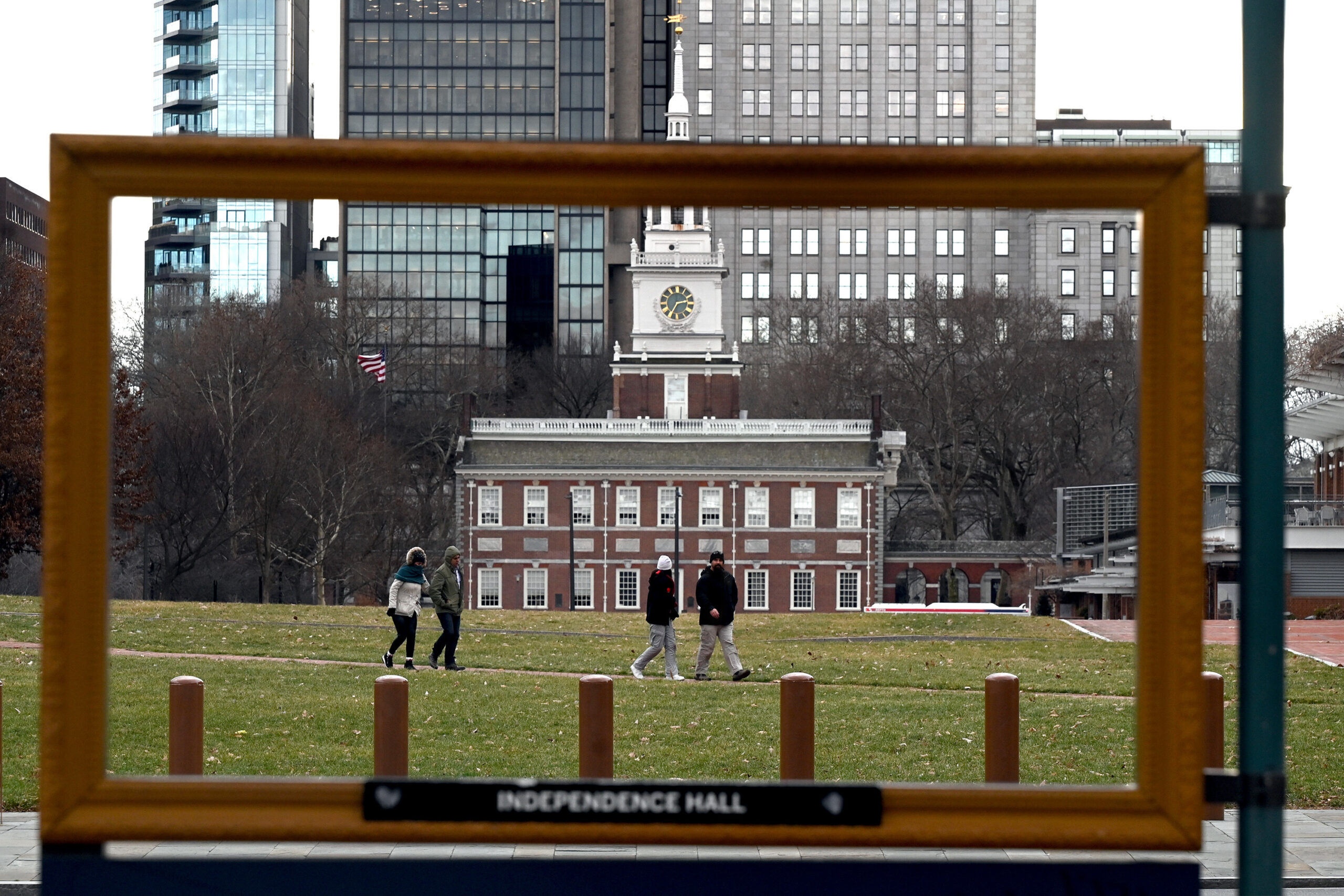
    The historic state house, where American democracy was born in 1776, had been closed to the public since Oct. 1 — a temporary pause of access, stretching through the federal government shutdown and weeks of planned preservation work ahead of Philadelphia’s Semiquincentennial celebrations this year. The revamp included restoration of wood, masonry, plaster, and metal, historically accurate paint finishes, and the construction of accessibility ramps. The work would ensure that Independence Hall would continue as a “beacon of American freedom,” the National Park Service had said.

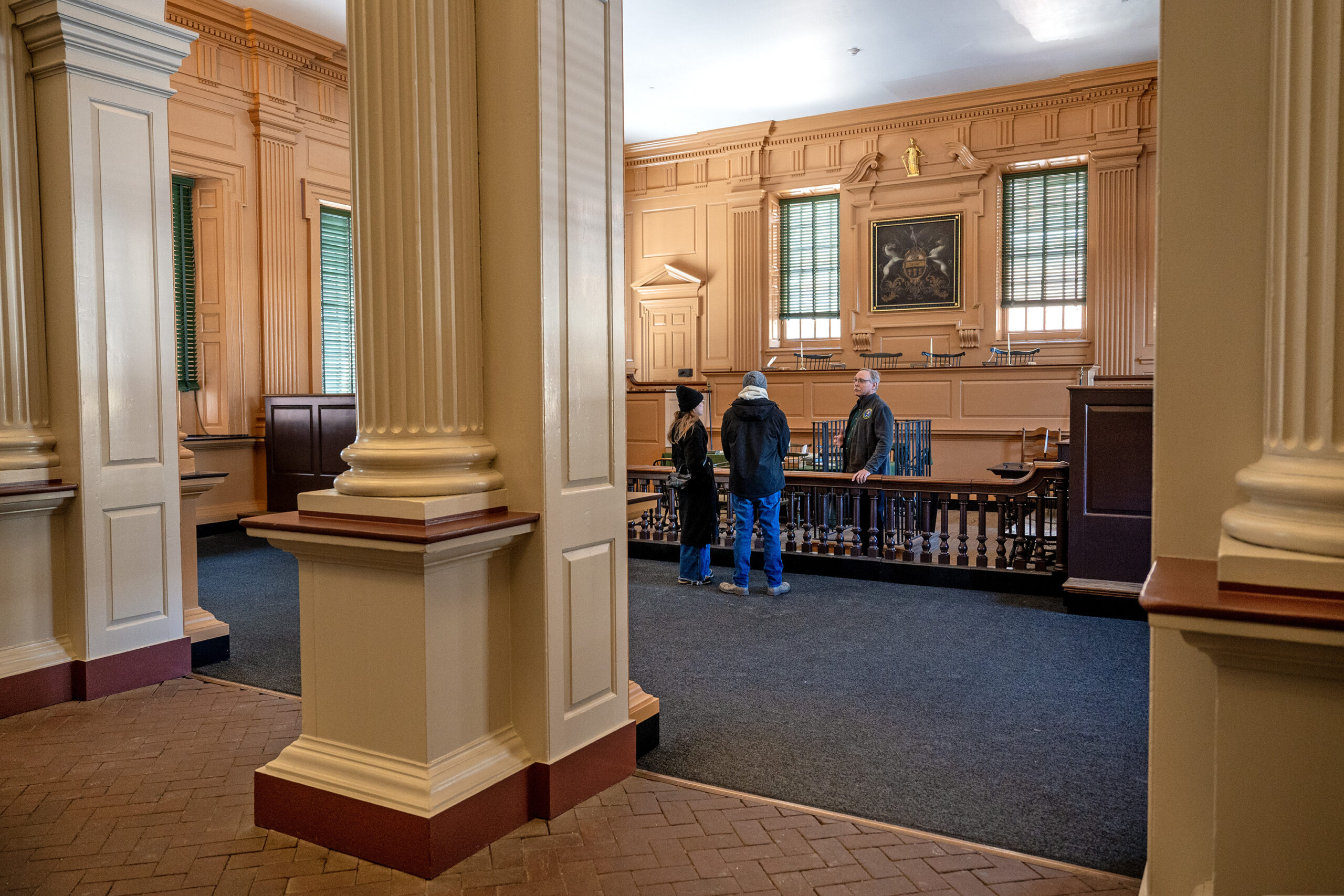
    Tourists Jenna Lippert and Brandon Camperlino from Syracuse, NY listen as park service volunteer Bill Rooney (right) gives a tour in the Pennsylvania Supreme Court Chamber in Independence Hall Thursday, Jan. 29, 2026.

    As part of the Independence Square Improvement Project, similar repairs were planned for Congress Hall and Old City Hall, which are part of the Independence Hall complex.

    “Wear and tear,” National Park Ranger Hugh Evans assured 14 visitors assembled for the 11:30 a.m. tour.

    All morning, a steady trickle of travelers trekked to the redbrick building in Old City where the Founding Fathers staked their necks on the promise of a freer and more perfect future.

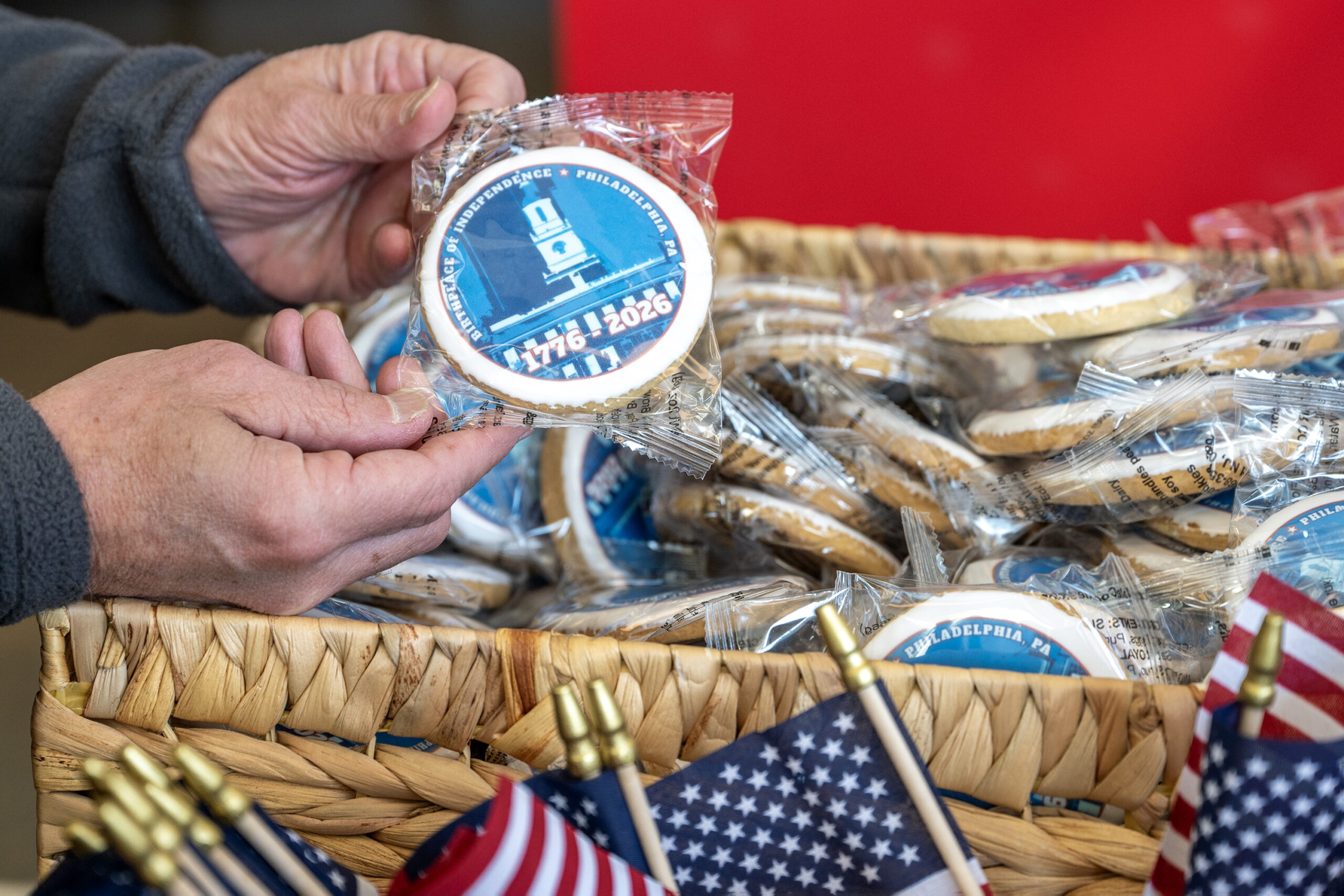
    Independence Visitor Center information desk host Woody Rosenbach displays a free Independence Hall cookie offered to the first 250 visitors on Thursday.

    In Thursday’s cold, the tourists came from the rocky coasts of Oregon and the sunlit shores of California, from small towns and big cities, from red states and blue states. And their presence on such an auspicious day was completely by chance. None of the more than a dozen pilgrims to American democracy who braved frozen temps and icy footpaths said they had been aware that Independence Hall had only just reopened.

    The site where the Declaration of Independence was signed 250 years ago, the building is one of Independence National Historic Park’s central attractions. The Liberty Bell Center, which was also closed during the shutdown, reopened in November. Officials expect that more than five million people will visit Independence Hall in 2026 for the national milestone.

    Learning that their visits had fallen on the reopening of the historic site only lent more power, visitors said.

    Rahim, a business owner with the sturdy frame of a Victorian boxer, said he and his daughter had decided on a Philadelphia holiday for shopping and relaxation and Rocky (Sophia is also a fan of National Treasure, a 2005 Nicolas Cage history caper that was filmed at Independence Hall and other historic district sites). But also because of the story only Philadelphia can tell about America’s founding.

    And especially now, when the future of American democracy feels more at stake than ever.

    “We know the story about independence,” Rahim said, buttoning up against the cold. But he and his daughter had wanted to experience it up close. “Sometimes stuff gets in the way. But if you see the history, it makes you realize what people went through to get us where we are now.”

    During the 11 a.m. tour, National Park Ranger David Powers welcomed a half-dozen visitors into the stately, Georgian state room, where the Founders first passed independence. Walls and floors in the rooms where it happened reflected a new polish, while some painting could still use touching up.

    After four months of closure and renovations, guided tours resumed every half hour Thursday. Security staff said they did not encounter crowds of guests seeking to stroll the sun-streaked confines where profound compromises of democracy were hashed out 2½ centuries ago.

    Rather, on the day of the building’s reopening, many of the visitors represented just normal Americans, looking for signs of hope in uncertain times.

    Rachel Lawson of Bend, Ore., and Amanda Shapiro of Southern California, colleagues in town for a work event, admired the simple elegance of the original woodwork design inside Congress Hall, home of the U.S. Congress from 1790 to 1800.

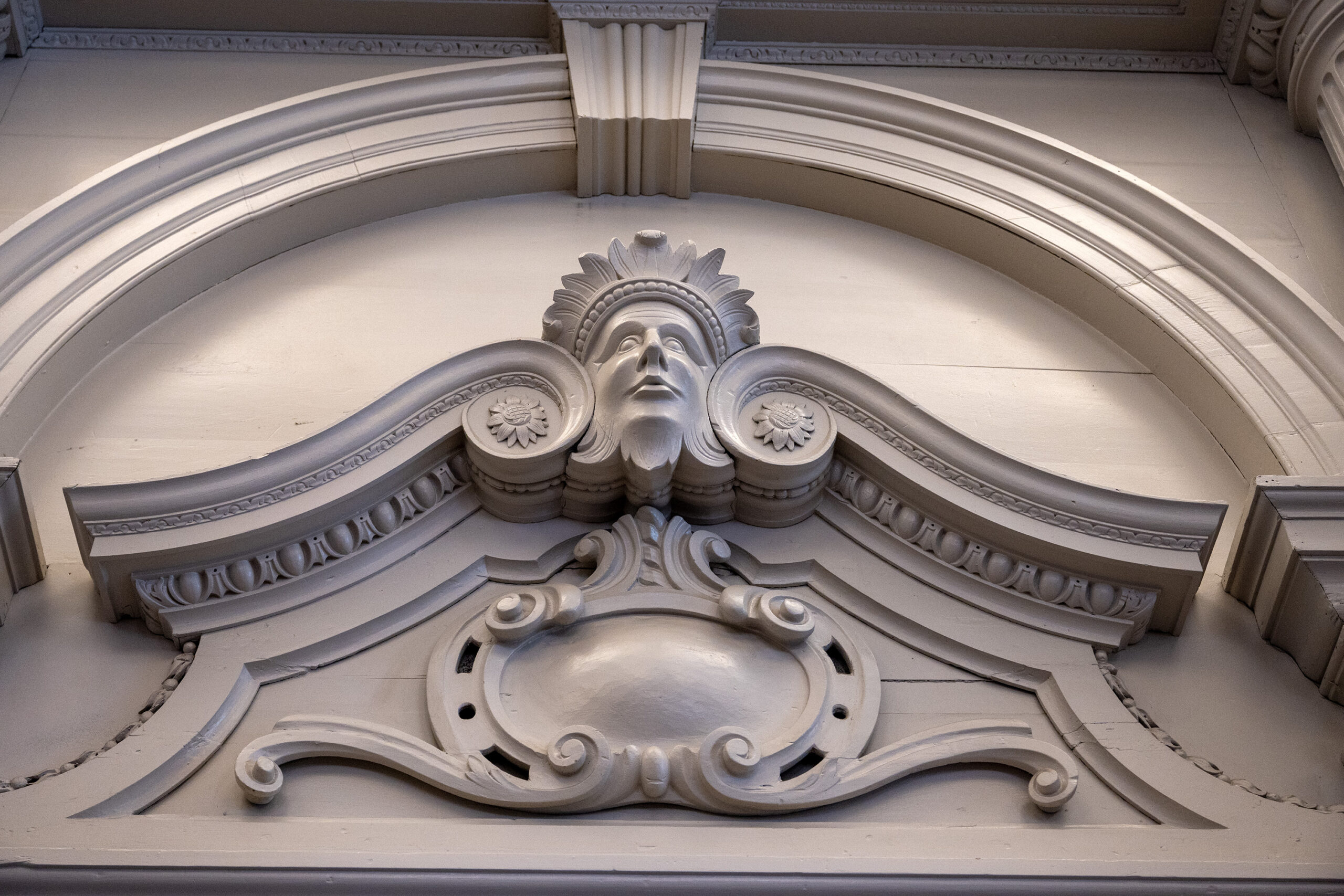
    A newly painted pediment above a doorway in Independence Hall on Thursday, Jan. 29, 2026.

    “The attention to detail, the thoughtfulness, the regal energy,” she said.

    Nearby, Luke Morris, a 20-something political podcaster from Washington, had planned his visit to Independence Hall as a reminder that Americans are still fighting for that promised future amid all the pain and turmoil.

    “We are still fighting for what we think is right,” he said.

  • Here’s where 22 painted replica Liberty Bells will be installed around Philly in 2026

    Here’s where 22 painted replica Liberty Bells will be installed around Philly in 2026

    The bells are coming.

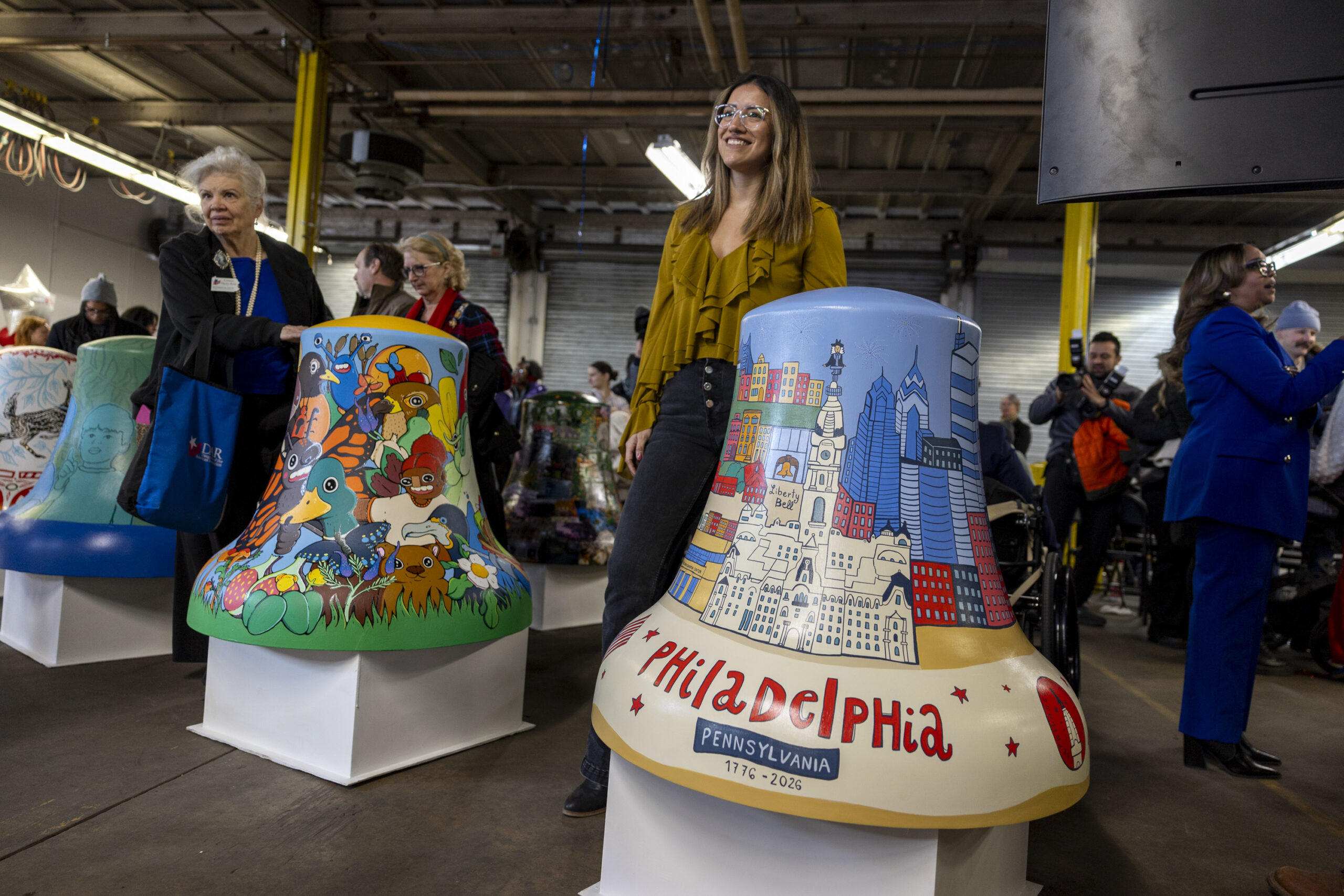
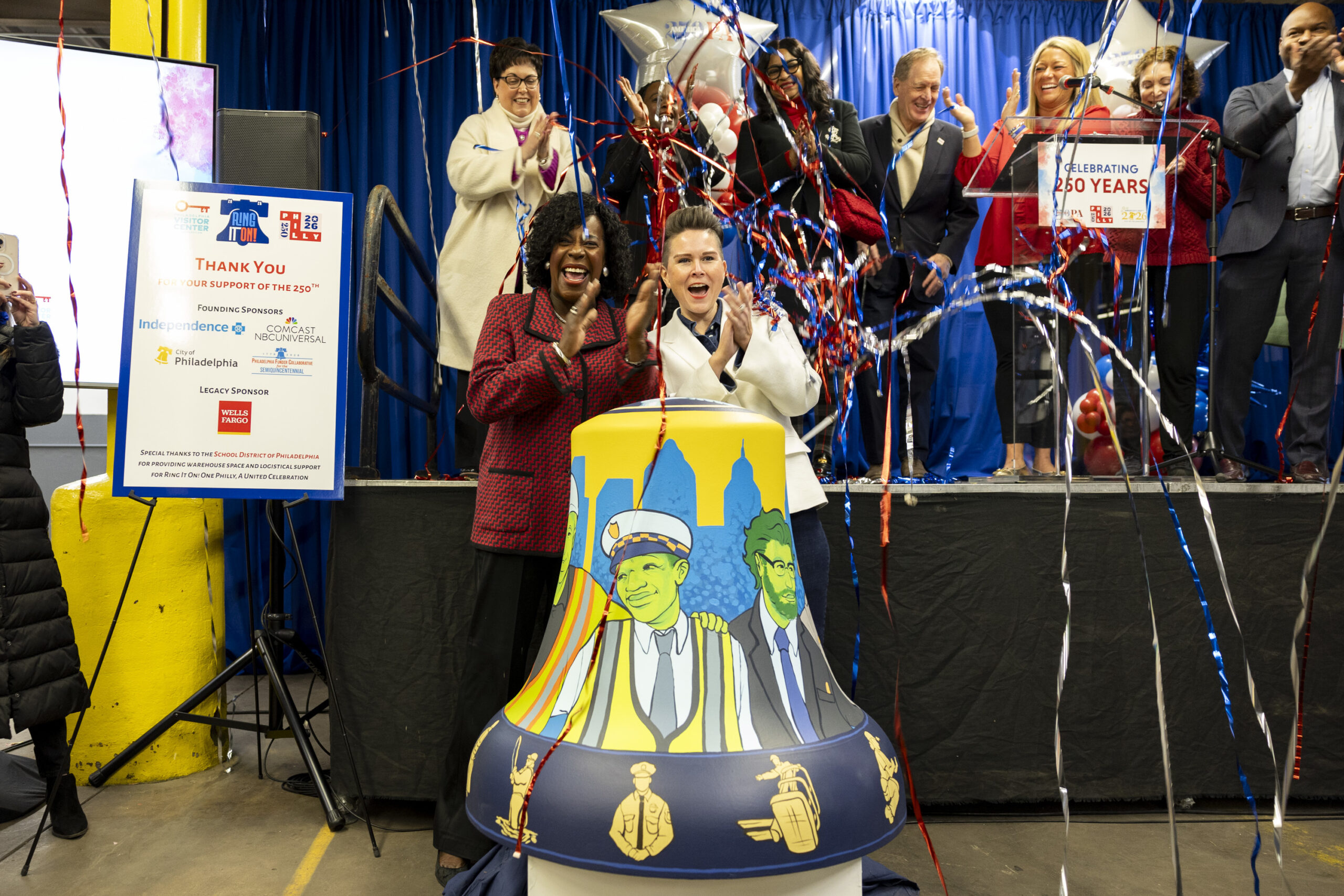
    On Friday, the city revealed the 22 large replica Liberty Bells that will decorate Philly neighborhoods this year for the celebrations of America’s 250th anniversary. Officials also released a list of locations where the painted bells will soon be installed. The program announced two special replica bells for the Independence Visitor Center and the Convention Center.

    Designed by 16 local artists selected through Mural Arts Philadelphia — and planned for commercial corridors and public parks everywhere from Chinatown and South Philly to West Philly and Wynnefield — the bells depict the histories, heroes, cultures, and traditions of Philly neighborhoods.

    <iframe title="‘Bells Across Pa.’ Locations in Philadelphia" aria-label="Locator map" id="datawrapper-chart-UZW3N" src="https://datawrapper.dwcdn.net/UZW3N/1/" scrolling="no" frameborder="0" style="width: 0; min-width: 100% !important; border: none;" height="665" data-external="1"></iframe><script type="text/javascript">window.addEventListener("message",function(a){if(void 0!==a.data["datawrapper-height"]){var e=document.querySelectorAll("iframe");for(var t in a.data["datawrapper-height"])for(var r,i=0;r=e[i];i++)if(r.contentWindow===a.source){var d=a.data["datawrapper-height"][t]+"px";r.style.height=d}}});</script>

    “Philadelphia has always been a city of neighborhoods, each with its own story to tell,” said Mayor Cherelle L. Parker during an unveiling of the bells in Olney. “That’s why our communities and these talented artists came together to tell these stories.”

    As part of the state nonprofit America250PA’s “Bells Across PA” program, more than 100 painted bells will be installed across Pennsylvania throughout the national milestone, also known as the Semiquincentennial.

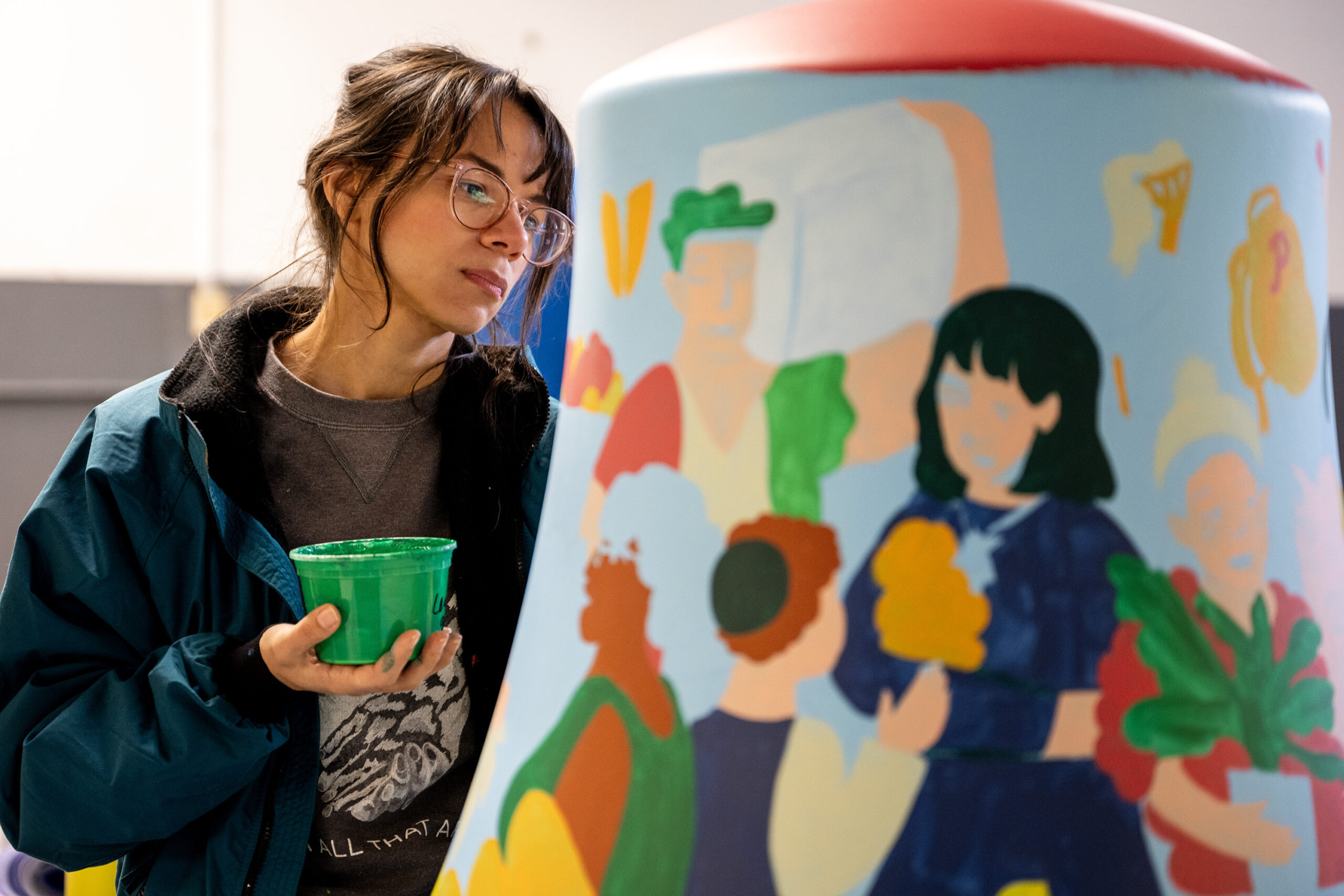
    For weeks, artists had toiled on their bells inside a makeshift studio behind the Widener Memorial School, each telling a different story of neighborhood pride.

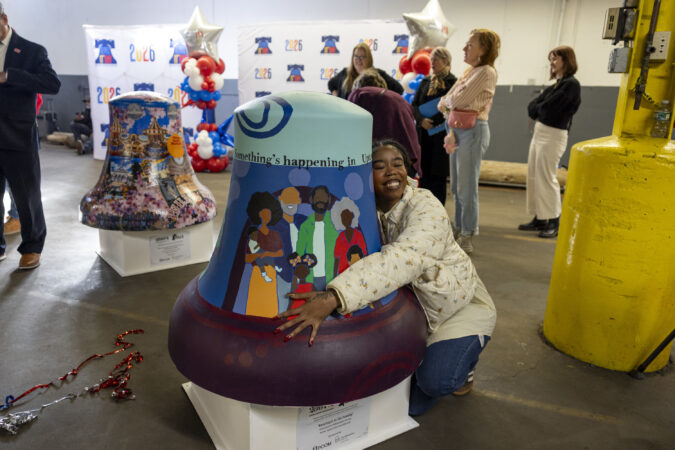
    Ana Thorne, of Center City, 37, is next to their bell they made during the Bells Across PA event in celebration of America’s 250th Birthday in Philadelphia, Pa., on Friday, Jan. 16, 2026.

    An Italian Market bell depicts scenes of the bustling produce stands, flickering fire barrels, and smiling old- and new-school merchants. An El Centro de Oro bell is painted with images of the neighborhood’s historic Stetson Hats factory, the iconic Latin Music store Centro Musical, and popular iron palm tree sculptures. A Glen Foerd bell is decorated with paints mixed with water from the Delaware River.

    “Our goal is to create a Semiquincentennial celebration that meets every Philadelphian where they are,” said Kathryn Ott Lovell, president and CEO of the Philadelphia Visitor Center Corp. and Philadelphia250.

    Local artist Cindy Lozito works on her South Philadelphia bell, one of 20 painted replicas of the Liberty Bells representing different neighborhoods Tuesday, Dec. 9, 2025. The bells will decorate parks and public spaces in every corner of the city during America’s 250th birthday.

    Planners said they expect the bells to draw interest and curiosity similar to the painted donkeys that dotted Philly neighborhoods during the 2016 Democratic National Convention. Those painted decorations became the focus of scavenger hunts and countless selfies.

    Organizers expect to install the bells sometime in March, once the weather warms.

    Mayor Cherelle L. Parker and Pennsylvania Deputy Secretary of Tourism Anne Ryan, reveals one of the bells called “Philly Workforce: Celebrating Our Past, Building the Future” made by artist Akira Gordon during the Bells Across PA event in celebration of America’s 250th Birthday in Philadelphia, Pa., on Friday, Jan. 16, 2026.

    “I am asking all Philadelphians and everyone who visits our city in 2026 to see the bells,” Parker said.

    Below is a full list of Philadelphia’s Bells Across PA installations, artists, and locations:

    Neighborhood: Chinatown

    Artist: Chenlin Cai, Xingzi Liang

    Bell Title: “It Takes a Village”

    Bell Location: 10th Street Plaza (10th and Vine Streets)

    Neighborhood: City Hall/Center City

    Artist: Akira Gordon

    Bell Title: “Philly Workforce: Celebrating Our Past, Building the Future”

    Bell Location: Municipal Services Building, 1401 John F. Kennedy Blvd.

    Neighborhood: El Centro de Oro

    Artist: Symone Salib

    Bell Title: “El Centro de Oro”

    Bell Location: 2739 N. Fifth St.

    Neighborhood: Fox Chase

    Artist: Sean Martorana

    Bell Title: “Heartbeat of the Fox”

    Bell Location: Lions Park, 7959 Oxford Ave.

    Neighborhood: Germantown

    Artist: Emily Busch

    Bell Title: “Who’s Your North Star?”

    Bell Location: Joseph E. Coleman Northwest Regional Library, 68 W. Chelten Ave.

    Neighborhood: Hunting Park

    Artist: Andrew Daniels

    Bell Title: “United Hunting Park”

    Bell Location: Hunting Park

    Neighborhood: Logan Square

    Artist: Cindy Lozito

    Bell Title: “Connection Between the Stars”

    Bell Location: Franklin Institute, 222 N. 20th St.

    Neighborhood: Mayfair

    Artists: Alana Bogard, Madeleine Smith

    Bell Title: “Celebrate Mayfair”

    Bell Location: 7343 Frankford Ave.

    Neighborhood: Mount Airy

    Artist: Parris Stancell

    Bell Title: “A Tapestry of Hidden History”

    Bell Location: United Lutheran Seminary, 7301 Germantown Ave.

    Neighborhood: Ogontz

    Artist: Tykira Octaviah Mitchell

    Bell Title: “Keeping It In the Family”

    Bell Location: 7182 Ogontz Ave.

    Neighborhood: Olney

    Artist: Joanne Gallery

    Bell Title: “Where Global is Local”

    Bell Location: Greater Olney Library, 5501 N. Fifth St.

    Neighborhood: Parkside

    Artist: Parris Stancell

    Bell Title: “Fun Facts and Historical Treasures of Fairmount Park”

    Bell Location: Memorial Hall, 4231 Avenue of the Republic

    Neighborhood: Point Breeze

    Artist: Symone Salib

    Bell Title: “The Promise of What’s to Come”

    Bell Location: 1336 S. 21st St.

    Neighborhood: Roxborough

    Artist: Meghan Turbitt

    Bell Title: “19128: A Place With Roots”

    Bell Location: Roxborough Pocket Park, 6170 Ridge Ave.

    Neighborhood: South Philadelphia

    Artist: Cindy Lozito

    Bell Title: “Open Everyday”

    Bell Location: Piazza DiBruno, 914 S. Ninth St.

    Neighborhood: Southwest

    Artist: Michele Scott

    Bell Title: “A Diagram of Value”

    Bell Location: Bartram’s Garden, 5400 Lindbergh Blvd.

    Neighborhood: Torresdale

    Artist: Bob Dix

    Bell Title: “Nature to Industry to Nature Again”

    Bell Location: Glen Foerd, 5001 Grant Ave.

    Neighborhood: University City

    Artist: Sean Martorana

    Bell Title: “The Ringing Railroad”

    Bell Location: William H. Gray III 30th Street Station, 2955 Market St.

    Neighborhood: West Philadelphia

    Artist: Akira Gordon

    Bell Title: “Lancaster Living Legacy”

    Bell Location: 3952-54 Lancaster Ave.

    Neighborhood: Wynnefield

    Artist: Abigail Reeth

    Bell Title: “Stories Tolled”

    Bell Location: 5320 City Ave.

    In addition to the bells listed above, there will be additional Liberty Bell replicas in Philadelphia as part of America250PA’s Bells Across PA program. These bells are in partnership with Mother Bethel African Methodist Episcopal Church, the Philadelphia Convention and Visitors Bureau, and Visit Philadelphia.

    Neighborhood: Center City

    Artist: Tara Jacoby

    Bell Title: “We The People

    Bell Location: Independence Visitor Center

    Bell Sponsors: Visit Philadelphia, Philadelphia Visitor Center Corp.

    Artist: Ana Thorne

    Bell Title: “Colorful Independence

    Bell Location: Convention Center

    Bell Sponsors: Philadelphia Convention and Visitors Bureau, Convention Center

  • This year’s Philadelphia Flower Show will tell the story of American gardening

    This year’s Philadelphia Flower Show will tell the story of American gardening

    Pennsylvania Horticultural officials have billed the 2026 Flower Show — Philly’s first major event of its yearlong festivities planned for the 250th anniversary of America — as a celebration of the history of American gardening.

    The show’s theme, “Rooted: Origins of American Gardening,” honors the people, places, and traditions that have shaped gardening — and invites visitors to consider where their own gardening stories began.

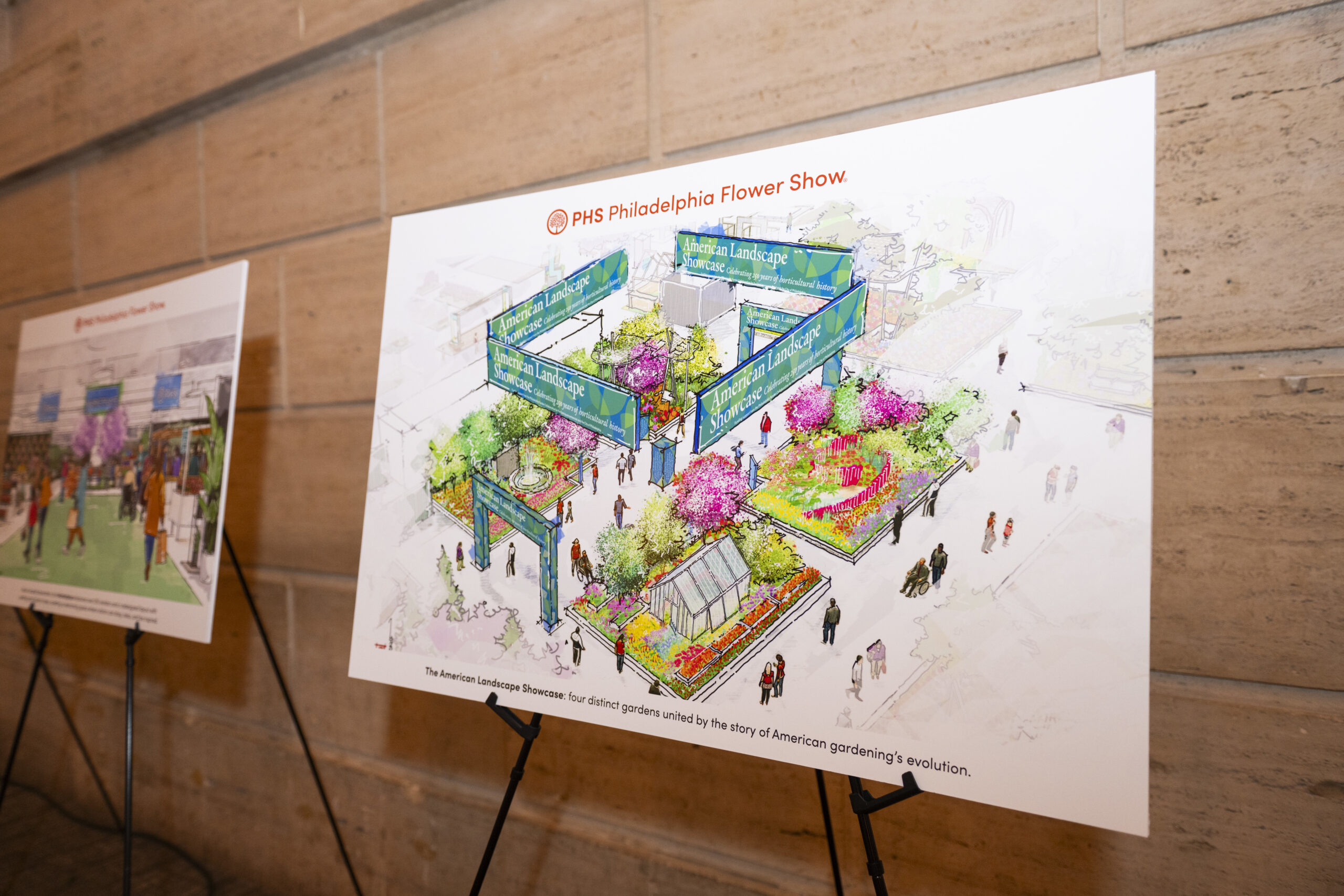
    A rendering of the 2026 Philadelphia Flower show is on display during a press conference at Union Trust on Wednesday, Jan. 14, 2026. The theme of this year’s flower show is called ‘Rooted: Origins of American Gardening’.

    “Gardening knowledge does not appear out of nowhere,” said Matt Rader, president of the Pennsylvania Horticultural Society, which hosts the show annually at the Pennsylvania Convention Center. “It’s shared, adapted, and passed forward. It reflects our culture, memory, ourselves, our experiences.”

    On Wednesday, planners revealed first-look renderings of this year’s iteration of the Flower Show, the nation’s largest, and the world’s longest-running horticultural event, which runs Feb. 28 to March 8. At the event held at the historic Union Trust Building in Market East, built on the site of the inaugural Flower Show in 1829, officials honored the city’s role as the birthplace of democracy and America’s first Flower Show. The Horticultural Society will mark its 200th anniversary in 2027.

    “It is fitting that we gather here as we prepare for an extraordinary moment in our history in 2026,” said Mayor Cherelle L. Parker. “The Flower Show offers a first impression of our city. It’s creative, it’s inspiring, and it’s deeply rooted in who we are as a people and a place.”

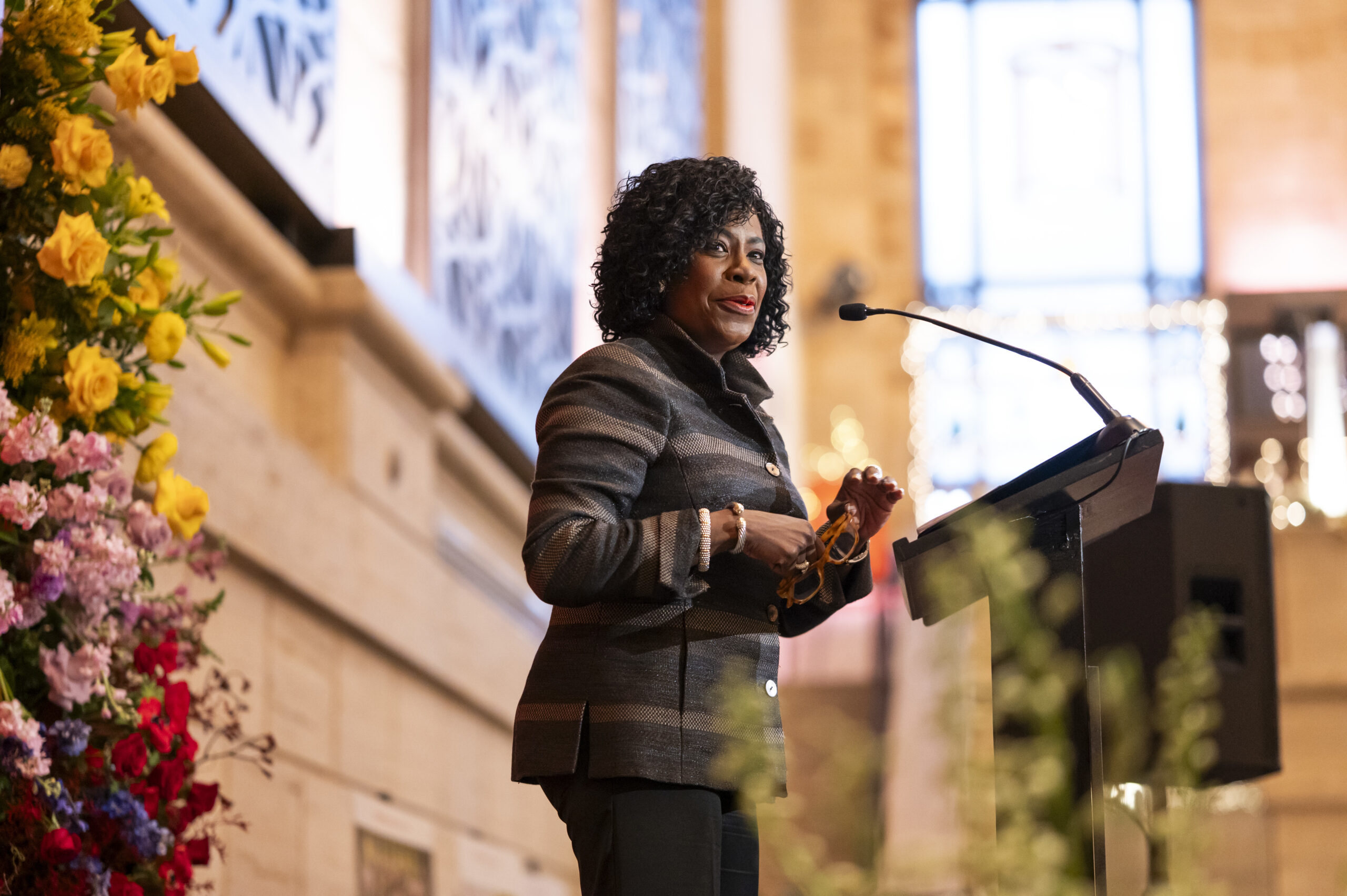
    Mayor Cherelle L. Parker speaks at a press conference during an unveiling of the first look at the 2026 Philadelphia Flower Show, ‘Rooted: Origins of American Gardening’ at Union Trust on Wednesday, Jan. 14, 2026.

    This year’s show represents the third in a series of themes exploring gardening over time. Earlier shows celebrated present-day gardening communities and envisioned bolder ones for the future.

    “This theme is very much an opportunity to reflect on the origins of American gardening,” said Rader. “‘What is the story that we tell through gardening,’ and ‘how do we want to use it to shape Philadelphia, the country, and the world moving forward?”

    The show will debut a reimagined Marketplace shopping destination, located in a new street-level space below the main exhibit halls. It will also feature an expanded Artisan Row, where guests can work alongside nearly 40 vendors and craftspeople to create everything from fresh floral crowns to dried bouquets and terrariums.

    Popular attractions and events, like early morning tours, Bloom Bar, and “Fido Fridays,” where four-legged friends find time among the flowers, all return. The Flowers After Hours dance party, scheduled for Saturday, March 7, transforms the show into an enchanted, fairytale forest setting, with guests encouraged to wear “fantasy-inspired attire,” planners said.

    With America’s 250th anniversary fast-approaching, planners felt it was the moment to “pause and acknowledge” the roots, traditions, and resilience of American gardening, said Seth Pearsoll, vice president and creative director of the Philadelphia Flower Show.

    Those roots shape the show’s entrance garden, a sprawling, misty forest floor creation drawing on the diverse inspirations of American gardens, and featuring mossy stonework, Zen-like sculptural plantings, water displays, and crowned with a towering, twisting root structure.

    “That garden sets the tone dramatically,” Pearsoll said. “We wanted it to feel timeless, grounded. We wanted to create a place to allow guests to slow down before moving forward.”

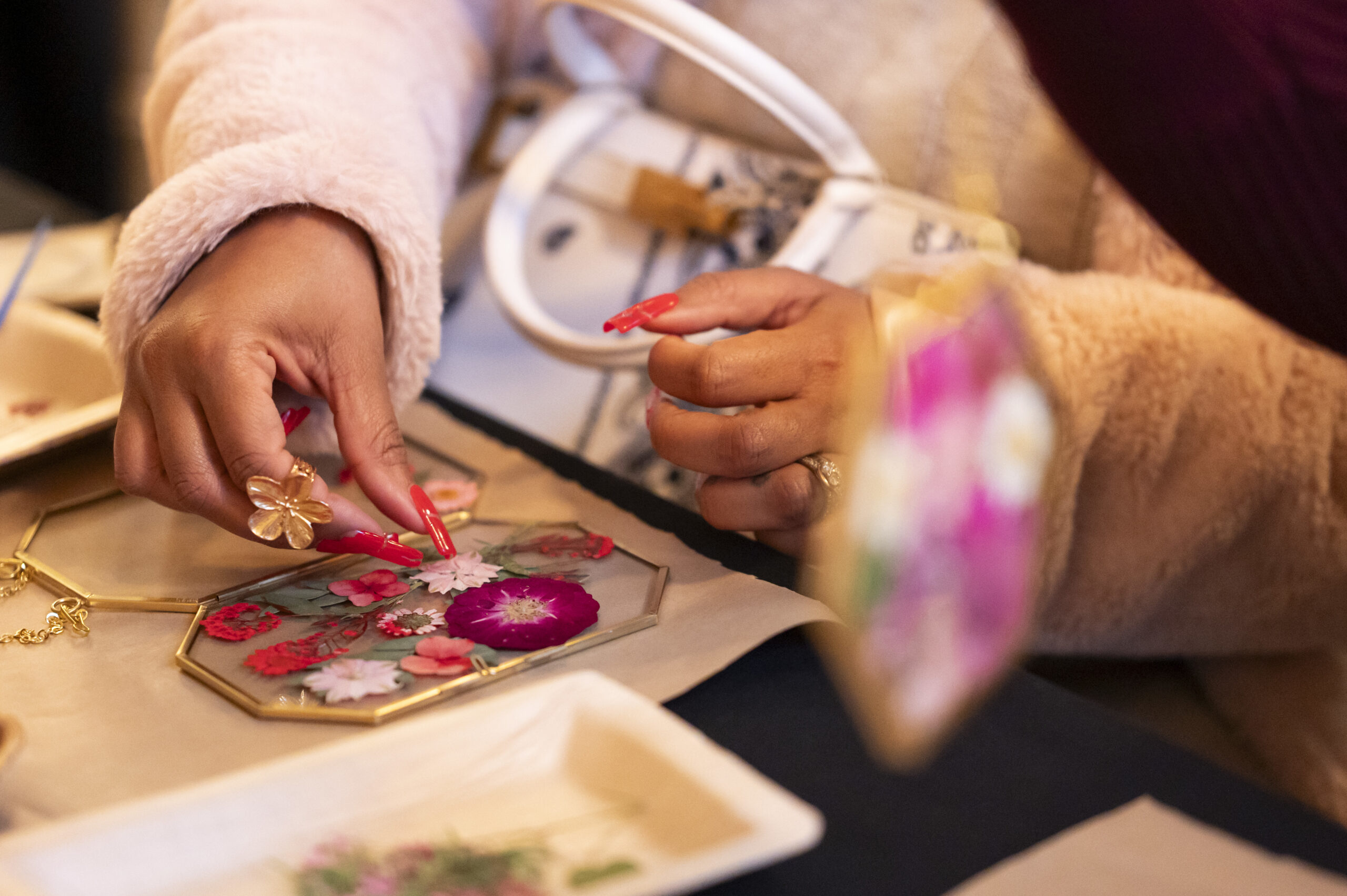
    A participant creates pressed flower art following a press conference for the unveiling of a first look at the 2026 Philadelphia Flower Show, ‘Rooted: Origins of American Gardening’ at Union Trust on Wednesday, Jan. 14, 2026.

    This year’s special exhibition, “The American Landscape Showcase,” celebrates the national milestone, also known as the Semiquincentennial, with four gardens highlighting how gardening has shaped communities and evolved over 250 years.

    “It reflects the influence of shared knowledge, cultural traditions, and regional practices that continue to shape how we garden today,” he said.

    Other gardens will feature exhibits from acclaimed international florists. Each year, thousands of exhibitors compete in more than 900 classes or categories, ranging from horticulture and arrangement to design and photography.

    “Whether you come for the artistry, the education, the family experiences, or simply to be surrounded by some of the most gorgeous beauty in the middle of the winter, there’s a place for you here,” Pearsoll said.

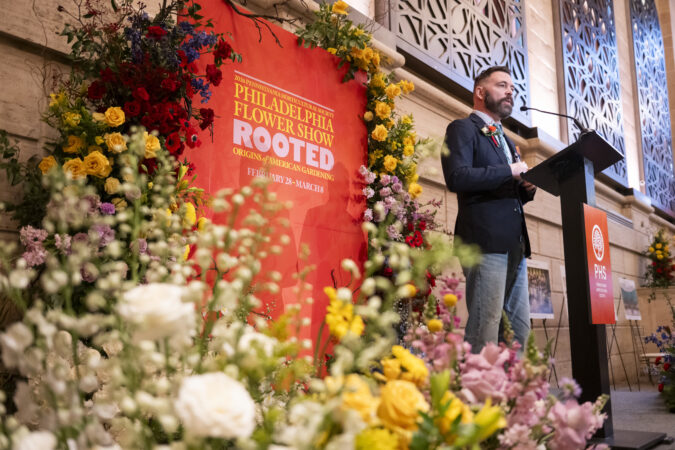
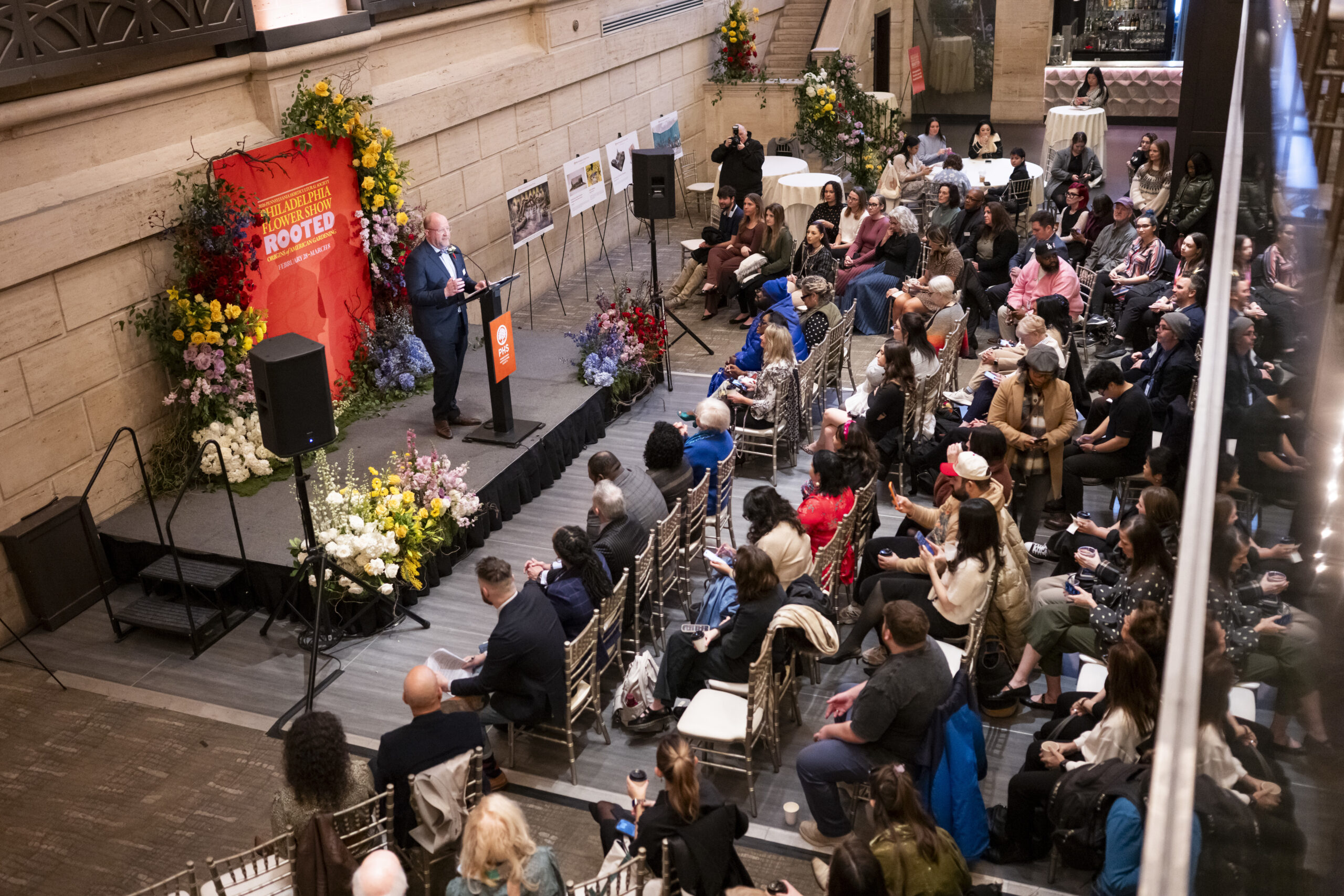
    Matt Rader, President of the Philadelphia Horticultural Society, speaks at a press conference during an unveiling of the first look at the 2026 Philadelphia Flower Show, ‘Rooted: Origins of American Gardening’ at Union Trust on Wednesday, Jan. 14, 2026.

    With more than 200,000 guests expected at this year’s milestone show, the event represents the Horticultural Society’s biggest fundraiser, supporting its greening efforts across the city, said Rader.

    “This is the home of American horticulture,” he said. “The Flower Show is our invitation to the world to join us here.”

  • The New York Times lists Philly as the top travel destination for 2026

    The New York Times lists Philly as the top travel destination for 2026

    With the nation’s 250th birthday fast approaching, the New York Times named Philadelphia as the number one travel destination in the world for 2026.

    While noting that there will be no shortage of celebrations for the Semiquincentennial, as the national milestone is known, Philly landed the top spot on the paper’s annual “52 Places to Go” list published each January. Because where else would you want to be this year than the birthplace of the Declaration of Independence?

    “Celebrate the Semiquincentennial with fireworks and themed balls,” the paper wrote, before mentioning just a few of the slew of major events Philly has planned for America’s yearlong birthday bash, including a Red, White & Blue To-Do Pomp & Parade, two new galleries at the National Constitution Center, a grand exhibition at the Philadelphia Museum of Art, and a World Cup match on Independence Day.

    That’s not to mention other big-ticket events coming our way in 2026, like the MLB All-Star Game, a pumped Fourth of July concert with soon-to-be-announced special guests, and TED Democracy talks, plus a host of neighborhood programming.

    With its unmatched Revolutionary bona fides, Philly edged out global travel destinations for the top spot. Like Warsaw, with its gleaming new Museum of Modern Art, and a greener-than-ever Bangkok. Costa Rica’s Osa Peninsula and India’s Bandhavgarh Tiger Reserve rounded out the paper’s top global spots worth visiting in 2026.

    Compiled yearly by Times editors and reporters, the exhaustive list noted that other original colonies — Massachusetts, Virginia, New York, and New Jersey — will also have stacked Semiquincentennial calendars.

    Whatever.

  • The world will be coming to Philly this year to celebrate America’s 250th birthday. We’re ready.

    The world will be coming to Philly this year to celebrate America’s 250th birthday. We’re ready.

    Nowhere will celebrate America’s 250th anniversary like Philadelphia. Because nowhere else can celebrate the national milestone like Philadelphia.

    Philly is where it happened.

    Only in Philadelphia, on July 4, 1776, did 56 sweat-soaked delegates of the Second Continental Congress stride into sweltering Independence Hall to stake their necks on an idea. In the course of human events, it had become time to declare self-evident truths. All men are created equal and endowed by certain unalienable rights.

    Some men, that is.

    This unforgivable erasure would have reverberations to this day. Nowhere are the centuries-old wounds of that betrayal more visible than in the unrelenting poverty, violence, and inequality preventing so many Philadelphians from their pursuit of happiness.

    But the manifesto was still the most revolutionary freedom document humankind ever produced. A single piece of parchment composed of elegant, unwavering prose that defied and dared an empire, forever reordered the rights of man, and drew the eyes of humanity — and judgments of history — upon our humble burg.

    Their work for the day done — and in keeping with the rest of the Founders’ stay in the City of Brotherly Love — the framers presumably dusted off their wigs, loosened up their waistcoats, and repaired to the cooling comfort of the City Tavern for a rager for the ages.

    Only in Philadelphia.

    Independence Hall in Independence National Historical Park Jan. 3, 2024. one of the Philadelphia region’s most visited areas, but the lustre has often seem faded in its grounds and buildings. But organizers say it will be different in time for 2026, the 250th birthday celebration of America.

    ‘Philly is beyond ready’

    Two-and-half centuries later, the eyes of the world again fall upon our Philly — for yet another rager for the ages.

    In Philly fashion, the city’s preparations for the 250th anniversary of the signing of the Declaration of Independence, also known as the Semiquincentennial, stumbled to a rocky start. Poor funding, a lack of leadership, and miscommunication plagued early stages of Philly’s 250th party planning.

    But in truer Philly fashion, dozens of passionate Philadelphian civil servants, cultural leaders, artists, volunteers, and philanthropies rallied to ensure the city where it happened met the moment.

    Only a year ago, during a 2026 preparedness meetings, worried planners requested $100 million from city and state coffers to fund festivities and programming worthy of democracy’s birthplace. They have received it.

    “A year ago, we were having a conversation about, ‘Are we ready?’, ‘Is the money there?’, ‘Can we pull this off?’” said Max Weisman, an aide to Councilmember Isaiah Thomas, a key planner. “Yes, yes, yes.”

    Philadelphia is ready, the planners say. Have no doubt.

    These Philly-loving patriots say they have organized a once-in-a-lifetime party equal to the city’s unparalleled role in history — and its irrepressibly proud personality.

    “Philly is beyond ready,” said Kathryn Ott Lovell, president and CEO of the Philadelphia Visitor Center Corporation and Philadelphia250, the city’s key planning partner for 2026. “Everyone is pulling out the red carpet. Every museum. Every cultural institution. Every neighborhood organization. Everyone is doing something special for the company that’s coming.”

    In this depiction published in The Inquirer July 1, 1951, the first event of July 4, 1876, was a huge military parade. The celebration was held in Independence Square after the parade.

    A ‘reintroduction to the world’

    Look around. Everywhere signs abound of the already-underway party. In the scores of new museum exhibits grandly exploring every power and contradiction enshrined in the declaration bellowed out of Philadelphia 250 years ago. In the abundance of plans for neighborhood programming and beautifications that bring the party to the people in 2026. In new ventures honoring Philly diversity and pride. In the polish and paint in the works for the Historic District.

    Hey, Philly cleans up when it needs to.

    It was visible when a parade of ships sailed along the Delaware in October to kick off the 250th anniversary of the Navy, founded in Philly. And it was heard in the crisp salutes and solemn hymns of the Marines who crowded Old City in November to mark their branch’s founding, also in Philly in 1775. It builds in the excitement of clock-ticking preparations for the string of big-ticket events that will grace Philadelphia in 2026.

    Six FIFA World Cup matches, with a summer fan festival and volunteer-training campus. The MLB All-Star Game. A pumped-up Fourth of July with to-be-announced special guests. TED Democracy talks featuring citizen speakers from Philly and beyond, exploring democracy’s painful past and uncertain present.

    It rings out in the genuine excitement of Philadelphians who work in ceaseless dedication to the principle that Philadelphians know how to throw a party.

    Philadelphia is not screwing up a party, is Weisman’s mantra (except he doesn’t say, “screwing.”)

    Matthew Skic, of Morristown, N.J., Director of Collections and Exhibitions, (left), and Michael Hensinger, of Fishtown, Pa., Senior Manager of K-12 Education, (right), are dressed as Minute Men from the Massachusetts Militia at the opening of the exhibit Banners of Liberty which showcased the original revolutionary war flags at the Museum of the American Revolution in Philadelphia, Pa., on Saturday, April 19, 2025.

    Not just a party. A year-long, city-wide commemoration that delivers Philadelphia into a more prosperous future. Before city planners found their 250th footing, Philly tourism and cultural leaders banded together to seize the opportunity. With more than 500,000 visitors expected for the World Cup alone, they aim to reintroduce Philadelphia to the world.

    “Or introduce ourselves for the very first time to people who do not know Philadelphia or have a very narrow view of Philadelphia,” said Angela Val, president and CEO of Visit Philadelphia, the nonprofit that serves as the city’s official leisure-tourism marketing agency. “We don’t take these big events lightly. They are investments. This is really an opportunity to set ourselves up for success in 2026 and beyond.”

    Parties of the past

    We’ve been here before.

    Every 50 years since 1876, the nation’s Centennial year, and America’s first major birthday bash, Philly has dusted off its wig to get down. Each of these events came with larger national wounds.

    “Before every one of these fairs, there’s a scar,” said David Brigham, librarian and CEO of the Historical Society of Pennsylvania, referring to Philly’s previous national birthday parties. “There’s always been a conflict and a pain.”

    And in these moments, Philly has strove to be a salve, he said. Most of the time, anyway.

    In 1876, when America reeled from unhealed wounds of the Civil War, Philadelphia built a small city in Fairmount Park — and hosted 10 million people from 37 countries. The showcase of growing American innovation and economic prowess aimed to heal a ruptured nation. Memorial Hall, its massive art gallery, remains today as the Please Touch Museum.

    In 1926, as America emerged from the carnage of World War I, our Sesquicentennial marked the building of the Ben Franklin Bridge, the transformation of what is now FDR Park, and the construction of a temporary, gleaming, utopian metropolis in South Philly.

    The Bicentennial in 1976 led to the creation of the Mann Center and the African American Museum in Philadelphia, even if the party itself was marred by Mayor Frank Rizzo’s heavy-handed security — he summoned 15,000 National Guard members.

    We’ve been here before. And we aren’t perfect.

    As ready as Philadelphia stands, next year’s commemoration will not include the big legacy projects of past celebrations, the bridges, stadium, and new museums.

    But maybe that’s not what this moment is about, anyway.

    An unfinished journey

    Just as past planners grappled with the questions of their American moment, Philadelphia organizers wrestle with ours.

    “It’s a commemoration of why our republic was created,” Lovell said. “But also about a recommitment to the ideals that were established. We were founded on these basic principles and values that the Founding Fathers fought over. And we’re still fighting over it.”

    It’s that same theme — the grand fragility of our American experiment — that pulses though the Museum of the American Revolution’s landmark exhibit, “The Declaration’s Journey.”

    A breath-taking assemblage of rare artifacts, including Thomas Jefferson’s writing chair and Martin Luther King’s prison bench, the museum’s most ambitious show ever explores the 250-year global impact of the declaration. How words proclaimed out from Philadelphia inspired revolutions and freedom movements throughout the centuries

    “The American Revolution is not synonymous with the Revolutionary War,” said R. Scott Stephenson, president of the museum. “It is a centuries-long, ongoing experiment in liberty, equality, and self-government.”

    And that journey’s not yet over.

    The birth of democracy in Philadelphia, and the worldwide struggle to sustain it, represents the most significant event since the birth of Christ, said filmmaker Ken Burns. (And here we though it was Super Bowl LII.)

    The American war may be over, but the revolution is not, said Burns, whose 12-hour docuseries, “The American Revolution,” is streaming on PBS.

    All we were promised was the pursuit, he said. And the chance to forever make the imperfect a little less so.

    The republic the Founders forged in the Philly heat stands the most divided and tested it has been in decades, with core disagreements about its very foundations.

    It is only right, then, that Philadelphians march onto the global stage. Who else but us?

    In every way, being America’s birthplace shapes Philadelphia. Where else is its hallowed iconography such a daily staple? Where else does its symbolism so powerfully frame every civic successes — and failure? Every sports triumph and cultural happening. Every step forward; every stumble backward.

    Where else does the promise and contradictions of a proclamation that turned the world upside down so intrinsically coarse through the lifeblood of a place?

    Where is it all so still alive?

    Where else but where it all happened.

    Only in Philadelphia.

  • It’s a Mummers wedding! Braving the cold and crowds, a couple said ‘I do’ at the parade

    It’s a Mummers wedding! Braving the cold and crowds, a couple said ‘I do’ at the parade

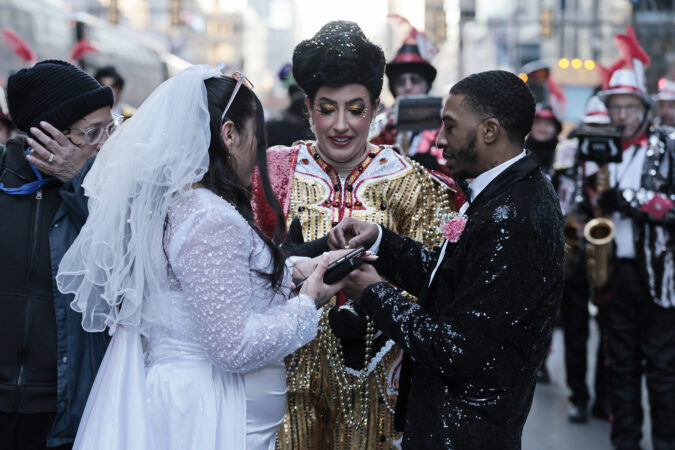
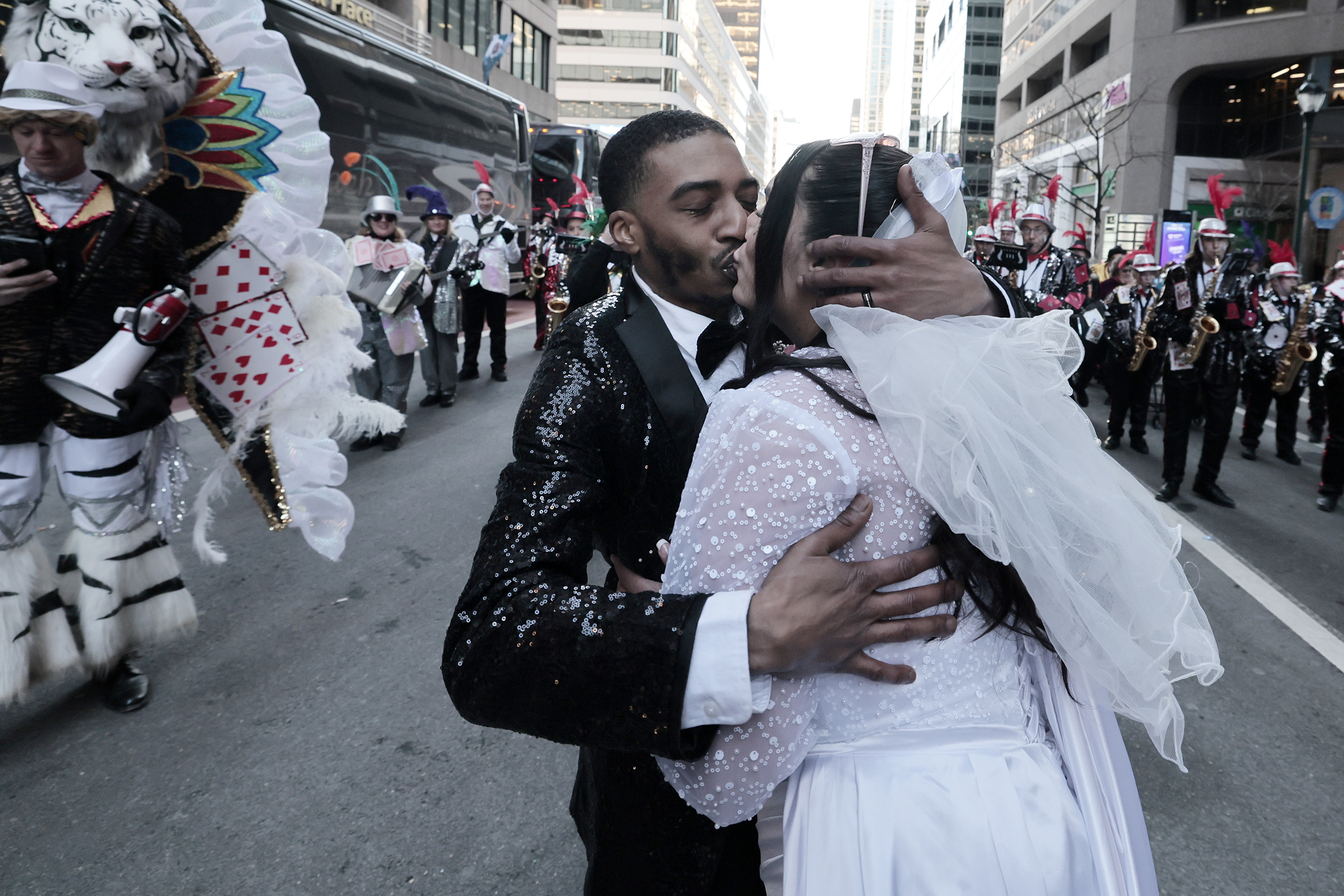
    The bride wore a sequin silk gown with golden sneakers. The groom, a bedazzled tux. They became husband and wife in the bitter cold of Market Street — in the middle of the Mummers Parade.

    Juliana Bonilla, 25, and Stanley Wells, 32, met online three years ago. And they never envisioned their love story would include a storybook Mummers Parade wedding. But on Thursday, the pair, who marched with the Hegeman String Band, officially tied the knot as part of a Mummers Parade performance.

    The wedding was a first, said Kelliann Gallagher, captain of Hegeman. At least in the string band division, anyway, she said. At least that anyone had ever heard of.

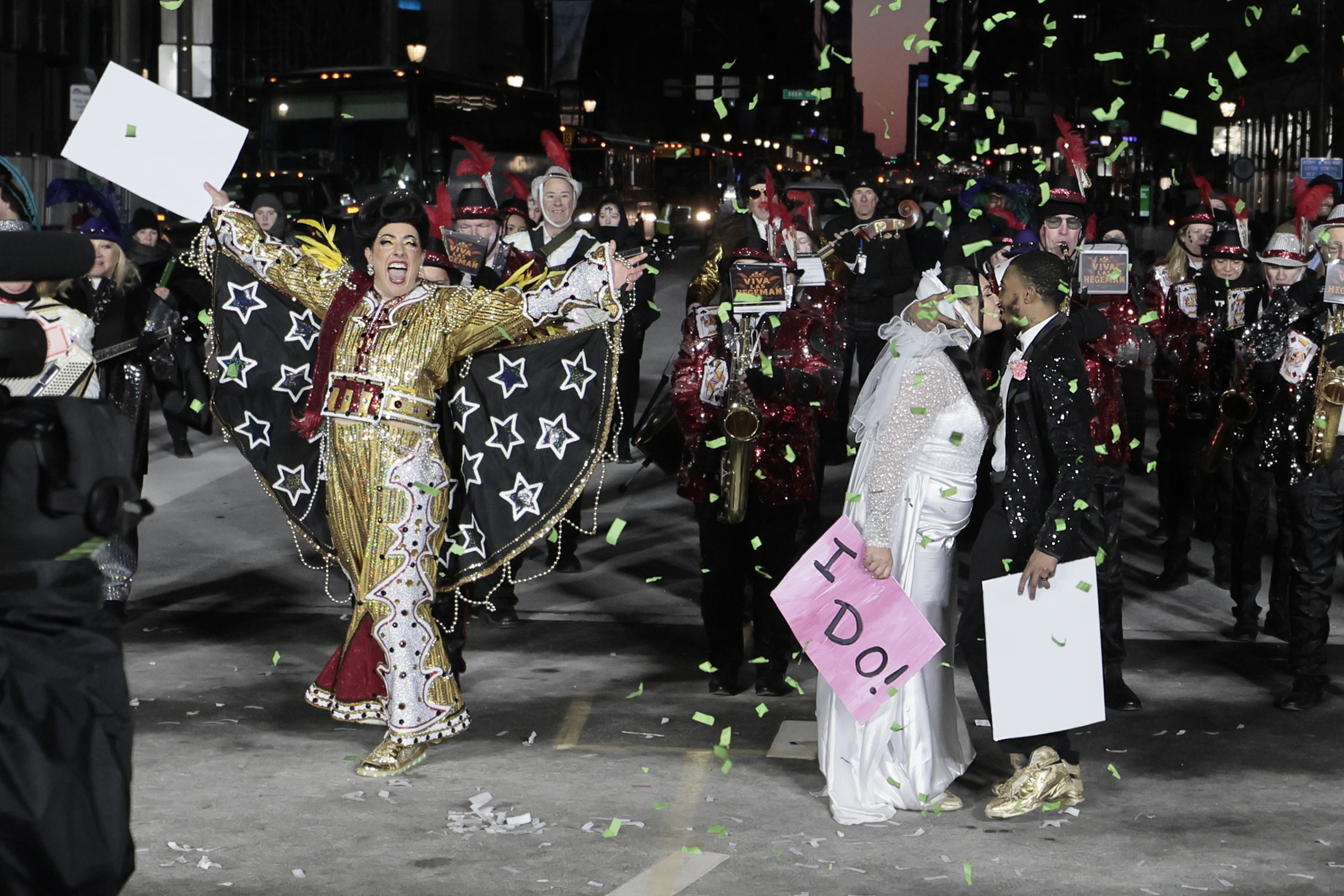
    Julianna Bonilla (middle) and Stanley Wells (right) kiss after saying “I DO” and being officially married by Hegeman String Band captain Kelliann Gallagher (left) during the 2026 Mummers Parade in Philadelphia on Thursday, Jan. 1, 2026.

    The Mummers Day matrimony had come together by chance, explained Gallagher, who served as the officiant.

    Back in October, the South Philly string band was finalizing its parade plans when it struck Gallagher that a real wedding would be the perfect ending to their Las Vegas-themed routine.

    “Of course, one of the aspects of Vegas is the little white wedding chapel,” said Gallagher. “So we thought, ‘Wouldn’t it be cool if we can get someone to actually be married on New Year’s Day?”

    They just needed a couple.

    Evie Pastor, who serves as sergeant-at-arms for Hegeman, thought of her recently engaged daughter, Juliana. She had grown up around the Mummers, and her stepfather, Jon Pastor, plays first alto saxophone in the string band.

    After all, Bonilla, of South Philadelphia, and Wells, of North Philadelphia, who both work as home healthcare aides, had a very Philly courtship. Their first date three years ago was at a Delaware Avenue eatery, where they watched the Eagles play.

    She had fallen for him immediately.

    “He was a gentleman,” Bonilla said of Wells.

    He was drawn to her beauty and humor.

    By October, the couple who have a daughter, Kehlani, 2, had already picked out a venue. Bonilla, who is shy and nervous in front of large crowds, was hesitant when her mother asked about a Mummers wedding.

    “I don’t like all the attention on me,” she said.

    But the more she thought of it, the more the idea grew on her. It would be special. She would be marching anyway. But this year, instead of a parade marshal, she’d be the bride.

    “It was something different,” she said.

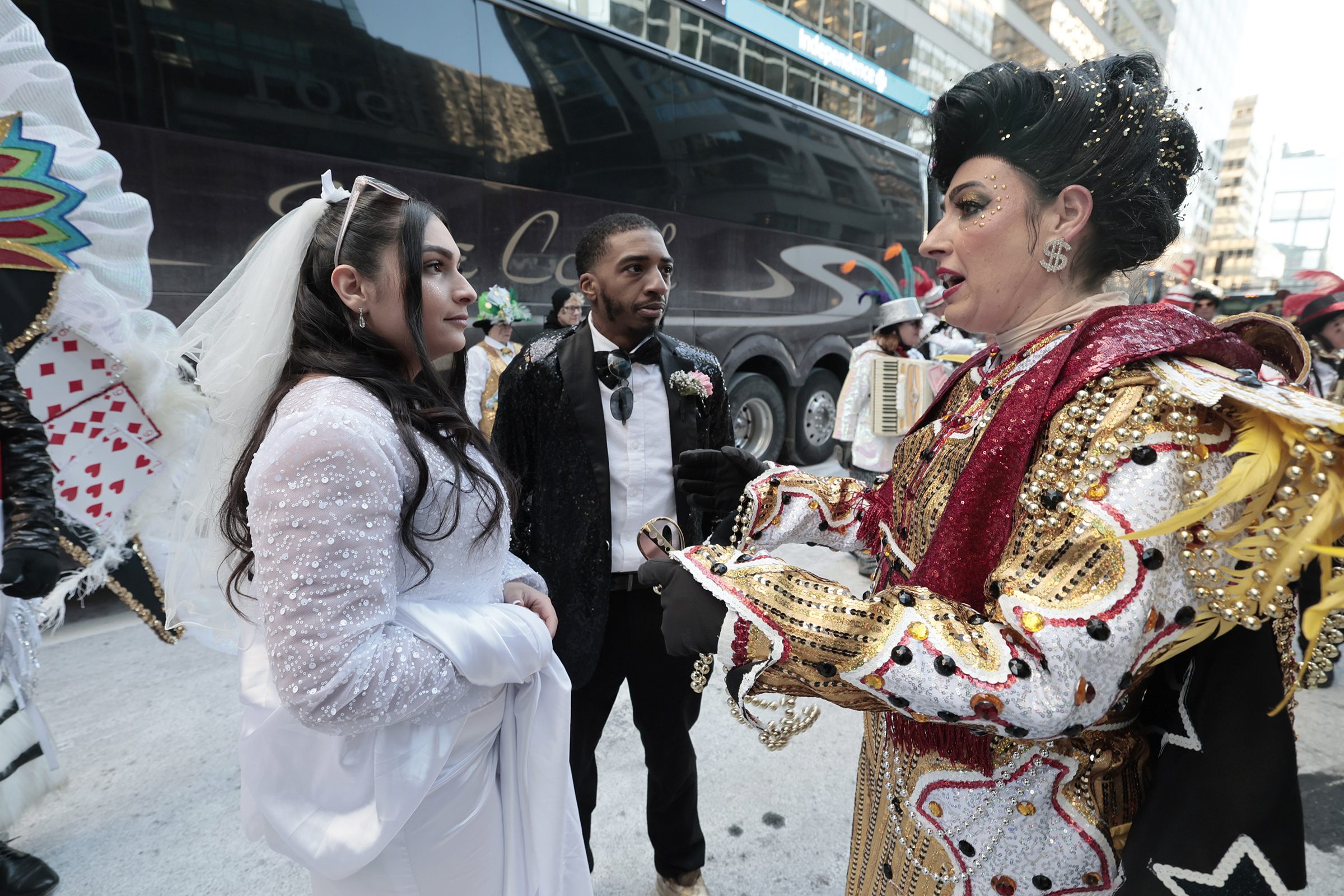
    Julianna Bonilla (left) and Stanley Wells go over wedding service details before being married by Hegeman String Band captain Kelliann Gallagher (right) during the 2026 Mummers Parade in Philadelphia on Thursday, Jan. 1, 2026.

    Her nerves grew as the parade drew close, and it had nothing to do with Wells. It was about the crowds and the television cameras that would be filming the band’s performance — and her wedding.

    She found a long-sleeve gown with a long train and a Mummers vibe. And on Thursday morning, she and Stanley posed in front of the band’s Second Street clubhouse, showing off their golden sneakers.

    They practiced their vows on the bus ride to Market Street, where the bands would perform before the judges. The bride packed a flask of Southern Comfort to warm herself against the cold — and to calm herself about the crowds.

    And then they waited on Market Street — for hours — due to delays caused when the String Band Division called off its competition because of punishing winds. Many props were destroyed, and five people were sent to the hospital Thursday morning, Mummers officials said.

    While no longer competing, the bands would still march.

    By 4 p.m., Hegemen String Band finally begun to inch toward the bright lights and crowds at City Hall. As Jon Pastor played “Can’t Help Falling in Love” on his sax, Bonilla and Wells stepped off the band’s bus.

    Taking each other’s hands before Gallagher, who would officiate in a bedazzled Elvis get-up, they wanted to at least exchange their vows in the quiet moments before the performance.

    “I promise to stand by your side, to support and cherish you in all the seasons of your life,” Wells said.

    “I promise to love you without condition or expectation, exactly as you are today and every day after.”

    Stanley Wells (left) and Julianna Bonilla kiss after being married by Hegeman String Band captain Kelliann Gallagher during the 2026 Mummers Parade in Philadelphia on Thursday, Jan. 1, 2026.

    Then, with a showman’s touch, Gallagher shouted, “Stay tuned for the rest of the wedding.”

    That took place a short while later, as the band performed its routine under the stars of Market Street. Braving the cold and the crowds, the couple strutted to the front of the line, each holding aloft signs saying, “I do.”

    With that, Gallagher pronounced them man and wife to the grandstand cheers.

    Evie Pastor began to cry.

    “That’s enough, get a room,” joked a parade emcee, as the couple’s kiss lingered.

    With that, Juliana Bonilla and Stanley Wells, now husband and wife, strutted down Broad Street, the bride’s nerves finally eased by the overwhelming emotion of the moment.

    “I’m glad its done with,” she said. “I can get warm now.”

  • How to have a Perfect Philly Day, according to WXPN host Joey Sweeney

    How to have a Perfect Philly Day, according to WXPN host Joey Sweeney

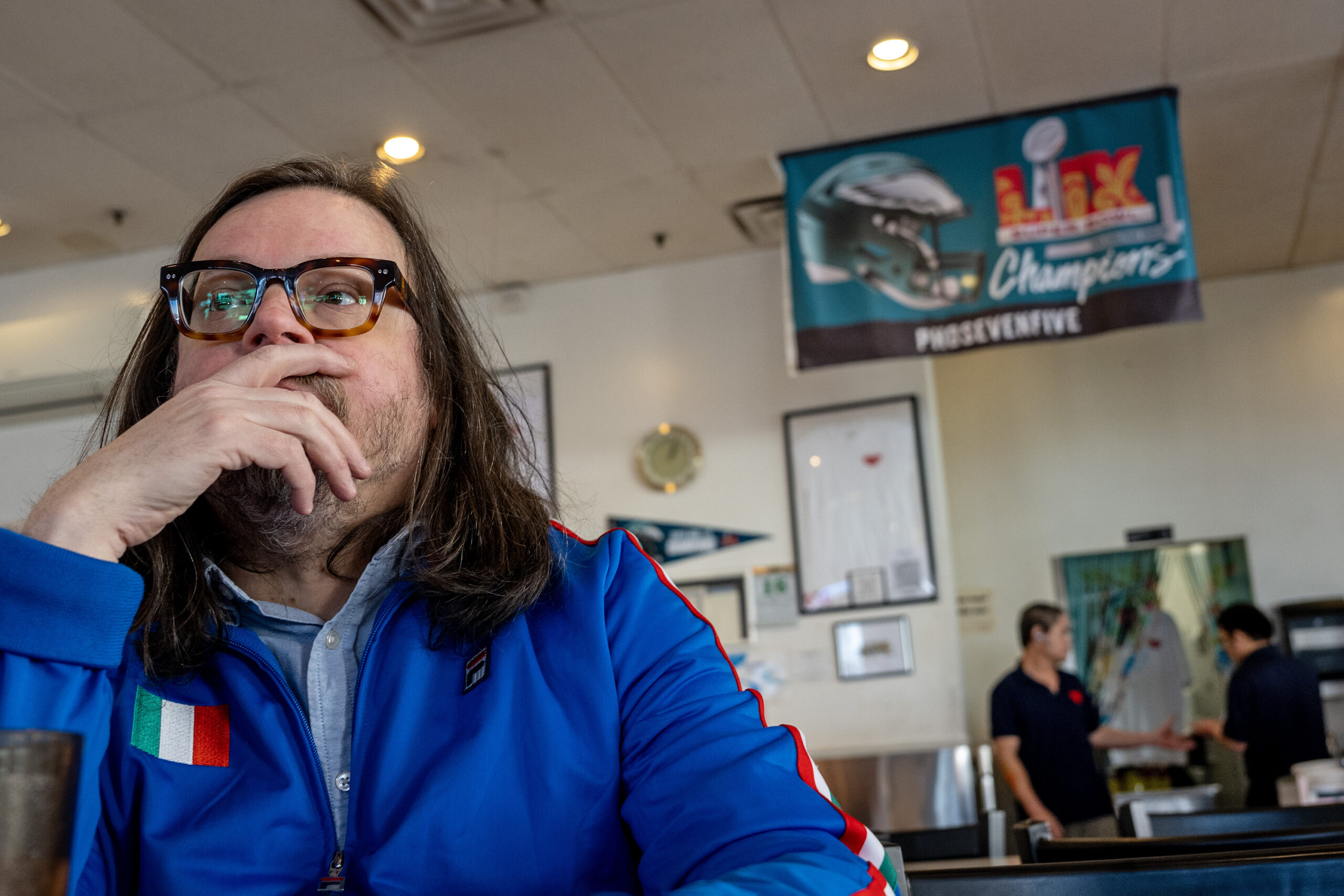
    Musician, writer, journalist, DJ, and tastemaker Joey Sweeney has been having a conversation about Philadelphia with Philadelphians for more than 25 years.

    The native Fishtowner broke into the Philly music scene in the ’90s, eventually fronting bands like the Barnabys, the Trouble with Sweeney, and Joey Sweeney & The Neon Grease, as well as recording and performing solo.

    Founding and publishing Philly’s first cityblog, the now dormant Philebrity, in 2004, Sweeney wrote about Philly daily for a decade with signature snark. Before that, he wrote about music and culture for Philadelphia Weekly, City Paper, and national outlets.

    Since 2023, Sweeney, who is soon releasing a new single with the Grease, has also been creative director — and “vibe Sherpa” — at 48 Record Bar.

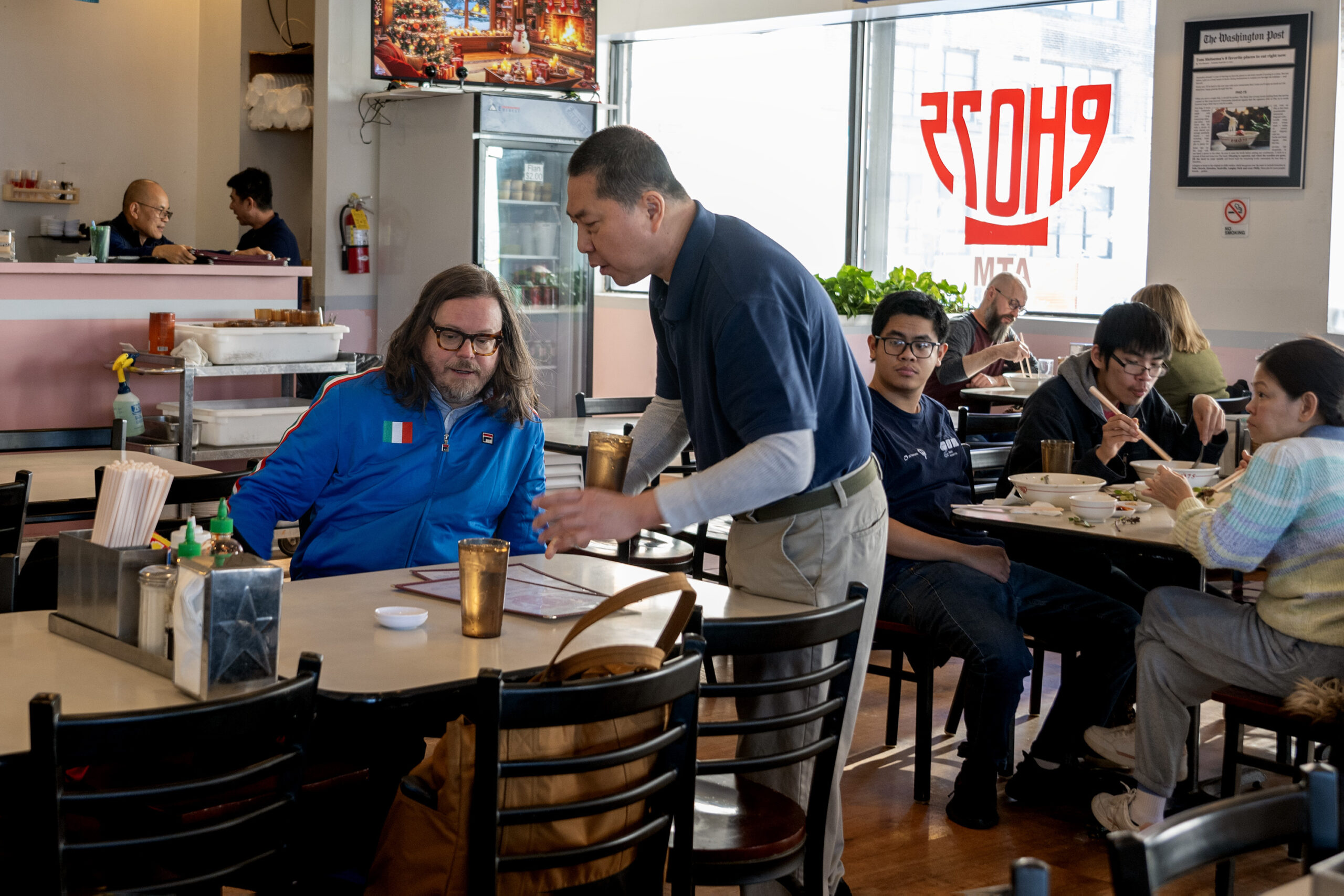
    Joey Sweeney waits for his lunch at Pho75 on Washington Avenue.

    In August, Sweeney, 53, joined WXPN as new Saturday morning host of Sleepy Hollow, one of the station’s longest running weekend programs, which has played an intimate, ambient blend of folk, jazz, New Age, and indie since 1973.

    A definite change of pace for the longtime nighthawk — “I’ve only recently discovered mornings,” Sweeney said with a laugh — joining the iconic show has been a “dream,” he said.

    “The biggest wallop of it is experiencing that WXPN community from the other side,” he said. “The staff is amazing. The listeners are really passionate about loving the station. They really give their love to it. Especially with Sleepy Hollow. It’s this legacy program, and you really want to honor that. The audience and the longevity and all the people who made it happen all those years. It’s a powerful thing.”

    Sweeney, who lives in Society Hill with his wife, Elizabeth Scanlon, poet and editor in chief of the American Poetry Review, and stepson, Sully, 20, says his perfect Philly day would revolve around a diverse culinary excursion through the Italian Market, record store shopping, a corner bar pit stop, and some late-night guitar in his attic.

    Joey Sweeney is greeted by server Kevin Trinh as he stops for lunch at Pho75 on Washington Avenue.

    8:30 a.m.

    I’m going to Loretta’s on Second Street. It’s the coffee shop closest to my house, and they do wonderful things. Generally for me, it’s coffee and pastry, usually a chocolate croissant. If I’m feeling extravagant, I’ll go for their Betty sandwich. It’s their breakfast sandwich, which is a really amazing riff on the classic bacon, egg, and cheese.

    10 a.m.

    Then I’ll head over to South Philly to Pho 75. I am a big pho-for-breakfast or pho-for-mid-morning-meal guy. I love Pho 75. Get the brisket with extra noodles.

    11 a.m.

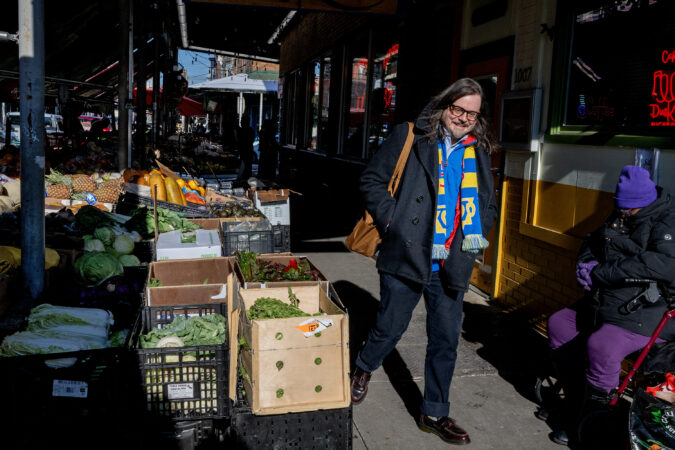
    Then, I hunt and gather my way back to my house. I walk down Ninth Street and get all the food we need for the week. All of the things that we need and eat on the regular, that are good, come from a six-block area around Ninth Street. My whole palate lives on that street or thereabouts.

    I’m going to the Hung Vuong Supermarket, at 11th and Washington. Hung Vuong has all the noodles and dumplings and the chili crisp and fish sauce — all that stuff you need.

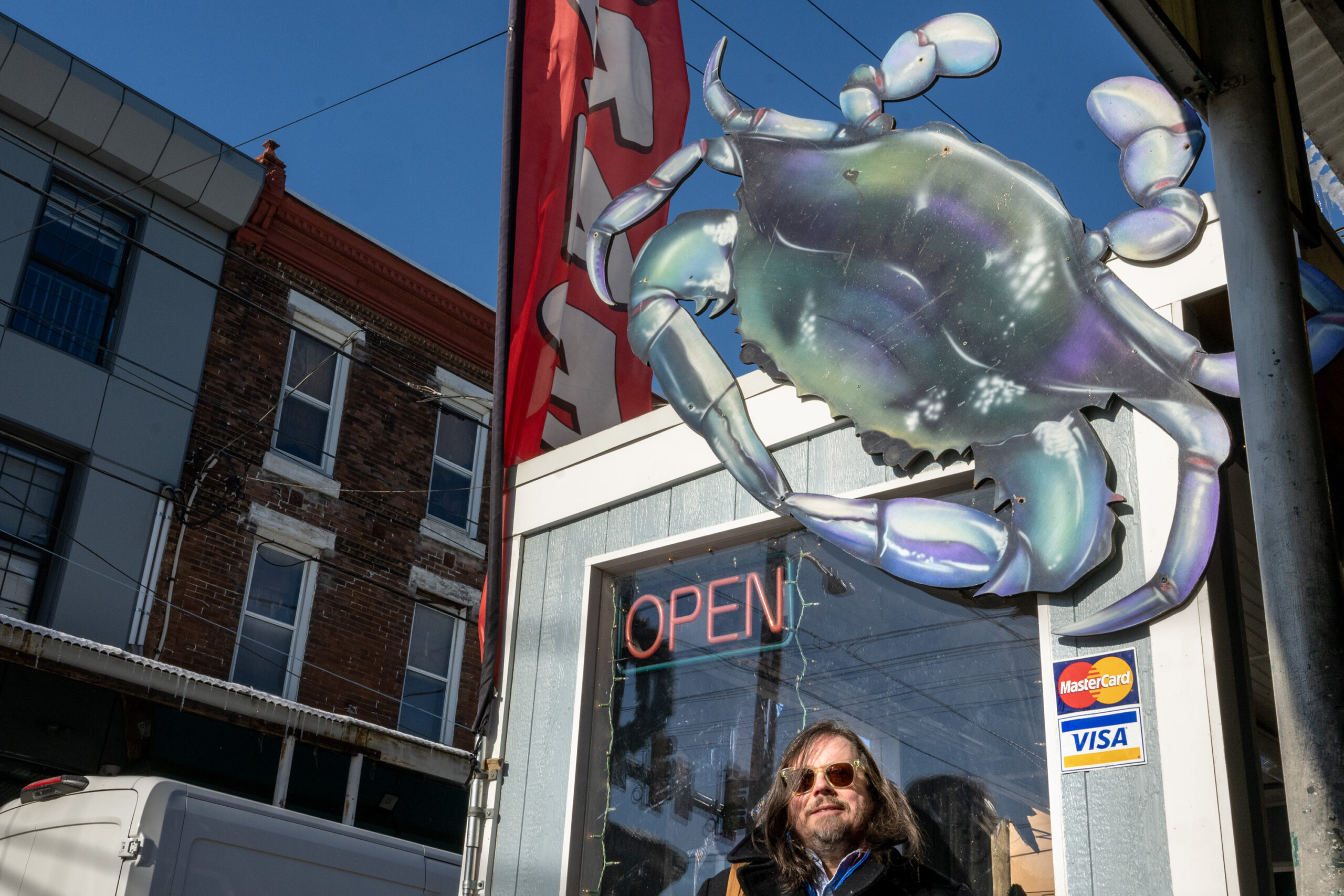
    At Ninth Street, it will be any combination of the following: Anastasi Seafood, where I will probably get a half dozen already cooked crabs, and whatever fish we need for the week. Cod. Maybe, Branzino. Anastasi always does me right. They are our household’s Seven Fishes place. God forbid they ever went away. I don’t know what happens to the fish order.

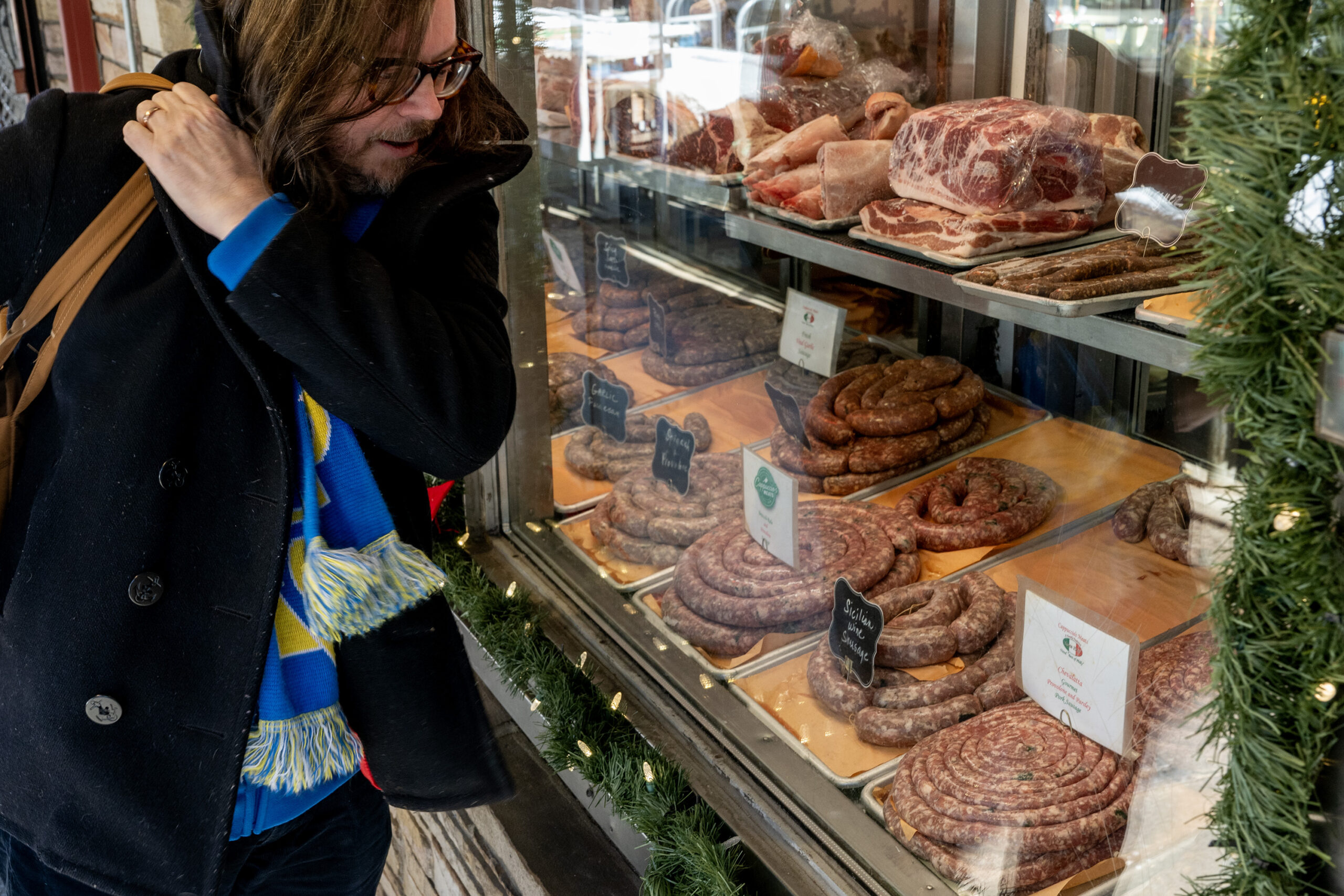
    Joey Sweeney at Cappuccio’s Meats. He especially likes their chevalatta gourmet pork sausage with provolone and parsley.

    Then, it’s Cappuccio’s Meats for their chevalatta. It’s this very thin sausage with greens and cheese. It’s a very Philly Catholic thing. And Esposito’s Meats. Because Esposito’s will grind meatball mix for you while you wait. The veal, beef, ground pork mix. They don’t put it out with the rest of the stuff. You have to ask for it, and they go in the back and grind it up for you. It’s the best way to make meatballs, by the way. My whole life, I’ve been searching for how to get my Grandma’s meatballs. She left us a long time ago, and I don’t have the recipe. I finally figured it out. You gotta get it ground right there, and not use the crushed tomatoes. Use the canned tomatoes you squeeze with your hands.

    1 p.m.

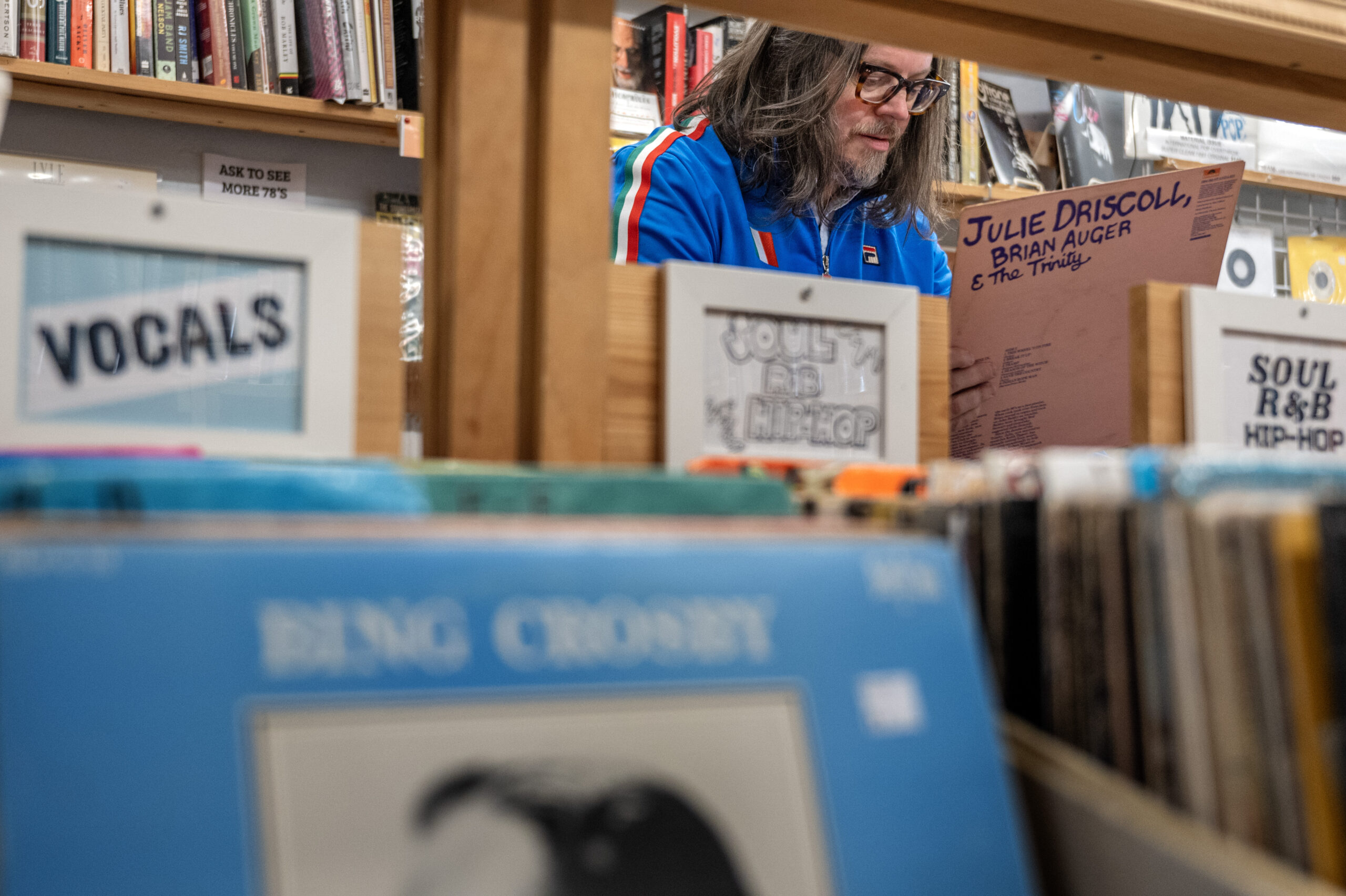
    Somewhere in the middle there, I will pop across the street to Molly’s Books & Records. Pound for pound, Molly’s has the best used record selection in the city, and the inventory changes over frequently. They don’t gouge you on the prices. I’ve been going to Molly’s for as long as I can remember. I love giving Molly any shine.

    I would also go to Tortilleria San Roman at Ninth and Carpenter. They have these tortillas that they make right there. If I am doing meatballs, I am going to Talluto’s, because they have cavatelli pasta, our house favorite.

    Joey Sweeney looks through bins at Molly’s Books & Records.

    2 p.m.

    I’ve gotten my giant bag of food and records. At this point, I would like to go to Grace & Proper, over on Eighth. It’s a corner bar right off the market. They’re open Saturday and Sunday afternoons. It’s got this cafe kind of vibe and there’s something about it in the daytime. It depends how perishable the food is in my bag. But I might go there, have a drink, have a snack, before I come home and listen to whatever records I got.

    6 p.m.

    I cook. But my wife, Elizabeth, is the better cook. If we’re not cooking, I like an early bird dinner. Since I’m back in the neighborhood at this point, I’m going to either Cry Baby or Bloomsday.

    Cry Baby, especially, is like a second home. Bridget Foy, who owns the place, was kind enough to let me shadow at Cry Baby before 48 Record Bar opened, because I had never had a proper hospitality job. She put me on every station in the place just about. It feels so casual and friendly, like a family spot. But you pop the hood on that place, and it runs like a machine. Her team is so amazing that by the end of it, I was like, oh, man, I would work here.

    9 p.m.

    Creative times usually come after dinner. Maybe I’ll put on a record or play some guitar. Or I will get on my computer in my attic office and start working on tunes. My wife and I had this really funny moment, like six months ago, where we were hanging out up in the office, and I started playing some of the songs that I’ve been recording up there after dinner. And she’s like, “You never played this for me. This is an album you’ve got. This might be one of the better things you’ve ever done. When are you doing this?” I’m like, “I do it after dinner.”

    Joey Sweeney pauses under a big crab sign.