Author: Anna Orso

  • Philly moves to ban mobile addiction services from parts of Kensington and most of the Lower Northeast

    Philly moves to ban mobile addiction services from parts of Kensington and most of the Lower Northeast

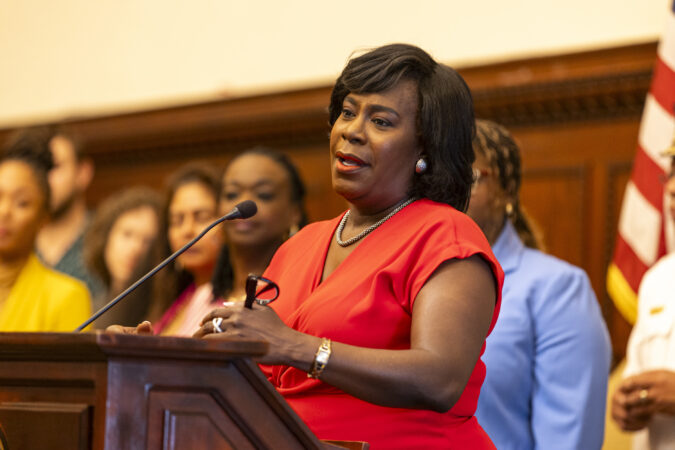
    Philadelphia City Council is escalating its clash with some harm reduction providers, with lawmakers on a key committee voting Monday to ban mobile addiction services from parts of Kensington and its surrounding neighborhoods.

    Members of Council’s Committee on Licenses and Inspections voted, 5-1, to advance the legislation, which covers the Lower Northeast-based 6th District, represented by Councilmember Mike Driscoll, the bill’s sponsor.

    The area stretches from the eastern side of the intersection at Kensington and Allegheny Avenues — long the epicenter of the city’s opioid epidemic — north along the Delaware River and up to Grant Avenue.

    The full Council could vote on the legislation as early as next month.
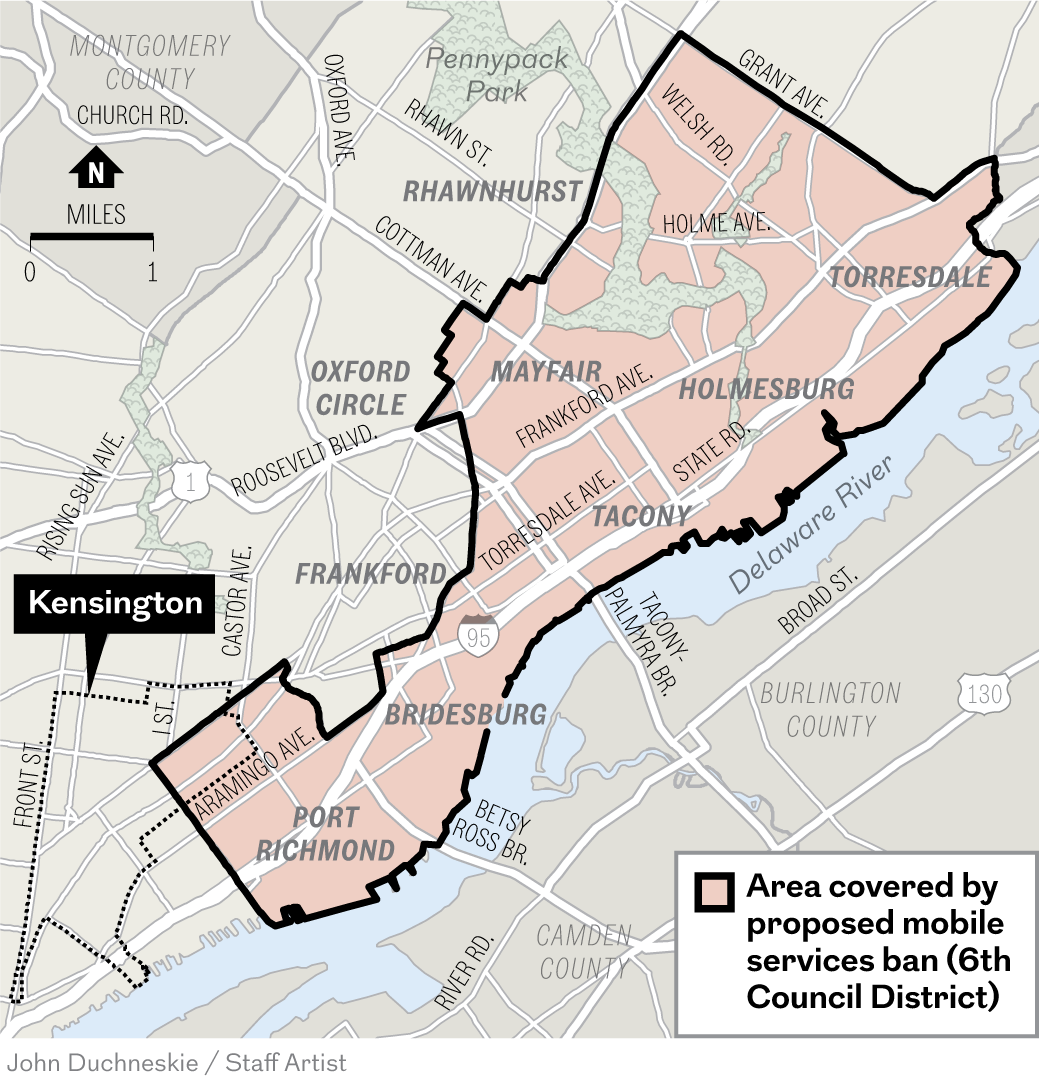
    Map of the 6th Council District, the target of proposed legislation to ban mobile addiction services.

    Some Kensington residents who have begged lawmakers for years to address the sprawling homelessness and addiction in the neighborhood said they support the legislation because the providers draw people who use drugs into residential areas.

    “I have grandkids who can’t come and see me because of where grandmom lives at,” said Darlene Abner-Burton, a neighborhood advocate. “It’s not fair that we have to endure what we have to endure. No one should live like we do, and no one should go through what we go through.”

    However, a half dozen harm reduction advocates testified that the legislation would not reduce homelessness or addiction, but would instead erect barriers to medical care that vulnerable people rely on and would lead to more overdose deaths.

    “Every member of our community deserves dignity and compassion, not punishment,” said Kelly Flannery, policy director at the Positive Women’s Network, an advocacy organization for people with HIV.

    Flannery called the measure a “cruel ban.”
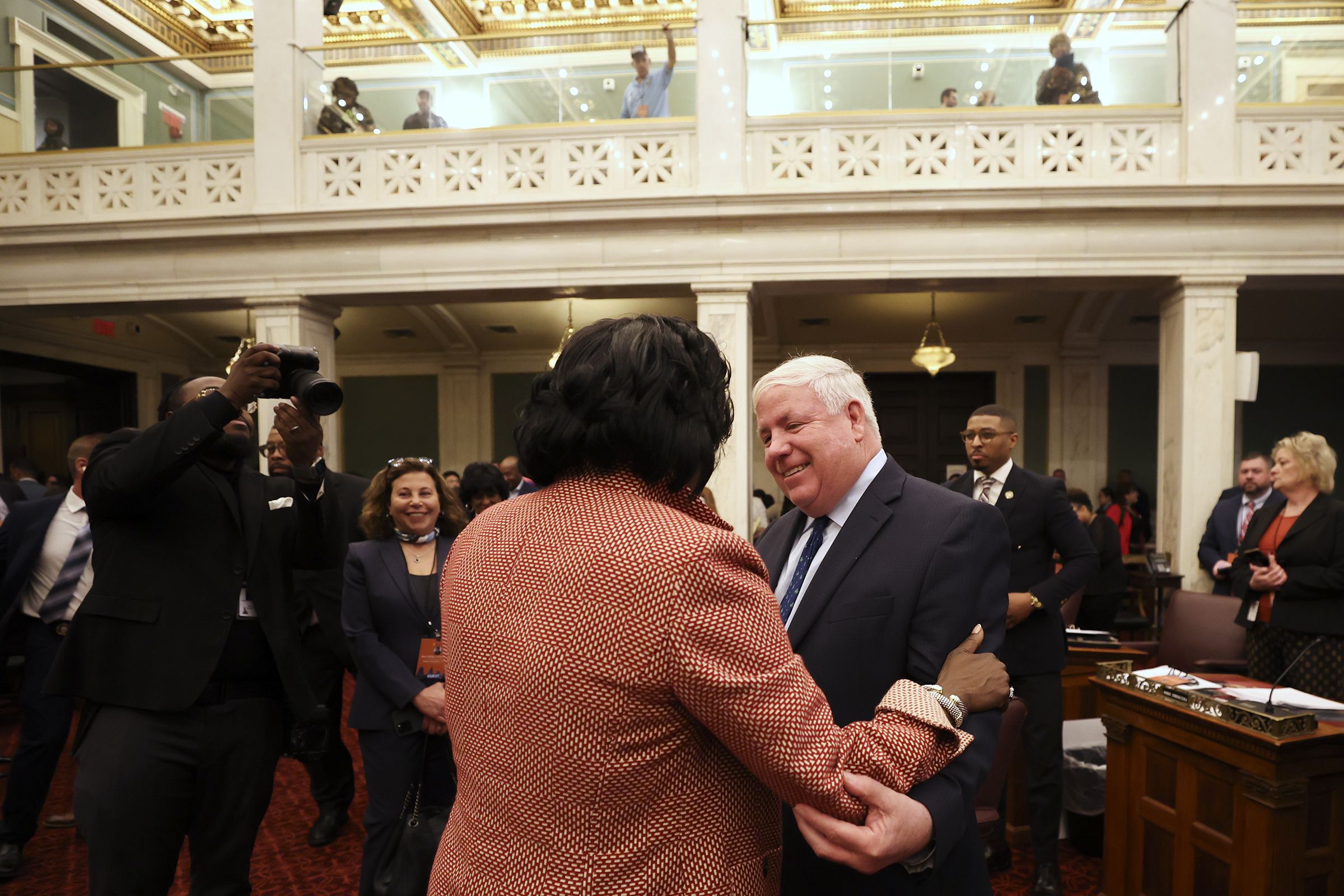
    Councilmember Mike Driscoll, who represents the 6th District and authored the legislation, greets Mayor Cherelle Parker after her first budget address in City Council in March 2024.

    It’s the second time Council appeared poised to pass a bill aimed at restricting mobile service providers, which are groups that operate out of vans or trucks and offer a range of assistance to people in need, including first aid, free food, and overdose reversal medication.

    Earlier this year, Council voted to pass restrictions on the providers operating in the nearby 7th District, which covers the western parts of Kensington.

    But that bill — which passed the full Council 13-3 and was signed by Mayor Cherelle L. Parker — was not a blanket ban.

    That legislation, authored by 7th District Councilmember Quetcy Lozada, requires providers obtain a license, and it limits organizations that provide medical services to specific areas designated by the city. Groups that offer nonmedical services like distributing food are prohibited from parking in one place for more than 45 minutes.

    The city is expected to begin enforcing that law on Dec. 1.

    Driscoll said he introduced his own legislation to ban the services from his district entirely because he was concerned that providers who faced restrictions in the 7th District would migrate into the neighborhoods he represents.

    The only committee member to vote against Driscoll’s legislation Monday was Nicolas O’Rourke, a member of the progressive Working Families Party who represents the city at-large and also opposed the 7th District legislation.
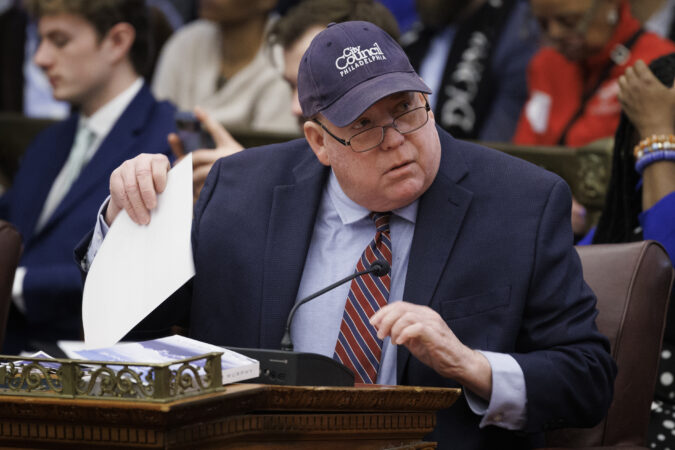
  • People who are self-employed could become exempt from paying a Philly business tax | City Council roundup

    People who are self-employed could become exempt from paying a Philly business tax | City Council roundup

    Philadelphia-based independent contractors and others who are self-employed could soon become exempt from paying certain business taxes as part of a measure aimed at easing tax burdens on small businesses.

    City Councilmember Mike Driscoll, a Democrat who represents parts of Northeast Philadelphia, introduced legislation Thursday to carve out entrepreneurs, sole proprietorships, and businesses that have only one employee from having to pay the city’s business income and receipts tax, commonly known as BIRT.

    Also on Thursday, members floated legislation to address the rising cost of water bills and introduced a bill to make it easier for restaurants to secure outdoor dining permits.

    What was the meeting’s highlight?

    Relief for the small(est) businesses: The bill is likely to find support in Council, where lawmakers have been searching for ways to provide relief to small businesses after earlier this year eliminating a popular tax break that allowed companies to exclude their first $100,000 in income from business taxes in Philadelphia.

    That exemption effectively meant that thousands of small businesses did not have to pay the tax. However, Mayor Cherelle L. Parker’s administration in June successfully moved to eliminate the exemption, saying the city was likely to lose a court battle over the matter.

    The change came after a medical device manufacturer sued the city, saying the exemption violated state law, which includes a “uniformity” clause that prohibits municipalities from creating different classes of taxpayers.

    Now, thousands of businesses newly have to pay the BIRT beginning with 2025 tax bills that are due in April. If Driscoll’s measure is adopted, it would begin in the 2026 tax year, meaning that eligible business owners would see the exemption when paying taxes due in April 2027.

    He said the legislation addresses concerns from small businesses that the impending tax bills will be financially unsustainable for them.

    “A $50,000 business should not face a $3,200 tax hike,” Driscoll said. “That is not policy. That is displacement.”

    Driscoll said that the city’s law department approved his legislation and that he is confident it does not violate the uniformity clause.

    What else happened this week?

    Making water more affordable: Council will consider a package of legislation to address rising water bills. Councilmember Jamie Gauthier of West Philadelphia introduced three measures:

    • A bill that expands eligibility for payment assistance programs to people who earn up to 300% of the federal poverty level. (This year, the FPL is $32,150 for a family of four.) There is currently a tiered assistance structure for people who earn up to 250%.
    • A bill requiring that the city reduce a resident’s water bill if it rose because of a water meter failure that lasted more than a year.
    • A resolution to hold hearings on whether lawmakers can expand assistance programs to renters. The Philadelphia Water Department does not allow bills to be in renters’ names.

    A spokesperson for Gauthier said the package of legislation has 10 cosponsors — a majority of Council — making it likely to pass.

    Parker opposes incineration ban: A Council committee on Monday advanced a bill to ban the city from incinerating trash, over the objections of Parker’s administration.

    Currently, the city sends about two-thirds of the trash it collects to landfills and one-third to a waste-to-energy incinerator in Chester operated by Reworld, formerly known as Covanta.

    Both of those contracts expire June 30, and Gauthier wants to prohibit the Parker administration from signing a new deal.

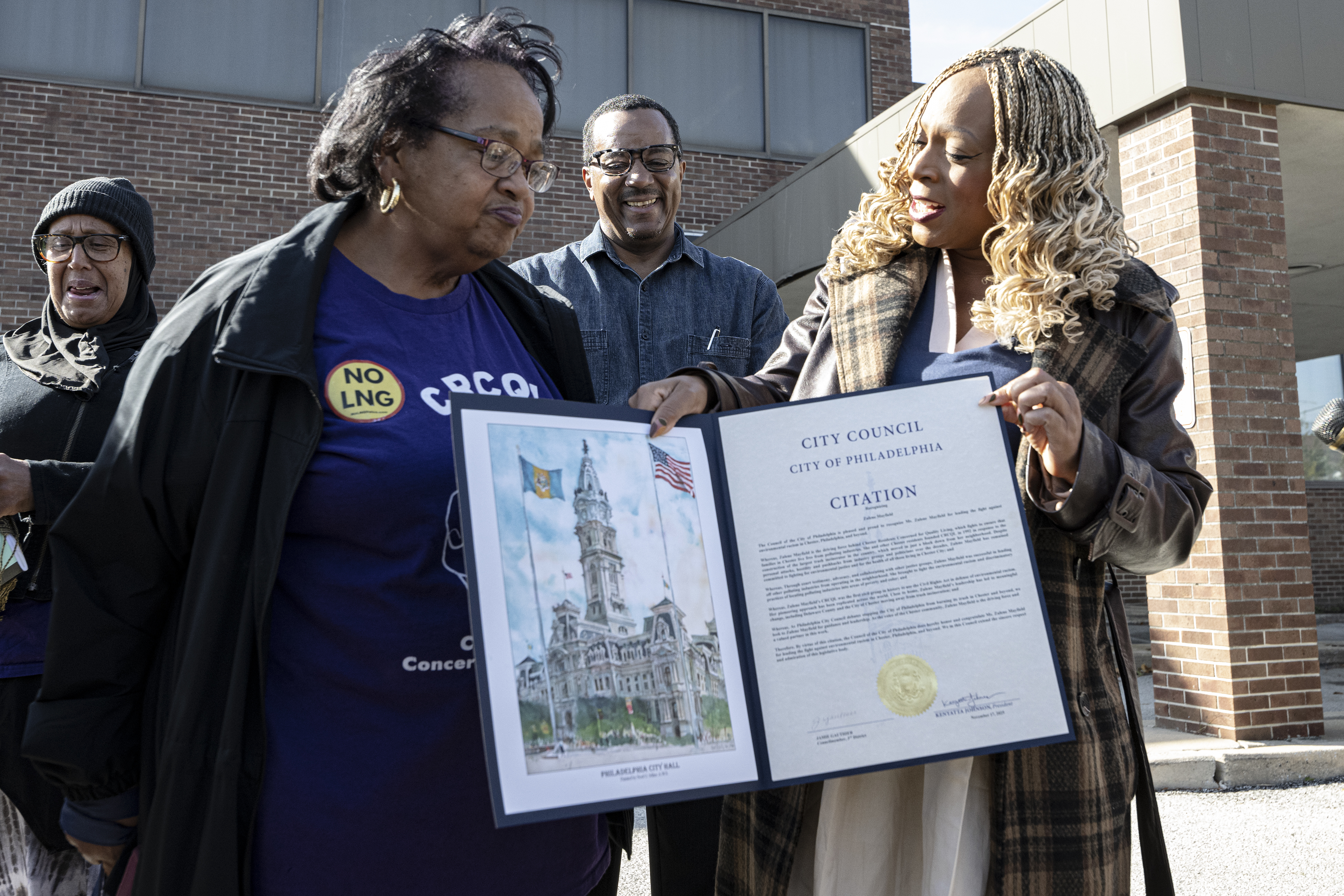
    Chester resident Zulene Mayfield, left, Philadelphia Councilmember Jamie Gauthier, right, and Chester Mayor Stefan Roots meet to discuss Gauthier’s “Stop Trashing Our Air Act,” which would ban the city from incinerating waste, during a visit with lawmakers and staff in Chester, Pa., on Friday, Nov. 7, 2025.

    On Monday, Chester officials pleaded with Philly to end its relationship with the facility, saying it contributes to high rates of illness.

    Reworld defended its record, saying it exceeds government regulations.

    Carlton Williams, who leads the Philadelphia Office of Clean and Green Initiatives, asked lawmakers to hold off approving a ban on incineration to allow the city time to study the issue.

    But the committee approved the measure, sending it to the full Council for a vote as early as Dec. 4.

    Dining out: Council is taking another crack at streamlining the city’s drawn-out permitting process for outdoor dining.

    The outdoor dining area at Booker’s Restaurant and Bar at 5021 Baltimore Ave. in 2021.

    Councilmember Rue Landau, who represents the city at-large, said it can take more than a year and a half for restaurants to get licensed if they are not in areas around Center City and a handful of commercial corridors in other neighbors.

    Beyond those locations, restaurants must get their district Council person to sponsor zoning legislation, which can take months.

    Landau introduced legislation Thursday to expand the “by-right” areas where sidewalk cafes can exist without special zoning. Where the areas are expanded to will be up to district Council members.

    Quote of the week

    Danny Garcia trains for an upcoming fight in August 2024.

    All in the family: Council members on Thursday honored boxer Danny Garcia, a North Philly native and an illustrious fighter who is retiring from the sport. He appeared in Council chambers to thank members and tell the city how much he loves it back.

    Staff writers Jake Blumgart and Beatrice Forman contributed to this article.

  • ACLU slams Mayor Parker for invoking the organization’s name amid ‘DEI rollback’

    ACLU slams Mayor Parker for invoking the organization’s name amid ‘DEI rollback’

    The ACLU’s Pennsylvania chapter slammed Philadelphia Mayor Cherelle L. Parker’s administration for invoking the organization’s name during a news conference this week, saying the group was not involved in what its leaders described as the mayor’s “DEI rollback.”

    In a blistering statement issued late Wednesday, the ACLU-PA said Parker’s use of the organization’s name during a news conference announcing controversial changes to the city’s contracting policies created “the impression that the city’s decisions were vetted by our constitutional experts and aligned with our values.”

    That was not the case, the group said.

    “ACLU-PA was not consulted nor involved,” the statement said. “We welcome genuine collaboration with city leadership on policies that advance justice, liberty, and equity, especially for historically marginalized communities. Until such a partnership occurs, we ask that the administration refrain from using our name as a buzzword seal of approval.”

    The Parker administration pushed back, with City Solicitor Renee Garcia saying Thursday that officials “were clear” that the administration consulted with an attorney who worked for the city’s outside counsel and who later went to work for the ACLU.

    “We didn’t give ‘impressions,’” Garcia said, “we just gave the facts.”

    Still, the civil rights group’s distancing from Parker was the latest criticism the mayor faced over her decision to eliminate a decades-old program that aimed to direct a significant portion of the city’s contracting dollars to firms owned by people of color, women, and people with disabilities.

    Parker and her administration said the decision was made to align city policies with shifting legal precedent that has threatened affirmative action-style government programs. But critics have said the city preemptively conceded to the conservative legal movement that has sought to dismantle diversity, equity, and inclusion programs across the country.

    Parker has said the city’s new system, which will incentivize contracting with businesses considered “small and local,” will ultimately be a more effective and equitable program.

    In announcing her decision to make the city’s procurement policies race- and gender-neutral, Parker did not say that her administration worked directly with the ACLU in crafting its policy shift, nor did she mention the organization’s Pennsylvania chapter.

    But Parker and members of her administration invoked the group’s name during the Tuesday news conference as they described the timeline of events that led up to the city’s decision to quietly change its policies this fall before announcing them publicly.

    Mayor Cherelle L. Parker with city solicitor Renee Garcia (right) at City Hall Feb. 5, 2024.

    Garcia said that the administration consulted in June with constitutional law experts, including Carmen Iguina González, who was at the time a Washington-based attorney at Hecker Fink, a law firm. Iguina González is a former clerk to Supreme Court Justice Sonia Sotomayor, considered one of the most liberal jurists on the high court.

    About three months after the meeting with city officials, Iguina González became the deputy director for immigration detention at the ACLU’s National Prison Project.

    She could not be reached for comment.

    During Tuesday’s news conference, Vanessa Garrett Harley, a deputy mayor and a top aide to Parker, cited the meeting with Iguina González in response to critics who have called the administration’s policy shift “conservative.”

    She said Iguina González counseled the city to strike race- and gender-based diversity goals from its contracting policies.

    “People [are] saying, ‘Oh, it was a conservative move. It was a conservative way of looking at the law,’” Garrett Harley said. “She had clerked for Justice Sotomayor. She’s currently at the ACLU. So this was not somebody who would have had a conservative mindset.”

    Garrett Harley continued: “If we’ve got people on all sides… saying, ‘You have no other choice,’ then we’ve got to pivot and do what we have to do to protect the fiscal responsibility of the City of Philadelphia.”

    Vanessa Garrett Harley, a deputy mayor, speaks during a press conference in June.

    Later in the news conference, Parker also mentioned the ACLU, saying she was glad the city sought outside an outside opinion from Iguina González.

    “I remember that meeting clearly,” Parker said. “And again — although she’s not with the firm, she made the transition and she’s now with the ACLU — I believe in her.”

    This week was not the first time the ACLU has been at odds with Parker, a centrist Democrat who ran for mayor in 2023 on a tough-on-crime platform.

    The group’s state chapter was critical of her while she campaigned and embraced the use of stop-and-frisk as a valuable policing tactic. The ACLU, which has long contended the practice is racially biased and ineffective, monitored the city’s use of stop-and-frisk for more than a decade.

    And once Parker took office last year, Pennsylvania ACLU leaders expressed opposition to parts of her plan to address the open-air drug market in Kensington, including the so-called wellness court, a fast-track court for people accused of minor drug-related offenses.

  • Philly City Council is advancing legislation to let members keep their jobs while running for Congress

    Philly City Council is advancing legislation to let members keep their jobs while running for Congress

    Philadelphia City Council is attempting once again to change city law to allow members to keep their jobs while running for higher office, an effort that has already failed three times in the last 20 years.

    Maybe the fourth time’s really the charm?

    This attempt is a little bit different. A Council committee on Wednesday advanced legislation to change the 70-year-old resign-to-run rule that requires city officeholders to leave their jobs while campaigning for another office.

    But the legislation — which must be approved by a majority of voters through a ballot question — doesn’t repeal the rule entirely. It merely narrows it to allow members to keep their seats if they are seeking state or federal office, such as seats in Congress or the state General Assembly.

    Under the new proposal, Philadelphia’s resign-to-run rule would remain in place for members seeking a city office, like mayor or district attorney.

    That distinction makes the rule change more likely to become reality, said Councilmember Isaiah Thomas, who sponsored the legislation even though voters rejected attempts to eliminate the rule in 2007 and 2014.

    More than a year ago, Thomas proposed that the city try again to eliminate the rule entirely. But this week, he amended his proposal to apply only to those seeking state or federal office, calling that a compromise.

    “I personally think that you should be able to run for mayor and keep your seat in City Council,” Thomas said. “But that’s not what the majority of people who I’ve talked to feel. And I don’t think that this should be about how I feel. It should be about what’s best for the city.”

    A necessary measure or a barrier to entry?

    Thomas, a Democrat in his second term who represents the city at-large, is one of several Council members rumored to have aspirations for higher office. But there is not currently an obvious seat for him or his colleagues to seek.

    The earliest a rule change could be implemented is next year — too late for a Council member to run without resigning in the crowded and closely watched race to succeed retiring U.S. Rep. Dwight Evans (D., Philadelphia).

    Thomas said he is not currently interested in serving in Washington — he has two young children — but said he has some “amazing colleagues” who may want to run for Congress in the future.

    Councilmember Isaiah Thomas speaks during a City Council Committee on Legislative Oversight hearing held at the Museum of the American Revolution in April.

    The resign-to-run rule has been codified in the Home Rule Charter since 1951 when the charter was established. Proponents have long said that public servants should not be influencing policy while campaigning for another office.

    But others contend that the rule — which applies to Council members, row office holders, and members of the mayor’s administration — creates an unnecessary barrier for people who want to run for higher office but can’t financially withstand giving up their salary.

    The rule also recently led to a handful of lawmaker vacancies. In 2022, six of City Council’s 17 members — including now-Mayor Cherelle L. Parker — resigned to run for mayor, at times making it complicated for the city’s legislative body to govern.

    Ethics questions emerge

    Multiple ethics officers said they oppose the change as it’s currently proposed. Jordana Greenwald, general counsel for the city’s Board of Ethics, said the board was not involved in drafting the rule change, and has a handful of “technical” concerns about its implementation.

    “What we don’t want is for this to be passed and then it to become something where there are unintended problems or pitfalls for people who choose to take advantage,” Greenwald said.

    Thomas said there is “plenty of time” to address the board’s concerns before passage. He is hopeful the legislation can be passed in time for a question to appear on the 2026 primary election ballot in May.

    But Lauren Cristella, CEO of the good-government group Committee of Seventy, questioned the urgency and said Council should give the Board of Ethics time to do its “due diligence.”

    While the Committee of Seventy has supported past attempts to repeal resign-to-run, Cristella said she does not understand the purpose of a carveout for members seeking state or federal office.

    And she said any repeal should be paired with a three-term limit for Council members, who are currently not term limited.

    “Philadelphians deserve comprehensive, not piecemeal, reform here,” she said.

    Several Council members said they support Thomas’ legislation, pointing out that state and federal lawmakers do not need to resign from their jobs to seek higher office.

    “It’s an issue of consistency across the board,” said Councilmember Cindy Bass, a Democrat who represents parts of North and Northwest Philadelphia. “It’s crazy when everyone’s doing something different.”

  • A new effort to catch illegal dumpers is underway in Philadelphia

    A new effort to catch illegal dumpers is underway in Philadelphia

    Four tires, twenty grand.

    That’s the message Philadelphia city officials want to send to people considering illegally dumping garbage in the city as a new enforcement unit hits the streets.

    The officers are armed with violation notices that could cost dumpers $5,000 per item. That means that tossing four tires into a vacant lot — which several years ago would have resulted in a ticket for a couple of hundred bucks, max — can now run a violator the price of a Honda and result in arrest.

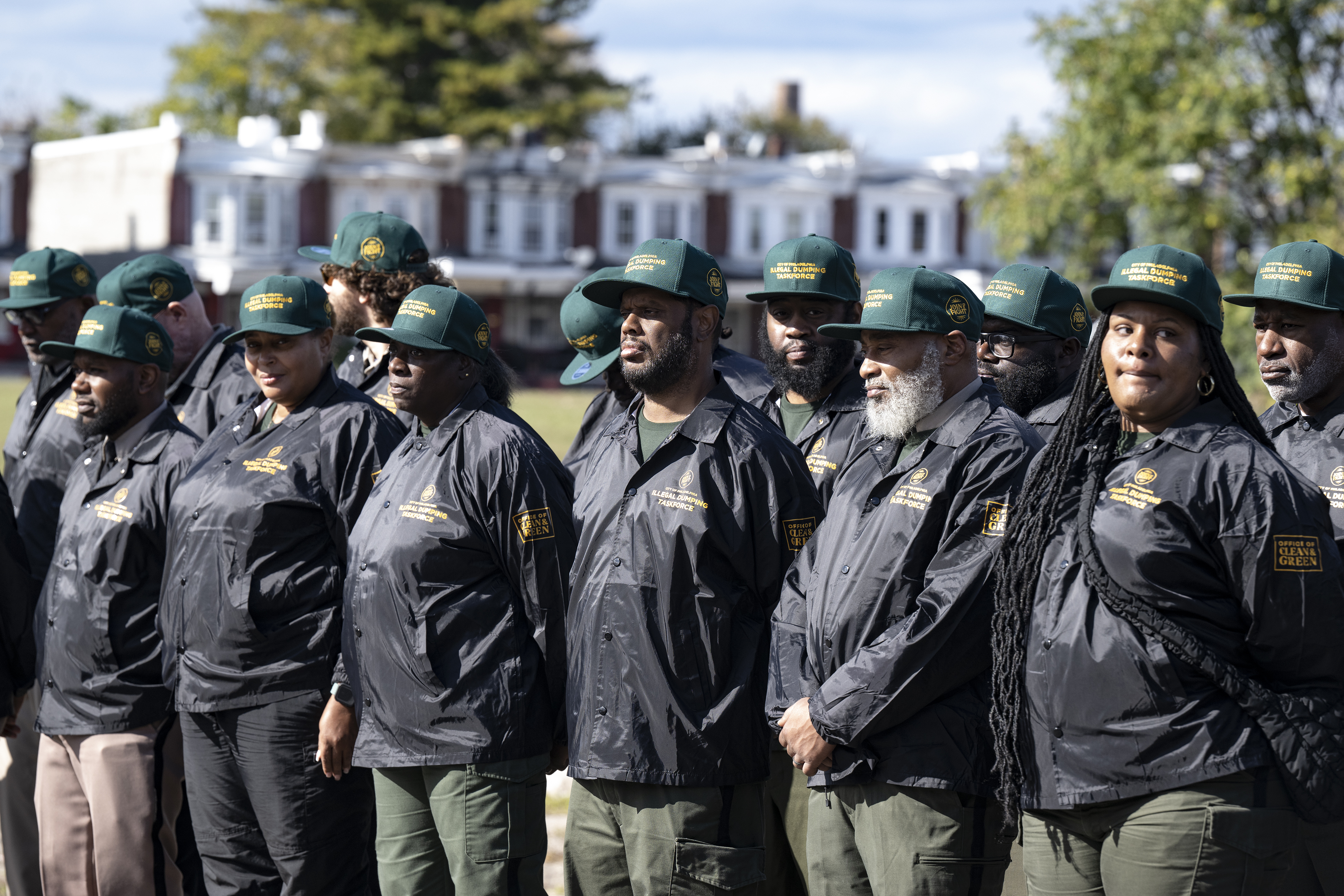
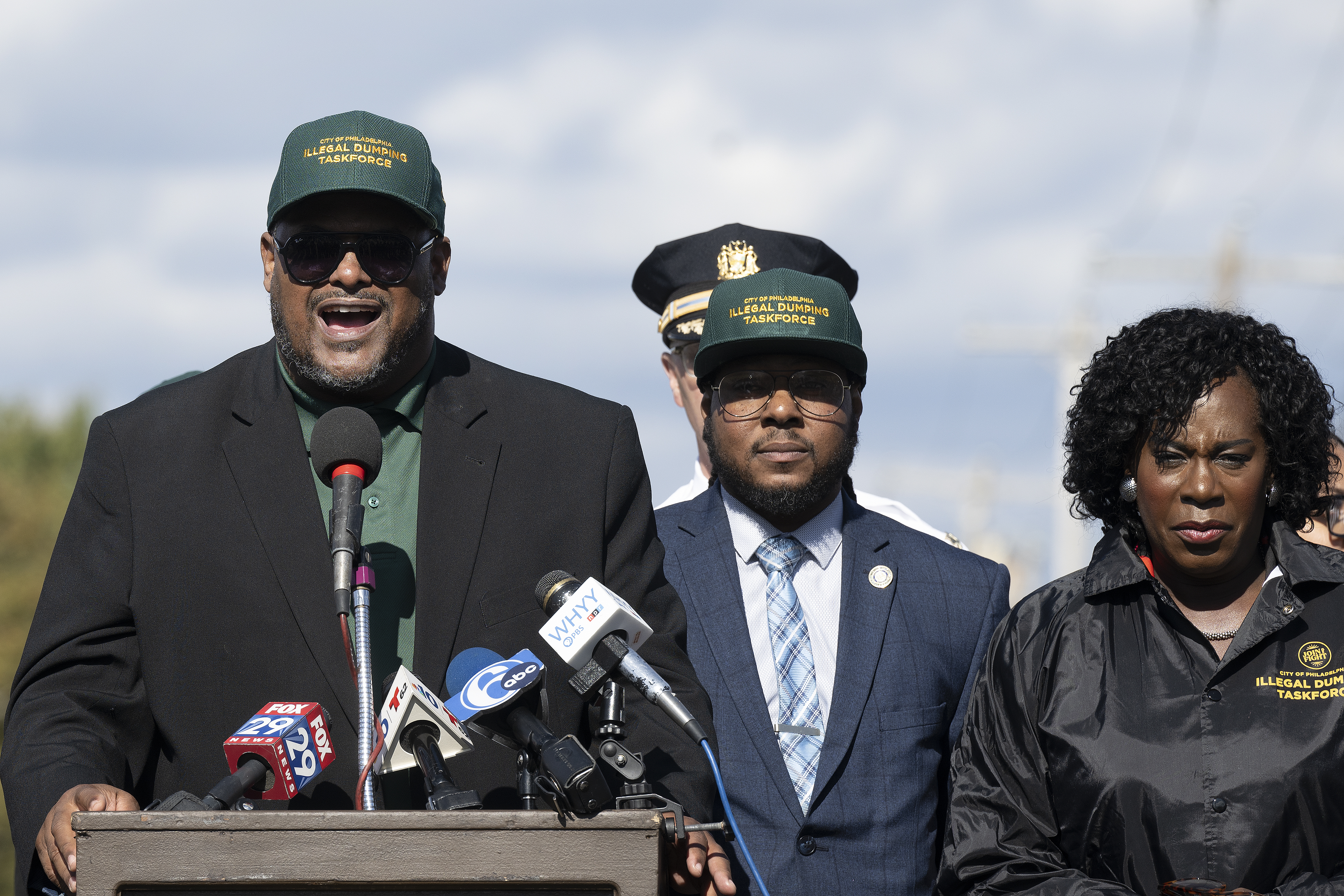
    The new unit of 40 officers focused on identifying the people who dump is part of an expanded task force that Mayor Cherelle L. Parker announced on Thursday. The group also includes a dozen people who monitor 400 surveillance cameras placed near frequent dumping sites, as well as partners in the police department who investigate severe cases.

    “Part of the reason why people think it’s open season to illegally dump in the city of Philadelphia … it’s because they never thought that enforcement would occur,” Parker said. “Besides it being unsightly and unhealthy for people, it’s a crime.”

    City officials said they have brought 17 cases against people who dumped waste illegally so far this year, resulting in more than $3.7 million in collected fines.

    The mayor said her administration would ramp up that effort with the initiation of the task force.

    “Philly ain’t playin’,” she said.

    Members of the new Illegal Dumping Task Force stand during an introductory press conference with Philadelphia Mayor Cherelle Parker and the Office of Clean and Green Initiatives on Thursday, Oct. 23, 2025, at 10th and Courtland Streets in Philadelphia.

    The program is one tenet of Parker’s plan to clean up the city, which was a key campaign promise when she ran for mayor in 2023. Since she took office last year, the administration has implemented a variety of strategies, including twice-weekly trash collection in parts of the city, block-by-block street cleanups on a semiannual basis, and bolstered graffiti abatement.

    Parker made the announcement while standing in North Philadelphia’s infamous Logan Triangle, the 35-acre plot that has been an eyesore for the better part of 50 years. It was once home to hundreds of rowhouses, but the families moved out in the 1980s when it became clear their homes were sinking into the bed of the Wingohocking Creek.

    Today, the triangle is a cautionary tale of failed redevelopment — a place where ideas like a basketball center or a dirt bike track or an apple orchard have never been realized. It is now, and has long been, a dumping site.

    It’s also the site where, last week, two people were arrested for unloading trash, said Carlton Williams, the city’s director of clean and green initiatives.

    Philadelphia Mayor Cherelle L. Parker (right) and Carlton Williams (left) of the Office of Clean and Green Initiatives announce stricter laws to combat illegal dumping during a news conference at Logan Triangle, a frequent dumping site at 10th and Courtland Streets, on Thursday in Philadelphia.

    Not only could those people face criminal penalties, but the administration is focused on levying hefty fines and holding dumpers responsible for cleanup costs. The city is also newly fining people who hire contractors to short dump.

    “We’re gonna hit you where it hurts: in the pocketbook,” Parker said.

    Tackling the city’s notoriously bad illegal dumping problem will be a multiyear effort, and Parker has made stronger enforcement a priority. A study conducted in 2019, prior to her tenure, estimated that the city was spending nearly $50 million annually to address illegal dumping, but 90% of that was for cleanup and not prevention.

    Despite the spending, many in the city say dumping sites are a major problem. A 2023 Lenfest Institute for Journalism/SSRS poll of 1,200 Philadelphians found that six in 10 residents believed reducing dumping should be a top priority for the mayor. Concern was most acute among residents who are low-income, Black, and Latino.

    City Councilmember Quetcy Lozada, a Democrat and a Parker ally whose district borders Logan Triangle, said the administration’s focus on illegal dumping can begin to remedy what she described as “extremely stressful” situations for residents who have long watched waste pile up near their homes without abatement.

    “Our residents have done their part, and those calls for help went unanswered for a really, really long time,” Lozada said. “But today feels different.”

    How to report illegal dumping

    Anyone who sees illegal dumping happening can call 911. Residents who want to report illegal dumping after the fact can file a complaint through 311.

  • Philly may see a new fee on paper bags — if it can get through City Hall

    Philly may see a new fee on paper bags — if it can get through City Hall

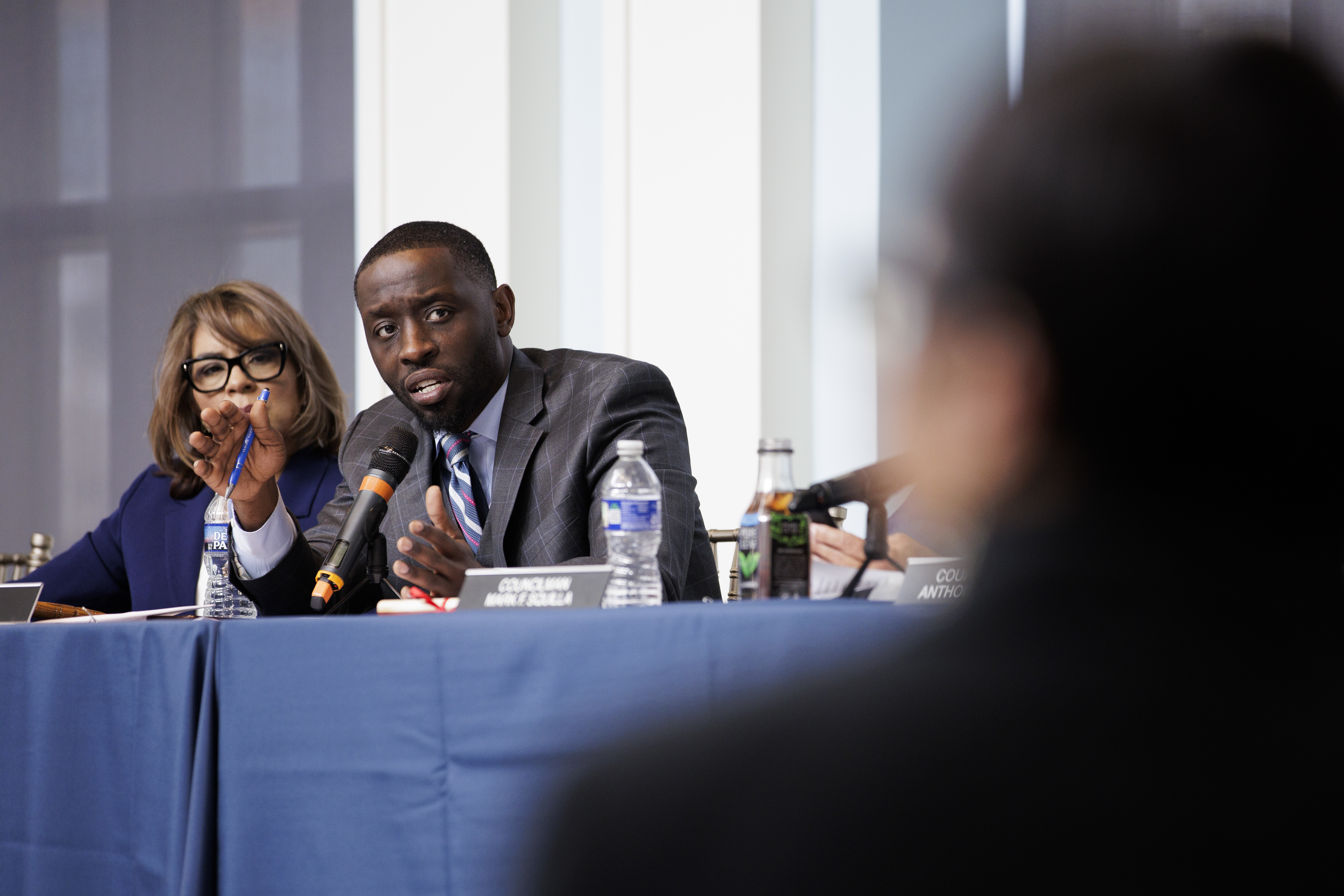
    Philadelphia lawmakers are for the third time trying to pass legislation requiring that stores charge customers a fee for paper bags. And for the third time, it’s facing opposition from the mayor.

    A City Council committee on Monday advanced legislation requiring all grocery stores, convenience shops, and other retailers in the city charge 10 cents per nonreusable bag. The goal is to update the city’s already existing ban on the plastic variety and encourage shoppers to bring their own bags.

    The full Council could vote on the new legislation in the coming weeks. It is cosponsored by a majority of Council members, meaning it is likely to pass the chamber.

    City Councilmember Mark Squilla, the architect of the plastic bag ban that first passed in 2019, said during the hearing Monday that he’s aiming to “change behavior.” The city says the use of paper bags has skyrocketed since the plastic bag ban took effect — studies show that while they are recyclable, unlike plastic, paper bags are still less energy efficient than reusable ones.

    Squilla’s original plastic bag ban legislation included a required 15-cent fee on paper bags, but he stripped it from the bill after opposition from former Mayor Jim Kenney’s administration. In 2023, Council passed legislation to institute it, but Kenney issued a pocket veto, meaning he left office without taking action on the legislation, effectively killing it.

    It wasn’t clear at the time if Mayor Cherelle L. Parker, who was the incoming mayor, would support the legislation if it were reintroduced. She made cleaning and greening the city a top campaign promise, and environmental advocates hoped she’d support efforts to reduce single-use bag reliance.

    But one of Parker’s top officials testified in opposition to the legislation Monday.

    Carlton Williams, the director of Parker’s Office of Clean and Green Initiatives, called Squilla’s effort well-intentioned. But he said charging bag fees could disproportionately impact low-income Philadelphians experiencing high grocery costs, “especially given the current economy.” He also said the fees could push shoppers out of the city and harm mom-and-pop businesses that already operate with low margins.

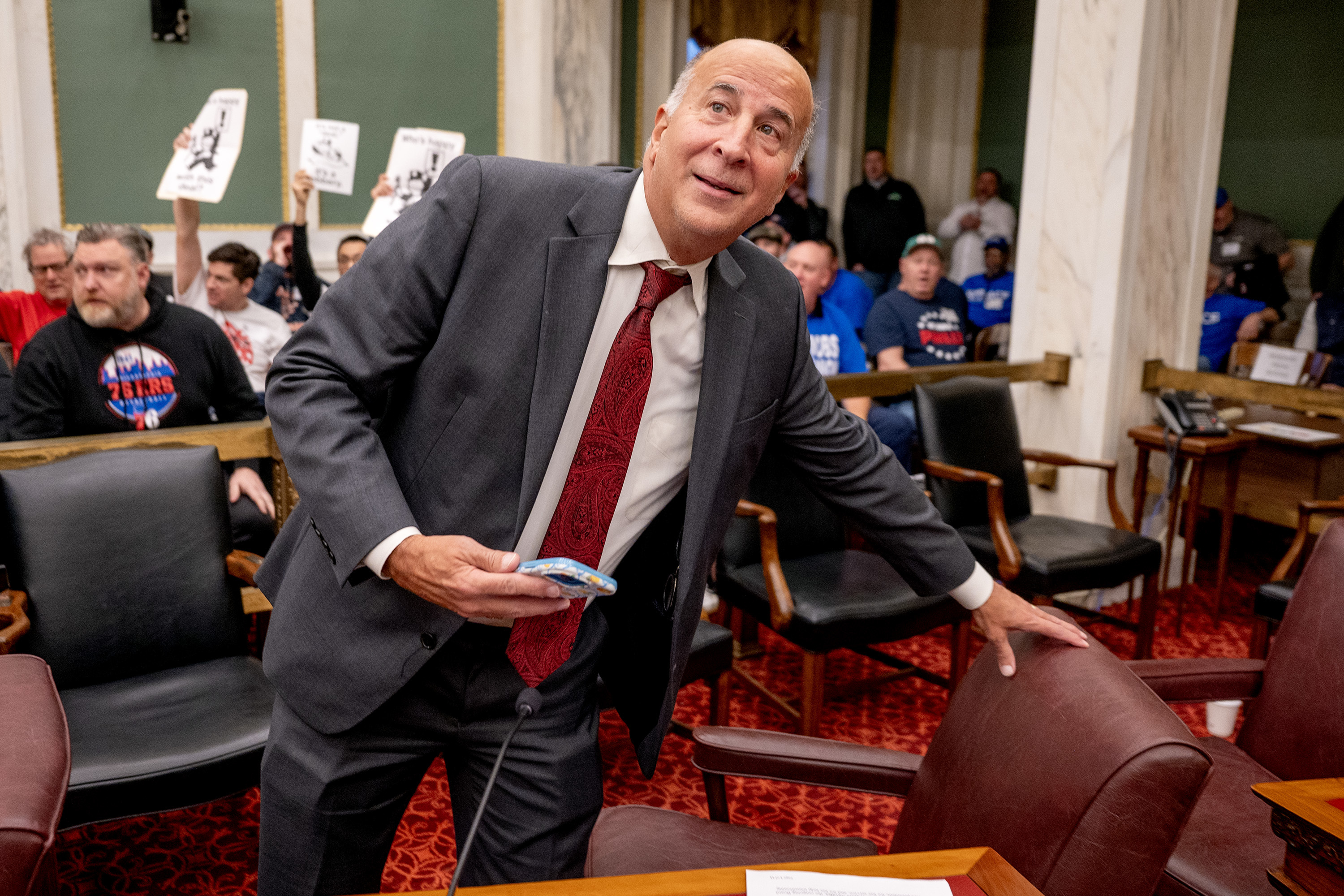
    Councilmember Mark Squilla takes his seat in Council chambers on Wednesday, Dec. 11, 2024, before a scheduled committee vote. Squilla authored legislation requiring stores charge a fee for paper bags.

    If the legislation passes Council, Parker could sign or veto it. She could also let it lapse into law without her signature. If she vetoed the legislation — it would be her first since taking office last year — Council could override her veto with 12 votes out of the 17-member chamber.

    When the paper bag bill was introduced in 2019, members of Kenney’s administration also said at the time that they were concerned that fees on paper bags would hurt the poorest Philadelphians. Former City Councilmember Maria Quiñones Sánchez similarly described it as akin to a regressive tax.

    However, proponents of the legislation said Monday that they don’t think the argument holds up.

    Maurice Sampson, the eastern Pennsylvania director of the environmental group Clean Water Action, said prices on essentials such as food could rise for everyone if stores absorb the costs of paper bags.

    “There is no foundation or basis,” he said, ”in the idea that fees on bags will hurt low-income people.”

  • Philly lawmakers want to ‘clamp down’ on smoke shops. Their landlords could be next.

    Philly lawmakers want to ‘clamp down’ on smoke shops. Their landlords could be next.

    There’s a smoke shop in North Philly peddling recreational drugs across the street from a daycare. A West Philly storefront that sells loose cigarettes on a residential block. A convenience store in Spring Garden that advertises urine to people looking to pass a drug test.

    These are among the so-called nuisance businesses that City Council members and neighborhood association leaders cited Monday as lawmakers advanced legislation to make it easier for the city to shut down stores that sell cannabis and tobacco products without licenses.

    And legislators said their next target could be the landlords who rent space to those businesses.

    “We have to work with our city departments and our state partners to clamp down on these businesses,” said City Council Majority Leader Katherine Gilmore Richardson, who represents the city at-large. “We’re just being inundated.”

    Members of Council’s Committee on Licenses and Inspections passed two bills Monday that city officials say seek to close loopholes store owners exploit to avoid being cited for failing to obtain proper permits.

    In introducing the legislation earlier this year, Gilmore Richardson cited an Inquirer report about Pennsylvania’s unregulated hemp stores, which sell products advertised as legal hemp that are often black market cannabis or contaminated with illicit toxins.

    One bill makes it easier for the city to shut down nuisance businesses by removing language that classifies some violations as criminal matters, requiring that the police investigate them as crimes rather than civil violations that are quicker to adjudicate.

    The second piece of legislation makes it illegal for businesses to essentially reorganize under a new name but conduct the same operations as a means of evading enforcement.

    Both pieces of legislation could come up for a full vote in the Democratic-dominated City Council in the coming weeks. Members of Mayor Cherelle L. Parker’s administration testified in favor of them, meaning the mayor is likely to sign both.

    A smoke shop in South Philadelphia.

    Neighborhood association leaders also testified Monday in favor of the changes, but several said more aggressive enforcement is needed. They said smoke shops in particular have popped up throughout their commercial corridors, as have convenience stores that don’t even have licenses to operate as businesses, let alone sell recreational drugs.

    “We’ve seen firsthand the selling of illegal drug paraphernalia and [loose cigarettes], many of which children walk past in order to get to the candy bars and seniors walk past to get to the milk,” said Heather Miller, of the Lawncrest Community Association. “We need to address this.”

    Elaine Petrossian, a Democratic ward leader in Center City and a community activist, called for “much” higher fines and penalties for landlords. She cited progress the municipal government has made in New York City, where authorities cracked down on building owners who knowingly rented space to tenants selling cannabis or tobacco without licenses to do so.

    Several lawmakers said they’d support a similar approach. Councilmember Mark Squilla, who represents a district that spans from South Philadelphia to Kensington, said landlords must be held “more accountable.”

    “If they had some skin in the game, maybe they’d think twice about renting to an illegal operation,” he said.

    Councilmember Jamie Gauthier, who represents parts of West Philadelphia, agreed. She said she recently attempted to meet with a building owner who rents space to a problematic smoke shop in her district, but was rebuffed.

    “He was like, ‘These people pay me rent, and that’s the extent to which I basically care,’” Gauthier said. “We need something that forces property owners to be more accountable than that, because neighbors are suffering.”

    Staff writers Max Marin and Ryan W. Briggs contributed to this article.