A Willow Grove man who made more than $600,000 by trading stocks based on confidential information his then-girlfriend gave him about an impending corporate acquisition was sentenced Friday to two years in federal prison.
Carlos Sacanell, 59, apologized for his actions before U.S. District Judge Wendy Beetlestone, saying he’d made a “terrible decision” and had “profound regret” for what he did.
“This action does not represent who I am,” said Sacanell, who pleaded guilty last year to one count of securities fraud.
Sacanell’s crimes occurred in 2023, prosecutors said, when his longtime partner told him that her company, the Chicago-based Oak Street Health Inc., was about to be acquired by CVS Health.
The next day, prosecutors said, Sacanell — without his girlfriend’s knowledge — bought hundreds of thousands of dollars worth of Oak Street stocks and call options.
Sacanell adjusted his purchases over the next few weeks as his girlfriend continued sharing occasional insights about whether or not the deal might go through, prosecutors said. The woman was not aware that he was trading on the information she gave him, prosecutors said, but when the acquisition ultimately closed, Sacanell netted about $617,000.
In April 2023, prosecutors said, the FBI confronted Sacanell — who worked as a scientist — about what they viewed as his suspicious trades, but he denied that he had any insider information about Oak Street or the deal.
Sacanell was indicted in late 2024. His relationship with his then-girlfriend has since ended, his lawyer said, and he is now expected to report to prison in about two months.
He is also expected to be deported once his term of incarceration ends, his lawyer said. Sacanell was born and raised in Spain before becoming a lawful permanent resident of the United States, but will now likely be deported due to his conviction.
Sacanell said he had already repaid about $300,000 worth of his illicit proceeds, and vowed that he would not commit any similar infractions in the future.
“I regret it every day of my life,” Sacanell said.
Federal authorities in New Jersey have violated dozens of judicial orders in recent months as immigration cases have surged in the courts, the Justice Department acknowledged in a court filing, including by transferring some detained immigrants to other jurisdictions and, in one instance, improperly deporting a man to Peru.
The admissions came in a declaration filed by Associate Deputy Attorney General Jordan Fox, who has recently been helping lead the U.S. Attorney’s Office in New Jersey, and who is also a top adviser to Deputy Attorney General Todd Blanche.
Fox issued her declaration in response to an order from U.S. District Judge Michael Farbiarz, who has been overseeing a lawsuit from an immigrant challenging his detention. Farbiarz was frustrated that Immigration and Customs Enforcement had transferred the man to another jurisdiction — despite the judge’s order to keep him in New Jersey.
So earlier this month, court records show, Farbiarz directed prosecutors to review similar immigration lawsuits filed in the state’s federal courts since December and “enumerate each instance in which the Respondents or people acting on their behalf violated an order issued by a judge of this district.”
Fox, in her response filed last week, said her office had identified 547 such cases — known as habeas petitions — filed since early December. And in 56 instances, the declaration said, prosecutors did not comply with a judicial order.
Some concerned lawyers’ behavior, the document says, including six instances in which attorneys missed filing deadlines, and 10 cases in which government attorneys did not provide complete discovery.
But others outlined ways in which federal authorities handled immigrants in custody. In 17 instances, Fox wrote, ICE or other federal authorities transferred immigrants in detention after judges had ordered them not to be moved.
Fox wrote that each of those mistakes “occurred inadvertently,” because of either communication delays or “administrative oversight,” and that prosecutors in each case had agreed to return the petitioner to New Jersey.
In December, court records show, ICE also “erroneously removed” a man and deported him to Peru despite a judicial injunction prohibiting his removal.
Fox wrote that the deportation “occurred due to an inadvertent administrative oversight by the local ICE custodian.” She said that authorities worked with the man’s lawyer to try to arrange his return to the United States, but that he “decided to remain in Peru instead.”
Farbiarz, the judge, responded in a filing Tuesday by crediting Fox and her staff for providing thorough answers to his questions.
Still, he wrote, he was concerned that the violation he observed in his case was apparently “not fully an outlier.”
“Judicial orders,” he wrote, “should never be violated.”
He instructed the Justice Department to file an affidavit “detailing the procedures that are in place (or that will be put in place in the near-term) to ensure that court orders issued by district judges in New Jersey are timely and consistently complied with.”
In 2009, after a federal judge effectively ordered Philadelphia drug kingpin Alton “Ace Capone” Coles to die in prison — imposing a life sentence plus 55 years for convictions on a host of drug and weapons charges — Coles momentarily dropped the swaggering persona he had displayed while building his vast cocaine empire.
“I never thought it would come to this,” Coles said at the time, his voice cracking as he spoke in court. “I don’t think life is deserved for selling drugs.”
On Tuesday, another federal judge offered something close to an endorsement of that view as she ordered Coles’ sentence be reduced to 25 years in prison — meaning Coles, now 52, could be released within a few years.
Coles’ twist of fate is the result of a complicated appellate process, one that has its roots in how federal laws have changed in recent years for some drug crimes, particularly those involving crack cocaine. The penalties for crack offenses were once significantly harsher than those tied to other narcotics, leading to widespread racial disparities because most defendants in crack cases were Black.
Coles’ lawyers say his case is also a demonstration of the “remarkable” turnaround Coles has made behind bars. While Coles once oversaw a drug operation that was estimated to have poured $25 million worth of cocaine and crack into Philadelphia — all as he served as the brash face of a local hip-hop record label — in prison, his lawyers said, he has become a barber, facilitated anti-violence programs for other inmates, and served as a counselor for prisoners with thoughts of self-harm.
“Knowing that he was facing the rest of his life in prison, Mr. Coles engaged in this extraordinary effort toward rehabilitation for the sole purpose of improving his life and of those around him,” his lawyer, Paul Hetznecker, wrote in court documents.
Federal prosecutors took a starkly different view, saying that Coles was “one of the major drug kingpins in Philadelphia during the last several decades” and that his eligibility to be resentenced was the result of a “pure technicality.” Even if Coles had committed his crimes today, prosecutors said — after Congress changed criminal sentencing guidelines — his actions would still warrant a life sentence.
“Coles led an armed and violent cocaine and crack distribution gang, which distributed quantities of deadly narcotics that [the trial judge] at sentencing aptly described as ‘staggering,’” prosecutors wrote in court documents.
U.S. District Judge Kai Scott said she believed that Coles had transformed his life in prison, and that 25 years of incarceration — even if much shorter than a life sentence — was still a substantial amount of time to serve behind bars.
Discussing Coles’ growth since being convicted, Scott said: “I’ve never seen this type of post-sentence rehabilitation.”
Coles, meanwhile, apologized for his crimes, telling Scott he is determined to try to make amends for his past.
“I am not the man I once was,” he said.
Building an empire
When Coles was federally indicted in 2005, prosecutors said he had run one of the largest drug organizations in modern city history. Coles and his coconspirators, they said, helped push a ton of cocaine and a half-ton of crack into the streets over the course of more than six years.
Coles was not charged with any crimes of violence, but federal authorities said they believed his group and its members were tied to nearly two dozen shootings and seven homicides.
As he was growing his drug empire, Coles was also building his reputation in the local rap scene. He helped found the hip-hop label Take Down Records, and staged popular parties and concerts around the city.
And he and a friend, Timothy “Tim Gotti” Baukman, produced and starred in a 31-minute music video called New Jack City, The Next Generation, in which they portrayed Philadelphia drug dealers who used violence and intimidation to cement their standing in the underworld.
Authorities used that video as part of a two-year investigation into Coles and his gang, and said Take Down Records amounted to a front for Coles to wash his money. They also wiretapped hundreds of conversations between drug associates, and went on to seize dozens of weapons and hundreds of thousands of dollars in raids on members’ homes.
Coles was charged in 2005, as were nearly two dozen associates, some of whom pleaded guilty or went on to cooperate with authorities.
Coles took his case to trial and testified in his own defense, saying he was not the kingpin prosecutors made him out to be.
But in 2008, a jury found Coles guilty of crimes including conspiracy to distribute cocaine and heading a continuing criminal enterprise. U.S. District Judge R. Barclay Surrick later sentenced Coles to life behind bars plus 55 years, saying: “The amount of drugs was staggering and the money involved was even more staggering … this crime was just horrendous.”
Ongoing legal saga
The imposition of that penalty, however, was hardly the end of the legal drama connected to Coles.
After Coles was sentenced, a Philadelphia police officer was convicted and imprisoned for tipping Coles off about his impending arrest.
A federal appeals court also later overturned a conviction tied to Coles’ girlfriend, who had been accused of helping him launder drug money to buy a house.
And Coles continued to file appeals challenging his case.
In 2014, he successfully argued to have one of his two prison sentences — the 55-year term — reduced to five years because of technicalities in how evidence was used to prove certain charges. His life sentence, however, remained intact.
But in 2020, Hetznecker, Coles’ appellate lawyer, filed a new motion challenging that penalty, saying a law passed by Congress in 2018 made Coles eligible to have his life sentence reduced.
The law, known as the First Step Act, was a sweeping attempt to undo some of the tough-on-crime laws from the 1990s that caused the federal prison population to swell. The bill received bipartisan support, and was signed into law by President Donald Trump.
One of the law’s provisions allowed some people who were sentenced for crack-related offenses to have their penalties reevaluated — part of an effort to unwind the racial disparities caused by disproportionately harsh sentences being imposed on Black defendants in crack cases.
Hetznecker, in seeking to have a judge reconsider Coles’ penalty, wrote that a life sentence “for a non-violent drug offense is a draconian sentence and, given the current paradigm of criminal justice reform, counter the movement toward a more just system.”
“The underlying principles of justice and fairness require that those subjected to punishment for crimes against society, especially those convicted of non-violent offenses, be provided the opportunity for re-integration back into society as rehabilitated individuals,” Hetznecker wrote.
Scott, the judge, agreed last month that Coles was eligible for a new sentence under the First Step Act. And in imposing the new penalty Tuesday, she said she believed Coles was unlikely to commit similar crimes in the future.
“It’s clear to me that you have been deterred — you have made changes,” she said.
Coles said he recognizes that he had once been “a negative influence on society,” but said he has now committed to bettering himself and trying to help others.
Hetznecker said Coles deserves the opportunity to demonstrate that he has moved beyond the persona he once inhabited on the streets.
“‘Ace Capone’ is dead, he’s gone,” Hetznecker said. “Alton Coles has emerged.”
A former criminal defense attorney was sentenced Wednesday to two years’ probation for smuggling contraband — including Suboxone and a cell phone — into Philadelphia’s Federal Detention Center last year in an apparent attempt to placate a purported gang leader.
Paul DiMaio of Turnersville apologized for his actions during a sentencing hearing before U.S. District Judge John R. Padova, saying: “I absolutely should’ve known better.”
DiMaio said his behavior was an ill-conceived response to a variety of pressures he was feeling at the time — including learning of a cancer diagnosis for his wife, and being afraid that the inmate who wanted the prohibited items was an accused murderer who had also been charged with attempting to arrange contract killings from jail.
“This is not me,” DiMaio said. “I think it was, for lack of a better term, a perfect storm.”
Padova said that 90 days of DiMaio’s probationary sentence must be served at a halfway house or similar reentry facility.
DiMaio was indicted last year after prosecutors said he went to the detention center in February 2025 with two accordion-style folders, one of which contained a cell phone, a charging cord, strips of Suboxone, and 240 loose cigarettes.
The materials — which inmates are not allowed to possess — were not discovered by guards overseeing entrants to the jail that day, prosecutors said. But surveillance footage later showed DiMaio taking the two folders to a visiting room, where he met with a prisoner who was associated with another inmate, Jahlil Williams, who prosecutors say was the intended recipient of the contraband.
Williams — also known as “25th Street Bill” or “Kill Bill” — was awaiting trial for a variety of violent crimes in a sprawling racketeering case. DiMaio said he was afraid that Williams, the purported leader of the Omerta street gang, was upset over a monetary dispute involving a previous legal case, and that Williams might seek to harm him if he didn’t go along with the smuggling plot.
“I panicked,” DiMaio said, “and I made just a horrible decision.”
While in the visiting room at the detention center, prosecutors said, DiMaio gave Williams’ associate — who has not been charged in the case — the folder containing the prohibited items, and that man was supposed to give the materials to Williams.
But a guard searched the folder before the prisoner got back to his cellblock and found the prohibited items inside. After an FBI investigation, DiMaio was charged with crimes including providing contraband to an inmate and aiding and abetting.
Williams was charged as well, as were his sister Jada and his mother, Tanya Culver, who were accused of participating in the conspiracy. They are all still awaiting trial.
DiMaio pleaded guilty last fall to providing contraband and making a false statement.
He surrendered his law license voluntarily shortly after he was charged, he said in court. He has since been seeking to find other ways to pay his family’s bills, but said the loss of his career and his wife’s ongoing health challenges have left the couple “financially ruined.”
Padova, the judge, told DiMaio he was involved in “serious conduct” but added: “This is the first day of the rest of your life.”
“We’ve given you the opportunity to make the best of it,” Padova said.
He walked toward the cellblock in Riverside Correctional Facility, pulling a cart of books behind him.
For a moment, it was quiet. The only sounds that echoed off the jail’s cinder block walls were the squeaks of his cart’s wheels.
But as a heavy door to a busy unit swung open, Seth Williams’ work was set to begin.
“Chaplain up!” one of the inmates inside yelled.
Williams smiled at the crowd of prisoners who began walking toward him and his squeaky cart, which was filled with Bibles, Qurans, and other religious texts.
“Step into my office,” he said, placing his hand on an inmate’s shoulder.
The role’s expectations are modest. He offers spiritual counseling and religious programming to the 600 or so prisoners held at Riverside. It is part-time and pays about $21 per hour.
Still, for Williams, the position was uniquely appealing. After putting people in jail as the city’s top prosecutor, then spending five years in federal prison as an inmate himself, he believes he can use what he learned from that journey to help young men avoid committing crimes in the future.
“I can be a better advocate, a better vessel, to help prevent crime and reduce recidivism … by helping people learn the skills they need to keep jobs and de-escalate conflict,” Williams said. “The best use of my experience … is helping people who are incarcerated the way I was.”
Williams believes his efforts now can help reduce recidivism among young men in jail.
It is a long way from the halls of power that Williams once inhabited as the city’s first Black district attorney — and from his standing as a politician who was viewed as a possible future mayor.
Still, Williams says, he is fulfilled by this more humble form of service. And becoming chaplain is not the only role he has taken up behind bars: For the last two years, he has also volunteered at Curran-Fromhold Correctional Facility, teaching weekly classes on career preparedness and poetry, and at State Correctional Institute Phoenix, where he directs a volunteer program about Christianity.
Last month, Williams agreed to allow an Inquirer reporter to join him inside the city’s jails as he counseled inmates. He shared stories about his time in prison, delivered socks and toothpaste to indigent inmates, gathered a group to recite the rosary, and gave books to men who expressed interest in spiritual counseling.
He was energetic, open, and passionate. He spoke openly about his past misdeeds, but remained defiant about his federal prosecution — saying he was wrong for not reporting gifts he received as DA, but insisting that he did not sell his office to his benefactors, as the U.S. Attorney’s Office alleged.
Williams acknowledged that his path to becoming a jailhouse chaplain and volunteer has been unusual. He pointed out, for instance, that the room where he teaches his Career Keepers course is just down the hall from the jail’s print shop — which once printed the DA’s letterhead with his name at the top.
Prisons Commissioner Michael Resnick said Williams’ transformation is one of the key attributes he brings to the job.
“He just has a passion for this work, to get people on the right path,” Resnick said.
And Williams said he feels as if he is doing more to help people now than he ever has.
“What if the worst thing that happens in your life,” he said, “could be used for good?”
From rising star to ‘criminal’
To understand where Williams is now, it helps to recall where he came from.
After he was elected district attorney in 2009, Williams, then 42, promised to reform the office where he had spent a decade working as a line prosecutor. He said he would assign lawyers to handle cases by neighborhood, place greater emphasis on charging crimes correctly at the outset, and divert minor offenses into community-based treatment programs.
His policy positions were part of his appeal, but he also leaned into a compelling personal story: Abandoned in an orphanage at birth, Williams was adopted at age 2 and raised in Cobbs Creek. He went on to graduate from Central High School, Pennsylvania State University, and Georgetown University’s law school before returning to his hometown to work as an assistant district attorney.
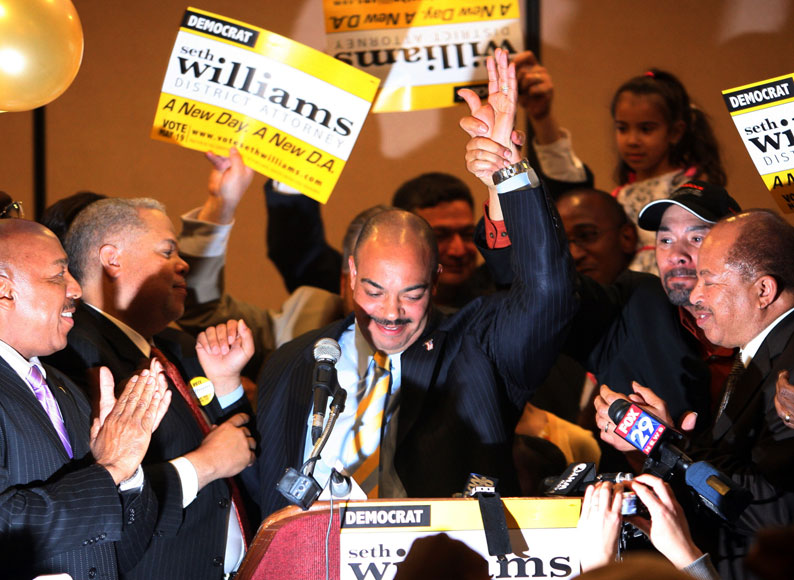
When he ran to become the city’s top prosecutor in 2009 — his second attempt after a narrow loss four years earlier — he had a campaign slogan that matched his aspirations: “A new day, a new D.A.”
Williams thanks supporters after winning the Democratic primary for district attorney in 2009.
And for a while, some political observers said, he was living up to that mantra. In addition to engineering an ambitious restructuring of the office, he made headlines during his first term by charging West Philadelphia doctor Kermit Gosnell with killing babies during illegal late-term abortions, and by charging Msgr. William Lynn, a top official in the Archdiocese of Philadelphia, with shielding sexually abusive Catholic priests.
Charismatic and camera-friendly, Williams was easily reelected to a second term in 2013, and homicides began falling to their lowest levels in decades. Some began wondering if he might leverage his success as DA into a run for City Hall.
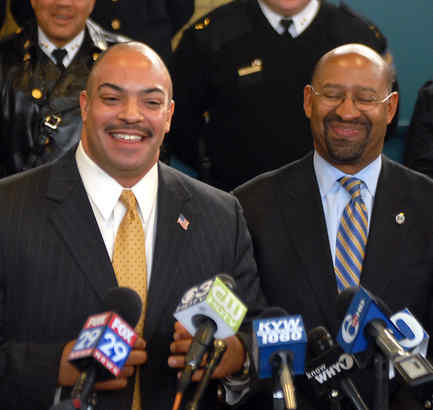
Williams and then-Mayor Michael Nutter at a press conference in 2010.
Beneath the surface, though, challenges in Williams’ personal life began to mount.
He now admits he was also drinking too much, “numbing myself from the daily trauma with too much Jack Daniel’s and martinis and Yuenglings.”
By 2015, the FBI was investigating whether he had been misusing campaign funds to live beyond his means. And two years after that, he was indicted on charges of wire fraud, honest services fraud, and bribery-related crimes.
Federal prosecutors said he not only misspent political money but also sold the influence of his office to wealthy allies who showered him with vacations, clothing, and a used Jaguar convertible.
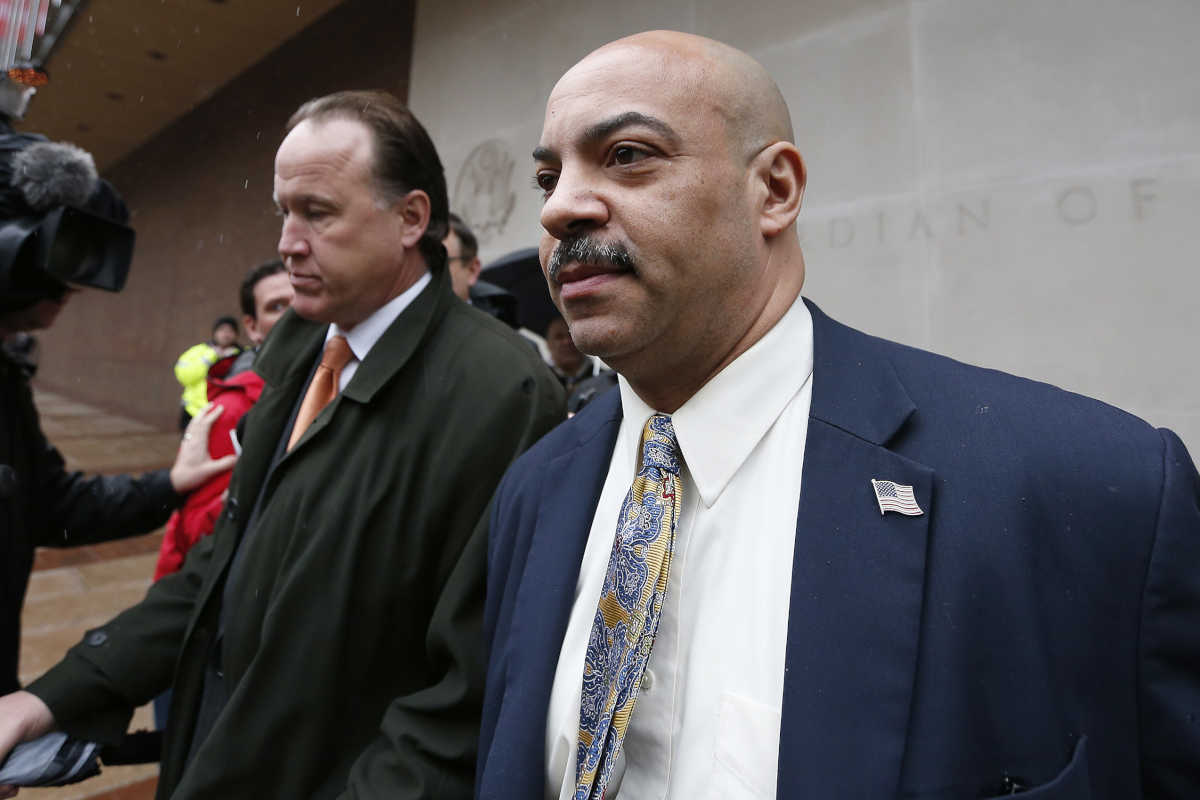
Williams outside of federal court, where he was charged with bribery and related crimes.
Williams insisted he was not guilty and took his case to trial. But midway through the proceedings, he accepted an offer from prosecutors to plead guilty to a single count of violating the Travel Act.
U.S. District Judge Paul Diamond showed no mercy — jailing Williams immediately, then imposing a five-year prison term, the maximum allowed by law. The judge called Williams a “criminal” who surrounded himself with “parasites” and “fed his face at the trough” of public money.
A mentor in solitary
During the first five months of Williams’ incarceration, he was held in solitary confinement at Philadelphia’s Federal Detention Center. That was intended to protect him — former law enforcement officers can become targets behind bars — but it left him confined to a cell for 23 hours a day.
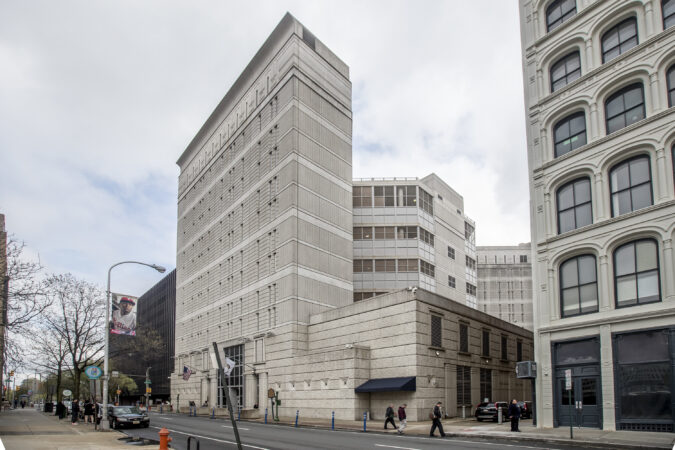
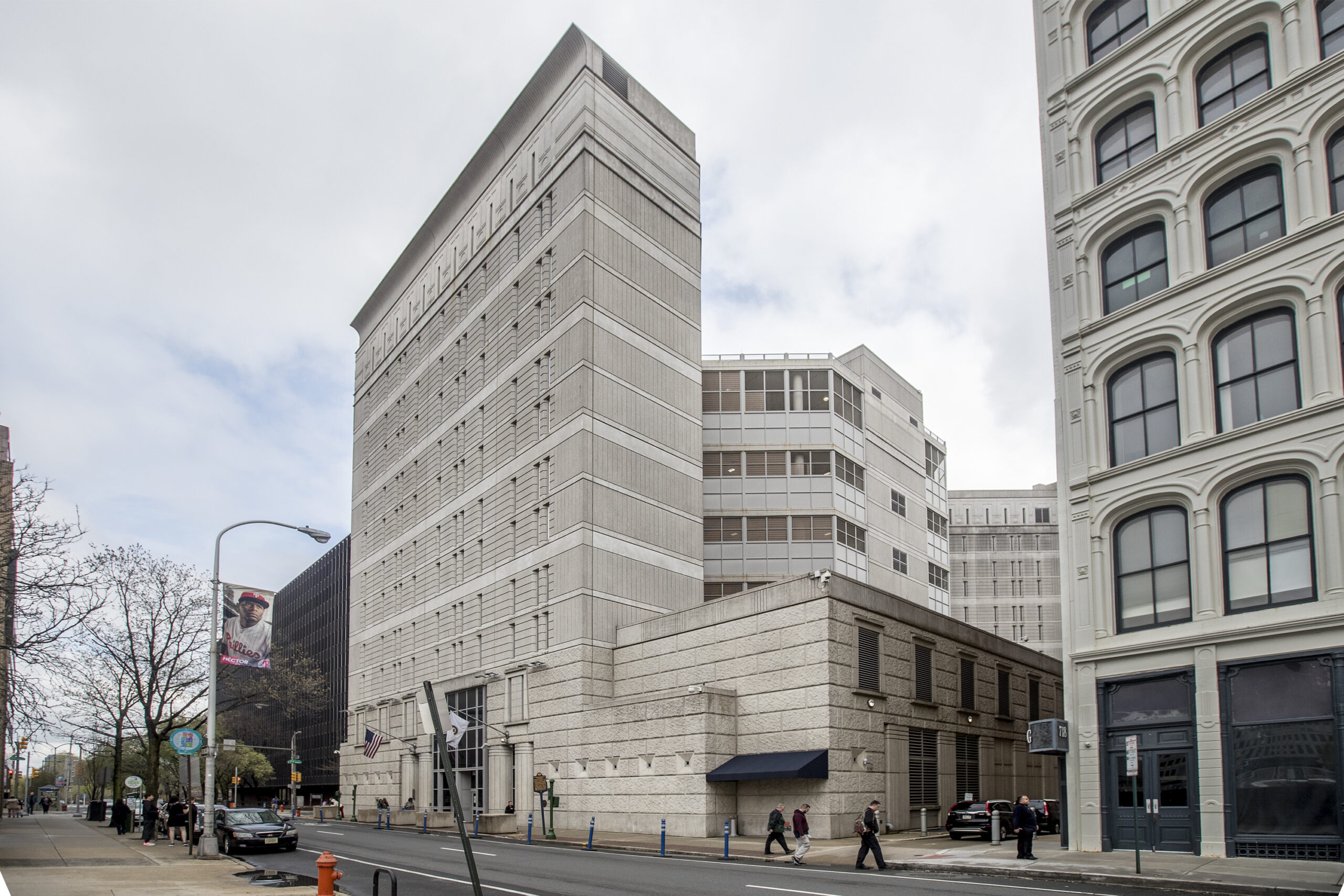
The Federal Detention Center, at 7th and Arch Streets.
Beyond the once-monthly 15-minute phone call he was allowed to make to his daughters, Williams said, there was one thing that helped him endure isolation: Friar Ben Regotti.
Regotti, then a resident at Center City’s St. John the Evangelist Catholic Church, served as the detention center’s chaplain. And when Williams was in solitary, he said, Regotti came to his cell every day and offered an escape: praying with him through a slit in the thick steel door, hearing his confession, and offering him books, including the Bible, which Williams — who was raised Catholic — said he finally read cover-to-cover for the first time.
“I’d lost everything,” Williams recalled. “But Father Regotti was the kindest person to me.”
When he was transferred to a prison camp in Morgantown, W.Va., Williams continued his spiritual journey by attending weekly Masses, Bible studies, and services for other religions. He also completed substance abuse classes, taught classes to help prisoners get high school diplomas, and learned how to play the saxophone.
He made some unlikely friends while he was locked up, including Michael Vandergrift of Delaware County, who is serving a life sentence plus 20 years for killing a rival drug dealer as part of a hired hit; and Bright Ogodo of Brooklyn, N.Y., who was sentenced to more than six years in prison for running a sophisticated identity-theft ring out of TD Bank branches.
Williams said Ogodo later told him he was considering taking his own life — he had even written a letter to his family, convinced they would be better off without him. But when Ogodo saw that Philadelphia’s former DA was in jail, too, Williams said, Ogodo changed his mind.
“He said, ‘I saw you walking with your head up, and [thought], if you can survive, so shall I,’” Williams said.
Three years ago today, I walked out of prison. My friend Bill, picked me up in Morgantown, WV and drove me home. In many ways being incarcerated was less difficult than Re-Entry. I am grateful for all that I have learned. Thank you God. 🙏🏽 pic.twitter.com/393p8KQXmg
Williams was released from prison in 2020, but said almost no one was willing to help him get back on his feet. Before he was incarcerated, he said, he had visited the governor’s mansion and taken his daughters to the Easter egg roll on the White House lawn. But afterward, few people would even take his calls.
“Nobody would hire me,” he said, describing people’s default position toward him as “the Heisman,” the college football statue with an arm extended to keep opponents away.
So Williams — whose law license was suspended when he was convicted — found work at a Lowe’s Home Improvement store in Havertown, unloading trucks and fulfilling online orders from 7 p.m. until 5:30 a.m.
Most of his coworkers, he said, had also recently been released from prison. And while working, he said, he was “kind of providing pastoral care [to them] daily,” similar to his teaching of GED courses in prison, or participating in Bible studies.
In time, he said, he began developing his ideas about self-improvement into formal programs for nonprofits, providing ways for recently incarcerated people to learn the skills needed to maintain consistent employment — developing a resumé, for instance, but also focusing on topics like conflict de-escalation.
Much of his motivation for doing that work, he said, came from research showing that recidivism is greatly reduced among people who receive substance abuse counseling, career coaching, and regular spiritual practice.
“What all three have in common,” Williams said, “is changing the hearts and minds of people.”
Federal Supervised Release ended Friday. First time at the beach since 2016. First time going outside of the Eastern District of Pennsylvania WITHOUT having to ask for permission since ‘17 made me cry! If you want to know my thoughts on Judge Diamond or federal prosecution ask me pic.twitter.com/pwzb9Qa0IR
In 2023, he ran into Terrell Bagby, then a deputy commissioner in Philadelphia’s jail system, and the two discussed the possibility of bringing Williams’ teachings into the jails. That’s how he ended up bringing his volunteer courses — Career Keepers and Prison Poets — into Curran-Fromhold, the city’s largest jail, he said.
In a recent session of Career Keepers, Williams was at the head of the class as nine prisoners sat at a U-shaped table around the room. They took turns practicing public speaking by delivering updates on the weather, sports, and news, then discussed topics including how to reward positive behavior — rather than linger on bad choices — and how to display gratitude.
In the moments after the prisoners were escorted back to their blocks, Williams said the men he has taught over the years have often been more open and vulnerable than he expected. Some have shared stories about traumatic experiences — such as being shot or sexually abused — and then discussed how those experiences affected their lives.
“I spent all this time trying to get out of prison,” he said, “and then I found myself loving being there, trying to help the inmates themselves.”
Becoming a presence
Inside his spare chaplain’s office at the jail, Williams has a desk, a few shelves, and scores of religious books. He keeps packs of white T-shirts, socks, and toothpaste to put into care packages for prisoners and, before making his rounds, keeps a list of people he wants to see.
His time on the cellblocks can be brief. During his rounds on a recent day, his presence did not always seem to have much of an impact. As he passed through each unit’s main expanse, where dozens of prisoners have cells overlooking a bustling common area, some prisoners were more interested in getting their lunch or hanging out by the phones than in checking out what Williams had to offer.
But other times, during several different stops, Williams sat and prayed with prisoners. And the care packages he hands out have become a frequent request, he said.
He wound down his shift in a room near the law library, reciting the rosary with a half-dozen men who had expressed interest in praying with him.
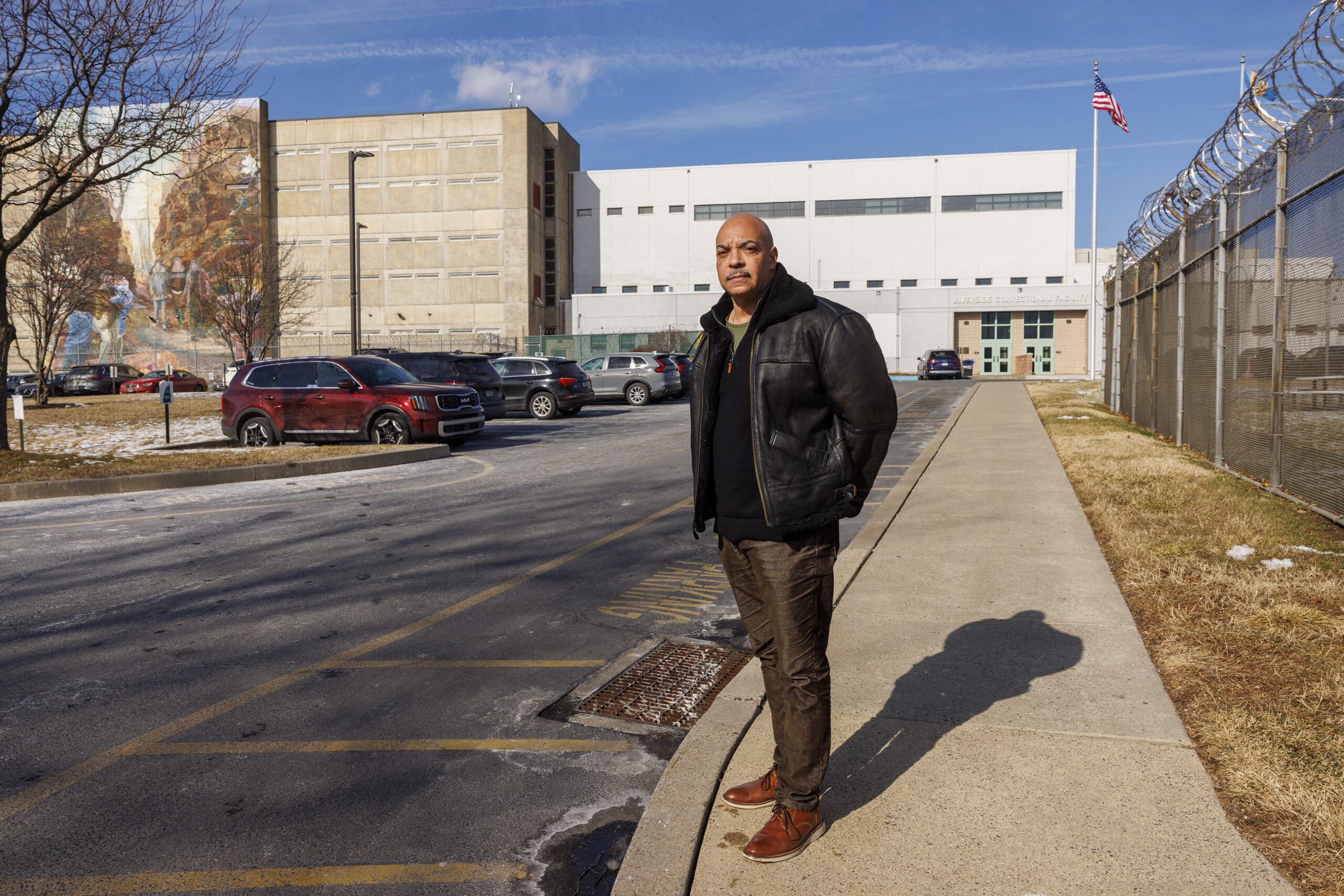
Williams’ chaplaincy is centered at the Riverside Correctional Facility in Northeast Philadelphia.
Regotti, the chaplain Williams had encountered in solitary, said in an interview that even though they first met while the former DA was behind a thick steel door, Regotti could immediately sense his curiosity, intellect, and desire to better himself.
“Going from feeling absolutely desperate to finding ways to cope, it was kind of a mark of his own personal resilience,” Regotti said. “He really developed into somebody that was in touch with God’s grace.”
Williams said he now aspires to be for people what Regotti was for him — a comforting presence in a dark place, and someone who, he hopes, can help provide guidance that can last well beyond someone’s time in confinement.
“The cheapest way to do that is by spreading the gospel,” he said. “People don’t want you to preach to them. They just want your presence — they want you to be there.”
A Montgomery County woman was sentenced Wednesday to five years in prison for defrauding the government of more than $1.5 million intended to aid victims of Hurricane Ida, the 2021 storm that tore through the region and left thousands of properties damaged and the Vine Street Expressway submerged in murky floodwaters.
Jasmine Williams, 34, apologized for her conduct, saying in court that she was embarrassed by her actions and would never make similar mistakes again. In the years after her crimes, she said, she gave birth to a daughter, who is now 2, and she said becoming a mother has helped her see the errors of her past.
“My past is who I was — and who I am today, I’m a different person,” Williams said.
Still, U.S. District Judge Kelley B. Hodge said Williams made a series of decisions to benefit herself at the expense of others — calling it a “fleecing” of people who were truly in need of government help.
“Everybody has struggles, everybody has to do something to survive. What you engaged in was driven by greed,” Hodge said. “You may say not 100%. But you got used to it. You liked it. You enjoyed it.”
In addition to Williams’ prison term, Hodge imposed a four-year term of supervised release.
Ida made landfall in Louisiana in August 2021 as a Category 4 hurricane, and went on to carve a destructive path over the Appalachians and through the Mid-Atlantic. Federal authorities believe it caused nearly 100 deaths and tens of billions of dollars in damage, and Philadelphia officials estimate that 11,000 properties in the city were damaged.
The region was hit by tornadoes, significant downpours, power outages, and widespread flooding, including in parts of Center City and on Boathouse Row, Manayunk’s Main Street, and the Vine Street Expressway.
Months after the storm subsided, then-President Joe Biden freed up funds from the Federal Emergency Management Agency to go toward storm relief. That’s when Williams began her scheme to target those funds, prosecutors said.
On social media, prosecutors said, Williams posted that she could help people fill out applications for federal aid — even if they had suffered no harm from the storm.
She helped people complete applications for properties they did not own or that were not damaged, prosecutors said, and drafted fake documents — including false emergency room bills and home repair estimates — to help their paperwork pass through FEMA’s screening process.
In exchange, prosecutors said, she told applicants they had to pay her half of what they received. And in all, prosecutors said, she helped about 150 people file false registrations, causing FEMA to distribute about $1.5 million in fraudulent reimbursements. She pleaded guilty last year to more than two dozen charges, including wire fraud and mail fraud.
“These individuals came to her for one reason: to obtain quick and free money,” Assistant U.S. Attorney Stephen Chandler Harris said in court.
Assistant U.S. Attorney Ruth Mandelbaum said Williams used her illicit profits to pay for a series of extravagant expenses, including vacations to the Bahamas and Thailand, and luxury clothing and jewelry.
“She wanted to live a lavish lifestyle and she did that on the backs of American taxpayers,” Mandelbaum said.
Williams’ attorney, Summer McKeivier, acknowledged that Williams had taken advantage of a “get rich quick” scheme. But she said Williams was motivated not solely by greed, but also by a desire to provide financial security for herself and others.
And she added that Williams, who had no previous criminal record, has now centered her life on being a mother her daughter can admire.
Williams said: “Being a mother has changed my life in such a dramatic way.”
Hodge encouraged Williams to continue moving past what she described as a “hustle mentality” and a desire to seek quick cash to fund a glamorous lifestyle.
“This is not some version of a reality TV show on BET,” Hodge said. “This is real life.”
Convicted former labor leader John J. Dougherty will remain behind bars after a federal judge denied his latest request to serve the rest of his six-year prison term on house arrest in order to care for his gravely ill wife.
U.S. District Judge Jeffrey L. Schmehl wrote in a one-page order Monday that although it was “extremely unfortunate” that Dougherty’s wife, Cecilia, was facing significant health challenges, “it does not outweigh, at this point in time, the need for punishment that has been adjudged.”
Dougherty last year filed emergency motions seeking to cut his prison term short, telling Schmehl that his wife — who for years has suffered from a debilitating brain injury — had seen her condition worsen dramatically, and arguing that without his aid, she’d likely die.
In the first request, filed in the summer, Dougherty said a trust fund established to pay for his wife’s care was about to run out of money. And in December, Dougherty’s attorney, George Bochetto, said the situation had become more acute due to the death of Dougherty’s father-in-law, who had been serving as the primary caregiver.
Prosecutors opposed Dougherty’s requests, saying that although they were sympathetic to his wife’s plight, they did not believe he’d served enough of his sentence to merit release.
Schmehl, in his order, also said the trust fund had not yet run out of money, and that Medicaid might be able to help pay for future care. He also said Dougherty’s adult daughters “can provide their mother with some meaningful degree of assistance.”
Bochetto said in an interview Monday that he was “very, very disappointed” by the ruling, particularly because he was not able to present evidence to Schmehl in court about what he called a “very dire situation.”
Asked if he planned to appeal, Bochetto said: “I’m looking at every possible avenue for emergency relief.”
Philadelphia had a moment in the global spotlight this week as the U.S. Attorney’s Office said it had charged 26 people — including 20basketball players — with participating in a wide-ranging, international scheme to rig games on behalf of gamblers.
U.S. Attorney David Metcalf said bettors bribed players on teams in the Chinese professional league, as well as in NCAA games from Texas to New York.
So why was the case charged here? And what role did Philadelphia play in the allegations?
Below are three takeaways about the local ties of the sprawling investigation — the latest high-profile case to target alleged corruption in sports.
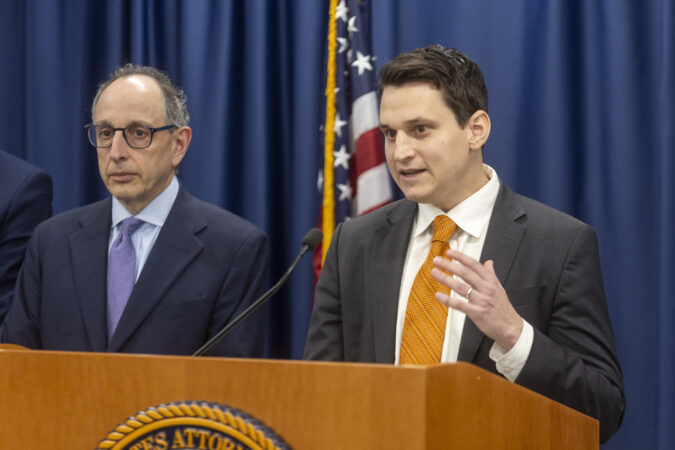
U.S. Attorney David Metcalf announced charges against 26 people in what prosecutors described as a point shaving operation to benefit gamblers.
Why was the case charged in Philadelphia?
Federal prosecutors have wide latitude to pursue criminal investigations as long as some aspect of the alleged wrongdoing took place in their jurisdiction, and if a suspect’s actions could be considered a violation of federal law.
In this case, prosecutors have alleged that the bets and payoffs that impacted games amounted to a criminal conspiracy between the so-called fixers and players, and also that the actions violated federal bribery and wire-fraud laws.
In addition, the indictment contends one of the key organizers of the point-shaving scheme — professional gambler Shane Hennen — lived partially in Philadelphia at the time of his alleged crimes.
And even though most of the games he gambled on took place elsewhere, Hennen is accused of placing huge bets at Rivers Casino’s sportsbook in Fishtown. One of the wagers was a $198,300 bet against a Chinese team called the Jiangsu Dragons, court documents say. Hennen had allegedly recruited one of the Dragons’ best players, Antonio Blakeney, to play poorly in exchange for bribes.
(A spokesperson for Rivers Casino declined this week to comment on the case and did not respond to questions about why Hennen was allowed to place such large wagers on relatively obscure games.)
The indictment says several other crimes took place in Philadelphia as well, including Jalen Smith — a basketball trainer and alleged organizer of the scheme — traveling to the Philadelphia International Airport to pay an unnamed player his bribe money.
Were any Philadelphia schools part of the scheme?
The indictment paints a limited portrait of connections between the point-shaving operation and Philadelphia schools or universities.
In one of the more detailed local episodes in the document, prosecutors said Smith and Blakeney in 2024 attempted to recruit players from the La Salle men’s basketball team to take bribes and underperform in a game against St. Bonaventure.
Hennen and a codefendant apparently thought the plan had succeeded — the indictment said they went on to place nearly $250,000 in bets on St. Bonaventure for that game.
But none of the bets won, prosecutors said. And no La Salle players were named or accused of accepting the bribes in relation to the contest.
A La Salle spokesperson said in a statement this week that it was aware of the allegations in the case, adding: “Neither the university, current student-athletes, or staff are subjects of the indictment. We will fully cooperate as needed with officials and investigations.”
What about any Philadelphia-based players?
The role of Philadelphia-based players was similarly limited.
While several players accused of participating in the scheme spent time in the area, none was accused of accepting bribes while playing for a Philadelphia-based school.
Former Temple University forward Elijah Gray, for example — who played for the Owls in the 2024-2025 season — participated in the scheme the year before, while he was playing at Fordham. Prosecutors said he was offered $10,000 to $15,000 to underperform on the court, and said he later recruited a teammate to participate in the point-shaving operation as well.
Gray left Temple and transferred this academic year to the University of Wisconsin, but he was dismissed from the team in the fall over what the program said were “events preceding his enrollment.” He has pleaded guilty to one count of bribery, court records show, and is scheduled to be sentenced in March.
Micawber “Mac” Etienne — who played for La Salle last year — was also bribed before he came to Philadelphia. Fixers approached Etienne in 2024, prosecutors said, while he was playing at DePaul. He agreed to help throw games, prosecutors said, which led Smith to give him and three teammates $40,000 in cash.
Etienne has also pleaded guilty to a bribery count, court records show, and is scheduled to be sentenced in April.
One current Philadelphia-based player is facing charges: C.J. Hines, a guard who transferred to Temple this year. But prosecutors said he took bribes in 2024, when he was playing at Alabama State.
Hines has been charged by information, which typically indicates a defendant intends to plead guilty.
A Temple spokesperson said the university had “previously received notice from the NCAA that Hines had potential eligibility concerns, and for that reason, he has not participated in any athletic competition since enrolling at Temple.”
What happens now?
The prosecutions will now proceed through Philadelphia’s federal courthouse in Center City.
Some defendants — such as Gray, Etienne, and Hines — will likely have their cases wrapped up relatively quickly, as they’ve already pleaded guilty or indicated an intent to do so.
Hennen has not yet entered a formal plea in the case, according to court records. If he or any other defendants plans to take the case to trial, it could be many months before the case is put before a jury.
Staff writer Isabella DiAmore contributed to this article.
More than two dozen people participated in a multiyear scheme to fix basketball games in the NCAA and the Chinese professional league, federal prosecutors in Philadelphia alleged Thursday — a conspiracy that affected dozens of games and involved tens of thousands of dollars in bribes and millions in fraudulent bets.
Twenty basketball players and six so-called fixers were charged in federal court in Philadelphia with crimes including bribery, conspiracy, and wire fraud, according to U.S. Attorney David Metcalf, who described the case as “historic.”
Metcalf said the fixers — professional gamblers or others with ties to the basketball world — would recruit players to underperform in forthcoming games, then bettors would wager against that player’s team. Players were bribed for their efforts, Metcalf said, while gamblers ultimately collected millions of dollars in illicit winnings.
“When criminals rig the outcome of games for the purpose to lose … we all lose,” said Metcalf, who spoke at a morning news conference alongside officials including Andrew Bailey, deputy director of the FBI, and Wayne Jacobs, the FBI’s top official in Philadelphia.
Players involved included Antonio Blakeney, a onetime Chicago Bulls player who later played for the Jiangsu Dragons in China, prosecutors said, as well as a number of Division 1 college players from programs including Tulane University, Nicholls State University, Northwestern State University, and North Philadelphia’s La Salle University.
Antonio Blakeney, who once played for the Chicago Bulls, has been charged with accepting bribes when he later played for a Chinese basketball team to influence its games.
In all, prosecutors said, the scheme involved 39 players on more than 17 Division 1 NCAA teams, with bettors wagering huge sums on at least 29 games. Some of the bets were placed at Rivers Casino in Philadelphia.
The allegations are similar in theme to those leveled last fall against NBA players including the Miami Heat’s Terry Rozier, who has also been federally charged with altering his performance to benefit gamblers.
At that time, the charges against Hennen — and the earlier dismissal of Temple University guard Hysier Miller — were rumored to extend to a more far-reaching probe into the NCAA.
Metcalf said the new investigation was distinct from that case, which is being prosecuted in New York. In that matter, Metcalf said, Rozier and others were accused of providing confidential information to bettors — such as a player’s injury status — to help boost the odds of a wager succeeding.
In the newest case, Metcalf said, players were directly participating in the conspiracy — and benefiting from it, even as they sought to help their teams lose.
“There is a really important difference between wagering on predicted outcomes [based on] insider information, and wagering on determined outcomes — outcomes that you control,” Metcalf said. “The former is a crime against sports betting markets. The latter is a crime against the sport itself … and that’s what makes it different and, in my opinion, worse.”
An American scheme in China
In a unique twist, prosecutors said, the scheme targeting one of America’s most popular sports was launched in China.
According to the indictment, Hennen and another professional gambler, Marves Fairley, recruited Blakeney — then playing for the Jiangsu Dragons — to join their so-called point-shaving scheme in 2022.
Blakeney at the time was a top scorer in the Chinese Basketball Association. And, according to the indictment, Hennen and Fairley offered him bribes in exchange for deliberately underperforming and hurting his team’s chances of winning.
After he agreed, prosecutors said, Hennen and Fairley placed large bets at the Rivers Casino sportsbook in Fishtown, known as “BetRivers.” In one instance, prosecutors said, the men wagered $198,300 on the Guangdong Southern Tigers to beat the Dragons in a March 6, 2023, game.
Blakeney averaged 32 points a game that season, but scored just 11 in the contest, which the Dragons lost, 127-96.
Hennen was apparently pleased with his new investment. Later that spring, the indictment said, he sent a text to another schemer offering reassurance about a game involving Blakeney.
“Nothing gu[a]rantee[d] in this world,” Henner wrote, ”but death taxes and Chinese basketball.”
A spokesperson for Rivers Casino declined to comment on the case.
After the season, Fairley left $200,000 in cash in a Florida storage unit Blakeney controlled, the indictment said. In intercepted text messages, Hennen and Fairley also described “giving $20,000” to other players recruited by Blakeney to fix matches during his absence.
The Chinese betting ring then became a template, prosecutors alleged — one that the conspirators used to begin rigging games much closer to home.
Targeting NCAA games
In 2024, prosecutors said, Hennen and Fairley recruited college basketball trainers Jalen Smith and Roderick Winkler to help rig NCAA games. Prosecutors said the trainers’ status in the basketball world gave them access to, and credibility with, NCAA athletes.
The men then used that influence to recruit about 20 players from a variety of schools to participate in the point-shaving operation, prosecutors said.
Several players had ties to the Philadelphia region, including former Temple University forward Elijah Gray, who was approached while playing at Fordham; Micawber “Mac” Etienne, who was approached at DePaul but later played for La Salle; and Delaware State University point guard Camian Shell, who is alleged to have thrown games while at North Carolina A&T State University. C.J. Hines, a current player on Temple’s roster, was also charged with taking bribes in 2024, when he was playing at Alabama State, court documents show. A Temple spokesperson said Thursday that the university was “reviewing this new information” and noted that Hines has not played for the Owls due to ongoing eligibility questions.
The scheme worked much as in China, prosecutors contended: Hennen and Fairley would bribe players to throw games, then place bets on their opponents.
But the gamblers took a less visible role this time, the indictment said, generally sending brief texts to a number of people who could place high-stakes bets on their behalf.
“Queens ny -1 first half and money line,” Hennen texted a straw bettor, seeking to place a $20,000 bet that the Queens University Royals would cover the first-half spread by at least 1½ points in a March 1, 2024, game against Kennesaw State.
The men let Smith handle much of the dirty work, the indictment said. In one example, he texted with Kennesaw State players Simeon Cottle and Demond Robinson the day of a game.
“I need both of y’all on FaceTime with me twice today,” he wrote. “Just to make sure y’all good and really locked in … [This] money guaranteed, ima be at the game with the money.”
In some cases, Smith is alleged to have flown to Philadelphia to pay players their bribes. In other instances, the indictment said, Smith was intensely involved with pressuring players to underperform even while games were progressing.
In March 2024, for example, the indictment said, Smith texted DePaul’s Etienne that his teammates who were playing well needed to “chilllll [the f—] out.”
In another episode, the indictment said, he wrote to to Alabama State players Shawn Fulcher and Corey Hines, saying: “Lose by 6 full game no excuses,” then sent a photo of a large stack of cash.
When the players complained that they were struggling to throw the game because their opponent — the University of Southern Mississippi — was “so bad,” Smith sent an all-caps response, the indictment said.
“LET [the Southern Mississippi players] LAY IT UP,” he wrote.
Sports impacted by ‘monetization’
While Hennen is accused of orchestrating many of his crimes in Philadelphia, the indictment painted a more limited picture of his role with local teams.
In 2024, for example, Smith and Blakeney attempted to recruit players from La Salle to join the scheme for a game against St. Bonaventure, the indictment said. But prosecutors did not name any La Salle players as having done so, and they said all the bets Hennen and Fairley placed on the game were unsuccessful.
A spokesperson for La Salle said Thursday that the university would cooperate with all investigations into the matter, and that “neither the university, current student-athletes, or staff are subjects of the indictment.”
Metcalf said the “monetization” of college sports in recent years — and the proliferation of legalized sports gambling across the country — “furthered the enterprise in this case.”
And he said that although college athletes can now be legally paid for their name, image, and likeness, some of those who participated in this scheme were targeted because they did not feel they were making enough money in that new landscape.
Metcalf said many Americans are drawn to sports because they offer a venue for teams and players to participate in honest competition.
“This,” Metcalf said, “totally flies in the face of all of that.”
Staff writer Isabella DiAmore contributed to this article.
One of the family leaders of the Santucci’s Original Square Pizza empire was sentenced Monday to one day in jail and 18 months of supervised release for significantly understating the business’ earnings over the course of several years, causing him and other company officials to underpay taxes by nearly $1.4 million.
Frank Santucci Sr., 67, who had taken over the family business from his parents nearly 50 years ago, said he was “embarrassed” and “deeply sorry” for his actions, which federal prosecutors described as a long-running cash skimming operation. He pleaded guilty last year to charges of tax evasion and filing false tax returns.
“I spent my life trying to be an honest man,” Santucci said Monday during his sentencing hearing in federal court, “and knowing I fell short of those values is something I deeply regret.”
Prosecutors said in court documents that Santucci was a company patriarch who had “informal bookkeeping responsibilities” at the family’s pizza shops in South Philadelphia, Roxborough, and on North Broad Street. The restaurants are well-known for offering square, thick-crust pies with layers of sauce and toppings piled on top of cheese.
Although the business had for years employed a cash-only policy, prosecutors said, Santucci began keeping two sets of books as the company began using an electronic point-of-sale system in 2017. One of the sets of records included details for issues like payroll and expenses, which Santucci showed to his tax accountants, prosecutors said, and the other — which Santucci concealed from his accountants — is where he deposited some of the restaurants’ cash earnings.
As a result, prosecutors said, Santucci understated the shops’ earnings by about $5 million between 2015 and 2018. And that caused him to underpay his personal taxes by nearly $400,000, they said, while his co-owners underpaid theirs by about $700,000, and the business underpaid employment taxes by about $300,000.
Santucci — who was the only person charged in the case — has already repaid his personal tax bill, said his attorney, Richard J. Fuschino Jr. And Fuschino said Santucci was a man whose life had otherwise been defined by his hard work at his namesake shops, and an unerring dedication to his family and community.
“Mr Santucci is, on the whole of it, as good as [people] get,” Fuschino said.
Assistant U.S. Attorney Patrick Murray did not disagree that Santucci supported his family, and said it was notable that he had accepted responsibility for his crimes. But he said Santucci nonetheless engaged in a long-running scheme that deprived the IRS of revenue and, by extension, allowed Santucci’s business and relatives to keep more money than they were entitled to.
U.S. District Judge Karen S. Marston did not discount the seriousness of the crimes, but said Santucci’s age, health concerns — he suffered two strokes in recent years — and his role as a grandfather who is actively involved in caring for his young grandchildren all factored into her sentencing decision. She said his day in custody would be Monday and also ordered him to perform 300 hours of community service.
“I do believe that Mr. Santucci has shown the remorse that’s necessary in this particular case,” she said.
The Santucci’s pizzerias and their many franchise locations remain in operation and were not impacted by the case, Fuschino said.