Author: Chris Palmer

  • A couple told patients they’d created a breakthrough medical device. In a Philadelphia courtroom, they admitted it was all a lie.

    A couple told patients they’d created a breakthrough medical device. In a Philadelphia courtroom, they admitted it was all a lie.

    She went by Dr. Mary, and her promise was a tantalizing medical breakthrough.

    At clinics operated in Arizona and several other states, Mary Blakley and her husband, Fred, told patients that for just $300, they could provide a full-body scan that utilized a proprietary “smart chip” to detect a variety of potential illnesses, including cancer.

    In addition, the Blakleys boasted, their technology could actually help cure some patients’ maladies — blasting away kidney stones with a laser, killing cancer cells by injecting a special cream, or cleaning out lungs with a prototype “sweeper” approach.

    But in federal court in Philadelphia on Monday, the couple admitted that their clinics were a sham — that in reality, they only administered basic ultrasounds to patients while lying about the other fantastical benefits.

    Their guilty pleas were the latest development in a fraud prosecution with a variety of unusual elements. Mary Blakley, for example, had not only lied about being a doctor to build her clinics, prosecutors said — her background included a prior federal conviction for manufacturing methamphetamine.

    Fred Blakley, 61, meanwhile, also pleaded guilty Monday to a separate set of firearms charges, admitting that as he was perpetuating the healthcare fraud, he was also stockpiling dozens of guns and thousands of rounds of ammunition for what he said was a forthcoming civil war against the U.S. government.

    Neither of the Blakleys said much in court Monday beyond responding to routine questions from U.S. District Judge Gerald McHugh. They pleaded guilty to counts including mail and wire fraud and conspiracy.

    Prosecutors said the couple — from Lake Havasu City, Ariz. — generated more than $2 million in fraudulent billings over the years. Their clinics operated in places including their home state, California, and Colorado, prosecutors said, and some of their patients had ties to Pennsylvania, which is where they were ultimately prosecuted.

    Their chief offering was a signature “full-body scan,” which they ran through a traditional ultrasound machine — but said had been enhanced with their proprietary smart chip technology. They told patients their machine could detect, treat, and cure a variety of illnesses, and also said the technology was a secret and should not be discussed with anyone.

    The Blakleys would often go on to prescribe various creams or drugs that had little to no benefit, prosecutors said, and sometimes said a patient would need to continue using the prescription for life. One of the substances, fenbendazole, was approved for use in animals by the Food and Drug Administration, prosecutors said, but was not approved for use in humans.

    To bolster her standing with clients, prosecutors said, Mary Blakley, now 66, lied about her background, falsely claiming she had worked at the MD Anderson Cancer Center in Houston; saying she had developed pharmaceuticals for Merck; and claiming she had received a Ph.D. in nuclear physics from the Karolinska Institutet in Sweden.

    She hung a fake degree from the Swedish school on the wall of her clinic office, prosecutors said, along with others from Gatesville University and Almeda University — two online institutions that prosecutors described as “diploma mills.”

    To try to avoid detection, prosecutors said, the Blakleys asked their patients to pay with cash or check, refused to keep client records, and avoided keeping records of the full-body scans, which they sometimes described as “research.”

    They also sought to expand their empire, sometimes by selling their purported devices to others, or by charging trainees to open franchise branches of their clinics.

    In the meantime, court documents said, Fred Blakley was amassing a collection of more than two dozen guns and 30,000 rounds of ammunition, some of which he stored in the garage of his pastor. He was not allowed to own any firearms because he had been convicted alongside his wife in the prior methamphetamine case.

    As undercover FBI agents investigated the couple for their healthcare fraud, court documents said, Fred Blakley was captured on an audio recording in 2022 telling one of the agents he was “planning on shooting some humans.”

    “We’re gonna have to go to war with our own government … a civil war,” he said, according to court documents, later adding: “You better arm up good. I’ve got thousands of rounds of ammunition, and I’m ready to rock.”

    The couple’s downfall began several years ago, when local authorities in Arizona received complaints about the clinics, including from the couple’s estranged daughter.

    The FBI then began an extensive investigation, court documents said, and the couple were indicted in federal court in Philadelphia earlier this year.

    They are scheduled to be sentenced by McHugh in April. The couple are in custody at the federal detention center in Philadelphia. Each faces the possibility of being sentenced to more than 150 years behind bars.

  • A Main Line man who brought guns to a ‘No Kings’ protest and had bombs at his house pleaded guilty in federal court

    A Main Line man who brought guns to a ‘No Kings’ protest and had bombs at his house pleaded guilty in federal court

    A Malvern man who brought a gun and other weapons to a “No Kings” protest in West Chester over the summer — and who was rearrested days later after police found homemade bombs at his house — pleaded guilty in federal court Thursday morning.

    Kevin Krebs, 32, said little while pleading guilty to a charge of possessing an unregistered firearm or explosive device. Krebs had been taken into federal custody this fall, and the U.S. Attorney’s Office charged him earlier this month by information, a process that typically indicates a defendant plans to plead guilty.

    The charges against him relate to his conduct in West Chester six months ago. On June 14, Krebs was arrested by local police after other attendees at a “No Kings” protest in the borough told authorities they thought they had seen Krebs carrying a gun.

    When police stopped Krebs and searched him, they found a loaded Sig Sauer handgun along with extra rounds of ammunition, a knife, a bayonet, pepper spray, and other weapons, prosecutors said. He also had an AR-15 rifle in his car nearby.

    Krebs did not have a concealed carry permit for his handgun, and he was charged with illegal gun possession.

    Two days later, police searched his home on Conestoga Road and found 13 homemade pipe bombs, prosecutors said, as well as components used to make detonators, tactical vests, and bullet-resistant armor. Some of the bombs had nails and screws inside, which are often added to improvised explosive devices to increase the amount of shrapnel they can generate.

    Krebs was initially charged by Chester County prosecutors, who said his political beliefs or potential motives were not straightforward.

    Krebs was a registered Democrat but had previously been registered as a Republican and said online that he voted for President Donald Trump. In online postings, he later said he came to regret that vote, and in the weeks preceding the “No Kings” protest he had been posting violent rhetoric aimed at Trump and police officers.

    Before his arrest, Krebs was a licensed electrician and onetime Home Depot employee. His attorneys and relatives previously said he had been diagnosed with autism and Asperger’s syndrome.

    Krebs is scheduled to be sentenced in March by U.S. District Judge Mary Kay Costello. He faces a maximum penalty of 10 years in prison.

  • A former corrections officer pleaded guilty to sexually assaulting a prisoner at Philly’s Federal Detention Center

    A former corrections officer pleaded guilty to sexually assaulting a prisoner at Philly’s Federal Detention Center

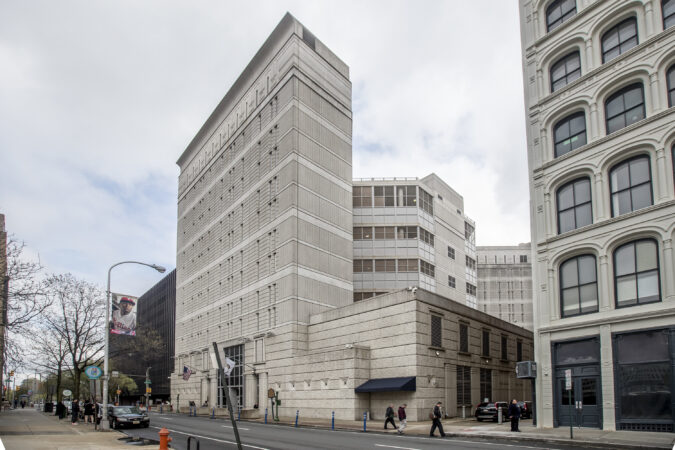
    A former corrections officer at Philadelphia’s Federal Detention Center pleaded guilty Wednesday to sexually assaulting a female prisoner inside her cell last year — a violent attack that occurred while the victim was in protective custody because of ongoing mental health issues, prosecutors said.

    Michael Jefferson, 43, said little as he entered his plea before U.S. District Judge Joshua D. Wolson. He is scheduled to be sentenced in April and faces a maximum penalty of life behind bars.

    Jefferson was charged earlier this year with crimes including aggravated sexual abuse and deprivation of rights for attacking a prisoner inside the detention center on the 700 block of Arch Street on July 6, 2024.

    Prosecutors said Jefferson entered the woman’s cell, where she had been sleeping; placed his hands on her shoulders and told her not to say anything; then pinned her down and sexually assaulted her.

    The victim reported the assault to other guards the next morning, once Jefferson’s shift was over, prosecutors said. Evidence supported her account of having been sexually abused, prosecutors said, and showed she had been physically injured during the attack.

    The victim, who was not identified in court documents, later sued Jefferson, describing the attack as a rape and saying it occurred while she was housed in isolation and on suicide watch.

    Her lawyers have accused the Bureau of Prisons of failing to protect her from Jefferson, in part because they said another officer either ignored the assault or was improperly absent from his post when it occurred.

    The detention center can house up to 950 prisoners, most of whom are either awaiting federal trial or serving short sentences after being convicted.

  • A supervisor in Philly DA Larry Krasner’s office has been disbarred in federal court

    A supervisor in Philly DA Larry Krasner’s office has been disbarred in federal court

    A veteran lawyer in the Philadelphia District Attorney’s Office has been disbarred in the region’s federal courts after a panel of judges concluded he “lied repeatedly” while seeking to overturn the death sentence of a man who killed an East Mount Airy couple in their home and left their infant daughter inside to die.

    Paul George, an assistant district attorney who handles appellate cases, was a key player in his office’s attempts to have Robert Wharton’s death penalty reversed so he could serve a life sentence instead.

    U.S. District Judge Mitchell Goldberg denied that request, but not before finding that District Attorney Larry Krasner’s office had provided incomplete and misleading information in its efforts to free Wharton from death row.

    After Goldberg made his decision, George and a colleague who handled the case faced federal disciplinary proceedings to examine whether their conduct — which was also criticized by an appeals court — was intentionally deceptive.

    As part of that process, three federal judges concluded earlier this year that George’s actions were “misleading and dishonest,” saying he had lied to Goldberg about key facts, “flouted the interests of the public and the victims’ families,” and acted as the “quarterback” of efforts by the district attorney’s office to undo or undermine all death penalty cases.

    “George’s conduct was the result of a ‘selfish or dishonest motive’ — placing the DAO’s policy priorities above its professional and prosecutorial responsibilities,” wrote U.S. District Judges Paul S. Diamond, Gerald J. Pappert, and John M. Gallagher. They recommended that George be barred from practicing in the region’s federal courts, and Chief Judge Wendy Beetlestone affirmed that in an October order.

    George has denied the accusations and last month filed an appeal. His attorneys acknowledged in court documents that he had made mistakes in his handling of Wharton’s case, but said the opinion recommending his disbarment was based on a broader set of “extraordinary allegations” that lacked evidence and targeted the office he worked for.

    George has displayed “exceptional legal skills and the highest level of professional ethics and honesty” during his 48-year legal career, his attorneys wrote. He is scheduled to retire at the end of this year.

    Krasner said in an interview that he was largely unable to comment because most of the disciplinary matter had unfolded under seal. But he said that George’s career “has been conducted vigorously and ethically,” and that he believed the appeals court would find that the opinion criticizing George was filled with “factually and legally incorrect” statements.

    “We will continue to try to be fair each and every day, and, as change makers often do, we will face the consequences of making change from people who could’ve made it, but didn’t, in their day,” Krasner said.

    The disciplinary saga is the latest chapter in the unusually protracted fallout from Wharton’s death penalty appeal, and it might not be the last.

    George’s colleague Nancy Winkelman — another supervisor in the district attorney’s law division — has also been the subject of a disciplinary inquiry in federal court for her role in the Wharton matter. Records in her case remain under seal.

    The documents connected to George’s case were also supposed to remain secret, but they became public this week when aspects of his appeal were publicly filed in court. On Thursday, his attorney, David Rudovsky, filed court documents to have the entire record of the underlying disciplinary proceeding made public.

    George became involved in the Wharton matter in 2019, while Wharton was appealing his death sentence in federal court.

    Wharton had been convicted along with a codefendant in the January 1984 strangulation and drowning deaths of Bradley and Ferne Hart. A jury concluded that Wharton killed the couple over a disputed debt, then turned off the heat in their home and left the couple’s 7-month-old baby, Lisa, to freeze to death. She survived.

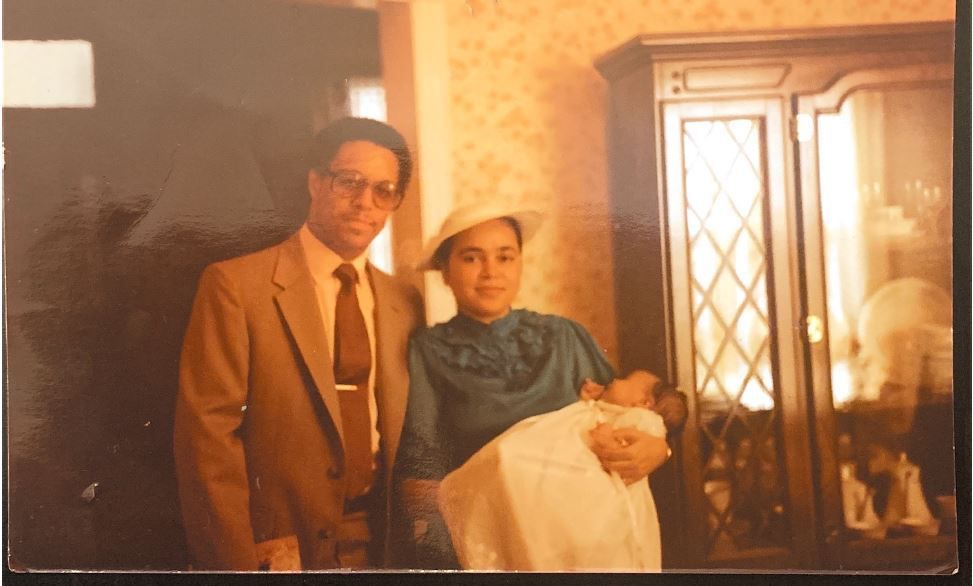
    Bradley and Ferne Hart in a 1983 photo with their baby daughter, Lisa, on her christening day. The husband and wife were murdered in their East Mount Airy home in January 1984 by Robert Wharton and Eric Mason. The baby was unharmed, but left to die in the house. She survived.

    In the decades before Krasner took office, the district attorney’s office had consistently opposed Wharton’s attempts to overturn his conviction and sentence.

    But Krasner said on the campaign trail that he would “never pursue a death sentence in any case.” And after he was sworn in, his office changed its stance on the Wharton case, saying it had “carefully reviewed the facts and the law” and agreed that Wharton should be spared from death row.

    Goldberg did not immediately agree, and wrote in court documents at the time that the district attorney’s office had not sufficiently explained its reasoning for its “complete reversal of course.”

    He then asked the Pennsylvania Attorney General’s Office to provide materials he said the district attorney’s office was not sharing. And after investigating, the attorney general’s office said it found evidence including documents detailing Wharton’s past attempts to escape from a courtroom — information that Goldberg said would have been crucial to his decision, but that George and Winkelman later said they were not aware of.

    The attorney general’s office also said Krasner’s office had misled Goldberg about its communications with the victims’ relatives. Although the district attorney’s office gave the impression that the Hart family supported its change in stance on the death penalty, the truth was that prosecutors had spoken only to one relative, and never contacted the couple’s only surviving child, Lisa Hart-Newman, who vehemently opposed the idea of lessening Wharton’s sentence.

    George later acknowledged that was a mistake, and Goldberg ordered Krasner to write apology letters to the Harts’ relatives.

    In the disciplinary opinion filed earlier this year, the three-judge panel criticized George’s conduct throughout the case, saying that he “repeatedly lied” to Goldberg and that his efforts nearly undercut the integrity of a duly imposed jury verdict.

    And, in an unusually pointed fashion, they ascribed a motive to his actions — accusing George of flouting legal guardrails to advance the policy interests of Krasner’s office.

    “Upon the current District Attorney’s first election … the DAO established a policy, with Paul George at quarterback, to undermine duly imposed death sentences challenged in post-conviction proceedings,” the judges wrote. “George filed the concession in Wharton pursuant to that policy, not as the result of any review, careful or otherwise, of the facts and the law.”

    George said in court documents that was not true, and his attorneys denied there has ever been an office policy opposing all capital sentences.

    Krasner also said it was “flatly untrue” that his office has ever had a policy against the death penalty, and he denied that the committee he formed to review capital cases — which George once served on — was designed to undo such sentences.

    “We follow essentially the same process as our predecessors, who routinely supported the death penalty and who were usually wrong,” Krasner said. “We actually try to be fair all the time. And that committee has concluded on many occasions that the death penalty should be reversed; it has also concluded with the law division in individual cases that the death penalty had to be affirmed. Those are the facts.”

    George’s disbarment in federal court has not affected his ability to practice in state court, though George, 75, has already begun to wind down his office duties ahead of his retirement, his attorneys wrote in court documents.

    They said that the penalty imposed against him was unwarranted and should be reversed.

    “To label Mr. George as a liar, and by disbarment, place him among the worst of the worst lawyers in our community, is highly disproportionate and offends basic tenets of justice,” his lawyers wrote.

    The federal judges who recommended his discipline disagreed.

    “In the final years of his career,” they wrote, George “used [his] experience to circumvent and subvert, in misleading and dishonest ways, verdicts rendered by judges and juries who heard the evidence and applied the law.”

  • Two windows were smashed at Philly’s federal courthouse, the U.S. Marshals said

    Two windows were smashed at Philly’s federal courthouse, the U.S. Marshals said

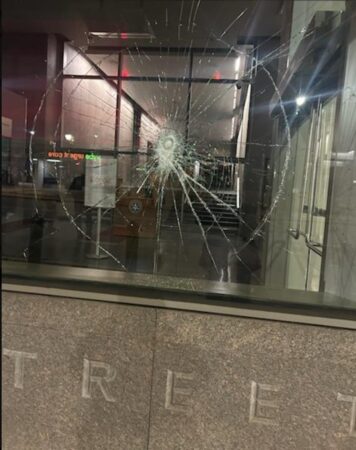
    Federal authorities are searching for someone who shattered two windows at Philadelphia’s federal courthouse this week.

    The vandalism occurred late Monday night when someone used a cobblestone brick to smash two glass windows at the front entrance of the James A. Byrne U.S. Courthouse on the 600 block of Market Street, said Supervisory Deputy U.S. Marshal Robert Clark.

    Clark said it was not clear if the attack was targeted. Authorities were also looking into whether there was any link to another report of windows being smashed around the same time that night a few blocks away in Old City, he said.

    Investigators were reviewing surveillance video in hopes of identifying a suspect, Clark said, and the brick that was used was left at the scene.

    The courthouse is where most of the region’s federal civil and criminal cases are heard. It also houses the Third Circuit Court of Appeals.

  • Two Philly police officers aren’t federally liable for chasing after a drug suspect who crashed his car and killed a bystander, appeals court rules

    Two Philly police officers aren’t federally liable for chasing after a drug suspect who crashed his car and killed a bystander, appeals court rules

    Two Philadelphia police officers who drove after a fleeing drug suspect until the man crashed his car and killed a bystander are not liable under federal law for causing the fatal collision because the officers didn’t intend to harm anyone, an appeals court ruled.

    In an opinion issued last week, the three-judge panel from the Third Circuit Court of Appeals said officers Christian Kane and Alexander Hernandez were forced to make a quick decision in 2020 when they sped after a man they’d seen dealing drugs in Kensington.

    The pursuit of the suspect, Tahir Ellison, proceeded at a normal speed for a few blocks, court documents said, but became dangerous after Ellison drove through a red light and down a one-way street.

    The episode ended in tragedy when Ellison ignored another red light and crashed into Virgen Martinez’s car at the intersection of Allegheny and Frankford Avenues, killing Martinez, a 47-year-old mother of four.

    Ellison pleaded guilty in 2023 to charges including third-degree murder and was sentenced to 10 to 20 years in prison, court records show.

    But Martinez’s relatives sued Kane and Hernandez, arguing in part that the decision to speed after Ellison — which violated the police department’s policy to avoid most car chases — also violated Martinez’s 14th Amendment due process rights and made the officers liable for her death. Last year, U.S. Magistrate Judge Scott W. Reid agreed that that question should be put before a jury.

    The officers appealed. And in the opinion issued last week, Circuit Judge Stephanos Bibas wrote that although Hernandez’s death was a tragedy, the officers made a “snap judgment” to pursue Ellison and did not behave egregiously during the portion of the chase in which Ellison began speeding and ignoring traffic signals.

    “We ask not whether in hindsight [the officers] chose rightly, but whether they intended to cause harm,” Bibas wrote.

    Philadelphia police directives generally prohibit car chases, which are often dangerous for both citizens and officers. Exceptions are made only if officers are seeking to capture suspects fleeing violent felonies, or to prevent imminent death or serious injuries.

    An Inquirer investigation published last year found that about half of all reported chases by Philadelphia police were in violation of department polices and that the city had spent about $20 million since 2020 to settle crash- or chase-related lawsuits involving police.

    Earlier this year, the city agreed to pay $2.9 million to settle a lawsuit over a crash in which a man on a dirt bike being pursued by a city police officer struck two bystanders — including a 6-year-old girl — in Upper Darby.

    In that case, however, the officer initiated the chase without witnessing any crime, continued driving after the man for nearly 10 miles, and was later accused by the department of providing false statements to a superior and falsifying official documents.

    Bibas wrote that Kane and Alexander, by contrast, “had a split second” to decide whether to follow Ellison, whom they’d seen dealing drugs from his car. And the dangerous portion of the pursuit spanned about half a mile and 39 seconds before Ellison crashed into Martinez’s vehicle.

    Jim Waldenberger, one of the attorneys who filed suit on behalf of Hernandez’s relatives, said he and his colleagues disagreed with the ruling.

    Before the officers’ pursuit turned dangerous, Waldenberger said, they pursued Ellison at a normal speed with their police lights on for several blocks, meaning their decision to continue the chase when he sped up was not a snap judgment made under unavoidable pressure.

    The department conducted an internal investigation and found that the officers violated departmental policies regarding pursuits, and each spent at least several months on administrative duty, court documents said. The documents did not specify whether either officer faced additional discipline.

    Sgt. Eric Gripp, a police spokesperson, said Monday that Kane is still on the force but that Hernandez left last year. Gripp declined to comment further.

    Waldenberger said he and his colleagues were still weighing whether to appeal the Third Circuit’s ruling on the officers’ liability.

    The lawsuit can proceed on more limited grounds surrounding whether the city sufficiently trains police officers regarding pursuits, and whether Kane, who was driving the police car, violated state negligence laws.

  • A Philly journalist was sentenced to 20 years in federal prison for possessing thousands of images and videos of child porn

    A Philly journalist was sentenced to 20 years in federal prison for possessing thousands of images and videos of child porn

    A Philadelphia journalist was sentenced Friday to 20 years in federal prison for possessing thousands of images and videos of child pornography.

    Michael Hochman, whose work was published over the years by outlets including Visit Philadelphia, the sports website Crossing Broad, and The Inquirer — where he once contributed a freelance column — came to the attention of investigators in 2022 after they learned that he exchanged explicit messages with a teenage girl. Authorities later found that he had downloaded more than 2,000 photos and videos of children being sexually abused onto his computers and other devices, prosecutors said.

    Hochman, 52, of Huntingdon Valley, compiled that collection over the course of more than a decade, prosecutors said, and did so even after he’d served prison time for sexually assaulting a teenager in Kansas in 2002.

    In sentencing Hochman on Friday, U.S. District Judge Kelley B. Hodge cited that conviction as she imposed a prison term five years longer than prosecutors sought.

    Calling Hochman’s actions “shameful” and “vile,” the judge said, “The level of depravity … is without words.“

    Hochman was convicted of child sex crimes two decades ago after prosecutors say he had sex with a 13-year-old girl he met online. He was convicted of aggravated indecent liberties with a child and sentenced to 55 months in prison, court documents said.

    In 2022, prosecutors said, a Missouri woman discovered that her 15-year-old daughter, who had developmental disabilities, had been exchanging explicit messages with an older man online. The mother alerted law enforcement, and authorities traced the messages back to Hochman.

    After investigators seized six devices from Hochman’s home, the documents said, four were found to contain sexually explicit images and videos of children being abused.

    In all, prosecutors said, Hochman possessed about 1,900 photos and 130 videos of child pornography, many of which depicted rapes, and some of which had been downloaded more than a decade ago.

    Assistant U.S. Attorney Michelle Rotella said it was “very troubling” that Hochman began downloading materials of children being abused not long after he’d been punished for similar crimes.

    “The seriousness of his crimes can in no way be argued with,” Rotella said.

    Hochman’s attorney, Michael Diamondstein, said no one should be defined by their best or worst actions, but acknowledged the gravity of Hochman’s misdeeds.

    “This is a bad case,” he said.

    The judge noted that some of the images on Hochman’s computer depicted children as young as three.

    Moreover, she said, Hochman’s exchanges with the 15-year-old girl in Missouri were “beyond offensive.”

    And Hochman, she said, had a solid upbringing and was a working professional with a college degree, who had opportunities to avoid acting on criminal impulses.

    “You knew better,” she said. “You know how to access help.”

    Hochman apologized for his actions, saying he recognizes the harm he’s caused and will work the rest of his life to avoid doing so again in the future.

    “I made these choices, and I must accept the consequences,” he said.

  • A Philly man was sentenced to 33 months in federal prison for making violent and racist threats to Black women

    A Philly man was sentenced to 33 months in federal prison for making violent and racist threats to Black women

    As U.S. District Judge Gerald McHugh prepared to sentence Mark Anthony Tucci for hurling racist, violent threats at two Black women he had never met, the judge paused for a moment and teared up.

    Tucci’s vile language and promises to harm the women not only were criminally inexcusable, McHugh said, but also were a demonstration of “deeply hateful attitudes” that cannot be tolerated in society.

    “It was meant to deny their dignity and their humanity,” McHugh said. “And that’s what makes it so troublesome.”

    McHugh offered those remarks before sentencing Tucci on Tuesday to 33 months in federal prison and ordering him to pay nearly $17,000 in restitution. Tucci had pleaded guilty earlier this year to charges including threat to use a dangerous weapon, interfering with federally protected activities, and interstate communication of threats.

    U.S. Attorney David Metcalf said in a statement that the case was an example of the criminal justice system holding someone accountable for language that was both disturbing and a violation of the victims’ civil rights.

    “Every citizen is entitled to a peace and security undisturbed by the abhorrent and racist threats that took place in this case, full stop,” he said.

    Tucci’s crimes took place last year in two separate incidents: In the first, Tucci, who is white, pulled up next to a Black woman driving on I-95, rolled down his window, and threatened to kill her, court documents said. The second episode happened when he repeatedly harassed a Black employee of the Philadelphia Department of Human Services who had been assigned to an investigation involving Tucci’s daughter.

    In both instances, court documents said, Tucci used racial slurs and made bigoted, demeaning comments that played on offensive racial stereotypes. Prosecutors said he also threatened to harm both women — telling the driver on I-95 that he would kill her and throwing a coffee cup at her car, and, in the case of the DHS worker, finding her home address and cell phone number to continue his racist harassment.

    As prosecutor Samuel Kuhn, of the Justice Department’s Civil Rights Division, outlined those facts during Tuesday’s sentencing hearing, Tucci repeatedly put his face in his hands, shaking and bowing his head.

    Tucci later addressed McHugh, saying that he was embarrassed and ashamed, and that his actions were inexcusable. At the time of the crimes, he said, he had been suffering from undiagnosed mental health issues. He said that he has since been receiving treatment, and that his medications have helped him understand his past misdeeds.

    Authorities initially said Tucci had boasted during one of the episodes about his association with the far-right Proud Boys group, and his lawyer said in court documents that the group “clearly influenced” him. But there was no discussion of the group or Tucci’s politics during his sentencing hearing.

    Several of his relatives, including his mother and brother, testified and said they had seen his mental health improve over the last several months while receiving treatment in custody.

    Tucci, for his part, said he wished he could have apologized to his victims, neither of whom attended the proceeding. Kuhn, the prosecutor, read statements on their behalf. In one of them, the motorist Tucci threatened said she still experiences anxiety as a result of the attack, particularly while driving.

    “People who look like me have a right to live safely and freely,” she wrote.

    Tucci said he agreed, and lamented that there was “nothing I can do to make it right.”

    “I’m forever pegged as a racist because I said things that were racist,” he said.

    As Tucci stood to leave the courtroom at the end of the hearing, McHugh, the judge, told him: “Your future is in your hands now.”

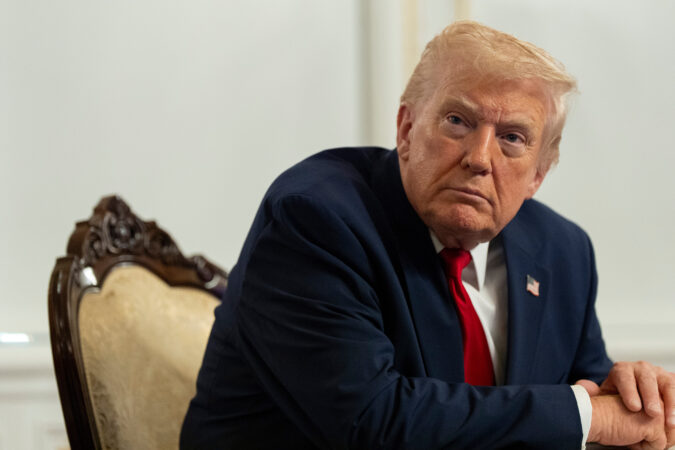
  • A man accused of committing voter fraud in Bucks County in 2020 says a Trump pardon should wipe out his criminal case

    A man accused of committing voter fraud in Bucks County in 2020 says a Trump pardon should wipe out his criminal case

    President Donald Trump’s decision last month to pardon dozens of political allies who helped him try to overturn the 2020 election was quickly criticized by some opponents.

    Now, a man accused of committing voter fraud in that contest by voting twice for Trump is seeking to wipe out a pending criminal case by saying the powers of that pardon action should extend to him.

    Attorneys for Matthew Laiss wrote in court documents last month that the language in Trump’s pardon proclamation “clearly extend” to Laiss, who is awaiting trial on charges that he illegally voted twice in the 2020 election — first by submitting a mail-in ballot in Bucks County, then by voting in-person at his new home in Florida.

    Federal prosecutors in Philadelphia charged Laiss in September with crimes including voter fraud and voting more than once in a federal election, and they said he faces potential prison time if convicted.

    Last month, however, Laiss’ attorneys filed a motion to dismiss the case, saying that the pardon Trump issued Nov. 7 clearly applied to Laiss, and that Laiss had accepted it.

    Although Laiss was not among the 77 people Trump listed when specifying who would receive relief, Laiss’ lawyers said the proclamation’s preamble included language making it applicable to “all United States citizens” for conduct, voting, or advocacy surrounding the contest.

    In addition, his attorneys wrote, Trump allies including Rudy Giuliani, Sidney Powell, and Mark Meadows were all explicitly pardoned for “exponentially more egregious alleged conduct.” Extending relief to them while denying it to Laiss, his lawyers wrote, “would be outrageous.”

    Federal prosecutors say Laiss is “entirely incorrect.”

    In a reply brief filed last week, the U.S. Attorney’s Office said Trump’s pardon was intended for people who were seeking to expose or rectify potential fraud in the 2020 election — not for people like Laiss, who are accused of actually committing it.

    Beyond what they said was Laiss’ clear misinterpretation, prosecutors said that they checked with Trump’s Office of the Pardon Attorney and that it does not believe the president’s clemency —` which it helped effectuate — applies to Laiss.

    “In other words, it is this office’s understanding that if Laiss were to appeal directly to the Office of the Pardon Attorney for a pardon based on [the] November 7 pardon proclamation, that petition would be denied,” prosecutors wrote.

    It was not immediately clear how or when U.S. District Judge Joseph F. Leeson Jr. might rule on the issue, although Laiss was scheduled to have a final pretrial hearing Tuesday morning.

    If Leeson rules that the case can proceed, a trial is scheduled to begin next week.

  • Johnny Doc said his gravely ill wife is ‘entirely alone’ and without a caretaker as he again seeks to be released from prison

    Johnny Doc said his gravely ill wife is ‘entirely alone’ and without a caretaker as he again seeks to be released from prison

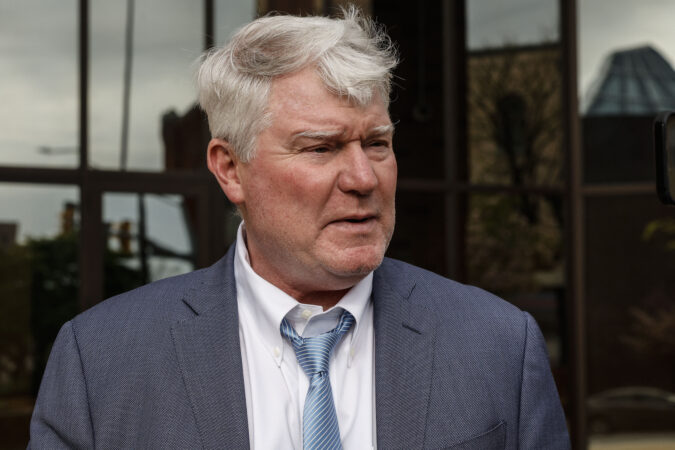
    Convicted former labor leader John J. Dougherty is again asking a federal judge to cut short his six-year prison term, this time because he says the recent death of his father-in-law has left his gravely ill wife without a caregiver.

    Dougherty made the request in a brief filed last month with U.S. District Judge Jeffrey L. Schmehl, writing that his wife, Cecilia — who for years has suffered from a debilitating brain injury — has been left “entirely alone and without any capable caregiver” since her father died from pancreatic cancer on Nov. 10.

    Dougherty has previously argued that he should be granted compassionate release and allowed to serve the remainder of his sentence on house arrest to oversee his wife’s care — a request federal prosecutors have opposed.

    In the latest request, Dougherty’s attorney, George Bochetto, wrote that Dougherty’s father-in-law, Joseph Conroy, had been serving as Cecilia Dougherty’s primary caregiver despite his own poor health and that Conroy’s death is “precisely the type of development” that warrants a change to Dougherty’s sentence.

    Dougherty, Bochetto wrote, “remains the only person able and willing to provide his wife’s necessary care. No one besides Mr. Dougherty can fill the detrimental need that Mrs. Dougherty requires for survival.”

    Federal prosecutors, however, said that Dougherty had previously asserted that Conroy was incapable of serving as Cecilia’s primary caretaker and that his newest motion for relief “directly contradicts” the representations he made in the last one.

    “In short, the unfortunate passing of Mr. Conroy has no bearing at all on the circumstances,” prosecutors wrote in a reply brief filed last week.

    Dougherty, 65, was once one of the state’s most powerful political figures, serving as the charismatic leader of Local 98 of the International Brotherhood of Electrical Workers with a wide range of connections in City Hall and Harrisburg.

    But last year, he was sentenced to six years in prison after being convicted in separate bribery and embezzlement trials — the first in 2021, after a jury found that he had spent years bribing former Philadelphia City Councilmember Bobby Henon, the second in December 2023 over nearly $600,000 he and others embezzled from the union. He reported to prison last fall.

    Henon was convicted alongside Dougherty and sentenced to 3½ years behind bars but was transferred to a halfway house earlier this year. He later secured a job working as a Local 98 electrician.

    Dougherty’s latest request for relief came several months after he first asked Schmehl for compassionate release.

    In August, Bochetto filed an emergency brief saying that a trust fund established to pay for Cecilia Dougherty’s care was about to run out of money and that the couple’s adult daughters were not equipped to serve as permanent caregivers.

    It also said Conroy, “once a limited source of support, is now medically incapacitated and permanently unable to contribute to her care in any way.”

    Beyond detailing issues around the health of Dougherty’s wife, that filing said that Dougherty had also effectively run out of money and assets since he began serving his sentence at a federal penitentiary in Lewisburg and that he’d suffered from several new health issues while behind bars, including a chronic foot infection that made it hard for him to walk.

    Prosecutors at the time wrote that they were sympathetic to the plight of Dougherty’s wife but that his absence from her life “does not distinguish this case from that of countless defendants whose loved ones suffer as a result of their crimes.”

    It was not immediately clear when Schmehl might rule on Dougherty’s requested relief, or if he might take any additional action — such as scheduling a hearing — before doing so.