Author: Chris Palmer

  • Trump’s DOJ said Pa. election officials could be criminally charged if they let noncitizens vote

    Trump’s DOJ said Pa. election officials could be criminally charged if they let noncitizens vote

    The Justice Department sent a letter this week threatening criminal charges against Pennsylvania’s top election officials if they allow votes by noncitizens to be counted in forthcoming elections — a largely nonexistent phenomenon that is already prohibited by law.

    The letter, addressed to Pennsylvania Secretary of State Al Schmidt and obtained by The Inquirer, was part of a nationwide effort by the Justice Department to say it is cracking down on what President Donald Trump has inaccurately described as a variety of problems with how ballots are cast and counted across the country. Similar letters were sent to election officials in all 50 states this week, the Justice Department said in a statement.

    An agency spokesperson said the letters were “asking for voluntary compliance in a timely manner with [officials’] obligations under federal law to ensure only citizens vote in federal elections.”

    The outreach came after Trump’s administration, during his second term, took other steps to target states’ election practices or voter rolls.

    A spokesperson for the Pennsylvania Department of State said in a statement that the state “is in compliance with federal and state election law.”

    “We will continue our nonpartisan work to ensure elections in the commonwealth remain free, fair, safe, and secure,” said Geoff Morrow, the department’s deputy communications director.

    Last month, a federal judge in Pittsburgh dismissed a Justice Department lawsuit that sought to obtain Pennsylvania’s entire unredacted voter database. Federal judges have rejected similar efforts by the Trump administration in at least 10 other states, although the Justice Department recently filed an appeal of the decision in Pennsylvania.

    The FBI, meanwhile, is reportedly assisting with a sweeping investigation into alleged irregularities in the 2020 election in Fulton County, Ga. — a key jurisdiction that contributed to Trump’s loss in that year’s presidential contest.

    Trump has repeatedly refused to acknowledge his defeat to Joe Biden that year, and he has long fueled evidence-free conspiracy theories about widespread and brazen fraud in elections, particularly in jurisdictions that tend to vote for his opponents. Experts generally agree that although voter fraud does happen, it has not historically occurred at rates that would tip the scales in high-profile contests.

    The effort also comes as Trump has been again pressuring congressional Republicans to pass the so-called SAVE America Act, a controversial bill that could require voters to provide proof of citizenship when registering or to show approved forms of identification when voting. Prior efforts to pass the bill into law have failed amid bipartisan resistance.

    As for the subject of the Justice Department’s most recent letter — which was signed by Assistant Attorney General Harmeet K. Dhillon — noncitizens are already barred from voting in federal and state elections under a law passed by Congress 30 years ago.

    Studies in a variety of states since then have found some instances of noncitizens being registered to vote or voting, but almost no evidence that the issue is widespread or common. In Utah, for example, officials said earlier this year that they had reviewed records of the state’s more than 2 million voters and found one person who was confirmed as a noncitizen.

    And in 2024, the director of U.S. Citizenship and Immigration Services wrote in a letter to Ohio’s secretary of state that “it is extremely uncommon for noncitizens to vote in Federal elections,” and that many of those who do are identified by authorities and prosecuted.

    Dhillon, in her letter, acknowledged that noncitizen voting is already illegal. But she nonetheless listed several provisions under which election officials could be criminally charged if it occurred.

    And she said Schmidt should reply within five days to describe “how the state of Pennsylvania intends to ensure it is complying with these federal laws,” a deadline the Pennsylvania Department of State said it intends to meet.

    Schmidt, a Republican who was chosen by Democratic Gov. Josh Shapiro to serve as the state’s top election official, has been at the forefront of addressing noncitizen voting dating back to his time as a Philadelphia city commissioner.

    In 2017, when he worked for the city, Schmidt discovered that the Pennsylvania Department of Transportation’s so-called motor voter system, which allows eligible citizens to register to vote when they get or renew a driver’s license, had a glitch dating back to the 1990s and was allowing legal residents who were noncitizens to register to vote, too.

    Schmidt found that the glitch had allowed at least 168 noncitizens in Philadelphia to register to vote. And he found that an additional 52 noncitizens in the city had registered by other means.

    Collectively, that group of people cast a total of more than 225 ballots in Philadelphia during the years they were registered, Schmidt’s office reported at the time. Schmidt said it was critical to rectify the issue, and all of the improper registrations were canceled. PennDot fixed the glitch in 2017.

    Still, the largest number of votes cast by noncitizens in the city during the affected time period occurred in the 2008 general election, when 47 such people submitted ballots — representing about .0065% of the city’s vote tally that year.

    “One thing that became very clear through that research and all evidence suggests that noncitizens voting in elections in the United States occurs very rarely,” Schmidt told Votebeat earlier this year. “It doesn’t mean that it’s not important. Like I said before, every vote is precious, and we want to make sure that we do everything we can to safeguard and strengthen election integrity. But there’s no evidence to suggest that it happens in any widespread way whatsoever.”

    Lauren Cristella, president of the Committee of Seventy, a Philadelphia-based nonprofit that advocates for good governance, said the Justice Department’s letter “represents another attempt to undermine faith in our elections without presenting any evidence or even allegations of wrongdoing.”

    The country’s elections have routinely been shown to have been conducted freely and fairly, Cristella said. And in Pennsylvania, she said, Schmidt has been “the person who’s been leading the charge to clean up our voter rolls.”

    State Auditor General Tim DeFoor, a Republican, found in an audit released earlier this year that the reforms made to the motor voter system after Schmidt’s exposures of PennDot’s systemic failures had been largely successful.

    The Justice Department’s effort to threaten election officials not only clouds that reality, Cristella said, but it “completely lacks integrity and is part of the distrust that is leading to the erosion of our democracy.”
  • A former Defense Department employee pleaded guilty to laundering money for Nigerian scammers

    A former Defense Department employee pleaded guilty to laundering money for Nigerian scammers

    A former Department of Defense employee from Oreland pleaded guilty Monday to helping Nigerian scammers launder millions of dollars they collected during phishing or extortion operations.

    Samuel D. Marcus, 33, was arrested earlier this year and charged with crimes including conspiracy and money laundering. Prosecutors said he served as a “money mule” for fraudsters who used aliases to target victims in schemes including cyber or tax fraud, romance fraud, or attacks on business email addresses.

    The FBI said those types of crimes cost Americans more than $20 billion last year, with scammers targeting vulnerable people using a variety of tactics designed to exploit or steal peoples’ personal information and money. The Pew Research Center said nearly three-quarters of American adults have been subjected to some form of online fraud, such as credit card fraud, ransomware, or unwittingly giving away personal information.

    Marcus knew that the fraudsters he was interacting with — who used the names “Rachel Jude” and “Ned McMurray” — were committing sophisticated digital crimes, prosecutors said, in part because he was first targeted by those same fraudsters in an online romance scam.

    Still, Marcus went on to help the scammers collect and transfer millions of dollars through bank accounts he created and into overseas accounts or cryptocurrency exchanges between 2023 and 2025.

    Prosecutors did not say how much Marcus was able to keep for himself, but said in court documents that he was able to collect small amounts from each transaction. At the time, prosecutors said, he was also working as a logistics specialist for the Department of Defense.

    He continued committing his crimes even after FBI agents told him that money passing through his accounts had been stolen from other people, prosecutors said.

    Marcus said little in court Monday beyond responding to routine legal questions from U.S. District Judge Joel H. Slomsky, and he has been held in federal custody since earlier this year.

    He is scheduled to be sentenced in October.

  • The Olney man being investigated for his connections to missing women will be held in federal custody

    The Olney man being investigated for his connections to missing women will be held in federal custody

    The Olney man at the center of a sprawling investigation into the disappearance of at least two women in recent years was taken into federal custody Tuesday and will be detained until trial.

    Eugene Albert Horsch, 44, was arraigned Tuesday on a federal firearms charge — a case that relates to his alleged actions on June 19, when a U.S. Park Police officer near Independence Hall reported seeing a black BMW parked in a restricted zone and next to a fire hydrant.

    The officer reported hearing a woman in the vehicle express fear of being injured and then seeing pairs of scissors in the front seat area. A search of the vehicle, in part based on Horsch’s actions, led to the discovery of a switchblade and a glass pipe in Horsch’s pants and two firearms under the car’s front seat.

    Horsch — who was not allowed to possess guns because of felony convictions — had been charged for that same conduct last week by the Philadelphia District Attorney’s Office and he was being held in a city jail on $500,000 bail. City prosecutors also charged him with having cocaine, heroin, and marijuana in his car.

    But the federal gun charge — and the decision by U.S. Magistrate Judge Pamela A. Carlos to detain him until trial — effectively ensures that Horsch will not be able to post bail or secure his release as his case proceeds. And that will give authorities time to continue investigating him in connection with questions potentially far more serious than illegally possessing guns.

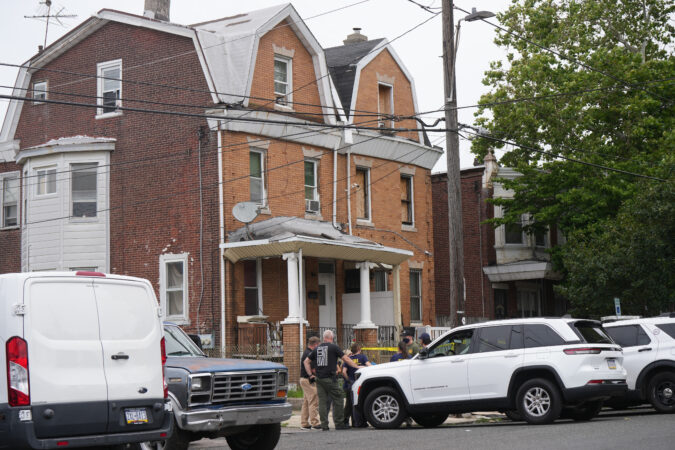
    In the days after Horsch was arrested with the firearms in Center City, investigators who searched his decrepit rowhouse in Olney found another gun and materials to grow marijuana.

    But more concerning, they also discovered a variety of more unusual materials — including barrels of chemicals in the basement, urns holding the cremated remains of at least one of his relatives, documents tied to at least two women who have been missing for years, and a handwritten letter that described hurting people and mentioned the serial killer Ted Bundy.

    Officials have said police have not discovered any human remains in the house. But investigators did find a significant amount of blood inside, sources told The Inquirer this week, although it was not clear whether it was human blood. And authorities have been testing a variety of materials they’ve recovered from the house, such as the chemicals in vats stored in his basement.

    The probe is also seeking to learn more about potential connections between Horsch and at least two missing women with ties to his home.

    One is Blair Tonzelli, who might have worked there as a home health aide and who was reported missing in Kensington in 2023. Some of Tonzelli’s friends told police after she disappeared that they worried that something bad had happened to her and that they had told police that Horsch was a “sociopath,” according to police documents obtained by The Inquirer.

    In addition, when Horsch was arrested in Center City earlier this month, a woman who was with him falsely identified herself as Tonzelli and later told police that she did so because Horsch had given her a fake identification with Tonzelli’s name.

    The other missing woman is Amy McHale, the ex-wife of Horsch’s father, who was last heard from at the Olney property in 2016. Horsch’s father, Raymond “R.C.” Horsch — now deceased — was an erotic photographer and drug manufacturer who had published several works of fiction, including one described as an “autobiographical memoir of a caring, empathetic serial killer.”

    Eugene Horsch, during his brief appearance in federal court Tuesday, said little beyond responding to routine legal questions. He will likely be held at Philadelphia’s Federal Detention Center as his case proceeds toward trial.

    His attorney, Jerome Brown, said afterward that he didn’t believe Horsch had harmed any of the women at the center of the investigation.

    “As far as I know, I’d be shocked if [police] found any harm related to those missing persons at that location,” Brown said.

  • Knives, drugs, and guns: A police report obtained by The Inquirer shows what officers found inside Eugene Albert Horsch’s car

    Knives, drugs, and guns: A police report obtained by The Inquirer shows what officers found inside Eugene Albert Horsch’s car

    A U.S. park ranger last week conducted what seemed like a routine traffic stop near Independence National Historical Park, approaching a black BMW that was parked in front of a fire hydrant and asking to speak with the driver.

    But just moments into the encounter, the ranger discovered a series of alarming pieces of evidence inside the car, according to a police report obtained exclusively by The Inquirer: switchblade knives, drug materials, a cattle prod and, eventually, two loaded guns.

    The car’s occupants, too, were displaying troubling behavior, the report said — a woman inside said the driver was going to hurt her. And she then produced a fake identification that included her photo, but had the name of another woman who had been missing for three years.

    The episode kicked off what has since become a weeklong investigation into the car’s owner and a variety of unsettling materials police have since found in the man’s Olney rowhouse.

    And the probe has only intensified in recent days, growing to include Philadelphia homicide detectives, FBI agents specializing in chemical analysis, and unsubstantiated rumors spilling across social media about corpses being found in a basement.

    Officials said Friday that they had no indication that Eugene Albert Horsch, 44 — the man who owns the BMW and the home in Olney — had actually stored human remains in his house on the 400 block of West Chew Avenue. But Deputy Commissioner Frank Vanore cautioned that the investigation remained ongoing, and that law enforcement agents were examining a host of unusual evidence connected to Horsch and his home.

    Horsch, in the meantime, remains jailed on gun and weapons charges that were filed after his initial encounter with the park ranger last Friday.

    The police report obtained by the Inquirer, as well as the affidavit of probable cause for Horsch’s arrest, gave this account of how that episode unfolded:

    Around 8 a.m. on June 19, a park ranger patrolling the area noticed Horsch’s BMW stopped on Sixth Street in a restricted area, and the ranger walked up to the car to speak with the driver.

    When Horsch rolled down his window, the ranger heard a woman inside the car yell out that the man inside was going to hurt her. The ranger also noticed signs of potential drug use by the occupants of the car, including a butane lighter and tweezers, and he asked both people in the vehicle for identification.

    The woman then provided an ID that had her photo but the name and other details of a woman who had been reported missing several years ago.

    And when the ranger asked Horsch to step out of the car, he noticed Horsch had scissors, a switchblade knife, and a glass drug pipe. The ranger’s partner then searched the car and found more troubling signs under the floorboards: two loaded firearms.

    The rangers then handcuffed Horsch and the woman, but Horsch told police the guns were not hers. He also then said he had crack cocaine in a compartment near his steering wheel.

    Both Horsch and the woman — whom The Inquirer is not identifying because she has not been charged with a crime — then began hyperventilating, and were taken in separate vehicles to Jefferson Hospital.

    Officers continued searching Horsch’s car and found more apparent drug materials, a baton, a cattle prod, another knife, and fake credentials that purported to identify Horsch as an agent with the Drug Enforcement Administration.

    After being released from the hospital, Horsch and the woman were taken to DEA headquarters. Horsch declined to speak with investigators.

    The woman, however, said she’d met Horsch a few months ago, and provided enough details about their interactions at his house that investigators applied for a search warrant.

    Vanore, of the police department, said investigators were continuing to sort through a mix of guns, drugs, chemicals, and even urns they’d found inside — including during searches Friday.

    The possibilities of why such materials could have been on hand include drug manufacturing, explosive production, or other activities, he said, adding: “We’re certainly going to look into the activities that went on at that house.”

  • A West Philly man was sentenced to up to 40 months in prison for seeking to make bombs in support of a terror group

    A West Philly man was sentenced to up to 40 months in prison for seeking to make bombs in support of a terror group

    A West Philadelphia man who was convicted last year of seeking to build bombs in support of Islamic extremist groups was sentenced Thursday to 20 to 40 months in prison and six years of probation.

    Muhyyee-Ud-din Abdul-Rahman, 20, was found guilty in September of charges including attempting to possess weapons of mass destruction after jurors concluded he had experimented three years ago in and around his Wynnefield home with dangerous chemicals often found in high-volume explosives.

    Authorities said that Abdul-Rahman had done so after he communicated with Syrian extremists on Instagram, and that their arrest of Abdul-Rahman in 2023 had prevented him from unleashing a terror attack on the region.

    Jurors, however, found Abdul-Rahman not guilty of the more serious charge of possessing weapons of mass destruction, suggesting they believed he intended to build a bomb but had never succeeded. Common Pleas Court Judge Michele Hangley also threw out a conspiracy charge after ruling that prosecutors had not proved Abdul-Rahman had been working with anyone else.

    Abdul-Rahman told Hangley after being convicted that he had matured during his time in custody, much of it spent in a juvenile facility because he was arrested as a teen. And he said he had come to reject the radical beliefs promoted by the group he was following, Katibat al Tawhid wal Jihad, or KTJ.

    Still, District Attorney Larry Krasner said Thursday that he was “deeply concerned” by what he cast as an insufficient penalty for a would-be terrorist. Krasner said his office had asked that Abdul-Rahman serve at least 10 years behind bars because prosecutors believe he remains “an extreme danger” to the city.

    “We ought to be able to live in a city where a terrorist is kept off the streets for a reasonable amount of time,” Krasner said.

    Federal investigators looking into KTJ’s activities in the United States in 2023 found that Abdul-Rahman was the only person in the country exchanging messages with some of its key online propagandists. Further investigation later revealed that Abdul-Rahman, around that time, had also applied for his first passport, tried to reach out to a Syrian border-crossing office, and purchased or possessed wires and chemicals common in homemade bombs.

    When authorities went on to conduct surveillance of Abdul-Rahman, officials said at trial, officers tailing him at a Lowe’s store saw him buy muriatic acid, a key component in a violent explosive dubbed TATP, also known as “the mother of Satan.” And a review of his internet search history around that time showed he had been looking up Philadelphia parade routes, trash can bombs, and nuclear power plants — something authorities said was consistent with “target and tactic” research.

    When federal agents questioned Abdul-Rahman inside a police station, an official testified, he admitted conducting bomb tests near his house and said he wanted to become a “bomb guy” for KTJ in Syria.

    Authorities arrested Abdul-Rahman in August 2023, just as he was to begin his senior year in high school. At the time, he was a promising wrestler with a college scholarship offer, and his father, Qawi Abdul-Rahman, is a well-known criminal defense lawyer who has mounted unsuccessful campaigns to become a city judge.

    Abdul-Rahman’s attorneys said at trial that he had made mistakes, but that he was an impressionable teen who had fallen down a “rabbit hole” of online propaganda. They also said he had never succeeded in building a bomb and did not take serious, in-person steps to advance the radical views he expressed online or in his house.

    At a hearing last month, one of his attorneys, Donald Chisholm, urged Hangley to consider that Abdul-Rahman’s path to the crime began when he was 16 years old.

    “Even at the age he is now,” Chisholm said, “he’s not fully matured.”

    Chisholm, said Thursday that he thought the sentence was fair, and that Krasner’s continued insistence on casting his client as dangerous was “disingenuous” and did not account for factors such as his client’s age at the time of arrest, or his growth over the last several years.

    The case attracted attention in part because it was a rare example of the district attorney’s office seeking to convict someone it described as a would-be international terrorist. Although federal counterterrorism agents were heavily involved in the investigation, juveniles are rarely prosecuted in federal courts.

    Krasner said Thursday that Abdul-Rahman likely would have faced a significantly harsher penalty if he had been convicted of similar conduct in the federal system, and he criticized the state’s sentencing guidelines, which prosecutors said Hangley cited when imposing her penalty.

    Abdul-Rahman has already served about 34 months in custody, meaning he will face a maximum of another six months in prison under the penalty Hangley imposed.

    Krasner said his office was weighing whether to appeal the sentence.

    Staff writer Jillian Kramer contributed to this article.

  • A Philly woman pleaded guilty to voting twice in the 2024 presidential election

    A Philly woman pleaded guilty to voting twice in the 2024 presidential election

    A Philadelphia woman pleaded guilty Monday to voting twice in the 2024 election — first in northern New Jersey, then in the city.

    Miya Pack, 40, said little beyond responding to routine legal questions as she pleaded guilty to a charge of voter fraud before U.S. District Judge Joshua D. Wolson.

    Pack has been registered to vote since 2004 in Bergen County, N.J., prosecutors said in court documents, and she’s also been registered to vote in Philadelphia since 2016. She is not affiliated with any political party, voter records show.

    On Oct. 26, 2024, prosecutors said, Pack cast a ballot in that year’s presidential election in Bergen County. Then, 10 days later, prosecutors said, she cast a ballot in the same contest in Philadelphia on Election Day.

    They did not say whom she voted for, and she declined to comment as she left the courtroom Monday.

    President Donald Trump has repeatedly made questionable or false statements about the prevalence of voter fraud, particularly in places like Philadelphia, where Democrats heavily outnumber Republicans. Election officials and experts who study the issue generally agree that voter fraud has not historically occurred at widespread rates.

    Pack was charged by federal prosecutors last September. Prosecutors announced her indictment alongside the indictment of another man, Matthew Laiss, who was separately charged with voting twice in the 2020 election.

    Laiss later said in court documents that he voted twice for Trump, and unsuccessfully sought to claim that his actions were covered by pardons Trump extended to people who tried to help him overturn the results of the 2020 election.

    Laiss was convicted of voter fraud earlier this year at trial and is awaiting sentencing.

    Pack is scheduled to be sentenced in October. She faces the possibility of prison time, although prosecutors said in court that federal guidelines suggest a term of no jail time to six months.

  • A Gladwyne man who misspent millions of dollars from some of Philly’s richest people will spend 9 years in prison

    A Gladwyne man who misspent millions of dollars from some of Philly’s richest people will spend 9 years in prison

    A Gladwyne furniture heir who duped some of the region’s wealthiest people into giving him millions of dollars intended to fund his startup companies — but who instead used the cash to pay for lavish personal expenses including private jet flights, country club dues, and his daughters’ bat mitzvahs — was sentenced Wednesday to more than nine years in federal prison.

    Josh Verne pleaded guilty last year to using forged financial documents and false statements about his net worth to persuade prominent business owners to invest in some of his proposed ventures. They included David Adelman, a billionaire entrepreneur and Sixers co-owner; Michael Rubin, CEO of the sports apparel behemoth Fanatics; and real estate developer Bart Blatstein, The Inquirer has reported.

    Part of Verne’s appeal, prosecutors said, was his gregarious and engaging persona, and his confident assurances that he was a visionary entrepreneur who would turn his investors’ money into lucrative returns. He said he’d sold a previous business for tens of millions of dollars — although he hadn’t — and assured his benefactors that he was worth nearly $100 million, though he wasn’t.

    In court Wednesday, Verne, 48, cut a far more humble figure, saying he’d “destroyed” his career, reputation, and relationships through his misconduct.

    “I alone am responsible for that,” he said. “Not the circumstances, not the pressure, but me.”

    Prosecutors said Verne’s misdeeds were part of a calculated, long-running scheme to “steal rather than earn.” In court documents, they described him as an “extraordinarily capable conman” whose fraud “was not an aberration — it was a business model.”

    “This wasn’t a poor man who was trying to feed his family,” Assistant U.S. Attorney Jerome Maiatico said in court. “He wanted to live a lifestyle that he couldn’t otherwise afford. And he sustained that with deception.”

    U.S. District Judge John F. Murphy said Verne clearly had a knack for gaining people’s trust — but that in this case, he abused that trust in “profound” ways, day after day.

    “What makes this scheme so meaningful is the sheer persistence of all of the decisions,” Murphy said. “You don’t accomplish all of these things with a couple of light decisions.”

    The judge said Verne’s total term of incarceration would be 111 months. Afterward, he said, Verne will serve three years of supervised release.

    Verne was raised in Huntingdon Valley, and his family in the 1960s founded Chuck’s Bargain House, a furniture company that was later renamed Home Line Furniture Industries and grew to include factories in Philadelphia, North Carolina and Vietnam.

    Verne went to work for the business in the early 2000s, but it was forced to close because of financial difficulties in 2011.

    After that, Verne founded Workpays.me LLC, an employee payroll-deduction purchasing program. And in 2016, he persuaded Adelman to invest in FlockU, a digital media outlet focused on appealing to college students.

    In courting Adelman, prosecutors said, Verne lied about his net worth, his business background, and, to bolster his accounts, presented Adelman — referred to in court documents as “Investor A” — with forged financial documents he said were from Goldman Sachs.

    Once FlockU foundered, prosecutors said, Verne changed the LLC’s name to Ownable and pivoted its business model, seeking to make it an online marketplace that would lease laptops and smartphones to people who couldn’t afford to buy them.

    To persuade Adelman to invest more money, prosecutors said, Verne lied again, saying he was investing more than $2 million of his own money into Ownable, when in fact he never did so.

    Verne then went on to raise millions more from other boldfaced names, in part by touting his connection to Adelman and continuing to boast about his own wealth. All the while, prosecutors said, Ownable was struggling to get off the ground — but Verne was using the money to fund an extravagant life.

    He used his investors’ cash to renovate his Shore house, prosecutors said, and paid for private jet trips, his daughters’ bat mitzvahs, his country club dues, an interior decorator, and credit card and mortgage bills.

    The U.S. Attorney’s Office has not yet settled on a precise dollar figure for all that graft, but said it was likely between $12 million and $24 million.

    Prosecutors and Verne’s attorneys said in court Wednesday that they were continuing to try and finalize disputes about exactly how much Verne owes to his victims, although his federal public defenders said he is now “penniless.”

    In 2023, the Securities and Exchange Commission said in a civil court filing that Verne had raised $31 million from investors — and misspent about half of it.

    More than $9 million went toward Verne’s personal expenses, the SEC said, and about $5 million was diverted to make “Ponzi-like payments” to some initial investors, an attempt by Verne to mislead his benefactors into thinking Ownable was in good financial health.

    By 2019, however, Ownable was in severe financial distress, prosecutors said. And in 2020, the company’s board learned of the issues and forced Verne to resign.

    Two years later, prosecutors said, when Verne knew he was under criminal investigation, he sent texts to a former Ownable employee who’d spoken to the FBI, as well as the man’s wife. Prosecutors said the texts amounted to witness intimidation.

    Verne’s attorneys disputed that, saying the texts were a one-time, “off-the-cuff” reaction made under duress, and did not contain any explicit threats against anyone.

    Murphy, the judge, disagreed.

    “Some would call it extortion,” he said. “It’s a threat.”

    Verne was indicted in 2024 on charges including securities fraud, wire fraud, and aggravated identity theft. He pleaded guilty last year to some of those charges as part of a plea agreement.

    Murphy said that although some of Verne’s victims were wealthy, others were less well-heeled and therefore devastated by his misuse of their money.

    And yet Verne continued making decisions to benefit himself at the expense of those who trusted him, the judge said.

    “What the next day brought every time,” Murphy said, “was more and more harmful decisions.”

  • A Willow Grove man who used insider info to make $617,000 trading stocks was sentenced to two years in prison

    A Willow Grove man who used insider info to make $617,000 trading stocks was sentenced to two years in prison

    A Willow Grove man who made more than $600,000 by trading stocks based on confidential information his then-girlfriend gave him about an impending corporate acquisition was sentenced Friday to two years in federal prison.

    Carlos Sacanell, 59, apologized for his actions before U.S. District Judge Wendy Beetlestone, saying he’d made a “terrible decision” and had “profound regret” for what he did.

    “This action does not represent who I am,” said Sacanell, who pleaded guilty last year to one count of securities fraud.

    Sacanell’s crimes occurred in 2023, prosecutors said, when his longtime partner told him that her company, the Chicago-based Oak Street Health Inc., was about to be acquired by CVS Health.

    The next day, prosecutors said, Sacanell — without his girlfriend’s knowledge — bought hundreds of thousands of dollars worth of Oak Street stocks and call options.

    Sacanell adjusted his purchases over the next few weeks as his girlfriend continued sharing occasional insights about whether or not the deal might go through, prosecutors said. The woman was not aware that he was trading on the information she gave him, prosecutors said, but when the acquisition ultimately closed, Sacanell netted about $617,000.

    In April 2023, prosecutors said, the FBI confronted Sacanell — who worked as a scientist — about what they viewed as his suspicious trades, but he denied that he had any insider information about Oak Street or the deal.

    Sacanell was indicted in late 2024. His relationship with his then-girlfriend has since ended, his lawyer said, and he is now expected to report to prison in about two months.

    He is also expected to be deported once his term of incarceration ends, his lawyer said. Sacanell was born and raised in Spain before becoming a lawful permanent resident of the United States, but will now likely be deported due to his conviction.

    Sacanell said he had already repaid about $300,000 worth of his illicit proceeds, and vowed that he would not commit any similar infractions in the future.

    “I regret it every day of my life,” Sacanell said.

  • The DOJ said authorities in N.J. have violated dozens of judicial orders in recent immigration cases

    The DOJ said authorities in N.J. have violated dozens of judicial orders in recent immigration cases

    Federal authorities in New Jersey have violated dozens of judicial orders in recent months as immigration cases have surged in the courts, the Justice Department acknowledged in a court filing, including by transferring some detained immigrants to other jurisdictions and, in one instance, improperly deporting a man to Peru.

    The admissions came in a declaration filed by Associate Deputy Attorney General Jordan Fox, who has recently been helping lead the U.S. Attorney’s Office in New Jersey, and who is also a top adviser to Deputy Attorney General Todd Blanche.

    They are the latest example of how federal judges in various jurisdictions have been seeking to hold the Trump administration accountable for episodes in which authorities have failed to comply with court orders as President Donald Trump has sought to rapidly increase deportations.

    Fox issued her declaration in response to an order from U.S. District Judge Michael Farbiarz, who has been overseeing a lawsuit from an immigrant challenging his detention. Farbiarz was frustrated that Immigration and Customs Enforcement had transferred the man to another jurisdiction — despite the judge’s order to keep him in New Jersey.

    So earlier this month, court records show, Farbiarz directed prosecutors to review similar immigration lawsuits filed in the state’s federal courts since December and “enumerate each instance in which the Respondents or people acting on their behalf violated an order issued by a judge of this district.”

    Fox, in her response filed last week, said her office had identified 547 such cases — known as habeas petitions — filed since early December. And in 56 instances, the declaration said, prosecutors did not comply with a judicial order.

    Some concerned lawyers’ behavior, the document says, including six instances in which attorneys missed filing deadlines, and 10 cases in which government attorneys did not provide complete discovery.

    But others outlined ways in which federal authorities handled immigrants in custody. In 17 instances, Fox wrote, ICE or other federal authorities transferred immigrants in detention after judges had ordered them not to be moved.

    Fox wrote that each of those mistakes “occurred inadvertently,” because of either communication delays or “administrative oversight,” and that prosecutors in each case had agreed to return the petitioner to New Jersey.

    In December, court records show, ICE also “erroneously removed” a man and deported him to Peru despite a judicial injunction prohibiting his removal.

    Fox wrote that the deportation “occurred due to an inadvertent administrative oversight by the local ICE custodian.” She said that authorities worked with the man’s lawyer to try to arrange his return to the United States, but that he “decided to remain in Peru instead.”

    Farbiarz, the judge, responded in a filing Tuesday by crediting Fox and her staff for providing thorough answers to his questions.

    Still, he wrote, he was concerned that the violation he observed in his case was apparently “not fully an outlier.”

    “Judicial orders,” he wrote, “should never be violated.”

    He instructed the Justice Department to file an affidavit “detailing the procedures that are in place (or that will be put in place in the near-term) to ensure that court orders issued by district judges in New Jersey are timely and consistently complied with.”

  • A former Philly drug kingpin, once ordered to life behind bars, had his sentence reduced to 25 years

    A former Philly drug kingpin, once ordered to life behind bars, had his sentence reduced to 25 years

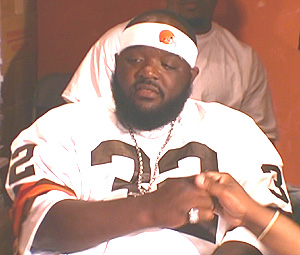
    In 2009, after a federal judge effectively ordered Philadelphia drug kingpin Alton “Ace Capone” Coles to die in prison — imposing a life sentence plus 55 years for convictions on a host of drug and weapons charges — Coles momentarily dropped the swaggering persona he had displayed while building his vast cocaine empire.

    “I never thought it would come to this,” Coles said at the time, his voice cracking as he spoke in court. “I don’t think life is deserved for selling drugs.”

    On Tuesday, another federal judge offered something close to an endorsement of that view as she ordered Coles’ sentence be reduced to 25 years in prison — meaning Coles, now 52, could be released within a few years.

    Coles’ twist of fate is the result of a complicated appellate process, one that has its roots in how federal laws have changed in recent years for some drug crimes, particularly those involving crack cocaine. The penalties for crack offenses were once significantly harsher than those tied to other narcotics, leading to widespread racial disparities because most defendants in crack cases were Black.

    Coles’ lawyers say his case is also a demonstration of the “remarkable” turnaround Coles has made behind bars. While Coles once oversaw a drug operation that was estimated to have poured $25 million worth of cocaine and crack into Philadelphia — all as he served as the brash face of a local hip-hop record label — in prison, his lawyers said, he has become a barber, facilitated anti-violence programs for other inmates, and served as a counselor for prisoners with thoughts of self-harm.

    “Knowing that he was facing the rest of his life in prison, Mr. Coles engaged in this extraordinary effort toward rehabilitation for the sole purpose of improving his life and of those around him,” his lawyer, Paul Hetznecker, wrote in court documents.

    Federal prosecutors took a starkly different view, saying that Coles was “one of the major drug kingpins in Philadelphia during the last several decades” and that his eligibility to be resentenced was the result of a “pure technicality.” Even if Coles had committed his crimes today, prosecutors said — after Congress changed criminal sentencing guidelines — his actions would still warrant a life sentence.

    “Coles led an armed and violent cocaine and crack distribution gang, which distributed quantities of deadly narcotics that [the trial judge] at sentencing aptly described as ‘staggering,’” prosecutors wrote in court documents.

    U.S. District Judge Kai Scott said she believed that Coles had transformed his life in prison, and that 25 years of incarceration — even if much shorter than a life sentence — was still a substantial amount of time to serve behind bars.

    Discussing Coles’ growth since being convicted, Scott said: “I’ve never seen this type of post-sentence rehabilitation.”

    Coles, meanwhile, apologized for his crimes, telling Scott he is determined to try to make amends for his past.

    “I am not the man I once was,” he said.

    Building an empire

    When Coles was federally indicted in 2005, prosecutors said he had run one of the largest drug organizations in modern city history. Coles and his coconspirators, they said, helped push a ton of cocaine and a half-ton of crack into the streets over the course of more than six years.

    Coles was not charged with any crimes of violence, but federal authorities said they believed his group and its members were tied to nearly two dozen shootings and seven homicides.

    As he was growing his drug empire, Coles was also building his reputation in the local rap scene. He helped found the hip-hop label Take Down Records, and staged popular parties and concerts around the city.

    And he and a friend, Timothy “Tim Gotti” Baukman, produced and starred in a 31-minute music video called New Jack City, The Next Generation, in which they portrayed Philadelphia drug dealers who used violence and intimidation to cement their standing in the underworld.

    Authorities used that video as part of a two-year investigation into Coles and his gang, and said Take Down Records amounted to a front for Coles to wash his money. They also wiretapped hundreds of conversations between drug associates, and went on to seize dozens of weapons and hundreds of thousands of dollars in raids on members’ homes.

    Coles was charged in 2005, as were nearly two dozen associates, some of whom pleaded guilty or went on to cooperate with authorities.

    Coles took his case to trial and testified in his own defense, saying he was not the kingpin prosecutors made him out to be.

    But in 2008, a jury found Coles guilty of crimes including conspiracy to distribute cocaine and heading a continuing criminal enterprise. U.S. District Judge R. Barclay Surrick later sentenced Coles to life behind bars plus 55 years, saying: “The amount of drugs was staggering and the money involved was even more staggering … this crime was just horrendous.”

    Ongoing legal saga

    The imposition of that penalty, however, was hardly the end of the legal drama connected to Coles.

    After Coles was sentenced, a Philadelphia police officer was convicted and imprisoned for tipping Coles off about his impending arrest.

    A federal appeals court also later overturned a conviction tied to Coles’ girlfriend, who had been accused of helping him launder drug money to buy a house.

    And Coles continued to file appeals challenging his case.

    In 2014, he successfully argued to have one of his two prison sentences — the 55-year term — reduced to five years because of technicalities in how evidence was used to prove certain charges. His life sentence, however, remained intact.

    But in 2020, Hetznecker, Coles’ appellate lawyer, filed a new motion challenging that penalty, saying a law passed by Congress in 2018 made Coles eligible to have his life sentence reduced.

    The law, known as the First Step Act, was a sweeping attempt to undo some of the tough-on-crime laws from the 1990s that caused the federal prison population to swell. The bill received bipartisan support, and was signed into law by President Donald Trump.

    One of the law’s provisions allowed some people who were sentenced for crack-related offenses to have their penalties reevaluated — part of an effort to unwind the racial disparities caused by disproportionately harsh sentences being imposed on Black defendants in crack cases.

    Hetznecker, in seeking to have a judge reconsider Coles’ penalty, wrote that a life sentence “for a non-violent drug offense is a draconian sentence and, given the current paradigm of criminal justice reform, counter the movement toward a more just system.”

    “The underlying principles of justice and fairness require that those subjected to punishment for crimes against society, especially those convicted of non-violent offenses, be provided the opportunity for re-integration back into society as rehabilitated individuals,” Hetznecker wrote.

    Scott, the judge, agreed last month that Coles was eligible for a new sentence under the First Step Act. And in imposing the new penalty Tuesday, she said she believed Coles was unlikely to commit similar crimes in the future.

    “It’s clear to me that you have been deterred — you have made changes,” she said.

    Coles said he recognizes that he had once been “a negative influence on society,” but said he has now committed to bettering himself and trying to help others.

    Hetznecker said Coles deserves the opportunity to demonstrate that he has moved beyond the persona he once inhabited on the streets.

    “‘Ace Capone’ is dead, he’s gone,” Hetznecker said. “Alton Coles has emerged.”